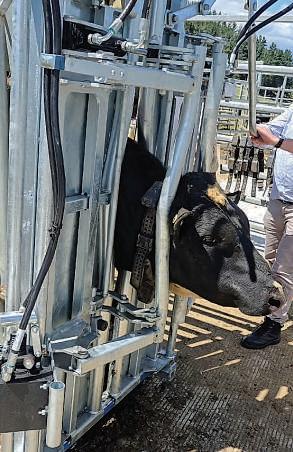
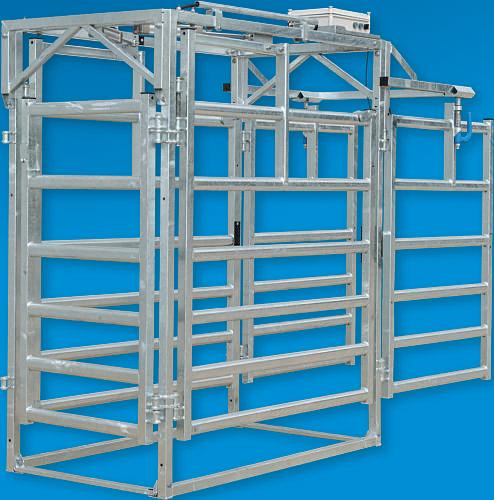
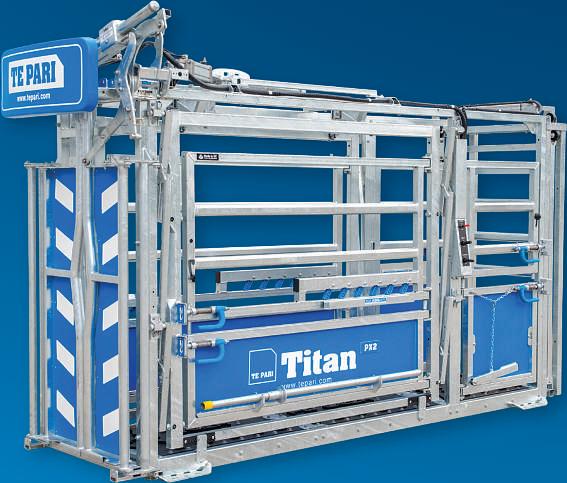
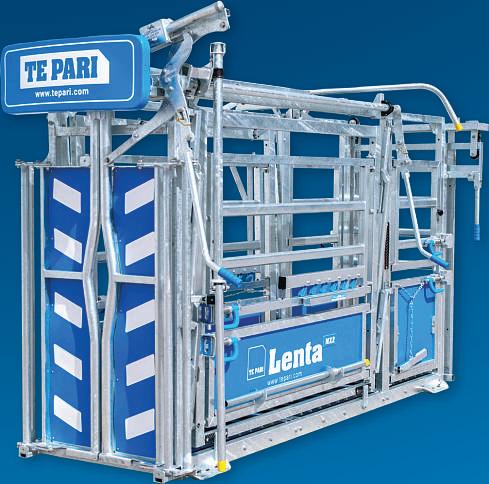
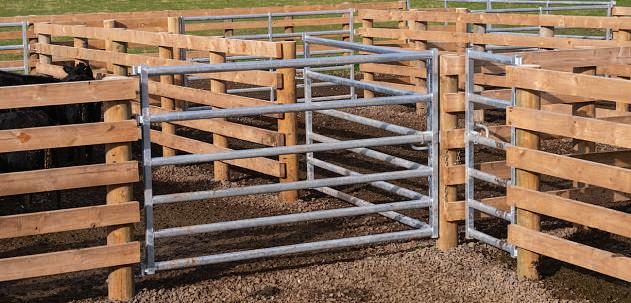
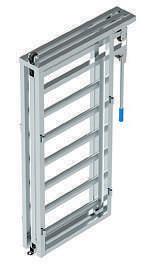
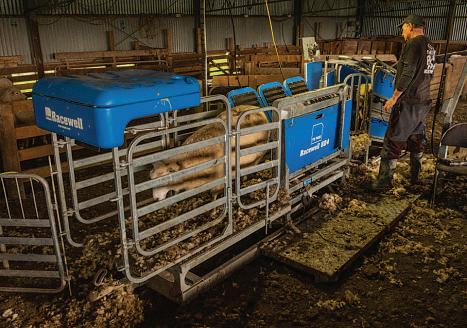
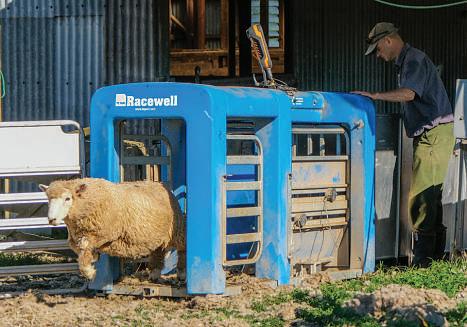
•Proportionalcontrol of headbail, squeeze& entrygate
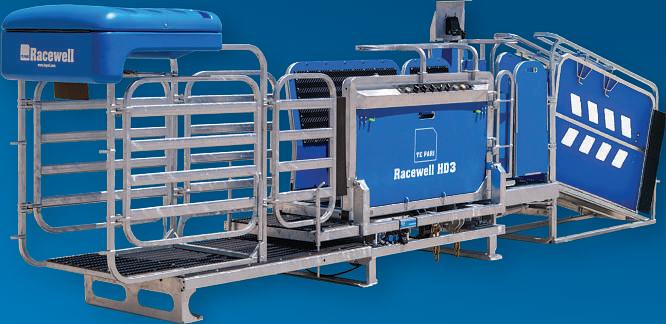
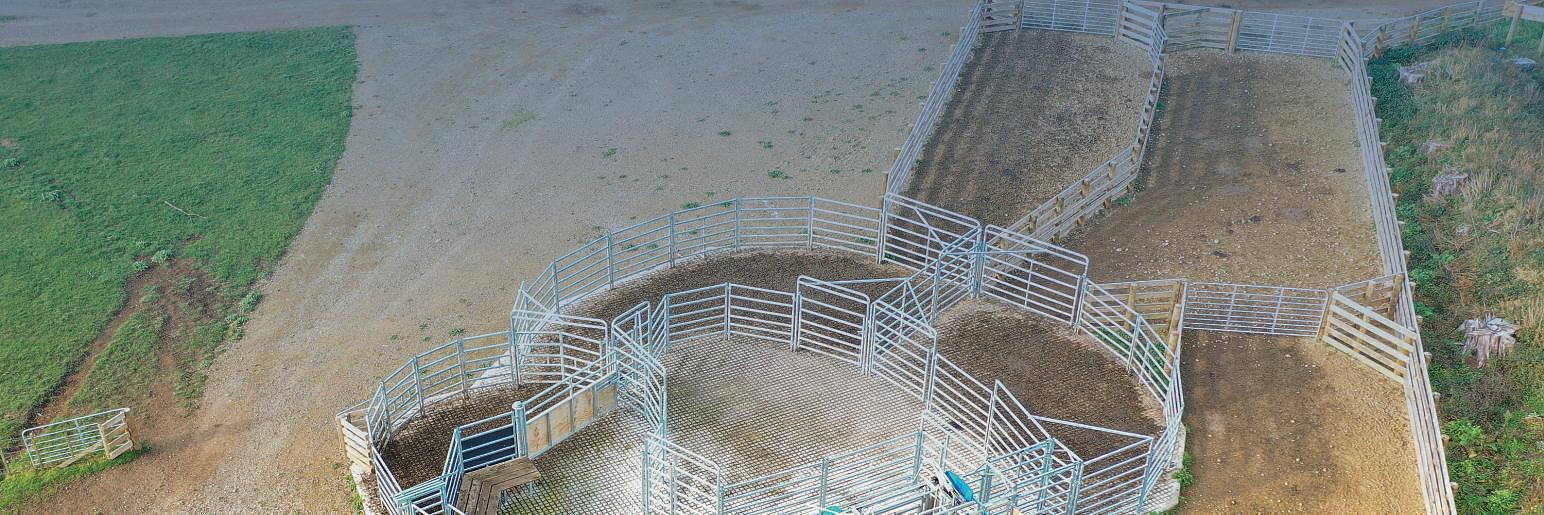
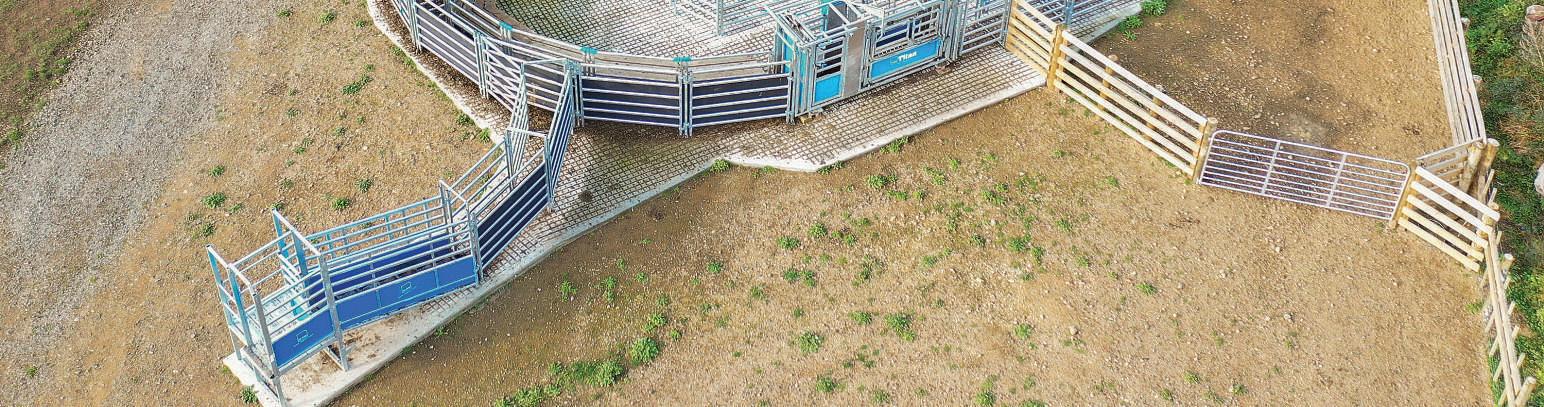
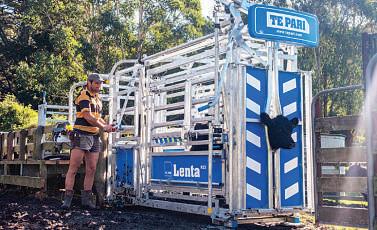
Lenta Manual Squeeze CrushRange
ParallelSqueezefor totalcontrol!
•Doublesided parallelsqueeze
•Proportionalsqueezecontrol with spring assisted push/pullhandle
•Optionalkick-operated vetaccess gates
•2 or 3piece side gateswithanti-rattleslam latches
•Anti-slip rubberfloor forquiet operation
•Front andrearhandles to open andclose theC1000 headbail
•Slidingreargatewithautolatch lock
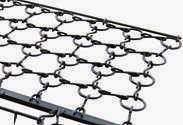
•Hot dipgalvanisedanti-bruise oval rails
•Heavy-duty25mmshank gudgeons
•Great rangeof sizesavailable
•2 week lead time if notinstock
•Freedeliverytonearest Mainfreightdepot
•Easytouse push-pullhandle
•Lifetimewarrantyonthe
headbail lockingmechanism
•Qualityhot-dip galvanised steel
•Easytofittoyourcattleyards
•Qualityhot-dip galvanised steel
•PostorRailmountingbrackets aresoldseparately.
•Autolatchinglocksecures gate shut andautoreleases when handle is pulled
The fruits oftheir labour
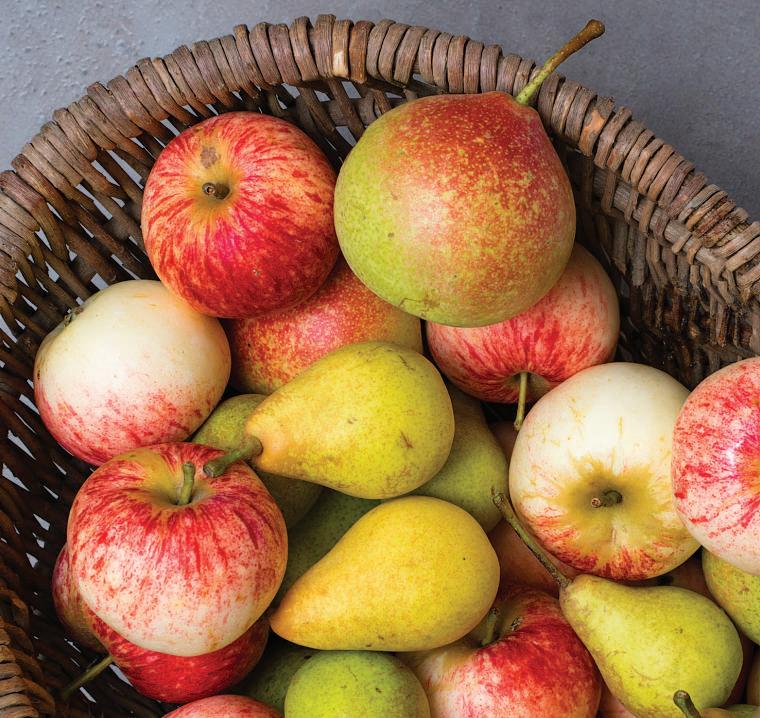
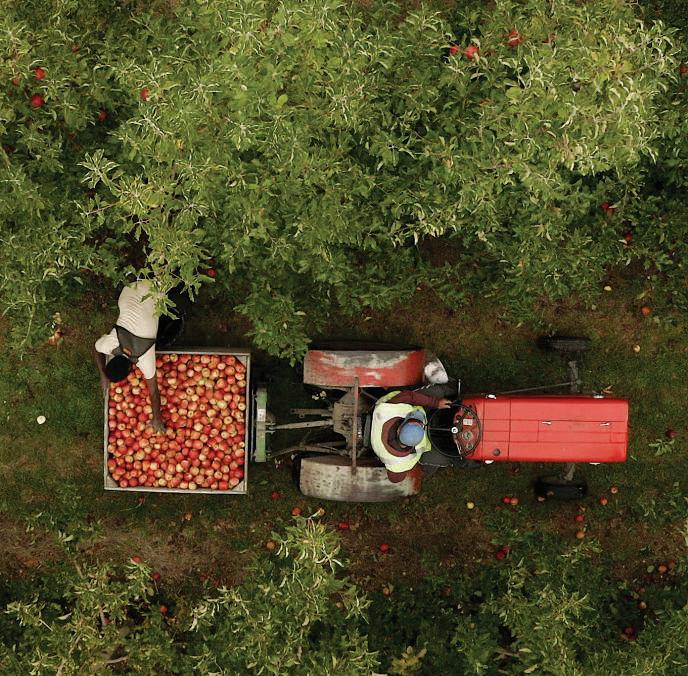
New Zealand’s growers have been implementing better systems and their efforts, combined with a warm spring, have paid off, with increased productivity leading to a bumper apple and pear harvest season. P6
Fonterra lifts milk price forecast
Dairy
Rob Stock
“Farmer-owned dairy co-operative Fonterra has lifted its forecast farmgate milk price for the 2025-26 season.
On February 20, Fonterra said it had increased the midpoint for the farmgate milk price from $9 per kilogram of milk solids to $9.50, with the forecast range lifting and narrowing from $8.50-$9.50 to $9.20-$9.80.
Improvements in global commodity prices were behind the move, said chief executive Miles Hurrell, though he also cited strong sales.
The announcement came the day after Fonterra’s shareholders approved a $2 per share capital return from the sale of its Mainland consumer brands business by a landslide 98.85% of votes cast at a virtual special meeting.
The capital return, which is expected to see many dairy farmers reduce debt, remains subject to the Mainland sale completing, which the co-operative expects to happen in the first quarter of the 2026 calendar year.
“Global dairy prices have been volatile across the season,” Hurrell said. “Following the declines at the end of 2025, prices have lifted in the last four Global Dairy Trade events.”
We are currently finalising our interim accounts and can indicate that we expect the special Mainland dividend to be in the range of 14 cents to 18 cents per share.
Mike Hurrell, chief executive
That was despite global milk production remaining above seasonal norms It brought the risk of further volatility in pricing, he said
Hurrell also updated Fonterra’s farmer-shareholders on Mainland Group earnings, saying it intended to pay out 100% of underlying earnings generated by Mainland Group during FY26 while it remained under Fonterra ownership.
Mainland is Fonterra’s consumer brands arm, which it has sold to European
dairy giant Lactalis. The earnings will be distributed through a special Mainland dividend payment to shareholders and unit holders following the completion of the sale to Lactalis, Hurrell said.
“We are currently finalising our interim accounts and can indicate that we expect the special Mainland dividend to be in the range of 14 cents to 18 cents per share, which reflects the operating performance of the Mainland business during the first half of this year driven by ongoing cost management and favourable input commodity prices.
“This remains subject to the settlement date of the transaction and the finalisation of our financial statements and audit process Fonterra’s FY26 forecast earnings guidance from continuing operations remains unchanged at 45c to 65c per share
“Our interim dividend from continuing operations will be confirmed when we release our FY26 interim results and an update on the special Mainland dividend will be given at this time.”
Fonterra says it is close to completing the sale of its Mainland consumer brands business.
Boom time for apple and pear harvest
Sonita Chandar EDITOR
The farming sector has had it pretty tough over the past few years. One of its biggest challenges in any given year would have to be what mother nature throws at them. She is a force to be reckoned with.
Alongside Covid-19 disruptions, we have had to weather the storms that have brought flooding, hail, Cyclone Gabrielle and plenty of rain, making growers’ and farmers’ jobs even harder.
At this point of the year, the team at NZFarmer is often writing drought-related stories, but this time it’s been a different kettle of fish.
Although the sun has been shining, the season has been peppered with bouts of rain, keeping the water tables high, the grass growing, flowers blooming and fruit ripening on vines and trees. Sometimes there has been too much rain and far too much wind, but not enough to cause any significant damage to the orchards.
That’s a huge turnaround from the aftermath of Cyclone Gabrielle, which decimated the harvest Who can forget those heart-breaking photos of thousands of apples lying on the ground and bobbing around in floodwaters?
In fact, it has been a perfect growing season for apples and pears. Harvesting has begun and all indications point to a bumper crop for growers.
Warm, dry weather in the regions has led to exceptional fruit quality and high pack-out rates. Productivity has increased through the maturation of new plantings of IP varieties and through a strong focus by growers on transitioning their orchards to highly productive growing systems that are more efficient and deliver higher yields.
Since the 2000s, productivity has tripled in terms of value despite less area being planted. That’s not nothing. It is a significant achievement for the sector and forward planning means it will grow even more.
That’s good news for us and global markets as greater supply should boost year-round availability, especially in the off-season For several weeks, the supermarket shelves were bereft of juicy red apples. The only variety you could buy
chomping down on.
As a youngster growing up in the Waikato, we had a huge pear tree in our back garden – or maybe it just looked huge to me as a child. It was always laden with delicious, juicy pears. We ate plenty, gave many away and made preserves.
Each year, we used to visit nearby orchards and buy other fruit for preserving, but one thing that always struck me was the apples. They were large, crisp, juicy and full of flavour.
I must admit, over the years, I have not really enjoyed apples from the supermarket as much as those from the orchards; they didn’t taste as good. But the exciting new varieties on the market are worth getting your teeth into.
The recent Situation Outlook for Primary Industries report highlighted the horticulture sector’s increasing contribution to the national economy.
Exports will reach $9.2 billion by June 30, 2026. New Zealand’s apples and pears industry is a Tier 1 horticulture industry, with an ambition to be a thriving $2b industry by 2035. With all the innovative changes orchardists are making, there is no doubt they
was Granny Smiths – great for apple pies, but not so much for
Why fertility of pastoral soils is poor
Soil scientist Doug Edmeades returns to his discussion of the quality of our topsoils.
Ialluded to it in my last column – the fertility of our grassland topsoils is poor. I now wish to flesh this out a bit. What is happening and why?
But first please note that there is no structured survey data on the trends over time in the fertility of our topsoils (0-75 millimetres). The best we can do is to report various snapshots recording the situation from time to time.
Our first glimpse was in 1991 when Ledgard and others collected soil test data from the Soil Fertility Service –the advisory service of the Ministry of Agriculture and Forestry (MAF) – then based at Ruakura. The results from almost 5000 soil samples from the North Island were summarised.
From samples collected from the sheep and beef sector, 40% of farms were deficient in phosphorus (P) (i.e < 17 Olsen P units), 26% deficient in potassium (K) and 42% deficient in sulphur (S). From the dairy farms, 65% were deficient in P (i.e < 26), 67% were below optimal for K and 26% below optimal for S.
Based on these results, Ledgard and co-workers suggested that “economically worthwhile increases in pasture production would occur on about 50% to 70% of farms in the short term”, assuming, of course, that the soil fertility was optimised.
In 1997, this database was expanded, including 65,000 samples collected from both the North and South islands. These results reinforced what was found in 1991
A large proportion of sheep and beef farms from both islands were deficient in
P (> 80%), K (about 40%) and S (40% North Island and 75% South Island). For the dairy farm samples, about 60% were deficient in P (both islands), 50% to 60% were deficient in K and 50% to 70% deficient in S.
In 2004, an even larger database (n = 246,000) was put together, and it was possible to compare the Olsen P levels collected in the period 1988-1996 with those from 1997-2001. There were no obvious trends over time and the recorded Olsen P levels reflected the earlier results.
In our work advising farmers on their fertiliser policies, we routinely collect soil and clover-only samples and visually assess the pastures for signs of nutrient deficiencies. Over a 10-year period, Dr Robert McBride, working for agKnowledge, visited 219 dairy farms and 308 drystock farms.
He recorded that 82% of the dairy farms were deficient in P and more than 60% were deficient in K and S. For the drystock farms, the proportion of soil samples deficient in P, K and S were 42%, 57% and 78% respectively. These results were reflected in pasture visual assessments and the clover-only results, which reinforced the low soil K levels recorded.
Clover is very sensitive to soil K deficiency and is the first component to disappear when K is deficient
Now for a little caution: as noted earlier, these results are not from surveys based on statistically designed protocols and procedures – at best they represent ‘snapshots’ of the soil fertility of New Zealand pastoral soils at given times.
“
Never believe a soil test until you have assessed the pastures.
Doug Edmeades
All these results carry significant inherent errors – uncertainty – and for this reason a qualitative interpretation only is possible. But even allowing for this, collectively they paint a grim picture of
the fertility status of our topsoil. I think a reasonable summary is that a majority (60% to 70%) of New Zealand pastoral soils are undercooked in respect of optimising the production from clover-based pasture. These results are at odds with data from the fertiliser industry. It reports, based on soil test results from clients, that Olsen P levels are typically in the optimal range associated with the major soil groups and land uses. However, in my opinion, this data has limitations. Only Olsen P results have been reported – there is no information on the K and S status of the soils, which are just as important as the P data in terms of assessing the fertility of clover-based pastures. Remember, the plant can only grow as fast as the most limiting nutrient.
Also I have doubts about the way the fertiliser industry goes about collecting soil samples. It seems to me that the sampling protocol it uses is directed at measuring the average soil fertility of the sampling area rather than, more correctly for the purposes of offering fertiliser advice, the average of the areas of poor pasture growth, which is, of course, the important target for fertiliser applications. Regretfully, the industry’s soil sampling guide is of little help because it is ambiguous. In any case, I have heard that junior, untrained staff are often used for this most important task.
My adage to those offering advice to farmers: never give fertiliser advice to a farmer if you have not visited the farm, and never believe a soil test until you have assessed the pastures.
New Zealand growers deliver fantastic 2026 crop to global markets.
By Sonita Chandar.
Warm dry weather in parts of the country has led to what looks to be a bumper harvest for apples and pears
Harvest is under way and early forecasts point to a standout season marked by exceptional fruit quality and high pack-out rates.
A largely quintessential growing season across key regions has delivered a significant boost to productivity across both traditional and new IP varieties.
New Zealand Apples and Pears (NZAPI) acting general manager Danielle Adsett says, “It’s incredibly heartening to see.”
“The fruit looks and, most importantly, tastes fantastic.
“Growers are reporting excellent quality, early pack-outs are tracking really well and there’s a real sense of optimism across the industry.
“While we are still building toward previous pre-Covid peaks, this year’s improved productivity numbers are the real game-changer for growers. After an excellent 2025 harvest, this season is also tracking in the right direction.”
It is a welcome return to form for the industry after several challenging years that included Covid-19 disruptions and extreme weather events.
“We’re delighted to say that the recent adverse weather has not impacted on the 2026 crop.”
Historically, 2019 was the highest productivity season, and while the sector is still below pre-Covid levels, the trajectory is positive and recovery following Cyclone Gabrielle is heading in the right direction.
“Productivity is measured as the volume of export cartons produced per planted hectare. In simple terms, if more export cartons are produced from the same planted area, productivity has increased,” Adsett says.
“This industry prides itself on improving productivity per hectare – we currently have less hectares planted compared to the early 2000s, but our industry has tripled in size in terms of value.”
Adsett says the significant uplift in productivity can be largely attributed to the maturation of new plantings of IP varieties and to the strong focus from growers to transitioning their orchards to more highly productive growing systems that are more efficient and deliver higher yields.
“The uplift in productivity is estimated to be driven by two factors. First, new plantings are maturing, which naturally increases yield as trees move into their higher-producing years. Second, favourable growing seasons have lifted both total volumes and fruit quality, resulting in a higher proportion of the crop meeting export specifications.”
As the 2026 harvest gathers momentum, growers are focused on delivering consistent quality to customers around the world, while continuing to invest in intensive, modern canopy systems as well as the rights to new premium variety plantings.
“The underlying goal of investment is to lift their overall yield, enabling more apples to be produced from the same number of hectares. However, it must be noted that production costs have increased significantly since 2020, so while productivity improvements are helping to rebuild profitability, they are occurring alongside a structurally higher cost base, which remains a key challenge and slows the pace of investment.”
A warm, dry spring with good growing degree days and high levels of solar radiation has resulted in large fruit with
indications show it will be
“
We’re delighted to say that the recent adverse weather has not impacted on the 2026 crop.
NZAPI acting general manager Danielle Adsett
vibrant colour and delicious eating quality.
Apples and pears from all growing regions are expected to store superbly for export markets
“Regionally, productivity shows up in different ways,” she says.
“Tairāwhiti is increasing in planted area but their trees are also maturing and increasing volumes, while in Hawke’s Bay and Nelson we are seeing traditional varieties replaced with IP varieties in modern orchard systems – both factors that increase yields – and these three are now coming into production and contributing additional export volume.
“There are a lot of new varieties that have all been bred to appeal to certain palates, cultures occasions and needs, and there’s solid demand out there for these apples. The new IP varieties deliver higher yields and attract stronger returns in global markets, however some of these orchards are still relatively young
“They need time in the ground before they reach full production, which suggests further growth and improved productivity is in the pipeline.”
Adsett says that is particularly valuable given New Zealand apples and pears are in high demand, due to expansive opportunities across a number of our global markets and the premium quality of fruit
“More than half of our fruit is sent to Asian markets, with new high-yield and high-profit varieties catering to the Asian consumer and palate.
“The shorter shipping time, when
had several challenging years but conditions for
compared to Europe, is also beneficial
“However, access to a diverse range of markets is absolutely critical to the enduring success of the sector. The UK, Europe and US remain important and within our top 10 global markets, and we have seen significant growth in India in recent years.”
New Zealand’s apple and pear industry is a major contributor to national export earnings as well as regional economies and supports New Zealand’s reputation as a leading producer of premium, safe
and sustainably grown food. New Zealand Apples and Pears has set an ambitious goal of being a $2 billion industry by 2035 The recently announced Free Trade Agreement with India, described by Minister of Trade Todd McClay as a “Once in a generation agreement”, means premium New Zealand apples will now enjoy increased access to India, opening doors to a market of 1.4 billion people and a rapidly expanding middle class. India, already the world’s largest population, is projected to become the third-largest economy by 2030,
Early
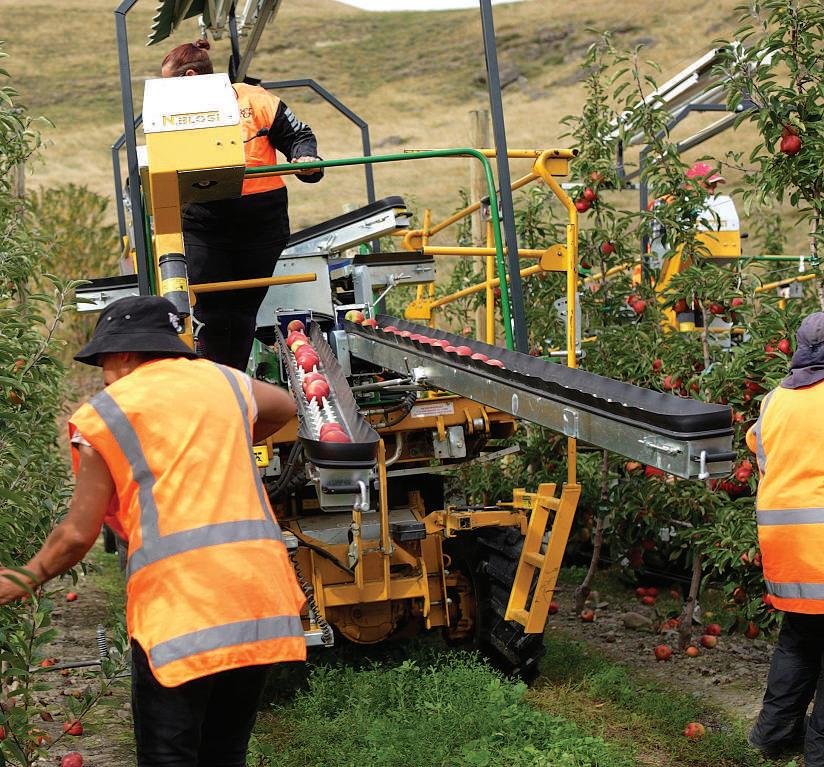
a booming harvest for apples and pears this season. DON SCOTT
The Free Trade Agreement with India means New Zealand-grown apples and pears will have increased access to a market of 1.4 billion people. ABIGAIL DOUGHERTY
Growers have
this season have been perfect, resulting in excellent quality fruit. NEW ZEALAND APPLES AND PEARS
and pears expected this year
offering immense potential for exporters. The agreement includes a world-first reduction on apple access to India.
The deal includes a quota for New Zealand apples and pears to receive a 50% reduction on tariff cut for a large quota of apples – nearly double the recent average exports – during the window from April 1 to August 31, focusing access on counter-seasonal supply to India’s own apple industry.
The reasonable quota allows for significant growth over the next six years.
Pear access into India will have no
quota limitations. The deal is linked to a co-operation plan and further collaboration between the New Zealand and Indian apple industries, which will see technical experts continue New Zealand’s longstanding history of supporting Indian growers with productivity and profitability improvements.
The free trade agreement will deliver unprecedented opportunities for New Zealand’s premium apples and pears in one of the world’s fastest-growing markets, Adsett says.
“India is currently the fifth-largest
economy globally and this agreement holds untold potential for New Zealand’s pipfruit sector.
It will play a pivotal role in achieving NZAPI’s ambition of becoming a $2 billion export sector by 2035.
“While the speed and efficiency of this FTA has been remarkable, in many ways it has also been a long time for our industry.
“Collaboration between Indian and New Zealand apple growers has been ongoing since the 1990s and the first World Bank Apple Industry Development Project.”
New Zealand grows more than
Maximising your milk returns and long-termvalue growth.
Fonterra is focusedondeliveringsustainablereturns back to ourshareholders, through investment into newcapacity, growingfoodserviceand really turning thedialuponingredients
“We’re notjustproducingmilktogether,but we’rebuilding afuturefor ourpeople,our land andour communities.”
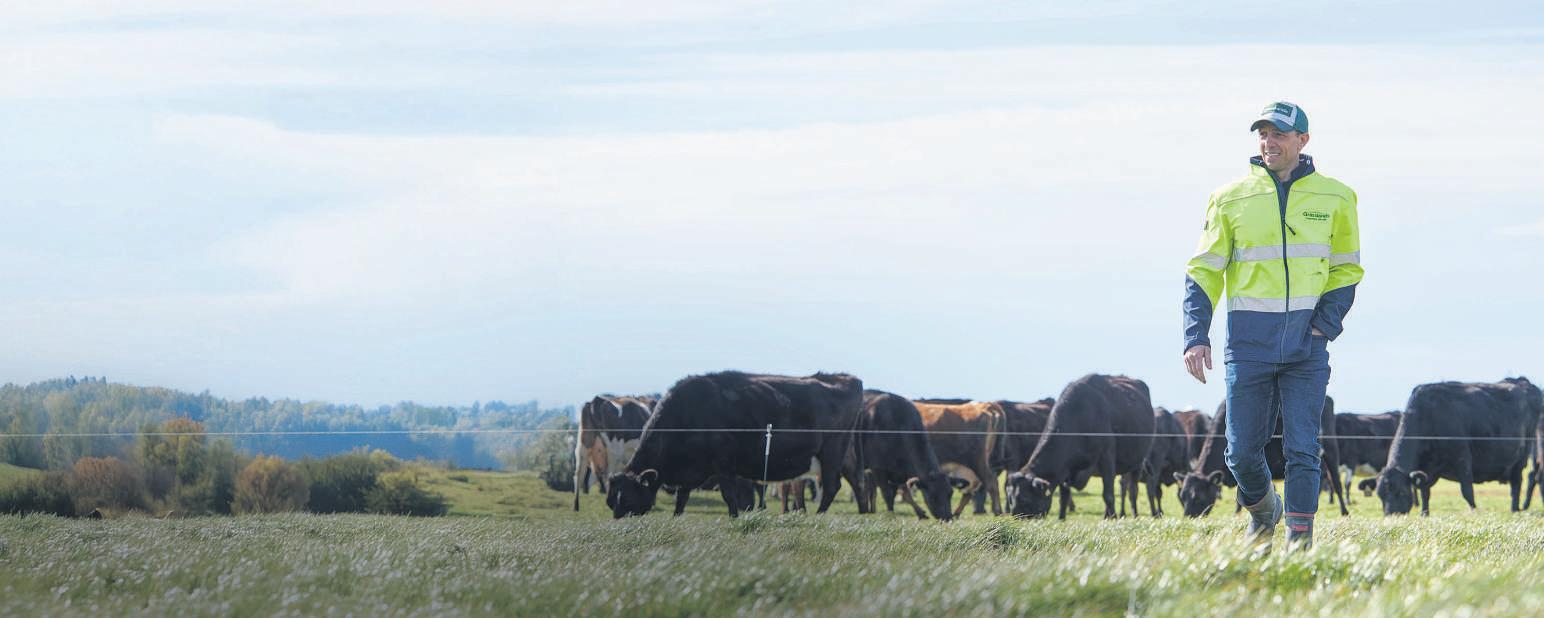
Grasslands CEO Simon Le Heron
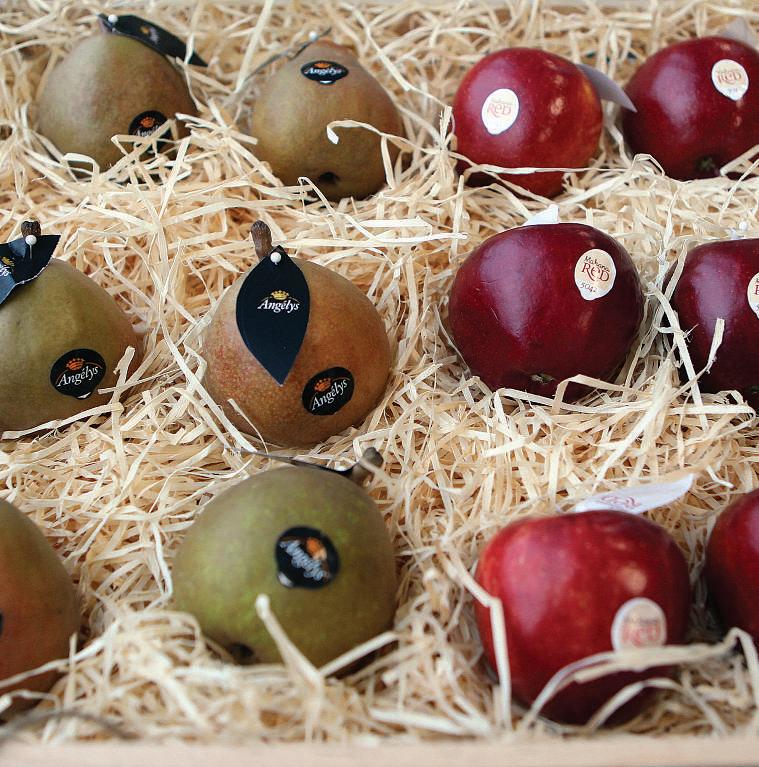
80 varieties of apples from sweet to tart and crisp to crunchy, and a wide range of pears from traditional European pears through to juicy Asian pears (nashi) and new conventional hybrids.
Pear varieties include beurré blanc, taylors gold, packhams triumph and the hugely popular doyenné du comice.
Among the many IP varieties that are grown in New Zealand are the likes of envy, dazzle, jazz, rockit, sassy and PIQA pears. Royal gala still has a strong appeal among many markets, though, and in New Zealand, Kiwis still love a braeburn.
Staff have their work cut out for them as growers have increased productivity despite having fewer hectares planted. NEW ZEALAND APPLES AND PEARS
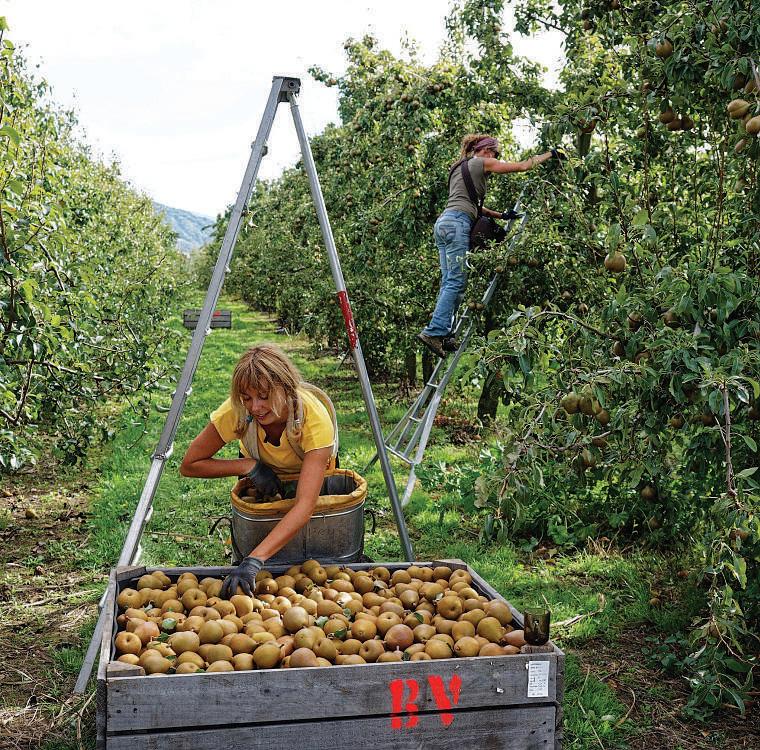
Two young seasonal workers picking pears on an orchard.
Farmers are often high electricity and fuel users, from the cowshed to pumps, irrigation and vehicles. Yes, all of us are interested in monopoly utility costs.
Farm electricity cost inflation has exceeded total farm cost inflation during the past five years and the past decade. In the past two years, electricity cost inflation for farmers has been 18% compared with 2.2% for all farm inputs
The Government has announced plans to contract to build an LNG import facility in Taranaki so power prices don’t spike in dry years, which it said would save Kiwis up to $265 million a year or $50 per household.
The question being asked is this: is it an insurance policy or a costly last resort? It appears to be a bit of both
So why are we here?
Economics 101: rising prices are a consequence of demand exceeding supply. Our electricity is mostly generated from renewable energy sources (80% to 85%). This is largely because of our geography as an island nation with mountains, lakes, relatively consistent wind and rainfall, as well as good access to geothermal resources
The percentage of New Zealand’s electricity generated from renewable energy sources varies each year, depending on the amount of rainfall, and – to a lesser extent – the amount of wind. In a dry year, we need thermal backup in winter because often the sun doesn’t shine, or the solar power can’t be stored and there is little wind.
Unfortunately, politics often trumps economics and in 2018, the Jacinda Ardern-led Labour government banned the granting of new offshore oil and gas exploration permits as part of its plan to transition to a carbon-neutral future.
It failed to understand that fast-start gas plants are our best insurance, and that many industrial users which are now closed are uncompetitive when spot prices are high and/or future prices well exceed $100 per megawatt hour (MWh)
Is LNG insurance or a costly last resort?
The net result was importing brown coal from Indonesia to fire Huntly.
Let’s explain our constraints further Our land of the long white cloud spans two main islands. Electricity in New Zealand is transported, using the national grid, from power stations to households, businesses and large industrial users.
The largest hydro power stations are in the South Island, while the bulk of New Zealand’s electricity demand is in the North Island.
The North Island also contains all of New Zealand’s thermal and geothermal power stations and the majority of the country’s wind farms (which are located away from the population).
The High Voltage Direct Current (HVDC) lines electrically link the North and South islands. These large cables transport South Island hydro generation to North Island demand.
Electricity is difficult to store and, when it is transported between locations, incurs heat losses on the lines. The cost of this lost electricity is included in the price at each location
Line losses between Wellington and Kaitaia are circa 18%.
Each location, or node, in New Zealand has different marginal pricing, reflecting the transport losses and transmission constraints.
Transmission constraints occur when the electricity transported over a line reaches the maximum capacity of that line. This can be exacerbated by outages of generators, or other lines to the same
location – either planned or unplanned.
In 2024, Winstone Pulp chief executive Mike Ryan said energy prices had increased from $100 per MWh in September 2021 to $500 per MWh in August 2024 – note Central North Island nodal spot prices at the time peaked at more than $800 per MWh.
Ryan said power now made up more than 40% of the company’s costs and the increase couldn’t be passed on to customers.
Plant closures happened soon after.
New Zealand’s industrial base – underpinned by cheap energy – is finding energy is no longer a comparative advantage.
As local gas supplies dwindle and the cost of imported LNG is realised, we can expect a similar story of pressure on the industrial base.
The alternative – LNG – is really about containing the volatility in prices
A vertically integrated electricity market does not help.
Gentailers (Contact, Genesis, Mercury and Meridian) control roughly 85% to 92% of generation and about 87% of the retail market.
In a market where high-cost gas or coal is the last marginal unit, keeping supply tight enables higher spot prices, boosting profits for the generation arm.
While generators are investing in new projects – wind, solar and geothermal – the historic trend has shown a preference for maintaining tight supply conditions to maximise profits and shareholder returns.
Offshore electricity trends will also impact New Zealand’s future Solar farms in Australia face profitability challenges primarily due to a flooded daytime electricity market causing negative or extremely low wholesale prices, high grid connection costs and significant transmission bottlenecks.
Solar is only generated during the day and expensive storage (batteries) co-located on site are necessary to sell electricity when it is needed most in the evening. The right location is therefore critical.
Secondly, AI is a massive power and water user – the computing power required for generative AI (which creates new images, videos, audio or text by analysing vast amounts of data) is incredibly energy-intensive. AI is already using billions of cubic metres of water in the United States to keep data centres cool.
Simple ChatGPT searches use nearly 10 times the electricity of a Google search. Creating images is thousands of times more energy-intensive than text searches and can use as much electricity as it takes to charge your phone per image created.
AI may therefore compete for future farm water usage. Likewise, its growth is being powered by fossil fuel generation, with a major trend towards new nuclear generation for baseload supply. How will we generate the power?
In New Zealand, deep geothermal may be a sustainable solution if we can master the technology and make it economic. A reserve of LNG to fire fast-start thermal plants is a form of back-up and insurance. The economics of transporting LNG to New Zealand will be expensive, as we are thousands of miles from the nearest production.
We also don’t have a good record of building new infrastructure on time or on budget. Hence my best guess is, like all taxes/insurance policies, the cost will be higher than we want and it will increase over time.
Higher prices skew the scrum towards alternatives. Expect solar to become increasingly examined by farmers.
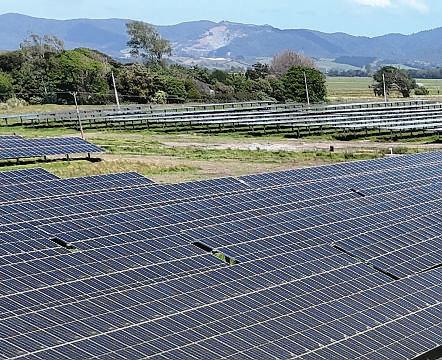
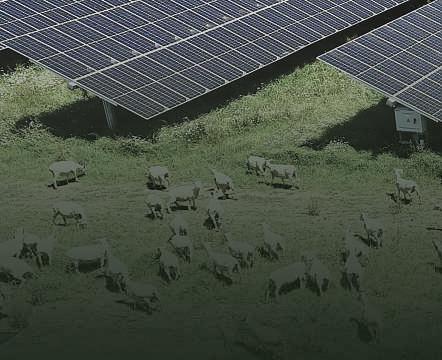
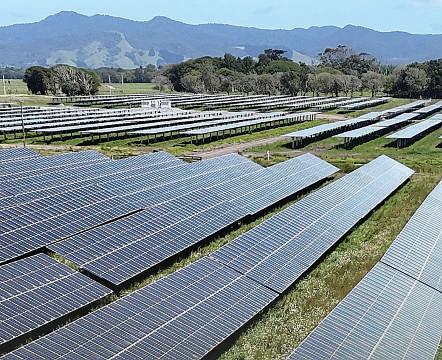
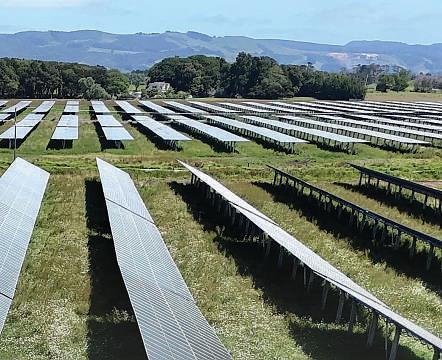
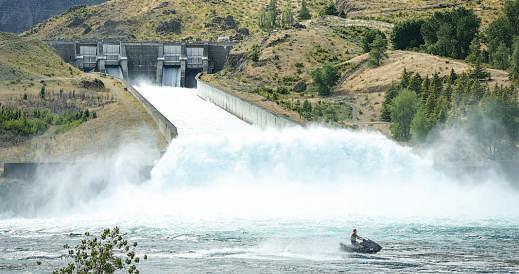
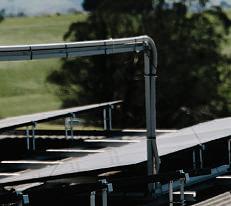
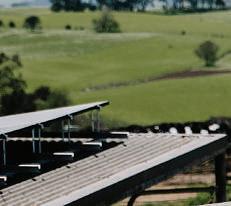
The Kaitaia Lodestone Solar Farm, which shares its location with grazing sheep. Water spills at
Business adviser Gordon Stuart looks at the Government’s electricity move.
Submissions on the proposed legislation to replace the Resource Management Act 1991 (RMA) have now closed and industry leaders all say that, while they support new laws, changes are needed.
Minister for RMA Reform Chris Bishop introduced his planning reform package to the House in December. It proposes replacing the much-maligned RMA with two new bills – the Planning Bill and the Natural Environment Bill, which are designed to separate land-use planning from environmental protection
The Planning Act will focus on land-use planning and regulation.
It will enable the urban and infrastructure development New Zealand needs and will align with the Government’s Going for Housing Growth plan and the 30-year National Infrastructure Plan.
The Natural Environment Act will focus on the use, protection and enhancement of the natural environment. This includes our land, air, freshwater, coastal and marine water and other natural resources.
DairyNZ says the Government’s proposed RMA reform needs further work to ensure it delivers on its intent. Chairperson Tracy Brown said reform was needed, but it needed to be done right.
“We fully support the need for change, but it needs to be practical for farmers and beneficial for the environment,” she says.
Brown says reducing complexity, fewer consents, more consistency and better recognition of the non-regulatory work farmers are already doing are things DairyNZ strongly supports.
“However, after reviewing the legislation and talking to farmers, there are some significant concerns that need to be looked at,” Brown said.
“The proposed changes to permitted activities make things more onerous for farmers. We need clear and practical permitted activity rules for low impact farming activities like grazing, track maintenance and stand-off pads.
“We also have concerns about how environmental limits will be set. We want to ensure they are based on environmental outcomes such as ecosystem health which are achievable and effective in a real working catchment.”
Horticulture New Zealand (HortNZ) says major changes are required to the proposed replacements of the RMA and is urging the Government to strengthen the draft legislation, warning that without key changes the new system could make it harder – not easier – for growers to produce fruit and vegetables.
“Replacing the RMA is long overdue, and we back the Government’s ambition to create a system that is simpler, faster and less expensive,” HortNZ chief executive Kate Scott says. “But the current drafting does not yet match that promise. Along with the rest of the primary sector, we are working hard to ensure the new system genuinely delivers fewer consents, lower compliance costs and better conditions for food production and rural development.
“What’s at stake is the ability of New Zealand growers to continue producing nutritious fruit and vegetables for New Zealanders and our global markets, while also supporting tens of thousands of regional jobs and maintaining the country’s strong export earnings.”
Scott says HortNZ has significant concerns about proposals in the Natural Environment Bill that could introduce what amounts to a tax or auction system for natural resources such as water
“The Bill includes options for marketbased allocation or levies. In practice, market-based allocation could mean auctions or tenders where water, or the ability to discharge nutrients, goes to the highest bidder.
“A levy would effectively be a tax on water or on farming activity. That is not the right approach for food production.”
She says they are also concerned about how the Bill would affect growers operating in over-allocated catchments – areas where freshwater quality is worse than the target states.
The Goverment has proposed new legislation to replace the outdated Resource Management Act. It will be replaced by the Planning Bill and the Natural Environment Bill.
Devil in the detail of RMA replacements
Industry leaders support replacing the RMA, but morework hasto be done. By Sonita Chandar.
DairyNZ says any changes need to be practical for farmers and beneficial for the environment
“
A water tax would be a nightmare for farmers and growers, undermining confidence in our productive sectors.
Mark Hooper
“The draft Bill would not allow permitted activities in any over-allocated catchments, which is more restrictive than the RMA, requiring consenting for many horticultural activities that are currently permitted because they have a low environmental impact. We need a sensible pathway that allows food production to continue while still driving ongoing environmental improvement.”
HortNZ is particularly concerned about how the two Bills expect spatial planning, environmental limits and resource allocation to interact.
“The legislation currently has spatial planning happening first, before limits are set or resources like water are allocated.
“In ourview,it doesn’t make sense to zone land as highlyproductive orset it aside forfood
production without also ensuring growers can access the waterand discharge pathways needed to actuallygrowon that land.”
Federated Farmers says while it supports the intent ofthe Government’s resource management overhaul,a deep dive into the draft legislation has revealed some serious concerns.
Most concerning are provisions allowing freshwaterrights to be auctioned,tendered or levied – effectivelyenabling freshwaterto be taxed,says Federated Farmers RMAreform spokesperson Mark Hooper.
Hooper says there is “absolutely no way” the organisation is going to support any laws that open the door to taxing water.
“A water tax would be a nightmare for farmers and growers, undermining confidence in our productive sectors and pulling a handbrake on economic growth.
“The Government needs to move quickly and strike out any wording that would allow water rights to be auctioned, tendered, levied or taxed.”
Hooper says Federated Farmers welcomed the Government’s earlier commitment to compensation when restrictive overlays –such as Outstanding Natural Landscapes and Significant Natural Areas – are imposed on farms. “But now, when we read the draft legislation, we’re seeing a compensation regime that’s much more uncertain than many expected.
“It relies on proving a ‘significant impact on the reasonable use of land’, which means compensation could be very limited and will ultimately depend on how future court cases interpret that threshold.”
In its submission on the Planning Bill and Natural Environment Bill as part of Resource Management Act reforms, Beef + Lamb New Zealand (B+LNZ) has called for significant changes because the current wording in the legislation does not match the Government’s intent.
Chairperson Kate Acland says B+LNZ supports the Government’s proposals as the existing system is expensive, complex and becoming mired in litigation.
“We welcome the intent to enable primary
sector growth and development, reduce the need for consents, make more activities permitted and reduce litigation. However, as we have said since it was released, the way the legislation is currently written is missing the mark and farmers could be worse off.”
There are several critical areas where the wording in the proposed legislation does not match the intent.
“The language is more stringent around setting and managing limits and would likely see the need for more consents, not less. There are more onerous requirements on permitted activities
“The lack of appropriate guardrails on the exercise of ministerial and council powers in many areas and the lack of requirement to consider costs and benefits could result in significant economic impacts.
“We also do not support the introduction of market-based allocation or levies for resource use, and are concerned that the same farming activity will now fall between two Acts and make the process for farmers more complicated and costly. These are just some of our concerns around the legislation, so we’re pushing hard for changes,” Acland says
Working on behalf of anglers and game bird hunters, Fish & Game New Zealand says the new laws need to recognise valued introduced species
Fish & Game made a submission on the Natural Environment Bill and Planning Bill that sets out the specific changes needed to ensure the newlaws work as intended –protecting the habitats,waterways,and public access that anglers and hunters relyon.
“We support replacing the RMA and we want this reform to succeed,” chief executive Corina Jordan says.
“But the Bills as drafted make it much harder for trout, salmon, and othervalued introduced species to be protected.
They define ecosystem health solely around indigenous species, which means environmental limits can’t be set with trout and salmon habitat in mind.”
Both bills passed the first reading and are expected to become law by mid-2026
JOHN BISSET/TIMARU HERALD
HortNZ says the ability of growers to produce nutritious fruit and vegetables is at stake.
Fish & Game proposes specific changes to ensure the new laws work as intended
‘Huge’ progress made, data shows
Improved audit grades, downwardtrending nitrate levels and a greater level of confidence in irrigation management and efficiency are being seen. By
Eve Hyslop
Canterbury farmers have made “dramatic” environmental progress on-farm, according to Farm Environment Plan (FEP) audit data collected by Environment Canterbury (ECan).
The data showed that the number of farms receiving A grades in Canterbury increased significantly –from just 14% in 2017 to 77% during the 2024-25 period
Over the same period, the number of C and D grades given dropped from 12% to 2%.
The FEP audits were introduced through ECan’s Land and Water Regional Plan in a bid to ensure farm practices were reducing risks to water quality and protecting mahinga kai (food gathering) values.
“The huge progress on stock and nutrient management, handling effluent, pinpointing erosion risk and other aspects
covered by these plans shows the vast majority of farmers are highly motivated to lift their game,” Federated Farmers vice-president Colin Hurst says.
The data reinforced that farmers’ efforts were recognised, Agri Intel director and FEP auditor Charlotte Senior says.
“It can make you wonder if it’s all worth it when you are stuck doing paperwork or looking at the cost associated with
auditing but be assured it is.
“Direction is more important than speed, and the data from the FEP programme shows farmers are heading in the right direction.”
The improved audit grades were also accompanied by downward-trending nitrate levels and a greater level of confidence in irrigation management and efficiency, according to ECan, even if requirements to comply have become tighter.
According to data collected from Central Plains Water Limited’s (CPWL) latest groundwater monitoring over the past five years, 60% of the most monitored wells had shown clear improvement in reduced nitrate levels.
“That’s farmers making changes and sticking with them. Efforts are really starting to add up,” Senior says.
Not only did the data reflect farmers’ commitment to the environment, but it also served as a contrast to criticism from environmental groups, Hurst says.
“Our sector is constantly being criticised by certain greenie groups as uncaring stewards of land and water, yet these results show completely the opposite.
“Farmers are frustrated by this sort of criticism – anyone would be.
“Maybe the findings from this independent monitoring by the regional council will blunt some of the carping we face from some quarters.”
Data showed that the Selwyn district outperformed wider Canterbury’s results by about 10%, a reflection of the early introduction of FEPs in the area. In comparison, FEPs were implemented two to three years later on average across the rest of the region.
FEPs were implemented in 2017 as a tool unique to each farm to help farmers identify, manage and mitigate environmental risk associated with water, soil and nutrients.
Audit grades measure how well farmers are managing the environmental risks associated with their farm practices, from A-D – A being compliant and achieving good management practice, and D being serious non-compliance and not achieving good management practice.
Big improvements are being seen in Canterbury stock and nutrient management CHRISTEL YARDLEY/WAIKATO TIMES
Agri intel director and FEP auditor Charlotte Senior says the data shows farmers are heading in the right direction.
Growing a community Kai project unites Featherston
Food security
Deena Coster
Helping a community achieve kai sovereignty goes beyond just putting food on the table – it’s about enriching people’s lives too.
This belief is what drives Julia Milne’s mahi in Featherston, as part of Paetūmokai Kai Tahi (PKT), which is focused on boosting food security and resilience in the community.
PKT is a community-led initiative that operates under He Puāwai Trust, which was co-founded by Milne.
Before her move to Featherston in late 2024, she ran a similar initiative in Lower Hutt called the Common Unity Project.
During her time in South Wairarapa, Milne has been completing a Health Research Council-funded study through Te Herenga Waka – Victoria University of Wellington on kai sovereign communities.
Milne said it had been a “pretty wonderful” opportunity to return to the idea of what it meant to live in a village.
This involved an intentional step towards community and away from hyper-individualism. “That’s not always good for food security.”
One of the goals of PKT was to break the dependency on food banks and build a more resilient and selfsufficient community. This was at the core of what it meant to achieve kai sovereignty.
For Milne, it was also about “everyone eating from the same table” in terms of food equity.
PKT carried out a survey last October as a way to understand the pressures, aspirations and strengths of the kai systems in place in Featherston.
Of the 75 households that took part, many reported difficulties accessing good kai consistently and also voiced their frustration about rising food prices.
The respondents showed a strong interest in seed sharing, a collective growing project on shared land and finding other ways to buy kai other than from the supermarket.
They also wanted to see sustainable options, rather than short-term solutions, and a focus on building skills and sharing resources, rather than having to rely on charity.
As part of a four-month, community kai pilot, which was funded by the Department of Internal Affairs, PKT was already seeing results from putting the community voice into action
So far, 4000 seedlings had been given away, help had been given to set up 18 home gardens, and a dedicated greenhouse space had been established at Ā Mua Community Resource Centre
Whānau have also joined the Kai Collective, a shared garden established on the grounds at Fareham House.
Milne said one of Featherston’s greatest strengths was its “incredible community spirit”.
About 100 families were part of the
project, which had been co-designed with the community. “We know we are working with what the community wants for itself. This is whānau-led development, really.”
The first phase of the project was to provide as much free food and kai support as possible, Milne said.
The next step will be to set up an education hub at Fareham House to run programmes and courses that will be based on community members sharing the skills they have with others.
Following on from that would be a focus on developing an economic development model that supported growing small businesses and helping people into employment.
“All the pieces of the puzzle are there – it’s how we put them together,” Milne said.
All of this mahi, along with the project’s future plans, is laying the foundation for Featherston to become a living wānanga – a place-based ecosystem of learning, growing, repairing, preserving and enterprise, which results in economic gains.
Milne said her research showed the work under way in Featherston was a model that could be replicated in other communities as well.
While work to embed its gains continued, there were several initiatives planned by PKT in the coming year.
This included plans to host a harvest celebration event, establish a community kitchen and look to host a food festival event next year.
However, while access to food was important, it was not the only pay-off from the initiative.
“I think it’s really important to regard kai security as not just a food issue,” Milne said.
Social cohesion and providing ways to boost people’s mental health were just as vital.
“It’s been lovely to see that change and people emerging from their houses and being part of the community again.”
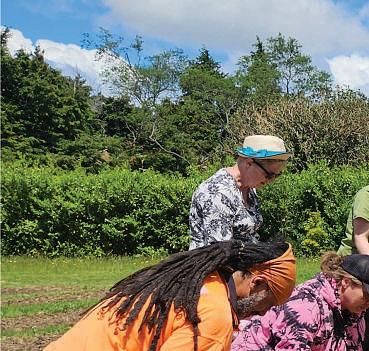
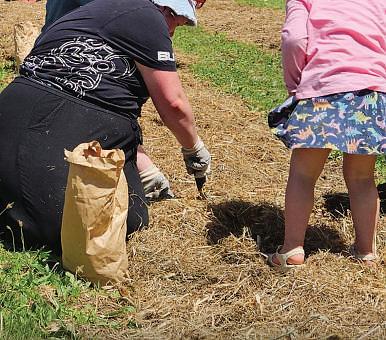
Featherstonians of all ages work in the community garden at Fareham House, established by Paetūmokai Kai Tahi. HE PUĀWAI TRUST
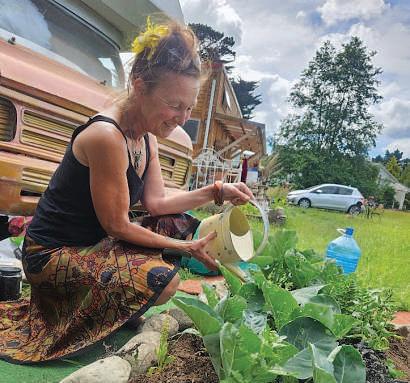
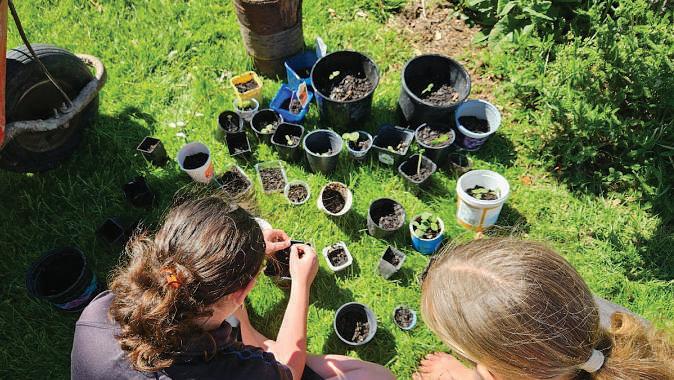
Left: Featherston local Justine Kingdon waters her patch at the Kai Collective’s shared garden at Fareham House. Right: Paetūmokai Kai Tahi recently held a seed-potting workshop at Te Kura o Paetūmokai Featherston School
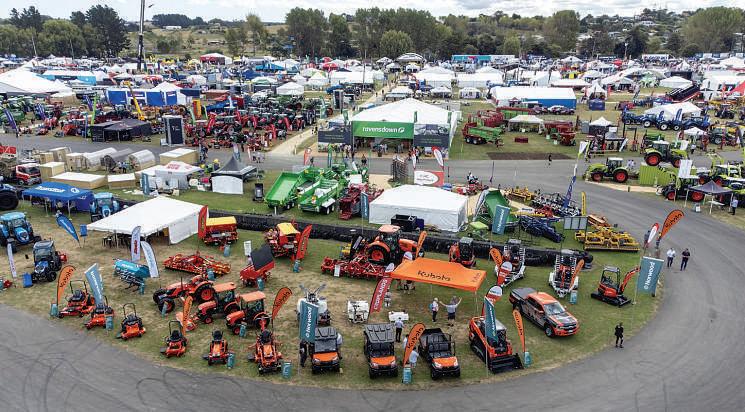
Show and tell: Lots to see at Central Districts Field Days
Manawatū
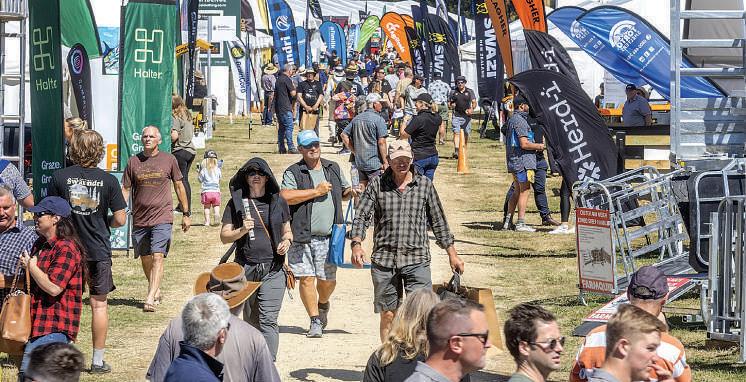
Central Districts Field Days are a highlight in the Manawatū calendar, with tens of thousands of people coming through the gates at Manfeild in Feilding.
From farmers and foodies to techheads and townies, New Zealand’s largest regional field days have something for everyone As well as deals and new products to experience, there is also a wealth of entertainment for young and old.
Sprawling across more than 33 hectares at Manfeild, there will be more than 500 exhibitors with so much to showcase. It’s big, but it’s not too big.
You may be coming for the latest in the agriculture arena, or the new AI tool everyone is talking about There will be great deals to be had for your time off the farm too – with a range of products to make your farmhouse a home If you are hankering for some quality downtime, there’s a huge array of entertainment –and some delicious treats – to offer too.
Back after seven years, the hugely popular Tractor Pull, powered by Brandt, will pull in the crowds at this year’s field days. Enter your tractor, test your machine’s grunt as it pulls the sled down a 100-metre track, or watch tractors large and small battle it out. The Tractor Pull competition will run over three days at Manfeild, from March 19 to 21.
There are also regular competitions that will be a drawcard for spectators:
■ Southern North Island Wood Council Golden Loader Championship;
■ Central Axemans Association Grade Championships;
■ National Excavator Competition;
■ Central Districts Doubles Power Fencing Competition;
■ Manawatū Strongman.
Central Districts Field Days has more than the latest machinery, tech and farm tools, though – there is also a wide offering of lifestyle brands.
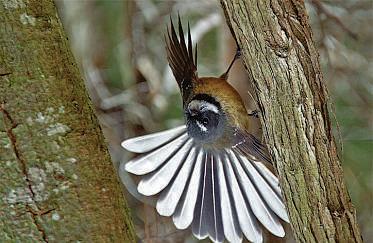
Designed and handmade in New Zealand, Fantail’s Nest has a solution to chilly pram walks in wintertime and peace of mind when on the farm or out and about The company’s pram nest sleeping bags adjust to the length of your pram and are designed for ages 3 months to 3 years – and after your child outgrows their pram, this product can be used as a sleeping bag and snuggle sack.
(Site: M44a)
Don’t follow the crowd, but instead be the coolest kid on the block with original, hand-made designs from Rockabilly. The Hamilton company has agricultural, hunting and fishing gear for “koolcats and koolkitties” – from warm polar fleece to tees, shorts and onesies, your little tike will rock. (Site: L49)
Goat Point specialises in designing and manufacturing corten steel garden art. It will have those and other in-ground or wall-mounted garden art at this year’s event. The family-owned business is based in Wellington. Owner Aaron will be there to chat about ideas you may have, as he also does commissions. (Site: LC4)
Are you looking for special jewellery pieces for a birthday, wedding, or anniversary? Febuleux Vous (fabulous you) has a range of yellow and rose gold and silver jewellery – even an equestrianthemed selection (think stirrups and horse
charms). Some purchases also include a donation to Equestrian Sports NZ –just in case you needed another reason to treat yourself or a loved one. (Site: RL54)
Sixteen-year-old Jess Hindry admits to having a full-blown obsession with farming, fashion and horses. She wanted clothes that could handle a bit of chaos, look sharp over the years and still get a few smirks at the local dairy, so she designed them herself. The Tararua teen offers shorts, stubbies and rugby jerseys that she designs “usually on the back of a feed sack or while plaiting a horse’s tail”. They are then made in Pakistan and tested, she says, on real-life farm days “where you spill your drink, lose your dog and still call it a win”. (Site: L422)
For the young at heart, there will be free Dungeons & Dragons sessions at Gamersphere NZ. It specialises in board games and hobby products and will be providing free gameplay tables where attendees can sit relax and enjoy a board game or two. (Site: H20)
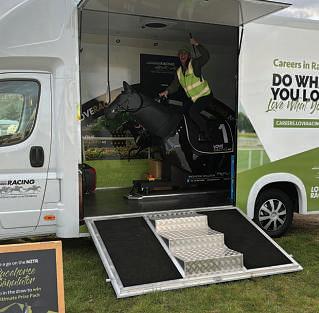
Teaching children about the importance of trees, the New Zealand Farm Forestry Association will be promoting alternative species, giving seedlings away to kids so they can plant them and watch them grow in the years to come. There will also be a Waratah simulator – used by train operators of forestry machines to fell trees – for people to try out (Site: AG15/16)
As you plan, your first bargain will be to save money by pre-purchasing your Central Districts Field Days ticket – you save money and you save time queuing at the ticket kiosk too. Go to: cdfielddays.co.nz
Born and raised on farming
Meet teen James Clark, the next Ravensdown Scholarship winner studying at Lincoln.
By Tony Benny
Young farmer James Clark’s desire to get through his studies at Lincoln University without taking on a student loan just got easier with the awarding of the 2026 Ravensdown Hugh Williams Memorial Scholarship – a $5000 per year cash grant for the remainder of his studies.
Born and raised on a sheep and cropping farm at Mayfield in Mid Canterbury, 18-year-old Clark has always enjoyed farm work, but says he wants to broaden his agricultural knowledge and expertise with a Bachelor of Agriculture
He’s just started his second year at Lincoln.
“I think at one point, I wanted to be a crop duster pilot, but otherwise farming has always been more of my passion I’ve never really wanted to go live in the city, to be a banker or something like that.
“I’ve always wanted to do something with my land and to be more than just a farm worker, I needed to have more science and education,” Clark says. He works on the family farm at weekends to help pay his way at university and says the scholarship will make a
big difference “Winning this scholarship eases the financi pressure for me. I’m grateful to Ravensdown and to the panel for selecting me. It’s a real privilege.”
As he absorbs agricultural knowledge at university, back home on the family farm his parents David and Jayne are making changes, recently selling all their breeding ewes with a view to changing the livestock mix on the property
Bachelor of Agricultural Science.
James Clark
“We have had quite a problem with drench resistance, particularly in the ewes. We’re getting triple resistance and that’s had quite an effect on some of the growth rates that we were able to get out of our sheep,” Clark says.
They’ll still buy lambs to finish, alongside growing crops, but for the first time since moving to the farm 30 years ago, his father plans to run cattle too.
While Clark understands the reason for the changes, he’s still a bit young to have a say in running the farm. “I’m involved a little bit, I have conversations and discuss stuff with Dad, but at this point, I don’t have that much input There is a bit of kind of looking to the future, a bit of, ‘James, what would you like to do?’”
In the more immediate future, he is considering extending his three-year Bachelor of Agriculture course, studying for an extra year to turn it into a
Marlborough
Climate
Marlborough has just had its wettest January in more than three decades, and the last day of the month had the highest soil moisture on record for that day.
Bioeconomy Science Institute scientist Victoria Raw said in her monthly report that Marlborough had 108 millimetres of rain in January, based on data from the Blenheim meteorological station in Grovetown.
Last year was the wettest January since 1995, which had 121.9mm, she said.
“There were six days with rain events of more than 5mm per day, with the largest rain event delivering 25.2mm on January 21, 2026,” Raw said.
The wettest part of the month was between January 15 and 21.
The report also noted that the “exceedingly dry” soil conditions experienced in November and December continued through until January 13, when the soil moisture dropped to 12.5%.
The rain that followed during the next 11 days raised the soil’s moisture to 33.9%, and by the last day of the month, it was at 28.7%, making it the highest measurement ever recorded for January 31
’m trying to pick up some commerce and managementrelated papers too, so I have an understanding of that sort of stuff as well. Honestly, I’ll take any opportunity as it comes.”
His plan is to eventually return home to farm, but he doesn’t expect to do that as soon as he graduates.
“In the meantime, I’ll probably spend the time going around other places, building up equity, but also just building a whole lot of knowledge and seeing what’s out there, what I hate, what I like and what direction I want to go in the future.
“I’m not actually sure what I’m going to come home to and what the shape and system the family farm will be in, so part of the reason for coming to Lincoln is just to get a big, big, wide overview of the sector so whatever I come home to, I can do it well.”
Ravensdown chief executive Garry Diack says the panel was highly impressed with Clark’s application.
“James is exactly the kind of young farmer this scholarship was designed to encourage. We recognise the passion he has for agriculture and the long-term success of the industry.
“The country relies on agriculture and the next generation of farmers will help shape the future of the industry. The sector needs young farmers like James.”
Raw said that during the period from early October to the end of January, the moisture levels sat between the 13% to 25% range, which included “very dry soils”.
Even so, Marlborough was unable to keep the sunshine crown it won by getting the most sunshine hours in 2024 The region was deposed by Taranaki.
In January this year, Marlborough recorded 212 2 sunshine hours, which was its seventh-lowest amount for a January on record. There were 14 days with fewer than five hours per day of sunshine, and two days had 0 hours of sunshine.
The average temperature was 18.1C; the hottest day being January 9, when temperatures hit 31.6C.
“For those who can remember, January 2025 had an average temperature of 16.8C, which was Blenheim’s 12th coolest January to be recorded,” Raw said.
“Average daily wind run in January 2026 was 228 kilometres, just 87% of the long-term average.”
She said despite most of the month being “relatively calm”, the daily wind run picked up “quite substantially” between January 8 and 13
January 11 recorded a total of 536km of wind, which was twice the long-term average, with gusts of up to 67.2kph.
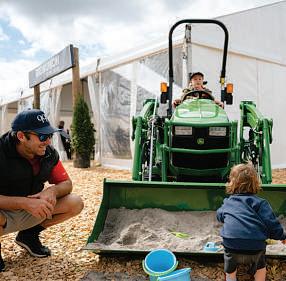
From small kids to big kids at heart, the field days can keep everybody entertained.
14 ScienceandResearch
Producing an ‘epic masterpiece’
Brewing
Catherine Hubbard
In the free-draining river gravels of Tasman, a new variety of hops nears harvest.
Described as a “next-generation” hop variety, the NZ Rhapzody has been more than five years in the making thanks to a joint initiative between Clayton Hops, New Zealand’s largest hop grower, and the Bioeconomy Science Institute’s hop breeding team.
Clayton Hops chief executive Paul Teen said he is excited about the commercial launch of the variety, which comes at a time when the industry is facing challenges.
US tariffs have altered the playing field, brewers have gone out of business and craft beers have “taken a hit” as a more expensive product while the cost of living bites. All four of Clayton Hops farms in Tasman – Battery Hill, Mt Arthur, Blue Rock and Korere – were underwater at times during last year’s June and July extreme rain events.
After that dark winter, Teen waxed lyrical about NZ Rhapzody, the first variety to come out of the initiative, dubbed the Clayton Innovation Project.
The hop was planted as a seedling at the Bioeconomy Science Institute’s Motueka research centre. It was selected for its strong yield, chemistry and sensory qualities and trialled for five years in advanced selection plots.
It has already been brewed in trials in Canada, China, Australia, the United States, Europe and the UK, as well as on our shores. This year’s 10-hectare
harvest, this month, will be the first to be commercialised.
Teen said the variety is very diverse in terms of some of the flavourings found by brewers and tasters.
“It’s intensely tropical, but it does have a really distinct New Zealand sauvignon blanc flavour profile.”
Feedback from testing in France is that the hop’s free thiols – or highly aromatic compounds – are “off the charts”.
Teen said the name was chosen for several reasons: “We think of brewers as rockstars and NZ Rhapzody as an exciting new instrument for them to create their own epic masterpiece.”
As to why the hops – the cones of the hop plant – do so well in Tasman, temperatures and whēnua have major roles to play.
With a mix of ground conditions and soil types made up of silty and loamy soils,
it is the valleys’ intense cold winters that have a positive effect on the hops’ flavour profile, the health of the hops, and their agronomy.
“Good cold winters actually help them come out of the ground stronger because they’ve been shut down,” Teen said.
When the crops are harvested, they are cut off completely, and the crowns are left in the ground over the winter, when they go into dormancy.
The crowns then emerge and grow new shoots as soil temperatures warm in September and October. In terms of a comparable plant, Teen said hops and marijuana are in the same family and marijuana is also harvested for its cones.
The NZ Rhapzody variety will be showcased around the world after its harvest event and launch party on March 17 travelling to: High Country Hop Harvest in Beechworth, Australia; the Craft Brewers Conference and BrewExpo America in Philadelphia, in the US; BrewAsia in Ho Chi Minh, Vietnam; and BrauBeviale in Nuremberg, Germany.
Bioeconomy Science Institute hop breeder Kerry Templeton said NZ Rhapzody has been a firm favourite with the breeding team for a while, consistently delivering good results.
NZ Rhapzody isn’t the only thing innovating in Tasman hops. Three years ago, Clayton Hops built a new hop processing, palletising, packaging and cool store facility, nestled away on a 16-hectare block of land in Brightwater.
Teen said its cryogenic line for concentrated pellets is the only one in the southern hemisphere – making sure value is “locked in” to New Zealand rather than being shipped overseas for processing.
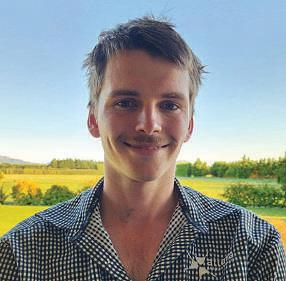
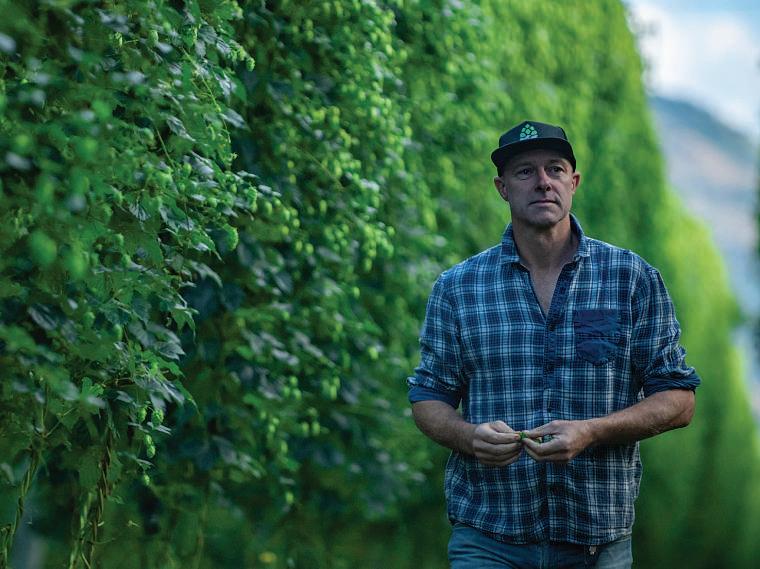
Clayton Hops chief executive Paul Teen says the new variety has a “really distinct New Zealand sauvignon blanc flavour profile”.
Science for smart water strategies
Water management
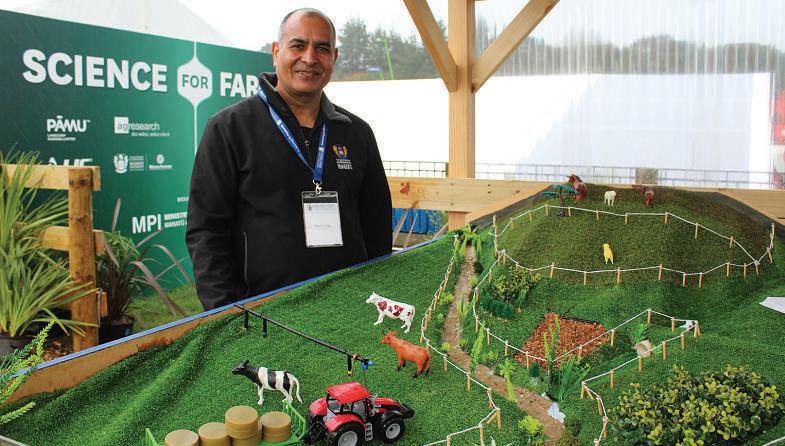
At the recent Global Forum for Food and Agriculture (GFFA), Massey University environmental hydrology expert Professor Ranvir Singh delivered a keynote address, sharing highlights from his research with a clear message that without engagement, even the best science will never reach its potential.
The GFFA, held as part of Green Week in Berlin in January, brings together leaders from politics, business, science and civil society to discuss solutions for global food security This year’s focus on water highlighted the need for innovative, systems-based approaches to manage water across land, freshwater and marine environments.
Born on a small farm near Delhi, India, Singh has spent his life immersed in water management, from helping with crop irrigation in his childhood to studying environmental engineering in the Netherlands and water quality challenges in the United States.
For the past 16 years in New Zealand, he has combined research, teaching and community engagement to improve water use efficiency and water quality in agricultural landscapes.
Taking the stage in front of scientists, policymakers and industry leaders, Singh outlined several key principles for sustainable water management: protecting and optimising water flows within natural limits, measuring outcomes in terms of nutrition per drop rather than just crop yield and designing multifunctional farms that balance productivity with environmental stewardship.
Another critical point he emphasised was the importance of communityled, science-informed catchment collaborations.
“Without people driving the change or taking the steps, we can do whatever science we want but the impact won’t come,” Singh says, highlighting the Catchment Solutions Project as an example of this approach.
The Catchment Solutions Project (CSP) was a three-year initiative led by Singh and Massey’s Farmed Landscapes Research Centre.
Funded through the Ministry for the Environment’s Essential Freshwater Fund, with co-funding from Hawke’s Bay Regional Council and in-kind support from DairyNZ, the project aimed to translate hydrology research into practical tools for farmers, helping achieve measurable improvements in freshwater quality across New Zealand. CSP worked closely with farmers to understand water quality challenges across catchments, designing interventions that are both scientifically robust and practical.
Examples include:
■ Woodchip bioreactors, which use natural soil microbes to break down nitrates in drainage water,
■ Constructed wetlands, which slow runoff, allowing plants to filter out contaminants before water enters streams,
■ Controlled drainage systems, which give farmers flexibility in managing artificial drainage to reduce nutrient loss.
A core part of the project was a collaborative, co-learning approach, bringing together catchment
communities – including iwi and hapū perspectives – with scientists, advisers and local stakeholders.
Together, they identified key water quality contaminants and their critical flow pathways, and co-designed innovative edge-of-field mitigation structures like detainment bunds, which reduce contaminant loss from farms to waterways.
Over the course of the project, CSP ran masterclasses, workshops and field days across multiple regions.
These activities reached dozens of farmers, environmental advisers, council representatives and students, equipping them with practical skills to manage water sustainably while maintaining farm productivity.
CSP also engaged the wider community through education and environmental stewardship programmes, including inviting 30 students from local schools to participate in a planting day downstream of a CSP-built woodchip bioreactor.
The students planted 780 native trees while learning about biodiversity, freshwater health and ecosystem function.
“The Catchment Solutions Project demonstrates that meaningful environmental outcomes depend on
“
By connecting science with communities, we can design solutions that actually work in practice.
Professor Ranvir Singh
collaboration, local knowledge and hands-on engagement.
“By connecting science with communities, we can design solutions that actually work in practice,” Singh explains.
Looking to the future, Singh highlighted during his GFFA keynote that a major goal is to make agricultural landscapes multifunctional – productive, resilient and environmentally responsible – by aligning land use with the land’s natural capacities.
He emphasised that this can only happen by supporting people, from farmers to communities to stakeholders, to be the bridge between research and impact.
Building on the success of the Catchment Solutions Project, the team plans to embed its learnings into Environmental Sciences undergraduate and postgraduate teaching, including the 121313 Catchment Solutions course.
There are also plans to develop professional short courses for rural advisers and catchment coordinators, continuing to build the capability and capacity needed to translate hydrology into innovative water quality mitigation practices across farms and catchments
Parasite test may be turning point for industry
Livestock
Eve Hyslop
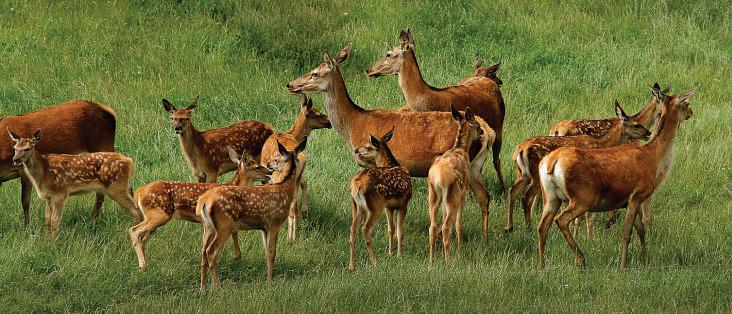
Abreakthrough test has been discovered to detect parasites in farmed deer, estimated to save the industry $50 million a year.
Parasite detection in deer is difficult due to the lack of symptoms shown and traditional tests built for use with other livestock are unreliable, so this new test will aim to detect parasites more accurately through DNA in faeces. The test is being trialled using polymerase chain reaction (PCR) technology through a partnership between The Bioeconomy Science Institute Maiangi Taiao and Disease Research Limited (DRL).
Parasites, like gastrointestinal worms or lungworm, can reduce growth and bodyweight and in severe cases cause death, Bioeconomy Science Institute scientist Bryan Thompson says.
“With New Zealand home to the world’s largest population of farmed deer, improving parasite management is critical to protecting this $300 million industry.”
Only one drench is available to deer farmers in New Zealand, Thompson
says, so this breakthrough will not only provide an accurate tool for farmers, but it could reduce drench resistance and support herd health management
Deer Industry New Zealand (DINZ) has funded the trial and policy and research manager Emil Murphy says it serves as an investment in providing farmers with greater certainty for parasite management
“Our goal is to help farmers move beyond a ‘drench and hope’ approach.
“New Zealand is the only country
farming deer at this scale, so we’re leading research that hasn’t been done anywhere else in the world.”
Murphy says that once validated, the new test will be able to detect multiple parasites and diseases simultaneously.
“Farmers will get multiple insights from a single sample, helping them make the best decisions for their herd.”
Early results from the trial have been “highly encouraging”, Thompson says “PCR amplifies DNA millions of times, making it much easier to detect whether
a parasite, virus or bacteria is present in a sample. For this project, DRL’s diagnostic experts analysed historic faecal samples from our Invermay farm.
“Applying PCR specifically to parasite detection in deer is new territory, and the early signs point to a turning point for the industry.”
Research on the test began back in 2016 with funding from the Agricultural and Marketing Research and Development Trust (AGMARDT).
Now, the focus on the project has switched from detecting the parasites to interpreting the results, DRL laboratory manager Simon Liggett says.
“Just because an animal has parasites doesn’t mean they’re affecting its health. Some parasites are harmful, many are not.
“Our role is not just to detect parasites but to interpret the data and help farmers understand what action, if any, is needed.”
When the test will become available commercially is not yet known due to results from further trials expected to take place this autumn.
In the meantime, farmers are encouraged to send in samples for Johne’s disease testing in order to see additional parasite information.
New Zealand is home to the world’s largest population of farmed deer, so parasite management is critical to the industry. BIOECONOMY SCIENCE INSTITUTE
16 InnovationandTechnology
Embracing precision fertiliser technology
Sarah Bassett Stone to
Ravensdown Agri Manager Sarah Bassett encouraged the Stone family to join the pilot as an opportunity to use the latest precision mapping system to target nutrients more effectively across their farm. By Linda Chalmers.
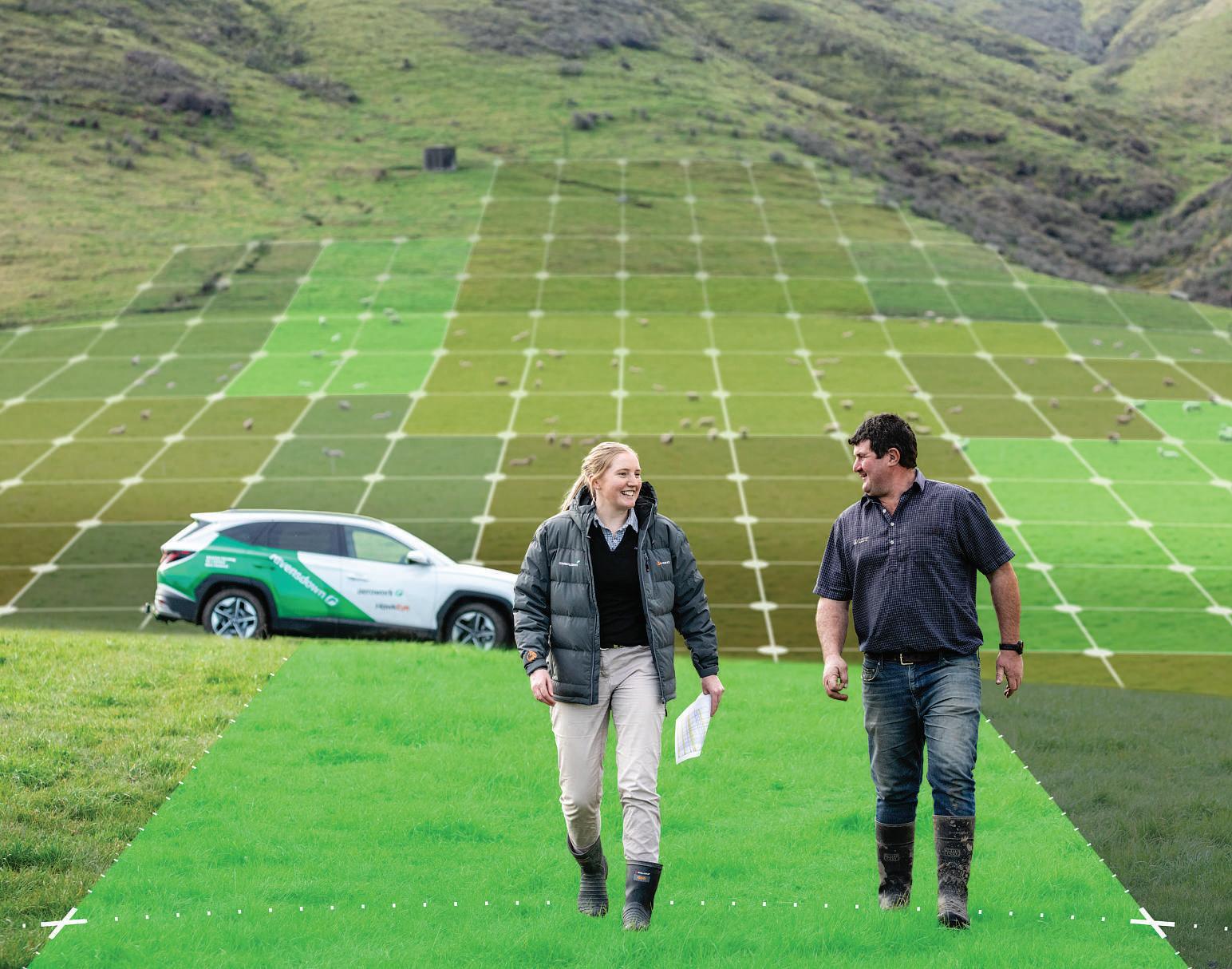
Adam and Yvette Stone are among the first dairy farmers in New Zealand to trial Ravensdown’s HawkEye Pro, a new precision fertiliser technology designed to improve efficiency, accuracy and environmental outcomes.
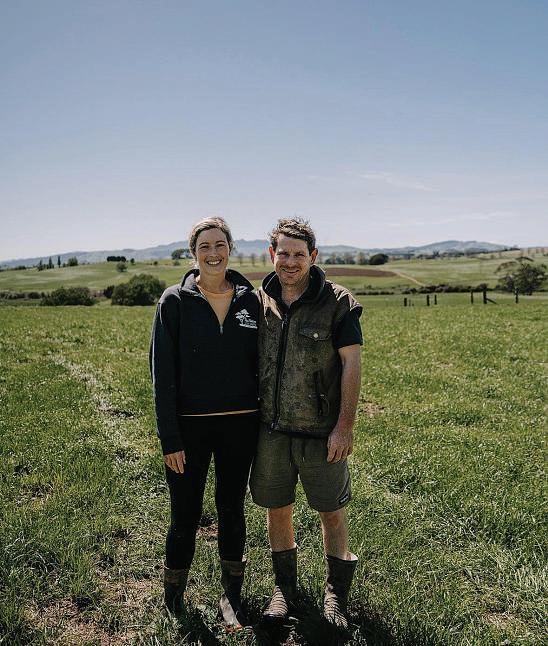
The couple contract milk for Adam’s parents, Kieran and Karen Stone, across two of the family’s four farm blocks near Dunsandel in Canterbury – they manage Home Farm (157 hectares), milking 620 cows, and Ashford Farm (130ha), milking 440 cows in an A2 herd.
The wider Stone farming operation consists of three dairy blocks and a runoff block, totalling 635ha.
All three dairy blocks participated the 2025 HawkEye Pro pilot, with most of the fertiliser applications occurring in November 2025. Spreading Canterbury conducted the superphosphate application using variable-rate maps generated by HawkEye Pro
Ravensdown agri manager Sarah Bassett encouraged the Stone family to join the pilot as a chance to use the latest precision mapping technology to target nutrients more effectively across their farm.
“The Stone family run a successful farming operation and are interested in technology and how it can contribute to farm efficiency. I saw them as obvious candidates to get involved in the HawkEye Pro pilot, which was trialled on 18 farms across New Zealand early last year,” Bassett says
“With overall soil fertility high and a continued strong clover-ryegrass pasture performance, the Stones had previously held off applying fertiliser
during low dairy payout years without compromising pasture growth. We undertook whole-farm soil testing during winter last year, so the farms were set up well for the variable-rate application using HawkEye Pro from November 2025.”
Stone says: “We needed to correct nutrient levels after several lowapplication years. Overall, with HawkEye Pro, costs remained comparable to the last full fertiliser programme across all three dairy units – while ensuring nutrients were directed exactly where needed. The family’s focus is on long-term gains and I believe this innovative technology will support us well in the years ahead.”
For the Stones, one of HawkEye Pro’s biggest advantages is clarity The variable-rate maps closely matched what they observed in each paddock, reinforcing their decision-making with
“
This is
about smarter farming – delivering accuracy, efficiency and sustainability.
Mike White, Ravensdown chief science officer
reliable data. “It is the first time a tool has visually confirmed what we already intuitively understood about nutrient variation across the farm,” Yvette says.
Ravensdown chief science officer Mike White says: “For dairy farmers, HawkEye Pro introduces new functionality that recommends and withholds capital phosphate requirements using whole-farm soil tests and pasture information.
“In addition to producing fertiliser maintenance recommendations currently available to sheep and beef farmers, new features for dairy farms include the ability to factor in effluent application and apply fertiliser by paddock or block.
“Farmer input, including by the Stone family, has been critical to the successful delivery of this release. We have been developing this technology alongside dairy farmers over the
last two years, which included their involvement in the pilot in early 2025.
“We talk with farmers every day and get a lot of feedback that dairy farmers can’t wait to use this technology. They can see the real value in HawkEye Pro for their operations Our team is also engaging with aerial and ground spreaders across the country to ensure the benefits are not just theoretical – the practical application of the technology on farm is there too.”
New Zealand research shows precision fertiliser plans can deliver benefits of between $50 and $150 per hectare through efficient placement and rate selection of fertiliser, resulting in increases in land productivity where soil fertility is holding it back or minimising the risk of over-applying fertiliser where appropriate.
Fully integrated with the existing HawkEye platform, the patent-pending software uses soil data to generate variable-rate fertiliser maps with 10x10-metre precision, equivalent to 100 soil tests per hectare.
“Superphosphate-based products, based on their physical characteristics, are naturally well suited for conducting variable-rate plans generated by HawkEye Pro,” White says.
“Regardless of fertiliser costs, we’re leveraging digital capability and spreader technology to maximise returns. This is about smarter farming – delivering accuracy, efficiency and sustainability.”
The technology offers the Stones both confidence and insight. As they prepare to move into a sharemilking role next season, they see tools like HawkEye Pro playing an increasingly important part in long-term farm performance and environmental stewardship.
Adam and Yvette Stone with Sarah Bassett in February.
Event submissions are now open for New Zealand’s biggest tech and innovation festival, which kicks off later this month. It will highlight advances that are good for the world and help transform businesses, educators and our community for the digital year ahead.
Techweek is New Zealand’s premier annual festival of tech innovators, companies, products and users. This event lets the country see tomorrow’s tech first, providing a celebration of the people, ideas and technologies working to create a better tomorrow.
Techweek is a nationwide series of events, showcasing and promoting Kiwi innovation and providing a platform where people can meet, share ideas and create connections to enhance the future It also aims to champion our technology success and opportunities to the New Zealand public and the world, and advance the growth of tech here.
Since being established by NZTech and the Hi-Tech Trust in 2012 to coincide with the Hi-Tech Awards, the week aims to build enthusiasm around new technologies being developed in New Zealand.
Its main goals are to:
■ Grow awareness of the value of technology to our economy;
■ Increase understanding of the opportunities tech offers to New Zealand;
■ Increase uptake of technology here.
The nationwide programme is developed and curated locally by Techweek’s regional partners, with all of the programmes and sessions created by local people who run hundreds of events across the country.
“Anyone can be part of the programme
individuals, startups, community groups, schools and everyone in between. If you have a story to tell, a skill to share, or an audience to inspire, Techweek is your platform,” its spokesperson said
Tech for a better tomorrow
By Sonita Chandar.
Organisers say this year’s theme, The Art of the Possible, is their invitation to the nation to shift focus from what we needed yesterday to what we want for the future –and to start building it now.
“We can’t wait to see what you’ll bring to Techweek this year,” the spokesperson said.
The Techweek26 programme is guided by six themes, to help tailor event content for maximum impact:
■ Foundations – Tech strengthening our national infrastructure;
■ Future – Emerging technologies
and breakthrough innovation;
■ Growth – Tech growing New Zealand’s economy;
■ Life – Tech making everyday life easier;
■ Social Good – Tech solving social challenges;
■ Governance – Frameworks to guide tech responsibly.
The audience for Techweek covers business, government decision-makers, educators, rangatahi, community groups and the general public.
“We encourage you to create events to serve one of our four key audiences – so
can contribute to government conversations shaping policy, regulation and the role of tech in New
future.
Techweek spokesperson
when planning your session, think about which group you’re speaking to most clearly,” a spokesperson said.
“The New Zealand technology ecosystem helps founders, researchers, investors and industry leaders connect, share knowledge and grow together.
“International visitors and media showcase how Kiwi innovation is world-class, attract partnerships and tell New Zealand’s tech story to the world.
“Your tech can contribute to government conversations shaping policy, regulation and the role of tech in New Zealand’s future. Tech can also help inspire the next generation of innovators by making technology accessible, exciting and relevant to their world.”
Organisers say running an event gives entrants an advantage as they will have regional support, access to marketing tools, such as branded assets, and promotional backing to help spread the word.
Events will be featured in the official Techweek26 programme, with both national and international promotion. Entries close on April 30, while Techweek26 will be held from May 18–24.
A2 Milk reveals strong revenue
Business
Rob Stock
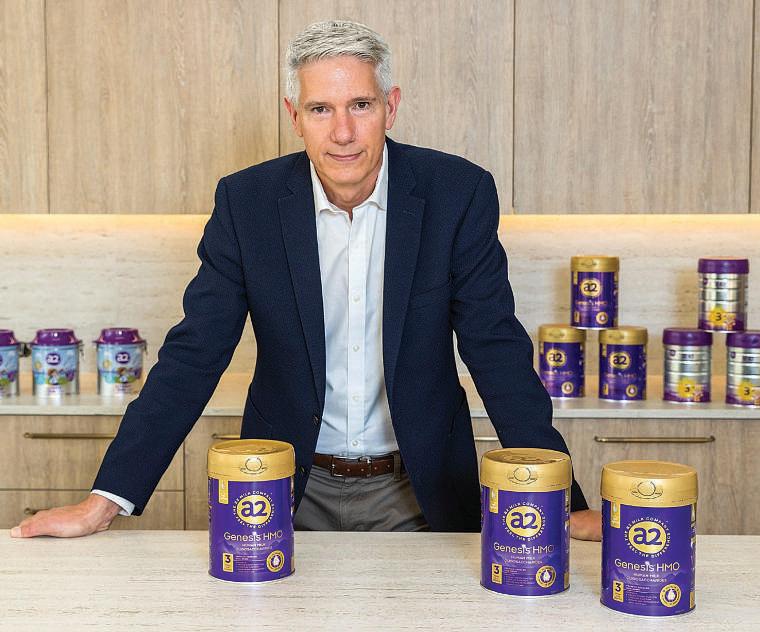
The A2 Milk company has posted “strong” revenue and margin growth, and the infant milk formula company has hopes of a Chinese baby bounce in 2026 to further buoy its prospects.
The NZX-listed dairy company specialises in infant milk formula, but it is aiming to profit from both ends of the human life cycle and is enjoying growth in geriatric nutrition.
It told shareholders last month that it had grown its infant milk formula revenue growth of 13.6% during the six months to the end of December, which was the first half of its financial year.
Net profit after tax was $112.1 million, up 9.4% on the first half of last year.
And A2 Milk was looking forward to future growth as the Chinese government remained focused on increasing the number of babies born in coming years
In January, China reported that its birth rate for 2025 was a record low at 5.63 babies per 1000 people, leading to the country’s population falling for the fourth year in a row.
However, A2 Milk’s managing director and chief executive, David Bortolussi, says: “There’s good reason to expect that the number of newborns will be up in this calendar year.
“When we look at the marriage data statistics, you can see the last three quarters are up around 20%. The first quarter was down, but the full year is up over 11% over.”
Bortolussi says lifting the birth rate is a “national agenda” item for the Chinese government, and it has implemented subsidies for new parents.
And he says: “We’re hopeful there
might be some more policy direction and stimulus over the next year or two in relation to stimulating the birth rate.”
A2 Milk makes products from milk that contains only the A2 protein, making it easier to digest Its business is roughly 70% infant milk formula, 20% liquid milk and 10% other markets, including its growing childhood and geriatric product ranges.
Bortolussi says its liquid milk sales had been going well in the United States, where it was not affected by tariffs
imposed by US President Donald Trump because its supply and production were all US-based.
A2 Milk’s US revenue grew by 29% to $83.2m, although the operation still made a loss. However, A2 Milk’s market value share in the premium milk category for the grocery channel increased to 2.5% from 2.2%, and it was a growing category.
Under the polarising and controversial US secretary of health and human services Robert F Kennedy Jr, new dietary
guidelines for Americans have been issued, emphasising whole foods and fullfat dairy.
“The shift back towards whole foods and full fat dairy has been a significant trend,” Bortolussi says. And “the focus on protein has also been a key driver”.
This provided an opportunity for future growth for A2 Milk.
When sales growth of other products, including liquid milk and geriatric products, was included, A2 Milk’s revenue increased 18.8% in the first half of its financial year to $993.5m.
While A2 Milk has been growing market share in China, both in English-label infant milk formula primarily sold through e-commerce channels and Chinese-label infant milk formula sold through brick and mortar retail stores in China, it may have just got a one-off boost from the infant formula crisis of its major rival Nestle.
Nestle initiated a global, precautionary recall of specific batches of infant formula due to potential contamination by a toxin that can cause food poisoning, with symptoms such as vomiting.
“We don’t like to comment on that because we don’t wish any quality issues on any consumers or brands It’s a very difficult situation for all,” Bortolussi says.
“But in terms of any business impact to us, it’s too early to tell whether they’ll have any positive impact on us.”
Ahead of the announcement, Craigs said it believed the impact of rivals’ mistakes had been positive and that Nestle had lost a “meaningful” part of its market share.
A2 Milk shares have slipped in value since the turn of the year as a result of the disappointing Chinese birth rate.
However, last month’s announcement saw the company increase its full-year earnings guidance and declare an interim dividend at the higher end of its policy range.
Teen finds focus on the job
Dairy farming
Sahkyla Graham is still a teenager, but she has no problem getting up early to do the milking.
It’s a good way to start the day, the 18-year-old says.
“By the time you’ve done the farm work, you feel fresh and awake, ready for the day. It’s quiet and peaceful, and there’s fresh air.”
And farming is her antidote to the lure of social media and addictive scrolling, she says.
Graham graduated on February 13 with a New Zealand Certificate in Primary Industry Operational Skills (Level 3) which she completed parttime through the Secondary Tertiary Pathways programme while a student at Ōpunake High School
This year, she will study for a New Zealand Certificate in Farming Systems (Level 3)
And she’s been keen to share her new-found knowledge about farming tools, technology and the uses of social media with her father, Robert Gilligan. He now realises social media can be educational, as well as useful in creating a supportive community among farmers: “My dad loved it when I’d come home from Witt with new information. I’m really happy that I came to Witt for this reason.”
“
By the time you’ve done the farm work, you feel fresh and awake.
Sahkyla Graham
Graham already knew a lot about day-to-day farming work before she enrolled at Witt last year, having grown up on her family’s Ōpunake farm of 146 hectares and 484 cows.
However, her studies taught her more about the mechanical side of farming, such as operating a tractor, farm bike and chainsaw –including the safety and maintenance requirements.
She’s deepened her knowledge of topics like animal behaviour, biology and diseases, while learning about digital apps for managing and monitoring animal health.
“There’s so much to know, for example about grass and feed – it’s not all about the milk.
“You need to understand soil health and how that affects grass quality and milk.”
A is “not a number”, a its own expressions, Graham says. like around humans, they love the attention and being
A cow is “not just a number”, but a creature with its own personality and expressions, Graham says.
“They like being around humans, they love the attention and being hugged and patted That’s a huge factor in farming that’s not well understood – the one-on-one contact with farm animals and understanding them.
“Being around the cows is a massive part of why I do what I do. I just love watching them – you get to play a big part in helping them grow and reach their potential.”
Bovine body language, such as how to identify if a cow is happy, stressed or unwell, was another important skill she has learnt “The position a cow is lying in tells you a lot. If it’s sitting up and ears up, it’s happy and comfortable. Cows show a lot of emotion through their ears and eyes.”
Graham is impressed by the role of digital tech, such as electronic collars which can pinpoint if a cow is not eating or walking normally.
“As a farmer, you do your best to make sure that every single cow is as healthy and happy as it can be, whether dairy or beef cows.”
Farming is a lifestyle, she says. “It helps you grow as a person, things like responsibility, family connections and work ethic.”
Her first farming job is near Kaponga.
A2 Milk chief executive David Bortolussi says the company is hoping for a boost in China’s birth rate to help lift sales of its infant milk formula there.
Sahkyla Graham says her studies have added to what she had learned growing up on the family farm in Ōpunake.
Virtual fans chase $20k prize
Fantasy Herd
Tony Benny
Fantasy sports have changed the way fans can consume sport, with many now not just watching their favourite team but also competing against each other as they build their own fantasy team online.
Now Meadow Fresh is hoping to build a fanbase for dairy farming with its own version of fantasy teams, Fantasy Herd.
The game lets players draft real cows for their chosen team, score points from real farm data and compete for a $20,000 top prize.
Just like fantasy football, which relies on real statistics, Fantasy Herd draws on actual milking outputs and data collected from a real herd in North Otago.
“Fantasy Herd works just like a traditional fantasy sports league except, instead of drafting athletes, players build a herd of real dairy cows.
“Each cow wears a Halter collar that tracks everyday behaviours such as movement, grazing, resting and rumination, alongside standard milking data,” Meadow Fresh marketing manager Jen Jones said.
Dairy farmer Tim Richard runs 700 cows on 200 hectares of irrigated hill country near Duntroon in the Waitaki Valley When he was approached about his cows joining Fantasy Herd, he thought, “Why not?”
“I did the Super Rugby one years ago, so when they came to me with the concept, I thought it was a novel idea and there’s
no extra work involved for us because they’re using data that we collect every day anyway.”
Richard uses Halter to monitor cow health, heat detection and for virtual fencing.
“We used to be running around with reels and pegs, but we don’t have to do that now and the cows come to the shed by themselves as well, so we don’t need anyone out in the paddock.
“We’ve had Halter for 3½ years and I wouldn’t farm without it these days. It’s made everything so much more efficient.”
Halter’s marketing and growth vice-president, Helen Moore, said the
concept was a “bit of fun”, but it had a serious side too, telling the story of New Zealand farming to a wider audience.
“We have such a strong farming industry that we have that mentality of everyone in New Zealand probably being only one step removed from a farm, but that’s really changing and I think it’s actually quite common for people to not know the reality of farming,” she said.
“The main goal for Fantasy Herd is to help build understanding of the data and tech that goes into farming to help farmers to be more productive and care for their animals. If it helps to tell that story, then that’s a win-win for us.”
Fantasy Herd will run from midFebruary until late March. After six rounds, the herder with the highest total score will be crowned Fantasy Herd Champion and take home $20,000.
“The game is designed to be fun and easy to pick up, while also giving players a genuine window into modern dairy farming, the technology, the care of the animals and the people producing milk every day,” Jones said.
Moore said some of Halter’s own staff were building fantasy herds.
“I’ll admit it’s the first fantasy team that I’ve ever signed up for, but we’ve got quite a few of us at Halter who have set up teams and we’re competing. We can’t take away the grand prize, though, because we’re involved.”
While Fantasy Herd won’t change the way he farms, Richard said he would keep an eye on his team.
“It’s a six-week period and, you know, cows can have their off-days. So they’re a bit like athletes, I suppose.”
Meadow Fresh’s Fantasy Herd lets people
Ruraland Farming
Ourfarmsheds offer superior strength,durability andvalue with plenty of flexibility on spans, lengths andbay sizes. Wide Span Shedsfarmsheds are designed to protectagainst theharsh NewZealand conditions andare supplied with ZINCALUME® or COLORSTEEL®cladding.
EveryWideSpanShedisbackedbycomprehensive industry assurances,including Site Specific Engineering, ShedSafe®accreditation,our Supply Guarantee, NewZealand Steelproduct warranties, andquality steelcomponent guarantees through ZINCALUME® andCOLORSTEEL® —ensuringproven performance, compliance andlong-term confidence in your investment
Virtual fans chase $20k prize
Fantasy Herd
Tony Benny
Fantasy sports have changed the way fans can consume sport, with many now not just watching their favourite team but also competing against each other as they build their own fantasy team online.
Now Meadow Fresh is hoping to build a fanbase for dairy farming with its own version of fantasy teams, Fantasy Herd.
The game lets players draft real cows for their chosen team, score points from real farm data and compete for a $20,000 top prize.
Just like fantasy football, which relies on real statistics, Fantasy Herd draws on actual milking outputs and data collected from a real herd in North Otago.
“Fantasy Herd works just like a traditional fantasy sports league except, instead of drafting athletes, players build a herd of real dairy cows.
“Each cow wears a Halter collar that tracks everyday behaviours such as movement, grazing, resting and rumination, alongside standard milking data,” Meadow Fresh marketing manager Jen Jones said.
Dairy farmer Tim Richard runs 700 cows on 200 hectares of irrigated hill country near Duntroon in the Waitaki Valley When he was approached about his cows joining Fantasy Herd, he thought, “Why not?”
“I did the Super Rugby one years ago, so when they came to me with the concept, I thought it was a novel idea and there’s
no extra work involved for us because they’re using data that we collect every day anyway.”
Richard uses Halter to monitor cow health, heat detection and for virtual fencing.
“We used to be running around with reels and pegs, but we don’t have to do that now and the cows come to the shed by themselves as well, so we don’t need anyone out in the paddock.
“We’ve had Halter for 3½ years and I wouldn’t farm without it these days. It’s made everything so much more efficient.”
Halter’s marketing and growth vice-president, Helen Moore, said the
concept was a “bit of fun”, but it had a serious side too, telling the story of New Zealand farming to a wider audience.
“We have such a strong farming industry that we have that mentality of everyone in New Zealand probably being only one step removed from a farm, but that’s really changing and I think it’s actually quite common for people to not know the reality of farming,” she said.
“The main goal for Fantasy Herd is to help build understanding of the data and tech that goes into farming to help farmers to be more productive and care for their animals. If it helps to tell that story, then that’s a win-win for us.”
Fantasy Herd will run from midFebruary until late March. After six rounds, the herder with the highest total score will be crowned Fantasy Herd Champion and take home $20,000.
“The game is designed to be fun and easy to pick up, while also giving players a genuine window into modern dairy farming, the technology, the care of the animals and the people producing milk every day,” Jones said.
Moore said some of Halter’s own staff were building fantasy herds.
“I’ll admit it’s the first fantasy team that I’ve ever signed up for, but we’ve got quite a few of us at Halter who have set up teams and we’re competing. We can’t take away the grand prize, though, because we’re involved.”
While Fantasy Herd won’t change the way he farms, Richard said he would keep an eye on his team.
“It’s a six-week period and, you know, cows can have their off-days. So they’re a bit like athletes, I suppose.”
Meadow Fresh’s Fantasy Herd lets people
Growing the best in the world
Country Calendar
Melenie Parkes
Freddy Gane says we have the best strong wool in the world.
“When I say that, it’s we as a collective in New Zealand, not me,” he adds, laughing.
Freddy and his wife Nikita featured on Hyundai Country Calendar, which returned for 2026 on TVNZ 1 on Sundays.
At Kaituna Ridges in Havelock, Marlborough, the Ganes predominantly farm sheep, but also some beef. They have diversified by creating their own product line using the strong wool – a coarse and durable fibre – from their romney flock in a range of products, including blankets, knitwear and bags.
“We do a wonderful job producing all sorts of things in this country, but strong wool is about the only one where we can say we’re legitimately the best,” Freddy Gane says.
“If we said that our milk was the best, I’m sure there’d be a Dutch dairy farmer or a Belgian dairy farmer that said, ‘No, our milk’s a lot better’. But there’s no-one that can say that their strong wool is better We are actually No 1 in the world.”
Gane says New Zealand has the perfect climate for creating top quality strong wool that boasts superior tensile strength.
“Most parts of the country can grow grass for a lot of the year and our temperate climate and our relatively high wind run means that our sheep grow really bright, white wool.
“You can dye it any colour when it’s bright and white, if it’s yellow or orange –which it often is in other parts of the world – it’s harder to clean, and it won’t absorb dye that well.”
Historically, strong wool hasn’t been a money-spinner for farmers. The strong wool market hasn’t paid well “for all of my lifetime, over 30 years”, Gane adds.
“There are a number of reasons for that, but we just felt like we had to take control of it because we could add value to it ourselves better than somebody else we didn’t know.”
He says he and Nikita wanted to take advantage of what they already had available to them at Kaituna Ridges in creating a new source of income.
“We didn’t really want to go down the track of trying to think of a new form of revenue and new supply chain
“So having something where we can set the price, we can control the quality, make sure it’s the highest quality jersey you can possibly make and then follow it all the way through the supply chain, and also be the retailer, has been incredibly rewarding.”
One of the products unique to Kaituna Ridges is their “Romino” range. They use fibre from their romney sheep and pair it with merino to make jerseys that combine the softness of merino with the durability of romney wool.
“It’s a double knit, which is old technology that was created in the 1800s.
It’s a certain knitting machine that knits two yarns into one knitted fabric.
“So what we’ve done is put merino on one side, which becomes the inside of the jersey, and that makes it soft and so it’s got no scratch factor; and then romney on the outside.
“And romney traditionally being a carpet wool is very hard wearing and can handle abrasion really well.”
Gane says he’s seen the technique used before with corriedale wool, but not with romney wool.
“I don’t think anyone’s doing it quite the way we’re doing it. It’s just kind of to show people that you can do stuff with this fibre that’s not just putting it in a bale and sending it down the road for a loss.”
As well as running the farm and their product range, the couple also host farm tours for American tourists. Their visitors are always fascinated by the speed, agility and intelligence of the sheepdogs.
And they’re always keen to snag a Romino jersey after Gane demonstrates that shearing sheep need not be an anxious encounter for the animal.
“I do this little trick where you lay the sheep down with wool over its eyes – and that’s where I guess the expression ‘pulled the wool over your eyes’ comes from – and they just lay there on the board without me holding on to it, and it just shows that they’re super relaxed about the whole experience.”
Hyundai Country Calendar, TVNZ 1, Sunday.
Keraplast deal a ‘vote of confidence’
Strong wool
Wools of New Zealand has delivered a boost to wool growers by securing a new super-premium wool contract with keratin biomaterials company Keraplast.
The contract features a price of $6.88 per kilogram clean for the 2025-26 financial year – representing a premium to 2025 market pricing of about 40% – and covers an estimated 400 tonnes of wool over five years from about 30 New Zealand growers, all producing certified regeneratively farmed wool.
Wools of New Zealand chief executive John McWhirter said the contract represents a major lift for strong wool growers and a clear vote of confidence in the future of New Zealand wool.
“For participating growers, the agreement provides price certainty, demand security and access to a rapidly growing global biomaterials market.
“This price is around $2 per kilogram ahead of the current market, which is a meaningful premium for farmers.
“It shows that when wool is connected directly to high-value end uses, returns can lift well beyond traditional commodity pricing. That is exactly where Wools of New Zealand is focused.”
The wool will be supplied to Keraplast, which manufactures advanced biomaterials using keratin – the natural protein that makes up about 95% of wool fibre and gives wool its strength, flexibility and resilience.
Through a controlled manufacturing process, keratin extracted from strong wool is transformed into a range of high-value materials used in medical, nutraceutical and personal care applications, including wound care products, tissue repair and hair and skin care. These products are sold into global markets, including the United States, Europe and Asia.
McWhirter said the agreement reflects Wools of New Zealand’s strategy of working directly with innovative global manufacturers to add value to wool and improve farmgate returns.
“For Wools of New Zealand, this agreement demonstrates how strong wool can move beyond traditional textile markets into advanced, high-value applications.
“It shows strong wool has a future when we combine quality farming and innovative global manufacturing. Keraplast is creating real value from strong wool and that demand is flowing directly back to New Zealand growers.”
Keraplast chief executive Howard
Moore said New Zealand wool offered clear advantages over alternative keratin sources used globally.
“Wool-derived keratin ingredients, manufactured through Keraplast’s science-based process technology, deliver functionality that is highly suited for medical, nutraceutical and personal care uses,” Moore said.
“The consistency, traceability and quality of New Zealand wool are critical to Keraplast’s product performance. New Zealand strong wool gives us a reliable, high-performing raw material and the regenerative farming systems behind it align strongly with our values and our customers’ expectations.”
All wool supplied under the contract must come from farms certified by the Savory Institute, following independent audits and a multi-year verification process.
“Regenerative certification is a critical part of this supply relationship,” Moore said.
“It reflects a commitment not just to sustainability, but to creating a net-positive impact across communities, supply chain partners and the environment.
“The agreement reinforces the role of strong wool as a premium, future-focused natural material and highlights the value of direct connections between growers and global end-use manufacturers.”
Freddy Gane says New Zealand has the perfect climate for strong wool “Our sheep grow really bright, white wool.” Right: Nikita Gane in the woolshed at Kaituna Ridges. ROBYN JANES
From left, John McWhirter, of Wools of New Zealand, with Howard Moore, of Keraplast
Parallels in fitness, farming
As Beef + Lamb NZ’s Kate Acland trains for an Ironman, she reflects on lessons applicable to the farm.
I’ve been training for this month’s Taupō Ironman 70.3 as part of the ANZCO farmer team.
While I have run the New York Marathon, this is a race that pushes me well outside my comfort zone.
With many hours of training, I’ve had many (too many!) hours to think – there are a lot of parallels between endurance sport and farming.
An Ironman 70.3 is not a single effort. It’s a 1.9-kilometre swim, a 90km bike ride and a half-marathon to finish.
Three disciplines, each one demanding in its own right. You can’t blag your way through one and hope the others will carry you.
“There is no shortcut to fitness, and there is no shortcut to a resilient farming business.
Kate Acland
The hours are another parallel. No-one sees the early-morning pool sessions or the turbo trainer in the shed after work. Likewise, much of farming happens out of sight. The early checks, the late drafting, the endless repairs. It’s not a 9-to-5 pursuit. It’s a lifestyle built on consistency. Small, repeated efforts that compound over time.
Importantly, both pursuits are as much mental as physical.
There are moments in a race when the body wants to stop. Farming has its equivalents – regulatory uncertainty, market volatility, labour shortages, public scrutiny.
Neglect the swim and you start the day in a panic. Overcook the bike and you crawl the run. Success lies in balance, preparation and the ability to keep turning up when it would be easier not to.
Sound familiar?
Running a sheep and beef farm is much the same. It’s a multi-discipline event played out over seasons and years rather than hours. You need stockmanship, financial acumen, environmental awareness, pasture management, people skills and a lot of resilience. Focus too heavily on one area and another will quietly undermine you.
Take stock management. Like training sessions, it’s about timing and precision Lambing and calving are our race days –the moments where months of planning either pay off or expose the gaps. You can’t cram for them at the last minute.
Body condition scoring, feed budgeting, genetics decisions – these are the winter miles in the rain, the unglamorous groundwork that sets up spring performance.
Then there’s the financial side. In endurance sport, pacing is everything Go out too hard and you’ll blow. Spend too freely in the good years without building reserves, and the downturns bite hard.
With commodity prices prone to shifting, input costs stubbornly high and interest rates looking set to rise later this year, farming businesses need the same discipline as a well-executed race plan. Cashflow management is our fuelling strategy. Get it wrong and the wheels fall off
Environmental stewardship is perhaps the discipline that has evolved the most. Once, you could focus almost solely on production. Now water quality, emissions, biodiversity and soil health sit firmly on the start line with us.
But rather than viewing this as a burden, I see it much like a refining technique. In swimming, small adjustments in form save huge amounts of energy.
On farm, better grazing management, riparian planting, careful fertiliser use and soil testing improve resilience and efficiency. It’s not about ticking boxes –it’s about long-term performance.
And then there’s the weather – the great leveller in both sport and farming. You can’t control it. You can only prepare and adapt. I’ve done long rides into biting headwinds and runs in sideways rain. On those days, motivation wavers.
The same is true when drought bites, when floods wash out fences, or when a cold southerly hits at lambing. Complaining doesn’t shift the forecast. Adjusting your plan does.
The narrative around agriculture can at times feel like a headwind of its own. But just as in a race, breaking the challenge into manageable chunks helps. Focus on the next gate, the next paddock, the next decision.
What endurance sport has reminded me is that progress is rarely linear. There are flat weeks and breakthrough sessions. On farm, too, some seasons feel like you’re flying; others are about survival. The key is staying in the game. Showing up. Adjusting when needed, but not losing sight of the long-term goal.
Ultimately, Ironman training and sheep and beef farming reward those who respect the process. There is no shortcut to fitness and there is no shortcut to a resilient farming business. It’s about balance across disciplines, prudent pacing, careful fuelling and the grit to carry on when conditions turn against you.
Race day, like sale day, is just the visible outcome. The real work happens long before, in the quiet, steady accumulation of effort. And whether on the start line in Taupō or the back paddock at home, that’s where the real test lies.
Kate Acland is the chairperson of Beef + Lamb New Zealand and a Mid Canterbury sheep, beef and dairy farmer.
Kate Acland says running a farm and Ironman training are both as much mental as physical.
CLARE TOIA-BAILEY
Taking the long-term view
Family legacy
While the Douglas-Clifford family has been farming at Stonyhurst, near Greta Valley, since 1850, there was never any pressure to go farming for Charles Douglas-Clifford, one of four boys and now the farm owner, along with his wife Erin.
Stonyhurst was settled by his greatgrandfather Charles Clifford in 1850 to supply settlers in Christchurch
Today, the family farms 1600 hectares with about 4500 merino-cross ewes, 200 head of cattle, and up to 400 hinds.
“I was never pressured into coming home or doing anything of the like, and I will be the same for my kids,” he said.
“I let them make their own decisions about what they will do. They will grow up on a farm will grow up in their surroundings but by no means do I try to influence their thought.”
Being the oldest of four boys, DouglasClifford first went off to Lincoln University and then worked as a rural banker for several years. Farming was always firmly planted at the back of his mind, although he looks back other contenders for a career.
“As a kid I grew up with these grand ambitions that I was going to be a vet, but I had a very wise careers adviser at school that said I was too dumb to do that.”
Given the farm has been run solidly since he took over in 2012, the career adviser might have just pushed him in the right direction.
“I always grew up one day wanting to go farming. It was always there, but I had never been expected to come home – I was always encouraged to do my own thing and live my own life.”
He says while they were early adopters of some technology, they are really just doing the basics well.
The farm runs halfbred fine-wool sheep and has done so for 170 years.
“We don’t chase the markets, we don’t chop and change a huge amount with our breeding policies and what we do. We stick
to what we know. The sheep work well here, they it the farm, they perform for us, so we haven’t down the market of chasing every opportunity that comes, or every new breed.
“We are pretty cautious in our approach and I suppose conservative.
“I don’t know if it is cutting edge – we do use technology here. We use our information quite intensively, we DNA quite a lot of our stud stock.
“In the past we have been early adopters of early technologies when they come out, but a lot of them would be considered mainstream now.”
The farm regularly weighs its lambs, fleeces the ewes and condition-scores.
They have information on the full lifecycle of all their livestock on the farm.
“A lot of it has happened naturally and over time. A lot of our waterways were fenced off 60-70 years ago. But probably done for reasons of practicality.
“Now it is seen to be doing the right thing for the environment but at the time
a lot of it was done for convenience and practicality.”
Douglas-Clifford is a straight talker and doesn’t believe in chest beating simply for looking after the land and environment. It is his job, he says.
“We are in this for the generations, it is a bit of a cliche, but we are all a caretaker for the next generation. We have to make a living with what we are doing.”
“There is no point in puffing your chest out and telling the world how great you are and how many natives you have planted and all of the work you have done if you are going broke.”
He says the past five to 10 years have really challenged the books and sustainability of the farm. The recent payout for red meat has helped ease things.
“You always plan for the worst and hope for the best. In your bad years you are always going to get a good year follow up.
“So long as you farm for your average, things will eventually average out.”
New Zealand’s red meat sector is the country’s second-largest goods exporter, accounting for almost 5% of its employment
and contributing $4.6 billion in household income.
Meat and wool exports are projected to lift by 7% to $13.2 billion in the year to June 30, 2026. This follows 9% growth in 2024/25.
February 15 was National Lamb Day – a day to celebrate and acknowledge the first frozen shipment leaving Dunedin 144 years ago.
For the Douglas-Clifford family, it all comes down to enjoyment and getting better year by year.
“I don’t get bored farming fortunately. I do love doing what I do I suppose I don’t consider it a job. But if you enjoy getting up each day and going and doing it every day, it certainly makes it easier.
“If you get 30 years of good farming, you have 30 markers to see how you have been performing and how you have improved.
“I do look over the fence and down the road to see what others are doing and looking at ideas. If you are not growing and learning, you are staying stagnant and falling behind the pack. But the benchmark is ourselves.”
NZ Meat Board tariff savings soaring
Exporting
The New Zealand Meat Board (NZMB) now oversees $4.2 billion of red meat exports to the quota markets of the European Union, United Kingdom and United States, meaning tariff savings of almost $1.4b a year for the sector, attendees were told at the board’s annual meeting last month.
The results, based on free on board (FOB) returns for the year ended September 30, 2025, represent a 35.5% increase in export values and a 59.2% increase in tariff savings compared to the same period in 2024
The board now manages 10 countryspecific tariff rate quotas. These include New Zealand’s longstanding World Trade Organisation (WTO) quotas, the United States and the more recently negotiated Free Trade Agreement quotas covering beef, sheepmeat and goatmeat products to the European Union and the United Kingdom.
“As we look back on the last year, it’s clear that the board continues to provide stability and confidence for the
red meat sector in what remains a highly unpredictable global environment,” NZMB chairperson Kate Acland said.
“Market volatility, shifting demand patterns and strong pricing in key export markets have again highlighted the importance of New Zealand’s high-quality market access and the robust systems that sit behind it
“Exports of red meat to quota markets managed by the board represent a 46% share of New Zealand’s total red meat exports by value in the seasonal year to September 30, up 40% from 2024
“In a year when market conditions in China have been weaker than previous years, this diversified access continues to underpin the resilience of the sector.
“Stronger use of lamb quotas and higher demand in New Zealand’s traditional markets largely offset the reduced demand in China.
“Demand for New Zealand beef in the US again reinforced the value of this longstanding quota market, along with strong interest developing in the UK and the EU markets for New Zealand beef.”
NZMB chief executive Nick Beeby said that throughout the year the board had also focused on strengthening systems and governance, including a detailed review of processes and system administration.
“Work is under way on a rebuild of the board’s legacy quota management system. This will futureproof the quota management function, replacing ageing infrastructure with a more secure and modern digital platform.”
Quota utilisation had increased in the 2025 year to December 31 and has started strongly in 2026.
“This increasing utilisation shows the importance of New Zealand maintaining our current market access conditions in times of global trade volatility and the benefit that optionality of markets provides to our sector.”
The NZMB also administers significant farmer reserves. As of September 30, 2025, its managed investment portfolio carried a market value of $98.6 million.
This includes a contingency fund of $69.8m to help New Zealand re-enter export markets in the event of a biosecurity incursion or disruption in quota markets. Interest from this fund is used, in consultation with sheep and beef farmers, for industry-good projects
During 2025, the board provided $1.4m for the Eliminating Facial Eczema Impacts (EFEI) programme.
This funding is helping EFEI drive major productivity gains behind the farm gate for thousands of sheep, beef and dairy farmers across the country.
Above: The Stonyhurst farm in Canterbury is 1600 hectares and runs about 4500 ewes, 200 cattle and 400 hinds Left: Owners Charles and Erin Douglas-Clifford put their success down to “sticking to what they know”.
Demand for New Zealand beef in the UK and the EU markets is rising.
‘Blue economy’ in spotlight
Aquaculture
Katy Jones
The journey from New Zealand’s first attempts at mussel farming 60 years ago to today’s circa $840 million a year aquaculture industry “was not smooth”, says the former chairperson of Aquaculture New Zealand, Bruce Hearn.
“The early days were fraught with risk,” he told the industry’s annual conference in Nelson last October.
“Tentative experiments” with mussel farms in Marlborough’s sheltered bays in the 1960s were a process of daily trial and error, with the industry facing “regulatory uncertainty, coastal consents, environmental constraints as well as severe market deficits and moratoriums”.
“The legal and policy landscape was often a maze,” said Hearn, who stepped down as long-standing chairperson of the industry body last year (he is now a mussel director).
With “dogged determination” and “careful and persistent innovation”, aquaculture in New Zealand – dominated by greenshell mussels, king salmon and Pacific oysters – had become “a critical plank” of the country’s seafood production
Export revenue for mussels had increased significantly over the past two decades, Hearn said.
But production remained below former peaks, despite expanded consented space for operations. “Even in Marlborough, our stronghold, spat mortality is sometimes surprising.”
Revenue from salmon, which joined the industry in the 1980s, had also climbed more steeply than production over the past 19 years, he said.
Sewage contamination affected production. There was no oyster harvest last year at Mahurangi, north of Auckland, after a large wastewater spill
External risks to the industry included global tariffs, market access, the uncertainty of climate change, disease, ocean acidification, biosecurity threats and the complexity of scaling new species or expanding ever-more-exposed sites, Hearn said.
“Hard-won gains”, however, included the introduction of a national framework for environmental standards for aquaculture six years ago – which streamlined the process of re-consenting marine farms –and legislation in 2024 that automatically extended the duration of existing coastal consent for another 20 years.
Different mindset needed
In 2025, the Government launched a road map for its $3 billion annual revenue aquaculture target, with key factors including making the most of existing marine farms and growing production through open-ocean aquaculture and farming new species.
But Cawthron Institute chief executive Volker Kuntzsch said a different mindset was needed around aquaculture opportunities in New Zealand.
Amid a backdrop of shrinking government funding for science and research, Aotearoa was losing opportunities for international investment that could help grow the aquaculture sector to four times the Government’s target, said Kuntzsch, the head of the country’s largest independent science organisation, based in Nelson New Zealand’s vast ocean estate – the fourth largest – was viewed globally as “relatively pristine”, Kuntzsch said.
But New Zealand didn’t have the same “open mind around the blue economy opportunity” as countries like Norway, Iceland, or even Canada, he said.
“We should come across as the Silicon Valley for aquaculture opportunity being so far away and surrounded by all these species.
“We don’t create the impression overseas
that we are very focused on developing an ecological aquaculture environment, a win-win for industry and the environment to attract large sums of money into really building this opportunity.”
Gaining acceptance that aquaculture was a force for good for the environment (with the research to back that up) would help attract investment from both industry and philanthropic entities, he said.
While operations like mussel farms in New Zealand supported biodiversity, farming different species together – such as seaweed, mussels and potentially crustaceans – would also have a positive environmental impact, he said.
Examples of other work under way at Cawthron that could attract capital included research into bioactive ingredients of seaweeds, technology to help restore natural scallop beds, disease management for oysters and finfish, and adapting salmon to higher water temperatures.
With limited funding, though, a co-ordinated approach to “strategic outcomes” for investment was called for, Kuntzsch said.
The drive should be growing high-value products, he said.
A “concerted effort” was required to build on New Zealand’s aquaculture brands as niche products – with greenshell mussels and king salmon endemic species produced only in Aotearoa.
The extra benefits of New Zealand’s existing aquaculture species should be investigated, like bioactive properties for the potential development of medicines –or at least fertiliser from waste products, Kuntzsch explained.
Developing land-based aquaculture operations was as important as oceanbased farms because the oceans were changing
Mussels, changing seas and the bio-economy
Scott Gillanders, chief operating officer of Nelson-based business MacLab NZ, said the supply of mussel spat (baby mussels) needed strengthening to help tackle challenges including marine heatwaves, which had caused mussel supply problems in recent years.
The company, which farms and procures about 12% of the national supply of greenshell mussels and processes it for high-value nutraceuticals (natural health products), was still largely reliant on wild-caught spat that washed up on beaches mostly in the Far North, he said.
Inconsistent volumes of that spat – due to varying weather conditions – made it hard to grow markets for the company’s customers’ unique anti-inflammatory products, Gillanders said.
“We need more spat hatcheries, and we need to put more effort into selective breeding for things such as thermal tolerance.”
While a 19-year wait for consent for a marine farm in Golden Bay was among the 53-year-old business’ previous challenges to growth, the marine farm consents extension gave some security, and undeveloped water space was currently more down to inadequate spat supply
But the industry would need the flexibility to put spat nursery farms in “optimal areas”, or move them to more productive areas if the spat no longer liked conditions on those farms, Gillanders said.
More commercial spat hatcheries were in the pipeline, to add to the successful one at Cawthron.
Aquaculture businesses now had to come up with significant capital investment for that, which was “a challenge”, but the industry was “working on options”.
Reaching the Government’s growth target was possible, Gillanders said
The aquaculture industry in Aotearoa tended “not to shout its story from the rooftops”, as a nation “tucked away on an island a long way away from anyone else”, which had stymied investment.
But research showed mussel production in New Zealand had a similar carbon footprint to tofu – very low compared to other protein sources – with oysters similar, and salmon quite low too, he said
“Mussel farming is non-additive; we don’t put anything into the water. The mussels could create an artificial reef, the ecosystem in and around it thrives, so it brings in seabird life, mammals, other fish and algae.”
The company – whose products treated human and animal mobility concerns and were high in omega-3s – had more than doubled in size over the past seven years.
The right consenting pathways needed Aquaculture New Zealand chairperson Stewart Hawthorn said the total value of the industry – including internal sales – had remained at about $840m a year, for at least a decade.
With a changing environment and different technologies, the sector needed more flexible regulation to grow more product, using both existing aquaculture operations and nearby areas, and in new
sites like mussel spat sites and offshore sites for salmon.
Consenting pathways were also needed that enabled iwi to convert aquaculture settlement areas (ASAs) into marine farms, to help meet the Government’s revenue target, the chief executive of Akaroa King Salmon said.
While the Government, through the Treaty settlement process, had agreed that iwi should be granted aquaculture space and approved certain areas for development as ASAs, there was no certainty an ASA would get marine farm consent, Hawthorn said.
Progressing those areas of change, supported by appropriate oversight and regulation – and, importantly, the support of the New Zealand public – would “take the industry from relatively small to the same sort of scale as sheep or kiwifruit, or wine”, Hawthorn said.
“Without a good environment, we can’t have healthy fish We want high levels of environmental protection for the marine space.”
Asked at the industry conference in October what Government could do to help ASA areas get consented, Oceans and Fisheries Minister Shane Jones said bespoke legislation was needed “for iwi to join forces with those who have capital” But that would require international capital, he added.
Nelson MP Rachel Boyack – the Labour Party’s spokesperson for oceans and fisheries – said the Government’s failure to invest in the region’s blue economy cluster, Moananui, was a missed opportunity, with the cluster having led to direct foreign investment into many local companies.
Nelson Regional Development Agency (NRDA) chief executive Fiona Wilson said new blue economy hub, the “Blue House”, would help keep Moananui’s work going after the two-year government grant of half a million dollars to get Moananui established came to an end last year.
Part of a three-year partnership between Westpac NZ, the NRDA and Kernohan Engineering, the Blue House in Nelson Port and Marina, announced in December, would provide administrative support for blue-economy startups and businesses looking to transition to sustainable ocean activities.
The new physical home for Moananui would be in the Blue House, which is due to open in Vickerman St in March, Wilson said.
Pens for New Zealand King Salmon’s openocean farming pilot, Blue Endeavour, were towed to Te Hoiere/Pelorus Sound last year
They will be moved to the Blue Endeavour site in Cook Strait in the first half of this year, with fish relocated there soon after.
Forestry giants merge to create largest independent manager in Australasia
Two of New Zealand’s leading forestry companies, PF Olsen and Forest360, are merging to form the largest independent forest management business in Australasia, strengthening services for farm foresters and large-scale landowners alike
The merger brings together decades of experience, complementary services and strong regional networks across New Zealand and Australia.
The new organisation will be led by Forest360’s Dan Gaddum as group chief executive officer, PF Olsen’s Ross Larcombe as group chief commercial officer and Forest360’s Marcus Musson as group chief operating officer.
Both PF Olsen and Forest360 have a long and proud tradition of managing woodlots and working alongside rural landowners. This will remain a core focus for the merged entity.
Increased scale will enable further investment in systems, increased market access and risk management, enhancing returns and reducing exposure for woodlot owners.
Staff will transition into the merged organisation, with operations continuing from existing locations to ensure continuity and strong local relationships
Backing the transaction is private investment firm Adamantem Capital, alongside existing PF Olsen shareholder Quayside Holdings. Adamantem’s Environmental Opportunities Fund is focused on businesses supporting
Two of New Zealand’s leading forestry companies, PF Olsen and Forest360, are merging to form the largest independent forest management business in Australasia.
the transition to a net-zero economy, aligning strongly with long-term forestry investment.
This strengthened capital base supports a strategy to develop forest joint ventures with landowners By partnering with an experienced forestry manager
and investor, farmers can unlock value from less productive land while retaining farm flexibility and focusing capital on core operations. Structured correctly, forestry can provide diversified income, carbon revenue opportunities and longterm asset growth.
If you’re considering how forestry could complement your farming business and want to work with an experienced partner, contact Andrew Beijeman at andrew.b@forest360.nz for a no-obligation discussion.
What’s on ...
● March 5:
Dairy Women’s Network
Connecting With an Overseas Workforce,live webinar
Join AG Work NZ as it informs and educates Kiwi dairy employers on the benefits, process and cost of employing dairy staff from the United Kingdom and Ireland.
Info at dwn.co.nz/events
● March 5: Beef + Lamb NZ Quad Bike Safetyworkshop, Manawatū-Whanganui/Wellington
Every year, there are several deaths and injuries on farms on quad bikes. It’s important that the operators of quad bikes fully understand their machines and the limitations of a small platform on changing ground contour
Info at beeflambnz.com/events
● March 10: Fonterra and Dairy Trust Taranaki
Net Zero Pilot DairyFarm open day,Hawera
Attend an open day at Fonterra and Nestle’s Net Zero Pilot Dairy Farm, run in partnership with Dairy Trust Taranaki. It’s aiming to reduce emissions to net zero during the next decade while maintaining profitability. Info at dairyevents.co.nz
● March 11-12, 30-31: No8HR 8 Steps to Leadership, Waikato and Canterbury No8HR’s 8 Steps to Increasing Your Team’s Productivity programme is devised by industry professionals to meet the needs of people management and leadership in the primary sectors
Info at no8hr.co.nz
● March 11: DairyNZ
SolarSolutions,Taranaki
Explore how solar technology can reduce energy costs, boost efficiency and support a more resilient farm system. Info at dairyevents.co.nz
● March 11: B+LNZ
Hub Farm field day,Wanganui
After a full year of operating the Hub Farm, Beef + Lamb NZ now has real data, not guesses, about the changes implemented and the results achieved. This event will showcase the facts, figures and insights gained from the past 12 months.
Info at beeflambnz.com/events
● March 12:
Dairy Women’s Network
Mastering Milk Price Hedging, live webinar
Discover what hedging tools are available to you and practical examples of using them, as well as ways of setting up a policy to manage milk price risk.
An interactive session where you’ll hear from a range of high-performance sheep farmers who are making a real difference on their farms, from breeding to finishing.
Info at beeflambnz.com/events
● March 18: Dairy Women’s Network
Coffee and Connect,Southland/Otago Join the Dairy Women’s Network for its Coffee and Connect event at Riverstone Cafe. Enjoy the chance to get off farm and connect with other like-minded people in your area.
Info at dwn.co.nz/events
● March 19: SMASH
Spotlight on the System,Waikato Sharemilkers Mark and Lisa Turnwald, alongside ChristopherVila (DIA Dairy Manager of the Year 2021), milk 350 to 360 cows in a System 3-4, with a composting barn, in-shed feeding and ACR, on a 103-hectare milking platform. At this event, you can find out about their operation and the unique farm ownership structure they have set up. Info at smallerherds.co.nz
● March 19: Dairy Women’s Network
Styled forSustainable Success, Waikato
Experience a morning of inspiration, style and sustainability as Dairy Women’s Network and Dress For Success Hamilton partner together for an empowering brunch event.
Info at dwn.co.nz/events
● March 23: DairyNZ
Nitrogen Mitigation field day, Southland and Otago Navigate local nutrient issues with local solutions at this field day focused on practical nitrogen-mitigation learnings, research updates and real on-farm experiences. Info at dairyevents.co.nz
● March 24: B+LNZ
Facial Eczema and BodyCondition
Scoring field day,Eltham
Attend a local interactive session covering what FE damage looks like and a discussion on approaches to management, including breeding for resistance and other on-farm tools. Info at beeflambnz.com/events
● Dairy Training
Numerous courses on offer,to be held onvarious dates and at different locations
Info at dairytraining.co.nz/courses
● DairyNZ
Driving Productivitythrough Genetic Improvement, various dates and locations
Explore simple, proven strategies to improve herd genetics and productivity at this event delivered in partnership with Fonterra, LIC and CRV. Info at dairyevents.co.nz
● B+LNZ
MoneyMatters workshops: Rural Women Taking Charge,various dates and locations (March and April) This workshop is relevant for women involved in farming, orchards (including kiwifruit), rural businesses and family finances – whether you’re hands-on in the business, supporting from the sidelines, or helping make financial decisions at home.
Info at beeflambnz.com/events
Registration is essential for many of these events. Check out the various websites for more details.
SPONSORED CONTENT
Win aHilux andhelpsave lives in theHighCountry
Supportemergency responders and enter to win a$63,000Toyota Hilux today.
HighCountryMedicalTrust (HCMT), alongsideHigh Country Health(operatorsof Twizel Medical Centre), has launched aToyota Hilux Ute Lottery to supportacritical infrastructure project forlocal emergency services
Fundsraised will go towardsbuilding a double garage to house the local PRIMEvehicles (Primary Response in Medical Emergency),a vital service providing immediatemedicalcare in life-threateningsituationsacrossthe Mackenzie andUpperWaitakiregions PRIMErespondersare oftenthe first on scenewhen amedicalemergency occurs. However,atpresent,the vehicles andspecialist equipment are stored outdoors and exposed to Twizel’s extremeweather. During winter, ice and snowregularly delaydeparture times while vehicles are cleared;costing valuable minutes wheneverysecond matters.
Thepurpose-built garage will significantlyreduce responsetimes, ensurevehicles andequipment are always ready to deploy,and provide additional secure storage. This willfree up internalspace at Twizel Medical
Centre,allowingfor more consultrooms to meet growingdemandand support expanding health services in the region.
TheTwizel-based PRIME team covers Tekapo, Aoraki Mt Cook,Twizel, Omarama, Otematata and the Lindis Pass. With the nearesthospital two hours away in Timaru, the serviceis essentialfor locals as well as national and international travellers year-round
The Toyota Hilux UteLottery is open nationwide and closes8 April, with $50 tickets(limited to 4,000)offering the chance to winaToyota Hilux valued at $63,000, plus $3,000 cash forsecond prize and $2,000 cashfor third. Helpushelp people in medical emergencies!Everyticket sale helps. Can you help us by purchasing multiple tickets?
vehicles arevital for medical emergencies and need securestorage
Tickets can be purchasedonlineat www.lottery.twizelmed.co.nz.
TheHCMT appreciatesall the supportwereceive. Forupdatesand the live prizedraw, visit theHighCountry Medical Trust Facebook page.
Twizel’s PRIMEresponders arefirst on thescene, saving lives across Tekapo, Mt Cook, Twizel,Omarama,and beyond.
PRIME
30 Horticulture
Farm grows bulls and berries
On a terrace above the Clutha River, tourists can find some of Central Otago’s sweetest treats, as well as exotic herbs, at a family-run farm. Mike White reports.
Seven years ago, Bex and Ben Trotter were sharing a Wānaka flat with six others, busy with corporate jobs, and had a hankering for a rural lifestyle
Today, 10 kilometres away, they’ve got a 135-hectare farm where they 1000 bulls, a thriving busines growing strawberries, herbs and melons, and four young children.
Some of it has been planned, some of it has been a whim, some of it has been a happy accident. Ben came from a sheep and beef farm, Bex grew up on a dairy farm, and they met at Cambridge Young Farmers 15 years ago – so taking over the bull farm, betwe Wānaka Airport and the Clutha River, wasn’t too far out of their comfort zone, with the meat from their animals going into the beef and hamburger market.
But before long, Bex started remembering the strawberries she used to pick as a kid in the Bay of Plenty, and noticed nobody was doing it down south So they dug up a patch of their back lawn, put in a trial crop, “and we just had an abundance of strawberries,” Bex said. They started researching, talking to people about commercial strawberrygrowing and sourcing plants. “We weren’t from a horticultural background, so we watched YouTube videos. We just had no idea what we were in for.”
In June 2021, they put in 30,000 strawberry plants, and a few months later opened the region’s first Pick Your Own strawberry patch. They were fleeced within
flavour and extraordinary sweetness of their strawberries, they don’t go back.
Part of their success has been choosing a variety of strawberry that has a low yield, but very high Brix or sugar level.
Bex, formerly a top adventure racer, said they both like to try new things. So this year they planted 12ha of carrots to supply a European company with seed.
Somehow, throughout this, and alongside their fast-growing horticultural and farming businesses, the couple have had four children: Florence, 6, Eddie, 5, Arthur, 3 and 1-year-old William.
“It’s extremely hard work,” Bex said. “We literally work every single day of the week, every day of the year. There’s no weekend off, there’s no holidays. But when you love what you do, a lot of the time it doesn’t feel like work. And we chose this life. We created this for our family because we want our kids to see us in a job, working, and realise what hard work can get you.”
Summer is their busiest season, with the PYO strawberry patch a popular outing from nearby Wānaka. But sometimes the customers love their produce just a bit too much. Over the season, Bex estimates punters eat 200g each on average while picking – that’s a free 1kg per family.
day. The next year, they put in another 50,000 plants, and now have more than 100,000, supplying a daily deluge of PYO tourists between November and April, nearly all Wānaka’s restaurants, the town’s supermarkets and specialist outlets like Nadia Lim’s Royalburn Farm.
Called Red Bridge Berries, the name pays homage to the famous, if slightly faded, iron bridge across the Clutha, just downstream of their farm, at Luggate.
Beside the strawberry rows, they grow watermelons and rockmelons, utilising spare space, and providing a perfect culinary match for customers.
In 2023, when looking to grow more strawberries, they got wind of a bloke in Cromwell who’d just closed his herb business, and went to ask if they could rent his tunnel houses over winter. They ended up buying his business, and shifting the tunnel houses to their farm, despite
knowing nothing about growing herbs. They now produce more than 25 types of herbs and salad greens, from more common things such as mint, basil, parsley and coriander, to exotic species such as red-veined sorrel, bamboo shoots and purple shiso.
Their herbs and edible flowers, under the Alpine Fresh brand, are also sold through supermarkets and to restaurants, including top-end Queenstown establishments such as Amisfield. “Chefs come and ask for something obscure,” Ben said, “and we’ll go and grow it for them.”
In addition, the chefs love being able to have herbs that were picked that afternoon, on plates that evening, he said.
The herbs are grown in a 2500m² hydroponic operation, allowing them to produce five times the amount they would if grown outdoors, using 98% less water.
The couple’s produce is at the premium end of the market, commanding higher prices. But Bex said once chefs sample the
She said the locals are respectful, but tourists often treat it as lunch, rather than just sampling a few, blind to the cost of running the strawberry patch.
Nothing from what the farm produces is wasted, with strawberries going into ice creams, being sold frozen or made into sauces and balsamic dressing.
Bex said it’s been nerve-racking at times to start new businesses they had no experience in, but they’ve had great support from the local community, and have wonderfully loyal staff.
And she paid tribute to Ben, 38, for being able to grasp new concepts and quickly become an expert in them. “At the start, people told us we were crazy, and we’d go bankrupt. Lots of people said we’d never grow a strawberry in Wānaka because it’s too cold. But I love being able to prove people wrong.
“I think we’re lucky with what we’ve got, and what we’ve created. I feel like we’ve got everything that we probably dreamed of, and more.”
Halcombe dahlia farmer finding her roots
Business
Alecia Rousseau
AManawatū mother is immersing herself in the joy of growing a flower once cultivated by the Aztecs for food after turning her paddock into a sought-after display of dahlias.
Emma True, of Halcombe, is entering her third season of flower growing and said her business, Dahlias & Co, has bloomed in more ways than she could have ever imagined
What started as a little hobby she could do around her children has now grown into an almost full-time job of preparing for markets and supplying local florists.
When the Manawatū Standard visited True’s picturesque rural property, she explained that it was a solo venture, backed by a supportive husband
But it was soon evident she had some help George, her 6-year-old ragdoll cat, came prancing out and couldn’t get enough of the flower patch, posing for the camera and helping 9-year-old Pippa find the best picks.
True said it was always a laugh when she went outside to do her pickings, because the pair were often at her side.
Emma True is growing a paddock of dahlias at her Halcombe property and says demand is increasing as she enters her third season.
WARWICK SMITH/ MANAWATŪ STANDARD
However, it was also a time where she could “switch off” and focus on something she loved.
The benefits for her mental health were immense, and the bonds it had created within the family were a reward for their hard work, too.
True’s step-daughter Paige loved taking photos for Instagram, and Pippa had dreams of being a baker and growing mum’s flowers when she was older.
True loved getting out the camera too and said one of the best parts about growing was being able to capture the
beauty of it for others to see. “I quite like picking the flowers and taking the photos It’s hard to explain but it allows me to sort of just go into my thoughts,” she said.
“It’s pretty cool when I look back on old photos and videos from when we first started, because this was just a paddock.”
True said when she first started her business she was browsing social media and saw another user from the Bay of Plenty who had their own dahlia farm.
She was impressed and, already having one row in her garden, she thought, ‘Why not sow a few more?’
“I also realised that they’re actually really easy to grow. They only need water, a bit of dirt and some sheep pellets I thought this could be something quite good that could work around the kids with school and all that sort of stuff, and it’s been amazing.”
After moving to the area from Kairanga in June, the family had to build up the soil after finding clay beneath the dirt.
A bit of wind had also created its challenges, but True said she loved being able to come up with solutions and learning about what worked best for her environment.
She had already been told by others that her dahlias were some of the biggest and best they had seen, feedback that just blew her away, she said. “It’s like, ‘Oh my gosh,’ you know – that’s coming from a wellknown florist and that is so nice to hear.”
She encouraged anyone considering the flower business to give it a go and said she was keen to collaborate with anyone else working in the same space she was. She also had dreams of expanding her venture and opening the property to the public, allowing them to wander around and pick their own dahlias.
Further information about the flower farm can be found online at facebook.com/ dahliassssandco
Ben and Bex Trotter, and their four children, at the family’s Red Bridge Berries Wānaka, a strawberry farm and high-end herb operation near Wānaka. They grow most of their strawberries outdoors, but also have 20,000 plants undercover, grown hydroponically MIKE WHITE/STUFF
Hort revenue predicted to grow
Opinion
There is plenty to be optimistic about. But optimism alone won’t carry us through the challenges ahead.
By Kate Scott.
Demand for our fresh produce remains strong in key markets, export forecasts continue to rise, and growers across the country are investing, innovating and backing themselves for the future
According to the latest Situation and Outlook for Primary Industries report, export revenue for horticulture is projected to grow again this year, with the likes of kiwifruit and apples both making strong contributions to overall performance
There is plenty to be optimistic about But optimism alone won’t carry us through the challenges ahead
Growers know better than most that the pressures we face – from climate volatility and biosecurity threats to workforce constraints, water scarcity and rising input costs – demand a practical roadmap if we are to remain profitable.
That is exactly what the Aotearoa Horticulture Action Plan (AHAP) is designed to do.
AHAP is the sector’s guiding compass. Developed collaboratively with input from industry, government, Māori and science partners, it sets a shared direction to
double the farmgate value of horticulture by 2035, while strengthening prosperity for our people and protecting the environment that underpins everything we do.
The ambition challenges us. But this year, in 2026, what matters most is delivery.
AHAP is no longer just a strategy document. Partners are firmly in implementation mode, with the Phase One Implementation Roadmap (2025-2027) now being rolled out.
Practical steps are being taken across the sector to tackle the issues growers care about most – from workforce and water to crop protection and market access.
One clear example of AHAP-aligned work already happening relates to water and productive land use.
Recent Government proposals, supported by HortNZ, enable water storage and managed aquifer recharge, addressing long-standing uncertainty and regulatory complexity for commercial growers.
These changes, if progressed, would give growers greater confidence to invest, while also boosting climate resilience through better water security.
Another tangible example is the Regional Infrastructure Fund (RIF) investment in Māori horticulture developments, which aligns with AHAP’s focus on a more inclusive, prosperous sector.
New Zealand is unlocking productive use of underutilised Māori-owned whenua in Northland and Waikato, supporting irrigation, drainage, infrastructure and orchard establishment.
These projects demonstrate how
CM142isa next-generationepoxy-janthitrem endophytedeveloped by Cropmark Seeds.
High-yieldingpasture with reliablegrowthin winter andearly spring
So if youare lookingfor aperennialryegrasswith strong insect control, topanimalperformance andbackedbymarketleading genetics- you can’tgopastStampedeCM142.
investment partnerships can bring whenua into production, support local employment and broaden horticulture participation for generations to come.
What does this mean on the orchard or in the field?
For many growers, the value of AHAP will be felt through improved planning certainty, better access to essential resources like water and stronger support for workforce development.
Work under way to enhance labour settings and grow skills reflects longstanding industry priorities, including co-ordinated efforts to attract and retain both seasonal and permanent workers.
Growers are also seeing progress in market access and export readiness, with negotiations such as the recently concluded NZ-India Free Trade Agreement opening new opportunities for the sector.
On sustainability, AHAP encourages
uptake of practical tools and approaches that help growers manage emissions and adapt to a changing climate in ways that still make sense for their bottom line.
That’s essential, because strong export numbers don’t always translate into improved profitability at the farmgate unless growers can manage costs and risks effectively.
One of AHAP’s strengths is that it recognises the diversity of horticulture – from large operations to small, from mainstream crops to emerging product groups, and from Māori-owned whenua to young growers shaping the future of our sector
The sector’s collaborative approach was evident at last year’s Horticulture Conference, where more than 800 growers and partners gathered to focus on the roadmap ahead.
The message was clear: the plan is only as strong as the commitment growers and partners put into it.
I believe horticulture’s future will be built not by ambition alone, but by practical action, delivered together.
AHAP is helping turn that ambition into tangible support – tools and outcomes that help growers make better decisions, manage risk and grow profitability sustainably.
If the past 12 months have shown us anything, it is that when growers, partners and policymakers work in sync, we can build a sector that not only reaches for its goals but delivers real value for every grower along the way.
Kate Scott is chief executive of Horticulture New Zealand (HortNZ).
32 HealthandSafety
Serious incident prompts silo warning
Hazards
Aserious incident in which a farm worker could have lost his life has highlighted the importance of taking essential safety precautions when working in farm silos.
Safer Farms has shared details of the incident, which occurred when the man was working in a grain silo and someone turned on the auger, causing the grain to shift.
The worker sank into the grain almost immediately, becoming stuck. A workmate ran to get help, but by the time they returned, the worker was completely buried under grain. He was unconscious and unresponsive when located.
Fortunately, he went on to make a full recovery, while some of his rescuers also required hospital treatment for breathing difficulties.
Safer Farms ambassador Lindy Nelson says the organisation’s safety alerts are one of the practical ways Safer Farms is taking a different approach
“The safety alerts are designed to help prevent harm by sharing learnings from real-life incidents widely without judgment
“They highlight what happened and suggest simple, practical actions farmers can take to reduce the risk of the same thing happening again. In this case, the incident could very easily have resulted in a tragic death.
“Silos can be risky places to work. If someone goes in from the ground or climbs in from the top, there’s a real chance of being buried, as materials such as grain shift easily and weak spots can collapse under a person’s weight.
“Before climbing into a grain silo, take a moment to look over the job and think about what could go wrong and how you’ll keep yourself safe,” Nelson says
“Keep it simple and safe Unless you have direct controls in place that everyone on the farm understands/knows about and is trained to follow, then you should call in an expert contractor to work on the silo.”
Safer Farms recommends avoiding entry to the silo wherever possible. Consider if
the job can be done another way without needing to climb or go inside. Look at whether you can use tools, such as sweep augers or vacuums, so you don’t have to climb in.
Working in silos is considered a confined space. If you must enter one, then best practice protocols need to be followed. This includes PPE, training and conducting a risk assessment before starting work. Make sure the silo is well ventilated – top
Safer Farms is an industry-led, member-based organisation dedicated to reducing agricultural injuries and fatalities by fostering a stronger, proactive safety culture.
It works with farmers, industry leaders and government to implement the Farm Without Harm strategy, providing practical on-farm safety tools, education and real-life incident alerts.
and bottom hatches must be open. Only people who have undertaken the right training and guidance should consider entering a silo
Key safety messages to consider:
■ Make sure you know what grain is in the silo, as different types behave differently.
■ Put safety controls in place. Ensure the power is properly locked so no-one can switch on the auger or any other gear while you or someone else is in there.
■ Never enter the silo when the sweep auger is running.
■ Wear the right PPE, such as fall arrest systems, and check in advance that rescue gear is working.
■ Never work alone – always ensure you have at least one person with you and at least one more outside watching and ready to help.
■ Discuss how you will stay in touch and what to do if something goes wrong.
Safer Farms has issued a new safety alert for working in grain silos.
Two hearts, one job: HR matters
Employment
Hiring couples on New Zealand farms is common and often brings real advantages.
Many couples bring stability, shared motivation and strong teamwork. But when two people live and work together, HR management becomes more complex.
Personal dynamics can spill into the workplace, boundaries can blur and on a small farm team, relationship stress can quickly become a workplace issue.
Clear structure and good planning help employers support both the couple and the wider team.
Treat them as individuals and set clear structures
Even if a couple apply together or share accommodation, each partner must be treated as a separate employee
That includes individual employment agreements, separate onboarding and training and their own pay, leave and entitlements. This protects fairness and ensures performance can be managed independently, especially when one partner excels and the other faces challenges.
Clear reporting lines are also essential. Both employees should know who they report to and how decisions are made about rosters, training, or development.
If one partner is in a leadership role, they should not be responsible for managing or disciplining their partner
Having a farm owner or senior leader take on those conversations prevents perceptions of favouritism and maintains professionalism.
Maintain boundaries and prioritise safety
Because farm teams often work long hours in tight quarters, it’s important to set expectations around professional conduct, respectful communication and keeping personal disagreements out of the workplace.
This isn’t about interfering in their relationship – it’s about maintaining team culture and avoiding the ripple effects of tension at home.
Relationship strain can also become a safety risk. Stress can affect concentration around machinery, co-ordination during
shared tasks, or attention when working with stock. Employers should stay alert to signs of fatigue or emotional pressure and check in privately if needed.
Adjusting duties temporarily can help keep both the couple and wider team safe
Use rosters wisely and deal with issues separately
Not every couple thrives when working side by side all day
Thoughtful rostering can create space by assigning different tasks, alternating shifts or giving each partner their own area of responsibility This supports both
productivity and personal wellbeing. If one partner underperforms or breaches policy, the issue must be handled privately and independently. Conversations should be evidence-based and follow standard processes.
The other partner should not be involved or referenced and employers should never rely on one person to communicate messages to the other. Each employee deserves their own fair and transparent process.
Plan for the ‘what-ifs’ Breakups do happen, and without preparation, a farm can suddenly face accommodation challenges, staff shortages, or interpersonal tension.
It’s wise to consider ahead of time how housing would be managed, whether both employees could continue working if they separate, and how workloads would be rebalanced if one person resigns.
Having a plan ensures decisions are fair, consistent and easier to implement during an emotional moment.
Why it matters
Couples can be highly valuable, long-term members of a farm team. With clear documentation, strong communication and proactive planning, employers can support both the couple’s relationship and the overall workplace environment. Ultimately, it comes down to fairness, clarity and professionalism for every member of the team.
More information on employment matters can be found at: peninsulagrouplimited.com.au
Couples can bring stability, shared motivation and strong teamwork to farm workplaces.
Kiwi ingenuity and that
Central Districts Field Days is the place to be to find out the latest and greatest in agriculture, and to maybe grab yourself a deal on farm equipment.
What is the next big thing since No 8 wire? That Kiwi ingenuity is often the impetus for fantastic new rural products – and there will be plenty on show at Central Districts Field Days at Manfeild, Feilding, from March 19-21.
GALVBIKE is an electric farm bike developed specifically for New Zealand dairy farm work. The galvanised steel frame is built to carry – part two-wheeler, part side-by-side. It has full step-through for ease-of-use. The creators say reliability and serviceability are paramount, promising “it will not die!”. (Site: MP20)
PostMate has become one of New Zealand’s most talked-about farm implements. Built to solve a real on-farm problem, it was designed to pull fence posts safely, cleanly and easily. It enables a single operator to remove posts using a standard tractor, telehandler or digger Its reputation was built on farmers using it and spreading the word. (Site: M10a)
You get more done with effort with one of Bernie’s Barrow Created by engineer Bernie Hiestand, they are lightweight – 28kg empty – and can carry 250kg. The barrows use aluminium and plastic construction and promise four times the capacity of a normal wheelbarrow. They can be assembled without any tools in less than five minutes. (Site: M41)
Vaughn Wood – Woodzie – calls them an agricultural stress relief implement. He is the brains behind a relaxing rocking chair made using agricultural parts, including a cultivating tine. It has to be seen to be believed. (Site: L43)
Looking for your new forever home or downsizing from a big farm?
Awa Park will have their team on site, sharing a first-hand look at the vision for this new community masterplan. There will be an opportunity for visitors to meet the developers and build partners, and explore the vision shaping the new Awa Park neighbourhood (Site: OR1)
“
Try your hand and experience the thrill, with [the] new racehorse simulator ... providing a true likeness of racing around a track.
NZ Thoroughbred (Site: G9)
can walk through the completed home and talk with the team about practical housing solutions for farm workers and rural families. HB has one-bedroom to four-bedroom homes through to bespoke modular accommodation. (Site: S41/42)
It’s in the name – it’s AI
The intelligence may be artificial but if it makes life easier, it’s got to be good. Robomate has a range of wire-free robotic mowers, making it easy to find the ideal one for your property – steep or flat –for lawns up to 10,000m2 Achieve a 3D mapping of your lawn – your lawn’s tattoo. The range includes the most powerful allwheel-drive for 80% 38 degree slopes. (Site: G36/37)
to everyday use on the farm, the smaXtec team offer support to benefit your cows’ wellbeing. (Site: AG41)
QuadSense is a revoluntionary mastitis detection that uses a patented milk sensor and latest detection algorithm to identify mastitis in its earliest stages, eliminating the need for manual inspections and saving hours of labour. QuadSense has a universal design for self-installation into any dairy operation, getting the job done at an affordable price. (Site: I20)
Saddle up
Try your hand and experience the thrill, with the new racehorse simulator on-site – providing a true likeness of racing around a track. It’s a great opportunity to jump on and test your balance and trackwork riding skills. Whether you choose to focus on the breeding or racing side of the thoroughbred horse racing industry, NZ Thoroughbred has a range of courses and scholarships available. It will be talking about the education opportunities it has to offer – from still in school to new to the industry. (Site: G9)
It’s what’s up top Bushtech canopies are built around a fully TIG-welded aluminium frame to deliver strength, weather resistance and dust sealing. Bushtech says bolt-together metal canopies and fibreglass designs cannot match it. See a full expedition grade 4WD Bushtech aluminium ute canopy that is at the very top end for the New Zealand market. (Site: E18) Or you can pimp your ride with M2 Overland’s designed and built vehicle accessories. From trays, canopies, hard lids and well-side accessories to everything in between, M2 Overland creates products that lift the performance and capability of yourvehicle. And everything is proudly New Zealand made. (Site: O78)
Or perhaps you are looking for a tiny
warm, dry and energy-efficient farm buildings for remote Visitors
home for seasonal staff? HB Homes & Commercial will showcase their new 70m² transportable They specialise in quality, locations.
smaXtec is a global leader in dairy cow health monitoring, providing farmers with precise, continuous in-cow data to
with to optimise herd health, productivity and sustainability. With its patented sensor technology and AI-driven analytics, smaXtec enables early health detection, improved reproductive management and data-based decision-making for modern dairy operations. From installation
Let the experts come to you Seed and Sons Hoof Care provide expert hoof trimming and hoof care services for cattle – and they come to you with all the equipment needed including a mobile hydraulic cattle crush. They will balance and trim hooves to treat and prevent lameness on large-scale farms through to smaller lifestyle blocks. They trim large numbers of cattle in the day, saving you time and money. (Site: S39) Horizons Regional Council will be offering advice and information about pest plant and animal control, consent advice, rural advice and information on freshwater, native biodiversity and land management. interactive vities n fish and game. F1 to 2030 beyond Chorus abou and you RL33) ex include: Hansa in chippers and grinders in
There will also be interactive activities for families, including a fun fish game and a pest animal tracking game. (Site: F1 will Cho network plans to 2030 and affect you? Talk to the team about copper transition fibre what you need to be ready. (Site: exhibitors to check out Products was established 1981 and has been making splitters, and stump in
Above: Central Field Days attracts thousands of visitors each year keen to check out what is new in agriculture. Below: Central Districts Field Days is the place to be to grab a deal on farm vehicles and machinery.
WARWICK SMITH/MANAWATŪ STANDARD
Central Field Days is back with some old favourites and plenty to see and do for the whole family
New Zealand for more than 40 years. This year they will be showcasing two new wood splitters that help you work faster, and safer. (Site: N5)
■ Timaru company Agtrailer is coming to the Central Districts Field Days, the first time they have been in the North Island. They will have a range of machinery – including the feed wagon and hydraulic tip trailers. Built to handle a diverse range of feeds –including bales, silage, maize, fodder, and vege mix – Agtrailer’s equipment features modular designs providing hassle-free, long-term maintenance with easy replacement components life. They will also have the Agtrailer Clothing Line, renowned for its quality and strength. (Site: S47)
■ Vetiver grass is a hardy, non-invasive perennial grass widely used for erosion control, slope stabilisation and water management. It forms a deep, vertical root system (up to several metres deep) that binds soil, slows runoff and filters sediment without spreading or competing with surrounding plants You can get site-specific planting advice from the team that works with farmers, lifestyle block owners, councils and contractors to deliver natural, long-term solutions for erosion control, riparian planting and land stabilisation (Site: O8)
■ The new John Deere 6 series row-crop tractors offer farmers variety, flexibility and performance. It’s a range that offers
a tractor for everyone. With 155, 175 and 195 through to 250hp capability, the John Deere tractors have 20% more interior space and a host of features that you can check out for yourself.
(Site: C33)
■ You almost hope you never need it, even though you do. JCB Generators offer reliable and fuel efficient JCB Dieselmax Engines. With unpredictable weather and power outages affecting farmers, JCB will have the back-up solutions for farm, domestic and commercial use Also on-site will be a range of Karcher Professional Hot Water Blasters with an easy rotation of the nozzle head to clean farm machinery and get under the guards and into tight spaces, and the Kaeser Mobilair Diesel compressors for cleaning agricultural machinery or reliable efficient portable air for on the farm or business. (Site: S55-56)
■ Gallagher will have its full animal management range for fencing (virtual, portable and permanent), weighing and EID solutions, pest control, water monitoring, animal handling technology and gates. Three new products will be launched that extend its portable energiser, hand-held EID reader and water monitoring range.
(Site: J17/18)
■ Bag a bargain at Farmside, where there are deals for both rural broadband and mobile connectivity. (Site: AG12/13)
■ Agrisea will be showcasing its full soil,
pasture and animal nutrition range, with a strong focus on supporting dairy, drystock, lifestyle farmers, and equine owners through natural, seaweed-based solutions. They address soil health and mineral balance and pasture resilience. Agrisea also focuses on animal nutrition and facial eczema support and prevention strategies. Site staff will be available to discuss practical on-farm applications, from large-scale dairy and drystock operations to lifestyle blocks and performance horses.
(Site: K25)
■ From plastic to post Future Post is a Kiwi company that works to divert as much plastic as possible from New Zealand’s landfills and recycle this resource into enduring, sustainable and environmentallybeneficial fence posts and landscaping products.
■ Toot toot. KiwiRail will have a rail safety quiz with a fabulous prize to keep your safety on track. (Site:V61)
■ New Zealand farmers work hard to meet strict animal welfare standards But what happens when imported products don’t have to play by the same rules? Animal Policy International will be showcasing the new Fair for Farmers campaign looking the integrity of the products on our supermarket shelves, addressing what it deems the double standard that’s undermining local farmers.
A racehorse simulator provides the experience of racing around a track
Made from 100% NZ recycled-waste plastic, Future Posts are cut, ram, drive, bolt, screw, staple and drill capable and durable And they are chew-proof, won’t split, rot or crack. They are BioGro certified for organic use and built to last 50-plus years and can be re-recycled so will last for generations.
(Site: V65)
(Site: RL51) You may be coming the latest in the agriculture arena, or the new AI tool everyone is talking about. There will be great deals to be had for your time off the farm too – with a range of products to make your farmhouse a home. If you are hankering for some quality downtime there’s a huge array of entertainment and some delicious treats to offer you, too. Save money and time –by pre-purchasing tickets online, meaning you avoid the ticketbooth queues.
Go to: cdfielddays.co.nz
Courting sustainability
Alice Trevelyan and Dave Swney are bringing fresh energy to their Te Awamutu dairy farm. With solar-powered milking sheds and a thriving native plant nursery called The Native Dairy Farmer, they’re growing a life that’s good for their family and gentle on the land.
By Felicity Connell.
Set on gently rolling country, their 124-hectare farm looks out towards the bush-clad slopes of Maungatautari. Together, 35-year-old Alice and 37-year-old Dave run the family farm in an equity partnership with Dave’s parents, milking about 400 cows and growing maize and chicory.
Just over four years ago, they also gave new life to an underused space – an old tennis court – turning it into a thriving native plant nursery.
“We didn’t set out to build a nursery in the middle of nowhere,” Dave says. “We’re very lucky. My dad and grandmother were very into natives too, and planted them on the property, so the nursery is surrounded by established natives and clients can see mature examples of the plants Alice is talking about.”
Alice’s family were farmers too – first in the United Kingdom, where she was born, and later in Upper Moutere, where they moved to run a sheep and beef farm when Alice was a teenager However, farming wasn’t initially in her plans.
At Ōtākou Otago, she began training as a PE teacher, but a geography paper led her to a master’s degree in hydrology and into the environmental space – her true passion. A role with Waikato Regional Council brought her to Kirikiriroa Hamilton. “I was single and thought I’d give online dating a go And then along came Dave, and no looking back,” she laughs.
The idea of a nursery on the tennis court was born when the couple began thinking about starting a family. “We were looking at ways where we could
both work on the farm. At the regional council, I was advising farmers what to plant and where, and doing nursery inspections, as well as sourcing a lot of our friends’ plants. I think poor Dave thought I was a bit crazy because one day I came home from the hairdresser’s and was like, ‘Let’s start a nursery, let’s do a Facebook page.’ I had all
the land and stronger for the future. But understanding a whole new world of technology and terminology didn’t come easily. “I remember one meeting in particular,” Dave says. “My dad, Phil, and I just looked at each other blankly. We were like, ‘We’ve got no idea what you’ve just said – kilowatt this, inverters that.’
Left: “We’re a good balance for each other,” says Alice Trevelyan. “We notice when one person’s struggling or having a bad day we tend to pick up when the other one needs a pick-me-up ”
these crazy ideas, but luckily, he said yes, and here we are, heading into our fifth potting-up season.”
“We came home and started Googling a few things so we didn’t look like muppets at the next meeting. But it’s been really cool. Now Alice and I find ourselves at night asking, ‘What did we export today?’ – and we actually know what it means ”
For the pair, exploring solar for the farm felt like a natural extension of the values behind their native plant nursery – investing in ways that make the farm lighter on
Like many farmers, they’d always known electricity was a big farm cost. “We used to just pay the bill and not give it any thought, yet it was about $35,000 a year That’s a huge amount of money to not know where it’s going. Now we can see how much power is being generated, how much goes back to the grid and how much we’re actually using,” Dave says.
That knowledge has shifted how they run the farm. “We know our effluent irrigator uses a lot of power,” he adds.
“It used to run automatically during milking, often when it was still dark. Now we’ve got a rule – it stays off until the sun comes up. We want to use that energy from the sun to power the machinery. It’s
Above: Dave Swney says of his wife, “Alice is amazing with what she can get done in a day, especially with two toddlers hanging off her”.
“We used to just pay the [power] bill and not give it any thought, yet it was about $35,000 a year. That’s a huge amount of money to not know where it’s going.
Dave Swney
changing the way we farm and how we operate, which is pretty cool.”
The idea to look at installing solar power for their milking sheds first took root after Fieldays a few years ago. “We were asking more questions about solar, looking at what our milk company was doing in that space. They put us in touch with Farmlands Flex. And support from
others in the ag sector, like Farmlands and ASB, gave us reassurance that, hey, this can actually work,” Dave says.
Although the system’s only been up and running a few months, the difference is already clear. “We’ve got the basic setup – no batteries yet – so any excess power we generate goes back into the grid,” Alice says. “We’re already noticing lower power bills. And we’ve got the app on our phones, so when the weather changes, we have a sneaky look to see how our power’s tracking. It’s amazing to have that information at your fingertips.”
Hemi Kingi, from ASB, has been the Swney family’s rural manager for more than five years, and his support and advice have been integral to Alice and Dave’s expansion into the nursery and now their foray into solar.
For the solar installation, ASB provided Alice and Dave with a Business Sustainability Loan, then helped them into the 0% interest Smart Solar Loan.
“Hemi really understands our family, our business and what we’re trying to achieve. We know we can call him with any questions, and he’s always
supportive. That’s been especially important with succession – having an older generation and us as the younger one, there are lots of moving parts. Hemi’s been a great balance in that space. He can see the value in what we’re trying to do, and he backs us in it,” Dave says.
“I say it a bit cheekily – because we obviously pay interest rates – but people like your bank manager and other rural professionals have a specialised skillset. You don’t get an invoice every time you ring them or they visit the farm. As a business, we’ve always tried to make the most of those opportunities. With Hemi, we know how lucky we are to have that kind of support at our fingertips.”
While Alice takes the lead on the nursery, both she and Dave juggle work across the farm and nursery.
“The nursery’s about to go into a really busy stage, potting up for next year’s plants and, at the same time, Dave will be flat out managing mating and cropping,” Alice says. “Sometimes we’re running in opposite directions, but by May and June, things ease off on the farm so Dave can
help in the nursery. And whenever we can, we both chip away at the weeding.”
Both sets of parents live nearby and often help with childcare. “Our parents are key to this whole thing,” Dave says. “They help with the kids and in the nursery. We’re really lucky to have such a strong support network.”
Diversification has also allowed both Alice and Dave to work on the farm together. “Having kids was a big thing for us, and we wanted to take them along for the ride,” Alice says.
“Walter’s just turned 3 and he’s only just started kindy, so until now he’s been out there with us every day. Including the kids in our business has been important, but it’s also meant a mindset change. We have to be OK with what gets done in a day.”
She admits paperwork often gets left until after bedtime. “I try to plan my day in bite-sized chunks now. Before kids, I could stay out all day and just keep going, but now I have to say, ‘I’ll pot plants for an hour, then take a break with the kids and then come back to it.’ I’ve learned to be more realistic about what I can and can’t get done – and to ask for help.”
Walter and Rex, who have just turned 2, are typical farm kids. “We’ve probably created a bit of a monster,” Alice laughs.
“At the moment, they’re both sick and I’m struggling to keep them indoors because all they want is to ‘go down the farm, Mum!’ They’re at the window as soon as they hear a tractor or quad bike.
“The other day Walter turned to me and said, ‘Mum, what a cool tree.’ For me, that’s everything. Even if it’s been a tough day, or if there’s spilled potting mix, or the boys have pulled plants out of pots, moments like that make it all worth it.”
ASB is backing the food and fibre industry for the long haul. Whether you’re looking to diversify your land, install solar and improve energy resilience, or start your succession journey, talk to ASB’s dedicated team about how they can help you get one step ahead. T&Cs apply, see asb.co.nz/ food-and-fibre for further information. With thanks to ASB for supporting the production of this story
This story appears in the Raumati Summer 2025-26 edition of Shepherdess magazine, out now. Find Shepherdess in supermarkets, dairies and specialty book and design stores across the motu. Subscribe and order your copy online at shepherdess.co.nz.
Left: Solar panels on the cowshed roof “I’d say the nursery complements the farm about 60% to 70% in terms of work, but financially it’s huge,” Dave says. Right: Rex plays with worms. “Today, Rex had to go to the doctor,” Dave says. Alice adds: “We had to wear our gumboots to the doctor’s.”