NZBS Statement of Performance Expectations 2026-27
NEW ZEALAND BLOOD SERVICE
STATEMENT OF PERFORMANCE EXPECTATIONS
1 JULY 2026 – 30 JUNE 2027
1.0 INTRODUCTION
1.1 Purpose of this Statement of Performance Expectations
1.2 Who we are
1.3 Te Tiriti o Waitangi
1.4 Statement of responsibility
2.0 OUR STRATEGIC DIRECTION AND FOCUS FOR 2026/27
2.1 Building foundations for growth
2.2 Delivering operational effectiveness
2.3 Providing exceptional service
2.4 Summary of key priorities for 2026/27
3.0 OUR OUTPUTS
4.0 FINANCIAL PERFORMANCE
INTRODUCTION
1.1 PURPOSE OF THIS STATEMENT OF PERFORMANCE EXPECTATIONS
This Statement of Performance Expectations (SPE) sets out New Zealand Blood Service’s1 financial and non-financial performance expectations and a set of performance measures, with baseline figures and targets, for the 2026/27 financial year. The SPE is a statutory requirement that provides a basis for assessing outputs, thereby ensuring we remain accountable to New Zealanders. The actual results of service performance (against what is forecast in the SPE) will be published in the organisation’s 2026/27 annual report.
This SPE takes account of the Minister of Health’s April 16, 2026, Letter of Expectation. The financials have been prepared in line with the 2026/27 Budget approved by the NZBS Board on May 20, 2026.
This document reflects New Zealand Blood Service’s commitment to efficiently delivering its strategic objectives in a fiscally responsible manner, and its support of the five priority areas set out in the Government Policy Statement on Health (2024-2027)—timeliness, access, quality, workforce, and infrastructure.
1.2 WHO WE ARE
New Zealand Blood Service (NZBS) was established in 1998 under the New Zealand Public Health and Disability Act 20002 and is an appointed entity pursuant to section 63 of the Human Tissue Act 2008.
The Service is New Zealand’s sole provider of blood, blood products, tissues, and associated services, and coordinates deceased organ donation, tissue donation (bone, heart valves, and skin), and hip bone donation. It also operates the National Heart Valve Bank, Organ Donation New Zealand, and the New Zealand Bone Marrow Donor Registry. The service plays a crucial role in ensuring the effective delivery of Health New Zealand's New Zealand Health Plan.
The organisation is required under the Crown Entities Act 2004 to give effect to Government policy as directed by its responsible Minister, the Minister of Health. The NZBS Board is appointed by and responsible to the Minister of Health and performs strategic and governance functions for the organisation in accordance with this Act.
The core purpose of the New Zealand health system is to protect, promote, and improve New Zealanders’ health and wellbeing. The long-term vision for health and wellbeing is to achieve longer life expectancy and improved quality of life for all New Zealanders. NZBS works in close partnership with the wider healthcare sector to provide products and services that help achieve this purpose.
1.3 TE TIRITI O WAITANGI
New Zealand Blood Service has responsibilities and accountabilities to Māori through Te Tiriti o Waitangi, the founding document of Aotearoa New Zealand, expressed through the Pae Ora (Healthy Futures) Act 2022 (‘Pae Ora Act’). We give effect to Te Tiriti principles, as articulated by the courts and the Waitangi Tribunal.
NZBS acknowledges its role as part of the wider health sector to help:
• Protect, promote, and improve the health of all New Zealanders
• Achieve equity (fairness for all) in health outcomes among New Zealand population groups, and
• Build towards pae ora (healthy futures) for all New Zealanders
1.4 STATEMENT OF RESPONSIBILITY
This Statement of Performance Expectations meets the requirements of the Crown Entities Act 2004 and reflects NZBS’s proposed performance targets and prospective financial information for the period 1 July 2026 to 30 June 2027. It should be read in conjunction with the Statement of Intent 2023–27.
The purpose of the prospective financial statements is to facilitate Parliament’s consideration of New Zealand Blood Service’s planned performance.
Using this information for other purposes may not be appropriate. There is no intention to update the prospective financial statements after their presentation.
The NZBS Board is responsible for, and has deemed appropriate for issue, the prospective financial statements presented, including the appropriateness of the assumptions underlying them and all other required disclosures.
On behalf of the New Zealand Blood Service Board:
Roger Jarrold Chair
30 June 2026
Sam Cliffe Chief Executive Officer
30 June 2026
OUR STRATEGIC DIRECTION AND FOCUS FOR 2026/27
New Zealand Blood Service will continue its work to deliver appropriate and timely access to blood and blood products, cellular therapies, organs and tissues, and related services, to meet the health needs of New Zealanders.
Our strategic direction is articulated in the Statement of Intent 2023–27 and sets out NZBS's broad objectives and strategic priorities of:
• Building foundations for growth
• Delivering operational effectiveness
• Providing exceptional service
During the year 2026/27, we will continue to focus on and progress activities that advance these priorities.
2.1 BUILDING FOUNDATIONS FOR GROWTH
Over the past five-plus years, NZBS has been navigating the biggest transformative period in its almost 30-year history. There has been significant investment in replacing end-of-life equipment and facilities to ensure safe products and services and to future proof our operations against growing demand. Similar work will continue this year.
Facilities and equipment
Our intent is to open a new Porirua Donor Centre in October 2026 and to officially open our new Wellington Blood Bank on July 30. The blood bank is a long-anticipated development that will provide a larger and far safer workspace for our team of 15 staff, including 14 scientists who work a 24/7 roster. At 350 square metres, the new space will be around three times larger than the current blood bank and has been future proofed to meet growing demand. It will accommodate a second blood analyser and additional fridges to ensure operational resilience.
Further equipment upgrades are planned throughout the year, particularly for our laboratories, where we also expect to introduce differential testing. This is when testing is performed according to the phlebotomy type, rather than testing ‘every donation for everything’. This will require operational and capital investment, the latter to secure the necessary ‘sample sorter’ testing equipment. However, this process change will deliver significant reductions in consumables’ costs, as well as increasing spare capacity and improving efficiency in our donation accreditation laboratories. We also plan to install six new Infectious Serology Testing Platforms (ISTP). Both these initiatives are part of a broader programme to upgrade, transform, and streamline our testing platforms as equipment reaches end of life and to help us realise cost efficiency gains.
With Phase 2 development of our Highbrook facility on hold due to budget constraints, we will progress our planning to establish additional cleanroom facilities at our Epsom site. This will ensure we can continue to safely accommodate our cellular therapies and tissue banking services.
These modernisation and expansion activities reflect our commitment to meeting current and growing demand for our products and services, and plasma self-reliance targets.
Meeting growing demand for plasma
It is forecast that approximately 104,000 New Zealanders will make a blood or plasma donation during 2026/27, which is just over four percent of the eligible population. Yet demand for plasma-derived products in New Zealand continues to increase. Average annual growth in demand for primary immunoglobulin fractionated product has been eight percent over the last 10 years. This trend is forecast to continue, while trends in the use of fresh products are generally showing modest growth.
NZBS currently remains committed to a policy of self-reliance for plasma, defined as meeting 85-to-90 percent of domestic plasma demand from New Zealand-sourced plasma. This mitigates New Zealand’s level of exposure to international supply chain realities in a product category where global demand continues to outstrip supply into the foreseeable future.
During 2026/27, NZBS will continue working collaboratively with the Ministry of Health and Health New Zealand on further analysis to inform future self-sufficiency targets, and to efficiently meet the clinical demand for immunoglobulin fractionated products at best cost. We remain conscious that the outcomes of this collaborative work may result in changes to our self-sufficiency settings, which may in turn affect current financial forecasts. These factors notwithstanding, we will continue planning capital and operational investments to maintain current levels of domestic plasma collection and supply resilience.
Given the environment described above, we will continue to retain a strong focus on building and maintaining our donor panels, especially plasma, in the coming year. We will be seeking growth across all panels, especially our Māori, Youth (18-25), and Pacific peoples’ panels, as well as increasing the frequency of donations across panels.
Optimising capacity and capability
We have various additional workstreams in train to optimise our existing capacity and capability, and these will continue in 2026/27. Among them is an Optimising Hours of Operation project, which is already well underway and has the intent of introducing or extending weekend operating hours at our main donor centres during 2026/27. This change aims to make donating more convenient, thereby attracting new donors, better accommodating existing ones, and helping grow our donor panels.
In terms of workforce and capability, NZBS will continue to manage its staffing levels in fiscally responsible ways, balancing its resources and skill mix to meet future business needs.
Noting the above plans and activities, capital expenditure planned over the five years to 30 June 2030 totals $89.9 million.
NZBS funds its capital programme primarily through the pricing mechanism with its main customer and funder, Health New Zealand. Under this model, NZBS recovers its operating costs and routine capital expenditure through the annual prices charged for products and services. Significant or strategic capital investments (generally exceeding $50 million) are assessed separately and, where required, are subject to approval and funding through central government processes.
2.2 DELIVERING OPERATIONAL EFFECTIVENESS
National Clinical Oversight Programme
New Zealand Blood Service will continue delivering the National Clinical Oversight Programme for blood banks in partnership with International Accreditation New Zealand (IANZ). As part of this programme, Clinical, Quality, and Technical specialists visit Health New Zealand blood banks not directly managed by NZBS. We provide guidance and clinical oversight, ensuring nationally consistent quality systems and processes are used in the provision of blood components and blood products to patients.
Clinical Governance Framework
Our Clinical Governance Committee and its three subcommittees 3 will continue to convene and operate throughout 2026/2027. Each of these subcommittees has memberships that include consumer representation and a focus on improving the quality and safety of the care we deliver.
Quality, safety, and regulatory compliance
Keeping our products and services safe and of high quality is paramount and will remain a key priority for the organisation throughout FY26/27.
3 Blood, Plasma, and Laboratories Subcommittee; Patient Services and Care Subcommittee; Organ and Tissue Donation Subcommittee
NZBS operates in a highly regulated environment and will be working to ensure it meets the requirements of its regulatory and compliance partners (Medsafe, World Marrow Donor Association, American Society for Histocompatibility and Immunogenetics, International Accreditation New Zealand, and Foundation for the Accreditation of Cellular Therapy). Throughout 2026/27, we will also be progressing a sizable project to identify and prepare for the implementation of a new electronic Quality Management System (eQMS). While we have used our current system, Q-Pulse, for around two decades, it hasn’t fully kept pace with how we have evolved as an organisation—hence the requirement to upgrade or change in support of our quality management activities.
Therapeutic Services Delivery Model
NZBS supports hospitals by providing therapeutic services, including therapeutic apheresis and therapeutic venesection procedures for patients. These procedures are carried out by NZBS staff either in New Zealand’s larger hospitals or at our dedicated collection sites.
Throughout the year, our newly established Therapeutic Services Leadership Team will roll out the phased introduction of our new Therapeutic Services Delivery Model, with a pilot planned first for Auckland. These services incorporate both therapeutic apheresis 4 and therapeutic venesection 5. The model has been designed to ensure consistent, patientcentered, and equitable delivery of therapeutic services across the country. Last year, we established a new Therapeutic Venesection Service at our Palmerston North Donor Centre, which helped ease pressure on Palmerston North Hospital and offers a less medicalised environment for patients. In 2026/27 we will consider the possibility of establishing similar services elsewhere in the country.
Product and service expansion
As noted above, the ever-increasing demand for plasma, coupled with an expanding portfolio of products and services, including cellular therapies and tissue services and support for third-party research, will require our ongoing focus on:
• extended donor centre collection hours
• more donor centers at convenient locations, where feasible
• greater use of mobile collections, and
• extended safe, compliant, cleanroom, and specialist laboratory infrastructure
These activities will enhance our ability to support the health sector in achieving better health outcomes for New Zealanders.
Organ Donation New Zealand (ODNZ)
As the National Agency for Organ Donation and Transplantation, we acknowledge our responsibility to ensure we maintain the highest standards of care and ongoing support for organ donors, their families, and whānau. We will continue building on Organ Donation New Zealand's (ODNZ) strong foundations and the year will see the phased implementation of ODNZ’s new Towards 2030 strategic plan get underway. This includes leading work with the Ministry of Health and Health New Zealand to realise a coordinated roadmap that increases deceased organ donation and transplantation rates.
New Zealand Bone Marrow Donor Registry (NZBMDR)
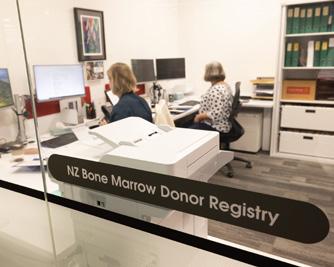
We are also committed to supporting the work of the New Zealand Bone Marrow Donor Registry (NZBMDR), which is responsible for a registry of 13,500 potential donors and is part of a worldwide network of registries that provide the capability to secure matched bone marrow donations. In 2026/27 NZBMDR will implement a new electronic donor registry to ensure the service meets the future requirements of international regulatory systems and to better support patients and potential donors across the country.
Fiscal capability and sustainability
A period of elevated and strategic pricing in recent years was required to support NZBS’s capital investment programme, increased working capital requirements, and workforce-related cost pressures, including the impacts of past pay equity and pay parity settlements, Holidays Act remediation, and collective agreement settlements. With most of this investment now delivered or committed, pricing evened out in 2025/26 and is expected to further stabilise over the near term, before returning to CPI-aligned increases over the medium term.
4 Therapeutic apheresis improves patient health by removing unwanted cells or abnormal proteins from a patient’s blood and is carried out by NZBS staff in a number of New Zealand’s larger hospitals or at our fixed collection sites. NZBS currently performs seven therapeutic apheresis procedures, including stem cell collections, plasma exchanges, and red blood cell exchanges.
5 Therapeutic venesection (removing a quantity of blood from a person’s body via their vein) is a simple way to reduce the number of red blood cells in a person’s blood. It is very effective in treating certain blood conditions—for example, haemochromatosis, a genetic condition where the body absorbs too much iron.
NZBS acknowledges and recognises the constrained economic climate we are working in and will continue to deliver the most fiscally prudent but appropriate cost structures to ensure the correct level and quality of services are consistently delivered. We will also continue to improve our processes and systems, looking to remove inefficiencies and waste where we can.
During 2026/27, we will begin the phased implementation of our Finance Transformation Roadmap – a programme of work approved by the NZBS Board in 2025/26. This project has been designed to strengthen our financial capability and sustainability across people, processes, and technology over the next three years. The roadmap will move the organisation away from manual, report-driven, processes to deliver improved planning, forecasting, and decisionmaking support. Ultimately, it will see a modern, cloud-based Enterprise Resource Planning (ERP) system introduced in 2029/30, supported by an integrated business planning framework that links operational drivers with financial outcomes and strategy.
Individualised Donor Assessments
On May 4, 2026, NZBS successfully introduced Individualised Donor Assessments (IDA). The introduction of IDA means that all blood donors—regardless of gender or sexual orientation— are now asked the same questions about recent sexual partners. It ensures a fairer, more consistent approach when assessing potential risk for sexually transmitted infections that affect blood donation.
The gender-neutral criteria will allow some previously deferred groups of people to donate, including gay and bisexual men who have been in single-partner relationships for more than three months, provided they meet all other eligibility criteria. In the coming year, we look forward to seeing the impact of this change, which brings us in line with international practice.
2.3 PROVIDING EXCEPTIONAL SERVICE
New Zealand is fortunate to be primarily self-sufficient for its blood and blood products. This requires NZBS to maintain an active donor population and collect enough blood and plasma to supply and manufacture the range of blood and blood products needed to meet hospital demand.
From donation to transfusion and transplantation, we are committed to providing the highest quality products and services—including cellular therapies and tissues—to our donors, recipients, patients, healthcare partners, and the wider healthcare community.
Last year, 95.6 percent of donors scored NZBS eight or higher out of ten for their experience of/satisfaction with the service.
Since the introduction of our new Customer Service Standard in March 2025, more than 95 percent of our frontline staff have completed the related training modules. Over this time, we have also seen a 30 per cent reduction in complaints. During FY27, the standard will be further embedded via HR sessions and by weaving the relevant skills into other training modules.
In the first half of FY27, we will also implement the fourth module in our Customer Service Training series, “Mastering Deferral Conversations”, designed for donor interviewers.
NZBS now has two Donor Health Clinical Nurse Specialists, who are committed to enhancing donor care. In FY27, their focus will continue to be on activities designed to help reduce the risk of donor adverse events. This will include progressing a project to reduce the incidence of vasovagal events and completing the rollout of our vein grading project. The intent is to also roll out a broader clinical audit programme.
As in previous years, we will again publish an annual Clinical Hemovigilance Report and share this data and information with the Health Quality and Safety Commission (HQSC) and all Health New Zealand hospitals via their Hospital Transfusion Committees. This provides shared learning opportunities to help reduce the incidence of transfusion-related adverse events.
As an enduring responsibility, we will continue our work to increase awareness, improve the donor experience, increase donor numbers, and work closely with our healthcare partners to achieve better outcomes for patients, their families and whānau.
2.4 SUMMARY OF KEY PRIORITIES FOR 2026/27
NZBS will focus on the following priorities during the 2026/27 financial year to support the Government’s health objectives and the Minister of Health’s expectations:
• Strengthening system performance through partnership with Health New Zealand Te Whatu Ora, including further development of the Service Level Agreement to support clear accountability for clinical demand management, pricing transparency, capital planning, information sharing, and service performance.
• Relentlessly focusing on patient outcomes and value for money, by optimising productivity, managing costs prudently, and clearly demonstrating efficiency and affordability in the prices charged for products and services.
• Ensuring surety of supply and managing clinical demand, including maintaining appropriate inventory levels and contributing to national initiatives such as the National Blood Management Programme to support better clinical use of blood and plasma derived products.
• Continuing to support the New Zealand Bone Marrow Donor Registry and Organ Donation New Zealand, including leading work with the Ministry of Health and Health New Zealand to progress a coordinated roadmap to increase deceased organ donation and transplantation rates.
• Modernising and/or expanding equipment and facilities to ensure fit-for-purpose operating environments that meet regulatory and compliance requirements.
• Progressing plasma self sufficiency, by working collaboratively with the Ministry of Health on further analysis to inform future self sufficiency targets, while planning capital and operational investments to maintain current levels of domestic plasma collection and supply resilience.
• Maintaining an effective and responsive donor network, ensuring collection capacity, locations, and operating hours remain aligned to clinical demand across the health system.
• Embedding strong financial and performance management discipline.
OUR OUTPUTS
New Zealanders’ health needs are supported by the availability of safe and appropriate blood, blood products, tissue products, and related services. NZBS has a single output class with performance measures and targets detailed on the following pages.
WHAT WE INTEND TO ACHIEVE
PERFORMANCE MEASURES
1.0 Measures related to key products and services which contribute to achieving NZBS’s Enduring Outcome
1.1 Key products and services available at all times (24/7).
Measure as the number of instances where this is not achieved, and results in a negative consequence for a patient. 0
Note for clarification. A failure is recorded where the unavailability of a key product or service occurs within the control of NZBS, is attributable to NZBS-managed systems or processes, and results in a negative consequence for a patient.
A negative consequence for a patient is defined as an incident that is assessed within the NZBS Quality Management Incident Reporting System as Severity Assessment Code (SAC) 1 or SAC 2.
Key (critical) products include red cells, platelets, fresh frozen plasma, cryoprecipitate, and immunoglobulin. Key (critical) services include blood bank services provided directly by NZBS.
Method of assessment
Performance is assessed using the NZBS Quality Management Incident Reporting System.
The measure includes all incidents recorded in the system where all the following criteria are met;
• a key product or service was unavailable when required;
• the incident was within NZBS control; and
• the incident resulted in a confirmed adverse patient impact (as defined above).
2.0 Measures related to Strategic Priority 1: Building foundations for growth
2.1 Annual employee turnover 9.56%
2.2 Health and safety in the workplace
The NZBS Health and Safety (H&S) programme is an important part of the organisation’s day-to-day processes and culture of safety,
2.3 Capital expenditure
Capital programmes are focused on facilities’ construction and refurbishment; procurement, upgrade and implementation of information solutions; and procurement and upgrade of equipment. Delivery of projects should meet planned targets to the standards agreed.
National and regional H&S committees all meet at least once per quarter.
The number of trained H&S representatives meets the minimum of one representative to 19 employees, in accordance with Section 6 of the Health and Safety at Work Regulations 2016
Project milestones achieved in line with project work programmes and business cases and within approved budgets
3.0 Measures related to Strategic Priority 2: Delivering operational effectiveness
3.1 Raw material (collections) inputs – based on demand forecasts
• Whole blood donations
• Total plateletpheresis donations
• Total plasmapheresis donations
Total donations
3.2 Clinical Oversight Programme
All blood banks located in main hospitals (other than the six hospitals where NZBS is responsible for blood bank provision) receive NZBS Clinical Oversight visits and audit reports to enable them to meet ISO15189 requirements for IANZ Accreditation.
3.3 Donation testing
Donations are tested in accordance with NZBS Manufacturing Standards (as approved by Medsafe). No product is released for issue to a patient until it completes mandatory testing or is released under the Exceptional Release protocol.
3.4 Regulatory compliance - Medsafe
NZBS will maintain Medsafe licenses for each of its manufacturing, testing, and collection sites, to provide assurance of Good Manufacturing Practices (GMP) compliance.
NZBS is required to maintain a license to manufacture medicines.
3.5 Regulatory compliance – IANZ (International Accreditation New Zealand)
NZBS will maintain IANZ accreditation at all NZBS diagnostic laboratories and the six blood banks we operate.
IANZ is the national authority for the accreditation of testing and calibration laboratories, inspection bodies and radiology services.
3.6 Regulatory Compliance – ASHI (American Society of Histocompatibility and Immunogenetics)
NZBS will maintain ASHI accreditation at the NZ Transplantation and Immunogenetics Laboratory (NZTIL).
ASHI accreditation is a programme to evaluate laboratory personnel, procedures, and facilities to ensure compliance with published ASHI standards. Maintaining ASHI accreditation is a mandatory NZBS requirement.
NZBS will maintain the New Zealand Bone Marrow Donor Registry’s (NZBMDR) WMDA certification.
This certification signifies a commitment by NZBS to adhere to WMDA standards. By meeting these international standards, NZBMDR has demonstrated its compliance.
All blood banks receive at least one NZBS Clinical Oversight visit and audit report
100% of donations are tested
All manufacturing, testing, and collection sites maintain Medsafe licensing 100% of the time throughout the period
All diagnostic laboratories and the six blood banks we operate maintain IANZ accreditation 100% of the time throughout the period
The New Zealand Transplantation and Immunogenetics Laboratory maintains ASHI accreditation 100% of the time throughout the period
The New Zealand Bone Marrow Donor Registry maintains WMDA certification 100% of the time throughout the period
3.8 Financial management
Assure cost efficiency and value for money management by maintaining financial sustainability in a demand-driven environment.
3.9 NZBS reports for Health New Zealand | Te Whatu Ora
Demand reports outlining purchase volumes by key product line are provided to Health New Zealand | Te Whatu Ora hospitals to help them manage local usage and costs.
3.10 Organ Donation New Zealand (ODNZ) performance monitoring
NZBS will provide an ODNZ performance monitoring report to the Ministry of Health on a quarterly basis.
4.0 Measures related to Strategic Priority 3: Providing exceptional service
4.1 Blood donor population
NZBS maintains a donor population capable of meeting the ongoing demand for blood and blood products (active whole blood, plateletpheresis and plasmapheresis donor panels).
4.2 Blood donation - donor satisfaction
Ninety percent of donors score their experience of/ satisfaction with the service as eight or higher out of 10.
Achievement of budget or better
Monthly demand reports are provided by the tenth working day of each month
Performance monitoring reports are provided quarterly
104,000 donors engaged to meet demand
4.3
More than 90% of donors are satisfied with their experience
Maintain an Active 126 Māori donor population of: 7,200
4.4
Maintain an Active 126 Youth (aged 16 – 25) donor population of: 12,100
4.5 Planning and communication with Health New Zealand | Te Whatu Ora hospitals
NZBS will demonstrate a productive and supportive strategic relationship with Health New Zealand | Te Whatu Ora at all levels - whether hospital, region, or national office, including proactively engaging with them to ensure they are fully informed on all relevant matters.
Note: The exact measure has changed over recent years.
6 Active 12 refers to donors who have donated in the past 12 months.
Measured at CEO-to-CEO level
4.6 Haemovigilance reporting – patient safety
To promote risk awareness and best practice in transfusion, NZBS will publish a Haemovigilance Report. The report will be distributed to Health New Zealand | Te Whatu Ora hospitals to support a reduction in transfusion-related adverse events.
4.7 Sustainability – carbon reduction Initiative
NZBS is committed to achieving the requirements of the Carbon Neutral Government Programme (CNGP) and continuing to report on emissions reduction progress to the CNGP. The programme’s ambition is for agencies and crown entities to reduce greenhouse gas (GHG) emissions by 42% by 2030/31, compared to baseline emissions.
4.7.1 Replace existing light fleet vehicles with electric/hybrid vehicles, where a conversion option exists, and does not compromise operational effectiveness and capability for NZBS products and services.
Publish and distribute for the 2025 calendar year
Continue progression to an ambition of 42% reduction in GHG emissions from baseline by the 2030/31 financial year
100% replaced for light fleet vehicles that do not compromise operational effectiveness and capability for NZBS products and services.
FINANCIAL PERFORMANCE
The purpose of these prospective financial statements is to provide a base against which our financial performance can be assessed to inform our public accountability. These statements are prepared for this express purpose, and the information may not be appropriate for any other purpose. They have been prepared in accordance with New Zealand generally accepted accounting practice (New Zealand GAAP) for public benefit entities. Their purpose is to assure Parliament of NZBS’s planned performance. Actual financial results achieved for the period covered may vary from the information presented, and the variations may be material. The information in the forecast financial statements is unaudited. There is no intention of updating the prospective financial statements after presentation.
STATEMENT OF COMPLIANCE AND BASIS OF PREPARATION
The prospective financial statements have been prepared in accordance with the requirements of the New Zealand Public Health and Disability Act (2000) and the Crown Entities Act (2004), which include the requirement to comply with generally accepted accounting practice in New Zealand (NZ GAAP).
PREPARATION OF FINANCIAL MATERIAL
The following assumptions have been used in preparing these prospective financial statements:
• NZBS pricing to Health New Zealand | Te Whatu Ora for 2026/27 to be updated
• Demand from Health New Zealand | Te Whatu Ora for NZBS products and services continues to grow at the rates and volumes in the tables below. Demand from Health New Zealand
blood product issues
key product issues
Other service test volumes
• The operating costs have been prepared based on known and planned expenditure to deliver the current level of service and achieve the strategic priorities outlined in the organisation’s Statement of Intent.
• Capital expenditure in 2026/27 will total $15.078 million.
• The current Westpac New Zealand Limited credit facility (total of $25.0 million) ends 31 December 2028.
• Forecast 2026 consists of nine months of actual performance and three months of planned performance.
PROSPECTIVE FINANCIAL STATEMENTS
THE FOLLOWING TABLES PROVIDE INFORMATION ON THE FUTURE FINANCIAL PERFORMANCE, POSITION, AND CASH FLOWS OF NEW ZEALAND BLOOD SERVICE.
Prospective statement of comprehensive income for the period 1 July 2026 to 30 June 2027
Prospective statement of changes in equity for the period 1 July 2026 to 30 June 2027
Prospective statement of financial position as at 30 June
Prospective statement of cashflows for the period 1 July 2026 to 30 June 2027
STATEMENT OF ACCOUNTING POLICIES
1. REPORTING ENTITY
New Zealand Blood Service is a Crown entity as defined by the Crown Entities Act 2004 and is domiciled and operates in New Zealand. The relevant legislation governing New Zealand Blood Service’s operations includes the Crown Entities Act 2004, the Pae Ora Healthy Futures Act 2022, and the Human Tissue Act 2008. New Zealand Blood Service’s ultimate parent is the New Zealand Crown, and its primary objective is to provide services to the New Zealand public. NZBS is the country’s sole provider of blood, blood products, and associated services, and co-ordinates deceased organ donation, tissue donation (eye tissue, heart valves and skin), and hip bone donation. It also operates the National Heart Valve Bank and the New Zealand Bone Marrow Donor Registry. New Zealand Blood Service does not operate to make a financial return and is a self-designated public benefit entity (PBE) for financial reporting purposes.
2. BASIS OF PREPARATION
Statement of compliance
New Zealand Blood Service’s financial statements have been prepared in accordance with Crown Entities Act 2004 requirements, including complying with generally accepted accounting practice in New Zealand (NZ GAAP). New Zealand Blood Service is a Tier 1 entity, and the financial statements have been prepared in accordance, and comply, with PBE standards.
Presentation currency and rounding
The financial statements are presented in New Zealand dollars, and all values are rounded to the nearest thousand dollars ($000).
New or amended standards adopted
2022 Omnibus Amendments to PBE Standards, issued June 2022
The 2022 Omnibus Amendments issued by the External Reporting Board include several general updates and amendments to several Tier 1 PBE accounting standards, effective for reporting periods starting 1 January 2023. New Zealand Blood Service has adopted the revised PBE standards, and the adoption did not result in any significant impact on New Zealand Blood Service’s financial statements.
3. SIGNIFICANT ACCOUNTING POLICIES
FOREIGN CURRENCY TRANSACTIONS
Foreign currency transactions (including those that forward foreign exchange contracts are held for) are translated into NZ dollars (the functional currency) using the spot exchange rates at the dates of the transactions. Foreign exchange gains and losses resulting from the settlement of such transactions, and from the translation at year-end exchange rates of monetary assets and liabilities denominated in foreign currencies, are recognised in the surplus or deficit.
GOODS AND SERVICES TAX
Items in the financial statements are presented exclusive of GST, except for receivables and payables, which are presented on a GST-inclusive basis. Where GST is not recoverable as input tax, it is recognised as part of the related asset or expense. The net amount of GST recoverable from, or payable to, the IRD is included as part of receivables or payables in the statement of financial position. The net GST paid to, or received from, the IRD, including the GST relating to investing and financing activities, is classified as a net operating cash flow in the statement of cash flows. Commitments and contingencies are disclosed exclusive of GST.
INCOME TAX
New Zealand Blood Service is a public authority and consequently is exempt from paying income tax. Accordingly, no provision has been made for income tax.
REVENUE
The specific accounting policies are explained below:
Sale of products
Revenue from the sale of goods is recognised when the goods are sold to the customer.
Provision of services
Services provided to third parties on commercial terms are recognised as revenue once the services have been fully provided.
Funding from the Crown Crown funding is restricted in its use for the purpose of New Zealand Blood Service meeting the objectives specified in Output agreements with the Crown. Where conditions are attached to funding from the Crown any annual surpluses, arising from the efficient delivery of services, may be retained by New Zealand Blood Service for use in subsequent years. Funding from the Crown is recognised as revenue only to the extent that economic benefits of the funding have been consumed. The fair value of revenue from the Crown has been determined to be equivalent to the amounts due in the funding arrangements.
Interest income
Interest revenue is recognised by accruing, on a time proportion basis, the interest due on the investment.
PERSONNEL COSTS
Salaries and wages
Salaries and wages are recognised as an expense as employees provide services.
Superannuation schemes
Defined contribution schemes
Employer contributions to KiwiSaver, the Medical Assurance Society Retirement Savings Plan, the Mercer Individual Retirement Plan, the Lump Sum National Scheme, and the AMP NZ Retirement Trust are accounted for as defined contribution superannuation schemes and are expensed in the surplus or deficit as incurred.
INVENTORIES CONSUMED
Expired and written down product
New Zealand Blood Service is the sole supplier of blood, blood products, organs, and tissues needed within New Zealand’s heath system and must maintain sufficient inventory of products to ensure their 24/7 availability. New Zealand Blood Service continually monitors inventory to minimise the number of products held to expiry.
Changes in inventory represent an aggregated reporting amount, which includes cost of goods sold, production recoveries, consumables, and inventory valuation adjustments. This is consistent with the application of manufacturing standard costing methodologies and generally accepted inventory valuation principles.
CAPITAL CHARGE
The capital charge is expensed in the financial year that the charge relates to.
FINANCE COSTS
Borrowing costs are expensed in the financial year that they are incurred in.
OTHER EXPENSES
Operating leases
An operating lease is a lease that does not transfer substantially all the risks and rewards incidental to ownership of an asset to the lessee. Lease payments under an operating lease are recognised as an expense on a straight-line basis over the lease term. Lease incentives received are recognised in the surplus or deficit as a reduction of rental expense over the lease term.
CASH AND CASH EQUIVALENTS
Cash and cash equivalents include cash on hand, deposits held on call with banks, and other short-term, highly liquid investments with original maturities of three months or less.
RECEIVABLES
Short-term receivables are recorded at the amount due, less an allowance for expected credit losses (ECL). New Zealand Blood Service applies the simplified ECL model of recognising lifetime ECLs for short-term receivables.
In measuring ECLs, short-term receivables have been assessed on a collective basis because they possess shared credit risk characteristics. They have been grouped based on the days past due. A provision matrix is then established based on historical credit loss experience, adjusted for forward-looking factors specific to the debtors and the economic environment.
Short-term receivables are written off when there is no reasonable expectation of recovery. Indicators that there is no reasonable expectation of recovery include the debtor being in liquidation or the receivable being more than one year overdue.
INVESTMENTS
Bank term deposits
Bank term deposits are initially measured at the amount invested. A loss allowance for expected credit losses is recognised if the estimated loss allowance is not trivial.
Term deposits
New Zealand Blood Service considers that there has not been a significant increase in credit risk for investments in term deposits because the issuer of the investment continues to have low credit risk at balance date. Term deposits are held with banks that have a long-term AA- investment grade credit rating, which indicates that the bank has a very strong capacity to meet its financial commitments. No loss allowance for expected credit losses has been recognised because the estimated 12-month expected loss allowance for credit losses is trivial. The carrying amounts of term deposits with maturities of 12 months or less approximate their fair value.
DERIVATIVE FINANCIAL INSTRUMENTS
Derivative financial instruments are used to manage exposure to foreign exchange risk arising from New Zealand Blood Service’s operational activities. New Zealand Blood Service does not hold or issue derivative financial instruments for trading purposes. New Zealand Blood Service has not adopted hedge accounting.
Derivatives are initially recognised at fair value on the date a derivative contract is entered into and are subsequently remeasured to their fair value at each balance date, with the resulting gain or loss recognised in the surplus or deficit.
A forward foreign exchange derivative is classified as current if the contract is due for settlement within 12 months of balance date. Otherwise, the full fair value of a forward foreign exchange derivative is classified as non-current.
INVENTORIES
To the extent that inventory was received through non-exchange transactions (i.e. donated goods) for no cost or for a nominal cost, the cost of the inventory is its fair value at the date of acquisition.
However, as NZBS is not legally permitted to purchase blood from the public, the fair value for accounting purposes of blood from donors is considered to be nil. Therefore, the cost of inventories comprises all costs of collection and conversion, plus any other costs incurred in bringing the inventories to their present location and condition.
After initial recognition, inventory is measured at the lower of cost and net realisable value. The cost of inventory is determined by using the FIFO or weighted average methods. The valuation includes allowance for slow moving items. Obsolete inventories are written off. Inventories are recognised as an expense when deployed for utilisation or consumption in the ordinary course of NZBS’s operation. Any write-down from cost to net realisable value is recognised in surplus or deficit in the year of the write-down.
PROPERTY, PLANT AND EQUIPMENT
Property, plant, and equipment consists of four asset classes, which are measured as follows:
• leasehold improvements, at cost less accumulated depreciation and impairment losses;
• plant and equipment, at cost less accumulated depreciation and impairment losses;
• furniture and office equipment, at cost less accumulated depreciation and impairment losses; and
• motor vehicles, at cost less accumulated depreciation and impairment losses.
Additions
The cost of an item of property, plant, and equipment is recognised as an asset only when it is probable that future economic benefits or service potential associated with the item will flow to New Zealand Blood Service and the cost of the item can be measured reliably.
Work in progress is recognised at cost less impairment and is not depreciated.
In most instances, an item of property, plant, and equipment is initially recognised at its cost. Where an asset is acquired through a non-exchange transaction, it is recognised at its fair value as at the date of acquisition.
Costs incurred after initial acquisition are capitalised only when it is probable that future economic benefits or service potential associated with the item will flow to New Zealand Blood Service and the cost of the item can be measured reliably.
The day-to-day servicing costs for property, plant, and equipment are expensed in the surplus or deficit as they are incurred.
Disposals
Gains and losses on disposals are determined by comparing the proceeds with the carrying amount of the asset. Gains and losses on disposals are reported net in the surplus or deficit.
Depreciation
Depreciation is provided on a straight-line basis on all property, plant, and equipment at rates that will write off the cost of the assets to their estimated residual values over their useful lives. The useful lives and associated depreciation rates of major classes of property, plant, and equipment have been estimated as follows:
Leasehold improvements
Plant and equipment
Furniture and office equipment
Motor vehicles
2 - 30 years: 3% - 50%
2 - 20 years: 5% - 50%
3 - 15 years: 6% - 33%
8 - 12 years: 8% - 13%
Leasehold improvements are depreciated over the unexpired period of the lease or the estimated remaining useful lives of the improvements, whichever is the shorter.
Impairment of property, plant, and equipment
New Zealand Blood Service does not hold any cash-generating assets. Assets are considered cash-generating where their primary objective is to generate a commercial return.
Property, plant, and equipment are reviewed for impairment whenever events or changes in circumstances indicate that the carrying amount might not be recoverable. An impairment loss is recognised for the amount that the asset’s carrying amount exceeds its recoverable service amount. The recoverable service amount is the higher of an asset’s fair value, less costs to sell, and value in use.
Value in use is the present value of an asset’s remaining service potential. It is determined using an approach based on a depreciated replacement cost approach, a restoration cost approach, or a service units approach. The most appropriate approach for measuring value in use depends on the nature of the impairment and availability of information.
If an asset’s carrying amount exceeds its recoverable service amount, the asset is regarded as impaired and the carrying amount is written down to the recoverable service amount. The total impairment loss is recognised in the surplus or deficit.
INTANGIBLE ASSETS
Software acquisition and development
Computer software licenses are capitalised based on the costs incurred to acquire the specific software and bring it to use.
Costs that are directly associated with developing software for internal use are recognised as an intangible asset where this results in an asset controlled by New Zealand Blood Service. Direct costs include software development, employee costs, and an appropriate portion of relevant overheads.
Where software is provided under a Software-as-a-service (SaaS) arrangement, costs of configuration and customisation are recognised as an intangible asset only if the activities create an intangible asset that New Zealand Blood Service controls and asset recognition criteria are met. Costs, including ongoing fees for use of software that do not result in an intangible asset or a software finance lease, are expensed as a service contract as incurred. However, where fees represent payment for future services to be received, New Zealand Blood Service recognises these as a pre-payment and expenses these as subsequent services are received.
Staff training costs are recognised as an expense when incurred.
Costs associated with maintaining computer software are expensed when incurred.
Costs associated with developing and maintaining New Zealand Blood Service’s website are expensed when incurred.
Amortisation
The carrying value of an intangible asset with a finite life is amortised on a straight-line basis over its useful life. Amortisation begins when the asset is available for use and ceases at the date when the asset is derecognised. The amortisation charge for each financial year is expensed in the surplus or deficit.
The useful lives and associated amortisation rates of major classes of intangible assets have been estimated as follows:
Refer to the policy for impairment of property, plant, and equipment. The same approach applies to the impairment of intangible assets.
PAYABLES AND DEFERRED REVENUE
Short-term payables are recorded at the amount payable.
BORROWINGS
Borrowings on normal commercial terms are initially recognised at the amount borrowed plus transaction costs. Borrowings are carried at amortised cost using the effective interest method. Borrowings are classified as current liabilities unless New Zealand Blood Service has an unconditional right to defer settlement of the liability for at least 12 months after balance date.
Finance leases
A finance lease transfers substantially all the risks and rewards incidental to ownership of an asset to the lessee, whether or not title is eventually transferred. At the start of the lease term, finance leases are recognised as assets and liabilities in the statement of financial position at the lower of the fair value of the leased asset or the present value of the minimum lease payments.
The finance charge is charged to the surplus or deficit over the lease period to produce a constant periodic rate of interest on the remaining balance of the liability.
The amount recognised as an asset is depreciated over its useful life. If there is no reasonable certainty of New Zealand Blood Service obtaining ownership at the end of the lease term, the asset is fully depreciated over the shorter of the lease term and its useful life.
EMPLOYEE ENTITLEMENTS
Short-term employee entitlements
Employee benefits expected to be wholly settled earlier than 12 months after the end of the reporting period in which the employee provided the related service, are measured based on accrued entitlements at current rates of pay. These include salaries and wages accrued up to balance date, annual leave earned but not yet taken at balance date, and sick leave.
Long-term employee entitlements
Employee benefits, such as long service leave and retirement gratuities, not expected to be settled earlier than 12 months after the end of the reporting period during which the employee provided the related service, have been calculated on an actuarial basis. The calculations are based on:
• likely future entitlements accruing to employees, based on years of service, years to entitlement, the likelihood that employees will reach the point of entitlement, and contractual entitlement information; and
• the present value of the estimated future cash flows.
Presentation of employee entitlements
Sick leave, annual leave, and vested long service leave are classified as a current liability. Non-vested retirement and long service leave expected to be settled within 12 months of balance date are classified as a current liability. All other employee entitlements are classified as a non-current liability.
PROVISIONS
General
A provision is recognised for future expenditure of uncertain amount or timing when:
• There is a present obligation (either legal or constructive) resulting from a past event.
• It is probable that an outflow of future economic benefits or service potential will be required to settle the obligation; and
• A reliable estimate of the amount of the obligation can be made.
Provisions are measured at the present value of the expenditure expected to be required to settle the obligation using a pre-tax discount rate that reflects current market assessments of the time value of money and the risks specific to the obligation. An increase in the provision because of the passage of time is recognised as a finance cost.
EQUITY
Equity is measured as the difference between total assets and total liabilities. Equity is disaggregated and classified into the following components:
• contributed capital;
• accumulated surplus/(deficit); and
• adverse event reserves
Capital management
New Zealand Blood Service’s capital is its equity, which comprises accumulated funds and adverse event reserves. Equity is represented by net assets. New Zealand Blood Service is subject to the financial management and accountability provisions of the Crown Entities Act 2004, which impose restrictions on borrowings, acquisition of securities, issuing of guarantees and indemnities, and the use of derivatives. New Zealand Blood Service manages its equity as a byproduct of prudently managing revenues, expenses, assets, liabilities, investments, and general financial dealings to ensure that New Zealand Blood Service effectively achieves its objectives and purpose while remaining a going concern.
4. CRITICAL ACCOUNTING ESTIMATES AND ASSUMPTIONS
In preparing these financial statements, New Zealand Blood Service has made estimates and assumptions about the future. These estimates and assumptions might differ from the subsequent actual results. New Zealand Blood Service continually evaluates its estimates and assumptions, which are based on historical experience and other factors, including expectations of future events that are believed to be reasonable under the circumstances.
The estimates and assumptions that have a significant risk of causing a material adjustment to the carrying amounts of assets and liabilities within the next financial year are:
• assessing the useful lives and residual values of property, plant, and equipment;
• assessing the useful lives of software assets;
• estimating the current costs, inflation rates, discount rates, and other assumptions used in measuring the provision for lease make-good provisions;
• Year-end valuation of inventory and the provision raised for obsolete inventory items.
• estimating the rates of future salary increases, discount rates, and other assumptions used in measuring retirement and long service leave.
Estimating useful lives and residual values of property, plant, and equipment
At each balance date, the useful lives and residual values of property, plant, and equipment are reviewed. Assessing the appropriateness of useful life and residual value estimates of property, plant, and equipment requires several factors to be considered, such as the asset’s physical condition, how long New Zealand Blood Service expects to use it, and expected disposal proceeds from the future sale of the asset.
An incorrect estimate of the useful life or residual value will affect the depreciation expense recognised in the surplus or deficit and carrying amount of the asset in the statement of financial position. New Zealand Blood Service minimises the risk of this estimation uncertainty by:
• physical inspection of assets; and asset replacement programmes.
There have been no material changes to useful lives, depreciation methods, or residual values.
5. CRITICAL JUDGEMENTS IN APPLYING ACCOUNTING POLICIES
Determining lease classification
Determining whether a lease is a finance lease or an operating lease requires judgement as to whether the lease transfers substantially all the risks and rewards of ownership to New Zealand Blood Service.
Judgement is required on various aspects that include, but are not limited to, the fair value of the leased asset, the economic life of the leased asset, whether or not to include renewal options in the lease term, and determining an appropriate discount rate to calculate the present value of the minimum lease payments. Classification as a finance lease means that the asset is recognised in the statement of financial position as property, plant, and equipment, but no such asset is recognised for an operating lease.
Measuring retirement and long service leave obligations
Measuring the long service leave and retirement gratuities obligations depends on several factors that are determined on an actuarial basis using several assumptions. Two key assumptions used in calculating this liability include the discount rate and the salary inflation factor. Any changes in these assumptions will affect the carrying amount of the liability. Expected future payments are discounted using discount rates derived from the yield curve of New Zealand Government bonds. The discount rates used have maturities that match, as closely as possible, the estimated future cash outflows. The salary inflation factor has been determined after considering historical salary inflation patterns and obtaining advice from an independent actuary.