November 2026 • Vol. 32 • Issue 9
S
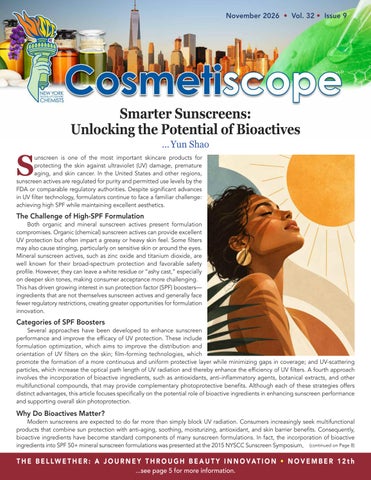
Smarter Sunscreens: Unlocking the Potential of Bioactives … Yun Shao
unscreen is one of the most important skincare products for protecting the skin against ultraviolet (UV) damage, premature aging, and skin cancer. In the United States and other regions, sunscreen actives are regulated for purity and permitted use levels by the FDA or comparable regulatory authorities. Despite significant advances in UV filter technology, formulators continue to face a familiar challenge: achieving high SPF while maintaining excellent aesthetics.
The Challenge of High-SPF Formulation
Both organic and mineral sunscreen actives present formulation compromises. Organic (chemical) sunscreen actives can provide excellent UV protection but often impart a greasy or heavy skin feel. Some filters may also cause stinging, particularly on sensitive skin or around the eyes. Mineral sunscreen actives, such as zinc oxide and titanium dioxide, are well known for their broad-spectrum protection and favorable safety profile. However, they can leave a white residue or “ashy cast,” especially on deeper skin tones, making consumer acceptance more challenging. This has driven growing interest in sun protection factor (SPF) boosters— ingredients that are not themselves sunscreen actives and generally face fewer regulatory restrictions, creating greater opportunities for formulation innovation.
Categories of SPF Boosters
Several approaches have been developed to enhance sunscreen performance and improve the efficacy of UV protection. These include formulation optimization, which aims to improve the distribution and orientation of UV filters on the skin; film-forming technologies, which promote the formation of a more continuous and uniform protective layer while minimizing gaps in coverage; and UV-scattering particles, which increase the optical path length of UV radiation and thereby enhance the efficiency of UV filters. A fourth approach involves the incorporation of bioactive ingredients, such as antioxidants, anti-inflammatory agents, botanical extracts, and other multifunctional compounds, that may provide complementary photoprotective benefits. Although each of these strategies offers distinct advantages, this article focuses specifically on the potential role of bioactive ingredients in enhancing sunscreen performance and supporting overall skin photoprotection.
Why Do Bioactives Matter?
Modern sunscreens are expected to do far more than simply block UV radiation. Consumers increasingly seek multifunctional products that combine sun protection with anti-aging, soothing, moisturizing, antioxidant, and skin barrier benefits. Consequently, bioactive ingredients have become standard components of many sunscreen formulations. In fact, the incorporation of bioactive ingredients into SPF 50+ mineral sunscreen formulations was presented at the 2015 NYSCC Sunscreen Symposium, (continued on Page 8)
T H E B E L L W E T H E R : A J O U R N E Y T H R O U G H B E A U T Y I N N O V AT I O N • N O V E M B E R 1 2 t h ...see page 5 for more information.
2026 NYSCC EXECUTIVE BOARD & COMMITTEE Chair Anushka Nadkarni chair@nyscc.org Chair-Elect Afam Okoro chair-elect@nyscc.org Secretary Anne Young secretary@nyscc.org Treasurer Diane Dabkowski treasurer@nyscc.org Treasurer-Elect Brian Ecclefield treasurer-elect@nyscc.org Advisor John Carola advisor@nyscc.org Program and Special Events Alexis Piterski program@nyscc.org At Home Live Series Susanna Fernandes Susanna.Fernandes@tri-k.com Scientific Committee Chair Michael Anthonavage manthonavage@vitaquest.com Social Media Dejour Waite, Revathi Nair, and Gabriella Yankovich socialmedia@nyscc.org House Chair Arielle Nausieda house@nyscc.org Cosmetiscope Editor Roger McMullen roger.mcmullen@gmail.com
I
Letter from the Chair
…Anushka Nadkarni
s it really November already? It’s hard to believe that my year as NYSCC Chair is nearing its end! What an incredible journey it has been, filled with countless opportunities to Break Beauty Boundaries with Science. But we’re not slowing down just yet! With two months remaining in 2026, the NYSCC has an exciting lineup of education, inspiration, and celebration ahead. We kick off November with a special CEW webinar on November 2nd, “Inside Beauty’s Next Breakthroughs: Meet the 2026 NYSCC Suppliers’ Award Finalists.” Featuring insights from CEW Beauty Awards judges, this program will spotlight the innovative ingredients and scientific breakthroughs shaping the next generation of beauty products. It’s another example of how our partnership with CEW bridges cutting-edge science and real-world beauty innovation. On November 12th, join us for “The Bellwether: A Journey Through Beauty Innovation,” an educational program exploring the ideas, trends, and technologies influencing our industry’s future. As cosmetic scientists, we know innovation never stands still, and novel programs like this challenge us to think differently, stay curious, and push boundaries. November is also a time to celebrate the remarkable people and innovations moving our industry forward. The NYSCC is proud to support the CEW Beauty Awards Luncheon, recognizing excellence across the beauty industry, including the winner of the Suppliers’ Award. We are equally excited about the CEW Innovators Report, recognizing 35 outstanding women in science and innovation, and the special cocktail reception on November 18th celebrating their achievements. Honoring women whose expertise, creativity, and leadership are transforming beauty is especially meaningful to me and reinforces the NYSCC’s commitment to championing talent and opportunity throughout our industry. Then comes one of my favorite NYSCC traditions, our Education Night on November 19th! This year’s event promises to be especially memorable as we welcome beauty icon Bobbi Brown as our special guest speaker. From revolutionizing the industry with her namesake brand to continuing her entrepreneurial journey with Jones Road Beauty, Bobbi embodies the creativity, determination, and innovative spirit that inspire us all. Beyond the excitement of our special guest, Education Night celebrates something at the very heart of the NYSCC: investing in the next generation of cosmetic scientists. We will recognize our scholarship and grant recipients and welcome the incoming NYSCC Executive Board. It is a wonderful reminder that the future of beauty science is in excellent hands! I also want to reflect on last month’s outstanding Skin Barrier Symposium, which brought together diverse scientific perspectives and compelling poster presentations exploring the skin as a living interface. It was another example of NYSCC’s commitment to delivering timely, relevant scientific education. The NYSCC will be on the road again participating in the SCC Scientific Meeting & Showcase in Los Angeles. Strengthening relationships across the SCC community and expanding the NYSCC’s reach have been important priorities throughout my year as Chair, and I am proud of the progress we have made. While I am not quite ready to say goodbye, I am looking forward to making these final weeks count! I hope to see many of you at our November events as we continue to learn, celebrate, and build momentum for an even brighter future. Thank you for being part of this amazing NYSCC community. If this year has taught me anything, it’s that the greatest breakthroughs happen when we come together, share ideas, and dare to push boundaries. Wishing you and your families a wonderful Thanksgiving filled with gratitude, joy, and inspiration!
Cosmetiscope Advertising Bret Clark rbclark@ashland.com 2
N YS CC Co s metis c op e
|
www.nys c c .org
2026 NYSCC Events Calendar
• For updated NYSCC information, visit us on the web at: www.nyscc.org • For National SCC information: www.scconline.org November 2
Inside Beauty’s Next Breakthroughs: Meet the 2026 NYSCC Suppliers’ Award Finalists – Virtual Event Hosted by CEW
November 12
The Bellwether: A Journey Through Beauty Innovation – Bell Works, Holmdel, NJ
November 19
NYSCC Education Night – Capitale, New York City, NY
Nov. 30 – Dec. 2
SCC Scientific Meeting & Showcase – JW Marriott LA Live, Los Angeles, CA
November 2026
|
Vol. 32
No. 9
3
4
N YS CC Co s metis c op e
|
www.nys c c .org
The Bellwether: A Journey Through Beauty Innovation November 12, 2026 3:30 – 8:00 p.m.
Bell Works, Holmdel, NJ
Some events fill a room. This one invites you to explore it!
T
he NYSCC Innovation Seminar is back—and this year, we’re doing something a little different. The Bellwether is an evening designed for the curious, the creative, and the people who know that the best ideas in beauty often start in a lab. Walk through an experiential maze of innovation stations, each one a window into where our industry is headed. Discover something unexpected. Talk to the people making it happen. Then, gather together for a panel discussion with voices shaping the future of cosmetic science, followed by dinner, conversation, and a little something extra to close the night. This is your community. Come experience it differently. To register for this event, visit the Events section of the NYSCC website (nyscc.org). Sponsored by...
The Evening at a Glance
• Experience Maze 3:30 – 5:15 p.m.
Explore a curated journey through immersive innovation stations. Fragrance, skin science, ingredient technology, and more—each stop designed to spark curiosity and connection.
Drinks and hors d’oeuvres will be served throughout.
• Panel Discussion 5:30 – 6:15 p.m.
A conversation with leading voices in cosmetic science. Thought-provoking, industry-relevant, and not to be missed.
• Dinner 6:15 – 8:00 p.m.
A buffet-style dinner to close the evening—good food, great company, and a few surprises along the way.
November 2026
|
Vol. 32
No. 9
5
Makeup Artist Bobbi Brown to Headline NYSCC Education Night Fireside Chat on November 19th
Industry Entrepreneur Joins an Evening of Beauty Connections Honoring Scholarship Recipients and Welcoming the Society’s Incoming Executive Board
T
(New York, NY, November 2026) he New York Society of Cosmetic Chemists (NYSCC) announces that renowned makeup artist, entrepreneur, and best-selling author Bobbi Brown will be the featured guest speaker at its Education Night Celebration on Thursday, November 19, 2026. The annual event, taking place at Capitale in New York City, brings together the beauty and personal care community to celebrate education, recognize emerging talent, and welcome the Society’s incoming leadership. Brown’s participation adds an inspiring voice to an evening dedicated to the people and ideas shaping the future of cosmetic science. The NYSCC will also present more than $225,000 in scholarships and grants supporting students, members, and institutions involved in cosmetic science. “Education opens doors, and this celebration recognizes the talent, curiosity, and dedication that move our industry forward,” said Anushka Nadkarni, 2026 NYSCC Chair. “We are thrilled to welcome Bobbi Brown, whose creativity and entrepreneurial spirit have inspired generations of beauty professionals. Her participation makes this an especially meaningful evening of beauty connections.” Brown transformed her experience as a professional makeup artist into a pioneering beauty business, beginning with ten simple lipsticks that launched Bobbi Brown Cosmetics. The Estée Lauder Companies acquired the brand in 1995, and Brown served as its Chief Creative Officer for more than 20 years, helping build a globally recognized business. After leaving her namesake brand in 2016, Brown embarked on a new chapter of entrepreneurial ventures. In 2020, she returned to the beauty industry with Jones Road Beauty, a collection of makeup designed for all ages, skin types, and skin tones. Her career spans beauty, publishing, hospitality, and content creation, reflecting a commitment to helping people feel confident and comfortable in their own skin. Brown’s honors include being named one of Time’s 100 Most Influential People in the World and recognition on both Fortune’s Most Powerful Women and Forbes’ “50 Over 50” list. She also received the Glamour Woman of the Year Award and has been inducted into the New Jersey Hall of Fame. Education Night: Beauty Connections reflects the NYSCC’s commitment to advancing cosmetic science through education, mentorship, and networking. By investing in students and recognizing future leaders, the Society helps strengthen the talent pipeline serving the global beauty and personal care industry. For event details and registration, visit: https://nyscc.org/events/nyscc-education-night-2026/.
T
Call for Papers
he Cosmetiscope editorial committee invites all interested parties to submit feature technical articles for publication in the NYSCC monthly newsletter. Authors of feature articles are eligible to win the prestigious NYSCC Literature Award ($2,000) for the best front-page article published during the calendar year. Authors also receive a $200 reimbursement to attend a theatrical performance of their choice. Writing an article for your peers is a very rewarding experience, both personally and professionally, and will ensure your place in NYSCC history. You may choose whatever topic you feel would be interesting to fellow colleagues in our industry. We also welcome any other types of commentaries or articles that may be published in the Career Corner, Technical Tidbit section, or as a Letter to the Editor. Please send correspondence to: roger.mcmullen@gmail.com. 6
N YS CC Co s metis c op e
|
www.nys c c .org
NYSCC Education Night: Beauty Connections November 19, 2026 7:30 – 11:30 p.m.
Capitale, New York, NY
W
e are thrilled to welcome beauty icon Bobbi Brown as our special guest at Education Night 2026! Great beauty starts with great chemistry, and Bobbi’s story began with ten simple lipsticks that launched Bobbi Brown Cosmetics and changed the beauty industry. Today, as the founder of Jones Road Beauty, she continues to redefine what beauty can be, and we can’t wait to celebrate with her. Beauty innovation is never built alone. Every breakthrough in our industry carries a story of connection: a mentor who pushed further, a collaborator who saw something first, a friend who challenged the status quo and helped make the next breakthrough possible. Join us on Thursday, November 19, 2026, at Capitale in New York City for Education Night: Beauty Connections, a black-tie evening celebrating the leaders, volunteers, mentors, collaborators, and supporters who shape our industry, and the students whose futures they are helping build. As always, the evening comes with purpose behind it: the NYSCC will award scholarships to the students and rising professionals carrying our industry into its next chapter. Education Night sells out every year, and with Bobbi Brown in the room, this one will go fast. Reserve your tickets today!
Event Details
• Date: November 19, 2026 • Attire: Black Tie • Event Duration: 7:30 – 11:30 p.m. • Venue: Capitale, 130 Bowery, New York, NY
Ticket Pricing
• Standard (September 28 to November 6): $175 Member / $200 Non-Member • Final Week (November 7 to November 13): $200 Member / $225 Non-Member
Ticket sales close November 13, 2026. For more information and to register, visit the Events section of the NYSCC website (www.nyscc.org).
November 2026
|
Vol. 32
No. 9
7
Smarter Sunscreens: Unlocking the Potential of Bioactives
(continued from Page 1)
well before this multifunctional approach became a mainstream trend.1 Interestingly, a growing body of research has also shown that some bioactive ingredients can increase measured SPF.2,3 This observation has generated considerable debate within the industry. Some researchers and industry observers have questioned whether SPF increases produced by certain non-filtering ingredients necessarily represent proportional increases in UV attenuation. Because some bioactives and formulation aids may reduce erythema or modify film formation without functioning as regulated UV filters, their contribution to measured SPF has become the subject of ongoing scientific and regulatory debate.4 However, this perspective deserves careful reconsideration. Bioactive ingredients are legitimate components of sunscreen formulations and may contribute to the overall performance of the finished product through several mechanisms, including antioxidant activity, modulation of inflammatory responses, and improvements in film formation. However, it is important to distinguish between ingredients that enhance UV attenuation and those that influence biological responses to UV exposure. Although both approaches may provide benefits, an increase in measured SPF does not necessarily indicate a proportional reduction in UV-induced cellular or molecular damage. Consequently, the contribution of bioactive ingredients should be evaluated within the broader context of sunscreen efficacy and biological photoprotection. Bioactives are legitimate formulation components that remain on the skin during SPF testing and during actual consumer use. If they contribute to reducing UV-induced skin damage—whether through UV absorption, antioxidant activity, anti-inflammatory effects, improved film formation, or other mechanisms—their contribution is part of the product’s overall performance. From a formulation standpoint, it is neither practical nor meaningful to separate the SPF contributed solely by sunscreen actives from that resulting from the complete formulation. Consumers purchase and use the finished product—not isolated UV filters. Rather than dismissing bioactive-induced SPF enhancement as “fake SPF,” the cosmetic science community should embrace a more comprehensive understanding of sunscreen performance. The more important scientific questions are: • Which bioactive ingredients consistently enhance SPF? • Through what mechanisms do they work? • How reproducible are their effects? • How can formulators control these effects to ensure robust and consistent product performance? Answering these questions will allow formulators to develop sunscreens that deliver not only higher SPF but also superior skin health benefits and a more elegant consumer experience. In the following sections, we will explore the major classes of bioactive SPF boosters, examine the evidence supporting their efficacy, and discuss their practical applications in modern sunscreen formulation.
Antioxidants
Antioxidants are among the most extensively studied bioactive SPF boosters. Ultraviolet radiation generates reactive oxygen species (ROS), including superoxide radicals, hydroxyl radicals, and singlet oxygen. These ROS attack lipids, proteins, and DNA, accelerating photoaging and contributing to photocarcinogenesis. By scavenging ROS, antioxidants reduce the biological damage caused by UV exposure. Some common antioxidants include vitamin E (tocopherol), vitamin C and its stable derivatives, ferulic acid, coenzyme Q10, and resveratrol. Because the endpoint of SPF testing is erythema formation, reducing oxidative stress can delay visible redness, resulting in a higher measured SPF. Although antioxidants do not replace UV filters, they provide an important second line of defense against UV damage. Antioxidants can also help maintain the stability of UV filters during prolonged UV exposure.3 Photostabilization reduces degradation of sensitive organic UV filters, allowing protection to be maintained for longer periods. This mechanism is particularly valuable for formulations containing photolabile organic UV filters.
Anti-inflammatory Ingredients
Inflammation is one of the earliest biological responses to UV radiation, characterized by the activation of inflammatory signaling pathways and the subsequent development of erythema (skin 8
N YS CC Co s metis c op e
|
www.nys c c .org
redness). Certain bioactive ingredients with anti-inflammatory properties may attenuate these responses, potentially reducing UV-induced erythema and thereby increasing the measured SPF, which is traditionally determined using erythema as a biological endpoint. Examples of ingredients with recognized or reported anti-inflammatory properties include bisabolol, niacinamide, madecassoside, licorice extract, and colloidal oatmeal. In addition to their potential effects on UV-induced inflammation, these ingredients may help alleviate skin irritation, support barrier function, and improve overall skin comfort, making them particularly attractive for sunscreen formulations intended for sensitive skin. However, it is important to distinguish between the suppression of visible erythema and actual protection against UV-induced cellular and molecular damage, as a reduction in redness does not necessarily indicate a corresponding reduction in UV exposure or DNA damage.
Botanical Extracts
Botanical extracts represent a diverse class of multifunctional ingredients with potential applications in enhancing sunscreen performance and supporting skin photoprotection. These (continued on Page 10)
November 2026
|
Vol. 32
No. 9
9
Smarter Sunscreens: Unlocking the Potential of Bioactives
(continued from Page 9)
extracts typically contain complex mixtures of biologically active compounds, including antioxidants, flavonoids, polyphenols, carotenoids, and anti-inflammatory constituents, which may act through multiple complementary mechanisms. Unlike ingredients that function through a single pathway, botanical extracts may simultaneously mitigate oxidative stress, modulate inflammatory responses, and help protect against UV-induced cellular damage. Examples of botanicals investigated for their potential photoprotective properties include green tea (Camellia sinensis), grape seed (Vitis vinifera), rosemary (Salvia rosmarinus), pomegranate (Punica granatum), turmeric (Curcuma longa), Centella asiatica, ginseng (Panax ginseng), and aloe vera (Aloe barbadensis). Their multifunctional properties, combined with growing consumer interest in naturally derived ingredients, have contributed to their increasing incorporation into premium sunscreen formulations. However, the chemical composition and biological activity of botanical extracts can vary considerably depending on factors such as plant species, geographic origin, cultivation conditions, harvesting practices, extraction methods, and degree of standardization. This variability presents challenges in achieving consistent efficacy, stability, and reproducibility in finished formulations. Furthermore, although many botanical extracts demonstrate antioxidant or anti-inflammatory activity in laboratory studies, these effects do not necessarily translate into measurable improvements in SPF or protection against UVinduced DNA damage. Consequently, careful characterization, standardization, and evaluation in finished sunscreen formulations are essential to substantiate their photoprotective benefits.
DNA Repair Enzymes
An emerging approach in advanced photoprotection involves the incorporation of DNA repair enzymes into topical formulations to help address UV-induced DNA damage.5,6 Unlike conventional UV filters, which protect the skin primarily by absorbing or scattering incident radiation, DNA repair enzymes act after UV exposure by facilitating the recognition or repair of specific DNA lesions. Examples include photolyase, which uses visible light to repair cyclobutane pyrimidine dimers (CPDs), and T4 endonuclease V, a bacteriophage-derived enzyme that initiates the repair of CPDs through the base excision repair pathway. These enzymes are often incorporated into specialized delivery systems, such as liposomes, to improve their stability and facilitate delivery to viable epidermal cells. Although DNA repair enzymes do not directly increase UV absorption and are therefore not expected to substantially increase measured SPF, they may provide complementary biological photoprotection by promoting the removal of UV-induced DNA lesions and potentially reducing downstream cellular damage. Clinical and experimental investigations have demonstrated promising results, particularly in individuals with elevated susceptibility to UV-induced skin damage.5,6 However, the extent of their long-term protective benefits depends on enzyme activity, formulation stability, delivery efficiency, and the availability of appropriate conditions for DNA repair. Consequently, DNA repair enzymes represent a promising area of sunscreen innovation, offering a potential strategy for extending photoprotection beyond the prevention of erythema to include the mitigation of UV-induced molecular damage.
Melanogenesis-Stimulating Ingredients
An emerging area of photoprotection research focuses on enhancing the skin’s endogenous defense mechanisms by stimulating melanogenesis, the biological process responsible for melanin production.7 Melanin serves as a natural photoprotective pigment by absorbing and dissipating UV radiation and helping to limit UV-induced oxidative stress and cellular damage. Ingredients investigated for their potential to promote melanogenesis include acetyl tyrosine, certain bioactive peptide technologies, and peptides designed to mimic the activity of α-melanocyte-stimulating hormone (α-MSH). These ingredients may act through different mechanisms, including the modulation of melanocortin signaling pathways, activation of melanogenic enzymes such as tyrosinase, and regulation of melanin synthesis within melanocytes. Unlike conventional UV filters, which provide protection immediately upon proper application, melanogenesis-stimulating ingredients require time to exert their biological effects. Consequently, any potential photoprotective benefits would be expected to develop gradually with repeated use, rather than producing an immediate increase in measured SPF. Although enhancing endogenous melanin production represents an intriguing strategy for supporting the skin’s natural defenses against UV radiation, the efficacy of these ingredients depends on their ability to stimulate melanogenesis safely and consistently in human skin. Furthermore, evidence that increased pigmentation translates into 10
N YS CC Co s metis c op e
|
www.nys c c .org
clinically meaningful protection against UV-induced DNA damage remains limited for many topical ingredients. Therefore, these technologies are best regarded as potential complementary approaches to photoprotection rather than substitutes for conventional sunscreen filters.
A Practical Strategy for Formulators
Although the scientific mechanisms underlying bioactive SPF boosters continue to be investigated, sunscreen formulators must balance scientific innovation with the practical constraints of product development, including limited time, available resources, formulation complexity, and project deadlines. Rather than attempting to independently quantify the SPF contribution of every bioactive ingredient, a more efficient approach is to adopt a systematic, evidence-based formulation strategy that prioritizes proven UV protection while incorporating complementary technologies to enhance overall product performance.
(continued on Page 12)
November 2026
|
Vol. 32
No. 9
11
Smarter Sunscreens: Unlocking the Potential of Bioactives
(continued from Page 11)
The foundation of any effective sunscreen formulation remains a robust and carefully optimized UV filter system capable of providing broad-spectrum protection against UVA and UVB radiation. Bioactive ingredients should therefore be considered complementary components rather than replacements for approved sunscreen actives. When selecting bioactives, formulators should prioritize ingredients with distinct but complementary mechanisms of action. For example, combining an antioxidant to mitigate UV-induced oxidative stress, an anti-inflammatory agent to modulate inflammatory responses, and a barrier-supporting ingredient to improve skin resilience may offer broader biological benefits than incorporating multiple ingredients with overlapping functions. Although such combinations may provide additive or potentially synergistic effects, these benefits must be demonstrated experimentally rather than assumed. An equally important consideration is leveraging the technical expertise of raw material suppliers, who often possess extensive formulation knowledge and application data that may not be available in the published scientific literature. Suppliers frequently conduct studies to establish recommended use levels, characterize solubility and compatibility, evaluate stability under processing and storage conditions, and assess interactions with UV filters and other formulation components. In some cases, they may also provide prototype formulations, mechanistic studies, and supporting efficacy data, including in vitro or in vivo SPF measurements. By critically evaluating these resources and collaborating closely with suppliers, formulators can avoid unnecessary duplication of experimental work, identify potential formulation challenges earlier in development, and streamline ingredient selection and optimization. Nevertheless, supplier-generated data should be assessed for methodological rigor, relevance to the intended formulation, and reproducibility, with final sunscreen performance verified through appropriate testing of the finished product. Ultimately, successful incorporation of bioactive ingredients requires a balance between scientific rationale, formulation compatibility, demonstrated efficacy, and commercial feasibility. A targeted approach that builds upon established UV filter technologies while selectively integrating wellcharacterized bioactives can reduce development time, minimize formulation iterations, and improve the likelihood of achieving the desired performance, stability, sensory attributes, and consumer benefits.
Future Perspective
The next generation of sunscreen formulations is likely to extend beyond conventional UV filtration toward more integrated approaches to photoprotection. By combining optimized UV filter systems with multifunctional bioactive ingredients, advanced delivery technologies, and innovative film-forming systems, formulators may be able to develop products that deliver high SPF, broad-spectrum UV protection, improved sensory properties, and complementary biological benefits. These emerging technologies offer opportunities to address multiple consequences of UV exposure, including oxidative stress, inflammation, DNA damage, skin barrier disruption, and premature skin aging. However, it remains essential to distinguish improvements in measured SPF from broader biological effects that may not be captured by conventional sunscreen testing. As understanding of the molecular and cellular mechanisms of photodamage continues to advance, the integration of validated bioactive technologies into sunscreen formulations may provide new opportunities for innovation. This multifaceted approach reflects both the complexity of skin photobiology and growing consumer interest in products that combine effective sun protection with broader skin health benefits. _____________________________________
References
1. Shao Y. Practical tools for boosting sunscreen efficacy. Sunscreen Symposium; Florida SCC; September 17-19, 2015; Lake Buena Vista, FL. 2. Krutmann J, Brown A, Passeron T, Granger C, Gilaberte Y, Trullas C, Piquero-Casals J, Leone G, Schalka S, Lim HW. PINGing sunshine: a review of the evidence for adding non-filtering photoprotective ingredients to sunscreens. Photodermatol Photoimmunol Photomed. 2025 Nov;41(6):e70062. doi: 10.1111/phpp.70062. 3. Sanker GS, Koshy JS, Sreelekshmi SM, Sunwin S. Natural antioxidants as sunscreen SPF boosters: mechanisms, benefits, and challenges. World J Adv Res Rev. 2026;29(2):653–658. doi: 10.30574/wjarr.2026.29.2.0343. 4. González S, Aguilera J, Berman B, et al. Expert recommendations on the evaluation of sunscreen efficacy and the beneficial role of non-filtering ingredients. Front Med (Lausanne). 2022;9:790207. doi: 10.3389/fmed.2022.790207. 12
N YS CC Co s metis c op e
|
www.nys c c .org
5. Musielak E, Krajka-Kuźniak V. Enzymes DNA repair in skin photoprotection: strategies counteracting skin cancer development and photoaging strategies. Cosmetics. 2025;12(4):172. doi: 10.3390/cosmetics12040172. 6. Luze H, Nischwitz SP, Zalaudek I, Müllegger R, Kamolz LP. DNA repair enzymes in sunscreens and their impact on photoageing—A systematic review. Photodermatol Photoimmunol Photomed. 2020;36(6):424–432. doi: 10.1111/phpp.12597. 7. Abdel-Malek ZA, Kadekaro AL, Kavanagh RJ, et al. Melanoma prevention strategy based on using tetrapeptide α-MSH analogs that protect human melanocytes from UV-induced DNA damage and cytotoxicity. FASEB J. 2006;20:E888–E896. doi: 10.1096/fj.05-5655fje _____________________________________
D
About the Author:
r. Yun Shao joined Kobo Products Inc. in 1996 and currently serves as the Senior Vice President of Research and Development. With over 25 years of experience, he is a recognized expert in inorganic sunscreen technology, micro titanium dioxide (TiO₂) and zinc oxide (ZnO) development, pigment surface treatment, dispersion technology, specialty cosmetic ingredients, color cosmetics, and global cosmetic ingredient regulations. Dr. Shao has presented his research at prestigious scientific conferences, including the IFSCC Congress, the SCC Annual Scientific Meeting, and the FLSCC Sunscreen Symposium. He holds nine patents related to surface treatment and inorganic sunscreens and has co-authored multiple book chapters and technical papers on these and other topics. He earned his Ph.D. in Polymer Chemistry from Rensselaer Polytechnic Institute and a B.S. in Applied Chemistry from the University of Science and Technology of China. Dr. Shao is an active member of the Society of Cosmetic Chemists (SCC) and currently serves as the Chair of the New York Society of Cosmetic Chemists (NYSCC) Scientific Committee. He is also a founding and board member of the Chinese American Cosmetic Professional Association.
A
NYSCC Employment Section
re you looking for a candidate that loves the personal care industry, who enjoys the thrill of designing a makeup product or shampoo? Or perhaps you are seeking someone with expertise in raw materials. Maybe you need some help around the lab and could use a tenacious intern who wants to start their career in the personal care space. The NYSCC Chapter supports you and your business with FREE postings to our webpage. Contact employmentadmin@nyscc.org to have passionate candidates apply to your roles. Recent postings include companies such as Lucas Meyer Cosmetics, Kenvue, Olaplex, and Symrise for roles in sales, marketing, formulations, and regulatory. Below are some positions in the personal care industry that are currently posted on the NYSCC website. For a full description of the jobs, visit https://nyscc.org/jobs. • Principal Scientist, Product Development and R&D – Pick Earth (Woodcliff Lake, NJ) • Scientist/Senior Scientist, Quality Assurance and Ingredient Chemistry – PCPC (Washington, D.C.) • Executive Vice President, Public Affairs & Communications – PCPC (Washington, D.C.) • Director, Education and Events – PCPC (Washington, D.C.) • Senior Applications Lab Chemist – PCPC (Washington, D.C.) • Chemist – Vivify/Sandream Specialties (Fairfield, NJ)
November 2026
|
Vol. 32
No. 9
13
NYSCC History Project
...Steve Herman
2007 – A Year of Innovation and Preservation
T
he year 2007 marked several important milestones in the history of the New York Society of Cosmetic Chemists (NYSCC), including a significant transformation of the Cosmetiscope and an ambitious initiative to preserve the scientific literature of the cosmetic industry. The NYSCC Executive Committee in 2007 consisted of: • Chair: Anthony Ansaldi • Chair-Elect: Suellen Bennet • Secretary: Joe Albanese • Treasurer: Bill Woods • Advisor: Amy Marshall
A New Era for the Cosmetiscope
One of the most visible developments in 2007 was the transformation of the Cosmetiscope, the NYSCC’s longstanding publication. Roger McMullen assumed the role of editor, supported by associate editors Ni’kita Wilson and Tim Gillece. Almost two decades later, Roger continues to serve as editor, providing remarkable continuity in editorial leadership and helping guide the publication’s evolution into the modern scientific magazine it is today. Beginning with the January 2007 issue, the Cosmetiscope underwent a dramatic redesign, transitioning from a relatively conventional publication featuring black-and-white interior photographs to a full-color, glossy magazine. This modernization established a visual standard that continues to characterize the publication today, while maintaining its longstanding commitment to scientific excellence. Another important milestone came in 2013, when the Cosmetiscope transitioned from a printed, mailed publication to an electronic format accessible through the NYSCC website. This change reduced the constraints associated with print production, allowing the publication to expand its scientific and editorial content considerably. Whereas printed issues had previously been restricted to 12 pages, the October 2026 issue featured an impressive 31 pages of content.
Preserving the Scientific Legacy of the SCC
Beyond its editorial accomplishments, the NYSCC undertook an initiative in 2007 that would have a lasting impact on the Society of Cosmetic Chemists at the national level. Recognizing the importance of preserving and improving access to the industry’s scientific literature, the NYSCC Board allocated funds to digitize the historical volumes of the Journal of Cosmetic Science. The objective was to create searchable PDF files that could be made available through the SCC website, ensuring that decades of scientific research would remain accessible to future generations of cosmetic scientists. 14
N YS CC Co s metis c op e
|
www.nys c c .org
At the time, only two complete collections of the journal were known to exist: one at SCC national headquarters and another at the Rutgers University Library. The project presented an unusual challenge. The scanning technology required the volumes to be removed from their bindings, making digitization a destructive process. Consequently, the NYSCC had to approach Rutgers University Library with a rather unconventional request: permission to dismantle its valuable collection of scientific journals.
Fortunately, the library responded positively. However, one important condition had to be met. Theresa Cesario, then Executive Director of the SCC, was required to provide written assurance that, should the SCC ever cease to exist, its bound collection would be transferred to Rutgers University Library. With this agreement in place, Princeton Imaging completed the scanning and digitization of all 224 issues, creating a searchable electronic archive of the journal. The significance of this undertaking was formally acknowledged at the 2007 SCC Annual Meeting, where the NYSCC chapter received recognition for its contribution to preserving the Society’s scientific heritage.
A Lasting Legacy
Looking back, 2007 stands out as a year in which the NYSCC made meaningful investments in both the presentation and preservation of scientific knowledge. The modernization of the Cosmetiscope strengthened the chapter’s ability to communicate scientific developments to its membership, while the digitization of the Journal of Cosmetic Science helped safeguard an invaluable body of research for future generations. Together, these accomplishments reflect the NYSCC’s enduring commitment to scientific communication, education, and the preservation of cosmetic science history.
November 2026
|
Vol. 32
No. 9
15
16
N YS CC Co s metis c op e
|
www.nys c c .org