

Understanding Patents: A Comprehensive Overview …Yun Shao
In the world of innovation, patents play a crucial intellectual property and fostering technological adva you are an inventor, researcher, or business leader, fundamentals of patents is essential to navigating the co effectively
For junior chemists, having a basic understanding of pa for research and career growth Patents not only protect for mulations and technologies but also help researchers avoid infringement on existing intellectual property. By understanding patents, chemists can contribute to innovative projects, collaborate effectively with legal teams, and ensure their research leads to valuable, protected advancements in the industry
What Is a Patent?
A patent is a legal document granted by a gover nment authority that gives the patent holder exclusive rights to t invention for a specified period, typically 20 years from the fi date. It prevents others from making, using, or selling invention without per mission, allowing inventors to reap rewards of their innovations 1
Types of Patents
There are three primary types of patents:
• Utility patents – Cover new and useful processes, machines, or compositions of matter
• Design patents – Protect the or namental design of
• Plant patents – Apply to new and distinct plant varie asexually

Each type of patent serves a specific purpose, ensuring a wide range of innovations can be protected. However, for cosmetic chemists, utility patents are the most relevant, as they cover novel chemical for mulations, processes, and materials Understanding utility patents should be a primary focus when reviewing intellectual property in the field of cosmetic chemistry and for mulations
Benefits of Patents
Owning a patent provides:
• Exclusive rights: Control over the use and commercialization of the invention.
• Market differentiation: Helps establish a competitive edge
• Monetization opportunities: Patents can be licensed or sold.
• Automatic license to customers: If a supplier sells a patented product or service, the customer generally receives an automatic, royalty-free license to use it, eliminating concer ns about infringement (continued on Page 6)
BOARD & COMMITTEE
Chair John Carola chair@nyscc.org
Chair-Elect
Anushka Nadkar ni chair-elect@nyscc org
Treasurer Diane Dabkowski treasurer@nyscc org
Secretary Mythili Nori secretary@nyscc org
Advisor Amber Evans advisor@nyscc org
Program Alexis Piterski program@nyscc.org
At Home Live Series
Susanna Fer nandes Susanna.Fer nandes@tri-k.com
By-Laws and Membership
Cathy Piterski cpiterski@essentialingredients com
Communications
Dejour Waite
Revathi Nair socialmedia@nyscc org
House Chair
Afam Okoro house@nyscc org
Special Events
Johanna Gigliotti
johanna e gigliotti@gmail com
Cosmetiscope Editor
Roger Mcmullen roger mcmullen@fdu.edu
Cosmetiscope Advertising
Bret Clark rbclark@ashland.com
Letter from the Chair
As we step into March, I am proud of what we have accomplished so far and would like to share the latest updates and initiatives that will continue to shape an exciting year for the NYSCC. Our theme, 'Nexus of Science and Beauty,' remains at the heart of our mission driving innovation, fostering collaboration, and advancing cosmetic science in meaningful ways.
February was quite eventful, with increased membership engagement and a very successful educational program. Over 190 people registered to attend our Scientific Technology Showcase, which was free to SCC members, and pushed the boundaries of cosmetic science exploring green beauty, skin inflammation, advancing textured hair care, and leveraging smart for mulations

We are proud to announce that our NYSCC Internship program is back and will provide college students with a paid 8-to-10-week work experience with all types of companies in the beauty and personal care space
As the end of winter approaches, we are gearing up for an exciting season full of knowledge sharing and professional growth “Innovating with Purpose: Transforming Trends into Breakthrough Products,” will take place on March 19th at the Legacy Castle and feature industry pioneers who have created transfor mative products that resonate with consumers Helping to build a greener future, our April program will focus on a “Comprehensive Approach to Sustainability ”
The countdown has begun for NYSCC Suppliers’ Day 2025! As the premier event for cosmetic science professionals, this year ’ s showcase will spotlight cutting-edge research, technological advancements, and the latest ingredient innovations W ith a dynamic agenda of educational sessions, interactive exhibits, and unparalleled networking opportunities, this will be an event not to miss Visit www.nyscc.org/suppliers-day to register
No Suppliers’ Day event is complete without its Awards Night Celebration taking place at Classic Car Club in New York City on June 3rd The finalists of the CEW Beauty Awards Category for Ingredients & For mulation will be announced, and submissions are now being accepted for this prestigious award at www.cew.org
I encourage you to stay engaged and take advantage of the many initiatives and resources we offer this year. Your participation and passion are what make the NYSCC a vibrant and influential community I look forward to seeing you at our upcoming events as we continue our jour ney at the Nexus of Science and Beauty!

Call for Papers
The Cosmetiscope editorial committee invites all interested partie to submit feature technical articles for publication in the NYSCC monthly newsletter. Authors of feature articles are eligible to win the prestigous NYSCC Literature Award ($1,000) for the best front-page article published during the calendar year. Authors also receive $200 reimbursement to attend a theatrical performance of their choice Writing an article for your peers is a very rewarding experience, both personally and professionally, and will ensure your place in NYSCC history. You may choose whatever topic you feel would be interesting to fellow colleagues in our industry. We also welcome any other types of commentaries or articles that may be published in the Career Cor ner, Technical Tidbit section, or as a Letter to the Editor
Please send correspondence to: roger mcmullen@fdu.edu.






World Patents vs. Nationalized Patents
The key differences of world (WO) patents compared to nationalized patents (e g , U S patent) are summarized in Table 1.
Table 1. Comparison of world patents and U.S. patents.
Feature World Patent (PCT) U.S. Patent
Issued by WIPO (World Intellectual USPTO (United States Patent Property Organization) and Trademark Office)
Patent grant? No only an application for Yes grants exclusive inter national filing rights in the U S
Coverage Used to apply in Protection only in the U.S. multiple countries
National phase Yes, must be converted No, it directly provides required? into national filings protection in the U S
Publication WOYYYY/XXXXXX US X,XXX,XXX B2 number for mat (for granted patents)
Many applicants first file a WO (PCT) application to keep inter national options open and later enter the U S national phase to obtain a U S patent if they seek protection in the United States Most countries or jurisdictions require the application to be nationalized within 30 months of the earliest filing date. The alter native is to file U S application first and then file PCT patent applications within 12 months
The Patent Application Process
Filing a patent involves several steps:
• Conduct a patent search: Deter mine if similar inventions exist
• Prepare a detailed description: Provide comprehensive documentation of the invention
• File a patent application: Submit the application to the appropriate patent office, such as the USPTO or Inter national Bureau at WIPO
• Examination process: A patent examiner reviews the application for compliance
• Approval or rejection: If approved, the patent is granted; if rejected, applicants may revise and resubmit the application.
Patent Eligibility Criteria
To be patentable, an invention must meet three key criteria:
• Novelty: The invention must be new and not disclosed in prior art

• Non-obviousness: It must involve an inventive step that is not obvious to someone skilled in the field
• Utility: The invention must have a useful application
These criteria ensure that patents are granted only to truly innovative solutions. In the U.S., patent applications are often rejected due to obviousness or prior art, both of which are covered under specific sections of U S patent law (Title 35 of the U S Code)
Obviousness – 35 U.S.C. § 103
A patent may be denied if the invention is considered obvious to someone skilled in the field based on prior knowledge The USPTO evaluates whether combining existing references would have been obvious to a person having ordinary skill in the art.
Prior Art – 35 U.S.C. § 102
This section covers novelty and establishes that an invention cannot be patented if it was already publicly disclosed, published, or otherwise available before the filing date. Prior art includes patents, publications, public use, or sales of the invention before the effective filing date
Understanding these provisions is essential for drafting a strong patent application and overcoming potential rejections
Patent Ter m and Priority Date
The patent term typically lasts 20 years from the filing date, though maintenance fees and adjustments may apply For design patents, the ter m is generally 15 years from issuance Extensions may be granted under specific conditions, such as regulatory delays
The priority date is the initial filing date of a patent application, which establishes the timeline for assessing novelty A patent applicant can claim priority from an earlier filing in the same jurisdiction or through inter national treaties like the Paris Convention or the Patent Cooperation Treaty (PCT), ensuring protection across multiple regions
Importance of Patent Claims and Specifications
The claims of a patent define the scope of protection and deter mine what is legally covered They outline the specific elements of the invention that are protected by law Strong, well-drafted claims are crucial in preventing competitors from working around the patent.
The specification provides a detailed description of the invention, explaining how it works and how it can be implemented. While claims define the legal scope, courts and patent offices may refer to the specification to interpret ambiguous claims, making it an essential part of the patent document This must be kept in mind when analyzing patents for infringement
Most Used Patent Search Websites
For those looking to conduct patent research, the following databases are widely used:
• USPTO Patent Full-Text and Image Database (PatFT) – www.uspto.gov
• Google Patents – https://patents.google.com/
• European Patent Office (Espacenet) – https://worldwide.espacenet.com/
• World Intellectual Property Organization (WIPO) PATENTSCOPE – https://patentscope.wipo.int/
These resources help inventors and businesses ensure that their innovations are novel and navigate existing patents effectively
Conclusions
Patents are invaluable tools for safeguarding innovation, promoting economic growth, and advancing technology Understanding the nuances of patent law and strategically managing intellectual property can empower inventors and businesses to maximize the impact of their creations For chemists and researchers, properly understanding patents is not only essential for protecting innovations but also crucial for avoiding infringement and potential litigation. By staying infor med and conducting thorough patent searches, professionals can navigate the intellectual property landscape effectively and ensure their work contributes to meaningful advancements in their corporations. Whether you are developing a new product or refining an existing process, securing and respecting patents is a key step toward longter m success in an ever-evolving marketplace
References
1 United States Patent and Trademark Office; https://www.uspto.gov/patents/basics/essentials#questions; accessed March 6, 2024.
About the Author:
Dr Yun Shao joined Kobo Products, Inc in 1996 and currently serves as the Senior V ice President of Research and Development W ith over 25 years of experience, he is a recognized expert in inorganic sunscreen technology, micro titanium dioxide (TiO₂) and zinc oxide (ZnO) development, pigment surface treatment, dispersion technology, specialty cosmetic ingredients, color cosmetics, and global cosmetic ingredient regulations

Dr Shao has presented his research at prestigious scientific conferences, including the IFSCC Congress, SCC Annual Scientific Meeting, and FLSCC Sunscreen Symposium. He holds nine patents related to surface treatment and inorganic sunscreens and has co-authored multiple book chapters and technical papers on these and other topics. He earned his Ph.D. in Polymer Chemistry from Rensselaer Polytechnic Institute and a B S in Applied Chemistry from the University of Science and Technology of China
Dr. Shao is an active member of the Society of Cosmetic Chemists and currently serves as the Chair of the New York Society of Cosmetic Chemists (NYSCC) Scientific Committee He is also a founding and board member of the Chinese American Cosmetic Professional Association


Innovating with Purpose: Transforming Trends into Breakthrough Products
March 19, 2025
9:30 a.m. – 4:00 p.m.
The Legacy Castle Pequannock Township, NJ
Join us for an exclusive educational event where industry pioneers reveal how they transfor m emerging trends into groundbreaking products Gain insights into purposeful innovation, explore key market strategies, and lear n how to create impactful, lasting solutions in the beauty and personal care space.
Special Perk for Attendees!
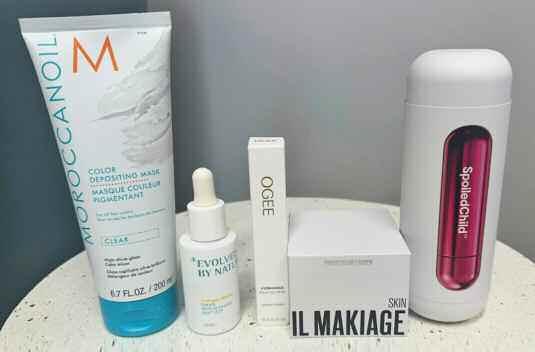
All attendees will receive free goodies valued at over $300 consisting of beauty and personal care products! Don’t miss out on this exclusive opportunity to discover and experience the latest innovations firsthand




Event Agenda
9:30 – 10:10 a.m. Breakfast
10:10 – 11:00 a m Navigating the Innovation Landscape: From Sustaining to Disruptive Strategies
– Kelly Dobos, M.S. (Innovator, Expert Consultant, and Adjunct Professor – University of Cincinnati)
11:00 – 11:50 a m Making a Trend Your Own
– Abbott Stark (Co-Founder and CPO, OGEE)
11:50 a m – 12:30 p m
Decoding Trends: The Chemists’ Guide to Unlocking the Secrets Behind Breakthrough Products
– Michele Robertson (Director of Beauty Activations, Symrise)
12:30 – 1:30 p.m. Lunch and Networking
1:30 – 2:30 p m Insights from Industry Leaders: A Panel Discussion Panelists:
• Angelica Ceballos, MBA (Vice President, Product Development, Moroccanoil)
• Laura Muollo, Ph.D (Vice President, R&D, True Colors Chemistry)
• Craig Onofry, M.S. (Chief R&D and Innovation Officer, KDC/ONE)
• Giorgio Dell’Acqua, Ph.D. (Innovator and Product Developer) Moderator:
• Brian Freedman, MBA (Senior Director, Sales and Strategic Marketing, Evolved by Nature)
2:30 – 3:15 p.m. Innovate to Dominate: Kahoot Edition
3:15 – 4:00 p m Cookies and Social Hour
Registration Fees
NYSCC members: $25 (Valid SCC number required)
Non-members: $80
Students/Emeritus: FREE (school e-mail address required)
Member tickets require a valid SCC membership number and student tickets require a school e-mail address or registration will not be accepted
To register, visit the Events section of the NYSCC website: www.nyscc.org
2025 NYSCC Events Calendar
• For updated NYSCC information, visit us on the web at: www.nyscc.org
• For National SCC information: www.scconline.org
March 19
April 16
June 3-4
June 3
Innovating with Purpose: Transforming Trends into Breakthrough Products
Legacy Castle, Pompton Plains, NJ
Comprehensive Approach to Sustainability
Brooklake Events, Morristown, NJ
Suppliers’ Day
Jacob K Javits Convention Center, New York, NY
NYSCC Industry Awards Night
Classic Car Club, New York, NY
July 28 Golf Outing
Crystal Springs, Hamburg, NJ
August 9 Fishing Trip
Atlantic Highlands, NJ
September 10
October 16
November 12
Sensory Event
Venetian, Garfield, NJ
Rheology Event
Jay Conference Bryant Park, New York, NY
Demystifying Biotechnology: 360 Degree Look from Ingredient to Brand Liberty House, NJ


CSR program
Naturally committed to a sustainable world aturally a to
NYSCC History Project ...Steve Herman NYSCC History Project ...Steve
Michael A. Stanton –Founder of the NYSCC
Michael A. Stanton founded the New York Chapter of the Society of Cosmetic Chemists and was its first Chairman Unfortunately, little is known about him He appears in the 1950 U S census as a “consulting chemist” living in Philadelphia with his wife Bettie, listed as a “manufacturer’s representative”. Michael was 45 years old, which would suggest he was bor n in 1905 He was an early member of the Chicago Section (as it was then known)
We know a few facts preserved by long-time NYSCC Historian Harry Isacoff:
1. At a meeting of the Board of Directors of the Society on May 14, 1954, Michael Stanton, a member of the Chicago Section, proposed the establishment of a New York Section

2. A letter was sent by Michael Stanton on September 20, 1954, inviting industry members to meet for the purpose of establishing the New York Section
W ith these facts it seemed possible that some more infor mation might be saved in the SCC National office Recently, Erica O’Grady (SCC Chief Executive Officer) searched for the relevant files and provided the following.
From the Board minutes of June 2, 1954 (“Chapter” and “Section” were both used interchangeably): “It was reported that Mr Michael Stanton, a for mer member of the Chicago Section, had requested that the Society consider setting up a New York Section. Dr. Powers asked the Executive Committee to investigate the possibility of Setting up a New York Chapter It was noted that the National Society gives the Chicago Section $5.00 per year for each member of that section The SCC National Board voted that Dr Powers contact Mr Stanton and inform him that they had discussed the possibility of a New York Chapter, and the by-laws do allow for such a Chapter It was suggested that Mr Stanton be sent a list of the society’s members so that he may contact members in the New York area ”
Dr. Donald H. Powers, mentioned in the minutes, was President of the SCC in 1954. We know Michael Stanton sent the invitation letter to members and the NYSCC organizational meeting was held on September 29, 1954. Michael Stanton was elected as the first NYSCC Chair man. At this point, Michael Stanton seems to disappear from history, and the reason was recently uncovered in another search by Erica O’Grady
From the Board minutes of March 1, 1962:

The $25 that was donated in 1961 is valued at $263 today.
Louis J Burris, who reported on Michael Stanton’s death, has his own industry story, which was published in his obituary.
Louis Burris Obituary
“BURRIS, Louis J For mer Group Director of Cosmetics Chemistry Research for Revlon, Inc. Louis J. Burris, a resident of Great Neck, New York and Camarillo, Califor nia, died of natural causes at the age of 92 on April 2, 2008, in Great Neck Mr Burris, an honors graduate of The City College of New York, was a life-long chemist whose specialization was the development of hair coloration and other women ' s cosmetic products He was
well known in the chemical industry for his work as Group Director of Cosmetics for Revlon, Inc. at the company ' s headquarters in Bronx, New York during the 1950s and 1960s ”1
Now, we at least have the bare outline of Michael Stanton’s life and how he was able to create the NYSCC. We are grateful for his efforts in establishing the NYSCC chapter, which has evolved into a worldclass organization
References
1 The Star-Ledger; www.legacy.com/us/obituaries/legacyremembers/louis-burrisobituary?id=8114627; accessed on March 6, 2025.
NYSCC Employment Section
Are you looking for a candidate that loves the personal care industry, who the thrill of designing a make-up product or shampoo? Or perhaps you are someone with expertise in raw materials. Maybe you need some help the lab and could use a tenacious inter n who wants to start their career in the personal care space.
The NYSCC Chapter supports you and your business with FREE postings to our webpage Contact employmentadmin@nyscc.org to have passionate candidates apply to your roles. Recent postings include companies such as Lucas Meyer Cosmetics, Kenvue, Olaplex, and Symrise for roles in Sales, Marketing, For mulations, and Regulatory
Your partner for innovation and success
brenntag.com


Below are some positions in the personal care industry that are currently posted on the NYSCC website For a full description of the jobs, visit https://nyscc.org/jobs
• Senior For mulation Chemist – KKT Innovation Labs - Orlando, FL
• Inter n R&D – Goodier – Dallas, TX
• Sr. Manager Product Innovation R&D – Prestige Consumer Healthcare – Tarrytown, NY
• Regional Sales Manager – Lucas Meyer Cosmetics/Clariant – New Providence, NJ
• Business Development Manager – Rahn Group – New Jersey/New York
• Senior For mulation Scientist – Prestige Consumer Healthcare – Lynchburg, VA
• Product Development Scientist II – Clorox/Burt’s Bees – Durham, NC

Comprehensive Approach to Sustainability
Brooklake Country Club
Florham Park, NJ
April 16, 2025
3:00 – 8:00 p.m.

Join us for an engaging event where sustainability experts share their innovative approaches to building a greener future Discover practical strategies for making a meaningful impact and gain insight into practices you can put in place to drive lasting change!
To register, visit the Events section of the NYSCC website: www.nyscc.org
Event Agenda
2:45 – 3:45 p.m. Registration and Cocktail Hour
3:45 – 3:55 p m Opening Remarks – John Carola, NYSCC Chair (Katonah Chemical)
3:55 – 4:15 p.m. Introduction to the Event (Event co-Chairs)
4:15 – 4:45 p m Sustainability for Business Professionals – Danielle Azoulay, M.A. (The CSO Shop)
4:45 – 5:15 p.m. Ingredient Sustainability – Mike Fevola, Ph.D., (Vantage Specialty Chemicals)
5:15 – 5:30 p.m. Break
5:30 – 6:00 p.m. Sustainability Claims – Jennifer Santos (A-Line Lab)
6:00 – 6:30 p.m. Packaging Sustainability – Allison Kent-Gunn, MBA (Beauty Packaging Independent Consultant)
6:30 – 8:00 p m Cocktail Reception and Dinner