
5시
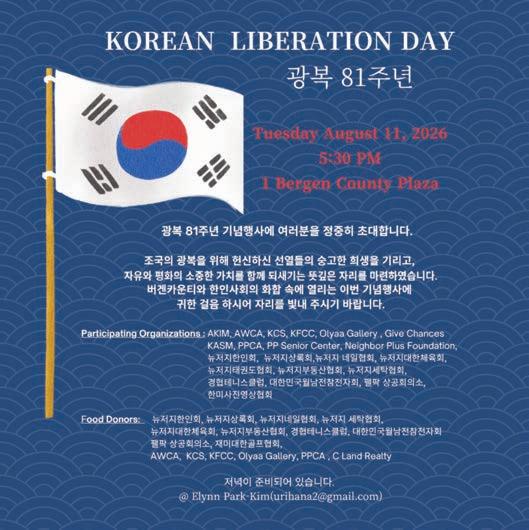
30분 버겐카운티 청사 (Hackensack)에서 광복절 기념 행사를 개최한다.
버겐카운티 광복절 기념행사
는 2016년부터 시작되어 한인사회
와 지역 정치 지도자들이 함께하
는 대표적인 연례 공식 행사로 자
리 잡았다.
President of Asian American Heritage Council Bergen County advisory committee 박
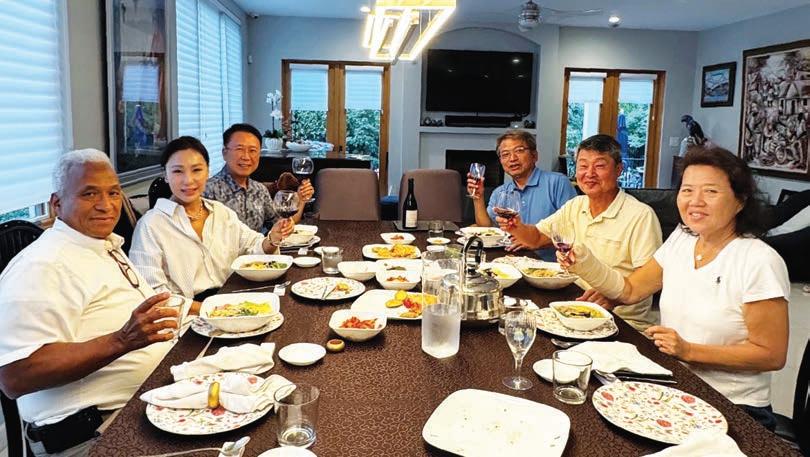
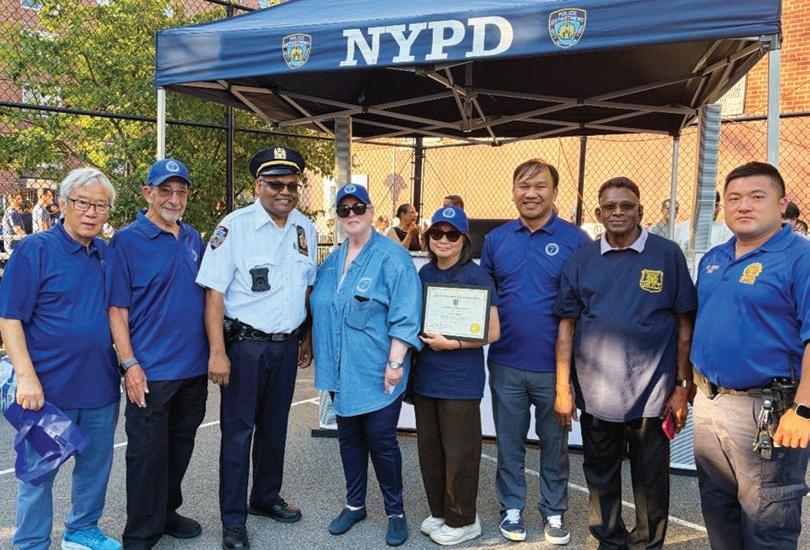
야한다”는데 모두 공감했다. 이날 모임에서“이제 한 사람
을 소개하는데 국한하지 않고 더
많은 한국 독립 영웅들을 미국이
소개해 나가야겠다”는데 의견을
모았으며, 유관순의 스승이며 조 선에서 선교와 교육으로 한 평생 을 바쳐 헌신하신 엘리샤 샤프 기 념 사업회로 명칭을 바꾸고 향후 더 많은 한국 위인들을 미국 사회 에 알리기로 결정했다. 엘리샤 샤프는 약 130년전 20세 의 나이로 뉴욕 선교회에서 조선
으로 파견한 여성 선교사였다. 공

인권 운동가가 되는데 결정적인 역활을 한 장본인이다.
유관순 기념사업회 앞으로 더
많은 훌륭한 한국 독립투사, 위인 들을 미국내 청소년들에게 소개 해 그들의 롤모델이 되도록 해 나 가기로 뜻을 모았다.
주 영면학교에서 6세의 어린 유관 순의 영명함을 발견하고 교육시 켜 양녀로 삼아 이화여전에까지 보내 유 열사로 하여금 서구교육 을 받게해주었다. 이화여전에게 참 민주주의의 이념을 배워 후에 유관순 열사가 한국 최초의 여성

오는 7일부터 9월 3일 까지 뉴욕 롱아일랜드 시티점에 서 고객 감사 대축제를 진행한다. 이번 행사는 고객들에게 더욱 풍성한 쇼핑 혜택을 제공하기 위 해 마련되었으며, 행사 기간 동안 인기 아시안 식품인 쌀, 라면, 냉 동식품, 소스류 등을 최대 80% 할 인된 가격에 선보인다. 행사는 총 4주간 진행되어 매 주 새로운 행사 상품이 구성될 예 정이며, 변경되는 세일 상품은 매 장에 비치된 주간 전단지를 통해 확인할 수 있다. 또한 행사 기간 동안 스마트카 드 회원을 대상으로 매주 금·토 ·일 3일간 50달러 이상 구매 시 특별 사은품을 증정하는 이벤트 도 함께 진행된다. 사은품은 준비 된 수량에 한해 제공되며, 증정 품 목은 행사 일정에 따라 달라질 수 있다.
이와 함께 100달러 이상 구매 한 고객에게는 매주 선정되는 상 품 3종을 특가로 제공한다. 특가 상품 역시 매주 새롭게 변경되어 고객들에게 더욱 다양한 쇼핑 혜 택을 제공할 예정이다.

H마트는“항상 H마트 롱아일 랜드 시티점을 사랑해 주시는 고 객 여러분께 감사드리는 마음을 담아 이번 행사 를 준비했다”며 “앞으로도 신선 한 상품과 합리 적인 가격, 다 양한 프로모션 을 통해 고객 만족을 위해 최 선을 다하겠다” 고 전했다.
행사에


“미국에서 자라나는 청소년들
에게 우리 한국의 역사와 문화, 인
물을 공부하게 하여 한국에 대한
올바른 인식과 자긍심을 갖게 함
으로써 한인으로서의 정체성을 키
워주자”
대뉴욕지구 경기여고동창회
(회장 이정희) 산하, 경운장학회
(회장 강용진)는 5월 2일(토) 오후
1시(동부시간) 맨해튼에 있는 코
리아 소사이어티에서 제16회 영어
웅변대회를 화상 및 대면 하이브
리드(hybrid)로 개최했다. 올해
주제는 ‘한국 문화와 나(K-
■ 장려상-2
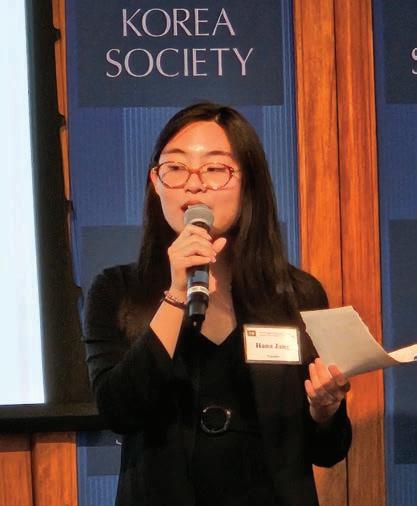
Culture & Me)’였다. 수상자는 △대상(상금 1,500달 러): 최연수(Yeonsoo Chloe Choi, 조지아 주) △1등상(1,200 달 러): 간시현(Sihyun Kan, 버지이 아 주) △2등상 2명 (각 1,000 달 러): 트르쟌 류(Trajan Ryu, 뉴욕 주), 나탈리 타(Natalie Tha, 캘리 포니 주) △3등상 3명(각 500 달 러): 사할 유수프자이(Sahar Yousufzai, 뉴저지 주), 권 아이린 (Irene Kwon, 캘리포니아 주), 김 세아(Seah Kim, 캘리포니아 주) △장려상 3명(각 300 달러): 엠마
유 레즈닉(Emma Yoo Reznik, 뉴욕 주), 장하나(Hana Jang, 뉴 욕 주), 이 올리비아(Olivia Lee, 메릴랜드 주) △결선 진출상 6명 (각 200 달러): 김션경윤(Sean Kyung Yoon Kim, 뉴저지 주), 윤윌리암(William Yoon, 메릴랜 드 주), 권유진(Eugene Kwon,캘 리포니 주), 예준 조엘 아멜링(Ye Joon Joel Ameling, 워싱턴 주), 최윤아(Yunah Choi, 캘리포니아 주), 김예서(Yeseo Kim, 매사추 세츠 주)였다.
웅변대회 이전에 원고 점수만
FromConsumptiontoConnection: FindingIdentity
<소비에서 연결로: 정체성 찾기>
HanaJang<HunterCollegeHighSchool12th, NY>
My family, much like many other Korean American families I’m sure, engages with Korean culture and traditions in our day-today lives whether in ways that intentionally celebrate our heritage, like gathering around a big family dinner for Chuseok, or more casually, through the dizzyingly expansive world of Kdramas and K-movies on Netflix A day in my family’s life, viewed through the lens of our consumption of Korean culture, looks like this: my mom sings along to 1980s trot, her voice carrying loudly enough to be heard from the opposite side of our apartment. My dad ever the historian and philosophical enthusiast spends his free time with a single earbud in, listening to podcasts on Korean history and thought. My younger sister dances energetically in our living room to Blackpink and Le Sserafim as soon as she gets home from school. I scroll endlessly through Netflix in search of new K-dramas to watch or rewatch while Korean ballads by IU and Lee Hi play softly in the background. Eventually, we converge around the dinner table, the four of us tethered by food, sound, and memory.
For us, Korean culture isn’ t “consumed” in the sense of deliberate selection; it is the atmosphere in which we live. What is striking, though, is that this atmosphere is no longer confined to Korean households. Homes across the globe, where Korean is not spoken and history is not shared, have adopted similar rhythms. And this prompts a question: how did a culture so historically and linguistically specific become one of the most globally influential forces of the twenty-first century?
What’ s easy to miss especially when Kculture is reduced to streaming metrics, export statistics, or fandom records is that its global reach depends on feeling. Not spectacle, not novelty, but emotional resonance. For me, Kculture matters because it makes emotional complexity permissible. It shows that contradictory qualities discipline and vulnerability, collective obligation and intense individuality, ancient ritual and hyper-advanced technology—can coexist without erasing one another. Rather than flattening these tensions for global palatability, Korean storytelling often foregrounds them, trusting audiences to inhabit the discomfort.
This is particularly evident in Korean films and dramas. They resist the tidy moral arcs so common in Western media, in which characters overcome flaws, resolve trauma, and emerge transformed. Film historian Kim Kyung-hyun describes modern Korean cinema as shaped by a tradition of emotional realism: stories that dwell in vulnerability, contradiction, and unresolved tension. Characters are exposed shaped by family, class, history not designed to be admired but recognized. Media scholars point out that U.S. storytelling, by contrast, tends to rivilege individual heroism, narrative closure, and resolution that restores balance. Korean narratives, by contrast, allow characters to remain fractured, growth to be partial, endings ambiguous, suffering unresolved. Korean dramas are known for allowing emotional tension to unfold slowly over time building strong empathetic investment before delivering

으로 결정되는 원고상(각 500 달 러)은 김션경윤(Sean Kyung Yoon Kim, 뉴저지 주)과 엠마 유 레즈닉(Emma Yoo Reznik, 뉴욕 주)이 수상했다. 원고심사는 장하나(동문), 강 난원, 김은영(동문), 김혜숙(동 문), 제니퍼 I 김, 김윤정(MD), 이 미윤, 이원숙(동문), 문귀향(동 문), 목정혜(동문), 피터 스미트, 양현주(지난 대회 대상수상자) 씨 가 맡았다.
대회 심사위원은 허준옥 박사 (동문), 박찬경 동문(전문 통역
catharsis and for embedding cultural values, social context, and relational complexity into the very way characters grow and change. Themes like han a layered, unresolved sadness rooted in historical and societal experience recur as structural elements, not occasional motifs. Vulnerability is not an obstacle; it is the narrative itself. Even globally acclaimed works like Squid Game or Parasite follow this logic: characters are compromised, shaped by forces beyond their control debt, social class, historical circumstance. The Korea Society emphasizes that this approach makes Korean storytelling legible across borders because it resists simplification. It doesn’ t offer escape fantasies despite the supposed glamour; it offers honesty. And that honesty is part of what makes K-culture so compelling internationally. It acknowledges that effort does not always guarantee reward, that community can be both sustaining and suffocating, and that identity is inherited as much as it is chosen. This framework becomes especially visible in a medium we might not expect to find cultural continuity: an animated K-pop musical about demon hunters.
Last summer, my sister watched K-Pop
Demon Hunters for the first time and proceeded to rewatch it twenty times over the following weeks. News of its record-breaking run appeared on my parents’nightly Korean broadcasts, and soon they insisted we hold a family movie night to watch it together despite previously resisting such suggestions for other animated films. They were incredibly proud.
K-Pop Demon Hunters initially presents itself as spectacle idol groups, synchronized choreography, glowing stages, fandom energy dialed up to eleven. It looks, at first glance, like a clever export product engineered for global consumption. But the narrative logic underneath it is distinctly Korean, and deeply traditional. The story centers on the honmoon, a spiritual boundary guarded not by force but by music. This is no novelty; sound has historically functioned as spiritual mediation in Korean shamanistic tradition. Mudang shamans rely on chanting, drumming, and song to communicate with spirits, to heal, and to restore balance. Music is not entertainment first it is protection. K-Pop Demon Hunters situates modern idols within that

사), 이유진 의학박사, Linda Tobash(코리아 소사이어티 수석 고문), 양현주(지난 대회 대상수 상자) 씨가 맡았다. 경운장학회 관계자들은“대회 를 거듭할수룩 응모 학생들이 많 아지고, 특히 외국계 학생들도 늘 어 한국에 대해 올바를 인식을 갖 게하는 등 교육적 효과가 크다. 우 리 학생들이 학교에서 배우지 못 하는 한국의 역사, 문화, 상황, 인 물, 디아스포라(전 세계에 진출해 살고 있는 한인들)을 스스로 공부 하는 과정에서 한국에 대한 자긍
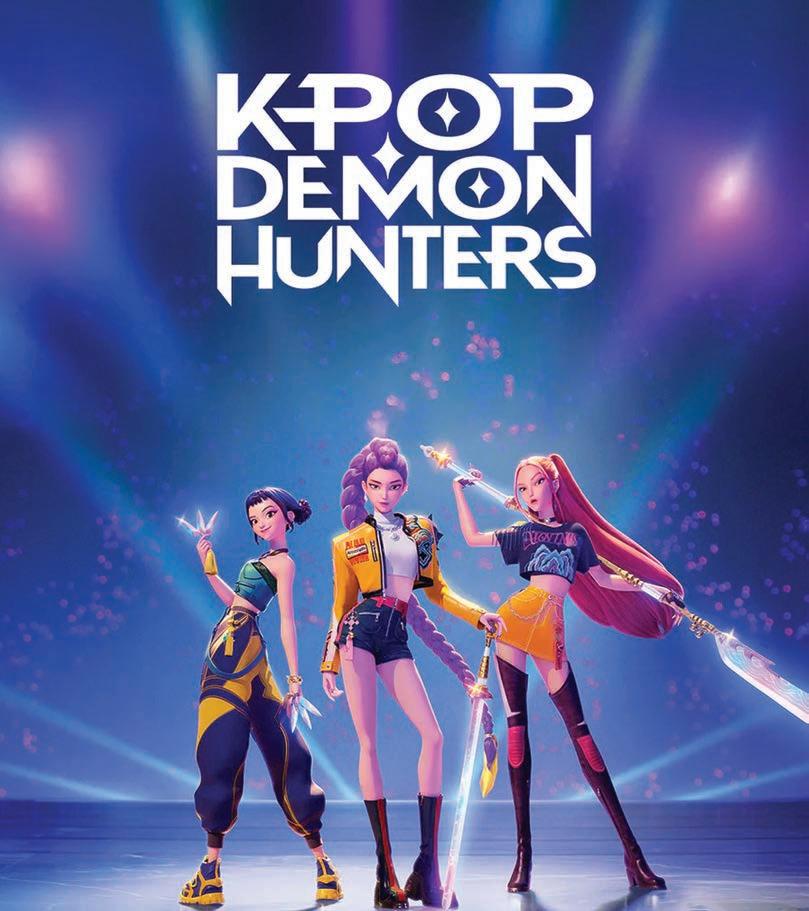
“… Lastsummer, mysisterwatchedK-PopDemonHuntersforthefirsttimeandproceededtorewatchittwentytimesoverthefollowing weeks. Newsofitsrecord-breakingrunappearedonmyparents’nightlyKoreanbroadcasts, andsoontheyinsistedweholdafamilymovie nighttowatchittogether—despitepreviouslyresistingsuchsuggestionsforotheranimatedfilms. Theywereincrediblyproud. …”
lineage.
The demon hunters inherit a responsibility passed down through generations, adapting it to their time, adding their own voices, but never abandoning the weight of the role. The narrative resists the Western hero-arc Victory comes not from exceptional individuals discovering hidden power but from coordination, trust, and shared labor.
The characters are talented, yes but also insecure, exhausted, afraid of failing the legacy they inherit. Vulnerability is not a flaw to overcome; it is the condition that makes their role meaningful.
For my sister, the movie was exhilarating. For my parents, it was this and something else: proof that culture, memory, and history can survive translation not by freezing in place, but by being reinterpreted in ways the next generation will embrace. Watching together, I realized that Kculture’s power lies not in impressing the world but in moving between generations without breaking. It refuses to separate modernity from ancestry, suggesting that progress can coexist with preservation. And that realization extends to me personally. K-culture has shaped not just what I watch or listen to, but how I view my identity. I think of Han Kang’s Human Acts, which I first discovered in eighth grade, drawn less by curiosity about the subject than by the quiet thrill of a Korean name on a library shelf. At the time, it was relief enough to see someone like me represented. I read it quickly, aware that it was important, but without fully grasping the moral or emotional weight. Grief felt immense but abstract; violence historical rather than personal. Four years later, I borrowed the same copy again. With more life experience and detailed understanding of Korean history, I read Human Acts not as a passive observer but as someone implicated emotionally, culturally, and morally. The novel forced me to confront the silences surrounding

collective trauma and the cost of forgetting, especially within communities like my own. What once felt like representation alone became a call to awareness and responsibility.
Through that rereading, I realized that my relationship with K-culture had evolved from consumption to connection: it shaped not only my sense of belonging, but also my obligation to remember, to speak, and to carry forward stories that might otherwise be overlooked. K-culture, in this sense, gave me a framework. Meaning deepens with return; understanding unfolds over time. Some stories do not reveal themselves until we are ready to sit with their weight. Identity, like culture, accrues quietly, unevenly, with each encounter.
This generational, iterative process is part of what makes K-culture uniquely resonant globally. Korean creators trust audiences to lean in, to learn lyrics, read subtitles, and google the meanings. Participation is demanded rather than convenience offered. At the same time, this influence is not without cost. Discipline that produces excellence can lead to exhaustion; expectations that create beauty can strain mental health. Cultural success prompts a global question: how do we value effort without eroding those who produce it? Sustainability is not maintaining popularity; it is protecting creators. K-culture is not a trend built on novelty. It is a living system built on memory. Films, dramas, music, literature they are vehicles for continuity and reinterpretation. As long




이게 무슨 소린가!?… 뉴스 기
사의 내용인즉, 미국 질병관리청 (CDC= CentersforDisease ControlandPrevention) 보고자
료에 의하면, 미국 9개 주에서 설
사병을 일으키는 ‘cyclosporiasis’로 불리는 미세
기생충이 모양이 둥글고 속이 연 한 양상추(iceberglettuce)와 연
관이 있는 것으로 밝혀졌다. nine statesnowhaverelatedcases ofdiarrhealillnesscausedby themicroscopicparasitelinked toiceberglettuce.
2026년 미세 기생충이 최소 31
개 주에 확산되어 5천명 이상이
감염되고, 어디서 그것이 왔는지
조사가 진행되고 있다. The2026 Cyclosporaoutbreakhas affectedover5,000 people acrossatleast31 U.S. states, withinvestigationsongoingand nospecificfoodsourceyet confirmed.
2026년 7월 중순 현재 최소 31
개 주에 5천명 이상이 감염되고, 최소 86명이 병원에 입원하고 죽
은 사람은 없는 것으로 보고되었 다. Asofmid-July2026, the outbreakhasresultedinover 5,000 reportedcasesof cyclosporiasisinatleast31 states, withatleast86 hospitalizationsandno reporteddeaths(CDC, July14,
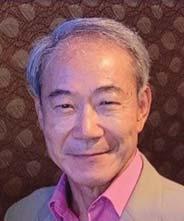
MosesS. Kim김성준
희망보험 창업 1982 대뉴욕지구 보험재정협회 창립(1995) 멤버 2대 회장 1997-1999 상임이사
2026; NBCNews) 뉴욕 주, 미시간 주, 오하이오 주, 노스 캐롤라이나 주가 그중 많은 건수가 보고되고, 특히 미시 간 주가 6월 하순부터 3,309건으 로 가장 많은 건수가 보고 되었 다. Michigan, Ohio, NewYork, andNorthCarolinaareamong thehardest-hitstates, with Michiganalonereporting3,309 casessincelateJune, a dramaticincreasecomparedto itsusual40–50.
◆‘식중독’과 책임보험 식중독(foodbornillness)은 식품업, 요식업 등 식재료와 그것

1982년부터 한인들을 위해 보험 서비스를 제공하고 있는‘희망보험’은 NY, NJ, CT.의 △개인·사업체 보험상담·설계 △기존계약서검토·신규가입 △생명·건강·메디
책임보험 씨리즈(LiabilityInsuranceSeries)-
으로 만든 음식을 판매하는 업소
에 고유한 책임의 요인이 되는 위 험요소(Perils=CausesofLoss) 로 볼수 있다.
현재 진행되고 있는 미세 기생
충이 묻은 양상추를 재배, 수출,
수입, 판매한 모든 업체들, 그리고
샌드위치와 샐러드에 넣어 판매
한 식당(TacoBell) 등이 이 위험
요소에 노출된(Exposed) 업소들
이라고 할 수 있다.
식중독에 걸린 손님들이 만일
고소를 한다면, 이 위험요소에 노
출된 업소들이 피고인이 될것이
고, 결국 각 업소의 사업체 보험
가운데 해당 책임보험(Products & CompletedOperations Liability)을 들어주고 있는 보험
회사가 그에 대한 책임을 물어주
게 될 것이다.
사업체 보험의 책임보험이 여
러 가지 있지만, 이러한 위험요소
에 대한 책임보험은 판매 제품과
제공된 서비스로서 완성된 작업 에 대한‘책임보험(Products& CompletedOperations Liability)’이라고 부른다.
◆‘제품’과‘완성된 작업’
‘제품과 완성된 작업’은 우리 가 일상에서 수시로 접하는 모든
상품과 서비스에 관련되어있다.
예를 들면, 장난감 가게에 가면
어린이들이 갖고 싶어 하는 수많
은 장난감이 있는데, 이러한 장난 감은‘제품’에 해당된다. 만일 어 떤 장난감이 많이 팔렸는데 그중
어떤 위험요소가 있는 장난감이
그것을 갖고 놀던 어린애에게 신
체적 상해를 입혔을 경우 그 장난 감을 만든 제조업자와 그 장난감
을 수입해서 도매한 수입 도매상 과 그 장난감을 받아다 판매한 소 매상은 모두 그 사고의 결과 발생
한 책임을 모면할 수 없게 된다. ‘완성된 작업’의 예를 들면,
어떤 자동차 정비소에서 브레이
크 패드를 갈아 끼웠는데, 나사를
단단히 조이지 않아서 그 잘못 완
성된 작업으로 인해서 그 차를 운
전하다 헐렁한 브레이크 패드로
인해서 사고가 발생하고, 그 사고
로 신체적 상해와 재산상의 손실
이 발생했다고 판명되면, 그 자동
차 정비소는 그에 대한 책임을 모
면할 수 없게 된다.
식당에서 사 먹은 음식으로 인
해서 식중독을 일으키는 경우에
도 이 책임보험이 적용된다. 이번
미세 기생충이 묻은 양상추
(IcebergLettuce)를 썰어 넣은
샌샌드위치와 샐러드를 판매한
몇몇 식당이 주목을 받은 것은 대
표적인 예가 될 수 있다. 이처럼 우리는 아무 생각 없이


일상에서 무수한 상품과 서 비스를 접하고 살고 있다. 하지
그 무수한 상품을 만들어서 유통시키는 제조업자, 도매 및 소 매상들과 자동차 정비소, 식당, 등 서비스를 제공하는 업체들은 지 금 소개하는‘제품과 완성된 작 업’에 대한 책임보험을 생각하지 않을 수 없다.
◆보험료 산출 근거(Premium Base)
이러한‘제품 및 완성된 작업’ 에 대한 보험을 가입하는 데 있어 서, 보험료를 산정하는 기준으로 매상(Receipts)이나 급료 (Payroll)를 사용한다.‘제품 및
완성된 작업’에 대한 보험을 필요 로 하는 사업체를 보험에 가입할 때, 장부에 기록된 매상이나 급료 에 대한 구체적 숫자를 묻는 이유 는 그 숫자가 곧바로 보험료로 연 결되기 때문이다.
◆감사를 받는 보험증서 (AuditablePolicy)와 받지 않는 보 험증서(NonAuditablePolicy) 사업체를 보험에 드는 보험증 서는 CPP=CommercialLines PackagePolicy와 BOP= BusinessOwner’sPolicy로 나눌 수 있는데, 전자(CPP)는‘제품 및
완성된 작업’에 대한 보험료를 산 정하는 데 매상이나 급료를 사용 하기 때문에 보험증서가 만료되 거나 갱신되는 때를 전후하여 감 사의 대상이 된다. 보험증서를 갱 신하는 시점에서 지난해의 매상 이나 급료를 묻는 감사가 있는 것 은 이 때문이다. 감사를 받는 보험증서는 보험 을 시작할 때 매상이나 급료를 지 나치게 낮게 책정하여 보험에 가 입하면, 1년 후 감사 결과 나오는 추가 보험료(Additional Premium)에 대한 부담이 커지므 로, 현실에 가깝게(reasonable) 매상이나 급료를 추정하여 보험 에 가입하는 것이 바람직하다. 후자(BOP)는‘제품 및 완성 된 작업’에 대한 보험료가 그 보 험증서의 보험 요율에 포함 (Built-in)되어 있어 일반적으로 ‘제품 및 완성된 작업’에 대한 보 험료를 따로 계산하지 않는 데, 요즘은 후자(BOP)의 경우에도 매상이나 급료가 보험료 책정에 반영되는 추세를 보이고 있다. 따 라서 이 보험증서를 가진 보험 가 입자일지라도 매상이나 급료를 묻는 감사가 뒤따르는지 확인해 볼 필요가 있다. ■ 면책조
강·메디케어 상담 △ HopeAgency Inc 201-04 NorthernBlvdSte2B Bayside, NY11361 Phone718-961-5000 Fax718-353-5220 Office Hours: 월~금 except Holidays 09:00 AM 05:00 PM Other Hoursbyappointment 응급할 때는 Julius917-285-0019 William917-324-4402 Agatha917-403-0051 Moses917-403-0031