



도널드
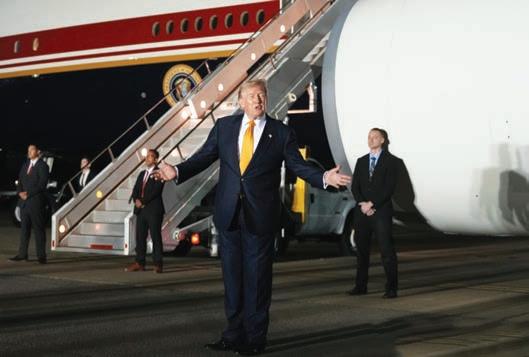
주어질 것”이 라고 지적했다. 또“이것은 단연 시민권을

월마트는 그와 통화하는 과정
에서 이미 소고기를 포함한 여러 품목의 가격 인하 계획을 세워놨
다고 설명했다. 실제 월마트는 지
난달 29일부터 할인 마케팅을 실 행에 옮겼다.
농무부는 월마트의 계획을 백
악관에 전달했다. 트럼프 대통령
은 지난 6일 자신의 트루스소셜을
통해“미국에서 가장 크고, 좋고, 현명한 소매업체 중 하나인 월마

트가 나의 행정부 요청에 따라 건 국 250주년에 맞춰 가격을 많이 인 하할 것이라고 방금 보고받았다” 고 밝혔다. 그러면서“특히 월마트 는 많은 제품 중에서도 다진 소고 기 1파운드(454g) 가격을 거의
15% 인하할 예정”이라고 말했다.
WSJ은 트럼프 행정부의 이러
한 행동이 중간 선거를 앞두고 업
계에 가격 인하를 압박하고 있음
을 보여준다며 이는 공화당 행정

부에서는 매우 이례적인 조치라고 강조했다.
다만 미국 내 소고기 가격은 정
부의 압박으로 쉽게 해결될 수 있
는 문제가 아니라며 미국 축산 업 계는 치솟는 비용과 가뭄 등으로 어려움을 겪고 있고 수년간 소 부 족 현상에 직면해 있는 상황이라 고 덧붙였다.
특히 소고기 다짐육과 등심 가 격은 올해 사상 최고 가격까지 치

이후에는 가족 전체가 뒤따라 들 어올 수 있게 될 것”이라며“미국
시민권은 매매 대상이 아니다”라 고 말했다.
그러면서“즉시 대법원에 재심 리(rehearing)을 요청할 것”이라
며“대법원이 완전히 미친 이 결정 을 바꾸지 않는다면, 이러한 사법 적 불의는 미국을 파괴할 것”이라 고 밝혔다.
트럼프 대통령은 지난해 1월 20 일 취임 첫날 행정명령을 통해 미




마련했다.
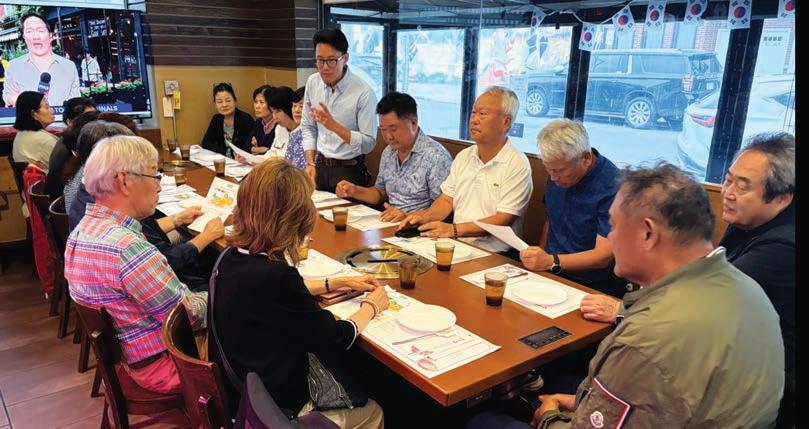
지난 6월 23일 실시된 뉴욕 연 방하원 제6선거구 민주당 예비선 거에 출마하여 그레이스 맹 현 연 방하원의원에게 아깝게 석패한 척 박 후보는 7일 오후 5시 플러싱 먹자골목에 있는 함지박식당에서
선거운동에 진력한 후원회 회장 단과 자원봉사자들에 감사하는 자리를 마련했다. 척 박 연방하원의원 후보는 그 동안 선거 캠페인을 적극 도와준 후원회장들, 또 가가호호 방문하 여 선거운동을 한 봉사자들에게 감사를 전하고 선거 결과보고를 했다. 이 자리에는 김영환, 박호성 이시준, 이강원 회장 등 공동후원 회장 4명과 이석찬 k-
식품 물가 상승을 부추기 고 있다.
대통령은 민심과 직결 되는 물가 안정을 위해 재집권 이 후
대표 도 참석했다. 척 박



“미국에서 자라나는 청소년들
에게 우리 한국의 역사와 문화, 인
물을 공부하게 하여 한국에 대한
올바른 인식과 자긍심을 갖게 함
으로써 한인으로서의 정체성을 키
워주자”
대뉴욕지구 경기여고동창회
(회장 이정희) 산하, 경운장학회
(회장 강용진)는 5월 2일(토) 오후
1시(동부시간) 맨해튼에 있는 코
리아 소사이어티에서 제16회 영어
웅변대회를 화상 및 대면 하이브
리드(hybrid)로 개최했다. 올해
주제는 ‘한국 문화와 나(K-
■ 3등상-1
Culture & Me)’였다. 수상자는 △대상(상금 1,500달 러): 최연수(Yeonsoo Chloe Choi, 조지아 주) △1등상(1,200 달 러): 간시현(Sihyun Kan, 버지이 아 주) △2등상 2명 (각 1,000 달 러): 트르쟌 류(Trajan Ryu, 뉴욕 주), 나탈리 타(Natalie Tha, 캘리 포니 주) △3등상 3명(각 500 달 러): 사할 유수프자이(Sahar Yousufzai, 뉴저지 주), 권 아이린 (Irene Kwon, 캘리포니아 주), 김 세아(Seah Kim, 캘리포니아 주) △장려상 3명(각 300 달러): 엠마
유 레즈닉(Emma Yoo Reznik, 뉴욕 주), 장하나(Hana Jang, 뉴 욕 주), 이 올리비아(Olivia Lee, 메릴랜드 주) △결선 진출상 6명 (각 200 달러): 김션경윤(Sean Kyung Yoon Kim, 뉴저지 주), 윤윌리암(William Yoon, 메릴랜 드 주), 권유진(Eugene Kwon,캘 리포니 주), 예준 조엘 아멜링(Ye Joon Joel Ameling, 워싱턴 주), 최윤아(Yunah Choi, 캘리포니아 주), 김예서(Yeseo Kim, 매사추 세츠 주)였다.
웅변대회 이전에 원고 점수만
K-CultureandMe: FindingBelonginginaGlobalEcho
SaharYousufzai
<NorthernValleyRegionalHSatOldTappan, NJ>
My story commences with one question that I used to ask myself frequently: Where do I fit in?
I used to feel disconnected before I discovered K-Culture. In such a loud and busy world, I was silent inside. I wanted something actual-something that merely amused me, but something that comprehended me.
And then, I found it. Not there, but in the music and narratives of South Korea. The significant lesson I learned during K-Culture was that you can be an actual part of something not due to shared history, but the same emotion. It began not with profound investigation, but with mere inquisitiveness. I clicked on a music video. Then I watched a drama. And I beheld something strange. The characters were not ideal superheroes. They were in conflict with the pressure, with loneliness, with the fear of their inadequacy. The singers were singing not only about victory but about vulnerability.
I pay attention to one of the songs that said, “It is okay not to be okay”. And I thought is it? Really? In so much of what we are, we are instructed to conceal our hardships. But here there was a whole culture that said, “Bring them into the light. They are part of your story”. It was not merely foreign entertainment. I understand it was an emotional language that I had suddenly comprehended. I felt seen. This was the first time I was comfortable to see my own doubts reflected back at me.
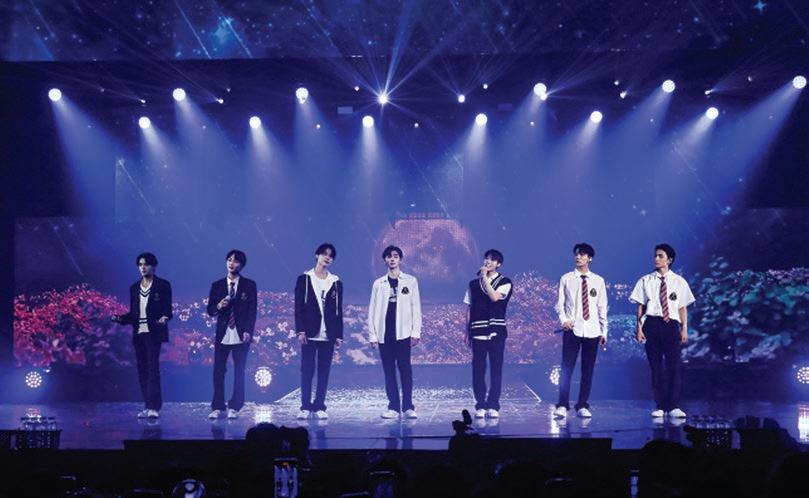
This relationship was transferred off my screen and into my life at one of the concerts of the band ENHYPEN. It is at this point that everything took a different turn. Allow me to recount one second that is scalded into my mind.
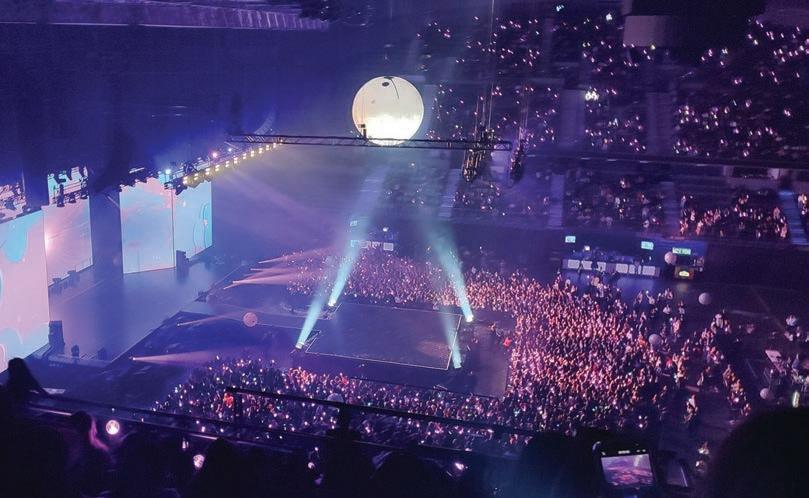
The stadium became entirely black. Thousands of us fell into a hush.
Then suddenly thousands of light sticks flashed-as stars in a black sky.
I heard a wave of sound in that silent, glowing darkness.
It wasn’t screaming. It was a collective, optimistic sigh of all the individuals surrounding me. At that time, I did not look at strangers. I perceived a society exhaling collectively, waiting collectively.
My own loneliness vanished. In its place was a pure, overwhelming feeling of belonging.
I was part of this.
The moment the music burst out, and the act commenced, I did not merely watch it, but I felt it. The accuracy, the strength, the mere discipline. The sacrifice over years could be witnessed in every coordinated action. Not that alone, but the common goal. They were not seven performers: they were a single unit, linked by the same dream. That ENHYPEN show altered my perception of K-Culture in a manner that I will not forget. I have valued it in the past at a distance. But in that arena, I lived it. I discovered that I was no longer merely a fan of the music. I was just on time to see the same values I appreciated, valuing discipline, unity, expressing their hearts out. It was a cultural revelation.
This was not the only revelation about the

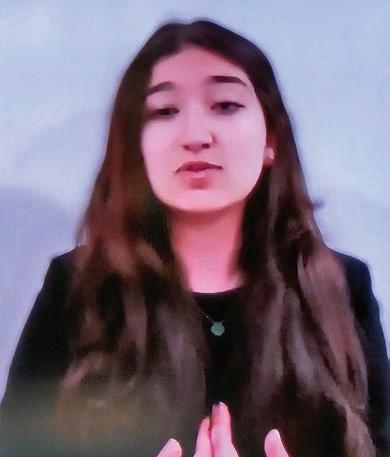
show. It was concerning the people sharing it with me. Have you ever felt extremely lonely, in a crowd? I had. But here, it was the opposite.
I looked to my left. One of the girls was crying, singing each word accurately in Korean a language I was also told was not hers.
A group of my friends were swaying to my right with their arms around each other. We were a quilt of faces, ages, and backgrounds, but we all reacted in a masterful timing.
A wave of phone flashlights substituted the colorful sticks of lights when a slower song came on. The arena became a galaxy of silent shining points of light. No one told us to do that. We just felt it. Together.
I had a simple, deep thought in that collective silence: This is what it means to be understood. It was not the translation of every single lyric. It was a translation of an emotion.
The music gave us a common language to explain the feelings that sometimes are too hard to name separately: longing, resilience, hope.
In the course of those hours, our individual stories were transformed into the ones that reminded of a common experience. The barriers of language and nationality were not obsolete, but irrelevant. I attended one of those concerts. I went out to be part of a community that I had never imagined I was desiring. And this night KCulture was no longer on the screen. It remained something I always retained in my heart and it became something that demonstrated that it is always possible to feel connected even when the distances are vast. It also taught me that the tribe we need to belong to may not occur in our backyard, but in a kind of emotional reality that rings everywhere in the world.
And at that moment I found out something valuable. I thought that connection meant becoming lost in the crowd. But K-Culture proved me wrong. The personal capacity of each man on that stage strengthened the whole group. The bond was established based on their individuality. I came to understand: I did not have to delete my own story to become a part of something bigger. I had the chance to bring my whole, imperfect self. This was my “before and after.”

으로 결정되는 원고상(각 500 달 러)은 김션경윤(Sean Kyung Yoon Kim, 뉴저지 주)과 엠마 유 레즈닉(Emma Yoo Reznik, 뉴욕 주)이 수상했다. 원고심사는 장하나(동문), 강 난원, 김은영(동문), 김혜숙(동 문), 제니퍼 I 김, 김윤정(MD), 이 미윤, 이원숙(동문), 문귀향(동 문), 목정혜(동문), 피터 스미트, 양현주(지난 대회 대상수상자) 씨 가 맡았다.
대회 심사위원은 허준옥 박사 (동문), 박찬경 동문(전문 통역
사), 이유진 의학박사, Linda Tobash(코리아 소사이어티 수석 고문), 양현주(지난 대회 대상수 상자) 씨가 맡았다. 경운장학회 관계자들은“대회 를 거듭할수룩 응모 학생들이 많 아지고, 특히 외국계 학생들도 늘 어 한국에 대해 올바를 인식을 갖 게하는 등 교육적 효과가 크다. 우 리 학생들이 학교에서 배우지 못 하는 한국의 역사, 문화, 상황, 인 물, 디아스포라(전 세계에 진출해 살고 있는 한인들)을 스스로 공부 하는 과정에서 한국에 대한 자긍
“
… ThisrelationshipwastransferredoffmyscreenandintomylifeatoneoftheconcertsofthebandENHYPEN. Itisatthispointthat everythingtookadifferentturn. Allowmetorecountonesecondthatisscaldedintomymind. Thestadiumbecameentirelyblack. Thousandsofusfellintoahush. Thensuddenlythousandsoflightsticksflashed-asstarsinablacksky. Iheardawaveofsoundinthat silent, glowingdarkness. Itwasn’tscreaming. Itwasacollective, optimisticsighofalltheindividualssurroundingme. Atthattime, Ididnot lookatstrangers. Iperceivedasocietyexhalingcollectively, waitingcollectively. Myownlonelinessvanished. Initsplacewasapure, overwhelmingfeelingofbelonging. Iwaspartofthis. …”
I even imagined that their experiences were my unspoken emotions and predicaments.
Then I knew they were a bridge. It is they who bring me near to someone on the other side of the world.
Previously, I perceived culture as a wallbetween us and them.
Next I imagine that door and K-Culture had its door open to whoever wanted to hear its heart (Cha & Pardo, 2023).
Why should this personal expedition be of interest to you? So the question then, in an increasingly digitally connected world, is why so many of us are feeling lonely, emotionally? KCulture offers an answer.
It is not all about melodious and catchy tunes or spectacular choreography, which are also good. It is about the honesty below. It is a culture where struggle is art and work is refined (Shin, 2023). It glorified growth, not perfection. Looking at an act you go to the finished work so excellently performed that never again do you forget the torment of practice. That has transformed my definition of success in my life. I consider discipline now an exercise of self-respect. I comprehend collaboration to mean the act of creating something larger than an individual (Fuego, 2024).
This makes me think of something I wish to impress on you. Can this be sustained considering its worldwide trend? Is K-Culture trendy, or sustainable? In my opinion, it deserves single-term authenticity in its future.
It has not succeeded in making it a global phenomenon by emulating other individuals.

Successfully, it was not apologetic that it was what it was, as per its language, its history, its values (Kim, 2022). The local heart is its strength, worldwide. It loses the magic when it sells this honesty to mass production. The magic that enabled a person like me, who also happens to be of an absolutely different background, to call home.
I lost my voice and my feet were sore at the end of that concert, but my heart was content. I carried a new echo with me.
The thousands of voices in harmony.
The moral of a lesson learned: Unity as human beings is the force that binds.
The sound and the echo of a vow to myself- to never lose communion that glorifies, not denies, who I am.
K-Culture made me remember that we do not have to lose our culture and even today we can accept other people. It taught me that being a disciplined person does not mean that one should not be kind. It showed that you may be everything specific in narrative and everything understood in emotions.
And, last but not least, I will end with the question I started with, ‘Where do I fit in?’ I am a part of the world of universal feelings. I am a part of the generation when a song was able to make strangers family. I am a part of that global whistle which speaks to me like, ‘You are not alone’. And it is here in the fact that a culture on the other side of an ocean can stir me with the feeling to such a strong extent how, here, how we can reach out to each other, simply by just telling our own real life stories.