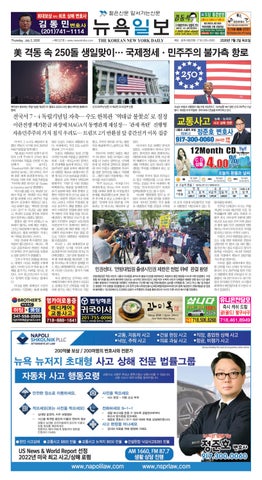

뉴욕한인회 2026~2027 회계연
도1차 이사회가 6월 30일 오후 퀸
즈 플러싱 삼수갑산 2 연회장에서
개최됐다.
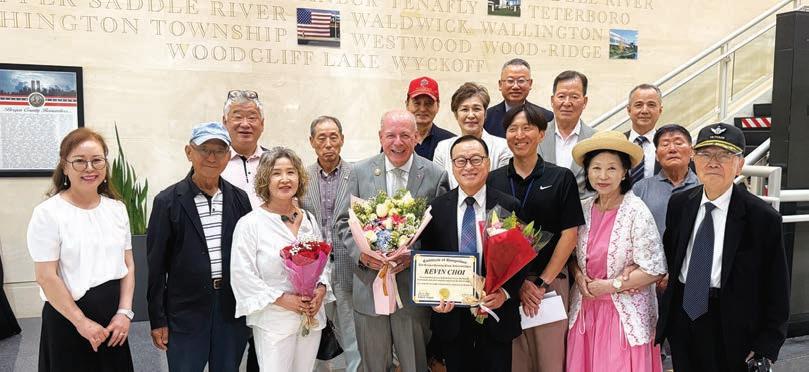
총 26명이 참석한 가운데 열린
이날 이사회는 임일빈 프로그램
위원장의 사회로 진행으로, 국민
의례, 성원보고 및 전 회의록 낭독
후 이명석 회장의 인사가 있었다.
이명석 회장은 이날“지난 1년
동안 집행부를
6월 13일 개
열린 세종역사연구소 창립
식 보고에 이어 신임 이사 12명에 대한 인준이 있었다. 또한 향후 2년간 이사회를 이 끌 이사장, 부이사장, 총무이사, 재무이사 및 여러 위원장들에 대 한 선출 및 인준이 있었다. 새 이사장 선출은 조동현 이사 이 이에스더 현 이사장을 추천한 후 타 이사장 후보의 추천이 없어, 인준을 위한 찬반 표결을 실시했 다. 표결 결과 이에스더 이사장이 찬성 23명, 반대 2명, 기권 1명으로 임기 2년의 신임이사장에 재선출 됐다. 부이사장은 조동현 이사가, 총무이사는 전영준 이사, 재무이
사는 켈리 강 이사가 추천되어 거
수로 선출되었다. 이사회는 또한 이해진 감사위원장, 김용선 차세
대교육위원장, 임일빈 프로그램
위원장의 연임 및 추천위원회에
서 후보로 추천된 최재복 회관관
리위원장 및 정영식 회관조사개
발위원장을 거수로 만장일치 인
준했다. 이명석 회장은 이날 후반
기 사업으로 연례 골프대회 및 10 월 3일 코리안퍼레이드&페스티
발 등 주요사업을 보고했으며, 9
월 13일 개최될 예정인 한미친선
문화축제 및 바둑대회 개최를 보 고한 후 이사회 인준을 받았다.
이에스더 이사장은“이사장단 과 위원장단 모임을 곧 가질 예정
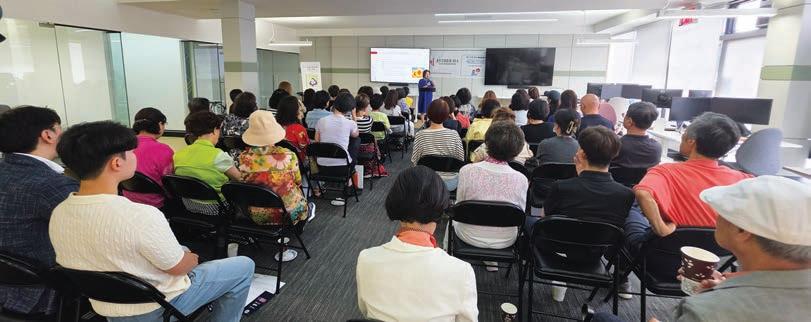
‘더 건강한 정신’운동을 펴고
있는 에스더하재단(이사장 하용 화)은 27일(토) 오전10시~오후 1
시 정신건강세미나로 음악치료와
북토크를 실시했다.
몰로이 대학 음악치료학과 정
승아 교수와 함께 음악이 주는 정
신적인 위안에 대한 강의와 함께
참석자들은“그래도 괜찮아”라는
에스더하재단의 노래도 함께 불 렀다. 또 북토크 시간에는‘우리 아이 마음에도 길이있다’책 저자 김선주 심리치료사와 함께 아이 의 마음신호를 제대로 알아차리 는 것에 대한 강의를 들었고, 평소 알고 싶었던 자녀의 이상심리에

대해 질문하는 Q&A 시간을 통해
어떻게 이끌어야 할 것인가를 고
민하는 시간도 가졌다. 이날 총65 명이 참석했고, 추첨을 통하여 30 명은 책을 선물받는 기쁨도 가졌 다. △문의: 현미숙 917-993-2377 estherhafoundation1@gmail com


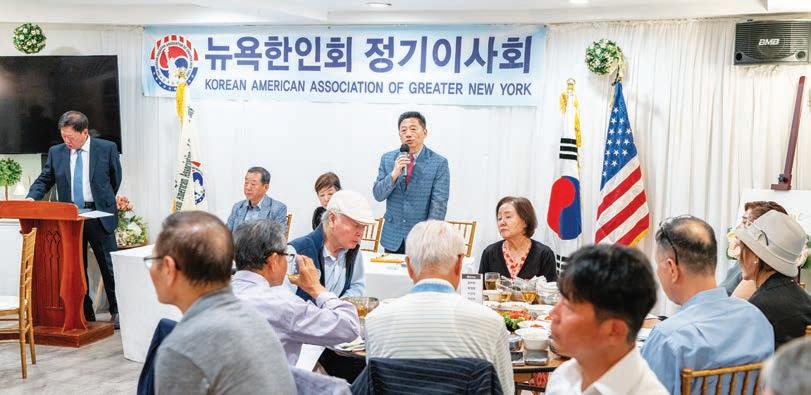
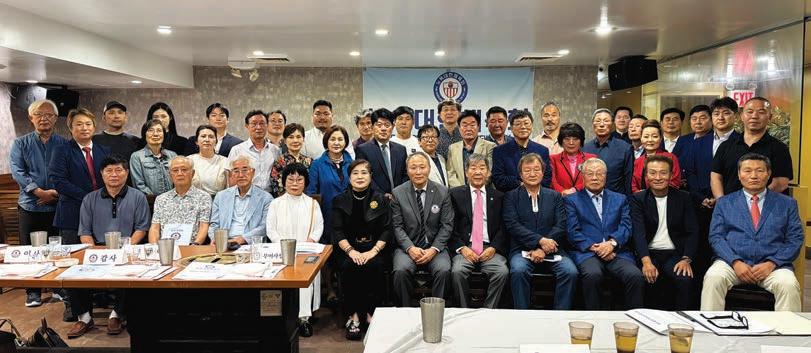
제23대 뉴욕대한체육회(회장 김상현)는 6월 27일(토) 플러싱에 있는 함지박식당에서 2026년도 이 사회를 개최했다. 이날 이사회에는 전직 회장단, 이사, 가맹경기단체장 등 50여 명 이 참석하여 체육회 운영 현황을 점검하고, 2026년도 주요 사업계 획 및 예산안, 체육회 발전 방안 등에 대해 심도 있는 논의를 진행 했다.
이사회에서는 안진섭 이사장 을 선출하고, 강병철·켈리 김 부 이사장을 선임하였다. 안진섭 이 사장은 정통 태권도인으로 뉴욕
이어 진행된 회의에서는 2026
년도 사업계획 및 예산안에 대한 보고와 심의가 이루어졌으며, 참 석자들의 질의와 의견을 반영한 후 원안대로 승인했다. 또 체육회 의 안정적인 재정 운영을 위한 이 사회비 및 가맹경기단체 분담금 운영 방안과 예산 마련 방안에 대 해서도 다양한 의견을 교환했으 며, 세부 운영 기준은 추후 임원회 의에서 추가 논의하기로 했다. 특히 이번 이사회에서는 2026 년도 중점 추진사업으로 뉴욕 동 포사회 화합과 차세대 한인 청소 년들의 전통문화 계승을 위한‘어 린이·청소년 민속놀이 한마당 개최를 추진하기로 의결했다. 이 행사는 뉴욕 지역 어린이와 청소년들에게 우리나라의 다양한 전통 민속놀이를 체험할 수 있는 기회를 제공하고, 한국의 전통문 화와 공동체 정신을 자연스
“미국에서 자라나는 청소년들
에게 우리 한국의 역사와 문화, 인
물을 공부하게 하여 한국에 대한
올바른 인식과 자긍심을 갖게 함
으로써 한인으로서의 정체성을 키
워주자”
대뉴욕지구 경기여고동창회
(회장 이정희) 산하, 경운장학회
(회장 강용진)는 5월 2일(토) 오후
1시(동부시간) 맨해튼에 있는 코
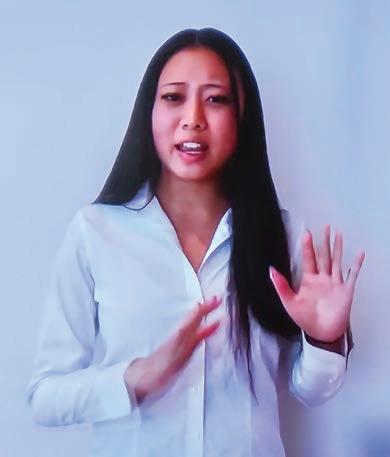
리아 소사이어티에서 제16회 영어
웅변대회를 화상 및 대면 하이브
리드(hybrid)로 개최했다. 올해
주제는 ‘한국 문화와 나(K-
■ 2등상-2
Culture & Me)’였다. 수상자는 △대상(상금 1,500달 러): 최연수(Yeonsoo Chloe Choi, 조지아 주) △1등상(1,200 달 러): 간시현(Sihyun Kan, 버지이 아 주) △2등상 2명 (각 1,000 달 러): 트르쟌 류(Trajan Ryu, 뉴욕 주), 나탈리 타(Natalie Tha, 캘리 포니 주) △3등상 3명(각 500 달 러): 사할 유수프자이(Sahar Yousufzai, 뉴저지 주), 권 아이린 (Irene Kwon, 캘리포니아 주), 김 세아(Seah Kim, 캘리포니아 주) △장려상 3명(각 300 달러): 엠마
유 레즈닉(Emma Yoo Reznik, 뉴욕 주), 장하나(Hana Jang, 뉴 욕 주), 이 올리비아(Olivia Lee, 메릴랜드 주) △결선 진출상 6명 (각 200 달러): 김션경윤(Sean Kyung Yoon Kim, 뉴저지 주), 윤윌리암(William Yoon, 메릴랜 드 주), 권유진(Eugene Kwon,캘 리포니 주), 예준 조엘 아멜링(Ye Joon Joel Ameling, 워싱턴 주), 최윤아(Yunah Choi, 캘리포니아 주), 김예서(Yeseo Kim, 매사추 세츠 주)였다.
웅변대회 이전에 원고 점수만
K-CultureandMe: CarryingRootsForwardinaGlobalWave <한국문화와
NatalieTha<SequoiaHS, CA>
When most people hear “K-Culture,” they think of BTS, Squid Game, or a 10-step skincare routine. For me, it began somewhere more personal: a two hour car ride every Saturday to learn the gayageum, a traditional Korean instrument with twelve silk strings.
According to studycountry.com, in the 1950s, Korea was one of the poorest countries in the world. Today, it exports music, film, food, literature, and beauty trends across the globe. Its cultural reach stretches from Nobel Prizes to Netflix records.
How did this transformation happen in such a short amount of time? K-Culture’ s success comes down to one principle: innovate without abandoning tradition.
However, for me, K-Culture isn’t just a trend. It’ s personal. That blend of heritage and innovation shows up in my life through music and movement, two spaces that matter most to me.
Music has always been part of my identity. I’ve played violin since I was a kid, so when orchestra disappeared from my schedule in high school, it felt like I lost a part of myself.
Instead of walking away from music, I turned to gayageum something I had always been curious about after watching K-dramas with my grandma but never had the chance to try. It wasn’ t an easy process. There was only one teacher in the Bay Area.
Every Saturday, my mom drove me an hour there and an hour back for a single lesson. It was exhausting. But because of my violin background, I picked it up quickly. Within months, I was playing “Arirang,” the folk song my grandma used to hum in the kitchen. Playing it on the gayageum felt like rediscovering something I didn’ t realize I had lost. Then one day, I tried something different. I played my favorite song at that time, “Viva La Vida” by Coldplay, on the gayageum.
My whole life, I had adapted Korean parts of myself to fit American culture. But playing Coldplay on a traditional Korean instrument reversed that direction. For the first time, I wasn’ t shrinking my Korean identity to fit in. I was expanding it.
That’ s when K-Culture stopped being something that I just consumed and became something I was actively shaping within myself.
Around the same time, I had to leave the dance team due to the scheduling conflict. Instead of giving up something that’s been part of me since I was three, I joined Urisawe, a local Korean cultural organization.
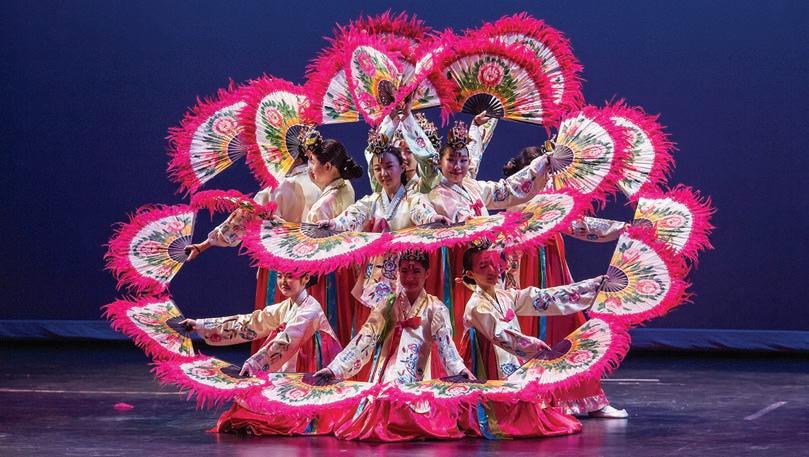
There I learned the fan dance, BuCha Chu-em, which allowed me to expand my dance repertoire beyond contemporary styles. The BuCha Chu-em is controlled, intentional, and almost meditative.
You hold a position until your arms shake. You spin on one foot so your skirt blooms outward like a flower. Every movement requires precision and
으로 결정되는 원고상(각 500 달 러)은 김션경윤(Sean Kyung Yoon Kim, 뉴저지 주)과 엠마 유 레즈닉(Emma Yoo Reznik, 뉴욕 주)이 수상했다. 원고심사는 장하나(동문), 강 난원, 김은영(동문), 김혜숙(동 문), 제니퍼 I 김, 김윤정(MD), 이 미윤, 이원숙(동문), 문귀향(동 문), 목정혜(동문), 피터 스미트, 양현주(지난 대회 대상수상자) 씨 가 맡았다.
대회 심사위원은 허준옥 박사 (동문), 박찬경 동문(전문 통역
사), 이유진 의학박사, Linda Tobash(코리아 소사이어티 수석 고문), 양현주(지난 대회 대상수 상자) 씨가 맡았다. 경운장학회 관계자들은“대회 를 거듭할수룩 응모 학생들이 많 아지고, 특히 외국계 학생들도 늘 어 한국에 대해 올바를 인식을 갖 게하는 등 교육적 효과가 크다. 우 리 학생들이 학교에서 배우지 못 하는 한국의 역사, 문화, 상황, 인 물, 디아스포라(전 세계에 진출해 살고 있는 한인들)을 스스로 공부 하는 과정에서 한국에 대한 자긍
“ … SohowamIcarryingmyrootsforwardinthisglobalK- culturewave? Well, insurfingterminology, alineisthepathasurferchoosesto rideonawave. TheglobalwaveofK-CulturemightlooklikeBTS, K-dramas, andworldwidetrends. Butmylineisthetwo-hourdrivesto learnthegayageum, playing“Arirang”afterhearingmygrandmotherhumit, thenturningaroundandplayingColdplayonthesame instrument. It’sperformingatraditionalfandanceonedayandunapologeticallysteppingontoawrestlingmatthenext. Andincarryingmy rootsforwardinspacesthatmattermosttome, musicandmovement, I’vediscoveredwhoIamwithinthatwave.”
restraint. For months, I practiced in my garage, repeating the same sequences over and over, trying to make them seamless.
Last fall, my teacher finally felt that I was ready and invited me to perform a solo BuChae Chu-em dance at the San Francisco Chuseok Festival.
When I was backstage, I wasn’t afraid of forgetting the choreography. I was afraid of something heavier. When the music began, fear turned into focus. I felt like I was performing with the tradition, carrying it forward one person at a time. That same weekend, I was so honored to even perform at the San Francisco Asian Art Museum before the Korean Consulate and his wife.
But some of my most meaningful performances have been at Asian senior assisted living homes in front of an intimate group of 10 people. At one facility, most residents had dementia and some didn’ t speak at all. But when the music started, their faces changed. One grandmother lifted her arms, mirroring my movements. A staff member later told me an elderly man smiled for the first time that day.
That’ s when I felt what culture truly is. It’s a shared feeling, rooted in memory and tradition, that connects people without needing words. And for me K-Culture doesn’t stay in one place: it shows up in how I move, how I carry myself, even
in spaces where people wouldn’ t
BuCha Chu-em is delicate and traditionally feminine. Wrestling is not. I’m on my high school wrestling team, and that surprises people. But both BuCha Chu-em and wrestling demand discipline, control, and awareness. BuCha Chuem connects me to where I come from.
Wrestling shows how I carry my roots into new spaces. One looks graceful. The other looks aggressive. But both require strength from within. I realized I didn’ t have to choose between softness and power. Just like K-Culture brings together seemingly opposite values like tradition and innovation, I can be both.
So how am I carrying my roots forward in this global K- culture wave? Well, in surfing terminology, a line is the path a surfer chooses to ride on a wave. The global wave of K-Culture might look like BTS, K-dramas, and worldwide trends. But my line is the two-hour drives to learn the gayageum, playing “Arirang” after hearing my grandmother hum it, then turning around and playing Coldplay on the same instrument.
It’s performing a traditional fan dance one day and unapologetically stepping onto a wrestling mat the next. And in carrying my roots forward in spaces that matter most to me, music and movement, I’ve discovered who I am within that wave. Kamsahamida.