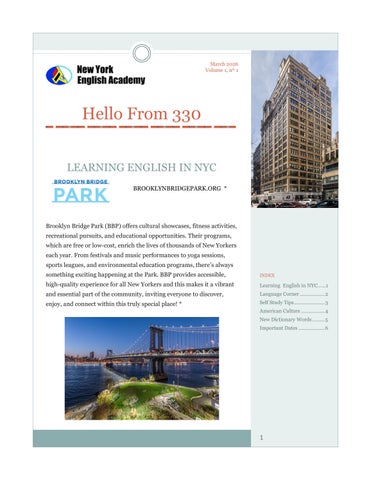

Hello From 330
LEARNING ENGLISH IN NYC
BROOKLYNBRIDGEPARK.ORG *
Brooklyn Bridge Park (BBP) offers cultural showcases, fitness activities, recreational pursuits, and educational opportunities. Their programs, which are free or low-cost, enrich the lives of thousands of New Yorkers each year. From festivals and music performances to yoga sessions, sports leagues, and environmental education programs, there’s always something exciting happening at the Park. BBP provides accessible, high-quality experience for all New Yorkers and this makes it a vibrant and essential part of the community, inviting everyone to discover, enjoy, and connect within this truly special place! *


LANGUAGE CORNER

Expressing Regret
The third conditional refers to something that might have happened, but didn't. We use it to discuss past situations and we normally use past perfect in the if-clause, followed by would have + past participle in the main clause:
I didn't pass the exam. But if I had passed it, I would have registered for the civil engineering course
We didn't manage to get there by nightfall. But if we had (managed to get there), we would have slept in a comfortable bed and not on the ground.*
* https://www.bbc.co.uk/ worldservice/learningenglish/ grammar/learnit/learnitv356.shtml
Note that we use the third conditional in this way when we are expressing regret about something. To emphasize how much we regret something, we can use if only as an alternative to if:
I just didn't realize he was ill. If only I had realized (that), I would have got him to a doctor much earlier.

A Way with Words
An upbeat and lively public radio show and podcast about language examined through culture, history, and family. Language debates, variations, and evolution, as well as new words, old sayings, slang, family expressions, word histories, etymology, linguistics, regional dialects, word games, grammar, books, literature, writing, and more.
A Way with Words is an upbeat and lively hour-long public radio show and podcast about language examined through culture, history, and family.
Each week, callers join author/journalist Martha Barnette and lexicographer/linguist Grant Barrett in light-hearted conversation about language change, debates, and differences, as well as new words, old sayings, slang, family expressions, word histories, etymology, linguistics, regional dialects, word games, grammar, books, literature, writing, and more.*
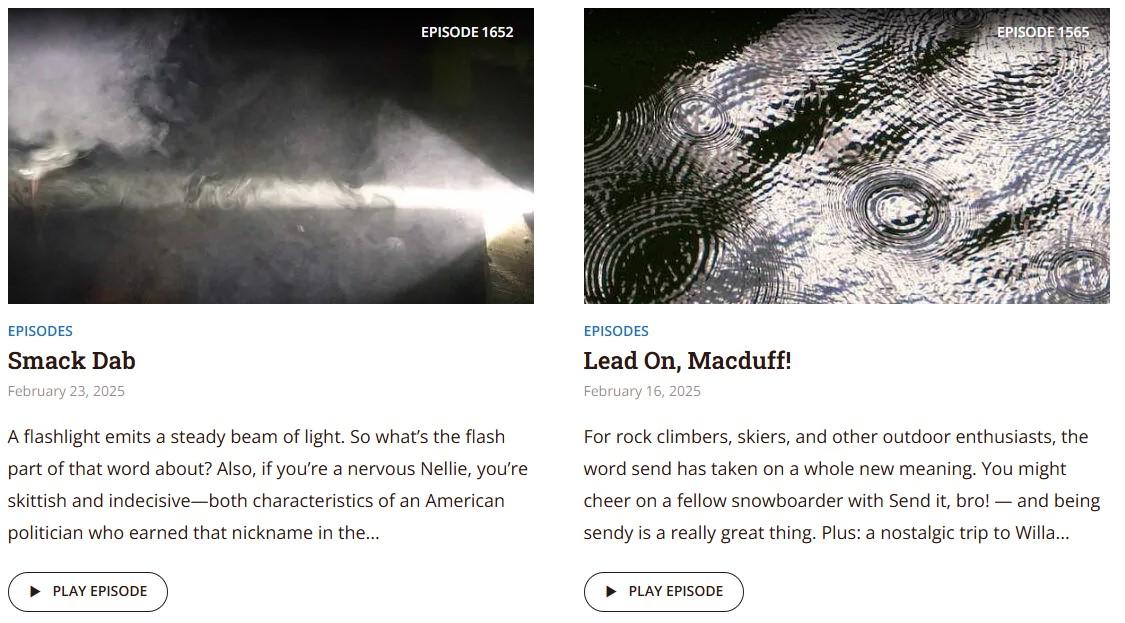

WAYWORDRADIO.ORG/ CATEGORY/EPISODES/ *
SELF-RELIANCE
A strong belief in self-reliance continues today as a traditional American value. It is perhaps one of the most difficult aspects of the American character to understand, but it is profoundly important. Most Americans believe that they must be self-reliant in order to keep their freedom. If they rely too much on the support of their families or the government or any organization, they may lose some of their freedom to do what they want. Even if they are not truly self-reliant, most Americans believe they must at least appear to be so. In order to be in the mainstream of American life to have power and/or respect individuals must be seen as self-reliant.
AMERICAN CULTURE
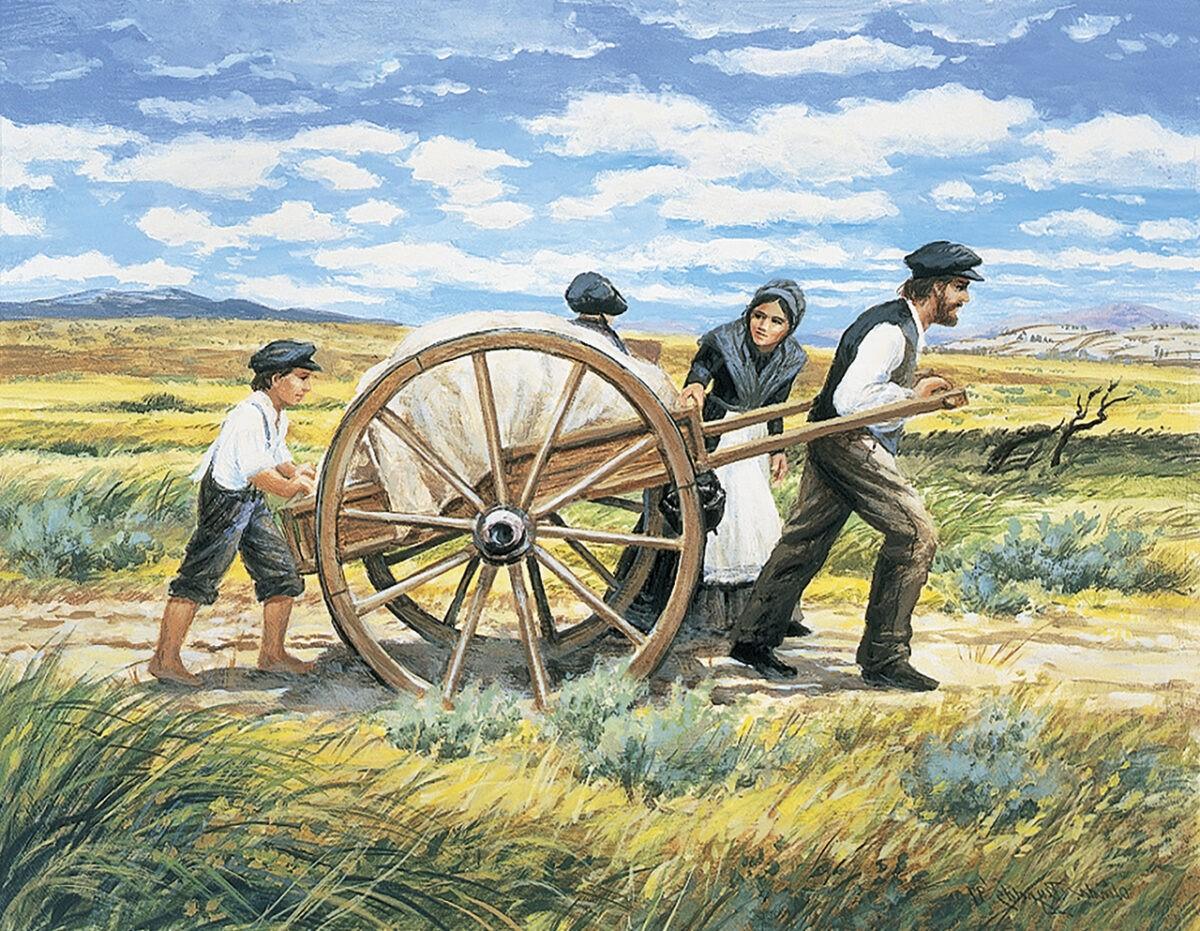
For example, if adult children return home to live with their parents because of economic conditions or a failed marriage, most members of the family expect this to be a short-term arrangement, until the children can find a job and be self-reliant. Although receiving financial support from charity, family, or the government is possible, it is usually expected to be for a short time, and it is generally not admired. Eventually, most Americans would say, people have a responsibility for taking care of themselves.*
*https://vintageamericanways.com/ american-values/
NEW DICTIONARY WORDS*
COMORBID (ADJECTIVE)
(of a disease or medical condition) affecting somebody at the same time as another disease or medical condition
Anxiety and depression are often comorbid with Parkinson's disease. .

DAD BOD (NOUN)

a body type of a man who does not do a lot of exercise, so his body is slightly fat or soft around the middle
I've joined a gym to try and do something about my dad bod.
DEEP DIVE (NOUN)
a detailed examination of a subject
In this podcast, we will take a deep dive into the theories around what really happened on that day.
*HTTPS:// WWW.OXFORDLEARNERSDI CTIONARIES.COM/ WORDLIST/NEW_WORDS
The analysts were asked to do a deep dive on the factors affecting the diminishing profit margin.
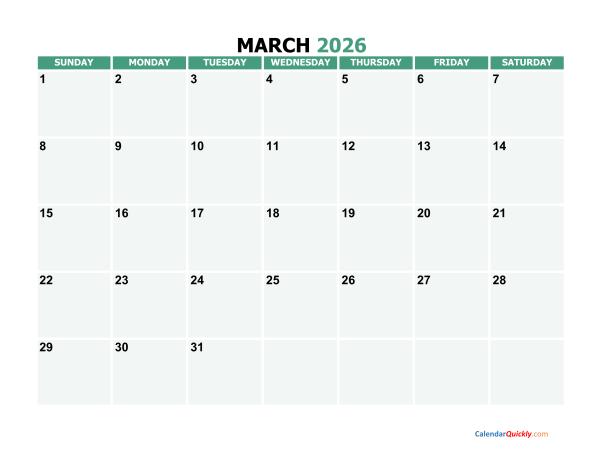
MARCH 2026
March 8, Daylight Saving Time starts
March 17, St. Patrick's Day
IMPORTANT DATES/ EVENTS

Saint Patrick's Day is the feast day of Saint Patrick, the patron saint of Ireland, and a day of celebration of Ireland, its culture and its history. Saint Patrick’s Day is also known as Paddy’s day. St. Patrick's Day is celebrated on March 17 all over Ireland and everywhere in the world where Irish people or their descendants live.
New York City has one of the biggest parades. It is a very Irish festival, and it involves a lot of feasting and celebration, including traditional Irish music, drinking beer, and eating bacon and cabbage. Another tradition of Saint Patrick’s day is that one has to wear green clothing. Green is the color of Saint Patrick's day as it is the national color of Ireland.