the impact issue




Tacoma grown since 2015

SOOTHING SUNDAY
30% off all Redbird, Bodhi High and 30% off all CBD
PANDAMONIUM MONDAY
DOUBLE POINT DAY
50% off all Panda and Snickle Fritz flower and joints
30% off all Dabstract, Hot Sugar and Snickle Fritz carts and dabs
BEST BUDS TUESDAY
30% off all flower and glass
CONCENTRATION WEDNESDAY
30% off all dabs & cartridges, and 30% off batteries
MUNCHIES THURSDAY
30% off all edibles & beverages
FLOWER POWER FRIDAY
30% off all flower and joints and 30% off Blue Roots and FlipSide
SAFETY MEETING SATURDAY
30% off all flower and joints and 30% off Smokiez
10% off - Wisdom Discount to Guests over 65
30% off - All CBD topicals, tinctures, and capsules
30% off - Daily rotating deals in every category ORDER ONLINE 9AM UNTIL 9PM
Coast?


In For A Toke!


MY UNEXPECTED TOLERANCE BREAK

BE A GOOD ANCESTOR




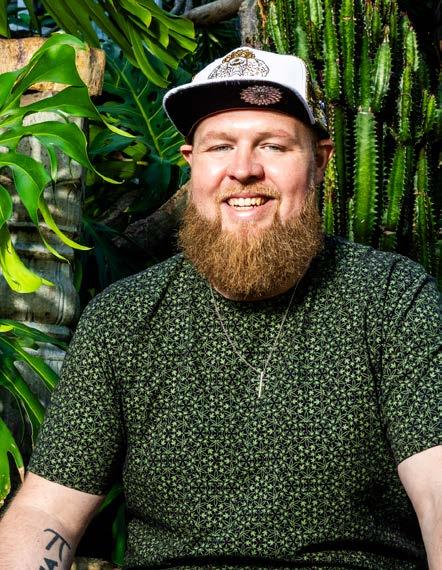
WES ABNEY CEO & FOUNDER
wes@leafmagazines.com
MIKE RICKER OPERATING PARTNER ricker@leafmagazines.com | advertising sales
TOM BOWERS CHIEF OPERATING OFFICER tom@leafmagazines.com
DANIEL BERMAN CHIEF CREATIVE OFFICER daniel@leafmagazines.com
BOBBY BLACK LEAF BOWL DIRECTOR & HISTORIAN bobbyblack@leafmagazines.com
MICHELLE NARANJO & CARA WIETSTOCK COPYDESK michelle@leafmagazines.com | cara@leafmagazines.com
MATT JACKSON SOCIAL MEDIA LEAD mattjackson@leafmagazines.com

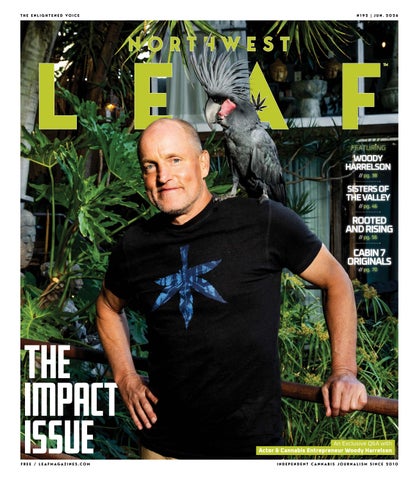
ABOUT THE COVER
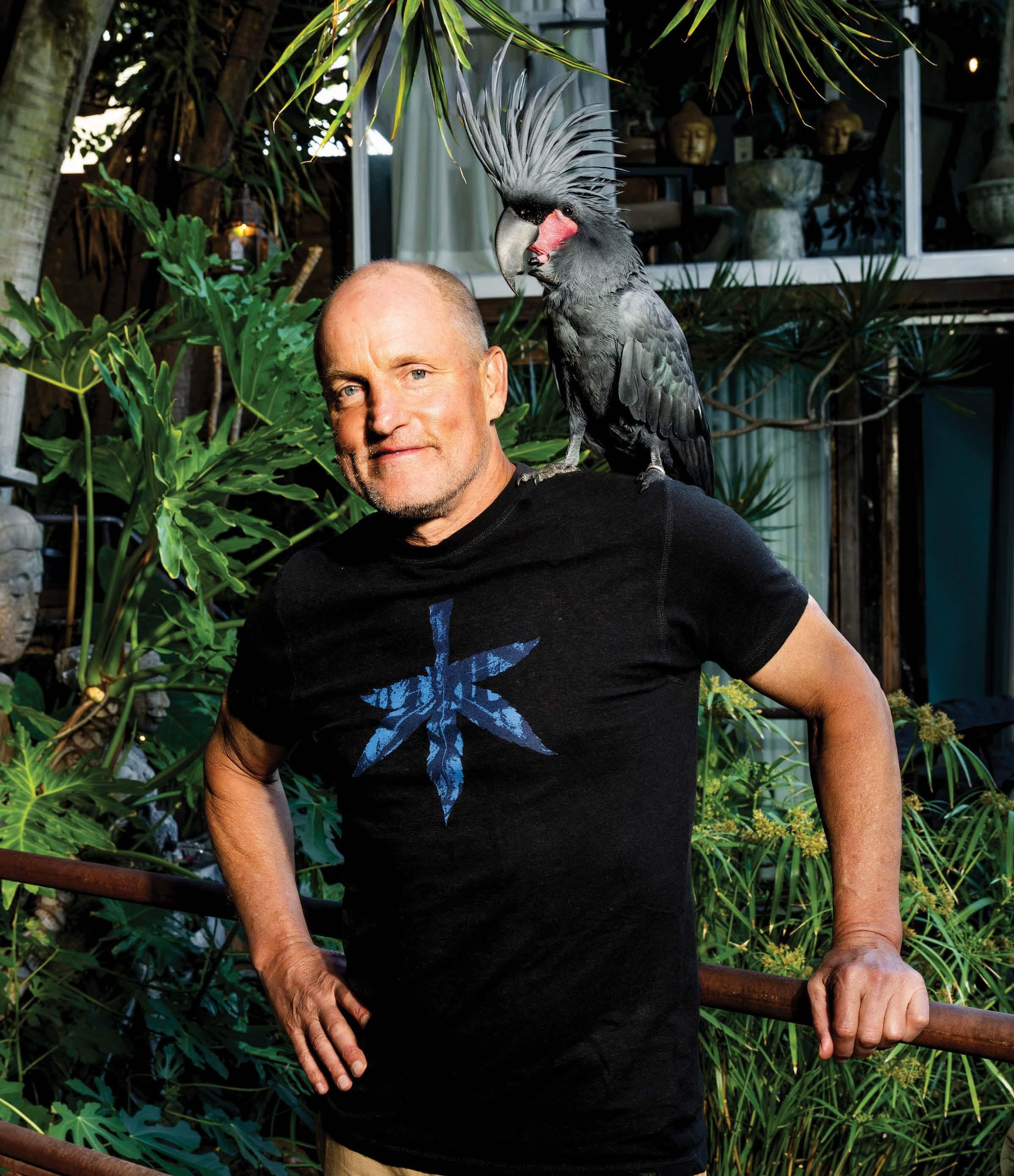
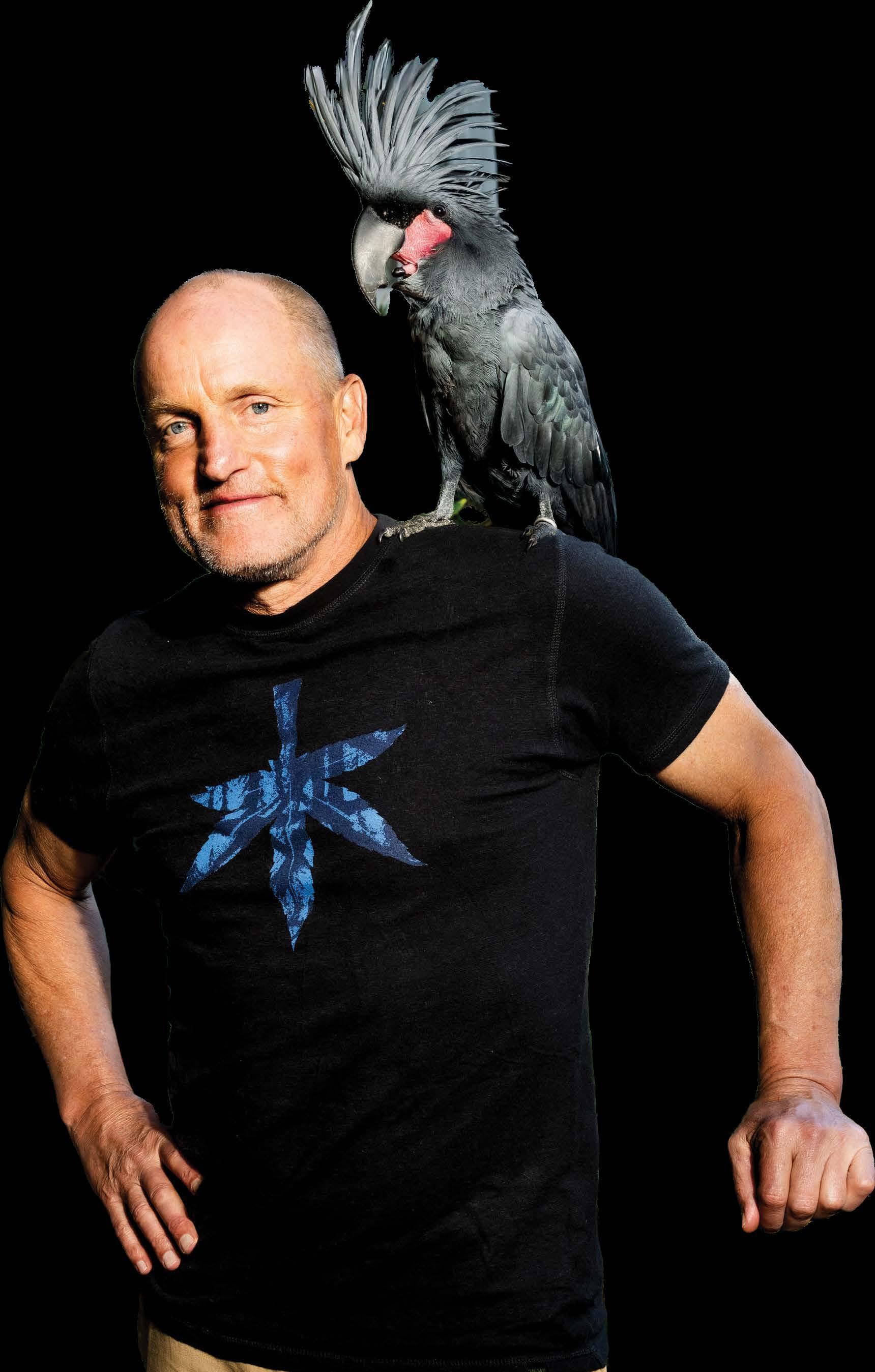
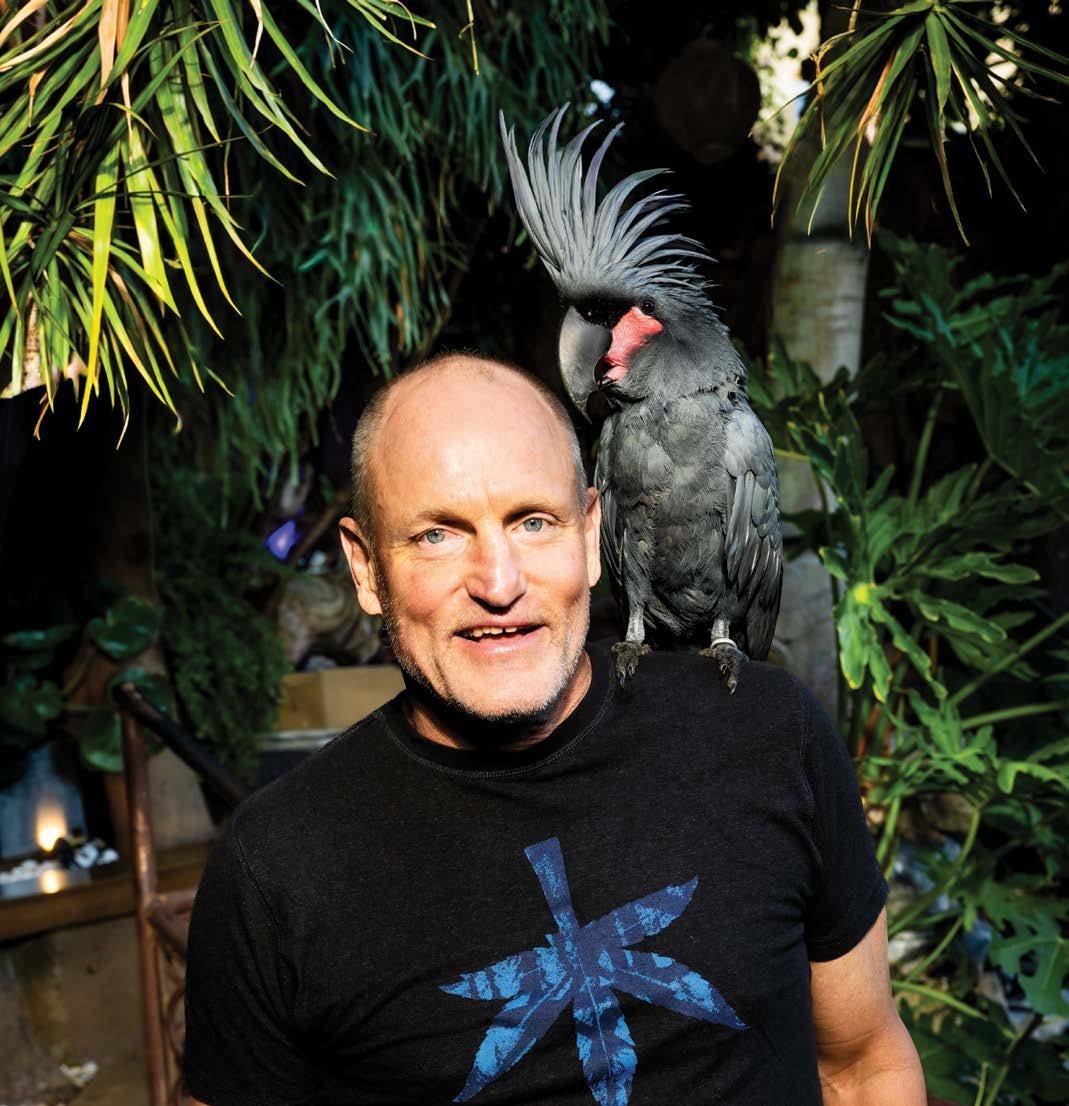
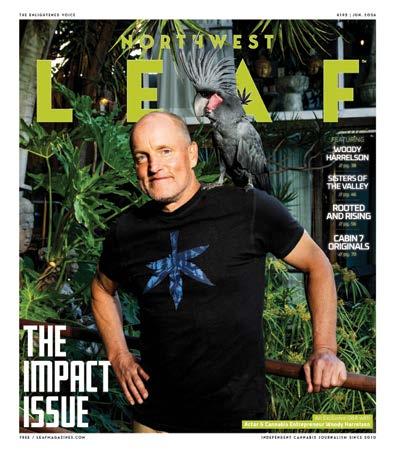
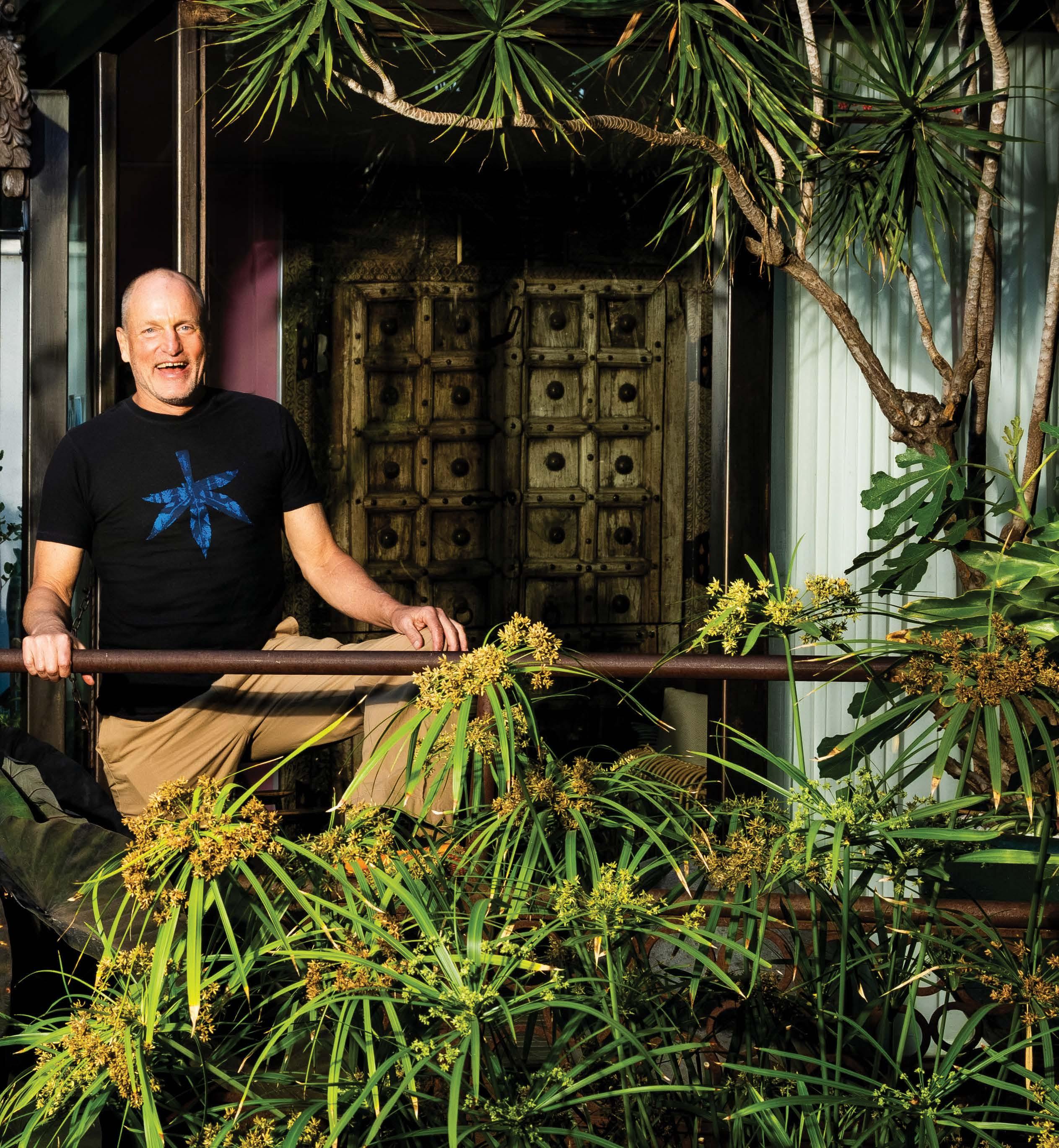
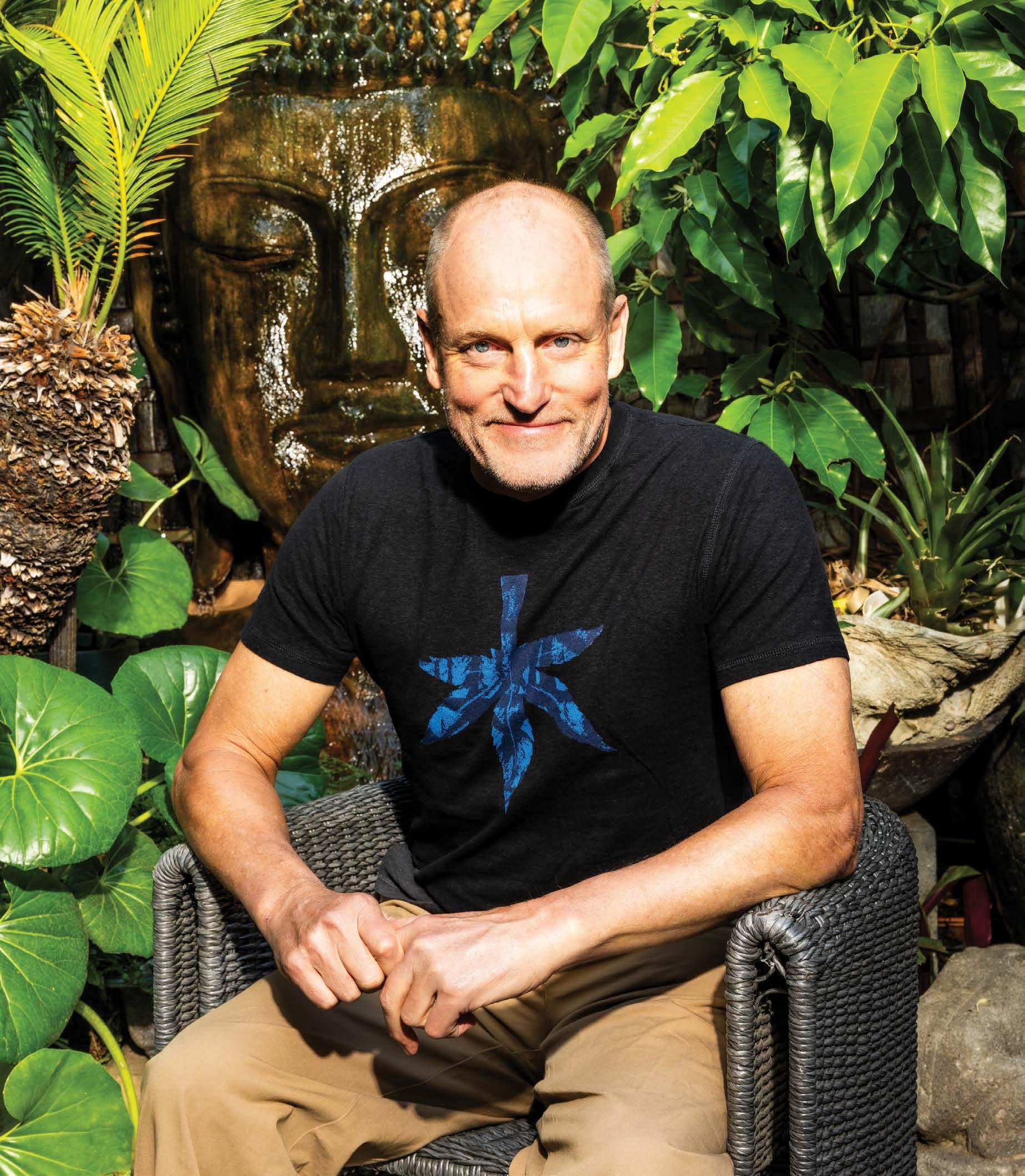
At a time when many Hollywood types were too afraid to be open about using and supporting Cannabis, iconic actor and Cannabis activist Woody Harrelson was on the cover of High Times calling for legalization and chiding stubborn politicos stuck in the oh-so-distantpast. Leaf Magazines Founder Wes Abney sat down for an intimate interview with Harrelson over a few hours at The Woods Cannabis lounge in West Hollywood, Los Angeles. Our thanks to Roger for the beautiful portraits of Woody and George, the palm cockatoo.
PHOTO BY ROGER KISBY @ROGERKISBY | ROGERKISBY.COM
CONTRIBUTORS
WES ABNEY, FEATURES
AJ AGUILAR, FEATURES
DANIEL BERMAN, DESIGN + PHOTOS
BOBBY BLACK, DESIGN + FEATURES
TOM BOWERS, PRODUCTION
JACKIE BRYANT, FEATURES
DAVID DOWNS, FEATURES REX HILSINGER, FEATURES + PHOTOS
ELLEN HOLLAND, FEATURES
MATT JACKSON, FEATURES
ROGER KISBY, PHOTOS
LENA B. MONAGHAN, AD S ALES + PRODUCTION
MIKE RICKER, PRODUCTION
TIAN SCHERER, FEATURES
TERPENE TRANSIT, DISTRIBUTION
TERPODACTYL MEDIA, PRODUCTION
ZOE URNESS, PHOTOS
BRUCE WOLF, PHOTOS
KATHERINE WOLF, FEATURES
LAURIE WOLF, RECIPES
We are creators of targeted, independent Cannabis journalism. Please email us to discuss advertising in the next issue of Northwest Leaf Magazine. We do not sell stories or coverage. Email ricker@leafmagazines.com to start advertising!
Editor’s Note
Thanks for picking up The Impact Issue of Northwest Leaf!
This month, I had the honor of interviewing Woody Harrelson, who is our cover feature story, inside his beautiful Ganja Giggle Garden off Santa Monica Boulevard in West Hollywood, California. Being a fan of weed, film and Harrelson my entire adult life made the interview all the more special. We chatted about acting, activism and why organic sun-grown Cannabis deserves a place on every top shelf.
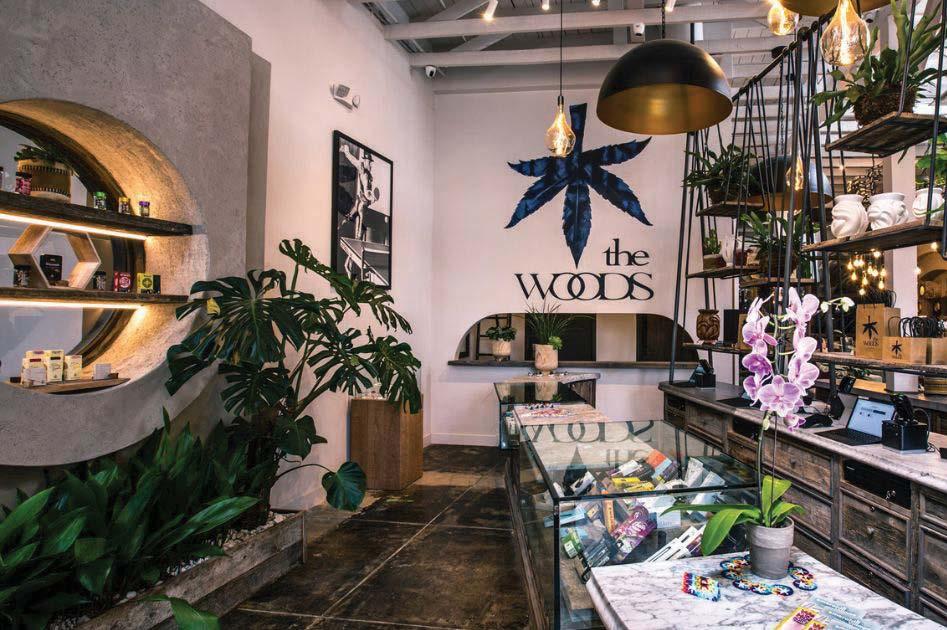
Heading into The Woods starts as a luxury dispensary experience. Entering the store reveals living trees growing through the floor, earth tones with wood and glass displays and Cannabis on every available shelf. After shopping for all the weed needs and hitting the prominent sun-grown display, a few steps toward the back reveal a tropical oasis complete with birds of paradise, a flowing koi pond and friendly faces smoking everywhere.
We arrived before Harrelson for the interview, giving us time to indulge in the sensory experience of a stoner jungle. Once in the lounge, the sounds of the city disappear, replaced by bird calls and the gentle coughs of fellow smokers. There’s seating all over, a walk-up bar serving chilled infused beverages and a full coffee shop on-site. As we roamed and toked, I saw a diverse audience of industry professionals taking meetings, tourist stoners and locals enjoying a quick tropical vacation before continuing about their day. Far from a smoky bar scene, The Woods has the purest of stoner vibes, and I’d smoke there every day if I lived in Los Angeles — just like Harrelson does when he’s in town.
“YOU MUST HAVE HAD A HELL OF A TIME EXPLAINING TO YOUR PARENTS WHY YOU DROPPED OUT OF COLLEGE TO START A WEED MAGAZINE.”
-WOODY HARRELSON
The interview took place inside one of several treehouse cabanas that you can rent hourly, the same cabana where Harrelson and Bill Maher filmed a smoky episode of the “Club Random” podcast. We shared the space comfortably, and Harrelson made the first statement of the interview, which isn’t in the main article. “You must have had a hell of a time explaining to your parents why you dropped out of college to start a weed magazine,” he said before a big chuckle, which set the tone for our conversation. He also asked about my faith in God, as I wore my cross on set, and he listened to my belief that Cannabis is a gift from God, along with our endocannabinoid system.
Of all the celebrities I’ve met, Harrelson was the warmest, most genuine and certainly the only one to build a lounge where, as he put it, “I’d like to go myself as a stoner.” I left our interview with more respect and admiration for a man whose career I already characterized as deserving of a lifetime achievement award in Cannabis. I’m honored to have him on the cover of this magazine. Like Harrelson, the Leaf team cares about the culture of Cannabis, which starts and ends with our community. I hope that this story and issue will be shared with those on the fence about Cannabis. That way, we can truly work to “love thy neighbor,” as it says in the Bible, while we connect and share the truth and the plant that we all love and benefit from.



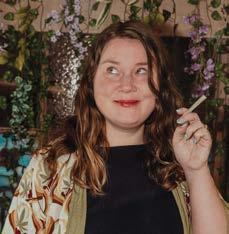

MY UNEXPECTED TOLERANCE BREAK
Self-care often disappears when you become a caregiver

Recently, I was hit with a family emergency, and as the circumstances of my life began to fall away from my normal routines, I was faced with something else I did not plan for: an unexpected tolerance break.
THIS ALL HAPPENED at the end of April. My cousin was getting married and the whole family was invited to his wedding in the Sacramento, California area. I had packed up a few outfits for before and after the wedding, along with a Mason jar full of Blueberry Biscotti to enjoy during my time away from home. But at the wedding, right after the ceremony was over, it became clear that something was wrong with my mom. My aunt called an ambulance and my brother jumped in the front with the EMTs. That first night, while my mom was still in the emergency room, I wasn’t really thinking about weed at all. The funny thing is that my mom was.
She grew up as a hippie in the San Francisco Bay Area in the 1970s and has more recently returned to experimenting with Cannabis. When I first saw her in the ER, she told me to ask the guy in the next room if he had any weed.
“Mom, we’re in the emergency room,” I said. She responded, “I know, I thought it would be a funny joke.”
“It is a funny joke, Mom, and I’m going to tell people,” I said, and reader, here I am telling it to you.
The next day, it became clear that I needed to stay with my mom, and I had my husband bring my bag of belongings into the intensive care unit. “I think it’s best to remove the big jar of weed,” I texted him before he brought my bag into the hospital. I ended up spending two nights in the hospital, sleeping in a recliner in my mom’s room. I hardly got any sleep. My irritable bowel syndrome went into a flare-up and my face began to flush with anxiety.
DINERS AND DECISIONS
In the days that followed, I had to make some important decisions for my family. Once the acute crisis had passed, my goals were getting my mom set up with the home health visits she had been instructed to receive after the hospital stay and arranging an appointment with her primary care provider.
I’ve had friends who have been hit with emergency situations before, and I felt like I didn’t know what I could do to help. Typically, people bring food, and I’ve done that for friends and family in the past, but it wasn’t until I was in the moment of navigating and setting up a million other things that I realized how important that gesture can be.
My brother brought us sandwiches from Cregor’s, the local liquor store and deli. My sister-in-law brought over home-cooked chicken piccata and an easy bagged salad. I took trips to the Thai food spot and Mexican market, where I picked up a family-style meal of al pastor, rice, beans and salsa for everyone to make their own tacos.
In addition to making sure everyone got fed, I started doing things around my parents’ house in Paso Robles, California, to ensure that they would be more comfortable. Part of that meant borrowing my mom’s car (my husband had taken our car back to our home in Oakland) to make a shopping run to the Walmart across town. On the way there, I put on the 90s station, and as I blasted Lauryn Hill’s “Doo Wop (That Thing)” while driving over the Niblick Road Bridge, memories of my youth in Paso Robles wine country came flooding back.
At this point, it had been about a week since my cousin’s wedding, and while I did have a glass of Justin rosé, I had still not smoked any weed. I wasn’t intending on taking a tolerance break, but then again, none of this was planned.
A CANNABIS DESERT
While Cannabis is legal for adults in California, the law left it up to individual cities to determine whether or not to allow retail shops. In many places, retail shops are not allowed, and Cannabis delivery services fill in the gaps. Paso Robles is located in California’s Central Coast and has always been a pretty conservative community. When I worked as a reporter at a newspaper in neighboring Atascadero in the early 2000s, a dispensary that opened there — the first in San Luis Obispo County — was chased out of town. The owner of that dispensary, Charles Lynch, ended up opening another shop within San Luis Obispo County in Morro Bay and was greeted with a warm welcome and a ribbon-cutting ceremony by the town’s chamber of commerce.
Ellen Holland is a San Francisco Bay Area-based freelance writer, the former editor of High Times and the author of multiple books, including "Weed: Smoke It, Eat It, Grow It, Love It" (2024).
I’vehadfriendswhohavebeenhitwithemergencysituationsbefore, andIfeltlikeIdidn’tknowwhatIcoulddotohelp.Typically,people bringfood,andI’vedonethatforfriendsandfamilyinthepast,butit wasn’tuntilIwasinthemomentofnavigatingandsettingupamillion otherthingsthatIrealizedhowimportantthatgesturecanbe.
Nearly a year later, the Drug Enforcement Administration served a search warrant on Lynch’s home and the dispensary, and then months later, in July 2007, authorities arrested Lynch and indicted him on several counts: conspiracy to manufacture, possess and distribute marijuana; providing marijuana to people under the age of 21; marijuana possession with intent to distribute; and maintaining a drug premises. This began a nearly 17-yearlong legal battle for Lynch.
After I moved away from San Luis Obispo County, a few Cannabis dispensaries appeared in the city of San Luis Obispo. Today, there is one Cannabis shop in Paso Robles that operates under the loophole of coordinating with a delivery service to get weed delivered there. There are, however, plenty of wineries with tasting rooms.
So here I was in Paso Robles without any weed, and I was stressed out! But luckily for me, my brother works at Urbn Leaf, a dispensary in Grover Beach, and brought me over some prerolls, an eighth and a THC-infused beverage. I was so grateful. When I went on a walk to smoke the prerolls he had given me, I felt the Cannabis




"This product has intoxicating effects and may be habit forming. Cannabis can impair concentration, coordination, and judgment. Do not operate a vehicle or machinery under the influence of this drug. There may be health risks associated with consumption of this product. For use only by adults twenty-one and older. Keep out of the reach of children."

go into my system and instantly felt calmer. The trees and plants along my walk looked beautiful, the sunshine and movement felt great. The next day, I requested an upgrade, and my brother bought a jar of half-gram Zodashi prerolls from one of my favorite cultivators, Fig Farms.
NEVER QUIT
The experience of not having Cannabis during this recent family health crisis helped me to understand how important the plant is to my own wellness. Although there are times when I cut back on it, I know I will never quit it. Cannabis helps me feel more grounded and calm, and quells the symptoms of my IBS, which get worse in stressful situations.
Caregiving is hard, but it’s something that most of us will be faced with as our parents get to an age where they need more help. Make sure that when you’re helping them, you continue to care for yourself. Don’t forget to eat, get exercise, stay as well-rested as possible and, in down times, enjoy some Cannabis to take the edge off. The road ahead is long, and we need strength for the journey. Take care.

est.
FIRE FOLLOWER SUPER BOOF BREEDER PLANS THEIR NEXT BIG HIT
SUPER BOOF, LEAFLY STRAIN OF THE YEAR 2024, CONTINUES TO DOMINATE THE AWARD CIRCUIT IN 2026. BUT THE STRAIN, ALSO KNOWN AS BLOCKBERRY, IS AS BIG AND HIGH PROFILE AS THE BREEDER IS SMALL AND UNDERGROUND.
ONE-MAN SHOW Blockhead works in cramped, noncommercial conditions in Southern California — yet big things are coming from tiny rooms.
His latest release — sold at blockheadbuds.com — is a line of feminized seeds that are all crosses of his current favorite strain, John Truffolta. The project unites work from GG Strains, Thug Pug, Beleaf, Harry Palms, OGKB, Archive, In House Genetics and Party Time Farms.

WHAT IS JOHN TRUFFOLTA?
John Truffolta is based on Truffaloha crossed with Blueberry Sugar. Let’s dig into that:
Blueberry Sugar is Grape Cream 2.1 x Blueberry Frosting. The Blueberry Frosting pollen came from Party Time Farms in Santa Cruz. The Grape Cream 2.1 came from Bloom/Harry Palms’ Grape Cream Cake x OGKB 2.1. OGKB 2.1 is listed as OG Kush Breath x Dosidos from In House Genetics. Beleaf’s Truffaloha S1 is Gorilla Butter F2, also known as White Truffle, crossed with his Platinum Punch, which smelled like Hawaiian Punch. PB Breath and Gorilla Glue are in there.
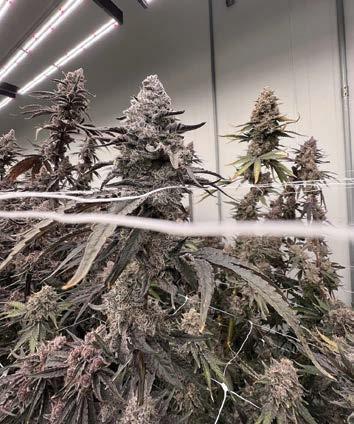
Blockhead, who doesn’t publish his real name because he could lose his day job, said the latest drop is all hand-pollinated, small-batch feminized seeds.
He’s obsessed with John Truffolta because “it freaking tastes amazing,” he said.
“It literally smells like Hawaiian Punch or fruit punch and old-school Skunk. It’s super unique. I’ve never smelled terps like that,” Blockhead said. “Obviously, it’s got bag appeal. It’s got the yield. It’s super easy to grow. It’s just a fire strain.”
MOVING BEYOND THE BOOF
Similar to how Radiohead made a hard left turn after the album “OK Computer,” Blockhead is setting aside his career-defining Super Boof and going in an entirely new direction.

Award-winning journalist/author and former Leafly Senior Editor David Downs’ monthly genetics intelligence dispatch.
Germany, the United Kingdom, Canada, Mexico, Chile, Scotland, Australia and New Zealand.
Similar to how Radiohead made a hard left turn after the album “OK Computer,” Blockhead is setting aside his careerdefining Super Boof and going in an entirely new direction.
“It’s the next album, for sure. I’m super small, so I have to pick whatever the heck it is,” he said. “I really love Blueberry Sugar, I really love Blockberry, but here’s the next one.”
He said his feminized seeds are for home growers because they don’t like dealing with males, and big commercial growers only want clones. Sales reflect global interest:
“It’s pretty much blasting off everywhere,” Blockhead said.
HOT CROSSES
Digging into the different crosses, there’s a Blockberry #5 crossed to John Truffolta for $200. It’s an even bigger yielder than Blockberry, with a heavier stone. But Blockhead is most amped for the Dante’s Sugar x John Truffolta. Both parents are easy to grow and extremely vigorous.
“It tastes like grape Skittles. It’s not the terpiest up front. Some of the other ones are louder. But just in terms of what everybody says that they want — the
freaking bag appeal, the yields, the THC, all that stuff — it’s good,” he said.
Look out for some GMO-type terps in the Tiger Bomb cross.
“It’s kind of got a fuel-ly, GMO, garlicky, kind of terp, a little bit on the raunchy side, but it has that top note of Blockberry in it,” he said.
He said these John Truffolta feminized crosses grow well indoors or outside.
FLAVOR ABOVE EVERYTHING
Up next for Blockhead: a flavor-over-everything-else line that sets aside bling, flower or hash yield, THC scores and flowering speed. People constantly ask for the chunkiest, fastest, easiest and highest-THC strain; it’s become tiring.
“It’s whack, bro. I just get the same freaking questions,” he said. “That’s all you care about?”
Blockhead’s new favorite strain after John Truffolta is called Diabeetus.
“It looks insane. But, again, this one is more on the flavor side,” he said. “It’s like a slower grower. Giant-yielding motherfucker, but I’m going to be working that one next, that whole line.” BLOCKHEADBUDS.COM

South Africa, Madagascar, Thailand,
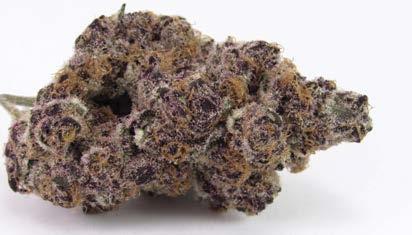
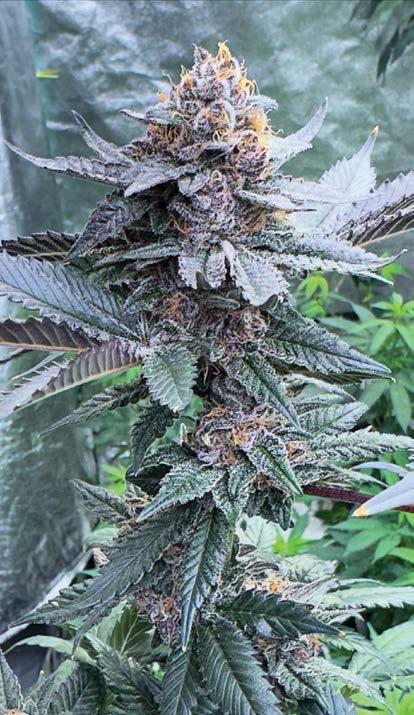
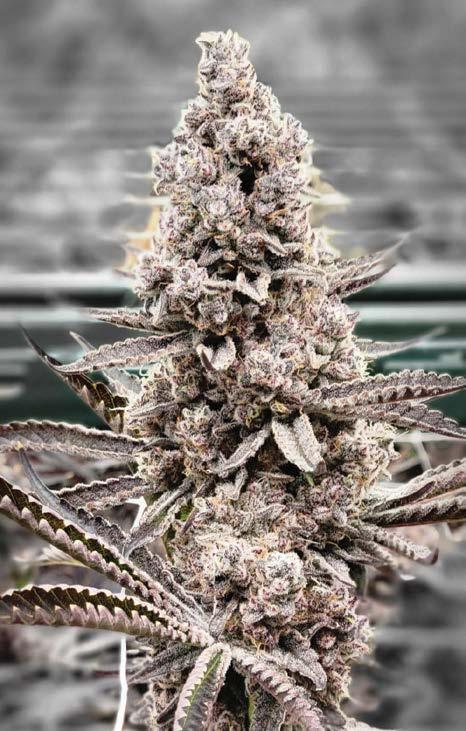
DIABEETUS
SUPER BOOF
BLUEBERRY SUGAR
ALOHA SUGAR BLOCKHEAD
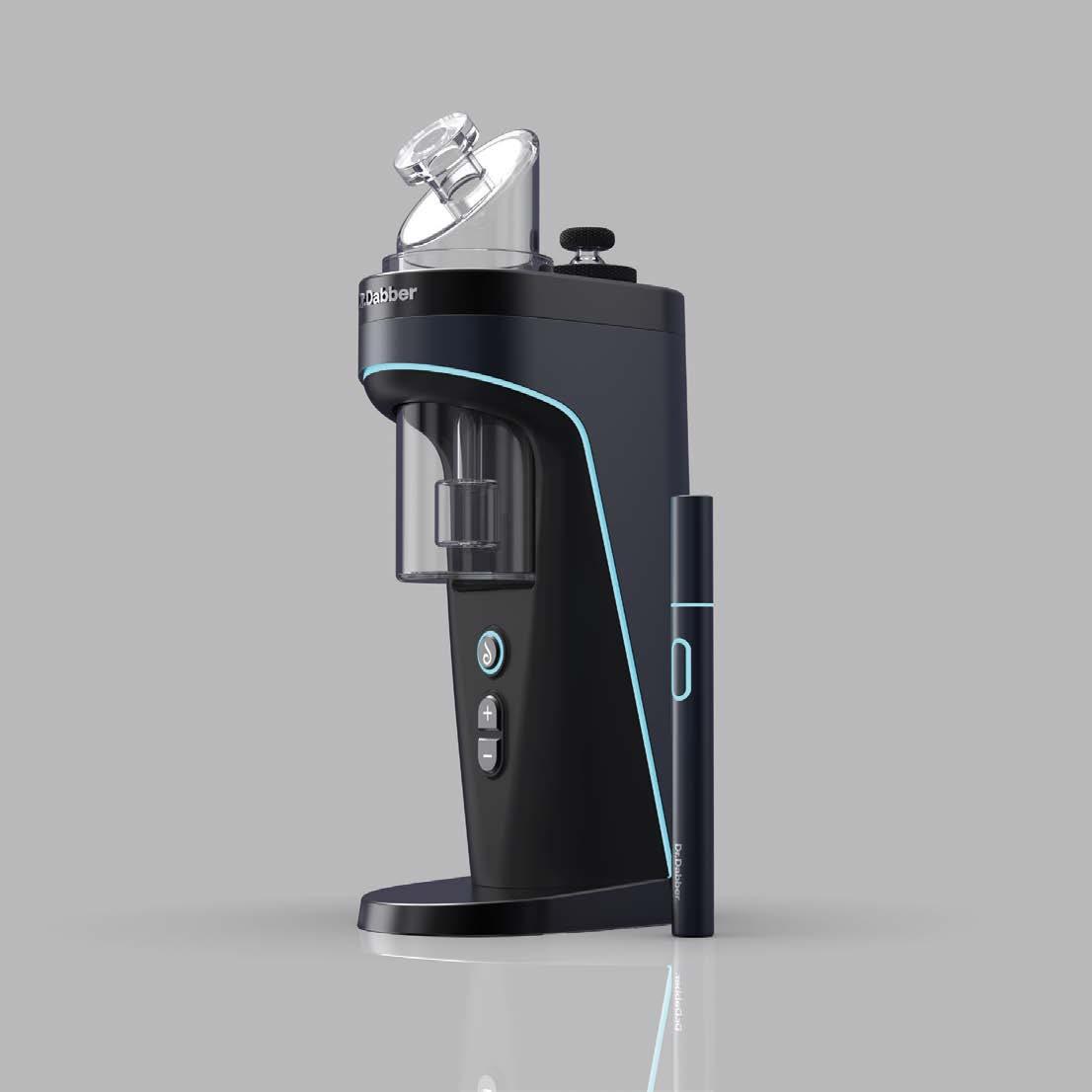
We accidentally created an eRig that has no atomizer to replace every few months.
Our apologies to companies before us that rely on their customers continuing to spend money on their devices based o a failing part.
No Atomizer Ever
Completely Customizable Heat Modes
Quartz Insert Out of the Box
Drop Heated Loading Tool Included Built to Last
The All-In-One eRig. No atomizer. Completely customizable heat modes.


BE A GOOD ANCESTOR ACOSIA RED ELK & THE SEVENTH GENERATION TEACHINGS

At this pivotal moment in history, the heartbeat of the Americas — from the Arctic’s edge to the southern shores of Tierra del Fuego — is pulsing with reclamation, resilience and resurgence. Across lands divided by imposed borders, Indigenous peoples are rising in sovereignty, ceremony and spiritual presence. Cultural activations like “Be a Good Ancestor,” “Movement is Medicine” and “Water is Life” are not trends; they are ancient Seventh Generation teachings resurfacing, calling humanity to remember its sacred responsibility to the Earth and to those yet unborn.

ROOTED IN the teachings of the Iroquois Confederacy — recognized as the oldest democracy in the world — the Seventh Generation Principle reminds us that every choice we make today creates a ripple effect, impacting the faces yet to come while also healing the wounds created by those who walked before us. It is a teaching of reciprocity, asking humanity to move beyond extraction, greed and unconscious consumption, and instead return to balance with the land, the waters and one another. In many ways, this movement is not simply political or cultural; it is a spiritual restoration. It’s a collective healing of ancestral karma through conscious action, prayerful living and remembering that we are all descendants and future ancestors at once.
These movements do not begin in institutions. They rise from the Earth, beating in the hearts of dancers, teachers, healers, artists and storytellers who carry culture forward through lived example. Cultural change begins when individ-
uals proudly embody who they are and invite others into remembrance. One such bridge-builder is Acosia Red Elk, whose life story and creative work honor what it means to live through the Seventh Generation teachings and become a good ancestor.
My first encounter with Red Elk’s work was at the first annual Oregon Reggae Fest. Stepping into her Powwow Yoga class, the space felt instantly ceremonial; drums echoed through breath, jingle dress footwork merged seamlessly with yoga flow. Every movement carried intention, a living conversation between ancestors and the present moment. This wasn’t performance; it was “prayerformance,” a living embodiment of community medicine. It reminds us that when Indigenous ways meet modern practices with respect, healing becomes collective.
Red Elk, born Young Swan Rising from the water, is an enrolled member of the Umatilla, Cayuse and Walla Walla Tribes of Oregon and a 10-time world champion jingle dress dancer.
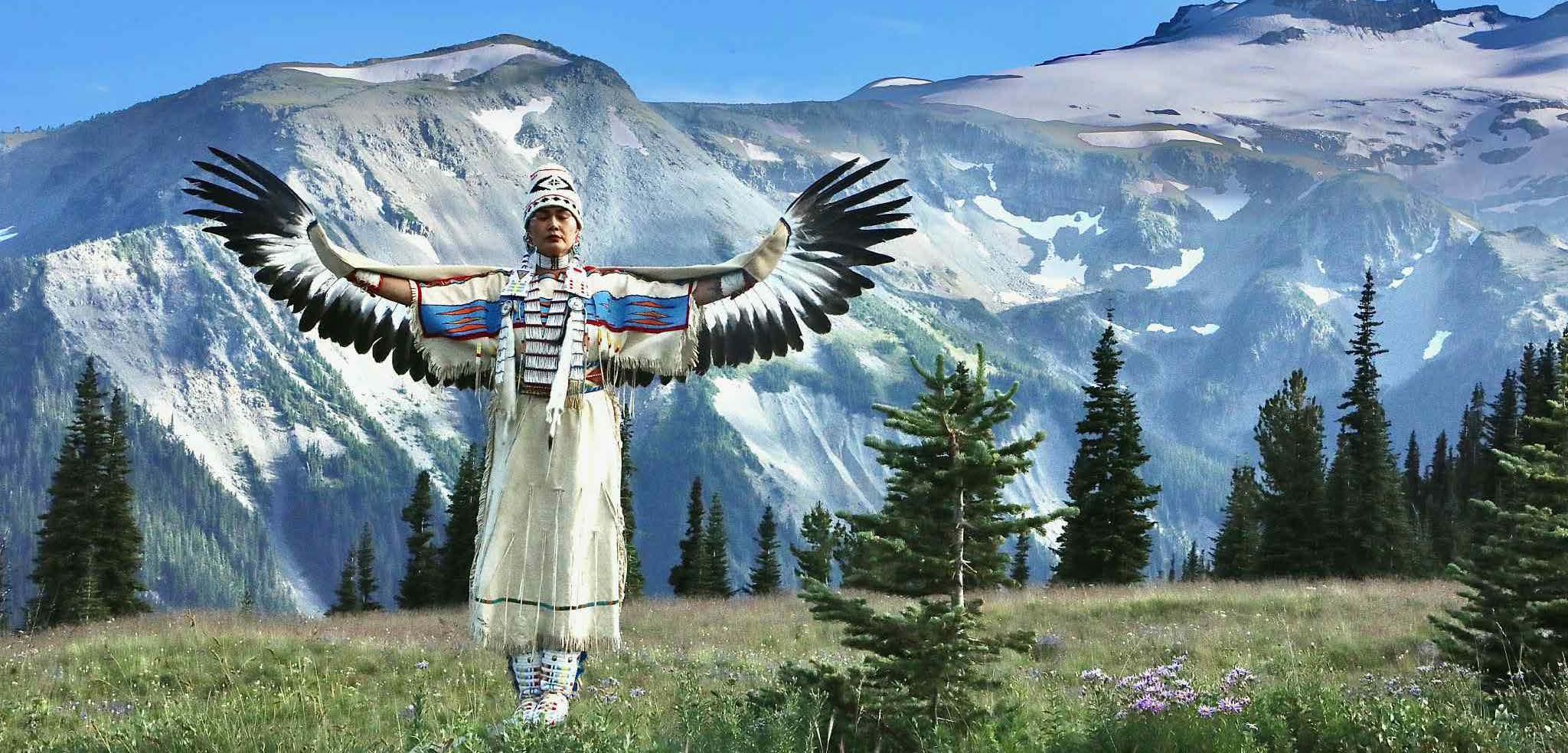
Her legacy is a living embodiment of resilience, showing us that healing is possible, scars can be sacred and survival carries responsibility.
The jingle dress dance itself emerged as a sacred gift during the Spanish flu pandemic, which began in 1918. It was born from a father’s dream after praying for his sick daughter to heal. To many Indigenous nations, the dance remains a prayer in motion. The ringing of metal cones calling balance, the footwork embodying strength, the dancer summoning ancestral healing with every motion.
As a child, Red Elk survived a devastating fire that left severe burns across half of her body. Doctors once doubted she would ever walk again. Yet through the medicine of jingle dancing, she reclaimed her body, spirit and future. That redemption story now moves through everything she teaches. Her legacy is a living embodiment of resilience, showing us that healing is possible, scars can be sacred and survival carries responsibility.
bringing Indigenous movement, regalia and spirit into one of the world’s most influential cultural arenas.

Her storytelling work continues to expand through film and public media. Most recently, Red Elk appeared in “Guardian of the Land,” a powerful collaboration between OPB and filmmaker LaRonn Katchia that explores Indigenous perspectives surrounding Bigfoot, land stew ardship and cultural memory. The production received two Emmy nominations, further amplifying Native voices and reminding audiences that Indigenous storytelling has always held a deep relationship with the unseen and the living Earth.


Today, Red Elk’s impact spans dance, wellness, fashion, film and cultural advocacy. She is the creator of Powwow Yoga, an Indigenous-centered wellness practice blending tribal dance, yoga, breathwork and cultural education to address intergenerational trauma and reconnect people to ancestral movement. Her leadership earned her the prestigious Doris Duke Artist Award, recognizing her as a national force in Indigenous arts and cultural innovation.
She has also carried Indigenous visibility into spaces that historically excluded Native presence.
At New York Fashion Week, Red Elk opened the runway with a full tribal dance presentation — the first of its kind —
Across all her endeavors — teach ing youth, leading wellness gatherings, performing internationally or speaking through film — we are reminded that ancestral wisdom is still alive, still dancing, still breathing.
In a world drifting deeper into consumerism and cultural erosion, the Seventh Generation teachings call us to live not only for ourselves, but for the faces yet to come.
Transform each day into a sacred opportunity to be a good ancestor, OGs. For Red Elk, this means healing what you inherit, protecting what is sa cred and leaving the next seven genera tions a world where Indigenous culture is not merely surviving, but thriving.


Red Elk & LaRonn Katchia
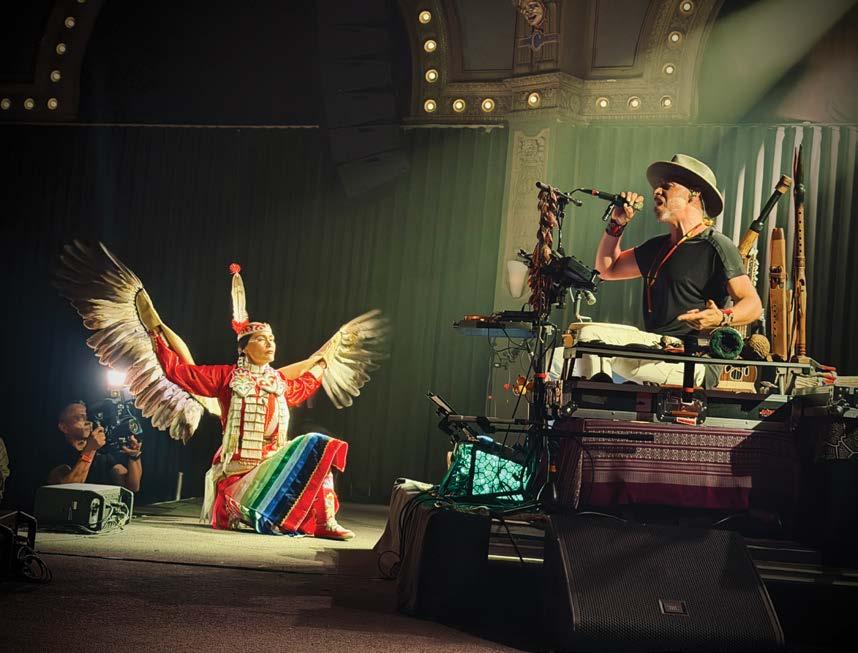
Acosia Red Elk ‘prayforms’ with world-renowned musician, Poranguí.







BIRCH BAY BUDZ

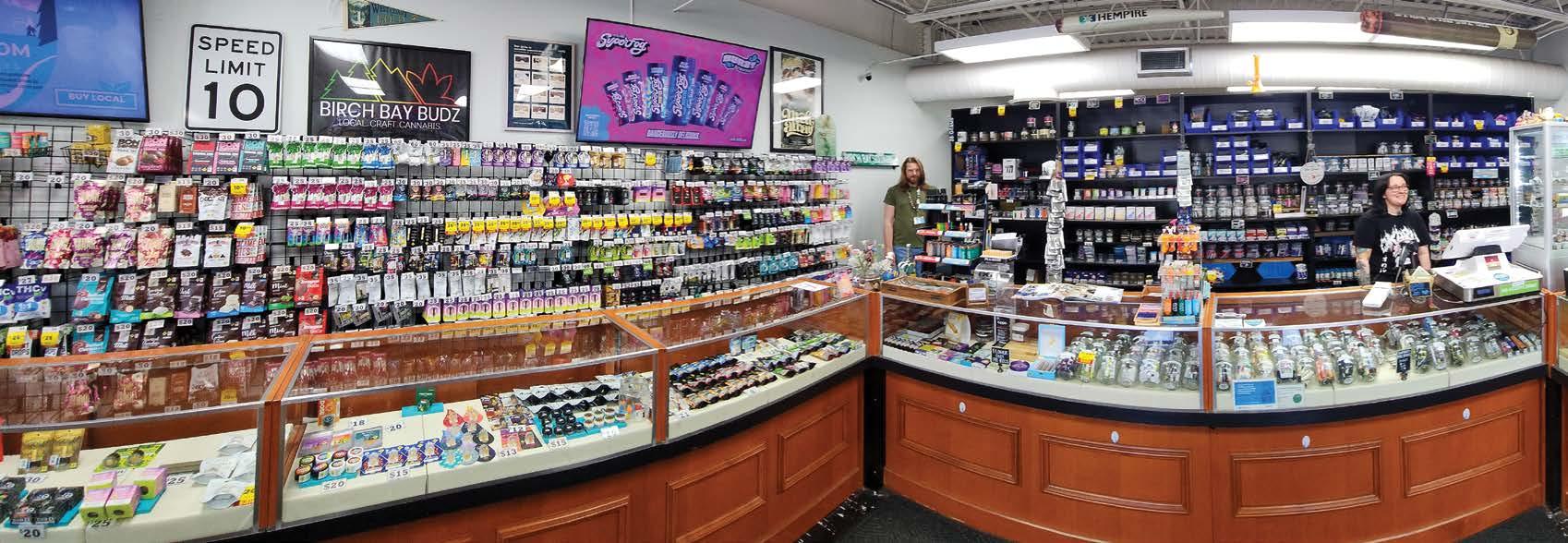

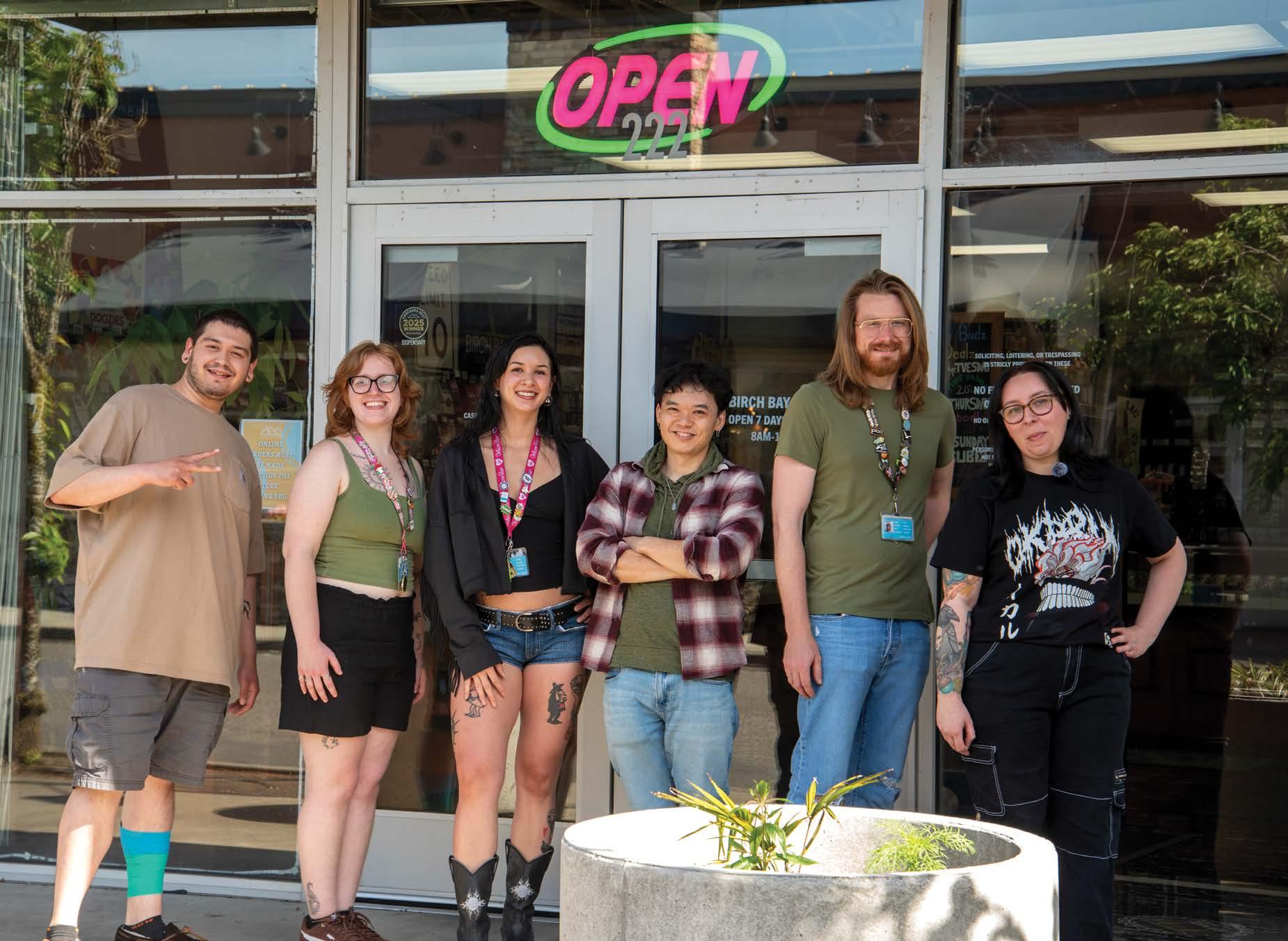
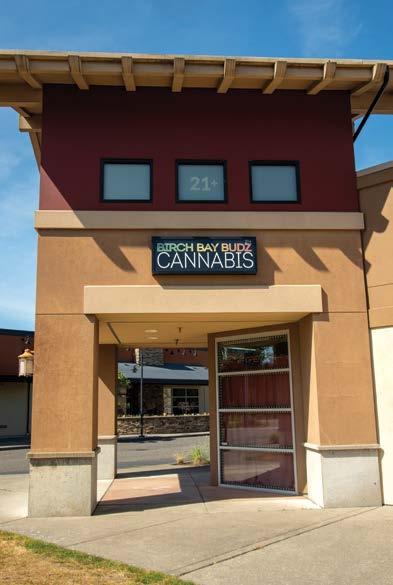
On the way to the beautiful beach town of Birch Bay, just a few minutes from the Peace Arch border crossing, there is only one place to stop for absolute fire and great customer service: Birch Bay Budz. shop faves
THIS STORE OPENED ITS DOORS IN 2020, one of the most difficult times in current retail history. But owner Eric Chan knew that if he stuck to his high standards, no virus could keep them down. And that tenacity has proven itself, as the dispensary is currently in its sixth year of business.
Store manager Trinity Davies greeted Northwest Leaf with a warm welcome and showed us around the shop. We asked her what it’s like being in such a unique area.
“I feel like 99% of our customers are happy to come in here,” Davies said. “We live in a touristy town where everyone is excited to be here and happy when they come in and interact with us.
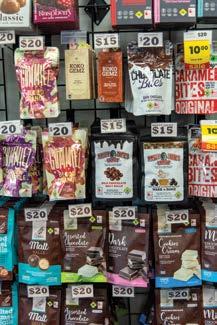
I don’t feel like we ever have a negative interaction with our customers.”
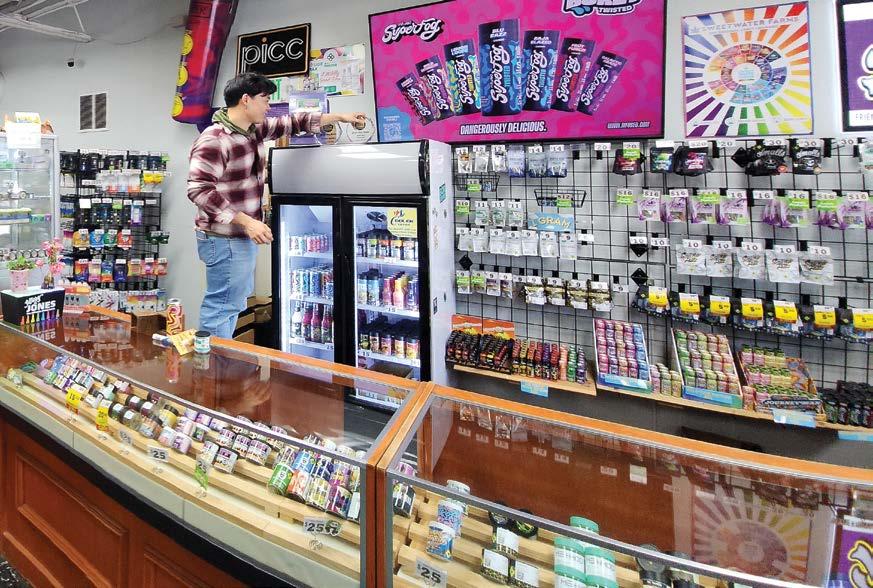
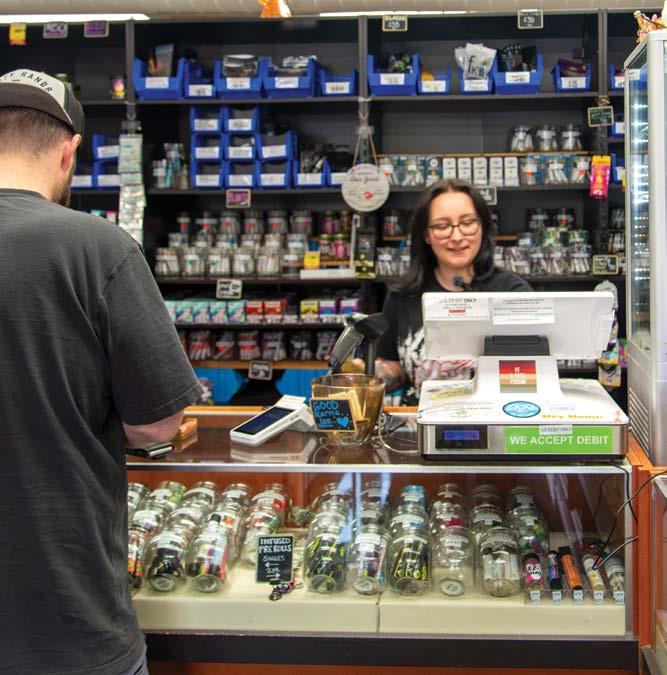
It was easy for us to see why. The inventory at Birch Bay Budz is absolutely on point and includes everything from the latest hype products to the legendary strains we know and love. The dispensary is located right off Interstate 5 at exit 270, about a five-minute drive from the beach.
Again, the selection is amazing.
BIRCH BAY BUDZ
8125 BIRCH BAY SQUARE ST. SUITE 222, BLAINE, WA BIRCHBAYBUD.COM
8 A.M.-11 P.M. DAILY (360) 506-7117
Two things you’ll notice when walking in the door are the cleanliness and lighting. This is definitely not one of those dungeon shops we’ve all been to. Displays are organized, clearly labeled and curated for your shopping ease.
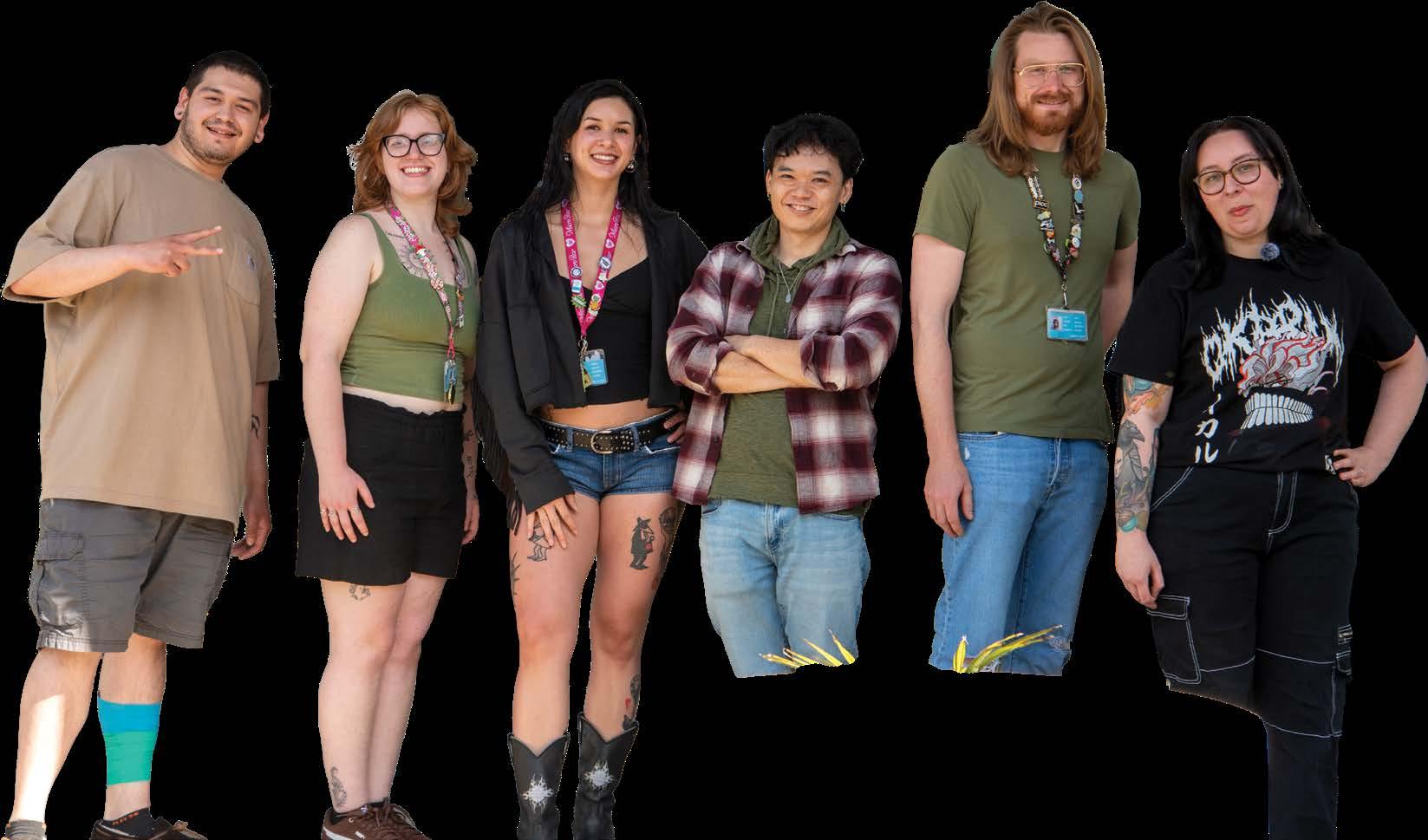
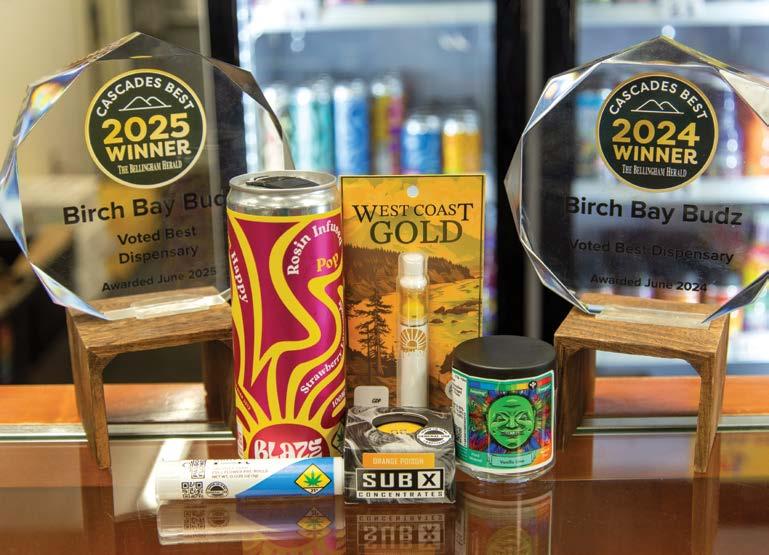
Coolers and fridges maintain product freshness and are located throughout the store. There’s even an entire commercial freezer dedicated to Skunk Processors, a fellow local production company that produces a popsicle-type product called Nano Chillz, a huge hit during these warmer months. The crew is super solid. The Leaf had the opportunity to meet a few employees at shift change, and it’s no surprise that locals and travelers alike keep coming back. This team has the accolades to prove it. With over 20 retail shops in the Whatcom County area, Birch Bay Budz won the Cascades Best Gold Best Dispensary award in 2024 and 2025.
So if you are planning a trip to Birch Bay or just passing by, pump the brakes and give this spot a shot at making your day even happier.

FLOWER
Honeydew Vanilla Lime CONCENTRATES
SubX Orange Poison
VAPE
West Coast Gold
Grand Daddy Purps EDIBLE
Blaze Strawberry Lemonade PREROLL
Passion Flower
White Truffle
“WE LIVE IN A TOURISTY TOWN WHERE EVERYONE IS EXCITED TO BE HERE AND HAPPY WHEN THEY COME IN AND INTERACT WITH US.”

XZAVIER WESTON

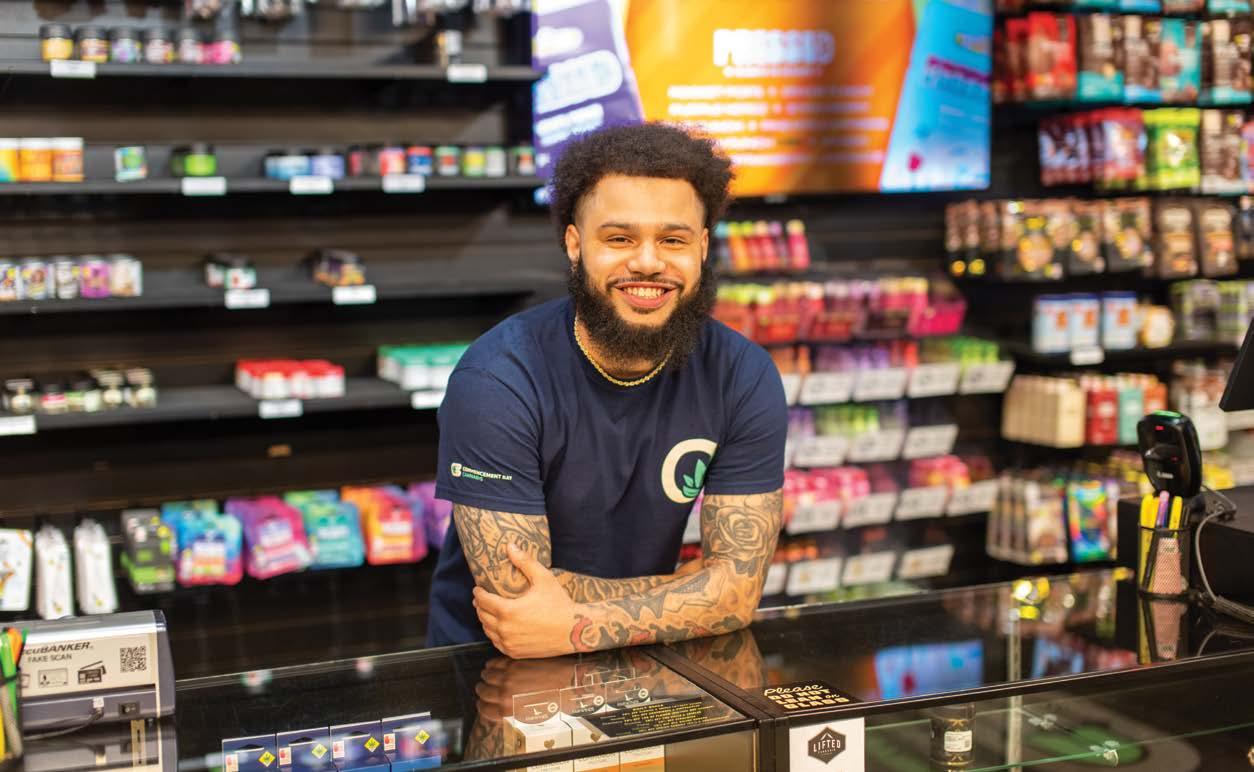
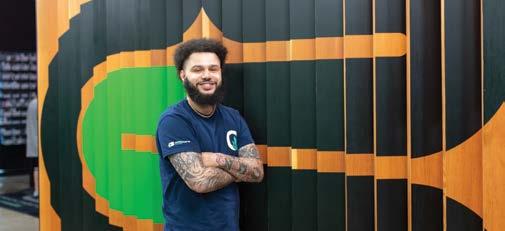
Xzavier Weston, a budtender at Commencement Bay Cannabis - Green, is a gamer who also likes working out. When he’s not assisting customers at the dispensary, you might find him enjoying some quiet scenery where he can smoke, collect his thoughts and focus on mental wellness.

HOW DID YOU END UP AT COMMENCEMENT BAY CANNABIS? I was born and raised in Tacoma, and I grew up an athlete here. When I discovered the medicinal effects of Cannabis on the body, I started exploring how it could help treat injuries and sore muscles, so I became a fan and wanted to get in the industry. So, I got a job budtending at another shop in the area, but I wasn’t a fan of how they treated the staff like statistics, so I went looking elsewhere and found a home here.
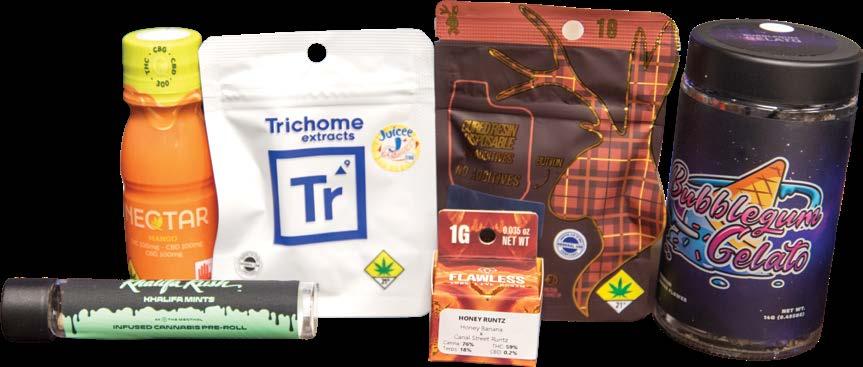
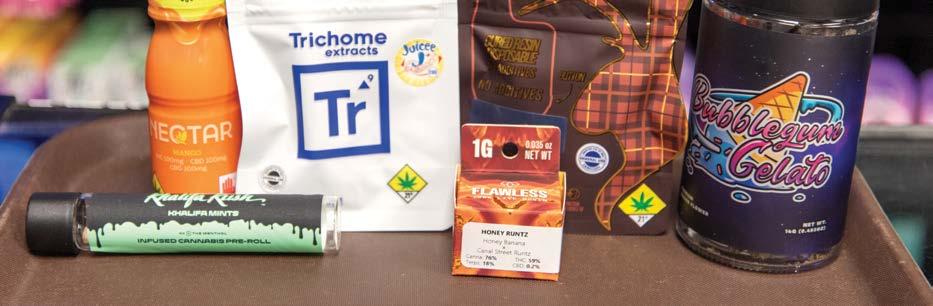
XZAVIER’S FAVORITES
FLOWER
Legendary Laboratories
Bubblegum Gelato VAPE
Plaid Jacket Glacee Blanche
CARTRIDGE
HOW DO YOU ENJOY WORKING FOR THE PUYALLUP TRIBE AND THE GOOD FOLKS AT CBC? I found it to be just the opposite (of my old job). The main focus with these folks is the customer attention they place on people on both sides of the counter.
Trichome Extracts Juicee J
CONCENTRATE
Flawless Extracts
Honey Runtz
EDIBLE
Nectar Mango Shot
PREROLL
Khalifa Kush Khalifa Mints
SINCE THIS IS THE IMPACT ISSUE, HOW DO YOU SEE CBC MAKING AN IMPACT IN THE CANNABIS INDUSTRY? I feel like they’re always putting in the effort to recognize that the plant is medicine. Their tribal members, as well as their customers, understand that they aren’t just about profits, but more about being a positive example for the community.
TELL ME ABOUT YOUR ATHLETIC CAREER. Yeah, in high school I played football and did track and field. I ended up going to college for track and finished with my bachelor’s degree in business. I realized that athletics wasn’t going to work out as a career, so I started focusing on winning in other areas of life. I consider myself a very positive person.
“...THEY AREN’T JUST ABOUT PROFITS, BUT MORE ABOUT BEING A POSITIVE EXAMPLE FOR THE COMMUNITY.”
WOULD YOU LIKE TO PUT THAT DEGREE TO USE IN THE CANNABIS WORLD? Absolutely, I can see myself owning my own dispensary one day, and I would call it X Marks the Spot!
WHO WERE YOUR HEROES GROWING UP? I’ve always been a huge LeBron James fan; I love the LA Lakers. But my biggest hero was my dad. He was always there at every game and every event, and always pushing me to be the best person I can be on and off the field. @X.WEST_






FAIRWINDS CANNABIS
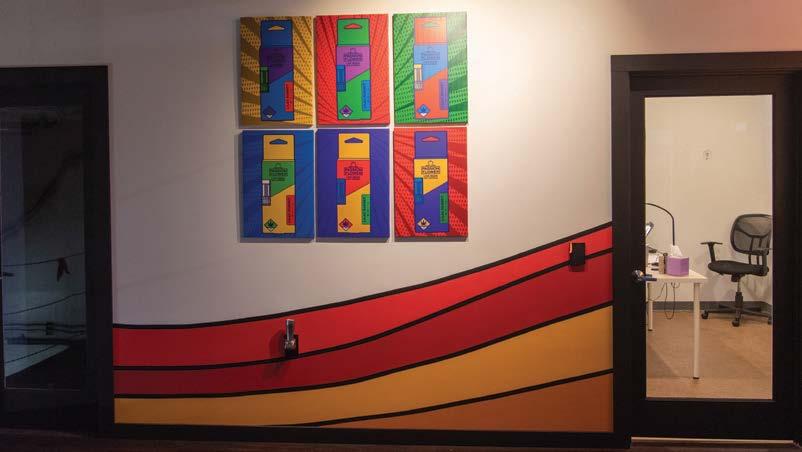
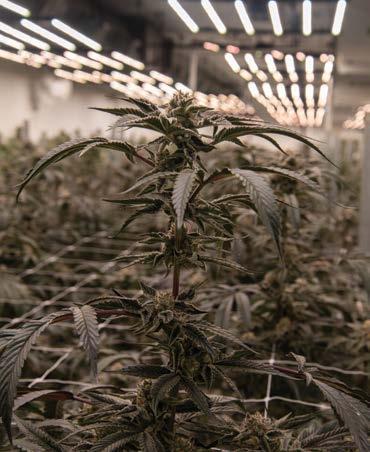
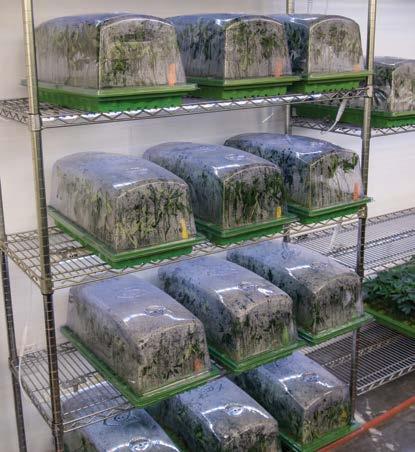

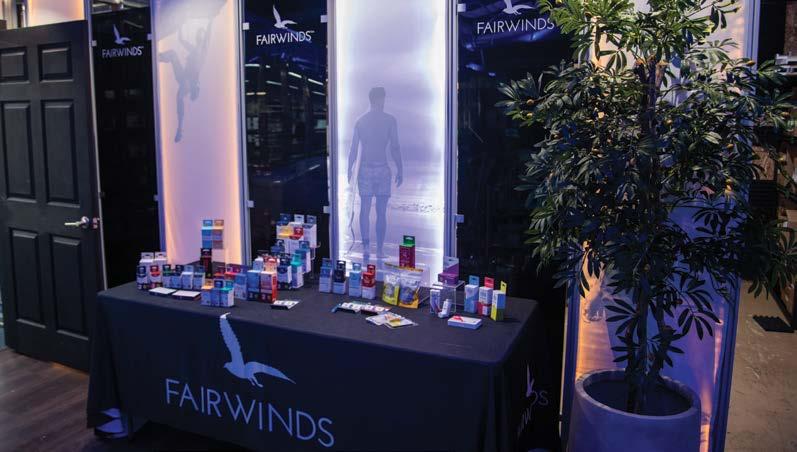

Fairwinds has been highly regarded in our Cannabis market as the maker of some of the best and most diverse product lines available in Washington state.
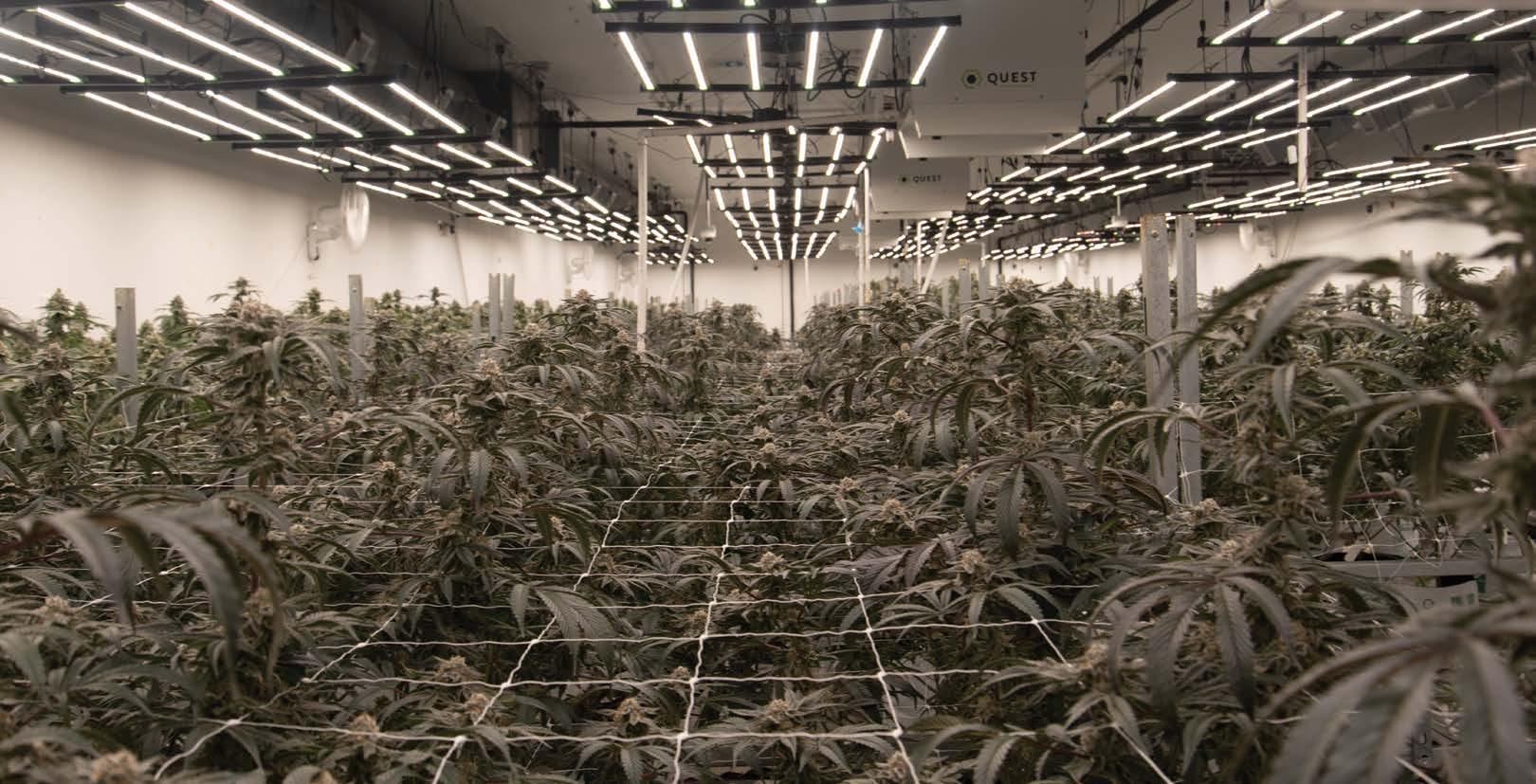
THEIR DEDICATED FOCUS on patients’ medical needs precedes them. High ratios that favor CBD, CBG and CBN are common here. The product line comprises tinctures, capsules, topicals and inhalers. This is meant to bring bioavailability to more people and concentrate on personal needs.
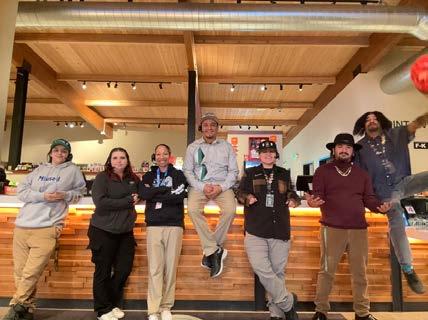
But the fun doesn’t end there; this team was constantly laughing or smiling about something during our visit to the facility. We could see that these people have invested their time and energy all with a common goal in mind.
is even an education center that was built out just for the purposes of inviting budtenders and buyers for product-knowledge courses and new releases. It’s a very impressive space and shows the level of excellence they aim for here.
Our experiences with Fairwinds products over the years have been exemplary, from the efforts put into traditional herbal healing to the quality of the applications they deliver on all fronts. The team here is composed of professionals, and their dedication is obvious throughout the offices and gardens. There
CEO Wendy Hull said it best in an interview with the Leaf: “In 2016, we were the first farm to be Department of Health compliant. Not a lot of companies back then wanted to go through the trouble, but our main focus has and always will be on medical patients.” When medical marijuana patients purchase DOH-approved products at medically-endorsed retail stores, they do not have to pay the excise tax, saving them up to 37%.
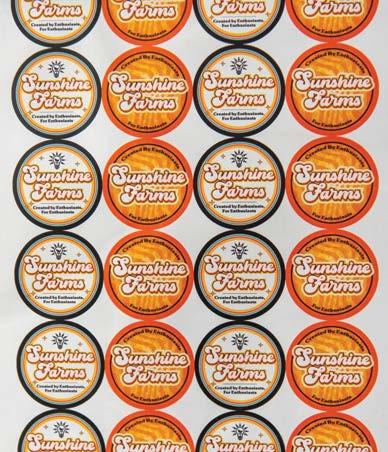
Recently, Fairwinds acquired its neighbor, Sunshine Farms. This strategic move has helped it grow to the next level. Sunshine’s strains are phenomenal. Their Dutch Treat is one
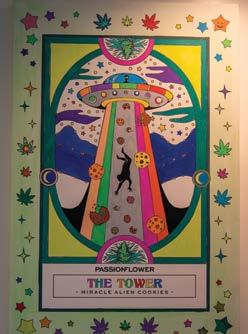
of the truest we’ve enjoyed in a decade. The Blueberry Muffin literally tastes like a fresh bite of the delicious fruit, and GG4 presents that perfect mix of gassiness and pine needles. One of our new favorites, The Last Supper, is an extremely rare pheno that really delivers a mouth-watering flavor while giving your entire body a hug — couch lock, here we come!
So, if you are a legacy stoner and you want your palate to take you on a trip down memory lane, go out and find yourself some Sunshine Farms. If you are a medical patient looking for something specific, or pointing someone who might not be a smoker in the right direction to find relief from the plant’s many medical uses, check out the selection available from Fairwinds. You will be happy you did.

CEO WENDY HULL




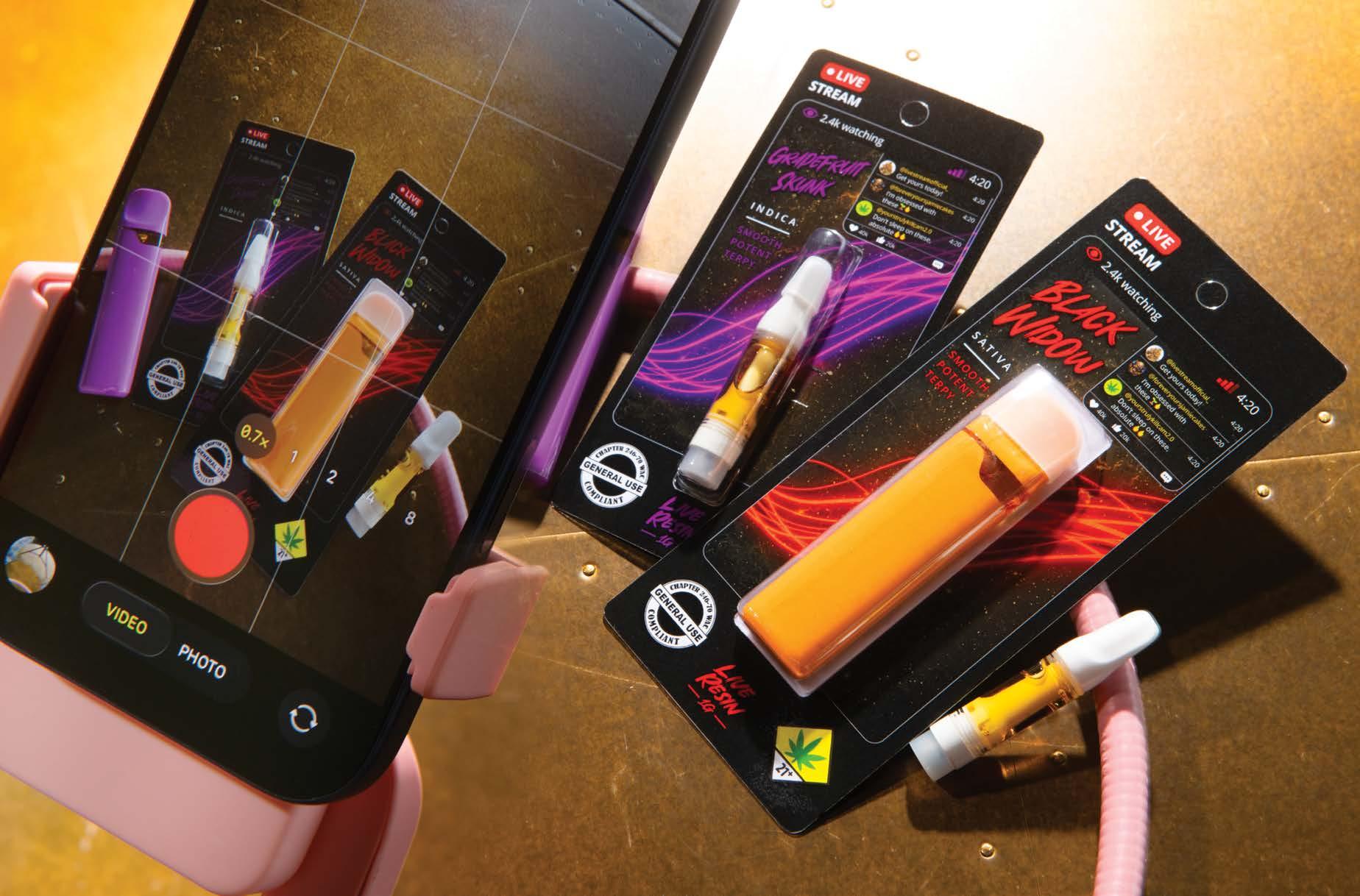

GRAPEFRUIT SKUNK & BLACK WIDOW

Step up to the microphone and inhale for a stage worthy hit of resin that’s loaded and livestreaming at a dispensary near you.
ONLY 10 short years ago, the world was not yet enthralled by the concept of livestreaming, social media, or live resin in a disposable pen that’s ready to deliver delicious puffs right out of the packaging. Turning 21 in 2016 meant learning how to roll a joint, but today, all it takes to get high and share it is a click of a button. The future is here, it’s stoney, and it’s all live on the internet. So work on a fun dance, put on your best fit, and get ready to livestream hits of resin right into the brain.
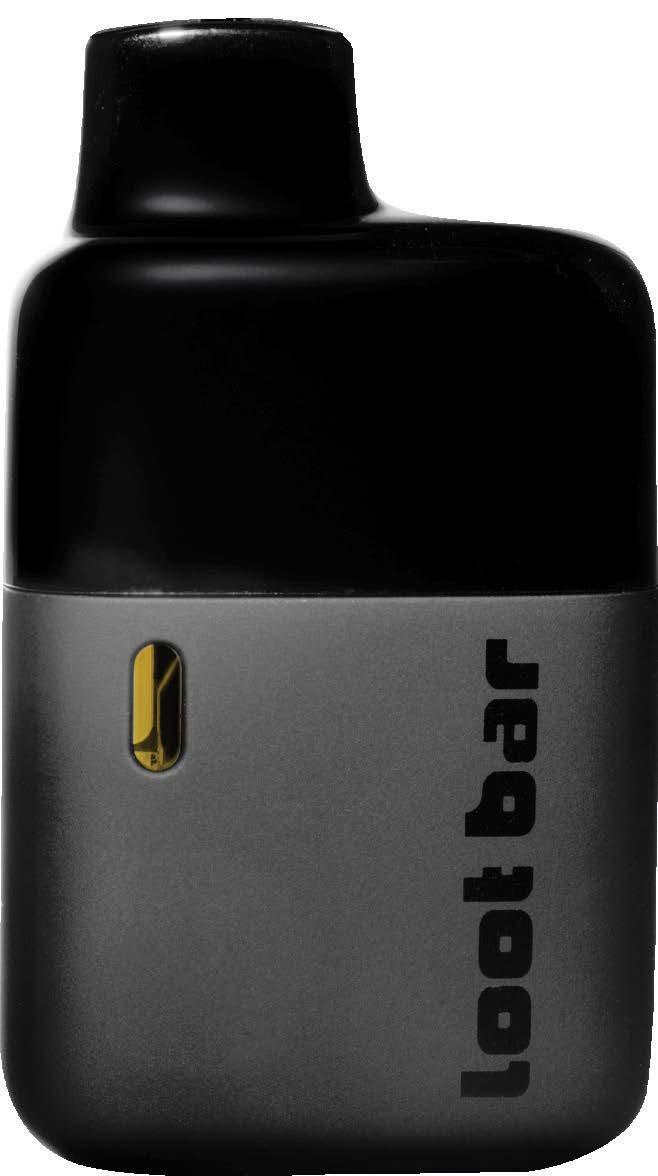
We start with the Black Widow, an old-school strain that remembers a time before the internet was available on TV. Sleek and colorful, this orange disposable has a big viewing window for the golden resin waiting to be hit. First tokes are bright
and fizzy, with smooth hits of gassy-citrus-lavender and a kiss of icy-skunky-berries that tease the palate like an algorithm designed it. Euphoric and sedating, this Black Widow has us ready for nature reels like @carnivorous_plants_journey clips, which are always a surprise for the spider.
Next, we relax our doomscrolled mind with a happy dose of Grapefruit Skunk, which pops with juicy notes of creamy red berries, sour grapefruit, and an earthy, hashy, fuel finish that livens up the senses like a photo with a ring light.
This purple disposable hits hard with big clouds and smooth exhales, putting our minds into a chillaxed, creative and comfortable mood that’s ready for rehearsal. Since the real secret to success is never stopping, we take that advice when it comes to hitting our Live Stream Pens, one reel hit at a time.
Sleek and colorful, this orange disposable has a big viewing window for the golden resin waiting to be hit.

We Grow Sticky

This product has intoxicating effects and may be habit forming. Marijuana can impair concentration, coordination, and judgment. Do not operate a vehicle or machinery under the influence of this drug. There may be health risks associated with consumption of this product. For use only by adults twenty-one and older. Keep out of the reach of children.


Toad Venom Toad Venom

MINTZ
CULTIVATED BY TILTED /// ANIMAL FACE X SIN
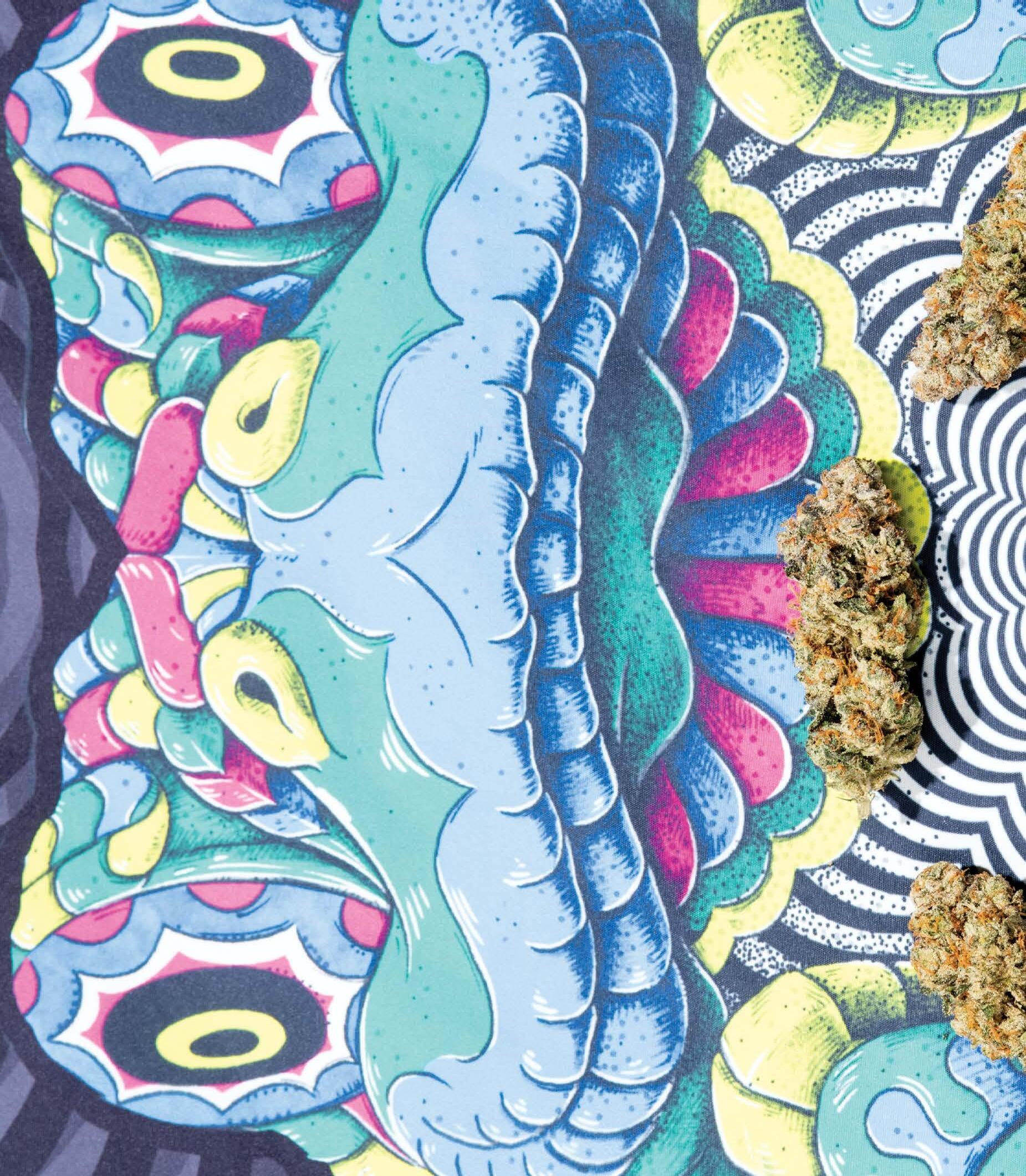
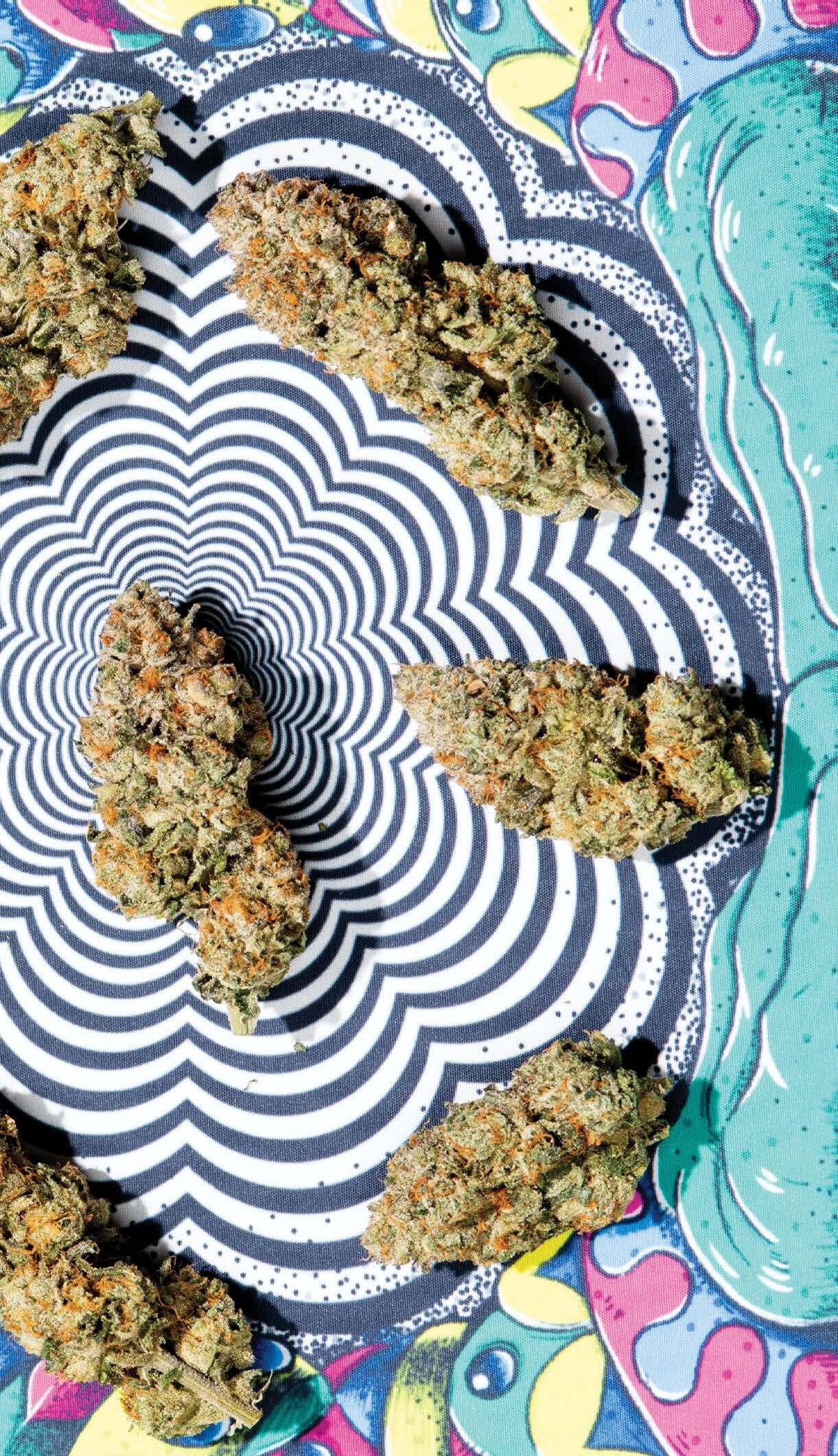
TOADS ARE A UNIQUE SPECIES as far as animals are concerned, with over 600 species of true toads among the nearly 7,900 species of amphibians living between water and land. Some are poisonous, some give you warts, and others have DMT that oozes from their skin. Of the three to lick, we’d pick the trippy one, which is why we shot this beautiful bud on the ACTIVATED Toad jacket from Grassroots California. Grown indoors by Tilted, whose pesticide-free and Department of Health medical-grade flower has been in bloom since 2016, these frosty Toad Venom buds delight the senses and fill a room with funk that’s louder than a swamp at night. Deep green and immaculately frosty, these buds glisten with fully developed trichomes and assault the senses with an all-out hit of thick, swampy gas, fermented sour berries, and a pleasantly rotten citrus-marker-rubbery-roses finish that oozes from sticky buds like a boot stuck in the mud. First hits deliver a sensational sour smack that’s smooth and immediately stoney, melting our faces into a puddle of stoniness like a frog on a toadstool, which is to say, very happily sedated. After several bowls, we found our minds floating, our muscles relaxed, and our cotton mouth request for root beer might have even sounded a little like a ribbit, proving that Toad Venom is powerful plant medicine indeed.
Hop in for adventure and taste the toad as we hit this euphoric and trippy strain grown by Tilted and bred by West Coast Connoisseurs and Ronin Seeds.

Woody Comes Home
An Exclusive Q&A with Actor & Cannabis Entrepreneur Woody Harrelson

Sharing a hotboxed treehouse with Woody Harrelson in a lush tropical paradise known as The Woods — the smoking lounge off Santa Monica Boulevard he owns with Bill Maher, John McEnroe and Devon “Samba” Wheeler — he settles in for our interview as if meeting friends for an afternoon sesh. The world has been capti vated by Harrelson’s characters on the silver screen, from “Natural Born Killers” to “The People vs. Larry Flynt,” but the best performance he gives is as himself. His natural drawl is relaxing, his vibe unhurried with an air of mirth and the comforting understanding that as a true A-list star, he doesn’t have to act like one.
WITH A CAREER that began in 1978, he’s seen America and Hollywood evolve and been a voice of reason for healthy living, stewarding the environment and the freedom to enjoy Cannabis. Once a California bad boy known for his wild antics, Harrelson’s energy shifted to activism, with notable protests like climbing the Golden Gate Bridge to release a sign saying “Hurwitz, aren't redwoods more important than gold?” and a symbolic arrest in Kentucky for planting four hemp seeds.
This history is why we honor Harrelson with our Impact Issue cover. His career of smoky mystique in the zeitgeist wasn’t a phase, but a true love for the plant. Far from losing his path or purpose with Cannabis, the plant seems to have steered him through the pressures of fame and the changes of the last 50 years, with Harrelson emerging as a Cannabis success story via a household name.
When you look into Harrelson’s eyes, it’s hard not to see film scenes, like the Twinkie search in “Zombieland” or the simmering, about-to-boil-over energy on “True Detective.” Such is the power of acting, the ability to take on a role and embody it so fiercely that we believe in the scene, the moment, the idea that what we are seeing could be real.
Today, Harrelson gets to play himself. There’s no fame to lose, and speaking on Cannabis is no longer a risk. We see the actor who is able to be comfortable in his own role, that of an advisor, mentor and advocate who wants to share the choices and products that have made his life healthy and happy. For a man who continues to impact countless lives on screen, Harrelson now plants seeds of inspiration at his lounge, where sun-grown Cannabis and good vibes are the menu every day.
>>CONTINUES NEXT PAGE
Woody Harrelson
WE’RE HERE IN THE WOODS, WHERE PEOPLE CAN SHOP AND SMOKE IN A LUSH TROPICAL SETTING THAT’S THE MOST STUNNING AND INVITING CANNABIS LOUNGE IN THE WORLD. WHAT INSPIRED YOU TO JOIN THE INDUSTRY, AND WHY A LOUNGE? My buddy Samba, who opened ERBA, would bring me to look at places, and it never felt right until I set foot here in this beautiful Ganja Giggle Garden. I fell in love with the property. I always wanted to open a place that, as a stoner, I would want to go to. I’ve been to places that have smoking on site, some legal and illegal, but none that I would say, “Wow, this is the Shangri-La, this is what you want.” Well, here we have it! But it’s not perfect yet, there’s lots more to be done.
HOW WAS THE CLUB RANDOM PODCAST YOU FILMED HERE WITH YOUR PARTNER BILL MAHER? Oh, we were fucked up. You should never do an interview that fucked up, but I feel like I’m right on the border now, by the way.
DO YOU THINK YOUR OTHER PARTNER, JOHN MCENROE, WOULD HAVE BEEN SUCH AN ANGRY TENNIS PLAYER IF HE TOOK BONG TOKES BEFORE THE MATCHES? I honestly don’t know, but something in me doesn’t think he smoked during his career. He was as dedicated an athlete as you can be. I’ve met the highest-level athletes that smoked. Basketball players tend to smoke, and I found over my rather lengthy career in playing basketball that pot didn’t seem to hurt. It hurt if I was stoned playing, that could hurt, I don’t think that’s a good idea. But for recovery, man, come on, it’s so nice.
DO YOU SMOKE WEED WHILE ACTING?
I can’t smoke when I act. Well, the very first time I did that, I thought we were done, and I went upstairs with George Wendt after an episode of “Cheers,” and we start smoking. And then I hear the intercom for me to come do the monologue in scene C that I had tripped up in the performance. So to pick it up, after I thought we were wrapped, I don’t know what the fuck I was thinking. What would have taken once took 10 times, and Jimmy Burrows was like, “Is everything OK?” He’s the greatest sitcom director ever!
DID YOU SMOKE WEED WHEN YOU FILMED “WHITE MEN CAN’T JUMP”?
There was one moment where me and Wes (Wesley Snipes) are in the car together driving to the location for the scene where I bet him that I can dunk the basketball and I lose, and, uh, unfortunately, we did get high in the car. And I felt like it compromised the scene. It doesn’t work for me because all those things that come so easy to me, suddenly, I get into paranoia, and I’m not comfortable and relaxed, which is really important to be in a state of dynamic relaxation when working in this particular field. For that reason, I cannot smoke and do my job. But I can directly after!
WORK FIRST, SMOKE AFTER?
You know, they call the final shot of a movie set day, on the uh, um … “the martini”! Dammit, that’s what I mean! How many times have I heard martini in my life? Ten million times, and I couldn’t think of it. This is evidence; I’m glad you’re documenting. You can use this for study later on, the documentation of a brain that has just broken down into a little heap of ashes.
IT’S LIKE WEED INCEPTION. YOU ARE TALKING ABOUT WORKING STONED WHILE WORKING STONED. That’s another thing. I never get high and do an interview, but of course, it’s the Leaf Magazine, so I have to get high. And because it was Bill, I had to get high, but other than those two examples, I would never do an interview high.
"For a man who continues to impact countless lives on screen, Harrelson now plants seeds of inspiration at his lounge..."
SO THE MARTINI IS THE HEAD-TO-THE-BAR, SHOOT’S-OVER CALL?
Yeah, so we call it “the smoker” ’cause as soon as it's done, we’re going to smoke. And the second to last one we call “the twister,” to go twist it up! Hopefully, that’ll become new jargon in Hollywood.
DO YOU THINK IT’S BETTER TO START WITH WEED AT 21 THAN ALCOHOL? I think that straight edge is the best. I’ve always admired straight edge, and thought I would get there, but I seem to be still on the road to … because if the conversation is should I do a drug, the answer is don’t do drugs. I almost feel like Ronald Reagan: (imitating his voice) “Don’t do any drugs.” There was a time that I had a near photographic memory. Do you know the play “Zoo Story”? Long, long, continuous monologues for this character, Jerry, that I played in college, that I memorized in one Sunday, the whole one-act play. A massive, massive amount of verbiage. And now, I can’t even imagine doing that because I’ve degenerated my memory a bit.
HAS YOUR ACTIVISM AFFECTED YOUR BRAND OR STATUS? That’s hard to say. I think a lot was inspired by playing Larry Flynt in ’96. It made me think about speech, and that’s when we did the Golden Gate Bridge protest. I was inspired and saw the way he lived his life, and there's a lot I do disagree with about his life, but I thought he was an extraordinary original human, and he made me feel like if you believe in something, do something about it.
>> CONTINUES NEXT PAGE
I’VE ALWAYS FELT THAT THE RIGHT TO PURSUE HAPPINESS INCLUDES THE RIGHT TO INGEST DRUGS, AND THAT WE SHOULD ONLY CRIMINALIZE BEHAVIOR, NOT POSSESSION. HOLLYWOOD IS A GOOD EXAMPLE. WEALTHY PEOPLE WHO DO DRUGS ARE CELEBRATED, POOR PEOPLE WHO DO DRUGS END UP IN CAGES. I agree, but you're talking now of a very important and much larger issue, which is consensual crimes or victimless crimes. There’s no victim to the crime. How is it a crime? Or is it just moralized legislation? In my mind, it’s about the money. The war on drugs, like all war, is lucrative. Somebody is making money with every bomb that drops. It's the same thing for the war on drugs. There's a huge industry around that, including private prisons that basically use slave labor. It’s incredible how feudal it all is still.
WHO WON THE WAR ON DRUGS?
I don’t know, it’s been such a great campaign. It’s been such a great propaganda campaign. You have to give credit to the government; they've really made people not give a shit about pot smokers. People who don’t smoke don’t care about the war on drugs; they don’t see the personal level of what happens. Hats off, once again, to Uncle Sam, coming through strong in the propaganda department!
DO YOU STILL GET EXCITED TO BE ON CAMERA? Always! But the night before I know what will happen, I don’t sleep. It’s always the same. I get so amped up. But I saw Bruce Springsteen recently in Austin, and we hung out before the show. I said, “Listen, there’s something I always wanted to ask you, and you don’t know how helpful it would be to me to hear you answer in the affirmative. So I’m going to ask: Do you get nervous before the show?” And he goes, “Oh yeah, I would call it anticipatory anxiety,” and said he would be worried if he didn’t feel that. I feel that I still get that the night before the shoot, and then it wears away, and by the second or third day, I’m comfortable. Even with a tense character, I want to be comfortable inside the way I’m feeling.
IF THERE WAS A LIFETIME ACHIEVEMENT AWARD FOR CANNABIS, YOU’D BE AT THE TOP OF THE LIST. HOW DOES IT FEEL TO CREATE A LEGACY IN WEED AND STILL BE SHAPING THE FUTURE OF THE PLANT?
Well, I don’t know what I’m doing to shape it, other than having a place for people to enjoy the plant. There was a time where myself and my PR team and team wanted me to be less associated with herb. And now, of course, having embraced that, there is something beautiful about Cannabis. Of any drug I’ve done, there’s something about the way it brings people together. When you talk about people brought together over cocaine, that's a different group of people. But this brings a brother and sisterhood of interesting people who are socially, politically, economically diverse, in every way, spiritually diverse people who seem to be attracted to this plant. I love to be a part of this culture. To me, if you are going to do a drug, this is the more benign drug to be doing.
HOW DID YOU FIRST BECOME ACQUAINTED WITH CANNABIS? When I was a kid, my mom would be, in the morning, having her cup of coffee, and she was a big cigarette smoker. So she’d say, “Son, if I ever hear (mimicking inhale) about you (inhaling) smoking marijuana, it’ll just kill me.” It’s so funny because there’s all kinds of avenues to get drugs into your body, and some people it’s legal, and some people it’s illegal, but it’s still drugs. I always think that the No. 1 drug in the world is sugar.
WHAT WAS HOLLYWOOD’S VIEW ON POT WHEN YOU FIRST CAME OUT OF THE WEED CLOSET? WAS IT ALWAYS PART OF WHO YOU WERE AS AN ACTOR? Well, everybody smokes, but publicly, nobody was above board on that. For the longest time, it was not OK to say (that you smoked).
WHEN DID YOU FIRST EXPERIENCE THE MAGIC OF OUTDOOR CANNABIS IN NORTHERN CALIFORNIA? When I moved here to LA — I don’t live here now — I moved here in the ’80s, and it wasn't long before I was trying that Northern Cal herb. It’s such a cool, spiritual experience. It’s a very spiritual plant. It’s only our abuse of it that makes it less spiritual. I think if we did it a little more religiously, it would be much better for us, but that’s coming from an addict who doesn’t do that.
TELL US ABOUT YOUR LOVE FOR THE EMERALD TRIANGLE? I just worry about those guys up in Humboldt, Trinity, Mendocino. They’re the best, and they’ve been doing it the longest — multigenerational. And now, because of the popularity of indoor, which befuddles me, I still don’t understand it. To me, the elements that are the most important elements of any herb are three things, aside from the genetics: the sun, water, soil. Those three things make the best herb, and the best herb in the world is grown in Northern California. This is the spiritual fight I feel that I want to have, to use The Woods as a place to testify about sun-grown Cannabis.
DO YOU IDENTIFY WITH THE NOR CAL
GROWER LIFESTYLE? I am a hippie. I love that lifestyle, that really close to the earth lifestyle. And I’ve seen various levels of luxury or comfort up there, but generally it's pretty rural, close to the ground. There's a certain primalness to it, just to being up in those mountains, among those beautiful trees, and of course, the trees that they are growing as a crop. It’s really special. I’ve had some wonderful experiences up there.
IS THAT WHY YOU REPRESENT SUN-GROWN CANNABIS IN THE DISPENSARY AND LOUNGE? I want to make The Woods a mouthpiece to the Emerald Triangle. I want to speak for the trees, for the outdoor organics, for Northern California. I’m pretty knocked out by the quality of the people, who are kind and devoted, how interesting they are and great at their craft, and they deserve to thrive. I don't get the disparity in why outdoor organic is so inexpensive compared to indo, when to me, there should at least be parity. It’s odd. But it's good for people to enjoy the outdoor; it's less expensive.
THE DOCUMENTARY YOU NARRATED, “KISS THE GROUND,” REALLY EXPLAINED LIVING SOIL AND REGENERATIVE FARMING IN A WAY THAT MADE SENSE TO ME, EVEN AFTER TOURING MANY LIVING SOIL WEED GARDENS, WHERE THE POT PLUS THE SCIENCE CAN GET LOST IN TRANSLATION. WHY ARE YOU INTERESTED IN SOIL, FARMING AND FOOD? You think about how incredibly important is the soil, as is the water and the basic things that we need. Soil, water, air, the real basics. They are ironically threatened by our own activity as a species. So you're seeing a lot of desertification around the world, and the soil is more important than ever. And it's a very practical way to say here's something we can do to make a difference in this ecological catastrophic experiment we call modern times.
WHAT PROMPTED YOU TO LIVE AS A VEGAN? I went vegan Jan 1, 1990. It was a New Year's resolution, but I’d been wanting to do it since I was 16. I did my first cleanse at 16 — three days of fruit and smoothies — and then I ate a stack of pancakes 3 feet high, and after the second one, I was stuffed. Back then, I wanted to become vegetarian, and my mom and everyone said you can’t do that, you need protein. For some reason, all this time later, I decided to go vegan, and Laura, my wife, did a couple months later. But I’m not entirely vegan; I love honey and an egg if I can be sure of the happy life of the mother. But I wouldn’t go to a random restaurant and eat an egg.
I’VE ALWAYS FELT THAT CANNABIS OPENS OUR MINDS. DOES IT HAVE THAT EFFECT FOR YOU? You think differently after ingesting it. Sometimes it does open a little portal, but I gotta say I’m the last to encourage use of it.
DO YOU FEEL LIKE YOU HAVE BUILT A LEGACY IN WEED WITH THE WOODS? With this place, yes, but it’s very difficult because the government wants to fuck you right down the line, start to finish, any way
"Hats off, once again, to Uncle Sam, coming through strong in the propaganda department!"
they can. They seem to be just wanting to fuck you. So they don’t give you any breaks. They still treat this industry despicably, especially the overtaxing, the greedy more, more out of the people trying to make a living in the industry. It’s really hard. I hate to go negative, so let me go positive. There's a lot of good people at The Woods. Every time I come in, I meet new interesting people. I usually come every day when I’m in town.
WHAT IS THE FUTURE FOR THE WOODS? I think it's going to be about not just the best, cleanest, purest, most delicious and best high herb, it's going to be about promoting a certain lifestyle of healthy food, healthy products and healthy cleaning products. The shit I use, and if it interests you, you can have some and buy it. Not like a store, but around what I would call “Woods Goods.” Me and my wife use all kinds of cool products and teas and the cleanest fermented coffee beans. I’m being ambiguous about it, but it feels like we can do more here, and I want to do more. I’m basically almost a preacher in my own way, so let this place preach its message, which is a message of regeneration and truth and positivity and cleanliness and good vibes.

@WOODYHARRELSON @THEWOODSWEHO
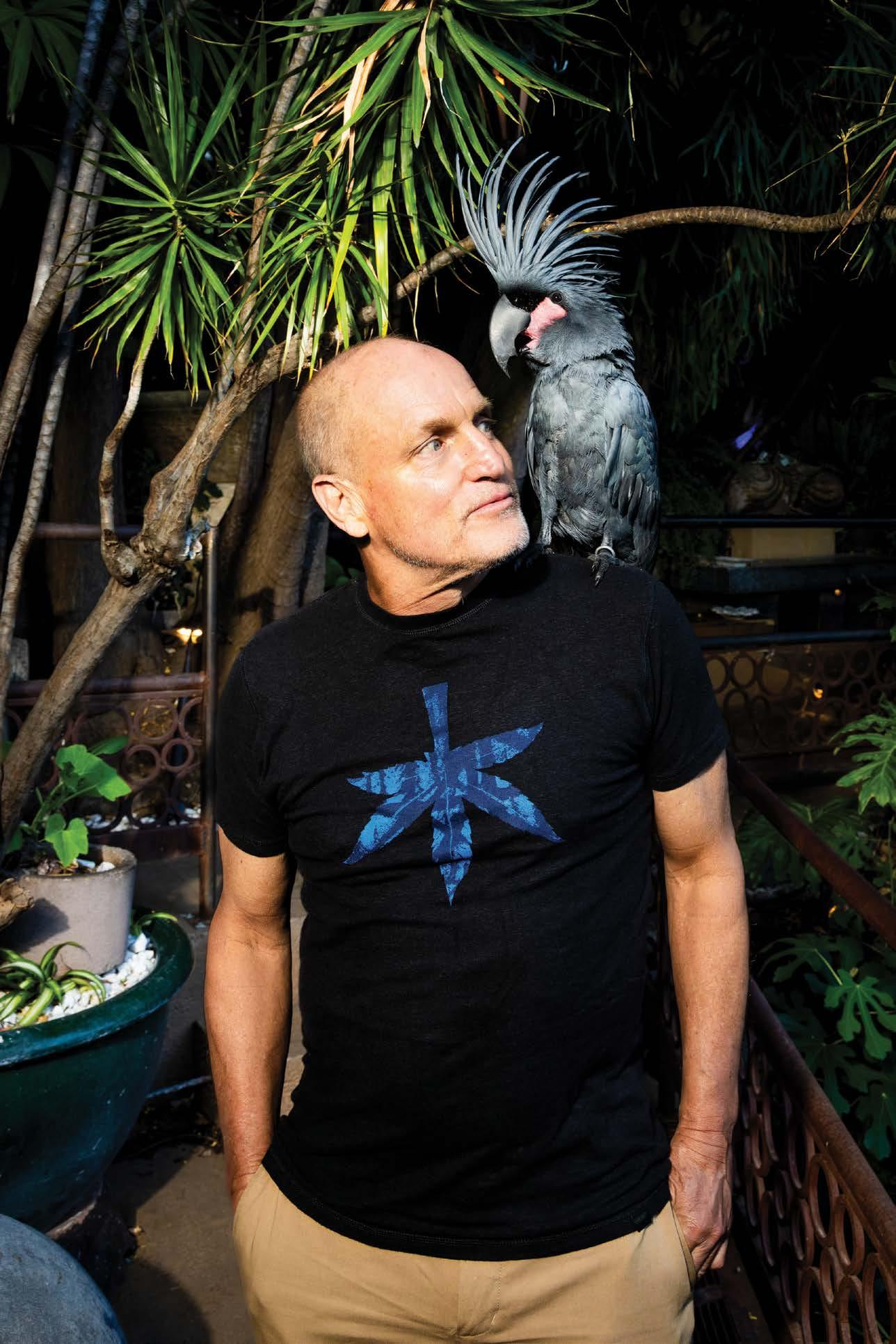
WOODY & GEORGE, THE BIRD


By now, you’ve heard of California’s ganja-growing, pot-smoking nuns known as the Sisters of The Valley. Maybe you watched the 2018 documentary
“Breaking Habits,” saw them in Forbes and
CNBC
or
caught their depiction as the
“Sisters of the Brave Beaver" in the 2025 film “One Battle After Another.”

THE HOLY FLOWER
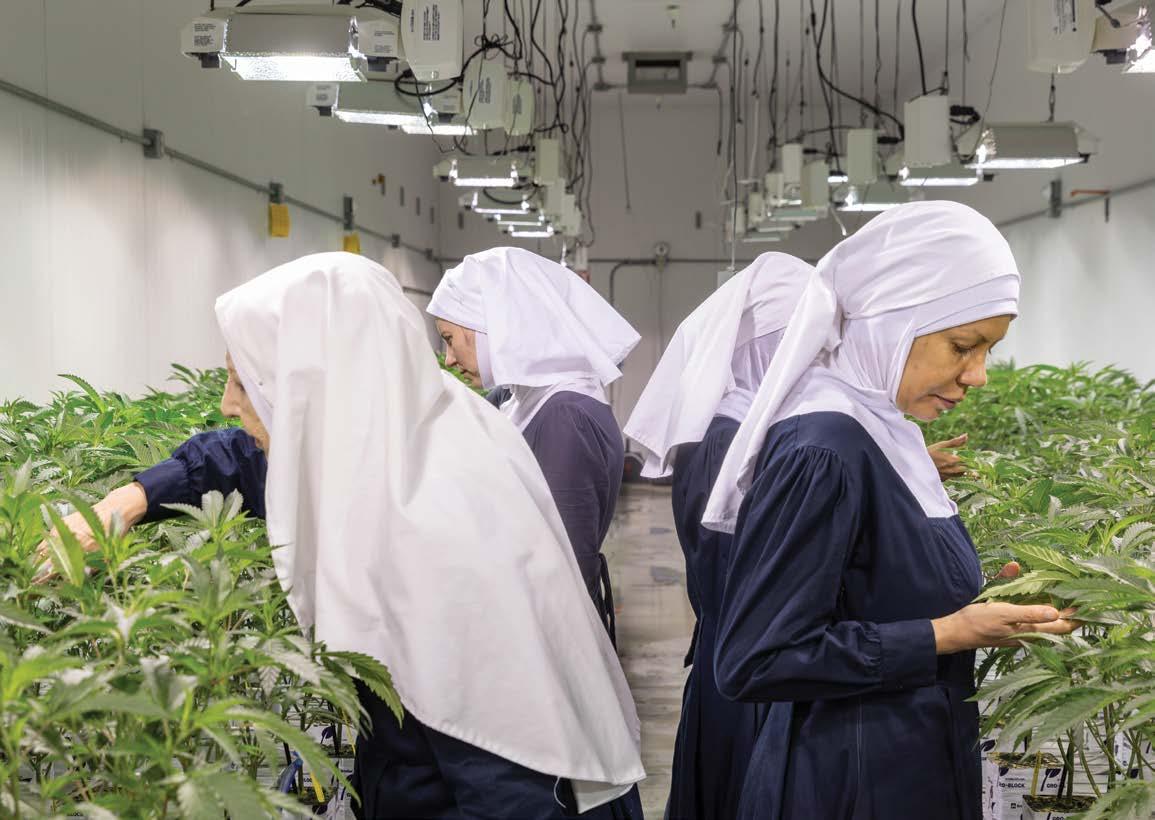
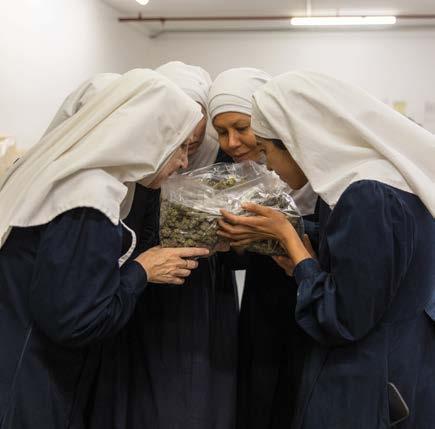
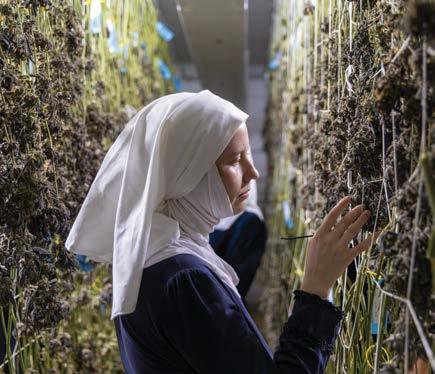
THE SISTERS OF THE VALLEY are not affiliated with the Catholic Church. Instead, their order is modeled after the Beguines, a group of women in the Middle Ages who formed communities that practiced a life of spirituality and service free from male or clerical oversight. Each sister takes a set of vows that include living in practical ways, performing service to their community through plant medicine and practicing environmental stewardship. The meta description on the Sisters’ website characterizes them as “modern Beguine revivalists empowering
women through Cannabis and ancient wisdom.”
It’s hard not to be captivated by the sight of a nun’s habit set against a pair of sunglasses in a field of Cannabis plants. The very image seems to defy the stigmas and taboos around Cannabis. But despite all the media attention, founder Christine Meesen, who goes by Sister Kate, says they have been fighting to stay alive for the last few years due to legal complications over trace amounts of THC in their CBD wellness line.

Sisters of the Valley started their brand with salves, ointments and oils made from hemp flower harvested
on their farm in the San Joaquin Valley. The business thrived, especially with the advent of online sales, but since 2024, an oversaturation of brands in the CBD market, along with an unfair ruling regarding trace amounts of THC in their products, has cut incoming revenue to one-fifth of what it used to be. The situation got so bad that Sister Kate said she even contemplated hanging up the habit, “It was like riding a wave to extinction.”
But, as the saying goes, “When God closes a door, he opens a window.” That’s what the Sisters found in an unexpected visit from Jessica Blair of the Traditional DTLA dispensary location and Damian Martin from Catalyst Cannabis stores.
Sister Kate was impressed with their interest in partnering, not just putting the order’s name on a jar.
Later, along with Catalyst CEO Elliot Lewis, the trio outlined a way for the Sisters of the Valley to launch THC products in dispensaries, and to start legal proceedings to get their CBD business back on track.
After three days, the group hammered out an agreement to design and release a product line to sell in over 30 Catalyst retail locations. Now, thanks to this retail partnership, Sister Kate envisions a future that is brighter than ever.
“The industry needs some other culture that's not just stereotypical stoner culture,” she told the Leaf during a phone interview. “There's plenty of room for all manner of representation, but I feel the public should see a medicinal and spiritual side to the plant.”
And so, the sisters packed their bags and left the farm on a pilgrimage to visit each Catalyst store, meeting everyone they could to share the spiritual side of Cannabis and learn how to best serve the retail community.
Sister Kate said these interactions proved instrumental in fine-tuning the product line and introducing people to the order. She believes they couldn’t have gotten such a loving crash course in the adult-use market without the relationships the sisters formed with both customers and budtenders. The response to the products has been so positive that drops have already sold out.
The order also formed a bond with Traditional's cultivation team as they took on the difficult task of scaling up, and they have gone above and beyond to ensure everything meets the sisters’ standards.
Before every crop is planted, the sisters perform a ground blessing by walking the rows. Afterward, there is a sunrise and two sunset blessings given to the plants before the harvest. In the 10 years the order has been blessing fields, Sister Kate told us they’ve never had one so large that it took days to complete. She joked that next year they might try blessing the field on horseback.
Sister Kate hopes this relationship opens the door to multiple markets one day. They want to use Cannabis sales to build an enclave where Sisters can live, study and train new initiates. The plan is to purchase a 12-unit apartment building with a garden space where sisters can have quarters on the upper levels and offer the lower units to those in need of assisted living.
On the farm, there’s only enough room for six members to live full time, which includes sisters, applicants, postulates and novices. With many members operating remotely and chapters established from Mexico to Chile and even Brazil, they need a space to house their growing order — somewhere they can build communal living situations, taking what they do out on the farm into the city as the very first Cannabis convent.
Find Sister of the Valley products in Catalyst stores, select Traditional retailers and their website sistersofthevalley.org
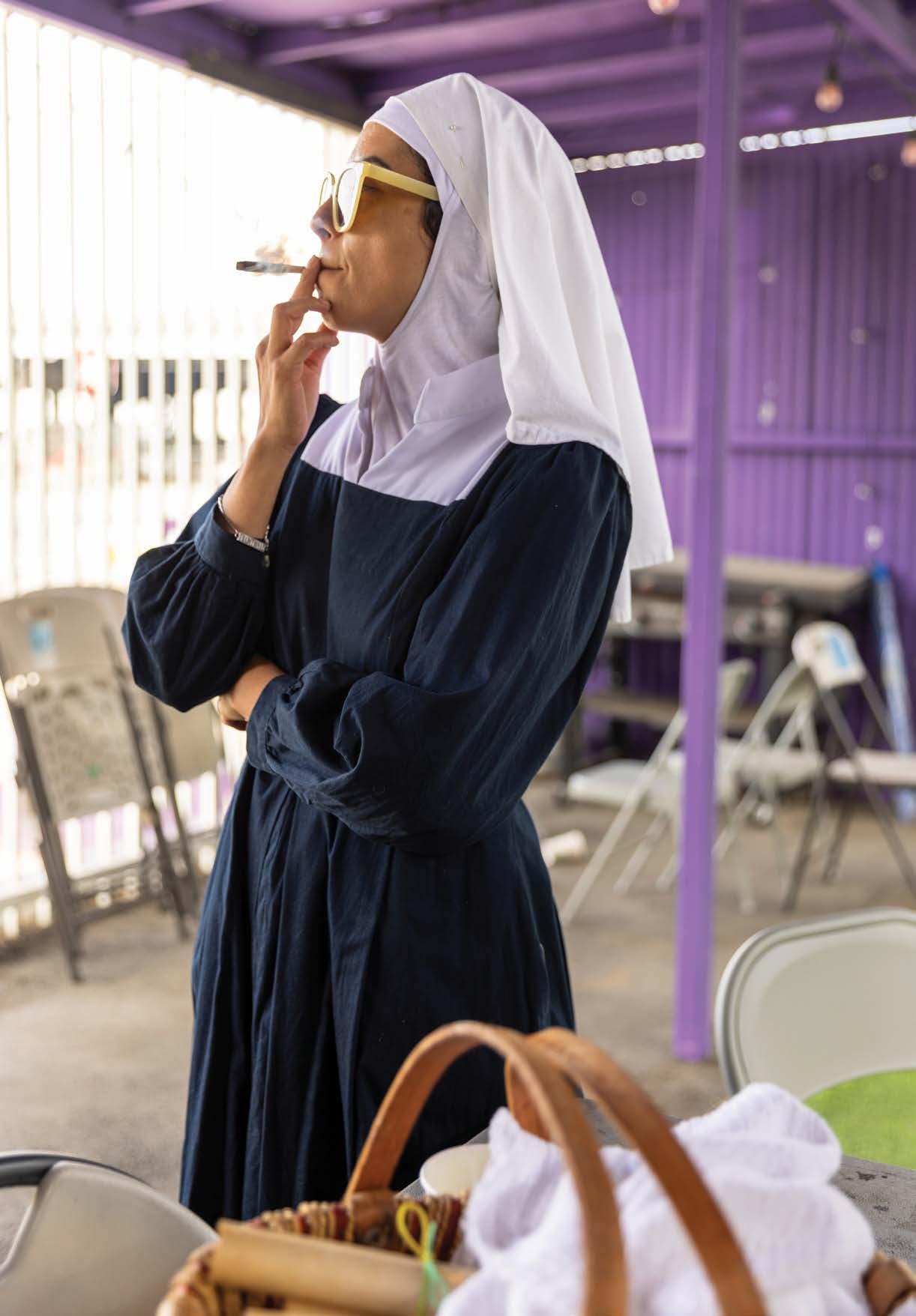
“The industry needs some other culture that's not just stereotypical stoner culture…I feel the public should see a medicinal and spiritual side to the plant.”


Rooted and Rising
How AAPI Cannabis Pioneers are Forging Their Own Futures
IN THE PACIFIC, the U.S. has three inhabited island territories: American Samoa, Guam and the Northern Mariana Islands. Residents are American citizens, but cannot vote for the president.
Guam is over 6,000 miles away from the mainland. Despite the island’s stoner culture, strong Catholic influence initially made Guamanians wary of Cannabis. Melchor Manibusan, of Indigenous Chamorro blood, made local history by hosting the first 4/20 party at his shop Coffee Slut when adult use was legalized in 2019. Founder of Guamsterdam, a nod to his Dutch roots, his vision is to create a legacy cultivation, retail and lifestyle business on the island.
For decades, Guam was a luxury destination for wealthy Asians. Today, the streets are empty. Manibusan welcomes any mainland operators that meet the five-year residency requirement to set up shop.
“It would make us a tourist destination again and create jobs. And if anyone comes to the island with ill intentions, we’ll take care of them,” he said with a wink. guamsterdam.com @melchormanibusan
Melchor
Derek Fukuhara
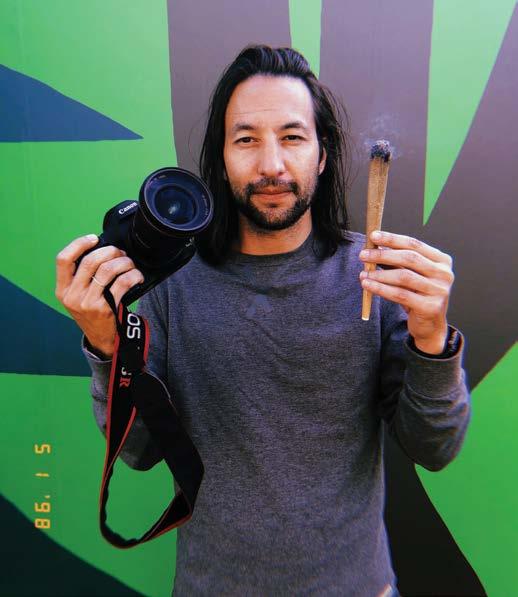
RAISED IN ORANGE COUNTY, CALIFORNIA, Derek Fukuhara transitioned from professional skateboarding into Cannabis media and events. After years of creating content with his friend Erin Coffey, they launched High Rise Agency in 2019, producing campaigns for brands like STIIIZY, Wonderbrett and Seed Junky Genetics.
Fukuhara’s story is shaped by generational resilience. His father, a second-generation Japanese American, was born in an Idaho concentration camp during World War II, where his family was forcibly detained after over 120,000 people of Japanese descent were stripped of their rights and property. Like many families, they rarely spoke about the trauma after returning home to nothing.
Influenced by his professional photographer father, Fukuhara embraces the Japanese philosophy of “Shokunin”: dedicating one’s life to mastering a craft through discipline and refinement. That mindset helped shape his own photography and the many cultural stories captured by his lens. highrise-agency.com @highrise.agency | @derekfukuhara

Karlyn Laulusa
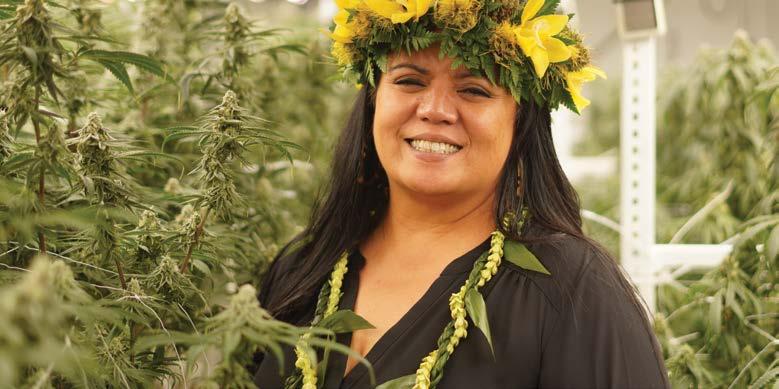
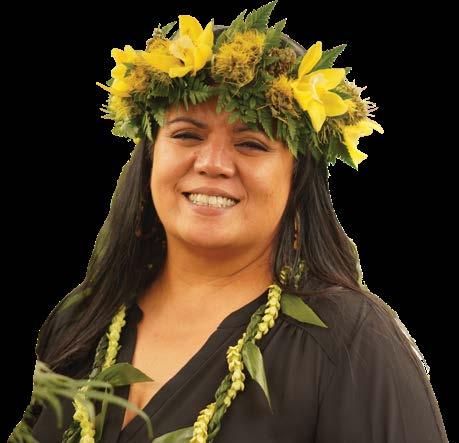
KARLYN LAULUSA’S ROOTS reflect the rich diversity of Hawaiʻi itself: Native Hawaiian and Samoan, with mixed ancestry. Growing up, her community cultivated pakalolo. But the war on drugs hit hard through Operation Green Harvest, when helicopters hunted outdoor grows and federal raids swept Hawaiʻi in the 1970s.
After the trauma of prohibition, her ‘Ohana initially discouraged her from entering the legal market. Still, in 2014, she became CEO of Noa Botanicals on Oʻahu, one of only eight licensed Hawaiian medical Cannabis companies.
As the first-and-only Native woman CEO of a Hawaiian-Cannabis company, Laulusa brings cultural understanding and lived experience to leadership. She is currently a medical program caregiver and champions local genetics, Indigenous plant medicine and a future where Hawaiʻi becomes a world-class Cannabis tourism destination.
Asian culture is far from a monolith; the continent encompasses countless ethnicities, cultures and religions. Every Asian American diaspora experience is unique. Though the Asian American and Pacific Islander experience is incredibly diverse, one deeply American value connects all of these stories: freedom — the freedom to honor their roots while creating their legacies with the Cannabis plant.
High Rise Agency




Rooted and Rising
How AAPI Cannabis Pioneers are Forging Their Own
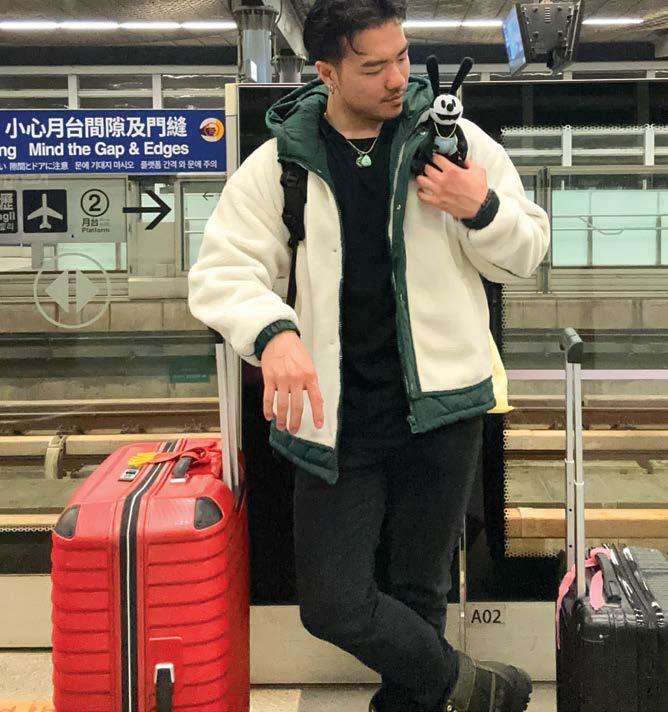
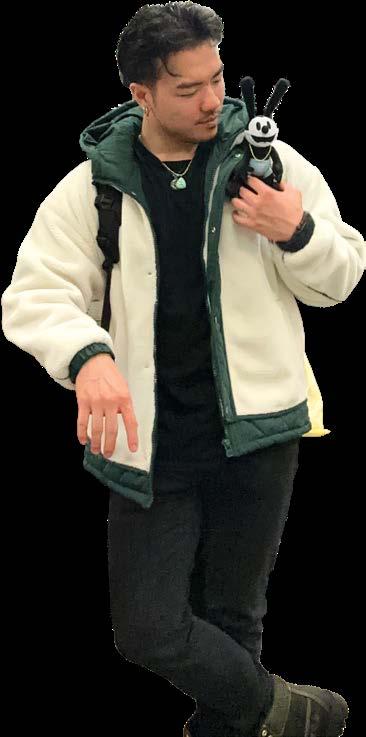
VIBE WITH CHU, created by Jerry Chu, has built a massive following through Cannabis-centered food and lifestyle content across multiple platforms. Combining culinary skills, stoner humor and global travel, Chu has documented adventures across 38 countries and counting.
Born in Taiwan, Chu ended up in Torrance, California, at age 10 when his parents unexpectedly returned home without him from what was supposed to be a family vacation. They had hoped that American citizenship and education would lead to a better future. Unable to speak English and struggling to adapt, he found comfort in cooking with his grandmother and the multicultural food scene around him.
In college, Chu began using Cannabis while figuring out his future and dealing with the pressures of cultural expectations back home. In Taiwan, Cannabis remains taboo, classified as a narcotic under the term “dupin,” meaning toxin.
On April 20, 2022, Chu launched his stoner cooking YouTube channel despite knowing his parents would disapprove. The gamble paid off. Today, his Puff Puff Pack subscription boxes include hemp products, accessories and Asian munchies.
“Kids used to make fun of my lunches,” he laughed. “Now everyone wants prawn chips.” Vibewithchu.store | @vibewithchu
One example of Asian representation in Cannabis media came from Netflix’s short-lived 2017 sitcom “Disjointed.” The series followed the employees of a California medical Cannabis dispensary. One character was a medschool dropout, terrified of disappointing her tiger mom while being a weed nerd.

THOUGH ROOTED in familiar stereotypes, legend has it the character may have been inspired by my own experience as a budtender over a decade ago, as my former boss consulted on the show. For five years, I worked at a medical Cannabis dispensary in Los Angeles while pursuing my nutrition degree. I loved geeking out over Cannabis science and was passionate about my work, yet at the same time, lived with the constant fear that my parents in Thailand would find out and be ashamed of me. This was a common thread among many of the Asian American subjects I spoke with: Cannabis remained deeply taboo and misunderstood within their cultures, creating tension between wanting to honor and appease their parents while also embracing their authentic American selves. -TIAN
SCHERER


Maha
Haq
Leo Stone
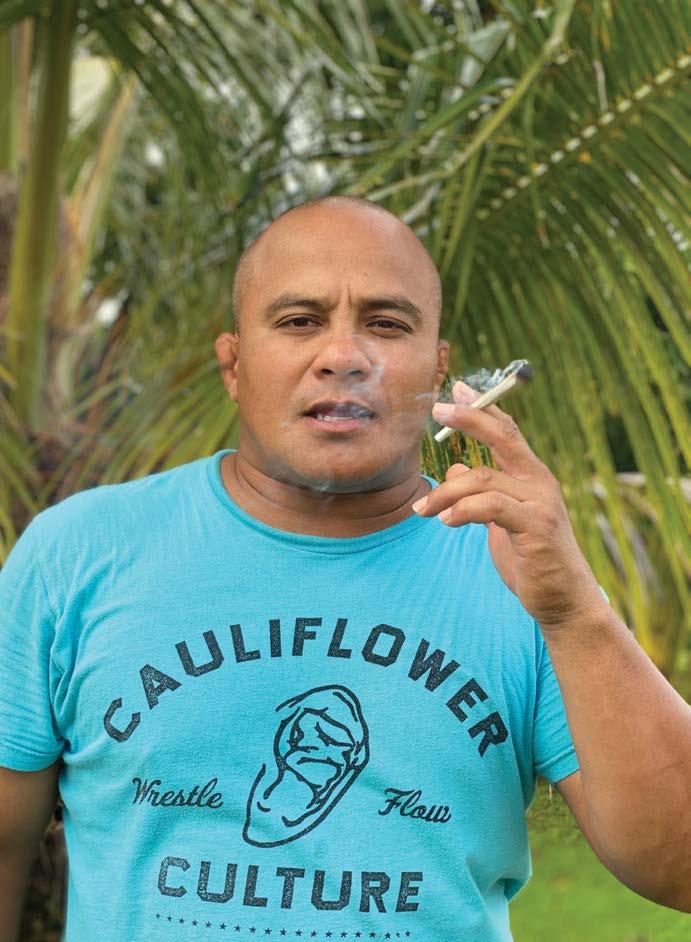
LEO STONE is known for his legendary Cannabis genetics rooted in Humboldt County, California, which is expanding into a global hempire. Born to a Filipina mother and American father, he spent ages 7 to 20 living in the U.S. naval base near Yokohama, Japan. The mix of Navy-brat life, the Filipino migrant community and local street culture shaped Stone’s adaptability, a skill he relied on while serving in Iraq, and later in the Cannabis industry.
MAHA HAQ has built a career at the intersection of Cannabis, education and community. As founder of UCLA’s CannaClub, she helped expand the organization to more than 60 chapters across 17 states. Now, she hosts her Twitch channel HighMaha, consults for Cannabis businesses, works with Los Angeles’s Social Equity Program and writes for VICE Media.
Raised by her immigrant mother in a Pakistani-Muslim household in Greater Los Angeles, Haq grew up with little Desi representation. At her high school, most students were Chinese American; she was one of only three Desi students. She found belonging among a group of fellow Asian American outsiders she jokingly called the “Asian rejects.”
When Haq was caught using Cannabis at 16, her scientist mother unexpectedly asked her to write a research paper on the plant. Impressed by the results, she was invited to present at the cancer clinic where her mother worked. Haq eventually got her master’s in medical Cannabis science.
At UCLA’s CannaClub, many members were Asian American students seeking an accepting Cannabis community. In 2022, Haq hosted a “Diwali & Dabs” event, bringing together South Asian and Cannabis cultures in an inclusive space.
After using Cannabis to manage his PTSD while stationed in Germany, Stone was destined to end up in the Emerald Triangle. During an era when the region was infamously known as Murder Mountain, Stone leaned into his racial ambiguity and ability to code-switch to thrive.
After over 20 years of breeding and cultivation, he has won 48 awards.
As the industry globalizes, Stone has grown far beyond Humboldt. He now works internationally as CEO of seed company Aficionado Estates. With projects in Canada, Colombia and Spain, plus worldwide consulting, Stone draws on his global background to shape the future of Cannabis culture and cultivation.
Vibe with Chu
Jerry Chu
Canna Club
Aficionado Estates


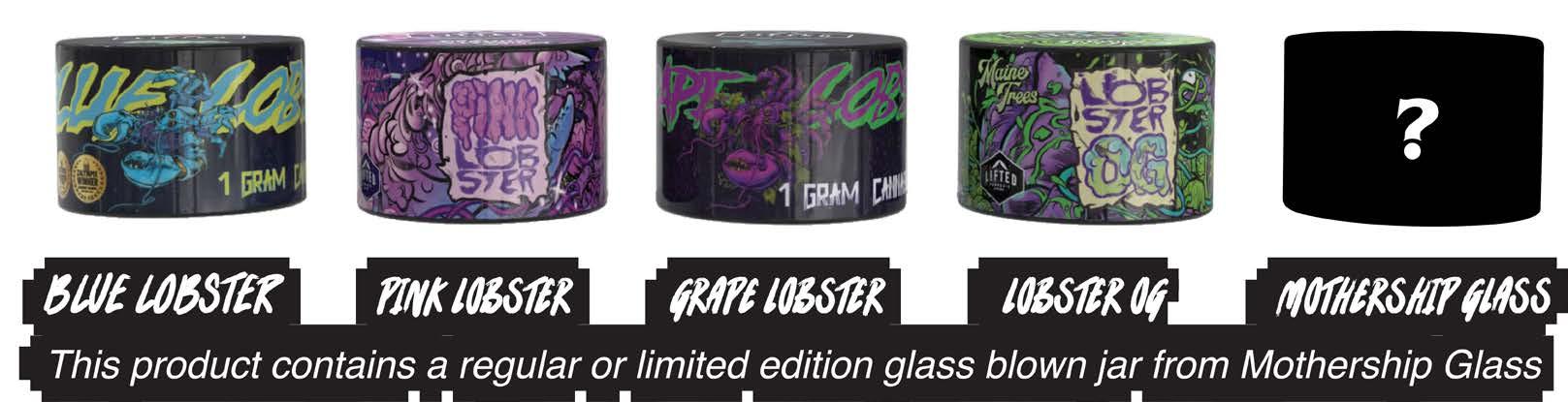
MOTHERSHIP IS LANDING 7/10...











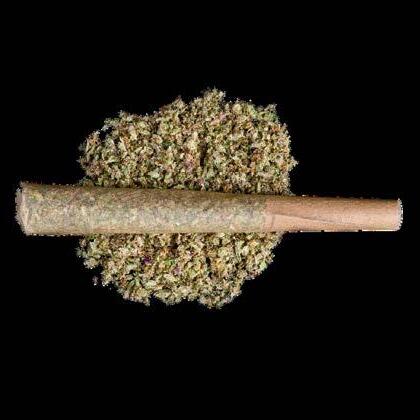
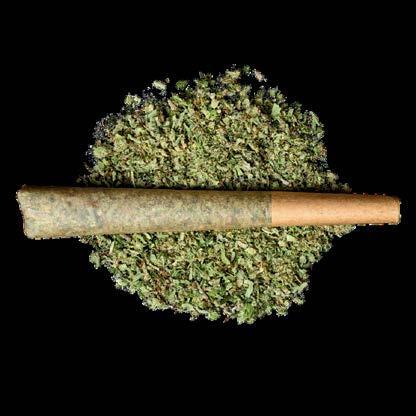
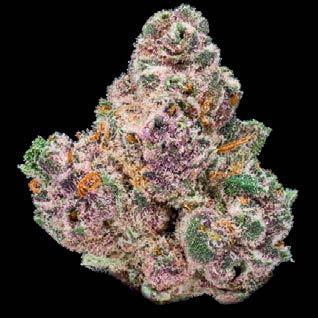
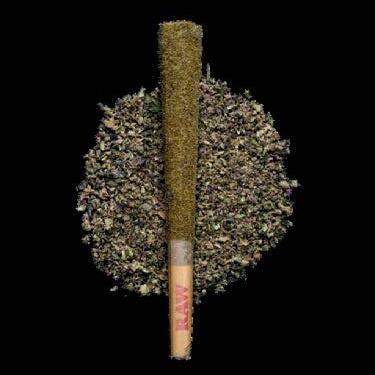
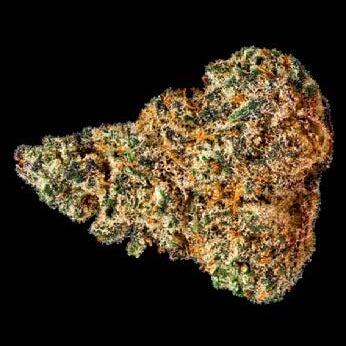
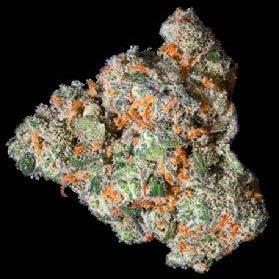
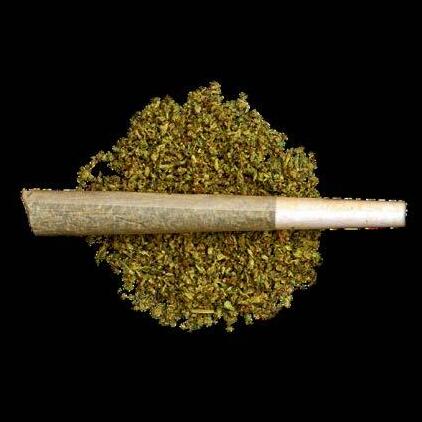
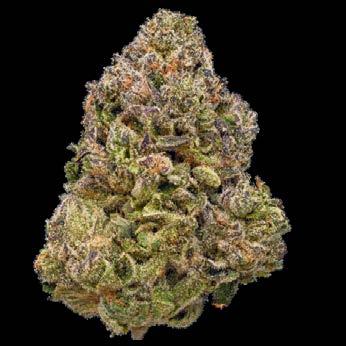


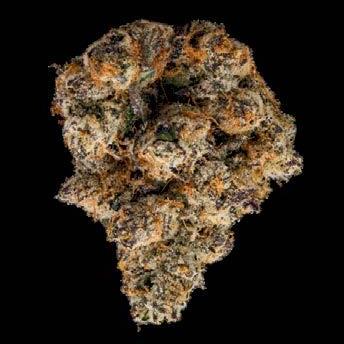
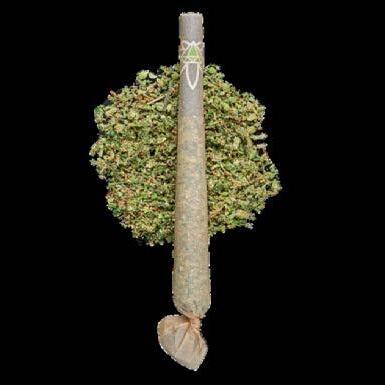
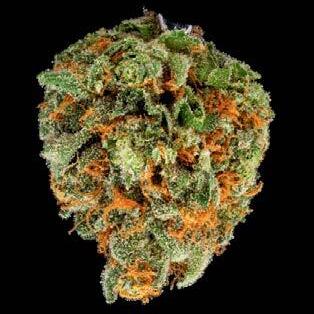



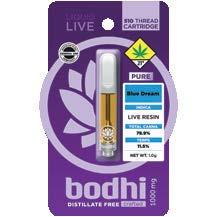
Bodhi PURE, terpene-rich, flavorful, and uplifting vape moments every

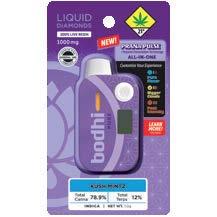

LA REVOLUCIÓN VERDE
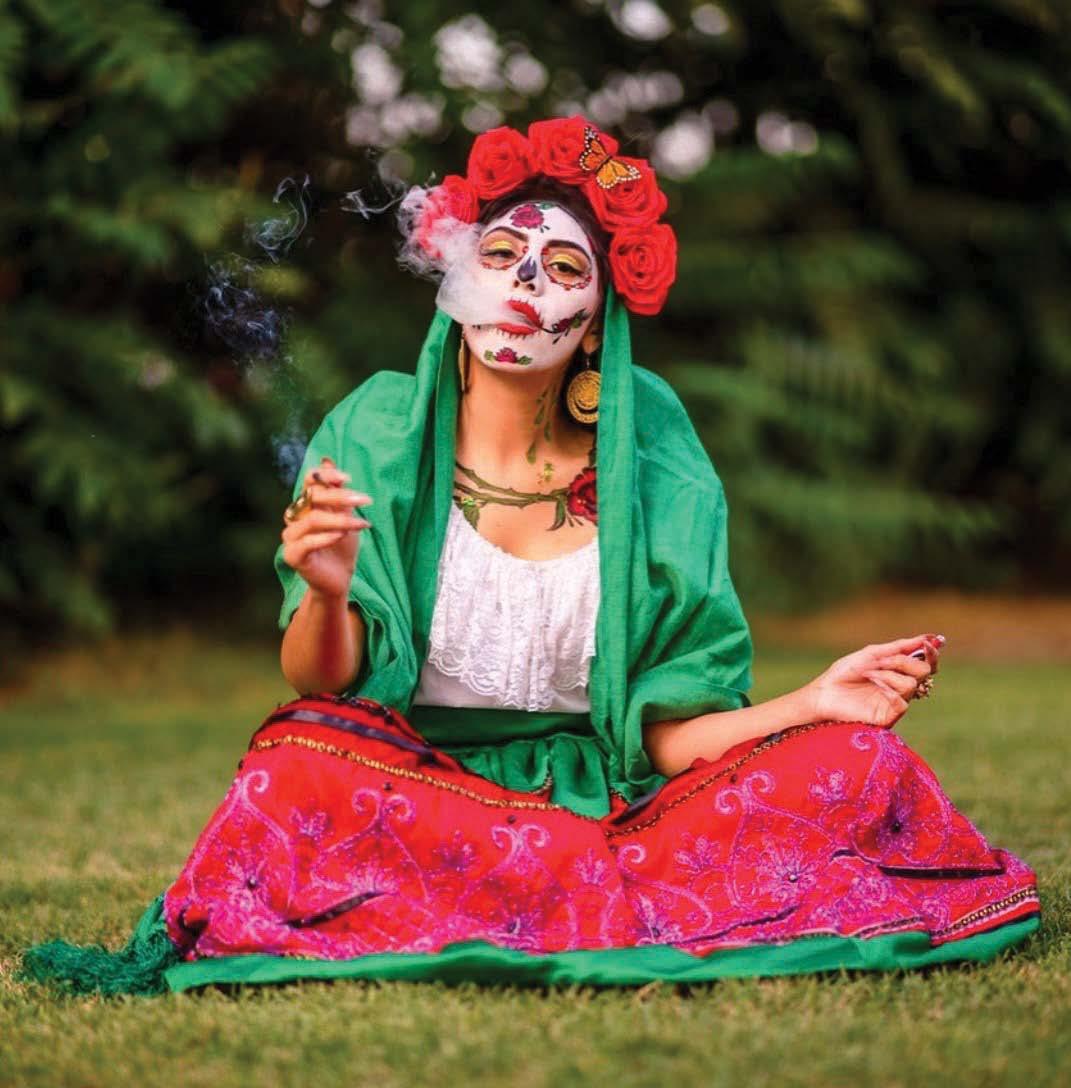
SUSIE PLASCENCIA
AS LA CATRINA VERDE, ENJOYS A SESH DURING THE DÍA DE LOS MUERTOS HOLIDAY.


Latinas in Cannabis and the New Era of Conscious Community

There is a refreshing new energy drawing attention in the Cannabis scene, rooted in cultura, sisterhood and collective empowerment. Across the West Coast and beyond, Latina women are stepping into the Cannabis space as entrepreneurs, healers, advocates and protectors of comunidad. In an industry often dominated by corporate money and masculine aesthetics, organizations like Latinas in Cannabis are creating something deeply needed.
SUSIE PLASCENCIA (L)
SUE CARLTON (R)


Latinas in Cannabis
Every time a Latina entrepreneur launches her first brand, every time a Cannabis farmer plants seeds with intention, every time women gather together in support of one another, something sacred is restored.
FOUNDED IN 2020 by entrepreneur and international speaker Susie Plascencia, Latinas in Cannabis emerged as a grassroots platform uplifting Latina voices in Cannabis through mentorship, networking, advocacy and visibility. For Plascencia, this movement is about creating an environment that is safe, inclusive and relatable for Latina women in Cannabis.
“Before Latinas in Cannabis,” Plascencia shared during our interview, “it felt like there was no place in Cannabis to celebrate our cultura.”
She set out to change that, and the evolution happened quickly.
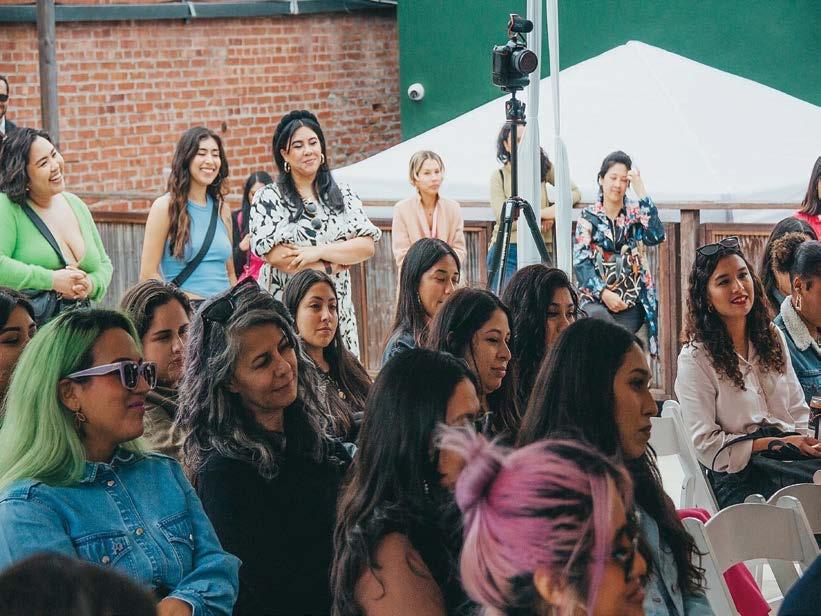
What began as digital community building soon transformed into sold-out summits and conference meetups. Latina women from all backgrounds could show up to these events fully themselves, con mucho pasión, loud
laughter, Spanglish conversations, smoky prayers and the spice of embodying our roots.
There’s power in that language because reclaiming Cannabis is also about reclaiming narrative. For many women in this space, Cannabis advocacy is ancestral, breaking cycles of silence, shame and cultural erasure that have existed within familias and communities for generations.
Radical inclusivity has become a defining ethos of the movement, which centers around professional growth, healing and community support. There is a code of conduct rooted in communication, accountability and sisterhood, something Plascencia says is deeply necessary in a high-stress industry where burnout, trauma and competition can easily divide people.
“If there’s beef,” she laughed, “we encourage people to talk it out and move
forward together. We do not have time to spend divided. We need to be united more now than ever before.”
That statement is packed with truth. According to a 2022 National Cannabis Industry Association article, Latino ownership in Cannabis sits at only 5.7% nationwide.
Meanwhile, BIPOC communities nationwide continue to face a historically disproportionate Cannabisrelated arrests and incarcerations rate.
“Latinas in Cannabis helped me become a more diplomatic person,” Plascencia admitted vulnerably during our interview.
“I am now a better friend and a better business professional because it forced me to get out of my feelings and think about community.”
That same grounded spirit shines through one of the organization’s proud community members, Sue Carlton.
Carlton — a hardworking third-generation Latina farmer and founder of Ranchera Familia in California — represents the earthy backbone of this movement. She symbolizes the return of the farmer as steward rather than exploiter. Her regenerative approach to hemp farming honors land, people and sustainability alike. There’s an Indigenous rhythm hidden inside that philosophy, an understanding that cultivation is relationship, not extraction.
But according to Plascencia, what truly defines Carlton is her willingness to continuously show up for others.
“Sue gives and continues to give because that’s what Latinas do,” Plascencia explained. “We help one another and bring empowered energy to the table.”
That spirit of mutual support pulses throughout the organization. Whether it’s organizing summits, uplifting women-owned brands, mentoring younger entrepreneurs or creating spaces where women feel safe enough to be themselves, Latinas in Cannabis is building something bigger than networking — they are building comunidad.
In a rapidly evolving Cannabis industry — where corporate consolidation continues to push small operators to the margins — organizations like this matter deeply. This is especially true for independent women entrepreneurs navigating an industry still dominated by men and inaccessible capital.
The future of Latinas in Cannabis appears expansive.
“In the next five years, I see Latinas in Cannabis continuing to grow as a business ecosystem,” Plascencia shared. “We already operate across events, media marketing, and offer employment. We are actively scaling our global presence.”
For Plascencia, the mission is rooted in building long-term economic opportunity.
“Our goal is to create more consistent opportunities for visibility, education and economic participation for Latinas across the industry,” she explained. “This is especially important in an industry that often lacks stability. We take pride in already employing Latinas and are committed to growing safe, stable and meaningful career opportunities.”
Five years from now, Plascencia envisions Latinas in Cannabis becoming an even stronger global platform, one that not only advocates for Latinas but also actively employs and empowers them at scale.
Because every time a Latina entrepreneur launches her first brand, every time a Cannabis farmer plants seeds with intention, every time women gather together in support of one another, something sacred is restored.
It is the answer to smokefilled prayers whispered through generations of resilient mujeres who were never meant to stay silent, and maybe that’s the real revolution blooming, OGs. Not simply Cannabis legalization, but empowered liberation through comunidad, cultura and conscious sisterhood.
Blaze the Path toLuxury


Warning - this may be habit forming. Unlawful outside washington state. It’s illegal to operate a motor vehicle while under the influence of cannabis. Smoking is hazardous to your health.





June Joy


8
4
2
1
4
2
4
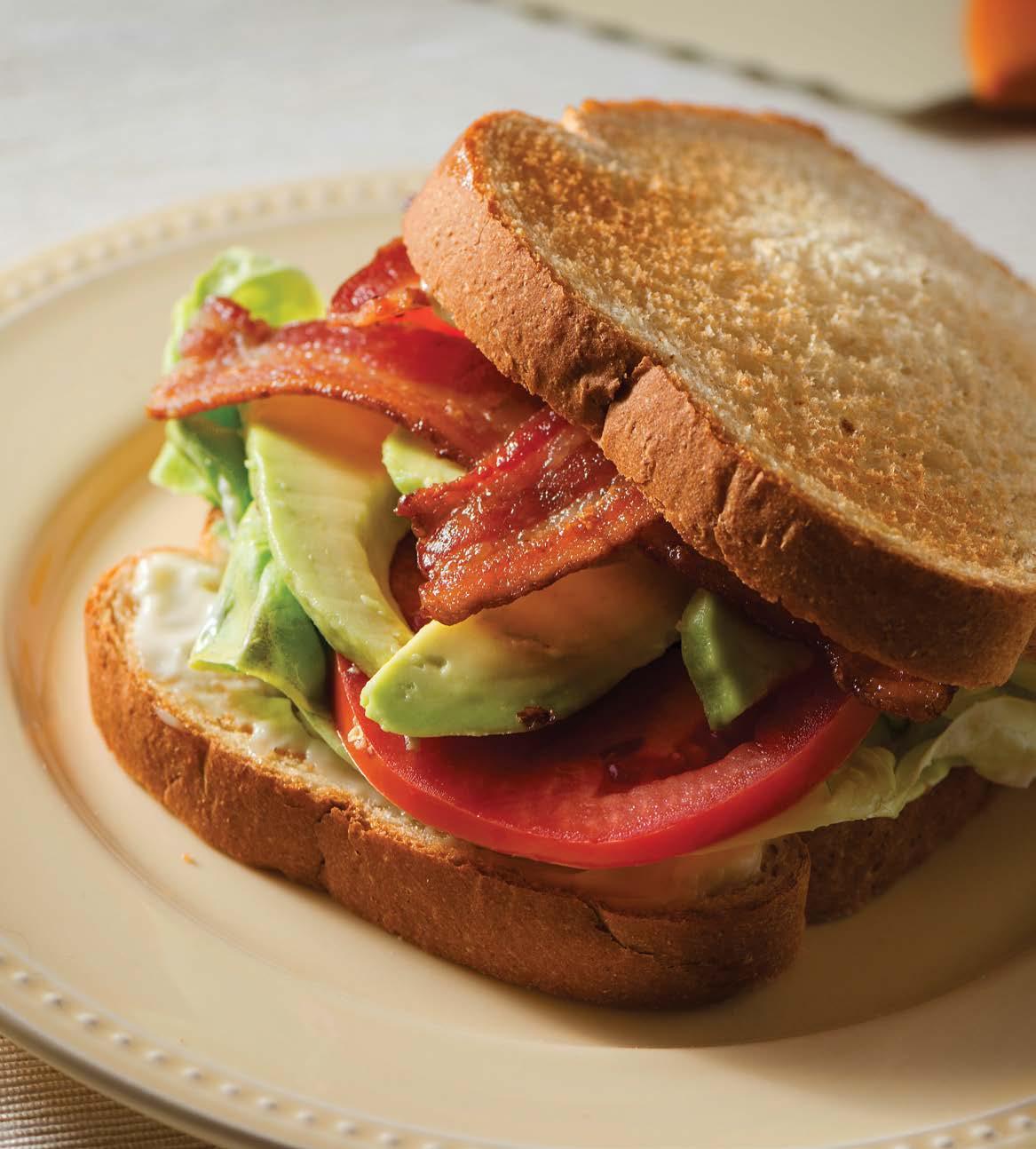
1. In a small bowl, toss the avocado gently in the lemon juice, keeping the slices intact. Set the avocado aside.
2. Mix the mayonaise and the canna-oil. Toast the bread.
3. While the bread is still warm, spread 1 tablespoon canna-mayonnaise on each slice.
4. Layer 2 bacon strips, 2 lettuce leaves, a few avocado slices and 2 tomato slices on a bread slice, and top with another bread slice. Repeat for the other sandwich.
4. Cut each sandwich in half before serving.

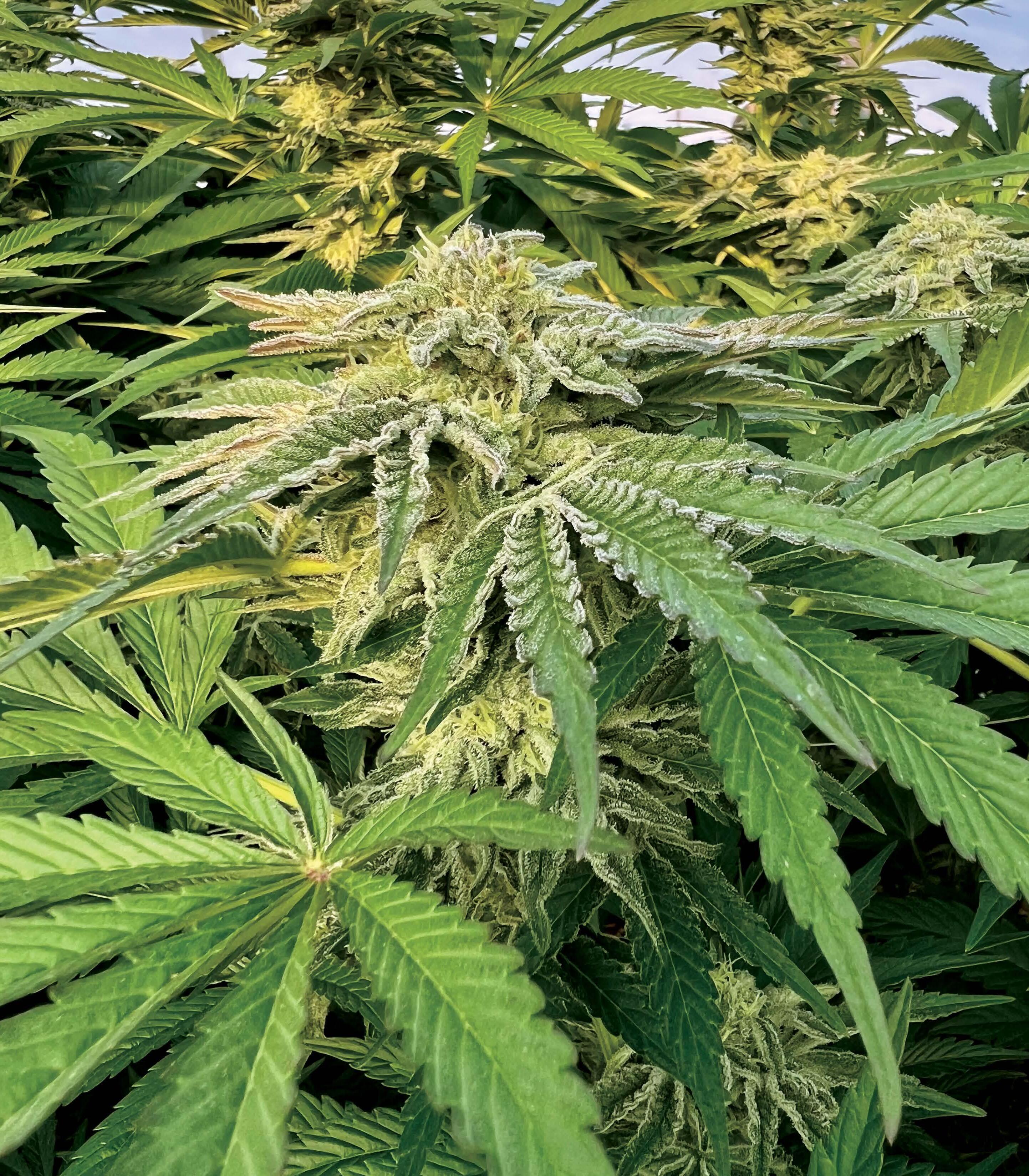
These early summer recipes are infused with Pruf Cultivar’s Rose City Shiska, a strain with a Black Cherry Cheesecake x Shiska Berry cross in its lineage. I love smoking it almost as much as cooking with it. When I send friends to dispensaries around town, that is the only advice I give — Pruf all the way. Whether you’re sharing a casual meal outdoors or winding down at the end of the day, these recipes are designed to be savored slowly, bringing a relaxed, feel-good energy to every bite. laurie@laurieandmaryjane.com

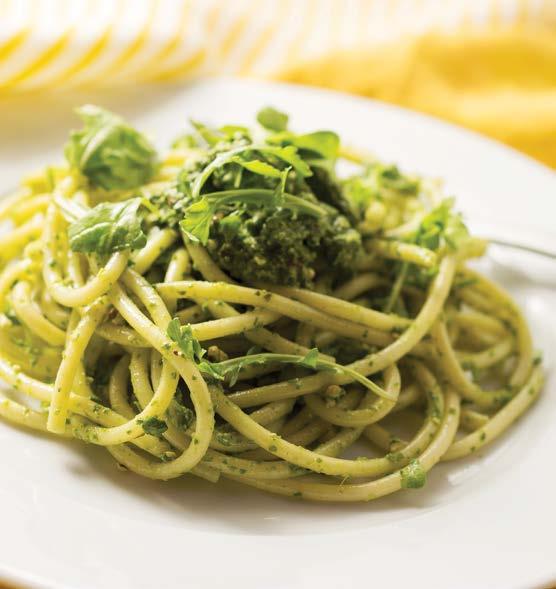
SPAGHETTI WITH ARUGULA PESTO
Serves 4
6 cups packed arugula
Handful of baby arugula
4 garlic cloves, peeled Salt and pepper
1/2 cup plus 2 tablespoons olive oil, divided
4 teaspoons canna-oil
1/2 cup freshly grated Parmesan cheese, plus extra for garnishing 1 pound spaghetti
1. Bring a large pot of salted water to a boil.
2. In the bowl of a food processor fitted with a metal blade, pulse 6 cups of the arugula, walnuts, garlic, salt and pepper until pureed. With the machine running, add the 1/2 cup of olive oil and canna-oil in a steady stream through the feed tube. Stir in the Parmesan, and set the pesto aside.
3. Cook the spaghetti according to package directions.
4. Drain the spaghetti, return it to the pot off the heat and toss it with the pesto and baby arugula.
5. Divide the pasta among 4 plates, drizzle with the remaining 2 tablespoons of olive oil and top with extra Parmesan.
Serves 2
8 slices peasant bread, lightly toasted
4 teaspoons canna-olive oil
1 1/2 cups ricotta cheese
4 tablespoons olive oil
2 tablespoons chopped scallions
1 cup peas, fresh or frozen
1. Preheat the oven to 400 F.
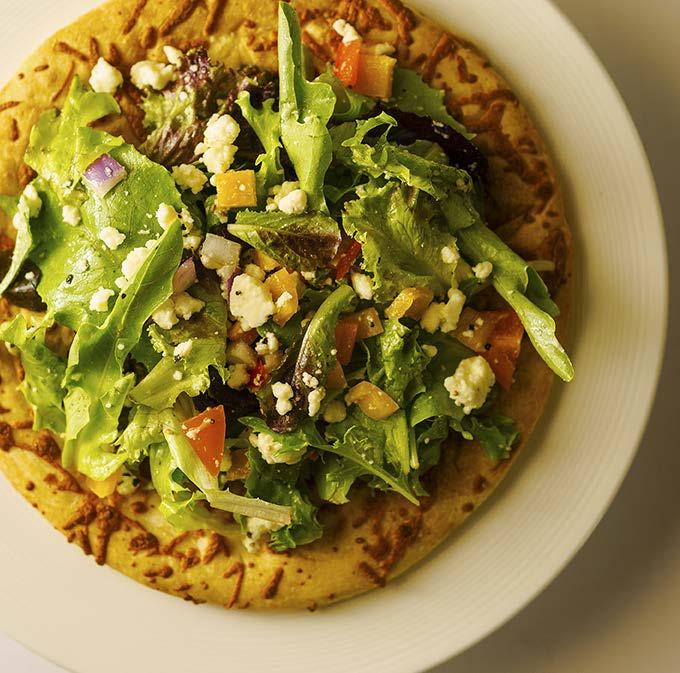
2. Put the crust on a baking sheet, and drizzle it with 1 tablespoon of the olive oil. Bake according to package directions.
3. Put the salad greens, peppers and onion in a medium bowl. In a small bowl, combine the vinegar, salt and pepper, and whisk in the remaining tablespoon of olive oil and the canna-oil.
4. Pour the vinaigrette over the greens and toss to combine.
5. Top the crust with the dressed greens and goat cheese
SPAGHETTI WITH ARUGULA PESTO
GARDEN PIZZA BLT SANDWICH
GARDEN PIZZA













Page Burner

As readers and stoners, we’re no strangers to censorship. From banned books to Instagram stories flagged for showing off fire nugs, free speech isn’t always so straightforward these days.
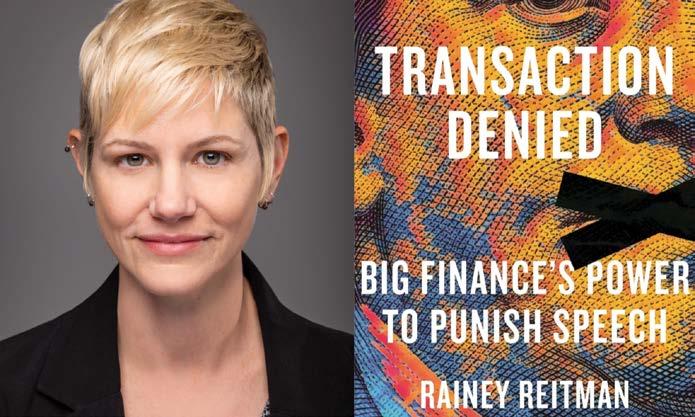
transaction denied
by Rainey Reitman | Penguin Random House
“Transaction Denied” by Rainey Reitman explores this issue from a new angle. Financial censorship means cutting people off from financial tools and institutions because of something they’ve said, created or supported. That could look like a glassblower losing access to PayPal for selling rigs or a podcaster being denied a mortgage over political views. Through stories of humanitarian activists, adult entertainers and even one of Leaf Magazines’ own, this book explores the real consequences of financial censorship and the range of communities it affects.
A personal favorite chapter, Cannabis and Industry Censorship, begins with Jackie Bryant, journalist and Leaf content director, unexpectedly receiving notice that Stripe — the payment processor of her Substack newsletter — is removing her for violating its terms of service. The irony? Cannabitch was completely free to read. It didn’t sell Cannabis or distribute products in any form; it simply linked to Cannabis companies as part of Bryant’s reporting. Stripe claimed those links helped traffic a controlled substance. Bryant responded the way most writers would: She went public.
Her account of “raising hell” with the platform went viral, drawing media attention and sparking broader conversations across her 20,000-plus social following. So much so that Stripe quietly reversed its decision.
From nonprofit Muslim organizations to online naked yoga communities, others Reitman interviewed also pushed back against financial censorship by making noise.
“A lot of people I feature in the book were able to find some kind of resolution eventually,” Reitman said.
“That often looked like a public advocacy campaign, like Jackie did, where she was able to get the company to reverse its decision.” Still, “there are a few that I continue to be concerned about,” she explained, “and I hope this book coming out could help them get access to financial services.”
So what can you do? Stay informed! The more we read, share stories and start conversations, the harder censorship becomes to ignore. Pick up a copy of “Transaction Denied” to start; a portion of every sale supports the Freedom of the Press Foundation (co-founded by Reitman) and its work defending free expression.

COURTESY








HOW CANNABIS INSPIRES
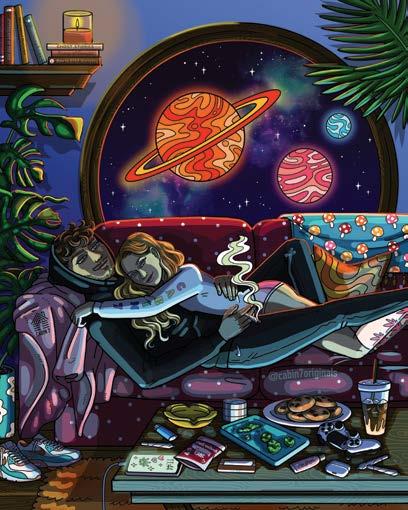
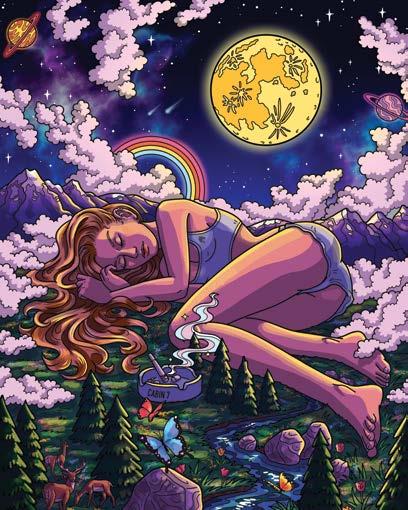
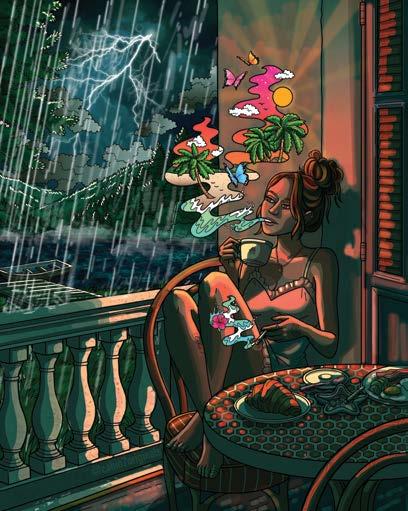
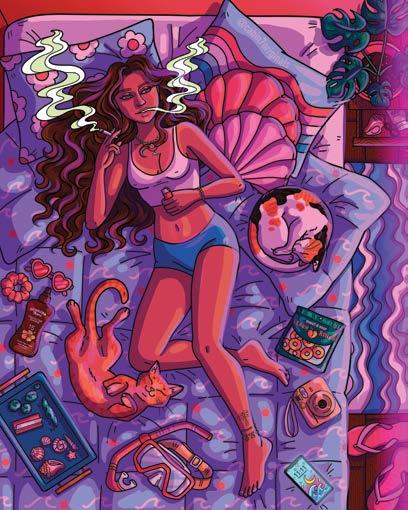
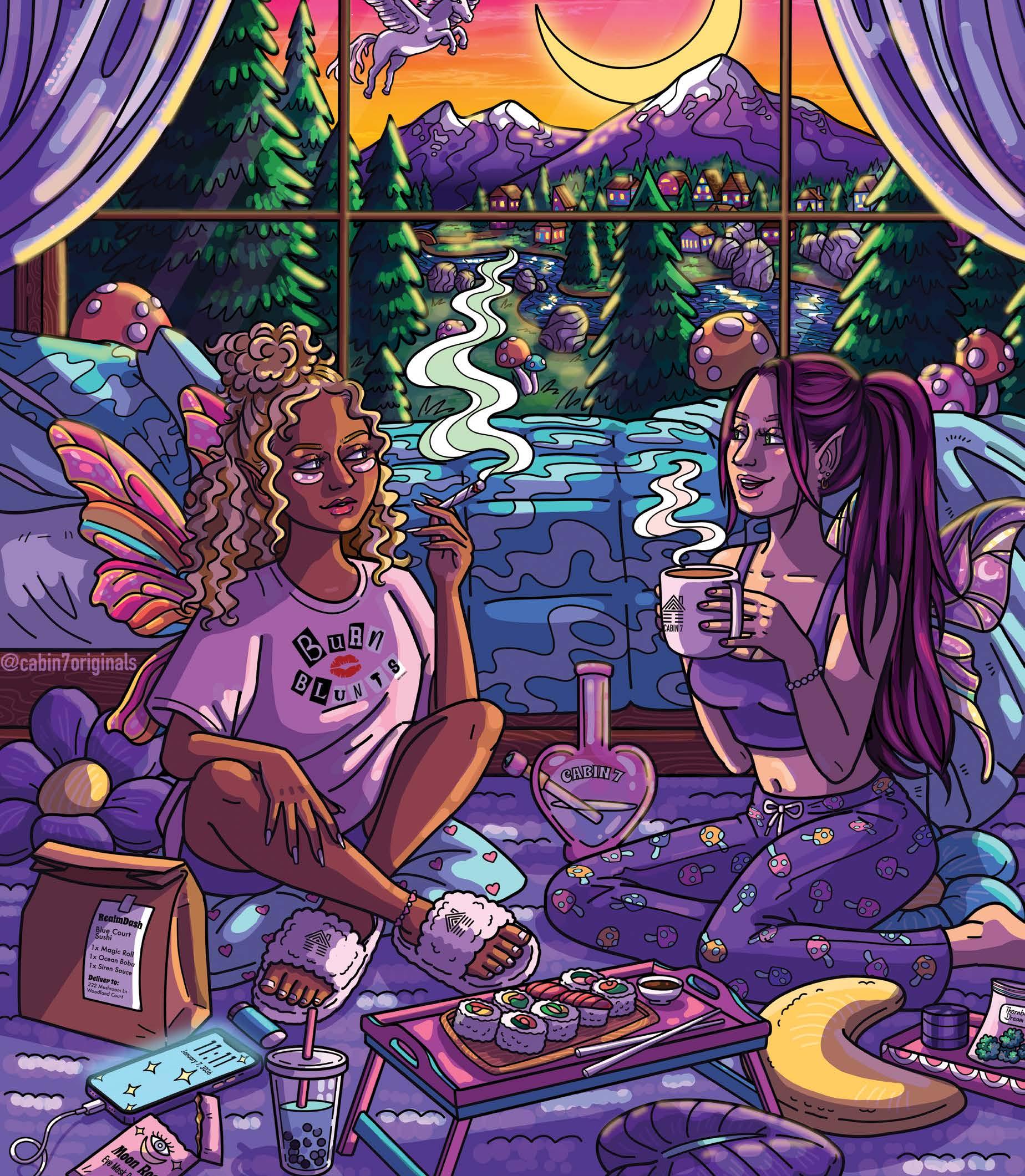
CABIN7 ORIGINALS
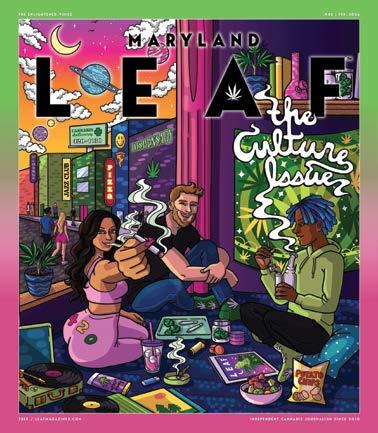
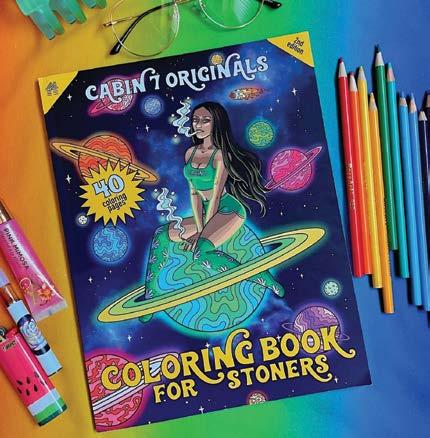
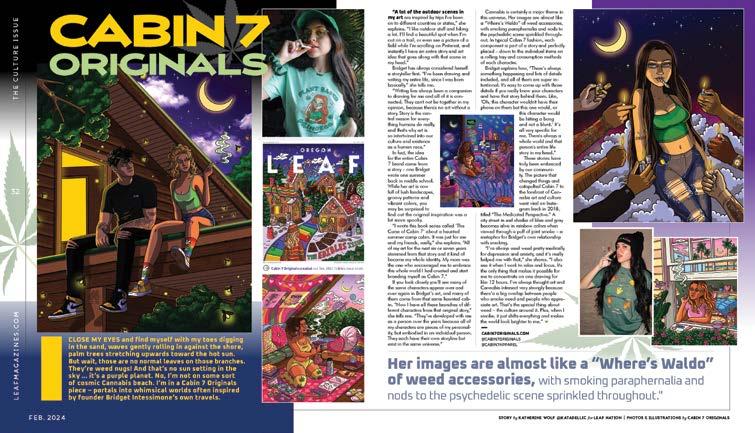
Bridget Intessimone, owner at Cabin 7 Originals, is no stranger to Leaf Magazines. Her coloring book was recently featured in our Analog Play story in the May 2026 Adventure Issue, and she illustrated the cover of the 2024 Culture Issue, alongside a profile from contributor Katherine Wolf. This makes her a perfect addition to our Studio Sessions series.
ORIGINALLY RAISED in the South, Intessimone grew up being taught that weed and meth were practically the same thing. She and her best friend tried smoking weed in high school, but she said she found it too intense.


At 18, the artist said to the Leaf that she went through a difficult period and became “a full-blown stoner overnight. It helped me eat, sleep and escape into my art.”
“Cannabis played a major role in my art career from the moment I became a stoner,” she continued. “I invested a lot of time in sharing my art on IG. By the time I was 22, I had 50k followers.”
From there, clients kept finding her, and she went from drawing individual portraits to creating marketing materials, packaging and apparel designs for brands in the space.
Cabin 7 Originals seem to have a distinctly different-butequal foreground and background. While the focus is usually on an activity like smoking a joint or hanging with a friend, the backgrounds are fantastical scenes of nature and space inspired by Intessimone’s own travels. You can almost view each as its own piece, expertly dovetailed with the others.
As a very detail-oriented person, Intessimone shared that she’s prone to sensory overload but uses Cannabis to calm her down, sit still and absorb her environment in a way that doesn’t seem so overwhelming. Plus, she said, “finding inspiration is easy when everything looks more beautiful and colorful.”
Intessimone says it only takes a few hits to reach a warm, vibrant flow state where she creates her best work. Once in that state, she said she usually flips on a soundtrack of truecrime podcasts, fantasy romance audiobooks and dark R&B — a genre she described as: “sexy late night haunted strip club music.”
Check out our previous article to learn how she came up with the name Cabin 7 Originals — and see her incredible cover art.