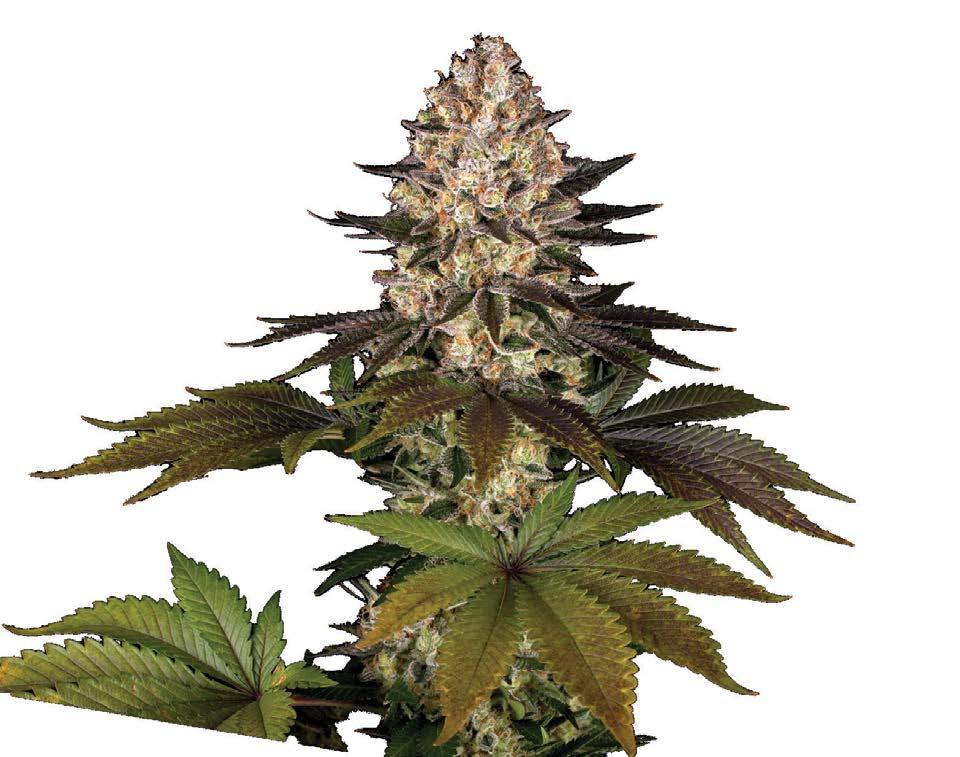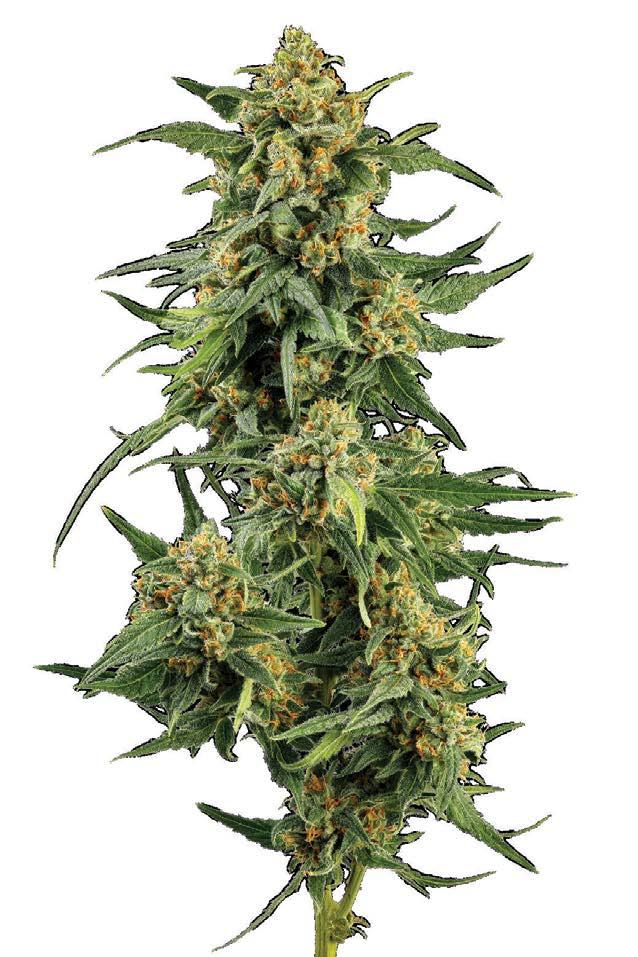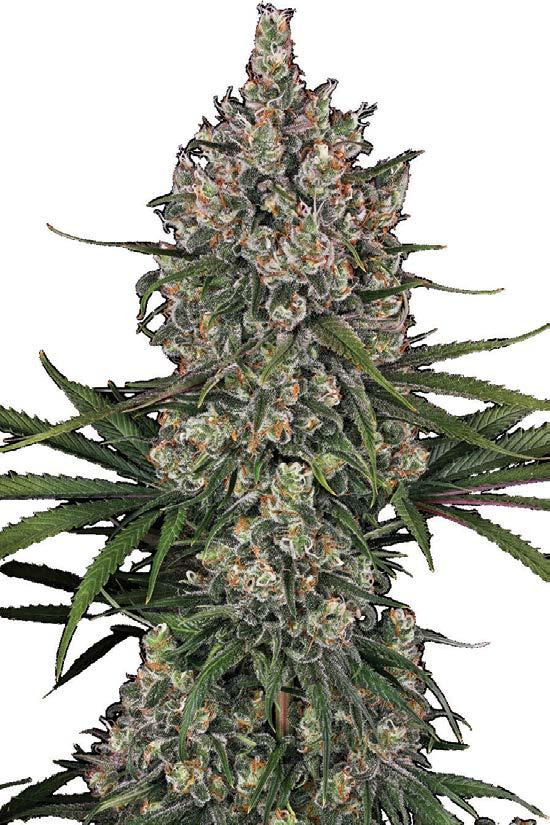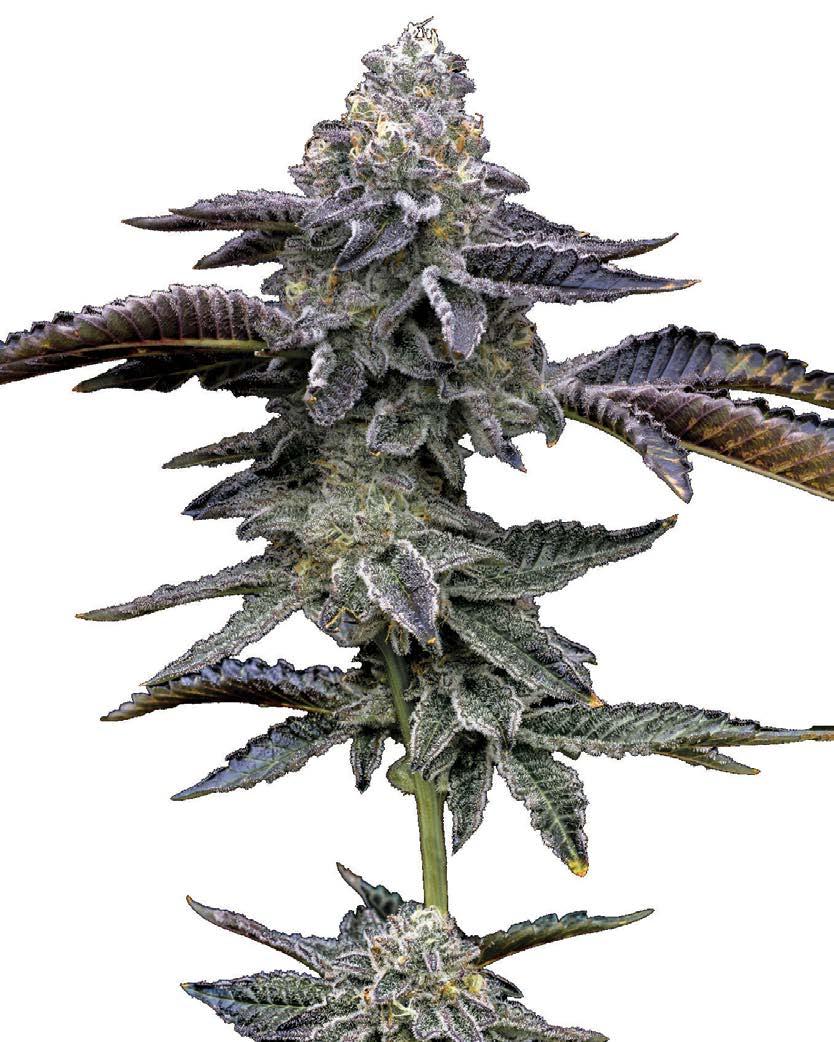
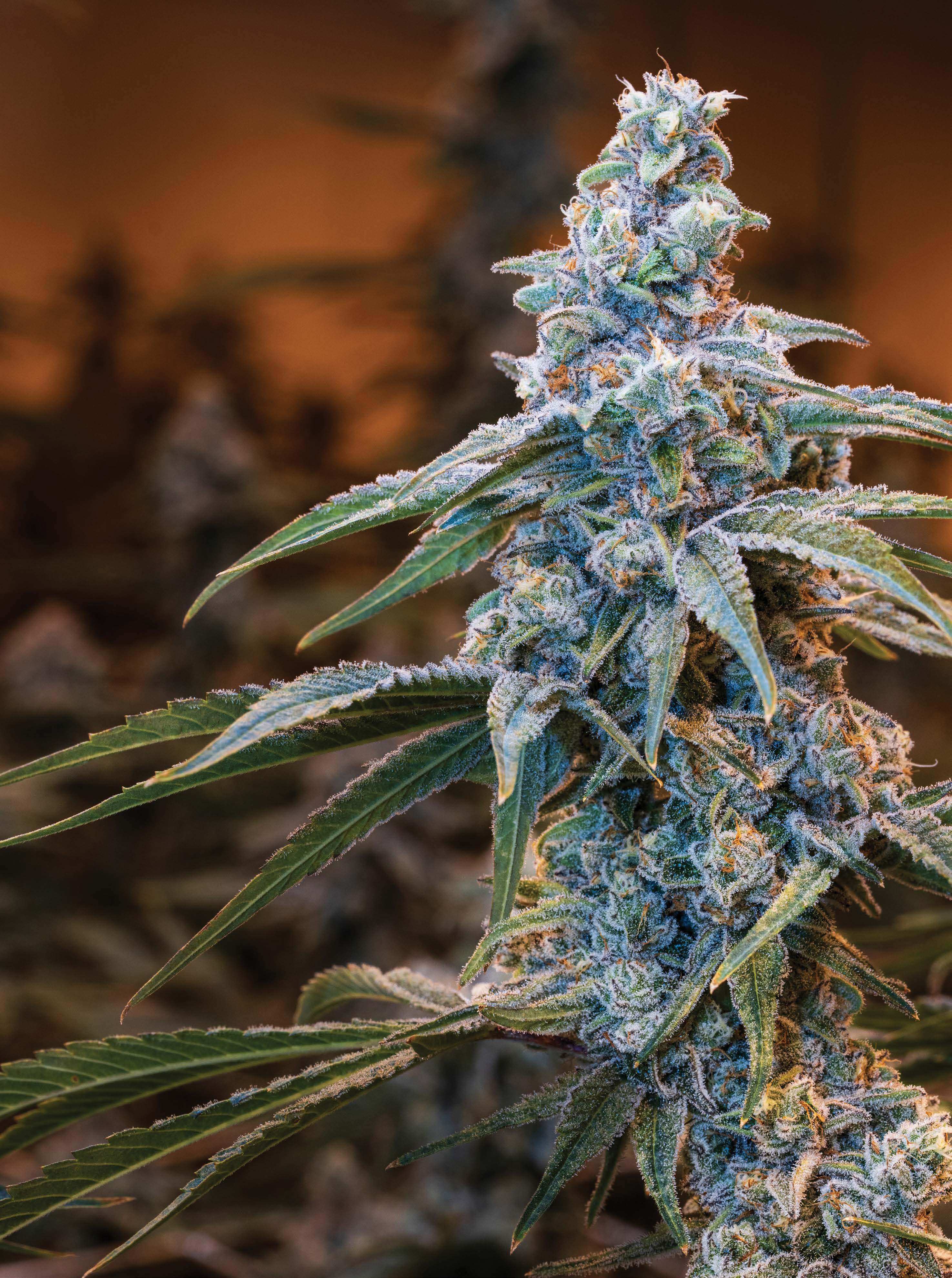
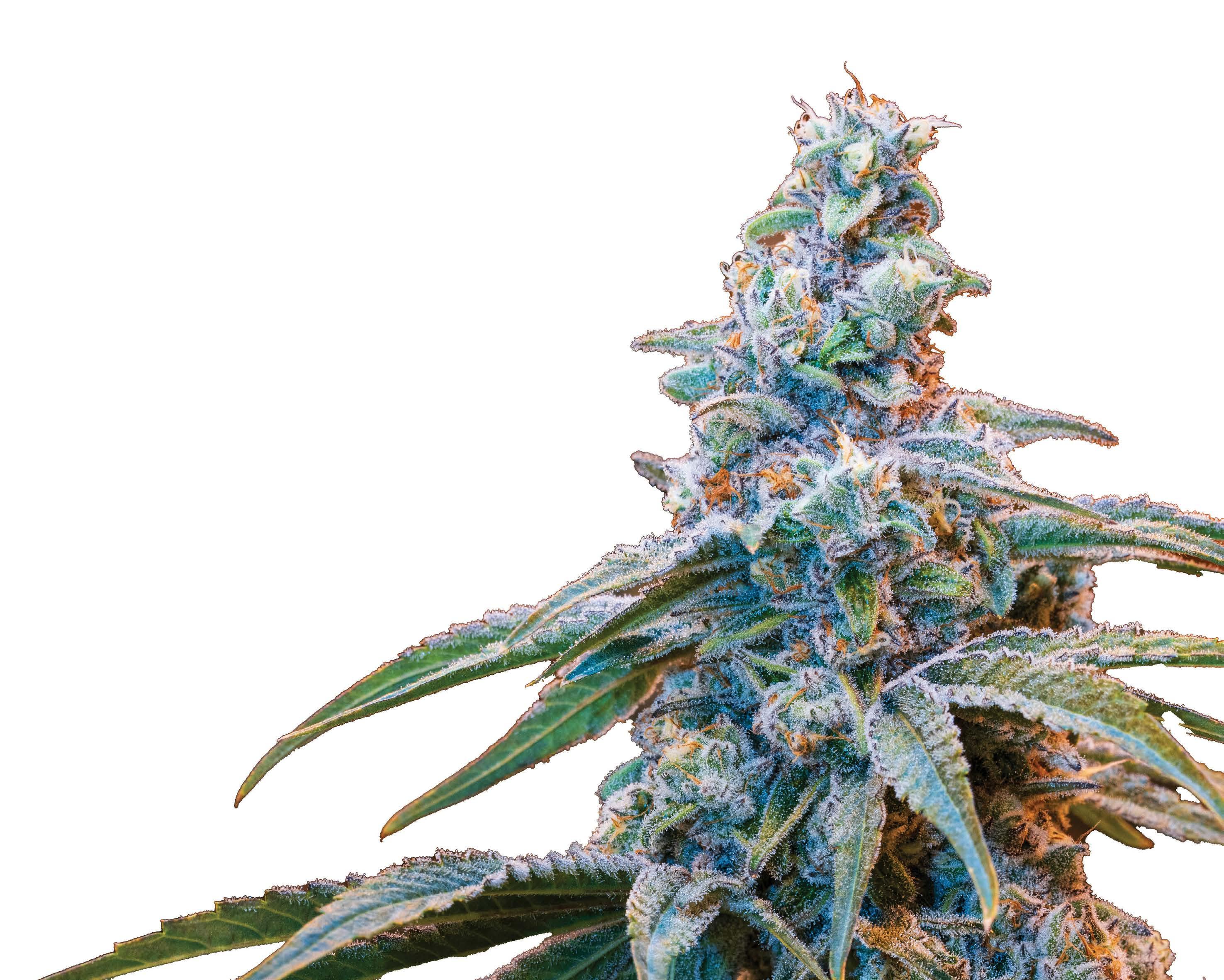
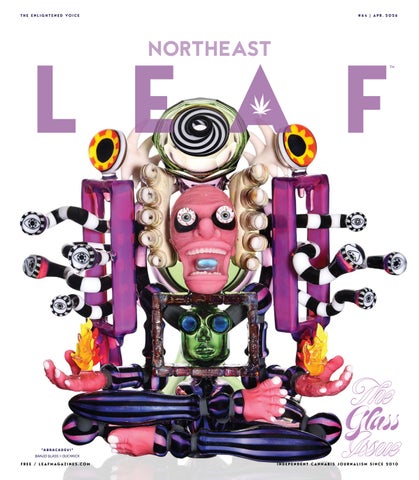




Indoor grown in state-of-the-art facilities and overseen from seed to store by our best-in-class cultivation teams, our plants are handled with the utmost care. Extensive cultivar catalog research allows us to optimize the growing conditions for each cultivar, ensuring our buds retain their true-to-nature characteristics. Rigorous research and development ensures the selection of big, beautiful buds with full trichome coverage for premium aroma, avor and enhanced e cacy—a full sensory experience that’s authentic to each cultivar.

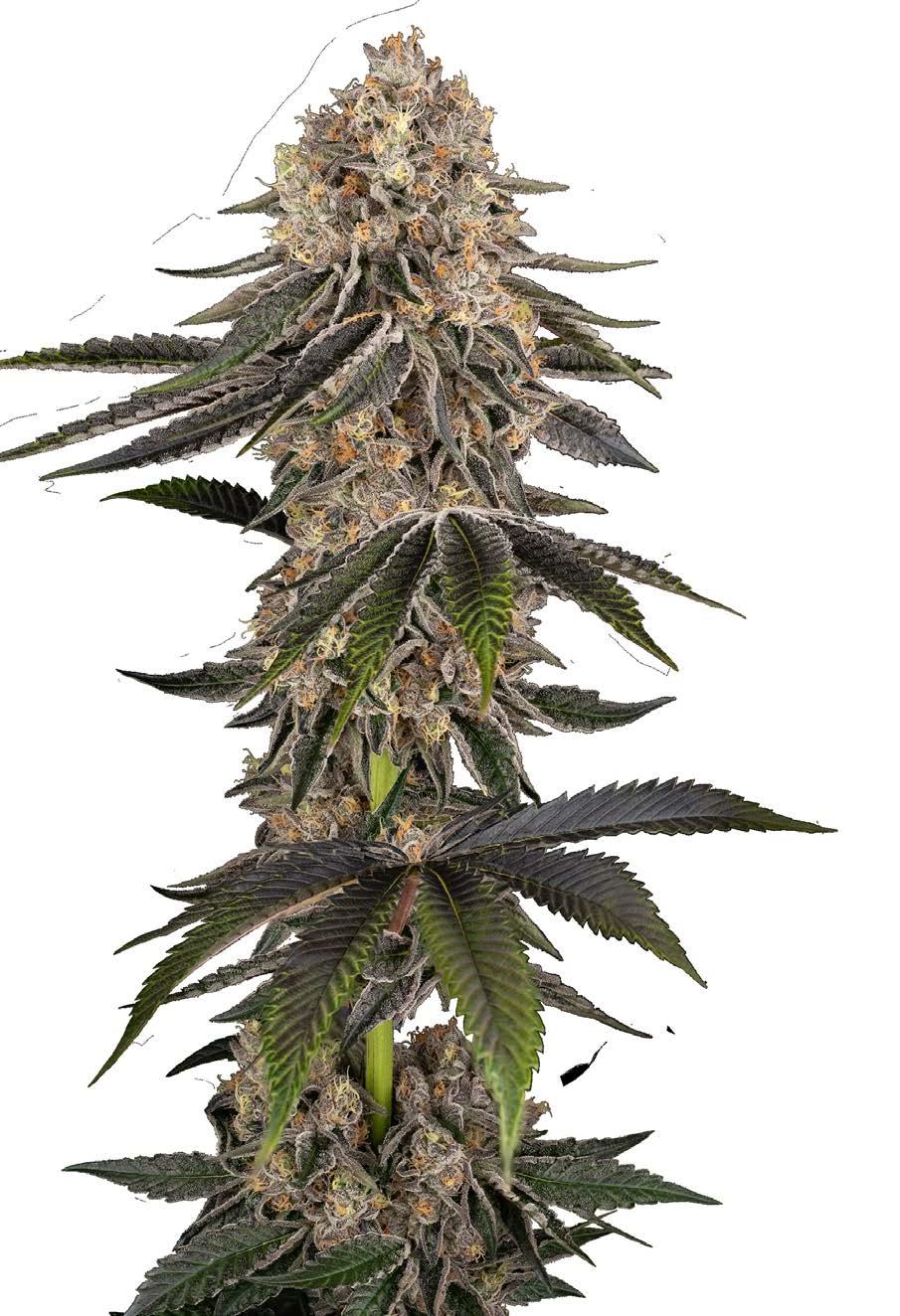
Breeding Grounds is a project under which Sensi Seeds releases its cutting-edge strains. As part of this program, we join hands with breeders of Sherbinskis, Serge Cannabis, Champelli, Humboldt Seed Company, Fat Beans, and more.
We are proud to be at the forefront of developing ground-breaking genetics, working in collaboration with some of the best breeders worldwide.
@SENSISEEDS_US
@SENSISEEDS.US












WES ABNEY CEO & FOUNDER
wes@leafmagazines.com
MIKE RICKER OPERATING PARTNER ricker@leafmagazines.com
TOM BOWERS CHIEF OPERATING OFFICER tom@leafmagazines.com
DANIEL BERMAN CHIEF CREATIVE OFFICER daniel@leafmagazines.com
JACKIE BRYANT CONTENT DIRECTOR jackie@leafmagazines.com
BOBBY BLACK LEAF BOWL DIRECTOR & HISTORIAN bobbyblack@leafmagazines.com
MIKE GIANAKOS ONLINE EDITOR mikeg@leafmagazines.com
MICHELLE NARANJO COPY EDITOR michelle@leafmagazines.com
CARA WIETSTOCK COPY EDITOR cara@leafmagazines.com
MATT JACKSON SOCIAL MEDIA mattjackson@leafmagazines.com
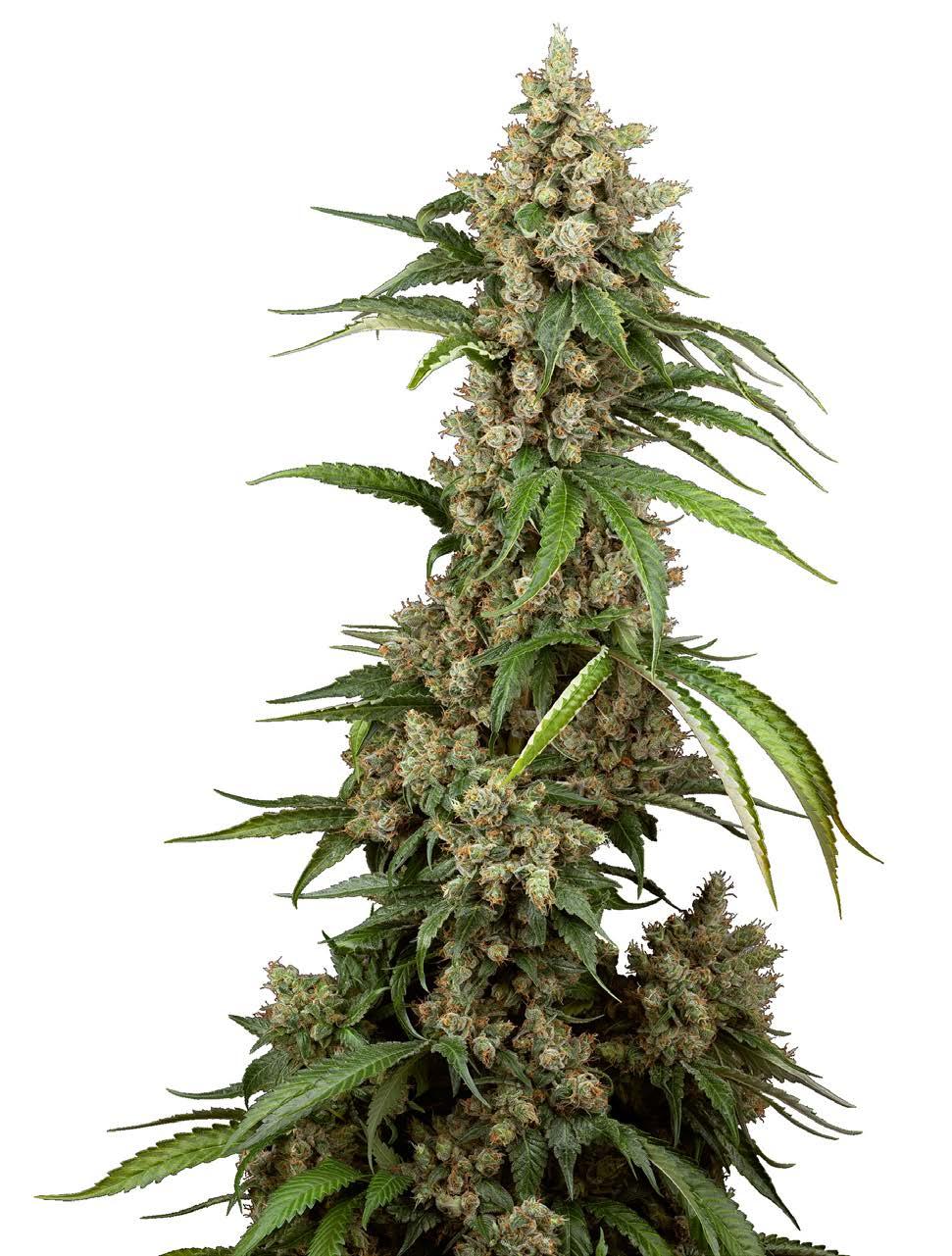
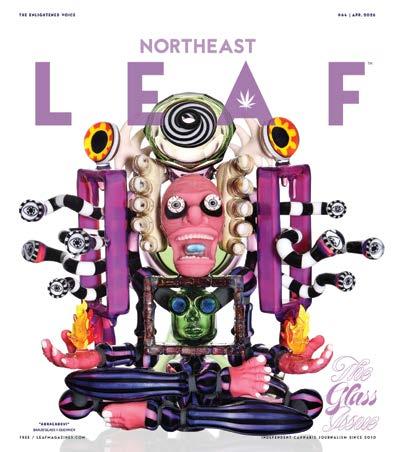
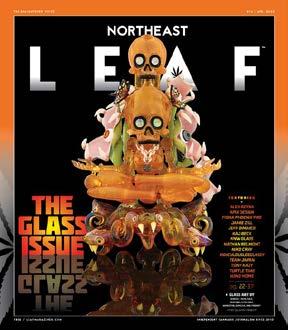
It’s back and hotter than ever: our flame-blown, smoldering and, yes, still red-hot Glass Issue spectacular!
For every year that our magazine has been in print, the Leaf has dedicated one special edition to the magic of functional, high-end glass artistry.
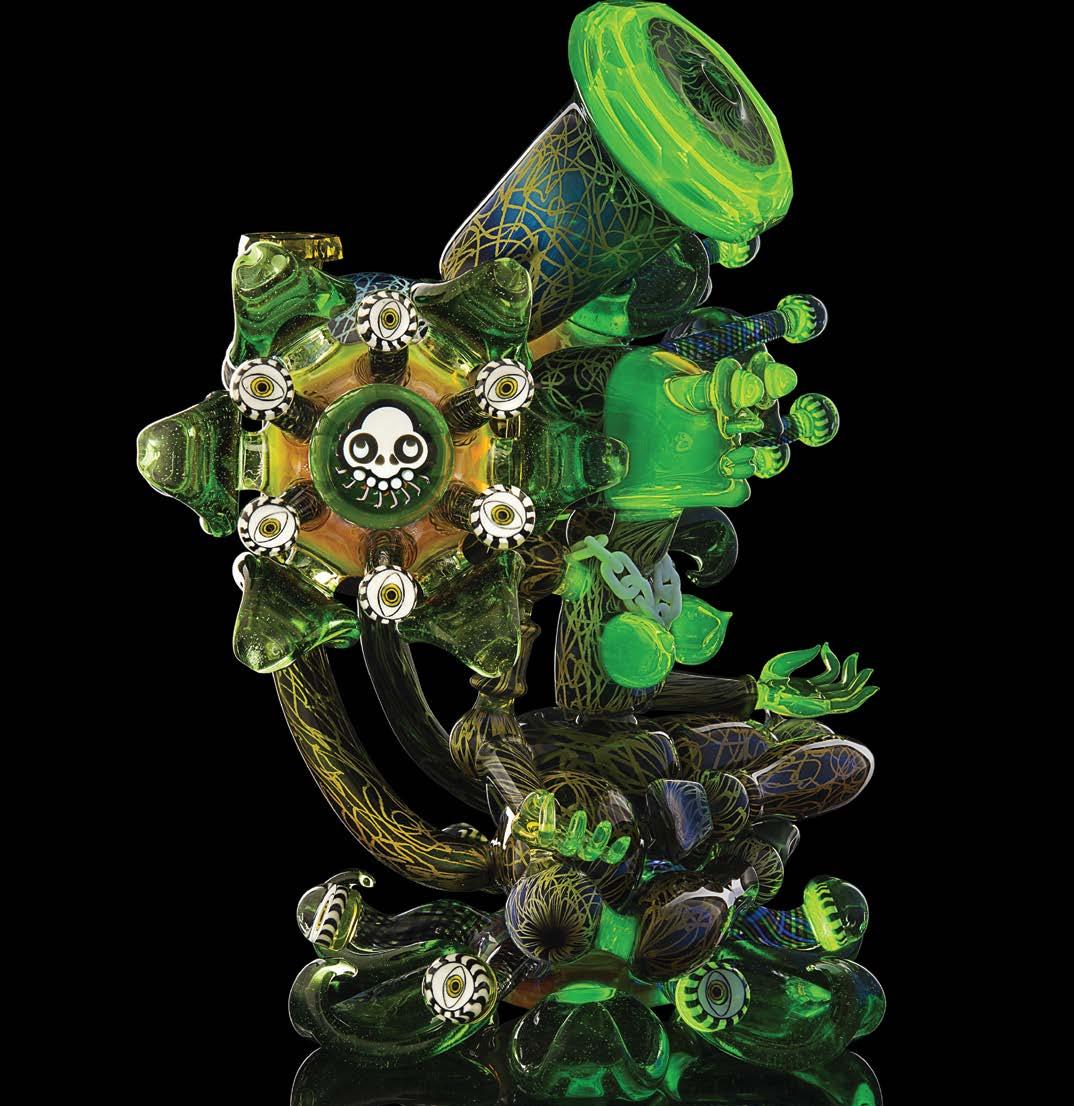
On the cover is a stunning collaboration from the artists Banjo and Ouchkick, captured in technicolor splendor by longtime Leaf contributor Jeff DiMarco. And if you happened to notice this month's borderless cover, well, just remember: Life rewards the bold.
PHOTO BY @IAMJEFFDIMARCO
@BANJOGLASS | @OUCHKICK
WES ABNEY, FEATURES
AJ AGUILAR, FEATURES
DANIEL BERMAN, DESIGN
BOBBY BLACK, DESIGN + FEATURES
TOM BOWERS, FEATURES
JACKIE BRYANT, FEATURES
JEFF DIMARCO, PHOTOS
DAVID DOWNS, FEATURES
JULIUS GUTIERREZ, PHOTOS
REX HILSINGER, FEATURES
ELLEN HOLLAND, FEATURES
WIND HOME, PHOTOS
MATT JACKSON, FEATURES
JAKE KERN, FEATURES

Art is one of the few pillars of the Old World remaining, enduring because nothing more beautiful than artistic expression has ever come from human hands.
While many think of classical fine art as the “Mona Lisa” or Claude Monet’s impressionism pieces hanging in fancy museums, the most OG art is in the form of stained glass in churches and cathedrals around the world.
Glass can hold color and shape for hundreds or even thousands o f years without fading or degrading like a painting.
At the Metz Cathedral in France, this magical display of glass and light is on full display. It’s known as “God’s Lantern” for the amount of light coming through the nearly 70,000 square feet of stained glass windows, which depict religious scenes with glass set as far back as the year 1250.
Before there were TVs or screens, artists created famous scenes in glass and constructed not just windows, but unique goblets, jew elry and other forms of art that have lasted through the centuries.
Made in fourth-century Rome, the “Lycurgus Cup” is one of the earliest examples of silver and gold fuming in glass. This technique gives the majestically crafted vessel different colors depending on the light passing through it and whether it holds liquid.
"I’VE SEEN PEOPLE RIGHTFULLY CARE FOR THEIR MOTHERSHIP DAB RIGS WITH THE SAME ATTENTION AND REVERENCE AS THEIR CLASSIC CARS.”
TERPODACTYL MEDIA, FEATURES + PHOTOS
BECK ROURKE, FEATURES
BRIT SMITH, FEATURES
NICO SULIS, REVIEWS
TAYLOR WEINBERG, PHOTOS
KATHERINE WOLF, FEATURES
JAMIE ZILL, PHOTOS
We are creators of targeted, independent Cannabis journalism. Please email us to discuss advertising in the next issue of Northeast Leaf Magazine. We do not sell stories or coverage. Email paige@leafmagazines.com to start advertising!



This type of art can’t be generated with artificial intelligence and can’t be mass-produced in a factory. A combination of heat, color and passion pours out of the artist and into molten glass, reforming and shaping it into something beautiful that, if properly cared for, can last forever.
Most unique of all is the fragility, the nature of glass being that it can break. You can’t really break a painting or a bronze statue, but glass art is especially valuable and unique because of the care involved.
I’ve seen people rightfully care for their Mothership dab rigs with the same attention and reverence as their classic cars.
With all respect to glass artists, from stained to soft glass t o the borosilicate community, our favorite glass pieces are the ones that get us high, which this magazine celebrates.
I’m proud to say that our 15th annual Glass Issue is our best one yet!





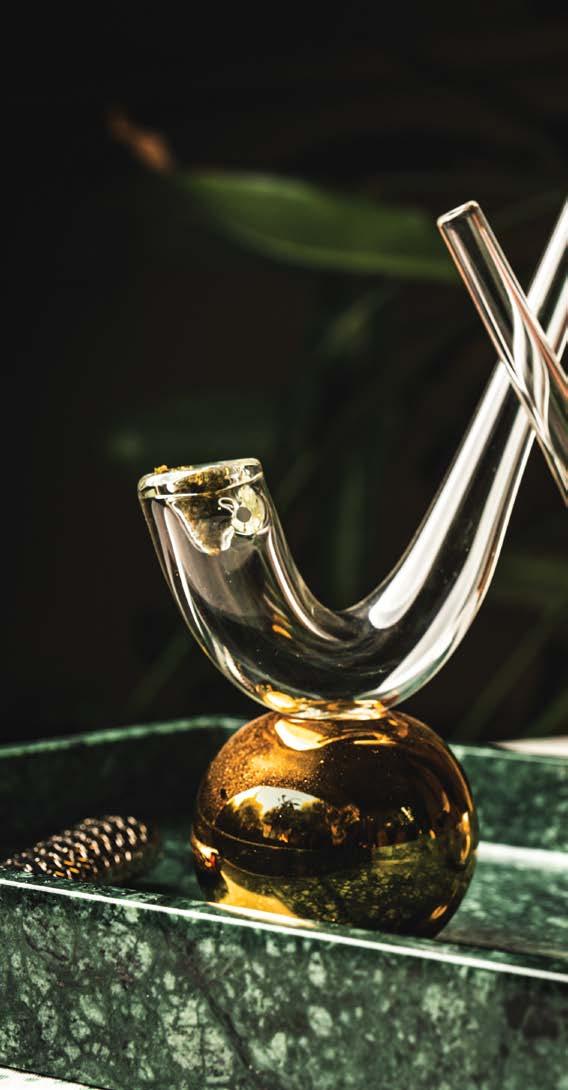
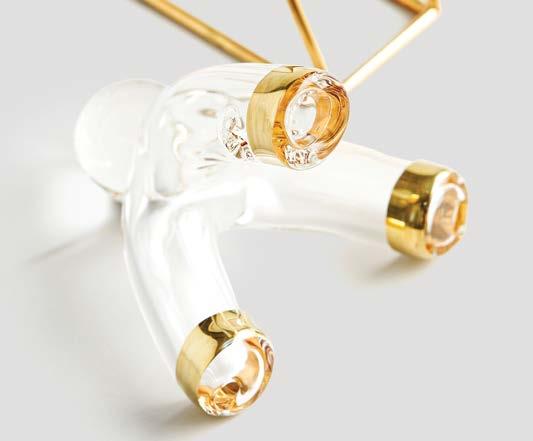
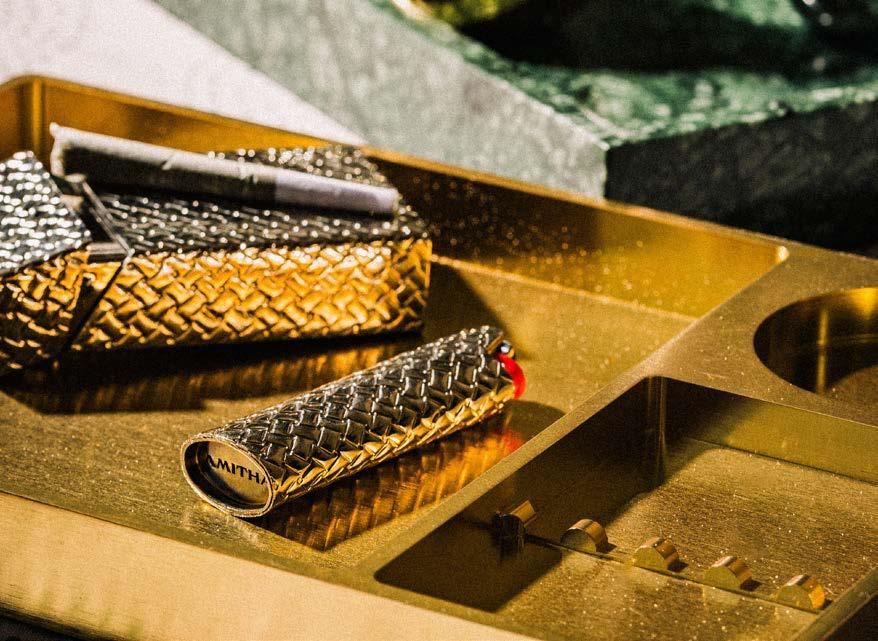
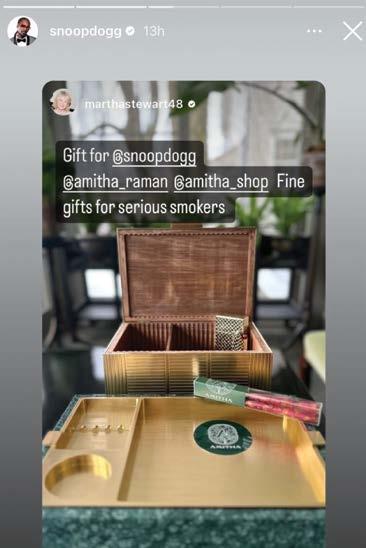
New Yorker, online accessories shop owner and curator Amitha Raman’s collection is inspired by the golden age of smoking. It blends her love of vintage decor, fine art and pieces that really rip made from high-quality, sculptural, natural materials.
What led you to this intersection of art, Cannabis and product design?
I started smoking weed when I was 14 or 15, out of a pipe from some headshop downtown that someone’s older sister had picked up. I have a distinctive memory of my first time getting high. I remember being so giggly, having the best time and just knowing: “this is for me.” I grew up in a strict household with immigrant parents from India and Korea, and I would get the Asian glow when I would drink.
I loved that instead, I could just smoke and then cover it up with some perfume, and they couldn’t tell. It was this amazing social bridge. I was pretty preppy, the captain of the soccer team, a cheerleader, and that group was beer drinkers. So I would look for smokers and wound up meeting friends in orchestra class. We went to First Fridays gallery nights, pretending we were sophisticated city dwellers drinking free wine. When I went to Emerson College with a lot of creatives and access to higherquality weed, it became more of a daily thing.
“I really loved Sibelle’s aesthetic, how feminine her pieces are in a male-dominated space.”
My background is in marketing and strategy — identifying unmet needs and developing solutions, and that practice is something I draw upon in my day job now.
How did Amitha come to be?
Initially, my idea was like Net-a-Porter: buy other people’s stuff and sell it online, but products would look great online and were actually really cheaply made. I wanted to create products that would blend with my decor, with fine materials like Carrara and Nero Marquina marble.
I remember thinking when I bought my first Roor bong, “I don’t know if I can spend that on a pipe.” But I’ve always been moved by people who do things well, and why the price is what it is. It’s not that thin glass, it’s really well made and rips really well.
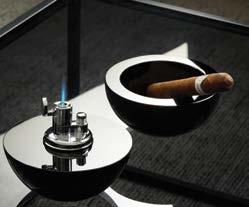
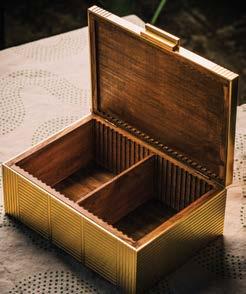
I have all of these vintage Murano glass bowls or other vessels I was using as ashtrays. I have a beautiful vintage smoking box my grandfather used: dark wood with mother of pearl inlay, a brass built-in ashtray with zodiac symbols around it, space for a lighter and space for tobacco. I wanted to design things like that for smoking Cannabis.
Why glass?
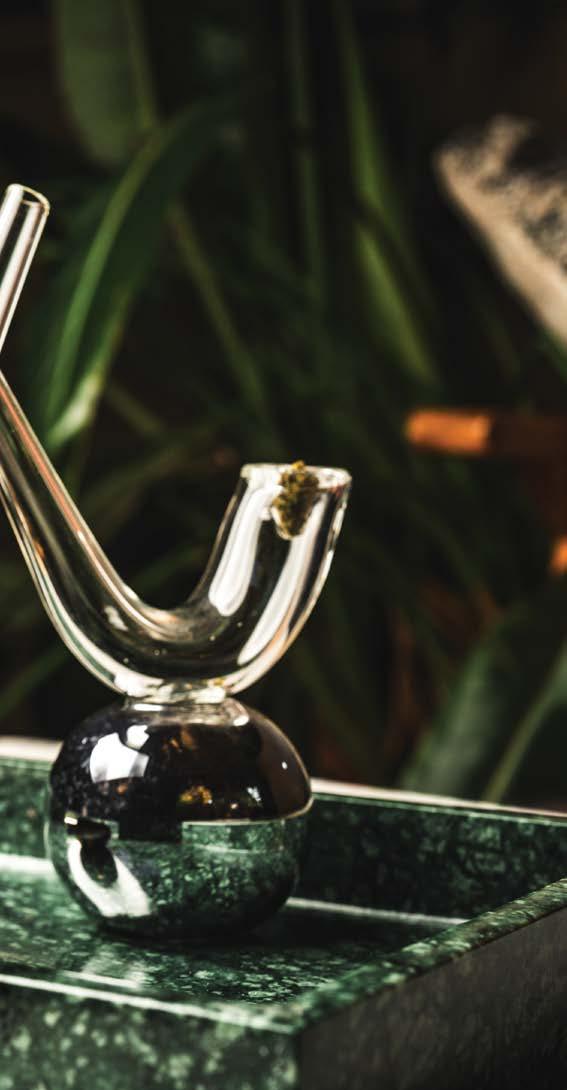
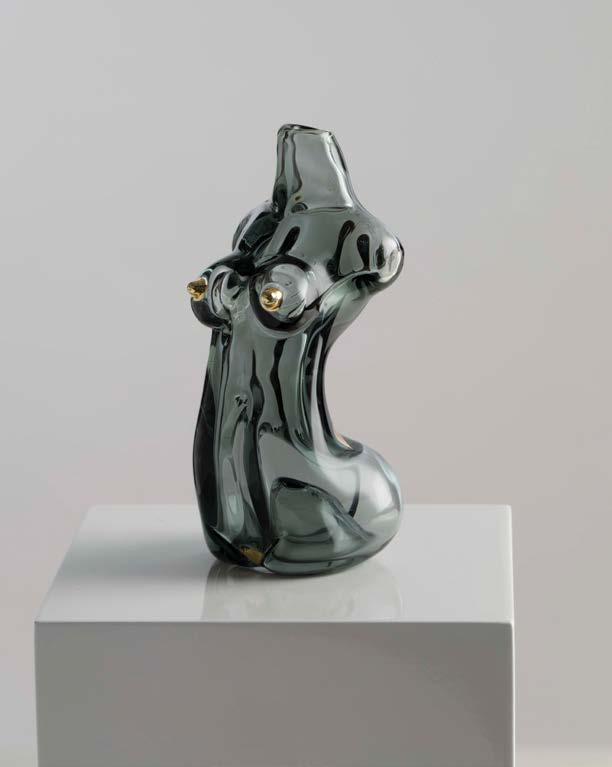
I’m just a glass girl. A lot of design-forward pieces I found were ceramic, and I like to see the smoke. I really loved Sibelle’s aesthetic, how feminine her pieces are in a male-dominated space. I cold emailed her. She came up with several sketches. I wanted them to be sculptural but also perform well and hit really hard without looking phallic. The Lady Pipe and Rrose Pipe are both handmade by Sibelle, and I created a more accessible price point with the Magritte Pipe.
Amitha serves as an elegant counterpoint to Cannabis consumption stigma. Is that intentional?
I’ve felt the stigma from my parents, my friends, the art world. I worry about it with my daughter in school. I just want to be me and be open about it. I work out six days a week. It’s not a personal mission to break those stereotypes; it is me.
People who get more agitated about me not fitting in are sometimes people in the Cannabis space. In the beginning, it was so hard not to respond to 16-year-olds trying to bully me. I’ve been smoking weed longer than you’ve been alive. I’m a grown ass woman — I used to smoke ditch weed out of a twoliter bottle gravity bong in a bathtub, but now I want to smoke out of what I want to. I’m doing me.
“I’m just a glass girl. ”
What do you have coming up that people should know about?
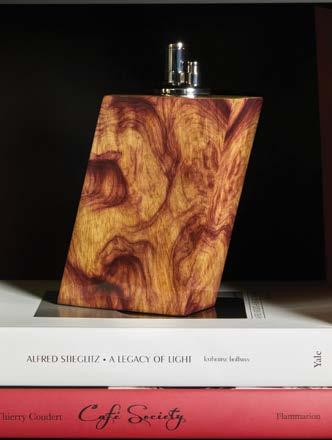
I really love the new wooden tabletop lighter — looks beautiful, looks expensive. I’m creating new products at more accessible price points. I worked with this mother-daughter workshop in India. I’m really excited to partner with Gotham for an exhibition in May benefiting The Here and There Collective, a nonprofit that uplifts Asian artists and curators. It feels very aligned. I started this before New York went legal, and rec has changed my consumption. I used to roll all of my own joints, so I designed rolling trays, but now we have prerolls. As the market changes and my needs change, my designs will too.






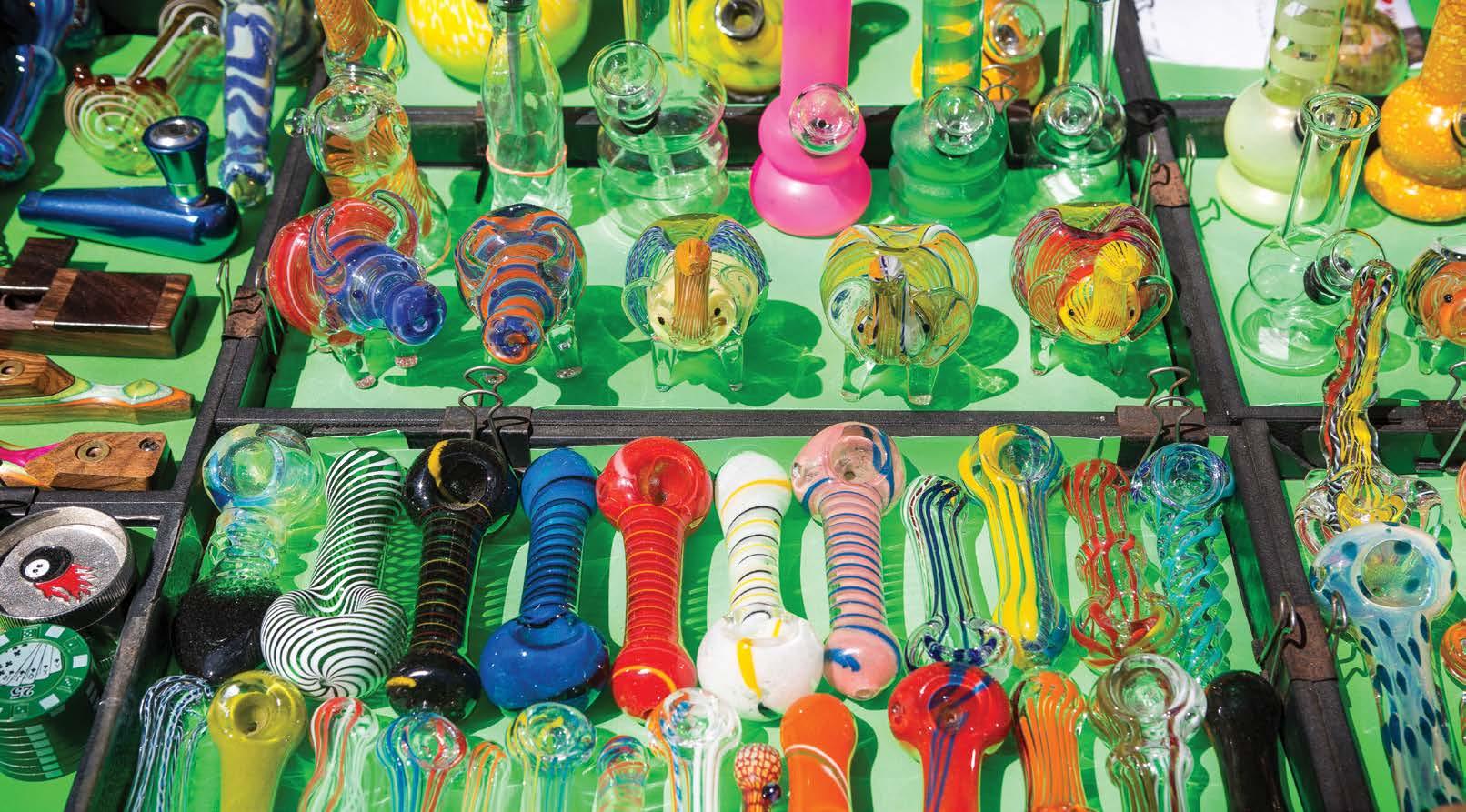

Today, I write to you from the depths of pure devastation. Recently, my beloved little bowl leaped out of my handbag and crashed onto the tile below, shattering into a few big, unmistakable pieces. Not a crack. Not a chip. Total annihilation. My stomach instantly dropped. My chest clenched. And then, dramatically but also completely sincerely, I actually started crying. If you’ve ever broken a piece you actually loved, you already understand the scale of this reaction. It’s disproportionate, sure. It’s also completely correct.
WAS MY PIECE, MY LITTLE SIDEKICK. It came everywhere with me and served me well for a few years, which by any measure is a long-term relationship. Long ago, a friend gave it to me — I haven’t seen them in years, but the pipe stuck around, which felt like a small, useful physical talisman forever marking our connection in time and space. It was tangible. It held memories. It held routine. It held, quite literally, the shape of my hand — until it didn’t.
There’s something uniquely brutal about the way glass breaks — not just physically, but existentially. One second, it’s intact, integrated into your life, part of your daily sensory rotation.
The next, it’s a pile of fragments you can’t fix or glue back into anything functional. You can’t pretend that it’s the same object. There’s no slow fade; just a hard stop.
I did what any rational person would do: I tried to assign meaning to it. It was Mercury retrograde
— fitting, actually — and Instagram assured me that we were all in a period of releasing what no longer serves us, on top of it. Fine. Sure. If my spoon was cosmically destined to exit my life, who was I to argue?
This is, of course, bullshit. But it’s elegant bullshit, and sometimes that’s enough to get you through the first 24 hours. Because the real issue isn’t just that it broke. It’s that a glass piece, if it’s a good one, is never just a thing. It’s functional art in the most literal sense — you don’t hang it on a wall, you mostly, actually live with it. You handle it constantly. You build rituals around it. It becomes embedded in your muscle memory in a way that’s hard to replicate with anything else.
It’s a friend. A good piece changes your Cannabis experience by shaping and refining it. It becomes the portal between you and the plant. And portals are sacred spaces!
And then, because it’s glass, it reminds you that none of that is permanent. There’s a lesson in there, if you want one. Something about attachment, about fragility, about the risk inherent in loving objects that are designed — beautifully, inevitably — to break.
Or, more realistically, there’s just this: If you’re going to care about your pieces — and you should, because that’s half the point — you also have to accept that one day, probably at the worst possible moment, you’re going to watch one hit the ground and shatter. And it’s going to feel bad.
If my spoon was cosmically destined to exit my life, who was I to argue?
Which means when it’s gone, it takes a small but specific version of your life with it. That’s the part that catches you off guard. Not the inconvenience — though, yes, suddenly you don’t have your preferred way to smoke, which is its own kind of crisis — but the absence of something that felt quietly essential.
You’ll replace it, eventually. You’ll find another one that fits in your hand the right way, that earns its place in your rotation, that starts to accumulate its own set of associations. It won’t be the same, which is exactly why this one will stick. But for a minute — or an hour, or a day or however long your grief lasts — you’re just standing there, looking at the pieces, thinking: Well, fuck. And honestly? That’s part of it, too. Thanks for the memories; onto the next piece we go.
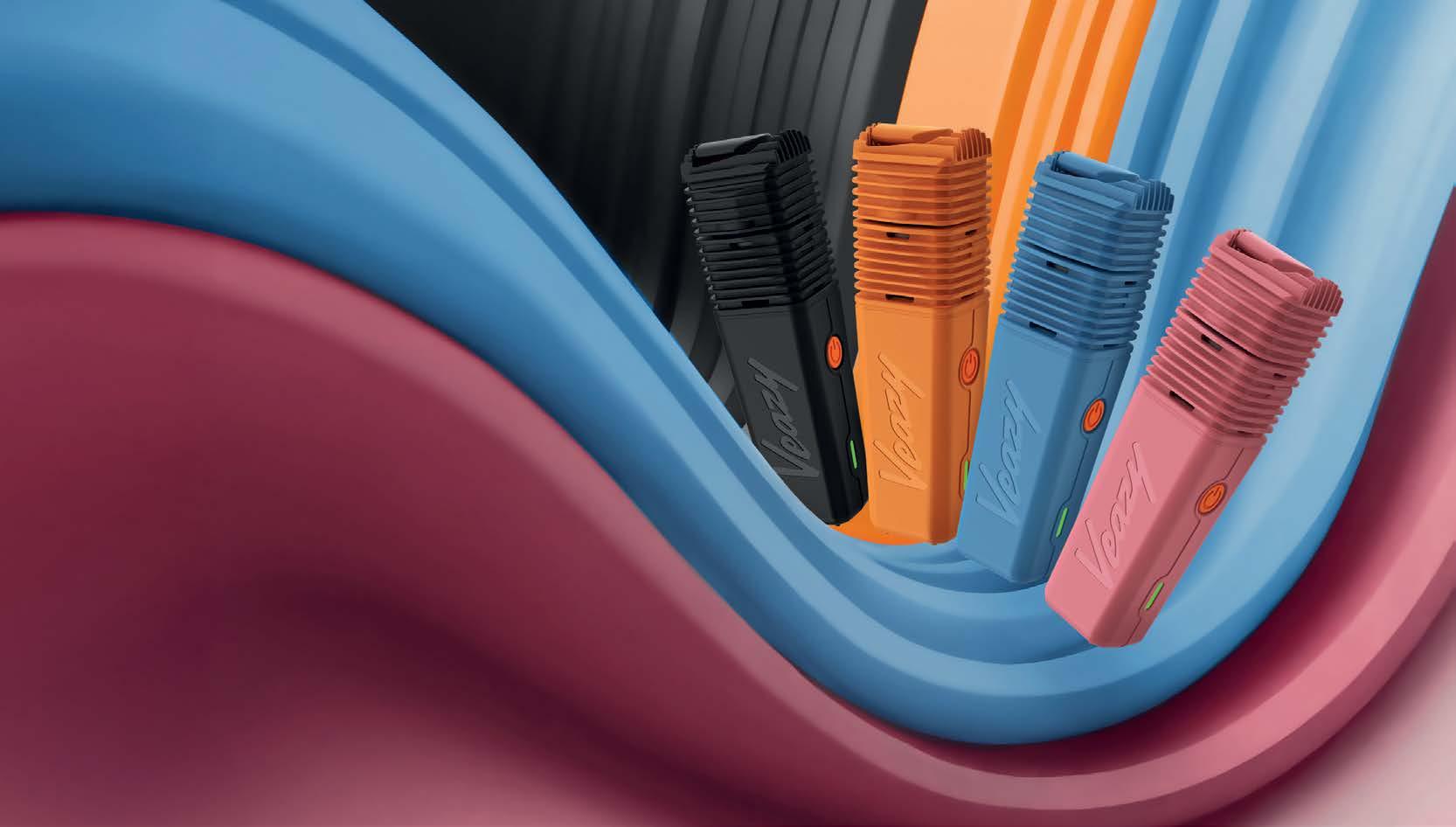
GET YOUR VEAZY

TERPHOGZ’S NEW BLOOBERRY LINE GOES UP AGAINST BLUE CAVIAR, BLUE LOBSTER AND MORE
Consumers and growers are in for the kind of competition that we can all rally behind: a tussle for who has the loudest blueberry terpenes in the Cannabis game.
Terphogz — the California-based popularizers of Zkittlez (known as The Original Z, or just “Z”) — debuted five new Blueberry strains dubbed the “Blooberry Line” for spring. Terphogz’s managing director, Jon “Jondo” Orantes, said, “It’s begun, the blueberry wars have.”
The declaration encapsulates a simmering trend in contemporary ganja, with peer brand Cookies selling Blueberry Caviar flower. Berner is developing new crosses from it with award-winning Ridgeline Farms. Blue Lobster nabbed a nomination for 2025 Leafly Strain of the Year. Blue Nerdz continues to dominate. I’ve smoked all of these strains — they’re fire.

TERPHOGZ
Let’s get into the Terphogz Blooberry drop first.
Terphogz has released about 30 to 50 regular seed packs of Blooberry Headband (707 Headband x Bell Springs Blooberry), Blooberry Pie (Z-Pie x Bell Springs Blooberry), Blooberry Zruntz ((Z x Runtz) x Bell Springs Blooberry), IC Bloobies ((Ice Cream Cake x Sherbert) x Bell Springs Blooberry) and Black Truffle Blooberry (Black Truffle Gelato x Bell Springs Blooberry).
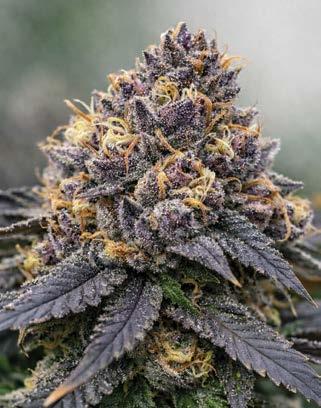
The priciest is the Blooberry Headband at $269 for 10, which tells you where the hype is at. The rest of the set goes for $240 for 10.
Why this drop now? Terphogz has a hit with 2023’s Blooberry Z (Dankster Blooberry x Z), which is $180 for 10, and its 2025 offspring Bloogatti (Bubblegum Gelato x Blooberry Z). Bloogatti remains available for $220.
For this new Blooberry line, Terphogz co-founder Tony Mendo said the team went back to some early 2000s Blueberry work. They selected a new male based on taste, referred to as Bell Springs Blooberry, and pollinated Terphogz’s whole lineup with it. The tastiest standouts made the cut listed above.
Some are good for hash, others are good for flower. Orantes recommends the Blooberry Pie (Z-Pie x Bell Springs Blooberry), as well as the Blooberry Headband (707 Headband x Bell Springs Blooberry) for hash production.
Blooberry Pie should yield more and finish faster, with a wholesome blueberry pie aroma and flavor. The Blooberry Headband may take longer and yield less, but it has the most hype. The Headband and blueberry terps hit like a musical mix of high and low frequencies.
Each regular pack should have the typical polyhybrid spread of phenotypes: a mom-leaner, a dad-leaner, several hybrids of both parents and a recessive weirdo.

Award-winning journalist, author and former Leafly senior editor David Downs’s monthly genetics intelligence dispatch.
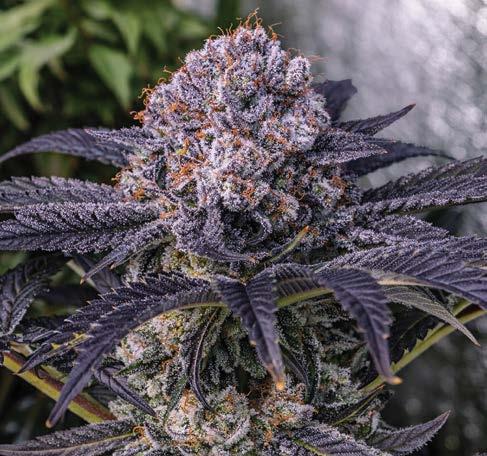
BLOOBERRY ZRUNTZ
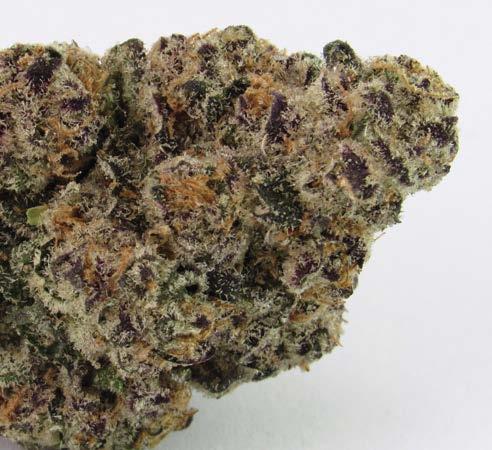
UMMA SONOMA BLUE LOBSTER
Mendo said growers can expect “more of a broader spectrum as far as the Blueberry lineage goes, as well as some of those deep killer blueberry jelly terps.”
Orantes said, “If you’re like me, you’re just praying for the weirdo ones.”
Blooberry Zruntz ((Z x Runtz) x Bell Springs Blooberry), IC Bloobies ((Ice Cream Cake x Sherbert) x Bell Springs Blooberry) and Black Truffle Blooberry (Black Truffle Gelato x Bell Springs Blooberry) will be your top 40 radio hits for cash cropping.
In honor of the blueberry bloom of 2026, here’s a roundup of Blueberry strains we’re seeing out there.
All respect goes to Oregon breeder, legend and super-nice guy DJ Short. His 1998 F4 Blueberry is $59 for four feminized seeds.
DJ Short told the Leaf that the Blueberry cultivar stays uniquely effective, and it’s always satiating.
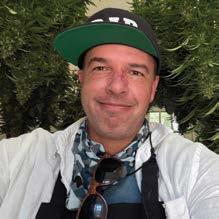
“I call it tolerance threshold, or burnout, and Blueberry shines there,” he said. “It’s the sense of satisfaction that applies beautifully to the Blueberry. That’s why she’s holding through this test of time.”
DJ Short’s son continues the mission as the brand Blue Star Seed Co. with Candied Blueberries F1 (Zkittlez x 1998 F4 Blueberry S1) and Stoned Berry F1 (Chem D x 1998 F4 Blueberry S1), which he said has “pungent, raunchy, chemical-diesel aromas with grape hash, apple cider and berry pastry notes.”
The brand Life is an Adventure has a Blue Cheese (Big Buddha Cheese x Blueberry) that’s $25 for three fems.
Atlas Seeds sells a Blue Dream Auto (Blue Dream Auto x Blue Dream Auto) that “can be set loose outdoors and it does its thing without a lot of fuss,” according to its product description. In clone form, the widely respected Rebel Grown also has Blue Dream cuts for $99.
New in 2026, Blueberry Honey from Humboldt Seed Company smells and tastes just like it sounds.
Got a favorite blue strain we missed? Send recommendations to david.downs@gmail.com


Some things in life are meant to be, seemingly willed into existence through a mix of cosmic coincidence.

Space Poppers infused popcorn might be one of those fated-to-happen occurrences, and after opening a bag of their churro flavor, I couldn’t be happier that it is.
Sara Schonour and Rodolfo Goncalves — alongside Schonour’s wife, Shantel Schonour, who runs logistics and back-office operations — Space Poppers is very much a family-built brand. Their current lineup of four Cannabis-infused gourmet popcorn flavors includes Sea Salt Caramel, Chicago Style, Sweet Chili and, my personal standout, Churros.
Superbly crunchy, with a delicious cinnamon-sugar flavor layered over warm vanilla notes, the Churros popcorn is almost impossible not to eat by the handful.


…Theyfirst
while competingon, andultimately winning, Netflix’s series“Baking Impossible.”
Each bite hits with a satisfying blast of sweetness and spice, delivering a consistent crunch. Their precisely deployed use of mushroom popcorn, named for its distinctive shape when popped, is what gives this treat its signature shape and superior texture. It’s almost impossible to stop munching on, and because of their consumption-minded dosing, you don’t have to hesitate before reaching back into the bag again.
Space Poppers are designed for exactly that kind of experience. Available in two dosage formats, 25 milligrams or 100mg per bag — which translates to either 1mg or 2mg per piece, respectively — they make it easy to dial in your ideal consumption, whether you’re sharing with friends or settling in solo for a movie night.
That intentionality is important for Sara Schonour and Goncalves, who had very different relationships with Cannabis when they first met during COVID-19 while competing on, and ultimately winning, Netflix’s series “Baking Impossible.”
Sara Schonour, a lifelong enthusiast of the plant, was initially looking for help creating infused treats for a bachelorette party, and at first overlooked Goncalves, who was a complete Cannabis novice at the time. A few years of trial and error later, the duo refined their approach, developing a distillate-based caramel infusion that evenly coats each kernel.
Not new to popcorn, the pair first showcased their creativity on the show by building a car out of popcorn, a sign of the technical precision they now bring to Space Poppers.

This is definitelyan active,thoughtprovoking strain,which is further complemented byitstaste.

Long Island’s North Fork Cannabis Collective has consistently shown that organic and innovative practices yield great products — the Rambutan rosin is no exception.
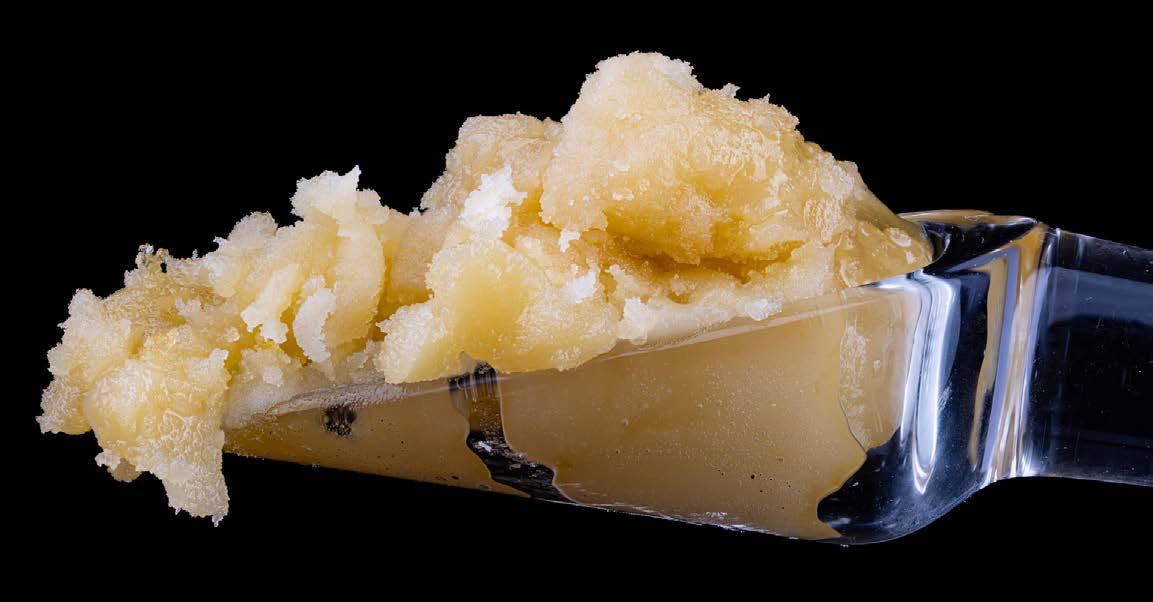
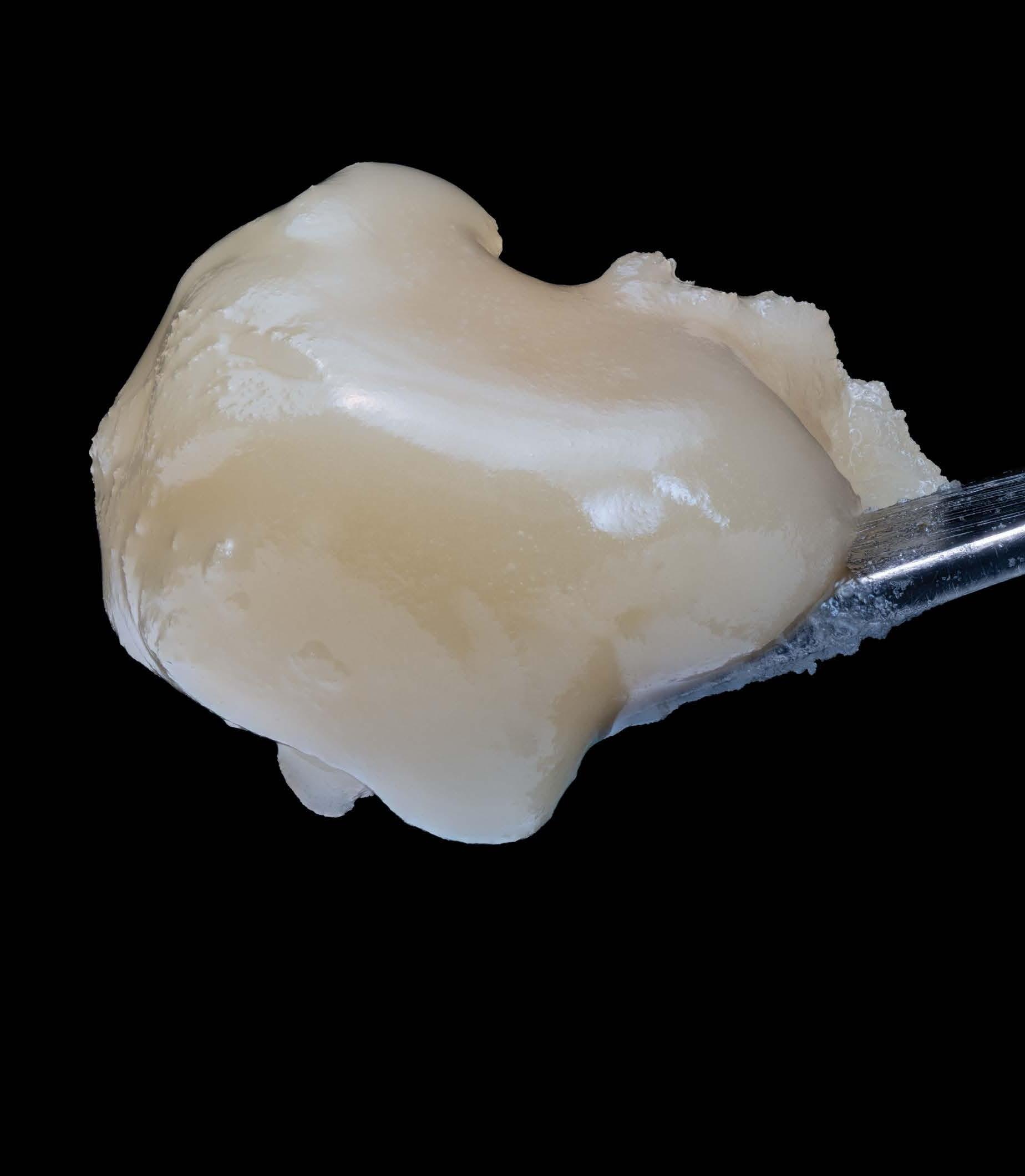
MY FIRST STEP, as with any good sample I receive, is to photograph it at various magnifications and log it. This process involves focus stacking a series of photographs to achieve a final, full-resolution image. At high magnifications, one can see just how clean a concentrate can be, and from these photos, you can tell you’re working with something special.
Bred by Bloom Seed Co., Rambutan F2 — (Papaya x Guava’z) x (Papaya x Guava’z) — was explored through an in-house pheno hunt and produced as a mixed wash from 24 plants, allowing different expressions of sweet bubblegum and dank, funky fruit to combine. The plants were flowered for 70 days in living soil and then harvested fresh frozen to maintain terpene integrity. North Fork’s Shannon N. Wright had the honor of hand-washing the Rambutan that was then pressed and packaged for our immediate enjoyment.
The rosin, pulled in the 73-59u range, presents light in color with a soft, buddery consistency that suggests careful handling as well as successful pheno hunting and optimal temperature control.
On the nose, it is unforgettable, opening with sharp, tropical and tangy notes of fermented fruit with an underlying funk that takes you back a step.
The high is immediately delightful, de livering an immediate sense of euphoria that effectively relaxes and elevates simultaneously. This is definitely an active, thought-provoking strain, which is further complemented by its taste. The complex flavor and buddery consistency of the rosin also make for a fantastic hash hole.
This super-limited release of Rambutan rosin highlights North Fork’s focus on small-batch, pheno-driven products, giving us a glimpse into their vast and still-expanding potential as they hunt and develop their hash menu.




Harbor House Collective’s grow is built around a fully in-house cultivation program in Chelsea, Massachusetts, where the team pheno hunts, grows and processes its own Cannabis. With more than 20 years of legacy cultivation experience rooted in Colombia, the growers prioritize hand-selected genetics and keep tight control over every step of the process, from pheno hunting to final cure. What makes the grow stand out is that everything happens under one roof. The cultivation team can dial in consistency, terpene profile and overall quality in a way that’s still relatively uncommon in the young, often outsourced Massachusetts market.
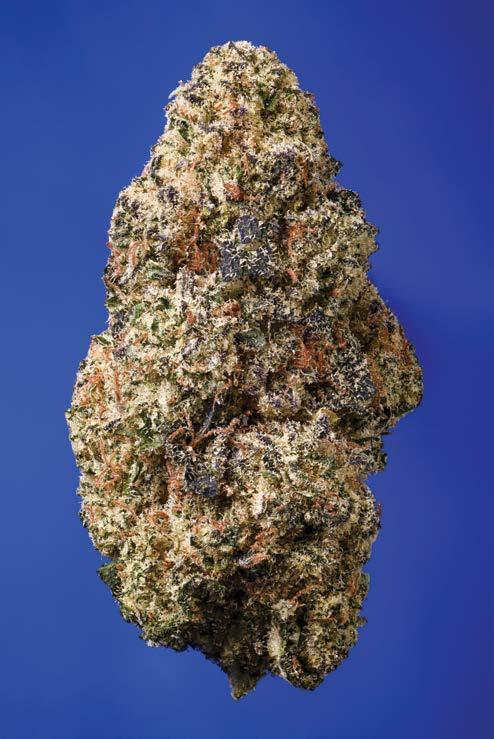
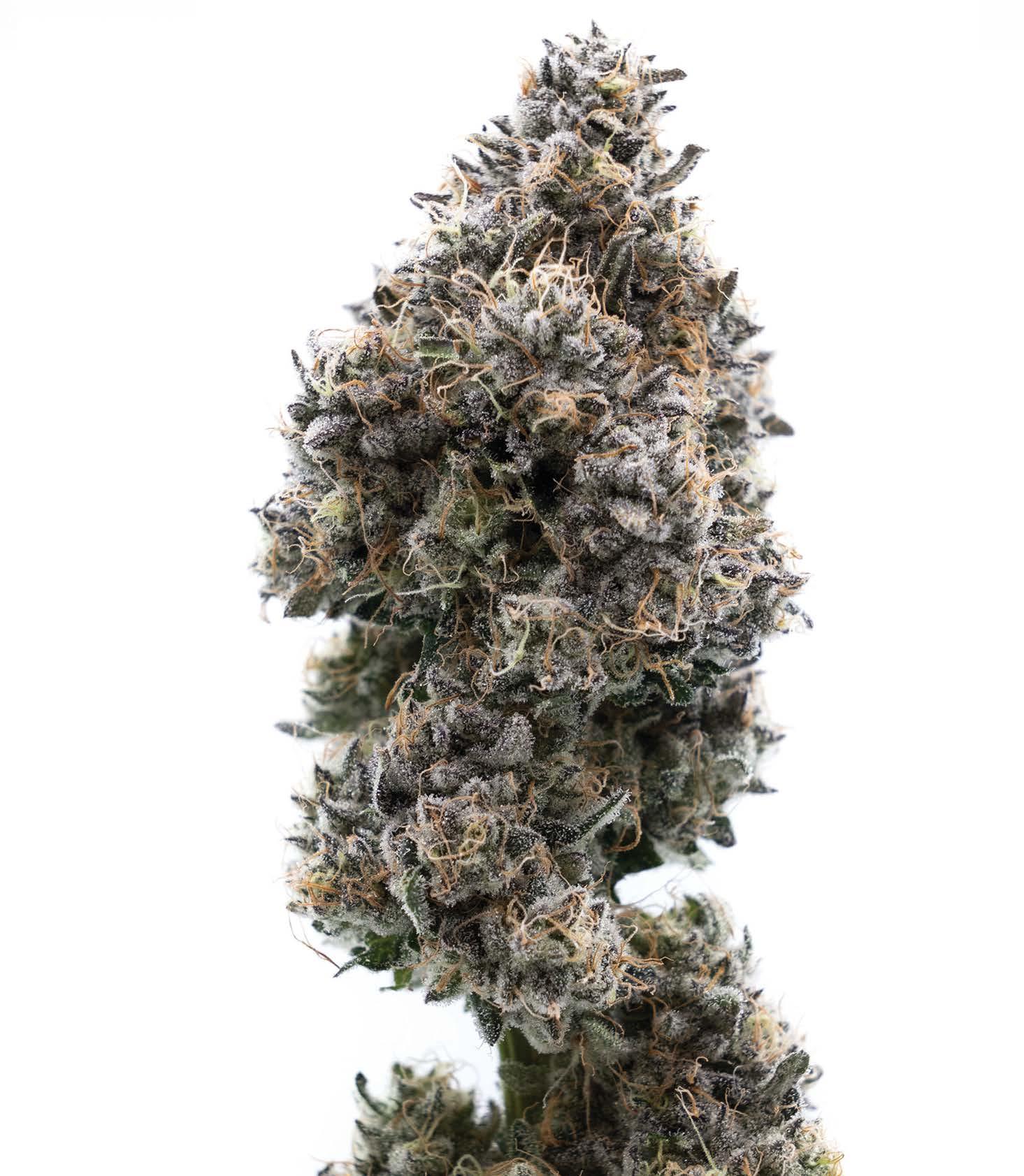
THEIR BLACK MAPLE is grown from Dulce De Uva x Sherbanger genetics from Bloom Seed. It’s terpy and offers a mountain-like vibe, with a deep citrus and pine aroma, a gassy edge and sweet floral undertones. Its sugary, sticky nugs boast vibrant, light green hues caked in crystals with long orange hairs, making it a total crowd pleaser with high bag appeal. As for the smoke, the sweet, piney inhale hits right between the eyes, giving way to a euphoric, heady high and a heavy body feeling.
The effects build gradually rather than hitting all at once, which makes it easy to settle into the experience without feeling overwhelmed. Black Maple is a truly versatile smoke; great for daytime if your tolerance is solid, and perfect for nighttime if you want to lean into the physical vibe and just zone out. It evokes a peaceful, creative energy, making it an ideal cultivar for letting your brain release all those artsy influences. While it’s not strictly a knock-out level bud, it may put you to sleep softly if the timing is right. What really stands out here is how clean and smooth the smoke is from start to finish; no harshness on the inhale, just a flavorful, lingering exhale that leaves that citrus-gas profile hanging on your palate. It’s the kind of strain you can revisit throughout the day and night and still appreciate each time, especially if you’re someone who values terpene expression just as much as potency. And as if the top-notch flower wasn’t enough of a reason to try this one, you’ll also be supporting a local-and-minority-owned company run by a family who began growing decades ago in their native Colombia, and has since brought their awardwinning efforts to the heart of Boston.

@HARBORHOUSECOLLECTIVEMA
26% THC, 0.79% TERPS

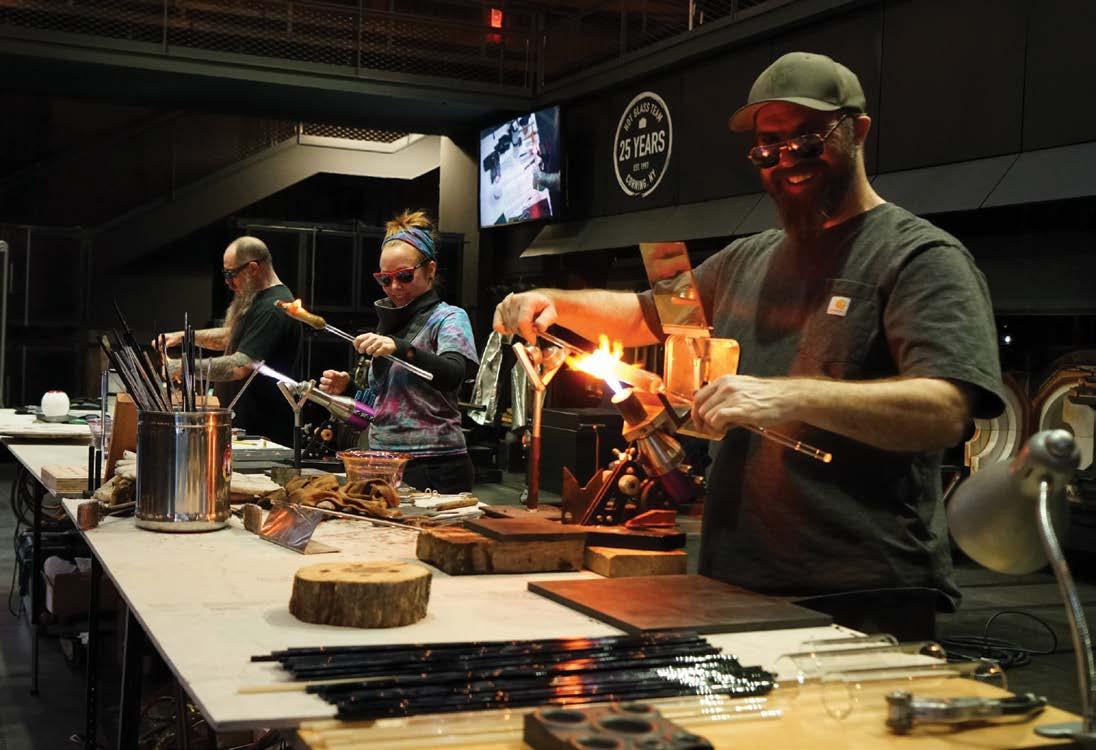
The Corning Museum of Glass in New York has stood as the repository for the most important contributions to the art of glassblowing since 1951. The museum holds thousands of pieces, dating from ancient civilizations to the work of contemporary artists pushing the field in new directions. However, it wasn’t until 2019 that CMoG acquired its first piece of smokable glassware.
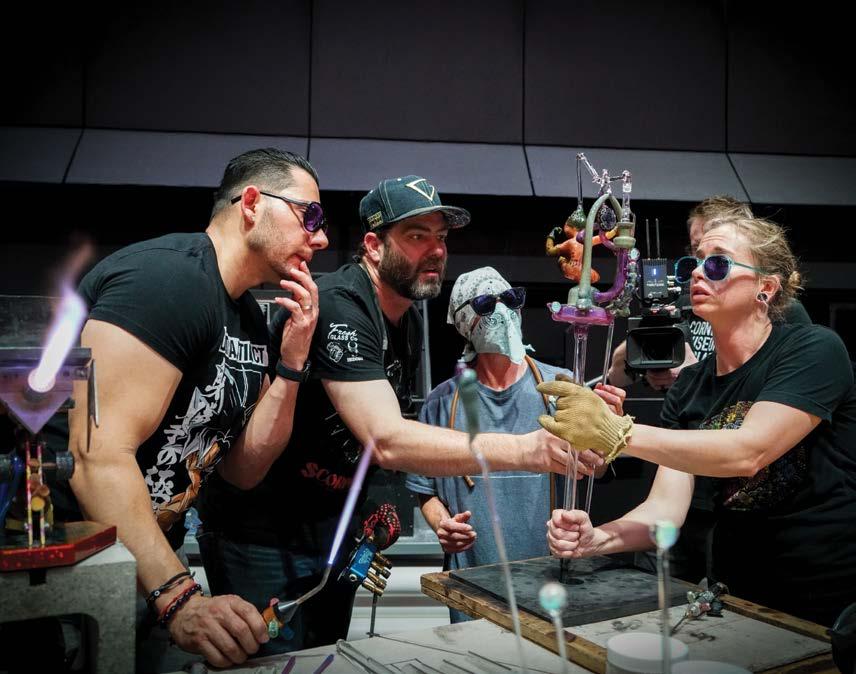

“The CMoG Flame Collab has proven to be a resounding success in its first four years, with incredible works brought to life by a few of the top artists in the field.”
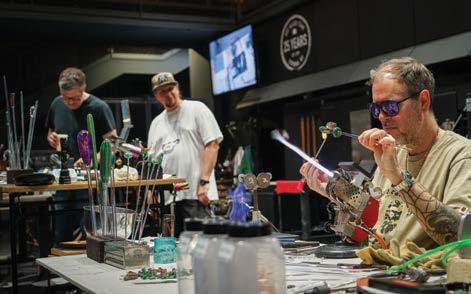
MANY SUPERHUMANS of pipe making have visited CMoG to share the finer points of their craft at the now-annual CMoG Flame Collab. Museum manager of hot glass operations Eric Goldschmidt told the Leaf that the Flame Collab came about as a way “to celebrate the artistry and innovation of the flameworking community.” He mentioned how the last 15 years have seen a rapid acceleration of the craft, especially through the collaborative pieces, adding, “much of which has been stirred by artists creating innovative objects for Cannabis consumption."
Goldschmidt added that “the CMoG Flame Collab has proven to be a resounding success in its first four years, with incredible works brought to life by a few of the top artists in the field.”
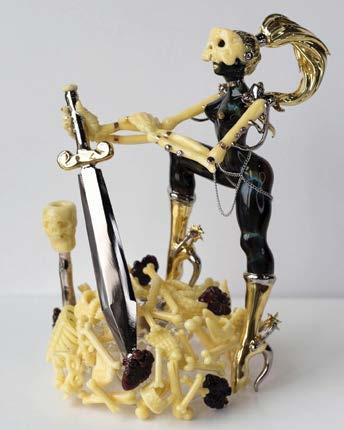
/// CMOG FLAME COLLAB LINEUPS ///
2022 - Dan Coyle (Coyle Creations), Adam Whobrey (Hoobs) and Ryan O’Keefe

The event will return for its fifth year in May 2026, inviting a team of artists to spend a week at the museum’s Amphitheater Hot Shop. During that time, the group is challenged to melt their respective styles and visions together, creating one cohesive, sculptural piece. When asked how they choose their artists, Goldschmidt said the team at CMoG works each year to identify an individual with a strong portfolio of collaboration work, and then, like a heist movie, asks them to name their two- to three-person dream team to pull off one epic job. That first year, Dan Coyle called in Adam Whobrey (Hoobs) and Ryan O’Keefe (Ryno) to create a futuristic piece dubbed “D-XG 2052.” Since then, artists like Phil Seigel, Solfire, HicDogg, Darby and AKM have been invited to share their world-renowned techniques at CMoG. For 2026, CMoG is complementing its major exhibition on Women in the American Glass Studio with a team that Goldschmidt called “some of the strongest women in contemporary flameworking” to illustrate how this legacy remains alive and well. Goldschmidt excitedly revealed to the Leaf that the 2026 lineup includes host Sibelle “Sibelley” Yuksek, along with Adrienne “Babedrienne” DiSalvo and Nicole “Coldberger” Berger. Glass fans who know DiSalvo’s intricate carvings or remember Yusek and Berger’s fire-spouting collaboration from Oregon’s 2023 DFO glass exhibition know that this will be one for the books.



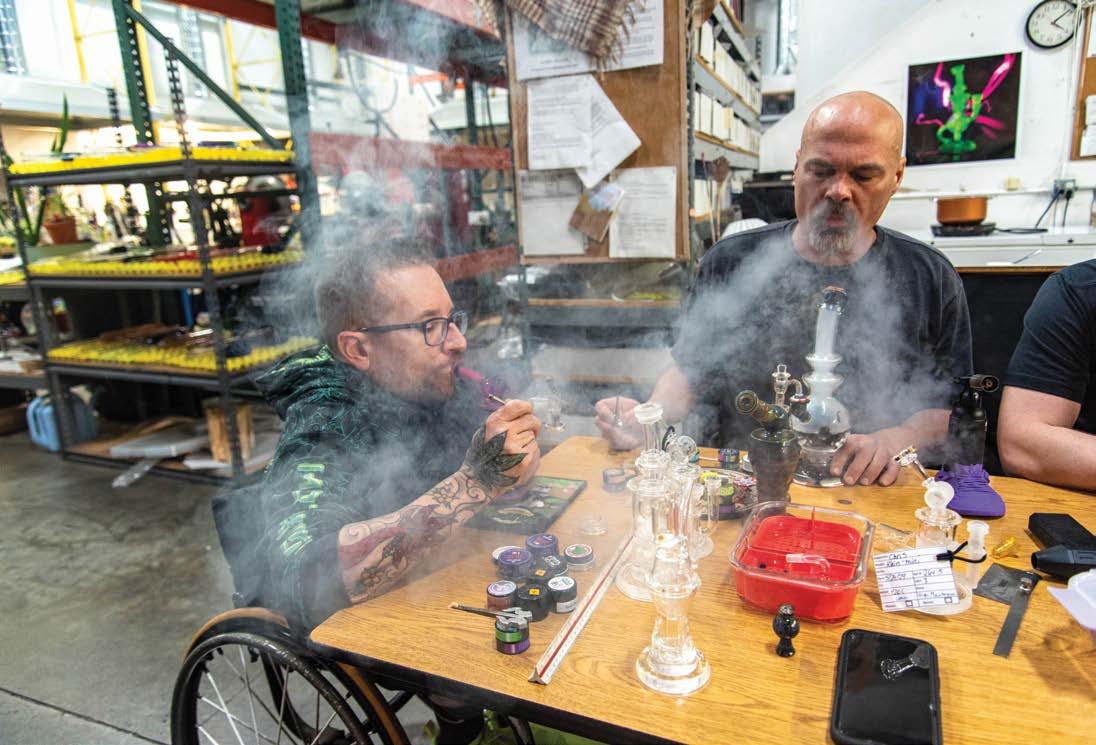

Professional athlete. Comedian. Civil rights advocate. Musician. Dustin Brandon has held many titles throughout his life. For the past nine years, he has worked tirelessly to establish himself as an irrefutable pillar of the Cannabis community.
“I CAME INTO this community as a medical patient,” Brandon explained. “This plant saved my life. My disability is brittle bones, called osteogenesis imperfecta, from birth. I'm 42 years old, and I've broken and fractured over 850 bones throughout my life. I've had close to 75 surgeries.”
Brandon’s story is one of strength and resilience. Despite trauma, tragedy and a recent bout with COVID that nearly took his life, Brandon has consistently faced adversity and bounced back with unyielding perseverance.
That’s where Mothership Glass comes into the story.
Forged in fire, crafted with care and annealed with meticulous effort and dedication, Mothership produces some of the highest quality functional glass art in the entire world. Captained by innovative artist Scott Deppe, the enterprise is a collective of some of the most prodigious glassblowers in their field.
“I approached Mothership, and I said, ‘I think there’s an area we can fill here in regards to the disabled community.’”
“I grew up in a tough upbringing, from foster care to state-run facilities, and a school for kids with disabilities,” Brandon said. “My sister and I got split up. Her name was Felicia, a year younger than me. In 2018, she lost her life to suicide. When I lost her, it took a while to figure out if I could even come back from that. But eventually I figured out how to develop myself all over again, through her, for her. She's my reason for everything.”
-Dustin Brandon
“I approached Mothership, and I said, ‘I think there’s an area we can fill here in regards to the disabled community, not just making glass more accessible for people with disabilities, but as a whole, around the entire community… How can we have disability inclusion?’” Brandon recalled.
Mothership invited Brandon to their base of operations in Bellingham, Washington. He tested their entire range of products and took measurements, all with a goal of designing the perfect consumption experience.
individual functional needs. They sketched out a plan for a special one-of-one design inspired by his sister, known as “Felicia’s Gift.”
The rig is a Torus/Fab Torus recycler with a sunflower motif and “Felicia’s Gift” engraved at the base. It features a wider base for stability, slightly longer drains for hand grip and a ground-out, interchangeable neck equipped with attachments of different angles, including a hookah hose for increased ergonomic versatility.
“This piece means a lot to me, not only to be a voice for the disabled community, throughout accessibility, through glass and in which ways we consume our medicine, but in how we heal ourselves,” Brandon explained.
Deppe showed care and consideration during the visit. He personally set up the rigs, altered table heights and dialed in water levels to provide the perfect experience. He even surprised Brandon with an accessory — a topper for a Slurper-style banger — still warm out of the kiln.
“We want to help everyone out and lift everyone up,” Johnson stated. “It's a lot for us to be able to make a piece like this. And I'm happy we're going to be the ones doing it.”
“It’s an honor,” Deppe added. “We just want everybody to have the best smoking experience possible. That's what Mothership is about. So, if we can do something to make it more comfortable or more fun for somebody, we're going to do it.”
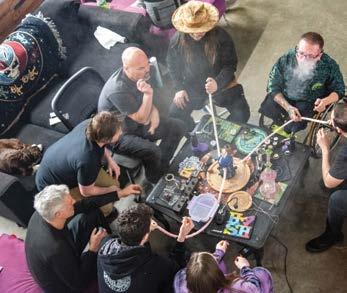
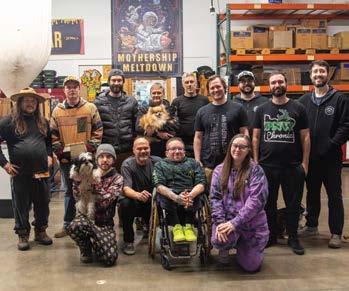
With this significant push forward for the accessibility conversation, Brandon’s story has come full circle. After nine years of grinding hard in the Cannabis industry, he finds himself serving as an advocate not just for himself, but for the greater Cannabis and disability communities as a whole.
“It’s not only about accessibility, but about encouraging people with disabilities to be part of the journey,” Brandon explained.
“I hope this gets the conversation going in the glass community and even in the Cannabis community — from grows to work stations and everything in between.”
Over this last year, he diligently rebuilt his health and dove headfirst back into the Cannabis and glass communities.
Deppe, Justin Johnson and Colin Taylor of Mothership joined Brandon to discuss accessibility in functional glass and creating a piece tailored to his

A huge amount of appreciation to Dustin and and Mothership for inviting Leaf Magazines into this important conversation on accessibility in Cannabis, and a special shoutout to Crystal Hoffman (@hashinit_) and Jeff Hooten (@casedgod) for coming along for the ride.



According to Aaron Gutierrez, even his grandmother calls him “Pinky.”
What began as a childhood nickname has evolved into his professional moniker. And while Gutierrez is better known as “Pinky Brewtz” in the world of glassblowing, Pinky Brewtz is better known as “the Jaguar Man.”
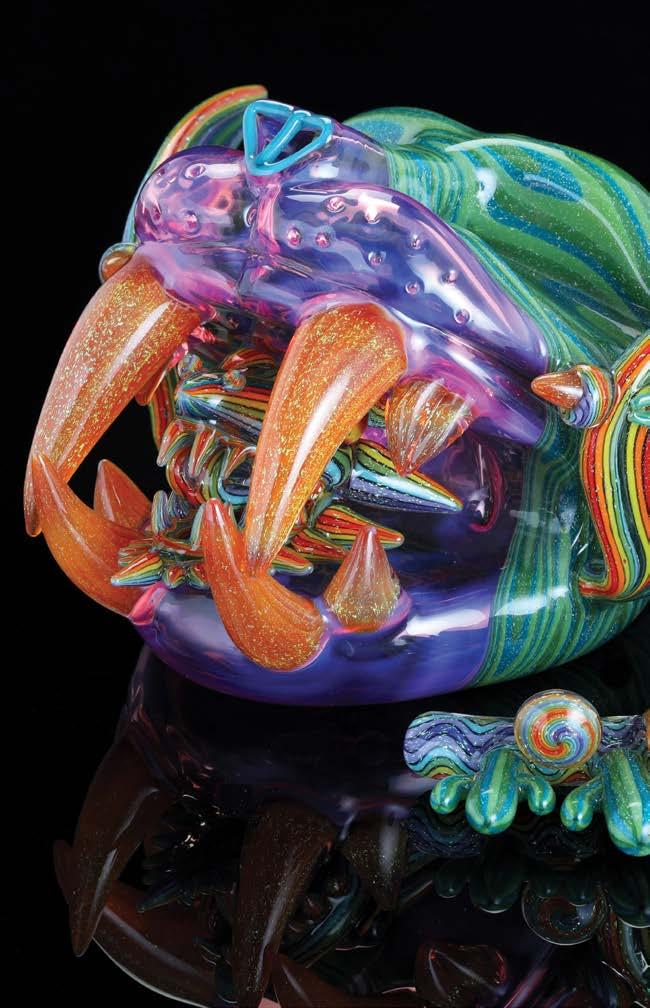
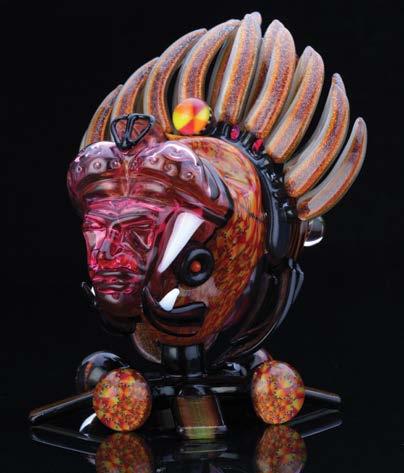
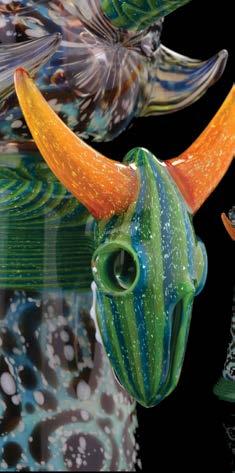
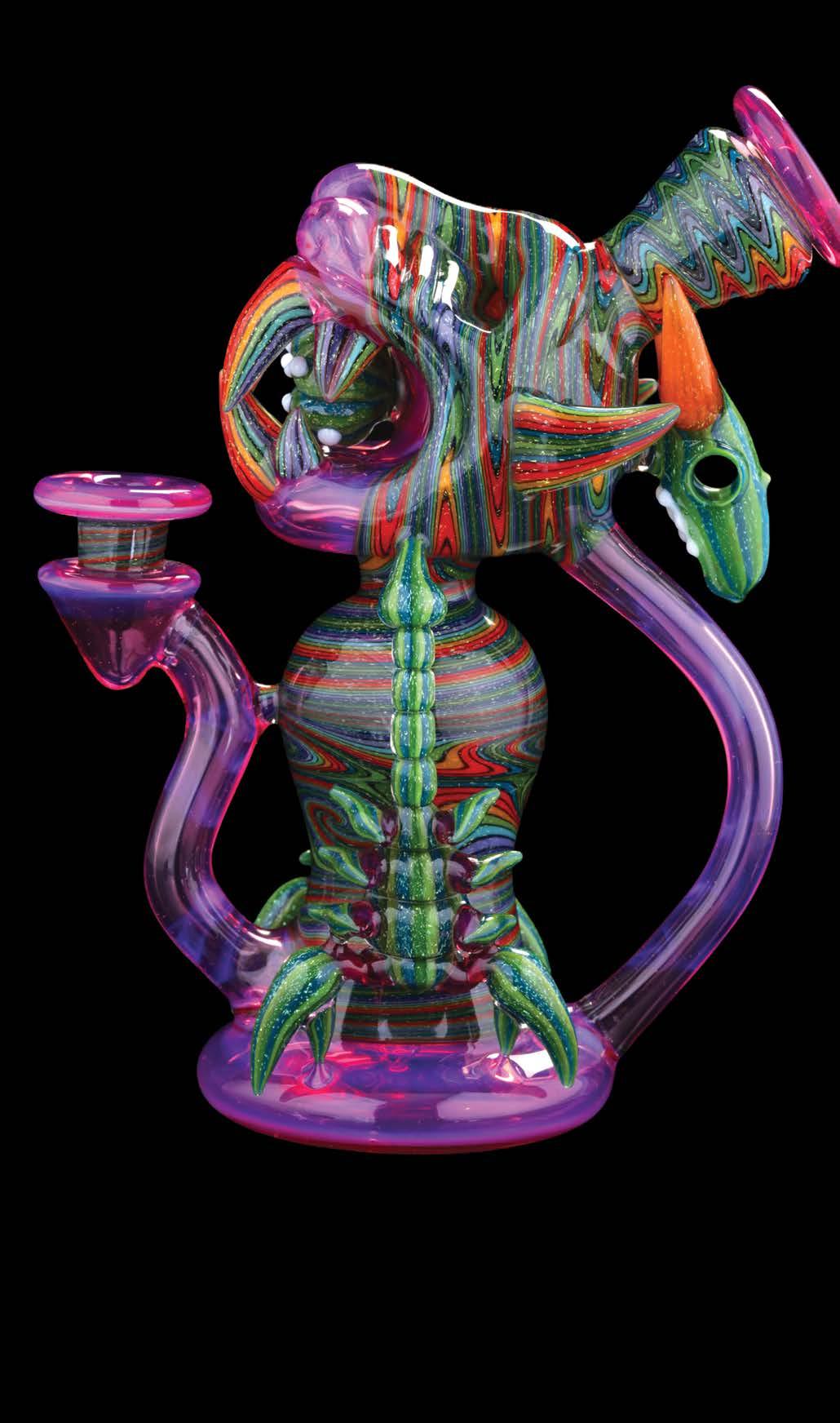
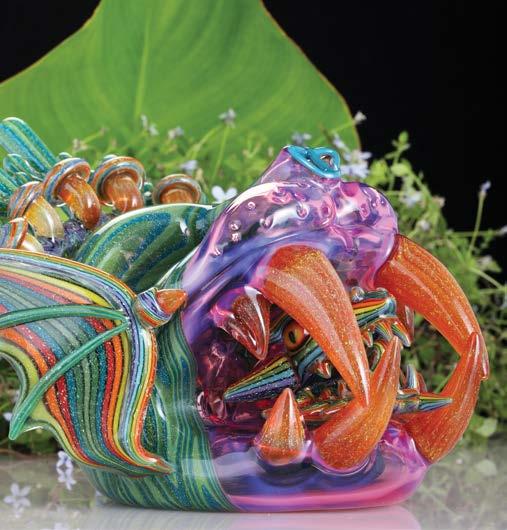
MUCH OF GUTIERREZ’S WORK portrays the image of an Aztec warrior wearing a jaguar helmet, his face inside the gaping mouth, head wreathed in feathers. His rigs seem almost ceremonial and have become high-priced items in the world of glass.
Reached at his home in San Diego, Gutierrez told Leaf Magazines, “From the beginning, I knew I wanted to represent the culture I’m from. To not just be a Hispanic glassblower, but to try and carry forward some of that traditional art from Mexico.”
Obsessed with the artistic styles of Mayan and Aztec history, he said he wanted to use glass to create art much like how artisans from regions like Sinaloa, Jalisco and Oaxaca have done for generations.

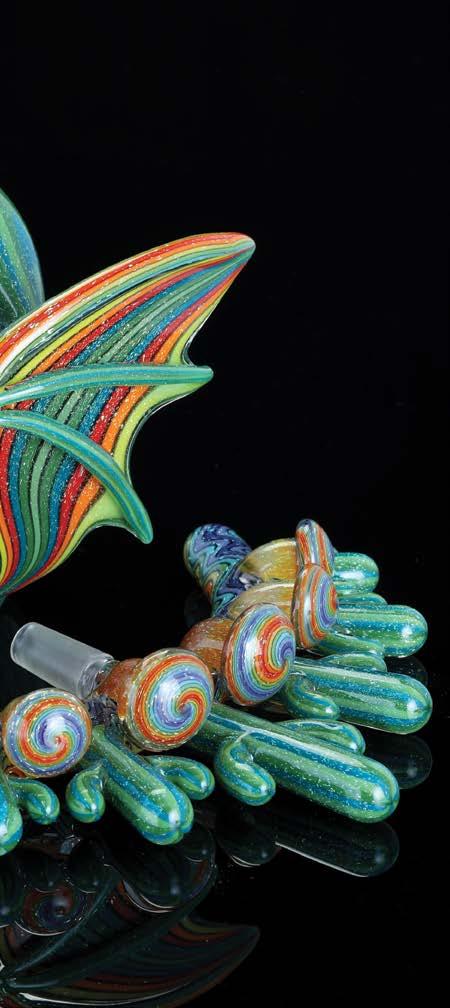
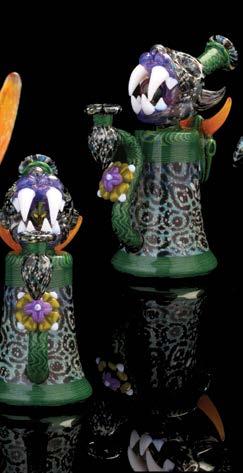
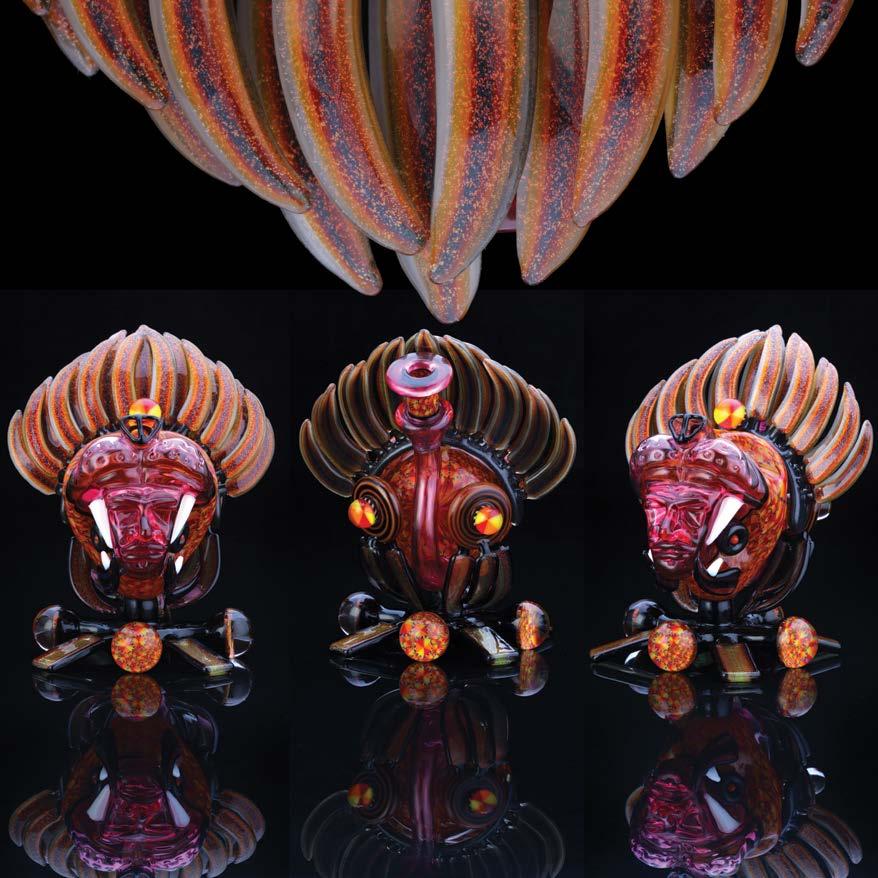
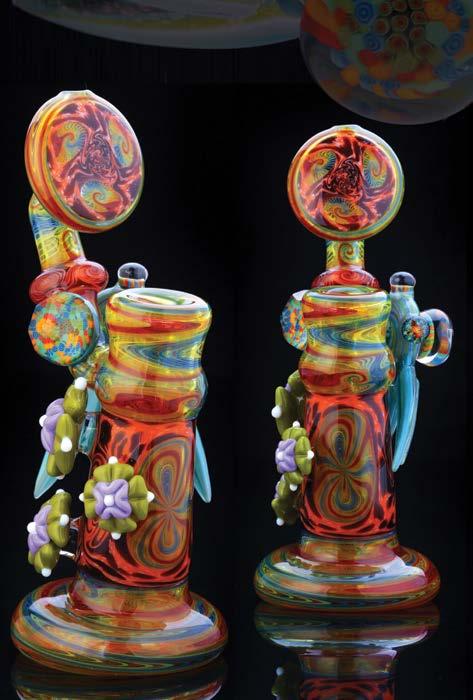
“There’s an aesthetic I’m trying to put out, and that’s one that represents Mexican culture.”
Gutierrez became Pinky when he got into a fight as a kid and needed something to hold his pants up. The only thing he could borrow — which would become the makeshift weapon that won him the fight — was a friend’s pink belt. He said he hated the nickname, but by the time he was in high school, even his family called him Pinky. So when he was thinking about what to call his brand, he said, “I just wanted to keep it simple with something people already know me as.”
He was working as part owner of a clothing company back in 2014 when he first discovered glassblowing. Visiting a friend in San Luis Obispo, Gutierrez said they smoked DMT, and his buddy showed him a pendant he had just finished making. He said looking at the universe of colors and patterns, knowing they were all produced by human hands, blew his mind.
Before that, Gutierrez said he imagined bongs and pipes were made by machines. Finding out it was a craft lit a fire within him, and he jumped onto eBay to order his first torch.
At first, he said he was making more generalized imagery, like feathered serpents and alebrijes. But his whole trajectory changed the day Gutierrez proposed to his wife, Ruth Gutierrez, at the Pyramid of the Sun in Teotihuacan, Mexico. To celebrate, they smoked a bowl from the only thing they had: a traditional clay whistle in the shape of a jaguar’s head. Ruth Gutierrez remarked how cool it would be if he could make pipes and dab rigs like that.
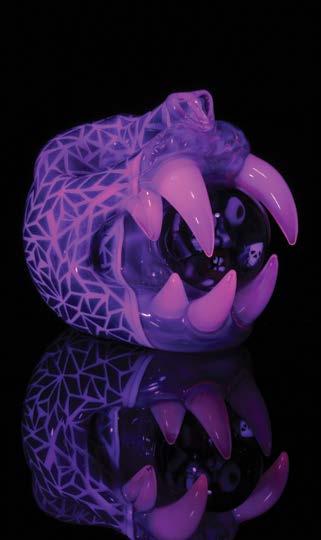
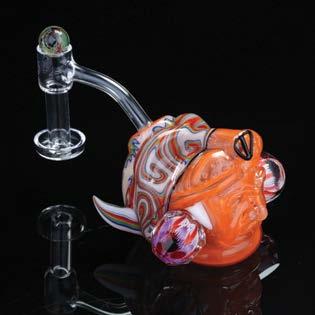

On their way down the pyramid, Gutierrez said his wife’s ring dropped in between the stones. At the time, they saw it as a tragedy, but he said they’re now convinced that “it was the sacrifice the gods required to put us on the path we’re on now. It changed my life forever; that moment shaped me as a married man, a father and an artist.”
Since then, Pinky Brewtz has solidified an artistic style and gone on to collaborate with prominent names in glassblowing, including Elbo, Darby Holm and Banjo. Gutierrez said he has a group of collectors who seek out his art and has been able to meet fans from all over the world.
With so much of his inspiration coming from traditional Mexican artisans, Gutierrez feels a responsibility to support the community and the heritage that his work springs from.
He told the Leaf he donates portions of his U.S. sales to charities in Mexico and collaborates to showcase the work of traditional artisans, like his collaboration with third-generation wood-carver Efraín Fuentes. Gutierrez said he’s always looking for ways to work with these artists to create modernized versions of traditional craft.
“There’s an aesthetic I’m trying to put out, and that’s one that represents Mexican culture,” he said. “The culture is what’s important. AI is going to eat us up. Our history will be deleted if we don’t carry these things forward, and in some small way, that’s what I’m trying to do.”
@PINKYBREWTZ

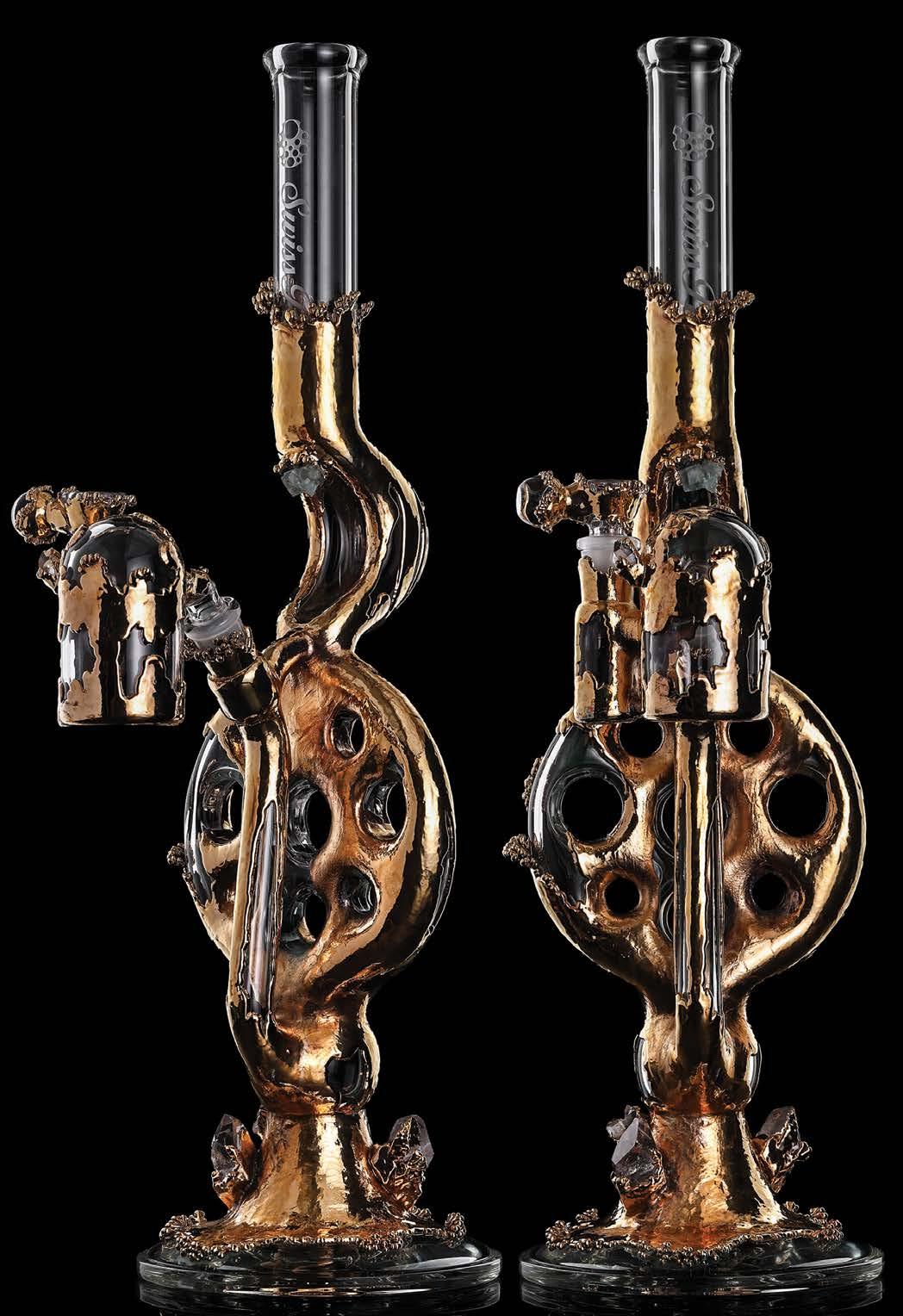
For this year’s annual Glass Issue, the Leaf team decided to deep dive into collaborations. These amazing works of art come to fruition when multiple artists combine their different techniques to create something out of this world. Whether crafted by a couple of shop mates or 12 people at a national event, the outcomes show that the best things come from working together. Join us in celebrating these collaborations. Some of them are the latest, and some of them are legends. Turn the pages slowly and enjoy.
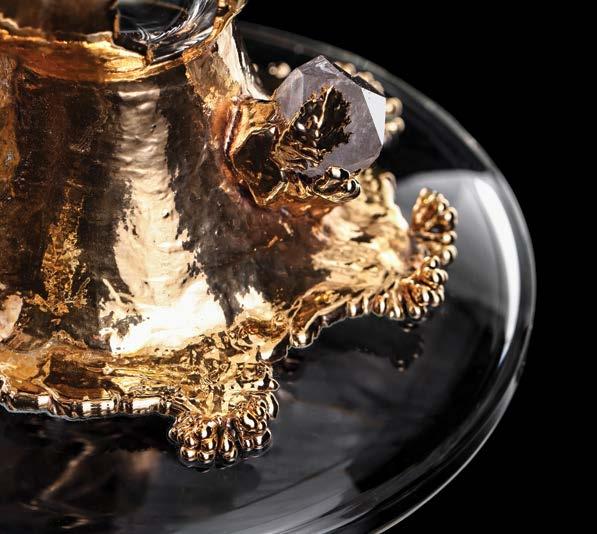
Snic Barnes @snicbarnesglass (FB) swissperc x
Gold-plated medium classic with quartz crystal on the base and fluorite on the swoop
Nate Dizzle @swissperc
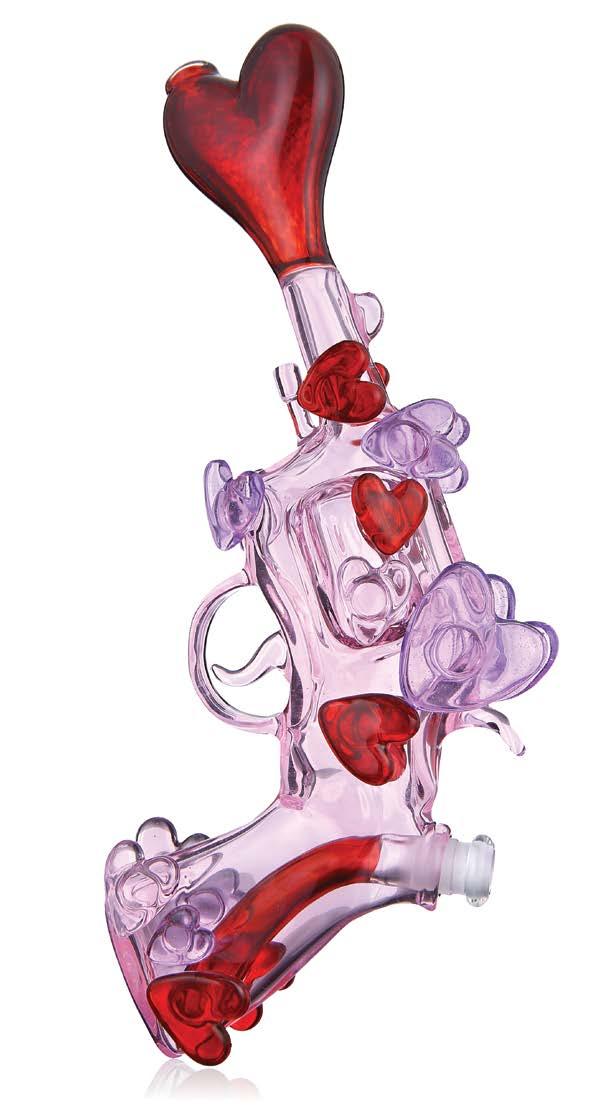
Ram’s classic gun style complemented with hearts by JOP
Joshua Opdenaker J_opdenaker_jop
Ram Mickelsen @ramickelsen

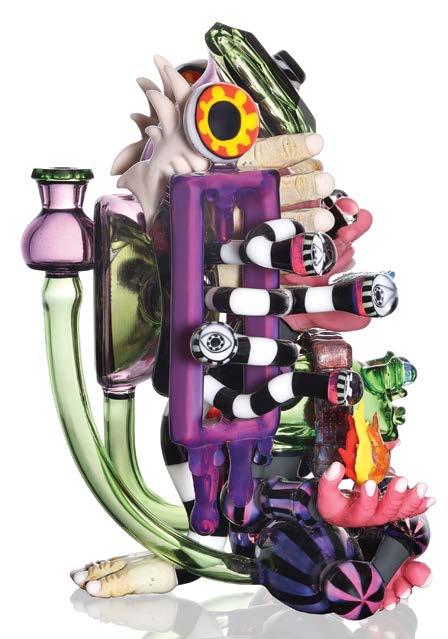
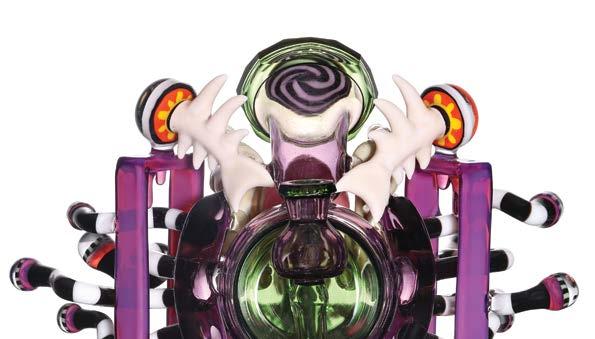
Basso’s “Singularity” recycler design adorned with Eusheen’s reticello pattern
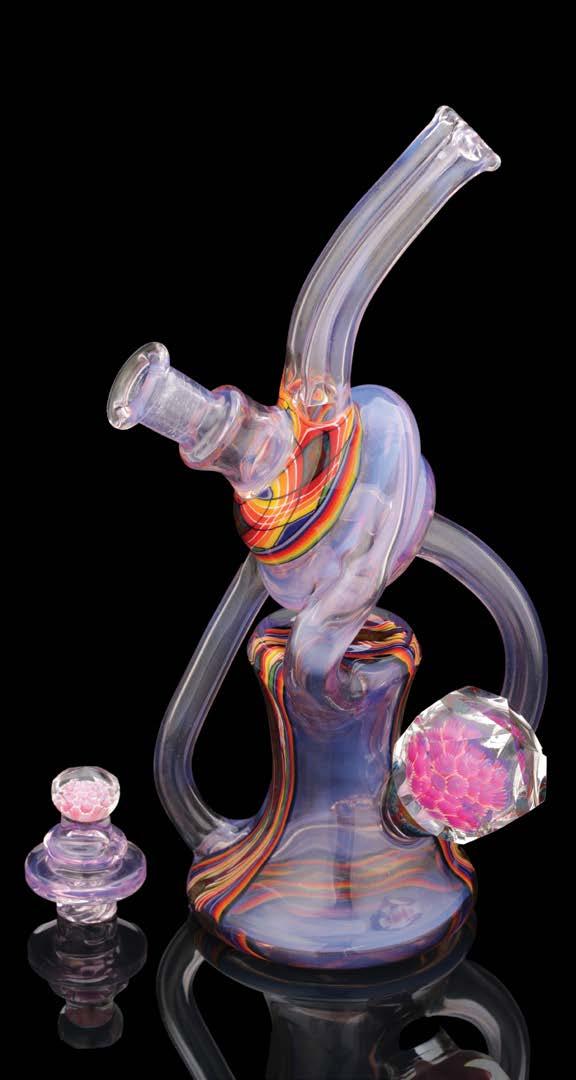
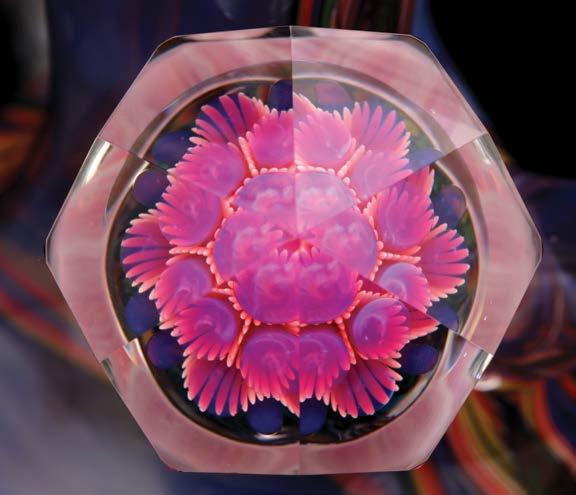


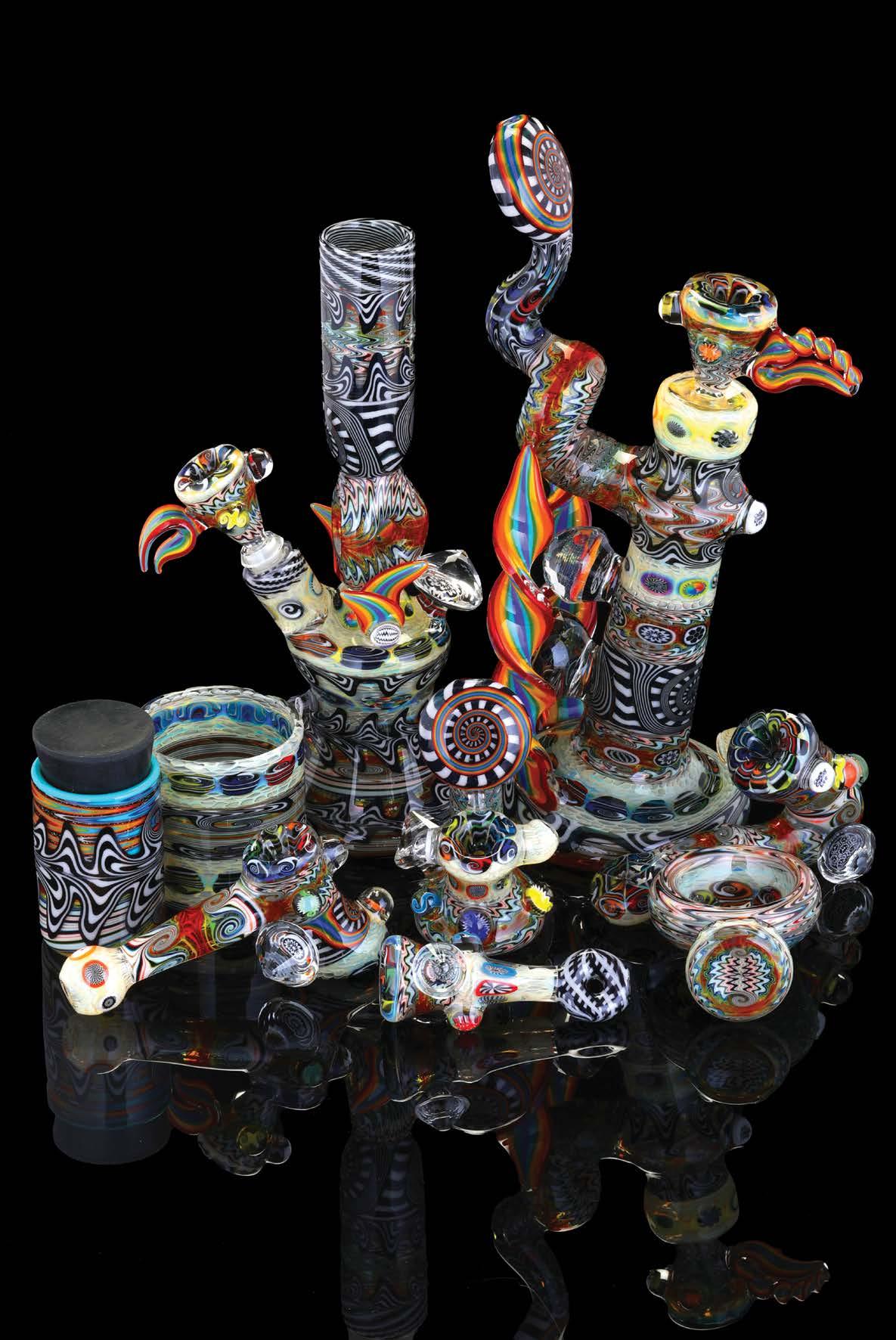
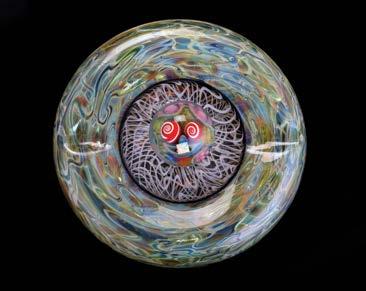
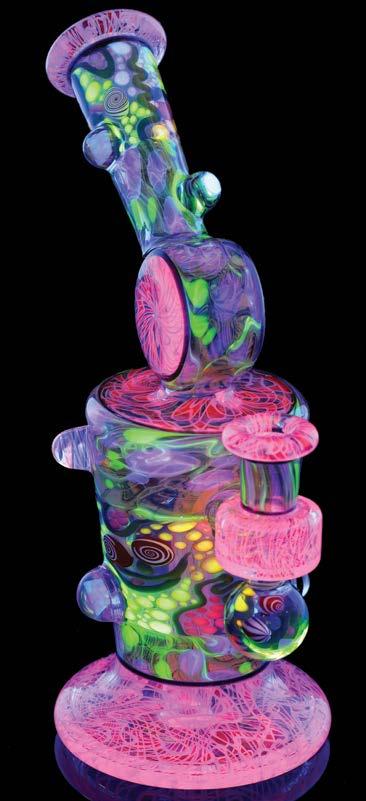
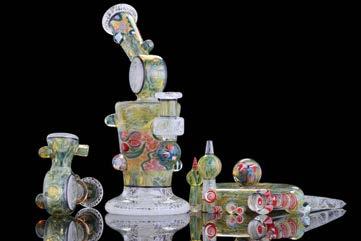

12 artist UV-reactive masterpiece created for the greater good at the Michigan Glass Project
@banjoglass / @justincarterglass / @pipemaker / @blackfireglassworks / @chacha_chainz / @philsiegelglass @frompy / @lilbearglass / @hardcore_toke / @pogoglass / @co_liicutz / @karmaglass420 Mega UV Devi

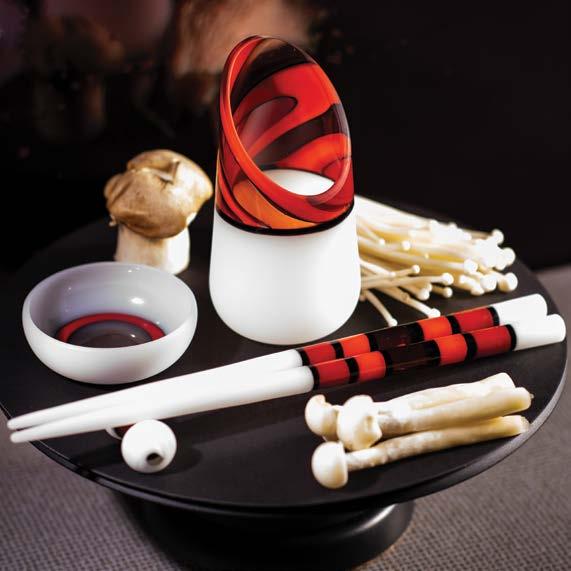
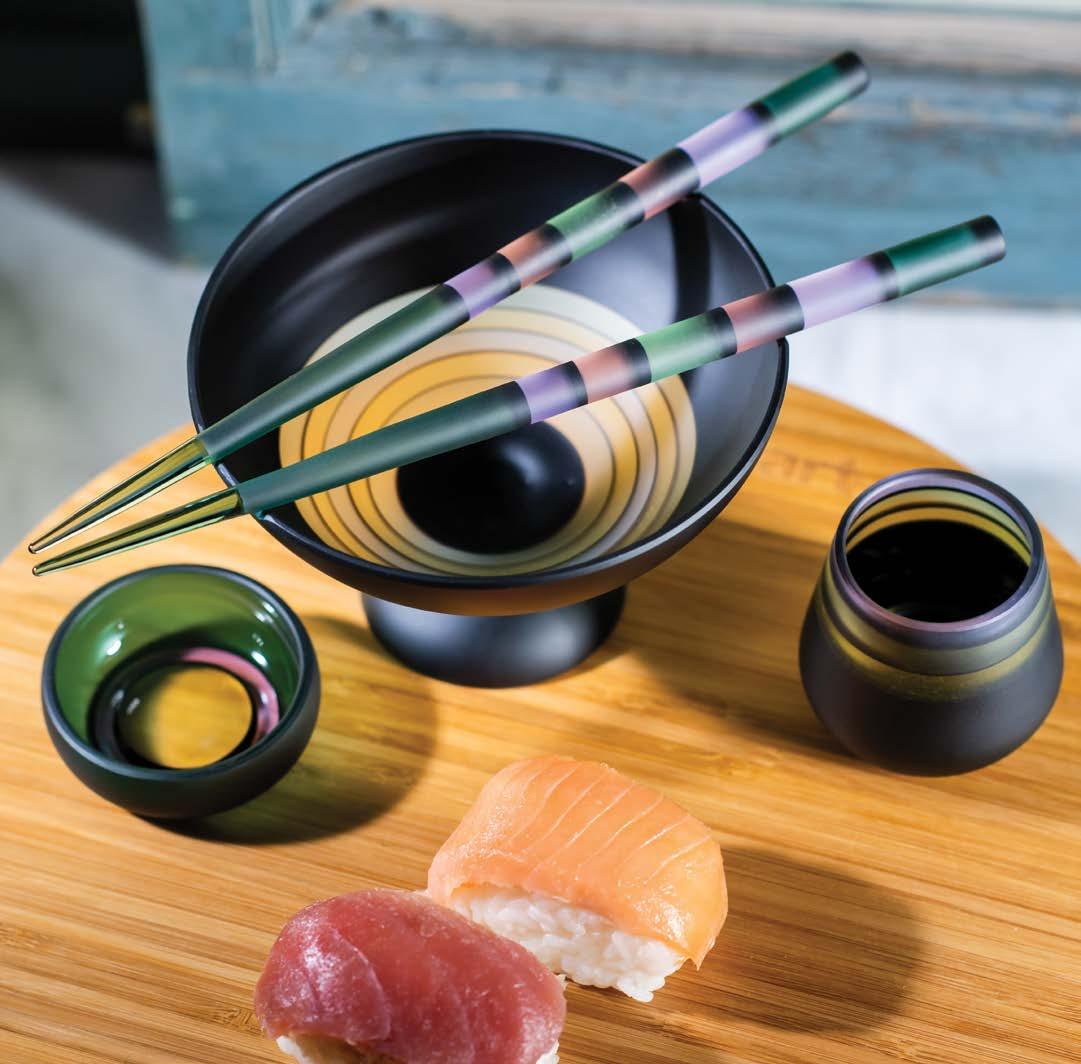
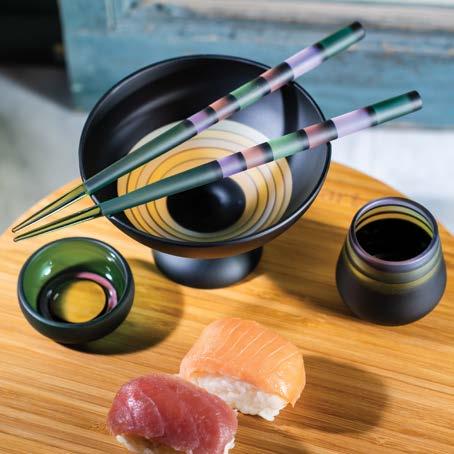
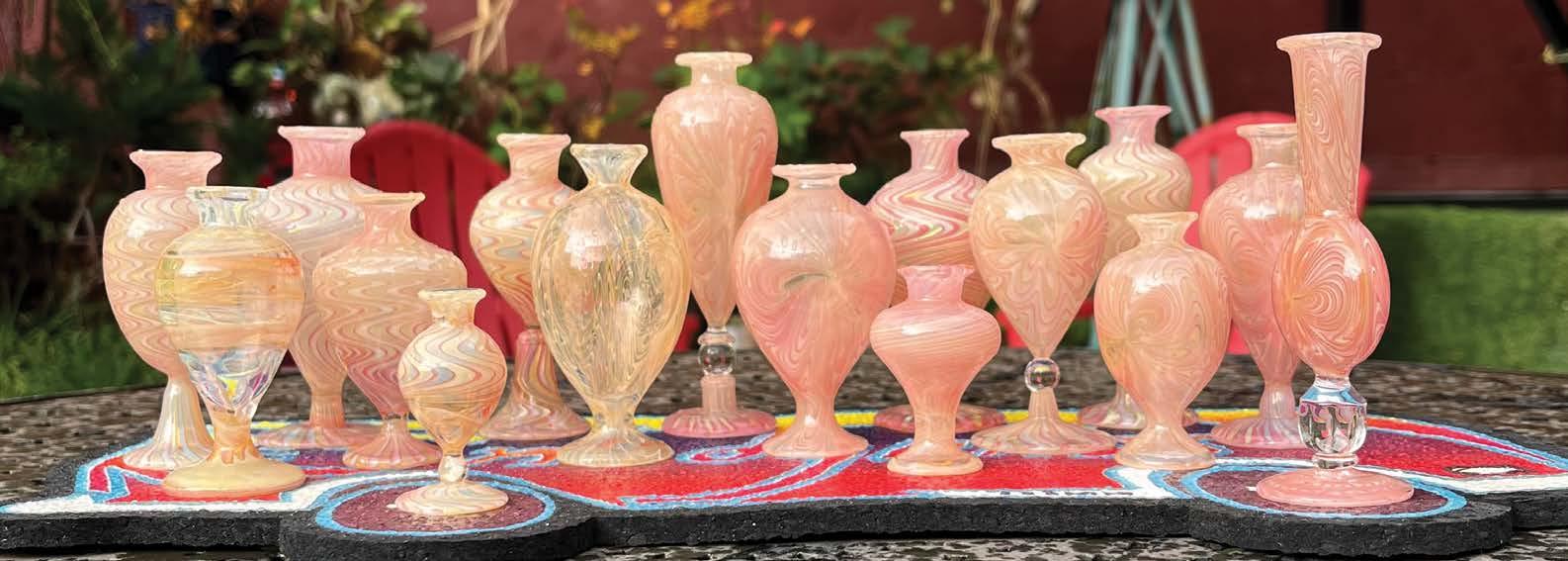
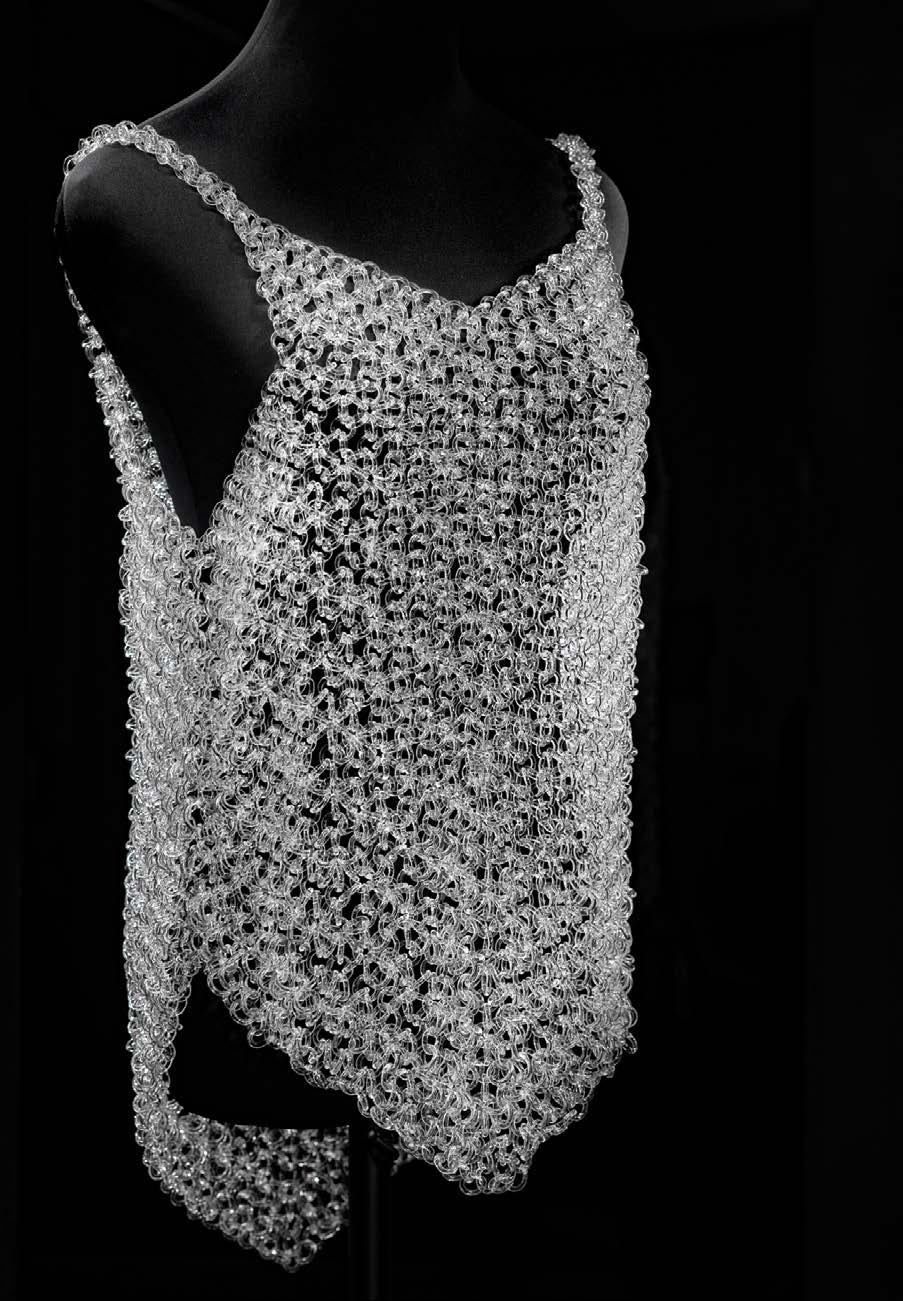
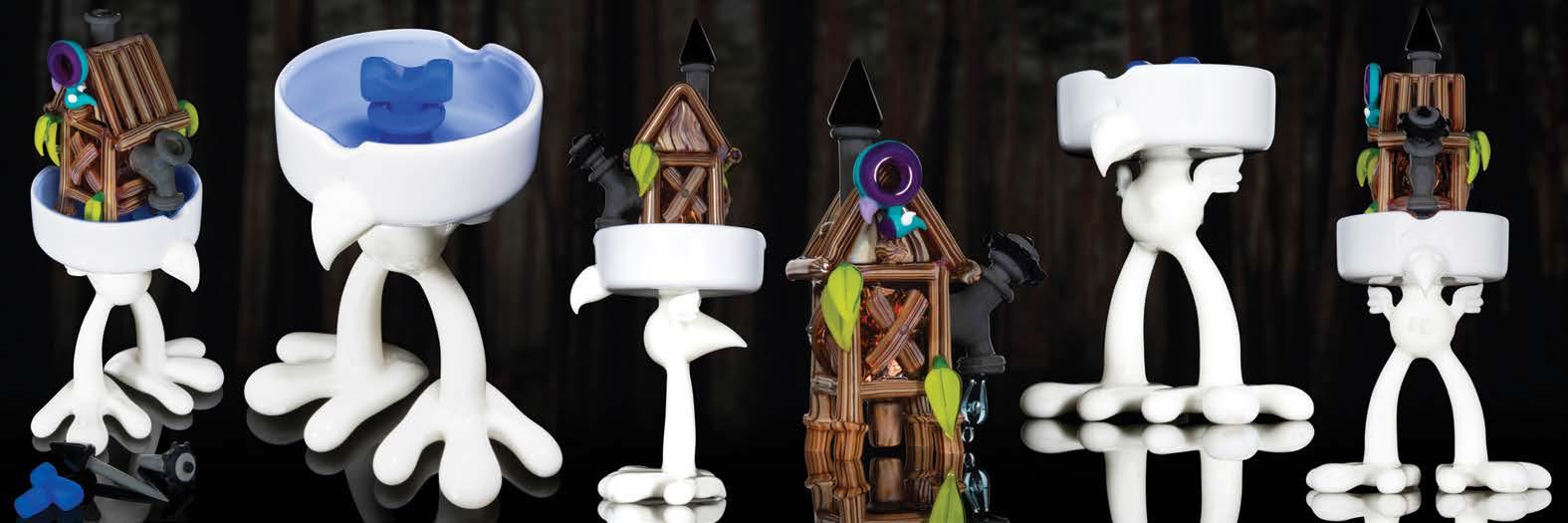
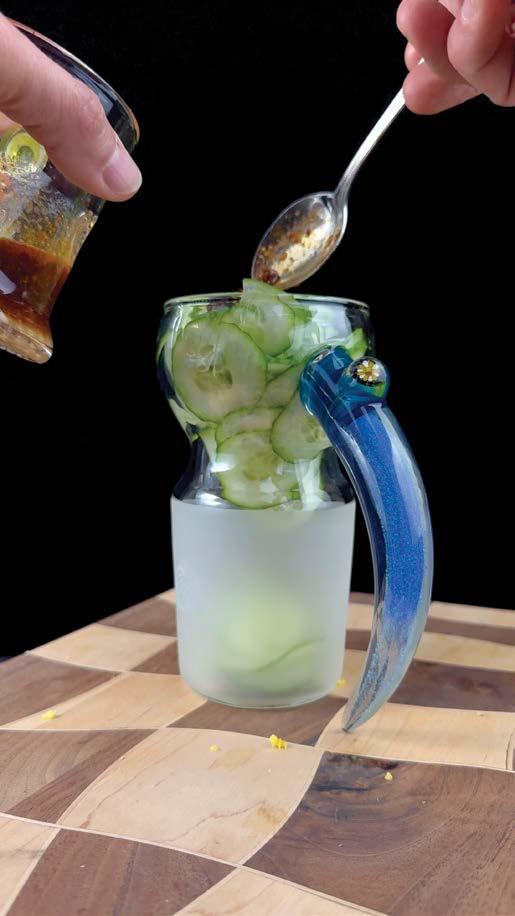
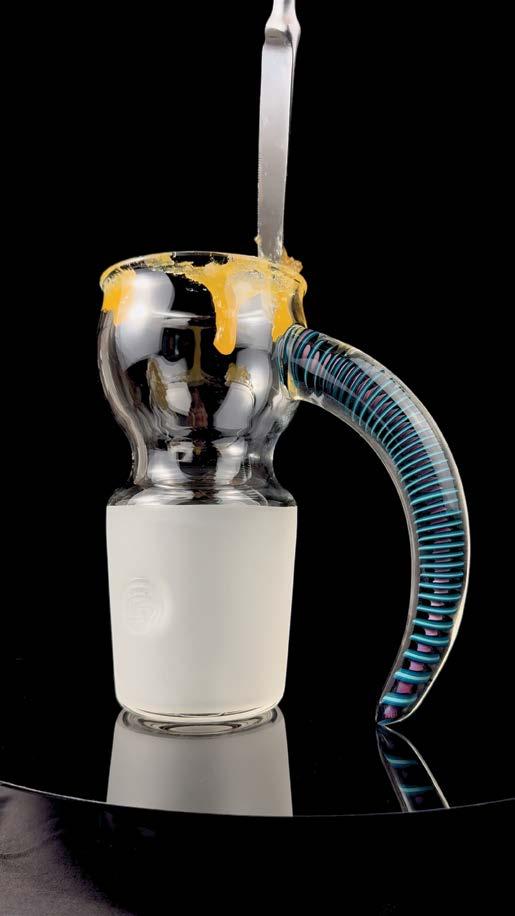
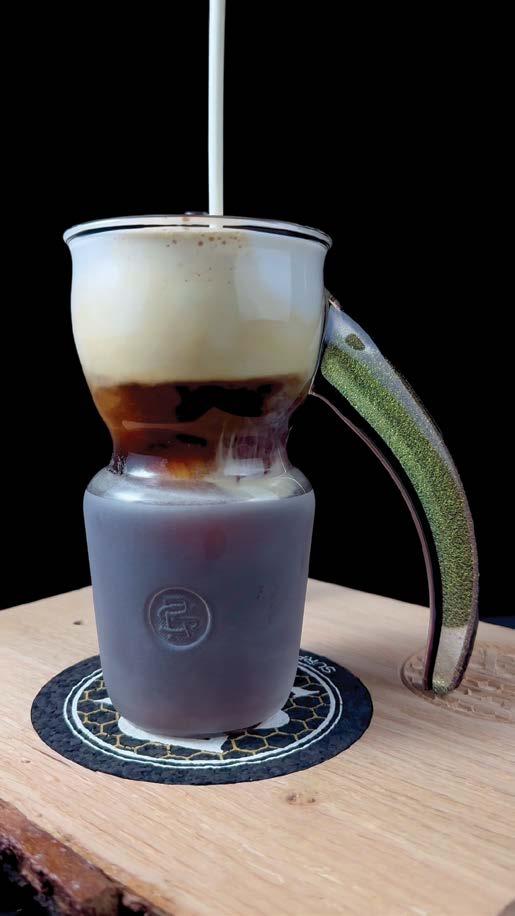
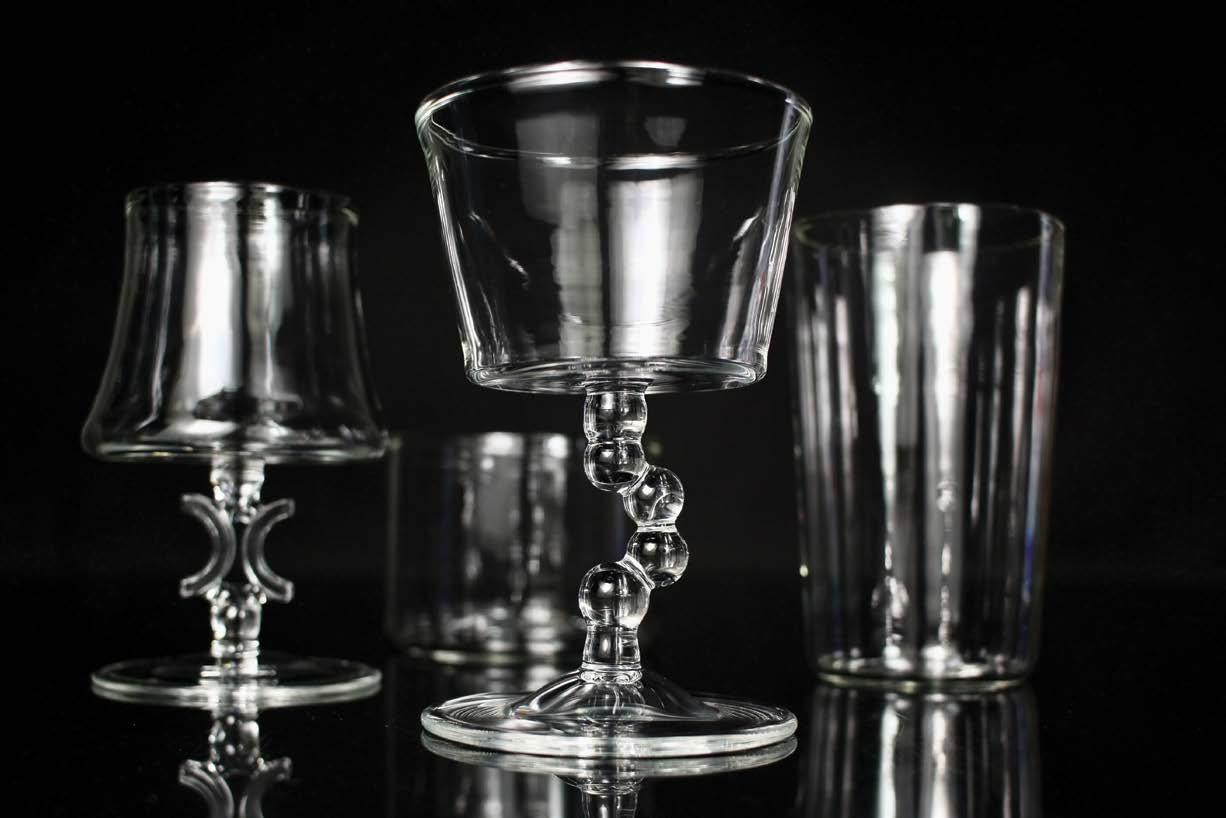
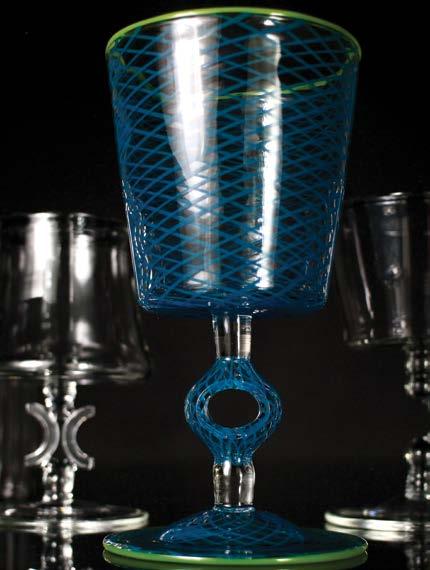
While glass is often the backbone of the sesh, this art form can go far beyond functional smoking pieces. Check out our roundup redefining the unique uses of modern glassblowing.
Chopsticks Sets
Emily Marie Glass @emilymarieglass
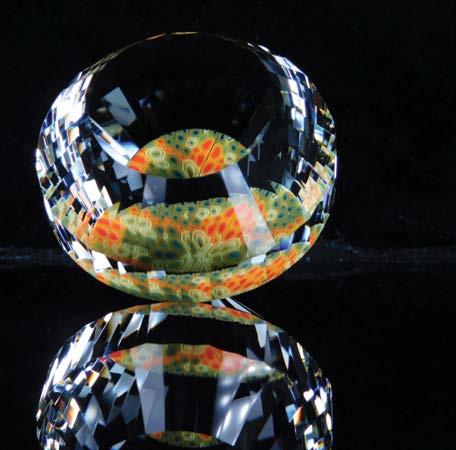
diamond of the woods
Middleton Glassworks x Mr. Facet @middleton_glassworks @mr.facet









“It feels like I’m playing with lava. I’ll go watch the lava flow, then go straight into the shop and work with something similar.”
There is a moment on the Big Island of Hawaii when your breath slows to the tempo of the crashing waves, you notice the salt and ash in the breeze and you are struck by the sense that Earth is a living ancestor.
MAYBE IT’S THE MOLTEN LAVA running through the Earth’s caverns beneath your feet, a reminder that this land is the domain of Tutu Pele, the fire goddess of Hawaii. She is our great-grandmother, an ancestral spirit to be respected, honored and approached with deep humility. The type of humble respect a glassblower embodies when the alchemy of these fragile yet timeless creations begins.
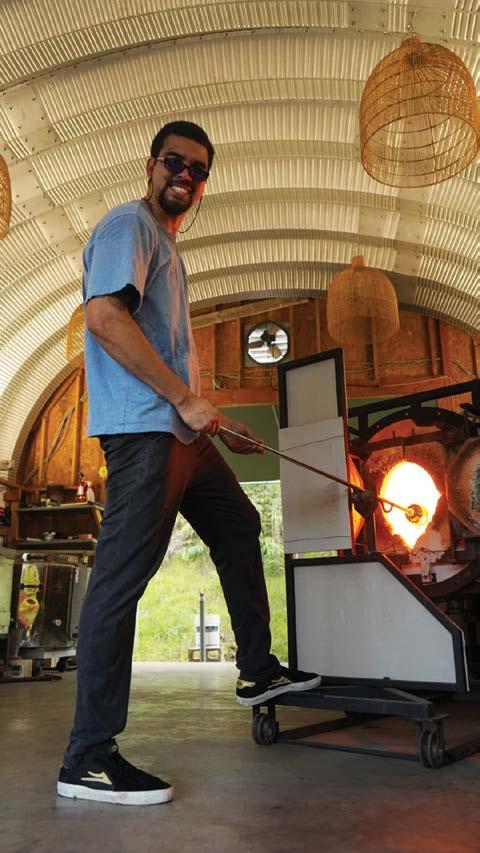
It is in this reverence that Julius Gutierrez steps into a relationship with grandfather fire, not as a tool, but as a living elder, one that echoes the same elemental energy as the lava rivers of Pele herself.
At Moe Hot Glass, guided by master glassblower Daniel Moe, Gutierrez has spent eight years shaping more than glass. He is shaping story, lineage and elemental memory, drawing from a land where fire is both destroyer and creator, where Pele’s breath reshapes the island in real time.
Can you introduce yourself in your own words and share what’s been moving through your world lately?
“I’m a farmer, a father, a psychonaut exploring biology, chemistry and playing with different elements,” Gutierrez said. “Nature moves through my reality daily and inspires my work.”
You carry Peruviano and Braziliano roots while living on the Big Island. How do your bloodlines and the land beneath your feet shape the way you approach the flame?
He speaks of Peru first, of tight-knit Indigenous South American roots bound by the joy of a big familia. It was his familia’s move to Hawaii that awakened his awareness to a deep systemic concern for native sovereignty.
“Seeing what happened here to the Kanaka Maoli tribes lit a fire in me to help represent Indigenous voices,” Gutierrez shared.
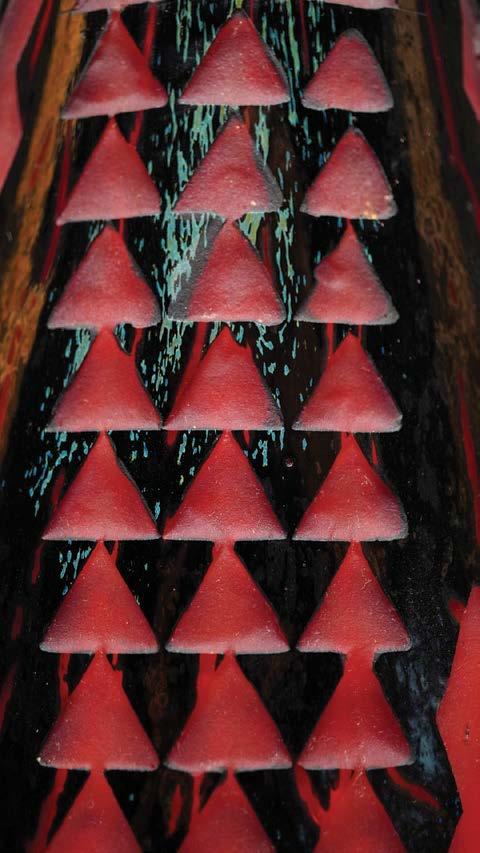
His pieces carry that intention: Hawaiian lineage patterns, tribal geometries etched not as decoration, but as protection, remembrance and resistance. In many ways, they mirror the markings of the land itself, lava fissures and flows shaped by Pele’s hand.
Our readers love Pakalolo. Do you have a favorite strain or preferred method of consumption?
“A good homegrown Super Silver Haze,” Gutierrez said. “I prefer to dab uplifting strains because they are simple, clean and quick.”
#317
#310
#303
#296
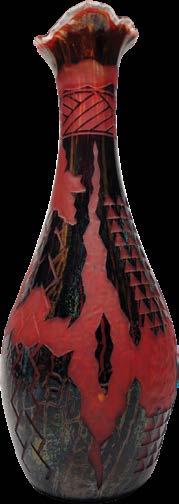
Have you blown your own smoke chalices?
“In my intro to glass class at the university, they told us we can't create bongs. So naturally, I made it a point to create a few of them,” he said with a smirk of rebellion. “Those pieces, once everyday tools, are now cherished artifacts marking the beginning of my collection.”
#294 MUSHROOMS
#285 HOW
Many people see glassblowing as a craft, but others feel it is a ceremony. What does it represent to you?
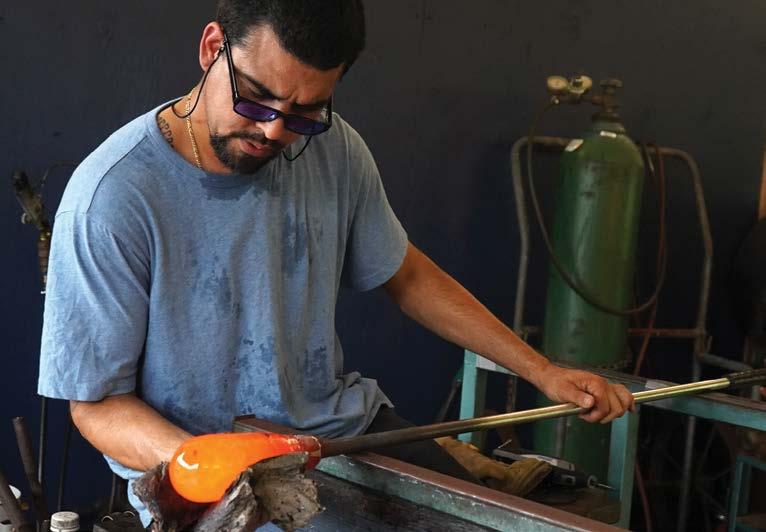
“I feel like the very act of glassblowing is ceremonial,” he said. “When you get into the flow state with the flame, it’s like a trance, everything else falls away.” Here, fire becomes more than heat; it becomes a teacher. The process demands full presence, where breath and flame cocreate form.
Living on an island where lava flows beneath the surface, do you feel a relationship between your work and that living earth energy?
“It feels like I’m playing with lava,” he said. “I’ll go watch the lava flow, then go straight into the shop and work with something similar.”
The connection is visceral. Lava and glass are both born of heat, both carrying the story of transformation.
He dreams of one day creating glass directly from Hawaii’s own silica, allowing Pele’s body to become the medium.
There’s an alchemy to turning sand into glass. What does that transformation teach you?
“It teaches you to stay levelheaded and to let go. Glass breaks. You have to practice nonattachment,” he said.
“There is humility in the flame. No matter the skill, no piece is guaranteed. Beauty can collapse in an instant, just as land can be reshaped overnight by lava’s flow.”
In this way, the practice becomes spiritual, an ongoing lesson in surrender to forces greater than oneself.
Gutierrez works primarily with soft glass, an ancient form known for its fluidity and sensitivity. Unlike more rigid materials, it requires constant attention.
“You’re fully dancing with it,” he explained. “The pro cess is physical, sweat, movement, breath, an orchestration of body and molten elements.”

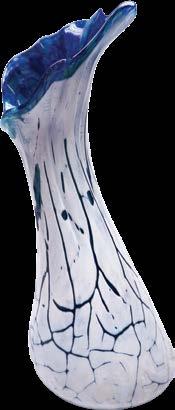
That intimacy gives his pieces a living qual ity. His lava vessels feel like they’re still flowing, like they could shift at any moment. His ocean forms hold motion within stillness, echoing the meeting place of land and sea.
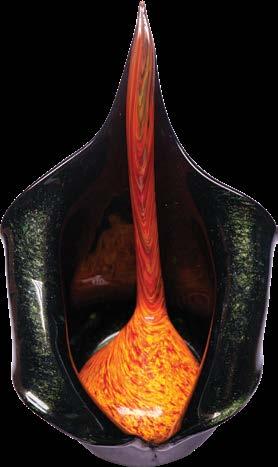
“In those moments, the boundary between studio and landscape dissolves. The furnace becomes a contained volcano, the blowpipe an extension of breath,” Gutierrez said. “I’ve even joked about blowing glass from the lava herself.”

One sculptural piece — an open, womb-like form lined with crystalline green — was inspired by the place his daughter, Andará, was conceived, merging land, lineage and life into a single form.
What do you hope people feel when they hold your work?
“Childlike wonder,” he said simply. “Curiosity for understanding how these pieces were made.”
Perhaps that is the true medicine of his work, not just the visual representation of the objects themselves, but the feeling they awaken. A return to the youthful essence of awe.
In a world that often forgets its connection to the elements, Gutierrez stands in the fire as both student and storyteller. Through flame and form, he reminds us OGs that creativity is a living ceremony in motion.









To many hardcore heads, their bong is more than just a piece of paraphernalia — it’s a reflection of their personal style — even a symbol of their stoner status. Sure, joints are great, but there’s nothing quite like a fat rip from a baller headpiece to go from sober to slobber in 4.20 seconds flat. So fire it up, fill that chamber and get ready to inhale the totally tubular history of the bong.
AFRICAN ORIGINS
Evidence suggests that bongs originated in Africa sometime in the 12th century. In the late 1800s, archaeologists documented how various tribes in Eastern and Southern Africa would smoke “dagga” or “dakka” out of holes in the ground, using bowls fashioned from mud or clay and inhaling through a hollow reed — a primitive apparatus known as an “earth pipe.”
In an article from a 1910 edition of the German anthropological journal “Internationales Archiv für Ethnographie,” (reprinted in the 1975 book “Cannabis and Culture”), a Dr. Moszcik confirmed that the Ngoni, a tribe near the Zambia/Zimbabwe border, used such an earth pipe that utilized water filtration:
“A hollow tube is stuck into one of the pits to act as a mouthpiece and prevent particles of earth en tering the smoker’s mouth. Hemp is then placed in the bowl and kindled. A little water is poured into the duct and the native lies flat or kneels down and inhales the smoke through the water.”
ETHIOPIAN EXCAVATION
In 1971, Boston University doctoral student J.C. Dombrowski discovered 11 pipes made from animal horns, stone and pottery in the Natchabiet Caves of Lalibela,

Ethiopia. Among these were two ceramic pipe bowl fragments dating from between 1,100 and 1,400 C.E. that tested positive for Cannabis.
In his paper “Cannabis Smoking in 13th-14th Century Ethiopia: Chemical Evidence,” archeologist Nikolaas J. Van Der Merwe wrote of the fragments: “Both bowls formed part of waterpipes; an aperture at the bottom of the bowl allows for the attachment of a vertical stem, which presumably descended into a water container.”
Then, in 1945, archaeologist Mary Leakey uncovered a waterpipe crafted from a gourd in Tanzania. This discovery may provide insight into the origin of the word “bong,” as apparently, there lived a tribe in nearby Kenya known as the Bong’om. There’s also a town in Liberia named Bong, which may or may not be connected.
a hole, chamber, or slot; a bamboo waterpipe for smoking kancha, hashish, or the hemp-plant.”
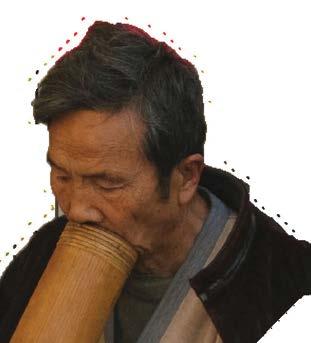
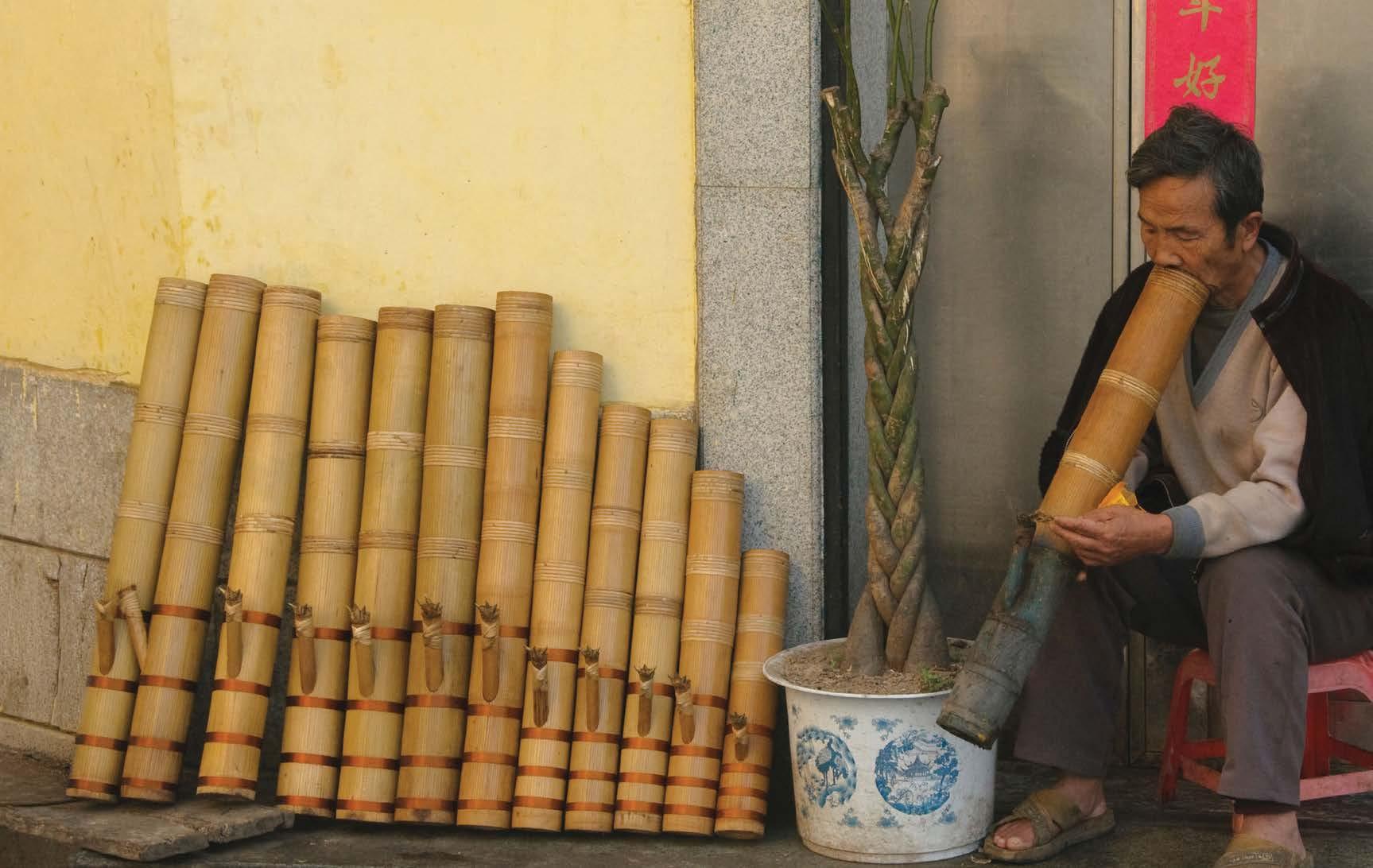
Regardless, the crafting of bamboo bongs is an ancient tradition deeply rooted in Thai culture. As thaibong.com explains: “This is not merely a tool, but a reflection of a way of life, a history, and an art form passed down through generations.”
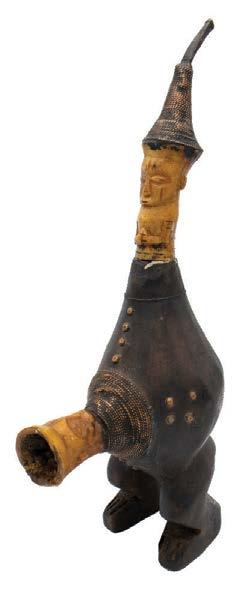
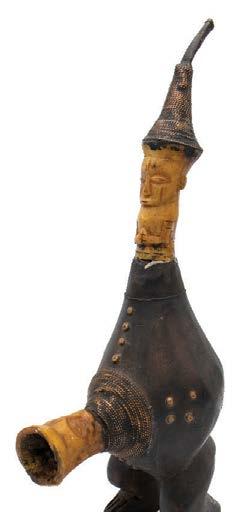
Nevertheless, conventional wisdom holds that the term bong actually originated in Thailand as an anglicized version of the word “baung” — a reasonable presumption, considering that the earliest written record of the word bong appears in a 1944 Thai-English dictionary which defines it as “a cylindrical piece of wood with
Thanks to the legendary Silk Road and the East India Company, tobacco arrived in the Orient during the 16th-century Ming Dynasty, and smoking it from blinged-out metal waterpipes became all the rage among royalty and the upper classes. In fact, Empress Dowager Cixi of the Qing dynasty was reportedly so fond of her waterpipes that she was buried with three of them.
It’s also through the Silk Road that bongs eventually made their way to Middle East trading hubs, then on to Europe sometime in the 17th century. With tobacco flowing in from the Americas, some Europeans began using waterpipes to imbibe, but they never became as popular as they were in Asia and Africa. It would take three more centuries (and a countercultural revolution) before the bong would catch on in America.
During the 1960s and early 1970s, many U.S. soldiers fighting in South Asia started smoking Cannabis to help them sleep and cope with the daily traumas of war. It was these Vietnam vets who brought the bong home to America, where they were soon embraced by the weed-fueled hippie movement.
“During the Vietnam War, American GIs on R&R would come to Thailand to kick back and relax for a while before being sent back to fight in the Vietnamese jungles. It was there that they discovered the bong,” explained Thai writer Nuttawat Attasawat. “[Bongs] were smuggled back to the United States, where they became an integral part of American Cannabis culture.”
With the proliferation of headshops over the next decade, bongs grew ever more accessible and popular — becoming the preferred smoking method for countless stoners and a symbol of the counterculture. To meet this demand, some American artists and entrepreneurs began manufacturing a new style of bongs made from ceramics.

“The bong is not merely a tool, but a reflection of a way of life, a history and an art form passed down through generations.”


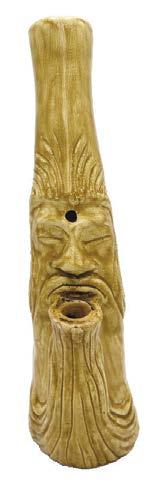
The first U.S. ceramic bong manufacturer was a company called Earthworks. Best known for their iconic Old Man Bongs, Earthworks was founded in 1971 by an OG stoner we’ll call Mr. Thomas, since he prefers his real name not be revealed.
“In 1971, newly married and always getting high, I needed to find a way to make some money,” Thomas told World of Cannabis. “So I started Earthworks in a garage I rented, and we began making bongs.”
Within a year, he’d expanded the operation into a 2,000 square foot facility, purchased some used equipment, and hired “30 very friendly stoned hippies” to mass produce his Old Man Bongs. By 1973, Thomas and his team were cranking out about 1,200 a day, which they sold to headshops, sales reps and distributors for $5 each.
Earthworks eventually produced 724,400 of its Old Man pieces, making it the top-selling bong of the decade and a subcultural phenomenon. Old Man Bong clubs began forming all over the country, and the Earthworks factory became a stoner tourist attraction. Thomas even claims he and his crew buried a slew of bongs all around the country.
“There are over 50 burial sites for Old Man Bongs, protected in cypress boxes for future discovery,” he told WOC. “I believed then that we were making something that quite possibly would be found by archaeologists thousands of years later.”
Sadly, Thomas’ bong empire ended in 1983, when he sold the company and quit Cannabis. Now retired and in his 70s, he hasn’t smoked weed in over forty years.
Another popular 1970s ceramic bong maker was a zany artist from Missouri named Jim Rumph.
Inspired as a child by Mad magazine, sci-fi books, and fantasy artists, Rumph became an underground illustrator and graphic artist during the 1960s before switching to ceramics in the ’70s. Operating out of Southern California, his companies, Mind Circus and Slyme Factory, began selling fantasy-themed pottery, drinking vessels, and yes, bongs.
To the mainstream, Rumph was best known for his movie character mugs, such as E.T., King Kong, Superman, and his highly successful Star Wars series. But for the counterculture, it was his cadre of whimsical fantasy-themed bongs for which he’s revered. From skulls and snakes to dragons and demons, Pegasi and unicorns to wizards and topless maidens — Rumph’s sword-andsorcery smokeware were some of the most sought-after stoner collectibles of the era.
In the 1990s, borosilicate glass established the new standard for smokeware thanks largely to “Godfather of Glass” Bob Snodgrass. Snodgrass and his early apprentices — such as Jason Harris (Jerome Baker), Chris Shave of JAH (Just Another Hippie) Creations, Dan K, and Cam Tower — went on to found the functional glass industry as we know it today. In fact, it was allegedly Tower who first crafted what we now consider the classic bong shape — a bubble-like base with a long, straight tube — out of a single, solid fused piece of glass. (See Cannthropology April 2021 and April 2023).

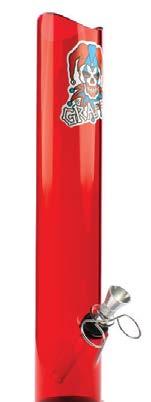
Around the dawn of the 1980s, a new material for making bongs emerged: acrylic. Compared to waterpipes of the past, acrylic bongs were cheaper and more durable. Pioneers of this plastic paraphernalia included U.S. Bongs from Rockville, Maryland (allegedly the first to feature pull-out downstem carbs) and a Milwaukee-based company called G.Graphics. Founded by a stoner named Todd Galanter, G.Graphics bongs originally consisted of a tin can filled with concrete and a PVC tube with a hole drilled in it for a metal stem. Eventually Galanter shifted production from his basement apartment to a warehouse and upgraded his materials. Though mostly sold only at local headshops in Wisconsin and Illinois, G.Graphics bongs became extremely popular in the greater Midwest. Nevertheless, Galanter appears to have shut the company down in 1990. But by far the most well-known bong manufacturer of that era was a brand whose name sounded suspiciously similar to Galanter’s: Graffix. Any American who was getting high in the 1990s is undoubtedly familiar with Graffix’s iconic jester skull logo and most likely found themselves choking up a hit from one of their long, colorful tubes at some point. Graffix was founded in 1988 in Tucson, Arizona … but beyond that, there’s shockingly little information available about this iconic, enigmatic brand.


These boro bongs have enabled myriad new innovations, such as fuming (aka color-changing glass), cooling ice catchers, smoke-diffusing percolators and multi-chamber recyclers. Over the past three decades, glassblowing has become the art form of choice for many Cannabis lovers who create and collect mind-blowing heady works of functional art worth thousands of dollars.
Despite their artistic value, bongs are still classified as drug paraphernalia by the U.S. government under the Controlled Substances Act, and are therefore federally illegal to import, export, sell or transport across state lines.
To get around this law, headshops have historically posted signs stating that their smokeware was for “tobacco use only,” and forbade use of the word “bong” in their stores. Unfortunately, that didn’t stop the Justice Department from launching Operation Pipe Dreams in 2003, driving many bong makers and retailers out of business. Luckily, this beleaguered industry has made a triumphant comeback over time. Today, with Cannabis legal in so many states, paraphernalia sales are permitted under state law in much of the country and estimated by several market research firms to be a $73 billion market.
After nearly a millennium, the humble bong has proven itself to be more than just some clever contraption for getting high — it’s an enduring international artifact of humanity’s heritage, and an ever-evolving symbol of Cannabis culture that continues to bring joy to millions of stoners around the world.