
The Glass Issue
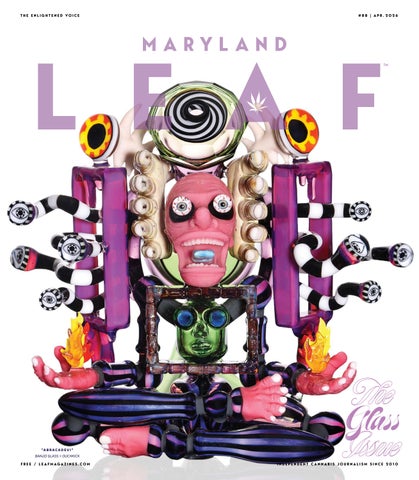
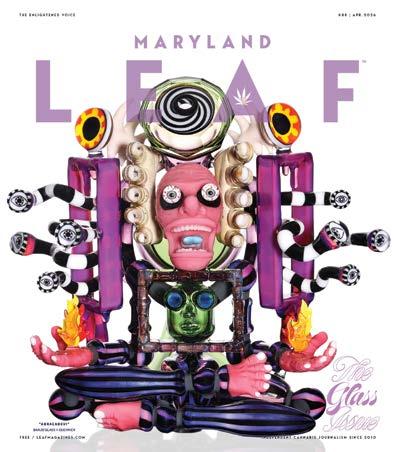
"ABRACADEVI"
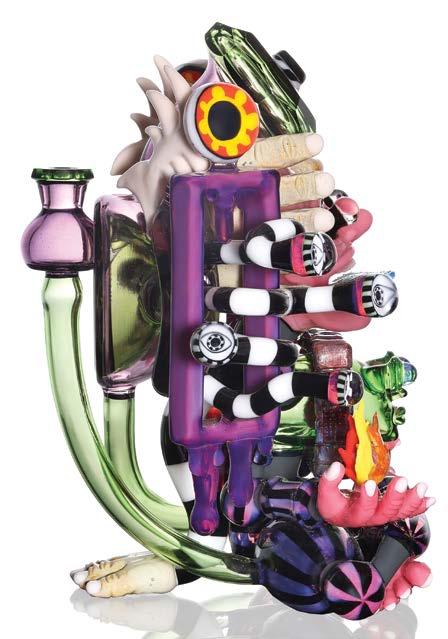
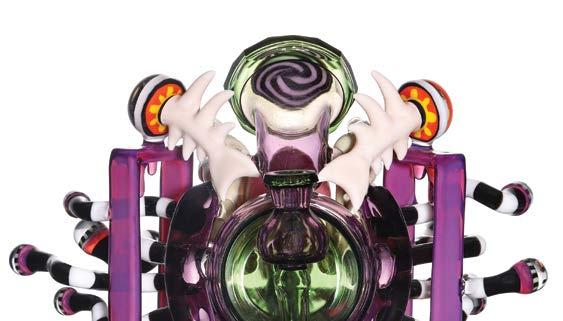
BANJO GLASS X OUCHKICK



















N E W F L A V O R









WES ABNEY CEO & FOUNDER wes@leafmagazines.com
MIKE RICKER OPERATING PARTNER ricker@leafmagazines.com
TOM BOWERS CHIEF OPERATING OFFICER tom@leafmagazines.com
DANIEL BERMAN CHIEF CREATIVE OFFICER daniel@leafmagazines.com
EARLY MARYLAND LEAF PUBLISHER early@leafmagazines.com
WYATT EARLY STATE DIRECTOR wyatt@leafmagazines.com (410) 961-8779
BOBBY BLACK LEAF BOWL DIRECTOR & HISTORIAN bobbyblack@leafmagazines.com
MICHELLE NARANJO, CARA WIETSTOCK COPYDESK michelle@leafmagazines.com | cara@leafmagazines.com
We are creators of
ABOUT THE COVER
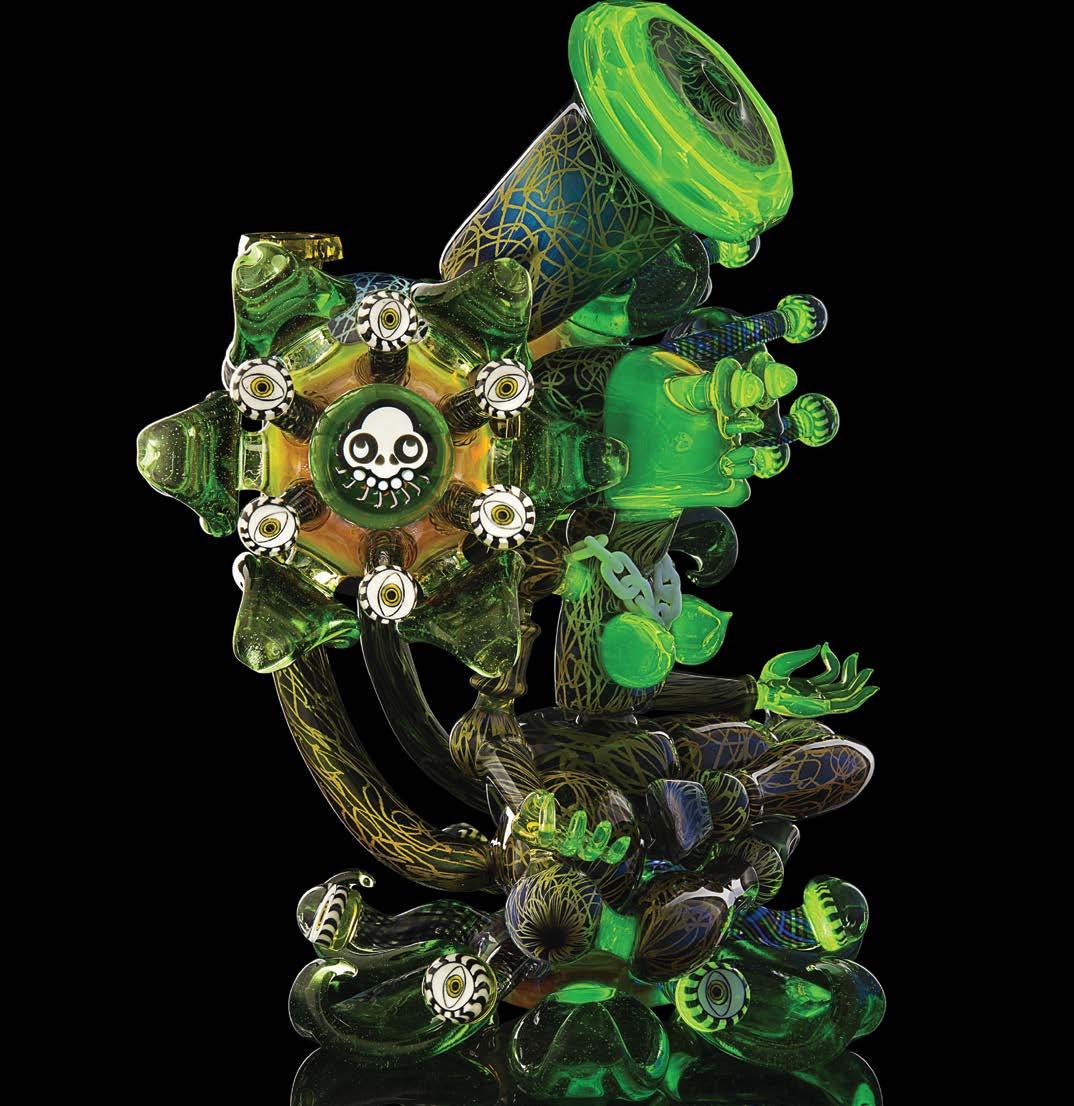
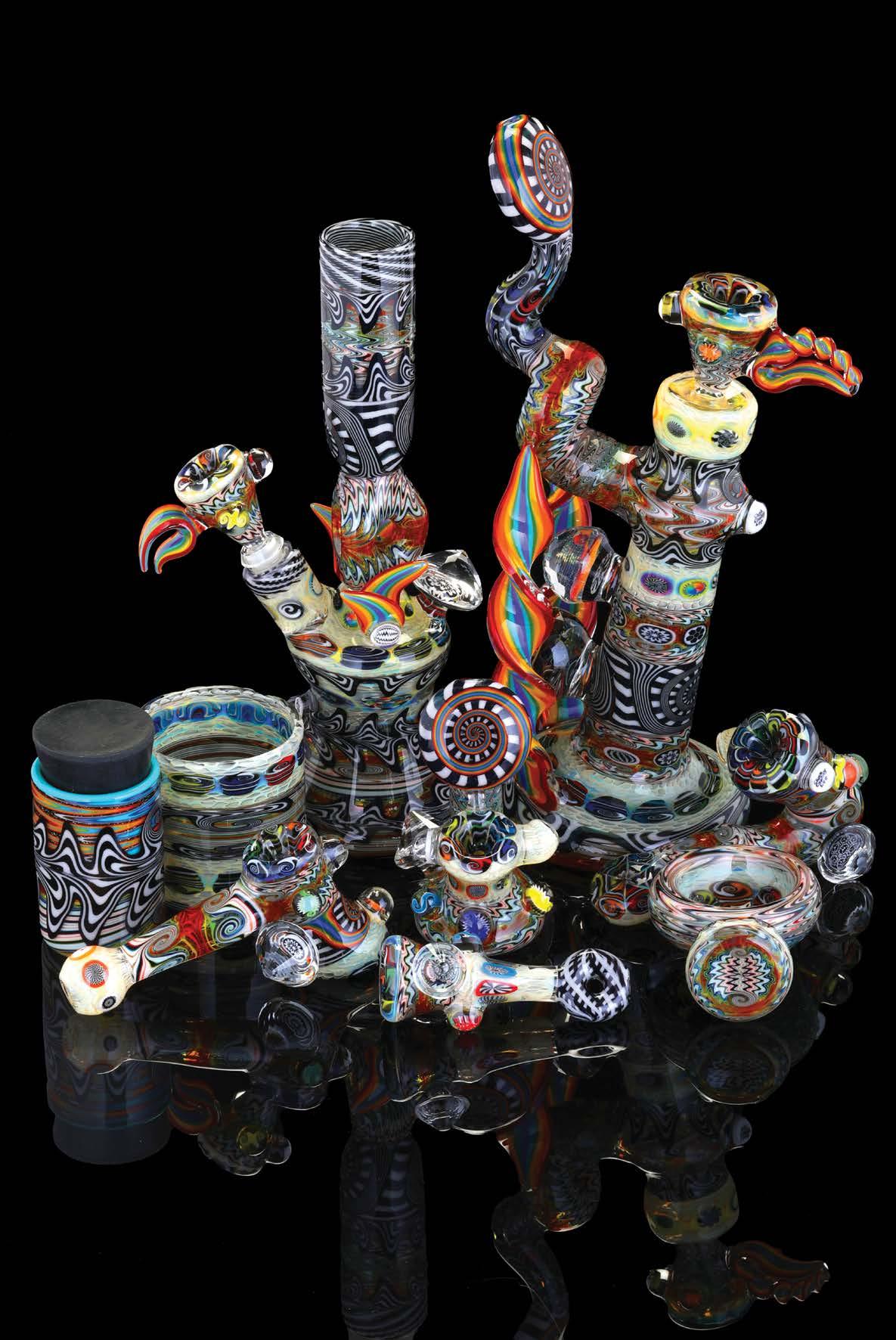
It's back and hotter than ever: our flameblown, smoldering and yes, still red-hot, Glass Issue spectacular! For every year that our magazine has been in print, the Leaf has dedicated one special edition to the magic of functional, high-end glass artistry. On the cover is a stunning collaboration from the artists Banjo and Ouchkick, captured in technicolor splendor by longtime Leaf contributor Jeff DiMarco. And if you happened to notice this month's borderless cover, well, just remember: life rewards the bold.
PHOTO BY @IAMJEFFDIMARCO @BANJOGLASS | @OUCHKICK
CONTRIBUTORS
WES ABNEY, FEATURES
AJ AGUILAR, FEATURES
DANIEL BERMAN, DESIGN
JACKIE BRYANT, FEATURES
JEFF DIMARCO, PHOTOS
DAVID DOWNS, FEATURES
WYATT EARLY, FEATURES
HAYLEY EWING, PHOTOS
JULIUS GUTIERREZ, PHOTOS REX HILSINGER, FEATURES + PHOTOS
ELLEN HOLLAND, FEATURES WIND HOME, PHOTOS
MATT JACKSON, FEATURES
JESSE JOHNSON, FEATURES
GREG MALCOLM, PHOTOS
TAYLOR MARTIN, FEATURES TERPODACTYL MEDIA, FEATURES + PHOTOS
JAMIE OWENS, FEATURES
BAXSEN PAINE, FEATURES
MITCHELL PETERSON, PHOTOS
KATHERINE WOLF, FEATURES JAMIE ZILL, PHOTOS
and on our website, leafmagazines.com. Email wyatt@leafmagazines.com to start advertising with Maryland Leaf!

CONNECT WITH MARYLAND LEAF
Exclusive Cannabis Journalism


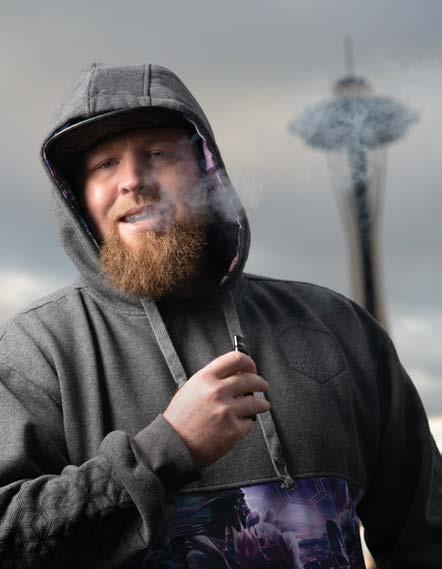
Editor’s Note
Thanks for picking up The Glass Issue of the Leaf!
Art is one of the few pillars of the old world remaining, endur ing because nothing more beautiful than artistic expression has ever come from huma n hands.
While many think of classical fine art as the “Mona Lisa” or Claude Monet’s impressionism pieces hanging in fancy museums, the most OG art is in the form of stained glass in churches and cathedrals around the world.
Glass can hold color and shape for hundreds or even thousands o f years without fading or degrading like a painting.
At the Metz Cathedral in France, this magical display of glass and light is on full display. It’s known as “God’s Lantern” for the amount of light coming through the nearly 70,000 square feet of stained glass windows, which depict religious scenes with glass set as far back as the year 1250.
Before there were TVs or screens, artists created famous scenes in glass and constructed not just windows, but unique goblets, jew elry and other forms of art that have lasted through the centuries.
Made in fourth-century Rome, the "Lycurgus Cup" is one of the earliest examples of silver and gold fuming in glass, giving the majestically crafted vessel different colors depending on light passing through and whether it holds liquid or not.
"I’VE SEEN PEOPLE RIGHTFULLY CARE FOR THEIR MOTHERSHIP DAB RIGS WITH THE SAME ATTENTION AND REVERENCE AS THEIR CLASSIC CARS.”
This type of art can’t be generated with artificial intelligence and can’t be mass-produced in a factory. A combination of heat, color and passion pours out of the artist and into molten glass, reforming and shaping it into something beautiful that, if properly cared for, can last forever.
Most unique of all is the fragility, the nature of glass being that it can break. You can’t really break a painting or a bronze statue, but glass art is especially valuable and unique because of the care involved.
I’ve seen people rightfully care for their Mothership dab rigs with the same attention and reverence as their classic cars.
With all respect to glass artists, from stained to soft glass t o the borosilicate community, our favorite glass pieces are the ones that get us high, which this magazine celebrates.
I’m proud to say that our 15th annual Glass Issue is our best one yet!


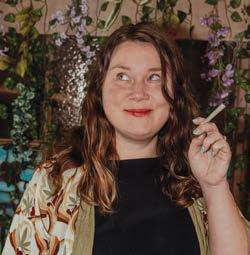

GLASS FROM THE PAST

Remembering the smoking apparatuses from throughout my weed-smoking life

I’m just going to get my ultimate weed confession out right here at the top: I am a terrible joint roller. Sure, I can get together a smokable joint in a pinch. Last year, I was on a rooftop terrace in Barcelona, Spain, with rolling papers, a grinder and a jar of Garlic Budder, and I made it work.
LIKE THE BEATLES LYRICS, “I get high with a little help from my friends.” I’m lucky that many of the people I typically hang with all know how to roll joints better than I do. Because of the master rollers in my weed-loving circles, I get away with smoking a lot of Cannabis that I did not have to roll up myself, but I also generally have a backup option.
I typically carry a glass pipe in my purse as a just-in-case alternative. I’ve also been known to stuff cones (a nice joint option because they don’t require licking the seal, which is sort of unsanitary if you think about it).
Early on, I invested in a padded pipe-carrying pouch that could hold my pipe, a little weed and a lighter.
Pipes are my main option for on-the-go smoking, but bongs have also always had a place in my heart for at-home smoke seshes. When I was younger, my friends had a 4-foot plastic bong from Graffix with a scary clown face on it. A friend had to light the bowl for you, and while it did get you super ripped, it wasn’t the best-tasting hit because it was made of plastic. Smoking out of glass just tastes better.
I had some basic bongs back in the day, but my first real bong purchase happened because of my job in weed journalism.
Back then, I got to travel a lot for work. One place I frequently visited was a glass show in Las Vegas. I worked the magazine booth, getting the word out about what we were writing, and I would walk the floor on my break.
This show, CHAMPS Trade Show, featured cool activations, including live glassblowing demonstrations and a glass car demolition derby. There was a lot of glass for sale, and I bought a green bong with a big glass marble and an extra glass swirl around the outside. I got a great deal on the bong because I was at a business-to-business show, and then the shop owner shipped it to my house so I wouldn’t have to worry about breaking it on the flight home. I smoked out of that bong for a long time, but at some point, it must have broken because I don’t have it anymore. More than a decade ago, at my first job in Cannabis journalism, I was lucky to work in an office where I could have a bong on my desk. Even though we weren’t supposed to smoke in the office, some rules are meant to be broken. We tried to be respectful of the other offices around us, and every once in a while, we’d hit the bong and blow the smoke out the window. When the COVID-19 pandemic closed our office for good in 2020, I inherited the bong. It’s pretty amazing, with multiple chambers to filter the water.
Nowadays, I use another bong from that era, which was sent to me as a gift, as my travel bong. I have a large padded bag for it that I use as sort of a briefcase whenever I’m on a reporting assignment where there might be an opportunity to sample some flowers.
I recently got to do a taste-testing session with my main weed mentor, Cannabis cultivation expert Ed Rosenthal, and everyone was impressed that I brought my own bong.
Smoking out of glass just tastes better.
I have fond memories of my first pipes. When I got my first job at a Cannabis magazine, my then-boss gave me a pipe as a gift. It will always be a favorite, as it represents success in a field that was initially just something I loved and then turned into a job.
I knew I wouldn’t be able to roll up respectable joints, so I brought my bong to make sure I could sample all the weed on offer that night. I love my bong and how it rumbles when I hit it. I love how stoned I get when I smoke off of a bong. I recently had a party where I was encouraging my guests to hit it. Remembering my glass from days of yore brings me back. These are physical touchstones from my life, artistic tributes that mark my love for a flower.










FIRE FOLLOWER A NEW BLOOM FOR BLUEBERRY STRAINS
TERPHOGZ’S NEW BLOOBERRY LINE GOES UP AGAINST BLUE CAVIAR, BLUE LOBSTER, AND MORE
Consumers and growers are in for the kind of competition that we can all rally behind: a tussle for who has the loudest blueberry terpenes (terps) in the Cannabis game.
Terphogz—the California-based popularizers of Zkittlez (known as The Original Z, or just “Z”)—debuted five new Blueberry strains dubbed the “Blooberry Line” for spring. Terphogz’s managing director, Jon “Jondo” Orantes, said, “It’s begun, the blueberry wars have.”
The declaration encapsulates a simmering trend in contemporary ganja, with peer brand Cookies selling Blueberry Caviar flower. Berner is developing new crosses from it with award-winning Ridgeline Farms. Blue Lobster nabbed a nomination for 2025 Leafly Strain of the Year. Blue Nerdz continues to dominate. I’ve smoked all of these strains— they’re fire.

TERPHOGZ BLOOBERY
Let’s get into the Terphogz Blooberry drop first.
Terphogz has released about 30 to 50 regular seed packs of Blooberry Headband (707 Headband x Bell Springs Blooberry), Blooberry Pie (Z-Pie x Bell Springs Blooberry), Blooberry Zruntz ((Z x Runtz) x Bell Springs Blooberry), IC Bloobies ((Ice Cream Cake x Sherbert) x Bell Springs Blooberry) and Black Truffle Blooberry (Black Truffle Gelato x Bell Springs Blooberry).
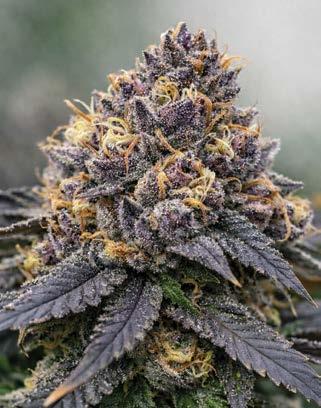
The priciest is the Blooberry Headband at $269 for 10, which tells you where the hype is at. The rest of the set goes for $240 for 10.
Why this drop now? Terphogz has a hit with 2023’s Blooberry Z (Dankster Blooberry x Z), which is $180 for 10, and its 2025 offspring Bloogatti (Bubblegum Gelato x Blooberry Z). Bloogatti remains available for $220.
For this new Blooberry line, Terphogz co-founder Tony Mendo said the team went back to some early 2000s Blueberry work. They selected a new male based on taste, referred to as Bell Springs Blooberry, and pollinated Terphogz’s whole lineup with it. The tastiest standouts made the cut listed above.
Some are good for hash, others are good for flower. Orantes recommends the Blooberry Pie (Z-Pie x Bell Springs Blooberry), as well as the Blooberry Headband (707 Headband x Bell Springs Blooberry) for hash production.
Blooberry Pie should yield more and finish faster, with a wholesome blueberry pie aroma and flavor. The Blooberry Headband may take longer and yield less, but it has the most hype. The Headband and blueberry terps hit like a musical mix of high and low frequencies.
Each regular pack should have the typical polyhybrid spread of phenotypes: a mom-leaner, a dad-leaner, several hybrids of both parents, and a recessive weirdo.

Award-winning journalist/author and former Leafly Senior Editor David Downs’ monthly genetics intelligence dispatch.
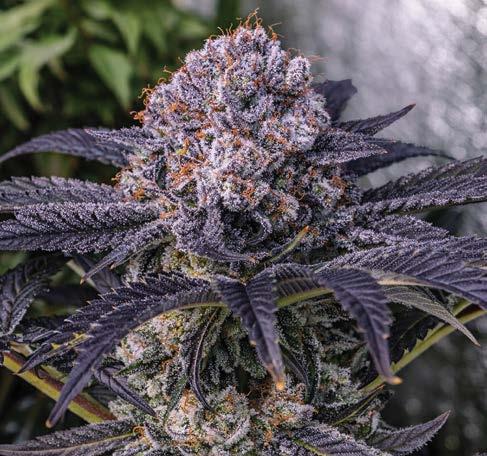
Mendo said growers can expect “more of a broader spectrum as far as the Blueberry lineage goes, as well as some of those deep killer blueberry jelly terps.”
Orantes said, “If you’re like me, you’re just praying for the weirdo ones.”
Blooberry Zruntz ((Z x Runtz) x Bell Springs Blooberry), IC Bloobies ((Ice Cream Cake x Sherbert) x Bell Springs Blooberry), and Black Truffle Blooberry (Black Truffle Gelato x Bell Springs Blooberry) will be your top 40 radio hits for cash cropping.
BLUE BELLES
In honor of the blueberry bloom of 2026, here’s a roundup of Blueberry strains we’re seeing out there.
All respect goes to Oregon breeder, legend, and super-nice guy DJ Short. His 1998 F4 Blueberry is $59 for four feminized seeds (fems).
DJ Short told the Leaf that the Blueberry cultivar stays uniquely effective and it’s always satiating.
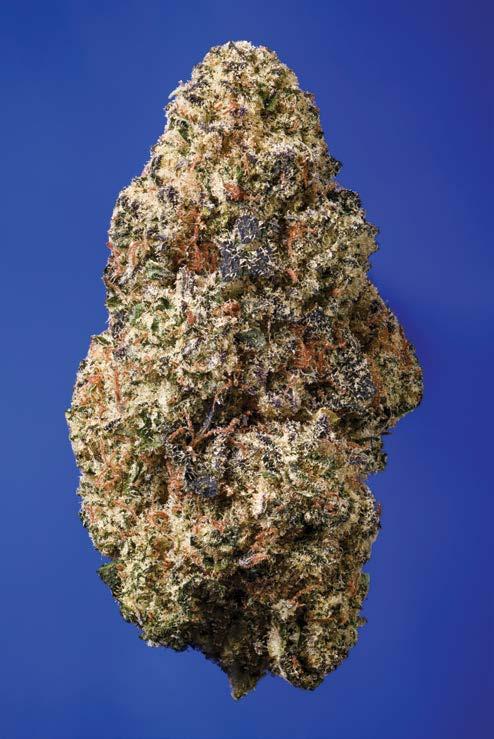
THE HEADBAND AND BLUEBERRY TERPS HIT LIKE A MUSICAL MIX OF HIGH AND LOW FREQUENCIES.
“I call it tolerance threshold, or burnout, and Blueberry shines there,” he said. “It’s the sense of satisfaction that applies beautifully to the Blueberry. That’s why she’s holding through this test of time.”
DJ Short’s son continues the mission as the brand Blue Star Seed Co. with Candied Blueberries F1 (Zkittlez x 1998 F4 Blueberry S1), and Stoned Berry F1 (Chem D x 1998 F4 Blueberry S1), which he said has a “pungent, raunchy, chemical-diesel aromas with grape hash, apple cider, and berry pastry notes.”
The brand Life is an Adventure has a Blue Cheese (Big Buddha Cheese x Blueberry) that’s $25 for three fems.
Atlas Seeds sells a Blue Dream Auto (Blue Dream Auto x Blue Dream Auto) that “can be set loose outdoors and it does its thing without a lot of fuss,” according to its product description.
In clone form, the widely respected Rebel Grown also has Blue Dream cuts for $99.
New in 2026, Blueberry Honey from Humboldt Seed Company smells and tastes just like it sounds.
Got a favorite blue strain we missed? Send recommendations to david.downs@gmail.com
TERPHOGZ BLACK TRUFFLE BLOOBERRY
TERPHOGZ BLOOBERRY ZRUNTZ
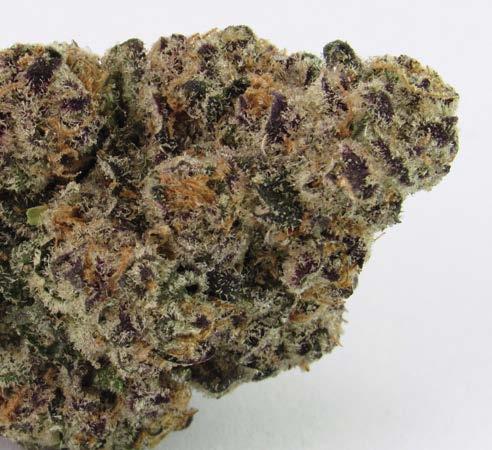
COOKIES BLUEBERRY CAVIAR
UMMA SONOMA BLUE LOBSTER
RIKIATHOMPSON


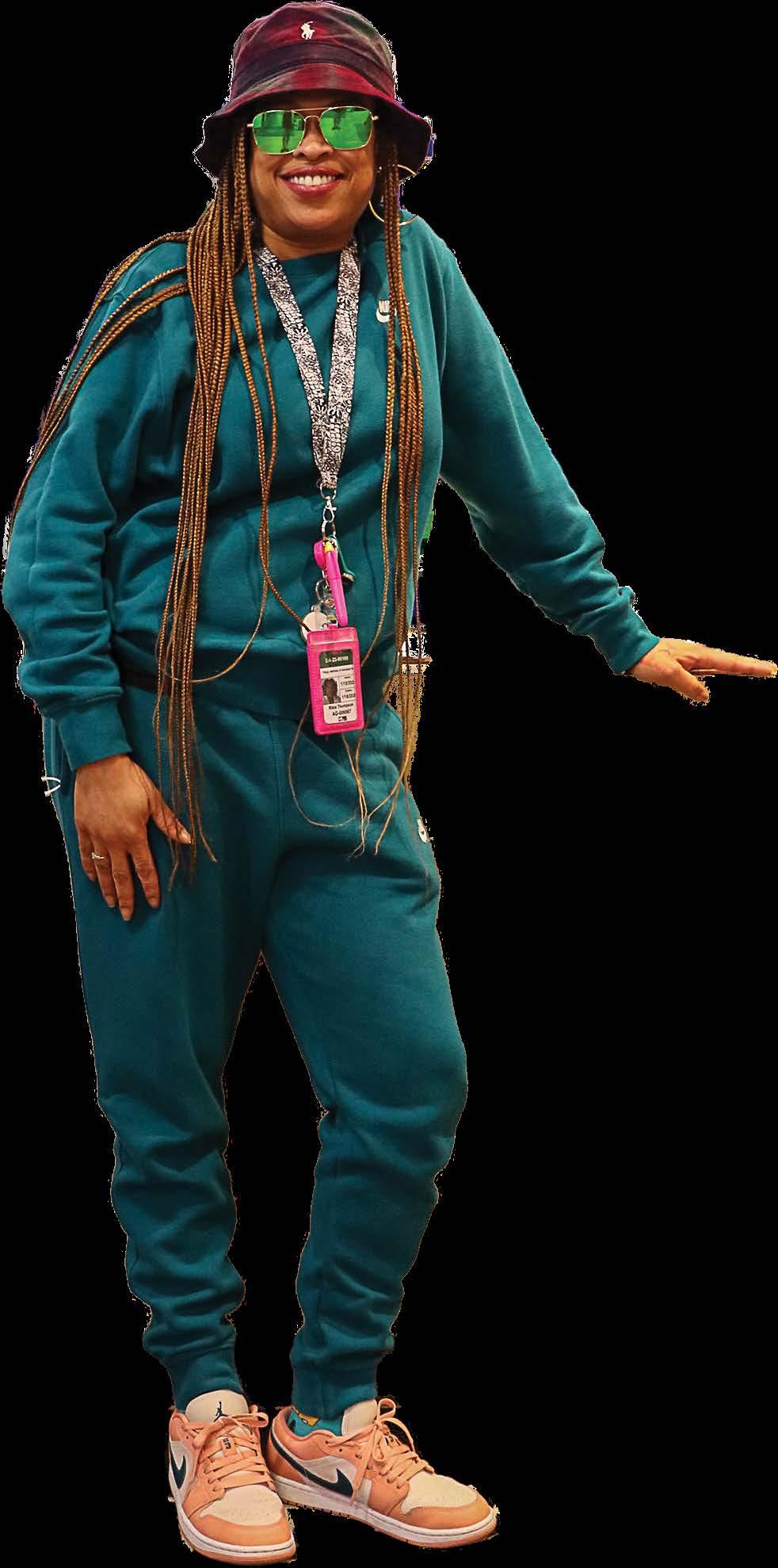
HOW HAS YOUR DEEP UNDERSTANDING OF THE HUMAN BODY INFLUENCED THE WAY YOU APPROACH CANNABIS AS A MEDICINAL TOOL? Learning how to use cannabinoids for different things has made such an impact on how I use my knowledge. As a student of all things human, I’m constantly learning new things and figuring out what I need to be at my best. Timing and dosage are very important in how well something will work for you, so I try to bring my knowledge to the Cannabis world every day.
YOU’RE PLANNING FOR LONGEVITY IN THE MANUFACTURING OR GROWING SPACE. WHAT DRAWS YOU TO THE BACK-OFHOUSE PRODUCTION SIDE VERSUS THE PATIENT-FACING RETAIL SIDE? As much as I do love the retail side as a people person, there is something therapeutic about being around plants. I have my own plants, but I would love to get involved with growing on a much larger scale. Even just packaging is very fulfilling for me, and I’m a Virgo, so it helps with my accuracy.
WHAT SKILLS FROM RUNNING YOUR OWN MASSAGE PRACTICE FOR SIX YEARS ARE YOU FINDING MOST TRANSFERABLE TO A MANUFACTURING OR CULTIVATION ENVIRONMENT? Business is business, and the output is going to directly reflect how much work you put in. I hold myself to a certain level of responsibility that you need if you’re going to operate in those spaces. I treat every day at work as if I’m working on something I own, and that mindset is what makes me happy and successful.
“I TREAT EVERY DAY AT WORK AS IF I’M WORKING ON SOMETHING I OWN, AND THAT MINDSET IS WHAT MAKES ME HAPPY AND SUCCESSFUL.”
DO YOU SEE A FUTURE WHERE CANNABIS AND MASSAGE THERAPY ARE MORE FORMALLY INTEGRATED, AND HOW DO YOU SEE YOURSELF LEADING THAT CHARGE? Oh, yeah! In my massage practice, I offer CBD treatments, but I would love to be able to offer my clients THC products. We aren’t quite there yet, but advocating for it and being ready for it to happen is exciting. I use CBD-infused bath salts and soak hot towels in them for my clients, and it works really well, but THC products would take it a step further. In a perfect world, I would formulate my own Epsom salt to soak the towels in.
WHAT WOULD YOU SAY TO OTHER WELLNESS PROFESSIONALS WHO ARE CURIOUS ABOUT ENTERING THE CANNABIS INDUSTRY, BUT AREN'T SURE WHERE THEY FIT IN? The first thing to think about is what is drawing you in and what your goals are in this industry. Everyone gets in the industry for different reasons, but setting goals keeps you going in the process of a long-term career. We’re at a place with Cannabis where people are starting to recognize it as a preventative medicine versus a luxury or recreational product.
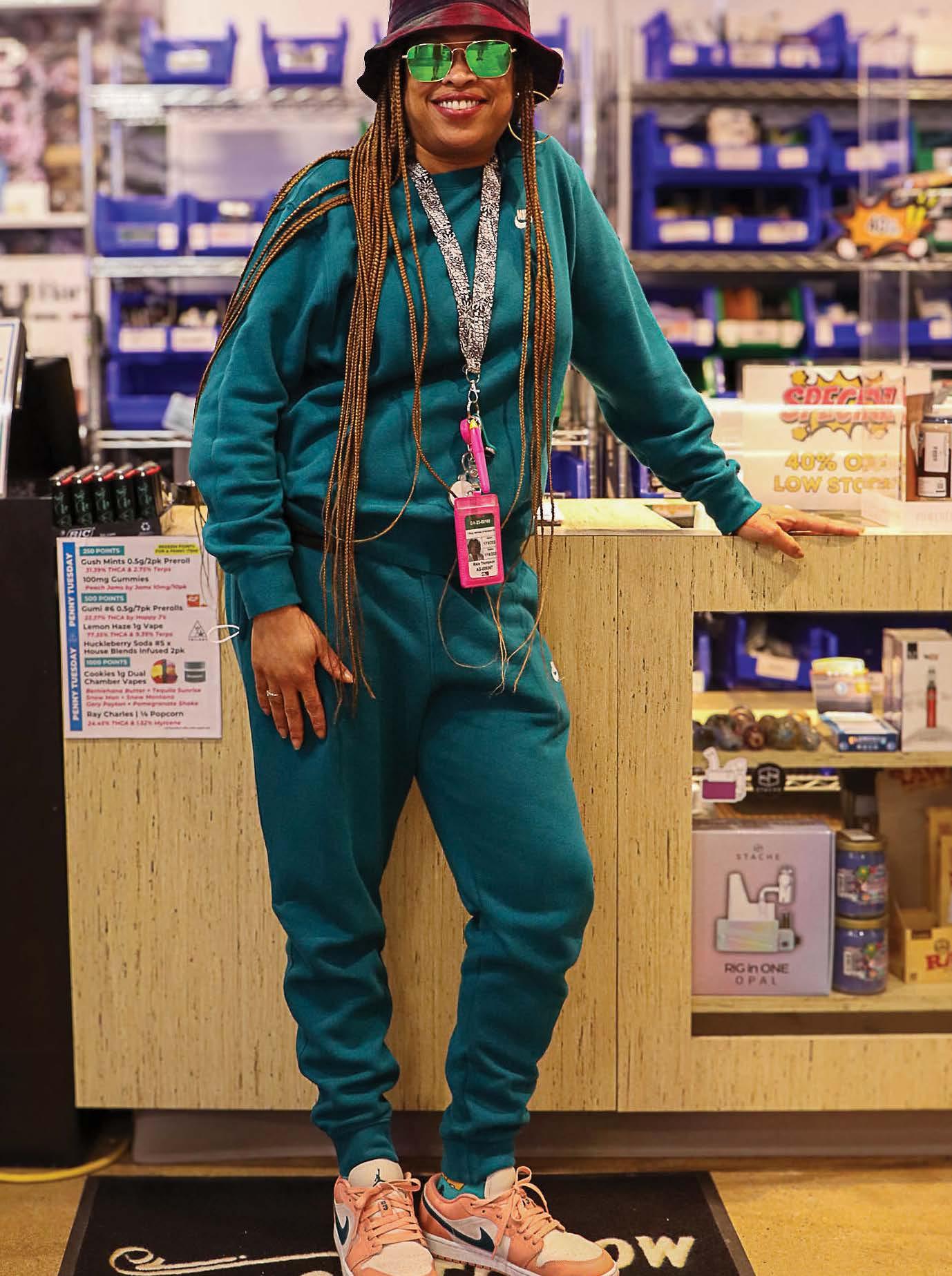
RIKIA THOMPSON was born and raised in Baltimore. She has been a massage therapist for 17 years, and for the last six years, she has run her own practice, Touch Massage, in Catonsville. Her goal has always been to help people both physically and mentally. As a student of behavioral science, her interests eventually led her to Cannabis and other natural remedies. Being in the industry for over two years, Thompson is making her mark and planning for longevity in a manufacturing or grow facility.

Wondering what sets our products apart?
At Exotic Elevations, we specialize in preserving the natural cannabinoids and terpenes that give each cultivar its unique character.
Did you know that Cannabinoids like THC and Cannabis Terpenes are naturally colorless?
The golden or amber tint you see in most extracts comes from unwanted compounds like chlorophyll, fats, and other waxes that get extracted during c onventional processing.
Our process is different. Without using harsh methods like chromatography, bleaches, clays, or centrifuges, we leave those unwanted compounds behind—right where they belong.
The result? A clean, flavorful extract that captures the true essence of the plant. Every product we make is crafted to cts and experie vars used.

arylan d Native’s
To: You ot Corporate pe you enjoy. -EE




GREENGOODS
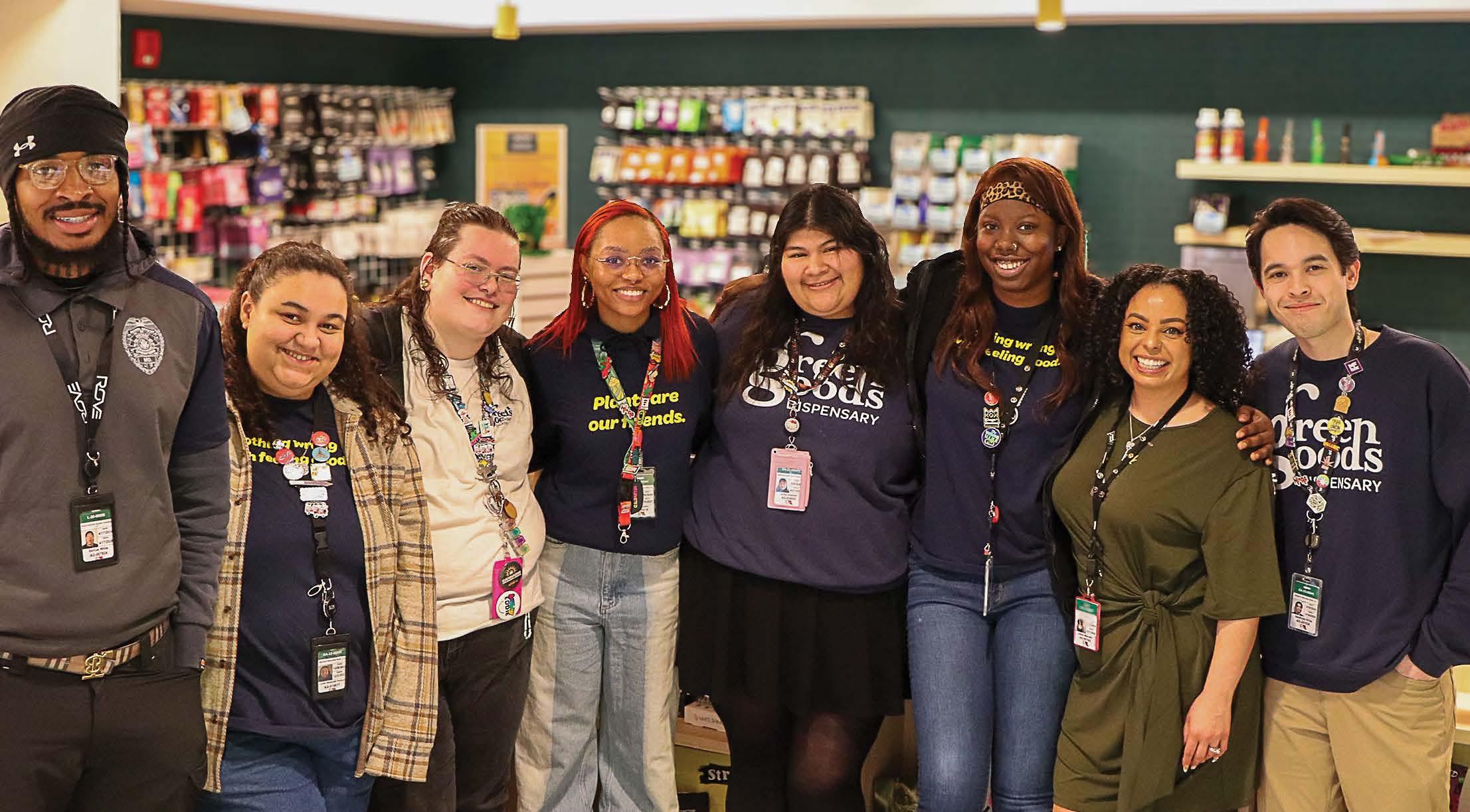

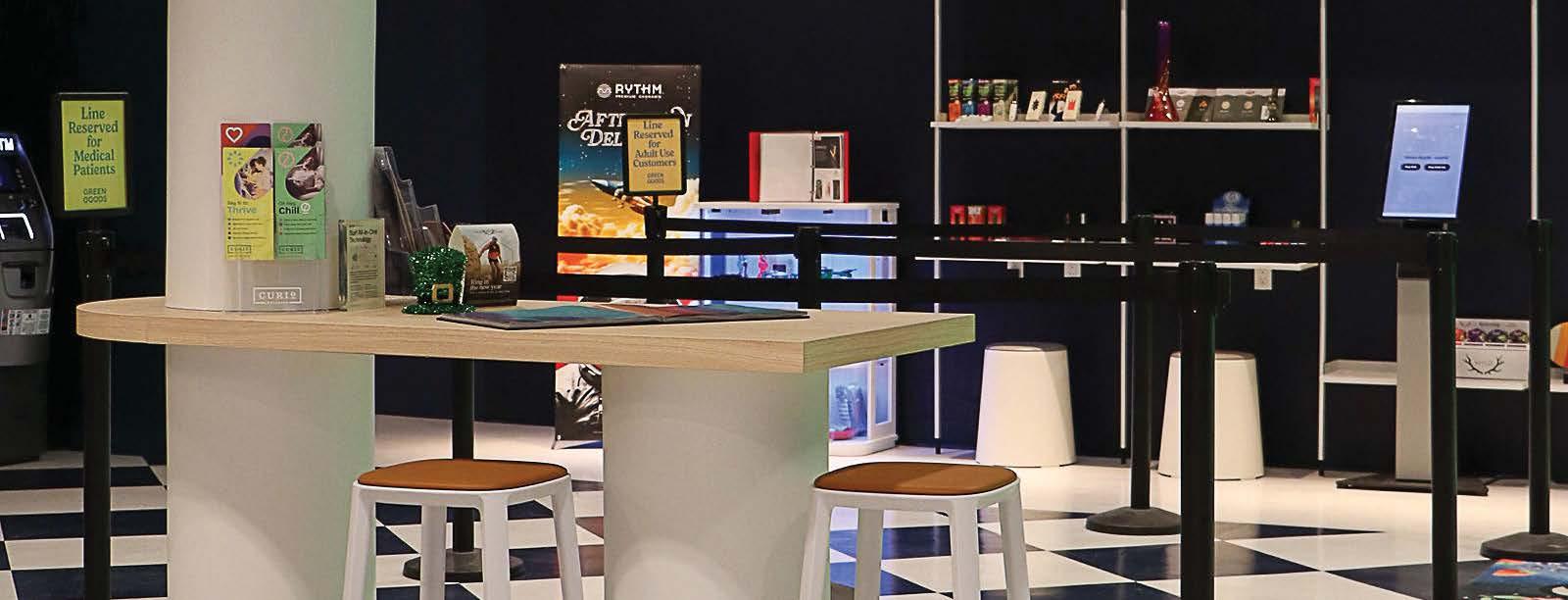

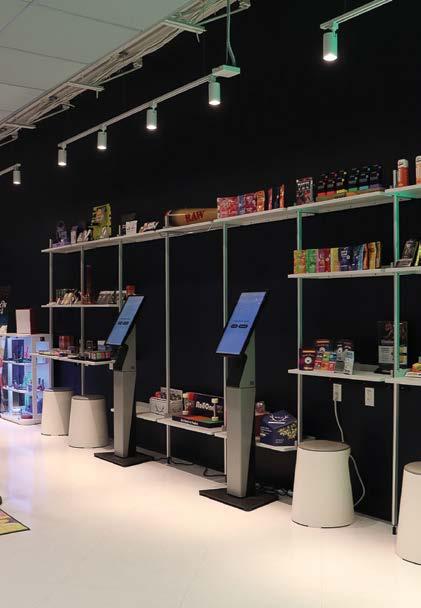
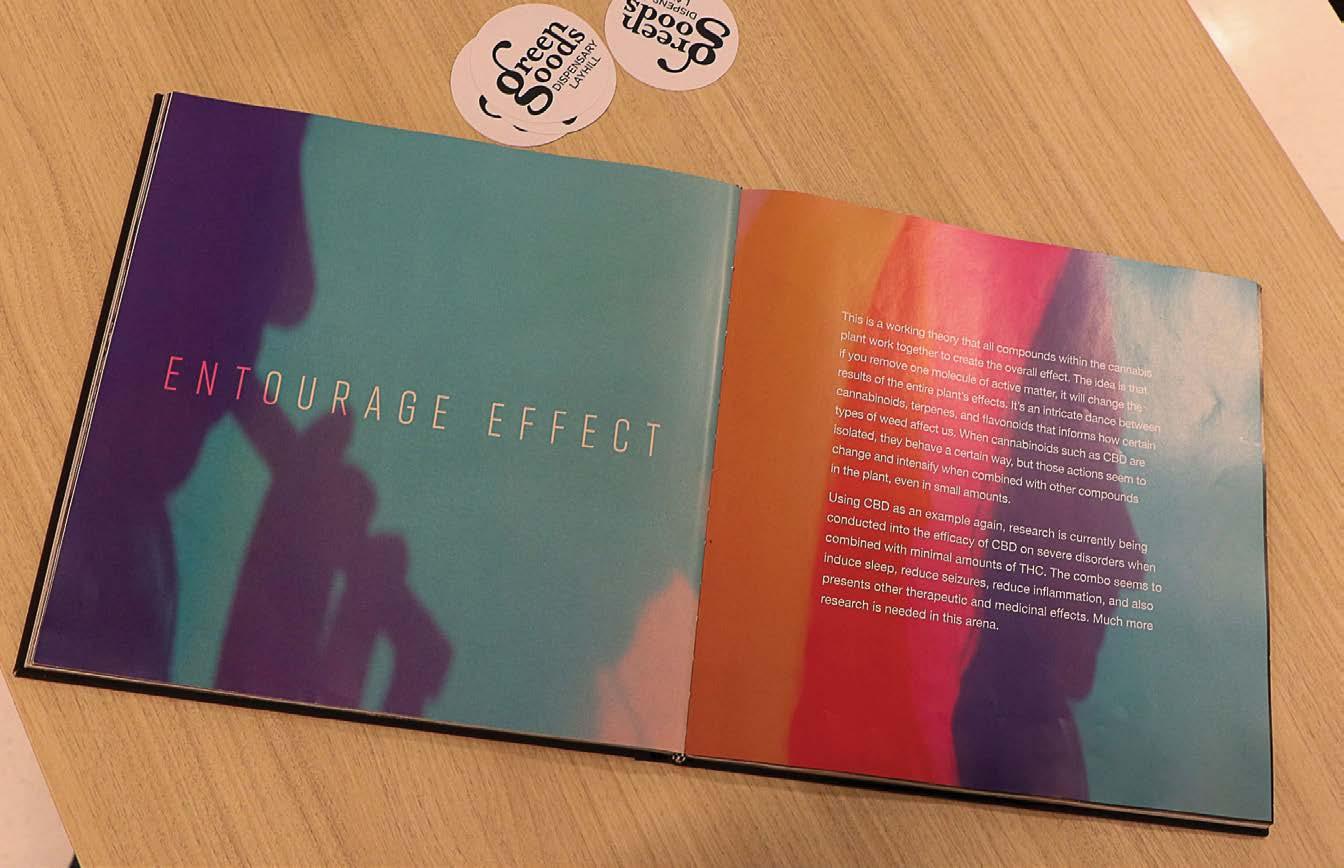
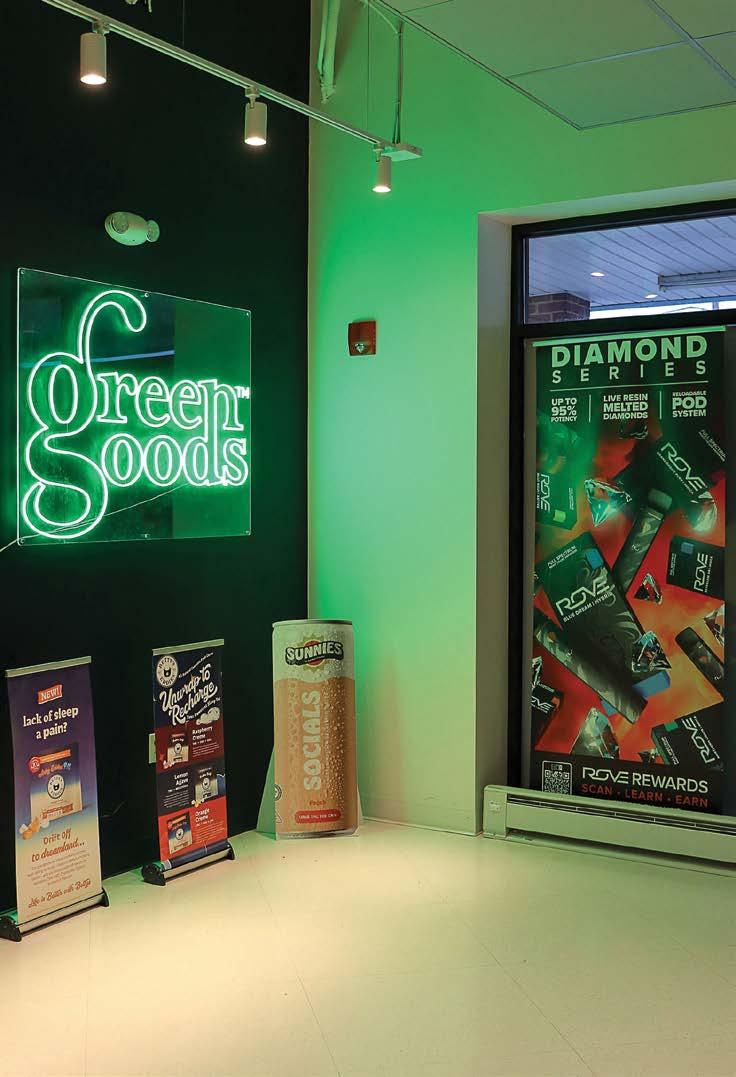
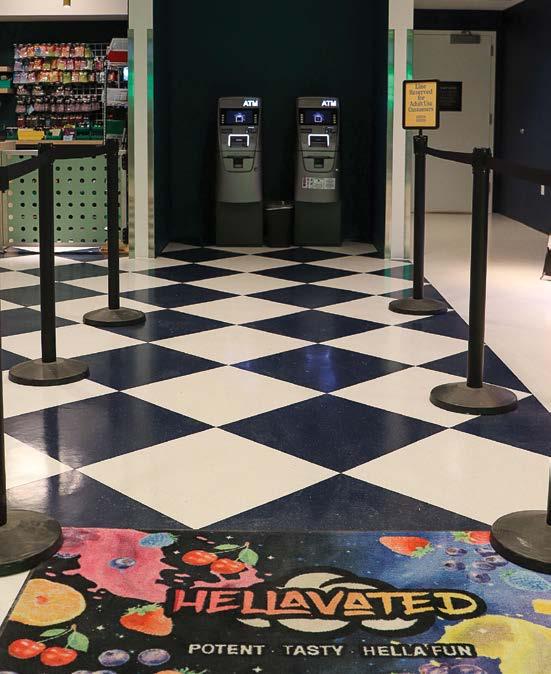
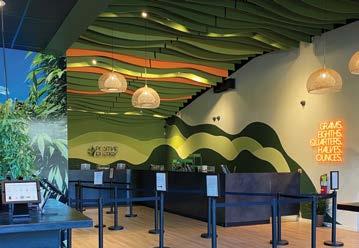
MODERN DESIGN MEETS OLD-SCHOOL VIBES at Green Good’s new-and-improved dispensary in Layhill. Upon entering, your eyes are immediately drawn to the checkerboard floors that lead the way to the counter, which is framed by a backdrop of lettered lockers where preorders are kept. Wooden counters and stools sit at the center of the dispensary, surrounded by brand activations along the walls. This place lives and breathes community energy, and the staff members make the whole experience even more worthwhile.


SETTING AND VIBE
Between the decor and the music I skateboarded to in the early 2000s, nostalgia set in pretty quickly at this store. The employees make patients feel comfortable in an environment that many people are still experiencing for the first time. Part of their goal is to create a welcoming space where people feel comfortable opening up about their personal goals with Cannabis. The Green Goods team also embraces Cannabis culture, recognizing that everyone has a different reason for loving the plant.
FLOWER
With a flower selection that could provide you with a new strain every day of the week, this is a top location to snag some bud. I was excited to see Fade Co.’s Blackberry Champagne — the 2025 Maryland Leaf Bowl winner for Exotic Flower — on the menu. If you’re looking to save some money, you can also use their website to shop flower by specific deals.
CONCENTRATES
One thing that stands out about this store’s concentrate menu is the amount of full-spectrum oils they offer. RSO and FECO are both such important tools in using Cannabis as medicine, and having a good place to rely on for stocking them is essential. They also had some of the newest drops from Kings & Queens, including Znow Flakes and Blueberry Cruffin, both in live budder.
EDIBLES
The edible menu at Green Goods typically has something for every occasion, and they stay on top of the seasonal offerings. Whether it’s something that has been on the market for ages or the newest product to drop, their edible options go beyond your expectations. Shout out to the Green Goods team for keeping things fresh and doing right by the people.
"THE GREEN GOODS TEAM ALSO EMBRACES CANNABIS CULTURE, RECOGNIZING THAT EVERYONE HAS A DIFFERENT REASON FOR LOVING THE PLANT."
REVIEWED:
LIVE RESIN BUDDER
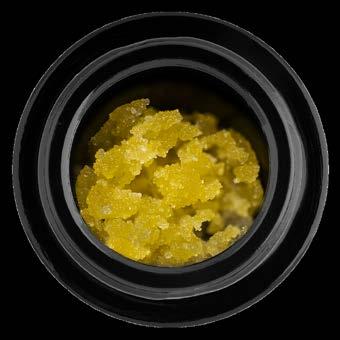
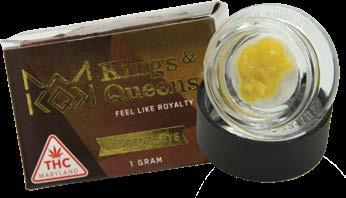
The aroma coming out of this jar is tangy and bright, reminding me of citrus fruit mixed with melons. It has the perfect consistency for a live resin budder: wet to the eye, but easy to grab with a dabber or hot knife. Flavor-wise, it’s very close to that of Sour Diesel, gassy and sweet at the same time. After taking a dab, I went outside and had plenty of energy for a long walk in the sun.

KINGS & QUEENS
KABUKI SOUR










KAMIMEYERS
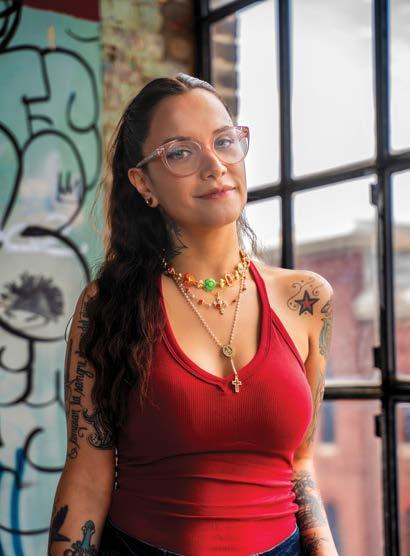
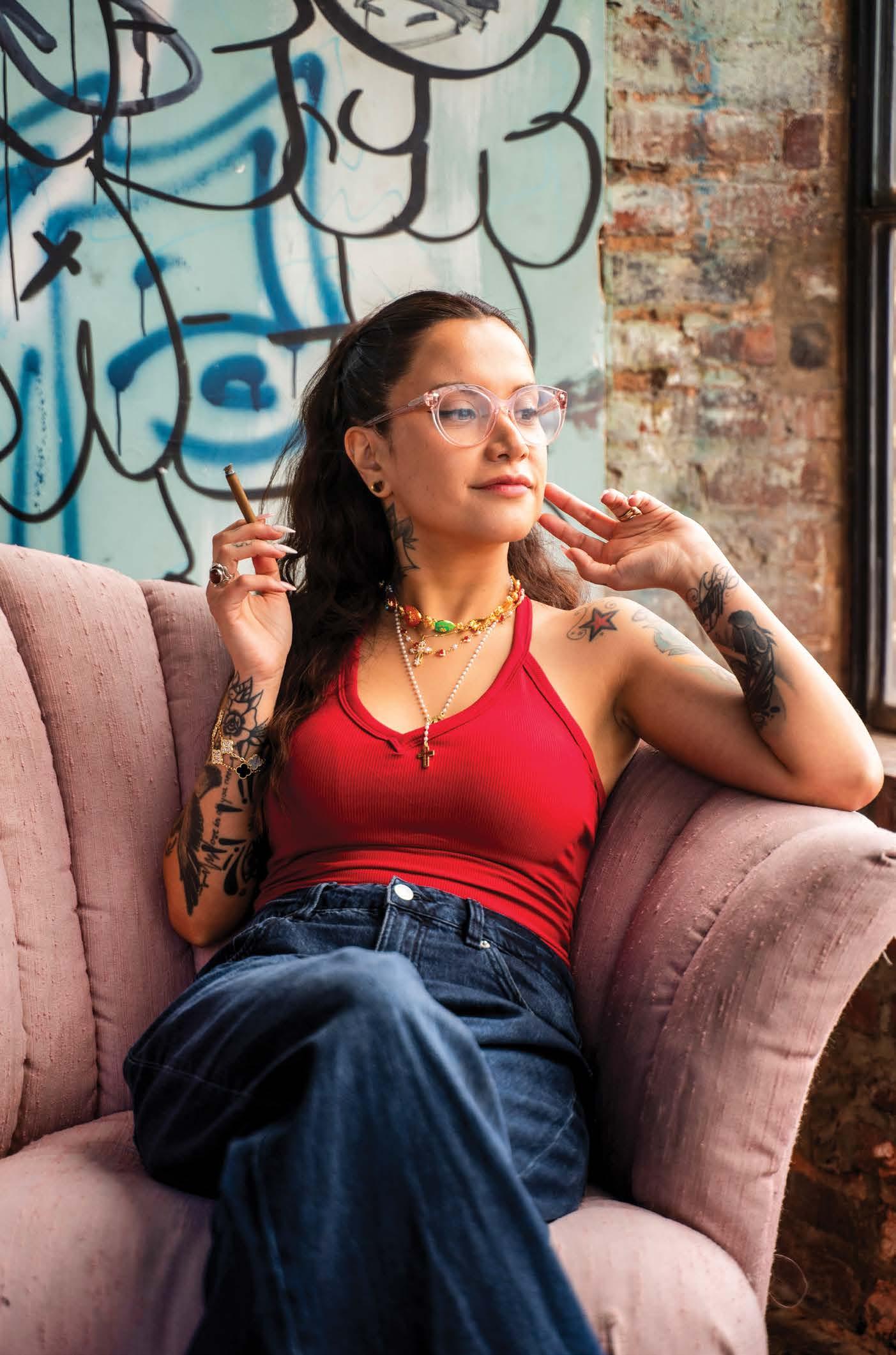
Downstairs in her house, Kami Meyers sits at the bar counter and lights a joint. Next to the bar is a pool table filled with a packed suitcase, brand merchandise and a Beyblade stadium that is lined to its corners with various Beyblades. Most of them are plastic, but some are also metal, which she said are heavier and can damage the other pieces if used improperly. “These metal pieces are from Japan, so they’re a little harder to find,” she said, adding that her son has given her an extensive amount of knowledge on them as well. “I’ve been playing this with him since he was 4 years old.”


MEYERS GREW UP in Valdivia, Chile, the southernmost part of the country, she said. Surrounded by land that borders the start of the Patagonia region, she would spend her days roaming around her parents’ farm.
“I grew up in between cows and planting trees every day with my father,” she said. “I would leave the house at like 10 a.m., and I wouldn’t go back until the sun is down.”
She attended a school that partnered with the University of Cambridge to teach English and assess each student’s proficiency, with the students needing a certificate to graduate.
“That was pretty cool for me because that’s how I learned,” she said.
With an ambition to teach Spanish to English students, Meyers attended college classes for two years before becoming an au pair and traveling to the U.S. She also attended community college while working here in the evenings, ultimately moving back to Chile after a year and deciding the education field wasn’t her long-term career.
Upon returning to Chile, she attended hair school and became a hairdresser. With her new career, she started working as a brand influencer for different hair care brands on the side. She said this career path was inspired by her dad, who owns a salon.
“I saw it all my life. I would spend my days there sometimes … just waiting for them to finish the day because I didn’t have a ride back home to the farm,” she said.
Meyers also said that her work as a brand influencer served as her introduction to the Cannabis industry. She first tried Cannabis in eighth grade with a cousin in Chile and said she didn’t feel anything during the first session, but noticed its effects when she began consistently smoking later in high school.
“I feel that here, for example, people that are around the age of my parents are way more open-minded and will tell you, ‘I used to smoke, too.’ There, they’re still going to send their kid to rehab because of weed,” she explained.
With her influencer career blossoming, Meyers was eventually invited to work at a Cannabis fair in Chile and met Mariano Duque, a well-known cultivator whose Cannabis seeds have been planted all across Latin America and Europe. Meyers said he taught her everything she knew about Cannabis up to that point, as she began working with him to promote his line of seeds. In Chile, she said, cultivators focus on the genetics of the plant and the cultivation process as a whole rather than just the overall potency of what they’re growing.
“Each seed is different than the next one,” she said. “Because this is a plant, and we need to know that this is something organic and not made in a lab.”
With the COVID-19 pandemic affecting her livelihood in Chile, she decided to make a permanent move to the U.S., staying in Miami with some of her extended family before heading north to Maryland.
Sincecomingback fromherlatesttrip toChile,MeyersHAS HELPEDCREATE MARYLANDHERBCO. WITHINDUSTRYVETS.
After recurring visits to Mana in Middle River, the closest dispensary to her, she applied to work there after getting to know the staff and was hired shortly after. Given her background with Cannabis in Chile, she said navigating parts of the industry here — like the significance and characteristics of terpenes — was a challenge for her.
“We, in Chile, do more with the breeders and genetics. All of a sudden, here’s everything you need to know about terps. I only knew sativa, indica and hybrid,” she said, adding that the job also taught her about compliance and being responsible in the industry.
Utilizing her previous experience as a brand influencer in Chile, Meyers stepped away from budtending to begin working as a brand rep for a few different Cannabis companies across Maryland. She found she still could teach people in a friendly and understanding manner, just in a different setting than what she was going to school for.
“I like to be able to meet all kinds of people,” she said.
She has been open with her consumption from the start, she said, despite the stigmatization around Cannabis use in Latin America and most countries deeming it illegal to possess.
“I love to teach, and that’s what I loved about working with Coast, for example, is I got to give an entire speech about cannabinoids. They learn that the plant has all these other benefits to it.”
Since coming back from her latest trip to Chile, Meyers has gotten together with a few other industry veterans to start
CANNABIS FOR A BETTER LIFE

Maryland Herb Co., a new brand set to hit the Maryland market later this year. The brand will focus on producing craft Cannabis, with an emphasis on releasing smallbatch drops and hand-trimming all of their flower.
In addition to their hand-picked products, Meyers said being included in the decision-making and being able to voice her opinion on their operations also makes being involved more fulfilling to her.
“The fact that the owners text me and ask if I have any ideas for preroll packs, it’s like ‘You really want to know? You’re asking me?’ It’s nice to be included in that,” she said.
A big fan of anything sativa, Meyers said her consumption preference is always going to be flower, even though she said she normally has “a little bit of probably everything in my stash,” including dabs and some gummies.
“I’ll grab an indica for the night to relax, but I’m a sativa person for sure,” she said, preferring anything with a terpinolene or limonene-dominant terpene profile. “Terpinolene, limonene, myrcene — those are my top three favorite terpenes.”
Maryland Herb Co. aims to bring a quality brand of Cannabis to the market that can work with anyone’s budget. The team has been preparing for their first drop and building hype by bringing merch to budtenders and taking ads out in the Leaf. But admittedly, it’s been hard for Meyers and the team to contain their excitement about what’s to come.
“It’s going to be very attentive, and I think the quality of Cannabis we’re going to have will show,” she said of the company’s process. “To represent a brand that cares about the quality of their Cannabis, that it’s really craft, having minorities be a part of the team and to be proud of a brand I’m promoting, that’s what it’s about.”


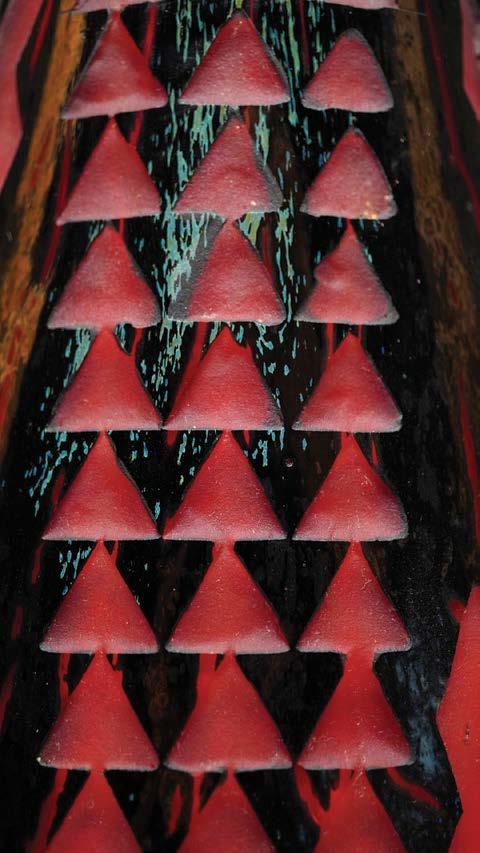

“It feels like I’m playing with lava. I’ll go watch the lava flow, then go straight into the shop and work with something similar.”
THE LAVA BENEATH MY FEET THE LAVA BENEATH MY FEET
HOW HAWAIIAN LINEAGE, BREATH, SAND AND FLAME SHAPE THE ART OF JULIUS GUTIERREZ

There is a moment on the Big Island of Hawaii when your breath slows to the tempo of the crashing waves, you notice the salt and ash in the breeze and you are struck by the sense that Earth is a living ancestor.
MAYBE IT’S THE MOLTEN LAVA running through the Earth’s caverns beneath your feet, a reminder that this land is the domain of Tutu Pele, the fire goddess of Hawaii. She is our great-grandmother, an ancestral spirit to be respected, honored and approached with deep humility. The type of humble respect a glassblower embodies when the alchemy of these fragile yet timeless creations begins.
It is in this reverence that Julius Gutierrez steps into a relationship with grandfather fire, not as a tool, but as a living elder, one that echoes the same elemental energy as the lava rivers of Pele herself.
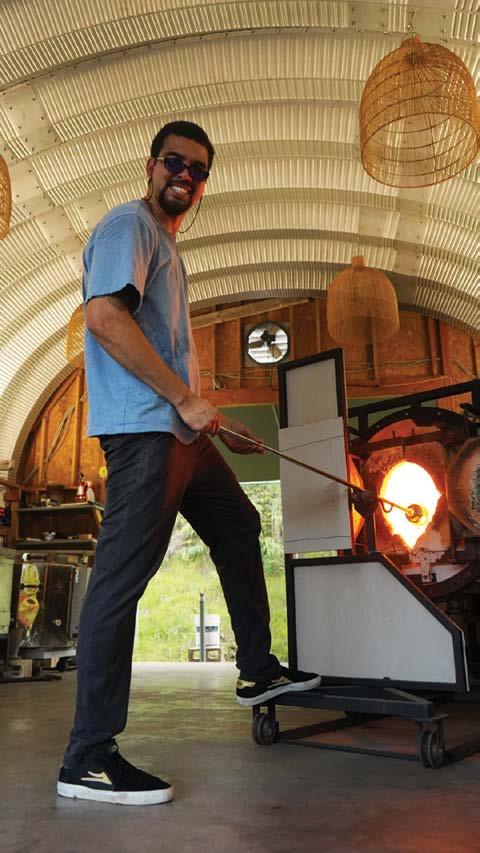
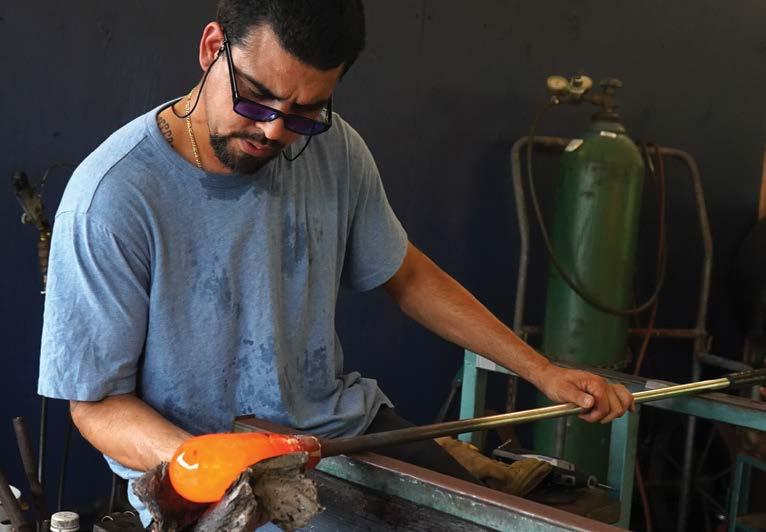
At Moe Hot Glass, guided by master glassblower Daniel Moe, Gutierrez has spent eight years shaping more than glass. He is shaping story, lineage and elemental memory, drawing from a land where fire is both destroyer and creator, where Pele’s breath reshapes the island in real time.
Can you introduce yourself in your own words and share what’s been moving through your world lately?
“I’m a farmer, a father, a psychonaut exploring biology, chemistry and playing with different elements,” Gutierrez said. “Nature moves through my reality daily and inspires my work.”
You carry Peruviano and Braziliano roots while living on the Big Island. How do your bloodlines and the land beneath your feet shape the way you approach the flame?
He speaks of Peru first, of tight-knit Indigenous South American roots bound by the joy of a big familia. It was his familia’s move to Hawaii that awakened his awareness to a deep systemic concern for native sovereignty.
“Seeing what happened here to the Kanaka Maoli tribes lit a fire in me to help represent Indigenous voices,” Gutierrez shared.
His pieces carry that intention: Hawaiian lineage patterns, tribal geometries etched not as decoration, but as protection, remembrance and resistance. In many ways, they mirror the markings of the land itself, lava fissures and flows shaped by Pele’s hand.
Our readers love Pakalolo. Do you have a favorite strain or preferred method of consumption?
“A good homegrown Super Silver Haze,” Gutierrez said. “I prefer to dab uplifting strains because they are simple, clean and quick.”
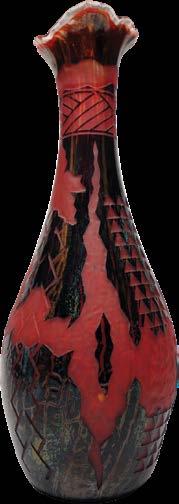
Have you blown your own smoke chalices?
“In my intro to glass class at the university, they told us we can't create bongs. So naturally, I made it a point to create a few of them,” he said with a smirk of rebellion. “Those pieces, once everyday tools, are now cherished artifacts marking the beginning of my collection.”
Many people see glassblowing as a craft, but others feel it is a ceremony. What does it represent to you?
“I feel like the very act of glassblowing is ceremonial,” he said. “When you get into the flow state with the flame, it’s like a trance, everything else falls away.” Here, fire becomes more than heat; it becomes a teacher. The process demands full presence, where breath and flame cocreate form.
Living on an island where lava flows beneath the surface, do you feel a relationship between your work and that living earth energy?
“It feels like I’m playing with lava,” he said. “I’ll go watch the lava flow, then go straight into the shop and work with something similar.”
The connection is visceral. Lava and glass are both born of heat, both carrying the story of transformation.
He dreams of one day creating glass directly from Hawaii’s own silica, allowing Pele’s body to become the medium.
There’s an alchemy to turning sand into glass. What does that transformation teach you?
“It teaches you to stay levelheaded and to let go. Glass breaks. You have to practice nonattachment,” he said.
“There is humility in the flame. No matter the skill, no piece is guaranteed. Beauty can collapse in an instant, just as land can be reshaped overnight by lava’s flow.”
In this way, the practice becomes spiritual, an ongoing lesson in surrender to forces greater than oneself.
Gutierrez works primarily with soft glass, an ancient form known for its fluidity and sensitivity. Unlike more rigid materials, it requires constant attention.
“You’re fully dancing with it,” he explained. “The process is physical, sweat, movement, breath, an orchestration of body and molten elements.”
That intimacy gives his pieces a living qual ity. His lava vessels feel like they’re still flowing, like they could shift at any moment. His ocean forms hold motion within stillness, echoing the meeting place of land and sea.
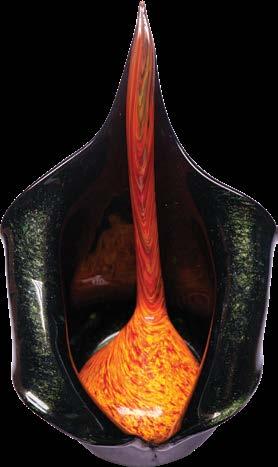
“In those moments, the boundary between studio and landscape dissolves. The furnace becomes a contained volcano, the blowpipe an extension of breath,” Gutierrez said. “I’ve even joked about blowing glass from the lava herself.”
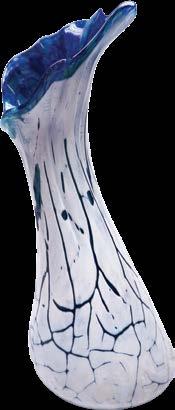
One sculptural piece — an open, womb-like form lined with crystalline green — was inspired by the place his daughter, Andará, was conceived, merging land, lineage and life into a single form.
What do you hope people feel when they hold your work?
“Childlike wonder,” he said simply. “Curiosity for understanding how these pieces were made.”
Perhaps that is the true medicine of his work, not just the visual representation of the objects themselves, but the feeling they awaken. A return to the youthful essence of awe.
In a world that often forgets its connection to the elements, Gutierrez stands in the fire as both student and storyteller. Through flame and form, he reminds us OGs that creativity is a living ceremony in motion.



Spring is in the air, and effervescent aromas emanate from our Concentrate of the Month ...

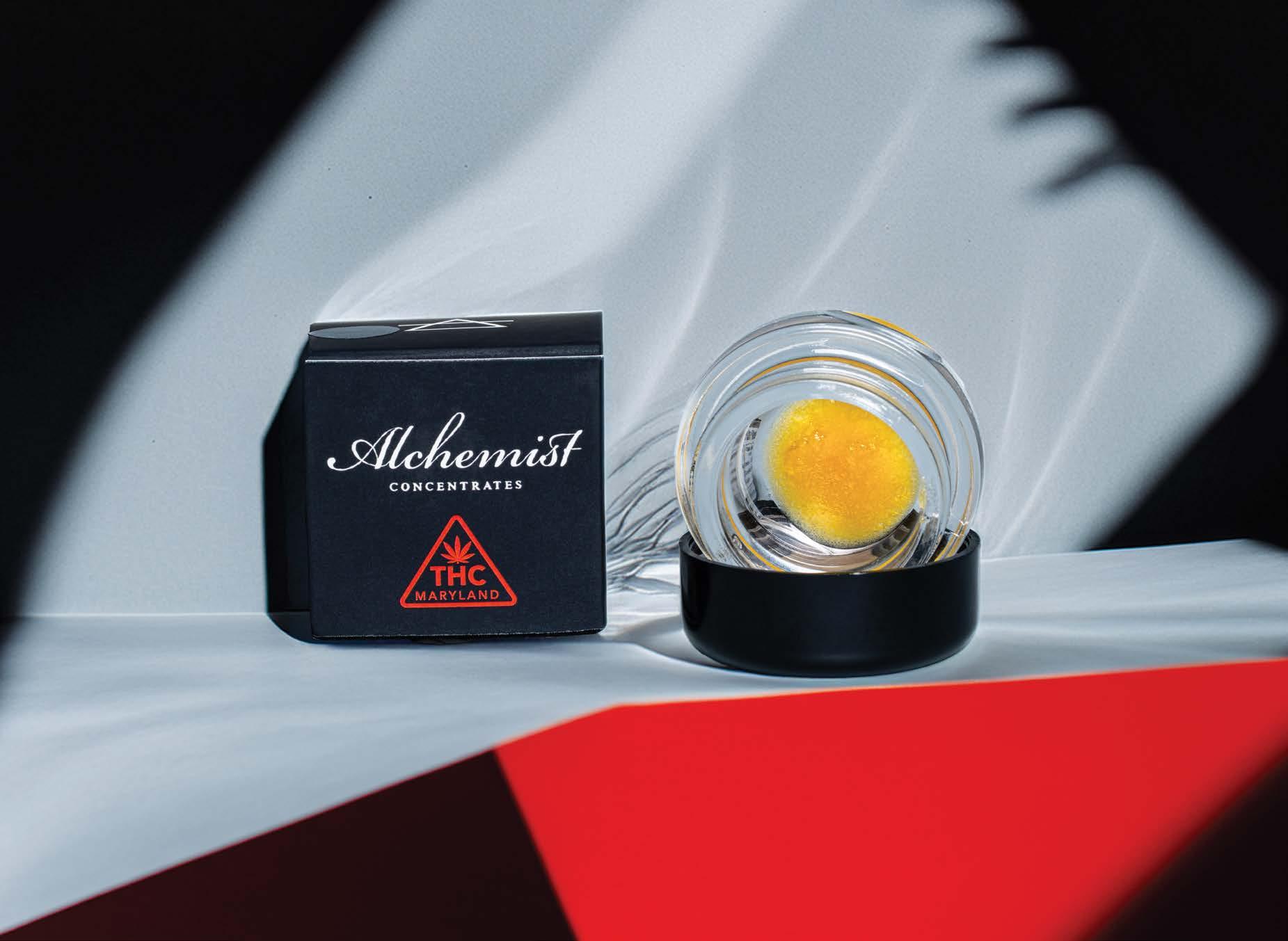
ALCHEMIST CONCENTRATES

LOUD CAKE LIVE RESIN
AS I DUST OFF the hardships of winter and look toward sunnier and longer springtime days, I look for bright, airy and interesting concentrates that mesh with the moods of emerging life.
Despite its exuberant namesake, Loud Cake is exactly that type of concentrate, maintaining the distinctive mellowness that you can ride through all activity with nothing but the addition of a smile.
Limonene-, caryophyllene- and linalooldominant profiles are famously a balanced, chill terpene combination, bright enough to focus and laid-back enough to feel life's sunshine deep in your bones.
Alchemist Concentrates really captured the Loud Cake profile in the meticulous manner required to preserve and even accentuate the cultivar’s nuances.
The live resin is the ideal color and consistency of slightly sugary, solid honey, and the dab looks clear and quite bubbly. I can smell vanilla spice cake, orange
blossom, mossy earth, vanilla syrup, beech and a tinge of lighter fluid, and I adore every delicate note my olfactory sensors receive. As days get longer and the forests start to wake up, the Loud Cake aromatic profile seems to fit smoothly into the backdrop of nature, like a puzzle piece finding its perfect place in a landscape of spring.
The high is a euphoric chill that elevates the mood and relaxes stress into manageable moments of peace and tranquility. From a long morning hike to appreciate the seasonal changes to a fresh workweek full of new challenges and potential, this dab can accommodate your needs in complex yet straightforward ways.
The Alchemist team put a lot of time and energy into meticulously preserving this essence, and their wizard ways have truly brought us some springtime magic.
ALCHEMISTLABS.CO
@ALCHEMISTLABSMD
THE HIGH IS A EUPHORIC CHILL THAT ELEVATES THE MOOD AND RELAXES STRESS INTO MANAGEABLE MOMENTS OF PEACE AND TRANQUILITY.

Spritzer Spritzer

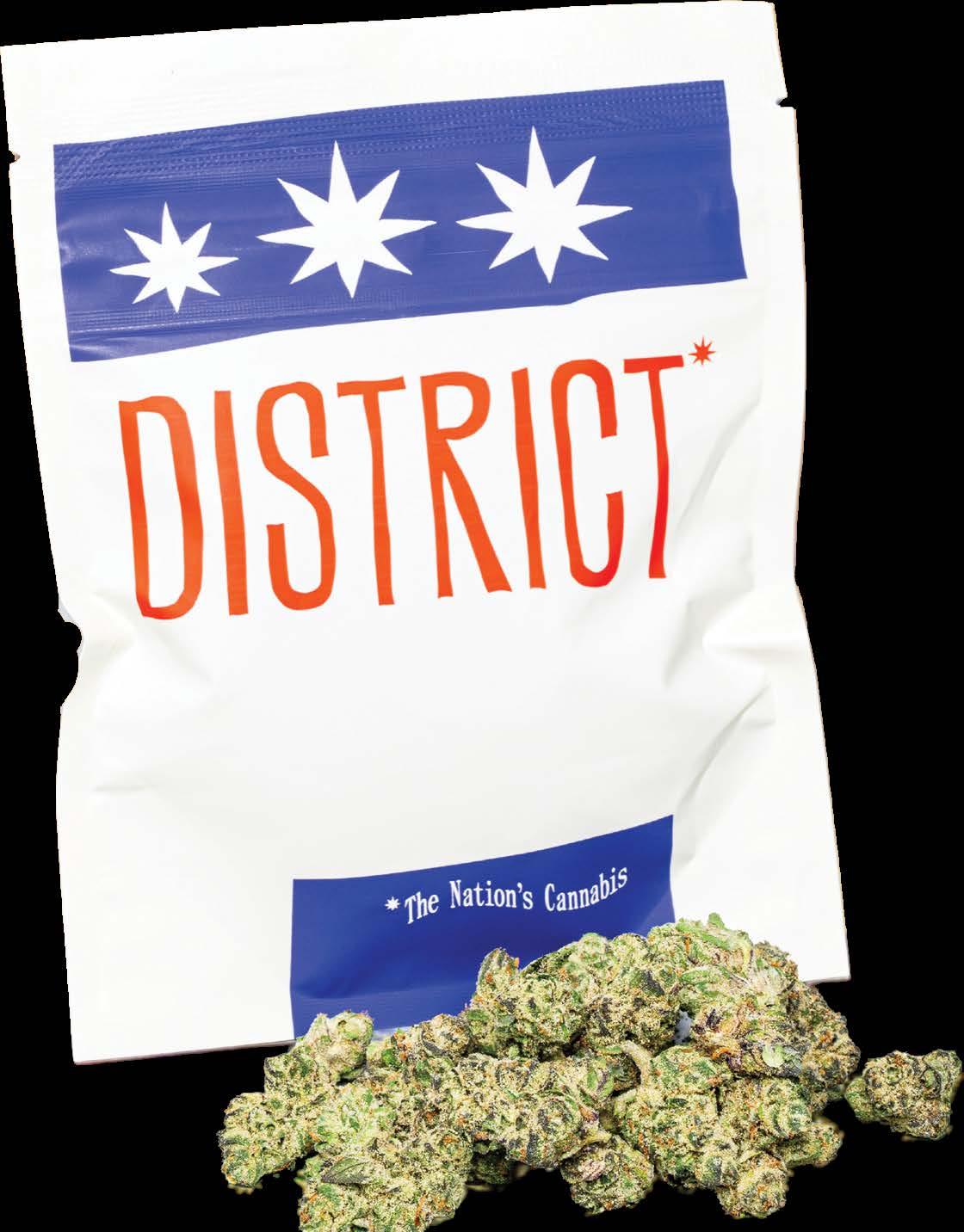
Spritzer Spritzer Cultivated by District Cannabis

Spritzer by District Cannabis is the perfect flower for the seasonal changes of longer days and emerging plants. Spring heralds new life and revived energy, and for those looking for that sense of rebirth in their Cannabis profile, look no further than Spritzer.
THIS SPICY, herbaceous and floral dollop of elegance is the perfect mellow, all-day-long kind of Cannabis that can help you enjoy the increasing amount of daylight with a connoisseur’s puff of smoke. When examining this strain, you can see that Spritzer offers one of those rare, truly balanced profiles that creates both nuance of effect and complexity of flavor.
If you pay attention to terpene profiles, you’ll notice that while there is a tremendous amount of intricacies statistically possible, there are also patterns that emerge. This is one of the features that makes Cannabis special. We can find the headspaces we seek while exploring an almost infinite amount of gustatory complexity, consistent enough to predict but elaborate enough to surprise us. One thing that stands out as an uncommon profile is anything with low myrcene. However, this Spritzer is steeped in deeper rarity than your average uncommon profile.
TOTAL THC: 30.19%
TOTAL TERPS: 2.21%
CARYOPHYLLENE: 0.69%
LIMONENE: 0.42%
LINALOOL: 0.4%
MYRCENE: 0.2%
HUMULENE: 0.16%
BISABOLOL: 0.11%
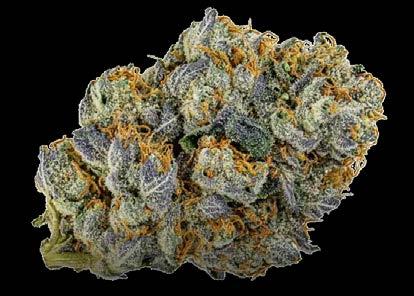
A caryophyllene-dominant flower is often a connoisseur's choice profile for a mellow, active, balanced-hybrid effect, generally speaking. Spritzer offers us a spicy, herbaceous caryophyllene dominance tempered by a nearly perfect 1-to-1 ratio of limonene and linalool with the gentlest tail of myrcene, humulene and bisabolol. Together, these terpenes coalesce into a portrait of herb gardens in early spring with fresh, dew-laden inflorescence laced with peppery, lavender earth and candied wildflowers.
The headspace is clear-headed, bright and energized in a way that many don’t even associate with being stoned, as this Spritzer is a genuinely rare amalgamation of biochemistry that most don’t get the opportunity to come across. For a truly balanced headspace with complex aromas and a fresh perspective for your palate, look for District Cannabis’ Spritzer cultivar. DISTRICTCANNABIS.US | @DISTRICTCNBS


Together, these terpenes coalesce into a portrait of herb gardens in early spring with fresh, dew-laden inflorescence laced with peppery, lavender earth and candied wildflowers.

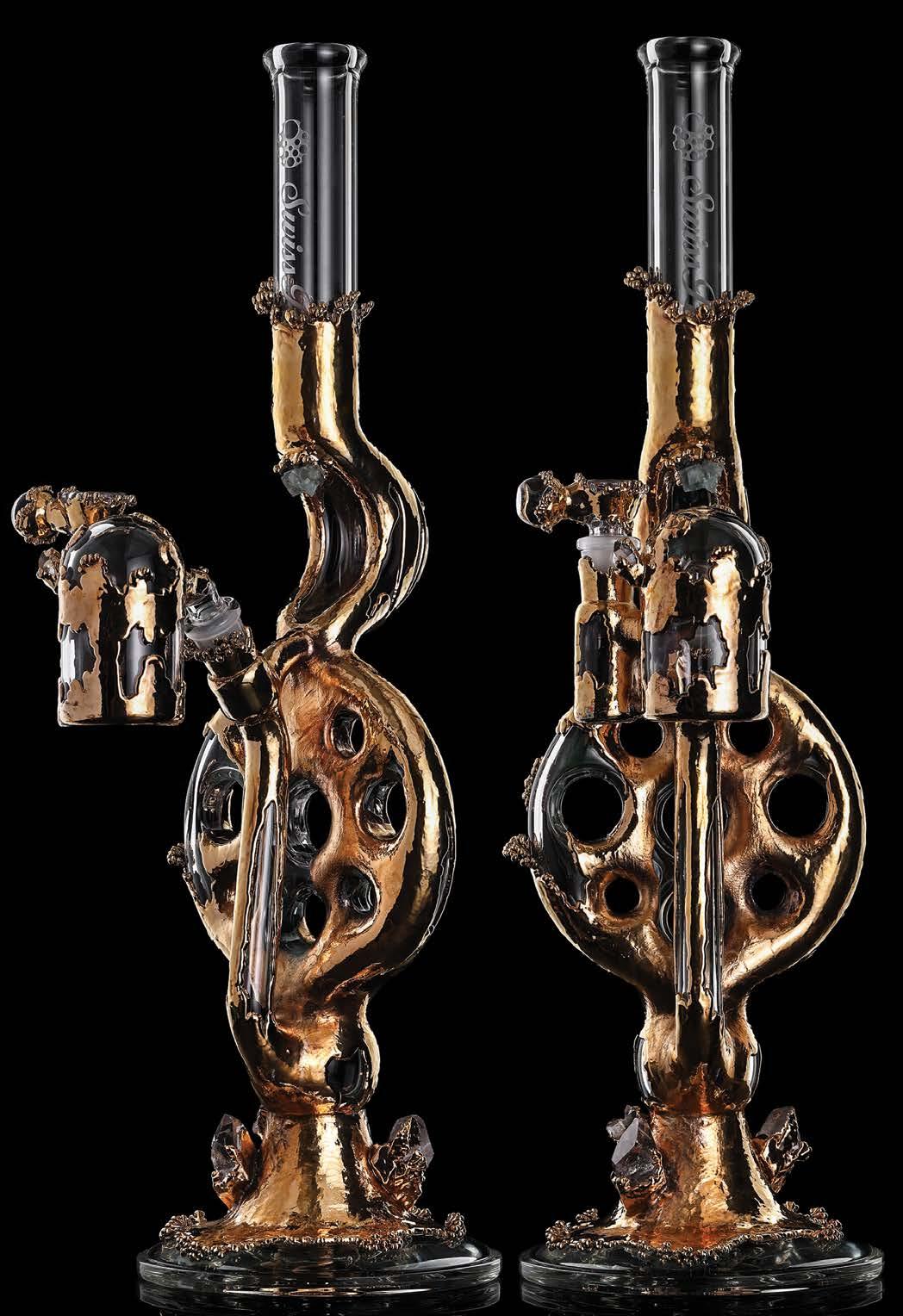
glass collaborations

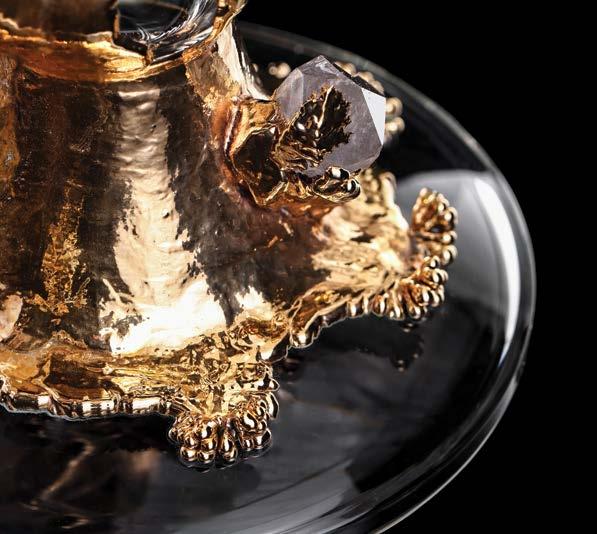
For this year’s annual glass issue the Leaf Team decided to deep dive into collaborations. These amazing works of art come to fruition when multiple artists work together with their different techniques to create something out of this world. Whether it’s a couple of shop mates, or 12 people at a national event, it goes to show that the best things come from when we work with each other. Join us in celebrating these collaborations. Some of them are the latest and some of them are legends. Turn the pages slowly and enjoy.
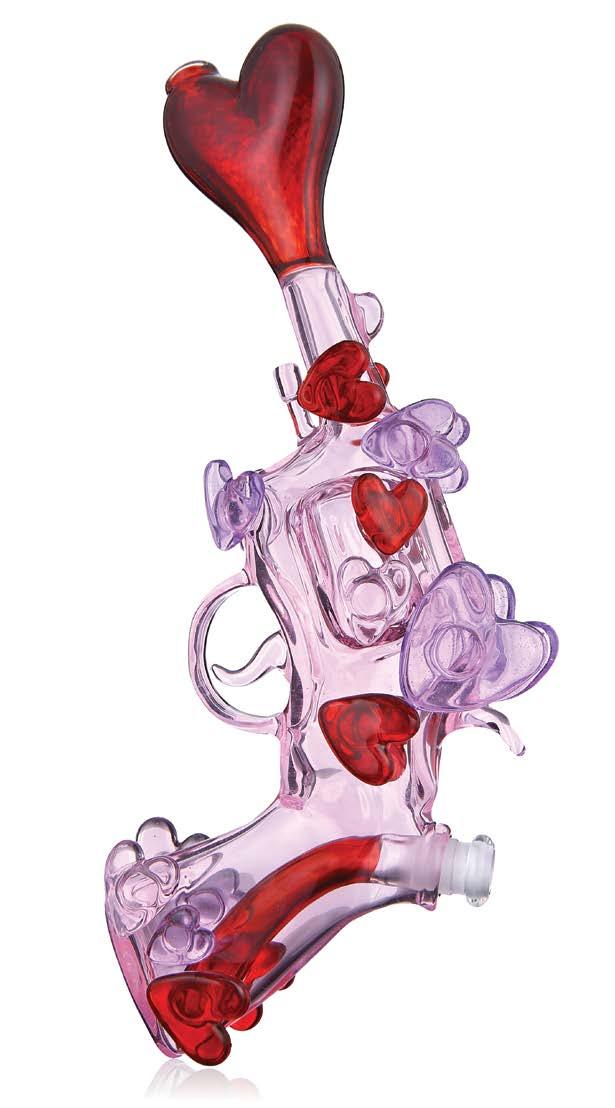
Ram’s classic gun style complemented with
@ramickelsen



COLLABS


25 years of excellence combines for the first time
Basso’s Singularity recycler design adorned with Eusheen’s
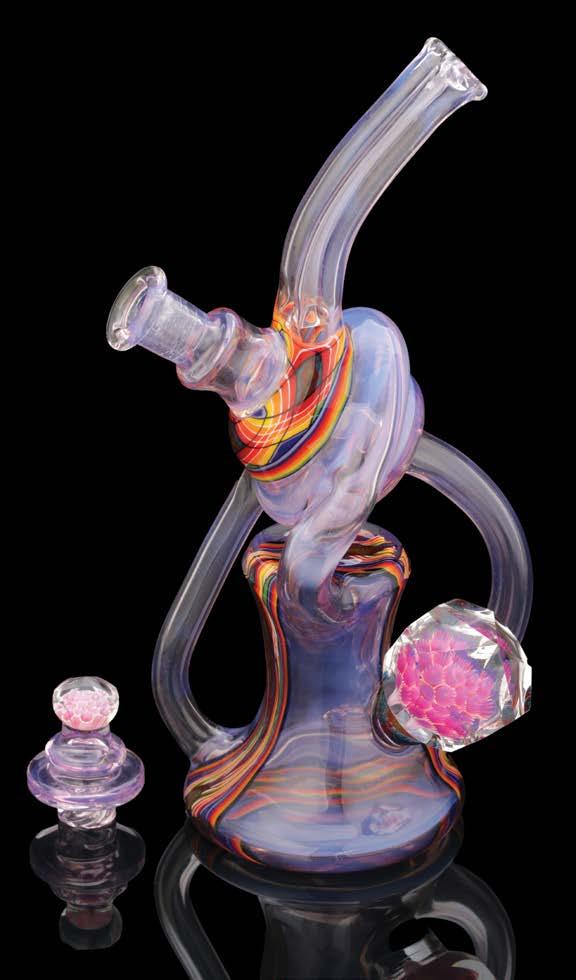
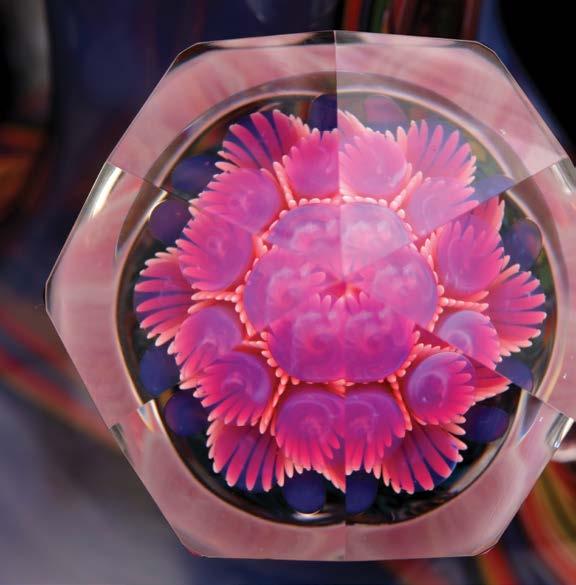
Banjo @banjoglass Zach Puchowitz @ouchkick
Abracadevi
reticello pattern


COLLABS

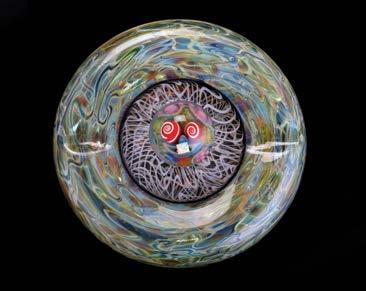
reactive set by the Main Circle Team, featuring Power Pat cap

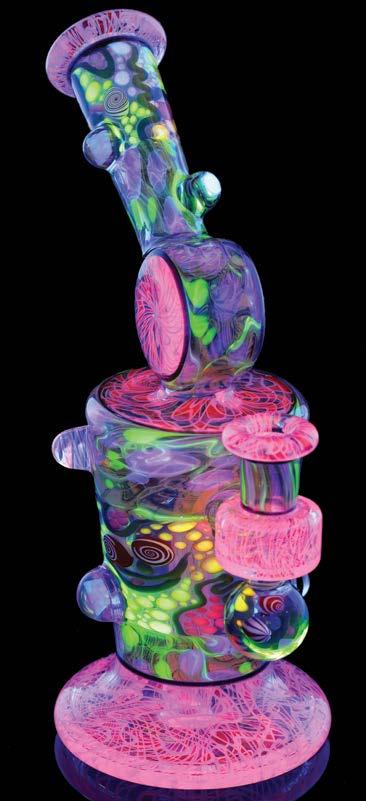
Mega UV Devi

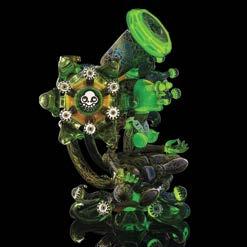

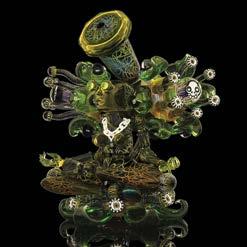
@banjoglass / @justincarterglass / @pipemaker / @blackfireglassworks / @chacha_chainz / @philsiegelglass @frompy / @lilbearglass / @hardcore_toke / @pogoglass / @co_liicutz / @karmaglass420
This 12 artist UV reactive masterpiece was created for the greater good at the Michigan Glass Project.


pinky brewtz

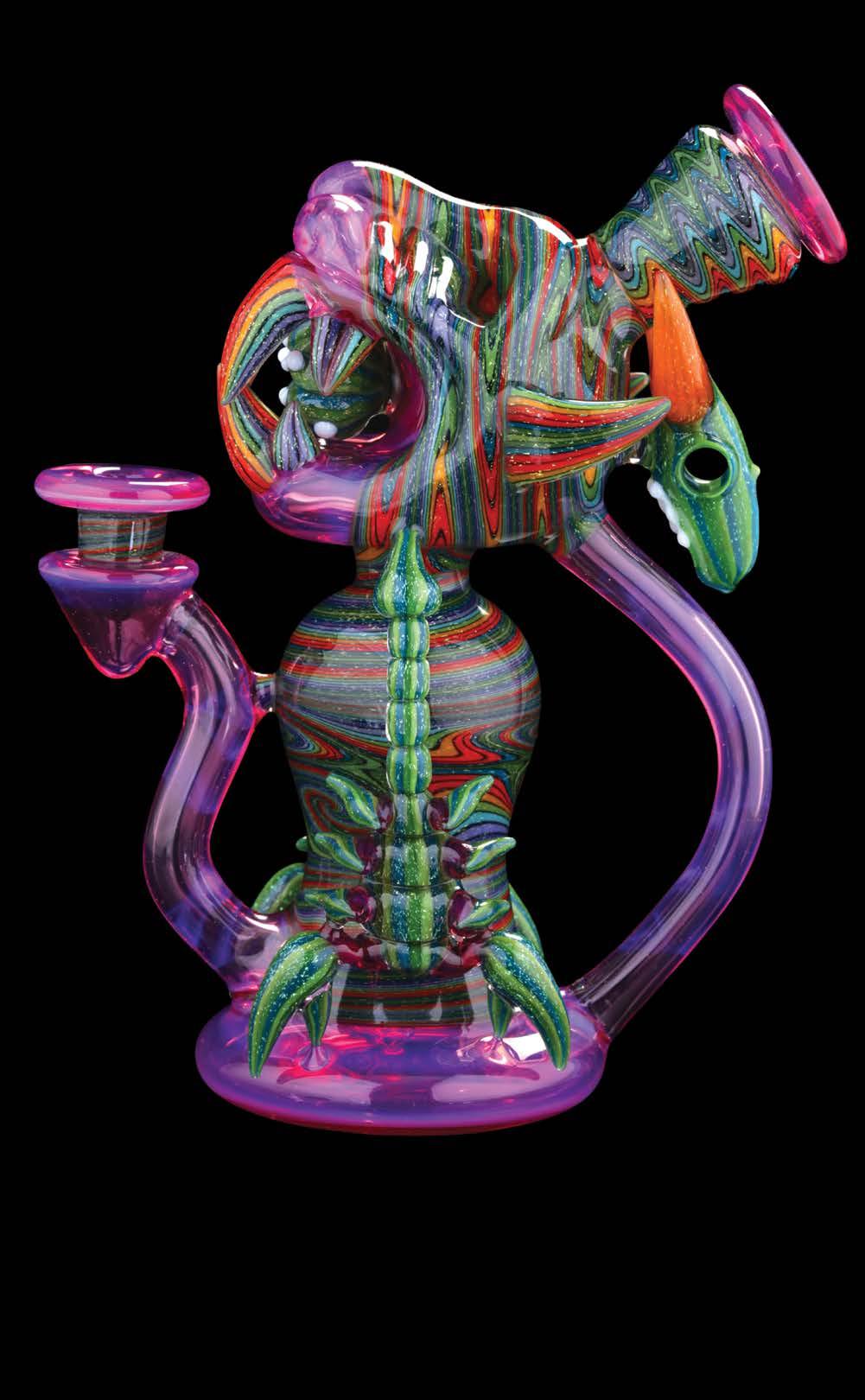
Aaron Gutierrez says even his grandmother calls him “Pinky.” What started as a childhood nickname has evolved into his professional moniker. And while Gutierrez is better known as “Pinky Brewtz” in the world of glassblowing, Pinky Brewtz is better known as “the Jaguar Man.”
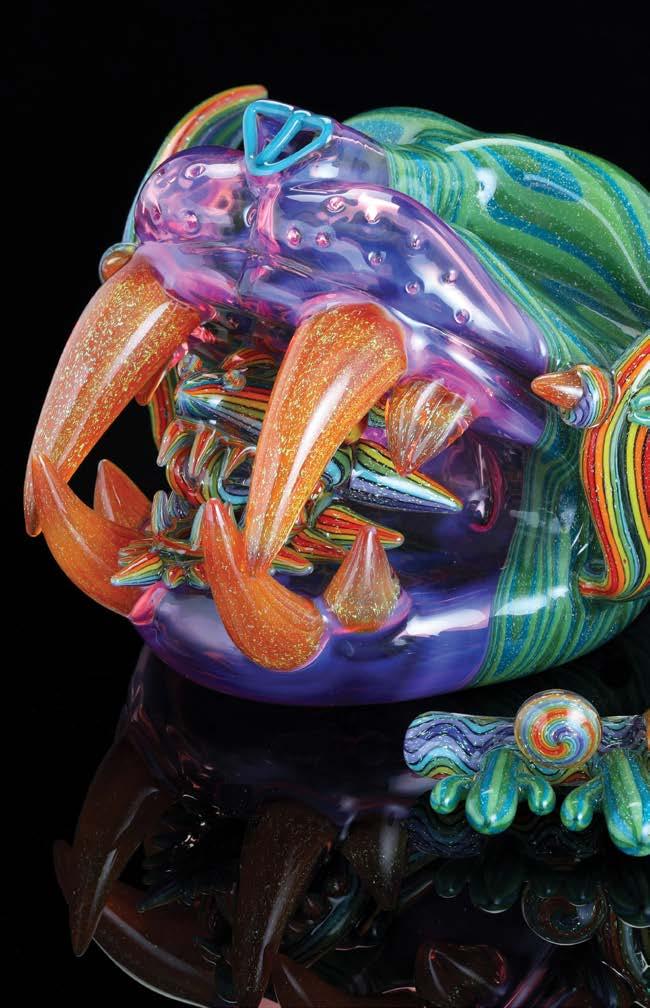
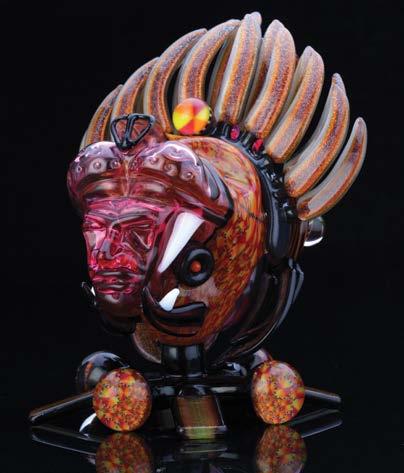
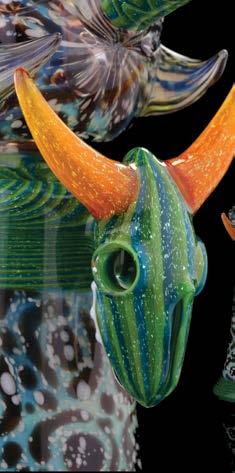
MUCH OF GUTIERREZ’S WORK portrays the image of an Aztec warrior wearing a jaguar helmet, his face inside the gaping mouth, head wreathed in feathers. His rigs seem almost ceremonial and have become high-priced items in the world of glass.
Reached at his home in San Diego, Gutierrez told the Leaf, “From the beginning, I knew I wanted to represent the culture I’m from. To not just be a Hispanic glassblower, but to try and carry forward some of that traditional art from Mexico.”
Obsessed with the artistic styles of Mayan and Aztec history, he said he wanted to use glass to create art much like how artisans from regions like Sinaloa, Jalisco and Oaxaca have done for generations.

Pinky x Quasar Collab
Pinky x Darby x Luna Collab
Pinky x Darby Collab
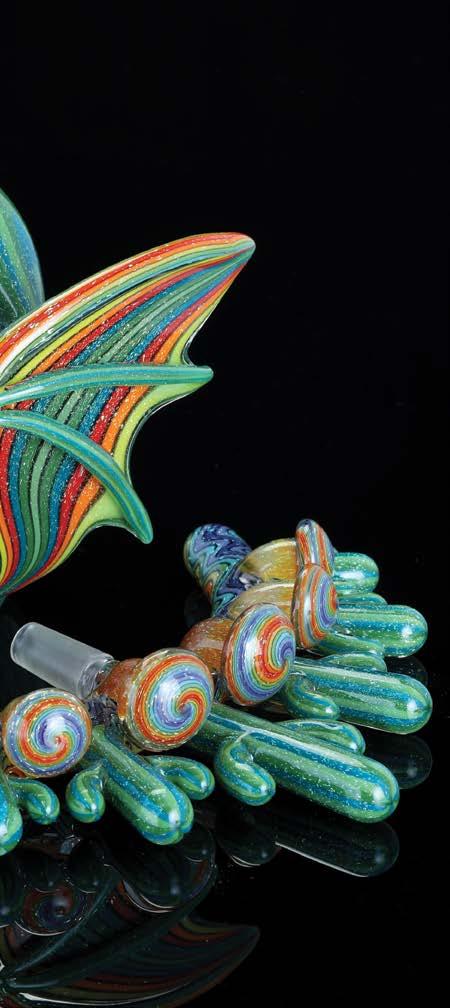
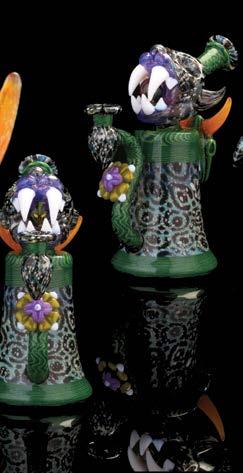
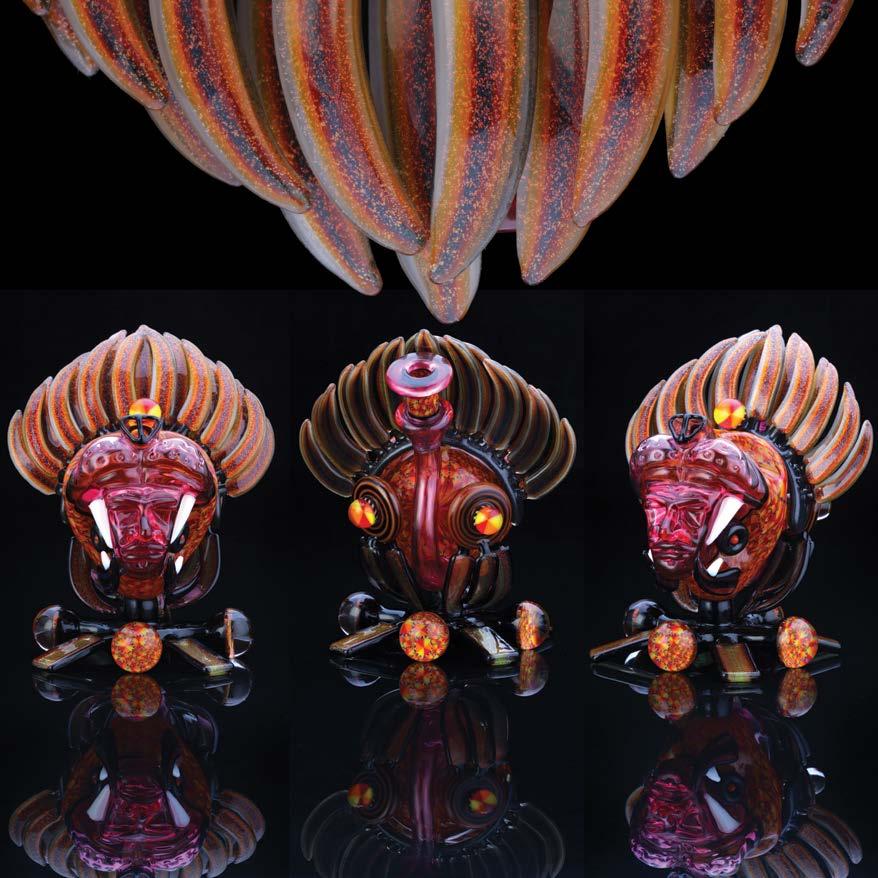
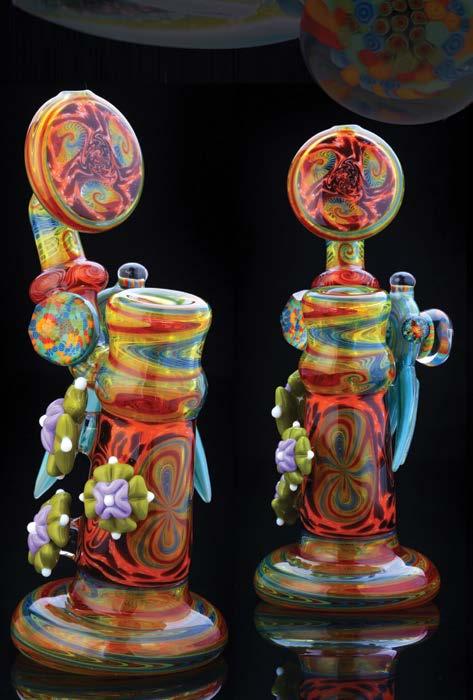
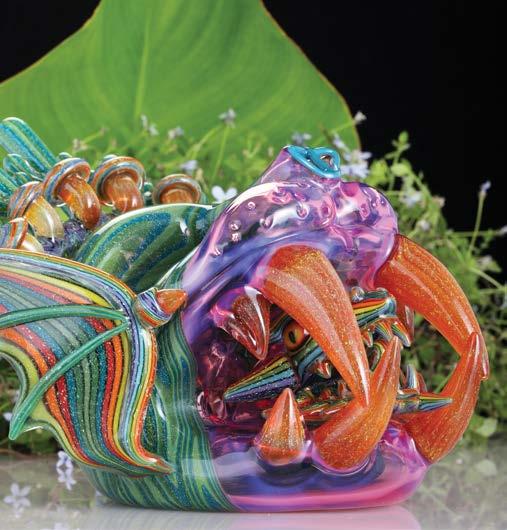
“There’s an aesthetic I’m trying to put out, and that’s one that represents Mexican culture.”
Gutierrez became Pinky when he got into a fight as a kid and needed something to hold his pants up. The only thing he could borrow — which would become the makeshift weapon that won him the fight — was a friend’s pink belt. He said he hated the nickname, but by the time he was in high school, even his family called him Pinky. So when he was thinking about what to call his brand, he said, “I just wanted to keep it simple with something people already know me as.”
He was working as part owner of a clothing company back in 2014 when he first discovered glassblowing. Visiting a friend in San Luis Obispo, Gutierrez said they smoked DMT, and his buddy showed him a pendant he had just finished making. He said looking at the universe of colors and patterns, knowing they were all produced by human hands, blew his mind.
Before that, Gutierrez said he imagined bongs and pipes were made by machines. Finding out it was a craft lit a fire within him, and he jumped onto eBay to order his first torch.
At first, he said he was making more generalized imagery, like feathered serpents and alebrijes. But his whole trajectory changed the day Gutierrez proposed to his wife, Ruth Gutierrez, at the Pyramid of the Sun in Teotihuacan, Mexico. To celebrate, they smoked a bowl from the only thing they had: a traditional clay whistle in the shape of a jaguar’s head. Ruth Gutierrez remarked how cool it would be if he could make pipes and dab rigs like that.
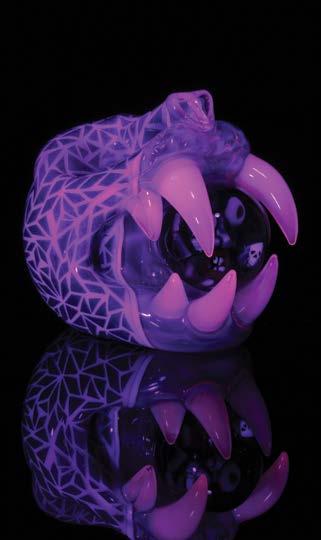
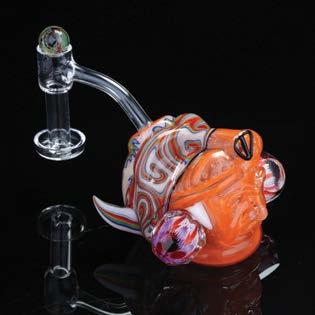

On their way down the pyramid, Gutierrez said his wife’s ring dropped in between the stones. At the time, they saw it as a tragedy, but he said they’re now convinced that “it was the sacrifice the gods required to put us on the path we’re on now. It changed my life forever; that moment shaped me as a married man, a father and an artist.”
Since then, Pinky Brewtz has solidified an artistic style and gone on to collaborate with prominent names in glassblowing, including Elbo, Darby Holm and Banjo. Gutierrez said he has a group of collectors who seek out his art and has been able to meet fans from all over the world.
With so much of his inspiration coming from traditional Mexican artisans, Gutierrez feels a responsibility to support the community and the heritage that his work springs from.
He told the Leaf he donates portions of his U.S. sales to charities in Mexico and collaborates to showcase the work of traditional artisans, like his collaboration with third-generation wood-carver Efraín Fuentes. Gutierrez said he’s always looking for ways to work with these artists to create modernized versions of traditional craft.
“There’s an aesthetic I’m trying to put out, and that’s one that represents Mexican culture,” he said. “The culture is what’s important. AI is going to eat us up. Our history will be deleted if we don’t carry these things forward, and in some small way, that’s what I’m trying to do.”

@PINKYBREWTZ
Pinky x Quasar Collab
Pinky x Darby Collab
Pinky x Cowboy Collab
Pinky x Darby x Luna Collab
BEYOND the bong
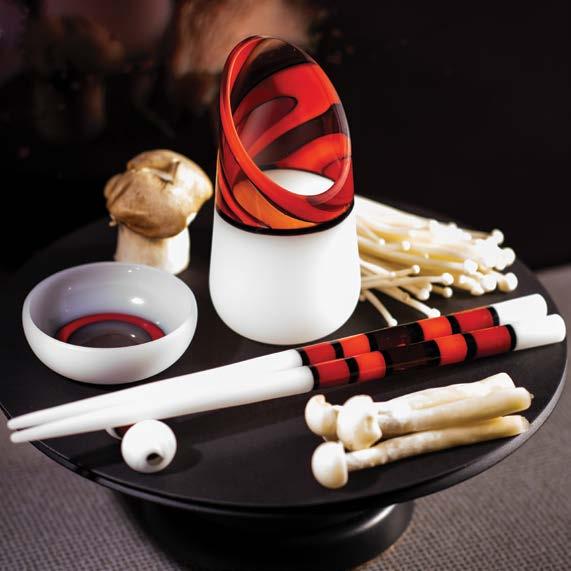
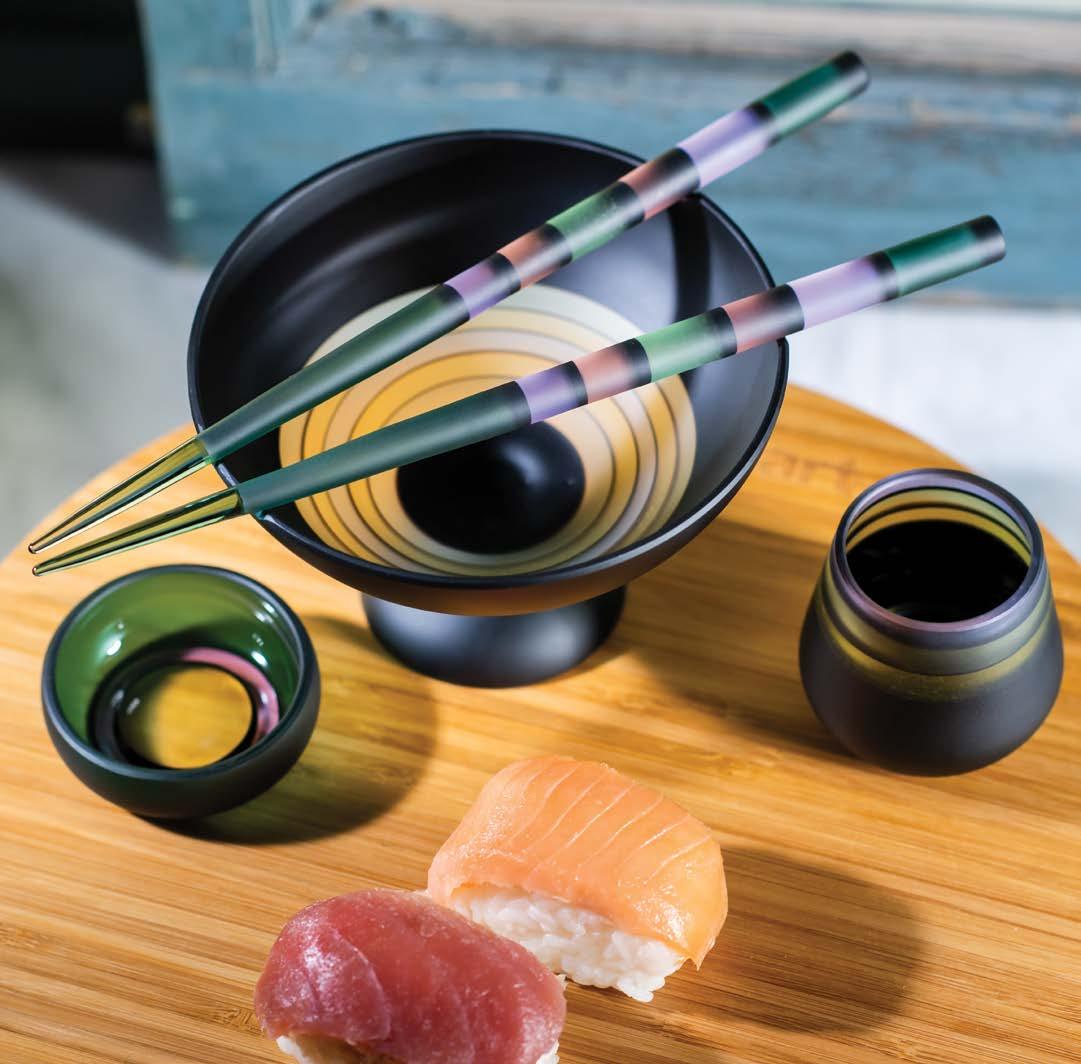
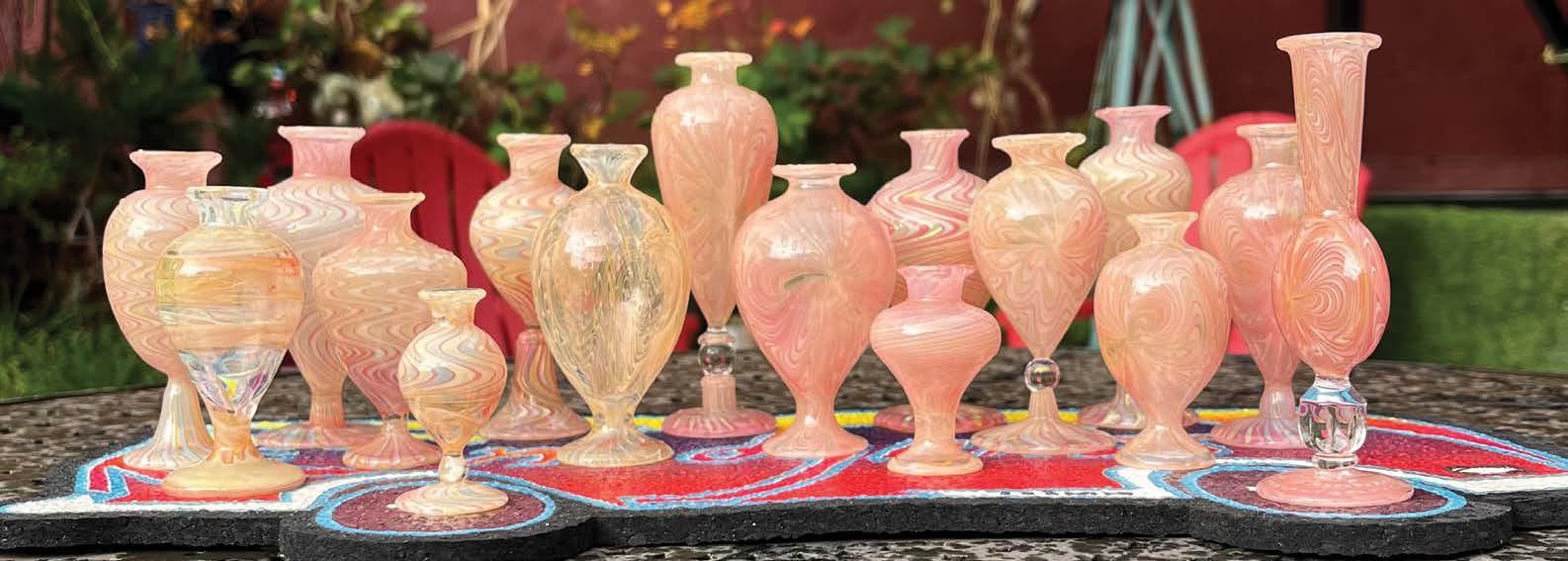
While glass is often the backbone of the sesh, this art form can go far beyond functional smoking pieces. Check out our roundup redefining the unique uses of modern glassblowing.
Chopsticks Sets
Emily Marie Glass @emilymarieglass
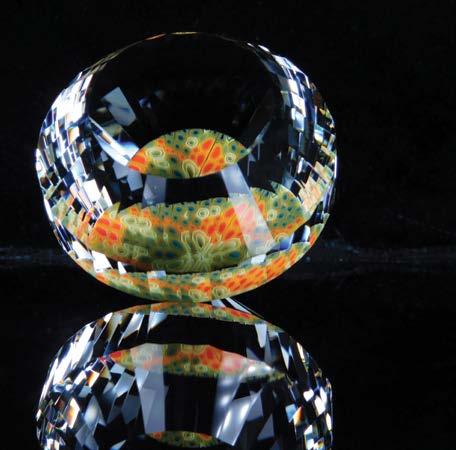
diamond of the woods
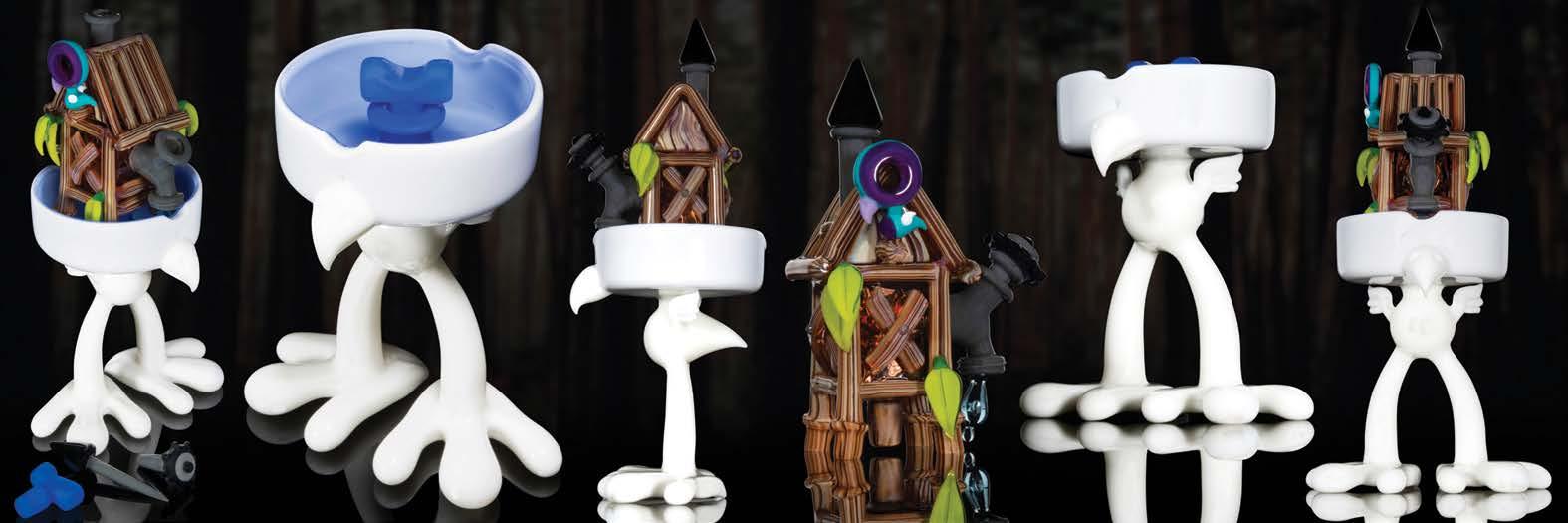
Middleton Glassworks x Mr. Facet @middleton_glassworks @mr.facet















TWO
DIFFERENT SALES FLOORS


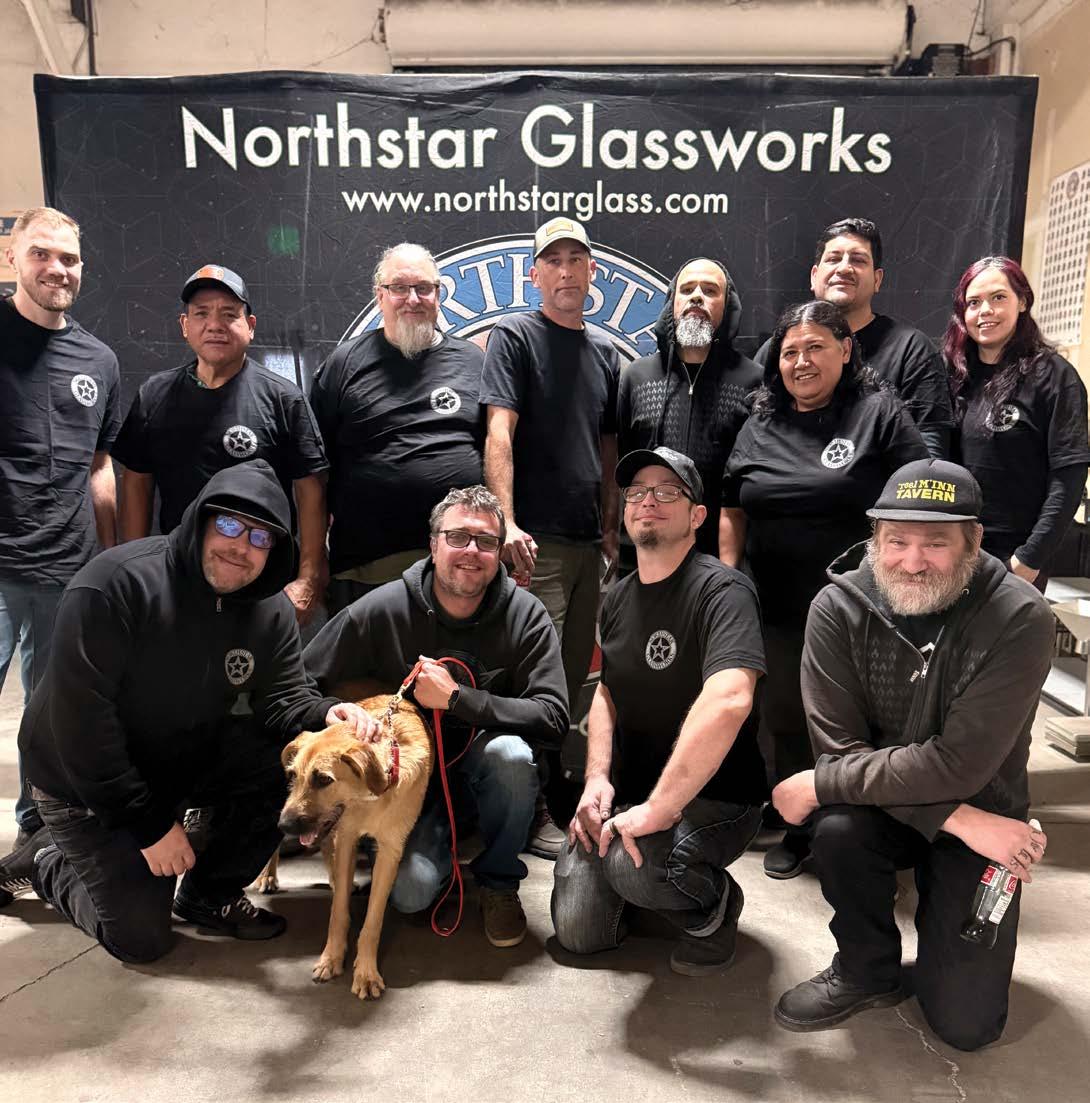
northstar glassworks

As a steep decline in the artisan-driven glass pipe business co ntinues, one captain of the industry promises to keep navigating himself and his team through rocky tides. “There’s been times in the last few years where we’ve had to have some hard conversations,” Abe Fleishman, owner of Northstar Glassworks, said. “But I have this amazing staff I’ve worked with for so lo ng — most of them more than 10 years. And they always say, ‘Let’s keep rocking and rolling.’”
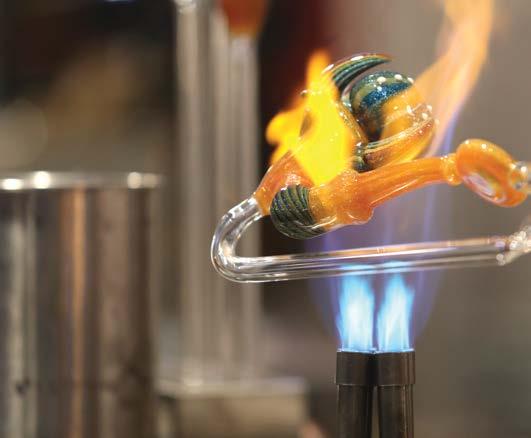
THE 49-YEAR-OLD native of Santa Cruz, California, has been a pioneer in the borosilicate glass color industry for a quarter century. How’d he do it?
Fleishman took a firm understanding of “basic chemistry” in high school and married it with an upbringing in the “Hard Knocks School of Life” that included underground sales of Cannabis throughout the 1990s. That science-savvy, street-smart hustle drove him to discover stable color formulas that have dominated a national market since the early 2000s.
His first splash into the mainstream was with Unobtainium: a steel blue sparkle created after hours of experimentation.
“At the time, I had a dream about the chemicals I was buying and using,” he said, likening it to a moment of sudden inspiration. “I was so excited, I told a couple of my employees, and we just thought it was the craziest, coolest color.”
Fleishman began with a small production shop, but he leapt at the chance to become general manager of Northstar Glassworks in 2004, eventually buying the company outright in 2006. He has developed hundreds of compatible color formulas, guiding the business as the industry emerged from the shadows and pushed toward legitimacy.
Along the way, his work has inspired artists around the world to infuse high-end glass pieces with color. That community gathers each year at the Degenerate Flame Off, widely considered the Super Bowl of the functional glass world.
Founded in 2009, the DFO is a multiday glassblowing competition that blends art, counterculture and community. Long rooted underground, the craft has found a public stage through the event, which Northstar has consistently supported throughout the Pacific Northwest.
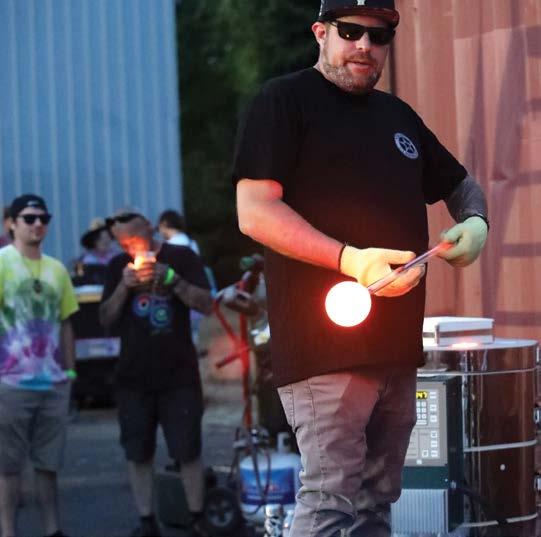
“It’s not a trade show,” Fleishman said, who was honored for his technical innovations at the 2013 International Flameworking Contest. “We’ve never once paid these artists to compete. They come here to be a part of something special. It’s like a glass camp or a family reunion where people come to see their friends or people they've heard of or seen online and want to see their work.”
The 14th year of the event will be held at the Northstar factory in Portland, with Fleishman planning to shut down operations for a month to host it — a notable commitment for an event that has struggled to retain venues despite drawing crowds of more than 4,000.
The DFO was canceled in 2020 and 2025. When it returned in 2021, it did so at the height of the industry’s boom.
“When COVID hit, for whatever reason, the market went like wildfire,” Fleishman said, recalling pieces doubling in price from $3,000 to $6,000.
Owner Abe Fleishman gives a demo at DFO 2023.
“We’ve never once paid these artists to compete. They come here to be a part of something special.”
-Abe Fleishman
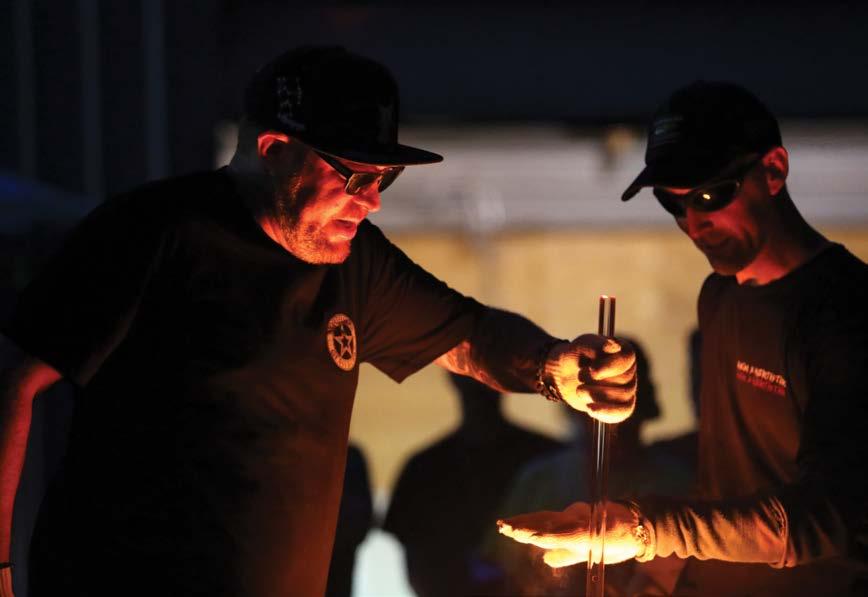
“It might have had something to do with the stimulus checks. People had extra money to spend. So many people were buying glass pipes that we couldn’t keep up with distribution efforts.”
By 2022, the surge had reversed. The high-end American glass pipe market began to contract, squeezed by cheaper imports and shifting consumer habits.
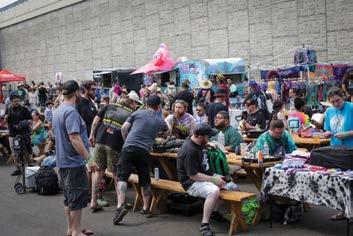
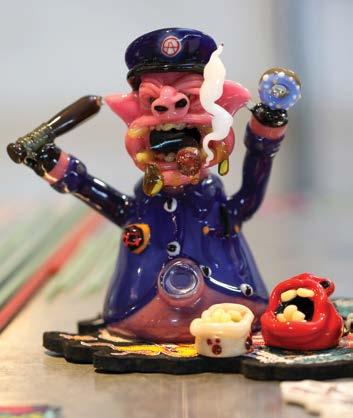
“The same pipe that an artist here will make for 20 bucks, the Chinese are making something similar, but not as good, for five,” Fleishman said. “And then there’s for convenience sake. If you’re traveling or flying somewhere, you want to bring a little vape, not some smelly pipe.”
Changes in federal law also raised the legal age for purchasing tobacco products to 21, cutting off a key entry point for younger consumers.
“It used to be a rite of passage here in the States that when you turn 18 years old, maybe you’re finally out of your parents’ house, perhaps going to college, you go buy a bong for your dorm room or something to that effect. But that’s no longer happening because you gotta be 21 or over. And by that time, that experience or desire for it is gone.”
Industry estimates suggest sales have declined by more than 50 percent, forcing layoffs and price increases across the board. Northstar, Fleishman said, was no exception, downsizing to a team of just 10 employees.
“A lot of these artists, having accumulated this type of talent, would be making a half a million per year in other specialist fields,” he said. “The saddest part is a lot of these guys are my friends, and they’re being forced to leave the field and work a regular job because they can’t afford to stay in it anymore.”
Still, there are signs of life.
The DFO returns July 24-26, driven by demand from the community itself.
“Last year, when we reached out, so many people said they couldn’t afford it,” Fleishman said. “But over the fall and winter, so many people would call or message me saying they wanted the event to come back. They were starving for something like this. It’s just a great time.”
The three-day event will feature glassblowing competitions and collaborations, live DJs and vendors from around the world — all with the hope of reigniting momentum in a struggling industry.
“I hope I’m always going to be involved in this,” Fleishman said. “I just love this industry. There’s so much talent here.”
Tickets for the 2026 Degenerative Flame Off can be purchased at Humanitix.com under DFO Family Reunion.




DFO 2023
Collab is the name of the game

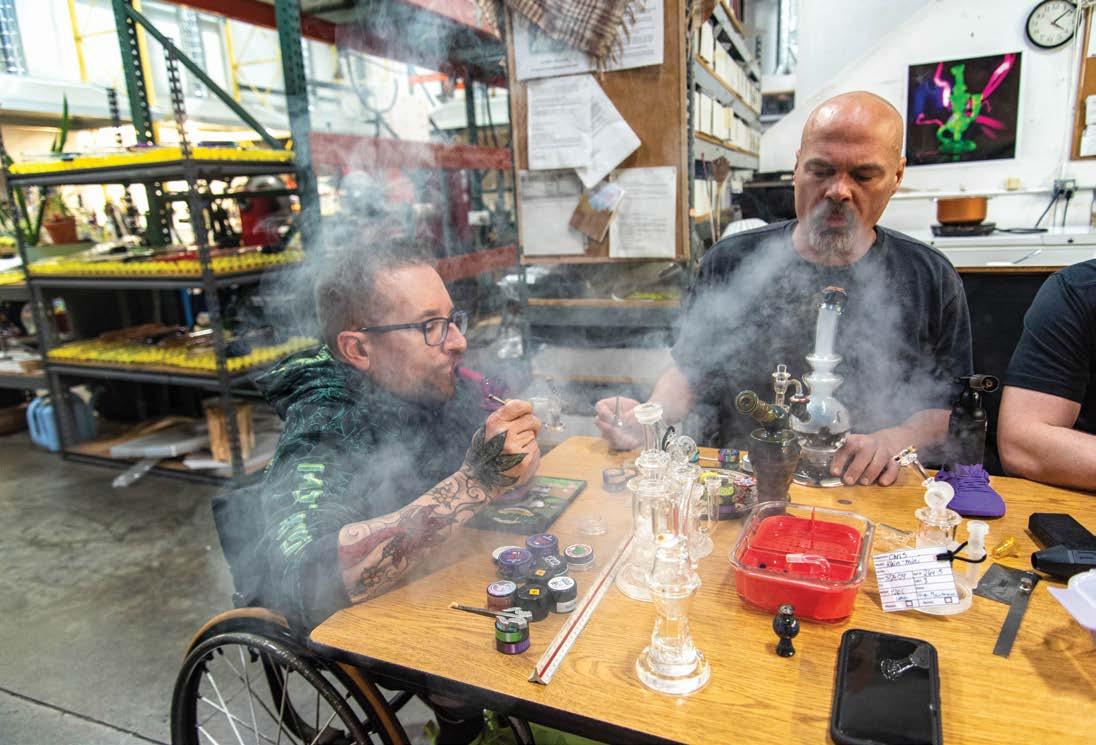
mothership glass x dustin brandon
Professional athlete. Comedian. Civil rights advocate. Musician. Dustin Brandon has held many titles throughout his life. For the past nine years, he has worked tirelessly to establish himself as an irrefutable pillar of the Cannabis community.
“I CAME INTO this community as a medical patient,” Brandon explained. “This plant saved my life. My disability is brittle bones, called osteogenesis imperfecta, from birth. I'm 42 years old, and I've broken and fractured over 850 bones throughout my life. I've had close to 75 surgeries.”
Brandon’s story is one of strength and resilience. Despite trauma, tragedy and a recent bout with COVID that nearly took his life, Brandon has consistently faced adversity and bounced back with unyielding perseverance.
That’s where Mothership Glass comes into the story.
Forged in fire, crafted with care and annealed with meticulous effort and dedication, Mothership produces some of the highest quality functional glass art in the entire world. Captained by innovative artist Scott Deppe, the enterprise is a collective of some of the most prodigious glassblowers in their field.
“I approached Mothership, and I said, ‘I think there’s an area we can fill here in regards to the disabled community.’”
“I grew up in a tough upbringing, from foster care to state-run facilities, and a school for kids with disabilities,” Brandon said. “My sister and I got split up. Her name was Felicia, a year younger than me. In 2018, she lost her life to suicide. When I lost her, it took a while to figure out if I could even come back from that. But eventually I figured out how to develop myself all over again, through her, for her. She's my reason for everything.”
-Dustin Brandon
“I approached Mothership, and I said, ‘I think there’s an area we can fill here in regards to the disabled community, not just making glass more accessible for people with disabilities, but as a whole, around the entire community… How can we have disability inclusion?’” Brandon recalled.
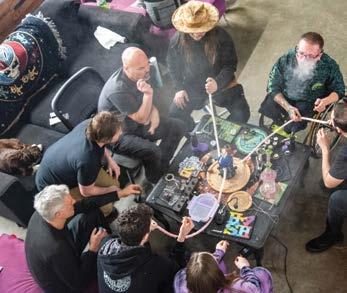
Mothership invited Brandon to their base of operations in Bellingham, Washington. He tested their entire range of products and took measurements, all with a goal of designing the perfect consumption experience.
individual functional needs. They sketched out a plan for a special one-of-one design inspired by his sister, known as “Felicia’s Gift.”
The rig is a Torus/Fab Torus recycler with a sunflower motif and “Felicia’s Gift” engraved at the base. It features a wider base for stability, slightly longer drains for hand grip and a ground-out, interchangeable neck equipped with attachments of different angles, including a hookah hose for increased ergonomic versatility.
“This piece means a lot to me, not only to be a voice for the disabled community, throughout accessibility, through glass and in which ways we consume our medicine, but in how we heal ourselves,” Brandon explained.
Deppe showed care and consideration during the visit. He personally set up the rigs, altered table heights and dialed in water levels to provide the perfect experience. He even surprised Brandon with an accessory — a topper for a Slurper-style banger — still warm out of the kiln.
“We want to help everyone out and lift everyone up,” Johnson stated. “It's a lot for us to be able to make a piece like this. And I'm happy we're going to be the ones doing it.”
“It’s an honor,” Deppe added. “We just want everybody to have the best smoking experience possible. That's what Mothership is about. So, if we can do something to make it more comfortable or more fun for somebody, we're going to do it.”
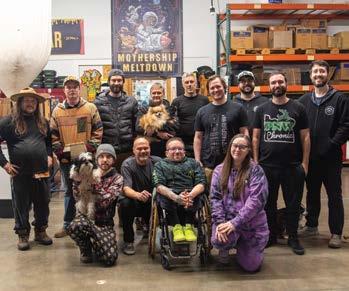
With this significant push forward for the accessibility conversation, Brandon’s story has come full circle. After nine years of grinding hard in the Cannabis industry, he finds himself serving as an advocate not just for himself, but for the greater Cannabis and disability communities as a whole.
“It’s not only about accessibility, but about encouraging people with disabilities to be part of the journey,” Brandon explained.
“I hope this gets the conversation going in the glass community and even in the Cannabis community — from grows to work stations and everything in between.”
Over this last year, he diligently rebuilt his health and dove headfirst back into the Cannabis and glass communities.
Deppe, Justin Johnson and Colin Taylor of Mothership joined Brandon to discuss accessibility in functional glass and creating a piece tailored to his

A huge amount of appreciation to Dustin and and Mothership for inviting Leaf Magazines into this important conversation on accessibility in Cannabis, and a special shoutout to Crystal Hoffman (@hashinit_) and Jeff Hooten (@casedgod) for coming along for the ride.
Dustin Brandon, left, and Mothership Glass Founder Scott Deppe, dabbing it up in Bellingham, Wash.

the marble capital of the world
The Mile High City felt a little headier in March as the most passionate collectors and celebrated makers in contemporary glassmaking converged for the second annual Marble Conference. What began last year as a promising debut returned to Denver in 2026, with nearly twice as many attending artists and a huge outpouring of support from the broader glass community.
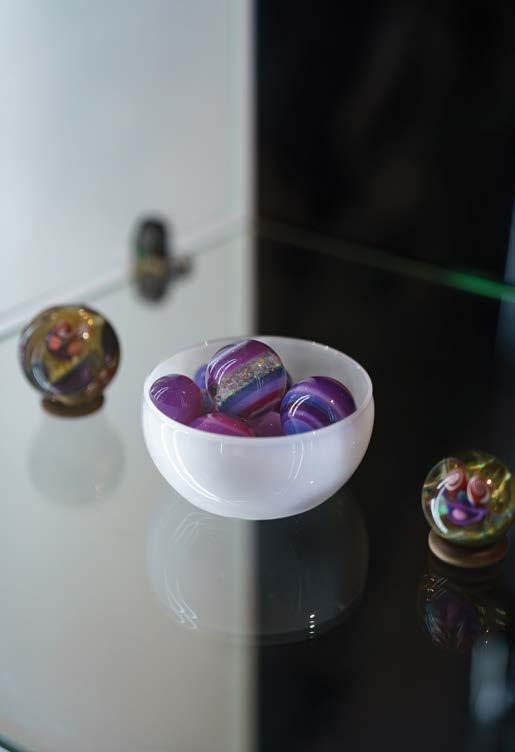

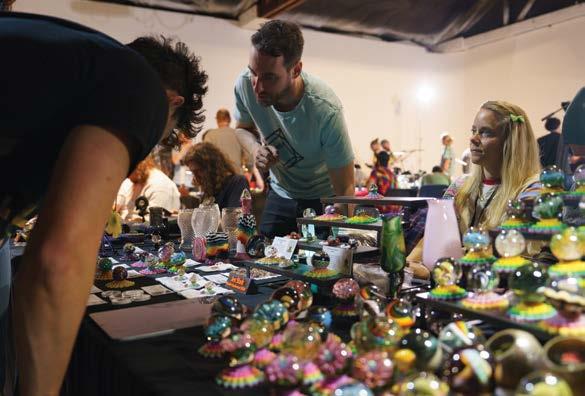
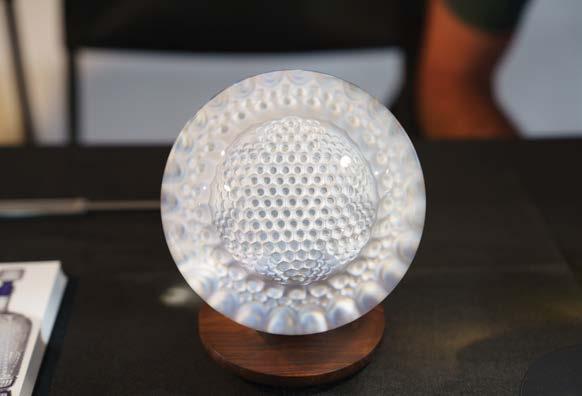
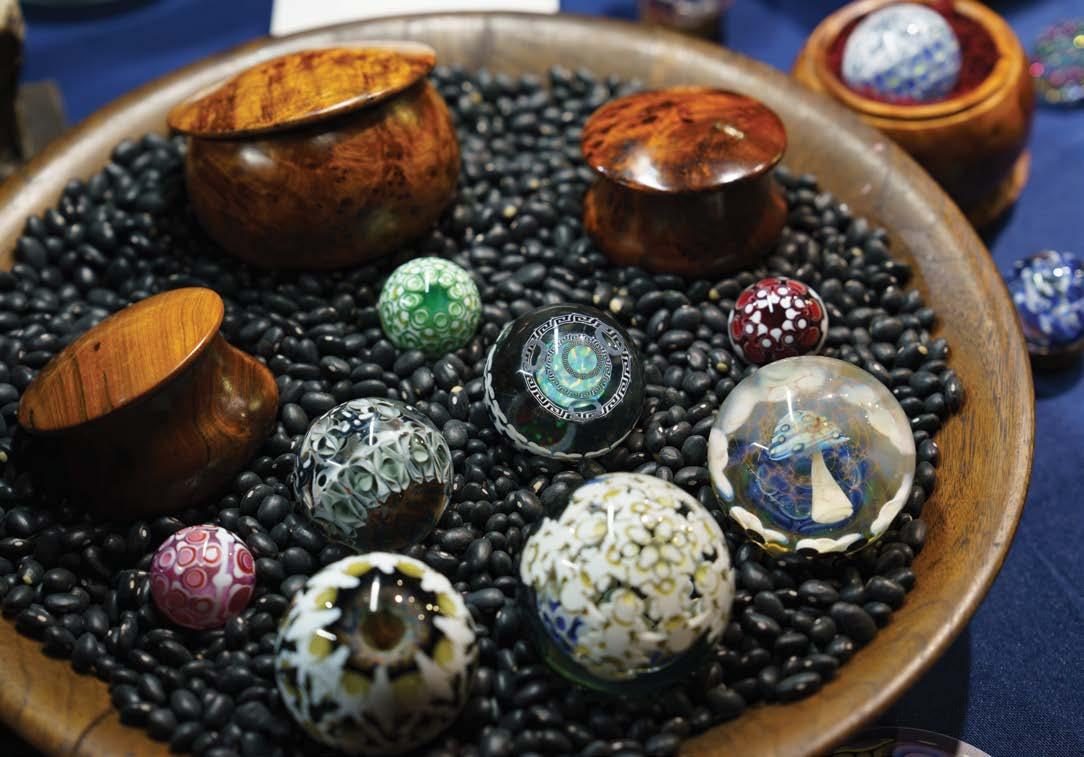
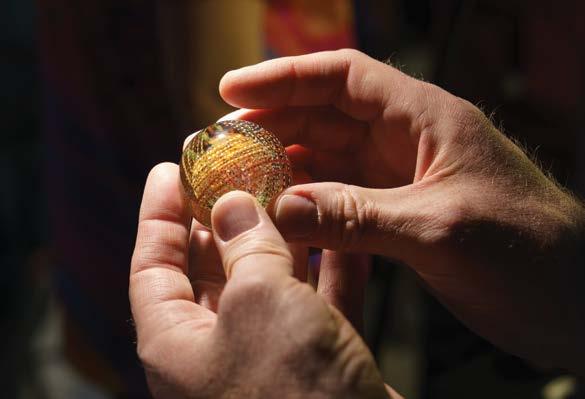
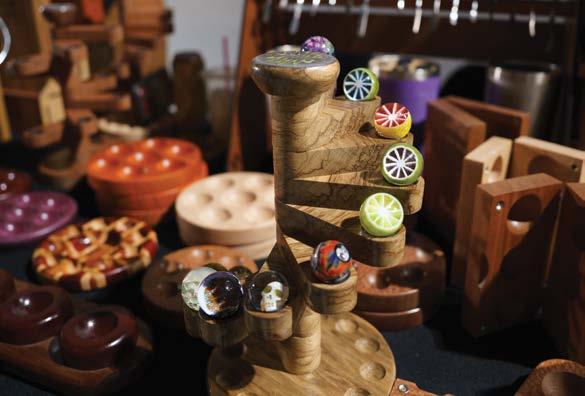
KNOWN AFFECTIONATELY as “MIBCON,” the two-day gathering at Void Studios featured a dynamic lineup of events celebrating modern glass culture. At the heart of it all was the Marble Market: a lively, farmers-market-style bazaar where avid collectors and curious newcomers alike could browse work from some of the most sought-after names in the scene. There were also tons of different ways to engage with artists beyond their booths, from a charity auction to high-energy marble races and even a hidden marble hunt around the venue and surrounding areas.
The artist roster truly showed out. Colorado standouts like Eusheen and N8 Miers, who operate out of Everdream Studio up in the mountains of Evergreen, were joined by an impressive lineup of visiting talent. Among them was Mike Gong, a past Oregon Leaf Glass Issue cover artist, and Kaj Beck, a murrine master from Humboldt County who has been crafting marbles since 1996.
Hanging out behind his table, covered with intricate millie slices and vividly patterned marbles of all sizes, Beck reflected on his first MIBCON experience.
“I always like the amount of variety when I come to a marble show like this. You get to see so many different styles on the same canvas. Everybody is working a sphere, but every table has something completely different,” he explained. This sense of range and individuality within a shared medium was definitely a common theme throughout the weekend.
>>CONTINUES NEXT PAGE
Bodor Glass
Mike Gong
Nathan Gorman Treezus Heist
Peter Boyle
Drinking Vessels & Jen Stark





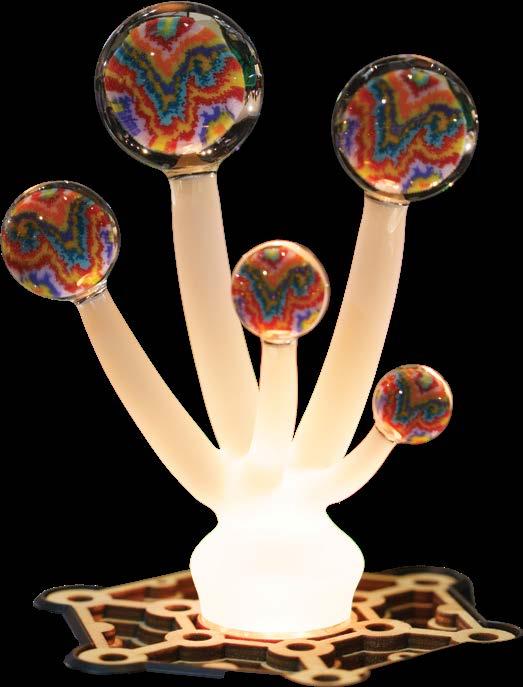
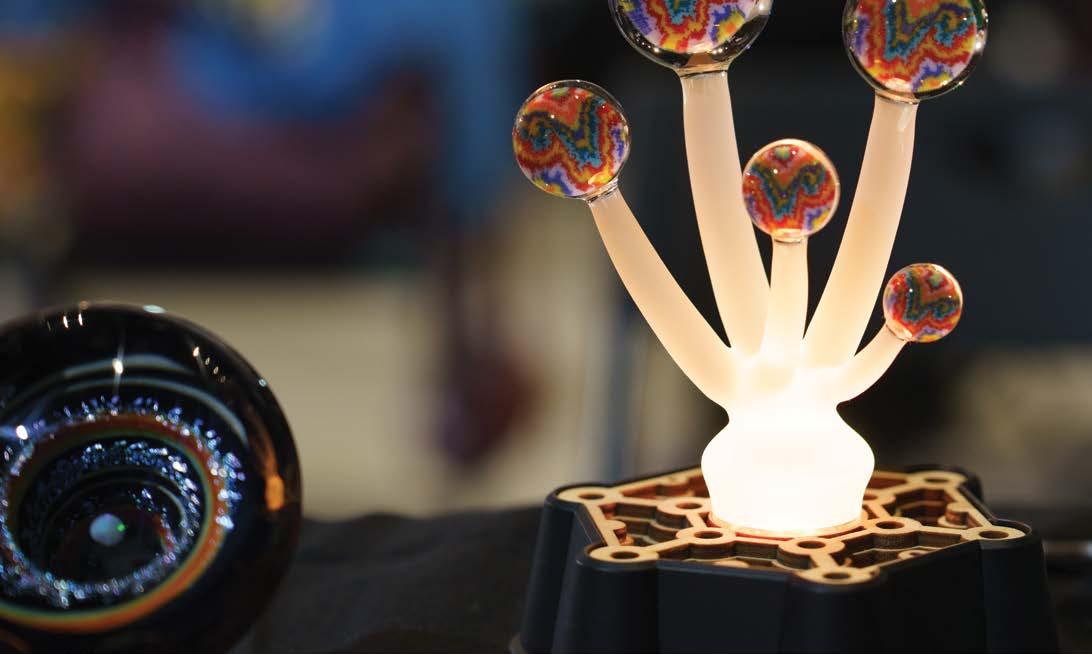
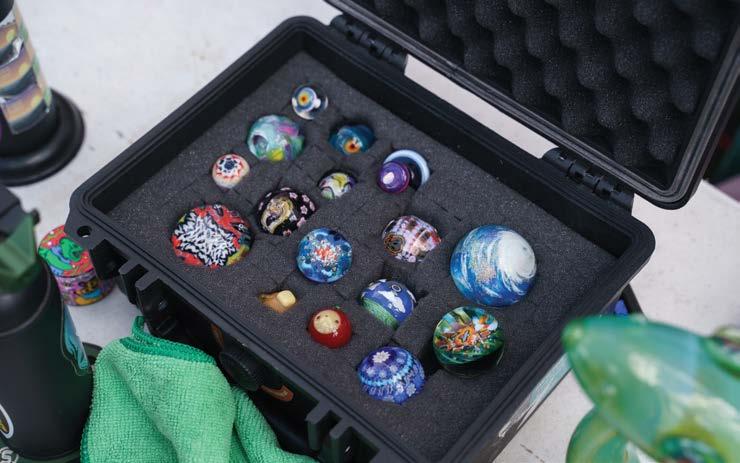
PIPER DAN, a Colorado local and OG of marble making, reflected on his own personal journey and evolution in the craft. Starting on the torch in 1995 and getting into marbles just two years later, he recalls those early days with a fond laugh.
Marbles were simply “easier to sell on lot and bring into shows” than larger functional pieces. What started more as a matter of practicality has since blossomed into a thriving subculture.
Today, these marbles function far beyond just art objects; they’ve become personal talismans that are valued equally for their meaning as they are for their visual appeal.
Some simply carry them in their pocket, or a super heady pouch, because they feel it brings them a bit of luck or intention, similar to a crystal.
“Everybody is working a sphere, but every table has something completely different.”
-Kaj Beck
Avid collectors integrate them into their daily lives, bringing them along to concerts or running them under fresh water on nature adventures.
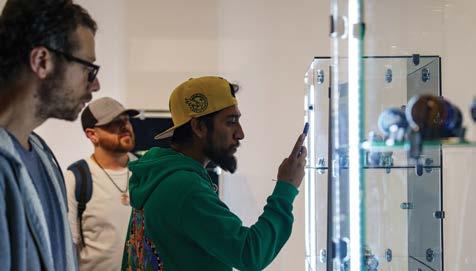
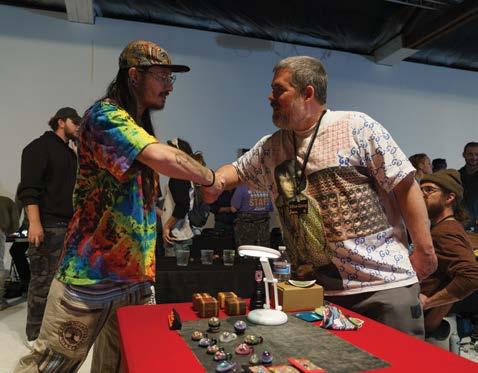
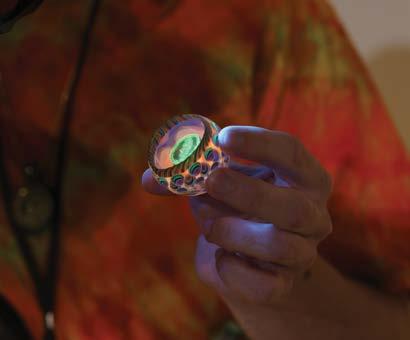
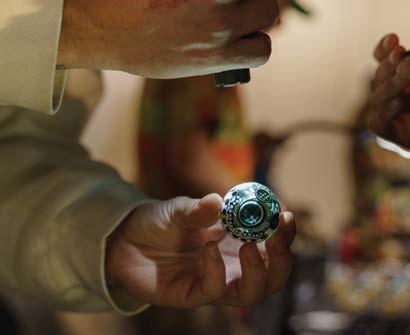
A few personal standouts from this year’s show were Eusheen and Yoshinori Kondo’s epic marble collab, which sparkled so bright that I nearly needed sunglasses, and Jen Stark’s highly anticipated first release of flameworked glass pieces. I was beyond stoked to score a pill made by ENS Glass out of Texas that features a trippy take on Stark’s signature rainbow patterns. Whether you gravitate toward geometric shapes and nature-inspired patterns or like to get lost in a fully-worked window to another world, there was truly a style for everyone to appreciate.
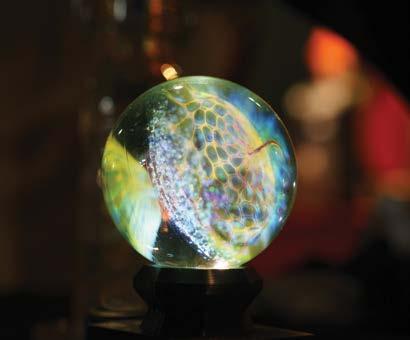
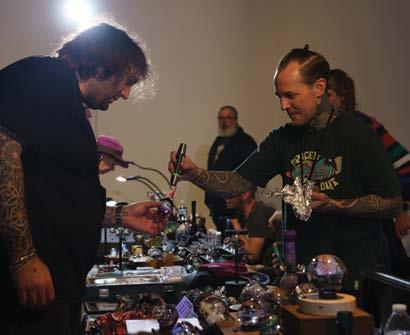
If this year’s MIBCON turnout (and the palpable excitement among artists and collectors) is any indication, the event reflects a broader shift in the glass scene. It marks a move away from viewing marbles as simple, nostalgic objects and toward recognizing them as an innovative, highly technical art form. And this art form is shaping the future of glassmaking — one sphere at a time.
MARBLECONFERENCE.COM @MARBLECONFERENCE
Alex Ubatuba x Jen Stark x ENS Glass Collab
Enjoying the show
Mike Gong
Kenan Tiemeyer x Swank Collab
N8 Miers
Lilbear x Pogo Collab
Attendee Collection
Newob Glass








To many hardcore heads, their bong is more than just a piece of paraphernalia — it’s a reflection of their personal style — even a symbol of their stoner status. Sure, joints are great, but there’s nothing quite like a fat rip from a baller headpiece to go from sober to slobber in 4.20 seconds flat. So fire it up, fill that chamber and get ready to inhale the totally tubular history of the bong.
Birth of the Bong
AFRICAN ORIGINS
Evidence suggests that bongs originated in Africa sometime in the 12th century. In the late 1800s, archaeologists documented how various tribes in Eastern and Southern Africa would smoke “dagga” or “dakka” out of holes in the ground, using bowls fashioned from mud or clay and inhaling through a hollow reed — a primitive apparatus known as an “earth pipe.”
In an article from a 1910 edition of the German anthropological journal “Internationales Archiv für Ethnographie,” (reprinted in the 1975 book “Cannabis and Culture”), a Dr. Moszcik confirmed that the Ngoni, a tribe near the Zambia/Zimbabwe border, used such an earth pipe that utilized water filtration:
“A hollow tube is stuck into one of the pits to act as a mouthpiece and prevent particles of earth en tering the smoker’s mouth. Hemp is then placed in the bowl and kindled. A little water is poured into the duct and the native lies flat or kneels down and inhales the smoke through the water.”
ETHIOPIAN EXCAVATION
In 1971, Boston University doctoral student J.C. Dombrowski discovered 11 pipes made from animal horns, stone and pottery in the Natchabiet Caves of Lalibela,

Ethiopia. Among these were two ceramic pipe bowl fragments dating from between 1,100 and 1,400 C.E. that tested positive for Cannabis.
In his paper “Cannabis Smoking in 13th-14th Century Ethiopia: Chemical Evidence,” archeologist Nikolaas J. Van Der Merwe wrote of the fragments: “Both bowls formed part of waterpipes; an aperture at the bottom of the bowl allows for the attachment of a vertical stem, which presumably descended into a water container.”
Then, in 1945, archaeologist Mary Leakey uncovered a waterpipe crafted from a gourd in Tanzania. This discovery may provide insight into the origin of the word “bong,” as apparently, there lived a tribe in nearby Kenya known as the Bong’om. There’s also a town in Liberia named Bong, which may or may not be connected.
a hole, chamber, or slot; a bamboo waterpipe for smoking kancha, hashish, or the hemp-plant.”
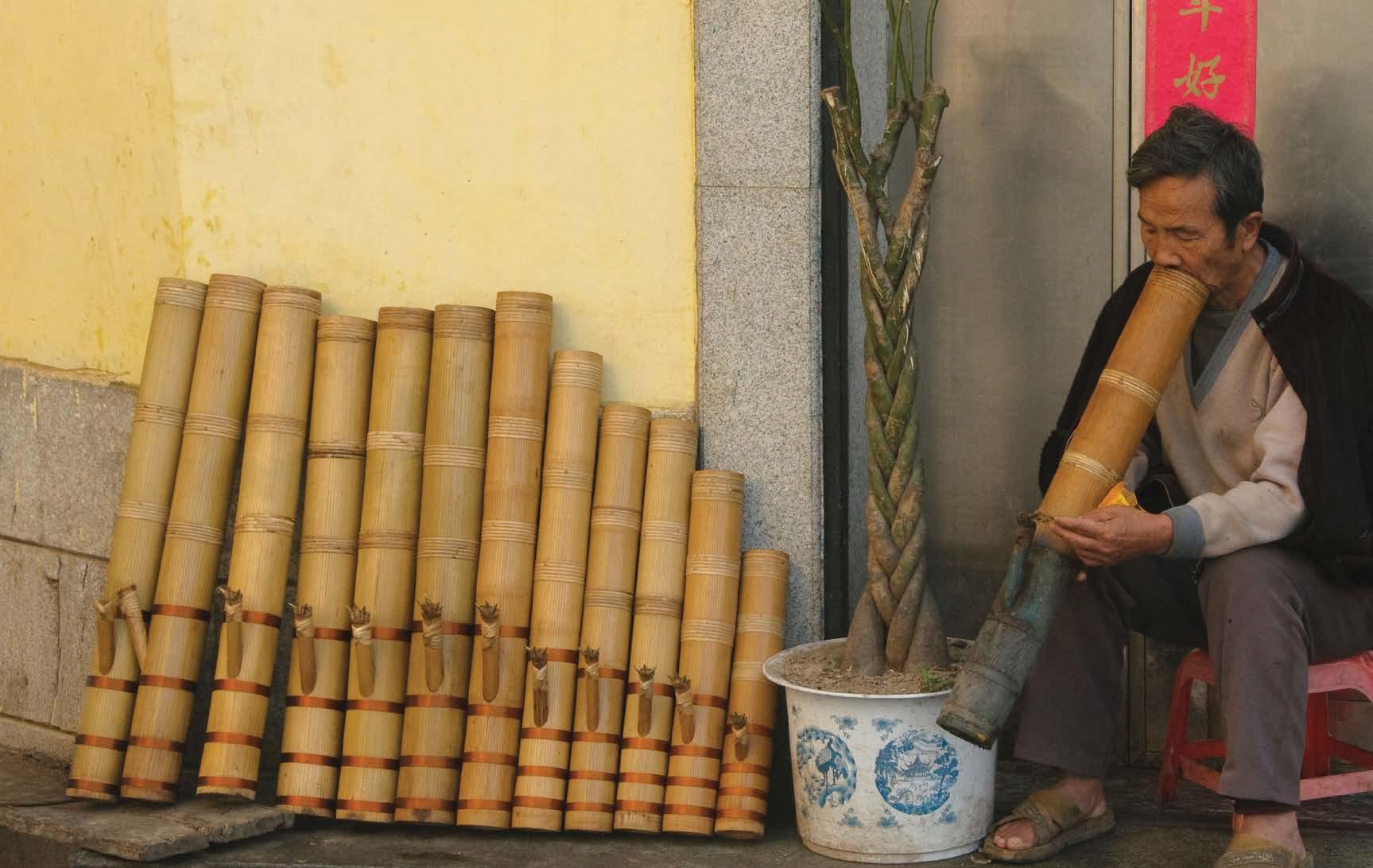
Regardless, the crafting of bamboo bongs is an ancient tradition deeply rooted in Thai culture. As thaibong.com explains: “This is not merely a tool, but a reflection of a way of life, a history, and an art form passed down through generations.”
SILK ROAD MIGRATION
THAI HIGH
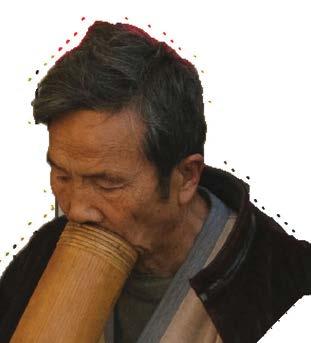
Nevertheless, conventional wisdom holds that the term bong actually originated in Thailand as an anglicized version of the word “baung” — a reasonable presumption, considering that the earliest written record of the word bong appears in a 1944 Thai-English dictionary which defines it as “a cylindrical piece of wood with
Thanks to the legendary Silk Road and the East India Company, tobacco arrived in the Orient during the 16th-century Ming Dynasty, and smoking it from blinged-out metal waterpipes became all the rage among royalty and the upper classes. In fact, Empress Dowager Cixi of the Qing dynasty was reportedly so fond of her waterpipes that she was buried with three of them.
It’s also through the Silk Road that bongs eventually made their way to Middle East trading hubs, then on to Europe sometime in the 17th century. With tobacco flowing in from the Americas, some Europeans began using waterpipes to imbibe, but they never became as popular as they were in Asia and Africa. It would take three more centuries (and a countercultural revolution) before the bong would catch on in America.
A bong merchant in Yuanyang, China takes a smoke break.
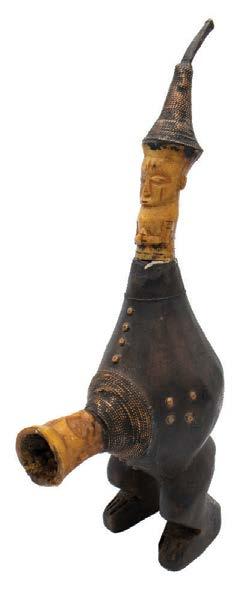
Wood and bone ceremonial bong of the Lega tribe in Congo, Africa.
DAVE STAMBOULIS / ALAMY
COMING TO AMERICA
During the 1960s and early 1970s, many U.S. soldiers fighting in South Asia started smoking Cannabis to help them sleep and cope with the daily traumas of war. It was these Vietnam vets who brought the bong home to America, where they were soon embraced by the weed-fueled hippie movement.
“During the Vietnam War, American GIs on R&R would come to Thailand to kick back and relax for a while before being sent back to fight in the Vietnamese jungles. It was there that they discovered the bong,” explained Thai writer Nuttawat Attasawat. “[Bongs] were smuggled back to the United States, where they became an integral part of American Cannabis culture.”
With the proliferation of headshops over the next decade, bongs grew ever more accessible and popular — becoming the preferred smoking method for countless stoners and a symbol of the counterculture. To meet this demand, some American artists and entrepreneurs began manufacturing a new style of bongs made from ceramics.
EARTHWORKS

“The bong is not merely a tool, but a reflection of a way of life, a history and an art form passed down through generations.”

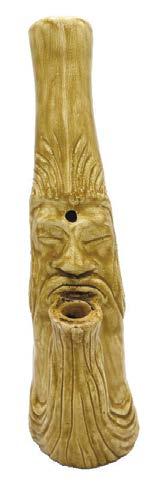
The first U.S. ceramic bong manufacturer was a company called Earthworks. Best known for their iconic Old Man Bongs, Earthworks was founded in 1971 by an OG stoner we’ll call Mr. Thomas, since he prefers his real name not be revealed.
“In 1971, newly married and always getting high, I needed to find a way to make some money,” Thomas told World of Cannabis. “So I started Earthworks in a garage I rented, and we began making bongs.”
Within a year, he’d expanded the operation into a 2,000 square foot facility, purchased some used equipment, and hired “30 very friendly stoned hippies” to mass produce his Old Man Bongs. By 1973, Thomas and his team were cranking out about 1,200 a day, which they sold to headshops, sales reps and distributors for $5 each.
Earthworks eventually produced 724,400 of its Old Man pieces, making it the top-selling bong of the decade and a subcultural phenomenon. Old Man Bong clubs began forming all over the country, and the Earthworks factory became a stoner tourist attraction. Thomas even claims he and his crew buried a slew of bongs all around the country.
“There are over 50 burial sites for Old Man Bongs, protected in cypress boxes for future discovery,” he told WOC. “I believed then that we were making something that quite possibly would be found by archaeologists thousands of years later.”
Sadly, Thomas’ bong empire ended in 1983, when he sold the company and quit Cannabis. Now retired and in his 70s, he hasn’t smoked weed in over forty years.
THE SLYME FACTORY
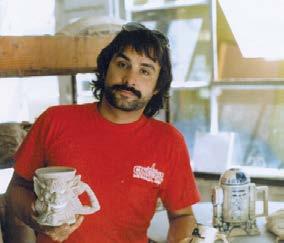
Another popular 1970s ceramic bong maker was a zany artist from Missouri named Jim Rumph.
Inspired as a child by Mad magazine, sci-fi books, and fantasy artists, Rumph became an underground illustrator and graphic artist during the 1960s before switching to ceramics in the ’70s. Operating out of Southern California, his companies, Mind Circus and Slyme Factory, began selling fantasy-themed pottery, drinking vessels, and yes, bongs.
To the mainstream, Rumph was best known for his movie character mugs, such as E.T., King Kong, Superman, and his highly successful Star Wars series. But for the counterculture, it was his cadre of whimsical fantasy-themed bongs for which he’s revered. From skulls and snakes to dragons and demons, Pegasi and unicorns to wizards and topless maidens — Rumph’s sword-andsorcery smokeware were some of the most sought-after stoner collectibles of the era.
G.GRAPHICS V. GRAFFIX
THE GLASS MENAGERIE
In the 1990s, borosilicate glass established the new standard for smokeware thanks largely to “Godfather of Glass” Bob Snodgrass. Snodgrass and his early apprentices — such as Jason Harris (Jerome Baker), Chris Shave of JAH (Just Another Hippie) Creations, Dan K, and Cam Tower — went on to found the functional glass industry as we know it today. In fact, it was allegedly Tower who first crafted what we now consider the classic bong shape — a bubble-like base with a long, straight tube — out of a single, solid fused piece of glass. (See Cannthropology April 2021 and April 2023).

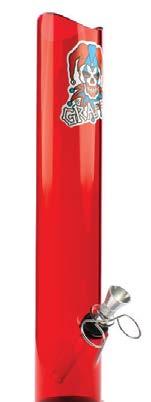
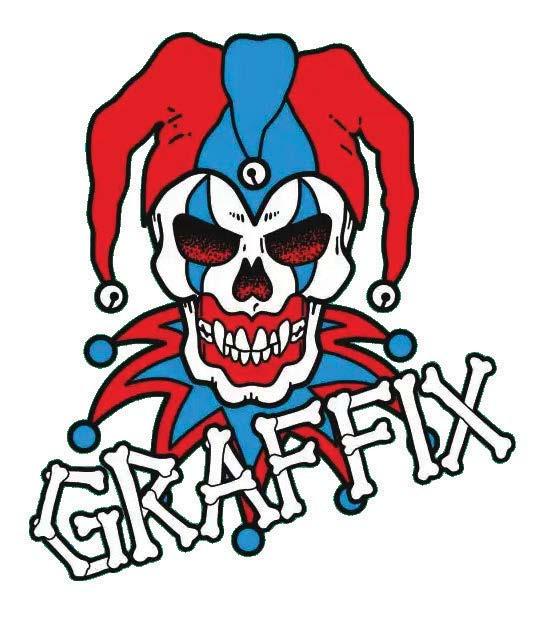
Around the dawn of the 1980s, a new material for making bongs emerged: acrylic. Compared to waterpipes of the past, acrylic bongs were cheaper and more durable. Pioneers of this plastic paraphernalia included U.S. Bongs from Rockville, Maryland (allegedly the first to feature pull-out downstem carbs) and a Milwaukee-based company called G.Graphics. Founded by a stoner named Todd Galanter, G.Graphics bongs originally consisted of a tin can filled with concrete and a PVC tube with a hole drilled in it for a metal stem. Eventually Galanter shifted production from his basement apartment to a warehouse and upgraded his materials. Though mostly sold only at local headshops in Wisconsin and Illinois, G.Graphics bongs became extremely popular in the greater Midwest. Nevertheless, Galanter appears to have shut the company down in 1990. But by far the most well-known bong manufacturer of that era was a brand whose name sounded suspiciously similar to Galanter’s: Graffix. Any American who was getting high in the 1990s is undoubtedly familiar with Graffix’s iconic jester skull logo and most likely found themselves choking up a hit from one of their long, colorful tubes at some point. Graffix was founded in 1988 in Tucson, Arizona … but beyond that, there’s shockingly little information available about this iconic, enigmatic brand.

KEEP CALM AND BONG ON
These boro bongs have enabled myriad new innovations, such as fuming (aka color-changing glass), cooling ice catchers, smoke-diffusing percolators and multi-chamber recyclers. Over the past three decades, glassblowing has become the art form of choice for many Cannabis lovers who create and collect mind-blowing heady works of functional art worth thousands of dollars.
Despite their artistic value, bongs are still classified as drug paraphernalia by the U.S. government under the Controlled Substances Act, and are therefore federally illegal to import, export, sell or transport across state lines.
To get around this law, headshops have historically posted signs stating that their smokeware was for “tobacco use only,” and forbade use of the word “bong” in their stores. Unfortunately, that didn’t stop the Justice Department from launching Operation Pipe Dreams in 2003, driving many bong makers and retailers out of business. Luckily, this beleaguered industry has made a triumphant comeback over time. Today, with Cannabis legal in so many states, paraphernalia sales are permitted under state law in much of the country and estimated by several market research firms to be a $73 billion market.
After nearly a millennium, the humble bong has proven itself to be more than just some clever contraption for getting high — it’s an enduring international artifact of humanity’s heritage, and an ever-evolving symbol of Cannabis culture that continues to bring joy to millions of stoners around the world.


Bobby Black is
Jim Rumph at his studio.
U.S. Bongs ad in High Times.
Old Man Bong
Classic Graffix straight tube bong.