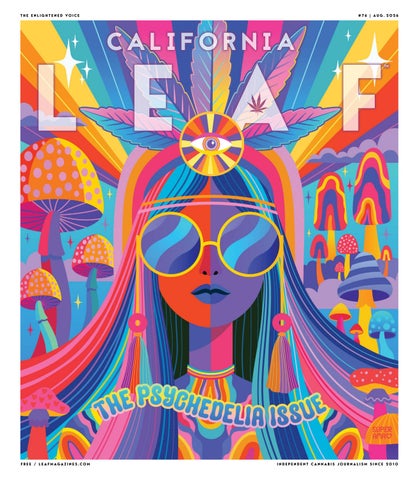
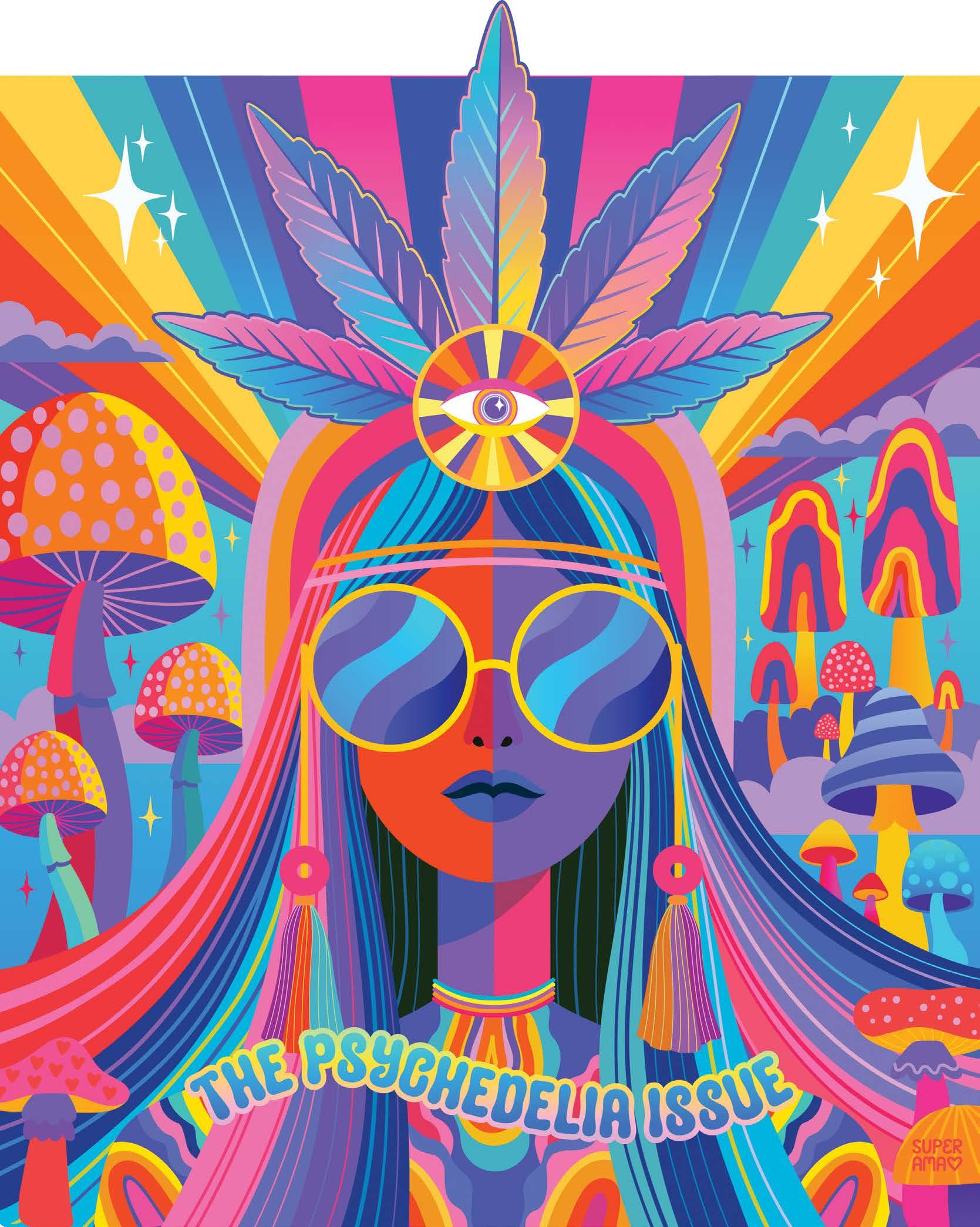
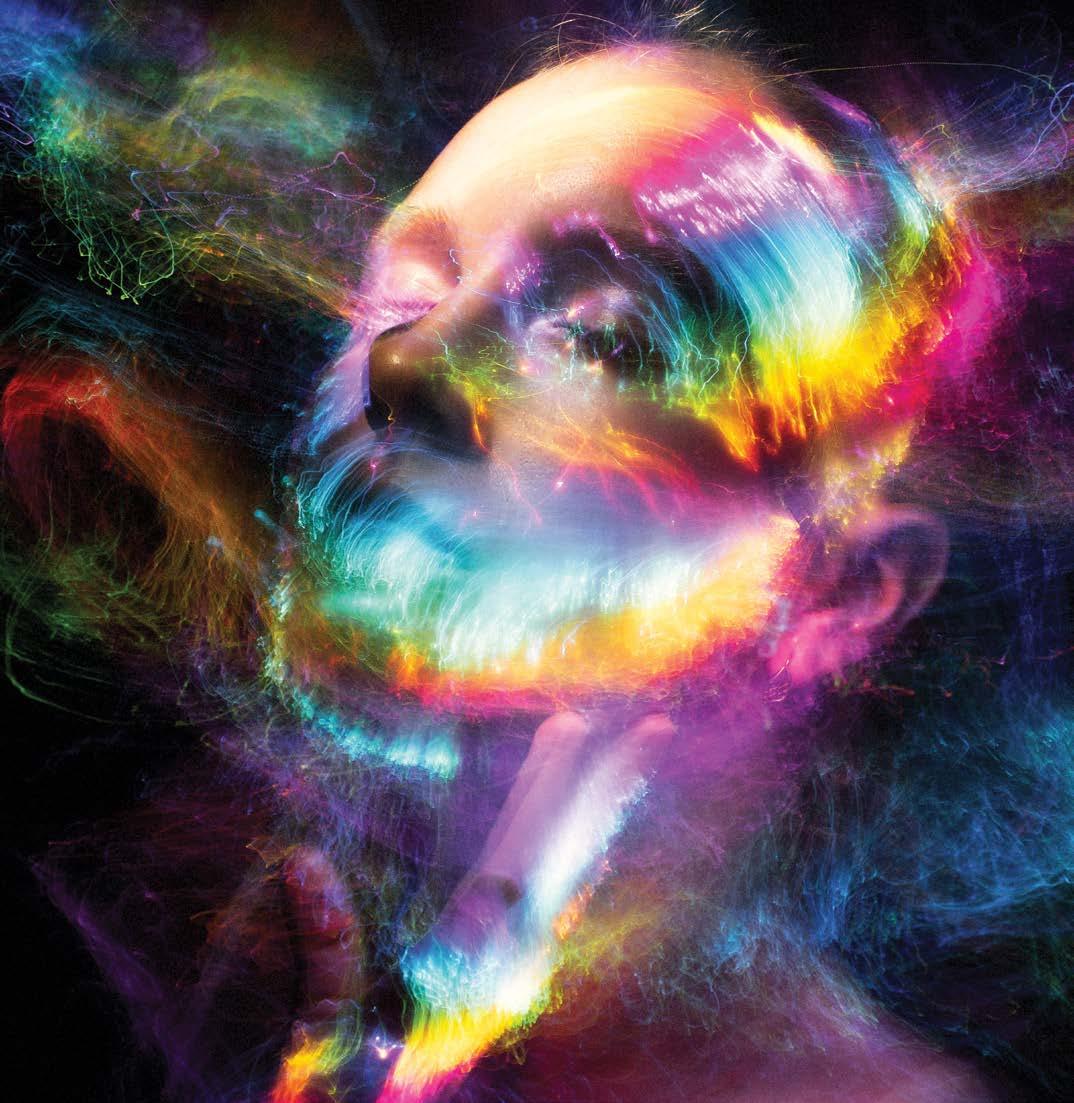
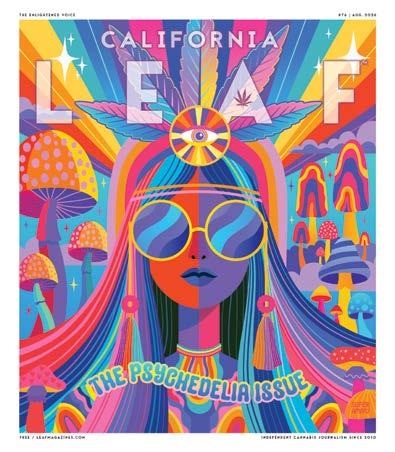
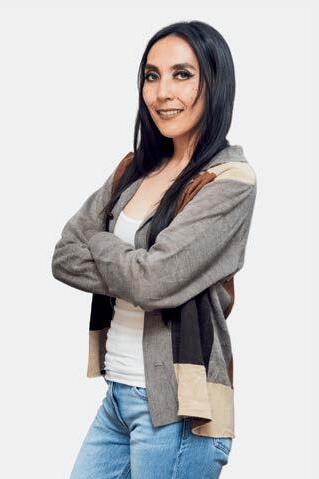
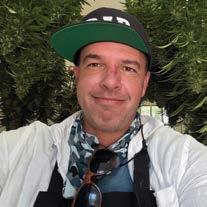
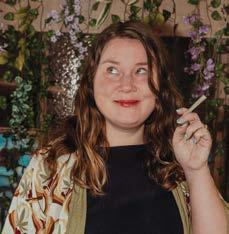
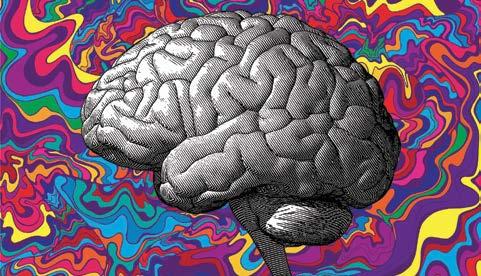
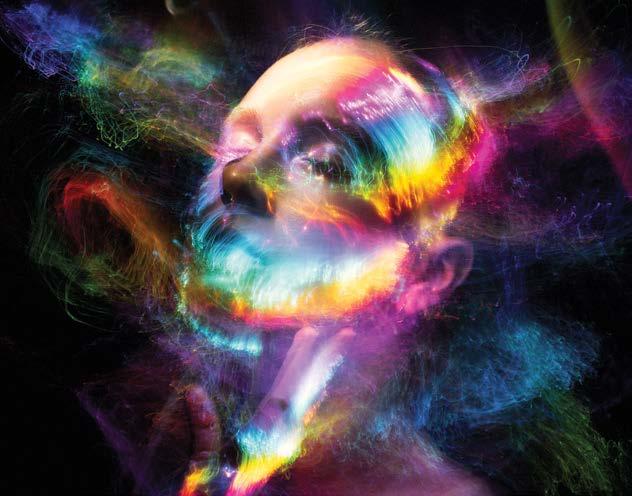
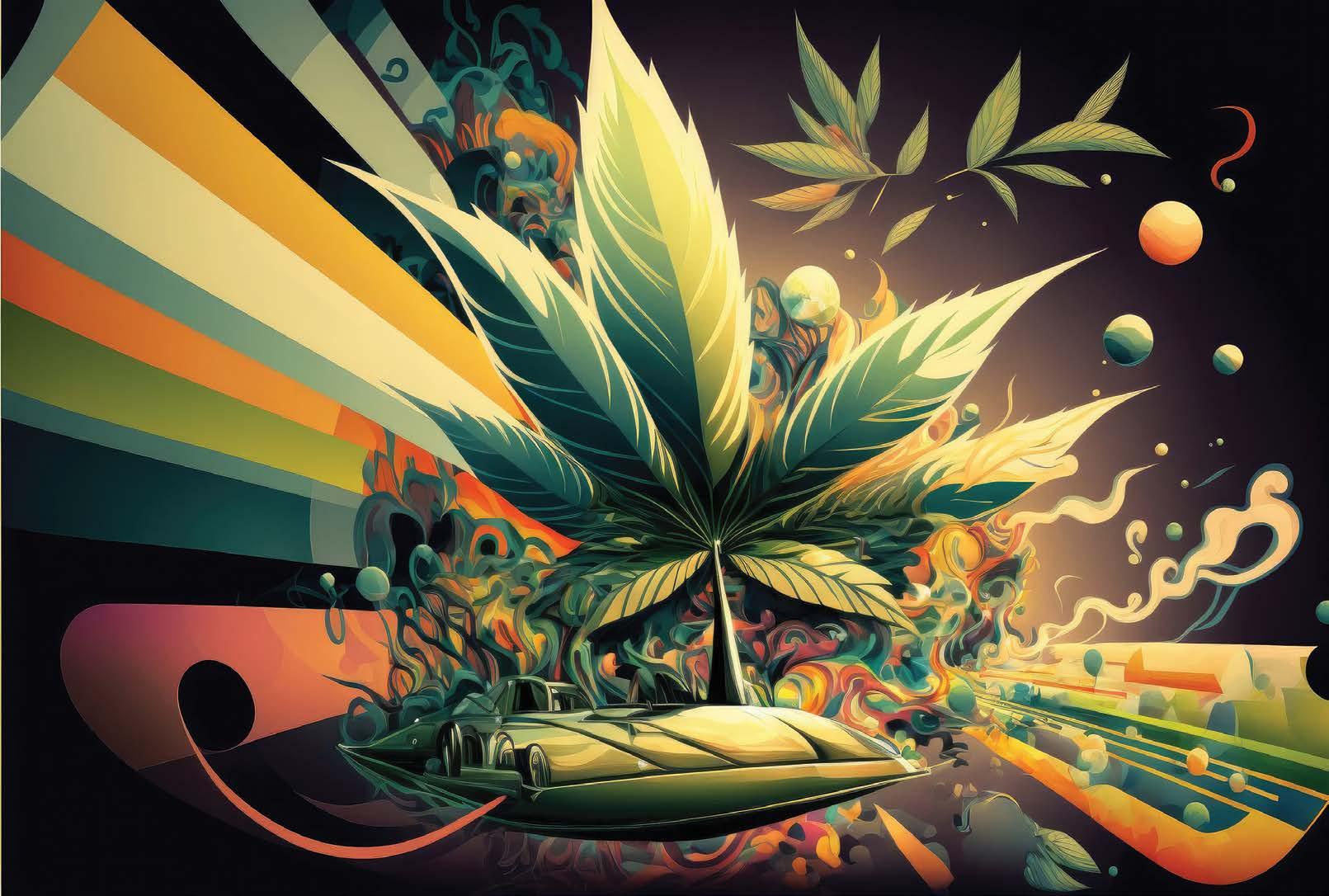
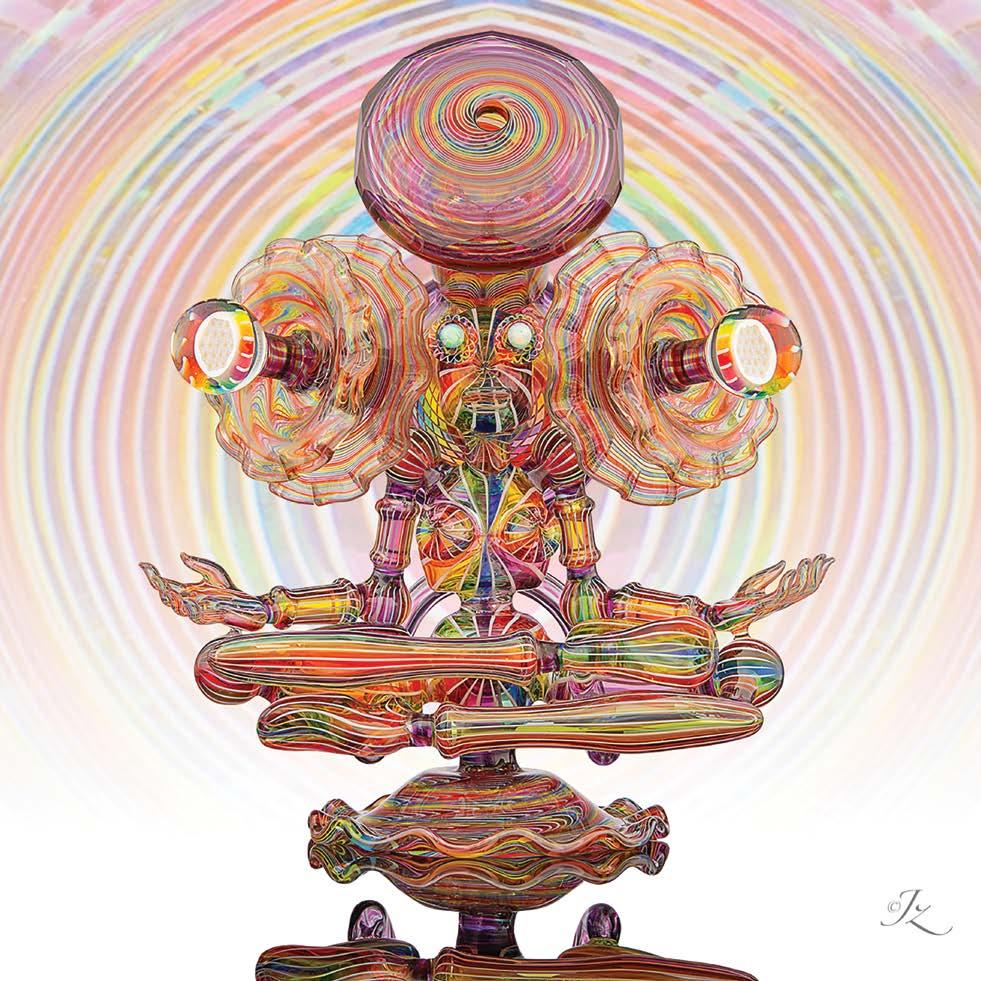
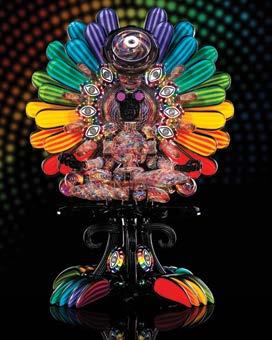
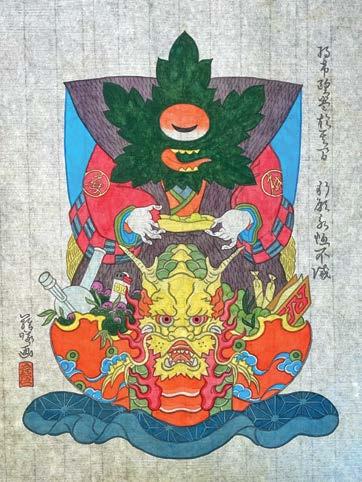
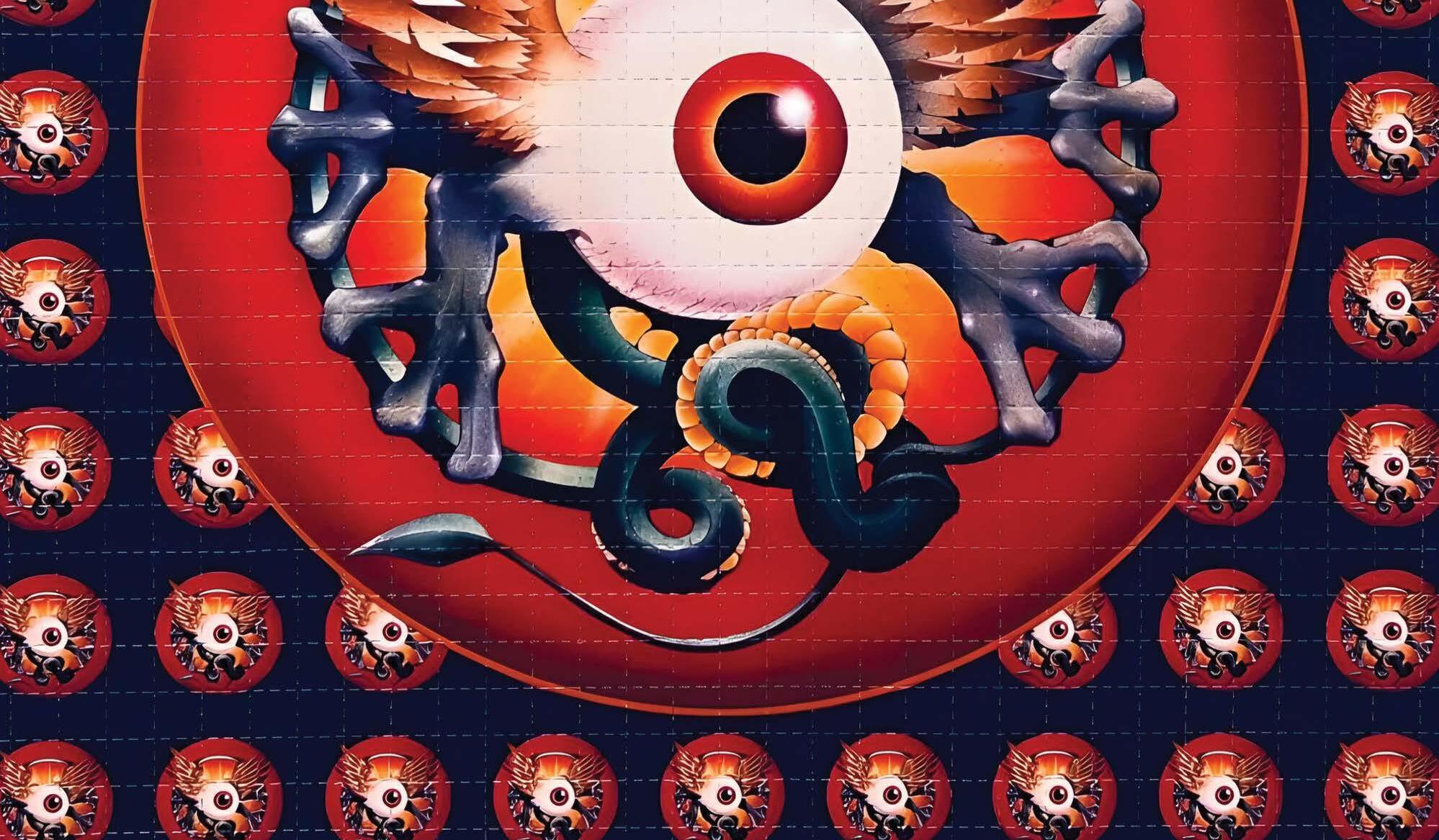
Amaranta Martinez, known as SUPERAMA, is a Venezuelan visual artist, Emmy Award winner, muralist and digital creator based in Miami. At the heart of her practice is the fusion of art and technology, creating experiences that go beyond the image itself. For The Psychedelia Issue, SUPERAMA channeled the Leaf's vision of a portal of perception — a figure standing at the threshold between ancient and future. But the portal doesn't stop at the page: Scan the QR code and follow the prompts, then point your camera at this month's cover to unlock an augmented reality experience and watch it come to life!
ILLUSTRATION BY SUPERAMA THESUPERAMA.COM/SHOP @SUPERAMA__
CONTRIBUTORS
WES ABNEY CEO & FOUNDER
wes@leafmagazines.com
MIKE RICKER OPERATING PARTNER ricker@leafmagazines.com | advertising opportunities
TOM BOWERS CHIEF OPERATING OFFICER tom@leafmagazines.com
DANIEL BERMAN CHIEF CREATIVE OFFICER daniel@leafmagazines.com
BOBBY BLACK LEAF BOWL DIRECTOR & HISTORIAN bobbyblack@leafmagazines.com
MATT JACKSON CA CONTENT DIRECTOR + SOCIAL mattjackson@leafmagazines.com
MICHELLE NARANJO & CARA WIETSTOCK COPYDESK michelle@leafmagazines.com | cara@leafmagazines.com
WES ABNEY, FEATURES
KARLI ADAMS, PHOTOS
BOBBY BLACK, FEATURES + DESIGN
BENNYY BLANCO, PHOTOS
TOM BOWERS, FEATURES
JACKIE BRYANT, FEATURES
JIMI DEVINE, REVIEWS
DAVID DOWNS, FEATURES + PHOTOS
WYATT EARLY, FEATURES
ELLEN HOLLAND, FEATURES
MATT JACKSON, FEATURES
ROGER KISBY, PHOTOS
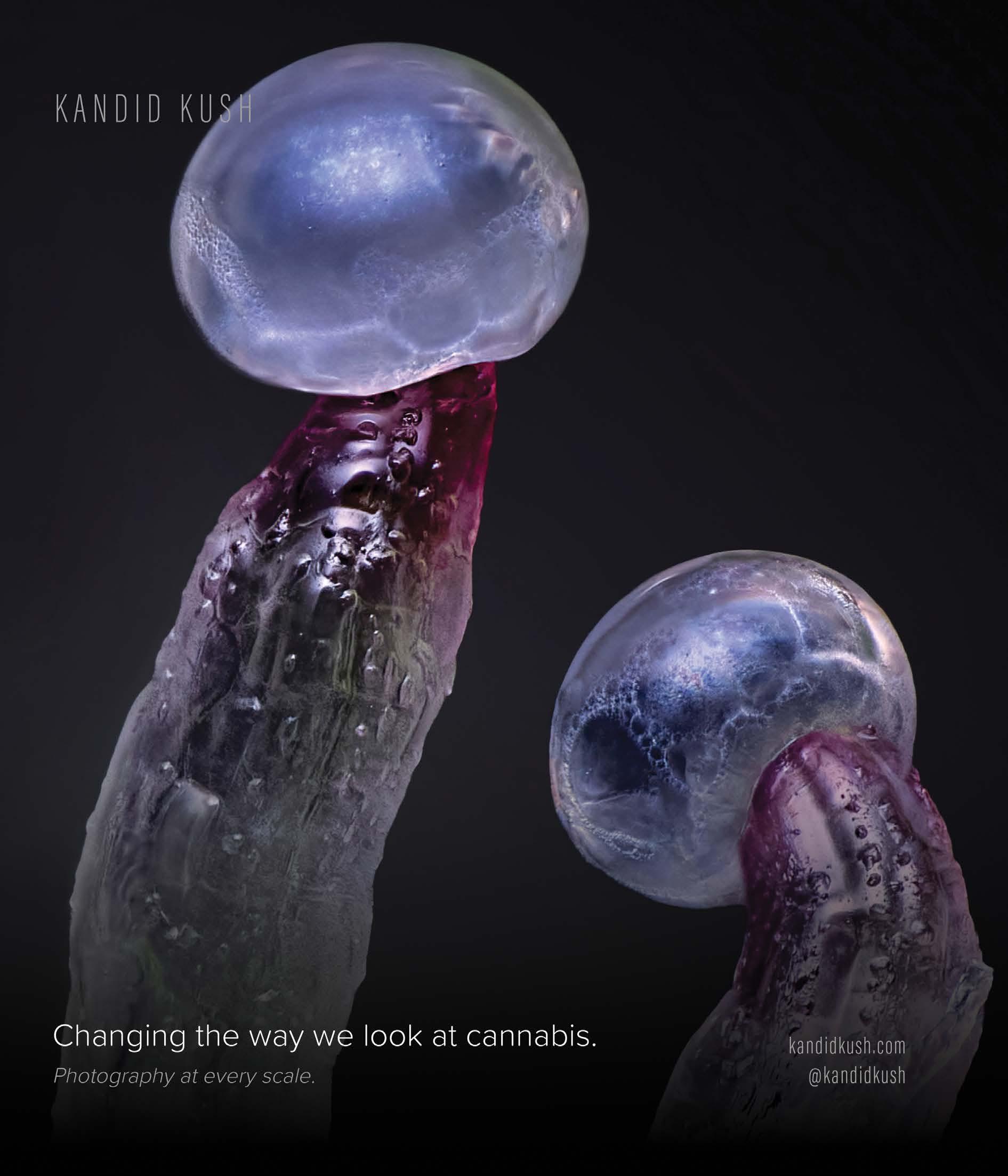
KANDID KUSH, PHOTOS
AMARANTA MARTINEZ, ILLUSTRATION
TERPODACTYL MEDIA, PRODUCTION
CHRIS RAMIREZ, PHOTOS
MIKE RICKER, FEATURES + PHOTOS
TIAN SCHERER, FEATURES
LUNA STOWER, PHOTOS
CARA WIETSTOCK, FEATURES
KATHERINE WOLF, FEATURES
BRUCE & LAURIE WOLF, RECIPES JAMIE ZILL, PHOTOS
We are creators of targeted, independent Cannabis journalism. Please email us to discuss advertising in the next issue of California Leaf Magazine. We do not sell stories or coverage. Email ricker@leafmagazines.com to start advertising!
Exclusive Cannabis Journalism CONNECT WITH CALIFORNI A LEAF
Thanks for picking up The Psychedelia Issue of California Leaf!
Psychedelics are power! Modern medicine is all about sacrifice and substitution. Doctors treat Americans with an ailment by trading one problem for a medication with a side effect. Healthcare is now compromising one aspect of health to try to save another This is especially evident in mental health treatments, which have utterly failed to turn the tide of depression, anxiety or the myriad issues treated with selective serotonin reuptake inhibitors that are the modern version of lobotomies.
Psychedelics have the ability to rewire the brain and create new neural pathways and thought-behavior patterns, and they do so without any negative or compromising side effects. That is powerful medicine!
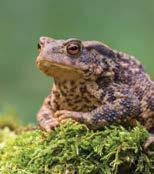
My belief that God gave us this Earth includes psychedelics and other entheogenic medicines. Our creator imbued psilocybin into mushrooms and dimethyltryptamine, aka DMT, into dozens of plants and animals, like the Sonoran Desert toad. Even man-made psychedelics, including LSD, come from natural sources, like ergot, a mold that grows on rye bread. And let’s not forget the healing power of Cannabis, the OG of psychedelics!
"PSYCHEDELICS REMIND US THAT WE HAVE MUCH MORE IN COMMON THAN THE LABELS USED TO SEPARATE AND DIVIDE US."
For hundreds of thousands of years, our species lived in tribal settings, where psychedelics played a critical role in coming-of-age ceremonies, social harmony and social structure. Imagine a tribal gathering with loving elders, family and community members as they guide a young adult on their first psychedelic journey
How much connection, bonding, shared community and interpersonal connections surely flowed through those ceremonies, touching everyone in the community. This is the power that the no-term-limit rulers in charge are scared of. That’s why we went from the 99% movement to an algorithmic march of division. Separating people by race, religion, gender, sexual orientation or politics serves those who seek division and control. When we are divided, we are weak. United, we are strong. Psychedelics remind us that we have much more in common than the labels used to separate and divide us. We must return power to our people and recognize that we are all part of one tribe, one species, living on a shared planet that is getting increasingly smaller.
Ethnobotanist Terence McKenna’s Stoned Ape theory promotes that psychedelics helped pave the way for the frontal cortex to grow in our brain, developing language centers and sensory-auditory connections that allowed language to develop.
Perhaps we’re only here because our ancestors took psychedelics. How ironic, then, that if we want future generations to thrive, we need to start tripping now! The future world depends on us setting aside differences and uniting. Luckily, there’s no better tool for connection, healing and community than the gifts God gave us with psychedelics.
DISPATCHES FROM THE CALIFORNIA STATE FAIR
OF CORN DOGS AND CANNABIS
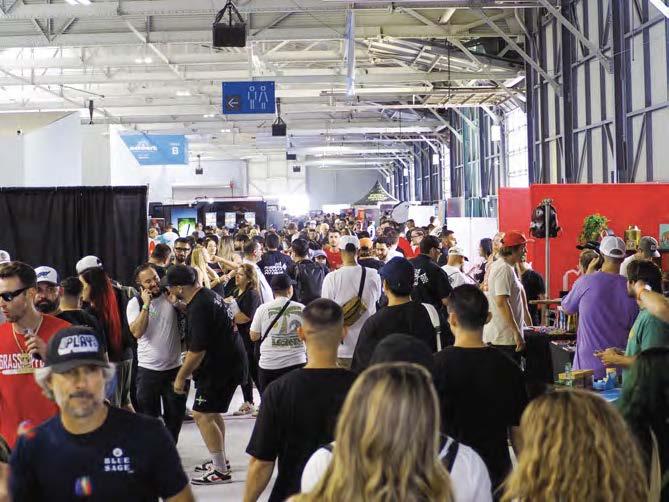
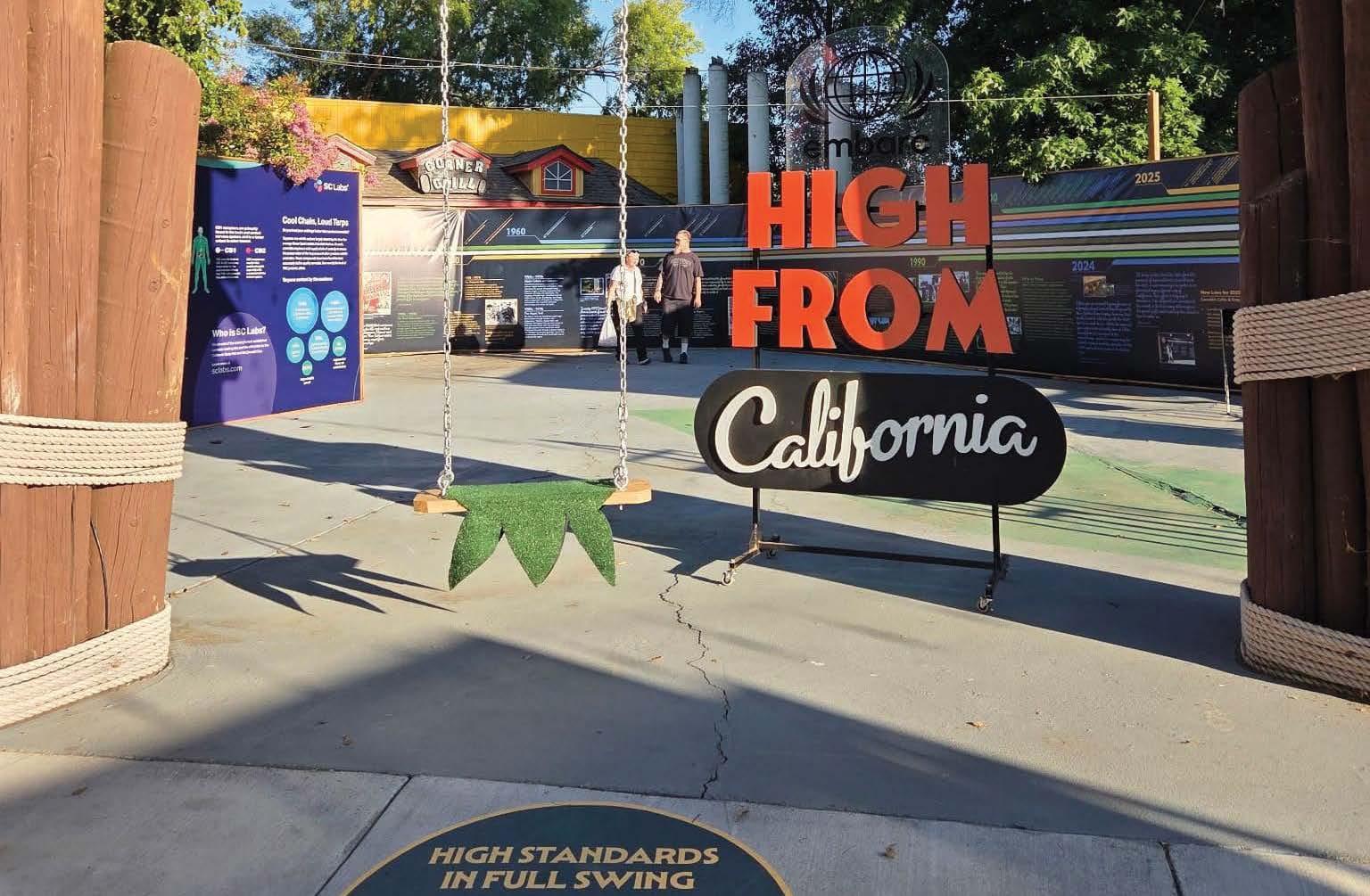
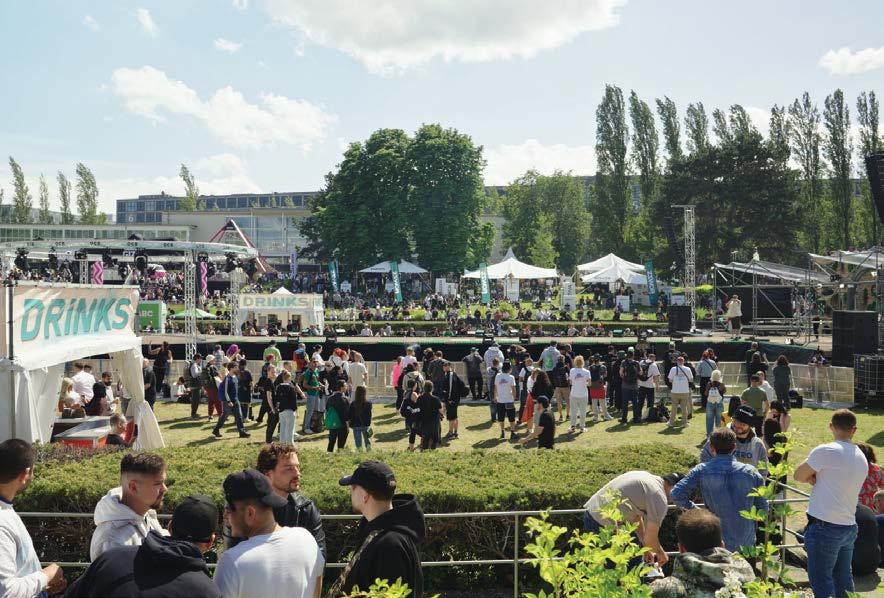
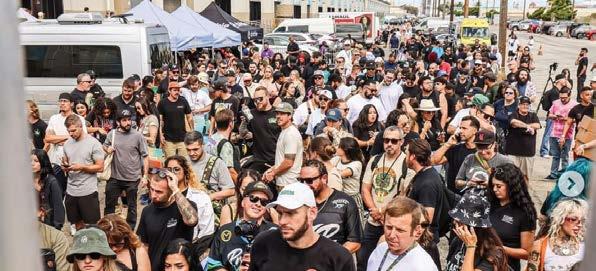
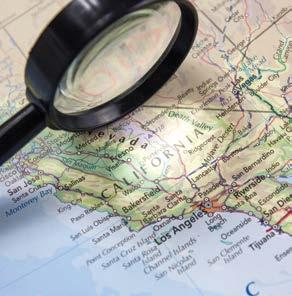
The CA Cannabis Experience at the California State Fair is an event that made me stop and take stock of how much progress has been made in the Cannabis legalization movement, despite the many hurdles it has faced and has yet to face.
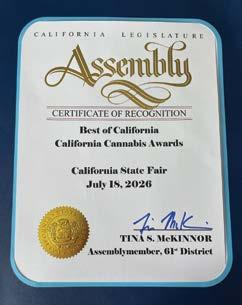
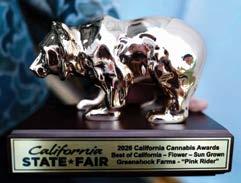
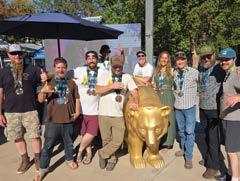
THIS IS THE FIFTH YEAR that Cannabis has had a place at the California State Fair, the third year of licensed onsite sales and consumption and the first year of a Home Grow Competition, which is the very first state-sanctioned, personal-use Cannabis contest in the country. More than 600 entries came in this year, with 150-plus medal winners announced July 1 and nine Best in California Golden Bear awards handed out July 18.
Because this is the 30th anniversary of California’s landmark Proposition 215, pioneers of Prop 215 were honored at this year’s awards, collectively receiving the Pebbles Trippet Lifetime Achievement Award. They gathered on July 18 for a rare reunion, alongside a screening of the documentary “Join the Club.”
A lot of people still don’t know that in the United States, Cannabis legalization was ushered in by some of the most marginalized groups in society: people with disabilities, queer people, nonwhite people, immigrants and people living with HIV, AIDS and other illnesses (including children). In short, Prop 215 came from sick people who were dying and decided to break the law in public, so nobody else would have to, in the name of getting healthcare.
Thirty years later, their work is why a licensed dispensary can sell flower on a fairground between the corn dogs and the Ferris wheel, and we can shop for Cannabis at a store. It’s the most ordinary setting imaginable, which is the bedrock point of legalization: Making this culture that we all call home normal — because it is nowadays — thanks to the risk and dedication of many people society denigrates as dangerously abnormal.
“It’s an incredibly proud moment for us and our farmers to be here celebrating the normalization of Cannabis,” said Scott Vasterling, founder of Humboldt Family Farms, which vended at the on-site Embarc dispensary.
Caleb Chen, a research associate at Cal Poly Humboldt’s Cannabis Studies Lab who judges for the Cannabis rating app Budist under the name the Highest Critic, made the case for why this particular fairground is unique.
He also pointed out that back in the 1850s, California was the first state fair to hold a wine competition, which makes the California Cannabis Awards a pretty logical descendant.
Jocelyn Sheltraw, CEO and co-founder of Budist, added that she and Budist are “proud and honored” to be part of the fair for the fifth year. “Having Cannabis front and center in that experience…speaks volumes about the progress we’ve made as an industry and the continued normalization of Cannabis in California.
Budist’s panel of 30 industry critics evaluated entries on a standardized 100-point system, and flower submissions were tested through SC Labs.
This is the first state-sanctioned Cannabis event with consumption and sales in the United States.
“The California State Fair is super special compared to other state fairs all over the world because it’s the only one that’s enshrined in the state’s constitution,” Chen said. “That means this whole ground is actually protected by the state constitution and is meant to host this event.”
That kind of rigor would have been unthinkable in 1996, when product moved through buyers clubs, and the main quality assurance was somebody’s word. Most of the people who made Prop 215 and eventual legalization possible never got a license or a payout from it, and a lot of them are no longer with us. So, it was nice to see them honored at this year’s fair, surrounded by people energized and poised to hopefully carry their legacies forward, in addition to many members of the general public who were likely unaware of the movement’s history.
Jackie Bryant
1658 W CARSON ST
8 WINS IN A ROW! SOUTH BAY’S BEST ONCE AGAIN!
We did it again! Original Green Cross is beyond hon ored to be voted South Bay’s Best for the 8th consecutive year. Winning ye ar after year especially as we celebrate 20 years in business means the world t o us. Thank you, Torrance and South Bay, for keeping OGC your #1 spot!
WINNER WINNER
“8 Years as South Bay’s best is a huge honor! Thank you for growing with us”
-Carly
“Eight years of being named 'South Bay’s Best'! This streak is all thanks to our hard-working team and the amazing community that supports us every day”
-Jess
FIRE FOLLOWER
Award-winning journalist/author and former Leafly Senior Editor David Downs’ monthly genetics intelligence dispatch.
THE LEGEND OF SEED JUNKY GENETICS'
CAKE STRAWS
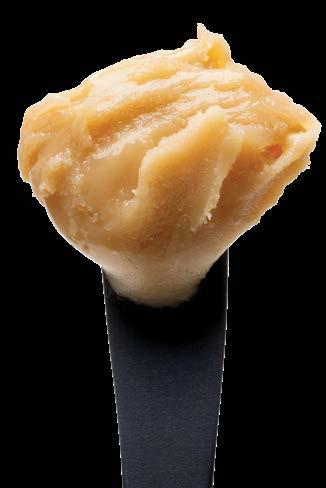
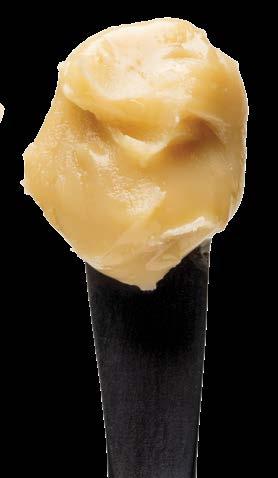
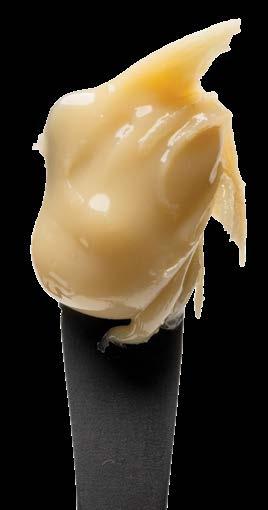
GROWERS BIG AND SMALL in the U.S. have some updated Wedding Cake to bring back into their gardens all across the U.S. and beyond this year. One of the top breeders of all time — Seed Junky Genetics of Los Angeles — has improved their 2019 Leafly Strain of the Year, Wedding Cake, to make Cake Straws.
Cake Straws debuted online in May and in person at the Mary Jane Berlin conference in June. It currently sells online directly at seedjunkygenetics.com for $250 per pack of 10 regular seeds.
Seed Junky’s co-founder, J Beezy, told Fire Follower that the 7-year-old strain’s time is coming around again. (J Beezy has never released his full name, for security reasons.) A huge wave of Cake washed across the country in the late teens. Widespread production led to Cake strains that fell flat, and connoisseurs disengaged. But did they?
“People want Cake again,” J Beezy told me.
It’s true. I did the Good PizzZa podcast with host JP (who also protects his identity for security reasons) in Sacramento, California published June 29, and he said: “Wedding Cake is fire. … And a little cakey is not a good thing in today’s climate.”
JP continued, adding that Ice Cream Cake is “underwhelming compared to things out now. But Wedding Cake? Fuck that, bro, please bring Wedding Cake back.”
Wedding Cake mixes Triangle Kush and Animal Mints. The pale green bud can make you relaxed, horny and hungry, Leafly reviewers have said. Its layers of fuel cohere and flip into soft vanilla and cream.
“Fucking amazing. Great head high and gets the sex drive going. Tastes like vanilla icing. Need I say more?!” stated one Leafly reviewer.
At the core of Cake Straws — and all the new Straws crosses — is Sour Straws (Ztraws), which is reportedly Zkittlez, Kush Mints and Permanent Marker BX1. Those are three killers all on their own.
Z remains undefeated. Kush Mints helped launch Seed Junky. Permanent Marker BX1 comes from another Leafly Strain of the Year. It updates Jealousy, which is basically Gelato times 1,000.
Who knew Wedding Cake even had a pistil problem?
Cake Straws fits into tightly focused, twice-a-quarter genetics drops from Seed Junky. J Beezy makes and sells seeds “more for the flavors, and for the little guys. I enjoy doing it and giving home growers access.”
Seed Junky has a 50,000-square-foot converted rocket factory in Northridge, California, where they keep refining, refining, refining.
Seed Junky has a 50,000-square-foot converted rocket factory in Northridge, California, where they keep refining, refining, refining. They'll continue enhancing the smell, taste, size, color, potency and growth characteristics of stuff that’s already the best.
J Beezy can look at a flawless bud and see future fixes. For example, he shared how Cake Straws fixed an issue with Wedding Cake’s pistils while adding more greasiness, color and what he refers to as “dank.”
The company’s main revenue comes not from seeds, but from selling flower in California and licensing their intellectual property — including the genetics and know-how — to partners in New York, New Jersey, Michigan, Illinois, Arizona, New Mexico, plus Germany, the United Kingdom and Australia.
Also, don’t miss Straw Burst (Tropical Burst x Sour Straws) released July 1.
TAP THAT PACK MORE OF SEED JUNKY’S LATEST OFFERINGS
Lastly, for those hoping to capture some of the renewed hype from Seed Junky-bred strain Giraffe P****, check out the re-release of Zebra Ztripez (Z Animal BX1). Giraffe P**** originally came out in 2016 as Malibu, and then Z Animal in 2021. Doja Pak renamed it the vulgar animal part, Giraffe P****. The infamous Giraffe swept six top awards at the 2026 California Zalympix in June.
J Beezy encourages everyone to hunt their own elite selection. He said that lurking inside his packs are better strains than what he has found.
“There’s stuff here that’s better than Giraffe P****,” he said. “It all comes down to selecting it.”
SEEDJUNKY.COM
CAKE STRAWS
PINEAPPLE BANG
CAKE STRAWS
FRUITY BUBBLES
ZEBRA ZTRIPE
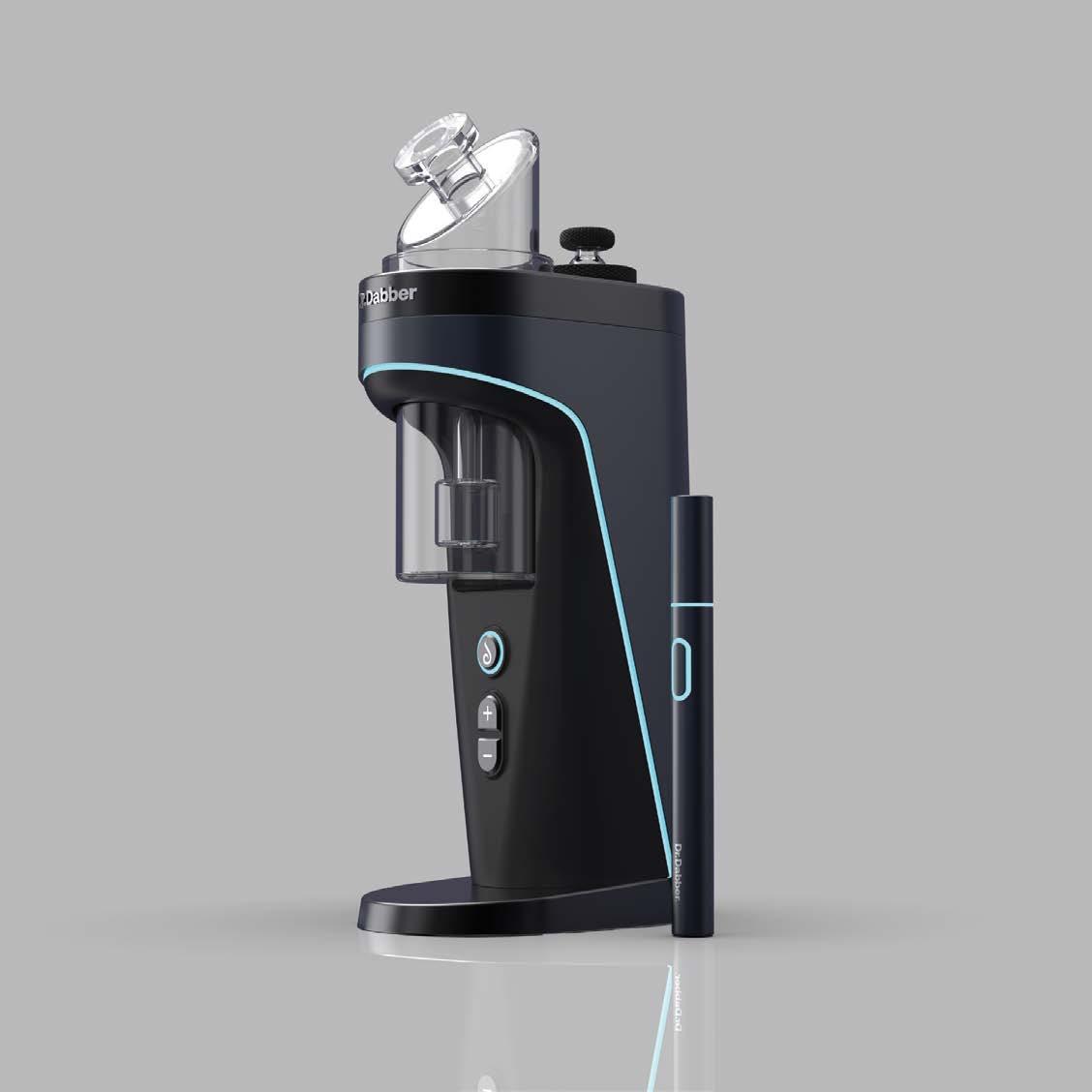
The All-In-One eRig. No atomizer. Completely customizable heat modes.
We accidentally created an eRig that has no atomizer to replace every few months.
Our apologies to companies before us that rely on their customers continuing to spend money on their devices based o a failing part.
No Atomizer Ever
Completely Customizable Heat Modes
Quartz Insert Out of the Box Drop Heated Loading Tool Included Built to Last
GLOBAL SCALE
Mary Jane Berlin shows it's a small world after all
The scope and scale of the Mary Jane Berlin festival feel almost overwhelming. From sales of Cannabis seeds and clones to all sorts of weed-adjacent wares, the 10th annual event held in Berlin, Germany, boasted 75,000 attendees over four days in late June and was a maze of THC in transit.
ON THE first day of the show, Dani Walton — the head of U.S. sales and marketing for Spain-based Blimburn Seeds — helps me make sense of the industry consolidation that’s happening behind the scenes.
“Everyone works with each other; it has to be that way,” Walton said. “People think about competition; it’s more about collaboration. … The industry is smaller than a lot of people think. We have to work together.”
As part of its business model, Blimburn white-labels its Cannabis seeds and works with its partners to handle logistics and fulfillment. Walton won’t land on a specific number, but said a good number of booths at the Mary Jane show are being powered by Blimburn Seeds; it’s all part of the merging motion within the global Cannabis industry.
“You saw a boom, and now you're seeing a consolidation as the European markets mature,” Walton said, specifically referenc-
ing collaborations between European and North American brands. “With the first couple of years of legalization, you had everyone rushing to get in here, and now it’s a little more consolidation because Germany actually imports a lot of their Cannabis.”
Germany’s medical Cannabis market opened in 2017 and imported Cannabis flowers from nearly 20 countries in the first quarter of 2026, according to figures released by Germany’s medical Cannabis regulator, the Federal Institute for Drugs and Medical Devices. Canada is by far the dominant supplier of Cannabis flowers to Germany, followed by Portugal and Denmark. Since 2024, there’s also another way for Germans to get weed. The country allows adults to grow up to three Cannabis plants at home through policies that include social clubs for growing and supplying weed to their members, which are supposed to only be for German citizens.
“If you would consider, like a Humboldt of Canada, it would be called the Kootenays,” Carmody told me. “It’s remote. It’s in the interior of British Columbia, kind of hard to get to from anywhere. And in the Vietnam War — when draft dodgers were escaping the war — they were looking for places to hide, and the Kootenays were one of them. They brought genetics with them and brought Cannabis culture with them, and that's why that area became a propagation point of Cannabis in Canada.”
In 2018, Canada became the second country in the world, after Uruguay, to allow Cannabis for adults. But before that, in 2014, Canada’s medical Cannabis policy allowed for the export of Cannabis that’s categorized under Canada's medical system.
Carmody is the co-owner of Kootenay Cultivar, and for the past year and a half, he has been selling 95% of the Cannabis flowers he grows in Canada to Germany. He started growing in his parents’ chicken coop as a teenager and said, “17-year-old me’s mind is fucking blown right now.”
“(Germany is) the best market in the world by a long shot,” he said. “The genetics that we have that we really sell a lot of in Germany is a strain called OJ Zainbow. So it’s Zainbow Mentz, but our pheno that we hunted and found has a really sweet, orange citrus flavor, and I called it OJ Zainbow.”
LET'S GET TOGETHER AND FEEL ALRIGHT
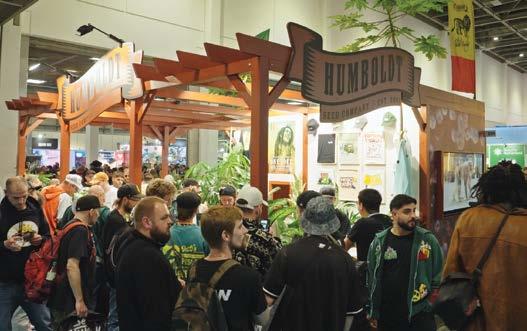
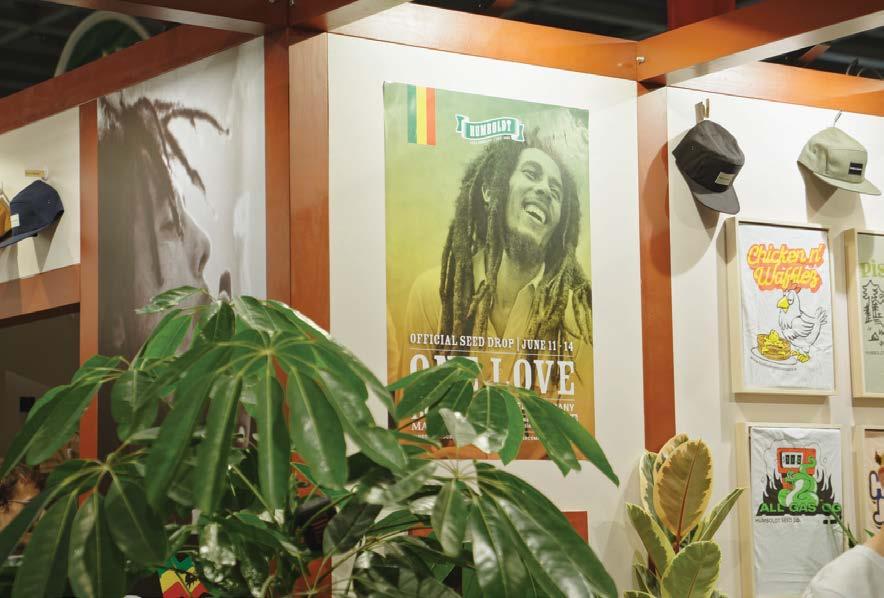
At this year’s Mary Jane festival, California-based Humboldt Seed Company debuted a seed collaboration with the family of reggae superstar Bob Marley. The seeds represent years of breeding work during which HSC partnered with local growers in Jamaica.
“If you make something of your own, usually you have time, then you want to perfect it, and it’s like your baby,” Nat Pennington, HSC co-founder and CEO, said.
Cannabis plants inherit traits from both of their parents, and like sisters in the same family, seeds can express different physical attributes. The time-consuming work for Cannabis breeders comes in stabilizing strain genetics to deliver a consistent product. But after that work is done, making a large quantity of seeds is easy, Pennington said.
After taking a dab with Walton, I walk out into the festival’s outdoor area and run into Tyeson Carmody, who was born and raised in the Kootenays, a wild mountainous area in southeastern British Columbia, Canada.
“California makes software; it’s like breeding (Cannabis),” Pennington said.
“You put a bunch of energy into breeding something, but you can just hit copy and paste to sell it. We put a bunch of energy into making a seed line, then when it comes time to multiply it, we've done our homework; now we just breed it.”
HSC’s explorations around the world to discover and preserve unique Cannabis genetics, documented on their YouTube channel, make the world feel smaller.
THE
CANNABIS
ECOSYSTEM GROWS
Simón Espinosa, founder of the Spanish-language Cannabis media platform En Volá, traveled from his native Chile to California this past summer to participate in HSC’s pheno hunt, where I last saw him.
Ellen Holland is a San Francisco Bay Area-based freelance writer, the former editor of High Times and the author of multiple books, including "Weed: Smoke It, Eat It, Grow It, Love It" (2024).
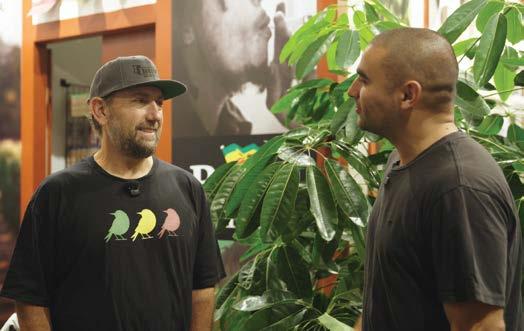
HSC'S NAT PENNINGTON TALKS WITH EN VOLÁ'S SIMÓN ESPIONOSA
When I meet up with Espinosa in Berlin, he arrives with the tale of taking Cannabis culture to the ends of the earth during a trip En Volá organized in October 2025 that brought 150 people to the Patagonia region, the southernmost tip of South America.
After Mary Jane, En Volá took a bus of Cannabis influencers from across the world to Demecan, one of the largest medical Cannabis providers in Germany, followed by a stay at a castle in Saxony.
“We found a castle in deep Saxony, which is where Romanticism was born,” Espinosa said. “I wanted to check it out personally, so I keep making shit up so I can go to places I like. … This started because I’m sharing my sponsors with my first ecosystem, who were other content creators who didn’t get to travel, and I told them, ‘It’s going to change your life, as it did to me.’”
En Volá calls these trips “Very Happy” and, through them, hopes to bring the worldwide Cannabis community closer together.
Trips like those organized by En Volá and events like Mary Jane show that as weed goes worldwide, partnership is the key to success. Together, they make it clear: The Cannabis industry is growing through collaboration and consolidation.
MARYJANE-BERLIN.COM
@MARY_JANE_BERLIN
HUMBOLDTSEEDCOMPANY.COM
@THEHUMBOLDTSEEDCOMPANY
KOOTENAYCULTIVAR.COM
@KOOTENAYCULTIVA
WWW.ENVOLA.CL
@EN_VOLA
JENEE BRANCH
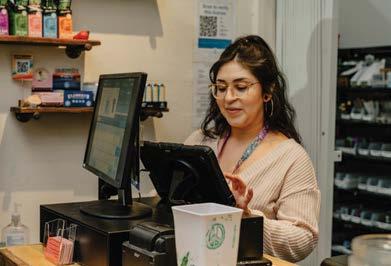
Jenee Branch, aka KushThaJunkie, or “Kush” for short, has been a budtender for over six years now, but this San Diego native has been smoking for as long as she can remember.
AT SAN DIEGO’S only dispensary and smoking lounge, Branch helps visitors navigate the wide array of options and, more importantly, leave feeling more confident about Cannabis than when they came in. “I try to give everyone an experience, not an experiment,” she told the Leaf.
Being a rapper as well as a budtender, Branch has a musical mind, a gift of gab and an infectious energy, all of which make for a natural performer both onstage and on the dispensary floor. Like music, she said, Cannabis is all about how it makes you feel.
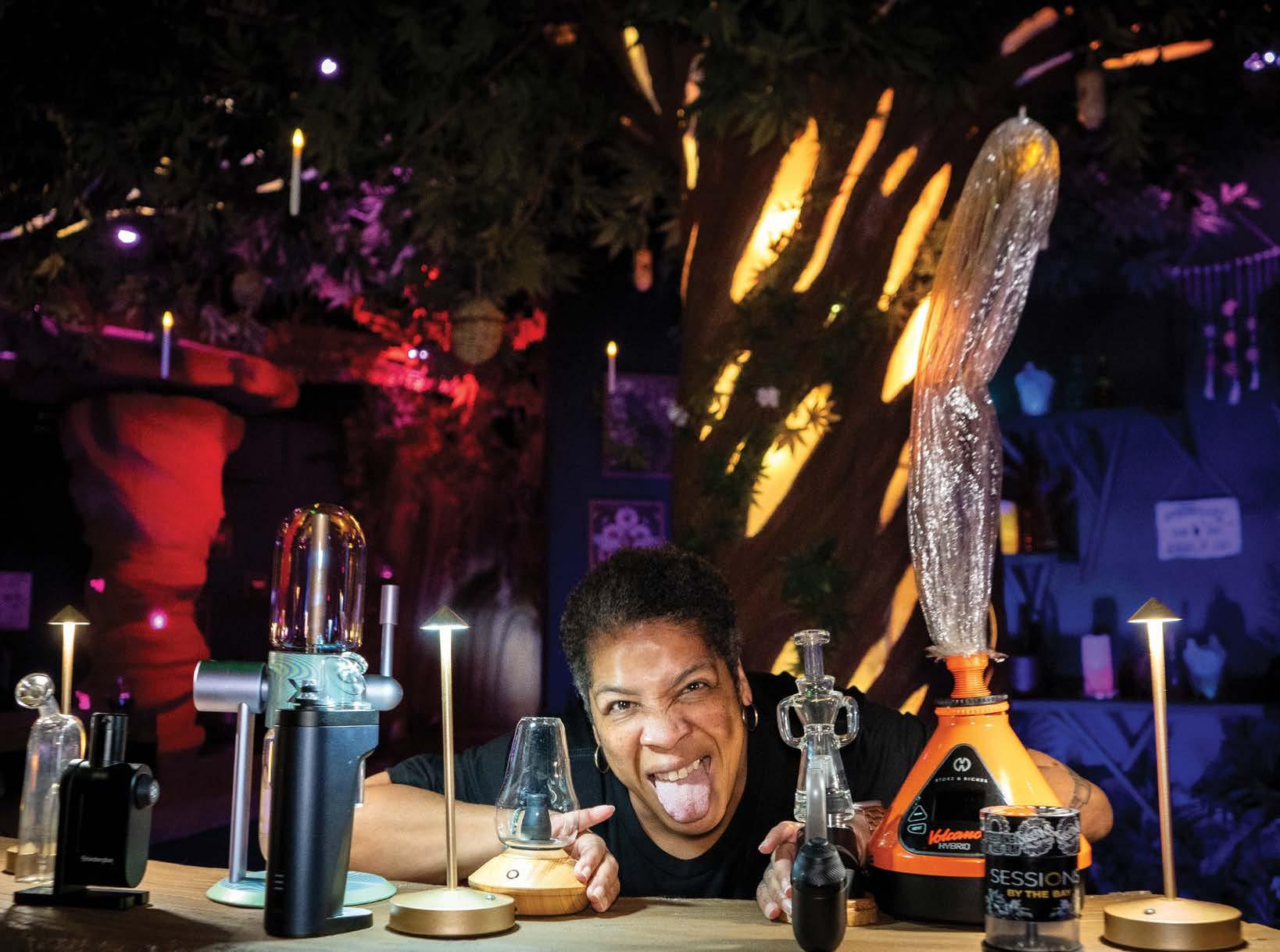
Branch got into budtending after her reputation in the community and on social media reached Malique Parish, Connected Cannabis Co.’s brand manager, who suggested her for a spot at Cookies in La Mesa. There she spent five years cultivating a reputation among customers for knowing where the newest heat was coming from. When she was asked to join the opening staff for Sessions By The Bay, she made the hard choice to leave her first store and help create something new.
Branch told California Leaf that, at first, budtending was just a pothead’s dream job. It got serious in 2021 to 2022 when she was diagnosed with Hodgkin lymphoma. After undergoing chemotherapy, edibles and Rick Simpson oil helped her recover and stay positive. “Those things really helped me get through a dire situation, and I’m thankful to be cancer-free, and that’s made me love Cannabis even more.”
Having experienced the therapeutic benefits during her own journey, she said she feels a connection with those who come in with questions about how to find relief with Cannabis.
A big fan of both flower and rosin, she said, “I love a gassy OG or a Z. You could cross Zkittlez with a boot, and I’d smoke it if it’s good.” Right now she’s rolling up Turtle Pie, Teds Budz and most of the recent releases from Pound Cake’s. As for dabs, she shouted out the work Barrett Farms has done with Cryo Lab, as well as the recent Piattella from Ay Papi.
While she thrives on the connections she makes budtending, in the long term, Branch said she’d love to move into a purchasing position someday.
“… BRANCH HAS A MUSICAL MIND, A GIFT OF GAB AND AN INFECTIOUS ENERGY…”
When asked what advice she had for new hires, she said, “I tell a person if you’re gonna come into this game right now, be your wholehearted, authentic self.” She remarked on how you need to be ready to meet people with a “positive vibe and a helping hand. Remind them, ‘We’re blessed, now let’s get you less stressed.’”
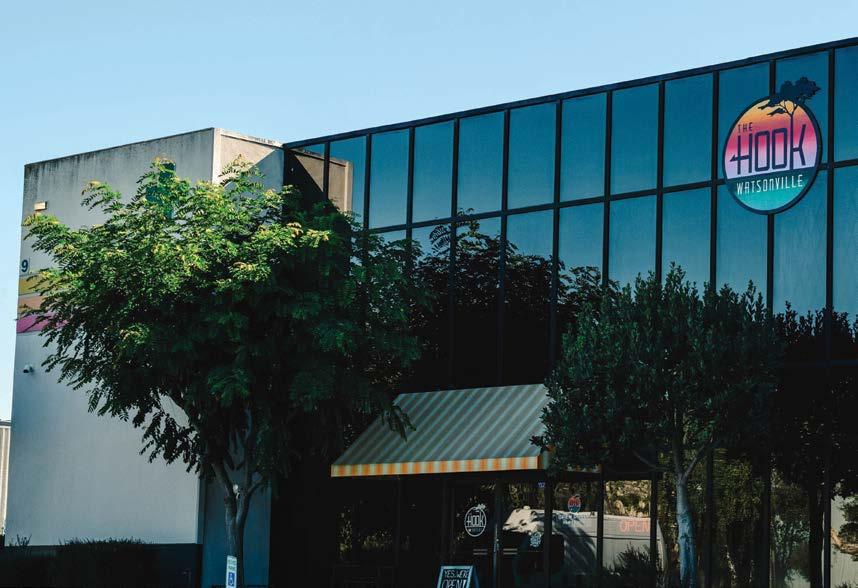
WATSONVILLE THE HOOK
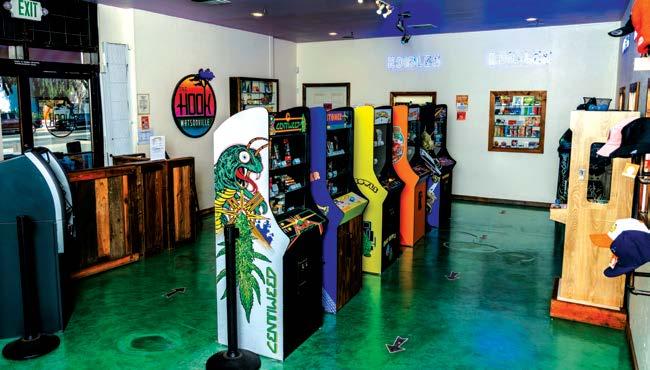
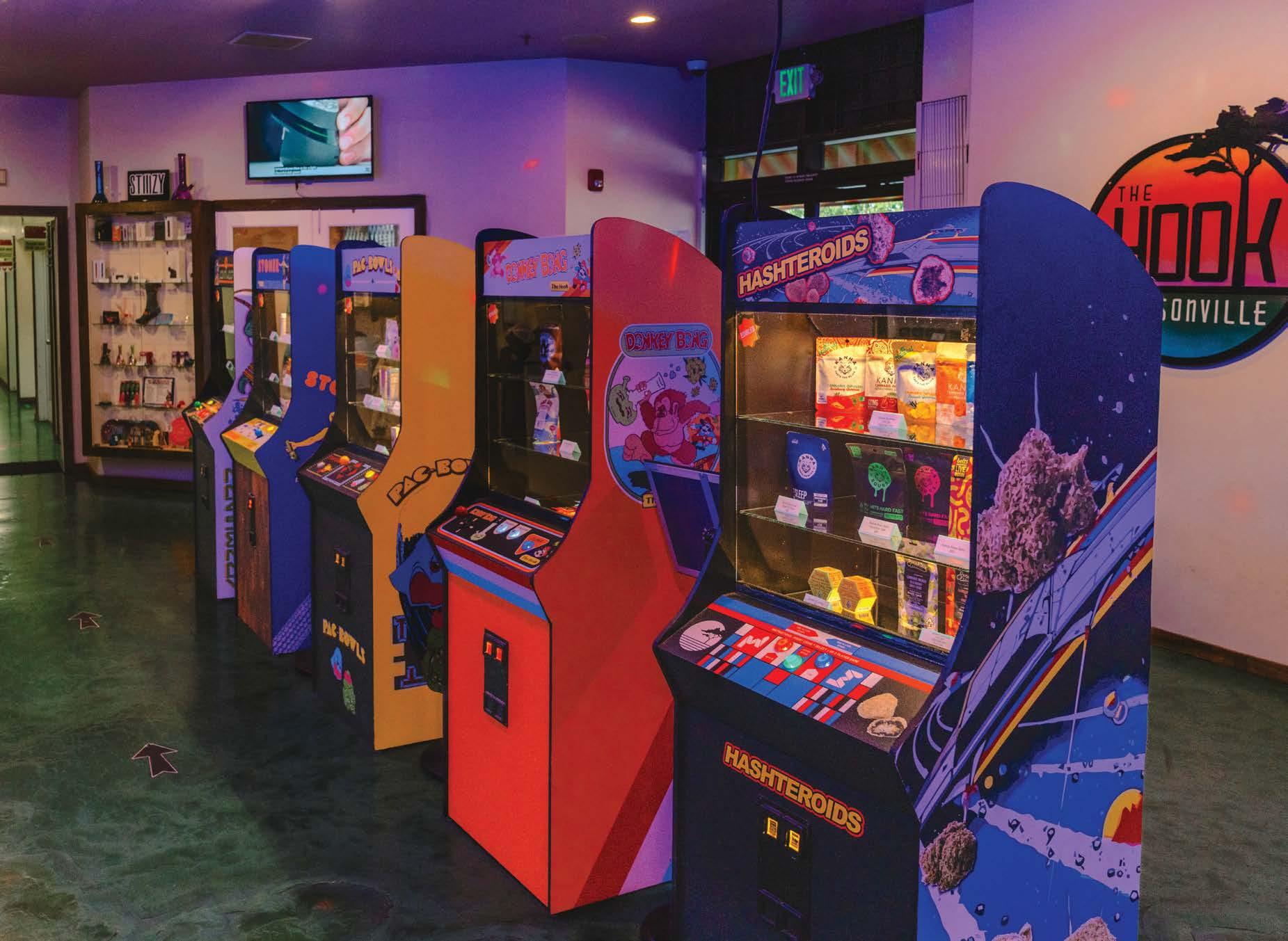
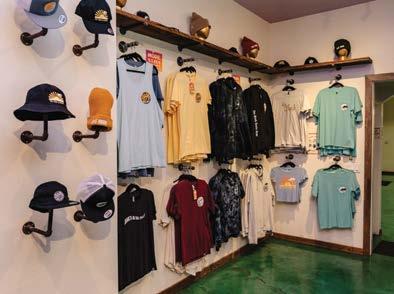
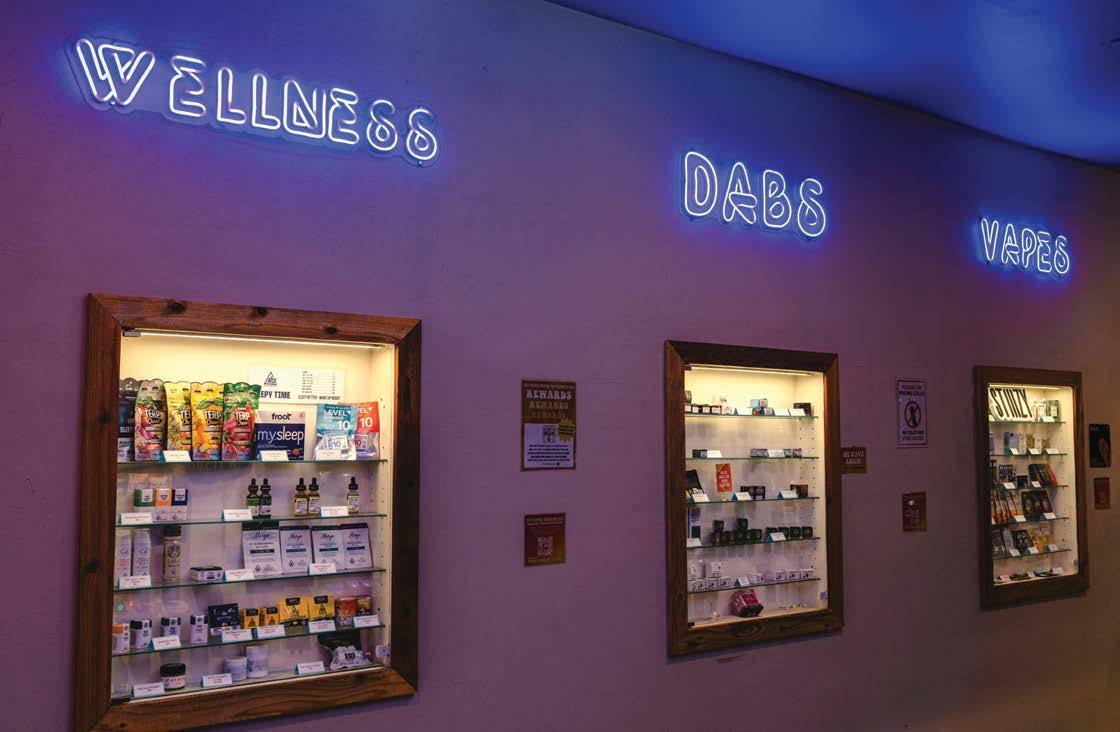
If you’re cruising down Highway 1, take the Airport Boulevard exit. You’ll find The Hook Outlet: Watsonville’s very first dispensary that feels like stepping into a perfectly preserved slice of the ’80s.
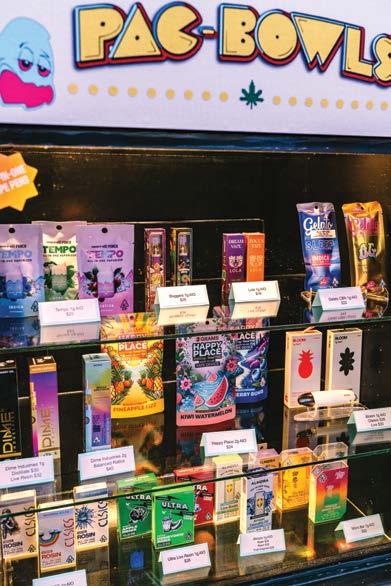
THE RETRO AESTHETIC — from glowing neon signs to arcade cabinets repurposed as display cases — isn’t just for show. Marketing director Bayley Logan, who’s been with The Hook since it opened its first location in 2020, said every detail was designed to make you feel like you’ve been transported back to those simpler times.
“We like to think of ourselves as your friendly neighborhood hookup,” Logan said. “When you walk in, we want you to exhale. No pressure, just friendly people who genuinely want to help you find your thing.”
That welcoming atmosphere is rooted in The Hook’s “rebels with a cause” philosophy. Inspired by the pioneers who helped shape the Cannabis industry, the team is committed to challenging outdated stigmas through education, community events and genuine conversations. Operations director Jose Marquez said that mission comes to life through a staff that’s passionate, knowledgeable and focused on helping every customer find the right product for their needs. For Logan, that has been Jade Nectar’s locally made 1:1 Balance CBD tincture, while Marquez loves reaching for Coastal Sun’s citrus-forward Banjo flower to start his day with an uplifting session.
9 A.M.-9 P.M. DAILY (831) 288-0244
Of course, affordability is part of the appeal, too. As California’s first Cannabis outlet, The Hook offers prices that can be 30% to 50% lower than traditional shops.
“WE LIKE TO THINK OF OURSELVES AS YOUR FRIENDLY NEIGHBORHOOD HOOKUP.”
It’s also one of the few fully locally owned and operated dispensaries in Santa Cruz County, and that hometown pride shows up everywhere from the shelves to the sales floor. The Hook sources products from Santa Cruz brands — and Watsonville growers specifically — whenever possible to create a space that feels more like hanging out with friends from down the block than shopping in a showroom. With unbeatable prices, deep local roots and enough nostalgic charm to make you want to dust off your retro video game collection, The Hook Watsonville proves that groovy never goes out of style. You can also check out their locations in Santa Cruz off of Mission Street and in Capitola.
COLD CURE LIVE ROSIN RAINBOW GUAVA
Take a stack of cherry, kiwi, guava, mango and lime Starbursts and roll them around in your palm until they fuse into neon-colored finger hash. Pop that warm glob in your gob, crank “Yoshimi Battles the Pink Robots” by The Flaming Lips, and marinate in the lip-smacking, tooth-cracking sweetness. You are now prepared for Heritage Hash Co.’s Rainbow Guava cold-cured live rosin.
BLOOM SEED CO. bred the flower from Rainbow Belts and Strawberry Guava. So it has KC33, Afghani, Mango, Strawberry Banana and Moonbow (Z x Do-Si-Dos) all doing their part. It’s the apogee of the terpene movement: pure, natural, rowdy tropical fruit fragrance made solid – chef’s kiss.
With Rainbow Guava, Heritage has dropped the perfect flavor to break out at the function this summer. This jar will have you doing hippy twirls on the banks of Reggae on the River come August and will pass the smell test with the “Terp Illuminati” at Puffcon in downtown LA in October. This I foretell. Why? Heritage’s hashmaker “Cherry Belle” apprenticed under the “Qui-Gon Jinn of Resin,” Frenchy Cannoli. Belle has a case of trophies from The Emerald Cup and others, including one for winning first place in the Solventless Ice Water Hash category for Whitethorn Rose.
Readers may recognize this artisan from the temple ball we featured in our Concentrates Issue. While many know Belle for these traditional forms of hash, Heritage rosin always flies off the shelf. From up in Ukiah, Belle and her crew run a bonafide hashery — making the stuff live like Oompaa Loompas pressing Wonka Bars while Grandpa Joe watches agog from the lobby.
“…Heritage has dropped the perfect flavor to break out at the function this summer.”
Just imagine the scene: Heritage’s Hessians in aprons and gloves, sieving fresh-frozen flower buds in ice water, and scooping and freeze-drying the wet clay. Heritage micro-planing the frozen powder before it is heat-pressed through a sachet to produce a goo as magical as Moby Dick’s mythic ambergris. Later, they whip it good, and let it mature in cold darkness for weeks.
Now it’s stable-ish: stored in the fridge until it’s time to dab or vape it, or roll it effortlessly into a fat worm for a hash hole. That’s what I did with this jar, and it made life a neon dream. The rosin tests at a sizzling 66% THC with 7% terpenes.
Available statewide at knowledgeable hash outlets, like Symbiotic Sacramento — so don’t wait.
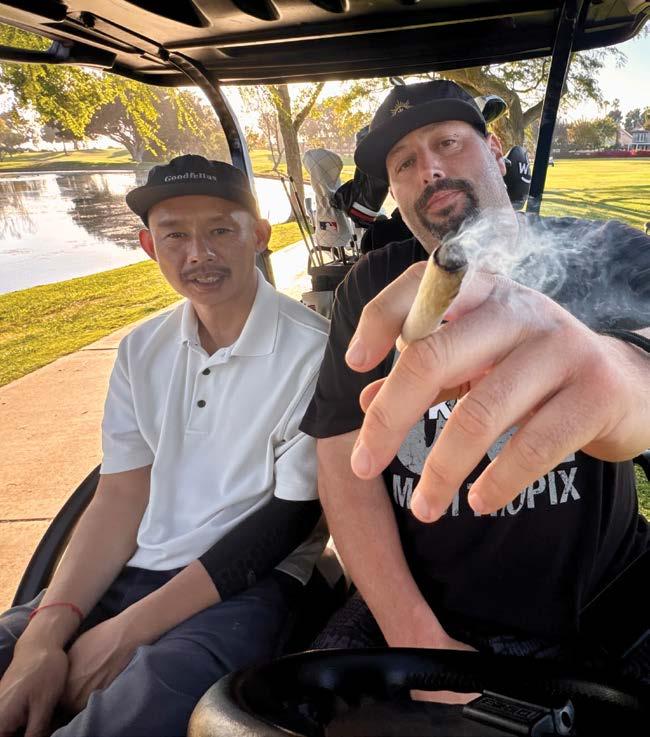
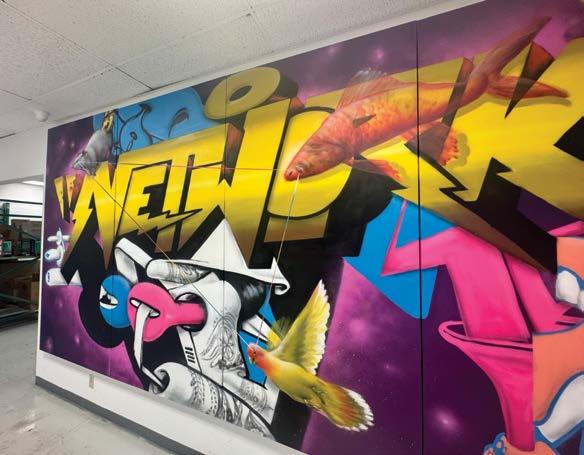
NETWORK SHOW / THE GOODFELLAS GROUP
Revitalizing the B2B experience Your Network is Your Networth Your Network is Your Networth
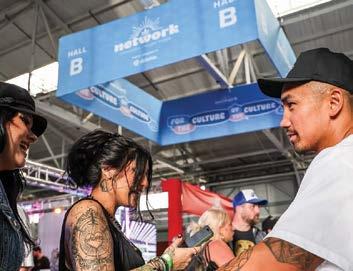
Started by friends and business partners Nam Tran and Shea Ryan, The Goodfellas Group is riding inside the curl of a new wave of B2B events. Based in Southern California, their highly anticipated event, Network Show, is the first fully devoted Cannabis B2B event in the Los Angeles area. Speaking with the Leaf via email, Tran said that this year, they plan to keep the same energy but spread it across a larger footprint.
RYAN AND TRAN run both Network Show and The Goodfellas Group. Since 2017, Goodfellas has been consulting, co-packing, helping with sales, manufacturing, distributing and sourcing product in an effort to, as their mission statement states, “create a more sustainable Cannabis industry for our families and larger community.” As such, Tran said, “We face the same hurdles our exhibitors face everyday,” something which puts them in a unique position to empathize with the ever-increasing costs of getting your brand out there to make an impact in the market.
Tran detailed how Network Show wants to accomplish, on a larger scale, what he’s done working with small Emerald Triangle farms as The Goodfellas Group.
“It carries over the same business ethos of impact over profits. Create impact, and it will create opportunities for profit. Profits will create more opportunities to create more impact,” he said.
The event itself is an example of this cycle, as Tran expressed that they hope to create new impact this year through a welcome mixer, dinners, afterparties, outside events and a guidebook.
“We understand the trade show experience, and value goes beyond just the trade show floor,” Tran said.
Part of that experience seems to be creating more affordable ways of connecting California’s top brands with stores all over the state. When asked about this, Tran calls it less strategy and more of an understanding of where the market is today and the struggles being faced by even the most long-standing brands and retailers. Trans told us that he believes “the industry as a whole needs to be stable for success and growth to happen. We are just doing our part to help achieve that with the rest of our community.”
Many of the people at booths that the Leaf spoke with off the record last year said the ability to cover the rising costs of staffing and running an activation has allowed them to focus more on creating engaging moments with industry members, putting less pressure on how many sales they logged that day.
This speaks to the success of Tran’s ethos of impact creating opportunity. Since debuting in 2023, Network Show has seen attendance grow to over 5,000 professionals, buyers, owners, operators and purchasing staff walking the showroom floor.
Coming to the Port of Los Angeles Sept. 23-24, Network Show is shaping up to be the B2B event of this summer. Tran said he and Ryan are just doing their part to help achieve growth and success for the rest of the community.
“We are not the first ones to be here, and we won’t be the last,” Tran said. “We’re just paying it forward.”
NAM TRAN & SHEA RYAN
HUMBOLDT TASTING
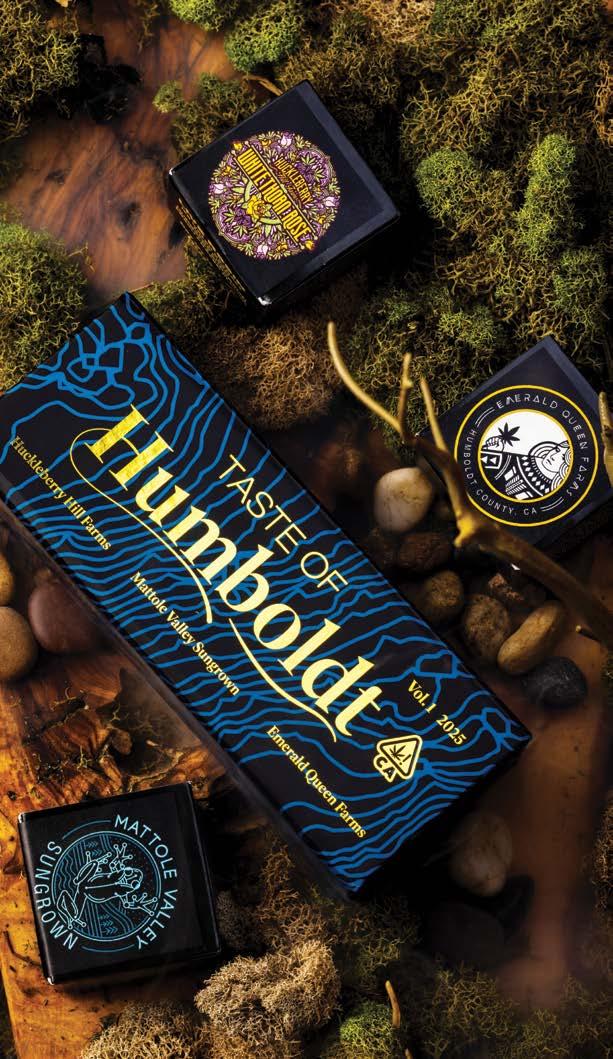
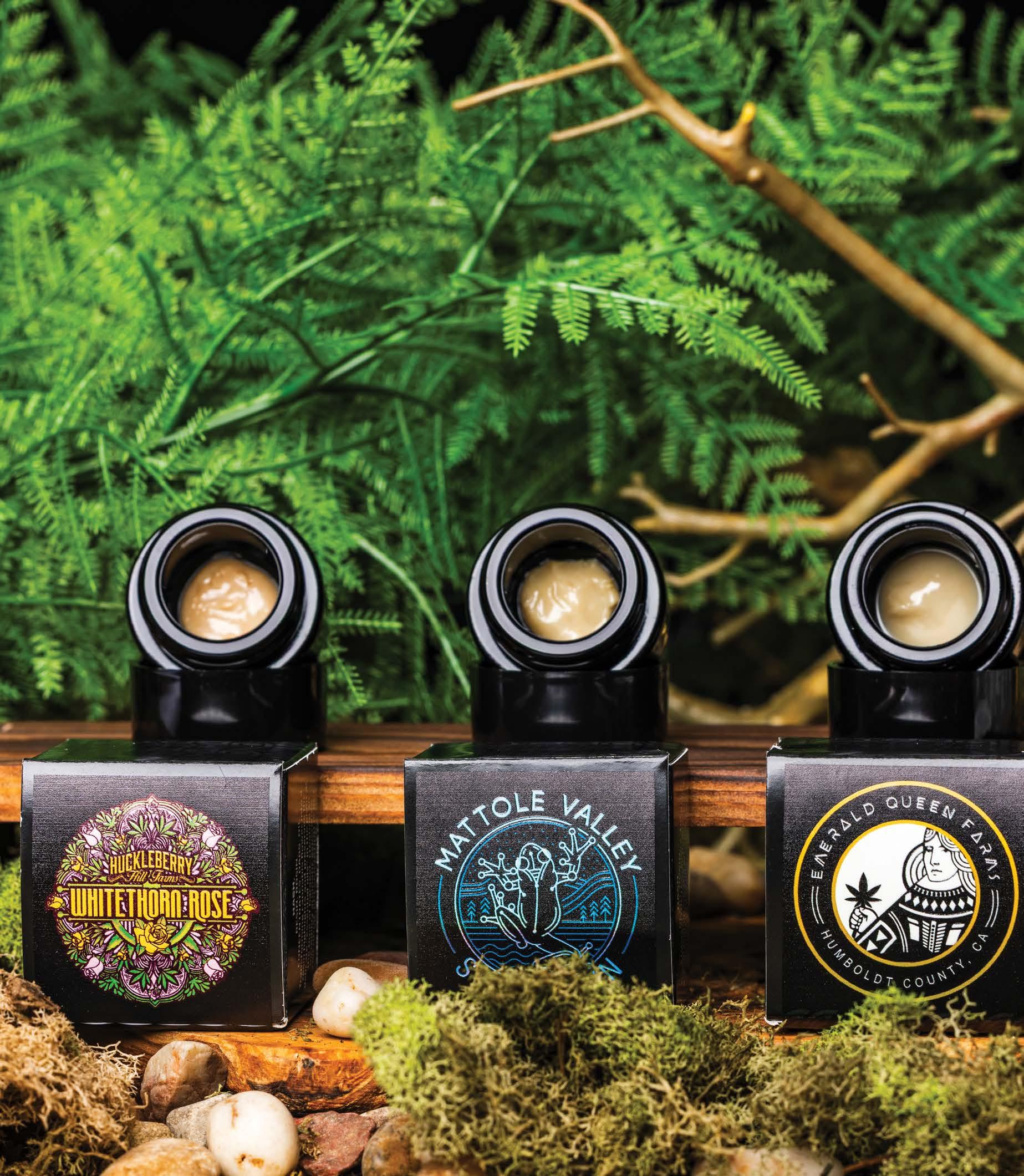
A special collaboration, featuring three decorated Humboldt farms, dropped at this year’s SF Hash Week. Called “Taste of Humboldt,” it’s the story of legacy outdoor farming told through 3 grams of beautifully packaged solventless rosin.
HANNAH WHYTE, who runs Emerald Queen Farms with partner Riley Morrison, said the idea was born from a desire to collaborate on more projects that bring farmers together to tell Humboldt’s unique story.
Emerald Queen Farms, together with Southern Humboldt’s Mattole Valley Sungrown and Huckleberry Hill Farms, created a set that shows off the power of sun-grown rosin through flavors that are very exclusive to the area.
“The Taste of Humboldt is a representation of the terroir of our three farms — the taste of place!” Dylan Mattole, owner/operator of Mattole Valley Sungrown, told California Leaf.
The three flavors in this box represent not just the distinct soil and climate of these outdoor farms but also their community.
Huckleberry Hill Farms founder John Casali said, “The story of Whitethorn Rose is the story of a community that persevered through the worst eras of prohibition when cops were rappelling from helicopters to cut plants.”
Talking with its designer, artist Erin Hamilton, she told the Leaf: “They wanted a sophisticated, subtle nod to the terroir of Humboldt County, and looking around for inspiration, I found an old topographical map, which we incorporated into the basis of the design.”
A team effort, Hamilton and Royal Key LLC co-founder Josh Vert — along with Kalya Extracts, who joined forces with them a year ago — washed the project.
“The Taste of Humboldt is a representation of the terroir of our three farms — the taste of place!”
Mattole Valley Sungrown owner-operator Dylan Mattole
Even the custom, gold-foiled box is an art piece that speaks to their surroundings, with crisscrossing lines that represent a valley near the Mattole River.
“Kalya’s proprietary solventless process was key to preserving the integrity of these three distinct phenos, each grown in its own terroir,” Vert said. We encourage you to warm up that banger and take a flavorful trip through the spirit of California’s North Coast … without ever having to leave your living room.
HUCKLEBERRY HILL FARMS
WHITETHORN ROSE
Paradise Punch and Lemon OG, Whitethorn Rose is described as a flavor that’s funky yet floral, and it has an aroma that carries notes of orange peel, lavender, pastry dough and even freshly tilled soil. Highly decorated and world-renowned for the way the taste and smell translate into both flower and rosin, this is a true Humboldt gem.
MATTOLE VALLEY SUNGROWN
PARADISE ROSE
Having won multiple awards, Paradise Rose is well on its way to living up to its family history. It is a cross of Whitethorn Rose and Paradise Pine, which crosses Whitethorn Rose to its parent Paradise Punch, and was bred by Huckleberry Hill Farms. Mattole told the Leaf, “The flavor is sweet and floral, with nostalgic, old-school undertones.”
EMERALD QUEEN FARMS
QUEEN’S CHEM
This Chem Dawg and Skunk No. 1 cross has been Emerald Queen Farm’s primo, Chem-forward cultivar for the last six years. Morrison described their first solventless release as “a pungent, gassy aroma, with high notes of pine and skunk on the baseline.” He also pointed out its popularity springing from the “relaxing, yet energetic high.”
Water Peach Sorbet
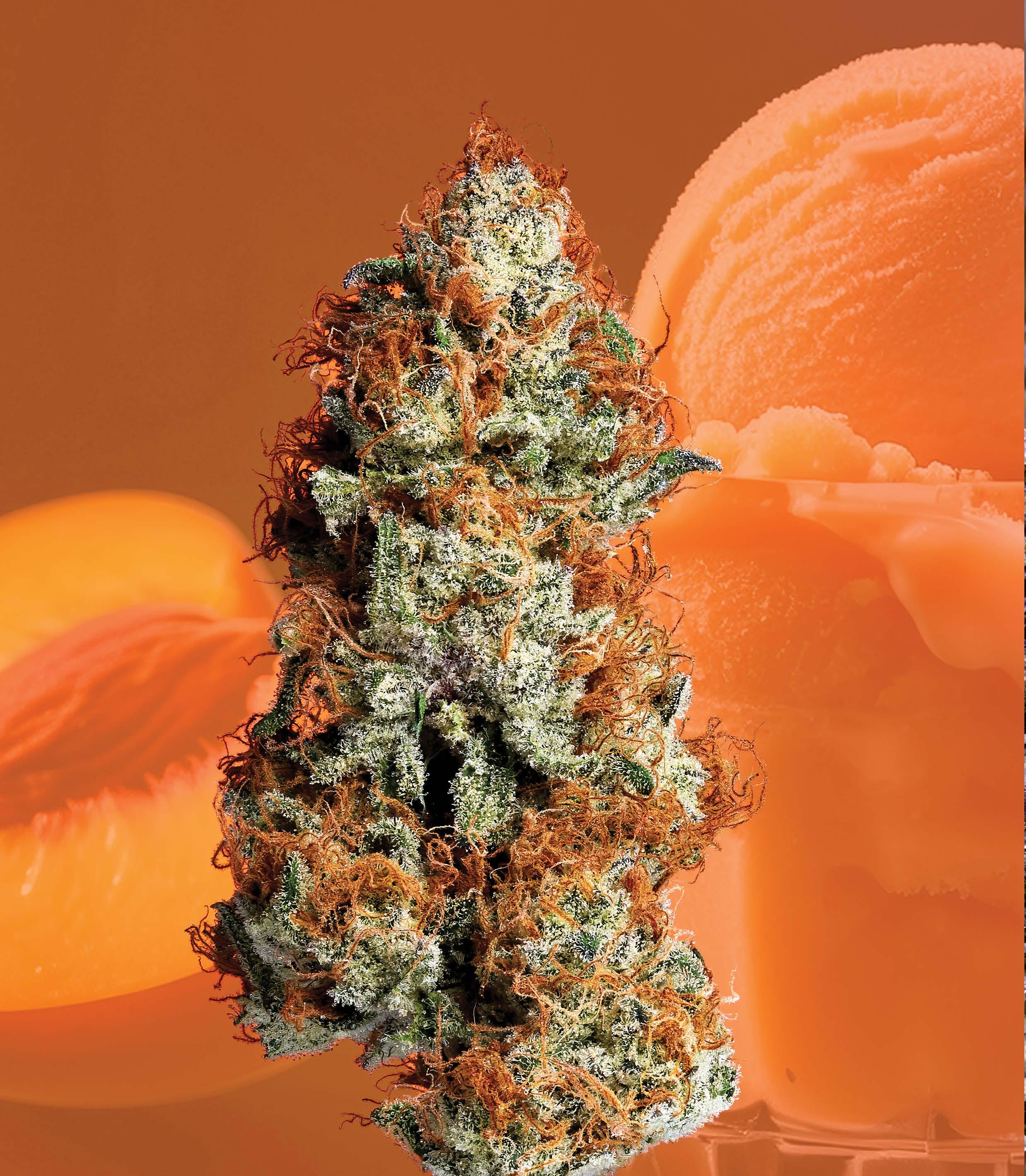
Decibel Gardens has been making waves on the California contest circuit at events like Zalympix and The Emerald Cup for years. Its newest offering, Waterpeach Sorbet, is sure to continue to add to the trophy case.
CULTIVATED BY
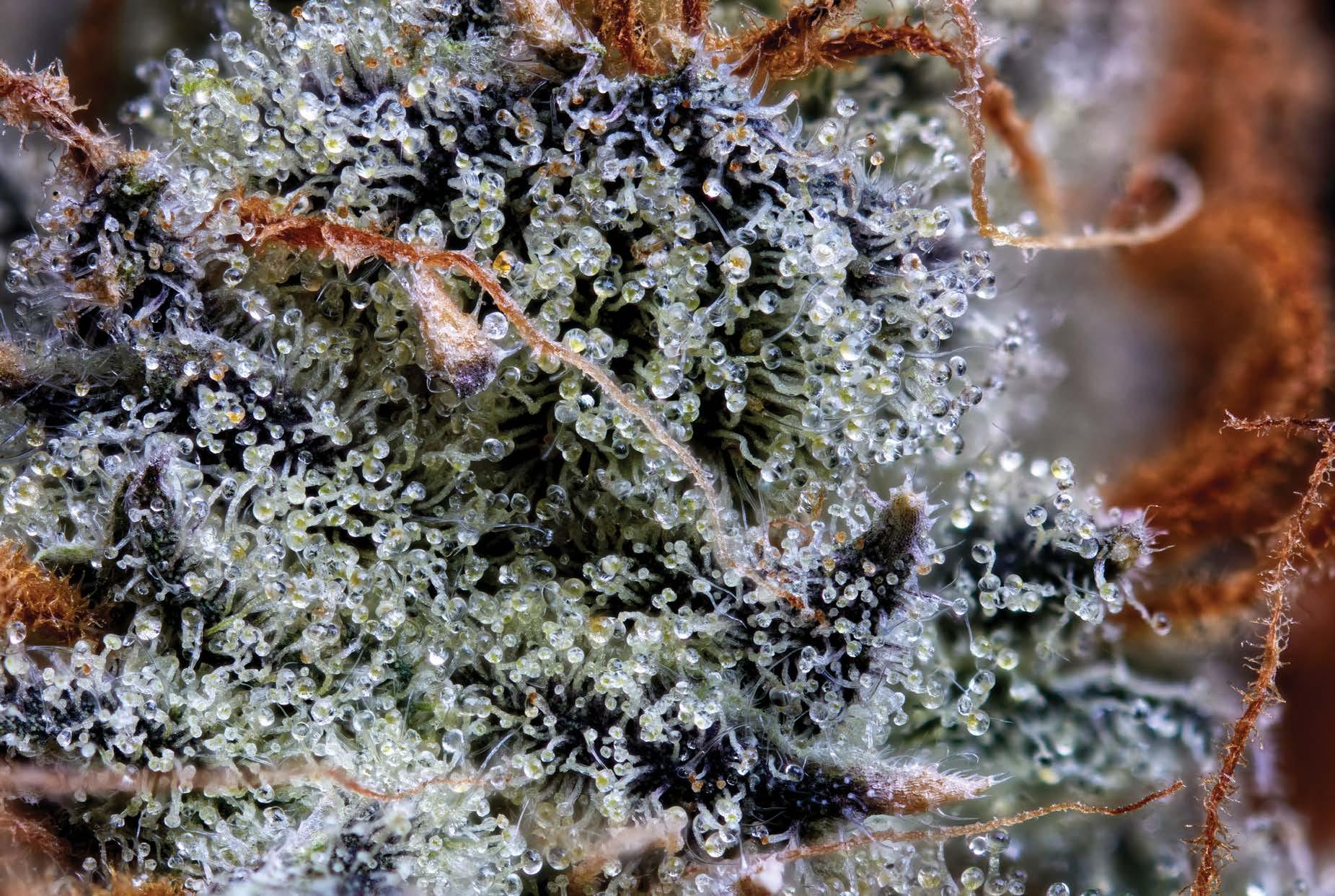
WATERPEACH SORBET features one of the more unique terpene profiles of anything in recent memory. It is not a dessert, candy or, God help us, another Z cross. It’s more reminiscent of a $21 smoothie from Erewhon that is loaded with peaches and watermelon so loud, you don’t feel like an idiot for diving into the world of top-shelf fruit drinks.
It is the fruitiest strain that I’ve ever had coat the inside of my nose as if it were Willy Wonka’s Sour Diesel cut. That is the level of sinus penetration we are talking about. While the jar appeal is already solid — if you don’t mind the slightly smaller bud structure compared to some of the current noteworthy strains — once you crack into the nugs, they absolutely explode. When it’s broken down in front of you, waiting to be rolled, the immediate area smells like the inside of a blender.
The effect is uplifting, with an almost tingly body high. It’ll get you pondering the questions of the universe for sure.
Derek Teal, owner/operator of Decibel Gardens, explained to California Leaf that it was the big winner out of a 35 seed pheno hunt in August 2024.
A big goal of that hunt was finding something that would work as both flower and rosin material.
As wild as the strain is in flavor and impact, Teal believes there is still work to be done in perfecting it. Particularly, he has hopes of bumping the yield up a little bit. But with a new 140-light facility set to open this month that will more than double Decibel Garden’s production, he’ll have plenty of room to figure it out.
“We did 250 seeds at one time; it was like 30 different crosses,” Teal said. “I had done some other ones with Sour Peaches to other males that we had reversed from staples in our portfolio, and didn’t have much luck. But we found that one plus one other that we think are tremendous.”
The company’s limited-edition cultivars, like Waterpeach Sorbet, include a dedication on the inside flap of the packaging. Teal explained that this is a tribute to an important team member in Decibel Gardens’ history: Mike McGillis.
“I built a licensed facility in 2016 with a partner who was 50/50. In 2019 I knew I wanted to start over. This gentleman Mike McGillis introduced me to the current property owners in Santa Cruz I rent from,” Teal said in an Instagram message.
“I spent every dollar I had to my name and came up shy and he came in and became a small minority partner but the facility would have never been capable of being finished. Was the best partner anyone could ask for. Unfortunately in April 2023 he passed away unexpectedly on his birthday.”
The flower started hitting dispensary shelves in February, and the consumers have been all about it. Teal believes the hype levels will skyrocket even further once the rosin, in collaboration with Master Makers, hits the shelves. The live resin pens will be a joint project with Arcata Fire; count on them to be immaculate representations of Waterpeach Sorbet’s wildly elite flavor profile.
Waterpeach Sorbet is, without a doubt, some of the best Cannabis we have seen in 2026 and expect to see on all the lists at the end of the year.
pSychedelIa neWs
EVIDENCE CHANGING MINDS IN D.C.
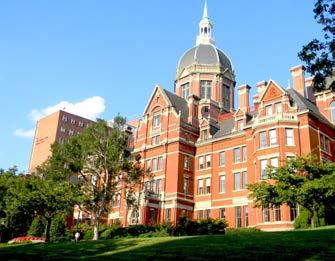
IN 2021, psychedelic researcher Albert Garcia-Romeu said the next five years of clinical data could help convince leaders at institutions like the National Institute on Drug Abuse and the National Institutes of Health that psychedelics had legitimate medical value.
Five years later, the Johns Hopkins University scientist believes that evidence has begun to do exactly that.
“Did it hold up? It sure seems like it has,” Garcia-Romeu said, pointing to comments from Nora Volkow, director of the National Institute on Drug Abuse, during a recent presentation at the American Psychiatric Association’s annual meeting in San Francisco.
“If I can’t change my views based on evidence, then why do science at all?” Volkow said while discussing psychedelics.
For Garcia-Romeu, the shift represents the result of years of researchers building evidence one study at a time.
“If I can’t change my views based on evidence, then why do science at all?”
Early psychedelic trials often involved small groups of 12, 15 or 24 participants. Today, studies are expanding to include 80, 100 and even several hundred participants, incorporating stronger controls and larger datasets.
“There’s a lot more to be done, but I think we got over a big hump,” Garcia-Romeu said. “The first hump was to simply get the money to do these small studies. Then the next hump was to collect enough data in controlled clinical trials and to see if this data still holds up.”
As the evidence continues to accumulate, Garcia-Romeu believes psychedelic medicine is approaching a pivotal moment.
“Once we get that level of accumulation of data, this is where you reach the tipping point,” he said. “These could truly become new medicines in the next one to two years.”
After 14 years studying psychedelics, Garcia-Romeu said it has been remarkable to watch the field move from small research projects in Baltimore toward a much larger scientific effort.
“We’ve got the potential to move from our little studies here in Baltimore to doing them nationally or all over the world,” he said.
CALIFORNIA STUDY OFFERS NEW WINDOW INTO PSILOCYBIN'S EFFECTS
RESEARCHERS at the University of California, San Francisco and Imperial College London found that a single dose of psilocybin produced measurable changes in the brain that lasted up to a month.
Published in Nature Communications, a peer-reviewed scientific journal that showcases research across the natural sciences, the study followed 28 healthy volunteers who had never taken psychedelics, using EEG, MRI and other imaging techniques to track changes before, during and after a 25-milligram psilocybin experience.
“... 28 healthy volunteers who had never taken psychedelics ...”
Researchers found increased brain “entropy” — a measure of varied neural activity — during the psychedelic experience, which was linked to greater psychological insight and improved well-being one month later. The findings provide new clues into how psilocybin may create lasting therapeutic effects for conditions including depression, anxiety and addiction.
JOHNS HOPKINS EXPLORES PSYCHEDELIC THERAPY FOR VETERANS
AT JOHNS HOPKINS UNIVERSITY in Baltimore, Maryland, researchers are examining whether psychedelic-assisted therapy can help veterans living with post-traumatic stress disorder through the PAM-VET study.
The Phase I clinical trial is exploring supervised sessions combining MDMA and psilocybin, alongside psychological support, to evaluate changes in PTSD symptoms and quality of life among military veterans.
The work comes amid an ongoing search for better treatments for trauma-related conditions, with nearly 6,400 veterans dying by suicide in 2023, according to Department of Veterans Affairs data. Researchers hope studies like PAM-VET can help determine whether psychedelic-assisted approaches may offer new options for veterans who have not found relief through traditional treatments.
$3.8B
Psychedelic medicine reached another milestone this month as pharmaceutical giant Eli Lilly and Company announced plans to acquire AtaiBeckley in a deal worth up to $3.8 billion. The acquisition would give Lilly access to BPL-003, an intranasal formulation of the psychedelic compound 5-MeO-DMT currently in late-stage clinical trials for treatment-resistant depression.
MASSACHUSETTS EYES NORTHEAST’S FIRST PSYCHEDELIC THERAPY PILOT
MASSACHUSETTS could soon become the first state in the Northeast to authorize a regulated psychedelic-assisted therapy program. Earlier this month, the House approved H.5576 with overwhelming bipartisan support, creating a five-year pilot allowing up to three licensed mental health clinics to provide supervised psychedelic-assisted therapy using naturally occurring psychedelics. The proposal now heads to the Senate before potentially reaching Governor Maura Healey’s desk. If signed into law, H.5576 would make Massachusetts just the second state in the nation to establish a state-authorized framework for psychedelic-assisted care, following Oregon’s pioneering psilocybin services program.
During the pilot, participating clinics would collect treatment and safety data to help lawmakers evaluate patient outcomes, regulatory safeguards and whether the program should expand statewide.
Microdose Your Way to a Macrodosed Life
small dOse huge impaCt
While people have been self-medicating with psychedelics for decades, interest has recently expanded into mainstream medicine, with researchers exploring their potential to treat conditions such as depression and PTSD. At the same time, microdosing has gained popularity among everyone from Silicon Valley biohackers to perimenopausal moms seeking subtle cognitive and physical enhancement in everyday life. Although anecdotal reports on the topic are abundant, clinical research is still catching up.
MICRODOSING often involves taking a sub-perceptual dose of psilocybin or LSD, typically 5-10% of a common recreational dose, to produce subtly enhanced effects without cognitive distortion. By contrast, macrodosing requires perception-altering doses that can induce ego dissolution, a sense of interconnectedness and lasting psychological benefits, particularly in trauma therapy. However, full doses may also cause nausea, anxiety, paranoia and the classic “bad trip.”
Research on microdosing has yielded mixed results, partly because optimal dosing remains unclear. In “Microdosing for Health, Healing, and Enhanced Performance,” authors Dr. James Fadiman and Jordan Gruber argue that effective microdosing follows a Goldilocks principle: finding the sweet spot, where the dose is neither too high nor too low.
PSILOCYBIN
Magic mushrooms include over 200 species that contain the psychedelic compound psilocybin. The active psilocin molecule looks very similar to serotonin.
EFFECTS
-Enhanced creativity
-Deepened empathy and connection
-Calm and introspection
-Mood elevation
-Chronic pain tolerance
-Increased neuroplasticity to break bad habits (Lasts 4-6 hours)
A MICRODOSE is a subthreshold dose, landing just before a shift in consciousness. When you start to feel that slightly altered state, that is the threshold dose. Finding your ideal microdose depends on your metabolism and the potency of the mushrooms. Using a digital milligram scale, start with 0.1 grams of dried, ground mushrooms and increase by 0.1g on separate subsequent dosing days until you start to notice effects. A microdose is the amount just below that threshold. For Psilocybe cubensis, most microdoses fall between 0.10.5g. The body builds a tolerance to psilocybin, so a couple of protocols have been proposed to keep the microdose effective.
The Fadiman Protocol: Dr. Fadiman proposes dosing on day one, skipping the next two days and then dosing again on the fourth day, following this for 4-6 weeks.
The Stamets Stack: famed mycologist Dr. Paul Stamets suggests taking doses combined with lion’s mane and niacin for five days, then taking two days off for 4-6 weeks.
While psychedelic mushrooms have been used ceremonially for thousands of years, lysergic acid diethylamide (LSD) was discovered in 1943 when its potent psychoactive effects were accidentally revealed during ergot fungus research. Although its mechanisms are not yet fully understood, LSD is also believed to affect serotonin.
LSD is chemically synthesized, so dosing is easier than with mushrooms. LSD can be distributed on microdots, gelatin strips or blotter paper. A standard microdose is 10 to 20 micrograms. Experiment in incremental doses starting at 5μg to find your sweet spot. Absorbed sublingually, effects can be felt within 30 minutes.
EFFECTS
-Mental clarity
-Enhanced energy/stamina
-Increased motivation
-Uplift in creativity
-Mood elevation
(Lasts 8-12 hours)
Dr. Fadiman recommended a dosing protocol for LSD as well: Dose the first day, take two days off, then take another dose on the fourth day, following this for 4-6 weeks.
Psychedelics are microdosed in cycles to maintain mental balance, or simply used as needed for a creative boost or to tap into a flow state. Whether choosing psilocybin for grounding or LSD for subtle cerebral elevation, the key is finding the dose that works best for you.
lost & found UNPACKING THE MYSTERY OF RARE & LOST PSYCHEDELICS
IN A MODERN WORLD fascinated with the esoteric, collectible rarities, there’s no better source of enlightenment and entertainment than a trip to set the mind and spirit free. Rare psychedelics are the long-lost power-ups that built our civilizations, united tribes, gave coming-of-age experiences to youth and even helped the ancients connect with God. Today, psychonauts are collecting, growing, synthesizing and sharing these psychedelics to ensure that they are not lost or forgotten. While Big Pharma has spent nearly 100 years poisoning America with petroleum-based drugs, these ancient tools are being rediscovered. A race is on for Big Pharma to patent medicines given by the creator, given freely for our spiritual, mental
and physical growth. These are the rare psychedelics, the ancient keys, that we are rediscovering today in our society that badly needs a reset to traditional human values.
If there is one thing that’s certain, humans were made to experience psychedelic trips, and the tools were given to unlock these mysteries in plants, animals and the natural world. This power was stolen by the war on drugs, and now a new spiritual war for freedom to pursue what our Constitution deems “the pursuit of happiness” is the front line of drug culture. What was given by the creator cannot be outlawed by man, or taken by law, for nature and God’s plan for humans to live free is undeniable.
AYAHUASCA
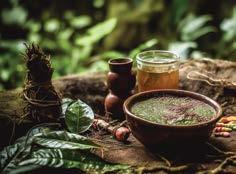
Once a rare tribal tradition dating back thousands of years, preparing ayahuasca involves the combination of boiling a vine called Banisteriopsis caapi, which is a MAO inhibitor, with Psychotria viridis (chacruna), which has DMT naturally, to release a brew ready for spiritual journeys and intense purge-and-heal experiences. Once only found in the jungles among traditional settings, ayahuasca ceremonies are now more common around the world.
BUFO
Explore new levels of consciousness via animal medicine.
Using the venom of the Bufo alvarius (Sonoran Desert toad), which contains high concentrations of 5-MeO-DMT, Bufo brings a major peak along with an experience many report as similar to a death and rebirth during the trip.
CANNABIS
Cannabis might seem commonplace today, but just 20 years ago, scoring a bag of green bud was pretty difficult. When I first started smoking, the drug seemed so mysterious — a plant that’s illegal! In my young mind, I thought the government only banned things that caused harm.
Buying seeds and growing Cannabis was safer than running cocaine in the ’80s, but still came with tremendous risk. Finding a strain or genetics was next to impossible. Despite the illegality, challenges and risk of prison, our Cannabis breeding heroes risked this to breed, clone and spread the plant underground. For this, we include Cannabis as a rare psychedelic. With the plant still illegal in many states and countries, there is still work to be done to share this healing medicine with the entire planet!
DMT
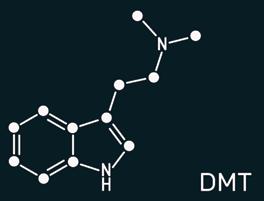
DMT — or N,N-dimethyltryptamine, also known as “the spirit molecule,” which is the title of an amazing book — can be found naturally in many plants and animals. Additionally, it’s produced endogenously in our brains when we are born, dreaming, and during death.
Traditionally consumed in ayahuasca form, today’s psychedelic scientists have extracted DMT to be smoked or vaporized. Effects are short, but a lifetime can be lived in other dimensions during a 15-minute earthly sesh. There’s also overseas research in IV drips for sustained DMT trips. The final frontier of consciousness, now in vape pen form!
KAMBO
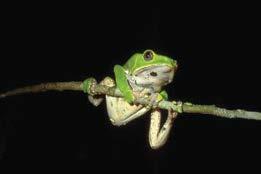
It’s funny to use the word “extract” when referring to a Phyllomedusa bicolor frog, but this medicine is taken from the frog and burned onto the skin, causing intense purging before imparting a sense of clarity, focus and purpose. It’s used for detoxing and purification.
MDMA
Molly, ecstasy and MDMA. These names cover the same chemical — 3,4-methylenedioxymethamphetamine — which is considered both a hallucinogen and a stimulant, and great for dance parties. Studies by the Multidisciplinary Association for Psychedelic Studies find that MDMA treats depression, PTSD and many other symptoms. Jump into a cuddle puddle and find out why MDMA was considered the best therapy drug of the ’80s, especially for couples, before the government locked it down for its recreational potential.
SALVIA
Salvia divinorum, aka “diviner’s sage,” hit gas stations and smoke shops in the 2000s, sending unwitting users on an intense, short-lived psychedelic trip. This writer once smoked a large bowl out of a pop can before climbing aboard, as the red Coke became a spaceship, piloted to the moon and back in an epic journey. Still legal today in most states, Salvia — from the Mexican Lamiaceae mint family and its nonalkaloidal hallucinogen salvinorin A — is one of the most potent naturally occurring psychedelics. Check out the “Gardening on Salvia” video for a trip back to the early internet, and see how this powerful drug works in the garden!
SASSAFRAS
More proof that plants are our friends, the sassafras tree (Sassafras albidum) contains essential oils rich in safrole, which can be synthesized into MDMA. Sassafras generally refers to an oil extract from the plant, which produces a more energetic and visual high that boosts serotonin, dopamine and norepinephrine release.
SECRET STASH ADVICE
The war on drugs created rebels and freedom fighters who chose mental, spiritual and physical freedom during a time when substances we call medicine led to decade-long prison sentences. Today, many secret stashes are being dusted off and shared with the world, which is leading to a new psychedelic renaissance. Remember to be careful when sharing psychedelics, always consume in safe settings and follow the golden rule: You can always eat more, but you can’t eat less!
“Today, psychonauts are collecting, growing, synthesizing and sharing these psychedelics to ensure that they are not lost or forgotten.”
at Tack of The Blobs
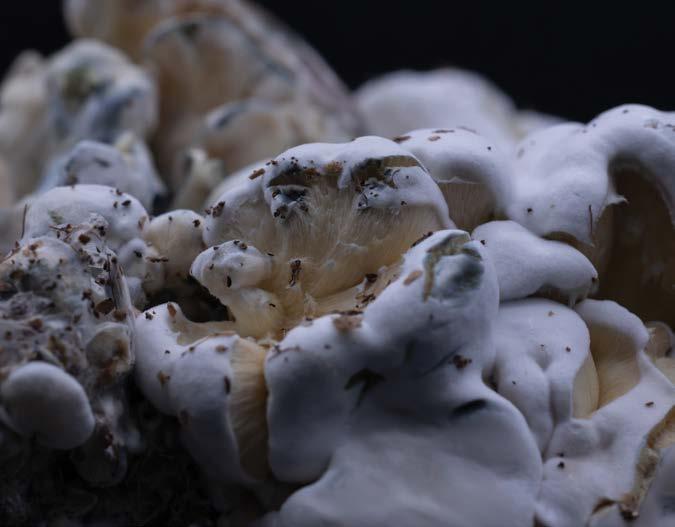
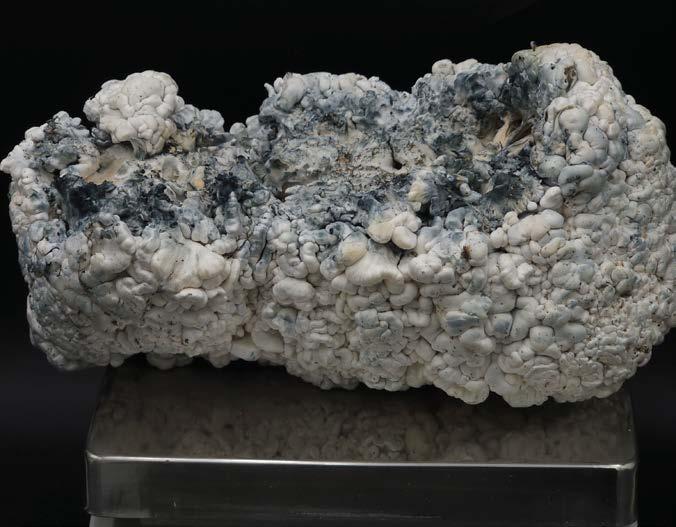
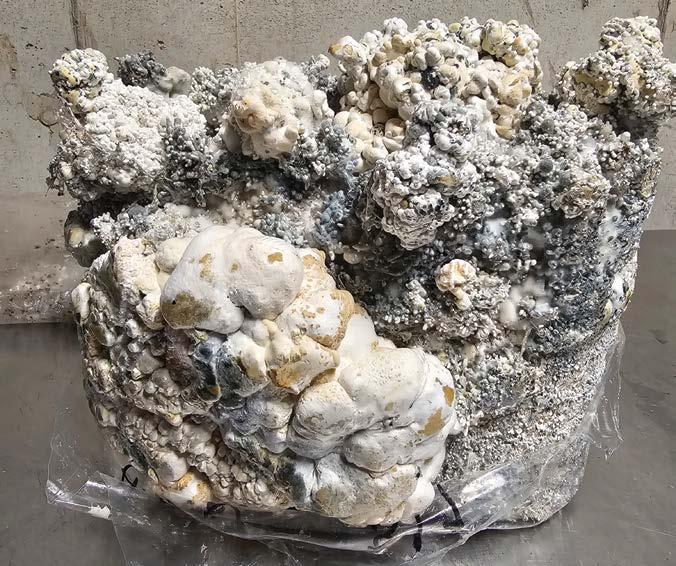
Psychedelic mushrooms have been known to alter perceptions, and mutations have been known to alter our comprehension of psychedelic mushrooms. The latter has resulted in wild-looking shrooms that have also proven extra potent.
Uncovering Psychedelic mushroom mutations
THERE ARE ASPECTS of Psilocybe cubensis and other species that the average layperson may know about. The stems often turn blue or black when bruised, for example. But certain morphologies are more unusual, like all-white albino mushroom strains or blob mutations.
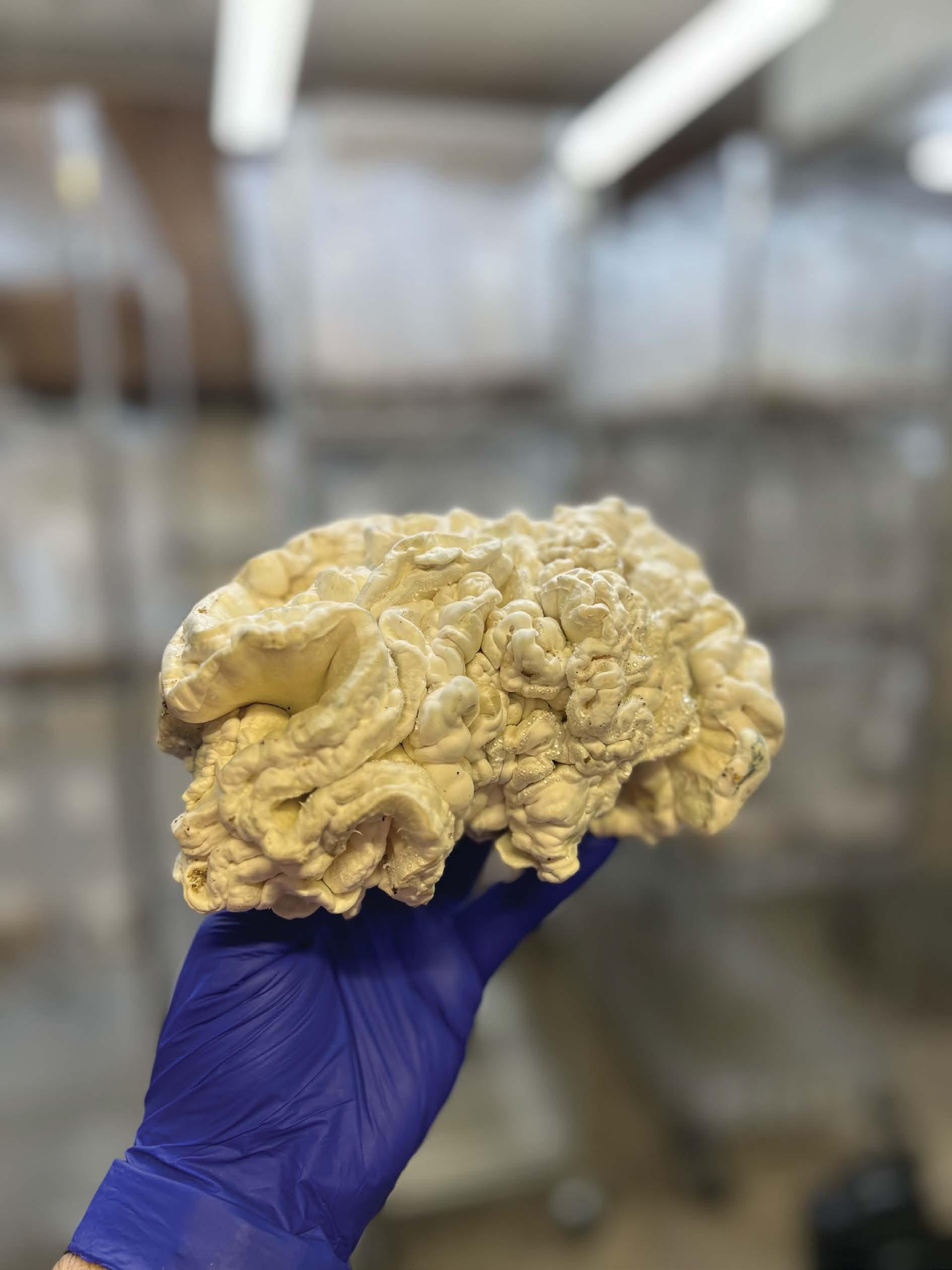
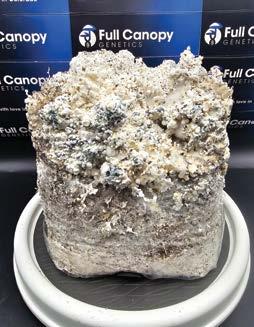
Blob mutations may display fins, coral, brain and finger formations. They do not have stems, gills or drop spores. Instead, they have been cloned after appearing in a wild-type sporulating culture. As of now, blobs are selected for, not bred, but liquid cultures have been isolated from the various structures, like the fins and coral. These should, in theory, produce a blob morphology, but they may not yield the same outcome in different environments.
Christopher Pauli, CEO of Tryptomics, explained more about this interesting fungus to the Leaf.
“It’s not truly understood, like, are all blobs this same mutation causing the same phenotype, or is this multiple different mutations that could happen that all lead to this weird morphology to occur?” Pauli said.
The molecular biologist has theories about the origins of blob formations, but has yet to test them. This morphology has been observed in Psilocybe cubensis, Psilocybe natalensis and Psilocybe aztecorum species, but some isolated mutations have reverted back to having gills. This indicates it may be an environmental or viral response, or even polyploidy, rather than a DNA mutation. Pauli has theories, but there is not much research on how these mushrooms form.
Why should they get into it? Because most blob mutations have tested with higher potency compared to the fruiting body counterparts they mutated from. The same thing that makes it hard to replicate blobby shrooms may be what makes them hit so hard. When mushrooms drop spores, they lose potency. But nongilled blobs may not turn off the alkaloid production genes after sporulation. This allows them to become increasingly more potent. If it is a virus causing this mutation, it is a good one. Some blobs are even showing higher dry-weight yields per flush.
M
ushroOm
lIngO
MORPHOLOGIES
The structures and forms that certain mushrooms take.
SPORULATION
The production of spores from vegetative cells by fungi, bacteria, protozoa and plants.
POLYPLOIDY
This is when a whole genome duplicates during evolution (commonly desired in domesticated crops).
GUTTATION
The process by which plants and fungi push liquid metabolite drops from their tissue.
The brains, coral and fins look otherworldly, and some new formations have joined the family in the last few years. Toque F8, isolated from the Psilocybe cubensis strain Tidal Wave, has become highly coveted for its potent nerds morphology. It resembles the candy, and a unique little “hat” appears on the fruiting bodies. Guttation, a process commonly observed in bleeding tooth fungi Hydnellum peckii, has also popped up recently. Turns out, the resulting liquid could prove useful.
“We find those metabolites have antibiotics, anticancer compounds, all kinds of, you know, cool properties with what compounds this mushroom produces and excretes. And so we have seen some cubensis do more of this blob formation, but with like divots in it, and it produces a lot of mutation. And so that’s kind of one of the newer mutants that we’ve been able to see,” Pauli shared.
Sometimes a freak makes the cut, and when a hobbyist takes note, psychedelic enthusiasts are blessed with new, exciting anomalies that may also have impressive effects. And, if the resources flow in the right direction, biologists may find even more beneficial properties. For now, it is proven that these things look pretty cool.
TRYPTOMICS.COM
@TRYPTOMICS
@FCGENETICS3.0
@MOUNTAIN_HARVEST_MYCO
TOQUE F8
SPLASHINGOUTSPLASHINGOUT
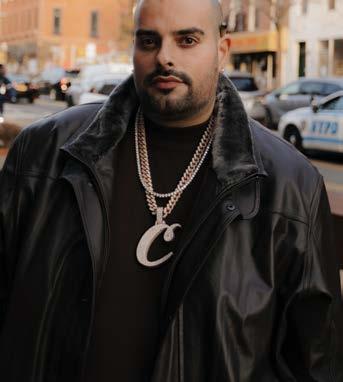
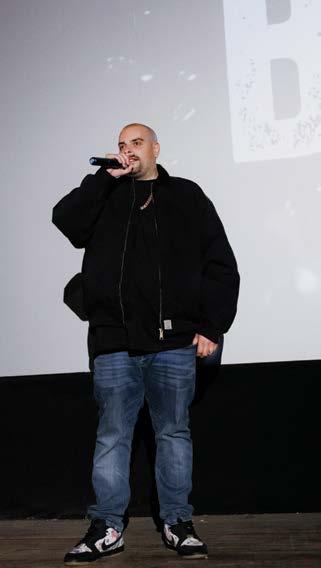
People know Berner through his global weed brand, Cookies, and through his music. But those who’ve been paying close attention know that Gilbert Milam Jr.’s vision and aspirations expand far beyond the music studio and helming the most well-known weed brand in the world. In an interview for a February 2022 Leaf Magazines cover story, Berner told me that his next frontier would be the film industry. A huge A24 buff, Berner wanted to build on the foundation laid by the greats of underground crime cinema.
CUT TO PRESENT DAY, and I caught up with Berner in the midst of a promotional tour for “Splash City,” his first film, which he storyboarded before scripting with the help of David Mansanalez of 4 Ways Entertainment. Berner funded and produced the film himself.
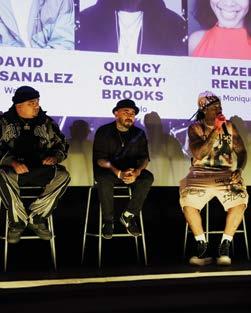
Berner wrote “Splash City” as a Bay Area crime drama inspired by the region’s notorious reputation for smash-and-grab car crime, aka “bipping.” It was recently picked up for this limited distribution run by Lionsgate, one of the most well-known film distribution companies in the industry. It features fresh Bay Area talent, including Zakee Brooks as Cloudy, and a downright frightening performance by Zakee’s older brother Quincy Brooks as the film’s nefarious villain, Dolo.
“It was just something that was going on,” Berner said about the plot of the film. “If you lived in San Francisco or visited San Francisco, you couldn’t get away from the bipping situation. And I was like, OK. I wanted to start with something that was really relevant. It was a really big problem. I felt like there’s some truth to some of these stories in this film, so I want to tell that.”
Over the course of our conversation, I brought up one of my personal favorite iconic hip-hop crime films, Hype Williams’ “Belly,” and asked if that was an inspiration for Berner’s film.
“A hundred percent,” he said. “I feel like people haven’t been hittin’ like that. ‘Belly,’ ‘Menace (II Society),’ ‘Boyz in the Hood,’ ‘Big Ballers,’ ‘Casino,’ ‘Blood In Blood Out,’ ‘American Me,’ you name it. We’re not really seeing those anymore.”
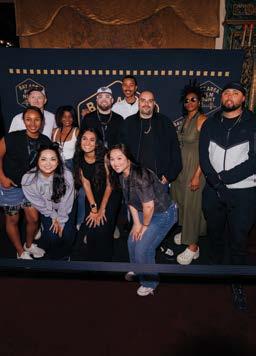
The people are ready. The first 11 cities on his Lionsgate tour sold out almost immediately, with people clamoring to get a chance to watch the film with Berner. It was obvious that the crowd at the screening in Bay-adjacent Sacramento felt that they were experiencing something close to home up on the silver screen. There were a lot of familiar faces in the crowd, many a part of the extended Cookies family.
The success of the first showings led to Lionsgate adding week-long runs at another 15 theaters across the country. With the initial success of “Splash City,” Berner’s fired up about his new career trajectory.
“I co-wrote it, co-directed it and definitely financed and produced it myself,” Berner said. “This movie was my film school. I learned everything I needed to learn from here. … The next one’s going to be a weed crime thriller, so it’s going to be all about trafficking and some of the dark things that come with that. It’s going to be based on true events. And you can expect to see our world that you’re very familiar with from the trap world of the Bay Area. I can’t wait for that one. I’m very, very anxious. I hope I could partner with Lionsgate on this as well. But that’s my next thing. I’ve already started writing it. It’s really, really, really, really sick.”
For Berner, it’s all about showing out for the city that made him.
“I just want to put light on the Bay Area,” he said. “That’s all I ever wanted to do, whether it be music or Cannabis. I remember moving to Arizona as a kid and people making fun of where I was from, and making fun of the city, and just saying what they had to say about it. And I’m like, let me just show people how dope we really are, how many trends we really set and how responsible we are for just really putting designer weed on the map. … We haven’t had a chance to tell our stories yet. And I feel like Boston and LA and New York and Chicago and many other cities have told their stories for many, many, many years. But this is our time, and I’m kicking it off for all of us. I want to inspire others to make films about NorCal. I want to inspire others to make films about the city. And whether people love it or hate it, it’s going to be that kind of creative juice that makes them want to go do the same thing.”
“THIS MOVIE WAS MY FILM SCHOOL. I LEARNED EVERYTHING I NEEDED TO LEARN FROM HERE.” -BERNER, DIRECTOR, ON “SPLASH CITY”
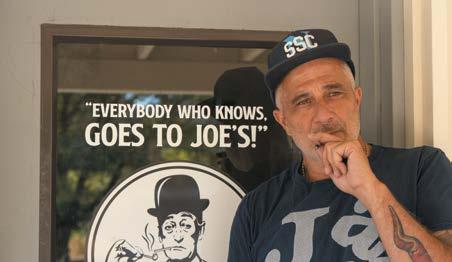
JOE JACOVINI VESUVIO GARDENS
Joe Jacovini has been cultivating in southern Humboldt County for nearly three decades. The Philly native’s experiences along the way have pushed his farm, Vesuvio Gardens, into becoming a mainstay on shelves across Northern California.
BEFORE making it to Humboldt, Jacovini was running a 30-lighter in Philadelphia. Like many, that original big effort out East came after his time following the Grateful Dead on tour after graduating high school in 1989.
“I just kind of dropped ninja bombs and bolted out of Philly; showed up here in ’99,” Jacovini told Leaf.
Jacovini didn’t arrive empty-handed. At the 1995 Cannabis Cup, he’d spent a month building a genetics collection that included Barney’s Farm and the entire Sensi Seed catalog for that year. He did so well that the move west wasn’t just about starting his own grow, but also assisting someone in the hills with their genetics.
He felt he relied much more heavily on sativa-leaning genetics than many of his peers at the time. The move west came with a $2,400 drop in what he was getting per pound, but he hit the ground running with a new grow house and was off to the races.
The light-deprivation scene started a few years later. Jacovini built out his first hoops in a greenhouse. He dated the time frame to around the birth of his daughter in 2004. He kept the plant count at around 20 to stay out of trouble.
“If everybody’s getting $2,200 pounds for deps, I’m in,” Jacovini said of the plan. After starting with OGs, he ran 10,000 square feet of Sour Diesel deps until 2016. That was also around the time he saw the writing on the wall for where the market was heading.
He jumped into the permitting process at the last minute after spending some time traveling between growing seasons.
“I cut 100 clones in Philly,” Jacovini explained. “This was right before 9/11, so you could kind of get through security a little easier. I cut the clones really long, vacuum sealed them and stuffed them down my pants. We cut them in the airport in San Francisco and plugged them.”
Jacovini was unfamiliar with the stout indicas commonly cultivated during that era. Nevertheless, he understood they were effective in the county’s indoor scene, which was under intense law enforcement scrutiny.
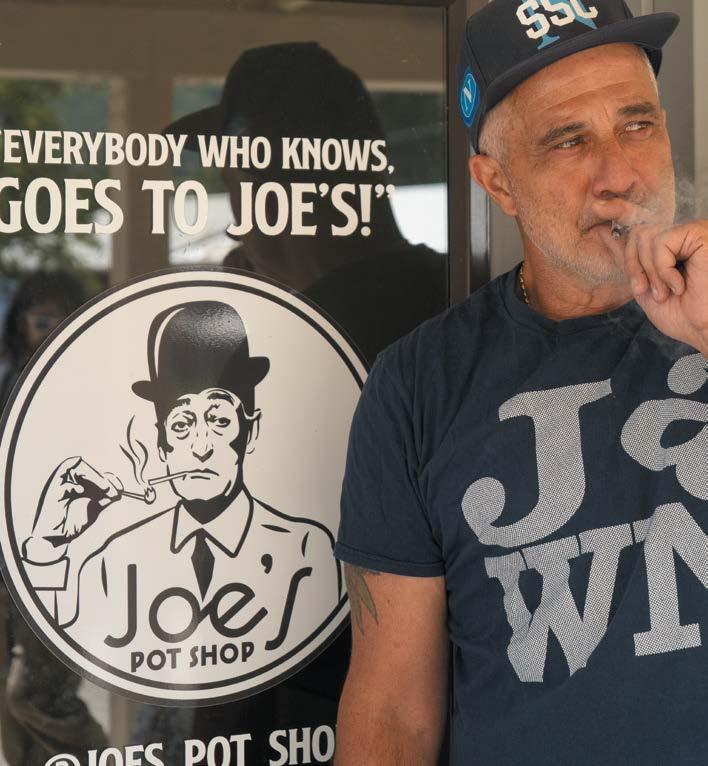
“I literally didn’t get my first license until the last minute. I was in Italy, and the phone call was on the 28th. Everything had to be done by December 31, and I think it all cleared on December 30, type thing,” Jacovini said. Eventually, Jacovini completed full vertical integration through his farm, Vesuvio Gardens, a distribution license and Joe’s Pot Shop, a dispensary in Whitethorn.
“Jacovini completed full vertical integration through his farm, Vesuvio Gardens, a distribution license and Joe’s Pot Shop, a dispensary in Whitethorn.”
The way Jacovini makes his selections for what he’ll be growing in any given season is a combination of what moved the previous year and what he isn’t seeing on Instagram. Two of the mainstays in his greenhouse rotation over the years have been Dirty Taxi and Garlic Cocktail. Dirty Taxi is a pairing of GMO and Chem I95, while Garlic Cocktail brings together GMO and Mimosa. Garlic Cocktail has proven itself to be award-winning hash material. It offers heavy GMO notes with the Mimosa slightly less present but still definable in the flavor.
In addition to the sales data, Jacovini is always searching for an impact level that reminds him of strains from the 1990s.
“Most of your customers are 40 and up, and most of them don’t even have an Instagram account, “ Jacovini said. “So I just, you know, proof’s in the pudding.”
Whether you're hunting for a mind-expanding history lesson or a fungi-fueled adventure, these reads are well worth the trip.
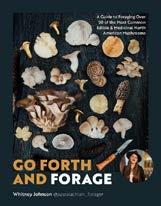
wild mushrooms a cookbook and foraging guide by Kristen and Trent Blizzard @modernforager
Husband-and-wife duo Kristen and Trent Blizzard make the world of fungi foraging feel approachable with this practical field guide and forest-to-table cookbook. Learn how to confidently identify, harvest and preserve an array of mushrooms. Then, put your finds to good use in the kitchen with recipes ranging from Candy Cap and Walnut Scones to hearty Maitake Beef Stew. Get ready for the perfect combination of whimsy and wild flavors.
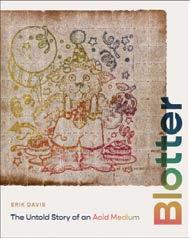
BLOTTER: THE UNTOLD STORY OF AN ACID MEDIUM
by
Erik Davis
More than just a conversation-starting coffee table book, “Blotter” is a vibrant visual archive of psychedelic culture. Showcasing the world's largest collection of blotter art, Erik Davis explores just how these tiny perforated paper squares — originally designed to be collectible art objects — turned into the iconic delivery system for LSD. Filled with striking artwork and surprising history, it's a captivating look at one of psychedelia's most recognizable canvases.
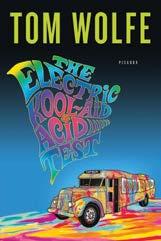
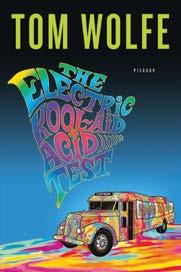
the electric kool-aid acid test by
Tom Wolfe
Transport yourself to the summer of 1964 with a book that reads like a psychedelic fever dream. In what has been called the “best book on hippies,” Ken Kesey and his Merry Pranksters blaze across America in their neon-painted school bus to spread the gospel of LSD. Essential for anyone curious about the 1960s counterculture and the era of New Journalism it helped to define, all aboard the Transcontinental Bus Tour!
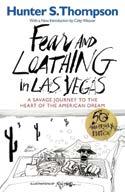
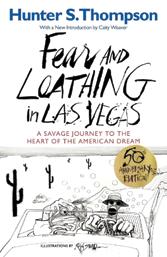
FEAR AND LOATHING IN LAS VEGAS
by
Hunter S. Thompson
If psychedelic literature had its own Hall of Fame, “Fear and Loathing in Las Vegas” might have been the first book through its doors. Hunter S. Thompson’s gonzo classic follows journalist Raoul Duke and his attorney on a wildly unhinged road trip through the desert. With a trunk full of nearly every psychedelic substance in existence, will they be able to attain the ever-elusive American Dream? If you want to know more about gonzo journalism, hit our archive for Matt Jackson’s feature in the 2026 Adventure Issue.
summer Stoned
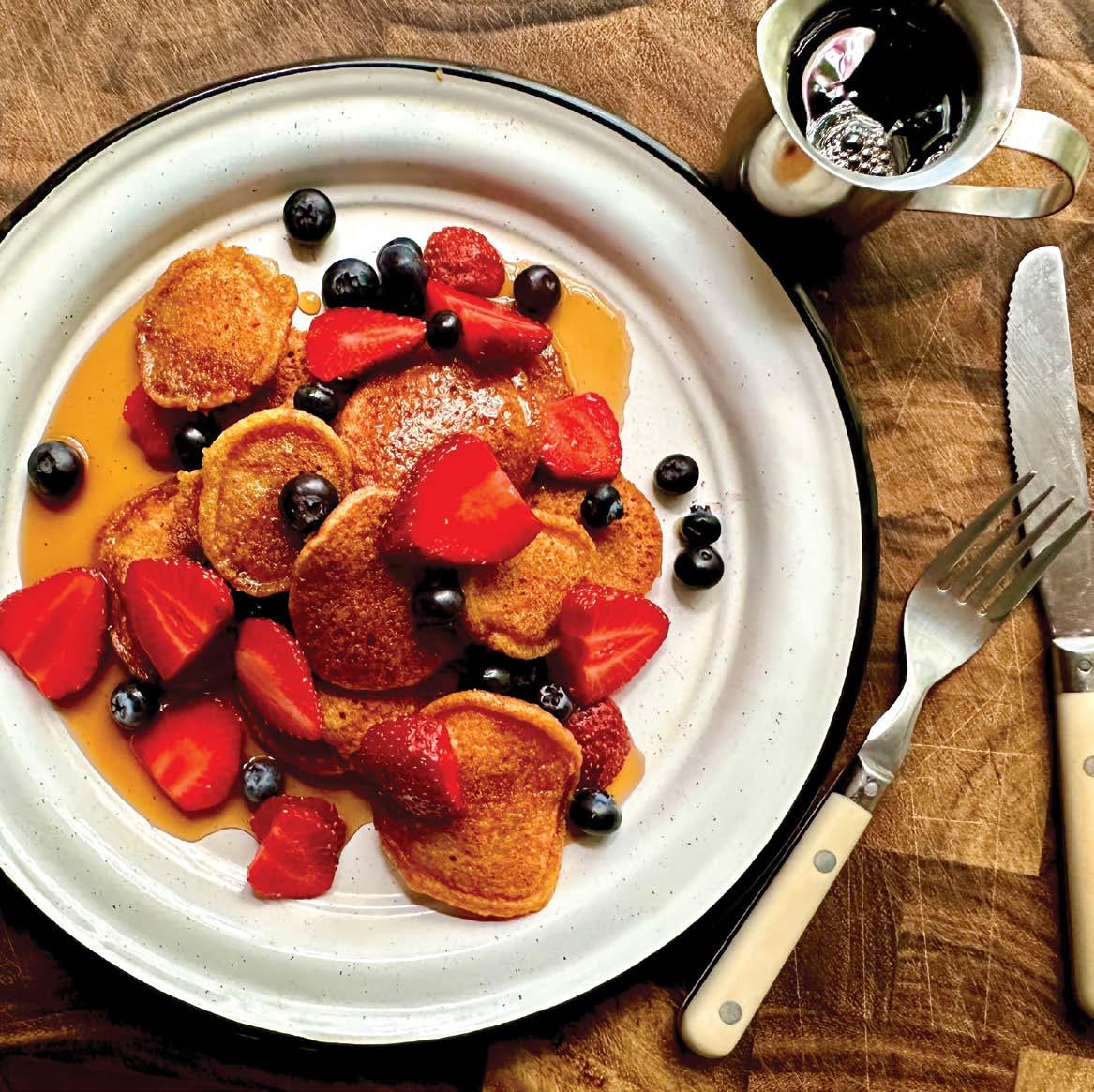
ZONED ZEST GRIDDLE HIGH MINI PANCAKES
GRIDDLE HIGH MINI PANCAKES
Serves 5, about 25 pancakes 3/4 cup milk
5 teaspoons melted canna-butter or -oil
1 teaspoon vanilla
1 egg, lightly beaten
2 tablespoons maple syrup
2 teaspoons baking powder
1. In a medium bowl, combine the milk, canna-butter or -oil, vanilla, egg and syrup.
2. In a small bowl, combine the dry ingredients and gently mix into the batter. Don’t overmix, just until smooth.
3. Heat a medium-sized skillet to medium. With a ladle or spoon, drop the batter into the pan to form a circle with a 2-inch diameter. Don’t overcrowd the pan.
4. Cook for about 2 minutes until bubbles form, then turn and cook for an additional minute. Golden brown is the dream.
5. Serve immediately or keep warm briefly in a very low oven.
6. Top with maple syrup and fresh summer fruit.
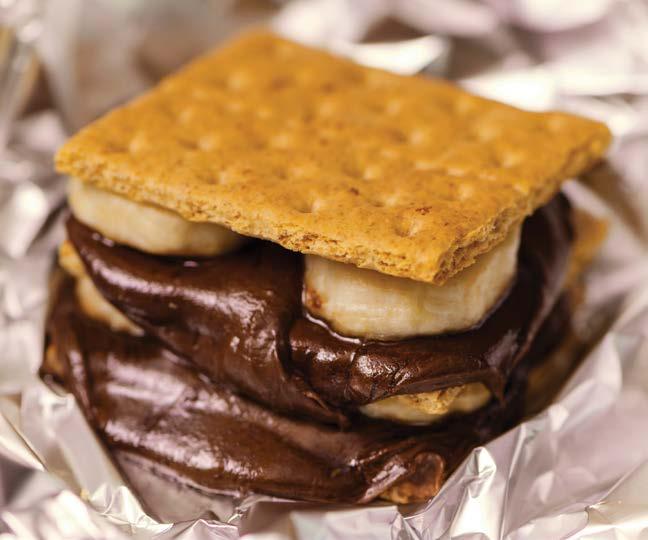
CANNA CRACKERS
Serves 2
3 whole graham crackers, 6 crackers
1/2 cup Nutella or other variety chocolate spread
2 teaspoons canna-oil
1 banana Dash lemon juice
1. Slice the banana, toss with lemon juice and pat dry. Set aside.
2. Place 2 half crackers on your work surface.
3. In a small bowl, combine the Nutella with the canna-oil.
4. Spread half of the Nutella between the 2 crackers. Top with banana slices.
5. Place another cracker half on top of the bananas.
6. Repeat the process with the remaining crackers, infused nutella and bananas. You might want to do the second layer on the work surface and then top; much less squishy.
So, I was in an Electric Lettuce in Sellwood-Moreland, Portland, one of my favorite dispensaries and neighborhoods. Wanting to get lots accomplished and be delightfully high, I decided to try a 50-50 hybrid. The “bud-ista” recommended Island Pie from my go-to brand, Pruf Cultivar. It was just what I was looking for: fresh, fruity, sweet and upbeat with a pleasant head and body feel. The strain was easy to cook with, lending an appealing lightness and some fruit — easy August. laurie@laurieandmaryjane.com
7. Wrap the finished product in foil, pulling it up around the individual firecrackers. Place near the fireplace, camping grill, or in an oven at 375 F for 10 minutes. Open carefully.
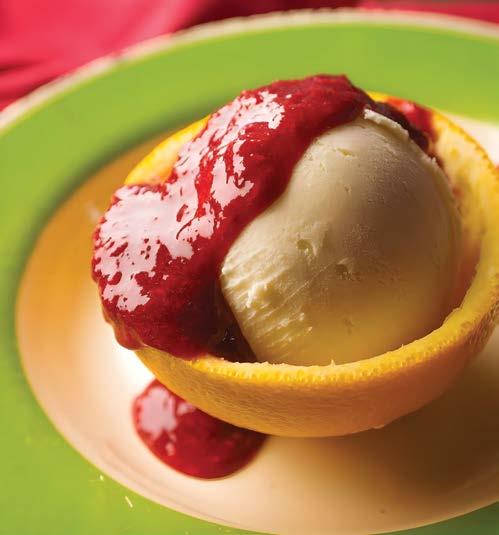
ZONED ZEST
Serves 2
1 large navel orange
2 scoops vanilla
1 cup fresh strawberries
2 tablespoons honey or sweetener of your choice
1 tablespoon lemon juice
2 teaspoons canna-oil
1. Slice the orange into 2 equal halves. Using a grapefruit spoon, scoop out the flesh from the orange and set aside.
2. Place the orange halves on a small freezer-safe tray and freeze for at least an hour.
3. Allow the ice cream to sit out just enough for you to scoop.
4. Remove the frozen orange shells from the freezer. Place a scoop of ice cream in each half, and return to the freezer.
5.
6. When you are ready to serve, place the oranges on plates and spoon the
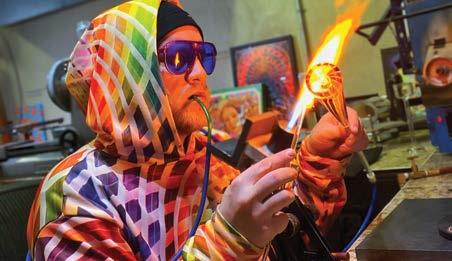
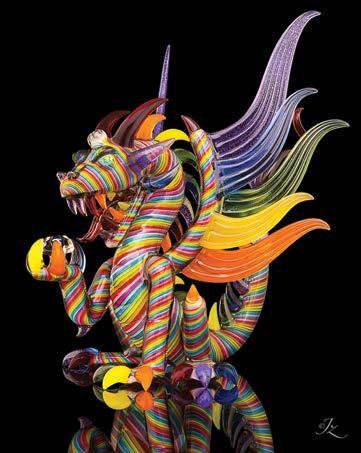
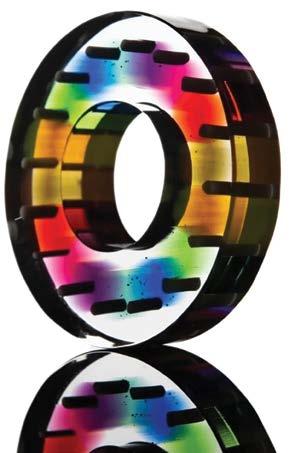
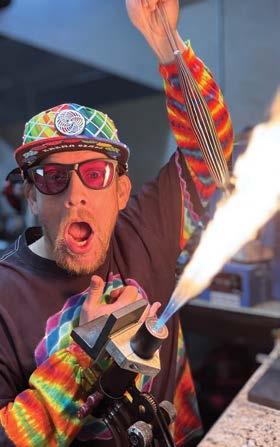
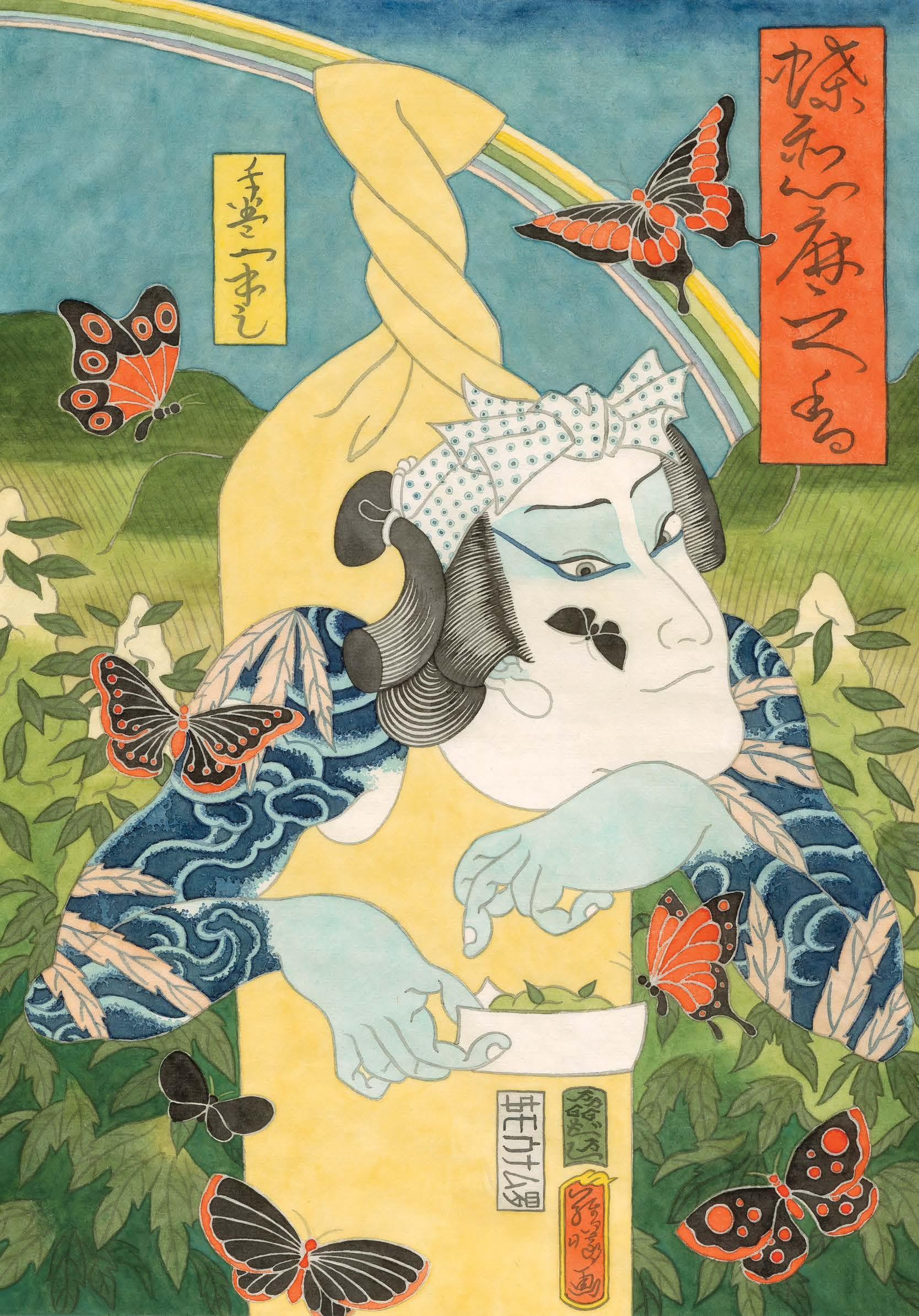
I’m sure we have all been out there and seen the sun shine through a blanket of moisture to create a rainbow. In our minds, we all wonder where it ends and if there is a pot of gold. Artist Kevin Kuhn, better known as Karma Glass, is most likely what you’d actually find at that end of the rainbow. His intentions are clear, positive and enduring. He is a particular kind of being, one that follows intuition with intention.
WHEN WE ASKED him about his chosen colorway, he said: “When we think of visionary art, we think of grandiose, the 22-petal lily across the room. With my ‘Karma Stack,’ I'm trying to distill down the psychedelic realm to the baseline of the experience to see what you can bring into this dimension.”
Kuhn continued, “You think of the rainbow trails you’ll see during a vision and the auras that you are able to read off of people. And that’s why tie-dye is so pervasive in our community, (it) is because it’s exciting to look at while you are having an experience. What I’ve tried to do is distill down this kind of loving experience of glass that is inclusive over exclusive. When you come to a show or have a viewing with my art, it’s meant to draw you in. Come celebrate, do a dance, enjoy the energy. That's what I stand for, and that's what my collector base stands for. A bit of the ‘One Love’ nature, I’m trying to distill that essence down to a technicolor pattern for all to experience.”
From some of the largest names in the industry to the new glassblower next door, Kuhn has felt fortunate to collaborate with many artists. He views it as a mandatory effort to keep art growing in all facets.
Kuhn is not one to name-drop; he truly sees each experience as its own and learns and grows from them. When we asked him about the many collaborations he has been a part of over the years, he told us a story about the Pygmy people, the Indigenous tribes that survive in the remotest-ofthe-remote jungles of the Congo. They have a saying, a proverb, that has inspired and influenced his entire career: “If you want to go fast, go alone; if you want to go far, go together.”
KARMA GLASS
KARMAGLASS. BIGCARTEL.COM @KARMAGLASS420
"That's what I stand for and that's what my collector base stands for. A bit of the ‘One Love’ nature, I’m trying to distill that essence down to a technicolor pattern for all to experience.”
“Work with others” is more than a mantra for him; he truly believes in always having your heart open to creating with the next artist you encounter.
“The more isolated we are, the less we truly learn,” he stated. We went on to talk about life and growing up. Kuhn put it perfectly when he said, “I sit at all the lunch tables. I’ve never really met a stranger, and that is my mentality in life.”
This year, Kuhn is traveling west in preparation for his fall opening, “Vibratious,” which will be held in the Asheville, North Carolina, area. Stay tuned for more details on his social media.
KARMA
GLASS X SCOZ
KARMA
JAMIE
JAMIE ZILL @JLZILL
SENTARO
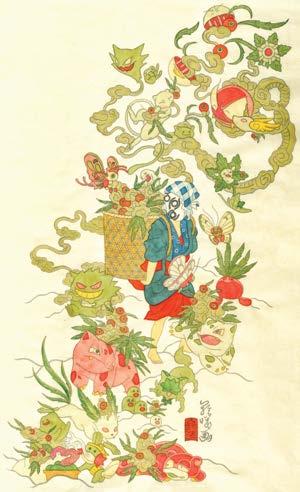
IN AN INTERVIEW with the Leaf, Sentaro expressed that in China, there are a lot of people interested in this style of work; however, restrictions around the plant are much tougher than those we experience here in the U.S.
He sees the plant as something that is neither good nor bad, but something that is “natural, neutral and an original inhabitant of this planet.”
Sentaro got into the green scene back in 2011, he told the Leaf. As he put it, “My journey went from indifference to enjoyment and eventually to facing the consequences. Now, it serves merely as a spiritual totem for me.”
He continued, “My inspiration really exploded starting in 2024, with many ideas derived from friends and events around me.”
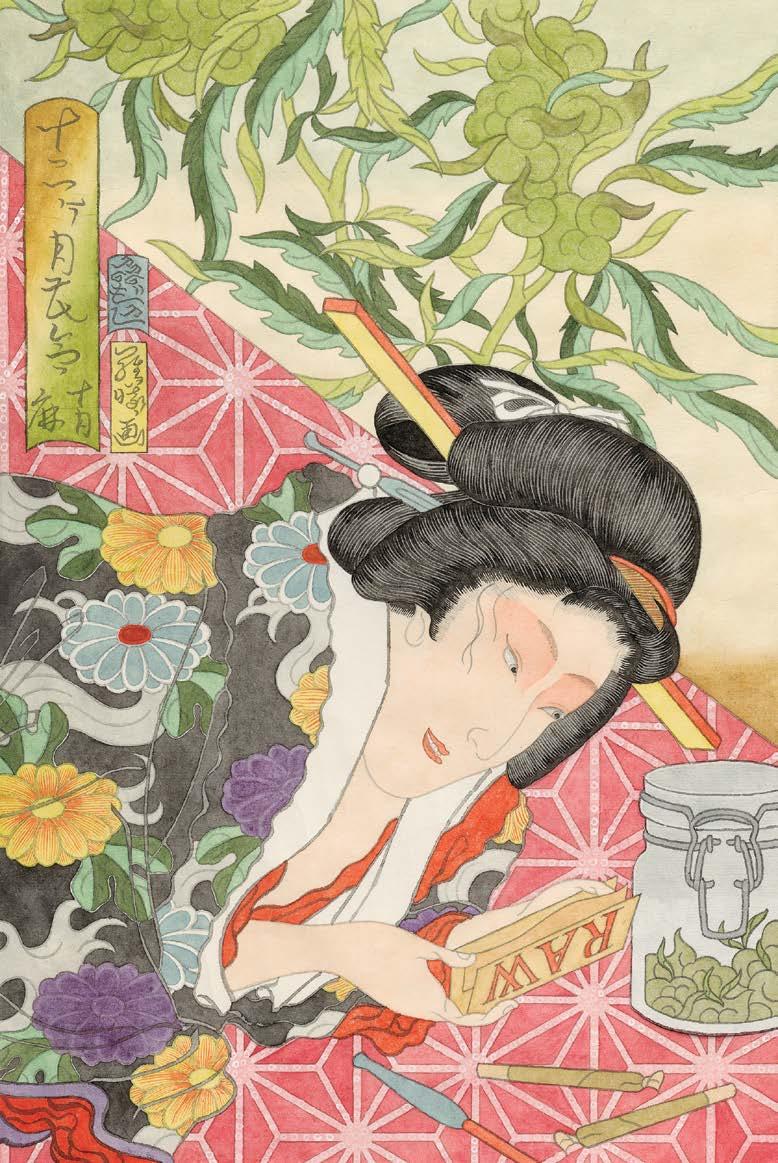
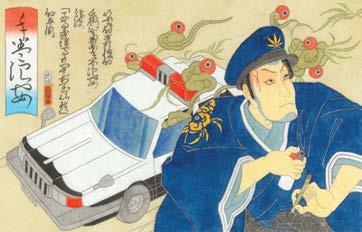
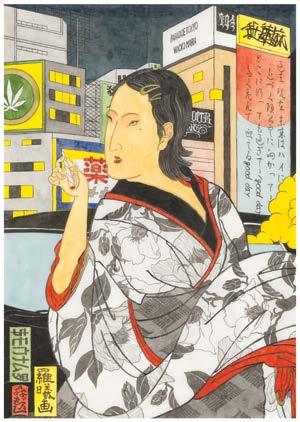
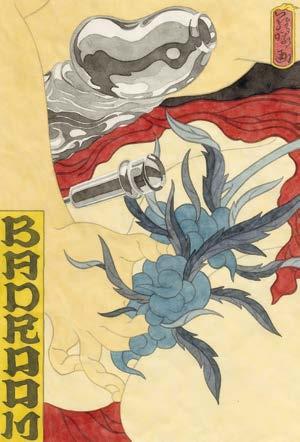
These are some of the examples you can see on his Instagram page: evil-looking preroll spirits, a kawaii one-eyed leaf on a schoolgirl’s body and a scene of a geisha using a grinder.
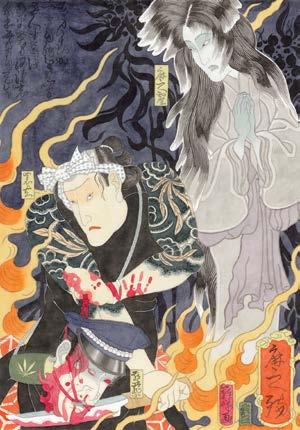
Sentaro told the Leaf, “Japanese culture has had a profound influence on me, stemming from my childhood impressions of anime and my professional style, which indirectly sparked an interest in ukiyo-e.”
The term, which means “pictures of the floating world,” is a wellrecognized style of Japanese art that depicts everyday people and life through colorful woodblock prints.
He brought up how almost all of the stoner art you find online or in galleries leans toward Western artists, styles and references. This is what “started me thinking about what fusing this with Eastern philosophy would look like,” he said.
Now, Sentaro said, he uses ukiyo-e as the framework for most of his work. The result is something he described as “both subtle and intriguing,” which feels insanely accurate.
Currently, he works out of a friend’s tattoo parlor in Kunming and travels abroad to work guest spots at other shops. When it comes to creating new ideas for a piece, Sentaro said he has three main approaches: working from a client’s experience, from the name of a strain or a character parody. When it’s time for the studio to come alive with a new tattoo or just a sketch session, he throws on something chill like Japanese hip-hop group Namedaruma or Taiwanese rappers Soft Lipa and GorDoN.
“I like relaxing vibes; listening to them feels like that first big gulp of a cold beer at the start of the day,” Sentaro said.
Sentaro is a tattoo artist living and working in Kunming, the capital city of Yunnan province in China. His tattoo designs roll together vivid scenes of stoner lifestyle, traditional Japanese tattooing, Eastern mythology and pop culture.
“Japanese culture has had a profound influence on me.”
SENTARO
12 MONTH’S FLOWER MATCH SPECIAL EDITION - OCTOBER
WEEDKU
ROLLICE
HEARTS OF GREEN GOLD
A GIRL GROOVING TO NAMEDARUMA
BLUE DREAM
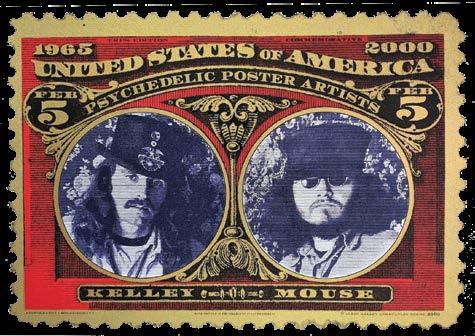
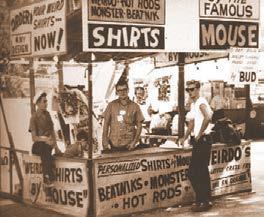
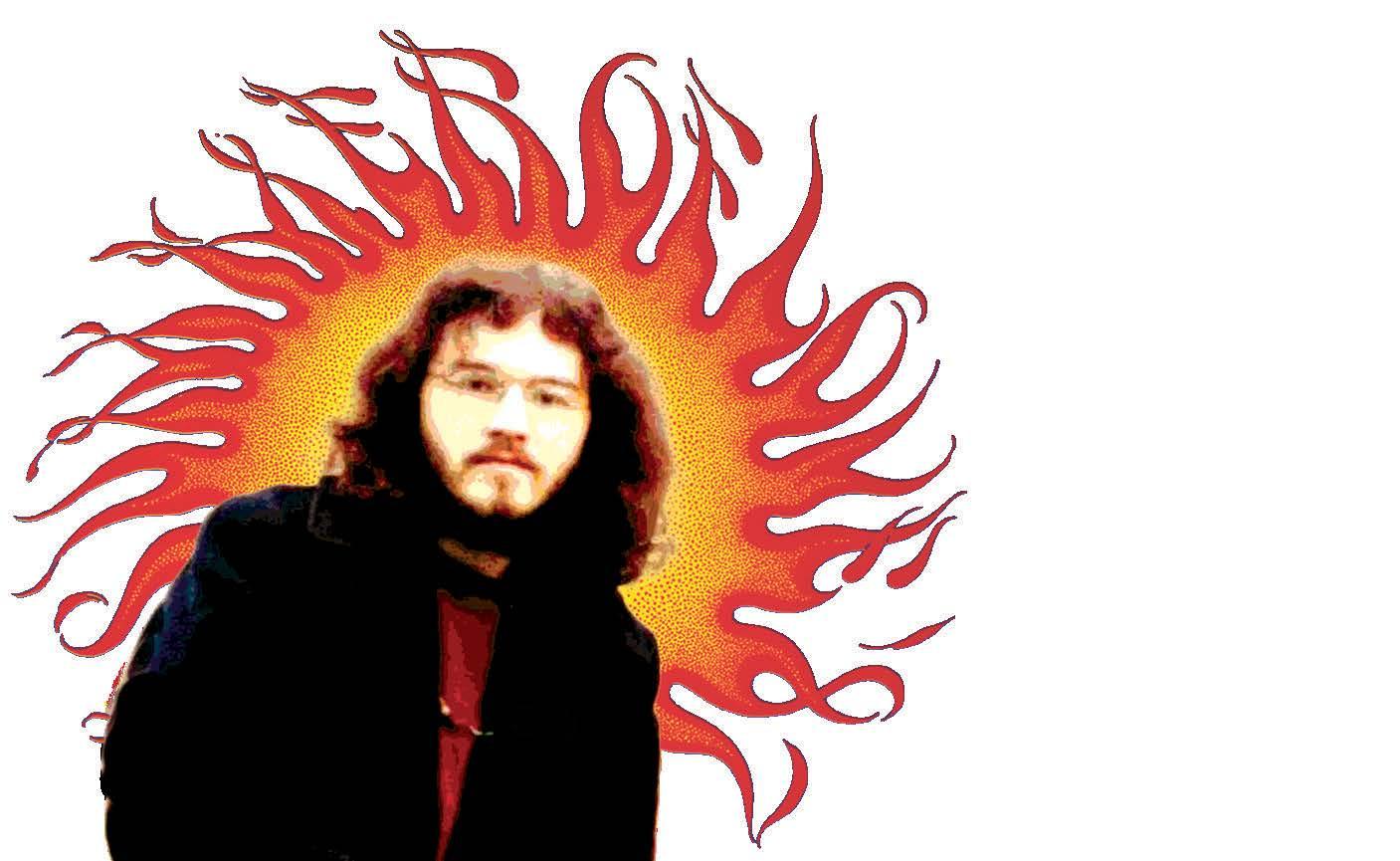
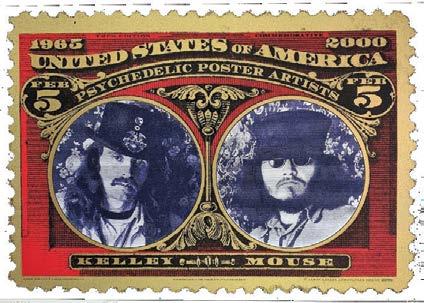
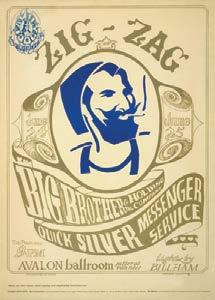
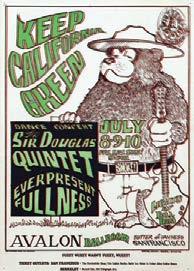
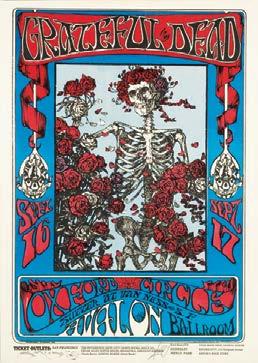
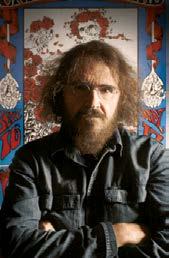
From the hot rod circuits of Detroit to the acid-soaked streets of Haight-Ashbury, Stanley Mouse has spent the past 70 years helping to define the psychedelic, rock and pop culture aesthetics. As one of the so-called “Big Five” of 1960s poster art, Mouse designed some of the era’s most iconic rock posters and albums — establishing himself as one of the most prolific and influential artists of the 20th century.
The Mighty Mouse
EARLY YEARS
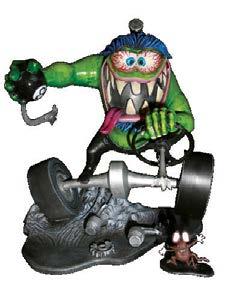
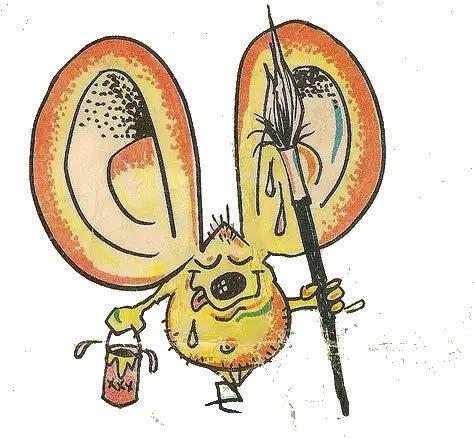
Growing up in Detroit in the 1950s, Stanley Miller became infatuated with muscle cars, Motown and Mad magazine. As the son of a Disney animator, he also mastered drawing and airbrushing at an early age. In middle school, he was always doodling in class (mostly monsters, hot rods and cartoon rodents), earning him the nickname “Mouse.”
used for Roth’s signature character, which Mouse accuses him of plagiarizing.
“He stole my mouse image,” Mouse complained to Seconds magazine in 1997. “He took a bunch of my catalogs back to LA and had his artists copy all my stuff and they created Rat Fink out of my characters.”
big concerts. To promote these shows, the organizers plastered trippy posters all over the Haight. It was those posters by artist Wes Wilson that inspired Mouse to switch from hot rod shirts to rock posters — an ambition quickly realized thanks to fellow artist and hot rod fan Alton Kelley.
After being expelled from high school for graffiti, he attended the Detroit Society of Arts and Crafts. There, at the adjoining Detroit Institute of Arts museum, he first saw paintings by Degas, Picasso and Van Gogh and thought to himself, “Someday, I’ll be able to paint like them.”
THE MOUSE AND THE RAT
As a teen, Mouse spent weekends smoking weed and painting shirts at car shows, drag races and state fairs. It was at one such race that he met his notorious frenemy, hot rod artist Ed “Big Daddy” Roth. The two often traded digs while working alongside one another: Mouse allegedly calling Roth “Bigg Fatty,” and Roth calling him “Rat Fink” — the name later
Mouse eventually dropped out of school to tour with the hot rod circuit. By 1960, he’d opened his own studio, and by 1963, he’d established his own company, Mouse Studios. In 1964, he partnered with Monogram to produce plastic model kits of some of his muscle car monsters. But by then, LSD and anti-war protests had made their way to Michigan, beckoning Mouse westward.
“I started to dabble with psychedelics and was searching for the next evolvement of my skills,” he told the Haight Street Voice in 2017. “San Francisco called to me like a siren out to sea.”
BAYWARD BOUND
In 1965, Mouse drove to San Francisco, where he became immersed in the psychedelic scene almost immediately — attending house parties where everybody was tripping. Unfortunately, he got drafted and had to return to Detroit, but got out of service by taking “huge amounts of LSD” before meeting with the draft board.
By the time he’d returned to the Bay in June 1966, those house parties had evolved into
THE FAMILY DOG
A self-taught artist raised in Connecticut, Kelley relocated to the Bay in ’64 after allegedly driving up from LA with 22 pounds of Mexican weed in his trunk. He and some friends began hosting psychedelic dance parties as “The Family Dog Collective.”
“We figured we had to do something other than deal pot, ’cause it was a dangerous business,” Kelley chuckled during a Q&A with Mouse at a 2000 Rock Poster Society event.
In February 1966, promoter Chet Helms began booking weekly shows at the Avalon Ballroom, featuring bands such as Jefferson Airplane, the Grateful Dead and Quicksilver Messenger Service. For each event, a local artist would design a promo poster — and this is where Mouse came in.
After meeting in 1965, Mouse and Kelley quickly became buddies, and in June 1966, Kelley brought him into the Collective. The combination of Kelley’s ideas and Mouse’s drawing skills proved to be a powerhouse partnership. Thus began one of the longest, most influential collaborations in art history.
Monogram’s Freddy Flopogger Speed Shift model.
Mouse’s booth at the Michigan state fair (1965).
BIG BROTHER & THE ZIG ZAG MAN
Helms also managed Big Brother and the Holding Company, who began practicing downstairs at Mouse’s studio — an old horsedrawn firehouse in the Lower Haight. It was at one such rehearsal that they first auditioned Janis Joplin. For Joplin’s debut at the Avalon on June 24-25, Mouse and Kelley designed a poster using an image that every stoner recognized: the Zig Zag Man.
Luckily, the rolling paper company viewed the posters as free advertising and never took legal action. But that wasn’t the only legal action they were worried about — they also feared it might draw heat from the police.
“We got really paranoid,” Kelley confessed in a 1989 interview. “We figured, ‘Oh no — now they know we smoke dope!’ And we took what little pot we had and flushed it down the toilet.”
POSTER BOYS
Nevertheless, two weeks later, they did another pot-themed poster: the “Keep California Green” poster featuring a stoned parody of Smokey Bear that was deliberately printed off register, making the image appear blurry to simulate being high.
Over the next year, Mouse and Kelley continued to churn out weekly concert posters, working side by side for hours on end. When not in the studio, they were often at the public library, scouring the art section for ideas.
“Stanley and I had no idea what we were doing. But we went ahead and looked at American Indian stuff, Chinese stuff, Art Nouveau, Art Deco, Modern, Bauhaus, whatever,” Kelley told the SF Chronicle in 2007. It was during one such library visit that they discovered an image that would become their most iconic poster of all time.
SKULL & ROSES
In the fall of 1966, Mouse and Kelley were seeking inspiration for a poster to promote a trio of Grateful Dead shows at Avalon. While thumbing through a book of 12th-century Persian poetry, they stumbled upon an illustration of a skeleton surrounded by roses and knew they’d struck gold.
“We saw that skeleton and said, ‘This says Grateful Dead all over it — we have to use this!’” Mouse told Rolling Stone in 2022.
Unfortunately, the book was too valuable to check out, so Kelley sliced out the page with his pocket knife. They then copied it, colored it and added the lettering. Alternately referred to as “Skull and Roses,” “Skullfuck” and “Bertha,” it’s now regarded as the most valuable concert poster ever made.
“I STARTED TO DABBLE WITH PSYCHEDELICS, A ND SAN FRANCISCO CALLED TO ME LIKE A SIREN OUT TO SEA.”
BYE, BYE, BAY-BAY
In early 1967, Mouse and Kelley opened a headshop on Haight called the Pacific Ocean Trading Company (POT Co., for short). At first, they enjoyed watching the throngs of hippies parade past their storefront, but before long, the Haight was so overrun that it became insufferable.
“Those first years — ’65, ’66, ’67 — it was really a great neighborhood... Everybody knew everybody. It was really fun,” Kelley told SF Gate in 2007. “By 1968, it had pretty much gone to hell with all the religious nuts coming, the politicos, the junkies, dope dealers … Then everyone got out of town.”
“The San Francisco scene and hippie culture died,” Mouse lamented to Phillips auction house in 2025. “There was racial strife on the streets and it was dangerous to be walking down Haight Street. So, I left.”
Mouse’s final impetus to leave came in late 1968 via a phone call from overseas. “Eric Clapton called me and asked, ‘Do you want to come to London to paint my Rolls-Royce?’” Mouse recalled to Phillips. “I said, ‘I’ll be right there.’”
Mouse spent a year in London, helping design the cover of Clapton’s “Blind Faith” album and working with the Beatles and Nova magazine.
ALBUM COVER ART
Mouse returned to the U.S. in August 1969 to attend Woodstock with Kelley, after which the duo spent some time working with a studio in Cambridge, Massachusetts, called Intermedia.
“They finally asked us to create a Jimi Hendrix album cover. We worked really hard on it and airbrushed a beautiful scarab,” Mouse told Phillips. “But just as we finished the artwork, (Jimi) died.”
GRATEFUL TO NOT BE DEAD
Mouse himself nearly died in 1993 — slipping into a coma when his liver gave out. He was in desperate need of a trans plant, but he didn’t have insurance, and the procedure cost over a quarter million dollars. Fortunately, several bands he’d worked with — including the Dead and Big Brother — pledged to help cover the costs. Thanks to their support, Mouse was able to get the transplant.
“They stuck a nineteen year old liver in me and I woke up and said, ‘Let’s go and get a beer,’” he joked to Seconds.
Mouse had another health emergency three years ago when he suffered a “debilitating stroke” and was “unsure if he will regain the ability to draw again,” per his June 26, 2023, Facebook post.
Iconic posters like these secured Mouse and Kelley’s place alongside fellow legends Wes Wilson, Rick Griffin and Victor Moscoso in what became known as the “Big Five” of poster art.
In 1971, he and Kelley returned to California, settling in San Rafael. There, they allegedly borrowed $500 from the Dead to start a new venture, The Monster Corporation. Throughout the ’70s and ’80s, they produced numerous calendars, T-shirts and album covers, including Styx’s “The Grand Illusion,” Steve Miller Band’s “Book of Dreams,” Jerry Garcia’s “Cats Under the Stars” and Journey’s “Departure,” using the scarab art from that unfinished Hendrix album.
While their official partnership lasted around 15 years, the pair remained close friends and collaborators until Kelley’s untimely death on June 1, 2008.
“With all the love, support and physical therapy, I should be on the road to recovery,” he posted the next day. “The outpouring of love has been astounding. Thank you everyone.”
FOREVER GRATEFUL
Over the past few decades, Mouse’s work has only grown in popularity. In June 2015, Soft Skull Press published “California Dreams: The Art of Stanley Mouse” — a comprehensive compendium featuring 240 works from his storied career.
His art has also been featured in numerous gallery shows — most recently, in the Haight Street Art Center’s new “Forever Grateful” exhibit that opened last month. The exhibit, which features “Bertha” and even a Mouse vending machine, runs until Sept. 20 before relocating to Golden Gate Park’s Hall of Flowers until Oct. 25.
Now 85, Stanley Mouse stands as one of the last two surviving members of the Big Five and an immortal icon among the psychedelic, hot rod and rock music communities.
“With his mix of irreverent humor, outlandish images, fearless freehand, bold lettering and inflammatory script, Mouse has drawn on the very same resources that also feed the heart of rock music,” the Casterline|Goodman Gallery wrote of him. “Musicians only play rock and roll. Mouse draws it.”