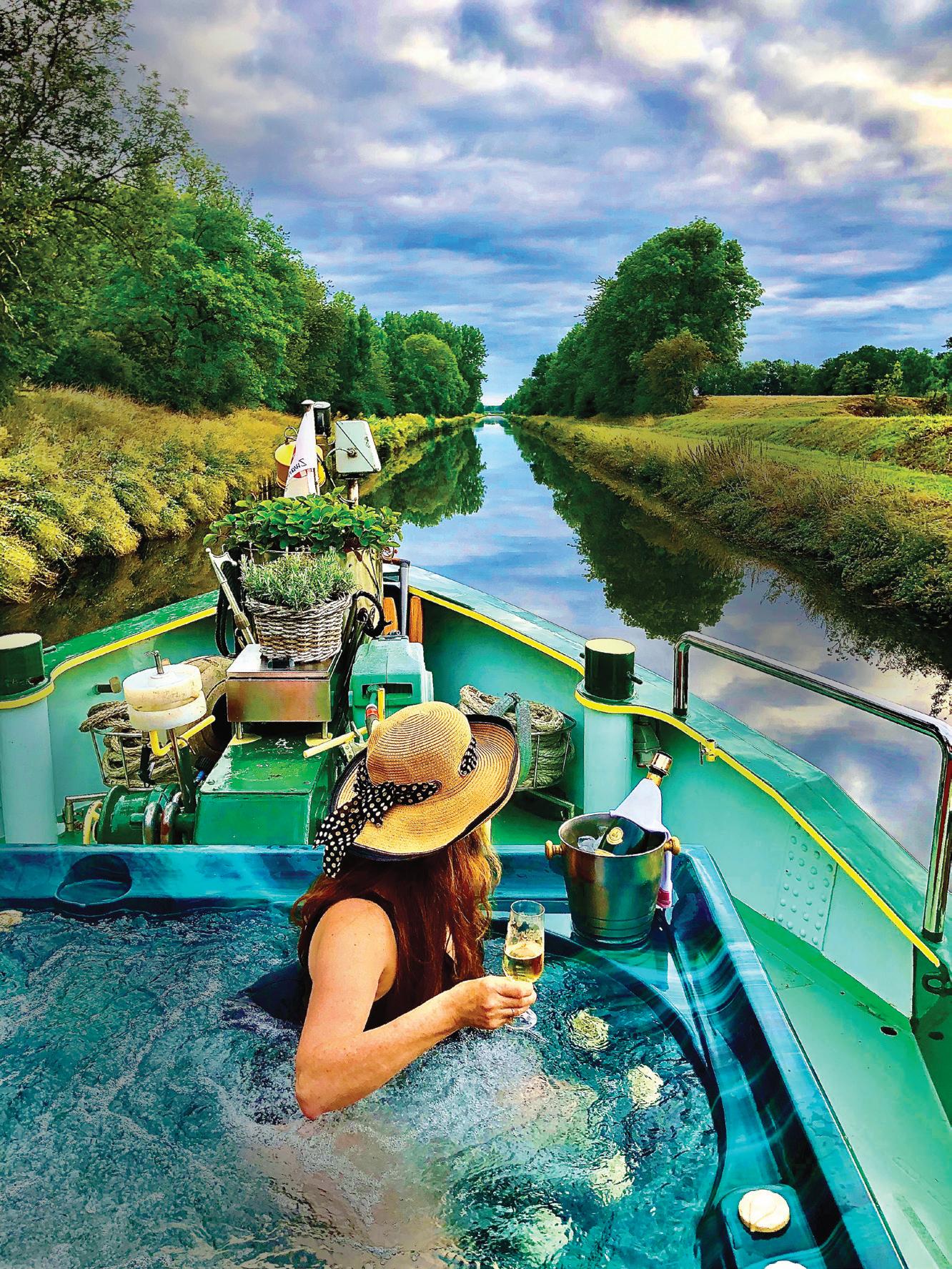
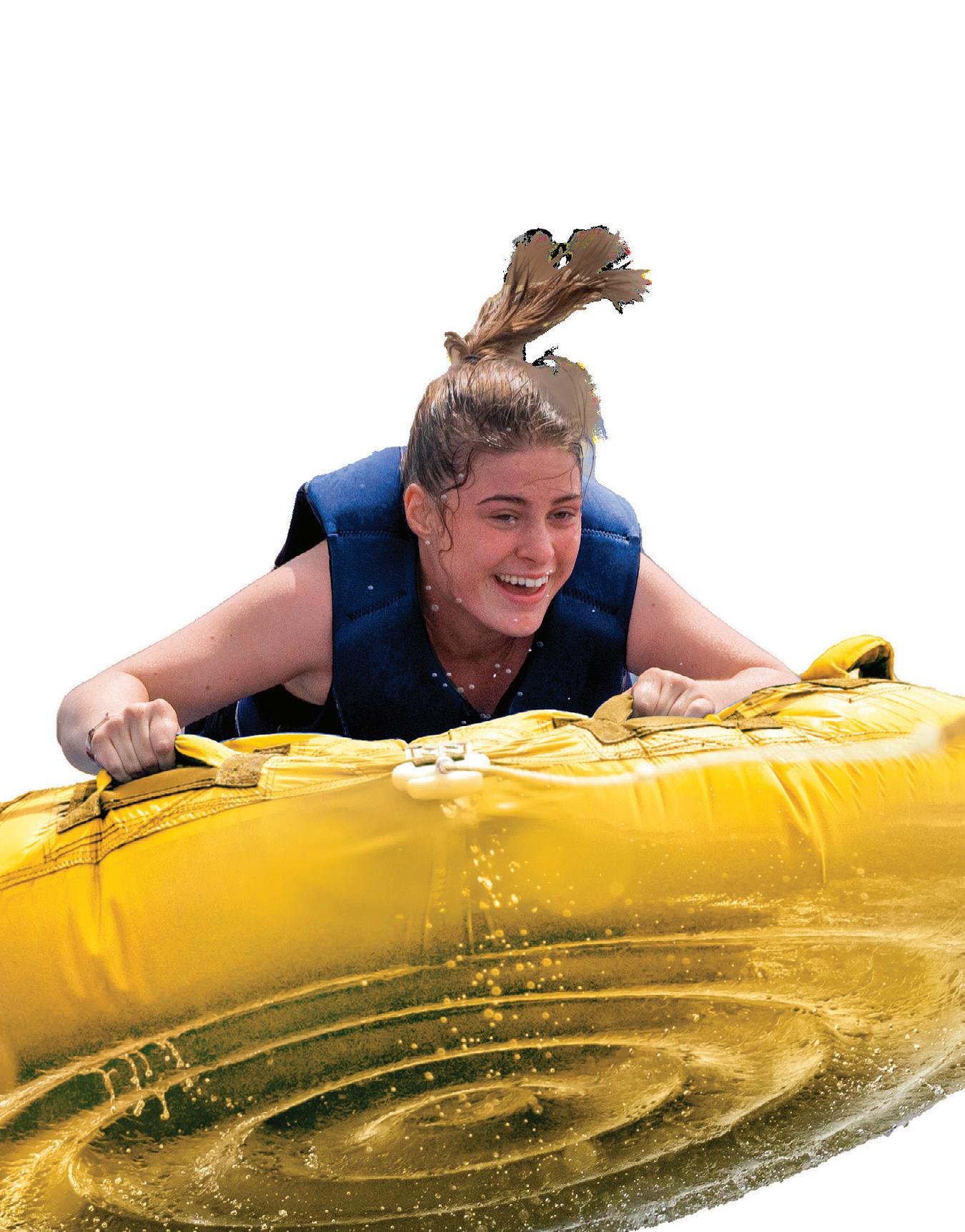
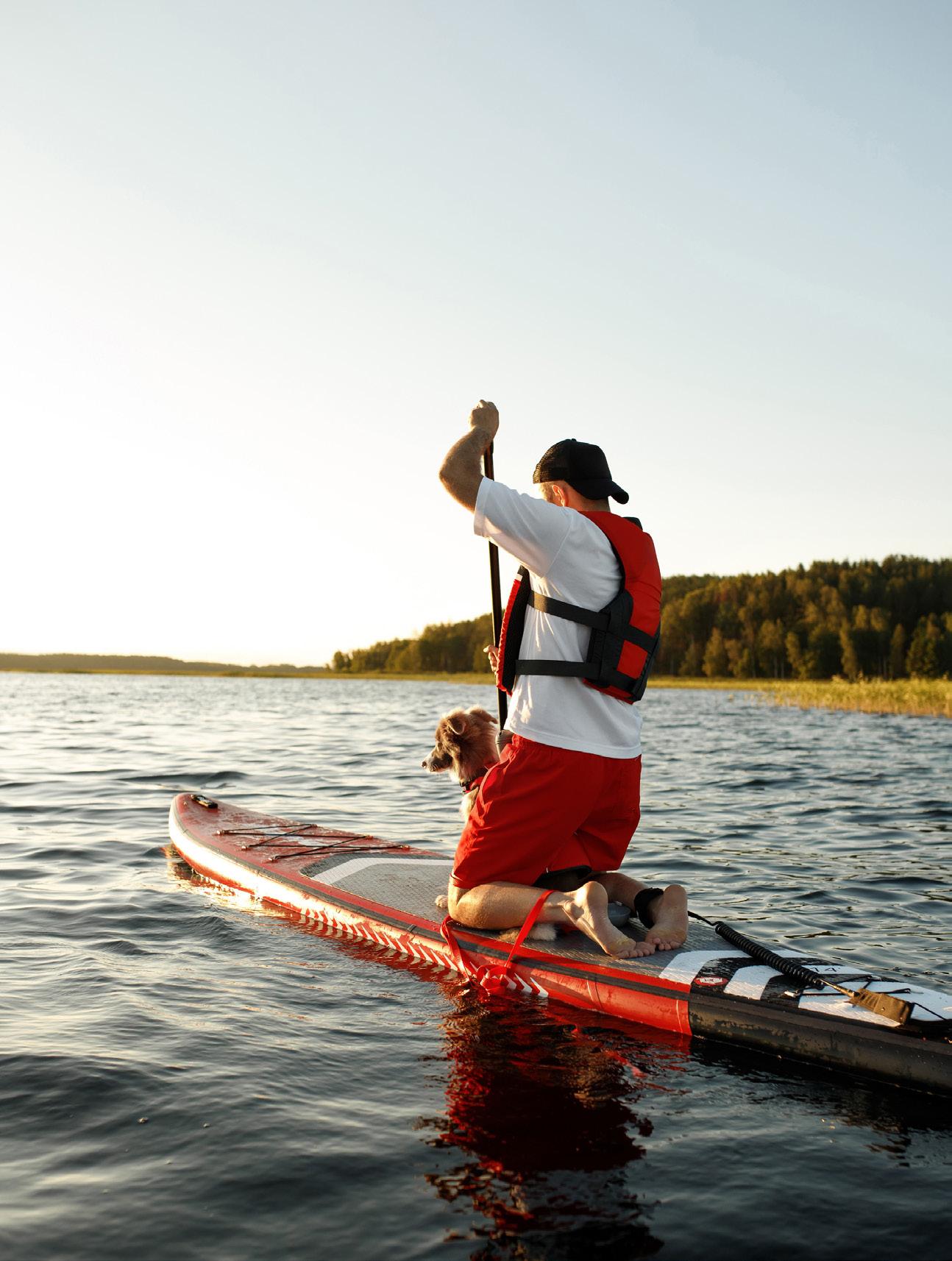
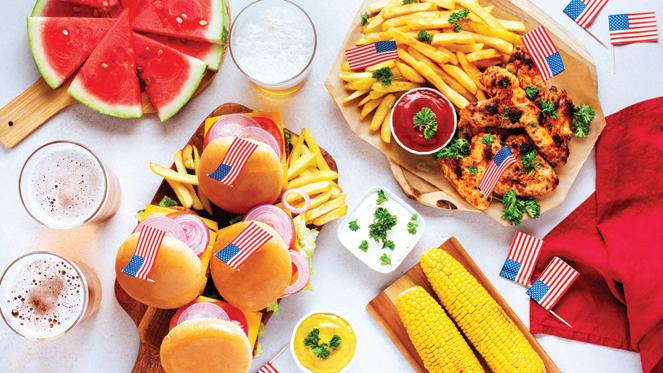
If summer fun takes an unexpected turn, trust AdventHealth’s emergency experts to be standing by. With shorter wait times and the area’s highest safety rating, we are Northwest Georgia’s top-rated ER for bumps and breaks, flips and falls — and more.
*Top rated is based on patient google reviews and leapfrog safety scores.
Find the ER nearest you at GeorgiaERexperts.com.
HELLOS
Trusted Experts for Life’s Most Magical Moment
As the only hospital in the region that offers labor, delivery and recovery in the same spacious private suite, The Baby Place at AdventHealth Gordon provides a warm, family-centered environment equipped with many comforting amenities. Come tour our facility – it’s the perfect place for new family bonding. Our compassionate doctors, midwives and nurses are dedicated to making every birth experience special. And, our OB hospitalist and OB emergency teams are onsite 24/7 to help you feel confident and supported.
Cruising Along
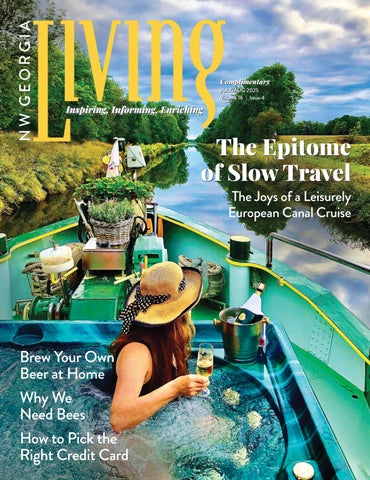
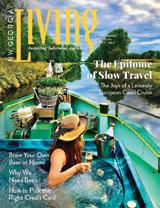
Welcome aboard! It’s officially summer, and I’m ready to take a Sunday kind of cruise — one where I can bask in the sun, take in breathtaking views, and wine and dine like royalty. More importantly, one where I’m not rushed and can truly relax. When I read our editor Jill Becker’s article reflecting on two memorable barge cruises on the canals of France (see page 16), I was immediately intrigued. Come to find out, luxury canal cruises are slower paced than their better-known European river cruise counterparts.
As a massive fan of the period drama Downton Abbey that ran on PBS for five years, which was sponsored by the Viking cruise line, I’ve long dreamed of taking a European river cruise. Several of my friends have raved about their river cruise experiences, which have taken them through France, Germany, and other countries. Although they aren’t inexpensive, they are an experience of a lifetime. For a few years, I’ve mentioned the idea to my husband and traveling companion, Jerry, who’s never taken a cruise. In trying to convince him, I’ve told him that, unlike the gigantic ocean liners that hold 3,000 people, river cruises typically carry no more than 200 passengers. And that while dinner isn’t formal, it’s elegantly casual and often features a four-course meal. The closest I’ve gotten him to consider it is if we take one that has a pre- or post-cruise stay in Munich during Oktoberfest. (Jerry’s 23andMe DNA data confirmed his heritage is predominantly German, which explains his love of beer.)
My cruise experience is limited, specifically to larger ships only. On one, I briefly lost my 11-year-old son, who had taken his newfound freedom hanging out with some older kids too far, and it had to be broadcast to the entire ship that Winston Wood’s mom was looking for him. He probably got teased unmercifully, and deserved it. On my last cruise, on the morning of departure, the U.S. Customs and Border Protection knocked at my door at 6 a.m. Although I had a passport and driver’s license, someone had stolen my identity and duped a bank out of a large sum of money in Chicago, so they needed further proof of who I was or they planned to arrest me. Thank goodness I lived in a small town, because after calling the Rome Police Department, they confirmed my identity. I’ve maintained being a stable and resilient woman even though my life sometimes feels like a soap opera.
My choice of destination for a leisurely barge cruise like the ones our editor took is Italy. After recently watching Stanley Tucci’s new show, Tucci in Italy, Jerry and I want to immerse ourselves in its culture and cuisine. We could hop off the barge for a bit and enjoy some wine and cheese or an espresso and gelato in a nearby village. Or we could take a ride on the barge’s bikes and explore the local countryside. And with only around a dozen passengers, imagine how much fun we could have making new friends, possibly for life. With no stress and the freedom to do whatever we wish in a relaxed yet luxurious setting, it sounds bellissimo!
JULY/AUG 2025 Volume 16 | Issue 4
Publisher and Founder
Editor-in-Chief
Laura Wood Erickson
Editor
Jill Becker
Creative Director Andi Counts
Designer Mackenzie Allanson
Copy Editor
Elin Woods
Contributing Writers
Jill Becker
Martin Cipollini
Erin Clay
Ande Frazier
Ryan Griffin
Kathy Patrick
Robert Smyth
Elin Woods
Contributing Photographer
Megan Treglown, MegTreg Collective
Web Master
Tracy Slack & Associates Sales
Laura Wood Erickson
wood.laura@yahoo.com
Contact us at: (706) 346-9858
wood.laura@yahoo.com
NW Georgia Living P.O. Box 72546
Marietta, GA 30007
We welcome all contributions, but we assume no responsibility for unsolicited material.
NW Georgia Living is published bimonthly by L. Wood LLC.
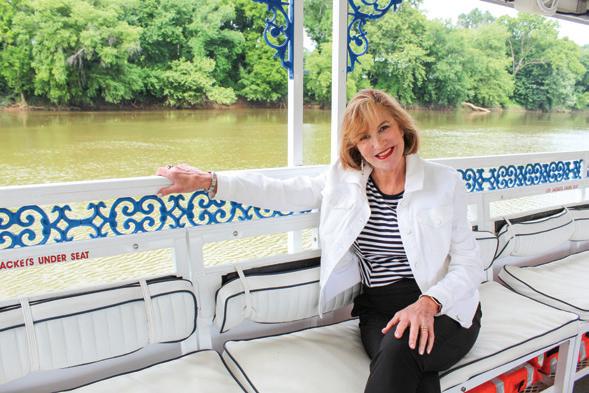
Me aboard the Roman Holiday, which takes passengers on a two-hour cruise down the Coosa River the first Sunday of every month. It’s no luxury European cruise, but it’s something.
Meg Treglown, MegTreg Collective
Add
ERICKSON construction
jerry@ericksonconstructionservices.com
Elevate Your Living Area with Expert Home Remodeling Erickson Construction, Rated Top 15 Basement Remodeler on
• Customized solutions are tailored to your specific needs and preferences.
• Full-Service Expertise
JLUY
Barn Finds
Thru Aug 24
Savoy Automobile Museum, Cartersville
A collection of automotive finds that spent years tucked away in barns and were later lovingly restored by car enthusiasts.
savoymuseum.org
Celebrate Independence Festivities & Fireworks Show
July 3, 6-10:30pm Chattooga County Agricultural Center, Summerville
Enjoy a spectacular fireworks
show, a live concert, a kids zone, free watermelon slices, a cornhole tournament, and more. allevents.in/summerville/ city-of-summerville-celebrateindependence-festivities-andfireworks-show/20002821 9428800#google_vignette
FREE Movie Series
July 3, 7pm
GEM Theatre, Calhoun
A free screening of The Sandlot, a timeless story following a group of kids in 1962 as they bond over the love of baseball and summer adventures. calhoungemtheatre.org
Fireworks Extravaganza
July 4, 4pm
Ridge Ferry Park, Rome
A fun-filled celebration culminating in a lively fireworks show. rfpra.com/july4th
Fourth of July Parade
July 4, 9am
Posters Old
& New
July 5-Oct 26
Booth Western Art Museum, Cartersville
A collection of iconic Western movie posters from the museum’s permanent collection. boothmuseum.org
First Friday Concert Series
July 11 & Aug 1, 7pm
Town Green, Rome
Downtown Cave Spring
A patriotic annual parade best viewed from the downtown square. cityofcavespring.com/ events/4th-of-july-parade
Star-Spangled 4th of July
Celebration & Fireworks
July 4, 5-10pm
Cherokee Capital Fairgrounds, Calhoun
An action-packed evening featuring magic shows, nationally acclaimed stilt walker Carrie McQueen, and live music from Babe’s Bayou and Tommy Ray Gurley, capped off by an amazing fireworks show. northwestgeorgiaregionalfair.com
Live tunes from Them Mixon Boys (July 11) and The Bank Waleska (Aug 1), plus food and drinks from local vendors. downtownromega.us/events/ first-fridays
Food Truck Friday
July 11 & Aug 8, 6:30-9:30pm
Frankie Harris Park, Euharlee
Enjoy food trucks, bands, and a welcoming community atmosphere. facebook.com/euharleeftf
Peek Park Summer Concert Series
July 12 & Aug 16, 7-9 pm
Peek Park, Cedartown
A free concert in the park with food from local vendors and the opportunity to play on the new million-dollar playground, complete with splash fountain.
park-summer-concert-series
Intercultural Fest
July 13, noon-8pm
Downtown Cartersville
A free event honoring Colombian culture aimed at bridging communities and promoting cultural diversity. downtowncartersville.org/ events
Movie Night
July 18 & Aug 8, 6-9pm
Earl Towe Community Center, Adairsville
Bring a blanket and catch a movie, concessions and all. adairsvillega.net
Summer in the City Block Party
July 18, 6-10pm
Downtown Calhoun
Enjoy live music, food trucks, inflatables, games, and more. exploregordoncounty.com
Three Dog Night with Little River Band
July 18, 8pm
Forum River Center, Rome
The legendary hitmakers present an unforgettable night of rock classics. forumrivercenter.com
Music By the Tracks
July 19, 7-9pm
Downtown Cartersville
A free concert series that’s fun for the whole family. downtowncartersville.org/events
Stacy’s Styles and Stitches
Quilting Retreat
July 24-27
River Walk, Rome
A gathering for quilters, featuring expert demos, giveaways, and plenty of time to create, sew, and make new friends.
The country music legend and Grand Ole Opry member returns with his Farewell Party Band. simpletix.com/e/an-eveningwith-gene-watson-rome-gatickets-169011
Friendship Festival
July 26, 10am-3pm
J.R. “Dick” Dowdy Park, Summerville
A celebration of cultures from around the world, with food, music, dance, and more. allevents.in/summerville/ friendship-festival-featuringa-multi-cultural-taste-aroundthe-world/200028314334120
Penguin Wobble 3K-5K-10K
July 26, 7am
AdventHealth Stadium, Rome
Participants enjoy a scenic tour of Rome as they race along the AdventHealth Redmond ECO Greenway. raceentry.com/penguinwobble/race-information
AUG
Booth Western Art Museum, Cartersville
A collection of images featuring portraits by Dorothea Lange and Imogen Cunningham, California scenes by Cara Weston, classic depictions of Western women by Barbara Van Cleve, and more. boothmuseum.org
Velcro Pygmies
Aug 2, 8:30pm Forum River Center, Rome
A performance by the high-energy, ’80s-inspired rock band. forumrivercenter.com/ events-2
Ramble Tamble (The CCR Tribute)
Aug 8, 7:30pm Rome City Auditorium, Rome
the Backpack Buddies program that helps feed local schoolchildren. downtowncartersville.org/ events
Troubadour Project: ’70s
Rock Revival
Aug 23, 7:30pm
GEM Theatre, Calhoun
An unforgettable night of rock nostalgia as Troubadour Project re-creates the sights and sounds of rock legends like Led Zeppelin, Heart, and Fleetwood Mac. calhoungemtheatre.org
Danny Lyon: The Bikeriders
Aug 2-Jan 18
Booth Western Art Museum, Cartersville
Fifty photographs by the renowned documentary photographer and filmmaker who famously chronicled the activities of the Chicago Outlaws motorcycle club from 1963 to 1967. boothmuseum.org
The Local’s Summer Concert Series
Aug 2, 7pm
Downtown Cartersville
A stellar lineup of live music by local favorites. downtowncartersville.org/events
The West in Focus: Women Aug 2-Jan 18
A high-energy concert experience that feels like you’ve stepped straight into a late ‘60s rock festival. freshtix.com/events/ccrrome-ga
Chris Collins and the Boulder Canyon Band: The John Denver Tribute
Aug 9, 7:30pm GEM Theatre, Calhoun Fans of the iconic John Denver won’t want to miss the award-winning tribute band known for their captivating performances of beloved hits like “Rocky Mountain High” and “Country Roads.” calhoungemtheatre.org
Backpack Buddies 5K
Aug 23, 8am-noon
Downtown Cartersville
An annual 5K benefiting
Literary Works of Art
Fascinating reads about artists and the art world.
BY ELIN WOODS
Recently, my sister told me about her summer vacation plans — the beach, again. I laughed a bit and remarked that our family’s differing opinions about the ideal vacation spot have always made it difficult for us to go somewhere together as a group. My perfect vacation involves sidewalks, bustling city streets, and all the amenities a good city offers, which must always include art museums. There are few experiences like the thrill of getting up close and personal with a piece of art you’d only, until that moment, read about. Given my love of both reading and the art world, it made perfect sense that this column would eventually come around to me talking about books centering on art. Here, I’ve highlighted selections in various genres on various art forms. There should be a little something for everyone, from historical fiction to true crime.
I Always Loved You
By Robin Oliveira
Because I love history, I’m more frequently than you’d expect asked questions concerning time travel and the places I’d choose to travel to. That’s a tricky question because while I love to study history, I’m pretty happily settled in the 21st century. If forced to answer, however, my responses always center on different art and music scenes. The art movement behind this book, Belle Époque, is a regular answer. Maybe it’s because Mary Cassatt, the protagonist, is Pittsburgh-born and Philadelphia-raised and I live in Pennsylvania. She’s more famous for her time in Paris and New York, but still, I’m always drawn to her, and therefore, this era. I Always Loved You focuses on her rocky relationship with fellow painter Edgar Degas, which does begin quite sweetly. Cassatt is seemingly a “failure” on her first trip to Paris and has her father begging her to be sensible and move back home, settle down, and get married. But fate has other ideas. As readers, we learn that the seemingly chance meeting between Cassatt and Degas was at his request. He was taken with her and her work, and now she has her ticket to art stardom. This novel starts out slowly, but like any good painting, it takes time to develop a complete picture, so stick with it and you’ll be rewarded.
By Walter Isaacson
Confession time, I’m a bit of a Ken Burns documentary junkie. Whenever a new one premieres on PBS, I have to watch it. His latest was on one of the most famous artists of all time: Leonardo da Vinci. This biography was one of the resources used to develop the film, and if you think you know da Vinci, think again, as most of the world doesn’t even know his real name. While at 600 pages long this book seems intimidating, don’t let that scare you. It never reads like dry history and presents da Vinci not only as a Renaissance man and brilliant artist, but more importantly, we learn the story of a fellow human. A rather unique human, but it brings him down to earth and, I believe, helps us find our own particular genius. Da Vinci was, after all, someone who would likely be classified today as having dyslexia, but that helped create his brand of genius. His spirit, which rings throughout the book, is also a reminder to stay curious and approach the world with wonder, even on the difficult days. The author has much to share with us, and we have much we can learn from Leonardo. In some ways, he’s never been as important as he is today, and I hope you fall in love with da Vinci the person, not just the artist.
The Last Mona Lisa
By Jonathan Santlofer
Speaking of da Vinci, did you know the Mona Lisa was stolen from the Louvre museum in 1911? Better yet, did you know that there are plenty of people who believe that the returned Mona Lisa isn’t the real thing? This crime thriller has its roots in this particular theft. (There are plenty of options within the art crime thriller genre should you get hooked.) Vincenzo Peruggia is the real-life man behind the robbery, and in this tale, his
Leonardo da Vinci
digging, Interpol becomes interested in his research, as does a new art thief with a stash in his New York apartment that would make any art collector or museum jealous. This book goes back and forth between the present day and 1911 with Peruggia as one of the narrators, and, yes, if you enjoyed the action of Dan Brown’s The Da Vinci Code and similar books, you’ll enjoy this one too.
West: The American Cowboy
By Anouk Krantz
Since I’ve been working with this magazine, one of my favorite finds is the Booth Western Art Museum in Cartersville. Georgia isn’t the first location that springs to mind when talking about Western art, but I appreciate the quirkiness of the location, and having only virtually explored the museum, I’ve come to love it for its celebration of the particular art form. (I grew up with a father who loved all things Western, so cowboys hold a particular place in my nostalgic heart.) When it comes to photography, unlike paintings, I’m always drawn to black-andwhite photos (there’s something about the shadows), and this coffee table book is chock-full of gorgeous shots of the West and that mythical figure, the cowboy. These aren’t the cowboys of the past; these are contemporary figures who honor a way
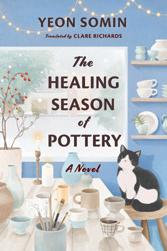
used to in the States, but they are just as lovely. While I love to paint and am primarily drawn to the paintings at museums, my first artistic love was pottery. There is something absolutely healing about throwing clay on a wheel and getting your hands dirty, making something as simple as a bowl. The heroine of this novel, Jungmin, discovers the power of pottery after quitting her toxic job and learns to experience joy again. With each day spent at the new pottery studio in her neighborhood, she makes friends, realizing perhaps she never had any real ones before, and finds a community, maybe even a home. She learns too that in a fast-paced world it’s important to slow down now and then and find yourself again. This is a book worth experiencing, and I’ll end this with a quote from it as a lure: “That’s why I’m not bothered when my pieces crack or break. Because I’m going to keep on making more. Whether it’s pottery or life, it takes more than one attempt for them to come out right. And all that effort makes the end product more valuable, too.”
Elin Woods is a librarian from the mountains of western Pennsylvania. When she's not busy reading, she enjoys baking historical treats and exploring the East Coast. She balances her mostly nonfiction history reading with the occasional modern romance novel and plenty of cookbooks.
The Right Card for the Job
BY ANDE FRAZIER
Credit cards can be powerful tools — if you’re using the right one for your lifestyle and financial habits. The wrong card can nickel-and-dime you with fees, interest, or underwhelming rewards. But the right card? It can help you build credit, travel better, earn perks, or put cash back in your pocket.
Just Getting Started? Keep It Basic and Build Smart
If you’re new to credit cards, look for one that helps you build a solid foundation. A secured credit card or a starter unsecured card is usually the way to go. These cards tend to have lower limits and fewer moving parts, which makes them easier to manage as you build your credit profile.
Consider the: Discover it Secured Credit Card
The 411: It offers cash-back rewards (rare for secured cards), reports to all three credit bureaus, and doesn’t charge an annual fee.
Why it fits: You’ll learn how to manage credit responsibly while earning small rewards without the risk of piling on
Here’s how to match your credit card to your financial lifestyle.
Love to Travel? Focus on Flexible Points and Airline Perks
If you’re someone who always has a suitcase half-packed, a travel rewards card should be on your radar. These cards let you earn points or miles on everyday spending and redeem them for flights, hotels, or travel experiences.
Consider the: Chase Sapphire Preferred Card
The 411: It earns bonus points on travel and dining, comes with solid travel protections, and allows point transfers to airline and hotel partners. Why it fits: If you’re strategic, this card can get you a lot of value for your travel dollar — even an upgrade to first class if you play your points right.
Want Cash Back Without Complications? Keep It Straightforward
For the practical spender who’d rather have cash in hand than points in a portal, cashback credit cards are a no-brainer. Some offer rotating bonus categories, while others keep it simple with a flat rate on everything.
Consider the: Citi Double Cash Card
The 411: You earn 2% on every purchase — 1% when you buy, 1% when you pay it off.
Why it fits: There’s no mental gymnastics here. You swipe, pay, and get rewarded.
Chasing Perks? Aim High and Know the Trade-Offs
If you’re someone who likes to travel in style or take advantage of cardholder exclusives, premium rewards card may be worth the higher annual fee.
Consider the: American Express Platinum Card
The 411: Yes, the fee is steep, but in return, you get airport lounge access,
travel credits, hotel upgrades, and VIP experiences.
Why it fits: If you’ll actually use the benefits, the value can outweigh the cost. Just make sure it fits your lifestyle and spending patterns.
Paying Off Your Balance in Full?
Maximize Rewards, Skip the Fees
If you’re someone who never carries a balance (well done!), you’ve earned the right to look for a no-fee card with solid rewards
Consider the: Wells Fargo Active Cash Card
The 411: You’ll get unlimited 2% cash back with no annual fee, no rotating categories, and no fuss. Why it fits: You’re not paying interest, so your goal is simple — earn the most rewards with the least hassle.
Final Thoughts
When it comes to credit cards, there’s no one-size-fits-all, but there is a best-fit card for your financial personality. Choose one that supports your goals, whether that’s building credit, traveling more, or simply getting rewarded for everyday purchases. As always, read the fine print, know your interest rates, and avoid spending more than you can pay off. The right card won’t fix poor money habits, but it can definitely help good ones go further.
Ande Frazier, CFP®, CLU, ChFC, RICP, BFA™, ChSNC, CDFA®, is an expert in behavioral finance and the author of Fin(anci)ally Free: 11 Conversations To Have With Yourself About Life, Money, and Worth In addition to being a recognized thought leader, author, and speaker, she also serves as a partner at Peachtree Planning Corporation. To learn more, visit andefrazier.com
BREWING GLOBAL SUCCESS
Rome-based Hydro Dynamics Taps International Markets
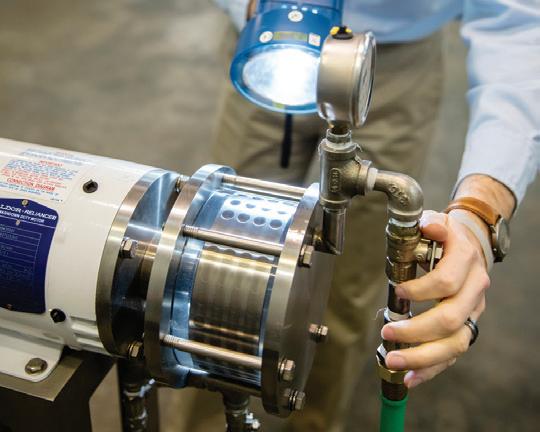
When Rome-based Hydro Dynamics first applied its ShockWave Xtractor technology to brewing beer, it didn’t just shake up the process – it opened up a world of export opportunities. Originally designed for industrial uses, it’s now helping brewers like Terrapin, Anchor, and Witch’s Hat improve their craft, both in Georgia and around the globe.
Doug Mancosky, Chief Science Officer at Hydro Dynamics and a Georgia Tech graduate, is a lifelong beer enthusiast. So for the veteran company leader, making the leap into the beverage industry a decade ago was exciting for him. “Think of all the complexities that a brewer is able to provide within its beverages.” Complexities such as flavor, ingredients, length of fermentation, and cooling process.
Like many small Georgia businesses, Hydro Dynamics saw the potential for international sales through its customers. After pursuing a foothold in international markets for a number of years, Hydro Dynamics found the “cheat code” it needed to accelerate their business – the Georgia Department of Economic Development’s (GDEcD) Trade specialists.
Reflecting on his introduction to GDEcD’s Trade team, Mancosky remarked, “In some ways I was both happy [to find out about them] and also a little upset that I hadn’t heard about this sooner. There was all this free data the state had such as market analysis and trade representatives in individual countries.”
“The first question from potential customers is ‘who else is using it in the U.K.? Or Sweden?’ Often the most difficult thing to do is getting the first install in any market. With the amount of resources and knowledge they have, GDEcD has been really helpful. The state has been able to introduce us into new markets and get us going with some pivotal customers.”
The Georgia Department of Economic Development helped the company identify promising
markets, connect with in-country representatives, and land crucial first customers including Purity Brewing Company in the U.K. “Getting Purity gives us credibility, and you leverage that for future sales. It’s a marketing tool,” Mancosky explained.
Today, the ShockWave Xtractor is used on six continents. “In almost every continent there could be someone enjoying a beer right now using our technology,” says Mancosky. “That’s fun to think about.”
When asked if he would recommend connecting with GDEcD’s Trade team to other companies, Mancosky answered, “Absolutely. We’ve never gotten a bill from them.”
Mancosky expands that the team’s sole care seems to be their clients’ success. “It’s good to know that, if I have a question about something related to an export, I don’t have to just Google and hope.”
Interested in expanding your small- or mediumsized businesses international sales? Learn more about GDEcD’s services for Georgia companies at georgia.org/trade
The Georgia Department of Economic Development’s nationally recognized Trade team works with Georgia-based small businesses like American Dakota to expand their global sales, making companies more resilient and creating opportunities for growth. The Trade team’s services, ranging from market research to international connections, are provided at no cost to eligible Georgia businesses. To learn more or connect with one of our trade team members, visit georgia.org/trade.
HYDRO DYNAMICS hydrodynamics.com
Getting to Know …
Haley Minesinger, director of ambassadors, Better TogetHER Initiative
BY JILL BECKER
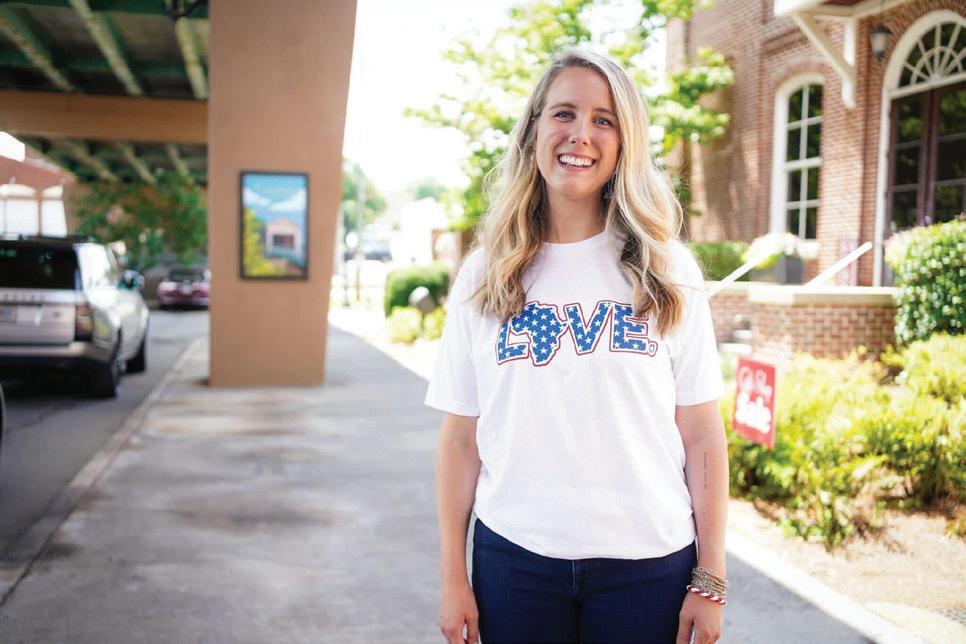
My passion … has always been advocating for children who may be invisible to a lot of the world,” says Cartersville resident Haley Minesinger. Since graduating from UGA in 2014 with a degree in child and family development, the 33-year-old has devoted herself to pursuing that passion, whether it’s as a former foster care case manager with the Bartow County Division of Family and Children Services (DFCS) or in her current position as the director of ambassadors for the Better TogetHER Initiative with the LIVE2540 organization.
LIVE2540 is a faith-based local nonprofit that provides free healthcare and other relief programs to vulnerable children in West Africa, where malaria, malnutrition, and other diseases are prevalent because there’s no access to clean water, medical resources are limited, and other factors. At Better TogetHER, Minesinger oversees the efforts of a group of more than 300 women who’ve signed up to sponsor the monthly care of a child at LIVE2540’s year-old medical clinic in Liberia, whether it’s a hospital bed or a nurse’s salary. “The goal of Better TogetHER is to form a global sisterhood of women who believe that change is possible when we care for one another’s children,” says Minesinger. Here’s more about this altruistic Northwest Georgian.
decade where I met a lot of beautiful people. We all come from different places with unique baggage. The common thread is that we’re all just trying to put one foot in front of the other, leading us somewhere higher than we were before.
You’re passionate about helping children. Are you a mother yourself?
Yes, my husband Conner and I have two girls, Bentley and Ellie.
Any fur babies?
We just got our first dog last fall. She’s an English Cream golden retriever. I didn’t think I was a dog person, but she made me change my mind.
“The goal is to form a global sisterhood of women who believe that change is possible when we care for one another’s children.”
Tell us about your early work advocating for children. During my jobs with DFCS and CASA of Northwest Georgia [a program through Advocates for Children], I walked alongside biological and foster families in their homes and at juvenile court. Many of the children I worked with were reunified with their families and many were adopted. It was a beautiful
How did you become involved with LIVE2540?
I had traveled with the organization [then called Orphan Aid Liberia] several times in college and knew the impact of the work. My plan was to go and live in Liberia for a year after graduation, but the Ebola outbreak happened, so my plans changed. Thankfully, I was able to jump onboard stateside as an intern and learn a lot about fundraising and event planning.
How did the Better TogetHER Initiative come to fruition?
In April of 2024, I helped plan a night specifically for women called Better TogetHER. We had about 100 women come to a local church and hear stories about our need for funding for surgical initiatives for our kids. It was a simple evening consisting of desserts, a panel of speakers (including our president/founder), and videos of children who were waiting for surgery. This event helped us launch the Better TogetHER
Initiative. At that first event, we had 30 women sign up to be ambassadors. We now have 300 ambassadors.
What’s been your most memorable moment from your work with LIVE2540?
Although I had traveled to Liberia six times, this March I was able to go and see the Jesus Loves Me Children’s Center [the organization’s new medical clinic] for the first time. It was surreal to walk into an 18,000-square-foot building that has been so long-awaited and so needed for years and years. We were able to see mothers and children lined up waiting for the doors to open, holding feverish babies. We sat on the ends of hospital beds and prayed with mothers and children who were scared.
Prior to the opening of JLM, our team would step foot into clinics in the bush of Liberia and find a child lying on the floor, his incision site covered with gauze because the clinic ran out of suture for stitching, or his family couldn’t afford it. In many clinics in Liberia, if you don’t bring the necessary supplies for treatment, you won’t be treated.
Although this reality is grim, there are so many beautiful things about Liberia. The people of Liberia are strong in ways that we cannot fathom. They have endured civil wars, the Ebola crisis, and lack of healthcare on top of an already impoverished country. They have seen some of the hardest realities in the world and yet they still laugh and pray and hug and dance. Their faith is deeper because it has had to be. Their lives aren’t distracted and diluted with busy schedules and new fads. They’re a people focused on family and community and faith and being in the moment, and there is so much beauty to be found there.
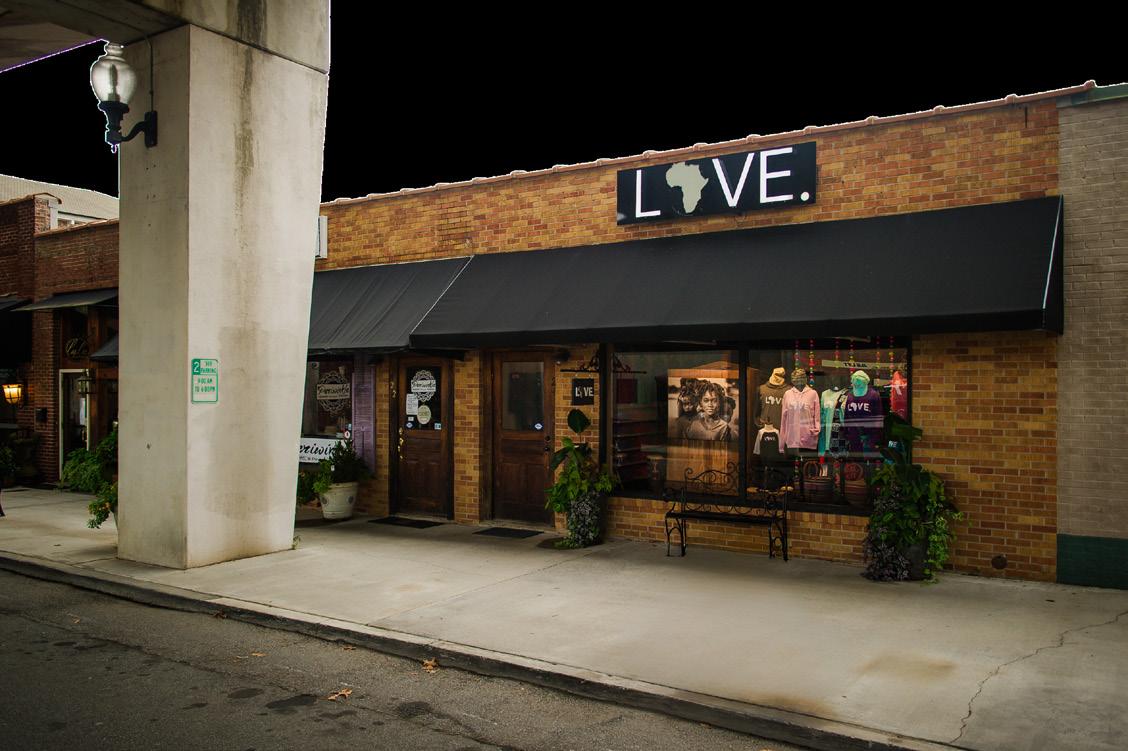
Tell us a little bit about The LOVE Store in downtown Cartersville, which benefits LIVE2540.
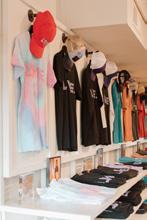
If you’re looking for a gift, look no further. The store has LOVE shirts, jewelry, bags, aprons, coffee cups, baby attire, and more. The products are fair trade, and a portion of each purchase
What do you like to do in your free time?
Hike Pine Mountain, walk around Sam Smith Park, or hop around to restaurants and stores downtown.
Any favorite exercise routine?
I work out at TKO, a local boxing and full-body conditioning gym owned by JJ Jones. I walked into my first class a year and a half ago and had to lay down flat on the floor five times because I thought I would pass out. But now I can hang with the class!
What’s your best life tip?
Pack the diaper bag, book bag, or any bag, the night before. I’m still working on this, but it makes the morning so much more enjoyable.
What’s something you can’t live without?
Chick-fil-A. I even got a Christmas card one year. If I stop going, they’ll probably have to let someone go, so I keep going because I don’t want that to happen. Ha-ha!
What’s the last show you binge-watched?
Binge-watching went out the door when we had our first child, but currently my husband and I are watching The Resident, and we actually stay awake the whole time, so it has to be good.
Fill in the blank. There’s nothing better than …
A beach trip, a good book, drinking coffee in peace, and when my girls reach up and hold my hand without being asked.
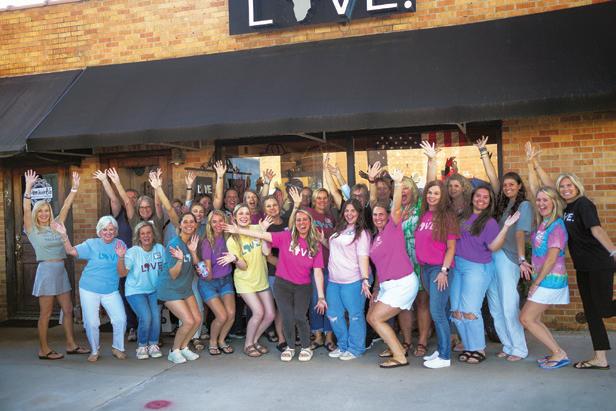
Minesinger (front row, center) and some of the Better TogetHER ambassadors.
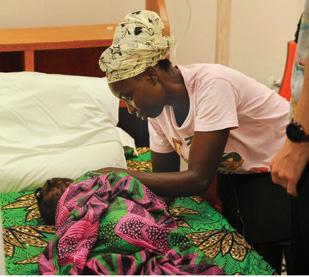
LIVE2540 provides invaluable medical care to some of West Africa’s most vulnerable children and families.
TA DIFFERENT TYPE OF CRUISE
If the crowds and hustle-and-bustle of traditional cruising aren’t your speed, consider a smaller, slower-paced luxury barge trip along the canals of Europe.
BY JILL BECKER BON VOYAGE!
here are trips that you enjoy and remember, and then there are trips that make a lasting impression and that you dream about taking again and again. My journey aboard a luxury barge on the canals of France was one such trip. It was decades ago, and despite my notoriously bad memory, I can still remember intimate details about the adventure and, more importantly, all the feels the trip stirred in me.
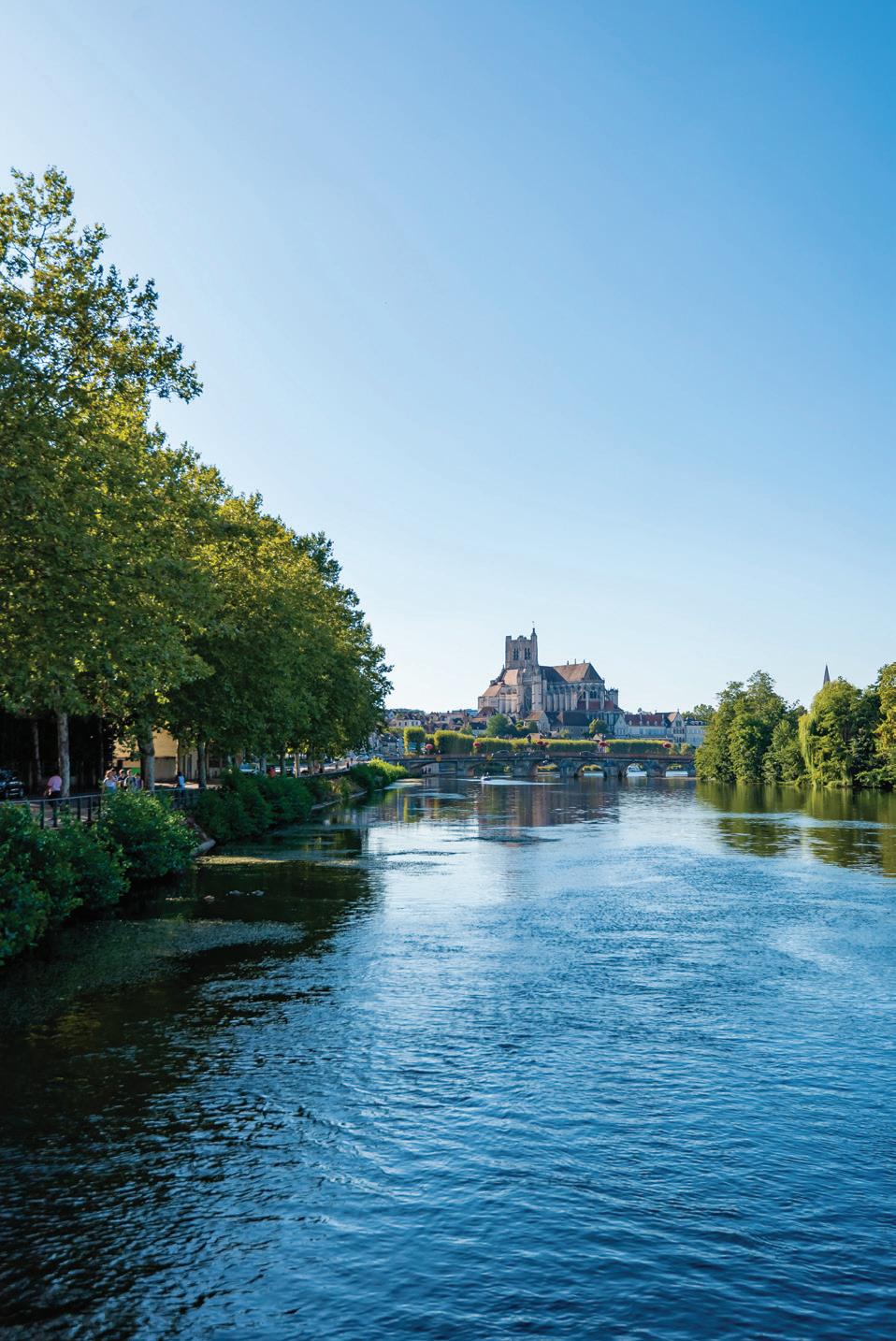
If you’ve never heard of canal cruising, aka barge cruising, it’s similar to river cruising, but it takes place on manmade waterways in countries with a system of canals, like France, Holland, Germany, and Belgium. Canal cruises are typically designed
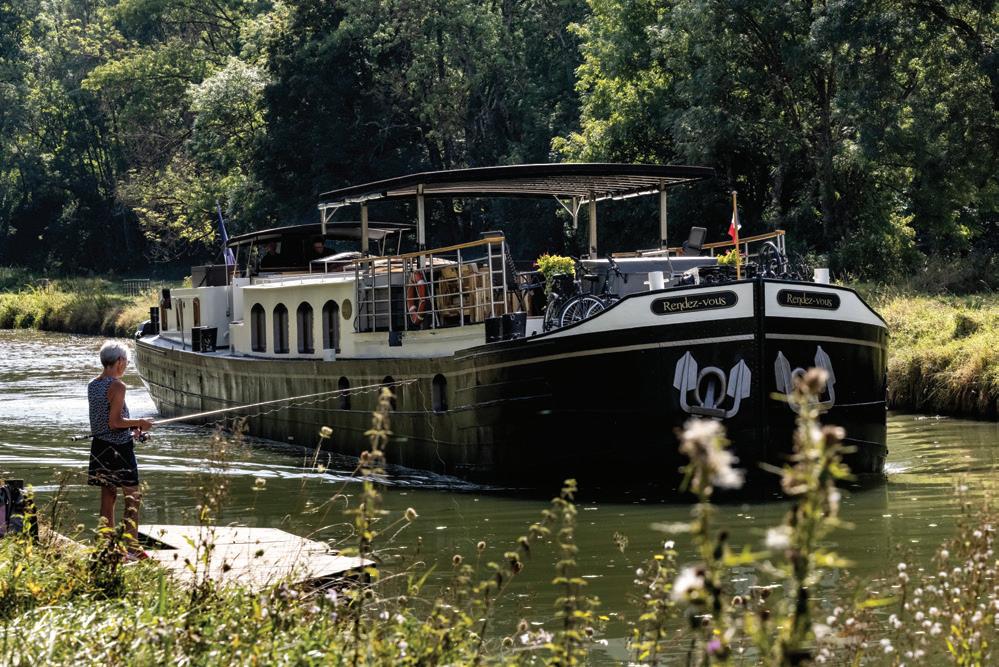
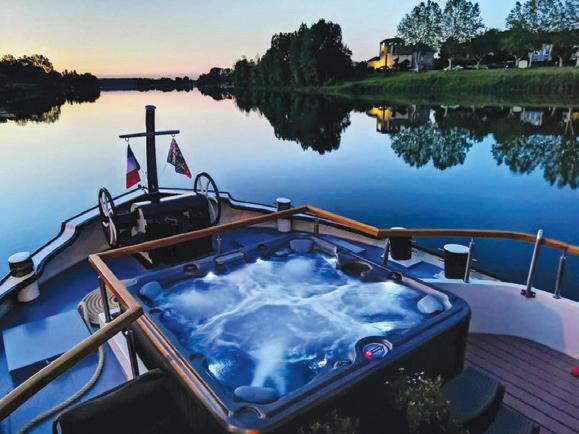
for smaller groups of people, they move at a slower pace, and guests can disembark at their leisure. The accommodations, food, and other amenities are top-notch, and like with luxury river cruises, the fee for a canal cruise is all-inclusive. And just to clarify, the word “barge” is misleading, as we’re talking about well-designed, well-kept ships that are equipped with everything from hot tubs and hair dryers to skylights and sun decks.
I actually took two canal cruises back-to-back, both of which were arranged through a family-owned company out of Chicago called Barge Lady Cruises. They’ve been around for more than 30 years and are experts at helping you plan your dream canal cruise,
Photos courtesy of Barge Lady Cruises
whether it’s to admire the tulips in Holland, search for the Loch Ness Monster in Scotland, or sample the cuisine of Italy.
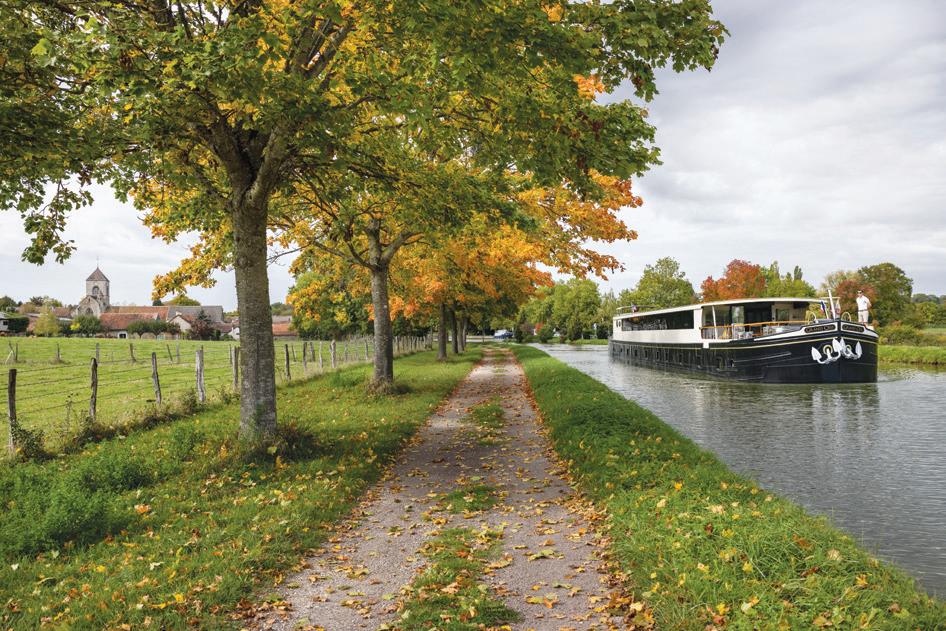
My first canal cruise was a three-day barge trip down the Canal de Bourgogne in the Burgundy region of France. After flying into Paris, my friend Cindy and I made our way south to a spot called Pouilly-en-Auxois, where our boat was docked. As we boarded, a brilliant rainbow fell onto the nearby hillside, which we took as a sign of a pleasant journey ahead. Boy, were we right.
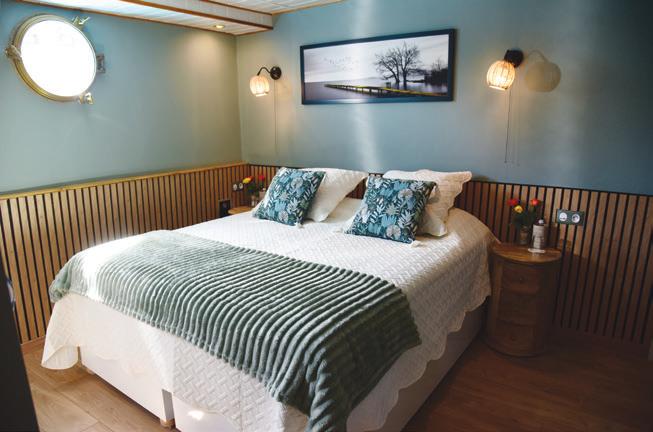
It was late afternoon when we arrived, and as there was time to relax before dinner, we adjourned to our rooms to settle in. My compact but cozy space had matching pale-blue wallpaper, sheets, and towels. There were fresh flowers adorning the desk, and colorful curtains cloaked the windows. I was pleasantly surprised to find that each cabin also had its own individual heating and air-conditioning unit to ensure the temperature was just right.
cheeses, and more. What made all of the meals we were served aboard the barge particularly remarkable was the fact that they were whipped up in a tiny kitchen just off the dining room. When we asked Noortje, who served as the chef, how she managed it, she said the secret was organization. “Everything has its place,” she confessed. I decided then and there I needed Noortje to come to my house to rearrange my closets.
At the appointed hour, Cindy and I headed to the salon, where the captain’s wife, Noortje, poured us a drink. François, our captain, then gave us his official welcome aboard speech, which he claimed he’d been perfecting for the past 13 years. “Bon voyage” is all he said. François then opened the first of what became a total of four bottles of wine that evening. “Wine is an occasion waiting to happen,” he told us.
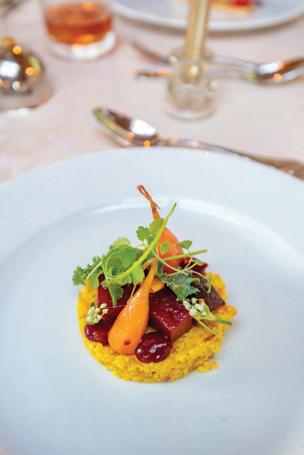
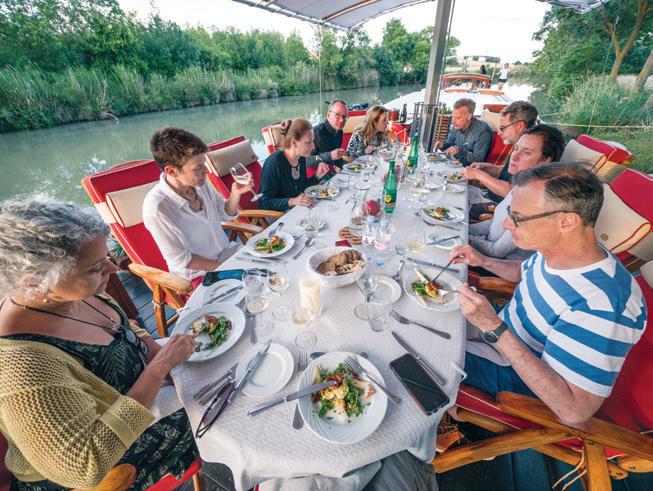
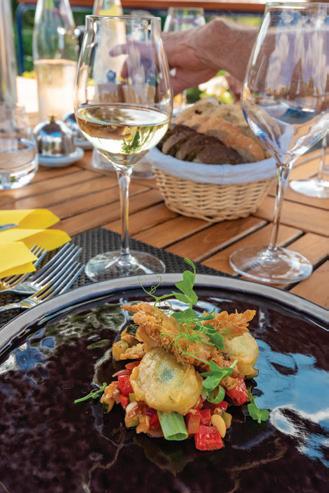
Of course, French wine without French food is only half the equation, and we quickly got into higher math. There was sautéed coquille Saint Jacques in champagne sabayon sauce, roasted leg of lamb, medallions of monkfish with herb butter and fried onions, stuffed zucchini flowers, platters of pungent
The next day after breakfast, Cindy and I planted ourselves underneath a shady umbrella on the hibiscus-strewn deck, where we whiled away the rest of the morning flipping through some French fashion magazines we’d picked up at the airport and snapping photos of the breathtaking scenery. Make no mistake, calling the Burgundy countryside breathtaking is like calling the Grand Canyon deep. Its intimate valleys, sleepy villages, and treelined boulevards unfolded before us like an impressionistic painting.
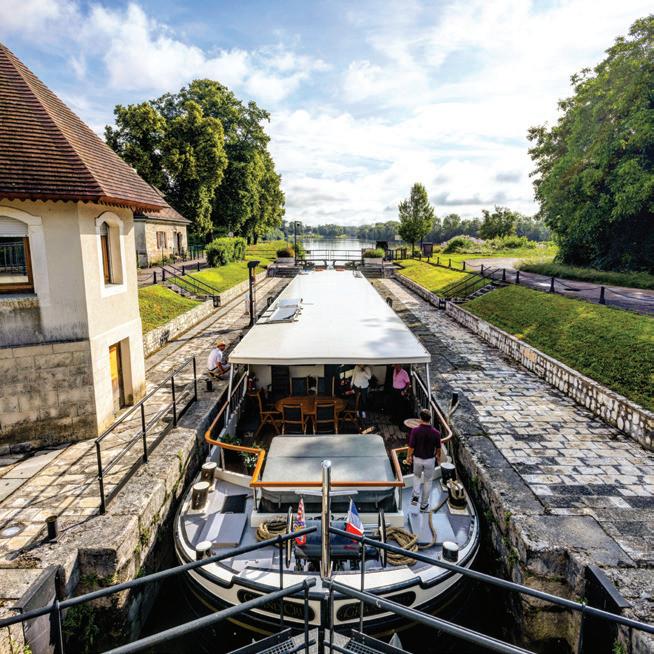
To break up the monotony of the carefree conviviality and heavenly landscapes was a series of locks, or ecluses, made up of gates that control the water level in order to raise and lower the boats. Not all of the canals in France have them, but the
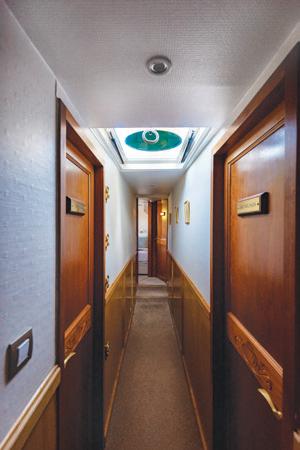
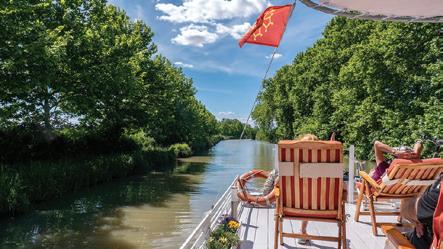
Clockwise from left: coasting past a local fishing on the shore; lounging in a deck chair watching the scenery float by; a hallway leading to the cabins.
Bourgogne has dozens, several of which you might pass through in a single day. Passing through the locks takes around 15 to 30 minutes apiece, but it allows you the opportunity to chat up the locals, who often appear and congregate whenever a barge approaches.
The lockkeepers themselves are a fascinating bunch, sturdy men and women who put food and socializing before work and time schedules. You may also happen upon the stogiesmoking town mayor, as we did in one village, or a group of schoolchildren out on a field trip. The traveling youths we ran into had lined up along a bridge to watch us float by when François, in an inspired moment, offered to let the kids tag along on the boat with us for a while. They didn’t speak much English, but they were still delightful, and at one point even treated us to a song.
Another particularly lovely afternoon, Cindy and I used a visit to a lock as an occasion to jump off the barge and onto a pair of the boat’s bicycles. For the next few miles, we pedaled the dirt trail alongside the canal, stopping occasionally to admire a herd of Holstein cows, pick some buttercups, and slip into the nearest village to grab a snack. Since the barges travel at top speeds of 3 to 4 miles per hour, we could ride ahead or lag behind without worry.
A BEGINNER’S GUIDE TO CANAL CRUISING
Canal cruising is similar to ocean and river cruising, with one major exception: Because canals are controlled waterways, you’ll never get seasick, so you can leave the Dramamine at home. The attire is relaxed casual, although some barges have a captain’s dinner or visit elegant restaurants along the way, where dresses and sports coats are suggested. Most barges provide basic toiletries such as soap and shampoo, but don’t expect upscale-hotel-type luxuries like dry cleaning or daily newspaper delivery. You are on a boat after all.
Canal cruises can be booked directly through the barges themselves, although companies like Barge Lady Cruises represent dozens of vessels and can help you choose the cruise that best suits your needs, schedule, and pocketbook. Rates are seasonal and vary from barge to barge and region to region, but they typically include meals, drinks, guided excursions, museum admissions, and use of the boat’s bicycles. A seven-day/six-night trip can run you around $6,000 to $10,000, or more if you decide to charter the entire boat. Four-day/three-night trips are also available on some barges. The number of passengers can be anywhere from 2 to 12+, but it’s generally on the lower side.
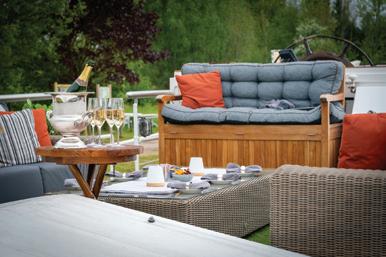
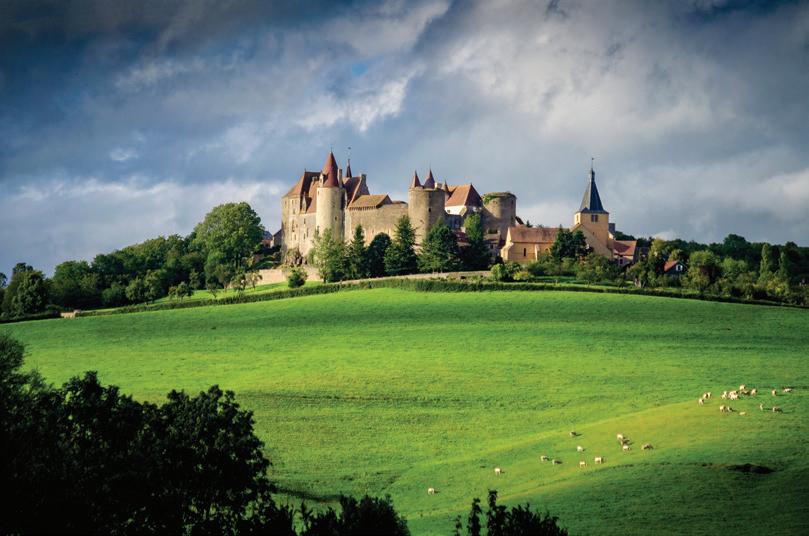
Top to bottom: a trail alongside the canal perfect for bike riding; champagne and nibbles on deck; a view of the spectacular 12th-century Châteauneuf castle.
We encountered one stretch of canal that day, however, where we decided it was best to stay onboard. It was when we approached the Pouilly tunnel, a two-mile-long “mole hole” that takes more than an hour to traverse. It wasn’t what you’d call picturesque, but it was still a treat, as few of the other barges even bothered to attempt to squeeze through the narrow passageway. It’s so snug, in fact, that the boat’s wheelhouse had to be taken down, piece by piece, before we could proceed.
As we entered the dark and clammy tunnel, we began to hear an eerie tune. But what was it, and where was it coming from? An amused François quickly let us in on the joke. He had instructed a crew member to play Wagner’s Ride of the Valkyries the moment we entered the tunnel. It was a fitting accompaniment as we crept along past the musty walls, chalky stalactites, and flittering bats. Yes, bats. The tunnel was full of them. But as François was quick to note, bats have better radar than fighter planes and won’t “disturb” you. They did, however, swoop just inches from our heads, prompting chuckles and a few shrieks.
The next day, François took us to a historic 12th-century palace atop the hillside village of Châteauneuf. “l have the key to the castle,” he said as he pulled an old-fashioned skeleton key out of his pocket, then proceeded to unlock a massive door and lead us on a guided tour of the medieval castle. On another excursion, we drove through the thick French forest to the idyllic town of Beaune. Our first stop there was the HôtelDieu, which isn’t a hotel at all but rather a former hospital founded in 1443 by Nicholas Rolin, an unscrupulous chancellor who thought that building a hospital for the poor would be his ticket into heaven. François, again acting as our personal tour guide, pointed out things we normally wouldn’t have noticed on our own. In the Great Hall of the Poor, for instance, he explained how the numerous busts lining the ceiling were caricatures Rolin commissioned of the villagers who refused to donate money for the hospital’s construction.
Later, after a brisk bout of shopping, where Cindy and I picked up a few jars of locally made Dijon mustard, we returned to the barge. It was our last night on the ship, and we set our alarms for the first time. For in his zeal to pack as much into our trip as possible, François had arranged an
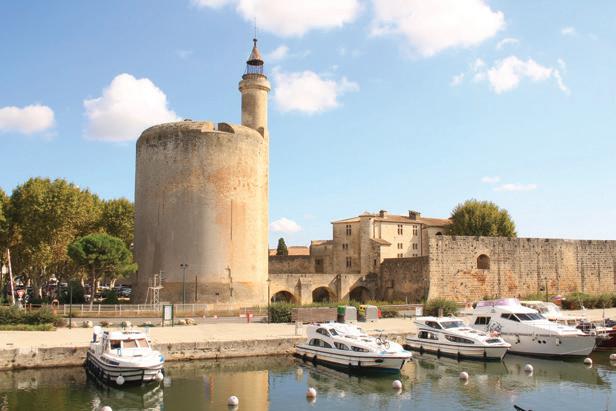
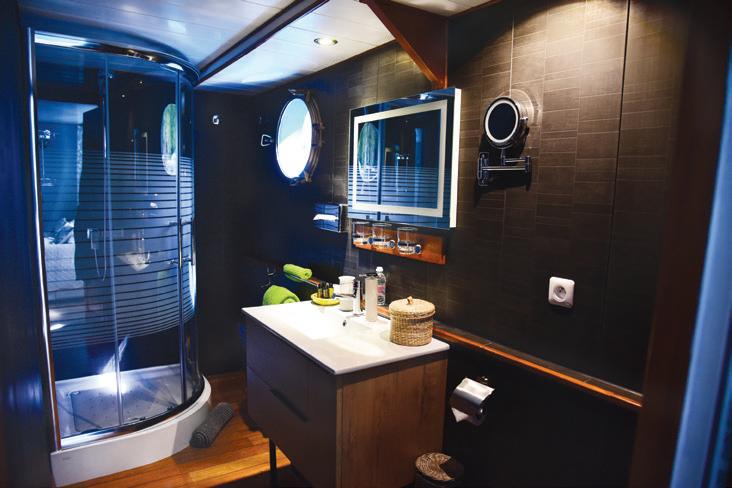
Clockwise from far left: the medieval fortified city of Aigues-Mortes; not your typical cruise fare and dining room; cozy barge accommodations and facilities.
early-morning visit to a private wine cellar for us the next day. There, we sipped glasses of premier cru straight from the barrel while most people were still on their first cup of coffee. Slightly tingly and with a couple of bottles of Nuits-SaintGeorges tucked under our arms, we bid our adieus to François and were off to catch the train to Nîmes, where we’d hook up with our next barge.
Our second voyage followed an entirely different French canal — the Canal du Rhône à Sète in the Camargue region of Provence. Although not as scenic as the Bourgogne, where we took our first cruise, the Rhône à Sète is a relatively unspoiled and lesser-known area of France, which is precisely why the owners had chosen to barge there. The region is home to Europe’s largest wetland, comprising more than 300,000 acres of salt marshes, lakes, pastures, and sand dunes. It’s teeming with egrets, flamingos, and countless other birds, as well as herds of hardy horses and bulls tended to by the local cowboys, or gardians, who can be spotted by their black, wide-brimmed hats.
On our first full day aboard the barge, we made a trip to the medieval walled town of Aigues-Mortes, where Cindy and I browsed the plentiful shops and galleries in the colorful main square and picked up packets of lavender and other herbs as souvenirs. The following afternoon, we journeyed to the Pont du Gard, an ancient Roman bridge and aqueduct. The 160-foothigh structure, which once carried millions of gallons of water, is a marvel of engineering. We only wish we could have visited it at night, when we were told it’s lit up like a Christmas tree.
Our final off-board pleasure was a visit to the town of Arles, often referred to as “the soul of Provence.” The city is best known as the place where Vincent van Gogh painted some of his most famous works and where, in his later years, he cut off part of his left ear. After visiting a small museum dedicated to his talents, we stopped for a drink at a sidewalk cafe in the lively Place du Forum, then headed for the Amphitheatre, an ancient Roman arena where thousands of spectators still
gather for the occasional bullfight and other events. From a lofty spot atop the stadium, we could see the city and the Rhône River spread out before us. Thankfully, all the walking and step-climbing we did helped us work off a few of the thousands of calories we had consumed throughout our stay. “France is about food and drink,” our captain Kevin gratefully acknowledged one night after we’d stuffed ourselves silly on a meal of steak filet flambéed in cognac and fresh scallops in cream and Irish whiskey.
The other meals aboard the barge were help-yourself affairs: breakfast consisting of cereals, yogurts, fruits, breads, fresh-squeezed juices, coffee, tea, and jam, and lunch made up of typically French fare like salmon quiche, pâté en croûte, and tomato-and-cucumber salad with raspberry-and-vinegar dressing. As a special treat, our last dinner was spent at a charming Michelin-rated restaurant whose name I sadly can’t remember. What I do remember is that after already starting to feel a little full after the hefty amuse-bouche appetizer, I still managed to down a respectable portion of my entrée, several glasses of wine, and a decadent crème brûlée for dessert.
On our final day aboard our final cruise, as my friend Cindy and I sadly prepared for our return to life on dry land, our barge slowly boated past a pair of elderly fishermen huddling next to the shore. “Trés tranquille,” one of them shouted at us. “You don’t have a worry in life, eh?” the other countered. They were right on both counts.
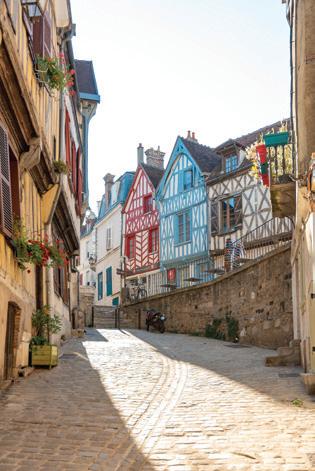
Clockwise from above: a barge making its way through a lock; revving up the hot tub for a nighttime soak; onboard wining and dining; a charming French street scene.
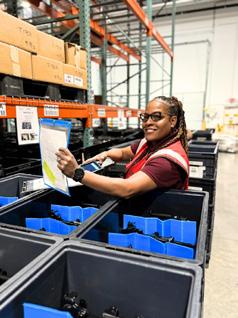
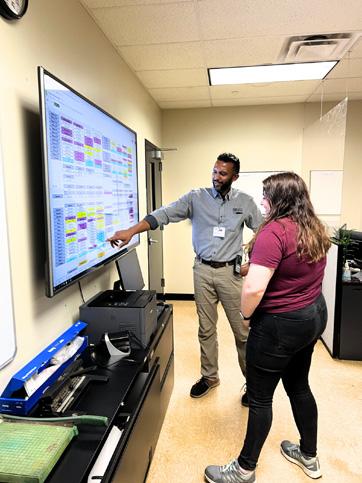
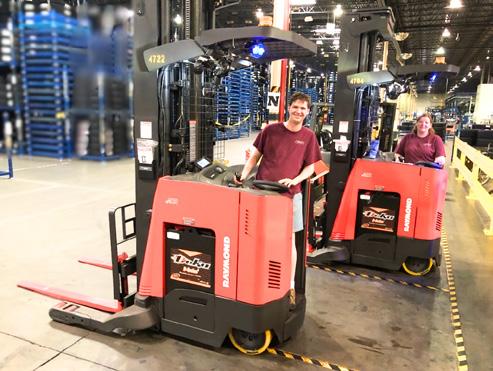
When you choose NOTS Logistics as a partner or as a career, you choose a team that believes in the power of purpose-
The Buzz About Bees
BY RYAN GRIFFIN
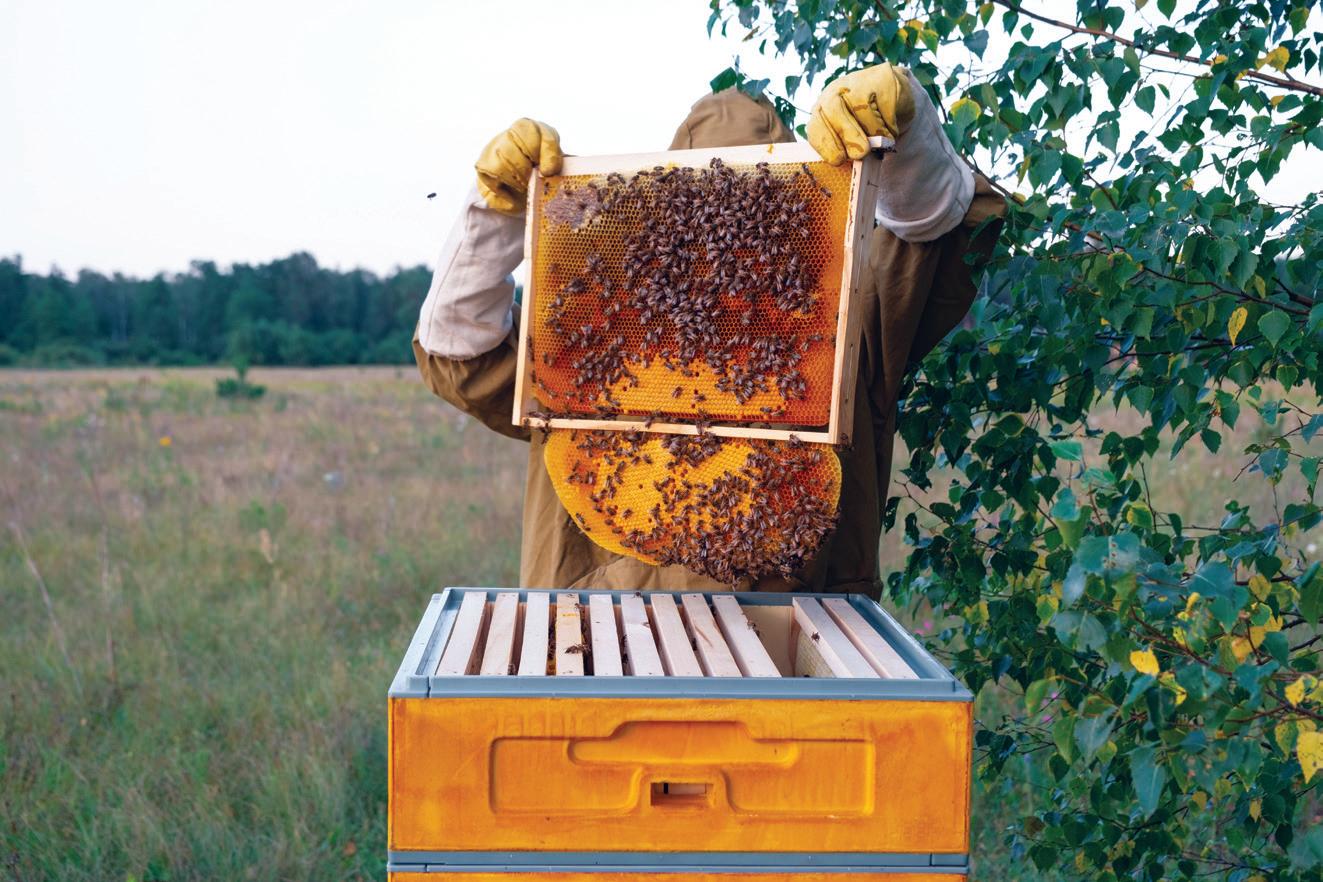
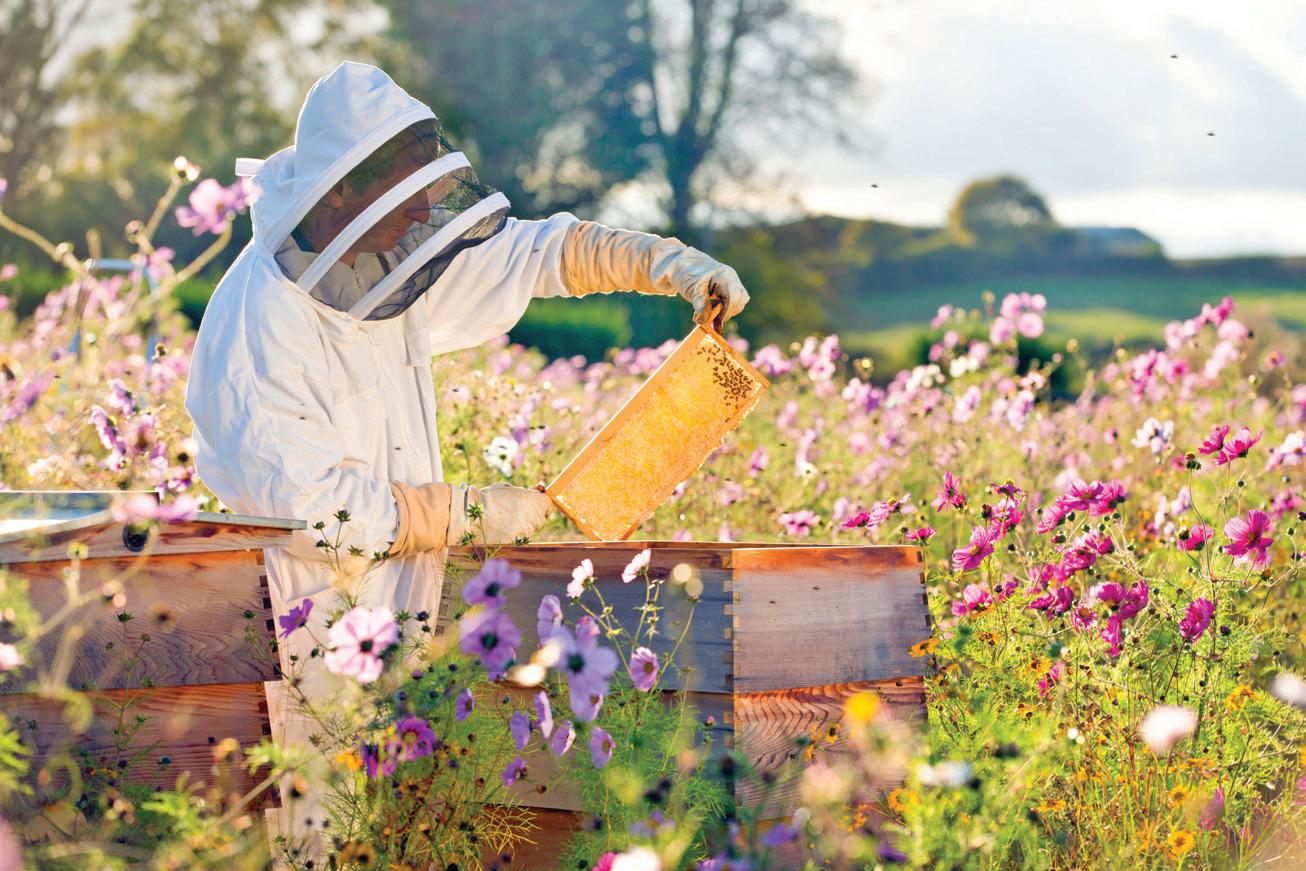
Bees do far more than make honey. These small, buzzing pollinators are responsible for fertilizing one-third of the food we eat. From tomatoes to blueberries, bees ensure that what we grow in our gardens, orchards, and farms thrives. Without them, grocery store shelves would look starkly different, and the rich tapestry of plant life that supports entire ecosystems would begin to unravel. In short, bees are foundational to both agriculture and biodiversity. But in recent decades, bees have been in trouble. Bee populations worldwide, including those in the United States, have faced alarming declines due to a combination of habitat loss, pesticide use, pests, and disease.
One of the most serious threats is the Varroa destructor mite, a parasitic invader that attaches to honeybees, weakening them and spreading viruses throughout the colony. Approximately the size of a pinhead, they can destroy entire hives in a few months if not adequately managed. The surviving bees from a collapsed colony abscond to any neighboring hives that will take them in, carrying the parasitic mites
A local apiarist reveals the importance of the humble bee and shares how to keep honeybees in your own backyard.
with them. This has become known as a mite bomb, causing further and rapid colony collapse. I experienced this firsthand last year when one of my own hives collapsed due to its mite load, and within six weeks, two more collapsed.
Here in Northwest Georgia, local beekeepers and educators are making meaningful strides to support both bees and those who care for them. Opportunities to learn are abundant, with workshops and hands-on training available through agricultural extension offices. The University of Georgia Bee Program offers an online training course for those eager to expand their knowledge, along with an official beekeeping certification. Even the Georgia Prison Beekeeping Program is providing inmates with education and purpose through the care of hives.
Statewide organizations like the Georgia Beekeepers Association, along with its numerous regional and county chapters, are leading
the charge to promote bee health and train both new and experienced beekeepers in sustainable practices. Regional associations in Northwest Georgia, Chickamauga, and Lookout Mountain offer community, mentorship, and resources. Celebrations like the annual Lafayette Honeybee Festival, which was held May 31 this year, bring the community together in support of pollinators.
Conservation efforts are also taking root across the region. Residents are
creating pollinator-friendly gardens using native plants, minimizing pesticide use, and even building habitats to support wild bee populations. You can also find pollinator gardens at places like Neel’s Landing in Kingston, Red Top Middle School in Emerson, and Georgia Highlands College and Friendship Plaza in Cartersville that are sponsored by organizations like the UGA Cooperative Extension and the Georgia Master Gardeners Association. These grassroots efforts are already making a lasting difference.
While colony losses remain high, especially during winter months, there is a silver lining: Bee colony reproduction rates have increased. According to the USDA, managed colonies in the U.S. have risen slightly over the past decade thanks to intensive queen breeding and hive-splitting practices. It’s a hopeful reminder that with care and coordination, bee populations
If you’ve ever considered taking up beekeeping, now may be the perfect time. It’s a fascinating, enjoyable, and rewarding hobby that allows you to constantly learn and grow. Getting started doesn’t have to be overwhelming, and with the correct information and tools, anyone with even a small backyard
“With some luck, your beekeeping journey could begin at little to no cost.”
can raise bees. The contemporary era continues to generate a wealth of new knowledge and research for anyone interested in beekeeping (see Resources sidebar below).
So, what does it cost to get started in beekeeping? The answer varies. For the resourceful DIY enthusiast, the start-up cost can be surprisingly low or even free. With a bit of patience and preparation, you can build a simple swarm trap and wait for wild bees to seek a new home in the spring. With some luck, your beekeeping journey could begin at little to no cost.
For those preferring to purchase bees and equipment, a typical initial investment is around $500 per hive. This generally includes essential items such as a hive box, smoker, hive tool, protective clothing, and, of course, the bees themselves. In 2025, a standard bee package, which includes a mated queen and approximately three pounds of worker bees, costs around $135. Alternatively, a nucleus colony, or “nuc,” which is a small, established hive ready for transfer, typically costs between $160 and $200. Fortunately, many local suppliers and experienced beekeepers are eager to share their knowledge and help newcomers take their first steps into the world of beekeeping.
A good number of hives to start with is two. This enables new beekeepers to compare the health and behavior of their colonies. If one colony is struggling, you can often strengthen it with brood (eggs,
What about getting stung? It’s the most common concern for new beekeepers. But with proper handling, the risk is minimal. Honeybees are naturally docile and generally only sting when they feel threatened or are defending their hive. As you gain experience, you learn to work with your bees under favorable conditions: warm, calm days when most workers are out foraging and the hive is less crowded.
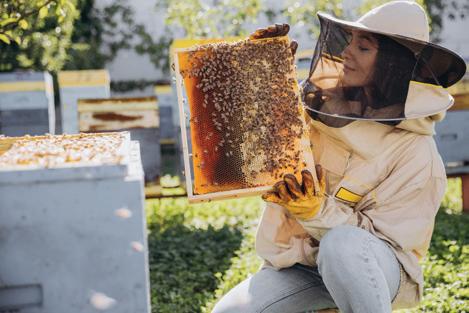
In contrast, bees tend to be more irritable during cold, rainy, or windy weather or during early mornings and late evenings when the hive is full of idle bees. The key to safe beekeeping lies in moving slowly and deliberately, avoiding sudden motions, and treating your bees with respect. Just last week, on a sunny afternoon with temperatures around 75 degrees, I inspected 10 hives between 1 and 2 p.m. without a single sting, wearing only a veil (protective head covering) and long sleeves. Most experienced beekeepers rely on a veil and gloves and take pride in learning the
Whether you’re in Calhoun, Rome, or any of the other small towns nestled in our ridges and valleys, beekeeping offers a chance to connect with nature, contribute to environmental resilience, fresh honey. Caring for the land and its
RESOURCES
Georgia Beekeepers Association: gabeekeeping.com
University of Georgia Bee Program: bees.caes.uga.edu
Two popular books on bees: Honeybee Democracy and Following the Wild Bees, by Thomas D. Seeley
Ryan Griffin is the owner of Woodland Bees (woodlandbeesfarm.com) in Calhoun, which sells honey and nucleus bee colonies educational classes, and hive removal services. Griffin Florida’s Institute of Food and Agricultural Sciences the Georgia Department of Agriculture. He is also an IT professional in artificial intelligence and cloud
A Rome Favorite Returns
Restaurateurs Joan and Dereck Brady have revived Crawdaddy’s, but this time as a gourmet food market.
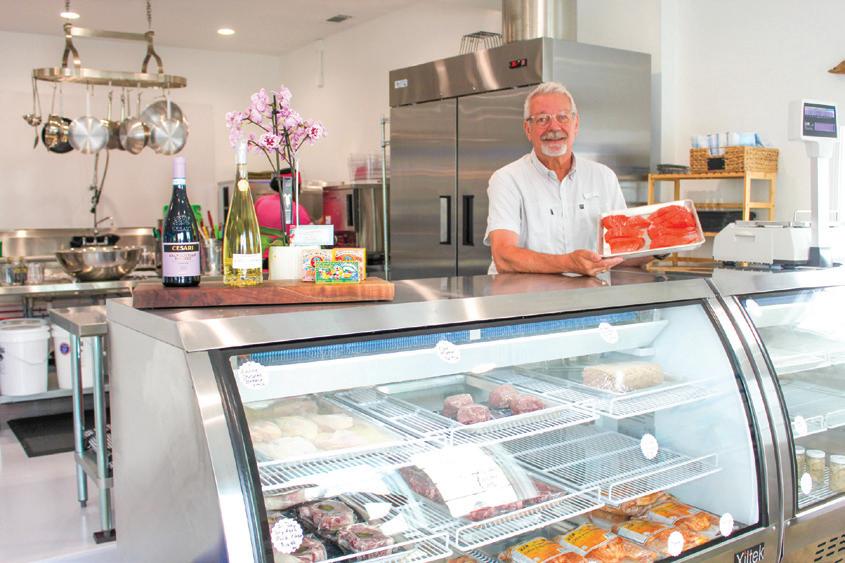
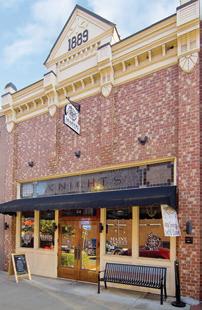
Afamiliar name with a fresh concept has arrived in the River District in downtown Rome. Joan and Dereck Brady, the dynamic duo behind the city’s beloved Crawdaddy’s restaurant, have reopened their doors as Crawdaddy Provisions, a gourmet seafood, meat, and food market promising exquisitely sourced ingredients and a taste of their former restaurant.
For those who remember, Crawdaddy’s began as a food truck in 2011 and soon built a loyal following thanks to their fresh flavors and unique Creole cuisine. “I wanted to concentrate on Cajun and Creole because we didn’t have that here,” says Joan of their concept for the food truck.
The food truck’s success led the way for the opening of a brick-and-mortar restaurant on Broad Street in 2015, which also quickly became a local favorite. Crawdaddy’s was not only a go-to spot but also a testament to Joan and Dereck’s dedication to quality and community. However, the demanding nature of the restaurant industry eventually took its toll. In 2021, the couple made the difficult decision to close their doors. Joan explains that they were working seven days a week and were exhausted, combined with some health considerations.
Their passion for providing the Rome community with exceptional food never truly faded, though. The idea for Crawdaddy Provisions came from their desire to connect with their customers and share their love of great ingredients. They wanted to offer the same high-quality seafood and some of those beloved Crawdaddy’s flavors, but in a more sustainable way. And thus, Crawdaddy Provisions was born.
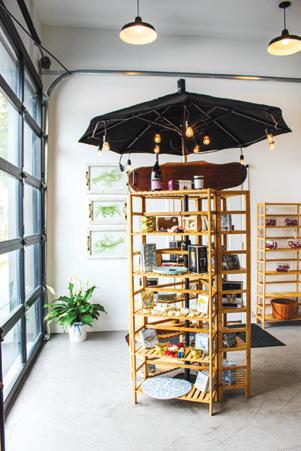
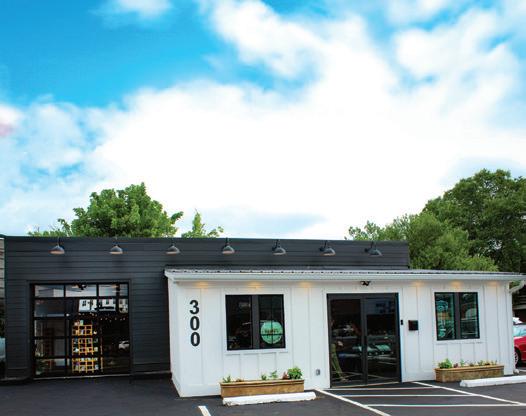
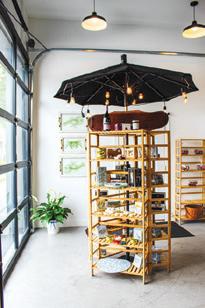
But Crawdaddy Provisions isn’t just another market; it’s a curated experience. Their new site on Fifth Avenue has undergone a remodel to create a welcoming space where customers can find everything they need for a memorable meal, from fresh seafood, which is the main attraction, to sides, appetizers, and tableware. “Fresh seafood is our star, because that’s what we’re known for, but I want you to come in and know that we’ve got everything you need for dinner,” says Joan. “If you run out of napkins, we’ve got napkins. If you need
Crawdaddy Provisions
300 N. Fifth Ave., Rome, GA (706) 784-4564
a candle, we’ve got candles.”
Among the offerings are pre-seasoned meats and readyto-make dishes and sides perfect for taking home to cook. For instance, you’ll find chicken and andouille gumbo, sauces and bases for making dishes like shrimp and grits, and Dereck’s homemade pimento cheese, which they call “pinamees“ because that’s how Dereck pronounced it as a child.
One particularly popular item that’s flying off the shelves is the Cajun stuffed chicken. The market offers all of the proteins from their former restaurant, including fresh, sustainable Gulf seafood. Joan collaborates with the Georgia Sea Grant and the Department of Agriculture to support local fisheries.
Crawdaddy Provisions’ products are sourced from locally owned specialty shops and vendors, including the grits and polenta. While these ingredients alone aren’t necessarily gourmet, they’re essential to making Creole and Cajun dishes. The smoked sea salt, specialty tinned fish, wine, beer, and drink mixes that were used in the restaurant are also available. Beyond the familiar favorites, Crawdaddy Provisions aims to offer unique and hard-to-find items that are perfect for the home cook looking to elevate their culinary creations.
Coming soon is a small studio that Dereck is building in the back so that Joan can host food demonstrations showing how easy it is to cook seafood and put together a fabulous meal in mere minutes. So, get ready to experience the next evolution of Crawdaddy’s — a gourmet market bringing the best of the land and sea, along with a touch of Joan and Dereck’s signature magic, back to Rome. If the past is any indication, whatever the Bradys are cooking up, it promises to be delicious.
Erin Clay is a writer passionate about exploring the stories and charm of Rome, Georgia. Her work captures the essence of the historic city and its vibrant community. Discover more of her insights and local features on her GA blog at wheninromega.com.
Residential Remodeling | General Contracting
ALE YEAH!
ALE YEAH!
BY MARTIN CIPOLLINI
SYou too can brew delicious beer at home. Here’s a beginner’s guide.
ome years ago, having spent time perfecting my home-brewing game (and getting a professional certificate to boot), I proudly told my mom that I could now brew very good beer at home. Then in her 80s, she turned and said, “Oh, I know all about that. My mother and I brewed beer in our basement back in the 1940s.” Duly chastened, I subsequently learned that prior to the rise of Big Beer (the major breweries), beer was often brewed at home by women. So my mom and grandmother weren’t alone in their cellar witchcraft. Major breweries eventually captured the market, and home brewing fell out of common practice by the 1960s. In fact, after the repeal of Prohibition in 1933, home brewing remained illegal due to an inadvertent omission in the
legislation that allowed folks to make wine at home but not beer. President Jimmy Carter signed a bipartisan bill changing that law in 1978, and home brewing took off as an art and a pastime. A fair number of the craft breweries that many of us know and love got their start with a couple of buddies brewing in their garage. If you want to give it a try yourself, here’s some basic information you need to know.
Introduction
Homebrewing can be as simple or as complex as you like. The basic ingredients are barley malt, hops, water, and yeast. Of course, you can’t just throw it all in a pot and stand back, so read on to discover the key steps involved, plus some handy home-brewing resources.
Legality
Brewing your own beer at home is legal in the state of Georgia, but there are certain limitations. Visit homebrewersassociation.org/ homebrewing-rights/statutes/georgia for more information.
Equipment
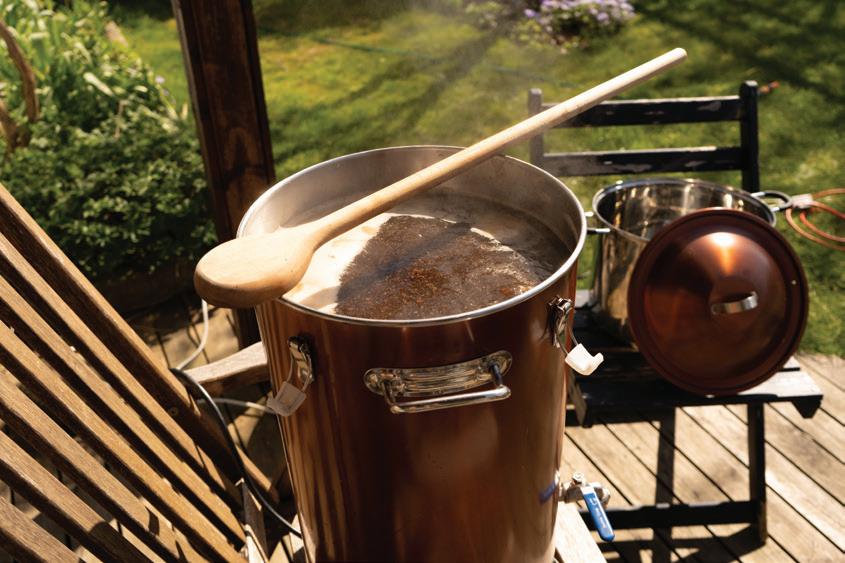
The equipment needed is most often bought as a kit and includes a metal (versus aluminum) pot, a fermenter (usually plastic), flexible tubing, and either bottles or kegs to put the beer in. Most other necessities can be found in any well-equipped kitchen, such as a food scale, a metal or plastic ladle, and a thermometer.
Sanitization
Sanitization is important, but it need not cause stress. Home brewing is very safe (you won’t poison yourself), but you want your beer yeast to grow, not some smelly microbe. So all equipment needs to be sanitized by heat or with chemicals such as iodophors or no-rinse acids for items potentially damaged by heat.
Boiling and Hopping
After sanitization, the brewing begins by getting barley malt into water and boiling it for about an hour. The simplest methods use malt extract, which comes in dry or liquid form. You just mix in the amount the recipe calls for and slowly bring it to a boil. Hops, in the form of leaves or pellets, are added at various times during the boil — early to extract bitterness, midway through to provide flavor, and at the end to enhance aroma. Small bags of specialty grains may also be added to boost the flavor and color. The resulting liquid is called wort.
All-grain brewing is a bit more complex and doesn’t use malt extract. Instead, the process starts with a mix of crushed grains (mostly barley malt) infused with warm water and held at ~152oF for about an hour. This “mash” is sprinkled with hot water (sparged) and strained (lautered) to collect the wort to be boiled.
Transferring to Fermenter and Pitching Yeast
After boiling, the wort is cooled and allowed to stand a bit, which allows the flocculated material (trub) to settle out. The wort is then transferred to a fermenter and yeast is added (pitched). Yeast turns wort into beer for the most part by converting the malt sugars into alcohol.
Fermenters have a valve near the bottom for removing the beer and an air lock at the top that allows bubbling carbon dioxide to escape but prevents air from getting in. Once wort has begun to ferment into beer, it needs to be shielded from oxygen.
Variations in Style
Malts, grains, and hops come in a myriad of types and can be mixed and matched depending upon the style of beer or the brewer’s whims. The same goes for yeasts, which come in two fundamental types: ale yeasts that ferment at room temperature (top-fermenting) and lager yeasts that ferment at lower
temperatures (bottomfermenting). Ale yeasts lead to fruitier profiles, whereas lager yeasts provide cleaner tastes. This is part of the fun. Some brewers love perfecting certain styles by rigorously following set recipes, while others revel in experimentation, even allowing funky wild yeasts into the mix to create truly unique styles.
Bottling and Kegging
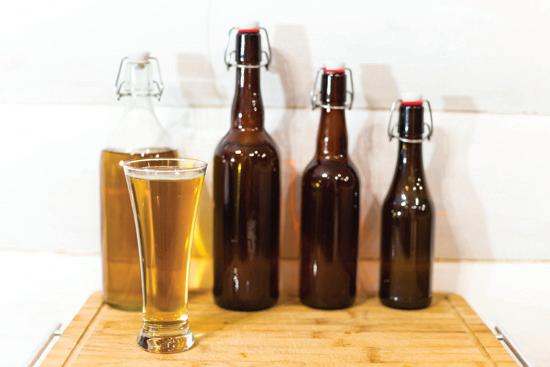
Although beer may be transferred to a secondary vessel for a period of conditioning at cellar temperatures or lagering at cold temperatures, one can also go straight from the primary fermenter to bottling or kegging. For bottling, the beer must have finished fermenting (between four days to two weeks). A small amount of added sugar restarts fermentation, and the beer is siphoned into bottles and capped. Bottle fermentation provides carbonation that gives the beer its characteristic foamy head. Kegging is a little easier. You simply siphon the beer into a keg and attach it to a carbon dioxide cylinder for carbonation. The carbon dioxide pressure is later reduced to just enough to allow the beer to pour when the keg is tapped.
Conclusion
I really got into home brewing when I moved to Rome in the 1990s. There was a dearth of beer types available then, and the first wave of the craft brewing craze had just begun in places like Athens. With the help of friends and a local brew shop, I was able to brew many tasty styles not available locally. Now, with nearby breweries like River Remedy and taprooms such as Foundry on Fifth, I can happily find many of those styles when I’m out and about, but I still keep my hands in home brewing a bit. I particularly enjoyed developing a hearty brown ale — made with real chestnuts — with River Remedy’s head brewer Justin Shepard this past fall. The relatively low cost of ingredients enables one to brew great beer at below market price. But savings isn’t an incentive for most folks. More are driven by the fun of learning how to perfect an ancient art that goes back about 7,000
FOR MORE INFORMATION FOR MORE INFORMATION
Here are some great resources for budding home brewers:
Charlie Papazian’s The Complete Joy of Homebrewing is the bible of home brewing.
You can read John J. Palmer’s How to Brew book online at howtobrew.com.
The Brew Depot in Alpharetta (thebrewdepot.com) is a fantastic area outlet for ingredients, recipes, supplies, educational materials, and home-brewing events.
years to the ancient Mesopotamians. That long history and the numerous cultures that have practiced brewing have produced many styles that can be replicated or riffed upon. It is art, history, and science all poured together (pun intended). Plus, you get to learn cool words such as wort, trub, and sparge. Home brewing is easy, doesn’t take up much space (a typical batch size is five gallons), and is safe (just watch it around the hot wort). Plus, properly bottled or kegged home brew keeps just as well as commercial beer, although it’s best to drink most beer when it’s fresh. So, Cheers, Prost, Chin chin, Sláinte, Salut, Na zdrowie, and Bottom’s up!
Martin Cipollini is a retired Berry College professor who started home brewing in college. He earned a Craftbrewer’s Apprenticeship diploma from American Brewers Guild in 2002, doing his apprenticeship at Big River Brewing in Chattanooga. His wife, Kathy Patrick, who writes regularly for NW Georgia Living, loves his Belgian-style saison the best.
Dressings for Success
Here’s the secret sauce when it comes to recipes for a salad dressing, marinade, vegetable dip, or baked potato topper.
Always buying store-bought dressings and sauces? Making your own at home is easier than you think, is cheaper, and lets you create flavors specific to your palate and dietary goals. Plus, homemade dressings can be used as a sandwich condiment, atop grain bowls, as marinades, or as dips. Dressings only take about 10 minutes to prepare, and most will stay for about a week in an airtight container in the refrigerator. You can customize homemade dressings by adding heat (a dash of cayenne or hot sauce); fresh herbs like dill, parsley, cilantro, and basil; or different types of mustard, honey, or syrups. Also consider including flavored oils and balsamic vinegars in your creations (a trip to your local oil and vinegar store is a fun way to try tasty new combos).
Vinaigrettes usually have fewer calories than creamy dressings. Traditional French vinaigrette recipes call for a ratio of one tablespoon vinegar to three tablespoons oil, but I prefer two or more tablespoons vinegar to three of oil. Feel free to experiment, though, and discover what you like. As a guideline, kale, cabbage, collards, and brussels sprouts salads can tolerate more vinegary dressings, while mild lettuces like baby spring greens, spinach, romaine, and butter lettuces are better with creamy dressings.
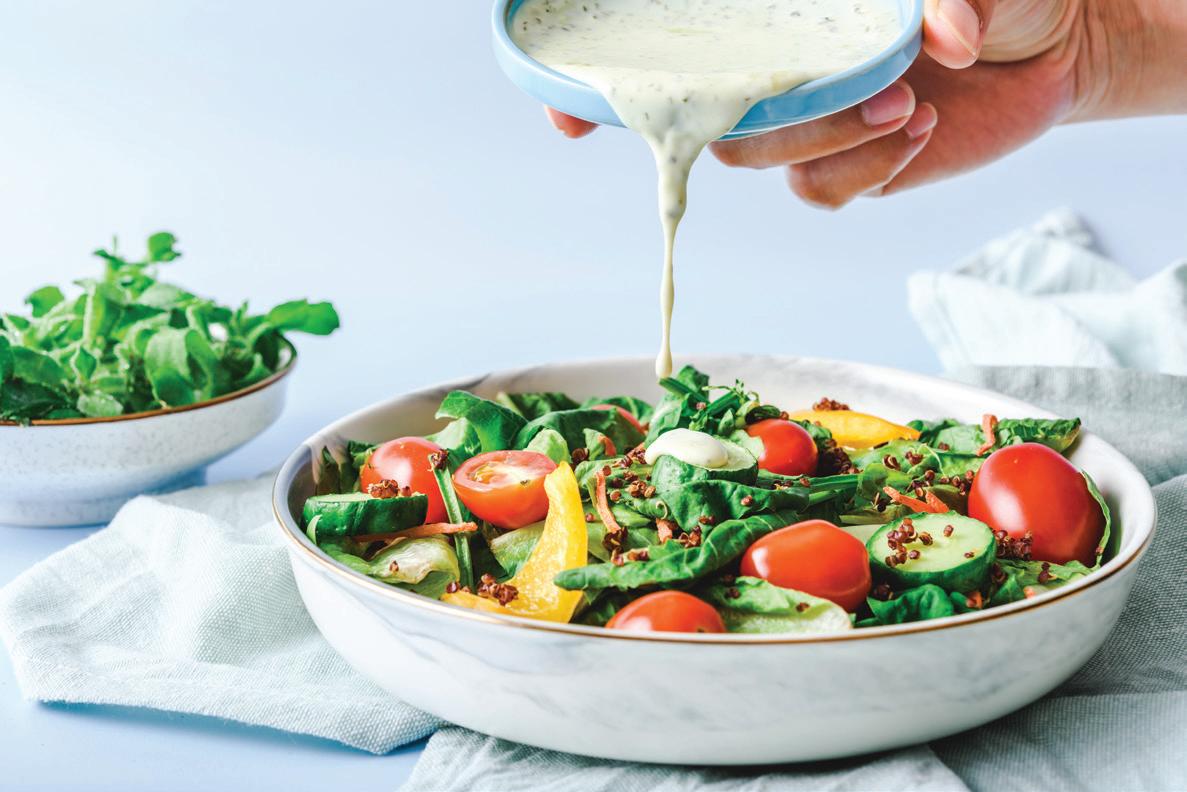
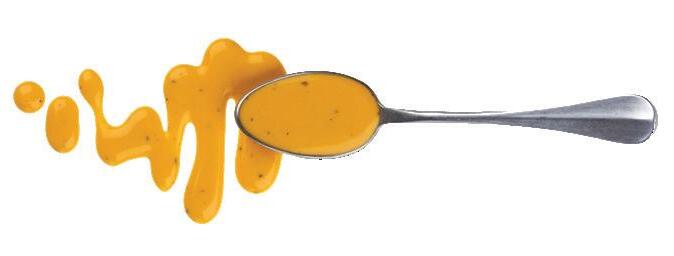
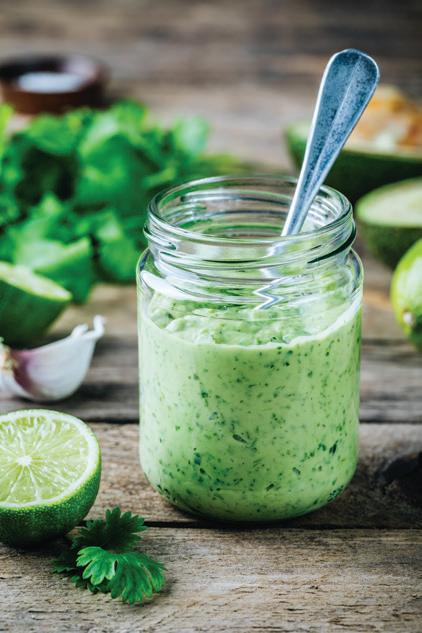
The meals pictured are variations of the recipes featured in this article.
Basic Vinaigrette
Yields ¼ c. | Can be made with varying types of oil, vinegar, and/or mustard.
3 tbsp. oil (olive, canola, grapeseed, or avocado)
1 or more tbsp. vinegar
1 tsp. Dijon mustard
1 tsp. maple syrup or honey (to balance the vinegar)
Citronette Dressing
Yields about ½ c. | This dressing gets its acid from lemon juice instead of vinegar, hence the name. Toss over Bibb lettuce, spring greens, or baby arugula, then add any salad-friendly fresh fruit, nuts, and/or cheeses. Meyer lemon juice is spectacular in this.
¼ c. extra-virgin olive oil
⅓ c. lemon juice (from about 2 lemons)
2 tbsp. Dijon mustard
1 to 2 tbsp. honey or maple syrup, to taste
3 cloves garlic, pressed or minced
¼ tsp. fine salt
Freshly ground black pepper, to taste
Pinch of red pepper flakes (optional, for heat)
Combine all ingredients and whisk until blended. Adjust to taste by adding more
Peanut Dressing
Yields about ¾ c. | Use this dressing over mixed greens, kale salad, or as an interesting coleslaw dressing. It’s also great as a dipping sauce for lettuce wraps and spring rolls. Chopped peanuts are a great addition to it.
¼ c. peanut butter
1 clove garlic, chopped
2 tsp. fresh ginger, peeled and chopped
2 tbsp. rice vinegar, unseasoned
2 tbsp. low-sodium soy sauce
2 tbsp. maple syrup
Cilantro Lime Dressing
Yields a generous ½ c. | This flavorful vinaigrette is good on tacos, salads, or as a marinade for chicken, fish, and shrimp.
¼ c. olive oil
2 tbsp. lime juice
2 tbsp. fresh cilantro, chopped
2 tsp. minced garlic
1 tsp. maple syrup
½ tsp. sea salt
¼ tsp. ground pepper
¼ tsp. ground coriander
Put ingredients in a blender or use an immersion blender, then blend until smooth. (In this case, simply whisking the ingredients results in a chunky texture.) Refrigerate for up to a week in an airtight container. If the ingredients separate, let it warm up a bit, then whisk or shake to recombine.
1 pinch cayenne pepper (optional)
Water, for thinning
Whisk ingredients together until smooth, adding water as needed for desired consistency. Store in refrigerator in an airtight container for up to a week.
Green Goddess
Dressing (Or Dip)
Yields about 1½ c. | Green Goddess is a great way to use up those fresh summer herbs from the garden, or the wilted ones in the fridge during the winter. Start with the ones listed here, but feel free to add cilantro, dill, mint, or basil; don’t skip the fresh tarragon, though, as it’s key to the taste. Serve on salads, as a dip, on roasted vegetables, or atop a baked potato.
¾ c. mayonnaise
¾ c. sour cream
2 medium garlic cloves, pressed (about 2 tsp.)
1 tbsp. lemon juice
1/8 tsp. salt
1/8 tsp. pepper
¼ c. parsley leaf, minced
¼ c. chives, minced
2 tbsp. tarragon leaf, minced
Whisk together mayonnaise, sour cream, garlic, lemon juice, and salt and pepper until smooth. Gently stir in herbs until combined. This dressing should be eaten within 3 days and should stay refrigerated until just before using.
Kathy Patrick lives in Rome, GA. She loves cooking, traveling, slalom waterskiing, stand-up paddling, polka dancing, and bicycle trips with her biologist husband, Martin Cipollini. Patrick is retired from a software sales career and volunteers with Rome Little Theatre and the Georgia chapter of The American Chestnut Foundation.
He Was a Good Dog
BY ROBERT SMYTH
We at the Smyth home had something happen to us recently that has happened to countless people around the world, but, naturally, you’re never really prepared for it. Our big dog, Cliff, passed away from natural causes at age 9. He was a very good dog, and even though he looked like a full-blown wolf, he was the sweetest dog I’ve ever owned. Cliff came into this world with eight brothers and sisters. His mom, Bella, was an 11-month-old German shepherd given to us by a friend. But the friend didn’t tell us Bella was pregnant when he gave her to us. When I let him know later about the surprise puppies, he told me about the one time Bella got loose and said she must have met up with the big husky down the road a piece. Anybody else buying that?
I was gone for some reason when my wife called and said that I’d have nine surprises when I got home. She actually rescued Cliff when he was born. He had rolled down the hill still in his embryonic sac and she found him. After several months, we finally found homes for all of the puppies, but we kept Cliff and his mom. Cliff got really big really quick, but luckily, we live next door to a gentleman who processes deer during hunting season, and he was happy to let Cliff and his mom grab the scraps. I cannot tell you the fun we had watching the UPS guy pull up one day to see two giant wolf dogs with a rib cage between them just gnawing away. We got very few packages for a while. We also had a van of evangelists in full dress pull up one day, and the minute they opened the door and saw the bones and the giant dogs, they said, “Bless you and hallelujah,” then closed the door, and we never saw them again.
Remembering our beloved canine Cliff.
Cliff was also our youngest child’s guardian whenever she was in the yard. There was nowhere Sarah could go that that dog didn’t go too to make sure she was OK. When he was around 7, Cliff was hit by a car, which did terrible damage to his right back leg. The vet was fantastic and tried everything to save the leg but unfortunately couldn’t. He was very frustrated. He put the biggest plate they could find in his hip — one designed for a Newfoundland, which is a huge dog — and Cliff snapped it in two. That didn’t slow Cliff down, though. I have never seen a dog move that fast on just three legs. The stopping was always interesting, and Cliff usually went tumbling, but he got right back up, shook it off, and kept on running.
I cannot tell you the fun we had watching the UPS guy pull up one day to see two giant wolf dogs with a rib cage between them just gnawing away.
Cliff hated the heat and thunderstorms but loved having his belly rubbed and weather 30 degrees and under. I remember countless days I’d wake up to freezing temperatures and would rush to the window to see him happily lounging in the grass, looking at me like, “Hey, you should come out here and play, the weather is fabulous.” He disliked dog food but loved pizza and any human food he could con you out of. But most of all, he loved all of us. Good mood or bad, all he wanted from us was pets and to be near us. Now, I look out at the backyard and smile. I know Cliff has crossed the rainbow bridge and that the family members who have gone on before him are giving him all the pets and pizza he can stand.
If you have a four- (or three-) legged friend of your own, give them a big hug today and tell them that you love them. And if you happen to have one handy, slip them a piece of pizza and tell them “That’s from Cliff.”
A TASTE OF NW GEORGIA
FIRST FRIDAY CONCERTS
Town Green in Downtown Rome
July 11, Aug 1, Sep 5
FORUM RIVER CENTER CONCERTS
Three Dog Night with Little River Band July 18
Velcro Pygmies
Crowder Aug 2 Aug 17
ROMAN HOLIDAY RIVERBOAT TOURS
Heritage Park
Aug 3 & Sep 7
MEAN GIRLS JR.
Rome Little Theatre at DeSoto Theatre
Aug 29-31, Sep 5-7
CAVE SPRING PIGOUT & CAR SHOW Cave Spring Sep 27
SCAN TO VIEW OUR FULL EVENT LIST
Join our welcoming circle of friends and neighbors.
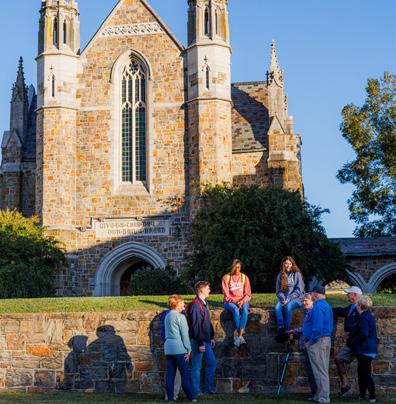
Surrounded by natural splendor on the banks of Eagle Lake, the simple things in life are made even better at The Spires. With all the serenity of our 27,000 wooded acres yet all the vitality of our location at Berry College, it’s second nature to explore new opportunities and make genuine connections when you’re here.
This spectacular setting is brought to life by resort-style amenities, chef-prepared dining, friendly neighbors and a carefree lifestyle — plus the assurance of quality care available on-site if ever needed.
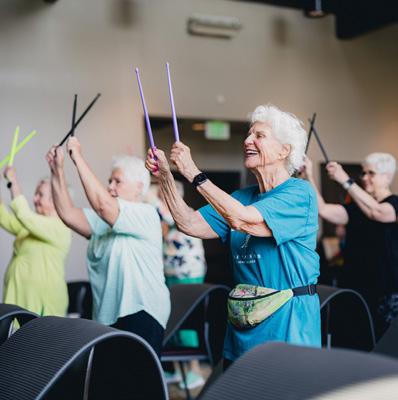
There are so many reasons to love living at The Spires, a stunning lakeside senior living community immersed in the vibrant campus culture of Berry College. A 27,000-acre backyard full of walking paths, wildlife and breathtaking views. A state-of-the-art fitness center offering everything from cardio drumming to water fitness. A bustling music scene where you can sing, dance or jam to your heart’s content. And the peace mind of a full continuum of care if further assistance is ever needed.
What our residents are saying:
“I’ve enjoyed making new friends and the staff is unbelievable from top to bottom.” — Dr. Woody Davis, Resident
“People here have been intensely supportive, and they mean it. It’s been a happy serendipity.” — Ann Marie Hollomon, Resident
“I think the best way I can describe the experience here is ‘community’ and I just give thanks. The opportunities are just endless for people to connect.” — Dr. Jennifer Barbieri, Daughter of Resident
“For social, emotional, mental and physical wellbeing — everything I need is here. It’s just been amazing the way our community loves each other.” — Julie Wahtola, Resident
Come see our breathtaking lake and mountain views for yourself — call 706-672-6055 or visit RetireAtBerry.com to schedule a personal tour.
Come see for yourself — we think you’ll love it here, too. Call 706-672-6055 or visit RetireAtBerry.com to schedule a personal tour.