Sophia Bateman, Josie Belfer, Maya Benjamin, Kalista Cao, Uma Couchman, Abby Cowan, Greta Cunningham, Annie Fingersh, Clara Freeth, Josiah Hankerson, Asher Joseph, Marisa Lin, Jack Murdock, Jonah Rand, Sarah Serota, Isaac Speyer, Zoey Sternoff, Cassie Sun, Catherine Tang, Melody Xu, Elise Yee, Victoria Yi
DESIGN
Jordan Balousek, Sophia Bella, Scarlet Chang, Jaimie Chun, Alden Farrow, Maeve McAuley, Sydney Newton, Kate Perez, Sahana Unni, Yitao Wang, Grace Wu
CONTENT
Katie Chang, Ari Globerman, Toby Goldfarb, Grace Herzog, Marcus Kim, Celina Lee, Claire Markstein, João Martins, Sofia Mercier, Sophia Ortiz, Sarai Quintanar, Mia Rios, Jason Stokes, Liyan Sun, Michelle Wang, Yhonatan Yehudai, Sylvia Zeltzer
I’m excited to present to you the Communal Issue, my last contribution as Spoon’s Editor-inChief. As I graduate and prepare to leave Northwestern and the Spoon Community, I’ve found myself returning to the same question again and again: what actually made these four years feel full?
The answer, almost every time, comes back to a moment around food – the first time at an Evanston spot that became your go-to (Taco Diablo, for the “Yes Please”). Evenings spent cooking meals with my roommates
31 Shreena Amin is a Class A-ct
36
The History of Spoonfest
in my house’s cramped kitchen. And Spoonfest: that day in May when we all come together, share delicious food from local restaurants and cafes, and sprawl out across the Arts Circle.
It’s nothing short of magic when people gather around food, with no agenda other than enjoying the experience. Spoonfest always reminded me that this is what Spoon is really about – not just recipes or reviews, but a community of people that become friends through their love of food.
This issue is an homage to that exact spirit. To the circles that form
around a table, the meals that outlast a seating, and the communities –chosen, inherited, stumbled into – that food has a way of effortlessly creating.
I am very grateful to have built something with this team, and even more grateful to have shared it with you. Spoon has left me with the impression that a good table always leaves people wanting to come back.
Never forks,
Gillian Nieh
EDITOR-IN-CHIEF
SPOTLIGHT Senior
Before sending off our beloved seniors, we asked them to share their best Spoon memory and favorite Evanston restaurant they will miss most.
Evelyn Ahdieh
Best Spoon memory
Spoonfest 2025
Favorite Evanston restaurant
Five and Dime
Kalista Cao
Best Spoon memory
Hearing from Chicago food photographer Jeff Marini
Favorite Evanston restaurant
Peppercorn’s (closed...)
Liv McAllisterNevins
Best Spoon memory
Bob’s Trivia
Favorite Evanston restaurant
Tomate
Gillian Nieh
Best Spoon memory
Seeing the first print mag I designed for in person
Favorite Evanston restaurant
Yasotorn
Maya
Benjamin
Best Spoon memory
Writing about the Mensch’s pop-up at Picnic
Favorite Evanston restaurant
NaKorn
Abby Cowan
Best Spoon memory Interviewing local chefs
Favorite Evanston restaurant Soulwich
Sydney Newton
Best Spoon memory
Babka making at Chabad
Favorite Evanston restaurant
Cozy
Lara Weissmann
Best Spoon memory
Planning Spoonfest 2025 with David
Favorite Evanston restaurant
Five and Dime
design
by
Grace Wu
T H E K I D S ’ T A B L E
By Greta Cunningham
Growing up, the kids’ table was a breakfast nook in the back of my aunt’s kitchen, where my brother, two other younger cousins and I ate holiday meals. As the youngest of 17 grandchildren, limited space often necessitated a second table, and we were the lucky ones young enough to fill it. I relished our raucous games — which wouldn’t have been possible at the main table, as we were often shushed across the room — but I longed for the conversation of my older cousins, aunts and uncles.
Often, “kids’ tables” are not only marked by different conversation but also different food, particularly in the U.S., a practice that has existed since the mid 20thcentury. According to Helen Zoe Veit in her new book “Picky: How American Children Became the Fussiest Eaters in History,” children in the 19th century were quite adventurous eaters. While we often believe kids’ pickiness is part of an inevitable developmental stage, it is really the result of marketing targeted at children
The impact of a separate table and menu
and the advent of processed and fast food.
In the 1950s, advertisers started portraying their newly invented sugary products — such as “kids’ cereal,” which had once been positioned as dessert rather than breakfast — as an alternative to the tastes and textures children had once been accustomed to. Commercials started portraying kids as not interested in other foods, like a 1960s Velveeta ad that boasted the cheesy pasta was all the “picky” girl would eat. As food for kids became more shelf-stable and easy to prepare, it became more convenient for parents to offer multiple options at mealtimes, but an influx of packaged snacks left kids less hungry at mealtimes.
At the kids’ table, my plate was often a narrowly selected assortment, usually limited to the simple rolls I knew I would like. In other parts of the world, however, a separate kids’ menu isn’t even available at restaurants, let alone at the dining room table. As popularized by Karen Le Billon’s book “French Kids
Eat Everything,” the French take familiarizing children with a wide variety of foods as seriously as they do teaching each letter of the alphabet. Kids eat whatever their parents are having – whether they like it or not.
This doesn’t just help with picky eating; it changes the entire social dynamic at the table — and it’s less work for parents. Instead of making three different versions of the same meal, they make one. Instead of battling their kid to “just try one bite,” they eat together. While I wouldn’t trade the extra time with my cousins and brother at our kids’ table, there are important social learning benefits to sitting at the “adults’ table.” Kids learn manners. They hear what’s going on in the world and in their family. They become embedded in an intergenerational community.
In Saul Kaplan’s Harvard Business Review article, “The Kids’ Table? No Thanks,” he writes, “Back then, all I understood was that the main table was where the action seemed to be, and I wanted in.”
The Athenian Room
CHICAGO’S BEST KEPT SECRETS
by Marcus Kim & Claire Markstein
In a busy city defined by constant change, these three familyowned restaurants prove that legacy, resilience and community still sit at the center of the table.
When people think of Chicago dining, they often picture tasting menus or the newest opening on Randolph. But after visiting three family-owned restaurants across the city, one thing became clear: the backbone of Chicago dining is sacrifice and legacy. That is what defines a family restaurant in Chicago.
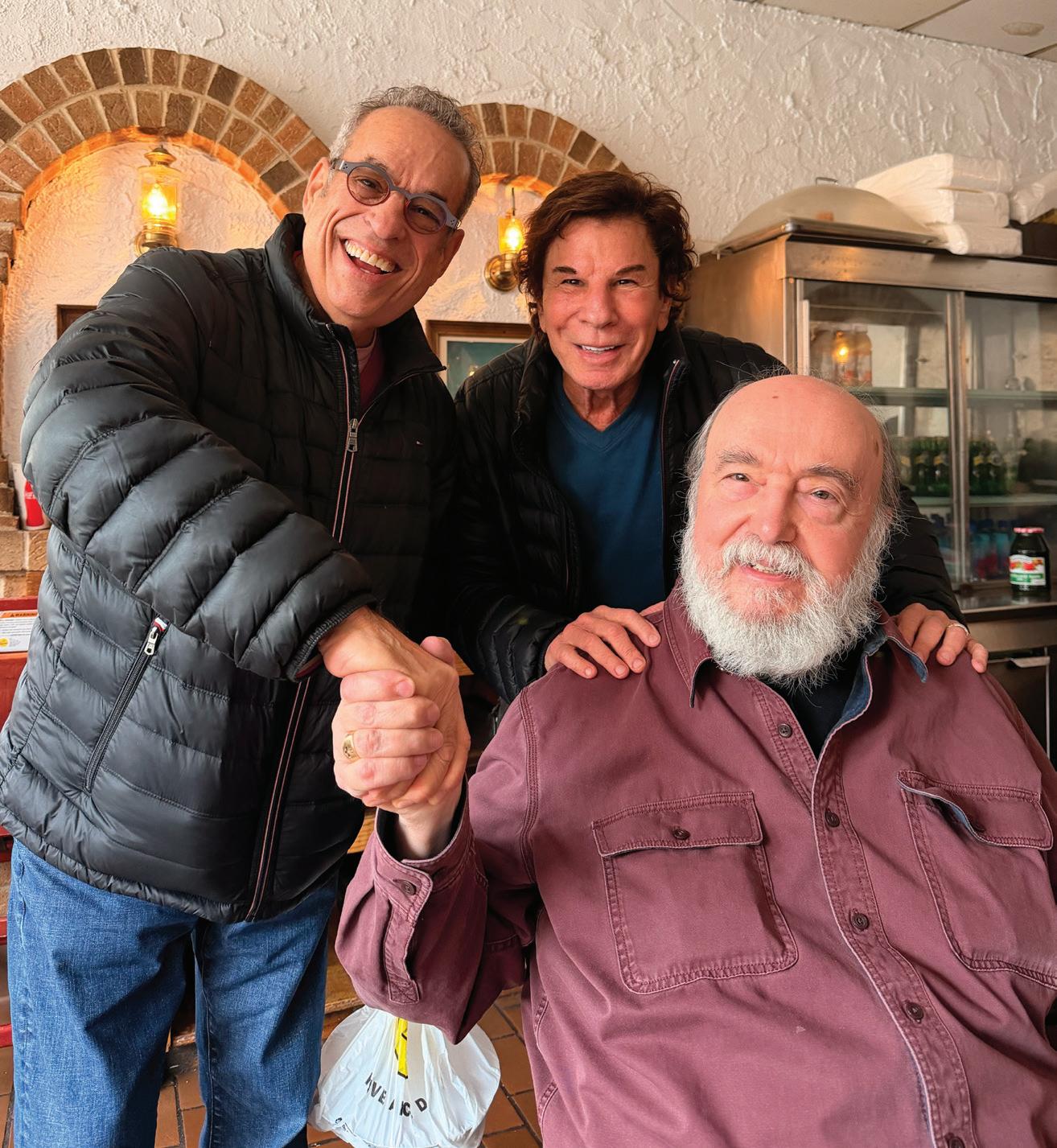
Alex Polakis did not come to Chicago with investors or a business degree. At 20 years old, he hopped off a ship in Corpus Christi with $40 in his pocket and made his way north.
When he opened what would become The Athenian Room in 1972, Lincoln Park was very different from what it is today. Rent was $45 a month, police avoided the area, and drug use was pervasive. But Alex stayed.
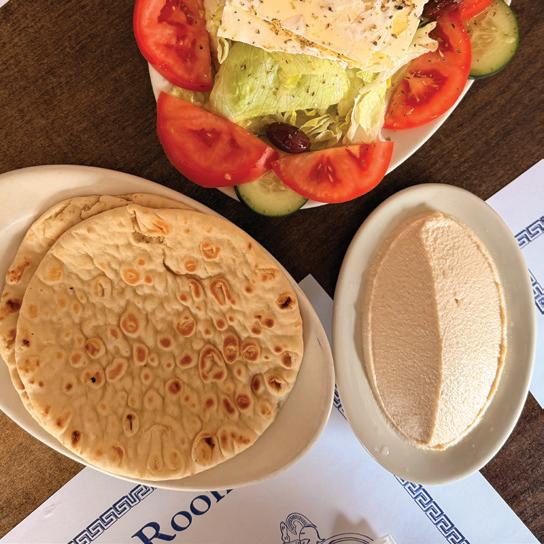
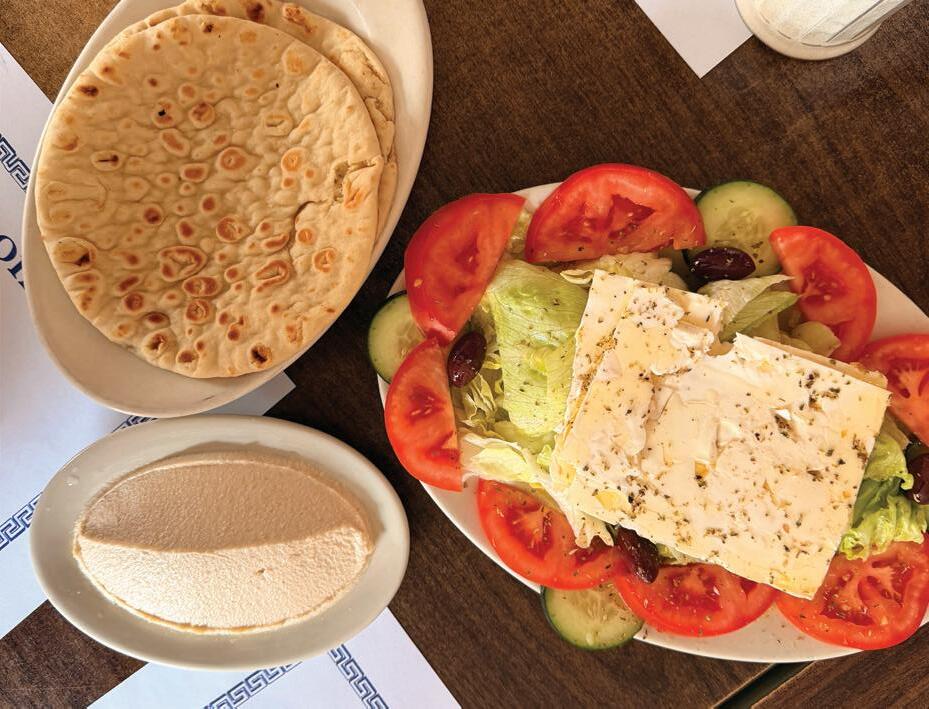
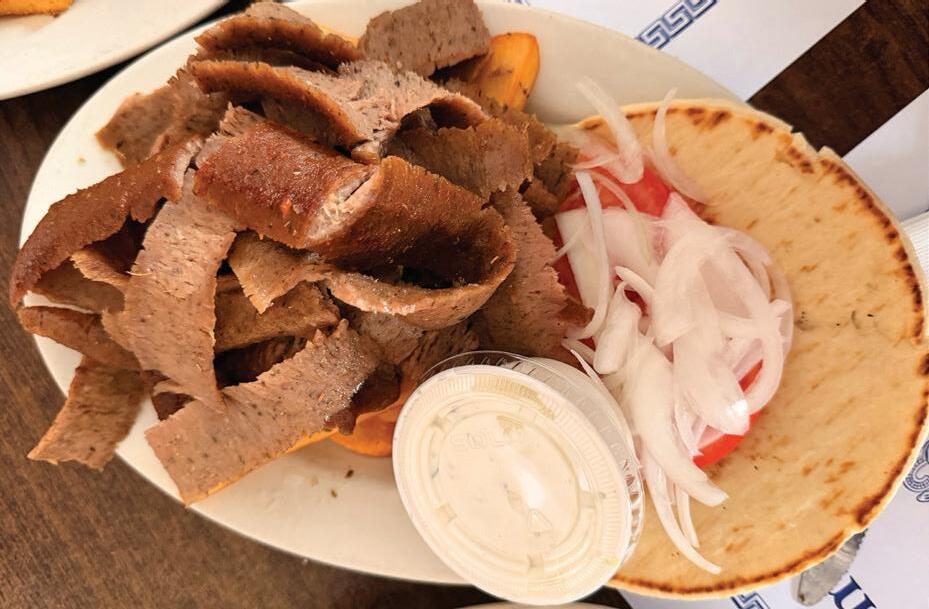
The Athenian Room is a simple Greek restaurant known for generous portions and traditional dishes rooted in southern Greece. Plates of roasted chicken and potatoes, gyros carved to order, and spreads like tarama bring the flavors of Kalamata to Lincoln Park. The restaurant’s concept has always been straightforward: affordable food, large portions and a welcoming atmosphere.
At 78, Alex still comes into work. “I used to know everyone by face,” he said with a laugh. “Now my brain is not as good as it used to be.” But his standards have never changed: cash only, generous portions and fresh oil in the fryer every night.
The Athenian Room is not simply a restaurant: it is the offspring of a 20-year-old who decided to stay.
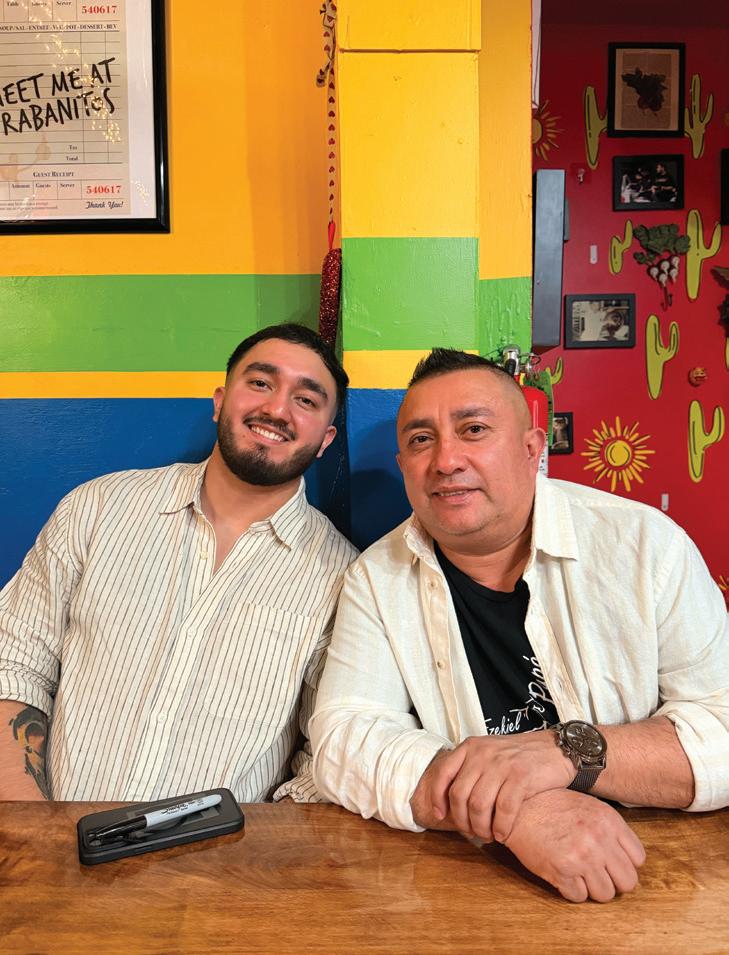
The story behind 5 Rabanitos in Pilsen begins in Guerrero, Mexico, five hours south of Mexico City. Alfonso Sotelo arrived in California in 1992, then moved to Chicago five years later to be closer to family.
From dishwasher to prep to sous chef, Sotelo spent 17 years at West Town Tavern. While cooking was a familiar skill he learned from his grandmother in Mexico, building his own business required patience.
In 2015, that dream became reality when he opened 5 Rabanitos Restaurante & Taqueria.
The name 5 Rabanitos comes from family history. Sotelo’s father made a living selling radishes. People began calling the siblings the “five radish brothers.” The nickname stuck, carrying their legacy forward.
When the city shut restaurants down during COVID, many did not
survive. Patio seating may have helped when they reopened, but what ultimately saved them was the loyalty of their customers. People missed 5 Rabanitos and supported the restaurant until it stabilized again. Fernando said Mexican cuisine is often misunderstood as cheap fast food. At 5 Rabanitos, the menu highlights regional cooking from across Mexico. Dishes like slowbraised meats, handmade tortillas and rotating seasonal specials reflect the techniques and traditions of different regions rather than a single narrow definition of Mexican food.
For Fernando, the restaurant has always been about more than the menu. It brings together neighbors in Pilsen who know each other and support one another. As he put it, “We all care for each other.”
Marty Campo did everything before opening Mart Anthony’s. He cut hair. He drove a cab. He bartended at Bernie’s. But at 39, he opened Mart Anthony’s and ran it for 30 years.
In 1981, Michael Campo’s grandfather, Marty, whose middle name was Anthony, opened the establishment on Randolph and Aberdeen as a bar for bluecollar workers. Over time, the bar transformed into a restaurant as his wife and mother joined in the kitchen. Mart Anthony’s grew, and Randolph Street grew around them.
In 2006, Mart Anthony’s moved to Hubbard Street, with outdoor space and a heated patio. After growing up bussing tables, Michael Campo now
runs the restaurant alongside his dad, John, and his brother, Jack and his mom, Sandy, who bakes the desserts.
The restaurant’s recipes trace back to the Campo family’s Sicilian roots. The cooking also reflects the ItalianAmerican traditions of Chicago’s Grand Avenue neighborhood, a historic center of Italian immigration and culture. One of the privileges of being in a family business is that it is not only about making money. The restaurant closes for major holidays, so the Campo’s can spend family time together. On Wine Wednesdays, no corkage fees encourage customers to bring a bottle and stay all night.
It is about creating community, even if it does not maximize profit.
photos by Marcus Kim
5 Rabanitos Restaurante & Taqueria
Mart Anthony’s
Across all three restaurants, one thing is clear: none of them exists because it was easy. Someone crossed an ocean, washed dishes for years or worked multiple jobs before opening a place that became a staple. In Chicago, family restaurants are not just about food. They are about endurance and choosing every day to keep something alive.
design
by
Alden Farrow
photos by
Zoey Sternoff
Nana Jam
Sweetness that didn’t end with her
By Zoey Sternoff
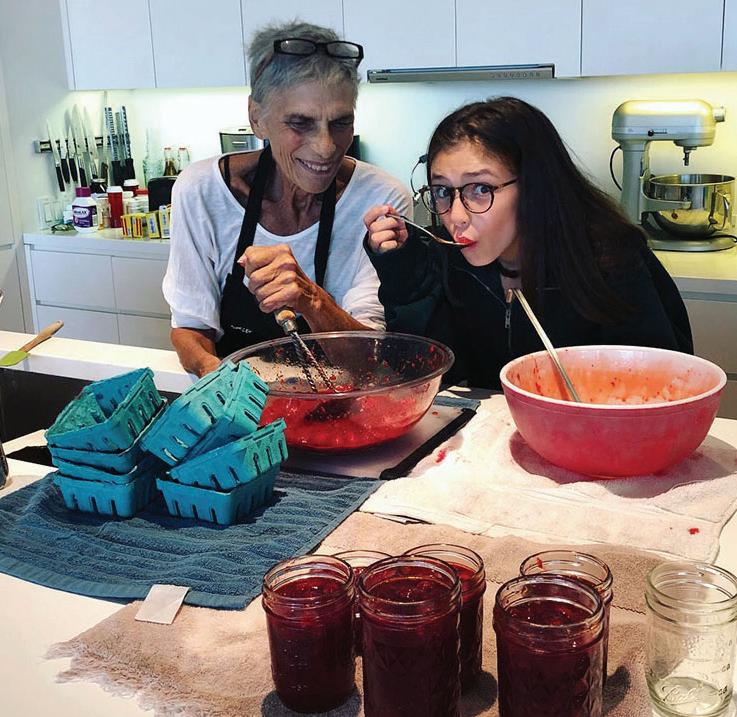
Ajar of Nana’s raspberry jam rarely stays in one place for long.
It moves through neighbors, cousins and strangers. It travels home, clinking and clanking in tote bags. It leaves the house with dinner guests and returns weeks later, empty and rinsed, begging to be refilled.
So when my father stood at her funeral to deliver the eulogy, he didn’t begin with dates or a biography. He began with preserves.
Nana-jam, as it’s known colloquially, is more than a recipe. It is a moral philosophy built on relationships, patience and a perfect blend of her signature Southern kindness and Jewish stubbornness. You do not just make this jam. You wait for it.
You plan for it. You know people for it. Community is an ingredient.
To produce it requires a precise moment in late summer and a specific person: a farmer at the Union Square greenmarket named Franca, who knew Nana well enough to reserve berries for her in advance and who my dad called “literally batshit crazy,” prompting laughter from a mourning congregation.
Growing up, my dad would pick berries from the bushes on Mercer Island, bring them home and Nana would make jam with them. “It always felt like pure magic,” he said.
When Nana was sick, but still with us, he and I went over to her apartment to learn how to make Nana-jam.
“I decided this was something I wanted, no, needed, to learn how to do, to carry forward,” my dad said. “Now that I know how to make it myself, it’s no longer magic, but it is actually even more amazing.”
“We’re in the third generation of this jam,” he told me. “And you’ll make it for your kids too.”
Losing my Nana felt like losing my sense of taste. Slowly, though, the jam brought it back. With every spoonful from the jar and thin layer on sourdough, I felt her with me and my grief sweetened.
My dad has kept making NanaJam. Not ceremonially, just regularly—a pot on the stove, fruit breaking down, the kitchen windows fogging. My mom made mint-green labels reading “Nana Jam, made with love,” and suddenly the jars looked official, even as they moved from hand to hand.
TABLEALWAYS AN OPEN
The warmth of being an unknown regular
By Sophia Menon
We moved away from our cozy, redbricked townhouse when I was nine. We didn’t go far — I still pass by it on the walk to my favorite cafes sometimes — but I hadn’t walked back through that green door again until a few years ago when it went back on the market. Somehow, I still remembered which floorboard would creak unforgivingly, how to un-jam the closet door and that stepping onto the balcony would still offer me a rush of crisp calm.
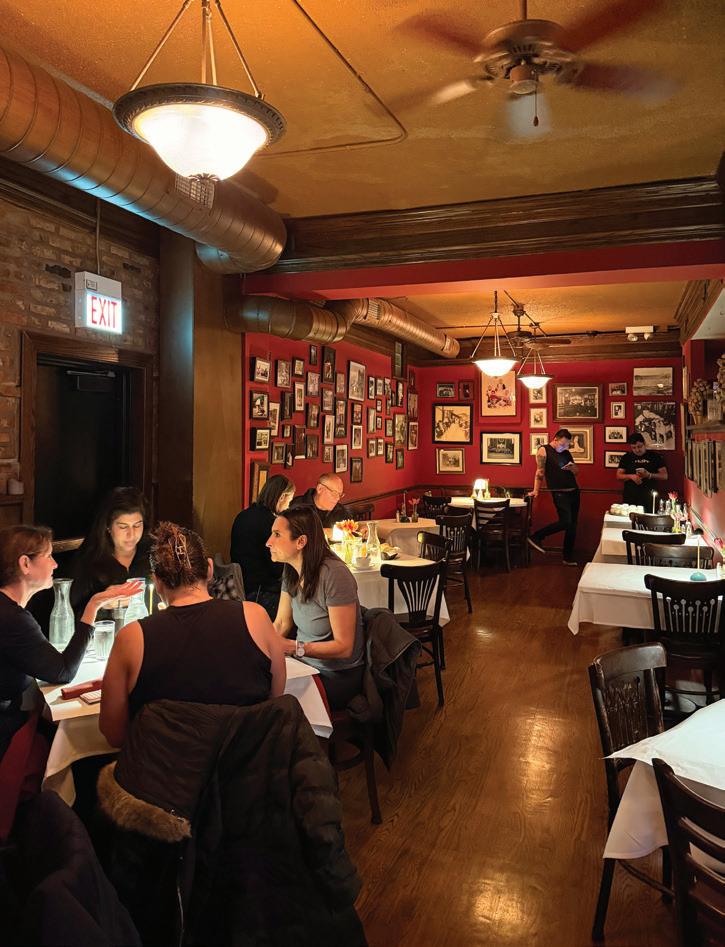
Being a regular at Trattoria Demi feels just like that. The walls themselves are an inviting shade of warmth. There’s a chaotic goodness in the narrow spaces between tables, everyone turning slightly to avoid a dysfunctional crash. I pretend to examine the menu –maybe I’ll try something new – but I always order the Conchigliette. I know this place well, but I wouldn’t say it quite knows me back.
I’ve been the kind of regular at some establishments that waiters recognize, known for my codependent relationship with chocolate at Coldstone or my relentless craving for spice at Usmania – sometimes, even rewarded with a knowing nod and slightly shorter wait time. But at Trattoria Demi, I feel like a visitor in the house that once was mine.
I could paint this restaurant if I could actually paint: the fairy lights strung above me, the fake candles at the center of the tables, the hint of my own reflection
in the large windows at the front. I recognize the waiters, and sometimes, I can tell they’re on the brink of recognizing me, but they’d be unable to place my face anywhere else.
To be a regular at a restaurant, or anywhere, might simply be knowing you have a place within its walls and that being enough. Here, the wait time isn’t shortened for me and there usually aren’t knowing nods. But on my birthday, it was a given that my friends and I would make a Trattoria appearance. When old friends visit, it’s known that we’ll stop by for a taste of the home I’ve gotten to build here. At Trattoria, I turn to my kitchen table regulars, and I get to learn more about the people I love at these wooden tables. I learn who hates marinara sauce and who’s still scared of the dark, and who really hates fake candles because they “ruin the vibe.” I love this place regardless of whether it even knows I exist at all. It’s a safe pocket I found in the busy world that I love returning to, whether or not it knows I’m here at all.
And I love it not because it’s survived the years untouched by dust or the weariness of age, not because it’s an anchor to something that once was, but I know it well and love it wholly. It’s not entirely mine, but in moments it’s where I belong.
There’s certainly a comfort in being known, but perhaps a greater one in knowing.
design by Yitao Wang
photos by Michelle Wang
by Milan Hawk
apartment byDay
By Jack Greenspan
One evening, after his guests had left the dining room of his dimly-lit apartment, Zach LeVay found himself in tears. He had just watched a friend from college propose to his girlfriend while enjoying a multicourse meal, in an intimate ambiance, with a special menu— each element of the night curated by LeVay himself. He was overwhelmed that his friend had trusted him to craft the atmosphere for one of the most special moments of his life.
It’s moments like these that stand out among the over 75 group dinners LeVay has hosted since first starting a supper club while studying at Indiana University. LeVay has used his dining room to create countless memories for hundreds of diners: some friends and others complete strangers. Now, nearly six years later, the
small supper club that started in Bloomington, Indiana, has become his greatest passion, traveling with him through every phase of his life since then.
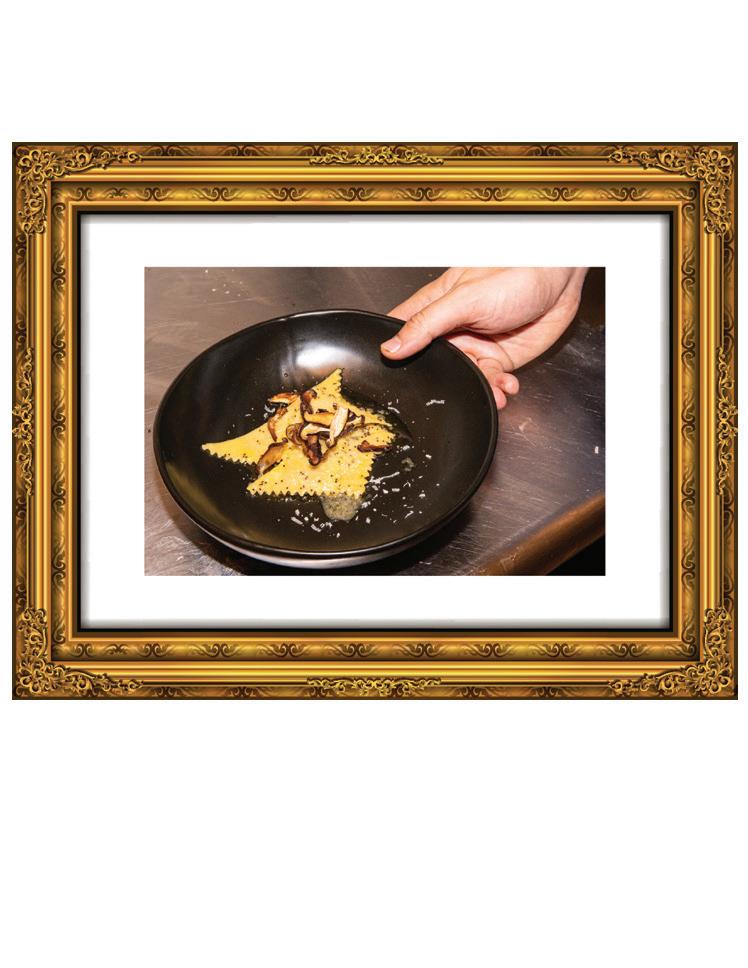
Appropriately named The Third Place, the dining room table at LeVay’s Lincoln Park apartment regularly hosts up to 14 diners seeking a non-traditional dining experience. The menu is not shared beforehand, and, unless his guests have allergies or extreme dislikes for certain foods, LeVay takes complete creative control over each course his guests enjoy during the 2.5-hour-long dinner. Recently, he has found special enjoyment in making pasta from scratch. His favorite dish to make is agnolotti, a stuffed pasta similar to ravioli, from the Piedmont region of Italy.
LeVay says he has “fantasized and romanticized” quitting his
day job in finance and restarting his life as a restaurateur, but has decided that it’s not worth the risk.
“I think (opening a restaurant) takes a fair amount of luck in addition to talent,” he said. “There is a world in which I still do that one day. It’s just not right now.”
Though LeVay has had to raise prices to compensate himself for his work, he has never treated The Third Place as a money-making venture. To him, the supper club serves a purpose deeper than income. He reinvests much of the revenue from the supper club into new equipment, allowing him to level up the recipes he serves to guests. Over time, he’s been able to purchase a pizza oven, a set of Japanese chefs’ knives, a sous vide machine, and new Dutch ovens.
Being a semi-professional chef does come with its own set
Chef Zach LeVay’s Lincoln Park home doubles as a romantic date-night spot
Bistro by Night
of challenges, however. For one, LeVay doesn’t have the budget to remake a dish if it turns out a dud, and he only buys what he needs to make a meal once.
“If I overcook the steak, there’s hardly ever another one in the fridge,” he said. “If I were to waste something, I’d have an apology to make, so there’s very little margin for error. ”
Beyond the relationships he has formed with his diners, LeVay takes immense pride in the connections he has been able to make with other professionals in the culinary world, like his “truffle guy”, who gives him access to the same top-tier truffles used by Chicago’s most high-end restaurants. As a part-time chef with a day job, LeVay views these kinds of relationships as a form of “currency” in the Chicago food scene.
But what sets the supper club experience apart from a traditional fine dining restaurant is the simplicity of it all. At The Third Place, dining is stripped down to its most communal form: there’s no second-guessing what menu item you want or worrying about what the bill will come out to.
Everything is chosen for you. The only thing you need to focus on is the people around the table.
It’s for that very reason why people choose to come to Zach LeVay’s supper club for their date nights, birthday dinners, and — yes, even marriage proposals.
“You arrive, you know what it costs, you don’t know what you’re going to eat, and you just sit there and enjoy it,” LeVay said. “Hopefully, people come away with meeting someone new and trying something that they never thought they would have eaten that day.”
by Zach
photos
LeVay
design by Lavanya Subramanian
photos by Natalie Morro
À Table
Growing up on the French mealtime clock
By Natalie Morro
In France, meals are not simply moments to refuel — they are rituals. The phrase “à table” (“to the table”) is more than a call to eat; it is an invitation to pause, gather and participate in something shared. Growing up in France before moving back to the United States, I never questioned how structured these moments were. Only later did I realize how intentionally the day revolves around them. In France, meals mark time.
Le Petit Déjeuner
8:00 a.m.
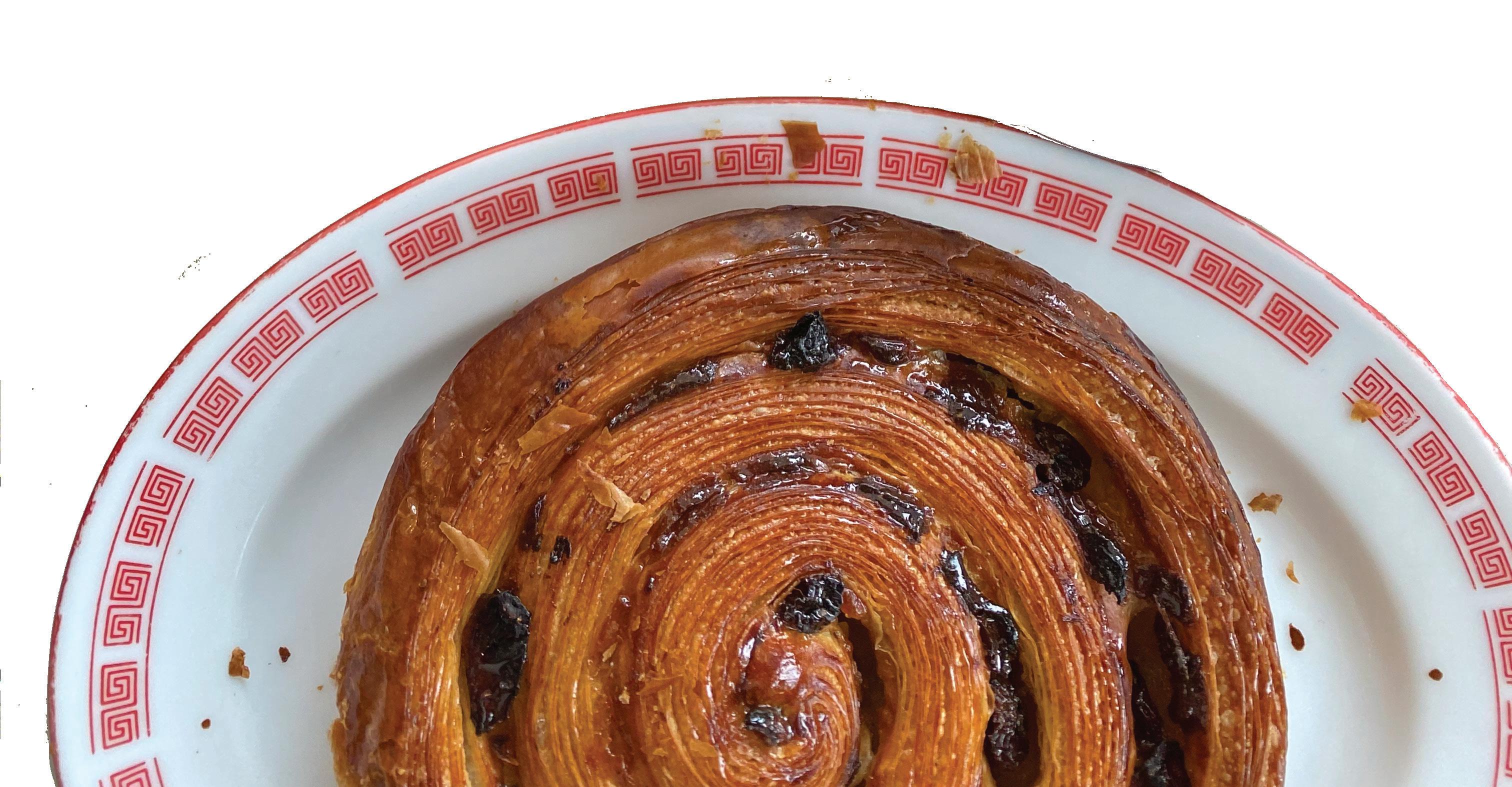
Mornings begin simply. The neighborhood boulangerie opens early for commuters and parents stopping in for croissants or pains au chocolat. Breakfast itself is light: a pastry and a drink — orange juice, hot chocolate or coffee.
French coffee culture, however, looks very different from the oversized American latte. Orders are short and precise: un café (a small espresso), un café crème (espresso with steamed milk) or un café allongé (a longer espresso). No syrups, no towering cups — just coffee, quickly enjoyed, often standing at the counter.
Le Déjeuner
12:00 p.m.
Lunch is the true centerpiece of the day. Even the workday bends around it. Meals unfold slowly and socially, often in multiple courses.
At school, lunch lasted two full hours — enough time to actually sit, eat and talk. In the cafeteria line we built our trays piece by piece: a slice of baguette, the cheese of the day, an entrée, a warm main dish and dessert. Finishing everything was encouraged, or at the very least trying it — an early lesson in curiosity at the table.
Le Goûter 4:00 p.m.
At four o’clock came le goûter, the beloved afternoon snack. The classic version was beautifully simple: squares of chocolate tucked inside fresh bread. But really, any small sweet would do — a madeleine, a cookie or the occasional leftover pastry.
Le
Dîner 8:00 p.m.
Dinner arrives later and lighter than lunch, but no less intentional. Families gather again and conversations stretch long after the plates are cleared.
Fresh bread is essential. In many households, someone makes a quick trip to the boulangerie shortly before dinner to pick up a still-warm baguette. In my family, being trusted to walk the two blocks to fetch the bread felt like a small rite of passage.
In France, meals create rhythm in the day and connection between people. “À table” is not just a phrase from my
NEVER KILLED NOBODY A LITTLE PARTY
By Clare Kirwan
An aroma of rich, milky chocolate filled the air as I walked in the door of my (second) home on my 18th birthday. My dinda, which means godmother in Portuguese, was finishing scooping her mouthwatering brigadeiro chocolate from the pan into a little jar for my birthday. Brigadeiro is a popular Brazilian dish similar to a fudge ball, made from sweetened condensed milk, cocoa powder, and butter, rolled into balls and covered with toppings of your choosing.
At age 11, I met my best friend, Sophia. Her family welcomed me into their home, although perhaps I’ve made myself a little too comfortable after almost a decade of friendship, and they taught me some of their most beloved Brazilian birthday traditions.
In Brazil, there is a tradition of giving your first piece of cake to someone who had a significant influence on you that year. Sharing the first piece of cake is often paired with making brigardeiro chocolate. Or even better, the cake is made with brigadeiro chocolate.
When I witnessed the cakesharing tradition, I remember watching Sophia’s mom (my “dinda”) melt as her eleven-yearold Sophia passed her the first piece of cake, which she thought was the sweetest thing.
“The meaning behind it really truly comes down to honoring and recognizing someone with great importance in your life. A parent, loved one, friend, whoever in that moment that you feel deserves to be recognized in that moment,” Sophia said.
Both birthday traditions are at the core of Brazilian culture–traditions I have been so grateful to carry with me from my best friend’s house to my house in college.
This year, I became a mother (to my sorority little) who also happens to be from São Paulo, Brazil. During Big Little Week, my sorority family made the brigadeiro chocolate with a fun twist: adding rainbow sprinkles, which littered the counter. As we danced in my bigs kitchen to Fleetwood Mac, dipping our fingers in the pan, I was almost brought to tears. Partly because the gooey chocolate fudge never fails to hit my sweet tooth perfectly, but also because it reminds me of home, of my best friend, and of the ways food can carry a whole lotta love.
BRIGARDEIRO MS. MARY’S RECIPE
Ingredients:
½ cup sweetened condensed milk
1 tbsp cocoa powder
1 tbsp unsalted butter
2 tbsp sweet chocolate
Chocolate (or rainbow!) sprinkles
In Brazil, brigardeiro chocolate is paired with loving birthday traditions
by Jaimie Chun
in search of the Family Table
By Jaimie Walsh
My mom, Candace MaherWalsh, spent her days cooking from an early age. As an only child in a pre-iPad world, she had to get creative. At six-years old, her delicacy of choice was none other than mudpies — and not the edible kind. They entailed dragging steel pots and pans outside, filling them with dirt and water and abandoning the mess in the kitchen sink for her mother to discover.
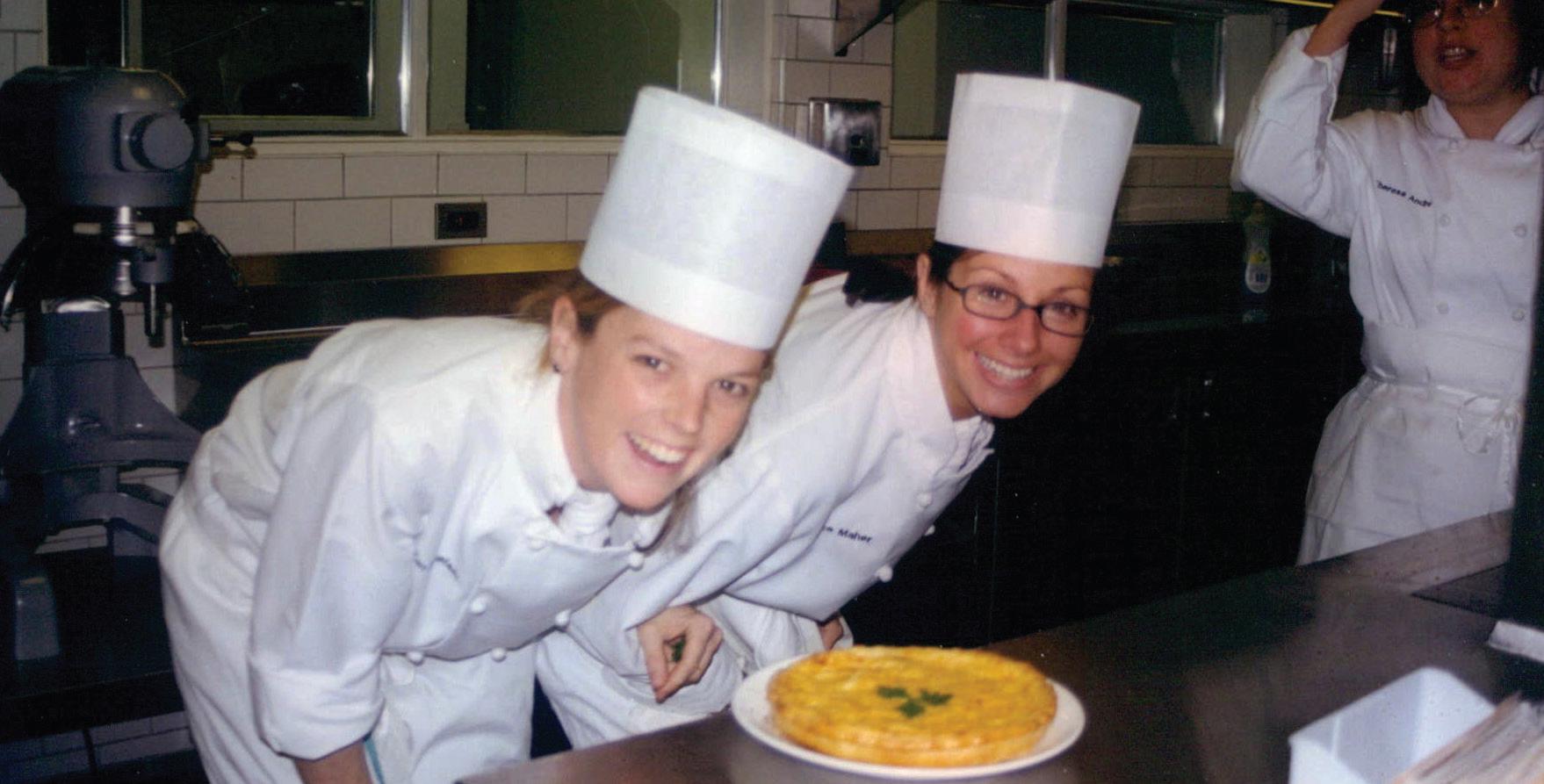
There, she trained as a chef and design
By middle school, she graduated from mud to real ingredients, sometimes in the form of boxed cakes or mismatched ingredients exploding in the oven after being forgotten about.
“I was always experimenting,” she says. “Not always successfully, but I loved the process.”
She grew up in a Jewish
community defined by warmth, tradition and food.
“So much of their lives centered around cooking and eating together,” she recalls. “I romanticized it. I wanted that.”
Her own household, by contrast, leaned heavily on convenience.
Weekly meals consisted of potato chips covered in melted cheese or frozen TV dinners. Despite this, she always understood what good food could be. Her family dined out often, exposing her to a wide range of cuisines, and she relished their Saturday grocery shopping trips. Her mother rarely cooked, but when she did, it felt special.
By high school, tired of processed food and restaurant visits, she began really cooking for herself. A job at a catering company cemented her fascination. There, she “fell in
love with the whole process,” she says, and realized that food could actually be a career.
After graduating college, she moved to New York City. She didn’t initially work in the food industry, but found herself immersed in a culture of dining. After the birth of Union Square Market, she witnessed firsthand the early momentum of the farm-to-table movement, and realized she wanted to be a part of it. So, she used her bonus to go to culinary school.
worked in professional kitchens for several years. But the reality of restaurant life — late nights, relentless pressure and an often unhealthy work culture — quickly dimmed the appeal.
“Up until two in the morning, winding down with a drink — there’s a lot of drugs and alcohol in that world. I knew it wasn’t what I wanted long term, especially as I was starting a family.”
Instead of leaving food behind, she decided to rethink her relationship to it. She enrolled in a graduate food studies program at NYU, where she began to examine food not just as a profession, but as a cultural and social force. At NYU, she discovered the question that would shape the rest of her career: How do you make good food accessible?
Her stepchildren became her guinea pigs. Because of their limited diets, she began cooking with them rather than for them.
She soon noticed a pattern: even when children claimed they didn’t like something, they were willing to taste it if they made it themselves.
“They don’t have to like everything,” she explains. “But they always try it. That’s the goal.”
Her thesis translated that insight into practice at a time when twoincome households and the rise of convenience foods had pushed cooking out of many homes. She asked, How do you bring cooking back, and remove the fear of unfamiliar foods for kids?
Partnering with low-income New York City public schools and The New York Times, she designed a curriculum that used cooking to expand children’s diets and confidence while teaching budgeting, flavor combinations and how to prepare meals for their families. Each week focused on a different cuisine that reflected the students’ own cultural backgrounds, from Caribbean to Vietnamese — allowing them to see their identities represented while learning new skills.
After moving to London, she continued teaching children to cook using the same hands-on approach, reinforcing her belief that familiarity removes fear and builds curiosity about food. She later opened a restaurant and cooking school, where teaching became the most rewarding part of her work.
“I love empowering people,” she says. “Cooking shouldn’t feel fancy or burdensome. It should feel doable. I want to give people tools
and formulas that make them feel like they can do this too.”
Her focus increasingly shifted to the idea of food as nourishment. Her philosophy is ingredientdriven and pragmatic: maximize flavor with minimal effort, use whole foods and reject the notion that healthy eating must be bland.
“I can’t stand food that’s presented as healthy but tastes like nothing,” she says. “You should be able to nourish yourself and actually enjoy it.”
Today, her approach to cooking differs sharply from the rigid choreography of professional kitchens. At home, she cooks by instinct, guided by what’s fresh and what she craves. Restaurants respond to cost, consistency and customer preferences, where home cooking responds to appetite.
She once stood on the outside of a table like this. Now, she builds them for herself, my family and so many others.
design by Maeve McAuley
photos by Sarai Quintanar
By Ashley Xue
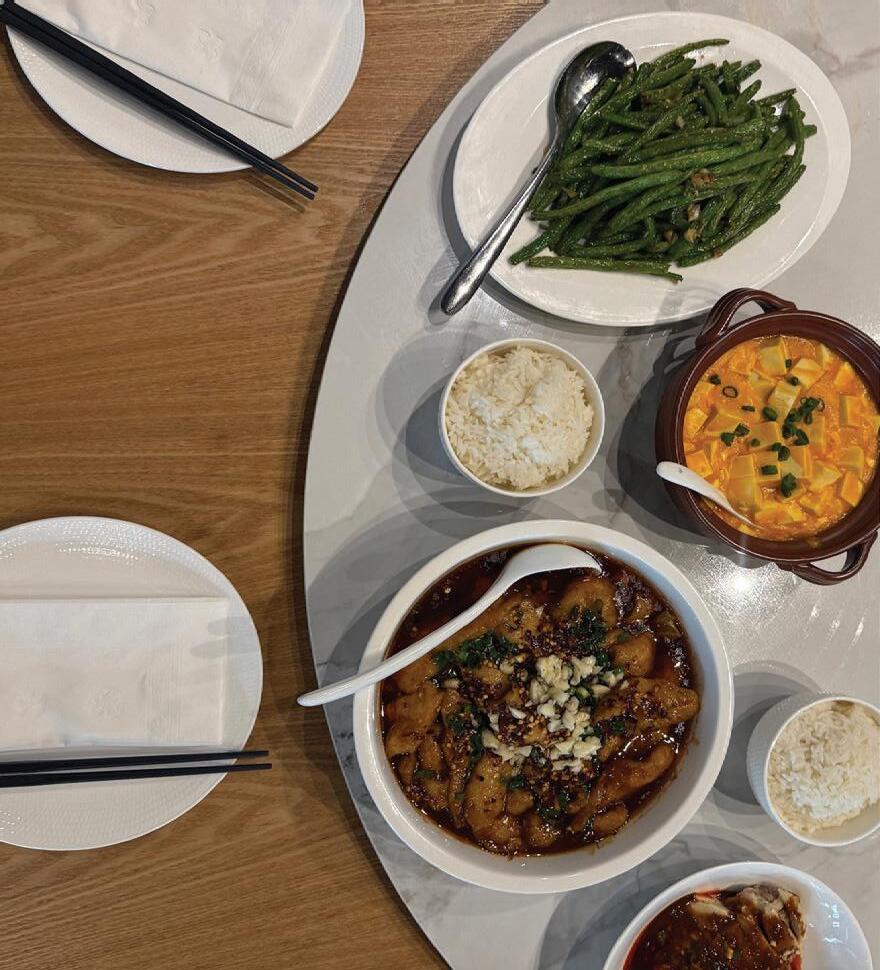
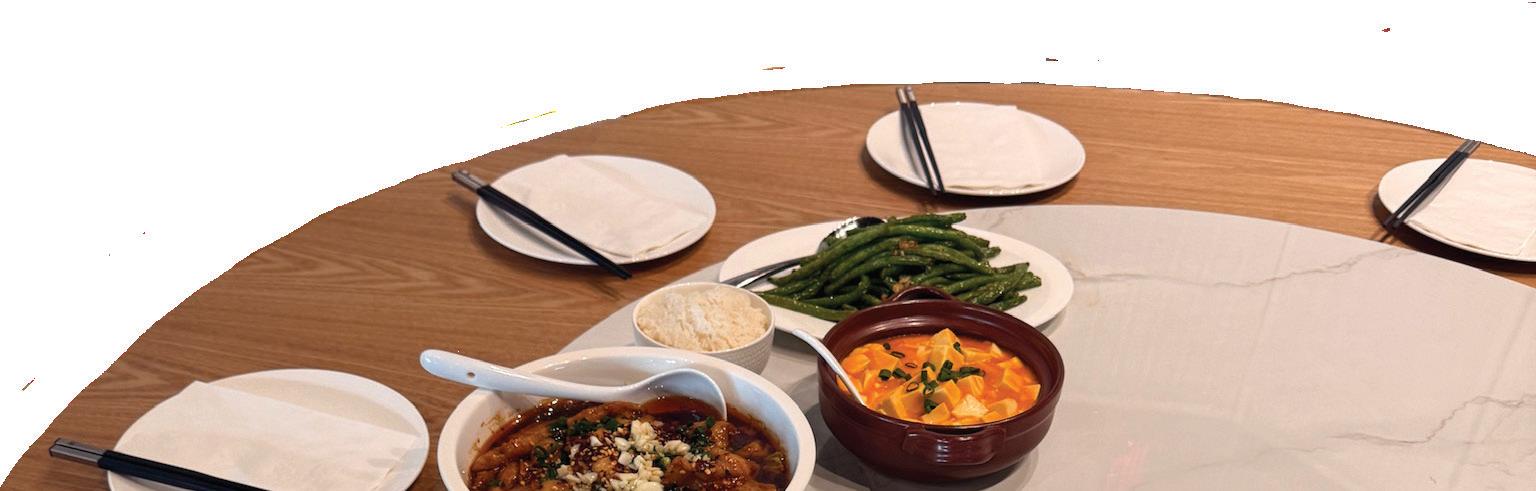
Ilist off my family’s routine Friday night order at our local Chinese restaurant. Then, I sit back and watch as each plate lands on the smooth, glass lazy Susan; I twirl the disk masterfully, locating my desired dish with ease.
Five-year-old me had no doubt that this was how every dining experience was meant to be – an illusion that would soon be shattered by my first visit to The Cheesecake Factory for my best friend’s birthday party.
For many Chinese American restaurants, the lazy Susan is just as much a staple as the fortune cookie. It is a spinning platter that sits atop the table, granting equal access to every dish. And like the cookie, its origins are contested.
Revolving devices can be traced to 13th century China, but historians first found the rotating tray used for food in 18th century England. During the time, it was known as the “dumb-waiter,” a device that partially (hence the “dumb”) replaced the role of waiters, allowing diners to serve themselves during a time when domestic staff was becoming less common.
The first mention of the term “lazy Susan” was in 1903 in the Boston Journal, although there are few hints about where “Susan” came from. The journal wrote about a Scottish carpenter who had crafted the table for a woman. This term was popularized, and even Henry Ford, the car company founder, was a fan. On a camping trip, he replaced servants with an oversized lazy Susan. In 1933, the term earned a spot in the Webster’s Dictionary.
The lazy Susan’s cultural reinvention came in the 1950s when engineer George Hall put
together the revolving tabletop for a Cantonese-style restaurant in San Francisco’s Chinatown. At the time, Chinatown’s restaurants were adapting to American tastes and while still remaining authentic, this device proved both novel and practical; it met the needs of Chinese diners’ communal eating habits. The restaurant boomed in popularity and the lazy Susan was copied by competitors, even
Szechuan beef, scallion fish fillets, shredded potatoes, spicy wontons and a
big tub of rice, please.” “
spreading overseas. It is now a staple in restaurants across both Chinese-America and China.
The lazy Susan has become much more than a replacement for a waiter. It is deeply embedded in Chinese dining and embodies the collective rhythm of Chinese culture. Food is not merely meant to be eaten, but to be shared. And of course, mastering the lazy Susan is no small feat. The first person to rotate it
ATurn
determines the direction – if they move it clockwise, counterclockwise is taboo. Elders eat first. And if you want the last bite of a dish, offer it to the table before claiming it as your own. These gestures of harmony, respect and courtesy are small, but all synonymous with Chinese values.
We may never know who “Susan” is or whether she was truly lazy. But with every turn of the table, the lazy Susan becomes a symbol of shared tradition.
The invention that brings Chinese tradition around the table
History in
THE ART OF harcuterie
the cheeses
By Annie Fingersh
Food has always been my favorite excuse to bring people together. Sharing a home cooked meal with family, discovering a hidden neighborhood gem with a loved one or a potluck dinner with your closest friends – it’s times like these when food brings people together. To me, nothing captures that feeling quite like a perfectly executed charcuterie board.
When the cheeses, meats, breads, nuts and jams come together harmoniously, it is an almost transcendent experience. I truly believe that grazing a perfectly designed plate of goodies is one of the great joys of life, and I know I’m not alone in feeling this way. Grazing culture is real and here to stay: savory snack plates, dessert charcuterie and breakfast boards are making it big in every corner of the food scene, broadening our idea of what charcuterie is.
It is important to note, though, that not all charcuterie boards are created equalequally. In fact, there is a delicate art in creating an excellent board. Below, I share some suggestions from my extensive thought and experimentation on the subject.
This is the base of your board, so it is imperative that it’s well constructed. A balance of funky, sharp, creamy, nutty and delicate is my ideal combination. Look at somekinds like raw cow’s milk blues, ash-ripened goats, brine-washed triple creams and crumbly aged cheddars.
the meats
A mix of dry-cured meat, spreadable meat and salami usually does the trick. Think of options like prosciutto, nduja, pâté, mortadella or chorizo to create a wonderful spectrum of salty, spicy, mild and umami flavors.
accoutrements
This is the place to be experimentative and create some crazy combinations. Local honeycomb, fried sage, fresh apricot, pine nuts, tomato jam, pickled peppers and medjool dates would all be part of my dream charcuterie board.
Crafting a charcuterie board that’s balanced, beautiful and meant to be shared
the vehicles
Textural variety is key here. Torn pieces of crusty baguette are a personal favorite, with additions like water crackers, seeded crisps, flatbread crackers and mini toasts to make things more interesting.
But at the end of the day, a great charcuterie board isn’t about executing perfection, so don’t overthink it. Build it well, share it, and above all, let the board do what it does best: bring people together.
HOW TO SET A TABLE
Too often, we focus on what’s on top of our plates instead of the people around them
By Clara Freeth
Idon’t have the best table manners. I rest my elbows on the table. I don’t like to sit in chairs properly. Sometimes I even chew with my mouth open. But I do know how to set a table. Fork on the left. Knife on the right. Spoon inside the knife. Cup above, slightly offset.
I don’t remember who first taught me, but I know who reinforced it. Every summer for the past decade, I’ve packed my trunk and left the Midwest behind, trading my dining room in Michigan for a dining hall in Vermont. Before we eat and sit down, we set the table.
Summer heat seeps into the dining hall, and by the time I’ve grabbed my stack of hard plastic plates from the cart, sweat is already dripping along my neck, nudging my hair tie out of its wrist-bound retirement. We deal the plates out like cards, three or four to a bench, moving quickly because third bell and the swarm of girls that come with it are incoming. Water bottles stand in for cups. If it’s a lemonade day, I don’t dare pour it before everyone else is seated.
What happens after we sit down is harder to describe. There’s something indescribable about a bench packed with girls I don’t see during fall or winter or spring; about passing a pitcher hand to hand; about the noise and heat
— the way a meal stretches out long before we’re called up to fill our plates and long after the food is gone. Everyone just sits there in no hurry to be anywhere else: the table holds us all together.
At home in Michigan, the rules are different. When Christmas comes around, my mom brings out the good china — the plates that live in the cabinet 51 weeks of the year — and suddenly I can’t remember which side anything goes on. The fancy glasses especially. Inside or out? I always have to ask.
Though I protest the extra scrubbing these plates require, Mom always says, “Why have them if you never use them?” and she means it about more than just plates.
Mom guides the setting of the table the same way she sets the holiday: with intention, care and understanding that extra effort is the point. She always asks my brother and me which tablecloth we like better, even though we always go with the silvery snowflake one.
I still chew with my mouth open sometimes. I still forget where the wine glass goes. But I also know to slow down, to linger at the table after plates are cleared, to treat the meal like it matters because the people I share it with do.
The tables don’t look alike. One is dark wood, the other is light. One seats four, the other upwards of twelve. But what happens around them is the same: people sit down together and, at least for a little while, they stay there together.
a seat at the
Sushi Bar
Some of my favorite spots in the area...
Counter seats, raw fish and the ritual that made me fall in love with food
By Gillian Nieh
My mom had a rule: when my dad was traveling, we went for sushi. We were little when we first tried it, but we quickly became regulars at a small spot near our house. I can still remember the smell of rice vinegar steaming from wooden ohitsu containers and tempura sizzling in the back kitchen, and the warm, perfectly timed “irasshaimase!” as you stepped through the curtain doorway, past tables crowded with artfully arranged sashimi platters. Once seated at the sushi bar, my sister and I would stare through the refrigerator case at the chef,
watching as he glided his knife through fish, pressed rice onto sheets of nori and gently bowed after presenting perfectly rolled tuna maki.
Now, I feel that same excitement – the one I felt when my mom would tell us we were going out for sushi – every time I enter a sushi restaurant. Sitting shoulder to shoulder with my mom and sister, talking with the chef as he worked, became one of my favorite rituals. The counter was where we learned how food could create connection, not just with the chef, but silently with the strangers bookending your group.
A meal feels different when there's a direct relationship between the person who makes the food and the person who eats it. At the sushi bar, you watch each decision unfold. The chef responds to what you like in real time, and if you’re lucky, slides you a surprise seasonal cut. Unlike table service, where you don't see who's cooking your food, sitting at the counter invites you into the process, turning eating into something shared. Now that I'm at school, I find myself craving that connection between chef and diner just as much as I crave a negihama (yellowtail scallion) roll.
In my opinion, this is the best sushi spot in the suburbs, about 15 minutes from campus. Creative rolls, huge plates of edamame and even onigiri.
Sit at the handroll bar and be prepared for wow-worthy flavors. The gochujang amberjack handroll was my favorite and you can't skip the toro.
A more accessible omakase for ~$70 per person. The chefs here are a lot of fun – if you want a special treat, this is the place.
lincoln
Turning dinner into an activity, one shared bite at a time
By Maya Westra
Every time my high school friends and I are back in New York City, we head straight to Gyu-Kaku, a Japanese barbecue chain. The slightly chaotic restaurant, tucked on the second floor of a strange office building in the middle of Midtown, has become our go-to — nothing ever needs to be planned. We just show up, order the same things, and fall right back into rhythm.
There is something unmistakable about the space: the bright fluorescent lighting, the familiar Top 50 pop playing in the background, the strong smell of grilled meats wafting through the slightly smoky air, the menu crowded with glossy photos of every dish, and the water served in plastic cups. Every booth is filled with groups leaning over a grill embedded in the table, fully engaged in the act of cooking. It’s not fancy or curated or trying to be anything it’s not. And that’s exactly why it works.
As we swap stories from the past few months of our lives, we sit scooping garlic fried rice into
our plates, flipping harami skirt steak, garlic shrimp, and teriyaki chicken, and drowning everything in the magnificent sweet soy. We are half-paying attention to the grill, halflost in conversation. The food is almost secondary, but also completely essential.
Beyond the comfort of nostalgia, there’s something uniquely special about cooking at the table. It turns dinner into something active. We’re not just sitting and eating — we’re participating. It also subtly shifts how we share. We’re not just ordering our own meal, we’re cooking for each other. Someone takes over the grill, someone else makes the perfect bite, someone insists we try it “this way.” The meal becomes collaborative. It’s less about what’s on your plate and more about the experience of building it together.
Melting pot Recs:
Classic Cheese Fondue
California Salad
Mojo Main Course Fondue
Yin-Yang Chocolate Fondue
Looking to recreate a version of this tradition at school, I took a group of friends to The Melting Pot, a fondue restaurant chain with outposts across the U.S. We drove out to Schaumburg, Illinois, arriving at another fluorescently lit establishment, neatly placed on the corner of a classic Midwestern strip mall. While quieter — and far less chaotic than Gyu-Kaku — there was something immediately familiar about it.
The menu had the
Gyu Kaku Recs:
Harami Skirt Steak
Garlic Shrimp
Teriyaki Chicken
Garlic Fried Rice
Spicy Tuna Volcano
same laminated plastic feel, filled with photos. The air carried a strong, unmistakable scent from other tables already deep into their meals. A soft-pop playlist hummed in the background.
We slid into a booth and ordered a progression of cheese, broth, and chocolate fondues. Between dipping bread, cooking meats, and passing skewers around the table, we debated the best sauces, assembled bites for each other, and hovered over the pot waiting for things to cook just right. It was slower than Gyu-Kaku, more methodical — but still deeply interactive.
And that’s the thing about places like these. It’s not really about having the best meal — it’s about the experience of making it together. There are probably better places for fondue or Japanese BBQ, but that’s not what makes these spots memorable. It’s the cooking, the sharing, and the fact that dinner feels like something you’re doing together. I already know I’ll be taking my friends to Gyu-Kaku in Chicago the next time they visit.
photos by Maya Westra
design by Jaimie Chun
photos by Toby Goldfarb
AisleGo IfYouGo
By Josie Belfer
For Medill junior Sylvie Slotkin, grocery shopping is never a solo activity. The New York City native doesn’t have a driver’s license, so she relies on rides from friends to reach Evanston supermarkets. She said the arrangement turns a routine errand into a fun, communal experience.
“Every grocery store trip is a playdate,” Slotkin said. “It’s always me and a friend, and I have one friend in particular who will always call me or I will call her.”
As students begin living off campus and taking on the responsibility of feeding themselves, some find that grocery shopping is often a shared experience rather than a solo chore.
Whether it’s coordinating rides, splitting purchases or planning meals, students use group grocery runs to build family-like routines and create moments of connection in their busy schedules.
Slotkin emphasized that her grocery trips are frequently impromptu, taking place whenever a friend needs a particular item. However, she said she is always excited for a spontaneous trip.
Weekly grocery runs bring students living off campus together
Although Slotkin and her friends frequently shop at Trader Joe’s, she likes to try various other grocery stores as well.
“My friend actually texted me today and was like, ‘Would you want to go to Jewel-Osco?’ and I was like, ‘Are you kidding?’” Slotkin said. “Of course I want to go to Jewel-Osco!”
Slotkin said her go-to staples at Trader Joe’s are the fruit leathers, which she gets three of in each flavor, and the pita bite crackers.
“Those are a classic,” Slotkin said. “I get a box, and it lasts me like two days tops, and then I don’t have crackers until the next time I go to Trader Joe’s.”
Living off-campus, Weinberg junior Jamie Neiberg has had a similarly communal grocery shopping experience.
Coming off of a meal plan, Neiberg said she was intimidated at the prospect of having to fend for herself in the kitchen. She said her mom put a lot of effort into teaching her how to cook before she came back to school for her junior year.
“My mom showed me a lot of different things that I could make
easily and make well,” Neiberg said.
Living with a few of her best friends, Neiberg said that both grocery shopping and cooking meals are group efforts.
“Whenever one of us makes a meal, we just make enough for all of us to eat it and have leftovers,” Neiberg said. “We usually go grocery shopping one or two times a week. My friend, and I actually went to a new grocery store yesterday and had so much fun exploring and figuring it out.”
She said a part of her roommate’s weekly routine is to go to the gym together, go grocery shopping and then have shared snacks.
“I pretty much buy the same thing every time I go to the grocery store,” Neiberg said. “My roommate and I have the exact same palate. Yesterday we bought wasabi peas.”
Neiberg and her roommates like to snack during their grocery shopping trips as well.
“If I get a thing of crackers, I’m always opening it while I’m there,” Neiberg said. “I am also obsessed with spindrift, so I’ll be sipping on one of those.”
By Marissa Lin
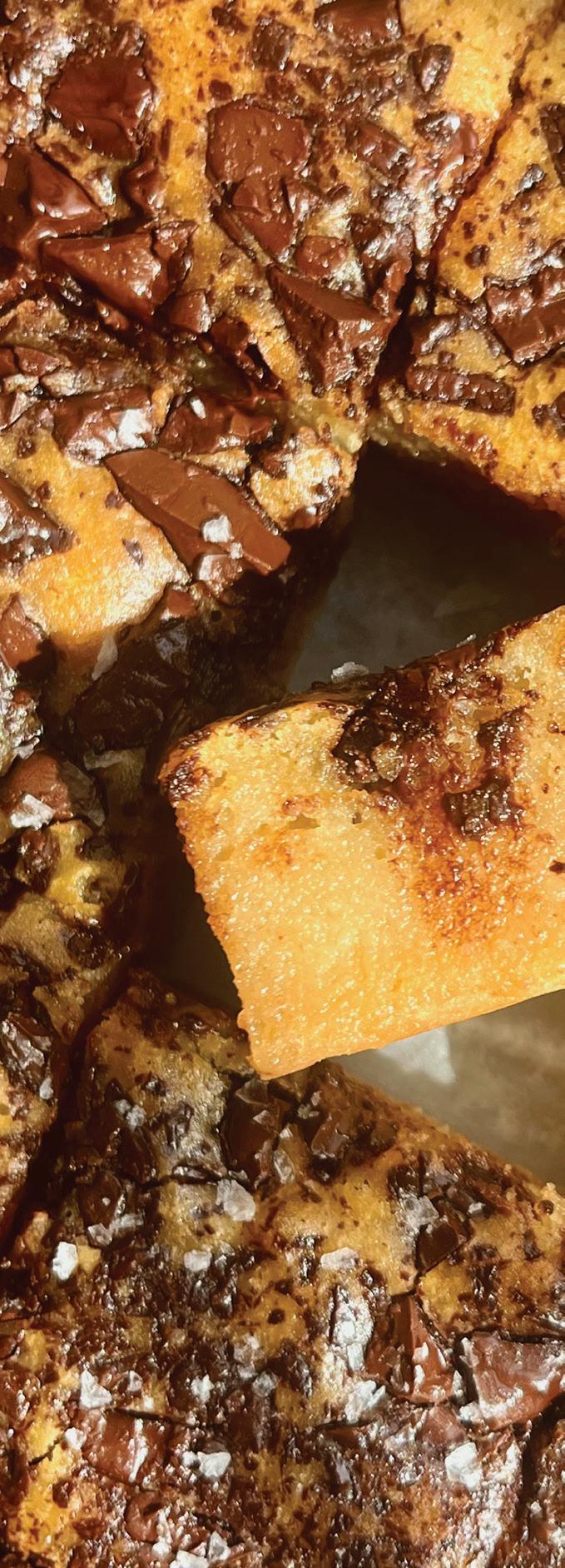
What happens when butter mochi and a classic chocolate-chip cookie collide?
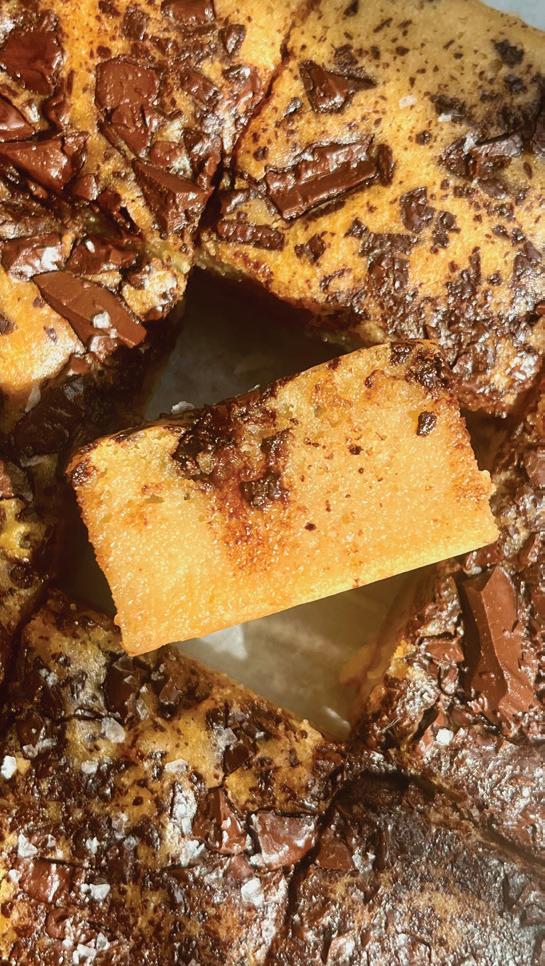
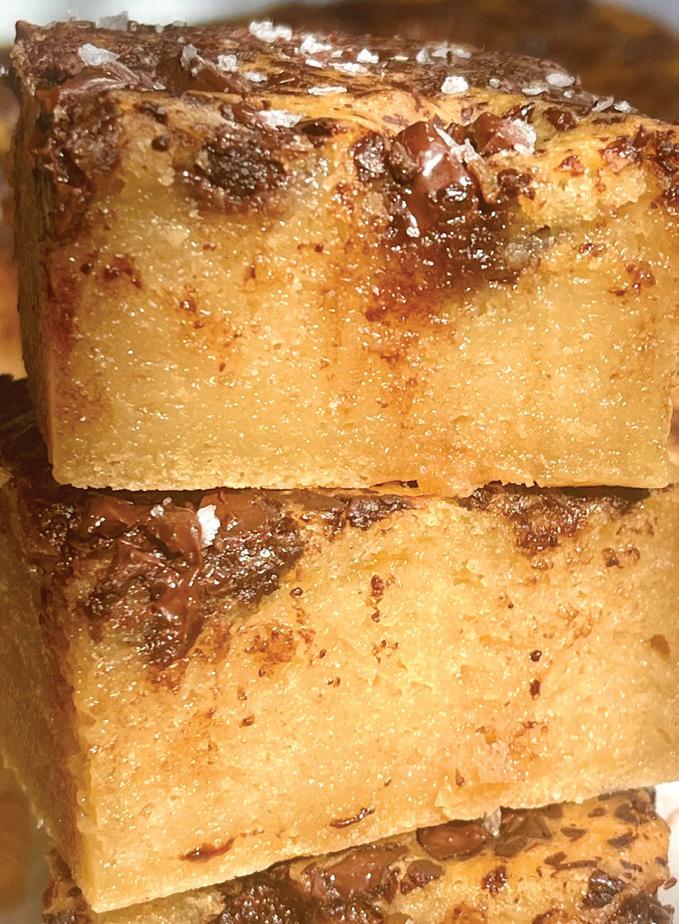
You get a chocolate chip mochi cake. Imagine the chewy, bouncy “QQ” texture of a custardy rice cake infused with deep brown sugar notes and packed with pools of melted chocolate. It’s nostalgic, a little unexpected, and completely irresistible. As the cake bakes, the chocolate chunks melt into the mochi, creating gooey pockets of chocolate throughout. The edges begin to caramelize while the center stays soft, making an addictive texture like no other. Best of all, it’s low-effort and high reward. Just whisk, pour, bake, and suddenly you’re the star of the dorm, the apartment hangout, or the potluck. Whether you’re stress-baking before finals or just want something sweet to share, chocolate chip mochi cake delivers every time.
1. Preheat the oven to 350°F. Line an 8-by8-inch baking pan with parchment paper.
2. In a small saucepan over medium-high heat, brown the butter. If you’ve never made brown butter before, here’s how: melt the butter over mediumhigh heat. Stir the butter continuously with a silicone spatula. The butter will “sizzle” and eventually foam. Keep stirring until you see several brown specks form in the butter. When the sizzling dies down, the butter is done. Pour the brown butter into a separate small bowl and let it cool until room temperature.
3. In a large bowl, whisk the sweet rice flour, baking powder, and salt together until well-combined. Set aside.
4. In a separate large bowl, whisk the brown butter and brown sugar together. Add both milks, eggs, and vanilla extract. Whisk to combine. Add the dry ingredients from step three and whisk until smooth.
5. Pour into the prepared baking pan and top with the chopped chocolate. Bake for 50 minutes, until golden. Top with flaky sea salt, if desired. Let cool completely before slicing into your desired portions.
Chewy, gooey, and baked in one pan for easy sharing
design by Scarlet Chang
photos by Marissa Lin
design by Jordan Balousek
A NIGHT AT THE
Communal Table
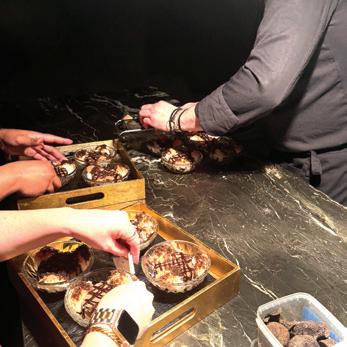
Planning and executing an immersive dinner party for 18 of our friends during our senior year of college
By Evelyn Ahdieh, Liv McAllister-Nevins and Lara Weissmann
The annual World Happiness Report found in 2025 that sharing eight or more meals a week with others has the same happiness boost as doubling your income. This statistic isn’t surprising to us. As three seniors who have been involved in Spoon for two to three years each, we understand and celebrate the value of shared food.
Hosting dinner parties is not a new concept. They date back to ancient Greek and Roman times, although they would better be described as elaborate feasts, according to a blog post by Hauste, a brand and online platform that focuses on planning dinner parties. Traditionally, they were a way to show off that you had the means to host and welcome guests into your home – time and money to cook, clean, and set up. The blog post continues that the modern host has replaced money with meaning: today, cooking and hosting are more about the connections made around the table rather than the money spent on the meal. Gathering with friends and loved ones is meaningful and crucial to our happiness, and food is the perfect reason to do so.
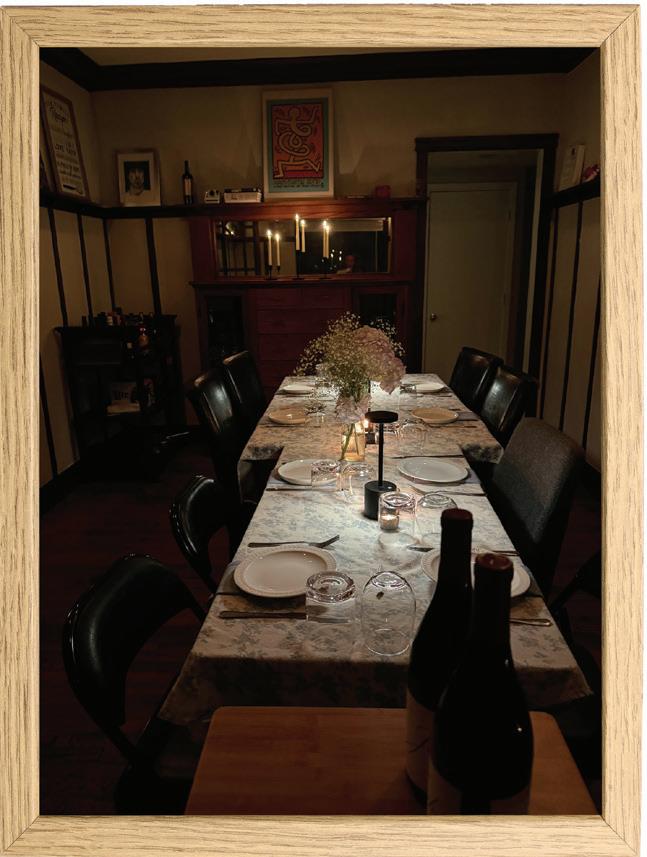
When the theme for our final magazine on the Spoon team was announced as Communal Table, we had the idea to have our own communal table by cooking and hosting a dinner party for 18 of our closest friends.
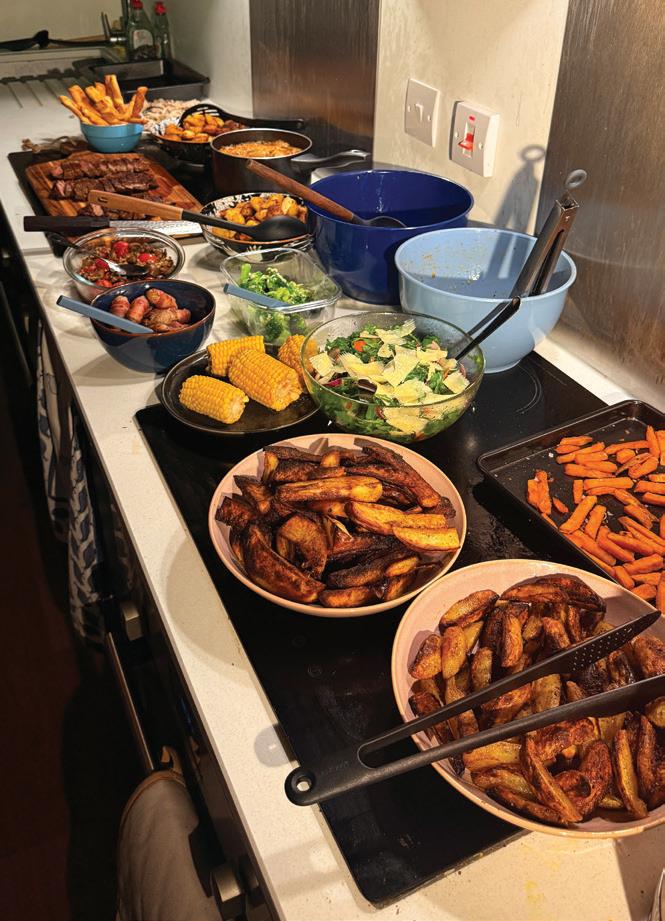
important task was planning the menu. Emphasizing the communal aspect of this dinner party, we knew we wanted everything to be served family-style. However, it was less obvious what the dishes should be. We wanted every aspect of this meal to be intentional.
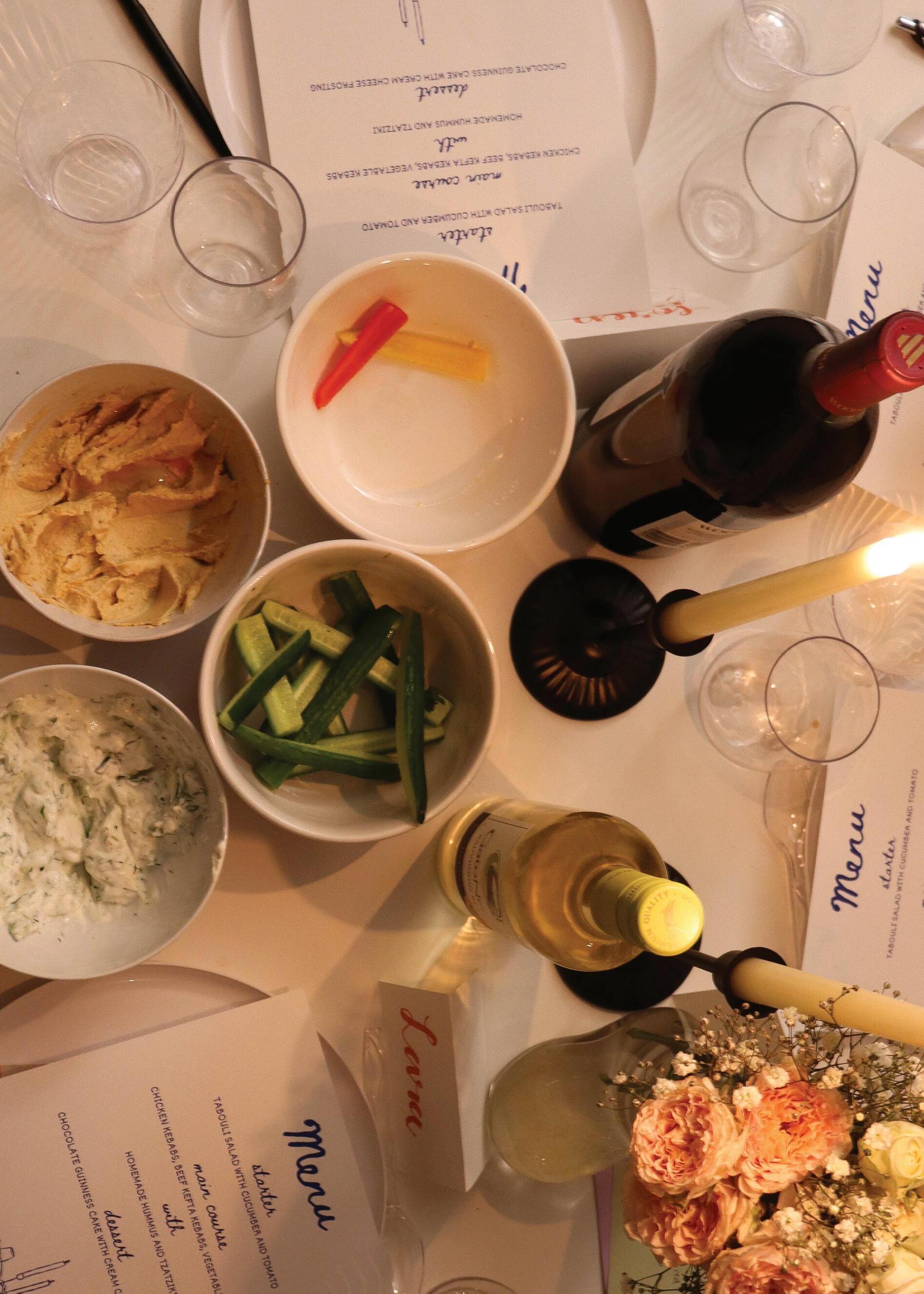
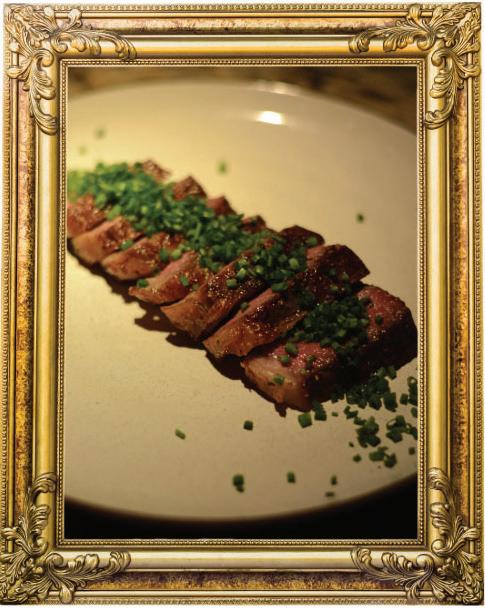
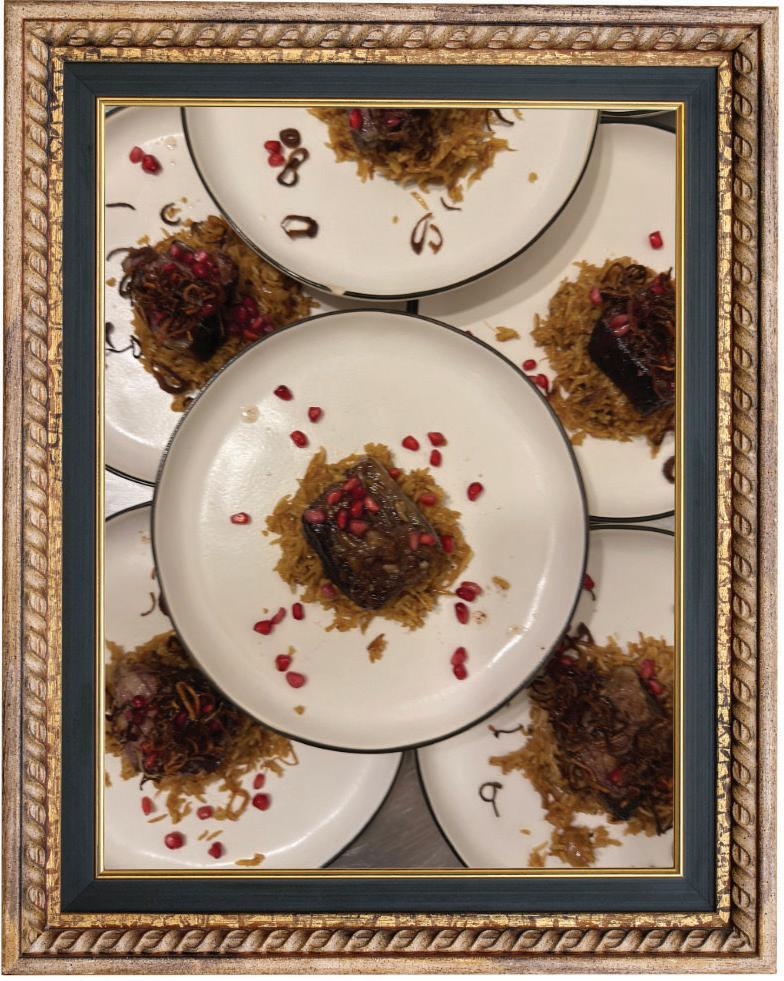
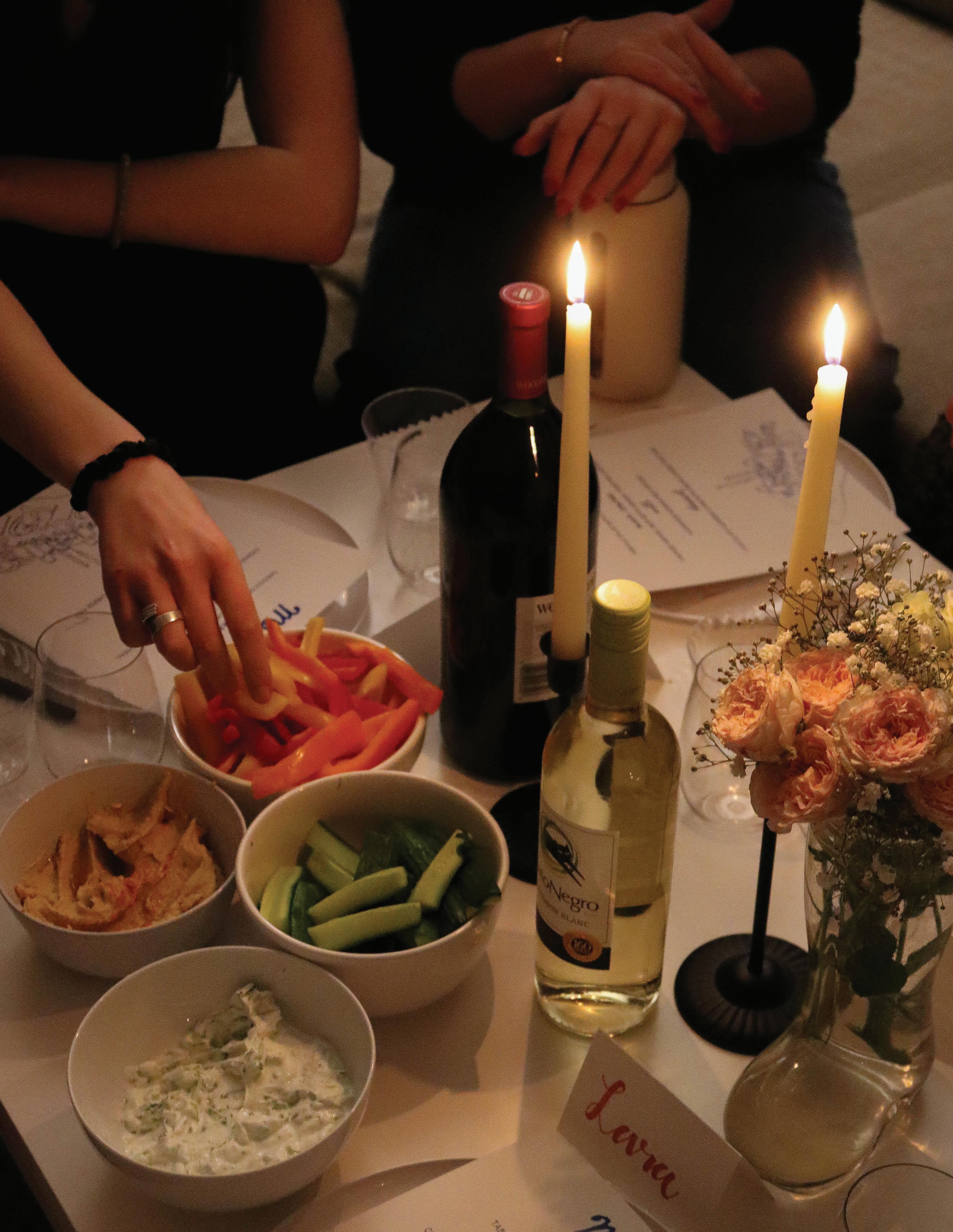
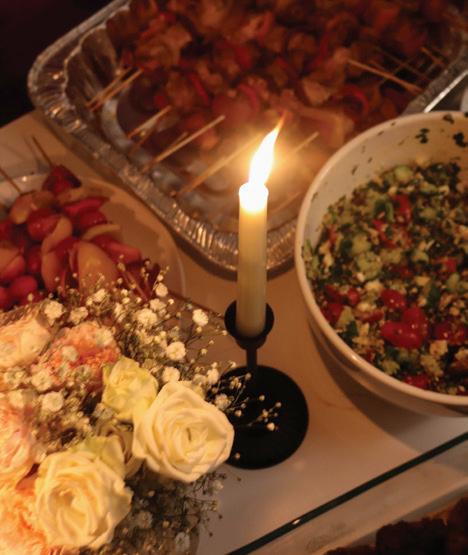
It was through this thought process that we decided to cook and serve dishes representative of our collective cultures. Combining Lara and Liv’s Jewish background and Evelyn’s Iranian background, we landed on a Middle Easterninspired first and main. A simple but punchy tabbouleh salad is a classic Middle Eastern dish that features parsley and mint, cucumbers, and tomatoes. We used quinoa instead of bulgur wheat and added in feta to fit our personal preferences. We followed that with chicken, beef kefta, and vegetable kebabs, with small bowls of homemade hummus and tzatziki to go around the table. For dessert, we served the highlyrated Chocolate Guinness Cake from New York Times Cooking, representative of Liv and Evelyn’s Irish backgrounds. This not-toosweet cake is topped with fluffy cream cheese frosting, making it a light but perfect ending to our meal. Our friends raved about the food, and the Guinness cake seemed to be the star of the show.
For three hours on a cozy Sunday in February, we ate, talked, laughed and reminisced about the past three and a half years as we look to graduation in just a few months.
As devoted foodies, our first and most
Although the food was an important component, this was a dinner party after all, so we wanted to bring in some fun, interactive elements to encourage meditation on our college experiences and the friendships it has brought us. Seating was assigned using hand drawn place cards, and we were intentional about separating best friends and mixing in the loudest voices with the quieter ones. As people arrived and snacked on the tzatziki and hummus we asked each person to look inside their place card at the unique name of
another person in the room and to write a letter to this person. Intentionally vague, we wanted each person to make their own decision as to what to include. Scattered around the tables we also had question cards to spark conversation. They ranged from serious to silly. After lots of laughs, yelling (we have loud friends) and shared stories, we decided to bring the whole group together for a more meaningful conversation. It is rare that we are able to wrangle all 18 of our friends into one room, so we made sure to take advantage of this. We posed the question: what is one thing you admire about the person to your left? We shared an unusual moment of quiet and reflection where we directly expressed our love and admiration for one another, which was refreshing for a group as unserious as this one.
Due to the constraints of living in a college house, we weren’t aiming for a long table with matching chairs. We collaged three different tables throughout Liv’s living room, and used every chair in the house including outdoor chairs from the backyard and office chairs. Paper chains hung from the ceiling and homemade art and posters covered the walls. It was warm and homey, and so perfectly encapsulated the haphazard beauty of college. After nearly a week of planning, grocery trips, and enough cooking to last us a while, we spent time reflecting on how lucky we were that Spoon brought us together. It was by chance that our shared love for food resulted in a friendship that will last way beyond college.
design by Alden Farrow
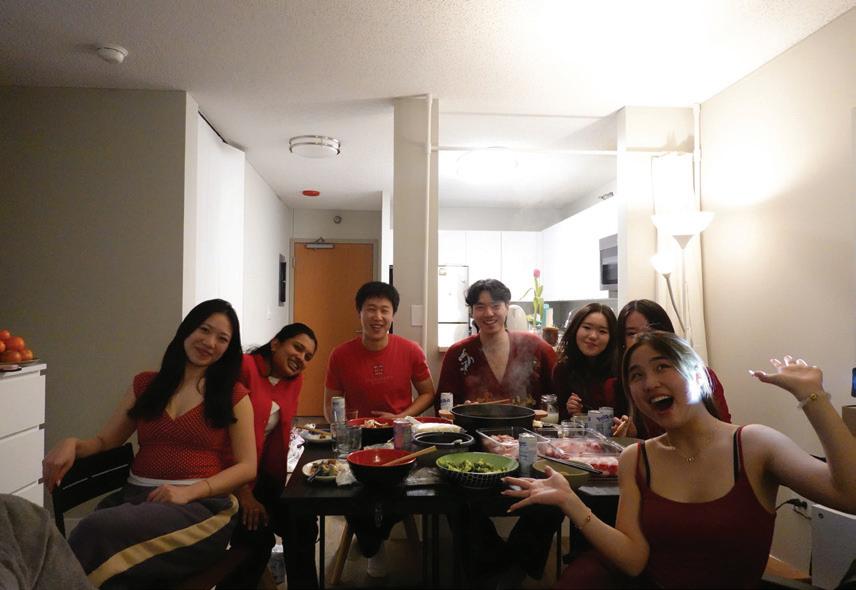
How to Hot Pot
Lots
of laughter, bickering grandparents, and everything to taste
By Celina Lee
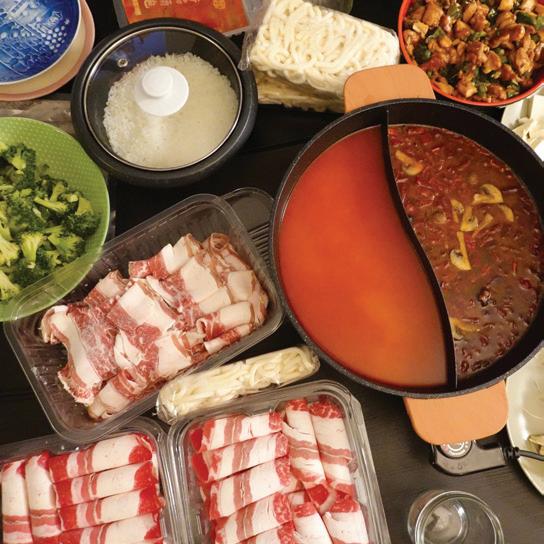
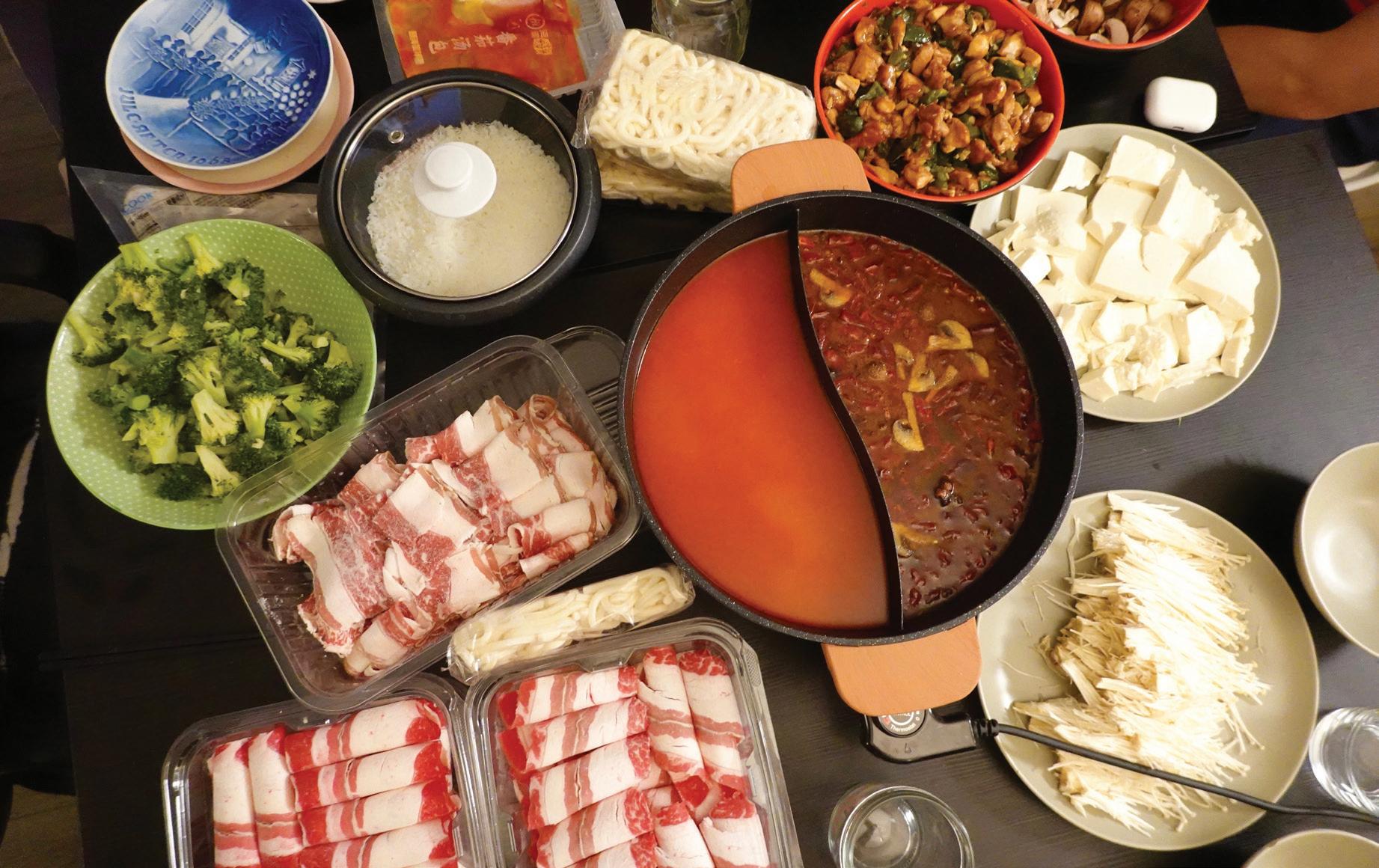
The best Christmas and New Year’s present is never wrapped. It comes in the form of a large, clunky metal pot sitting in the middle of the wooden dining table — slightly dented, slightly stained, definitely heavier than it looks. No ribbon. No bow. No $5.99 Target wrapping paper.
My family has never celebrated holidays with stuffed turkeys, green bean casseroles or lattice-topped pies. While my classmates posted pictures of mashed potatoes and gingerbread houses, I waited for something else entirely: the ceremonial excavation of my family’s hot pot.
The hot pot is never where you expect it to be.
Sometimes it’s in the oven — that’s the best-case scenario. Often, it blends in with the rest of our cookware, turning the search into a full-blown manhunt. Once, we even found it in my brother’s closet because he used it as a storage container for his Lego mini figurines. Yet, the moment we spot that familiar steel rim, there’s nothing but excitement and anticipation.
My 姥姥 (grandma) and 姥爷 (grandpa) were masters of hot pot — they insisted there were no recipes, only instincts, which usually meant until one of them started arguing about salt.
Their bickering was an art form.
加太多酱油了 “You put too much soy sauce.”
不够 “It’s not enough.”
你就不懂 “You just don’t understand it.”
你啥都不懂 “You don’t under-
stand anything.”
And then, in the most predictable plot twist of all, 姥爷 would silently ladle soup into 姥 姥 ’s bowl and place it in front of her without a word. She would pretend not to notice. He would pretend not to care. They would be laughing, talking and bickering just the same, not 10 seconds later.
It’s been seven years since my siblings and I last saw my grandparents in person. Seven years of pixelated WeChat calls and frozen screens, of “ 听不到 !” (I can’t hear you!) shouted into iPhone speakers and of “ 你说啥 ?” (What did you say?) repeated twenty times before we broke into laughter. The connection inevitably drops, and the call ends, but the distance feels smaller.
Now, as I reach under my dorm bed for the $22.99 electric hot pot I panic-bought during Welcome Week, and toss in my DoorDash ingredients (thank you, Dario), I feel like I’m back at that wooden dining table.
The pot hums and sometimes short-circuits. The broth comes in packets instead
of from instinct. My ingredients seem to always go missing, and I think someone’s been taking bites out of my napa cabbage. But the water still boils, and I can share a hot pot with my friends, and that’s all I need.
Conversation Starters for Awkward Group Dinners
Breaking the ice, in the least awkward way possible
By Zoe Chao
Have you been stuck with the kids of your parents’ friends that you haven’t seen since third grade? Been the plus one of a plus one? New to the adults’ table? Talk about the weather ad extremum? We’ve all been there. Sometimes it’s the unfamiliarity of these strangers’ speaking cadence or being unsure of what to say, but awkward placements at group dining endeavors are, I’m sad to disappoint, inevitable. When the conversation’s dry, it might just be time to pull out this cheat sheet of every conversation starter ever.
round Rules
• One conversation at a time! It sucks when you’re the one person sitting in the middle of two conversations, unable to bridge or enter either.
• Practice active listening.
• Be present. Put the phone away.
• Be respectful. This is, hopefully, self-explanatory.
• Mind your manners…Say “excuse me” if you burp and never, ever talk with food in your mouth.
lassics
• Rose, Bud, Thorn
• Two Truths and a Lie
• What did you want to be when you grew up?
• What is your “Death Row” meal?
• Explain your phone wallpaper
R C W G F
apidfire
Give me a hot take
What’s your favorite ____?
What’s a conspiracy theory you believe? What’s the story behind your name? How do you like your eggs?
What’s the best form of carbohydrate? If you could eat one meal for the rest of your life, what would it be?
or the Audacious ildfire
What is your love language?
What is the best piece of advice you’ve ever received, and from who?
What is a question you wish people would ask you more often?
What do you think your younger self would be most surprised to learn about you today? Pitch me the person next to you
If you had to be named after a kitchen appliance, what would it be?
If you had a $500 gift card to any store/brand and 10 minutes to shop, where would you go?
Truth or dare (seated and respectful) Why Northwestern?
POSTCARD
Seat
more than a at the Table
After a magical quarter at King’s College London, I learned that the power of shared meals lies not in the food, but in the people who make space for you at their table.
By Kalista Cao
February 23rd, 2026
Evanston, IL
Northwestern University
Dear London,
It’s been three months since I left you behind, and I still find myself thinking about you.
Writing this feels like stepping back onto your streets. I still remember the first day I arrived. I was wandering through Chinatown, feeling a little lost and lonely, unsure of how my time would unfold. Yet, even then, I was in awe of your beauty.
That unfamiliarity dissipated the moment you brought the right people into my life. My first month was a blur of independence. I thrived in your fast-paced rhythm and navigated your museums alone, explored your pubs with the adrenaline of someone who felt like they could take on anything.
So when a friend invited me to join him for a hotpot dinner with his flatmates, I didn’t think too much of it. I was just happy to have a Friday night plan.
But I remember the first bite vividly. In my excitement to embrace everything you had to offer, I had gone months without a dish so deeply tied to my identity.
The logic of hotpot is simple: it inherently rejects solitude. You cannot eat it alone, and you cannot rush the broth. Waiting becomes the conversation, just as cooking becomes the connection. Nearly every core memory of my life is associated with hotpot being placed in the center of a crowded table.
To eat hotpot is to be present. It’s a promise you make the moment you take a seat at the table. Anything meant to be eaten together or passed around naturally builds connection, especially during moments of transition.
As the months went by, I found that these shared meals became the anchor points of my time with you, culminating in a Christmas potluck at the end of the semester. As I looked across the table that night, at dishes from around the world, I felt incredibly lucky to be given a seat at the table.
London, those meals reminded me of the experiences I share with my peers at Northwestern. During moments of transition, a shared meal becomes a shared language for all. Whether it’s a Thanksgiving meal on campus, hotpot in a friend’s apartment, or even a takeout meal with friends, these meals allow us to be embraced, inviting others to do the same. What we carry away from those shared meals isn’t the dish itself; it’s the feeling of being included and deeply cared for.
London, your souvenirs pale in comparison to the memories you created for me. The meals I shared at your table have taught me more about belonging than I ever expected. The deep emotional memories of being given a seat at the table have continued to stay with me.
With love,
Kalista
design by Scarlet Chang
love letter to our sorority kitchen
In our sorority house, the kitchen is not just about the food but the people around the table
By Olivia Brown
Walk through the front door of my sorority house, and the staircase to the basement immediately comes into view. But what actually greets you isn’t what you see — it’s what you hear.
Floating up from the basement, at pretty much all hours of the day, is a collection of voices — sometimes yelling, sometimes laughing — and often in the middle of intense philosophical discussions. I can recognize who these voices belong to before I even see their faces. The familiar soundtrack frequently includes music, the impatient beeps of the microwave and the excited clattering of silverware and plates.
After finally descending the stairs, you reach the heart of all the noise. The kitchen.
The kitchen does not look like much. It consists of a few plastic, circular tables with yellowy wooden chairs around
them. There are white laminate countertops and cabinets, a hot food area, a salad bar and that’s pretty much it. On any given day, you’ll find condiments strewn about on the tables — ketchup, mustard and always some kind of hot sauce — as well as salt, pepper and Trader Joe’s Everything But the Bagel seasoning.
But the kitchen’s importance has never been about its appearance. What gives the room its pulse is the people who pass through it. Meals in our kitchen never happen in silence. Chairs are dragged across the room to squish as many people into one table as we can. Opinions are expressed when I put mustard on something strange or someone finds a new use for cottage cheese. We linger in the kitchen long after our plates are empty, after our chef, Chef Ten, has left for the night and usually long after the time we said we would be at the library.
Spend enough time in our kitchen and you will see that certain dishes have become just as essential to our kitchen’s identity as the people who eat there. When the weekly menu comes out, there is one dish everyone is hoping to see: Chef Ten’s vodka pasta. This is no ordinary vodka pasta. The noodles are cooked perfectly to al dente every single time. The sauce is a beautiful pinkish-red color, bursting with flavor. When vodka pasta is for dinner, we
are lined up and waiting at 4:50 for our already outrageously early dinner time of 5 pm.
Another favorite meal is tacos. Specifically, the birria tacos and the chicken tacos. The birria is tender, juicy and delicious, complete with
consomé for dipping. Chef chicken tacos are always served with limey street corn that is so good we take bowls of it upstairs for later. The best meals, of course, are the ones that come with dessert. Each dessert is a surprise. Mini donuts and cupcakes, cookies, pumpkin pie for Thanksgiving, red velvet bundt cakes for Valentine’s Day and more.
In our kitchen, however, the food is secondary — it is simply an excuse to gather in that basement. An excuse to catch up after a long day, to complain about our professors, to make plans for the weekend and — of course — to procrastinate. We love our kitchen because we get to share it with each other.
SHREENA AMIN IS A
Why communal dining matters to the Chicago restauranteur
By Baylee Krulewitz
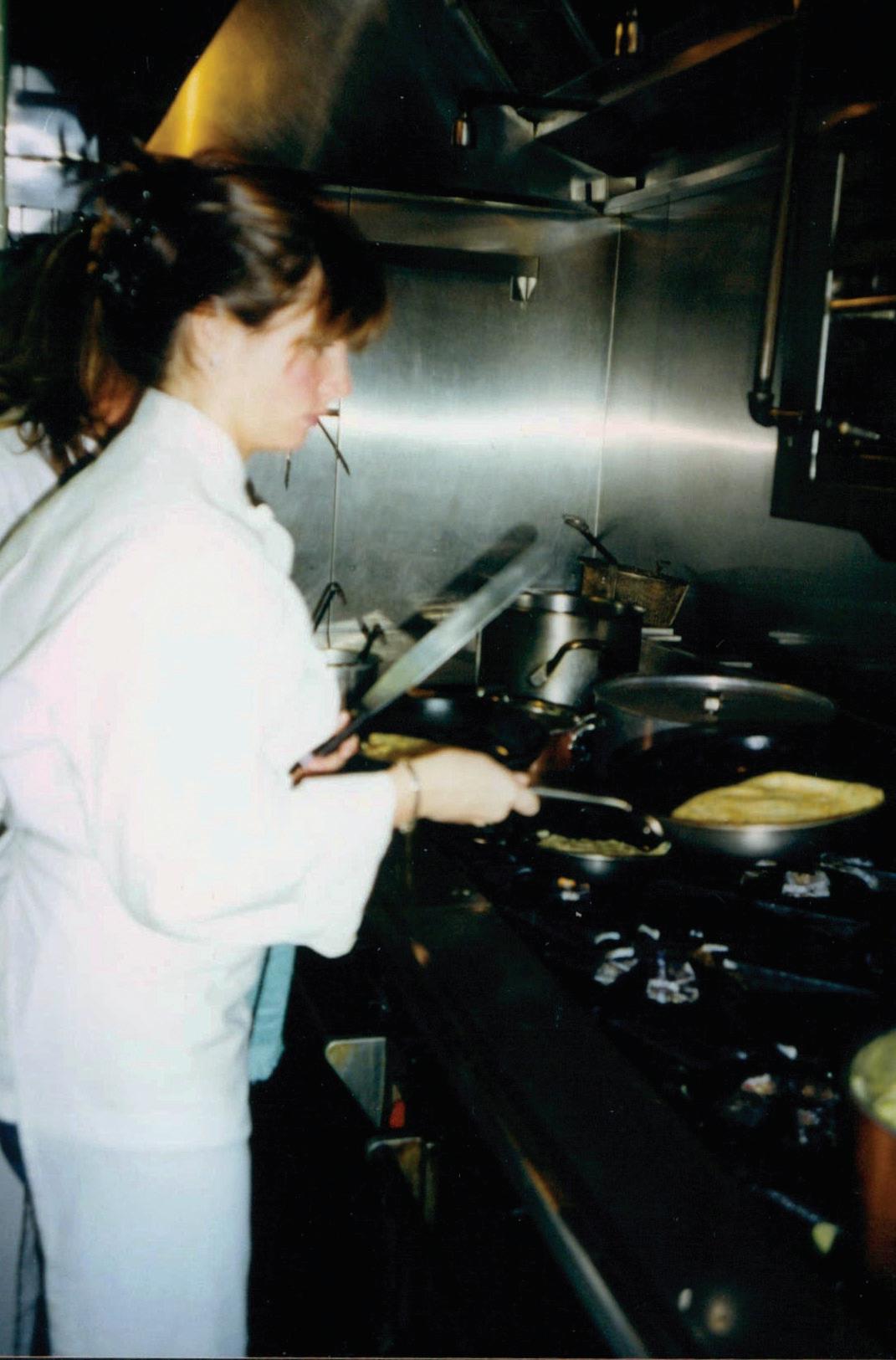
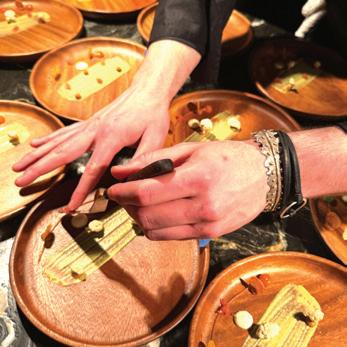
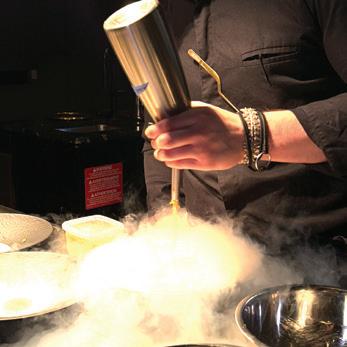
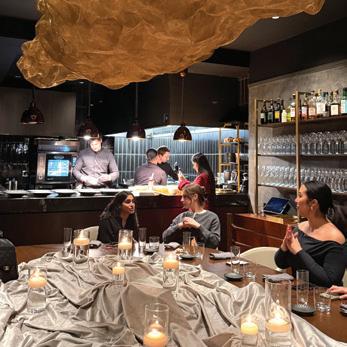
Shreena Amin is a Northwestern alumna, a corporate businesswoman and culinary trendsetter. I was lucky enough to speak with her about Class Act, her daring gastronomic undertaking that seats a group of 16 patrons at a communal table to enjoy creative cocktails, food with a narrative and an unconventional social experience.
Note: This interview has been edited for length and clarity.
Baylee Krulewitz: What’s your background in food, your emotional connection to it and what makes this industry so special to you?
Shreena Amin: I’m fairly new to the hospitality industry, but food has been a focal point of my entire life. My family, when we traveled, it wasn’t about what we were going to see. It was, “Where are we going to eat?”
I just love to cook. I love the craftsmanship and artistry. It satiates you; you get to sit at a table and share it together. There’s creativity and science, and it just hits on this crosscenter section of things that are so foundational.
BK: What was your inspiration for this concept and how did the idea evolve?
SA: Early post-pandemic, I had a really stressful day. My Northwestern friend was like, there’s this chef who cooks
Class Act
out of his house: you just Venmo and show up.
On a Friday, I ended up arriving late to one of these dinner parties. Once I got there, someone handed me a glass of wine; we had the first bite, I started talking with new people and my stress was relieved.
At that point, the chef was really early in his journey: setting the table, cooking, serving all the dishes and clearing. The dinner ended up lasting three and a half hours. A few dinners in, I was like, ‘Okay, well, I can help you figure out some of this stuff operationally.’ And then that just slowly evolved into us partnering. We got to learn and validate proof of concept: Is there something here that is actually worth investing in and turning into a bigger restaurant?
BK: Why is communal eating so crucial to this experience?
SA: Our vision is to create connection and belonging. You can always sit down and eat with someone. Everyone eats. It’s this universal thing. For people who are apprehensive, I would just encourage them to come with an open mind and take a chance.
BK: Is there a primary thing that you want patrons to take away from their Class Act experience?
SA: We want them to remember that they’re connected, that they’re not alone. So whether it’s reinforcing a connection, if you come with your significant other, family or friends, we hope that they leave with those bonds strengthened. If you come alone, we hope that you make a new connection with someone or some other part of the world. It all comes back to connection for us, and we just hope you feel a little bit more connected after you leave Class
design by Jordan Balousek
photos by Liyan Sun
design by Grace Wu
TUAN YUAN
More than a Chinese practice or tradition
By Zoe Chao
To “tuan yuan” (团圆) is to come together.” In its etymological sense, “tuan” (团) means to gather together and “yuan” (圆) means round, circular, complete. Piecing it together, “tuan yuan” is the sense of wholeness and repletion in gatherings with those you love.
In Chinese culture, the practice of “tuan yuan” manifests in “tuan yuan fan” (团圆饭), family meals ranging from everyday family suppers to major Chinese holidays, representing one’s filial piety toward their ancestors and love for friends. Gathering around a circular table places equal importance on each individual’s role in completing the circle.
During the 40-day governmentmandated Lunar New Year break in China, hundreds of millions of people rush home in a phenomenon called “春运” (chun yun). This year, an estimated 9.5 billion passenger trips to rush home to “tuan yuan” are anticipated. “Nian ye fan,” the specific “tuan yuan fan” meal on the eve of Lunar New Year, is a reunion dinner that brings together families who haven’t seen each other in the past year. For those in the Chinese diaspora who can’t travel back to their ancestral homeland or have had generations of family abroad, this leads to different ways of celebrating “tuan yuan.”
In Chinese American culture, the lazy Susan was adopted and proliferated across Chinese restaurants nationwide as a way to serve food around a table. Chinese community centers are dispersed across the country where Chinese people live, a constant reminder of community. In major metropolises, Chinatowns serve as communities for those who miss Chinese
culture. There are 50 million to 60 million people of Chinese descent living outside of China, with approximately 5.4 million in the United States, according to the U.S. Census Bureau. Everywhere Chinese people immigrate, there’s a community waiting for them or waiting to be established, thanks to the strong emphasis on shared culture, community, belonging, and tradition.
For Weinberg junior Aria Shi, who grew up just outside Boston, “tuan yuan” shows up in every facet of her life.
“Tuan yuan helps me stay connected with people around me,” said Shi. “It’s like a habit, something I’m really appreciative and conscious of.”
From receiving highly saturated Chinese New Year zodiac illustrations from her grandmother in China, to wrapping dumplings with her extended family in the United States, to celebrating Thanksgiving and Christmas over a round table — Shi uses “tuan yuan” to connect with her family.
“Tuan yuan has always been really important to my family,” said Shi. “We use food as a way to come together and catch up, especially if we haven’t seen each other in a while.”
At Northwestern, Shi previously served as the cultural chair of the Chinese Student Association (CSA), planning Mid-Autumn Festival and Lunar New Year celebrations for the Chinese students. Within CSA, there’s a lineage structure of family lines in which new members are adopted into a family upon joining, with a “big” and “littles” designation. Shi emphasized the importance of having that sense of family as a way to feel “tuan
yuan” and a sense of belonging when away from relatives. Within her CSA family, Shi often visits her big’s house with all her CSA siblings to bond over food, mahjong and a shared sense of cultural affinity.
“It encourages me to stay really connected with my family members and my culture,” said Shi.
For me, Chinese New Year, besides my birthday, was always my favorite holiday because it was the time of the year when I got a seat at the desirable grown-up’s table and experienced formal “tuan yuan.” It was a chance to talk to my grandmother across the table or crawl around under the table with my cousins, tickling the feet of our parents, aunts and uncles. This was our “chun yun” when my family flew in from Shanghai, Hong Kong, and California to gather at our grandparents’ home in Taipei.
Outside of Chinese formal tradition, I grew up sitting around a table with my mom, dad and sister at the same time every evening for dinner. There may have been empty seats, but just the four of us were enough to feel “yuan,” or whole.
As part of being Chinese, what’s core to me and many other Chinese people is this shared draw to a round table. The desire to share a meal with others — whether that be unpacking the dumplings your grandmother packed for you in a glass Tupperware or flying 8,000 miles to visit your relatives in Taiwan — “tuan yuan” is for everyone to gather and to belong and celebrate the ones that gathered around the table before. It is not agnostic to the Chinese experience: it is the heart of the home.
photo
The story Of Spoonfest
How a student-run food festival grew from five vendors into a beloved Northwestern tradition
You probably picked up this magazine at Spoonfest, maybe with a snack in hand or while deciding which vendor to try next. Today, the annual event brings together students and local businesses for an afternoon of food and community. From humble beginnings, here’s how Spoonfest evolved over the last decade and became one of Spoon’s most cherished traditions.
LEARNING ON THE FLY
By David Sun
Northwestern alum
Lauren Paige Goldstein ’18 was one of the founding members of Spoonfest in 2015. In its first iteration, five local vendors set up on Deering Meadow.
Part of the original concept was bringing Northwestern students closer to Evanston and other local farmers’ markets. While Goldstein regularly visited the Evanston Farmers Market, she noticed other students didn’t even know it existed.
“The primary goal was always celebrating, celebrating Evanston and the greater Chicago land’s food scene,” Goldstein says. “And a lot of those, you know, those vendors or makers or small businesses were, you know, not ones that Northwestern students were familiar with.”
Goldstein says Spoonfest also helped support the production of Spoon as a magazine. At the time, organizers charged vendors a small participation fee. Today, there’s no fee for vendors to participate.
“At the time, it was pretty fun for food trucks to pop up on campus as part of various
events. But those were usually events that were actually run by the school, as opposed to by student groups, where the students were responsible for figuring out those processes,” Goldstein says.
At the first Spoonfest, Goldstein says the team was “learning on the fly,” with no playbook to guide them. Parking quickly became one of the biggest unexpected challenges.
Goldstein recalled standing in the Garrett parking lot, waving down vendors so they could find the lot after unloading their cars at Deering. One vendor still struggled to understand the directions.
“Eventually, I was like, you know, what? I’m just gonna get in your car [and] explain to him how to drive,” Goldstein says.
Goldstein laughs about the experience now. Little did she know that parking on campus would remain a challenge years later.
“That was very much the way that we were operating in those early years, where it was like, ‘Oh, we didn’t realize it was going to be harsh for the vendors to navigate around campus.’ The only solution
20152018
is we’re gonna have to get in their cars and direct them,” Goldstein says.
Goldstein remembers one vendor who was special to her, a couple who sold tamales at the Evanston Farmers Market. Goldstein says they returned year after year and often sold out. They didn’t have a brick-and-mortar location in Evanston, and she says there was nowhere on campus to get an amazing tamale on any given day.
Goldstein says the festival initially focused on hyperlocal vendors, particularly those from the Evanston Farmers Market and downtown Evanston businesses. As the event grew, organizers began to see proof that the concept worked and could attract a broader range of vendors.
One of Goldstein’s proudest moments came when the festival secured a larger name: Jeni’s Ice Cream. She says bringing the popular brand to Spoonfest felt like a milestone for the event.
“To be totally honest, I didn’t even consider that Spoonfest would still be running in 2026, 10 years later,” Goldstein says.
SPOONFEST’S REVIVAL
For a couple of years after Goldstein’s graduation, Spoonfest’s future looked uncertain. After she and the original team left Northwestern, the event went on hiatus until 2022. The pandemic and other challenges prevented Spoon from hosting the festival.
Northwestern alum Zoe Dockser ’22 helped revive Spoonfest during her senior year. She and the executive board had heard stories from older members about how beloved the event once was.
“I have such distinct memories of the upperclassmen and that I became friends with my freshman year, telling us all about Spoonfest, that it was like the event of the year,” Dockser says.
Bringing the festival back to Deering Meadow came with a unique set of challenges. Organizers had to advertise and
persuade vendors to participate in an event they had never experienced themselves.
“How do we estimate how
“
“It was also about how we could shine a light on other student organizations and students on campus who have amazing talents that just haven’t had the chance to be seen in that kind of amplified way.”
many students are going to come throughout the day, with so little visibility and little awareness of what Spoonfest was?” Dockser says.
In the end, organizers brought back many of the businesses that had participated in earlier years and expanded the event to include campus groups, such as a cappella performances.
EXPANDING THE TABLE
After Dockser and her team revived Spoonfest, the event became a beloved annual tradition. As Goldstein puts it, the feeling at first was disbelief — I can’t believe we pulled this off. And each year after that brought a new question: how do we make it just a little bit better than the year before?
20192022
One way is through Spoonfest’s planning, which now involves more of the club. Northwestern senior Lara Weissmann, last year’s Spoonfest co-director, says they have tried to make Spoon a more holistic club and community.
“When I was head of BRIE (Business Relations & Internal Events), we kind of had the idea to do a Spoonfest committee,
Spoonfest also became the launch event for Spoon’s spring magazine, a tradition that continues today.
“It wasn’t just, ‘Come see everything we’re doing,’” Dockser says. “It was also about how we could shine a light on other student organizations and students on campus who have amazing talents that just haven’t had the chance to be seen in that kind of amplified way.”
For Dockser, the revived festival felt like the culmination of her four years with Spoon. That year, the club also painted The Rock, a Northwestern tradition Dockser said she had never experienced before.
“We utilized Spoonfest as an opportunity, not only to get people together, but also, you know, how do we spread the word of Spoon and show people what the club is all about,” Dockser says.
20232026
pulling people off our team that wanted to help more directly in planning Spoonfest,” Weissmann says.
Members of the committee help reach out to student organizations and vendors and have a say in who to bring to the festival. This addition took shape for both Spoonfest ’24 and Spoonfest ’25.
But Weissmann says Spoonfest is more than just reaching out to vendors. It involves making graphics, creating social media posts, producing content on the day of the event and highlighting vendors in the lead-up to the festival. This year, the Spoonfest committee will pull members from all teams, including content, digital and editorial, to further help spotlight Spoonfest.
“I think a lot of times, Spoon, at least outwardly facing, gets a lot of attention from BRIE,” current Spoonfest co-director Evelyn Ahdieh says. “And so we want to try and find a way to include everybody.”
Another way to upgrade Spoonfest is by bringing more student groups into the event. Weissmann says one critical goal of Spoon is to be the center of food on campus. For the past two years, Spoonfest has featured student groups from Chabad to nuAZN magazine selling their own products, including matzo ball soup and tanghulu.
“I think it just shows that we’re not just the club that posts fun restaurant reviews or the club that gets free food,” Wiessmann said. “Half, if not
on campus within just student groups.”
There’s always going to be challenges that no one can predict. In 2024, the Deering Meadow encampment forced Spoonfest organizers to find a new venue just two weeks before the festival. Eventually, they landed on the Arts Circle and Block Plaza outside Norris’ south entrance.
“I think that it ended up just being more to the essence of what Spoonfest is, which is supposed to be a gathering of community to enjoy food together, and that setup ended up just being more conducive to that,” Weissman says.
The unexpected challenge turned out to be a blessing in disguise. Spoonfest has been held in the Arts Circle for the past two years and will return there again this year.
Posters and promotion have also been a touchy subject for recent Spoonfests. In 2024, members of the Spoonfest committee rushed around Norris putting up posters and flyers, only for them to be taken down hours later. Ahdieh says university policies and processes often change, so it’s important to stay on top of them.
Last year, another hiccup (affectionately “Mayfestgate”)
happened when a banner space near the Arch was reserved by both Spoon and Mayfest, leading to some miscommunication as each group replaced the other’s banner. Dillo Day and Spoonfest have historically occurred within a week of each other.
Looking ahead, Weissmann hopes Spoonfest continues to grow the way it has over the past three years. One change Ahdieh and Isabel Bhasin, the other current Spoonfest co-director, want to make is highlighting the spring magazine launch that coincides with the event.
“I remember last year working at the Spoon table, and people coming up to me asking what the magazine was for. And nobody really knew that Spoon was a food publication club, not just an Instagram page. So we’re really going to try to promote that this year,” Bhasin says.
Weissmann says that while people have always been excited for Spoonfest, the event carries more weight now as it has grown.
“It would be so cool if Spoonfest were like a Dillo Day in terms of how much people look forward to it and how much people know it’s happening,” Weissmann says.
APPLE CAKE
ONCE A YEAR
By Sylvia Zeltzer
Carmela’s apple cake lived in a black baking tray covered by a cutting board in a tiny kitchenette in Givatayim, Israel. It was always there, no matter the day or hour. Outside, the heat was thick. Inside, the fan rattled and pushed around air fragrant with sugar and apples.
The tray and cutting board were designated for the apple cake. In a kitchen where space was tight and nothing went to waste, those objects belonged entirely to this dessert.
The recipe began with my great-grandmother Marie, who passed it down to her daughter Carmela. When Carmela died, the recipe almost disappeared with her. My mother, afraid no one would remember it, reached out to my grandfather’s cousin Bianca. Bianca pieced it together from memory, and the cake lives on in my mother’s American kitchen.
There are three layers: the base, the apple center, and the meringue. In the stifling heat of summer, Carmela stood over the counter peeling and coring apples in long ribbons. Then came the egg whites. No shortcuts. Just a bowl, a whisk, and the steady scrape of metal against copper, until Carmela’s forearms tightened and perspiration glistened at her hairline.
My mother tried to streamline the process by using applesauce. But it didn’t taste authentic, and she realized that applesauce from scratch was essential. My mother uses an electric mixer for the meringue, but when she feels tired after fifteen minutes of holding the appliance, she thinks about Carmela whipping by hand and is shamed into persevering.
Back in Israel, when the cake was ready, the whole family would rush into the dining nook. They would sit around the table, shaving off thin slivers of cake, until someone would laugh and note that the cut wasn’t straight and needed to be “fixed.” So they’d fix it. And then someone else would fix the fix, until the cake was gone and the process began anew.
Now the cake appears only once a year, at Rosh Hashana, the Jewish New Year, when tradition calls for apples and sweetness. Everyone waits for the holiday to enjoy our family recipe and hear my mother and grandfather reminisce about Carmela and Marie and that tiny kitchenette in Givayatim.
PASTRY
• 2/3 cup butter, softened
• 2/3 cup sugar
• 3 egg yolks
• 2 Tbsp. sour cream or plain yogurt
• 2 cups flour
• 1 tsp. baking powder
• 1 tsp. vanilla extract
FILLING
• 6 Granny Smith apples, peeled, cored and chopped
• ½ cup water
• 3 Tbsp. sugar
• Juice of 1 lemon
• 1 Tbsp. butter
• 1-2 Tbsp. vanilla pudding powder
TOPPING
• 3 egg whites
• 4 Tbsp. sugar
INSTRUCTIONS
1. Preheat oven to 350.
2. Mix pastry ingredients in bowl and press to cover bottom of greased baking dish.
3. Bake 15-20 minutes, until light brown. Let cool.
4. Mix all filling ingredients except vanilla pudding powder in saucepan and bring to boil. Simmer 10 minutes until applesauce forms. Mash to reach preferred texture.
5. Stir in vanilla pudding powder and simmer 2 more minutes. Let cool.
6. Whip egg whites and sugar until firm peaks form.
7. Pour applesauce over pastry and spread egg white topping over applesauce.
8. Return to oven to brown (a few minutes).
9. Remove from oven and let cool. Stick toothpicks around the cake and cover with plastic wrap, using toothpicks to prop up the wrap.
10. Refrigerate until golden “kisses” of condensation cover the top of cake.
design by Milan Hawk
photos by Sylvia Zeltzer
Yitao Wang
WHO GETS
The Last Slice?
One slice left — what happens next says everything
By Julia Zhao
There is nothing more tense than the final slice of pizza. You know the one. It’s sitting in the middle of the plate like it has diplomatic immunity. Everyone has already said, “I’m so full,” at least twice. Hands hover. Eyes linger. Mouths press shut. The group collectively pretends the last bite does not exist. And yet, it does.
There are the decisive ones: the people who reach for the slice without overthinking it, who believe that food on a plate is meant to be eaten.
There are the negotiators: the ones who treat this process like a formal transaction. “Do you want it?” “No, you take it.” “No, I can’t, but you should.” “No, I don’t want it.” They will circle the table around and around until someone caves.
Then, there are the sacrificers: the friends who insist they are full, even when they clearly are not, because offering the last slice feels like the right thing to do.
The last bite phenomenon happens everywhere, pizza or not, afflicting family dinners, birthday parties, holiday gatherings and tables full of strangers who met just an hour ago. But here’s the thing: the last bite is rarely about the food.
It’s about paying attention. It’s about knowing who’s had a long day, who hasn’t eaten much, who cooked, who really wants their favorite food… Sometimes giving away the last bite is less about being polite and more about noticing — the final bit of food becomes a tiny love language. You slide it across the table without making it dramatic. You say, “You should have it,” and this time, you mean it. Not because you’re afraid to take it, but because you know it’ll make someone else smile. And sometimes, the most wholesome move isn’t offering it at all. It’s splitting it in half, breaking it unevenly and passing pieces around. The last bite becomes something shared rather than claimed. The last bite isn’t about who deserves it, it’s about who you’re thinking about.
At the best tables, it doesn’t matter who takes the final slice. What matters is that someone looked up, noticed the room and chose to share, or chose to be brave enough to take it so everyone else could relax. And if you’re lucky, you’re sitting somewhere where there’s always another pizza coming anyway.