THE ALUMNI MAGAZINE OF THE NATIONAL UNIVERSITY OF SINGAPORE JUL - DEC 2026













THE ALUMNI MAGAZINE OF THE NATIONAL UNIVERSITY OF SINGAPORE JUL - DEC 2026
Today’s graduates are entering a world where careers are no longer linear or predictable, but shaped by choice, flexibility and their own definitions of success.






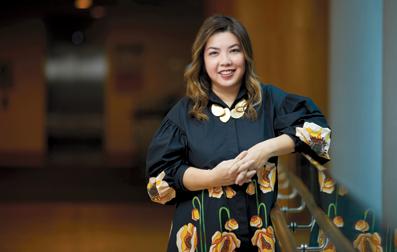
When I graduated from NUS, I could not have predicted that my professional life would take me from journalism and university communications to now, alumni relations.
That journey revealed for me a simple truth: your career is likely to be less of a straight road than a winding path — filled with detours, pivots and pauses along the way.
For graduates today, this reality is even more pronounced due to technological disruption, increasing global uncertainty, changing work norms and shifting employment priorities that have emphasised flexibility, purpose and well-being.
In our Focus article, we highlight a range of NUS alumni navigating this reality. From digital nomadism, remote work and entrepreneurship to career changes due to caregiving or health, we explore how personal values, economic pressures and societal expectations are shaping the decisions alumni make — and how they are redefining success for themselves.
Other articles in this issue, incidentally, echo the same theme. Serena Low (p. 30) began her career in law before becoming a career coach; the co-founders of Brambe (p. 32) took a leap of faith, switching from corporate jobs to start their own company; while Joanne Ang Min Jia (p. 34) maintains a busy second career as an illustrator alongside a full-time job. Taken
together, these stories reflect the many ways an NUS education continues to unfold long after graduation.
As this is our Commencement issue, I want to offer my congratulations to the Class of 2026! While the future may feel uncertain, I hope that the examples of your fellow alumni offer reassurance and inspiration. The good news is that you are not alone: you are part of a global alumni community — numbering close to 400,000 around the world — who are ready to support you in your next steps.
At the same time, for our broader alumni community, these stories may resonate at different points in your life. Whether you are considering a career change or reflecting on your own journey, I hope this issue reminds you that there is no single way to build a meaningful career or life — what matters is how you meet the bends in the road.
As always, thank you for staying connected. We encourage you to follow us on social media for our latest news and stories, as well as information on upcoming events. You can also write to us at alumnihelpdesk@nus.edu.sg. We’d love to hear your updates!
Ovidia Lim-Rajaram (Political Science and History ’89) Chief Alumni Officer
26 From an Early Setback in Mathematics to New Frontiers
Dr Thang Luong (Computing ’09)
28 Good Medicine:
Leading With Trust and Heart
Dr Tan Hiang Khoon (Medicine ’91, EMBA ’22)
30 Thriving Quietly
Ms Serena Low (Law ’93)
32 Turning Waste Into Wonder
Mr Bernie Ang (Design and Environment ’21, MArch ’21)
Ms Amanda Tay (Science ’21)
Ms Joanne Ang Min Jia (Arts
42 All the World’s a Stage
Mr Mukhammadyor Tulaganov (Music ’18)
44 Under the Midnight Sun
Dr Anthony Torres-Ruesta (Medicine PhD ’22)
46 The Other Side of Success
Associate Professor Suranga Nanayakkara (Engineering ’05, PhD ’10)
48 Life After Graduation
Mr Vishnu Sundaresan (Computing ’25)
49 The AlumNUS Crossword

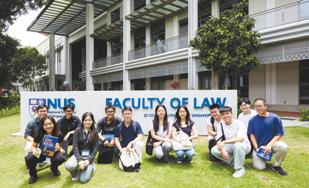
Welcome back to Kent Ridge campus, NUS Law!
The Faculty officially relocated from Bukit Timah to the Kent Ridge campus this Academic Year, moving over all teaching, student life and administrative activities. The shift brings NUS Law closer to the wider NUS community, enabling new opportunities for interdisciplinary learning and deeper immersion in campus life.
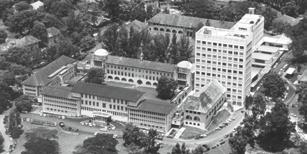
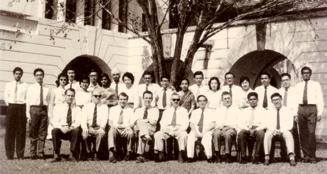
Law returned to the Bukit Timah campus after the site was restored to NUS
2025
Law moved to University Town at the Kent Ridge campus

1956
The Department of Law was established at the University of Malaya’s Bukit Timah campus
1981
Law moved to the Kent Ridge campus following the merger of the University of Singapore and Nanyang University to form NUS

NUS ranks third in Asia, tops Singapore in THE Asia University Rankings 2026
NUS has been ranked third in Asia and first in Singapore in the Times Higher Education (THE) Asia University Rankings 2026. This marks the seventh consecutive year that NUS has been placed in the top three of the THE Asia University Rankings. NUS Deputy President (Academic
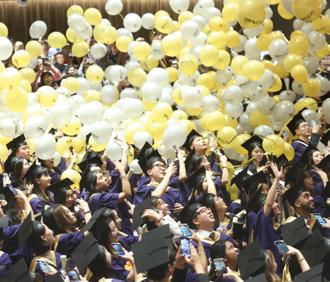
Affairs) and Provost Professor Aaron Thean said the University’s consistent performance reflects the sustained efforts of its faculty, researchers, staff, students and alumni, and NUS’ commitment to delivering impact in Singapore and globally.
NUS graduates demonstrate resilience in a cautious job market
NUS graduates continued to earn higher starting salaries and achieve strong employment rates, according to results of the Joint Autonomous Universities Graduate Employment Survey 2025. Close to 9 in 10 NUS fresh graduates in the labour force secured employment within six months after final exams. NUS graduates in full-time permanent employment earned higher starting salaries, with a steady rise in median starting salaries for Arts & Social Sciences, Business, Design and Engineering, and Nursing graduates over the past three years.
NUS scientists devise AI model that “reads” protein pairs, unlocking new insights into disease and drug discovery
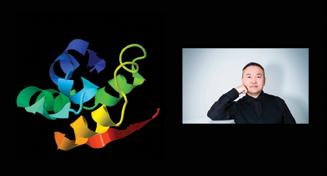
A team led by Professor Zhang Yang from the Cancer Science Institute of Singapore, School of Computing and Yong Loo Lin School of Medicine, has developed D-I-TASSER, a new software tool that predicts the 3D shapes of complex proteins more accurately, supporting faster drug discovery,
improved disease research and more precise design of targeted therapies.
In tests, D-I-TASSER predicted complex protein structures about 13 per cent more accurately than existing state-of-the-art methods. The researchers were also able to generate reliable structural models
for most proteins in the human body, including many that were previously difficult to analyse. The team is extending the framework to RNA structure prediction and to modelling protein–protein interactions, with a particular focus on antibody–antigen complexes.
advance interdisciplinary research on complex societal challenges
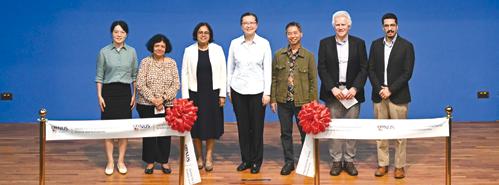
humanities to better understand complex social phenomena and develop solutions to pressing societal challenges.
A new research centre is bringing together data science, AI and computational methods with deep insights from social sciences and
The Centre draws on expertise across disciplines including computing, new media, linguistics, geography, public policy and healthcare, amongst others.
This interdisciplinary foundation enables CSSH to examine how digital technologies intersect with social systems, such as assessing the societal implications of AI-enabled platforms, using digital tools to help preserve Singapore’s cultural heritage, and strengthening digital literacy in vulnerable communities.
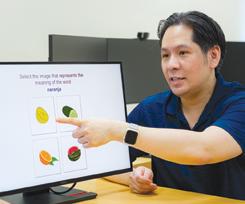
A new NUS study has found that language-learning exercises that use pictures for learners to guess the word before seeing the correct answer can significantly improve vocabulary recall in a second language. The research, led by Assistant Professor Steven Pan (left) from the Department of Psychology, provides experimental evidence for the “pretesting” effect, showing that attempting an answer first and receiving immediate feedback strengthens memory more effectively than passive study alone.
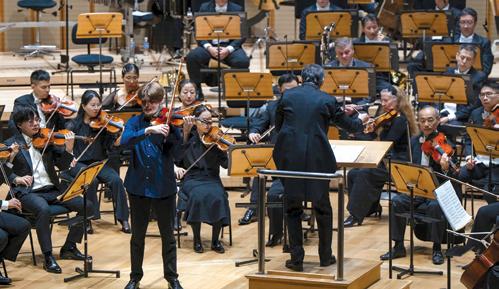
Ukrainian violinist Georgii Moroz (Music ’23) emerged as the winner at the Singapore International Violin Competition (SIVC) 2026, following the Grand Finals at Esplanade Concert Hall on 7 February. Presented by the Yong Siew Toh Conservatory of Music (YST) at NUS, the competition
awarded second prize to Danish violinist Michael Germer and third prize to Chinese violinist Zou Meng (Music ’24).
“The overall level of excellence and artistry among candidates was higher this time round compared to previous editions,” shared returning jury member Paul Roczek, an Austrian violinist and Professor Emeritus at Universität Mozarteum Salzburg. “The differences between competitors were minimal; each demonstrated exceptional skill and finesse in their performance,” he added.
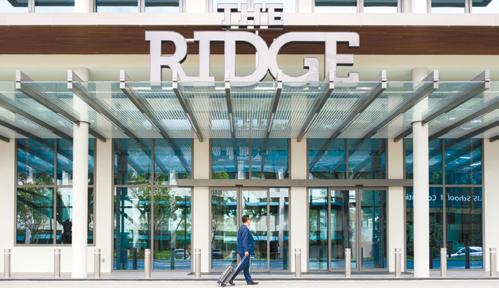
Visiting guests of NUS can now check into a brand-new accommodation in the heart of campus that marries sustainable architecture with smart technology. The Ridge is a first-of-its-kind on-campus accommodation facility at NUS, designed to support the University’s academic, research and professional engagements.
Shaped like the Greek letter pi (π), the eight-storey
building comprises three segments that symbolise the three fundamental stages of the NUS educational journey: undergraduate life, graduate studies and lifelong learning. The design is also a nod to the hilly topography of Kent Ridge. Each year, NUS hosts about 8,000–10,000 overseas academic visitors, with the number set to grow as the University’s global partnerships expand.
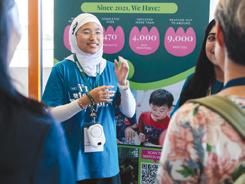
In April, student mentors, donors, community partners and University leaders gathered to celebrate Teach SG’s growth from a pilot into an ecosystem that has moved beyond tuition and toward the deeper work of relationshipbuilding, role-modelling and widening possibilities for children and youth. It mobilises NUS students to provide sustained mentoring and enrichment for children and youths who may not otherwise have access to such opportunities. Since 2021, Teach SG has deployed more than 4,000 mentors, reached around 9,000 beneficiaries and worked with more than 120 community partners.
To commemorate the University’s 120th anniversary, the Office of University Communications curated a photo exhibition of University life, as seen through the eyes of NUS’ alumni, students and staff. Featuring images of campus life, flora and fauna, people and places, these photographs celebrate the stories that have shaped NUS across generations.

A selection of the images is featured here. View the full gallery of 120 photographs online.
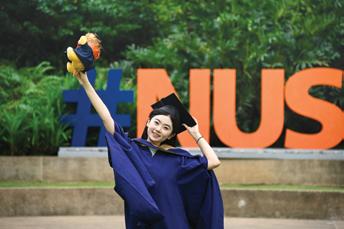
By: Wang Shuo
In this moment, I celebrate both an ending and a beginning. My journey at NUS has shaped how I see the world, with curiosity, resilience and hope. As I step beyond the familiar, I carry with me the spirit of learning that turns every ending into the start of something new.
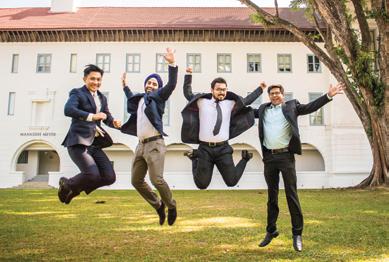
Leaps of Friendship
By: Abdullah Bin Abbas (MPP ’21)
My College Green residential mates and I jumping in joy during our Bamboo photoshoot day in 2019 — a snapshot of camaraderie and celebration that still lifts our spirits.
For 120 years, the National University of Singapore has been a place where curious minds meet bold ideas, and shared aspirations take shape.
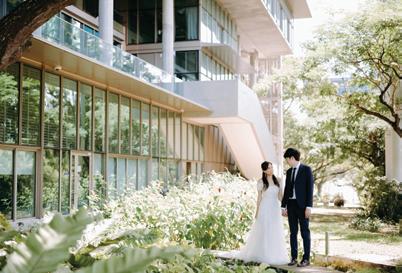
Love Among the Halls
By:AngYuQian
(DesignandEnvironment’13, MSc’16)
My wife and I met at the NUS Students’ Union RAG & Flag over 10 years ago and became best friends before we (secretly) got married in 2022. We chose to include the College of Design and Engineering in our wedding shoot as it has become our second home. I am a CDE faculty member, and my wife also teaches here.
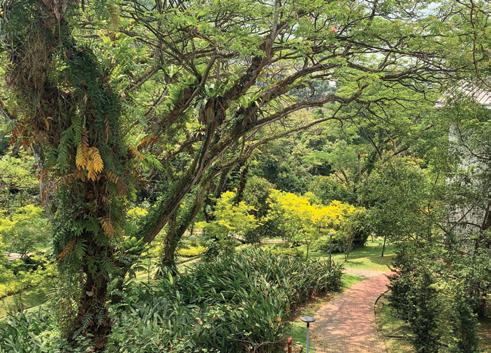
By: Antonia Monteiro
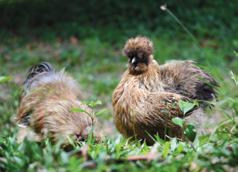
By: Fan Zirui
(Engineering MSc ’24)
These are the famous silkie chickens of NUS Raffles Hall. Students, staff and visitors alike cannot help but stop to admire them. This photo captures a charming symbol of the campus’ harmony with nature.
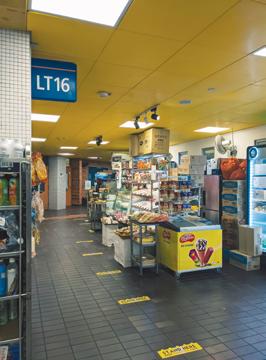
By: Pratyay Jaidev (Computing ’21)
Technology evolves quickly, but some campus memories never fade. For me, it was the joy of a one dollar iced Milo after tutorials, always served with a brotherly smile. Even in my final week on campus, the drinks stall remained open, its familiar warmth reminding me that some traditions endure.
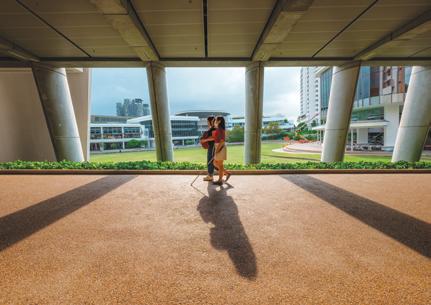
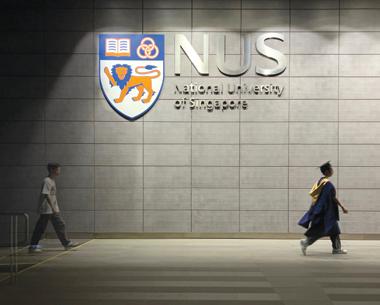
By: Daniel Tan
Framed by the pillars of UTown Residence, two students walk across the concourse in the afternoon light. In this quiet moment, the pillars around them echo the true pillars of support in our community, where students uplift one another and move forward together.
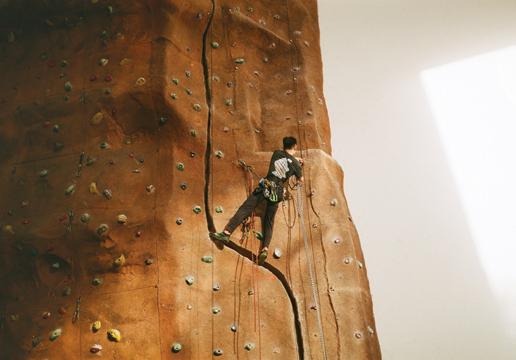
By: Anthea Yip (Computing ’25)
In 2021, the President of NUS Mountaineering led with passion and grit, inspiring the team to push their limits. His support sparked a love for the mountains that carried many, including future EXCO members, to even greater heights.
By:
Liu Xiyuan (Science MSc ’24)
From the shadows of my own uncertainty, I walked into a future illuminated by knowledge. This image captures that transformation, my past self, once a faint outline of potential, solidifying into the graduate I am today. Under the guiding light of NUS, I found the momentum to turn tentative first steps into purposeful strides forward.
Calibrating the Unseen
By: Don Wong
Surrounded by the blue spikes of an anechoic chamber, researchers fine-tune a receiving array built to capture radio signals cleanly. This controlled space allows them to study the foundations of advanced wireless technologies.
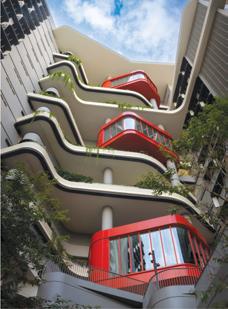
Bold in Red, Framed by Green
By: Sartaj Mir
The Valour House student hostel stands out with its vivid red forms set against cascading greenery. This portrait highlights the interplay of colour and nature, a design that feels at once modern and alive.

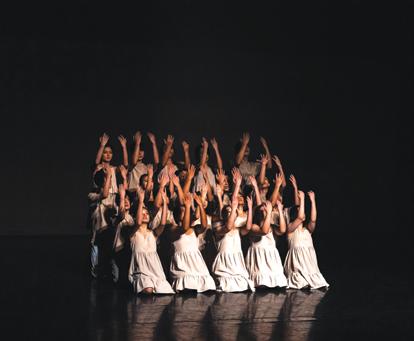
United in Motion
By: John Tan Yeh Han (Computer Engineering ’22)
Members from every NUS hall came together at Dance Uncensored 2022, creating a spectacular performance that celebrated unity, artistry and the shared heartbeat of campus life.
Professor Giorgia Pastorin is Head of the Department of Pharmacy and Pharmaceutical Sciences at the Faculty of Science. Her research interests are focused on drug delivery, in particular novel and innovative drug delivery systems.
“At the core of our work is figuring out how molecules work and how to control them. We are rethinking potent chemotherapy drugs at the nanoscale so that they can target tumours with precision while minimising side effects. We are also developing new ways to deliver therapeutics such as a gel that reduces inflammation and supports cartilage repair. On the cosmetics end, we are working on safer hair dyes that don’t trigger severe allergic reactions.”
“I grew up in Venice, Italy. In Italy, our education is much broader and humanistic. I didn’t even step into a laboratory till university. So moving to Singapore to work at NUS in 2006 was a huge change. Living here since has been fantastic, but the hardest part is being so far from my parents. I don’t go to Italian restaurants here because to me, Italian cooking is my mum’s cooking.”
“We lead as a team. I don’t believe I have all the answers, or that I’m always right. We have a strong leadership team, and we discuss ideas and make decisions together. That helps ensure what we decide is more objective and works for the whole department. I’m very fortunate to work with people of great integrity!”

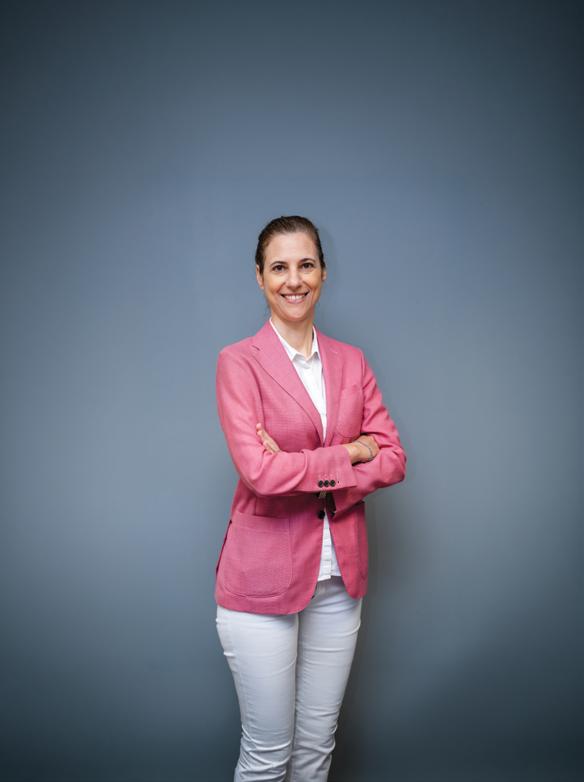
“I was mentored by my professors and I try to nurture my students and colleagues the same way. I try to give them every opportunity I can, to attend major conferences, increase their visibility, secure grants and connect with industry. Whatever is within my capacity, I will do.”
“To be a good researcher, you have to be intellectually curious above everything else. If you’re not curious, you don’t read. If you don’t read, you don’t know what’s happening elsewhere. You don’t get inspired. You don’t get new ideas.”
“Being a scientist means you never get to switch off. So, every extra minute I get, it is protected for my family, and especially for my teenage daughter. We have dinner together and walk in parks on weekends. I get to hear her review the latest books she has read. It’s great.”
For a growing number of NUS graduates, the ideal career no longer fits neatly into a job description. Instead, they are navigating a wider set of choices — between stability and flexibility, security and experimentation — redefining what success looks like on their own terms.
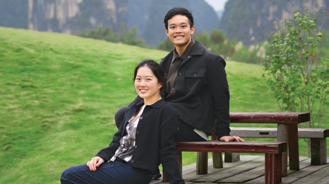
After choosing to attend NUS together and marrying while still students, Mr Darien Tan (Business ’23) and Ms Joanna Wong (Arts & Social Sciences ’21) seemed destined for corporate success. Within a few years of graduation, the tech sales representative and UX designer were earning a combined annual income of S$250,000.
Then in September 2024, Mr Tan quit his job after a near-death accident, deciding that “life was too
short to spend working for money without purpose”.
With dreams of travelling the world, Ms Wong quit to join her husband and became the content creator behind the duo’s travelogues as well as financial literacy videos. They also started a company called Kin Wills, now with a team of seven, specialising in willwriting and estate planning which they run on the go between continents.
“My time at NUS taught me that there isn’t just one way to live life,”
said Mr Tan. He credits the University’s flexibility as formative, citing decisions such as taking a gap year, dropping his Honours and enrolling in a general education module called “Thinking Like an Economist”, which left a lasting impression. The course delivered a lesson he applies in his work: everyone is driven by incentives.
He added, “There are multiple paths and definitions of success. Since my dream was to run businesses, travel and see the world, build wealth and have the freedom to decide how I spend my time, I decided to live it.”
As a new class of graduates emerges from NUS this year, it is clear that beyond a stable 9-to-5 job, they are equipped to traverse a whole range of alternatives — entrepreneurship, side hustles, content creation, remote work, freelancing, investing, microretirement, stepping back for sabbaticals — in order to live a life of their own design.
Their NUS education enables this. Alumni in alternative careers often mention the liberating influence of programmes such as NUS Overseas Colleges (NOC), which provides entrepreneurial internships around the world, career consultants who shed light on their inclinations, the University’s strong support network
of alumni and the broadening of the educational curriculum to support lifelong learning.
At a speech delivered during the University Awards in 2020, NUS President Tan Eng Chye (Science ’85) spoke about the introduction of interdisciplinary, integrative university education, noting the aim to “educate and empower our graduates to be adaptable, resilient and innovative, so that they can thrive in a complex, uncertain world.”
And this uncertainty is one factor which has inadvertently triggered the rise of alternative careers globally.
For instance, in the United States, in a survey of over 1,000 professionals conducted by the Upwork Research Institute, 52 per cent of those in their 20s freelanced in 2023. This compares to 30 per cent of those in their 50s doing the same.
According to Dr Wang Senhu, Assistant Professor in the NUS Department of Sociology and Anthropology, there are many reasons for a shift towards careers that are “much more fluid, fragmented, and adaptive” — and it’s not just because young people are thinking “you only live once” (YOLO).
One, labour markets are more volatile, long-term security is harder
to attain, and today’s graduates do not want to suffer burnout if they witnessed it in their predecessors.
Said Dr Wang, “When stable rewards seem less guaranteed, people may shift toward values like meaning, identity, and self-expression because the older bargain — work hard now and security will follow — feels less credible than before.”
Two, firms have become more flexible. Technology has evolved to a point which enables work from anywhere, anytime, supporting the creation of new and exciting incomegenerating roles.
Three, there is stronger emphasis on self-development, personal meaning and work-life balance. Said Mr Tan Kok Guan (Engineering ’96), Principal Career Coach at career coaching firm Broccolise, “Among younger professionals, I see a growing emphasis not just on getting a job, but on finding work that offers growth, meaning, flexibility and alignment with personal values.”
Freedom of time and a sense of purpose in work are far more important today than a generation ago.
According to the 2024 Quest for Meaning at Work report by global recruitment agency Manpower and job platform Jobs_that_makesense Asia, 97 per cent of Singapore respondents yearned for a sense of meaning in their careers. With a majority of respondents aged between 18 and 35, the findings are particularly reflective of how younger professionals view work today.
Ms Shilpa S Nath (Science ’11), who took a sabbatical after suffering job stress, said: “Growing up, I used to think that success meant having a great position in a company, having a great salary, having a house. But today, I feel success is having peace of mind, a healthy body, being able to go back home and having the time and energy to build my community, talk to people and hang out with my friends.”
However, Dr Wang sounded a note of caution against over-romanticising the idea of alternative careers.
He explained that the playing field is not equal, and that everyone has different degrees of freedom to make those choices. For instance, some graduates have “family resources that allow experimentation” while others have to start earning in a hurry. To him, socioeconomic background and support is a far more important enabler of an alternative career than individual traits like ambition and resilience. “What looks like courage at the individual level is often scaffolded by structural advantage.”
Some fields of study are also more open to out-of-the-box careers than others, and not everyone has the stomach and confidence to take those risks. He said, “The rhetoric of ‘designing your own career’ can be inspiring, but it can also obscure the unequal conditions under which different people make those choices.”
An alternative career transfers uncertainty to the individual, and that can be a particularly heavy burden if flexibility is not a choice. It can lead to unstable contracts, unpredictable hours or platform-based work. “That is flexibility that can produce stress rather than freedom,” said Dr Wang.
If such a two-tier system emerges — one group experiencing flexibility as freedom and another as precarity — he believes it would widen societal inequality and become one of the most important issues in the future of work.
Also, once heavy financial commitments enter the picture — think children, a home mortgage, or healthcare costs for an elderly parent
— a steady paycheque, bonuses, medical benefits, clear career promotion ladders and opportunities to learn and exercise leadership, can be very comforting. Said Dr Wang, “Flexibility can be liberating in the short term but costly in the long term. The consequences of immediate autonomy versus cumulative security may only become visible over time.”
At the moment, those in alternative careers are not the majority. Associate Professor Lim Ghee Soon from NUS Business School said that, anecdotally, most of the recent NUS graduates he encountered prefer the stability of a permanent full-time job in an organisation.
Data shows that NUS graduates are still very much in demand amongst employers. According to the latest Joint Autonomous Universities
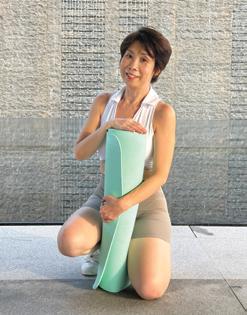
Strength for the second act (of her life) — that is the current life mission of Ms Wang Yoke Choo (Computing ’93), a former regional C-suite IT leader turned aspiring Pilates instructor.
“I faced some health challenges in the past year, and I decided to refocus on my health and wellness as I move into my senior years,” said Ms Wang, who learnt Pilates years ago to recover from old injuries and found that the low-impact strengthening exercise was great for keeping her strong, flexible and mobile.
In February 2025, she walked away from an IT career spanning 30 years marked by stellar growth and sales figures. Her last role was Regional Vice-President (Asia Pacific) at a company specialising in AI-powered workflow automation software.
Now training to become a fully certified Pilates instructor, she acknowledges that she will earn less than what she used to. But at this stage in her life, she does not have a heavy financial burden.
Graduate Employment Survey 2025, jointly conducted by NUS and other Autonomous Universities, more than 9 in 10 NUS graduates across 18 degree programmes secured employment within six months, with higher or similarly strong starting salaries for graduates from 20 courses as compared to the previous year.
Professor Aaron Thean, NUS Deputy President (Academic Affairs) and Provost, said in an NUS News article that this is something to be proud of, especially given “today’s cautious job market”.
It is also heartening that for those who secure full-time jobs, HR practitioners are well aware that young people are looking for something different in their careers and would look kindly on an applicant who made a career detour to take a sabbatical or embark on a startup.
Said Ms Linda Teo (Science ’94), Country Manager, ManpowerGroup Singapore, “Hiring is increasingly skills-based, with greater emphasis on transferable capabilities and the ability to grow as roles evolve, rather than narrowly defined job titles or strictly linear career histories.”
She added that those trying to pivot into heavily regulated sectors that require industry-specific experience, or to re-enter fast-moving industries after a career break, may face a more challenging transition due to higher expectations around demonstrating current relevance. Even so, the key question recruiters ask is consistent: “It is whether the candidate can demonstrate the skills, readiness and relevance needed to perform effectively in the role.”
And if there is a need to explain a career pause or pivot, Mr Tan Kok Guan advised, “What matters is being
With decades of experience in the fast-moving tech industry where she has always encountered new challenges, and clarity from maturity, it was an easy choice that she made without hesitation — she wanted to move from mental to physical work, a decision friends and family fully supported. “I have also met seniors and juniors from NUS who pivoted successfully. It just shows that while it may not be a well-trodden track, it is still a doable act,” she said. She reflected, “I believe that a happy family and a healthy and happy self contribute to the definition of success when one is to look back at one’s life. Even if I do not make anything out of this, it will still help me to stay active and healthy, both mentally and physically.”
I have also met seniors and juniors from NUS who pivoted successfully. It just shows that while it may not be a well-trodden track, it is still a doable act.
able to show intentionality: what led to the decision, what you were exploring and what you took away from the experience. Even if the move was not perfectly planned, thoughtful reflection makes a meaningful difference.”
What is clear is that the world of work is changing fast. Whether in a full-time job or an alternative career, the advice from NUS alumni and career coaches is to build up a network, develop transferable skills and good work habits, and slow down occasionally to reflect.
Said Mr Tan Kok Guan, “Careers are rarely linear, and the dots often only connect in hindsight. While you may not be able to predict the future, you can focus on taking thoughtful, informed steps in the present. In many ways, it is these small steps, taken consistently, that shape the path ahead.”
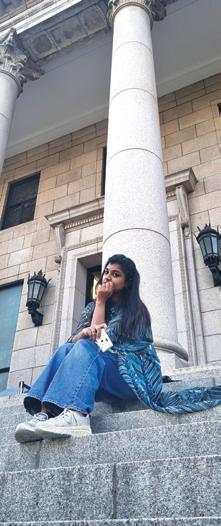
Ms Shilpa S Nath (Science ’11) was so stressed at work she was losing her hair, couldn’t keep food down and was making repeated trips to the hospital A&E. She was also, at 32, at the highest point of her career, leading change communications for a major bank’s data and privacy transformation and earning more than she ever had. “I had a lot of fears about leaving,” she said.
What changed her mind were two questions from a leadership coach: What is the cost of your staying? And how much do you actually need to live without a job?
She realised her health was too high a price to pay — and that she had a comfortable level of savings. This financial reality check, she stressed, is critical for anyone who is thinking of taking a break: “To enjoy a sabbatical, we cannot be worrying about survival.”
She moved to Seoul to study Korean at Korea University in June 2022, indulging in her loves for the language and travelling. For the first eight months, she gave herself “permission” to do nothing but attend class. In that time, looking at LinkedIn — full of posts about her friends’ work achievements — and restraining her inner workaholic proved most challenging, even as she attended class with kids nearly half her age.
“But I think that time was pivotal to my growth as a person. The biggest shift that changed the way I live my life today was that I de-coupled my identity and worth from my career,” said Ms Nath. “I also feel like sometimes, we need to slow down to accelerate.”
While she was worried that she would become irrelevant, lose her networks or fail to find a job when she was ready, it proved unfounded. Taking on small projects led to an “accidental” full-time role in March 2025 as the Community & Communications Lead at the AI Verify Foundation in Singapore.
The sabbatical did not sully her CV. Ms Nath, who has also built communities like Kali Club to support people who want to design their own life, said: “Nowadays, taking a sabbatical has become quite commonplace. Employers also realise that when people pace themselves and take a career break, we come back more energised.”
But I think that time was pivotal to my growth as a person. The biggest shift that changed the way I live my life today was that I de-coupled my identity and worth from my career.
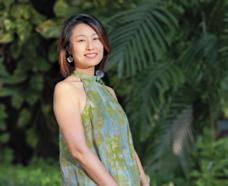
Ms Claire Li (Engineering ’11) always knew she was wired differently. While still studying at NUS, she took a career assessment that placed her in the top 2 per cent of people who actively welcome change, and suggested she might thrive as an artist, promoter or teacher.
“Even though I graduated with an engineering degree, I naturally gravitated toward roles where I could promote ideas, influence people and use creativity,” said Ms Li. “In a way, I’ve always been entrepreneurial, even while working in corporate environments.”
She never worked as an engineer, instead spending nearly 15 years at the likes of Google, Palo Alto Networks and Tencent, working on talent ecosystems and inclusive hiring strategies. But still, she wanted to build something of her own.
The spark came unexpectedly: at an AI startup pitching event in Singapore, she found herself one of only three women in a room of a hundred. When a Microsoft Founders Hub leader challenged her to pitch on the spot, she rose to the challenge. Soon after, she was admitted into the programme, which supports startups, and took the leap into full-time entrepreneurship. Her startup, TrueVibe, is an AIpowered matchmaking platform designed for busy professionals seeking meaningful connection.
This is her second attempt; she has failed before. In 2017, she co-founded an e-learning startup which she ran for a year before she ran out of money and had to return to full-time work. That experience, she said, makes this attempt far less daunting. “I’ve planned for a three-year runway, and I’m a lot more confident pitching my ideas from Day 1,” she said.
Ms Li faces financial uncertainty and the pressure of wearing every hat at once, but she is at peace with herself: “My world-class NUS education led me to work in top companies, but I never felt like it was a perfect fit. Now I am free to define success on my terms and it’s about creating something that brings real impact to people.”
When Ms Marilyn Chew (Design and Environment ’17) and Mr Low Jian Sheng (Computing ’19) received the keys to their BTO flat in 2020, instead of waiting five years for the flat to be completed, they chose to spend their rental budget enjoying the rest of the world.
Four years and 38 countries later, the digital nomad couple have figured out how to earn an income from content creation, entrepreneurship and remote consulting.
Ms Chew co-founded two digital marketing companies: @sgfoodiefam, which features food, travel and lifestyle videos in Mandarin for social media, and @shrugmyshoulder, which features travel adventures and tips from the couple. Mr Low is a software engineer.
Their office might be a café in Mexico City, a hotel in Botswana, or an Airbnb in Cape Town where they have been known to catch a morning surf before their first meeting. “Our departure from the corporate world wasn’t about putting our careers on hold,” said Ms Chew. “It was about changing the environment in which we build them.”
That mindset is firmly rooted in their experiences as NOC alumni. Getting a taste of New York’s startup world in their twenties stripped away the fear of starting from scratch and sparked a curiosity about the world.
There are trade-offs. WiFi is sometimes erratic and they have to pull the occasional all-nighter to bridge time zones. “We have to focus and be productive in any situation,” said Mr Low.
But both agree that the life they have built — skydiving, surfing, chatting with a taxi driver in Zimbabwe who lost his life savings to hyperinflation, witnessing life in Syria after a war — has been worth every inconvenience.
They have since gotten the keys to their new flat and moved in December last year. However, their travel schedule, which is locked in until early 2027, remains as packed as ever.

Mr Ethan Eng (Science ’19) was his own boss for a while. But after five years of running one of Singapore’s first kombucha microbreweries, he decided to apply his skills in a corporate setting. Today he is a project manager at the National Parks Board (NParks).
To some, returning to a 9-to-5 job after running your own show might look like a step back, but Mr Eng does not see it that way.
“Rather than leaving entrepreneurship, I saw it more as expanding my repertoire,” he said. “The entrepreneurial mindset never really switches off. It just finds new outlets.”
He is visibly excited talking about his work at NParks. Mr Eng manages Southeast Asia’s largest herbarium digitalisation initiative at the Singapore Botanic Gardens Herbarium, helped develop the herbarium’s first content creator campaign, explored public-private fundraising and initiated a partnership with LASALLE College of the Arts. Some of these were inbound opportunities the team decided to pursue, while others fell outside the usual boundaries of the role entirely, requiring him to figure things out from scratch with the full support of his boss.
“I’ve always been resourceful enough to identify the gaps in my knowledge and go find what I need to fill them,” he said.
As with numerous NOC alumni, he attests to how the experience fuelled his entrepreneurial desire. He spent one year in Stockholm, where he interned at an established life sciences startup while attending lectures at KTH Royal Institute of Technology. Being surrounded by PhD-holders who were a blend of “serious science and entrepreneurial energy” reinforced his desire to start Kombynation Co., the kombucha company he co-founded in his final NUS semester.
Returning to a corporate setting needed some getting used to. Decisions that flowed freely now drip through governance layers and stakeholder sign-offs, though he has come to see the value in that structure too.
I’ve always been resourceful enough to identify the gaps in my knowledge and go find what I need to fill them.
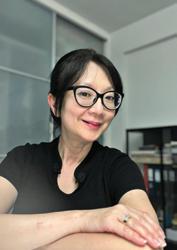
Having taken well to his new role, he continues to find ways to improve processes by harnessing the possibilities that new AI tools bring, drawing on the entrepreneurial instincts he has carried with him throughout his career. He said, “People with non-linear paths often bring exactly the kind of crossdomain thinking, adaptability and bias for action that organisations increasingly need.”
Ms Janet Yeo (Design and Environment ’88) began her career as a sales and design consultant specialising in French kitchen cabinetry. She spent over two decades in the furniture industry before partnering with a university schoolmate in his interior architectural consultancy firm.
Over the past four years, she balanced running the business alongside caring for her mother, who was living with dementia. The experience proved deeply transformative — reshaping her outlook on life, career and care.
“Witnessing her decline — from a fiercely independent woman to someone who felt lost without my physical presence — was deeply painful. It also opened my eyes to the realities of ageing, and the gaps in how our environments and society support older adults,” said Ms Yeo.
Ultimately, it propelled her to advocate for a greater understanding of ageing, pursue a Master of Gerontology
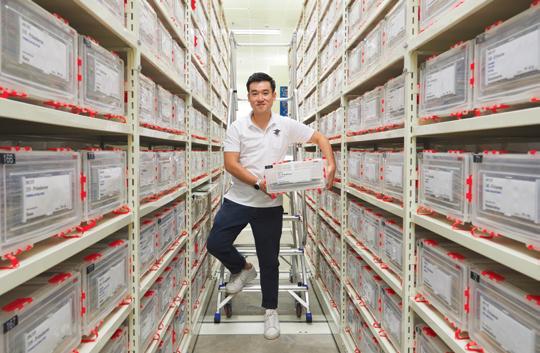
and found AgeWise Life, a platform focused on ageing advocacy, education and community engagement around eldercare.
One of the primary challenges of this mid-life career pivot has been transitioning from a familiar industry into a new and evolving field. “While academic knowledge can be acquired, the practical aspects — such as navigating regulations, building networks and establishing the right partnerships — have been more complex and less straightforward,” said Ms Yeo.
To ensure financial stability, she continues to maintain a foothold in interior architectural work, while gradually building AgeWise Life through pilot service programmes and stakeholder engagement. Despite the challenges of balancing an existing career alongside a newer one, she remains clear in her intent.
“Through this work, I hope to contribute meaningfully to how we support ageing with dignity and purpose.”
While academic knowledge can be acquired, the practical aspects — such as navigating regulations, building networks and establishing the right partnerships — have been more complex and less straightforward.
Is career success about your title, salary or the personal fulfilment you find in your work? We asked alumni to reflect on their own definitions — as well as the advice they would give to new graduates.
When I first started working as an intern at The Straits Times in 1997 (which was at the end of my first semester in NUS), I wanted to change the world because I strongly believe that photographs can make a real difference to people’s lives. Idealism aside, I still believe in that nearly 30 years on, albeit in different ways. I document old and dying places and spaces in Singapore so people can remember what these looked like before they are completely erased or transformed.
Mr Darren
Soh
(Arts & Social Sciences ’01) Architecture Photographer and Visual Archivist, Self-Employed
Success is deeply individual, it cannot be defined by a fixed definition, single path or milestone. For some, it may be leading a company; for others, the opportunity to work across sectors, create real-world impact or design a balanced life. Over time, I have come to see success as aligning your life with what matters most to you.
Ms Shruti Singh
(MPA ’18) Country Director,
India, Canopy
It is important to me that my work allows me to create impact that is true to me, learn and develop myself holistically, and be inspired by the people around me. I think the approach has evolved quite a bit from thinking about what I want in my career to what I want in my life — before then identifying where my career sits in that.
Mr Victor Zhu (Science ’20) Executive Director, Kita
Stay curious about the latest things in the world today, be it new technology or ideas. Also, maintain a good relationship with the people you’ve met and will meet — they’ll take you further than you think.
Dr Jackie Tan (Science + USP ’12)
Product Lead, Circles
Being an arts entrepreneur in Malaysia is challenging, and the journey is rarely straightforward, but that is exactly what gives it meaning. Real impact is always built through focus, discipline and the courage to create what does not yet exist, so pursue your passions boldly, because these intersections are not distractions, but your greatest strength in shaping your own future.
Mr Kenny Ooi
Chia
Fu
(Music ’20) Founder & CEO, Rondo Production
Current PhD student at YST Conservatory of Music
Focus less on mastering every technical detail and more on cultivating the skill of learning itself. You may not end up an expert in the exact field you studied, but the ability to adapt, stay curious and pick up new knowledge will make you versatile, resilient and capable of thriving anywhere. Remember that soft skills — communication, empathy, teamwork, emotional intelligence — are just as essential as technical ones, and they will carry you far in the real world. It is completely okay not to have everything figured out. Keep an open mind, ease the pressure to define your path too early and allow yourself room to explore. Most importantly, choose a career that feels meaningful to you. Something that energises you, challenges you and aligns with the person you want to become.
Mr Britt Ng (Engineering ’09)
Wine Director, Marina Bay Sands
Life has infinite possibilities — a big-name job or a high salary isn’t always the right answer. As graduates of a truly global platform like NUS, we have the privilege and responsibility to think beyond convention. My advice to every new graduate is this: have the courage to change the world in your own way and pursue the social impact that truly matters to you.
Ms Qian Shiyi
(Business MSc, CEMS MIM ’19) CEO, LiXiangZaiYe Co., Ltd. (China)
Come rain or shine, the late Mr Tan Peng Hock was wholeheartedly committed to education.
Before he embarked on a decades-long teaching journey, Mr Tan’s unshakeable passion for studying began during his time as a geography undergraduate at the National University of Singapore (NUS).
“In those days, the Bukit Timah campus was experiencing many flash floods,” recounted Mr Tan’s wife, Mdm Chua Gek Choo. “His mother told him to stay home, but he insisted on going for his classes, no matter what. That was how much he loved studying at NUS.”
Thus began a lifetime dedicated to bringing this same joy of education to generations of students. Starting out as a judo coach at St. Joseph’s Institution (SJI), Mr Tan soon found his true calling in the classroom as a geography teacher.
More than the subject itself, it was his constant encouragement that stayed with his students. Throughout his career across several secondary schools in Singapore, he would always remind them to keep studying.
When Mr Tan passed away in October 2025, an outpouring of love and support came flooding in.
Decades after he had taught them in secondary school, many of Mr Tan’s past students still carried his lessons with them. They arrived in throngs at the funeral to pay their respects, sharing with Mdm Chua how Mr Tan had always encouraged them to study and patiently worked with them through their schooling years.
“A few of them even came straight from the airport just to see him for the last time,” Mdm Chua said. “They kept telling me about how he was a good teacher who was very close to them.”
Touched by this tribute from his students, Mdm Chua found immense comfort in knowing her husband was loved and wellregarded by so many.
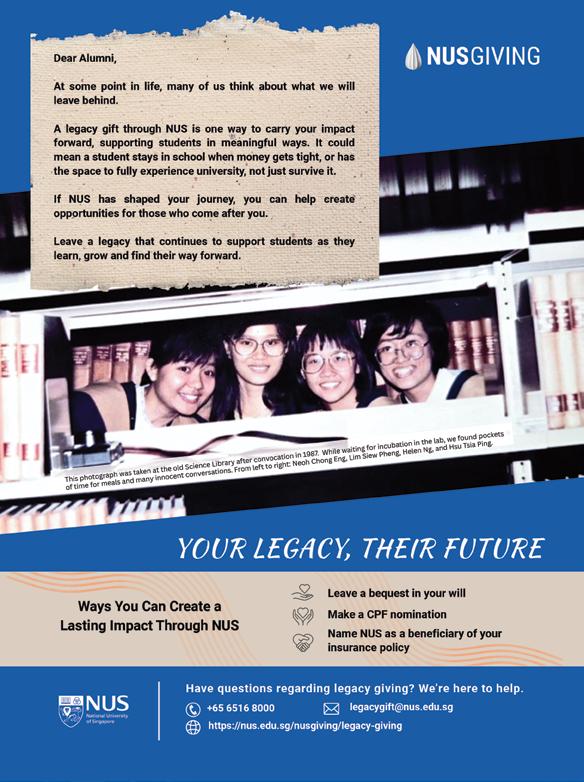
A bequest from the late Mr Tan Peng Hock (Arts & Social Sciences ’69) to NUS will support undergraduates financially, extending his lifelong belief in education and opportunity.
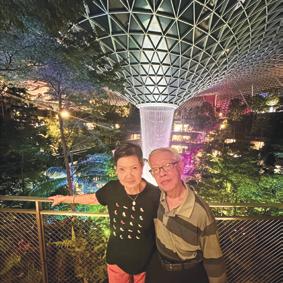
Before his passing, Mr Tan left a bequest to NUS through his estate. In keeping with his lifelong passion for education, the Tan Peng Hock Bursary will provide muchneeded financial support for students at NUS. True to Mr Tan’s constant encouragement to his own students to “keep studying”, the Bursary will make this possible on an even greater scale.
“He made it clear in his will that he wanted to give to support students at NUS,” said Mr John Chua, Mr Tan’s brother-in-law and executor of his estate. “He believed very strongly in education — that everyone should have a chance to be educated.”
In this way, Mr Tan’s legacy of teaching lives on. From shaping countless young lives in his classrooms, his generosity and belief will now allow generations of undergraduates at NUS to experience the education that he so greatly treasured.
Just like Mr Tan, your values and beliefs can create impact for future generations. If you want to make a lasting difference through legacy giving, please email our Legacy Gifts team at legacygift@nus.edu.sg or call +65 6516 8000 to speak with us.
How the AI journey of Dr Thang Luong (Computing ’09) came full circle
In July 2025, Gemini Deep Think, developed by Google DeepMind, made history when it achieved a gold medal performance at the International Mathematical Olympiad (IMO) — making it the first artificial intelligence (AI) system to officially do so. For Dr Thang Luong, who led Google’s IMO team, the moment carried special meaning. As a high school student in Vietnam, Dr Luong had once ranked among the country’s
top mathematics students — but narrowly missed the chance to compete at the IMO.
“They only picked the top six students in the country,” he recalled. Ranked eighth nationally, he was left out. “I was so sad. So, I quit math.” Two decades later, mathematics would find its way back to him — this time through AI.
Today, Dr Luong is a Principal Scientist and Director of Research at Google DeepMind, where his work focuses on pushing AI beyond pattern recognition towards deep reasoning and discovery. His journey there began not in a lab in Silicon Valley, but in a lecture hall at NUS.
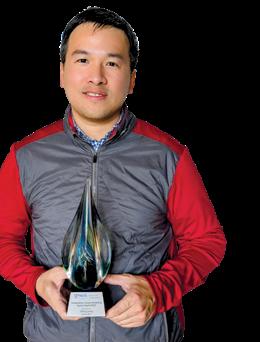
From 2005 to 2009, Dr Luong studied Computer Science. He was also selected for the School of Computing’s Special Programme, later renamed the Turing Programme.
“That was the first time I ever learned how to do research,” he said. “I’m very grateful that the School of Computing created that programme.”
A key influence during this period was his research mentor, Associate Professor Min-Yen Kan, under whom Dr Luong worked as
In recognition of his contributions and pioneering work in AI, Dr Luong received the NUS Outstanding Young Computing Alumni Award in 2023.
a research assistant. While Dr Luong initially focused on information retrieval — search engines and ranking systems, his curiosity soon shifted to machine translation.
“I was so curious about how we can translate without even knowing the target language,” he said. He recalled working on language pairs he did not speak himself, including Finnish. “I think it’s actually a good thing. Then you’re forced to develop general approaches that work for any language.”
More than technical skills, NUS instilled in him a way of thinking. That foundation would take him far beyond the NUS Kent Ridge campus.
Dr Luong went on to pursue a PhD at Stanford University, specialising in natural language processing. During this period, he interned at Google — an experience that would lead to a full-time role.
He joined Google in 2016 and soon played a pivotal role in the shift to neural machine translation, an advanced AI method that uses deep learning and neural networks to translate text into more natural, human-like translations. In 2017, his work helped to fundamentally transform Google Translate, dramatically improving translation quality across languages used by millions daily.
I always try to think really hard about a problem where you can have research impact, and at the same time land it into Google products and make an impact on billions of people!
For Dr Luong, making an impact at scale has always been a priority. “We don’t just do research for the sake of doing research.”
This philosophy also guided his involvement in early chatbot research — work that began as a small internal project and later became part of the foundation for Bard and the Gemini ecosystem.
In recent years, Dr Luong’s focus has shifted to one of AI’s hardest frontiers: reasoning.
This led to the development of Gemini Deep Think, a model designed to explore multiple lines of reasoning in parallel — allowing ideas to interact, refine one another and converge on stronger solutions. This approach was instrumental in the team’s IMO achievement in 2025.
Unlike earlier AI systems, Gemini Deep Think is designed to “think” for extended periods. During the Olympiad, the model ran for about four and a half hours each day to solve three problems — mirroring the conditions faced by human contestants.
“These are very new problems,” Dr Luong explained. “This is the best test for AI where we know the AI hasn’t seen these problems.”
The challenges require long, structured proofs. “To solve math, you really have to reason everything robustly,” he said. “It’s long-horizon, multi-step reasoning.”
Dr Luong also highlighted a major shift in how the system operates. In 2024, solving such problems still required human-in-the-loop methods, meaning systems that
operated in formal proof languages such as Lean and required expert interpretation. By 2025, the process had become fully automated, with natural language processing driving the reasoning end-to-end.
To strengthen the model, Dr Luong and his team worked closely with IMO medallists from around the world, learning how elite human problem-solvers approach unfamiliar challenges. These collaborations helped expose gaps in AI reasoning — such as the tendency to rush — guiding further improvements.
Gemini Deep Think is currently available through Google’s Ultra subscription, though Dr Luong hopes to make it accessible to more people, including mathematicians and students.
“If we can solve these kinds of hard problems without hallucinating facts, then maybe we can also figure out a way to fight the hallucination problem,” he said.
Beyond his work at Google, Dr Luong is also the co-founder of the New Turing Institute, a non-profit organisation focused on developing
Text by AUDRINA GAN
AI talent across Southeast Asia and beyond.
The GStar Bootcamp by the New Turing Institute (NTI) is a 12-week, intensive global AI talent programme that equips emerging technologists with cutting-edge large language model (LLM) skills as well as research and leadership capabilities, blending theory with hands-on practice to prepare participants for careers in AI research and industry.
“My dream at that time was how to put Vietnam into the AI roadmap,” he said. What began in 2018 as a Vietnamfocused initiative has since grown into a global programme, attracting hundreds of applicants from over 15 countries — including Singapore and the US.
At its heart, the institute reflects the mentorship Dr Luong himself received. “I want to nurture the talents, just like how my advisor mentored me,” he said. “I want to see people succeed.”
Recalling his own journey from math to AI, Dr Luong said: “I quit math and went into AI, and after almost 20 years, AI brought me back to math.”
Looking ahead, he sees AI as a powerful engine for scientific discovery. “I’m actually quite positive about AI in terms of discovery,” he said, pointing to areas such as new drugs and cancer treatment. “I hope AI can help us cure cancer in the next 5 to 10 years.”
Dr Tan Hiang Khoon (Medicine ’91, EMBA ’22) rose from humble beginnings to lead the globally top-ranked Singapore General Hospital, but the innovator still credits success to his family, his team and the trust of those around him.
Perhaps the most surprising part of an interview with Singapore General Hospital (SGH) Chief Executive Officer
Dr Tan Hiang Khoon was when the surgical oncologist revealed that his 84-year-old mother is still serving hot drinks at a primary school canteen stall — because she loves her job and wants to stay active.
“I’ve told her to stop for many years, but she refuses,” he said, when The AlumNUS met him to discuss SGH’s latest accolade as one of the world’s Top 10 hospitals. “I have stopped asking her because it clearly makes her happy.”
The senior consultant, who specialises in treating head and neck cancer at the National Cancer Centre Singapore (NCCS), SGH and the SingHealth Duke-NUS Head & Neck Centre, shared the anecdote to illustrate that his path to medical school — and now to leading Singapore’s oldest and one of its best hospitals — was not straightforward.
His mother, who had been a housewife, had taken on the job at the school when Dr Tan was 14, following the sudden death of her husband.
With two young children to support, she sought help at Meet-thePeople sessions, where the family met their Member of Parliament,
Mr Goh Chok Tong (Arts ’64, HonLLD ’15). Mr Goh, who later became Singapore’s Prime Minister, told them a primary school was opening in their neighbourhood and helped Dr Tan’s mother to secure a post. She has been there ever since, running the stall with her sister.
As a result, she was able to provide for Dr Tan and his elder sister. He went on to study medicine at NUS with financial support from family and charitable organisations. “I am very thankful that someone like me had the opportunity and the support to even go to medical school,” he said.
Following a memorable stint at university, where he spent two years as President of Sheares Hall honing his leadership and organisational skills — “I was a full-time hostelite, part-time student” — he stepped into what has been an impactful career marked by a string of leadership appointments.
One of the pioneers in the development of endoscopic and robotic head and neck surgery in Singapore, he was the inaugural Head of the SingHealth Duke-NUS Head and Neck Centre, led the integration of SGH’s Division of Surgery and NCCS’ Division of Surgical Oncology, and, during the COVID-19 pandemic, spearheaded efforts across SingHealth to set up and manage 3,700 beds in two community care facilities.
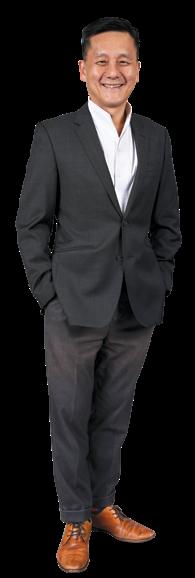
In January 2025, he took over the top job at SGH. This year, brand valuation consultancy Brand Finance ranked SGH #10 among the World’s Strongest Hospital Brands, and #2 globally on its Care score. This was based on a global study of over 2,500 healthcare professionals across 30 countries. As for global media brand Newsweek, SGH placed #9 among the world’s best hospitals in its latest ranking.
On the accolades, which were unsolicited, Dr Tan said, “The first thought that came to mind was really a deep appreciation of the trust we have built over the years — from patients choosing us as their care provider to partners who are willing to work with us, and staff who show up to provide care to people who come to us at the worst time of their lives. There is a lot of hard work behind the recognition.”
The hospital’s 200-year history, during which its doctors have constantly sought to raise the bar on clinical care and service standards, may have something to do with it. SGH has been at the forefront of several medical milestones in Singapore, performing the country’s first kidney and heart transplant, and
I’m a firm believer in that what gets you here won’t get you where you want to be,” he said. “We constantly push ourselves to learn and be innovative.
becoming the first hospital to bring in an MRI and proton machine.
But Dr Tan states that history alone will not guarantee SGH’s future success. “I’m a firm believer in that what gets you here won’t get you where you want to be,” he said. “We constantly push ourselves to learn and be innovative.”
For him, the next big thing is technology — especially because of the leap in artificial intelligence and large language models in the last few years. He explained, “We have always talked about digital transformation, but technology has never been so easy to use and so accessible. The bar to transformation is much lower now. The question is: how can SGH be the best phygital hospital in the world?”
He sees that technology can be applied in the hospital in three main areas: smart operations to automate back-end work like billing that can save “tens of thousands of man hours every year”; smart treatments, currently focused on using technology to read scans and images; and smart services.
One of the biggest strides is Note Buddy, developed by SingHealth and Synapxe, which records and transcribes doctor-patient interactions, allowing doctors to focus on their patients instead of typing notes during consultations.
The technology can also filter out the parts of the conversation unrelated to the patient’s condition — like chit-chat about travel plans or family updates — which Dr Tan says are critical for building trust and rapport. “Note
Buddy can extract the clinically-relevant information, distil and present it in a structured way. That allows the doctor to just talk to the patient. It certainly reduces stress on the doctors.”
As he rose up the leadership ranks, Dr Tan later chose to do his EMBA at NUS, which he completed in 2022. “At the time that was the only EMBA with an Asian focus,” he explained. “There are many things that are good about Asian healthcare and Asian businesses, but we don’t talk enough about it, and I wanted to learn more.”
Yet, for all the talk of technology and strategy, it is the people who are the heart of what he does.
In previous interviews, Dr Tan — who co-founded the Children’s Cancer Foundation after being motivated by the plight of a patient’s need for wider community support — has spoken at length about the patients he gets to meet and treat.
That same human focus emerges in this conversation. In a rare moment for a C-suite interview — where discussion is usually confined to “hard” topics like leadership philosophy or corporate priorities — Dr Tan brings up his family of his own accord.
Said the father of three daughters aged 13, 15 and 18, “I just want to register that family support has been important. When you have so much time-consuming work, I am constantly grateful for my wife and my children. It really gives me a different dimension because it takes my mind off work and I truly treasure what I have.”
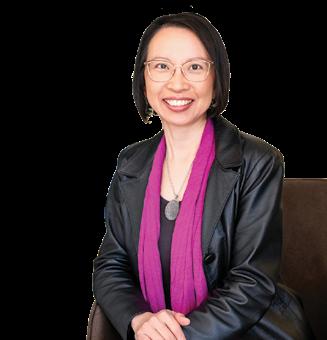
In many workplaces, success seems to favour those who speak the loudest. But according to introvert coach and former lawyer
Ms Serena Low (Law ’93), quiet strength — when understood and used well — can be just as powerful.
How Introverted Women Can Succeed in a World Built for Extroverts
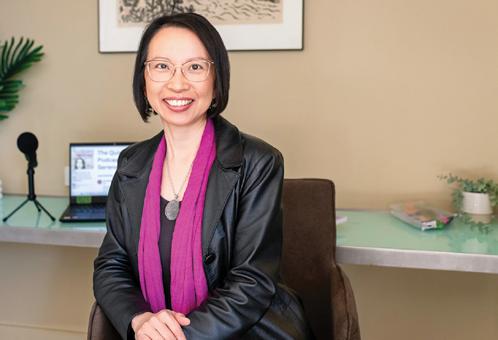
fter graduating from university, Ms Serena Low spent the first 11 years of her career practising law in Singapore’s Public Service. It was a stable and respected path — one she never questioned — until a single moment in her mid-30s prompted deep reflection. Asked by a senior what lay ahead if she continued on the same trajectory, Ms Low found her thoughts drifting decades into the future.
“I imagined myself at retirement age, looking back — and realising I had never considered any other life beyond law,” she recalled.
That moment marked the beginning of what she describes as a series of “scenic detours”: leaving legal practice, migrating to Australia while pregnant with her second child and stepping away from work to focus on family. Years later, when her younger child was about to start school, Ms Low began asking a familiar question again: what was the next chapter?
Her search led her to coaching, which she initially embarked on for her own personal development and later for people navigating mid-career transitions. Over time, a clear pattern emerged. Many of the women she worked with were high-achieving, thoughtful and capable — but quietly struggling in environments that rewarded visibility and vocal presence. That was when her work shifted towards supporting introverted women.
From Ms Low’s experience, one of the most common challenges introverted women face is the belief that they are the problem.
“When something goes wrong — when they don’t get promoted or are overlooked — they tend to think, ‘I wasn’t outspoken enough. I didn’t do enough. I’m not enough,’” she said.
This mindset can be particularly pronounced among women navigating career
transitions or relocating to countries with more outspoken workplace cultures. Ms Low works closely with professional migrant women who were once senior experts in their home countries, only to find themselves struggling in new environments where self-promotion and constant visibility are expected.
Rather than encouraging them to “fake it” or perform extroversion, Ms Low takes a different approach. “These are highly intelligent, high-functioning women,” she said. “It’s not about changing who they are. It’s about communicating their strengths in ways that fit the environment.”
According to Ms Low, introversion comes with its own powerful skill set: deep listening, careful observation, analytical thinking and the ability to synthesise ideas into thoughtful outcomes.
In client-facing roles, these strengths can be especially valuable. By paying close attention — remembering small details, listening beyond surface-level requests and responding with tailored solutions — introverted women often build strong trust and credibility.
In meetings, being heard does not always mean speaking the most. Ms Low suggests alternative ways of contributing meaningfully: summarising discussions, clarifying key points, guiding conversations back on track or following up thoughtfully after the meeting.
Contrary to common assumptions, Ms Low believes introverts often perform well in chaotic situations. Their natural tendency to pause and reflect allows them to provide steadiness when things feel rushed or unclear. Her advice for introverts is simple but practical: ask for time. Requesting 10 or 30 minutes to gather thoughts or data is not a sign of avoidance — it is a way of ensuring quality thinking. “Introverts think slowly and deeply,” she explained. “Their output depends on having that space.”
that move quickly. Clear communication about how and why time is needed helps bridge different working styles.
In terms of attending networking events, traditional networking events, as Ms Low observed, are often heavily biased towards extroverts: large groups, constant movement, background noise and rapid self-introductions. For many introverted women, this leads to exhaustion rather than connection.
Her suggestion? Redefine the goal. Set time limits. Focus on two or three meaningful conversations during the networking event and leave when your “social battery” runs low.
If existing networks don’t fit, Ms Low offers another option: create your own. In Melbourne, she now runs small, curated gatherings for introverted men and women — spaces designed for depth and meaningful connection instead of small talk.
Leadership, too, deserves reframing, said Ms Low. Research and experience alike show that many effective leaders are introverts — people who listen, think carefully and lead with presence rather than ego.
“In times of crisis, what people need is not hysteria. Instead, they need someone calm and one who can gather others and give direction,” said Ms Low.
Whether you are a woman starting out, changing careers or adapting to a new country, Ms Low’s core message is clear: being quiet is not a weakness — it is a strength.
“You don’t need a formal title to lead,” she said. “You can lead conversations, relationships and change in small but meaningful ways.”
This approach is especially helpful when working with more vocal managers or teams Text by AUDRINA GAN
For introverted women navigating transition or cultural change, success does not require becoming louder. It requires deeper self-trust, clarity about one’s strengths, and the confidence to show up — quietly, thoughtfully and authentically.
Prepare for meetings — but don’t pressure yourself to speak constantly
Use follow-ups, summaries and oneon-one conversations to be visible
Document your achievements as you go; don’t rely on memory
Set boundaries in social and networking situations
Recognise when challenges are systemic — not personal
Lead with listening, clarity and consistency
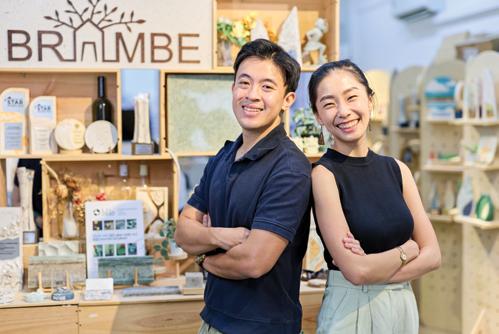
Through Brambe, Mr Bernie Ang (Design and Environment ’21, MArch ’21) and Ms Amanda Tay (Science ’21) are transforming discarded materials into beautiful design objects. What began as a small passion project is now a thriving creative business — built on shared values, complementary strengths and a willingness to take bold leaps.
For Mr Bernie Ang and Ms Amanda Tay, the story of Brambe began at NUS, where the couple met during their final year. At the time, Mr Ang was studying architecture while Ms Tay was pursuing environmental studies. Their academic backgrounds turned out to be a perfect match. Mr Ang brought design thinking and spatial creativity, while Ms Tay was drawn to sustainability and environmental impact. Over time, their shared interests evolved into something bigger: building a business together.
Today, the married couple run Brambe, a design and craft studio founded in 2021 that transforms waste materials — such as glass, plastic, metal and coffee grounds — into customised interior objects and design pieces.
“We wanted to create items that are sustainably made using recycled waste materials,” Mr Ang explained. “At the same time, we wanted customers to be able to customise their products, so they have more personal meaning.”
Like many startups, Brambe began in a modest setting: their own home.
After graduation, Mr Ang joined an architecture firm while Ms Tay worked in sustainability reporting. But their evenings and weekends quickly became consumed by experiments with recycled materials, with their living room turning into a makeshift workshop.
“We would go to work during the day, then come back and continue making things at night,” Mr Ang recalled. At first, they experimented with small items like coasters. But as orders started coming in and their projects became more ambitious, their home studio grew impractical.
Between late-night crafting sessions and the mess of materials and equipment, the couple realised they needed to make a decision.
Eventually, they took what Ms Tay described as a “daring step”: leaving their corporate jobs to pursue Brambe full-time and moving into a dedicated studio in Geylang East Industrial Estate.
Apart from the “leap of faith”, working as both business partners and life partners naturally comes with challenges.
Mr Ang is someone who focuses on the “big picture”, while Ms Tay is more detail-oriented.
But rather than seeing those differences as obstacles, the couple have found opportunities to strengthen their business and relationship. When disagreements arise, they try to approach them constructively — viewing each discussion as a way to improve how they work together.
Today, their studio team has grown to four people. Mr Ang focuses mainly on design and product development, while Ms Tay oversees marketing, business operations and finance.
To hear Mr Ang tell it, one of Brambe’s earliest breakthroughs came through the NUS ecosystem.
A mentor from the University’s Zero Waste Test Bed Initiative connected the founders with an opportunity to design a trophy for a South West CDC sustainability event. The result was a striking leaf-shaped award made from upcycled plastic — a far cry from typical off-the-shelf corporate trophies.
The project proved a turning point, opening doors to new clients and collaborations. Brambe has since worked with companies including Alibaba, Spotify and Coachtopia, producing everything from bespoke trophies to hands-on workshops.
Among their most memorable work is a collaborative wall installation at Enabling Village, where workshop participants created individual modules that were later assembled into a larger artwork.
Behind the polished final products lies a surprisingly gritty process.
In the early days, the founders often had to process waste materials
We wanted to create items that are sustainably made using recycled waste materials. At the same time, we wanted customers to be able to customise their products, so they have more personal meaning.
manually — crushing glass bottles with simple tools and sorting through discarded materials themselves.
“It’s not glamorous,” Ms Tay admitted. “We have to clean the waste, process it, test it and experiment a lot.”
Yet it is precisely this hands-on experimentation that allows them to develop new materials and push the boundaries of sustainable design.
Today, Brambe is growing — but the biggest change in Mr Ang and Ms Tay’s lives came last year with the arrival of their daughter, reshaping how they approach work and business.
In the past, the couple often worked weekdays and weekends, pushing themselves relentlessly to build the company. Burnout was common, and the only time they truly switched off was during travel. Now, they are more deliberate about setting boundaries.
“We’ve learned that you have to press the stop button yourself,” Mr Ang said.
Their daughter has also brought new perspective — and new responsibilities. With a young family to support, the stakes feel higher, but the experience has also helped them become more focused and balanced.
Evenings are now reserved for family time rather than studio work.
Looking ahead, the couple hopes to scale Brambe beyond bespoke pieces and smaller items.
One key focus is refining their material palette for use in larger products and interiors. Their next chapter may include furniture and everyday objects such as shelves, lamps and tables. They are also keen
to collaborate with more designers, brands and architecture firms.
For Mr Ang and Ms Tay, the goal remains the same: to show that sustainable materials can be both beautiful and meaningful.
From a home-based experiment to a growing design studio, their journey reflects the power of creativity, partnership and a shared commitment to rethinking waste. And as their daughter grows up alongside the business, the founders hope the world she inherits will be just a little more sustainable.



Through her drawings of cute animals offering words of wisdom, Ms Joanne Ang Min Jia (Arts & Social Sciences ’13) has built a

IThe “accidental” entrepreneur also ran her art studio, JangandFox, full-time as a business for seven years, serving clients who saw value in tying their brand to her artwork and selling merchandise from postcards (the bestsellers) to notepads to sticker packs and books. Jang stands for Joanne Ang, while the fox is inspired by a hand-sewn fox toy she acquired from a Tbilisi toymaker.
n India, a woman returned home after an exhausting day and shut herself in her room. Her younger brother walked in and asked her, “What’s wrong?” She did not know what to say, but she was clearly down.
The boy thought for a while. Then he remembered a whimsical illustration his sister once shared with him, showing a fox holding a “happiness balloon” in its hands. He asked her, “Don’t you have a happiness balloon in your hands?”
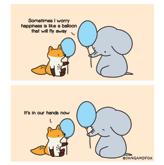
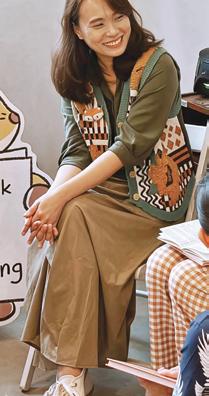
The illustration that the siblings saw on the JangandFox Instagram page is the work of Singapore-based Ms Joanne Ang Min Jia, who never set out to be anything more than a recreational artist drawing for herself.
But that story — shared by the woman to tell Ms Ang how a child could relate to her joyful art — is a testament to how Ms Ang’s doodles of animals uttering pithy nuggets of wisdom have unexpectedly brought comfort to thousands of people, from Singapore to India to Germany, who have stumbled upon her page.
Said Ms Ang, who now runs JangandFox as its Chief Enchantment Officer alongside a more staid full-time role as a senior manager, “In hindsight, art has been my love language. I started a simple page for me to share my thoughts and build connections through my art, and that evolved organically because something in those stories resonated with people. Love, wonder and courage became the recurring themes, not by design, but perhaps because these are universal values that remind people of what we still share in an increasingly turbulent world.”
For most graduates, the transition from university to the workforce is when life priorities emerge. Ms Ang quickly realised that what mattered to her was not so much financial success or climbing high on the corporate ladder but doing work that served people and society.
“It was quite instinctive,” said Ms Ang, who received the Special Book Prize in Communications and New Media in AY2012/2013, awarded to the best student in the department and recognising her community work. This
In a full circle moment, JangandFox recently collaborated with Mr Bean to support Smile Asia.


included bringing together a group of 160 student volunteers to start the student chapter of Operation Smile, now part of the Smile Asia network, which supports children with cleft lips and facial conditions.
“My mother has always been my quiet role model of kindness and generosity, and that guided my first volunteering experience with the elderly when I was in Secondary One. Serving others became deeply ingrained in who I am since then.”
That clarity led her to her first job at the National Youth Council (NYC), where she spent four and a half years working on programmes to engage youth in active citizenry.
When she left her job at NYC, she had nothing lined up — a move she refers to in Chinese as 裸辭 (luoci, to resign without a backup plan). In the months she planned for travel and reflection, she found herself returning to her childhood drawing hobby.
A self-taught artist who learnt how to refine her art through online videos, she began posting her work on Instagram because friends asked her to. From a few hundred likes for her first post in July 2018, the likes pipped the 10,000 mark just three months later and marked a high of 50,000 followers. Her most popular post has 391,000 likes.
Her art wasn’t just cute; it moved hearts. Said one comment, “Your art has made me feel less lonely on really cloudy days.” It was particularly
resonant during the COVID-19 pandemic when people felt more isolated, and Ms Ang reckons that what she learnt at NUS — about how to communicate meaning in a globalised world — helped in her messaging.
Interestingly, the JangandFox content first became popular with people outside of Singapore and was featured in American and German news outlets before finding local traction.
Then corporate clients like F&B outlets, wellness clinics, community organisations and even NUS came knocking, offering to pay her to draw for their brands, run giveaway campaigns or put up a sponsored post on her page.
That was when she decided to register her business, which was sufficiently successful to help Ms Ang pay the bills.
It also enabled Ms Ang to use her artistic talent to support organisations such as the Alzheimer’s Disease Association (Singapore), Make-A-Wish Singapore and Samaritans of Singapore (SOS). A recent collaboration with Mr Bean, for which JangandFox created exclusive designs for a tumbler set, raised funds for Smile Asia, further demonstrating how her work can combine creativity with social impact.
“Without having a boss, structure or guidance which you would find in a full-time job, it took me about two years to figure things out and I really had to rely on my personal compass,” said Ms Ang. “Part of that was figuring out how to balance working for causes I care about with building something financially sustainable. Today, the studio bridges both, collaborating with brands and organisations in support of fundraising
projects and storytelling campaigns. This connection of my two passions — art and service — is what keeps me going.”
In May 2025, Ms Ang returned to fulltime work at SG Enable — the focal agency for disability in Singapore — where she runs programmes for the public on disability inclusion.
While her practical consideration is that a stable salary will help her to shoulder payments for her mother’s new home, her work at SG Enable will give her the knowledge to turn JangandFox into an inclusive studio.
She said, “I work with people from marginalised communities and there is a lot of creative potential. My dream now is to grow JangandFox Studio into an inclusive storytelling and illustration studio that tells the stories of people that often go unnoticed, and to bring their work to a bigger market.”
Indeed, by continuing to follow her instinct to draw, she is creating a world where everyone is invited to hold their own happiness balloon.












as a Merchant Partner and offer exceptional deals to our growing NUS community!















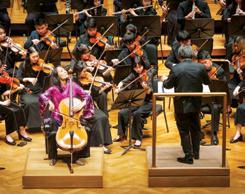
In Kuala Lumpur, NUS Alumni Relations hosted a Pre-Concert Reception on 28 February ahead of the NUS Symphony Orchestra (NUSSO) performance at Dewan Filharmonik Petronas, bringing together alumni and friends to celebrate the ensemble’s regional tour under the STEER programme. Over 100 young musicians from across NUS faculties performed with discipline, heart and joy under the baton of Associate Professor Chan Tze Law, joined by alumna and cellist Ms Elizabeth Tan Suyin (Music ’07).
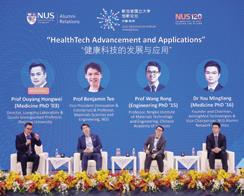
Held on 14 March, NIF Hangzhou, themed “Deep Tech for Global Impact”, gathered over 300 delegates for keynotes and panel discussions exploring translating research into market solutions and advancing HealthTech innovation. Supported by NUS Alumni Network Hangzhou, the event featured NUS academics and alumni industry leaders, concluding with an alumni dinner celebrating community and collaboration. This was the eighth NIF held since the global series was launched by NUS Alumni Relations in 2024.
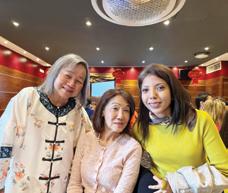
In March, NUS Alumni Network London hosted an LNY lunch held at the Imperial China restaurant. Ms Nicola-Anne Singh (Arts & Social Sciences ’09), Deputy High Commissioner, Singapore High Commission in the UK, was the Guest of Honour. It was a wonderful opportunity to reconnect with old friends, make new connections and celebrate the festive season together.
In February, NUS Alumni Network Melbourne hosted their annual LNY celebration, bringing together graduates for a warm and festive gathering. Held in the heart of the city, the event featured traditional décor, lively conversations and a joyful atmosphere. Alumni enjoyed a delicious spread of Asian dishes, exchanged well-wishes and participated in activities such as lucky draws and cultural performances, including that of the Hong De Lion Dance Troupe.
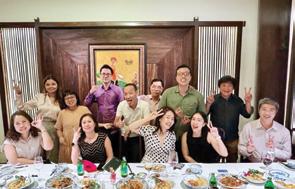
In January, NUS alumni gathered in Ho Chi Minh City for a warm and lively evening over dinner. From great conversations to even better company, the event provided an opportunity to reconnect with many familiar faces and make new memories. The evening included sharings by Ms Ninh Tran (Business ’07), Executive Vice President, HRBP of Keppel Vietnam; Ms Yumi Nguyen (Science ’09, MBA ’14), Country Lead (Strategic Large Enterprise Sales) of Datadog Vietnam; as well as Mr Harry Pham (MPA ’17), NUS Alumni Ambassador Ho Chi Minh City.
At the recent NUS Alumni Lunch in Palo Alto, California, alumni engaged in discussions on the future of work and innovation, with insights on NUS developments, Bay Area hiring trends and the evolving role of AI in business. Speakers highlighted the importance of adaptability, human ingenuity and shifting competitive dynamics, bringing together diverse perspectives on navigating change.
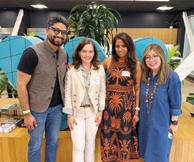
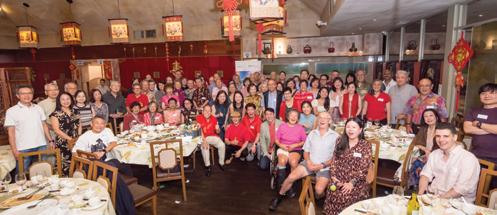
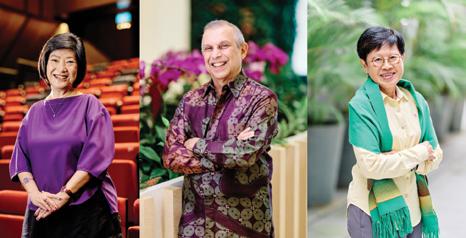
Congratulations to this year’s Distinguished Arts & Social Sciences Alumni Award recipients: Ms Lim Hai Yen (’92), Mr Ashok Mirpuri (’84), and Ms Ang Bee Lian (’77), whose careers have shaped the arts, diplomacy and social policy in Singapore and beyond.
Held on 25 February, NUS Geography Career Day brought together six alumni and 150 students, showcasing diverse career pathways and the real-world value of geographical skills such as the ability to synthesise information, an appreciation of scale and a heightened awareness of sustainability, among others. Through panel discussions and networking, students gained valuable insights into how geographers contribute meaningfully to society across industries.
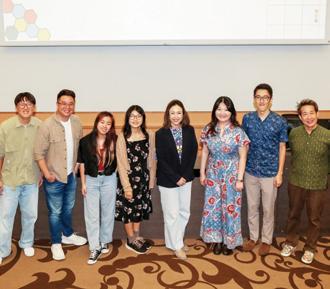
NUS Alumni Sing-Along began in 2015 as a small gathering of alumni music lovers and was formally established as a group in 2016 with support from NUS Alumni Relations. Celebrating its 10th anniversary in 2026, the group continues to flourish, bringing alumni together through vibrant monthly programmes, including sing-alongs, jam sessions, line dancing and community outreach.
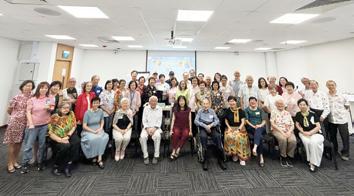
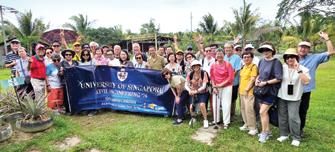
The NUS CDE Alumni Mentorship Programme (AMP) Batch 12 concluded in March with a closing meet that brought together mentors and mentees for an evening of reflection, appreciation and connection after months of mentorship. The event featured sharing sessions, interactive activities and dinner discussions, celebrating meaningful relationships and the enduring strength of the CDE alumni network.
Fifty years after graduating, classmates from the Civil Engineering Class of 1976 reunited for a joyful Golden Jubilee celebration marked by camaraderie and shared memories.
The multi-day gathering featured golf, excursions and a grand dinner, reaffirming lifelong friendships that have endured across five decades.
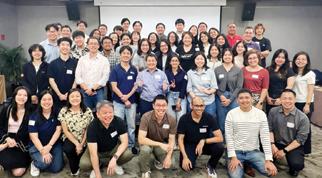
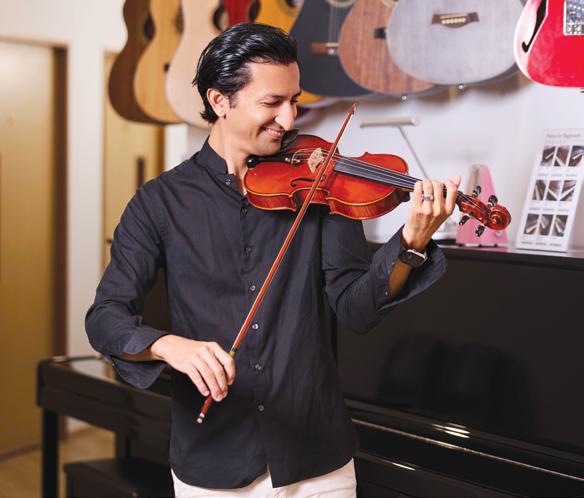
Classical music opened a doorway for Mr Mukhammadyor Tulaganov (Music ’18).
Now, through social media, he is holding that door open for others.
Dior Violin: that’s the online persona of Mr Mukhammadyor Tulaganov. As you scroll through his social media feeds — with close to a half million followers across platforms — it’s easy to forget that it all began with a six-year-old who fell in love with the violin after seeing it in a movie.
Today, the 30-year-old’s feeds pay homage to that early love, with clips of him playing anime themes, film scores, TikTok trends and pop ballads. By doing so, he is reaching new, younger audiences who might never set foot in a concert hall or be mesmerised by the beauty of classical music. This is, in many ways, his mission: to bring classical music into the everyday scroll of Gen Z and beyond.
And he does this while holding a full-time role as Head of Violin at Asia Music School.
Long before the algorithms found him, however, Mr Tulaganov was a boy in Uzbekistan who simply refused to stop asking for a violin. “Nobody in my family was musical,” he said. “I saw this movie, and there was a violin. I loved it… and I just kept asking.”
He eventually found a teacher who pushed him hard — competitions every year from the age of seven, endless hours of practice — but in a country where music was seen as merely a hobby, his future still felt uncertain. Everything changed when he won a competition that paid for his music college tuition. “After that, my mum said, ‘Okay, I’ll support you all the way. Just go.’”
Mr Tulaganov knows the music world is changing fast. From robot violinists to AI tools that can compose full scores in seconds, the landscape he trained for has been completely transformed. Instead of resisting, he chooses to lean in. “I’m excited and terrified at the same time… we’re the generation that gets to witness this. I don’t want to be left behind,” he said. To him, AI isn’t the enemy — it’s the next frontier. And just as music once opened the door to a new world for him, he believes technology may open the next one.
The “go” turned out to be Singapore. At 16, he heard about the Yong Siew Toh Conservatory of Music (YST) from a senior. A beautiful campus, full scholarships, free instruments — it sounded unreal, so he practised “day and night” for the audition. When he arrived in Singapore in 2015, he knew exactly three English phrases: hello, goodbye and I love you. YST’s intensive language classes were “brutal,” he recalled, “but they worked”.
Life at YST was rigorous — morning practice before 9am classes, chamber music, lessons, rehearsals, then more practice until 11pm. Yet it also expanded his world. Surrounded by classmates from China, Russia, Malaysia, Germany and beyond, he began to see music not as a narrow path, but as an international language that could carry him further than he had imagined.
After a brief stint with an orchestra in Vietnam, Mr Tulaganov returned to Singapore and started teaching. But another part of his life was quietly taking shape online, sparked by advice from the late Dr Marc Rochester, a YST Senior Lecturer: “You have to risk something you believe in.” Posting the first videos was nerve-racking. “You think, what if my friends judge me? What if there are no views?” he shared. But he persisted — sometimes uploading two or three times a day — and slowly discovered what resonated with audiences: violin covers of trending film and game music.
He is clear-eyed about why his channels grew: luck, certainly,
but also consistency, timing and a willingness to meet audiences where they already are. “When orchestras stage Harry Potter or Final Fantasy, the shows sell out,” he notes. “A Shostakovich symphony is a harder sell. Pop culture isn’t lowering the bar — it’s a way in.”
His goal is simple: make the violin feel accessible, familiar and even joyful to people who might otherwise never encounter classical music.
Today, Mr Tulaganov balances a demanding teaching schedule with regular performances and a thriving digital presence. He plays on several instruments — including a 19th-century Italian violin — but admits that most of his online audience first discovered him through a S$100 violin he bought for outdoor gigs. “It’s not really the violin,” he said. “It’s the work.”
Despite having travelled widely across the US, Europe and East Asia, he calls Singapore “the best country to live in” and has applied for permanent residency here. He volunteers regularly, delivering food to seniors and helping at community events — small ways, he says, of giving back to the place that gave him a future. But as expected, his contributions also have a musical element. “They enjoy hearing the violin and get very excited when I play.”
In a way, the seniors aren’t that different from his youngest students: both light up when the music starts and remind him why he picked up the violin in the first place — and why he’ll probably never put it down.
Your favourite composer?
“Mozart. He was a genius on another level. If he had lived to 70 or 80, he’d probably be the most incredible composer who ever lived.”
And your favourite film composers?
“Hans Zimmer and John Williams — both brilliant composers. People don’t realise how much they’ve shaped society — HarryPotter, Batman, LordoftheRings… these are all from them.”
A piece you think everyone should start with?
“Something simple and famous: Schubert’s waltzes, Shostakovich’s Waltz No. 2, Mozart’s Symphony No. 40, Beethoven’s 9th. Just start there — if you like it, go deeper.”
What do your students request the most?
“K-pop, anime and Christmas music. Adults always ask for the hardest pieces. They say, ‘Please torture me.’”
After years of studying and travelling across continents, Dr Anthony Torres-Ruesta has found himself in Helsinki, Finland — a city whose calm, measured pace offers a striking contrast to the bustle of places he has lived before. A Peruvian scientist and proud NUS alumnus, Dr Torres-Ruesta is currently based at the Finnish Institute for Health and Welfare, where his work focuses on epidemic and pandemic preparedness, with an emphasis on building fairer and more inclusive global responses.
His path to Helsinki was shaped by both work and personal ties. After completing his studies at Cambridge University, Dr Torres-Ruesta relocated to Finland to continue his research, while also beginning a new chapter with his partner, whom he met in Singapore. “It feels like the best of both worlds,” he reflected. “I get to work on meaningful science, while discovering a completely new way of life.”
Still, traces of Singapore remain close to his heart. Dr Torres-Ruesta admits to occasionally daydreaming about his old neighbourhood, Tiong Bahru, the comfort of hawker food and weekend badminton games with friends. “Helsinki has its charms, but reindeer stew hasn’t quite replaced char siu noodles,” he quipped.
For visitors, Dr Torres-Ruesta recommends timing their trip carefully. Summer, in his view, reveals Helsinki at its most enchanting. The days stretch almost endlessly under the midnight sun, temperatures are mild and nature bursts into view across the city. “You forget winter ever existed,” he said. “There are music festivals everywhere, outdoor cafés are full and the whole city feels lighter.”
What sets Helsinki apart, he believes, is its slower, more mindful rhythm. Life here unfolds gently, with nature
always close at hand — forests, parks and the sea woven seamlessly into everyday routines. “Finns have a subtle but genuine way of enjoying life,” he noted. “Whether it’s spending time in a sauna or escaping into nature, it’s about simplicity and presence.”
Though compact, Helsinki is rich in culture. Dr Torres-Ruesta suggests starting in the Design District, where architecture, boutiques and galleries showcase Finland’s creative spirit. “Design here isn’t just about how things look,” he explained. “It shapes how people live.”
Art lovers can explore the Ateneum Museum of Art or the contemporary Kiasma Museum, while architecture enthusiasts will find the influence of famed Finnish architect and designer Alvar Aalto throughout the city — a reminder of how design and functionality go hand in hand in Finnish life.
For a change of pace, a day trip to Porvoo offers pastel wooden houses, cobblestone streets and riverside cafés that feel lifted from a Nordic fairytale.
One of Dr Torres-Ruesta’s favourite places is Suomenlinna, a sea fortress spread across several islands just off the city. “It’s not exactly a secret,” he admitted, “but if you go in the evening, the sunsets are stunning and the crowds thin out.” Visitors should, however, keep a close eye on their food — the local seagulls are notorious for swooping in unannounced. Closer to the city, Helsinki’s many parks and coastal trails offer moments of unexpected stillness. “You’ll stumble upon peaceful corners where it feels like the whole city has paused just for you,” he said.
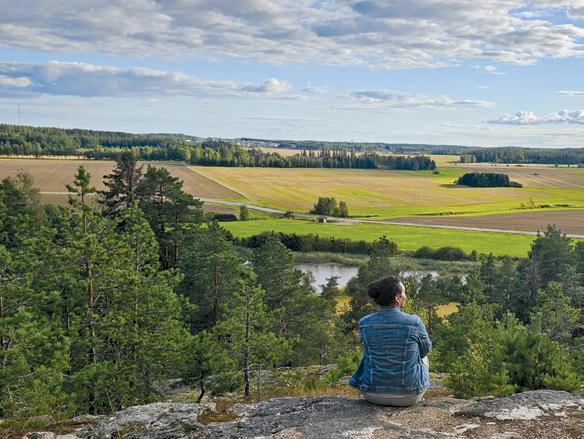
A scientist working on global health preparedness, Dr Anthony Torres-Ruesta (Medicine PhD ’22) now calls Helsinki home — a city where quiet streets, deep forests and long summer days offer space to think, breathe and belong.
Food in Finland, Dr Torres-Ruesta has learned, is quietly comforting. His go-to dish is lohikeitto, a creamy salmon soup he describes as “a hug in a bowl” — perfect in any season. He has also grown fond of Finland’s rye bread, now a breakfast staple, and korvapuusti, cinnamon buns best enjoyed with strong Finnish coffee. For a truly local experience, karjalanpiirakka (Karelian pies) are not to be missed. “Pair one with coffee, and somehow it feels like a full meal,” he said.
Helsinki, Dr Torres-Ruesta notes, is often misunderstood. “People think it’s cold and quiet all the time,” he said. “But in summer, the city transforms — terraces fill up, festivals appear everywhere and the energy is infectious.” And while Finns may seem reserved at first, warmth often emerges in unexpected places. “Get someone into a sauna, and you’ll discover some of the kindest, funniest people you’ll ever meet,” he added.
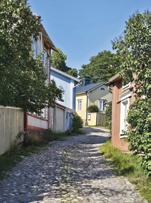
• Wander the Design District for a glimpse into Finnish creativity and everyday design.
• Visit Suomenlinna in the evening for quieter paths and sea views at sunset.
• Take a day trip to Porvoo for charm, colour and history.
• Explore the Finnish archipelago, especially in summer, for breathtaking island landscapes.
• Hop on a ferry to Tallinn, Estonia, just two hours away, for its medieval streets and storybook charm.

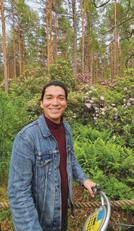
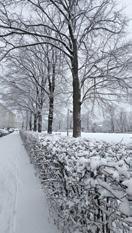
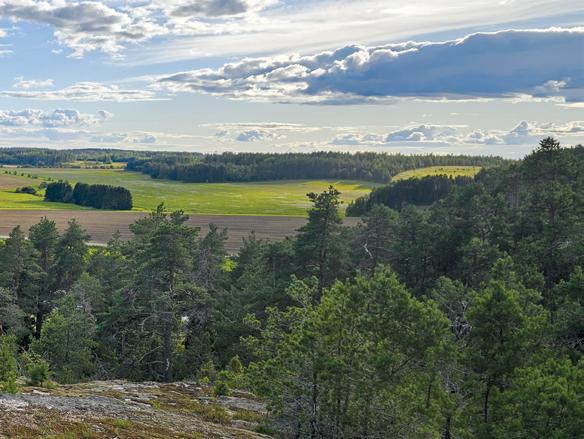

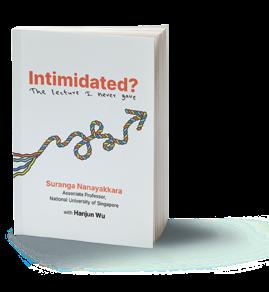
A new book, co-authored by Associate Professor Suranga Nanayakkara (Engineering ’05, PhD ’10) and Ms Hanjun Wu (MComp ’25), strips away the gloss of success.
ookshelves abound with rags-to-riches stories, but Intimidated? The Lecture I Never Gave takes a different approach. Instead of leaning into a polished account of success, it shares the lessons Assoc Prof Nanayakkara learned — and the questions he’s been asked — along the way. Drawing on his own experiences and those of his students, the book aims to reach young people navigating uncertainty, seeking higher education and pursuing meaningful careers. “The whole purpose of the book is really to help people to remember that we are not extraordinary. We’re the same people — what matters is some courage, some self-belief and resilience.”
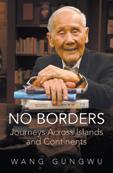
The latest memoir of University Professor Wang Gungwu (Arts ’53, MA ’56, HonDLitt ’22), No Borders: Journeys Across Islands and Continents, follows the eminent historian’s life across changing geographies — Malaya, London, Australia, Hong Kong and Singapore — and an equally changing world. Blending personal anecdotes and insights, the book explores the journeys that have shaped his understanding of China and its global connections, culminating in Singapore, where he has spent the last 30 years.
(World Scientific, 2026)
Emeritus Professor Tommy Koh (Law ’61, HonLLD ’22) traces his extraordinary journey from humble beginnings to his pivotal role in shaping Singapore’s global standing in TommyKoh:TheExtraordinary LifeofanOrdinaryMan. As Singapore’s first ambassador to the United Nations and Singapore’s longest-serving diplomat, he offers reflections on leading landmark negotiations, championing cultural diplomacy and cultivating a philosophy grounded in service, humility and lifelong learning.
(World Scientific, 2025)
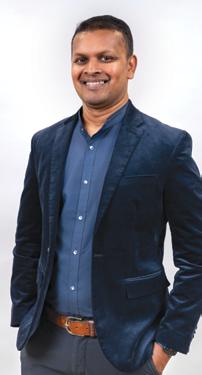
Here are five things to know about the book:
1 It’s not a success story — at least not in the usual sense
Assoc Prof Nanayakkara sets out to “peel himself open”, sharing the less visible parts of his journey: failures, self-doubt and those moments where he nearly gave up.
2 From humble beginnings to big dreams
He grew up in a lower-middle-class household in Sri Lanka, speaking only Sinhala and having little exposure to technology. Arriving in Singapore with only S$1,000, he had to navigate an unfamiliar environment while pursuing an Engineering degree.
Assoc Prof Nanayakkara is a faculty member in the Department of Computer Science at the School of Computing. He is also the founder and Principal Investigator of the Augmented Human Lab at NUS, where he leads an interdisciplinary team designing humancomputer interfaces and tools for assistive and augmented technologies.
In Lim Kee Jin: Doctor and Mentor, Mdm Patricia Lim Pui Huen (Arts ’52) chronicles the life and legacy of her late husband — a pioneering doctor whose career encompassed the transformative period in Malaysia from colonialism to independence. Dedicated to the role of medicine in nation-building, Dato’ Dr Lim Kee Jin (Medicine ’52) was particularly influential in leading postgraduate medical training at Johor Bahru General Hospital. His trainees included NUS professors Kua Ee Heok and Cheah Jin Seng (Medicine ’63, MD ’75). (Areca Books, 2025)
3 The message is deliberately simple
You do not need to be exceptional to achieve something meaningful. What matters more, he argues, is courage, self-belief and the willingness to act when opportunities appear.
4
It is written for those who don’t yet see what’s possible
The book is aimed especially at young people whose ambitions are shaped by their immediate surroundings. He recalls meeting a student whose highest aspiration was simply to wear a long-sleeved shirt and tie — an example of how limited exposure can narrow one’s sense of possibility.
5 It is already reaching far beyond him
What began as a personal project has taken on a wider life. With support from a sponsor, 5,000 copies are being distributed to schools across Sri Lanka, with the country’s Ministry of Education’s backing. This way, an individual’s story is being used as a resource for the next generation.
Ms Joanne H Lim recounts the influence and achievements of her father, Lee Kuan Yew School of Public Policy Emeritus Professor and Senior Advisor Lim Siong Guan (Business ’75), in LimSiong Guan: The Best Is Yet to Be. The biography documents Mr Lim’s public service career from 1969 to 2019, highlighting his contributions to laying Singapore’s foundations through his roles as Permanent Secretary of various ministries, Chairman of the Singapore Economic Development Board and Group President of the Government of Singapore Investment Corporation. (World Scientific, 2025)
Mr Vishnu Sundaresan (Computing ’25), a recent London transplant and software engineer at Ankar, reflects on building a life abroad and finding community through NUS’ global network.
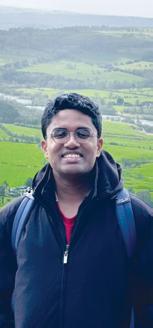
How did you find out about the Alumni Network in London?
Through the NUS newsletter! I saw they were hosting a Lunar New Year lunch. It was really nice to connect with people who’ve been here for decades, as well as others who moved more recently. I’m still in contact with some people I met!
Since graduation, have any alumni helped you professionally or personally?
There are a few alumni in London who have helped me a lot in settling into the city! Professionally, at my previous role working on my startup Snowball, I was helped by alumni in building our brand, getting client meetings or just sharing our product.
Where’s the most unexpected place you’ve met another NUS graduate?
During my Student Exchange Programme at the University of Georgia, I ran into another student whose parents were NUS alumni and had shifted there years ago. It was a full circle moment, showing that even in niche corners of the world our alumni community is alive.
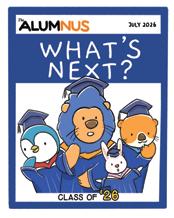
What surprises you most about life after NUS?
There’s a lot of things that I wasn’t ready for, but I’m more surprised by how much I was able to handle. My peers and I have been able to take what we’ve learnt in university to the real world. Some of my friends are building truly incredible companies and doing amazing work. I wouldn’t have expected it, and I’m really happy to see it!
What advice would you give new grads about making the most of NUS’ alumni community?
I think the power of a common identity or community can be easily lost on a lot of us. I strongly believe communities like NUS Alumni are differentiators for achieving anything. I’m also a big believer in the power of being a “giver” — that giving with no expectation of any returns is always beneficial. A lot of NUS alumni are similar and are happy to help, whether it’s professional advice, referrals or some form of support. I’ve definitely benefited and would love to pay it forward!
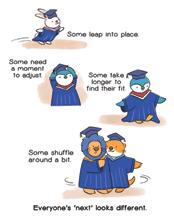
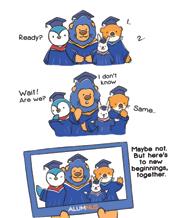

ACROSS
1 Rice or noodles, for short
5 Topic for a linguist
10 Anyhow take from others
14 Gem mined in Australia
15 Strips for breakfast?
16 Wild Rice founder and NUS Law alumnus Heng
17 Coursework?
20 Spare
21 “___ loh!” (cry after two years in green)
22 Hundred ___ Wood (Winnie-The-Pooh’s home)
23 Home of the Lee Kong Chian School of Business: Abbr.
25 Criticise
27 Fieldwork?
34 Deserving of a medal
35 Synagogue cabinets
36 Kayaker’s implement
38 Honnold who free soloed Taipei 101
39 Coder’s nemesis
40 Prefix with bat or phobia
41 Just average, in Gen Z slang
42 Batang organ
44 Lands with a wet sound
46 Framework?
49 “Alternatively,” online
50 US agency that approves pharmaceuticals
51 Shopping centre next to Wisma
53 ___ mian
55 Native language of KTM Iqbal
60 Network?
63 Baldwin who spoofs Donald Trump on SNL
64 The Divine Comedy poet
65 E-waste collector since 2021
66 What might be hot in a co-working space?
67 Word after bed or time
68 Part of MSG
1 With 11-Down, visit
2 Mountaineer’s goal
3 ___ and rave
4 Like a sotong
by JULIAN LIM
5 Purple ingredient in halo-halo
6 Enjoy to the full
7 Dell competitor
8 She completed her EGOT in 2002
9 Fruit salt brand that comes in orange, lemon, and ginger flavours
10 Banchan staple
11 See 1-Down
12 Square of glass
13 Doc who might specialise in treating sleep apnea
18 Ramen broth base
19 Some are checkered
24 Apple that’s inedible
26 ___.gov.sg (website with questions for the authorities)
27 Sibeh jialat
28 Remains to be seen?
29 “Win ___, lor!” (“I give in”)
30 Chicken or small
31 Place to store valuables
32 “Seriously!”
33 “Friends in Low Places” singer Brooks
37 Like some outlooks
39 “The rest of it isn’t interesting”
40 ___ carte
42 Imply
43 “If you ask me...” on WhatsApp
44 Currency that can be exchanged at par in Brunei: Abbr.
45 Popular supper option
47 Like nasi lemak without sambal, to many
48 Eminent
51 Part of a mahjong set
52 Stone, bronze, and iron
54 Henry VIII’s second wife
56 “I Am Gifted, So Are You!” author Khoo
57 Beverage choice with 45-Down, often
58 Librarian’s ID
59 “Omg that’s hilarious!”
60 Papa
61 Google ___ (digital marketing option)
62 Ran into