

Issue 08 | June 2026

Dear Reader,
Welcome to our latest edition of the CDE Research Newsletter!
How will we live, work, and thrive in a world shaped by climate change, rapid urbanisation and evolving societal needs? In this edition of Forging New Frontiers, we spotlight researchers in Architecture, Landscape Architecture and Industrial Design who are addressing this question through bold, interdisciplinary approaches. Their work demonstrates a strategic focus on creating resilient, equitable and sustainable futures by developing climate-adaptive urbanisms, “rewilding” cities to restore ecological balance and pioneering circular economies with materials like mass timber. We also explore emerging digital frontiers, where artificial intelligence, virtual reality and interactive technologies are reshaping the creative process. Finally, recognising that transformative research is driven by collaboration, we are pleased to introduce a new section highlighting partnerships and the CDE ecosystem that enable impactful ideas to move from concept to real-world change.
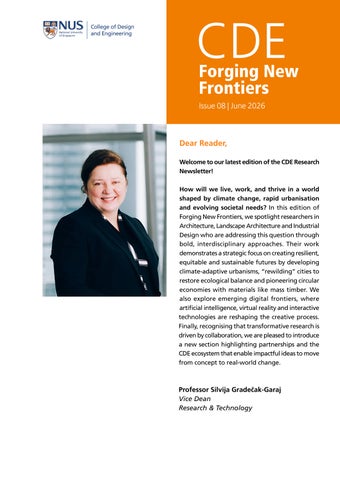
Professor Silvija Gradecak-Garaj Vice Dean Research & Technology
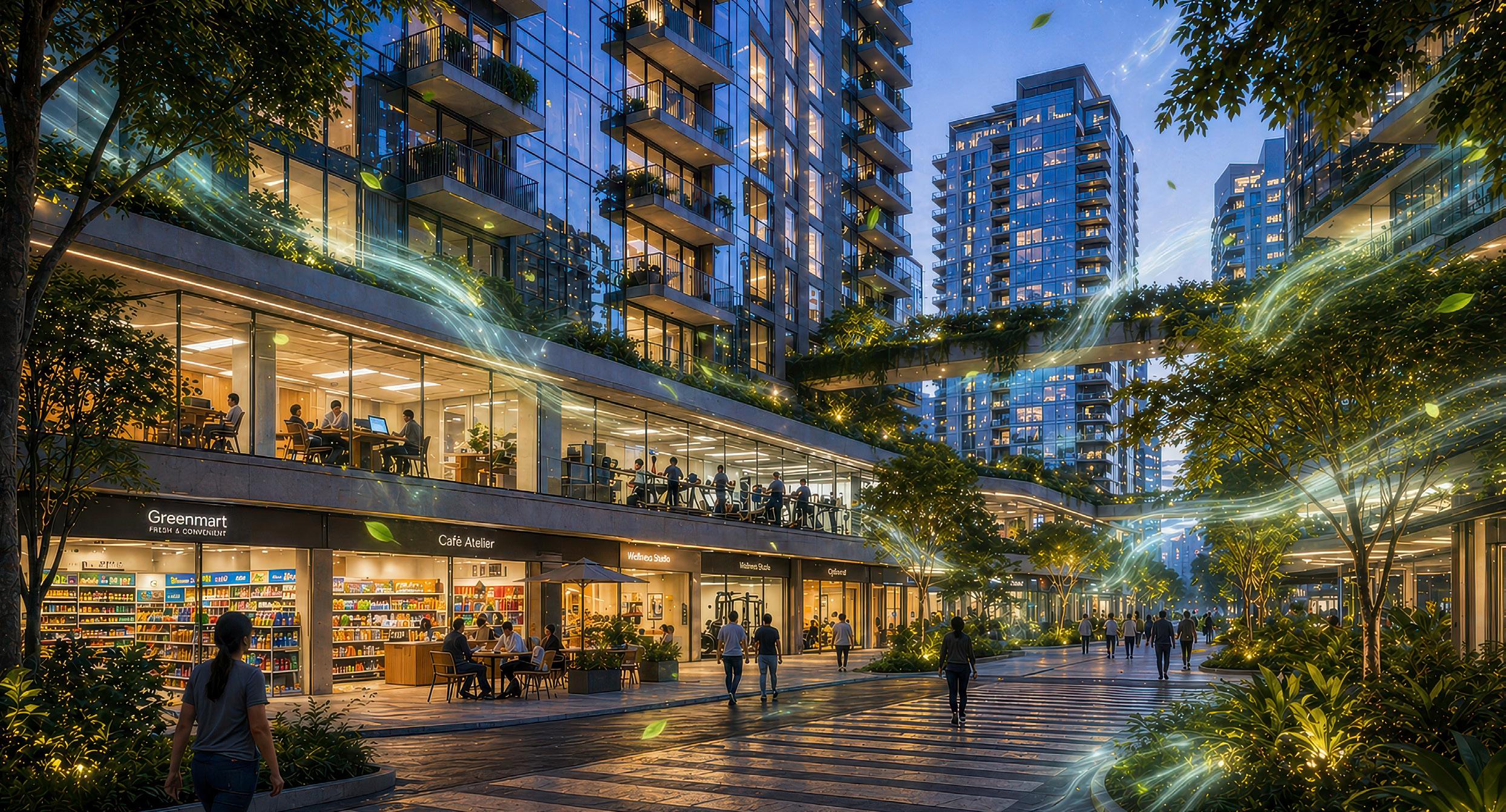
Using the design process itself as a form of inquiry, a multidisciplinary team reimagines Singapore’s future townships to adapt to an ageing society and a warming climate.
How often can someone get to say that their work impacts the everyday lives of hundreds of thousands of people? Try urban planning. As the global population continues to rise, the need for living, working and recreational spaces also follows suit. This then entails the more efficient use of land space, especially in a small, densely populated country like Singapore.
Issue 08 | June 2026
But efficiency can’t be the only consideration. Township designs must consider the impact on the people utilising the common spaces and the role of place-making, so they will be able to call their house a home. And this is exactly what Professor Heng Chye Kiang from the Department of Architecture at the College of Design and Engineering, National University of Singapore, set out to do through a research-by-design approach, where the process of planning a real township becomes itself a vehicle through which new knowledge about how future cities should work is generated.
Forging New Frontiers
Through a research-by-design approach, Professor Heng Chye Kiang led a team to study the planning of Paya Lebar Air Base, which is slated for redevelopment in URA’s Master Plan 2025.
Commissioned by Singapore’s Urban Redevelopment Authority, Prof Heng, together with colleagues including Associate Professor Fung John Chye from the same department, led a team to reimagine what the soon-to-be former military air base could be as a next generation township. The area that had housed Paya Lebar Air Base (PLAB) since 1980 started off as an amalgamation of Chinese and Malay villages, colloquially known as kampongs, and served as the site for Singapore’s second international airport from 1955.
The airport’s long history prompted Prof Heng and the team to preserve its core structure of a 4 km long airport runway, as well as several hangars, in order to memorialise their cultural importance. “The runway is like the central axis, or ‘spine’, of the site, aligned to catch the wind, it is an excellent channel for breezeways. It integrates the diverse elements of the township, from green corridors to bands of commercial and communal amenities. Where planes once took to the skies, we imagine canoes racing along a canal, and in a way we preserve that sense of speed and movement,” says Prof Heng.
“Where planes once took to the skies, we imagine canoes racing along a canal, and in a way we preserve that sense of speed and movement.”
The area would then also serve as the Airport Heritage Cluster, complementing the nearby Hougang and Pasir Ris Heritage Trails that the National Heritage Board is rolling out over the next few years.
08 | June 2026
Singapore is no exception to the trend of falling birth rates among the more developed economies. By 2030, the proportion of Singaporeans aged 65 and above will reach a quarter, a number that will increase to a third by 2040. This makes Singapore one of the most rapidly ageing countries, and townships must adapt to this changing reality. “For example, most seniors typically do not walk more than 150 to 200 metres from their block, though this distance may be considerably shorter — or extend up to about 400 metres — depending on their mobility and journey experience.”
It is therefore no longer practical to stick to the older models of township design, with clusters of monofunctional zones — separated areas for residential living, commercial activities, recreation and more. What Prof Heng and his team are proposing is a novel planning model called The Band Concept. What this entails is that each functional zone is now laid out as a linear band, with different functional areas criss-crossing each other in a tic-tac-toe grid-like fashion. This allows residents to access a variety of amenities by foot, making the lives of residents more convenient, while simultaneously promoting active mobility among the elderly.
Another key issue for an ageing society is ensuring that there are high rates of economic participation, in order to fund the higher costs associated with ageing. “The developments are designed to be mixed-use both horizontally and vertically. Within the podiums, you could house plant factories with artificial lighting, even indoor fish farms. We visited one in Singapore and it produces no foul odour,” adds Prof Heng. “These create micro-jobs right within the neighbourhood. Across the whole 20 square kilometres of the study area, we have planned to accommodate around 360,000 jobs, so that residents can find work very close to home.”
Ultimately, he envisions an Innovation District, where anything from startups to multinational corporations harmoniously coexist in the same space as residential, commercial and educational areas.
“Across the whole 20 square kilometres of the study area, we have planned to accommodate around 360,000 jobs, so that residents can find work very close to home.”
Research by the Centre for Climate Research Singapore has shown that the city-state will continue to get warmer through the decades ahead. The PLAB area would be more severely impacted as it has generally been hotter than the national average, primarily due to the high percentage of tarmac.
“But we see an opportunity to link it to the entire ecosystem of green biodiversity on the island — connecting to Pulau Ubin, Coney Island, Pasir Ris Park, even East Coast Park, and to the Central Catchment Nature Reserve. We not only retain the green areas but actually propose to increase them,” adds Prof Heng. And through the use of sophisticated modelling software, forested area and building heights were also designed to ensure optimal ventilation, while mitigating soil erosion and small particulates removal, among other environmental factors.
The redevelopment of PLAB, including the Defu neighbourhood as its first phase, is now gazetted in URA’s Draft Master Plan 2025, which guides Singapore’s development over the next 10 to 15 years.
Prof Heng envisions that the runway will become a spine, and the new area will revive the kampong spirit in a new form. When the first family moves in, they will inherit a habitat designed to age with them and fend away the rising heat. That is the difference between urban planning in a dogmatic manner and an approach that is user-centric. And that is how a house becomes a home, not just for today, but for the many years to come.
Issue 08 | June 2026
It is an oxymoron until you see it working across five rewilding projects in Singapore, illustrating how designing for “messiness” can change a city’s relationship with Mother Nature.
Green spaces fill almost half of Singapore. The city-state has over 844,000 trees planted since 2020 under its One Million Trees movement, threaded 190 km of naturalistic corridors through its streetscapes and earned a reputation as one of the most verdant high-density cities on Earth. Most of that greenery is meticulously planned. Pruned, weeded, manicured to civic specification. What happens when a tropical city that has mastered the art of managed nature decides to let parts of it go wild?
Issue 08 | June 2026 Forging New Frontiers
That question drives research by Associate Professor Hwang Yun Hye from the Department of Architecture, College of Design and Engineering, National University of Singapore (NUS). Her new article examines five rewilding projects across Singapore, tracing how each defines, designs and negotiates “wildness” within a systematically managed urban landscape. The findings suggest that urban rewilding, done well, can serve more than its ecological purpose — it can reshape how citydwellers relate to nature, to place and to one another.
“We believe rewilding in cities also has a socio-cultural significance to it — it could change people’s expectations of what a landscape should look like, and what it can do,” says Assoc Prof Hwang.
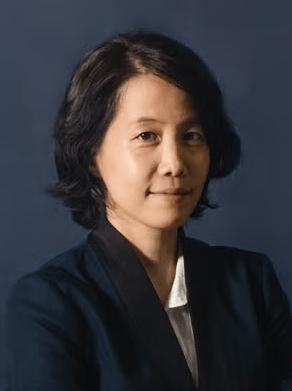
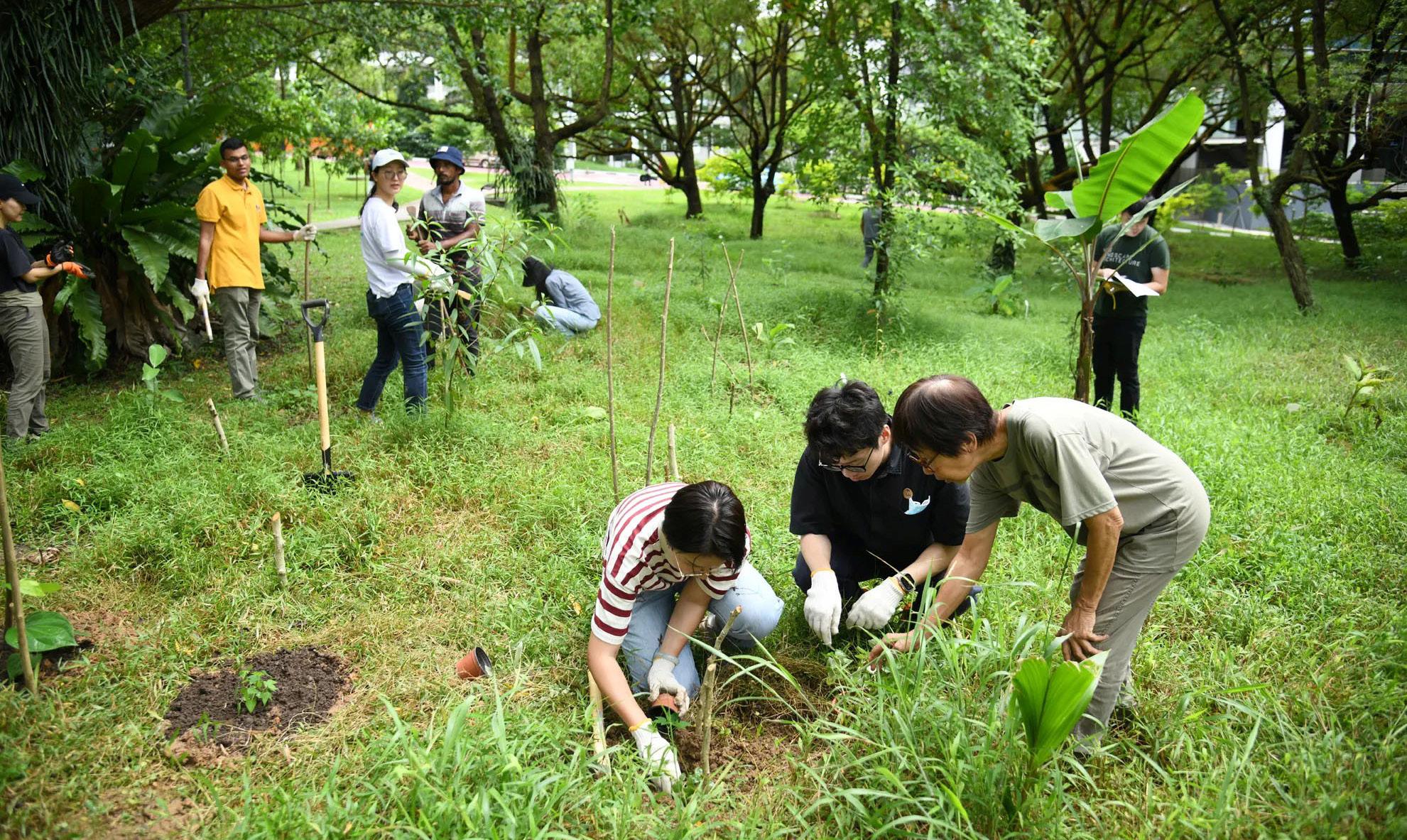
Associate Professor Hwang Yun Hye and her team examined five rewilding projects in Singapore, tracing how each defines, designs and negotiates “wildness” within a systematically managed urban landscape.
The five projects span a wide range. Nature Ways, launched in 2001 by Singapore’s National Parks Board, threads a 190 km swathe of naturalistic green corridors through the city’s streetscapes, connecting fragmented parks and reserves with a four-tiered planting structure designed to mimic native forest. At the other end of the spectrum sits Square Forest, a small 4 m² patch of dense planting in a private garden corner. Between them are the Nature Society of Singapore’s (NSS) corridor restoration along a disused railway line; an alumni-led reforestation effort on NUS’ Kent Ridge; and the “NUS Naturalized Gardens,” a researcherdriven initiative transforming manicured lawns into biodiverse habitat since 2010.
“Rewilding” is the common denominator for these projects. But what separates them is almost everything else: scale, method, maintenance intensity and the degree to which nature is allowed to do its own thing. Nature Ways, despite its naturalistic appearance, involves regular pruning and weeding. The NSS project, by contrast, envisions decades of unmanaged succession, aiming for a self-sustaining ecosystem within three decades. The Naturalized Gardens occupy an intriguing middle ground — what Assoc Prof Hwang dubs “intentional wildness,” a balance of spontaneous growth and selective human intervention.
Issue 08 | June 2026
Forging New Frontiers
A distinctive finding of the study is that urban rewilding projects double as living labs, not only for ecology, but also for design, education and public perception. These initiatives drive participants to engage with ecosystems that are unfamiliar and unfinished. In particular, students monitor flora and fauna across multiple periods of time; landscape managers trial maintenance strategies without a playbook; and researchers test how novel ecosystems respond to selective intervention. In essence, the learning is longitudinal and reciprocal.
“When people draw closer to nature and observe how uniquely dynamic and diverse our plants are, something magical transpires.”
For instance, the NUS Naturalized Gardens rewilding project, launched in 2010 by the Urban Wild Lab, has drawn in researchers from architecture, geography and biology to assess the gardens’ biophysical functions through soil surveys and temperature measurements, while the NUS Natural History Museum has conducted flora and fauna monitoring. Students in the Bachelor of Landscape Architecture programme have organised planting events since 2022, handling publicity, guiding volunteers and documenting vegetative changes, while passing logbooks to each incoming cohort. NUS lecturers, meanwhile, have woven the gardens into coursework, using them as testbeds for creative environmental design and plant identification. It is a multidisciplinary undertaking — ecologists, designers and facility managers learning from the same patch of soil.
“When people draw closer to nature and observe how uniquely dynamic and diverse our plants are, something magical transpires,” adds Assoc Prof Hwang. “That sense of identity is what makes rewilding last.”
Yet the study does not overlook the tensions. Boardwalks and paved footpaths in the Naturalized Gardens make for pleasant walking — but may hinder animal and plant dispersal. At Kent Ridge, trees were planted on flatter ground for volunteer safety, even though steeper ridge edges would have done more for erosion control.
Issue 08 | June 2026
Square Forest’s 4 m² footprint, determined by its homeowner’s preference rather than ecological logic, sits isolated from neighbouring green patches.
These are design trade-offs. The projects employ what landscape researchers call “cues to care”: straight edges on forest patches, selective maintenance of footpath borders, elevated walkways through wilder zones. These features reassure the public that someone is minding the mess.
The bigger structural challenge, the study highlights, is participation depth. Across all five projects, community involvement was largely limited to volunteering for pre-planned tasks. Decision-making remained with coordinators and experts. Future projects, Assoc Prof Hwang suggests, should move towards co-creation, involving community members and specialists in plant science, biology and design from the outset.
The research also underlines the importance of strategic siting — projects embedded within Singapore’s ecological network attracted stronger public engagement than those positioned opportunistically — and of long-term leadership: a committed core team capable of reading a landscape’s trajectory years into the future.

Virtual reality can replicate how we see and hear environments, but when it comes to psychological and physiological restoration, the body tells a different story.
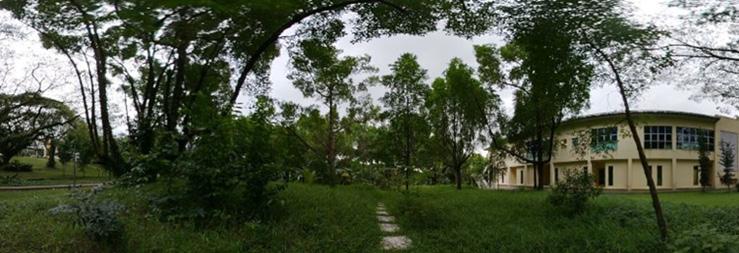
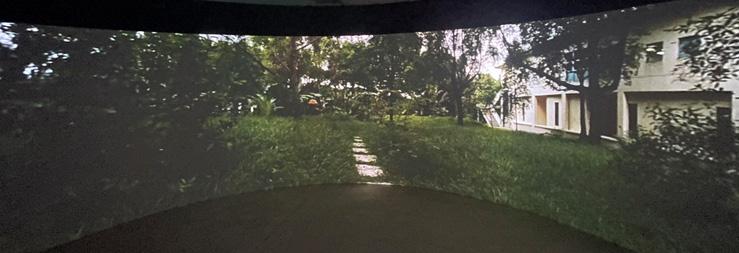
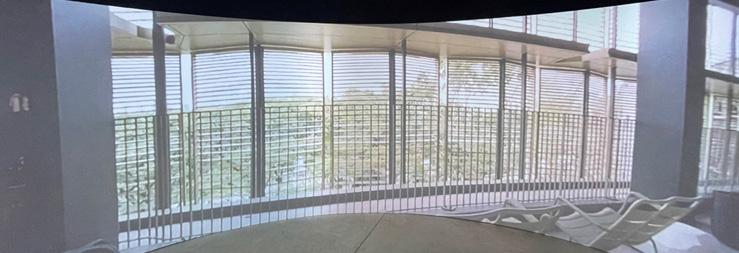
Cicadas hum, punctuating an otherwise serene evening. Greenery fills your peripheral vision. You’re cosied up in a garden on a university campus, and your shoulders are beginning to drop. Except the garden isn’t real — it’s a 360-degree projection wrapped around the inside of a six-metre virtual-reality (VR) cylinder, and there are 32 electrodes tapping on your brainwaves.
Issue 08 | June 2026
Forging New Frontiers
This is the experimental setup behind a recently published study led by Associate Professor Eddie Lau Siu-Kit from the Department of Architecture, College of Design and Engineering, National University of Singapore, that tackles a question central to how we research the built environment: when designer and researchers use VR to study how spaces make people feel, how closely does that virtual experience reflect the real world? Can we trust what the data tells us?
The study also reflects a broader research programme spanning three complementary papers: a systematic review, a perception-focused experiment, and a psychological and physiological study. Across the two empirical studies, the team worked with 64 participants and examined environments ranging from a forest and an urban park to campus spaces and a dense retail district. Together, his findings suggest that the answer is neither a simple yes nor a no. VR can be highly persuasive, but its validity depends strongly on how the virtual environment is built and measured.
The concept in question is ecological validity — the degree to which laboratory results reflect what happens in the real world. It is especially pertinent to research areas like architecture, urban design and environmental psychology — if a VR experiment shows that a particular soundscape reduces stress or supports restoration, that finding might shape the design of a hospital courtyard, a public park or restorative indoor space.
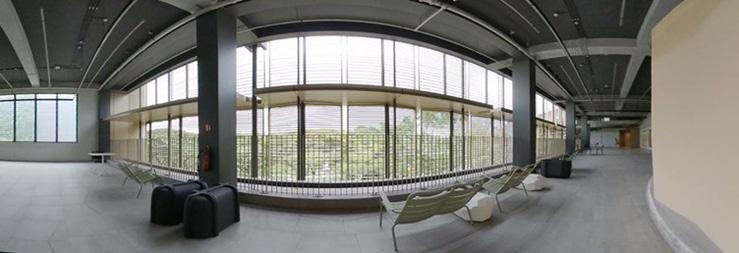
To test the fidelity of VR in the psychological and physiological study, Assoc Prof Lau’s team put 27 participants through every combination — a campus garden rich with birdsong and cicadas, and an indoor rest zone with traffic noise filtering through windows — each experienced in the real world, inside a cylindrical VR environment and through a VR-enabled head-mounted display. Throughout, participants wore monitors that capture brain activity and heart rate, and completed questionnaires on factors from soundscape perception to psychological restorativeness.
Issue 08 | June 2026
Forging New Frontiers
“We wanted to go beyond just asking people what they perceived. To ensure VR is a reliable design and research tool for environmental design, it needs to capture the physiological and psychological responses, too. And these are things people can’t easily report,” explains Assoc Prof Lau.
On perception, VR performed well. Both setups produced audio-visual assessments that closely matched real-world evaluations — participants rated soundscapes, landscapes and overall environments similarly regardless of whether they were physically present or virtually immersed.
That strong perceptual performance was not accidental. Across the wider programme, the team found that ecological validity improved when auralisation was calibrated by about -8 dB, when spatial audio methods such as ambisonics and synthesis replaced monaural reproduction, and when 3D video was used to strengthen visual realism. Virtual walking also appeared to improve ecological validity by giving participants a more natural way to explore the scene.
But the results differed when the team examined psychological restoration — measures of how calming, restorative or compatible an environment felt. Neither VR tool perfectly replicated the actual experience. In some cases, the results flipped entirely: participants rated compatibility — the sense of belonging in a space — differently in VR than in reality, sometimes reversing which site scored higher. The cylindrical VR fared slightly better than the headset, but neither was a clean stand-in.
Issue 08 | June 2026
Forging New Frontiers
Physiologically, the divergence deepened. Heart-rate data from the head-mounted display differed significantly from realworld readings, while the cylindrical setup tracked closer to reality. Brainwave data painted a nuanced picture: both VR tools could approximate how brain activity shifted overall during exposure and how it differed between the left and right hemispheres. But the moment-to-moment fluctuations that real environments produce — the subtle ebb and flow of neural activity — eluded the headset. But the cylinder held up.
“What surprised us was how much the type of VR setup influenced the physiological results.”
“What surprised us was how much the type of VR setup influenced the physiological results,” adds Assoc Prof Lau. “Head-mounted displays are more immersive in some ways, but that immersion doesn’t guarantee ecological validity.”
Why the gap? The team points to what VR omits. Real environments deliver an explosion of sensory experiences ranging from smell, temperature and humidity to the brush of the wind and the fickle movement of tiny critters. Participant interviews confirmed this: the absence of non-audio-visual sensory cues was noticeable, and it appears to blunt the restorative response. A garden you can see and hear but not feel on your skin is, physiologically speaking, just not the same.
Participants noted that the cylindrical setup couldn’t render the sky or the ground beneath their feet — yet it still outperformed the headset on several physiological measures. Room-scale VR, by allowing a more natural body posture and visual field, may avoid some of the physiological artifacts introduced by wearing a device strapped to the face.
“As VR becomes a standard tool for testing biophilic design strategies and urban noise mitigation, knowing where it is trustworthy and where it isn’t becomes a practical design concern,” adds Assoc Prof Lau.
His team plans to expand the work to include a wider range of environments and additional physiological measures such as skin conductance, respiratory activity and muscle tension. But the broader ambition goes beyond extending the
08 | June 2026
experiments. Through their review work, the researchers have also proposed a framework for studying ecological validity in VR — one that helps future studies think more systematically about parameters, methods and experimental design. They also aim to explore whether different types of settings call for different VR tools altogether. The virtual and the real may never perfectly converge, but the gap, at least, is becoming measurable.
08 | June 2026
Tropical plantation timber grows several times faster than its temperate counterparts. Engineered into structural panels and beams, it could turn Southeast Asia’s buildings from carbon sources into carbon stores.
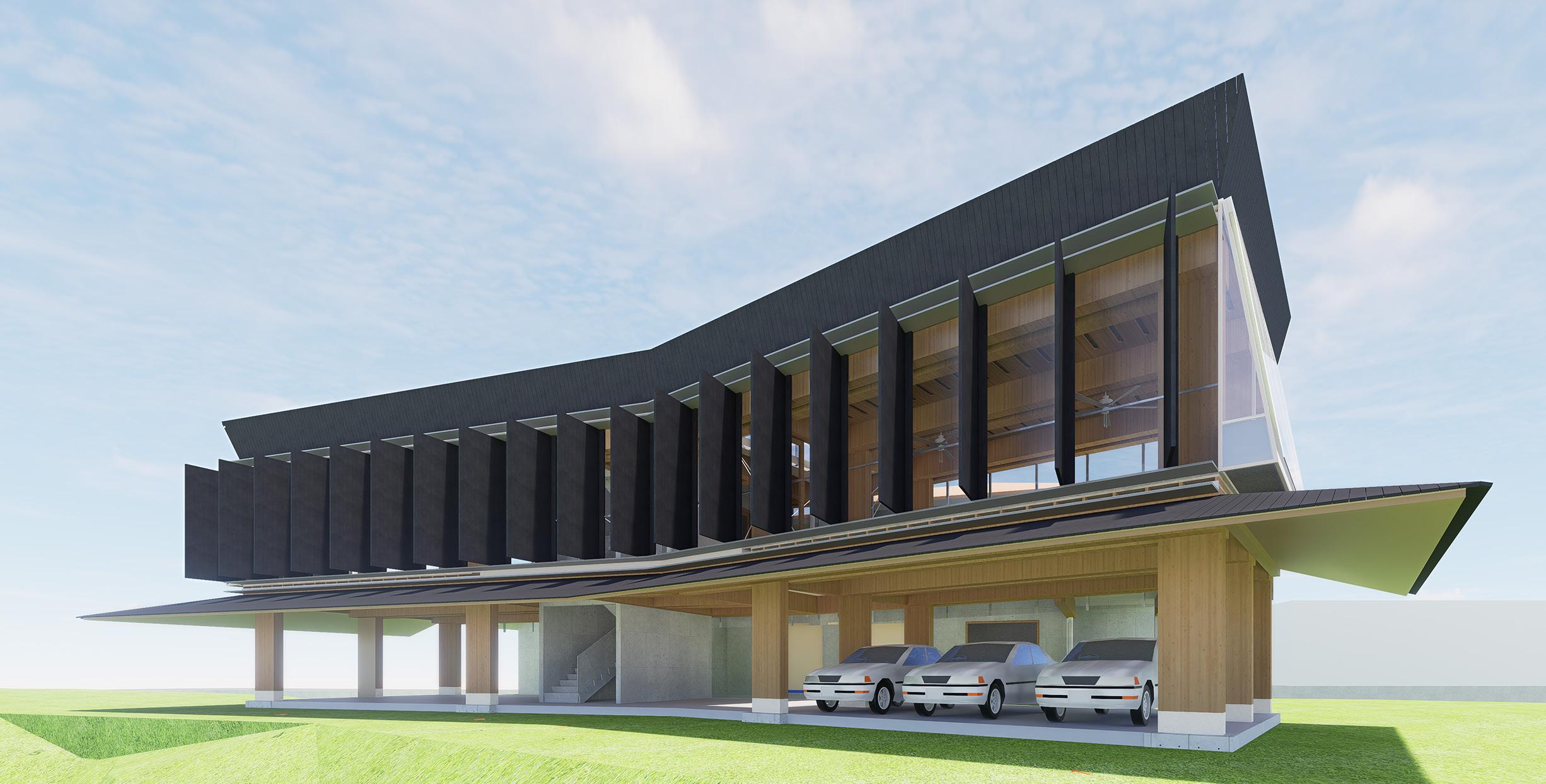
TLab is a proofof-concept platform for human comfort and longterm timber durability of MET buildings in Southeast Asia’s hot and humid monsoon climate.
he production of concrete, the world’s most widely used construction material, accounts for around 8% of global emissions each year. Together with steel, commonly used to reinforce buildings, the materials make up approximately 16% of embodied carbon emissions in the built environment and are a major source of construction waste.
Issue 08 | June 2026
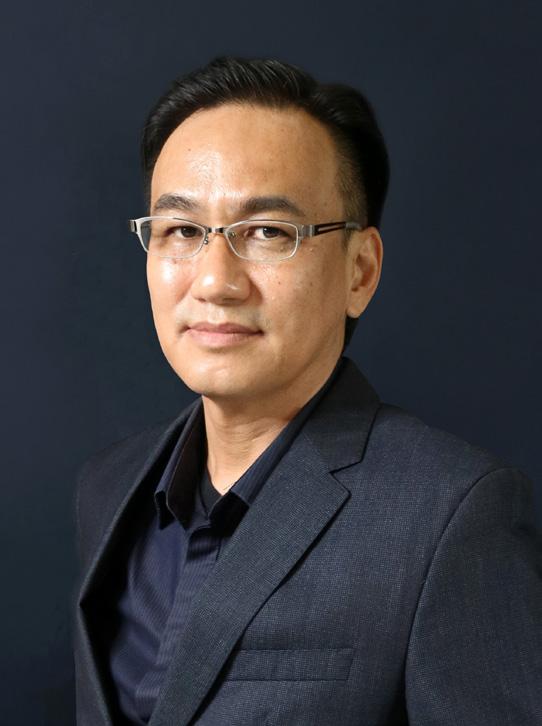
Associate Professor Shinya Okuda leads a research platform dedicated to developing mass engineered timber from fastgrowing tropical plantation species for structural use in buildings.
Forging New Frontiers
Associate Professor Shinya Okuda from the Department of Architecture, College of Design and Engineering, National University of Singapore (NUS), has been pioneering efforts to change that equation. In 2013, he founded SkyTimber Tropical Renewable Architecture Design Lab , an advanced, interdisciplinary designresearch platform dedicated to developing mass engineered timber (MET) from fast-growing tropical plantation species for structural use in buildings. The lab also aims to find solutions for the long-term durability of MET buildings in the hot and humid monsoon climate, addressing both human comfort and timber durability, contributing toward carbon neutral Southeast Asia.
Most Singaporeans are familiar with seasonal haze caused by land-clearing fires on regional tropical plantation. What is less visible is the scale of the carbon stakes: tropical forests store an estimated 68% of the planet’s terrestrial carbon stock, and tropical deforestation contribute to roughly onetenth of greenhouse gas emissions between 2005 and 2010, with 41% of that share originated from Southeast Asia.
Tropical MET transforms relatively weak, fast-growing plantation lumber into highperformance structural components. Sawn boards are graded, finger-jointed and bonded in layers — along the grain to form glued laminated timber (glulam) for columns and beams, or cross-layered to produce crosslaminated timber (CLT) for floors and walls. The resulting material achieves compressive strength comparable to concrete at roughly one-fifth of the weight.
The tropical advantage is speed. For instance, a sengon tree on a Javanese plantation can reach up to 20 metres in just three to four
“Tropical MET can retain substantial quantities of atmospheric carbon in solid form over the long-term, becoming an effective carbon sink and a true gamechanger in a warming world.”
Issue 08 | June 2026
Forging New Frontiers
years — growth rates that temperate spruce, the current industry standard for MET, cannot match. “Due to year-round sunlight, some plantation species in the tropics may grow several times faster than those in temperate climates. Currently, most of their use is limited to furniture, plywood, pulp and chips, and not structural components. Tropical MET can retain substantial quantities of atmospheric carbon in solid form over the long-term, becoming an effective carbon sink and a true gamechanger in a warming world,” says Assoc Prof Okuda.
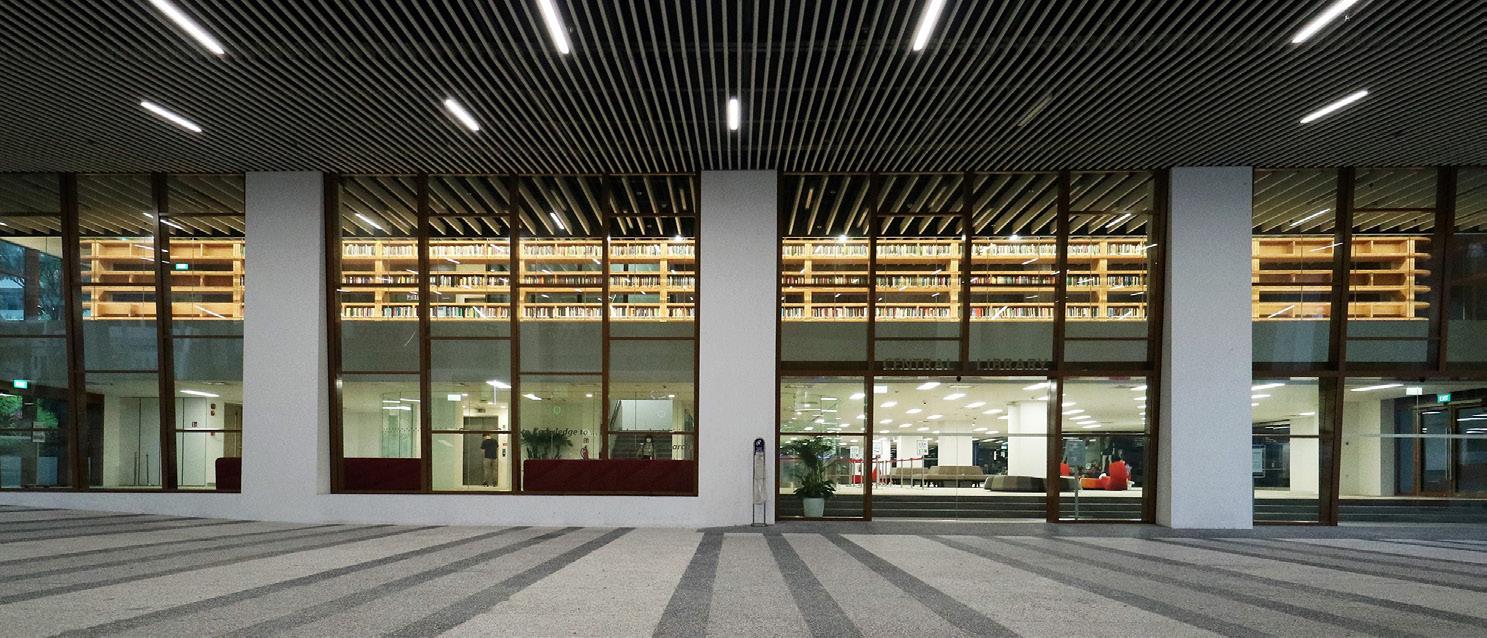
Regulatory efforts to improve building operational efficiency have successfully reduced energy-related emissions, such as SDE 1-4 net-zero energy premises in NUS, yet embodied carbon — the emissions associated with building’s construction — is largely unchanged.
The carbon arithmetic is compelling. A comparative life-cycle study conducted in Central Chile under a sub-tropical climate found that a mass timber structure carries 42% lower net embodied carbon than an equivalent reinforced concrete building, partly because timber production generates fewer emissions, and partly because the wood itself stores carbon absorbed during the tree’s growth. Every timber building, in effect, becomes a long-term carbon bank.
Singapore’s rising carbon tax sharpens the economic case. The rate climbed from SGD 5 per tonne of CO2-equivalent in 2019 to SGD 25 in 2024 and is set to increase fifteenfold to SGD 50–80 by 2030. Several Southeast Asian neighbours, including Malaysia and Vietnam, are developing their own emissions trading systems. “Timber buildings may mitigate the future trajectory of Scope 3 carbon emissions, and that could fundamentally change the economic calculation,” adds Assoc Prof Okuda.
Issue 08 | June 2026
Forging New Frontiers
The path from plantation to building site presents challenges unique to the region: constant high humidity, intense rainfall, biological degradation and termite attacks — conditions that temperate design guides were never written to address. In hot-humid climates, moisture moves inward from the exterior, the opposite of its behaviour in colder regions, demanding fundamentally different building envelope strategies.
SkyTimber’s interdisciplinary collaboration across Architecture, Built Environment, Civil Engineering, Material Science and Biological Science addresses these barriers through material innovation, tectonic design and performance analytics. Since prototyping the first tropical MET from fast-growing plantation species in 2018, early structural testing suggests the material may meet the Eurocode strength classes required for mid-rise to tall building construction in Singapore. The lab conducts real-time moisture monitoring on cladding prototypes exposed to Singapore’s tropical climate, and the Inno-hub Living Lab, now in the design phase, will test timber durability and human comfort under real tropical conditions at full scale.
SkyTimber has also been advancing biophilic healing design-research through BioHeal projects, exploring how timber-based environments enhance healing, reduce stress and improve cognitive well-being.
Commissioned by Alexandra Hospital, SkyTimber led design-research on tree upcycling initiative for a new Rehabilitation Centre, demonstrated how locally sourced timber can be transformed into therapeutic architectural elements that passively support patients’ faster recovery.
Singapore’s public housing stock presents a significant opportunity to scale these benefits. Leveraging MET’s lightweight and ease of assembly, SkyTimber’s research how low-rise Housing and Develoment Board (HDB) blocks, mainly built in 1960s and 70s, could be rejuvenated and extended with additional floors and facilities, with minimal increases in loading. This could extend the liveable life of existing housing while providing residents with environments with more natural materials.
Issue 08 | June 2026
SkyTimber’s BioHeal research explores how timber-based environments enhance healing, reduce stress and improve cognitive well-being — demonstrated at Alexandra Hospital’s Rehabilitation Centre, where local timber was transformed into therapeutic architectural elements supporting patients’ healing journeys.
Forging New Frontiers
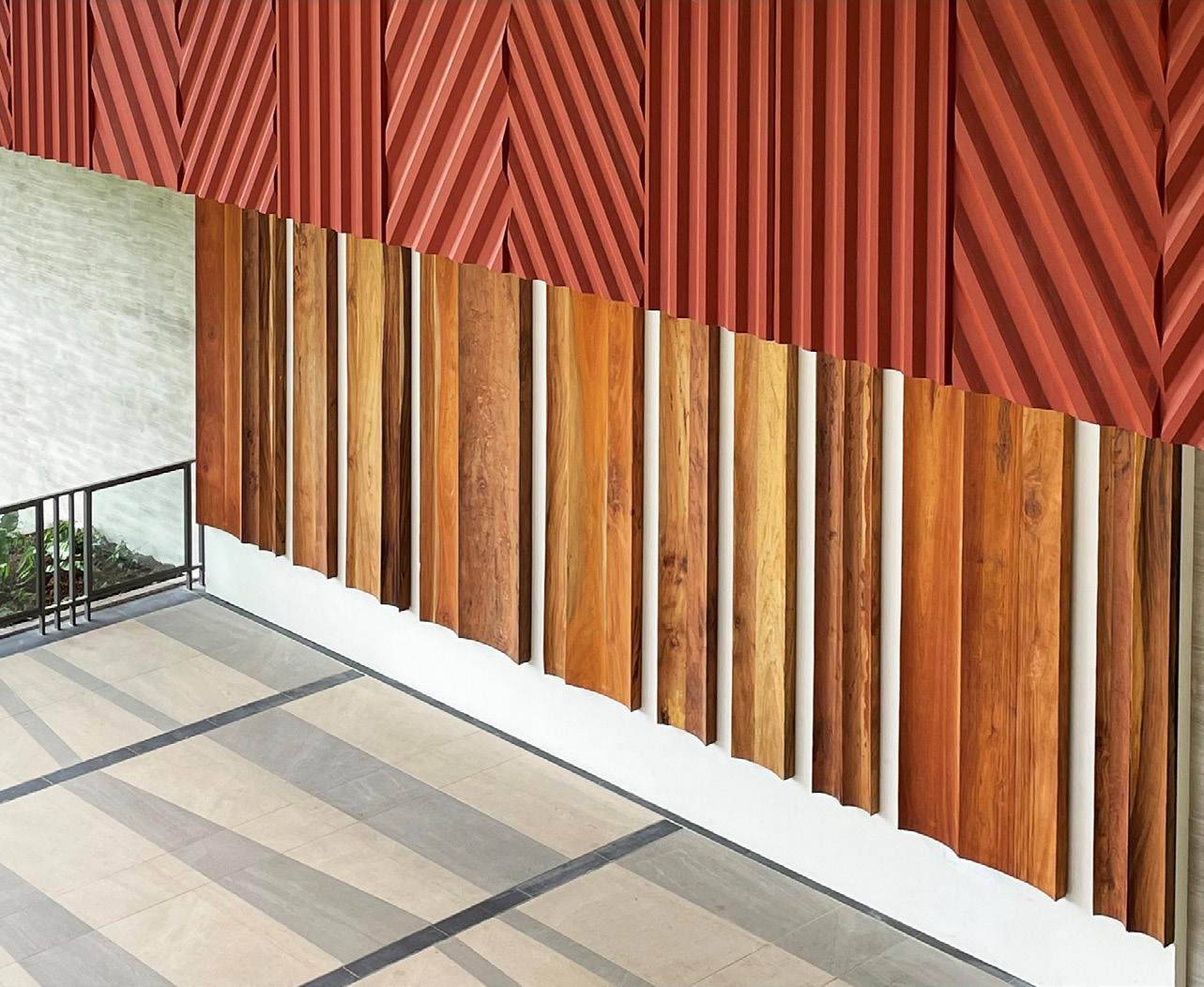
The lab’s NatureNurture project, conducted with the Ministry of Education (MOE), investigates biophilic learning environments built with MET, with findings suggesting classrooms surrounded with timber can reduce student stress and support cognitive development.
The regulatory landscape is evolving concurrently. Singapore’s adoption of the Eurocode framework has opened a formal legislative pathway towards mass timber buildings, though tropical-specific design guides remain under development. Assoc Prof Okuda points to Japan’s CLT legislation roadmap — a concerted effort from 2013 to 2016 spanning regulation, R&D, manufacturing and professional training — as a model the region could adapt and is working closely with the Building Construction Authority (BCA) to advance the local regulatory pathway.
“Creating tropical renewable architecture is our central goal,” says Assoc Prof Okuda. “We also want to foster a symbiosis between sustainable forestry and renewable urbanism in the tropics. By bridging research and real-world application, integrating sustainability with human well-being and positioning Singapore as a global innovation hub, SkyTimber aims to lead a new architectural paradigm: Nature-Urbanism Symbiosis in the Tropics.”
Issue 08 | June 2026
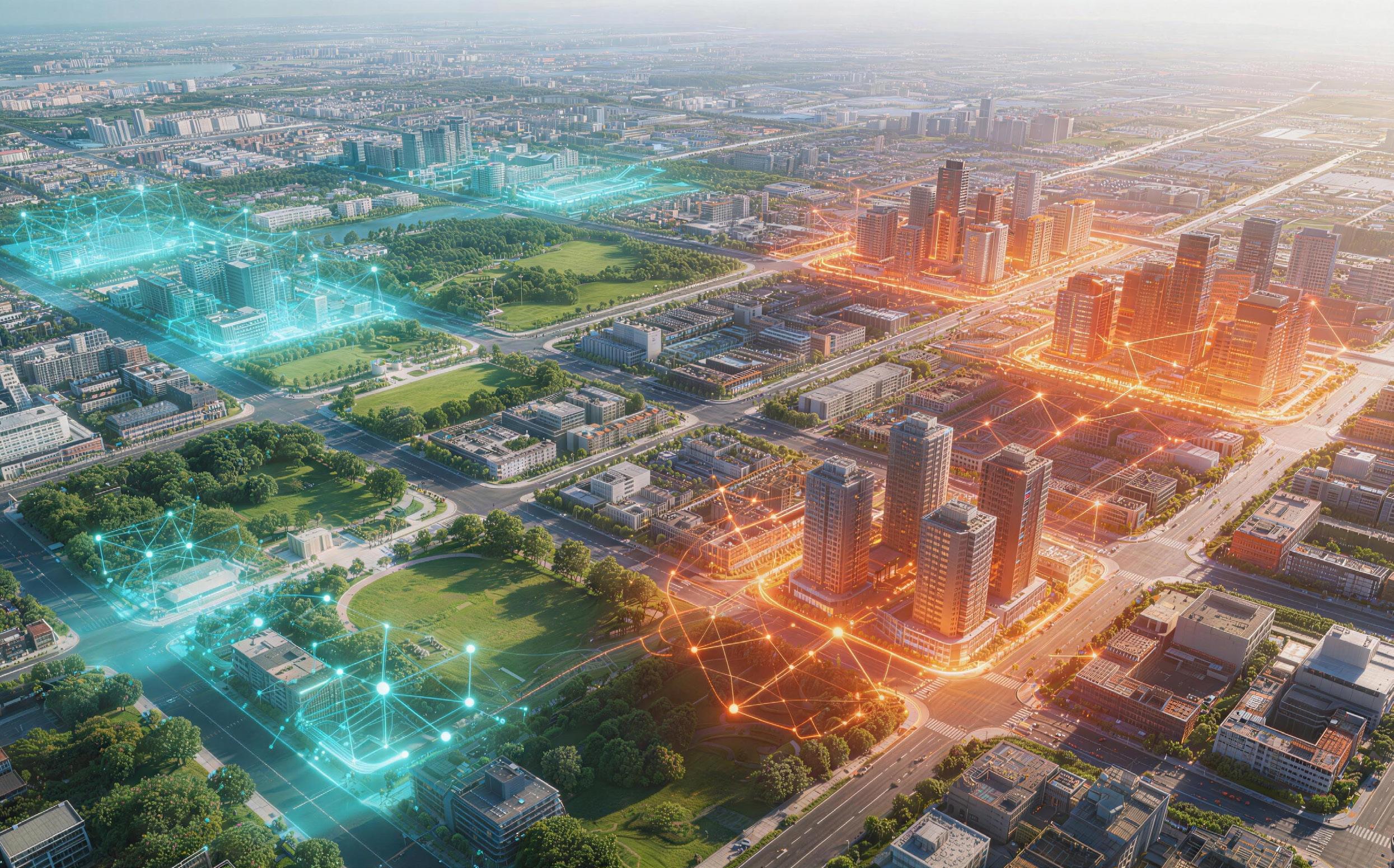
From London’s flood-prone streets to Miami’s searing hot spots, a pair of new studies trains AI to answer a question bewildering urban planners: when the next climate shock arrives, who is protected and who is not?
Picture two neighbourhoods in the same city. One sits behind a seawall, shaded by mature trees, a short walk from a park. The other sprawls inland on low ground, hemmed in by asphalt, its nearest green space a bus ride away. When a heatwave strikes or a flash flood sweeps through, the consequences are drastically different, and the factors include geography, infrastructure and income.
Issue 08 | June 2026
Forging New Frontiers
That is urban climate injustice in action. And in cities from London to Miami to Singapore, it is widening. A pair of studies led by Associate Professor Rudi Stouffs from the Department of Architecture, College of Design and Engineering, National University of Singapore, is arming planners with sharper tools to see it and, subsequently, act on it.
The first study tackled a long-standing data problem. Census statistics in the UK are collected once a decade. Satellite imagery, while taken more frequently, often cannot distinguish one street from the next.
Assoc Prof Stouffs turned instead to crowdsourced street view images — almost 334,000 of them from the platform Mapillary — covering Greater London. A computer-vision model segmented each image into 30 categories of urban objects, from trees and fences to road surfaces and building facades, producing a fine-grained portrait of every neighbourhood’s physical character.
But raw imagery alone does not suffice. To classify how vulnerable each area is to flooding, heat stress, or both, the researchers developed a new AI framework called the Multi-Hyper Graph Neural Network, or MHGNN, which works on two levels simultaneously. A multigraph captures direct connections between neighbourhoods — shared roads, waterways and physical boundaries — reflecting the principle that nearby places influence each other. A hypergraph links areas that may be far apart on the map but share similar socio-economic profiles, land cover or tree density, connecting places that look alike, not just places that sit side by side.
“Proximity to a climate hazard is not the only contributing factor to urban climate injustice,” adds Assoc Prof Stouffs. “Two neighbourhoods on opposite sides of a city can face very similar vulnerabilities if they share similar socio-economic conditions and built environments. Our model captures both of these spatial dimensions.”
“Proximity
to a climate hazard is not the only contributing factor to urban climate injustice.”
MHGNN achieved roughly 72% accuracy in classifying overall urban sensitivity to combined flood and heat risk — a nearly 24% improvement over conventional methods. Further studies revealed that socio-economic indicators contributed more to performance than any other variable, underlining how deeply intertwined wealth, demographics and climate risk are.
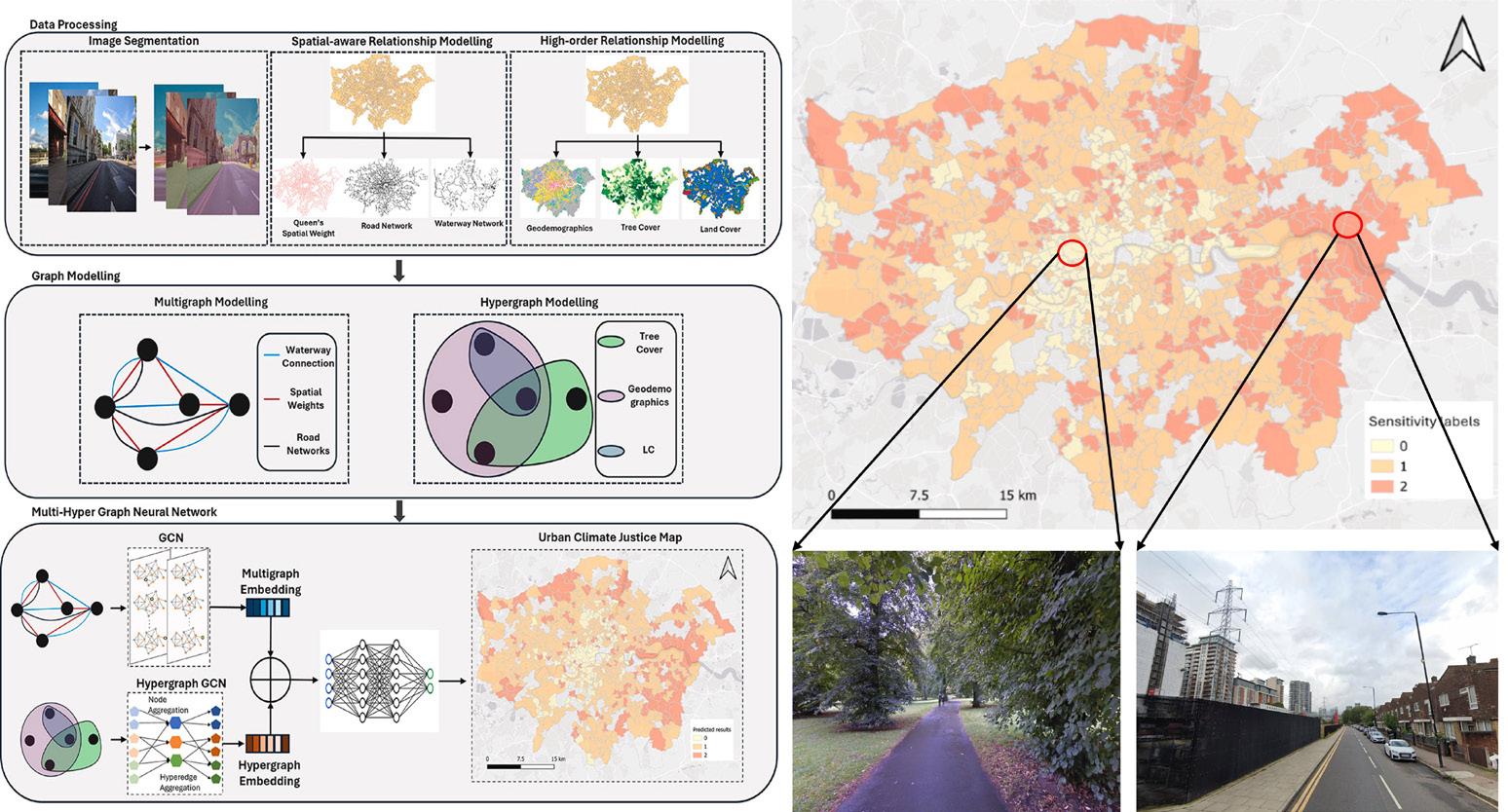
Where the London study mapped vulnerability, a second study asked a different question: are the cooling resources cities already have distributed fairly?
Led by Assoc Prof Stouffs, the researchers examined Miami-Dade County in Florida — a region marked by stark income inequality and diverse racial demographics. Previous evaluations of green space equity look at a single snapshot in time and consider only the presence of parks. The team introduced two critical additions: tracking changes over eight years (2016 to 2023), and mapping not just where cooling resources were, but where extreme heat was concentrated, incorporating urban high-temperature hot spots into the equity calculation.
Their findings cut both ways. Communities with high socio-economic status consistently enjoyed abundant green space and low exposure to extreme heat. Certain affluent neighbourhoods held disproportionately large shares of cooling green space while remaining almost entirely shielded from hot spots.
Lower-income communities did see improvements in green space provision over the study period, but those same neighbourhoods simultaneously experienced rising exposure to hot spots, as surrounding land was converted into built-up areas.
“Planting trees in disadvantaged areas is necessary, but it is not sufficient if the built environment around those communities keeps generating heat.” Issue 08 | June 2026
“Planting trees in disadvantaged areas is necessary, but it is not sufficient if the built environment around those communities keeps generating heat,” notes Assoc Prof Stouffs. “We need to look at the full picture — cooling resources and heat sources together, across time — to know whether your interventions are pulling their weight.”
Though neither study examines Singapore directly, the implications are close to home. At just 734 square kilometres, the city-state is acutely vulnerable to both flooding and urban heat, and its compact geography means disparities in green space access can play out over short distances. Singapore’s Green Plan 2030 commits to planting one million more trees and adding 1000 hectares of green spaces — but the question of where those trees go entails exactly this kind of data-driven equity analysis.
“Singapore has excellent geospatial data and a strong planning culture,” says Assoc Prof Stouffs. “The methods we’ve developed can be adapted to Singapore’s context, helping planners ensure that investments in climate resilience reach the communities that need them most.”
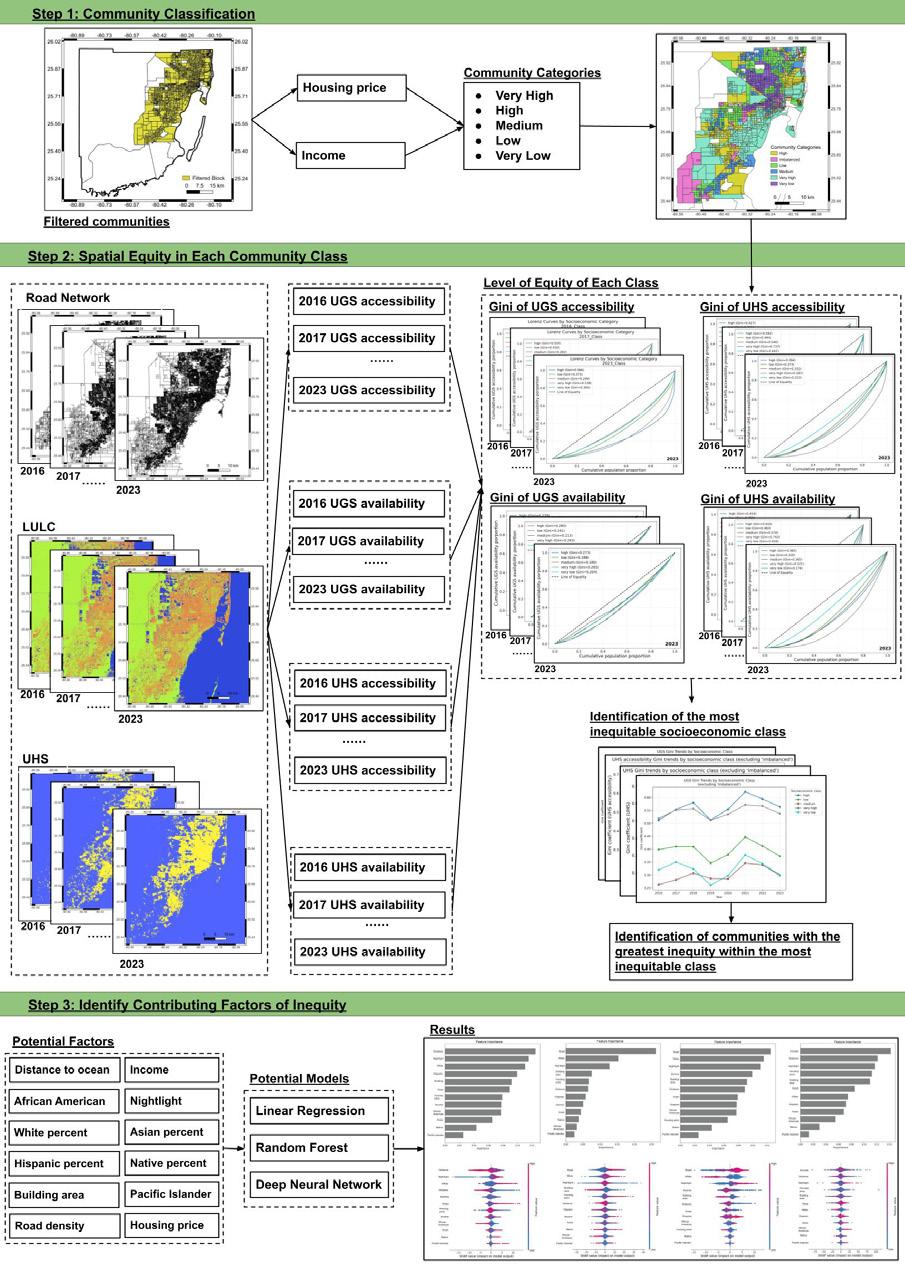
|
2026

Eastern philosophy is challenging how technologies for reflection and rest are designed. It asks whether our digital tools have been solving the wrong problem all along.
Meditation apps invite users to rate their calm on a scale of one to ten. Fitness trackers assign a score to the quality of sleep. Journalling tools nudge via notifications: “ Time to reflect! ”
These technologies encourage self-awareness, but there is an underlying irony. The very tools designed to help us slow down and look inwards are often built on assumptions that keep us measuring, comparing, optimising and striving. They turn introspection into a task with a target.
Issue 08 | June 2026
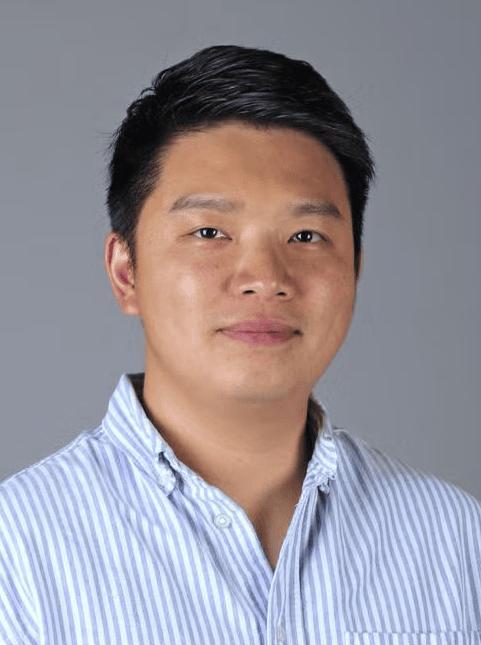
Assistant Professor Janghee Cho from the Division of Industrial Design at the College of Design and Engineering, National University of Singapore, thinks we have been asking the wrong questions. His research examines how technologies built to support reflection and rest are shaped — and often constrained — by a Western-focused way of thinking that is largely goaldriven. In two papers, Asst Prof Cho and his collaborators turn to Daoist philosophy to reimagine what these technologies could look like if we loosened our grip on those assumptions. The implications point towards new ways of designing interactive systems that support human well-being without reducing it to data points on a dashboard.
Forging New Frontiers
Research in human-computer interaction (HCI) has emphasised reflection as a design goal. A burgeoning ecosystem of personal informatics tools, AI chatbots and mixed-reality environments aims to help people track behaviour, review progress and gain insights into themselves. But these systems can misfire. Weightloss apps have been shown to exacerbate eating disorders. Rigid benchmarks, such as the so-called “10,000 steps,” distort how users interpret their own bodies. Journalling tools can tip users from healthy reflection into anxious rumination.
“Much of HCI research on reflection is rooted in Western traditions that emphasise analytical reasoning and individual selfimprovement.”
“Much of HCI research on reflection is rooted in Western traditions that emphasise analytical reasoning and individual selfimprovement,” Asst Prof Cho adds. “That’s good, but when it becomes the default perspective, we risk designing technologies that are blind to other ways of making meaning.” Rather than displacing Western approaches, he positions Daoism as a complementary lens — one that foregrounds embodiment, relationality and attunement to natural rhythms.
Issue 08 | June 2026
In a paper presented at the 2026 CHI Conference on Human Factors in Computing Systems in Barcelona, Asst Prof Cho and his research assistant Mr Aaron Pengyu Zhu interviewed 18 Daoist priests, scholars and practitioners. Three interconnected dimensions of reflection emerged: stillness, resonance and emergence.
Stillness is not passive withdrawal. It is an active practice of emptying — silencing the mind, releasing attachment to fixed identities, creating space for meaning to surface on its own terms. Participants described how meditation, Qigong (an ancient Chinese practice that combines gentle movement with medication and breathing techniques) or simply giving undivided attention to a single everyday activity could cut through the mental noise of constant digital stimulation. One Daoist priest described mobile technology as a form of “noise” — echoing the ancient Daoist concept of the “mechanical heart,” a mind so overfilled with stimuli that it loses contact with what is real.
Where a fitness app prompts users to analyse yesterday’s performance, stillness suggests the more radical act of forgetting. “In Daoism, emptiness holds greater power than fullness,” Asst Prof Cho notes. “It challenges designers who assume more data always leads to more insight.”
Resonance turns this attention outward, drawing on the Daoist concept of Gan-Ying , or sympathetic response. Practitioners spoke of attending to breath and bodily sensations rather than fixating on screen-time statistics. Emergence, the third dimension, describes how reflection unfolds through alignment with
Forging New Frontiers
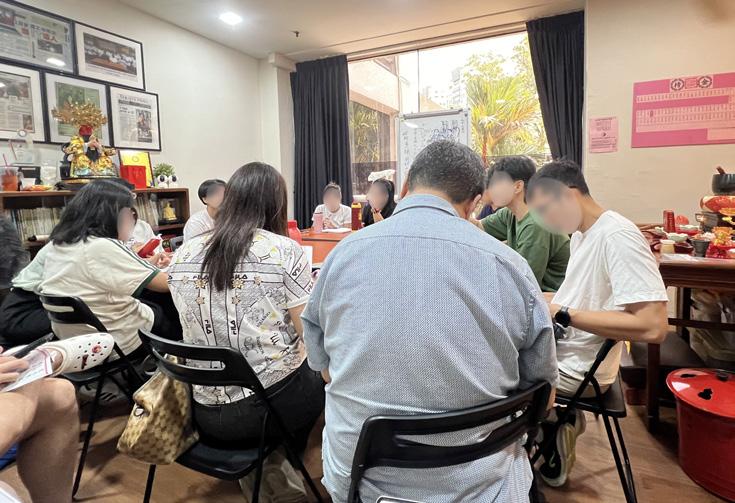
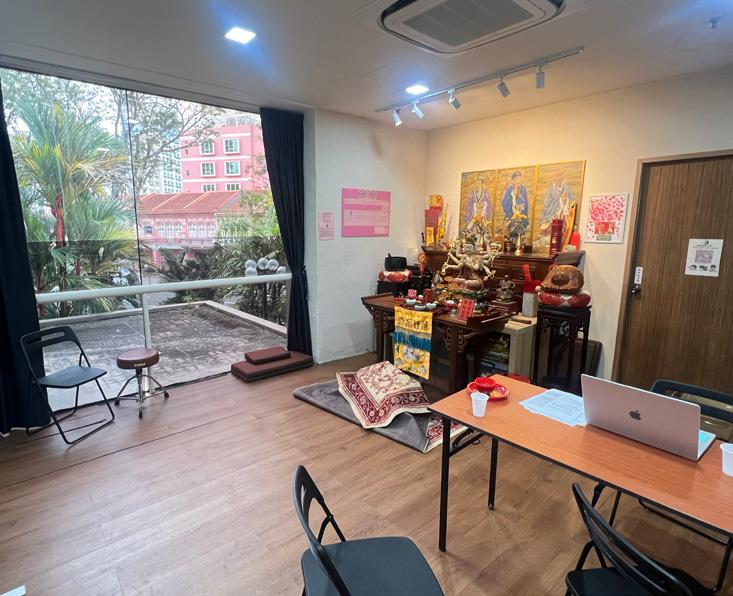
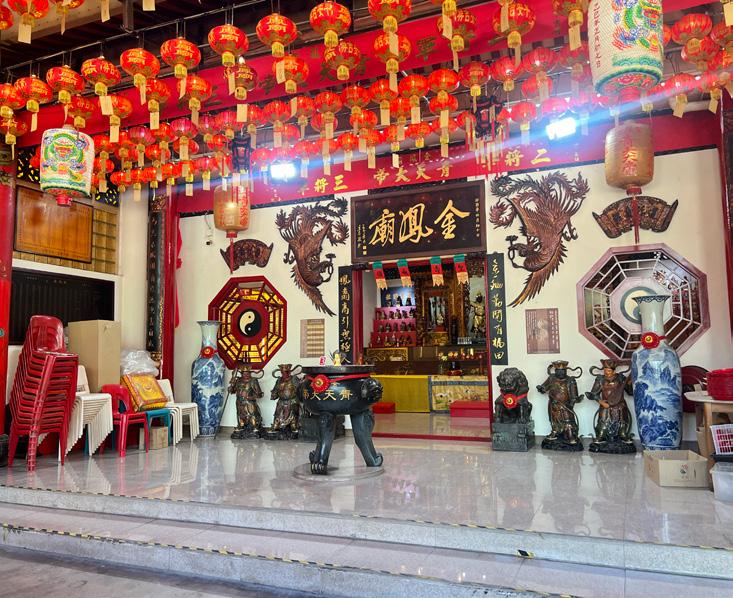
The team’s in-person interview settings:
(A) Practitioners at the Daoist Association were engaged in a collective scripture study session. The team observed their chanting practice and conducted an interview with the priest leading the recitation after it concluded, this collective chanting practice prompted the team to further understand the dao as something situated within relationality.
(B) The interview setting for another Daoist priest at the Daoist Association.
(C) A Daoist temple in Singapore, where we interviewed three participants.
Photo credit: Aaron Pengyu Zhu
Issue 08 | June 2026
Forging New Frontiers
bodily rhythms, situational flows and natural cycles. One practitioner recounted weeping with his wife over financial difficulties, then recognising within that distress was a signal that life was offering a lesson — a Yin-Yang perspective towards uncertainty as generative rather than threatening.
The same philosophical undertone runs through another paper presented at CHI 2025, which widens the view from reflection to rest. Sleep apps quantify our repose. Meditation timers measure our stillness. Wellness platforms award badges for relaxation. Rest, Asst Prof Cho argues, has been colonised by the same productivity logic it was meant to counteract.
The paper proposes that rest is not merely a human state to be optimised but an ecological phenomenon — something emerging through entangled relations between human, nonhuman and natural systems. Drawing on the Daoist concept of Wu-Wei , or effortless action, Asst Prof Cho notes that genuine rest cannot be engineered through intervention. It arises through attunement. “The goal is not to create more ‘rest technologies’,” he says. “It is to foster conditions where regenerative rest can emerge naturally. Technology should be a participant in that process, not an instrument of control.”
“It is to foster conditions where regenerative rest can emerge naturally. Technology should be a participant in that process, not an instrument of control.”
Asst Prof Cho makes the case that HCI’s theoretical foundations have drawn too narrowly from a single intellectual tradition. “Apart from Western notions, Eastern teachings and philosophies unveil concepts that can complement and enhance existing frameworks, offering epistemic plurality and not replacement.”
Asst Prof Cho and his team are now extending these ideas into new projects on youth digital well-being, AI safety and parenting stress. Across these areas, the underlying question remains the same: can technology support healthier, more reflective ways of living without turning well-being into yet another metric to optimise?
Issue 08 | June 2026
That opens up a deeper set of provocations. In a world where young people are growing up with algorithmic feeds, generative AI and constant digital nudges, what would it mean to design for agency rather than dependence? How might technologies support parents and caregivers not by adding another layer of tracking and responsibility, but by easing pressure and cultivating space for rest? And if good technology sometimes helps us let go, step back or even forget, might the future of digital well-being lie not in more intervention, but in knowing when technology should recede? What if a wellness app measured its success not by engagement metrics, but by how gracefully it faded from your attention?
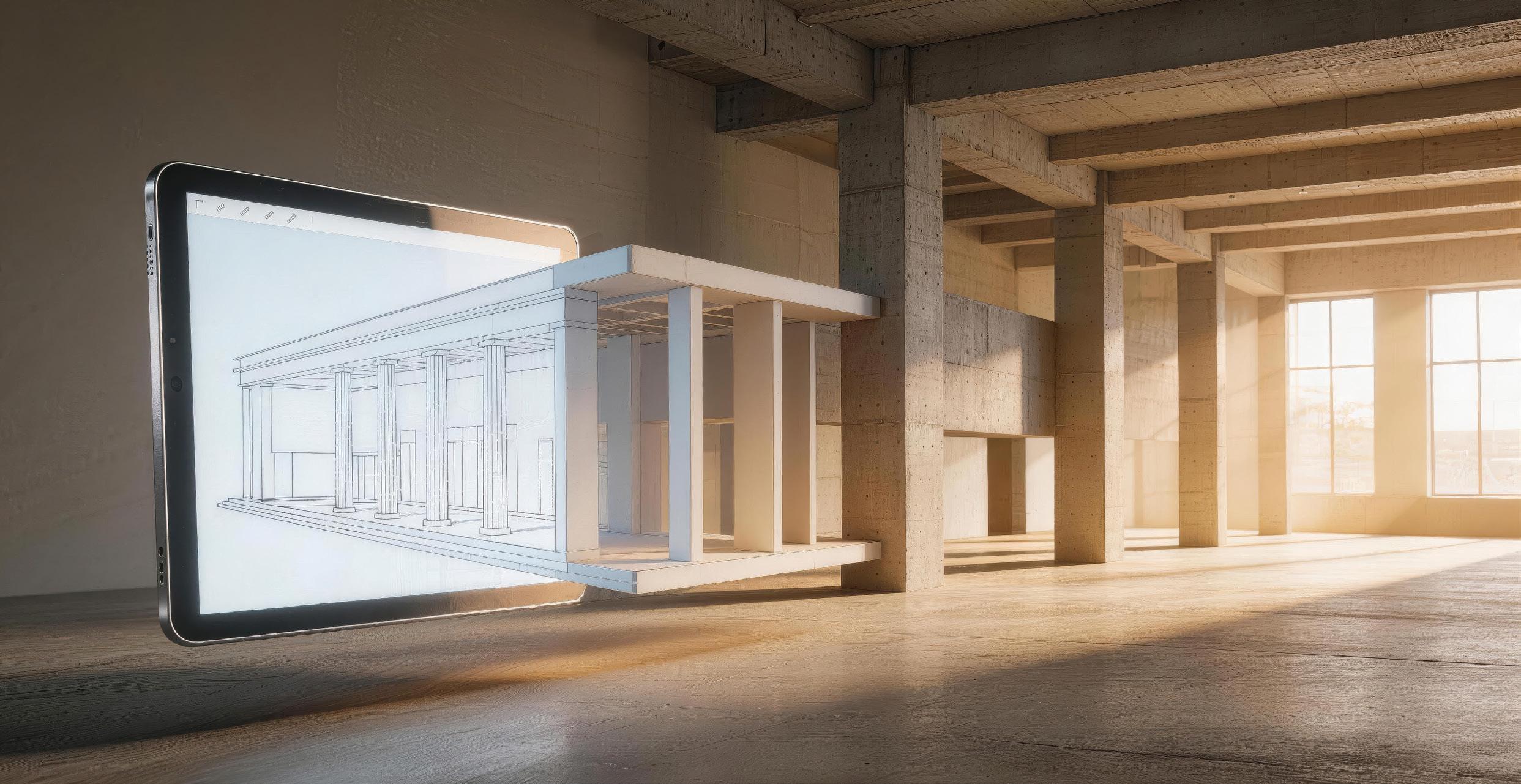
A cross-platform system lets designers generate AI-driven 3D forms on a tablet, then step inside them at full scale — turning how early-stage architecture is conceived, evaluated and felt on its head.
Artificial intelligence (AI) can now conjure a cathedral a few blinks of an eye. Type a few words into Midjourney or DALL·E and the screen fills with soaring Gothic ribbed vaults, light-drenched atriums and sweeping cantilevers. The visuals are breathtaking — though completely uninhabitable. You cannot walk through them, sense their scale or feel the weight of a ceiling pressing overhead. It is the crux of many architects’ frustration when it comes to generative AI: it produces visual spectacle but offers no spatial “awareness.”
Issue 08 | June 2026
Assistant Professor Gabriel Lipkowitz from the Division of Industrial Design at the College of Design and Engineering, National University of Singapore, wants to close that gap. As the Principal Investigator of the Interactive 3D Design Lab, he has developed a multimodal system that connects two devices — Apple’s iPad for rapid AI-driven 3D generation and the tech giant’s spatial computing headset, Apple Vision Pro, for fullscale spatial immersion — into a single, fluid design workflow which enables designers to step inside their AI-generated spaces.
Forging New Frontiers
Across three user studies involving 50 architecture students and expert practitioners, the research found that embodied interaction with AI-generated forms — walking through, around and within them — changes how designers judge proportion, perceive enclosure and make decisions about mass and light. These are qualities that flat screens simply cannot convey.
The problem the team solved precedes generative AI, but AI has thrust it into the limelight. Architectural design has always involved a leap of imagination, from a sketch or a 3D model on screen to the perceived reality of a built space. Current AI image generators have made the first half of that leap almost effortless, producing detailed concepts at extraordinary speed. Yet the output is still just a picture. Even recent 3D generative systems, which add depth to AI-produced forms, struggle to convey accurate proportions to designers and clients.
“AI continues to function as an external generator of form rather than a collaborator in design thinking,” says Asst Prof Lipkowitz. “We wanted to reposition it from a detached visual tool to something that is embedded inside the designer’s experiential process.”
“We wanted to reposition it from a detached visual tool to something that is embedded inside the designer’s experiential process.”
Issue 08 | June 2026
Forging New Frontiers
The system built by his team works in two complementary modes. On the iPad, designers begin with the familiar: sketching, typing text prompts or uploading reference images. The app generates 3D models from these inputs, which can be rotated, scaled and refined with touch gestures. It is fast, portable and low-commitment — ideal for the messy, exploratory phase when ideas are still blossoming.
The second mode is where the ground shifts. Through Apple Vision Pro, those same AI-generated models appear at full, one-to-one scale in the designer’s physical environment. A massing study (a “big picture” of a building’s 3D structure) that looked compact on a tablet screen suddenly towers overhead. A courtyard that seemed generous on the iPad reveals itself, once inhabited, as cramped. Walls close in. Light hits differently. The design has become experiential.
The two platforms also support collaboration: multiple users on iPads and Apple Vision Pros can join the same session, where they view and edit 3D models in real time. One designer generates, another rescales, a third critiques — a spatial desk crit, mediated by AI.
The team evaluated the system across three studies of increasing specificity. In the first, twelve participants explored both interfaces freely. Students described walking through AI-generated forms as “eye-opening,” revealing proportions and volumes invisible on screen. The iPad, meanwhile, drew praise for its speed and intuitive touch-based adjustments, and participants likened it to sketching on paper, but faster.
A second study with 30 participants compared the prototypes against conventional workflows: online image searching and standalone AI image generation. The iPad scored highest for accessibility and ease of use. The Apple Vision Pro earned the highest ratings for alignment with the designer’s mental image and overall satisfaction. Participants consistently reported that immersion enhanced their understanding of massing, enclosure and proportion — spatial qualities that screen-based tools left abstract.
Issue 08 | June 2026
The third study, with eight participants, pitted the system directly against traditional design methods such as hand sketching and the industry-standard Rhino modelling. Designers using the prototype produced more variations in the same timeframe and reached viable early-stage concepts faster. Rhino retained its edge for precision, but its complexity and setup time constrained the freewheeling ideation the prototype encouraged. Participants described the system as a complementary extension of existing tools, particularly effective for massing and early communication with clients and peers.
Expert reviewers, including an architecture professor and a practising architect, reinforced this view. From an educational standpoint, they noted the system’s potential to help students overcome the daunting blank page, externalise rough ideas quickly and critically evaluate AI outputs rather than passively accepting them. “If students can quickly visualise a rough idea before investing hours modelling in Rhino, it could change how early studio works,” one reviewer observed.
The prototypes are not without limitations. AI-generated models tend towards the volumetric and schematic, lacking architectural detail such as openings or articulated surfaces. In addition, the participant pool skewed towards students; broader professional validation remains ahead.
“While we don’t intend to replace the architect’s hand or eye, we want to extend the moment before form is fixed, keeping ideas fluid, spatial and open to critique for longer.”
Asst Prof Lipkowitz and his team are now working to address these gaps, developing architecture-specific AI models capable of finer geometric detail and fully editable 3D outputs that integrate with existing workflows. “While we don’t intend to replace the architect’s hand or eye, we want to extend the moment before form is fixed, keeping ideas fluid, spatial and open to critique for longer,” adds Asst Prof Lipkowitz. “In a discipline where body and space intertwine, that may be exactly where AI belongs.”
08 | June 2026

An iron-woven vest for astronauts in microgravity is the starting point for a wider programme: fabrics that sense and regulate the body, whether in space, in hospitals or in sports settings.
As NASA’s Artemis II mission took four astronauts on an elegant figureof-eight path around the Moon and back, here is one of spaceflight’s less glamorous truths: after six decades of human missions, astronauts still strap themselves to walls with Velcro. The hook-and-loop strips are lightweight and easy to apply, but they produce a rasping, jarring sound that reverberates through the astronauts’ otherwise serene habitat and workspace. They also degrade within weeks and do little to address the deeper problem: a body untethered from gravity has no reliable sense of being anchored.
Issue 08 | June 2026 Forging New Frontiers
Assistant Professor Irmandy Wicaksono from the Division of Industrial Design, College of Design and Engineering at the National University of Singapore, in collaboration with the MIT Media Lab and the European Space Agency, proposes a solution that can be woven directly into what astronauts wear. Their latest prototype, Ferrozuit, is an electronic textile vest whose weft is made of iron — a custom yarn spun on analogue looms and engineered to be both magnetically active and soft enough for longterm wear. Ferrozuit interacts with electro-permanent magnets, which can be switched on and off using electric pulses, embedded in a space habitat’s walls or furniture. A floating astronaut wearing the garment can gently dock onto surfaces for work, rest or sleep. This work was published at ACM UbiComp/ISWC 2025 (Ubiquitous Computing and the International Symposium on Wearable Computers) and received the Best Design Award in Functional Category.
“We tend to think of spacesuits as armour, like hard shells that protect you from the unforgiving, hostile environment of space,” says Asst Prof Wicaksono. “But inside the habitat, astronauts spend most of their time in ordinary clothing. That’s where soft technologies such as wearables and e-textiles have a real opportunity to intervene.”
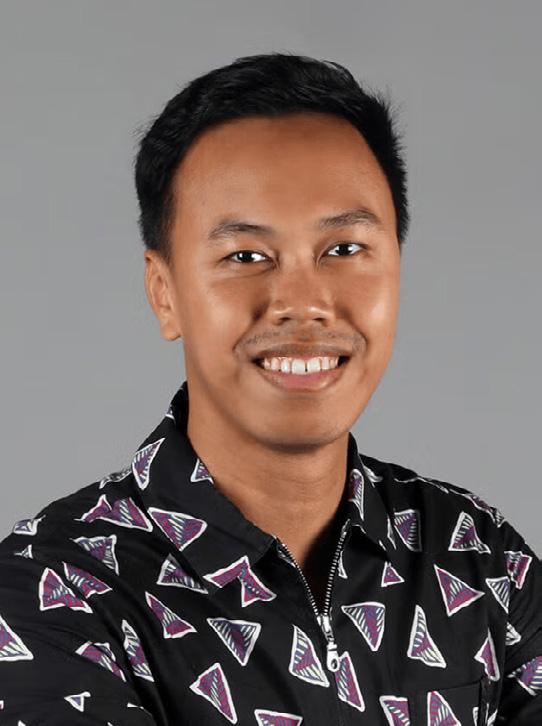
“We tend to think of spacesuits as armour, like hard shells that protect you from the unforgiving, hostile environment of space. ”
The most technically tricky part of Ferrozuit was the fabric itself. Early prototypes exposed a trade-off where an all-iron weave had the right magnetic properties but was too stiff to wear, while softer blends with iron warp and cotton weft felt comfortable but barely responded to magnets. The breakthrough was a double-cloth structure using iron yarn as a thick weft and high-strength Dyneema as the warp, woven in two bonded layers. It tripled the density of magnetic material while keeping the textile soft. The vest is a wearable garment first and a magnetic interface second.
Issue 08 | June 2026 Forging New Frontiers
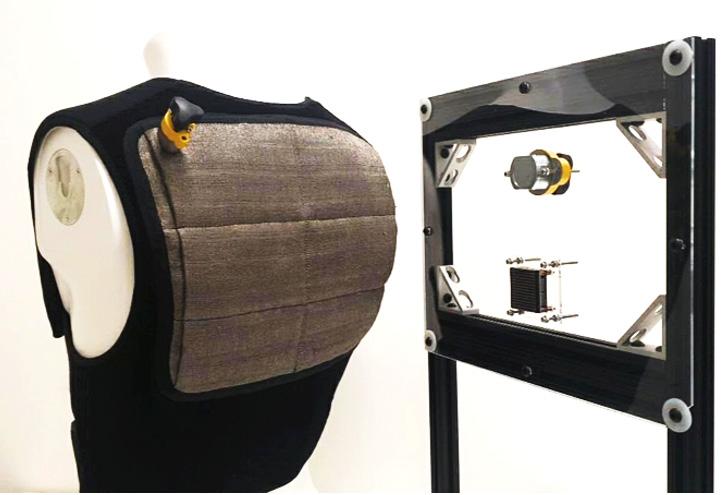
“We’re showing that ferromagnetic textiles can be woven, worn and magnetically coupled. That opens a design space few have explored.”
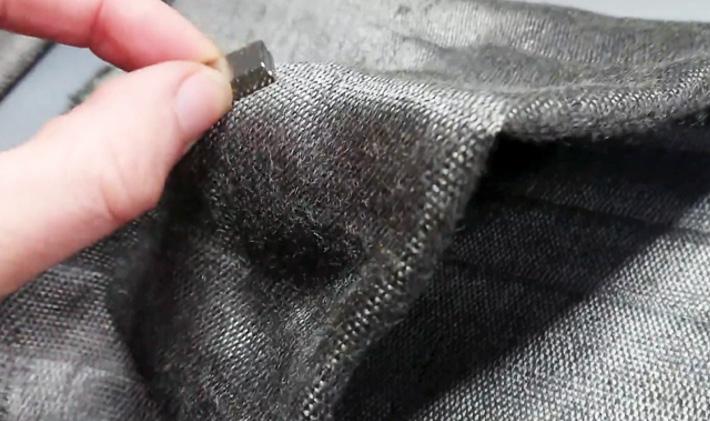
A 10-by-10 array of electro-permanent magnets coupled to the textile delivers roughly 5 N of anchoring force — below the 22 N needed to arrest a drifting 90 kg crewmember, but scalable through larger arrays without giving up comfort. Asst Prof Wicaksono mentions while the forces involved are modest, the technology is propositional: “We’re showing that ferromagnetic textiles can be woven, worn and magnetically coupled. That opens a design space few have explored.”
That design space is what makes the project intriguing. At the Soft Technologies Lab, Asst Prof Wicaksono is spearheading a research programme around intelligent textiles that can monitor physiology and physical activity, deliver active compression and provide haptic feedback. While microgravity anchoring is one application, a few more are terrestrial.
A fabric that delivers controlled, gradient compression to a limb can, with different tuning, function as a recovery sleeve for athletes or patients with
Issue 08 | June 2026
chronic swelling. A textile embedded with physiological and movement sensors can transform everyday clothing into a continuous health monitor, tracking heart rate, respiration and other parameters without the tether of hospital equipment. The same magnetic weave that allows an astronaut to anchor to a surface could, in another configuration, enable hands-free closures for rehabilitation garments worn by individuals with limited hand mobility.
“The throughline is a design philosophy that the boundary between body and environment need not be a hard one,” adds Asst Prof Wicaksono. “Clothing and textiles can serve a function currently handled by cuffs, monitors and machines.”
Asst Prof Wicaksono’s past inventions include the Peristaltic Suit, a full-body garment that embeds inflatable chambers and physiological sensors into a flight suit to deliver gradient compression while monitoring heart activity and blood flow in real time. In addition, SpaceSkin is an aerospace e-textile sleeve for transferring external forces in spacesuits to skin through haptic devices. The team also developed a pair of intelligent electromagnetic shoes whose sole-embedded magnets toggle automatically in response to the wearer’s gait, enabling walking on ferromagnetic surfaces in microgravity. Both prototypes were tested in parabolic flight and presented at the International Conference on Environmental Systems in 2023 and 2025 respectively.
The technologies developed across these projects — textile-based compression sensing, embedded physiological monitoring, gait-responsive actuation and sensory augmentation — inform the Soft Technologies Lab’s terrestrial research in intelligent textiles and garments with seamlessly integrated sensors and actuators, supporting applications ranging from sports and healthcare to assistive devices and immersive reality.
Partnerships
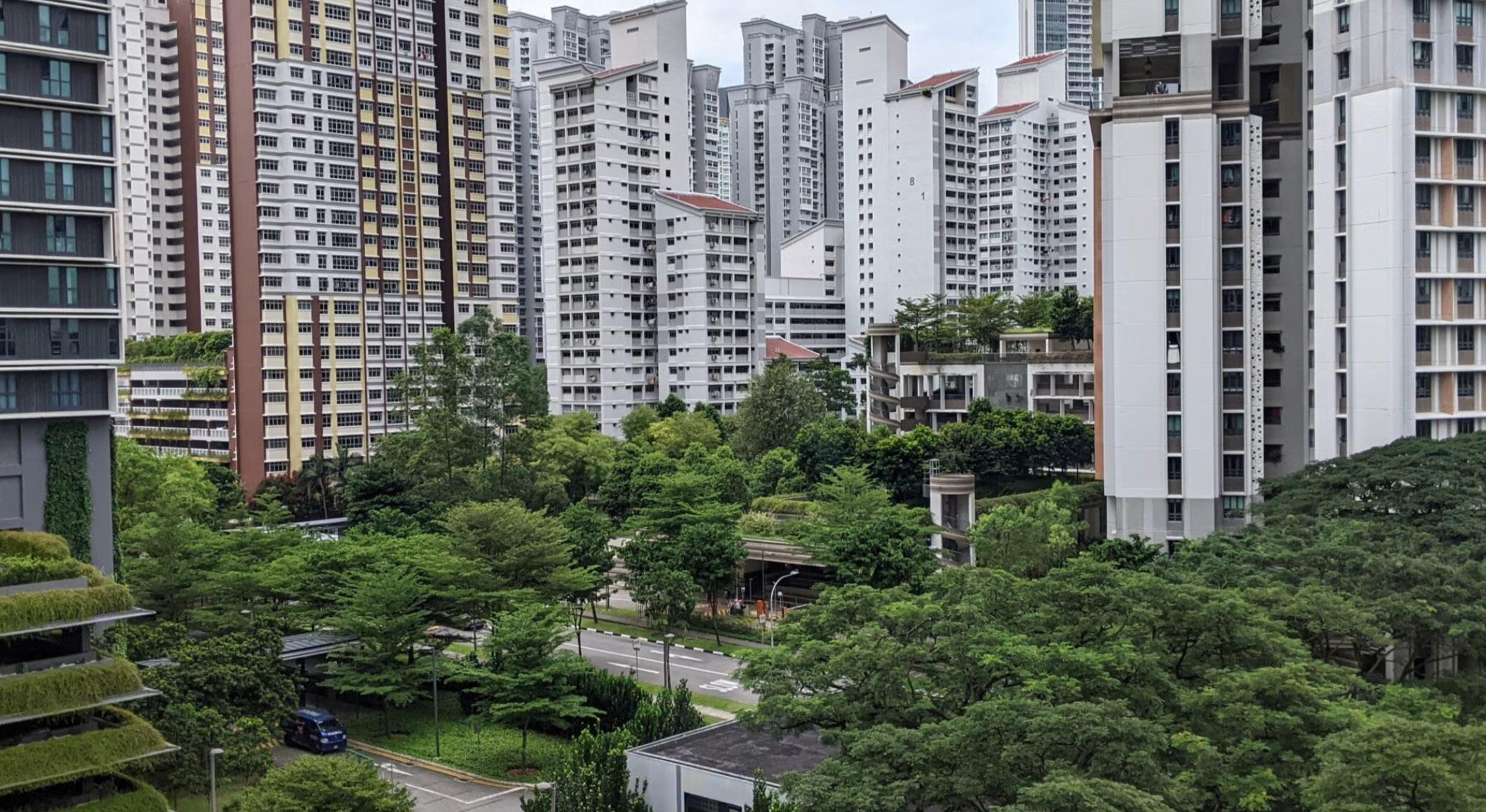
A new NUS–UCL partnership is reimagining how our neighbourhoods can support people living with dementia, starting with the streets, spaces and systems they are already familiar with.
Singapore is on track to become a “super-aged” society this year, with more than one in five residents aged 65 and above. Seven of the city-state’s 24 regions have already crossed that threshold. According to the 2023 Well-being of the Singapore Elderly study conducted by the Institute of Mental Health, roughly one in 11 people aged 60 and over lives with dementia. The Ministry of Health (MOH) projects that 152,000 people will live with the condition by 2030.
Issue 08 | June 2026
Forging New Frontiers
The speed at which Singapore completed the transition from “ageing” to “superaged” is striking — it took just 27 years, compared to 36 for Japan and 86 for the United States. And it raises a question that extends well beyond healthcare: how should the places where people live — the corridors, crossings, void decks and bus stops of ordinary Housing and Development Board (HDB) neighbourhoods — adapt to keep pace with the people who use them?
An ongoing partnership between the College of Design and Engineering (CDE) at the National University of Singapore (NUS) and University College London (UCL) is tackling that question through a cross-sector approach. Led by Associate Professor Emi Kiyota, Director of the Centre for Environment and Ageing Well (ENgAGE) at CDE, and Professor Nick Tyler, Chadwick Professor of Civil Engineering and Director of the Person-Environment-Activity Research Laboratory (PEARL) at UCL, the collaboration brings together researchers, policymakers, practitioners and, critically, people with lived experience of dementia to examine the condition through a systems-level perspective.
The project’s goal is to explore how urban systems, public transport and neighbourhoods can evolve so that older persons, including those living with dementia, can continue to live, move and engage meaningfully, and with dignity, within their own communities.
“Beyond the familiar ‘hard’ components of ageing well, such as buildings or transport systems, our partnership with UCL also explores a new way of living, one that keeps people connected to the places and people they know.”
“Beyond the familiar ‘hard’ components of ageing well, such as buildings or transport systems, our partnership with UCL also explores a new way of living, one that keeps people connected to the places and people they know,” says Assoc Prof Kiyota.
Earlier in February 2026, ENgAGE and UCL PEARL co-hosted a two-day roundtable at the Ministry of National Development Building, organised with the support of the British High Commission Singapore and the Centre for Liveable Cities (CLC).
Issue 08 | June 2026
Forging New Frontiers
The sessions drew more than 100 participants, including senior policymakers and researchers from MOH, HDB, the Agency for Integrated Care, Building and Construction Authority, Land Transport Authority, the National Research Foundation, NParks and the Urban Redevelopment Authority, alongside Dementia Singapore, healthcare providers, and design and engineering firms.
The discussions highlighted a shared recognition: no single agency can deliver a dementia-inclusive future alone. Several themes emerged with force. Dementiainclusive design must support multiple modes of interaction — verbal, sensory, environmental and cultural. Design and social systems should respect lived perception rather than impose a strictly “objective” reality. And supporting people living with dementia demands a whole-of-society response, including education and awareness at every level.
The group also acknowledged that many initiatives are still designed for people living with dementia rather than with them. Co-creative workshops jointly organised by ENgAGE and PEARL are designed to change that, with a few more workshops planned in the coming months to conduct immersive testing at UCL PEARL and to build a research and implementation framework with policy recommendations.
The UK has invested heavily in pharmaceutical approaches to dementia — over £430 million between 2017 and 2023 through the Dementia Research Institute alone. But the results have been limited. Attention is increasingly turning to the non-medical dimensions of care: how the built environment, transport networks and community structures can support people in remaining where they are and living well.
This is the space ENgAGE was established to occupy. The centre coordinates placebased, ageing-related research across multiple disciplines, from architecture and engineering to medicine and social
“What NUS and UCL are building together provides a systematic way to ask better questions about how neighbourhoods work for the people who live in them, and to test the answers before the environment is built.”
sciences, with a mandate to build partnerships that translate research into practical, community-grounded solutions. Its portfolio spans senior housing typologies, spatial-behavioural studies of older persons in Singapore’s public housing and the testing of elder-led community models adapted from Japan.
Singapore’s policy infrastructure is already moving in this direction. The government’s Age Well SG initiative has more than tripled the number of Active Ageing Centres since 2021 and expanded community-based support for seniors.
“What NUS and UCL are building together provides a systematic way to ask better questions about how neighbourhoods work for the people who live in them, and to test the answers before the environment is built,” adds Assoc Prof Kiyota. “The complex challenges of ageing cannot be solved by a single researcher, a single policymaker, a single discipline or a single country. Bringing all of them together enables us to design neighbourhoods that accommodate and celebrate ageing. That’s what familiar ground should feel like.” Issue 08 | June 2026
Partnerships

From drone swarms that track evasive targets to ultralight lattices that gobble up electromagnetic noise, collaborative research between CDE and Temasek Laboratories is producing technologies that translate ingenuity from the lab to the field.
Researchers at the College of Design and Engineering (CDE), National University of Singapore (NUS), are pushing the boundaries of autonomous robotics, aerospace guidance and advanced materials — fields in which progress often hinges on access to specialised infrastructure and domain expertise.
Issue 08 | June 2026
Forging New Frontiers
Working alongside Temasek Laboratories at NUS, a joint venture between the Ministry of Defence and the university with deep capabilities in aeronautical sciences, electromagnetics and information security, they are turning ambitious ideas into demonstrable systems. Three recent collaborations show what happens when engineering meets opportunity.
Drone swarms — groups of autonomous drones that collaborate towards a shared goal — have a growing list of civilian uses, from environmental monitoring to search-and-rescue. They also play a vital role in military missions. But coordination is fiendishly hard. As the number of drones in a system rises, the volume of possible states and actions grows exponentially — a problem roboticists call the “curse of dimensionality.”
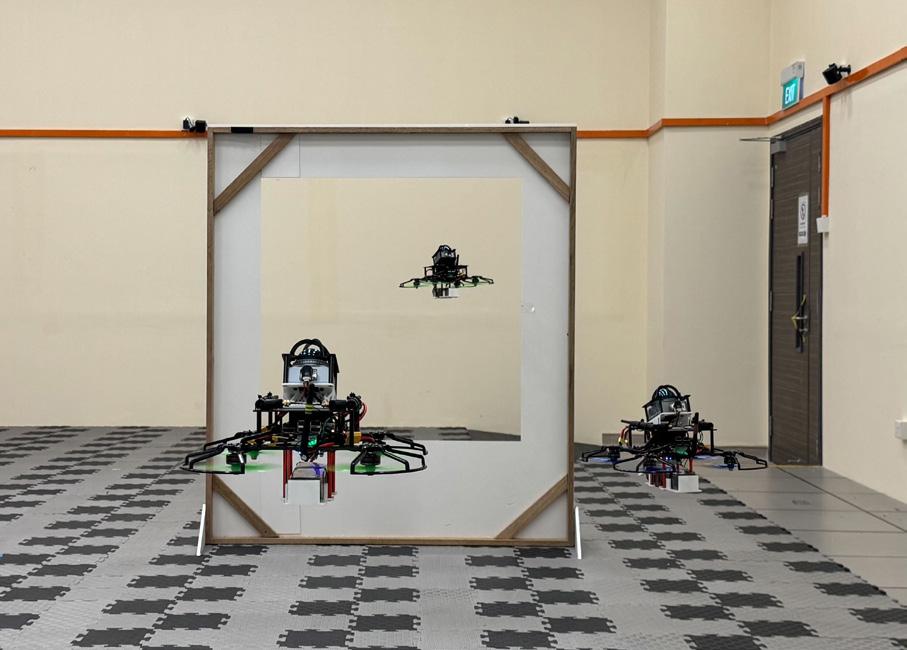
Assistant Professor Guillaume Sartoretti, from the Department of Mechanical Engineering at CDE has spent years cracking this curse. His Multi-Agent Robotic Motion ( MARMot) Lab uses deep reinforcement learning to train individual agents to make local decisions that collectively yield large-scale coordination. Through a partnership with Temasek Laboratories, Asst Prof Sartoretti’s team has turned these principles into working drone systems.
Their trajectory began with autonomous exploration of unknown areas, first with a single robot and then with multiple, before advancing to adversarial search: scenarios where the targets actively evade detection. The result was ViPER (visibility-based pursuit–evasion via reinforcement learning), which tackles the famous “art gallery problem” — the question of how many guards are needed to surveil an irregularly shaped space — by deploying drone swarms that must clear an entire environment while preventing targets from slipping back into previously searched zones. Using distributed deep reinforcement learning, the drones cooperate in a fully decentralised manner, each acting on local information alone. The system has been validated in both simulations and physical robot demonstrations.
Issue 08 | June 2026
A parallel challenge is persistent surveillance: maintaining continuous awareness of targets that keep moving. COMPASS, the team’s multi-agent reinforcement learning framework presented at the IEEE International Symposium on MultiRobot and Multi-Agent Systems (MRS 2025), addresses this challenge. Where ViPER guarantees detection of evasive targets, COMPASS keeps tabs on dynamic ones over extended periods, pairing Gaussian Processes for uncertainty estimation with a spatio-temporal attention network that enables each drone to reason about where information will be most valuable next. The framework was a finalist for the Best Paper Award at the symposium, held in December 2025 in Singapore.
“The fundamental insight is the same across both systems,” adds Asst Prof Sartoretti. “If each agent is equipped with the right learning architecture, coordination emerges naturally, and it can scale, without a central planner directing every single drone.”
“If each agent is equipped with the right learning architecture, coordination emerges naturally, and it can scale, without a central planner directing every single drone.”
In 2015, SpaceX turned science fiction into science reality by autonomously landing the booster of its Falcon 9 rocket — the vehicle’s most expensive component, which accounts for more than half of its total manufacturing cost. The feat proved that reusable rockets could dramatically cut the cost of reaching orbit. Companies including Blue Origin have since followed suit, but the underlying engineering challenge remains: guiding a rocket to a precise touchdown without human intervention, a puzzle known as the powered descent guidance (PDG) problem.
Early solutions modelled the rocket in just three degrees of freedom (DOF), accounting for translational movement along the x-, y- and z-axes. While flight tests validated the approach, realistic rocket behaviour demands six degrees of freedom, adding the rotational dynamics of pitch, yaw, and roll — what engineers call the vehicle’s “attitude.” Solving the PDG problem in this fuller model and under various realistic operational physical limits has proven far harder, and most methods remain confined to simulations.
Issue 08 | June 2026
Forging New Frontiers
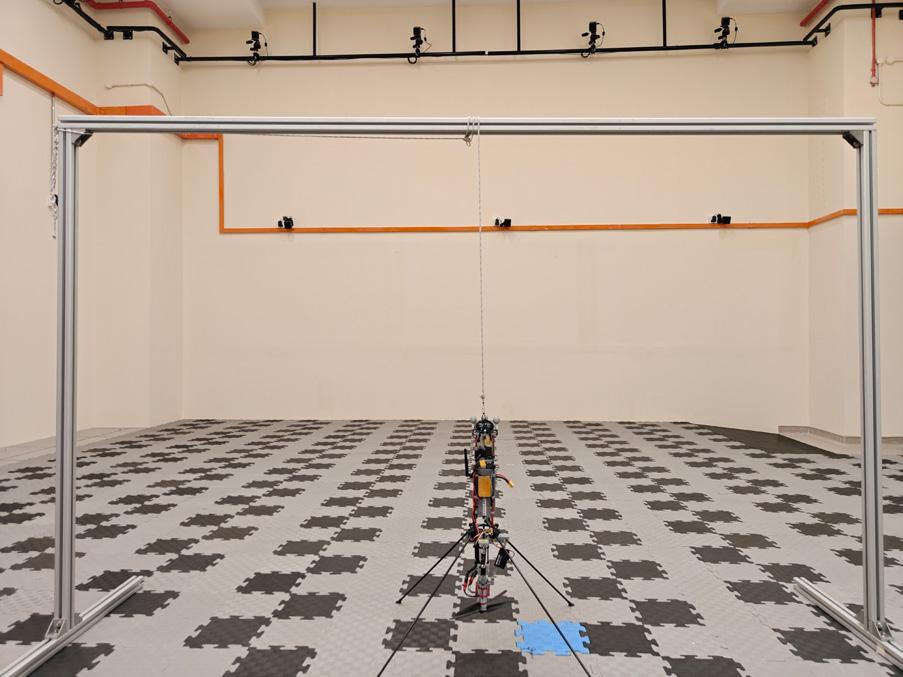
Assistant Professor Zhao Lin, from the Department of Electrical and Computer Engineering at CDE, is working to close that gap. In collaboration with Senior Research Scientist Dr Rodney Teo, who heads the Swarm / Autonomy Group at Temasek Laboratories, Asst Prof Lin is developing a complete 6-DOF rocket model equipped with a thrust vector control (TVC) system — the mechanism by which a rocket adjusts the direction of its engine thrust to govern orientation and angular velocity.
Assistant
“Our goal is not just to solve it in simulation, but to demonstrate it on hardware — that’s where the true test lies.”
The research spans trajectory planning algorithms, which chart the rocket’s optimal descent path by converting a complex non-convex optimisation problem into a sequence of tractable convex sub-problems, and tracking control algorithms that keep the vehicle locked onto that path in real time. The project will progress from software simulations to hardware tests — first using a proxy electrical thruster model, then a hybrid propellant system, with Temasek Laboratories’ propulsion team providing critical support at each stage.
The culmination will be a tethered grasshopper manoeuvre: vertical takeoff, horizontal traversal, powered descent and vertical landing — a controlled proving ground that bridges simulation and free flight. If the thruster performs the sequence autonomously, safely and precisely, it will be a giant leap for operationally reusable rocket vehicles.
“The constrained 6-DOF planning and control problem is where theory meets the real physics of rocket flight,” adds Asst Prof Lin. “Our goal is not just to solve it in simulation, but to demonstrate it on hardware — that’s where the true test lies.”
Issue 08 | June 2026
Forging New Frontiers
Humming and buzzing with connectivity, Singapore ranks among the world’s smartest cities. And with that, the number of Internet of Things (IoT) connections in the country has skyrocketed in recent times, and is projected to grow substantially in years to come. Every one of those connections relies on electromagnetic signals — and as the wireless environment grows denser, so does the risk of electromagnetic interference (EMI), a form of pollution that can disrupt medical devices, military infrastructure and potentially human health.
Modern electronics incorporate shielding to limit interference and maintain electromagnetic compatibility — a device’s ability to function without causing or suffering disruption. But as IoT proliferates, demand for lighter, more customisable shielding is outpacing what conventional materials can offer.
Associate Professor Yan Wentao and his team at the Department of Mechanical Engineering, CDE, took on this challenge in collaboration with Senior Research Scientist Dr Yang Yong’s Electromagnetic Materials Group at Temasek Laboratories. Funded through a Temasek Laboratories seed project, the researchers turned to fused deposition modelling — a 3D-printing technique in which melted plastic filament is extruded layer by layer to form complex structures, enabling rapid scalability and customisation.
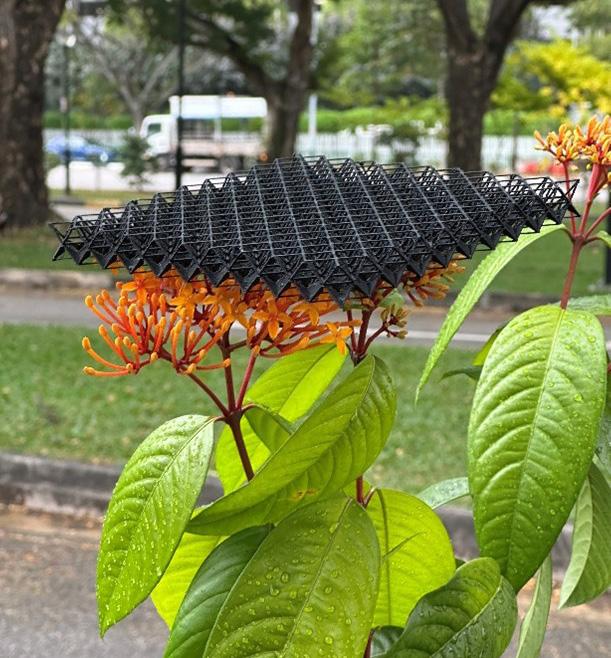
Using conductive polylactic acid rather than metal, the team created lattice structures capable of absorbing broadband microwaves across a wide frequency range. The lattice architecture achieves sufficient electrical conductivity for effective EMI absorption while maintaining a density as low as 0.1 g cm - ³. That ultralight profile means the structures add virtually nothing to the weight of the systems they protect — a critical advantage for aerospace applications.
Commercially available alternatives, such as microwave-absorbing foam, lack the same degree of design flexibility. The 3D-printed lattices can be tailored
Issue 08 | June 2026
Forging New Frontiers
to exceed 90% absorption efficiency for broadband microwaves while retaining mechanical integrity, making them suitable for weight-sensitive platforms where every gram counts.
“The beauty of this approach is its adaptability,” says Assoc Prof Yan. “We can tune the lattice geometry to target specific frequency ranges, and the manufacturing process scales easily, from a laboratory prototype to a production run.”
These projects are a snapshot of the collaborative research carried out by Temasek Laboratories and CDE, who continue to seed new programmes across autonomy, aerospace and materials science, with many more in the pipeline.
“Our mission is to cultivate strong, multidisciplinary research teams to bring together theoretical possibilities, practical engineering insight, and a spirit of innovation,” says Associate Professor Vincent Tan , Director of Temasek Laboratories at NUS and a Dean’s Chair Professor at the Department of Mechanical Engineering, CDE.
“Our mission is to cultivate strong, multidisciplinary research teams to bring together theoretical possibilities, practical engineering insight, and a spirit of innovation.”
“Collaboration is central to our strategy. We partner closely within NUS, as well as with local and global institutions. Working in close tandem with the defence community, we bridge gaps between foundational research and realworld defence applications. This synergy helps align our research with national technological needs and enhances application impact.”
Jan-May 2026
A wearable sensor developed by researchers led by Professor Ho Ghim Wei (Electrical and Computer Engineering) enables clinical-grade monitoring of fatigue and mental health in real-world settings, even during movement, overcoming a major limitation of existing devices.
Read more
A team led by Associate Professor Low Ying Min (Civil and Environmental Engineering) used high-resolution, turbine-scale ocean simulations to map where Singapore’s tidal currents are strongest, and how much electricity could be generated under practical siting constraints.
Read more
Overcoming key safety and durability barriers, research led by Associate Professor Palani Balaya (Mechanical Engineering) advances sodium batteries as a practical alternative to lithium for large-scale storage.
Read more
A new high-throughput screening platform developed by researchers led by Assistant Professor Andy Tay (Biomedical Engineering) rapidly identifies gold nanoparticles that can deliver therapies directly to mitochondria, the energy centres inside cancer cells.
Read more
Read more Issue 08 | June 2026
A new physics-informed AI method that keeps long-term climate simulations stable and accurate, reducing computational cost, has been developed by researchers led by Assistant Professor Gianmarco Mengaldo (Mechanical Engineering).
Read more research news from CDE here.
Researchers led by Assistant Professor Tan Yu Jun (Mechanical Engineering) have developed a platform that strengthens lab-grown muscle, overcoming a key limitation in biohybrid robotics.
Read more
CDE has signed an MOU with the National University Hospital (NUH) as part of the launch of the NUH Innovation Hub, a collaborative space focused on accelerating healthcare transformation through partnerships and AI-driven solutions. The partnership will support the Hub as a real-world platform for developing and validating practical innovations in patient care and hospital operations.
Read more
NUS-ArCLab launched a landmark conservation project to explore how heritage buildings can be adapted for a lower-carbon future without losing their heritage value, transforming the conserved townhouse into Singapore’s first historic building retrofitted for net-zero retrofit and operational energy while serving as a living laboratory for sustainable conservation research.
Read more
Issue 08 | June 2026
CBE Eco-Solutions, a deep-tech startup founded by former researchers Dr Yao Zhiyi and Dr Babu Cadiam Mohan under Professor Wang Chi-Hwa (Chemical and Biomolecular Engineering), upcycles refinery carbon soot into high-value materials for batteries, tyres and energy storage. Its demo plant on Jurong Island plans to scale to a commercial facility producing around 15 tonnes of output daily.
Read more
NUS researchers led by Dr Du Hongjian and Associate Professor Pang Sze Dai (Civil and Environmental Engineering) collaborated with Woh Hup to achieve a Singapore first by 3D-printing structural concrete elements on a live construction site.
Read more
Seatrium has further strengthened its commitment to Professorship activities and collaborations with NUS CDE via the Department of Civil & Environmental Engineering. This partnership aims to advance research in offshore infrastructure, sustainability and engineering solutions, as well as support existing initiatives such as the NUS Seatrium Public Lecture, which brings together academia and industry to exchange perspectives on emerging developments and challenges in the sector.
Read more
CDE is partnering with Eaton, Schneider Electric Singapore, and Sembcorp to validate AI-ready, low-carbon data centre solutions via the Sustainable Tropical Data Centre Testbed (STDCT) 2.0, led by Professor Lee Poh Seng (Mechanical Engineering).
Read about the Eaton MOU
Read about the Sembcorp MOU
Read more about the Schneider Electric MOU
Forging New Frontiers Issue 08 | June 2026
Professor Lam Khee Poh (Architecture and Built Environment) has been named Global WELL Educator of the Year 2025 by the International WELL Building Institute (IWBI), one of the organisation’s highest honours.
Read more
Professor Chandra Sekhar (Built Environment) has been honoured with the F. Paul Anderson Award, the highest technical honour from ASHRAE, a global professional society of more than 53,000 members that aims to advance human well-being through sustainable technologies for the built environment.
Read more
Assistant Professor Filip Biljecki (Architecture) has received the 2026 Gill Memorial Award from the Royal Geographical Society, recognising outstanding early-career contributions to geographical science.
Read more
Professor Lim Chwee Teck (Biomedical Engineering), NUSS Chair Professor, has been elected an International Member of the US National Academy of Engineering (NAE), one of the highest professional honours accorded to engineers worldwide.
Read more
Professor Qiu Cheng-Wei (Electrical and Computer Engineering) has been named the 2026 recipient of the Joseph Fraunhofer Award/ Robert M. Burley Prize, one of the highest honours in optical science and engineering, by Optica.
Read more
Assistant Professor Jin Yueming (Biomedical Engineering and Electrical and Computer Engineering), Assistant Professor Wang Lei (Chemical and Biomolecular Engineering) and Assistant Professor Pearl Li Yuzhu (Civil and Environmental Engineering) have been awarded the 2026 Robert Brown Promising Researcher Award from the Ministry of Education, Singapore, recognising outstanding early-career researchers with strong potential to advance academic research and innovation.
Read more
08 | June 2026
Assistant Professor Gianmarco Mengaldo (Mechanical Engineering) has been appointed to the Joint Advisory Group on Artificial Intelligence (JAG-AI) at the World Meteorological Organization, a by-invitation group of experts from around the world. Read more
Read more awards and achievements news here.
Designing the port of the future
As competition among the world’s leading ports intensifies, ports must become not only bigger and faster, but also smarter, more resilient and more sustainable. At the Centre of Excellence in Modelling and Simulation for Next Generation Ports (C4NGP), research in digital twins, simulation and decisionsupport tools is helping shape the future of Singapore’s port ecosystem. Watch video here
Eyes that photosynthesise
Drawing inspiration from how plants use photosynthesis to convert sunlight into energy, researchers led by Associate Professor David Leong Tai Wei (Chemical and Biomolecular Engineering) are pioneering a revolutionary treatment for dry eye disease, a condition affecting 1.5 billion people worldwide. Watch video here Forging
Watch more videos from CDE here. Issue 08 | June 2026
Decoding the hidden grammar of cities
Assistant Professor Ang Yu Qian (Presidential Young Professor, Built Environment) leads the City Syntax lab at CDE. His research uses data, advanced modelling and AI to uncover the hidden “grammar” of cities, developing solutions for shaping more liveable, sustainable and healthier urban environments.
Watch video here
Better transport begins with understanding behaviour
Research led by Assistant Professor Prateek Bansal (Presidential Young Professor, Civil and Environmental Engineering) combines behavioural science, artificial intelligence and large-scale data to understand how people make transport choices and how those choices collectively shape traffic patterns, congestion and demand.
Watch video here
08 | June 2026
Robotics pioneer talks future of human-robot collaboration
At a seminar held at CDE, Professor Oussama Khatib, Director of the Stanford Robotics Centre, shared how robotics is extending human capability across distance and extreme environments.
Read more
First atom probe tomography facility in SE Asia opens at NUS Researchers and industry partners from Singapore and overseas attended the inaugural symposium marking the opening of the Invizo 6000 Atom Probe Tomography Facility at CDE, the first of its kind in Southeast Asia.
Read more Watch video here
‘Assembling the Social’ exhibition opened
Organised by the newly-launched Social Design Lab, established under the Department of Architecture, the exhibition explored how design works through care, relationships and collective action, rather than just objects or end results.
Read more
Musim Mas Workshop brings global experts together on biomass and sustainability
The Musim Mas Workshop in Biomass and Sustainability — organised under the Musim Mas Professorship in Sustainability awarded to Professor Tong Yen Wah (Chemical and Biomolecular Engineering) — brought together expertise across disciplines and institutions to share research that can advance sustainability efforts in the palm oil industry and related sectors.
Read more
08 | June 2026
Learning from nature to build the next generation of robots
At a seminar hosted by the Italian Embassy in Singapore, Professor Cecilia Laschi (Mechanical Engineering) shared how insights from nature and embodied intelligence could simplify robotics while improving performance. The event also brought together researchers, industry and policymakers from Italy and Singapore to explore collaboration opportunities in biorobotics.
Read more
Ecosperity panel spotlights collaboration on low-carbon materials in the built environment
The “Building Bolder: Aligning Innovation, Adoption, and Commitment” panel moderated by Associate Professor Pang Sze Dai (Civil and Environmental Engineering) brought together voices from academia, industry and sustainability advocacy, to explore how South and Southeast Asia can accelerate the adoption of low-carbon materials in the built environment
Read more
New Faculty
Professor Gary Ang Department of Electrical and Computer Engineering
Professor Ong Shyue Ping Department of Materials Science and Engineering
Associate Professor Gareth Gerard Doherty Department of Architecture
Assistant Professor Li Shengman
Department of Electrical and Computer Engineering
Issue 08 | June 2026
Forging New Frontiers
Assistant Professor Niu Chang Department of Electrical and Computer Engineering
Assistant Professor Dasom Choi Division of Industrial Design
Assistant Professor Feng Liang Department of Materials Science and Engineering
Assistant Professor James Utama Surjadi Department of Mechanical Engineering
Assistant Professor Zhou Jianshu Department of Mechanical Engineering
Visiting Professor Peggy Deamer Department of Architecture
Visiting Professor Richard Hendrik Marc Goossens Division of Industrial Design
Lecturer Dr Dai Fangzhou NUS Cities, Dean’s Office