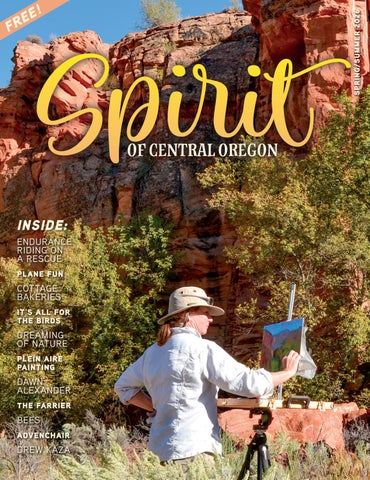
Spirit
Of central Oregon
INSIDE:
ENDURANCE
RIDING ON A RESCUE
PLANE FUN
COTTAGE BAKERIES
IT'S ALL FOR THE BIRDS
DREAMING OF NATURE
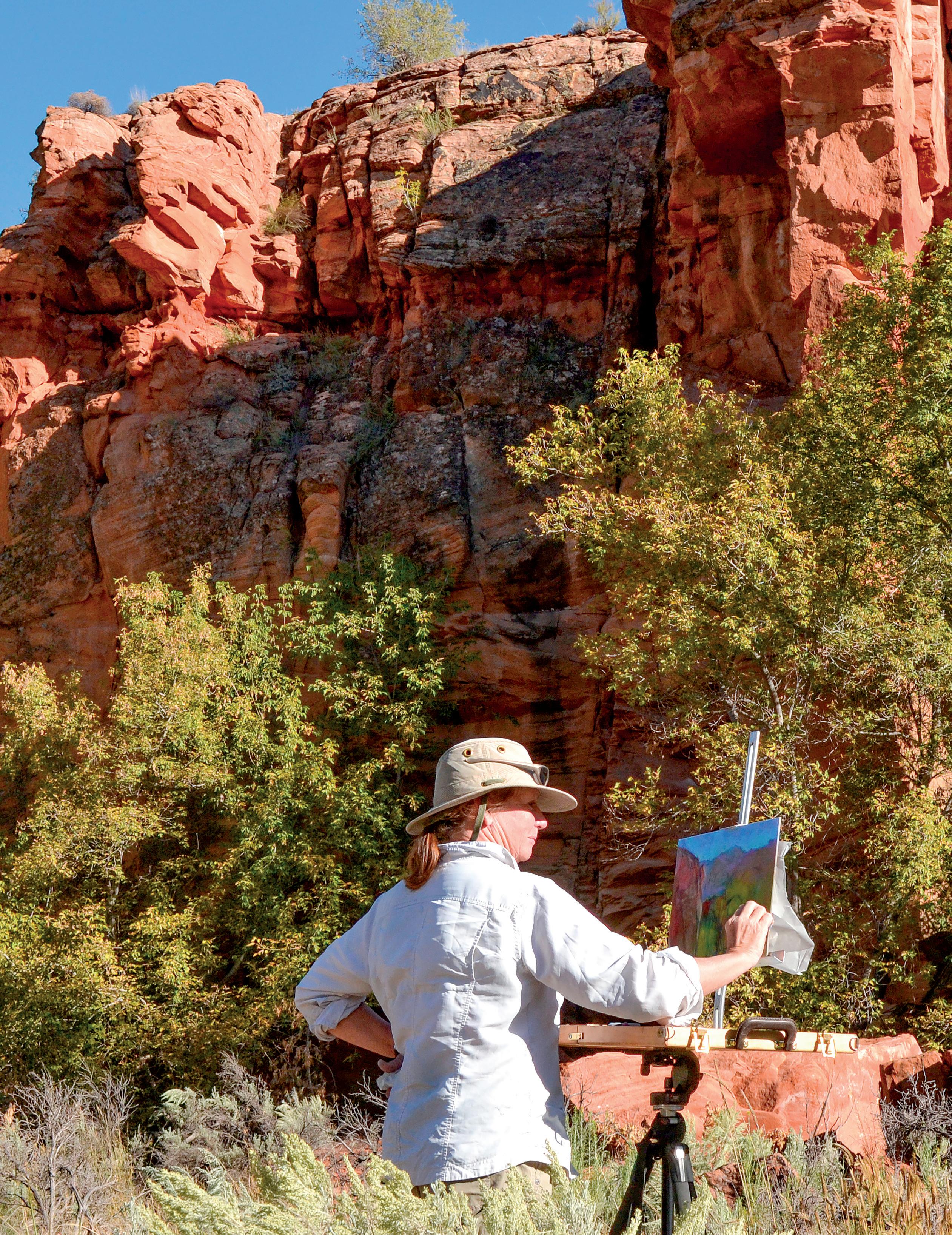
PLEIN AIRE
PAINTING
DAWN ALEXANDER
THE FARRIER
BEES
ADVENCHAIR
DREW KAZA






ENDURANCE
RIDING ON A RESCUE
PLANE FUN
COTTAGE BAKERIES
IT'S ALL FOR THE BIRDS
DREAMING OF NATURE
PLEIN AIRE
PAINTING
DAWN ALEXANDER
THE FARRIER
BEES
ADVENCHAIR
DREW KAZA
Journalism plays many roles in society. We are tasked with keeping readers informed about civic life — what their government is doing and why, crime and punishment, how their tax dollars are allocated. That civic role is important, and filling it can be interesting and even fun.
For the writers, photographers, editors, marketing partners, and designers at The Nugget Newspaper the best part of community journalism is the storytelling. Central Oregon is brimful of remarkable people doing remarkable things. There are hundreds or thousands of extraordinarily gifted artists here; some professionals, some who pursue their calling as an avocation. All of them bring passion and dedication to bear on their craft. The magnificent surroundings act as a lure to athletes and recreationalists. They pursue their passions from horseback adventuring to climbing to more prosaic forms of outdoor activity. Some perform at an elite level, some simply enjoy a daily practice that satisfies physically, psychologically, and spiritually.
Some people face tremendous adversity — and find ways not only to overcome it for themselves, but also to ease the paths of others.
In each edition of Spirit of Central Oregon, it is our privilege to tell the stories of these remarkable people doing the remarkable things that they do. We believe it is these stories, as much as our beautiful landscape, that define who we are, that truly express the spirit of Central Oregon. Thank you for sharing these stories with us.
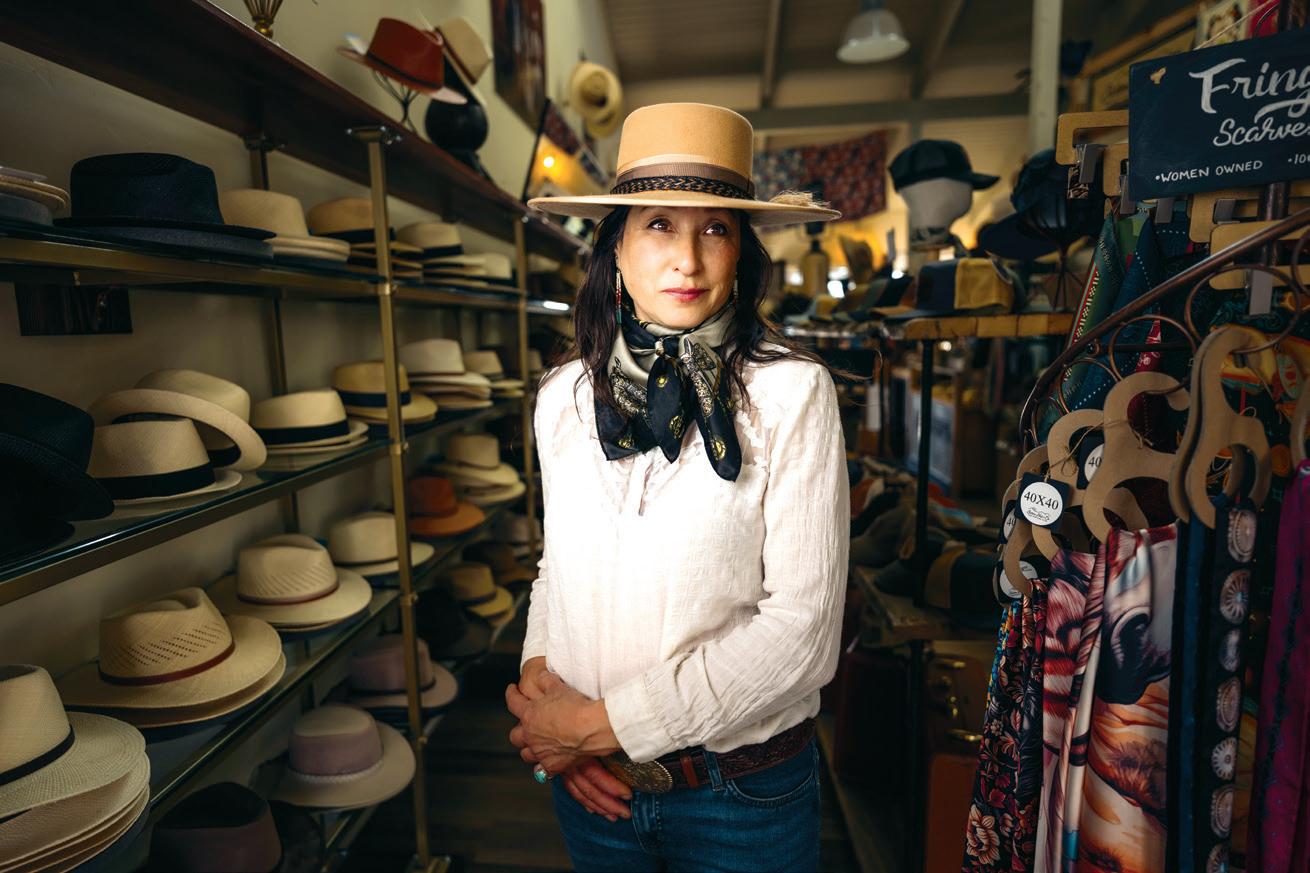
Come in and discover your perfect style & fit. Design a custom hat or select one off the rack.
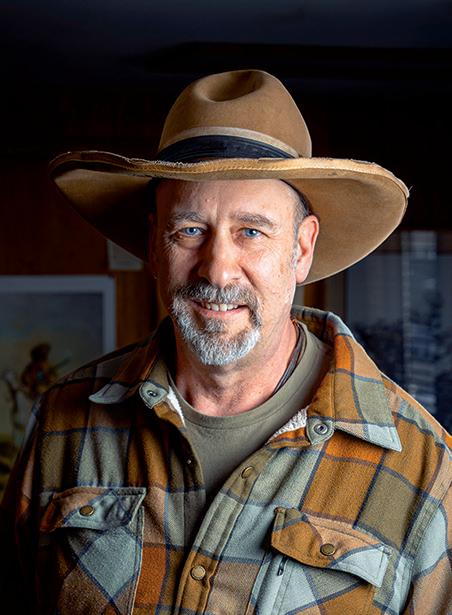
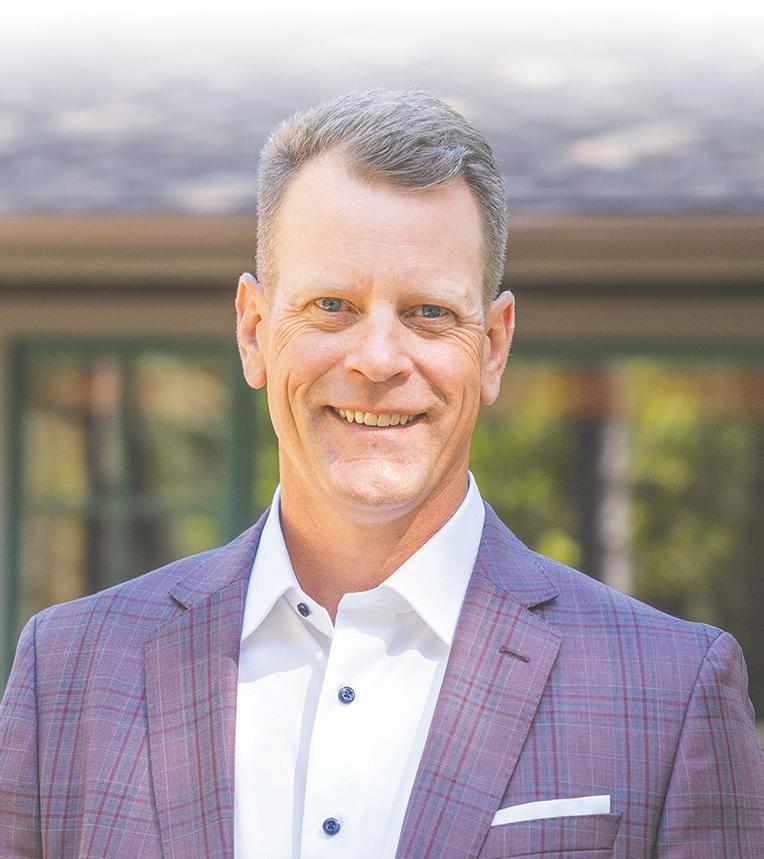
Jim Cornelius, Editor in Chief editor@nuggetnews.com
Cascade Ave. , Ste. D, Sisters at 11 a.m. daily • Closed Tues. sistershatsandco.com WEHOSTPRIVATEHATPARTIES!
BY KATY YODER | PHOTOS PROVIDED
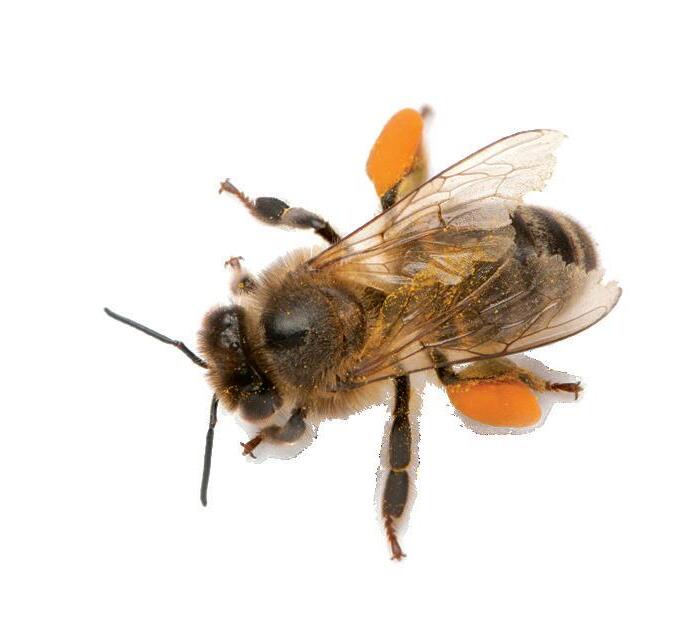
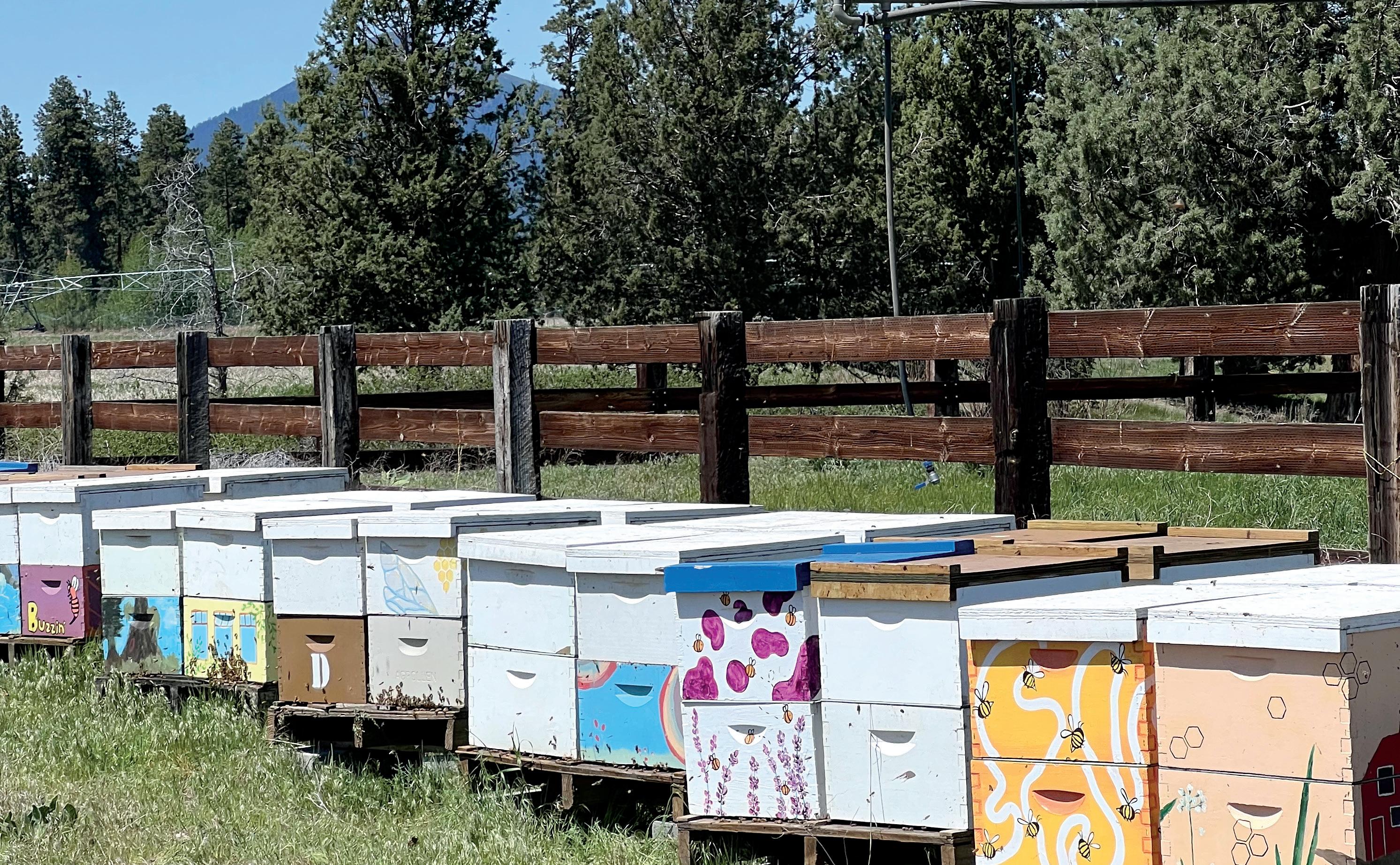
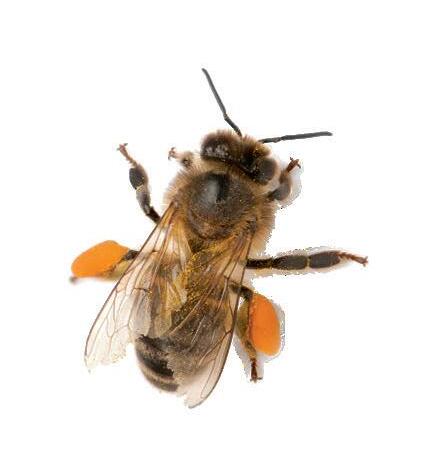
Bees contribute to the health and wellness of ecosystems, agriculture, and our very existence. Honeybees tended by master beekeeper Clyde Dildine spend the winter huddling in a warm cluster to protect the queen and her eggs laid for spring. Honeybees have the benefit of humans caring for their hives, not so for native bees.
There are over 600 native bee species in Oregon. Native bees don’t produce honey and don’t live in hives. Most are solitary, nest on the ground or in a cavity and are non-aggressive. They perform activities like gathering pollen and foraging; and many focus on specific native plants.
According to the Bee Conservancy, bees are at the heart of our survival by pollinating much of the food we eat and maintaining the health of numer ous ecosystems. Alarmingly, according to the Center for Biological Diversity, more than half of North America’s 4,000 native bee species are in decline from risks like habi tat loss, pesticide use, climate
change, pests, and disease.
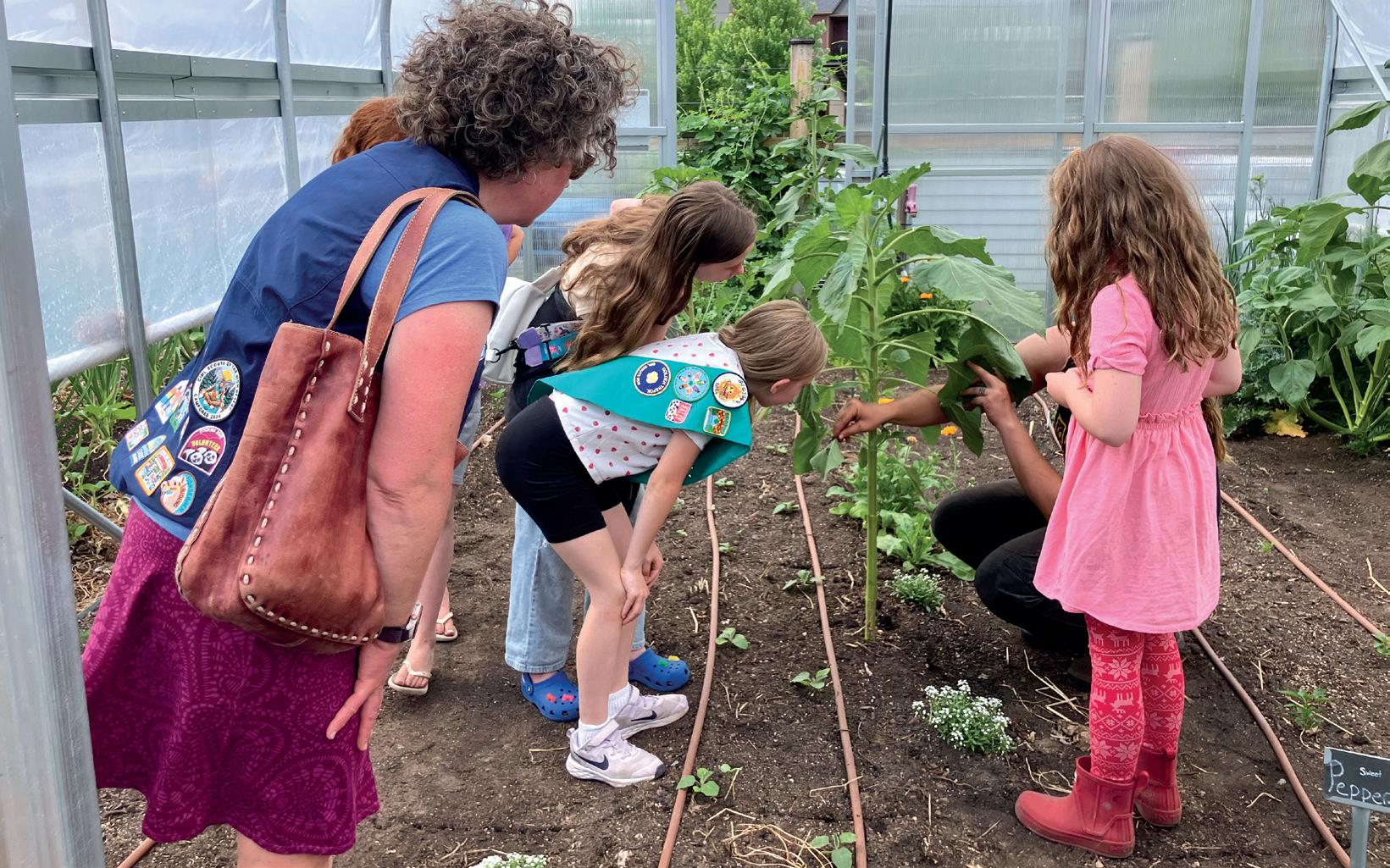
Lisa Sanco is the executive director of the Worthy Garden Club in Bend, where native plants, bee hives and environmental education, and a small regenerative farm are offered to support community engagement and a deeper understanding of ways we can all contribute to a healthier ecosystem.
“Most of my work is teaching people how to create landscapes and habitats that are beneficial to pollinators. We host school field trips and community education. We have created locally focused gardening resources for people to adopt. We also have a seed saving class every year in partnership with Pollinator Pathway Bend,” she said outside one of their greenhouses.
According to their website, Pollinator Pathway Bend is a community initiative focused on creating connected habitats for native pollinators, promoting biodiversity, and engaging residents in conservation efforts.
Unlike native bees,
honeybees are semi-domesticated and have become an agricultural commodity and a key factor in pollination for crops where native bees were decimated by adverse conditions like pesticide use on crops.
Honeybees arrived from Europe in the 17th century. Colonists brought them as a source of wax and sugar.
According to the National Wildlife Federation, modern beekeepers contribute more than $15 billion to crop production annually.
For the past 12 years, Dildine has been keeping bees. He’s dedicated to helping honeybees and their keepers thrive. Dildine says before a person is ready to manage a hive, they must first understand bee biology, their habits, and wants and needs.
Dildine is a walking encyclopedia of bee behavior and the knowledge required to sustain a bee colony. He’s adept at handling bees that are swarming to find a new home and alleviate overcrowding. He’s done the research to understand the pests that

can destroy a hive, as well as the harsh chemicals that can kill a hive.
Swarming can evoke fear in the uninitiated who envision an angry mob of bees bent on stinging anyone who gets in their way. The truth is much less scary. Thomas D. Seeley is a renowned Cornell University biologist and author of “Honeybee Democracy” (2010), which details how swarms collectively select new nest sites through a “democratic” process of scouting, advertising, and voting. His research highlights the “quorum-sensing” behavior of honeybees to reach consensus. That’s the kind of bee insights that keep Dildine reading and listening to bee experts like Seeley.
Managing bees is sometimes physically taxing and requires constant curiosity about how to support the tiny world inside the hives. There are rewards just watching bees bringing back pollen to the hive, but tasting honey produced by your own hive is a satisfaction that’s hard to beat. To extract honey from the hive frames, most of the wax is removed and the frames are put in an extractor that uses centrifugal force to separate the honey. Dildine belongs to the Central Oregon Beekeeping Association which owns several extractors available to members.
Bees have become an agricultural commodity. Broadus Bees is a well-established Central Oregon company. Owner and Head Beekeeper James Broadus Wilkie V, took time away from a busy wintertime schedule that included transporting bees to California almond tree farms where farmers rent bees from outside the area to pollinate their crops. After 25 years raising bees, Wilkie is a wealth of information about the business side of bees.

After receiving a degree in Wildlife Biology from Western University in Colorado, Wilkie’s interest in bees grew when a beekeeping neighbor in North Carolina allowed Wilkie to gain some hands-on experience with them.
The social structure of the hives captivated Wilkie and inspired him to continue learning.
“The way that they make decisions to benefit the whole was very fascinating. Different aged bees do different jobs. I just got addicted to it, all I could say was, ‘when can I get started.’ In 2017 and 2018, I was taking bees to the blueberries in Maine, then down to the Tupelo honey in Florida, which has a specific latitude where the Tupelo plant can grow. They float barges into the middle of the swamps and collect honey that goes for really high prices.”
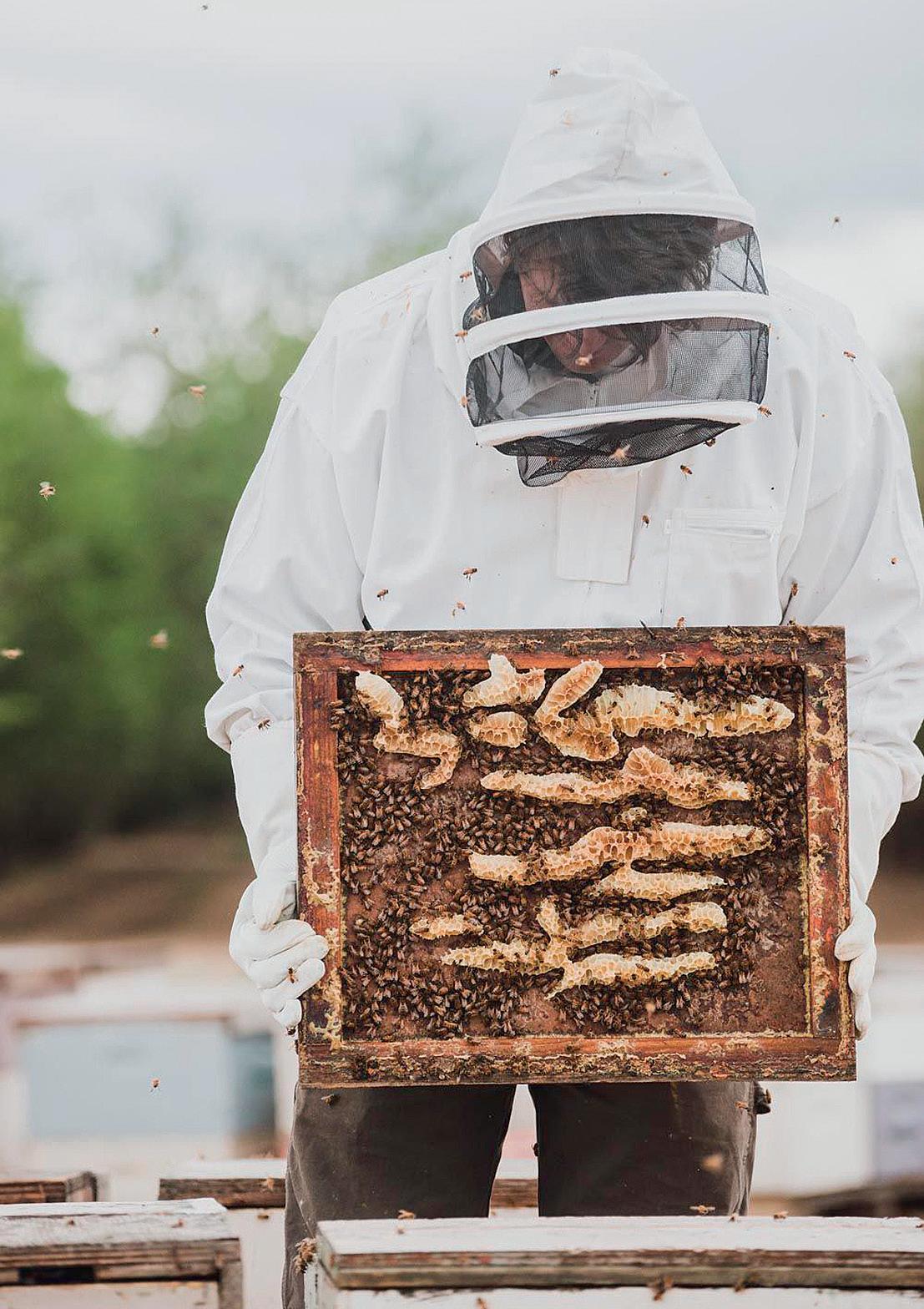
When Wilkie met a woman from Bend, he sold his bees and moved west. He bought more bees from the California almond orchard area and started in Central Oregon. He said for Central Oregon, his objective was to learn how to keep a sustainable number of bees alive year-round. Wilkie appreciates that people are buying local honey through farmers markets and in local grocery stores.
Another bee-related business in Central Oregon focuses on selling mead created from honey harvested from Lazy Z Ranch Wines' bees. Current releases include 2023 Estate
Mead, Gin Barrel Aged Grape and Plum, Marionberry Raspberry, and Carrot Blossom mead. There’s a tasting room with a Luckey's Woodsman food truck and an atmosphere that’s festive and informative. Along with building a business, John and Renee Herman are focused on creating a sustainable company built on what John describes as a three-legged stool approach.
“The type of economy we have in the U.S. is based solely on the bottom line. It’s 'how much money did I make and forget everything else.' A triple bottom line business is one that balances like a stool. The legs holding it up are profitability, environmental impact, and community impact,” he said at their meadery tasting room just outside of Sisters. “If you value those other legs of the stool and know they’re important for long term sustainability,


then you’re benefiting the lives of your kids and grandkids.”
Like Broadus Bees, the Hermans transport and rent their bees to California farmers for the winter. Because of overuse of pesticides and monocrop agriculture in California, honeybees have become their movable pollination source.
“It’s a wild system, but that’s why we go to California. Without us, they’re in trouble,” said Herman.
Lazy Z Ranch Wines offers a delicious new spin on mead. Their products have distinct High Desert floral profiles based on the type of honey included in the mead.
During the Flat Fire in Central Oregon, Dildine and his wife, Ann Richardson, were evacuated as the fire raged down Whychus Canyon and right to their back porch. Leaving with nothing but essentials, they hoped their
beehives would survive. When Dildine and Richardson returned, they found their home’s exterior a Pepto-Bismol pink — and their hives still alive. In front of the hives Dildine found water bottles cut in half and filled with water giving the bees something to drink. The compassion of the brave and exhausted firefighters brought the couple to tears. Reminding them even in the darkest
times, kindness will prevail… and so did their bees.
The fire’s aftermath left a changed, charred landscape, but couldn’t stop the welcoming signs of spring. Budding trees, blooming flowers like crocus, pansies, and dandelions — and honeybees emerging from wintertime rest — all brought hope to the region. Nature was beginning to heal.

BY KATY YODER
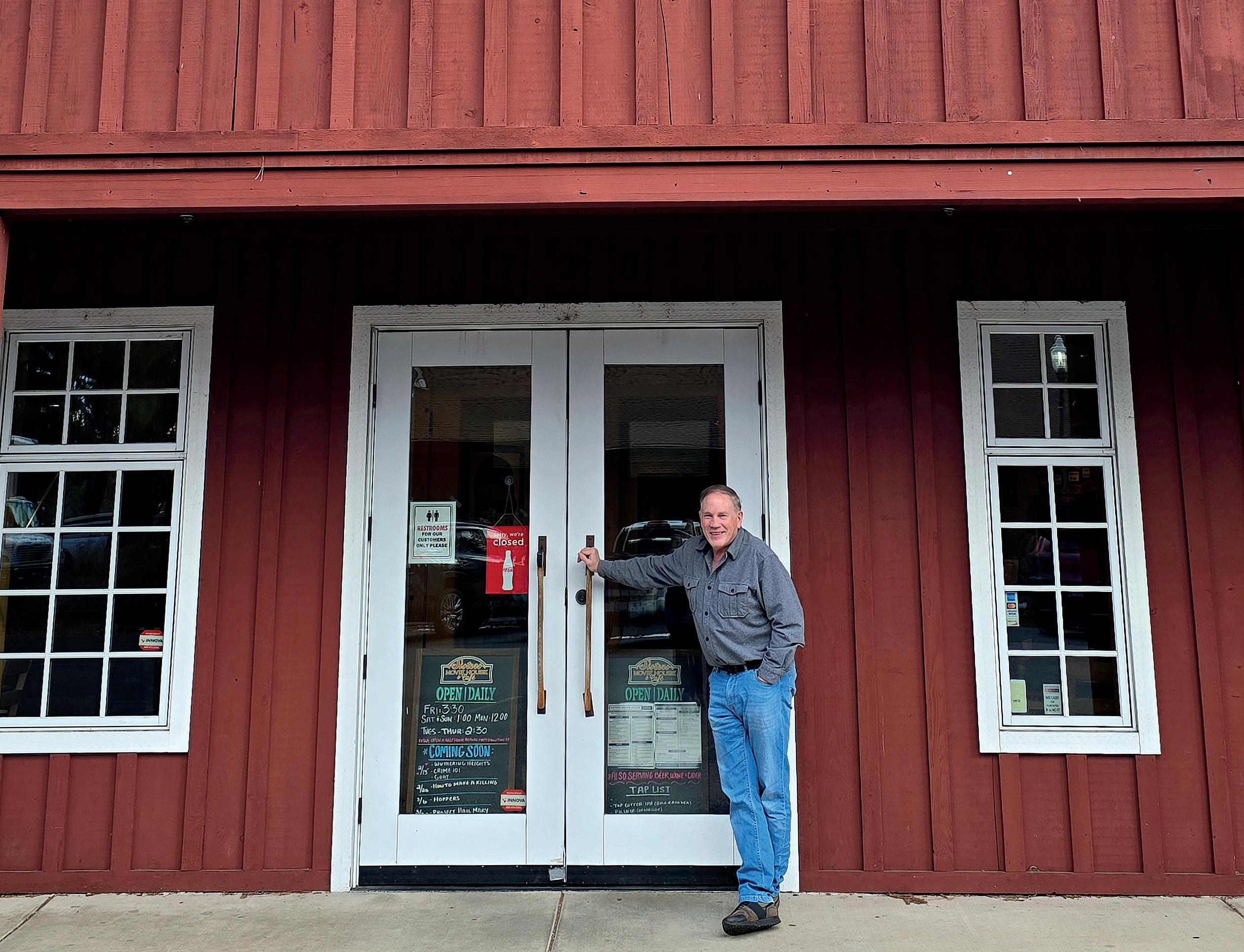
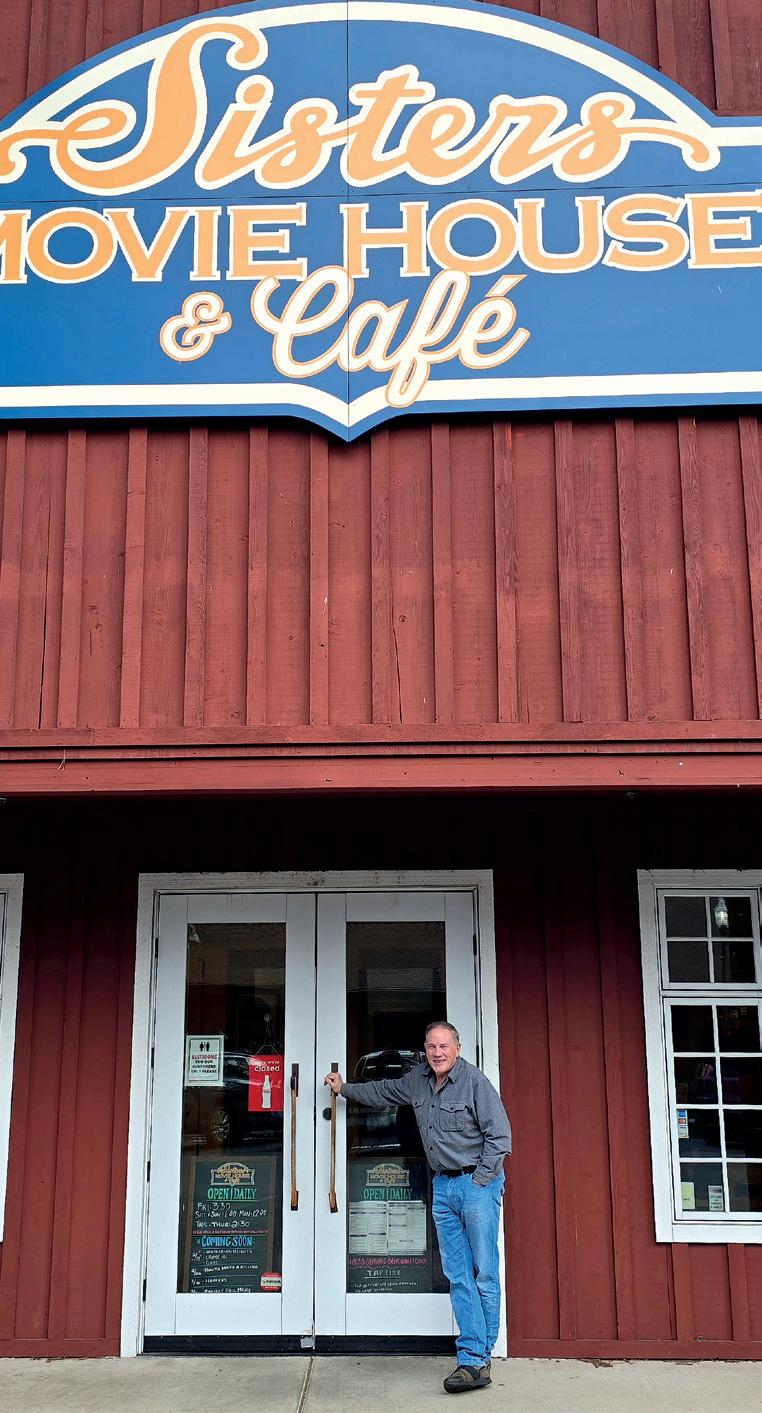
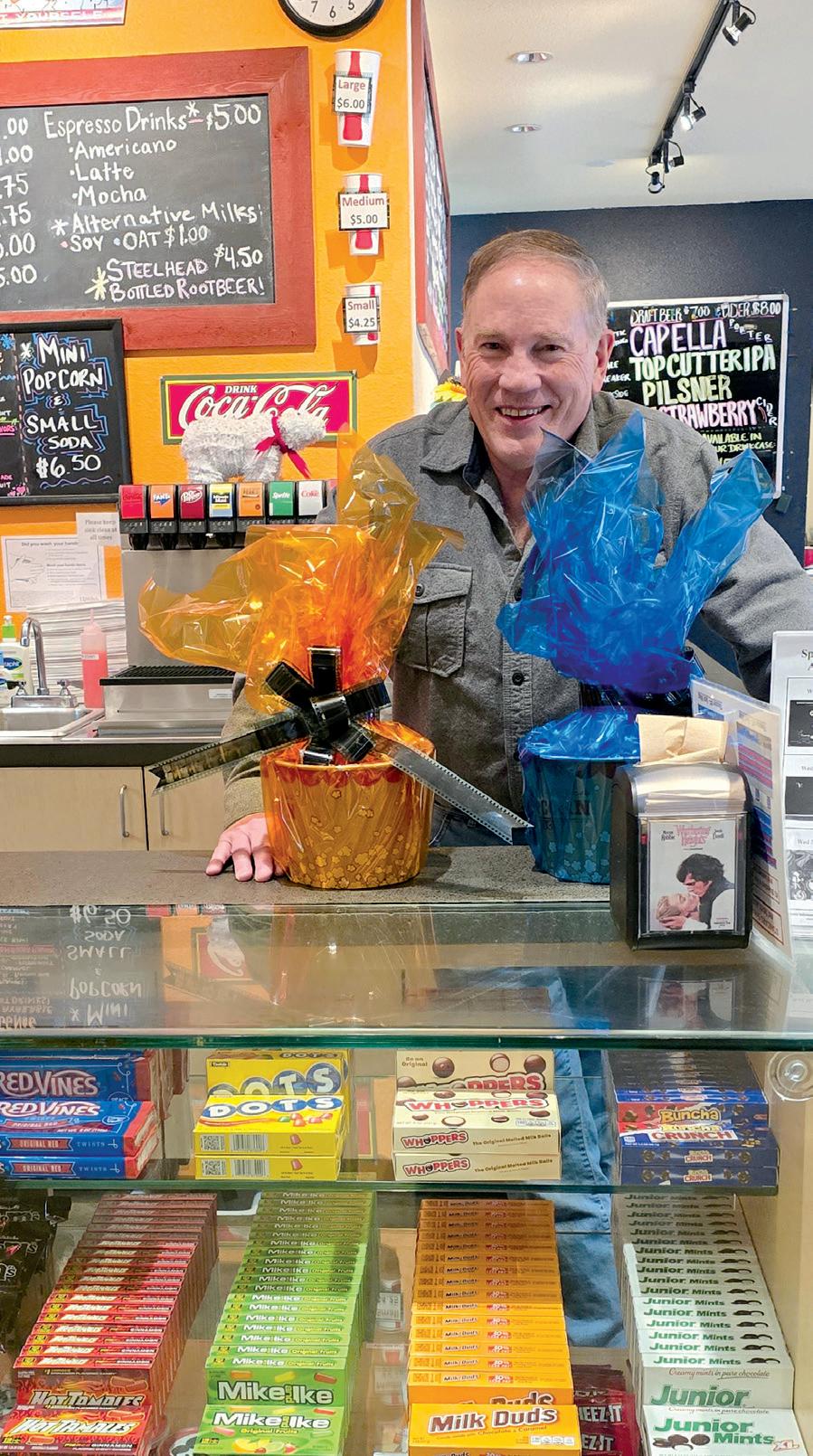
Drew Kaza is proud to be a native-born Oregonian. Most of his professional career required he live away from Oregon, on the East Coast and in Europe, but he never forgot his roots.
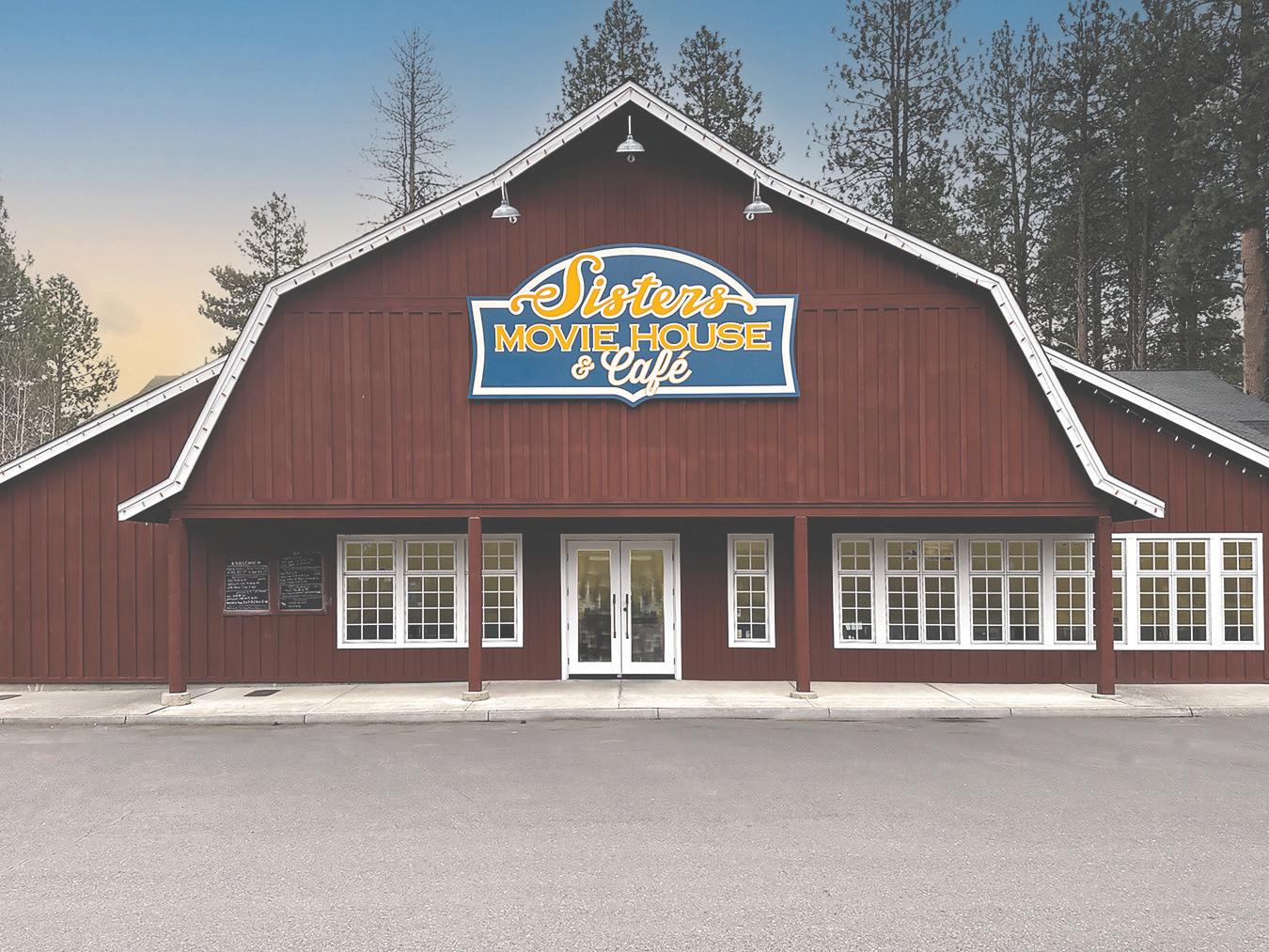
“At some point, you become a citizen of the world. But you always belong someplace. For me that’s always been Oregon,” said Kaza at Sisters Movie House & Café owned by quoin media & entertainment and led by Kaza, who is the managing partner. “Fortunately, my wife shared a vision of getting back to Oregon full time. Around 2015, we started looking at businesses in Central Oregon. When we found Sisters Movie House, we knew it was the right move.”
Kaza’s wife, Yeeling Cheng, focuses on the details that make a business welcoming and vibrant. Kaza describes
himself as more of a big picture guy. The combination of their skills works well for the couple. Cheng’s background before purchasing the Sisters Movie House was in banking and stockbrokerage in the United Kingdom. Kaza spent his entire career in the entertainment industry beginning in Portland working in cable TV, and on the news and production side at Channel 12 in Portland.
“I did the 10 o’clock news in Portland a few times, but just to fill in. I was an assistant producer who wanted to be on the air. I was sending audition tapes around the country. I got an offer to work in Bend but at that point, those jobs paid like $12,000 a year,” said Kaza.
In the mid 1980s Kaza decided to
go into the business side of media. He worked in Portland until he took his family to the east coast in 1989 to work for Comcast, which back then was a small company. After a few years with Comcast in Philadelphia, his life made a drastic change after being transferred to the United Kingdom.
“I worked for a few years in the UK then was recruited by three Hollywood studios that had a joint venture called United International Pictures. I ran their pay television group and traveled around the world doing deals for things like HBO Asia. It was the best job and the worst job I ever had,” he said.
Eventually, Kaza left his job and began freelancing for several years. He went to work for one of his clients and ran a big division of BBC called








BBC Worldwide. A few years later, he was recruited by Microsoft co-founder, Paul Allen, who was investing heavily in the UK and had a company called Vulcan Media Enterprises. Although he describes his time working for Allen as a fun couple of years, eventually he returned to work with BBC. He was instrumental in helping them transform from analog to digital, making them one of the first to make the switch.
After a few more years in the entertainment industry, Kaza felt it was time to get out of the corporate side of the business and look seriously at coming back to Oregon. Kaza has six children and waited until his youngest children were older before leaving the UK. His two daughters worked at Sisters Movie House during the summer for the first few years he owned the theater.
“That’s the backstory to how I ended up buying the Sisters Movie House. I had that background at a very high level which has been useful from time to time, particularly in relationships with the studios here,” said Kaza. “It’s allowed us to choose films that reflect both my wife and me. We can’t always get exactly what we want to show, that’s just not possible.”
Kaza is proud of the arts programming shown at the theater. They focus on exhibitions from Europe and are accessible to Kaza because of connections he has with the company that distributes them.
When COVID-19 hit in 2020, Kaza had more time on his hands as the theater had to slow and then stop operations for a while. Not knowing how long the shutdown would last, Kaza and his wife spent time hunkering down on the Oregon coast. Not the type to sit around doing nothing, Kaza began thinking about writing a book from his childhood about a Portland high school basketball team that won the state championship.
“My dad was an educator in the Portland public schools and taught band and orchestra at three high schools. Growing up my brother and
I went to a lot of high school basketball games. In 1972, when I was 12, there was a team from Portland that captivated everybody. The Jefferson High School basketball team was the first all-Black high school team in the state of Oregon.”
As a film guy, Kaza thought about making a documentary film, but he thought twice after considering he wasn’t the right person to write a screenplay. Kaza reached out to a friend, Matt Love, who runs Nestucca Spit Press. Published in 2022, the book entitled, “High Contrast,” told the story of the Jefferson High School’s championship season featuring the all-Black team’s victory over an all-White Baker City squad.
“The book allowed me to tap into my passions which are Oregon history, politics, and what was going on culturally in the 1970s, especially with music and movies. I wanted to use history for context to point out why this was such a big deal in 1972. It was the unspoken story of race with a team of White kids from Eastern Oregon versus a team of Black kids from Portland. I like to say that readers may come for the sports and stay for the politics and justice being served.”
know what that felt like.”
Growing up in Oregon in the 1960s, Kaza was part of a voluntary bussing program when he was 11 years old that took him from Beaverton to what’s now called Martin Luther King, Jr. Elementary School in Portland. Formerly called Highland School, it had the largest percentage of Black children in Oregon. Kaza and a friend were the only two white kids in the fifth grade.
“My fifth-grade year coincided with the year Jefferson High School won the state championship. I see that time as an opportunity for me. I was fortunate to have that taste of reverse racism and
Another area of interest for Kaza is politics. He’s an independent who ran for office a few times, and he keeps busy with issues like campaign finance reform, and, more recently, making the county commission nonpartisan. He’s also involved with a movement to bring an open primary for Oregon. Kaza is quick to say that Sisters Movie House is a politics-free zone. He wants all their guests to feel welcome as they enjoy a great movie in an independently run theater.
When they’re not running the theater, Kaza and his wife enjoy being outdoors hiking, rafting, and taking time to relax on the coast. With their children spread around the planet, Kaza is planning for more trips to places like Barcelona, the UK, and Uganda.
“We’re on the go,” he said. “Even at my age, I don’t want to slow down. I’ve traveled to close to 60 countries. But I really love Oregon and everything about this state.”

e Men We Make is a debut novel by Magnus Johnson — former Green Beret, Bronze Star recipient, and co-founder of Mission 22 — that follows a single character, Darin, through two parallel lives. In Par t One, Darin grows up in an environment of neglect and cruelty. In Par t Two, the same boy is raised with care, understanding, and love. Same person. R adically di erent outcomes. Johnson doesn’t moralize — he shows. With a riveting voice and a story teller ’s instinct for tension, he forces readers to reckon with the adults who shaped them and to ask honestly: w ho are the men and women we are helping make? Draw ing on his years study ing what breaks men on the ba le eld and what rebuilds them in civ ilian life, Johnson brings rare emotional authorit y to this story. e Men We Make is a fast, unforge able read that w ill change how you show up for the people around you.
“ e Men We Make is less about theory and more about legacy. It challenges readers to consider not just the men they are becoming , but the men they are helping shape.”
— Sco Batson
“ is book leaves us considering the life of Darin long a er we’ve nished reading. It begs us to look at our own lives and relationships and ask ourselves how we are impacting the people around us.”
— Diane F.
Scan to purchase
Magnus Johnson is a former Green Beret , Bronze Star recipient , and co-founder of Mission 22, a national nonpro t dedicated to ending the veteran suicide epidemic. He has spent his life studying what breaks men and what builds them, rst on the ba le eld, then in the long , o en invisible str uggle of coming home. A er leav ing the militar y, Johnson faced what so many veterans face: the disorienting work of rebuilding identity outside the uniform. at journey, through art , mindf ulness, community, and faith, became the foundation for ever y thing he has built. is includes Mission 22’s Recovery + Resi lienc y program, designed to help veterans transform trauma into Post Traumatic Growth.


Each summer, the high desert skies over Madras come alive with the thunder of radial engines, the roar of jets, and the collective gasp of thousands looking upward. The Airshow of the Cascades, now in its 26th year, has grown from a casual gathering of pilots into one of Oregon’s signature aviation festivals and one of Central Oregon's most anticipated community events.
Clay Barns in Redmond, a pilot with Alaska Air, remembers fondly the roughly dozen times he and his dad took in what most still call the Madras Airshow.
“I knew the first time I went that I would become a pilot. Seeing those flyers was mesmerizing. They completely captured my imagination and my sense of wonder,” Barns told Spirit.
The airshow’s roots stretch back to the late 1970s, when a small group of aviation enthusiasts began flying into a ranch north of Madras for an informal reunion. Hosted by Ron and Laurice
BY BILL BARTLETT

How Airshow of the Cascades blends history, precision flying, and old-fashioned summer excitement.
Ochs, the early fly-ins were part social gathering, part grassroots air display. Friends arrived by plane and by car, turning the weekend into a hybrid fly-in and car show that steadily gained a following.
As attendance swelled through the 1980s and 1990s, organizers realized the event needed a larger stage. In 2000, the show moved to the Madras Municipal Airport, a former World War II airfield well suited to larger aircraft and bigger crowds. That transition marked a turning point.
Reggie Donalds from La Pine has attended more than 10 of the events, always with his two sons and a collection of five grandsons. His boys, one an airframe mechanic in Bend and the other an Air Force veteran, credit the air show for their love of aviation.
“For us, it can’t be missed,” Donalds says. “It’s part of who we are as a family. We talk about it for weeks before and after.”
What began as a friendly fly-in has evolved into a fully organized airshow powered almost entirely by volunteers. Today, it draws roughly 20,000 spectators over its two-day run — a remarkable figure for a community of Madras’ size. The event’s growth has mirrored the ambitions of its organizers. Modern editions of the show feature an impressive lineup of civilian aerobatic stars, historic warbirds, and jet teams.
In recent years, headliners have included the Patriots Jet Team, whose six L-39 jets streak across the sky in tight formation, bringing big-city spectacle to the high desert. Precision performers, such as Undaunted Airshows and internationally known aerobatic pilot Yuichi Takagi, add loops, rolls, and heart-stopping tumbles to the daily program.
History also takes flight above Madras. Iconic World War II aircraft such as the B-17 Flying Fortress and
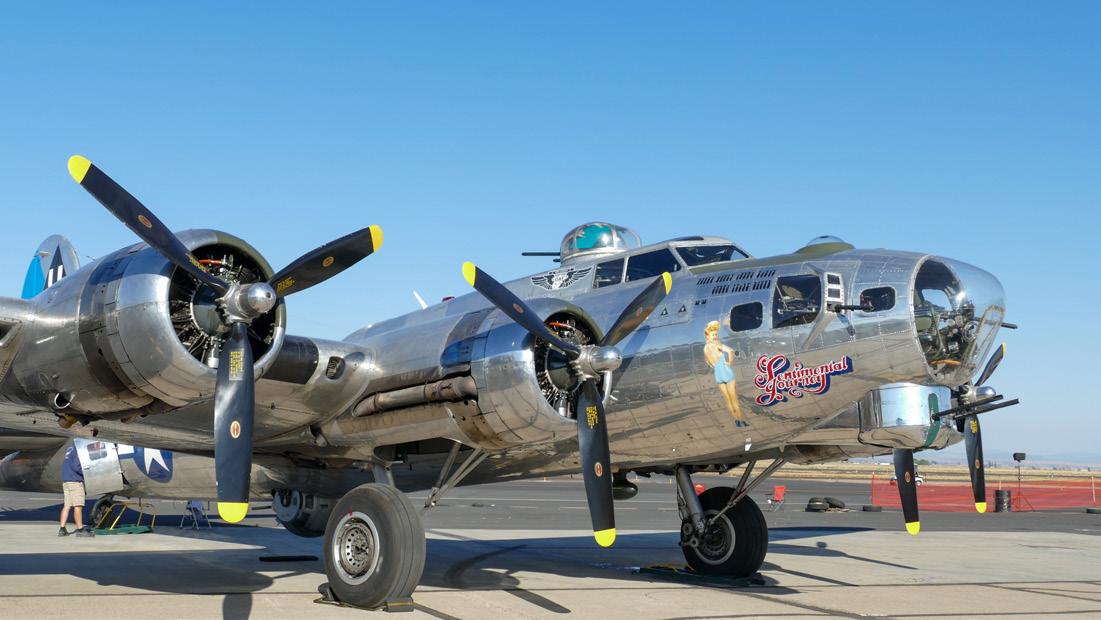


the P-38 Lightning have appeared either in aerial demonstrations or on static display, offering younger generations a visceral connection to aviation heritage.
The partnership with the Erickson Aircraft Collection, located on the airport grounds, further enriches the experience. During airshow weekend, attendees can often explore one of the nation’s premier private collections of flyable vintage military aircraft, blending museum-quality history with live performance.
Yet, to describe the Airshow of the Cascades as merely an airshow misses its broader appeal.
Over the years it has become a fullscale summer festival. A classic car show, motorcycle stunt exhibitions, food vendors, beer and wine gardens, live music, camping, and a fireworks finale transform the airport into a temporary city of celebration. Families spread blankets along the flight line. Veterans are honored. Children watch
wide-eyed as pilots sign autographs beside their aircraft. For the local community, the impact is tangible.
Business owners in Madras often describe airshow weekend as one of the busiest stretches of the year. Hotels fill with visitors from across Oregon and neighboring states. Restaurants see lines out the door. Gas stations, grocery stores, and retail shops all benefit from the influx.
While no comprehensive economic study has isolated the show's exact dollar impact, the steady attendance of around 20,000 people represents a significant injection of tourism spending into Jefferson County. Equally important is the event's role as a community fundraiser and civic rallying point.
As a nonprofit, the Airshow of the Cascades provides opportunities for local service clubs and youth organizations to raise money through concessions and volunteer efforts.
Historically, the show has
generated more than $10,000 annually for community programs and scholarships. Some 300 volunteers from ticket takers to aircraft marshals donate their time each year, reinforcing a sense of shared ownership and pride. In an era when small towns often struggle to maintain large-scale events, the Airshow of the Cascades stands as a testament to sustained volunteer energy and regional enthusiasm for aviation.
It celebrates not only the daring of pilots and the beauty of historic aircraft, but also the power of a community to build something enduring. Each summer, as jets arc overhead and warbirds rumble down the runway, the skies above Madras tell a story — one of history, spectacle, and a small Oregon town that learned to think big.




















BY DANI NICHOLS | PHOTOS PROVIDED
My mom and I met up to do some back-to-school shopping last fall, and she slyly handed me a brown paper bag. “For when you get hungry,” she said, looking so mischievous and proud of herself that I had to look in the bag right away. To my surprise, it was a sizable (gluten-free!) peanut butter blondie, wrapped in a small aluminum tin with a ribbon, from a small home bakery business in Redmond. I
squealed in excitement and later ate it in my driveway so my kids wouldn’t see and beg for a taste of my special treat. (Sorry not sorry, kids!) It was phenomenal — decadent, hearty, with the chew and heft so often missing from corporate gluten-free treats. I’d never had anything like it.
I was diagnosed with Celiac disease 11 years ago, which means I can’t eat even small traces of gluten without harming my intestines. While I have tried to learn to bake for myself, the precision and finicky aspects of baking have always eluded me, despite craving the homemade flavors and high quality of home baking. It turns out that I am not alone, even for those who don’t have dietary restrictions. Demand for small-batch, homemade baked goods continues to grow and thankfully, the food safety laws enforced by the department of agriculture have helped this important industry to grow unimpeded. Cottage bakeries have exploded in Central Oregon in recent years, thanks in no small part to the passing of SB 643 in 2023, which raised the maximum income allowed for small home (AKA “cottage”) bakeries from $20,000 to a little more than $50,000 per year. SB 643, which was passed in 2023 and put into effect in 2024, also relaxed rules and permitting for home
bakery owners, allowing even more bakers to start sharing their delicious gifts with their community. It’s often baked goods for sale through small businesses, as the food safety laws are more strict for meat-related items or products which require refrigeration.
Purchasing baked goods from a small home-based baker also leads to some wonderful personalized care for the client. “No child should be without a special cake to celebrate their birthday,” is the motto that Natasha Egbert of CupNCake Creations of La Pine started with 10 years ago. As with all the cottage bakers I interviewed, Natasha’s personality shines through her correspondence and her cakes, you can feel her enthusiasm for her clientele. “My customers are not just another order, most of them become more like family,” she said in an email.
“I enjoy doing this because if you could see a child’s eyes light up when they see their special cake … or a bride when her vision comes to life on her special day, it warms my heart.”
She also shared that her business has financially supported her family, especially in hard times. “[In Covid] when my husband and I both lost our jobs, and more recently my husband has been out of work for almost a year due to injury while on Military orders,
it has helped to keep us afloat when we didn’t know where the rest of the bill money was coming from,” she said. Getting to directly support a homebased business is wonderful for the consumer, and also for the business owner, who take their responsibility of making high-quality products seriously, and take great pride in the taste and value of the food they make.
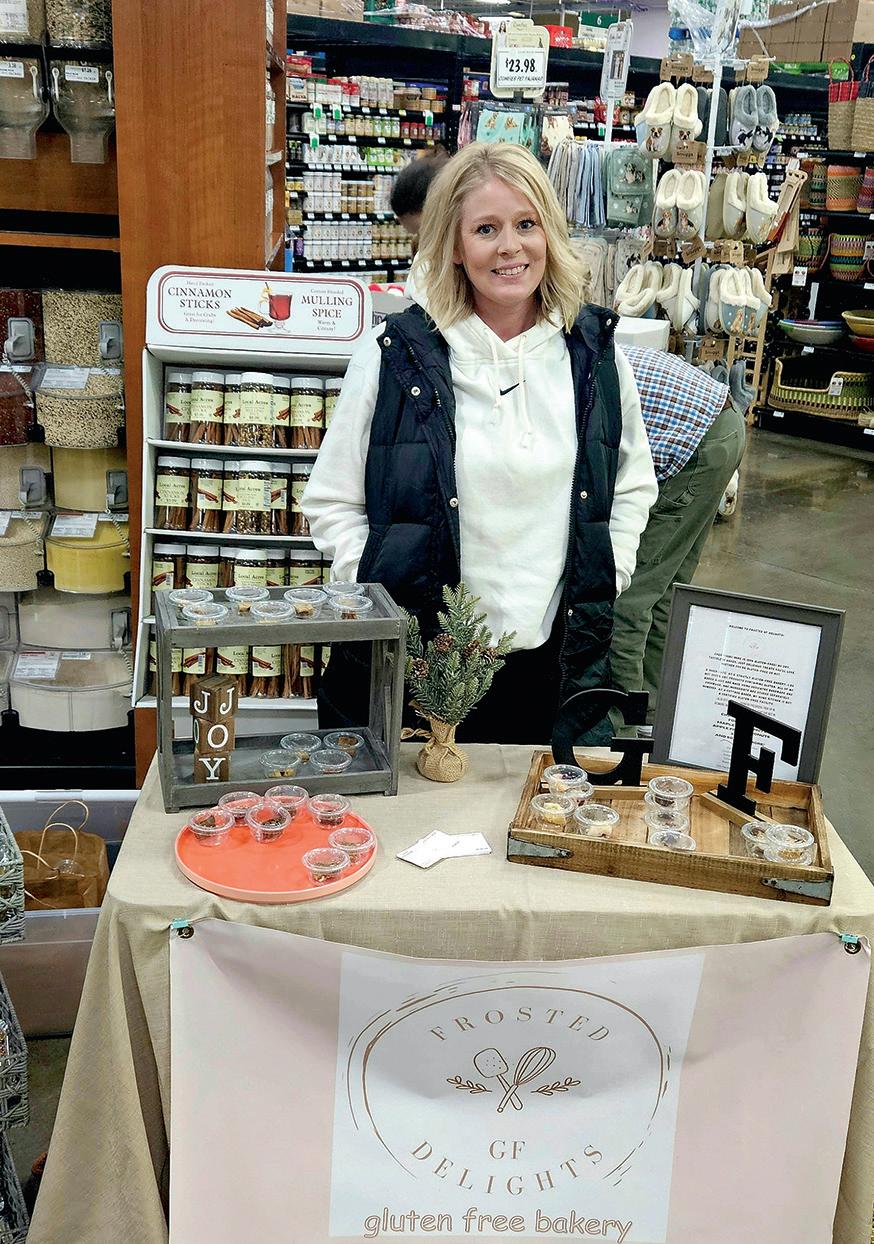
“What makes my bakery unique is that my products truly do not taste gluten-free. The number one compliment I receive is that there’s no grittiness or graininess, you genuinely can’t tell there’s no gluten. I’m also able to offer my products at a competitive price point, lower than most other gluten-free bakers in the area. Something that sets me apart is that I do not offer any products with gluten, so Celiac and gluten-intolerant customers feel safer eating my products,” said Carrie Frost of Frosted GF Delights. Another important distinction of Carrie’s business is that her base flour blend
contains no nut flours.
“I’ve loved baking since I was a little girl, and when I became gluten-free eight years ago, I was devastated by how limited and disgusting some of the store-bought options were,” Carrie wrote in an email. “Over the years, I’ve taught myself how to recreate and develop baked goods that are just as good as the real thing. I’m a wife, and mom of two teenage boys who are extremely involved in extracurricular activities, school, and sports, so this job has been the perfect fit for me, and flexible when I need it to be.”
In Central Oregon we value authenticity and local gumption, and we have a strong community spirit, which helps small businesses thrive. I spoke with Bobbie Bolton of Sweet B’s, a 70-acre beef and hay farm in Terrebonne. At their farmstead and at local bazaars and events, they offer year-round produce and veggie starts, as well as pasta and sourdough, all from their farm.
“We have a fully free-range flock
of hens and my 8-year-old son raises those and sells the eggs. I started all of this as a way to know where my food came from and to feed my family,” Bobbie said.
I’m a mother myself, and know full well the balance it takes to make a living while providing a quality life for one’s children. Some cottage bakeries, like Sweet B’s, are part of a growing farm-to-table movement, while others

are simply using their skills to provide a flexible income and creative lifestyle.
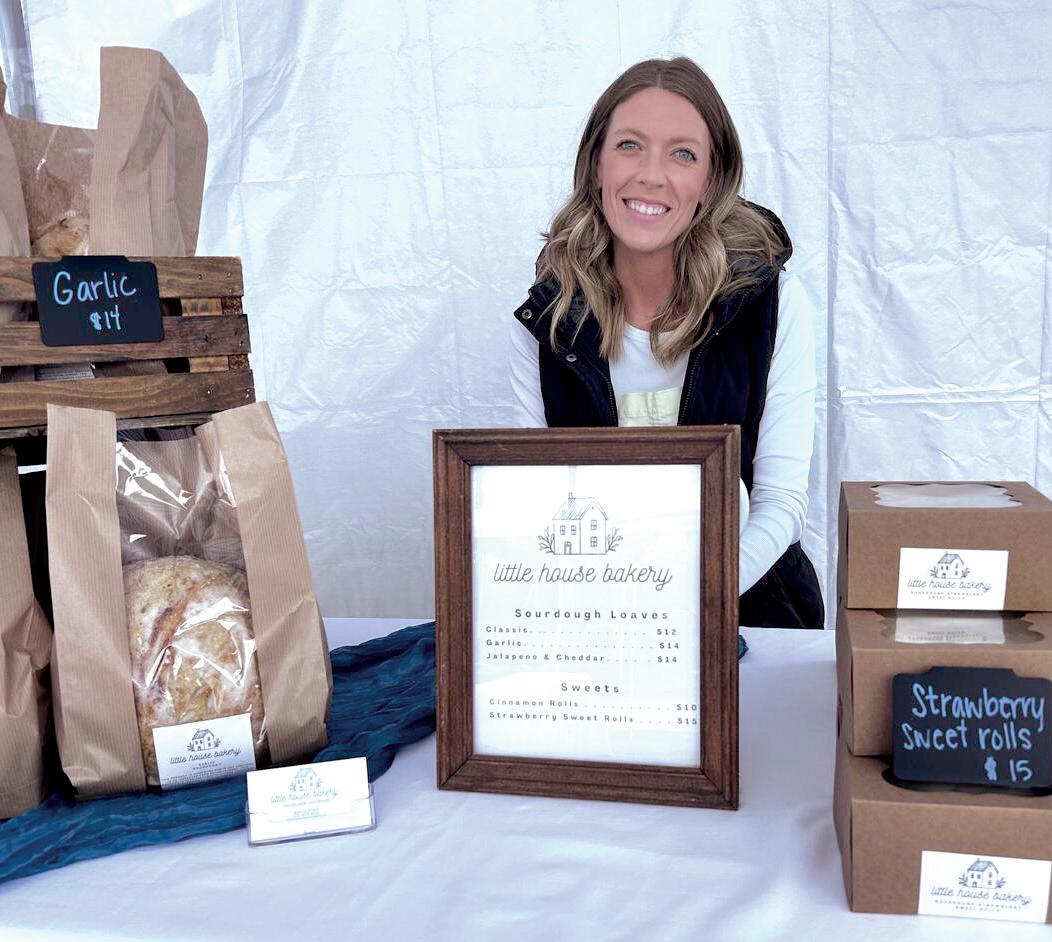
Jessica Grant is a Redmond-based homeschool mom, and also the proud owner of Little House Bakery.
“I’ve always loved to host and feed others. If you come over to my house, you’ll never leave hungry. Food has always been my way of showing care, and baking sourdough became an extension of that — something tangible I could offer that carried a bit of comfort and intention with it,” Jessica said in an email. “Little House Bakery allows me to remain present while homeschooling my children, weaving work into the rhythms of our everyday life. My kids are a big part of this journey. They cheer me on, even on early bake days that start at three in the morning, and their encouragement reminds me why this work matters. It’s special to build something they get to witness — something rooted in care, creativity, and hard work.”
Lacy Davis of Lacy’s Baked Goods in Sisters had a similar story. “A couple of years ago, I started seeing roadside bakery stands and micro bakeries
popping up online. After doing some research, I realized this was something I could do from my own home ... that freedom was exactly what I was looking for,” She said. Her oldest daughter competes in high school rodeo, and as a busy mom, Lacy needed a way to support her family and foster her own creativity at the same time. (She told me she is known for her rolls and sourdough loaves!) “I decided to just go for it,” Lacy said. “I found a $30 hutch on Facebook Marketplace, turned it into my first bakery stand, and started the process. Sometimes you just have to start with what you have — and that’s exactly what I did.”
It’s so inspiring to hear from so many local bakers, who are finding their own unique ways to grow in creativity, flavor, and personal fulfillment, all while serving high-quality goods to a community eager for personal touch and local talent.
Mia Moreing, of Cottage Cakery in Bend, said it all started for her in 1967 with an Easy-Bake Oven. “Feeding people has always been my love language,” she said. “In 2025, after
learning I had a gluten intolerance, I felt inspired to create a cake that myself and others could enjoy. The Cottage Food Establishment Exemption ... has given me the opportunity to do what I love: baking cakes for special celebrations and lasting memories.”
No matter what your personal reasons for seeking out a cottage baker, if, like me, you have a dietary restriction, or you simply want a high-quality product purchased straight from the source, it seems clear that this trend is a positive one for our Central Oregon community.
Knowing that a local baker worked to bring us the hearty sourdough for breakfast, the special cake for our little one’s birthday, or the after-shopping treat (thanks again, Mom) makes it even tastier.
As Jessica of Little House Bakery told me, hers is a business “built around family life, hospitality, and the belief that food made with care has the power to connect us all.”
I couldn’t have said it better myself; but even if I wanted to try, I have a mouthful of blondie, so…

CupNCake Creations, La Pine


Natasha Egbert cupncakecreations73 cupncakecreationsbynatalie www.cupncakecreations bynatalie.net
Every Thursday evening at Legends Cider in La Pine from 4–8 p.m.
Little House Bakery, Redmond — Jessica Grant — Little house bakery Little.house.bakery.2
Double T’s Paninis and Smoothies food truck and Phat Guyz BBQ in Redmond
Frosted GF Delights, Redmond — Carrie Frost — frostedgfdelights frostedgfdelights https://app.simply-bread.co/ frostgfdelights/ Schoolhouse Produce, Tumalo Coffeehouse, Reed Crossing Market, and Local Acres
The Cottage Cakery, Bend — Mia Moreing — @ thecottagecakery.mia@gmail.com call/text 650-704-0512
Sweet B's Farmstand, Terrebonne — Bobbie Bolton — @ bdbolton80@gmail.com 541-213-8682
3130 NW Orchard Dr., Terrebonne
Lacy’s Baked Goods, Sisters — Lacy Davis — @ lacyellendavis82@gmail.com https://bakesy.shop/b/ lacys-baked-goods 145 N. Tamarack St., Sisters
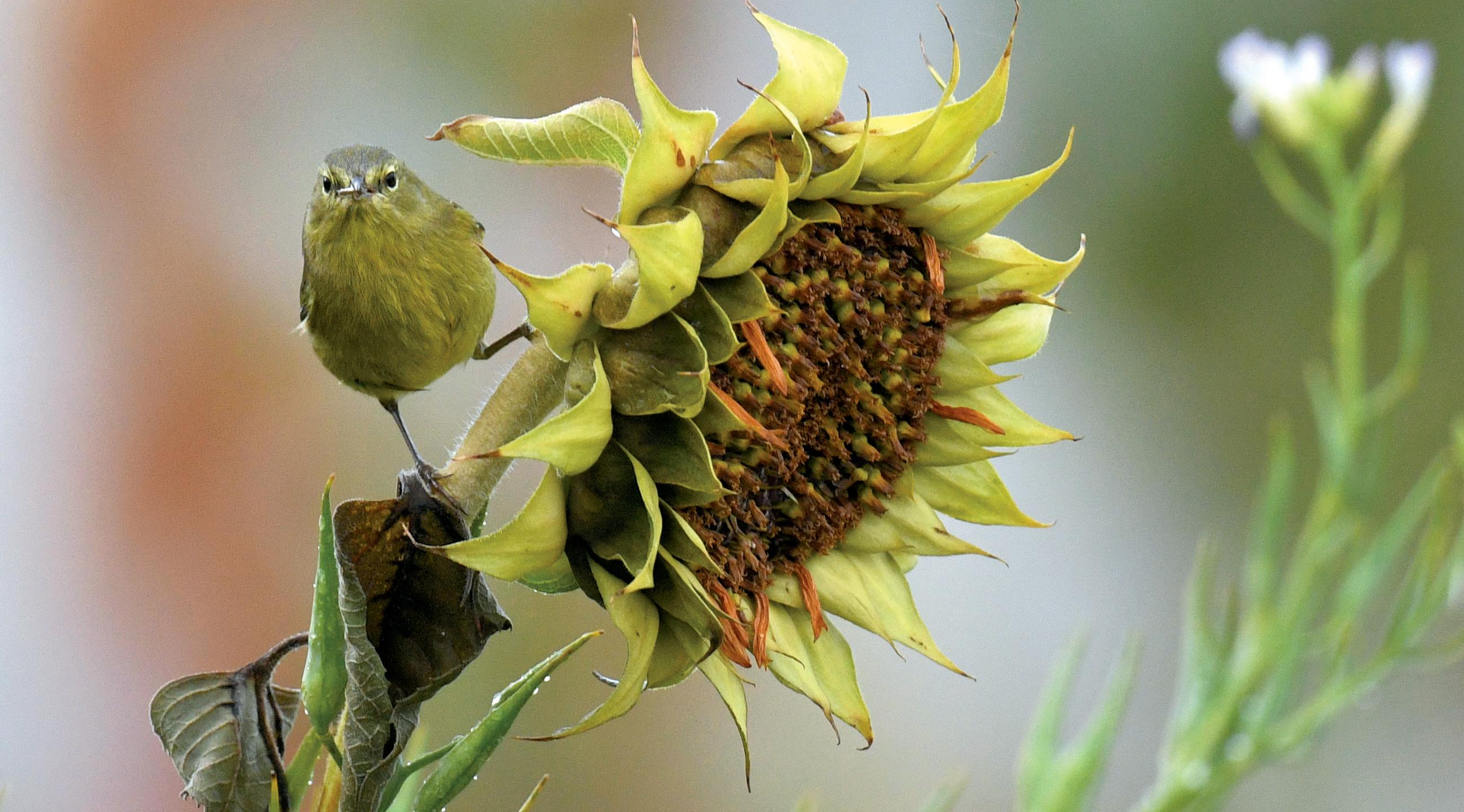
Living in Central Oregon, we are surrounded by magnificent scenery year-round — impressive mountain peaks, sparkling rivers, lakes, and streams, majestic ponderosa pines, lush meadows, and rugged deserts.
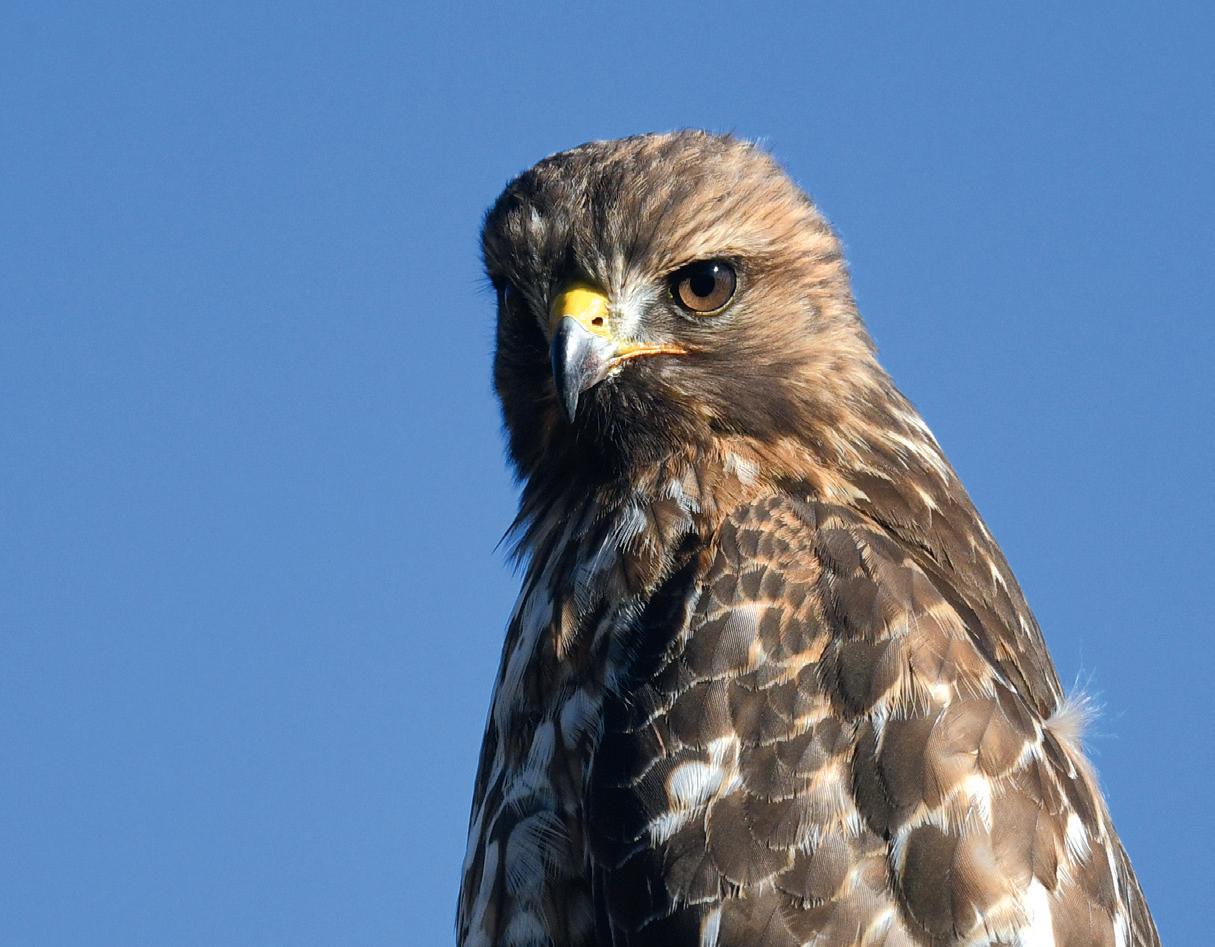
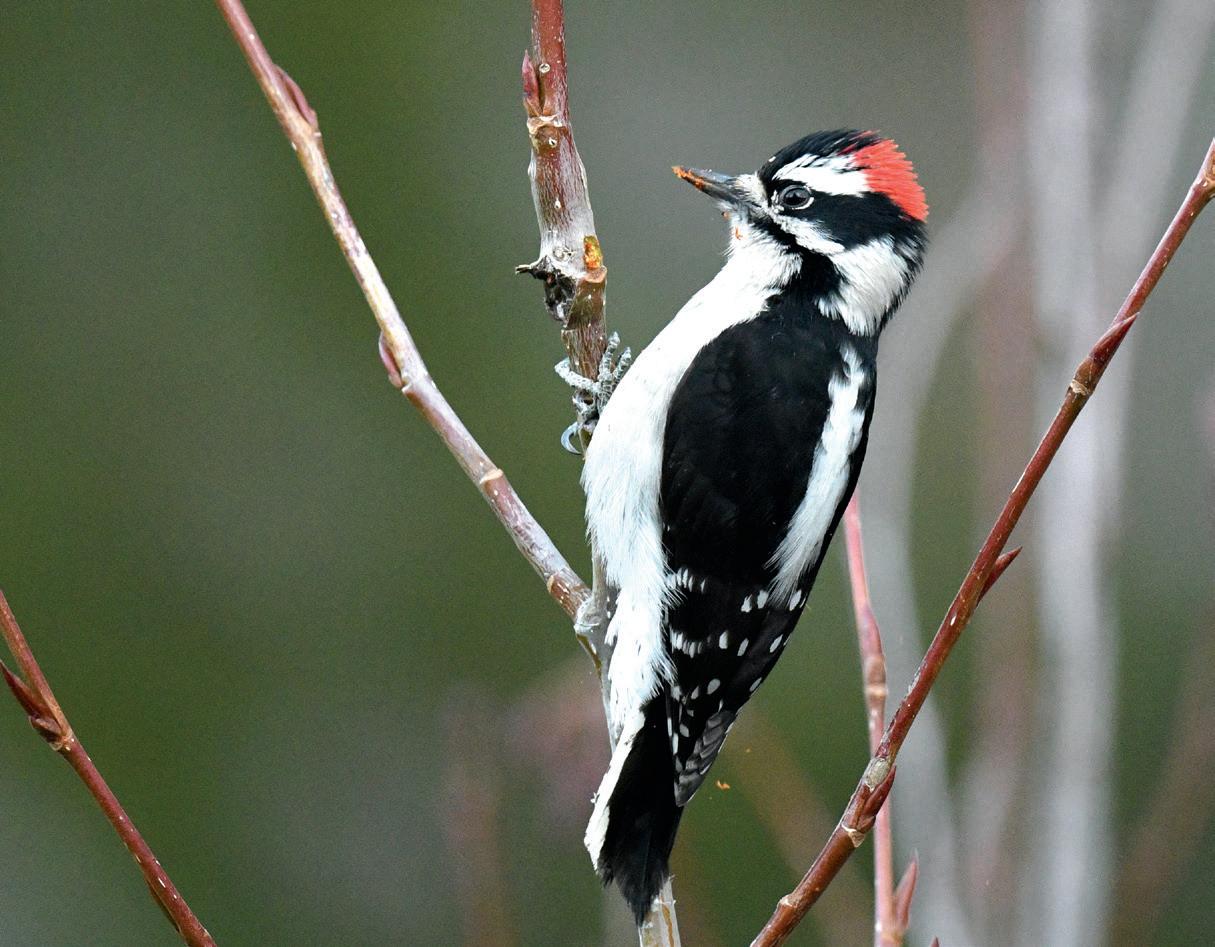
Among and over all this beauty fly our freest neighbors. There are birds of every size, shape, and color, seen and not seen, heard and not heard. It takes little more than a pause in a busy day to catch a glimpse or hear a sweet chirp from one of the more than 350 species of birds in our locale. Already devoted birders are fully aware of this natural abundance, and many are eager to share their enthusiasm.
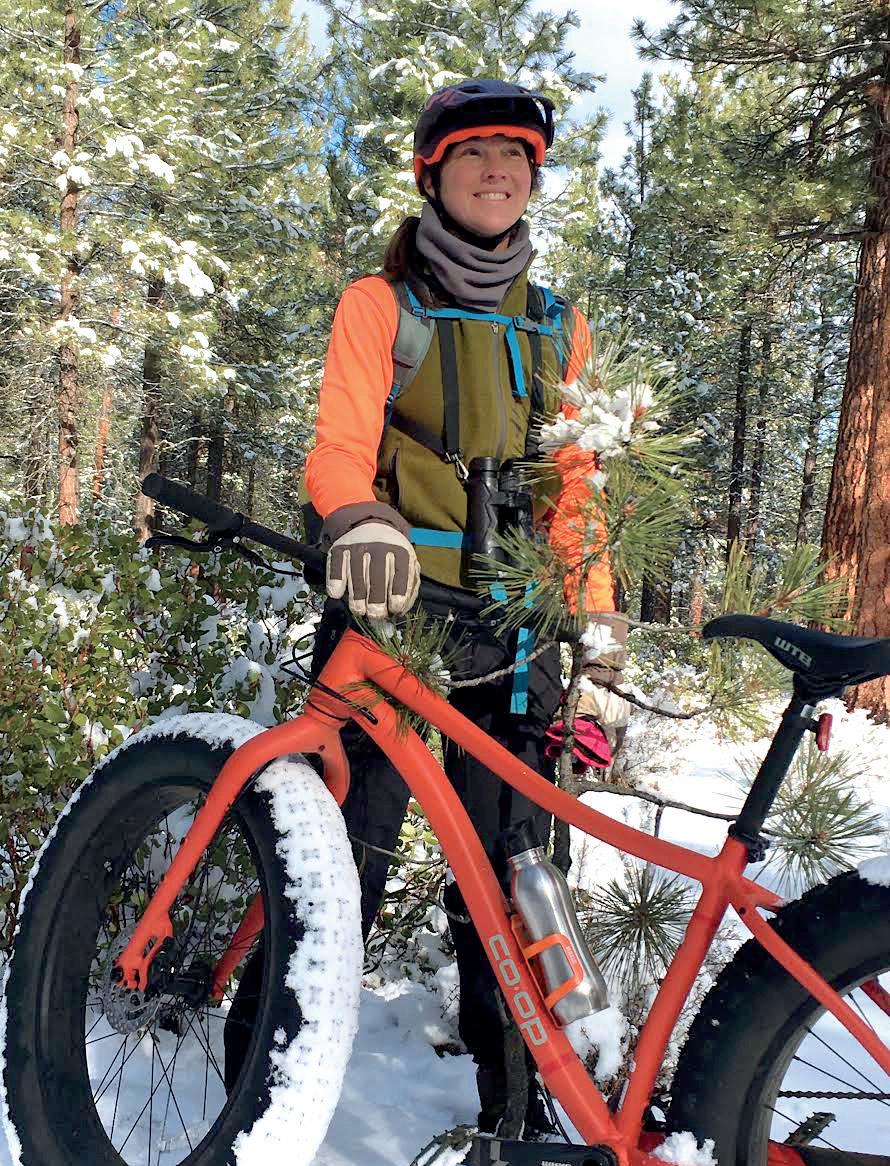
One such local is Sevilla Rhoads. Her guide service is called Deifer, an ancient Welsh word meaning diving deep. And that you can do with Sevilla on a guided bird watch alone or in a group, in her presentations, in place-based custom outings, programs, and community science projects.
“Most of my outings are primarily focused on birds, but we always notice and enjoy whatever
It's all for the
WRITTEN BY SUE STAFFORD
the place offers us during the event, including wildlife, tracks, plants, bees, landscapes, and even local history,” she explained. “My focus is engaging audiences through fun and entertaining events where education happens while we laugh and wonder together. Nature is naturally fascinating and enjoyable –it’s only boring if we make it so!”
Rhoads’ love of nature and birds can be traced back to her British grandfather who served in India. On a tiger
hunt, with the quarry in his sights, the tiger looked him directly in the eye, causing her grandfather to put down his gun. He would later pick up his camera for a different kind of wildlife shooting. He introduced Sevilla as a child to the wonders of nature, and particularly birds. He taught her to sit, watch, and listen quietly to learn.
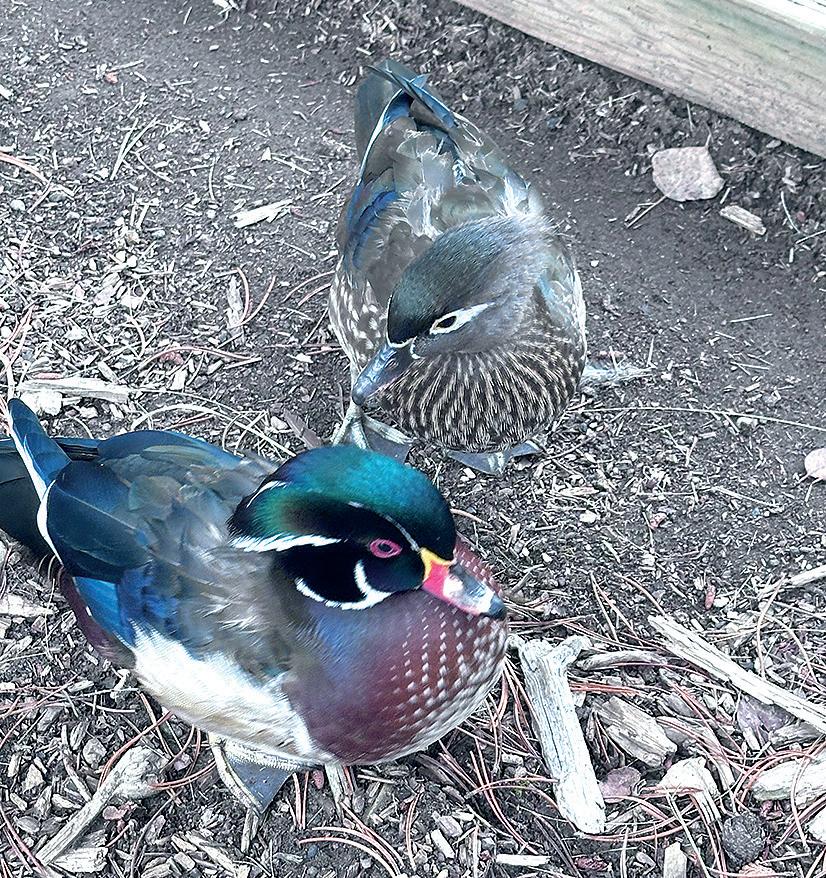
You can generally find this former attorney with camera in hand, eyes clearly scanning her surroundings for feathered subjects. Like the morning she had dropped her son and daughter off for school and spied a White-headed Woodpecker confronting a Pinyon Jay near a puddle.
“By some miracle, two of the species of greatest concern were battling over a few sips of unfrozen water where a car had broken up the ice for them. I grabbed my camera and managed to get a few photos before they flew off,” she described. She entered the photo in a contest and won top honors from the Oregon Birding Association in their December photo contest. Rhoads is a Registered Oregon
Outfitter Guide as well as a Certified Accessible Birding Outing Leader. She believes in making nature accessible to everyone, so cost is sliding scale.
Two organizations for whom Sevilla leads bird tours are Sunriver Nature Center and the Black Butte Ranch Natural Resource Center, both of whose missions include preservation, conservation, and education in the natural world.
Sunriver Nature Center (SNC) is home to birds of prey and other species, bees, and other native wildlife, on eight acres of natural habitat surrounding Lake Aspen. The SNC is a lovely place to observe a breeding pair of Trumpeter Swans named Gus and Val who live on the lake. Their offspring each year are released into the wild at Summer Lake. So far, over 30 years involving three different breeding pairs of swans, the Center has released 100 swans into the wild.
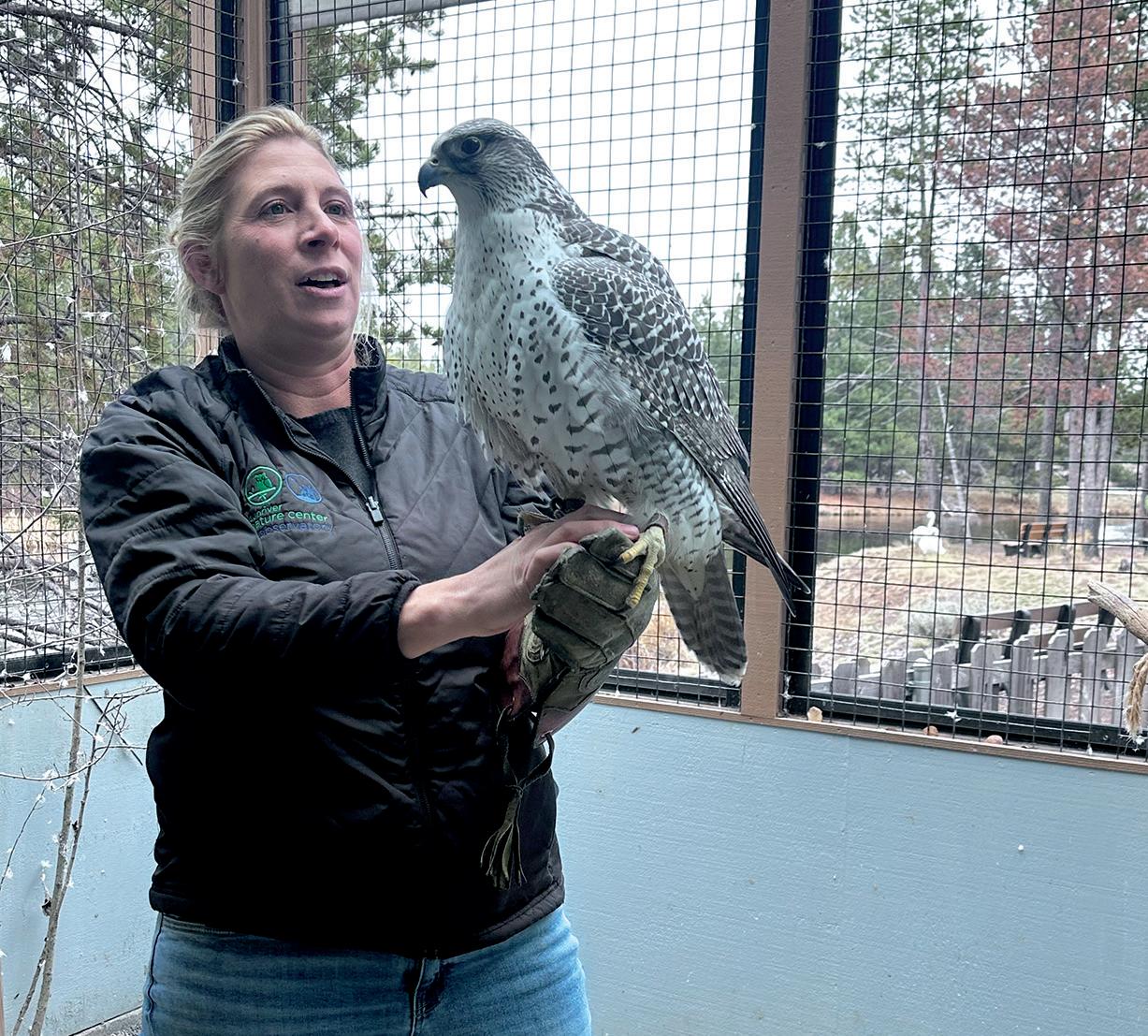
The Center is also home to Freya, a Gyrfalcon, raised by Kelli Anderson,
grant and community engagement coordinator, who has been involved with birds for 30 years, both personally and professionally. Freya’s neighbor is Luna, the Eurasian eagle owl, with beautiful amber eyes that don’t miss much, as she peers through the wire of her enclosure.
Kelli said the Center is concerned with the decreasing number of birds each year due to multiple causes. The effect of wildfire smoke is seen with birds staying low to the ground, not foraging, and not migrating.
Currently, SNC is open Wednesday–Saturday, 10 a.m.–3 p.m. Members are admitted free, public admission is $9 for adults, $6 child (4–12), and free for child under 4, $7 for seniors. When the Center is closed, feel free to enjoy the campus and walk the trails. They offer Home School Days November–May and summer nature camps for kids.
Black Butte Ranch has a relatively new Natural Resource Center located north of the main lodge. Jake
Derksen is the natural resource manager, who describes himself as “nature obsessed.” He is assisted by Cody Stevens. Their role is to provide information and activities for visitors and residents at the Ranch, as well as preserving what is special about nature on the Ranch, managing habitat which leads to the best environment. Several of their activities contribute to the scientific knowledge base.
They are involved in wildfire

mitigation efforts while improving wildlife habitat. Available at the Resource Center are birding pamphlets, a flyer on how to use the eBird app on a phone (created by Sevilla), as well as a small lending library. Black Butte Ranch has been identified as one of the top five hotspots in Central Oregon for birding.
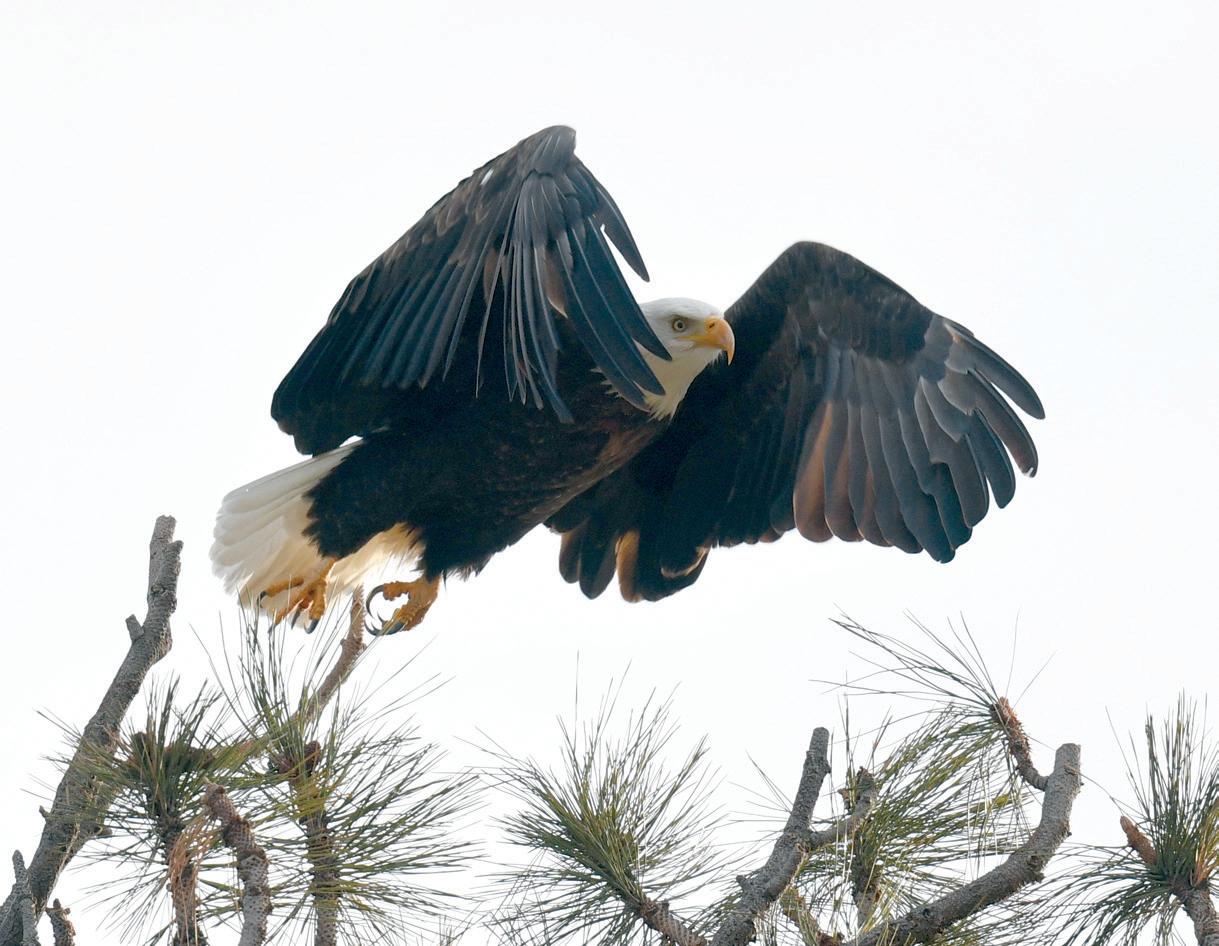
Derksen and Stevens rely on residents and visitors who are very engaged in the environment at the Ranch, reporting problems or concerns, as well as providing feeding stations, blue bird boxes, and keeping lists of bird species they have seen. They also rely on specialists with whom they have built relationships, one being Sevilla, who offers birding tours and classes on the Ranch. She is particularly interested in a pair of Bald Eagles who nest every year on the Ranch.
Another bird enthusiast is Redmond resident Wendy Andrick who is the current board president of East Cascades Birding Alliance (ECBA), formerly Audubon Society. She grew up loving nature and was used to solo bird-watching. The ECBA, with 400-500 members, promotes bird-watching and bird awareness with members involved in bird conservation projects. Everything they do is aimed at protecting native birds and their habitat.
They have any number of activities for members including weekly Wednesday birders trips, Birding by Ear weekly walks in a riverside park, an Osprey Watch in conjunction with Think Wild and Pacific Power and Light, and conservation projects, some with State and Federal agencies. They also sponsor the Dean Hale Woodpecker Festival in early June.
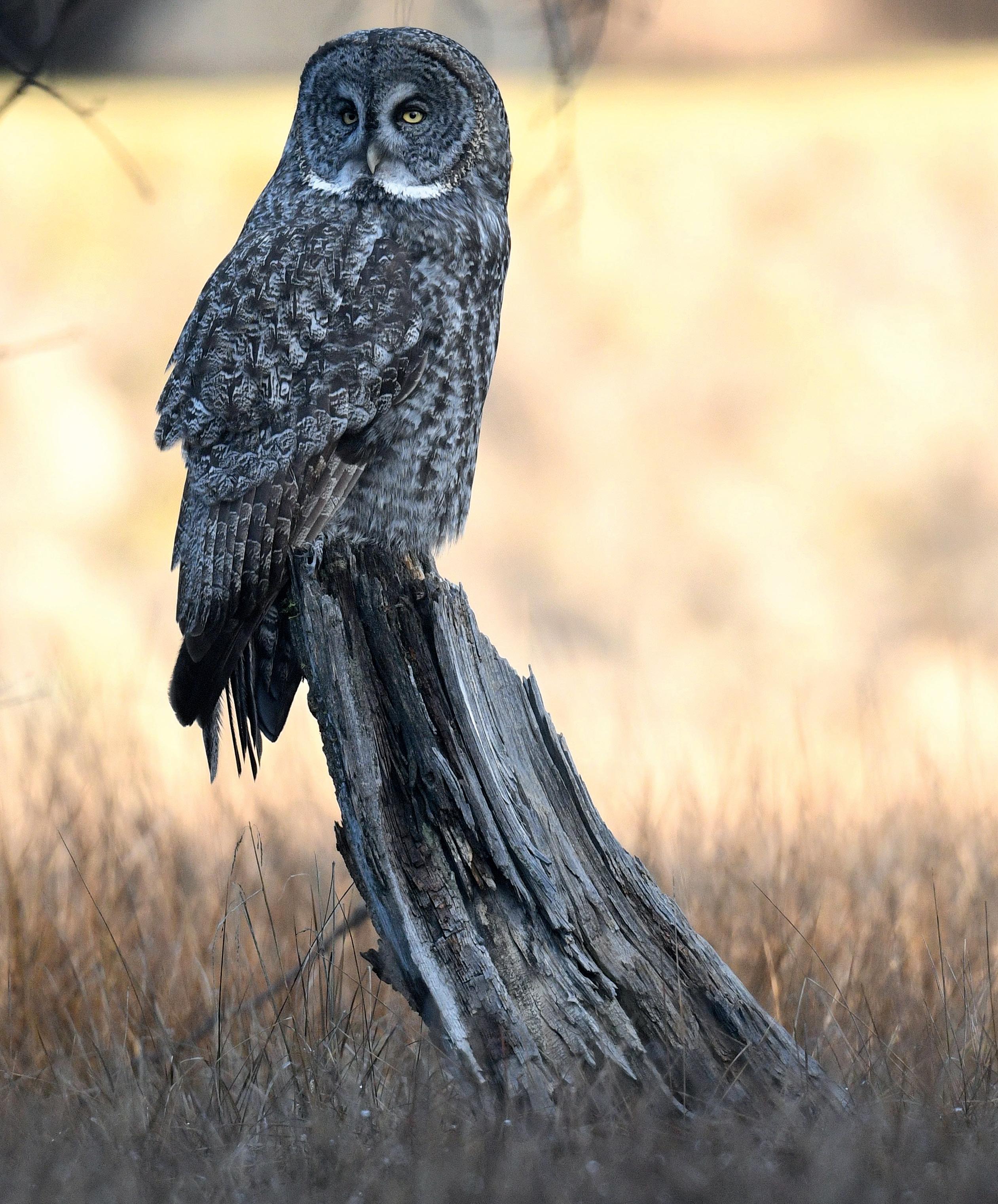
The Golden Eagle cam, which captures live coverage of a nest located at the Deschutes Land Trust’s Aspen Hollow Preserve on a cliff in Whychus Canyon, is funded by ECBA and volunteers and the landowner maintain and operate the camera. It is one of very few live cameras (in the world) capturing the activity of a Golden Eagle nest, which it has done for more than 15 years. Rocky and Petra are the mating pair that raise their family there each year.
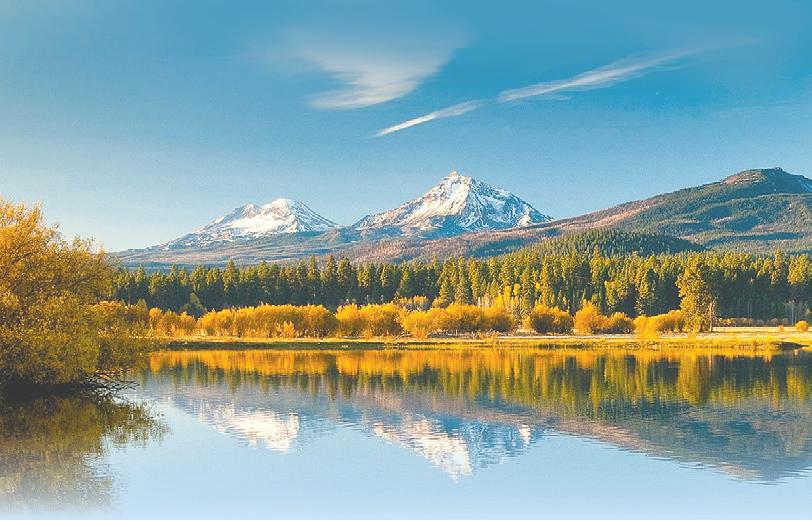



View the live camera at https://www.goldeneaglecam.org/home/live-camera#comments.
Andrick describes ECBA as a fun community that “will scoop you up.” You don’t have to be a birder or an expert. The second Thursday of each month they hold a Birder Night, with food served at 5 p.m. and a talk at 6 p.m.
Even with all these good efforts, bird numbers are concerning. One billion birds a year in the U.S. die from building collisions, due to reflective glass mimicking habitat during the day and artificial lights at night disorienting migrating birds. They also try to fly through transparent glass. Collisions are most frequent during spring and fall migrations, often happening at dawn or dusk. Buildings are anything from a residential home to skyscrapers to bus stop shelters.
According to Wendy, the number one threat facing birds here is loss of habitat. Home gardeners can do their part by planting native plants, providing a source of clean water, and providing areas for shelter. Information is available from the Garden For Birds Project at the Cornell Lab of Ornithology. Baling twine and fishing lines cause problems for osprey who collect it for nest building, which can lead to them or their young getting tangled in it and dying. Any kind of outdoor netting should be removed when not in use. Other culprits are cats and pesticides.
Preventive solutions are numerous including: having an enclosed “catio” for your cat to go outside; turning off non-essential or upward-facing
lights at night (particularly during migration); applying decals, film, or tape to the outside of windows to make them visible; use acid-etched, fritted, or frosted glass for new construction; install screens or hang netting over windows; and move interior plants away from windows to prevent birds from attempting to fly through the glass toward them. Parachute cord curtains, available at Lowe’s, can be hung outside from the top of the window and create a visual barrier for birds.
Birds fill our world with beauty, both visually and with song. They provide critical ecosystem services, including natural pest control (consuming 400-500 million tons of insects annually), seed dispersal, and pollination, which support biodiversity and agricultural health. They are indicators of environmental health issues due to their sensitivity to toxins and pollutants (the proverbial canary in the coal mine). Scavengers like vultures remove carcasses, reducing the spread of disease. Watching birds and listening to their songs can significantly lower stress hormones, reduce blood pressure, and improve mood. Bird-watching is a growing tourist attraction, contributing to local economies and fostering conservation.
The next time you are outside, pause a moment to enjoy our feathered neighbors who are hard at work which will benefit you. When you look out your window, notice any avian activity taking place and be glad. Do what you can to help birds survive and thrive.
BY T. LEE BROWN
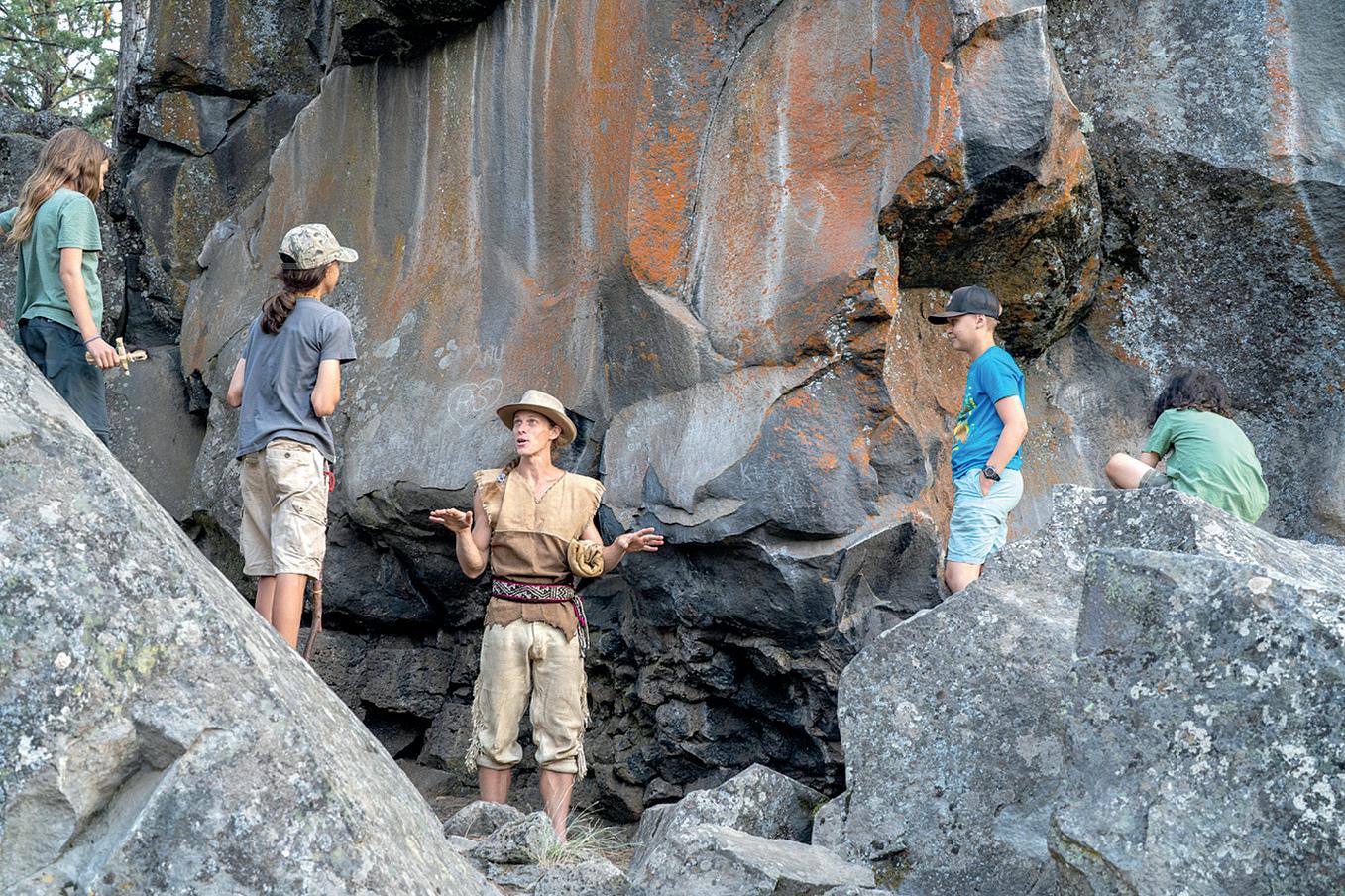
A campfire burns in the snowy forest. Nearby, a group of kids plays an intense game of Wolf & Deer. Other kids slip through the snow tunnel they’ve built. Today, the kids have heard and told stories, built a survival shelter and followed animal tracks. There’s not a phone or screen in sight.
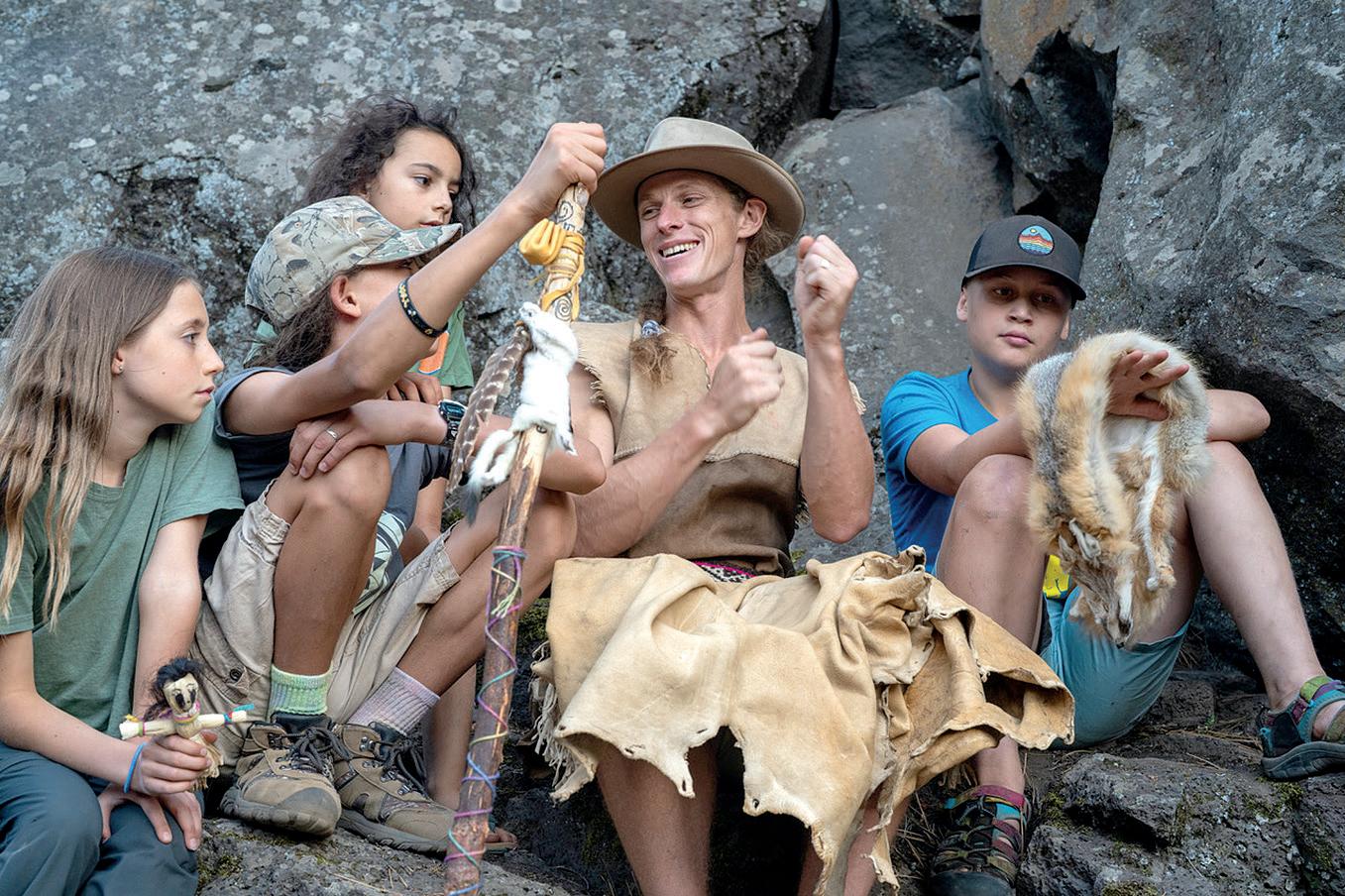
This is Wildheart Nature School, which holds camps and classes in forests, on farms, and along (and sometimes in) Central Oregon rivers. By the fire stands Rainbow Dreamer, his long hair tied back, his bright blue eyes alert. The Wildheart co-founder is a compelling storyteller whose tales inspire kids to engage with the natural world and, in some programs, to engage with visions of far-flung lands where
www.wildheartnatureschool.com
remnants of ancient civilizations meld with current-day spirituality.
Among other things, Dreamer teaches appreciation of nature, understanding of plants and animals, and survival techniques. Students come home explaining to their parents how the common plant yarrow can be used to stanch bleeding or how to find animals near the river. They might come home with a small rodent hide they personally tanned, to the delight of some parents and the consternation of others.
Dreamer provides leadership for the community with a magnetic personality and an originality some might call eccentric. Kids love it.
“Dreamer’s great. I mean, he just understands what kids love and the magic of discovery in nature
and exploration,” said a teen intern who previously attended Wildheart camps for seven years.
Dreamer grew up in Bend and started developing his survival skills shortly after high school. Later on, “once the kids started getting excited about primitive skills, I just dove in head-first,” he explained. “And realized that in my childhood growing up outdoors in Central Oregon, I had learned a lot of skills.”
Talking with Dreamer, one name comes up over and over: Amara. She is his wife and collaborator in matters of nature, spirit, and business — and more recently, parenting.
The two met at Prescott College in Arizona, where outdoor studies and student-created educational paths are encouraged. Amara was
www.wildheartnatureschool.com
heading to South America to study with shamans, and he joined along.
“Working with medicine people in the jungle just kicked off everything for us,” Dreamer said. “We went back to Peru a number of times.”
The couple delved deep into the study of indigenous ways during their time at Prescott.
“We met a lot of high-quality individuals” within the spiritual and indigenous studies community. Dreamer explains, “it was good because that world can be a little bit strange, a lot of grifters and frauds, unfortunately.”
The seeds of Wildheart were planted when Amara took a babysitting job for a conservative Christian family in Bend. She brought the children into closer touch with the natural world; Dreamer came in to lead sessions on subjects such as tracking.
“The mom was super excited,” he said. “She drew up a proposal for Amara about doing a class series in nature awareness for her kids and two of their friends.”
From there the business evolved.
Families began to hear about this opportunity for their kids and joined in. Programming for little ones was added not just as a business strategy, but because an experienced
Waldorf teacher, laid off during the COVID-19 pandemic, approached Amara and Dreamer with a proposal.
Wildheart’s offerings have expanded to include a wide range of ages, subjects, and formats, from week-long summer day camps to homeschool programs. The Wilderness Preparedness and Emergency Survival camp, Girls’ Empowerment course, and a Natural Dyes and Weaving workshop are among them. People of various backgrounds and beliefs participate; programs are nondenominational and nonreligious.
At the urging of parents who wanted their kids to experience more of Dreamer’s “woo-woo side,” he began leading a sacred arts program. Called Witches & Wizards, it offers classes once a month throughout the school year, with sessions including Griffin’s Lore, Magical Beasts, and the Seer’s Gaze.
This programming is kept separate from other camps and classes. But now it attracts some Christian and Jewish students, too.
“It’s come full circle,” he said — which is appropriate for a school whose sessions typically begin with students sitting in a circle, sharing and singing.
Where did Dreamer’s spirituality and woo vibes come from? He was raised Christian, “but I was always super into ghost books and supernatural stuff,” he said. In high school he started reading books about shamanism and “a bunch of Castaneda.”
Then he met one of his most important teachers, Sweet Medicine, and went to his first sweat lodge.
“It really expanded my awareness of the unseen realms; instead of just reading about it in a book, I was experiencing some of those worlds for real,” he enthused.
Dreamer’s explorations, learnings, and travel experiences have become a boon for Central Oregon kids and their families. As he said in a recent video, the mindfulness and practical wilderness skills taught by him and the other Wildheart teachers foster “long-term growth as well as compassion and connection to each other and the planet which we all share.”
It seems to be working.
The teen intern explained, “My favorite thing about Wildheart is the real sense of magic and connection to nature... it’s a really special place I can always come back to, no matter what is happening in my life. I can always be happy at Wildheart.”

By Dani Nichols | Photos Provided
One time my son asked me if chicken nuggets grow on trees. Even though we live on a small ranch, it seemed that it was time to teach my own kids about where their food comes from (and maybe eat fewer chicken nuggets).
So we headed to the annual Central Oregon Ag Show at the Deschutes County Fairgrounds. Of course my young boys wanted to climb in the tractors and see the machinery, but after the vrummmms and assorted motor-mouth noises are over, after my husband doggedly read every spec sheet and dreamed of every tractor implement he might want for our small ranch, the kids couldn’t wait to spend the rest of their time in the Kids Zone.
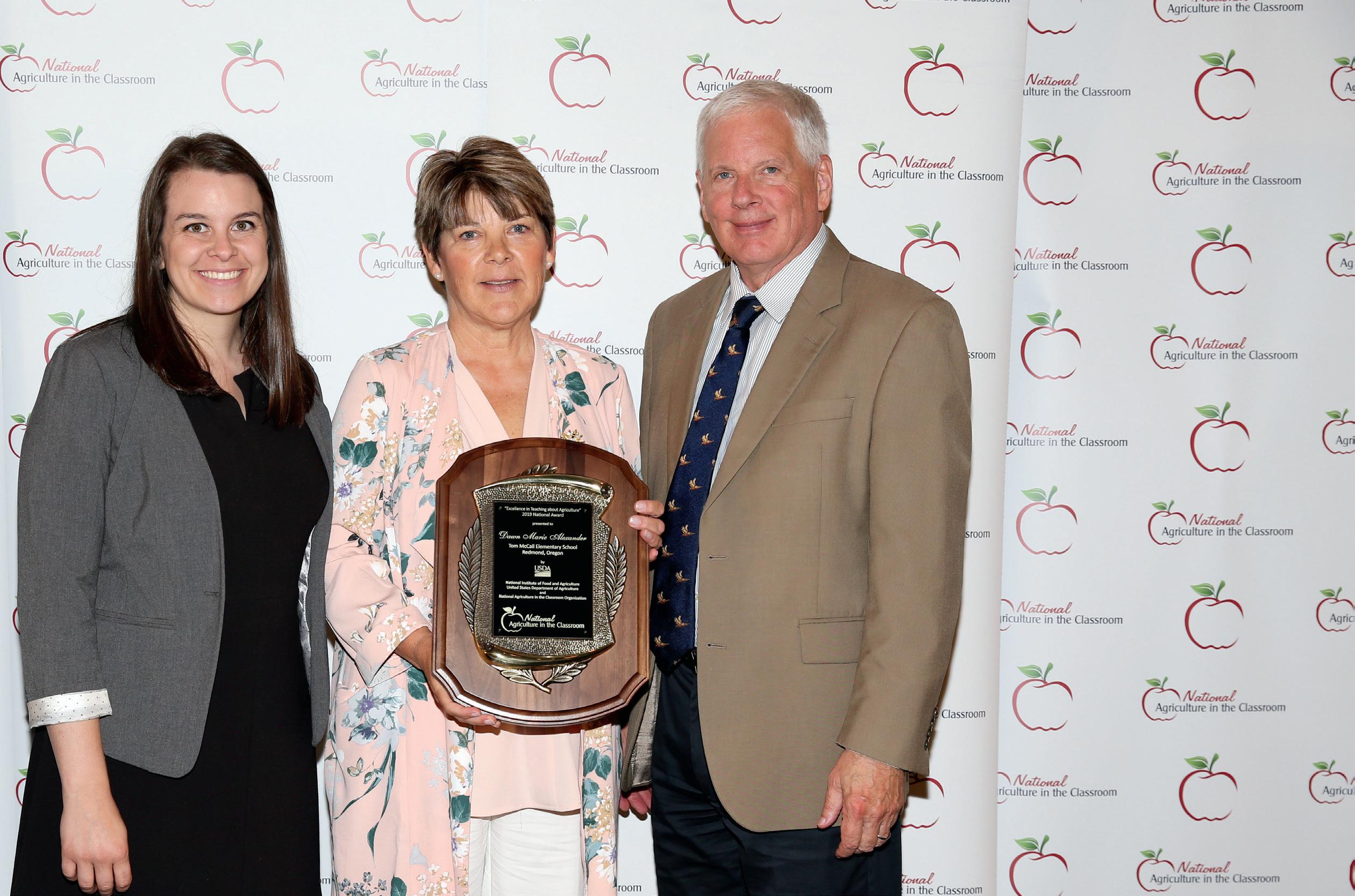
Most of the reason for that is the indomitable Dawn Alexander, a semi-retired elementary school and agriculture teacher from Redmond, who my kids instantly recognized as someone who not only has something
to teach them, but actually, genuinely, likes them. She has a ready smile, a built-in teacher voice that is both clear and kind, and eyes that sparkle when my kids asked about gardening, cattle, sheep, farming, or any of the countless other displays she has around the Kids Zone, all teaching about a different agricultural product from Oregon.
“Everything pretty much starts on a farm or a ranch,” she told me with a chuckle. “It’s so important for people to know just how important of an industry agriculture really is.”
It’s common to hear people around here lament that no one knows where their food comes from anymore, (you already heard my chicken nugget confession). People say that our culture is too removed from the farming and ranching practices of our past and the rural lifestyles of the present. Such cultural illiteracy leads to some dark places, such as the growing support for IP28, the proposed bill in Oregon that
would restrict hunting, fishing, farming, ranching, and even pet ownership. These trends are worrying to anyone who cares about our long history and way of life, certainly; although, as Dawn pointed out to me, most people are tricked into signing such petitions with misleading language such as, “do you care about animals?”
“As if farmers and ranchers don’t care about their animals’ health!” she said, shaking her head. “Almost no one actually knows what they're really signing, that such laws would outlaw hunting, fishing, and farmers markets. Farmers and ranchers care about their animals. We are trying to share that with people out there, that their local food chain is under attack and it really matters.”
But if young people aren’t educated about where their food comes from, it’s certainly not Dawn’s fault. To meet her is to learn something about agriculture, and her life is built around both raising
awareness for the current state of Oregon agriculture and celebrating its storied past.
“My grandmother kept the sheep and my grandfather had the cows,” Dawn shared with me at her worn kitchen table, the decorative signs on her walls detailing cuts of beef and local beef brands. “My dad loved Herefords and of course, so do I.”
Dawn’s knowledge is impressive, her determination is notable, but her laughter is what shines through every interaction with kids and grownups alike. For someone who cares so much about what many people think of as a dead or dying industry, Dawn is a welcome dose of lightness and comfort. This is probably why my kids, as well as so many others, are so drawn to her. She told me about the school lessons she teaches about bees and pollination, about PlayDoh and wheat farming, about cattle and sheep and pigs, and, of course, about the kids. She’s inspired by them: the young people who learn public speaking through FFA or learn independence and business skills from 4-H, and who come back to her, years after taking her classes, and have decided to raise cattle or start a small farm of their own.
Dawn grew up in an agricultural household, and her extended family has deep roots in Central Oregon. “You probably know about the sheep and cattle wars of the 1880s, right?” she says to me, and it’s clear that such things are recent memory to those with land and dreams here. “My family left in those days, went elsewhere to raise cattle, and then they came back.” She smiles, and I see that infectious twinkle in her eyes, the one that makes kids of all ages ready and willing to listen. “They just couldn’t stay away! We love Oregon.”
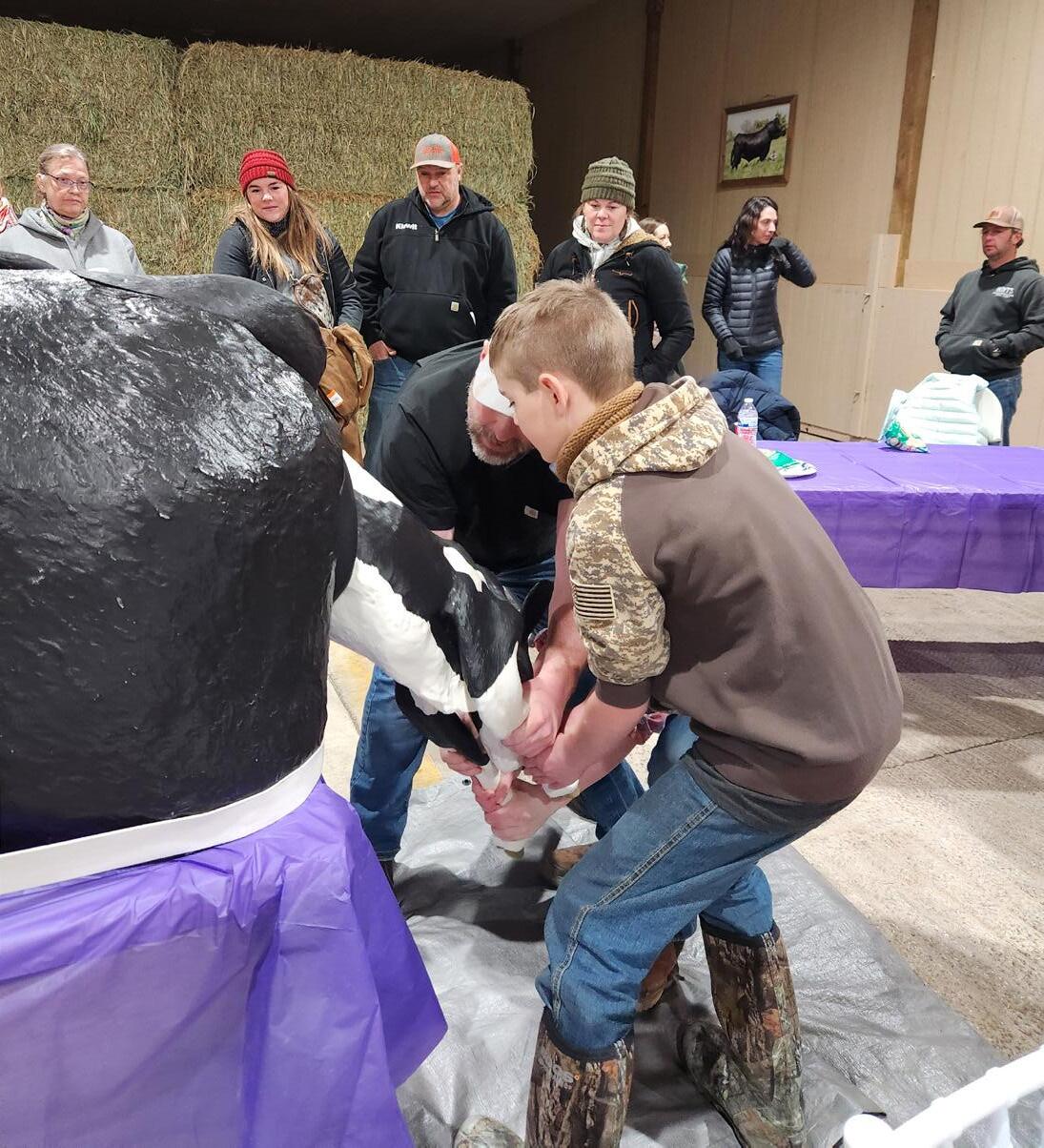
The past is also present to Dawn because she is deeply involved in the Bowman Museum in Prineville, a Central Oregon institution dedicated to preserving the history of the pioneers, ranchers, farmers, and innovators who’ve called this land home for generations. Although she served for two years as president of the Crook County Historical Society board (which runs the Bowman Museum), now she is treasurer, and the museum is doing a lot of new things to advance both knowledge of our past and excitement about the future.
Recently, the museum hosted “A Kitchen Table Conversation: Women in the Cattle Industry” event, to which they invited current ranching women from Central Oregon to share their experiences. For an institution which prides itself on extensive historical records and exhibitions, this is an incredible idea, a reminder that our past, present, and future are often not as far apart as we imagine.
Dawn explained, “Part of it is the generational model, continuing our agricultural education and traditions for our kids and grandkids. We’ve learned so much about sustainable, regenerative agriculture, our farms are so much healthier than they used to be.” She continued, “But teachers are overwhelmed, and sometimes don’t even know what an Ag lesson is, which is why these nonprofits such as the Bowman Museum and Oregon Women for Ag are so important, because we can come alongside ... it’s about beekeeping, flowers, food — everything comes from a farm or ranch. We can pass on this knowledge to our kids and share our stories.”
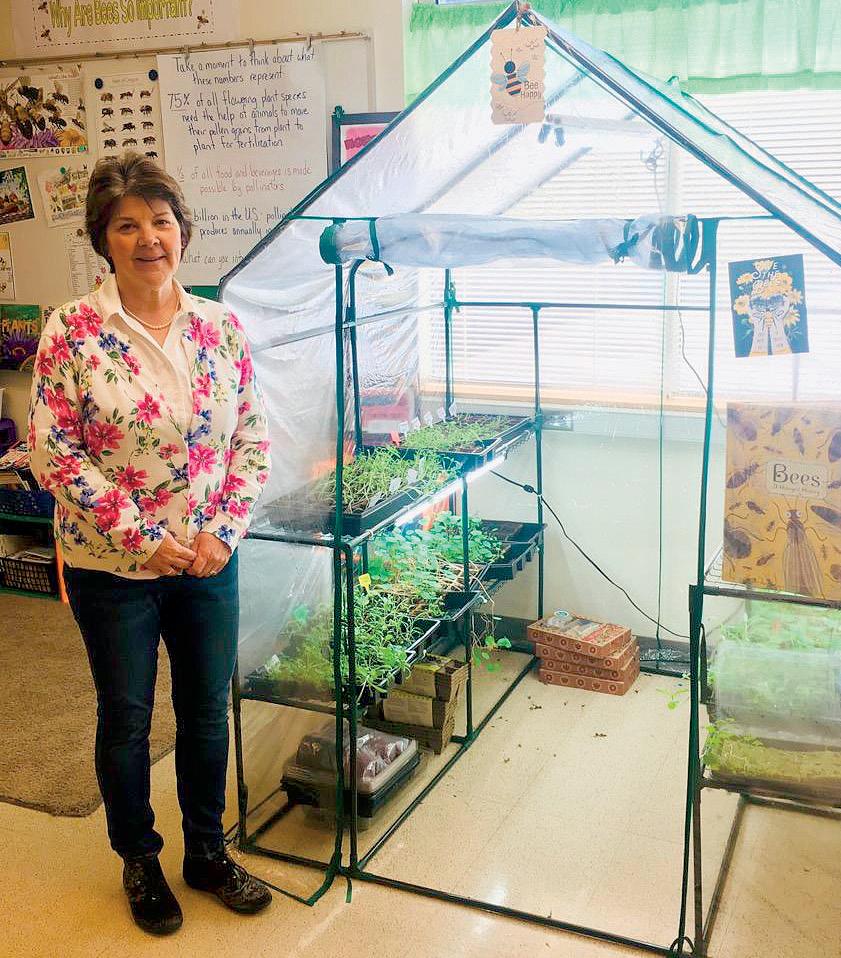
Dawn Alexander in the classroom with a greenhouse
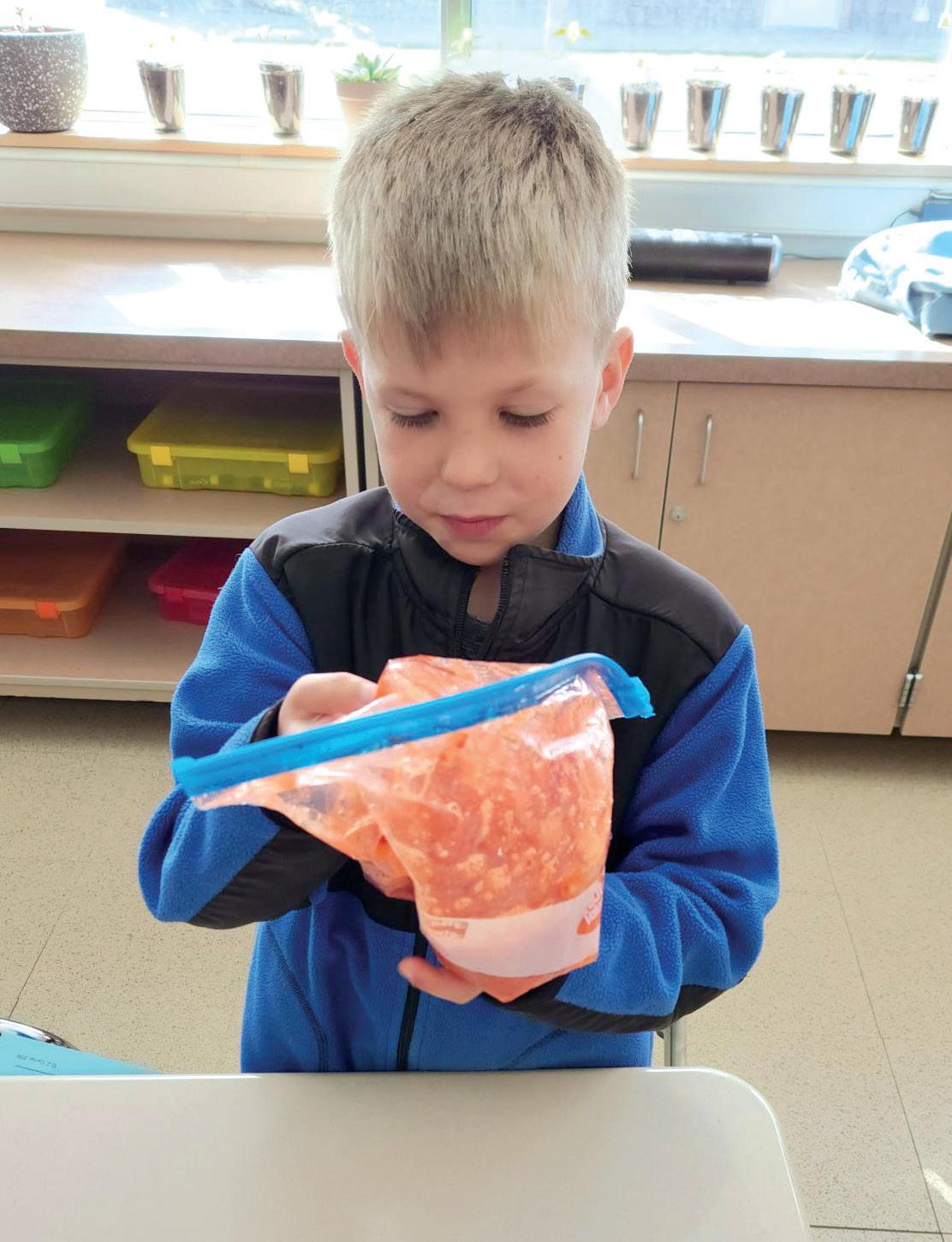
Oregon produces 225 different commodities and Dawn sees it as her duty to educate everyone — no matter what their age or relation to the land — about the vast role that agriculture plays in our state’s economy, from local wine, beer, food, and products like soap and lotion. “I was meant to be a teacher,” she says with a laugh, as though anyone who meets her could think anything else. “Protecting our land and our local food begins with our young people. They are the future of agriculture in Oregon.”
My kids know this is true, thanks to Dawn’s hard work. After the Ag Show last year, my middle son said “Mom, I want to grow a bell pepper,”
which we did, in a pot in the backyard, and he proudly ate the whole thing. And, that, my friends, is why it’s worth it to teach our kids about where their food comes from — turns out there’s not a chicken nugget tree, but there are veggie starts, chickens running around, and beef grazing all around us, and it tastes even better when you know where and how it was grown.
Do you want to support agricultural education and awareness in Oregon?
Check out these nonprofit organizations, all of which Dawn is personally involved with, to find out how you can help support the next generation of farmers and ranchers: Central Oregon Chapter: Oregon Women for Agriculture www.owaonline.org
Oregon Cattlewomen and Tri-County Cattlewomen www.oregoncattlewomen.org
Deschutes County Farm Bureau www.oregonfb.org/ county-farm-bureaus
Crook County Historical Society www.crookcountyhistorycenter.org
Sons and Daughters of Oregon Pioneers www.oregonsdop.org
Oregon Agriculture in the Classroom www.oregonaitc.org
The guide chock full of Sisters Country information. The best hikes, where to eat, local hot spots, calendar of events, and much more!
Pick up a complimentary copy of Sisters Oregon Guide on stands throughout Sisters and Central Oregon or scan the QR code below to read online or download to your device.
SistersOregonGuide.com


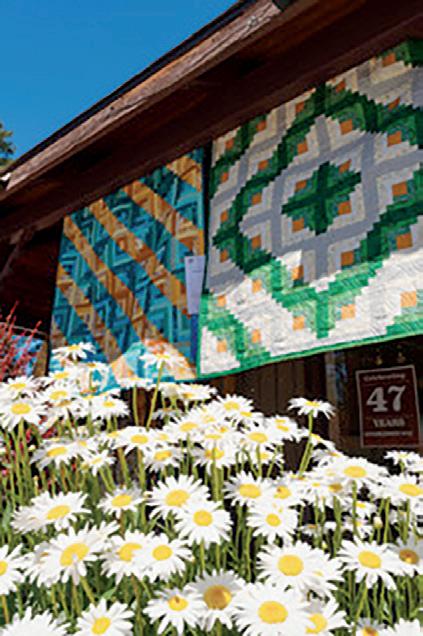
Always held the second Saturday in July . Renowned as the largest outdoor quilt show in the world!
Over 1,000 quilts on display from quilters of all ages and skill levels. Amidst a festival atmosphere, 10,000+ visitors from all over the U.S. and multiple countries come to celebrate the creativity, skill, and heritage of quilting arts.
SAT., JULY 11, 2026
9 a.m. to 4 p.m. Open to the public at no charge!


BY KATY YODER
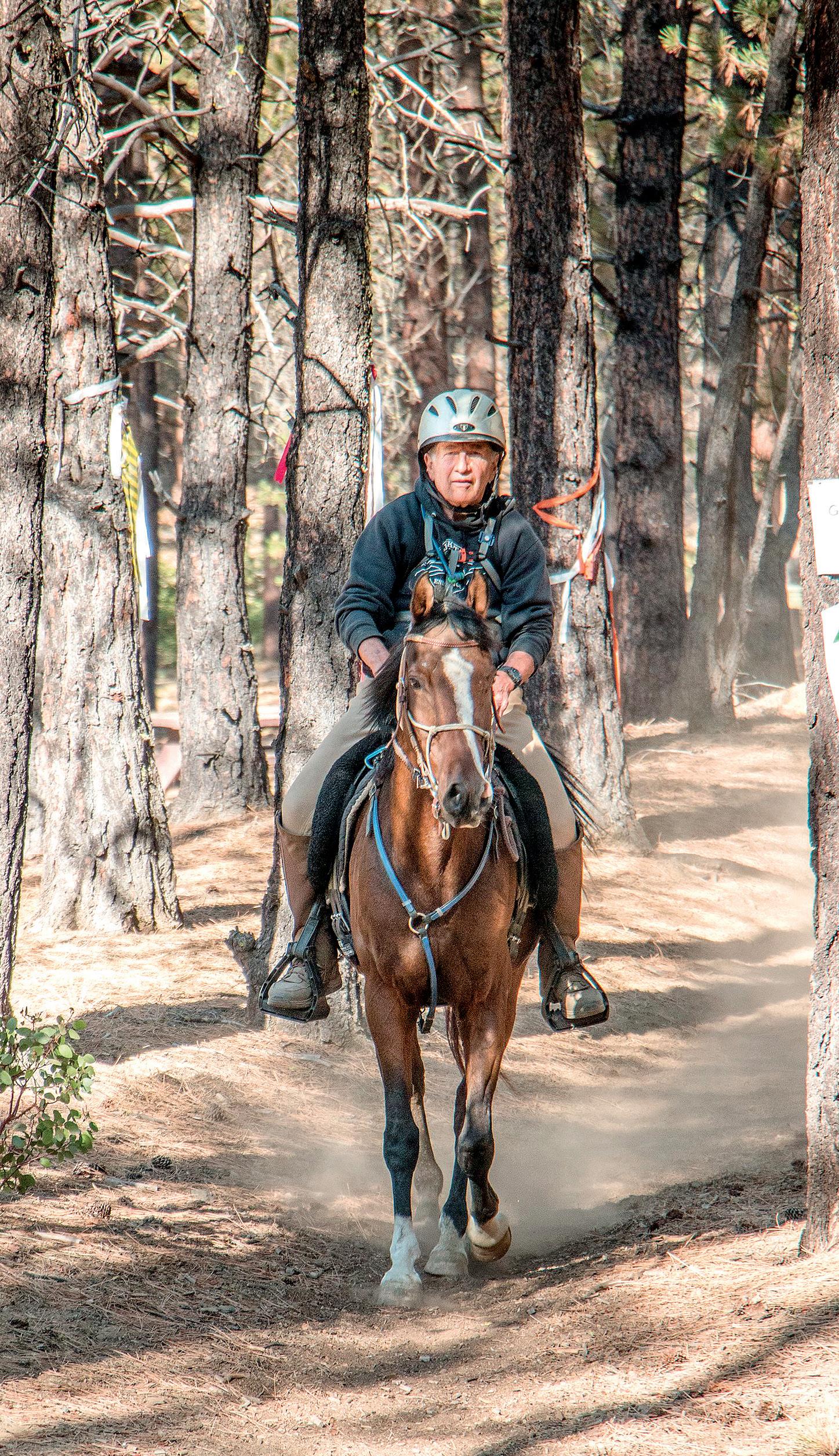
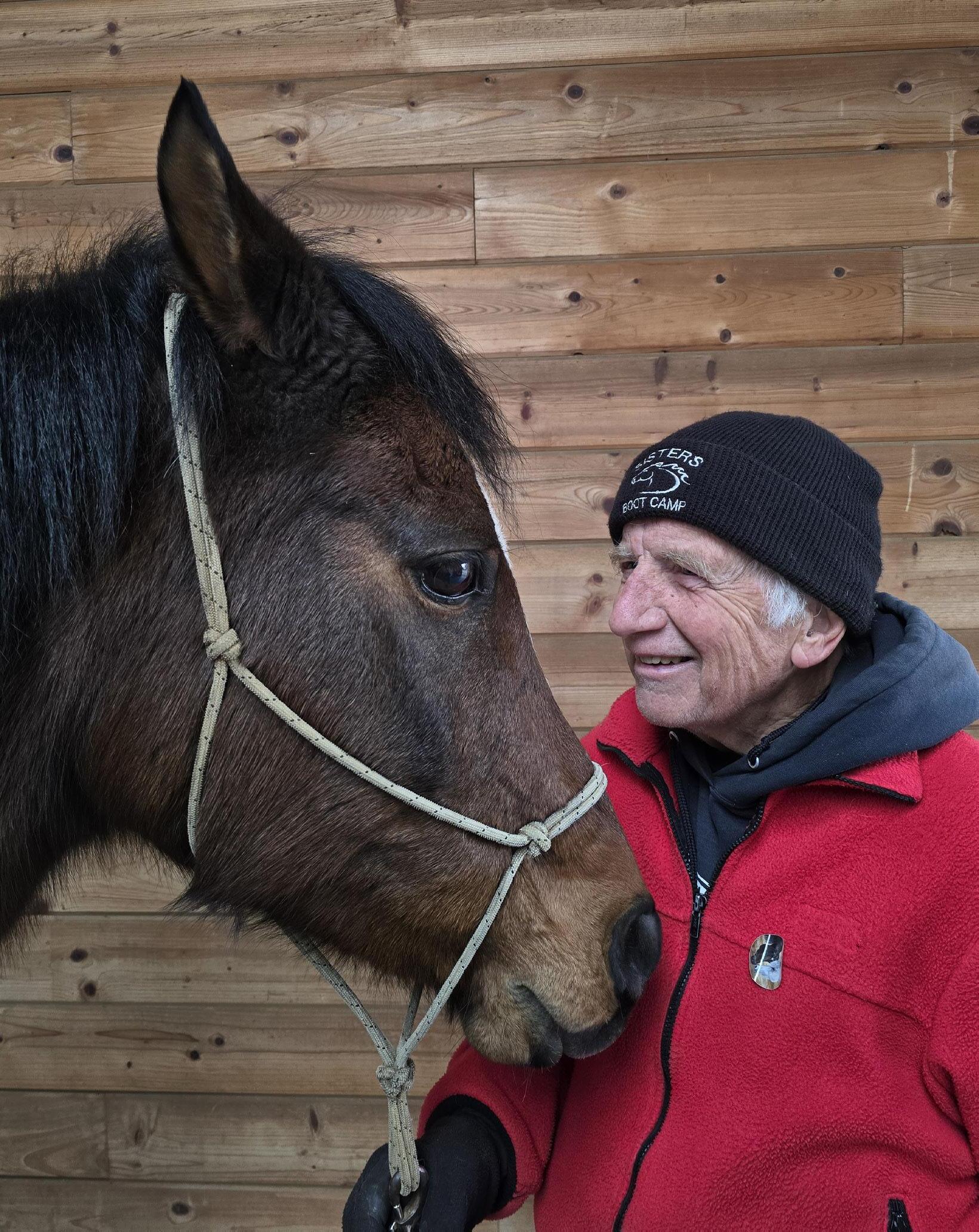
Jeff Tryens is staring down 80 years old from the back of a spirited rescue horse named Enzo.
With Enzo’s mysterious past, there was one thing Tryens didn’t have to figure out: The bay gelding would rather stay in the barn than venture beyond his stall door. The horse and his human are as different as any two partners could be. Tryens is a lean, go-getter who began law school at 49, worked and traveled around the globe, and loves challenges. Enzo is in his mid-teens, wary of leaving the barn, and desperately in need of a gentle, knowledgeable rider who knows how to handle a guarded, sometimes hotheaded horse.
“When I began looking for my next endurance horse, I wanted to find a rescue that was either a Mustang or a horse destined for the slaughterhouse. When I went to see Enzo, he was at a barn in Bellingham where he hadn’t worked out as a child’s horse. His owner described him as jiggy. On our first ride, I rode him up a long steep hill for about forty minutes and saw his athletic potential.”
Tryens understood what the woman meant by jiggy when they headed home.
“I literally had to wrestle him down the hill. It wasn’t fun. She complimented me on how well I handled him, which I now realize was one of the best sales lines ever,” he said laughing. “I decided to bring him home for a trial period.”
Since Tryens bought Enzo, he’s worked hard to help Enzo overcome being “barn sour,” which means he tries to turn around and head back to the barn. Enzo’s jig is an irregular gait between a walk and a trot that’s bumpy, irritating for the rider and can be dangerous if the horse chooses to go sideways off a narrow trail.
Enzo looks like a purebred Arabian complete with a gently dished head, large wide-set eyes, and a tail often carried high and arched like a plume. It’s probably why he was rescued from
a kill pen where he was destined for slaughter in Canada. A woman took pity on the flashy bay and brought him home. She soon realized he was more horse than she could handle. That’s how Enzo ended up being shipped from Oklahoma to Washington.
Enzo has proven to be more of a challenge than Tryens wanted. He was hard to catch and quick on his feet, at first even putting a halter on him was a frustrating task.
“During the trial period, he almost ran over me trying to get out of the round pen on day three,” said Tryens. “When I called and explained he was more than I was ready for, she gave me an answer that made it even harder to let him go.”
When the failed two-week trial period was up and Tryens wanted to return him, Enzo’s owner said if Tryens didn’t keep him, he would probably end up on a slaughter truck. Tryens didn’t have the heart to do that to a horse who’d obviously had
a tough, probably abuse-filled life. So, he agreed to keep Enzo and try to transform him into a horse suitable for endurance riding.
Tryens has ridden since childhood. As a boy, his grandfather nicknamed him "The Chief" because he was so bossy throughout his childhood. His grandfather was a horse trader who taught Tryens from eight years old to ride all kinds of horses. As a boy, he exhibited horses in shows and trained them for resale. Riding a variety of horses is a good way to gain invaluable skills and the ability to adapt to different horses. Enzo would be his final project and the most rewarding.
With a professional background in policy consultation in Washington D.C. and later the executive director of the Oregon Progress Board, Tryens is used to running operations for nonprofits and government work. For a man used to being in charge, the irony of riding a horse who thinks he should be making the decision isn’t lost on
Tryens.
“Here’s the thing that kills me about Enzo,” he said, chuckling. “I’ve always been the director and the one working with people as their boss. The fact that Enzo doesn’t accept me as his boss just throws me. I remained the chief my whole childhood and into adulthood. Working with Enzo is a beautiful thing and a learning opportunity for me. He’s in my life for a reason.”
Tryens asked himself what he had to do to gain Enzo’s trust, so that they could go down a trail and Enzo would believe his human partner wasn’t going to let anything bad happen to him. Through arena work and allowing Enzo liberty, a healthy bond has slowly formed between them.
“Right now, this 1,100-pound horse still thinks he should be the boss. I’m pleased that since we came together in 2023, he’s finally willing to be in a partnership with me. But he’s still not sure I should be the managing partner,” he laughed stroking Enzo’s neck.
Tryens shakes his head in dismay when he recalls too many hours spent dealing with Enzo’s barn sour antics. For months Enzo fought Tryens as soon as they headed back to the barn.
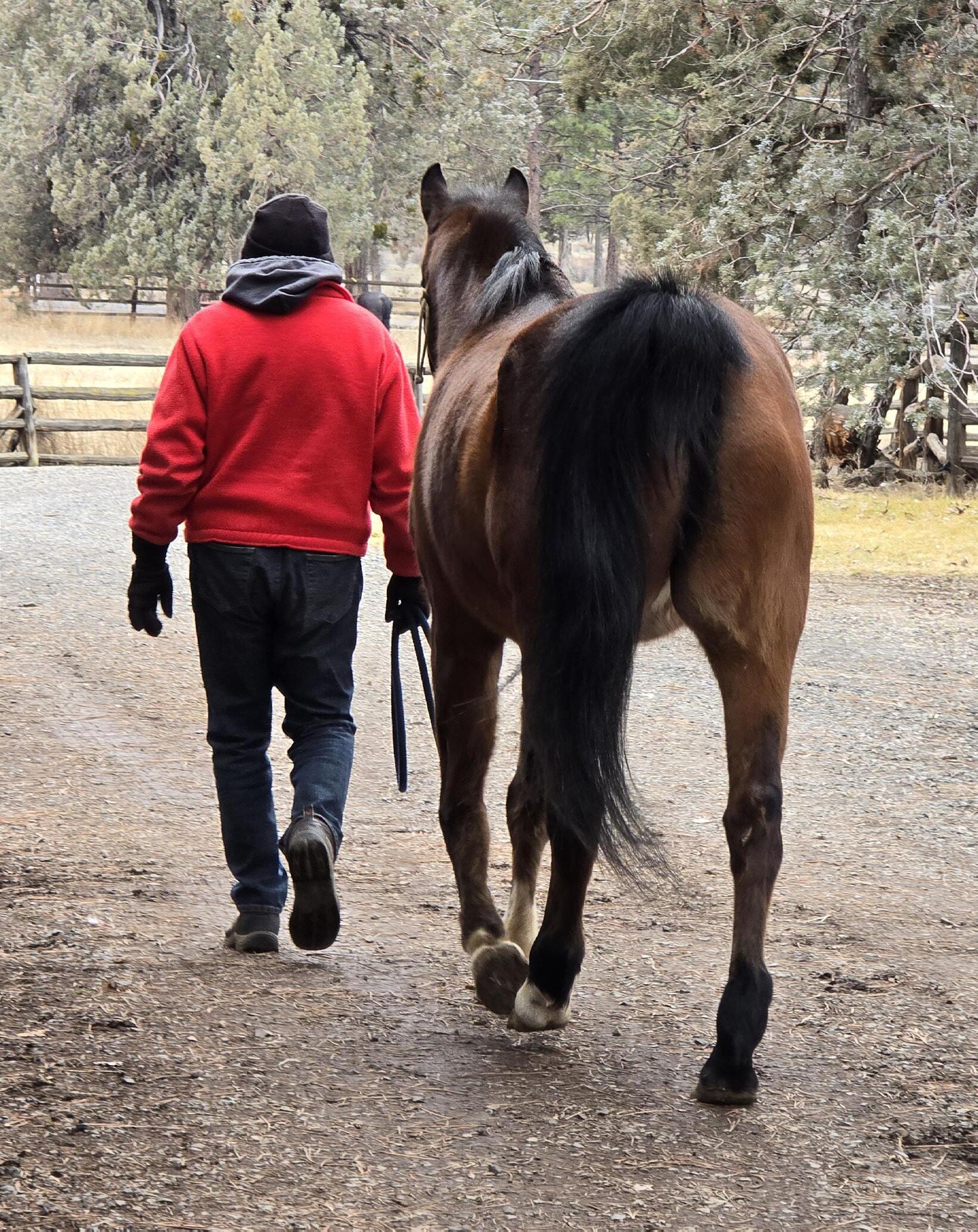
“He would bounce along and throw his head up trying to get back to the barn as fast as he could. My riding friends lived through all of this, and it wasn’t easy on them either. When I finally could lay the reins down on his neck and he walked home quietly… that was a really good day. He still jigs occasionally, but the fighting and bouncing are finally over. That’s been our biggest accomplishment so far,” said Tryens.
Part of Tryens experiments to figure out how to overcome Enzo’s anxiety and fear were to get rid of the bit and ride him with a bitless bridle. They’ve done two official endurance rides so far.
“I found the more he feels free, the more he’s willing to listen. At some point I had to trust him, like I wanted him to trust me,” said Tryens. “Riding in endurance races is an individual sport where you do your own thing. Enzo had to learn how to manage the energy at the beginning of the race when so many competitors were vying for position.”
Seven years ago, when Tryens did his first endurance ride, he found it

hard to get into the sport. To make it easier for riders to learn about endurance, Tryens got some friends together and started the Sisters Endurance Boot Camp at the Sisters Rodeo Grounds. There are lectures and demonstrations, and on the second day, students are taken on a mock endurance ride. That’s Tryens’ contribution to the sport all while he and Enzo are working on being the best team they can be.
“We are training and getting ourselves in good condition which is an important part of endurance riding. Races are anywhere between 25 and 100 miles long. It’s about what your time is when you finish the race and what kind of condition your horse is in when the veterinarians check the horses during and after the ride. I like to be in the top ten and Enzo is a topten horse. At this age, I’m in it more as a fun ride. I’ll always be a back-intime-for-lunch guy… that’s what I like to do.”
Always thinking about what’s best for Enzo, Tryens knows he probably won’t be alive when Enzo turns 30. He’s already thinking about finding him a proper home where he’s wellcared for and can do his trail riding. Hopefully, this dynamic team will simply ride off into the sunset together, no contingency plans needed and no need for either to be completely in control.

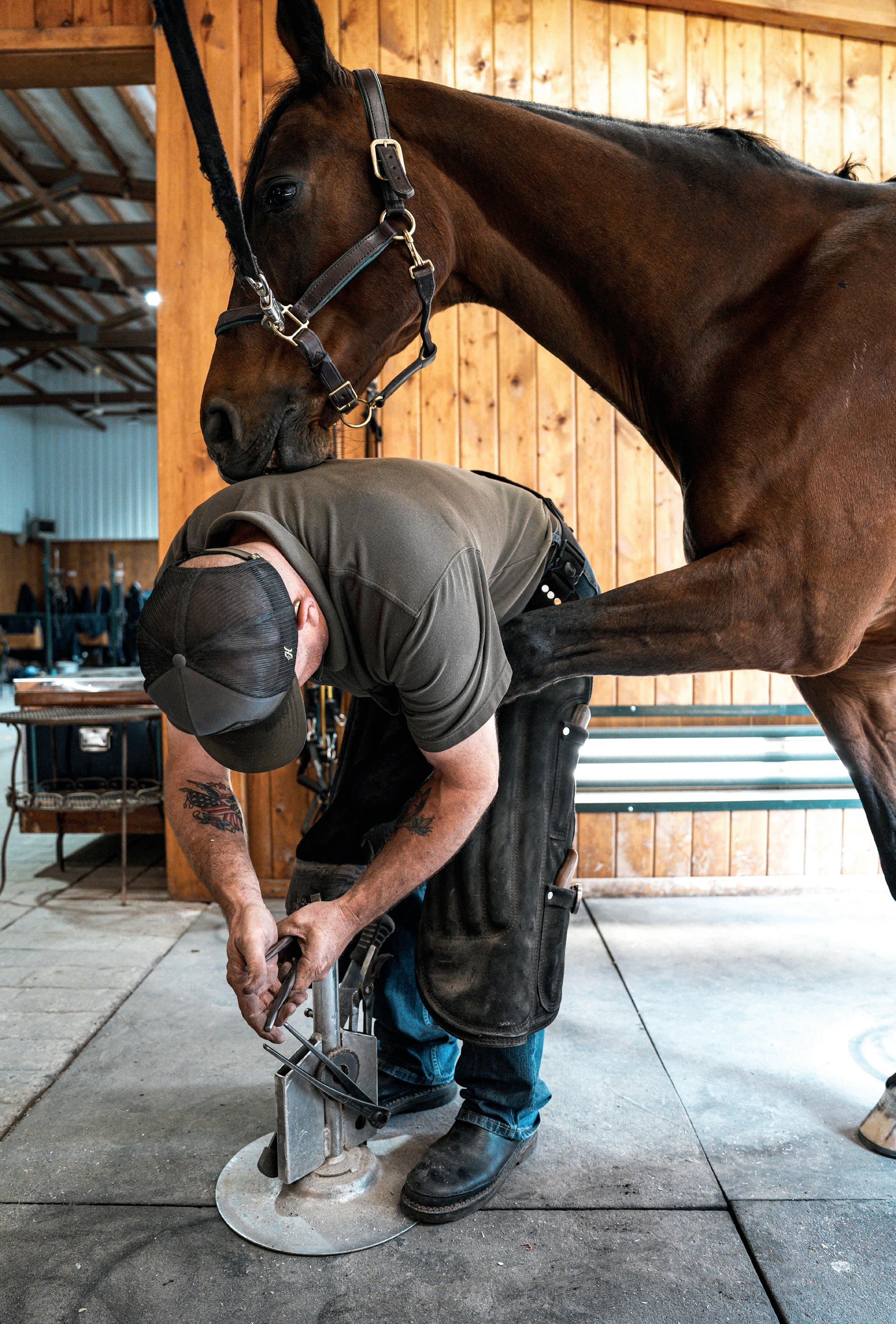
An ancient craft meets modern equine science as today’s farriers balance tradition, training, and a growing demand for skilled hoof care.
Calculating the number of equines in Deschutes, Crook, and Jefferson counties is not scientific nor empirical. There was a concerted census effort in 2017 and 2022 — County Profiles done by the U.S. Department of Agriculture.
BY BILL BARTLETT
PHOTOS BY CODY RHEAULT
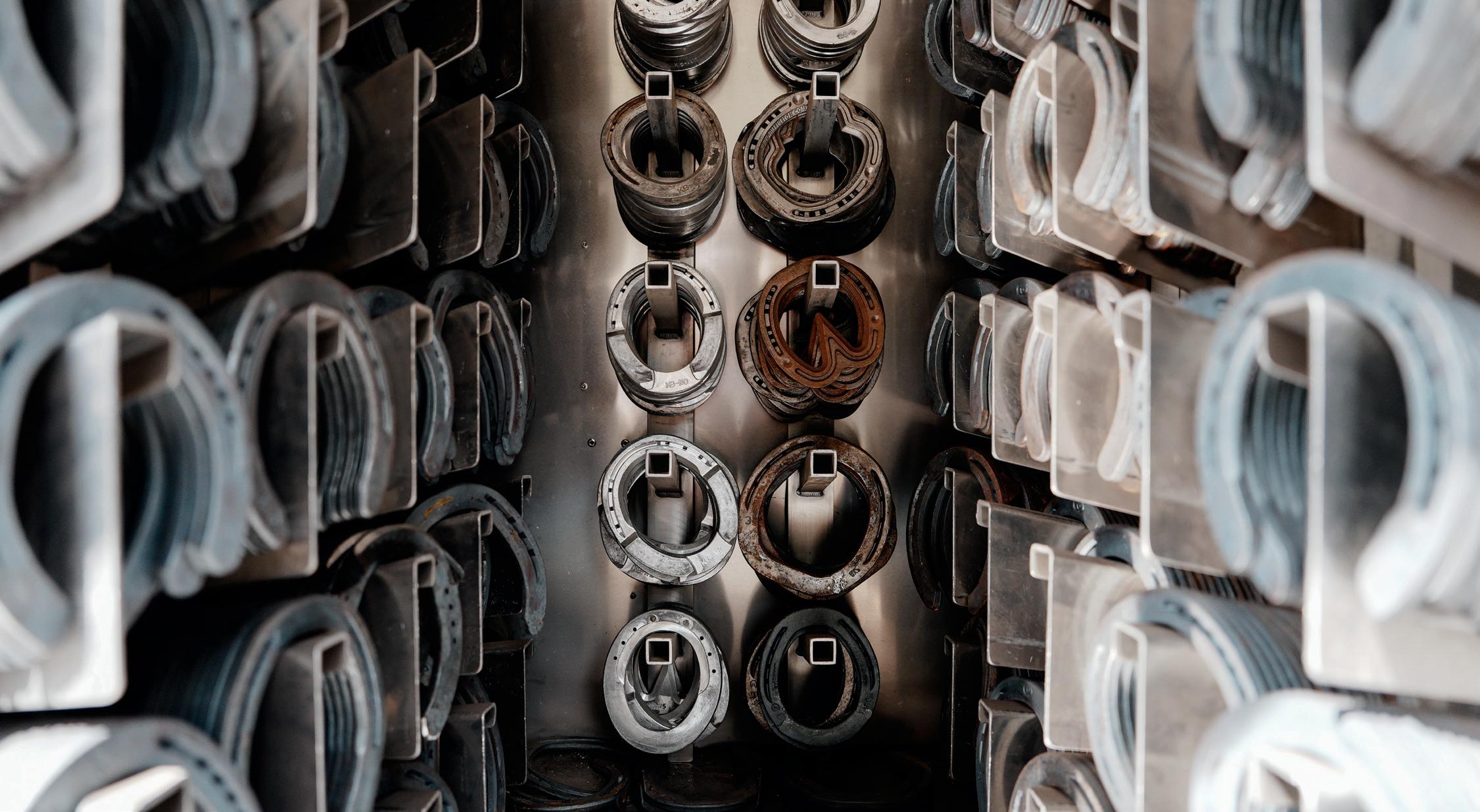
From these reports one can extrapolate that around 4,100 horses and ponies make Deschutes County home. Roughly 1,900 can be found in Crook County, but the number in Jefferson is more elusive — but at least 1,000 and perhaps 2,500.
Those seven or eight thousand animals are cared for by some 20 farriers (horseshoers) in Central Oregon. The life of a farrier is at once demanding and rewarding — not financially, they are quick to point out, but in personal satisfaction.
“Believe me, it’s not all sunshine, rainbows, and bouquets,” Charles
Halper told Spirit of Central Oregon Halper is an AFA-certified farrier who graduated from the Oregon Farrier School at the top of his class. He actively competes in forging competitions to sharpen his skills and seeks to become a certified Journeyman.
“It’s hard on the body and I have to work hard to keep in good shape,” he added, recounting being kicked by a horse just the week before we talked. “There’s nothing more gratifying though than showing up to a lame horse and then watch it gallop off when I’m finished.”
Halper likes working outdoors, likes working with his hands, and he likes being his own boss. But most of all, he loves horses, and that’s the main driver of his work.
“I do it for the horses,” he said. “It’s all about enhancing and prolonging soundness, conformation, and quality of life for the horse.”
“The practice of farriery and blacksmithing is one of the oldest professions known to mankind,” says Randyn Gregg who studied farrier science at Montana State University. “Despite far earlier origins, the art of farriery is often attributed to the Romans who scaled up the profession.
“It was the Romans who utilized farriers to create a horseshoe called the ‘hipposandal’ to shoe up to 5,000 horses at a time including from calvary to pack animals during their conquests of Europe.”
Cowboys are the ultimate Western icon, yet farriers bent over a hoof are every bit as important to the Western spirit. Today the vocation in Central

Pick up a FREE print copy of The Nugget at locations throughout Sisters, and at select locations in Black Butte Ranch, Camp Sherman, Tumalo, and Redmond.
Have the paper delivered to your mailbox. Subscriptions are $55/year inside 97759, 97730, 97703, 97759, $70/ year all other zip codes. Subscribe at www.nugget news.com/subscribe
Read the digital version for FREE. Just like the print edition but a PDF on your eReader or computer. Email jess@nuggetnews.com to be added to the list.
Read at NuggetNews.com — most stories from the paper are free to read anytime.
Read ALL the stories online at NuggetNews.com with an online subscription. Supports community journalism and gives you access to extra content including "Nuggets from a Small Town," behind the scenes, and more. $50/ year; visit NuggetNews.com/ subscribe.
Substack: "Nuggets from a Small Town" Supports community journalism with twice monthly articles from Editor in Chief Jim Cornelius that do not appear in print.
Oregon remains a specialized, but relatively small and evolving profession, integral to the broader equine industry, yet facing notable structural challenges — and opportunities.
Farriers play a crucial role in maintaining a horse’s overall health and well-being. The old saying “no foot, no horse” reflects a fundamental truth: The condition of a horse’s hooves directly affects its comfort, soundness, and ability to work or perform. Because a horse’s hoof continually grows, much like a human fingernail, it requires regular trimming and, in most cases, properly fitted horseshoes to maintain correct balance and structure.
A skilled farrier ensures that the hoof is trimmed to support the horse’s natural alignment. Poor hoof balance can lead to strain on tendons, joints, and ligaments, potentially causing lameness or long-term orthopedic problems. Farriers also play an important role in detecting early signs of trouble such as hoof cracks, abscesses, bruising, laminitis, and other conditions that can seriously affect a horse’s mobility.
Moreover, many horses require specialized or corrective shoeing to address conformational issues, injuries, or the demands of athletic work. In these cases, farriers often collaborate closely with veterinarians to design therapeutic shoeing solutions.
Trevor Hall, a Tumalo farrier who has been shoeing some 30 years,
talked with Spirit about the satisfaction he finds in the work.
“The most rewarding aspect surely has to be helping a lame horse perform comfortably again. It makes me happy to see riders get full potential from their horses — maybe another year, maybe five, sometimes 10 years. I enjoy seeing their happiness, accomplishments, and accolades in their chosen disciplines.
“It’s also a significant ‘reward’ to me to be trusted and respected by the local veterinarians, horse owners, and my fellow peers in the trade. I also enjoy helping young, new farriers get started and try to give back to the industry any way I can, paying homage to the ‘Farrier Gods’,” he added.
Farriery in the U.S. is largely unregulated in terms of licensure, meaning there are few state-level mandatory licensing requirements. Individuals may enter the trade through a mix of apprenticeships, short-term horseshoeing school programs, or self-directed experience. Many professional groups like the Oregon Farrier’s Association offer accreditation and continuing education to help elevate technical standards and professional credibility.
The interconnection between farriers and veterinarians is well established. Cornell University in New York is one of the world’s top-ranked vet schools. Kurk Fisk of Bend is a Certified Journeyman Farrier and Cornell graduate.
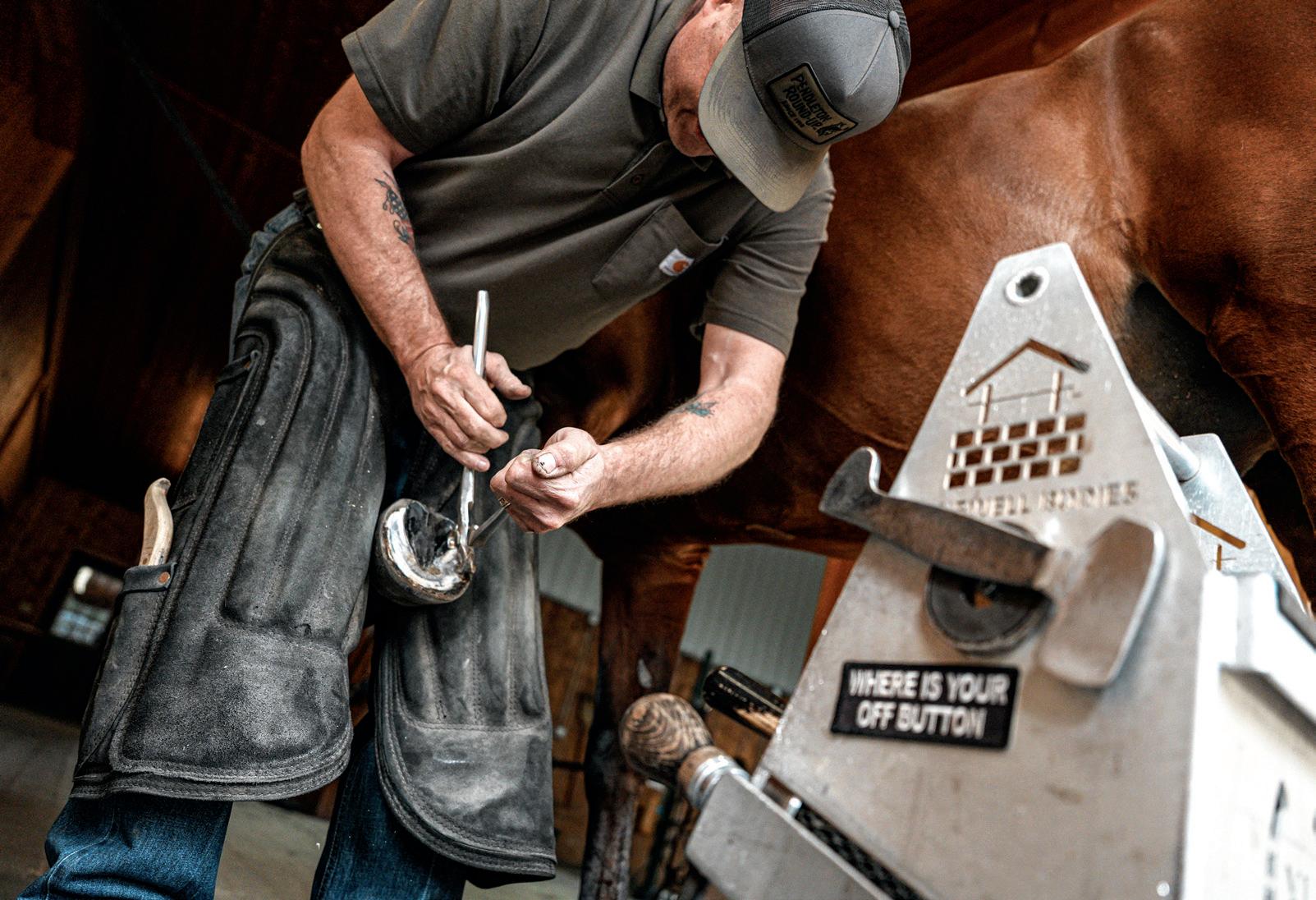
He told Spirit of Central Oregon , “I got into it after taking my first horse to the farrier shop at Cornell. I had been working in the environmental field as a field technician and was looking for a change of career.”
Eighteen years later, he’s still at it, and still loving it.
“To be fair I run a pretty tight ship and don’t have a lot of challenges,” he said. “The most gratifying thing is I get to spend time with horses every day. I don’t feel like I have worked a day in the last 18 years. The trade has taken me all over and I’ve made friends for life,” he says with satisfaction, "something a bond with a horse will do for you.”
The job comes with risks and Hall says, “The challenges at this point in my career are the physical strain it puts on my body. Being 6-foot-3-inches and 240 pounds, I’m not designed by nature to be folded in half under horses, although I often laugh, it’s not the bending over that hurts, it’s the standing back up straight that hurts.”
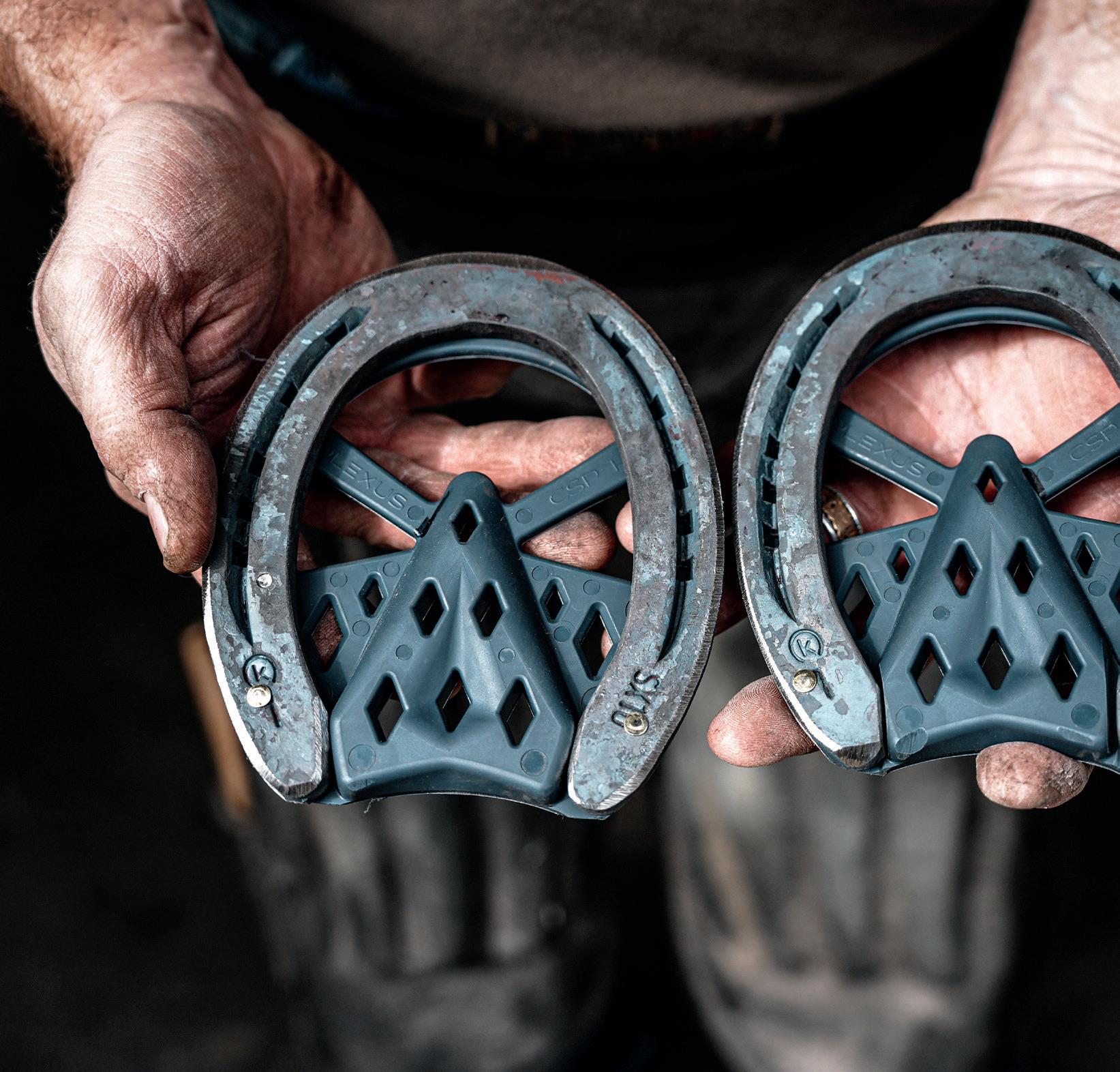
WRITTEN BY SUE STAFFORD PHOTOS PROVIDED
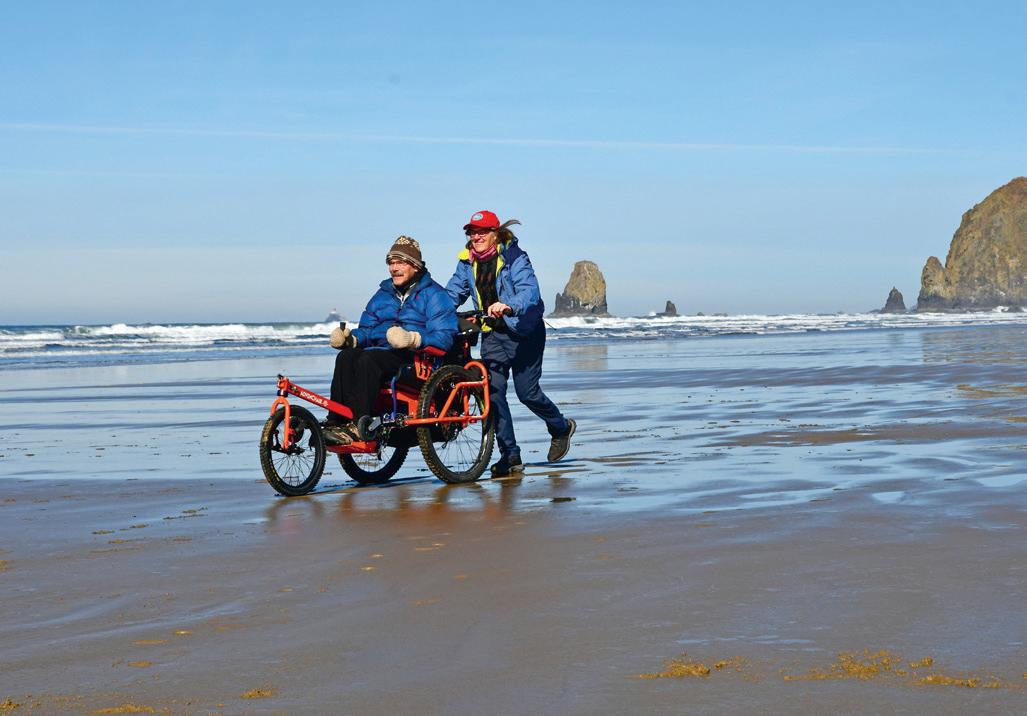
Fortitude, ingenuity, optimism, perseverance, and generosity are only a few of the traits that describe Bend resident Geoff Babb, founder, co-inventor, and inspiration behind the AdvenChair, an all-terrain human-powered wheelchair that thinks it’s a mountain bike, made completely in Central Oregon.
This former fire ecologist for the Bureau of Land Management (BLM) in Prineville turned a life-altering brain stem stroke on November 10, 2005, (and another one on November 10, 2017 — that’s right, the same date 12 years later) into an avenue for healing, invention, and expanding his world as well as touching the lives of young and old with mobility limitations.
An avid outdoorsman raised in White Salmon, WA, who loved hiking, backpacking, skiing, and immersing himself in nature, Babb could have given up at age 48, considered himself an invalid, and led a quiet sedentary life of indoor confinement. But Babb turned
his strokes into the impetus to create a heavy-duty wheelchair with mountain bike tires and brakes that would allow him to continue meeting the outdoor challenges and rewards presented by Mother Nature.
After a period of recuperation and rehab, Babb joined Oregon Adaptive Sports to return to the slopes on a sitski. He also utilized the equine therapy and adaptive horseback riding offered by Healing Reins.
Despite his first stroke in 2005, Babb was able to continue working for BLM for another 12 years in a leadership role on the Fire Management Team. He was able to go to fire camps when they were held in places like Sisters Middle School but at that time he couldn’t navigate pastures and other rugged terrain in his ordinary wheelchair. And he wasn’t going to let the challenges posed by trails, beaches, and woods deter him. Instead, they were an inspiration.
“Fate shoved you through an unexpected door, and you lit the way for others.” — J. K. Rowling
After his first stroke, Geoff had been working with CAD design engineer Jack Arnold and helicopter mechanic Dale Neubauer to design a rugged all-terrain chair that could get him out into nature. That first version was lovingly referred to as the FrankenChair. The first big test of that initial model came on September 26, 2016, when an attempt was made to descend into the Grand Canyon. As Geoff described it, fortuitously, the chair’s axle broke within the first two miles on the trail, providing feedback to the team about what worked and what didn’t, and adjustments were designed. The first design review of a new prototype occurred in the summer of 2017.
On November 10, 2017, Geoff experienced his second brain stem stroke, which impacted his ability to speak, swallow, and use his right hand. In his usual can-do way, Babb retired from his fire management position, saying the second stroke had now given him
more time to work on the chair.
On November 10, 2018 (there’s that day again), they had the rollout party for the public unveiling of AdvenChair 1.0. Within a year they had applied for a patent. The December 2019 prototype was the AdvenChair 2.0 and marked the first sale of a chair. It sported a bright orange powder-coated finish.
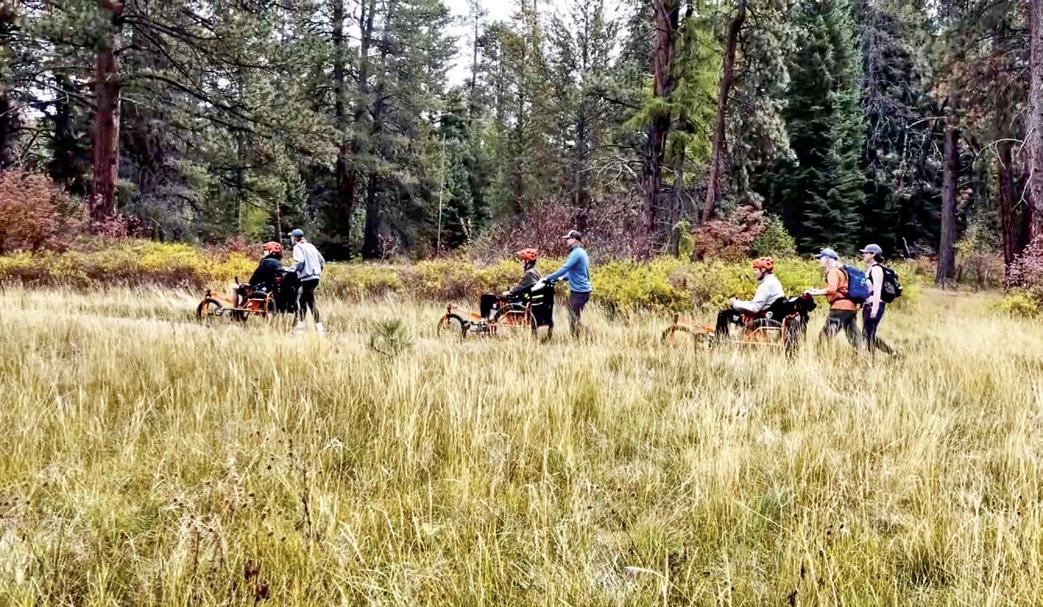
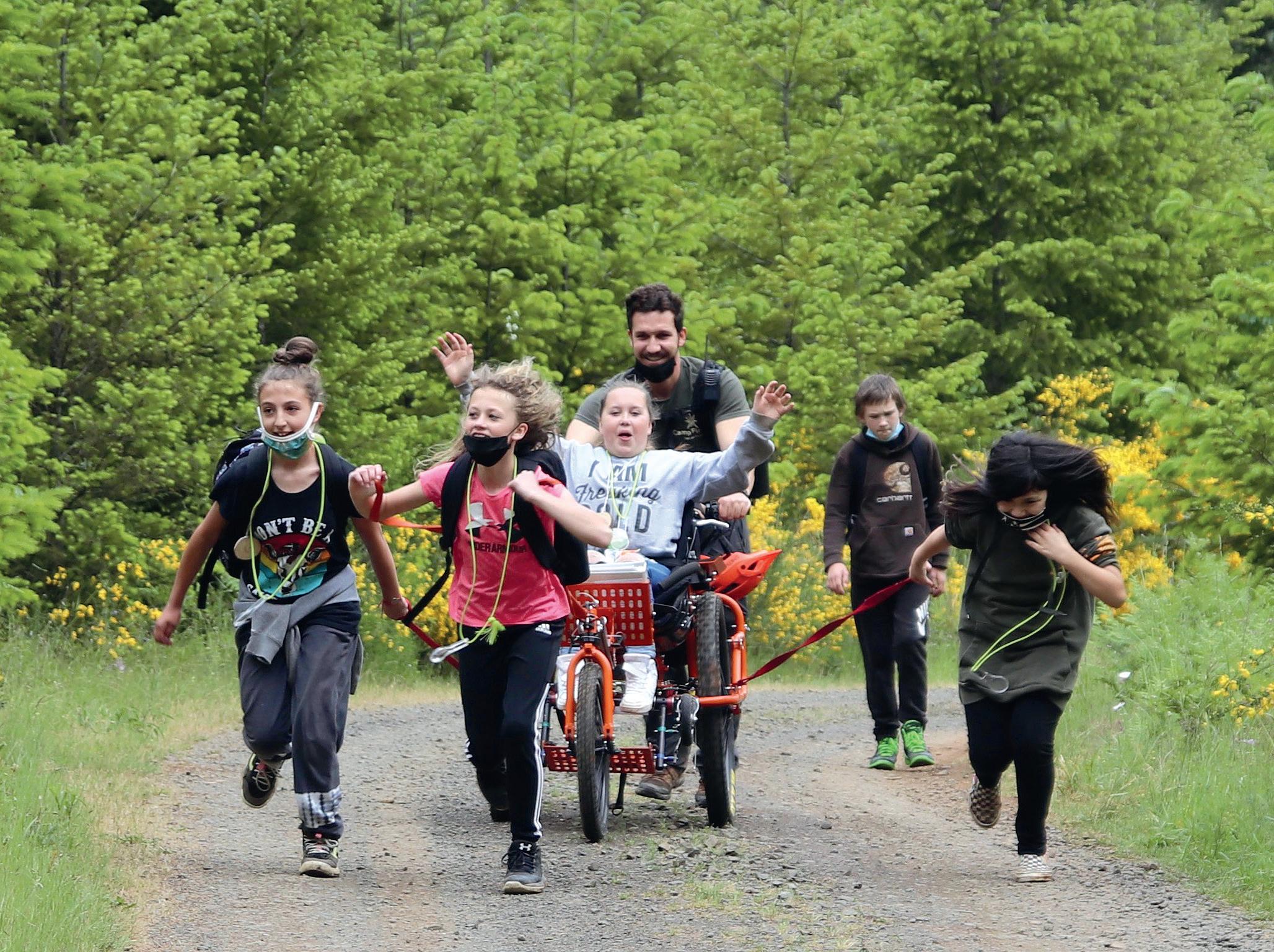
As described on the AdvenChair website, “With shock-absorbing mountain bike tires, adjustable handlebars, and hand brakes, an adjustable seat and harness, a team of one to six people can navigate AdvenChair 3.0 over all types of rugged terrain, mud, sand, and snow, allowing people with mobility challenges to experience the serenity and grandeur of wild places with family and friends.”
After extensive testing and a few modifications in 2020, Babb began taking orders and received his first shipment of upgraded AdvenChair 3.0 chairs in June 2021.
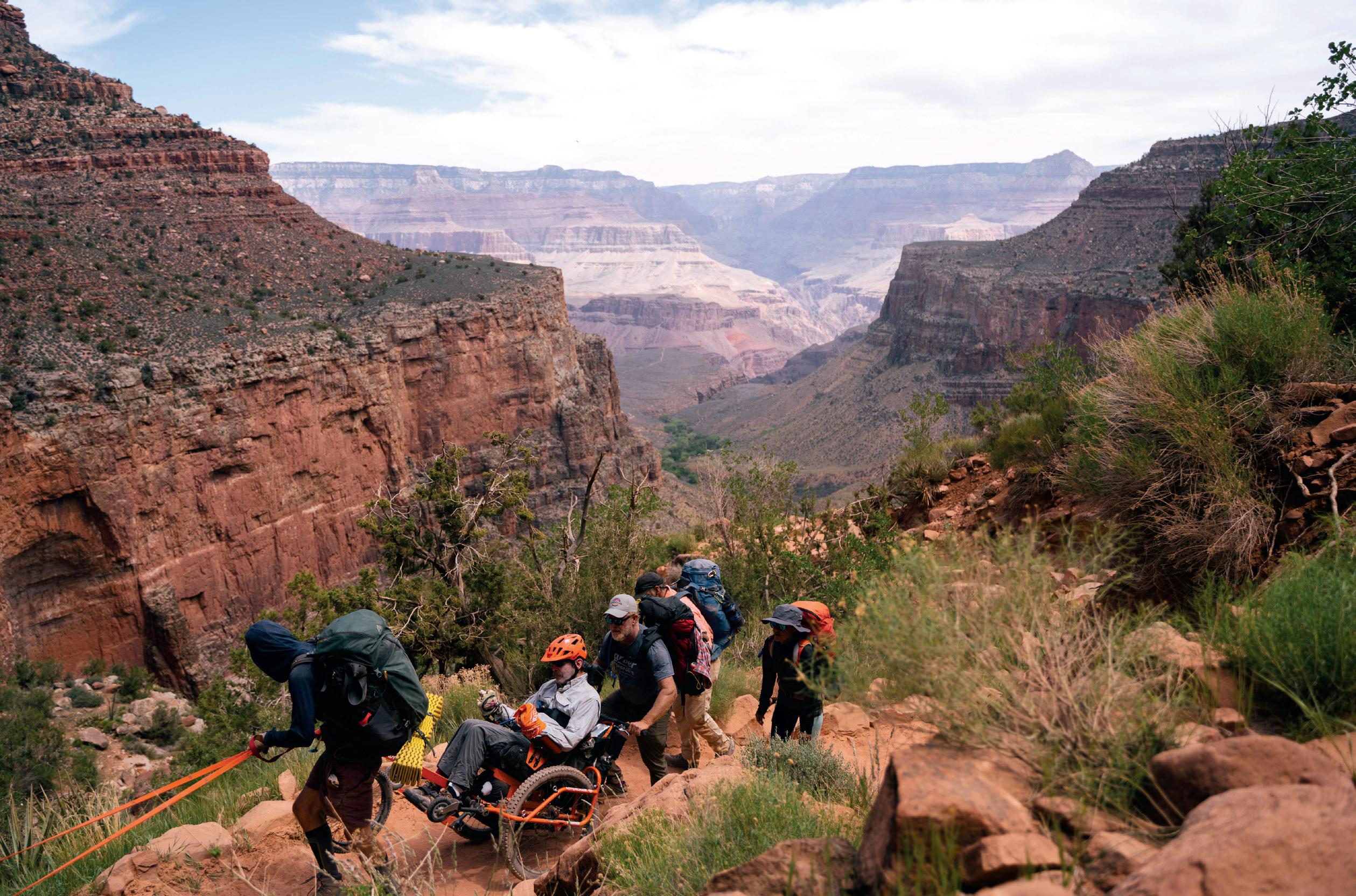
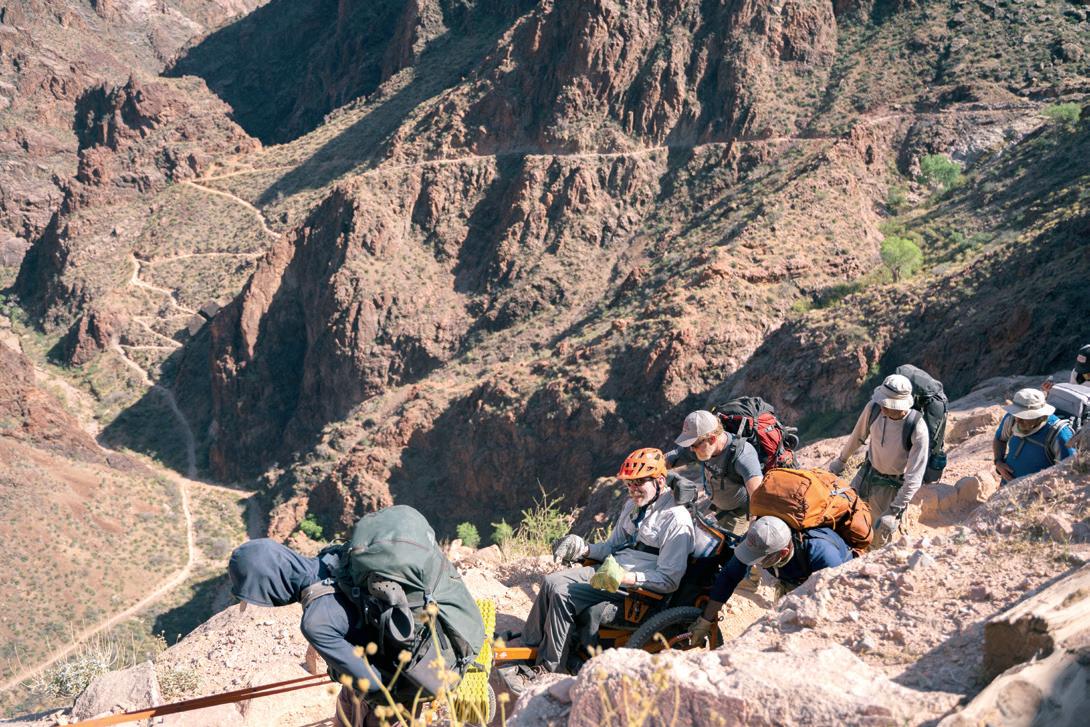
In April 2022, Geoff assembled a team of 10 men and women from across the country who would serve as his “mule team” to guide Geoff and his AdvenChair to the bottom of the Grand Canyon and back up. There were 14 more volunteers providing support at the rim basecamp.
In just four days, Geoff and his team made a 20-mile round trip on the



Bright Angel Trail, descending and ascending 4,800 feet each way, with 3,000 water bars, some more than a foot tall and at awkward angles, both down and back up. Water bars, made of wood or rocks, are a trail construction feature that helps prevent rain and snow runoff erosion on the trail by diverting water off the trail. Geoff and his chair needed to get over each of those 6,000 water bars with his team lifting, pulling, pushing, and braking. The squads would switch out every 20 minutes to avoid exhaustion. AdvenChairing is definitely a team sport with Geoff scouting from his chair.
Whenever they encountered a mule train on the trail, they would step to the side and stand in front of Geoff and his chair as the mules were spooked by a wheeled vehicle. The first night they camped at Indian Garden and day 2 they made it to Bright Angel Campground after maneuvering the Holy Jesus Corner on the Devil’s Corkscrew with its sharp switchbacks. Babb’s wife,






Yvonne, got to push him across the bridge over the Colorado River. Fortunately, Geoff knew the AdvenChair would fit as he got the measurements from the Park Service beforehand. The return trip uphill went faster but proved more challenging, partially due to the 90-degree temperatures, requiring cooling off feet in the creek.
On April 28, 2022, Babb and his team accomplished his Grand AdvenChair dream of 15 years which, according to Babb, was “a once in a lifetime experience with good people.” He summed it up this way, “The biggest thing for me was to celebrate. Not only the completion of AdvenChair 3.1, but to celebrate where we are in life. I’ve come so far after my strokes and all my other medical challenges that I’ve had. To come here with a great group of people and spend four days in the Grand Canyon. Definitely not the proverbial ‘walk in the park,’ by any means. It was an epic adventure in every way. Everyone did their part
— lots of leadership, lots of teamwork. I couldn’t ask for much more.”
Through all his successes and challenges, Babb’s wife of 40 years, Yvonne, has been right there with him. Babb doesn’t view himself as a victim. Rather he sees his strokes as “kind of a blessing.” The Babbs have had their challenges, but their life has been deepened. He thinks the Grand Canyon adventure is a perfect analogy for their life together. They met at an Outdoor School two-day training where Babb noticed Yvonne, an Illinois farm girl, but didn’t meet her until the camp. And the rest, as they say, is history.
To this day, Outdoor School plays a role in their lives as they have provided
14 chairs (nine in Oregon) to the camps, allowing mobility challenged students to join in the full range of activities, providing fun attention as abled students act as their team to move the chair. They can touch the plants, ride in a canoe, and be part of the whole experience.
Geoff and Yvonne have grown twin sons, Emory and Cory, who were 13 when Babb had his first stroke. He said the boys were “a big help and really responsible,” especially after they got their drivers licenses. Cory is married, living in Arkansas, and practicing restorative agriculture, growing over 30 varieties of vegetables for area restaurants. Emory has lived in Beijing for 10 years. The Babbs visited him there in November 2025 as they celebrated their 40th wedding anniversary and marked the 20th anniversary of Geoff’s first stroke and the eighth anniversary of his second one.
During their 19-day stay in China, with the endless traffic, myriad construction sites, and dearth of wheelchair ramps and curb cuts, touring
Beijing would have been almost impossible for a regular wheelchair without the versatility, agility, and rugged features of the AdvenChair.
They explored the Forbidden City palace complex where dynasty emperors ruled China for more than 500 years. They also took in the Summer Palace and did some bird watching, encountering species new to them.
On November 10, that familiar anniversary date, they visited The Great Wall of China about 100 kilometers from Beijing on a guided tour led by Beijing Hikers, an outfitter similar to Bend’s Wanderlust Tours.
Geoff hopes to return to China. “I won’t call it a once-in-a-lifetime experience. I am deeply determined to come back to Beijing to get a few AdvenChairs rolling around the area, so that more people can experience the friendly culture and great food, not to mention explore The Great Wall and all the unique wonders of this magnificent country.”
Wanderlust Tours and AdvenChair partnered to offer a series of “AdvenTours” in 2024 and 2025 that allowed people of all ages with mobility challenges to experience interpretive hikes and adventures where the pavement ends. They led accessible tours at Smith Rock State Park, Benham Falls, Shevlin Park, the shoreline of Crater Lake, the panoramic summit of Tumalo Mountain, and along both Paulina and Tumalo creeks. Visit Central Oregon funded the first grant for AdvenTours. The 2026 schedule of AdvenTours will be announced in Spring 2026 and will feature an assortment of familiar favorites as well as some new adventures. People can also customize their own AdvenTour. In the second year, Wanderlust opened up the AdvenTours to the general public.
“Not only did this allow for more choices and less cost for those desiring an AdvenTour, it also increased exposure of the barriers that exist for people
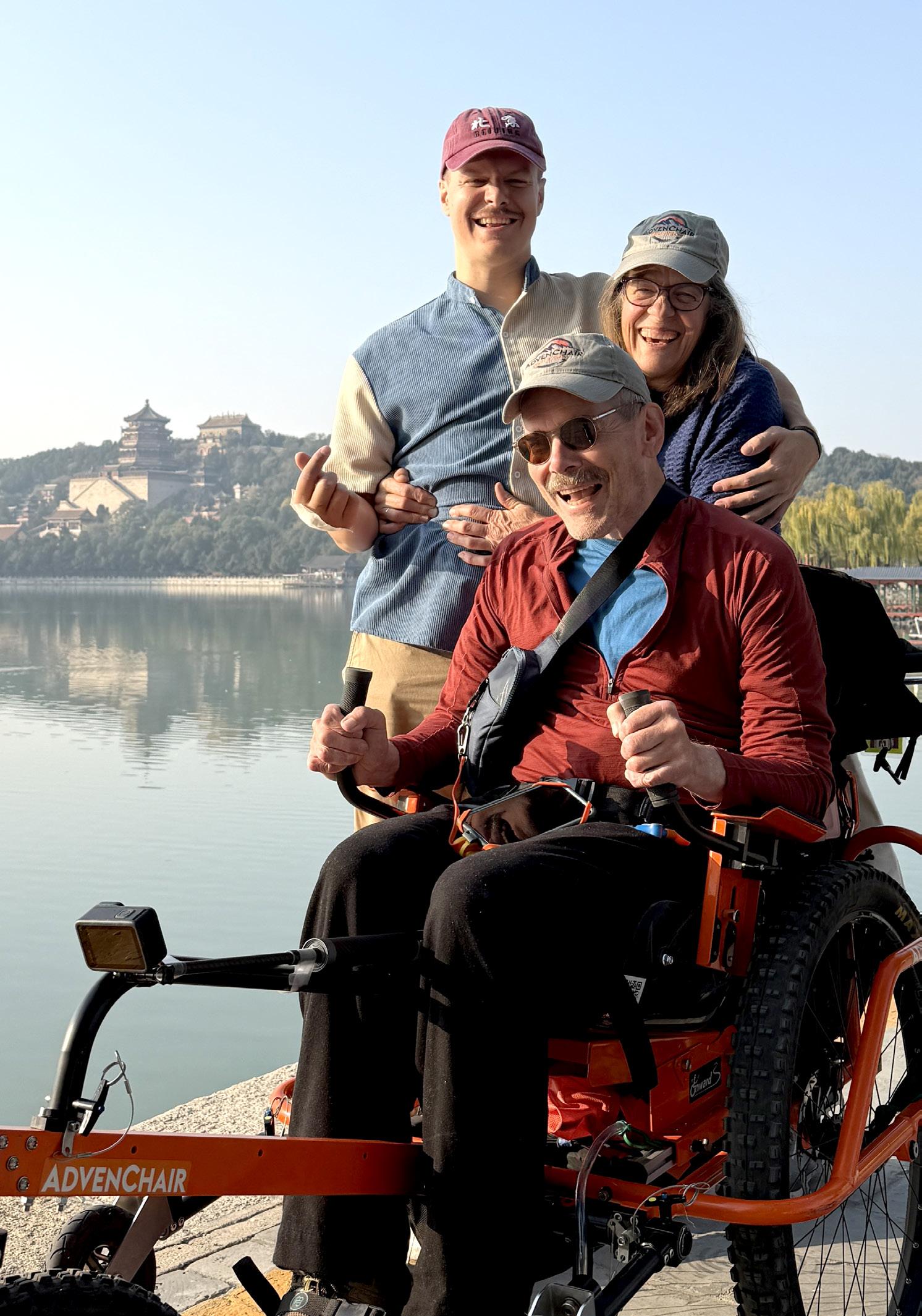
with mobility challenges,” said Courtney Braun, co-owner of Wanderlust Tours. Wanderlust and AdvenChair were awarded the 2025 Partnership Award at the Oregon Governor’s Conference on Tourism.
“DREAM BOLDLY: The Grand AdvenChair” is a 48-minute documentary chronicling Geoff Babb’s 2022 adventure with 10 team members to the bottom of the Grand Canyon in his AdvenChair 3.1, and the events leading up to it. It can be viewed online at Dream Boldly or on the AdvenChair website.
AdvenChair has provided access to iconic and challenging destinations on four different continents, including Machu Picchu in Peru and the Camino de Fatima in Portugal besides the Grand Canyon and The Great Wall of China.
In 2025, The Onward Project EIN 33-1289851 attained IRS 501(c)(3) nonprofit status. Their mission is to inspire and empower those with mobility challenges to access and enjoy nature through experiences, community support, equipment, training, and advocacy. They do that primarily through experiences with the AdvenChair.
BY BILL BARTLETT
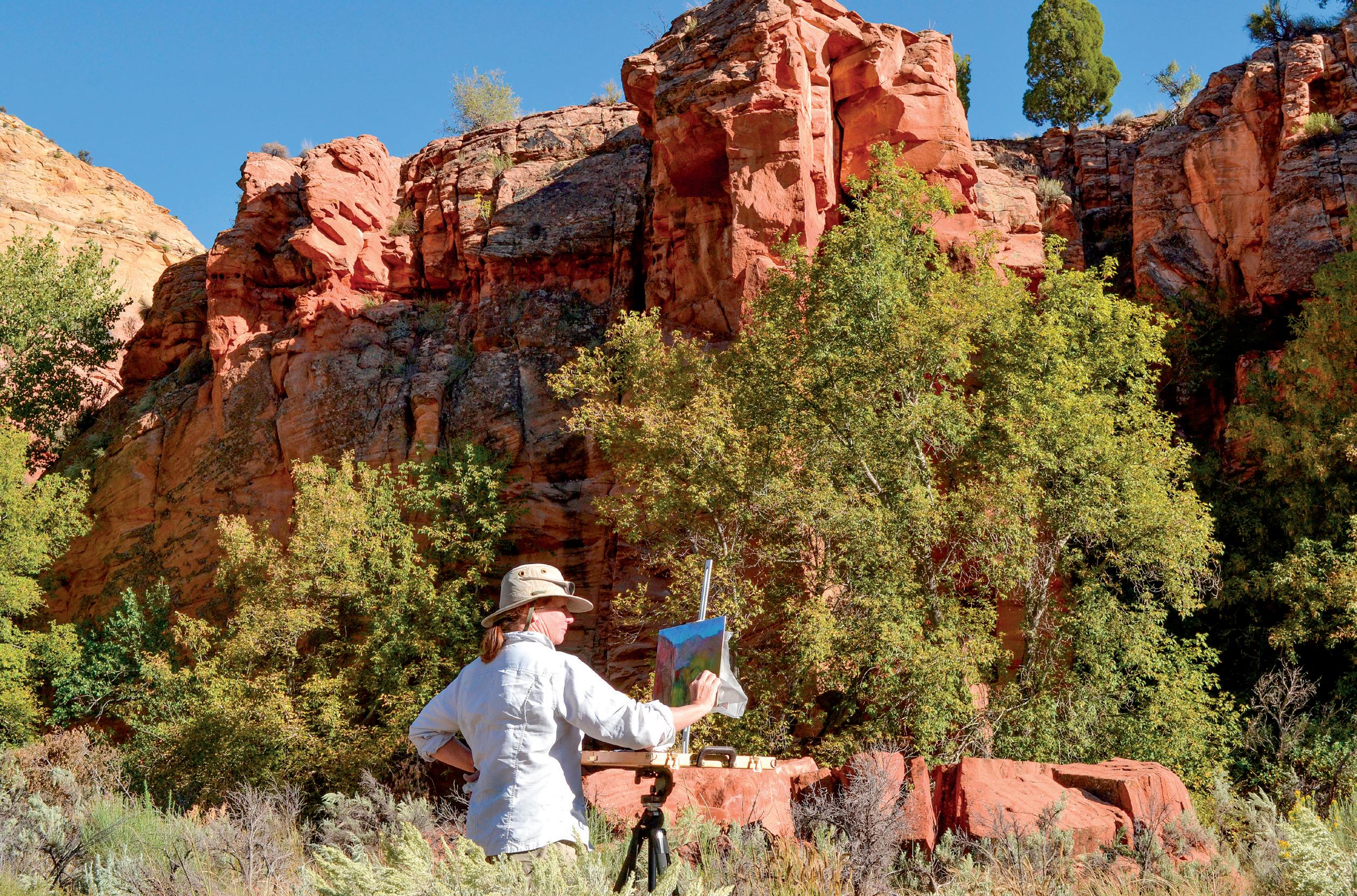
You may have heard people refer to painting en plein air, which is sometimes pronounced “plain” and sometimes pronounced “plen.” The phrase comes from the French word for “outside.” But enough about pronunciations — what is plein air painting?
Simply put, plein air painting is painting outside. Thousands of artists have begun this practice by taking their supplies into cities and urban areas to reflect the hustle and bustle of people in their daily lives, as well as to the mountains, streams, forests, and deserts to capture the magnificence of nature on canvas.
For centuries artists have been painting en plein air primarily using this method as a source for larger studio landscapes. The Impressionist painters of the late 19th century shocked the art world by presenting their outdoor work as the finished piece. Since then, artists around the world have enjoyed sharing their plein air work as fully
valid finished pieces.
“I’ve been involved in the arts for more than 20 years, and one of the most exciting phenomena to happen in that time has been the explosion of interest painting outdoors,” says Kelly Kane, editor of PleinAir magazine.
Plein Air Painters of Oregon (PAPO) is a group of dedicated artists committed to painting and communicating the value of local, spontaneous art that captures the light and emotion of the moment. PAPO invites anyone with a passion for creating art on location to consider joining them on a paint out and consider becoming a member to help preserve this wonderful art form.
David Kinker, a member based in Bend who doubles as an interpretive river guide, explains the allure:
“Leave the critic at home and play like a child, chase your excitement. To paint is to create, my painting process involves a change of consciences. I seek pattern, color, and contrast. I see
the whole of the relationships inspiring me to interpret the landscape before me. Although I sometimes come away with a product, it is only a record of the meditation of creating. Plein air painting is a personal practice for my mind, like yoga can be for the body.”
POPA is most active during summer months, but still paint in the spring and fall when weather permits. Most paint outs take place at Central Oregon locations, but occasionally go farther afield. On this year’s agenda, they have a wide variety of locations along the Deschutes River, Crooked River, Smith Rock, Cline Falls, and Suttle Lake.
PAPO has some 100 members across Central Oregon. Spirit talked with member Jonny Luczycki who describes the exhilaration — and risks — of painting in nature.
“Plein air painting is incredibly challenging as light and shadows move, working with the elements of nature, whether it be bugs or wind,” Luczycki
said. “On average you have a two-hour window to capture your scene before the lighting changes too much, and even less when the sun is low. I have done paintings outdoors in as little as 20 minutes, or returning several times at the same time of day if lighting is the same.
“I have encountered bears in the wild while painting, aggressive tear gas and chaos while painting in largescale urban protests, painting with a respirator near forest fires, lots of sunburns, bug bites, a broken-down car in the mountains at night, packs of coyotes, rattlesnakes, and every second is an adventure, a story to record with my brush.”
The attraction is obvious when talking with aficionados. Susan Hood, another PAPO member from Bend, is effusive in her pursuit.
“I’m in love with the landscape,” she said. “Nothing challenges or enlivens me more than setting up my easel in the midst of a scene that takes my breath away. It is where I feel most myself. I love being outdoors — walking the trails, taking in a place with
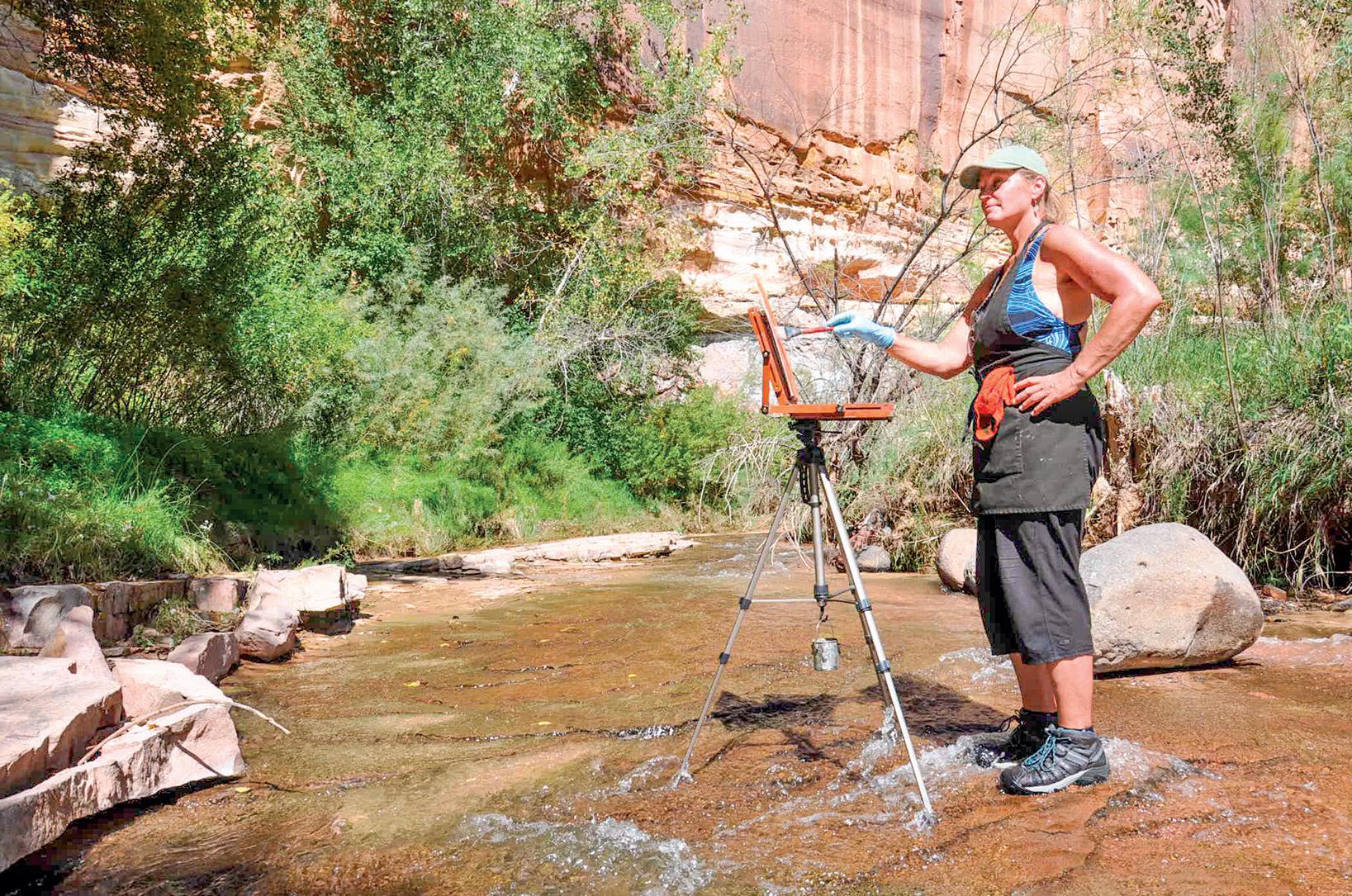
all my senses. As I begin to paint, the worries and cares of the world fall away. The process itself is therapeutic for me. It doesn’t really matter how the painting turns out; what matters is that I showed up.
“I think of my plein air paintings as studies. Through editing, simplification, and imagination, I seek to reveal the aliveness and sacred presence I experience in the natural world. I paint
in the hope that my work invites others into a more intimate relationship with this remarkable planet we call home.”
Plein air painting has opened the world to many of its advocates. Luczycki is typical of those answering the roaming call.
“In 2021 I did a solo 45-day painting road trip to all of the National Parks in the Southwest, from the Grand Canyon to The Grand Tetons,” the artist said. “I camped and painted over 120 paintings, and was without a doubt the most fun I have ever had doing plein air. My goal is to paint every National Park in the U.S.!”
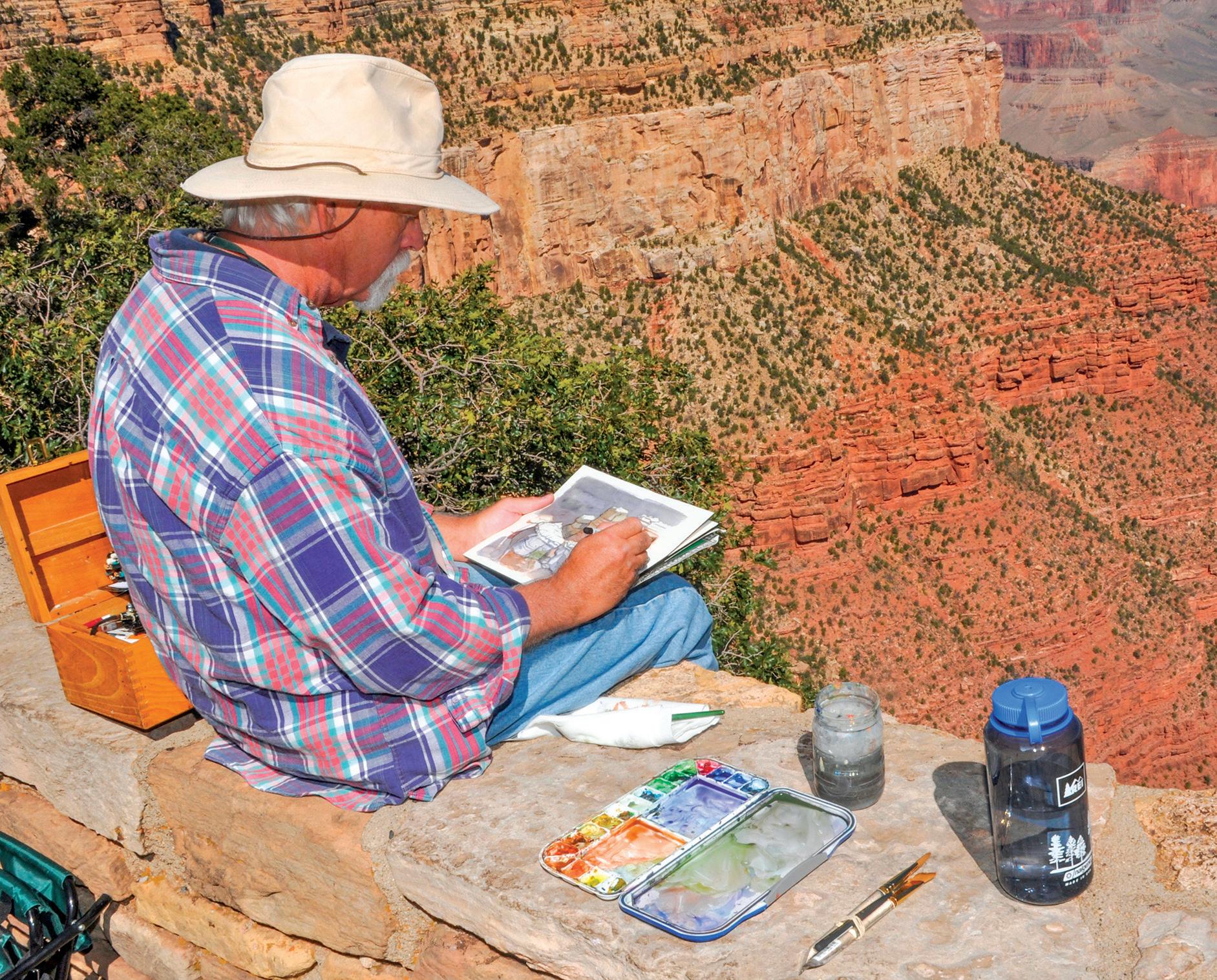
Hood finds opportunities galore in our own back yard.
“Some of my favorite places to paint are along the Cascades Lakes Highway. I return often to Soda Creek Campground and Sparks Lake. Both locations offer endless possibilities for painting — marshes, water, mountain views, and changing light throughout the day.”


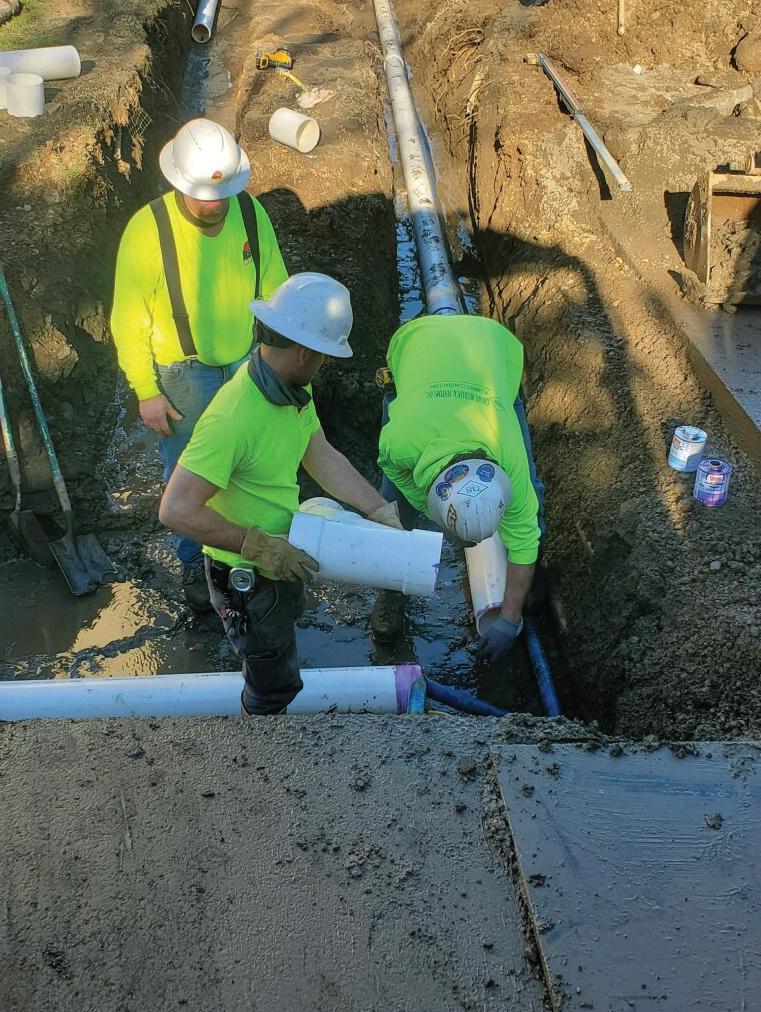








“We continue to get praise from our neighbors on our new driveway. The BANR crew is professional, kind, and thoughtful, leaving a clean worksite behind each day. We have already recommended BANR to others!”
— Jeff & Theresa R., Bend

• Clearing & removal of trees, stumps, brush
• Sewer, water, electrical, and drainage lines
• Foundation excavation and backfill; site grading
• Curbs, driveways, patios, and RV pads

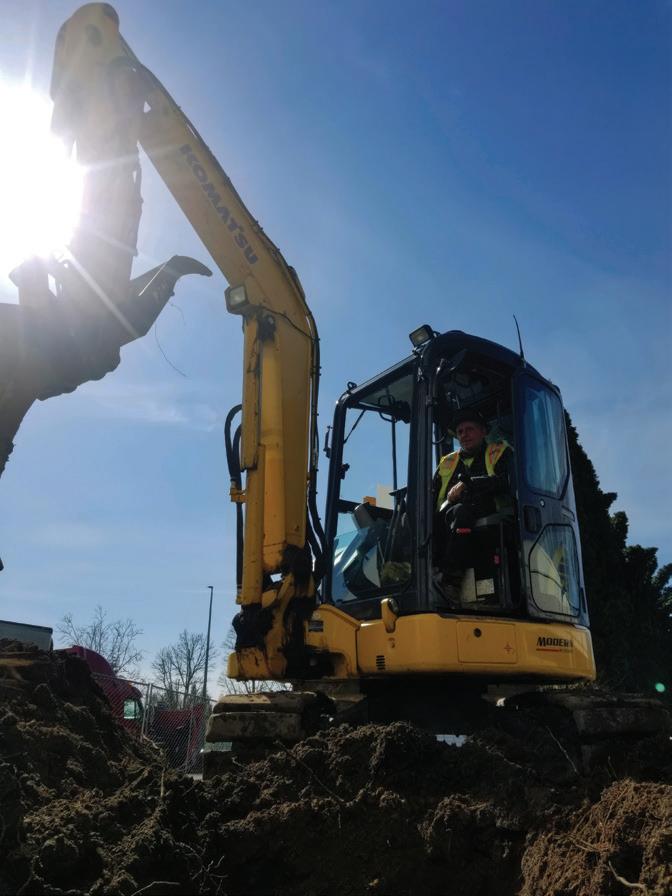



• Gravel and asphalt driveways; concrete sidewalks
• Rock and border retaining walls Gravel and