













Nordic cooperation plays a vital role in addressing major environmental and societal challenges. The Nordic Council of Ministers and the Nordic Council share an ambitious vision: to make the Nordic region the most sustainable region in the world by 2030.
Nordic ecosystems are facing serious challenges, including biodiversity loss, climate change, and pollution.
Addressing the challenges requires transformative change, where consideration for nature is integrated into decision-making and translated into concrete solutions that enhance both environmental protection and the long-term sustainability of our societies – for future generations.

The Nordic Nature Programme aims to support this transformative change, strengthen knowledge and cooperation and develop measures that halt the loss of biodiversity.
This brochure provides an overview of some of the projects funded by the Nordic Nature Programme in 2025-2027.









The project, led by Menon Economics, maps Nordic policies designed to halt biodiversity loss.
The analysis covers the Nordic region as well as the Åland, the Faroe Islands, and Greenland, linking existing policies to to the Kunming-Montreal Global Biodiversity Framework and relevant EU regulation.
The project examines the drivers behind biodiversity loss, assesses the effectiveness of existing instruments, and identifies political and institutional gaps.
The outcomes will include synthesis and analysis of exisiting policies, as well as suggested best practices and recommendations.











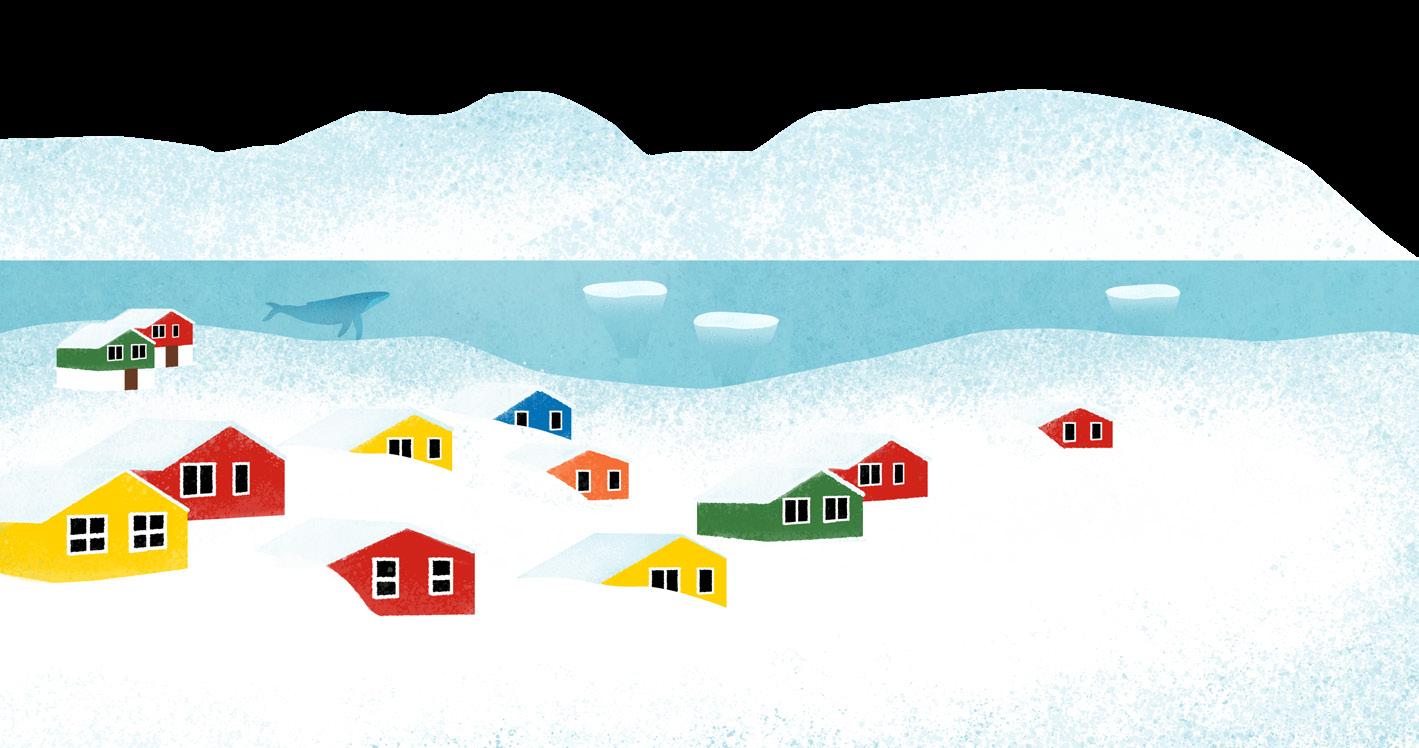
The project involves planning an international biodiversity summit in Nuuk, held as part of the Kingdom of Denmark´s Charship of the Arctic Council.
The project will establish the organisational and professional foundation for the summit.
The work involves Arctic Council partners, Nordic ministries, and research institutions, with a focus on biodiversity, Arctic governance, and international cooperation.
The project aims to strengthen cooperation across the Arctic and between the Nordic countries while ensuring strong participation from Indigenous Peoples. The outcome will be a robust, cross-sectoral, and internationally anchored planning framework for a Arctic Biodiversity Summit in 2027.















The project, led by Conservation of Arctic Flora and Fauna (CAFF), aims to strengthen cooperation on the next edition of Actions for Arctic Biodiversity (AAB), the Arctic Council’s key biodiversity framework leading up to 2035.
The project brings together Nordic contributions from experts, authorities, and Indigenous representatives. The work includes evaluating existing actions, identifying gaps, and developing new initiatives with a focus on Nordic and Indigenous perspectives.

The outcome will be an updated AAB plan which will also be pivotal to the Arctic Biodiversity Summit in 2027.





The project, led by the Norwegian Environment Agency, supports Nordic implementation of the Kunming–Montreal Global Biodiversity Framework (KMGBF) by identifying key findings and policy options from three key IPBES assessments relevant to Nordic policy and practice.
The focus is on transformative change, the links between biodiversity and society, and the role of business and industry.
The outcome will be joint Nordic recommendations for achieving KMGBF targets, alongside strengthened coordination, knowledge sharing, and integration of biodiversity considerations into decision-making processes across the region.




The project, led by the Norwegian Institute for Cultural Heritage Research, explores how biocultural heritage in Nordic forest landscapes can be better protected and integrated into modern forestry practices. Biocultural heritage refers to the interconnected relationship between biodiversity, cultural heritage, language, and traditional knowledge developed by communities over time.
The project maps challenges and conflicts arising between cultural heritage, biodiversity, and forestry operations and will provide recommendations for implementation and policy development.
Participants from Norway, Denmark, Sweden, and Finland work toward the overall goal of strengthening Nordic cooperation and improving the protection of cultural environments and biodiversity in Nordic forests.








The project, led by the Institute of Archaeology in Iceland,examines how afforestation and forestry practices affect archaeological sites and cultural landscapes in Iceland, Norway, and the Faroe Islands.
The initiative is driven by increasing tree planting and climate mitigation efforts, which pose new challenges for cultural heritage protection.
Participants include specialists and relevant authorities from Iceland, Norway, and the Faroe Islands. The aim is to establish a shared knowledge base, identify threats to cultural environments, and develop recommendations for more sustainable forest management practices.
The project will provide increased knowledge, a practical handbook, and strengthened Nordic cooperation between the cultural heritage and forestry sectors.









With the Kunming-Montreal Biodiversity Framework as a departure point, the project explores how UNESCO World Heritage sites can serve as living laboratories for the integrated management of cultural heritage and biodiversity across the Nordic region.
The initiative brings together experiences from 45 Nordic World Heritage sites and the work is supported by national authorities and the International Union for Conservation of Nature (IUCN).
The aim is to strengthen the capacity of World Heritage sites, present case studies, and develop recommendations for both policy and practical implementation which will support achieving biodiversity targets.
The project is led by the Nordic World Heritage Association.


















The project, led by the Municipality of Vordingborg, establishes a Nordic network to strengthen the local implementation of the Kunming-Montreal Global Biodiversity Framework.
The network builds on experiences from earlier MAB-LAB projects and brings together municipalities, UNESCO experts, and International Union for Conservation of Nature (IUCN) specialists. In addition to the network, indicators and tools for local biodiversity action are being developed and tested through six Nordic pilot projects.
The overall aim is to establish a lasting platform for biodiversity cooperation, strengthen multi-level governance, and position the Nordic region as a leading example in translating global biodiversity targets into local action.











The project, led by RISE Research Institutes of Sweden, examines how the Nordic countries are implementing the LULUCF Regulation while linking it to the biodiversity objectives of the Nature Restoration Law.
Through Nordic overviews and case studies from Sweden, Norway, and Finland, the project analyses policy, governance structures, technological measures, and the balance between carbon sequestration, forest management, and environmental considerations.
The project aims to identify strategic trade-offs and develop recommendations for more coherent and sustainable policy instruments. The findings will be compiled in a report containing policy recommendations designed to support authorities in advancing climate action while strengthening biodiversity.