Our Mission...
“Our mission proudly states that ‘NTSAD leads the worldwide fight to treat and cure Tay-Sachs, Canavan, GM1, and Sandhoff diseases. Driving research, fostering collaboration, and building community are essential pillars of our work. While supporting affected individuals and families remains at the heart of what we do, accelerating research and identifying pathways to expedite approvals are crucial priorities. NTSAD acknowledges the pivotal role of generous benefactors who share our passion for advancing research. Together we are making great strides. This Research Summary serves as a comprehensive overview of accomplishments over the past year and outlines future plans, showcasing how partnership and support are integral to fulfilling our mission.” – Kathy Flynn, NTSAD CEO
2023-2024 Research Summary
NTSAD’s Research Initiative Program
OurMission...
In the last fiscal year (July 1, 2023, through June 30, 2024), NTSAD’s Research Initiative program invested $209,000 in research, including awarding two new research grants.
Research Initiative Grant Cycle
The Research Initiative grant cycle for 2024-25 was launched in September with the distribution of the Request for Proposals (RFP). The Cure Tay-Sachs Foundation, the Blu Genes Foundation, and the Canavan Foundation were invited to participate with NTSAD in this funding opportunity. Starting the process earlier this year enabled us to complete the cycle in time to announce the awards at the Annual Family Conference in April 2024.
Below is the schedule executed during the FY24 grant cycle:
Pre-application deadline: December 1, 2023
Invitation to submit a full application: December 15, 2023
Full application deadline: February 16, 2024
Award announcement at AFC: April 11, 2024
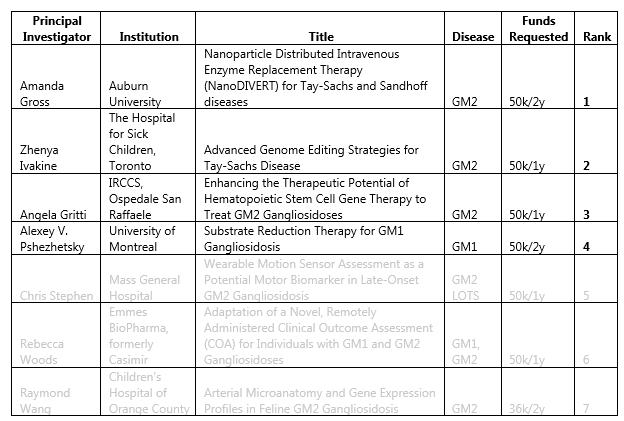
NTSAD’s Research Director, Valerie Greger, PhD, received seven letters of intent (LOI), brief summaries of research projects seeking funding. LOIs were reviewed and ranked by five members of NTSAD’s Scientific Advisory Council (SAC) based on the quality of the science and the significance for advancing progress toward a treatment. Investigators with the four top-ranking LOIs were invited to submit full proposals.
We offer specialized holistic healthcare for children of all ages.
The Research Director secured internal (SAC) and external grant reviewers who provided input on the four full proposals, including: an external liquid nanoparticle expert (PhD), three external gene editing experts (PhD), a gene therapy expert and SAC member (PhD), a drug development expert and LOTSS member (MD), and a drug development expert (MD).
Reviewers commented on the quality of the science and the significance for advancing progress toward treatments, which was one of the priorities set by the Research Director for the Research Initiative going forward. The members of the NTSAD Research Committee also provided feedback.
The proposals submitted by Dr. Angela Gritti and Dr. Amanda Gross received the most favorable reviews from all reviewers and were ranked #1 and #2.
Dr. Gritti’s research project was a conservative choice: she is a very experienced investigator and the hematopoietic stem cell gene therapy she is developing is well-advanced towards the clinic. On the downside, this kind of treatment is very invasive and expensive.
Dr. Gross’ nanoparticle enzyme replacement therapy project, on the other hand, is in the very early stages of development and, therefore, is high risk but potentially highly rewarding, since it promises a non-invasive and less expensive form of treatment.
Leaders from the Cure Tay-Sachs Foundation and the Blu Genes Foundation were invited to review the proposals and consider partnering with NTSAD in supporting them. NTSAD and the Cure Tay-Sachs Foundation agreed to co-sponsor these grants. Since the Blu Genes Foundation is already supporting Dr. Ivakine’s research, they decided to connect with him about the project he proposed. Since none of the projects focused on Canavan disease, the Canavan Foundation did not partner with NTSAD to fund any of the current year’s projects.
After the Executive Committee of the Board approved the grants presented by the Research Director, they shared the news at the Annual Family Conference in Chicago and also in NTSAD’s Community News. This communication informed our rare disease community about the progress and initiatives supported by NTSAD’s research efforts.
We offer specialized holistic healthcare for children of all ages.
In addition to the two grants awarded through the Research Initiative Program’s annual RFP, NTSAD also made a disbursement, upon request, from a restricted fund related to an external research project.
The Vera Pesotchinsky Fund released $15,027.65 for the purchase of GM2 mice for an external stem cell research project initiated and coordinated by the fundholder.
Updates on Multi-Year Grants (Awarded in Previous Grant Cycles):
Valerie Greger, PhD, with assistance from the new Research Associate Cynthia Perreault-Micale, PhD, monitors prior and multi-year research grants. Included are the following:
Dr. Amanda Gross delivered the interim report for her project “Dual Site Administration of AAV Gene Therapy for Treatment of Feline GM1 Gangliosidosis.” The project has made good progress, and the second installment of the award was paid out. Dr. Gross requested a no-cost extension, because the treated animals are doing exceptionally well and, therefore, she would like to opportunity to observe them for a longer period than initially planned. The final installment will be paid after the delivery of the final report, which is expected in March 2025.
Dr. Dominic Gessler’s final report for the “Non-invasive MRI-based Therapeutic Outcome Prediction Modeling Using Machine Learning” project is expected in early FY25. Upon successful completion of that requirement, the balance of his award will be processed.
The start of Dr. Amanda Nagy’s one-year project “Characterization of Progressive Neuroimaging and Pathologic Changes in Canavan Disease” was delayed until October 2023 because the institution took longer than expected to review/sign the grant agreement. The project is progressing, and Dr Nagy presented interim results at the 2024 Annual Family Conference. Her final report is not expected until late 2024.
The start of Dr. Jennifer Kwon and Julie Kissell’s project "Development of a Disease-specific Clinical Rating Scale for the Late-onset GM2 Gangliosidoses” was delayed until January 2024, because the University of Wisconsin’s internal review process for NTSAD’s Grant Policies took longer than expected. Due to a delay in signing the agreement, the timeline was adjusted, and their interim report is expected in January 2025.
Dr. Elise Townsend requested a nine-month extension for her project “Construction and Validation of the Infantile GM2 Rating Scale” due to challenges she encountered in patient recruitment. She attended the 2024 Annual Family Conference in April and connected with potential participants. With outreach assistance from NTSAD, her research project is progressing.
Scientific Advisory Council (SAC)
The Scientific Advisory Council (SAC) met in Boston in November and in Chicago during the Annual Family Conference in April.
The focus during these two SAC meetings was dedicated to the following projects: Psychiatric aspects of Late Onset Tay-Sachs and Sandhoff (LOTSS): There is a higher incidence of psychiatric symptoms in late onset Tay-Sachs patients vs. Sandhoff patients. Following the discussion on this topic at the LOTSS Think Tank in October 2023, the SAC formed a working group on this topic and after several meetings, a report was created and posted on NTSAD’s website entitled: “Information for Psychiatric Providers on Treatment of Psychiatric Symptoms in Late-Onset GM2 Gangliosidosis.” A small, printed card with a QR code linking to additional information located on NTSAD’s website was produced and shared with LOTSS patients and caregivers at the Annual Family Conference in April (https://ntsad.org/wp-content/uploads/2024/04/ NTSADInformation-for-Psychiatric-Providers-on-Treatment-of-Psychiatric-Symptoms-inLate-Onset-GM2-Gangliosidosis.pdf). The working group’s long-term goal is to produce a full manuscript on the psychiatric aspects of LOTSS. This follow-on project is currently underway with an expected completion date in the Fall of 2024. Drs. Camilo Toro (NIH) and Chris Stephen (MGH) led the working group; other SAC participants included Drs. Florian Eichler and Cyndi Tifft. Non-SAC members with psychiatric expertise were recruited to serve on this work group. They included Dr. Sonja Scholz (NIH), Dr. Caitlin Adams (MGH) and Dr. Steven Kushner (NIH).
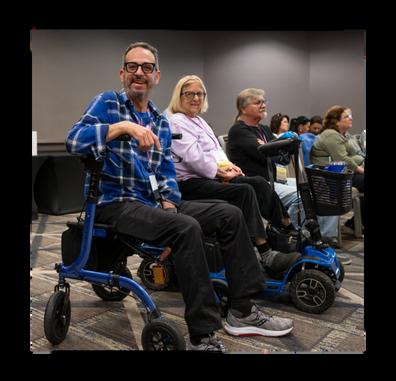
Scientific Symposium at the Annual Family Conference: Building on the success of the scientific symposium on gene editing at 2023’s Annual Family Conference, another scientific meeting took place at the 2024 Annual Family Conference in Chicago. After considering various potential topics and speakers, Novel Mechanisms to Treat Brain Diseases was selected as the symposium’s subject. Dr. Heather Gray-Edwards and NTSAD’s Research Director, with assistance from the Research Associate, organized the event. Three highly respected speakers were invited to present: Dr. Jaya Ganesh from Mount Sinai in NYC spoke on “Brain Targeted Therapy for Lysosomal Diseases;” Dr. Mathias Schmidt from JCR USA shared “Methods of Delivering Enzyme Replacement Therapies to the CNS,” and Dr. Akos Herzeg from the UCSF Center for MaternalFetal Precision Medicine talked about “Prenatal Enzyme Replacement Therapy for Lysosomal Disorders: Unlocking Neurological Potential.” Introductory remarks were provided by Heather Gray-Edwards, and Allison Bradbury served as the discussion session moderator. More than 25 researchers, clinicians, and biotech industry partners attended the symposium.
SAC Leadership Transition
During the April SAC meeting, the Research Director announced SAC leadership changes. Dr. Frances Platt was honored for her many years of service as Chair of the SAC as she stepped down from that role. Dr. Tim Cox (Cambridge), Dr. Cynthia Tifft (NIH), and others shared tributes and anecdotal comments that spoke to her dedication and accomplishments in rare disease. It was also announced that Dr. Heather Gray-Edwards (UMass) will assume the role of Chair, and Dr. Dominic Gessler (UMN, UMass) will serve as the Co-chair.
Bi-Weekly Meetings
NTSAD’s Research Director and the SAC Co-chair, Dr. Heather Gray-Edwards, meet regularly to discuss the current landscape of the rare diseases on which NTSAD focuses and to develop pipeline plans for the SAC.
NTSAD’s Virtual Biorepository
In July 2023, NTSAD established a virtual biorepository to provide researchers the opportunity to share resources such as cell lines and other samples that may be obtained from other researchers/institutions. Dr. Cynthia Tifft (NIH) provided the first sample list. NTSAD’s former Research Associate spearheaded the project and worked with a summer intern to reach out to other institutions and request they provide a list of resources they are willing to share. This will be an on-going project until the repository is further developed. However, the response from multiple requests has been limited. NTSAD’s new Research Associate continues to leverage relationships with the research community and others to enhance the biorepository. (https://ntsad.org/ntsad-research/virtual-biorepository/).
Newborn Screening Consortium
NTSAD continues to maintain carrier screening and newborn screening.
In order to develop assays for newborn screening of Tay-Sachs, Sandhoff, and Canavan diseases, GelbChem, LLC, and Professor Michael Gelb’s laboratory at the University of Washington needed dried blood spot (DBS) cards from affected patients. Obtaining stored DBS cards from newborn screening state laboratories turned out to be difficult. Laboratories either had already destroyed DBS cards or remained unresponsive despite several efforts to contact them. NTSAD agreed to support Professor Gelb by identifying and contacting families willing to participate in this research. Blood samples were collected from seven children with Tay-Sachs and two children with Sandhoff diseases for DBS cards at the Annual Family Conference in June 2023. GelbChem used these DBS cards to complete the assay development.
At the NBS Consortium meeting in August 2023, the Research Director reported that assay development for Tays-Sachs and Sandhoff disease (Dr. Hamid Khaledi, GelbChem) and Canavan disease (Dr. Simona Murko, Uniklinikum HamburgEppendorf) was completed. NTSAD played a pivotal role in accomplishing this goal.
An abstract for a recently published article about the assay development for Canavan disease led by Dr. Murko may be found at: Quantification of N-acetyll-aspartate in dried blood spots: A simple and fast LC-MS/MS neonatal screening method for the diagnosis of Canavan disease - PubMed (nih.gov). Prof. Gelb and SAC member Dr. Florian Eichler were among the authors of this paper.
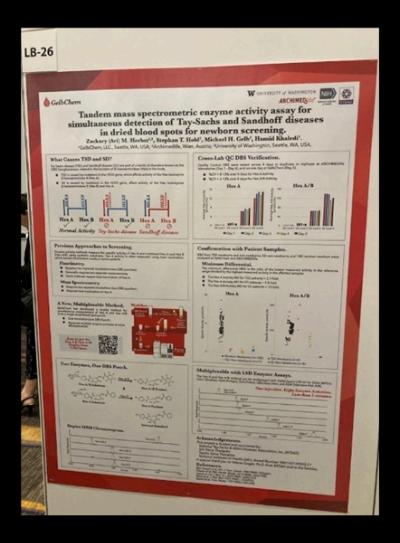
Furthermore, a poster (shown on the previous page) was presented by GelbChem at the WORLDSymposium for Lysosomal Storage Diseases in February 2024. It highlighted the DBS collection and assay development; NTSAD was acknowledged on the poster. GelbChem has submitted a manuscript for publication, which was recently accepted. Professor Gelb also filed a patent, which is pending.
The NBS Consortium discussed how to move forward with next steps: a pilot study. Then, after the August NBS consortium meeting, NTSAD learned that industry stakeholders are currently unable to make any financial investments or even commit significant time to a pilot project. However, in February, NTSAD learned that Dr. Khaledi (GelbChem) intends to apply for a grant from the National Institutes of Health (NIH) to conduct the pilot study in the 2024 fall cycle. However, there is still a question about selecting the right site for the pilot study, because it turned out that the site originally chosen by GelbChem may not be suitable. NTSAD plans to convene the core group of NBS Consortium members in July to discuss how they can support Dr. Khaledi in finding a NBS laboratory capable of performing the pilot study.
Parallel to this effort, NTSAD recently applied to add Tay-Sachs, GM1 and Sandhoff disease to Early Check, a voluntary research study that provides free screening by sequencing for approximately 200 serious health conditions in newborn babies in North Carolina. Canavan disease is already part of that study.
In the meantime, the Consortium’s efforts will focus on strategic outreach to other rare disease cohorts who are conducting pilot studies to explore the possibility of adding Tays-Sachs, Sandhoff, and Canavan disease to their existing panels.
LOTSS Think Tank
NTSAD’s Research Director and CEO Kathy Flynn worked closely with Alexis Buryk, Dr. Cynthia Tifft (NIH), and Dr. Steve Walkley (Albert Einstein NY) to organize the 6th annual LOTSS Think Tank Meeting, which took place in October 2023, thanks to the generous support from the Katie & Allie Buryk Research Fund at NTSAD. Think Tank members are charged with strategizing ways to accelerate research, clinical trial design, and drug development. An invitation-only group of researchers and clinicians convened in Hilton Head, South Carolina, for an intensive three-session workshop focused on Natural History, Supportive Care, and Clinical Trial Updates; Animal and Non-animal Model Systems and Biomarkers; and Neuropsychiatric Aspects of LOTSS.
The 2023 LOTSS Think Tank featured progress reports on ongoing projects and discussions regarding action items. Presentations included: Mark Moran (NIH) reported on the outcomes of the letters sent to genetic testing companies with the request to include HEXA and HEXB genes in their testing panels. The group discussed that, in the long term, whole exome sequencing (WES) may become the standard testing approach.
Dr. Isabela Batsu (Sanofi) and Dr. Christian Freitag (Azafaros) provided status updates from their respective clinical trials, both trials were progressing well at that time.
Dr. Camilo Toro (NIH) spoke about an app he is developing that could easily, quickly, and reproducibly rate dysarthria in LOTSS patients. An app like this could be used to monitor disease progression and prove beneficial to incorporate in clinical trials.
Dr. Juan Marugan (NIH) presented data on three small molecules that may be drug candidates for Lysosomal Storage Disorders (LSDs).
Dr. Xuntian Jiang (Washington University) reported on his ongoing work on developing a biomarker for GM2 gangliosidosis.
Drs. Toloo Taghian and Heather Gray-Edwards presented new data and the Tay-Sachs sheep model and gene therapy at UMass.
Dr. Rick Proia (NIDDK) gave an update on gene-editing correcting the Gly269Ser mutation present in more than 90% LOTS patients.
Dr. Bryan Traynor (NIH) spoke about lessons learned from other neurodegenerative diseases such as Amyotrophic Lateral Sclerosis (ALS) and Huntington disease and how they may apply to GM2 gangliosidosis.
Scientific updates were followed by a panel of three caregivers of LOTSS patients who have experienced significant mental health/psychiatric symptoms. The panel was organized and moderated by NTSAD’s Family Services Director Diana Jussila. The testimony of the three panelists, all mothers, was very powerful, deeply moving, and demonstrated an urgent need for action.
After the panel discussion, the Think Tank members decided to focus efforts on supporting this patient group as outlined earlier. Dr. Toro suggested writing a consensus statement about the treatment/care of LOTSS patients with psychiatric symptoms, publishing it on NTSAD’s website and perhaps also in a scientific journal. As a result, and as mentioned previously, the SAC formed a working group to address treatment for individuals with late onset GM2 who experience psychiatric symptoms and developed a brief resource for providers, with a full report forthcoming.
Staying Informed of Latest Developments and Trends
Remaining knowledgeable about the ever-changing developments in rare disease can be challenging . To keep track of the latest literature, the Research Team leverages a weekly automated MyNCBI literature search. MyNCBI is a tool developed by the National Center for Biotechnology Information (NCBI) that enables customized automated searches of PubMed to be run weekly, and results to be sent via email. The goal of this is to ensure all current literature on NTSAD’s genes/disorders are found based on keywords we have selected and incorporated into our customized query. This has been ongoing for multiple years, and we continue to receive publications on a weekly basis. The results are checked and organized into literature collections according to disease/gene, and publications are read and tracked. In addition, the Research Director and/or Research Associate attend relevant conferences and seminars to keep up with the latest research and developments. Examples include the WORLDSymposium, Annual Meeting of the American Society of Gene and Cell Therapy, multiple Boston Children’s Hospital Metabolism Grand Rounds seminars, and “Rare Disease Day 2024: Climbing Ladders to Cures in Rare Disease Research” at the Broad Institute of MIT and Harvard.
The Research Team regularly tracks companies with drugs of interest in their pipeline and explores any interesting leads, such as presentations and posters, that our colleagues may have encountered at national meetings.
Research Committee
The Research Committee meets regularly to provide input on priorities, feedback on the organization’s research plan, oversight of the research goals, assistance with setting funding priorities and, in general, acts as a resource to support and guide the ongoing work of NTSAD's staff as it relates to research.
The Research Committee provides advice on ongoing projects and annually to provide input on grant applications after reviewers have given their assessment, and/or as needed. The Committee is interested in establishing a professional development program for neurologists and creating an internship project at Emory University.
Volunteers and Internship Program
NTSAD was able to engage a summer intern who was a senior at Clemson University and pursuing a Bachelor of Science degree in genetics, with a minor in Spanish. Under the supervision of the Research Associate, the intern led the outreach to researchers for the virtual biorepository and translated materials for the Annual Family Conference and other documents into Spanish.
Volunteer Fiona Weaver, who holds a MS in Human Genetics and was referred to NTSAD by Board Member and Research Committee Chair Gerry Cox, MD, compiled a variant database for NTSAD disorders. This database was completed in May 2024 and will serve as a base for genetic prevalence calculations using tools developed by the Broad Institute. It will also be made available on NTSAD’s website so that healthcare professionals, patients, and family members may learn more about specific variants they are interested in and access publications describing them.
The Research Team compiled a list of suitable internships and continues to connect with genetic counseling programs to offer internships. NTSAD has established relationships with contacts Massachusetts General Hospital and Boston University, in addition to Emory University.
Other NTSAD Research Initiatives
ICD-10 Code for Canavan Disease: E75.28
Thanks to the efforts of neurologist and leukodystrophy expert from the University of Utah Health Dr. Joshua Bonkowski and his team, and with the support of NTSAD, Canavan disease received an ICD-10 code, effective October 1, 2023. An ICD code is an International Classification of Disease. Established by the World Health Organization, these globally standardized alphanumeric codes are used to classify diseases, conditions, symptoms, abnormal findings, and external causes of injuries or diseases. These codes ensure that healthcare providers and insurance companies use a common language when documenting diagnoses and procedures. Although Canavan disease already had an ICD-11 code assigned, health systems in the U.S. and many other countries are currently using ICD-10 codes and are expected to continue to do so going forward. Therefore, this is an important achievement and finally allows patients with Canavan disease to be counted and tracked under this code.
As Dr. Bonkowski stated in a publication about ICD code development, community support is critical to a proposal's success. NTSAD’s Board of Directors provided a letter of support during the comment period last November, and the Research Director arranged for support letters to be sent by the Canavan Foundation and Aspa Therapeutics.
Uplifting Athletes: Young Investigator Draft
Uplifting Athletes is “a non-profit organization which harnesses the power of sport to build a community that invests in the lives of those affected by rare diseases.” Its Young Investigator Draft is a grant program that specifically targets early career researchers. In this program, rare disease patient advocacy organizations are invited to nominate a researcher for its annual draft class. If selected, the nominating organization must match Uplifting Athletes’ $10,000 grant. NTSAD participated this year for the first time. We nominated Toloo Taghian, PhD, from the University of Massachusetts Chan Medical School for her research on the “Assessment of efficacy of gene therapy in Tay-Sachs and Sandhoff clinical trial.” Dr. Taghian is a very promising researcher and well known to our community. Her proposal was vetted by members of our SAC and received the highest marks. The proposal was submitted by NTSAD’s Research Director in October, and she was notified in November 2023 that Dr. Taghian was among 10 researchers selected to receive an award. NTSAD’s CEO and an NTSAD Board member attended the ceremony in Philadelphia in February.
NTSAD Research Review
In September, NTSAD re-launched the Research Review, a quarterly publication to inform our community about the newest research, opportunities to participate and programs funded by NTSAD. After publishing the first Review, NTSAD reconsidered the way of informing our community, since it was felt that the Review was too long and did not reach the intended audience. Instead, NTSAD is publishing shorter updates, as needed, on social media and other forums. For example, NTSAD shared news when the ICD-10 code was adapted in October 2023 and summaries of the disease-specific breakout sessions from the 2024 Annual Family conference. These were also included in the May issue of Community News and made available on NTSAD’s website (https://ntsad.org/events/annual-family-conference/). Thanks to volunteers Francisca Cardenas and Felipe Beltrán, the summaries were made available in Spanish on the NTSAD website.
Research Associate Transition
NTSAD’s inaugural Research Associate resigned her position in September 2023. In her six-month tenure, she made many important contributions. She created valuable resources including the virtual biorepository, guided an intern and a volunteer through projects, drafted research content for NTSAD’s e-newsletters, and supported the Research Initiative in numerous ways.
After a national search, NTSAD hired Cynthia (Cyndy) Perreault-Micale to assume the Research Associate position in January 2024. She received a PhD in Molecular and Cellular Biology from Brandeis University in Waltham, MA, and completed her postdoctoral training in Cardiovascular Medicine at Beth Israel Hospital in Boston, where she also held a position as Instructor. She has long experience working in the biotech industry, including 10 years as a Clinical Variant Curation scientist at genetic testing companies Sema4 and Goodstart Genetics. In her first six months at NTSAD, Dr. Perreault-Micale has supported the LOTSS psychiatric workgroup, compiled research updates from the Annual Family Conference, and created “Gene Pages” – extensive resources for ASPA, HexA, HexB and GLB1 genes and their respective disorders. These major knowledgebases are used as a reference for underlying molecular mechanisms, relevant genetics and genomics, pathophysiology, clinical descriptions, therapeutic approaches, major literature, and more. She has also contributed to the curation of scientific articles related to Tay-Sachs, Sandhoff, GM1, and Canavan diseases, and assisted with the Research Initiative and Scientific Symposium.
Looking Ahead to 2024-2025
NTSAD’s research priorities remain focused on strategic initiatives that accelerate the path towards the development of approved therapies for TaySachs, Canavan, GM1, and Sandhoff diseases. While strengthening engagement with the research and clinical communities and fostering collaboration and knowledge sharing, the Research Director continuously assesses the progress of ongoing initiatives and adjusts strategies, if needed, to ensure alignment with NTSAD’s mission.
In the coming year, the Research Team at NTSAD will focus its efforts on the following initiatives:
NTSAD is currently collaborating with the CATS Foundation in the UK to develop a proposal to extend the venglustat clinical trial as an international initiative led by NTSAD, CATS Foundation, and the AMETHIST clinical trial Principal Investigators (PIs) to execute a PI-led study for at least 18 months. The goal of this collaboration is to secure funding and gain regulatory approval from the FDA and AMA, so juvenile and adult GM1 and GM2 patients enrolled in the former Sanofi-sponsored study will continue to receive the drug and will be tracked using a specific set of criteria. Data will be collected on the initial trial’s primary endpoints but also a subset of meaningful patient-reported outcomes (PROs) that were not included in the initial trial design. The goal is to demonstrate venglustat’s efficacy and lead to approval or, at least, off-label use. This is an innovative approach that speaks to NTSAD’s leadership in advancing research that will hopefully result in approved treatments for GM1 and GM2.
NTSAD will collaborate with the researchers and clinical team at the National Institutes of Health to advance the GM1 gene therapy clinical trial, which has shown positive results.
NTSAD will continue to partner with the UMass research team in its efforts to advance their infantile GM2 gene therapy study.
The Research Team will organize NTSAD’s annual scientific meeting in FY25 to bring together researchers and clinicians dedicated to finding effective treatments for Tay-Sachs, Canavan, GM1, and Sandhoff diseases. Additionally, the Research Director will continue to serve on the planning meeting for the annual LOTSS Think Tank meeting that is generously hosted by the Katie & Allie Buryk Research Fund and NTSAD.
NTSAD’s Research Director plans to apply for the addition of Tay-Sachs, Canavan, GM1, and Sandhoff diseases to the GUARDIAN program, a research study based at NY Presbyterian/Columbia University Irving Medical Center in New York, that screens newborns for more than 450 genetic conditions not currently screened as part of standard newborn screening. Additionally, NTSAD’s NBS Consortium will focus on strategic outreach to other rare disease cohorts who are conducting pilot studies to explore the possibility of adding Tays-Sachs, Sandhoff, and Canavan disease to their existing panels.
In collaboration with the Family Services team, the Research Associate will assist in a two-year project aimed at developing care management guidelines for each of the onsets of GM1, GM2, and Canavan disease.
NTSAD’s Research and Family Services Directors and CEO will begin to explore establishing a patient registry.

National Tay-Sachs & Allied Diseases Association (NTSAD) leads the worldwide fight to treat and cure Tay-Sachs, Canavan, GM1, and Sandhoff diseases by driving research, forging collaboration, and fostering community. Supporting families is the center of everything we do.
NATIONAL TAY-SACHS & ALLIED DISEASES ASSOCIATION, INC.
2001 Beacon Street - Suite #204 Boston, MA 02135
617-277-4463
wwwntsadorg