Please send them to jeff@nebraskafirefighter.com along with information to explain the



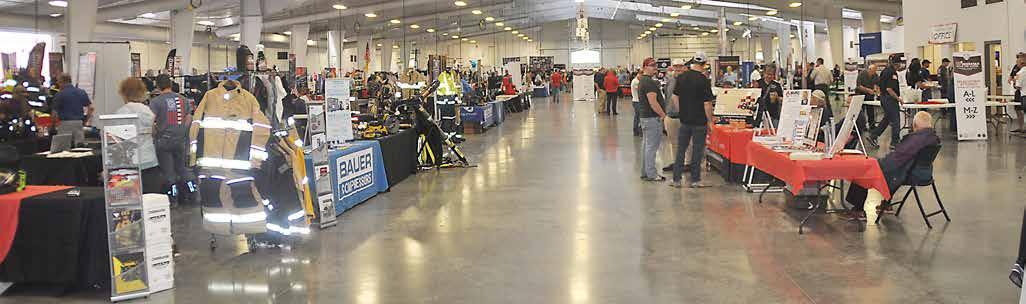
Nebraska State Fire School 2026 is in the books, and the NSVFA Fire Prevention Team enjoyed it! We would like to thank the Fire School Committee for allowing us to be involved. We were able to make contact with people who strolled through the vendor area and stopped by our booth to chat and inquire about various fire prevention options available throughout the state.
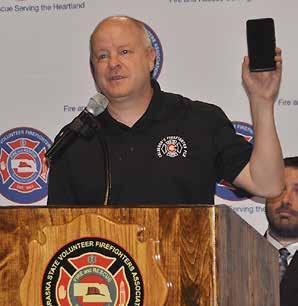
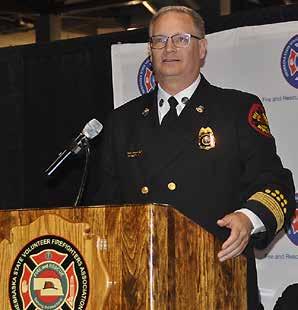
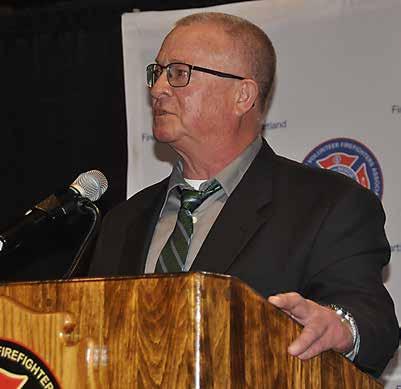
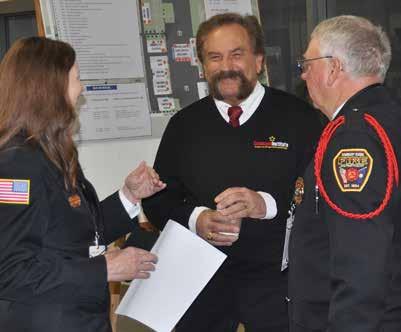
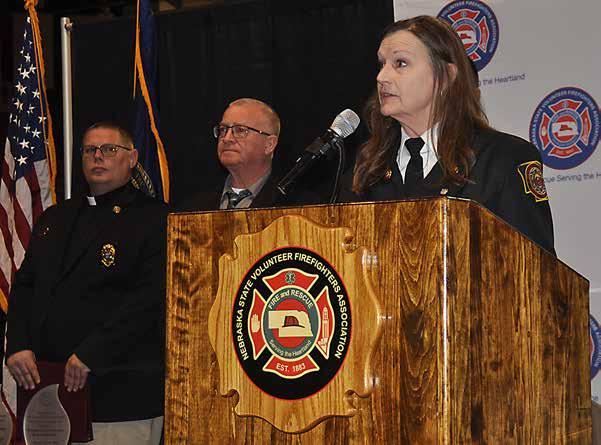
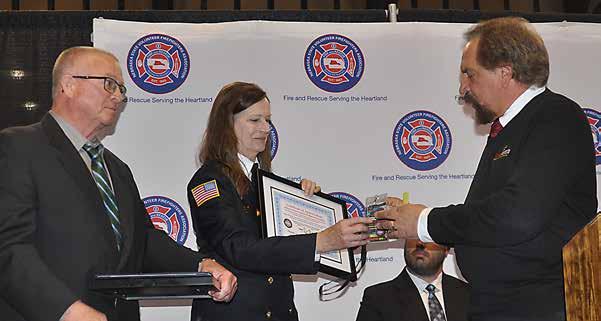
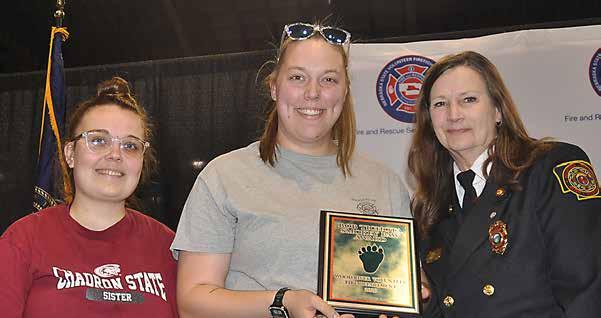
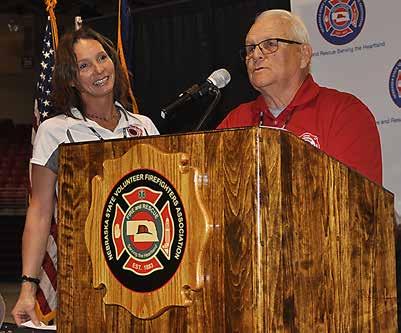
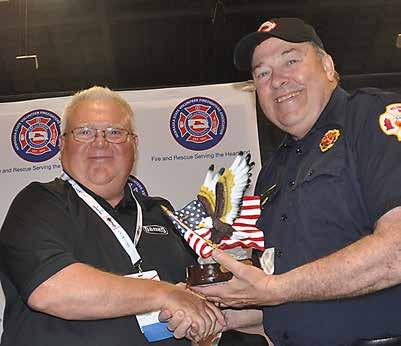
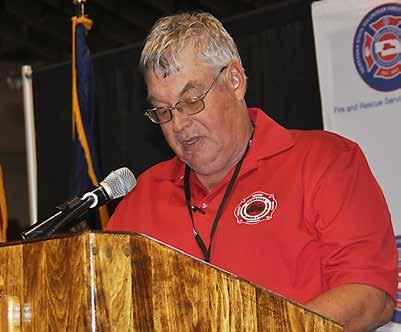
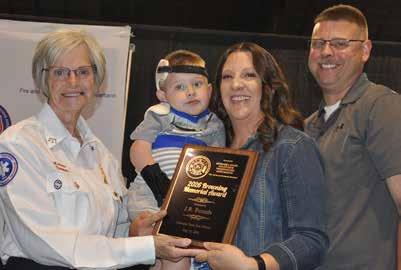
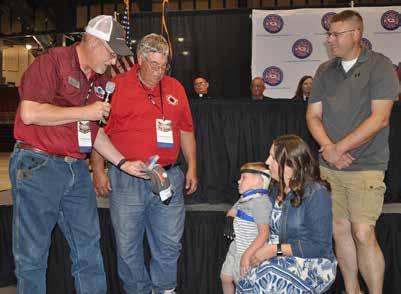
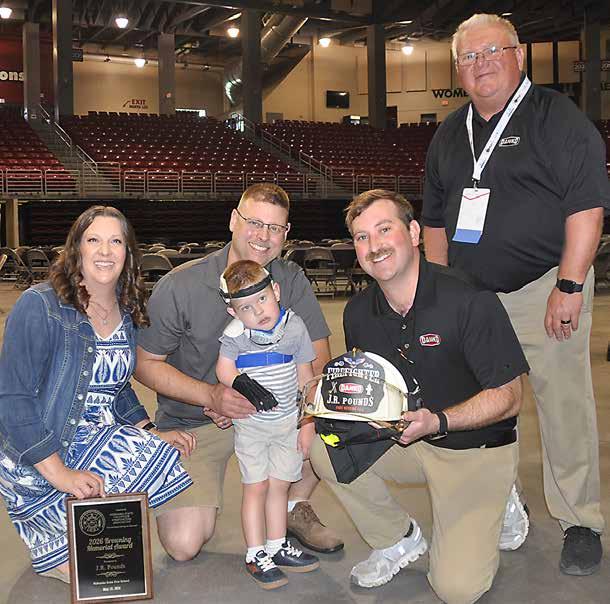
We would like to thank NSVFA and DANKO for sponsoring the Fire Prevention Awards. Congratulations to Gregg Ericksen, Holdrege Volunteer Fire Department, for this year’s winner of the Dave Heywood Fire Prevention Leadership Award; congratulations to
Wood River Volunteer Fire Department as this year’s winner of the Bob Tichota Smokey PAW Award; the community award winners to be congratulated are Kearney Volunteer Fire Department and Wood River Volunteer Fire Department. And the member departments of the East Central Nebraska Fire Prevention Co-op –Arlington, Blair, Clarkson, David City, Fremont Rural, Linwood, Morse Bluff, Plattsmouth, Scribner, and Snyder are congratulated as winners of the fire prevention co-op award.
The members of the NSVFA Team do a great job promoting the importance of fire prevention 365/24/7, and they set a very good

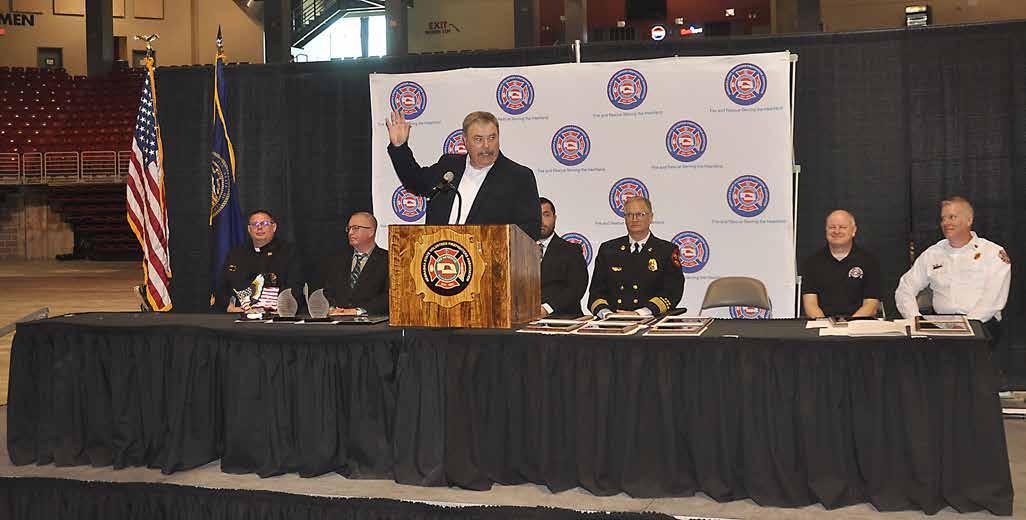
Travis Sears of Union Bank & Trust (Lincoln) and Scott Zimbelman of Homestead Bank (Cozad) present NSVFA President Brenda Jenny with a check from the Nebraska Bankers Association Foundation in the amount of $60,685 to support the NSVFA’s Wildfire Relief grant program.
Email your Upcoming Event by the 10th of the previous month (ex. Aug. 10 for the September issue) to jeff@nebraskafirefighter.com . There is no charge.
JUNE 13, 2026: Bob Tichota Fire Prevention Family Fun Day, Fremont State Lakes, 11 a.m. to 2 p.m., hosted by Fremont Rural VFD and East Central NE Fire Prevention Co-op.
JULY 9, 2026: Scotts Bluff County Mutual Aid Association Meeting, Banner County.
SEPT. 20, 2026: NSVFA Memorial Service, Nebraska Firefighters Museum and Education Center, Kearney, at 2 p.m.
OCT. 8, 2026: Scotts Bluff County Mutual Aid Association Meeting, Bayard.
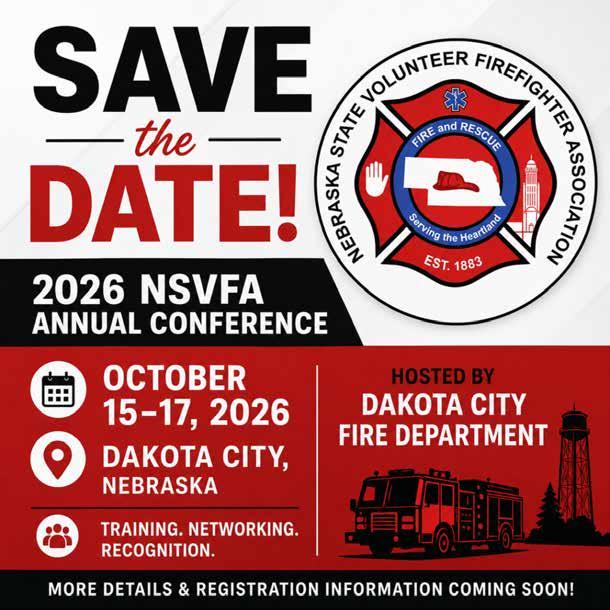
OCT. 15-17, 2026: NSVFA Annual Conference, hosted by Dakota City Fire Department in South Sioux City.
OCT. 14-16, 2027: NSVFA Annual Conference, hosted by Battle Creek Volunteer Fire and Rescue in Norfolk.
example of it at fire school. Participating were Jenie Maloney, Linda Vandenberg, Bryan Heckman, and Bob Heckman. Unable to attend due to their employment were Waylon Fisher and Joanie McFarland. Jared Fernau was on a fire line in the Chadron area and was also unable to join us. These individuals are all appreciated for their efforts, and I can’t go on without thanking our mentor, Kenny Krause. I owe Kenny a huge apology because at the opening ceremonies, I stated that Brenda Jenny is our mentor, and that is not correct. Granted, I do a lot of fire prevention with Brenda, but I totally messed that introduction up, so sorry, Kenny!
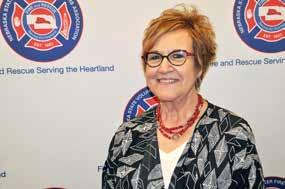
Rhonda Cerny, NSVFA Fire Prevention
“Our class, “Fire Prevention: Building Stronger, Safer Nebraska Communities,” had an awesome group to work with. Ideas, programs, materials, even a short video clipbut there is only so much you can cover in 12 hours.”
And we could not have such a successful fire prevention class without the students who took the time to attend. Our class, “Fire Prevention: Building Stronger, Safer Nebraska Communities,” had an awesome group to work with. Ideas, programs, materials, even a short video clip- but there is only so much you can cover in 12 hours. Believe it or not, we are already talking about things to add to next year’s class. It is always
our goal to get the same message about the importance of fire prevention across to people, but we are constantly looking for new, exciting ways to teach it.
Thank you to everyone who helped in any way to make this year’s fire school another great memory!!.
By JERRY KNAPP jknapp23@aol.com
845-558-0489
Flashover is a fire dynamic we need to understand and should be aware of at every structure fire we go to. But what really is flashover? What triggers it? What are the effects? How does the fire instantly morph from the contents to floor to ceiling flames filling the room at around 2,000F and burning firefighters alive? We can argue the fine points of flashover or backdraft but the definition I like to use is simple: rapid fire development. Here are some of the facts that are important for every firefighter and fire officer to take with you to your next fire.
In 1996 our County Fire Coordinator Gordon Wren had the foresight to purchase a flashover training unit from Swede Survival from which we learned a lot about fire dynamics before the term was made popular by Fire Safety Research Institute a part of UL. Before our first burn to train instructors, Gordon explained to us how it worked. First we line the shipping container with chip board, light a crib fire to involve the chip board, get inside, close the door and wait for the flashover our heads. At the time, we were not sold on his plan but it proved to be excellent way to observe flashover from 3’ below floor level. Lets use the example of a house fire. The amount of air the fire has access to controls the speed of fire development. The fire is ventilation limited, lots of fuel not enough air.
Those are the conditions until we force the door, chock it open and/or take windows before water is on the fire. So the fire has all the fuel it needs but is starving for air/ oxygen. More air more fire, very quickly. While searching, you need to consider where this fire is on the fire curve (see FSRI) to figure how much time you have before it gets untenable.
Flashover warning signs to look for while searching or pushing a hose line in include: high heat, free burning fire, dense smoke and a late sign….rollover. But these are conditions that we face in every fire. So yes, expect a flashover and keep an eye on conditions and warning signs. If you don’t have a hose line, and see the conditions get out now. If you have the nozzle, open it, right now. The key factor in terms of our survival is to get water on the fire quickly, from where ever you can….inside or outside thru a window or door: water kills flashover. Delay ventilation until water is on or very close to being applied. So where does all this instant fire come from ? The fire is producing flammable gases as a result of pyrolosis of fuels in the room. Fuels (furniture, beds, drapes, rugs,etc) are heated by the fire and are broken down into flammable, not yet burning gases. In a world class article in Fire Engineering Magazine (Dec 2025) Tim Crockett from Louisiana Fire and Emergency Training Academy describes these as chemical time bombs in the volatile smoke. Dave Walsh a NYS Fire Instructor magnificently
Classified ads run $10 for the first 10 words, and 25 cents a word after that. A photo is $10 additional. Rates are the same in each state (Iowa, Minnesota, South Dakota, Nebraska and Kansas).
Email the ad to jeff@nebraskafirefighter.com to place your personal or departmental ads.
summarizes this complex chemical process as: smoke is fuel. Remember that, Dave has captured it so you can take it to every fire. According to Crockett, some of the flammable gases include: carbon monoxide, hydrogen cyanide, acrolein, benezene, toluene, styrene, xylene and polycyclic aromatic hydrocarbons. OK more chemistry than we need to know but we need to recall that these are flammable. What I could never understand was how does flashover fill the room with fire? Why does it not bank down from the top and stay higher in the room if that is where the flammable smoke is? Crockett included the fact that most of these gases are heavier than air so when they ignite they maybe lower in the smoke column than we would expect. Sure some lighter than air flammable gases are lighting up near the ceiling but these other bad guys, if they are not driven up by heat will light up closer to us near the floor. Think back to the flashover simulator, trainees are three feet below the fire module which is filled with flames floor to ceiling. In the real world we are on the fire floor and cant dig a fox hole to survive.
What about rollover? Why is it so slow and lazy? One of the reasons is the carbon dioxide in the smoke slows the process. But, at around 1100F the CO2 breaks down into flammable CO and this maybe what is helping drive the change from slow lazy fire to roaring flashover. Lots of other factors in play but this gives you an idea
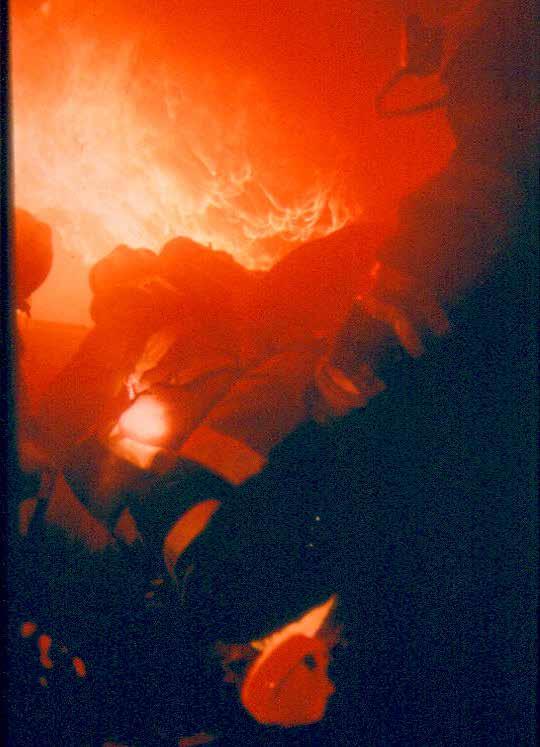
of the role of smoke as fuel.
So a couple important takeaways: Structure fires are usually ventilation limited, more air = more fire
Coordinate ventilation with application of water from either inside or out
Caution!!! Use modern nozzle techniques if applying water from
outside (See FSRI Fire Attack Study)
Especially during search, monitor conditions
Review the Cherry Road fire report ( double LODD in 1999)
Go to FSRI.ORG for world class fire dynamics explanations/ training.
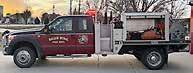

For Sale: 2013 F550 6.7 diesel, extended cab, Brush Truck, 6,075 miles, 400-gallon tank, new Hale (gas) pump installed in March of 2025 and whip lines, passenger side scene light mount replaced. Asking $135,000 OBO. Call Jared with Hallam Fire at 402-580-1071 or email hallamfire@ gmail.com for more information.


GRAND ISLAND · PHOTO BY JEFF GARGANO
I am writing this to nominate Crete Fire and Rescue Firefighter/EMT AJ Page and Rescue Lt. Brandon Smejdir for a 2025 Heroism Award. On April 9, 2025, Crete Fire and Rescue was dispatched to a structure fire inside the city limits of Crete. Heavy, dark smoke was visible as personnel were responding to the station. Weather conditions were extremely windy. Winds reaching as high as 40 mph from the northwest. Firefighter Page responded on the first apparatus (Engine 31) as a firefighter. Upon arrival, Lieutenant Smejdir gave an approach report and took command. The structure was a medium size two-story house with heavy fire conditions on the entire Alpha side. The fire had already breached the windows and the wind was pushing it into the house. Conditions were indicative of a defensive fire. While Lt. Smejdir was completing his 360, a female approached him reporting that she had just got out of the structure but her young child and grandparents were still inside the residence. FF Page was assisting pulling an attack line but upon hearing that there were potential victims, he went to assist Lt. Smejdir. Lt. Smejdir and FF Page made the decision to go interior and attempt a quick rescue. Command was passed to the operator of Engine 31 and the other two firefighters pulled an attack line to begin fire attack from the alpha side. Besides having high heat and heavy smoke conditions, they had to deal with hoarding conditions on the inside. They continued to push on into a back porch and then into the kitchen where FF Page found a child. FF Page was able to remove the child from the structure by himself while Lt. Smejdir made one last look under the smoke to check for additional victims. Heat and smoke conditions indicated a potential flashover becoming imminent. Lt. Smejdir saw a foot near the front of the kitchen and despite the conditions removed an adult from the structure by himself. Both victims were removed outside to awaiting crews for EMS care. Despite actions taken, there was not a good outcome but the bravery shown by both FF Page and Lt. Smejdir was exemplary. They made a decision to put their lives on the line and give the victims a chance. I responded with a third apparatus to the scene and arrived just as Lt. Smejdir was removing the adult. I could not believe that they were able to get inside and removed two individuals in the short time that they were in. The fire had basically chased them out of the house as they exited. I could not be more proud of both of them and the actions they took that day. It really shows the type of firefighters that they are. Both are more than deserving of this high award. Thank you for considering them.
JAMES YOST, Assistant Fire Chief Crete Fire and Rescue
On June 5, 1991, in Crete, Fire Lt. Tim Smejdir responded to a house fire. Lt. Smejdir responded directly to the scene as a First Responding Officer. Upon arrival it was determined that there was a victim in the basement of the home. Lt. Smejdir immediately entered the structure, ran downstairs, located the victim, a 15-year-old girl, lying on the floor unconscious. Lt. Smejdir drug the victim to the bottom of the stairs where he was met by fellow firefighter Bob Page who stopped by the scene enroute to the station from his residence. Smejdir and Page carried the 15-year-old victim up the stairs and out of the house as the first Crete Fire Units arrived on scene. The victim was transported from the scene to the Crete Hospital where she was admitted in critical condition. She was dismissed a few days later.
Approximately 34 years later, just a few blocks from where this incident occurred, there was a house fire where two Crete Firefighters, Brandon Smejdir (son of Tim Smejdir) and AJ Page (grandson of Bob Page) performed a heroic rescue in an attempt to save two lives from a heavily involved residence. Coincidence? I think not. Legacy following in the footsteps of a father and grandfather, who gave their all to save another in need, a task that the younger Smejdir and Page tackled with vigor and diligence.
I realize that this nomination and request are a little out of the norm, but believe that the Heroism Award is deserved for Retired Firefighter Tim Smejdir for his actions on June 5, 1991, and also his actions and examples continued on to the next generation by the actions of his son, Brandon.
I was fortunate to be a responder on both of these fires, one as a rookie and one as Chief of a Mutual Aid Department.
As we were clearing the scene of the 2025 fire, I thought of the fire a few blocks away 34 years earlier where Smejdir and Page went above and beyond, just like the younger Smejdir and Page. I fully support Tim Smejdir for a Heroism Award for his actions on June 5, 1991.
CRAIG VYHNALEK, Chief, Wilbur Fire and Rescue Retired Crete Fire and Rescue
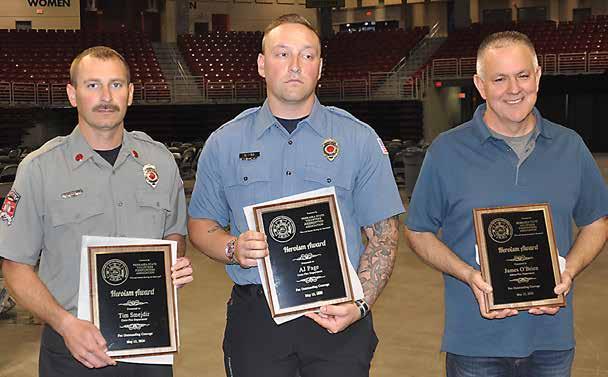
On January 26, 2026 at 17:10, Albion Fire and Rescue was dispatched for a 2-vehicle accident approximately 8 miles east of town on highway 91. When we arrived, there was a pickup truck upside down in the ditch on fire, and a passenger car partly on the highway and partly on the shoulder with significant impact damage. The young male driver of the pickup (Isaac) was out of the vehicle and on the side of the road, the young female driver of the passenger car (Natalie) was trapped inside. As we assessed the scene and spoke to the patients and bystanders, we were able to find out that there were two Good Samaritan heroes who needed to be recognized for their efforts prior to our arrival.
Robert Ross was on his way to his Albion home from work when he came across the scene just a couple of minutes after it happened. He noticed the black car first and initially thought maybe it was a law enforcement officer on the side of the road, but as he got closer, he realized this was an accident scene that had just occurred. As he came upon the car, he could hear the screams from the young lady inside and was about to stop when he noticed the upside-down pickup just down the road in the ditch and it was on fire. He proceeded to the pickup to see if anyone was in there and as he got out of his vehicle, he noticed other people and vehicles on the side of the road, but nobody was doing anything. He could not see into the cab of the truck as he approached, and he yelled to see if anyone was in there. He was surprised when he heard Isaac yell back. Robert said a quick prayer asking God to help
him and then got down on the ground and crawled through the window to see Isaac suspended by his seatbelt upside down. Robert asked if Isaac was ok and Isaac said he didn’t think he could feel his legs. At this point Robert told him that he was going to help him out of the truck because it was on fire. Robert crawled back out of the truck to get his knife from his pocket and when he crawled back in, Isaac had a box cutter knife in his hand. They looked at each other and Robert said yes, then Isaac cut the seat belt and fell to the ground and Robert began to drag him out of the truck. As Robert was dragging Isaac out of the truck, he noticed Jim O’Brien was approaching them and Robert asked him for help.
Jim had been on his way home in Newman Grove after work as well when he came upon the accident. He also noticed people just sitting in their vehicles or standing on the side of the road but not doing anything. He noticed the truck on fire and could see Robert trying to get Isaac out of the vehicle. He pulled his vehicle over and told his 4 children to stay in the vehicle, and he proceeded to assist Robert. Both men were able to get Isaac removed from the vehicle to a distance of a few feet and then realized they needed to get him further away. They were eventually able to get him several yards away to a safe place. Approximately 3 minutes after that, there was an explosion at the truck, and it became fully involved in flames. At this time other people had arrived and were assisting them with Isaac, but nobody had approached the vehicle
with Natalie inside. Jim and Robert could still hear her screaming so they approached the vehicle. They knew they could not get her out of the vehicle, so they talked to her. Natalie was concerned about her dog that was in the car with her. Robert was able to get one of the back doors open and found the dog alive inside and removed the dog from the vehicle. Natalie was also worried about the fact that she had Life 360 on her phone, and it most certainly had alerted her mother who was probably trying to call her but Natalie did not know where her phone was. Jim was able to get his phone to Natalie so she could call her mother. Jim and Robert continued to be there and speak to Natalie to try and keep her calm until first responders arrived.
Issac was taken by ambulance to the hospital in Albion. LifeNet was dispatched to the scene for Natalie and after a long extrication she was flown to the trauma center in Lincoln. Isaac was later flown from Albion to the trauma center in Lincoln. Both of them endured multiple surgeries and spent days in the hospital and are still recovering today. It’s almost certain the outcome for Isaac would have been different if not for the heroic actions of these two men. While neither of them are first responders, they did rescue a first responder as Isaac is member of the Albion Fire Department. Robert and Jim both possess the characteristics of first responders, moving towards danger to help those in need and making an impactful difference in the lives of others. They truly are heroes.
President
BRENDA JENNY 1767 Colfax Street, Blair, NE 68008 402.639.9647 bgolf2560@yahoo.com
1st Vice President
TROY SHOEMAKER 1433 Grove Ave Alliance, NE 69301 308-760-7682 tshoemaker@cityofalliance.net
2nd Vice President
KENNY KRAUSE 1229 D St. Fairbury, NE 68352 402-300-0097 krausechief@gmail.com
Secretary/Treasurer
MARK MEINTS
502 E H St, Wymore, NE 68466 402-806-7451 meints2@windstream.net
NSVFA Lobbyist
RYAN K. MCINTOSH PO Box 13 Nebraska City, NE 68410 ryan.mcintosh@stilmockmcintosh.com
NSVFA Legal Advisor
SCOTT SMITH
P.O. Box 186 Syracuse, NE 68446 scott.smith@bhhslawfirm.com
Past President
SCOTT SCHREMMER
815 W 6th, Chadron, NE 69337 308-430-1494 buffhater@gmail.com
#1 DARRELL VANCE 1415 Q St, Gering, NE 69341 308-631-0053 DarrellVance1230@gmail.com
#2 JOHN BOMAR P.O. Box 222, Battle Creek, NE 68715 402-992-1560
JBomar1970@gmail.com
#3 RON CHADA 1721 N Sheridan North Platte, NE 69101 308-520-2828 rmchada@winnelson.com
#4 DANIEL CHAPEK 1491 County Road 30 Weston, NE 68070
402-430-7859 dchapek@dc-ww.com
NSVFA Representative National Vol. Fire Council
JUSTIN SCAMEHORN
202 Hidas Ave. Waco, NE 68460 402-366-1939
jscamehorn@yahoo.com
Appointed NVFC Director
JOEL CERNY 1618 Denver St. Schuyler 68661 402-720-4100 cerny_j@hotmail.com
Chaplain
MATTHEW MAU
Cell: 402-363-1540
E: pastormattwaco@gmail.com
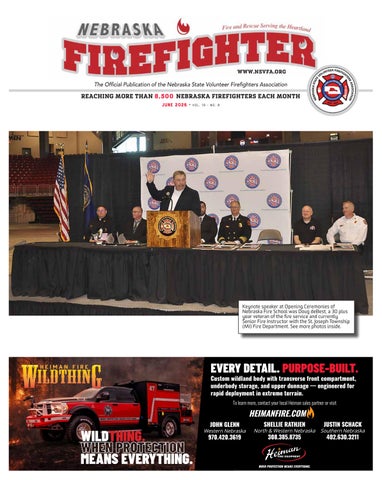
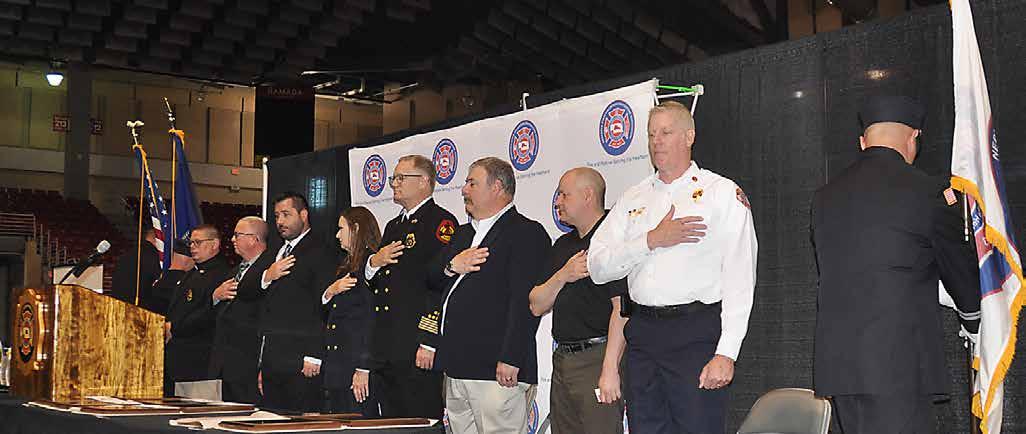
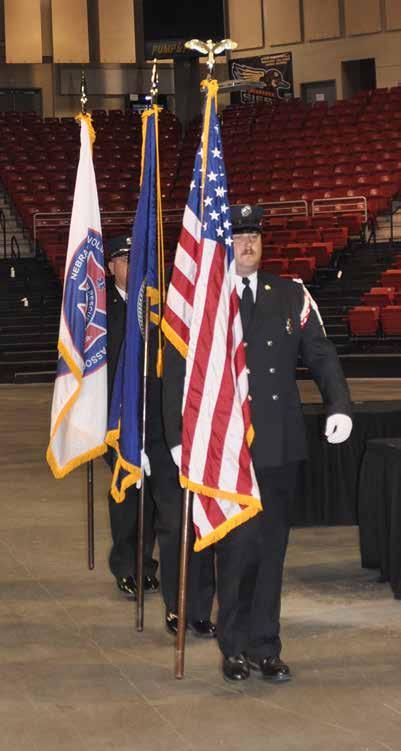
Last month, the Nebraska State Volunteer Firefighters Association (NSVFA) hosted its 89th Annual Fire School, bringing together nearly 1,000 volunteer firefighters and EMS providers from across Nebraska to participate in 28 training exercises and workshops. While attendees experienced a well-organized and successful event, many may not realize the tremendous amount of behind-thescenes work required to make Fire School possible.
Months of planning and coordination went into preparing for the NSVFA Fire School. From securing the venue and scheduling classes to coordinating instructors and organizing logistics, a dedicated team of volunteers, led by Pat Gould, chair of the Fire School Committee, worked countless hours to ensure every detail was in place.
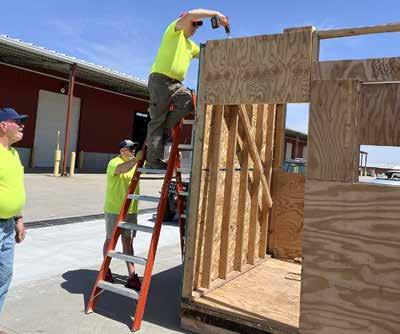
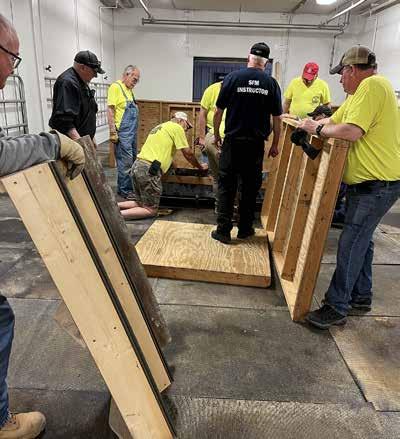
In the days leading up to Fire School, volunteers gathered to transform the venue into a fully functioning training site. They set up the vendor hall and classrooms,
organized equipment, arranged seating, coordinated vendors and food deliveries, and prepared training props and hose layouts. Every task, large or small, played an important role in ensuring the event ran smoothly and efficiently. Once Fire School concluded, the work was far from over. Volunteers immediately shifted into teardown and cleanup mode, packing equipment, dismantling props, cleaning classrooms and the vendor hall, and carefully returning everything to storage. This year, crews were also racing against Mother Nature on Sunday, working quickly to complete teardown efforts so volunteers and support personnel could safely return home before the predicted severe storms moved into the area. Despite the time crunch and threatening weather, the teamwork and dedication on display ensured the venue was restored in a timely manner.
In total, more than 30 volunteers from the NSVFA, the Nebraska Forest Service, NEMA, the Nebraska State Fire Marshal’s Training Division, and several community organizations contributed their time and effort to set
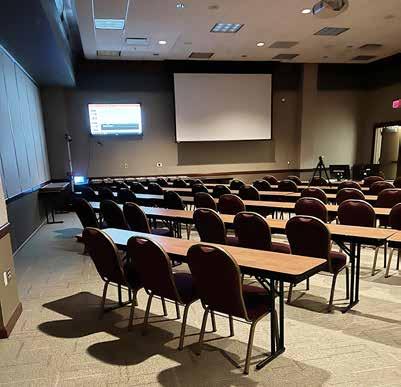


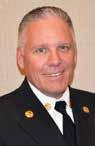
up and tear down Fire School. It is estimated that well over 1,800 combined volunteer hours went into preparing for and cleaning up after the event — a testament to the commitment and passion of those who support Nebraska’s fire service community.
As this year’s Fire School came to a close, the hard work and dedication of everyone involved certainly did not go unnoticed. The NSVFA extends its sincere gratitude to all those who worked behind the scenes, noting that without their support, the NSVFA Fire School would not have been possible.
“In total, more than 30 volunteers from the NSVFA, the Nebraska Forest Service, NEMA, the Nebraska State Fire Marshal’s Training Division, and several community organizations contributed their time and effort to set up and tear down Fire School.”
Here are a few candid behind-the-scenes photos capturing some of the memorable moments throughout the week — including a time when things did not exactly go according to plan.
As always, if you have an upcoming meeting or event you would like Troy or myself to attend, please let us know.
Until next time, stay safe everyone.
BRENDA
1 st Vice President, NSVFA
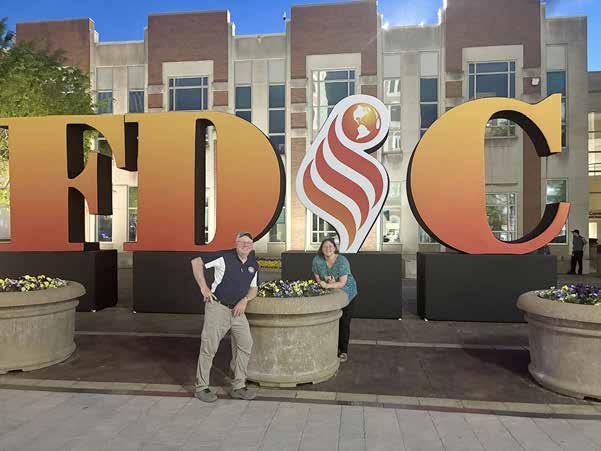
It’s always been on my bucket list to attend FDIC. We managed to get that done this year. Something that I want to express to all of you is that if you have something that you want to do, get out there and get it done. I have some regrets about things I have wanted to do in the past and didn’t, because I thought I was too busy. For years, I could always find some reason not to take time to attend Fire School or Annual Conference or a number of other things that were personal or not fire related. If anything has crossed your mind that you think you might want to do, take the time to investigate and
most likely it will turn out to be worth your while to go out and gain that experience, whatever it might be. I always wanted to take a fire academy class at Emmitsburg, but since I didn’t do it several years ago when it was on the forefront, I feel like that ship has sailed for me. I will never know what I may have missed.
We had many firsts on this trip. We met the Canadian vehicle extrication instructor, Jason DeFosse, who was teaching at FDIC. We went to a vendor event the first night, and had adult beverages right in the street in downtown Indianapolis. I got to try virtual
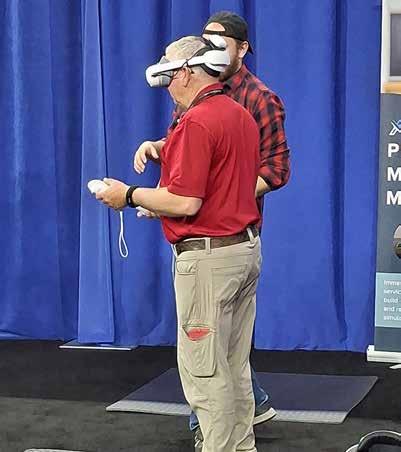
reality firefighting. It wasn’t my cup of tea. I’ll never make it as a virtual firefighter! I was challenged by one show vendor to see how much cash I could catch in a phone booth. My skills were a little bit better here. We ate lunch at an establishment where they insult you while you eat. The ladies in our party were not very receptive to this dining experience. We Ubered several times, I had never done that before. My most favorite experience of the trip, was listening to a New York firefighter explain his role on the morning of 9/11. We also attended the National Fallen Firefighters Founda-
Kenny Krause, 2nd Vice President
if you have something that you want to do, get out there and get it done. I have some regrets about things I have wanted to do in the past and didn’t, because I thought I was too busy.”
tion commemoration of the 25th anniversary of 9/11. David Eigenberg, or Herman, from Chicago Fire was a guest speaker. It turns out that my adventure seeing FDIC was much more than a singular experience. There may be one thing on your list, that as you do it, or see it, it will blossom
into a multi-faceted encounter. (I’m sure you could tell I had help with this closing sentence.) As always, stay safe, and go get it,
Firefighters,
This month, I want to address two issues that can cause confusion for many departments and rural fire districts: training expectations for volunteer firefighters and the proper handling of billing revenue. These are both critical to the safe and effective operation of every department.
Nebraska law does not impose a statutory minimum training requirement for volunteer firefighters. But the absence of a statutory mandate does not mean the absence of risk. When a firefighter is injured—or worse—without adequate training, several consequences can follow. Workers’ compensation carriers may pressure the department or district to adopt formal requirements. OSHA may step in and impose its own training standards. Federal PSOB benefits can be jeopardized if training is insufficient. And such absence of training standards can subject the city, village, or rural fire district to civil suit.
For these reasons, every depart-
ment should have clear, written SOPs, SOGs, or bylaws that establish both initial and continuing education expectations. This responsibility does not fall solely on the chief. It belongs equally to the governing bodies—city councils, village boards, rural fire district boards—and to every volunteer firefighter who serves. Training standards protect not only the public, but also the firefighters themselves, their families, and the political subdivisions that support them.
The second issue involves billing for fire or rescue services. Billing proceeds for services rendered using rural fire protection district equipment belong to the rural fire protection district. A rural fire protection district is its own political subdivision that handles its own funds. There is occasional confusion as to whether county govern-
ment has any right to these billing proceeds and they do not. Billing proceeds belong to the entity providing the service—whether that is the district, the city, or the village. Clarity in governance prevents conflict and reduces liability. When training expectations are documented and consistently followed, and when financial authority is properly understood, departments operate more smoothly and are better protected when challenges arise.
If your department or district needs help reviewing or updating its policies in either area, feel free to give me a call, I’d be happy to assist!
Respectfully submitted,
SCOTT G. SMITH, NSVFA Legal Advisor




The primary elections held on May 12 brought a few surprises and everything has been set for a competitive vote during the November general election. Nebraska’s primary elections for the officially nonpartisan Legislature narrowed the fields in 25 races, including 11 crowded primaries. Among the most surprising and interesting races were for two incumbents – Brad von Gillern in District 4 and Rick Holdcroft in District 36 – who trailed their challengers, Cindy Maxwell-Ostdiek and Darin Tompkins, respectively. Overall, several Democratic candidates led in competitive districts, buoyed in part by high turnout from an Omaha-based congressional primary. Fundraising surpassed $4.1 million by late April, and multiple
open seats, including Districts 10, 14, and 20, set up competitive November matchups. Full results can be found on the Nebraska Secretary of State website here: https:// electionresults.nebraska.gov/
Among Nebraska’s constitutional offices, the most notable development was the Republican primary upset in the Secretary of State race, where Scott Petersen defeated incumbent Bob Evnen 55% to 45%. Petersen, who campaigned on skepticism of Nebraska’s ballot-counting systems, will face Democrat Sarah Slattery in November. In the gubernatorial primaries, Republican Governor Jim Pillen and Democrat Lynne Walz advanced easily. Attorney General Mike Hilgers, State Treasurer Joey Spellerberg, and State
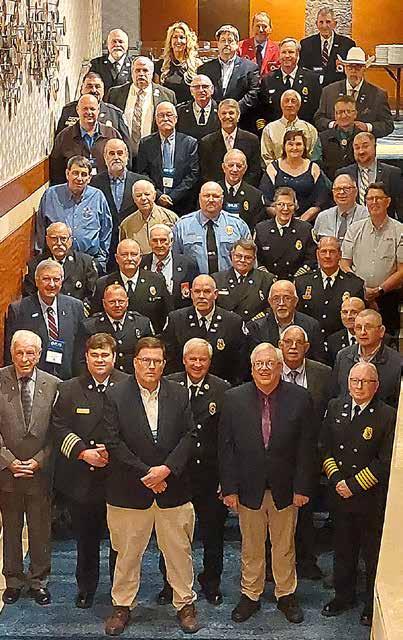
The National Volunteer Fire Council (NVFC) held its 2026 spring board conference on May 15-17 in Alexandria, VA. Nearly 50 directors representing 30 states attended, including Joel Cerny from Nebraska. Topics addressed during the conference included the NVFC’s strategic plan and emerging issues impacting the volunteer fire service. In addition, a new state association was admitted into the Council and the NVFC’s annual achievement awards were presented.
This year, the NVFC is celebrating its 50th anniversary as the association representing the volunteer fire, emergency medical, and rescue services. Here is a wrap-up of activities that took place at the NVFC spring board conference.
Many directors arrived early to attend the NVFC’s advocacy day on May 14. Directors were briefed on NVFC policy priorities before heading over to Capital Hill to
meet with their legislators, where they explained the importance of critical legislation impacting the volunteer fire and emergency services and the need for Congressional support.
The NVFC board voted to approve the Idaho Fire Chiefs Association as a member of the NVFC. State members can appoint up to two representatives to serve on the NVFC board of directors. With the addition of Idaho, the NVFC has 49 state association members, including Nebraska.
New this year, NVFC committees met virtually in advance of the board conference. This provided the opportunity for all board members to attend even if they could not be at the conference. During the conference, the board was updated on committee activities through report-outs and discussions. The NVFC has 17 committees as well as the EMS/Rescue Section.
The NVFC board addressed several critical issues impacting the organization and the volunteer fire and emergency services. This included the NVFC’s strategic plan, the proposed OSHA Emergency Response Standard, and briefings from fire service and industry partners. In addition, sessions were held on governance and the use of AI (artificial intelligence) in the fire service.
AWARDS CELEBRATION
The recipients of the NVFC’s
Auditor Mike Foley all advanced unopposed, as did their Democratic challengers.
In congressional races, Democrats in the 1st District selected former diplomat Chris Backemeyer to challenge Republican Rep. Mike Flood, who ran unopposed. Nebraska’s 2nd Congressional District produced one of the most dramatic contests of the election, with a crowded Democratic field. Denise Powell led with roughly 39% of the vote, followed closely by State Sen. John Cavanaugh at 36%. The sixcandidate race had grown increasingly bitter and expensive, with heavy outside spending boosting Powell and attack ads targeting Cavanaugh. Powell will face Republican Brinker Harding in a nationally watched
Ryan K. McIntosh, Lobbyist
“Additionally, your local elections, particularly county commissioners, city council and village board of trustee elections will have an effect on your departments. Stay engaged and don’t hesitate to reach out with any questions.”
generalelection race for the Omahabased swing district. In the 3rd District, Rep. Adrian Smith advanced after defeating challenger David P. Huebner, while Democrat Becky Kelly Stille and Legal Marijuana NOW candidate David Else also secured spots on the November ballot. These primaries set the stage for competitive general election contests across Nebraska’s three House districts. U.S. Sena-
Additionally, your local elections, particularly county commissioners, city council and village board of trustee elections will have an effect on your departments. Stay engaged and don’t hesitate to reach out with any questions.
Lifetime Achievement Award, Chief James P. Seavey Sr. Health and Wellness Leadership Award, and Junior Firefighter of the Year Award were recognized during a celebratory banquet on May 16. The Junior Firefighter Program of the Year Award will be presented locally to allow all of their members to attend. Read about this year’s award winners here
CONFERENCE AND AWARD SPONSORS
The NVFC appreciates the support of the spring conference and award sponsors: AES; Anheuser-Busch; California Casualty; Clarion Events Fire & Rescue Group; Columbia Southern University; Darley; DripDrop; F.I.E.R.O.; FirstNet, Built with AT&T; ESIP by McNeil and Company, National Fire Protection Association; National HeroPlus Program powered by Go For Answers; NPPGov; Provident; Tesla; UL Research Institutes’ Fire Safety Research Institute; VFIS; Ward Diesel Filter Systems; Wendell’s Mint.
NEXT CONFERENCE
The NVFC board meets in person twice a year. The fall board conference will take place in Owensboro, KY, on September 23-25.
ABOUT THE NVFC
The National Volunteer Fire Council (NVFC) is the leading nonprofit membership association representing the interests of the volunteer fire and emergency medical services. The NVFC unites and supports volunteer and combination fire and EMS organizations through education, advocacy, leadership development, and collaboration. Guided by professionalism and innovation, we provide the tools and resources needed to protect communities, advance responder health and safety, and prepare leaders for the future. Learn more and join at www.nvfc.org
“Nearly 50 directors representing 30 states attended, including Joel Cerny from Nebraska. Topics addressed during the conference included the NVFC’s strategic plan and emerging issues impacting the volunteer fire service.”
Nebraska 1st Responders, I hope that everything is getting back to normal after the last couple of months of wildland fires, we also need to keep everyone in our thoughts and prayers that have been affected by the fires.
The 2026 Nebraska State Fire School is over, and a big thank you to the NSVFA Fire School Committee for all the hard work they do to make sure this school happens. Also, a big thank you to the Nebraska Forest Service, Nebraska State Fire Marshal Training Division, Nebraska Fire Marshals, and all the instructors for everything they do to make the Nebraska Fire School such a great success. We also cannot forget the vendors for all they do to help make the Fire School what it is.
I really don’t have a lot to talk about on legislation for this year as with the short fall of money. We the NSVFA and all 1st responders must get LB 115 (The tax credit of $250.00) introduced again next year asking our State Senators raise it to $1,000 and take the one year waiting period out of it along
By BOB HECKMAN
This month’s article is dedicated to the memory of Jared Adams, Newman Grove VFD 11/23/2022, gone but not forgotten.
According to the Nebraska Forest Service, rounding numbers off, over 900,000 acres of Nebraska so far this year, not all wildland fires are reported. PLEASE report your fires and educate your citizens on the dangers of burning during dry conditions. Or another way to put it: learn when to burn and the policy of your fire department on applying for burn permits.....Fireman Bob
with the cancer bill that only needed one more vote. Budget time is not far off and I hope that your department is working on it to be able to present it to your boards. I would also suggest that if you have never done it before, do a one-, five-, and ten-year plan for your department and show it to the board so they can also start their planning. If you have vehicles coming up for replacement soon, have that in your plans also. Remember the boards have only so much money to work with also. If you don’t go to the rural boards annual meeting, I would suggest that you should be going even if you are not a resident of the fire district. There are five members on the rural board and there should be three members voted every two years and two member every other two years. Remember to make sure
that all funding derived from the use of district equipment goes into the rural fire district’s account. The only money that should go into the department trust fund is money from your fundraisers or other activities that did not come about from the use of district equipment. Please remember the Nebraska Fallen Firefighter Memorial Service that will be held on Sunday September 20, 2026 at the Nebraska Firefighter & EMS Memorial starting at 2:00 P. M. The address is 2834 E. 1st St Kearney, Nebraska.
Other important dates in 2026 are the NSVFA conference which will be held in Dakota City on October 15-17, 2026.
It looks like there will be bylaws to vote on, and for the most part it is to clean them up.
We will also be voting on Pres-
John Bomar, District 2 Director
“Please remember the Nebraska Fallen Firefighter Memorial Service that will be held on Sunday, September 20, 2026 at the Nebraska Firefighter & EMS Memorial starting at 2:00 P. M. The address is 2834 E. 1st St Kearney, Nebraska... GROUP BLOCK is under NSVFA 2027 .”
ident, 1st and 2nd Vice Presidents, and Dist. 2 and 4 Directors.
The 2027 NSVFA Conference will be hosted by Battle Creek on October 14-16, 2027 in Norfolk. Norfolk Lodge & Suites (Location of Conference Center) 4200 W NORFOLK AVE NORFOLK, NE (402-379-3833) has Open Reservations now for the NSVFA 2027 conference that will be hosted by Battle Creek Volunteer Fire and Rescue.
Please send them to jeff@nebraskafirefighter.com along with information to explain the photo.

GRAND ISLAND · PHOTOS BY JEFF GARGANO
By COLE KLEINWOLTERINK
Before the Mayday
Rapid Intervention Team training has a way of humbling firefighters quickly. The work is slow, physical, awkward, and unforgiving. Moving a downed firefighter on flat ground is difficult enough. Moving that firefighter up a stairwell, in full PPE, on air, with limited visibility and poor communication, can become one of the most demanding tasks we face on the fireground.
This drill was designed around a simple but important objective: crews must demonstrate multiple methods for moving a downed firefighter up a stairwell while managing fatigue, limited visibility, and stress. The goal is not to prove that one technique is the best but rather prove that no single technique works every time and we must have a plan A, B, C, etc. Firefighters naturally default to what they know best. When the environment is controlled, heart rates are low, and the crew is fresh, most firefighters can make their preferred technique work. But the fireground does not always give us ideal conditions. Stairwells may be narrow, cluttered, dark, smoky, or difficult to communicate in. The downed firefighter may be poorly positioned. The rescuers may already be tired before the rescue even begins.
That is why this drill is built in layers. The first level allows firefighters to work through techniques while relatively fresh. The second level adds fatigue and then removes vision. The third level adds environmental stressors that disrupt communication and force crews to problem-solve under pressure. We are not adding difficulty just to make the drill harder. We are adding stressors because stress changes performance. As fatigue builds, coordination decreases. As heart rate climbs, decision-making becomes harder. As visibility is removed, simple movements become slower and communication becomes more important. As noise and obstacles are added, firefighters are forced to adapt instead of simply repeating a clean version of a technique. The point is not to embarrass anyone or create chaos. The point is to expose firefighters to controlled discomfort so they can identify what works, what fails, and what needs more practice before the real call comes in.
BEGIN WITH THE END IN MIND
Before starting the drill, clearly explain the objective to the crew: Crews will demonstrate multiple methods for moving a downed firefighter up a stairwell while managing fatigue, limited visibility, and stress—without relying on a single technique.
A successful evolution is not always the fastest or smoothest. The value of this drill comes from
testing options, communication, teamwork, and adaptability. Some of the best learning may come from the techniques that feel awkward or fail under fatigue. Before the main evolution, allow time for a short “show and tell.” Have members share techniques they have used, seen, or trained on for moving a downed firefighter up stairs. One firefighter may prefer using the SCBA harness. Another may use webbing. Another may use a push-pull method, legdrive technique, or modified drag. This portion of the drill builds the toolbox before testing the tools. It also reminds firefighters that a technique that looks good in a video may feel very different in full PPE, on air, in a tight stairwell, after your heart rate is elevated.
All levels of this drill should be performed in full PPE and on air. If available, use a training mannequin. If a firefighter is used as the downed member, ensure the evolution is controlled, monitored, and safe.
Position the downed firefighter at the base of the stairwell. Two firefighters move the downed firefighter from the bottom to the top of one flight of stairs. Once both rescuers and the downed firefighter reach the top, rapidly reset the drill and the same two firefighters immediately repeat the evolution. The key requirement is that a different technique must be used to get the downed firefighter up the stairs each time.
This level gives firefighters the chance to compare techniques while physical load is increasing. The first movement may feel strong and controlled. By the second and third movement, fatigue begins to show. Grip strength fades. Breathing rate increases. Communication may become shorter and less clear. The requirement to use three different techniques prevents the crew from staying in their comfort zone. That is the point.
Level 2 begins the same way as Level 1. Firefighters complete the first two evolutions using different techniques. By this point, their heart rates should be elevated and fatigue should be setting in. On the third evolution, remove the rescuers’ vision using a BA shield or cling wrap.
This changes the drill immediately. Movements that were simple with sight become more difficult. Foot placement, hand placement, and communication become critical. Rescuers must slow down enough to maintain control but continue working with urgency. Reduced visibility forces the crew to feel the stairwell, communicate position, manage the downed firefighter’s movement, and maintain orientation. It also exposes weaknesses in techniques that depend
too heavily on sight or perfect positioning.
Level 3 follows the same structure as Level 2 but adds external stressors. Add loud music or noise distractions to disrupt communication. Place safe obstacles in the stairwell such as gear, cones, towels, hose bundles, or laundry baskets. The obstacles should be challenging but not reckless. The goal is to force problem-solving, not create unnecessary injury risk. Noise changes communication. Obstacles change movement. Reduced visibility changes orientation. Fatigue changes everything. This level more closely represents the disorder of a real fireground stairwell, where firefighters may be working around hose, debris, tools, other crews, smoke, alarms, radio traffic, and the sound of their own breathing inside the mask. The crew must still move the firefighter. They must still communicate. They must still manage air. They must still adapt.
To keep the pace high, consider having a second victim or mannequin staged at the base of the stairs. As soon as the rescuers get the first victim to the top, they can immediately reset to the next victim without waiting for the first one to be carried back down. Instructors should also consider using a time cap. Not every crew or firefighter will be ready for the
full intensity of this drill. A time cap allows everyone to participate, receive the intended training stimulus, and disengage safely without unnecessary pressure or embarrassment if they cannot complete the full evolution.
The standard should be high, but the training environment must remain productive. We want firefighters pushed, not broken.
The debrief is where the drill becomes more than hard work. Ask the crew:
• What techniques worked best and why?
• Which methods caused the most fatigue?
• What changed once vision was removed?
• What changed once noise and obstacles were added?
• How did communication change as fatigue increased?
• How would this translate to a real fireground stairwell?
• Would your preferred method still work if you were low on air, in a narrow stairwell, or rescuing someone larger than you?
If music was used during the drill, ask firefighters if they remember what song was playing. This can lead into a discussion about stress, perception, and auditory exclusion. Under high stress, firefighters may miss sounds, radio traffic, or details that seemed obvious to someone watching from the outside.
Whether or not they remember the song is not the point. The point is to show that stress affects awareness. When the body is under load, the brain starts filtering information. Firefighters need to understand that their perception during a high-stress event may not be as complete as they think it is.
A downed firefighter rescue is not the time to discover that your crew only has one option. This drill gives departments a simple, lowcost way to challenge crews in a realistic and progressive manner. Start with technique. Add repetition. Add fatigue. Remove vision. Add stress. Then talk about what happened.
Do not let the first hard conversation about firefighter rescue happen after a Mayday. Have it on the training ground. Let firefighters feel the weight, frustration, air consumption, and communication breakdowns. Let them learn which techniques hold up and which ones fall apart.
A full training plan is available on the Iowa Firefighter Training Article Archive website: https:// tinyurl.com/3a3kcyh8
Cole Kleinwolterink is a member of the Waukee Fire Department, Granger Fire Department, and Fire Science instructor at Des Moines Area Community College. Feel free to reach out to him at kleinwolterinkc@gmail.com with any questions, comments or inquiries.

Maximum durability means maximum readiness. MacQueen delivers comprehensive fire apparatus solutions backed by expert service and support.


Here is a list of departed firefighters since the last newsletter. If you know of a fellow firefighter who passed away, and their name is not listed in this newsletter, contact the executive director’s office and she will add their name to the list in the next newsletter.
• Steven Kelso - Central City Fire Dept (LODD)
• Bernard Codr - Linwood Volunteer Fire Department


By RUTH NICOLAUS , Tri State Livestock News
When the Nebraska fires roared through the Sandhills in March and April of 2026, ranch kids across the area stepped into action, helping wherever they were needed.
For 13-year-old Brecken Cover of Ashby, it meant doing the scariest thing she had ever done in her life: help her mom Crystal Cover knock on doors in tiny Ashby, Neb., telling people to evacuate.
It was March 26 when lightning started the second round of fires, including the Ashby Fire. At 11:30 pm that night, Crystal’s phone rang, a friend calling to say that she had seen a glow in the sky. While Chris, Crystal’s husband, took off with a grass rig, a ranch-owned fire truck with a tank and hoses, Crystal and Brecken helped the friend evacuate.
Then the wind picked up, and Crystal noticed the glow south of Ashby was getting bigger. She and Brecken sat in their vehicle along Highway 2, just outside Ashby, watching the fire.
At 1:45 am, she called the Grant County Sheriff, asking him if he had evacuation orders for Ashby. Busy with three fires in the county that night, he didn’t. But Crystal thought the fire was about to crest the hill, cross the highway, and engulf Ashby.
“I could tell, by the way the smoke was billowing at the hill, it was very close,” she said.
And she knew anyone asleep in Ashby would be caught unaware. So she and Brecken started knocking on doors, waking people up, explaining that the fire was close, and asking them to evacuate.
Some houses had lights on; their inhabitants were already aware of the fire, or had husbands and sons out fighting it. In the case of a few houses, vehicles were gone and Crystal knew the families were away.
IT TOOK ALL THE COURAGE BRECKEN HAD TO HELP.
“She was begging me to go home,” Crystal said. “She did not want to evacuate Ashby. She was scared to death. I kept telling her, Breck, you have to breathe so you’re clear minded. If it’s not us, it’s nobody else helping these people out.”
The first door they came to was an older couple in their 90s. The Covers know everybody in town, and they knew waking them up in the middle of the night would scare the couple. So Crystal called their daughter, who called her parents, and they were able to get them up. Crystal and Brecken helped them find clothes and grabbed medications, while escorting them to their daughter’s house across the street. The fire burned two houses and some outbuildings, but the town was spared.
“It was scary,” Brecken said. “I was scared, but I knew people needed help. And I knew nobody else was going to help them but us.”
They knocked on about five doors in the town, population 128, before they headed the twelve miles north to their own ranch, to evacuate. Brecken stepped up again, loading seven horses, nine saddles, and loads of tack into a trailer, all by herself, while her mom worked to unload a sprayer off a pickup to hook up another trailer.
“She had a super power come over her, to get everything done in that short amount of time,” Crystal said.
Crystal went back to the house to grab a few more things, and when she stepped back out, the wind had switched to the north, driving the fire back towards Ashby. The ranch was spared.
The boys in the area have had their chance for fighting fire, too.
Brecken’s brother Hunter Cover, Kanen Grant, and Royce Smith, fought fire alongside their dads. The boys, ages 15, 17 and 14, respectively, were on grass rigs, manning hoses and trying to stay ahead of the fire.
Hunter and his dad Chris went out to fight the Morrill Fire on March 13, heading south of Ashby. In Sandhills ranch country, there are few roads that aren’t trail. Any ‘official’ roads are one-lane oil roads, and there are few of them.
“We got to the Rex Ranch, the Dayley Camp,” Hunter said, “and we could see a good plume of smoke coming from the southwest. It was back up in the hills, and nobody knew how to get there. There were probably eight grass rigs with us.”
Hunter remembered a trail road he and a friend had taken to go fishing one time four years ago, “so we took the lead, and I was on the radio, talking about where to go.”
They found the fire, and fought it, keeping it at bay.
One time, they were in a valley with tall grass, surrounded by hills, “and we knew it would burn through it fast,” he said. There was a herd of cows on the other side of the fire, and Kanen Grant and his dad drove through five-feet flames to get to the cows.
“It was pretty scary watching,” Hunter said. Kanen sprayed an opening for his dad’s truck and a second truck. The fire burned his face on a spot where his mask and goggle didn’t cover.
The second incident was while Hunter and his dad and uncle Matt Cover fought a two-mile fire line. The fire bottlenecked into rough hills and a steep valley. “When the fire hit the top of the hill, it rolled back down on us,” Hunter said. “The wind was coming from the other direction, and it curled it back down and the air turned black. Ash was everywhere, and we had to sit and watch it. It burned so hot and so fast, we couldn’t even get close enough to get water on it. Most of the fire burned a light orange, but when it hit that hill, it got dark red
and so hot. It was pretty crazy.”
Hunter noticed that the fire created its own wind. “When the fire would go past a windmill, the head would spin 360 degrees. It was like the wind was coming from all directions.”
When the Ashby Fire hit on March 26, Hunter and his friends were at State FFA Convention in Lincoln. All they could do was wait for updates from home.
“I woke up and had ten missed calls, texts, and my mom was sending me pictures and videos. I was ready to drive myself home. It was so bad. We all called our moms and made sure everything was OK.”
Kanen, the son of Bill and Chawnee Grant, was part of the dicey moment in the Morrill Fire that Hunter witnessed. To save a herd of cows, he and his dad Bill, along with a second grass rig, drove through five-foot flames to get to the cows. Kanen sprayed a hole in the fire, for the vehicles to pass through.
“The flames were going over the hood of the pickup,” he said. “We had to get through there to save cows. We couldn’t get to them, but the fire missed them.”
On April 22, Kanen fought fire again, this time on the family ranch north of Whitman. Fighting fire “was a big adrenaline rush, and I do not want to repeat it,” he said.
Royce Smith, the son of Wayne and Midge Smith, ran the hose while his dad drove the grass rig to fight the Ashby Fire. It wasn’t too scary, he said. The grass fire moved fast, it didn’t burn very hot and it wasn’t any higher than his knees, most of the time.
“I was a little nervous,” he said,” until I got to see the actual fire. After that, I wasn’t scared, because it was short and it wasn’t gaining ground too fast.” Royce and his dad Wayne returned to the town of Ashby after the fire slowed, putting out hot spots in fence posts and trees.
While siblings were on the fire line, others were at home, making sure ranch work got done. Kanen’s younger brother Colter manned the ranch, with about 40 new calves within a day to day and a half, while Chawnee and daughter Shaylee were evacuating people or fighting fire.
When Hunter came home after fighting fire, Crystal knew there had been emotional moments.
“You could tell on their faces, they had seen some scary stuff,” she said. Hunter isn’t big on hugs, but “he came to the house, dropped his stuff and gave me a hug. These kids were out fighting fire from homes and barns and cattle. These kids did some manly things.”
Younger kids are suffering from PTSD, Crystal said. A friend’s daughters who are under the age of 5 are having nightmares, aren’t eating and aren’t sleeping through the night. “The girls smelled smoke the other day and their mom said they panicked,” Crystal said. If their dad is gone later than normal, they ask
where he is, and they’re focused on the fact that they can wear pajamas to bed, instead of day clothing, in case of evacuation.
It’s just a fact of life, that ranch kids are called on to do what needs to be done, the parents of the kids said.
“If we have a fire here, he needs to know what to do,” said Wayne, Royce’s dad. “I’m not always around and he needs to know how to handle stress and make decisions. With all my kids, they have to learn how to do it.” Older daughter Lydia was at State FFA Convention during the Ashby Fire, so she wasn’t able to help. “If Lydia had been home, she would have been out there. They all have to learn.”
Kanen’s dad, Bill, knows the kids are dependable and responsible.
“We’re pretty blessed in this area,” he said. “I don’t know of a ranch kid that doesn’t step up when they need to. There were a lot of them on the fire, or evacuating people, or doing whatever they needed to do. It was awesome to see, not that we wanted to see it.”
The boys know they’re part of the effort, no matter whose property is burning.
And those fighting fire weren’t the only ones working, Hunter said. “There were kids pulling horse trailers and evacuating houses. It was a scary time, and I didn’t see anybody who was scared. It was more like, this need doing and everybody was there to do it.”
Nebraska has experienced its worst fire season ever, with over 820,000 acres having been burned among four fires: the Morrill Fire in the west Sandhills (the largest of the fires, having burned over 640,000 acres); the Cottonwood Fire (west and southwest of Gothenburg,) and the Ashby and Minor Fires (around Ashby and south of Hyannis.) High winds, low humidity and drought conditions have made fire conditions worse.
https://www.tsln.com/news/ big-help-ranch-youth-step-in-tofight-fire-evacuate-animals-andproperty/?fbclid=IwY2xjawRl_IpleHRuA2FlbQIxMABicmlkETFYU09GQmdhQWc1eDU4OG1kc3J0YwZhcHBfaWQQMjIyMDM5MTc4ODIwMDg5MgABHk7p57NndXLz3MhM6jM6D-giCrxvS86F8O_EJ_3l5CgEorgD5VangXvHKZBm_aem_VZU5eU1uqcAH-r44JtqXGg
“I find it impressive that all of us working together are able to put out that much fire in just one night,” Royce said. “Everybody stepped up, got out of bed, and went to help their neighbors.”
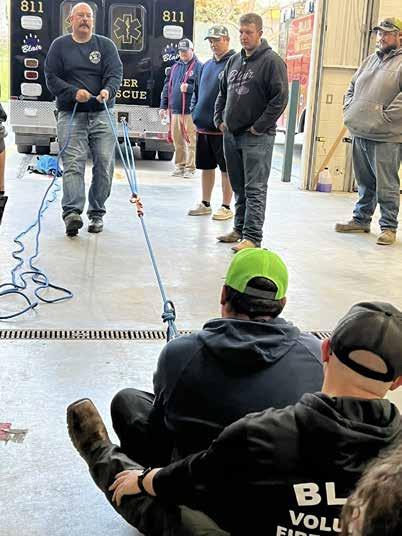
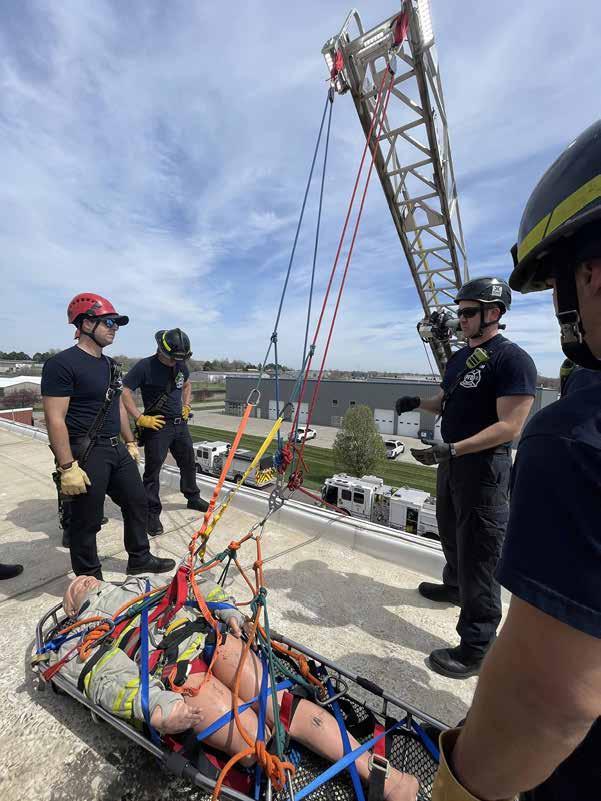
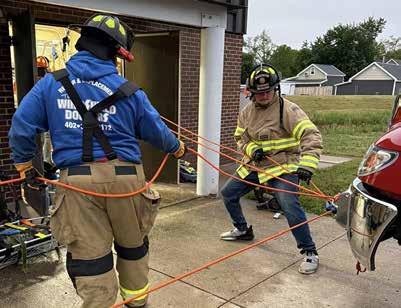
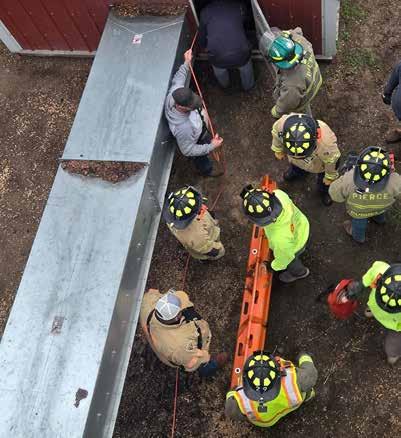
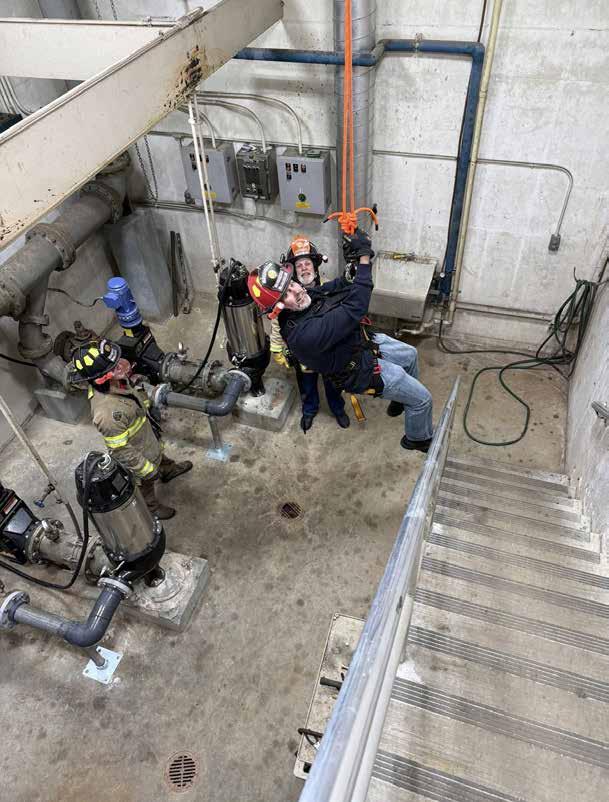
On April 30, Blair Volunteer Fire and Rescue spent time sharpening their skills with ropes and knots and putting them to use in a variety of rescue scenarios. From securing loads to practicing real-world applications, these hands-on drills help ensure they’re ready when it matters most.
GRAND ISLAND · PHOTOS BY JEFF GARGANO
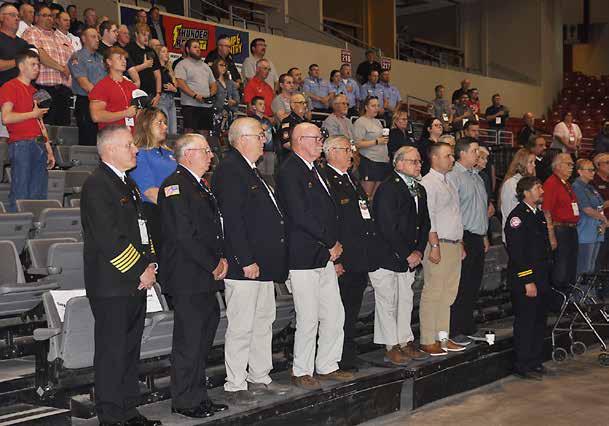
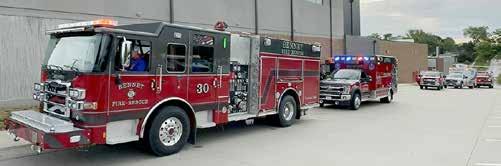
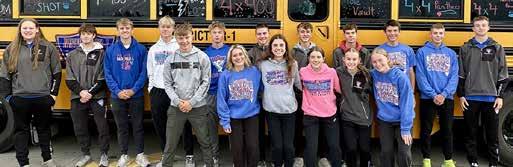
On May 22, Bennet Fire and Rescue (front 3 trucks) and Palmyra Fire and Rescue (back 2 trucks) lined up to escort the
17 track and field state qualifiers to cheer them on through their journey to the State Track and Field Meet at Burke Stadium in Omaha. Photographer:
Two grass fires were reported near of Grant last week, both contained with limited acreage burned, according to Grant Fire Department officials.
TUESDAY, APRIL 14
The first fire was sparked by lightning the evening of Tuesday, April 14, about five miles north of Grant, east of Highway 61.
According to Grant Fire Chief Don Softley, the fire burned just under three acres of grass near a cornstalk field. Rainfall largely extinguished the fire, with the Grant Volunteer Fire Department responding to put out remaining hot spots and smoldering grass, Softley said. The fire was contained to the grassy area, he said.
THURSDAY, APRIL 16
In a separate incident, the Grant Volunteer Fire Department responded to a page of a fire located north of the UNL-Stumpf International Wheat Center east of Grant for a grass fire believed to have been started from the exhaust on a UTV, according to Grant Fire Captain Scott Knoles.
That fire burned just under nine acres, he said. Firefighters were assisted by the Madrid Volunteer Fire Department, and the fire was contained in part due to green cover crops on the west side of the area, which helped slow its spread, Knoles said.
Both fires were brought under control without further reported damage, according to the two officials.
(By Becky Uehling, The Grant Tribune Sentinel, Grant, NE, April 23, 2026)


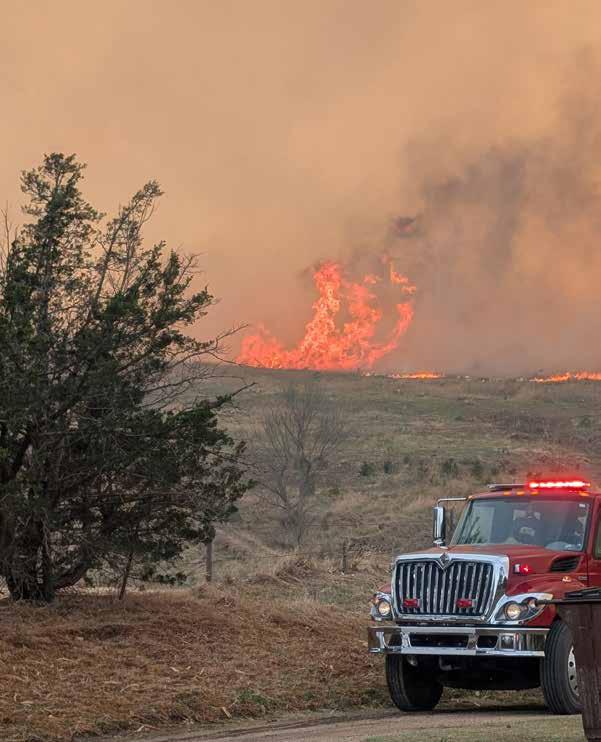
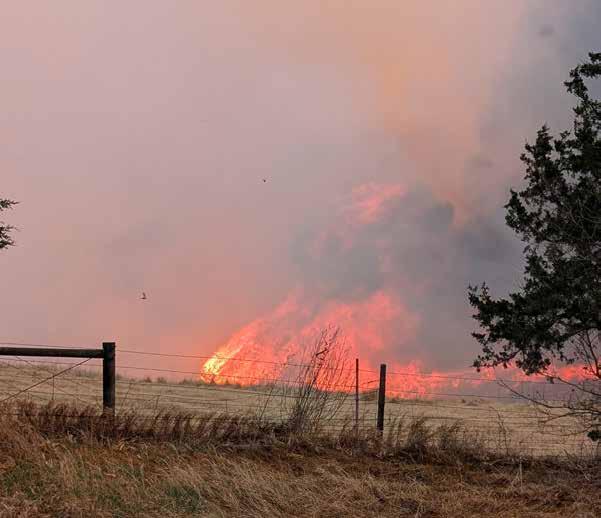
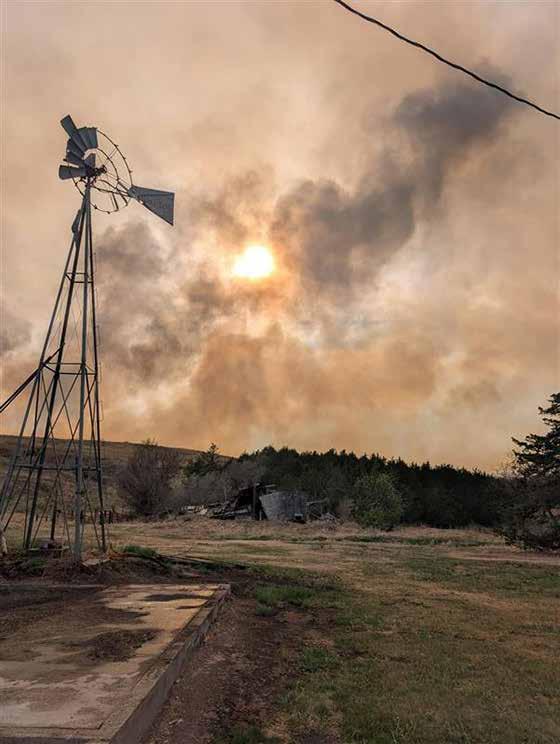
These
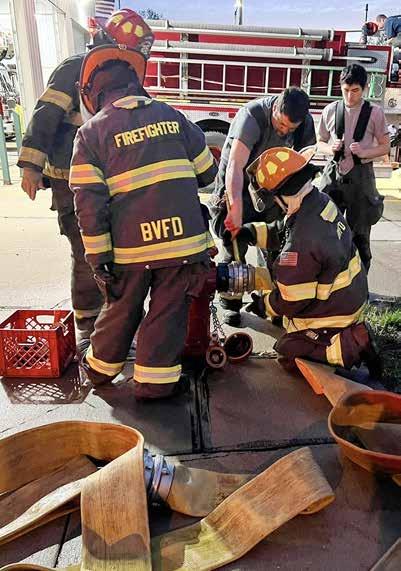
At the weekly (April 23) training Blair Fire Department focused on initial fireground operations including water flow, hose handling, forcible entry and radio technique.
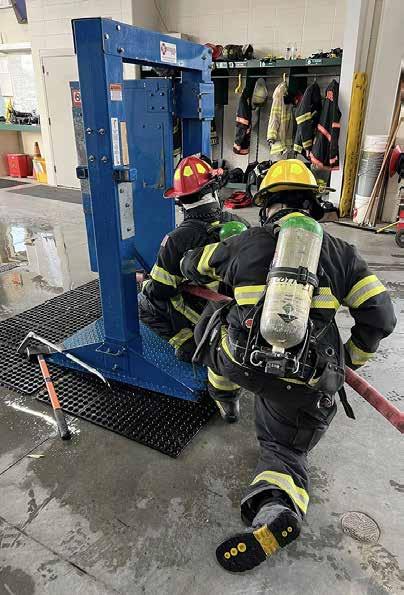
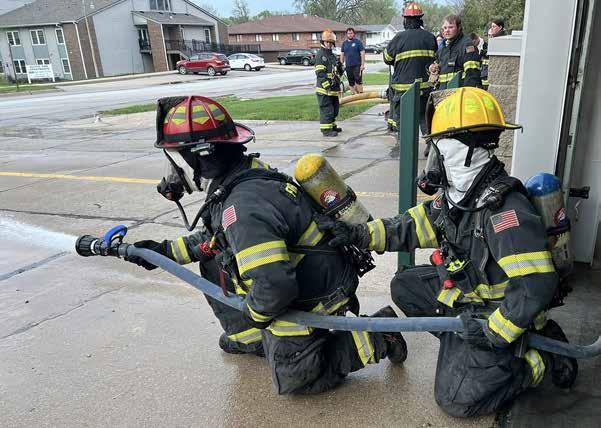
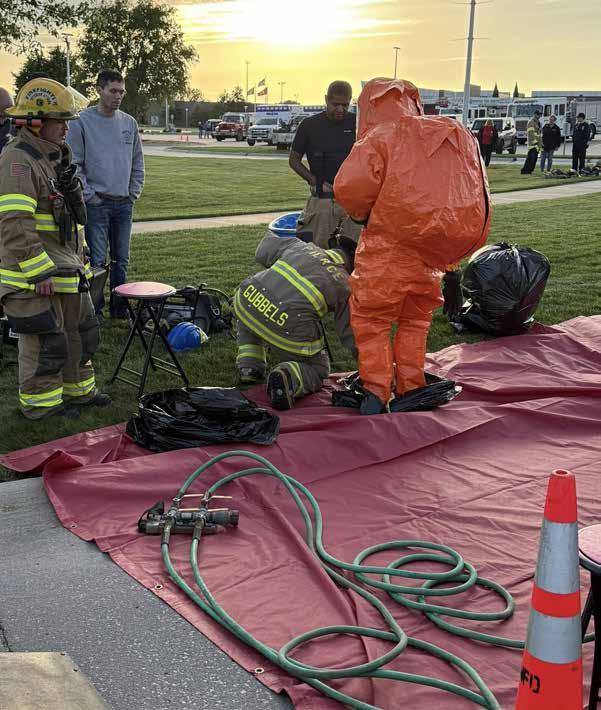
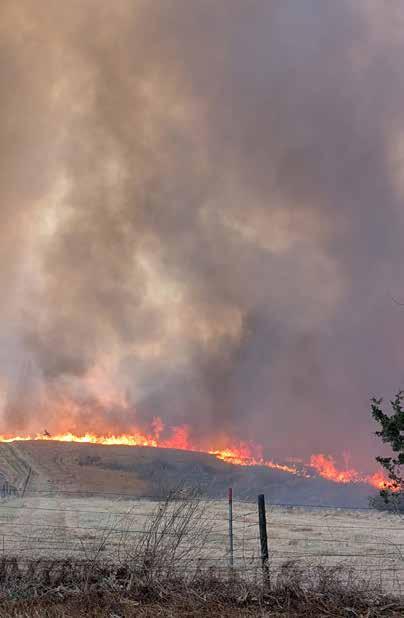
Above: On May 19, eight members of Pierce Fire had the opportunity to train and evaluate with Norfolk Fire during a hazmat drill. As Hazmat calls are not calls that we often respond to this gave us the opportunity for refreshers, reminders and new things to add to our toolbox of skills. Thank you Norfolk Fire for the invite. From the Pierce Fire and Rescue Facebook page.
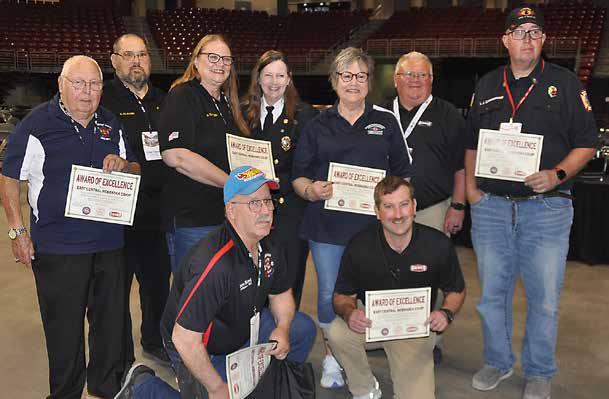
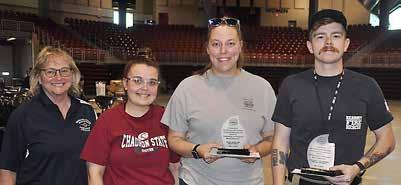
The Fire Prevention Co-op Award went to East Central Nebraska Fire Prevention Co-op. The 2026 Fire Prevention Awards were sponsored by the NSVFA and Danko.
Fire crews responded to two separate grass fires in Custer County on Wednesday, with both incidents brought under control without major reported damage.
The first fire was reported north of Arnold and was handled by the Arnold Volunteer Fire Department.
Officials said the fire burned less than one acre before crews were able to contain it.
The second fire was reported west of Callaway and burned approximately 50 acres. Multiple agencies responded within the Callaway Fire District, with three fire departments assisting on the scene to contain the blaze.
No injuries were reported from either fire.
(Ethan McCormick, Nebraska Rural Radio Association, May 13, 2026)

First responders from across Northeast Nebraska are learning how to find missing people faster through a specialized training course focused on data-driven search planning.
The Inland SAR Planning Course teaches participants to use data, math and probabilities to inform search planning decisions.
“The intent is for that outdoor, wilderness, rural environment where people walk away, and there may not be a lot of witnesses. There may not be a lot of reference points. There may not be a lot of navigational references for them. And it’s to help the search planning team come up with scenarios and prioritize certain areas of a search for resources,” said Lt. Col. Christopher Walker, U.S. Air Force.
The Five-day training course helps search planning teams develop scenarios and prioritize certain areas for resources. More than six agencies from in and around the Siouxland area attended the course.
Kevin Garvin, director of emergency management for Cedar County, said search and rescue can be time-consuming and resource-consuming, particularly with decreasing volunteers in emergency services. “It’s important that we learn how to effectively utilize those when we’re actively searching for people whose lives could be in danger,” Garvin said.
Nicholas Kemnitz, emergency management director for the Wayne County Emergency Management Agency, said the course teaches how to work through equations and probabilities to locate a missing person or missing aircraft.
(KTIV-TV NBC 4, Sioux City, May 8, 2026)