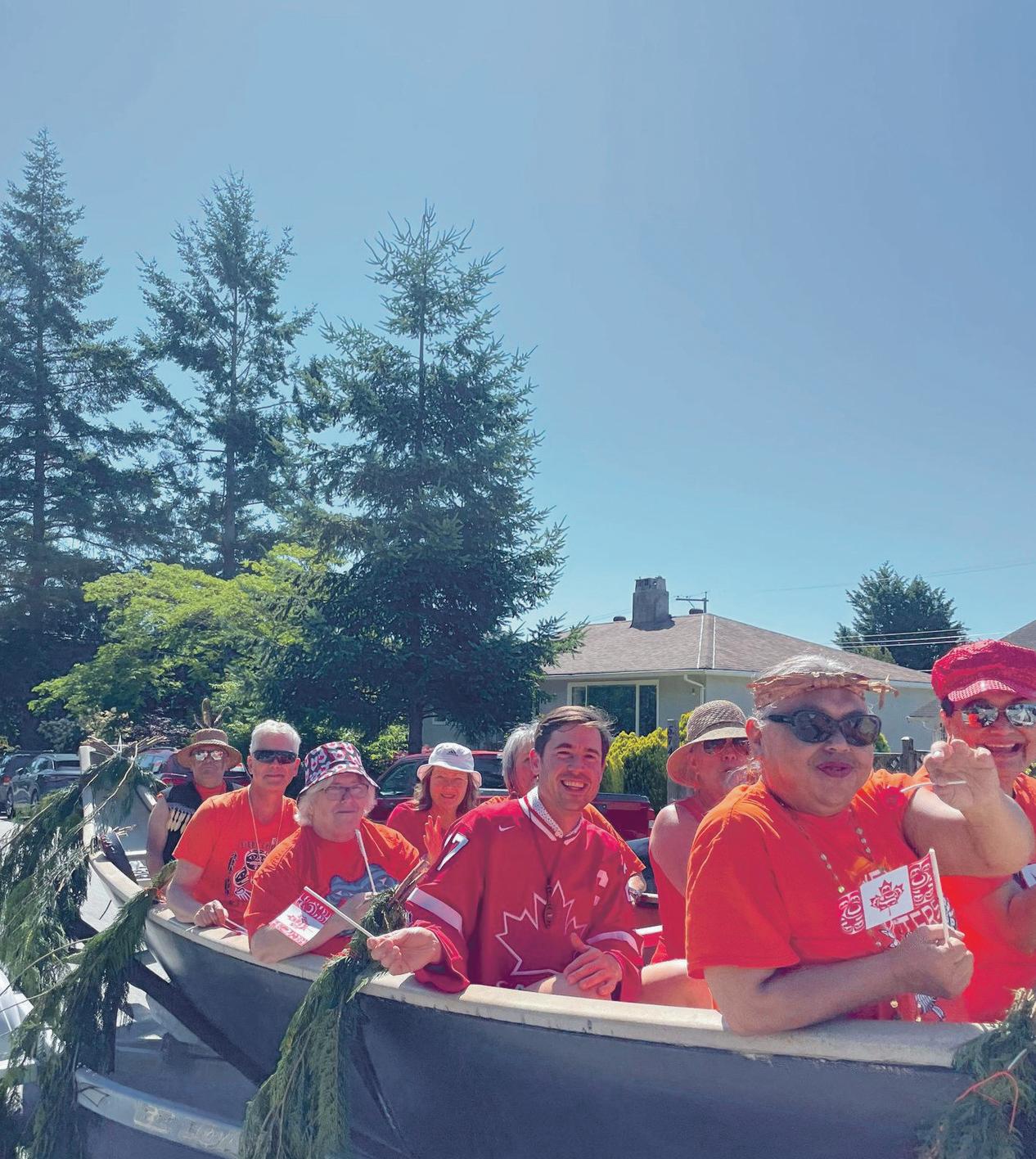


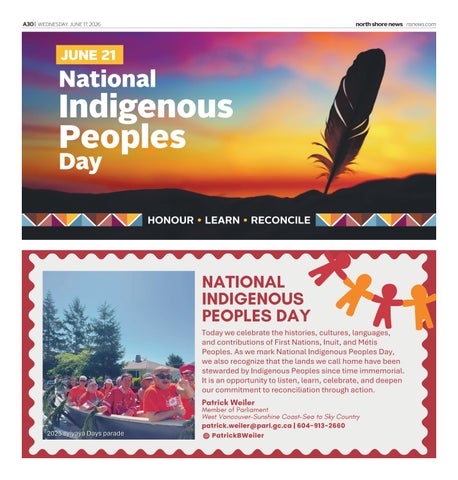
Todaywecelebrate thehistories,cultures, languages, andcontributions of FirstNations,Inuit,and Métis Peoples. As we mark National Indigenous PeoplesDay, we also recognizethatthe landswecall home have been stewardedbyIndigenousPeoples sincetimeimmemorial. It is an opportunitytolisten, learn, celebrate, anddeepen ourcommitmenttoreconciliationthrough action.
PatrickWeiler Member of Parliament
West Vancouver-Sunshine Coast-Sea to Sky Country
patrick.weiler@parl.gc.ca|604-913-2660
National Indigenous Peoples Day JUNE 21
ABBY LUCIANO aluciano@nsnews.com Local Journalism Initiative Reporter
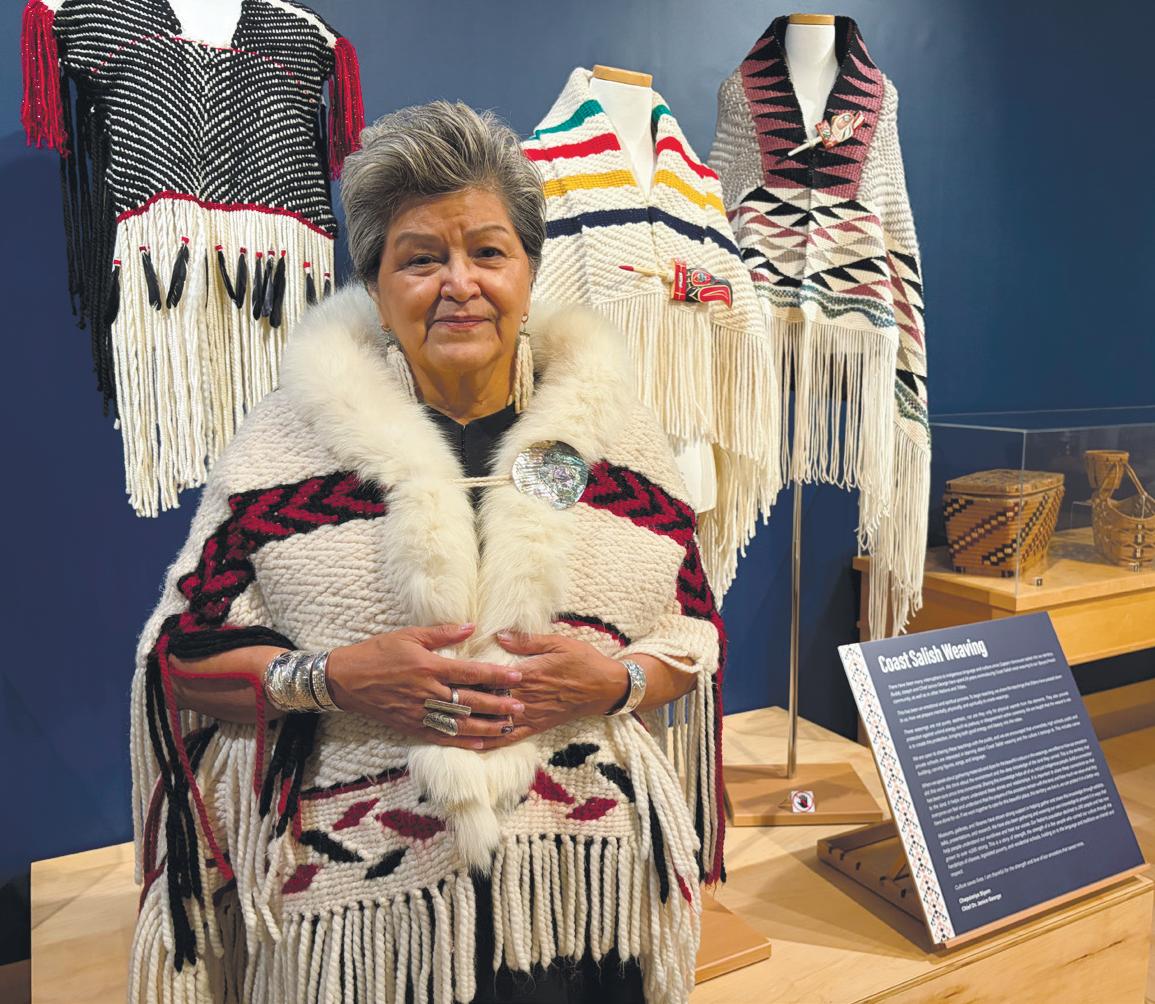
Passing on the history and culture of Skwxwú7mesh Úxwumixw (Squamish Nation) means a lot to hereditary chief Chepximiya Siyam (Janice George).
Many teachings she learned from her grandmother, who was a matriarch. At 18, George’s first job with the Squamish Nation was interviewing elders She also played a pivotal role in teaching Squamish and other First Nations members the art of weaving.
“To pass those [skills] on, if you have them, it’s really a responsibility,” George said.
George is sharing that responsibility in curating an exhibition at the Museum of North Vancouver and Archives (MONOVA) highlighting Squamish Nation history, art and
culture
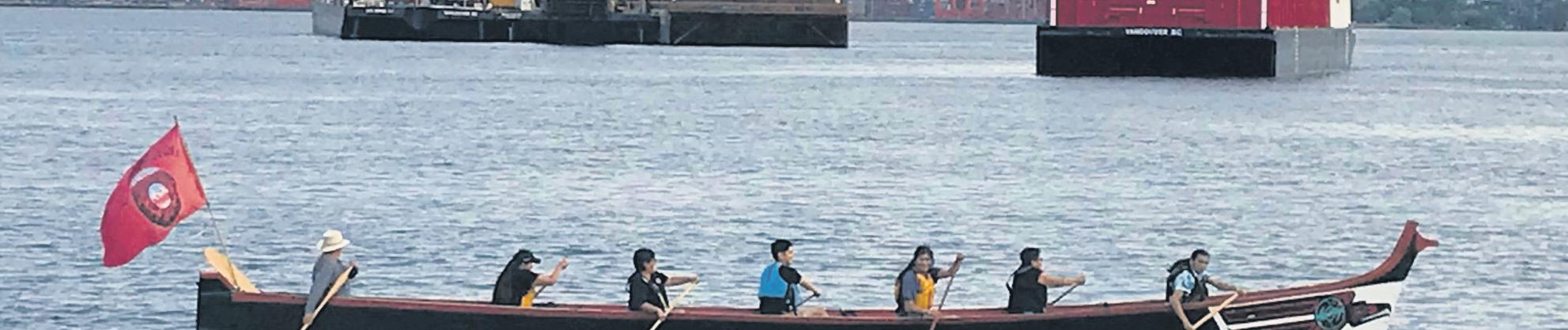
Gifts to be Shared, Protected, and Carried Forward connects the past, present and future with items such as pieces from George’s personal weaving collection, historical photographs of different Squamish village sites, and community-held pieces including a canoe and woven baskets.
Three weaving pieces sit on mannequins at the back of the exhibit, two from George herself. The third, by artist Dana Moody, has the Hudson’s Bay Company colours.
The exhibition also brings pieces from the Squamish Nation back home. Chief Joe Capilano’s belt sits in a glass case, on a loan from the Museum of Vancouver.
In August 1906, Capilano and other First Nation leaders travelled to England to petition the king regarding land title and to protest the ban on potlatches.
Capilano wore the white, green, yellow and red checkered belt during the visit.
“It’s important to bring these things home,” George said “[It] makes me feel emotional. To be able to do that, it means a lot to me.”
In September, a tumpline weaving from the Squamish Nation will be added to the collection. The piece will be on loan from the Museum of Natural History in New York City, a first for MONOVA.
A copy of a handwritten note from the Museum of Natural History is at the North Vancouver exhibit, saying they collected the weaving in the 1800s.
When George was visiting the museum in New York, she fought hard to include the piece in the Squamish Nation exhibit.
A few letters later, George Continued on A33

National Indigenous Peoples Day JUNE 21
ABBY LUCIANO aluciano@nsnews.com Local Journalism Initiative Reporter
A new kids show is set to hit TV screens next week teaching Cree language and culture.
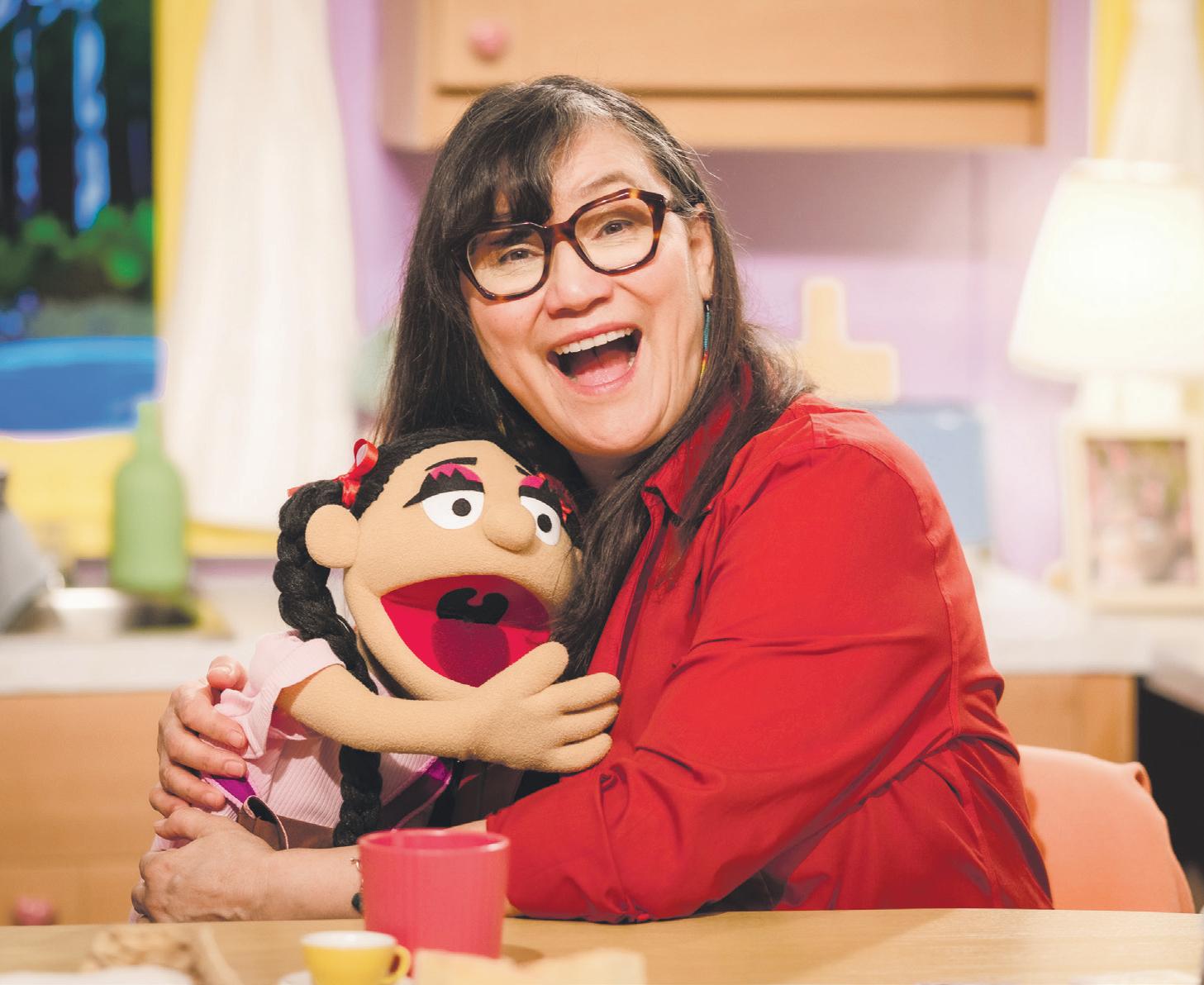
Kokum & Dot, produced and directed by filmmaker April Johnson and filmed at Capilano University in North Vancouver, follows Kokum Dorothy talking to her hand-puppet friend Dot about her day, introducing vocabulary and guiding principles in Cree culture.
“We’re excited,” Johnson said. “These languages and honouring the wisdom of our elders is really important.”
The eight episode series intertwines live-action and animation, starring Cree/ Anishinaabe actor and musician Renae Morriseau as Kokum (meaning grandmother in Cree) Dorothy and ventriloquist and puppeteer Kellie Haines as Dot
Johnson took inspiration for the show from Dorothy Visser, an elder with the
Cree Nation of Saddle Lake, Alta., after taking a Cree language class from Visser at the Native Education College in Vancouver during the peak of the pandemic.
Like many classes then, they were conducted over Zoom. Johnson, who is Métis and Nehiyaw (Muskoday First Nation, located in Saskatchewan), took the class to learn the language after struggling to learn it on her own. Johnson said she tried to write a book in Cree for a seminar course while completing Indigenous studies at the University of Victoria, but faced challenges
“I cried the whole way through,” she said. “I was like, ‘This is too hard for me, maybe I’ll never learn my language.’”
But like any good teacher, Visser changed that for Johnson and made learning fun using songs and puppets.
“It was such a good way to remember,” Johnson said. “So I was like ‘OK, she’s onto something here.’”
Continued on A33


Continued from A31
was able to have the piece transferred over to the Burke Museum of Natural History and Culture in Seattle, where she has a current exhibit. It took some extra convincing to bring it to North Vancouver
“I wrote a personal letter to the curator and said can you please reconsider It means so much to our people to have it in our territory, so much to our weavers, our elders to have it back,” George said. “I’m really thrilled to have it.”
Changing the narrative
Squamish Nation’s Ta na wa Ns7éyxnitm ta Snewíyelh (Language & Cultural Affairs Department) and MONOVA worked together to bring the exhibition to life. The project was led by George with the help of Jordan Dawson, Indigenous cultural programmer with MONOVA and a member of the Squamish Nation.
Zoe Mackoff de Miranda, director of MONOVA, said it was important to have Squamish Nation members leading the project and taking control over how their stories are told.
“I think museums are spaces where
that is traditionally not the case,” Mackoff de Miranda said. “If there were stories that were told about Indigenous people, they weren’t told necessarily in a fully truthful way, [histories] that left out some of the troubling realities of things that happened on these lands.”
Mackoff de Miranda said the exhibit is in time for National Indigenous History Month and National Indigenous Peoples Day, but also with the FIFA World Cup in Vancouver and the anniversary of Squamish Amalgamation Day in July
“It’s always important to highlight the history of the lands,” she said. “So it’s a great opportunity.”
George hopes people learn more about the Squamish Nation, but also the creativity and resilience of their ancestors.
“It’s teaching our children about the ancestors, our territory, what they did and what we still do today to carry that on,” she said. “That’s important.”
Gifts to be Shared, Protected, and Carried Forward runs until March 2027. Abby Luciano is the Indigenous and civic affairs reporter for the North Shore News. This reporting beat is made possible by the Local Journalism Initiative.
Continued from A32
A few years later, Johnson was able to take that inspiration to the screen.
The series was filmed at the BOSA Centre for Film and Animation at Capilano University Many of the crew members behind Kokum & Dot are Indigenous and came from the Indigenous Film and FILMBA programs at CapU, including Johnson herself. Having that representation was important.
“It’s bringing up a whole new generation of Indigenous creators,” she said. “The one thing that makes this show special is how many emerging [and] Indigenous creators are getting their first opportunity to step into the industry through this show, and the mentorship is really important to us.”
Morriseau, who is also an instructor in the university’s Indigenous film program, was thrilled to play a large part in the show, sharing the language and composing music for the project.
“It’s always a good way to learn languages through song,” Morriseau said “With any language that you’re wanting to

Member of Parliament, NorthVancouver–Capilano (604)775-6333| jonathan.wilkinson@parl.gc.ca
learn, being immersed in it is a lot easier than not being in that. Kokum & Dot allows children to be curious … and have a joyous relationship to the Cree language.”
Johnson said she gave the show a 1990s nostalgic feel, channelling favourites such as Sesame Street and Mister Rogers’ Neighborhood to give it a relaxing tone and allow viewers to really sit with the teachings. Those teachings are love, respect, courage, honesty, wisdom, humility and truth, which are universal, Johnson said.
Kokum & Dot will hit TV screens on TELUS channels in B.C. and Alberta and on their On Demand app on June 15 The kids show launches just in time for National Indigenous Peoples Day on June 21 and during National Indigenous History Month.
“I think the whole month is great for reflection on the territories that we live on, the history of the land and the experiences of Indigenous people across Turtle Island,” said Johnson.
Abby Luciano is the Indigenous and civic affairs reporter for the North Shore News. This reporting beat is made possible by the Local Journalism Initiative

SUNDAY,JUNE 21 4–8 P.M.
• Traditional activities • Livemusic performances • Salmon dinner
We acknowledge that we areonthe traditional, ancestral, and unceded territory of the Skwxwú7mesh Úxwumixw(Squamish Nation), s lílw taɬ (Tsleil-Waututh Nation), and xwm kw y m(Musqueam Nation)
We recognize and respect them as nationsin this territory,aswell as their historic connection to thelands and waters around us sincetime immemorial.
Formoreinformation:
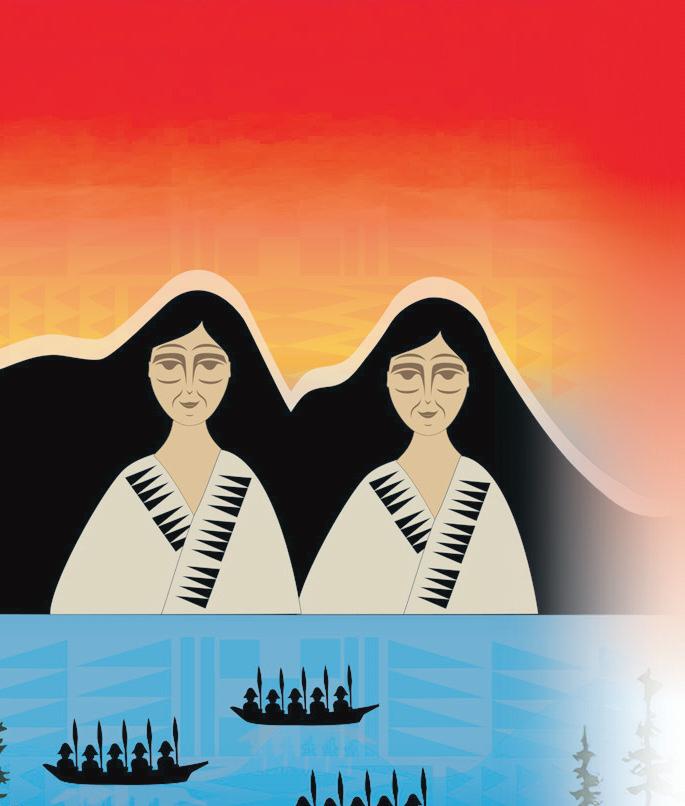
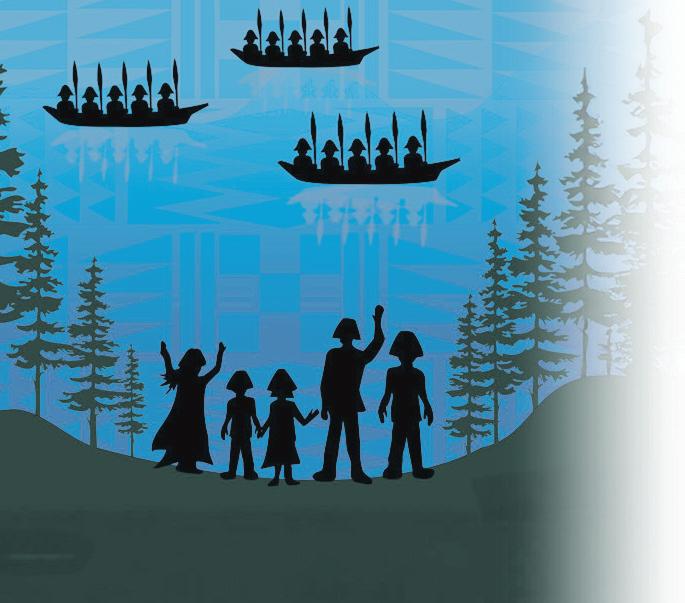
ART: Sinámkin (JodyBroomfield), With peace, we welcome youall westvancouver.ca/indigenous-day
