Postal Address: PO Box 474, Dargaville Physical Address: 107 River Road, Dargaville
Editor: Andy Bryenton
Journalists: Amy Fifita | Andy Bryenton
Advertising: Donna Eves 027 525 8223
Production: Gavin Bainbridge | Marnie Fuller | Daniel Foster | Liz Clark
Accounts: accounts@rml.nz
Distribution: Laurie Willetts Printed by: NZME
Website: farminglifestyles.co.nz Opinions
19,200 copies DELIVERED FREE to every rural delivery address in Waikato and King Country.
Innovation, resilience and community
by Barbara Kuriger, MP for
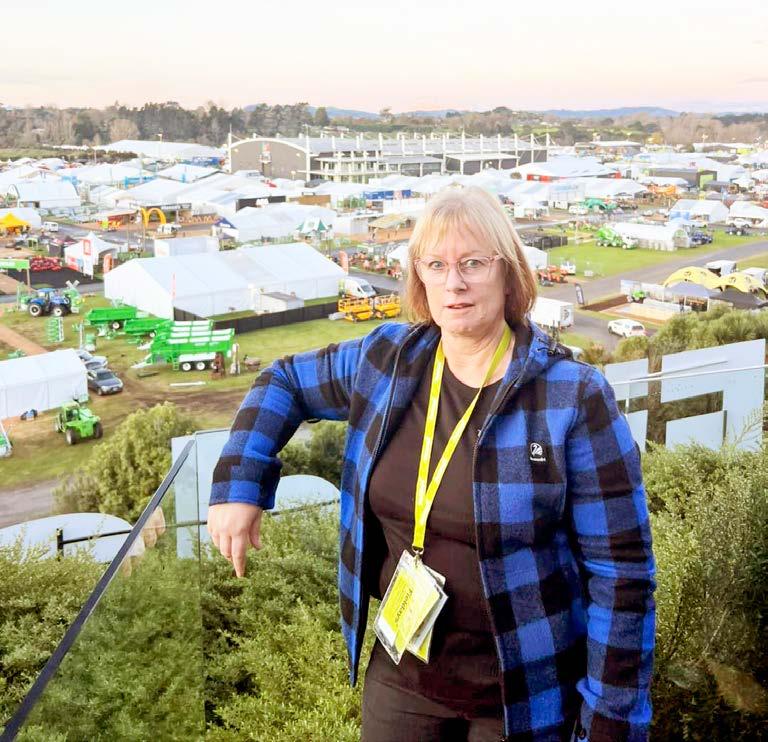
If you make your living off the land, Fieldays isn’t just another date on the calendar — it’s where we go to recharge, take stock, and remind ourselves we’re not in this on our own.
Liz Voorend P 027 755 6501
E farmsafety@wfss.co.nz workablefarmsafety.co.nz
Brings the farm up to compliance standard
Organises hazardous substances, safety data sheets,
Provide easy to use templates
Provide on the farm follow-up services
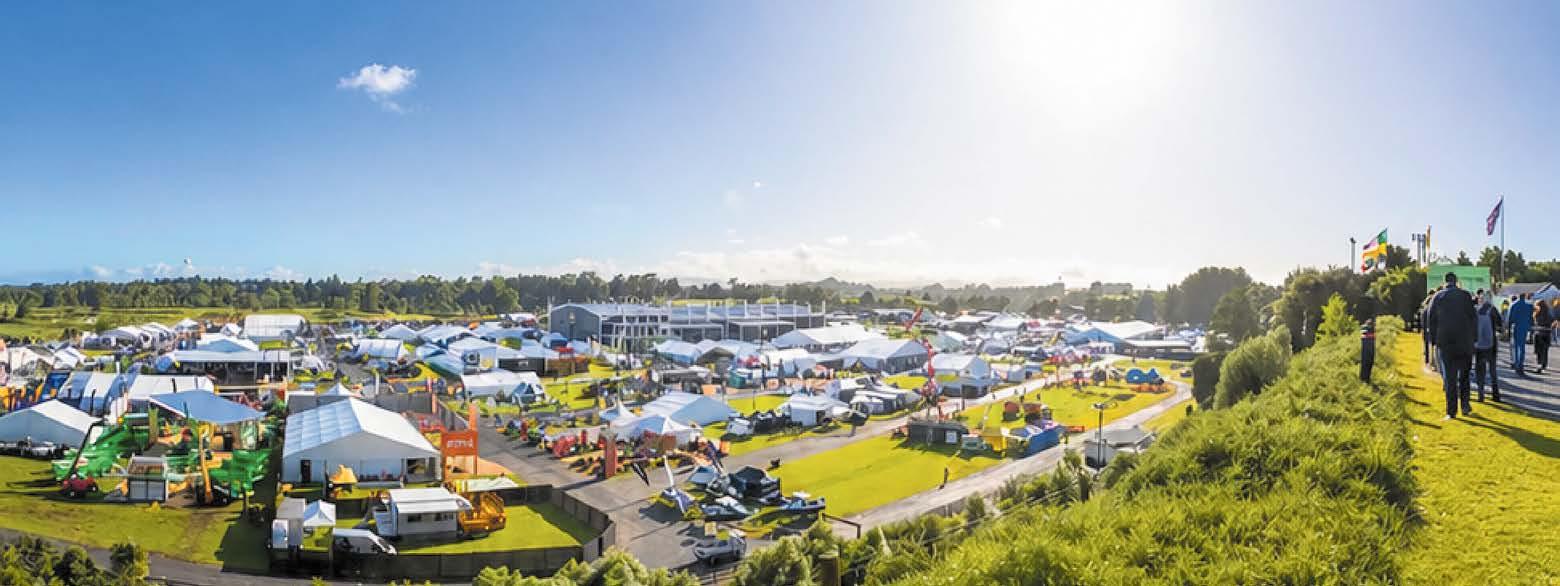
Since 1969, National Fieldays at Mystery Creek has been bringing farmers, contractors, families and townies together; and haven’t the organisers succeeded? What began as a simple showcase of Kiwi ingenuity has grown into the Southern Hemisphere’s biggest ag event. Generations of farming families come back year after year to see what’s new, catch up with old mates, and bring the kids along for a look at their future.
This year, with fuel, freight and finance all tightening the screws, Fieldays feels more important than ever. It’s a chance to kick the tyres on gear that genuinely cuts fuel use, explore tools that save labour, and talk directly with people who understand the realities behind the farm gate.
Over four days, more than 1,200 exhibitors will be on-site, showcasing the
best innovations, products and services to an audience of over 100,000. From low-emissions tech to pasture management, there are plenty of opportunities to find ideas that make a real difference. Seminars and workshops will offer straight talk on markets, regulation, and banking, while the social side, a yarn over a coffee, often delivers the most valuable, and most unexpected, insights of all.
At its heart, Fieldays is a reminder that New Zealand farming still leads the world. Not because it’s easy, but because our people are resilient, practical, and keen to teach and to learn. As we walk through the gates this year, we’re not just visiting a show — we’re backing our businesses, our communities, and the future of our rural New Zealand.
This year’s Fieldays will be held from 10–13 June at its traditional and spiritual home, Mystery Creek. See you there.
Tough Stuff Pet Beds
Taranaki-King Country
by Andy Bryenton
Amalgamation call for Waikato councils
A message has been issued by the central government to all New Zealand councils: within three months, plans must be submitted on how to amalgamate into region-wide authorities, or the shift away from district councils will be enforced by Wellington.
Simon Watts and Chris Bishop did not mince words when he announced the move in early May.
“We’ve got 78 councils across a country of around 5 million people, and our view is too often that leads to duplication, dysfunction and decisions that don’t make sense. Our message to councils is simple: lead your own reform, or we will do it for you. Either way, change is coming,” Mr Bishop said.
The proposals will be assessed by a new super ministry, the Cities, Environment, Regions and Transport Ministry, which will rule on their practicality. Mr Bishop asserted that it was the large number of councils across the nation driving complexity and rates rises, and he urged councils not to hire “hordes of expensive consultants” to formulate their plans.
For Waikato, the implication is that up to 12 authorities could be potentially folded into one entity. The Waikato Regional Council was already impacted by proposed changes to local governance, but this amalgamation ‘ultimatum’ as it has been called by some commentators, could also see a merging of powers and duties between the Waikato District Council, Hamilton City Council, and councils as disparate as those governing Thames-Coromandel, Hauraki, MatamataPiako, South Waikato, Ōtorohanga, Waitomo and Waipā.
Waitomo mayor John Robertson had already broached the idea of a King Country council, and invited Ōtorohanga to join in discussions; many other councils nationwide have also taken this proactive approach.
A variety of maps and plans have been posited by pundits and the public during the weeks since the government announcement was made, speculating on everything up to a single ‘super Waikato’ in imitation of the Auckland super city.
Plans made within the next three months — before the general election — would be firmed up by 2027 and implemented ahead of the 2028 local body elections. These elections would not feature positions for district mayors in many of smaller Waikato constituencies, or any seats at all for the regional council.
“Put it this way, regional councillors will not be elected at the 2028 local body elections,” said Mr Bishop.
One major reason for this fast-tracked move away from local democracy at a district level is the proposed replacement to the RMA.
“Fixing the planning system whilst leaving local government untouched would just lock in many of the same problems that have bedevilled our current system for too long,” said Mr Bishop, who also appeared to
RURAL CRIME!
Is your property being a target for Theft? Vandalism? Underhanded Activity? Operational Issues? Uninvited Entry?
OR: Does your existing Camera System need upgrading to the latest high-resolution technology?
OR: Are you simply wanting peace of mind?
OR: Do you want a Gate Alert System to let you know when your property has been entered?
For well over 10 years, we have been helping Kiwis protect their rural properties. Call us today for a Professional custom CCTV solution or Gate Alert System to help protect your property and assets!
dismiss concerns about citizens being consulted on the move, which could be seen to deliver rates taxation without adequate representation.
“They can meet the three-month timeframe; honestly — local government spends its life consulting people,” he said.
Despite any misgivings, the threemonth clock is ticking. The councils of greater Waikato as we know will cease to exist should the current coalition navigate this year’s general election successfully, and its plan for a smaller number of unitary authorities is enacted.
Simon Watts has announced sweeping changes to local government, in association with fellow parliamentarian Chris Bishop
TALES OF WHAT COULD HAVE HAPPENED
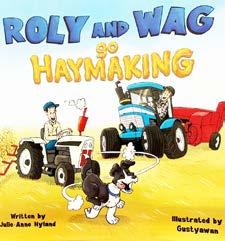
Born on a third-generation Otaua dairy farm near Waiuku, Julie-Anne Hyland has spent a lifetime in farming, and now writes about rural life in her Roly and Wag book series.
“Writing was the only subject I enjoyed in college because we had a really fun English teacher. After doing a course in 2022 on writing stories for children at the New Zealand Institute of Business Studies, I learned how to cut down my word count.
“I also had help from well-known children’s book author Jill Eggleton, who encouraged me to tell a story with fewer words. Children don’t like sitting there listening to heaps of words.”
Inspired by wanting her grandchildren to remember her late mother, Lois Crouch, Julie-Anne put pen to paper and created the literary world of Roly and Wag. With Roly based on her dad, Brian Crouch, Lois,
based on herself, and Wag, based on all the dogs, there are plenty of inspiration moments to draw from.
“Dad had many cattle dogs as we were growing up, and he always fell in love with them, no matter how naughty they were. His father was called Roly, but he also gets called Roly, and that way, we can also pretend it’s not about him.
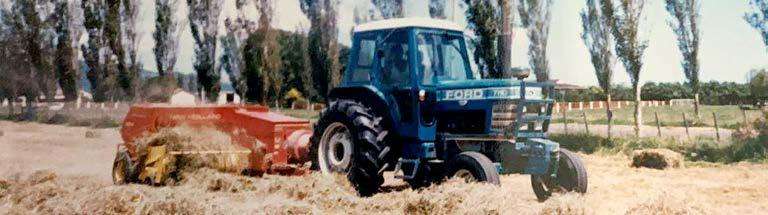
“Each dog had its own personality, and some were better than others. So although these stories are fiction, they are based on things that happened or could have happened. He is now 88 years old and still hay baling as a contractor.
“Mum was a very fussy housekeeper, and she would always keep her house
BY AMY FIFITA
immaculate, and dad would always invite the dog to come into the house. She’d always be screaming to ‘get that dog out’, because it smelt awful, and dad would say ‘he’s alright, he can come and sit here’.
“There was a dog called Wag. He was a nice, old and well-behaved dog. Wag, in the book, shows moments of brilliance as most dogs do, and then the terrible and not-so-good moments.”
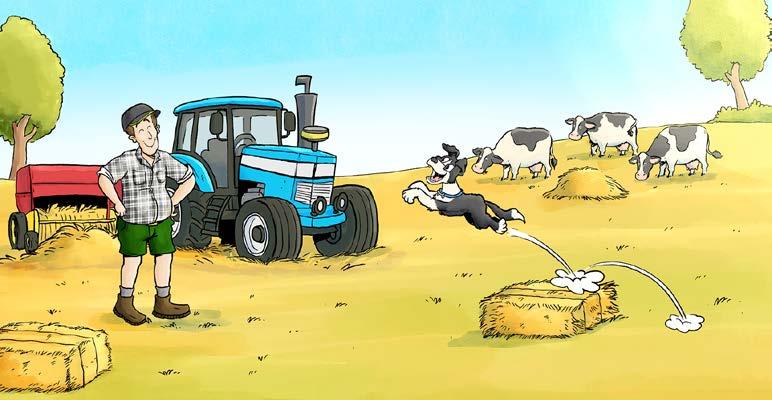
Still hay baling in his late 80s, Julie-Anne says her father favours Ford tractors, a hallmark in her rural upbringing
Julie-Anne’s family is the forefront of the books, and also the reason why she wanted to author them — to provide her grandchildren with a way to remember her mother Lois
Almost a year after self-publishing the first Roly and Wag, two other tales, soon to be three, have followed, and are popular in the farming community.
“The first book is about Wag sneaking into the house when Lois goes shopping. Roly tells the dog to come in, and Wag sneaks into the pantry and eats a bar of chocolate, and has to be taken to the vet because chocolate is poisonous for dogs.
“Most of my books involve a wellknown local person. In Roly and Wag and the Swiss Cheese, which features our Swiss neighbour, a former cheesemaker, Wag sneaks into the cheese shed and gets stuck in a milk can, so he has to be taken to the local engineer to be cut out.
“I also have a haymaker story, because my dad is still running his own hay baling
business. The dog ends up causing havoc, and the bailer ends up crashing into a water trough. The whole theme of the books is Lois telling Roly not to take the dog, and Roly saying ‘he’ll be fine’ — they never are.”
Her next book is based more on fact than fiction, though. With her fourth book about to be released, readers can enjoy the reasonably true story of Roly and Wag Go Fishing.
“Mum and dad would always go fishing, so my next book is about one of their trips, and it is quite true. They took their fox terrier with them one day, and it jumped overboard chasing a seagull, and it covers a few activities the dog did on the boat.
“I have a good following of toddlers, and the local Young Farmers have caught on to it and have bought some for their
Within the pages of the Roly and Wag books, readers can catch amusing and sometimes true tales of the bond held between canine and farmer
children, anticipating when the next one is coming out. I am aiming at two to six years, but parents also get a kick out of it because they can relate, so it is fun for them to read as well.”
While the vision of the books was JulieAnne’s, she is also grateful for those who collaborated with her to make the characters come to life on the page.
“My cousin in Waiuku, who is a printer, was a great help with formatting so I could publish my first two books, and another person assisted me with the others. My illustrator, Gustyawan, has been great with getting the characters, especially Roly, Lois and Wag, just right. If anyone wants to buy a book, visit rolyandwag. co.nz or the Paper Plus Pukekohe.”
Supply, Planting & Re-Vegetation 581 Pyes Pa Road, RD3, Tauranga
Sharon, Wayne & Brett Thompson
WILD HORSES HEADING TO NEW LIFE
BY PAUL CAMPBELL
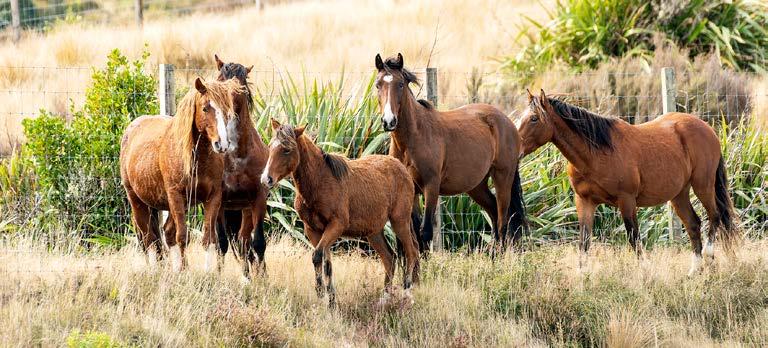
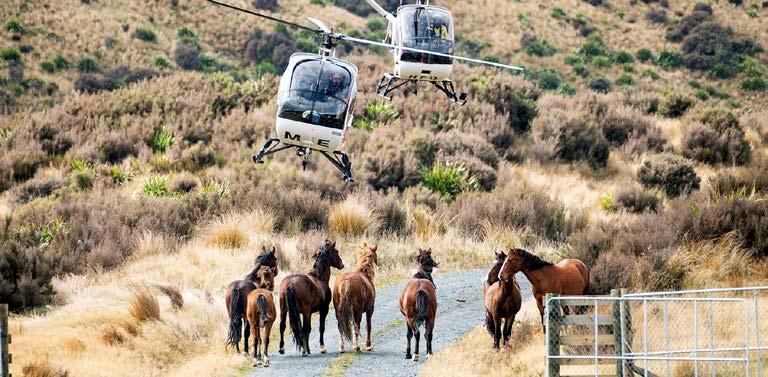
The wild herd ranges across subalpine terrain, and there are additional musters this year to help get the herd back to a more sustainable level for the future. The Kaimanawa Wild Horse Advisory Group supports the management that involves multiple iwi, animal welfare experts, rehoming groups, environmental advocates, the Department of Conservation, and the New Zealand Defence Force.
“We have completed two musters over the Anzac period, and we’re looking to do another one in June,” said principal DOC ranger Nina Manning.
“The muster at the new southern yards went incredibly smoothly, which is a testament to the huge amount of work the DOC team and contractors have done to design and prepare them. These yards allow mustering over shorter distances, reducing stress on the horses and costs of flying time — and they’re permanent, so the benefit will continue in years to come.”
Immuno-contraceptive treatment of mares has continued, with the ultimate goal of slowing herd growth in the wild.
However, rehoming efforts remain critical to both herd health and the environment.
Carolyn Haigh of the Kaimanawa Heritage Horses group says the use of contraception represents an important step toward improving welfare outcomes. “It’s helping to reduce the number of animals facing uncertain futures while supporting more sustainable herd management.
“From our perspective, this muster has also demonstrated encouraging progress in rehoming, with a strong community response ensuring many horses will continue to transition into safe, long-term homes. While there is still work to be done, these combined efforts reflect a growing commitment to balancing conservation with compassionate, practical solutions for the horses.”
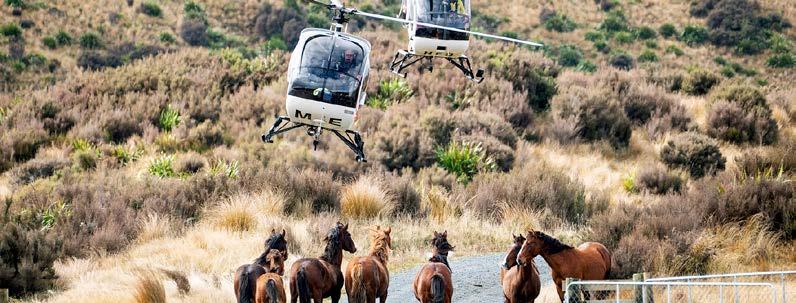
Carolyn described the Anzac muster and said on the first morning, clouds hung heavily over the valleys and below the hilltops, too dense for the helicopters to fly. Everyone waited, the heritage horses rehoming team, the Kaimanawa Legacy Foundation trainers’ team, stockmen in the yards, veterinarians ready to assess
There are 58 Kaimanawa wild horses heading into forever homes with the wider equine community now taking care of four-legged health and welfare after an organised muster operation in the Waiouru military training area.
Kaimanawa wild horses at home on the range
and draft the horses as they arrived, and the Department of Conservation team and NZDF coordinating the operation.
“Just before midday, the three helicopters finally lifted into the sky and headed south. Their task was to locate and bring in family bands that included stallions, mares, juveniles and foals. Groups of bachelor stallions were also targeted, many of them highly sought after for their potential to be trained for the Stallion Challenge competition at Equifest in October.
to continue the contraceptive trial. Mares in the southern regions received their first dose of GonaCon, a fertility-control vaccine that international research has shown can reduce fertility without harming foals already in utero.
“Part of this year’s management plan also involved bringing in enough mares
“The first group brought into the yards included a striking older white stallion who has been seen roaming the ranges with his band for many years. Young horses from his band were selected for rehoming, while the mares received contraceptive injections before being released back into the ranges alongside their band leader.
“This approach reflects the evolving management strategy for the herd. The introduction of contraception is expected to gradually reduce the number of horses born in the ranges over time, helping bring the population closer to the target of 300 horses.”
Another muster is planned for early July. Once again, horses will be brought in for rehoming, while mares involved in the contraceptive trial will receive a second dose.
“Kaimanawa Heritage Horses is currently accepting applications from experienced equestrians interested in providing homes for these horses. Applicants may choose to have their horse undergo its initial handling with an approved trainer or, if they possess the necessary skills and safe yarding facilities, undertake the handling process themselves.”
The horses are not a genetically unique population with roughly the same
genetic make-up as domesticated horses, although they are of mixed breed, most in common with the thoroughbred and station hack breeds.
Prior to 1981, there was no official monitoring of horse numbers, movements or range, or any formal management and it was thought there were plenty of them. Land development, increased competition with human activities and hunting drove down the numbers. By 1980, they were limited to the southern Kaimanawa area where only about 174 remained.
With concerns these horses would be lost, in 1981 a protected area was established but then the population surged threatening the area’s fragile ecology and the horses themselves.
In consultation with all stakeholders, a plan was prepared. Numbers are now managed in accordance with the approved plan, which includes operations, such as
annual counts, musters and rehoming of surplus horses.
In May 1996, the Minister of Conservation issued the Kaimanawa wild horses plan based on keeping some areas free of horses and controlling their numbers in remaining areas. The herd was reduced significantly in the 1997 muster and the remnant herd of around 500 horses was retained in the southern section of the Waiouru Military
Training Area. Since 1997, annual musters contained the herd within the chosen boundaries and attempted to remove the equivalent of the annual population increase.
In 2010, the herd was reduced to 300 — the minimum number agreed, with musters carried out every two years, significantly reducing costs to both DOC and the horse rehoming groups. The herd has been kept to 300 since.
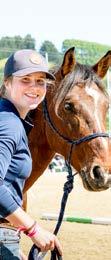
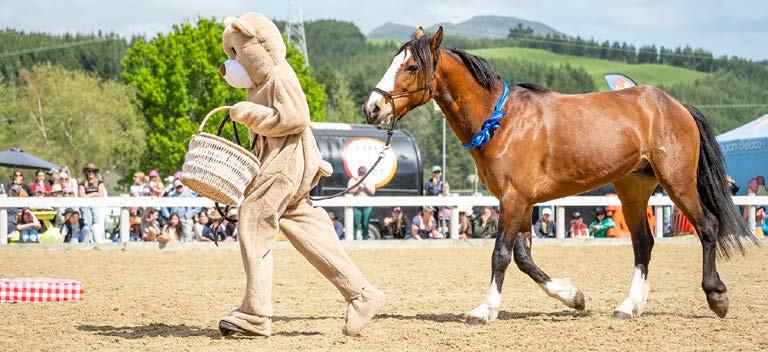
show fun for ex-wild horse Minion –
in costume is Noa Kadosh Smythe from Cambridge
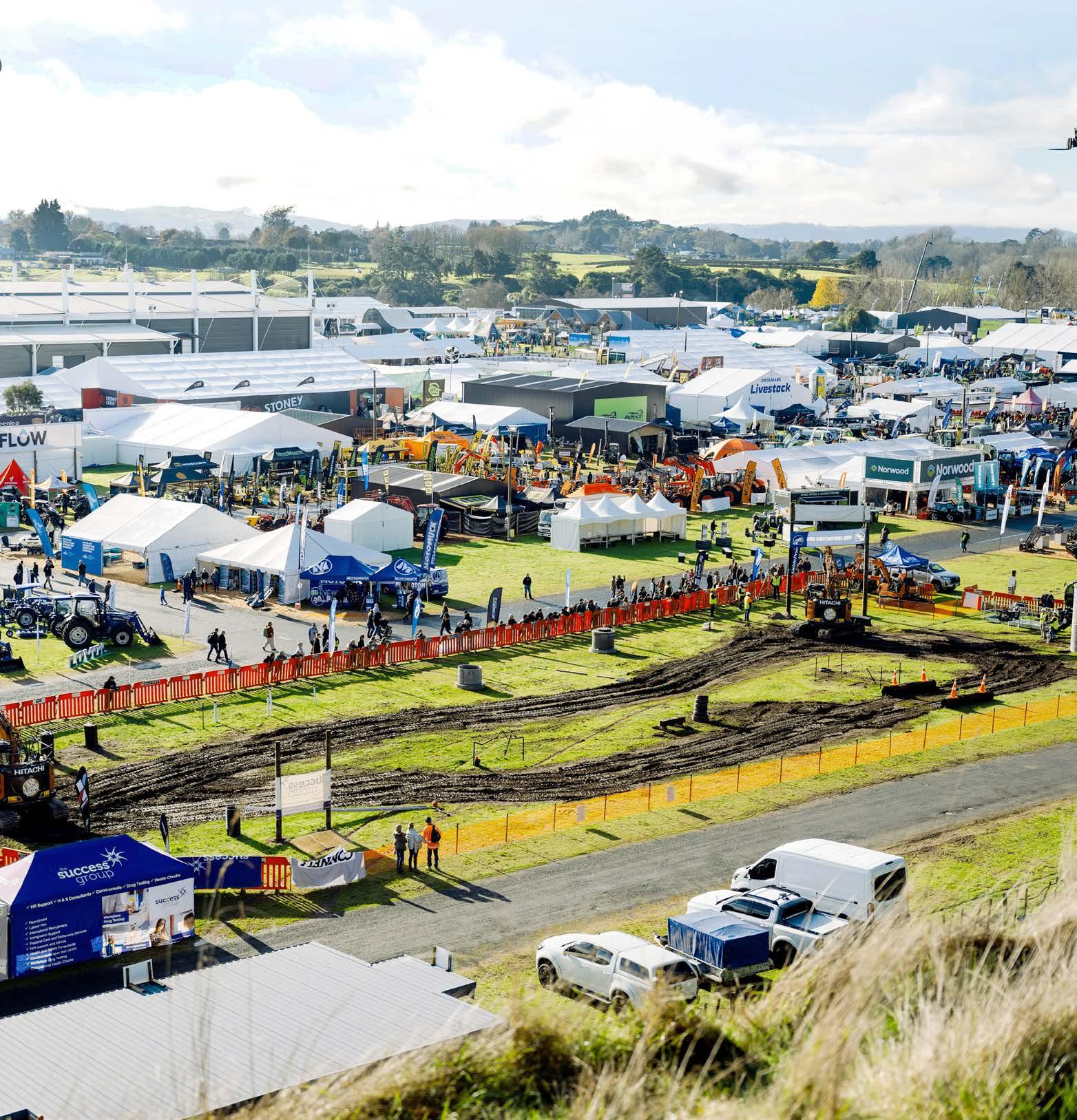
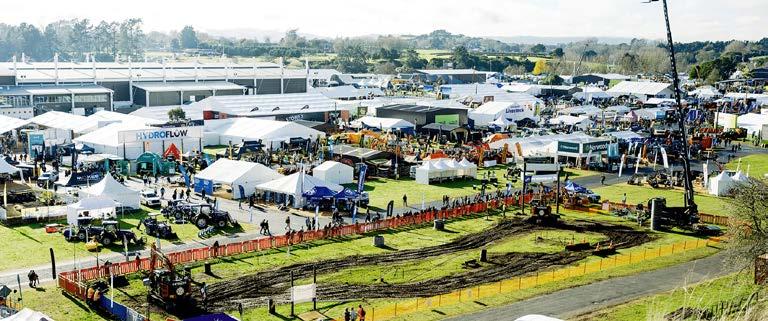
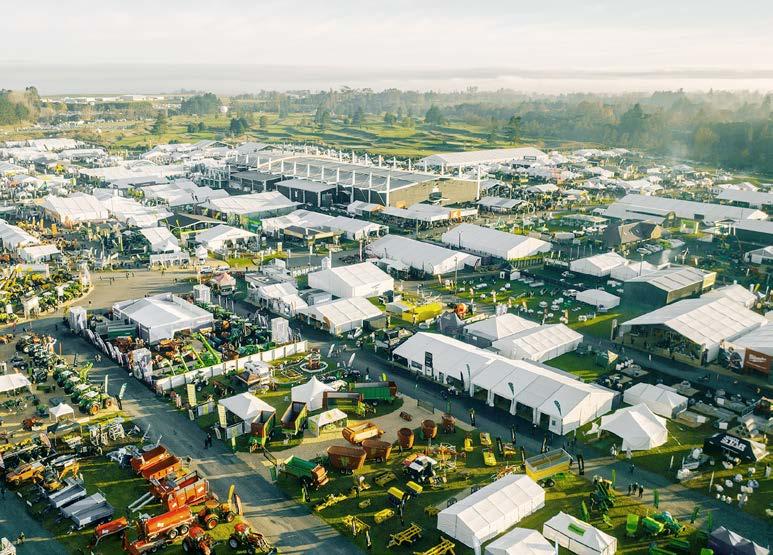
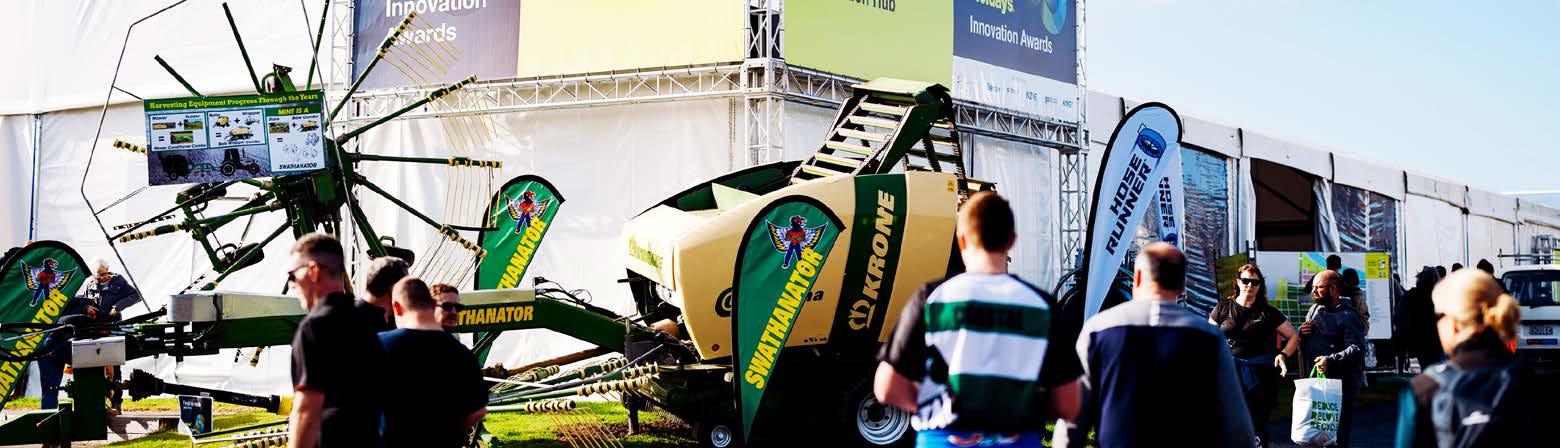
Agathering of more 100,000 people will be at the Mystery Creek site during the event, including those showcasing their innovations and solutions and those seeking products and services to improve efficiency and drive success. There’s fun and family enjoyment for all ages, as rural meets urban amid a carnival atmosphere.
Up for some lucky vistor is a $60,000 prize package. Fieldays, JAC and Stoney Creek are giving Fieldays’ ticket holders the chance to win a JAC T9 ute valued at $49,990, plus $10,000 worth of Stoney Creek gear.
To enter just personalise your Fieldays’ ticket and triple your chances of winning by visiting JAC at Site I30 and Stoney Creek at Site F55.
For those with work still in mind, buy a Fieldays Business Lounge ticket, and get access to an all-inclusive lounge, providing a central location within the event for you to use as your base for a range of familyfocussed attractions designed for both
FIELDAYS’ PROMISE IS FAMILY FUN
BY PAUL CAMPBELL
rural and urban visitors. The event balances heavy farming machinery with interactive hubs, high-energy spectator competitions, and dedicated children’s zones.
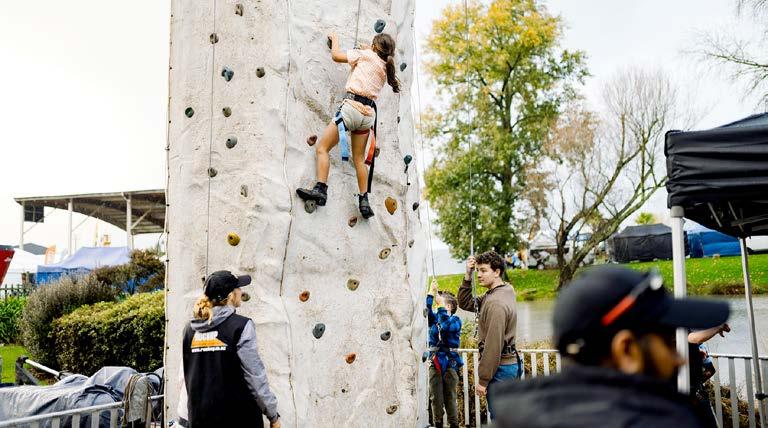
These offer educational, engaging and hands-on activities tailored specifically for children and parents, hosting a rock-climbing wall, bungy trampolines, a digital golf simulator and massive inflatables. It operates from 9am to 4pm Wednesday through Friday, and 9am to 3pm on Saturday.
At the Heritage Village and Dairy Museum families can walk through historical simulations, including a classic schoolhouse, an old jail, a vintage hospital, a blacksmith’s forge, and the fully reopened National Dairy Museum.
Inside the Heritage Village, the space features rural art displays, storytelling, and cartoon exhibits celebrating classic Kiwi rural humor.
Of course, the Fieldays Drone Zone showcases flight demonstrations that
It’s on again, with over 1,100 exhibitors coming together to showcase the best innovation, products and services from the primary industries in the 58th edition of the National Fieldays.
captivate tech-minded kids, while highvelocity events and live machinery demonstrations provide continuous grassroots’ entertainment across the four days.
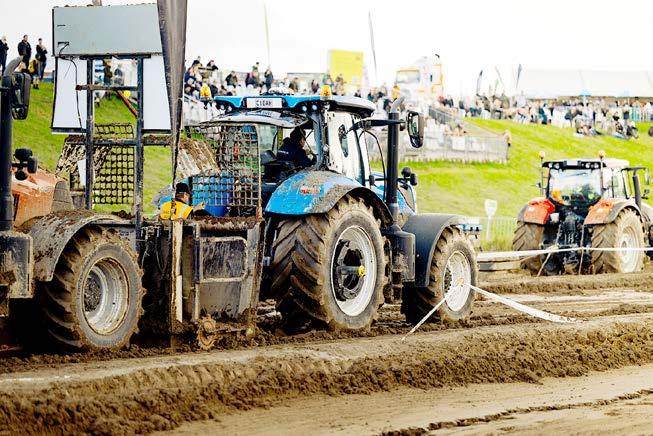
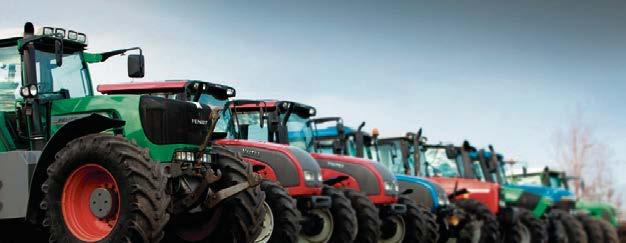
Not to be missed, of course, is the iconic Fieldays Tractor Pull. Families can watch high-powered tractors go head-to-head in weight-hauling
races from prime viewing spots. Entry conditions for those not already lined up in the contest itself can enter either the Weight Adjusted (racing) or the Weight Transfer (farthest distance) competition, or both. If you do not have a standard tractor but rather a pre–85 or modified, you will need to enter the Modified Tractors Competition.
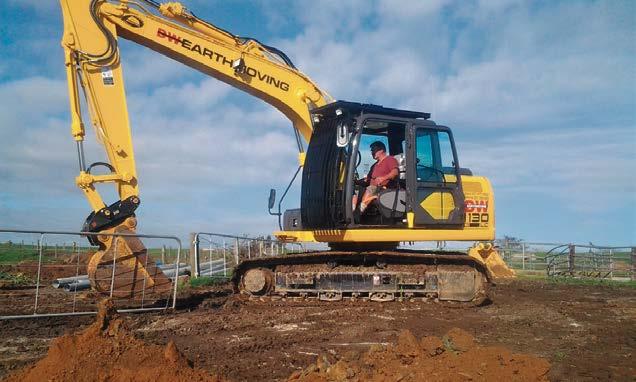
Excavators capture the interest of young and old alike
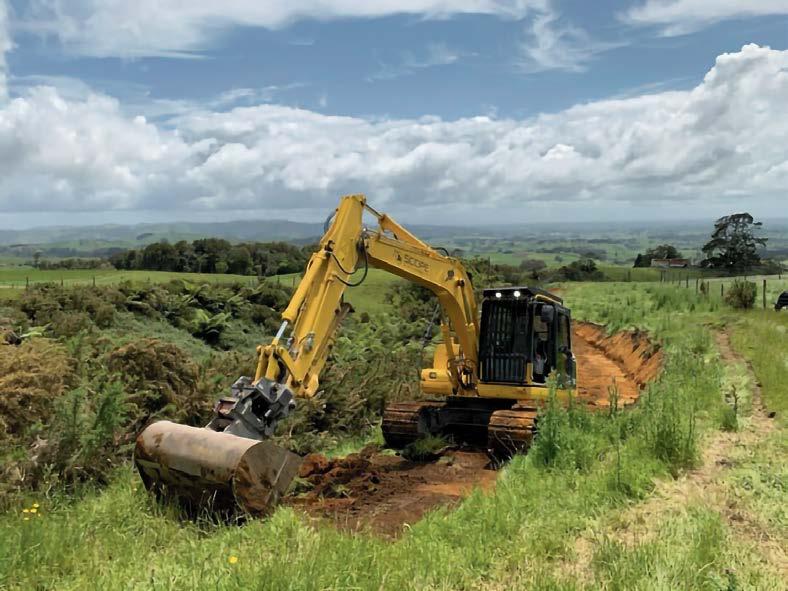
The competition heats will be held on Wednesday, June 10, with the finals taking place on Saturday, June 13. Another fun watch might be the Big Dig, an excavator activity running every hour on the dot from 10am to 4pm daily on the Village Green.
For those with speedy interests there’s the Red Bull Cut It, a fast-paced lawn mower racing event held on a central lawn circuit. Town can see the country in action at the Live Fencing Competitions where skilled contenders showcase rapid, precise rural fencing techniques in live head-to-head contests to find the top postholer and wire stringer there.
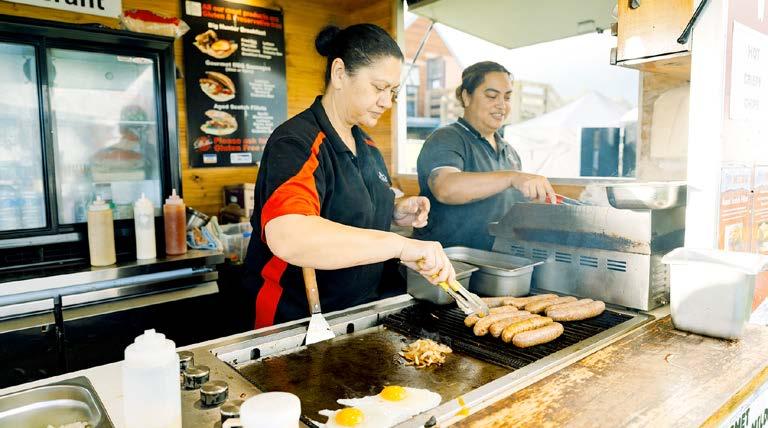
Of course, Fieldays also means food, so bring an appetite to enjoy the wide selection of eating on offer.
Tickets are available via the Official Fieldays Ticket Portal. Buying tickets online secures entry and automatically registers visitors to win the official event gate prizes.
Family checklist:
• Children under 5 — free entry
• Child one-day pass (ages 5–14): $18 online ($18 at the gate)
• Adult one-day pass: $36 online ($42 at the gate)
• Family Pass (two adults plus three children): $108 online ($120 at the gate)
• School Groups — Discounted tickets are available at $10 a student for organised groups of 10 or more Children’s activities and highlights Fieldays Family Fun Zone: Located in the Heritage Village, running from 9am to 4pm Wednesday–Friday, and 9am to 3pm on Super Saturday. All activities inside this zone are free for event attendees.
Active Entertainment: Includes a rock climbing wall, bungy trampolines, inflatables and a golf simulator.
Colouring-In Competition: Children can complete the official event colouring sheet and drop it off at the Mystery Creek Motors garage inside the Family Fun Zone for a chance to win a $100 Prezzy Card.
Heritage Village and Museums: Families can explore the historic church, the old
Interactive Hubs: The Careers & Education Hub features hands-on learning, plus a dedicated Careers Trail on the Fieldays mobile app. The Forestry Hub offers a forestry machinery simulator where kids can practise operating heavy gear.
Rock climbing for young adventurers
Kihikihi jail, and the National Dairy Museum.
by Andy Bryenton
Fieldays’ spirit of volunteering
In 2025, the National Fieldays at Mystery Creek was made possible by the efforts of 151 volunteers, who stepped up to make New Zealand’s biggest farming event a success.
“Our volunteers are the reason we have reached 58 years,” says Fieldays people and culture executive Beth Jobin. “Their commitment and passion are what keep the tradition alive. Every year, we look for new faces to join us and become part of something truly special.”
The New Zealand National Fieldays Society is a charitable organisation, just like the committees nationwide that organise A&P shows, but on a huge scale. That means they rely on volunteers, and they have always found willing hands to pitch in. An example of the spirit of volunteering, which makes the Fieldays happen, is the winner of the event’s volunteer rookie of the year award for 2025, Keith Flockhart, or Anita van Beek, who says she first got involved as a car park attendant with the NZ Young Farmers, 26 years ago.
“Those first few years were full-on, helping in the site services team. I would start on gate two, welcoming exhibitors, then move on to deliveries, then helping with the vintage tractor parades, and then either roaming or area-specific exhibitor assistant, and of course, afternoon traffic management,” says Anita.
“It’s incredibly satisfying to be part of something so dynamic and to interact with such a wide variety of people, whether that’s team members, exhibitors or visitors.”
The Fieldays in Mystery Creek runs on a spirit of volunteering, and those who have been involved through the years report that it’s a rewarding experience
For the past 12 years, Anita has driven the visitor shuttle, acting as an ambassador for the event as she ferries folks to the heart of the action.
However, volunteers span every space within New Zealand’s premier rural occasion, from ticket takers and administrators to support crews and parking assistants. Universally, those who have been involved speak of the value of the experience and
how it’s rewarding socially as well as professionally.
“I enjoyed meeting many people from across the world, all coming to Fieldays at the bottom of the world to do business,” says Peter Fisher, a volunteer since 2018. “Volunteering is a good social thing to do, enabling you to give back to the community. You make lifelong friends.”
As the 2026 Fieldays approaches, the committee organising this mammoth
undertaking salutes all those who have given freely of their time across almost six decades of innovation, celebration and industry. They’re also keen to hear from those who will help for 2026. If you would like to get involved, visit nznfs.co.nz/ working-with-us/volunteering.
“ITOP INNOVATION FINALISTS SELECTED
BY PAUL CAMPBELL
Traditional practical inventions are well represented in the finalists of this year’s Fieldays Innovation Awards from a pool of 57 exhibiting participants, a total of 19 stand-out entries have been named as finalists and are moving on to the final round of judging during the event at Mystery Creek.
t is fantastic to see the rise of artificial intelligence in the mix, but the judges have also selected on-farm solutions, proving that tried-and-
We deliver water throughout the Waikato area to residential, farms and business customers. We can cart up to 28,000 lt with truck and trailer.
We can fill anything from your house water tank, through to swimming pools, and farm tanks. We also do water tank cleaning and sterilizing.
waikatowatersupplies.co.nz
027 417 9195 waikato@4water.co.nz
true problem-solving remains just as important as new ways,” says Fieldays programme manager Steve Chappell.
“We want to say a massive thank you to the whole judging team, led by 2026 head judges Justin White, Emma Poole, Juliet Ansell and Katherine Sandford. It is a tough task, and they have done a fantastic job.”
The Young Innovator of the Year category features eligible applicants who are under 20. “It’s inspiring to see so many young people stepping forward with ideas that tackle real problems and improve everyday life,” says Chappell.
Finalists for the Young Innovator of the Year Award are Enivo biodegradable plant pots, and St Paul’s Collegiate School with three offerings; PigProp, a portable pigtail standard carrier, SmoothSip, a screw-on filter, and Tractor Armour, a front-end guard designed to protect tractors.
The Prototype Award, supported by Sprout Agritech and Blender Design, provides a platform for innovators to test and refine their non-commercialised ideas and finalists are:
Cutting edge ideas at Fieldays
• Agnition Ventures: Veld — a tool that shows productivity, opportunity, and risk for land
• Scanabull: Scanabull WeighApp — live cattle weights using a phone app
• Sterineedle: A clip-on holster to sterilise livestock vaccination needles
• Watts Tech: Gate Keeper automation for existing farm gates
• Wild Harvest Solutions Limited: STLKR app — a digital platform for pest deer management
The Early-Stage Award, supported by Map of Ag, features finalists who’ve launched commercially in the past year.
• DAGI Limited: DAGI (Drench and Grazing Integration) — a farm app for paddock-level worm risk
Winton Stock Feed are a major supplier of molasses to New Zealand Industry. With over 20 years in the trade, we know a thing or two about molasses, molasses delivery systems and farm productivity. We stock bulk molasses throughout the country, and will be pleased to discuss your requirements at any time.
• Elert EQ: a wearable monitoring device for horses)
• Elm Lab Skincare: An A2 Colostrum Baby Lotion
• Enivo: Biodegradable plant pots
• Harvest Electronics: Fixed Grid Valve Control Remote — an irrigation flow controller and fault detector
The Growth & Scale Award, supported by PwC, showcases participants who have launched within the last four years and are active in New Zealand and at least one other global market.
• Bovonic: QuadSense — an in-line mastitis screening system
• The Helical Company: Helical — genomic prediction for livestock breeding
• MSD Animal Health: Bovilis Cryptium® — a cryptosporidiosis vaccine for pregnant cows
• T&R Interior Systems: FLOC
— 100% New Zealand wool acoustic panelling
• Trussed Systems: Truss House Portal Frame — a precision-engineered timber portal frame system
Full details about the finalists’ innovations, and those of all participants, can be found at fieldays.co.nz/innovation.
The innovations can be viewed in the Fieldays Innovation Hub, or on the Fieldays Innovation Trail layer, which can be turned on in the Fieldays App. Winners will be revealed at the awards ceremony on Thursday, June 12, from 5.45pm,
streamed live on the Fieldays Facebook and YouTube pages.
Visitors can also vote for their favourite innovation in the People’s Choice Award. All 57 awards participants are in the running and stand to take home a $2,000 cash prize from Fieldays, while one lucky voter will win a voucher for $500. The public is encouraged to cast their votes in the Fieldays Innovation Hub throughout the event.
The semi-finalists were chosen from 57 selected individuals, companies and start-ups to exhibit their ideas and cuttingedge solutions in a wide mix of ideas, from
AI and automation to safety, monitoring, diagnostics and inventions to make life on the farm, orchard or rural block easier and more efficient.
“As we near the 60th year of the awards, I’m pleased that they still showcase the new, bold and practical solutions they always have,” says Steve Chappell.
“The programme connects participants to the innovation ecosystem in New Zealand, where they can engage with expert judges and tap into a wider network of mentors and partners to help refine, fund and amplify their innovation.”
A NEW PARTNER AND NEW ATTRACTIONS
BY PAUL CAMPBELL
“We wanted a partner that could match our ambition and energy,” said Fieldays’ Emma Fairweather. “Genesis delivers both, helping us create an event that is
Book in early for all your trailer needs before calving season starts to avoid disappointment Prescott Trailers are designed for the rugged outdoors, dependable and durable, to ensure continuous reliable use.
Original Manufacturers of Pinto Trailers for 27 years
not only exciting, but forward-thinking. We’re pleased to be working together to enhance the experience for visitors while helping drive important conversations about the future of energy.”
Genesis is also powering up the Fieldays experience for its customers with an exclusive Genesis Fast Track Ticket, designed to get customers through the gates faster and into the action sooner.
Genesis’ chief revenue officer, Stephen England-Hall, says the partnership provides a meaningful way to connect with customers. Under the three-year agreement, the partnership will also focus on enhancing energy efficiencies across the Mystery Creek Events Centre site, which also serves as a critical infrastructure location for Civil Defence in Waikato.
Innovation is the reason for being at National Fieldays events, and these centre on a series of hubs, that encapsulate the pillars of the event focussing on the rural, and thus, the national economy.
The future is marked as visitors ‘take flight’ in the new Drone Zone to see how drones are revolutionising farm
management practices, and explore opportunities to engage with industry experts and innovators.
“Whether you’re a seasoned drone professional or a curious enthusiast, the Drone Zone promises an immersive experience that celebrates the forefront of agricultural technology,” says programme manager, Steve Chappell.
Engagement Sessions interactive hub is bustling with activity, as education providers and sector groups collaborate to present career and education pathways to becoming a part of this vital industry. Several engagement sessions are held daily during the event and are popular among students of all ages.
“Activate the Fieldays Careers and Education Trail layer on the map on the Fieldays App to see all the participating exhibitors that can provide you with information, advice and suggestions that could help you land that perfect career in the food and fibre sector,” says Steve.
“Student tickets are available for $10 each with a promo code. For every 10 student tickets purchased, your group will qualify
for one discounted adult one-day ticket at $15, available for teachers or chaperones. To access the code for discounted tickets, please register your school.
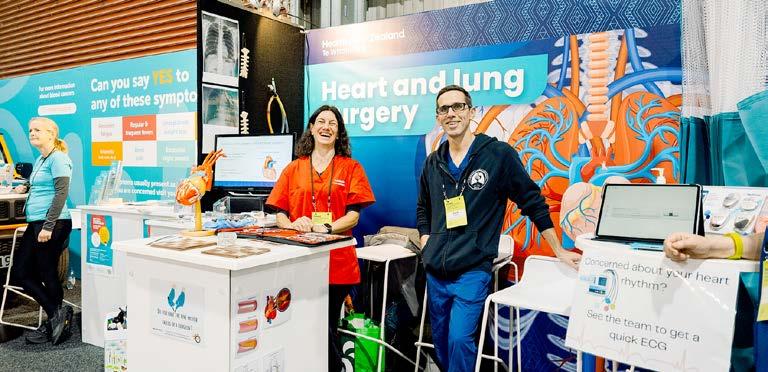
“The Fieldays Hauora Taiwhenua Health and Wellbeing Hub has been set up to help us look after ourselves and family. We recognise the importance of health and wellbeing, if you are struggling with physical or mental health get free checkups, talk to health experts, book health appointments and get information, all in one place, right here.”
Free health checks include hearing, blood sugar levels, hepatitis C, skin cancer spot checks, blood pressure checks, atrial fibrillation checks. Health experts are on hand to answer your questions and concerns — from cardiothoracic surgeons and specialists to a range of health practitioners. It’s a rare chance to hear it straight from the source.
This is a one-stop shop to book those appointments you have been letting slide. Tap the Fieldays Smart Band with exhibitors to gather important information and connect with health and wellbeing exhibitors.
With one in five people affected by mental illness and addiction each year, there are many of us doing it tough right now. Get information and confidential support from mental health workers.
Learn about forestry and wood processing at the Forestry Hub, as a dedicated space where visitors can follow the forestry lifecycle story exploring the many facets of the forestry and wood processing sector — from seedling to tree, showcasing nursery technology, innovative engineered timber used in midrise buildings, to pharmaceuticals, bioenergy and more.
“Forests generate important economic income for the regions, support biodiversity and help in mitigating the effects of climate change. We are excited to show how planting trees — whether native or commercial — can strengthen farms, landscapes and local economies,” says spokesperson Anna Gordon.
Farm Forestry Association president, Peter Davies-Colley, says FFA strongly
supports the Fieldays Forestry Hub and has been heavily engaged in its design and development. The farm forestry section of the hub has experts and practical information available on multiple plantation species, with a focus on redwoods, eucalypts, cypresses, poplar and willow, and radiata pine.
Anna Gordon says that the multibilliondollar forestry sector is a major employer in New Zealand, employing over 35,000 people in both year-round and seasonal jobs.
“People of all ages and abilities can find great careers in this sector: from planting and managing native forests and looking after the forest environment, to managing people and resources and working with state-of-the-art technology,” says Peter Davies-Colley.
Fieldays Rural Advocacy Hub is where all the big conversations about the future of farming happen, and those in the industry have an opportunity to get involved. Federated Farmers and
Fieldays are proud to have delivered a one-stop shop for grassroots farmers to discuss the big issues impacting our rural communities. At least a fifth of parliament’s MPs spoke from the podium, or popped in for a chat, including seven cabinet ministers, at the 2025 event.
“Farmers need to be actively involved in political decision-making and shaping the future of our sector.
Fieldays is the ultimate launch platform for innovation. The Fieldays Innovation Awards deliver a global platform for problem-solvers to showcase their innovation to the primary industries, while providing the opportunity to bring in more customers, investors, advisers, media and potential partners. Entries for 2026 have now closed.
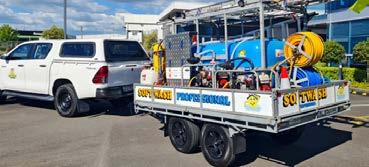
House & Building Washing Professionals Since 2002. We make it easy.
The health and fitness hub is at your service
Farmers urged to embrace Avoca’s dicalcic phosphate
As pressure mounts on farmers through rising input costs, Avoca managing director Bryce Manderson believes Avoca has a solution to ease some of the financial pain for primary producers.
He is encouraging farmers to turn to Avoca’s non-water soluble Dicalcic Phosphate (DCP), which is less prone to leaching and run-off — nor is it fixed or immobilised in high phosphate retention soils.
“During times of uncertainty and increasing on-farm costs, dicalcic phosphate provides a really cost-effective option to reduce phosphate application rates by increasing nutrient use efficiency, at the same time reducing environmental impacts,” says Manderson.
“So, not only will farmers spend less on phosphate applications, with a nearneutral pH of six, DCP does not impact soil biology in the same way that highly acidic superphosphate can.”
Avoca’s Dicalcic Phosphate is a unique combination of Avoca lime and superphosphate, which has been cured and processed to produce an easy to spread, slow-release, stable calcium phosphate fertiliser.
“What a lot of farmers don’t realise is that water-soluble phosphate fertilisers are not suitable for many Northland and Waikato soils, due to phosphate leaching, run-off and lock up. Often the best way to reduce phosphate losses is to apply a slow-release, low water-soluble product — Avoca’s dicalcic phosphate.”
Manderson says those farmers who are regular users of Avoca’s dicalcic phosphate
have seen the benefits of it providing a stable, slow-release phosphorus source that resists leaching and remains available to plants over time.
Avoca sales and marketing manager Neil Crowson says chemistry within DCP ensures much better nutrient utilisation and improved pasture performance in soils prone to nutrient loss.
“So, in effect, using DCP for maintenance or capital fertiliser plans, will get better long-term supply of phosphate for sustained pasture production throughout the year,” says Crowson.
“Over the years, farmers will save money on their fertiliser bills and improve soil health. Ultimately, it is the stock that will benefit by grazing on healthier pastures.”
Crowson says along with lime, DCP is just one of numerous fertiliser options offered by Avoca throughout Northland, South Auckland, Waikato and Bay of Plenty.
An independent research paper has shown leaching is a pathway for phosphorus loss on low retention soils that Manderson believes is too often, and wrongly, dismissed as environmentally and economically insignificant.
“That’s why I encourage farmers to consider the use of less soluble fertilisers and more frequent, but smaller, applications.”
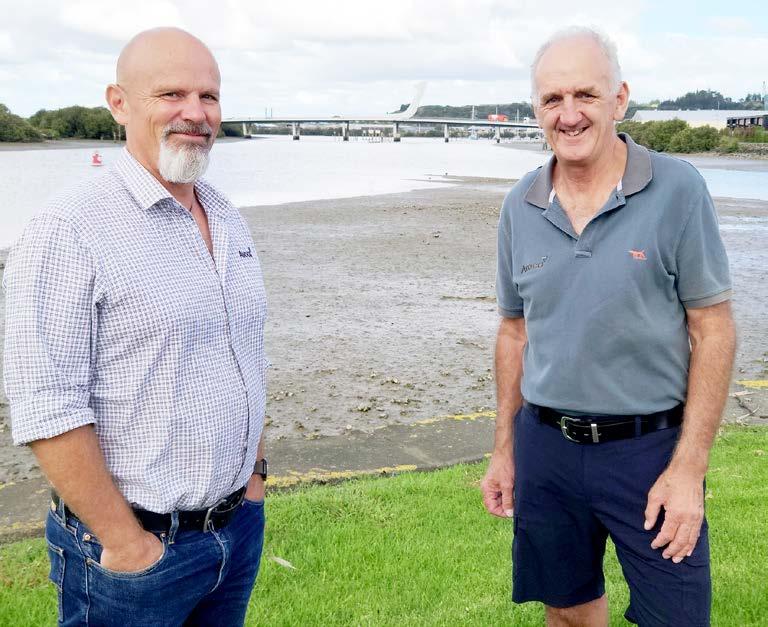
Avoca sales and marketing Manager Neil Crowson, left, and Avoca managing director Bryce Manderson say dicalcic phosphate (DCP) is less prone to leaching and run-off
Stop rust with lanolin
Prolan, a New Zealand-made lanolin-based lubricant and corrosion inhibitor, is becoming increasingly popular with farmers, engineers, panel beaters, motorhomers, and boaties for its unique ability to adhere to metal and stop rust in its tracks. Whether it be a much–cherished Land Rover or a new vehicle showing surface rust on purchase.
“Prolan Extreme is attracting much interest from those with machinery and equipment exposed to harsh environments, such as salt, sand and mud,” says Murray. “The results are excellent. We’ve trialled it within industries throughout New Zealand from mussel spat farmers to Great Barrier Island engineers.”
A coating of Prolan on a vehicle chassis will provide a long-term environmentallyfriendly protective coating that will help it pass WOF and COF checks.
“Many vehicle stations are now recommending a coating of Prolan to cover existing rust and seal it off from air and moisture. Prolan cannot be removed by cold-water blasting — this allows vehicle chassis to be cleaned without removing the rust protection.”
Prolan is best applied on a warm day or on cooler days: the product tin can be warmed in a bucket of hot water before application. The beauty of the Prolan being a natural product is that it is safe and easy to apply.
With minimal preparation required before coating, wash the chassis down, allow to dry off before coating with Prolan. A coating can even be applied over existing rust — just a quick brush off if flaky rust is present.
For larger areas, Prolan is best applied using an airless spray gun or compressed air type system. Prolan is safe around electrical, electronics and rubbers; it will not break them down or cause perishing.
In the past chassis have been sprayed with used engine oil, fish oil among other things, inside the chassis rails and underneath. Prolan’s main ingredient lanolin (from sheep’s wool) adheres to metal surfaces, blocking off air and moisture and stops rust in its tracks. The ability of the Prolan to creep into hard-to-reach areas makes it a winner over a paint-type system where if the paint cracks — corrosion can creep in.
In coastal environments Prolan is excellent for hinges, tools, seized locks, bolts, chains, winch ropes, radio antennas, alternators, starter motors, squeaky door hinges, garage doors, lawn mower chassis, garden ornaments and fishing gear. A spray on to a metal surface, with a quick wipe off with a rag, ensures the surface is well-coated and will prevent corrosion from the environment.
KEEPING FARMERS FARMING.
With a coverage rate of 1 litre for 8–10 square metres, Prolan is economically a winner protecting your assets, reducing maintenance and preventing expensive parts replacement down the track.
As a result, Prolan will increase asset life and resale value. “It is hard to believe it is off the sheep’s back — taken from nature to protect nature. With the added bonus, it is made in NZ by Kiwis,” Murray said.
Poultry and pigeons from as far as Whangārei to Invercargill will descend on Palmerston North next month to compete in the 2026 National Poultry and Pigeon Show.
This year it’s the Manawatū Poultry and Pigeon Club’s turn to host the event. The club, which is celebrating its 121st anniversary this year, has hosted the national show a couple of times previously. Held biannually in the North and South Islands, next year’s national show will be in Invercargill.
More than 1,500 entries are expected to be exhibited at this year’s show. Hundreds of show classes will cater for the various breeds, including rare varieties.
Manawatū Poultry and Pigeon Club president Murray Strawbridge said both the Barber and Bell Halls have been hired to accommodate the number of birds entered.
“Quite a few unusual breeds are entered, including Campines, which originated from Belgium, Polish, which are a bantam variety with what looks like a pom-pom on its head, and Barnevelders, which originate from Holland.”
“There’s been a big upsurge in Araucana, which has become very popular. It’s a South American breed that lays blue eggs.”
Racing and fancy pigeons are also entered.
“There are also others called Nuns, which are black and white, and Modenas.”
As a child, Murray loved breeding chickens and entered some of his poultry in shows.
“As I got older, I wanted another hobby.”
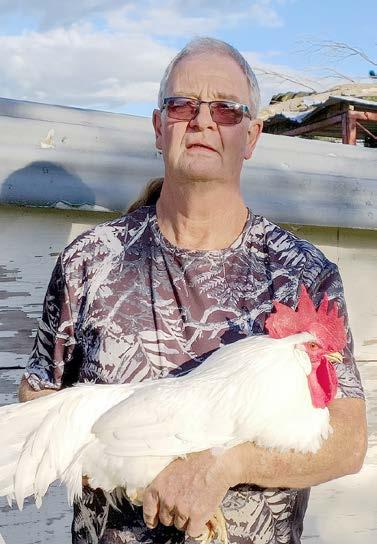
When Murray and his wife Sheree moved to the country, he was able to buy some more chickens. Specialising in breeding Leghorn, a dual-purpose Italian breed, Murray exhibits his poultry in about five shows a year.
“It’s an all-consuming hobby. I like trying to improve the breed,” he said.
Judging will take place on Friday, June 5, and the show will open to the public the following day from 9am to 5pm. Show judges will be looking at exhibits closely to select poultry and pigeons that
Nutritional therapy for Joints (Part one)
by John Arts
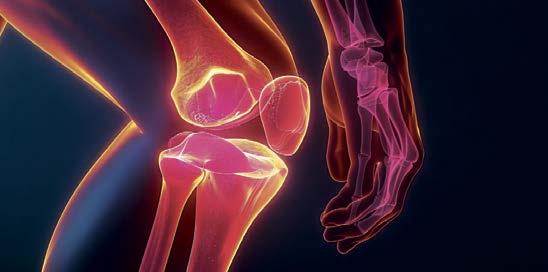
Being diagnosed with osteoarthritis means you have joined one of, if not the largest health problem clubs.
Your doctor may have arranged X-rays to confirm that you have cartilage loss and possibly degenerative changes to your bones. You may have been referred to an orthopaedic specialist who may have outlined surgical options.
Medicine has essentially three options for osteoarthritis: pain relief, physiotherapy, or surgery. Nutritional therapy is based on quality, professionally prescribed supplements and anti-inflammatory diets that can be very effective in improving joint function and mobility. My client files are full of testimonies from people who have had significant reductions in pain and improvements in mobility.
The goal of nutritional therapy is firstly to improve the function of the specialised cells (chondrocytes) that maintain cartilage. Secondly, we want to reduce inflammation in the joint capsule. This is responsible for much of the discomfort and reduction in mobility.
5/10 or even 2/10? I recently caught up with a client with significant knee pain. The worst part was the pain at night. He now reports the pain at night has gone and is significantly better during the day. He has gone from 10/10 to around 2/10.
The question is whether we are willing to try something different. There is the cost barrier. Fortunately, a quality, high chondroitin joint supplement with omega-3 fish oil is about $40 a month, more in the initial intensive period.
Adopting an anti-inflammatory diet will possibly mean some extra costs, but it is hard to put a price on our health. However, in my experience the biggest barrier is simply we are creatures of habit and naturally resist change.
conform to the breed standards. Birds must also be clean and in good shape.
The Best Bird of the Show title will be awarded on the Saturday night during an exhibitors evening.
During the show, club members will be easy to spot wearing club sweatshirts with a logo.
“We are making a special effort to make club members available for potentially interested people. Just talk to a club member or someone at the door.
“Chickens will be available for sale, or arrange to get hatching eggs later in the season.”
Entry to the public is $5 a person. “Birds are the main feature. There’s a wide variety and it’s a nationwide show.”
For further information, phone Murray on 06 326 8732 evenings or email ssstrawbridge@gmail.com.
Let’s give your OA symptoms a score of 10/10 discomfort. What would your life be like if this was reduced to 7/10, or
John Arts (Adv.Dip.Nut.Med) is a qualified nutritional medicine practitioner and founder of Abundant Health. To read more articles by John and learn more about the Abundant Health products he has formulated, visit healthhouse.co.nz, call 0800 140 141, or email john@ healthhouse.co.nz.
Bettaflex is the most popular supplement in the Abundant Health range because of its positive support for joints affected by wear and tear, helping Bettaflex users to support mobility and quality of life. How does Bettaflex work?
Bettaflex has been formulated to support joint comfort and mobility, making it an ideal supplement for those seeking support for joint comfort and stiffness. Bettaflex combines high-grade chondroitin
joint processes that protect, maintain and renew cartilage.
Why use Bettaflex?
Bettaflex formulator John Arts comments, “I formulated Bettaflex with a single objective; that those concerned about joint health can support mobility and comfort helping them to enjoy better quality of life.”
Manawatu Poultry and Pigeon Club president Murray Strawbridge will be one of hundreds of enthusiasts exhibiting poultry at the National Poultry and Pigeon Show in Palmerston North next month
Positive freshwater results
Analysis of decades of research has revealed the implementation of good farming practices plays a critical role in
losses to improve freshwater outcomes.
Researchers from DairyNZ, the Bioeconomy Science Institute (formerly AgResearch), and Lincoln University have explored two decades’ worth of data and used multiple data sources to assess the impact of good farming practice implementation on nutrient loss reductions.
The results showed a clear link between the widespread implementation of good farming practices and lower contaminant losses from land to water on New Zealand dairy farms.
DairyNZ senior scientist Dr Katrina Macintosh says farmers should be confident that the actions they are taking on their farm are having an impact, without affecting productivity.
“Over the past 20 years dairy farmers have implemented a range of good farming practices, including better fertiliser use, effluent management, reduced soil cultivation and improved irrigation scheduling. Until recently, few studies assessed its impact, and when improvements in water quality might be detected,” said Dr McIntosh.
“In recent years, we’ve been working with milk processors using the data they are collecting from their suppliers via their farm environmental plans to better understand environmental improvements.
“Working with Fonterra and Open Country Dairy, plus capturing information
from DairyBase, we were able to analyse multiple anonymous datasets to determine the level of good farming practice implementation around the country and what that means for reducing nutrient losses and improving water quality.”
One of the studies looked at five dairy-dominated catchments ranging from 598 hectares to 2,480 hectares between 2001 and 2020, a period where extension programmes began to be rolled out, and water quality and farm practices were being regularly monitored.
The research found good farming practices reduced phosphorus, E coli and sediment concentrations.
Another study looked at uptake of good management practices across a 10-year period between 2013–2022 and the influence they had on nitrogen and phosphorus losses to water from dairyfarmed land.
It found that N management, and improved irrigation and cultivation practice contributed to lower N loss trends, while P fertiliser and effluent storage methods were the most influential parameters for reducing P loss.
“Freshwater management is a longterm game, and it’s great to be able to show farmers the impact of their efforts on-farm over the past 20 years or so.”
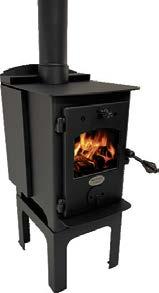
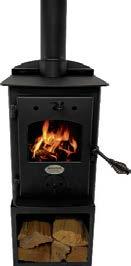
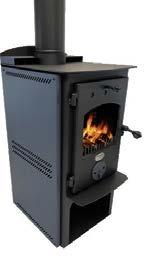
The Wagener Sparky is New Zealand’s ultimate compact multi-fuel solution, handcrafted for tiny homes, cabins and even boats. Despite its small footprint, the Sparky delivers an impressive 7–10kW output, featuring a heavy-duty 5mm steel chassis and a brick-lined firebox for maximum heat retention.
This multi-fuel versatile performer isn’t just a heater; it features a dedicated top surface for cooking and an optional “Lion” wetback to provide independent hot water. Available in Clean Air and Rural models with customisable base and colour options, the Sparky offers robust, long-lasting warmth wherever space is at a premium.
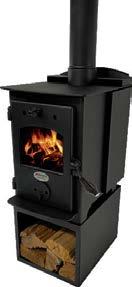
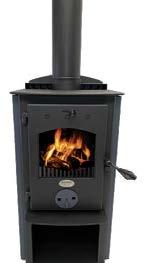
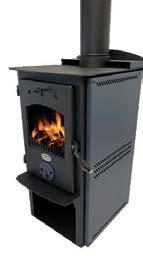
The Legend of Warmth, Built to Work Hard
The Wagener Leon is the “big brother” to the Sparky, designed for those who love compact styling but need massive 16–18kW heating power. Named after the family business founder, this handcrafted powerhouse features a deep firebox and a large glass window for a stunning view of the flames. Built from 5mm NZ steel, the Leon includes a built-in log box for convenience and a dedicated cooking surface for self-sufficiency. With an optional 3kW wetback capable of heating a full household’s water, the Leon is a hardworking, enduring heart for any medium-to-large home.
by Andy Bryenton
Research for a fertile future
Fertility is of vital importance on dairy farms, with proven downstream effects on milk production, farming costs, workload and sustainability.
That’s why research into better management of fertility in the national dairy herd is critical, and why a group of industry leaders has banded together to form the Resilient Dairy Programme, a joint venture with DairyNZ and its subsidiary New Zealand Animal Evaluation, breeding company LIC, and the Ministry for Primary Industries.
Their aim is to improve animal wellbeing and health diagnostics, promote genetic innovations and genomic advancements. Scientists have compiled extensive research during the past 10 years, exploring new methods of cattle pregnancy diagnosis, including wearable technology. This technology can also be used to monitor the time from calving to first heat more accurately.
“Most New Zealand dairy herds calve seasonally, so timing matters. When cows don’t conceive early in the mating period, they calve later the following season, produce less milk early in lactation, and are more likely to be carried over,” said DairyNZ senior scientist Dr Susanne Meier.
“The fertility breeding value (BV) estimates how desirable an animal’s traits are when passed down to offspring. Genetics is one of the tools available to farmers to help improve herd reproductive performance. Every season’s mating decisions shape the future of the herd.”
Fitting better pregnancy diagnosis and ways to measure calving-to-first-heat chronology into the way farms operate is fundamental, but has strong potential.
“DairyNZ is well placed to act as a ‘trait development accelerator’, bringing the right people together early on — geneticists, sire selection and sales teams, and data custodians early in the development cycle,” Dr Meier said.
“By coordinating this work early, it reduces risk and avoids duplication. Importantly, valuable new traits can be developed faster and are ready to be used on farms, for the benefit of the whole industry.”
you need, for as long as you need
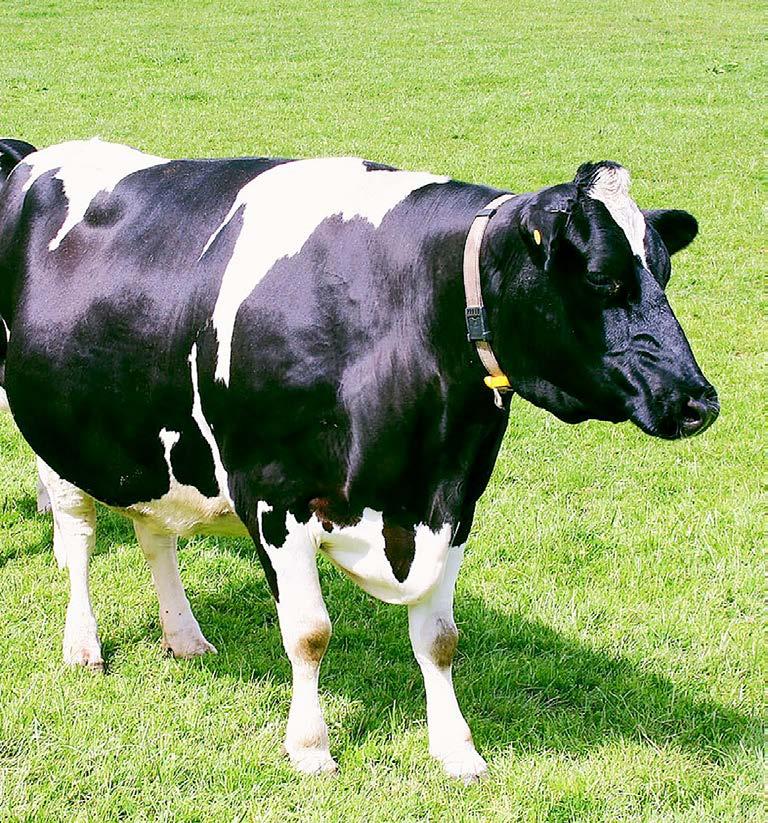
Wearable technology can provide valuable real-time data to help boost research into cattle fertility
Wearable technology for cattle has come a long way and is now unobtrusive, durable and affordable. As these traits are influenced
by genetics,
700Wh
Rapid-charge
Dependable
by Andy Bryenton
Royal estates and real estate
You may have wondered why the term ‘real estate’ is written that way; surely a house must be very real to be bought or sold, as opposed to existing only online or as a sketch?
The term comes down to us from the end of the mediaeval period, when an estate was land granted to a person by their feudal lord, such as the country estate of a duke or a knight. The term ‘real’ means both ‘material, not money’ and ‘royal’ at the same time.
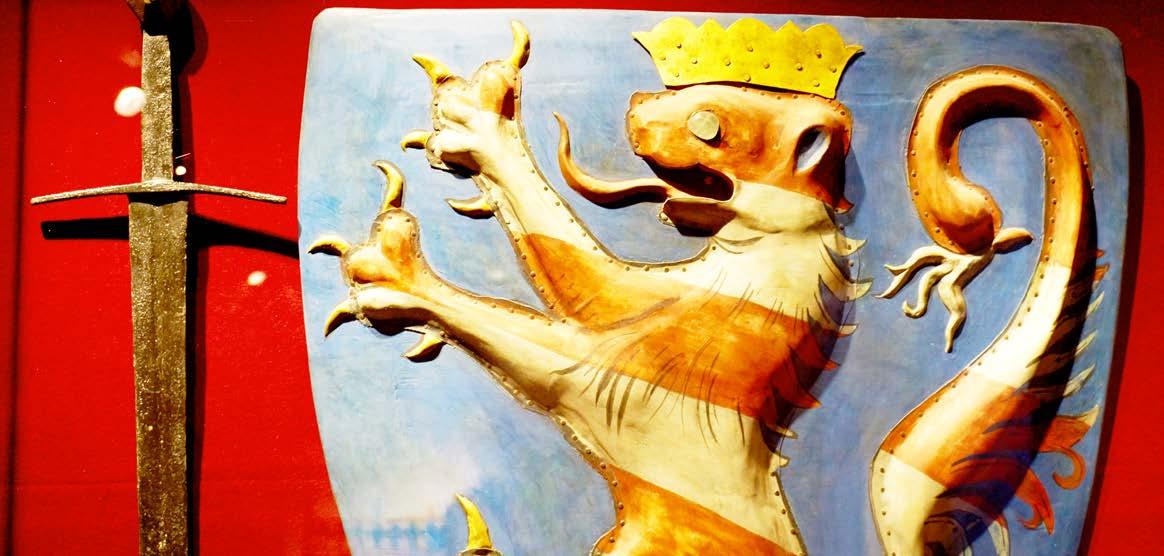
In those days, real estate wasn’t handled by the same kind of professionals we can call today when buying or selling a home, farm or business. Modern estate agents might be pleased to know that their calling originates with the scribes and archivists of the colleges of heraldry, the people who made sure that knights and nobles had their family assets tied to a distinctive coat of arms.
Today, heraldry serves as a great key to history. Genealogists and researchers looking back into the Middle Ages and the Renaissance can track the fortunes of families by the way their coat of arms, a design based around a stylised shield, appears on property deeds, legal documents, and even in carvings on tombs and the stones of castles. In those early times an estate was granted by the king, or granted to lesser knights by mighty barons and dukes, so one’s ‘real estate’ was very royal and very real indeed. The right to bear a coat of arms was part of the grant.
Therefore, when things changed hands and the fortunes of famous families rose
In the Middle Ages, the way to find out who owned an estate was to talk to the college of heralds, archivists of property and royal dispensations
and fell with the centuries, it was heraldic scribes who kept records of who owned which estates. In a very pragmatic way, the king or queen could keep track of the estates of their subjects, when it became necessary to levy a tax or two.
Things get even more interesting north of the Scottish border, where land and coats of arms were even more tightly linked. The overlap between the ancestral clan structure and the mediaeval concept of estates through fealty meant that titles
to land were often established by territorial designation; which coat of arms had flown on the flagpole there for the longest.
Coats of arms were tied to marriages, property disputes, land ownership and tax. Heraldic archivists became adept at knowing the laws of land and ownership, and were often consulted first when land changed hands. While it was not their job to broker deals on estates, their role as the prime identifiers of property ownership carries down to the modern profession of real estate, as does the royal connotation of the industry’s name.
PROTECT
A REFUGE FROM THE STORM
BY AMY FIFITA Guiding men wanting to overcome their battles with addiction, Ray and Janet Curle bought the Arapohue Retreat, a place for people to return to their purpose.
No stranger to the perils of addiction and crime herself, Janet was redeemed by grace and penned her autobiography, The Wild Side, under her pen name, Janet Balcombe.
“After I wrote The Wild Side, people began reaching out to me, thanking me for giving them hope, and others were asking for my help with recovery,” said Janet.
“Already praying for people who came from places like Auckland, Whangārei, and locally, to see us, we looked into how we could help. We thought of running some educational workshops, but that wasn’t the way we were supposed to be going — God closed the doors, and then He gave Ray a dream.”
Both born-again Christians, Ray and Janet, had a heart to help others and bring people from destructive paths onto stable ground. While their workshop idea was thwarted, a bigger plan was about to begin.
“I had a dream where I was walking around Cooper’s Beach Christian Camp, talking with them about wanting to hire the camp to do seminars, but then we started negotiating buying the property.
“I woke up and asked the Lord what that was about, and I heard him say, ‘Look at Arapohue’, so I asked Janet what Arapohue was. It was an old Christian camp that used to teach literacy to children who couldn’t read or write, and she was unsure if it was still going.
“Making some inquiries with Miriam Holloway, the daughter of the founder Graham Crawshaw, we discovered it hadn’t been running for 13 years. Miriam invited us to a family get-together to check it out. Once we walked into the lodge, we thought it was an amazing place for a retreat.”
Within two years, the Wildside Charitable Trust bought the property using donations, with the help of generous
KEITH MAHON PAINTERS LTD
Situated in a country setting, this haven offers a place of healing and restoration for those engaged in the retreat
donations and a loan from Dugdale Charitable Trust. Having to restore the house they now live in, they used the extra money from the purchase to have renovations and repairs done. Then they began restoring people, starting with one.
“Now, we have eight residents operating in two of the houses, as well as a big lodge with a kitchen, dining and lounge area, and a gymnasium. The upper room in the lodge is being restored at the moment, so that we can have meetings there.”
Quality based arboriculture tree services. Our passion for Tree Care and our involvement in the industry is paramount with what we do.
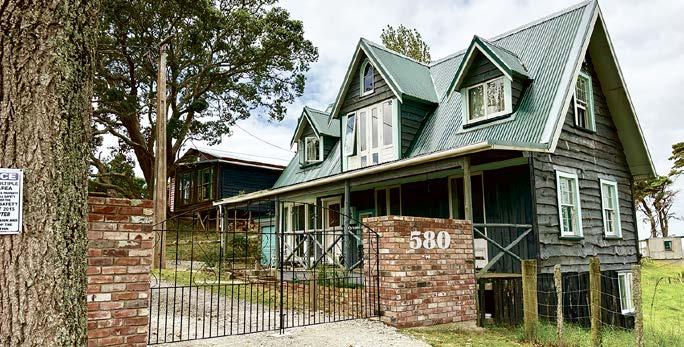
With a calling to help people break the chains of addiction, Ray and Janet Curle bought the Arapohue Retreat
Creating purpose by giving men tasks on the lifestyle block, including working on the gardens and being guardians of the QEII National Trust bush. With horses Hope and Sophie, black Valais sheep, feline friend Bob Cat, canine companions Lucy and Buck and about 15 chickens, the gentlemen can enjoy animal therapy.
“In its nature, this place is a holistic model, and so it is not like a facility. It is more like life here in a loving and supportive environment,” said Janet.
“With more of nature around and the animals around, and everyday jobs, like looking after and riding the horses. Animals touch people on a different level and bring their hearts back to life.”
With two other buildings still needing renovations, there is room to grow and have more volunteers help in their ministry.
“We will only take people desperate to be off of their addictions for the rest of their lives, because we put so much effort into the counselling, prayer work and getting them to appointments,” said Ray.
“Families who get their sons back free of addictions, the men stop their criminal lifestyle, they are back in the community, and employers are getting drug-free employees.”
While men stay at the retreat at a cost, Ray and Janet volunteer alongside AOD counsellor and builder Gary Codlin — all money collected from the residents goes towards immediate costs.
“The only reason this place works at all is that Ray, Gary, and I volunteer because there is not enough money to pay people,” said Janet.
“God gets the glory because he has provided for us and the restoration.
He has provided the amazing people who he is pulling out from a death sentence to give them a new lease on life, and what can be more rewarding than that?”
Visit wildsidetrust.org to contribute to the restoration of people or the property, financially, with items or food or through volunteering.
“There have been a lot of amazing stories of lives and families transformed. If you help one person, you help a family, and one person can change a community or the world.”
by Paul Campbell
Boosting lamb profits
Sheep farmers could improve both profitability and emissions efficiency by increasing lamb weaning weights, with only marginal changes in total greenhouse gas emissions according to research at Massey University.
PhD candidate Joseph Adjabui examined how higher lamb weaning weights affect productivity, profitability and predicted methane produced during digestion. While previous studies have focussed on the production and financial benefits, this research also considers greenhouse gas outcomes, an increasingly important factor in farm systems decision-making.
The study analysed a North Island hill country sheep and beef farm and assumed a fixed feed supply, reflecting typical New Zealand pasture-based systems with limited supplementary feeding.
The results showed consistent improvements in farm performance as weaning weight increased. Lamb carcass weight sold a hectare increased by approximately two per cent under a 10 per cent scenario, and 14 per cent under a 20 per cent scenario, relative to the base system.
Cash operating surplus also improved, increasing by around six per cent and 51 per cent respectively. Mr Adjabui says the gains were driven by improved system efficiency rather than increased inputs.
“Heavier lambs at weaning meant more kilograms of lamb could be produced and sold earlier, improving both total production and farm income.”
The proportion of lambs meeting prime specifications soon after weaning also increased, reaching 84 per cent under
the 20 per cent scenario compared with 60 per cent in the base system.
One of the key drivers of improved performance is earlier finishing. Increasing weaning weight allows lambs to reach slaughter weight sooner, reducing time on farm, improving feed use efficiency and lifting overall system output.
PhD supervisor Emeritus Professor Steve Morris says the efficiency gains from earlier-finished lambs are clear when viewed at a whole-farm level.
“The most efficient lamb is the one sold directly to slaughter at weaning. It has been alive for fewer days, eaten less feed and required fewer animal health treatments, less labour and no shearing,” he said.
“That feed is then available for other stock classes, improving overall farm performance. It is also often sold when prices are strongest, before peak seasonal supply.”
However, the head of the school of agriculture and environment Professor
Paul Kenyon notes there is a wider industry consideration. “While earlier finishing improves profitability at farm level, the industry also relies on a steady year-round supply of lamb to meet export demand, which is a conflict.”
Mr Adjabui’s research was supervised by Emeritus Professor Steve Morris, Professor Patrick Morel, Professor Peter Tozer, Associate Professor Ramilan Thiagarajah and Professor Paul Kenyon at Massey University.
Know the rules. Know you’re sorted.
Simple steps can reduce mess, stress and risk.
• Don’t take pests with you. Clean and disinfect machiner y and equipment before you move.
• Effluent rules apply from day one. Understand how the system works. Check it’s compliant.
• Planning ahead can keep your stock safe and reduce mess in transit.
by Liz Clark
Gumboot miser learns a lesson
It’s coming up ‘that’ time of the year when the rain starts up, the sun vanishes, and you’ve still got things to do around the place outside — like feeding the stock.
I know, I did it for 21 years, out on a lifestyle block up north, with a couple of kids in tow and a bunch of animals that maybe we should have just said no to. It never happens that way, of course — sure, we can take them. Next minute … winter arrives, and it’s feeding-out time for the menagerie. It costs a bomb, of course, to feed animals. At the time, we had some cattle, a horse and two free-loading sheep that turned up out of nowhere and looked like walking carpets. Thus, they were dubbed Bremworth and Cavalier after the iconic carpet brands. For some reason, those two wethers decided the cattle were sheep and stayed behind the electric fence despite it not being sheep-proof. It becomes a religious-type of routine in winter. Waking up in a warm bed, looking outside, and it’s pouring with rain. Have the coffee to warm up the stomach while listening to the complaining in the paddock that you’re already late, and why haven’t the majority outnumbering the humans been fed?
Oh fun. Then look out the window, and there’s the bull standing there eating your expensive tropical plant, now yanked out by the roots, and vanishing centimetre by centimetre into his stomach. Wonderful — that.
So it’s put the Swandri on, wet-weather gear and then on with the thick socks and gumboots, while simultaneously
discovering the electric fence is shorting.
That’s thanks to a twig that’s soaking wet and causing the loud clicks off the mains.
The bull has walked off somewhere (the sod cleared the fence into the neighbour’s farm), but feeding-out time has come.
Lug down the horse’s feed, with the bucket piled up with hay on top, and then discover those cheap generic brand gumboots aren’t doing the job. Leaking
like sieves, the feet are getting a reminder of Antarctica and then some.
Too mean and miserly to spend money on decent boots like the Red Bands — lesson learned, I suppose.
The red spots on those cheap boots, combined with the garish green colour, a splash of green dung and mud decorated with hay, could have been turned into a contemporary artwork. I could have made
a fortune from the publicity that useless pair could have generated.
Gumboot le dung — well, it has a ring to it at least. They got the toss, so the kids used them as flower pots for the school flower show while mum bought some Red Bands to console her frozen feet. Do yourself a favour — spend the money on decent gumboots or your feet will be in Antarctica too.
Where the field days phenomenon all began
by Andy Bryenton
Harvest fairs and village fetes had been part of the landscape in England since the Middle Ages, or perhaps even beyond when the firstever real rural show was conceived of.
These countryside celebrations have given the world many odd and interesting traditions, such as the rolling of the cheeses, catching greased pigs and the steeplechase ‘wife carry’ run. However, it was not until the days of the industrial revolution that true agricultural shows as we know them today arose.
The Salford Agricultural Society in Lancashire wanted to prove that farming was as go-ahead and progressive as any of the steam-powered industries dominating Britain at the time. Their aim was to banish the myth of bucolic simplicity, and celebrate animal breeding, new practices and equipment, and the knowledge inherent in the rural sector. In 1768 they hosted the first A&P show, with ribbons for the cream of the crop and discussions on farming practices, as well as ample good food, cider and merriment.
The US claims they beat the UK to the punch, with records showing that a Pennsylvania show in 1765 was also the site of livestock competitions and the now-ubiquitous giant vegetables and prize pies of the indoor section. More solid is the claim of Elkanah Watson of Pittsfield, Massachusetts, who founded
the Berkshire Agricultural Society and held a show very similar to the Salford, Lancashire one in 1811. This had the stated aim of sharing farming knowledge and awarding the best breeders and growers. Ontario, Canada, hosted an early show at Niagara Falls in 1792.
The idea became a phenomenon very quickly. Farming communities loved the idea of celebrating their own, and it was also a chance for town and city dwellers to come and see a snapshot of rural excellence. Those tourist dollars were very welcome. Soon the US was hosting mammoth state fairs, some of which cover hectares today and boast 2 million visitors annually.
By 1842, the idea of a rural show was cemented in the public consciousness, to the extent that people coming to forge a new life in New Zealand wanted to carry on the British tradition here. The first such show on Kiwi soil was celebrated in the Bay of Islands in 1842. The first official Auckland Agricultural and Horticultural Society show was held on December 19 1843.
The transition from an A&P show to what we’d now call a field days’ event
came as machinery and technology became dominant forces in farming. Early field days arose in the US, where they were differentiated from other country shows and fairs by a focus on future
farming science, networking and learning. Today, going to a field days’ event in New Zealand combines many aspects of all of these traditions, into a real showcase of rural productivity and potential.
Bespoke cow management and nutrition consultancy nationwide
Educational Workshops designed for owners, managers, industry reps and vets 1-day Workshops. Topics include; Reproduction, Transition Management, Maximising DMI, Healthy Rumens, Managing Milk Components & more 4-Day Introductory Nutrition and Farm Management Workshop Workshops run according to demand, Register your location and interest today.
by Andy Bryenton
A year of growth and change
The information is out for the year in rural property, and the numbers tell a story of opportunity.
The Real Estate Institute of New Zealand issued its annual rural market report last week, and though it’s been a mixed 12 months, thanks largely to international factors and geopolitics, news at the farm gate has been positive for many of the subsectors of farming and country living.
That’s translated into what REINZ is calling increased confidence and positivity, expressed through bellwether figures, such as national dairy farm sales, up 38.2 per cent.
“There are still concerns around cost inflation for the rural sector, which remain at the forefront for those in the industry, with tight on-farm operating costs. These pressures continue to weigh on overall sector confidence, prompting businesses across the rural economy to reassess budgets, adapt operating models and look for greater efficiency as they navigate a persistently challenging cost environment, in many sectors,” said REINZ rural spokesperson, Shane O’Brien.
As mentioned earlier, strong Fonterra payouts and a projected continuation of this trend have seen dairy property action surge. Otago and Southland are areas of major movement, but Northland makes up the final leg of this triumvirate.
“In the 12 months to March 2026, there were more dairy farm sales exceeding $10 million than in any equivalent 12-month period since records began in 1997. This comparison is based on nominal values and has not been adjusted for inflation,” said Mr O’Brien.
“Buyers across New Zealand tend to prioritise farms that deliver consistent performance, with proven production, established infrastructure, and being environmentally compliant while most farming sectors have displayed varied activity this quarter.”
Dairy has proven strong, but the red sector is also making progress, with strong demand for finishing farms defining a trend, especially in the south. Meanwhile, horticulture remained stable, with growth in areas that have access to irrigation, with kiwifruit farms showing strong appeal.
Lifestyle blocks and small farmlets are also in demand, with Kaipara and Waikato offering some choice examples close enough to Auckland to appeal to urban escapees. Sales of this kind of property are reportedly up 16.2 per cent, with an increase in sales recorded everywhere that sunshine and rural views are on offer.
‘Heading into the next quarter, the rural and lifestyle market is expected
Providing quality professional advice and friendly service to dairy, sheep & beef farmers and agricultural businesses throughout New Zealand
We wish all farmers and business people an enjoyable fieldays and a successful farming season
‘Dairy, finishing and grazing farms are likely to remain the strongest performers, while sectors such as
Northland dairy farms lead the charge nationally when it comes to property positivity
to hold steady, with buyers focussed on operational performance,’ concludes the REINZ report.
forestry lag due to regulatory constraints. Overall, investment is expected to be selective rather than broad across New Zealand’s rural property market.’
by Amy Fifita
Muddy fun
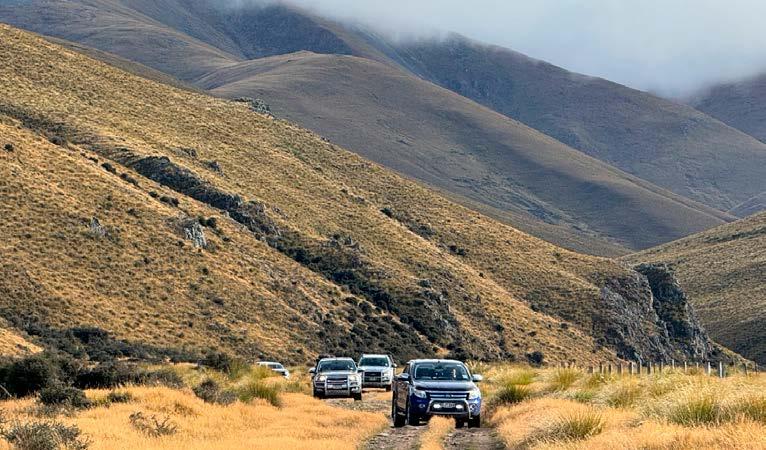
Sure, winter can be dreary, leaving people stuck at home watching movies, cautious of getting wet and cold, but not if you have a 4x4 vehicle.
Off the comfort of tar seal and on to the dirt track. Testing your four-wheel-drive in any weather can cause excitement, but in winter, that’s when mudlarking is at its peak. Why own a 4WD if you can’t get the tyres muddy?
Enjoy a bit of adrenaline? With slippery slopes and boggy tracks sure to get the blood pumping for any offroad enthusiast, ensuring the right gear is on the vehicle is a must. Equipped with your regular toolkit — a tyre deflator, snatch straps, air compressor, a shovel, fire extinguisher, winch, rated shackles, tyre repair kit, mud tyres and chains.
For those new to the game, joining a local club can provide plenty of tips, tricks and locations of how to have fun and where. There are clubs from both the friendly and competitive ends of the sporting spectrum, so the options for getting tyres muddy are many.
Enjoy the challenge, the dirt, the camaraderie amongst the off-road community. Any car enthusiast knows the thrill of adding parts to their vehicle and 4WDs are no different. Additions to the 4WD can offer further thrills, practical help and even protection.
Whether you are giving your companions a bit of stick or sending out an SOS, because you misjudged how boggy the ground was, CB radios are
a useful add-on. They are great when stuck in the middle of the bush without cellphone reception and in need of other drivers to help you out.
Custom mud guards not only offer protection to pedestrians and other cars in the convoy. Fortunately, they can be aerodynamically engineered for better
air flow and side spray, if that’s what you’re after.
A decent lift kit can make a drive easier, and allows drivers to clear areas that uncustomised cars can’t open up more driving fun in less driven areas. Enjoy the winter season, and be sure to get your tyres muddy.
Winter offers off-road drivers plenty of challenges and fun to get their 4WDs out for exploring
by Andy Bryenton
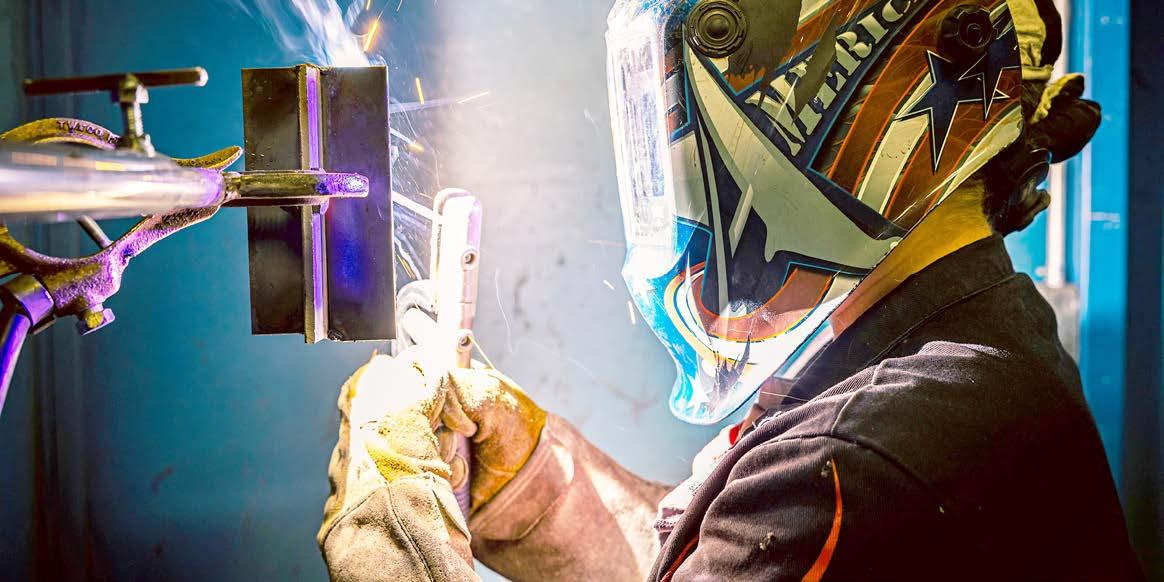
The fire of the fabricators
Watching a metal fabricator work is a process as fascinating as that employed by any sculptor or painter, and sometimes it seems, just as mysterious to the layperson.
Metal is a medium which has been vital to human civilisation for thousands of years. Those who know how to shape and fuse it into the right forms for work and warfare have always been professionals in high demand.
There’s a good reason for this respect. Metalworkers and those who can turn a plan on paper into a working tool or machine part are responsible for our capacity to feed billions, our ability to travel all over the world and into space, and even the machines that build our cities.
The word weld comes from an old Saxon term meaning ‘to make red hot’, and for good reason. Before Sir Humphry Davy discovered the electric arc in 1800, forge welding was the only way to bond metal to metal in a way we’d recognise as welding. Even so, the feats of the late medieval and renaissance armourers are testament to a sublime level of skill.
Davy created the electric arc as part of his experiments in isolating elements like potassium and calcium. Also the father of nitrous oxide, inventor of photographic enlargements and the editor of the poet Wordsworth, Davy didn’t immediately think of welding when he created the arc, but a Russian scientist named Vasily Petrov did.
It would take 80 years until fellow Russian Nikolai Benardos and his Polish
colleague Stanislaw Olszewski introduced carbon electrodes to build the arc welder.
Three-phase welding was also a Russian invention, but the revolution in that nation saw innovation stall until a great leap forward in welding technology came in wartime.
The first world war was a war of manufacturing and engineering as much as it was a war of brutal attrition. The British, who relied on a strong navy,
adopted arc welding to attempt to speed up production of what until then had been riveted ships. The Fullagar was the first vessel to come out of the UK with an entirely welded hull, and it changed the game. Meanwhile, German aircraft were being made using welding, as wood and canvas planes were superseded.
By the 1920s, auto-feeding electrode wire and the use of shielding gases to prevent oxygen and nitrogen in the
atmosphere from affecting welds were in wide use. The second world war saw the rise of TIG welding, using a gas tungsten arc method, and aluminium could now be welded for the aircraft industry. By this time riveted ships like the ill-fated Titanic were resigned to history, and welding allowed feats of production like the US liberty ships programme, turning out large vessels in a matter of days each.
A welder uses an electric arc to turn plans into reality: one of the core skills enabling modern civilisation to operate
by Andy Bryenton
Risks and benefits weighed up
Red tape binding up the delivery pathways for new veterinary medicines and agricultural chemicals has been snipped by new government changes, says Associate Agriculture Minister Andrew Hoggard.
“The changes proposed in the Agricultural Compounds and Veterinary Medicines (ACVM) Amendment Bill, introduced on May 11, reduce barriers to innovative new products while making sure any associated risks are dealt with proportionately,” said Mr Hoggard.
“The amendments remove avoidable complexity and focus regulators on real risks and speed up the process for considering novel products.”
In many cases, new innovations in vet medicine and the chemicals used to boost productivity and reduce pest strike in agriculture happen on the global stage. This means the nations, where they are invented and initially trialled, have already poured time and money into researching the risks and benefits of each product. Many of those nations adopt a stricter stance on the safety of such products than New Zealand.
“One way the bill will achieve this is by enabling greater reliance on the assessments of trusted overseas regulators when evaluating risks and benefits. I consider there is no good reason our primary sector should be waiting on work that has already been done by other reputable agencies outside of New Zealand.
“The changes will also focus regulators on what matters so that
medicines
products that are known to pose a lower risk will get a quicker pathway to authorisation by exemption and not require registration.”
Mr Hoggard said the current regime of regulations has served New Zealand well in preventing risk and damage, but a review by the newly-formed Ministry for Regulation last year found room for improvement. Getting products to market faster helps protect New Zealand’s edge
and advantage globally. Its small size and innovative outlook should allow the rural sector to pivot toward new and effective medicines and products faster.
The ACVM Amendment Bill works in tandem with the Hazardous Substances and New Organisms (HSNO) Amendment Bill, also introduced earlier in May. Novel products cannot be registered under the ACVM Act until they have approval under the HSNO Act.
“Together, the bills will establish a more adaptive regulatory framework that maintains safety, supports trade competitiveness, and aligns with international best practices, while improving timely access to agricultural and horticultural products,” Hoggard said. The bill enacting these changes is expected to undergo public consultation soon, and return to parliament for its final readings late in 2026.
New
may be easier to source for Kiwi rural vets and the farmers they serve, thanks to changes put forward by the government this month
Tree Removal & Land Clearing
• Qualified Sawmen and mechanized felling machinery
Shotcrete is a specialised concrete application technique where concrete is sprayed onto surfaces at high velocity. Ideal for creating durable silage bunkers, retaining walls and structural overlay, this method ensure a seamless finish.
DURABILITY
Creates a strong, long lasting surface ideal for heavy duty use.
EFFICIENCY
Saves time and reduces material waste compared to traditional methods.
FLEXIBILITY
Perfect for the irregular shapes,
access.
Your team matters
by Amy Fifita
Buying your first home is not a one-man job, so when picking your players, it pays to select a knowledgeable person with experience in the game.
First off, employing a lawyer, a mortgage broker, an insurer, and a building inspector will provide any buyer with a good footing. All of these people will guide you through the journey of becoming a property owner.
Doing a quick itinerary, it pays to have a look at your finances to see where you can spend less, budget better and so on. Even talking to a financial adviser can help people balance their debt and provide a clearer path to the goal ahead.
They may be able to help with various things, from day-to-day budgeting to helping maximise investments, enabling individuals to be in a great position when buying their first home. With everything from debt to Kiwisaver sorted, people can enlist the help of a mortgage broker.
After meeting the financial milestone, a mortgage broker can point you in the right direction of a bank or lender. This process will not only assess your finances, but also give you a borrowing capacity, so you know where you stand.
When taking out any loan, many banks require you to insure yourself and also have prerequisites for insurance before they will release funds. Having life insurance shows the bankers that you are a responsible debtor, while insuring the home shows that the asset you are loaning against is safe. Up next for the play is the property lawyer, someone who will protect the buyer’s interests legally and financially.
They can also navigate you through the various types of property ownership. So, what’s next? Researching the desired property and the neighbourhood it resides in is advisable. A building inspector has knowledge and can identify issues and maintenance needs.
That means, they can do all of the background checks that a buyer might not think of. Structural reports, even having it checked for meth, amongst other topics, can save on money and stress in the long run. This is where the building inspector comes in.
Once the house offer becomes unconditional and everything is approved, the next people to call are the removalists. With the money in the seller’s hand and the fun of unpacking completed, you can enjoy the journey of being a homeowner.
New Zealand Made Greenhouses
With the backup of a team of experts — anyone can achieve their dream to own their own home
Tune up to save
by Andy Bryenton
With fuel prices at all-time highs, making sure your vehicle gets the most from every drop can potentially save you hundreds of dollars; here are some tips from the professionals.
Get rid of roof racks you’re not using, as they can drop fuel economy by five per cent, just by causing drag. After-market racks, and other storage pods, roof tents and bike carriers make your vehicle less ‘slippery’ and really cut into your fuel bill.
Your tyres play a massive part in fuel economy, even more so in some cases than the engine itself. Damaged tyres, uneven tread wear and under-inflated tyres can slash between 3 and 10 per cent off fuel efficiency, and it gets worse the faster you go, so highway trips end up costing more.
Speaking of those motorway missions, it’s worth noting that at speeds above 80km/h, it’s usually more efficient to have your air conditioning on rather than wind down even a single window? Modern aircon is more frugal than old units, and while not having the chill turned up is the best way to save fuel, it’s still better than creating excess drag with open windows, at least on the open road. The US Automobile Association puts the fuel efficiency loss at anywhere up to 20 per cent.
Now we come to the big ones; the factors which really spell trouble for loss of fuel economy. Most modern cars with fuel injection have oxygen sensors, and if one of these is out of whack, it can cause anywhere up to a 40 per cent increase in fuel consumption. Worn spark plugs with
a weak spark can rob you of 30 per cent of fuel economy.
A clogged or worn air filter starves the engine of oxygen, with bad results for fuel efficiency. This is a job you can easily do at home, by taking your old filter from its housing and getting a direct, plug-and-
play replacement from your local auto parts store. This one may not even need the use of any tools.
A poorly-tuned engine or one with issues like these might display a rough idle, sluggish acceleration, or chug out smoke from the exhaust. All of these factors can creep in well before the ‘check engine’ light goes orange.
Finally, have your wheel alignment checked. Alignment can drift out of true due to the knocks and wear of driving long distances, and it’s as important as fresh rubber for both safety and fuel efficiency.
by Andy Bryenton
Able Tasman a new discovery
Kia has released a ute to contend with the best in the market, following up a dream run of awards victories worldwide with an offering that’s distinctly antipodean.
The Kia Tasman has a name that singles it out as a product designed and engineered for Australia and New Zealand, and it’s apparent, when you take a look behind the bold, futurefocussed styling of this machine, the company has done its homework. The clever features and distinctive, hyper-modern look of the Tasman are skinned over some seriously tough underpinnings, making this a sweetly balanced combination of ruggedness and aesthetics, ready to do serious work on farms and worksites.
There’s a precedent for the off-road capabilities of the Tasman, because unlike many other ute makers, Kia has form in crafting military vehicles. Since 1973, the South Korean army has turned to Kia for off-roaders to patrol one of the most serious borders in the world. Designing vehicles that are ready to take on a rogue state at a moment’s notice raises the bar for toughness, and further development in the deserts of Dubai and Australia has made the Tasman into a real endurance athlete among its peers.
That means real 4x4 low-ratio capabilities when the going gets tough, 3,500kg of towing grunt and big ground clearance. It also means that there’s 440Nm of torque on tap from a 2.2-litre turbo-diesel that uses clever tech to match the vigour of bigger motors.
Smart choices have been made when it comes to the interior and features of the Tasman, which boasts clever ideas, such as tool boxes concealed in the wheel arches, a power point and lights in the tray, and perhaps, best of all, a massive amount of room for burly passengers in the cab. The seats might be the most
comfortable in any ute on the market, hands down, and there’s no gear shifter in the centre console, leaving it available for acres of space and a fold-out table for either a working lunch or a place to do some on-site laptop work.
On the outside, the looks of the Tasman are bold in the extreme. Forget
the Cybertruck, this ute has a practical near-future image, bold and square, exuding a kind of bulldog stance and presence. It’s a manageable size on winding back roads, but with the visual impact of a bigger truck. That means good news for businesses that want to stand out. In a world of cut-stamp ute clones, the Tasman is 1980s Lamborghini brazen.
Give it a look soon — you’ll also love the highly competitive price.
The Kia Tasman offers a bold look, serious engineering and manufacturing quality and a very sharp price
by Andy Bryenton
New horizons for CFMoto
It’s been a season of new arrivals and big announcements for CFMoto, as the manufacturer embarks on a globe-trotting tour of reveals for machines for on and off the tarmac.
It began in France, where CFMoto has achieved the title of best-selling off-road vehicle brand. To celebrate, their French vice president Markus Ferch and his team took to the beaches, debuting a new CForce C4m, C5 and C6. Six trails for customers to try out showed off the power of the new generation of CForce quads, which has been optimised for farm work.
Then came the 139th Canton Fair, a showcase of industry and manufacturing, which is held in China for more than 300,000 buyers across a range of automotive products. CFMoto coverage puts the Canton Fair in the same bracket as the prestigious EICMA motorcycle show in Italy. This year, CFMoto used the occasion to debut a range of interesting new models, from 250cc road bikes for commuters and learners, through to the 675SR-R, a race-bred ‘adrenaline bike’ with a proprietary-designed threecylinder engine.
Also on the stand was a bold foray into adventure bike design. The 1000MX-T develops 111hp alongside 103Nm of torque, but that’s not the
whole story. Cornering antilock brakes and three levels of traction control come standard, as does a heated seat and heated grips.
EVERYTHING HYDRAULIC
Rams • Hose Repairs • Powersteer Hoses
Pumps and Valving • Palfinger Service Agents and all Mobile crane and EWP Repairs
13 Glennis Place, Frankton, Hamilton
07 846 6260 megafluid@xtra.co.nz
24/7
That’s a big portfolio of new machines, but the best has been left for last, and for us. New Zealand now has delivery of the ZForce 950 Sport, a side-by-side
off-roader, which shows off some of the durability and zest that allowed the company to do so well in recent Paris to Dakar rally events.
With a powerful 963cc four-stroke v-twin tucked low in the middle, and a healthy 85 horsepower on tap, the latest iteration of the ZForce name is compact and aggressive at the same time. There are two power modes for the driver to access; normal mode for low-speed manoeuvres and sport for when it’s time to let loose. The little 950 Sport sits on 14-inch alloys with grippy, mud-friendly tyres, and boasts 305mm of ground clearance.
Of course, the fine detail for any machine like this is in its suspension set-up, and CFMoto engineers have worked hard to evolve the previous platform beyond what was already reckoned a point of nimble balance. With the addition of tool-free compression damping adjustment and adjustable tie rods on the quadralink rear suspension set-up, the lightness and torque of the new ZForce shine through across multiple types of terrain.
CFMoto keeps on creating new ways to enjoy horsepower and put it to work
by Andy Bryenton
There’s a saying that only something that has a purpose can be truly
by way of sublime design, becoming a pleasure to look at as well as to use.
That philosophy comes to mind when looking closely at the new Volkswagen Amarok ute. It’s got the tough and work-ready DNA of a machine built for the farm and the job site, but it’s been fettled and sculpted into something more.
The first Amarok came out in 2014, and the brief was to produce a reliable, strong ute that could work hard all day and then deliver its driver home, over any distance, relaxed. For the new model, VW has teamed up with Ford in a cross-platform collaboration, and the machine coming out of the new Amarok factory in South Africa for our local market improves on the winning original formula, with a turbocharged V6 delivering a smooth 600 Newton-metres of torque through a seamless 10-speed transmission.
It’s a masterclass in nailing the design brief. Just as the Golf GTI encapsulates the benchmark for the hatchback, the Amarok aims to be the quintessential luxury ute, and punches centre mass of the target. The attention to detail, driver comfort and smart assists like autonomous cruise control combine to provide a refined, car-like ride, which is a big bonus for those who have to put in big miles in rural New Zealand. Hours behind this leather-trimmed wheel don’t weigh heavy, they slide smoothly by, to a Harman Kardon surround-sound soundtrack.
and it’s
Has that luxury and poise come at the expense of rugged, hard-working chops? Not at all. Slide a full euro pallet in the deck, hook up and tow 3,500kg, let VW’s acclaimed 4Motion all-wheel-drive system handle the slippery and rough stuff with the twist of a dial, and you’ll
appreciate the engineering as much as the ride. The wading depth is deeper, the chassis geometry redefined, and the ground clearance is higher so you can effortlessly go anywhere.
It’s even earned a seal of approval from four-time Bathurst supercars champion Greg
Murphy, who knows a thing or two about horsepower. He doesn’t just endorse the Amarok — he’s on his fourth one.
Volkswagen offers the Amarok in three levels of trim, packing in features as standard across the range, which would be costly addons for many competitors. The Style V6 is the entry to the lineup, with the PanAmericana adding blackout alloys, bars and side steps, as well as boosted infotainment. The Aventura tops the range with extra comforts like a heated steering wheel and tasteful added chrome.
If you are shopping for a ute right now, you owe it to yourself to experience the Amarok. Book a test drive and see for yourself that work and relaxation can balance harmoniously.
Amarok sits in the top spot for luxury utes, but that refinement has not come at the cost of toughness
Built for the job
In New Zealand’s construction and contracting sectors, versatility is no longer a luxury — it’s essential.
From tight access residential builds to drainage and general earthworks, operators need machinery that can adapt quickly and perform reliably. It’s this demand that has firmly established the 2.5-tonne excavator as a staple across the industry.
A new wave of 2.5T excavator and trailer packages, available through Olsen Commercial, is making it easier than ever for contractors to step into capable, ready-towork equipment, streamlining the path from purchase to productivity.
The appeal of the 2.5T class lies in its balance. Compact enough to navigate confined spaces, yet powerful enough to handle trenching, footings and general earthworks, it occupies a space that larger machines often can’t. For many operators, it’s not just a practical choice, it’s a core part of their day-to-day operations, offering flexibility without compromising performance.
What sets these packages apart is their turnkey nature. Olsen Commercial’s approach brings together the excavator, trailer and essential attachments into one cohesive solution, removing the delays and uncertainty that can come with sourcing
equipment separately. The result is a fully mobile set-up that can move straight from the yard to site, allowing operators to focus on the work that matters.
That flexibility extends well beyond the base machine. Through Olsen Attachments, a broad range of additional attachments, from buckets and augers through to specialised tools, can be integrated to expand capability across multiple applications. For contractors, this means one machine can take on a wider variety of tasks, improving efficiency and maximising return.
New Zealand job sites demand adaptability, with tight access, varied terrain and frequent movement between locations. The 2.5T excavator is well suited to these conditions, easy to tow, straightforward to manoeuvre, and robust enough for consistent daily use. With Olsen Commercial operating from both Auckland and the Manawatū regions, access to equipment and support remains close at hand.
While the used market continues to play a role, new equipment offers a level of certainty many operators prioritise, reduced downtime risk, improved efficiency, and the reassurance of warranty support.
by Andy Bryenton
Prelude’s sixth symphony
The Honda Prelude was first conceived of as a sports coupe to sit next to the Civic in a revitalised range, all the way back in 1978.
Brock Yates of Motor Trend called it “a splendid automobile. The machine, like all Hondas, embodies fabrication that is, in my opinion, surpassed only by the narrowest of margins by Mercedes-Benz.” Then — it got even better.
The most iconic Preludes, to those of a certain age, are the series three and series four, cars which come at the peak of JDM coupe dominance, and cemented Honda as a maker of exciting vehicles on four wheels as well as two.
The third-generation Prelude was a baby NSX, all sharp lines and pop-up headlights, with innovative four-wheel steering and a punchy two-litre inline four. The fourth generation upped the ante, with more displacement and horsepower, as well as the magic of VTEC from 1994 onward. Up until 1999 there was a more angular fifth evolution as well, and it found a similarly large fanbase.
All were a pleasure to drive, and remain so for collectors lucky enough to have an immaculate example in their garages Up until very recently, that was the only way to get behind the wheel of a Prelude and see what all the fuss was about — but no more.
With the discontinuation of the Civic and Accord coupe variants, Honda needed a badge to revive which encapsulated speed, refinement and innovation. Hence a brand-new Prelude, teased at the Japan
Mobility Show in 2023, and now on its way to New Zealand.
Once again, there’s a hint of the modern NSX about the new liftback lines of the sixth-generation Prelude, but also a nod to the rounded, slippery contours of the fourth-generation car. There’s 200 horsepower on tap from a hybrid petrolelectric system under the hood, and the chassis layout is identical to the firebreathing Civic Type R. Before it even lands in New Zealand, it’s picked up the best coupe award at the 2025–2026 New Car World Championships. What stunned the judges in Europe should work very well on Kiwi twists and turns, too.
DRIVE POSTS WITH POWER AND PRECISION!
“We’re fortunate to experience some of the world’s best driving roads in New Zealand, and now with the all-new Prelude, Kiwis will have a car that promises an elevated, connected and fun driving experience,” says Honda New Zealand managing director, Carolyn McMahon. She and her team will be expecting major interest as the new Prelude goes on sale this May, with a base price of $69,990. That puts this exciting Honda firmly in the sports car segment, battling it out with the Toyota GR86, Mazda MX5 and the Nissan Z in a new era of Japanese-manufactured driver’s machines. If you are keen
on an engaging, exciting drive, the recommendation echoes down from 1988; you simply have to give the Honda Prelude a try.
76% of us ignore online ads
New Honda Prelude — a classic badge returns with plenty of promise
Collaboration for breeding purposes
Beef + Lamb New Zealand has just released its online genetic tool, nProve, to help sheep and beef farmers make more informed decisions when breeding.
The nProve Tracker provides farmers a clearer picture of where their flock sits, where there is room to improve and how ram buying decisions can influence performance over time. The tool was developed through the joint B+LNZ and the Ministry for Primary Industries’ Cool Sheep® Programme and unveiled to sheep breeders at B+LNZ’s Sheep Breeder Forum earlier this month.
“The nProve Tracker tool has been developed to make flock genetics easier to see and use on commercial sheep farms,” says B+LNZ head of genetics Dr Jason Archer.
“It will help farmers understand the value genetics can bring to productivity, efficiency and profitability. Using ram purchase and mating information, it builds a reliable picture of a flock’s average genetic merit.
“Over time, farmers can see where their flock sits overall, giving them a benchmark to compare genetic potential with what they are seeing on-farm. That will help farmers focus on the right next step by showing where the biggest opportunity is, whether that’s in management decisions, genetics or both.
“We know farmers are already investing in good rams, and this tool will help show what that investment is building in the flock over time. It will give them something practical they can use to back up decisions and spot where the next gains might come from.”
Dr Archer says the tool could also help farmers better show the value in their flock over time.
“A clearer picture of flock genetics will help recognise the investment made in quality rams and provide useful information when selling surplus stock or making longer-term business decisions.”
B+LNZ chair Kate Acland says nProve Tracker is part of a broader suite of practical tools B+LNZ is developing for farmers.
“It’s a practical example of how B+LNZ is using farmer levies to deliver value back to the sector, giving sheep farmers useful tools to make genetics part of everyday farm decisions.”
Visit nprovetracker.nz for more information about the tool. The Cool Sheep® Programme is supported by the Ministry for Primary Industries and a range of organisations, including B+LNZ.
THE BEST SOLUTION FOR YOUR
FLOOR RESURFACING
Now there is an extremely cost effective and easy to use product that will bring back your damaged concrete floors to an approved standard.
COLOURCRETE DAIRY FLOOR RESURFACER has been specially formulated for the repair of worn or damaged concrete in the dairy industry. Dairy Floor Resurfacer is a two pack system combining a Portland cement, fine aggregate based micro concrete and sophisticated binders that provide superior, compressive, tensile and flexural strength as well as a very high level of abrasion resistance and adhesion. This product is suitable for repairing worn or pitted areas or to provide a non-slip surface where necessary.
A two pot clear epoxy sealer can be supplied to reduce the wearing effects of milk and acid.
COLOURCRETE DAIRY FLOOR RESURFACER can be supplied as a ‘do it yourself kit’ and delivered anywhere in New Zealand or applied, in most areas, by contractors.
COLOURCRETE DAIRY FLOOR RESURFACER
Part A is supplied in 20kg bags and covers approximately 3m square. Part B modifier is supplied in both 10litre and 20litre containers and approximately 4litres per 20kg bag would be required. After trowelling, the surface can be broomed or sponge finished.
A collaboration between B+LNZ and the Ministry of Primary Industries, the nProve Tracker tool helps farmers with decisions when buying rams for breeding purposes
by Liz Clark
Hairy monsters — super sheep
When Francis Dry began research into a mutation that caused sheep’s wool to be particularly hairy, it developed into a breed named in his honour — the Drysdale.
The development of the breed began in 1930, when Dry was given an unusual Romney ram with an almost pure hairy coat — an undesirable trait that breeders culled out of their flocks. The ram was born on the farm of Mr P Neilson at Longburn.
The ram was bred to an experimental flock at Massey College (now Massey University) to produce the wool trait that wasn’t seen again in the flock the foundation ram was sourced from. What Dry started as an experiment would become the foundation of a New Zealand-developed carpet wool breed that would profoundly change the carpet manufacturing industry.
By 1950, the Federation of British Carpet Manufacturers had taken an interest in Drysdale wool and asked the New Zealand Wool Board to experiment and increase its production. However, the board took no action with the view that the hairiness should be removed as an uncontrolled fault in Romney wool.
By 1967, however, headlines were appearing in print media of a ‘new and distinctive breed’ that would solve the nation’s wool supply for carpet manufacturers. That year, almost all of the wool used in the making of wool carpets had been imported from Britain. The Drysale’s wool was hailed as far superior and higher quality than the Scottish Blackface product that was mixed in with the local wool clip.
The following year, 34 farmers were running Drysdale to increase the
availability of carpet wool so imports from Britain could be reduced. Marlin Carpets at its annual general meeting in Christchurch in 1968 reported to its shareholders that ‘the project would vastly increase in the years to come and would become a new national asset for New Zealand’.
The flocks continued to expand, making that prediction of a new national
asset a reality. High prices were paid for superior Drysdale wool, and well-known carpet manufacturers Bremworth used it extensively in its product range. At its peak, flock numbers reached 600,000 head. However, market forces worked against this unique breed developed to remove the need for imported wool.
Wool prices began to crash by the 1980s. Despite a campaign targeting the high-end user market for top-quality carpets, the lifting of import tariffs flooded the market with cheaper synthetic flooring options. Being no longer commercially viable, the Drysdale flock began to reduce — in 2026, the breed is no longer found in the country. Only 34 animals remain in one location at a stud in Australia.
Photo Credit: Archives New Zealand
Drenching Drysdale sheep in the 1960s
Performance meets style with this exclusive adventure upgrade. For a limited time only, elevate your Amarok PanAmericana V6 with $8500 of accessories including 20” alloy wheels, flared guards, bonnet protector and more.
Contact Ebbett Volkswagen Hamilton to claim this offer
Ebbett Volkswagen 51 Te Kowhai East Road, Burbush, Hamilton Phone: 07 838 2949 | www.ebbettvw.co.nz Discover