Postal Address: PO Box 474, Dargaville Physical Address: 107 River Road, Dargaville
Editor: Andy Bryenton
Journalists: Denise Gunn | Andy Bryenton | Amy Fifita
Advertising: Debra Seymour 027 525 8217
Production: Gavin Bainbridge | Marnie Fuller | Daniel Foster | Liz Clark
Accounts: accounts@rml.nz
Distribution: Laurie Willetts Printed by: NZME
Website: farminglifestyles.co.nz
9,074 copies DELIVERED FREE to every rural delivery address in Taranaki.
Email: info@grovesupply.co.nz
grovesupply.co.nz
Pragmatic, compassionate budget delivers lifeline
by Barbara Kuriger, MP for Taranaki/King
This year’s budget stands out as one of the most memorable during my time in parliament. Here’s why I think so.
To me, the 2026 budget from Finance Minister Nicola Willis is a unique mix of two qualities that don’t often go together: pragmatism and compassion. For example, there’s a major increase in infrastructure investment, especially for roads and rail, along with a focus on fuel resilience and supply. That’s the practical side.
On the other hand, it’s clear the budget recognises New Zealanders are facing tough times. We’re dealing with heavy debt, global uncertainty, unstable trading markets, and rising fuel prices that affect nearly every part of society.
Even with these challenges, the government has managed to fund a $5.5 billion boost for front-line health services, $470 million to upgrade schools and add 272 new classrooms, and another $50 million for front-line police. That’s the compassionate side.
Some have called this a back-tobasics budget, and I agree that’s what we need right now. We need a budget and a government that focusses on the most urgent needs and offers practical solutions. It’s also worth noting that this budget is set to return to a $2.6 billion operating surplus by the 2028/29 financial year, which is a year ahead of schedule.
That’s the big picture. Still, there’s also a local example that shows how this budget focusses on real needs and pays attention to detail: Awakino Gorge.
Someone joked to me recently that it’s less about driving through the gorge and more about when we can actually get through. Since July 2021, the stretch between Mount Messenger and the SH4 junction has closed 14 times due to weather. Earlier this year, it was shut for over a month after severe storms.
This road is crucial for King Country and Taranaki, and every closure can cost the local economy millions. The government
understands this, which is why $50 million has been set aside to make the road through the gorge stronger against bad weather, focussing on the most atrisk parts.
To me, this is what good government means: managing the country’s finances while staying connected to what local communities really need. For people in Taranaki and King Country, the money for Awakino Gorge isn’t just a number on a page. It’s a lifeline for families, farmers and businesses who depend on that road every day. When the road is open, trucks can run, milk gets to the factory, kids get to school, and emergency services can reach those who need help.
That is the heart of this budget: help for those who need it most. That’s why I believe this is the exact budget we most need right now.
Country
by Andy Bryenton
Research into global emissions policy
Beef and Lamb New Zealand has released the results of research the organisation has undertaken into global agricultural carbon emissions policymaking, and how the moves enacted by our own government stack up.
The key point of the report, building on earlier research completed in 2024, is that no country is looking to include agriculture in its Emissions Trading Scheme equivalent programme, and virtually none have plans to price agricultural emissions. The implication is that most of our peers on the global stage are focussed on industrial and infrastructural-based emissions.
A high estimate of New Zealand’s greenhouse gas emissions puts us at 0.17 per cent of the global total. Half of this is estimated to come from agriculture. Cutting back this figure is perhaps more problematic than imposing greater efficiencies on heavy industry or power generation could be for foreign governments. Furthermore, an argument can be made that if pasture, orchards, crops, native forest and other flora were counted toward carbon totals, rural New Zealand would already be carbon neutral.
The B+LNZ research shows that most of our peers are directing largescale public funding to incentivising and subsidising farmers to achieve climate change outcomes. The recent budget would argue that there is little left in Wellington’s coffers to fund such schemes locally. However, B+LNZ chief executive Kate Acland says other solutions exist.
“B+LNZ is not advocating for subsidies for our sector. We’re asking
for more creative approaches, such as exploring ways to incentivise reductions through a focus on efficiency gains and options, such as emissions reduction credits for technology uptake. We believe reductions in emissions should primarily be driven by customers and the market.”
Additionally, the research Ms Acland colleagues have undertaken highlights the point that recent reductions in biomethane targets and limits on
carbon afforestation are on-trend with global opinion.
“New Zealand’s decision to revise its methane targets down is not out of line internationally,” she said. “For example, the Australian government released its Agriculture and Land Sector Plan last year, which does not have specific targets for reductions in agricultural emissions. Australia is not, at this stage, aiming to reduce gross reductions from agriculture until after 2040.”
Advocacy and debate in this space is ongoing, with B+LNZ instrumental in calling for a split-gas approach to climate change control, reflecting the scientific differences between CO₂ and methane.
“Forty-one organisations across 16 countries have now signed the joint statement. The expanding coalition reflects growing international recognition that biogenic methane must be treated differently to long-lived gases such as carbon dioxide,” Acland said.
Beef and Lamb New Zealand has undertaken its own comparative study of global agricultural emissions policy, and has found that subsidies, not penalties, are the norm
In just eight seasons, the equity partnership operating Crystal Rivers Taranaki has transformed their 196ha (150ha effective) Mahoe property, combining high production with environmental benefits.
The three partners, Paul Kuriger, Tony Riley and Jessica Gower, have had the same goals since signing the property purchase contract; to keep farming with minimal impact to the environment within their business.
Paul is at the helm of the day-to-day operations on-farm.
“We’ve set from day one that the environment is the key driver for the business,” he said.
A herd home, constructed in the first season on the farm, has proven to be a key factor in reducing animal health issues, and also maintaining pasture quality with no pugging. In an area located up against the mountain, and receiving an average annual rainfall of between three and a half to four metres, the herd home has paid big dividends.
CRYSTAL CLEAR FOCUS REAPS REWARDS
BY DENISE GUNN
The high rainfall in the area can be challenging, along with the farm’s altitude at 500m above sea level.
“We can have 250mms of rain in 24 hours. We overcame that through investing in our environment and putting up the herd home. All cows calve inside, and by doing that — we help the cow and calf a lot.
“It’s so rewarding to see cows calving in the herd homes. The animals are in a warm, dry environment with no stress for cows compared to out in the elements.”
A transitional feeding system, used in the herd home, ensures the 360-cow herd is well-fed and maintains condition yearround. The cows are outside on fine days and inside during wet weather.
“It has a lot of bonuses. There’s a cost benefit there with the environment, the cows and the back pocket,” he said.
The equity partnership of Paul
Tony Riley and Jessica Gower operate Crystal Rivers Taranaki, combining high production with environmental benefits
“There are also fewer empty rates and less replacements.”
Paul grew up in a dairy farming family and progressed through the sharemilking system in the central and lower North Island.
“I had considered engineering and did a stint of pig farming before moving back to dairying,” he said. “It’s a long, hard haul sharemilking, but if you access opportunities you can succeed. Planning is key and chasing opportunity.”
Kuriger,
Alongside improvements to the farm’s infrastructure has been a combined focus on water quality, native planting and intensive pest control.
“When we came to the property, there was a large pest problem. My son has a pest control business and we’ve hammered the heck out of pests, reducing possums to next to nothing.”
Electronic traps for rats, stoats and ferrets are placed around the farm. Through targeting the elimination of pests, there is a noticeable increase in native birdlife numbers.
“We have blue ducks and special species on the farm, and a lot of biodiversity, so we share the farm around them.”
Alongside the blue ducks, populations of kererū and bellbirds are also thriving. A pied stilt, absent from the area since the 1970s, has also been sighted.
Stream banks and wetland areas have been extensively fenced, and riparian zones planted. This has significantly reduced run-off and nitrogen leaching, which is crucial in this high rainfall area.
Crystal Rivers Taranaki runs with one and a half labour units on-farm. Paul enjoys seeing staff grow in confidence, experience and knowledge.
The farm is regularly opened up to Massey University’s agricultural and veterinary students to gain practical experience, too. So far, 27 veterinary students have had a dairy placement at Crystal Rivers Taranaki. Some of these students had never touched a cow before arriving on the farm.
“They get to be the hands-on person alongside me or a vet. It’s very rewarding to
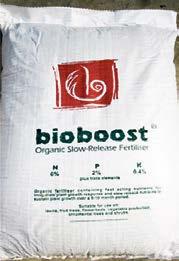
• Organic granular slow release fertiliser
• Weed free - 67% organic matter
• Will not burn plant roots or foliage
• Can be incorporated when planting or used as a top feed
• Fantastic for ALL lawns, flowers, vegetables, roses, trees, shrubs, & container plants
• Bioboost is available from: Selected Garden Centres, Commercial Horticultural, Agricultural & Turf Service Centres
Contact Bioboost Ltd for further information by E mail office@bioboostdistribution.co.nz or Phone 06 7548454/ 0274431809 www.bioboost.co.nz
see how their confidence grows with cows and calves within the first few weeks, and the knowledge they’ve gained,” said Paul.
“I enjoy the sense of achievement. We will just keep assessing, marking and measuring in regards to the environment. Things do change.
“Maybe we will look at a few less cows and a more-efficient cow in the long-
term. Less can sometimes be more,” he said. “We are caretakers of the land for our tenure.”
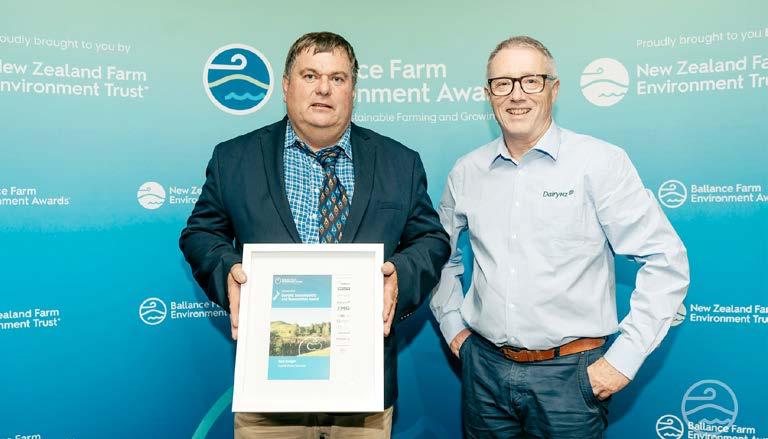
Crystal Rivers Taranaki won the DairyNZ Sustainability and Stewardship Award, the Bayleys People in Primary Sector Award, and the FMG Risk Management Award at the Taranaki Ballance Farm Environment Awards.
up your view with Aluminium Windows and Doors Insert Aluminium windows and doors into existing Timber surrounds.
Fisher Windows Taranaki 50 Rimu Street, STrandon, New Plymouth 06 758 5068 office@fishertaranaki.co.nz
Paul Kuriger with the DairyNZ Sustainability and Stewardship Award at the Taranaki Ballance Farm Environment Awards
Photo credits: NZFET (Natalie Waugh)
Paul Kuriger takes care of the farm’s daily operation
STEPPING UP THE DAIRYING LADDER
The
Samantha Lumsden, have made steady progress since setting out in the dairy industry around 20 years ago.
Samantha (Sam) grew up on a Manawatū sheep and beef farm where her love for working outdoors and with animals began. She and Tom both left school at 15 to embark on their dairying careers.
Now dairy farming for the past 20 years, the couple loves the job and lifestyle that comes with dairying. Their hard work and dedication was recognised in 2024, placing third in the Share Farmers of the Year category at the Manawatū Dairy Industry Awards. Last year, they were runners-up. Since then, the couple has progressed into a larger role in Taranaki, contract milking for Tom Lance, with a herd of 300 cows on 121ha at Waverley.
“The dairy awards have given us motivation to back ourselves, and it has proved to ourselves we can do it,” said Sam.
Working together in a sharemilking partnership, Samantha manages the daily farm work while Tom works off-farm in a Taranaki quarry. He also helps with human resources and maintenance work on the farm.
“Tom provides a great extra income for us. It takes the pressure off over the dry period when the milk cheque isn’t coming in.”
Sam brought a six-season contract milking background and experience to the position.
BY DENISE GUNN
and recognising that I needed a position that offered more scale, challenge and progression. I transitioned into the new role in June 2025,” she said.
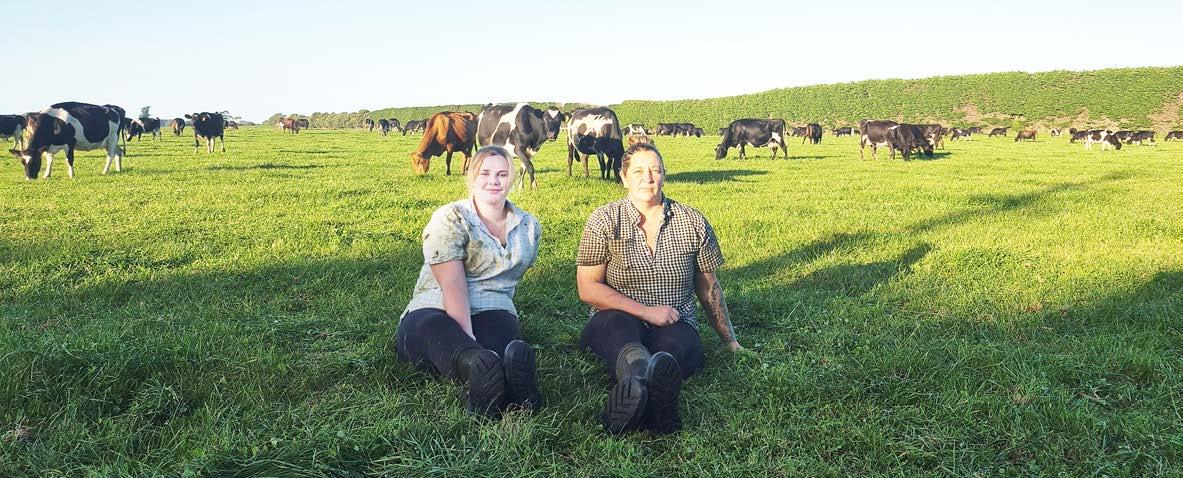
From left: Anika and Sam take a break on-farm
“The decision to move to Taranaki came after reassessing my long-term goals,
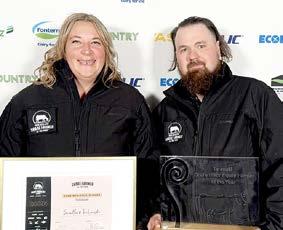
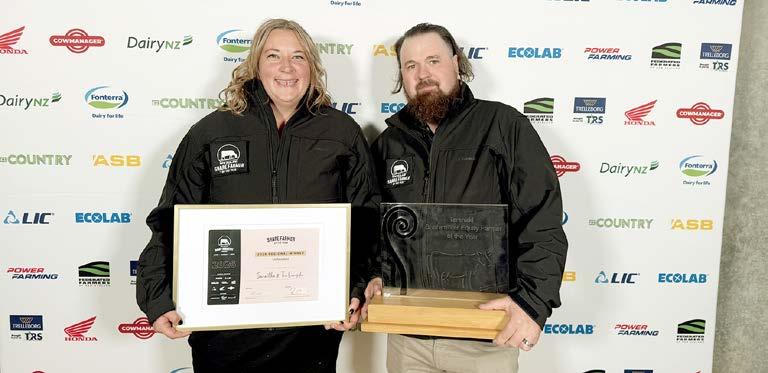
2026 Taranaki Share Farmers of the Year, Tom and
“We had three roles to choose from for the 25/26 season; two of them were back home. We were drawn to the land here in Taranaki, closer to the bush, the mountain and the beach, giving us more opportunity to get out and do a bit of hunting and bush walks.
“We were excited about the opportunity to build and develop new relationships, meet some new people, and build on our already solid reputation. We kind of forced ourselves out of our comfort zone and trusted the process would work out.”
The couple found moving to Taranaki came with several new challenges, including adjusting to different soil types and pasture, along with learning a new farm system.
“Creating new relationships with farm owners and key suppliers has forced me to put myself out there a little more, which is not a bad thing, but it is a challenge,” said Sam.
Tom said Sam’s biggest challenge through her dairy career has been constantly proving that a female can manage a farm, as well be a wife and mother. The couple have three young daughters.
While working up the dairy farming career ladder, both Tom and Sam have continued studying through PrimaryITO. Sam has also completed an agribusiness diploma.
“I love the challenge that comes with running the farm, and I’m really passionate about cows. I am driven by my responsibility to my animals, my business and my family.
“As always, I just want to make sure that I improve the farm in some way while I am here, and leave a positive impact on the land and people.”
With a new farm assistant, Anika Harris Willing on board, who is relatively new to
MotorBody Works
the industry, Sam found seeing her calve her first cow to be a special moment for them both.
“I love teaching her and watching her grow,” said Sam. “We want to continue to grow and develop our team, and train and encourage young people to take on a career in the dairy industry, and help them achieve their goals.”
Winning the Taranaki Share Farmer of the Year award is a major milestone in the couple’s career. They also took home six merit awards.
“It was an incredibly proud moment for both of us, and a real tribute to everyone who has helped and supported us along the way from family and friends, to our previous employers who pushed and guided us in the right direction.
“So many people have helped us to get where we are and it felt like a win for them as much as it was for us,” said Sam.
Tom and Sam are contract-milking 300 cows on Tom Lance’s farm near Waverley
The 2026 Taranaki Share Farmers of the Year Samantha (Sam) and Tom Lumsden
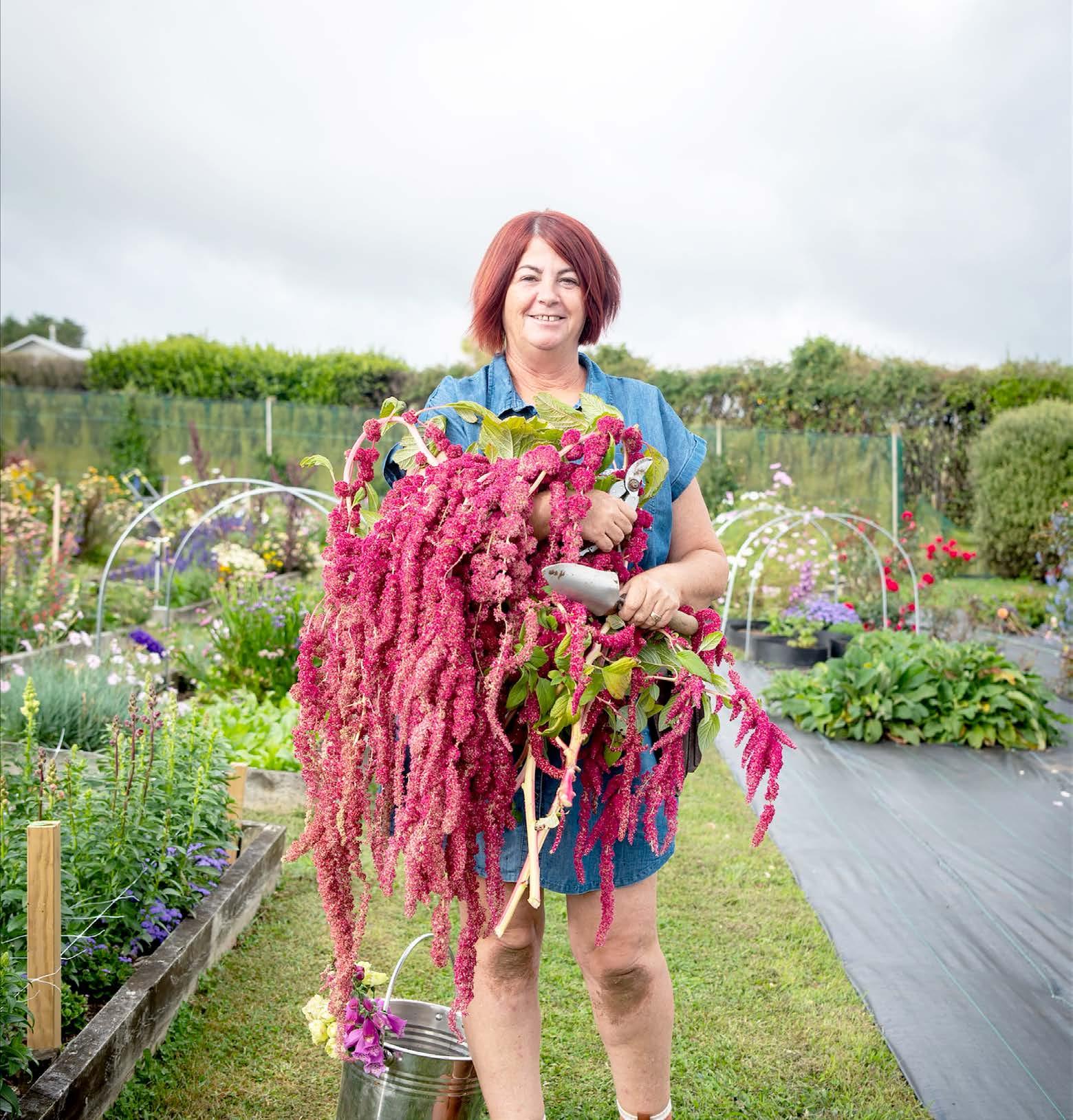
FLOWER FARM FULFILS GARDENING DESIRE
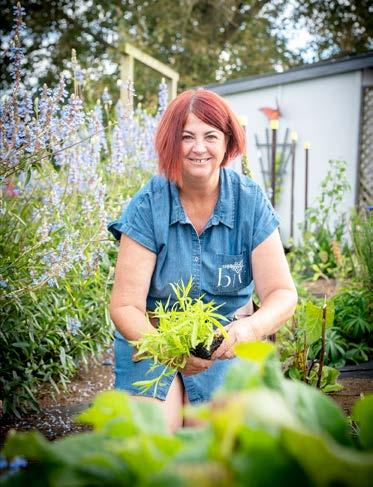
Since discovering gardening at age five, Christina has continued to grow a garden in some shape or form.
“In my early twenties, I worked at the Inglewood Garden Centre, then at Fairfield’s with Roger Watkins and Adrian McLeod,” said Christina.
“I then studied to be a legal executive, but always had a garden and a love for plants.”
In May 2020, Christina and her husband Julian bought a one-acre bare block of property at Lepperton. While settling in over the following year, they allowed their neighbour to graze his stock on it.
The property was a blank canvas to work on, with retaining work at the top of the list before planting. From there, the flower farm steadily developed one area at a time.
Without access to tractors or machinery, apart from an electric ride-on mower with a trailer, progress was slow-going. Those early days of garden development saw Christina wheelbarrowing loads of compost across 100 metres to the raised garden bed area. Paddocks were mown by hand with the occasional help from family and friends.
“It was very much a labour of love,” she said.
On first arriving at the property, the couple found the absence of bumblebees and bees very noticeable.
“There were no bees when we came here and now they are the sound of home. We absolutely love them.”
To reflect this, Christina chose to name their property Bee Valley Flower Farm.
“The name, Bee Valley, represents our partnership with the bumblebees and bees, and our land in the valley.”
The wide selection of flowers grown at Bee Valley Flower Farm are sold locally to customers ordering on the business’s website, or as part of events run on-site.
“Most of the flowers are sold as part of events that we run, pick-your-own flowers, bridal showers, and many floral events during the year.
“Excess flowers are dried and used in craft work, resin preservation, wreaths and winter crafting workshops. Some local florists purchase our flowers, corporate customers for events, and other flower farmers who need a top-up from time to time.”
Visitors are welcomed to the farm allyear-round to experience the different seasons in the gardens, and to participate in workshops and events.
Managing the garden, running events, workshops, crafts, candle-making, and the flower farm has grown into a full-time job
BY DENISE GUNN
for
The
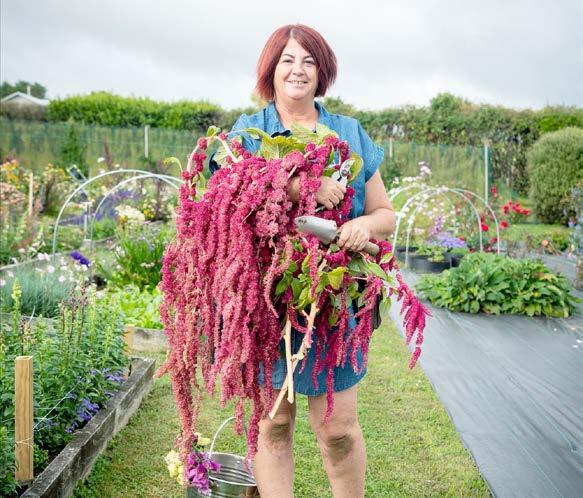
Christina’s flower farm has grown into a full-time job
Christina. She also continues to work part-time in administration and accounts.
flexibility of her flower farm allows her time to spend with her grandchildren, too.
Nurturing a lifelong passion for gardening cultivated Christina Hannam’s vision to create a flower farm.
She often works weekends, when most events are held, to fit everything in.
“I have a gardener help for four hours a month, and some lovely friends and family who come by and help out when needed.”
She said the planning and behind the scenes logistics involved in the flower farm incorporates all of her skills, and implements her love of flowers and crafts.
“I can think about an idea or a new direction, work out how to make it happen and try it. If it works, then good and if not — move on. Diversification is key. You need to be able to be adaptable to what other people want as well.”
Weeds, wind and water have been the main challenges faced while developing the flower farm. Christina has found plants need to be resilient to a certain extent as water is a constant issue, particularly during summer, due to reliance on tank water.
“We don’t always have water to spare. We are installing another tank this season to collect the overflow, and a small tank will be installed next to the implement shed to catch the water there.”
While there are some windbreaks and a few hedges, the property is located in a high wind zone. Long-life weed mat is used in some areas of the property to control thistle and dock.
Last year, Christina opened Bee Valley Flower Farm as part of the Centuria Garden Festival. Sharing her garden and seeing the joy that flowers bring to others is one of the biggest highlights since establishing the flower farm.
“We will open again for this year’s festival in October.”
Christina also plans to find more ways to share Bee Valley, and create opportunities for people to experience nature and gardening.
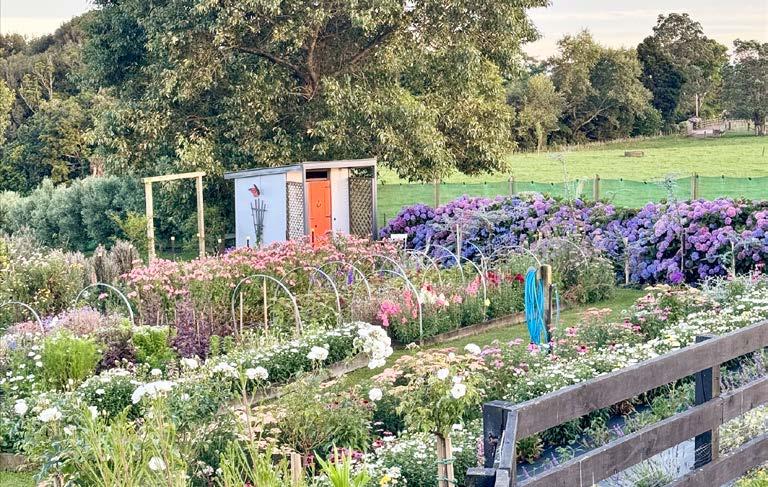
Bee Valley Flower Farm in Lepperton is open to visitors all-year round
In October, the flower farm will open again for the Centuria Garden Festival
Christina’s love for gardening began at a very young age
The 58th year of the competition sees seven young gentlemen, Justin Ruygrok, Bryce Win, David Reesby, Edwin Laver, Cam Clayton, Thomas Slee and Jack Taggart, in the running for the desired crown. New Plymouth will showcase the farming skills and expertise of YFOTY, Junior Young Farmers and Agrikids on July 2–4 at various locations.
“We are excited that it is coming to Taranaki next month. As we close in on our 100 years of Young Farmers, it is exciting to look back at what has come before, and what is coming next for YF and our FMG Young Farmer of the Year contest,” said CEO Cheyne Gillooly.
“It keeps growing every year, and there is a lot of excitement leading up to the event.
CELEBRATING THE FUTURE OF FARMING
BY AMY FIFITA
The annual Young Farmer of the Year Grand Final is coming to Taranaki for the first time this year. With excitement promised for spectators, the contestants are gearing up to showcase their farming abilities and knowledge.
There are a lot more people competing in the event and more spectators. The contest has transformed over the years, and there has been a mixture of competitors.”
While the contest aims to showcase excellence in the agricultural sector and helps young farmers to grow into awesome spokespeople for their regions and the industry — it is also a spectator sport. The YFOTY Practical Day on July 3 promises plenty of action at the Stratford A&P Showgrounds.
“We work with our sponsors to determine what the practical day activities and modules will be. They will also have their own products on sale.
“There is a broad range of tasks for them to complete, like tractor tasks from
year’s Young
New Holland, risk identification from the Ministry of Primary Industries and FMG and identifying different soil types with Ravensdown.
Last
Farmer of the Year, Hugh Jackson, competing in the head-to-head battle at the 2025 YFOTY Practical Day
TARANAKI
finalists, (from
Justin Ruygrok, Bryce Win, David Reesby, Edwin Laver,
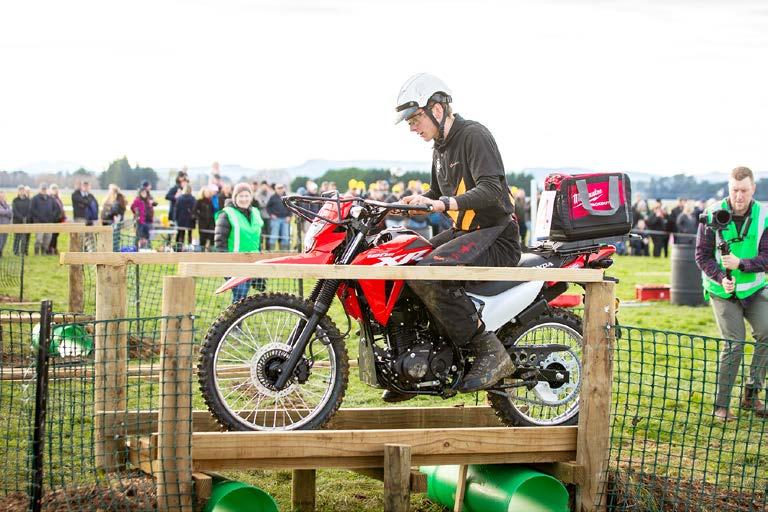
“Each year, we set up a head-to-head challenge. The seven main finalists in the seniors division will compete against one another in a half-hour full noise competition. Last year, they built a full bridge that they had to drive a motorcycle across.
“Agrisports is in the afternoon. In a full-noise event, competitors have a set of tasks to complete within a timeframe, and will be judged on quality.”
Amongst the competitors for the day are the Junior Young Farmers and Agrikids contestants, who are awarded at the end of the day, from 5pm at the TSB Showplace. July 4 ends with a bang with the final challenge at TSB Stadium, an evening quiz, followed by the award ceremony with dinner included. Christopher Luxon and other MPs will be attending.
As three days of competition approach, contestants are preparing their minds and practical skills, and volunteers are
making sure it is a success in Taranaki style. With a focus on creating excitement for onlookers, volunteer convenors Emma Northcott and Sarah Avery are setting up for fun across the board.
“The theme we are running with this year is expect a challenge but expect to have fun, too. We are honing in on the spectator side of things to make it cool to watch, and challenging for the contestants,” said co-convenor Emma.
“We are hoping to give the event a Taranaki twang, with some things that will pop up being specific to our region.”
Originally from Urenui in North Taranaki, Emma lives in Hāwera and works for the Power Farming machinery company, and has always been involved in the ag sector. Growing up, she spent the school holidays on her grandparents’ farm and later in life “accidentally competed in the YFOTY district competition.”
“I joined Young Farmers about eight years ago, when I moved to Hāwera, and I love organising things, so I started on the executive committee doing various tasks. I didn’t know many people, and Young Farmers has allowed me to meet lots of new people. That was cool for me, so I love that I can give back to the organisation now.
“One of my farmer friends signed up to compete, and I offered to go with her because she was nervous. A couple of people dropped out, and I got thrown into the fun.”
With a first-hand understanding of what YFOTY is all about, the whole team at Young Farmers hope to bring more wonder to the growing event. For more information, visit youngfarmers.co.nz.
“What does the future of the ag sector look like? It looks like the seven contestants coming through now and they are going to do great things for our industry,” said CEO Gillooly.
Farming Industry?
Contestants from last year celebrated the 2025 YFOTY winner, Hugh Jackson, with joy and delight
Photo credits: Daniela Aebli Photography
Grand
left)
Cam Clayton, Thomas Slee and Jack Taggart will be competing for the Young Farmer of the Year crown this year
Save ED for emergencies
Our Emergency Departments at Taranaki Base and Hāwera hospitals are open 24 hours a day, seven days a week, 365 days a year.
Our EDs are for life-threatening or limbthreatening emergencies that may include:
• active bleeding
• chest pain
• difficulty breathing
• stroke symptoms
• choking
• loss of consciousness
• clearly broken or dislocated bones
Healthify is a fantastic website for anyone looking for free, easy to understand information and tips on treating common health conditions. Alternatively, call Healthline for free on 0800 611 116 where nurses, paramedics, and doctors are available 24/7 for free medical advice.
Community pharmacies are another great option for health advice on common health issues and medications. Your general
practitioner (GP) or Māori healthcare provider is the best option for your non-urgent, longterm health issues as they can provide ongoing care appropriate to your specific needs. Children under 14 receive free healthcare, and there are low-cost GP clinics in New Plymouth, Stratford, Ōpunakē, Hāwera and Pātea. A Community Services Card can lower the cost of some health services and prescriptions.
• Lower power bills
• Offset rising electricity costs
• Export surplus back to the grid
• 7–8 year payback, 20–30 year lifespan
by Liz Clark
Grandma’s broom
Many years ago, my grandparents had a big old farmhouse, complete with draughty corners and big wooden verandahs that went right around.
Beyond was the garden full of fruit trees and rose bushes, all lovingly pruned with every colour a rose bloom could ever be found in. Grandma was very proud of her house and her garden.
Being very house proud, Grandma, of course, had a broom. It wasn’t just any broom she had beside the farm kitchen door. It was a special willow broom made by Grandpa’s own steady hands, just for Grandma to use. Woe betide anyone else who touched Grandma’s special broom. There, it would sit beside the farm kitchen door seemingly unused, and yet the floors were always swept clean.
As youngsters, we were never allowed to touch that sacred broom. No matter how much we asked and pleaded to use that big old broom, it was always the same. “Don’t you dare touch my special broom!”
One fine day, when Grandma was in the kitchen, a big bull jumped over the fence straight into her prized rose garden. Those roses were her pride and joy, but as all bulls can, and do, those roses were soon being turned into mashed-up compost. He tore, he ripped, he stomped and he snorted those roses into the ground. Just for good measure, that big old bull gave a few more a good belting with his big heavy head. He was almost done with the roses when Grandma saw him through the
kitchen window. Her bellow could be heard clear to the next town. “Out of there!” she shouted, running towards the kitchen door. On the way out, Grandma armed herself with her special broom, never mind she still had her dressing gown and slippers on — after that bull, she went.
Now, it was the bull that bellowed with all of his might. Off he went, with Grandma and her broom in hot pursuit. Through the fence went the bull, and so did Grandma, who gave that bull two hard wallops as a reminder to never mess with her and that broom.
It wasn’t the first time that bull had come, and it wouldn’t be the last time, either. At last, the truth about that broom came out. It wasn’t to sweep the dust off the floor — it was to sweep the bull out of the garden.
Complementary therapy for joint health (Part two)
by John Arts
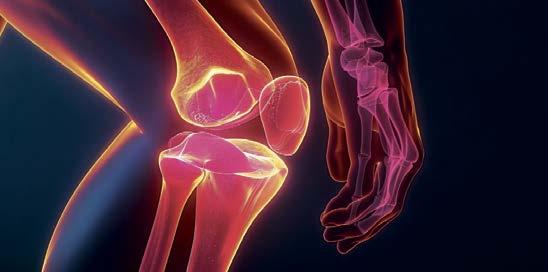
If you’re hoping to win Lotto or Powerball in New Zealand, your odds are about 1 in 38 million. However, here’s a statistic with far greater relevance: the chance of developing knee osteoarthritis (OA) is approximately 50% — that’s a bet none of us want to take.
Osteoarthritis is a condition that can creep up silently, often beginning years — even decades — before the first signs of discomfort appear. You might notice a slight twinge in your knee, pain in your hip, or stiffening fingers, but OA’s real damage may have started long before. The disease can accelerate rapidly following joint trauma and is typically diagnosed through symptoms and scans. Unfortunately, we rarely focus on the actual causes driving this degenerative process.
OA is marked by the loss of cartilage, the essential tissue that allows smooth joint movement and shields bone ends like a shock absorber. Though cartilage seems inert, it’s maintained by living cells called chondrocytes. These cells play a vital role in repairing damaged cartilage, but they are susceptible to harm from free radicals and destructive enzymes. When chondrocytes are damaged, their ability to maintain healthy cartilage diminishes.
Fortunately, there are several nutrients available as supplements that can
help chondrocytes resist damage and regenerate cartilage more effectively. Among these, chondroitin sulphate stands out. Supplementing with chondroitin encourages chondrocytes to produce cartilage matrix and shields them from free radicals, harmful enzymes and inflammation. Its importance is underscored by its availability in Europe on prescription at doses of 800–1,200mg daily. Yet, many joint supplements contain little or no chondroitin — likely due to its high cost.
Combining premium chondroitin with glucosamine and 100% water-soluble curcumin from turmeric can offer significant benefits, especially when paired with an anti-inflammatory diet.
John Arts (Adv.Dip.Nut.Med) is a qualified nutritional medicine practitioner and founder of Abundant Health. To read more articles by John and learn more about the Abundant Health products he has formulated, visit healthhouse.co.nz, call 0800 140 141, or email john@ healthhouse.co.nz.
For many, joint health deterioration is the first obvious sign of aging. Gradual erosion of cartilage, is by far the most common issue.
What is Bettaflex?
Bettaflex is the most popular supplement in the Abundant Health range because of its positive support for joints affected by wear and tear, helping Bettaflex users to support mobility and quality of life. How does Bettaflex work?
Bettaflex has been formulated to support joint comfort and mobility, making it an ideal supplement for those seeking support for joint comfort and stiffness. Bettaflex combines high-grade chondroitin
Bettaflex
“I
WILD HORSE ROUNDUP LEADS TO NEW LIVES
BY PAUL CAMPBELL
The Kaimanawa wild horse herd in the central North Island has been reduced to a manageable number with the third in a series of roundups successfully completed in early June with mustered horses going to forever homes and others treated for contraception.
Over the musters, in this and past years, a large number of Kaimanawa horses have found new lives in Northland, and after care and training, going on to compete with distinction in national equestrian competition.
Involved in the project and musters were the Kaimanawa Heritage Horses (KHH) rehoming team, the Kaimanawa Legacy Foundation (KLF) trainers’ team, stockmen in the yards, veterinarians ready to assess and draft the horses as they arrived, and the Department of Conservation team and NZDF coordinating the operations.
“We completed the aerial work for the Kaimanawa horse muster on Thursday, June 4, and a total of 114 horses were mustered from the southern zones,” said DOC ranger Sarah Tunnicliffe.
“Thirty-seven mares have been given their second dose of GonaCon, an equine immuno contraception.
“Ten mares were given their first dose of this important population control tool. A total of 27 horses will be rehomed, which includes two suspected orphan foals and a yearling with a wound that requires ongoing care. We wrapped up this year’s muster on Friday, June 5, and we’re happy with how it has gone.”
KHH spokesman, Carolyn Haigh, said the muster tasks this year were to locate and bring in family bands that included stallions, mares, juveniles and foals.
“Bachelor stallions were also targeted, many of them highly sought after for their potential to be trained for the Stallion Challenge competition at Equifest in October.
“Part of this year’s management plan also involved bringing in enough mares to continue the contraceptive trial. Mares in the southern regions received their first dose of GonaCon, a fertility-control vaccine that international research has shown can reduce fertility without harming foals already in utero.”
This approach reflects the evolving management strategy for the herd. The introduction of contraception is expected to gradually reduce the number of horses born in the ranges over time, helping bring the population closer to the target of 300 horses. This figure was established by the Kaimanawa Wild Horse Advisory Group in 2012 as the balance considered necessary to maintain a sustainable horse population, while protecting vulnerable plant species and ecological areas within the ranges. It was way back in 1876 that the first wild horses were recorded in the
Kaimanawa mountain ranges, originating from Exmoor and Welsh Mountain pony stock released in the 1870s. Escapees and releases of horses from farms and the cavalry at Waiouru have added to the gene pool as have ‘Desert Road drop-offs’ of other unwanted horses.
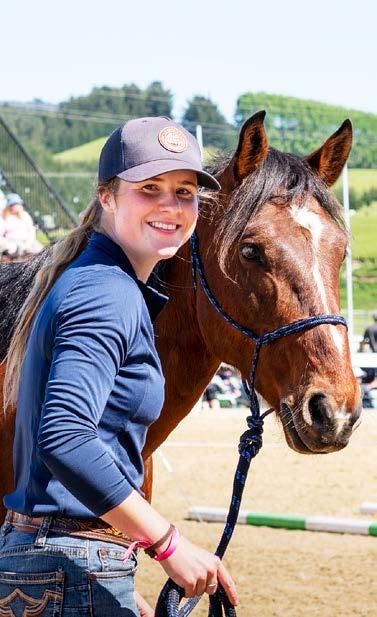
Northlander Emma Rogers and her rehomed equine companion Bodhi at the last Equifest Kaimanawa Stallion Challenge
Today, the characteristics of the Thoroughbred, Arab, Standardbred and Clydesdale can be seen in certain geographical bands within the Kaimanawa population. Historically, population numbers reaching over 2,000 across a wide area resulted in horses struggling in poor condition due to lack of food.
In 1992, the Department of Conservation (DOC) reported that up to 31 different unique plant types existed in the area and were threatened with extinction due to horse trampling and grazing damage. A systematic programme of culling horses through aerial shooting was put in place. Animal welfare groups opposed these slaughters, and brought public opposition to the programme through the media and informing the general public.
In the early muster days, the rehoming of horses was undertaken in an ad-hoc
way with little or no checking of the suitability of the new home or follow-up afterwards. This meant many Kaimanawa horses saved from slaughter at the muster went on to lead miserable neglected lives. Since 2003, KHH has ensured that around 600 mares and younger males and female horses have found new domestic lives.
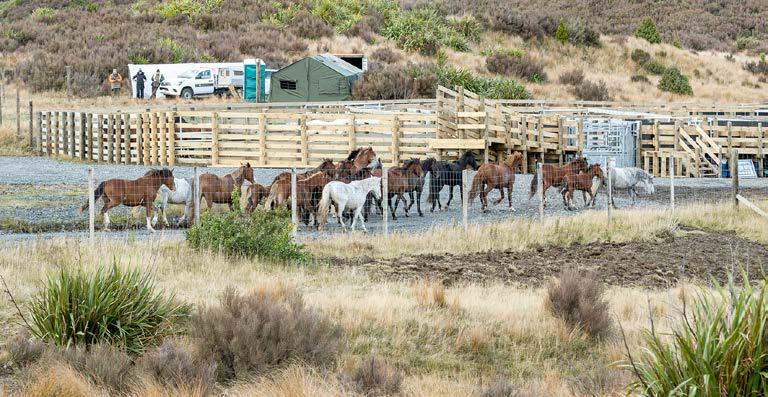
Now under an established and tried routine, around April each year, a herd count is undertaken by DOC using helicopters with GPS. The number of surplus horses are identified and mustered around the middle of June by helicopters to a set of yards where the drafting team takes over. They run a very tight and smooth operation where the horses are sorted with the utmost care and the minimum amount of fuss. The resident veterinarian keeps a very close eye on all phases of the muster.
The horses are relatively strung out as they mainly trot down to the yards, where they are sorted by age and sex. The weanlings and yearlings are sent out to new homes as soon as possible, usually within 24 hours. The older horses are kept overnight to allow time to settle down and become aware of the concept of a fence. They are fed hay and water while in the yards. The yards are 1.8m high and the drafting and loading race is lined with rubber matting halfway up the sides. While applications have closed for this year, future interest in obtaining a Kaimanawa horse requires an application form. After the due process has been successfully completed, a horse is selected at the next muster, if one is available. The selected horses are then sent to central yards from where they are transported to their new owners, paid by the purchaser.
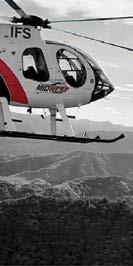
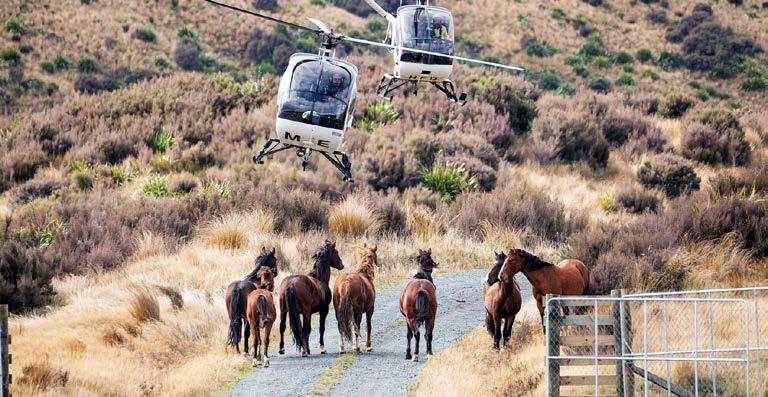
Helicopters manage the Kaimanawa musters to efficiently cover the animals’ wide range
KEEPING FARMERS FARMING.
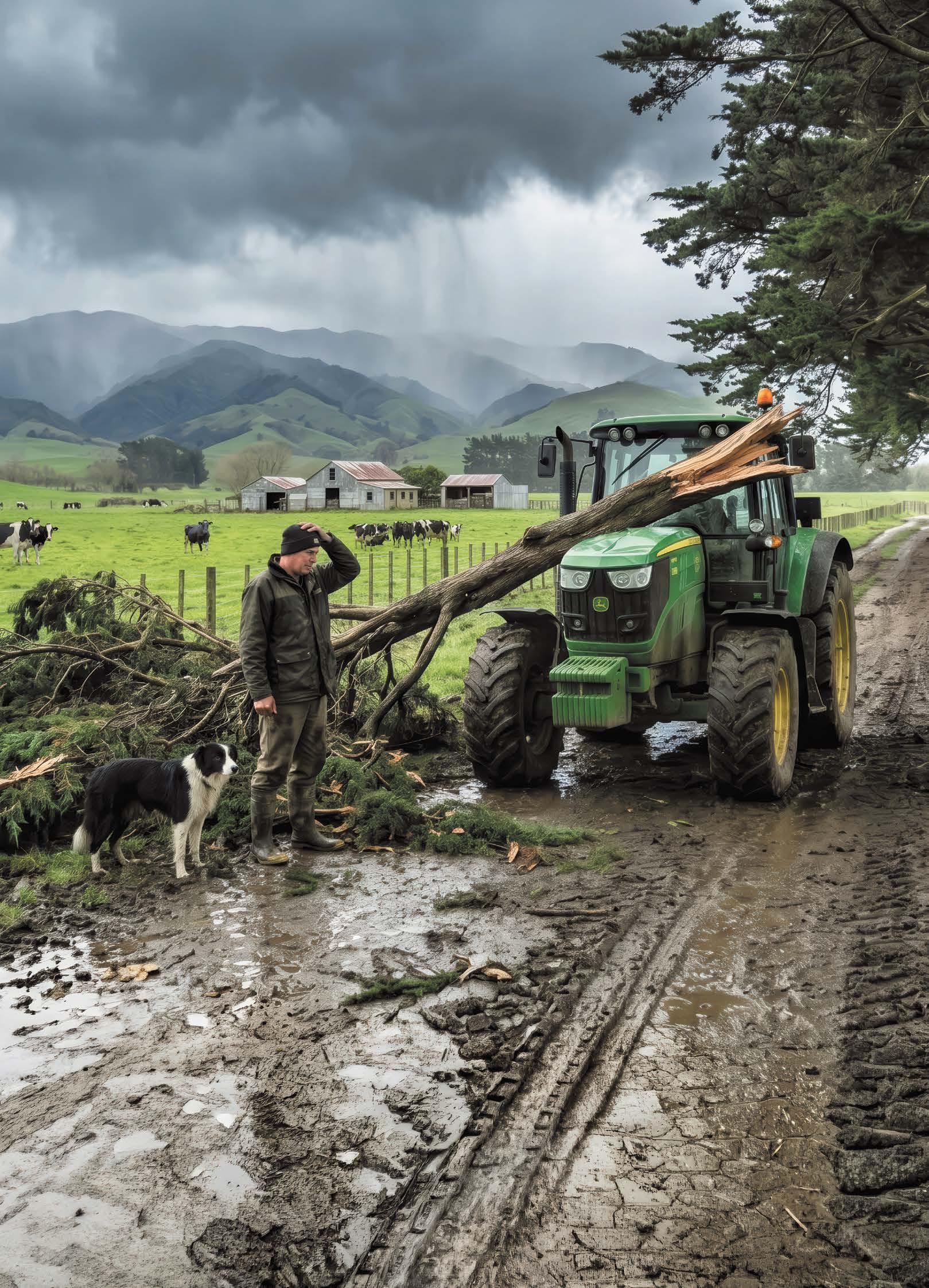
Our nationwide network of 64 ag vehicle repairers are pre-approved to go ahead with certain repairs of up to $15 ,000 without waiting for quotes. So if your tractor’s taken out by a Macrocarpa branch or a hay bale, there’ll be fewer admin delays in getting it repaired. Which means less waiting and more farming. Ask around about us, or give us a call on 0800 366 466.
We’re here for the good of the country. WE’ VE STREAMLINED REPAIRS WITH FMG’S PRE-APPROVED REPAIRERS.
by Andy Bryenton
Risks and benefits weighed up
Red tape binding up the delivery pathways for new veterinary medicines and agricultural chemicals has been snipped by new government changes, says Associate Agriculture Minister Andrew Hoggard.
“The changes proposed in the Agricultural Compounds and Veterinary Medicines (ACVM) Amendment Bill, introduced on May 11, reduce barriers to innovative new products while making sure any associated risks are dealt with proportionately,” said Mr Hoggard.
“The amendments remove avoidable complexity and focus regulators on real risks and speed up the process for considering novel products.”
In many cases, new innovations in vet medicine and the chemicals used to boost productivity and reduce pest strike in agriculture happen on the global stage. This means the nations, where they are invented and initially trialled, have already poured time and money into researching the risks and benefits of each product. Many of those nations adopt a stricter stance on the safety of such products than New Zealand.
“One way the bill will achieve this is by enabling greater reliance on the assessments of trusted overseas regulators when evaluating risks and benefits. I consider there is no good reason our primary sector should be waiting on work that has already been
done by other reputable agencies outside of New Zealand.
“The changes will also focus regulators on what matters so that products that are known to pose a lower risk will get a quicker pathway to authorisation by exemption and not require registration.”
Mr Hoggard said the current regime of regulations has served New Zealand well in preventing risk and damage, but a review by the newly-formed Ministry for Regulation last year found room for improvement. Getting products to market faster helps protect New Zealand’s edge and advantage globally. Its small size and innovative outlook should allow the rural sector to pivot toward new and effective medicines and products faster.
The ACVM Amendment Bill works in tandem with the Hazardous Substances and New Organisms (HSNO) Amendment Bill, also introduced earlier in May. Novel products cannot be registered under the ACVM Act until they have approval under the HSNO Act.
“Together, the bills will establish a more adaptive regulatory framework that maintains safety, supports trade competitiveness, and aligns
with international best practices, while improving timely access to agricultural and horticultural products,” Hoggard said.
The bill enacting these changes is expected to undergo public consultation soon and return to parliament for its final readings late in 2026.
Tyre Dealer & Repair Shop
Welcome to the Taranaki region If you need quality tyres, puncture repairs, or expert service for your farm vehicles and equipment, drop in and see us, we’re here to help.
New medicines may be easier to source for Kiwi rural vets and the farmers they serve, thanks to changes put forward by the government this month
I n t e g r a t e s w i t h
Fo n t e r r a Fa r m D a i r y
R e c o r d s . N o m o r e
d o u b l i n g u p o n d a t a !
With HawkEye, it ’s ea sy to submit your N190 rep or t to your regional council before 31 July. by Lea rn m o re at rave n sd own .co. n z/n190
by Paul Campbell
Boosting lamb profits
Sheep farmers could improve both profitability and emissions efficiency by increasing lamb weaning weights, with only marginal changes in total greenhouse gas emissions according to research at Massey University.
PhD candidate Joseph Adjabui examined how higher lamb weaning weights affect productivity, profitability and predicted methane produced during digestion. While previous studies have focussed on the production and financial benefits, this research also considers greenhouse gas outcomes, an increasingly important factor in farm systems decision-making.
The study analysed a North Island hill country sheep and beef farm and assumed a fixed feed supply, reflecting typical New Zealand pasture-based systems with limited supplementary feeding.
The results showed consistent improvements in farm performance as weaning weight increased. Lamb carcass weight sold a hectare increased by approximately two per cent under a 10 per cent scenario, and 14 per cent under a 20 per cent scenario, relative to the base system.
Cash operating surplus also improved, increasing by around six per cent and 51 per cent respectively. Mr Adjabui says the gains were driven by improved system efficiency rather than increased inputs.
“Heavier lambs at weaning meant more kilograms of lamb could be produced and sold earlier, improving both total production and farm income.”
The proportion of lambs meeting prime specifications soon after weaning also increased, reaching 84 per cent under
the 20 per cent scenario compared with 60 per cent in the base system.
One of the key drivers of improved performance is earlier finishing. Increasing weaning weight allows lambs to reach slaughter weight sooner, reducing time on farm, improving feed use efficiency and lifting overall system output.
PhD supervisor Emeritus Professor Steve Morris says the efficiency gains from earlier-finished lambs are clear when viewed at a whole-farm level.
“The most efficient lamb is the one sold directly to slaughter at weaning. It has been alive for fewer days, eaten less feed and required fewer animal health treatments, less labour and no shearing,” he said.
“That feed is then available for other stock classes, improving overall farm performance. It is also often sold when prices are strongest, before peak seasonal supply.”
Paul Kenyon notes there is a wider industry consideration. “While earlier finishing improves profitability at farm level, the industry also relies on a steady year-round supply of lamb to meet export demand, which is a conflict.”
Mr Adjabui’s research was supervised by Emeritus Professor Steve Morris, Professor Patrick Morel, Professor Peter Tozer, Associate Professor Ramilan Thiagarajah and Professor Paul Kenyon at Massey University.
However, the head of the school of agriculture and environment Professor
The information is out for the year in rural property, and the numbers tell a story of opportunity.
The Real Estate Institute of New Zealand issued its annual rural market report last week, and though it’s been a mixed 12 months, thanks largely to international factors and geopolitics, news at the farm gate has been positive for many of the subsectors of farming and country living.
That’s translated into what REINZ is calling increased confidence and positivity, expressed through bellwether figures, such as national dairy farm sales, up 38.2 per cent.
“There are still concerns around cost inflation for the rural sector, which remain at the forefront for those in the industry, with tight on-farm operating costs. These pressures continue to weigh on overall sector confidence, prompting businesses across the rural economy to reassess budgets, adapt operating models and look for greater efficiency as they navigate a persistently challenging cost environment, in many sectors,” said REINZ rural spokesperson, Shane O’Brien.
As mentioned earlier, strong Fonterra payouts and a projected continuation of this trend have seen dairy property action surge. Otago and Southland are areas of major movement, but Northland makes up the final leg of this triumvirate.
“In the 12 months to March 2026, there were more dairy farm sales exceeding $10 million than in any equivalent 12-month period since records began in 1997. This
comparison is based on nominal values and has not been adjusted for inflation,” said Mr O’Brien.
“Buyers across New Zealand tend to prioritise farms that deliver consistent performance, with proven production, established infrastructure, and being environmentally compliant while most farming sectors have displayed varied activity this quarter.”
Dairy has proven strong, but the red sector is also making progress, with strong demand for finishing farms
defining a trend, especially in the south. Meanwhile, horticulture remained stable, with growth in areas that have access to irrigation, with kiwifruit farms showing strong appeal.
Lifestyle blocks and small farmlets are also in demand, with Kaipara and Waikato offering some choice examples close enough to Auckland to appeal to urban escapees. Sales of this kind of property are reportedly up 16.2 per cent, with an increase in sales recorded everywhere that sunshine and rural views are on offer.
‘Heading into the next quarter, the rural and lifestyle market is expected to hold steady, with buyers focussed on operational performance,’ concludes the REINZ report.
‘Dairy, finishing and grazing farms are likely to remain the strongest performers, while sectors such as forestry lag due to regulatory constraints. Overall, investment is expected to be selective rather than broad across New Zealand’s rural property market.’
Northland dairy farms lead the charge nationally when it comes to property positivity
A REFUGE FROM THE STORM
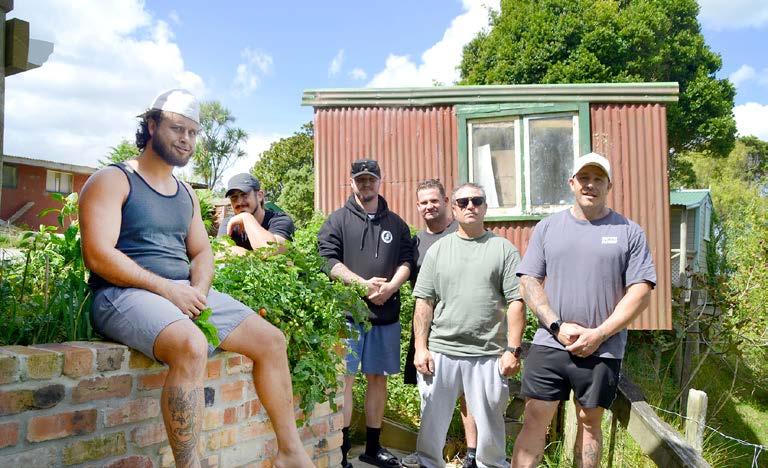
Guiding men wanting to overcome their battles with addiction, Ray and Janet Curle bought the Arapohue Retreat, a place for people to return to their purpose.
No stranger to the perils of addiction and crime herself, Janet was redeemed by grace and penned her autobiography, The Wild Side, under her pen name, Janet Balcombe.
“After I wrote The Wild Side, people began reaching out to me, thanking me for giving them hope, and others were asking for my help with recovery,” said Janet.
“Already praying for people who came from places like Auckland, Whangārei, and locally, to see us, we looked into how we could help. We thought of running some educational workshops, but that wasn’t the way we were supposed to be going — God closed the doors, and then He gave Ray a dream.”
Both born-again Christians, Ray and Janet, had a heart to help others and bring people from destructive paths onto stable ground. While their workshop idea was thwarted, a bigger plan was about to begin.
“I had a dream where I was walking around Cooper’s Beach Christian Camp,
With a calling to help people break the chains of addiction, Ray and Janet Curle bought the Arapohue Retreat
talking with them about wanting to hire the camp to do seminars, but then we started negotiating buying the property.
“I woke up and asked the Lord what that was about, and I heard him say,
‘Look at Arapohue’, so I asked Janet what Arapohue was. It was an old Christian camp that used to teach literacy to children who couldn’t read or write, and she was unsure if it was still going.
“Making some inquiries with Miriam Holloway, the daughter of the founder Graham Crawshaw, we discovered it hadn’t been running for 13 years. Miriam invited us to a family get-together to check it out. Once we walked into the lodge, we thought it was an amazing place for a retreat.”
Within two years, the Wildside Charitable Trust bought the property using donations, with the help of generous donations and a loan from Dugdale Charitable Trust. Having to restore the house they now live in, they used the extra money from the purchase to have renovations and repairs done. Then they began restoring people, starting with one.
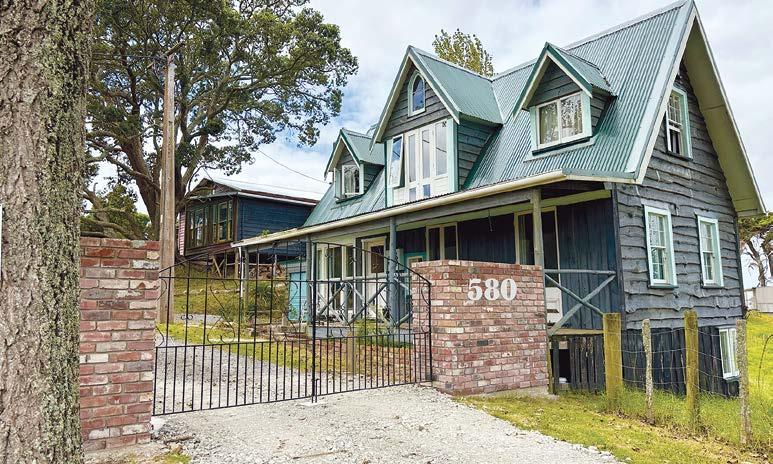
“Now, we have eight residents operating in two of the houses, as well as a big lodge
with a kitchen, dining and lounge area, and a gymnasium. The upper room in the lodge is being restored at the moment, so that we can have meetings there.”
Creating purpose by giving men tasks on the lifestyle block, including working on the gardens and being guardians of the QEII National Trust bush. With horses Hope and Sophie, black Valais sheep, feline friend Bob Cat, canine companions Lucy and Buck and about 15 chickens, the gentlemen can enjoy animal therapy.
“In its nature, this place is a holistic model, and so it is not like a facility. It is more like life here in a loving and supportive environment,” said Janet.
“With more of nature around and the animals around, and everyday jobs, like looking after and riding the horses.
Animals touch people on a different level and bring their hearts back to life.”
With two other buildings still needing renovations, there is room to grow and have more volunteers help in their ministry.
“We will only take people desperate to be off of their addictions for the rest of their lives, because we put so much effort into the counselling, prayer work and getting them to appointments,” said Ray.
“Families who get their sons back free of addictions, the men stop their criminal lifestyle, they are back in the community, and employers are getting drug-free employees.”
While men stay at the retreat at a cost, Ray and Janet volunteer alongside AOD counsellor and builder Gary Codlin — all money collected from the residents goes towards immediate costs.
“The only reason this place works at all is that Ray, Gary, and I volunteer because there is not enough money to pay people,” said Janet.
“God gets the glory because he has provided for us and the restoration. He has provided the amazing people who he is pulling out from a death sentence to give them a new lease on life, and what can be more rewarding than that?”
Visit wildsidetrust.org to contribute to the restoration of people or the property, financially, with items or food or through volunteering.
“There have been a lot of amazing stories of lives and families transformed. If you help one person, you help a family, and one person can change a community or the world.”
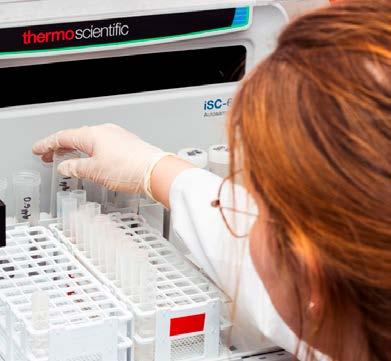
Based in Stratford, Taranaki, ICS Labs is an IANZ-accredited laboratory delivering fast, reliable testing across water, environmental, industrial, agricultural and microbiological applications.
For over 25 years, we’ve supported local industry, councils and communities to understand, manage and improve water quality because every drop counts.
But we don’t stop at results. We work alongside you to interpret the data and turn it into clear, practical action helping you meet regulatory, operational and environmental requirements with confidence.
icsnz.co.nz | info@icsnz.co.nz
Comfort, capability — but no compromise
by Andy Bryenton
There’s a saying that only something that has a purpose can be truly beautiful, and it’s true that some tools transcend mere usefulness by way of sublime design, becoming a pleasure to look at as well as to use.
That philosophy comes to mind when looking closely at the new Volkswagen Amarok ute. It’s got the tough and workready DNA of a machine built for the farm and the job site, but it’s been fettled and sculpted into something more.
The first Amarok came out in 2014, and the brief was to produce a reliable, strong ute that could work hard all day and then deliver its driver home, over any distance, relaxed. For the new model, VW has teamed up with Ford in a cross-platform collaboration, and the machine coming out of the new Amarok factory in South Africa for our local market improves on the winning original formula, with a turbocharged V6 delivering a smooth 600 Newtonmetres of torque through a seamless 10-speed transmission.
It’s a masterclass in nailing the design brief. Just as the Golf GTI encapsulates the benchmark for the hatchback, the Amarok aims to be the quintessential luxury ute, and punches centre mass of the target. The attention to detail, driver comfort and smart assists like autonomous cruise control combine to provide a refined, car-like ride, which is a big bonus for those who have to put in big miles in rural New Zealand. Hours behind this leather-trimmed wheel don’t weigh heavy, they slide smoothly by, to a Harman Kardon surround-sound soundtrack.
Has that luxury and poise come at the expense of rugged, hard-working chops? Not at all. Slide a full euro pallet in the deck, hook up and tow 3,500kg, let VW’s acclaimed 4Motion all-wheel-drive system handle the slippery and rough stuff with the twist of a dial, and you’ll appreciate the engineering as much as the ride. The wading depth is deeper, the chassis geometry redefined, and the ground clearance is higher so you can effortlessly go anywhere.
It’s even earned a seal of approval from four-time Bathurst supercars champion Greg Murphy, who knows a thing or two about horsepower. He doesn’t just endorse the Amarok — he’s on his fourth one.
Volkswagen offers the Amarok in three levels of trim, packing in features as standard across the range, which would be costly add-ons for many competitors. The Style V6 is the entry to the lineup, with the PanAmericana adding blackout alloys, bars and side steps, as well as boosted infotainment. The Aventura tops the range with extra comforts like a heated steering wheel and tasteful added chrome.
If you are shopping for a ute right now, you owe it to yourself to experience the Amarok. Book a test drive and see for yourself that work and relaxation can balance harmoniously.
TARANAKI
CSR are one of New Zealands leading hot rod shops specialising in ground up custom vehicles and classic restorations.
CSR are one of New Zealands leading hot rod shops specialising in ground up custom vehicles and classic restorations.
Fully equipped shops for all Mechanical, Fabrication, Electrical, Panel and Paint.
Fully equipped shops for all Mechanical, Fabrication, Electrical, Panel and Paint.
Located in Inglewood Taranaki we offer free collection of your vehicle from anywhere in the North Island.
Located in Inglewood Taranaki we offer free collection of your vehicle from anywhere in the North Island.
INGLEWOOD,
INGLEWOOD, TARANAKI
Amarok sits in the top spot for luxury utes, but that refinement has not come at the cost of toughness
Virtual Deere trains next-generation drivers
by Andy Bryenton
Letting a learner driver loose in your family car is
nail-biting enough, but what about giving a trainee the keys to a powerful modern tractor or bulldozer?
It’s a real concern, as the next generation of tractor and machinery operators have to learn somewhere. Autonomous control is touted as part of a future solution, but human drivers will still be needed for many operations. That’s where virtual reality comes in, or as one of the heavyweights in the industry call it, John Deere Extended Reality.
At the big US CONEXPO 2026 Deere developers debuted a compact, portable headset and hand controls, which put the wearer into the driver’s seat of a range of John Deere machines. It’s a logical step for training, and even has some crossover with the popularity of farming and construction simulator games among youngsters. This is no toy, but it’s a new window into a virtual world familiar to gamers.
The first two machines simulated are a big excavator and bulldozer, but making this technology embrace the whole construction and farming fleet in green and yellow is just a matter of programming. The JDXR system creates an immersive environment in which it’s possible to get familiar with powerful machines safely and without using a drop of diesel.
“This technology represents a major step forward in how we prepare our customers and operators to be successful from any location,” said Curtis LeConte, project manager for next-generation
training at John Deere. “By making our training more portable and accessible, we’re delivering a powerful new way to train users in machine operations, maintenance, as well as key features, without the limitations of traditional training simulators.”
That’s another good point, because previously, simulating the cab of a tractor, excavator or harvester required building a mock-up that could be as costly as the real thing, and nearly as hard to move about. As well as training a new generation and giving students a taste of a career behind
machines in a simulation of John Deere’s Coal Valley training site. The possibilities, both in construction and agriculture, are limited only by the imagination of programmers. John Deere Extended Reality could be a hit at field days events as well; a chance to try before you buy.
the controls of a Deere, this technology can help demonstrate a wide range of machines to existing customers too.
Imagine shopping for the right tractor by test driving a whole range in virtual reality, and getting familiar with the controls before the keys are in your hand.
Currently, the JDXR system features operator-focussed virtual reality lessons, including daily maintenance walkarounds, controls familiarisation, and direct interaction modules, such as trenching and spreading. There’s a sandbox mode in which operators can pilot a variety of
Want to get to grips with a John Deere excavator like this, or other machines from their range? Virtual extended reality options make it easy and safe
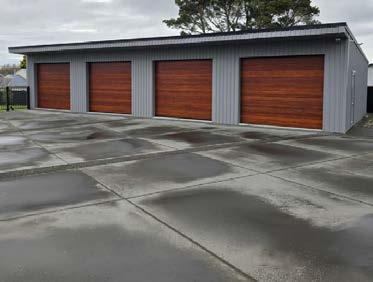
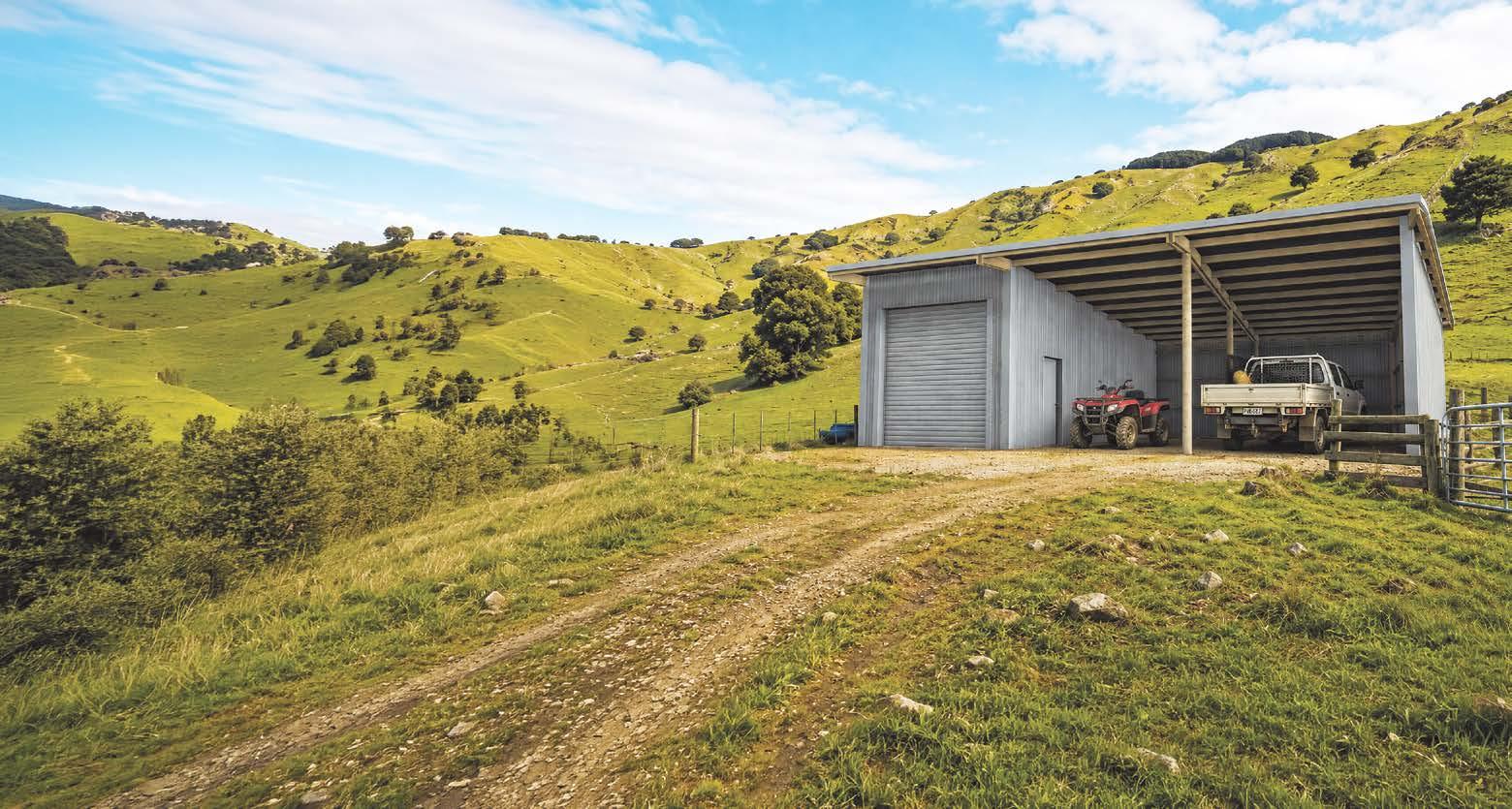
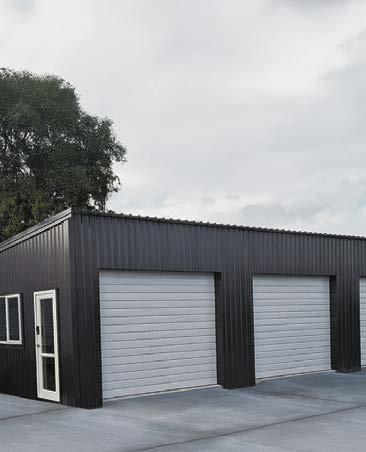
With over 50+ years building sheds, we can design a shed to match your needs, and stand up to Taranaki’s harsh conditions. From haysheds to implement sheds, workshops to storage, Lifestyle and American barns we can do it all!
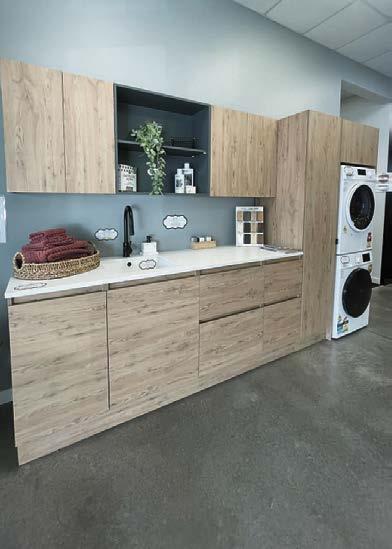
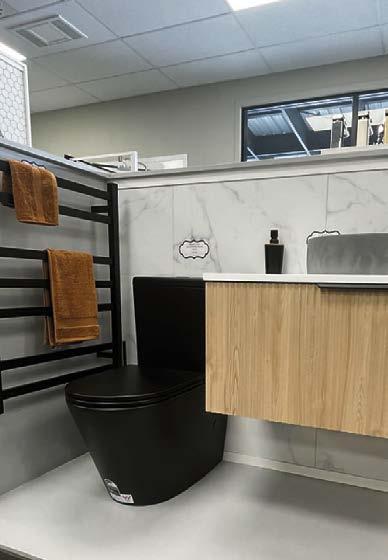
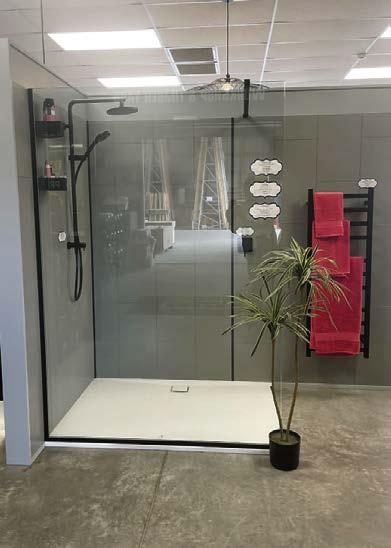
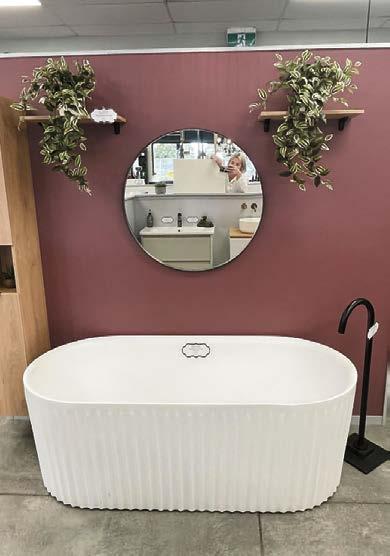
BATHROOM, TOILET, LAUNDRY INSPIRATION
Check out our fabulous showroom for more renovation inspiration, showcasing products from NZ’s most trusted and respected brands.