Postal Address: PO Box 474, Dargaville Physical Address: 107 River Road, Dargaville
Editor: Andy Bryenton
Journalists: Denise Gunn | Andy Bryenton | Amy Fifita
Advertising: Debra Seymour 027 525 8217
Production: Gavin Bainbridge | Marnie Fuller | Daniel Foster | Liz Clark
Accounts: accounts@rml.nz
Distribution: Laurie Willetts Printed by: NZME
Website: farminglifestyles.co.nz
9,074 copies DELIVERED FREE to every rural delivery address in Taranaki.
Democracy in today’s world
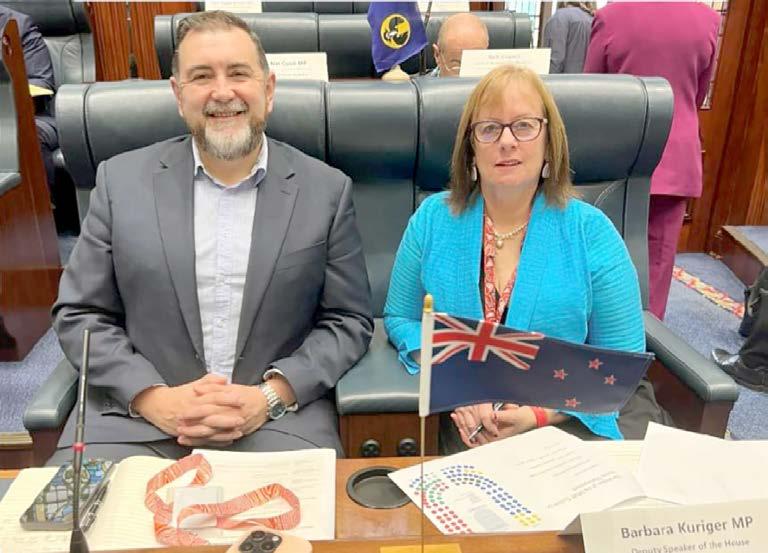
As I write from the Presiding Officers’ and Clerks’ Conference for New Zealand, Australia and the Pacific, my thoughts turn to democracy.
Democracy, broadly defined as a system of governance where power rests with the people, continues to be a cornerstone of political life in many countries around the world. In today’s rapidly changing global landscape, democracy faces both new opportunities and significant challenges.
The rise of digital technologies, the spread of social media, and increasingly interconnected societies have reshaped how citizens participate in democratic processes. While these innovations have made information more accessible and enhanced opportunities for civic engagement, they have also introduced vulnerabilities such as misinformation, polarisation and threats to electoral integrity.
Globally, democracy is being tested by political instability, economic inequality, and the resurgence of authoritarian tendencies in some regions. Countries such as the United States, India, and parts of Europe have experienced debates about the strength and resilience of their democratic institutions.
Issues like voter suppression, political corruption, and the erosion of civil liberties challenge the core values of democracy
and prompt discussions about reform and renewal. Yet, in many places, grassroots movements and civil society organisations continue to advocate for transparency, accountability, and inclusive participation, showing that democracy remains a dynamic and evolving ideal.
New Zealand stands out as a vibrant example of democracy in today’s world. Its parliamentary system, grounded in principles of fairness and representation, has earned international respect for its transparency and responsiveness. This must be protected at all times.
In relation to global trends, New Zealand’s democracy serves as a model for balancing tradition with innovation. The country’s ability to foster dialogue across diverse communities and to protect civil liberties in the face of new challenges underscores the enduring relevance of democratic ideals.
As the world navigates complex issues — from climate change to technological disruption — New Zealand’s experience offers valuable lessons in resilience, adaptability and the importance of maintaining a government accountable to its people.
by Barbara Kuriger, MP for Taranaki-King Country
by Paul Campbell
Rural women’s wellbeing in focus
A nationwide call has gone out to women living and working on farms around New Zealand to share their experiences of mental health and wellbeing in a survey being conducted by Massey and Lincoln universities.
The NZ Women in Farming Wellbeing Survey aims to address a significant gap in research and data on rural women — a group whose contributions to the agricultural sector it says are vital but often under-recognised.
The research team consists of associate professor Nicky Stanley-Clarke, from Massey, and Dr Jorie Knook and Dan Smith, from Lincoln, who say the survey comes at a critical time for the sector.
“With the government’s recent consultation on the Draft Mental Health and Wellbeing Strategy 2026–2036, a renewed call for a focus on rural wellbeing, and National Fieldays underway in Waikato, this survey fills a knowledge gap about the wellbeing needs of women in farming.
“We know women are balancing multiple roles, from farm work to family responsibilities and often off-farm employment, but there is very little New Zealand-specific data capturing what this means for their wellbeing.”
The initiative also aligns with growing national and international recognition of women’s roles in agriculture, with 2026 marked as the United Nations International Year of the Woman Farmer. Despite increasing numbers of women entering farming and agricultural study,
much of the existing research, services and policy focus has traditionally centred on male farmers. Dr Stanley-Clarke says this has created a blind spot in understanding the pressures facing rural women.
“International research highlights what’s often called the ‘triple burden’ of managing farm work, caregiving and household responsibilities. In New Zealand, that can also include paid work off the farm and strong commitments to community life, often leaving women with little time to prioritise their own wellbeing.
“There are some great farming organisations supporting farming women, such as Dairy Women’s Network, Rural Women New Zealand and Agri-Women’s Development Trust, but to our knowledge there is no New Zealand academic research, and no current data capturing the wellbeing needs of this sector,” she said.
“We hope the survey results will create a comprehensive national picture of women’s wellbeing in farming, providing evidence to inform future services, policy and community initiatives.”
The NZ Women in Farming Wellbeing Survey is online and takes approximately 15 minutes to complete, and is open until mid-July.
Nicky Stanley-Clarke, Massey University associate professor
CHRONICLING CALF REARING JOURNEYS
BY DENISE GUNN
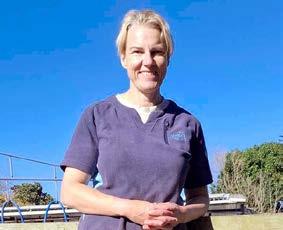
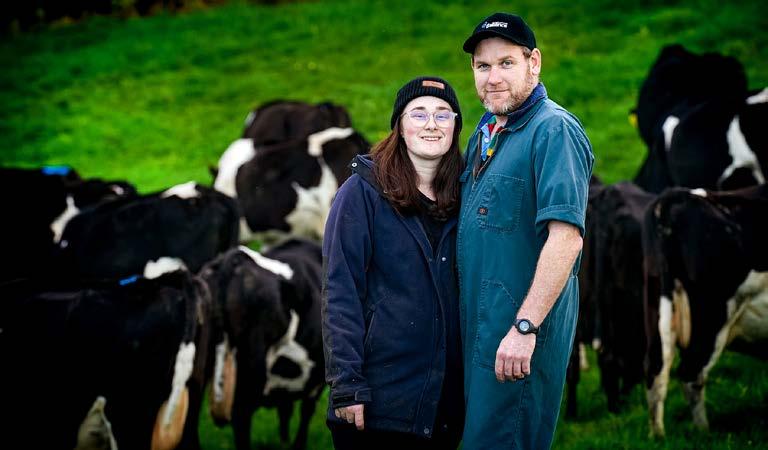
Interaction received on calf rearing posts on her personal Facebook page, led Taranaki dairy farmer LeAnne Blakelock to start a separate page, Calf Chronicles, dedicated to sharing her calf-rearing journey with others.
LeAnne and her husband Ian Powell are in an equity partnership with LeAnne’s parents, milking 320 cows on their Inglewood farm. LeAnne also has her own accounting practice.
Rearing the calves is one of LeAnne’s on-farm roles and although calf rearing information is available from different sources, she’s found it to be scattered.
“Some of it was technical, some of it was practical, some of it sat with vets or nutritionists or experienced calf rearers.
Very little of it was pulled together in a way that helped me apply it to my own shed, my own calves, and my own system,” said LeAnne.
“My early results weren’t very good. The calves got sick. More died than should
have. I was working incredibly hard, but I couldn’t reconcile the effort I was putting in with the outcomes I was getting.”
LeAnne recalls calf rearing felt like one of the loneliest, most stressful, and morally soul-destroying spaces for a few months every year.
As she began to learn more about the biology, nutrition, immunity, housing, hygiene, disease pressure and welfare side of calf rearing, she found the system complex and fascinating.
“The more I learned, the more I shared.”
Since setting up Calf Chronicles two years ago, there is now a following of nearly 7,000 people with some contributing their own information and different topics discussed.
“I have a very engaged audience, and people are often generous about sharing their own experiences, examples, questions and perspectives. That is hugely valuable because calf rearing is one of those areas where there is not just one farm, one system, one answer, or one perfect way of doing things.”
LeAnne said the aim of Calf Chronicles is to empower people to make better decisions for calves, for farms and for themselves.
“At its heart, it is about welfare, understanding and confidence. Not just saying do this, but helping people understand why it matters, what the science says, what the trade-offs are,
A wide range of calf rearing content is posted on Calf Chronicles
and how the choices made in the calf shed reach much further than those first few weeks.
“A dairy heifer calf is the future herd. Her first feeds, colostrums, housing, health, growth and the way she is managed in those early weeks can shape the cow she becomes. Her resilience, productivity, longevity and her ability to step into the milking herd all start long before she ever sees the platform.”
She also recognises the value chain of dairy beef calves.
“Calf Chronicles is about helping people see outside the farm gate. To understand that what happens in the calf shed does not stop at weaning. It follows that animal forward into welfare outcomes, beef performance, dairy productivity, industry reputation, and the value we are either creating or losing without always seeing it.”
Calf Chronicles supports calf rearers, too, as a place to chat about the pressure, hard calls, mistakes, mental load and learning.
“The bigger goal is industry improvement. Calf Chronicles is about helping dairy heifer and dairy-beef systems get even five per cent better productivity. Five per cent is a very achievable goal and across the industry, that is enormous.”
During spring, when LeAnne is directly rearing calves, she posts content that follows the everyday rhythm of the calf shed, capturing not just information, but also the mistakes, little wins, hard calls and funny moments.
Throughout the rest of the year, LeAnne finds a wide range of topical subject matters to post. Some posts are practical and science-based, and others may cover calf rearing issues or the human side of calf rearing.
“Sometimes there are bigger story arcs, like when I covered the New Zealand Mental Health Foundation’s Five Ways to Wellbeing as a five-part series.”
As the same basic calf rearing topics are naturally repeated each season, LeAnne often finds another angle, layer, season, science-based information or a practical example to add to the topic.
She thinks part of why Calf Chronicles has grown is that it’s real and doesn’t
pretend that calf rearing is always easy, tidy or straightforward.
“If Calf Chronicles can help even a small number of people feel more confident, more supported, more curious, and better equipped to make good decisions, then it is doing something worthwhile.”
Calf Chronicles supports calf rearers, providing a place to chat about experiences
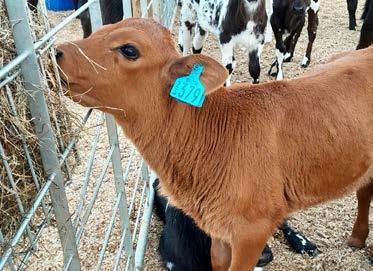
Recognising the value chain of dairy beef calves, LeAnne also rears bobby calves for Rose Gold Veal
WORKING TOWARDS A COMMON GOAL
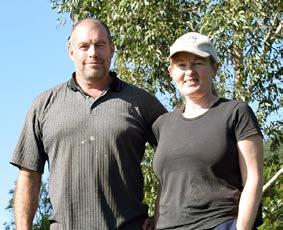
Implementing new systems and a willingness to learn has seen Stratford sharefarmers Craig and Kelsey Fisher manage the workload to achieve the best results on-farm.
Craig was raised on a coastal dairy farm at Rahotu. His initial career ambition while at school was to train as a chef. However, his passion for milking cows began to grow as he worked for his parents Wayne and Sharon.
“I like dealing with animals, seeing calves growing up and going into the herd.”
Sixteen months later, Craig headed off to Taratahi Agricultural Training Centre in Masterton.
“I then came back to the ‘naki and got a job where I started as a boy, moving up to management on a 480-cow farm. With this employer, I was given the opportunity to go 50/50 on his smaller 230-cow farm. I did two seasons there and the farm was sold.
“I stayed on as a 50/50 for the first year of the new owners, but it was at this point my parents bought a second farm, and that’s where we are now.”
Craig has now been sharemilking for the past 15 years, currently milking 240 cows on the 82ha Fisher family farm.
“Next year, we are going back to the farm I worked on after finishing at Taratahi, milking 480 cows just out of Ōkato. It will be 20 years to the day.”
Growing up in Hamilton, Kelsey’s initial connection to the dairy industry was through her father who worked as a tanker driver for Fonterra. Following an accident, he began working in Fonterra’s laboratories.
BY DENISE GUNN
“We relocated to Hāwera, and dad worked hard to step into the role of site manager at Whareroa.”
Kelsey studied accountancy at Massey University and has worked full-time as
an accountant since 2014, gaining her chartered accountancy qualification in 2020. After joining BDO Taranaki in New Plymouth, primarily dealing with agricultural clients, she was appointed associate in July 2024.
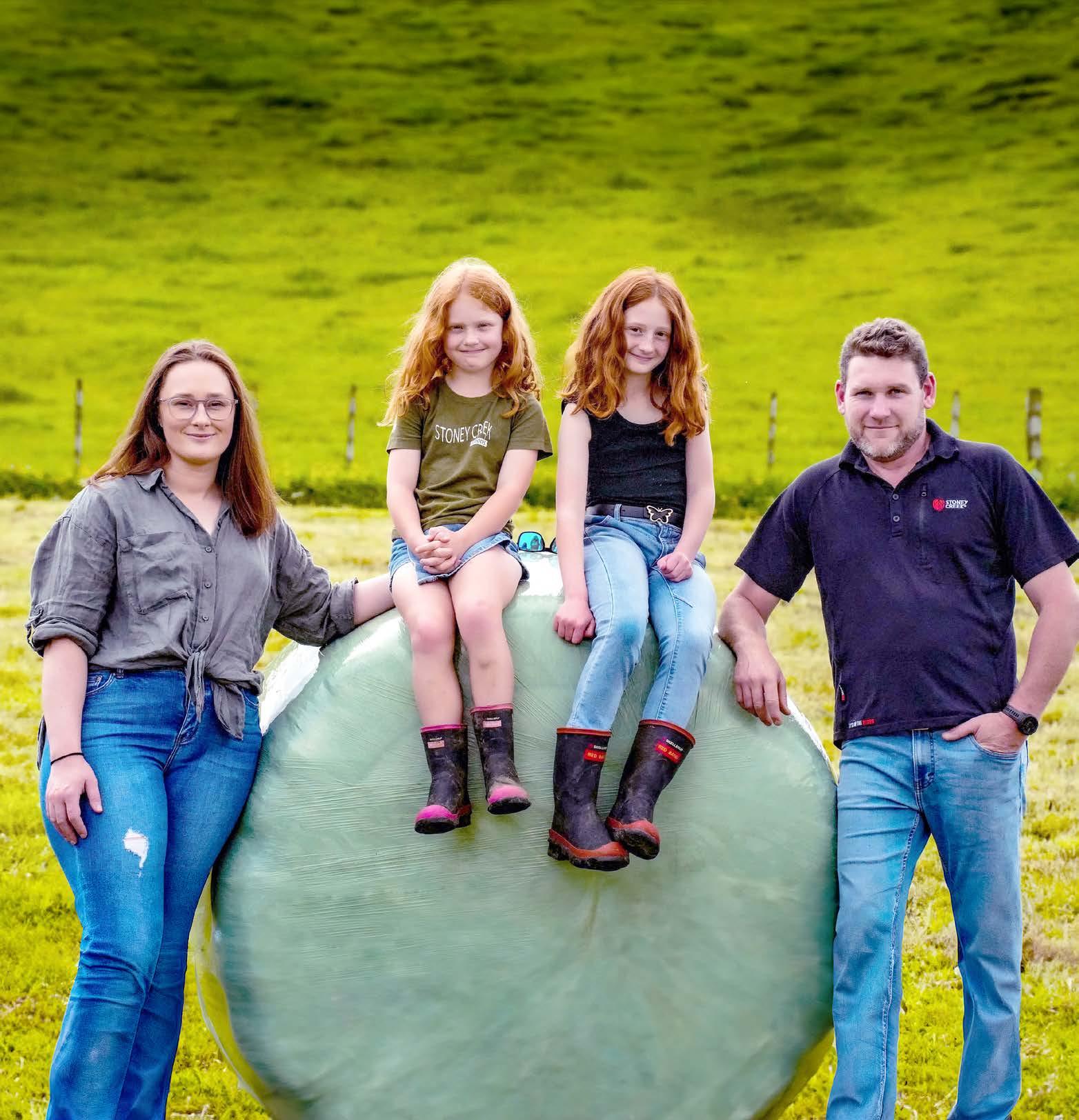
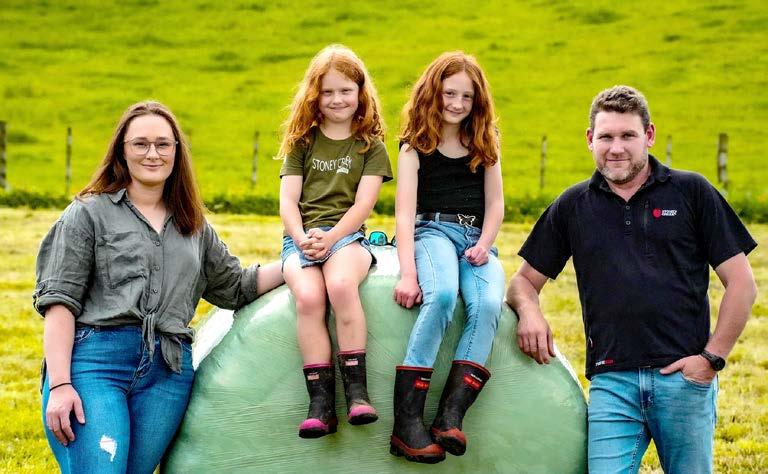
Kelsey and Craig Fisher with Kelsey’s two daughters, Darcy and Addison
“I help a lot with the calves and the administration of our farming business, and also just boss Craig around to be fair,” said Kelsey.
“I hear of different ways that people farm, and like to take these ideas and see if they can be beneficial in our operation. Craig is pretty open to my ideas and that is why we have made a lot of changes to how Craig previously farmed. I have invested a lot of time in learning pasture management and how to milk.”
The Fisher’s farm, located near the Mount Taranaki reserve, sits at an altitude between 480m–580m and receives an average annual rainfall of 4,500 millimetres. Due to the altitude and close proximity to the mountain, there is virtually no grass growth between June and September. Occasionally it snows, too.
“As far as the climate, there are significant challenges, but it is a summer-safe farm.”
During the winter, around 125 cows are sent to winter grazing.
“Our heifers stay at the run-off owned by Wayne and Sharon until July, and the remainder of the herd stay on-farm. Calves are also sent to graze at the runoff from weaning.
“We have in-shed feed in spring until the grass takes off, and feed silage, too. We have a really big focus on pasture.”
Craig cuts and wraps between 300 to 400 bales of silage on-farm. The Fishers also buy in 120 bales of hay each year.
Halter was introduced in mid-August during the middle of calving.
“We have used that alongside the pasture tool, Aimer, to further improve our pasture utilisation,” said Kelsey.
The couple placed second in the 2026 Taranaki Dairy Industry Awards Share
Farmer of the Year category, initially entering to meet more people and receive feedback.
“There is basically so much goodness about working in the dairy industry. There are so many great people willing to help you out,” said Craig.
“In farming, there’s a camaraderie. People are also open to change.”
Receiving recognition from the Taranaki Regional Council for their riparian fencing and planting has been another farming highlight.
“It was a big moment for us because it recognised the effort we’ve put into improving our waterways and doing the right thing environmentally. It felt like a real win for our business and our farm,” said Craig.
The couple is trying to financially put themselves in a position to buy their own farm, if they choose to, in the future.
Photo credits: Kane Thompson Photography
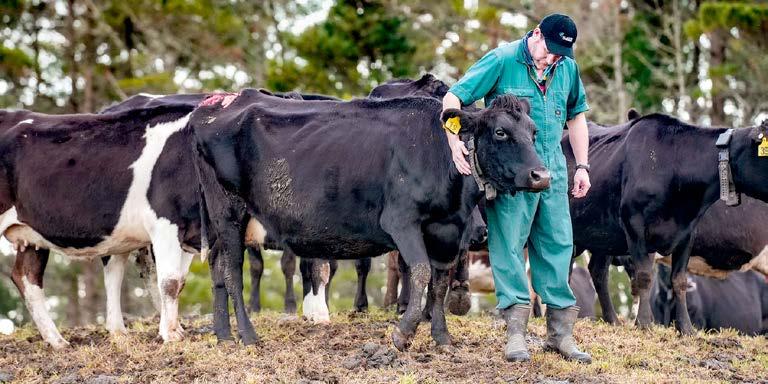
Craig has long held a passion for milking cows
Kelsey combines her full-time work as an accountant with rearing calves and the farm’s administration
When the couple bought their land at Mangamahu in 2020, it was covered in buttercup and other weeds.
“The initial soil test showed so little fertility in the soil, it barely registered,” said Dan.
The hard yards began with the construction of a 400m² high tunnel. Throughout the summer of 2023/24, Dan and Toni used the rotary hoe on a tractor to turn over the sod where they planned to start their market garden.
“We went over it every single week, knocking the perennial weeds back. By the time summer was at an end, the perennial weeds had given up and we were finally left with a large blank canvas.”
GROWING PRODUCE ORGANICALLY
BY DENISE GUNN
Dan said they purchased organic soil amendments; lime, guano, fish meal and potash, as well as two tonnes of worm castings (vermicast) and spread it out. Two tonnes of volcanic rock dust was also applied.
“We broad-forked every single garden row, then applied 50 cubic metres of compost to mound up each row. In autumn, we planted 75% in green manure crops and started planting out the first rows.”
With 30 years of vegetable-growing experience behind him, Dan’s passion for gardening is evident. Every property the couple has lived on has seen the backyard converted into a food production unit.
Although ornamental gardening had been Toni’s original focus, she’s taken up the role of Dan’s apprentice for the past two years.
A 400m² high tunnel extends the growing season
“She’s coming along nicely,” said Dan. Since purchasing the property, the couple has also planted about 80 fruit
trees with more planned this winter. A large asparagus plantation has been established and poultry housing built.
Over the past three years, Dan and Toni
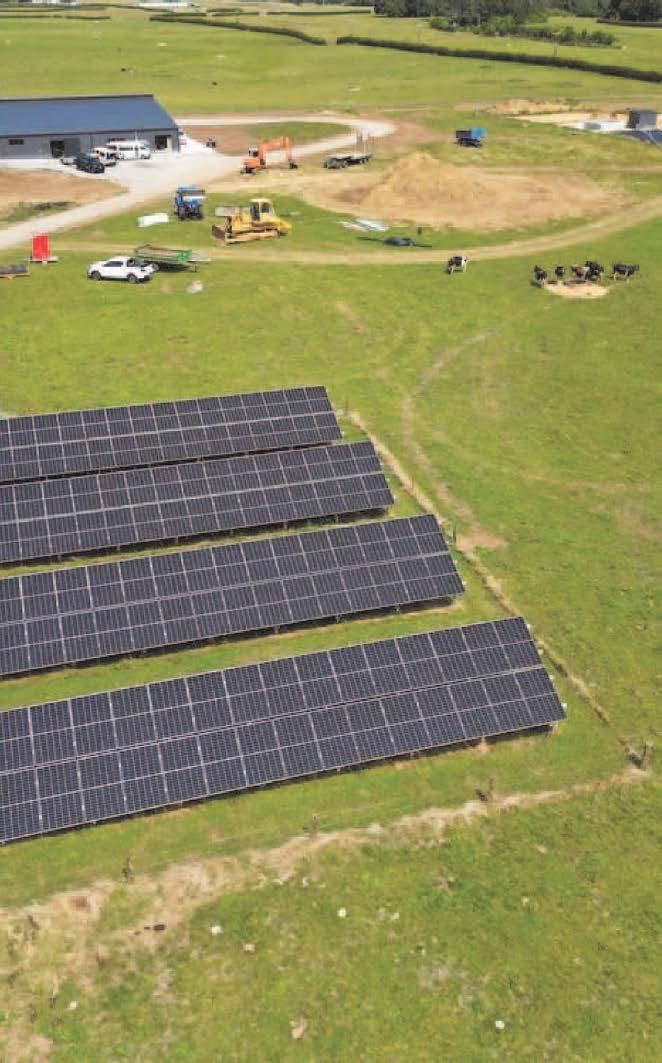
“Being a completely off-grid farm, we have installed three separate independent off-grid solar systems. One runs the house, one runs the shed, and one is just for the business running the walk-in chiller, greenhouse fans and harvesting shed.
“As a permaculture garden, we don’t really have challenges working with the elements as we grow seasonal crops. We work with the cycle of nature instead of trying to fight it all the time.”
Dan said the exception to that rule is getting tomatoes and peppers started early.
All the couple’s vegetables are grown from seed, using their own seed-raising mix from a recipe that they’ve perfected.
“We have a grow room with heat mats and LED grow lights. Seeds are sown in June and babied through till August where they are planted out into the high tunnel. This gives us fresh tomatoes on the table in mid to late November.”
A large seed-raising area in the high tunnel is used to start other crops, too. Drip irrigation on a timer with misting sprinklers for the seedling area is fed with artesian bore water.
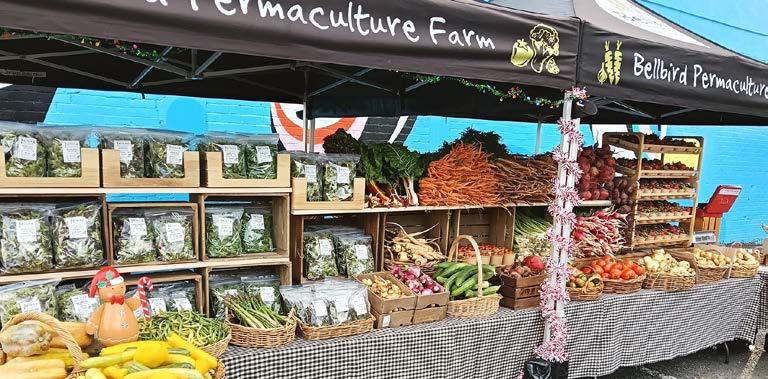
Dan and Toni sell the majority of their produce at the Whanganui River Markets on Saturday mornings.
“We love filling the tables on a Saturday market, standing back and seeing the colours and range of products we produce. We don’t grow massive amounts of any one thing, but people appreciate getting all their vegetables from us,” said Toni.
“Our biggest seller by far is our salad mixes.”
The couple’s Bellbird Permaculture Farm has developed a large following of regulars who show up at the market every week to buy their vegetables.
“It’s our favourite day of the week,” said Dan. “Market gardening is very hard work. Seeing all our lovely customers and
getting praise about our produce makes it all worthwhile.
“People love the flavour of our produce you can’t get from mass-produced food.”
Customers can also fill a virtual basket through the farm’s website. Dan and Toni deliver orders directly to the customer’s door each Friday. They’ve also started stocking their salads and other greens to a couple of retail outlets in Whanganui, too.
Recently, Dan and Toni achieved certification for MPI National Programme level one for their harvest/packing shed to supply salads to commercial outlets. They plan to develop that side of the business and to offer a wider range of fruit.
Weeding is the most time-consuming job on-farm, but the couple is now starting to see a decline in weed pressure. They also operate on a no-dig gardening system.
“We are very passionate about the soil and science around what is going under our feet,” said Dan.
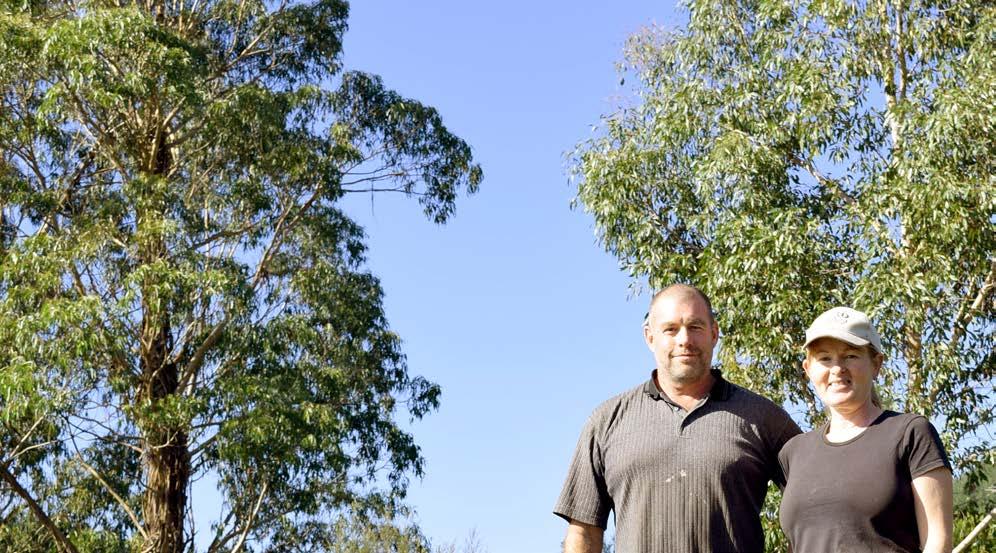
The couple sell most of their produce at the Whanganui River Markets on Saturday mornings
All of the vegetables at Bellbird Permaculture are grown from seed
Local farm innovation marks Fieldays’ success
by Paul Campbell
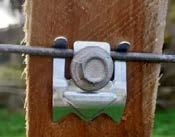
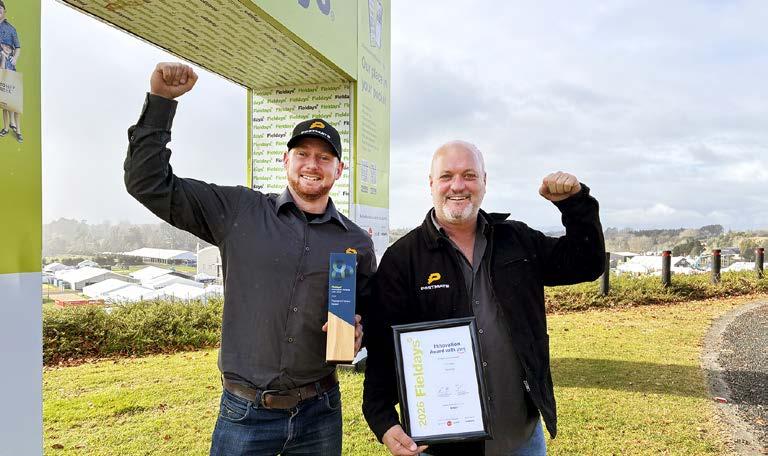
A farm shed solution to a long-standing safety problem has captured the public’s vote in the Fieldays Innovation Awards with Waikato dairy farmer Warren Storey’s invention, The PostMate, winning the 2026 Fieldays Innovation Awards People’s Choice Award.
“An efficient fence post puller has clearly struck a chord, earning the title of crowd favourite and resonating strongly with farmers and contractors across the country and internationally,” said programme manager Steve Chappell.
“For years, rural communities have faced a common and dangerous challenge removing stubborn fence posts. Traditional methods can take up to four times longer than this new solution, and often require operators to work beneath machinery, exposing them to serious safety risks.”
Warren Storey took the problem back to his farm shed, combining practical farming experience with Kiwi ingenuity.
Over the past three years, he refined the invention, using and improving it with the support of former workmates Harry Newey and Shawn Watson, who had worked alongside him in the primary industries.
Storey and his business partners, Newey and Watson, understood the realities of farming and the need for practical, reliable tools. Eight months ago, the trio decided to bring the concept to market. The result is The PostMate, a purpose-built tool designed to make the job safer, faster and easier, while requiring just one operator.
“The strong public support for The PostMate highlights the importance of practical, safety-driven innovation,
particularly in the rural sector,” said Chappell. “The awards started in 1969 and continue to showcase the brightest new solutions for the primary sector.”
The momentum behind The PostMate is also opening doors to markets well beyond New Zealand. In its first year exhibiting at Fieldays, the invention attracted interest from South America, the United States and Australia, alongside an influx of sales in Europe, where the business already has distribution in place.
More than 132,000 visitors came through the gates over four days of the 58th Fieldays and overall event attendance was up 20% on last year, and
exhibitor sites were sold out. The final day saw a packed programme of competitions, demonstrations and entertainment.
Crowd favourites racing, food, family fun and rural experiences were all on the schedule. Adding to the excitement, was the chance to win a $57,000 prize package.
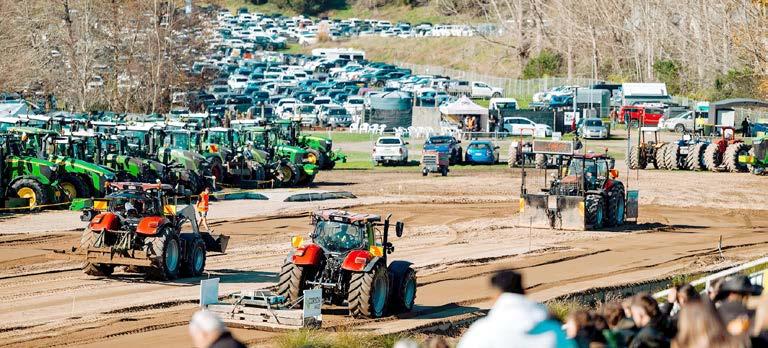
The finals of Tractor Pull as well as the Excavator Competition saw operators from across Waikato and the Bay of Plenty competing for the title of Regional Excavator Champion, while visitors could also get involved, with the family-friendly Doug the Digger activity for children and Have a Go excavator experiences for adults.
Harry Newey and Shawn Watson from people’s choice winner, Postmate
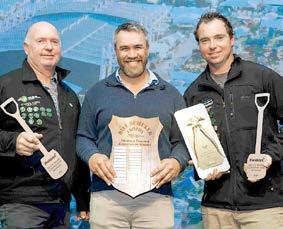
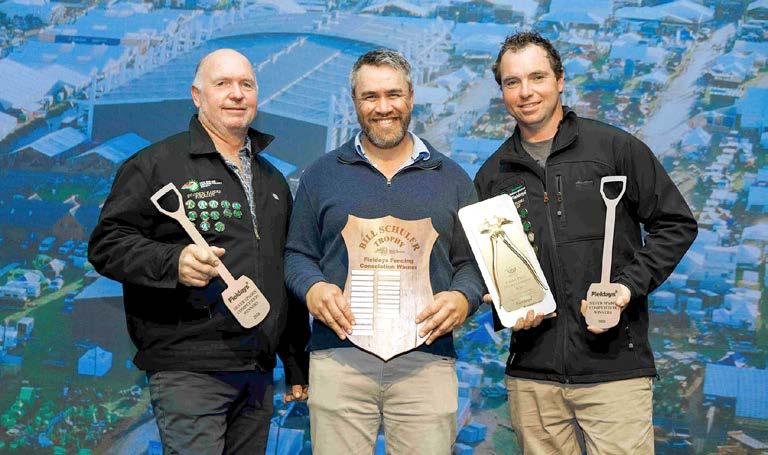
Fieldays event winners Tony and Shane Bouskill and Kupu Lloyd
Record crowds came to Fieldays
“Fieldays continues to be where the primary industries come together to do business, share ideas and build connections,” said Fieldays Society CEO Richard Lindroos. “Fieldays isn’t just an event, as this year has proved, it is a national strategic asset that brings together the best of our primary industries in one place, it is a mega event.”
“This year’s strong attendance and exhibitor demand highlight the confidence in the sector and the vital role Fieldays plays in enabling growth.”
Lindroos says he received overwhelmingly positive feedback, driven by a buoyant rural sector, four days of good weather, and the significant effort behind the scenes from a passionate and dedicated team.
The full economic impact will take time to emerge, as the benefits extend well beyond the four days of the event — planning is already underway for Fieldays 2027, June 16–19.
A flagship event was the Innovation Awards. The Young Innovator of the Year went to Wellington-based Enivo for its biodegradable plant pots made from New Zealand forestry and primary industry waste.
The Prototype Award was won by Scanabull for its Scanabull WeighApp. The Early-Stage Award-winner was Hamiltonbased Elert for its Elert EQ device, a wearable technology designed to monitor equine health. The Growth and Scale Award went to Trussed Systems for its Truss House Portal Frame.
New Zealand’s top fencers brought sharp focus and grit to demonstrating their skills with the ever-reliable number eight wire and showcased the growing strength of the fencing community, with nine new entrants competing in the heats and the first female competitor since the 1980s, Tiffany Garrick.
Tony Bouskill came out on top in the prestigious Golden Pliers final, with
judges also awarding him best quality, for producing the highest standard of workmanship, precision and finish under intense competition conditions.
The competition is judged on a combination of speed, quality, and the overall strength and durability of the finished fence, with the ‘first off the line’ component highlighting how quickly a competitor can complete their work without compromising standards, all assessed by a team of 15 volunteer judges.
Bouskill also took out the Fieldays Silver Spades™ Doubles Championship with his father, Shane Bouskill. The pair will head to the Tornado Wire Fencing Competition at the NSA Sheep Event in the United Kingdom in July.
The Bill Schuler competition, established in memory of the late Bill Schuler to support newer and developing fencers, was won by Kupu Lloyd. The Fieldays Silver Staples cadet competition went to Smedley Station’s Noah Glasgow and Mark Chambers.
Farmers often develop sore joints (Part one)
by John Arts
New Zealand farmers often develop osteoarthritis due to the physically demanding nature of their work.
Farming involves repetitive movements, heavy lifting, prolonged standing, and frequent bending, all of which place significant strain on the joints, particularly the knees, hips and hands.
Over many years, these repetitive stresses can lead to the gradual breakdown of cartilage, which is the hallmark of osteoarthritis. The outdoor environment also exposes farmers to variable weather conditions, which may exacerbate joint pain and stiffness.
Additionally, farming is a year-round occupation with limited opportunities for rest or recovery, increasing the risk of chronic joint overuse. Many farmers also start working at a young age and continue well into older age, further compounding the wear and tear on their joints over decades.
The real question is what to do about it, especially if joint deterioration does not warrant surgery. While anti-inflammatory medications help relieve pain, they are hard on the body and do not address the main disease process behind cartilage loss.
Cartilage is dynamic tissue dependent on special cells called chondrocytes to
maintain and repair cartilage. They do this by making and secreting new cartilage matrix, which includes chondroitin sulphate. If these are damaged, or die, the tiny patch of cartilage they maintain soon disintegrates.
Adding 800–1,600mg of high-grade chondroitin can make a huge difference. Chondroitin is by far the most important compound available through supplements. While glucosamine is important, I regard this as a supporting therapy. Adding the latest water-soluble curcumin (from turmeric) can be helpful by reducing joint capsule inflammation.
My client files include many farmers who have had significant benefits of this type of therapy with most getting notable improvements in flexibility, mobility and comfort. To learn more, email me for a copy of my osteoarthritis programme and start your journey to better joint health.
John Arts (Adv.Dip.Nut.Med) is a qualified nutritional medicine practitioner. To read more by John and the Abundant Health products, visit healthhouse.co.nz, call 0800 140 141, or email john@ healthhouse.co.nz.
For many, joint health deterioration is the first obvious sign of aging.
Gradual erosion of cartilage, is by far the most common issue.
What is Bettaflex?
Bettaflex is the most popular supplement in the Abundant Health range because of its positive support for joints affected by wear and tear, helping Bettaflex users to support mobility and quality of life.
How does Bettaflex work?
Bettaflex has been formulated to support joint comfort and mobility, making it an ideal supplement for those seeking support for joint comfort and stiffness. Bettaflex combines high-grade chondroitin sulphate,
Forecast is faire for mediaeval action
by Andy Bryenton
Word about Northland’s renaissance faire is spreading, and there’s a lot of excitement as groups of knights and other history enthusiasts make plans to head to Arapohue in January of 2027.
Co-organiser of the faire Kurt Richards says that the scene will be familiar to those who have watched mediaeval tournaments in films and on television, or seen depictions of renaissance faires from Europe and the US.
“It’s a lot of fun to take part, and just as much fun to come as a visitor and watch all the action, dress up in costume, and experience the closest thing we have to travelling back in time,” he says.
Those entering through the gates on January 23 and 24 will be able to watch the steel-crunching action of fullyarmoured knights battling in the arena, dazzling sword skills, and the thunder of jousting horses and lance-wielding riders. Most people have never seen armoured warriors clash in real life, and it’s an unforgettable experience.
There are ways to get hands-on with history — try your hand at archery, learn to throw axes, ride horses and even fight the knights in a kid-friendly bout with safe foam swords. There’s going to be a Viking village to explore, bouncy castles to besiege and, of course, plenty of medieval food to feast on. You can
watch real blacksmiths forging swords, hear about herbal lore and browse the merchants’ stalls for traditional arts and crafts as well.
Historical re-enactment, martial arts and combat clubs nationwide are coming to this big event, and there have even been requests from Australian clubs for more information.
of mind
Jousting knight Vikki Subritzky is one of the modern-day mediaeval enthusiasts who is headed to the faire
by Andy Bryenton
Faster reports — faster builds
Waiting on a Project Information Memorandum
Rules changes proposed in Wellington will truncate the amount of time councils can take to issue Project Information Memorandums (PIMs), effectively cutting them in half. It’s another plan from a duo of parliamentarians who have been very visible and vocal in the ‘red tape busting’ space during the past triennium: Building and Construction Minister Chris Penk and Local Government Minister Simon Watts.
“Fixing the basics and building for the future for New Zealand means taking a close look at every part of the building system to identify delays, remove bottlenecks, and improve productivity,” Mr Penk says.
“Project Information Memorandums, or PIMs, are an important part of the building process. They give homeowners and builders greater certainty about site-specific requirements, like natural hazards and infrastructure constraints, before a building consent is requested and construction begins.”
“Right now, the system can also undermine competition in our building consent market, with private building consent authorities required to obtain PIMs from councils before they can progress work. The government wants to ensure there is a strong incentive for councils to process those applications promptly.”
Councils can take 20 working days to process a PIM application, and that ‘working days’ appellation means that the reality is roughly one month. The slowest councils in the land are, on average, the biggest, according to MBIE’s quarterly figures, on issues of building consents in general. Kaipara, the Far North and Whangārei outperform Auckland in these metrics, for example. If the wait time should be cut back to just 10 working days, it’s likely that the smaller, more nimble councils of the north would adapt well, with minimal need for more staffing.
Mr Watts and Mr Penk say that such measures are necessary.
“To address these issues, the government will reduce the processing timeframe for all PIM applications from 20 working days to 10 working days,” they announced in mid-June.
“Faster processing times will help homeowners and businesses to get on with their projects sooner, improve competition in the building consent market, and reduce unnecessary delays and costs, as part of the government’s wider work programme to make building easier and more affordable for New Zealanders.
“Reducing PIM processing times will also particularly help our agriculture sector — by accelerating farm
Building and Construction Minister Chris Penk wants faster reports and increased council efficiency to speed up building
by Andy Bryenton
Hail to search and rescue heroes
As professionals who go above and beyond, search and rescue first responders venture into danger to bring others home safe, and they have been honoured at this year’s New Zealand Search and Rescue Awards.
The award ceremony specifically recognises long-term contributions to search and rescue operations, outstanding bravery in the face of danger, and highlights the year’s single-most well-orchestrated search and rescue mission. However, the event also serves as a time to reflect on the courage, skill and resilience of all those who respond when the call goes out that people are lost or stranded.
“Our country has one of the largest and most challenging global search and rescue regions. It covers more than 30 million square kilometres, which is one-twelfth of the Earth’s surface. This makes the sector’s work even more dangerous and treacherous,” said Associate Transport Minister James Meager, who presented the awards in mid-June.
The highlighted gold awards for 2026 don’t just tell a tale of individual courage; they are also a testament to organisation, planning, and support on the ground. Moreover, they are a reminder that public generosity is often key to search and rescue success, whether it’s in the donations keeping rescue helicopters flying
or the volunteer hours put in by people like firefighters and ordinary citizens, who step up to join search parties.
This year’s gold award went to Operation Artigau, a combined effort by more than 40 volunteers and five professional organisations to rescue missing tourist Hector Artigau.
“This was an intensive and dangerous operation involving five organisations and 40 Wānaka search and rescue volunteers, who over 20 days, contributed 823 hours of their own time. Two search and rescue dogs and their handlers were also brought in to help. It was a huge collaborative effort,” Mr Meager said.
Top search and rescue heroes included Coastguard veterans Carolyn Tapley and Keith Allen; the former helmed a rebuild of rescue services in Lyttleton after the Christchurch earthquakes, while the latter has orchestrated rescues on the high seas and atop Mount Cook as part of a decades-long career. Mr Allen is held in such high regard that the Tauranga Coastguard base is located on a street named after him, Keith Allen Drive.
“Each of these awards tells a story of the extraordinary lengths and efforts people have gone to — to help those in their time of need. I believe they celebrate the very best of New Zealand: our people, culture, values and connection to the outdoors,” Meager said.
“I congratulate all the award-winners for this well-deserved recognition of their outstanding effort and thank them for their service, professionalism, passion and unwavering selfless commitment to helping others.”
Rescue crews, whether in the air, at sea, on land in search parties or working behind the scenes in planning, deserve praise for their commitment and courage
WINTER WARM UP
Creating lasting value
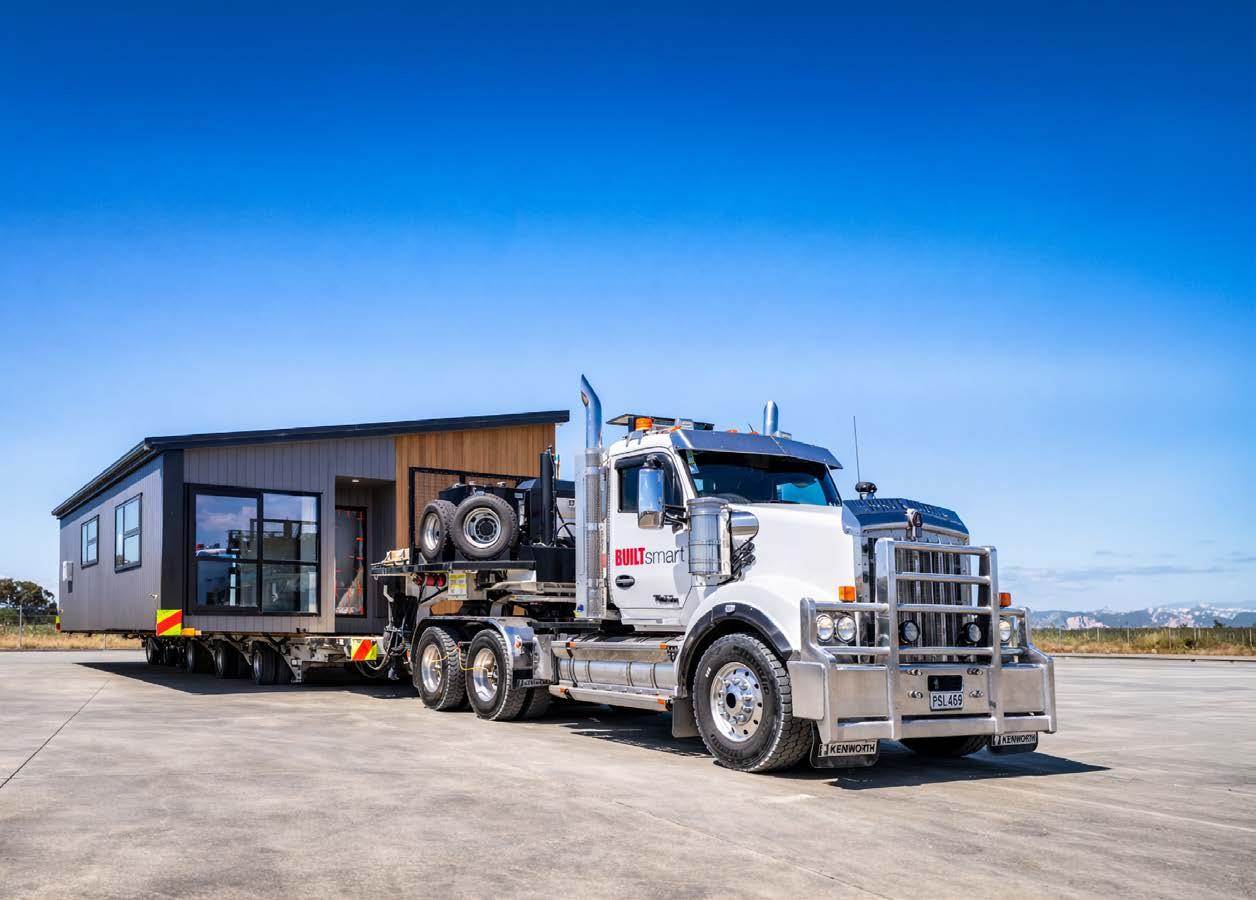
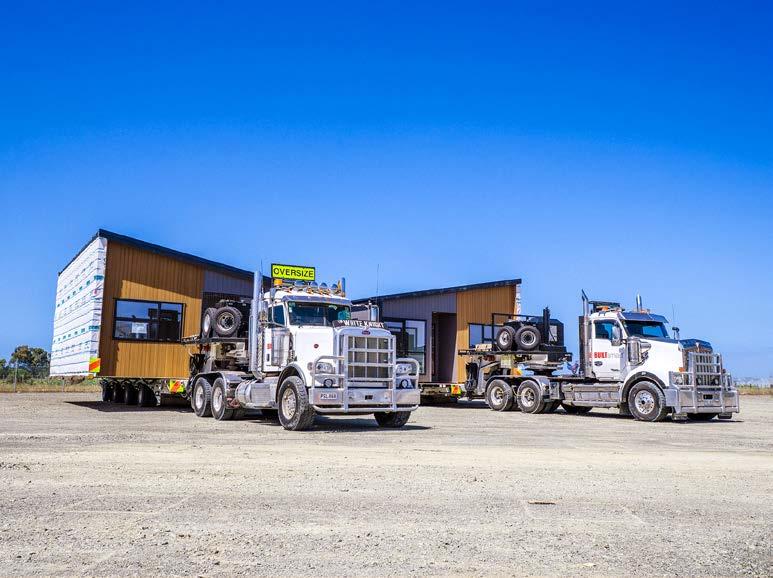
When it comes to delivering affordable, high-quality transportable homes across New Zealand, Builtsmart continues to set the benchmark.
Affordability isn’t achieved by cutting corners — it’s achieved through experience, efficiency, scale and a commitment to doing things the right way.
Builtsmart has invested heavily in purpose-built manufacturing facilities designed specifically for efficient home construction. Unlike traditional building methods that can be affected by weather delays and site constraints, our custom factories allow homes to be built faster, with greater consistency and less waste. These efficiencies translate directly into savings for our customers.
One of the biggest advantages Builtsmart offers is capacity. With one of the largest production capabilities in the transportable housing sector and factories strategically placed around the North Island from Huntly, Gisborne to Feilding, we can take on projects of all sizes, from individual homes through to large-scale residential developments. While many builders face long waiting lists and resource shortages, Builtsmart continues to grow its workforce and expand its operations to meet increasing demand.
At the heart of the business is a strong family culture. Builtsmart remains family-run through and through, with values centred on hard work, honesty, reliability and long-term relationships. These principles have helped
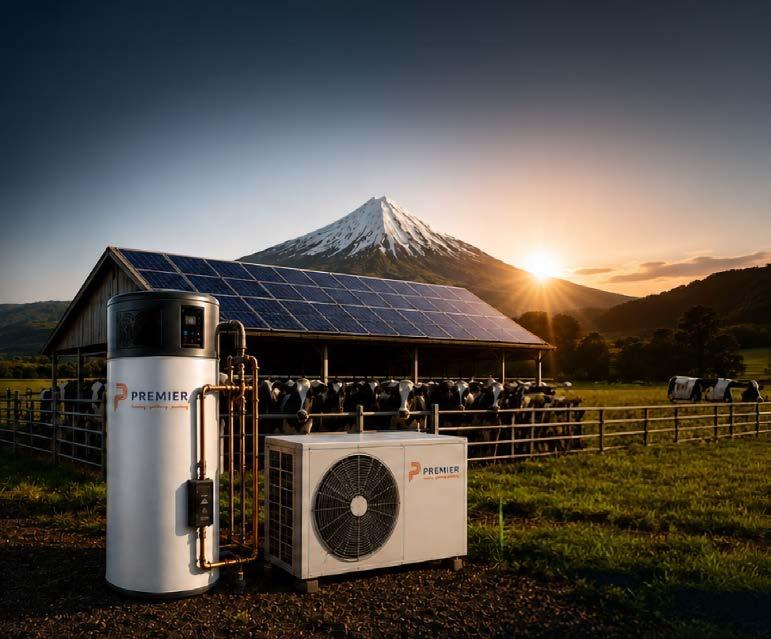
SPECIALISTS IN HOT WATER HEAT PUMPS FOR FARMS.
→ Save up to 70% on hot water bills.
→ Simple integration into established hot water systems.
→ Fully solar compatible.
large housing developments in partnership with iwi organisations and government agencies, helping provide quality housing solutions where they are needed most. These projects demonstrate not only our ability to deliver at scale but also our commitment to supporting communities and creating lasting value.
By combining industry-leading capacity, efficient manufacturing, a growing and skilled team, and genuine family values, Builtsmart offers a range of exceptional homes at highly competitive prices. It’s a simple formula that has made us one of New Zealand’s most-trusted and affordable transportable home providers.
build a trusted reputation throughout New Zealand and have been a key factor in the company’s continued growth.
Our track record speaks for itself. Builtsmart has successfully delivered multiple
+ GST KIT
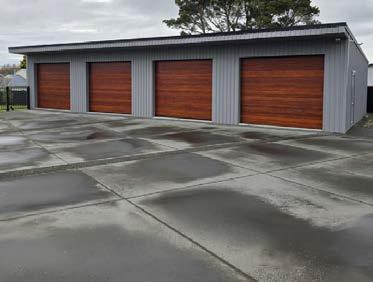
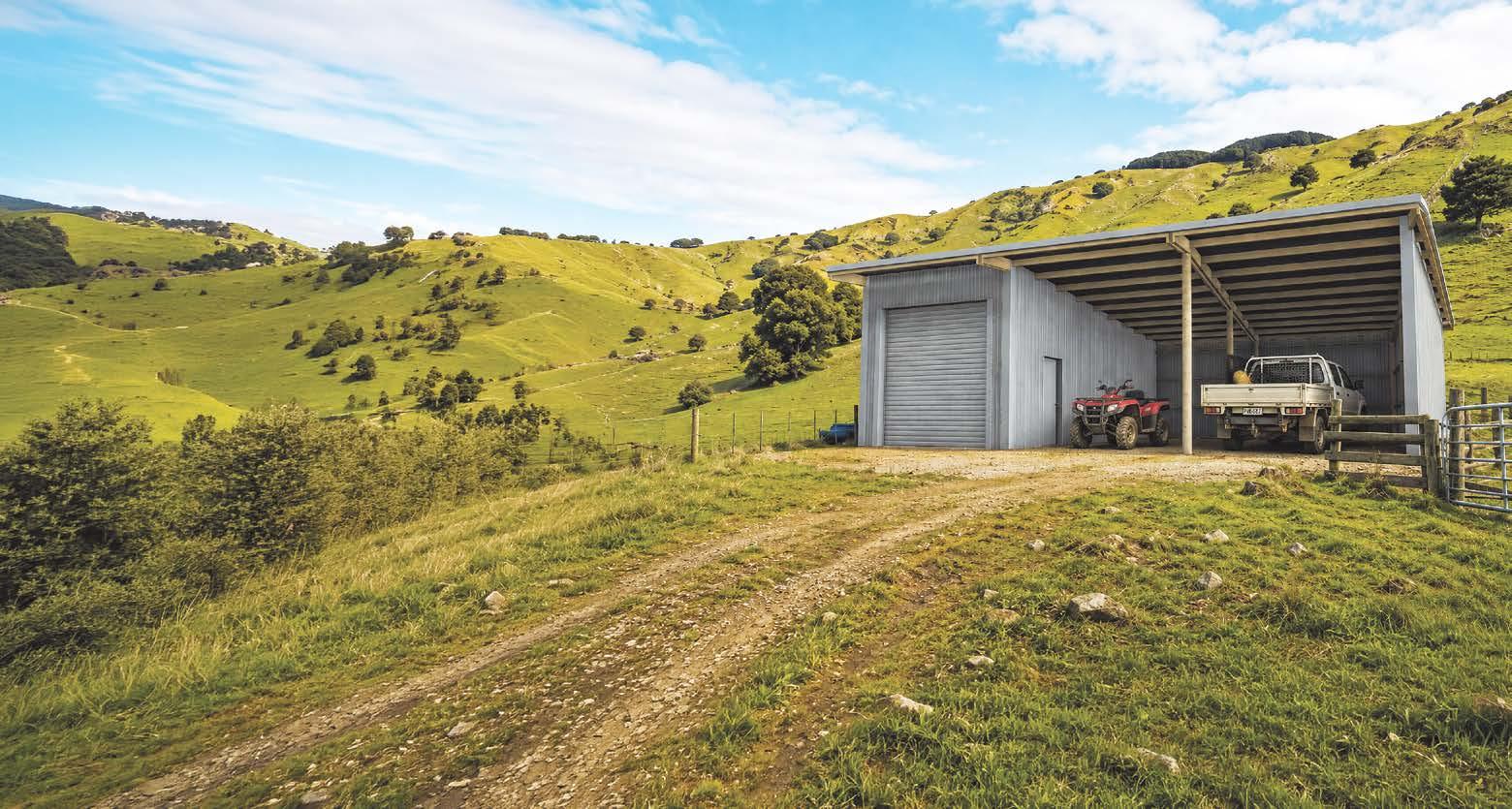
Don’t miss out - this super affordable shed is how to protect your gear from winter ’s worst: at 12m wide x 9m deep, 3 to 3.8m high, there’s cover for vehicles and boats, secure lock-up for tools and toys and wow-factor savings! Also, no permit required on qualifying blocks of land.
*Conditions
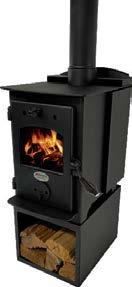
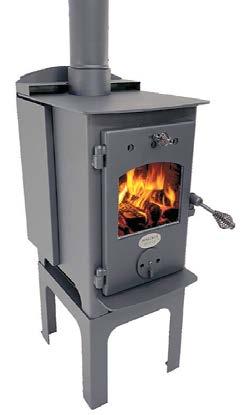
Small scale, with a big heart
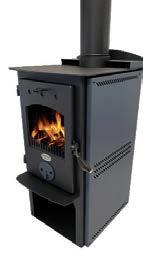
The Wagener Sparky is New Zealand’s ultimate compact multifuel solution, handcrafted for tiny homes, cabins and even boats. Despite its small footprint, the Sparky delivers an impressive 7–10kW output, featuring a heavy-duty 5mm steel chassis and a brick-lined firebox for maximum heat retention.
This multi-fuel versatile performer isn’t just a heater; it features a dedicated top surface for cooking and an optional “Lion” wetback to provide independent hot water. Available in Clean Air and Rural models with customisable base and colour options, the Sparky offers robust, long-lasting warmth wherever space is at a premium.
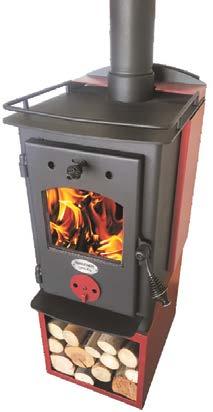
The Legend of Warmth, Built to Work Hard
The Wagener Leon is the “big brother” to the Sparky, designed for those who love compact styling but need massive 16–18kW heating power. Named after the family business founder, this handcrafted powerhouse features a deep firebox and a large glass window for a stunning view of the flames. Built from 5mm NZ steel, the Leon includes a built-in log box for convenience and a dedicated cooking surface for self-sufficiency. With an optional 3kW wetback capable of heating a full household’s water, the Leon is a hardworking, enduring heart for any medium-to-large home.
by Andy Bryenton
WINTER WARM UP
Keep warm to keep dry
Winter in New Zealand is usually not so much a matter of cold, biting chill, but of damp and persistent conditions, which can promote illness and mould through an excess of moisture.
Heating your home, whether by firewood, electricity or gas, is harder when the air is filled with moisture. Imagine the difference between getting warm while wearing a dry sweatshirt and wearing one that’s soaked through. The energy from your heat pump or fireplace has to heat the water molecules in the air to raise the temperature in the room, and it can be hard going. At the same time, warm and damp conditions are just the ticket for mould and fungus to take hold.
What’s the solution when Kiwi homes are often built more to a northern hemisphere design than to fit our subtropical climate? The first step is to expel as much moisture as you can at the source. In winter, it’s not practical, safe or smart to have windows open day and night, so extractor fans in damp areas are your best bet. The bathroom and shower area comes firstequal with the kitchen when it comes to moisture output; both pump out steam with litres of moisture a day.
What’s worse is that modern homes are more weathertight than ever before. That is a good thing in many other ways but trapped moist air can’t escape via ‘unintended
ventilation’, a nice name for draughts, gaps and cracks. Before winter, clean out your kitchen rangehood and bathroom extractors. They may have built up dust, scurf, lint and grease during the year that’s affecting their operation. In some cases, replacing cracked or bent fans is a good idea, too. If you have no extractor in the kitchen or bathroom, contact a handyman or grab a kitset from your hardware store.
That leads to one of the biggest modern questions: will an in-ceiling ventilation system warm my home? The short answer is no, but the more complicated truth is that you’ll feel warmer if your ceiling cavity contains dry air. Most of these systems take dry air from in the roof, where there’s no respiration, cooking or cleaning being done, and bring it into the home to stop window condensation and mould. The added bonus is that low-moisture air heats up more easily. Of course, it depends on your ceiling and your roof. A roof getting lots of sun, fitted with tar paper and insulation, will be a good source of drier air. A roof cavity connected via wall gaps to a damp undercroft and foundations will be of little use.
Stop damp conditions at the source to tackle mould, cold and damp this winter
As a general rule, systems in the roof and extractors at the source beat chemical mould absorbers and electric dehumidifiers, hands down. If you have to use these products, consulting with an HVAC professional about how to stop the issue is a must.
WINTER WARM UP
Your kitchen transformation done right
Choosing the right company for your kitchen or space renovation is about far more than selecting colours, cabinetry or appliances — the Kitchen Studio is the right choice.
The best kitchen companies can make all the difference between a smooth renovation and a frustrating one by bringing experience, accountability and the ability to manage the entire process from start to finish together under one roof.
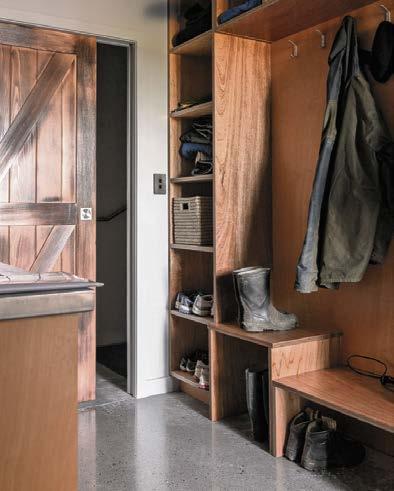
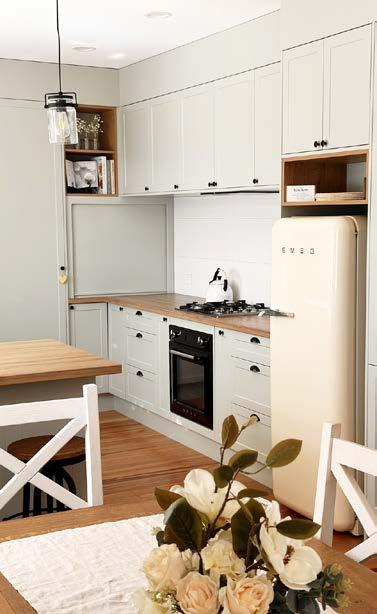
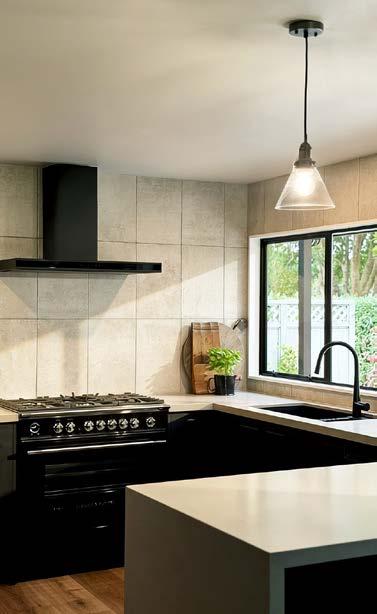
The Kitchen Studio stands out because they oversee every stage of the renovation. It saves homeowners from juggling multiple suppliers and trades, while helping ensure the finished kitchen is cohesive, functional and tailored to the way they live. They also create beautiful wardrobes, sculleries, mudrooms and laundries.
A kitchen is one of the most significant investments a homeowner can make, and a beautifully-designed, quality kitchen, immediately adds as much as 8–10% value to your home.
It can be the difference in achieving a premium price when you eventually sell. When you are spending thousands of dollars on a kitchen, it’s reassuring to know that every cent you spend is an investment in your home.
It pays to look for a company with experienced designers who take the time to understand your needs and create a space that balances functionality with design flair.
Homeowners should also consider the level of reassurance a company provides. Quality workmanship, strong guarantees and financial safeguards are all signs of a business that stands behind its product. Kitchen Studio’s Total Trust Deposit Guarantee is unique in NZ and ensures your deposit is 100% protected.
Kitchen Studio also offers a 10-year guarantee and lifetime warranty coverage on many components, giving clients greater peace of mind. In May 2026 Kitchen Studio was voted the Reader’s Digest most trusted kitchen brand in New Zealand for the tenth year running.
When a kitchen company combines practical expertise with trusted service and long-term confidence, it is far more likely to deliver an exceptional result that adds value to your house and lasts for years to come. Contact us now to make your kitchen transformation a reality.
VEHICLES & MACHINERY
CSR
Plug-in powerhouse
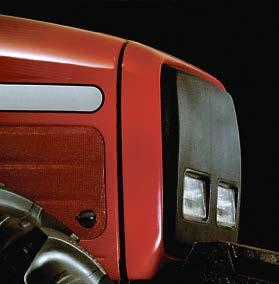
At the 2025 National Fieldays, the JAC T9 amassed a lot of buzz from the farming audience, and that positive impression has carried over to its new petrol-and-plug-in incarnation.
Excitement alone wasn’t enough for the truck manufacturer, however, and in the following year a team of test-drivers, tradies and farmers gave the new ute a baptism by gravel and mud. JAC reports that they’ve driven long and lonely roads, hauled heavy loads and tackled trackless terrain to be prepared for a wintertime launch.
Factory figures tell a story borne out by the extensive testing the new JAC has gone through. To be competitive in its segment this new ute boasts a 3.5-tonne towing capacity, a 915kg payload, and enough space to comfortably seat grown adults in the front and back.
Moreover, the plug-in hybrid system helps to deliver exceptional fuel economy and 1,005 kilometres of range on a full tank and battery. You get the impression that the developers didn’t want to settle for a mere 1,000, and that the additional five acts like an exclamation point to drive home this tonic to range anxiety. More importantly, it’s got enough power to do the business on the farm — 482 horsepower, delivered by a two-litre petrol unit and two electric motors.
A plug-in boost to fuel economy could not come at a better time, with the volatile situation in the Strait of Hormuz showing that fuel security is never guaranteed. It’s a bonus on top of the already legendary
fuel economy of the original T9. One of these machines monstered the 24hour endurance record in South Africa recently, going around the Gerotek raceway 1,350 times in a single day, and averaging 16.5 litres for every 100km. That’s a total of 4,084km, in a record which knocked the previous winner off its perch by a margin of 20km.
We’ve got to this point of the story without even mentioning that the justunder-$60,000 price of the T9 puts it at the sharp and affordable end of the market compared to similar offerings. Interest, as Fieldays 2026 has shown, is high for just this kind of ute, at this price point, in this fraught fuel market.
Of course, the JAC is helped along by two factors; firstly, it’s the product of a truck maker, so hard work is in its DNA. Secondly, it looks very much the part, without being too wildly different. The predilection for some companies to make their electric and hybrid offerings appear futuristic seems inept in an era when this technology is now mainstream, and the T9’s lines are definitive without being too avant garde. It will be interesting to see how many of the die-hard diesel faithful are keen for a test drive. Early reviews suggest that leaving PHEV prejudices at the door and judging this new JAC on its merits is the savvy choice.
Comprehensive Services: From full servicing and engine repairs to WOF and COF pre-inspections. We also have a VTNZ testing station and an on-site auto electrician.
24/7 Support: We offer a round-the-clock emergency breakdown service to keep you on the road.
Expect the Best. We are Taranaki’s authorised agents for: 134 Connett Road East, Bell Block, New Plymouth. Call 06 755 0033 today to book your service.
The JAC T9 PHEV: three motors work as one to deliver a powerful punch of torque and acceleration for this smart new ute
by Andy Bryenton
by Andy Bryenton
Just what the doctor ordered
Suzuki’s new DR150 proves that a tool made for hard work can be elegant and simple as well as rugged and dependable.
With just about 12 horsepower, the little 150cc four-stroke is a masterclass in doing more with less, and a tonic to the overcomputerisation, overcomplication and size creep of off-road options for those working the land. While there’s a power and tech war at the top of the table in the world of ATVs, the little Suzuki doesn’t just make do with a single aircooled cylinder — it thrives.
That’s because it’s amazing where a small bike can go, with the right amount of skill and a good design. Suzuki has been putting the DR badge on clever, simple but punchy bikes since the 1990s, when the little DR125 with its Miami Vice paint scheme broke cover, and the big DR650 went head-to-head with Honda’s Dominator as the king of single-thumper off-road might.
Fast-forward to the present day, and the DR150 fills a niche farmers need: a small, easy to master off-road bike which is great for stock checks, flitting from paddock to paddock down the races, or nipping between blocks to take care of minor chores.
There’s only 11.8 horses, but there’s 11.6 Newton-metres of torque at 6,000rpm as well, meaning that there’s plenty of guts to handle mud and choppy terrain. Let’s face it, you don’t want to have superbike speeds at your fingertips
when you’re shifting the herd, you want control, a good centre of gravity, and a light weight. The DR150 weighs less than some rugby players at 139kg fuelled up.
With raw power off the table and irrelevant, let’s talk about the important numbers for a farm utility bike. The little motor sips fuel and the tank packs 12.5 litres, meaning more time between fillups. Ground clearance is set at 244mm, for long-legged terrain-tackling ability. There’s even a proper kickstart as well as an electric one, which is not just old school cool; it’s all part of the Dr150 being easy to use and maintain.
Don’t get it wrong — there’s a place for a big, powerful ATV on the modern farm. It’s just that there’s definitely always been a niche for a small, economical and nimble farm bike, too. This one’s as handy as a proper old folding knife, a real stainless steel lighter or a pair of gumboots. The modern design looks sharp, too, which is a cheeky bonus.
“DR150 is a small farm bike which punches above its weight.”
The new DR150 is a practical and precise small farm bike which punches above its weight
Happy birthday to the motorcar
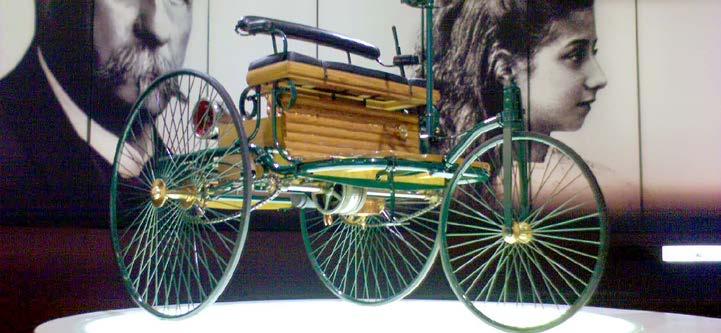
In Mannheim, Germany, on July 3 1886, the public were treated to a shocking sight — a carriage rolling through the central city streets with no horses to pull it. This was the Benz Patent Motorwagen, the first-ever car (though it was really a trike). Every
Mercedes-Benz traces its ancestry back to the birthday of internal combustion motoring on that day in Mannheim, and by extension, every other make and model of car, too. You can tell the one in your garage that its great-grandad is 140 this week.
Watch out for school buses
by Andy Bryenton
The call is out to motorists to watch out around school buses, as new school-area pick-up and drop-off signage and speed limits go live.
While signs around schools will warn of the new, low 30km/h zones near school gates, there’s a worry that drivers don’t know the letter of the law when it comes to buses dropping off or picking up school students out on the roads of Kaipara.
At this time of year it’s of especial importance to exercise caution, as rain, dark conditions in the early morning and sunstrike on wet road surfaces can combine to reduce visibility. As well as being aware of school zones with their new, lower speed limits, school bus drivers want people to know — the law says slow down to 20km/h when passing a stopped school bus, in either direction.
That means any bus stopped on the side of the road, bearing ‘school’ or ‘kura’ signage, or equipped with flashing lights. The very low 20km/h speed limit is set by law because children might unexpectedly emerge from behind the bus to cross the road.
The restriction to 20km/h applies in both directions; it’s not just when you are overtaking a bus that’s stopped on a school run, but when you are approaching one as well. Drivers should maintain their speed at 20km/h until they are completely past the bus, no matter which direction they are headed, and only speed up again
when they have a clear and uninterrupted view of the road
Even the best drivers, equipped with modern tyres, brakes and suspension, need time to react. A slower speed limit around school buses means that if a child should make a mistake or accidentally enter the roadway when embarking or disembarking, the worst will not happen.
Staying safe around school buses is important all year round, but even more so in the dark and wet winter weather
ahead.
by Paul Campbell
International shearing tests underway
New Zealand Open champion and National Shearing Circuit champion Jack Fagan is on a four-week shearing test odyssey in the UK with his first encounter in the Scottish Blackface Shearing Championship Open final at Lochearnhead in Scotland.
Since his NZ Open win, he has shorn and instructed in the Basque Country in Spain, the US and Italy. Ahead of his arrival in the UK, Fagan was beaten only by Scottish ace Calum Shaw, who was last to finish but had the best quality points and claimed victory by 1.55 points. Fagan was also runner-up to Shaw at Lochearnhead in 2023.
The Scottish match is the traditional home of the annual first test of the Wools of New Zealand tour, but new team member Hemi Braddick, of Eketāhuna, was unable to travel in time.
He will join Fagan in time for the first of four Wools of New Zealand team tests against Wales, at new fullwool ewes show the Epynt Shears, on July 11.
The full-tour opener at Epynt is thought to be the first on fullwool ewes in the annual UK legs of the series between the two countries, and restores it to a four-test contest, sandwiching a traditional test against England at the Great Yorkshire on July 15.
The remaining tests against Wales will be at the Cothi Shears on July 18, the Royal Welsh Show on July 22, and the Corwen Shears on July 25.
Fagan, who first shore for New Zealand as an injury replacement in the UK in 2017, gained selection for his third consecutive full tour of the UK when he won the New Zealand Shears
Open final for the first time in Te Kūiti in April. He will also shear the transTasman series matches in October and March, as a result of winning the national shearing circuit final at the Golden Shears.
He has had more than 30 openclass individual wins in the footsteps of father and global shearing legend Sir David Fagan. They include 13 overseas, the most recent in the US in a four-man final over 14 sheep in Roseburg, Oregon.
While Fagan is yet to win the Lochearnhead final, the family name is on the trophy at least five times, with Sir David having won the event six times, in 1995, 1998, 2000, 2002, 2003 and 2015.
Meanwhile, the New Zealand Shears, one of only two Shearing Sports New Zealand shows to be held over three days or more, could be in for a change of date. Its committee is proposing advancing the event a fortnight on the calendar because of difficulty accessing the right sheep in the King Country area in the traditional timeframe of four to five weeks after the Golden Shears, which end on the first Saturday of March each year.
The calendar for the 2026–2027 season will be considered at the Shearing Sports New Zealand annual meeting in August.
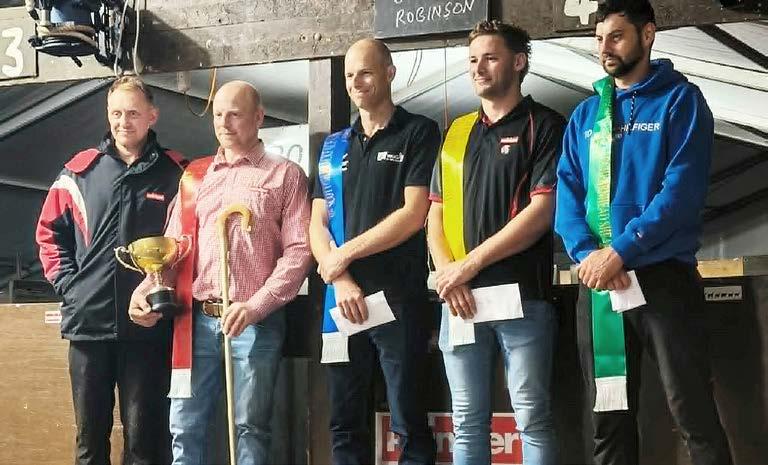
The line-up after the final of the Lochearnhead Shears Scottish Blackface Open shearing championship in Scotland with New Zealand shearer Jack Fagan (centre) the runner-up
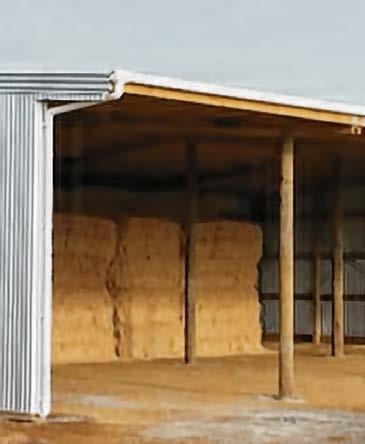
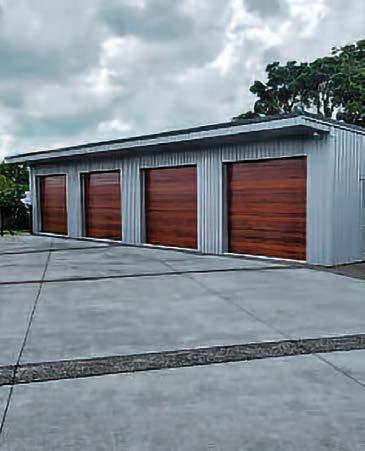
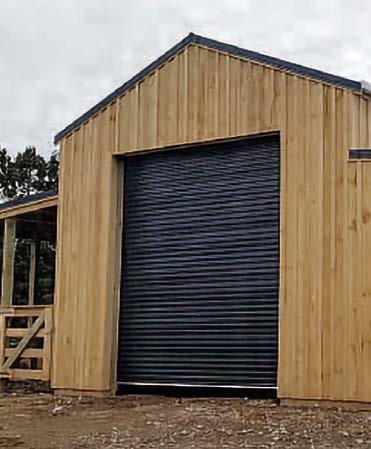
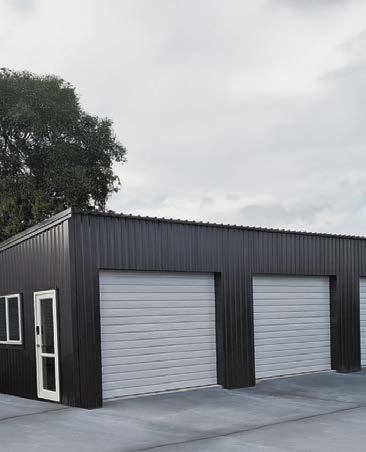
With over 50+ years building sheds, we can design a shed to match your needs, and stand up to Taranaki’s harsh conditions. From haysheds to implement sheds, workshops to
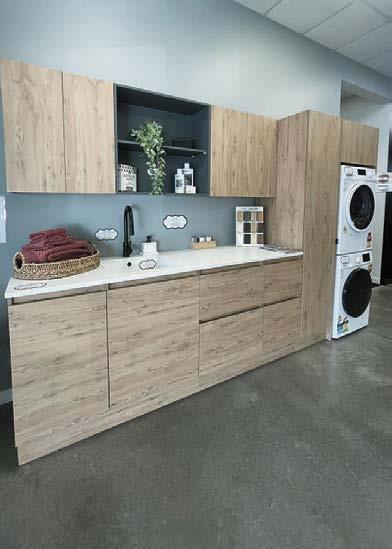
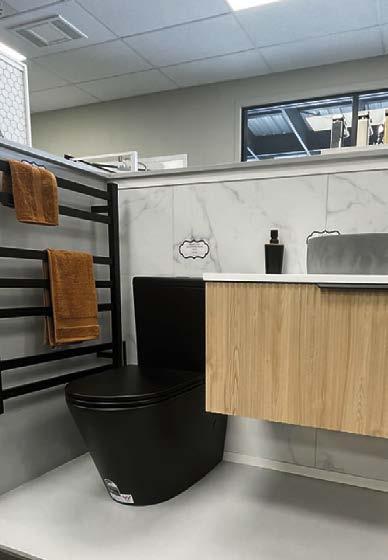
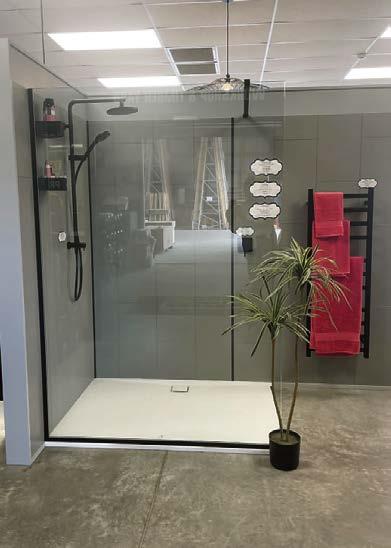
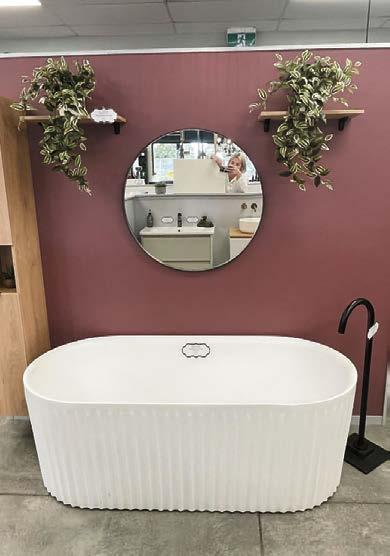
BATHROOM, TOILET, LAUNDRY INSPIRATION
Check out our fabulous showroom for more renovation inspiration, showcasing products from NZ’s most trusted and respected brands.