This milestone is a testament to our ongoing commitment to strengthening regional healthcare and ensuring Northlanders have access to vital medical services. The facility marks a significant advancement for our community, allowing cancer patients to receive essential treatment locally, and dramatically reducing the need to travel to Auckland.
Located at Whangārei Hospital, this new radiotherapy facility is expected to serve more than 350 cancer patients each year, sparing them the hardship of lengthy journeys to Auckland. Now officially opened, the $60.9 million radiation oncology service is projected to meet the needs of around 80 per cent of Northlanders who require radiotherapy.
The facility itself is a three-storey building connected to the Jim Carney Cancer Treatment Centre. It features purpose-built treatment rooms, a CT scanner, and an advanced linear accelerator for radiotherapy on the ground floor. The middle level houses staff offices and planning spaces, while the top floor provides amenities for families. With an additional radiation bunker, the site is well-prepared for future expansion,
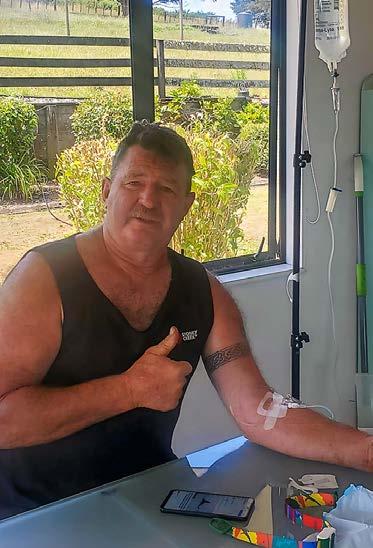
including the installation of a second linear accelerator. During the opening event, ministers and staff toured the new radiotherapy equipment. It was a privilege to witness Whangārei MP Shane Reti and Health Minister Simeon Brown cut the ribbon alongside Gary Webb, a patient diagnosed with rapidly-progressing squamous cell carcinoma.
The centre employs over 35 full-time equivalent staff, including 26 newlycreated roles. From 2027, radiation therapists will be trained on-site at Whangārei, supporting the development of our local workforce in a field facing recruitment challenges.
Health Minister Simeon Brown called the facility “a major step forward for cancer care” in Northland. Previously, patients from Whangārei and Kaitāia faced round-trip distances of 320km and 620km, respectively, to Auckland Hospital. As Minister Brown said: “Cancer treatment is demanding, and minimising the burden of extended travel enhances patient wellbeing.”
Around 20 per cent of patients requiring specialised care will still be treated in Auckland, but the majority will now benefit from care close to home.
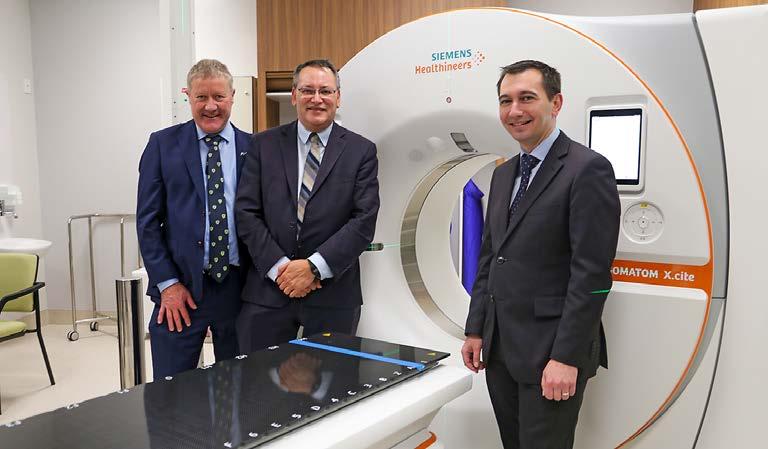
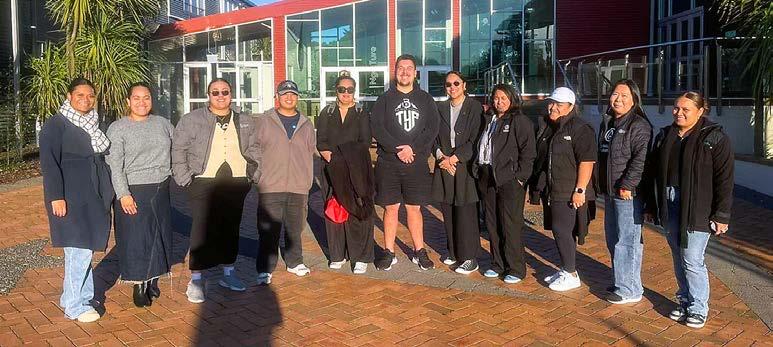
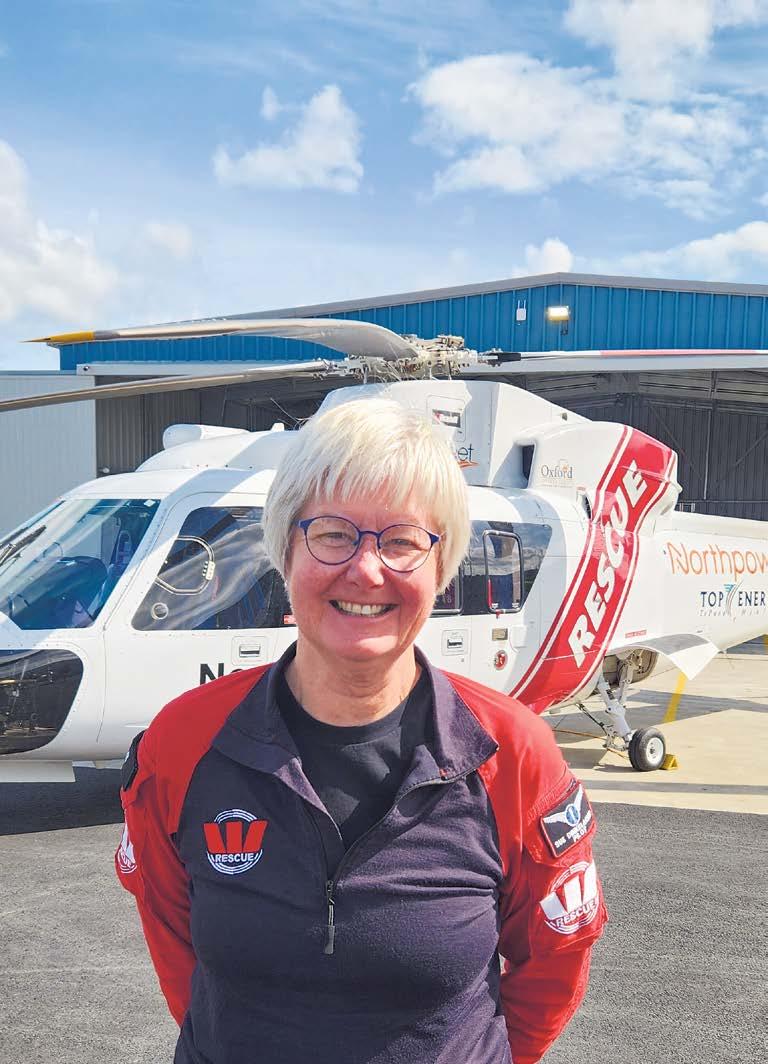
From left: Grant McCallum, Shane Reti and Simeon Brown at the opening of the new radiotherapy facility
by Amy Fifita
Horses for Hospice
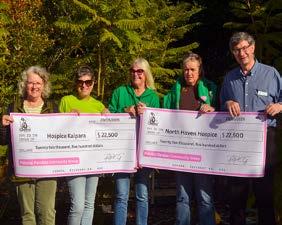
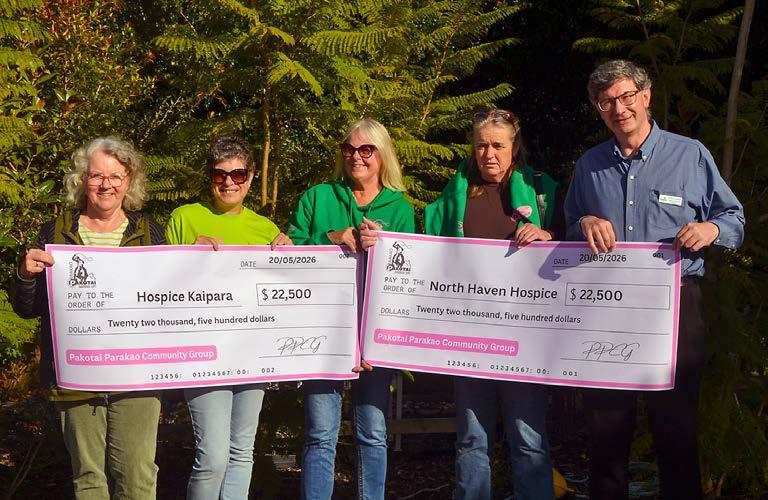
The Pakōtai Parakao Community Group donated a total of $45,000 to North Haven and Kaipara Hospice last week, following its biggest horse trek fundraiser ever.
The event harnessed the support of 163 horses and riders, dozens of volunteers, celebrity chef Al Brown and multiple sponsors. Gathered in Tangowahine Valley, participants were welcomed by five generous landowners and got to enjoy a front-row seat to some of Northland’s spectacular vistas.
“It is fantastic that they thought of both hospices that cover this area. For us, it means we can add to the equipment and provide extra support with supplies,” said Kaipara lead clinical care coordinator Annette Olsen.
Together, in their support for the good work that Hospice does, the Saddle Up 4 Hospice horse trek was a huge success. The PPCG has been running an annual fundraiser for just over 20 years, and has contributed to local initiatives and amenities from each event. Representing North Haven, Dr Antonio Noguera accepted its share of $22,500.
“This donation is more than money; it is what we can use to do things better, and it strengthens bonds. The real relevancy is the importance of the community and how they have recognised our work,” said Dr Noguera.
Being only partially funded by the government, Hospice relies on donations to continue providing its invaluable care.
Olsen,
Dr Antonio
Fundraising from the community makes a big difference to Hospice, so it can provide care and services to those who need them.
“Our biggest trek yet was an amazing show of community spirit. From riders to volunteers to landowners and supporters, it took everyone coming together to make it such a success,” organiser Diane Vuletich said. “Funds from previous events have benefitted our community
all met to acknowledge the work each does in, and for, the community greatly, recently restoring the Nukutawhiti Historic All Saints Church, as well as contributions to local projects. Pakōtai Parakao Community Group is thankful for community support.
“It takes a village to run this annual event. Pakōtai Parakao horsetrek is something we are all very proud of. People travel for days from all over NZ to attend this event, putting our valley on the map.”
Annette
Samantha Hopkin, Diane Vuletich, Kim Lawrence and
Noguera
“Igrew up in the heart of Whangārei, where my parents owned service stations. In the early 2000s, we owned an avocado orchard, but it sold fast, so I never got much experience. Bronwyn, my wife, drew me to rural living and horticulture,” said Ben.
With Bronwyn and his father, Bryan, working at Lynwood Avocado Nursery in Whangārei, and Ben stopping in to socialise, a connection was made with the owner, Stephen Wade. It was the Wade family which transformed their farm into a thriving avocado nursery, and they decided to go to a bigger orchard in Te Kōpuru.
When the Te Tai Tokerau Water Trust’s Te Waihekeora Reservoir project emerged, Lynwood Avocado Nursery threw its weight
behind it, creating an opportunity for the company and the industry as a whole.
“When this job came up, Stephen asked me to apply. I had no experience in horticulture, but I had a lot of hands-on and office experience. My knowledge of horticulture has grown with the orchard.
“The dam is a huge asset to us and the neighbouring operations, especially in summer when we water every second day. On a staffing level, this farm used to be owned and operated by one man with two staff on at least 110 hectares.
“I have two staff working on 56ha, our neighbours have two on 30ha, and another man on 16ha, so this project has created more jobs on the same amount of land. It is a valuable asset for the Kaipara community.”
KEEPING FARMERS FARMING.
Growing with the orchard
Fifita
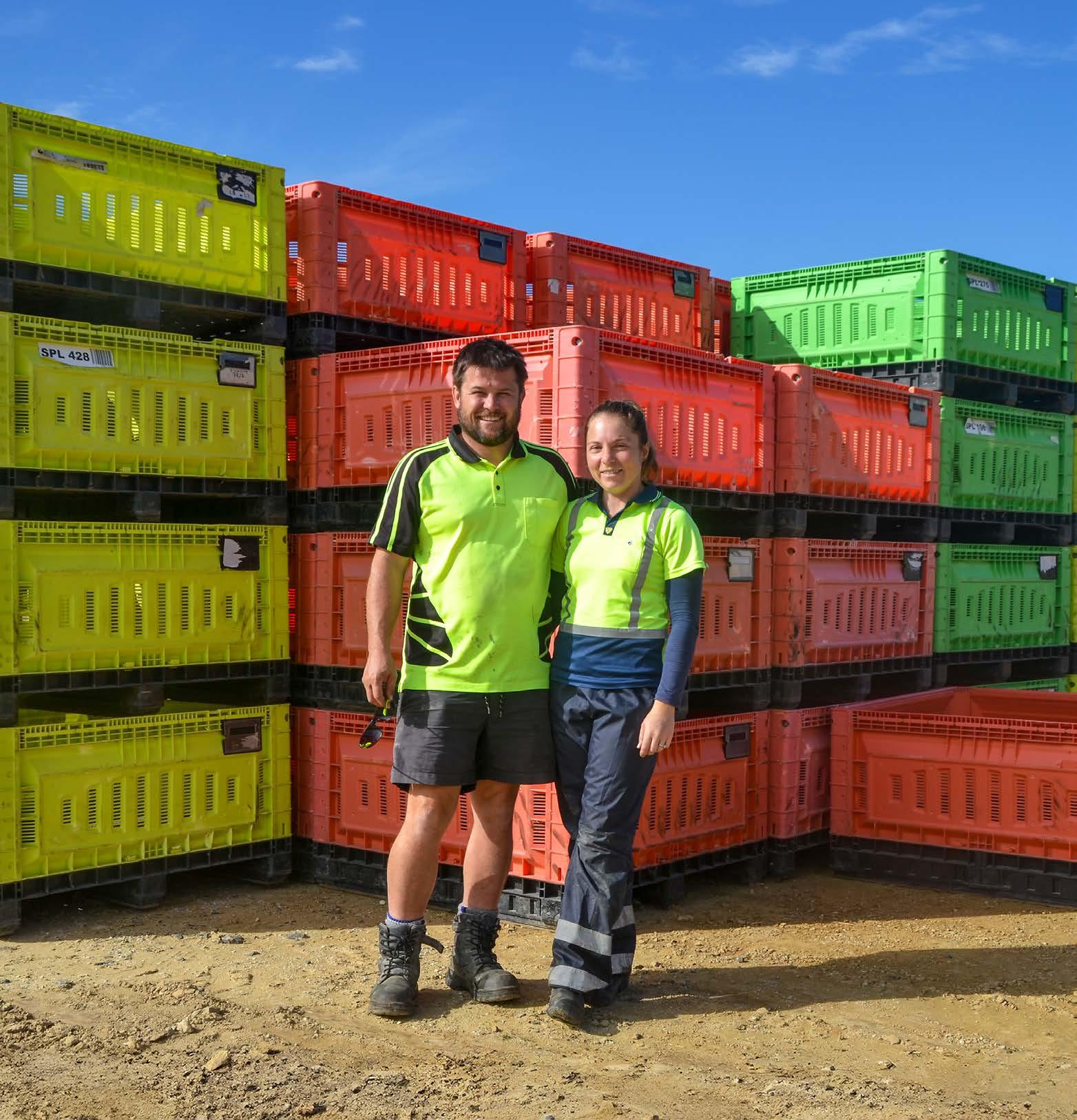
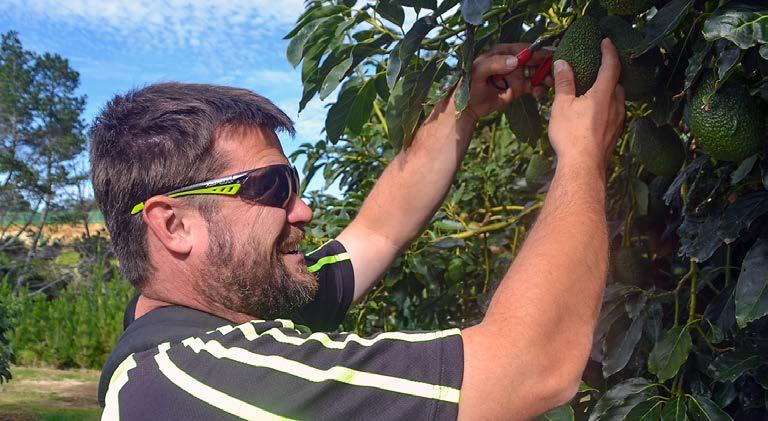
From a paddock to a thriving avocado orchard, Lynwood Avocado Nursery manager Ben Purton has turned 56 hectares of dairy farm into a fruitful enterprise — now producing abundance. by Amy
From day one of walking into a paddock full of cows to five years on, having blocks of maturing avocados, Ben says he has grown with the orchard. “It was all farmland fenced into paddocks. The
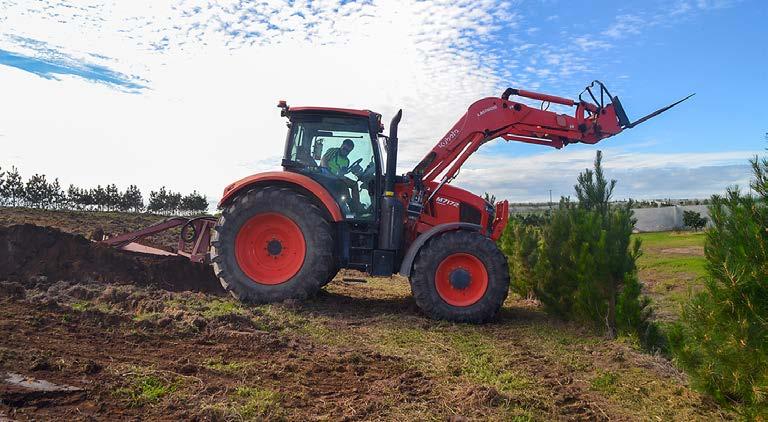
tractor arrived the same day I did, so I backed it off the truck and went to work. We made a plan on how to make the land work, with block boundaries, where to plant pine shelter, do drainage work,
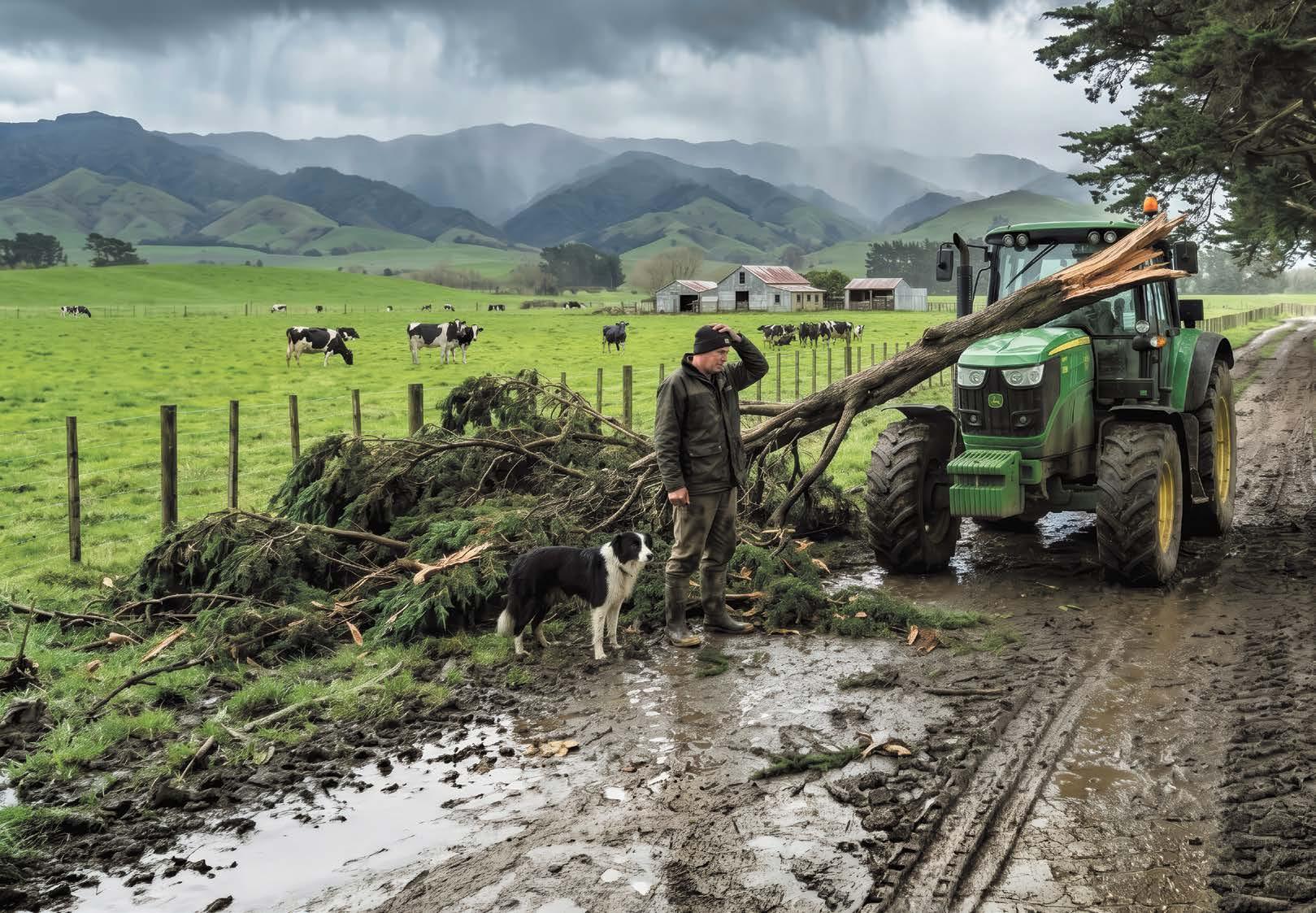
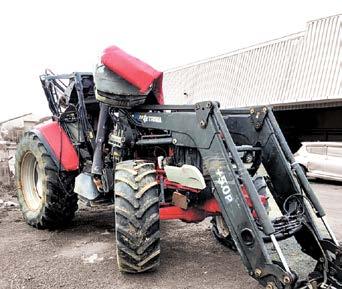
Our nationwide network of 64 ag vehicle repairers are pre-approved to go ahead with certain repairs of up to $15,000 without waiting for quotes So if your tractor’s taken out by a Macrocarpa branch or a hay bale, there’ll be fewer admin delays in getting it repaired Which means less waiting and more farming. Ask around about us, or give us a call on 0800 366 466.
With some of the first crop already picked, Ben says the big commercial harvest this month will show how close they are to the 30 tonnes a hectare goal
Ben and Bronwyn Purton both work at the Lynwood Avocado Nursery in Te Kōpuru
and install irrigation. We achieved every step. I had the privilege of developing my knowledge as the orchard developed around me, learning something across every stage.”
With Te Uri o Hau asking Lynwood Avocado Nursery to assist with the development of the neighbouring Te Tutakitanga avocado orchard, it helped fine-tune the other stages.
“Each stage is roughly the same size. With about 20 of our 56 hectares already planted, we will end up with just under 30 hectares planted. Right now, we are at 50%, equating to about 13,000 trees.
“When all the trees are planted and mature, it will be fully operational. We have also put some of the unplantable areas into pines for carbon credits, and expanded our bush area with natives from our nursery.” This year marks the Te Kōpuru orchard’s first commercial
harvest, showing the benefit of the partnership between the dam and horticulture in the area. Drawing water from the reservoir, all fertiliser is given to the trees through the irrigation system.
“We put thousands of dollars a month into fertiliser, weed spraying, mats and ensuring the trees have the best growing environment possible. The fertiliser is in the irrigation, and I can control when the trees get it from my phone.
“Back when the industry wasn’t as technical, they would just water them and provide what people thought was good for trees. Nowadays, the tree tells us what it needs through soil and leaf samples, and moisture probes, giving the trees exactly what’s needed, reducing cost and increasing efficiency.
“With moisture probes, we check when it is dry and water the plant rather than guessing. Monitoring the trees block by
block, we provide what each area needs. We are constantly looking at what blocks don’t need our attention, and why, so we can replicate the conditions across the orchard.”
As the first commercial harvest approaches, Ben says he has enjoyed the experience and learning along the way.
“The learnings have been awesome, and I love working outside and the solitude of the orchard. Watching the property grow has been wonderful.
“Where you once would have seen hundreds of metres, now you can only see past the first few trees because of all of the work we’ve done. I have loved the accomplishment and seeing the land change.
“The goal of any avocado orchard is to grow 20 tonnes a hectare, and we are getting there. The oldest trees are showing that our concept works.”
Starting from a bare paddock and a fresh career in horticulture, Ben says his knowledge has grown with the orchard
Development is still underway as Ben continues to establish more avocado blocks at the 56-hectare property
Wild horse roundup leads to new lives
BY PAUL CAMPBELL
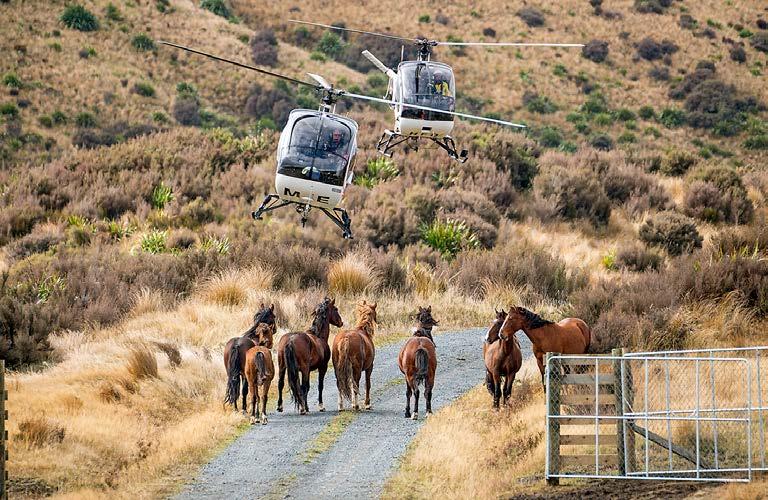
The Kaimanawa wild horse herd in the central North Island has been reduced to a manageable number with the third in a series of roundups successfully completed in early June with mustered horses going to forever homes and others treated for contraception.
Over the musters, in this and past years, a large number of Kaimanawa horses have found new lives in Northland, and after care and training, they go on to compete with distinction in national equestrian competition. Involved in the project and musters were the Kaimanawa Heritage Horses (KHH) rehoming team, the Kaimanawa Legacy Foundation (KLF) trainers’ team, stockmen in the yards, veterinarians ready to assess and draft the horses as they arrived, and the Department of Conservation team and NZDF coordinating the operations.
“We completed the aerial work for the Kaimanawa horse muster on Thursday, June 4, and a total of 114 horses were mustered from the southern zones,” said DOC ranger Sarah Tunnicliffe.
“Thirty-seven mares have been given their second dose of GonaCon, an equine
immuno-contraception. Ten mares were given their first dose of this important population control tool. A total of 27 horses will be rehomed, which includes two suspected orphan foals and a yearling with a wound that requires ongoing care. We wrapped up this year’s muster on Friday, June 5, and we’re happy with how it has gone.”
KHH spokesman, Carolyn Haigh, said the muster tasks this year were to locate and bring in family bands that included stallions, mares, juveniles and foals.
“Bachelor stallions were also targeted, many of them highly sought after for their potential to be trained for the Stallion Challenge competition at Equifest in October.
“Part of this year’s management plan also involved bringing in enough mares to continue the contraceptive trial. Mares in the southern regions received their
first dose of GonaCon, a fertility-control vaccine that international research has shown can reduce fertility without harming foals already in utero.”
This approach reflects the evolving management strategy for the herd. The introduction of contraception is expected to gradually reduce the number of horses born in the ranges over time, helping bring the population closer to the target of 300 horses. This figure was established by the Kaimanawa Wild Horse Advisory Group in 2012 as the balance considered necessary to maintain a sustainable horse population, while protecting vulnerable plant species and ecological areas within the ranges.
It was way back in 1876 that the first wild horses were recorded in the Kaimanawa mountain ranges, originating
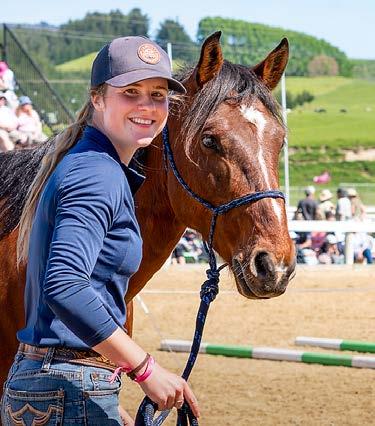
Northlander Emma Rogers and her rehomed equine companion Bodhi at the last Equifest Kaimanawa Stallion Challenge
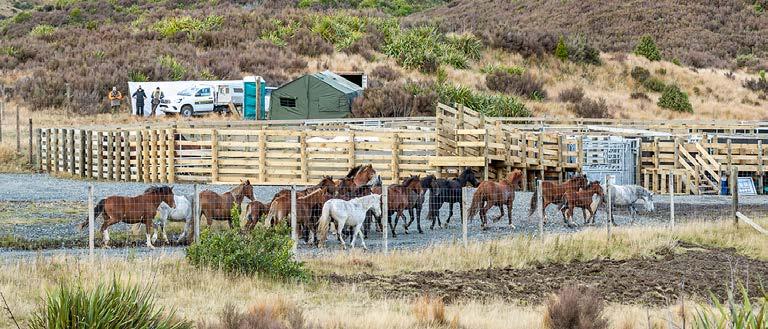
Roundup horses arrive for processing and contraception at newly-built yards
from Exmoor and Welsh Mountain pony stock released in the 1870s. Escapees and releases of horses from farms and the cavalry at Waiouru have added to the gene pool as have ‘Desert Road drop-offs’ of other unwanted horses.
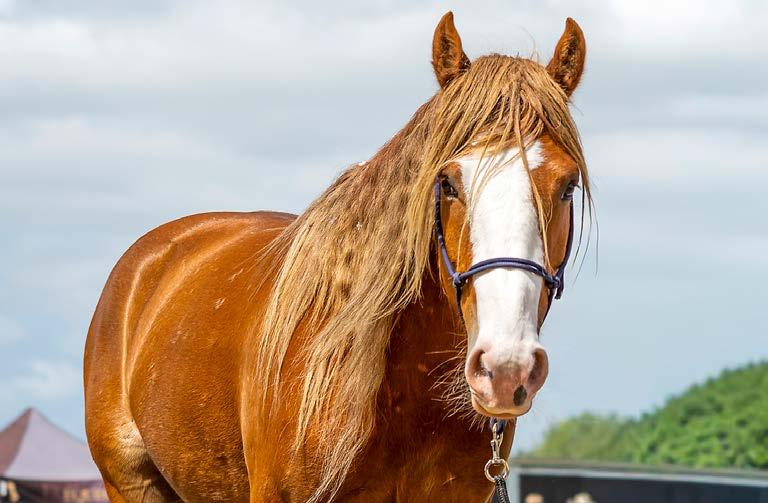
Today, the characteristics of the Thoroughbred, Arab, Standardbred and Clydesdale can be seen in certain geographical bands within the Kaimanawa population. Historically, population numbers reaching over 2,000 across a wide area resulted in horses struggling in poor condition due to lack of food.
In 1992, the Department of Conservation (DOC) reported that up to 31 different unique plant types existed in the area and were threatened with extinction due to horse trampling and
grazing damage. A systematic programme of culling horses through aerial shooting was put in place. Animal welfare groups opposed these slaughters, and brought public opposition to the programme through the media and informing the general public.
In the early muster days, the rehoming of horses was undertaken in an adhoc way with little or no checking of the suitability of the new home or follow-up afterwards. This meant many Kaimanawa horses saved from slaughter at the muster went on to lead miserable neglected lives. Since 2003, KHH has ensured that around 600 mares and younger males and female horses have found new domestic lives. Now under an established and tried routine, around April
& UTUREGATESDOORS
www.futuredoorsandgates.co.nz
each year, a herd count is undertaken by DOC using helicopters with GPS. The number of surplus horses are identified and mustered around the middle of June by helicopters to a set of yards where the drafting team takes over.
They run a very tight and smooth operation where the horses are sorted with the utmost care and the minimum amount of fuss. The resident veterinarian keeps a very close eye on all phases of the muster.
The horses are relatively strung out as they mainly trot down to the yards, where they are sorted by age and sex. The weanlings and yearlings are sent out to new homes as soon as possible, usually
within 24 hours. The older horses are kept overnight to allow time to settle down and become aware of the concept of a fence. They are fed hay and water while in the yards. The yards are 1.8m high and the drafting and loading race is lined with rubber matting halfway up the sides. While applications have closed for this year, future interest in obtaining a Kaimanawa horse requires an application form. After the due process has been successfully completed, a horse is selected at the next muster, if one is available. The selected horses are then sent to central yards from where they are transported to their new owners, paid by the purchaser.
407 6789
021 715 341
Helicopters manage the Kaimanawa musters to efficiently cover the animals’ wide range
Once wild, this rehomed Kaimanawa graduate is comfortable with the camera
A heart for feathered fancies A heart for feathered fancies
by Amy Fifita
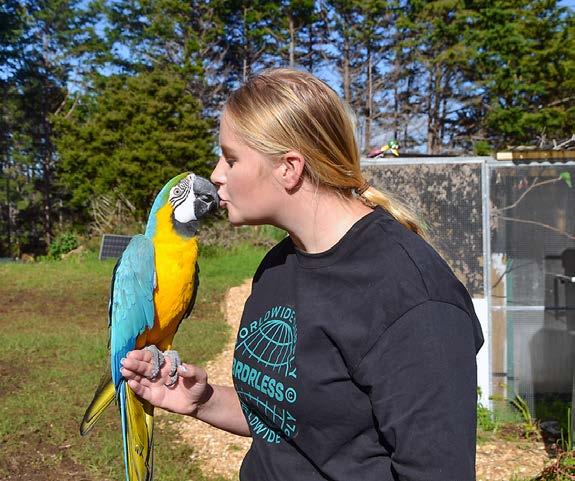
Hidden among the bush and gravel roads at Donnellys Crossing, Jessica Simmonds tends to the animals at the Old Mill Stables, a sanctuary for parrots.
“We have always lived in this area. I love the people, and I check up on the elderly residents, and they come up to visit the birds and me for a coffee daily,” said Jessica.
“People have different reactions when they see the birds, but they mostly make people so happy, and very emotional sometimes.”
What was once an old sawmill is now a place for various animals, including goats, axolotls, fish, a lizard, horses, calves and mostly birds. For Jessica, maintaining multiple aviaries and various other enclosures is slowing down after recovering from an injury.
“I was retraining and breaking in horses, but I got out of it after being shot in the leg with a shotgun.
“Birds are a lot less physical and so majestic. They can be really fun and
comical, and they can talk. What can you not love? Some of them already knew how to talk, or they would teach each other words.
“I recently rehomed one who said ‘hello’ and ‘good morning’, but even though he’s gone to another place, I still have a reminder of him because he taught others how to say it. One of them can make the sound of my alarm.”
With bird sanctuaries in the area scarce, Jessica wanted to bridge the gap and started rescuing parrots two years ago. As guests come through to admire the many birds, Jessica says keeping aviculture alive in New Zealand and looking after the feathered beauties is a huge responsibility.
“I bought a pair of birds from the pet shop, started researching them online, and met a few breeders. We must breed these birds to keep aviculture alive,
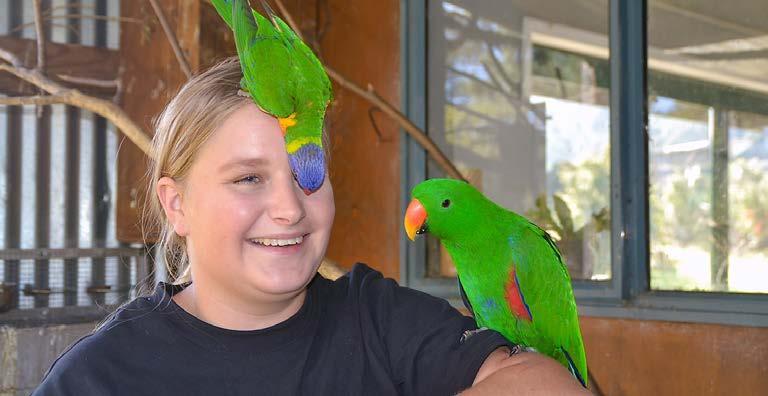
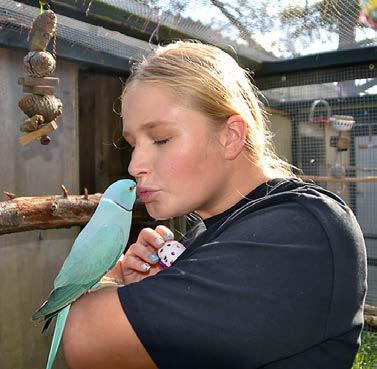
Jessica says the bond between Gizmo the lorikeet and Charlie the green eclectus parrot is strong despite being different species
because birds are not allowed to be imported into New Zealand.
“Aviculture is a small network in New Zealand, and there are always people
looking for pets, so I sell the chicks from the birds that do breed to the public bird market. I’ve bred two lorikeets this year and two clutches of love birds in 2025.
“There is a huge sense of responsibility with birds, and, depending on the species, parrots can live for 30–100 years. Two of my birds will probably outlive me.
“A lot of the birds here aren’t breeding pairs, but more people’s pets and are tame, but I’ve paired them up, so if they want to breed, they can. It is more unlikely that hand-reared birds will breed; you have a higher chance of them breeding if you have aviary-raised birds.
“They are all so intelligent and absolutely beautiful and special. We have quite a lot of different species. You can breed anything, although the breeding season has ended for certain species this year.
“It also depends on sexual maturity and how long they’ve been with their
partner. They do have a bit of a bonding period before they mate. It depends on the birds, and some of them are straight into it.”
While parrots hold the biggest part of Jessica’s heart, there is plenty of room for the other animals on the property.
“People would call me up wanting to send their birds here. I started getting other animals, including three rescue axolotls. I take on most animals, mostly exotic ones, because they need a lot of care.
“I have a lot of birds and one chicken named Ginger. Ginger used to live in the house and lay her eggs in a basket that we’d keep in here. I have three cats, some goats, horses, tadpoles and goldfish, two calves, and dogs.
“I have a female lizard named Spike, and she is an eastern water dragon. You have to hold her quite tight, because she jumps, and they get quite large. I am planning on getting her a mate when she gets older.
“She is quick when she runs, and goes to sleep when she gets cold. I can’t go away, and I don’t want to because I enjoy it too much here.”
Jessica enjoys sharing her love for animals and offers tours of the enclosures for a small fee to help support the sanctuary. Donations can be made to Jessica Simmonds 389024-0789510-00 with the reference DONATION.
For more information, visit facebook. com/oldmillstable.
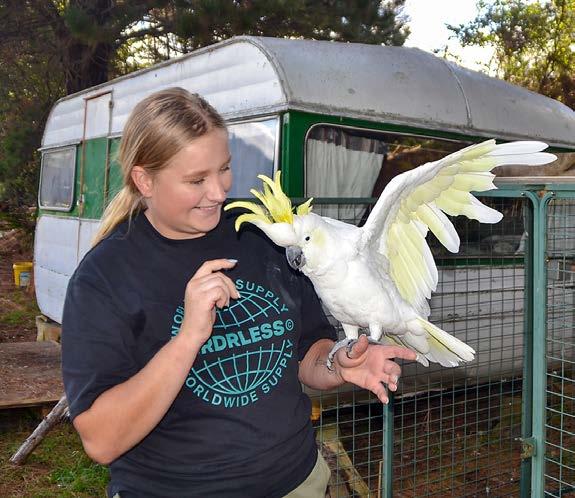
Dennis the cockatoo is a lively and cheeky character at the sanctuary and enjoys dancing for the visitors
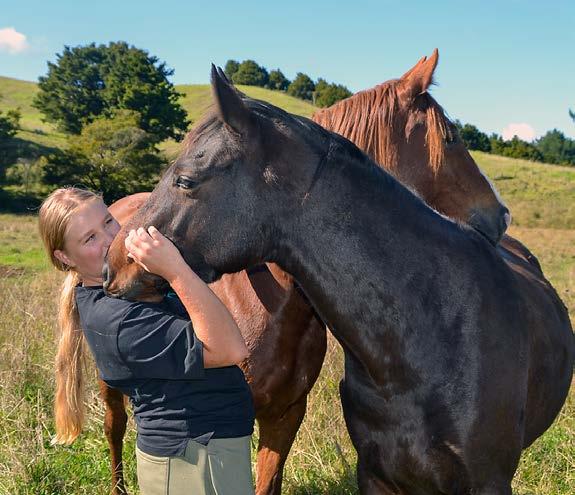
Jessica also keeps horses, Alby and Siena, on-site and offers horse riding lessons to those wanting to hone their horsemanship skills
Complementary therapy for joint health (Part two)
by John Arts
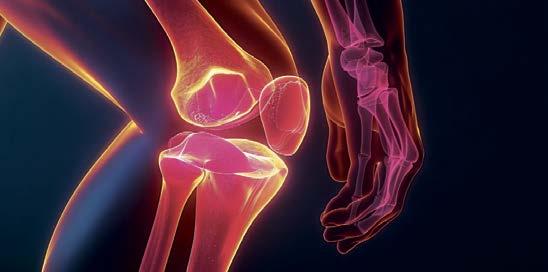
If you’re hoping to win Lotto or Powerball in New Zealand, your odds are about 1 in 38 million. However, here’s a statistic with far greater relevance: the chance of developing knee osteoarthritis (OA) is approximately 50% — that’s a bet none of us want to take.
Osteoarthritis is a condition that can creep up silently, often beginning years — even decades — before the first signs of discomfort appear. You might notice a slight twinge in your knee, pain in your hip, or stiffening fingers, but OA’s real damage may have started long before. The disease can accelerate rapidly following joint trauma and is typically diagnosed through symptoms and scans. Unfortunately, we rarely focus on the actual causes driving this degenerative process.
OA is marked by the loss of cartilage, the essential tissue that allows smooth joint movement and shields bone ends like a shock absorber. Though cartilage seems inert, it’s maintained by living cells called chondrocytes. These cells play a vital role in repairing damaged cartilage, but they are susceptible to harm from free radicals and destructive enzymes. When chondrocytes are damaged, their ability to maintain healthy cartilage diminishes.
Fortunately, there are several nutrients available as supplements that can
help chondrocytes resist damage and regenerate cartilage more effectively. Among these, chondroitin sulphate stands out. Supplementing with chondroitin encourages chondrocytes to produce cartilage matrix and shields them from free radicals, harmful enzymes and inflammation. Its importance is underscored by its availability in Europe on prescription at doses of 800–1,200mg daily. Yet, many joint supplements contain little or no chondroitin — likely due to its high cost. Combining premium chondroitin with glucosamine and 100% water-soluble curcumin from turmeric can offer significant benefits, especially when paired with an anti-inflammatory diet.
John Arts (Adv.Dip.Nut.Med) is a qualified nutritional medicine practitioner and founder of Abundant Health. To read more articles by John and learn more about the Abundant Health products he has formulated, visit healthhouse.co.nz, call 0800 140 141, or email john@ healthhouse.co.nz.
sulphate, glucosamine sulphate and patented BioSolve® Curcumin. This combination supports the maintenance of healthy cartilage and other joint tissue by supporting the joint processes that protect, maintain and renew cartilage.
by Liz Clark
Grandma’s broom
Many years ago, my grandparents had a big old farmhouse, complete with draughty corners and big wooden verandahs that went right around.
Beyond was the garden full of fruit trees and rose bushes, all lovingly pruned with every colour a rose bloom could ever be found in. Grandma was very proud of her house and her garden.
Being very house proud, Grandma, of course, had a broom. It wasn’t just any broom she had beside the farm kitchen door. It was a special willow broom made by Grandpa’s own steady hands, just for Grandma to use. Woe betide anyone else who touched Grandma’s special broom. There, it would sit beside the farm kitchen door seemingly unused, and yet the floors were always swept clean.
As youngsters, we were never allowed to touch that sacred broom. No matter how much we asked and pleaded to use that big old broom, it was always the same.
“Don’t you dare touch my special broom!”
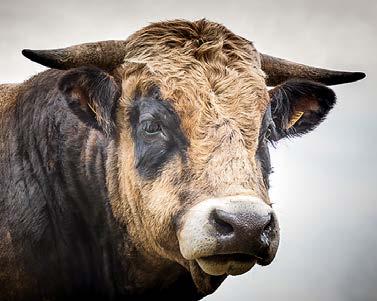
One fine day, when Grandma was in the kitchen, a big bull jumped over the fence straight into her prized rose garden. Those roses were her pride and joy, but as all bulls can, and do, those roses were soon being turned into mashed-up compost. He tore, he ripped, he stomped and he snorted those roses into the ground. Just for good measure, that big old bull gave a few more a good belting with his big heavy head.
He was almost done with the roses when Grandma saw him through the
kitchen window. Her bellow could be heard clear to the next town. “Out of there!” she shouted, running towards the kitchen door. On the way out, Grandma armed herself with her special broom, never mind she still had her dressing gown and slippers on — after that bull, she went.
Now, it was the bull that bellowed with all of his might. Off he went, with Grandma and her broom in hot pursuit. Through the fence went the bull, and so did Grandma, who gave that bull two hard wallops as a reminder to never mess with her and that broom.
It wasn’t the first time that bull had come, and it wouldn’t be the last time, either. At last, the truth about that broom came out. It wasn’t to sweep the dust off the floor — it was to sweep the bull out of the garden.
How does Bettaflex work?
Bettaflex
Why use Bettaflex?
Bettaflex formulator John Arts comments, “I formulated Bettaflex with a single objective; that those concerned about joint health can support mobility and comfort helping them to enjoy better quality of life.”
Blinds | Awnings | Shutters | Umbrellas
WELCOME TO THE REGION
Forever in the farming game
by Amy Fifita ADVERTORIAL
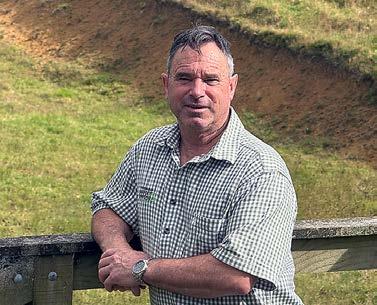
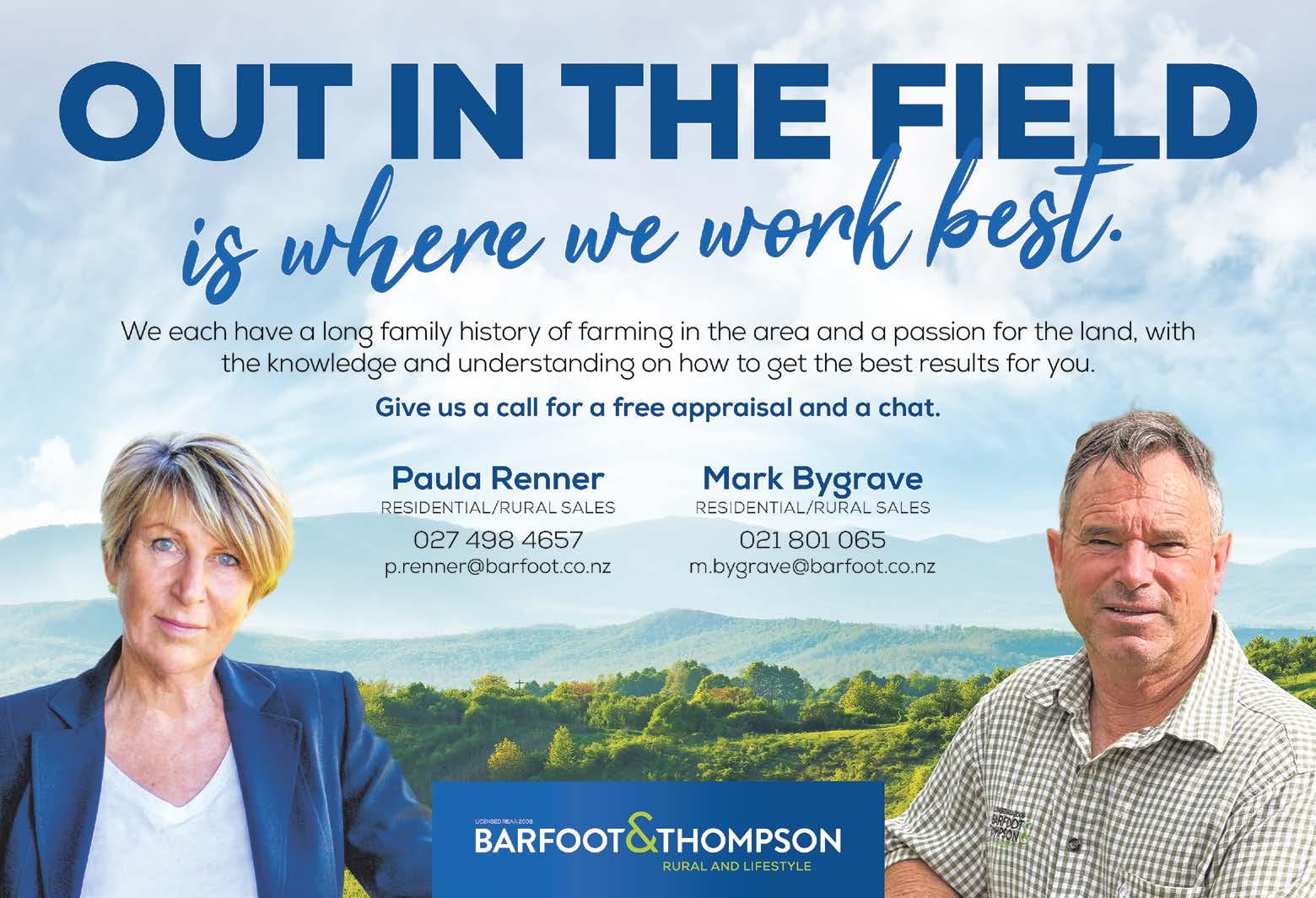
In the industry since birth, Barfoot and Thomson Mangawhai realtor Mark Bygrave brings his farming upbringing to the fore when dealing with the rural communities he serves.
“I grew up on a dairy farm between Kaiwaka and Mangwhai, and when I left school, I did a diploma in agriculture at Massey University in Palmerston North. I farmed for many years before helping people on lifestyle blocks and fencing,” said Mark.
“When I am not working, I am out in the community helping out at the Scouts. I was a scout for many years as a boy, and I enjoy bringing the children through and teaching them life skills.”
Already passionate about people, rural living and farming, Mark seized the opportunity to explore what rural real estate was and joined Barfoot and Thompson Mangawhai.
“I am a rural person who understands the land and what you can do with it, and what good and poor farming is, so I can get the right person into the right farm. All farms and people are very different, so it is quite a skill to get the right person to the right farm, and I enjoy it. Everyone wants something different in the land or the property. When I meet the
people, I assess them and see where their interests are, what they want to do and where they are prepared to live.”
Mark says that while sometimes the houses can be disappointing for the ladies, you can change the house but not the land. With rural market trends and the positive milk, beef, and sheep prices, there is an opportunity for people to own land.
“I thought that because the milk prices, beef and sheep are good, it would equate to higher prices, but it hasn’t worked out like that at all.
“Farms are selling, but they are not selling for big money. They have been selling for CV or slightly below for quite some time, and the trend is that people are a little cautious, allowing the market to stabilise itself.”
For some, selling their farm is a matter of selling it to a family member or knocking on the neighbours’ door. For others, it requires a spruce-up and presentation.
“If you have a good impression from the front gate to the cowshed, it will go a long
way to selling the farm. Maybe, cut your front paddocks, get rid of weeds, spray around the fenceline and drains, clean the cow shed and keep machinery out of sight.
“For farmers finding it difficult to let go of their farms, there is life after farming. Now, it is time for the next person to take over the farm and take it to the next stage.”
ARE YOU BUILDING A BOAT, OR JUST DOING SOME
Do you need to replace a door latch, or redo all the wiring and plumbing aboard? Are you planning a fishing trip or a holiday with the family? At Cater Marine, we stock a wide selection of products for leisure and commercial yachts and launches from Anchors to Zincs and everything in between. We also offer dive refills.
We’ll match their price and throw in a little thing called service!
Unit 16, Opua Marine Park Baffin Street, Opua Bay of Islands
Mark Bygrave has spent his whole life in the farming industry, whether it be farming, fencing or selling them
No more confusion over infusion
A stagnant health system with low morale and an ambulance-at-the-bottom-of-the-cliff mentality has given one Northland nurse the motivation to provide a new health service.
BY PROFESSIONALS IN YOUR COMMUNITY NOT “EXPERTS” ONLINE
This service works alongside existing patient treatments and aligns with her own philosophies of preventative health and general wellbeing, and gets users proactive about their own course of treatment.
“There has been surging growth in IV vitamin therapy worldwide,” says Joy Pooley-Edwards. “This great concept should be available to New Zealanders, and especially Northlanders.”
A mother of four and nurse for 33 years — 25 of those as a midwife — Joy provides the unique service through her business, The Vitamin Nurse. A vitamin infusion, or IV vitamin therapy, is a wellness treatment with a blend of vitamins, minerals and electrolytes given intravenously, introducing what your body needs directly into the bloodstream, typically through a vein in the arm.
“This way, gut health and metabolism won’t affect the delivery of the nutrient dose,” says Joy. “The nutrients bypass the digestive system to provide faster nutrient absorption by the body’s cells.”
New Horticulture Fruit Crop Release Phenomenal Crop Returns GOURMET QUEEN PINEAPPLES
We are releasing plants for a new commercial pineapple crop in 2026. We see this crop as the start of a new industry in NZ. We estimate this crop will give returns better than any fruit crop currently grown in NZ with a massive bonus in the sixth year, repaying your entire investment plus a huge surplus ongoing.
A Partnership option is being offered to make it easier to get started in this new industry. Go to bacmil.co.nz
A Cooperative has been developed to support Growers ongoing through to the first harvest and sales. Having purchased your first pineapple plants there is no need to purchase any more as they multiply giving more plants and fruit. A new pineapple variety with PVR will be exclusive to this Cooperative. This crop is ideally suited to Northland with its hot summers. Pineapples don’t require irrigation or shelter. The returns for this crop are exceptional. NZ grown pineapples are spray free and are not fumigated with Methyl Bromide like the imported fruit.
For further information: www.bacmil.co.nz Reply by email to: bacmil@xtra.co.nz I Go to www.bacmil.co.nz
Vitamin infusion is for anyone who wants to sharpen mental focus and clarity, is battling fatigue, wants to quickly replenish fluid and essential electrolytes, or is looking for immune system support or a defence-system boost.
“Whether just for wellbeing over a particularly busy part of your work or sport season, an energy injection to keep you productive on the job, or juggling busy worklife balance through to a regular protocol for chronic health issues, there is benefit to be gained for all,” Joy says.
“I have a wide range of vitamins, minerals and amino acids for infusion along with a selection of essential intramuscular injections also available. Treatments can be one-off or a planned programme over a period of weeks or months.
Each infusion takes around 45 minutes. Joy also emphasises the need for healthy lifestyle and nutrition habits, exercise, sleep and stress management.
“We want to optimise our health and to do that we still need to do the basics.”
Request a menu via the website, email or mobile to get started. Each client is discussed with an overseeing doctor, and a qualified
nurse is required to dispense each treatment. Complex health issues are also discussed to ensure an infusion is safe and appropriate. Treatment is available in Whangārei and Waipapa, with group bookings available in your own environment or workspace.
by Andy Bryenton
The information is out for the year in rural property, and the numbers tell a story of
The Real Estate Institute of New Zealand issued its annual rural market report last week, and though it’s been a mixed 12 months, thanks largely to international factors and geopolitics, news at the farm gate has been positive for many of the subsectors of farming and country living.
That’s translated into what REINZ is calling increased confidence and positivity, expressed through bellwether figures, such as national dairy farm sales, up 38.2 per cent.
“There are still concerns around cost inflation for the rural sector, which remain at the forefront for those in the industry, with tight on-farm operating costs. These pressures continue to weigh on overall sector confidence, prompting businesses across the rural economy to reassess budgets, adapt operating models and look for greater efficiency as they navigate a persistently challenging cost environment, in many sectors,” said REINZ rural spokesperson, Shane O’Brien.
As mentioned earlier, strong Fonterra payouts and a projected continuation of
this trend have seen dairy property action surge. Otago and Southland are areas of major movement, but Northland makes up the final leg of this triumvirate.
“In the 12 months to March 2026, there were more dairy farm sales exceeding $10 million than in any equivalent 12-month period since records began in 1997. This comparison is based on nominal values and has not been adjusted for inflation,” said Mr O’Brien.
“Buyers across New Zealand tend to prioritise farms that deliver consistent performance, with proven production,
established infrastructure, and being environmentally compliant while most farming sectors have displayed varied activity this quarter.”
Dairy has proven strong, but the red sector is also making progress, with strong demand for finishing farms defining a trend, especially in the south. Meanwhile, horticulture remained stable, with growth in areas that have access to irrigation, with kiwifruit farms showing strong appeal.
Lifestyle blocks and small farmlets are also in demand, with Kaipara and Waikato offering some choice examples close enough to Auckland to appeal to urban escapees. Sales of this kind of property are reportedly up 16.2 per cent, with an increase in sales recorded everywhere that sunshine and rural views are on offer.
‘Heading into the next quarter, the rural and lifestyle market is expected to hold steady, with buyers focussed on operational performance,’ concludes the REINZ report.
‘Dairy, finishing and grazing farms are likely to remain the strongest performers,
while sectors such as forestry lag due to regulatory constraints. Overall, investment is expected to be selective rather than broad across New Zealand’s rural property market.’
Northland dairy farms lead the charge nationally when it comes to property positivity
Unlocking Value in Northland’s rural land
Subdivision is one of the most effective ways to unlock value from rural land, but it only works when
the outset.
For many landowners, it is not just about creating new titles. It is about creating options. That might mean generating income, planning for succession, reducing debt, or making better use of the less productive areas on the property.
Start with what’s feasible
Before anything else, you need a clear picture of what your property can realistically achieve within the rules. Zoning, overlays, access, servicing and natural constraints all play a role.
This is where early feasibility work makes a difference. A quick desktop view is rarely enough. Understanding the details upfront helps avoid dead ends and points you toward the most practical pathway.
Design for real-world outcomes
A successful subdivision needs to work in practice, not just on paper.
Getting the design right early means each lot is functional, serviceable and fits naturally within the wider property. Welldesigned sites are easier to use and hold their value.
Consider environmental subdivision pathways
No two rural properties are the same, and often the best outcomes come from working with the land.
Features such as bush, wetlands or gullies may enable subdivision where environmental areas are protected or enhanced and meet district plan thresholds. This can create a clear pathway to additional lots, while improving long-term land performance.
Get clarity early
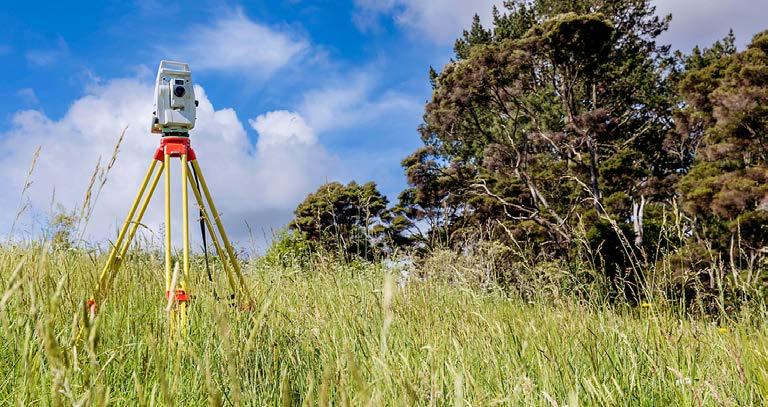
Subdivision brings together planning, surveying, engineering and ecological inputs.
Considering these together early gives you a realistic view of what you can achieve and what it will take to get there.
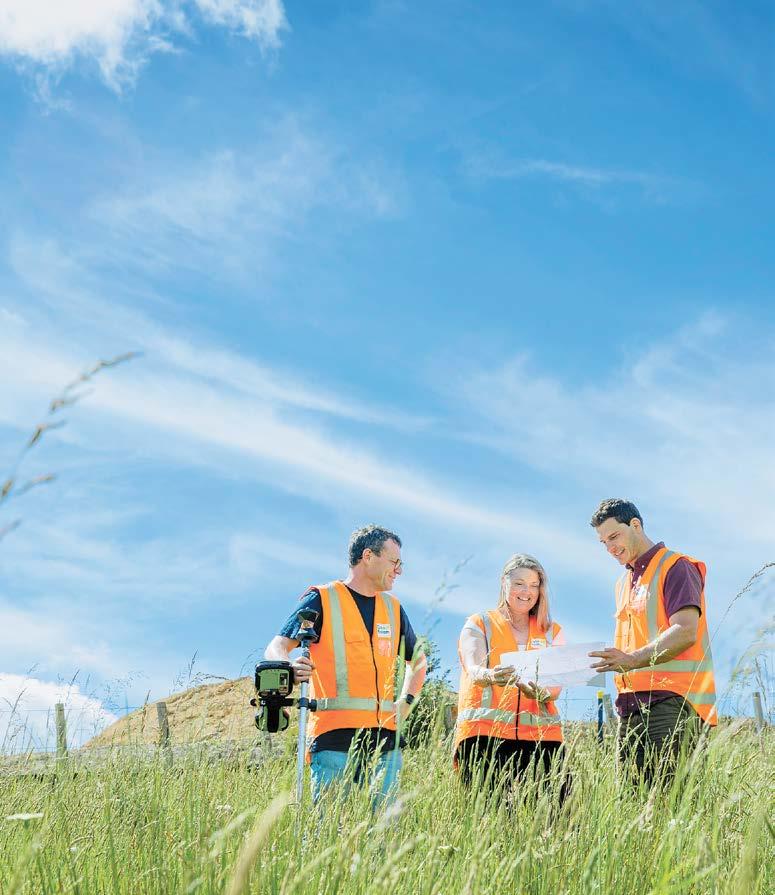
Cato Bolam offers free rural site assessments, with clear, obligation-free advice tailored to your property. We can deliver your subdivision from concept to completion, so you can move forward with confidence.
Start with a conversation. Call 0800 2 CATO BOLAM or visit catobolam.co.nz.
COMMUNITY NEWSPAPERS – NEWS YOU CAN TRUST
If you’re thinking about a rural subdivisi on or unlocking your land’s long-term value, we can help you explore your opti ons with confid enc e.
Visit your local Whangarei or Mangawhai branch for:
Rural subdivisi on feasibilit y and planning advic e
S ur veying and engineering
Resourc e consents and project management
Architectural d esign for rural living
Ecological advic e
From initial feasibilit y through to planning, consent and d eliver y, our multidisciplinar y team can help guid e your next step.
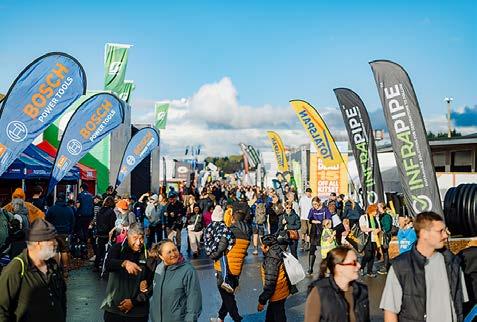
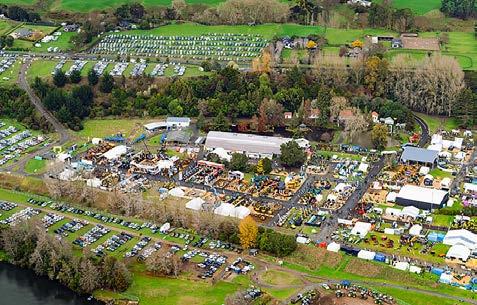
World trade opportunities at Fieldays
by Paul Campbell
Exports and new markets are the National Fieldays’ direction this year with confirmed delegations travelling to New
Europe, Latin America, the United Kingdom, India, China and other key markets.
“Mystery Creek is set to once again bring together the best of New Zealand’s primary industries and global agribusiness innovation where connections turn
into real outcomes,” says Fieldays CEO Richard Lindroos.
“We’re seeing increasing engagement across international trade, as well as the government-to-government diplomatic relationships, reinforcing the event’s role as a key meeting point for global agriculture.”
Fieldays will host 73 international exhibitors, up from 66 last year, representing a diverse mix of markets, including Australia, Belgium, China, Germany, Greece, Ireland, India, the Netherlands, the Republic of Korea, Sweden, the United Kingdom and the United States.
Interest in building global partnerships continues to climb, with 254 exhibitors opting in to connect with international opportunities through New Zealand Trade and Enterprise (NZTE), the Ministry of Foreign Affairs and Trade (MFAT), and the Waikato Chamber of Commerce, an increase from 224 in 2025. This highlights the growing appetite among New Zealand businesses to expand beyond domestic markets and leverage Fieldays
as a launchpad for export success. Fieldays’ programme manager Steve Chappell says “when you combine New Zealand’s innovation and ag-tech, the expanding schedule of direct flights, and New Zealand’s reputation as a bucket-list destination, it makes for a highly compelling proposition. “Fieldays provides a unique opportunity to experience that first-hand, while building meaningful global connections.”
NZTE and Fieldays collaborative space, the New Zealand International Business Centre (NZIBC), returns, offering delegates direct, face-to-face access to NZTE, MFAT and other key government agencies. The centre provides valuable guidance on regulations, incentives and support available to international businesses looking to trade with New Zealand, as well as supporting New Zealand companies seeking to expand offshore.
As Fieldays opens doors, New Zealand’s food and fibre sector is on track to deliver
From around the world to mix at Mystery Creek a record export year, with the Ministry for Primary Industries forecasting the primary sector exports will reach $62 billion in the year ending this month — surpassing the current record of $60.4 billion set last year.
Kiwi ingenuity adds trade show attraction
The forecast represents a 3% increase on last year’s record, and underlines how the land-based economy remains core to our economic identity. At a time when uncertainty around global trade is running high and geopolitical tensions are weighing on commodity markets, the projected result offers a measure of reassurance — though analysts warn the figures could yet be shaved by shifting demand conditions abroad.
has grown on to the world stage
Dairy continues to dominate, accounting for 44% of the total with an expected $27.4 billion in export earnings — up 1% on the previous year. The farmgate milk price has settled at $9.70 a kilogram of milk solids, providing farmers with solid returns after several years of volatility. While the dairy result is firm rather than spectacular, it provides a stable foundation for the wider rural economy.
The standout performer this year is the meat and wool sector, where export earnings are forecast to rise 7% to $13.2 billion. Strong demand from European and United States markets, combined with tighter global supply conditions, has pushed returns higher across red meat categories. The result is a welcome turnaround for sheep and beef farmers
who have navigated a difficult few years of thin margins and high input costs.
Horticulture is the sector generating the most excitement among rural industry watchers. Projected earnings of $9.2 billion — up 5% — have been supported by record production seasons for kiwifruit and apples. Zespri, the marketer of New Zealand kiwifruit to most of the world, is forecasting a record 221 million trays of kiwifruit from the 2025/26 season, marginally above the previous record of 217 million trays set just a year ago. Kiwifruit export revenue is expected to reach $4.9 billion this year and grow toward $6.2 billion by 2030, driven by expanding orchards and increasing demand in Asian and European markets.
Forestry is forecast to contribute $6.3 billion to total primary sector exports, a modest 2% increase on the previous year. The sector has been held back by subdued
construction activity in key overseas markets and ongoing uncertainty about the direction of global trade policy. New Zealand log exporters, heavily reliant on China as their primary destination, have been navigating a slower Chinese housing market that has dampened demand for construction timber.
Waiting in the economic wings is the recent trade agreement with India and
Singapore expanding our export horizons substantially, with the attraction, too, of a food for fuel exchange with the latter, in light of the Strait of Hormuz and Trump debacle, offering a new avenue in the meantime.
The historic agreement with India eliminates or reduces tariffs on 95% of New Zealand’s exports — among the highest of any Indian FTA.
Almost 57% of our exports will be dutyfree from day one, including lamb, wool, coal, leather, most forestry and industrial products. This will increase to 82% when fully implemented, including infant formula, a kiwifruit quota almost four times our current exports and seafood.
The remaining 13%, including kiwifruit, apples, mānuka honey, wine and some dairy, is subject to sharp tariff cuts.
He
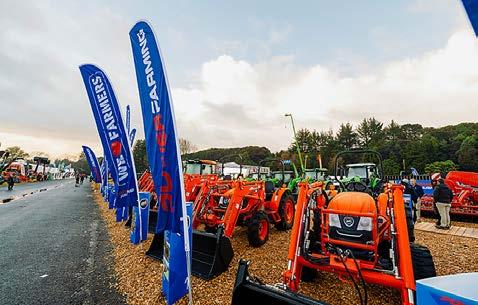
Innovative farm equipment on display
Fieldays
by Andy Bryenton
Risks and benefits weighed
Red tape binding up the delivery pathways for new veterinary
changes, says Associate Agriculture Minister Andrew Hoggard.
“The changes proposed in the Agricultural Compounds and Veterinary Medicines (ACVM) Amendment Bill, introduced on May 11, reduce barriers to innovative new products while making sure any associated risks are dealt with proportionately,” said Mr Hoggard. “The amendments remove avoidable
BUY,EAT, WORK , PLAY
THANK YOU FOR CHOOSING LOCAL
complexity and focus regulators on real risks and speed up the process for considering novel products.”
In many cases, new innovations in vet medicine and the chemicals used to boost productivity and reduce pest strike in agriculture happen on the global stage. This means the nations, where they are invented and initially trialled, have already poured time and money into researching the risks and benefits of each product. Many of those nations adopt a stricter stance on the safety of such products than New Zealand.
“One way the bill will achieve this is by enabling greater reliance on the assessments of trusted overseas regulators when evaluating risks and benefits. I consider there is no good reason our primary sector should be waiting on work that has already been done by other reputable agencies outside of New Zealand.
“The changes will also focus regulators on what matters so that products that are known to pose a lower risk will get a quicker
pathway to authorisation by exemption and not require registration.”
Mr Hoggard said the current regime of regulations has served New Zealand well in preventing risk and damage, but a review by the newly-formed Ministry for Regulation last year found room for improvement. Getting products to market faster helps protect New Zealand’s edge and advantage globally. Its small size and innovative outlook should allow the rural sector to pivot toward new and effective medicines and products faster.
The ACVM Amendment Bill works in tandem with the Hazardous Substances and New Organisms (HSNO) Amendment Bill, also introduced earlier in May. Novel products cannot be registered under the ACVM Act until they have approval under the HSNO Act.
“Together, the bills will establish a more adaptive regulatory framework that maintains safety, supports trade competitiveness, and aligns with international best practices, while improving timely access to agricultural and horticultural products,” Hoggard said.
The bill enacting these changes is expected to undergo public consultation soon and return to parliament for its final readings late in 2026.
New medicines may be easier to source for Kiwi rural vets and the farmers they serve, thanks to changes put forward by the government this month
by Paul Campbell
Boosting lamb profits
Sheep farmers could improve both profitability and emissions efficiency by increasing lamb weaning
changes in total greenhouse gas emissions according to research at Massey University.
PhD candidate Joseph Adjabui examined how higher lamb weaning weights affect productivity, profitability and predicted methane produced during digestion. While previous studies have focussed on the production and financial benefits, this research also considers greenhouse gas outcomes, an increasingly important factor in farm systems decision-making.
The study analysed a North Island hill country sheep and beef farm and assumed a fixed feed supply, reflecting typical New Zealand pasture-based systems with limited supplementary feeding.
The results showed consistent improvements in farm performance as weaning weight increased. Lamb carcass weight sold a hectare increased by approximately two per cent under a 10 per cent scenario, and 14 per cent under a 20 per cent scenario, relative to the base system.
Cash operating surplus also improved, increasing by around six per cent and 51 per cent respectively. Mr Adjabui says the
gains were driven by improved system efficiency rather than increased inputs.
“Heavier lambs at weaning meant more kilograms of lamb could be produced and sold earlier, improving both total production and farm income.”
The proportion of lambs meeting prime specifications soon after weaning also increased, reaching 84 per cent under the 20 per cent scenario compared with 60 per cent in the base system.
One of the key drivers of improved performance is earlier finishing. Increasing weaning weight allows lambs to reach slaughter weight sooner, reducing time on farm, improving feed use efficiency
and lifting overall system output. PhD supervisor Emeritus Professor Steve Morris says the efficiency gains from earlier-finished lambs are clear when viewed at a wholefarm level.
“The most efficient lamb is the one sold directly to slaughter at weaning. It has been alive for fewer days, eaten less feed and required fewer animal health treatments, less labour and no shearing,” he said.
“That feed is then available for other stock classes, improving overall farm performance. It is also often sold when prices are strongest, before peak seasonal supply.”
However, the head of the school of agriculture and environment Professor Paul Kenyon notes there is a wider industry consideration. “While earlier finishing improves profitability at farm level, the industry also relies on a steady year-round supply of lamb to meet export demand, which is a conflict.”
Mr Adjabui’s research was supervised by Emeritus Professor Steve Morris,
Professor Patrick Morel, Professor Peter Tozer, Associate Professor Ramilan Thiagarajah and Professor Paul Kenyon at Massey University.
by Paul Campbell
Remediation project forges ahead
A significant environmental effort in the upper reaches of Mangakahia Valley will pay dividends after 25 hectares of waterways on Ngāti Māhia Farm Investments’ 1,500ha sheep and beef farm at Awarua has been fenced off across three dedicated projects.
Now 15km of fencing later, a substantial plan has been drawn up to plant tens of thousands of trees to reduce sedimentation flowing into the Awarua River and other local tributaries down to Mangakahia River, Wairua River and into Kaipara Harbour.
For Kaipara Moana Remediation the project is part of a significant programme to try to arrest harbour sedimentation. The planting model encompasses 10-metre setbacks, with the eight-metre strip leading to waterways planted in natives, and the other two metres near fencelines planted in poplars and eucalypts.
Awarua A25 Ahuwhenua Trustees is led by Wiremu Gardiner in conjunction with Dr Te Tuhi Robust as chair of Ngāti Māhia Farm Investments, the operational arm of the trust.
Te Tuhi is sharing the development with fellow directors — Ashton Tairua and Blair Jamieson to ensure strong business acumen is at the table.
“While we see this as an ongoing project, the initial outcome has been fantastic. We wanted to get locals into the
mahi, and with the support of contractors, we have achieved that,” says Te Tuhi.
Farm Manager Gavin Brown says the operation is running around 5.8 stock units a hectare — carrying 300 beef and 500 sheep — with an aim to grow to 8.2 SU/ha, moving from the current 70/30 sheep to cattle ratio to a 60/40 ratio. He says they are gradually building up an Angus breeding cow herd and working closely with PGG Wrightson on sourcing and selling cattle, while also liaising with Beef + Lamb New Zealand around farm advisory activity.
During the summer of 2025/2026, 700 wrapped round bales were cropped to provide plenty of supplementary feed if required this winter. “Kaipara Moana Remediation is a project that must be considered as an exemplar for future generations of Ngāti Māhia and others. The process and results are evidence of good planning and commitment of funds and like-minded synergies,” says Te Tuhi.
“The connection with the mahi we are doing and the Kaipara Moana is cloaked in a spiritual connection between the people, land and water. Such are essential
elements of whakapapa that are included in the histories of all iwi connections to the Kaipara, discussion and commitment to working together.”
Ngāti Māhia Farm project members meet on-site
Launch your career in aviation and travel
If you’re ready to take the next step toward an exciting career, you don’t have to look far. Right here in Northland, you can gain industry-relevant qualifications close to home, with guidance from an experienced tutor who brings real-world aviation and travel knowledge into the classroom.
Learning is practical, engaging, and designed to feel like your ‘fun’ subject every day, all while studying just four days a week,
BUY,EAT, WORK , PLAY
THANK YOU FOR CHOOSING LOCAL
Monday to Thursday, 9am–2.30pm. Our Whangārei satellite campus, based out of NorthTec in Raumanga, offers a supportive and focussed environment where students can build confidence and develop the skills employers are looking for.
With the aviation and tourism industries continuing to rebound and grow, there has never been a better time to get qualified. Airlines, airports and travel companies are actively seeking professional, well-trained staff who are ready to step into the industry.
As the only provider of aviation and tourism tertiary study in Northland, our programmes are in high demand, with our 2026 intake filling in record time.
Our highly-popular New Zealand Certificate in Tourism Level 3 (with a strand in Tourism and Travel) is the perfect starting point, with the next intake beginning on July 20 2026. This hands-on course provides valuable insight into the world of aviation while building essential customer service, communication and industry knowledge in a supportive, engaging environment. If you already have NCEA Level 2, you’re eligible to enrol now and secure your place. This programme is ideal for anyone looking to fast-track their pathway into travel, tourism or airline roles.
We are also now enrolling for our February 2027 intake, so it’s never too early to plan ahead. Spaces are limited and fill quickly.
Best of all, you can study close to home, saving time, money and petrol, while still opening doors to global career opportunities.
To secure your place or find out more, visit www.itc.co.nz or email our Whangārei campus manager, Ceri, at ceri@itc.co.nz.
EDUCATION & TRAINING
Study with us in Northland
Te Wānanga o Aotearoa is a Māori tertiary provider that
We have campuses in Whangārei, Kaikohe, and Kaitāia. Currently, we have programmes for te reo, business and tikanga that are starting in July. If you would like to study in a classroom or online, we have programmes that will suit your lifestyle. We’d like to highlight our new programme, Manu Taiko – Toro Parirau, NZ Certificate in Māori Governance (Level 4). This feesfree 20-week course will help you create strategies to enhance and protect the resources of your marae, hapū and iwi. Incorporate kotahitanga, whanaungatanga,
kaitiakitanga and rangatiratanga in your governance practices. This course will be available in Kaitāia at our campus 24–26 Matthews Avenue on Tuesdays at 5pm. Alongside this programme, we also have He Puāwai Certificate in Adult & Tertiary Teaching (Level 5) where you can earn a free teaching qualification. If you’d like to enrol in online programmes, we have our business programmes open to enrol into.
If you would like to learn more, visit our website at twoa.ac.nz or email Teihurecruitment@twoa.ac.nz.
Research into global emissions policy
by Andy Bryenton
Beef and Lamb New Zealand has released the results of research the organisation has
emissions policymaking, and how the moves enacted by our own government
The key point of the report, building on earlier research completed in 2024, is that no country is looking to include agriculture in its Emissions Trading Scheme equivalent programme, and virtually none have plans to price agricultural emissions. The implication is that most of our peers on the global stage are focussed on industrial and infrastructural-based emissions.
A high estimate of New Zealand’s greenhouse gas emissions puts us at 0.17 per cent of the global total. Half of this is estimated to come from agriculture. Cutting back this figure is perhaps more problematic than imposing greater efficiencies on heavy industry or power generation could be for foreign governments. Furthermore, an argument can be made that if pasture, orchards, crops, native forest and other flora were counted toward carbon totals, rural New Zealand would already be carbon neutral.
The B+LNZ research shows that most of our peers are directing largescale public funding to incentivising and subsidising farmers to achieve climate change outcomes. The recent budget would argue that there is little left in Wellington’s coffers to fund such schemes
locally. However, B+LNZ chief executive Kate Acland says other solutions exist.
“B+LNZ is not advocating for subsidies for our sector. We’re asking for more creative approaches, such as exploring ways to incentivise reductions through a focus on efficiency gains and options, such as emissions reduction credits for technology uptake. We believe reductions in emissions should primarily be driven by customers and the market.”
Additionally, the research Ms Ackland’s colleagues have undertaken highlights the point that recent reductions in biomethane targets and limits on carbon afforestation are on-trend with global opinion.
“New Zealand’s decision to revise its methane targets down is not out of line internationally,” she said. “For example, the Australian government released its Agriculture and Land Sector Plan last year, which does not have specific targets for reductions in agricultural emissions. Australia is not, at this stage,
Advocacy and debate in this space is ongoing, with B+LNZ instrumental in calling for a split-gas approach to climate change control, reflecting the scientific differences between CO² and methane.
“Forty-one organisations across 16 countries have now signed the joint statement. The expanding coalition reflects growing international recognition that biogenic methane must be treated differently to long-lived gases such as carbon dioxide,” Acland said.
Beef and Lamb New Zealand has undertaken its own comparative study of global agricultural emissions policy, and has found that subsidies, not penalties, are the norm aiming to reduce gross reductions from agriculture until after 2040.”
Focus on social wellbeing and prosperity
by Colin Hannah, Federated Farmers Northland president
We were pleased to hear from our guest speakers, National MP for Northland Grant McCallum and Northpower CEO Andrew McLeod, along with our Federated Farmers president Wayne Langford and CEO Mike Siermans, who made the trek north to be with us.
Grant shared his thoughts on the political and farming landscape, and Andrew covered the investments being made in electricity networks and generation here in the north, and their role in enabling regional economic growth.
With these two speakers in mind, I would like to touch on the Northland Corporate Group (NCG), and the importance it has in the future of Northland’s economic and social wellbeing and prosperity.
The NCG is on record as stating: “Northland business stands ready to invest, creating jobs and economic opportunity, off the back of infrastructure investment in the region. Decades of underinvestment along SH1 has had the effect of choking regional economic growth. It’s also stopping Northland from supporting Auckland’s strong growth path.”
Commenting on behalf of members, chair Rob Buchanan has previously mentioned that NCG recognises that Northland is the driver behind Auckland’s success.
“Northland supports Auckland’s infrastructure pipeline, supplies the country’s only domestically produced cement, and fuels every plane leaving Auckland International Airport,” he says.
“The region’s agricultural and horticultural sectors help keep Auckland
fed and contribute significantly to national GDP. However, for the region to truly reach its economic potential, we need to see certainty around getting the road built, and the best way to achieve that in this constrained economic environment is to equitably share the costs with those who will benefit.”
They are sentiments my Northland team supports and has expressed strongly in recent years. We stand by the NCG in their endeavours to get Northland ahead once and for all.
Importantly, NCG is comprised of respected Northland businesses Channel Infrastructure NZ, Culham Engineering, McKay Limited, Northport Group and our friends at Northpower — all exceptionally successful and community-minded.
The group represents a combined annual turnover exceeding $1 billion, employs more than 3,500 people, and delivers essential services to most of Northland’s population.
Over the past year, Northland Federated Farmers was invited to be part of the Northland Leaders group that encompasses the leaders of large business and the local mayors. The Feds team regularly meets with our partners and allies, like the Employers and Manufacturers Association, NorthChamber and MPI on Farm Support.
We have also invested in our executive members through governance training and additional learning through the EMA training centre. In addition, we organised sessions with EMA and Jarred Mair presenting on what the
future looks like and how it could impact on farming and other businesses in the future.
To fill the gap in tertiary education in Northland and the rundown of agricultural training in the region, we have supported and encouraged Massey University to
have a physical presence in Northland. Rawson Wright has ably led this project. We feel strongly that this will open additional opportunities for our members’ families in this region. We hope to have Jarred Mair back for another update — watch this space.
by Andy Bryenton
Prelude’s sixth symphony
The Honda Prelude was first conceived of as a sports coupe to sit next to the Civic in a revitalised
Brock Yates of Motor Trend called it “a splendid automobile. The machine, like all Hondas, embodies fabrication that is, in my opinion, surpassed only by the narrowest of margins by MercedesBenz.” Then — it got even better.
The most iconic Preludes, to those of a certain age, are the series three and series four, cars which come at the peak of JDM coupe dominance, and cemented Honda as a maker of exciting vehicles on four wheels as well as two.
The third-generation Prelude was a baby NSX, all sharp lines and pop-up headlights, with innovative four-wheel steering and a punchy two-litre inline four. The fourth generation upped the ante, with more displacement and horsepower, as well as the magic of VTEC from 1994 onward. Up until 1999 there was a more angular fifth evolution as well, and it found a similarly large fanbase.
With the discontinuation of the Civic and Accord coupe variants, Honda needed a badge to revive which encapsulated speed, refinement and innovation. Hence a brand-new Prelude, teased at the Japan Mobility Show in 2023, and now on its way to New Zealand.
All were a pleasure to drive, and remain so for collectors lucky enough to have an immaculate example in their garages Up until very recently, that was the only way to get behind the wheel of a Prelude and see what all the fuss was about — but no more.
Once again, there’s a hint of the modern NSX about the new liftback lines of the sixth-generation Prelude, but also a nod to the rounded, slippery contours of the fourth-generation car. There’s 200 horsepower on tap from a hybrid petrol-electric system under the
hood, and the chassis layout is identical to the fire-breathing Civic Type R. Before it even lands in New Zealand, it’s picked up the best coupe award at the 2025–2026 New Car World Championships. What stunned the judges in Europe should work very well on Kiwi twists and turns, too.
“We’re fortunate to experience some of the world’s best driving roads in New Zealand, and now with the allnew Prelude, Kiwis will have a car that promises an elevated, connected and fun driving experience,” says Honda
She and her team will be expecting major interest as the new Prelude goes on sale this May, with a base price of $69,990. That puts this exciting Honda firmly in the sports car segment, battling it out with the Toyota GR86, Mazda MX5 and the Nissan Z in a new era of Japanesemanufactured driver’s machines. If you are keen on an engaging, exciting drive, the recommendation echoes down from 1988; you simply have to give the Honda Prelude a try.
New Honda Prelude — a classic badge returns with plenty of promise
New Zealand managing director, Carolyn McMahon.
Comfort, capability — but no compromise
by Andy Bryenton
There’s a saying that only something that has a purpose can be truly beautiful, and it’s true that
by way of sublime design, becoming a pleasure to look at as well as to use.
That philosophy comes to mind when looking closely at the new Volkswagen Amarok ute. It’s got the tough and workready DNA of a machine built for the farm and the job site, but it’s been fettled and sculpted into something more.
The first Amarok came out in 2014, and the brief was to produce a reliable, strong ute that could work hard all day and then deliver its driver home, over any distance, relaxed. For the new model, VW has teamed up with Ford in a cross-platform collaboration, and the machine coming out of the new Amarok factory in South Africa for our local market improves on the winning original formula, with a turbocharged V6 delivering a smooth 600 Newton-metres of torque through a seamless 10-speed transmission.
It’s a masterclass in nailing the design brief. Just as the Golf GTI encapsulates the benchmark for the hatchback, the Amarok aims to be the quintessential luxury ute, and punches centre mass of the target. The attention to detail, driver comfort and smart assists like autonomous cruise control combine to provide a refined, car-like ride, which is a big bonus for those who have to put in big miles in rural New Zealand. Hours behind this leather-trimmed wheel don’t weigh heavy, they slide smoothly by, to a Harman Kardon surround-sound soundtrack.
Has that luxury and poise come at the expense of rugged, hard-working chops? Not at all. Slide a full euro pallet in the deck, hook up and tow 3,500kg, let VW’s acclaimed 4Motion all-wheel-drive system handle the slippery and rough stuff with the twist of a dial, and you’ll appreciate the engineering as much as the ride. The wading depth is deeper, the chassis geometry redefined, and the ground clearance is higher so you can effortlessly go anywhere.
It’s even earned a seal of approval from four-time Bathurst supercars champion Greg Murphy, who knows a thing or two about horsepower. He doesn’t just endorse the Amarok — he’s on his fourth one.
Volkswagen offers the Amarok in three levels of trim, packing in features as standard across the range, which would be costly add-ons for many competitors. The Style V6 is the entry to the lineup, with the PanAmericana adding blackout alloys, bars and side steps, as well as boosted infotainment. The Aventura tops the range with extra comforts like a heated steering wheel and tasteful added chrome.
If you are shopping for a ute right now, you owe it to yourself to experience the Amarok. Book a test drive and see for yourself that work and relaxation can balance harmoniously.
Amarok sits in the top spot for luxury utes, but that refinement has not come at the cost of toughness
Virtual Deere trains next-generation drivers
by Andy Bryenton
Letting a learner driver loose in your family car is nail-biting enough, but what about giving a trainee the
tractor or bulldozer?
It’s a real concern, as the next generation of tractor and machinery operators have to learn somewhere. Autonomous control is touted as part of a future solution, but human drivers will still be needed for many operations. That’s where virtual reality comes in, or as one of the heavyweights in the industry call it, John Deere Extended Reality.
At the big US CONEXPO 2026 Deere developers debuted a compact, portable headset and hand controls, which put the wearer into the driver’s seat of a range of John Deere machines. It’s a logical step for training, and even has some crossover with the popularity of farming and construction simulator games among youngsters. This is no toy, but it’s a new window into a virtual world familiar to gamers.
The first two machines simulated are a big excavator and bulldozer, but making this technology embrace the whole construction and farming fleet in green and yellow is just a matter of programming. The JDXR system creates an immersive environment in which it’s possible to get familiar with powerful machines safely and without using a drop of diesel.
“This technology represents a major step forward in how we prepare our customers and operators to be successful from any location,” said Curtis LeConte, project manager for next-generation training at John Deere. “By making our training more portable and accessible, we’re delivering a powerful new way to train users in machine operations, maintenance, as well as key features, without the limitations of traditional training simulators.”
That’s another good point, because previously, simulating the cab of a tractor, excavator or harvester required building a mock-up that could be as costly as the real thing, and nearly as hard to move about. As well as training a new generation and giving students a taste of a career behind the controls of a Deere, this technology can help demonstrate a wide range of machines to existing customers too. Imagine shopping for the right tractor by test driving a whole range in virtual reality, and getting familiar with the controls before the keys are in your hand.
Currently, the JDXR system features operator-focussed virtual reality lessons,
a
including daily maintenance walkarounds, controls familiarisation, and direct interaction modules, such as trenching and spreading. There’s a sandbox mode in which operators can pilot a variety of machines in a simulation of John Deere’s
Coal Valley training site. The possibilities, both in construction and agriculture, are limited only by the imagination of programmers. John Deere Extended Reality could be a hit at field days events as well; a chance to try before you buy.
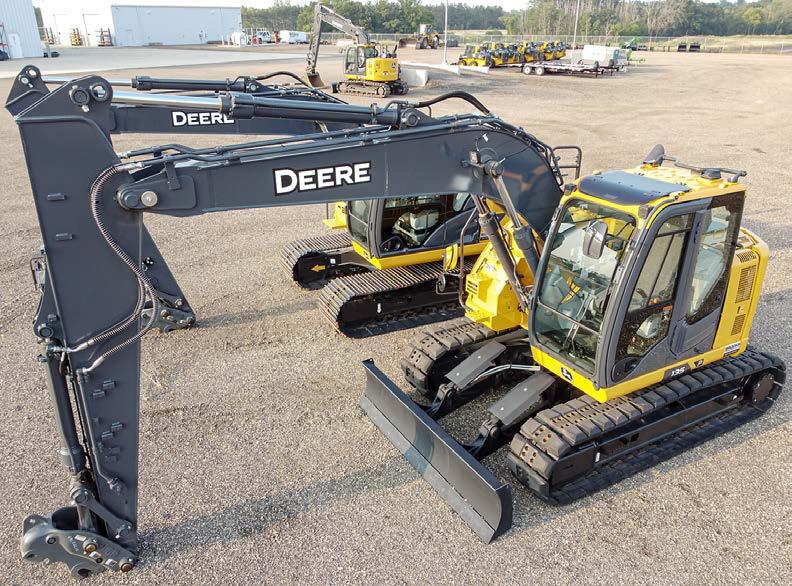
Want to get to grips with a John Deere excavator like this, or other machines from their range? Virtual extended reality options make it easy and safe
by Andy Bryenton
Chainsaw safety in the spotlight
Chainsaw Safety Awareness Week has just passed, as
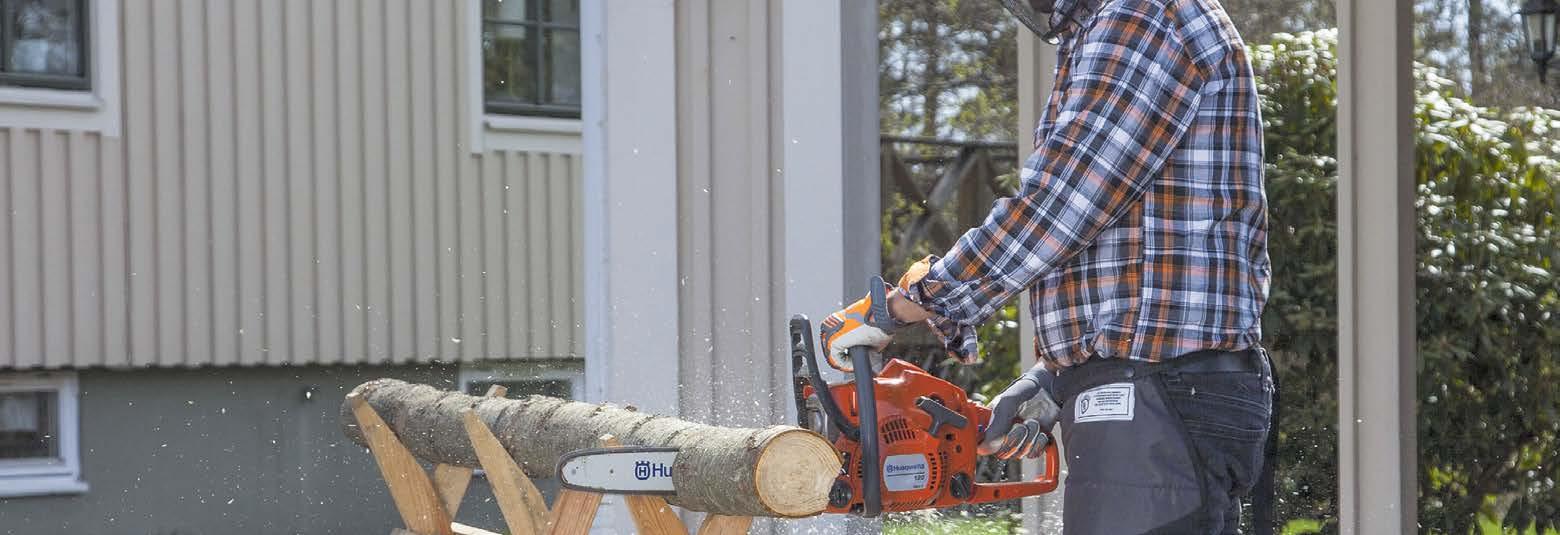
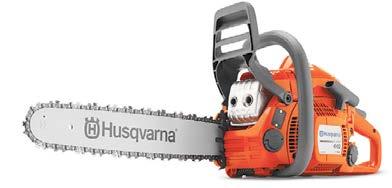
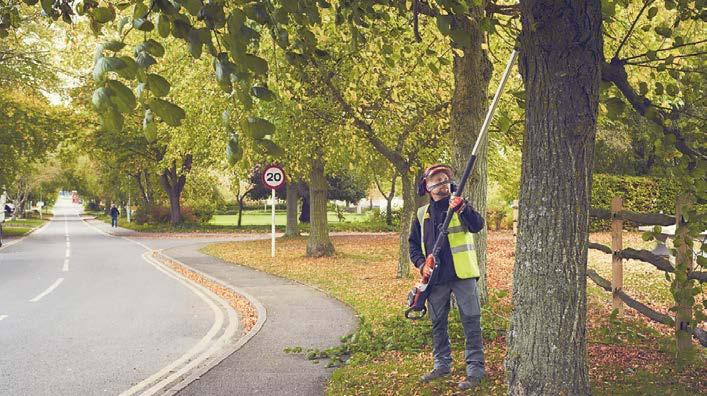
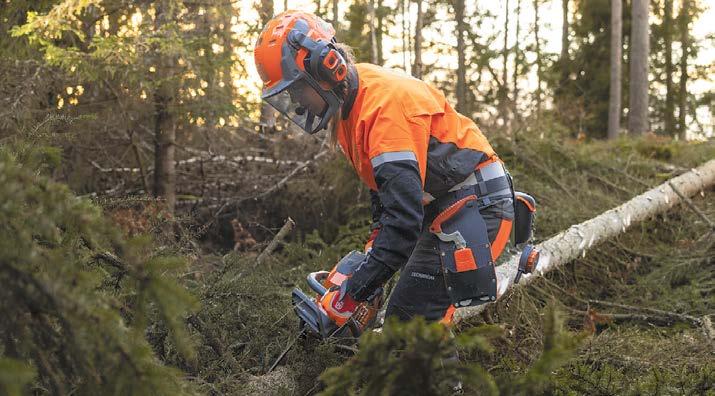
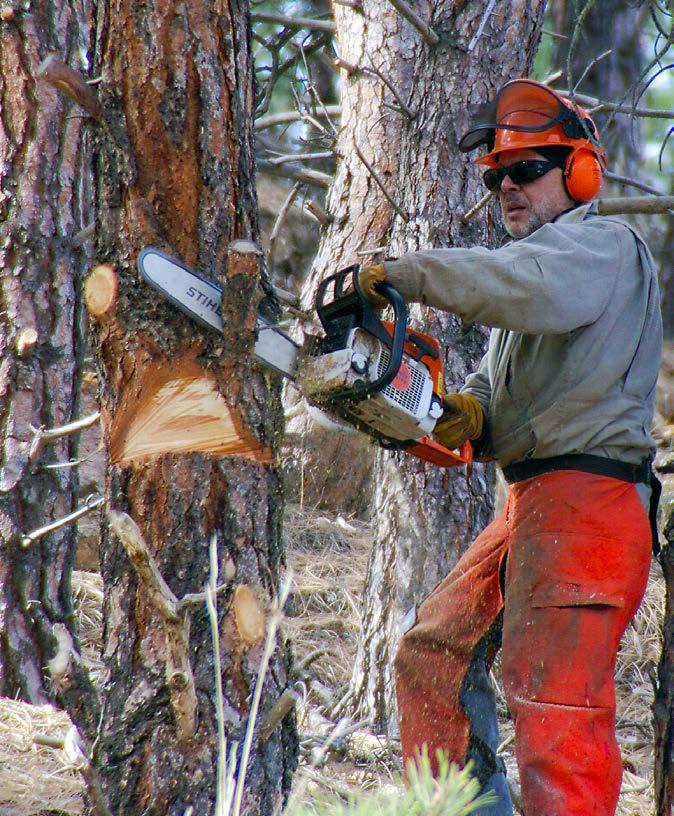
If you’re getting the chainsaw out of the shed this weekend, your work clothing should be snug-fitting, with no loose straps, belts or hems. It’s a good idea to invest in timber-worker chaps filled with fibres that clog the blade and save your skin in an emergency. Your shoes should be protective, fully enclosed footwear with non-slip soles and steel toecaps. Protect your hands with heavy-duty non-slip gloves, preferably in leather. Don’t forget to wear proper head, face and eye protection, as well as hearing protection if you’re using a petrol saw. Next, check the saw itself. A rattly, rusty old saw with the wrong parts, half-bodged repairs or a dull, poorly tensioned chain is an accident waiting to happen, and a hassle to work with. If in doubt, don’t use the chainsaw, especially if you were not the last one to operate it. After a year in the shed it’s likely to need a service in any case.
Don’t forget to check your work area. Plan out your strategy when cutting limbs or trees. Look out for power lines and tripping hazards. If you’re working at height, be extra careful and consider drop areas, as well as getting help to stay steady and safe.
Here’s what Stihl, the sponsors of Chainsaw Safety Awareness Week, say about proper chainsaw technique.
Keep two hands on the saw and hold it close to your body, with the body of the saw close to what you’re cutting. Plant your feet firmly
and slightly apart for balance. Never try to adjust your chain or machine while the engine is running. Good maintenance will extend the chainsaw’s life and ensure it’s always safe to use. When you finish a job make sure the air filters, sprocket cover and chain brake mechanism are free from sawdust; clean the guide bar groove; oil the holes and check everything is in place.
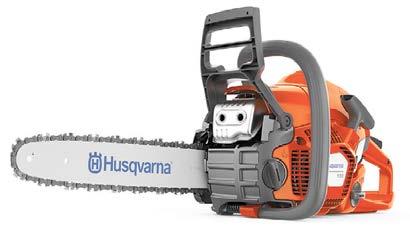
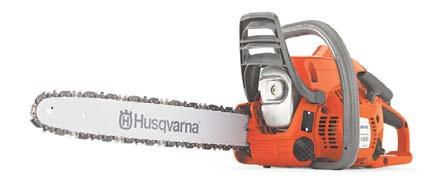
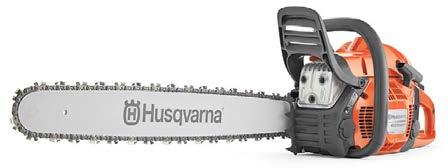
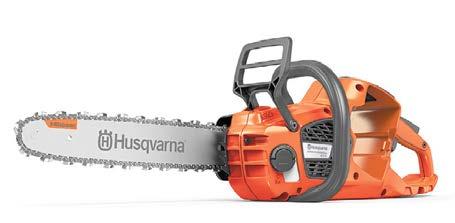
Of course, if your old machine has passed its use-by date, the best thing you can do is send it off to the great hereafter and invest in new technology. If firewood and small tasks are your main chainsaw jobs, why not take a look at an electric saw? They’re just as powerful as their same-size petrol counterparts, but are quieter, have less vibration, and use no fuel. There’s a whole range available at your local mower and chainsaw specialists right now.
These tips and techniques are great not just for piling up firewood for a cozy winter, but also for that other cold-weather outdoor chore; making sure that dicey branches and questionable trees are cut back to prevent disasters. If a powerful storm blows through, it’s best to have foliage out of the way, and a safe, efficient saw is your best friend when calculating a pruning-back strategy.
If it looks like it’s a big, dangerous, high or complicated job, or if you’re unsure if your noncommercial chainsaw is up to the task, consult an arborist and stay safe.
From firewood chores to tall timber, chainsaw users who respect their tools know that safety gear comes first
Acraflex Dairy Wall Coatings
Colourcrete Dairy Floor Resurfacing System
Suitable for repairing damaged dairy floors or slippery areas
Seth 021 051 2521 New or existing walls
FARMING & LIFESTYLE
LAWN SEED/PASTURE SEED/FENCING Reels and Standards from Northland Seed, Okara Drive, Whangarei. Phone 09 438 0884.
GARDEN SERVICES
SEED POTATOES / GARLIC, New Seasons, FERTILISER – Organic Blood & Bone, Citrus, General plus more from Northland Seed, Okara Drive, Whangarei. Phone 09 438 0884.
LIVESTOCK
FREE-FLOW FROZEN DOG CHUNKS / MINCE.
DOG / PUPPY BISCUITS — no artificial colour or preservatives, CHICKEN FEED / BIRD SEED / RAT BAIT from Northland Seed, Okara Drive, Whangarei. Phone 09 438 0884.
LUCERNE CHAFF plus more HORSE FEED, from Northland Seed, Okara Drive, Whangarei. Phone 09 438 0884.
Princess Street, Auckland (1889–1966). Contact William 021 128 4043 or email tktk79201@gmail.com.