10,680 copies DELIVERED FREE to every rural delivery address in Manawatu.
Feathered friends flock to Manawatū
by Denise Gunn
Poultry and pigeons from as far as Whangārei to Invercargill will descend on Palmerston North next month to compete in the 2026 National Poultry and Pigeon Show.
This year it’s the Manawatū Poultry and Pigeon Club’s turn to host the event. The club, which is celebrating its 121st anniversary this year, has hosted the national show a couple of times previously. Held biannually in the North and South Islands, next year’s national show will be in Invercargill.
More than 1,500 entries are expected to be exhibited at this year’s show. Hundreds of show classes will cater for the various breeds, including rare varieties.
Manawatū Poultry and Pigeon Club president Murray Strawbridge said both the Barber and Bell Halls have been hired to accommodate the number of birds entered.
“Quite a few unusual breeds are entered, including Campines, which originated from Belgium, Polish, which are a bantam variety with what looks like a pom-pom on its head, and Barnevelders, which originate from Holland.”
“There’s been a big upsurge in Araucana, which has become very popular. It’s a South American breed that lays blue eggs.”
Racing and fancy pigeons are also entered.
“There are also others called Nuns, which are black and white, and Modenas.”
As a child, Murray loved breeding chickens and entered some of his poultry in shows.
“As I got older, I wanted another hobby.”
When Murray and his wife Sheree moved to the country, he was able to buy some more chickens. Specialising in breeding Leghorn, a dual-purpose Italian breed, Murray exhibits his poultry in about five shows a year.
“It’s an all-consuming hobby. I like trying to improve the breed,” he said.
Judging will take place on Friday, June 5, and the show will open to the public the following day from 9am to 5pm. Show judges will be looking at exhibits closely to select poultry and pigeons that conform to the breed standards. Birds must also be clean and in good shape. The Best Bird of the Show title will be awarded on the Saturday night during an exhibitors evening.
During the show, club members will be easy to spot wearing club sweatshirts with a logo.
“We are making a special effort to make club members available for potentially interested people. Just talk to a club member or someone at the door.
“Chickens will be available for sale, or arrange to get hatching eggs later in the season.”
Entry to the public is $5 a person. “Birds are the main feature. There’s a wide variety and it’s a nationwide show.”
For further information, phone Murray on 06 326 8732 evenings or email ssstrawbridge@gmail.com.
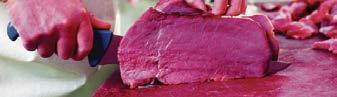
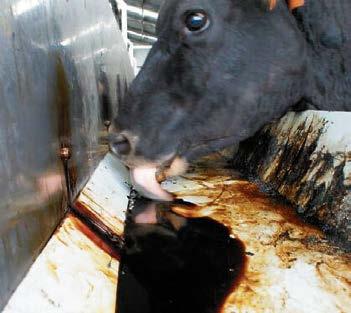
No Moore Hassell Pet Food is an MPI approved and recognised primary meat processor. Based in Levin we offer local farmers a free and highly professional pick-up service for unwanted healthy cows and horses in the Manawatu-Wanganui region. If you would prefer to transport your animal yourself or have your horse or cow put down on the farm then we can arrange this with a No Hassell guarantee.
About Us
Our in-house processing plant enables us to guarantee the consistent quality and reliability of the process from the picking-up to the putting-down of the animal. As a recognised specialist you can rest assured that our years of expertise and close connection to the farming industry makes our service as convenient, respectful and professional as it can be.
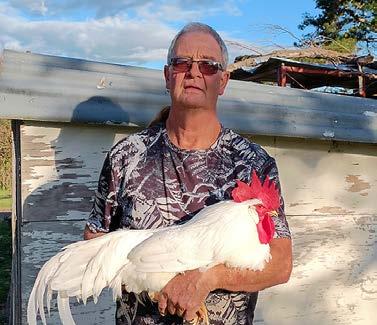
Manawatū Poultry and Pigeon Club president Murray Strawbridge will be one of hundreds of enthusiasts exhibiting poultry at the National Poultry and Pigeon Show in Palmerston North next month
A1 Meat Processors Ltd 027 416 9006
Active Tank Cleaning Ltd 0800 355 5865
AgriChill 0800 24 24 455
APB Electrical 2008 Ltd 06 323 2582
Blinkhorne & Carroll Ltd
Machinery Maintenance Ltd
027 444 3440
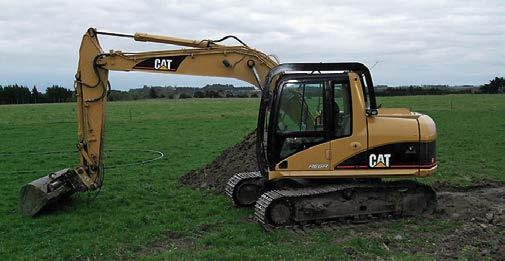
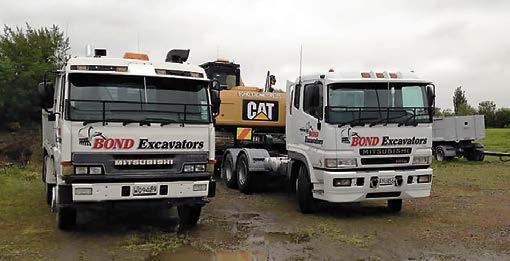
Bond Excavators Ltd 027 321 1327
Broadway Accounting Solutions Ltd 06 952 4646
Builtsmart Ltd
07 828 9285
Bulls Flooring Ltd 027 490 5796
Cabins To Rent 027 283 0930
CBD Painters Manawatu 027 437 5769
Central Mower Services 06 355 2967
Central Property Wash Ltd �����������������������������0800 CP WASH
Clean Sweep Woolsheds 027 682 1186
Country Machinery Ltd 06 329 3900
Cox Transport
027 405 7000
Dairy Production Systems Ltd 07 858 2224
Deepend Drainage Ltd 021 720 779
Dolomite Co Of NZ 0800 843 809
Eastown Timber and Fencing 06 349 0040
Edible Garden
021 142 6463
Environment First 2010 Ltd 0800 TANK PUMP
Fencing Contractors Association NZ 0508 432 269
Flexi Tanks NZ Ltd
06 348 9239
McNae Electrical Solutions 06 357 0405
Moorey Animal Bedding 07 888 1955
Natural Bark and Compost 027 240 9381
No Moore Hassell Pet Food ������ 06 368 2106 / 021 368 660
Numberworks Palmerston North 06 354 3211
NZ Grazing Company Ltd 0800 108 494
Otiwhiti School of Agriculture ������������������������� 027 447 7361
Pine Park 06 357 9162 / 021 442 068
R F Pitcher & Son Ltd 021 442 068
Right Tyre Service 06 359 0650
Robertson Motor Group 06 356 1062
Robertson Motor Group ����������������������������������� 06 356 1062
Rural Direct 06 374 8971
Rush Excavation 027 448 4657
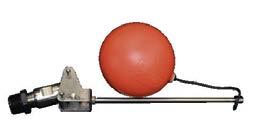
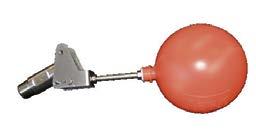
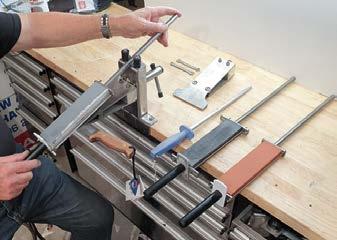
Scary Sharp and SIS Ballcocks ������������������������ 06 278 4578
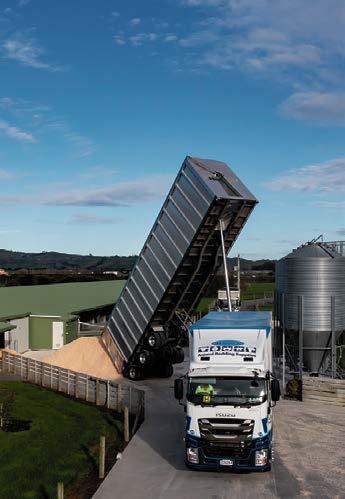
Shannon Bulk Haulage Ltd 06 362 7458
ShedEx 027 295 8991
Sheds4U 0800 86 20 10
Supreme Blast & Paint 06 353 2216 / 027 446 7467
Surfatex 2019 Ltd
027 706 3633
Flooring Design 06 355 3079
G J Gardner Homes Palmerston North 06 357 8020
Health House 0800 423 559
Henry’s Plumbing Ltd 027 276 2121
Himatangi Transport ���������������������������������������� 06 329 9712
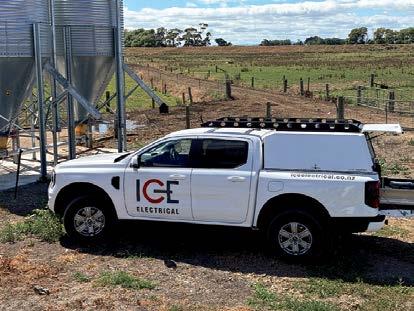
ICE Electrical 06 358 9331 / ah 06 280 2060
Insulmax Manawatu Ltd 0508 246 785 / 027 323 1000
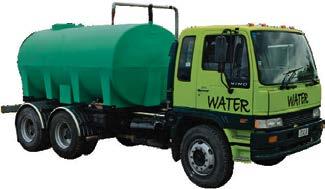
Jases Water Cartage
027 430 8209
Tartek Ltd 06 347 9657
The Blend Cafe 06 345 2100
The Olive Grove Supplies Company ������������������ 09 945 0890
Timeless Auto Restorations 027 443 6458
TRC Tractors Feilding 06 323 0309
Tremaine Tyres & Wheels 06 353 3590
Tricklebanks 06 323 5327
Tuatara Machinery Ltd
027 590 4844
Kinetic Electrical 06 323 6068
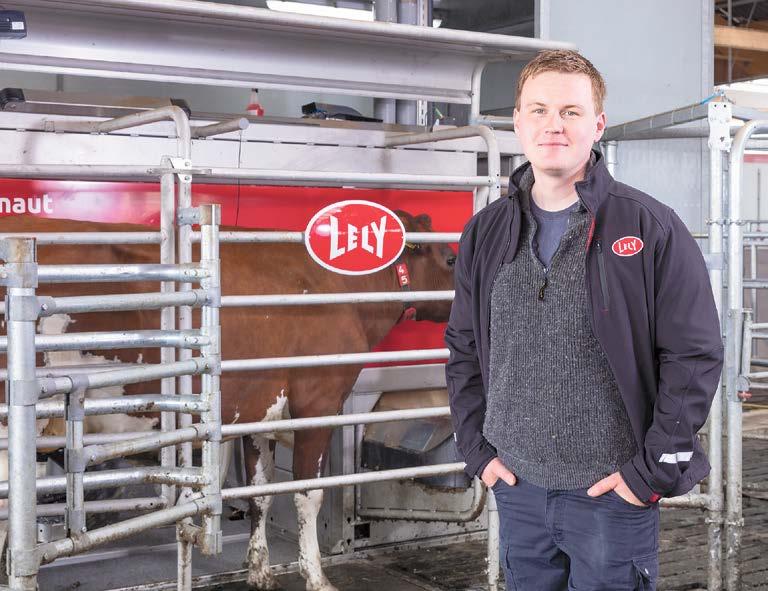
Lely New Zealand 07 850 4050
Locked In Construction 027 513 7855
03 347 4956
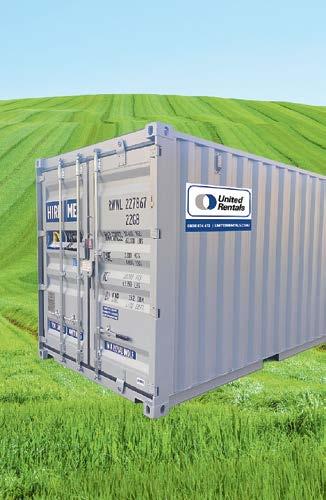
United Rentals 0800 UR HIRE
Vetiver Grass 022 523 9254 / 027 386 4499
Village Earthworks
027 531 4858
Wanganui Plumbing Ltd 06 343 9763
Whanganui Boating Centre 06 344 7645
WSF – Winton Stock Feed Ltd 03 236 6089
Training cadets on historic station
by Denise Gunn
Otiwhiti School of Agriculture will open the farm gate next month, providing visitors with first-hand opportunities to see the comprehensive training available for cadets seeking a career in the farming industry.
The historic sheep and beef breeding station, located in the Turakina Valley, has been farmed by the Duncan family since the 1880s.
Thomas and Jeannie Duncan were known for their charitable works during their tenure on Otiwhiti Station during the 1930s. They used the land as a means to provide funding to establish the Mr and Mrs TA Duncan Hospital Trust for polio victims. The first hospital was located in Silverstream and later relocated to Wanganui. To provide funds for polio patients to receive free treatment, Otiwhiti
Station was placed into the Sir Thomas and Lady Duncan Trust.
As generations of the Duncan family continued to farm Otiwhiti, the trust carried on funding charitable purposes with Otiwhiti’s profits. The trust, however, was considering investing in a wider range of assets, and not relying solely on agriculture.
In 1997, Charlie Duncan and his older brother, John (known as Joe) leased Otiwhiti from the trust. Charlie took over as station manager. Although Otiwhiti was a valuable asset, the trust required
more cash to continue funding charitable activities. A decision was made to sell Otiwhiti with the property put up for auction in 2006. Several members of the Duncan family were collectively successful in buying back the farm, which is now owned by Otiwhiti Limited Partnership.
Charlie and his wife Jo established an agricultural training school on the station in 2007 in partnership with Land Based Training Limited, building on the property’s long farming history. The first intake of farm cadets arrived in February that year.
“It’s been a real journey for us with our cadet school,” said Charlie.
The school offers a comprehensive one-year programme that combines theoretical education with hands-on training. Cadets work towards the New Zealand Certificate in Agriculture Level Three while training on a working sheep and beef station.
Training is structured around five core agricultural pillars — fencing, shearing, processing of house muttons, dog training and horsemanship. Cadets spend four days on-farm and one day in
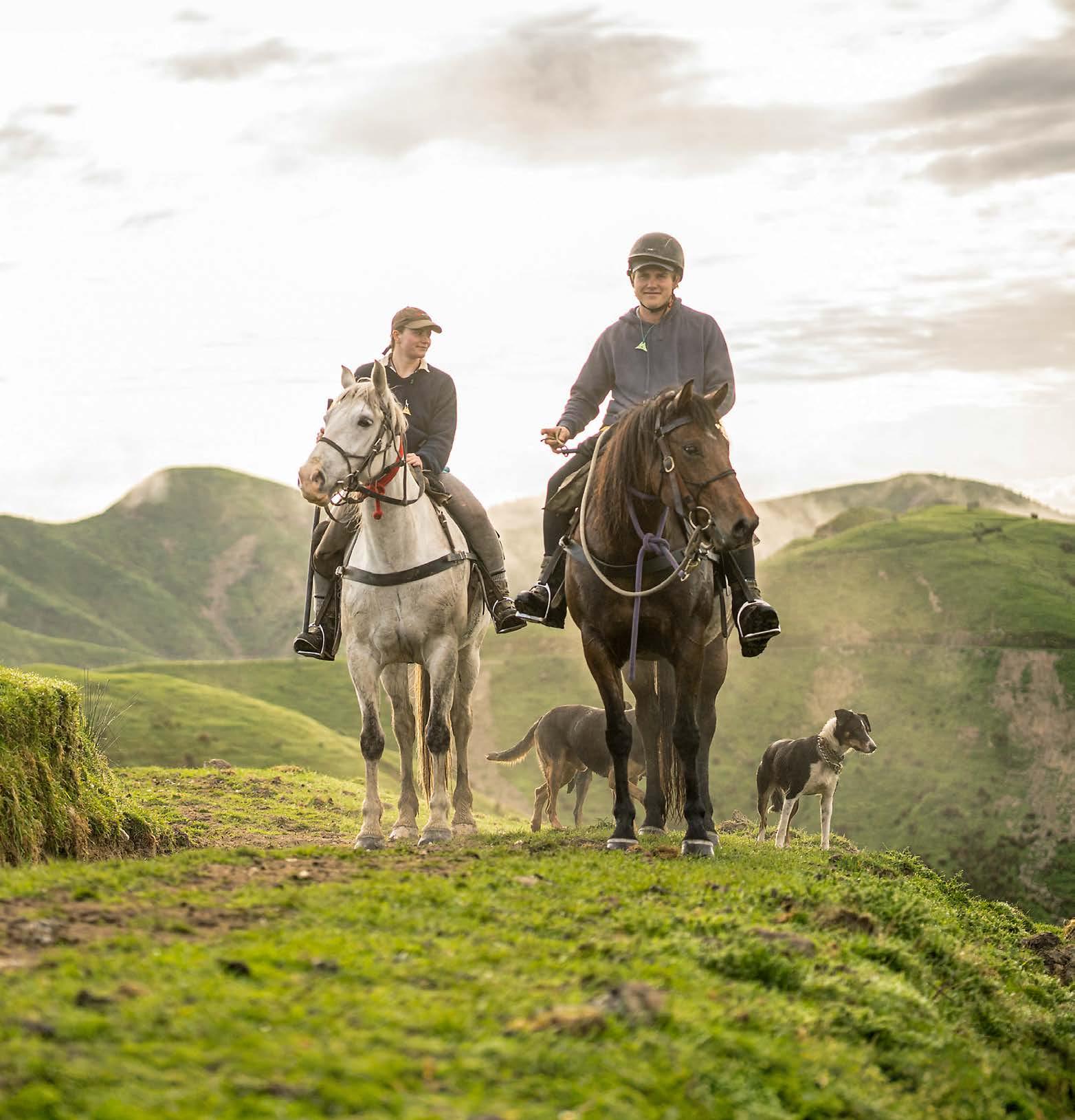
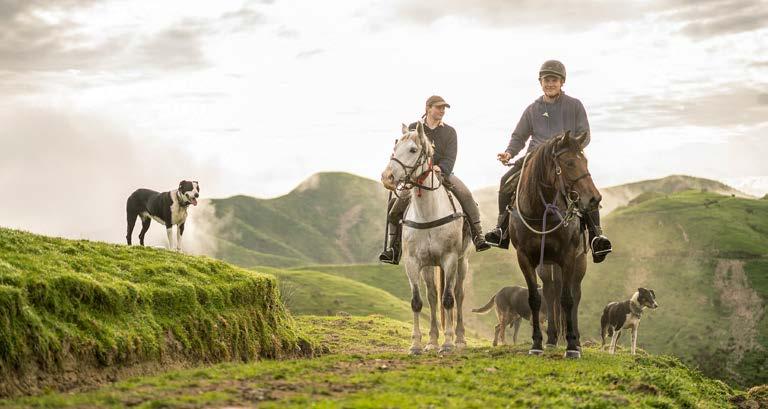
Junior shepherd (staff) Bronlee Ireland and former cadet Riley Campbell head out to muster on the back of the station
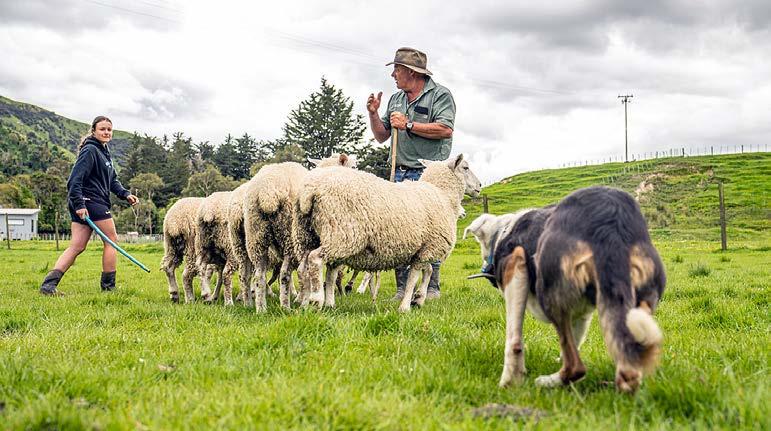
Former cadet Holly Smith with dog trainer Duncan Atkinson (DA)
the classroom each week. The former Otairi School is used for classroom teaching.
“We give them multiple skills, getting them to a level where they are employable,” said Charlie. “We are firm believers in training for the outcome of employment.”
The training team includes farm managers, cadet managers, support staff and Land Based Training tutors. Nine local farmer partners are also involved, collectively managing around 500,000 stock units and employing approximately 100 people.
“Immersing our cadets in farmer partner businesses gives them valuable insight into how different farming operations work.”
Cadets live on-site in The Hood — a renovated building that includes 18
bedrooms, communal lounges and shared bathrooms. The Hood was moved to Otiwhiti in 2014 from Flock House near Bulls.
Otiwhiti’s cookhouse, located next to The Hood, is the hub of station life, providing meals and a place to gather.
“Strong pastoral care and a dedicated health and wellbeing programme set Otiwhiti apart from other residential training facilities,” said Charlie.
“The programme is delivered over one year and gives cadets early, practical responsibility, including training their first heading pup from the outset.
“We also create clear pathways into level four and five qualifications, supporting cadets to continue their training while they are employed beyond Otiwhiti.”
Last year, cadet manager Catherine Arnott published The Cookhouse
cookbook containing recipes from Otiwhiti’s cookhouse.
“Created over my time at Otiwhiti, the cookbook blends old recipes with new family favourites, chosen to be simple, practical and lasting,” she said.
“As both kitchen and classroom, the cookhouse is central to Otiwhiti life, and the book celebrates the shared meals, learning and strong sense of community built around its table.”
The agriculture school’s open day is to be held on Saturday, June 6, with registrations taken from 8.30am, followed by a welcome at 9am sharp. Otiwhiti School of Agriculture is located at 4744 Turakina Valley Road.
“Our cadets lead the tours and answer questions along the way,” said Charlie. “We are proud to open up the training school and share what we do.”
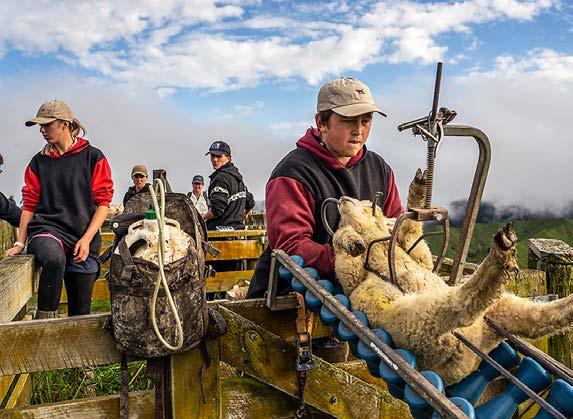
Docking and drenching lambs with former cadet Kohin Cooksley at the tailing chute
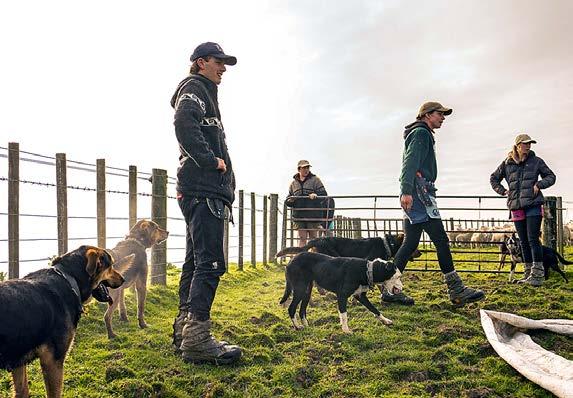
From left: Former cadets Remy Early, Kohin Cooksley and Dannie Ainsley with shepherd (staff) Lianna Pol (second from right) preparing to muster lambs into temporary yards
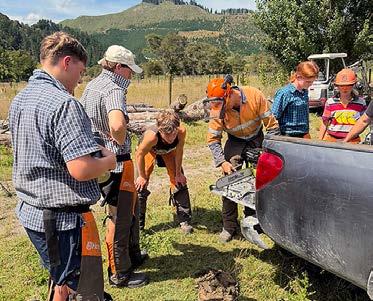
Cadets learning about chainsaw safety
single
Successful start to dairying
by Denise Gunn
A connection to farming through family and friends was Alex Meads’ first
Growing up in Feilding, Alex regularly visited his grandparents on their sheep and beef farm in the northern Manawatū. Then, as a teenager, he milked cows on a Kairanga farm belonging to a family friend.
Study at Lincoln University followed secondary school as Alex worked towards a Diploma in Agriculture. On his return to the Manawatū/Rangitīkei region in 2014, he began work as a farm assistant on a Marton property.
“I worked as a farm assistant for two years and then one year as 2IC,” said Alex. “Then, I went on an OE to Canada and worked on a resort over there for 10 months.”
When Alex returned to New Zealand, a recommendation from a previous sharemilking employer helped him secure a farm assistant position working for David and Sarah Marshall. The Marshalls own Tutu Totara Dairy with Richard and Anna Ash as equity owners.
Tutu Totara Dairy is located about 10 minutes northeast of Marton, just south of Rata. The Rangitīkei River forms part of the boundary.
“There are lots of pockets of bush here, so it’s a neat little spot we are in.”
Due to the farm’s location and freedraining soil, the property can experience some dry summers. The average annual rainfall is 1,050mm. Alex said the farm is about 65% irrigated and soon to be 80%. “So we are pretty lucky in that respect.
“The total farm is about 800ha and at peak we milk about 1,300 cows. We also have a beef unit here where we rear about 850 cows, and aim to finish about half of those animals each year.”
Alex has worked his way up to become livestock manager on the Marshall’s property, milking in one of two sheds on the farm. “In the shed I run, we have 300 autumn-calving KiwiCross cows on 120ha. Then, we get an additional 100 cows from the other shed, so peak milk
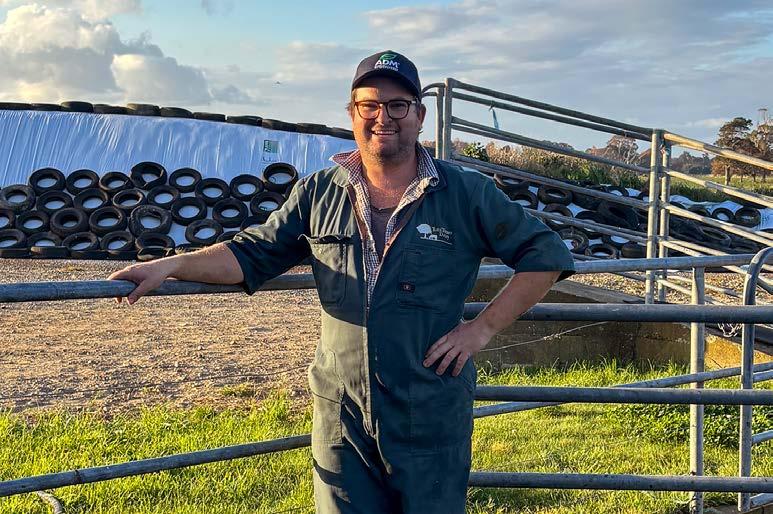
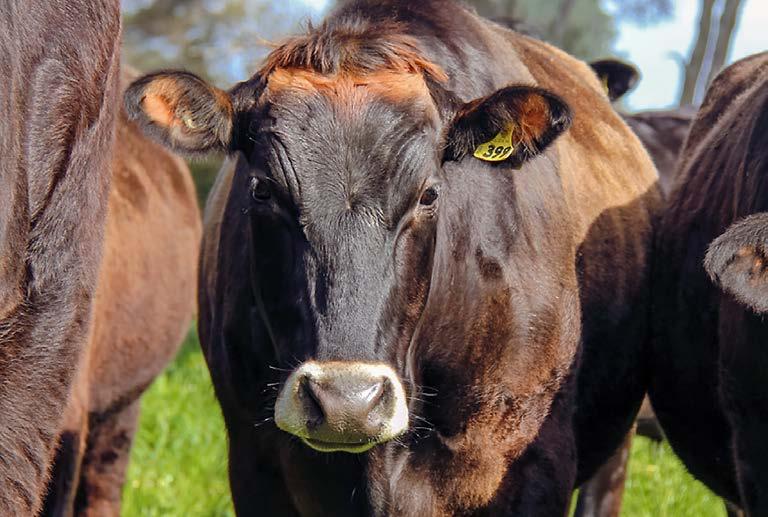
Alex is livestock manager on David and Sarah Marshall’s farm near Rata Wagyu
400 cows. Obviously, with autumn-calving, we winter milk.
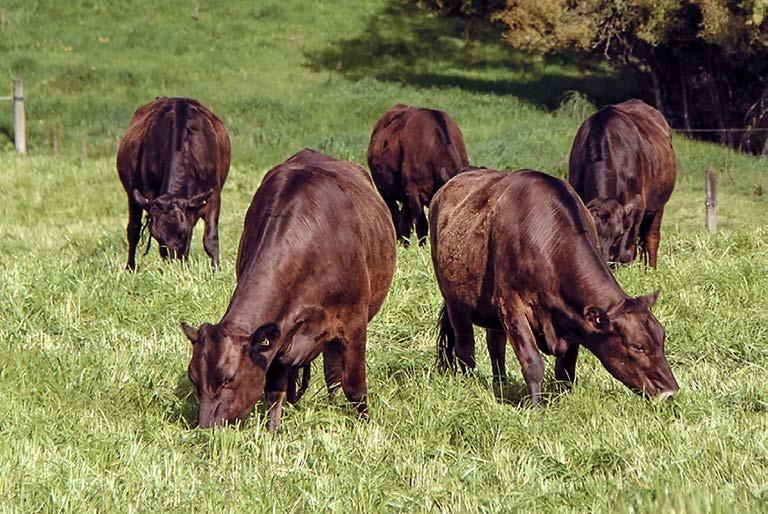
“The surplus calves build up the beef herd. We are trying to add value in the form of additional beef and are quite tied up with First Light — so it’s Wagyu. We have minimised our bobby cull significantly.”
Operating on a DairyNZ system with inshed feeding, palm kernel is fed through the shed all-year-round.
Alex said a real emphasis is placed on pasture grown and harvested on-farm. Autumn and calving is his favourite time of the year.
“It’s a nice time of the year. Calving in autumn is pretty good. I like the cooler evenings, and our cows start to ramp up in the autumn.”
Alex appreciates the opportunities to continue growing and working towards his own dairy business one day. He is currently studying Primary ITO Level Five Agribusiness Management, and has completed Level Five Production Management.
The 32-year-old finds dairying offers a great lifestyle and he really enjoys the animals.
“I think the big thing for me is the opportunities are endless. I think what works significantly well is working a beef business within the sharemilking business. It’s very rewarding.
“I also like to see people grow and learn. I’m quite big on staff, so that’s important.”
Securing a large-scale farm management role, that’s not just the milking platform, is one of Alex’s shortterm goals.
“I think it’s important to be involved with the drystock. I find a big farm wanting to do something with their surplus is exciting.”
Eventually, Alex would like to be 50:50 sharemilking or an equity partner.
“I would like a place to call home as I’m not a fan of moving around all the time.”
He said a real emphasis on trust and integrity with the owner is important.
“I want a role I’m proud of and want to work with business partners who share a similar vision, and have a real emphasis on people, animals and the environment working towards a better dairy tomorrow.”
Alex placed third in the dairy manager category at the 2026 Manawatū Dairy Industry Awards.
Surplus calves build up the farm’s beef herd
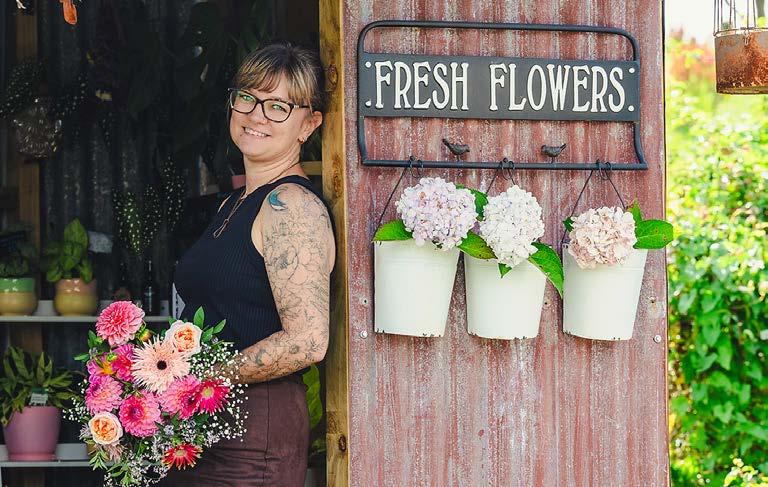
Flower farm creates new beginnings
by Denise Gunn
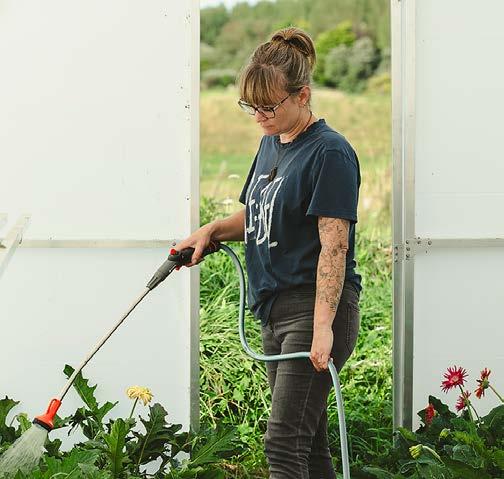
Starting from scratch in an area with a different soil type and climate was the biggest challenge that Kristy and
Anthony Butterfield faced when establishing their Feral Flower Farm near Levin.
“As the dahlias needed to be planted as soon as possible, we didn’t have the luxury of waiting a year to monitor all the things. We had no idea where the prevailing wind was, how much frost we could get and which pests we may encounter,” said Kristy. “It’s been learning as we go and pivoting as needed.”
Understanding how to garden on a larger scale was also testing. Kristy and Anthony soon found more efficient
methods and made better use of their time. The couple hired machinery to complete certain tasks and invested in farm gear to increase productivity.
“We aren’t spring chickens. I’m 47 and my husband is 53. We can’t be using a spade to dig flower beds through tough paddock grass as it would take all day, and a lot of sore muscles later.
“Adaptability is a big lesson. You can’t control nature — but you can respond to it.”
Feral Flower Farm has turned into a full-time job for Kristy. She harvests her flowers for sale around sunrise or the previous night. Deadheading, weeding, feeding, planning succession, planting and checking for pests is ongoing.
“We use organic sprays if needed. We’ve been pretty lucky, so far, with pests. The occasional caterpillar gets plucked off in the evening.”
Kristy has found summer is the busiest season, especially during the wedding
season, when both growing and designing overlap. There’s plenty to do in autumn, too, as all the dahlias need to be dug up and stored for winter.
She said late winter is crazy as the tubers are divided and sold online through Feral Flower Farm’s website, usually in August.
“It’s a pretty intense month. When I started, I had anticipated a lot of winter downtime. Turns out, there isn’t a lot of any downtime as most farmers will know.”
Support from their local community is one of the biggest highlights and surprises since establishing their flower farm.
Customers are following the seasons, asking what is blooming, celebrating the wins and understanding the losses alongside the Butterfield family.
“It feels like they love the farm as much as we do,” said Kristy.
“On a personal level, the farm changed everything. It has created a life that feels creative, balanced and unapologetically authentic. That is something I am deeply grateful for.
“Flowers shape the stories I photograph, and photography gives the flowers another life beyond the field.”
Refining systems and expanding select flower varieties are on the list of future
plans, along with continuing to strengthen local connections.
Kristy wants to keep growing the farm sustainably while maintaining its heart. She is also considering expanding infrastructure, offering workshops, and deepening the connection between growing, design and storytelling.
“For me, that means I grow the flowers, design with them, and often photograph the moments that they are part of. Deepening that connection means to continue to integrate those three elements so that the flowers aren’t just decorative, they’re woven into real stories from the ground up.
“Growing began as a way to rebuild myself, so I understand how much emotion can sit inside something living
and temporary. Flowers mark beginnings, endings, love, grief and celebrations. They hold space for all of it.”
She said being involved from the very first seed through to the
final photograph makes the work feel whole.
“It’s not just about how something looks. It’s about what it represents and the story it carries.”
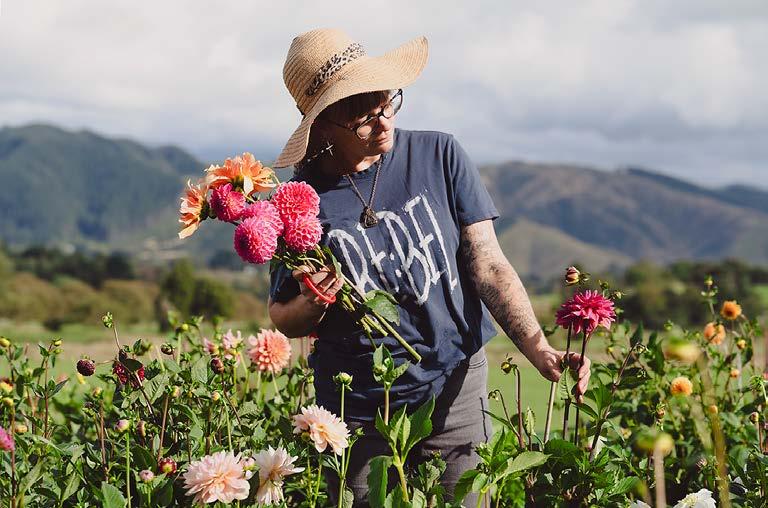
A selection of seasonal flowers
Kristy likes growing flowers with personality
Growing flowers and creating a flower farm has been a journey of healing for Kristy
by Amy Fifita
A refuge from the storm
Guiding men wanting to overcome their battles with addiction, Ray and Janet Curle bought the Arapohue Retreat, a place for people to return to their purpose.
No stranger to the perils of addiction and crime herself, Janet was redeemed by grace and penned her autobiography, The Wild Side, under her pen name, Janet Balcombe.
“After I wrote The Wild Side, people began reaching out to me, thanking me for giving them hope, and others were asking for my help with recovery,” said Janet.
“Already praying for people who came from places like Auckland, Whangārei and locally, to see us, we looked into how we could help. We thought of running some educational workshops, but God closed the doors, and then he gave Ray a dream.”
Both born-again Christians, Ray and Janet, had a heart to help others, and while their workshop idea was thwarted, a bigger plan was about to begin.
“I had a dream where I was walking around Cooper’s Beach Christian Camp,
talking with them about wanting to hire the camp to do seminars, but then we started negotiating buying the property,” said Ray.
“I woke up and asked the Lord what that was about, and I heard him say, ‘Look at Arapohue’. It was an old Christian camp that used to teach literacy to children.”
Within two years, the Wildside Charitable Trust bought the property using donations, with the help of generous donors and a loan from Dugdale Charitable Trust. Having to restore the house they now live in, they used the extra money from the purchase to have renovations and repairs done. Then they began restoring people, starting with one.
“Now, we have eight residents operating in two of the houses, as well as a big lodge with a kitchen, dining and lounge area, and a gymnasium. The lodge’s upper
room is being restored at the moment, so that we can have meetings there.”
Creating purpose by giving men tasks on the lifestyle block, including working on the gardens and being guardians of the QEII National Trust bush. With horses Hope and Sophie, Valais sheep, feline friend Bob Cat, canine companions Lucy and Buck and about 15 chickens, the men can enjoy animal therapy.
While men stay at the retreat at a cost, Ray and Janet volunteer alongside
AOD counsellor and builder Gary Codlin; all money collected from the residents goes towards immediate costs. Visit wildsidetrust.org to contact the team or make a contribution.
“God gets the glory because he has provided for us and the restoration. He has provided the amazing people who he is pulling out from a death sentence to give them a new lease on life, and what can be more rewarding than that?” Janet said.
With a calling to help people break the chains of addiction, Ray and Janet Curle bought the Arapohue Retreat
Winners at water
Machinery Maintenance Ltd has been servicing Whanganui and Taranaki for all of its water pump, irrigation and reticulation needs, amongst others, for over 53 years.
With decades of experience in and around the community, the business prides itself on providing customers with domestic and farm water pumps, plus much more. As Davey Water Products’ master dealers, we supply domestic, commercial, spa and pool pumps, water filters, water softeners and UV treatment systems.
We have purchased a Spintouch Pool Water Tester, which enables us to complete a pool water test in minutes, producing a report on chemicals required to keep your pool sparkling. We now carry a good range of pool chemicals in-store.
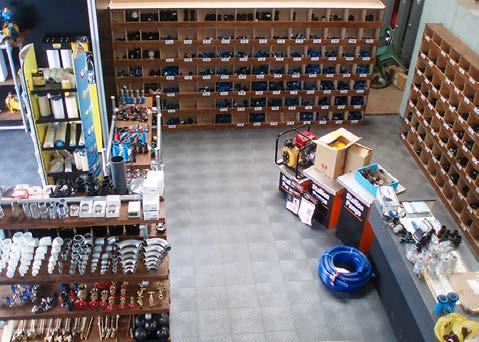
The showroom has all sorts of parts to meet any customer’s pump and piping needs
Machinery Maintenance is an agent for Prattley Datamars, and we are able to service their electric drafter and weight scales. We install irrigation and farm reticulation systems and have our own lifting rig to remove submersible pumps from bores.
Being RX Plastics agents, we can supply pipe, K-Line irrigation pods and plastic tanks. We sell and service, and can supply many different brands of pumps.
Machinery Maintenance is an authorised dealer of GEA Farm Technologies, servicing Milfos and Westfalia Surge Milking
Machines. Our team of experienced servicemen completes upgrades and service work on all dairy equipment, and includes a registered milking machine tester.
We are able to supply many different effluent system options, including Houle equipment, K-line pods or travelling irrigators. See us in store for RX water tanks, pipe, hose, lever valves, ballcocks, fittings, PVC, Anka, S/S, camlocks, plus all other pump and dairy essentials.
Visit the team at 99 Ridgway Street, Whanganui and explore the showroom or contact the office on 06 348 9239 or 0800 667 867. For more information, visit our website — machinerymaintenance.co.nz.
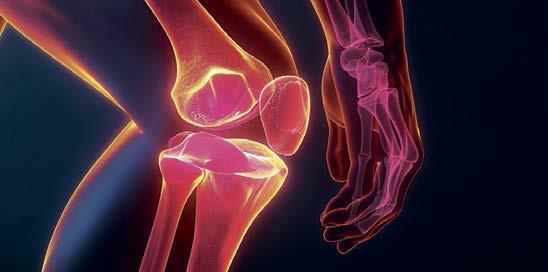
Nutritional therapy for Joints (Part one)
by John Arts
Being diagnosed with osteoarthritis means you have joined one of, if not the largest health problem clubs.
Your doctor may have arranged X-rays to confirm that you have cartilage loss and possibly degenerative changes to your bones. You may have been referred to an orthopaedic specialist who may have outlined surgical options.
Medicine has essentially three options for osteoarthritis: pain relief, physiotherapy, or surgery. Nutritional therapy is based on quality, professionally prescribed supplements and anti-inflammatory diets that can be very effective in improving joint function and mobility. My client files are full of testimonies from people who have had significant reductions in pain and improvements in mobility.
The goal of nutritional therapy is firstly to improve the function of the specialised cells (chondrocytes) that maintain cartilage. Secondly, we want to reduce inflammation in the joint capsule. This is responsible for much of the discomfort and reduction in mobility.
Let’s give your OA symptoms a score of 10/10 discomfort. What would your life be like if this was reduced to 7/10, or
5/10 or even 2/10? I recently caught up with a client with significant knee pain. The worst part was the pain at night. He now reports the pain at night has gone and is significantly better during the day. He has gone from 10/10 to around 2/10.
The question is whether we are willing to try something different. There is the cost barrier. Fortunately, a quality, high chondroitin joint supplement with omega-3 fish oil is about $40 a month, more in the initial intensive period.
Adopting an anti-inflammatory diet will possibly mean some extra costs, but it is hard to put a price on our health. However, in my experience the biggest barrier is simply we are creatures of habit and naturally resist change.
John Arts (Adv.Dip.Nut.Med) is a qualified nutritional medicine practitioner and founder of Abundant Health. To read more articles by John and learn more about the Abundant Health products he has formulated, visit healthhouse.co.nz, call 0800 140 141, or email john@ healthhouse.co.nz.
For many, joint health deterioration is the first obvious sign of aging. Gradual erosion of cartilage, is by far the most common issue.
What is Bettaflex?
Bettaflex is the most popular supplement in the Abundant Health range because of its positive support for joints affected by wear and tear, helping Bettaflex users to support mobility and quality of life.
How does Bettaflex work?
Bettaflex has been formulated to support joint comfort and mobility, making it an ideal supplement for those seeking support for joint comfort and stiffness. Bettaflex combines high-grade chondroitin
sulphate and patented BioSolve® Curcumin. This combination supports the maintenance of healthy cartilage and other joint tissue by supporting the joint processes that protect, maintain and renew cartilage.
Why use Bettaflex?
Bettaflex formulator John Arts comments, “I formulated Bettaflex with a single objective; that those concerned about joint health can support mobility and comfort helping them to enjoy better quality of life.”
by Paul Campbell
Wild horses rehomed
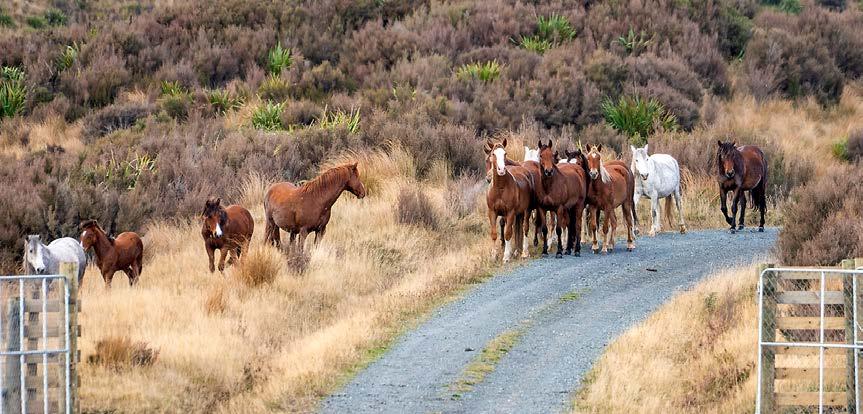
Wild horse musters in the first of two roundups this year have seen 58 Kaimanawa horses rehomed and nearly 100 mares given contraceptive treatment to keep the herd in manageable numbers.
The Kaimanawa Wild Horse Advisory Group supports the management of the herd to protect the fragile ecosystems unique to the area and keep the wild horses healthy. The group consists of multiple iwi, animal welfare experts, rehoming groups, environmental advocates, the Department of Conservation, and the New Zealand Defence Force. The horses
range in the Waiouru military training area.
Department of Conservation principal ranger Nina Manning says there are additional musters this year to help get the herd back to a more sustainable level for the future.
“We have completed two musters over the Anzac period, and we’re looking to do another one in June.
“The muster at the new southern yards went incredibly smoothly, which is a testament to the huge amount of work the DOC team and contractors have done to design and prepare them. These yards allow mustering of the southern horses over shorter distances, reducing stress on the horses and costs of flying time, and they’re permanent, so the benefit will continue in years to come.”
important step toward improving welfare outcomes for the horses.
Immuno-contraceptive treatment of mares has continued, with the ultimate goal of slowing herd growth in the wild. However, rehoming efforts remain critical to both herd health and the environment.
Carolyn Haigh of rehoming group Kaimanawa Heritage Horses says the use of immuno-contraception represents an
TREMAINE TYRES & WHEELS
“It’s helping to reduce the number of animals facing uncertain futures while supporting more sustainable herd management. From our perspective, this muster has also demonstrated encouraging progress in rehoming, with a strong community response ensuring many horses will continue to transition into safe, long-term homes. While there is still work to be done, these combined efforts reflect a growing commitment to balancing conservation with compassionate, practical solutions for the horses.”
The horse herd descends from domestic horse releases as early as 1870, and ranges across subalpine habitat within the military training area. Due to a domestic strain that also includes some thoroughbred and military ancestors the horses are adaptable to domestic life, and some have become equestrian show winners in their new environments.
The Kaimanawa Wild Horse Advisory Group works with a goal to keep the wild herd to approximately 300 horses to maintain herd genetic diversity and health while still protecting sensitive ecosystems.
Wild horses approaching the capture yards before treatment and rehoming
by Andy Bryenton
New horizons for CFMoto
It’s been a season of new arrivals and big announcements for CFMoto, as the manufacturer
for machines for on and off the tarmac.
It began in France, where CFMoto has achieved the title of best-selling off-road vehicle brand. To celebrate, their French vice president Markus Ferch and his team took to the beaches, debuting a new CForce C4m, C5 and C6. Six trails for customers to try out showed off the power of the new generation of CForce quads, which has been optimised for farm work.
Then came the 139th Canton Fair, a showcase of industry and manufacturing, which is held in China for more than 300,000 buyers across a range of automotive products. CFMoto coverage puts the Canton Fair in the same bracket as the prestigious EICMA motorcycle show in Italy. This year, CFMoto used the occasion to debut a range of interesting new models, from 250cc road bikes for commuters and learners, through to the 675SR-R, a race-bred ‘adrenaline bike’ with a proprietary-designed threecylinder engine.
Also on the stand was a bold foray into adventure bike design. The 1000MX-T develops 111hp alongside 103Nm of torque, but that’s not the whole story. Cornering antilock brakes and three levels of traction control come standard, as does a heated seat and heated grips.
That’s a big portfolio of new machines, but the best has been left for last, and
CFMoto keeps on creating new ways to enjoy horsepower and put it to work
for us. New Zealand now has delivery of the ZForce 950 Sport, a side-by-side off-roader, which shows off some of the durability and zest that allowed the company to do so well in recent Paris to Dakar rally events.
With a powerful 963cc four-stroke v-twin tucked low in the middle, and a healthy 85 horsepower on tap, the latest iteration of the ZForce name is compact and aggressive at the same time. There are two power modes for the driver to
damping adjustment and adjustable tie rods on the quadralink rear suspension set-up, the lightness and torque of the new ZForce shine through across multiple types of terrain.
access; normal mode for low-speed manoeuvres and sport for when it’s time to let loose. The little 950 Sport sits on 14inch alloys with grippy, mud-friendly tyres, and boasts 305mm of ground clearance.
Of course, the fine detail for any machine like this is in its suspension set-up, and CFMoto engineers have worked hard to evolve the previous platform beyond what was already reckoned a point of nimble balance. With the addition of tool-free compression
by Andy Bryenton
Royal estates and real estate
You may have wondered why the term ‘real estate’ is written that way;
to existing only online or as a sketch?
The term comes down to us from the end of the mediaeval period, when an estate was land granted to a person by their feudal lord, such as the country estate of a duke or a knight. The term ‘real’ means both ‘material, not money’ and ‘royal’ at the same time.
In those days, real estate wasn’t handled by the same kind of professionals
we can call today when buying or selling a home, farm or business. Modern estate agents might be pleased to know that their calling originates with the scribes and archivists of the colleges of heraldry, the people who made sure that knights and nobles had their family assets tied to a distinctive coat of arms.
Today, heraldry serves as a great key to history. Genealogists and researchers looking back into the Middle Ages and the Renaissance can track the fortunes of families by the way their coat of arms, a design based around a stylised shield, appears on property deeds, legal documents, and even in carvings on tombs and the stones of castles.
In those early times an estate was granted by the king, or granted to lesser knights by mighty barons and dukes, so one’s ‘real estate’ was very royal and very real indeed. The right to bear a coat of arms was part of the grant.
Therefore, when things changed hands and the fortunes of famous families rose and fell with the centuries, it was heraldic scribes who kept records of who owned which estates. In a very pragmatic way, the king or queen could keep track of the estates of their subjects, when it became necessary to levy a tax or two.
Things get even more interesting north of the Scottish border, where land and coats of arms were even more tightly linked.
The overlap between the ancestral clan structure and the mediaeval concept of estates through fealty meant that titles to land were often established by territorial designation; which coat of arms had flown on the flagpole there for the longest.
Coats of arms were tied to marriages, property disputes, land ownership and tax. Heraldic archivists became adept at knowing the laws of land and ownership, and were often consulted first when land changed hands. While it was not their job to broker deals on estates, their role as the prime identifiers of property ownership carries down to the modern profession of real estate, as does the royal connotation of the industry’s name.
In the Middle Ages, the way to find out who owned an estate was to talk to the college of heralds, archivists of property and royal dispensations
As the season turns and the leaves begin to fall, now is the perfect
equipment some well-deserved attention.
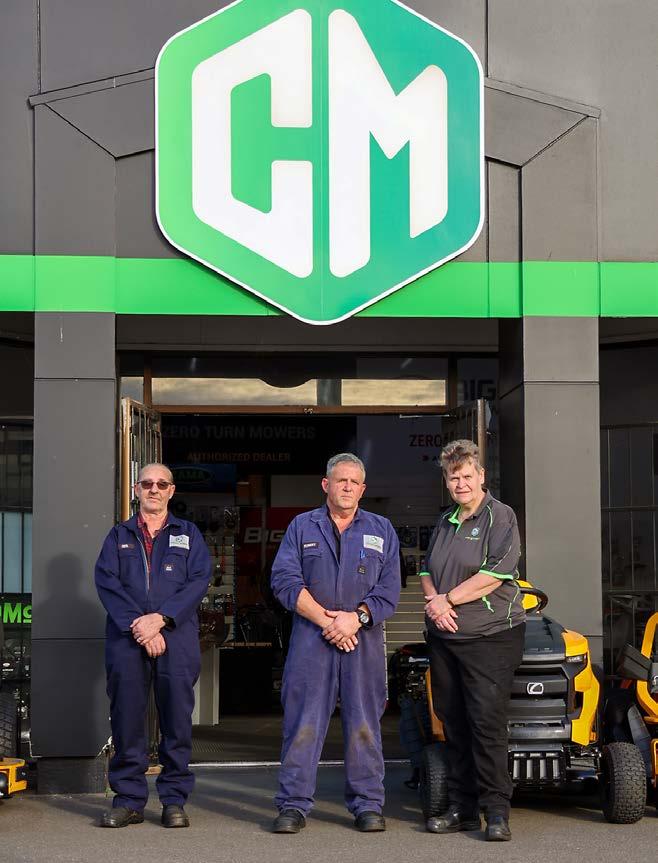
A little care in autumn goes a long way toward keeping your gear running reliably when spring rolls back around. Rob at Central Mower Services knows this better than most. With over 15 years in business and a lifetime of fixing engines under his belt, Rob has seen what happens when maintenance gets put off — and it’s rarely a cheap lesson. Whether it’s a ride-on mower, a chainsaw, or a line trimmer, a few simple checks now can save you real money down the track.
Key things to look at this autumn:
• Sharpen or replace blades — blunt blades tear grass rather than cut it, stressing your lawn and your engine
• Change the oil and air filter — fresh oil before storage protects internal components over winter
• Check spark plugs and fuel lines — old fuel left in carburettors is one of the most common causes of starting problems in spring
• Clean the deck and undercarriage — moisture trapped under built-up grass clippings accelerates rust
Central Mower Services stocks leading brands including Hustler, Masport, Lawnmaster, Cub Cadet, Stiga, Morrison, Makita, Echo, Shindaiwa and Oleo-Mac. They also service All makes and models of outdoor power equipment, so whatever you’re running, they’ve got you covered. Here’s something worth remembering: when you buy local, you’ve got somewhere to go if something goes wrong. No waiting on overseas shipping, no chasing an online chat bot — just bring it back in and Rob will sort it out. That kind of backup is priceless. Support local — it always pays off.
by Paul Campbell
Boosting lamb profits
Sheep farmers could improve both profitability and emissions efficiency by increasing lamb weaning weights, with only marginal changes in total greenhouse gas emissions according to research at Massey University.
PhD candidate Joseph Adjabui examined how higher lamb weaning weights affect productivity, profitability and predicted methane produced during digestion. While previous studies have focussed on the production and
For
financial benefits, this research also considers greenhouse gas outcomes, an increasingly important factor in farm systems decision-making.
The study analysed a North Island hill country sheep and beef farm and assumed a fixed feed supply, reflecting typical New Zealand pasture-based systems with limited supplementary feeding.
The results showed consistent improvements in farm performance as weaning weight increased. Lamb carcass weight sold a hectare increased by approximately two per cent under a 10 per cent scenario, and 14 per cent under a 20 per cent scenario, relative to the base system.
Cash operating surplus also improved, increasing by around six per cent and 51 per cent respectively. Mr Adjabui says the gains were driven by improved system efficiency rather than increased inputs.
“Heavier lambs at weaning meant more kilograms of lamb could be produced and sold earlier, improving both total production and farm income.”
The proportion of lambs meeting prime specifications soon after weaning also increased, reaching 84 per cent under the 20 per cent scenario compared with 60 per cent in the base system.
One of the key drivers of improved performance is earlier finishing. Increasing
weaning weight allows lambs to reach slaughter weight sooner, reducing time on farm, improving feed use efficiency and lifting overall system output.
PhD supervisor Emeritus Professor Steve Morris says the efficiency gains from earlier-finished lambs are clear when viewed at a whole-farm level.
“The most efficient lamb is the one sold directly to slaughter at weaning. It has been alive for fewer days, eaten less feed and required fewer animal health treatments, less labour and no shearing,” he said.
“That feed is then available for other stock classes, improving overall farm performance. It is also often sold
when prices are strongest, before peak seasonal supply.”
However, the head of the school of agriculture and environment Professor Paul Kenyon notes there is a wider industry consideration. “While earlier finishing improves profitability at farm level, the industry also relies on a steady year-round supply of lamb to meet export demand, which is a conflict.”
Mr Adjabui’s research was supervised by Emeritus Professor Steve Morris, Professor Patrick Morel, Professor Peter Tozer, Associate Professor Ramilan Thiagarajah and Professor Paul Kenyon at Massey University.
by Andy Bryenton
Prelude’s sixth symphony
The Honda Prelude was first conceived of as a
Brock Yates of Motor Trend called it “a splendid automobile. The machine, like all Hondas, embodies fabrication that is, in my opinion, surpassed only by the narrowest of margins by Mercedes-Benz.” Then — it got even better.
The most iconic Preludes, to those of a certain age, are the series three and series four, cars which come at the peak of JDM coupe dominance, and cemented Honda as a maker of exciting vehicles on four wheels as well as two.
The third-generation Prelude was a baby NSX, all sharp lines and pop-up headlights, with innovative four-wheel steering and a punchy two-litre inline four. The fourth generation upped the ante, with more displacement and horsepower, as well as the magic of VTEC from 1994 onward. Up until 1999 there was a more angular fifth evolution as well, and it found a similarly large fanbase. All were a pleasure to drive, and remain so for collectors lucky enough to have an immaculate example in their garages Up until very recently, that was the only way to get behind the wheel of a Prelude and see what all the fuss was about — but no more.
With the discontinuation of the Civic and Accord coupe variants, Honda needed a badge to revive which encapsulated speed, refinement and innovation. Hence a brand-new Prelude, teased at the Japan Mobility Show in 2023, and now on its way to New Zealand.
Once again, there’s a hint of the modern NSX about the new liftback lines of the sixth-generation Prelude, but also a nod to the rounded, slippery contours of the fourth-generation car. There’s 200 horsepower on tap from a hybrid petrolelectric system under the hood, and the chassis layout is identical to the firebreathing Civic Type R. Before it even lands in New Zealand, it’s picked up the best coupe award at the 2025–2026 New Car World Championships. What stunned
the judges in Europe should work very well on Kiwi twists and turns, too.
“We’re fortunate to experience some of the world’s best driving roads in New Zealand, and now with the all-new
Prelude, Kiwis will have a car that promises an elevated, connected and fun driving experience,” says Honda New Zealand managing director, Carolyn McMahon. She and her team will be expecting major interest as the new Prelude goes on sale this May, with a base price of $69,990. That puts this exciting Honda firmly in the sports car segment, battling it out with the Toyota GR86, Mazda MX5 and the Nissan Z in a new era of Japanese-manufactured driver’s machines. If you are keen on an engaging, exciting drive, the recommendation echoes down from 1988; you simply have to give the Honda Prelude a try.
New Honda Prelude — a classic badge returns with plenty of promise
WOODBURNERS
Free
WOODBURNER
Free
WOODBURNER
Innovation in the spotlight
by Andy Bryenton
The National Fieldays will once again bring out the best new ideas in farming technology, with the 2026 Fieldays Innovation Awards attracting a competitive field of genius-level intellects.
“The Innovation Awards continue to attract exceptional entries that shape the future of agriculture and food production, and this is something we are proud to support and advocate for,” said Agritech New Zealand CEO Brendan O’Connell, one of the panel members convened to judge the awards.
“The Fieldays Innovation Awards are the leading showcase of primary sector innovation in New Zealand. Many of our members have taken part, and we’re using our global relationships to bring international innovators and their ideas to the New Zealand audience through Fieldays.”
There’s a long history of the awards promoting new thought and debuting new ideas. Last year saw winners across four categories push the boundaries with inventions to help in horticulture, livestock and arable cropping.
The prototype award went to Ruminant Biotech, a company that has developed a new slow-release bolus called Emitless, which delivers a more than 75 per cent methane output reduction in cattle, lasting 100 days from a single treatment.
Alps2Ocean Food Tapui won the earlystage award, with its product Mīti, designed to process excess dairy calves into a worldfirst, shelf-stable protein snack.
CropX took out the growth and scale award, with the expansion of the CropX platform and the development and incorporation of the Evato1 evapotranspiration sensor. With more data available to farmers through this system, the judges praised CropX for facilitating smarter, more efficient practices.
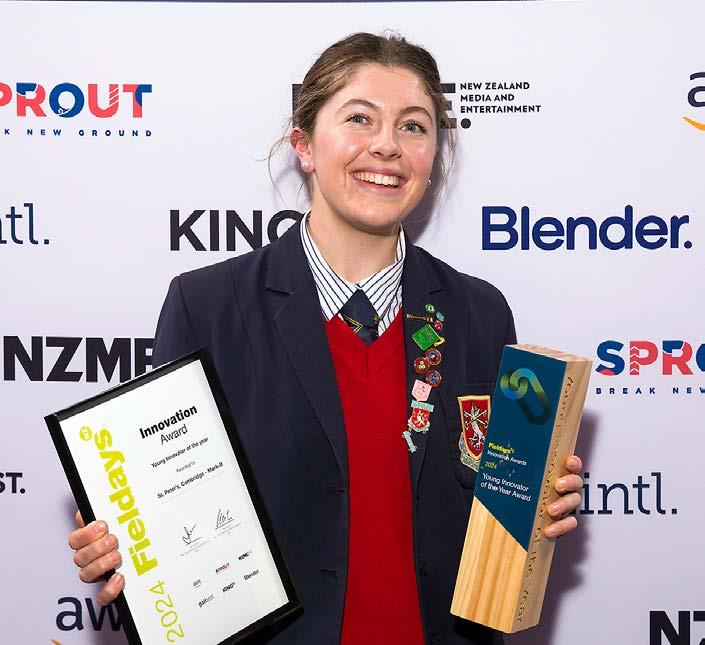
Finally, students from St Paul’s Collegiate School’s KiwiPrune team won the Fieldays Young Innovator Award for their idea to simplify the labour-intensive task of removing plastic clips used to secure kiwifruit vines.
“Each year, we see practical problem-solving from people who understand the pressures and opportunities in the primary industries,” says New Zealand National Fieldays Society programme manager Steve Chappell.
“The Innovation Awards are about connecting those innovators to the people and opportunities that can take their ideas further, in New Zealand and beyond.”
This year, prizes totalling more than $75,000 are up for grabs across the same range of categories, as well as a people’s choice award. The ultimate goal for innovators showcasing their wares at the Fieldays is the recognition of a global market, and the opportunity to turn smart concepts into multimillion-dollar industry-leading success stories.
Penny Ranger’s Mark-It sheep drenching identification system was a previous top Fieldays innovation
by Andy Bryenton
Tune up to save
With fuel prices at all-time highs, making sure your vehicle gets the most from every drop can potentially save you hundreds of dollars; here are some tips from the professionals.
Get rid of roof racks you’re not using, as they can drop fuel economy by five per cent, just by causing drag. After-market racks, and other storage pods, roof tents and bike carriers make your vehicle less ‘slippery’ and really cut into your fuel bill.
Your tyres play a massive part in fuel economy, even more so in some cases than the engine itself. Damaged tyres, uneven tread wear and under-inflated tyres can slash between 3 and 10 per cent off fuel efficiency, and it gets worse the faster you go, so highway trips end up costing more.
Speaking of those motorway missions, it’s worth noting that at speeds above 80km/h, it’s usually more efficient to have your air conditioning on rather than wind down even a single window?
Modern aircon is more frugal than old units, and while not having the chill turned up is the best way to save fuel, it’s still better than creating excess drag with open windows, at least on the open road. The US Automobile Association puts the fuel efficiency loss at anywhere up to 20 per cent.
Now we come to the big ones; the factors which really spell trouble for loss of fuel economy. Most modern cars with fuel injection have oxygen sensors, and if one of these is out of whack, it can cause anywhere up to a 40 per cent increase in
fuel consumption. Worn spark plugs with a weak spark can rob you of 30 per cent of fuel economy.
A clogged or worn air filter starves the engine of oxygen, with bad results for fuel efficiency. This is a job you can easily do at home, by taking your old filter from its housing and getting a direct, plug-andplay replacement from your local auto parts store. This one may not even need the use of any tools.
A poorly-tuned engine or one with issues like these might display a rough idle, sluggish acceleration, or chug out smoke from the exhaust. All of these factors can creep in well before the ‘check engine’ light goes orange.
Finally, have your wheel alignment checked. Alignment can drift out of true due to the knocks and wear of driving long distances, and it’s as important as fresh rubber for both safety and fuel efficiency.
by Andy Bryenton
Helping the helpers this winter
Making it easier for tradies coming to your home or farm this winter isn’t just about being courteous;
job swift and simple could save both of you money.
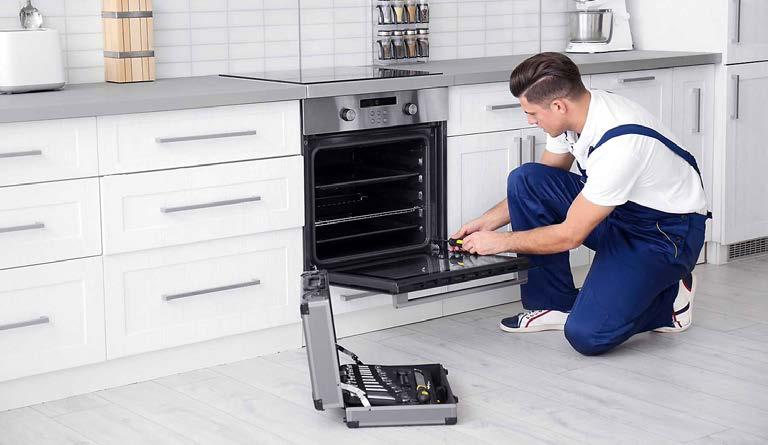
The reason we call in the experts is that often, as homeowners, we don’t have the know-how to cure every leak, blown fuse and stubborn appliance. However, sometimes knowing more than just ‘it’s broken’ can mean the difference for the tradespeople we call on for specialist expertise.
To ensure that any repairs you might need this winter go smoothly, swiftly and with less expense, take a little time to make it all clear and concise. That doesn’t necessarily mean reading screeds of internet information on your unresponsive oven or wheezing extractor fan. Still, it’s a major help for the folks coming to help out with it, if they can know its make and model. Sometimes, that’s in the warranty paperwork which you might have kept. Sometimes, it’s printed on the machine itself. Even the make of a device can be a big asset. If it’s not well marked, take a photo with your phone and send it to your repair technician; they are likely to have
a broad knowledge of different products in the market.
Then there’s another big factor: is it likely to be a repair or a full replacement?
If the device that’s gone wrong is old or if it’s failed on you before in this same manner, it might be time to send it to the scrap heap. If smoke has come out, a burning smell has been noticed or if it’s given you a shock, tell your technician before they pull it open to find a blackened mess that will never be safe again.
Taking a picture is also a good idea when you’re dealing with things like window replacements and carpentry fixes, where accurate measurements are welcome but may not tell the whole story. The final consideration to make is: how easy it is to access the spaces where a tradesperson may need to go.
Climbing under crawlspaces, getting into ceilings, accessing the backs of cupboards or wrangling heavy whiteware are one thing, but setting up ladders
and plunging into garden overgrowth is another. Getting furniture out of the way, ensuring safe paths to carry tools and
Give your local tradies a clear shot at their work area, and the best possible idea of the tools and parts they’ll need; they’ll thank you and the job will get done faster and more economically gear, and even sometimes a pass over with the weed whacker, can show that you’re helping make the job go smoothly.
by Paul Campbell
Mystery Creek attractions abound
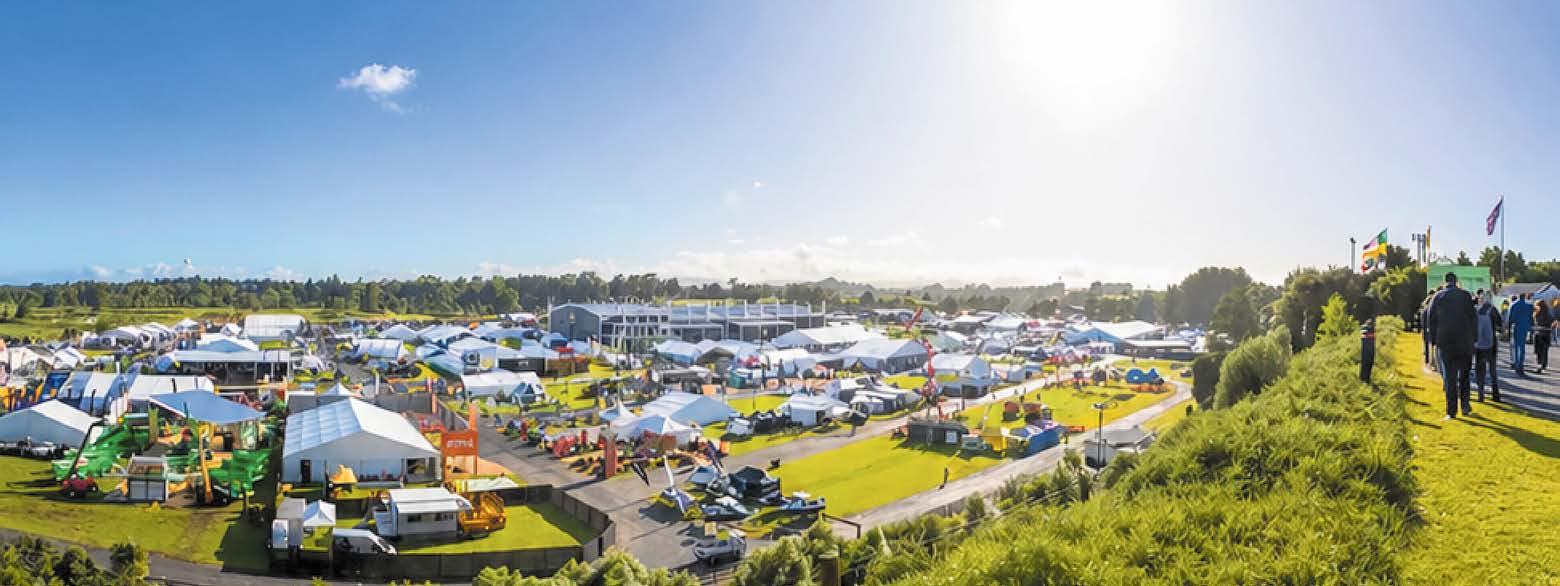
Innovation is the key to National Fieldays’ events, and these centre on a series of hubs that encapsulate the pillars of the event focussing on the rural and thus the national economy.
The future leads off in this account, and that is the new Drone Zone as visitors ‘take flight’ to discover how drones are revolutionising farm management practices, and explore opportunities to engage with industry experts and innovators.
“Whether you’re a seasoned drone professional or a curious enthusiast, the Drone Zone promises an immersive experience that celebrates the forefront of agricultural technology,” says programme manager Steve Chappell.
The Drone Zone, supported by the Agricultural Drone Association (ADA), will showcase the exciting opportunities drones are opening up for agriculture, with the latest technology on display, advice on a range of new drone careers, information on certification and training available and drone demonstrations
Engagement Sessions interactive hub is bustling with activity, as education providers and sector groups collaborate to present career and education pathways to becoming a part of this vital industry. Several engagement sessions are held
daily during the event and are popular among students of all ages.
“Activate the Fieldays Careers and Education Trail layer on the map on the Fieldays App to see all the participating exhibitors that can provide you with information, advice and suggestions that could help you land that perfect career in the food and fibre sector,” says Steve.
“Student tickets are available for $10 each with a promo code. For every 10 student tickets purchased, your group will qualify for one discounted adult oneday ticket at $15, available for teachers or chaperones. To access the code for discounted tickets, please register your school. The Fieldays Hauora Taiwhenua Health and Wellbeing Hub has been set up to help us look after ourselves and family. We recognise the importance of health and wellbeing whether struggling with physical or mental health, get free check-ups, talk to health experts, book health appointments and get information, all in one place.”
Free health checks include hearing, blood sugar levels, hepatitis C, skin cancer
spot checks, blood pressure checks, atrial
checks. Health experts are on hand to answer your questions and concerns — from cardiothoracic surgeons and specialists to a range of health practitioners. It’s a rare chance to hear it straight from the source. This is a onestop shop to book those appointments you have been letting slide. Tap the Fieldays Smart Band with exhibitors to
gather important information and connect with health and wellbeing exhibitors. With one in five people affected by mental illness and addiction each year, there are many of us doing it tough right now. Get information and confidential support from mental health workers. Learn about forestry and wood processing at the Forestry Hub, as a dedicated space where visitors can follow the forestry
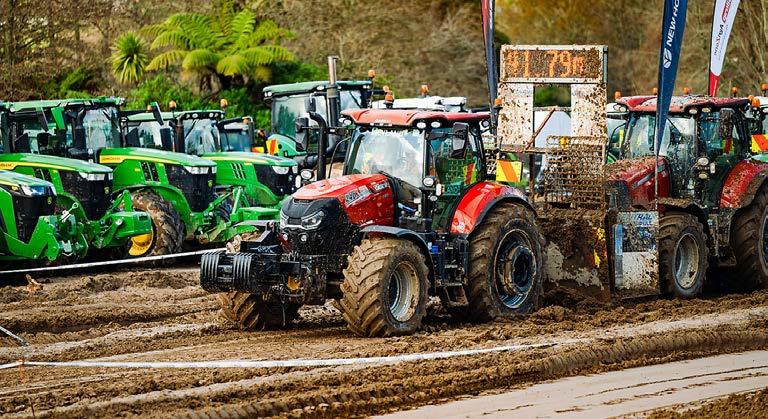
The Tractor Pull is a prime Fieldays’ attraction
fibrillation
lifecycle story exploring the many facets of the forestry and wood processing sector — from seedling to tree, showcasing nursery technology, innovative engineered timber used in mid-rise buildings, to pharmaceuticals, bioenergy and more.
“Forests generate important economic income for the regions, support biodiversity and help in mitigating the effects of climate change. We are excited to show how planting trees — whether native or commercial — can strengthen farms, landscapes and local economies,” says spokesperson Anna Gordon.
Farm Forestry Association president, Peter Davies-Colley, says FFA strongly supports the Fieldays Forestry Hub and has been heavily engaged in its
design and development. The farm forestry section of the hub has experts and practical information available on multiple plantation species, with a focus on redwoods, eucalypts, cypresses, poplar and willow, and radiata pine. Anna Gordon says that the multibillion-dollar forestry sector is a major employer in New Zealand, employing over 35,000 people in both year-round and seasonal jobs.
“People of all ages and abilities can find great careers in this sector — from planting and managing native forests and looking after the forest environment, to managing
people and resources and working with state-of-the-art technology,” says Peter Davies-Colley. Fieldays Rural Advocacy Hub is where all the big conversations about the future of farming happen, and those in the industry have an opportunity to get involved. Federated Farmers and Fieldays are proud to have delivered a one-stop-shop for grassroots farmers to discuss the big issues impacting our rural communities. At least a fifth of parliament’s MPs spoke from the podium, or popped in for a chat, including seven cabinet ministers, at the 2025 event.
THE SHORT DROP LIMITED
Bespoke cow management and nutrition consultancy nationwide
“Farmers need to be actively involved in political decision-making and shaping the future of our sector. Fieldays is the ultimate launch platform for Innovation.” The Fieldays Innovation Awards deliver a global platform for problem-solvers to showcase their innovation to the primary industries, while providing the opportunity to bring in more customers, investors, advisers, media and potential partners in just four days than you’ll find anywhere else. Entries for 2026 have now closed.
Educational Workshops designed for owners, managers, industry reps and vets 1-day Workshops. Topics include; Reproduction, Transition Management, Maximising DMI, Healthy Rumens, Managing Milk Components & more 4-Day Introductory Nutrition and Farm Management Workshop Workshops run according to demand, Register your location and interest today.