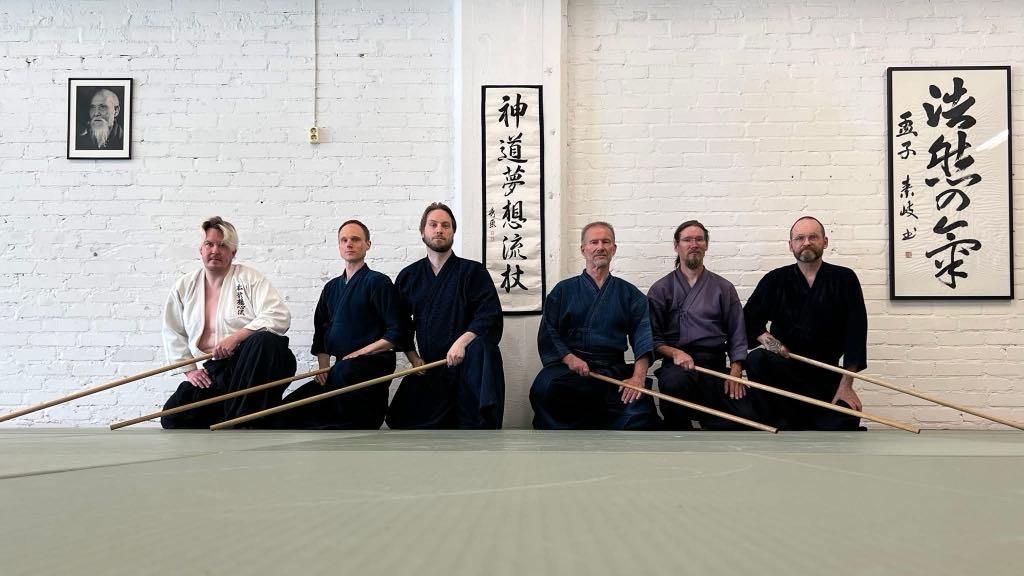

Helsinki Jodokai got started in 2010 shortly after my first visit to Östersund, Sweden. I traveled there alone with the purpose of meeting Michael Söderkvist who was already at that time an official teacher of the EJF. Back in Finland, I didn’t have a place for training or people to train with — only some vague but enthusiastic ideas about how to continue to learn Shinto Muso-ryu jo from Michael and stay connected to the EJF. Gradually things started to work out and I was able to form a group of young people (mostly students) who also wanted to learn traditional jodo. From those days on, the group has been continuously in operation and keeps attracting new people slowly but surely. To celebrate the 15th anniversary of the group and EJF activity in Finland, we invited Michael to Helsinki for a special weekend seminar in June of 2025.
As this was a special anniversary of the club, Helsinki Jodokai members were first and foremost invitees. In addition, we also invited people who had visited Helsinki before for training, were our and Michael-sensei’s close friends, students or colleagues, or were potential future members. We were lucky to have Tim from Sweden join our weekend as he is one of the most senior students of Michael and training with him all the time. As for potential new members, we were able to find someone this way as a person named Hasse joined our weekend seminar and started attending regular sessions right after. Hasse already had a background in traditional budo, which always has its benefits. As Helsinki is ultimately quite a small town and the martial arts scene obviously even smaller, it was not too surprising that we shared a lot in common with our new member. Not only did we share a lot of acquaintances, Hasse told us he lives in the same neighbourhood as one of our members. Also, he was originally from the same exact area of Helsinki as me!
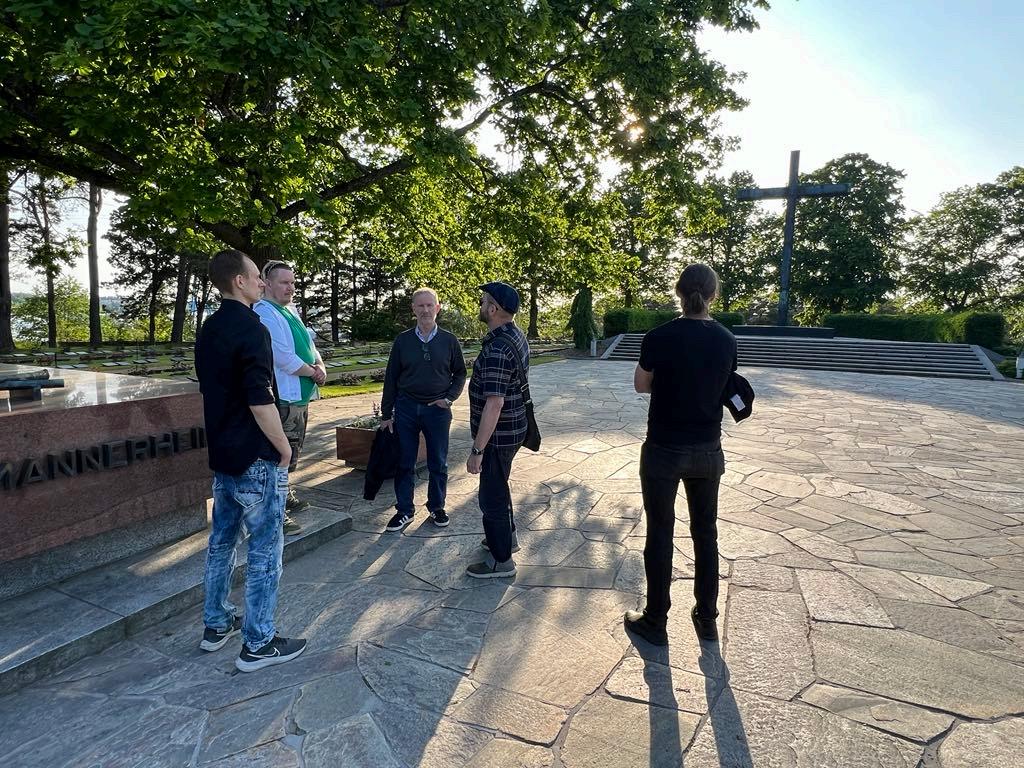
Another thing that made this weekend special was the fact that we incorporated a ”cultural day” type events into our programme. This meant a visit to one of Helsinki’s sights, the Hietaniemi cemetery which is the most culturally and historically significant graveyard of Finland. Getting there was quite easy as it’s located very close to our place of training, the Cable Factory (Kaapelitehdas), and we have actually been driving past it on all our previous weekend seminars. In this cemetery, in addition to common people buried, one can find the graves of eight of Finnish presidents, notable artists, politicians, architechts, engineers, inventors etc. Two tombstones we visited perhaps deserve a special mention: that of the the artist and creator behind the Moomins franchise, Tove Jansson, and that of Finland’s president and field marshal during the second world war, Carl Gustaf Emil Mannerheim, whose tombstone is surrounded by graves of fallen soldiers.
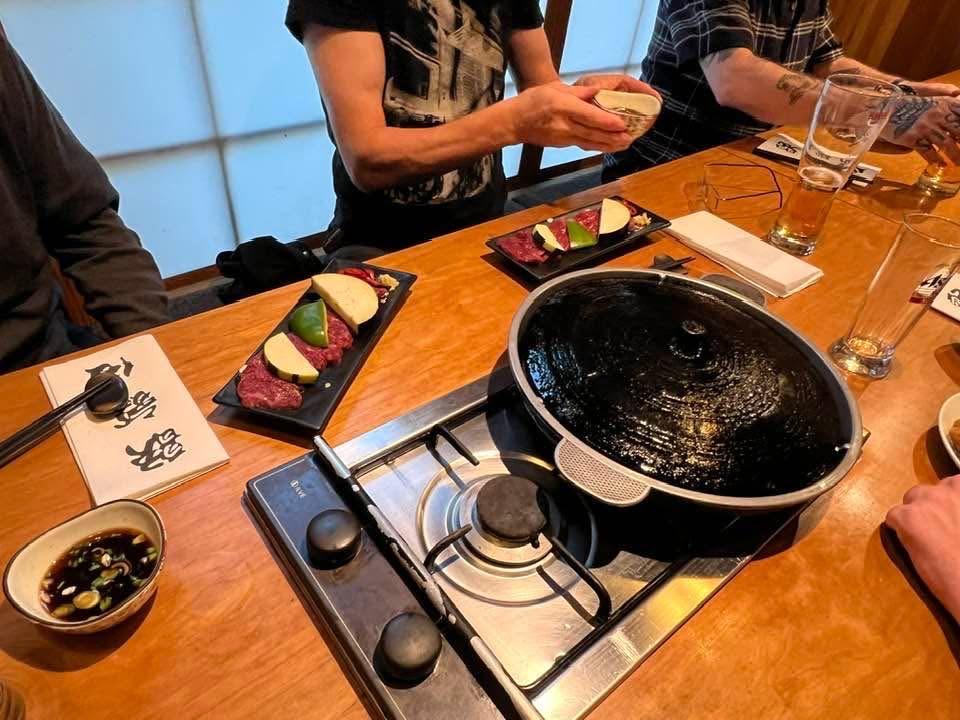
To finish the cultural (and culinaristic) part of the gasshuku, we had a wonderful dinner at Kabuki which is one of the oldest traditional Japanese restaurants in Helsinki and within a walking distance from the Hietaniemi cemetery. In the restaurant I gave a small speech before everyone started eating, thanking our teacher and attendees of the weekend camp. I did not prepare a script, so I just reminisced about our the history of our club and how starting up and managing a little group such as ours always comes with various challenges. Like I said in the speech, group leading in a rare art such as ours sometimes feels like an almost impossible thing to do. Without a solid training parter and dedicated top student, such as my fellow yudansha Henri, keeping the training up to the level it deserves is, in fact, impossible. In addition to my teacher Michael, I owe my gratitude also to Henri and many others who have contributed to the continuity and vitality of Helsinki Jodokai. Keep doing the wonderful work!
As for the technical programme of the gasshuku, I will outline it briefly in this paragraph. On Saturday we started with kihon waza. This meant starting with honte, gyakute and hikiotoshi uchi excercises that were performed on the spot, i.e. just striking without progressing forward across the room. After that, we did the standard kihon tandoku. If I recall correctly, the standard kihon sotai was more or less skipped this time for the more advanced students who instead moved on to Omote. All kata from Omote were practiced, whereas only a few selected ones from Chudan were covered due to time limitations. Chudan training started on Sunday, and it was followed with Kage for those who had advanced into that set. Finally, only a few people were involved with Samidare and Gohon no Midare training which concluded our training on Sunday. After that, there was still a kyu exam held for Antti who passed the exam. My congratulations to him again!
As we were training, it was noted that there are some ”Helsinki habits” that stood out from our techinique. One of these habits was without a doubt a habit of bringing feet together before the shi has finished with his or her osame. Michael wanted us to keep the feet apart and do a horoku as an uchidachi, even by keeping the left foot in front and then bringing the feet together simultaneously with the shi to finish the kata. We will do our best to incorporate this teaching together with other corrections into our technique.
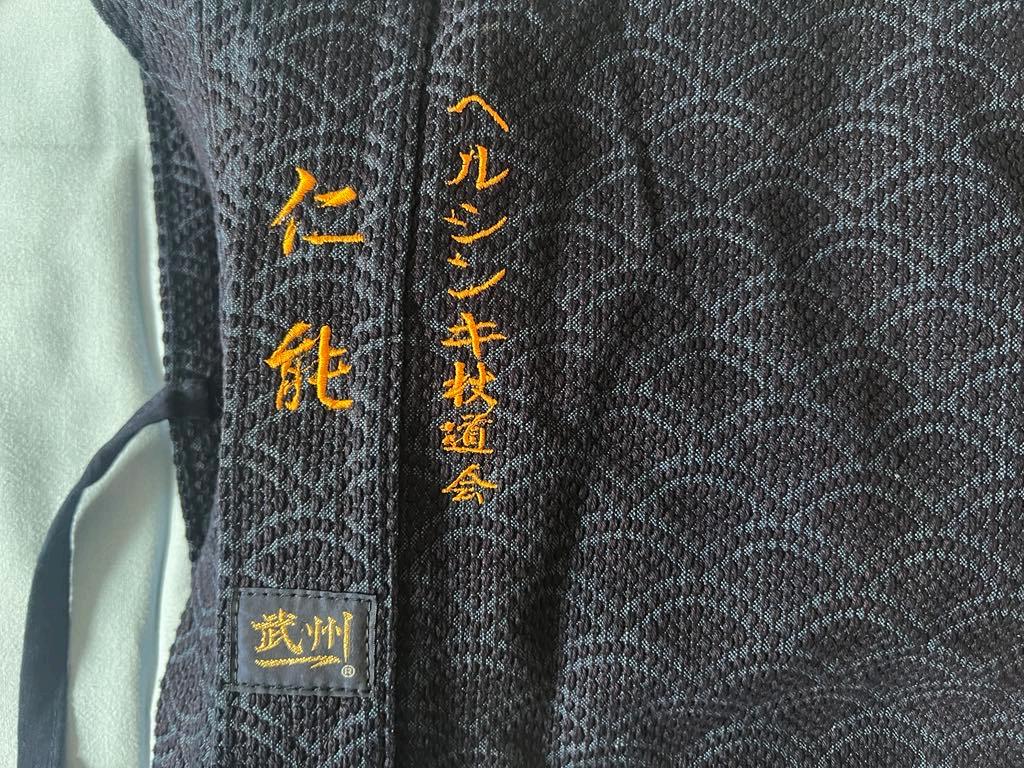
Finally, a few words about gifts that were exchanged. For the past 15 years of successful teacher-student relationship and cooperation, Michael-sensei gave a tanjo that has the true Uchida-ryu shape (canes will become handy as I grow older!) and an absolutely wonderful high-quality keikogi that I’m actually wearing in the group picture. This keikogi has the following characters that were chosen by Michael:
”Jin” (仁): ”refers to compassion benevolence, and love toward others. It is a key concept in Confucianism, emphasizing the importance of living harmoniously with others, showing kindness, and caring for those around us”.
”Nō” (能): ”signifies the ability or skill to accomplish something, excellence in a particular art or technique, and also refers to Noh, the traditional performing art”.
I also had a small gift to give Michael-sensei which was a Finnish ”kuksa” cup. This cup was made by Pentik, a Finnish manufacturer of high quality hand-crafted items.
All in all, we had an excellent weekend. In five years I wish to see everyone back for our 20th anniversary!
Nino Lindström, Helsinki Jodokai