BUILDING WHAT’S NEXT
INAUGURAL WOMEN’S LEADERSHIP FORUM
“BECK EFFECT” MAKES IMPRESSION
BENCH-MARK CLOSING
INAUGURAL WOMEN’S LEADERSHIP FORUM
“BECK EFFECT” MAKES IMPRESSION
BENCH-MARK CLOSING
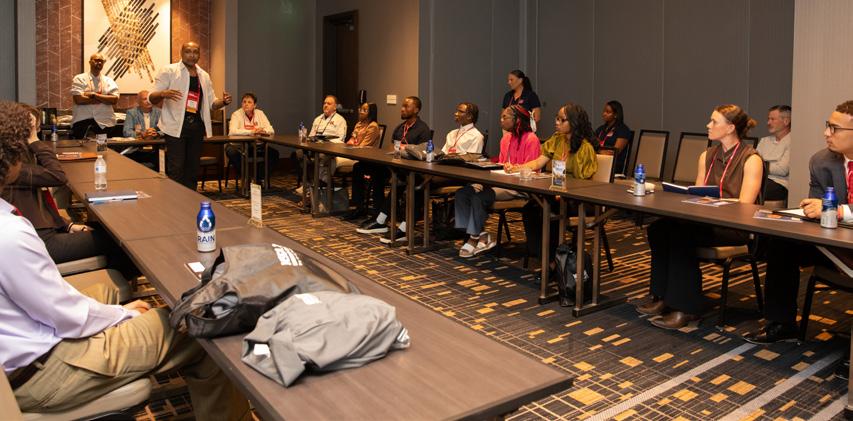
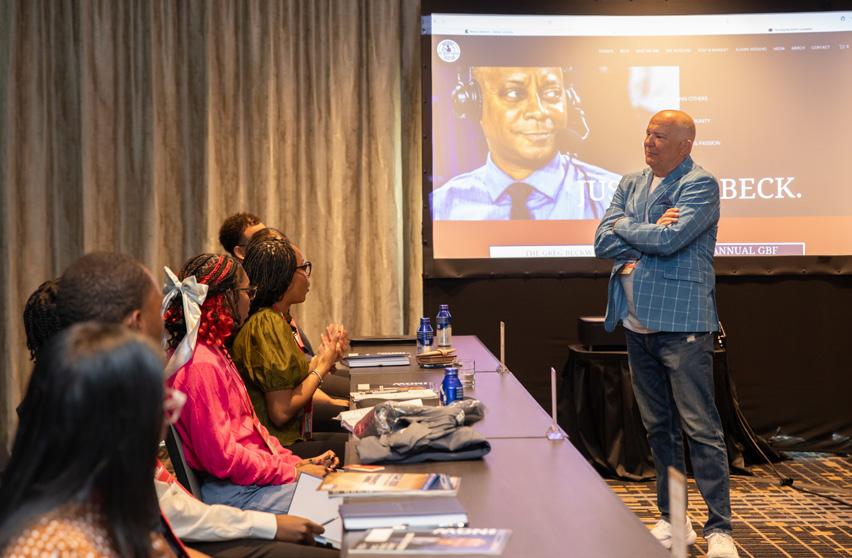
Mike Byers of Starter Uniforms shares some wisdom with the Beckwith Foundation Fellows at their orientation session. Read how the inaugural program went and get a first-person perspective from Fellow Geoffrey Huggins.

8 40

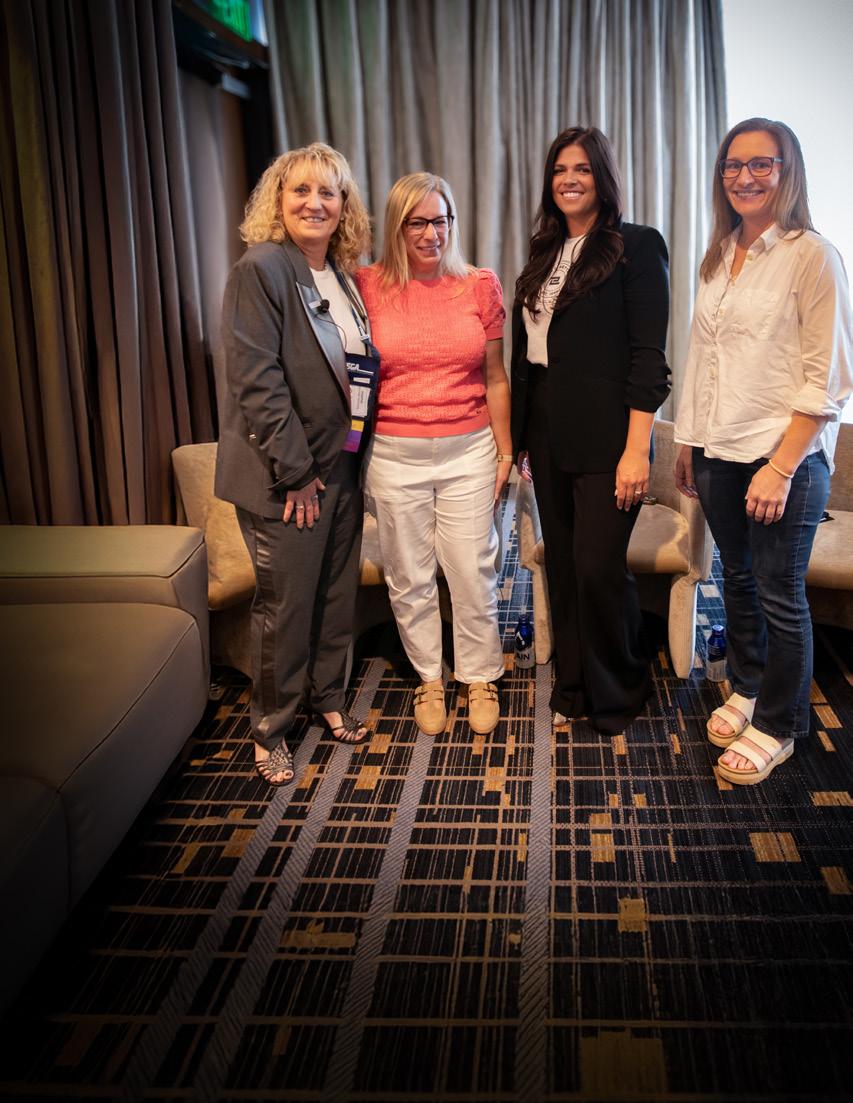
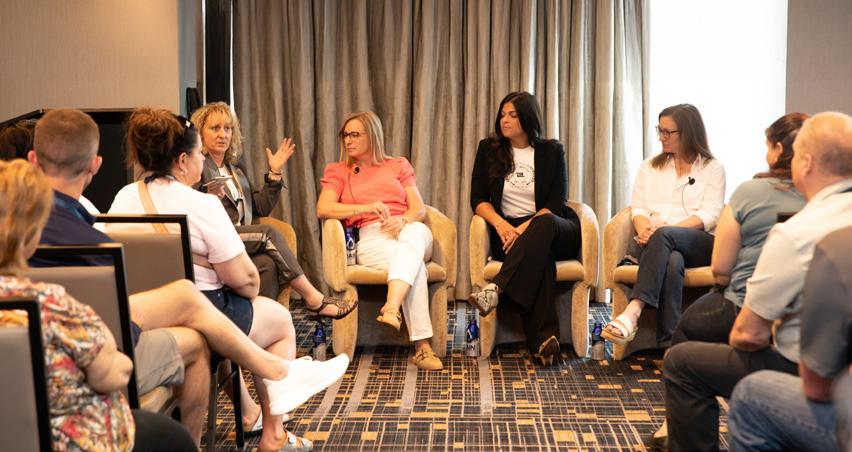
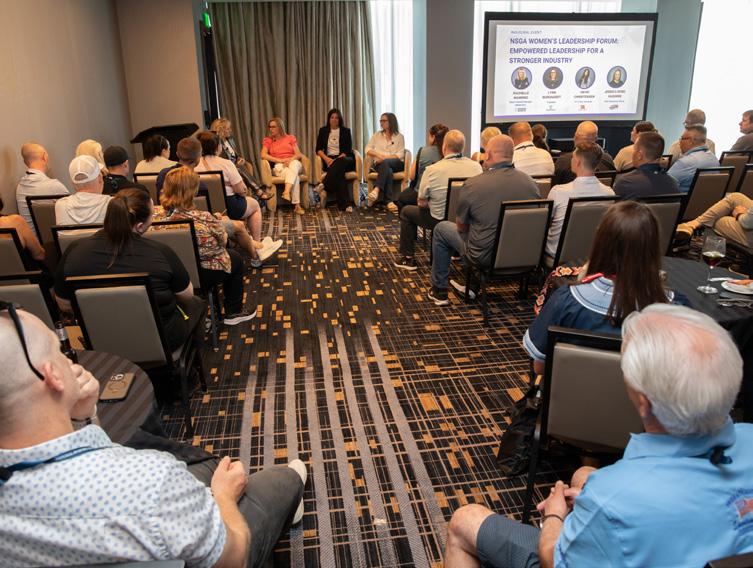
The inaugural Women’s Leadership Forum featured a panel discussion, from left, with moderator Rachelle Manning (SanMar Sports), Jessica Rose-Huggins (Denver Athletic), Devri Christensen (PROLOOK) and Lynn Burghardt (Chipply).
4 CEO NOW Get the Right People On the Bus
6 ASSOCIATION NOW Brad Hause Joins NSGA Board; NBS Celebrates 70th Anniversary
8 INSIGHTS NOW The Power of the Multi-Sport Consumer
12 CONFERENCE NOW Highlighting the Magic of the Leadership Conference in Pictures
20 CONFERENCE NOW Inaugural Women’s Leadership Forum Makes Statement
28 CONFERENCE NOW Athletic Administrators Share Challenges Amidst Changes
30 CONFERENCE NOW Ari Kaplan Takes Deep Dive into Data and Analytics
32 CONFERENCE NOW Baseball Hall of Famer Johnny Bench Shares Wisdom from Playing, Business Careers
34 PRODUCT GUIDE Checking Out Products from NSGA Supporters
40 RETAIL NOW New Tricks and Inventory Control
43 NEWS NOW
Flag Football in the High School, College Spotlight; Alli Sports Announces Merger; Matt Kaplan Joins Game One
47 MEMBER SPOTLIGHT NOW
Give Me Five with Stan and Jennifer Hubbard, Chilly’s Pro Shop
We have all taken our share of bus rides throughout our lives.
Most of them were likely trips to and from school or athletic contests. There may have been some for work and even a few rides for fun. In almost all of these instances you were getting on the bus with whoever was on board. You didn’t get to pick and choose who was along for the ride.
As leaders we can determine how to get the right people on the bus route toward success. This was one of the key tenets of “Good to Great: Why Some Companies Make the Leap… and Others Don’t,” a 2001 bestselling book by Jim Collins about leadership and management.
The right people on your bus can come from anywhere. It’s why we were excited about two new components to the NSGA 2026 Leadership Conference on May 17–19 in Nashville.
The inaugural Women’s Leadership Forum was an opportunity for four women leaders in our industry to share their stories and challenges on their career paths during a panel discussion. You can read more of the details in a story on page 20 of this issue of NSGA NOW
Flag football and wrestling are among the areas of increasing interest and growth by girls/ women in high school and college. Understanding the different needs for girls and women in apparel, uniforms, footwear and equipment is
crucial because the days of “pink it and shrink it” are over. Customer expectations for girls and women’s sports are not what they used to be and it’s important to have people on your bus who get that concept.
The inaugural Greg Beckwith Foundation Fellows Program highlighted the importance of bringing new riders on the bus. Infusing youth into our industry has long been a concern and you can learn more about how the “Beck Effect” and the vision of the late Greg Beckwith impacted this year’s Leadership Conference on page 22 of this issue.
The Beckwith Fellows received a fantastic first-hand look at all the different possibilities for a career in our industry. The good news is we’ve already heard there are Beckwith Fellows who are seeing doors open to potential job and internship opportunities.
Doors that are opening on the proverbial bus. The one where Collins said it’s more important to have the right people on it than to be completely sure if you are headed in the right direction.
Because even though there will be obstacles and detours, a bus filled with the people you need and want is destined to stay on a route to prosperity.

CHAIRMAN OF THE BOARD
GORDON GEIGER
Geiger’s, Lakewood, OH
TREASURER/CHAIRMAN-ELECT
BOB FAWLEY
Capitol Varsity Sports, Oxford, OH
PAST CHAIRMAN
PAT DONNELLEY Twin Falls, ID
BOARD OF DIRECTORS
JOHN DAVENPORT
Play It Again Sports, Minneapolis, MN
BRAD HAUSE
Sports Distributors of Canada Burlington, Ontario, Canada
COLE JOHNSON
Johnson-Lambe Sporting Goods
Raleigh, NC
JUSTIN MILLER
Scholastic Sports Sales, Manlius, NY
JESSICA ROSE-HUGGINS
Denver Athletic Supply, Englewood, CO
RON RUGAL
B&R Sporting Goods, Shelby Charter Township, MI
JOHN SCIPIO
SV Sports, Pottstown, PA
NSGA TEAM LEADERS
MATT CARLSON
President & CEO
HAYLEY FANSLER
Director, Business Development
MARTY MACIASZEK
Director, Team Dealer Division, Communications
JULIE PITTS
Director, Public Affairs and President, NSSRA
NICK RIGITANO Director, Insights and Analysis
JENNIFER SHAFFER Chief Financial Officer
Best regards,
MATT CARLSON PRESIDENT & CEO
NSGA NOW (ISSN 1045-2087) is published bi-monthly for members of the National Sporting Goods Association, 3041 Woodcreek Drive, Suite 210, Downers Grove, IL 60515. Phone: (847) 296-NSGA (6742). Subscription price of $50 per year is included in membership fee. Non-member subscription information available from publisher. Periodical postage paid at Downers Grove, IL 60515 and additional mailing offices. POSTMASTER: Send address changes to NSGA NOW,® 3041 Woodcreek Drive, Suite 210, Downers Grove, IL 60515. © NSGA 2026 all rights reserved. Printed in the USA.

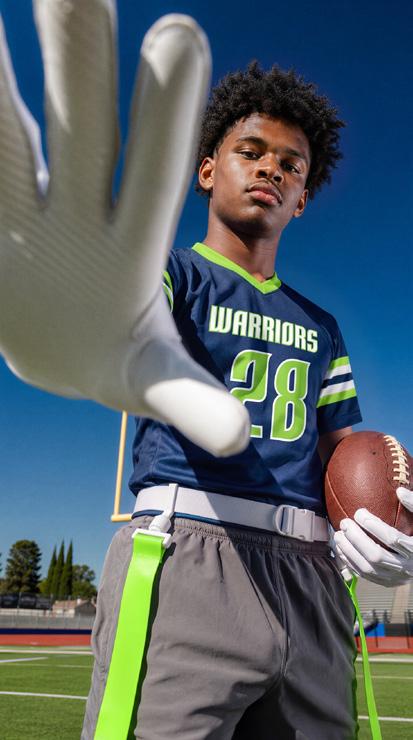
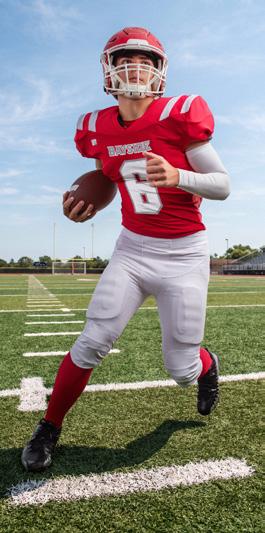

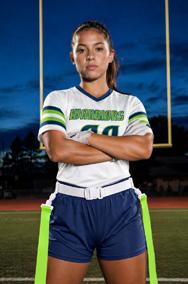
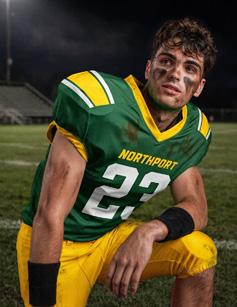
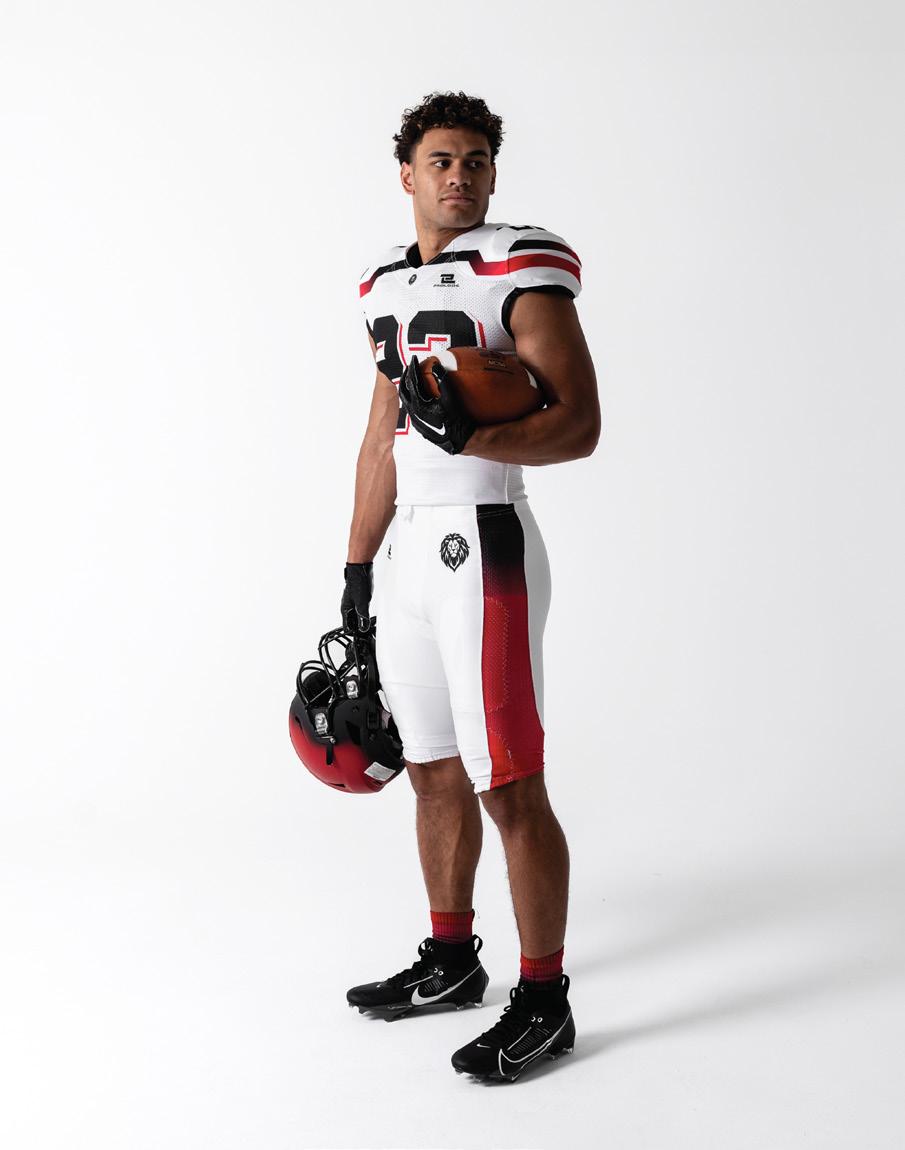
Built for every version of the game, Momentec Brands offers premium football uniform options for tackle and flag. Choose from our range of stock uniform styles or go full custom with Momentec Sublimation. The play call is yours!
The National Sporting Goods Association (NSGA) made a change to its Board of Directors with the appointment of Brad Hause of Sports Distributors of Canada (SDC) in Burlington, Ontario, Canada to an At-Large Board position. Hause started his three-year term on the Board on June 1.
Hause is the President of SDC, one of North America’s leading sporting goods buying groups which operates under the banner of Source for Sports. SDC represents more than 250 independently owned full-line and ice hockey retailers in Canada and the United States.
“We are looking forward to having Brad share his expertise and enthusiasm with the NSGA Board,” said Matt Carlson, NSGA President and CEO. “He will be an excellent fit with his understanding of the industry in Canada and the U.S. and what he continues to accomplish with Sports Distributors of Canada.”
Hause and his team has led SDC’s growth and transformation during his 15-year tenure as president. This includes its expansion into the U.S. through its collaboration with NSGA and its Hockey Dealers Association division that began in 2013. SDC has also developed a highly successful digital and e-commerce platform to help
independent retailers strengthen their position in an evolving marketplace.
Hause started his sporting goods career on the sales floor of a Source for Sports store where he sold skis before advancing into a buying role. After earning his MBA from the Ivey Business School of Western University in Ontario, he spent 11 years with SC Johnson in sales and marketing roles in Canada and the United States.
He currently serves as Chairman of the Canadian Sporting Goods Association (CSGA), bringing a perspective shaped by leadership experience across retail, consumer products, digital commerce and industry associations. Hause also served on the Sporting Goods Industry Hall of Fame Committee from 2020–22.
“The sporting goods industry has given me tremendous opportunities throughout my career, from my early days on the retail sales floor to the leadership roles I hold today,” Hause said.
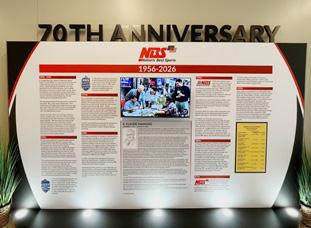
Nation’s Best Sports (NBS) recognized its 70th anniversary with a special display at its Summer Market on June 1–3 in Allen, Texas. The display took a detailed look at the history of NBS and founder E. Claude Manning, who is a member of the Sporting Goods Industry Hall of Fame. If you have a special milestone you would like to share with NSGA please contact Marty Maciaszek, Director of Communications, at mmaciaszek@nsga.org.
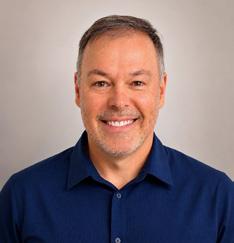
“What continues to inspire me is the vital role our industry plays in helping people lead active, healthy, and connected lives. I look forward to working with industry leaders on the NSGA Board and across North America to ensure the long-term growth and success of our industry.”
Hause replaces Kevin Bezanson, the President of Cleve’s Source for Sports, who served the maximum of three three-year terms on the NSGA Board. Cole Johnson (Johnson-Lambe Sporting Goods) and Ron Rugal (B&R Sporting Goods) were reappointed for three-year terms.
“We can’t thank Kevin enough for the time he devoted to supporting NSGA and the sporting goods industry,” Carlson said. “Kevin was an engaging and enthusiastic contributor during some of the most challenging times in our industry and we appreciate the impact he made with the NSGA Board.”

BY NICK RIGITANO
Did you know that 42 percent of flag football participants play soccer?
Or that pickleball players are more likely to engage in table tennis?
While tracking a single sport is helpful, examining cross participation data can uncover added value in the form of new cross-promotional and category adjacency opportunities for your business.
According to NSGA’s 2026 Sports Participation study, 81 percent of the active population (defined as those who participated in at least one sport/activity tracked by NSGA during the given calendar year) participate in multiple sports/ activities. NSGA’s Cross Participation report sheds light on those additional sports.
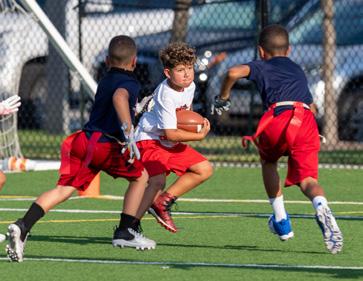
When people hear the term “three-sport athlete” in reference to boys’ sports, many automatically think of someone who plays tackle football during the fall season, basketball in winter and baseball in the spring. For girls, it might be some combination of soccer, basketball, softball or volleyball.
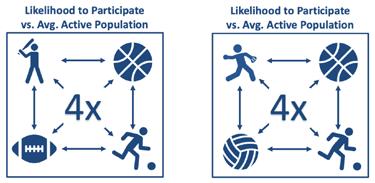
Figure 1 shows there is some truth to this conventional wisdom as baseball participants are at least 4 times more likely to participate in basketball, soccer, or any form of football (tackle, flag, touch) than compared to the average active population. In fact, this finding holds true for any combination of these four sports. After swapping out baseball for softball and volleyball for football, we again find that any combination of these four sports provides 4-times the likelihood of participating than compared to the average active population.
Another example of conventional wisdom pairing two sports together is golf and tennis. Visit a private golf club and you are likely to see tennis courts somewhere on the grounds. Specialty golf retailer PGA TOUR Superstore even carries tennis equipment, footwear and apparel products in their stores.
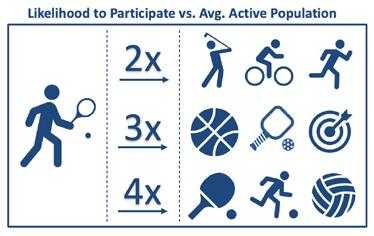
Once again, there is some truth to this traditional line of thinking as 30 percent of tennis participants also played golf in 2025 and were twice as likely to participate in the sport than the average active population (Figure 2).
Bicycle riding and running/jogging were also on the same 2-times level as golf. Further analysis of cross participation data, however, reveals that tennis participants were 3 times more likely to participate in sports like basketball, pickleball or dart throwing and 4 times more likely to participate in table tennis, soccer and volleyball.
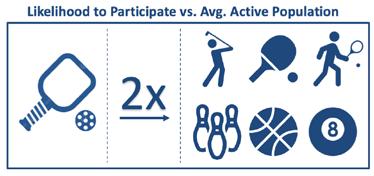
And what about the sport your local park district or rec center has likely made room for in the past 4 years? Using the same indicators as above, additional sports that pop for pickleball include golf, table tennis, tennis, bowling, basketball and billiards/pool. Each of them has at least 24 percent of pickleball participants playing that activity and each more than 2 times more likely to participate than the average active population (Figure 3).
These findings open the door to numerous promotional and customer service opportunities with which to experiment. For example, could it make sense to offer a special “multisport discount” to encourage customers to buy multiple items across multiple sports? Also, are your sales reps asking customers what additional sports they are playing for the upcoming school year?
Of course, the right combination of offerings, merchandising placement and promotions will differ depending on your local market, but utilizing cross participation data can provide the spark needed to try something new.
NSGA offers 40+ years of insights on sports participation across 61 sports, shopper behavior and industry trends through research reports and brand ratings.

Scan the QR code to learn more.
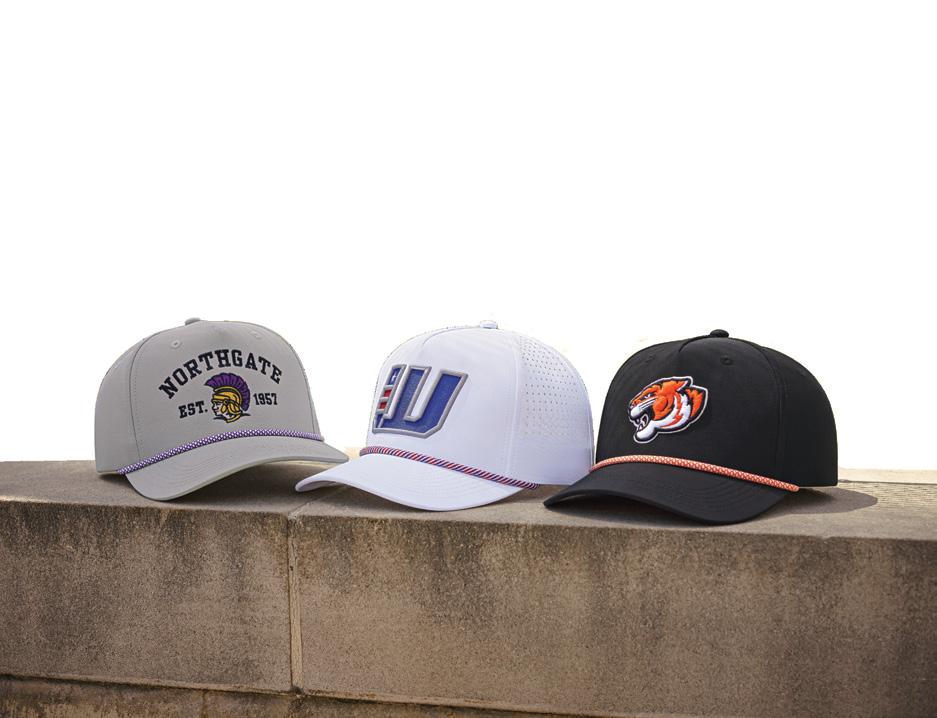


















Send orders directly to decoration partners without leaving your workflow. Scale your capacity, take on more clients, and choose what to decorate in-house and what to outsource, all from within Chipply.
B U I L T F O R T H E W A Y Y O U W O R K
EXPAND YOUR CAPABILITIES
Offer more decoration methods without investing in new equipment or hiring additional staff.
Decide item by item, order by order, what gets decorated inhouse and what gets outsourced.
Route overflow production to a trusted partner during your busiest seasons without missing a deadline.
Nothing changes for you or your customers you simply have more capabilities powering your stores.

Ready to unlock more capabilities?
Scan or click the QR code to connect with the Chipply team and get started today


>> The pool deck at the Grand Hyatt in Nashville was a picturesque setting for the NSGA 2026 Leadership Conference Welcome Reception sponsored by Platinum Supporter OrderMyGear.
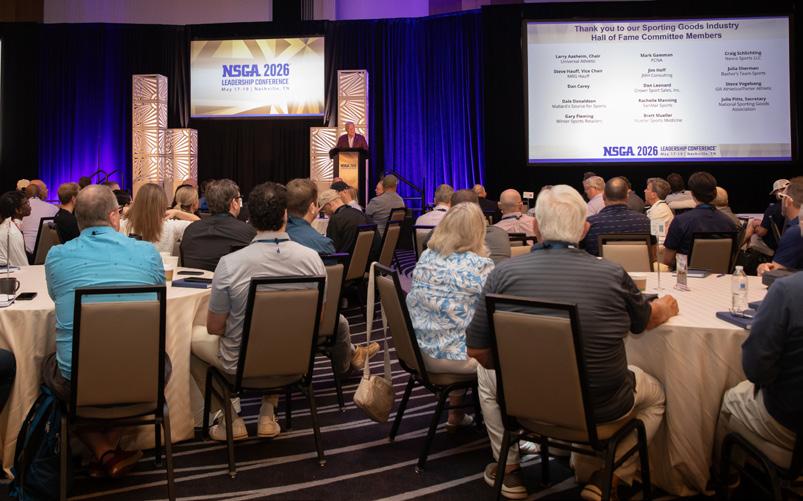
>> Gordon Geiger, NSGA Board Chairman and co-owner of Geiger’s in suburban Cleveland, welcomed attendees to the Leadership Conference on Monday morning.

>> Many attendees took advantage of the opportunity to unwind after a busy Monday at the afternoon reception sponsored by Platinum Supporter PROLOOK.
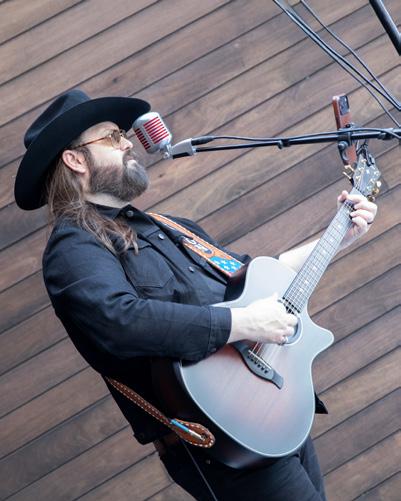
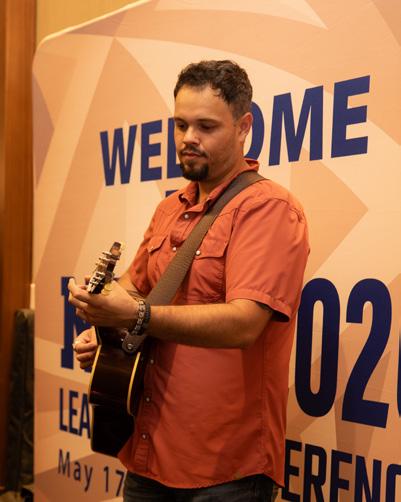
>> The music played in Music City at the Sunday and Monday receptions with local Country talent

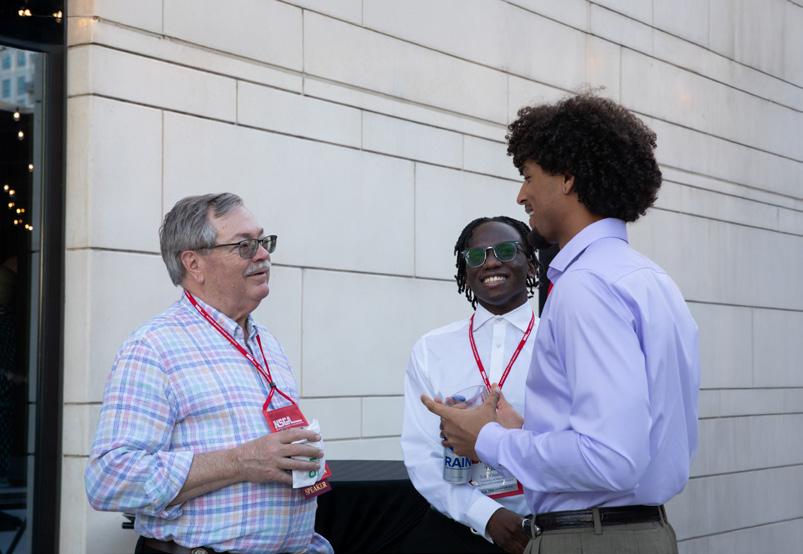
>> From left, Don Leonard, President of Crown Sport Sales, talks with Beckwith Foundation fellows Tobi Oladitan (University of Maryland) and Nathan Watson (Auburn University). Leonard is retiring after more than 40 years in the sporting goods industry.
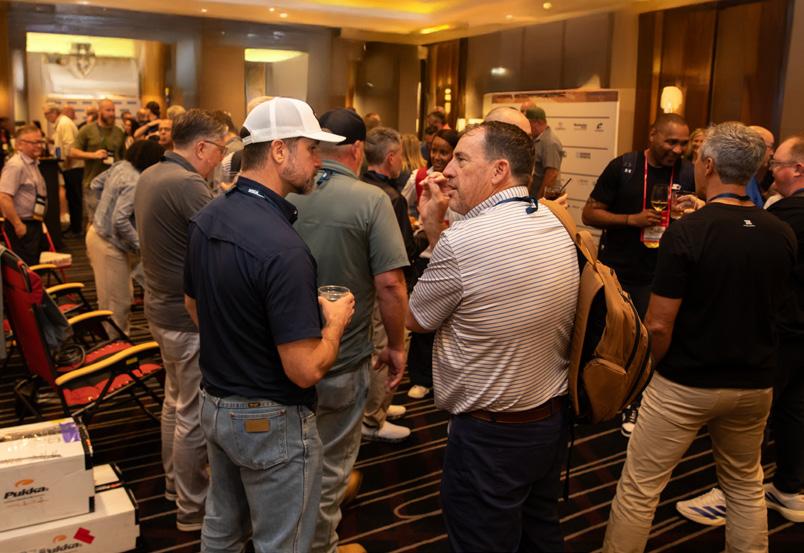
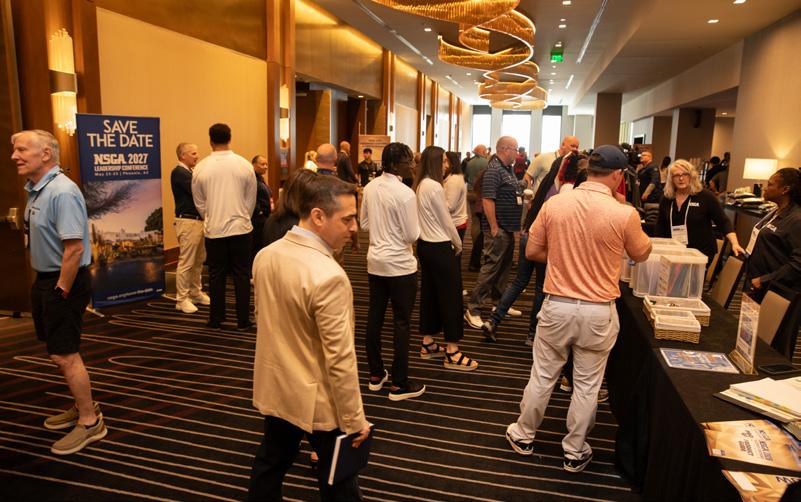
>> The networking breaks are always a great way to catch up with attendees at the Leadership Conference.
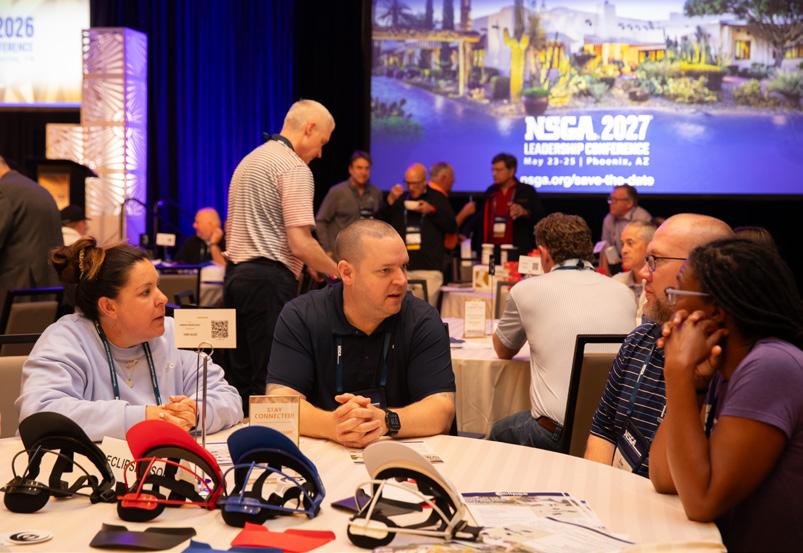
>> From left, Kyley and Matt Wilcott of MVP Athletic Supplies meet with Eclipse Visor’s Joe and Leslie Hayes during Speed Networking. Eclipse Visor was a firsttime participant with a visor that magnetically attaches to a softball fielder’s mask.
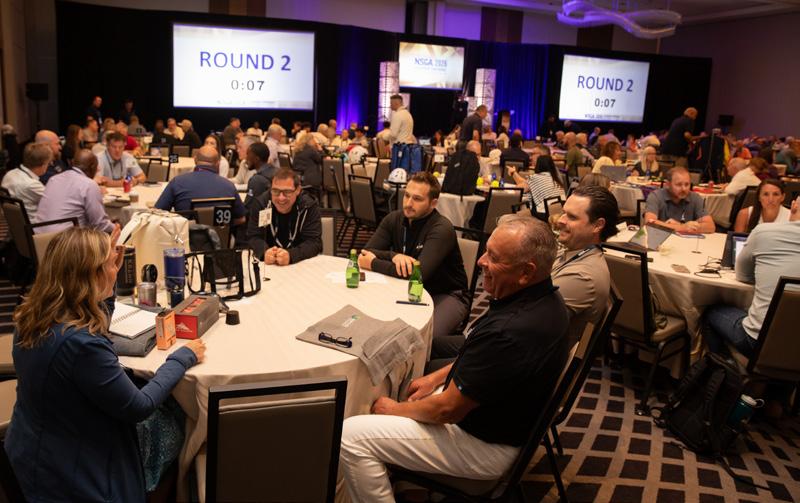
>> Kimberly Stunkel of PCNA has a Speed Networking discussion with, from left, hockey retailers Allen Van Valkenburg (Rinkside Sports) and John Merola, Austin Rugal and Ron Rugal of B&R Sporting Goods.
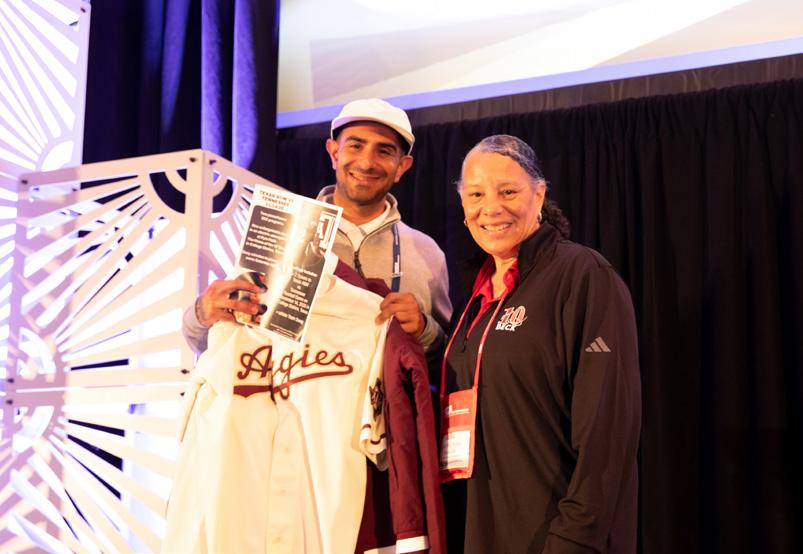
>> Mario Salazar (Pro Sports Equip) won the raffle for two tickets to a Tennessee-Texas A&M football game and some Texas A&M swag to support the Beckwith Foundation. Julie McClellan Beckwith, the wife of the late Greg Beckwith, made the presentation.
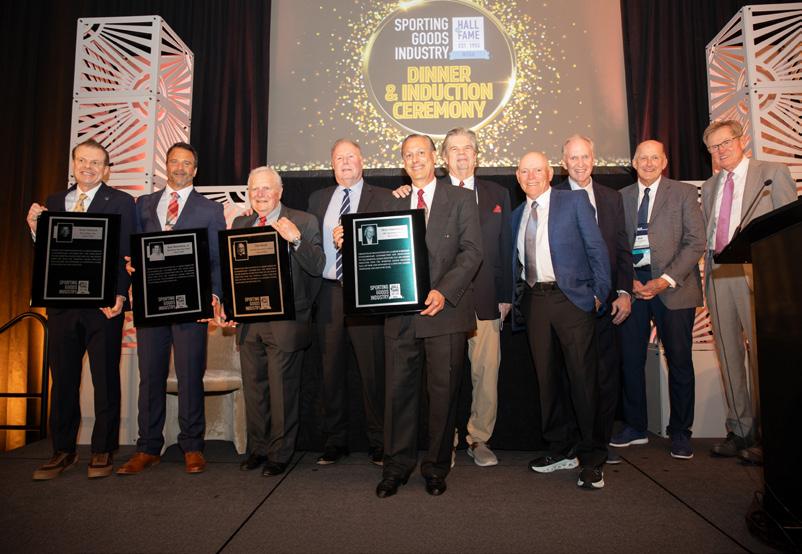
>> The new members of the Sporting Goods Industry Hall of Fame Class of 2026 got together with previous inductees after the ceremony. From left are, Scott Hedrick (Pro Athlete), Sammy Barcelona (nephew of the late Sam Barcelona, Barcelona Sporting Goods), Tim Boyle (Columbia Sportswear Company), Mike Thompson (Rawlings), David Finkelstein (son of the late Mort Finkelstein, MC Sporting Goods), Jeff Lynn (Dunham’s Sports), Larry Aasheim (Universal Athletic), Chris Considine (Wilson), Bob Dickman (BSN Sports) and Bill Hunt (CHAMPRO).
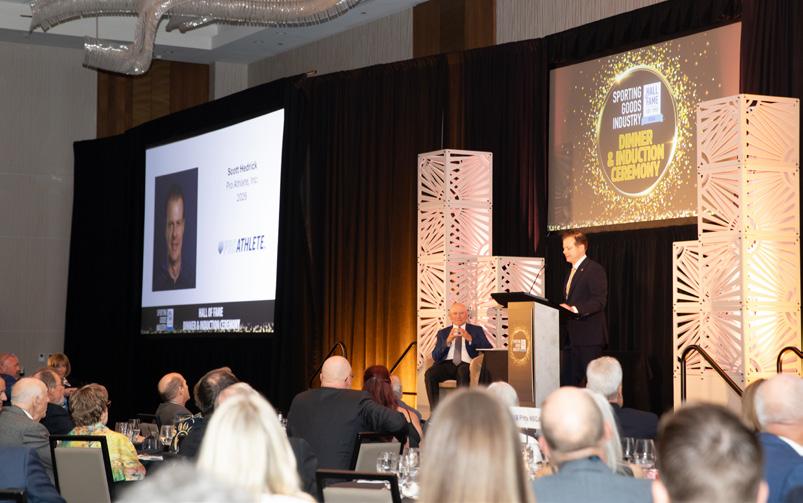
>> Scott Hedrick of Pro Athlete gives his remarks during his induction with the Class of 2026 into the Sporting Goods Industry Hall of Fame.

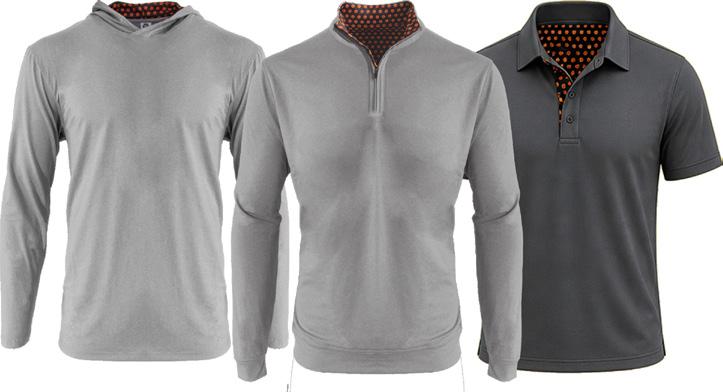
Make every detail part of the design. Sublimated trim brings custom color and pattern into everyday apparel for a more polished finish.

Custom color and pattern for collars, plackets, and inner details.






BY NICK VLAHOS
Who knew a white neck on a girls-sports jersey might not be a good idea because makeup might stain it?
Devri Christensen did.
There’s a similar reason she won’t buy white athletic pants for her son.
“I’m the one washing the uniforms,” Christensen said. “They won’t come clean.”
Laundry lessons were among items Christensen and three fellow female panelists cited during the first Women’s Leadership Forum held Sunday afternoon at the NSGA 2026 Leadership Conference. The panelists have ascended to leadership positions within the industry.
Included in that category were Christensen, vice president of key accounts at PROLOOK; Jessica RoseHuggins, COO of Denver Athletic; and moderator Rachelle Manning, senior channel manager for SanMar Sports.
The fourth panelist was Lynn Burghardt, president of Chipply, an online-store platform born out of Burghardt Sporting Goods, a longstanding retailer in the industry.
The women are among a relatively small group. According to figures Manning provided, 24 percent of executive-leadership jobs in the sporting-goods industry are held by women. CEOs represent 8 percent. But those numbers are higher than they were 10 years ago (17 and 4 percent, respectively).
“I can name a time in my career when I was one of two women in the room,” Rose-Huggins said. “Now look.”
Judging from a look around the packed Grand Hyatt Nashville conference room where the forum was held, womens’ presence was felt.
Among attendees was national sports columnist and author Christine Brennan, the Leadership Conference’s opening keynote speaker.
“Progress is being made,” Rose-Huggins said. “It’s probably happening a lot slower than it should, but it’s happening.”
Progress toward creating this NSGA forum took time, according to Manning. She had been asking the organization to inaugurate a women-centric event, but she admitted it probably didn’t make much sense a decade-and-ahalf ago.
Recent developments in several aspects of women’s athletics appeared to change the calculus. Manning mentioned increased television viewership, expansion of professional leagues, the gold-medal success of the U.S. Olympic women’s hockey team and emerging popularity of flag football at the high school level.
“I think just from a participating aspect, it’s grown,” Manning said.
Panelists detailed their journeys to leadership positions in their chosen profession. A common theme of their early experiences appeared to be not realizing what sporting-goods career possibilities existed.
“I went to school for art,” Christensen said. “I had no clue that would transfer into uniform design.”
That unintentional mindset is something Manning would like to help correct.
“I think our job as industry leaders is to promote the fact that there is a career for these high school and college students,” Manning said. “Everybody knows (they) can be a nurse or a doctor or a
lawyer. They don’t know there’s a possibility to be an executive or a business owner in the sporting-goods industry.
“I think one of the biggest hurdles we all face is how do we make this industry a career path and not just a job.”
Manning made it clear that career path should not necessarily be made easier or preferential for women. Overall goals should include erasing gender bias and growing the industry overall.
“I never thought of myself as, ‘Oh, I’m a woman in the industry,’” said Manning, who played college basketball and softball. “I’m passionate about sports, I want to be involved in sports, so how do I have a career in sports?’ It wasn’t, ‘Oh, I’m a woman, I’m going to do this because nobody’s doing it.’
“I don’t ever want to be a DEI. I want to be hired because I’m the best person qualified for the job.”
Increasingly, those best people have been women. The crowd for the initial Women’s Leadership Forum might warrant a bigger meeting room for the 2027 edition, Manning suggested.
That appeared to sound good to Burghardt and her fellow panelists, who with this event blazed yet another trail.
“I just think people are used to what they’re used to. Habits are hard to break, and change is really hard,” Burghardt said. “I think it’s important for women to stand their ground and be confident, even if you don’t feel so confident. Because eventually, you will be.”
>> Kendall Whitley of S&S listens to a question from one of the Beckwith Foundation fellows during the Sunday afternoon orientation session.
BY NICK VLAHOS
Greg Beckwith mentored Mike Byers in his sporting goods career. In memory of Beckwith, Byers became a mentor, too.
Byers was among the professionals who helped shepherd the 10 current or recent college students who formed the first class of The Greg Beckwith Foundation Fellows Program. It debuted at the NSGA 2026 Leadership Conference in Nashville, Tennessee.
The NSGA collaborates with the foundation in helping minority students in particular gain first-hand exposure to the sporting goods industry. Byers, a national sales manager for Starter Team Athletics, saw his fellows-program
participation as a way to repay what Beckwith did for him.
A sporting goods executive who also played for and broadcast basketball at the University of Richmond, Beckwith was 60 when he died unexpectedly in May 2024. Byers met Beckwith about five years ago.
“He actually gave me confidence I could have success in this business,” Byers said. “He mentored me and he poured into me when it didn’t benefit him. In some
instances, we were competitors, but he always wanted to see me successful.
“We need more people like that, and I feel like I have an obligation to carry that on.”
Kendall Whitley feels the same way. He’s doing the same job Beckwith did at the time of his death -- vice president of team sales for S&S. Whitley and “Beck” spent 15 years working together at adidas and were friends longer than that. The fellows program, with good friends of Whitley as mentors, was Whitley’s idea. Kind of a crazy one, Whitley admitted.
“Sometimes I wonder why I did it,” he said with a laugh. “We wanted to have some sort of giveback. And we just didn’t want to raise money and donate it to a bunch of different charities. I felt like our industry probably needs to reflect a little bit more of society than what we currently are doing.
“Our goal is the next four or five years, we bring 10–15 really qualified young people. They’re the next ‘Becks.’ This is our first planting of seeds of the trees. And we hope that we get some good fruit from it at some point.”
Daniel Sellers might be an example of what Whitley was describing. The incoming Richmond junior is part of the
inaugural fellows class. So is Beckwith’s daughter, Virginia Commonwealth University graduate Brittany Beckwith. Her mother, Julie, attended the leadership conference, too.
A native of suburban Pittsburgh, Sellers is majoring in finance. He is a defensive lineman for the Richmond football team and intends to go to graduate school to pursue a master’s degree in business administration. His experience at the Leadership Conference appears to have been eye-opening.
“I never really thought about this as an option, so I’m glad my knowledge base of this is growing,” Sellers said about a possible sporting goods career.
“I’m more aware of what this industry has to offer.
“Everybody that told me to come to this all knew Mr. Beckwith very well. I’m excited to be carrying on his legacy.”
Words like Sellers’ are exactly what Byers and Whitley want to hear. Although both men certainly would prefer Beckwith still were here.
“He was my brother, my best friend, everything,” Whitley said. “We talked every day, and that void has been massive. I’m a little untethered at times, so this keeps you kind of focused on something.”
Said Byers: “The only thing I really hate about mine and Beck’s relationship is I didn’t have him longer.”
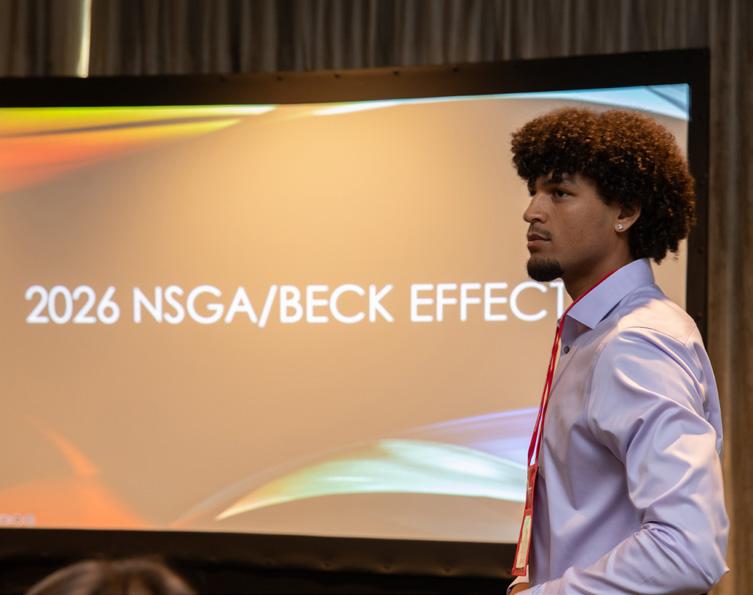
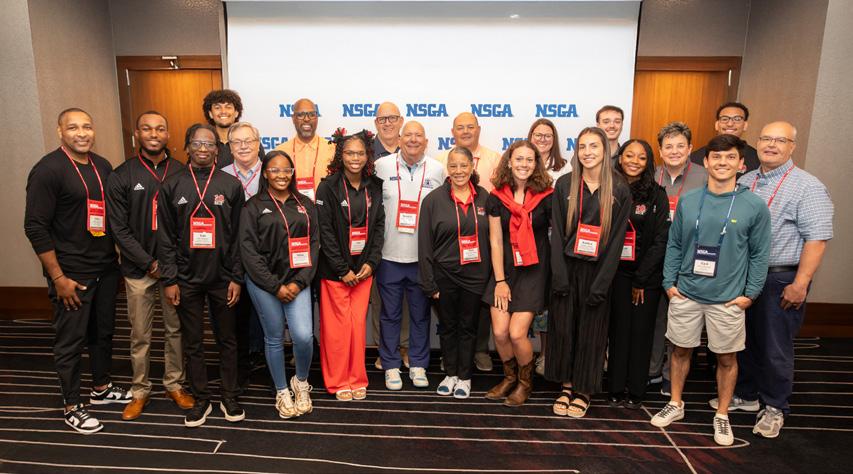
>> The first group of Beckwith Foundation fellows and mentors at the NSGA 2026 Leadership Conference.
Geoffrey Huggins of Georgia Southern University was part of a historic group of 10 students who attended the NSGA 2026 Leadership Conference through the Greg Beckwith Foundation Fellows Program. The “Beck Effect” honors the legacy of industry veteran Greg Beckwith, who passed away a few days after the 2024 Leadership Conference, and his goal of injecting more youth and diversity into the sporting goods industry.
Huggins, who is an aspiring sports journalist, wrote about his experiences and other Beckwith Foundation Fellows Program participants and mentors in this first-person account.
My name is Geoffrey Huggins and I had the privilege of being one of the inaugural fellows of the Greg Beckwith Foundation Fellows Program at the NSGA 2026 Leadership Conference. I learned a lot about Mr. Greg Beckwith through my research of the Greg Beckwith Foundation, but after my experience with the fellowship program, I developed a new respect and admiration for the legacy that he and his family have established.
There were 10 fellows who participated in the mentorship program and I think all 10 of us can agree that this experience was both fun and educational. Each of us was assigned a mentor, but it felt like we each had 10 mentors as they helped all of us in some capacity. They made sure we were comfortable and had everything we needed to make this experience successful. Julie McClellan Beckwith, who was Greg’s wife, and longtime friend
Kendall Whitley of S&S were amazing and made it clear the impact Greg Beckwith had on every individual he met and the effect he has on others — the will to help somebody in any way possible.
The first evening, I can say I was nervous coming in. I’m going to be in a hotel with nobody I know and I don’t really know how I’m going to make the connections I need. But I became comfortable quickly.
John Scipio of SV Sports and Mike Byers of Starter Uniforms were two of the mentors and what they said in their introductions to us during our orientation session truly stuck with me. Byers saying “you get what you put in” really resonated with me. It made me think
I’m not going to get these connections handed to me, which means I must get out of my shell and go handle business. Scipio said, “flex your passion” and that helped me start new conversations and open up about myself. Even if the people I would talk to didn’t work in an area of the field I was interested in, I still told them what I’m passionate about and they were willing to help me get one step closer to where I want to be. For me, that passion is becoming a sports journalist and working in sports media. Getting the opportunity to share this experience with you is because the kind people at NSGA helped me with this opportunity after listening to my passion.
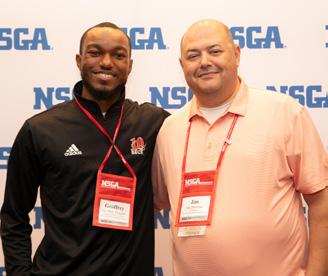
My mentor was Jim Dusbiber of CHAMPRO and he was extremely helpful in making my time in Nashville an easy one. He made sure that when I left Nashville, I could say that I got everything out of it I put in. He literally came to check in after every session, meal, presentation — everything. He was present.
During the first night at the welcome reception, Jim introduced me to almost everyone he knew. These interactions really allowed me to get out of my shell, and I was able to make a few good connections. The next day, we participated in NSGA’s Speed Networking event, and it was very educational.
Basically, I felt as though I was participating in multiple business meetings. I had the opportunity to see what it was like from both sides of the table.
Even in business, at times, you can see the “Beck Effect” flowing through the room. Dusbiber is the Vice President of New Business Development for CHAMPRO, the company I interacted with for the event. During each meeting, one would hear, “What can I do to help you?” or “Is there anything you recommend we need to become better?” Everybody was willing to help and receive feedback to become better. Everybody wants everybody to be great.
The “Beck Effect” was flowing through every room we entered and it was clear what impact Greg Beckwith had on the people he met. I enjoyed my experience more because of the people I met along the way. The other fellows were so cool and it was fun getting to know them. It felt like we all already knew each other before we arrived in Nashville. That’s how fast we clicked.
After being one of the first 10 fellows to experience the Greg Beckwith Mentorship Program, I would highly recommend other college students to try and experience this program. It made an immediate impact on my life and lit a fire in me to work harder to get where I want to be.
From meeting opening keynote speaker Christine Brennan, a model sports journalist, to seeing people work in the fields that they dreamed of, I want to be in a position where I can tell other people how impactful this experience was and can be for the next group of fellows. The “Beck Effect” is real and contagious and other aspiring young adults would benefit from this opportunity.
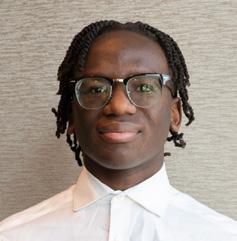
“I think the NSGA Leadership Conference was one of the most impactful conferences I have been to. First, at this conference, I was able to learn something new. I never really thought about the sporting goods industry before.
I played sports as a kid and never thought about the jerseys, logos and facilities used. I never would have known this was such a big industry. This industry provides things that are essential to professional, collegiate, and youth sports.
“At this conference, I was able to learn the difference between team dealers, sales representatives and manufacturers, and their roles in getting the proper equipment to deal with. People would come up and introduce themselves and give impactful advice. They would give me their business card and were open to me contacting them. Also, the mentors for the Beckwith Foundation were amazing. They all shared their stories with us and made sure we were taken care of. The other students selected were also very cool. I was able to talk and meet each other and build a relationship with them.”
Continued on page 26
Continued from page 25
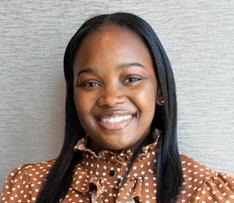
“From a student’s perspective, the NSGA conference was special to me because it allowed us to learn so many skills that apply to various aspects of life. I think the most valuable takeaway was the discomfort in a new environment for all of us, because we learned how to navigate through it during the weekend, while also learning something new. The sporting goods industry is just like any other industry, where you have an audience to appeal to and connect with, and once you learn that you can truly take your talents anywhere.”
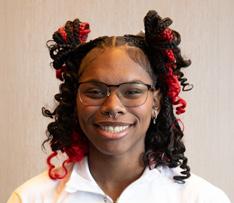
“The NSGA Conference gave me many valuable and meaningful lessons along the way. I was able to sit in on the speed networking sessions, and I was able to
learn the fast pace and the value that time has during the sessions. I was able to ask questions and sit back and listen to the conversations that were being had about business. The way the buyers and suppliers were handling themselves was very noticeable and gave me hope that maybe one day I could be in their position. Overall, the NSGA Conference allowed me to make endless connections and gave me lots of hope for the future. I hope that one day I could be in their position and give another young person like me an opportunity to grow and learn the little details that could impact the future.”

MIKE BYERS (STARTER UNIFORMS – TERRITORY MANAGER)
“I wanted to take a moment to share with you a few things that I personally got from this year’s ‘Beck Effect’ mentorship program at NSGA. I was beyond honored with the opportunity to spend time with each of you, young adults. It was truly amazing to see how focused and driven your entire group is about what you want out of your future. That alone inspired me to want to share as much about our industry as possible.
“As I watched each of you navigate the ballrooms, interacting with people that you’d only just met, I knew each of you would be up for the challenge. The business isn’t easy and it requires a lot
of hard work, but you’ve taken the first step by showing up at the Conference. The unknown can be frightening, and it’s OK to be a little afraid. Stay locked in and stay focused on the task at hand. Everything else will take care of itself.
“I walked away from the conference feeling very good about where our industry is heading, knowing we have young adults like yourself and the other fellows who will be keeping things rolling. Once again, it was a pleasure, and I’m looking forward to being part of the Beck Effect mentorship program for years to come.”

“Mentoring the fellows was my first formal opportunity to mentor anyone in this capacity, so I enjoyed the experience of doing something new and having a chance to give back to the industry that has done so much for me. Mentoring at an industry event also gave me the chance to learn more about what I can do to help others get the most out of it. I have several takeaways for next time, should I be afforded the opportunity again.
“Mentoring also opened some doors to new relationships with the other industry leaders, some of whom I didn’t know at all or only knew slightly before the Conference. I also appreciate supporting the Greg Beckwith Foundation and his memory. For me, working with you was an awesome reminder of the privilege it is to be a leader in this industry that does so much for athletes.”
BY NICK VLAHOS
Craig Pintens is a longtime college-sports administrator, but that doesn’t mean he thinks everything in his bailiwick is perfect. Far from it.
Recent changes in college sports — including the transfer portal and NIL (Name, Image and Likeness) payments to athletes — might be foremost regarding that imperfection.
The magnitude of the changes and their real-time effects seem to have Pintens, the athletic director at Loyola Marymount University in Los Angeles, longing for a simpler era. Or longing for some guardrails, at least.
“In college athletics, our house is really, really dirty, and we would welcome
someone like Congress to come in and clean the whole thing out,” he said. “But I don’t think Congress has the ability to do that.”
Pintens expressed his qualified angst during a panel discussion at the NSGA 2026 Leadership Conference.
Joining Pintens on stage in Nashville, Tennessee, were moderator Don Leonard, the president of Crown Sport Sales, Inc., and Phil Rison, executive director of the National Interscholastic Athletic Administrators Association (NIAAA).
Rison’s Indianapolis-based group deals primarily with high school and middle school sports administrators, but it appears that level is not entirely immune to recent developments. NIL is not a huge concern, but open-enrollment transfers in some states and proliferation of club sports are other issues. So, too, might be the hectic pace of life fueled by instant communications and social media. In that regard, Rison, too, sounded wistful.
“I long for the day whenever my sporting goods dealer would walk in my office and we would talk about things we needed to order, have lunch and
talk about life in general,” he said. “At the end of the day, we want it to be a relationship business. But you get so busy sometimes.”
Regarding NIL, at least, the panelists agreed the old structure that restricted student-athletes financially wasn’t fair to college student-athletes.
“The kid in the band playing at halftime on full scholarship can go out at night and play and make money,” Leonard said.
NIL was designed originally to provide student-athletes the same moneymaking opportunities as their nonathlete peers, according to Pintens. They could range from studentathletes being spokespeople for a local pizza place to negotiating a national deal with Gatorade, for example.
“We’ve devolved pretty far away from that. It is pay for play,” Pintens said. "We had a basketball player enter the portal again. He’ll be on his fourth school in four years. Ultimately, where do you go for alumni day?
“A lot of the changes were really necessary. With that said, we do need to try to rein it in a little bit.”
In the West Coast Conference, of which Loyola Marymount is a member, NIL budgets range from $1.5 million to $7 million, according to Pintens. For schools to fund something that didn’t exist a few years ago, revenue needs to increase or expenses need to decrease.
NIL funding challenges and what Pintens called an enrollment cliff — a shrinking pool of college-age students — have led to schools eliminating sports to save money.
Tennis is an obvious cut, according to Pintens. He suggested interest in tennis in the U.S. is declining, which is confirmed by NSGA research. In the 12 to 17-year-old age group, participation declined from 1.1 million each for girls and boys in 2006 to 811,000 for girls and 849,000 for boys in 2025.
Rosters include higher proportions of international students, who usually don’t remain in the community after their playing days.
Among colleges that have eliminated tennis recently are Illinois State, North Dakota and Saint Louis.
“We’ve kind of let the train leave the station, and we’re burning the track as it goes, so that train can never return to the station,” Pintens said.
Finances also have become an issue at the high school level, according to Rison. Some of that is because of the end of federal funding related to the COVID-19 pandemic. Rison said a lot of schools spent COVID money on long-delayed infrastructure improvements.
With that financing going away, Rison’s membership is attempting to do more with less. Schools are also reducing their amount of business partners so those who make the cut are capable of doing more for each school. One bright spot, and one that doesn’t appear to cost much, is the rise of flag football, which 37 states have sanctioned. But Rison is concerned about flag football possibly cannibalizing athletes from other sports.
“I don’t believe in specialization. I believe we get better at playing multiple sports,” Rison said. “We want our coaches, our schools to collaborate. How can I play fast-pitch softball and play flag football? It’s going to help them academically, in attendance and in the future as well.”
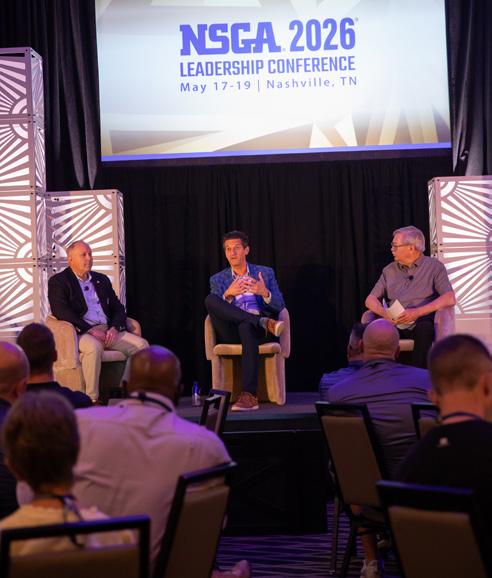
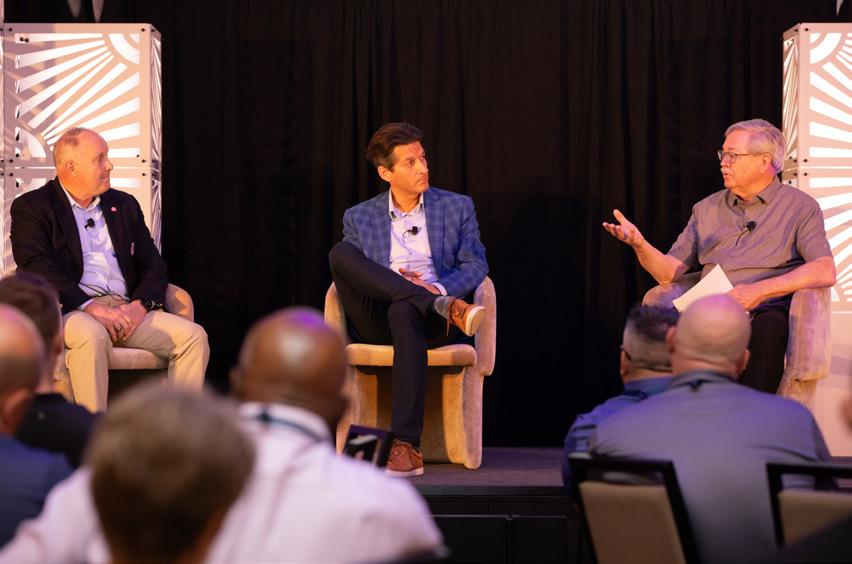
>> Phil Rison, left, makes a point as Craig Pintens listens during the “New Era, New Challenges” panel discussion with athletic administrators.
BY NICK VLAHOS
In his professional life, Ari Kaplan has been a bit of a chameleon.
Kaplan has worked in data analysis for Major League Baseball, Formula 1 auto racing and the NBA. He was one of the pioneers of analytics in baseball, an effort that might have been chronicled most prominently in the 2011 movie “Moneyball.”
These days, Kaplan still is concentrating on bats and balls. But rather than being most concerned with the people who use them, Kaplan appears more focused on how his methods can be applied to the people who sell them, among others.
“Every few years, I have to reinvent myself,” Kaplan told an audience at the NSGA 2026 Leadership Conference at the Grand Hyatt Nashville. “Your competition copies you, and you have to think of the next thing. You have to keep trying to improve.”
Improvement for companies regarding analytics includes how well they organize and interpret their data while maintaining human compassion, discretion and veto power, Kaplan suggested.
During an hour-long presentation, Kaplan — the global head of evangelism at Databricks, a San Franciscobased data/artificial-intelligence software company — gave the grand tour of his career. It might have seemed redundant for those who’ve seen “Moneyball,” which Kaplan called the story of his life.
The analytics part of it began in earnest when Kaplan was in college in the 1980s at California Institute of Technology. Growing up in New Jersey, he was a frustrated New York Mets fan.
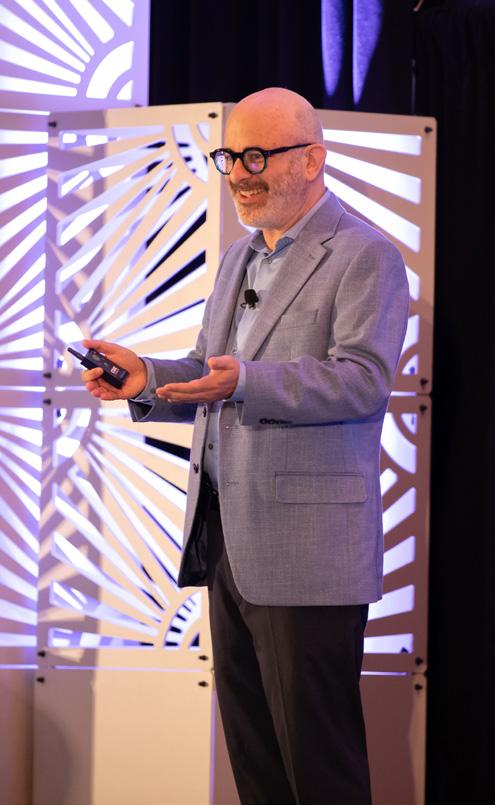
He wasn’t frustrated just with his team’s performance but by baseball statistics that didn’t appear to be telling the whole story.
“I realized that so many of the players I thought were amazing sometimes would have bad statistics, or conversely,” Kaplan said. “What if we can come up with better ways to analyze players? In soccer, what was your expected goals based on how hard you kicked the ball?”
Kaplan’s ideas caught enough attention that he was featured on television news networks. That caught the attention of Los Angeles Dodgers General Manager Fred Claire, who hired the teenaged Kaplan. Analysis of advanced statistics was not nearly as ubiquitous in the big leagues then as it is today.
In addition to the Dodgers, Kaplan worked for the Baltimore Orioles, the Houston Astros, the Montreal Expos and the San Diego Padres, among other teams. But he said the highlight of his career might have been his work with the Chicago Cubs, who hired him in 2010 to help create their analytics department.
Kaplan joined other executives, including organization president Theo Epstein, in building a team that beat Cleveland to win the 2016 World Series and end a 108-year title drought, perhaps the most notorious futility streak in professional-sports history.
Advanced analytics Kaplan shepherded helped convince the Cubs to trade for first baseman Anthony Rizzo, a pivotal player for the World Series team. Rizzo was with the Padres and recovering from Hodgkin lymphoma, a blood-based cancer, when the Cubs considered acquiring him.
“He was a bit weaker and some of the scouts said, ‘He’ll never regain full strength. I don’t want him.’ I saw him as an elite future player,” Kaplan said. “Maybe once a year, I’ll stick my neck out and be emphatic for a trade. And it was him.
“If you’re a Guardians fan, sorry about that,” Kaplan said jokingly about a team known as the Cleveland Indians back then.
Analytics also helped boost the career of outfielder Hunter Pence, a borderline prospect upon whom the Astros took a chance. He ended up playing 14 seasons in the bigs.
Later, Kaplan worked with the McLaren Formula 1 racing team, which he called a totally different environment from Major-League Baseball. He admitted he didn’t know much about F1 when he was hired. That didn’t prevent him from helping drivers Daniel Ricciardo and Lando Norris, among others.
“Driving a Formula 1 car is insanely complex,” Kaplan said. “A team of 350 people every race is at headquarters in England looking at different dials and sensors on the car. McLaren is so focused on winning they don’t even have a bottle of water in the car. Those extra grams can slow a car down.”
Although all the stats are necessary and nice, Kaplan suggested the personal touch can’t be disregarded. He said the F1 drivers with whom he worked sometimes needed a shoulder to cry on, not necessarily a bunch of data points.
“Increasing your revenue, being closer to your customers, the one challenge is this giant stack of books,” Kaplan said. “There’s way too much information out there. You want to whittle that down to what is actionable.
“The Dodgers would have scouting books, 900 pages of trivia. Players said, ‘We can’t do anything with that. You’re just giving me anxiety.’ … It’s not just about getting information. Some people communicate in simple terms. Some communicate with heat maps.”
According to Kaplan, taking complex data and enabling everyone in the organization to have insights was key to helping the Texas Rangers win a World Series for the first time, in 2023.
“Look at your people, your data and the human element,” Kaplan said.
BY NICK VLAHOS
You never know who you’re going to meet at the NSGA Leadership Conference. More specifically, Johnny Bench didn’t know.
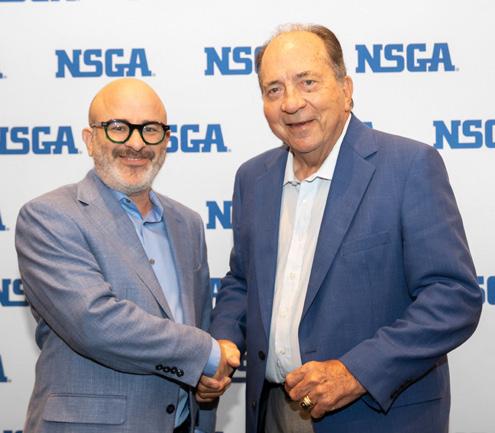
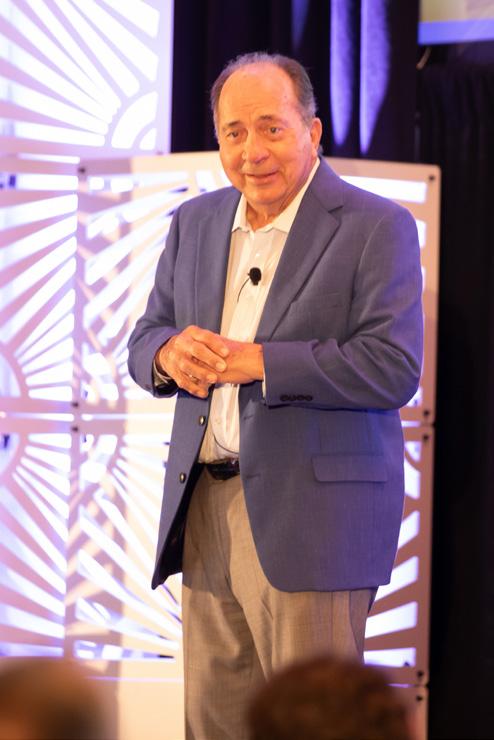
The 330-plus people who attended this year’s event in Nashville, Tennessee, had a chance to hear from Bench, a Baseball Hall of Famer who was the closing keynote speaker. But Bench had a chance to reconnect with someone he met at the beginning of his legendary professional baseball career. Not long before he took the stage in a Grand Hyatt Nashville ballroom, Bench received a surprise visit from Norm Singleton, with whom he played rookie ball in 1965. Both were catchers. The Cincinnati Reds selected Bench in the second round of the ’65 major league amateur draft, Singleton in the 16th.
“I went to Tampa, Florida, and there was a guy who became a lifelong friend… Stormin’ Norman,” a beaming, 78-yearold Bench told the Nashville crowd.
After Tampa, Bench went on to spend all 17 of his big-league seasons, from 1967 to 1983, with the Reds. He hit 389 home runs and became a 14-time AllStar, a 10-time Gold Glove Award winner, a two-time National League MVP and the greatest catcher in baseball history, according to ESPN.
Singleton went on to play primarily other positions and no higher than Class A minor-league ball. Although the Singleton baseball story ended there, his sports story didn’t.
The Iowa native became a sporting goods sales representative based in the Kansas City area. He spent 35 or so years calling on accounts in three states. The biggest of Singleton’s accounts was Kansas City-based Pro Athlete, Inc.
Pro Athlete President Scott Hedrick was among four Sporting Goods Industry Hall of Fame Class of 2026
inductees. Hedrick and the others — Sam Barcelona Jr., Tim Boyle and Mort Finkelstein — were honored at a dinner and induction ceremony a few hours following Bench’s presentation.
Singleton suggested he wouldn’t have missed being in Nashville to see his friend Hedrick be honored. As long as Singleton was in town, he figured he might as well see another longtime friend, too.
“I think I surprised John when his wife walked me in when he was eating lunch,” said Singleton, who resides in Lenexa, Kansas. “He didn’t know I was coming. “They told (his wife) who I was and she said, ‘THE Norm Singleton? Oh, God, John talked about when you were in the minor leagues.’ I was really thankful. I walked in while he was sitting down and he goes, ‘Oh my God, Stormin’ Norman!’ I loved it that he was going to be here.”
The men embraced in the back of the ballroom following Bench’s presentation. Earlier, at the front, Bench spent about an hour captivating the crowd. It included more than a few people who remembered watching Bench play for the “Big Red Machine” teams that won the World Series in 1975 and ’76.
Bench told them how unlikely it was that someone from a high school graduation class of 21 in Binger, Oklahoma — a community of about 600 people an hour or so west of Oklahoma City — would make it to the major leagues, let alone excel.
“Baseball became an amazing thing for me,” Bench said. “It’s amazing to be able to play for a world-championship team. Being a world champion is something unique. Individuals help all of us get there, but it’s the reward of being on a team.”
On-field success, before multi-milliondollar contracts set ballplayers for life, led to post-baseball careers for Bench in broadcasting and acting, among other endeavors. He became an author and an advertising spokesman, perhaps most notably for Krylon paint (“No runs, no drips, no errors”).
Bench said he started public speaking in 4-H in eighth grade. Over the years, Bench developed what he called the vowels of success — “The A-E-I-O-Us of life,” he said. He considers them a blueprint for personal and professional growth.
According to Bench’s definitions, those letters stand for attitude and ability, effort and enthusiasm, integrity,
opportunity and understanding and unity. Bench suggested these principles can translate well from the playing field to the business field.
“I’ve been in your stores, (although) maybe not the exact store. You work hard,” Bench told the audience. “I grew up hard, pulling cotton. I know what it takes, and I know each one of you is putting the hard work in. I respect each and every one of you for what you do.”
Some of those hard workers put Bench on the clock, and perhaps sometimes on the spot, during a question-andanswer period toward the end of his talk.
Bench said money might be among the biggest changes in baseball since he played. He said he made $500 a month in his rookie year and $2 million for his career. But he doesn’t begrudge the massive salaries current players make. “These guys are so dadgum good,” Bench said. “They’re so athletic.”
Regarding whether his most notorious Reds teammate, the late Pete Rose, should join him in the Hall of Fame, Bench maintained his opposition. In 1989, about a month after Bench was
inducted, Rose was banned from baseball for betting on it. The ban was lifted after Rose’s death in 2024.
“I tried three times with the (baseball) commissioner to get him reinstated,” Bench said. “He gave him three things to do, and in a week he would break them. He would talk and say ‘I’m sorry,’ but it was just one of those things.”
Bench similarly went straight to the point when PROLOOK founder Dustin Rhodes, who is a Boston Red Sox fan, told him the Reds’ victory over them in the 1975 World Series still breaks his heart. “Good!” Bench said, to laughter. Still, it’s doubtful Bench will hold a grudge.
“I don’t have anything but the best thoughts about people,” he said. “When you’re with people that are good, you enjoy yourself. Your life is great. You laugh, and you laugh a lot.”
That group in Bench’s life appears to include someone with whom he vied for the same position on a minor-league team more than 60 years ago.
“John and I, we always hit it up, even though we were competitors,” Singleton said. “He just gets along with everyone.”
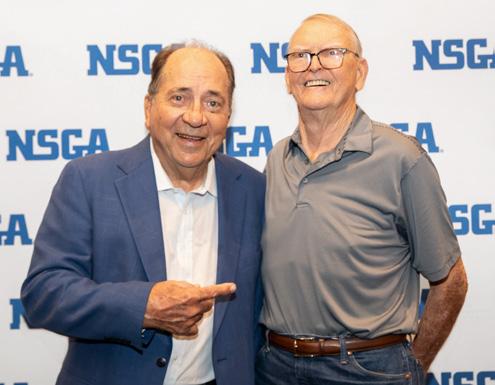
>> Johnny Bench with former minor league teammate and roommate Norm Singleton. Singleton was at the Leadership Conference for the Sporting Goods Industry Hall of Fame induction of Scott Hedrick of Pro






Continued from page 35










OrderMyGear (OMG) has a full suite of integrated technology solutions built specifically for team dealers, apparel decorators, promotional product distributors, and suppliers to sell branded merchandise - and look good doing it.
















Explore new ways of getting in front of current and future customers so you can win and keep more business




Work better and faster with your team, partners, and customers with integrated technology that scales with you
Ready to grow your business online?
Access all of the solutions you need to sell branded merchandise—with one partner.
Give your team and customers the digital experiences they want with easy-to-use technology built for selling branded merchandise
BY RITCHIE SAYNER ADVANCED RETAIL STRATEGIES
Here is an interesting statistic. About half of your sales come from inventory that was delivered and sold within the same month. Don’t believe it? See for yourself, how about those new running shoes you put out when they first came in? Assuming the timing was right, I’d be willing to bet that they started selling right away.
Here’s another merchandising fact for you to contemplate — 90% of all sales come from inventory less than 10 weeks old. Given that you accept the above premises as being true, or at least possible, why then do some sporting goods stores turn their stocks over three times while others are half of that?
The answer may be attributable to the old dogs, new tricks adage. In other words, some stores are willing to adapt and change to new ways of approaching business and others are not. It’s really that simple. The very essence of inventory turnover is the freshness of the inventory.
I bet you have never heard a customer ask a sales associate to show them what came in last season or last year. As ridiculous as that may seem, why then do some stores carry over merchandise from season-to-season and year-to-year?
I have helped stores with inventory control for years and have heard just about every conceivable excuse for carrying over seasonal inventory. Rarely do they make economic sense.
My favorite excuse is “If I mark it down now, I will just have to buy the same thing again next year.” My initial reaction to this is, why would you buy the same thing next year if it didn’t sell this year?
Depending on how much inventory you have left in stock, would it not make more sense to get your cash out of the inventory NOW, rather than holding stock over for another year? Of course there are exceptions, but you should really try to limit these instances if you want or need to improve turnover and hence cash flow.
My friend, Dan Jablons of Retail Smart Guys, coined this phrase which hits the nail on the head: “If a customer comes in this month and sees what they saw last month, they won’t be back next month!”
I can’t come up with a simpler explanation or better reason why you need to receive fresh inventory on a continual basis.
Let’s review the retail math. Turnover is figured by dividing sales by average inventory @ retail for a given period. You can also use Cost of Goods sold (GOGS)/Ave. inventory @cost. There will be slight differences in the two calculations, but I prefer the retail method.
You can also express turnover by the number of weeks in stock. A turnover of two times means you will sell through or “turn” your stock every 26 weeks. Reducing the number of weeks inventory is held increases the turnover. Decreasing the number of weeks held increased the turnover.
If the goal of the classification is, let’s say, 3 times, inventory would be held about 17.3 weeks on average. In other words, the less time inventory sits on your shelves prior to selling, the faster the turnover and the better the cash flow.
For every week that average inventory is reduced, cash flow increases by about 1% of sales.
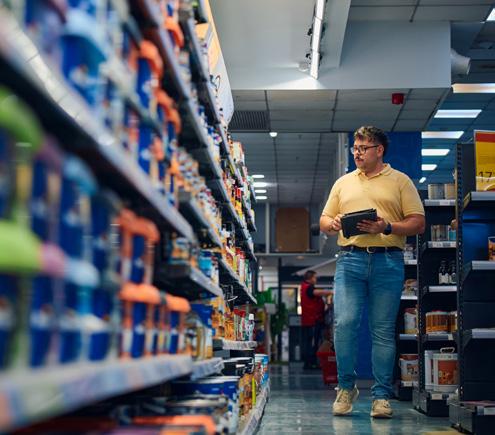
This makes the case for inventory planning. Planned turnover is not the same for every classification in your store. Classes like sandals for example, have a faster stock turnover than running shoes due to their seasonal selling pattern.
It is important to plan each class separately in each location to achieve the desired turn. Objectivity is greatly diminished if the class structure is not tracked correctly. Planning needs to be done at a deeper level than simply men’s versus women’s apparel or all accessories or equipment.
With the threat of rising prices from tariffs to increased competition from vendor “partners,” it is vital to find ways to maximize inventory turnover through better merchandise planning. This year, perhaps more than any other, it is essential that old dogs learn some new tricks to remain competitive in the ever-changing sporting goods environment.

Sayner has spent the past four decades helping independent retailers improve profitability. In addition to speaking to retail groups nationwide, Sayner is a regular contributor to retail industry publications. Prior to embarking on his retail consulting career, he was the general merchandise manager for an independent department store in the Midwest. Ritchie is a graduate of the University of Wisconsin-LaCrosse. He is also the author of the book, “Retail Revelations-Strategies for Improving Sales, Margins, and Turnover.” He can be reached though his website at www. advancedretailstrategies.com.

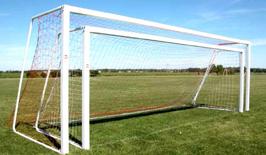



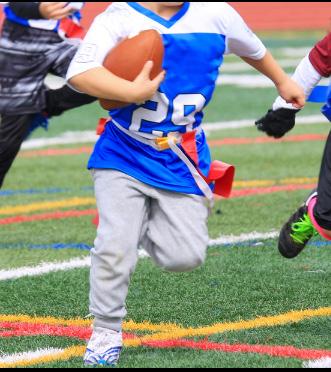
NCAA: Flag football received a formal recommendation to become an NCAA championship sport and its first championship is projected to occur in spring 2028.

The NCAA Committee on Access, Opportunity and Impact voted at its spring meeting to recommend Divisions I, II and III sponsor legislation to add a National Collegiate Flag Football Championship. The committee oversees the Emerging Sports for Women program, which aims to grow participation and competitive opportunities for women’s sports across the NCAA.
John Carroll University and Eastern Michigan University announced plans to add women’s flag football as officially sanctioned sports.
John Carroll University in Ohio has had a rich tradition in tackle football since 1920. Women’s flag football will become part of that history in the spring of 2027 as the school’s 26th varsity sport.
Eastern Michigan University announced the addition of women’s flag football as an intercollegiate varsity sport in the spring of 2027, following the NCAA’s January 2026 designation of women’s flag football as an Emerging Sport for Women.
NFHS: The Kentucky, New Jersey, Maryland and Washington, D.C. high school associations announced plans to add girls flag football as officially sanctioned sports.

New Jersey, Maryland and Washington, D.C., will begin sanctioned play in the 2026–27 high school year. Kentucky will begin sanctioned play in the 2027–28 school year. That will bring the number of state high school associations sanctioning girls flag football as a varsity sport to 22 (including D.C.).
The NCAA Division I Men’s and Women’s Tennis Oversight Committee approved holding the men’s and women’s singles and doubles championships in the fall on a permanent basis. The team championships will continue to be held in the spring.
The NCAA Division II Management Council approved a recommendation to request feedback on whether legislation to amend the use of commercial logos is appropriate. The recommendation came from the Division II Legislation Committee.
The concept is intended to better reflect current operational realities while maintaining Division II’s commitment to balance, consistency and the student-athlete experience.
Current legislation permits one manufacturer’s label or trademark on athletics equipment and one manufacturer’s label or trademark, as well as the name of the sole title sponsor of the competition, on uniforms and apparel.
Under the concept, athletics equipment could bear one additional commercial or nonprofit trademark or logo in non-championship competition. Further, a Division II student-athlete’s uniform and apparel, including pregame and postgame attire, could have two additional commercial or nonprofit logos in non-championships competition and one additional logo during a conference championship.
The NCAA Division I Men’s Basketball Rules Subcommittee and the Division II and III Men’s Basketball Rules Committee met to discuss the state of men’s college basketball and ways to enhance the game. Because this is not a ruleschange year, the committees focused on current trends and potential future modifications and a central topic was whether NCAA men’s basketball should further evaluate transitioning from two halves to four quarters.
While the concept has been discussed in prior years, the committees plan to seek additional feedback from the broader NCAA men’s basketball community and key stakeholders to determine whether a format change would benefit the sport. If this change occurred it could impact the type of scorebooks used in men’s college basketball.
Under Rule 3-3-4b(2), wording was added to clarify that bonded or taped seams on suits are not subject to permeability requirements. This change mirrors standards established by World Aquatics. Rules 3-5-1 and 3-5-2 were also updated to state that no competitor shall wear any audio (microphone) or video (camera) device during a race or dive.
Continued on page 45

Continued from page 43

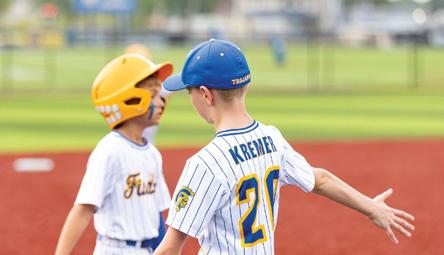
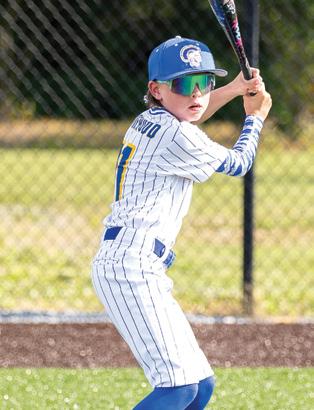
Alli Sports announced the merger of four of the industries’ top team dealers as Baker’s Sports (Jacksonville, Florida), Johnson-Lambe Co. (Raleigh, North Carolina), First Team Sports Center (Greenville, South Carolina) and Midwest Sporting Goods (Tulsa, Oklahoma) have entered into a merger agreement and will unite under the Alli Sports umbrella.
This new and unique industry power will continue to be team dealer owned and team dealer operated under the leadership of Josh Baker (CEO) and Rhett Johnson (COO). To the consumer, each company will maintain their individual identities and outstanding local service.
Baker’s Sports, First Team Sports, Johnson-Lambe and Midwest Sporting Goods are members of NSGA.

Game One announced that Matt Kaplan has joined the company as Chief Strategy & Growth Officer, adding one of the most experienced and connected leaders in the team sports and promotional products industry.
Kaplan joins Game One following his time at OrderMyGear (OMG), where he most recently served as President. During his tenure, he helped scale the
business from an emerging startup into one of the industry’s most influential technology platforms.
Game One is a NSGA member.

STAHLS’ announced an official licensing agreement with Major League Soccer (MLS) to deliver names, numbers and customization components across onfield and retail applications.
Through this agreement, STAHLS’ will support MLS clubs, equipment managers and retail partners with world-class names, numbers and embellishments designed for performance, durability and consistency. The company’s decoration solutions enable on-demand customization, allowing fans to personalize jerseys in real time and giving teams new flexibility to introduce innovative designs and special-edition drops.
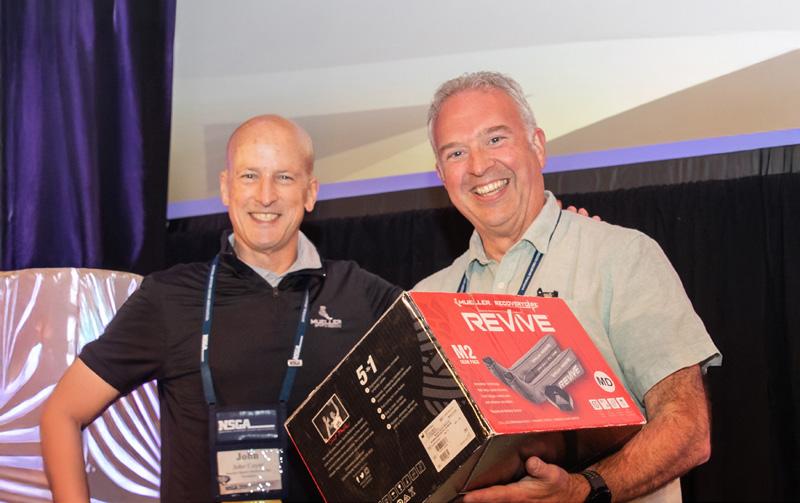
Founder Curt Mueller is a member of the Sporting Goods Industry Hall of Fame.


Source for Sports showcases its role at the heart of sports communities across Canada with the launch of two 30-second videos, “Hometowns Like These” and “Source for Community.”
The campaign sets out to showcase the real stories that unfold in Source for Sports communities every day.
Sports Distributors of Canada and the Source for Sports stores are long-time members of NSGA. Former SDC President Randy Hooper and Cleve’s Source for Sports owner Eric Bezanson are members of the Sporting Goods Industry Hall of Fame.
STAHLS’ is a long-time member and supporter of NSGA. Ted Stahl is a member of the Sporting Goods Industry Hall of Fame.

Mueller Sports Medicine® is partnering with condition and recovery company, Ambitious Warrior, to become the exclusive distributor of Achilles in North America and select other countries. Achilles is a patent-backed, lower-leg recovery system designed to support strength, stability and mobility for athletes and active individuals.
Mueller Sports Medicine is a longtime member and supporter of NSGA.

For the latest news and a deeper look at the stories featured in this issue, visit the News section by scanning QR code or go to nsga.org/news/ or check out the NSGA Scoreboard sent out weekly.
The FJD PaintMaster™ Pro from USSC Robots makes athletic field marking faster, easier, and more a ordable than ever. Get professional-quality lines with advanced autonomous technology, preloaded field maps, unlimited logo design capabilities, and premium USSC RoboPAINT built specifically for robotic application. Why lease a robot when our a ordable financing lets you own the PaintMaster Pro for less than competing systems? Save time, reduce labor, and cut operating costs all season long. Inventory is limited and robots are selling fast, so act now to secure your model.

Visit

Having had our boys playing youth hockey in New Mexico, when Jennifer and I bought the Outpost Ice Arena, we knew that in order to grow the game, the hockey and skating communities needed access to skates, equipment, sticks and more. So a priority of the remodeling was to update the shop, rename it after the New Mexico Ice Wolves mascot and create relationships with major hockey and skating brands.
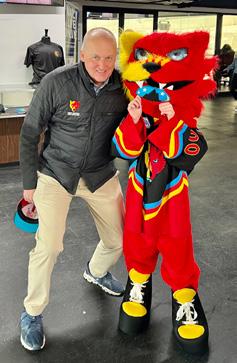
Running the only hockey and skate shop in the entire state of New Mexico is a big responsibility because we are the only shop for players and families living in Albuquerque and literally hours away. We must have everything needed for hockey players from mites to adults and be ready to order anything quickly when needed. We are a full-service hockey and figure skating shop completely committed to our customers that make up our growing ice sports community.
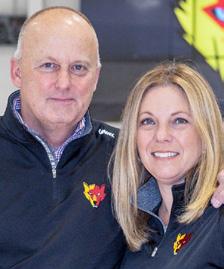
We focus heavily on customer service, product knowledge and being a trusted resource for players of all levels. Whether it’s proper fitting, honest recommendations or supporting local teams, we aim to create a personalized experience. Being located inside the Outpost Ice Arena helps us stay connected to our customers with every visit they make to the arena for games, practices, junior games and public skating. As the home of the New Mexico Ice Wolves (NAHL & NA3HL) we also carry a large line of apparel and accessories with a team name and logo that matches our youth teams as well.

Our main priorities are managing inventory effectively, continuing to adapt to supply chain variability and staying aligned with evolving player, skater and fan needs. We’re also focused on expanding our product mix and enhancing the in-store experience through ongoing staff training and supplier support. Supporting the growth of hockey and all ice sports in our community and state remains a top priority.
The membership provides valuable industry insights, networking opportunities and access to resources that help us make more informed business decisions. HDA and NSGA also help us stay connected to trends and best practices across the sporting goods industry. Being part of a larger community of retailers has been extremely beneficial.