Net Zero Carbon Practical Path towards
A practical guide to help your school lower its carbon emissions



A practical guide to help your school lower its carbon emissions
Climate change is having a devastating effect on communities all over the world, especially the poorest countries and poorest people.
Tackling climate change witnesses to our communities that we are people who care about climate justice; that we hear young people and their concerns and that we are taking action to ensure our beautiful planet can flourish - now and for the future.
That’s why the Church of England has set an ambitious target to reach net zero carbon by 2030 across the whole estate. Schools, by their very nature, are high emitters of carbon and have an important role to play in all aspects of sustainability including reducing our environmental footprint.


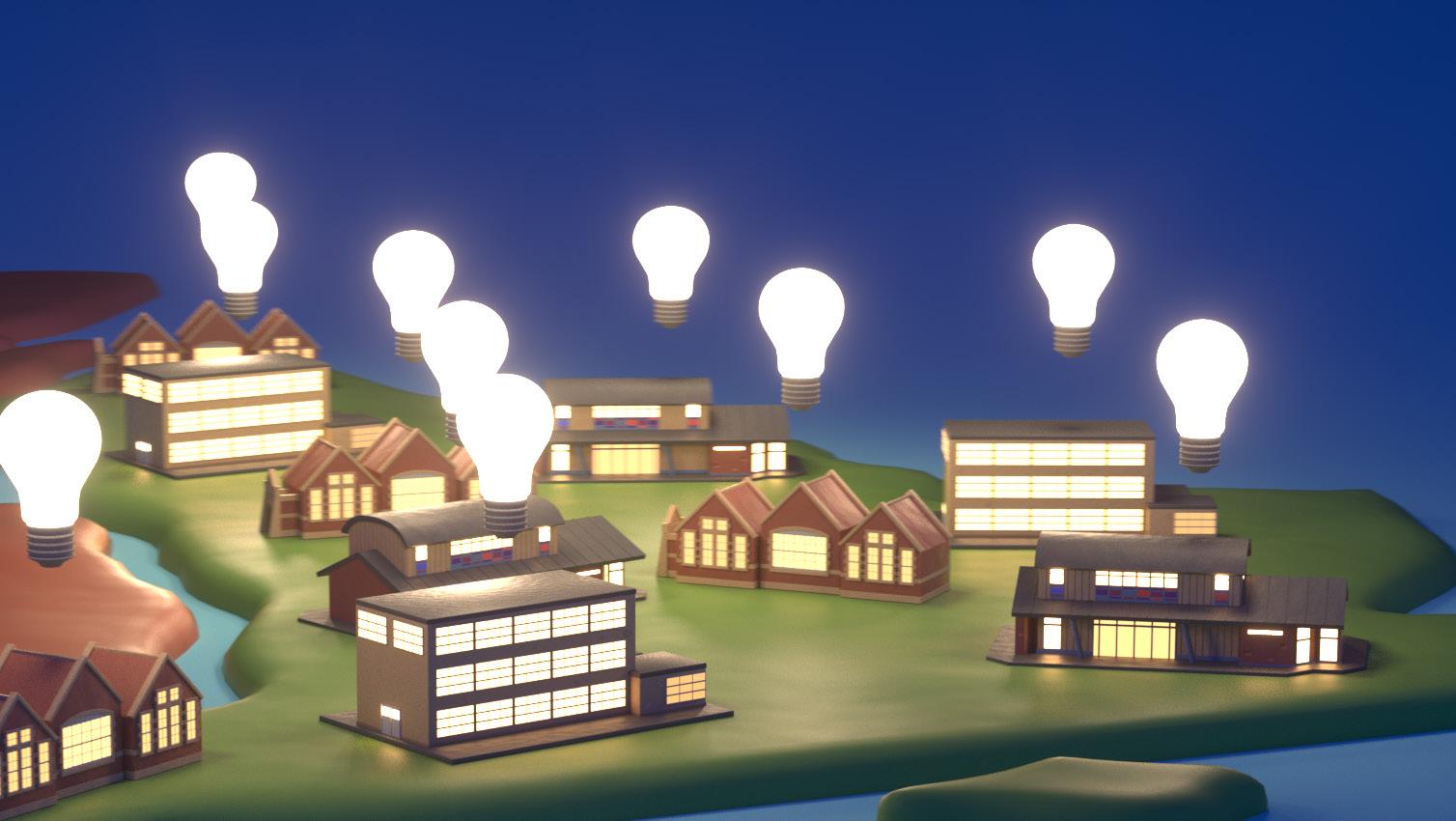
This guide aims to give your school some simple practical steps as you begin your journey to net zero carbon. Our hope is that by 2030, our schools will be bright, warm and welcoming, consuming much less energy and emitting less carbon than they do now. And that will be good for future generations, and good for the whole of creation.
These recommendations aim to help schools reduce their energy use and associated carbon emissions. They are based on common findings from over 250 heat decarbonisation plans that have been developed for church schools.
Actions that schools can take have been categorised and presented in the form of checklists. The categories are:
Quick Wins: Actions that nearly all schools can take for little or low cost. Schools should implement these items themselves using their own funds where required.
Short/Medium Term: These are actions which can save significantly more energy and carbon than the above items. They do require more cost and time to plan and should be considered for being funded by DFC funds.
Longer term: This section identifies continued improvements that schools and DBOs should be striving to make. Items in this section may be more expensive or involved and should be prioritised when other, related works are taking place.
Concise checklists at the front of the document each with a letter code. If the code has an asterisk, please find the corresponding code in the additional guidance section for further explanation.
• No fossil fuels on site.
• Efficient buildings i.e. (Energy use
• intensity below <75kWh/m2 for most schools).
• Maximise on-site renewables.
• Good comfort, health and a positive educational environment.
• Smart meter & green energy tariff
• Minimal offsetting.
The colour coding used in this document matches that of the Net Zero Execution plan document: Whole-Community Engagement Evidence-Based Planning Actions
These are mapped out below against the ABCs of decarbonisation developed by DBE Services:
Behaviours
Cultures
Decarbonisation Plan
Energy procurement & savings
Fabric improvements
Gas & oil fired heating system removal

A01* Appoint a Sustainability Lead
A02*
A03
Actively instigate sustainability as a governance item. Include net zero carbon and wider sustainability on monthly agendas
Write an energy efficiency procurement policy to commit to purchasing A+++ rated appliances
A04* Create a heating resilience plan
A05* Create a fabric resilience plan
A06* Carry out a building self-audit
A07*
A08
Check your electrical capacity with your DNO, this is essential for considering switching to Air Source Heat Pump
Contact Let's Go Zero and the Climate Ambassador Programme
C01*
Review times & set points for heating
C02* Review hot water timings & set point
C03
C04*
Check holiday settings for heating and hot water. Can appliances such as freezers be empty over long holidays and switched off?
Install weather compensation on heating system
C05
C06
Check any TRVs on radiators in the schools. These should be set around their ‘3’ setting to provide a temperature of around 20°C to 21°C
Review the temperature of any air conditioning units in IT server room and turn the AC to cool down to 24°C
C07
Consider times of school room use. Prioritise times that make use of residual heat from the school day
C08
Regularly run a student led school
B02* Train catering staff on good energy practices and embed in school policy
B03
Refer to CEEO guidance and templates
Repeats regularly
Repeats annually
Remove obstructions in front of radiators (this blocks the heat)
Ensure lights and equipment are switched off at the end of the day
Manage how and when doors and windows are opened and closed
Update your Display Energy Certificate each year and sign up to the Count
Your Carbon Tool. Report scores at governor meetings and compare consumption to previous
Service appliances regularly (boilers, fridges, freezers)
C09*
C10*
Consider if any areas of the school grounds can be left to grow longer and support ‘no mow May’
B04
Engage with an energy monitoring platform that allows students to learn from and engage with the schools energy use
C11
Tweak time lag settings on any existing motion sensors
Review outdoor lighting timings and motion sensors
Review power saving settings on computers, copiers and printers and set to maximum power saving mode
C12
Remove water coolers where not essential – use cold water taps from sinks instead
F03
Maintain drainage regularly including clearing roofs, gutters and gulleys
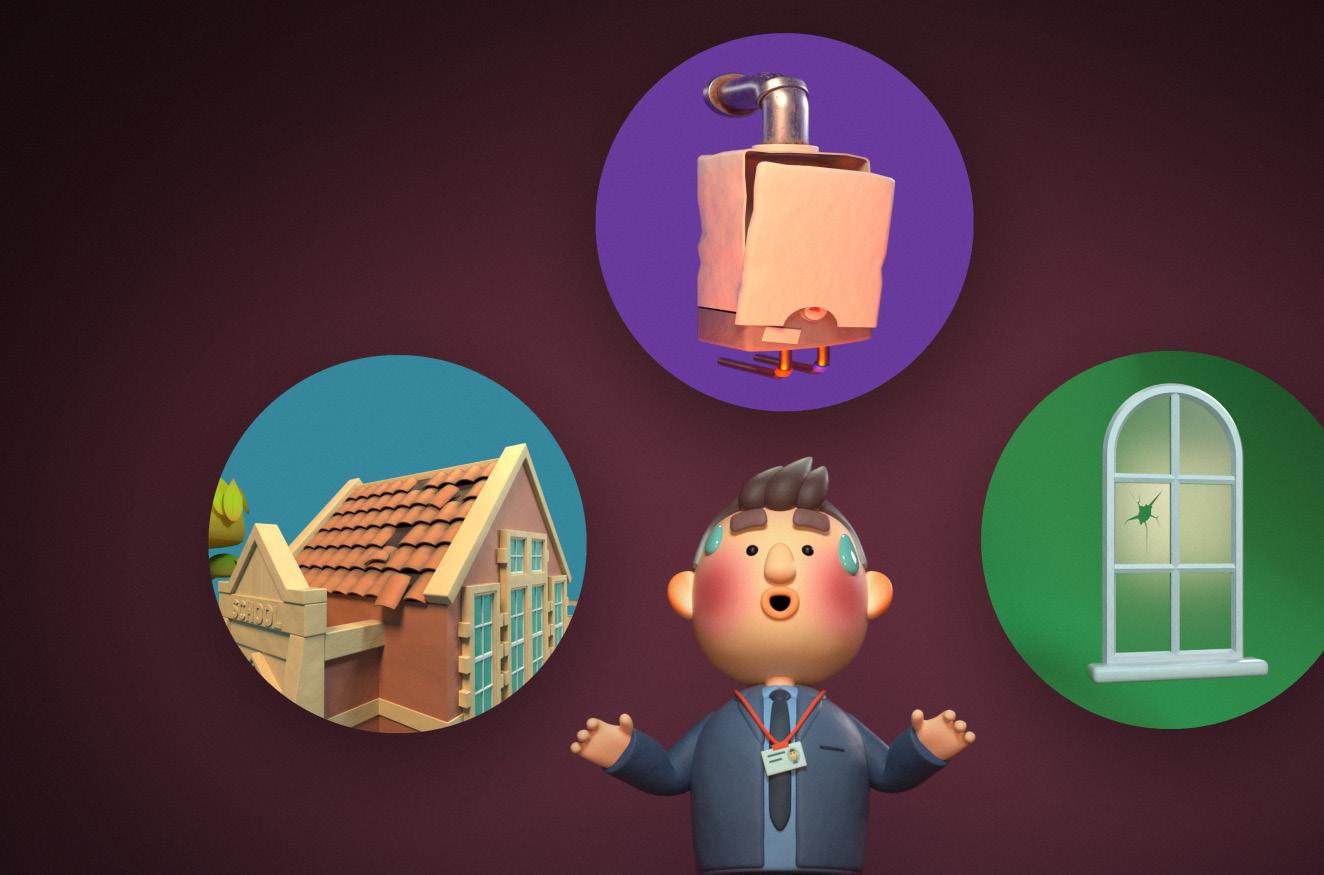
Resolve any damp - wet fabric loses more heat and causes degradation
Put lockable covers over thermostats of other control points that people may be tempted to adjust
F04
Clear leaves & debris from existing mechanical equipment regularly, such as air conditioners and heat pumps
F05
Consider how redecoration might lead to retrofit trigger points (e.g. ceilings)
Check to see if you school already has a Heat Decarbonisation Plan (HDP) and if not then seek to commission one
Include sustainability and net zero carbon into the job description and performance reviews of key staff such as the head, school business manager and site team
Consider the impact of school trips, aim to have a policy to avoid school trips that involve air travel (mainly in secondary schools only) where the educational benefit can be achieved without the need to fly
Consider moving to a cloud based IT system to avoid the need for a server and any cooling for it
Add detail to your heating resilience plan, whatever your heating system age. This ensures you are ready for heat pumps in the future, or, if you already have low carbon heating, have a plan if your heating fails
J02
Review the electricity and gas meters. If this already has automatic meter readers installer (smart meters), contact your supplier to gain access to the data. If they are not smart meters, contact your supplier to arrange for them to be changed to smart meters
J06
Install optimisation devices to all refrigeration units within the school
J07
If the school still uses a sterilising ‘dip sink’ for washing up in the schools kitchens consider replacing this for an automatic commercial dishwasher J08
J03
Check that all the pipework and fittings (as well as the straight sections of pipework) in the boiler room have been insulated
Check all internal and external lighting and arrange for any lighting that is not already LED to be replaced
Consider any areas where the lighting would benefit from motion sensors (WC’s, corridors, cloakroom areas, staffrooms, servery etc.) and install motion sensors with appropriate time settings
J04
J05
Move the generation of hot water to electric point of use units located under or near sinks
Check that electric water heaters have timeclocks installed and change the fused spur to a timed fused spur where required. Set the timer to match the school occupations
J09
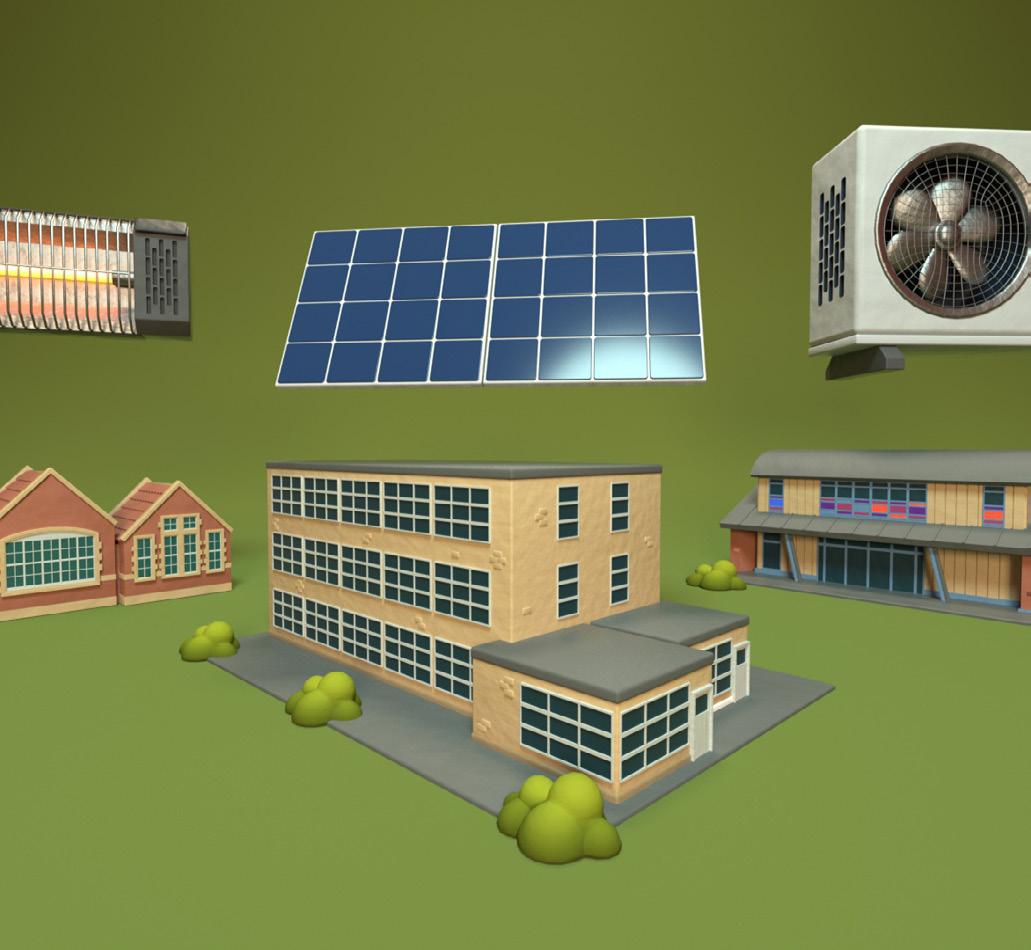
Consider any pitched and flat roofs that are in good condition that could be used to install PV panels and arrange for these to be installed. (These may include roofs that are not within 45 degrees of south)
If radiator upgrades are required, consider planning radiator sizing for ASHP compatibility, this will likely mean reducing radiator capacity
K01
K02
Consider installing electric vehicle chargers in the car park. Note that as cars tend to be parked at schools for the whole day, slow chargers (3kW or 7kW) tend to be satisfactory to meet the needs
If the school has a swimming pool ensure that it has a swimming pool cover and move the pool water heating over to a dedicated pool water air source heat pump
K03*
K04
If your boiler is over 15 years old or unreliable, actively start to prioritise planning for a heat pump to replace it (do not wait for it to fail)
If you have to have a large, centralised store of hot water (for very major kitchen or large showering needs such as swimming pools) consider the use of a dedicated packaged air-source heat pump heated hot water tanks to replace existing tanks
L01
L02
Review if you have any cavity walls and check to see if these have been insulated. Arrange for cavity wall insulation to be injected into any uninsulated walls where appropriate
Review the insulation and performance of any flat roofs and replace any roofs with poor waterproof coverings and with no insulation or where the existing insulation is wet. When undertaking this work consider if PV panels are possible and ensure future compatibility
L03*
L04*
Check accessible loft spaces have at least 150mm of loft insulation and that it is laid out tidily
Check for draughts and other cold spots within the building and seal up draughts where found
L05*
L06*
Review the type of windows and doors throughout the entire school and upgrade any single glazed windows and doors
When replacing flat or pitched roofs ensure that the new installation has the highest possible level of insulation
L07*
Repair seals and mechanisms on windows that are defective or broken, thus extending the life of the window
Refer to CEEO guidance and templates
Repeats regularly
Repeats annually

L08*
Upgrade double glazing that is in poor condition, to triple glazing if possible
Internal or external wall insulation
- heat loss through walls is a major energy loss factor in schools. This should be considered with a retrofit professional who can assess moisture risk, heritage issues, material efficiency and thermal bridging
M02
Look to improve airtightness across the school by sealing gaps in the building fabric. This could be done alongside installing mechanical ventilation with heat recovery (MVHR), to improve air quality and reduce ventilation heat loss
Insulate pitched roofs either below or above the roof line. This will be dependent on the structure of the roof, heritage issues, and access to the pitched roof
Floor insulation would be ideal, but is unlikely to be a cost effective measure unless there is a large moisture free zone underneath the existing floor that would make the insulation process safe and efficient
If the school has not already switched to heat pumps, keep pushing for funding to make this a possibility and ensure the school is ready and prepared for heat pumps
Consider upgrading double glazed windows that are in good condition to triple glazing, if other more costeffective measures have already been completed
If you have a school mini-bus consider when this will need to be replaced (at the end of its currently lease or when it becomes too old) and review the options for using an electric minibus. This needs to be considered with charging points in K01
Continue to consider further retrofit trigger points, like redecoration, roof replacement etc. as opportunities to progress retrofit and embed this in school culture
Continue to monitor performance, of existing building and where retrofit measures have been made, to further optimise energy use across the school
Refer to CEEO
and templates Repeats regularly Repeats annually

A01* Appoint a green governor
A02* Actively instigate sustainability as a governance item. Include net zero carbon and wider sustainability on monthly agendas
A04*
Refer to other CEEO guidance. Create a heating resilience plan so that you know how to maintain heating within the school if the boiler fails and what you will do to install a decarbonised heating solution rather than replacing the boiler like for like
A05* Refer to other CEEO guidance
A06* Refer to other CEEO guidance
A07* Your DNO is your District Network Operator. They can give you information about your school capacity Quick Wins
C03*
B01*
Refer to CEEO guidance and templates
Repeats regularly
Repeats annually
Review the timings and set points for the heating. The DfE advised set point for schools is 20°C and the times should be set to match occupation time. Turn off heating at weekends and holidays (leaving frost protection in place). Check frost settings, pre heat and the outside temperature at which the heating will go off (often called the Summer Eco Hold Off) which should be no more that 17°C
Review hot water timings and set point. Any stored tanks of hot water should be set to 60°C for water hygiene reasons and heated to this level for one hour daily as a minimum. Hot water systems do not need to be left on 24 hours a day. They can be turned off over holiday periods so long as they are heated and all outlets flushed through before school returns. If you have a large tank of hot water consider if this can be turned off before the end of the school day and use make of the residual store of hot water. Point of use electric water heaters undersinks and similar systems only need to be heated to 50°C
Install weather compensation on the heating system if the system is compatible and is not due for imminent replacement. This can save a large amount of energy
C04*
B02*
Establish a student led school eco-committee with pupils, staff, parents and governors. Ask them to review the energy data from the smart meters, run assemblies, monitor behaviours and provide rewards where positive actions are taking place (especially focus on cleaning, catering and site teams for rewards)
Train the catering staff on good energy behaviours and discourage behaviours such as turning on all appliances at the start of the day or having washing up sinks running hot water continuously see https://www.carbontrust.com/resources/ hospitality-sector-energy-saving-guide
C05*
Adjust the time lag and lux settings on any lighting motions sensors that you have installed so that they are appropriate to the room (i.e. corridors can have a 2min time lag, WC’s 5mins and offices 15mins)
Review any timer that you may have on the outside lights and ensure that the lights are scheduled to go off shortly after the school is locked, including security lights
Close doors and windows whenever possible in the heating season. Use internal CO2 monitors to guide when windows can be open and closed (open when over 1500ppm and close when below 800ppm). Note that the EYFS framework requires free access to outside play spaces but does not require an open door. If the door can be safely opened by young children it can be closed otherwise the use of plastic strips can help to prevent heat loss
Maintaining drainage prevents damp and water ingress. Damp walls not only cause damage but also take more energy to heat. For schools with trees nearby this may need to be done several times a year
Refer to CEEO guidance and templates
Repeats regularly
Repeats annually
K03*
If your boiler is over 15 years old plan for replacing this with a heat pump. Determine whether an air to air, air to water or ground source heat pump will be most appropriate for your school. In some cases direct electrical heating solutions may be the best solution
L03*
Check accessible loft spaces have at least 150mm (6 inches) of insulation within them and top up any roofs which have less than this. Include roof spaces above suspended ceilings in this review
L04*
Check for draughts and other cold spots within the building. Using a thermal imaging camera can be very useful in doing this. Seal up draughts where found (often around pipes going through the walls and junctions between walls, ceilings and floors)
L05*
L06*
Review the type of windows and doors throughout the entire school and replace any single glazed windows and doors with double glazed units. If you have listed facades or historic windows you may have to consider using secondary glazing instead
When replacing flat or pitched roofs ensure that the new installation has the highest possible level of insulation – note that this should be a requirement of Part L of building regulations but ensure that specifiers & installers have not claimed the use of exemptions to avoid doing this
L07* Repairing mechanisms can also help with overheating in summer
L08*

Upgrade double glazed windows that are in poor condition and cannot be repaired (e.g. with 'blown' panes), to triple glazing if funding allows- over their lifetime double and triple glazed windows have the same carbon emissions but triple provide better comfort and acoustic performance