Moreton Morrell Primary School
Tysoe Primary School
Leadteachers
Paige Allister
Sarah Eadon
Lisa Greenhalgh
Nikki Groves

“Theimpactofthis collaborationhasbeen thatthechildrenhavea farbetterunderstanding ofnotonlytheirschool’s religiousidentity,through individualvision statements,butalsothat oftheMAT,throughour sharedlanguagearound spirituality.”
Our initial aim in this project was to enable greater collaboration within our Multi-Academy Trust, so that we could better support each other with implementing a challenging new curriculum while ensuring that both our RE and Science teaching remained of high quality All of our MAT schools were expecting a SIAMS inspection while simultaneously trying to implement a new curriculum and this created a lot of concern around not only workload but how we would enable teachers to feel confident in delivering new material Ideally, we wanted all four of our MAT schools to be fully involved in this project but that proved too ambitious at this point Instead, two of our four schools pursued the project with the intention of rolling it out to the other schools at a later date.
As a MAT, we also really wanted to create a clearer religious identity with a shared language and shared practices across our four schools We have achieved this through collaborating on a Fosse prayer, contributing and collaborating to one another’s collective worships, the making of a shared ‘Big Questions’ book and the creation of the role of ‘Fosse Followers’ who actively espouse what it means to be in the Fosse MAT The impact of this collaboration has been that the children have a far better understanding of not only their school’s religious identity, through individual vision statements, but also that of the MAT, through our shared language around spirituality
A supportive network has been established across our schools to develop teacher knowledge, underpinned by a rigorous curriculum that organises study into overarching concepts within religion rather than focusing on one particular faith at a time This approach encourages children to engage in more reflective thinking and allows broader understanding as we can make really purposeful links to our Science teaching where appropriate To strengthen expertise further, high-quality professional development opportunities have been prioritised. Two teachers from across our schools undertook the NPQLT programme, enhancing both their subject knowledge and leadership capacity within RE The profile of RE has also been intentionally raised across the school It now permeates all aspects of the school day rather than being confined to designated RE lessons. Opportunities for reflection are embedded throughout daily routines, supported by reflection boards that allow pupils to share their thoughts and engage with themes of courageous advocacy Topical programmes such as Newsround, watched daily within our schools, often spark meaningful discussions around religion, ethics, and moral decisionmaking and lead to children wanting ‘to take action’ themselves as they often see other children empowered to do so
Across our schools, the RE curriculum has been carefully designed to provide a balanced study of both religious and non-religious traditions, taught alongside the Understanding Christianity framework while linking directly to the liturgical calendar and school services. This ensures that children gain a comprehensive and inclusive view of belief systems and worldviews and that they see RE as a living, integrated part of school life connected to other areas of study Our RE teaching is approached through an enquiry-based model, encouraging pupils to think critically and engage with disciplinary knowledge in the same way they do when studying Science. This approach helps children to ask meaningful questions, analyse evidence, and develop deeper understanding, rather than simply acquiring factual or substantive knowledge. The breadth of the curriculum has also been purposefully chosen to help pupils appreciate and navigate the complexities of a diverse, multi-religious society Through carefully sequenced learning, pupils are supported in building upon prior knowledge, enabling them to make connections and deepen their understanding over time Beyond academic development, the curriculum also nurtures the growth of the whole child, such as when promoting courageous advocacy. Opportunities to learn from religious study encourage the children to reflect, empathise and develop their social and emotional selves, supporting them in becoming thoughtful, respectful and compassionate individuals.
“Opportunitiestolearnfromreligiousstudyencouragethechildren toreflect,empathiseanddeveloptheirsocialandemotionalselves, supportingtheminbecomingthoughtful,respectfuland compassionateindividuals.”
A key aspect of the project has been developing pupils’ understanding of ‘ways of knowing’ within RE and supporting teachers to feel confident in facilitating this approach
As the curriculum is built around both substantive and disciplinary knowledge, these disciplines are made explicit to the children Pupils are able to use subjectspecific vocabulary confidently and can identify which disciplinary approaches are most appropriate when exploring new areas of study.
For the schools that use them, these enquiry-based disciplines are also made explicit on the children’s knowledge organisers so they better understand they are approaching an RE lesson as a theologian for example.
Our lesson delivery introduces pupils to the kinds of questions that scholars might pose questions that invite exploration rather than definitive answers. This fosters curiosity, independent thinking, and a mature appreciation of complexity in religious and philosophical enquiry.
The children are also encouraged to link what they have learned with how they have learned it, critically questioning sources and recognising that no single worldview can represent all perspectives They are then supported to reflect on their own worldviews, considering the influences and experiences that shape their beliefs and understanding.
The successful development of this project has been underpinned by clearly defined roles for all those involved in its implementation. Dedicated time has been allocated for staff to work collaboratively across different school settings, enabling the sharing of expertise, resources, and best practice
The project has received the full support of the Headteachers from both schools, ensuring it remains a strategic priority within the wider Trust From the outset, initial ideas were gathered from staff in each individual school This inclusive approach ensured that all voices were heard and helped identify that a collaborative model across the Fosse MAT would be of mutual benefit.
All of the four schools within our MAT were in a slightly different place in terms of their implementation of the new curriculum and in developing their school’s individual religious identity We worked hard to share ideals and bring the four schools into closer alignment whilst always recognising the individual contexts of each of the schools. As a result, staff felt genuinely engaged in the process and were more invested in supporting the project’s success
Continued on the next page.
These regular meetings between our schools have provided a valuable opportunity to reflect on progress, celebrate successes, and evaluate impact on both staff and pupils These meetings also serve as a forum to identify areas for improvement, adapt to changing circumstances, and ensure workload remains manageable. We felt that creating a collective Fosse prayer, a shared ‘Big Questions’ book and the creation of the ‘Fosse Followers’ was an appropriate and feasible way to make these connections between our schools really explicit and tangible for our pupils
“Childrenwillbeencouragedtoengage withtheseideasrespectfully,debating theircontributionsandunderstanding theirrelevancetoourmodernday world.”
A teacher within my school approached me concerned with how to embed philosophical questioning into her RE lessons, worrying that the children were a little too young to be able to pose these ‘big questions’
We talked about how to reframe, focusing on an enquiry-based approach, looking at individual worldviews rather than risking stereotyping how all people following a certain religion might worship
We discussed how young children can respond really well to a stimulus like a short story or video to explore some of these bigger questions, fostering a philosophical classroom culture where questions are praised, not just answers.

Looking ahead, the intention is to extend the project across all schools within the Fosse MAT, ensuring that the effective practices developed so far become embedded Trust-wide This next phase will focus on deepening cross-curricular links and further strengthening the relationship between RE and other subject areas One key development will be the embedding of ethical enquiry within Science lessons Where appropriate, Science lessons will begin with an ethical question to encourage reflection, debate, and critical thinking. This aligns naturally with Science’s enquiry-based approach and supports pupils in making meaningful connections between scientific discovery, moral responsibility, and the wider world Opportunities will also be created to introduce key philosophers whose ideas have shaped both scientific and religious thought Children will be encouraged to engage with these ideas respectfully, debating their contributions and understanding their relevance to our modern day world.
Ongoing professional development for staff will remain a central priority. This will help ensure that Science and RE are not seen as separate or conflicting disciplines, but rather as complementary areas of learning that together promote curiosity, reasoning, and a deeper understanding of what it is to be human Finally, the work of the Fosse Followers will continue to grow in prominence The aim being that all children will clearly understand who they are as part of the Trust community, what the Fosse Followers represent, and how they can actively contribute to the shared values and vision of their schools
Strengthened collaborations acrossMAT schools.
RaisedREprofile throughshared identityand practices.

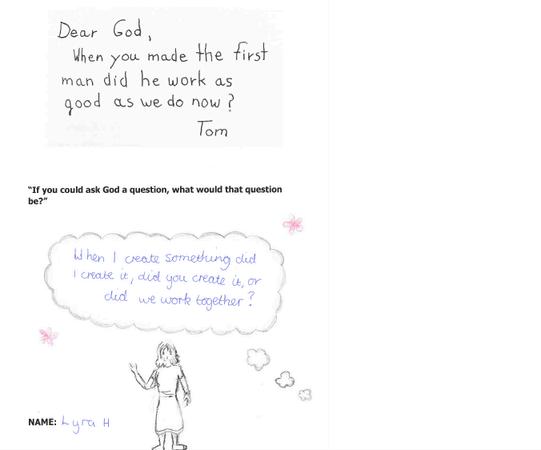
Figure 1: Examples of pupil’s work in response to philosophical questions
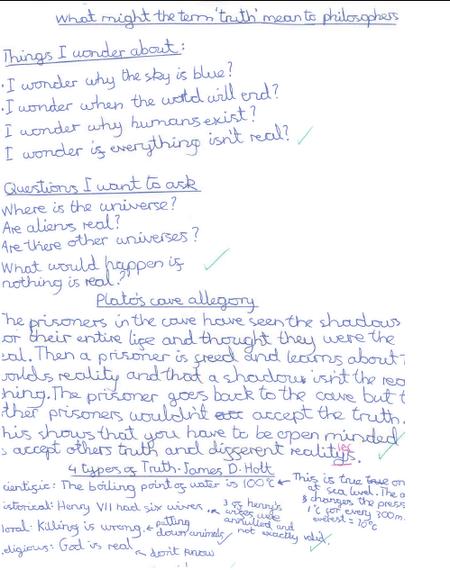
Figure 2: Example of a pupil interview, having just explored these pupils’ books
Pupil Interviews - RE & Worldviews, Daniel M and Lyra having just looked at their books
What is RE & Worldviews?
Religious education is what it stands for It teaches us about Organised Worldviews and covers all of the major religions as well as some that aren’t so well known.
How often do you have an RE lesson?
Once a week. Sometimes we block it though depending on what we’re doing. Like K’s Dad came in this week to teach us what it is like to be a Sikh so then we had a bit more RE than normal.
How are you finding the new way of teaching RE?
It was a bit confusing at first, why change it, I thought it was good in the first place. But then we started doing it and I really like it It’s like we set a ‘big question’ and then lots of little questions and try and find answers to that question or not. Some can’t be answered. Sometimes we can have theories like we do in science and we try and argue for and against that theory I like the big books but the line guides are a pain because they slip I like learning about Worldviews because it’s a bit more inclusive, like we did Humanism last year and that’s not religion really but I really liked studying it This is a bit more like that. I’m not sure I really get what the RE passport is for but maybe I would if we came back to them again It’s definitely more interesting than last year because last year we studied a lot of Christianity whereas now, we get a big question to explore and we get to look at it from lots of different religions.
Is your knowledge organiser helpful?
Some of the pictures don’t always make sense on the knowledge organiser, maybe they need some explanations under them I really like the vocabulary box though, especially when we are learning new and difficult words. I like that it has what we are working as on them, I enjoy being a philosopher but I like being a social scientist too as you get to study data and hear what real people think.
Is there anything you find hard about the new way we teach RE?
It can be hard to remember everything when we jump to different religions all the time. They have lots of different vocabulary and sometimes I can get mixed up between them I do like the different religions though and don’t want to change it. Doing Sikhism means that I understand more about my friend He told me he just wore a hat but now I know it’s called a turban.
How could we improve RE & Worldview lessons in school?
I think we need to start every lesson recapping the last lesson and then talking about how this lesson links to the other one Sometimes it’s hard to see how the small steps of learning all link to each other. So that would be good to have that explained. No line guides would also be good but I do like the bigger books because it’s a good size to choose how you want things to look, I just struggle sometimes without the lines
@nationalsocietyforeducation [socialmediaiconshere]