
A new branch in Blacksburg?
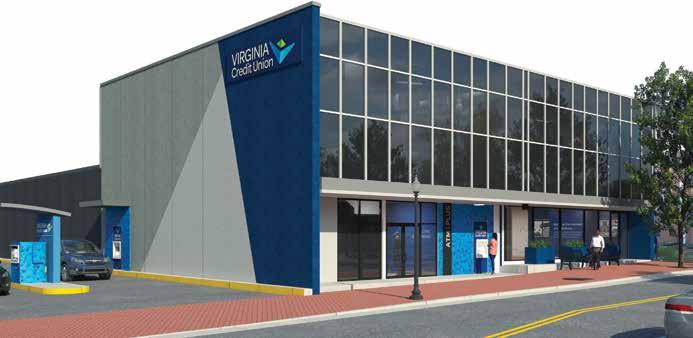
We may be new in town, but we’ve got nearly 100 years of experience helping Virginians live with more confidence. So, we know what people want from a branch— and a financial partner.
Our members enjoy great rates, lower fees, and local support designed to help you achieve your definition of financial success. Plus, if you open a checking account before April 13, 2026, you’ll receive a $100 sign-up bonus!*
For bonus terms, branch hours and more, visit vacu.org/blacksburg.
Ready to become a member and get $100?
Scan the QR code to get started— we’ll cover your $5 membership.



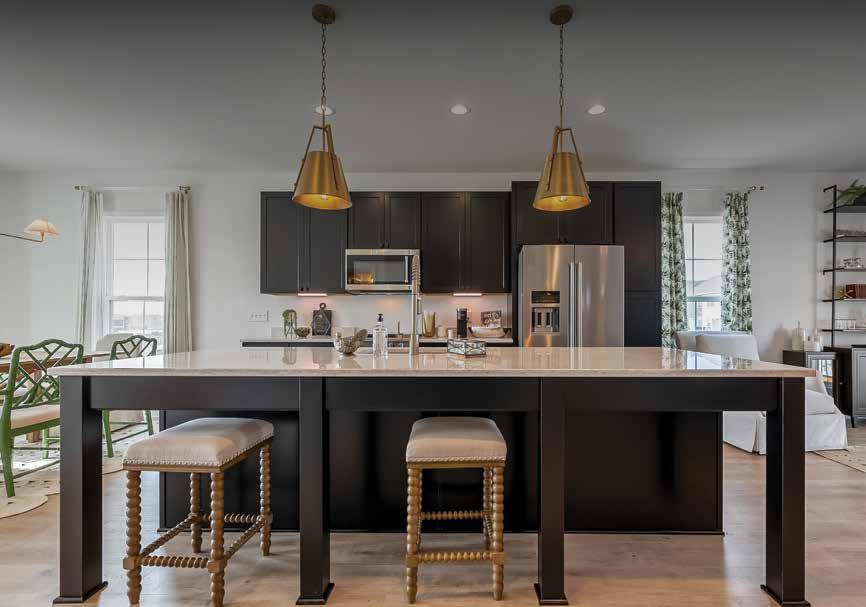







PERFORMANCES | EXHIBITIONS | EXPERIENCES
artscenter.vt.edu
Season Closer
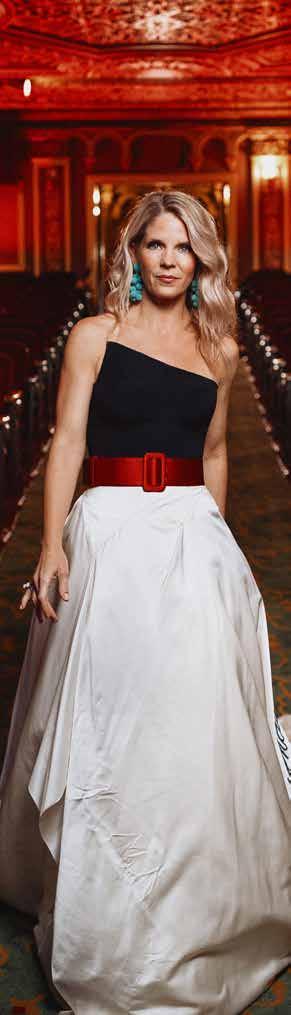
AN EVENING WITH KELLI O’HARA
SATURDAY, MAY 9, 7:30 PM
One of the most beloved leading ladies of Broadway, Kelli O’Hara is a force of nature on stage and screen. A Tony Award winner with eight nominations, plus Emmy and Grammy nods, O’Hara has appeared in 12 Broadway productions, including her Tony-winning performance in The King and I, as well as standout roles in Kiss Me, Kate; The Bridges of Madison County; and South Pacific. Her talent extends beyond Broadway — O’Hara made history as the first artist to seamlessly cross over from Broadway to opera, debuting at the Metropolitan Opera in The Merry Widow alongside Renée Fleming. She currently stars in HBO’s hit series, The Gilded Age. For her Blacksburg debut, O’Hara and her small band perform selections from the American songbook.
“Broadway musical’s undisputed queen.”
— The New York Times
CENTER FOR THE ARTS
190 Alumni Mall, Blacksburg, VA 24061 540-231-5300 | artscenter@vt.edu
NEW RIVER VALLEY MAGAZINE
P. O. Box 11816
Blacksburg, VA 24062
o: 540-961-2015
nrvmagazine@msn.com www.nrvmagazine.com
PUBLISHER
Country Media, Inc.
Phillip Vaught
MANAGING EDITOR
Joanne Anderson
WRITERS
Joanne Anderson
Emily Alberts
Evan Hull
Becky Hepler
Nancy Moseley
Caitlyn Koser
Emily Meade
PHOTOGRAPHERS
Jon Fleming
Tom & Christy Wallace
William Cooke
Emily Heskett
Kaytlin McCoy
Madison Underwood
Meredith White Photography
D“Don’t fall in love with the land.”
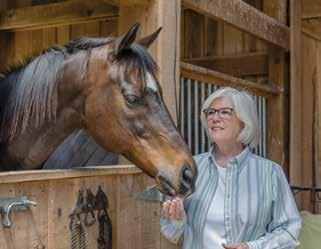
My great-Aunt Sally, a major role model in my life, married my uncle and moved to the stunning, 147-acre historic farm where my grandmother and her brother, Irwin, grew up. The property had been in my family since pre-Revolutionary days. Rumor has it the Hessians came through and borrowed three horses, leaving a receipt behind.
Chelsea Hartman Photography
© 2026 Country Media, Inc.
Country Media, Inc. will not knowingly publish any advertisement that is illegal or misleading to its readers. Neither the advertiser nor Country Media, Inc. will be responsible or liable for misinformation, misprints, or typographical errors. The publisher assumes no financial liability for copy omissions by Country Media, Inc. other than the cost of the space occupied by the error. Corrections or cancellations to be made by an advertiser shall be received no later than 5 p.m. the 20th of each publishing month. No claim shall be allowed for errors not affecting the value of the advertisement. Paid advertising does not represent an endorsement by this publication. Content cannot be reproduced without written consent from Country Media, Inc. All rights reserved. Real Estate advertised in this publication is subject to the Federal Fair Housing Act of 1968.
My eccentric great-Uncle Irwin loved his horses and raced at Saratoga Springs. They raised many sheep, kept chickens, had some ducks, barn cats and always a beagle. Only after he died -- thrown from a horse which stepped into a groundhog hole (they surmise), likely riding fast, and hit his head on a rock -- did I discover he went to college. Mostly, he was a builder –from digging the foundation through designing, handcrafting and installing the kitchen cabinets. They married late, he was 48, Aunt Sally was 35, and the sun rose and set for them on each other. He told her “Don’t fall in love with the land”. If she needed money, had to downsize, could no longer manage things to their standards, it would be okay to sell the beautiful property. She did (to a Hollywood movie star and his former Miss Australia wife) and spent 20 more years in a small 2-BR house in town with a huge raspberry patch and garden.
Uncle Irwin died July 19, 1969, the day before the men landed on the moon, so I have had “Don’t fall in love with the land” in my head for a long time. There’s a similar phrase in duplicate bridge: “Don’t fall in love with your hand”, i.e., don’t overbid thinking you have more than you do.
The point here is to know when to hang on to things and when to let go. Kenny Rogers sang about it. The Bible relates it in “there is a time for every season,” and Uncle Irwin embraced it. It is good not to be excessively burdened with the stuff of life. The English textile designer William Morris once quipped: “Have nothing in your house that you do not know to be useful or believe to be beautiful.” My dad often extolled that one's life does not consist in the abundance of his possessions.
I am not sure I have a big point here, just that it crossed my mind recently, and I wanted to share it, plus I ran out of ideas for Pasture Talk. The silly name comes from overlooking pastures from windows on two sides of my home office, and talking – to you! More than 100 times! So it’s plausible that I’d run low on ideas that might be of interest to our very broad readership – ages in single digits to three (yes!), all walks and stages of life. Thank you for reading New River Valley Magazine and patronizing the advertisers herein. As I have written before: Spring, like true love, is all the sweeter for the wait. Winter’s onslaught has not diminished my love of winter, but I am offering up a huge, warm welcome to spring. As Robin Williams once said: “Spring is nature’s way of saying, ‘Let’s party!’”
Joanne Anderson ManagingEditor jmawriter@aol.com
Look up the 5th Wall
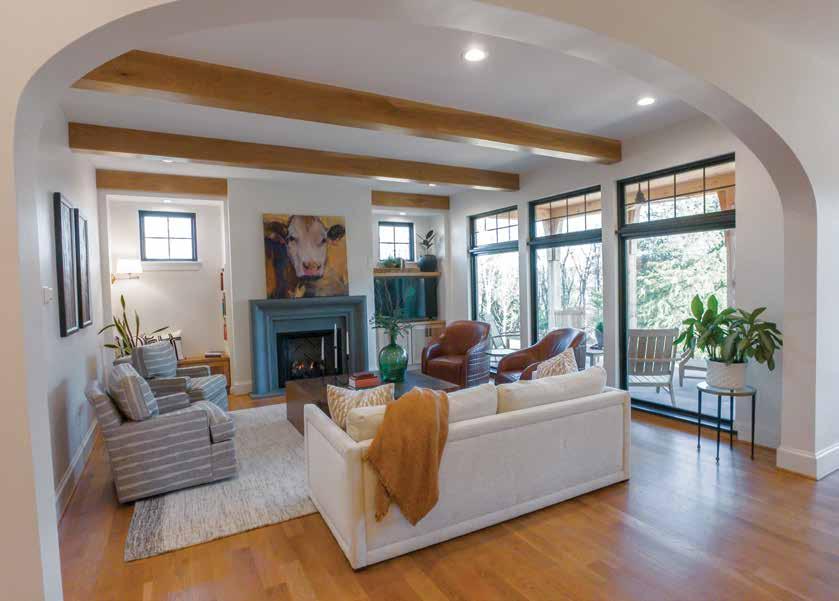
iIn ancient times, decorative ceilings most often symbolized power and extravagance. The elaborate ceilings in the Sistine Chapel, Palace of Versailles and the U.S. Capitol dome create an almost overwhelming visual impact.
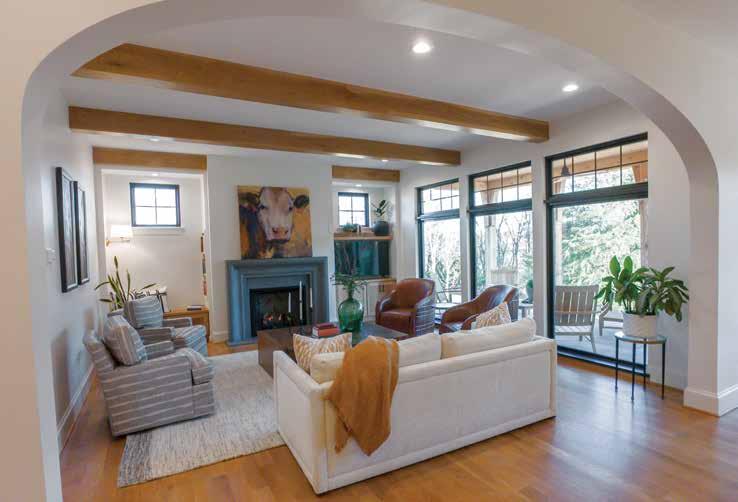
Traditionally and residentially-speaking, porch ceilings have been painted blue and interior ceilings painted white. Ceiling paint is specially formulated to hide imperfections, minimize drip and reduce glare overhead. But there’s a movement afoot to replace popcorn, smooth and swirled texture white expanses above with colors,
wallpaper, decals, wood and 3-D versions.
“A well-designed ceiling can certainly have a notable impact on any room,” states Alex Scott, owner and principal designer for Hickory Knoll Architects.
“Implementing methods that either attract your eye upward or soften a room's height can enhance the qualities of any space.”
The ceiling is often referred to as the 5th wall of a room, and an interesting treatment draws the eye up, creating a more spacious feeling and more intriguing atmosphere. Among the simple ceiling upgrades, which
Text by Joanne M. Anderson Photos courtesy of Progress Street Builders, provided by Hickory Knoll Architects
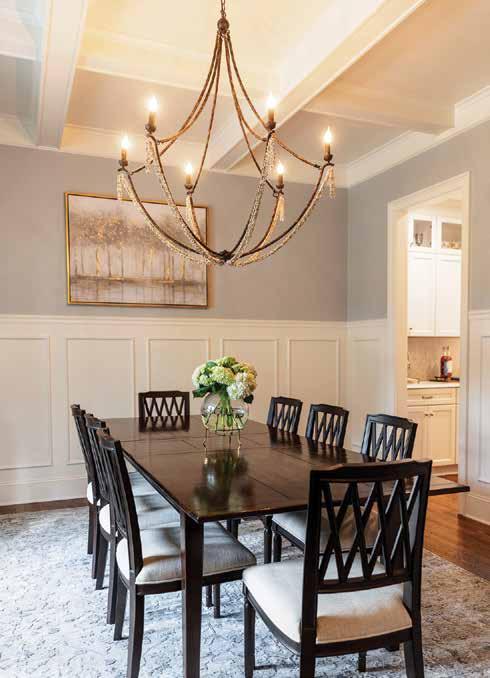
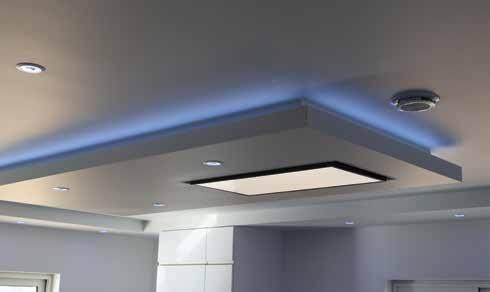
do not include renovating the surface itself are adding a chandelier, crown molding, ceiling medallion or tongueand-groove wood paneling.
Coffered and tray ceilings have become popular in new construction offering an elegant décor component. Coffered ceilings have several, often ornate, recesses for a luxury look. Tray ceilings are more simple with one large recess, offering an airy feel. Some tray ceilings also conceal lighting in the edges.
Ceiling finishes may well be limited by one’s imagination, with the most common ones being:
Paint or limewash, glossy or reflective, makes a room feel larger in medium and light colors, darker and more intimate in black or dark shades.
Wallpaper adds drama, color and texture and requires careful planning for scale, lighting, preparation and installation.
Wood brings warmth to any room, especially in a ceiling. Beams can be faux or real, and the natural texture delivers on the oxymoron rustic elegance.
Dimmable lighting offers a wide range of effects. LED cove lighting, recessed lighting, sconces, picture lights and track lighting can create soft illumination or spotlight artwork or interesting features.
Skylights and moon lights are the ultimate for natural daylight streaming in through the ceiling.
Accessories, decals, borders, trim and molding pieces and ceiling fans all add to the décor of the entire space.
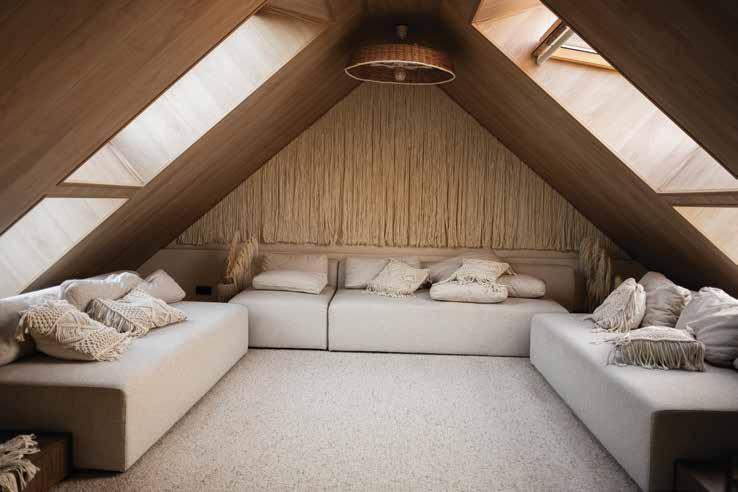
On the lighting front, Scott explains: “Today's lighting philosophy relies on frequent use of recessed lights which focus on the illumination of walls and task spaces. Ceilings require additional layers of up-lighting provided by fixtures such as sconces, pendants and chandeliers. Contemporary homes have begun to use LED tape lighting to bounce indirect light off the ceiling.”
“Welcoming textural treatments such as shiplap, wallpaper or architectural beams make a room feel custom,” he continues. “Installing panel molding or coffers can increase the formality of a dining room while natural wood tones increase coziness and warmth of a library. If a room's trim color is white or off-white, I naturally specify the ceiling to match. Another popular trend is to extend the room's wall color up onto the ceiling, a moody effect known as ‘color washing’”.
If you seek something new and different in your home, but are happy with the interior colors and furniture, look up. Ceiling treatments are abundant, and they can anchor a room and transform the entire atmosphere of any space.




Built to Last

Today's build is tomorrow's legacy
by Nancy S. Moseley
On the extremist survival show "Alone," it's the first thing they rig up ... shelter. After all, a roof over one's head is a primal necessity that spans species and cultures. Piecing together natural or manmade elements for the purpose of resilient refuge is an evolutionary process, from chimpanzees building nests of interwoven branches and limbs to the marvel of New York City's Freedom Tower to Frank Lloyd Wright popularizing the line between the two. Examples of architecture - "the art and science of building" - is something we live amongst and within.
Architecture happens at the intersection of design and construction. It's broad in definition and highly susceptible to trends and available materials as they have innovated over the centuries. Still, most of us aren't conceptualizing the likes of the Centre Pompidou in Paris or the Burj Al Arab in Dubai. We just want a pretty good lookin’, structurally-sound home to call our own. And maybe even pass down to our children.
Where to Begin
Alex Scott, owner of Hickory Knoll Architects, offers: "All you need to start is a desire for a beautiful home. Many clients arrive with a site in mind along with a vision board for inspiration. An initial meeting can be most beneficial if you're also ready to share a target budget to ensure we get started with solid footing."
Compiling the right team of people - a real estate agent, an architect and a contractor - is a key element to success, Scott adds. People
Text

often start with an architect as they are likely to have solid contacts for the other two, which is invaluably helpful when you just don't know how to start or who to call first.
"We like to start with an on-site or virtual meeting to discuss the client’s needs and project. If we're a good fit, you can hire us for a Feasibility Study where we'll use your site and wish list to create an initial concept for your new home. Included in the study are floor layouts, 3D renderings, and an analysis of how much the project shown would cost to complete. Then we would move

forward with completing the home's design and drafting a set of drawings for the builder, who will then return a bid and start date for the project. A timeline from initial concept to move-in date is typically 18 months or longer, with six months for design and bidding followed by a year for construction."
The Design-Build Package Approach
Another approach is going with a firm that is a one-stop shop.
Shelter Alternatives in Blacksburg is a design-build contractor nearly 40 years in operation that has streamlined the process by employing all relevant professionals.
Historically, houses were built one of two ways, Shelter's design team lead, Leah Simmerman, explains: "Either the builder dabbled in design and came up with something that worked or you hired a design firm or architect, and you hired a builder, separately."
"Having all of that under one roof," she continues, "the designers,
Alex Scott, owner of Hickory Knoll Architects

the estimators and the build team helps us communicate and create what our client wants - their design goals, budgetary needs, timeline and actually be able to execute on quality because we're in a constant feedback loop with all key stakeholders."
Justin Buehler, construction operations manager for Shelter, fields the initial contact and gets a feel for the general scope of a project with an email back-andforth or phone conversation. A site visit will likely occur as a next step, followed by a meeting with the estimating team. Then the magic meeting occurs. Estimator + construction + design + energy (courtesy of Shelter's affiliate, Energy Check) will collaborate, resulting in a pre-design sketch and a pre-design estimate. If the client choses to move forward, the feedback loop and finance clock start. Eventually the team will dial into details including materials, fixtures, finishes, sub-contractors, energy applications, and so forth, all while the estimate gets massaged, widely communicated and re-finalized accordingly. Eventually a design contract gets signed, then a construction contract and then it's go-time.
Buehler adds: "Something we focus on more these days is boosting sustainability in order to increase
project life. Longevity. It is hugely impactful. We all ask: 'Is this designed to last?'"
Where to End
Scott, who designed his own home in Salem, concludes, "I truly enjoy working for real people and helping them reach for a milestone accomplishment. The American dream is to have a home built for you and your family. I have the pleasure to not only assist clients in realizing this dream but also to have a lot of fun during the process."
Speaking of dream, it was architecture - the design and materials - that allowed Alex Honnold to scale the Taipei 101 skyscraper for the Netflix bankrolled spectacle. (That, and a whole bunch of grit and skill.) No doubt a rewarding lifetime accomplishment for both Honnold and for those on the safer side of blueprints.
Nancy S. Moseley is a freelance writer who lives in the house she grew up in. Talk about longevity. In more than 50 years, no one has scaled the sides to top out on the roof. Knock on original hardwood floors.


Intellectual Property? What It Means to Have a Smart Home
Text by Emily K. Alberts

What constitutes a smart home? Is it a home that is weatherproof? Future proof? Fool proof?
Many of us have found ourselves at an Airbnb, unable to turn on the stove because it is smarter than we are. “Some tech might be cool, but that doesn’t always make it smart,” says Ed Tuchler of Shelter Alternatives. While there may not be a patent definition for the term “smart home,” there are certainly smart people implementing technology that can make our homes safer, friendlier and more efficient.
Means Different Things to Different Folks
To an insurance company, a smart home might be one that is equipped with a Ring security camera and automatic water shut off valves. Imagine being on vacation and receiving a text that your smoke alarm has gone off from a thousand miles away. There’s know place like home.
To an eco-conscious (or econ-conscious) homeowner, a smart home might be one with an integrated Sense Home Energy Monitor app. By connecting to a hardware monitor installed in your electrical panel, homeowners can track real-time energy usage. “I can even see the load that my solar panels
are offsetting, and whether I am banking energy,” says Tuchler, who adds that it’s also useful to tell when a space heater may have been left on or when the hot tub is in use.
He’s not alone. This year saw a 70% surge in demand for “Green” listings, which are zero-energy-ready homes outfitted with AI-driven efficiency technology, motion and temperature sensors, induction cooktops, solar-ready rooftops and EV charging outlets.
To an architect or contractor, a smart home could mean one with a ZIP sheathing system installed, revolutionizing the way a home is sealed against water, vapor and air. “Gone are the days of going up into Grandpa’s attic, and it’s 120 degrees,” says Alex Scott, owner and principal designer of Hickory Knoll Architects. “We
insulate the perimeter of your foundation with closed cell foam so even the air in your crawl space is conditioned, which protects all ducts and pipes from weather exposure.”
“Efficiency goes up dramatically, and with it, comfort. Cold spots in the home are completely eliminated,” Scott adds, “and ERV systems can improve air quality if needed.” Energy Recovery Ventilator (ERV) systems exchange stale indoor air with fresh outdoor air, while recovering energy from the outgoing air to pre-condition the incoming air. It is especially helpful for today’s airtight homes and buildings.”
Smart Upgrades
While most homeowners don’t have the luxury of a new build to explore cutting-edge, energy-saving technologies, many improvements can be made during regular maintenance and repairs. Whether it’s replacing an HVAC component, upgrading a water heater, installing a new roof, fixing rotted siding, or even just switching out appliances – take the opportunity to do an energy audit and get the experts to weigh your options. Do you need a smart fridge to tell you when you’re running low on eggs? Maybe not, but nowadays refrigerators can also track expiration dates, suggest recipes, and

prevent a ton of food waste. “The install is just as important as the product,” Scott notes, “so start with good people who are certified.”
Simply doing things “up to code” won’t cut it with today’s energy prices. A truly smart home moves beyond manual app control to automation. Having fiber internet, connected devices and a smart home “hub” are vital to the process, but homeowners want to spend less time fiddling with apps and more time spending all the money they’ve saved being, well, smart!
Cutting Edge Technology
SMART is also the name of Virginia Tech’s Spatially Managed Augmented Residential Toolkit, an interdisciplinary capstone initiative dedicated to
“Some tech might be cool, but that doesn’t always make it smart,” says Ed Tuchler of Shelter Alternatives.


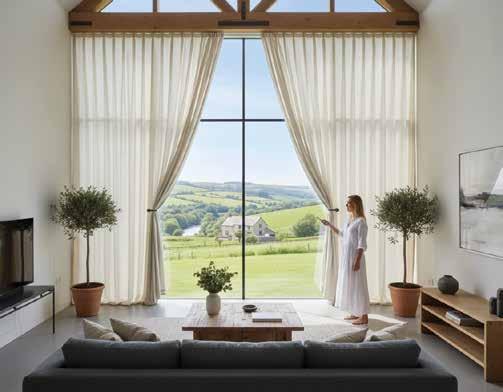
developing a locally-hosted, privacy-centric smart home hub seamlessly integrated with an immersive AR/VR interface. Instead of having to tap lights to turn them on and off, the goal is to use gestures, hand motions like pinching, etc., to control things like lights and curtains, with the help of the Apple Vision Pro. “We intend to merge this all into smaller form glasses and be able to do all this in a way that doesn't feel clunky or very futuristic,” says computer engineering major, Youssef Chebil. While some technology, such as LED illuminated stone countertops and wall panels, might not technically fall under the “smart” category, installing showy features that could help your home’s resale value may not be a bad idea. Opting for a cool feature shouldn’t supersede all practicality. Putting a dozen touch lamps and twice as many automatic curtain openers on battery-controlled mounts will only drive you crazy in the long run, when you’re running around replacing batteries every other week. Hard-wired is always better, until, of course, the internet goes out!
“Most smart home devices have a manual override,” Tuchler assures. Examples include physical keys for smart locks, toggling physical light switches, or ondevice dials for smart thermostats. Still -- whenever I misplace my remote, I never can find an on/ off button on the actual TV. When all else fails, UNPLUG!
Emily K. Alberts is a local writer who once FaceTimed the pot on her stove to see when it started to boil.


A Good Match and A Captivating Cottage
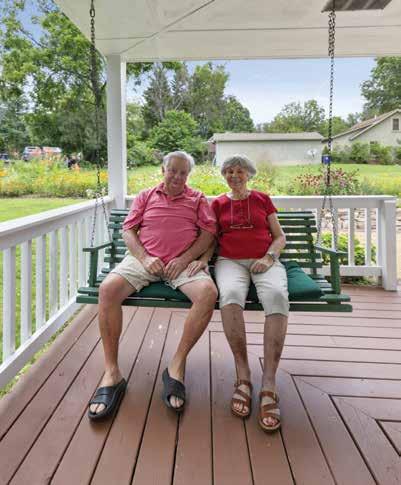
Linda grew up in Miami and never has experienced winter weather. Outside of seven years in Dallas, Texas, she is a lifelong resident of the Sunshine State. They both love flowers and gardening along with the energy and excitement of a college town with “kids all over in Hokie outfits”
Text by Joanne M. Anderson | Photos by Christy Wallace
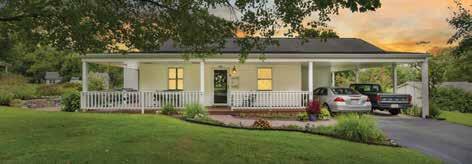
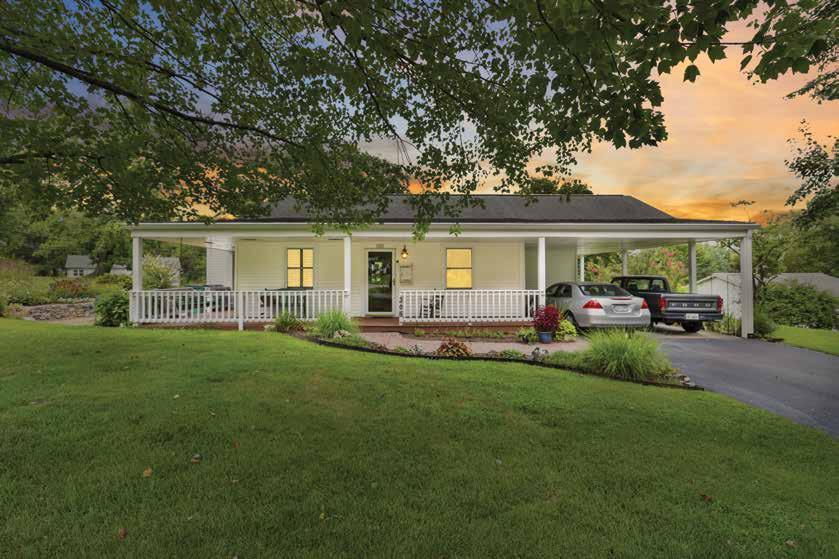
In the mid-1980s when Raiders of the Lost Ark, E.T. and Amadeus were dominating the big screen, Johnny Moore quietly bought a small house in Blacksburg. He worked his career as a Southwest Virginia Court Administrator, assisting with family counseling and juvenile and domestic relations throughout six counties and two cities. The job responsibilities were intense, and settling in Blacksburg gave him respite, especially walking to and loving Hokie football games. Being a creative sort, Johnny evaluated the little place and decided it needed something on every side. He basically wrapped the house in construction – adding the primary bedroom suite and bathroom on one side and a double-car carport on the opposite side. There were three small bedrooms in under 1,400 square feet, and he removed one wall
to make the primary bedroom a more reasonable size and add an ensuite bathroom.
In front, he renovated and expanded the porch, which now runs the entire width of the cottage and around some of one side. In the back, he built a beautiful, large screened porch with a tile floor and wood ceiling with a skylight and ceiling fan. This is where he and Linda spend much of their outdoor life in summers.
Match.com Yields a Match
Fast forward to 2006 and a presence on match.com. There, Moore connected and started communicating with Linda Monroe in Florida. Twenty years hence, the snowbird couple loves heading north in mid-April as much as they embrace going south for winter by
early November. Linda grew up in Miami and never has experienced winter weather. Outside of seven years in Dallas, Texas, she is a lifelong resident of the Sunshine State. They both love flowers and gardening along with the energy and excitement of a college town with “kids all over in Hokie outfits”, particularly during football season. They were a match, both retired or about to retire from government service.
Complementary Couple
Another good match in personality, Linda is a math major, experienced with numbers, analysis, contracts and deals. Johnny is detail-oriented and loves landscaping and lawn care. “There was one tiny flower garden spot when I

came here. Johnny is serious about his lawn, mowing and fertilizing and did not want me to dig up any of it,” she states.
Then she talks of getting lucky when the town removed several old, large pine trees from the side of their property with the utility easement.
“Now we have a slippery slope, where I slipped on wet grass,” she continues.
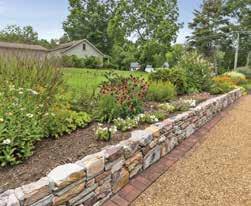
“Johnny and I developed a plan, leveled that and

added the rock retaining wall for a sweet walkway along one side and room for flowers.”
From there, the couple made other plans for flower beds and a small vegetable garden.
Johnny sacrificed a little bit of his lawn, and the place is so pretty that it was included on the New River Valley Garden Tour in 2025, a major fundraiser for Friends of the

Montgomery-Floyd
Regional
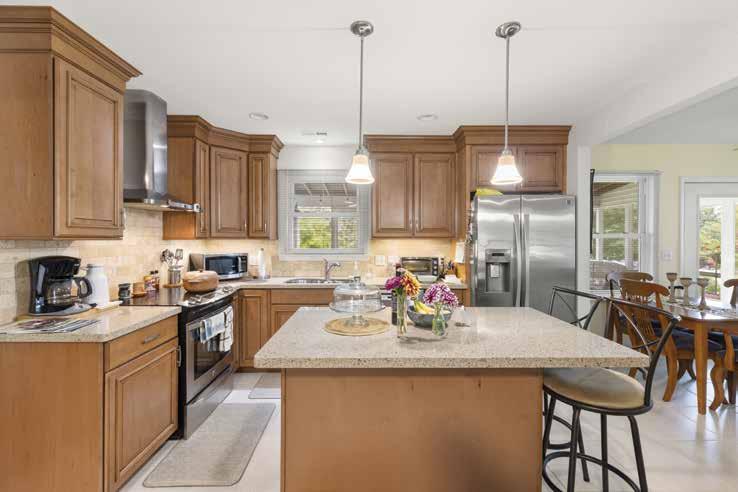
Library. Linda also grows flowers in Florida, lots of orchids, among others. Together, they planned and renovated the kitchen into a fullyfunctional, contemporary, open space with an island, quartz counters, maple cabinets, stainless steel appliances, handsome pendant lights and the proverbial window over the kitchen sink. An adjacent dining area rarely beckons, as the screened porch is just another step away.
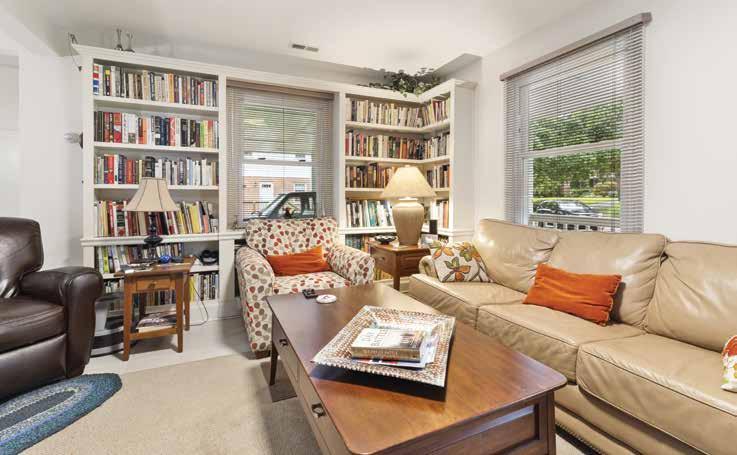
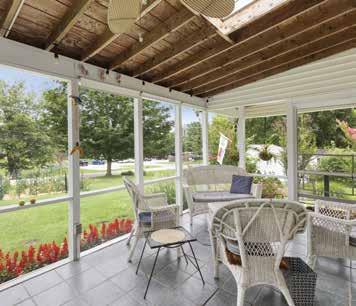
This small bungalow offers the same basic footprint as the house Linda grew up in, which she finds exceptionally comforting. Johnny has always been happy here, even through the dusty renovations. While in town, they especially savor the youthful energy and more mild summers than Palm Beach Gardens. Johnny and
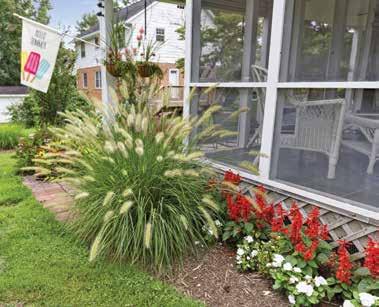
Linda spend time with friends and revel in taking meticulous care of their home, lawn and flower beds. For a small place, relaxation spaces are abundant – front porch swing or rockers, side by retaining wall metal chairs, screened porch wicker or patio table chairs, living room, dining space, barstools at the kitchen island
and Johnny’s own chair outside the backyard shed, a fave spot of his. Johnny and Linda are a good match and savoring in their snowbird retirement life. They have flowers all around them wherever they are and relish the months spent in this captivating cottage in the New River Valley.


Catching Some ZZZZ s in Comfort

I've always envied people who sleep easily. Their brains must be cleaner, the floorboards of the skull well swept, all the little monsters closed up in a steamer trunk at the foot of the bed. ― author David Benioff in “City of Thieves”
It’s possible that people who sleep easily have the best mattress for their body support, comfort level and sleeping style. They probably also have their lights, televisions and cell phones turned off and the dog on its own bed. Filler for mattresses has ranged from leaves, grass, corn husks and horsehair to feather and wool stuffing. And money for safekeeping, though thieves might look there first, along with
the freezer for cold cash. Beds to hold mattresses addressed pest protection and the ease of getting into and out of a bed. Real comfortable, better-for-you mattresses came along in the 1860s with the addition of inner-spring coils. The box spring was invented a few decades later, as was the fold-in-the-wall Murphy bed.
Mattress Basics
The mattress industry in the U.S. reaps close to $20 billion a year, and it’s on the rise with most quality mattresses costing more than $1,000. Queen bed mattresses account for almost 50%
“I love sleep. My life has the tendency to fall apart when I'm awake, you know?”
― Ernest Hemingway
of the market, with twin, twin XL, full/ double, king and California king sharing rest of the market revenue.
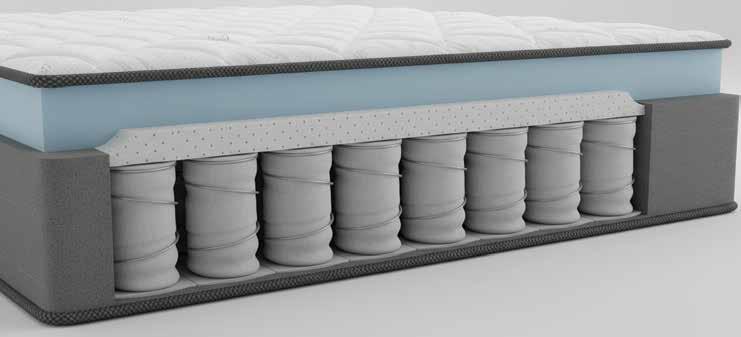
• Innerspring: Firm, traditional feel, good edge support, steel coils for bounce, decent air flow.
• Hybrid: Combination of coils and foam (memory foam, poly foam or latex), durable mix of support, bounce and contour.
• Memory Foam: Contours to body shape, good for side sleepers and pressure relief, great movement isolation.

• Latex: Natural or synthetic rubber, naturally cooling, bouncy and breathable, cooler than memory foam.
• Gel Grid. Open structure for excellent air flow, soft and supportive.
• Airbed: Chambers of air with controls (some dual) to customize firmness.
• Pillow-top: Plush topping sewn atop the mattress for extra softness.
• Organic. Natural, ecofriendly materials inside and out, like organic wool or cotton.
• Water bed: Hanging on from the ‘80s, the new ones have better heaters and stronger materials. Still they can leak, are not permitted in many rentals and can be challenging to get on and off or to get any sleep with another person.
The box spring under a mattress contributes to the longevity of the mattress with air flow and support that eliminates sagging. It also absorbs shock and raises the mattress to a comfortable level. Platform beds are good for memory foam and many hybrid mattresses and provide the same support if a bit more firm without the extra air flow.
Buying Basics
Take your pillow and take your time purchasing a mattress. Plan to lie down on it for 10 minutes in each position – back, stomach, each side – and evaluate comfort in your body, especially your back. Scootch close to the edge to check if it dips and you might fall off. Sit on the edge and test support. If you sleep with someone else, then climb on together and move about, roll over, see how motion on one side affects the person and mattress on the other side.
Before you go, cruise through the “mattress quiz” on Virginia Furniture Market’s website, vafurnituremarket. com. It’s quick and easy and offers best choices for a mattress for you. And you get a free pillow in the store, just for taking the quiz and showing up to claim it!
The tricky part of choosing a mattress is not being able to see what is inside. Most reputable mattress dealers will have small samples of interior construction. Innerspring mattresses have more air flow, reducing trapped heat, while foam ones offer more stability, i.e., isolating the motion of one sleeper.
Firmness is often a personal choice involving best alignment for
sleeping style and weight. For heavier folks, the medium-firm to firm models offer the best support and least sagging long-term while maintaining spinal alignment and reducing pressure points. Flipping over or rotating the mattress twice a year helps prevent sagging or dip spots where a body rests in the same place every night. It’s easy to remember if you connect it to going on or off daylight savings time. Box springs may last a bit longer than mattresses, but it’s wise to replace both at the same time, about every 10 years, for optimum support and comfort.
A good mattress contributes to sleep quality, which can directly impact everything else in life – mood, productivity, energy, creativity and more. And if you need a little jingle as you crawl into bed, try this one:
Good night
Sleep tight
Wake up bright
In the morning light
To do what’s right
With all your might
And … don’t let the bed bugs bite
But if they do
Take a shoe
And beat ‘em ‘Til they’re black and blue.




The Many Roles of Shrubbery
Text by Joanne M. Anderson
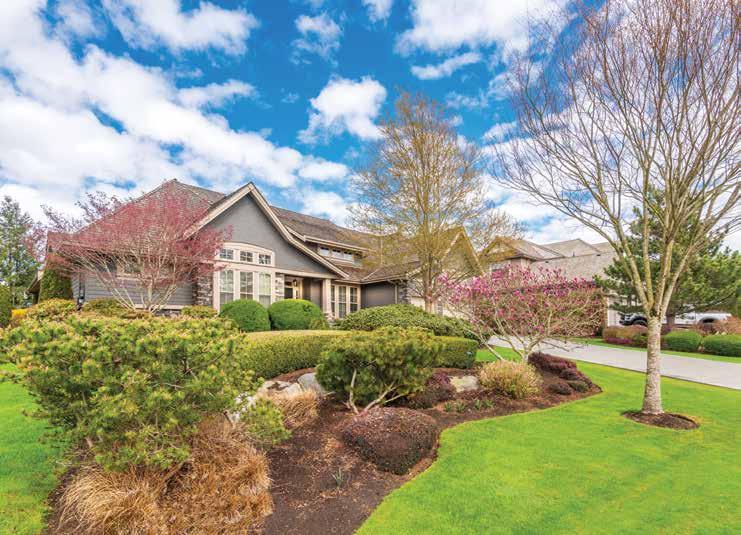
Shrubs rarely get the attention they deserve. Towering oaks, blooming perennials and emerald lawns usually steal the spotlight in photos and drive-bys. Tucked somewhere in the background are the quiet workhorses of the landscape—the azaleas, boxwoods, lilacs, hollies and hydrangeas that fill in the gaps. Yet shrubbery is far more than simple filler. These humble plants serve a surprising number of purposes in yards and communities.
Aesthetics Advantages
While flowers come and go with the seasons and trees take decades to mature, shrubs create the dependable backbone of a landscape. They define spaces, mark boundaries and give gardens their shape year-round. Without them, many green places would look blank and somehow unfinished.
“Shrubs can help tie a home into the surrounding landscape, create structure and year round interest and provide privacy. When chosen and sited well, they offer a lower maintenance planting,” states Tish Poteet, plant designer for Back to Nature Landscaping and Construction. A row of neatly trimmed hedges can outline a driveway or walkway. A cluster of evergreen bushes anchors the corner of a house or condo building. Low, rounded plantings soften hard edges around foundations, decks and porches. Even in the dead of a New River Valley winter, shrubs keep a landscape from looking empty and lifeless. Long before 6-foot high wood and vinyl fences, homeowners relied on thick hedges to create natural barriers. A well-placed row of arborvitae or holly can block unwanted views, reduce noise and provide a sense of seclusion more attractively than a man-made wall. Poteet suggests plants which offer multiple seasons
of interest. “Fothergilla is a native plant which blooms in early spring and provides great fall color. Virginia sweetspire (Itea virginica) is another native that blooms in summer and has burgundy fall foliage. Vary your choices to have something flowering from early spring, like fothergilla until late summer when bluebeard (Caryopteris) provides purple-blue flowers that pollinators love.”
Environmental Benefits
Shrubs are excellent environmental helpers. Their roots stabilize soil and help prevent erosion, particularly on slopes or along waterways. In heavy rains, shrub beds absorb water and reduce runoff, protecting both landscapes and local storm systems. Birds, butterflies and small mammals find a natural habitat in many shrubs.
Dense plantings offer safe places to nest, hide from predators and escape harsh weather. Flowering shrubs such as viburnum, butterfly bush and lilac provide nectar for pollinators. Berry-producing varieties like elderberry and serviceberry supply natural food sources throughout the year. Even an untrimmed hedge can be a miniature ecosystem.
Strategically planted shrubbery can help regulate temperatures around a home. Evergreens along northern walls act as windbreaks in winter, potentially reducing heat
Some days you just need a play day!






loss. Deciduous shrubs near windows provide shade in summer while allowing sunlight to filter through once their leaves drop in fall.
Personal and Property Value
Curb appeal connects to property value, and real estate professionals consistently note that mature, wellmaintained landscaping makes homes more attractive to buyers. Because shrubs grow relatively quickly and require modest investment, they are one of the most cost-effective ways to upgrade the look of a property. A few thoughtfully chosen plantings can make a new house look established or give an older home a much-needed lift.
What and Where?
Different types of shrubs fulfill different needs. Evergreens such as boxwood and juniper provide year-round color and reliability. Flowering shrubs like azaleas, butterfly bushes and hydrangeas add seasonal bursts of beauty. Hardy natives such as spicebush or ninebark offer resilience with minimal care. Selecting the right shrub for the right place is key to making them truly purposeful.
When chosen carefully, considering sunlight, soil and growth requirements, shrubbery can fill many roles for decades with surprisingly little maintenance. So when you pass a simple row of hedges or a cluster of unassuming bushes, take a closer look. Those plants are doing far more than just sitting there. They are protecting soil, sheltering birds, cooling homes, defining spaces and quietly making our surroundings more beautiful.
Back to Nature will be offering a new leucothoe –Paisley Pup – at its new garden center on Prices Fork Road, opening in April. This attractive evergreen sports pink, cream and green foliage with white blooms in spring and good deer resistance.

A valuable resource when contemplating what to plant is “Gardening with Southwest Virginia Native Plants,” a 116-page booklet loaded with graphics, photos and comprehensive information.
The Plant SWVA Natives Campaign is able to offer this guide due to generous financial contributions from the Virginia Outdoors Foundation and the Virginia Native Plant Society.
https://nrvrc.org/images
Deer Resistance
“No plant is deer proof, but we’ve found the following list to offer good deer resistance,” states Tish Poteet, plant designer with Back to Nature Landscaping and Construction.
• Boxwoods (‘Little Missy’, ‘Freedom’ and ‘Independence’ provide good blight resistance)
• Bluebeard (Caryopteris clandonensis)
• Dwarf butterfly bushes (look for sterile varieties)
• Japanese cedar (Cryptomeria japonica)
• Bottlebrush buckeye (native with white flowers and yellow fall color. Give this shrub plenty of room, it’s large and spreads by suckers.)
• Bayberry (Myrica pennsylvanica, native)
• Leucothoe (Leucothoe fontaneisiana, evergreen, native)
• Japanese pieris (Pieris japonica, evergreen, flowers in spring)
• Japanese plum yew (Cephalotaxus cvs.)
• Many junipers (‘Grey Owl’ is a nice blue grey cultivar of our native juniper.),
• Mahonia (Mahonia bealei )
• Arrowwood viburnum (Viburnum dentatum)





“It’s
Yours!”
The Gift of a 2002 Thunderbird!
Text by Joanne M. Anderson | Photos by Jon Fleming

Out of 5,000 names for the new Ford car about to come off the production line in 1955, not one grabbed the attention of the decisionmaking team. Beaver, Savile, Runabout, Detroiter. Not impressive. A $250 reward was offered for something remarkable. A Ford employee named Alden Giberson stepped in with Thunderbird. And the rest is history. The first Thunderbirds carried price tags between $2,695 and $4,000. After ceasing production in 1998, Ford Motor Company revived the model, styled more like the 1950’s version,
in 2002. That sticker price ranged from $35,495 to $42,020. No more Thunderbirds have been manufactured since 2005, and new ones are not expected.
The Gift
Daron and Nancy Phay lived most of their lives in Oregon where he taught music, band and choir from kindergarten to 12th grade. Nancy was also a teacher, and together they raised two girls. The younger daughter married and moved to the Denver
area, where her husband was general manager of a car dealership. The older daughter’s husband worked for a company in Boston with the understanding that he could work while getting a PhD at Virginia Tech. They moved to Blacksburg. He was too busy with work to go to school, so their daughter, in addition to having two children, pursued her doctorate for five years. When she took a job in Colorado Springs, Daron and Nancy, now retired, decided to move near their daughters in Colorado.
Remember the son-in-law at
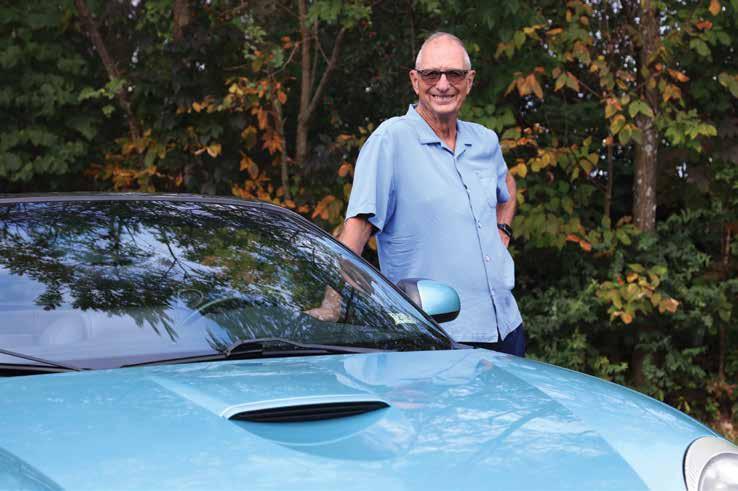
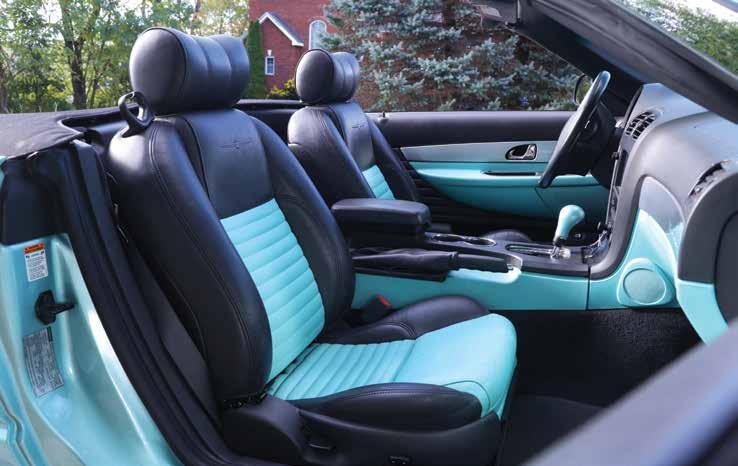

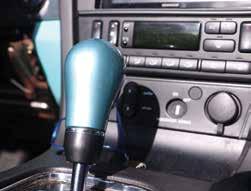


the car dealership? When the Phays returned home from a trip on Oct. 7, 2021, he escorted them into a garage. First he said: “I want to show you something.” And then he stated: “It’s yours.” And there it was, a beautiful turquoise blue, hard top convertible, 2002 Thunderbird! “After we got over the shock of that beautiful car being ours, we drove it home,” Daron relates.
The Next Move
In a “musical state” version of “musical chairs”, their oldest daughter accepted a position at Virginia Tech and moved, again, to Virginia. Three
years ago, the car guy son-in-law found a new job in Maryland. “We liked living in Colorado, but in large part for family nearby,” Nancy says. With three grandchildren now in Blacksburg and the eldest daughter committed longterm to her VT professor position, the Phays decided to relocate to the New River Valley.
“Our daughter and a REALTOR walked through a house, face-timing us along the way,” Daron explains. “She assured us that we’ll like it, this house we’d never seen in a town we had never lived in.”
The couple had been to Blacksburg on short visits. “We drove an RV
twice from Oregon when the first two grandchildren came into the world.” The Thunderbird was carefully shipped as Daron drove a U-Haul truck and Nancy their Honda CRV from Colorado to Blacksburg.
The Thunderbird
Daron says 31,368 Thunderbirds were produced in 2002, and some folks estimate that 25,000 will survive because many were scooped up by collectors and exist in pristine condition. When they got their Thunderbird gift, the odometer read 70,000 miles. It has a 3.9L Jaguardesigned V8 engine for 252 horsepower with a 5-speed automatic. His favorite car up until the T-bird came along was a 1969 GT6 Triumph which was not a convertible. They sold it because it was a 2-seater, and as the family expanded, the car did not.
The hard top comes off for convertible rides in warm weather, and if you think that might be clumsy, Daron solved that. He has it suspended from the ceiling in the garage with an electric lift, so it’s pretty easy to put on and take off.
“I love the color, which is officially Thunderbird Blue,” he declares. “I have never owned a convertible and always wanted one. Now I have one, and I really enjoy driving it, but sparingly.” They go on nice drives with the top down (removed really) in warm weather, and he loves taking it to the golf course.
Named the Motor Trend Car of the Year in 2002, the iconic Thunderbird is squarely in the history books of personal luxury cars with a sporty edge. Daron Phay can claim a little Hollywood glamour in the company of other Thunderbird owners like Marilyn Monroe, Howard Hughes, Elvis Presley, Anthony Perkins and Marlon Brando.


Flying Early on a Career Path

If you surveyed a sampling of American adults, many might divulge that their current career has no roots in childhood dreams. Many high schoolers, in addition, might not have a nailed-down idea of a career forward. Not so for Blacksburg High School senior Xavier Gitre and 13-year-old Caleb Koser of Riner. Passion came easy and fast, and who doesn’t want a career learning about something that fascinates them?
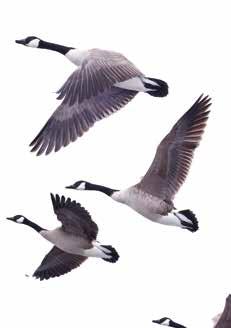
For the two, the galvanizing passion is the world of birds.
Starting Young
Caleb Koser’s interest began in 2019, when a thrift store bird clock
became the catalyst for his hobby. The 6-year-old quickly memorized each hour’s bird. When not at home, if he looked at his watch on the hour, he’d reveal what bird was chirping at the moment back at home. Add to the dawning of his bird passion that he lives in a house boasting a wall of floor-to-ceiling windows looking out to a backyard birder’s woodland paradise, and Caleb was hooked. Xavier Gitre’s story, similarly, starts young – as a 5-year-old, when an intelligent crow traded him a piece of aluminum foil for a cracker. After that followed his first birding trip to the Virginia Tech duck ponds, where a cormorant sighting and a conversation with a fellow birder proved as fodder for his interest.
Caleb’s training began informally. After the fascination with the bird clock, two massive bird books were his food for knowledge. Truly, though, for both of them, the best learning was done by observing. “I remember going to Michigan and seeing several eagles, which were one of my first birds,” Caleb recalls.
Based on a teacher’s encouragement to enter a prestigious competition, Xavier designed an experiment to capture nocturnal flight calls. As a result of his successful experiment, he was listed as one of the top 300 high school researchers in the Regeneron contest.
The chef’s nemesis is the impossible-to-perfect dessert, as the birder’s nemesis is the elusive or
Text by Caitlyn Koser | Photos by Jon Fleming

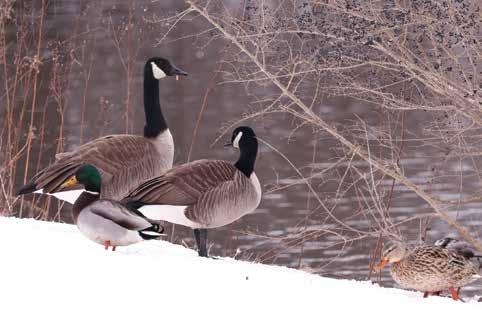




hard-to-sight bird. For Xavier, said archnemesis is the purple sandpiper. “It feeds on rock jetties, so every time you’re trying to sight it, you’re about to fall into a freezing ocean,” he laughs. Caleb, similarly, has his eye set on one must-see, the fox sparrow, which has an almost indistinguishable call to the song sparrow, a similar bird.
Blacksburg’s Birding Scene
With the nexus for academics and culture that Blacksburg is, the birding scene in the area is vibrant, supportive and mutual. The top-tier wildlife conservation program at Virginia Tech draws in knowledgeable birders from around the country, and groups like the New River Valley Bird Club offer community and camaraderie. “Everyone is very friendly here,” Xavier says.
Other parts of the country experience birding drama – yes, that’s a thing – and ethical controversies, but Blacksburg offers a different perspective. “The community is tightknit and unbelievably supportive. Just to illustrate that point, I haven’t ever paid for a pair of binoculars; every pair I’ve ever owned has been a gift,” Xavier comments.
Places that the two cite as
their favorites in the area include Pandapas Pond, Claytor Lake, the Virginia Tech Vet School pond, and Radford’s Bisset Park.
Ebird.org is a thriving online community designed for fellow birders to engage with each other and submit checklists that include when and where a certain bird was spotted. Connecting birders through a mutually beloved hobby, it has helped Montgomery County become the birding hotspot that it is.
Birding Beyond Blacksburg
Often, Xavier and Caleb add birding stops along family trips or outings. “We love long road trips, and I often squeeze in some really fantastic birding spots along the way,” Xavier relates. He lists everything from the more typical wildlife refuges and beaches to those more off the beaten path, like sewage treatment plants, strange abandoned buildings and landfills. “I’ve dragged my parents on many adventures, they’ll warn you.” During a trip to Egypt, a unique opportunity included birding on an island in the Red Sea.
Caleb recently visited several national parks in the Pacific Northwest with his family, a hummingbird feeder
tucked in his luggage. He got the chance to see two different species of hummers in Washington State, a highlight of the trip. A grove in Redwood National Park was a unique experience, and the best birding of the trip was in Olympic National Park, a temperate rain forest boasting about 300 species of birds. All in all, the West Coast trip enabled Caleb to add 40 new species – “lifers,” in birding terminology – to his life list.
Xavier plans to study at Cornell University beginning this fall, majoring in Environment and Sustainability. After high school, Caleb hopes to become an ornithologist, with specific interests in population and bird behavior. He also has his eye on Cornell, renowned for its Cornell Lab of Ornithology.
When asked what advice he has for the aspiring birder, Xavier notes three important steps. “Get in touch with an experienced birder, have a good field guide, and bird as much as possible.” Book knowledge is significant and vital, but curiosity starts with real-world experience. Caleb echoes this advice. “You don’t need a lot of high-tech equipment, just your eyes and ears.”
Their two stories parallel –learn a lot, make connections, and spend as much time in the field as possible. The lines between hobby and school blur together for these young men. With the birding scene alive and hopping in Blacksburg, and plenty of opportunities for birding in the New River Valley, there’s no time like the present to pick up birding for a new hobby. Most likely, you’ll meet Caleb and Xavier along the way.
Caitlyn Koser is a homeschool student, freelance writer and Caleb’s sister. She is increasingly tagging along as he requests stops at birding spots in the New River Valley. Consider her the "wing girl", assisting in spotting.








Asparagus
One of the first fresh vegetables to pop up when the weather turns warm is asparagus, a natural symbol of the new season. It cooks quickly, needs little seasoning, and works in every meal from breakfast to dinner. Additionally, it is packed with fiber, antioxidants and essential vitamins, but not calories – about 3 calories per stalk.
It may improve digestive heath, lower blood sugar, cholesterol and blood pressure, help with sleep, reduce stress and support immunity. Wow, what’s not to love about it? For me personally? The taste. I don’t like it, and I don’t eat it. But, to prove that NRV Magazine is not just about me, horses, wine and homemade cookies, here are a few asparagus recipes and ideas for you, not tested in the editorial headquarters kitchen.
Whether you roast it, toss it with pasta or pair it with eggs, asparagus delivers a fresh-from-the-garden, nutritionallypacked food element to the table. Spring cooking with asparagus can be simple, healthy and full of flavor.
Asparagus with Feta and Pine Nuts
Side dish or main course on a bed of pasta
• 1 pound fresh asparagus spears, trimmed
• ¼ cup butter
• 2 Tbl. olive oil
• Coarse salt and pepper
• 3 cloves garlic, minced
• 3–4 ounces goat cheese
• ¼ cup pine nuts
• Lemon
• Red pepper flakes [optional]

Melt butter and heat with olive oil, garlic, salt and pepper. Cook until garlic is fragrant, about 30 seconds. Add asparagus and cook 8-10 minutes, turning often, until tender. Serve with crumbled feta and pine nuts, spritz of lemon and red pepper flakes for a little kick.
Cream of Asparagus Soup
Still soup season in March and April in the New River Valley
• 1 pound fresh asparagus, trimmed and cut in 1-inch pieces
• 1 (14.5 ounce) can chicken broth, divided
• ½ cup chopped onion
• 2 Tbl. butter
• 2 Tbl. all-purpose flour
• 1 tsp. salt or to taste
• pinch of ground black pepper
• 1 cup milk
• ½ cup sour cream
• 1 tsp. fresh lemon juice
Combine asparagus, ½ cup chicken broth, onion in large saucepan. Cover and bring to a boil. Reduce heat, simmer uncovered until asparagus is tender, about 12 minutes. Puree this in a blender until smooth.
In the same saucepan, melt butter, stir in flour, salt and pepper and cook about two minutes, stirring constantly. Add remaining chicken broth, increase heat until mixture boils. Add asparagus and milk. Stir a ladle of soup into sour cream, then add all the sour cream and lemon juice. Warm to serve, not boiling

Asparagus in Puff Pastry






Singin’ and/or Walkin’ in the Rain

Whether you sing or not, walkin’ in the rain can be a very peaceful experience, especially a warm rain without wind. Crowds are generally minimal, and “from lifting our spirits to calming anxiety and boosting the immune system, walking in the rain does us good. We shouldn’t let the rain stop us from getting our 10,000 steps a day.” [openaccessgovernment.org]
The air is cleaner, rain is calming, surroundings are quieter and one can connect with nature in a different way. Apparently, walking in the rain can speed up metabolism, and you may burn more calories than walking on a dry day. Warming up and drying off can offer a sense of accomplishment for the jaunt outside on a rainy day.
And for that, you need a good umbrella for starters. Originally used as sun shades, parasols were functional and fashionable among royalty. The umbrella for rain was developed in the 11th century when the Chinese made them from waxed silk. However, rain popularity did not evolve until the 18th century in France and England. March is National Umbrella Month, the perfect time to up your rain game with a new umbrella. Most umbrella
hats are on the small side, but you don’t need to hold one, leaving your hands free, if your shoulders wet. Then you’ll need a good raincoat and some waterproof boots. If you are riding a motorcycle, doing farm chores or plan to be outside a long time, rain pants would be in order.
The global market for umbrellas is huge. They come in all colors, patterns, artwork, flag colors, sports teams, with fringe or not, with a seat on one end or clips for a chair and other renditions. From personal umbrellas to wedding, golf, fishing, sports – like your favorite college or NFL team colors – and kids’ umbrellas, smaller in size with fun prints, there’s something for everyone. And, being in the generally “affordable” category, an umbrella makes a nice gift – one of those handy things you can have more than one, at home, in the car, in the truck, in the camper or RV. There’s a nice selection on umbrellaheaving.com. And if you sing in the shower, then singin’ in the rain isn’t much of a leap.
Written by Joanne Anderson who moved from Colorado, in part, because it didn’t rain enough. She likes rainy days.
Come Join Our FAMILY
You can become a member with us if you LIVE, WORK, WORSHIP, or ATTEND SCHOOL in Bland, Craig, Giles, Montgomery, Pulaski, or Wythe counties, Virginia; or Mercer, Monroe, or Summers counties, West Virginia; or Radford City, Virginia!
Celco Community CU has been growing with our members since 1956. We are a family who serves our community through services, lending, and financial planning with ideal products and services.
*Checking *Home Equity Line of Credit
*Savings *Mortgages
*Online Banking *Camper Loans
*Mobile Banking *Personal Loans

*Car Loans
*Boat Loans
*ATV Loans
Our goal is to always make “YOU” our member the number one priority, here at Celco Community Credit Union.
10 Fresh Ideas for getting more exercise and body movement

1. Join a Local 5K or Fun Run
Sign up for a community race—even if you walk it. Having a goal on the calendar builds consistency and gives you something to train toward.
2. Explore a New Trail
Visit a nearby park or hiking area like the New River Trail State Park and make it a weekly adventure. Start short and gradually increase distance.
3. Start a Yard Project Spring cleanup, planting flowers, spreading mulch, or building raised beds counts as serious movement. Gardening improves flexibility, strength, and endurance.
4. Walk-and-Talk Meetups
Instead of meeting friends for coffee, meet for a walk. Social accountability makes it easier to stay consistent.
5. Outdoor Yoga in the Park
Bring a mat outside and try a simple sun-salutation routine. Fresh air can make stretching and balance work feel easier and more refreshing.
6. Bike Your Errands
If you live close enough to town, swap short car trips for bike rides. It’s practical movement that doesn’t feel like “working out.”
7. Try Pick-Up Sports
Join a casual game of tennis, pickleball, soccer, or basketball. Recreational leagues often start in spring and welcome beginners.
8. Create a “Spring Step Challenge”
Set a daily step goal and track it for 30 days. Compete with family or coworkers to make it fun.
9. Take the Scenic Route Park farther away, use stairs, or add an extra block to your walk. Small increases in daily movement add up quickly.
10. Plan a Weekend Adventure Day
Schedule one active outing per weekend: kayaking, paddleboarding, hiking, or exploring a nearby small town on foot. Treat it like an appointment.
A1 Heating & Cooling
Anne Collins Albimino
Back to Nature Landscaping
Beliveau Farm
Blacksburg Battles Cancer
Blue Ridge Heating & Air
Bonomo's Plaza
Brown Insurance
Burke & Herbert Bank
Celco Community Credit Union
Center for the Arts at VT
Crockett Home Improvement
Dehart Tile & Flooring Center
Dwight Atkinson
Energy Check
First National Bank
Freedom First
Giles County Tourism
Hickory Knoll Architects
In Focus Interiors
Interiors Unlimited
Joba Studio
Kesler Contracting
Macado's
Mitchell Kilgore
M-Rock Stone Manufacturing
Mutt's Primitives
Nest Realty NRV
NRV IP Law
Progress Street Builders
Pulaski County
Rayne Stenger
River Ridge Dermatology
SAS Builders
Shelter Alternatives, Inc.
Stateson Homes
The Shaheen Firm, P.C.
VA Shoreline Contactors
Virginia Credit Union
Virginia Furniture Market
Wendy Swanson










"Anne-Collins has been a pleasure to work with since we first met her. She listened carefully to our needs, found us plenty of suitable homes to view, and then came through by finding us our dream home! When it came time to sell, Anne-Collins was the first call we made We'll miss working with her, but cannot recommend her highly enough!"
"Rayne was an outstanding individual to work with. I would highly recommend her. She was incredibly professional and responsive. She took the time to be more considerate of everything affecting my personal life to accommodate the sale of my home. She is amazing."