

Big moments. Everyday wins. And all the goals in between. At Virginia Credit Union, that’s what financial success feels like. For nearly 100 years, we’ve supported our members with personalized service, expert guidance and financial resources to help them live with more confidence. Now, it’s your turn, New River Valley. Because when it comes to that financial success feeling…we got you! Visit vacu.org to learn more and become a member.







ANNOUNCING THE 2026-2027 SEASON!
BIG names. BOLD performances. A new season is coming to the Center for the Arts at Virginia Tech and subscriptions are on sale now. Flexible subscriptions start at just five or more performances with discounts of 15-25% off.
Subscribe today and lock in your seats before they’re gone! go.vt.edu/nrv2627cfa
artscenter.vt.edu 190 Alumni Mall, Blacksburg, VA






CENTER FOR THE ARTS
540-231-5300 | mossartscenter@vt.edu







P. O. Box 11816
Blacksburg, VA 24062
o: 540-961-2015 nrvmagazine@msn.com www.nrvmagazine.com
Country Media, Inc.
Phillip Vaught
MANAGING EDITOR
Joanne Anderson
WRITERS
Joanne Anderson
Emily Alberts
Evan Hull
Becky Hepler
Nancy Moseley
Caitlyn Koser
Emily Meade
PHOTOGRAPHERS
Jon Fleming
Tom & Christy Wallace
William Cooke
Emily Heskett
Kaytlin McCoy
Madison Underwood
wWhat a difference a zero can make! The article on the Replenish Festival on page 28 in our MayJune issue included: “The festival averages 12,000 to 15,000 people per year.” There’s an extra zero on both those numbers, as the festival really averages 1,200 to 1,500 people. Travis Bishop states “maybe one day the event can grow to that size with major sponsorships, but for now, this is the best we can do.”
[statistics] With some 170,000 unwanted horses abandoned each year and slaughter houses closed by the feds, equine rescue organizations have their hands, barns and pastures full and overflowing trying to care for them.
[quotation] According to Reagan Miles, founder of Winterfrost Farm: “Without a doubt, our signature RideA-Rescue horseback riding program is the most popular.” She and her amazing staff of volunteers rescue and rehabilitate ….
[history] Horses were instrumental in the settling of America as the main mode of transportation, working the fields and hauling logs and supplies. They carried scouts, explorers, doctors, families, cavalry and cowboys on westward adventures.
[weather] Just like “the mail must go through” and “the show must go on”, inclement, cold, wet, nasty weather does not deter the Winterfrost Farm volunteers from caring for some four dozen neglected and abused horses which now live peacefully on the rolling hills and valleys outside Radford.
[current conditions] In an economic downturn, horses are often one of the first expenses to be eliminated.
Meredith White Photography
Chelsea Hartman Photography
© 2026 Country Media, Inc. Country Media, Inc. will not knowingly publish any advertisement that is illegal or misleading to its readers. Neither the advertiser nor Country Media, Inc. will be responsible or liable for misinformation, misprints, or typographical errors. The publisher assumes no financial liability for copy omissions by Country Media, Inc. other than the cost of the space occupied by the error. Corrections or cancellations to be made by an advertiser shall be received no later than 5 p.m. the 20th of each publishing month. No claim shall be allowed for errors not affecting the value of the advertisement. Paid advertising does not represent an endorsement by this publication. Content cannot be reproduced without written consent from Country Media, Inc. All rights reserved. Real Estate advertised in this publication is subject to the Federal Fair Housing Act of 1968.
I think that is a very impressive “best we can do.” I am not sure I could round up more than 30 people for anything, no matter how many sponsors I had! We print and distribute 10,000 copies of this magazine every issue. That’s notable. And a great reason to advertise.
I like numbers. Even if one is a professional writer, it can be challenging to get started because you may have as little as four seconds to capture someone’s attention. I wrote about leads many years ago, with numbers/statistics one of five ways to begin.
I used Winterfrost Farm, the horse rescue organization in Radford, for my article example, and here are my five lead options:
You can use these not only for articles, but also for reports, letters and term papers. FYI, I’ve never taken a writing class, and I don’t have a degree in English or journalism, so take this for what it’s worth.
The magazine you are holding, however, now this is worth a lot! You can find a bank, a builder and a bulldozer operator within the pages, places to buy insurance, seek legal help, find entertainment, medical services and more. Read on, s.l.o.w.l.y. It’s summertime in the New River Valley and everything s.l.o.w.s. down for the lazy, hazy part.
Joanne Anderson ManagingEditor jmawriter@aol.com
Text

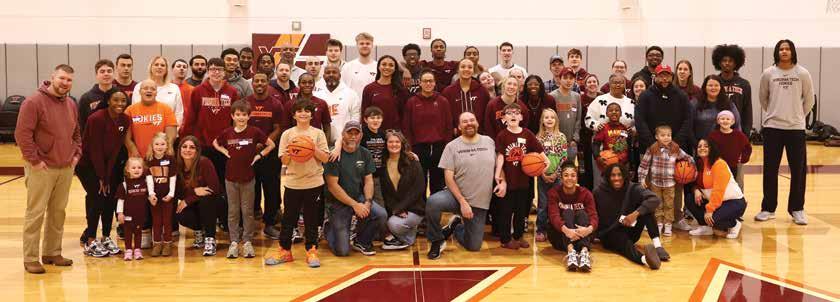
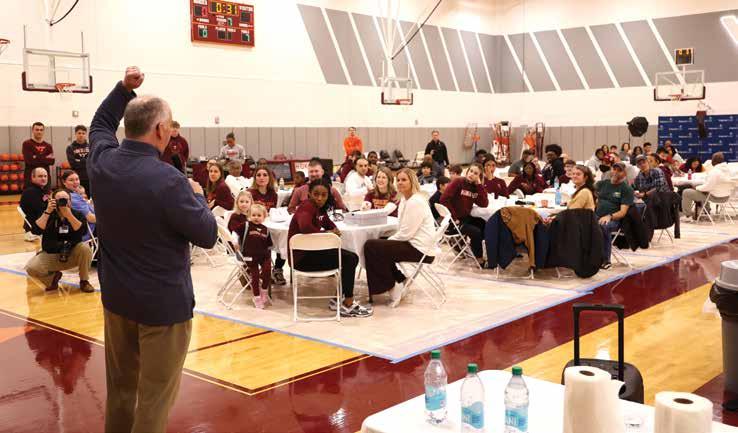
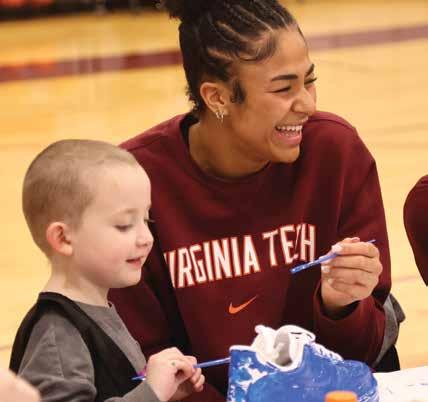
VVibrant and splashy colors tap across the Hokie’s basketball court in rhythm with the squeak of athletes’ kicks. Polka-dotted, striped and glowing with the life of a young artist’s creativity, the Shoes 4 Hope initiative is a steady and strong pushback against pediatric cancer.
Every three minutes, a child is diagnosed with cancer, according to the American Childhood Cancer Organization. Yearly, approximately 16,000 children are diagnosed with cancer in the U.S, and worldwide, the statistic is 300,000 children. Devastating and lonely, a cancer prognosis for a child of any age is a heartbreaking reality.
The Mayo Clinic reports that the most common type of childhood cancer is leukemia, where the cancer center treats more than 138,000 people suffering from cancer and whose mission is “relieving the burden of cancer for everyone, everywhere” [mayoclinic.org]. Leukemia is a blood cancer originating in bone marrow which results in an abnormally high number of white blood cells. Other common types of pediatric cancer include brain and spinal tumors and lymphomas.
For babies, the most common cancer is neuroblastoma, a cancer of the nervous system, most frequently found in children under 5 years old. Occasionally, it is detected early through ultrasounds.
The causes of cancer in children are varied and sometimes still shrouded by unknown factors. Most cancers are caused by alterations or mutations in genes that result in cancer. Inherited genetic changes and changes early in the child’s development account for some cancers in children. Environmental changes are well-known causes of cancer, but in children, the research and correlations are less clear-cut than in adult cases.
As devastating as pediatric cancer is, prognoses in the last decades have increased dramatically. The National Cancer Institute (NCI) states: “During the past five decades, dramatic progress has been made in the development of curative therapies...”. That’s a hopeful sign of more promising breakthroughs to come. The NCI estimates that 80% of children with cancer (who have access to modern




treatments) can be expected to survive to adulthood.
In the case of leukemia, the American Childhood Cancer Organization reports: “Just 60 years ago, almost no child with leukemia survived more than a few years, but today … 90% of children with the most common type of leukemia will survive.”
The future of cancer care is brighter now than decades ago, and with varied treatment options and compassionate and widespread research being done, a child with cancer has hope despite a scary diagnosis. For young cancer patients in the New River Valley, that hope has a tangible outpouring through Shoes 4 Hope.
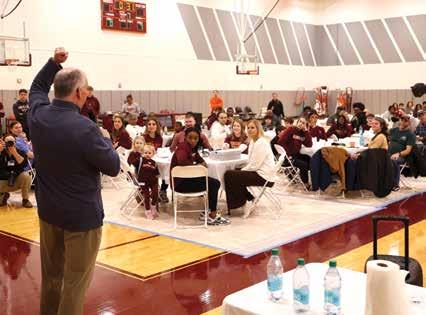
Carilion Clinic Pediatric Hematology-Oncology patients partnered with Shoes 4 Hope, a UVA-founded organization, to paint shoes for both Hokies men’s and women’s basketball coaches.
The Shoes 4 Hope initiative was kickstarted by the Coaches vs. Cancer movement. It’s a relationship between the American Cancer Society and the National Association of Basketball Coaches. According to cancer.org, the Coaches vs. Cancer initiative has raised more than $179 million dollars, confidently delivering a bolster to the cause of fighting cancer.
On the January 11 game earlier this year, women’s basketball staff and coaches wore their fancy kicks at a Hokies home game, while men’s basketball staff sported their sneakers for the January 31 game, also at Cassell Coliseum.
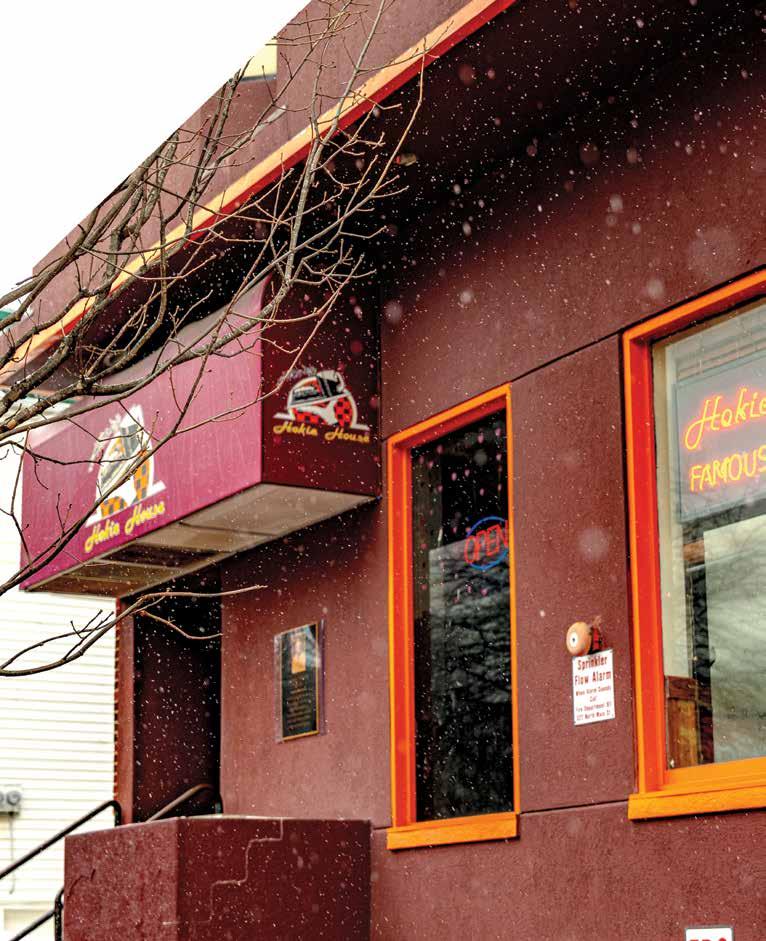
The two home games offered color to the court, but for many, it was a visual reminder of a fight against a bleak reality. Behind shutters of loneliness and rejection from a child’s cancer diagnosis, the rallying community of the New River Valley has taken a stand against feeling forgotten. A few humble paintbrushes and a rainbow of paint colors have taken the stand, and, in doing so, poured out love, compassion, and, most significantly, an endearing and tangible hope for a struggle that cannot be faced alone.
For more information and to make donation$
www.carilionfoundation.org/shoes



Text by Joanne M. Anderson
One would like to be in the company of Neil Diamond, Brett Favre, Alan Alda, Michael J. Fox, Ozzy Osbourne and Ben Petrick for talents in common, like acting, singing and athletic skills – not for all having Parkinson’s Disease. Petrick, for example, was diagnosed when he was 22, heading into what could have been a stellar professional baseball career. He retired from the sport just four years later and penned the book “Forty Thousand to One”, referring to the number of Americans diagnosed each year with the motion and movement disorder. According to www.parkinsons.org, nearly 90,000 are now diagnosed each year.
Previously called “shaking palsy”, the condition has been noted since 1000 BC. It is named for an English apothecary, James Parkinson,
who wrote a comprehensive essay about it in 1817, as “a condition characterized by resting tremors, involuntary movements and postural instability.” His name became attached to it some 50 years later by a French neurologist who separated Parkinson’s from other tremor ailments. Call it what you like, all tremor diseases are challenging, embarrassing, potentially debilitating and very frustrating.
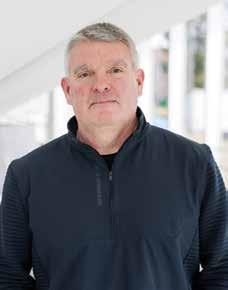
Geoff Saunders’ journey with Parkinson’s, the cause of which remains a mystery, started in the fall of 2013 with a barely noticeable tremor in his right foot. “After some research, I thought this may be Parkinson’s Disease (PD) because
the tremor occurred at rest and not while moving the leg. Essential tremor is where tremor occurs during movement and not at rest.” Once a tremor developed in his right hand, Saunders was diagnosed with PD in December of 2014.
In the fall of 2015, Michael Kneuer of Blacksburg was diagnosed with PD. “I was almost doing back flips because initially I was told I had corticobasal degeneration (CBD), a much worse disease.” Kneuer had known for a few years something was not right, especially with his balance, which might have contributed to the motorcycle accident which prompted him to pursue medical counsel.
PD is a progressive disease characterized by the loss of neurons in the brain that make dopamine. From 2015 to 2020, Saunders took medicine

Realtor® (540) 320-4652 bill.linkenhoker@nestrealty.com
Realtor® (540) 320-6688 rob.jones@nestrealty.com
118 Country Club Dr. SW, Blacksburg, VA 24060

Realtor® (540) 761-5544
jacklyn.phillips@nestrealty.com
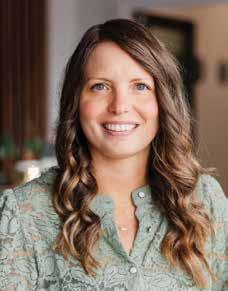
Jacklyn Phillips is a REALTOR® and Marketing Specialist with the Link & Jones Team in Blacksburg, serving the New River Valley with over a decade of experience in real estate marketing, design, and transaction coordination. A Shepherd University graduate with a BFA in Graphic Design, she blends creativity and strategy to craft modern, high-impact marketing that showcases what makes each home so special.
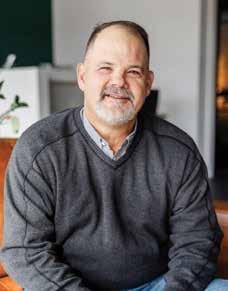
Bill Linkenhoker has proudly called the New River Valley home for more than three decades, building both a career and a family deeply rooted in the community. Whether helping new families discover the NRV or assisting longtime residents with their next chapter, Bill brings heart, professionalism, and hometown expertise to every transaction.

Realtor® (540) 578-1537 krista.gwilliam@nestrealty.com
I’m a proud Hokie who’s passionate about helping people call the New River Valley home! From first-time buyers to seasoned sellers, I bring energy, expertise, and a genuine love for this community to every client I work with. Real estate can be a whirlwind, but my goal is to make the experience rewarding, seamless, and maybe even a little fun.
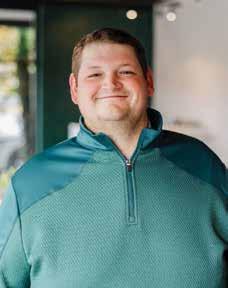
Rob Jones is a lifelong Blacksburg resident and proud Virginia Tech graduate with a degree in Business Management and a minor in Residential Property Management from the Pamplin School of Business. Rob combines deep market knowledge with years of property management experience to guide clients toward smart investments and lasting homes. Through his proud Hokie legacy shared by his grandfather, father, brother, and now daughter, Rob values the community that shaped him and wants to help those on their real estate journey.
Realtor® (540) 553-6987 brad.shelton@nestrealty.com
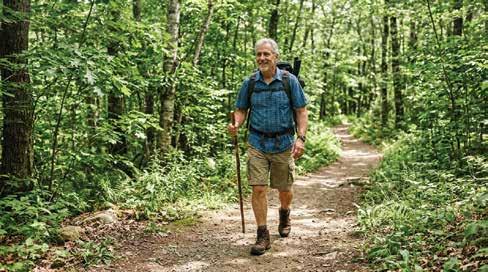
Meet Brad Shelton, a true local from the heart of the New River Valley, hailing proudly from Blacksburg, VA. With deep roots in the area, Brad is a fourthgeneration Hokie from Virginia Tech, where he honed his skills and earned his real estate degree. His expertise in the industry flourished through roles at one of Blacksburg’s largest apartment complexes and as a paralegal assistant at a prominent local real estate law firm.
to reduce the shaking, which became less effective over time. After two years on a different medicine, with the same outcome, Saunders decided to undergo “deep brain stimulation” (DBS).
A medical team places an electrode, which is attached to a pacemaker, in a very specific location deep in the brain. “The pacemaker can be programmed according to the response of the tremors. DBS alleviated most of my tremors, and I was able to reduce my medicine dose in half.”
Parkinson’s often presents in one side of the body. Just before his right-side DBS procedure at UVA University Hospital in Charlottesville, Saunders noticed tremors on his left side. He eventually had DBS for the left side with the same good results. “Currently, my tremors are of short duration and mild. I have some other symptoms, which are also mild. I have had PD for 12 years and am doing well, for which I give God all the glory,” the 75-year-old retired veterinary pathologist relates.
If you asked Kneuer, 61, about having surgery six months ago, he’d say no way. But now, “with the introduction of updated equipment with an artificial intelligence (AI) component which can predict what you need in light of what you are doing, I am strongly considering it, also at UVA,” he says.
Kneuer is co-owner with his wife Lilly of the luxurious Lilly Valley Inn in Pearisburg and Rustic Roots Olive Oil shop in downtown Blacksburg. “I want to stay active and continue doing things,” he declares. “You know what your PD looks like right now, but it’s a fluid disease which can change dramatically in a few months. DBS can slow the progression and offer relief in many ways.”
Seemingly a misnomer, as what body tremor is actually essential[?], this condition presents as rhythmic shaking during voluntary (not resting) movement. Unlike Parkinson’s, essential tremor does not generally produce balance issues, rigidity or slowness of movements. It does however, like PD, tend to have a genetic component and appears most of the time in later age.
Research suggests abnormal communication within certain brain circuits, particularly those involving the cerebellum, may play a role.
Angela Webb of Radford figures she had essential tremor for five years before seeing a neurologist five years ago. As far as she knows, there is no family history of the condition.
“The first thing I noticed at work was that I would hit letters twice on a keyboard over and over,” she says. “Then trying to enjoy a
cosmopolitan cocktail one evening, I sloshed it all over the place.” Webb, 68, went to a neurologist while living in Texas and was diagnosed with essential tremor. She moved to Radford last fall to be near family and found a great doctor in Roanoke. “Dr. Mark Witcher with Carilion is terrific. I actually read about him online when I was in Texas.”
There are two surgeries for the condition, a multi-focal surgery and DBS which Saunders has had twice, once for each side, for his PD, and now Kneuer is considering. As Webb’s condition has expanded to her head and voice and is creeping into her legs, she is opting for the DBS operation. It will be done on both sides in the same surgery with Dr. Witcher in Roanoke in July. Her anticipated outcome is more mild symptoms, especially in her voice, or complete elimination of the shaking. There are always some ingenious, creative types looking to invent something to fill a niche in the market, and several assistive devices are now available for folks with either PD or ET. From laser-guided walkers and specially-designed walking poles to adaptive eating utensils, one-touch openers, clothing with magnetic or Velcro closures, and voice-activated technology, there are some small ways to make the shake in life a little easier to navigate.
Neurosurgical patients is a great privilege. The patients impacted by movement disorders, chronic pain disorders and epilepsy often find their quality of life tremendously impacted by these debilitating conditions. By providing world-class, cutting-edge treatments personalized to serve each patient’s needs, we can help them reclaim the most important aspects of their lives.
-- Dr. Mark R. Witcher www.carilion.org


Text by Joanne M. Anderson
Photos courtesy of Upscale Barber-Salon

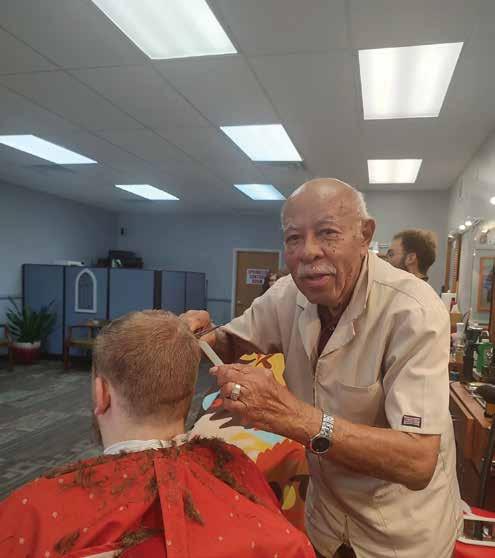
Charles Johnson doesn’t own a rocking chair. He had not even contemplated retiring until last year.
With a clean conscience, steady hands, keen eyes behind glasses, and the commitment to a work schedule, this barber just isn’t sure if or when retirement will begin. “Could be when Father Time says so,” he jests. Mr. Johnson turned 93 in early June this year.
The red, white and blue barber pole is a quintessential symbol for the place where men can
"It should be your pleasure to sit in his chair." — Customer Review
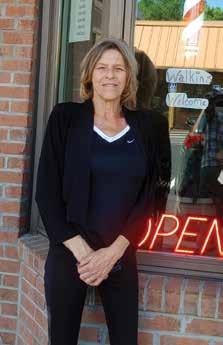
Dalton
get some head trimming. From a hot shave, beard and mustache trims to haircuts, hair coloring and styling, the barbershop pole needs little explanation. And this red, white and blue does not link to the USA flag colors.
With a history spanning some 6,000 years, barbers once performed other tasks as well. In the Middle Ages, they functioned as medical practitioners dubbed barber-surgeons. Their sharp razors and manual dexterity worked well for pulling teeth, setting broken bones and amputating limbs.
These barber-surgeons hung out bloody, once white, bandages to dry, which would twist in the wind.


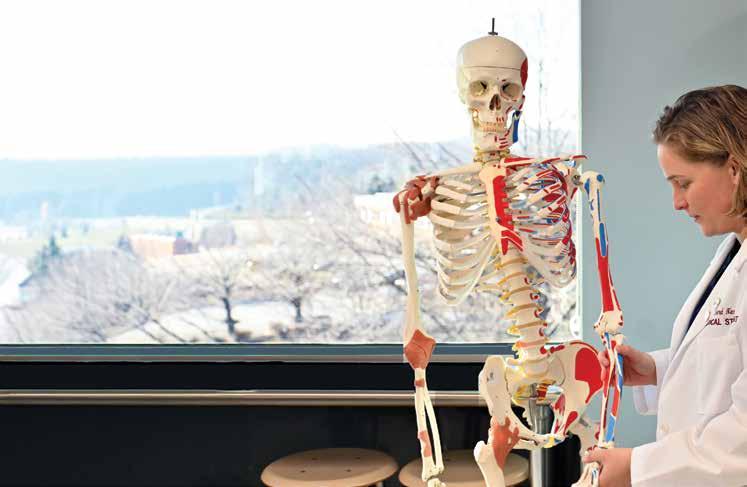
At the Edward Via College of Osteopathic Medicine (VCOM) in Blacksburg, we are committed to improving healthcare across our region. For more than two decades, our students have engaged in meaningful outreach that enhances both their training and community well-being. VCOM is proud to be a trusted community partner—advancing healthcare and strengthening the region we call home, one future physician at a time.
Patients had to grip a pole tightly so their veins would stand out during some procedures. Thus, white is for bandages, red for blood and blue for veins. According to Mr. Johnson, the blue is only in the United States. Barber poles elsewhere are just red and white.
The word barber comes from Latin barba meaning beard. A tonsorium is also a barbershop. The Latin word tonsor means clipper and the verb tondere means to shear.
Seeking to learn a trade, it was this line of work that appealed to Charles Johnson as a teenager studying at Christiansburg Institute, the all Black school founded in 1866. Upon graduation, he was drafted into the U.S. Army where he served in the Korean War as a barber and military policeman.
Back home in the New River Valley, Blacksburg native Johnson found a job at the campus barbershop at Virginia Tech. He worked before 8 a.m. and after 6 p.m., which were the only times the Black barbers were permitted to cut hair for Black students. This system did not set well with Johnson, so in 1961 [three years before the Civil Rights Act passed] he told his customers they would get their hair cut between 8 a.m. and 6 p.m. like everyone else.
He intended to open his own barbershop, figuring he’d get fired. Without a word or confrontation from management, the Black students came in during day time hours, and Johnson was there to trim their hair. He eventually became the manager and was responsible for all the Corps of Cadets’ haircuts.
When Mr. Johnson did step out in 1974 to become an entrepreneur with his own barber shop, he faced lots of prejudice in finding a space to rent. As with everything in his life, he persevered, rolled with the discriminatory punches and continued not only cutting hair and doing hot shaves, but also offering brotherly and fatherly guidance, often financial assistance and being a model friend to anyone who needed one. He loaned his car once for a Virginia Tech student’s honeymoon and often drove VT students home for breaks.
After selling his downtown barbershop -- and having no rocking chair -- he simply opened another
one. Though Upscale Barber-Salon has moved five times in a couple decades, it has never compromised on quality, attention to details, fair pricing, cleanliness and hygiene. Both Mr. Johnson and his associate, Melinda Dalton, who has worked with him the better part of 20 years, stay current on hair fashion trends, facial grooming techniques, and the plethora of tools, equipment and advancements.
Ms. Dalton offers her 35 years’ experience doing all kinds of hair for men, women or children. She attended ATI Hollywood School of Beauty in Roanoke and has been licensed since 1993. Mr. Johnson and Ms. Dalton are in the retirement age demographic, and both of them enthusiastically embrace having a schedule. Many studies report that people who maintain regular routines experience less stress, better sleep, improved health and enhanced mental clarity.
Cutting and styling hair [for men, women and children here] is demanding for its long hours standing, and rewarding for improving every customer’s appearance and thus boosting their self-confidence. It is an exciting career that blends artistry, creativity, personal interaction, precision skills and myriad challenges of operating a small business.
Not yet.
Question: To what do you attribute your long working life?
Mr. Johnson: I eat fresh food and breathe fresh air. I’ve never smoked or drunk alcohol or coffee. I enjoy my work, look for the best in people and love God and country.
Ms. Dalton: Claiming victory over stage 4 breast cancer, I find joy in every morning and having a schedule with a meaningful purpose. It is very pleasant and rewarding to work with Mr. Johnson.
Upscale Barber-Salon
Bonomo’s Plaza, 860 University City Blvd. Blacksburg 540-808-7745 Blacksburgbarber.com









Text by Joanne M. Anderson | Photos by Madison Underwood



From The Archies’ #1 song “Sugar, Sugar” and the hit movie “Butch Cassidy and the Sundance Kid” to Woodstock, “Easy Rider” and the Apollo 11 moon landing, the year 1969 presented contrasts in evolving pop culture and technology, plus a fairly stable housing market.
The housing industry was strongly driven by the Baby Boomers, and some 65% of Americans owned their homes. The average age of buying a house was 23, and the median home price was $25,600. While Madison and Luke Underwood were able to buy their first house in Fairlawn in 2019 when they were 20 and 19, the price was much higher. They purchased the Floyd property just two years later, defying today’s average first home


buyer being between 35 and 40 years old. The median home price this year is a whisker over $400,000.
The single-story, low-pitched ranch was a very common house style in the late 1960s, characterized by a much more open interior than earlier, boxy homes with walls between all the rooms. Large windows and sliding glass doors were prominent, and the backyard patio designs replaced the ubiquitous large front porches. Brick, stone and wood siding were common materials.
It was the time of mid-century modern with its clean minimalist lines, open floor plans and functional spaces. This blend of nostalgia and practicality captured the Underwoods on first look at their current home in Floyd County.
“We saw this house for sale on Facebook, and my first reaction was ‘That’s way too far, why would we move to Floyd?’” states Madison. For Luke, there is a strong family connection. He spent much of his childhood in Floyd County with his beloved grandfather, Raymond, who owned Underwood Chevrolet back in the day. He feels a large part of his paternal roots reside in Floyd.
It was the very end of December in 2021. With Madison’s mind still stuck on a potentially long 30-minute commute to their business, Nomadic Camper & RV Repair, the couple drove out to the house. “We fell in love with the kitchen and the view of

the mountains!” she gushes.
The 1,760-square foot ranch, built in 1969, has four bedrooms, two bathrooms and a detached garage. That’s all terrific, and when you factor in 6.31 acres, 2-car detached garage and no close neighbors, well, any 30-minute commute fades away. “I’m so used to it now, it doesn’t even seem like 30 minutes.”
The house was in great condition, perhaps credit those late 1960s building standards. Luke relates that they whitewashed the brick exterior, added a blue metal roof and installed a windmill. They also renovated one combo bathroom and laundry room. The Underwoods, high school sweethearts since they were 15

and married since 2022, plan to finish the full basement, maybe add more bedrooms. [Maybe add more kids? I didn’t ask.]
The couple can comfortably envision and embrace any renovation project. They have already flipped a house or two, and Luke takes on all manner of repair and upgrade work with campers, RVs and horse trailers every day in their business. From wiring and painting to water damage repair and custom interiors with new carpet, counters or fixtures, he’s more than handy with tools and gadgets of all kinds.
As a professional photographer, Madison saw the
potential instantly of holding photo shoots right at home with that incredible view. “It’s like the cherry on top for my photography business,” she says. “One day I’d like to build a studio for my work.”
“We don’t plan to move again, “Luke adds. “We want [son] Rawley to go to Floyd County Schools, and this is where I feel that I belong.”
Every evening in the summer, Madison and Luke walk the property and/or sit on the back porch and simply enjoy the view. Hosting gatherings with the long-range vista is amazing. They say it’s a little slice of heaven right in Floyd County.




Text by Joanne M. Anderson
by Jon Fleming
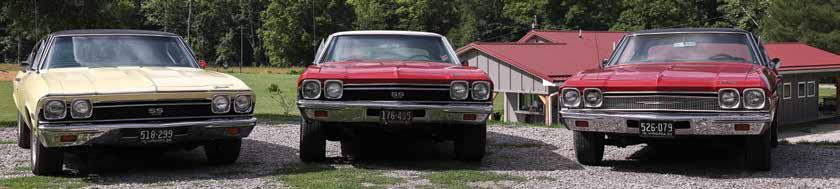
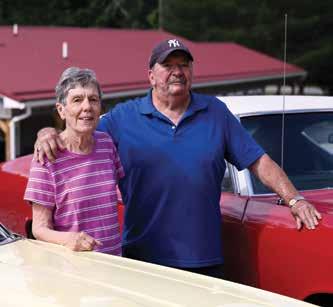
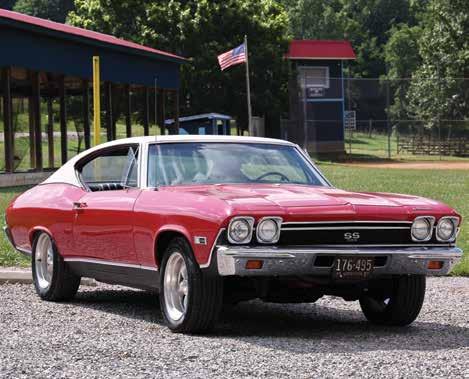
With a full-time job that paid $360 per month, Donnie Martin could afford to buy a car he liked more than his 1963 Buick Riviera. What caught his eye, and his heart forever, was a 1968 Chevelle at Blacksburg Motors in 1969. “It was a Super Sport with a red bottom, white vinyl top, 6,600 miles, a 4-speed transmission and a 396 cubic-inch engine,” he recalls. “Sticker price was $2,500.”
The salesman offered $1,300 for the Buick, leaving $1,200 to finance into payments of $42 per month for three years. “I was proud of my new ride,” which launched a lifetime love of Chevelles. Within a month, he met
Debbie. “We dated in my red and white Chevelle” he reveals. She would become his wife, thereby launching yet another lifetime love [of 54 years and counting].
“She had just graduated from National Business College and needed a car. We found a red bottom, white vinyl top 1968 Camaro Super Sport with a 4-speed and 350 motor in Giles County.” They still own and can drive both of these “matador red” stock ’68 color vehicles.
“The Chevelle is still original and stock as can be,” he says. “I did put in a 5-speed transmission and had it repainted once at Lee’s Body Shop in Pearisburg.
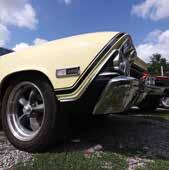
Martin stepped into a new color with his second ’68 Super Sport Chevelle, a butternut yellow body with a black vinyl top. “I owned this car three times before I decided to keep it and restore it.”
Once he got started, Martin decided to put everything new on it. It has a 4-speed transmission and a .373 posi-traction differential like his red one. “I don’t think there is one screw or bolt on this yellow one which has not been replaced.”
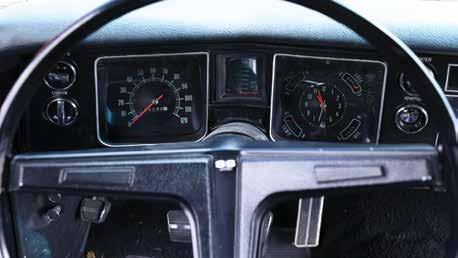

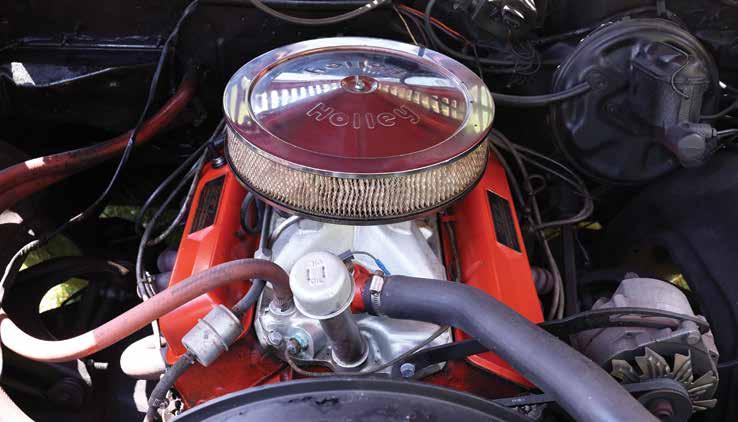
The third Chevelle is a Malibu model with a 327 cubic-inch engine, an automatic transmission and a .323 ratio differential in it. Another “matador red” but with a black vinyl top.
This one has bucket seats and a horse shoe floor shifter. Martin reports that the ’68 Chevelles came with a “roller tachometer” for the RPMs. “All three cars have this tachometer, which is pretty valuable and hard now to find original ones.”
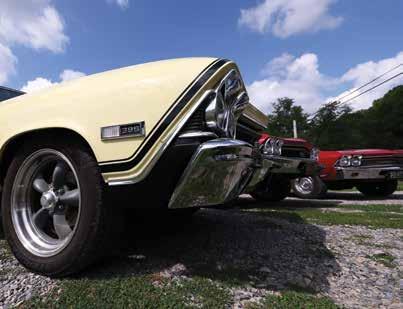
The Chevelle was produced from 1964 to 1977 and remains cherished as one of the iconic muscle cars. It was introduced as a midsize car, and the 1968 Super Sport was the second generation model, featuring larger engines and enhanced performance. The car’s suspension and handling were designed to provide a balance between comfort and performance, making it well-suited for
both daily driving and spunky weekend adventures.
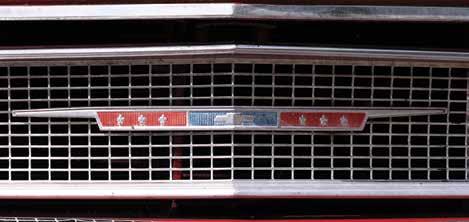
The dashboard featured easy-to-read gauges, and the seating provided comfort. Depending on the trim level, buyers could specify a center console, bucket seats, air conditioning and upgraded audio systems. “I like the body style of the ’68 Chevelle,” states Martin. “The tail lights look very neatly tucked in between the rear bumper and quarter panel. The grill is a fine mesh and has a very nice look.”
“It was a unique year,”
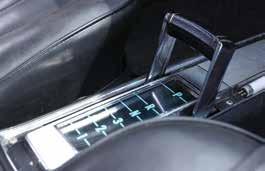
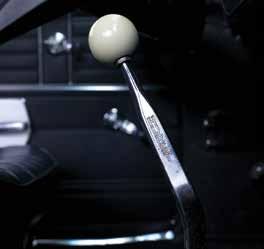
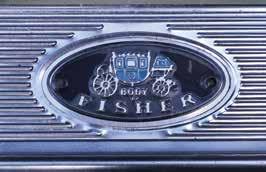
he continues, “for still having vent windows, ignition on the dash panel and a ‘body by Fisher’”. The Fisher Body Corporation was founded in 1908 by two brothers who followed an uncle to Detroit. In less than 10 years, the company was one of the world’s largest manufacturing firms, producing more than 350,000 vehicles for more than a dozen different makers. Millions of General Motors cars displayed a “Body by Fisher” emblem on the door sill plate.
The Car Collection
Martin’s dad was a mechanic at Ingram Pontiac for a while. “I went to
work with him on Saturdays, and I fell in love with all the cars,” Martin relates. In addition to the three Chevelles, Donnie and Debbie have:
1960 Buick, 2-door, hard top
1959 Cadillac, 2-door, hard top
1968 El Camino, Super Sport, 396 motor
1971 El Caminos (two of ‘em)
1972 Chevelle Super Sport
“Lots of our friends put their money in the bank, but we have put money in our cars,” Debbie declares. “We drive and enjoy them. We count cars instead of money, and we love it that way.”
Catch this: The entire family loves the Chevelle model so much that one grand-daughter is named – you guessed it – Chevelle!
Martin is aware of the power of these cars. “Some of them are very fast, and I don’t know if my kids or grandkids can handle them. I might just start selling them – the cars, not the grandkids!” [Which reminds this writer of the sign at a farmer’s place which first read “Kids For Sale” before the farmer crossed out “Kids” and wrote “Baby Goats”.]




Text by Emily K. Alberts
Photos by Jon Fleming
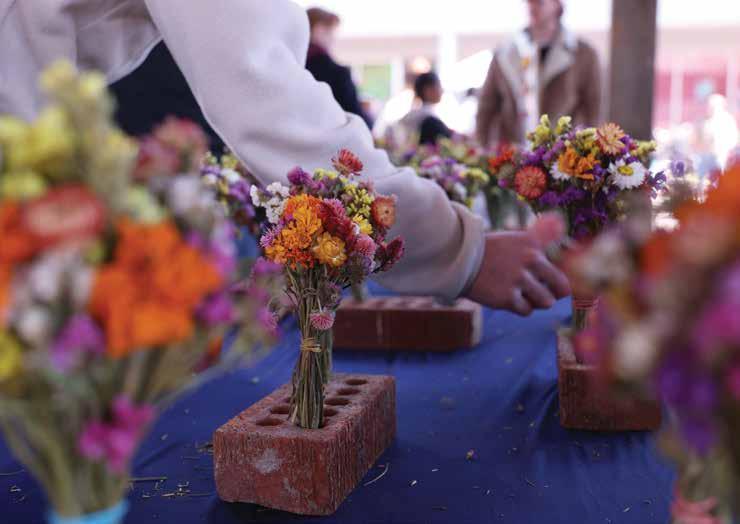
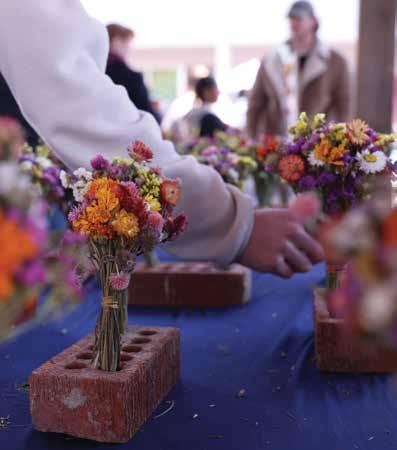
Nature’s first green is gold, her hardest hue to hold. Unless, of course, you are Thomas and Caroline Dahlquist, a husband-and-wife duo who have figured out how to make the magic last.
You may have seen their brilliant, almost Hokie-colored, dried flower bouquets at the Blacksburg Farmer’s Market, where they are on display and for sale every Wednesday and Saturday at The Green Market booth.
Originally from Arlington, Va., Thomas came to Blacksburg in 2013
to study environmental horticulture at Virginia Tech. For the past 12 years, he has worked at The Green Market in Pembroke, growing and selling a wide variety of produce and plants. He is affectionately termed their "Master Farmer", and his wife is known as "The Healer" as she also works as a full-time nurse with Carilion.
During the summer, he grows fresh flowers on the farm, cutting and hanging them each evening to dry for several weeks. Once dried, the flowers are stored in his basement until winter,
when he and his wife enjoy crafting them into bouquets together.
"The best part is that there's no time constraint on it,” he says. “When we have time, we make bouquets and then sell them to people who love them, especially the students who really seem to love them."
Forever Flowers is a part-time gig for the couple, as both Thomas and Caroline work full-time in addition to being the proud parents of a toddler, with another baby on the way!
"It’s been a great source of


extra income for our family over winter,” Thomas says. “Not to mention, it really beautifies the basement!” Not all flowers are meant to last forever, but some flowers almost seem to dry themselves.
“The best flower varieties for drying are statice, strawflower, celosia and paper daisies because they dry naturally as they grow and retain their shape and color,” he explains.
The couple's creativity has also led them beyond bouquets. Epoxy resin coasters embedded with dried flowers are a newer product
line. Thomas discovered the technique serendipitously, using Google Lens to identify a mysterious material he found in the house. It turned out to be leftover epoxy resin from a previous homeowner.
“The resin is expensive, but once I perfect the technique, I’m hoping to expand into key chains, jewelry, and eventually into some larger items like tabletops.”
Much like preserving a cherished moment with a photograph, there is something magical about

capturing a flower at the height of its beauty and allowing it to endure. The Dahlquists make sure to select colors and varieties that go with just about any décor and fit with any season. They truly are timeless.
Emily K. Alberts is an NRV freelance writer, and long-time contributor to New River Valley Magazine, who appreciates flowers that continue bringing beauty long after they've been cut.
Text by Caitlyn Koser
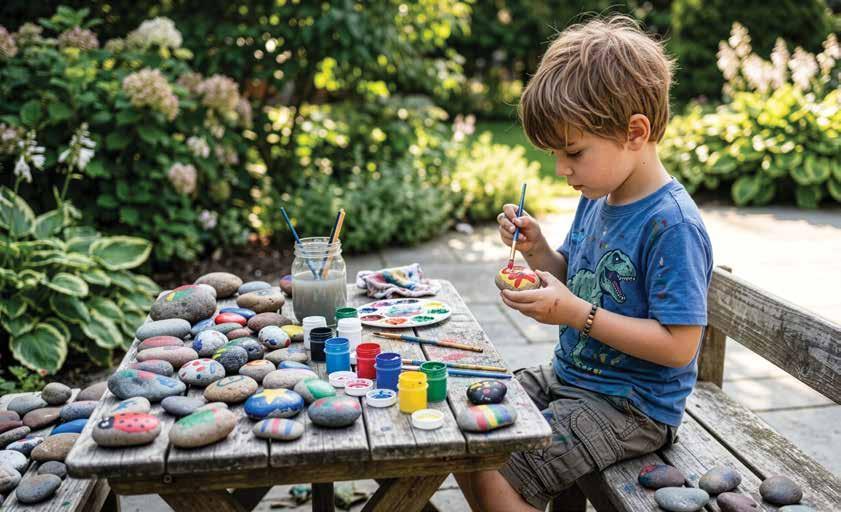
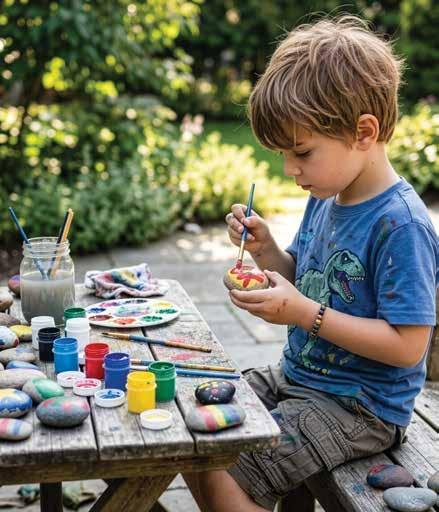
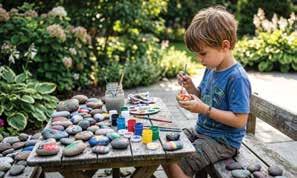
The great outdoors avails itself of many opportunities for beauty – innately, as well as the capability for something beautiful to be drawn from it, or on it. Rocks and other natural surfaces offer a clean canvas for the creativity of kids and grown-ups to soar. Perfection and strict guidelines won’t be kept here – just messy, creative, imperfect and imaginative, colorful creations.
Rocks are natural souvenirs. Consider collecting ones from
vacation spots and painting them with a memorable icon or image to commemorate travels. First, check with where you’re taking the rock from. Certain places, such as national parks, prohibit taking anything from within the borders. A stepping stone collection adds a nice touch to the garden or a thoughtful gift for a relative or friend to brighten a day or cherish shared memories. Rocks with memorable shapes, like one of a heart or the shape of a state, are other fun finds.
1. Find an ideal surface. Depending on the project, smooth, flat
stones are perfect for youngsters, while a larger piece of slate is a good choice for a bigger work of art. If local laws prohibit taking rocks from nature, check with a local landscaping shop.
2. Clean rocks. If it’s on the dirty side, use soap and warm water to clean it. A vegetable brush like one used for scrubbing potatoes can be used for particularly hard-to-clean dirt, and if needed, sandpaper is a remedy for rough patches.
3. Paint rocks. Acrylic paint is a solid choice for starting out. Paint pens and fine-tip markers are helpful for lettering and fine details.

Our guiding principle is serving our members.
Celco Community FCU is growing, now you can become part of our family. If you LIVE, WORK, WORSHIP, or ATTEND SCHOOL in Bland, Craig, Giles, Montgomery, Pulaski, or Wythe counties, Virginia; or Mercer, Monroe, or Summers counties, West Virginia; or Radford City, Virginia, you can open a membership with our credit union.
Celco Community FCU has been growing with our members since 1956. We provide a wide range of loan products, including personal, auto, camper, boat, mortgages and home equity loans to meet the diverse needs of our members. Checking, Savings and Online / Mobile Banking!


4. Seal rocks. To make the work last without chipped paint, consider using a sealer. A spray-on or brush-on sealer will contribute to making the works last, or use resin for a glassy, smooth finish.
When in doubt, keep it simple. All that is needed are several sturdy rocks, paint and a brush. To make it even simpler, craft stores have kits that contain the essentials.
Ideas for rock painting are endless. Play around with colors, textures, silhouettes, meaningful quotes or hashtags, flowers, animals, color blocks, etc. After mastering the basics, consider trying your hand at creating an optical illusion. Countless how-to’s and videos online can lead the way.
Painting flower pots is a classic gift idea and an easy way to spruce up a porch or deck. For flower pot painting, consider that thinning paint with water may allow for a better adhesion and finish. Big, bold designs can make a statement among foliage or greenery. For a smooth finish, multiple layers might be necessary.
Pinecones are a surprising and
successful gift of nature to paint. The structure of their “petals” allows for an illusion-giving painting of a flower to be a stunner in a faux “bouquet” of pinecones. To paint a pinecone one solid color, wrap wire around the top and dip in the paint for equal coverage. Resin works as a beautiful medium to encapsulate flowers, ferns, pieces of petrified wood and other items. Although there might be a learning curve, it’s still a beginner-entry craft that is relatively simple with lovely results. Local craft stores offer different types of resin and resin tools, and, with a little research, resin crafts are fairly easy to learn and use with a variety of different outdoor elements.
Larger outdoor painting projects include stumps for outdoor seating, mailboxes, benches, small yard sculptures, bird feeders and fence posts. Be a little daring, colorful and wild for interesting results. Research town codes if living within city limits as to what visible items can and cannot be painted.
Fairystone State Park in Stuart is just over an hour from the New River
Valley. Cross-shaped stones are plentiful and can be used to make necklaces, earrings and other mementoes. The legend goes that once fairies inhabited the lovely area of the Blue Ridge Mountains. One day, when a messenger arrived with the news of Christ’s crucifixion, the fairies wept, their tears hardening into the structure of the famed fairystones. Raw and polished stones are also available for purchase. Agates are small, shiny pieces of rock that translate spectacularly to craft projects like mosaics and collages. Many beaches have a large number of agates, and, if permitted to be collected at that location, can bring vibrancy and translucent radiance to brighten jewelry and décor.
Pinterest and other websites offer myriad painting ideas for any project that might strike your fancy. Small spots of vibrant color can brighten the day, break the boredom and add interest to your front steps and home landscape with a few simple elements ~ an object straight from Mother Nature, a little paint and a healthy dose of imagination.




Text by Emily K. Alberts | Photos by Jon Fleming

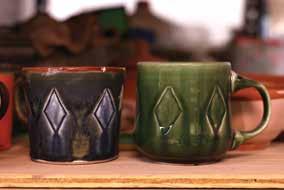
As the YMCA at Virginia Tech celebrated 150 years of service, the Y Center on N. Main St. turned to local artists to help transform an ordinary hallway into a vibrant community gallery. The space showcases the work of artists of all ages and backgrounds.
“The YMCA has always supported creative expression, from our pottery studio to our dance programs, so expanding into a dedicated gallery felt like a natural next step,” says Laureen Blakemore, director of
community engagement. Although the center's long hallway offered ample exhibition space, poor lighting and worn walls made it less than inviting. In 2023, generous support from Diane Relf and her organization eARTh, Ed Tuchler of Shelter Alternatives, and Bell Electric helped turn that vision into reality. “We were able to install professional lighting and a hanging system, brighten the space, and create what is now a dynamic community gallery,” says Blakemore.
The current exhibit, Still Learning, Still Creating – A Lifelong Learning Exhibition, runs through July and features the work of members from the Lifelong Learning Institute (LLI) at Virginia Tech. The LLI is a volunteerdriven program that offers non-credit educational courses, field trips and social events for adults 50 and older.
“At the Y, we believe that everyone is creative, and the gallery reinforces our mission by inviting people to share their work in a welcoming space,” Blakemore adds.
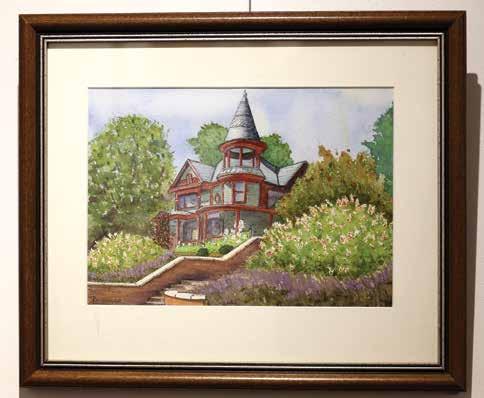
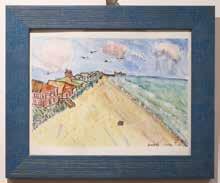
Today, the hallway displays watercolors, oil paintings and drawings that demonstrate how creativity flourishes at every stage of life. Art sales are handled directly by the artists, with some choosing to donate a portion, sometimes all, of their proceeds to support YMCA initiatives.
“Our gallery strengthens connections between the arts and the community,” Blakemore shares. The next major exhibit, Stories We ShareThe Courage to Connect will be part of the Y’s annual Welcoming Week celebration, kicking off mid-August. Welcoming Week is a national initiative that celebrates communities working to become more inclusive and welcoming to all.


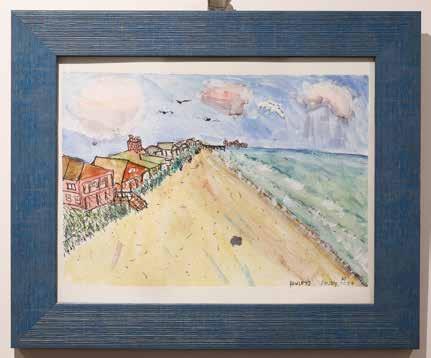
Though most exhibits remain on display for about three months, the gallery occasionally hosts shorter exhibitions, such as the Cranwell International Center’s annual Home Beyond Home exhibit. Held each April, the 2-week exhibit features Hokies sharing their personal stories of home through photography.
Art belongs to everyone, regardless of training, experience or ability. The Y Community Gallery embraces artistic endeavors that reflect and connect to local New River Valley people and communities.
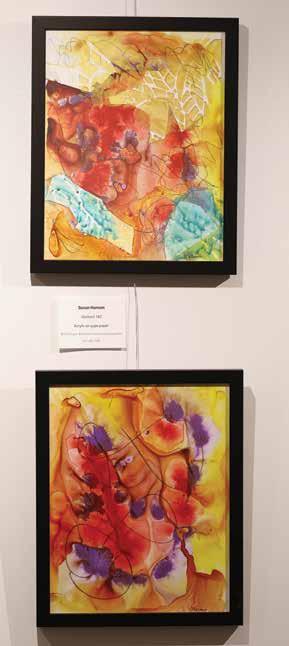
The gallery's open and approachable atmosphere distinguishes it from more traditional exhibition venues. Visitors might encounter work by professional artists alongside pieces created by retirees, students, workshop participants and first-time exhibitors, reflecting the Y's belief that creativity belongs to everyone. In a space that was once an overlooked hallway, that vision is already taking shape — one exhibition, one artist, and one connection at a time.
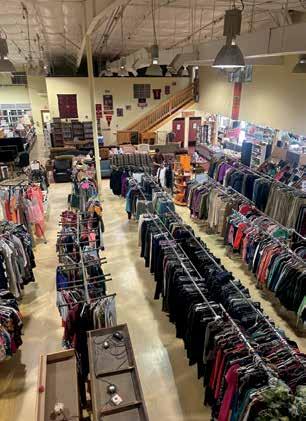
Emily K. Alberts, freelance writer and frequent contributor to New River Valley Magazine enjoys exploring local art, history and unexpected treasures waiting to be discovered in thrift stores throughout the region.




Text by Joanne M. Anderson
There may not be many places in the Town of Blacksburg where one can drive this summer without seeing a tower crane slicing the skyline. There’s a real shock and awe vibe, with one on Virginia Tech campus and another on N. Main St., half a block from Ace Hardware.
Indispensable in the construction of many multi-story buildings, tower cranes are the backbone of vertical construction. They are exceptionally stable with very large lifting capacities. Their height can be adjusted as a building gets taller by adding mast sections, making it useful throughout the construction process.




The loads – tons to dozens of tons -- are as impressive as the precision with which they can be set on the structure. Their extensive reach allows the building to move along much faster than manual labor with smaller equipment on the ground trying to hoist materials upward. In the 1970s, the cranes switched from hydraulic power to electric, making them much more quiet. Watching tons of material move up, down and sideways is almost mesmerizing for the silent, smooth, accurate placement.
Safety is a critical aspect. The towers are manufactured, installed and maintained to strict engineering and regulation standards. Operators must be schooled, certified and expert in understanding load moment indicators, limit switches, joy sticks, computer systems and wind speed monitors, among other things.
These cranes are hammerhead models which feature a fixed, horizontal jib and a trolley assembly that travels the length of the jib to position the hook. The pulley system is in place to move the hook and load up and down safely, evenly, correctly and almost silently.
German inventor Hans Liebherr invented this style of tower crane in 1949 to assist with post-World War II rebuilding efforts. More than 75 years later, his design has become a vital component of the construction industry for efficiency, productivity, precision and safety.
Without continual growth and progress, such words as improvement, achievement, and success have no meaning. -Benjamin Franklin








What could possibly be better for summer time than something that means “perfect” in French? It comes directly from Latin “perfectus” for completed or perfected. The French version initially was a frozen custard puree made by boiling cream, eggs and sugar syrup. Parfaits were served as dessert at the first Nobel Prize Award Ceremony in 1901 in Stockholm.
Our lives are all the richer for having layered parfaits for any time, a real versatile meal option, especially when the days are hot, our skin is sticky and anything cool and sweet is coveted. It seems a bit out of whack, since most parfaits are cold, to observe National Parfait Day on Nov. 25. The most common parfait is the ubiquitous layered granola, yogurt and fresh fruit version, but let’s venture elsewhere.
8 6-oz plastic cups
2 cups whipping cream
1 tsp vanilla
1 cup canned pumpkin pie mix (not plain pumpkin)
1 8-oz package cream cheese
3 Tbl powdered sugar
1 ½ cups crushed gingersnaps
1 4-oz white chocolate bar, broken in 8 pieces
o Beat whipping cream and vanilla on high into soft peaks. Refrigerate.
o Blend pumpkin pie mix and cream cheese, add powdered sugar.
o Fold half of the whipped cream mixture into the pumpkin mixture.
o Layer crushed gingersnaps, pumpkin mixture, plain whipped cream, topping each with whipped cream and piece of white chocolate. Poking in a whole gingersnap adds to the visual presentation.
Layer vanilla wafer cookies, banana slices, whipped cream, vanilla pudding, sprinkle of cinnamon, mini chocolate chips optional
Layers of guacamole, crushed nachos, diced tomatoes or salsa, black beans, sour cream


Layers of vanilla yogurt, pomegranate seeds, green apple pieces, chopped pecans, dark chocolate chips
Text by Caitlyn Koser

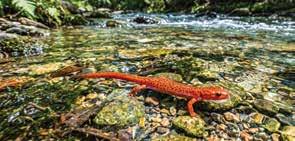
Slick and orange creatures dot the New River Valley landscape after a replenishing spring rain, bringing with them the cautionary tales of their toxicity and the debatable terms of their vocabulary (are they newts? salamanders? lizards?). The legendary creatures also carry lore dating back to Middle English, where the word for “salamander” meant “lives in fire”. In short, myths dictated that these mysterious creatures could walk through fire unharmed.
First, to clear up commonly used terminology, a newt is a type of salamander. Its difference is that newts have a terrestrial juvenile stage and an aquatic adult stage, whereas many salamanders spend their juvenile stage in water and their adult stage on land. Lizards, while a lookalike to salamanders, belong to the reptile family, whereas salamanders are amphibians. Skinks, the most common type of lizard to be found around homes, are often confused with salamanders, although the two are distinct.
The Virginia Department of Wildlife Resources (VA DWR) distinguishes between four different habitats of salamanders:
Forest terrestrial
Seasonal wetland
Stream and seep
Aquatic
Forest terrestrial salamanders are good indicators of the environment’s state of health, as the group is generally sensitive to changes

in the forest terrestrial habitat. Other types of salamanders prefer a semiaquatic lifestyle, searching for vernal pools, which are seasonal wetlands formed from snow melt and rain from the winter. Fully aquatic salamanders spend their entire lives in water.
All salamanders are poisonous – not venomous (the difference in the terms is in its delivery to the body via wound or other mechanism). Picking up a salamander, though potentially harmful to the creature, does not cause any damage to humans, as the intended poison is for possible predators. If a salamander’s toxins are
ingested by a human, however, death or serious illness is a distinct possibility. In addition, salamanders are the only known animal that can completely regrow lost limbs. The National Institute of Health published an article in 2021 discussing the possible health breakthroughs that could be harnessed through understanding the salamander’s regenerative tissue superpower.
With over 56 species of salamanders in Virginia, sighting frequencies range from common to incredibly rare. All salamanders are a treat to find, with some presenting
With over 56 species of salamanders in Virginia, sighting frequencies range from common to incredibly rare.
themselves more than others. The red-spotted newt is a frequent visitor to driveways or wet earth after rains. The skin of the red-spotted newt, as with all newts, contains a neurotoxin that makes them quite distasteful to possible predators.
Another significant and much less common type of salamander is the unaptly named common mudpuppy, a species of high conservation need. They
are only found in far southwestern regions of Virginia, such as the Clinch and Powell Rivers. The fully aquatic salamander boasts gills that allow it to breathe under water. Like other species of salamanders, mudpuppies are at threat due to fishing and other human activities. This unique species feast on other salamanders, tadpoles, fish eggs and occasionally other mudpuppies. (Fun fact: In past years, mudpuppies were often used in biology class dissections).
Cave salamanders reside in western and southwestern counties of Virginia and find retreat in the cool, constant temperature of caves. The lungless fellows can also be found in limestone cracks, sheltering in caves with a host of other wildlife that reside underground. The small salamanders are well-equipped with a prehensile tail, vocalization ability and a swift-lunge strategy for hunting. Most noticeably, the largest
. . . the largest salamander in North America, the eastern hellbender, resides in the NRV’s own waters. Shrouded by lore and legend . . .
salamander in North America, the eastern hellbender, resides in the NRV’s own waters. Shrouded by lore and legend, the hellbender, which is often confused with the similarlooking mudpuppy, boasts a variety of folk names: Water dog, walking catfish, Alleghany alligator, mud devil,
and more. These exceptional aquatic salamanders are on average 11 to 20 inches long, with the largest being recorded at almost 30 inches. Their longevity matches this, as hellbenders can live up to 30 years in the wild and much longer in captivity.
A hellbender’s presence is considered a vital indication of water quality. Their habitat has been declining for decades and the recent Hurricane Helene also delivered a blow on the hellbenders’ numbers. People can help preserve the unique creature by not disturbing rocks and avoiding building cairns or other rock structures from rivers and streams, which can disturb hellbender nesting sites.
Contrary to folklore, hellbenders are non-poisonous. It is illegal to kill or possess one, as these friendly buddies are a contributing member to the complex ecosystem residing below the surface of the NRV’s waters.
If you want to show your own newfound interest with the little guys, Virginia offers a salamander license plate, part of the wildlife conservationist series. The plate sports a red salamander on the left side and is a reminder of the intricate, vital and fascinating lives displayed in some of the smallest members of Virginia’s ecosystem.
Homeschool student Caitlyn Koser is a freelance writer, aspiring novelist and frequent contributor to New River Valley Magazine. Since writing this, she has become more vigilant for salamanders.
A-1 Heating & Cooling
Allure Aesthetics
Beliveau Farm
Bonomo's Plaza
Brown Insurance
Celco Community Credit Union
Center for the Arts at VT
Crockett Home Improvement
Dehart Tile & Flooring Center
Dwight Atkinson Energy Check
English Meadows Blacksburg
First & Main
Freedom First
Giles County Tourism
In Focus Interiors
JBR Vineyards & Winery
Joba Studio
Kesler Contracting
Mitchell Kilgore
Mutt's Primitives
Nest Realty NRV
NRV IP Law
Pearis Mercantile
Progress Street Builders
Pulaski County Sports
River Ridge Dermatology
Shelter Alternatives
The Palisades Restaurant
The Shaheen Firm, P.C.
The YMCA at Virginia Tech
VA Shoreline Contractors
VCOM