5
T H E C O M P L I C AT E D C A N D I D AT E :
5
T H E C O M P L I C AT E D C A N D I D AT E :
I N D I S C E R N M E N T & F O R M AT I O N
August 31-September 3, 2026 | St. Meinrad, IN
a conference for formation and vocations personnel and diocesan and religious leadership
SLI org/CHF2026 | conferences@sli org
Editor Jesús Leyva
Design Consultant
Patrice J. Tuohy
© 2026, National Religious Vocation Conference
HORIZON is published quarterly by the National Religious Vocation Conference, 5416 South Cornell Avenue, Chicago, IL 60615-5664. 773-363-5454 | nrvc@nrvc.net | nrvc.net Facebook: Horizon vocation journal
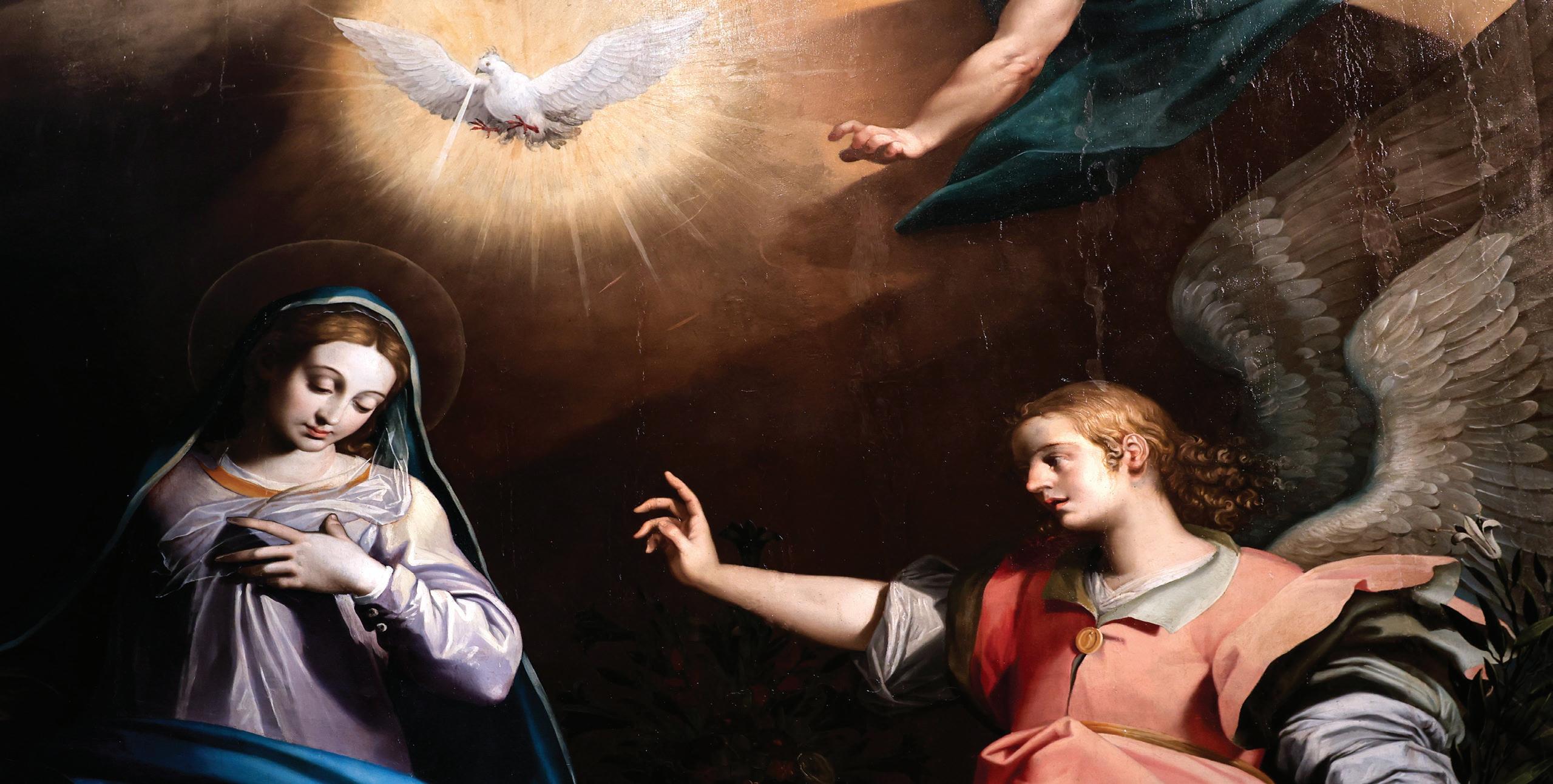
Cover image: Father Lawrence, O.P.
SUBSCRIPTIONS
A complimentary subscription to HORIZON comes with NRVC annual membership. Additional subscriptions are $50 each for NRVC members; $125 each for non-members. Single copies are $25 each. Subscribe online at nrvc.net/signup. Please direct subscription inquiries to the NRVC office at nrvc@nrvc.net.
POSTMASTER
Send address changes to HORIZON, 5416 S. Cornell Ave., Chicago, IL 60615-5664. Periodicals postage paid at Chicago, IL. ISSN 1042-8461, Pub. # 744-850.
REPRINTS, ARCHIVES, ELECTRONIC EDITIONS
Permission is granted to distribute copies of HORIZON articles for noncommercial use. Please use the following credit line: Reprinted with permission from HORIZON, journal of the National Religious Vocation Conference, nrvc.net. For other types of reprints, please contact Jesús Leyva at jleyva@nrvc.net.
EDITORIAL INQUIRIES & ADVERTISING
All editorial and advertising inquiries should be directed to Jesús Leyva, jleyva@nrvc.net. Advertising rates and deadlines are also posted on nrvc.net.
THE NATIONAL RELIGIOUS VOCATION CONFERENCE is a catalyst for vocation discernment and the full flourishing of religious life as sisters, brothers, and priests for the ongoing transformation of the world.
Award-winning member of the Catholic Media Association.
LATELY, I’VE BEEN CONTEMPLATING the Biblical passage, “I am Gabriel. I stand in the presence of God, and I have been sent to speak to you and to tell you this good news.”
These words were spoken to Zechariah, and the Good News in question was the impending birth of John the Baptist. However, Zechariah expressed fear and doubt, an understandable reaction. Zechariah and his wife Elizabeth were older (putting it kindly). But the angel insisted, going so far as to render Zechariah unable to speak until God’s message had been fulfilled. And so it happened that John the Baptist was conceived. And soon, the angel visited Mary to announce the birth of Jesus. Again, the angel’s message was met with fear and doubts. But, ultimately, Mary said “yes” and accepted God’s will.
As I write this note, I can’t help but think of what Mary must’ve felt. I can’t even come close to understanding. At the same time, I understand the weight of saying “yes” to God’s calling as God has called me to be a husband and father. In truth, I’m often overwhelmed with the responsibility of my calling. Supporting a household, being present, and taking care of everyone (while remembering to take care of myself) is tough. I’m certain that you, as religious (and lay members) working in vocation ministry, sometimes feel as if the weight of assessing, journeying with, and accepting the next generation of religious can feel like a tough cross to bear. However, every cross also brings immense hope and joy because of God’s presence with us. May our hearts always remain open to the Good News, and may we continue saying “yes” to God’s calling.
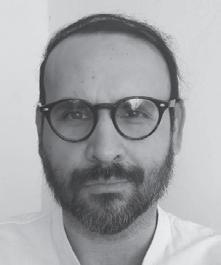
Jesús
Leyva, editor
HORIZON is an award-winning journal for vocation ministers and those who support a robust future for religious life. It is published quarterly by the National Religious Vocation Conference.
NATIONAL RELIGIOUS VOCATION CONFERENCE BOARD
Board chair:
Friar Mario Serrano, O.F.M. Conv.
Vice chairs:
Sister Eileen McCann, C.S.J. and Brother John Skrodinsky, S.T.
Ex officio
Sister Deborah Borneman, SS.C.M.
Brother Joseph Bach, O.F.M.Conv.
Brother Edward Shields, F.S.C.
Sister Gail Trippett, C.S.J.
Sister Jill Marie Reuber, O.S.B.
Sister Donna Del Santo, S.S.J.
Sister Carolyn Martin, lsp
Sister Corrina Thomas, F.S.P.A.

We are pleased to announce our presenters for Convocation in Orlando, Florida, November 19-23, 2026!
• November 19, 2026, Ms. Katherine Angulo Valenzuela will present the Pre-Convocation workshop, Called to Serve the Church in 2050
• November 20, 2026, Brother Antonio D. Sison, O.F.M., PhD, will present What is so New About Inculturation?
• November 22, 2026, Brother Moises Gutierrez, C.P.P.S., PhD, will present Imagining Possibilities Differently
Registration opens after Easter, and plans are underway
to select additional presenters and solicit sponsors. Many levels of sponsorship are available, and we welcome your support. For more information, keep checking our website, or please direct questions to Sister Debbie Borneman, SS.C.M. at debbiesscm@nrvc.net.
We are pleased to share the following exciting workshops. For more information, contact Sister Dina Bato, S.P. at dinasp@nrvc.net. We look forward to seeing you!
Well Spirituality Center, La Grange Park, Illinois
• May 11-12, 2026, Behavioral Assessment 2
Marillac Center, Leavenworth, Kansas
• July 8-12, 2026, Orientation Program for New Vocation Directors
• July 14-16, 2026, Behavioral Assessment 1
• July 18-20, 2026, Spirituality and Vocation Discernment
• July 22-24, 2026, Family Matters and Their Impact on Vocation Discernment
Did you notice something new in this edition of HORIZON? The National Office Leadership team and Board collaborated with Mr. Rory Dayton from VocationsCRM to update our logo as we move towards a fresh website. After several energetic discussions, we decided to update our familiar, recognizable logo.
Stay tuned for an updated website at the National Religious Vocation Conference.

we pray, our
is an
The path to vocation isn’t always straightforward. God’s call can unfold in surprising ways.
THE PATH TO VOCATION is not always straightforward.
For Father Paul Gabor, the call to the priesthood first emerged while he was growing up in Communist-era Czechoslovakia, where the Church lived under strict government control. What followed was an unexpected detour through the world of physics, including research at the European Organization for Nuclear Research (CERN), before he entered the Society of Jesus and discovered that his scientific training was part of his vocation. Today, Father Paul serves at the Vatican Observatory, where he helps oversee the Pope’s 1.8-meter telescope at the Mount Graham International Observatory and collaborates with researchers at the University of Arizona in Tucson. The asteroid (669448) Pavelgabor is named after him. In this conversation, he reflects on the relationship between faith and science, the mysteries of the universe, and what his own journey from physicist to Jesuit priest reveals about how God’s call can unfold in surprising ways.
Leyva | Father Paul Gabor, S.J.
By Jesús Leyva
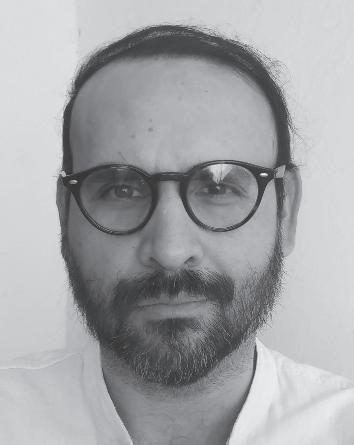
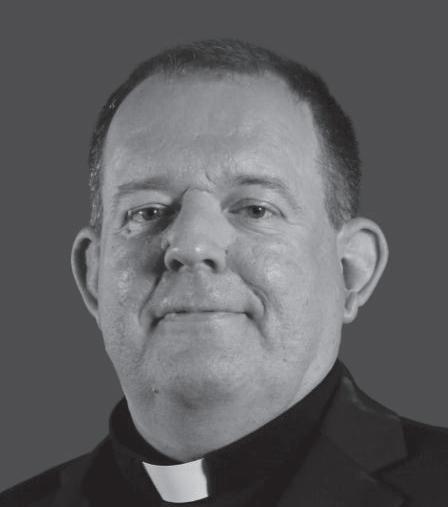
Father Paul Gabor, S.J. serves at the Vatican Observatory, where he helps oversee the Pope’s 1.8-meter telescope at the Mount Graham International Observatory and collaborates with researchers at the University of Arizona in Tucson. (Photo courtesy of Vatican Observatory/ Peter Lah.)
Which came first: your religious call or your scientific call?
The first was the vocation to the priesthood. This was in the 1980s, and in communist Czechoslovakia, where the Church was under heavy police control. I decided to procrastinate, taking a detour on my path to the priesthood, via the field of particle physics. Communism collapsed, and I was able to spend some time working at CERN (European Laboratory for Particle Physics in Geneva, Switzerland).
I found the people there delightful. I was particularly impressed by how generously senior researchers gave of their time to the junior ones, and how much time was devoted to collaborative efforts. I witnessed that the stereotypical image of a scientist working in isolation or of the scientific community as a competitive environment where collaboration comes second (or worse) was false, at least among particle physicists.
Later, I noticed this even more clearly among astronomers. There are always those who view research as a zero-sum game, competing for finite resources. The critical mass, however, is very aware of how vast the Universe is and that there is a limitless scope for research which
cannot be carried out unless we collaborate as a community sharing the same sense of awe and the same passion for science.
When I finally heeded my vocation to the priesthood in 1995, I found myself joining the Society of Jesus. I thought that joining the Jesuits would put an end to the detour I had taken with physics. I thought that I might like to work with scientists as a priest, but I would not be directly involved in science. Then, one of my philosophy professors told me that the Church needed me at the Vatican Observatory. I dismissed the idea as unrealistic because I believed that my province, which is tiny, would never release me for the work at the observatory. But I was wrong.
The Church has always been at the forefront of scientific inquiry. What would you say to a young seeker who believes faith and science are incompatible?
I would tell them that late 19th-century propaganda seems to be alive and well. I am sure we will run into some examples of these misconceptions even in this conversation. Let me first address a more general point. Many people think that having faith means giving up critical thinking. Faith is not a belief system, an ideological or intellectual position. Faith is a theological virtue we receive as a free gift from God and which we must develop, like we receive our bodies and we must exercise to develop them and keep them fit.
What does this virtue allow us to do that we cannot do without it? Faith is the virtue that allows us to get up in the morning and face the day because we have faith that the day is a gift from God. That the world and the entirety of humanity are fundamentally good, despite flaws. It is an existential attitude of gratefulness and generosity, very closely related to hope and charity. In no way does faith make us accept stupid ideas uncritically, “on faith”.
Note that many people who do not consider themselves religious and reject organized religion have faith in this sense of the word, i.e., as a theological virtue. And, conversely, that faith can be lacking in the hearts of some regular churchgoers.
Can you share a few mysteries you’ve discovered in your scientific work that everyone should know?
Leyva | Father Paul Gabor, S.J.

Plato’s dialogue Timaeus, written about 2,400 years ago but reflecting older Pythagorean ideas, presents the universe as created with time, not in time. Time is a part of creation. It is a “moving image of eternity,” the best the Demiurge could do, given the imperfect material he had to work with when creating the material world as a reflection of the perfect world of ideas. Eternity is not a long duration, but rather it is a permanent “now,” describing the fullness of “being without becoming.”
Obviously, these views are not entirely compatible with Scripture, but they have been very influential in Catholic theology, shaping the thought of Origen, Augustine, Aquinas, and others.
Cartesian and Newtonian physics use time as an independent mathematical variable in the equations of motion. The fascinating mystery is that the 2,500-yearold Pythagorean intuition that time cannot be separated from space and matter has been fully vindicated by Einstein. His Special Theory of Relativity brings time and space together into a single mathematical structure: the spacetime. And his General Theory of Relativity shows how spacetime is inseparable from matter (mass and energy). By the way, a common misconception presents Catholic doctrine as presupposing that the universe was created at a given moment in time. Theologians like Saint
Thomas Aquinas argued that createdness is a metaphysical relationship between the eternal creator and the entirety of the temporal realm of material creation.
How has this knowledge affected you as a religious and as a scientist?
Let me give you three examples, starting with the concept of “time versus eternity.” Origen of Alexandria draws upon it in his reflection on prayers of petition. In his treatise On Prayer, Origen deals with several objections. Is a specific prayer of petition a blasphemy? It is clearly good to pray, thanking and praising God, asking God’s will be done, etc. But how can a farmer pray for rain while an astronomer prays for clear skies? Is it not true that the divine plan is given once and for all, and that we should trust in Divine Providence, rather than presumptuously asking to tweak God’s plan?
Origen says you need to understand the relationship between time and eternity. It is difficult. We are temporal beings, and it is hard (impossible?) for us to think in terms of eternity. When we pray, our prayer is an event in spacetime. God, who is eternal, perceives all events, the entirety of spacetime, in the eternal now. Specifically, God hears our prayers in eternity and may tweak the
creation according to our prayers from eternity. This may or may not be accurate, but it exhorts us to pray because God, who takes our prayers seriously, may be tweaking creation itself for our benefit. Our prayer matters.
Moving on to a more general insight. I mentioned my time at CERN. One of the things that surprised me was how generous people there were. This is a corollary of scientific effort itself. Science requires a focused, longterm effort, and the path of discovery passes through many failures. It teaches us humility. It teaches us that we are limited, and it teaches us to accept our limits. In other words, as any concerted effort, it leads to a degree of knowledge of self and a certain practical wisdom.
Carl Gustav Jung studied alchemical manuscripts, and he noted that the work (the effort to make the Philosopher’s Stone) was so hard that it condemned the alchemist to many failures. The surprising thing was that the great masters of the alchemical art described that they reached enlightenment: the moment when they realized that their failures gave them something more valuable than the Philosopher’s Stone. And a third point is what I call the epistemic reading of the Two Books. It tells us that science and technology are fundamentally an expression of God’s willingness to share, of God’s invitation to share. God’s creation was made for us to understand, and we were made to understand creation. Let me explain. The classic doctrine of the Two Books says that God gave us two books, the book of Nature and the book of Scripture. They come from the same Author, and therefore they cannot contradict each other.
surprising thing is that [mathematics], this invention of our human intellect is truly the key to understanding nature, that nature is truly structured in a mathematical way, and that our mathematics, invented by our human mind, is truly the instrument for working with nature, to put it at our service, to use it through technology.
The effectiveness of science parallels what we see in Scripture: God reveals divine presence to Abraham, to Moses, to the Prophets, and most fully, God is revealed in our Lord Jesus Christ, the incarnate Word. What shines through is God’s desire to be with us, to share the very essence of divine being. We celebrate this mystery in the sacraments. Theologians call it God’s self-communication. The effectiveness of science parallels God’s self-communication in the history of salvation.
life possible
And if so, how would that affect Catholic theology?
Faith is a theological virtue we receive as a free gift from God and which we must develop, like we receive our bodies and we must exercise to develop them and keep them fit.
Saint Paul says: “Ever since the creation of the world his [the Creator’s] eternal power and divine nature, invisible though they are, have been understood and seen through the things he has made.” (Rom 1:20). The focus here is on the created “things.”
At another level, let us reflect on our ability to learn about the world, i.e., let us marvel that science “works”. Here is how Pope Benedict XVI put it:
The great Galileo said that God wrote the book of nature in the form of the language of mathematics. He was convinced that God has given us two books: the book of Sacred Scripture and the book of nature. And the language of nature, this was his conviction, is mathematics, so it is a language of God, a language of the Creator. The
Life on other planets is possible. It would not affect Catholic theology. But what might affect Catholic theology would be an encounter with intelligent life. Nicholas of Cusa, in his book On Learned Ignorance (1440), said the universe cannot have a center, and therefore the earth cannot be at the center of the universe. Consequently, there is no fundamental difference between heavenly and earthly spheres. The earth is a celestial body, just like the sun, moon, the planets, and the stars.
He further surmised that if the earth is inhabited, other celestial bodies are likely inhabited, too. But he said that the inhabitants of these worlds may be very different from us, and that their relationship to our common creator may be different.
Theologians speak of the economy of salvation. According to Nicholas of Cusa, the economy of salvation may be very different for different beings inhabiting different celestial bodies. For instance, the inhabitants of the sun may be so full of light and grace that they may never have needed to be saved. Or the inhabitants of the moon may be so mutable as the lunar phases, etc. If you believe 19th-century propaganda, you might think that such ideas would guarantee their author to be burned at the stake. His views were well known not only during his lifetime but also in the generations to come. Nicholas of Cusa was made a cardinal in 1448. Nicholas Copernicus
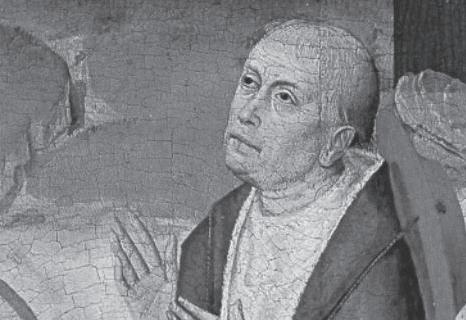
quotes Nicholas of Cusa in the first book of De revolutionibus orbium coelestium (1543).
So, at least since 1440, there has been a position among Catholic thinkers that nonhuman intelligent beings (other than angels, of course) may be possible. Cardinal Nicholas of Cusa is an example of an author who does not believe we can say much about them without actually meeting them.
As a doctoral student in astrophysics, I lived in a Jesuit community in Paris with Father Bernard Sesboüé, S.J. (1929-2021), a member of the International Theological Commission at the Dicastery for the Doctrine of the Faith and consultor of the Dicastery for the Unity of Christians. I asked him specific soteriological questions regarding a universe inhabited by other intelligent beings at great distances. He asked me, “Have you met any space aliens?” “Not that I know of,” I replied. “Well,” said Bernard, “if you do, invite them to dinner, and we’ll discuss theology.”
Simply put, if two civilizations develop space flight, they must have certain commonalities. It is impossible to develop science and technology without collaboration on a large and inter-generational scale. And that is impossible unless the civilization values truth higher than being “nice” and not contradicting your elders. It is impossible without learning how to manage failure, and it is impossible without a certain level of playful creativity, etc. So, some say that the way this universe is created as intelli-
gible, making science and technology possible, should lead to a sort of convergent evolution of advanced civilizations. But even with this kind of convergent evolution, technological civilizations may have different economies of salvation.
Don’t let yourselves be discouraged. Downsizing in the Society of Jesus (and perhaps within other religious groups) is not as bad as it may seem. The falling number of older Jesuits, which is a perfectly natural fact of life, overshadows a small growth of the population of younger Jesuits. In other words, the peak in numbers in post-World War II religious communities was likely an anomaly, and we are now returning to more “usual” demographics. But, in the midst of these bleak prospects, I have found two less dire, maybe even encouraging facts. The number of novices is dropping, but if we take novices per 10,000 Jesuits, the diminishing trend disappears. The difference (joined vs. left) has never been a negative number, i.e., below the huge loss of numbers due to deaths of those who joined before 1966, and there is a well-hidden growth of “junior Jesuits” (those who entered after 1966). There are further questions and a closer analysis is called for, but generally, I think we need not be discouraged. n
OBy Father Bryan Silva, OMI
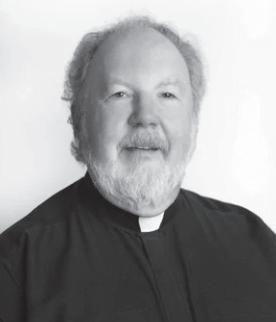
Father Bryan Silva, OMI, PsyD, directs the Internship and Vocational Synthesis Programs at Oblate School of Theology in San Antonio, Texas.
NE OF THE MOST ACTIVE QUESTIONS in discussing new applicants to the seminary and religious life is the widespread availability of pornography and sexual images. Generational changes and the current culture have brought a more accepting attitude toward pornography use. Long past are the days of innocently creating your “porn name” by matching your first pet and the street you grew up on, or other commonplace childish games. Currently, among U.S. adults 18-35, approximately 87 percent of men and 28.5 percent of women view porn once a week. Young males are first exposed to porn by age 10 and girls by age 13. This widespread availability of sexual images sets up this current cohort of young adults for difficulty navigating questions of sexual activity, sexuality, and value-based decisions in an unpressured fashion.
How can conversations with young men and women who are considering a vocation to the priesthood or religious life can be guided in a fruitful direction? The environment that surrounds them in the present day is a crucial point of understanding. When I was discerning my vocation in the mid-to-late 1970s, there was a palpable presence of the Catholic Church’s
teachings and values around sex. We had clear directives and parental guidance about the nature of life and its demands. Pornography, though present, was not a daily staple. One had to risk the parking lot at the local adult bookstore, venture to the building with fear of friends or relatives seeing you “in that part of town,” and find ways to hide the ill-gotten gains upon arriving home. The current state of availability of pornography is such that most searches for it and ways to watch are on mobile devices. Approximately 4 percent of the websites on the internet are pornography sites, 13 percent of web searches are for adult content, and 20 percent of the searches on mobile devices are for adult content. No venturing out of a locked room. Now, young people access this content on devices that allow for easy access anywhere and clandestine ways to view it.
The Catholic Church is coming out of a period of allegations of clergy sexual abuse. This heightened attention to sexual content, appropriate relationships, and sexual behavior on the part of religious and clergy sheds a bright light on the topic of healthy sexuality. It informs how we will evaluate the legitimacy of those who claim to experience a call from God to a life of ministry or leadership of a congregation. How we assess their readiness and frame the questions to measure that readiness is a crucial factor. Ultimately, we must ask ourselves what might help to differentiate healthy sexual awareness from unhealthy, passing use of sexual content in a developmental trajectory versus the stagnating nature of compulsive behavior.
I will not use the term “sexual addiction” when discussing the stuck and stagnating quality of the sexual behavior. Sexual addiction is a term coined by Dr. Patrick Carnes (1991) in his early work in the field of sexually compulsive behavior. He took the symptomology of addiction and applied it to the population of people who reported repeated sexual encounters, repetitive or unfulfilling sexual relationships, and compulsive use of pornography.
While as a psychologist I can see the usefulness of such an application of addiction, I disagree with the term because it causes us a theologically thorny question. Addiction is by definition a loss of control over the behavior in question (i.e., alcohol, drugs) and most often refers to substance abuse. If we use this term for sexual behavior, we must accept that the person in question has lost the ability to control their behavior. Thus, the use of sexual
content can no longer be seen as a sin, since the willful committal is a part of the definition of sin. If I am not in control of my use of pornography and am thus addicted, I do not willingly use it and, while using it compulsively, am not committing a sin. A very challenging corner to navigate, particularly when considering behavior in a potential religious. I will use the term “compulsive sexual activity” instead. This only suggests that the behavior is compulsive and in need of intervention, but does not imply a loss of volition. In fact, recovery from compulsions routinely involves taking purposeful action to control unwanted behavior. I feel this is a better frame for discussing compulsive pornography use.
To the point, I would like to propose some concepts and suggestions for vocation directors and formators to consider when working with this issue and evaluating the status of a candidate. I suggest that the way in which a person was first exposed to pornography is an important consideration. A second consideration will be the developmental path they have taken. Furthermore, the final consideration would be their general attitude toward sex and sexuality.
Candidates who have not dated, have few close friends, or whose primary relationships are with younger peers may not have achieved a sufficient level of development to be settled in their sexual identity.
The way in which the person was first exposed is important since they may have a significant history of difficulties around sexuality before exposure. Did they find porn as an early teen? Was someone else responsible for introducing them? Was it curiosity or unwanted exposure?
These elements of their sexual history will play a role in determining their reaction and their integration of sexuality into their overall self-understanding. Carnes, in his seminal work, differentiates a nonproblematic user from a problematic user of pornography. The significant difference is that the nonproblematic user can control their use, the use does not cause loss of self-esteem or exaggerated guilt, and the use does not negatively impact their sexuality.
On the other hand, problematic use involves a loss of control over the use, a growing need, and the use of sexual content. It reflects a general difficulty with sexuality and interpersonal relationships.
The problematic user may have had previous difficulty with sexuality and then encountered porn as an added avenue for sexual experience. Some problematic users have no history of sexual difficulties before encountering porn, but once accessed, the allure of pornography becomes overwhelming. The vocation director will want to get some insight into how the candidate was exposed and how it has subsequently impacted them. Ascertaining whether the difficulty they experience is due to a fear of sinful behavior vs. a developmental difficulty regarding sexuality will be an important distinction.
A candidate asserting that they are sexually addicted can be seen as insightful or as a distancing tactic. Are they aware of this as an unwanted activity that calls for intervention and healing, or are they saying this as a way to say, “I can’t help myself,” and thus distance themselves from the behavioral consequences? In either case, the vocation director would be well-served in recommending psychotherapy and/or 12-Step groups as interventions.
The developmental path they have taken is another important avenue of inquiry. What has their dating experience been? Was the discussion of sexual intimacy with their partner part of that dating experience? Are they comfortable with their sexuality? Have they had healthy interpersonal relationships?
Candidates who have not dated, have few close friends, or whose primary relationships are with younger peers may not have achieved a sufficient level of development to be settled in their sexual identity. Indications of an immature sexual development might be voyeuristic activity, exploitive or anonymous sexual experiences, fantasy activity, or trading or paying for sex. These can be seen as misdirected sexual experiences and reflect a lack of interpersonal skills. While seen as an inappropriate use of sexual energies, sexual activity within a dating or romantic relationship is at least directed toward deepening the relationship in a mature direction.
be changed in seminary formation. We can agree that the nature of seminary life is a dependence on compliance, sometimes to the point of “submarining,” and the real person is not seen until after ordination. In general, it is important that candidates have a solid understanding of themselves as sexual beings and that they can articulate this in honest and mature ways. A healthy stage of sexuality will be marked by the ability to honestly recount their sexual history without undue anxiety, openness in situating the past pornography use as a learning stage or developmental issue to overcome, and the ability to articulate their sexuality as a part of who they are rather than a controlling aspect of their personality. Where guilt over the use of porn is appropriate and not overwhelming, the candidate may be mature in his development. When guilt over porn use is compulsive, overwhelming, or causes loss of self-esteem, the candidate may need additional time and counseling to achieve maturity.
It is important that candidates have a solid understanding of themselves as sexual beings and that they can articulate that in honest and mature ways.
Are they realistic about the role of sexuality in their life? Is their attitude toward sexuality and the human body healthy and mature?
It is easy to see how someone would perceive “sexual anorexia” as a valid approach when considering a vocation to the priesthood or religious life. The unhealthy interviewee might see sex negatively and frame it as something to be avoided. This would indicate an attitude that hinders rather than helps a mature view of sexuality.
Are they overly passive, dependent, or conforming in their personality structure? This is evident in their responses to the interviewer throughout conversations. Can you see how this individual will be assertive or independent as a religious? Imagine them after the academic studies and ordination. Will they be self-assured enough to do ministry?
For example, don’t assume that overcompliance will
Sexual anorexia is described by Carnes & Moriarity (1997) as “an obsessive state in which the physical, mental, and emotional task of avoiding sex dominates one’s life.” The pathological fear of sexuality implies the opposite of sexual compulsion. It is marked by vacillation between an avoidance of sexuality and binging on sexual behavior. This swing may be seen in the candidate’s frequent use of reconciliation to alleviate the consequences of the binge behavior and attain once more the desired sexless state.
The categories above can also be accessed through the use of a psychological evaluation. All psychologists used for an initial evaluation should have interview protocols that surface information about sexual history, developmental trajectory, and attitudes about sexuality. The articles (referenced in the further reading section)
by McGlone and Plante address the use of psychological evaluation in assessing candidates.
Lastly, during ongoing conversations with the candidates, the vocation director and formators should track the maturity level of the candidate. Maturity can be assessed by examining various factors. One would be the candidate’s ability to deliver paperwork and accomplish tasks on a timely basis. As you discuss these topics with the candidate consider the following: Are they able to deliver on time? Does it seem that they can make a behavioral change over time? Are they able to identify problems, set goals, and achieve goals independently?
When thinking about the use of pornography by a candidate, one must think about their ability to make change independently. Are they capable of thinking through their triggers and changing their routine(s) to accommodate change? The same indicators will help the vocation director decide whether the individual would be a good religious, provide insight into their ability to be self-reflective, and inform their future actions.
A second consideration will be the candidate’s reason for using porn. Does it seem they use it as a coping
mechanism? Are they expressing that they’re feeling overwhelmed in life, work, or school, and thus having to use masturbation as a release of tension?
If the impression is that they’re using it as a coping mechanism, the vocation director may want to look ahead at the work of ministry and ask whether ministry practice will cause even more stress and exacerbate the use of this coping style in the future. If so, taking additional time to work with the candidate to find alternative coping mechanisms, reducing work or school stress, or investing in interpersonal relationships may be helpful as an assessment tool.
Finally, the vocation director can observe over time whether the candidate has developed healthy interpersonal skills and coping mechanisms that will support beneficial relationships later, thereby reducing the need for sexual behavior as a coping strategy. In meeting with the candidate’s family or friends, the director can assess the individual’s relational skills. Can you imagine yourself wanting to socialize with this candidate in the future? Would they appear to possess a mature set of relational skills that would support socializing with other clergy?
To the extent that the individual appears overly pious, the director might consider withholding the recommendation to enter formation. n
• Bordoloi, M., I. Durkin & A. Aggarwal, (2024). Effects of Pornography on Youth: A review, Missouri Medicine, 121:3, 195-97
• Buchholz, K. (2019). How Much of the Internet Consists of Porn? https://www.statista.com/chart/16959/ share-of-the-internet-that-is-porn/
• Carnes, P. (1991). Don’t Call it Love: Recovery from sexual addiction, New York: Bantam Books.
• Carnes, P. & J. Moriarity, (1997). Sexual Anorexia: Overcoming sexual anorexia, Center City, MN: Hazelton
• Gregoire, J. & C. Jungers, (2001). Sexual Addiction and Compulsivity among Clergy: how spiritual directors can help in the context of secondary formation, Sexual Addiction & Compulsivity, 11:71-81
• McGlone, G. J., F. Ortiz & R. Karney, (2010). A Survey of Psychological Assessment Practices in the Screening and Admission Process of Candidates to the Priesthood in the U.S. Catholic Church, Professional Psychology: Research & Practice, 41:6, 526-32
• Peter, J. & P. M. Vakenburg, (2016). Adolescents and Pornography: A review of 20 years of research, Journal of Sex Research, 53:4-5, 509-31
• Plante, T. G., A. Aldridge, & C. Louie, (2005). Are Successful Applicants to the Priesthood Psychologically Healthy?, Pastoral Psychology, 54:1, 81-90
• Wiggin, J. L. & M. Gautier, (2025). Summary of 20 years of data collected annually for the CARA survey of allegations and Costs for U.S. Catholic Dioceses, Eparchies, and Religious Communities of Men, Center for Applied Research in the Apostolate, Georgetown, DC
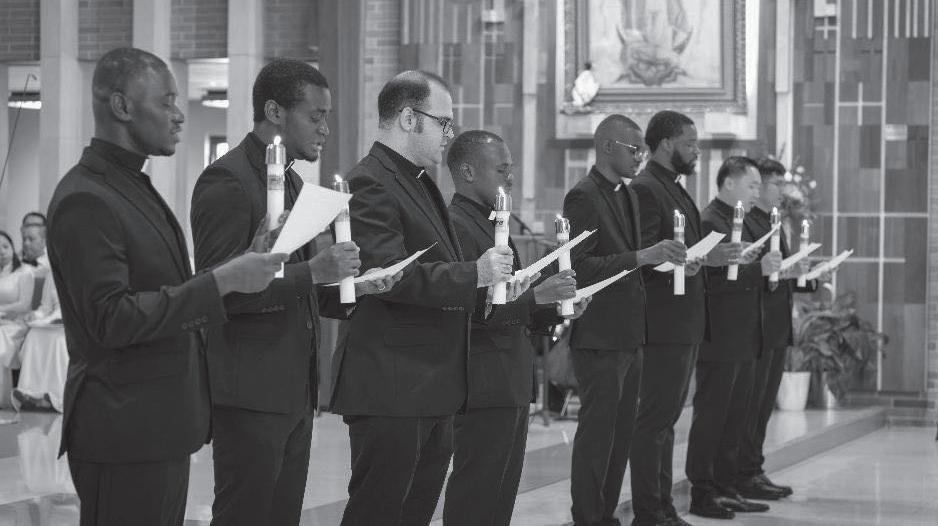
Discernment often begins outside traditional Church spaces. Many young people on the margins do not first encounter God through Eucharistic adoration or vocation fairs.
CBy Ansel Augustine
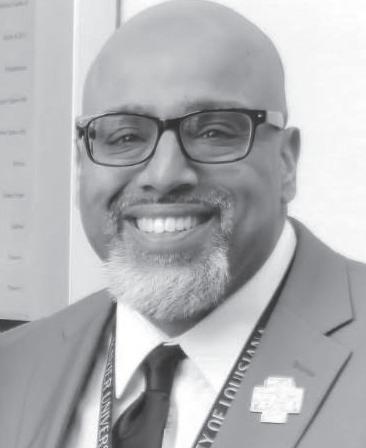
Ansel Augustine, D.Min, is an Emmynominated producer and an awardwinning author. He has served in full-time ministry for over 25 years in various capacities. He has written and contributed to several books related to ministry, including Praying with Our Feet: Encountering God in the Margins You can learn more about him at www. holyhotboy.info.
ATHOLIC VOCATION MINISTRY STANDS at a decisive crossroads. Many dioceses report fewer seminarians, diminished engagement among young adults, and a widening gap between the institutional church and communities most impacted by poverty, racism, migration, incarceration, and cultural exclusion. Yet these same margins are alive with faith, creativity, resilience, and spiritual hunger. The challenge before vocation directors is not simply how to recruit more candidates, but how to rediscover where God is already calling—and from whom.
My latest book, Praying With Our Feet: Encountering God in the Margins, offers a critical lens for this moment. It invites the Church to move beyond passive observation into an embodied encounter, insisting that God is not only spoken about in classrooms and chancery offices but recognized in streets, protests, shelters, prisons, second-line parades, and everyday acts of survival. For vocation directors, the message of this book provides not just a theology of mission but a method of discernment that reframes vocation work as accompaniment, listening, and presence.
Authentic vocation outreach today requires a shift from asking “Who is coming to us?” to “Where are we being sent?”
Prayer is not confined to words or sanctuaries. Prayer happens when the Body of Christ moves toward suffering, injustice, and hope. This insight echoes Catholic social teaching, particularly the Incarnation, and God choosing proximity over distance, flesh over abstraction. For vocation directors, this means recognizing that discernment often begins outside traditional Church spaces. Many young people on the margins do not first encounter God through Eucharistic adoration or vocation fairs, but through:
• Organizing for justice
• Caring for siblings or elders
• Surviving systems stacked against them
• Creating beauty through art, music, and culture
• Showing up for their communities when institutions fail
These experiences are not obstacles to vocation; they are seedbeds of vocation. To “pray with our feet” as vocation ministers is to physically and relationally enter these spaces, not as recruiters, but as fellow pilgrims. When someone is from the margins, it is important to remember that many have been pushed to these spaces because of injustices in society. So, as vocation directors that represent the Church, trust needs to be built. This is done by intentionally connecting with those on the margins and learning from their experiences, which are usually different from those of many candidates who are viewed as “ideal,” but are no less relevant. There needs to be a shift to see those on the margins, and the lifestyle that they may be born into, just as “holy” and willing of God’s calling as anyone else’s with a more privileged background.
I define the margins as places where faith is often lived more than articulated, hope is practiced under pressure, and God is trusted without institutional guarantees. Some examples of those on the margins are those from communities, many of whom may be Black or of Hispanic/Latino descent, where they are underresourced and thus may not be connected with traditional networks or opportunities to connect with vocation outreach. It is in these communities where God has shown up in the form of survival. Faith can be seen when peo-
ple gather to reclaim a space during a prayer vigil where a tragedy, such as a murder, may have occurred. This faith expression is just as relevant as that of someone who experiences God through attending the Stations of the Cross during Lent.
Another example is someone who has family members who have, or they themselves have, matriculated through the criminal justice system. Unjust laws and policing have affected communities of color for generations, and a lack of opportunities and stereotyping have caused many men and women from these communities to be deemed as unworthy of the dignity that they deserve as children of God.
Throughout Scripture, we see Jesus calling and using those who were seen as unqualified by society to evangelize the world and spread our faith. Let us do the same. We are more effective when we call people from the margins to evangelize the margins. Scripture consistently affirms this. God called Moses from exile, David from obscurity, Mary from a colonized village, and the disciples from manual labor. Jesus lived and ministered from the margins of empire and respectability.
There needs to be a shift to see those on the margins, and the lifestyle that they may be born into, just as “holy” and willing of God’s calling as anyone else’s with a more privileged background.
For vocation directors, this demands a serious examination of implicit bias in discernment culture: Whose leadership styles do we recognize as priestly? Whose spirituality do we deem mature/authentic? Whose anger, grief, or critique do we mislabel as troublesome rather than prophetic fire?
If God continues to call from the margins—as the Gospel insists—then vocation ministers must learn to see, hear, and trust those calls. For example: Who is missing from your network? Who is not at the table when decisions are made? What voices are not heard in leadership spaces?
Jesus modeled a ministry that sought out the overlooked and invited them to belong before they believed. Are we not to do the same as his followers?
Personally, during my time of discernment after Hurricane Katrina, when I was evacuated to Texas waiting to return to New Orleans, I thought this was God’s time for me to enter the priesthood. I had lost 19 people
in the storm, including the love of my life, and I felt that this was where God was calling me to serve the Church.
Unfortunately, the vocation director from the religious order that I wanted to join said I “did not have the look of a priest,” (his exact words) and thus should not pursue the priesthood. That experience hurt me more than I could express, but it was part of God’s plan for me. The sad reality is that, over the years, I have heard many rejection stories from aspirants based on their culture, socioeconomic background, or appearance.
One of the strongest pastoral correctives that I discuss is a resistance to transactional ministry. I always warn against showing up in marginalized spaces only when the Church “needs something,” whether numbers, optics, or credibility. The sad reality of broken trust within the institutional Church and marginalized communities is that performative solidarity takes place when it is convenient or necessary on behalf of the Church.
For example, during the racial reckoning that took place after the murder of George Floyd, many Catholic organizations and dioceses put out various anti-racism statements and organized prayer services against racism, yet now that the attention toward this issue has waned, the pseudo-prophetic movement has grown silent. Those on the margins see this pattern, and their distrust for those representing the institution grows.
• Go beyond a recruitment-driven mentality because it’s not only about the numbers, but about relationships.
• Embrace a relationship-centered perspective and see each person as a Child of God with gifts to offer, regardless of where they are from.
Clergy as gatekeepers: by forming your own relationships in the community, you may build relationships with people that might be overlooked by clergy who may not have access to the same spaces due to their schedules. Also, it is important to connect with community leaders beyond Catholic circles.
Clergy as listeners and learners: we do not come in to “save” the margins, we come to learn from and encounter the Christ that is already there.
This shift is deeply Catholic. It mirrors the Emmaus story, where Jesus walks with the disciples in confusion and disappointment before revealing Himself. Christ listens first, then asks questions. He breaks bread after the journey. Practically, this means vocation directors must be willing to spend time in spaces where no immediate vocations emerge, trusting that fidelity will precede fruitfulness.
Partnerships need to be created, trust must be built, and relationships are fostered over time, and not only when a crisis occurs.
An example of a model of success was when community policing, when done authentically, correctly, and in partnership with community partners, aimed to build trust with the marginalized, who were mostly hurt in the past due to harsh police brutality and policies. The same applies to vocation work, where partnerships need to be created, trust must be built, and relationships are fostered over time, and not only when a crisis occurs. Vocation directors are invited into a pastoral conversion by considering the following:
• Reevaluate older paradigms that only look towards one model of an ideal candidate and eliminate others that do not fit that model.
• Consider newer paradigms by recognizing an evolving world, where God is calling you to be, and how God is calling you to be present.
One of the most inspiring examples of this is the work of Father Greg Boyle, S.J. and Homeboy Industries in Los Angeles. His work with gang intervention has led to many saved lives, inspiring others from the same lived realities to want to improve themselves as well.
What has Father G done well? He sees the good in these women and men and does not come to “fix” them. His journey with them is one of loving accompaniment and acceptance, and not judgment. As vocation directors, a successful approach to ministry within the margins is becoming a member of the flock, not in the form of disrespectful cultural appropriation, but one of reverence to try to understand what is there.
For vocation directors, listening is not a technique, but a spiritual discipline. On the margins, people are accustomed to being studied, surveyed, or “served,” but rarely truly heard. For vocation directors, deep listening is itself vocation ministry. This includes listening to:
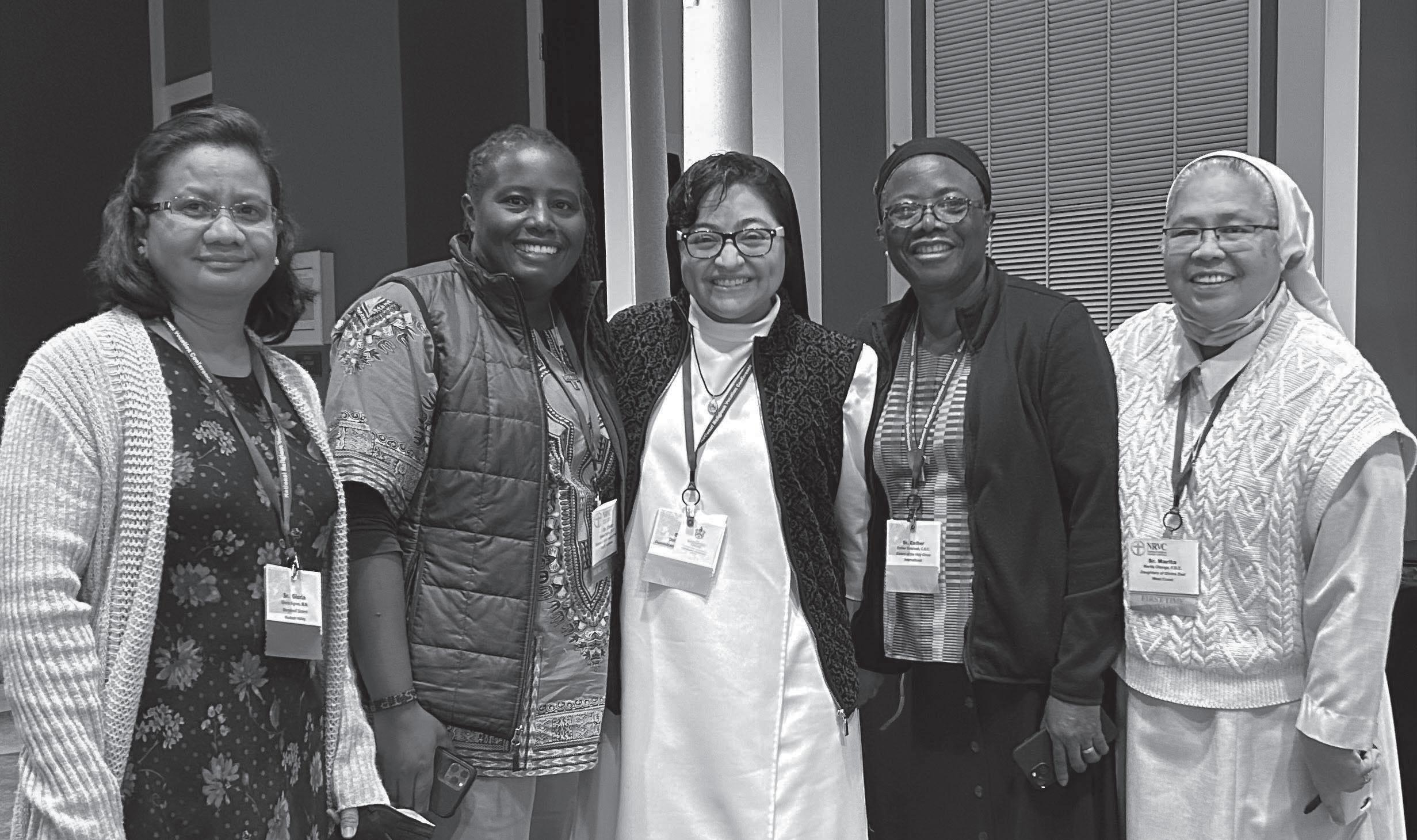
A diverse group of women religious at Convocation 2022. When we insist that vocation must look a certain way before we accompany it, we risk silencing the Holy Spirit. Throughout history and scripture, God’s call often disrupts norms before it clarifies structures.
• Stories of exclusion from Church spaces.
• Experiences of racism, clericalism, or classism.
• Anger at the Church that still coexists with love for God.
• Dreams that do not neatly fit clerical or religious categories.
This listening requires humility and patience. It may unsettle comfortable narratives about the Church’s role. Yet it is precisely here that discernment becomes authentic. God’s call often emerges not in polished answers, but in holy unrest. Importantly, listening also means resisting the urge to spiritualize pain immediately. Sometimes, accompaniment simply says, “I believe you. I’m here.”
Many young adults on the margins practice a deeply embodied spirituality expressed through activism, art, culture, and communal survival rather than formal devotions. This reality has been affirmed through the multiple regional Black Catholic Young Adult Listening Sessions we have engaged in throughout the country. These practices are legitimate theological expressions, not deficien-
cies. For vocation directors, this raises critical questions: Do we recognize organizing for justice as a form of prayer? Do we see protest as a moral act rooted in Catholic Social Teaching? Can lament, anger, and critique be part of vocation discernment?
When we insist that vocation must look a certain way before we accompany it, we risk silencing the Holy Spirit. Let us remember, throughout history and Scripture, God’s call often disrupts norms before it clarifies structures. Vocation ministry must therefore expand its spiritual imagination, helping candidates integrate their lived commitments with the sacramental life of the Church—not replace one with the other.
A recurring theme that I have witnessed through various forms of ministry is solidarity over saviorism. On the margins, people quickly sense whether Church leaders are walking with them or merely passing through. A close friend of mine, Sister Judy Gomila, a Marianite Sister of Holy Cross from New Orleans, lives this out. I have known Sister Judy for most of my life. She has ministered on the margins for decades (from uptown projects to the prison retreats she and I used to lead together).
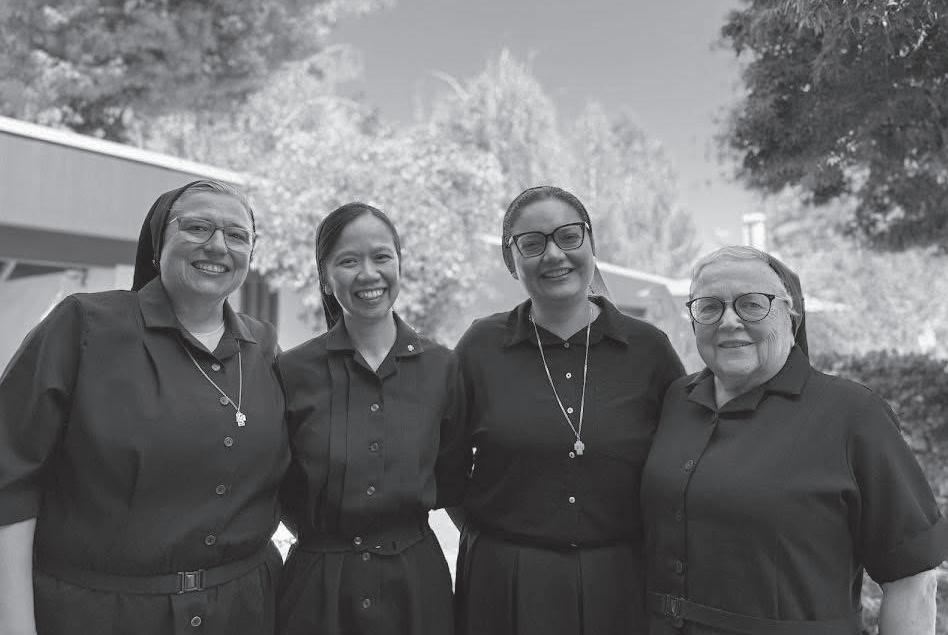
Yes, when I used to see this short White nun coming around, I initially had my reservations due to past interactions with other people, but her welcoming spirit and her joyful demeanor make people feel welcome and loved. To this day, Sister Judy and I still reminisce about and are contacted by the men we ministered with in the prisons in Louisiana. For vocation directors, authentic accompaniment means showing up consistently, not episodically; sharing vulnerability, not just authority; and being willing to be changed by the encounter. This approach reframes vocation discernment as mutual transformation. The Church not only discerns, but so does the candidate. This reciprocity is not a threat; it is a also a gift.
If vocation directors want to connect with the margins more intentionally, several structural implications must by addressed. For example, consider that:
• Formation pathways must become more flexible.
marginalized communities should be recognized as vocation mentors.
• Discernment must directly address both trauma and survival.
• Many candidates from the margins carry trauma. It is important for applicants to heal the trauma prior to entrance.
• The Church must also express its willingness to be evangelized.
Connecting with the margins calls the Church to remember who she is: a pilgrim people following a God who walks the roads of suffering and hope.
• Traditional timelines and expectations may unintentionally exclude those with family obligations, economic constraints, or non-linear faith journeys.
• Mentorship must extend beyond clergy.
• Lay leaders, activists, artists, and elders from
Those on the margins often carry insights the Church desperately needs about credibility, justice, and hope. This is why the synodal process of the Church, when done correctly, has been such a bridge-builder in various dioceses. Connecting with the margins calls the Church to remember who she is: a pilgrim people following a God who walks the roads of suffering and hope. For vocation directors, this is both a challenge and an invitation. The future of vocations will not be secured by better marketing. It will emerge where the Church is willing to risk proximity, to be uncomfortable, to listen deeply, and to trust that God’s call is already echoing in places we have too often overlooked. When vocation directors step into the margins—not as experts, but as companions—they participate in a sacred truth: God is already there, calling. Our task is simply to show up, listen, and walk. That, too, is prayer. n
IWAS SO FULL OF ENERGY AND IDEAS when I was first assigned to work in vocation ministry in 2010. Honestly, most of my ideas centered around the internet, YouTube, and the various ways we would help women become more interested in learning about vocations. Today, I still care about those things. However, I have learned that what matters most in vocation ministry has little to do with marketing and more to do with relating. Vocation ministry has become more about accompaniment, of both the discerner and their families.
In the movie, It’s a Wonderful Life, George Bailey delays college to allow his younger brother to attend. His decision is only one of several self-sacrificing moves the idealistic character makes in putting the needs of family first. As a vocation director, I see this selfless behavior repeated as women approach me with questions about whether God is calling them to consecrated life. They, too, live in families where members postpone their dreams to allow one of the other members to achieve theirs.
In doing this work, I have come to realize that family structures are very diverse. So, accompaniment means many things to different people. For many discerners, it absolutely means family visits and shared meal times, which happens in mutual ways as we often welcome families into our homes, and even more so when we are reverently and humbly welcomed into theirs.
By Sister Lisa Laguna, D.C.
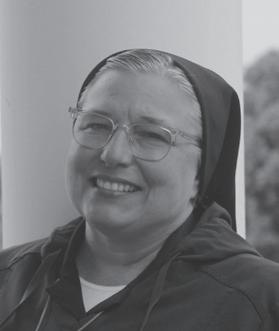
Sister Lisa Laguna, D.C. has been a Daughter of Charity of St. Vincent de Paul since 2003. She is an educator by profession and vocation director for her province since 2010. She resides and ministers in Los Angeles, California.
In recent years, I have journeyed with many women. The majority of the women I have had the immense privilege to walk alongside have been from Asian or Latino cultures. This makes perfect sense when we recognize the demographics of the Catholic Church in the United States, particularly in the Western United States, where I minister. Since we began journeying with these women, I have listened to many stories of heroic journeys of parents bringing their children to this country seeking to provide safety, health, and ultimately a future for their loved ones. I have visited beautiful backyard gardens that could almost compete with the commercial farms of the central valleys in both abundance and beauty. I still remember celebrating an afternoon with the father of one of our discerners, who pulled up to our house and unloaded his fruit cart to share bionicos (popular Mexicanfruit salad dessert) with the sisters and our neighbords.
The mutual gifts of relating
Relating is recognizing that our gifts are mutual in both joy and generosity. Relating is walking with people in the ways that matter most to them. It means listening to the stories that have affected them and their families and loved ones.
Some intercultural challenges are more easily named. For example, we all must work towards learning about less common family origin stories as there are different spiritually treasured practices and devotions across cultures. On the other hand, doing so is a blessing, as sharing rich celebrations and nostalgic foods across cultures is not to be missed.
A meaningful example of this is the Lunar New Year celebration. For our Vietnamese American members, this celebration is so significant that it trumps almost every other. For many of our sisters, this is the time of year they choose to visit their families, give and receive gifts (not only lucky money), and exchange blessings. This is a time that is mingled with faith and culture. On this day, many of our members acknowledge the beginning of the next year of their own lives. In doing so, they have graciously adjusted to OUR notion of celebrating birthdays during the calendar year.
Relating is recognizing our gifts are mutual in both joy and generosity. Relating is walking with people in the ways that matter most to them.
I remember an intimate weekend for serious discerners not long ago. We had all piled into a minivan to visit a local monastery of the Poor Clares just a mile away. During the bustle of piling in and out of the van, one of the ladies left her phone behind. We all piled into the van, drove back to the monastery, and looked everywhere for her phone. It was only later, as I reflected with one of our Latina discerners about what had been most meaningful to her about that weekend, that she shared that it was when we stopped to look for the missing phone because that is what her family would do. I was deeply struck by this because I had worked hard to plan a weekend with many activities around our charism and the spirit of our community, but what mattered most to her was that we had responded to each other’s needs in a similar way to her family.
Ultimately, relating means taking time to be and to be with: whatever that means. In short, many of the women discerning consecrated life reflect the face of today’s Church, and it’s a gift to enjoy the present moment while also looking forward to a future that embraces and owns this reality. However, it would be irresponsible not to admit that there are challenges in this work.
For most of us, the Lunar New Year celebration is merely a “cultural experience.” But for many of our sisters, it is hands-down an experience of coming back HOME.
In my own local community two Novembers ago, we erected our Ofrenda (an altar for Dia de los Muertos). At the time, we had recently lost a friend who was close to two of our sisters. They had both been with our friend when she died in the hospital, and it was a difficult loss.
I placed an image of our dear friend on our Ofrenda with the intention of honoring her (a common practice in my culture). However, I did not realize that one of our sisters who had been with her when she died had been deeply affected by the experience.
This sister, one of our newer members, comes from a different culture with a less intimate experience with death than mine. In fact, she struggles with marrying our Catholic faith with what she feels is a strong, dominant cultural belief around the dead. So, when I placed a photo of our recently deceased friend on our Ofrenda, in a prominent place in our home, it was an absolute challenge for her. She physically avoided this part of the house for days until she was able to share her discomfort with me.
This experience taught me that what can be a consoling experience for some can become a haunting experience for another.
These experiences, and there are many more that I can share, have been a significant part of journeying with many women over the years. And yet, a recent challenge and surprise for me in this work has been the gift and challenge of understanding the interdependent family structures common in many Asian and Latino families, especially among immigrant and first generation discerners. Unfortunately, journeying with families during the discernment process is not always possible. Sometimes, the family is not in the United States. Or as can often happen, they may feel distraught over the discerner’s decision to become a religious and are unwilling to meet with us.
However, whenever possible, engaging and including families in the discernment process can be a source of support for the discerner and also reassuring for families, who need to know their children are safe. And I’m not only referring to safety in a basic sense, although that certainly matters to them. Families also need to know their children will be cared for and have access to healthcare and shelter. They need to have a sense that our community will “have their child’s back” in the same way they do.
We can only convey this message by building a relationship with families and answering their important questions, such as, “What happens if my child gets sick?” “And if she gets sick, can she go to the doctor?” “What happens if we get sick as parents?”
In truth, the practicality of these answers will vary by community. That is why it is so important to build a relationship where possible. This is especially crucial and meaningful because families often make tremendous sacrifices in the accompaniment process.
However, it’s worthwhile to make a distinction and explain what I mean by sacrifice. When referencing the sacrifices that families make, we often talk about their sacrifice in spiritual terms, as parents literally are offering their child to God. There is truth in that, and we honor their generosity of spirit. And yet, there are many more untold stories about the other sacrifices made by families when a woman or man enters consecrated life, particularly if that person is part of an immigrant or first-generation family.
In my experience, these interdependent family structures seem to be more common in families that immigrate. For example, “Elena” is a first-generation Latina woman whose parents are from Mexico and have been in the United States for years (unable to secure their citizenship despite numerous attempts). She is the eldest of
four children, all born in the U.S. Her parents are food vendors who have grown their business from a simple cart to a small storefront. All of the paperwork for that business has been in “Elena’s” name.
Like many women who are discerning, she has been feeling the pull of Christ’s calling in her heart, and her discernment journey is ultimately about whether God is calling her to be a sister. Fortunately, she is blessed to have parents who are devout Catholics and support her vocation. They desire her discernment and possible vocation to a religious community. However, her parents are not only spiritually giving back to God when they pray and discern with their daughter. There are serious, real-life family consequences for them to consider because their daughter’s calling to religious life can make them vulnerable in unexpected ways.
Just like George Bailey in “It’s a Wonderful Life,” a sibling will inevitably need to assume a larger role in the family to allow another family member to achieve her dream, or in this case, a Divine summons.
You may or may not imagine the implications.
If “Elena” and our community discern that she is indeed called to enter, the real and practical consequences for her family, particularly her parents, would be signif-
icant and life-altering. Her parents will have to consider how to handle the family business, as members of religious communities do not generally have for-profit businesses in their name. Doing so would conflict with our vow of poverty and could become a potential liability to the institute if a business were in the name of an individual member. As a vocation director, I need to be prudent in helping “Elena” with timing.
When is the right time to consider transferring the company information to the name of another sibling? For the family, does another sibling even desire the responsibility? And how do we move forward together in a way that benefits and protects everyone?
There is no fast-forward button for this kind of journey. All persons need to be respected while seeking the Holy Spirit’s guidance, especially when handling and holding close the sacredness of their family’s reality.
I often think about Mother Mary, who may have had dreams about her family life with Joseph. She received disturbing news about swords piercing her heart when presenting her baby at the temple. Here is a metaphor for mothers today who take their daughters to church and hear a call to relinquish them to this unexpected, yet deeply significant, relationship with God. Imagine the various thoughts that must go through their minds as
this happens. Without the daughter’s income, where will the family find the resources to survive? Is a second job even a possibility? Will parents applying for new jobs come under scrutiny from ICE agents?
God offers no guarantees of an easy road. In fact, the cross suggests the opposite.
Another example is “Pham,” whose family had to refinance their condo so their monthly payments became more affordable. She is a crucial part of the family’s economic fabric and lives at home with her parents, two adult sisters, and niece. Together, they form a living, breathing, interdependent family unit. They take turns working and attending college.
As often happens, their plan was working perfectly until… God came knocking at the door and invited someone like her, a woman living within an interdependent family, to enter a community. It’s not hard to imagine the disruption to what was once a seamless familial structure. How will the family function now? How will the bills get paid? How will they make sure that everyone receives an education?
In short, a phrase we often hear from families is, “We had a plan.” Therefore, as a vocation director, these realities have called me and my community to become creative and patient with the women we journey with. There isn’t a one-size-fits-all discernment/prepostulant plan for anyone. Some women can work longer while discerning to help get things in order, but not all can. Sometimes the women I journey with must deal with school debt. Sometimes they must make family arrangements. The circumstances and the types of interdependent families I accompany are as diverse as the women I have been privileged to encounter.
Nevertheless, I have been humbled by the immense sacrifices that all families make to honor the vocations of their daughters. And I am in awe of the courage they exhibit to accept the call from God.
Many of our sisters describe becoming an adult as living out expectations of self-sufficiency in financial, emotional, spiritual, and familial terms. Often, when I attend meetings for vocation or formation directors, adulthood is typically described in these terms. However, in all these years of accompanying women, I have not encountered that model of living at all.
I have walked with women whose families enjoy beautiful, complicated interdependent lives, both financially and practically. Their lives are akin to the most
high-tech logistics management systems with complex systems for sharing financial responsibilities and vehicles, transporting children and adults, caring for sick and elderly loved ones, maintaining the family home, ensuring that grandparents attend Mass, childcare needs are met, providing for those in college, and so much more.
A recent discerner explained to me how she had just finished signing paperwork for the new family car. This woman has a master’s degree and works a professional job. Although the vehicle is in her name, belongs to her, and is completely her financial responsibility, it is now the family’s new car. This generous contribution on her part is absolutely necessary to maintain an interdependent system that is so meaningful and life-giving to her and her family.
And yet, the reality of this young woman who gave her car to her beloved family, and others like it, can be seen as obstacles or complications for those of us working in vocation ministry and journeying with discerners. It can be tempting to judge a discerner and say that they
are unable to live independently (as if we live independently in our own communities). However, in doing so, we may unintentionally fail to recognize that their gifts of commitment, loyalty, and capacity for relationship are gifts we can also use in our communities.
I love my work and the joy of journeying with women. I used to think that what would matter most would be YouTube, marketing, various social media engagements, and new ways of getting women interested in a vocation. I still care about those things, but I have grown to see that the relationships among parents and siblings are of principal importance. This work is much more about relating, and helping women learn about their vocation is filled with complexity.
Their stories abound in an undercurrent of concrete, physical, and emotional sacrifices leading up to the decision of choosing to follow God wholeheartedly. Each woman is a thread in a complex family fabric. And yes, each represents a wonderful life. n
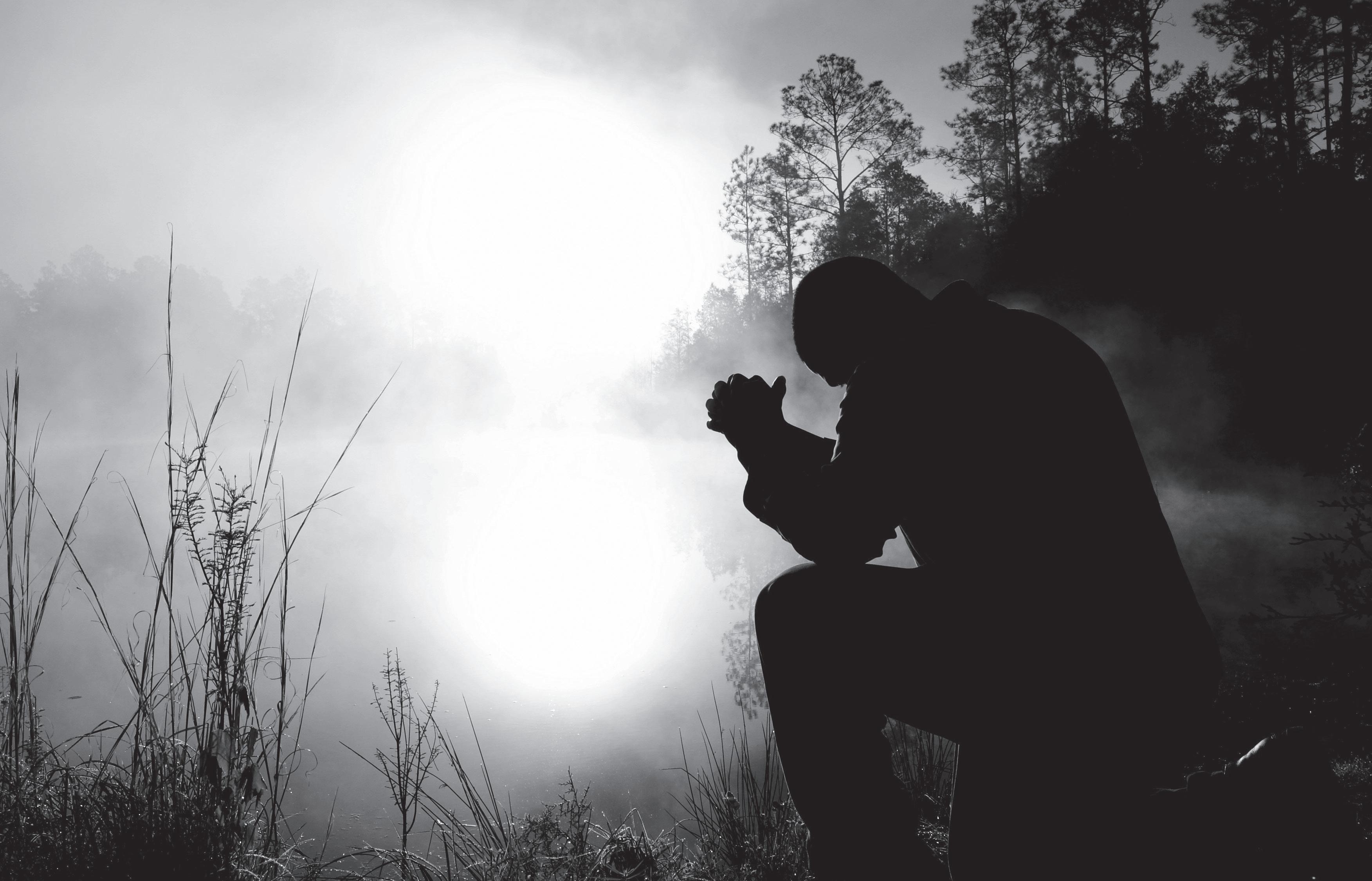
No matter how open-minded we think we are, it is our responsibility to check for implicit biases and generalizations as we accompany discerners.
It takes humility to keep learning, to keep asking, and to remain attentive to new ways of communicating with one another. Accompanying each new generation requires a keen awareness to respectfully gather information needed and careful consideration of the cultural wealth each person brings to their discernment.
By Sister Deborah Borneman, SS.C.M.
Sister Deborah Borneman, SS.C.M. belongs to the Sisters of Saints Cyril and Methodius. She has served in vocation ministry for more than 20 years and has been part of the National Religious Vocation Conference team since 2011. She currently serves as NRVC’s director of mission integration.
RELIGIOUS LIFE INSISTS on widening welcoming spaces through our words and actions, embracing a lifetime pursuit of intercultural humility. Yet, the honest and ugly reality of public xenophobia throughout the United States is increas ingly evident in the places we live and minister. In an eerie era of suspicion of documentation status, people are being targeted based on accent, neighborhood, and skin color, regardless of their pathway to citizenship. In once thriving parishes, the fear of ICE raids has reduced Mass attendance, sacramental preparation, and youth ministry participation. There are also NRVC international and U.S. members who are afraid of being detained while traveling to and from workshops or having family members arrested during their absence.
When meeting those interested in consecrated life and their families, we can unintentionally cause harm if we do not pause to ask others first how our interview skills may have a tone of interrogation rather than invitation, or are interspersed with derogatory phrases that we think
are acceptable efforts to add humor. No matter how open-minded we think we are, it is our responsibility to check for implicit biases and generalizations as we accompany discerners. This takes humility to seek and accept honest feedback from colleagues, a vulnerability that helps us to grow in our professional and ethical standards of respect for each person we encounter.
Over the past three years, NRVC organizational leaders paused to examine their own implicit biases, assumptions, and cultural identities. They shared their learnings through a new YouTube video series on the NRVC Channel, Walking Humbly Together
The practice of “walking humbly together” moves us beyond indifference and minimization towards genuine acceptance and adaptation. Rather than taking a guru approach of telling people what to do, each narrative reflects a personal journey of learning and unlearning patterns of behavior that were an obstacle to growth. These videos are designed for reflection and engagement, encouraging viewers to examine their own practices and perspectives on interculturality and anti-racism.
This article highlights some of their quotes as a practical examen to improve culturally mindful interactions. Ponder this shared wisdom with an openness to examine your own approaches in promoting vocations and building relationships.
“Using language like “does she fit in” can be harmful, yet this phrase was used for decades in assessing candidates for entrance into religious life. Instead of seeing cultural background as a deficit, I am learning more about a person’s cultural wealth, the unique gifts and strengths she is bringing into community life.” Mrs. Sabrina Harper for the Sisters of Notre Dame de Namur
“First, I can be more attentive to intergenerational trauma in discerners. Second, I can ask friends to tell me when I speak from my biases so I can grow in learning. It is hard, but I need to speak out more often when I hear biases in vocation conversations among vocation directors so it does not lead to microaggressions.”
Sister Mary Jo Curtsinger, C.S.J.
“Immersed as I was in my Irish heritage and Catholic identity, it was easy to overlook the value of other cultures. I have been practicing skills, so I can be open to asking questions about other people’s experiences. I hope my curiosity will never be taken the wrong way, as I work towards acceptance and adaptation in our global community.”
Walking humbly together moves us beyond indifference and minimization towards genuine acceptance and adaptation.
“Most of my learning has come not from humility, but humiliation. You know those times when you are having a great conversation, then you add to it, and everyone stops with a deep breath. Did I really just say that out loud? Yes, I did! It can’t stop there, though. I had to take those moments inside my soul and reflect on the bias that underlined that statement, and then learn from it and never say it again. Thank God, the more I hone my interculturality skills, the less I humiliate myself.”
Sister Caryn Crook, O.S.F.
“I learned that our Western culture speaks from the person of “I” while some cultures speak from the perspective of “we” or “us.” Understanding the reason for this perspective can open the door to deeper relationships. This can lead to rephrasing assessment questions, how one journeys with a candidate, or to understanding how misconceptions form around certain activities.” —Sister Gail Trippett, C.S.J.
—Mrs. Maureen Cetera
“Simply asking “What’s your name?” can sometimes cause unease for today’s discerners. A person may feel hesitant to share their full name or worry that I might struggle with the pronunciation. It is my responsibility to approach this with genuine humility, practicing until I get it right, rather than expecting them to minimize their identity by giving a nickname. Each name carries a profound story.”
—Sister Deborah Borneman, SS.C.M.
“Even a simple, seemingly innocent, and common question like “Where are you from?” can cause a lot of anxiety on the part of the person I’m talking to, especially in our current political climate and reality. I am trying hard to be more attentive and sensitive when I’m in conversation, especially as a vocation director.”
—Brother Larry Schatz, F.S.C.
“I need to move beyond the generalizations and stereotypes that can harm my ministry by limiting who I see as a potential candidate. I am intentionally trying to appreciate the cultural wealth that individuals bring, seeing their unique backgrounds—their languages, traditions, and life experiences—as assets, not deficits. This includes celebrat-
ing diverse forms of prayer, celebrations, and expression, whether through different musical traditions or spiritual practices.”
—Sister Kim Xuan Nguyen, C.C.V.I.
“Vocation ministers may find it helpful to know that sometimes, in wanting to be inclusive, I’ve learned the difference between tokenism and representation, meaning that I need to go beyond inviting to include the person in listening to their expectations, and making decisions together to experience a welcome mutual space of belonging.”
—Mrs. Sandy Piwko for the Religious of the Assumption Sisters
“It’s a goal for me to enter into situations where I may be a minority and let my brothers and sisters guide and welcome me on their terms, in their way. I don’t want to do this simply for my personal growth; that would be pretty self-serving. I desire to be in those spaces living in community and communion, because it is a Christ-like thing to do and be.”
—Sister Lisa Laguna, D.C.
“Vocation ministry can be filled with assumptions about young Catholics, discerners, and about each other!
Some people can quickly judge lay vocation directors, rather than ask me directly what I enjoy, what gifts I bring to this ministry, and what challenges I face. Instead of silently wondering, go ahead and ask me because I am also curious to learn from you!”
out to diverse candidates by learning as much as you can about the various cultures if they are not represented in your community. Our collective voice is needed to support initiatives that include dignity, justice, and belonging, even if we get discouraged. We are at a point where we need to continue to keep moving forward!”
—Sister Eileen McCann, C.S.J.
“I know that a goal of mine that may be helpful for other vocation ministers has been to try to be intentional about not thinking right away from my own culture, but asking, how might their culture see this? And believe me, I often think of what I know first, what I’m used to, or accustomed to. Thus, it is a great lesson for me to simply say, “Could you tell me about YOU? May I listen to your perspective on this and how it has been impacted by your family, country, culture, and language?”
—Brother John Skrodinsky, S.T.
What has been most important for me is to take myself out of my own bubble and really expose myself to other cultures.
—Sister Carmy Luke, O.S.B.
Mrs. Renee Dee for the Missionaries of La Salette
“It may be helpful for vocation ministers and those who accompany discerners to learn that one cannot truly be interculturally aware if the only thing you look for are similarities between your own culture and another. We must see the total picture…I think what has been most important for me is to take myself out of my own bubble and really expose myself to other cultures.”
—Sister Carmy Luke, O.S.B.
“When vocation ministers visit college campuses, I would encourage them to attend liturgies in parishes with an intercultural community of students, because we can see a wider vision of our Church.”
—Brother Edward Shields, F.S.C.
“I would encourage vocation directors to continue reaching
“I am learning that language opens a window to a new way to understand the world. New concepts expand my understanding of life, and some concepts cannot be translated into my mother language.”
—Sister Paz Vital, O.S.B.
“Before, my view of culture was limited to those who lived in a different country, as if my culture was the only way to live. But one of the things I’ve learned is that I need to reframe my idea of culture. Two people can live in the same city, in the same neighborhood, even in the same home, and come from different cultures.”
—Mrs. Teri Iverson for the Sisters of the Precious Blood
“Use inclusive language when speaking to others. I recall often saying, “Hey guys,” during group gatherings, which can be offensive to others. Ensure that everyone feels heard and valued at the table. It’s important to remember that introverts or anyone with limited translation skills might need a little extra time to share their thoughts. Observe body language and notice if individuals appear uncomfortable with what is being said.”
—Sister Kathleen Branham, O.S.F.
“I was operating out of the assumption that we were all basically the same and would interpret things the same way, my way. I had a cultural mindset that was of minimization and deemphasizing differences. I know that I need
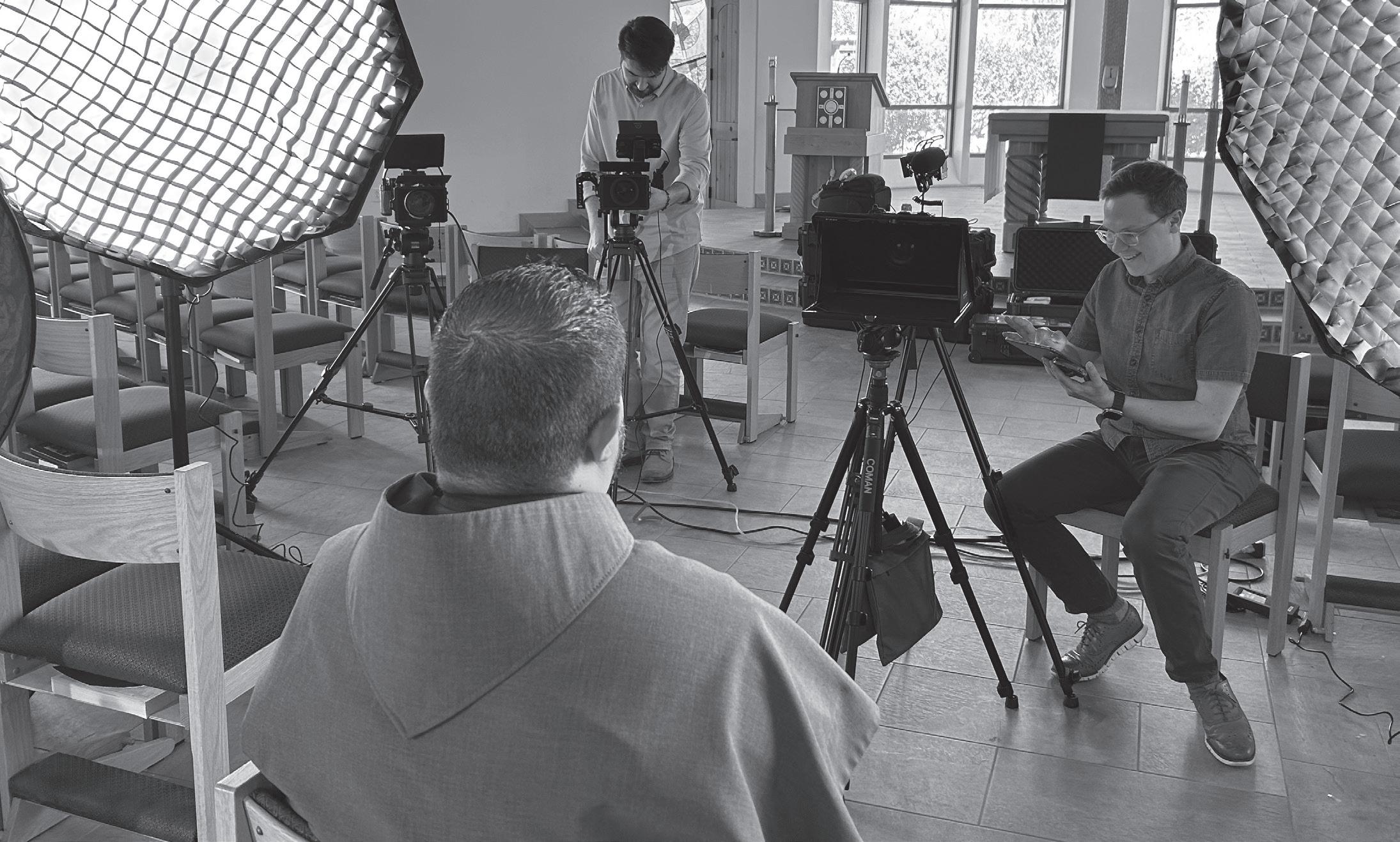
to be courageous and open to challenge myself to expand my cultural sensitivity and awareness in order to grow in intercultural humility.” —Sister June Fitzgerald, O.P.
“In a world where we do not always reverence the culture or racial identity of others, and often “mis-culture” others, it is especially important for us to acknowledge and celebrate our own identity. Am I willing to listen to the story of others?” —Brother Joseph Bach, O.F.M. Conv.
“If I believe I understand where someone is coming from, I need to seriously ask myself, “What makes you think you do? Have you lived their life or experienced what they’ve experienced?” I’ve learned that every person I’ve encountered in my life may possess an unknowable number of cultural elements that have influenced who they are.”
—Sister Dina Bato, S.P.
“One of the most healing things in community is to apologize and reconcile with grace, which strengthens relationships rather than hurts them.” —Sister Liz Sjoberg, D.C.
I realize that for me, the toughest part of intercultural exchanges is language. While I am more than happy to try learning what I can in another language, I also know that I am not very good at this. While trying to learn basic phrases in various languages, I realized that I am ok with knowing this is my weakness, but trying anyway. It gives
me great appreciation and admiration for those who are multilingual. —Sister Suzanne Fitzmaurice, O.S.B.
“I have come to realize how powerful our stories can be. Can I approach this moment with a heart filled with humility and love? This reminds me to discern when I should act with humility or courage to be vulnerable.”
—Friar Mario Serrano, O.F.M. Conv.
It takes courage and vulnerability to admit times we unintentionally said the wrong things that hurt the receiver. Yet, it also takes humility to keep learning, to keep asking, and to remain attentive to new ways of communicating with one another. Accompanying each new generation requires a keen awareness to respectfully gather information needed and careful consideration of the cultural wealth each person brings to discernment.
Recognizing the current context and drawing from their collective experiences, the National Board published two timely and timeless statements, available at NRVC.net, reflecting the commitment to fostering justice, dignity, and belonging in all aspects of vocation ministry. These statements call each of us to “recognize that intercultural transformation is essential to authentic accompaniment. It compels us to move beyond intercultural competence toward a spirituality of encounter, upholding the image of God in each person and embracing the richness diversity brings to consecrated life.” n
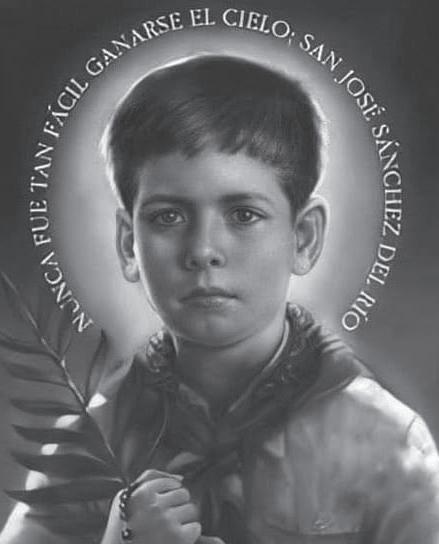
José Luis Sánchez del Río was a 13-year-old Mexican boy who became a martyr during the Cristero War, a conflict between the Mexican government and Catholics resisting anti-religious laws. Born in Sahuayo, Michoacán, he was inspired by his brother to join the Cristero forces, where he led soldiers in prayer. During a battle in 1928, he was
captured by government forces, who imprisoned and tortured him, but he refused to resign his faith.
Just before being executed, he proclaimed, “Long live Christ the King/Viva Cristo Rey! Long live the Virgin of Guadalupe/Viva la Virgen de Guadalupe!”He was canonized in 2016 by Pope Francis after a miracle attributed to his intercession.
FOLLOWING THE TRANSITION of Pope Francis to his eternal reward, speculations by Catholic commentators, priests, bishops, journalists, laypeople, including myself, thought that “we’d never have a pope from the United States.” This mantra was repeated as preparations were being made for the conclave. Even Father Bob, as Pope Leo XIV was known by friends and parishioners in Chicago, believed that his fellow cardinals would not elect him. This election surprised the throng of curious and faithful alike. But, as hindsight confirms, this is exactly what happened. The college of cardinals, reading the signs of the times, elected Cardinal Robert Prevost as the pope on May 8, 2025. And so, Father Bob became Pope Leo XIV.
As Matthew Bunson shares in Portrait of the First American Pope: Leo XIV, Leo is a kind and gentle pastor and missionary, but also a skilled administrator and canon lawyer. Born in 1955, the youngest of three boys, young Robert, was destined for the priesthood. His brother, Louis told People, “Nobody else in our ‘hood’ played priest, but Robert did. And our parents always supported his wishes in that area.”
In another interview with CBS News, he explained, “We knew as a family from a very young age, that there was something special about Rob…while I was out playing …baseball, cops and robbers, tag, flashlight…Rob used to like to play priest.”
Even the neighbors were convinced he’d become a priest, and joked that one day, he would become pope.
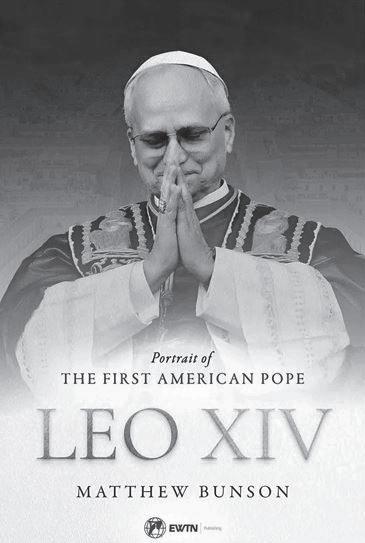
By Sabrina Harper
His parish and early formation played an outsized role in his upbringing. The suburban Chicago neighborhood of Dolton, Illinois, was deeply Catholic, and practicing one’s faith was expected and part of everyday life. The Church was the center of life. In later decades, like so many other urban and suburban parishes, it would decline. However, in 2011, the last Mass was celebrated at Saint Mary of the Assumption, the parish that nurtured his faith.
Robert Provost began high school in 1969 following the reforms of the Second Vatican Council. He attended St. Augustine Seminary High School for Catholic boys to receive a secondary education while discerning the priesthood in the Augustinian order. After high school graduation, he continued his Augustinian formation at Villanova University, outside Philadelphia. Throughout his high school and college years, service to the Church was front and center on his mind. Not afraid of hard work, he served as a groundskeeper at the St. Denis Church cemetery. As Munson explains, the words “humble” and “humility” are bandied about and used a bit too liberally. Humble and humility both derive from the Latin humus, which means “dirt” or “earth.” Certainly, humbleness and humility are, in the case of Fr. Bob, apt considering the ways he has been called to serve in mission.
As a relatively new vocation minister, I certainly affirm that our priority needs to be to live the Gospel, share the good news, and enthusiastically follow Jesus Christ and accompany others. However, I also believe that vocation ministry has to be intentional and invitational. With all the noise in modern society, the call to religious life or to explore one’s vocation is sometimes drowned out and perceived as outside of the realm of possibility. All members of religious institutes need to be open to inviting those who may be called to this profound service to the Church and a deeper relationship with others.
The cardinals recognized in Cardinal Prevost that the world, and perhaps especially the United States, needed a Pope of the people who had a strong unifying message.
The Chicago area was seeded by missionaries in the early nineteenth century, so it’s not surprising that Bob was well-suited to the missionary life. In 1982, he was ordained to the priesthood, as the Church in the United States was experiencing a decline for a number of complex and interrelated reasons. Prevost was a witness to this decline, which continues into the present. He recognizes that the Church has within her, informed by Vatican II, the resources necessary to confront her challenges. In 2023, shortly after Pope Francis made him a cardinal, he delivered a confident message in an interview with the Augustinian Order that touched on these issues: “First of all, our priority cannot be to look for vocations. Our priority has to be to live the good news, to live the Gospel, to share the enthusiasm that can be born in our hearts and in our lives when we truly discover who Jesus Christ is. When we stay walking with Christ, in communion with one another, in that friendship with the Lord and understanding how it is to have received that gift, vocations come.”
What Pope Leo XIV has brought to the Church in his short time as pope is a message of unity. Pope Leo’s Augustinian motto is In illo unum uno—In the One, we are one. This comes through his teaching, writing, homilies, and public addresses. Only by encountering Jesus Christ, the Son of God, can there be a common purpose. Throughout this book and the papacy of Pope Leo XIV, we see how that unifying message has been carried with him from his youth and into ordination and the papacy. Perhaps, in their wisdom and divine inspiration, the cardinals knew that we would need the next pope not only to hold the Church together but also to be a moral voice and force for good, pushing back against the realities of this moment in time. An individual’s vocation is often recognized by others before the individual realizes it, and perhaps this is what the cardinals recognized in then Cardinal Prevost when they entered the conclave—that the world, and perhaps many Catholics, needed a pope of the people who had a strong unifying message.
§§§§
Anyone who wants to learn more about Pope Leo, the first pope from the United States, would enjoy this new book. It gives a concise and historically contextualized profile of Pope Leo XIV. From his early years in Dolton, Illinois, to his vocation with the Augustinians, to his missionary assignments in Peru, to the beginnings of his papacy, this book is accessible, informative, and situates Pope Leo in this modern era. n
7101 W Picture Rocks Rd, Tucson, AZ 85743 USA
Phone: 520 744 3400 ~ Email: office@desertrenewal org ~ www desertrenewal org
2026
March 1 - May 8
July 19 - August 21
October 4 - December 11

2027
March 7 - May 14
July 18 - August 26
October 3 - December 10
The demands and expectations of full -time ministry are both rewarding and fulfilling; however, it is important to take time to rest & renew. Envision a sabbatical filled with silence. The emphasis of the Contemplative Study and Retreat Sabbatical is on spirituality, specifically spirituality that is anchored in a contemplative attitude & approach towards life. The atmosphere provided by the Sonoran Desert is essential to the experience. The desert, if we allow it to serve as a metaphor for our spiritual journey, can provide unique access to God. We believe that the desert experience is an important part of what makes the Contemplative Study and Retreat Sabbatical opportunity unique.

Fr. Joshua Warshak, O.SS.T. Vocation Director
User