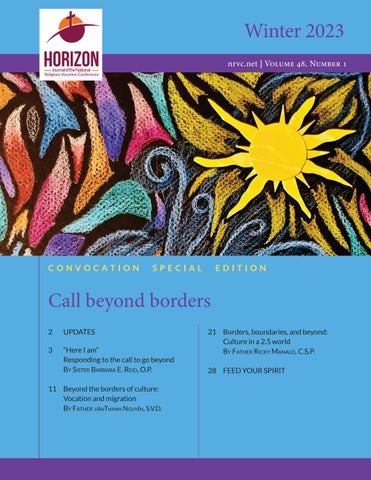
Winter 2023 nrvc.net | Volume 48, Number 1
BRING YOUR MINISTRY INTO FULL BLOOM by joining colleagues at the beautiful Marillac Center in Leavenworth, Kansas at the NRVC’s acclaimed Summer Institute workshops.

• Understanding, Assessing, and Fostering
Psychosexual Integration—July 6-9
Sister Lynn Levo, C.S.J.
• Orientation Program for New Vocation Directors — July 11-15
Sister Deborah Borneman, SS.C.M. and Father Adam MacDonald, S.V.D.
• Ethical Issues in Vocation and Formation Ministry—July 18-19
Father Raymond P. Carey, Ph.D.
• Behavioral Assessment I—July 21-23
Father Raymond P. Carey, Ph.D.
SIGN UP NOW at NRVC.net and lock in the most economical prices.
Questions? Contact NRVC Director of Membership Sister Dina Bato, S.P., dinasp@nrvc.net
Note: 2023 Fall Institute will be online.
Design Consultant
Patrice J. TuohyProofreaders
Rosemary Arnold, Virginia Piecuch
© 2023, National Religious Vocation Conference
HORIZON is published quarterly by the National Religious Vocation Conference, 5416 South Cornell Avenue, Chicago, IL 60615-5664. 773-363-5454 | nrvc@nrvc.net | nrvc.net
Facebook: Horizon vocation journal
Twitter: @HORIZONvocation
A complimentary subscription to HORIZON comes with NRVC annual membership. Additional subscriptions are $50 each for NRVC members; $125 each for non-members. Single copies are $25 each. Subscribe online at nrvc.net/signup. Please direct subscription inquiries to Marge Argyelan at the NRVC office at 773-363-5454 or margyelan@nrvc.net.
POSTMASTER
Send address changes to HORIZON, 5416 S. Cornell Ave., Chicago, IL 60615-5664. Periodicals postage paid at Chicago, IL. ISSN 1042-8461, Pub. # 744-850.
REPRINTS, ARCHIVES, ELECTRONIC EDITIONS
Permission is granted to distribute no more than 50 copies of HORIZON articles for noncommercial use. Please use the following credit line: Reprinted with permission from HORIZON, nrvc.net. For other types of reprints, please contact the editor at cscheiber@ nrvc.net.
EDITORIAL INQUIRIES & ADVERTISING
All editorial inquiries should be directed to the editor: Carol Schuck Scheiber, cscheiber@nrvc.net. For advertising rates and deadlines, see nrvc.net or contact the editor.
THE NATIONAL RELIGIOUS VOCATION CONFERENCE is a catalyst for vocation discernment and the full flourishing of religious life as sisters, brothers, and priests for the ongoing transformation of the world.
LIFE GETS DULL FAST when we are not being pushed a little. In the church world it’s known as “being called beyond borders.” It might mean taking a risk and talking to that 20-something with a nose ring, or maybe learning a Vietnamese prayer. It could mean taking a bus to the part of the city most people avoid. Being called beyond borders is part of being truly human, and it’s practically written into the job description for vocation ministry, something that keeps us on our spiritual toes. Our attention quickly turns to God when we feel wobbly.
This theme of God calling us to cross borders was the focus of our November 2022 convocation, a joyful time for face-to-face learning, sharing, and networking in the beautiful city of Spokane, Washington. Our keynote speakers, whose words appear in this edition, focused on:
• border crossing and calling in Scripture (page 3)
• ways migrants enrich and challenge religious communities (page 11)
• ways that Nones, digital culture, and varied ethnicities are shaping communities and vocation ministries (page 21)
It takes honest effort to respond to the call to go beyond borders. However, when we respond from a place of love, the burden is easy and the yoke is light. Vocation ministry will push you beyond the familiar and comfortable. But this new territory, beyond borders, will bring life to you and your community.
—Carol Schuck Scheiber, editor, cscheiber@nrvc.netHORIZON is an award-winning journal for vocation ministers and those who support a robust future for religious life. It is published quarterly by the National Religious Vocation Conference.
NATIONAL RELIGIOUS VOCATION CONFERENCE BOARD
Sister Mindy Welding, I.H.M. Board chair
Father Adam MacDonald, S.V.D. Vice chair
Sister Belinda Monahan, O.S.B. Vice chair
Sister Marichui Bringas, C.C.V.I.
Ms. Nancy Costello
Brother Brian Poulin, F.M.S.
Sister Nicole Trahan, F.M.I.
Mr. Len Uhal
Sister Mary Yun, O.P.
Sister Deborah Borneman, SS.C.M. Ex officio
In December 2022 the NRVC received a $250,000 grant from the Conrad N. Hilton Foundation to work on a two-prong project to promote intercultural, anti-racist religious life.
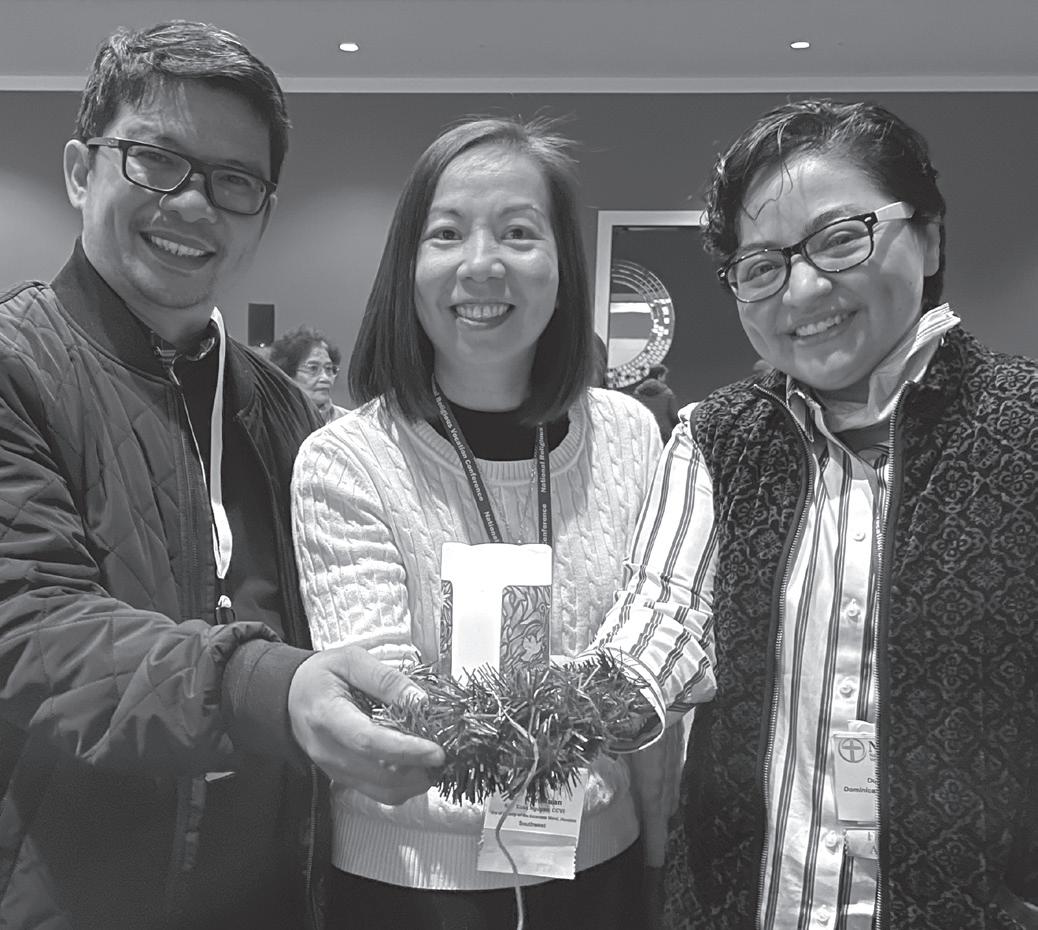
First, the grant will underwrite a series of workshops for the staff, board, member area coordinators, and key partners. Second, the grant will aid NRVC in offering workshops, publications, videos, and other resources to promote interculturality among member communities, members, and other stakeholders. HORIZON and nrvc. net will carry more information as the project develops.
Starting January 5 and ending April 17, the National Fund for Catholic Religious Vocations (NFCRV) will be accepting 2023 applications to receive education grants. These grants are for college debt of people entering a religious community. The grants are a benefit exclusive to members of the National Religious Vocation Conference. Please go to vocationfund.org to start the application process. For questions, please see vocationfund.org. or contact Phil Loftus, executive director, at ploftus@ nfcrv.org.
The NRVC Summer Institute will take place at the Marillac Center in Leavenworth, Kansas, July 6-23. Four workshops will be offered: “Psycho-sexual Integration,” (by Sister Lynn M. Levo, C.S.J.), “Orientation for New Vocation Directors (by Sister Deborah Borneman, SS.C.M. and Father Adam McDonald, S.V.D.) “Ethical Issues in Vocation and Formation Ministry,” and “Behavioral Assessment 1” (both by Father Raymond P. Carey,
Ph.D.). Registration begins in February. Further details are at nrvc.net. Please contact Sister Dina Bato, S.P., director of membership, with questions: dinasp@nrvc.net. NRVC’s fall 2023 workshops will be offered online.
At its September 2022 meeting, the NRVC board approved amendments to the curriculum for vocation ministers. The NRVC recommends that vocation ministers complete workshops in the following areas before starting or early on in vocation ministry: orientation, ethics, behavioral assessment, role of the family, psycho-sexual integration, ecclesial competency, civil and canon law, immigration law, and safe environment protocols. Other topics are part of continuing and ongoing education recommendations. Learn more at nrvc.net n
A notable part of being a prophet is that prophets go beyond borders and leave comfort zones.
“Behold, I am doing something new” (Isa. 43:19).
AS WE REFLECT ON THE THEME of Call Beyond Borders, I invite you to reflect on several biblical passages to see what they offer regarding the nature of our call and the essential components for being able to respond to and fulfill that call, especially as it stretches us beyond our borders.
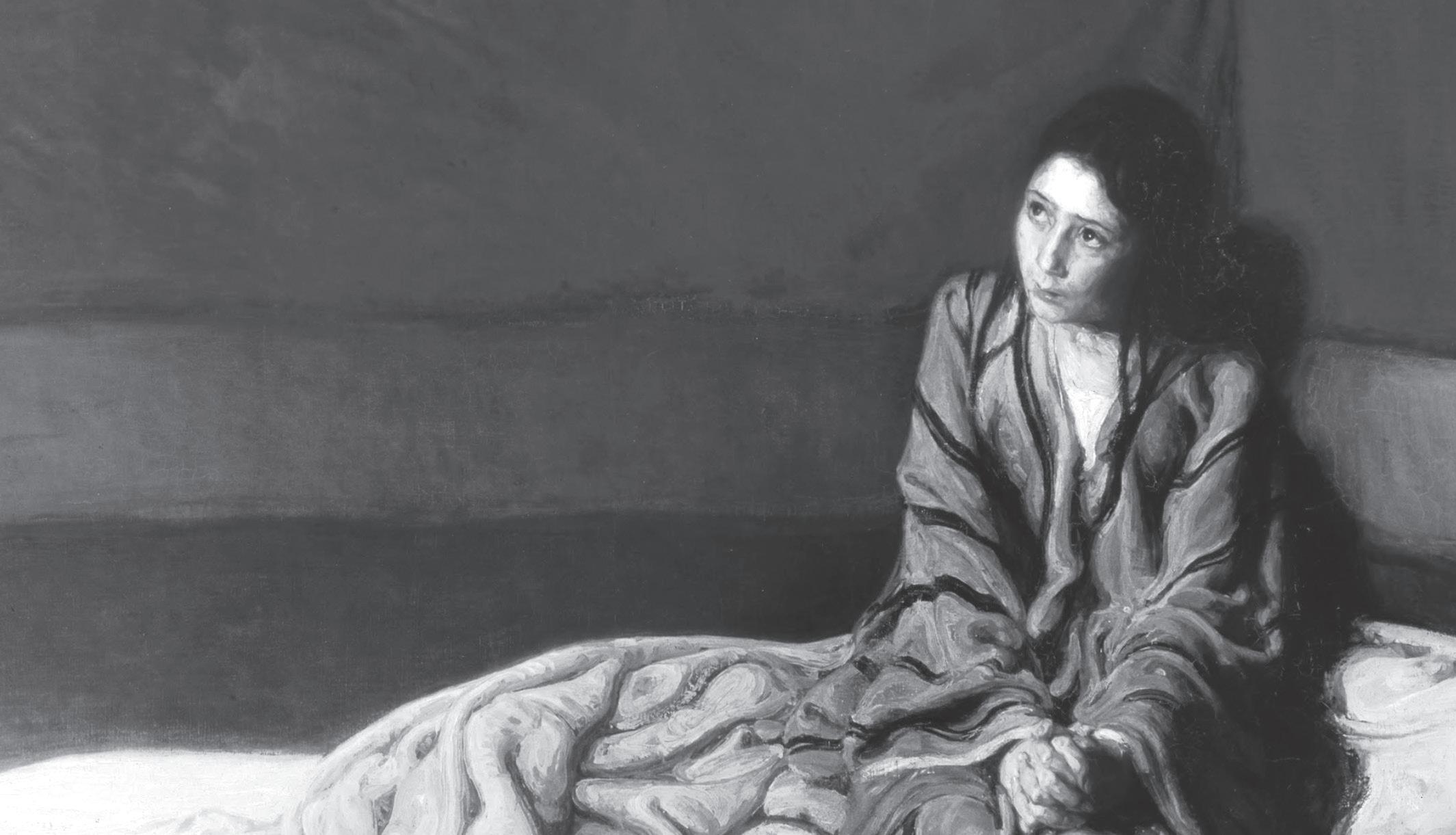
For some time now, religious women and men have been turning to the text in Isaiah 43:19 to discern the new things to which God is calling us. The prophet Isaiah, speaking for God, assured the Israelites as they were emerging from exile, “I am about to do a new thing; now it springs forth, do you not perceive it?”
As we try to discern and respond to the new things God is doing in our day, Pope Francis captured one of the most important aspects in his Apostolic Letter to All Consecrated People when he declared the Year of Consecrated Life in November 2014. He said, “the distinctive sign of consecrated life is prophecy .... This is the priority that is needed right now.”
By Sister Barbara E. Reid, O.P. Sister Barbara E. Reid, O.P. is a Dominican Sister of Grand Rapids, Michigan. She is president of Catholic Theological Union, Carroll Stuhlmueller C.P. Distinguished Professor of New Testament Studies, and author of 12 books and numerous articles.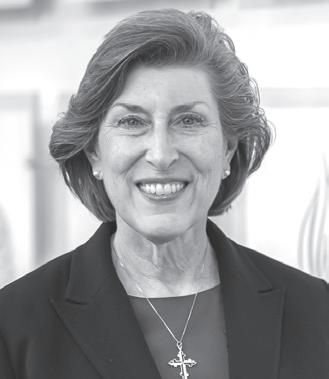
This emphasis on the prophetic nature of religious life has been explored by religious leaders such as Father Michael Crosby, O.F.M.Cap., Sister Sandra Schneiders, I.H.M. and others. I would like to reflect with you on what biblical prophets can offer us in understanding and accepting the call to be prophetic, and then probe one aspect of prophetic vocation: that of moving beyond borders, beyond our comfort zones, in particular, choosing to stand with those on the margins. I will reflect on three biblical scenes: the prophetic call and response of Mary, the mother of Jesus (Luke 1:28-56), and the prophetic ministry of Jesus in his encounters with a Samaritan woman (John 4:4-42) and with a Canaanite woman (Matt. 15:21-28).
First let’s look at what we mean by prophetic. A prophet is not a fortune teller who predicts the future; rather, as Schneiders says, “prophecy ... is about telling what time it is, what it is time for, in the present” (Finding the Treasure, 138). A prophet is a vessel of divine communication who needs to have two good ears, metaphorically speaking. A prophet listens deeply to the cries of the people, most especially to those on the margins, and listens equally intently to God’s word, God’s will for all people and all creation to flourish. A prophet has a double task: to denounce injustices, particularly systemic injustices, and announce hope to those who are most vulnerable. A prophet is also one who must be willing to accept the suffering that such a vocation entails and be able to articulate and help people accept, in the words of Bryan Massingale, “both the death that is difficult to embrace and the hope that we cannot dare to imagine.” The hope that a prophet announces is only born through birthpangs of death to what does not foster life to the full. The examples of biblical prophets, both women and men, who exercised this vocation are quite numerous. One person you might not think of as a prophet is Mary, the mother of Jesus. I want to explore with you how Luke paints the story of the annunciation (Luke 1:26-38) as Mary’s prophetic call, which she then enacts in the Magnificat (Luke 1:46-55).
Many of us in religious life have a special devotion to
Mary. Many have “Mary” as part of our religious name or claim her under one of her titles as our patron. Many congregations received their new members on September 8, the birthday of Mary. So Mary has long been one we turn to as our model and guide in living consecrated life. Her example as prophet can be most helpful to us now as we live into what it means to embrace a prophetic vocation.
While the story of the annunciation to Mary follows the same contours as other biblical annunciation of birth stories, it also has the elements of a prophetic call story. We can compare it, for example, to the call of Moses in Exodus 3:1-12.
The first thing in a call story is the person has an unexpected encounter with God or God’s messenger in the midst of their everyday life. Moses, for example was tending the sheep of his father-in-law, Jethro, when God’s angel appeared to him in a flame of fire out of a burning bush. So too, Luke portrays Mary as an ordinary Galilean girl in the midst of making wedding plans when Gabriel appears to her. We’ll see this same pattern when Jesus calls his disciples. They are fishermen busy mending their nets when Jesus invites them to follow him.
Authentic prophets always resist God’s call. Moses objected that he was “slow of speech and slow of tongue” (Exod. 4:10). Jeremiah protested that he was too young (Jer. 1:6). Peter tells Jesus to go away, that he is a sinner (Luke 5:8). Mary responds to Gabriel that what he’s asking is impossible (Luke 1:34). And, indeed, behind the objections is the realization that what God asks of a prophet is beyond human capabilities. Not only that, prophets also realize the cost of saying yes. Remember, the dual task of the prophet: to denounce injustices and announce good news. The first part of that mission is guaranteed to generate opposition, vilification, possibly even death, as in the case of Jesus and so many of our martyrs. In a later scene, in the presentation of the infant Jesus in the temple, Simeon speaks about Mary’s suffering when he says to her that “a sword will pierce your own soul” (2:35). Who would want to accept such a calling?
In each case, the divine messenger gives assurances that God will provide help. For Moses, God also empowers his brother, Aaron, saying, “I will be with your mouth and with his mouth, and will teach you what you shall do” (Exod. 4:15). Moses’s sister Miriam is also a prophet who exercises her gifts alongside her brothers (Exod.
Mary is not modeling acquiescence to servility; she is accepting a prophetic mission to bring about liberation from powers that dominate.
15:20). In some call stories, like that of Isaiah (6:1) and Ezekiel (2:2), there is explicit mention of the help of the Spirit. So, too, Gabriel assures Mary that the Holy Spirit will come upon her and the power of the Most High will overshadow her (Luke 1:35). What is impossible for prophets to accomplish on their own, can be done when they allow themselves to be a vessel of divine power. Nothing is impossible for God (Luke 1:37).
The reassurances to the prophet often take the form of a concrete sign. For Moses, it was the bush that burned and was not consumed. For Mary, it is her kinswoman, Elizabeth, who, now in advanced age is also with child. Prophets do not know what lies ahead; they are not predictors of the future. Nor does God give them special blueprints for how to fulfill their mission. With trust that God is faithful to the divine promises, Mary says yes to the call.
Mary’s assent to her prophetic call, “here I am,” is a response that echoes that of other prophets and leaders in the Old Testament, e.g., Abraham (Gen. 22:1), Samuel (1 Sam. 3:4, 5, 6, 8), and Isaiah (Isa. 6:8). She calls herself doulē kyriou, literally slave of the Lord, (1:38), a phrase she will repeat in the Magnificat (1:48). Doulē is usually translated as servant, sometimes handmaid, or maidservant. Mary’s self-designation as doulē points ahead to the Pentecost promise in Acts 2:18, where Peter declares, “even upon my slaves, both men and women [tous doulous mou kai tas doulas mou], in those days I will pour out my Spirit; and they shall prophesy” (quoting Joel 3:1). And Mary’s words, “Let it be with me according to your word” foreshadow those of her son on the Mount of Olives, “not my will but yours be done” (Luke 22:42), showing her as a model of one who hears God and obeys. But there is a highly problematic aspect in Mary calling herself a slave of the Lord and in our continued use of the master-slave metaphor to describe our relationship with God and Jesus. As Sister Elizabeth Johnson, C.S.J. observed, “the master-slave relationship, now totally abhorrent in human society,” is “no longer suitable as a metaphor for relationship to God....” Johnson continues:
Slavery is an unjust, sinful situation. It makes people into objects owned by others, denigrating their dignity as human persons. In the case of slave women, their masters have the right not only to their labor, but to their bodies, making them into tools of production and reproduction at the mas-
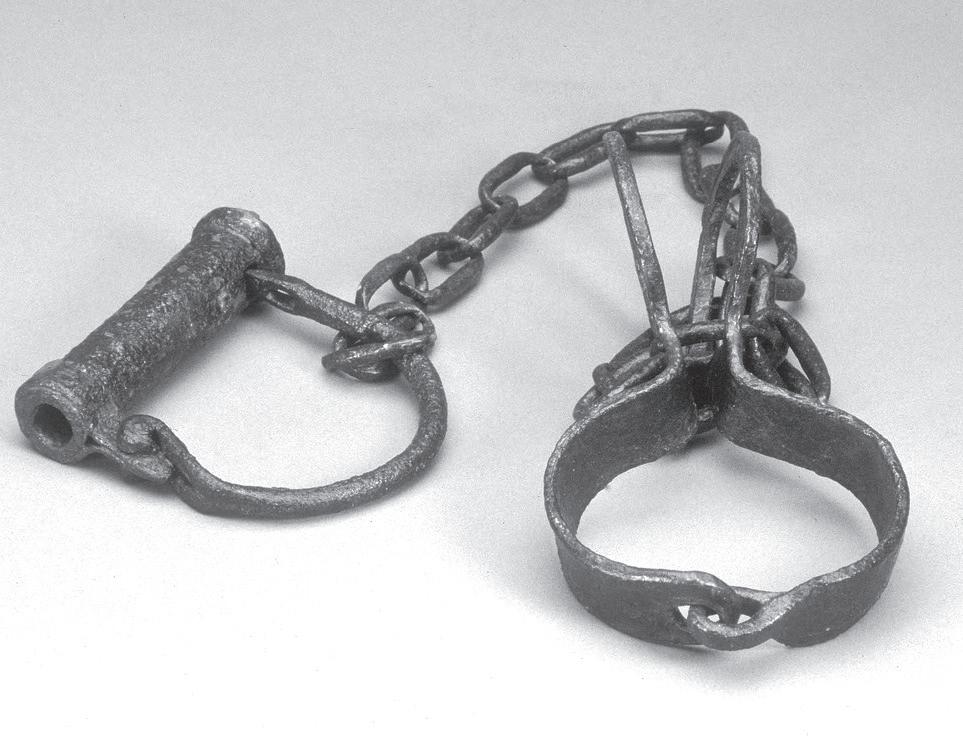
ter’s wish. In such circumstances the Spirit groans with the cries of the oppressed, prompting persons not to obey but to resist, using all their wiles (Truly Our Sister: A Theology of Mary in the Communion of Saints, 255).
I am reminded of Pope Francis’ World Day of Peace message on January 1, 2015, entitled “No Longer Slaves But Brothers and Sisters,” in which he named the present day forms of slavery, such as persons detained against their will in inhuman working conditions, those forced into prostitution, and young girls and women victims of terrorist groups used as sex slaves. He named as a deeper cause of slavery the corruption of the human heart that allows one person to reject the humanity of another and treat that one as an object. He called attention to other root causes of slavery: poverty, armed conflicts, criminal activity, and corruption on the part of people willing to do anything for financial gain. Pope Francis recognized the immensity of the task of combatting these, as he urged all people of good will—individuals, institutions, intergovernmental organizations, and businesses—to enter into a shared commitment to end slavery in all its forms.
Although Pope Francis spoke eloquently of the necessity of all people to see others as siblings who share the same nature, dignity, and origin, and thus counter any impulses to subjugate another, he did not address the way that the metaphor of master and slave to de-

Be sure every house in your community is receiving HORIZON. Every quarter, we inspire, educate, and motivate religious communities to support vocation ministry.
NRVC members receive special discounts on additional subscriptions along with the free subscription that comes with membership. nrvc.net/signup
scribe our relationship with God may also contribute to a mentality that allows real slavery to continue. One way that Mary’s self-identification as slave could have a positive effect is if it means that she, as a person who is not a slave, chooses to identify with, accompany, and advocate for those who actually are enslaved, and thus effect change for them. This is the kind of work to which many religious have devoted themselves in our day, a work that has truly gone “beyond borders.” One of many examples is the International Network of Religious Against Trafficking in Persons, launched in 2007 by more than 30 leaders of women’s religious congregations from 26 countries.
But I am doubtful that most of us hear a call to undermine contemporary systems of slavery in Mary’s calling herself a slave of the Lord. I suspect that in most instances it reinforces a spirituality of subservience and servitude. Throughout much of our history, Mary has been held up as a model, especially for women, of docility, sweetness, and compliance to God’s will, which often then translates into the way women are supposed to relate to men. Women and men religious have not been entirely immune to this. But many have rightly understood that Mary is not modeling acquiescence to servility; she is accepting a prophetic mission to bring about liberation
from powers that dominate, a mission that entails the costly giving of self in service to others. This kind of selfgift can be a strategic choice from a position of power, such as that made by the Madres de la Plaza de Mayo in the late 20th century and early 2000s who risked physical and verbal violence as they demanded justice concerning their husbands, fathers, and sons who disappeared during Argentina’s “dirty war” (1975-1984).
Lest I leave the impression that saying yes to a prophetic call is only heavy and burdensome, let me also call attention to Gabriel’s greeting to Mary, chaire (1:28). Chaire is the common greeting, “hail,” but it also means “rejoice,” and points to the joy that the prophet’s announcements of good news bring not only to those being lifted up from desperation, but also to the prophet herself. Mary speaks about the joy she experiences in the second verse of her Magnificat, to which we will turn shortly. As well, Mary is a vehicle of joy for Elizabeth, whose child leaps in her womb upon Mary’s arrival in the scene of the visitation (Luke 1:44).
I want to spend a moment with the visitation scene. Often we picture Mary going to visit Elizabeth as the
younger woman who can be a help to her elderly relative. But might it not also have been that the young Mary who is in a difficult situation may also need mentoring by Elizabeth, who has much more experience with God’s strange ways? As the wise elder woman who has been through years of suffering and waiting faithfully, Elizabeth is just the guide for Mary, helping her to see the blessedness in the midst of a very messy situation. Filled with the Holy Spirit, she utters a three-fold blessing: “Blessed are you among women, and blessed is the fruit of your womb. . . And blessed is she who believed that there would be a fulfillment of what was spoken to her by the Lord” (Luke 1:42, 45).
Elizabeth helps Mary to see the blessedness in lo cotidiano, in all the everyday ways that we encounter God in our very messy humanity. Hers is an incarnational spirituality, seeing how the divine is manifested in messy human situations. It is also an embodied spirituality— the way she and Mary experience God’s presence and action is through the new life they carry in their bodies. These characteristics are necessary parts of our own spirituality as prophets—encountering God in lo cotidiano, perceiving the blessedness therein, and embracing a wholistic spirituality.
Prophets do not disregard the body; there is no body-soul dichotomy, no spiritual realm that is divorced from our earthly reality. Prophets do not disengage from the world. Whether as members of active apostolic communities, or as enclosed contemplatives, we are deeply immersed in the world and love it as God does (John 3:16), agents of transformation toward a more full manifestation of God’s reign.
After Elizabeth’s prophetic proclamation of blessedness, Mary lifts her voice to sing out a vision of what the world would be like if God’s desire for well-being for all were fulfilled. She mirrors the actions other female biblical prophets—Miriam, Hannah, Judith, and Deborah—who proclaimed God’s victorious power in song and dance. While we often think of prophets making declarations, and this they do, but, in the words of Wilda Gafney, they also engage in:
... intercessory prayer, dancing, drumming, singing, giving and interpreting laws, delivering oracles on behalf of YHWH (sometimes in ecstasy, sometimes demonstratively), resolving disputes, working wonders, mustering troops and fighting battles, archiving their
oracles in writing, and experiencing visions (Daughters of Miriam: Women Prophets in Ancient Israel, 6)
Mary’s song strongly resembles the song of Hannah (1 Sam. 2:1-10) and has echoes of the victory hymns of Miriam (Exod. 15:1-21), Judith (Jdt. 16:1-16), and Deborah (Judg. 5:1-31). The parallels with these latter three make it impossible to miss the subversive nature of the Magnificat. Each of these women lead their people in a victory hymn after they have triumphed over their enemies. These songs are not sweet lullabies; they are militant songs that exult in God’s saving power to overcome Israel’s oppressors. At another point, we might critique the exaltation of war that undergirds these hymns, but for now, we note that Mary’s song can also be read as a critique of and longing for the overthrow of Roman imperial ways and the triumph of God’s reign. Because we are so familiar with the Magnificat and because we tend to see Mary as sweet, docile, and utterly compliant, we can miss the subversive power of Mary’s song.
One of the ways Mary’s prophetic proclamation challenges Roman imperial powers is in the titles she uses for God: Lord (kyrios), Savior (sōter), and Mighty One (ho dynatos). These may not sound at first like anything subversive—this is standard God-language, isn’t it? But had we heard this song in Mary’s day, we would recognize right away that each of these titles was used by the Roman emperor. Mary sings that only God is Lord, Savior, and Mighty One, titles and attributes that Luke will also use of her son as the gospel progresses.
There is another significant challenge to Roman imperial values in verses 48 and 52 of Luke 1. In contrast to powerful elites who delight in humiliating those whom they dominate, God “looks upon” Mary’s “humiliation,” with the intent of alleviating her affliction. Then Mary declares that God has done this not only for her; God lifts up all the humiliated (tapeinous, Luke 1:52). The Greek word tapeinōsis is often translated as lowliness, or humility. But its literal meaning is humiliation. Mary, faithful to a prophetic call, identifies with people who are humiliated and announces the good news that God delights in lifting them up.
Mary also sings of the day when all who are hungry have their fill and how God’s power is evident through acts
of mercy. While the Roman empire relied on military might, fear, and economic domination to maintain power, the divine Mighty One exudes mercy (Luke 1:50, 54) by filling the hungry and emptying the rich (53). It is not a simple reversal of fortunes for which Mary longs, but a leveling of the distribution of goods and power. She envisions a simultaneous movement of relinquishment on the part of those who have power, privilege, and status, and an empowerment of those who have not.
While feeding hungry people may not seem like a subversive action, think of the women in Peru, who, during the reign of terror of the Sendero Luminoso, the Shining Path guerrillas, fed hungry people both from the ollas comunes, the common pots, but also fed their spirits with the Word of God. Many of them lost their lives for doing so.
We have seen in the annunciation scene that Mary, like the prophets of old, hears and then acts on the Word of God. Twice more Luke will say that Mary “treasured all these words and pondered them in her heart” (2:19, similarly 2:51). To exercise a prophetic vocation, one must cultivate a life commitment to become deeply contemplative. Luke will also say this of Jesus. More than any other evangelist, he emphasizes Jesus being a prophet and he will show Jesus praying at every important turning point. While prophetic actions are the fruit of our contemplation, our call is not simply to action; it is a call into intimate relationship with the One who loves us beyond all comprehension. There is no reason to move beyond borders unless it is to share with others this profound love and to experience it as well.
I want to say a little more about the expression “Mary treasured all these words and pondered them in her heart.” What Mary treasures are not only words; the Greek phrase ta rhēmata tauta, translated as “these words” in the NRSV, includes more than what was said; rhēmata also signifies an event that can be spoken about. And the word synetērei, “treasured” (NRSV), or “kept all these things” (NABRE), means more than simply storing something away. It has the connotation “to preserve against harm or ruin, to protect, defend” and “to keep in mind, be concerned about.” And the verb symballousa, “pondered,” is a compound verb from syn, “with,” and ballō, “to throw, put,” so that it means putting things together, connecting, and interpreting.
Mary is not a passive listener; nor are we when we live contemplatively. She is putting things together, con-
necting, and interpreting what God is doing in her life and that of her family and her people. Both verbs are in the imperfect tense, meaning that Mary’s treasuring and pondering are habitual, ongoing actions. This contemplative ruminating then results in action to actualize the prophetic mission, which Mary will fulfill in word with her Magnificat, and in deed, in giving birth to Jesus and supporting him in his prophetic mission.
In her essay, “‘Pondering All These Things:’ Mary and Motherhood,” Bonnie J. Miller-McLemore offers valuable observations about Mary’s pondering and how that relates to the life of a mother that I think can also help us understand our call to contemplative life. She sees three aspects of mothering: attention, anguish, and amazement. She explains that pondering first involves focusing one’s attention, “which requires a kind of patient, anticipatory ‘waiting upon truth,’ a holding openness” (in Blessed One: Protestant Perspectives on Mary, ed. Beverly Roberts Gaventa and Cynthia L. Rigby, 107). Mary both attends to what God is doing in her life, but also to what her child experiences, with an attitude of holding and keeping, not acquiring or possessing her child’s life. A second aspect of maternal pondering involves anguish. “Mothering involves loss. It demands a constant giving up and letting go,” Miller-McLemore writes. In the case of Mary, this anguish is all the more profound due to the mission of her son. Finally, maternal pondering contains a certain amount of awe—sheer amazement at the miracle of birth and the way one’s child develops. Religious men and women who embrace a life of treasuring and pondering, also experience these three movements: focusing our attention on what God is doing with radical openness and patience; letting go what we give birth to in our ministries, as belonging to God, and not to us; and allowing ourselves to be overcome by awe at what God brings to birth through us.
How does the image of Mary as prophet speak to you?
I want to reflect now on two gospel episodes in which Jesus, who is depicted as a prophet in each of the gospels, is called to cross boundaries of difference. Both involve an encounter that Jesus has with a woman. The first one, from the Gospel of John, is a story where Jesus deliberately seeks out someone who is “other”—a woman in Samaria; the second is a story of an unwanted encoun-
ter—with a Canaanite woman who wants Jesus to heal her daughter.
Let’s begin with the story of the encounter of Jesus with the woman at the well in Samaria (John 4:4-42). The story begins with the evangelist telling us that Jesus “had to go through Samaria” (John 4:4). Anyone reading that in Jesus’ day would have said, “No, he didn’t.” Jews of Jesus’ day would have avoided Samaria like the plague— they would have crossed over to the east side of the River Jordan to move between Galilee and Jerusalem. But if Jesus wants his saving message to reach Samaria, he has to go there.
Jesus is tired and he sits down at a well. His disciples, meanwhile, had gone into the city to buy food. A woman comes along and Jesus enters into a long conversation with her. He starts by asking her for a drink. She is wary of Jesus; he is not one of her people. She says, “How is it that you, a Jew, ask a drink of me, a woman of Samaria?” and the evangelist reminds us that “Jews do not share things in common with Samaritans.” Jesus’ answer moves to a deeper theological level: “If you knew the gift of God, and who it is that is saying to you, ‘Give me a drink,’ you would have asked him, and he would have given you living water.”
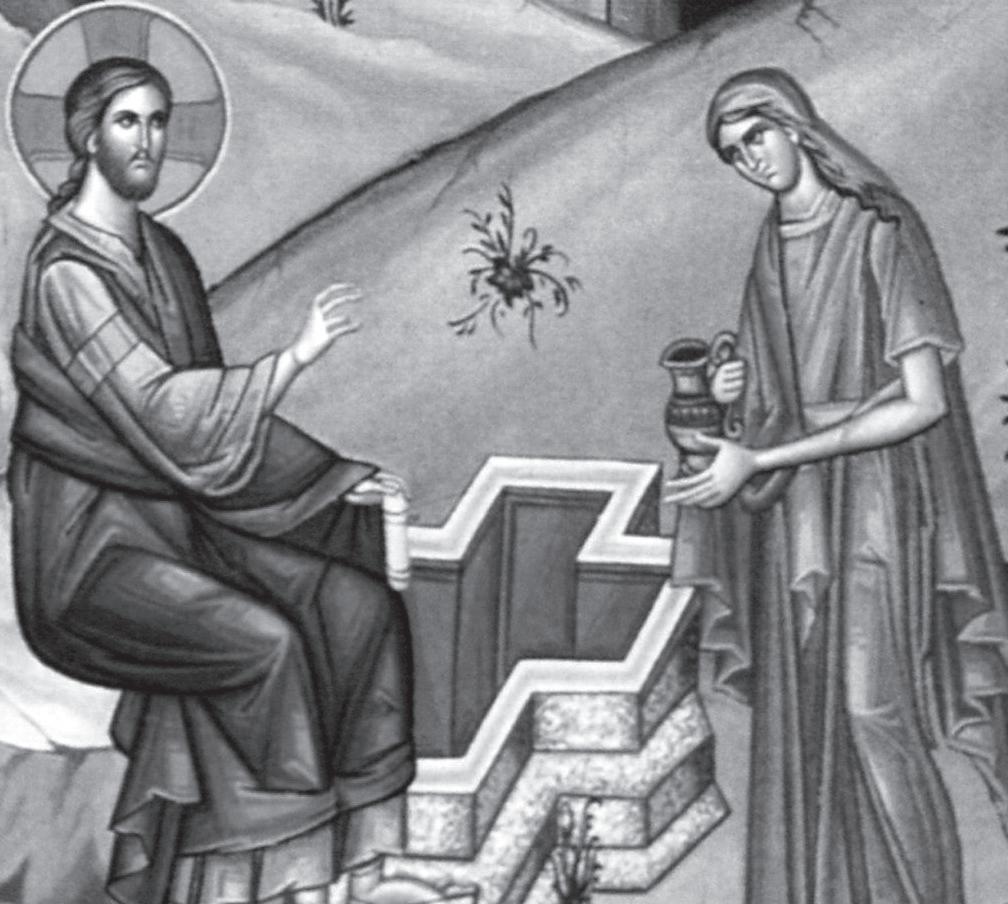
The conversation continues back and forth, each time moving to a deeper level as Jesus and the woman continue to reveal themselves to one another. She moves from recognizing him simply as a Jew to then someone greater than Jacob, to one who has living water to give, to him being a prophet, then Messiah, and finally, she will bring her townsfolk to him, and they declare he is “savior of the world.”
Many interpreters speak of this story as a one-way revelation as Jesus shows himself to be the Messiah and the woman comes to believe. But I want to invite you to see that there is a continual back-and-forth in their exchange; it is a mutual self-revelation, as each shares more and more of who they are. It is not a one-way street. It is a journey from enmity to friendship—two individuals whose people have been at odds for eight centuries, are able to listen to one another and forge the deepest of bonds. Notice that as Jesus reveals who he is, he uses the theological categories of Samaritans. They were expecting a Messiah that was a prophet like Moses, a teacher, revealer. That’s the language Jesus uses, rather than speaking like a royal Davidic messiah, with which Jews would be more familiar.
What does this story say to you about deliberately seek-
ing out one who is “other” to move from enemies to friends? Or from the perspective of the woman, staying to engage in an unexpected conversation that opens up immense gifts that flow over to others? Or from the point of view of the disciples who are way out of their comfort zone and can’t understand why Jesus would talk with this woman? They had to interact with Samaritans to get food, but except for when it’s absolutely necessary, for them, it is best when like stay with like. What would it take for them to engage with Samaritans like Jesus did?
The second gospel story I would like to reflect on is the story of Jesus’ encounter with a Canaanite woman, told in Matthew’s Gospel (15:21-28). In the Gospel of Matthew, as also in Mark and Luke, Jesus concentrates his ministry in Galilee, journeying to Jerusalem only one fateful time (Matt. 19:1). There is one time, however, when Jesus goes out to the Mediterranean coast, to the region of Tyre and Sidon. The evangelist does not tell us why he went there. The Matthean Jesus is so intent on ministering only to the lost sheep of the house of Israel, as he says to the apostles when he sends them out on mission (Matt. 10:6), that it is puzzling why he leaves his own territory to go to the cosmopolitan city of Tyre.
Maybe he went there to rest and to lay low; in the previous chapter, Herod had executed John the Baptist, Jesus’ mentor (14:3-12), and Jesus has also come to Herod’s attention. Tyre is a big city and he can be anonymous there. As well, he needs time to grieve over his beloved mentor. He needs to regroup and strategize how best to carry on the mission to the “lost sheep of the house of Israel.”
But he is recognized. A Canaanite woman comes up to him pleading, “Have mercy on me, Lord, Son of David, my daughter is tormented by a demon” (15:22). By labeling the woman with the outmoded term “Canaanite,” Matthew makes her the archetypal enemy, those with whom Israel struggled for possession of the land. Oddly, this so-called enemy knows both the right Jewish prayer formulas and the proper messianic title for Jesus. Her impassioned plea, kyrie eleēson, “Lord, have mercy,” sounds just like the lament in Psalm 109:26, and just like the pleas of the blind men (Matt. 9:27; 20:30, 31) and the father of the boy with epilepsy (Matt. 17:15), who also call out to Jesus for mercy, as Son of David. In those instances, he quickly heals them. To the woman he says nothing. No response whatsoever. Never has Jesus turned away anyone who pleaded with him for compassion. Moreover, Jesus’s disciples encourage him, “Send her away; she keeps shouting after us” (Matt. 15:23). He finally deigns to speak with her, insisting he has nothing for her, saying: “I was sent only to the lost sheep of the house of Israel.”
Perhaps if the woman were seeking healing for herself she might have given up more quickly, but it is her daughter who is sick. There is nothing that fires up a mother’s audacity more than her child’s wellbeing. She kneels before Jesus, a gesture one makes toward the holy, but in so doing, she also blocks his way, forcing him to act on her behalf. She pleads again, “Lord, help me” (15:25).
This time Jesus’ response is outrageously insulting: “It is not fair to take the children’s food and throw it to the dogs” (15:26). Some biblical scholars and preachers want to tone down the ugliness of this exchange. They try to pretty it up and make Jesus’s remark into an endearing comment aimed at a pet. Others think Jesus is reciting a common saying of his day that reflected the animosity that Galileans had toward the people on the coast. We know Galilee was the breadbasket for the city folk in Tyre and Sidon. It may have been that when there were
shortages, the food still got exported to the coastal cities, leaving the Galileans bitterly resentful toward them. But no matter how you understand the genesis of Jesus’ comment, calling the woman a dog is a gross insult.
Rather than turn away in anger, or return insult for insult, the mother redirects her hurt, finding clever words, and remaining respectful toward Jesus, “Yes, Lord, yet even the dogs eat the crumbs that fall from the master’s table” (15:27).
With that, something shifts in Jesus. He recognizes that she is right, his vision has been too narrow. She stretches him to see her not as “other,” or as “enemy,” but as one of his own, one with whom he shared a common humanity, a common faith in God, a common desire for the wellbeing of all children. He recognizes her great faith, a significant moment in this gospel, when the Matthean Jesus so often chides his disciples for their “little faith” (Matt. 6:30; 8:26; 14:31; 16:8; 17:20).
In the Sermon on the Mount, Jesus had taught his disciples not to return insult for insult, and not to allow anyone to be treated as an enemy (Matt 5:38-48). He had given them three examples of how to respond to insults and humiliation in ways that can break cycles of violence by finding a way to respond to an aggressor without using their violent tactics. Now this “enemy” mirrors back to him his very own teaching!
Unlike the episode with the Samaritan woman, Jesus did not initiate this exchange. In fact, he deliberately tried to avoid dealing with this woman. But she does not give up and eventually makes him see her and see that they share a common humanity and a common concern for children. It is a “Canaanite lives matter” moment that shakes Jesus out of his insular conviction that he needed to work only with his own people. By the end of the gospel, he will send his disciples to do what he himself did not do: Go into the whole world and make friends and disciples outside their circle.
What might this gospel episode say to us about unwanted encounters that call us beyond our borders?
§ § § § § §
While God is indeed doing something new in our day, being prophetic in response to God’s call is not new for us. As we reflect with members of our congregations on how we have responded to the prophetic call in the past, surely the Spirit will help us to discern where God is calling us now, both within borders and beyond borders. n
IN A FAST CHANGING WORLD, educators, formators, and vocation directors have a weighty responsibility. Graduate theological institutions and their students are no longer the same as a decade ago. Formation programs across the U.S. and the world are changing and shifting like sand on the seashore. It is hard to imagine what it will be like 25-50 years from now.
One major change in American religious life is that new members are more racially and ethnically diverse, and so theological education and formation have become more culturally diverse. According to the U.S. Census Bureau, the U.S. population projections by race and ethnicity are changing dramatically. By 2045-2050—which is only a few decades from now—the ethnic minorities in the United States will no longer be a minority but, grouping all of them together, people of color will become the majority.
This population shift will significantly alter the landscape for mission and ministry. How should vocation directors and formators prepare for the monumental change that is already underway?
Before we directly answer this important question, let me begin by
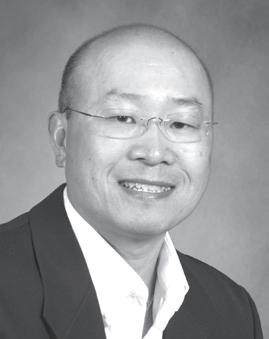
Father v ănThanh Nguyễn, S.V.D. is a missionary priest of the Society of the Divine Word. He is a professor of New Testament Studies and the Francis X. Ford, M.M. Chair of Catholic Missiology at Catholic Theological Union in Chicago. He has published widely in the areas of Bible, migration, and mission. His recent publications include “Acts” in The Jerome Biblical Commentary for the TwentyFirst Century and What Does the Bible Say About Strangers, Migrants, and Refugees?
first laying the groundwork by looking at what Christianity might look like now and in the near future and how the changing face of Christianity will affect the future of religious vocation and formation ministry.
The map of Christianity is rapidly changing, and so are its faces. At the beginning of the 21st century, there were approximately 2.1 billion Christians or one-third of the world’s population. While the majority of Christians still live in Europe and the global North, the sands are quickly shifting, moving away from its epicenter. It is estimated that by 2025, the majority of the 2.6 billion Christians will be found in the “global South,” namely Africa, Central and Latin America, and much of Asia.
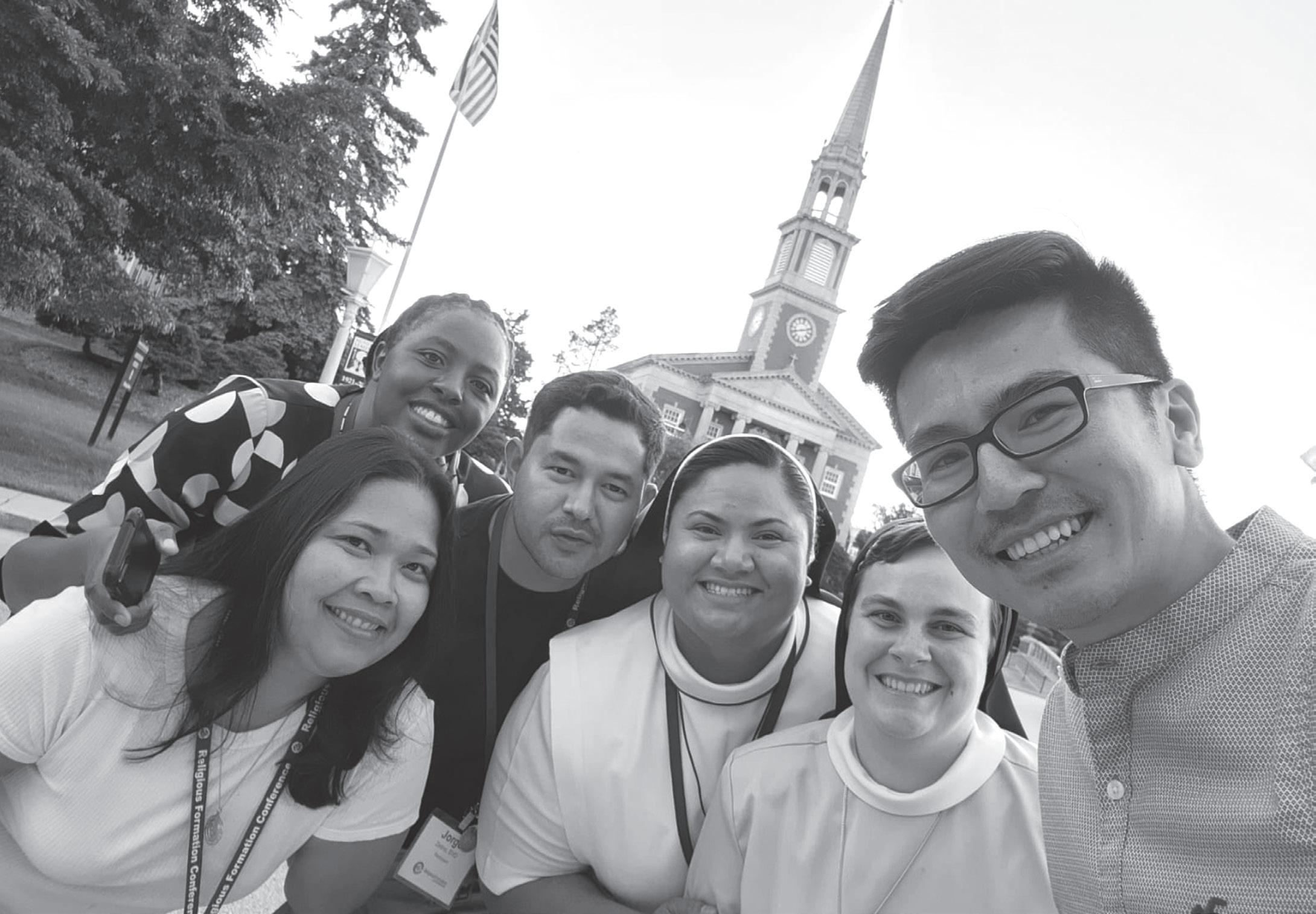
The2022-23 class of novices in the Inter-Community Novitiate Program in the Chicago area has a high proportion of foreign-born participants, and it’s one sign of demographic change in religious life. The two formators include a U.S. born Anglo and a VietnameseAmerican. Forty-seven novices hail from 21 countries:
• 12 are Anglos-U.S. born
• 4 from India
• 3 from Vietnam
• 3 from Ghana
• 3 from Bangladesh
• 2 from the Philippines
• 2 from Tanzania
• 2 from Kenya
• 2 from Mexico
• 2 from Uganda
• 2 from Hungary
• 10 from other countries
In his awardwinning and controversial book, The Next Christendom, Philip Jenkins writes, “The era of Western Christianity has passed within our lifetimes, and the day of Southern Christianity is dawning. The fact of change itself is undeniable: it has happened, and will continue to happen.” Both historians and scholars have acknowledged the accuracy of Jenkins’ assertion that the emerging Christian world will be anchored in the Southern Hemisphere.
Peter Phan, for example, recognized that any statistics and projections, especially in terms of religious membership and beliefs, are notoriously unreliable. Yet, Phan stated, “Even so, from the major trends in the development of Southern
Christianity, one may confidently predict that it will enjoy a ‘surging growth’ in the next 50 years.” Furthermore, Phan correctly pointed out that while this demographic shift presents enormous challenges, it also provides new prospects or opportunities for Christianity.
With Christianity growing at a phenomenal pace in the global South, many believe that in the near future most Christian scholars and leaders will also be concentrated in the Southern continents or hemisphere. Consequently, the shift in Christianity’s center of gravity from the global North to the global South is not only demographic but also theological.
This shift will have a seismic effect since theology will move from the economic center to the periphery. This movement toward the margin will definitely impact the way people read and interpret the Bible. With the shifting Christian demographics there will also surely emerge a new way of doing theology, whereby the voices of all people shall be heard, especially those on the margins; for example, women, people of color, and the poor. Furthermore, the Bible cannot prove liberating for only one group of people but must also promote the reality and richness of women and men of all ethnic backgrounds, races, classes, and genders.
The continental shifts will challenge the monocentric perspective (for example, Eurocentric) to embrace a more polycentric perspective. Father Roger Schroeder, my SVD confrere who also teaches at Catholic Theological Union (CTU), felt the need to rewrite Christian history to be more inclusive. His most recent book reflects this trend in theology and history: Christian Tradition in Global Perspective (Orbis, 2022). In a similar vein, Father Stephen Bevans, another SVD professor at CTU, published a book in 2009: An Introduction to Theology in Global Perspective (Orbis, 2009).
Doing theology and even interpreting Scripture from a global perspective is important and necessary to be credible and attractive. Take for example, the monumental work of the new Jerome Biblical Commentary, which is titled: The Jerome Biblical Commentary for the Twenty-first Century. Perhaps a recognition of the diversity in our church is the reason I was asked to write and interpret the Book of the Acts of the Apostles from an intercultural and mission perspective.
Throughout the history of Christian mission, migration has created enormous prospects and opportunities for the church’s mission. When Christians travel, whether by
force or choice, they take their religion with them.
Current statistics indicate that Christian migrants or immigrants are the largest population of people on the move, totaling 49 percent of all migrants, or about 105 million people. If every Christian migrant is a potential missionary, migration, then, could have enormous prospects for evangelization and vocations. When Christian migrants move, they take not only their culture and customs but also their religion with them. It seems that their God literally migrates with them.
Clearly migration is having enormous impact on and contribution to Christian mission due to today’s global phenomenon of migration. The effect of Catholic immigrants to the United States, for example, has not only altered the demographic landscape and face of Christianity, but it also enhances the theology and spirituality of its host country and its vocations to the religious life.
Religious institutes that are international and missionary are often culturally and ethnically diverse, such as these Daughters of Charity who came together in Haiti to assist after a natural disaster.
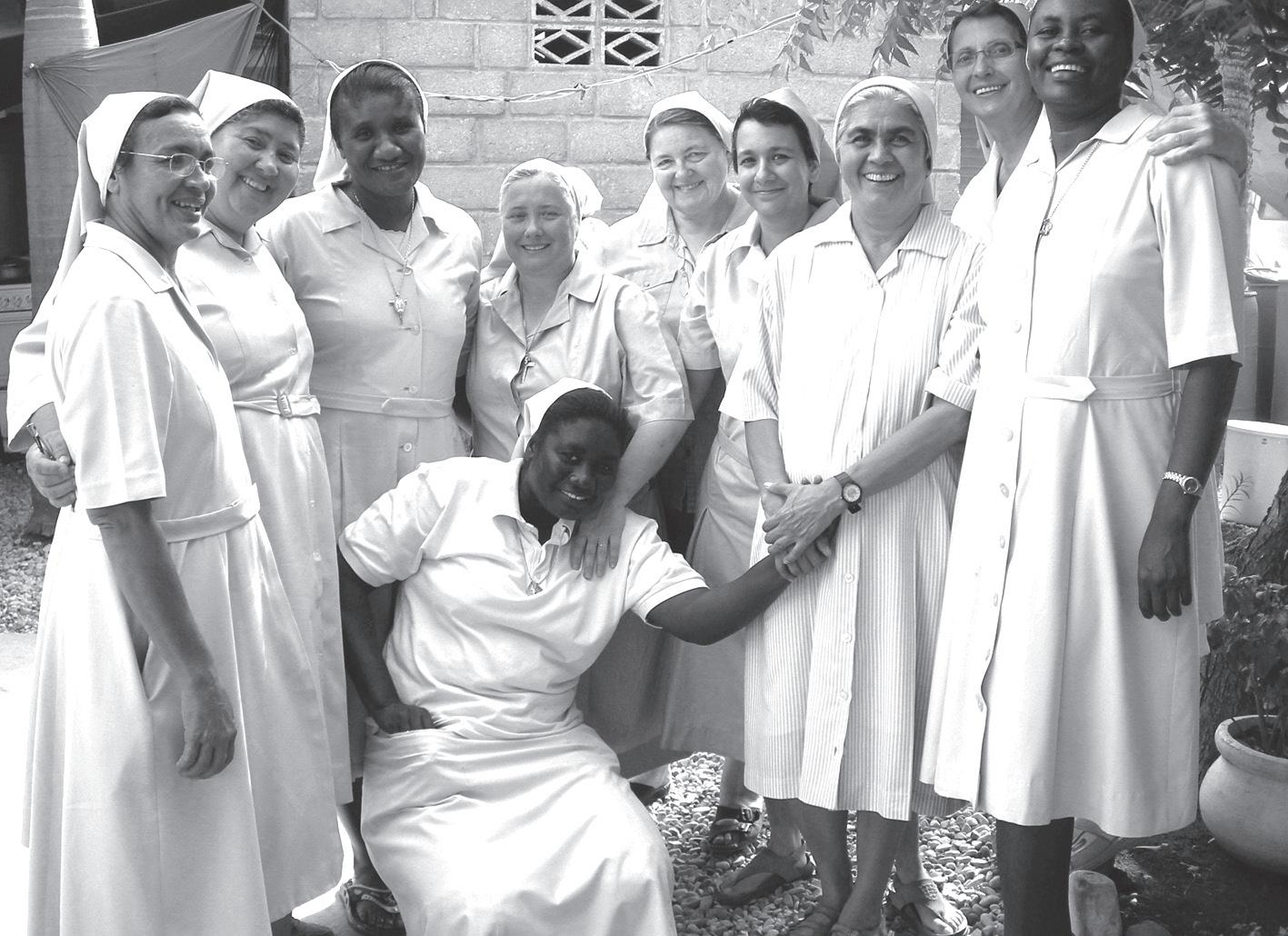
and linguistic diversity to our liturgical and sacramental celebrations, influences our religious devotions, and even alters the makeup of most formation houses and programs in the United States.
The effect of Catholic immigrants to the United States, for example, has not only altered the demographic landscape and face of Christianity, but it also enhances the theology and spirituality of its host country and its vocations to the religious life.
The Center for Applied Research in the Apostolate (CARA), in its “Special Report on International Women Religious in the U.S.,” shows that there were over 44,000 women religious in 2019 and at least 4,000 were international sisters.
Other key findings about international women religious in the U.S. are that they tend to be younger than women religious from U.S.-based institutes. The most common ministry for international sisters is parish ministry, and many are in pursuit of an education.
Indeed, the face of the Catholic Church in the U.S. is changing, and it shall continue to be fashioned and enriched by newcomers, many of whom are Catholic immigrants. This transformation brings ethnic, cultural,
Unlike former generations of international sisters who came mainly from Europe in the 19th century, many of the new generation of international sisters come from Asia, primarily from religious institutes founded in Vietnam and India. This is a notable shift from the 19th century, when the sending congregations were mainly from Europe, with the majority coming from Ireland, France, and Germany.
One other notable effect of global migration is the presence of ethnic clergymen. On any given Sunday, thousands of international priests are preaching from
U.S. pulpits. While an exact count is not possible, it is estimated that there are about 8,500 foreign-born priests serving in the U.S. Each year hundreds of new international priests come to America to begin a new ministry.
The majority of these international priests come from Asia, Africa, and Latin America. In the Archdiocese of Los Angeles, for example, the Mass on any given weekend is conducted in at least 45 languages. Indeed, the composition of the priesthood is changing. Different cultural practices and expressions of faith can cause tension and disturb the unity of the church. The reality of the church today might cause many Catholics to experience, more acutely perhaps than in previous times, an uneasy tension between unity and diversity. But the question is whether it is a healthy tension that ought to prove enriching, or does it cause more misunderstanding and greater separation?
In its 2020 study for the NRVC, CARA asked the 747 religious congregations, provinces, and monasteries in the United States to provide the names of postulants who entered that year. More than two-thirds had no one enter the institute in 2020, nine percent reported one new entrant, and 64 major superiors reported two or more new entrants.
Responding postulants were born in 21 countries. About eight in ten respondents were born in the United States. Twelve percent were born in a country in Asia, mainly in Vietnam and the Philippines. One in 16 were born in a country in Latin America, mainly in Mexico. Six respondents were born in a country in Europe. Two respondents were born in a country in Africa.
Clearly, the landscape of religious communities is evolving. What is certain is that immigrants have certainly changed a number of religious communities in the U.S. The box on this page shows one way this plays itself out. Besides the changes in my own SVD community, other formation houses, particularly for missionary orders, have similar ethnic representation and diversity.
These brief illustrations show that those who are attracted to religious life are coming from all over the globe. Diversity in the church is not a contemporary experience. The church has been diverse since the very beginning of its existence when it wisely recognized that diversity did not threaten unity but, rather, could be a gift and a blessing.
Recognizing the gift of the migrants, the Catholic Church continually seeks ways to appropriately address
the needs and pastoral care of the migrants and refugees. One of its pontifical documents states: “It should be led by the principle that no one, be they migrants, refugees or members of the local population, should be looked upon as a ‘stranger,’ but rather as a ‘gift,’ in parishes and other ecclesial communities. This is an authentic expression of the ‘catholicity’ of the Church.”
Since migrants are precious gifts of the church, in his article, “Mission among Migrants, Mission of Migrants,” Father Stephen Bevans, S.V.D. correctly states, “The task of the local church is, therefore, not only to respond to migrants’ need and to accompany them on their journey, but also to call and equip them for ministry, both within the church and within the world.”
Vietnamese immigrants in the United States changed the face of Divine Word College and the Society of the Divine Word community. The domino effect began 40 years ago due to one courageous response of an SVD brother.
On April 30, 1975, Saigon fell to communist forces, and hundreds of thousands of refugees fled Vietnam over several years . Among them were numerous Catholic seminarians. Brother Pat Hogan, S.V.D., who taught at Divine Word College in Iowa, received a phone call and learned that 40 or more seminarians had been settled at Fort Chaffee, Arkansas. Hogan encouraged the college to offer an English as a Second Language (ESL) program at Divine Word College to help at least some of the seminarians begin the process of adjusting to life in the U.S. and completing their formation.
In October 1975, 47 years ago, 16 Vietnamese seminarians arrived at Divine Word College and enrolled in its ESL program. One year later six of these matriculated into the college’s program, including two who eventually professed final vows and were ordained as Divine Word missionary priests. A year later, six other Vietnamese immigrants joined the SVD seminary in Iowa.
Since those early days, a steady stream of Vietnamese immigrants has joined the Society of the Divine Word. As of today over 100 SVDs of Vietnamese origin have professed final vows and/or been ordained. These Vietnamese men are currently working in 20 different nations. Imagine that all this happened because of one courageous move!
America is a country built on the backbone of immigrants who came initially from European countries. Subsequently, Catholicism in the United States has benefited much from its multicultural American heritage.
The mosaic of cultures is becoming increasingly more evident as the Catholic Church in the U.S. continues to welcome more recent immigrants from around the world, particularly from Latin America, Africa, and Asia. At our Sunday celebrations, one cannot help but notice the diversity of peoples represented in the pews. The Anglo, African, Asian, and Hispanic faces form a magnificent rainbow of colors.
America is strengthened by its multiculturalism. The multicultural-melting-pot idea is that having many different cultures, groups, and lifestyles strengthens America as a country. A melting pot is a metaphor for a society where many different types of people blend together as one, a melting pot. Despite their differences, people manage to coexist and live together as one nation. According to the melting pot theory, when immigrants come to America they should melt into one American society and be like everyone else. Immigrants therefore are expected to learn and speak English.
Interculturality is a concept different from multiculturalism and different from people of different nationalities simply coexisting side by side. Rather, interculturality involves interacting with each other and thereby mutually respecting and enriching each other. Newly arrived immigrants are encouraged to not lose the unique aspects of their cultures (as in the melting pot model). Instead they retain them. The unique characteristics of each culture are still identifiable within the larger American society, much like the ingredients in a salad are still identifiable, yet contribute to the overall make up of the salad bowl. In the salad bowl theory, immigrants should keep their unique cultures and differences but also join into the American society. The melting pot makes America great, but the salad bowl makes America even greater!
So which model are you working on? That is, which model is your religious community fashioned after: the multicultural-melting-pot or the intercultural-saladbowl? We are living in a time when ethnic, cultural, and linguistic diversity is more evident and intense than ever.
“Celebrating over 55years ofRetreat Ministry ”
7101 W. Picture Rocks Rd, Tucson, AZ 85743 USA
Phone: 520.744.3400
Email: office@desertrenewal.org
www.desertrenewal.org
The demands and expectations of full-time ministry are both rewarding and fulfilling; however, it is important to take time to rest & renew.
The Sonoran desert allows you to seek the silence and space necessary for spiritual renewal. Since ancient times people have gone to the desert to encounter God.

Come and experience desert spirituality in a contemplative environment that will make for a truly unique Sabbatical experience.
2023
July 16 - August 18
October 1 - December 8
2024
March 3 May 10
July 21 - August 23
RENEWAL June 9-16, 2023
2024
February 4 - 16 Week 1 & 2
April 7-19 Week 3 & 4
The HSSD program focuses on the ancient art of Christian Spiritual direction in a multifaith context and offers contemplative study and practice to prepare clergy and vowed religious for a ministry of spiritual direction.
Like it or not, the face of the church in the 21st century will continue to be even more ethnically diverse. Unlike the past, diversity is not a thing to overcome but rather an essential component to foster. This can be an hour of great opportunity in our church and our religious communities.
As a people of God, we must learn to pray together, work together, and live together as an intercultural (not just multicultural) church. Our diversity is a blessing and an enrichment. It should bring us together rather than separate us.
CARA’s 2019 “Special Report on International Women Religious in the US,” notes that there has been a revitalization of communities and charisms due to the presence of international sisters. The report noted that international sisters who live with another religious congregation in the U.S. report higher satisfaction as well as an appreciation of spiritual growth nurtured by the receiving congregations. The receiving communities, too, feel the support of the international sisters and are blessed by their presence.
Let me give you another example of how our diversity is a blessing. Several years ago I gave a Lenten talk entitled, “Celebrating Diversity in Unity,” in Fort Wayne, Indiana.
The topic came about because of the growing tensions in the parish. Like many Catholic parishes in the United States, St. Patrick Church is ethnically, culturally, and linguistically diverse. The community is made up of three distinct groups: Anglos, Hispanics, and Vietnamese. Different though they are, they try to work together, respecting each other’s cultural differences, but it has not always been easy. Different customs and practices naturally lead to conflict and tension. A simple issue such as which statue of Mary should be placed in the church can prove contentious, whether Our Lady of Fatima or Guadalupe or La Vang. Fortunately, the pastoral team is also culturally diverse, helping to ease most tensions. The pastor is a bilingual Vietnamese American. Since the Hispanic population has grown significantly over the past few years, another priest, who is an Anglo who speaks perfect Spanish, was brought in to help out with the growing demands of the parish. During the Lenten presentations, my talks were simultaneously translated into Vietnamese and Spanish. The closing Mass was celebrated in three languages, highlighting the richness of the community. While the people in this parish rub shoulders with each other and disagree on various issues, they nevertheless respect the others’ customs and beliefs. They genuinely seek to be one Body of Christ. They had gathered together to celebrate their diversity because they saw it as a gift and a blessing. As I walked out of the
church that day, I noticed that all three statues of Our Lady were prominently placed in the church.
I must admit that the experience was a great eye opener for me. Our church indeed has many faces, but she is still one holy universal church, rich in diversity and traditions. Indeed, the church in America is experiencing the dawn of a new day. We do not need to go too far to find people “from every tribe and tongue” (Revelation 5:9).
Again turning to CARA’s “Special Report on Vocations to Religious Life in the U.S.,” most responding religious members say their religious institute is already succeeding at being open to those of different cultural backgrounds. The people who take exception to this view of reality are the members who are the sole person of their ethnic background in their community.
Respondents were also asked to describe the ethnic make-up of the religious community where they currently live. The report shows that half live in a community with members from many different cultural/ethnic backgrounds, with male religious especially likely to report living in such a community. Nearly half live in a community with at least one other member of the same cultural/ ethnic background as their own. About one in 20 lives in a community where they are the only one from their culture/ethnicity (7 percent). As will be seen, these living situations have an effect on their experience of their religious institutes in regard to cultural diversity.
The ethnic makeup of the communities is also related to how much of a cultural challenge members personally have found living within their institute. Those who are the sole member of their ethnic background are especially likely to report feeling “somewhat” or “very” challenged in these ways:
• Members I live with not understanding my culture (49%)
• Not feeling understood by members of my institute (32%)
• Feeling isolated or lonely (28%)
• Members I live with not accepting my culture (28%)
• Feeling I am asked too much to accommodate my culture to fit in the dominant ethnic/racial cohort of my institute (23%)
• My food not being welcomed in my community (23%)
• During my initial formation, my formator required me to accommodate my culture to that of my institute (20%)
In sum, the more recent cohort of women and men religious in the United States is more culturally and ethnically diverse than their older cohorts. While this diversity enriches religious life, it also challenges the leadership and the membership of communities to better welcome and adjust to the cultural changes newcomers introduce.
In the age of migration and cultural diversity, vocation animators are constantly being challenged to go beyond borders. And the letter to the Ephesians, from which this convocation gets its theme, has a lot to teach us in this fast-changing world.
The fourth chapter of Ephesians focuses on the theme of building up the church. Each member should strive for unity and fulfill his or her role of ministry, so that the church may advance in maturity. Ephesians 4:7-12 discusses ministry in the church that is characterized by a diversity of gifts, which come from the risen Christ to build up his body.
According to Ephesians, every member of the church receives a gift of grace “according to the measure of Christ’s gift” (verse 4:7). The gifts are not for the benefit of the individual alone but for the whole church. While all believers are gifted, some are given particular charisms.
The author highlights four roles of leadership in the church: apostles, prophets, evangelists, pastors, and teachers. “Vocation animators” are not mentioned directly, but in reality, animators do all the tasks of these leaders that Saint Paul mentions in his letter to the Ephesians. You see, a vocation animator is also sent out just as an apostle would be. He or she acts like a prophet, evangelist, pastor, and teacher.
Why have we established these leadership roles in the church? The purpose of these gifted individuals is to prepare every member of God’s people, particularly laity, for service, namely, “to equip the saints for the work of ministry for the building up of the Body of Christ” (4:12).
Theological education today must respond to the issue of ethnic diversity and be committed to intercultural ministry and mission. Globalization has made our world smaller. Our students come from across the globe. Our parishes are more diverse than ever. Parish ministers are also ethnically diverse. Some are very good and effective; others are struggling. Future church leaders should ideally be educated in an intercultural way and be multilingual.
In 2007, the U.S. Conference of Catholic Bishops (USCCB) established several priorities for action. One of those priorities was the “recognition of cultural diversity.” The bishops were not just concerned with the practical matter of diversity but saw the issue as something “integral to the Church’s very identity and mission.” They said, “Proficiency in matters of culture and intercultural relations is an essential feature of the ongoing process of conversion by which the Gospel becomes life for people.”
The bishops stressed an urgent need to grow in knowledge and develop appropriate attitudes and skills for the purpose of carrying out the church’s mission to evangelize. The push to appreciate cultural diversity in the church has become part of the New Evangelization today.
The U.S. bishops encouraged programs for intercultural competencies. Their manual Building Intercultural Competence for Ministers is now available electronically and in print. One of its foundational messages is to recognize and acknowledge the gift of the migrant.
What is intercultural competence?
It is the capacity to communicate, relate, and work across cultural boundaries. It involves developing capacity in three areas: knowledge, skills, and attitudes. All are essential components that religious can use to build intercultural formation and
Ministry, diakonia, covers a wide range of activities in the New Testament, from preaching and teaching the Word (Acts 6:4), to distributing food to the poor (Acts 6:1), to providing hospitality to strangers in need (Luke 10:40), to serving as missionary (Luke 10).
According to author of Ephesians, the work of ministry is not limited to a privileged few in leadership roles, such as apostles, prophets, evangelists, pastors, or teachers. Rather, the work of ministry is carried out by all the “holy ones” (or baptized believers), whom the leaders have equipped. The term “equipping” (katartismos) is a technical medical term referring to mending or repairing. It suggests the preparation, training, and discipline necessary to equip believers to do the work of ministry. Since all believers are saints (hagioi), as is evident from the way Paul addresses members of his communities
community. Following are examples of elements in each area.
• Knowledge of more than one perspective
• Knowledge of different interpretations of the same cultural reality
• Knowledge of general dynamics of intercultural communication
• Knowledge of more than one’s first language
• Ability to empathize
• Ability to tolerate ambiguity
• Ability to adapt communication and behavior
• Openness to other cultures
• Humility about what you don’t know
• Desire to learn and engage in other cultures
• Understanding that intercultural interaction is a way of life
(e.g. Rom. 1:7; Eph. 1:1, 15, 18; Phil. 4:21-22), all believers are to be equipped for diakonia. Furthermore, once trained and equipped, all Christians are ministers and missionaries.
Here the question is: In what ways do vocation animators serve as prophets, evangelists, pastors, and teachers? The ultimate goal of equipping believers is for “building up the Body of Christ” (Eph. 4:12). The author uses a powerfully mixed metaphor describing the church in both organic (body) and architectural (building up) terms. The aim of all believers, the gifted equippers as well as the equipped, is to strengthen the church, to reach a maturity in faith and knowledge of the Son of God, and to establish unity in the church (Eph. 4:13-16). All believers are entrusted with this common goal and purpose. Having been equipped for service—diakonia
vocation animators are sent out as apostles. But to do what? It begins with forming one’s character.
Theological institutions in North America are in the midst of great changes. The changing roles of women, laity, and ethnic minorities (which will become the majority in 2045-50) are only part of the waves of concerns, together with other issues related to diversity, multiculturalism, inclusivity, justice, and others. These changes have already altered the landscape for ministry and mission. As leaders, educators, community members, and vocation directors (or according to Ephesians, pastors or teachers), we are urged to respond boldly to these changes if we are to be worthy ministers of our calling.
The first and primary task of theological education today is the formation of character and virtues of students. Stephen Bevans writes:
In my own philosophy of teaching theology, I believe that every course I teach is a “missionary act” or an act of evangelization. To quote one of my colleagues from a conversation about teaching that we had as a faculty some years ago, my goal in teaching is to “make my students virtuous,” to share with them my love of the tradition and my love and service of God.
Interestingly, the author of Ephesians gives us a catalogue of virtues to emulate. As a prisoner in the Lord, Paul urged all believers to lead a life worthy of their calling, namely, “with all humility and gentleness, with patience, bearing with one another in love, making every effort to maintain the unity of the Spirit in the bond of peace” (4:2-3).
Developing a habitus of virtuous living begins with the educator or vocation promoter. What are these habits? Some concrete examples are:
• Be aware of your own cultural heritage.
• Be willing to be a bridge-builder.
• Avoid the tendency to see your culture as better or more valuable than the cultures of others.
• Be open to try new things, eat new food, and appreciate new customs.
Let me conclude by looking at some of the main factors influencing vocational discernment. Again I turn to CARA’s report, entitled “Cultural Diversity in Vocations to Religious Life in the U.S.,” which came out in the sum-
mer of 2021, which noted several factors influencing vocational discernment However, I would like to just identify two main ones: the family and the parish.
The first factor influencing vocational discernment of a vocation to religious life is the family. Knowing and understanding the ethnic and cultural backgrounds of the families goes a long way in this ministry.
More than seven in 10 (72 percent) of religious priests, brothers, and sisters report that family-related factors had “some” or “a great” impact on their discernment of a vocation to religious life.
A combined 83 percent say that a parish had “some” (39 percent) or “great” (44 percent) impact on their vocational discernment. The top factors having “a great impact” on those who attended a U.S. parish are:
• Masses and liturgies at the parish (61 percent)
• Clergy at the parish supporting and encouraging a religious vocation (50 percent)
• Adult faith formation in the parish (47 percent)
• Participation in the liturgical ministry of the parish (46 percent)
• Presence of religious sisters, brothers, or priests in the parish (44 percent)
• Conversations with priests, brothers, or sisters in the parish (44 percent)
Also noteworthy are three factors that specifically mention ethnicity: ethnic Catholic traditions, the language Masses are celebrated in, and devotion to an ethnic saint. When it comes to parishes, two major aspects make an important impact on a person’s vocation discernment. The first is the presence of religious in the parish. The report quotes a male religious saying, “The presence of the Dominican friars and sisters made religious life seem normal, approachable, and something that I could see myself doing one day. We also had a tremendous youth group that helped me to grow in my faith to the point where I was open to discerning a religious/priestly vocation.” This comment comes from a third generation (or later) male religious who attended an influential parish before he was an adult.
A second important aspect for vocation discernment
is the presence of vocation discernment groups in the parish. A woman religious immigrant in the report says, “In my parish we had a vocation group that encouraged vocations to priesthood, brotherhood, and religious vocations. We do visit convents and seminary houses. This helped me to build up my faith and the desire to seek out what my real vocation is. I got myself in the dream.”
§ § § §
It’s not easy being a vocation minister today. But as vocation animators, we have been given a gift to equip all the holy ones for the work of ministry. In our age of migration, the possibility to go beyond borders is enormous and limitless. The author of Ephesians gives us a catalogue of virtues to emulate. In whatever capacity we have been commissioned, we are urged to lead a life worthy of our calling, “with all humility and gentleness, with patience, bearing with one another through love, striving to preserve the unity of the spirit through the bond of peace: one body and one Spirit, as you were also called to be the one hope of your call; one Lord, one faith, one baptism; one God and Father of all, who is over all and through all and in all” (Eph. 4:2-6). n
• Share a blessing and a challenge of living in an intercultural community and welcoming diverse candidates.
• How have you been prepared or equipped to work in an intercultural context or ministry? Are you making adequate preparations for the demographic shifts that are underway in the church and in your community?
• Intercultural competence is the capacity to communicate, relate, and work across cultural boundaries. What other possible knowledge, attitudes, or skills are needed to meet the needs of today’s diverse, global church?
• In what ways do vocation ministers, community members, and formators carry out their work and ministry as prophets, evangelists, pastors, and teachers? What or where are today’s frontiers or borders that you are invited to cross?
NOT LONG AGO I met a Vietnamese vocation director and asked him how it was going. He revealed that a good proportion of the Vietnamese immigrants who came to the United States in the 1970s entered religious life. But today it is different. Even with the many Vietnamese youth movements and the strong family involvement in the church, fewer Vietnamese Americans are entering religious life than you might think. That small anecdote gets at a larger picture that I hope to present here: the shift we’re seeing in the way that younger, second-generation or later Catholics are relating to the church. I want to look at the way U.S. culture is affecting the pool of prospective candidates, and I’ll do that by taking a look at three areas:
1) ethnicities and cultures within the boundaries of the church;
2) cultures around the boundaries of the church: the spiritual culture of the Nones, those who do not affiliate with religious institutions; and 3) beyond the boundaries: religion, media, and technology in our 2.5 world. These three areas are informing and impacting vocation ministry today.
 By Father Ricky Manalo, C.S.P.
Father Ricky Manalo, C.S.P. is a Paulist priest, composer, theologian, and missionary. A theological consultor for the U.S. Conference of Catholic Bishops, he is co-author of numerous statements, including the pastoral response to U.S. Asian American and Pacific Island Catholics, Encountering Christ in Harmony (2018) Find him online at rickymanalo.org. The Prezi of this article (which contains additional details) is at prezi.com/view/ EE5qIUw9841eSrS6wXUS/.
Traditionally there have been two classic approaches to culture: anthropological and sociological. Most Catholic leaders and ministers learned about culture through the lens of anthropology. This discipline emerged in 19th century Europe during a period of exploration and colonization with a desire to understand distinct cultural groups (collective identities).
We used to think about groups as whole entities unto themselves, and we know now that this approach is not completely accurate as it created generalizations and failed to acknowledge overlaps, interactions, and nuances. Nonetheless, such generalizations served as starting points for understanding culture: e.g., traditional EuroAmerican/mainstream culture is individualistic, whereas traditional Asian American culture is more collectivist/ communitarian; African American gospel Masses invite more spontaneity and improvisation than the worship styles of mainstream Euro-American culture; Hispanic, Latino/a, and Filipino Catholics locate the sacred in the wider spectrum of everyday locations, more so than Euro-American/mainstream Catholics who tend to compartmentalize the sacred (e.g., separation of church and
state). But this approach also risks the negative labeling of “the other.”
Cultural sociology, our second approach to culture, emerged around the same time, but specifically from the Industrial Revolution in England which emphasized the production of materials and cultural artifacts. Lyn Spillman says it looked at special social practices and activities that allowed people to escape the cold and industrialized reality of the world. A diversity of cultural and ethnic groups (not just one or two) participate in these activities: e.g., highbrow culture, pop culture, cultural practices that center around media and technology, and so on.
Finally, a third approach to culture, for the purposes of this address, places the classic anthropological and classic sociological approaches in dialogue with one another, leading to “socio-cultural identity markers,” such as class, generation, gender, sexual orientation, and more.
A system of inherited conceptions expressed in symbolic forms by means of which human beings communicate, perpetuate, and develop their knowledge about and attitudes toward life.
— cliFFOrd gertzSociology understands culture as the languages, customs, beliefs, rules, arts, knowledge, and collective identities and memories developed by members of all social groups that make their social environments meaningful.
aMerican SOciOlOgical aSSOciatiOn
Culture, understood more anthropologically, is about how the group of people “we belong to” understands what is important in life and how we express and hand on these values in our daily life— through our words, actions, and way of life.
—
Father Mark FranciS c.S.vThese three frameworks for culture lead to the question of how you see yourself. You might right away go to anthropological categories of race and ethnicity. But we have many other socio-cultural categories and practices that may be included, such as sexual orientation, political affiliation, urban-versus-rural geographic identity, and so on. I might argue that for second and third generations of any collective cultural group, particularly as they become acculturated to U.S. mainstream culture.
Today, at the socio-cultural level, toxic polarization is a first-order crisis. It seems like we cannot talk about anything without triggering polemics, whether it is the subject of gay marriage, immigration, ecology, and so on. This appears to be true both in our U.S. Congress and in local and regional communities. It is so bad that people today resort to violence, such as the attack on Paul Pelosi, husband of former House Speaker, Nancy Pelosi.
My question for you is: how is toxic polarization affecting your religious community life and ministry? How do you respond to vocational inquirers or other prospective members who position themselves at extreme ideological ends?
In many ways, much of what I’m presenting here points to the age-old dialogue between unity and diversity—a dialogue that was present at the beginning of Christianity 2,000 years ago, and one that will continue to be present 2,000 years from now, this side of the
Second Coming. There will always be a delicate balance between these poles.
Hopefully we’ll become more unified and less hostile than today; hopefully we’ll get better at managing our differences. But there will always be other socialcultural categories that will splinter what we’ve known. For example, these days there is the issue of gender and sexuality labels, such as gender-neutral language and nonbinary pronouns. Who knew 50 years ago that this would emerge as a political issue? So, we’ll always have this dance between unity and diversity because, in the end, there is a place for both.
My own community, the Paulists, recently decided at its general assembly to address toxic polarization, making it a priority for at least the next four years. In a resolution entitled “Toward a More Perfect Union: Mission in an Age of Polarization,” we noted that “toxic polarization impairs our ability to effectively promote, practice, and achieve our well-being and missionary endeavors.” The initiative will create, promote, and maintain a hub for pastoral guidelines, preaching aids, resources, media, bibliography, best practices, and proven models.
Approaching differences is always a challenge, whether they stem from closely held political or religious worldviews or from an ethnic culture distinct from mainstream U.S. or church culture. We can learn from and about various ethnic communities and vocation discerners regarding their worldviews, values, rituals, and sensibilities. For instance, it helps to know if a person’s culture relies on written narratives versus storytelling. The United States Conference of Catholic Bishops has a number of resources aimed at helping pastoral ministers develop cultural awareness and understanding.
Storytelling is key in many cultures. The more you learn about various culture groups, the better. Those understandings are important tools for vocation ministers. Here is a wonderful story that Brother Rufino Zaragoza, O.F.M. shared with me. He was the liturgist during a convention in Southern California, and he was asked to find a reader to proclaim one reading in Vietnamese. He approached a Vietnamese woman, made his request, and she replied, “Yes, Father, yes Father [I will do it].” But she never showed up at the time of the reading during Mass. After talking with the Vietnamese community he learned that in mainstream U.S. culture we have this concept of “my choice”—an individual makes a decision
on his or her own, without the need to consult with the elders. Instead, Rufino says he should have taken a collectivist approach by asking the Vietnamese community as a whole: “We’d love the second reading to be in Vietnamese. Would you please choose among yourselves one person to proclaim this reading?”
How might that story translate into vocation ministry? What’s a more collectivist approach for working on vocation decisions with people of more communitarian cultures? Do we still emphasize a one-on-one, my-choice approach? An individualist approach is still a legitimate concern. But how might more collectivist strategies be effective within collectivist communities?
The more you read and learn, the better. For instance, you may want to read the book by Father Linh Hoang, O.F.M. on Vietnamese American Catholics or my own book on Filipino American Catholics.
Having looked at dynamics within the boundaries of the church, let us now consider “around the boundaries.” I believe vocation ministers can learn from the Nones— their behaviors and practices, how they negotiate Catholic institutional boundaries and identities. Might there be tools to help us in our vocation ministry? I believe there are because when it comes to Catholic identity, it gets even more complicated.
I am presuming that some of the young people coming into your communities are also practicing some of the same things that Nones are, to a lesser or greater extent. This look at Nones gives you another way to look at your vocation ministry, from this sociological level. The primary book I’m basing my observations on is by Elizabeth Drescher: Choosing our Religion: The Spiritual Lives of America’s Nones
First a word about the Nones. Many different categories and subcategories exist for those who are unaffiliated with organized religion. But in fact, the term “Nones” is one they do not usually prefer; it is used by sociologists, academics, and religious leaders.
For some time now, Pew Research Center has tracked American religious practices, beliefs, and affiliations. In 2020, the Center estimated that about 64 percent of Americans were Christian. The unaffiliated accounted for 30 percent of the U.S. population. Adherents of all other religions (Jews, Muslims, Hindus, and Buddhists) totaled about 6 percent.
Terms that those who do not identify with an organized religion might use to describe themselves.
• Atheist
• Agnostic
• Secular humanist
• Secular
• None
• Spiritual-but-not-religious
• Neopagan or Wiccan
• Nothing-in-particular
Looking closely at just who is religiously unaffiliated, Pew notes that younger people are much more likely to identify themselves in this way. The reality of how people identify their religious affiliation does not necessarily remain static over a lifetime. People may start out in a particular tradition but later abandon it or vice versa. Also, if present trends continue, eventually Christians will be less than half the U.S. population.
Elizabeth Drescher notes the traditional church approach to teaching and catechesis is to focus on belief, belonging, and behaviors. What do we believe? What’s our creed? How do we belong? What are membership requirements? What are ethical and moral behavior expectations? This more traditional mindset is to educate our children first within the boundaries of the institutional church, parish, or school, and then send them out into the world to proclaim the Good News.
Drescher contends that this traditional pedagogical approach is no longer viable in today’s context. While there is still a place for considering these three questions, students are always inter-relating church teachings with everything and everyone else that lies around and beyond official church boundaries. Actually, sometimes this interaction occurs during my class where students fact-check my claims simultaneously on their smartphones. Sometimes these practices occur during my homilies! The boundaries are very porous and fluid.
Catholic leaders, teachers, and parents may attempt to control such exposures from young people, but as soon as students leave such boundaries, they interconnect with their Lutheran friends, their atheist friends, and so on, or they instantly look things up on the internet. This interconnected mashup is the real context that young people grow up in and that adults live in. Thus, for Drescher, the framework for religious development is not so much “belief, belonging, and behavior,” but “being and becoming,” which is how the Nones come to find meaning in their lives.
Drescher’s work shows that Nones might actually participate in Mass, more than we might think. For ex-
ample, they might participate once every three months or every six months—it varies. They might engage in a lot of social justice activities. But they also might participate in other forms of worship—many are “Somes,” sometimes inside the institutional boundaries and sometimes not. Taking the lead from Drescher’s study, allow me to present five practices of the Nones that center around “being and becoming.”
Drescher breaks down the spiritual practices of Nones. She says they are “gathering and relationship-tending with families, friends, local communities, and others across social networks increasingly expanded and diversified through digital social media.” She further writes that Nones “are primarily relational, rather than individualistic or institutional, highlighting interpersonal intimacy and connectedness.”
This leads to my question for vocation ministers: To what extent does your vocation ministry connect to the broader spectrum and networks of interpersonal relationships that transpire beyond official church or religious institute boundaries, particularly through digital tools?
Drescher also notes that Nones draw from a wide variety of religiosities and spiritualities. They are “provisional and practical, changing on the basis of new experiences, resources, and life stages and drawing on diverse resources across religious, philosophical, and other wisdom traditions.”
I have thought about this in relation to the founder of the Paulists, Father Isaac Hecker, C.S.P., Servant of God. He himself was a kind of exploring seeker. He was baptized Methodist but looked into the Episcopalian Church and Transcendentalism. Actually the first five founders of our community were Protestant. So there is a tradition in my community to be explorers and seekers, looking at various ways to live out one’s faith.
In terms of vocation ministry, questions you might ask are: To what extent do those who look at Catholic vocation options explore other religious possibilities and spiritualities before coming to us? Do such explorations fortify or hinder vocation growth or commitment?
Let us look a bit more at the Nones and their spiritual lives. Drescher tells us that Nones “are most often em-
bedded in the experiences, locales, and temporalities of everyday life rather than separated in space and time.” They are “engaging in formal and informal rituals that both mark and move the boundaries of [institutionally constructed] sacred space and time across the various landscapes of everyday experience.”
Encounters with God may take place anywhere and anytime. Going for walks has become their spirituality. So is going to the internet, gardening, praying in the subway in the midst of the chaos, which I often do myself.
In addition to highlighting already-known “sacred times and spaces,” how might vocation ministry also consider the interplay between so-called “sacred zones” of encountering Christ with everyday locations?
Nones are more embodied than they are cognate in these forms of everyday worship; they are “embodied, sensate, and social, more than cognitive, private, and interiorized,” writes Drescher. They honor “the role of human bodies themselves as creative and expressive sites of the sacred.”
Do our religious communities embrace whole body expressions and “affective sensibilities” as valid sites of encountering Christ? What image of the human body connects with the charism of your community?
Some cultures within North America are more embodied than others. When I go to an African American gospel Mass, for example, there is a greater movement and sense of the body. This is true among Hawaiians and Pacific Islanders as well. Euro-Americans have their own sense of the body: such as movement in processions, which is in our tradition and is having a bit of a revival right now due to the National Eucharistic Revival. Some vocation ministers have been organizing pilgrimages, again another embodied part of the Catholic tradition.
What current issues and concerns does your community encounter with discerners regarding sexual and gender identity? How do these connect with or detract from your community’s charism? At the same time, Catholic ethics and morality could offer a countercultural alternative to our society. One example is the Catholic emphasis on the dignity of life versus the culture of death we often see in the larger society.
Nones tend to put their emphasis on these concepts of being and becoming. In this vein, Drescher writes that they “tend to highlight experiences of authenticity and
connectedness in the present moment, rather than future-oriented expectations traditionally associated with ‘salvation’ or various other afterlife schema.... They are dynamic over time while remaining coherent with identity narratives.”
They are “narrating the spiritual life through a distinctive discourse that highlights fluidity, provisionality, diversity, unpredictability, wonder, and awe in human experience over time.”
What are the present concerns of the younger generations with regard to life-long commitment? How many vocation ministers accompany them during such navigations? And, from a countercultural perspective, how may the vowed-life be a response to the fluidity, improvisation and unpredictability of human experience?
A delicate balance is going on here. At one end, we have to continue to consider what we believe, how we belong, and how we behave. That is important and I hope we never lose sight of that. But in addition to that, we

need to apply this to our everyday lives and reflect on how we embody our faith, where we offer experiences of prayer, and other ways that our traditions and charisms might be relevant to a new generation. The Nones are probably not our target audience in our vocation outreach, but they are affecting—and reflecting—the larger culture of young people today, so they may provide insights for us beyond our usual borders and boundaries.
I’m a both-and theologian, especially with pastoral theology. In addition to embracing and accompanying cultural practices of the Nones, such as fluidity and embodiment, how do we also give witness to the countercultural idea of permanent vows? How might we learn from what the Nones are doing and also be a countercultural presence?
A great example of this blend of approaches was in Manila at a New Evangelization Conference in 2013. At this Mass Cardinal Luis Tagle, right before the final blessing, told all 7,000+ young adults to take out their smartphones (during Mass!) and to send out their texts to someone. This demonstrates a positive way technology and media could be used within, around, and beyond official boundaries.
Before we move to the idea of a 2.5 world, let us review a bit of history. The 1.0 world was from roughly 1992 to 2005, when the world wide web came into being, the information superhighway. This led to the creation of digital church bulletin boards that anyone could access through the world wide web. (And I might note that most parish websites in the U.S. are still stuck in this 1.0 world, not being interactive, but rather simply providing information. Many Catholic parishes and dioceses outside the U.S. do not even have 1.0 websites.)
A question to consider is whether our vocation websites have advanced beyond 1.0 to 2.0. A 2.0 website is much more interactive, with videos and higher form processes. The internet bandwidth for most people is much larger now and we’re able to do more. In addition, 2.0 websites operate smoothly transportable devices, including phones and tablets. Does your vocation website display and function well on a phone? A phone is where many young and not-so-young people will be viewing and interacting with your site.
As we expand the boundaries of vocation ministry, five concerns arise concerning the intersection of religion and technology. I borrow these concerns from Stuart M. Hoover, professor emeritus of media studies at
the University of Colorado at Boulder and founder of the Center for Religion, Media, and Culture.
Hoover writes:
[W]e need to understand the extent to which new forms of mediation have real affordances and potentialities. . . . Communication and mediation are processes that are open to all of us. It is the nature of the human community. So reflection and awareness about communication and mediation is also open to all of us, and some of the “effect” of “the new” comes from practices that adopt it or accommodate to it because it is new.
To what extent do we view such technologies as leading to new opportunities or new challenges?
Hoover suggests that “wholesale scales of change” in religious practices (such as virtual worship) have not taken the place of “brick and mortar church building worship” as originally predicted.
The pandemic catapulted us five or ten years into the future. All of a sudden parishes and vocation ministers had to learn about Zoom and YouTube and other technologies they might not have been using or even known about. And as you know, there are issues with all these technologies. They have their pros and cons. For many years now religious communities have been dealing with new technology as it relates to learning and formation and intergenerational relationships. The scale of change has been immense.
But there is another factor which I call “the acceleration factor.” Centuries ago the printing press transformed Christianity, and it seemed every century or so, there were other technologies that impacted the church. Now we have new iPhone models every year, and that is just one example. The acceleration of technological change makes it hard to keep up. How does this acceleration of change affect vocation ministry?
At the same time, how might religious vocation be countercultural? Does your community’s charism, prayer life, gospel witnessing, and so on provide a counterbalance to the ill effects of media and technological acceleration, and how might this factor be promoted in vocation ministry?
Now we have to ask “What is real?” The popular ques-
tion of whether a livestream Mass “counts” as the Sunday obligation (officially it doesn’t) is quite telling. Hoover suggested that those who worried about complete change in the way of practicing religion were wrong in the same way people were wrong when they said no one would go to the movies anymore after Blockbuster Video. But again, the pandemic did catapult us ahead much faster than would have happened otherwise.
Hoover suggests that “wholesale scales of change” in religious practices, such as virtual worship, have not taken the place of “brick and mortar church building worship” That was the fear early on, but it has not materialized. Nonetheless, Hoover asks what of “the authentic” might be traded away as technologies interpose themselves in social relations, identity practices, community, ritual practices, and framings of “the sacred.”
It turns out people still want to practice religion in “real life,” in-person. If this is the case, then how might you promote your community’s practices and charism? How do your community’s practices provide a counterbalance to the ill effects of media and technological acceleration? Keep in mind, too, that as technology develops, the virtual experiences will become more realistic, and likewise, new measuring sticks will emerge about what constitutes authentic encounters with Christ and what constitutes authentic calling.
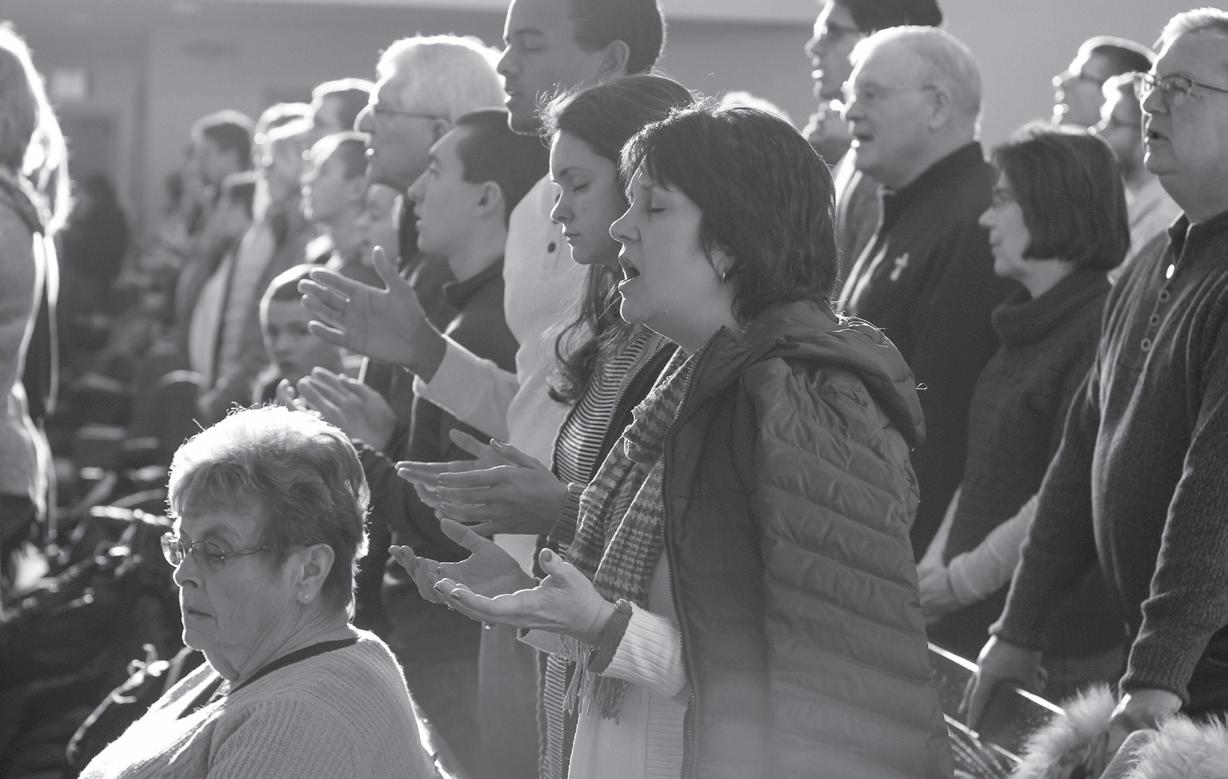
I remember when I received my first cell phone and email address, promising myself that I would only give my number out to 20 people and check my email twice a day. The moral and ethical issues start to come in when we stop and reflect on how technology is affecting us. To what extent are online tools shaping us as religious communities, for better and for worse? To what extent are these tools shaping our encounters with God? With one another?
Religious institutes need to intentionally reflect on how they use new media and technology, particularly as they look ahead toward the soon-to-arrive 3.0 world. We are not quite at the 3.0 world, which is going to be one with much more artificial intelligence. However, when it comes to technologies like Zoom, we know that hybridity is here to stay. There are pros and cons, and we know that right now proximity matters because you cannot replace the live experience yet. It is still the most valuable way to interact and communicate.
The issue of authority is another area of concern. Stew-
art Hoover writes that “digital media contests authority because they enable, encourage, and interact with a wide range of social and cultural contexts and practices.” People now have options about accepting authority or not. There are always going to be people contesting authority whether or not they have a valid point. Bringing it home to vocation ministry: How is the practice of challenging church authority and doctrine via immediately accessible technologies affecting your vocation ministry?
§ § § §
I encourage you to not pull back from what is presented here but rather to give it thoughtful consideration. Not everyone or every community may be well-equipped to use new media and technologies. It might be helpful to consider ways to pool resources or collaborate to use technology together. Technology will always involve an interplay between progression, advancement, and negotiation with what has traditionally been perceived as wisdom and truth. The church has given us some guidance. Christus Vivit (the document following the 2018 youth synod) addresses the digital environment. The bishops have given us social media guidelines (usccb.org/committees/communications/social-media-guidelines), and there are many other tools and tips.
Finally, it helps to remember that in the sea of all these resources, neither media, technology, nor approaches to culture have the last word. God does. We are rooted in a larger faith dimension as we go beyond borders and boundaries. We have to borrow from technology and cultural tools to help us consider the life of faith, the presence of God, and the vocational invitation to be disciples in Christ. Recall the words of Revelations 21:5, “Behold I make all things new!” And the words of Isaiah 43:19: “See I am doing something new! Now it springs forth, do you not perceive it? In the wilderness I make a way, in the wasteland, I make rivers.” n
I am the Alpha and the Omega, the beginning and the end. To the thirsty I will give a gift from the spring of life-giving water.
—Revelation 21:6
 guiSePPe Milo, FlicKr