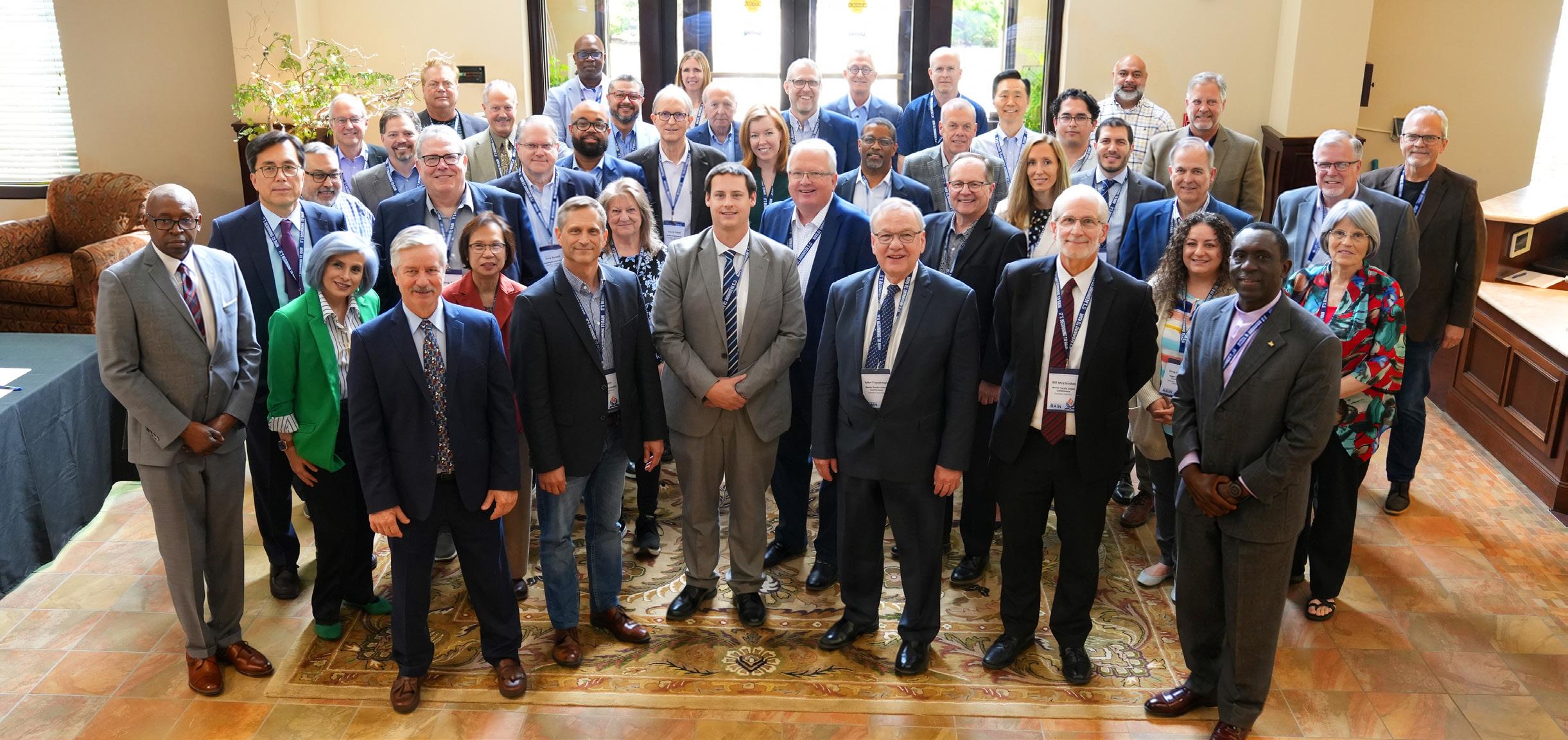
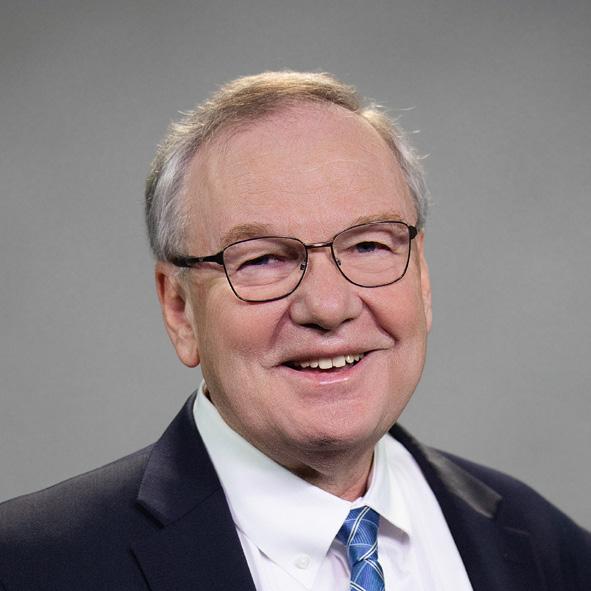
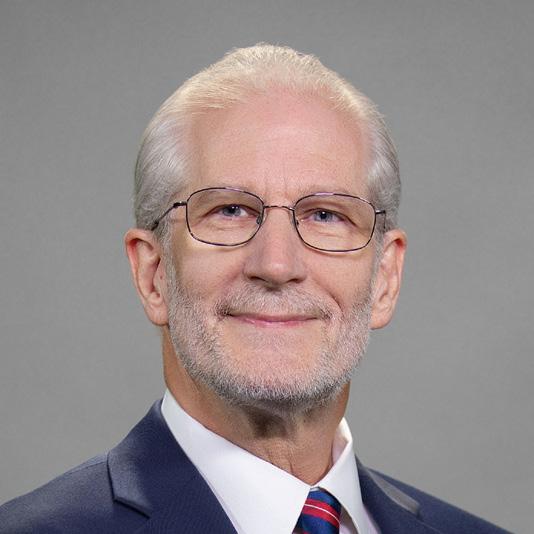
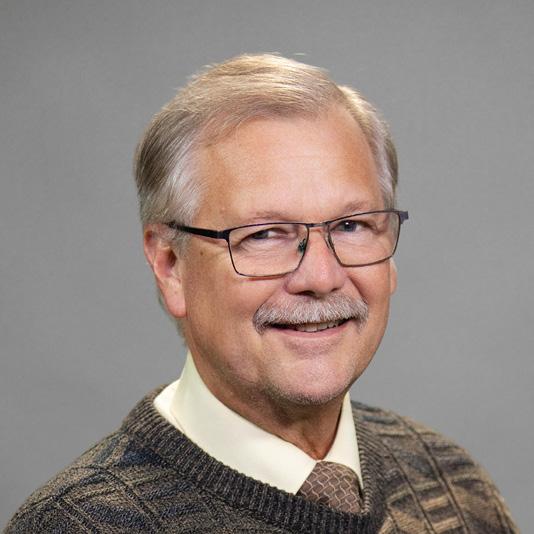
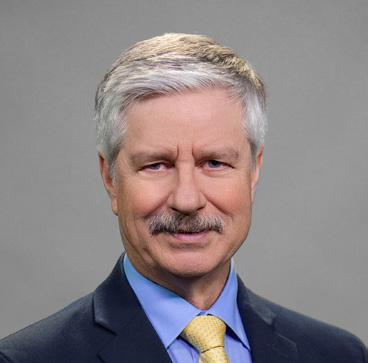
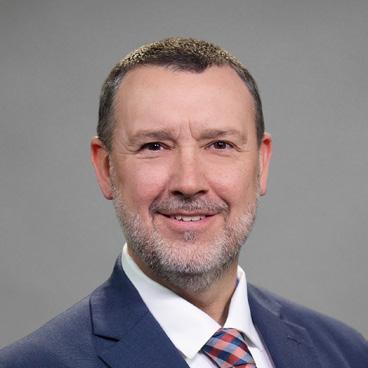
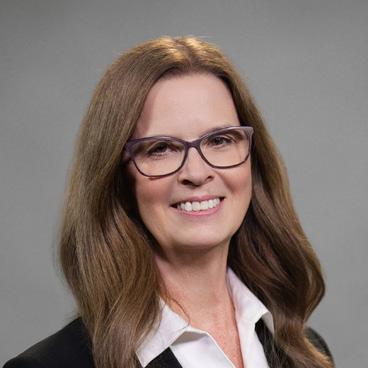
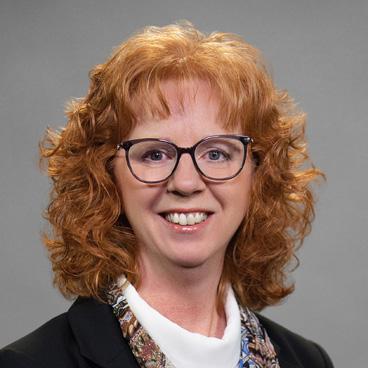
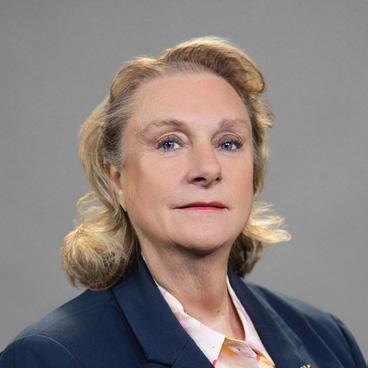
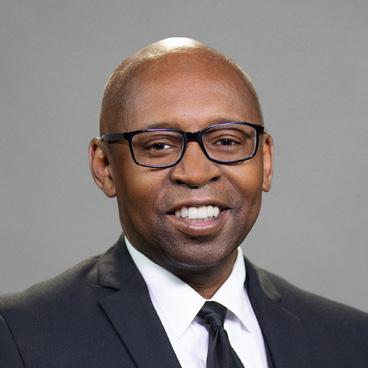
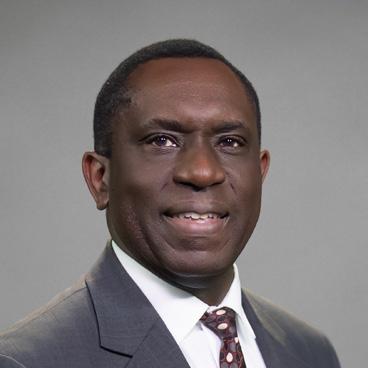
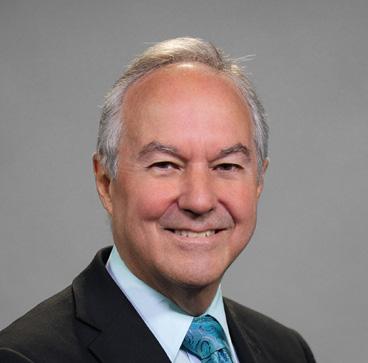
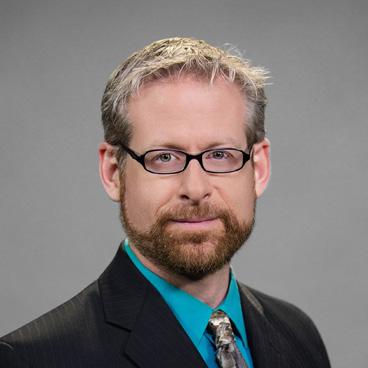
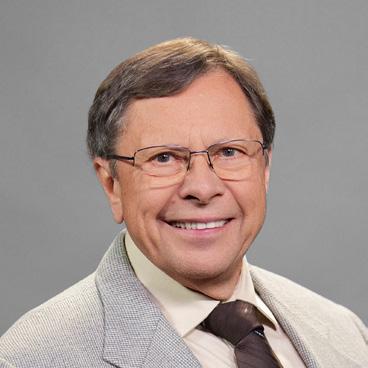
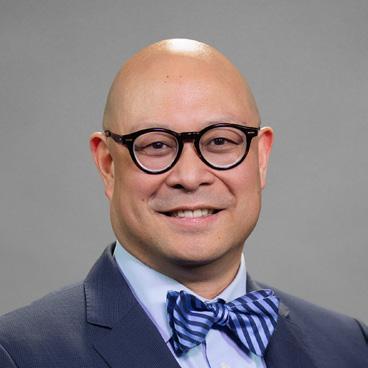
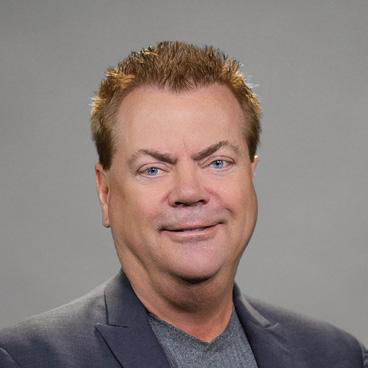
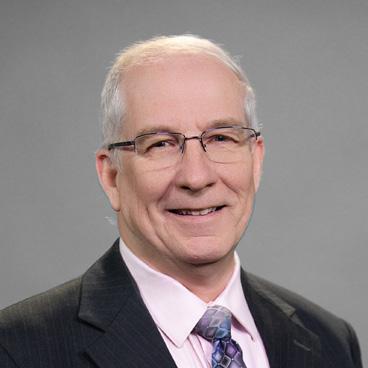
As NPUC prepares for its 30th constituency session on Aug. 23, 2026 at Walla Walla University, the theme “It’s Beginning to Rain” offers a reminder of God’s renewing work through His people and the lives He continues to change. Four times each year, members of the NPUC executive committee (pictured here) gather to pray, listen, ask questions and make decisions together in support of the church’s mission across the Northwest. Constituency session invites delegates into that same shared rhythm of discernment, conversation and faithful service.
LEADERSHIP REPORTS GOVERNANCE & BUSINESS
4 8 10 12 13 14 16
President’s Report
Secretariat Report
Treasurer’s Report
Education Report
Regional Ministries Report
Hispanic Ministries Report
Department Reports
22 23 25 27 45 62
Church Auditing Q&A
Strategic Study Items Briefing
Bylaw Changes Explained
Proposed NPUC Bylaw Updates
Current NPUC Bylaws
Delegate List
SESSION
General Agenda
Aug. 23, 2026 — Walla Walla University
8:00 a.m.
8:30 a.m.
REGISTRATION OF DELEGATES
MORNING WORSHIP
• Song Service .....................................
Walla Walla University
• Opening Prayer Jeff Fogelquist
• Welcome and Introduction of Special Guests Bill McClendon
• Introduction of Speaker ................................. John Freedman
• Special Music Walla Walla University
• Devotional G. Alexander Bryant
• Prayer Kyoshin Ahn
ORGANIZATION OF THE SESSION
• Seating of Delegates and Reading of Call ................. Bill McClendon
• Electronic Voting Orientation Loren Bordeaux
• Session Details Bill McClendon
» Parliamentarian Appointment
» Approval of the Agenda
» Discussion Guidelines
REPORTS OF THE SESSION
• President’s Report John Freedman
• Secretary’s Report Bill McClendon
• Treasurer’s Report Jeff Fogelquist
• Auditor’s Report Melissa Reynolds
• Vice President for Education’s Report Keith Hallam
• Vice President for Hispanic Ministries’ Report Peter Simpson
• Vice President for Regional Ministries’ Report EuGene Lewis
• Nominating Committee Report G. Alexander Bryant
• Adventist Health Report ................................ John Freedman
CONFERENCE CAUCUSES AND LUNCH
AFTERNOON SESSION
• Special Music and and Prayer
Walla Walla University
• Strategic Study Items John Freedman
» Missional Focus, Effectiveness and Efficiency Study
» Secondary Education Financial Viability Study
WALLA WALLA UNIVERSITY SESSION John Freedman and Alex Bryan
NPUC ARTICLES AND BYLAWS COMMITTEE RECOMMENDATIONS Bill McClendon and Steve Krietner
CLOSING BUSINESS SESSION
• Acknowledgment of the 2021–2025 NPUC Executive Committee NPUC Officers
• Nominations for the 2026–2030 NPUC Executive Committee G. Alexander Bryant
• NPUC Association Membership Report John Freedman and Jay Graham
Gleaner (ISSN 0746-5874) is published bimonthly for a total of 6 issues per year by the North Pacific Union Conference of Seventh-day Adventists®, 5709 N. 20th St., Ridgefield, WA 98642. It is printed and mailed at Pacific Press Publishing Association , 1350 N. Kings Rd., Nampa, ID 83687-3193. Subscription rate: $15.50 per year. Periodical postage paid at Ridgefield, WA 98642 and additional mailing offices.
OUR MISSION: Connecting Northwest Adventists with news and inspiration.
POSTMASTER: Send all address changes to:
North Pacific Union Conference Gleaner 5709 N. 20th St. Ridgefield, WA 98642 360-857-7000 info@nwadventists.com nwadventists.com
SUBMISSIONS: We welcome your timely announcements, features, news stories and family notices through our online forms at nwadventists.com/contribute. Your submission(s) will automatically be shared with both your local conference correspondent and the Gleaner editorial team for review and potential publishing online and/or in print.
PLEASE NOTE: Every reasonable effort is made to screen all editorial material to avoid error in this publication. The Gleaner does not accept responsibility for advertisers’ claims.
ADVENTIST® and SEVENTH-DAY ADVENTIST are the registered trademarks of the General Conference of Seventh-day Adventists
LITHO U.S.A.
Gleaner STAFF
Editor: Heidi Baumgartner
Managing Editor: Makena Horton
Multimedia Editor: José Segovia Copy Editor: Sienna Hubin Design: TM Design, Inc.
In every generation, God works through leaders, pastors, educators, members and young people, each using their gifts to bring encouragement, growth and renewal to His church.
2021–2025 President's Report
Our theme, “It’s Beginning to Rain,” reminds us that God has always chosen to work through His people — often in ordinary places, through faithful lives, and through the gifts He entrusts. In scripture, rain is a sign of His blessing, His timing and His renewing presence.
John Freedman, president
North Pacific Union’s 30th constituency session will gather on Sunday, Aug. 23, on the Walla Walla University campus. Beyond coming together to conduct the work of the church, the most important invitation to members and delegates alike is to listen for the voice of God and discern how He is leading His people in this season.
Our union of conferences serves to strengthen mission and unity across a broader region, supporting collaboration among the six conferences that comprise NPUC Alaska, Idaho, Montana, Oregon, Upper Columbia and Washington each faithfully shaping ministry to the communities they serve.
Each week, our union team gathers for worship, prayer and encouragement, sharing stories of how God is at work across the territory. These moments remind us that the same mission we speak of in this report is already being lived out in real time as we pray, listen and witness God’s ongoing faithfulness.
Education and Healthcare
Among the many ways mission is lived out in NPUC, education and healthcare are two of our most visible expressions of service and witness.
WWU remains a valued, God-given gift within NPUC, continuing its mission of Christ-centered,
Adventist Christian education in a complex and changing landscape. Under the leadership of Alex Bryan, WWU president, and the investment of outstanding professors and staff, the university is navigating these challenges while remaining committed to academic excellence, spiritual development and service.
The NPUC education department plays a key role in strengthening the work of local conference education ministries. They collaborate closely with North American Division on curriculum development and provide ongoing in-service training and support for teachers throughout the territory. In partnership with WWU, the education department also helps facilitate access to affordable graduate education, supporting the continued professional development of educators.
NPUC is also blessed by the presence of three Adventist Health hospitals in our territory, each carrying forward a shared mission: “Living God’s love by providing health, wholeness and hope.” We are grateful for this ministry of healing and presence in our communities. Delegates will hear more from Kerry Heinrich, Adventist Health corporate CEO, and Kyle King, Adventist Health Portland president.
NORTH PACIFIC UNION CONFERENCE ACCESSIONS GOD'S GROWING FAMILY
IT'S BEGINNING
BEGINNING TO RAIN
In 2025, there were 2,268 accessions — combined baptisms and professions of faith — the highest number we have seen in NPUC in 13 years.
More online at NWADVENT.ST/ 121-4-FT-42
SIGNS OF RENEWAL
Secretariat Report
Signs of renewal are beginning to appear across North Pacific Union, and the secretariat office has served as a rain gauge for the Holy Spirit’s work by tracking accessions, supporting governance and credentialing, preparing for constituency and preserving the records that help tell what God is doing among His people.
During the past five years, encouraging signs have emerged in three important areas: gathering again, lives changed and church vitality. Behind these signs of renewal, the secretariat office continues to strengthen the church through governance, records and organizational support.
Gathering Again
When the pandemic disrupted church life, attendance naturally dropped sharply and many congregations experienced the challenge of scattered participation. It has taken time for the church family to reassemble in person.
Over the past year, combined in-person and online participation has climbed to 40%, up from less than 20% in person in the years immediately following the pandemic. Like the first raindrops after a drought, these numbers remind us that the Holy Spirit is still drawing people back into community, worship and mission.
Lives Changed
Accessions a term that includes both baptisms and professions of faith help tell the story of how people are joining the church family.
Behind every number is a life changed someone who has chosen to follow the Lord and unite with His remnant church. The last time NPUC recorded more than 2,200 accessions in a single year was 2013. That changed in 2025 when accessions reached 2,268 the highest total in more than a decade.
These stories reflect the continued commitment of conferences, pastors and members to the mission of the church. As a result of this ongoing emphasis on evangelism, NPUC membership reached 104,543 at the close of 2025.
Church Vitality
Across the quinquennium, conferences and local churches faithfully shared the gospel through Bible studies, public meetings, small groups, acts of service and personal invitations.
Pentecost 2025 a North American Division initiative that encouraged coordinated evangelistic outreach became a particularly meaningful experience as churches and schools across the Northwest worked together and witnessed many individuals make decisions to follow Christ. As churches renewed their focus on mission and sharing the Adventist message in their communities, additional signs of new life began to emerge in the vitality of our churches.
In 2020, a large majority of congregations were identified as declining, with relatively few churches experiencing measurable growth. By 2025, the number of declining congregations had decreased substantially, the number of growing churches had more than doubled and several congregations had entered a multiplying phase of ministry.
Across more than 500 congregations, these trends reflect churches rediscovering purpose, reconnecting with their communities and finding fresh energy for ministry encouraging signs that the Holy Spirit is continuing to work throughout NPUC.
RENEWAL
McClendon, vice president for administration
secretariat assistant director
Strengthening the Church
The secretariat office continually seeks to support and strengthen the church in its renewal and growth by providing the structure, records and processes for effective ministry. This work includes coordinating executive committee actions, maintaining official records, supporting the credentialing process and assisting with bylaw and policy matters.
Significant time was devoted to assisting conferences with leadership evaluations, supporting nominating committees as they prepared for constituency meetings and helping ensure that the constitutional and governance processes of NPUC were followed carefully and consistently.
The secretariat office also works closely with conference secretaries to maintain accurate membership records and promote consistent accession, membership and attendance reporting throughout NPUC. Though much of this work happens quietly, it strengthens the foundation of the church and supports the mission taking place in each local congregation.
This quinquennium was also marked by several significant leadership transitions across NPUC and its institutions. The secretariat office assisted in transitions, including NPUC vice presidents for Hispanic ministries and regional ministries, NPUC chief financial officer and the presidents of Walla Walla University, Alaska Conference, Montana Conference, Oregon Conference and Upper Columbia Conference.
Freedman, executive assistant and receptionist
I am deeply grateful for the privilege of serving NPUC during the past five years. I have been continually encouraged by the dedication of conference leaders, pastors, church members, conference secretaries and our conference and union office staff whose faithful service continues to advance the mission of the church across our territory.
Watch for God’s Rain
The work of the secretariat office helps the church recognize where God is moving, strengthen the church for today and prepare faithfully for what comes next. We see regular examples of how it’s beginning to rain.
The signs of renewal we have seen during this quinquennium people returning, lives changed, churches growing stronger and congregations engaging more fully in mission are fresh signs of God’s rain among His people.
We look to the future with confidence, trusting that the God who has begun this good work will continue to bless the ministry and witnessing of NPUC in the years ahead.
BILL MCCLENDON North Pacific Union vice president for administration
More online at NWADVENT.ST/121-4-FT-91
Malinda
Bill
Kristina Lopez,
Linda Tigner, receptionist
STREAMS OF
Treasury Report
Across the Northwest, countless acts of faithfulness have joined together like raindrops becoming a stream, providing the resources needed to sustain ministry and prepare for what comes next.
Jeff Fogelquist, chief financial officer
These continuing streams of support have enabled North Pacific Union to strengthen evangelism, education and ministry across the Northwest.
The treasury department’s mission is clear: to faithfully and accountably steward the resources God provides, using them in tangible ways to help share the distinctive, Christ-centered, Adventist message of hope and wholeness.
We are grateful for the trust placed in the ministries and conferences of NPUC and strive to honor that trust through consistent, principled, forward-looking and mission-focused financial leadership.
Throughout this quinquennium, the treasury team has worked to safeguard these resources with integrity, transparency and accountability to ensure that financial practices comply with the law, align with church policy and follow Generally Accepted Accounting Principles.
Financial Stewardship in Action
Faithful stewardship requires more than careful intentions; it also depends on strong systems, clear accountability and financial leadership.
Monthly financial statements and key performance indicators are regularly provided to executive committee and departmental leadership, enabling informed decision-making and timely evaluation of financial trends.
Annual budgets are prepared with input from officers and directors, ensuring that each ministry area participates in the planning process.
In addition to internal responsibilities, the treasury team serves as a resource for conference, university and academy finance personnel, providing insight, training and support in areas ranging from software support and accounting practices to human resources.
Over the past five years, the treasury department has continued to strengthen financial systems and leadership across NPUC. Conferences and academies have benefited from ongoing training and support in the use of North American Division’s accounting and payroll software.
Annual treasury councils have provided opportunities for collaboration, policy updates and professional development for conference treasury teams and academy finance leaders. These gatherings have fostered a culture of shared learning and have helped ensure consistency in financial practices throughout NPUC.
Monthly financial reporting has been enhanced to include key performance indicators and analytical tools that assist leaders in understanding trends and making informed decisions.
Committees have met regularly to evaluate financial performance, review audit findings and recommend adjustments to budgets and policies. These committees play a vital role in maintaining accountability and ensuring that financial decisions support the mission of the church.
During this quinquennium, NPUC continued to receive clean, unqualified audit opinions each year from General Conference Auditing Service, affirming the reliability of our financial reporting and internal controls.
Showers of Blessing
Tithe across NPUC remained strong reflecting the faithfulness of our members even during periods of economic uncertainty amounting to $564,387,524, which represents an increase of 16.57% over the prior quinquennium, or an annualized growth rate of 3.11%.
Support for education has remained a high priority. Appropriations totaling $26,542,387 were made to Walla Walla University by NPUC and its conferences for operating, capital and special initiatives, including Bright Future and NextGen scholarships.
SUPPORT
Kody Hendrickson, undertreasurer
Anne Vu, associate treasurer
Contributions to the K–12 system across the union through direct appropriations, scholarships, curriculum, training and professional development initiatives totaled $16,218,578.
Evangelism funding was emphasized, with substantial allocations directed to local conferences to support outreach initiatives, public meetings and community engagement efforts totaling $8,952,642.
Mission Priorities
Several opportunities and challenges are emerging that will shape NPUC’s financial leadership and mission in the years ahead.
STEWARDSHIP EDUCATION
Inflation, rising costs and changing giving patterns continue to place pressure on churches and conferences across the Northwest. These challenges also create an opportunity to strengthen stewardship education and expand the use of digital giving tools, helping members see how faithful giving supports lives changed through God’s mission locally and globally.
LEADERSHIP DEVELOPMENT
Leadership transitions create an opportunity to strengthen the next generation of financial and ministry leaders. As experienced leaders retire or change roles, intentional mentoring, training and internships can help preserve institutional knowledge, strengthen understanding of church structure and policy, and prepare new leaders to serve with confidence and stability.
Ford, accounting clerk
maintenance
ACCOUNTABILITY AND SECURITY
Governmental, legal and financial regulations continue to increase, creating added pressure for conferences, churches and schools. Smaller organizations may need additional support to meet audit expectations, denominational policies and regulatory standards. Continued investment in training, internal controls and cybersecurity will help protect the overall organization and reduce risk.
ORGANIZATIONAL EFFICIENCIES
Increased collaboration in administration and services will remain vital to effective ministry. Making full use of available denominational systems can help conferences, churches and schools work more efficiently while strengthening support across the Northwest.
Partnering With God
The treasury department remains committed to supporting the mission of NPUC through responsible financial management, transparent reporting and collaborative leadership.
We express deep appreciation to our members, employees and ministry partners for their faithfulness and dedication. With God’s guidance, we will continue to steward His resources with integrity, wisdom and a steadfast focus on advancing His work throughout our territory.
JEFF FOGELQUIST
North Pacific Union chief financial officer
Kelly Lehto,
Penny
Education
The education department is committed to cultivating schools where the seeds of faith and learning can grow. As educators pursue continuous spiritual and professional growth, model Christlike character and provide high-quality, purposeful learning, they help prepare the ground for the Holy Spirit’s rain to take root in the lives of students.
This work matters because every student 100% of NPUC students should be loved, challenged and prepared to live, serve and share with confidence in God’s purpose.
The education ministry focus has been:
» Growing leaders and teachers spiritually and professionally.
» Developing positive school cultures.
» Advancing standards-based learning, grading and reporting.
» Providing spiritual encouragement and holistic training for students.
This report is offered with expressed appreciation to our conference and school leaders and teachers who have united in purpose and collectively collaborated to grow spiritually and professionally. They are the heroes of Adventist education.
Ministry Highlights
TEACHING AND LEARNING
» Led the adoption of a shared teaching framework across NPUC schools
» Provided focused leadership training that fosters spiritual growth and enhances professional skills in teachers
LEADERSHIP DEVELOPMENT
» Strengthened principal leadership for standards-based learning and expanded leadership meetings to include all full-time principals
» Established spiritual retreats for superintendents and principals, supporting renewal and connection
» Deepened partnership with Walla Walla University School of Education to train new teachers and firstyear principals
DATA
AND CONTINUOUS IMPROVEMENT
» Implemented School Culture 360 Survey and integrated data into continuous improvement for goal setting and planning
» Improved accreditation oversight for elementary and junior academy schools across NPUC
MISSION AND ACCESS
» Sponsored NPUC Youth Prayeradigm Shift retreats
» Established the Helping Others Pursue Education scholarship to support immigrant, indigenous and underserved families
BY THE NUMBERS
» 521 educators hold North American Division educator certification processed through the NPUC education department.
» There are 115 institutions of learning: 20 early childhood programs, 79 K–8/10 schools and 16 academies (five boarding and 11 K–12).
» 206 students celebrated baptism in the 2024–2025 academic year, with 22 coming from non-Adventist families.
Mission Priorities
Looking ahead, we are seeking to expand access to Adventist education by strengthening financial support for families, thoughtfully evaluating the future of the boarding school model in our territory and continuing to affirm the vital role of Adventist education in shaping students’ spiritual growth and life values from kindergarten through higher education.
Becky Meharry, elementary and curriculum education director
Keith Hallam, vice president for education
Brian Harris, secondary education director
Debbie Hendrickson, education certification registrar and administrative assistant
Renae Young, early childhood education coordinator
Regional Ministries
Regional ministries exists to strengthen, connect and advance the mission of African American churches throughout the territory. It focuses on leadership development, evangelism, youth engagement and strengthening local regional churches so they can thrive where they are.
This ministry builds on the legacy of those who came before faithful leaders who laid the groundwork and it continues today through the dedication of pastors, volunteers and members whose service keeps the ministry moving forward.
A Season of Growth and Renewal
The 2021–2025 ministry years show real signs of progress. There’s a growing sense of spiritual renewal like long-awaited rain beginning to fall. That renewal is showing up in tangible ways across the field.
Baptismal growth is one of the clearest signs of this advancement. Baptisms increased from 19 in 2024 to 145 in 2025 a 663% rise. This reflects stronger outreach, deeper engagement and a renewed spiritual focus.
Of note, Washington Conference’s all-in involvement in Pentecost 2025 evangelism initiative resulted in 126 baptisms within regional churches. Alaska Conference and Upper Columbia Conference both reported eight baptisms, while Oregon Conference and Idaho Conference both reported three baptisms within regional churches. Together, these results point to steady momentum across the region.
This progress didn’t happen by accident. It reflects intentional work in several key areas:
» Strengthening pastoral leadership and support
» Expanding community-centered evangelism
» Encouraging active member involvement
» Investing in youth and young adult engagement
At the same time, financial trends point to both encouragement and opportunity. Idaho Conference and UCC experienced modest regional tithe increases, while Washington Conference and Alaska Conference saw declines. Overall, regional tithe across NPUC decreased by 8.31%. These trends highlight the ongoing importance of stewardship education, member engagement and strengthening the financial foundation for future ministry.
New Connections
One encouraging sign of growth was the opportunity to visit Oasis Church in Boise, Idaho. What began as a simple visit quickly developed into a meaningful connection. After worshiping with the congregation and spending time with its members, it became clear that Oasis Church is a church with strong potential and a heart for ministry. We were pleased to welcome Oasis Church into the regional family.
We are also encouraged by the number of children from Oasis Church who attend Boise Valley Adventist School. Their involvement reflects growing family engagement and helps lay a strong foundation for future ministry and discipleship in the region.
Mission Priorities
Mission priorities include expanding community outreach, developing new leaders, strengthening youth involvement and rebuilding and stabilizing financial support within regional ministries.
There’s a real sense that what we’re seeing now is just the beginning. The “rain” has started, but there’s more to come. With continued faith, teamwork and commitment, regional ministries is well positioned to grow stronger and reach even more communities in the years ahead.
To view the Adventist Community Services, urban and prison ministries reports, please visit NWADVENT.ST/121-4-FT-85.
Hispanic ministries is committed to serving, supporting and strengthening Hispanic congregations across North Pacific Union through local conferences. We seek to equip pastors, church leaders and members with the resources needed to fulfill our shared mission: reaching Hispanic communities throughout our territory and preparing hearts for Christ’s glorious return.
Simpson, vice president for Hispanic ministries vicepresidente de ministerios Hispanos
Ministry Highlights
» More than $355,000 has been invested in missionary initiatives across Hispanic churches, including $100,000 for Pentecost 2025 evangelism outreach. In addition, approximately $370,000 in Hispanic capital funds has supported the purchase, construction and renovation of church facilities.
» Thanks to the teamwork of pastors and members, 3,056 new souls joined Spanish-speaking churches between 2021 and 2025.
» Hispanic congregations increased from 68 in 2021 to 98 in 2025, representing 44% growth during the quinquennium, with new groups forming in previously unreached areas.
» Faithful stewardship contributed to a 14% increase in Hispanic tithe from 2021 to 2025.
By the Numbers
» Today, 17,971 Hispanic members are part of the NPUC family, representing 17% of the total membership.
» In 2025, Hispanic ministries celebrated 831 baptisms the highest number in the past five years. This remarkable growth of 110% since 2021 reflects a strong spirit of outreach, with Hispanic baptisms accounting for 37% of all baptisms in NPUC.
» Seventy Pentecost 2025 projects were embraced within Hispanic congregations; some of these efforts led to more than 30 baptisms in just one day, as happened in Idaho Conference and Oregon Conference.
Mission Priorities
The Hispanic ministries team is prayerfully committed to planting 50 new Hispanic congregations over the next five years and acquiring 10 new church buildings to support continued growth.
A special focus is being placed on establishing a Hispanic ministry within Montana Conference, where a small but faithful group of believers is already laying the foundation.
We ask for prayer that God will bless these efforts, allowing this ministry to grow and become firmly established as it reaches new communities with the hope of the gospel. Everywhere we look, we see how it’s beginning to rain with the Holy Spirit’s blessings.
Hispanic ministries celebrated 831 baptisms in 2025 — the highest number in the past five years.
Ministerios Hispanos celebraron 831 bautismos en 2025 — constituyendo la cifra más alta en los últimos cinco años.
Peter
Carolina Simpson, Hispanic ministries administrative assistant asistente administrativa de ministerios Hispanos
Ministerios Hispanos
Ministerios Hispanos se compromete a servir, apoyar y fortalecer a las congregaciones Hispanas en toda la Unión del Pacífico Norte a través de conferencias locales. Buscamos equipar a pastores, líderes de iglesias y miembros con los recursos necesarios para cumplir nuestra misión compartida: alcanzar a las comunidades Hispanas en todo nuestro territorio y preparar los corazones para el glorioso regreso de Cristo.
Logros Ministeriales
» Se han invertido más de $355,000 en iniciativas misioneras en iglesias Hispanas, incluyendo $100,000 para la evangelización de Pentecostés 2025. Además, aproximadamente $370,000 de fondos de capital Hispano han apoyado la compra, construcción y renovación de instalaciones de iglesias.
» Gracias al trabajo en equipo de pastores y miembros, 3,056 personas se unieron a iglesias Hispanas entre 2021 y 2025.
» Las congregaciones Hispanas aumentaron de 68 en 2021 a 98 en 2025, lo que representa un crecimiento del 44% durante el quinquenio, con la formación de nuevos grupos en áreas previamente no alcanzadas.
» La fiel administración de los recursos contribuyó a un aumento del 14% en el diezmo Hispano entre 2021 y 2025.
BAPTISMS/BAUTISMOS
3,093
Datos Relevantes
» Actualmente, 17,971 miembros Hispanos forman parte de la familia de la NPUC, lo que representa el 17% del total de miembros.
» Durante el año 2025, el número de bautismos Hispanos alcanzó 831 constituyendo la cifra más alta en los últimos cinco años. Este notable crecimiento del 110% desde 2021 refleja un fuerte espíritu de servicio, ya que los bautismos Hispanos representan el 37% del total de bautismos en la NPUC.
» Se lanzaron 70 proyectos de Pentecostés 2025 en las congregaciones Hispanas, lográndose en algunas de ellas, más de 30 bautismos en un solo día, como sucedió en las Conferencias de Idaho y Oregon.
Prioridades de Misión
El equipo de ministerios Hispanos, dedicado a la misión y guiado por la oración, planea apoyar la plantación de 50 nuevas iglesias Hispanas en los próximos cinco años, así como la adquisición de al menos 10 nuevos templos para respaldar el crecimiento continuo.
Se está haciendo especial hincapié en establecer un ministerio Hispano dentro de la Conferencia de Montana, donde un pequeño pero fiel grupo de creyentes ya está sentando las bases.
Pedimos oraciones para que Dios bendiga estos esfuerzos, permitiendo que este ministerio crezca y se establezca firmemente al alcanzar nuevas comunidades con la esperanza del evangelio. Dondequiera que miremos, vemos cómo empieza a llover con las bendiciones del Espíritu Santo.
Ministerial Association
MINISTERIAL ASSOCIATION SERVES pastors and their families across North Pacific Union through local conferences, providing resources that spiritual growth, strengthen their calling and professional development for effective ministry.
The department provides resources and to support pastors and conference ministerial including coordination with Andrews University serve twice yearly as a host site for the Master Arts in Pastoral Ministry program, offered in and Spanish. An annual ministerial retreat provides training, encouragement and renewal for ministerial leaders, along with ongoing mentoring and development for pastors across the territory.
By the Numbers
$100,000 for Walla Walla University
Mission Priorities
Ministerial Association’s mission is to strengthen mentoring and discipleship for pastors, expanding professional development opportunities through new technologies and encouraging young people to consider pastoral ministry. We remain committed to prayerfully supporting both current and emerging generations of pastoral leaders.
Multicultural Ministries
MULTICULTURAL MINISTRIES SEEKS to reach every ethnic group in NPUC, sharing the gospel in each person’s language and cultural context while supporting diverse congregations as they grow in discipleship and mission.
NPUC includes congregations representing many ethnic and language communities, including Indonesian, Filipino, Kenyan, Korean, Portuguese, Russian, Samoan and Ukrainian communities, among others across the Northwest. Multilingual congregations continue to grow across the territory, creating new opportunities for outreach and discipleship.
Within this ministry, Nemaia Faletogo, Washington Conference evangelist, was appointed in 2025 to additionally serve as NPUC Asia-Pacific ministries
coordinator to support the growing number of AsiaPacific members in the territory. The department continues to provide resources and guidance for multicultural congregations and leaders, helping strengthen ministry among diverse language groups across NPUC.
Mission Priorities
We pray that the Lord of the harvest will send workers from every nation, people and language to share the everlasting gospel throughout our territory. In response to this calling, we are working to develop multilingual councils for ethnic ministries, support the growth of new multicultural congregations and strengthen outreach within diverse communities.
Peter Simpson, ministerial and multicultural director
Carolina Simpson, ministerial and multicultural administrative assistant
326 PASTORS SERVING 510 CONGREGATIONS
Church Planting, Revitalization and Lay Training
THE CHURCH PLANTING, REVITALIZATION AND LAY TRAINING DEPARTMENT IS ACTIVELY ADVANCING the Adventist mission in the Pacific Northwest, responding to the Holy Spirit’s rain and seeing lives transformed. The department’s role, in connection with Rev. 14:6–12, is to mobilize every converted man, woman, youth and child to take the Adventist message to the Northwest and the world in this generation.
Working with the six conferences and WWU, the department trains, equips, activates and mobilizes teams for mission in their homes, schools, workplaces, churches and new communities.
In Matt. 24:14, Jesus said that when the everlasting gospel is preached in all the world as a witness to all nations, then the end will come. We look forward to the day when pain, war, disease, famine and suffering will end and Jesus will return to take His people home.
Dan Serns, church planting, revitalization and lay training director
Ministry Highlights
Lois Serns, church planting, revitalization and lay training administrative assistant
Across NPUC, it’s beginning to rain, as God’s blessings and breakthroughs become increasingly evident.
CHURCH VITALITY TERM INDEX
CHURCH VITALITY TERM INDEX
Missional Small Groups:
3+ people meeting regularly for upreach, inreach and outreach
Mission Groups:
12+ people starting a church group in an unreached community
Developing Churches:
25+ people forming a company of believers
Growing Churches:
Established churches strengthening discipleship and local mission
Multiplying Churches:
50+ people launching and supporting new groups and churches
» Each year, more individuals are embracing the Adventist message through baptism and profession of faith, with 2,268 joining in 2025. Over the past five years, 9,505 people have united with the Adventist movement in the Northwest.
» As populations shift from rural to metro areas, the department is focusing on establishing missional small groups in every community, particularly in major metro areas. Some of these groups will develop into church plants.
By the Numbers
» Nearly 16 million people live within the NPUC territory, with about half living in our four largest metro areas Seattle/Tacoma, Portland/Vancouver, Boise/Treasure Valley and Spokane/Coeur d’Alene. Every one of them needs an invitation to accept Jesus as Lord, to embrace the truths of scripture and to become part of a vibrant Adventist fellowship.
» There is approximately one Adventist for every 153 people, one congregation for every 30,000 people, one minister for every 47,000 people and one Adventist school for every 131,000 people in the Pacific Northwest.
Mission Priorities
We emphasize prayer for volunteer workers, for the Holy Spirit, for unity and for boldness. We seek to make disciples who go, disciple, baptize and teach, focusing on activating missional small groups and multiplying churches across the territory. In 2027 we plan to activate 2,700 missional small groups, each one leading someone to Jesus and into His final movement. We also plan to launch a new ACTS Church Planting cohort that will develop 27 new mission churches. This work is carried out in cooperation with key initiatives, such as Pentecost and Beyond, OneVoice27 and 50,000 Missional Small Groups.
Youth and Young Adult
Rob Lang, youth and young adult ministries director
Velvet Lang, youth and young adult ministries associate director
YOUTH AND YOUNG ADULT MINISTRIES
PROVIDES ministry support and training for the full range of discipleship, leadership and outreach activities serving children, youth and young adults across NPUC.
The department’s mission is to help young people develop a personal, saving relationship with Jesus and grow as His disciples, prepared to share the Christcentered Adventist message of hope, wholeness and the soon return of Jesus.
This work includes children’s ministries, Adventurer and Pathfinder Clubs, youth and young adult ministries, summer camps and conference centers, Sabbath School, Master Guide and teen leadership training, public campus ministries, Adventist Christian Fellowship, National Servicemen’s Organization, Growing Together cohorts and DiscipleTrek.
Ministry Highlights
» Two Alive in Jesus children’s ministries training events
» Children’s ministries leader certification training
» 2022 NPUC Pathfinder Camporee in Kalispell, Montana, with 1,656 attendees
» Growing Together cohorts supporting church revitalization
» Annual NPUC Leadership and Discipleship Summit
» Annual collegiate DiscipleTrek spiritual growth and leadership program
» Annual Young Adult Outreach Summit and Spark Tank
» Host site for NAD Adventist Christian Fellowship Institute in 2025 and NPUC ACFi in 2024
6,123
16,375 decisions for Christ at camp
3,069 family campers
young adult and volunteer camp sta
3,925
NPUC
29
young adult Spark Tank ministry teams
76 BY THE NUMBERS
7,001 youth campers
18 young adults in DiscipleTrek leadership training
churches participating in Growing Together cohorts
Mission Priorities
Current mission priorities include supporting conference leaders in providing Alive in Jesus training and encouraging wider use of the curriculum in local churches; strengthening discipleship opportunities for senior youth and young adults; providing resources for strong youth and young adult Sabbath Schools; establishing additional Adventist Christian Fellowships on secular campuses; continuing to emphasize Growing Together church revitalization; actively supporting camp accreditations; and equipping young adults for active involvement in church life, church planting and mission.
attendees at 2024 International Pathfinder Camporee
THE COMMUNICATION TEAM AND GLEANER MAGAZINE SERVE four core purposes: to inform, instruct, inspire and invite. Through this framework, the Gleaner builds trust, offers pastoral care, fosters reader engagement and invites an expanding base of contributors and voices.
Ministry Highlights
» Distributed the Gleaner to approximately 38,000 households six times each year
» Curated a weekly Northwest Adventists email newsletter for nearly 10,000 subscribers
» Made nwadventists.com available in 12 languages, with more available upon request
» Received Society of Adventist Communicators awards recognizing excellence in writing and design
» Co-sponsored Creators Lab with Oregon Conference and Washington Conference communication teams
» Sponsored WWU communication students to attend SAC for networking and professional development
» Launched the Adventist Community app for local conferences, churches and schools in partnership with IT
Mission Priorities
Priorities include strengthening connections with readers, expanding digital evangelism and creating more opportunities for creative contribution. This includes growing capacity for media ministries and digital storytelling in NPUC’s revitalized studio, alongside continued partnership with conference communication teams. We continue to nurture the relational connections that stories naturally build.
Information Technology
INFORMATION TECHNOLOGY
MINISTRY PLAYS a vital role in supporting the mission and daily operations of NPUC, local conferences and youth camps. In recent years, efforts have focused on strengthening core infrastructure, equipping pastors, teachers and staff with reliable tools and ensuring technology effectively supports ministry, education and administration.
Ministry Highlights
By the Numbers
» Provided education and support for tools like Adobe, Microsoft Copilot and Office that help employees write, plan and collaborate more effectively
» Supported staff and leadership across multiple conferences, deployed new systems and updated network links, helping ensure technology issues did not unduly slow ministry
» Increased awareness around email safety and online threats, while responding quickly when issues arose to protect information, people and organizations
» In 2025, NPUC, Oregon and Washington conferences held 2,463 Zoom meetings with 13,224 participants, totaling 649,954 minutes.
» Pastors and staff collectively receive more than 1 million email messages each year about 90,000 per month.
Mission Priorities
Our mission priorities include helping staff use new tools confidently, creatively and ethically to support ministry and communication, while building a culture of attentiveness and shared responsibility around digital safety. We seek to reduce manual tasks and complexity so staff can devote more time to ministry and mission. We also seek to develop purposeful uses of AI that increase productivity and improve insights.
Tami Edwards, information technology support specialist
Loren Bordeaux, information technology director
Daniel Cates, information technology associate director
José Segovia, media ministries coordinator and Gleaner multimedia editor
Heidi Baumgartner, communication director and Gleaner editor
FRANCELY ZURITA
Native Ministries
Steve Huey, Native ministries director
NATIVE MINISTRIES BRINGS the gospel of hope, wholeness and pastoral care to Native American communities across NPUC in collaboration with local conferences and North American Division Native Ministries Council. This work spans 28 Native churches, groups and ministry sites in the Northwest.
Building trust in Native communities requires a longterm, relational presence. Native ministries collaborates with conferences to train pastors and lay leaders, provide cross-cultural training and support outreach through culturally informed resources.
By the Numbers
» Present in 13 of 49 federally recognized Northwest reservations and 15 of 220 Native villages in Alaska
» Celebrated 23 Native baptisms in 2025
» Supported eight Native camp meetings across the Northwest
» Reaching more than 300 subscribers through a quarterly email newsletter
» Praying for 12 Adventist radio stations serving Native populations in Alaska
Ministry Highlights
» Developed Native New Trails, a 13-part video series in partnership with SafeTV to prepare individuals for baptism
» Held an annual Native summer camp in Alaska
» Opened a new Living Hope Center on Fort Peck Reservation in Montana
» Hosted an annual leadership training weekend in Alaska, equipping members in pastoral care, addiction recovery and church leadership
Mission Priorities
As this work continues, priorities include completing the Native New Trails video series, developing additional Bible study resources, expanding online outreach and sharing Native ministries through exhibits at conference camp meetings across the Northwest.
Legal Counsel, Public Affairs and Religious Liberty
Andre Wang, general counsel, public affairs and religious liberty director
Debbie Morauske, public affairs and religious liberty administrative assistant
NORTHWEST RELIGIOUS LIBERTY ASSOCIATION
WORKS in the areas of legislative, civic, judicial, academic, interfaith and corporate arenas on behalf of the church and all people and institutions of faith. Concurrently, the general counsel office advises and supports NPUC and its six conferences in complying with federal, state and local laws, as well as denominational policies. This work includes private education, contracts, disability accommodations, employment matters and premises liability.
Ministry Highlights
» Mediation cases: Sabbath accommodation in employment, academic and correctional settings, labor union exemption, U.S. citizenship and school athletics
» Government relations: federal, state, county and municipal levels, with legislative advocacy in our five state capitals
» Educational advocacy: preaching assignments and presentations to churches, camp meetings, civic groups, academic symposiums and radio/podcast appearances
» Liberty campaign: subscription processing, mailing, donor letters and fundraising on behalf of Liberty magazine
» Human resources support: support for conferences in complicated employment rules and workplace regulations
Mission Priorities
Through public affairs and religious liberty initiatives, we will continue to advance the constitutional guarantee of religious freedom for people of all faiths, particularly through government relations and workplace mediation services. The general counsel office will also monitor emerging legal issues, including the Americans with Disabilities Act, Title VII religious exemptions and the increasing liability risks facing churches and schools.
THE ASSOCIATION SERVES as a depository for funds entrusted by members, churches and institutions across NPUC. These deposited funds are loaned to church-related entities to help purchase, build, expand, repair or remodel ministry facilities.
Trust services also provide coordination and support for trust departments across NPUC. In recent years, policies and procedures have been updated to create greater consistency throughout the territory and to align with practices used by other ministries in the NAD. The team continues to assist in the development of charitable trusts and gift annuities.
By the Numbers
Jim Brown, trust director
Association and Trust
Mission Priorities
» 81% of loan payments are made via ACH direct deposit.
» All but 17 depositors receive their quarterly interest check via direct deposit.
» 86 managed loans are valued at approximately $24 million.
» 349 managed depository accounts are valued at approximately $29 million.
» 62 Revolving Fund loans, valued at $25 million, have been provided to ministry entities in the past five years.
As NPUC entities continue to seek loans to purchase, build, expand, repair or remodel their facilities, maintaining adequate funds in the Revolving Fund remains essential. The Revolving Fund is open and actively seeking new deposits to support this ongoing ministry. With many longtime depositors now in later stages of life, we are placing increased emphasis on sharing these investment opportunities with younger members, while also offering competitive interest rates that encourage continued participation in this ministry.
Women's Ministries
WOMEN’S MINISTRIES CALLS for women in the pews to discover their spiritual gifts, grow in faith and step into service. Between 2021 and 2025, women’s ministries directors provided leadership training, seminars, retreats and outreach experiences that have motivated women to action across the Northwest. These opportunities strengthened local ministry, equipped new leaders and encouraged women of all ages to be intentional in ministering to their churches and communities.
Women’s ministries continues to reflect the grassroots spirit of training for service that has shaped the department since the 1980s. I count it a privilege to be a liaison and support to these amazing, tireless conference servant-leaders, most of whom are volunteers.
Ministry Highlights
» A free dental clinic in Washington opened the door for one woman to study the Bible and attend a spiritual retreat.
» Because of financial and spiritual support, Deaf women from the Northwest have their own retreat in Oregon.
» A Montana retreat invitee heard the gospel presented for the very first time and accepted Jesus as her Savior.
» What started as a 40-day prayer group on Zoom is still growing and going strong in Alaska.
» Because of the witness of others, a woman was baptized at the 2025 Idaho retreat.
Mission Priorities
As we move forward in mission, women’s ministries continues to seek creative new ways of outreach, mentoring young women and supporting those experiencing loss. We aim to increase the use of technology to connect women, especially across the rural areas of the Northwest. We strive to expand the emphasis on prayer before plans and programs, as well as provide training to emphasize the value of connections formed via church and neighborhood small groups.
Sue Patzer, women’s ministries director
Jay Graham, association treasurer
Debbie Morauske, association and planned giving administrative assistant
CHURCH AUDITING
Q&A
Every Northwest Adventist institution has an obligation to carry out its mission with an honest regard for financial accountability. Part of that accountability comes in the form of regular audits of financial records — many of which are done by General Conference Auditing Services regional office staff. Here’s a quick overview of the typical auditing process and why it matters.
What are the main duties of an auditor who audits the finances of a church, school or conference?
A: The auditors’ main responsibility is to report whether church entities academies, Adventist Book Centers, publishing houses, conferences, unions, etc. have prepared their financial statements in accordance with Generally Accepted Accounting Principles and complied with denominational policies. Auditors examine each organization’s financial records and determine if their financial statements are materially correct. In addition, auditors review core policies a specific list of financial policies compiled by the General Conference and adopted by North American Division. Each church entity is expected to follow the working policies of the church as described in the NAD Working Policy book.
Once an audit is complete, GCAS issues an opinion on the financial statements. This opinion describes whether financial statements are presented fairly and whether they comply with Generally Accepted Accounting Principles as accepted by the denomination. A Report to Governance is prepared that describes any NAD policy compliance findings and any material weaknesses and significant deficiencies found during the audit. GCAS only audits institutions included in the Seventh-day Adventist Yearbook. Local churches, junior academies and elementary schools are reviewed by their conferences.
What limitations or guarantees do audits provide?
A: Even though auditors are employed by and perform their duties on behalf of the GC, their work is performed in accordance with the same standards as if they were in public practice.
Audits provide reasonable assurance that financial statements are free from material misstatement. While reasonable assurance is a high level of assurance, it’s not absolute assurance and, therefore, is not a guarantee that an audit conducted in accordance with Generally Accepted Auditing Standards will always detect a material misstatement when it exists. The risk of not detecting a material misstatement resulting from fraud is higher than one resulting from error, as fraud may involve collusion, forgery, intentional omissions, misrepresentations or the override of internal control.
What does a typical school or conference audit NOT do?
A: A financial audit does not make a final determination on whether an organization is financially healthy, although auditors do evaluate whether the organization will be able to operate at least 12 months after the audit report. The goal is to ensure that the financial statements are presented fairly, in all material respects, so the organization’s management and governing board can make informed decisions regarding its direction.
What specific kinds of anomalies do auditors watch for?
A: Auditors look carefully at the internal controls of the organization. Does the provided documentation adequately support the record of balances and transactions in the financial statements? Or are there gaps in that documentation that leave the records open to question?
What does an audit cost? Who pays for the school or conference audits?
A: NAD pays for 50% of the cost of the audit. Within the Northwest, North Pacific Union pays 25%, and the remaining 25% is passed on to the conference where the audited institution is based. Each conference has a different policy about whether or not the entity audited pays a portion of their audit costs. The billing structure is on a cost-recovery basis. There is no profit margin built into GCAS rates. The goal is to provide excellent audit services to the Adventist Church at the best value possible.
STRATEGIC STUDY ITEMS BRIEFING
The following Strategic Study Items are being presented to the delegates of the 30th North Pacific Union constituency session for consideration and discussion.
Through the regular agenda process outlined in NPUC bylaws, constituent organizations submitted proposals that were reviewed by the agenda committee and recommended to the NPUC executive committee for inclusion on the constituency session agenda. The executive committee then voted to recommend the following proposals for delegate consideration.
These proposals would authorize representative study groups to evaluate important organizational, missional, financial and educational matters and provide written reports to delegates by the close of 2028.
STRATEGIC STUDY ITEM NO. 1
Missional Focus, Effectiveness and Efficiency Study
One of our conferences submitted a proposal requesting a comprehensive review of organizational structure, operational alignment and opportunities for increased effectiveness and efficiency across the union and local conferences.
The proposal reflects a desire to thoughtfully evaluate the respective roles and responsibilities of the union and local conferences, clarify areas of mission and operational alignment, reduce duplication of services and identify opportunities for increased effectiveness, efficiency and long-term sustainability in support of the Adventist Church’s mission.
Recommended Motion (voted by the executive committee on May 12, 2026):
Moved, that the NPUC constituency direct the executive committee to appoint a study commission to evaluate organizational structure, clarify roles between the union and conferences, and identify opportunities to reduce duplication and enhance operational efficiency. The original submission (see Appendix A) shall serve as advisory guidance to the commission, underscoring the intention for considerable organizational change and significant savings.
Further moved, that the commission submit a comprehensive report, including financial and structural implications, to the executive committee, with a written final report to the delegates by the close of 2028.
STRATEGIC STUDY ITEM NO. 2
Secondary Education Financial Viability Study
Another conference submitted a proposal to study the financial and infrastructure challenges facing Adventist secondary education across the union including boarding academies and other models of secondary education and to develop recommendations that support long-term financial viability and educational effectiveness.
Recommended Motion (voted by the executive committee on May 12, 2026):
Moved, that the NPUC constituency direct the executive committee to appoint a task force to study the financial and infrastructure challenges facing Adventist secondary education across the union and to develop recommendations that support long-term financial viability and educational effectiveness.
Further moved, that the task force report its recommendations, including any financial and structural implications, to the executive committee, with a written final report to the delegates by the close of 2028.
STRATEGIC STUDY ITEMS BRIEFING (cont.)
APPENDIX A
Original Conference Agenda Proposal Submissions
The following text reflects the original agenda proposal language submitted by our conferences and distributed for review through the agenda committee process. These materials are provided for delegate reference and historical context.
AGENDA PROPOSAL NO. 1
Concerning Missional Focus, Effectiveness and Efficiency
Whereas the Adventist Church is called to faithfully steward all the resources entrusted to it, including the tithes returned to the church as storehouse;
Whereas there is a recognized need to address redundancy and duplication within denominational structures, in order to improve efficiency, reduce administrative overhead and maximize resources for direct ministry and mission;
Whereas the vitality of the Adventist Church is found in the local congregation and organizational structures should be designed to support and empower local church ministry;
Whereas consolidating organizational support functions at the union level and focusing local conference resources on ministry support is expected to yield significant cost savings and operational efficiencies, without diminishing representation or requiring constitutional changes;
Be it resolved, that the NPUC constituency authorize the development of a detailed plan for reorganizing the relationship between NPUC and the local conferences, with the following objectives:
To coordinate and consolidate organizational support functions (such as HR, accounting, IT, risk management, communication, trust services and legal) at the union level, eliminating duplication at the conference level.
To focus conference staffing and resources on ministry support functions that directly empower and equip local church leaders and congregations.
To clarify the missional focus of each organizational unit, reducing overlapping structures and initiatives, while enhancing member engagement.
To establish clear metrics for efficiency, cost savings and effectiveness, with a target of achieving at least 9% system-wide savings in tithe-funded operations.
Furthermore, be it resolved that NPUC administration report back to a specially called NPUC constituency meeting in fall 2027 with a comprehensive implementation plan, including timelines, financial projections and recommendations for necessary policy and structural adjustments.
AGENDA PROPOSAL NO. 2
Secondary Education Financial Viability Task Force
Whereas conferences within NPUC are facing significant financial challenges in maintaining boarding schools within their territories,
It is moved that NPUC establish a dedicated task force to study financial and infrastructure issues facing Adventist secondary education across the union and make such recommendations to the executive committee and its constituent conferences that will ensure financial viability and a commitment to excellence in Adventist education for the future.
CLOSING STATEMENT
These Strategic Study Items are intended to provide a thoughtful and orderly process for evaluating significant issues affecting the future mission and ministry of the Adventist Church within NPUC. Delegates are encouraged to review the proposals carefully and prayerfully as part of the constituency session deliberations.
SUMMARY OF Proposed Bylaw Amendments and Rationale
The proposed revisions to the North Pacific Union bylaws are not intended to alter the mission, representative structure or spiritual purpose of the union. Rather, they are targeted updates designed to strengthen governance, improve clarity, modernize operations and reduce unnecessary risk while preserving the constituency-based system of church leadership.
1. Removal of Outdated Walla Walla University Language
The current bylaws contain a separate section stating that WWU is “wholly operated and controlled” by the union. The proposed revision removes that section.
Rationale
» Better reflects current governance realities
» Reduces potential legal and liability concerns
» Maintains support for WWU without unnecessary ownership language
Actual Bylaw Revision
Delete Article 12, Section 3 in its entirety.
2. Executive Committee Attendance Policy Updated
The proposed revision replaces an automatic attendance-trigger removal system with a more balanced process distinguishing excused and unexcused absences.
Rationale
» Encourages active participation
» Recognizes illness, emergencies, ministry conflicts and legitimate circumstances
» Maintains accountability while allowing fairness
Actual Bylaw Revision
Replace Article 9, Section 11 prior language with:
» Attendance expectation stated
» Excused absences defined
» Unexcused absences defined
» Three consecutive unexcused absences, or five unexcused absences within rolling 24 months, may lead to recommendation for replacement
3. Strengthened Agenda Committee Process
The proposed revision clarifies the role of the agenda committee in preparing for constituency sessions.
Rationale
» Increases transparency
» Allows earlier review of proposals
» Helps delegates prepare in advance
» Preserves delegate rights through petition process
» Supports orderly session planning
Actual Bylaw Revision
Article 8, Section 6 clarifies that the agenda committee shall:
» Recommend meeting personnel.
» Solicit agenda proposals at least four months in advance.
» Receive all proposals, including any item supported in writing by 20% of delegates.
» Distribute proposals at least three months in advance for comment.
» Forward recommendations and proposed agenda to the executive committee.
The executive committee determines final agenda except any item supported by 20% of delegates must be included.
4. Delegate Representation Expanded
The proposed revision adds the North American Division executive committee members present at session to the existing delegate category.
Rationale
» Better reflects church governance structure
» Recognizes NAD participation in union life
» Creates consistency with General Conference representation
Actual Bylaw Revision
Article 7, Section 2(b)(2):
Current delegates from General Conference expanded to include NAD executive committee members present, subject to existing cap.
5. Membership Expanded to Include Local Missions
The proposed revision broadens union membership language.
Rationale
» Provides future flexibility
» Recognizes potential mission structures
» Keeps options open if territorial organization changes
Actual Bylaw Revision
Article 7, Section 1 changes local conferences to local conferences and local missions.
Summary of Proposed Bylaw Amendments and Rationale (cont.)
6. Delegate Privacy Improvements
Delegate lists would continue to identify delegates and affiliations but no longer require broad circulation of personal contact information.
Rationale
» Protects privacy
» Reduces unnecessary publication of personal details
» Preserves transparency of representation
Actual Bylaw Revision
Article 8, Section 7(g) removes requirement to publish:
» Contact address
» Telephone number
» Email address
Retains delegate identity, status and affiliated entity.
7. Meeting Booklet Modernized to Meeting Materials
The proposed revision updates terminology and delivery expectations.
Rationale
» Reflects digital communication methods
» Reduces dependence on printed materials
» Modernizes session preparation process
Actual Bylaw Revision
Article 8, Section 7 changes meeting booklet to meeting materials and provides for physical or digital distribution.
8. Structure
The proposed revision clarifies department accountability under the executive committee and executive officers.
Rationale
» Reflects shared officer leadership model
» Clarifies lines of responsibility
» Supports better coordination
Actual Bylaw Revision
Article 9, Section 9 changes under the direction of the executive committee of the union and the president to under the direction of the executive committee and executive officers.
9. Department Alignment Updated
The proposed revision updates structural alignment language.
Rationale
» Better reflects actual operating practice
» Recognizes NAD role
» Allows administrative flexibility
Actual Bylaw Revision
Article 9, Section 9 changes from alignment only with GC to GC and/or NAD.
10. Financial Accountability Updated
The chief financial officer reporting language is strengthened.
Rationale
» Promotes consistency
» Aligns with denominational expectations
» Enhances transparency
Actual Bylaw Revision
Article 10, Section 4 changes statements as may be desired by the president or executive committee to financial statements at regular intervals in harmony with NAD policy.
11. Association Officers Status Clarified
The secretary and treasurer of the NPUC Association are no longer committee members.
Rationale
» Clarifies governance membership
» Distinguishes invitees from voting/non-voting members
» Preserves participation without committee status
Actual Bylaw Revision
Article 9, Section 2(f) changes nonvoting members to invitees with voice but no vote.
12. Regional Ministries Title Updated
The proposed revision updates terminology for this office.
Rationale
» Better reflects ministry purpose
» More current terminology
» Clearer public understanding
Actual Bylaw Revision
Article 11 changes vice president for regional affairs to vice president for regional ministries.
13. Modernized Language Throughout
The proposed draft updates terminology and style throughout the bylaws.
Rationale
» More professional governing document
» Easier to read
» Uses current governance language
Actual Bylaw Revision
Examples include:
» Chairman to chair
» Vice chairman to vice chair
» Chairmanship wording updated
» Gender-neutral wording improvements
» Formatting and punctuation corrections
The North Pacific Union Conference recognizes that these Bylaws are consistent with the Seventh-day
Adventist concept of church organization and governance. The fruitage of that concept is a representative
and constituency-based system. Its authority is rooted in God and distributed to the whole people of God.
It recognizes the committee system. It provides for shared administration rather than a presidential
system. It recognizes a linkage of local churches, conferences, unions, the General Conference and its
divisions that binds the believers together in a universal fellowship. It assures essential unity of purpose
and mission. While the integrity of each entity is recognized, each is seen to be a part of the whole.
ARTICLE 1
NAME
The name of this organization shall be: North Pacific Union Conference of Seventh-day Adventists, a
religious nonprofit corporation, hereinafter referred to as the “Union”
ARTICLE 2
PRINCIPAL OFFICE
The principal office for the transaction of the business of the Union is fixed and located at 5709 North
20th Street, Ridgefield, Clark County, State of Washington. The Executive Committee may at any time
or from time to time change the location of the principal office from one location to another.
ARTICLE 3
PURPOSE
The primary purpose for which this Union is formed is:
1. To facilitate the proclamation of the everlasting gospel of our Lord and Savior, Jesus Christ, in
the context of the three angels of Revelation 14: 6-12 to all peoples within its territory, leading
them to accept Jesus as personal Savior and to unite with His church, and nurturing them in
preparation for His soon return.
2. To facilitate Christian ministries including, but not limited to, pastoral, teaching, evangelism, and
health ministries, and community services.
3. To facilitate a system of Christian education devoted to the harmonious development of the
spiritual, mental, physical, and social powers of mankind.
4. To promote the worldwide mission of the Seventh-day Adventist Church.
5. To provide opportunity for the sharing of resources, thus encouraging the accomplishment of the
Church's mission throughout the entire territory of the Union.
The North Pacific Union Conference of Seventh-day Adventists is part of the North American Division of
the General Conference of Seventh-day Adventists, a world church organization; and all purposes,
policies, and procedures of this Union shall be in basic harmony with the working policies and procedures
of the North American Division and the General Conference of Seventh-day Adventists. This Union shall
pursue the mission of the Church in basic harmony with the doctrines, programs, and initiatives adopted
and approved by the General Conference of Seventh-day Adventists in its regular sessions.
ARTICLE 5
TERRITORY
The territory of this Union shall consist of the states of Alaska, Idaho, Montana, Oregon, and Washington,
and such other territories as may be assigned.
ARTICLE 6
ARTICLES AND BYLAWS
The constituents of this Union, acting at any duly called constituency meeting, may enact, amend, and/or
repeal the Articles of Incorporation and Bylaws which may embrace any provision not inconsistent with
the Articles of Incorporation and Bylaws
ARTICLE 7
MEMBERSHIP AND DELEGATES
The membership of this Union shall consist of such local conferences and local missions as
are or may be organized in any part of the geographic territories under its jurisdiction and
formally approved for membership by vote of delegates at any duly called Union
constituency meeting.
The delegates at any regular or special constituency meeting of this Union shall be:
a. Appointed delegates which shall represent the local conferences within the Union
territory. Each local conference shall appoint three (3) delegates without regard to
conference membership and one (1) additional delegate for each four hundred (400)
church members or major fraction thereof, based on its membership on the last day of
the third full calendar quarter preceding the constituency meeting. At least fifty-one
percent (51%) of the delegates in this category shall be lay persons as defined in
Article 18. Delegates shall be selected in a manner determined by each local
conference executive committee unless otherwise specified by the local conference
or bylaws
b. The following ex officio, as defined in Article 18, and other delegates.
(1) The individual members of the Executive Committee of this Union.
(2) The individual members of the General Conference Executive Committee and
the North American Division Executive Committee who may be present at any
constituency meeting of this Union. The number of such delegates representing
the General Conference of Seventh-day Adventists and/or the North American
Division shall not exceed five percent (5%) of the total number of appointed
delegates provided for hereinabove in Section 2, Paragraph a. of Article 7.
Bylaws of the North Pacific Union Conference of Seventh-day Adventists, page 2
(3) The Vice President for Academic Administration, the Vice President for
Financial Administration, the Dean of the School of Theology of Walla Walla
University, plus two (2) additional delegates appointed by and representing the
faculty and staff of Walla Walla University, and two (2) additional delegates
appointed by and representing the students of Walla Walla University. The
student delegates shall hold membership in one of the churches within this
Union territory.
(4) Two (2) employees of Adventist Health, appointed by its governing board. At
least one of these individuals shall be the president of a hospital within this
Union territory.
(5) Two (2) employees of Pacific Press Publishing Association, appointed by its
governing board.
(6) The members of the Articles and Bylaws Committee and the non-Executive
Committee members of the Nominating Committee of this Union.
(7) The Directors of all recognized Departments of this Union, as determined by
the Executive Committee of this Union.
(8) Such other persons as may be appointed by the Executive Committee, including
officers of the North Pacific Union Conference Association of Seventh-day
Adventists. The total number of delegates from this category shall not exceed
five percent (5%) of the total number of appointed delegates provided for
hereinabove in Section 2, Paragraph a. of Article 7.
All delegates at any constituency meeting shall be members of the Seventh-day Adventist
Church in regular standing.
Appointed delegates shall be selected no later than five months prior to any regular
constituency meeting, except for delegates selected to replace previously selected delegates
who are unable to serve.
ARTICLE 8
CONSTITUENCY MEETINGS
This Union shall hold a regular constituency meeting by the end of the calendar year
following the year in which the regularly scheduled session of the General Conference of
Seventh-day Adventists convenes, at such time and place as the Executive Committee of this
Union shall designate.
In the event of exceptional and exigent circumstances, as determined by the Executive
Committee, that make it necessary to postpone the calling of the constituency meeting, the
Executive Committee, in a regular or special meeting, shall have authority to make such a
postponement, not to exceed one year, giving notice to all constituent organizations. In the
event that the Executive Committee exercises its authority to postpone a constituency
Bylaws of the
meeting, it shall also have the authority to set the subsequent regular constituency meeting at
such time and place as it shall see fit, not to exceed five calendar years after the adjournment
of the postponed constituency meeting.
Notice of the time and place of any constituency meeting shall be given by:
a. A notice printed in the official publication of this Union at least four weeks before the
date of the constituency meeting,
b. A method approved by the Executive Committee, provided all constituent
organizations receive notice with sufficient time to select delegates.
SECTION 2: SPECIAL CONSTITUENCY MEETINGS
a. Special constituency meetings of this Union shall be convened at such time and place
as the Executive Committee deems proper, following receipt by the Executive
Committee or the Executive Vice President for Administration of this Union of a
request for such meeting by any of the following:
(1) When a special constituency meeting is requested by the Executive Committee;
(2) When, within a six-month period starting upon receipt of the first request, the
Executive Committee or the Executive Vice President for Administration
receives a written request(s) for a special constituency meeting, for whatever
reason, signed by at least twenty percent (20%) of the total delegates named to
the immediately prior regular or special constituency meeting;
(3) When, within a six-month period starting upon receipt of the first request, the
Executive Committee or the Executive Vice President for Administration
receives a request for a special constituency meeting, for whatever reason, from
at least two (2) local conference executive committees of this Union;
(4) When a special constituency meeting is requested by the North American
Division Executive Committee (NAD) or the General Conference Executive
Committee, and
(5) When a special constituency meeting is requested by the delegates at any
constituency meeting.
b. Special constituency meetings shall be convened within one hundred twenty (120)
days following the receipt of a request by the Executive Vice President for
Administration of this Union as provided in Section 2, Paragraph a. of Article 8,
unless that time period is extended by the requesting body.
c. The representation of the delegates and notice of the time and place of any special
constituency meeting shall be the same as for regular constituency meetings. The
actions of special constituency meetings shall have the same authority as those of the
regular constituency meetings. If it is proposed to amend the Articles of Incorporation,
these Bylaws or select officers at a special constituency meeting, notice that an
amendment is proposed or officer selection will be considered shall be given in the
notice for such special constituency meeting. The agenda of any special constituency
meeting may include any item that could be included on the agenda of a regular
constituency meeting, except that the agenda at any special constituency meeting shall
be limited to items which are stated in the public notice for the meeting. The
formation and duties of the Agenda Committee shall be the same as for regular
constituency meetings to the extent permitted by the number of weeks available prior
to the special constituency meeting.
SECTION 3: VIRTUAL CONSTITUENCY MEETINGS
The Executive Committee may authorize that a regular or specially called constituency
meeting convene by means of electronic conference by which all attendees can hear each
other at the same time and participate in the proceedings
SECTION 4: NOMINATING COMMITTEE.
a. The Nominating Committee is a standing committee and shall consist of:
1. The President of the North American Division of the General Conference of
Seventh-day Adventist, or designee, who will serve as chair;
2. The Executive Committee, as constituted in Section 2 of Article 9 of these
Bylaws, excluding the Union officers;
3. One (1) local church pastor and two (2) lay persons as defined in Article 18 from
each of the three (3) largest conferences and one (1) local church pastor and one
(1) lay person as defined in Article 18 from each of the other conferences. These
additional conference representatives shall be appointed by the executive
committee of each local conference within this Union territory at least ninety (90)
days prior to each regular constituency meeting and shall serve until a new
Nominating Committee is appointed for the next regular constituency meeting, so
long as they are members in regular standing in a church of the local conference
from which they were appointed. These additional representatives may not serve
more than two (2) consecutive full terms without one (1) intervening full term
b. The Nominating Committee shall:
(1) Meet when called at any time by:
a) The President of the North American Division or designee;
b) Written request to the President of the North American Division for any
reason by twenty-five percent (25%) of the members of the Executive
Committee;
c) A majority vote of the Executive Committee.
(2) Review formal officer performance evaluations and recommend names of
individuals for the election of the officers of this Union. The nominations The
Nominating Committee report shall be sent to all delegates at least one (1)
month prior to a regular or special constituency meeting which considers the
selection, discipline, or termination of officers;
(3) Appoint officers to fill vacancies which occur between constituency meetings.
c. If the delegates at a constituency meeting do not approve one or more individuals
recommended by the Nominating Committee, the delegates shall at their option (a)
reconvene the Nominating Committee at the constituency meeting to place before the
delegates the name or names of alternate recommendations, or (b) direct the
Nominating Committee to complete the selection fill any vacancies remaining after the
constituency meeting.
SECTION 5: ARTICLES AND BYLAWS COMMITTEE
a. The purpose of the Articles and Bylaws Committee shall be to review the Articles of
Incorporation and Bylaws of this Union and to recommend any amendments or
changes therein to the next regular or special constituency meeting.
b. The membership of the Articles and Bylaws Committee shall consist of the Executive
Vice President for Administration of this Union as chair and two (2) members selected
by each local conference executive committee, unless otherwise specified by the local
conference constitution or bylaws, at least one (1) of which shall be a lay person as
defined in Article 18. Any vacancies that may occur shall be filled by the original
appointing entity.
c. At least one (1) year prior to each regular constituency meeting, the Executive Vice
President for Administration of this Union shall request the executive committee of
each local conference to select individuals to serve on the Articles and Bylaws
Committee.
d. The Executive Vice President for Administration of this Union shall call the first
meeting of the Articles and Bylaws Committee at least ten (10) months prior to the
regular constituency meeting. The Articles and Bylaws Committee selects its own
secretary.
e. The Articles and Bylaws Committee shall serve as a standing committee until a new
Articles and Bylaws Committee is selected.
a. Appointment and Duties An Agenda Committee shall be appointed by the Executive
Committee at least six (6) months prior to any regular constituency meeting. The
members of the Agenda Committee shall be the Executive Vice President for
Administration of this Union, one (1) pastor and two (2) lay persons as defined in
Article 18 The Executive Vice President for Administration of this Union shall be the
chair of the committee. The duties of the committee shall be to:
(1) Recommend meeting personnel including the chair, recording secretary,
parliamentarian, and such other personnel it deems necessary or appropriate;
(2) Solicit agenda item proposals at least four (4) months in advance of the meeting
from the local conference executive committees and Union institutions,
committees, boards and commissions;
(3) Review all agenda proposals and prepare the meeting agenda;
(4) Distribute meeting agenda proposals to the constituent conferences and the
Union institutions, committees, boards and commissions not less than three (3)
months prior to the meeting with an invitation for written comments,
(5) Prepare a statement of the rationale for each proposal, when applicable.
(3) Receive all agenda item proposals submitted pursuant to Section 6, Paragraph
a(2), as well as any proposed agenda items requested in writing by at least
twenty percent (20%) of the total delegates to the meeting; Distribute all
received agenda item proposals to the constituent conferences and the Union
institutions, committees, boards and commissions not less than three (3)
months prior to the meeting with an invitation for written comments, and
(4) Prepare and forward to the Executive Committee recommendations for meeting
personnel, a proposed meeting agenda with all proposed agenda items, and,
when applicable, a statement of the rationale for each agenda item proposal.
b. The Agenda Committee's recommendations for meeting personnel and the proposed
agenda items shall be reviewed and approved by the Executive Committee, except that
any agenda proposal, requested in writing by at least twenty percent (20%) of the total
delegates to the meeting shall be placed on the agenda. Nothing contained in these
Bylaws is intended to restrict or limit the consideration of items which are not on the
agenda at a regular constituency meeting.
b. Executive Committee Review. The Agenda Committee's recommendations for
meeting personnel and the proposed agenda items shall be reviewed by the Executive
Committee, which shall determine the final agenda for the constituency meeting.
Any agenda item requested in writing by at least twenty percent (20%) of the total
delegates to the meeting shall be included on the agenda.
Nothing contained in these Bylaws is intended to restrict or limit the consideration of
items which are not on the agenda at a regular constituency meeting.
Not later than one (1) month prior to any constituency meeting the Agenda Committee shall
prepare meeting booklet materials and shall send it in physical or digital format to each
delegate, each member of the respective local conference executive committee, each Union
officer, departmental director, and each member of a permanent Union commission,
committee or board. Physical or digital copies of the booklet materials shall be available for
distribution at the Union office to other persons requesting it. The meeting booklet materials
shall contain:
a. The agenda;
b. The Nominating Committee's recommendations for officers;
c. A brief summary of the background and content of each proposal. The summary shall
be intended to be informative only and shall not be written or presented with the intent
to constitute advocacy for or against any proposal;
d. When applicable, a brief estimate of the fiscal impact of each proposal, prepared by
the Chief Financial Officer of this Union. The financial information in the meeting
booklet materials shall be intended to be informative only and shall not be written or
presented with the intent to constitute advocacy for or against any proposal;
e. A statement of the rationale for each proposal, when applicable;
f. A statement concerning the organization and procedures of the constituency meeting
and the responsibilities of delegates;
g. A list of the delegates with a contact address and telephone number and/or e-mail
address will be provided with an indication of their status (appointed or ex officio) and
the conference, institution, or other entity they represent or with which they are
affiliated;
h. A copy of the Articles of Incorporation and these Bylaws, and any proposed
amendments thereto;
i. Any additional information the Agenda Committee believes will be useful to the
delegates.
SECTION 8:
At least fifty-one percent (51%) of the delegates authorized hereinabove under Section 2 of
Article 7 of these Bylaws must be present at the opening of any regular or special
constituency meeting to constitute a quorum for the transaction of business. Once the
constituency meeting is declared open, the delegates remaining present thereafter shall
constitute a quorum.
All delegates must be present (as defined in Article 18) in order to be eligible to vote. There
shall be no voting by proxy.
Each delegate shall be entitled to one (1) vote on each measure presented for decision to the
body. The voting rights of the delegates shall be limited to the particular constituency
meeting of this Union to which they have been selected. Votes cast by delegates
electronically shall have the same validity as if the delegates cast their votes in person
ARTICLE 9
BOARD OF DIRECTORS
SECTION 1: The Board of Directors of this corporation shall be known as the “Executive Committee”
SECTION 2: MEMBERSHIP OF EXECUTIVE COMMITTEE
a. The membership of the Executive Committee of this Union shall be members of the
Seventh-day Adventist Church in regular standing and shall be selected as specified in
the following paragraphs. At least fifty-one percent (51%) of the members of the
Executive Committee of this Union shall be lay persons as defined in Article 18.
b. The membership of the Executive Committee shall include at least four (4) individuals
of minority ethnic groups within the territory of this Union. Two of the four include
the ex officio members as referenced in Article 9, Section 2, Paragraph c. The other
two members need not be distinct from the ethnicity of the ex officio members, but
shall be ethnically distinct from each other. If such representation does not otherwise
exist, the Executive Committee shall designate, from time to time, which local
conference(s) shall be responsible for including such representation in the members it
selects.
c. Ex officio members of the Executive Committee shall be: the President, Executive
Vice President for Administration, Chief Financial Officer, Vice President for
Education, Vice President for Regional Affairs Ministries, Vice President for
Hispanic Ministries of this Union; the cChief eExecutive oOfficer of Walla Walla
University; the President of the Pacific Press Publishing Association; and the president
of each local conference within this Union territory.
d. Representative members of the Executive Committee shall be: an individual selected
by Adventist Health's governing board; the treasurer of one (1) of the three (3)
smallest local conferences in this Union, and the treasurer of one (1) of the three (3)
largest local conferences within this Union. The local conference treasurers shall be
selected by the Executive Committee.
e. Each local conference shall have the following representative members:
(1) Local conferences with fewer than 7,500 church members shall be represented
by:
(a) One (1) local church pastor.
(b) Two (2) lay persons as defined in Article 18
(2) Local conferences with between 7,500 and 15,000 church members shall be
represented by:
(a) One (1) local church pastor.
(b) Three (3) lay persons as defined in Article 18.
(3) Local conferences with between 15,000 and 22,500 church members shall be
represented by:
(a) One (1) local church pastor.
(b) Four (4) lay persons as defined in Article 18.
(4) Local conferences with more than 22,500 church members shall be represented
by:
(a) One (1) local church pastor.
(b) Five (5) lay persons as defined in Article 18
(5) Church membership of the local conferences shall be determined as of the last
day of the third full calendar quarter preceding the constituency meeting.
(6) Representatives shall reside in and be a member of a church within their local
conference's territory.
(7) Each local conference shall nominate a slate of persons or fill vacancies which
may occur between regular constituency meetings in a manner provided by its
constitution or bylaws or by its executive committee, if there be no local
conference constitutional or bylaws provision.
(a) Nominees shall be submitted to that local conference's delegates in
caucus at the constituency meeting. Each caucus shall select its
representative members from the nominees and from any additional
persons the caucus deems appropriate to add to the slate of nominees.
The caucus's selection shall be subject to confirmation by the entire
delegation at the constituency meeting.
(b) Persons selected to fill vacancies shall be subject to confirmation by the
Executive Committee.
f. The Secretary and Treasurer of the North Pacific Union Conference Association of
Seventh-day Adventists shall each be nonvoting members invitees with voice but no
vote of the Executive Committee.
SECTION 3: TERM OF OFFICE OF EXECUTIVE COMMITTEE MEMBERS
a. Local conference treasurers as selected in Section l 2, Paragraph d. of this Article shall
serve half terms of office as defined in Article 18. No conference shall be represented
by a treasurer or secretary for two (2) consecutive half terms.
b. Executive Committee members selected as specified in Section l 2, Paragraph e. of
this Article shall not serve more than two (2) consecutive complete terms of office as
defined in Article 18, without one (1) intervening complete term.
c. If an Executive Committee member selected as specified in Section l, Paragraph e. of
this Article does not attend three (3) consecutive regular Executive Committee
meetings, or a total of five (5) Executive Committee meetings in any twenty-four-
month (24) period, the Executive Vice President for Administration of this Union shall
so advise the local conference, and a new representative shall be appointed by the
original nominating or selecting entity to complete the term of the member who has
not attended the specified number of meetings.
d
c. If an Executive Committee member no longer resides in, or is no longer a member of a
church within the territory of the represented local conference, the Executive Vice
President for Administration of this Union shall so advise the local conference, and a
new representative shall be appointed by the original nominating or selecting entity to
complete the term of the member.
a. The Executive Committee is hereby delegated the authority to act on behalf of the
constituency between constituency meetings and is given the power to direct and
control all of the business and affairs of this Union, consistent with the Articles of
Incorporation and these Bylaws. This delegated authority includes, but is not limited
to, the power to select, discipline and terminate directors and/or associates, and
assistants of departments/services, and committee members, with the exception that
the appointive entity shall elect committee members to fill vacancies that may occur in
positions that were originally filled by those entities.
b. The Executive Committee shall appoint such committees and shall employ such 538 personnel as may be necessary to execute its work effectively. 539 540
c. The Executive Committee shall issue or revoke all Union licenses, credentials and 541 commissions. 542 543
544 545
SECTION 5: OFFICER EVALUATION, DISCIPLINE AND TERMINATION
a. The Executive Committee, under the chairmanship of with the President of the North 546 American Division, or designee, as chairperson, less the officers of this Union, shall 547 meet not less than once every half term of office as defined in Article 18 to coincide 548 with the regular constituency meetings specifically to do a formal performance 549 evaluation of the officers. This evaluation is to be reported to the Nominating 550 Committee that is appointed for the next constituency meeting 551 552
b. Written Formal performance evaluations of the officers shall be solicited and collated 553 by the President of the North American Division, or designee, from the following: 554 applicable officers of the North American Division, the Union, and its local 555 conferences, Union department directors, Union Executive Committee, Union 556 associate department directors, and others determined by the Executive Committee. 557 558
c. The Executive Committee, as constituted in Paragraph a. of this Section 4 5, shall take
any action it deems appropriate, at any time, to discipline or terminate an officer for
cause.
SECTION 6: MEETINGS
a. The Executive Committee may schedule regular meetings subject to adjustment by the
executive officers at such times and places as it deems appropriate.
b. Special meetings of the Executive Committee may be called at any time or place, and
by whatever means, by the president or, in his absence, by the Executive Vice
President for Administration. A special meeting shall also be called by the Executive
Vice President for Administration in response to the written request of a majority of
the members of the Executive Committee. The notice of special meeting shall specify
the main purpose of the meeting. Such meeting may also consider other matters.
c. Generally, regular and special meetings of the Executive Committee shall be held in
person and onsite. However, the Executive Committee may convene by means of an
electronic conference or similar communications by which all persons can hear each
other at the same time and participate in the proceedings. Votes cast by electronic
means shall have the same validity as votes cast in person.
SECTION 7: NOTICE OF MEETINGS
a. Written notice of the time and place of any Executive Committee meeting shall be
given to the members of the Executive Committee not less than ten (10) days prior to
the date of such a meeting. Notice may be contained within the minutes of the prior
meeting. Notice shall be deemed effective when personally delivered, or deposited in
the United States mail, postage prepaid, to the last-known address of the member, or
sent by FAX, telegram, e-mail or express mail service.
b. Notice for any meeting of the Executive Committee may be waived by a member
either prior to, during, or at any time after the meeting of the Executive Committee. 591
Such waiver of notice shall be given in written form by personal delivery, United
States mail, FAX, telegram, or e-mail, and be filed with the minutes of the meeting for
which notice is waived. Any member who attends a meeting in which notice has not
been properly given and fails to object thereto, shall be deemed to have waived proper
notice.
SECTION 8: QUORUM
A majority of the Executive Committee under the chairmanship of with the ranking
executive officer or the President of the North American Division, or designee, as
chairperson, shall constitute a quorum.
SECTION 9: DEPARTMENTS/SERVICES
a. Accountability: Departments/Services of this Union shall work under the direction of
the Executive Committee and executive officers of the Union and the President and
shall serve in an advisory relationship to the field
b. Departments/Services Structure: Union departments/services shall be organized in
harmony with the departmental/service structure of the General Conference and/or
North American Division, but shall not necessarily duplicate the departments/services
in the divisions North American Division or the General Conference.
SECTION
a. Appointment of Standing Committees. Standing Committees shall be appointed as
sub-committees of the Executive Committee to assist it in its duties. These shall
include, but not be limited to, the committee named below.
b. Personnel Policy Committee. The responsibilities of the Personnel Policy Committee
shall be to review, modify, and/or develop models, policies, procedures and methods
as needed for the effective management of personnel. Recommendations of the
Personnel Policy Committee shall be considered and acted upon by the Executive
Committee.
c. Audit Review Committee. The Audit Review Committee shall meet periodically to:
(1) Review annual audited financial reports;
(2) Serve as a focal point for communication among the Executive Committee, the
auditors, and management regarding financial accounting, reporting and
internal controls;
(3) Assist the Executive Committee in fulfilling its fiduciary responsibilities as to
accounting policies and reporting practices;
(4) Review annually the salaries and expenses of all employees of this union.
(5) Perform any other duties assigned to it by the Executive Committee.
SECTION 11: EXECUTIVE COMMITTEE ATTENDANCE
a Expectation of Attendance: Members of the Executive Committee are expected to
attend all regularly scheduled and specially called meetings of the Executive
SECTION 1:
b. Excused and Unexcused Absences: An absence shall be considered excused when the
member notifies the Secretary in advance of the meeting and the reason for absence is
illness, family emergency, unavoidable employment or ministry conflict, travel
disruption, or other circumstance deemed reasonable by the Secretary. An unexcused
absence is failure to attend a duly called meeting without advance notice or absence
for reasons not deemed reasonable by the Secretary. The Secretary shall determine
whether an absence is excused or unexcused.
c Excessive Unexcused Absences: If a member has three (3) consecutive unexcused
absences from regularly scheduled meetings or five (5) unexcused absences from
regularly scheduled meetings within any rolling twenty-four (24) month period, the
Secretary shall review the member’s attendance record and shall recommend to the
appointing entity that a replacement be named, unless extraordinary circumstances
justify continued service.
ARTICLE 10
EXECUTIVE OFFICERS
The executive officers of this Union shall be a President, Executive Vice President for
Administration and Chief Financial Officer. The duties of the executive officers are
described in Sections 2, 3 and 4 below; however, the offices of Executive Vice President for
Administration and Chief Financial Officer may be filled by one person.
2: PRESIDENT
The President is the chief executive officer who would ordinarily act as chairman chair of
any constituency meeting and who, except as otherwise provided in these Bylaws, shall be
chairman chair of the Executive Committee and work in the general interests of this Union
as the Executive Committee may advise. One of the primary functions of the chief executive
officer shall be to think through and give strong direction toward the accomplishment of the
purpose of the Church as stated in Article 3 of these Bylaws. The President shall adhere to
the policies of the North American Division of the General Conference of Seventh-day
Adventists and work in counsel with the North American Division Committee on
Administration.
SECTION 3:
VICE PRESIDENT FOR ADMINISTRATION
The Executive Vice President for Administration shall work with the other executive
officers toward the accomplishment of the mission of the church. The Executive Vice
President for Administration shall act as vice chairman chair of the Executive Committee. It
shall be the duty of the Executive Vice President for Administration to keep the minutes of
the Union Constituency meetings and of the Executive Committee meetings; to furnish
copies of these minutes to all members of the Executive Committee and to the officers of the
North American Division; to collect such data as may be desired by the president or by the
Executive Committee; and to perform such other duties as usually pertain to the office.
SECTION 4: CHIEF FINANCIAL OFFICER
The Chief Financial Officer shall work with the other executive officers toward the
accomplishment of the mission of the church. It shall be the duty of the Chief Financial
Officer to receive all funds, to disburse them in harmony with the actions of the Executive
Committee, and to render produce such financial statements at regular intervals as may be
desired by the President of this Union or by the Executive Committee in harmony with
North American Division Working Policy. Copies of these financial statements shall be
furnished to the officers of the North American Division. Bank accounts approved by the
Executive Committee shall be operated by the Chief Financial Officer and/or such other
individuals as may be authorized by the Executive Committee, and to perform such other
duties as usually pertain to the office.
ARTICLE 11
1:
The vice presidents of this Union shall work under the direction of the Executive Committee
of this Union and the executive officers.
The vice presidents and their areas of responsibilities are:
a. Vice President for Education
The Vice President for Education leads the Office of Education in providing support to
local conferences, schools and Early Childhood Education and Care programs
throughout the Union territory, directs teacher certification and school accreditation,
coordinates curriculum development and professional growth opportunities for
educators, oversees the development of appropriate policies for the Education Code,
and leads in the promotion of Seventh-day Adventist education from early childhood
through grade 12. The Vice President for Education serves as Secretary of the Board of
Education.
b. Vice President for Hispanic
The Vice President for Hispanic Ministries directs the Hispanic work in this Union by
providing support to the local conferences and churches with leadership, consultation,
resources, and evangelism.
c. Vice President for Regional Affairs Ministries
d. The Vice President for Regional Affairs Ministries directs the regional work in this
Union by providing support to the local conferences and churches with leadership,
consultation, resources, and evangelism.
SECTION 2: APPOINTMENT AND
OF DEPARTMENT DIRECTORS
The directors, associate and assistant directors of departments/services of this Union shall
work under the direction of the Executive Committee and report to the executive officers.
They shall be evaluated, appointed, terminated, and disciplined, if appropriate, by the
Executive Committee. Upon a majority vote at any constituency meeting, the delegates may
direct the Executive Committee to discipline or remove any director. These positions in each
term shall be appointed by the first regular meeting of the Executive Committee.
ARTICLE 12
SUBSIDIARY MINISTRIES
SECTION 1: CORPORATIONS AND AGENCIES
This Union may carry on its ministry through subsidiary and/or affiliated agencies,
organizations and institutions that may, where necessary and appropriate, function as
unincorporated or incorporated entities. Such subsidiaries and/or affiliated agencies shall be
formed only with the approval of the Executive Committee.
SECTION 2: CONSTITUENCY MEETINGS OF SUBSIDIARIES
The constituency meetings of incorporated subsidiaries subsidiaries (incorporated or
unincorporated) of this Union shall be held in conjunction with the regularly scheduled
constituency meetings of this Union or as provided by the Articles of Incorporation of the
respective subsidiary corporation. Election of the board of directors or executive committee
of each incorporated entity will be in harmony with the statutory laws applicable to such
entity.
SECTION 3: WALLA WALLA UNIVERSITY
Walla Walla University is an institution which is wholly operated and controlled by this
Union as a religious, educational institution of the Seventh-day Adventist Church. The
particular objectives for which this institution is formed are set forth in the Articles of
Incorporation of Walla Walla University and include the establishment, maintenance and
conduct of a Seventh-day Adventist institution of higher learning, as part of the system of
educational institutions established and operated throughout the world by the Seventh-day
Adventist Church.
ARTICLE 13
FINANCE
The funds of this Union shall consist of the tithe it receives from the local conferences
within its territory and such gifts, endowments, legacies, bequests, devises and other
donations as may be made to it.
The tithe and all other funds shall be used in harmony with the financial policies of the
North American Division of the General Conference of Seventh-day Adventists. Other
donations shall be used in harmony with the specifications of donors and in compliance with
Internal Revenue Service regulations, and other applicable laws.
SECTION 3: BANK
The funds of this Union shall be safeguarded in harmony with the financial policies of the
North American Division of the General Conference of Seventh-day Adventists. Monies
shall be deposited, in the name of the North Pacific Union Conference of Seventh-day
Adventists, in regular or special accounts, in such banks or savings institutions as the
Executive Committee shall designate, and shall be withdrawn only by persons authorized by
resolution of the Executive Committee.
SECTION 4: FINANCIAL STATEMENTS
This Union shall prepare annually appropriate statements of income and fund balances and
shall be responsible for filing financial information directly with the North American
Division and the General Conference of Seventh-day Adventists.
ARTICLE 14
BUDGET, SALARY SCALE REVIEW AND AUDIT
SECTION 1: BUDGET
This Union shall prepare an annual budget in harmony with the policies of the North
American Division of the General Conference of Seventh-day Adventists.
SECTION 2: SALARY SCALE AND EMPLOYEE BENEFITS REVIEW
The Executive Committee shall annually review the salary scale and employee
benefits policies for this Union and set the salary scale and employee benefits policies for
the subsequent year.
SECTION 3: INDEPENDENT AUDIT
All accounting records of this Union shall be audited in conformity with General Conference
policy; and the financial records of this Union or any of its subsidiaries, agencies or
institutions shall at all times be open to the General Conference Auditing Services.
ARTICLE 15
AMENDMENT, REVISION AND REPEAL
The Articles of Incorporation and Bylaws of this Union may be amended, revised and repealed at any
duly called constituency meeting by a two-thirds (2/3) vote of the delegates present and voting at any
such constituency meeting of this Union; provided, that if it is proposed to amend the Articles of
Incorporation and/or Bylaws at any special constituency meeting, notice that an amendment is proposed
shall be given in conjunction with the publication of notice for such special constituency meeting. Within
sixty (60) days after amendments have been adopted by the delegates at a constituency meeting, the
Articles and Bylaws Committee shall edit the language, if necessary, of any adopted amendment(s) to
correspond with the literary style of the Articles of Incorporation and Bylaws and have final drafts of the
amended documents available for circulation.
ARTICLE 16
PARLIAMENTARY PROCEDURE
Parliamentary procedure shall be governed by the General Conference Rules of Order, current edition.
ARTICLE 17
INDEMNIFICATION
This Union shall indemnify any person, his executor, administrator and heirs, who was or is a party or is
threatened to be made a party to any threatened, pending or completed action, suit or proceeding, whether
civil, criminal, administrative or investigative by reason of the fact that he or she is or was a member of
the Executive Committee, officer, employee or agent of this Union, or is or was serving at the request of
this Union as a committee member, director, officer or agent of another corporation or association, against
expenses (including attorney's fees), judgments, fines and amounts paid in settlement actually and 860 reasonably incurred by such person in connection with the action, suit or proceeding if he acted in good 861 faith and in a manner he or she reasonably believed to be in or not opposed to the best interests of this 862 Union, and, with respect to any criminal action or proceeding, had no reasonable cause to believe his or 863 her conduct was unlawful, except that no indemnification shall be made in respect to any action or suit by 864 or in the right of this Union to which such person shall have been adjudged to be liable for gross 865 negligence or misconduct in the performance of his or her duty to this Union, or any act of self-dealing 866 which may be deemed by law to be against public policy because of intentional misconduct unless and 867 only to the extent that the court in which the action or suit was brought shall determine upon application, 868 that despite the adjudication of liability but in view of all circumstances of the case, the person is fairly 869 and reasonably entitled to indemnity for the expenses, judgments and fines which the court shall deem 870 proper. 871 872
This right of indemnification shall be in addition to, and not exclusive of, all other rights to which such 873 member of the Executive Committee or officer may be entitled. 874 875
876
877 878
ARTICLE 18
DEFINITIONS
For the purposes of this document the following definitions apply: 879 880
Present or Presence: Attendance at a meeting whether in person or by electronic means, unless otherwise 881 provided in this document.
Ex officio delegates: Those individuals who are delegates by virtue of positions they hold as officers or
committee members in this Union or its affiliated organizations.
Lay persons: Those individuals who are members in regular standing of a church in a local conference of
this Union other than active or retired: church pastors, officers, department directors, associate or assistant
department directors of General Conference, division, union, or local conferences.
Officer or Officers: When unmodified, these words refer to both the executive officers and the vice
presidents.
The titles Executive Vice President for Administration and Vice President for Administration may be
deemed to be, and equivalent to, Secretary.
The titles Chief Financial Officer and Vice President for Finance may be deemed to be, and equivalent to,
Treasurer.
The title Vice President for Education may be deemed to be, and equivalent to, Superintendent of
Education.
A complete term of office shall begin as of the date of the election at a regular constituency meeting and
shall end as of the date of the election at the next regular constituency meeting. A half term of office will
begin or end at a date midway between the beginning and ending dates of a complete term. A partial term
of office greater than a half term shall represent a complete term of office.
Termination for cause: Relating to the removal from an elected or appointed position, or from
employment, this term shall include but not be limited to 1) incompetence; 2) persistent failure to
cooperate with duly constituted authority in substantive matters and with relevant employment and
denominational policies; 3) actions which may be the subject of discipline under the Seventh-day
Adventist Church Manual; 4) failure to maintain regular standing as a member of the Seventh-day
Adventist Church; 5) theft or embezzlement; or 6) conviction of or guilty plea to a crime.
ARTICLE 19 915
916 917
DISSOLUTION
This Union may be dissolved only by a two-thirds majority vote of the delegates present and voting at any 918 constituency meeting. In the event of the dissolution of this Union, its remaining assets, if any, shall be 919 distributed to the North American Division of the General Conference of Seventh-day Adventists, a non- 920 profit organization which is operated exclusively for religious purposes within the meaning of Section 921 501(c)(3) of the Internal Revenue Code. In the event that the above-mentioned North American Division 922 of the General Conference of Seventh-day Adventists should for any reason be unqualified to receive 923 such assets or should not be in existence as of the date of the dissolution of this Union, then in that event 924 all remaining assets, if any, of this Union shall be distributed to the General Conference Corporation of 925 Seventh-day Adventists, a non-profit corporation which is an organization operated exclusively for 926 religious purposes within the meaning of Section 501(c)(3) of the Internal Revenue Code, as now in force 927 or afterwards amended. 928
BYLAWS
OF SEVENTH-DAY
The North Pacific Union Conference recognizes that these Bylaws are consistent with the Seventh-day
Adventist concept of church organization and governance. The fruitage of that concept is a representative
and constituency-based system. Its authority is rooted in God and distributed to the whole people of God.
It recognizes the committee system. It provides for shared administration rather than a presidential
system. It recognizes a linkage of local churches, conferences, unions, the General Conference and its
divisions that binds the believers together in a universal fellowship. It assures essential unity of purpose
and mission. While the integrity of each entity is recognized, each is seen to be a part of the whole.
ARTICLE 1
NAME
The name of this organization shall be: North Pacific Union Conference of Seventh-day Adventists, a
religious nonprofit corporation, hereinafter referred to as the “Union”.
ARTICLE 2
PRINCIPAL OFFICE
The principal office for the transaction of the business of the Union is fixed and located at 5709 North
20th Street, Ridgefield, Clark County, State of Washington. The Executive Committee may at any time
or from time to time change the location of the principal office from one location to another.
ARTICLE 3
PURPOSE
The primary purpose for which this Union is formed is:
1. To facilitate the proclamation of the everlasting gospel of our Lord and Savior, Jesus Christ, in
the context of the three angels of Revelation 14: 6-12 to all peoples within its territory, leading
them to accept Jesus as personal Savior and to unite with His church, and nurturing them in
preparation for His soon return.
2. To facilitate Christian ministries including, but not limited to, pastoral, teaching, evangelism, and
health ministries.
3. To facilitate a system of Christian education devoted to the harmonious development of the
spiritual, mental, physical, and social powers of mankind.
4. To promote the worldwide mission of the Seventh-day Adventist Church.
5. To provide opportunity for the sharing of resources, thus encouraging the accomplishment of the
Church's mission throughout the entire territory of the Union.
4
The North Pacific Union Conference of Seventh-day Adventists is part of the North American Division of
the General Conference of Seventh-day Adventists, a world church organization; and all purposes,
policies, and procedures of this Union shall be in basic harmony with the working policies and procedures
of the North American Division and the General Conference of Seventh-day Adventists. This Union shall
pursue the mission of the Church in basic harmony with the doctrines, programs, and initiatives adopted
and approved by the General Conference of Seventh-day Adventists in its regular sessions.
ARTICLE 5
TERRITORY
The territory of this Union shall consist of the states of Alaska, Idaho, Montana, Oregon, and Washington,
and such other territories as may be assigned.
ARTICLE 6
ARTICLES AND BYLAWS
The constituents of this Union, acting at any duly called constituency meeting, may enact, amend, and/or
repeal Articles of Incorporation and Bylaws which may embrace any provision not inconsistent with the
Articles of Incorporation and Bylaws.
ARTICLE 7
MEMBERSHIP AND DELEGATES
The membership of this Union shall consist of such local conferences as are or may be
organized in any part of the geographic territories under its jurisdiction and formally
approved for membership by vote of delegates at any duly called Union constituency
meeting.
The delegates at any regular or special constituency meeting of this Union shall be:
a. Appointed delegates which shall represent the local conferences within the Union
territory. Each local conference shall appoint three (3) delegates without regard to
conference membership and one (1) additional delegate for each four hundred (400)
church members or major fraction thereof, based on its membership on the last day of
the third full calendar quarter preceding the constituency meeting. At least fifty-one
percent (51%) of the delegates in this category shall be lay persons as defined in
18. Delegates shall be selected in a manner determined by each local
conference executive committee unless otherwise specified by the local conference
constitution or bylaws
b. The following ex officio, as defined in Article 18, and other delegates.
(1) The individual members of the Executive Committee of this Union.
(2) The individual members of the General Conference Executive Committee who
may be present at any constituency meeting of this Union. The number of such
delegates representing the General Conference of Seventh-day Adventists shall
not exceed five percent (5%) of the total number of appointed delegates
provided for hereinabove in Section 2, Paragraph a. of Article 7
(3) The Vice President for Academic Administration, the Vice President for
Financial Administration, the Dean of the School of Theology of Walla Walla
University, plus two (2) additional delegates appointed by and representing the
faculty and staff of Walla Walla University, and two (2) additional delegates
appointed by and representing the students of Walla Walla University. The
student delegates shall hold membership in one of the churches within this
Union territory.
(4) Two (2) employees of Adventist Health, appointed by its governing board. At
least one of these individuals shall be the president of a hospital within this
Union territory.
(5) Two (2) employees of Pacific Press Publishing Association, appointed by its
governing board.
(6) The members of the Articles and Bylaws Committee and the non-Executive
Committee members of the Nominating Committee of this Union.
(7) The Directors of all recognized Departments of this Union, as determined by
the Executive Committee of this Union.
(8) Such other persons as may be appointed by the Executive Committee, including
officers of the North Pacific Union Conference Association of Seventh-day
Adventists. The total number of delegates from this category shall not exceed
five percent (5%) of the total number of appointed delegates provided for
hereinabove in Section 2, Paragraph a. of Article 7
All delegates at any constituency meeting shall be members of the Seventh-day Adventist
Church in regular standing.
Appointed delegates shall be selected no later than five months prior to any regular
constituency meeting, except for delegates selected to replace previously selected delegates
who are unable to serve.
ARTICLE 8
CONSTITUENCY MEETINGS
This Union shall hold a regular constituency meeting by the end of the calendar year
following the year in which the regularly scheduled session of the General Conference of
Seventh-day Adventists convenes, at such time and place as the Executive Committee of this
Union shall designate.
In the event of exceptional and exigent circumstances, as determined by the Executive
Committee, that make it necessary to postpone the calling of the constituency meeting, the
Executive Committee, in a regular or special meeting, shall have authority to make such a
postponement, not to exceed one year, giving notice to all constituent organizations. In the
event that the Executive Committee exercises its authority to postpone a constituency
meeting, it shall also have the authority to set the subsequent regular constituency meeting at
such time and place as it shall see fit, not to exceed five calendar years after the adjournment
of the postponed constituency meeting.
Notice of the time and place of any constituency meeting shall be given by:
a. A notice printed in the official publication of this Union at least four weeks before the
date of the constituency meeting, or
b. A method approved by the Executive Committee, provided all constituent
organizations receive notice with sufficient time to select delegates.
SECTION 2: SPECIAL CONSTITUENCY MEETINGS
a. Special constituency meetings of this Union shall be convened at such time and place
as the Executive Committee deems proper, following receipt by the Executive
Committee or the Executive Vice President for Administration of this Union of a
request for such meeting by any of the following:
(1) When a special constituency meeting is requested by the Executive Committee;
(2) When, within a six-month period starting upon receipt of the first request, the
Executive Committee or the Executive Vice President for Administration
receives a written request(s) for a special constituency meeting, for whatever
reason, signed by at least twenty percent (20%) of the total delegates named to
the immediately prior regular or special constituency meeting;
(3) When, within a six-month period starting upon receipt of the first request, the
Executive Committee or the Executive Vice President for Administration
receives a request for a special constituency meeting, for whatever reason, from
at least two (2) local conference executive committees of this Union;
(4) When a special constituency meeting is requested by the North American
Division Executive Committee (NAD) or the General Conference Executive
Committee, and
(5) When a special constituency meeting is requested by the delegates at any
constituency meeting.
b. Special constituency meetings shall be convened within one hundred twenty (120)
days following the receipt of a request by the Executive Vice President for
Administration of this Union as provided in Section 2, Paragraph a. of Article 8,
unless that time period is extended by the requesting body.
c. The representation of the delegates and notice of the time and place of any special
constituency meeting shall be the same as for regular constituency meetings. The
actions of special constituency meetings shall have the same authority as those of the
regular constituency meetings. If it is proposed to amend the Articles of Incorporation,
these Bylaws or select officers at a special constituency meeting, notice that an
amendment is proposed or officer selection will be considered shall be given in the
notice for such special constituency meeting. The agenda of any special constituency
meeting may include any item that could be included on the agenda of a regular
constituency meeting, except that the agenda at any special constituency meeting shall
be limited to items which are stated in the public notice for the meeting. The
formation and duties of the Agenda Committee shall be the same as for regular
constituency meetings to the extent permitted by the number of weeks available prior
to the special constituency meeting.
SECTION 3: VIRTUAL CONSTITUENCY MEETINGS
The Executive Committee may authorize that a regular or specially called constituency
meeting convene by means of electronic conference by which all attendees can hear each
other at the same time and participate in the proceedings
SECTION 4: NOMINATING COMMITTEE
a. The Nominating Committee is a standing committee and shall consist of:
1. The President of the North American Division of the General Conference of
Seventh-day Adventist, or designee, who will serve as chair;
2. The Executive Committee, as constituted in Section 2 of Article 9 of these
Bylaws, excluding the Union officers;
3. One (1) local church pastor and two (2) lay persons as defined in Article 18 from
each of the three (3) largest conferences and one (1) local church pastor and one
(1) lay person as defined in Article 18 from each of the other conferences. These
additional conference representatives shall be appointed by the executive
committee of each local conference within this Union territory at least ninety (90)
days prior to each regular constituency meeting and shall serve until a new
Nominating Committee is appointed for the next regular constituency meeting, so
long as they are members in regular standing in a church of the local conference
from which they were appointed. These additional representatives may not serve
more than two (2) consecutive full terms without one (1) intervening full term.
b. The Nominating Committee shall:
(1) Meet when called at any time by:
a) The President of the North American Division or designee;
b) Written request to the President of the North American Division for any
reason by twenty-five percent (25%) of the members of the Executive
Committee;
c) A majority vote of the Executive Committee.
(2) Review formal officer performance evaluations and recommend names of
individuals for the election of the officers of this Union. The nominations
shall be sent to all delegates at least one (1) month prior to a regular or special
constituency meeting which considers the selection, discipline, or termination
of officers;
(3) Appoint officers to fill vacancies which occur between constituency meetings.
c. If the delegates at a constituency meeting do not approve one or more individuals
recommended by the Nominating Committee, the delegates shall at their option (a)
reconvene the Nominating Committee at the constituency meeting to place before the
delegates the name or names of alternate recommendations, or (b) direct the
Nominating Committee to complete the selection.
SECTION 5: ARTICLES AND BYLAWS COMMITTEE
a. The purpose of the Articles and Bylaws Committee shall be to review the Articles of
Incorporation and Bylaws of this Union and to recommend any amendments or
changes therein to the next regular or special constituency meeting.
b. The membership of the Articles and Bylaws Committee shall consist of the Executive
Vice President for Administration of this Union as chair and two (2) members selected
by each local conference executive committee, unless otherwise specified by the local
conference constitution or bylaws, at least one (1) of which shall be a lay person as
defined in Article 18. Any vacancies that may occur shall be filled by the original
appointing entity.
c. At least one (1) year prior to each regular constituency meeting, the Executive Vice
President for Administration of this Union shall request the executive committee of
each local conference to select individuals to serve on the Articles and Bylaws
Committee.
d. The Executive Vice President for Administration of this Union shall call the first
meeting of the Articles and Bylaws Committee at least ten (10) months prior to the
regular constituency meeting. The Articles and Bylaws Committee selects its own
secretary.
e. The Articles and Bylaws Committee shall serve as a standing committee until a new
Articles and Bylaws Committee is selected.
SECTION 6: AGENDA COMMITTEE
a. An Agenda Committee shall be appointed by the Executive Committee at least six (6)
months prior to any regular constituency meeting. The members of the Agenda
Committee shall be the Executive Vice President for Administration of this Union,
one (1) pastor and two (2) lay persons as defined in Article 18 The Executive Vice
President for Administration of this Union shall be the chair. The duties of the
committee shall be to:
(1) Recommend meeting personnel including chair, recording secretary,
parliamentarian, and other personnel it deems necessary or appropriate;
(2) Solicit agenda proposals at least four (4) months in advance of the meeting
from the local conference executive committees and Union institutions,
committees, boards and commissions;
(3) Review all agenda proposals and prepare the meeting agenda;
(4) Distribute meeting agenda proposals to the constituent conferences and the
Union institutions, committees, boards and commissions not less than three (3)
months prior to the meeting with an invitation for written comments,
(5) Prepare a statement of the rationale for each proposal, when applicable.
b. The Agenda Committee's recommendations for meeting personnel and the proposed
agenda items shall be reviewed and approved by the Executive Committee, except that
any agenda proposal, requested in writing by at least twenty percent (20%) of the total
delegates to the meeting shall be placed on the agenda. Nothing contained in these
Bylaws is intended to restrict or limit the consideration of items which are not on the
agenda at a regular constituency meeting.
BOOKLET
Not later than one (1) month prior to any constituency meeting the Agenda Committee shall
prepare a meeting booklet and shall send it in physical or digital format to each delegate,
each member of the respective local conference executive committees, each Union officer,
departmental director, and each member of a permanent Union commission, committee or
board Physical or digital copies of the booklet shall be available for distribution at the
Union office to other persons requesting it. The meeting booklet shall contain:
a. The agenda;
b. The Nominating Committee's recommendations for officers;
c. A brief summary of the background and content of each proposal. The summary shall
be intended to be informative only and shall not be written or presented with the intent
to constitute advocacy for or against any proposal;
d. When applicable, a brief estimate of the fiscal impact of each proposal, prepared by
the Chief Financial Officer of this Union. The financial information in the meeting
booklet shall be intended to be informative only and shall not be written or presented
with the intent to constitute advocacy for or against any proposal;
e. A statement of the rationale for each proposal, when applicable;
f. A statement concerning the organization and procedures of the constituency meeting
and the responsibilities of delegates;
g. A list of the delegates with a contact address and telephone number and/or e-mail
address will be provided with an indication of their status (appointed or ex officio) and
the conference, institution, or other entity they represent or with which they are
affiliated;
h. A copy of the Articles of Incorporation and these Bylaws, and any proposed
amendments thereto; and
i. Any additional information the Agenda Committee believes will be useful to the
delegates.
At least fifty-one percent (51%) of the delegates authorized hereinabove under Section 2 of
Article 7 of these Bylaws must be present at the opening of any regular or special
constituency meeting to constitute a quorum for the transaction of business. Once the
constituency meeting is declared open, the delegates remaining present thereafter shall
constitute a quorum.
All delegates must be present (as defined in Article 18) in order to be eligible to vote. There
shall be no voting by proxy.
RIGHTS OF THE DELEGATES
Each delegate shall be entitled to one (1) vote on each measure presented for decision to the
body. The voting rights of the delegates shall be limited to the particular constituency
meeting of this Union to which they have been selected. Votes cast by delegates
electronically shall have the same validity as if the delegates cast their votes in person
ARTICLE 9
BOARD OF DIRECTORS
SECTION 1: The Board of Directors of this corporation shall be known as the “Executive Committee”.
a. The membership of the Executive Committee of this Union shall be members of the
Seventh-day Adventist Church in regular standing and shall be selected as specified in
the following paragraphs. At least fifty-one percent (51%) of the members of the
Executive Committee of this Union shall be lay persons as defined in Article 18.
b. The membership of the Executive Committee shall include at least four (4) individuals
of minority ethnic groups within the territory of this Union. Two of the four include
the ex officio members as referenced in Article 9, Section 2, Paragraph c. The other
two members need not be distinct from the ethnicity of the ex officio members, but
shall be ethnically distinct from each other. If such representation does not otherwise
exist, the Executive Committee shall designate, from time to time, which local
conference(s) shall be responsible for including such representation in the members it
selects.
c. Ex officio members of the Executive Committee shall be: the President, Executive
Vice President for Administration, Chief Financial Officer, Vice President for
Education, Vice President for Regional Affairs, and Vice President for Hispanic
Ministries of this Union; the chief executive officer of Walla Walla University; the
President of the Pacific Press Publishing Association; and the president of each local
conference within this Union territory.
d. Representative members of the Executive Committee shall be: an individual selected
by Adventist Health's governing board; the treasurer of one (1) of the three (3)
smallest local conferences in this Union, and the treasurer of one (1) of the three (3)
largest local conferences within this Union. The local conference treasurers shall be
selected by the Executive Committee.
e. Each local conference shall have the following representative members:
(1) Local conferences with fewer than 7,500 church members shall be represented
by:
(1)
(b) Two (2) lay persons as defined in Article 18.
(2) Local conferences with between 7,500 and 15,000 church members shall be
represented by:
(a) One (1) local church pastor.
(b) Three (3) lay persons as defined in Article 18.
(3) Local conferences with between 15,000 and 22,500 church members shall be
represented by:
(a) One (1) local church pastor.
(b) Four (4) lay persons as defined in Article 18.
(4) Local conferences with more than 22,500 church members shall be represented
by:
(a) One (1) local church pastor.
(b) Five (5) lay persons as defined in Article 18.
(5) Church membership of the local conferences shall be determined as of the last
day of the third full calendar quarter preceding the constituency meeting.
(6) Representatives shall reside in and be a member of a church within their local
conference's territory.
(7) Each local conference shall nominate a slate of persons or fill vacancies which
may occur between regular constituency meetings in a manner provided by its
constitution or bylaws or by its executive committee, if there be no local
conference constitutional provision.
(a) Nominees shall be submitted to that local conference's delegates in
caucus at the constituency meeting. Each caucus shall select its
representative members from the nominees and from any additional
persons the caucus deems appropriate to add to the slate of nominees.
The caucus's selection shall be subject to confirmation by the entire
delegation at the constituency meeting.
(b) Persons selected to fill vacancies shall be subject to confirmation by the
Executive Committee.
f. The Secretary and Treasurer of the North Pacific Union Conference Association of
Seventh-day Adventists shall each be nonvoting members of the Executive
Committee.
SECTION 3: TERM OF OFFICE OF EXECUTIVE COMMITTEE MEMBERS
a. Local conference treasurers as selected in Section l, Paragraph d. of this Article shall
serve half terms of office as defined in Article 18. No conference shall be represented
by a treasurer for two (2) consecutive half terms.
b. Executive Committee members selected as specified in Section l, Paragraph e. of this
Article shall not serve more than two (2) consecutive complete terms of office as
defined in Article 18, without one (1) intervening complete term.
c. If an Executive Committee member selected as specified in Section l, Paragraph e. of
this Article does not attend three (3) consecutive regular Executive Committee
meetings, or a total of five (5) Executive Committee meetings in any twenty-four-
month (24) period, the Executive Vice President for Administration of this Union shall
so advise the local conference, and a new representative shall be appointed by the
original nominating or selecting entity to complete the term of the member who has
not attended the specified number of meetings.
d. If an Executive Committee member no longer resides in, or is no longer a member of a
church within the territory of the represented local conference, the Executive Vice
President for Administration of this Union shall so advise the local conference, and a
new representative shall be appointed by the original nominating or selecting entity to
complete the term of the member
SECTION 4: DELEGATED AUTHORITY
a. The Executive Committee is hereby delegated the authority to act on behalf of the
constituency between constituency meetings and is given the power to direct and
control all of the business and affairs of this Union, consistent with the Articles of
Incorporation and these Bylaws. This delegated authority includes, but is not limited
to, the power to select, discipline and terminate directors and/or associates, and
assistants of departments/services, and committee members, with the exception that
the appointive entity shall elect committee members to fill vacancies that may occur in
positions that were originally filled by those entities.
b. The Executive Committee shall appoint such committees and shall employ such
personnel as may be necessary to execute its work effectively.
c. The Executive Committee shall issue or revoke all Union licenses, credentials and
commissions.
SECTION 5: OFFICER EVALUATION, DISCIPLINE AND TERMINATION
a. The Executive Committee, under the chairmanship of the President of the North
American Division, or designee, less the officers of this Union, shall meet not less
than once every half term of office as defined in Article 18 to coincide with the regular
constituency meetings specifically to do a formal performance evaluation of the
officers. This evaluation is to be reported to the Nominating Committee that is
appointed for the next constituency meeting.
b. Written evaluations of the officers shall be solicited and collated by the President of
the North American Division, or designee, from the following: applicable officers of
the North American Division, the Union, and its local conferences, Union department
directors, Union associate department directors, and others determined by the
Executive Committee.
c The Executive Committee, as constituted in Paragraph a of this Section 4, shall take
any action it deems appropriate, at any time, to discipline or terminate an officer for
cause.
537 538
SECTION 6: MEETINGS
a. The Executive Committee may schedule regular meetings subject to adjustment by the 539 executive officers at such times and places as it deems appropriate. 540 541
b. Special meetings of the Executive Committee may be called at any time or place, and 542 by whatever means, by the president or, in his absence, by the Executive Vice 543 President for Administration. A special meeting shall also be called by the Executive 544 Vice President for Administration in response to the written request of a majority of 545 the members of the Executive Committee. The notice of special meeting shall specify 546 the main purpose of the meeting. Such meeting may also consider other matters. 547 548
c. Generally, regular and special meetings of the Executive Committee shall be held in 549 person and onsite. However, the Executive Committee may convene by means of an 550 electronic conference or similar communications by which all persons can hear each 551 other at the same time and participate in the proceedings Votes cast by electronic 552 means shall have the same validity as votes cast in person. 553 554
555 556
SECTION 7: NOTICE OF MEETINGS
a. Written notice of the time and place of any Executive Committee meeting shall be 557 given to the members of the Executive Committee not less than ten (10) days prior to
the date of such a meeting. Notice may be contained within the minutes of the prior 559 meeting. Notice shall be deemed effective when personally delivered, or deposited in
the United States mail, postage prepaid, to the last-known address of the member, or
sent by FAX, telegram, e-mail or express mail service.
b. Notice for any meeting of the Executive Committee may be waived by a member
either prior to, during, or at any time after the meeting of the Executive Committee.
Such waiver of notice shall be given in written form by personal delivery, United
States mail, FAX, telegram, or e-mail, and be filed with the minutes of the meeting for
which notice is waived. Any member who attends a meeting in which notice has not
been properly given and fails to object thereto, shall be deemed to have waived proper
notice.
SECTION 8: QUORUM
A majority of the Executive Committee under the chairmanship of the ranking executive
officer or the President of the North American Division, or designee, shall constitute a
quorum.
SECTION 9:
a. Accountability: Departments/Services of this Union shall work under the direction of
the Executive Committee of the Union and the President and shall serve in an advisory
relationship to the field.
b. Departments/Services Structure: Union departments/services shall be organized in
harmony with the departmental/service structure of the General Conference, but shall
not necessarily duplicate the departments/services in the divisions or the General
Conference.
SECTION 10: STANDING SUB-COMMITTEES OF THE EXECUTIVE COMMITTEE
SECTION 3:
a. Appointment of Standing Committees. Standing Committees shall be appointed as
sub-committees of the Executive Committee to assist it in its duties. These shall
include, but not be limited to, the committee named below.
b. Personnel Policy Committee. The responsibilities of the Personnel Policy Committee
shall be to review, modify, and/or develop models, policies, procedures and methods
as needed for the effective management of personnel. Recommendations of the
Personnel Policy Committee shall be considered and acted upon by the Executive
Committee.
c Audit Review Committee. The Audit Review Committee shall meet periodically to:
(1) Review annual audited financial reports;
(2) Serve as a focal point for communication among the Executive Committee, the
auditors, and management regarding financial accounting, reporting and
internal controls;
(3) Assist the Executive Committee in fulfilling its fiduciary responsibilities as to
accounting policies and reporting practices;
(4) Review annually the salaries and expenses of all employees of this union.
(5) Perform any other duties assigned to it by the Executive Committee.
ARTICLE 10
EXECUTIVE OFFICERS
The executive officers of this Union shall be a President, Executive Vice President for
Administration and Chief Financial Officer. The duties of the executive officers are
described in Sections 2, 3 and 4 below; however, the offices of Executive Vice President for
Administration and Chief Financial Officer may be filled by one person.
The President is the chief executive officer who would ordinarily act as chairman of any
constituency meeting and who, except as otherwise provided in these Bylaws, shall be
chairman of the Executive Committee and work in the general interests of this Union as the
Executive Committee may advise. One of the primary functions of the chief executive
officer shall be to think through and give strong direction toward the accomplishment of the
purpose of the Church as stated in Article 3 of these Bylaws. The President shall adhere to
the policies of the North American Division of the General Conference of Seventh-day
Adventists and work in counsel with the North American Division Committee on
Administration.
VICE PRESIDENT FOR ADMINISTRATION
The Executive Vice President for Administration shall work with the other executive
officers toward the accomplishment of the mission of the church. The Executive Vice
President for Administration shall act as vice chairman of the Executive Committee. It shall
be the duty of the Executive Vice President for Administration to keep the minutes of the
Union Constituency meetings and of the Executive Committee meetings; to furnish copies of
these minutes to all members of the Executive Committee and to the officers of the North
American Division; to collect such data as may be desired by the president or by the
Executive Committee; and to perform such other duties as usually pertain to the office.
SECTION 4: CHIEF FINANCIAL OFFICER
The Chief Financial Officer shall work with the other executive officers toward the
accomplishment of the mission of the church. It shall be the duty of the Chief Financial
Officer to receive all funds, to disburse them in harmony with the actions of the Executive
Committee, and to render such financial statements at regular intervals as may be desired by
the President of this Union or by the Executive Committee. Copies of these financial
statements shall be furnished to the officers of the North American Division. Bank accounts
approved by the Executive Committee shall be operated by the Chief Financial Officer
and/or such other individuals as may be authorized by the Executive Committee, and to
perform such other duties as usually pertain to the office.
ARTICLE 11
VICE PRESIDENTS AND DIRECTORS OF DEPARTMENTS/SERVICES
SECTION 1: VICE PRESIDENTS
The vice presidents of this Union shall work under the direction of the Executive Committee
of this Union and the executive officers.
The vice presidents and their areas of responsibilities are:
a. Vice President for Education
The Vice President for Education leads the Office of Education in providing support to
local conferences, schools and Early Childhood Education and Care programs
throughout the Union territory, directs teacher certification and school accreditation,
coordinates curriculum development and professional growth opportunities for
educators, oversees the development of appropriate policies for the Education Code,
and leads in the promotion of Seventh-day Adventist education from early childhood
through grade 12. The Vice President for Education serves as Secretary of the Board of
Education.
b. Vice President for Hispanic Ministries
The Vice President for Hispanic Ministries directs the Hispanic work in this Union by
providing support to the local conferences and churches with leadership, consultation,
resources, and evangelism.
c. Vice President for Regional Affairs
The Vice President for Regional Affairs directs the regional work in this Union by
providing support to the local conferences and churches with leadership, consultation,
resources, and evangelism.
SECTION 2: APPOINTMENT AND TERMINATION OF DEPARTMENT DIRECTORS
The directors, associate and assistant directors of departments/services of this Union shall
SECTION
work under the direction of the Executive Committee and report to the executive officers.
They shall be evaluated, appointed, terminated, and disciplined, if appropriate, by the
Executive Committee. Upon a majority vote at any constituency meeting, the delegates may
direct the Executive Committee to discipline or remove any director. These positions in each
term shall be appointed by the first regular meeting of the Executive Committee.
ARTICLE 12
SUBSIDIARY MINISTRIES
This Union may carry on its ministry through subsidiary and/or affiliated agencies,
organizations and institutions that may, where necessary and appropriate, function as
unincorporated or incorporated entities. Such subsidiaries and/or affiliated agencies shall be
formed only with the approval of the Executive Committee.
SECTION 2: CONSTITUENCY MEETINGS OF SUBSIDIARIES
The constituency meetings of incorporated subsidiaries of this Union shall be held in
conjunction with the regularly scheduled constituency meetings of this Union or as provided
by the Articles of Incorporation of the respective subsidiary corporation. Election of the
board of directors or executive committee of each incorporated entity will be in harmony
with the statutory laws applicable to such entity.
SECTION 3: WALLA WALLA
Walla Walla University is an institution which is wholly operated and controlled by this
Union as a religious, educational institution of the Seventh-day Adventist Church. The
particular objectives for which this institution is formed are set forth in the Articles of
Incorporation of Walla Walla University and include the establishment, maintenance and
conduct of a Seventh-day Adventist institution of higher learning, as part of the system of
educational institutions established and operated throughout the world by the Seventh-day
Adventist
ARTICLE 13
FINANCE
The funds of this Union shall consist of the tithe it receives from the local conferences
within its territory and such gifts, endowments, legacies, bequests, devises and other
donations as may be made to it.
SECTION 2:
The tithe and all other funds shall be used in harmony with the financial policies of the
North American Division of the General Conference of Seventh-day Adventists. Other
donations shall be used in harmony with the specifications of donors and in compliance with
Internal Revenue Service regulations, and other applicable laws.
SECTION 3:
The funds of this Union shall be safeguarded in harmony with the financial policies of the
758
North American Division of the General Conference of Seventh-day Adventists. Monies
shall be deposited, in the name of the North Pacific Union Conference of Seventh-day
Adventists, in regular or special accounts, in such banks or savings institutions as the
Executive Committee shall designate, and shall be withdrawn only by persons authorized by
resolution of the Executive Committee.
SECTION 4: FINANCIAL STATEMENTS
This Union shall prepare annually appropriate statements of income and fund balances and
shall be responsible for filing financial information directly with the North American
Division and the General Conference of Seventh-day Adventists.
ARTICLE 14
BUDGET, SALARY SCALE REVIEW AND AUDIT
SECTION 1: BUDGET
This Union shall prepare an annual budget in harmony with the policies of the North
American Division of the General Conference of Seventh-day Adventists.
SECTION 2: SALARY SCALE AND EMPLOYEE BENEFITS REVIEW 772
The Executive Committee shall annually review the salary scale and employee
benefits policies for this Union and set the salary scale and employee benefits policies for
the subsequent year.
SECTION 3: INDEPENDENT AUDIT
All accounting records of this Union shall be audited in conformity with General Conference
policy; and the financial records of this Union or any of its subsidiaries, agencies or
institutions shall at all times be open to the General Conference Auditing Services.
ARTICLE 15
AMENDMENT, REVISION AND REPEAL
The Articles of Incorporation and Bylaws of this Union may be amended, revised and repealed at any
duly called constituency meeting by a two-thirds (2/3) vote of the delegates present and voting at any
such constituency meeting of this Union; provided, that if it is proposed to amend the Articles of
Incorporation and/or Bylaws at any special constituency meeting, notice that an amendment is proposed
shall be given in conjunction with the publication of notice for such special constituency meeting. Within
sixty (60) days after amendments have been adopted by the delegates at a constituency meeting, the
Articles and Bylaws Committee shall edit the language, if necessary, of any adopted amendment(s) to
correspond with the literary style of the Articles of Incorporation and Bylaws and have final drafts of the
amended documents available for circulation.
ARTICLE 16
PARLIAMENTARY PROCEDURE
Parliamentary procedure shall be governed by the General Conference Rules of Order, current edition.
Bylaws of the North Pacific Union Conference of Seventh-day Adventists, page 15
This Union shall indemnify any person, his executor, administrator and heirs, who was or is a party or is 805 threatened to be made a party to any threatened, pending or completed action, suit or proceeding, whether 806 civil, criminal, administrative or investigative by reason of the fact that he or she is or was a member of 807 the Executive Committee, officer, employee or agent of this Union, or is or was serving at the request of 808 this Union as a committee member, director, officer or agent of another corporation or association, against 809 expenses (including attorney's fees), judgments, fines and amounts paid in settlement actually and 810 reasonably incurred by such person in connection with the action, suit or proceeding if he acted in good 811 faith and in a manner he or she reasonably believed to be in or not opposed to the best interests of this 812 Union, and, with respect to any criminal action or proceeding, had no reasonable cause to believe his or 813 her conduct was unlawful, except that no indemnification shall be made in respect to any action or suit by 814 or in the right of this Union to which such person shall have been adjudged to be liable for gross 815 negligence or misconduct in the performance of his or her duty to this Union, or any act of self-dealing 816 which may be deemed by law to be against public policy because of intentional misconduct unless and 817 only to the extent that the court in which the action or suit was brought shall determine upon application, 818 that despite the adjudication of liability but in view of all circumstances of the case, the person is fairly 819 and reasonably entitled to indemnity for the expenses, judgments and fines which the court shall deem 820 proper. 821 822
This right of indemnification shall be in addition to, and not exclusive of, all other rights to which such 823 member of the Executive Committee or officer may be entitled. 824 825
ARTICLE 18
DEFINITIONS
For the purposes of this document the following definitions apply: 829 830
Present or Presence: Attendance at a meeting whether in person or by electronic means, unless otherwise 831 provided in this document. 832 833
Ex officio delegates: Those individuals who are delegates by virtue of positions they hold as officers or
committee members in this Union or its affiliated organizations. 835 836
Lay persons: Those individuals who are members in regular standing of a church in a local conference of
this Union other than active or retired: church pastors, officers, department directors, associate or assistant
department directors of General Conference, division, union, or local conferences.
Officer or Officers: When unmodified, these words refer to both the executive officers and the vice
presidents.
The titles Executive Vice President for Administration and Vice President for Administration may be
deemed to be, and equivalent to, Secretary.
The titles Chief Financial Officer and Vice President for Finance may be deemed to be, and equivalent to,
Treasurer.
The title Vice President for Education may be deemed to be, and equivalent to, Superintendent of
Education.
A complete term of office shall begin as of the date of the election at a regular constituency meeting and
shall end as of the date of the election at the next regular constituency meeting. A half term of office will
begin or end at a date midway between the beginning and ending dates of a complete term. A partial term
of office greater than a half term shall represent a complete term of office.
Termination for cause: Relating to the removal from an elected or appointed position, or from
employment, this term shall include but not be limited to 1) incompetence; 2) persistent failure to 859 cooperate with duly constituted authority in substantive matters and with relevant employment and 860 denominational policies; 3) actions which may be the subject of discipline under the Seventh-day 861 Adventist Church Manual; 4) failure to maintain regular standing as a member of the Seventh-day 862 Adventist Church; 5) theft or embezzlement; or 6) conviction of or guilty plea to a crime. 863 864
865
866 867
ARTICLE 19
DISSOLUTION
This Union may be dissolved only by a two-thirds majority vote of the delegates present and voting at any 868 constituency meeting. In the event of the dissolution of this Union, its remaining assets, if any, shall be 869 distributed to the General Conference of Seventh-day Adventists, a non-profit organization which is 870 operated exclusively for religious purposes within the meaning of Section 501(c)(3) of the Internal 871 Revenue Code. In the event that the above-mentioned General Conference of Seventh-day Adventists 872 should for any reason be unqualified to receive such assets or should not be in existence as of the date of 873 the dissolution of this Union, then in that event all remaining assets, if any, of this Union shall be 874 distributed to the General Conference Corporation of Seventh-day Adventists, a non-profit corporation 875 which is an organization operated exclusively for religious purposes within the meaning of Section 876 501(c)(3) of the Internal Revenue Code, as now in force or afterwards amended. 877
2026
NPUC CONSTITUENCY DELEGATES
HOW DELEGATES ARE CHOSEN
North Pacific Union operates under a representative form of governance. Local church members select leaders to serve at the conference level, and those conferences in turn choose representatives to serve at the union level as delegates. Every five years, NPUC convenes a constituency session to receive reports, conduct church business and elect leadership that will lead and support conferences and represent the local churches and conferences at the General Conference level.
DELEGATE LIST
The following list of delegates selected for the 2026 NPUC constituency session has been developed in accordance with the requirements of the existing NPUC bylaws. In the weeks leading to the Aug. 23 session, replacements may happen within conference delegations due to individual delegates’ inability to serve.
North American Division
Kyoshin Ahn
G. Alexander Bryant
Judy Glass
Executive Committee
Doug Bing
Gretchen Bowers
Benjamin Brown
Alex Bryan
Paul Chung
Kevin Erich
Sheila Eusoya
Chris Evenson
Fia Faletogo
Elizabeth Fish
Jeff Fogelquist
John Freedman
Dale Galusha
Keith Hallam
Kerry Heinrich
Michael Hope
Cristina Ionescu
Alyce Ispirescu
David Jamieson
Jim Jenkins
Ofa Langi
Eugene Lewis
Mileen Loeffler
Sergio Manente
Erna Marquez *
Bill McClendon
John McVay
Rodney Mills
Adrian Neacsu
Jerry Nickell
Judson Olibrice
Vincent Onkoba
Jerry Pogue
David Prest
Belinda Rodriguez
Jerry Russell
Oscar Sanchez
Andrea Schellenberg
Peter Simpson
Linda Sloop
Denise Tank
Benjamin Tello
Keith Walde
Larry Witzel
Nominating Committee
Kessia Bennett
Dan Binder
Dennis Burke
Deneil Clarke
Nohemi Diaz
Tobin Dodge
Jason Johnson
Lynda Kim
Kathy Morgan
Teddy Shupe
Peter Simpson
Tina Steenmeyer
Bylaws Committee
Terri Aamodt
Daniel Bergeron
Loren Cooper
Lowell Cooper
Greg Hanson
Kara Johnsson
Steve Kreitner
Bill Marshall
Arold Roberts
David Salazar
Ashwin Somasundram
John Stone
Adventist Health
Kerry Heinrich
Kyle King
Pacific Press
Robert Hastings
Daniel Royo
Walla Walla University
Carl Cosaert
Pamela Cress
Megyn Larson
David Lopez
Bruce Toews
Nickolas Wagner
Vice president for financial administration (vacant)
NPUC Directors
Heidi Baumgartner
Loren Bordeaux
Jim Brown
Steve Huey
Rob Lang
Sue Patzer
Dan Serns
Andre Wang
Other Appointed Delegates
Daniel Cates
Jay Graham
Brian Harris
Kody Hendrickson
Stan Hudson
Velvet Lang
Becky Meharry
Mark Remboldt
Anne Vu
Renae Young
Alaska Conference
Kari DeFreest
Garrett Holmes
Don Lee
Francine Lee
Delight Mangena
Edmore Mangena
Pamela Mills
Mike Owens
Matthew Sandvik
Trina Sandvik
Melodie Shin
Don Shin
Idaho Conference
Debi Akers
David Ballard
Ben Bobbit
Patricia Britzius
Gedeon Byringiro
Barry Curtis
Gina Duncan
James Farber
Michael Gee
Norma Ghirard
Austin Glubay
Jody Jarnes
D’Jhoanna Kelley
Alexandra Longfellow
Gerald Margil
Christina Martinez
Fredi Murrieta
Lloyd Sampsel
John Soule
Jonathan Sumner
Maria Angela Villagomez
Montana Conference
Jim Bigley
Mary Jane Bigley
David Brown
Monica Fallang
Rudy Fallang
Sarah Hope
Jeff Hutton
Ryan Kilgore
Sarah Nicholas
Thomas Nicholas
Pamela Bing Perry
Jeremy Wiedemann
Susie Wiedemann
Oregon Conference
Alejandro “Alex” Acosta
Connie Andrews
Belkis Arauz
Marybell Beltran
Roger Beltran
Brad Bennett
Kessia Reyne Bennett
Yasmin Bennett
Violeta Bilan
Paul Blake
Laura Bowlby
Michael Brackett
Denise Bradford
Kip Bradford
Marie Brucker
Jerson Caluya
Jason Calvert
Seth Cantu
Samuel Castro
Kari Cheney
Chris Chong
Sue Clayville
Jeff Coleman
Stephanie Cooper
Kim Cornette
Eric Davis
Bethany Edmundson
Kaleb Eisele
Sharon Fleshman
Jaime Flores
Randy Folkenberg
Derrick Foxworth
Linda Foxworth
Gemedi Geleto
Edwin Gibbons
Pattie Gilliland
Gene Heinrich
Nate Hellman
Linda Henry
Norman Henry
Horacio Hernandez
Ann Heusser
Dave Heusser
Dan Hughes
Shelly Hughes
Ron Jacaban
Jim John
Nick Jones
Barry Kimbrough
Monty Knittel
Tom Kyser
Violet Larry
Jana Lee
Benjamin Lundquist
Linda Mackett
Ted Mackett
Enoc Marquez
Paddy McCoy
Greg Middlestetter
Keith Miller
Andrea Moncur
Leander Moncur
Anthony Neely
Jennifer Neil
Christina Orozco-Acosta *
David Paczka
Doug Palmer
Marce Palmer
Judy Parrish
Maury Parrish *
Rodney Payne
Maricela Pazka
Ric Peinado
Bambi Perrin
David Perrin
Seth Pierce
Leesha Posey
Erika Puni
Daniel Reed
Jeanie Reed
Viorel Rosca
Jonathan Russell
Lynette Schenkel
Dwayne Stevenson
Roxanne Stevenson
Carol Sumerlin
Barry Taylor
Jon Tillay
Troy Wallace
Roger Walter
Katelyn Weakley
Ashok Willmott
Darla Wold
Rory Wold
Robert Yelle
Upper Columbia Conference
Beatrice Adams
Duane Anderson
Samuel Lores Avila
Melissa Beedle
Sandi Bowman
Stef Brimacomb
Robin Brown
Holley Bryant
Florencio Bueno
Rick Burrill
Rizza Mae Clark
Dan Cole
Denise Colley
Jay Cover
Warren Davis
Leda De Dios
Jonathan Duncan
Melody Ezpeleta
Stephen Farr
Patrick Faulconer
Perry Flerchinger
Jonny Halversen
Ruth Harms
Cathie Hartman
Carol Hartzell
Melissa Haugsted
Alex Hernandez
Becky Hsieh
Sorin Ispirescu
Larissa Jeffery
Jon Jennette
Kelly Jones
Ronn Kakazu
Karen Lifshay
Belinda Lowry
Jill MacKenzie
Robin Marsh
Jannetta Meharry
Sheila Meharry
Lisa Meissner
* = also serving on nominating committee
Eric Miguel
Shonna Moak
Alberdi Montano
Donald Moore
Larry Moore
Myckal Morehouse
Beth Moseanko
Ruben Murcia
Steve Nakamura
Jefferson Ortiz
Slavik Ostapenko
Analizeth Pesqueira
Ron Reeves
Cindy Saldana
Rodolfo Salgado
Cheryl Scheufler
Mark Scheufler
Sean Simplicio
Bill Skidmore
Betsy Alvarez de Spinosa
Howard Tello
Frances Wagner
Wes Wagner
Erik Wenberg
Gladys Wentland
Cynthia Westerbeck
Benjamine Wiedemann
Dale Woods
Jason Worf (two vacancies to be filled)
Washington Conference
Abishai Aiolupotea
Harold Alomia
Claudia Bahnmiller
Douglas Barahona
Stephen Barrow
Ryan Bing
Wilma Bing
Wendy Bucknor
Curtis Burghart
Juan Cancino
Jose Castro
Wagner Cilio
Jonathan Clark
Alvaro Correa
Gretel Dupertuis
Kevin Erich
Sven Frantzen
Enoc Garcia
Greg Gratias
Meagan Gratias
Karen Hackett
Joseph Hahn
Denise Henry
Gloria Henry
Mike Herman
Ernesto Hernandez
Julyamin Hutauruk
Elida Jerez
Jose Jerez
Terrence Koh
Derek Lane
Donald Lee
Jim Leon
Raven Leonardini
Tyler Long
Julio Maldonado
Lizzette Mattson
Randy Maxwell
Bob Moore
Mercy Mvundura
Phil Nelson
Vitali Oliinik
Nestor Osman
Jed de la Paz
Andrew Rapp
Bill Roberts
Keith Rodman
Carlos Rodriguez
Sharon Russell
Eddy Saerang
Delia Sanchez
Monte Saxby
Dana Schafer
Dustin Serns
Gesele Thomas
Scott Tyman
Enrique Vado
Igor Vasilchenko
Chip Wachter
Michelle Wachter
Kimberly Watkins
Todd Windemuth
Martina Wong
Richard Wong
Bruce Youngberg
the 30th NPUC Constituency Session INSIDE
LET’S TAKE A QUICK LOOK BEHIND THE SCENES OF THE 30TH NORTH PACIFIC UNION CONSTITUENCY SESSION.
How many delegates are involved in the NPUC constituency session?
As this report goes to print, the official delegate list includes 374 names. The actual number present and voting at the Aug. 23, 2026 session may be lower. A delegate must be present to vote. There are no proxy options.
How are delegates selected?
Each conference, regardless of size, is allowed three delegates “at large.” In addition, conference executive committees elect one delegate for every 400 members. For example, Idaho Conference, with almost 7,400 members, has three “at large” delegates plus 18 additional delegates based on this formula. A majority of delegates must be lay members without direct ties to church employment. NPUC bylaws also include “ex-officio” delegates representing specific institutions or groups.
Why is the Walla Walla University constituency session held at the same time and place?
WWU’s constituency session uses essentially the same delegate group as NPUC, with the addition of WWU board members who are not already delegates. During the day, the NPUC session will adjourn for the WWU session, then reconvene afterward.
What do delegates actually vote on?
Delegates will vote on executive officers president, executive secretary and treasurer along with three vice presidents recommended by the nominating committee. According to the NPUC constitution, departmental directors and associates are selected later by the executive committee in September. Delegates will also vote on executive committee membership for the next five-year term, bylaw changes, and other legal and financial matters.
Is the Aug. 23 session a closed meeting, or can anyone attend?
This is an open meeting and will be live-streamed. To ensure equal representation, only official delegates may participate and vote. Members may still share opinions and concerns with delegates before the session.