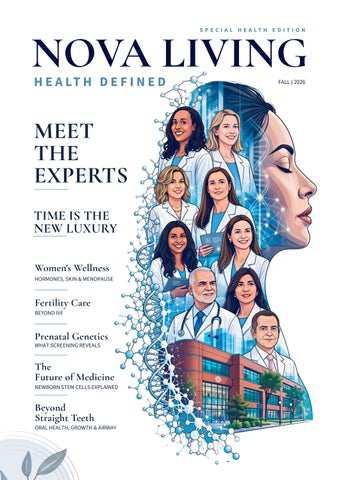
S P E C I A L H E A LT H E D I T I O N
NOVA LIVING H E A LT H D E F I N E D
MEET THE EXPERTS TIME IS THE NEW LUXURY Women's Wellness HORMONES, SKIN & MENOPAUSE
Fertility Care BEYOND IVF
Prenatal Genetics WHAT SCREENING REVEALS
The Future of Medicine NEWBORN STEM CELLS EXPLAINED
Beyond Straight Teeth
ORAL HEALTH, GROWTH & AIRWAY
FALL | 2026
NOVA LIVING
FALL | 2026
H E A LT H D E F I N E D
INSIDE THIS EDITION Meet the experts and explore the innovations shaping modern healthcare.
05
Modern Medicine & Your Wellness
17
Board-Certified in Reproductive Endocrinology and Infertility
Joan Gonzalez, MD Board-Certified Family Medicine Physician
06
Understand Your Health. Plan for Your Future.
19
08
Empowering Your Health with MyRisk Genetic Testing
Board-Certified Obstetrician & Gynecologist
21
10
A Comprehensive Approach to PMOS Care
CooperSurgical
23
11
Advancing Surgery, Improving Outcomes Rami Z. Tabbarah, MD SRC Master Surgeon in Minimally Invasive Gynecology
12
Board-Certified Obstetrician & Gynecologist
14
Vulvodynia: Understanding Chronic Vulvar Pain
Cameron Slife, DO
Board-Certified Obstetrician & Gynecologist
16
Principal Genetic Counselor
25
Fertility Care Before the Struggle Samantha Pierce, PA-C Board-Certified Physician Assistant | Fertility Care
Incontinence & Pelvic Organ Prolapse Said M. Ali, MD, FACOG
Board-Certified Obstetrician & Gynecologist
28
Hormones, Skin, and Women’s Wellness Stanthia N. Ryan, MD
Understanding Prenatal Genetic Screening Chelsea Wagner, MS, CGC
Hira Khaliq, MD
Board-Certified Obstetrician & Gynecologist
Newborn Stem Cells & the Future of Medicine Cord Blood Registry (CBR®)
Katie Hunt, MS, CGC Board-Certified Genetic Counselor
The Blood Test Rewriting Prenatal Care Tiffany Inglis, MD, FACOG
Kelly Curd Berry, MS, M.Ed., CGC Certified Genetic Counselor
Fertility Care Beyond IVF Ziad Hubayter, MD, MPH, MBA
More Than Hot Flashes: Navigating Menopause
Katherine Shipley, PA-C
Board-Certified Physician Assistant | Obstetrics & Gynecology
29
Beyond Straight Teeth: Oral Health, Growth & Airway
Dr. Gema Island, DDS
Board Certified Pediatric Dentist
NOVA LIVING
S P E C I A L H E A LT H E D I T I O N
H E A LT H D E F I N E D
A Shared Vision for Better Health Dear Northern Virginians,
GLORIA FONSECA
If you know me, you know I love bringing people together. It is why I do what I do, and it is the heart behind this first health edition of NoVa Living. We are fortunate to have remarkable physicians, researchers, and healthcare leaders in our community. I wanted these pages to bring their knowledge a little closer to you and the people you love. As a mother and entrepreneur, I know how easily our own health moves down the list. We make time for everyone else. We deserve some of that attention, too. I hope you find something here that sparks your curiosity or starts a conversation. Thank you for welcoming us into your homes and businesses. I am so happy to share this first edition with you. With love,
Gloria F.
CEO & Publisher NOVA Living Magazines
Dear Northern Virginia patients, Twenty-one years ago, I founded Annandale OBGYN with a simple mission: to provide women in our community with compassionate, comprehensive healthcare. What began as one practice has grown into Anna Health, now serving families across Northern Virginia through 13 clinical locations, including family medicine, gynecology and obstetrics, and fertility care. Today, more than 30 providers and 120 team members share in caring for patients through every stage of life. As we have grown, our purpose has remained the same: to make healthcare more connected, personal, and centered on the individual. We are also honored that Anna Health has been recognized by the Surgical Review Corporation as a Center of Excellence in Minimally Invasive Surgery, and I am proud to be recognized as an SRC Master Surgeon. I am deeply grateful to our patients, our team, and the community for being part of this journey. We look forward to continuing to advance healthcare while keeping compassion and trust at the heart of everything we do. Warmly,
Anna Le SRC Master Surgeon CEO Anna Health
HEALTH DEFINED FALL | 2026
Page 5
BUILDING A HEALTHIER NORTHERN VIRGINIA: HOW MODERN MEDICINE SHAPES YOUR WELLNESS By Joan Gonzalez, MD | Board-Certified Family Medicine Physician
Northern Virginia is home to some of the region’s most health-conscious communities. Families throughout the area balance demanding schedules while seeking care that is coordinated, preventive, and grounded in science. Modern medicine now delivers exactly that— combining managed healthcare, comprehensive risk assessment, and evidence‑based medicine to help patients stay healthy, catch issues early, and receive care tailored to their lives.
Managed Care: Coordinated Care for Modern Families Managed care is built to simplify the patient experience. Instead of navigating disconnected appointments, families benefit from coordinated care that prioritizes prevention and long-term wellness. In Northern Virginia, this can mean smoother referrals, consistent communication among providers, and more timely screenings. As healthcare systems continue to expand services and strengthen coordination among specialties, managed care can help patients move more seamlessly through each stage of care while maintaining a focus on quality, continuity, and prevention.
Evidence‑Based Medicine: Care Rooted in Science Evidence‑based medicine ensures that every recommendation and treatment is grounded in the latest research. By blending scientific evidence with clinical expertise and patient preferences, it creates care that is both effective and personalized. Patients benefit from proven treatments, fewer unnecessary tests, and guidance that evolves with new discoveries.
Comprehensive Care: A Complete Approach to Community Wellness When managed care, risk assessment, and evidence-based medicine come together, they create a more comprehensive model of care that supports the whole person. This approach emphasizes continuity, prevention, and long-term wellness rather than treating symptoms in isolation. For Northern Virginia residents, comprehensive care can mean having a medical home where preventive screenings, chronic-disease management, mental-health support, women’s health, and age-related needs are connected through a coordinated experience. By shifting the focus from reactive treatment to proactive wellness, this model can strengthen community health and help patients receive care that reflects their history, lifestyle, and goals.
Risk Assessment: Understanding Your Personal Health Story Every patient has a unique health profile shaped by ABOUT THE AUTHOR genetics, lifestyle, and environment. Risk assessment helps identify what matters most. Board‑certified family medicine physicians evaluate heart‑health indicators, Joan Gonzalez, MD cancer risks, metabolic conditions, mental and emotional Board-Certified Family Medicine well‑being, lifestyle habits, and social factors such as Physician access to food, transportation, and safe housing. They also address women’s health needs, infectious‑disease exposure, immunization status, and age‑related concerns like fall risk and cognitive changes. This comprehensive approach gives patients a clearer understanding of their health and allows physicians to design care plans that reflect individual goals. In a region as diverse as Northern Virginia, risk assessment is essential for long‑term wellness.
Dr. Joan Gonzalez is a board-certified family medicine physician who completed her family medicine residency at Temple University/Sacred Heart Hospital in Allentown, Pennsylvania. She later served in the United States Navy as a Senior Medical Officer aboard the USS Theodore Roosevelt, overseeing care for 5,000 active-duty service members and their families. Her practice focuses on preventive medicine, chronic disease management, and building long-term relationships with her patients.
HEALTH DEFINED FALL | 2026
Page 6
Understand Your Health. Plan for Your Future. By Kelly Curd Berry, MS, M.Ed., CGC |
Licensed and certified genetic counselor
This feature explores the value of genetic testing and the role of genetic counselors in guiding patients through their genetic health journey. ABOUT LABCORP
Labcorp's mission is to improve health and improve lives. By combining advanced science, innovative technology, and rigorous quality standards, we deliver reliable test results while supporting advancements in genetic medicine through research, variant interpretation, and data sharing. Across Northern Virginia and throughout the United States, Labcorp offers convenient access to laboratory services and a comprehensive testing portfolio, from routine diagnostics to advanced genetic testing, including carrier screening and hereditary cancer testing. With support from genetic counselors and digital results delivery tools, we help patients understand their results and make informed decisions.
What is genetic testing, and what are the benefits? Genetic testing examines your DNA to identify changes, called gene variants, that may affect your health, increase your risk for certain conditions, or impact the health of your family. Because some gene variants can be inherited, genetic testing may also provide important information for your relatives. The information gained from genetic testing can help you and your healthcare provider make more informed decisions about prevention, screening, treatment, and family planning. In some cases, genetic testing can identify health risks before symptoms develop or help guide personalized treatment options and ongoing health management.
How can a genetic counselor help me? Genetic counselors help patients understand how genetic information may impact their health and healthcare decisions. They can explain testing options, discuss the benefits and limitations of testing, help interpret results, and provide guidance on potential next steps, whether you're planning a family, exploring your hereditary cancer risk, or seeking answers about your health.
A GENETIC COUNSELOR CAN HELP:
Which genetic tests may be appropriate for you What your results mean How genetic information may affect medical management, screening, or treatment Potential implications for family members Available resources and support services Their goal is to help you make informed decisions and feel confident about your healthcare journey.
What is the difference between screening and diagnostic genetic testing? Genetic testing can serve different purposes. Screening helps assess the chance that you, your pregnancy, or your child may be at risk for a genetic condition. It is often used as an early step to identify individuals who may benefit from additional evaluation. Examples include carrier screening and non-invasive prenatal screening tests that can screen for trisomy 21 (Down syndrome) and other chromosomal differences in pregnancy. Diagnostic testing helps confirm or rule out a genetic condition when there are signs, symptoms, or other findings that suggest a genetic cause. Examples include hereditary cancer testing or confirmatory lab tests that look at the chromosomes of a pregnancy. A genetic counselor can help explain which type of testing may be appropriate based on your personal or family history.
Family Planning & Carrier Screening What is carrier screening and who should consider it? Carrier screening can help determine whether you and/or your partner have an increased chance of having a child with a specific inherited disorder. Most people likely carry several genetic variants associated with inherited conditions.¹ While carriers typically don't have the disease associated with a variant they carry, they may pass these variants on to their children, who may exhibit that condition. In some cases, carrier screening may also provide additional information about your own health.
HEALTH DEFINED FALL | 2026
Carrier screening may be appropriate for: Individuals planning a pregnancy Those who are currently pregnant People with a family history of inherited conditions Individuals interested in learning more about potential genetic risks for future children Your healthcare provider or a genetic counselor can help you determine whether carrier screening is right for you and explain the possible test results and what they may mean for you and your family. Carrier screening is most informative before pregnancy, when it offers the greatest reproductive options.
Hereditary Cancer Genetic Testing
Page 7 REAL STORIES
Sarah and Michael chose carrier screening Sarah and Michael chose carrier screening as part of their family planning journey. Although neither had a known family history of cystic fibrosis (CF), testing showed they were both carriers. With support from a genetic counselor, they learned about their options and felt empowered to make informed decisions. During pregnancy, diagnostic testing confirmed their baby had CF. Because the condition was identified early, Sarah and Michael were able to work closely with specialists, explore prenatal and postnatal treatment options, and prepare for their baby's care. This early information helped guide treatment decisions and support the best possible outcome for their growing family.
What is hereditary cancer testing and who should consider it?
How can hereditary cancer test results be used?
Hereditary cancer testing looks for inherited genetic changes that may increase the risk of developing certain types of cancers, such as breast, ovarian, colorectal, pancreatic, or prostate cancer. Genetic testing for hereditary cancer can help personalize care and lead to better outcomes.
Depending on the results, genetic information may provide insights and opportunities for tailored cancer management including: Personalized management of future cancer risk through enhanced surveillance or risk-reducing medical/surgical options Informed treatment decisions for certain cancers, such as the potential use of targeted therapies and improved access to clinical trials Risk assessment and testing for family members Support for reproductive planning options
Testing may be appropriate for people who: Have a personal history of cancer Are of Ashkenazi Jewish ancestry Have several close blood relatives who have the same type of cancer Have relatives diagnosed with cancer at younger ages Have a close blood relative that meets testing guidelines for hereditary cancer Have a known hereditary cancer-causing variant in the family Want to better understand their risk for developing cancer REAL STORIES
Jennifer's Hereditary Cancer Testing Jennifer reviewed her family history of cancer at her annual visit, including breast cancer in her mother at age 45 and aunt at age 53, and prostate cancer in her grandfather at age 60. Based on this history, she elected hereditary cancer testing and was found to have a CHEK2 gene variant associated with an approximately 20-30% lifetime risk of breast cancer in females and a twofold increased risk of prostate cancer in males. A genetic counselor helped Jennifer understand her results and discuss options for managing her risk, including enhanced screening with annual mammograms and breast MRI, risk-reducing strategies, and testing for family members. Genetic testing empowered her to take a proactive, personalized approach to managing her cancer risk. LEARN MORE:
Discussing hereditary cancer testing with your healthcare provider or a genetic counselor can help you decide whether testing is right for you and better understand the types of results you may receive.
Using Genetics to Navigate Your Health Risks Through ongoing research, variant interpretation, and data sharing, Labcorp helps advance the understanding of inherited conditions and cancer risk. Combined with comprehensive testing services and genetic counseling support, these efforts help patients make informed decisions about their health, family planning, and future care with confidence. ABOUT THE AUTHOR
Kelly Curd Berry, MS, M.Ed., CGC Senior Medical Science Liaison for Labcorp Genetics and Women’s Health
Kelly Curd Berry MS, M.Ed., CGC is a licensed and certified genetic counselor currently working as a Senior Medical Science Liaison for Labcorp Genetics and Women’s Health. She holds a Master of Education from the University of Delaware and a Master of Science in Genetic Counseling from Virginia Commonwealth University. Prior to working at Labcorp, she was a clinical genetic counselor working in the prenatal setting as well as in a general genetics clinic serving pediatric and adult patients.
REFERENCES 1. Chong JX, et al. A Population-Based Study of Autosomal-Recessive Disease-Causing Mutations in a Founder Population. Am J Hum Genet. 2012 Oct 5; 91(4): 608-Q20
HEALTH DEFINED FALL | 2026
Page 8
Know Your Risk Empowering Your Health with the MyRisk® Hereditary Cancer Test
By Katie Hunt, MS, CGC | Medical Science Liaison, Myriad
Myriad Genetics is a pioneer in genetic testing and precision medicine that has delivered actionable genetic insights to millions of people for more than 30 years. Today, we continue to innovate across hereditary cancer risk, reproductive health, oncology, urology, and mental health.
In plain language, what does your company do, and what would a patient encounter from you? Within hereditary cancer risk, Myriad offers a simple genetic test called the MyRisk Hereditary Cancer Test that analyzes 63 genes linked to 11 common cancers including breast, ovarian, colorectal, pancreatic, prostate and others. This test can uncover invaluable insights and answers to help reduce the risk for cancer or diagnose it at an earlier, more treatable stage.
Walk through the process from the patient’s point of view, and how long each part takes. If your healthcare provider recommends hereditary cancer testing, it can be done in your provider's office. Your provider will collect a blood or saliva sample using a special kit, which will be shipped to Myriad Genetics for analysis. Test results will be delivered directly to your provider in approximately two weeks. Your provider may schedule an appointment with you to discuss your results.
In advance of an appointment to discuss potential hereditary cancer testing, patients should gather information about their personal and family history. This should include information such as: Any history of cancer on the patient’s mom and dad’s sides of the family At least three generations of family history (parents, children, siblings, grandparents, aunts, uncles, nieces, nephews, and other close blood relatives) Details about any cancer diagnoses in the family, such as the type of cancer and the age of the relative when they were diagnosed
Advancing health through innovative genetic testing and precision medicine to help people make more informed decisions for themselves and their family.
What do the results mean, and just as importantly, what do they not mean? Hereditary cancer testing is a type of genetic test that can help healthcare providers find out if a patient is at higher risk for developing cancer, due to a genetic mutation that may have been passed down through the patient’s family. The test does not determine if a person has cancer. A positive MyRisk test result does not mean a patient has cancer, but rather that a patient may be at an increased risk of developing certain cancers due to an inherited mutation. A negative MyRisk test result means that no genetic mutation was found in the genes tested, ruling out common causes of hereditary cancer. This does not mean that a patient will not develop cancer in the future, and higher risks could still remain depending on the patient’s family history of cancer and other risk factors.
Who is this appropriate for, and who is it not appropriate for? Patients may be an appropriate candidate for hereditary cancer testing if they have a personal or family history of any of the following: Multiple cases of the same type of cancer on the same side of the family Young age at cancer diagnosis in the family (50 or younger) Rare cancer in the family like ovarian, male breast cancer or pancreatic cancer
HEALTH DEFINED FALL | 2026
What is the most common misconception you would like to correct? Many people believe that if genetic testing finds an inherited gene mutation linked to cancer risk, surgery is their only option. In reality, surgery is just one of several ways patients and their providers can manage their cancer risk. Depending on the specific risk factors identified, there may be other options available to help lower risk or detect cancer earlier, when it is often more treatable. These options can include enhanced or more frequent screenings as well as medications that may help reduce the risk of certain cancers. For example, a woman with a BRCA1 or BRCA2 mutation may have several options to help manage her breast cancer risk. In addition to considering a risk-reducing surgery, she may benefit from annual breast MRI screening starting at age 25 and may discuss risk-reducing medications, such as tamoxifen, with her healthcare provider.1
What should a patient bring up with their own physician afterward?
Patients should discuss their hereditary cancer testing results with their provider to determine if any medical management changes might be recommended based on the results. The testing is designed to uncover invaluable insights about potential increased risks for certain cancer types, and to help guide future medical management decisions aimed at reducing the risk of cancer or diagnosing it at an earlier, more treatable stage. A patient’s personalized prevention or treatment plan based on their results could include any of the following: Extra surveillance: Extra surveillance may find cancer at an earlier and more treatable stage Risk-reducing medications: There are medications that can lower the risk for certain cancers Risk-reducing surgery: Based on a patient’s unique situation, certain surgeries can greatly lower future cancer risk. Treatment options: If a patient has been diagnosed with cancer, the test results may help determine appropriate treatment options for the patient.
What should someone know about cost and insurance? Cost should not stand in the way of getting answers. Most eligible patients pay little to no cost for testing,2 and Myriad will email patients a personalized estimate of any potential out-of-pocket costs. Most commercial and federally funded insurance plans cover HCT for eligible patients. 3 However, when coverage isn't available, patients may have access to a financial assistance program, interest-free payment plans, or a lowcost direct pay option.
Page 9
What has changed in this area in the last few years that a patient probably has not heard about? There are now additional tools to assess breast cancer risk beyond traditional hereditary cancer testing, which works to identify mutations in genes like BRCA1 and BRCA2 that are associated with inherited risk. Myriad Genetics offers one of these additional tools in the form of our RiskScore® Assessment. The RiskScore analysis brings together multiple factors that can influence breast cancer risk to deliver a more personalized risk estimate of five-year and lifetime risk.
Myriad Genetics includes the RiskScore assessment for no additional charge with MyRisk hereditary cancer test orders for all eligible patients. By combining the MyRisk hereditary cancer test with RiskScore, Myriad can provide a more complete picture of breast cancer risk, helping more people gain insights that may inform conversations with their healthcare provider about their health and future care options.4 LEARN MORE ABOUT MYRISK TESTING:
ABOUT THE AUTHOR
Katie Hunt, MS, CGC Medical Science Liaison
Katie Hunt is a board-certified genetic counselor and Medical Science Liaison with Myriad Genetics. She partners with healthcare providers to implement reproductive genetic screening and hereditary cancer risk assessment in clinical practice. Before joining Myriad, she spent 13 years as a clinical genetic counselor in Maternal-Fetal Medicine. Katie holds a master’s degree in Medical Genetics from the University of Cincinnati and currently resides in Columbus, Ohio. She is passionate about health equity and enjoys hiking with her husband, trying new restaurants, and football season.
REFERENCES 1.Myriad Genetics. Gene Table. Accessed Sept. 2026. https://myriad.com/gene-table 2.Myriad Genetics. Insurance claims analysis, 12 months of major U.S. carriers; updated 2024. 3.CDC. Preventive Services Coverage. Updated June 3, 2026; accessed July 13, 2026. 4.Myriad internal data, MyRisk tests reported Sept. 2021–Feb. 2023 among unaffected OB-GYN and primary care patients.
HEALTH DEFINED FALL | 2026
How Comprehensive Women’s Healthcare Centers Provide Advanced Outpatient Care for PMOS: A PHYSICIAN’S PERSPECTIVE
By Hira Khaliq, MD | Gynecology and Obstetrics
As physicians, we see every day how complex Polyendocrine Metabolic Ovarian Syndrome (PMOS) can be. PMOS affects hormones, metabolism, menstrual cycles, and fertility, and it often impacts emotional wellbeing as well. Because it involves several systems in the body, patients benefit most from care delivered in a coordinated, comprehensive outpatient environment— one where multiple specialties work together rather than in isolation. This level of integration goes beyond the standard of care and allows us to diagnose and treat PMOS more effectively. PMOS often presents with symptoms that seem unrelated: irregular periods, weight changes, acne, hair growth, or difficulty conceiving. Many women have seen several providers before receiving a clear diagnosis. In a comprehensive women’s healthcare center, these concerns are evaluated together. Family medicine physicians, gynecologists, fertility specialists, and minimally invasive surgeons collaborate within one clinical framework, which allows us to identify PMOS earlier and create a unified treatment plan from the beginning. Diagnosis starts with a thorough clinical evaluation. We review menstrual history, perform hormonal testing, and assess metabolic health, including insulin resistance, cholesterol, and blood pressure. Because PMOS affects both endocrine and metabolic pathways, primary care physicians play a central role in identifying underlying metabolic concerns. Gynecologists evaluate ovarian function, cycle irregularities, and pelvic symptoms. When fertility is a priority, reproductive endocrinologists guide ovulation support and cycle monitoring. This coordinated approach gives us a complete understanding of a patient’s health rather than treating symptoms separately. Treatment focuses on restoring balance and improving quality of life. We use evidence‑based medical therapy to regulate cycles, support ovulation, and improve insulin sensitivity.
Page 10
Gynecologists collaborate with primary care physicians to help patients manage metabolic health through medication, nutrition guidance, and lifestyle support. Gynecologists also address reproductive symptoms that interfere with daily life, while fertility specialists provide advanced options when conception becomes a goal. Because all providers communicate directly and share the same clinical information, patients receive consistent, coordinated care throughout their treatment. We also recognize that PMOS affects emotional well-being. Many patients experience anxiety, depression, or stress related to their symptoms. Lifestyle factors such as nutrition, sleep, and physical activity play an important role in managing PMOS. In a comprehensive outpatient setting, we incorporate counseling, nutrition support, and follow‑up visits to help patients feel supported and empowered throughout their care. Our goal as physicians is to treat PMOS as the complex condition it is. By bringing together primary care, gynecology, surgery, fertility care, and wellness support, comprehensive women’s healthcare centers provide coordinated, patient‑centered care that exceeds the standard outpatient model. This approach ensures timely diagnosis, personalized treatment, and long‑term support —all within a single, unified system designed to care for the whole woman.
ABOUT THE AUTHOR
Hira Khaliq, MD Gynecology and Obstetrics | Robotic and Minimally Invasive Surgery
Dr. Hira Khaliq is an obstetrician and gynecologist whose work spans high-risk pregnancy care and minimally invasive gynecologic surgery.
Page 11
HEALTH DEFINED FALL | 2026
ADVANCING SURGERY, IMPROVING OUTCOMES By Rami Z. Tabbarah, MD | Gynecology and Obstetrics
How advanced surgical expertise and comprehensive care can transform women's health. Modern minimally invasive and robotic gynecologic surgery has changed what patients can expect from treatment. Conditions such as fibroids, endometriosis, adenomyosis, pelvic pain, abnormal bleeding, and complex pelvic disease often affect daily life, fertility, and long‑term well-being. When surgery becomes part of the treatment plan, the approach used can meaningfully shape a patient’s prognosis.
Faster Recovery, Better Outcomes with Minimally Invasive Care Compared with traditional open abdominal surgery, minimally invasive and robotic techniques consistently lead to safer procedures and faster recovery. Most patients return home the same day or within 24 hours, rather than staying in the hospital for several days. Recovery is also significantly quicker: many patients resume normal activities within one to three weeks, instead of the six to eight weeks typically required after open surgery. This shorter healing period reduces physical strain, emotional stress, and time away from work and family.
Lower Risk and Fewer Complications These techniques also reduce surgical risk. Blood loss is often between 50 and 150 milliliters, compared with 300 to 600 milliliters during open surgery, lowering the likelihood of transfusion and helping patients regain strength sooner. Infection rates drop by 40 to 60 percent, and wound complications are far less common. Fewer complications mean a smoother recovery and a more stable long‑term outlook.
Experience Matters A patient’s prognosis is also strongly influenced by the surgeon’s experience. Studies consistently show that experienced surgeons have lower complication rates, shorter operative times, and fewer conversions to open surgery. They are also more skilled at removing disease completely, preserving fertility when appropriate, and guiding patients toward the treatment that best supports their long‑term goals. This thoughtful decision‑making—knowing when surgery is necessary, when nonsurgical options may be effective, and which procedure offers the best long‑term benefit—is central to improving outcomes.
The Precision Advantage of Robotic Surgery Robotic surgery adds a level of precision that can further improve prognosis, especially for complex conditions. Enhanced visualization and fine instrument control allow surgeons to treat disease more thoroughly and safely. In endometriosis, for example, complete excision of deep disease is associated with better pain relief, improved fertility outcomes, and lower recurrence rates. Robotic precision can make this level of treatment more achievable.
Conditions Treated, Futures Protected For fibroids, minimally invasive removal reduces blood loss, shortens recovery, and can preserve the uterus when desired. In adenomyosis, minimally invasive hysterectomy offers faster healing and fewer complications, improving long‑term pelvic comfort. Even patients with extensive scarring or prior surgeries often benefit from robotic techniques that allow treatment previously possible only through open surgery.
Stronger Care for a Healthier Community Access to advanced surgical care within the community strengthens prognosis even further. When patients can receive high‑quality care close to home, they avoid long travel, multiple referrals, and treatment delays. Families experience less disruption, and local clinicians can coordinate care more effectively. Over time, this creates a stronger medical network and better long‑term health outcomes for the entire community. ABOUT THE AUTHOR
Rami Z. Tabbarah, MD Gynecology and Obstetrics | Robotic and Minimally Invasive Surgery
Dr. Rami Tabbarah is a fellowship-trained minimally invasive gynecologic surgeon specializing in the treatment of fibroids, abnormal bleeding, endometriosis, complex pelvic disease, and other gynecologic conditions.
HEALTH DEFINED FALL | 2026
Page 12
Hormones, Skin, and Women’s Wellness:
How Comprehensive Women’s Care Supports Vulvar Health in Northern Virginia
By Stanthia N. Ryan, MD | Gynecology and Obstetrics
Women across Northern Virginia are increasingly proactive about their health—seeking care that is comprehensive, science‑based, and sensitive to the realities of aging, hormonal change, and intimate wellness. Two areas gaining overdue attention are hormone replacement therapy (HRT) and vulvar dermatology, both essential components of women’s health that directly influence comfort, confidence, and quality of life. While these topics were once whispered about, today’s comprehensive women’s care centers are bringing them into the open, offering coordinated support that helps women understand their bodies and feel empowered in every stage of life.
Why Hormones Matter More Than We Think
It supports natural lubrication. Many women notice improved comfort during daily activities and intimacy when estrogen levels are supported.
Hormones shape nearly every aspect of women’s health— from energy and sleep to mood, metabolism, sexual wellness, and vulvar comfort. As women enter perimenopause and menopause, estrogen levels decline, often leading to changes that are both physical and emotional. One of the most overlooked effects of hormonal change is its impact on the vulva and vagina. Lower estrogen can lead to dryness, irritation, thinning of the skin, and increased sensitivity. For some women, these changes contribute to chronic discomfort or exacerbate conditions like vulvodynia or vulvar dermatitis. Hormone replacement therapy, when appropriate, can help restore moisture, elasticity, and comfort. It is not a one‑size‑fits‑all solution, but rather one option among many that clinicians may consider based on a woman’s symptoms, medical history, and personal preferences. Comprehensive women’s care centers offer multiple forms of HRT—vaginal creams, tablets, rings, transdermal patches, and systemic options—allowing clinicians to tailor therapy to each woman’s needs.
It strengthens the skin barrier. Estrogen influences collagen production and skin integrity. With adequate estrogen, vulvar skin is better able to withstand friction, clothing, exercise, and everyday irritants.
How HRT Works: A Simple, Clear Explanation Hormone replacement therapy works by supplementing the estrogen that naturally declines during perimenopause and menopause. Estrogen is a key hormone that supports the health of vulvar and vaginal tissues, and its reduction can lead to dryness, thinning, and irritation. Here’s how HRT supports vulvar wellness: It nourishes vulvar and vaginal tissues. Estrogen helps maintain thickness, elasticity, and hydration. When estrogen levels fall, the skin becomes more fragile. Localized HRT can help replenish moisture and support tissue resilience.
It supports urinary comfort. The urethra and bladder also respond to estrogen. Some women experience urinary urgency or discomfort during menopause, and localized HRT may help support these tissues. It enhances overall pelvic comfort. When vulvar and vaginal tissues are healthier, women often feel more at ease, more confident, and more connected to their bodies. HRT can be delivered in different ways depending on a woman’s needs. Vaginal estrogen products act locally, supporting the tissues directly. Transdermal or systemic options may support broader symptoms such as hot flashes, sleep changes, or mood shifts. Comprehensive women’s care centers help women understand these options and choose what aligns with their goals.
The Growing Field of Vulvar Dermatology Vulvar dermatology is an emerging specialty focused on the skin of the vulva—an area that is often misunderstood, under‑evaluated, or dismissed. Yet vulvar skin is uniquely sensitive, influenced by hormones, friction, hygiene products, clothing, sexual activity, and immune responses. Common vulvar skin conditions include dermatitis, lichen sclerosus, lichen simplex chronicus, and chronic irritation from everyday products. These conditions can cause itching, burning, tearing, or pain—symptoms that many women quietly endure for years.
HEALTH DEFINED FALL | 2026
Page 13
Comprehensive women’s care centers now include clinicians trained in vulvar dermatology who use careful examination, diagnostic testing, and evidence‑based treatments to help women understand what is happening and why. They also help differentiate dermatologic conditions from pain disorders like vulvodynia, ensuring that women receive the right care rather than bouncing between providers without answers.
HORMONAL CHANGES Thinner, more fragile vulvar skin
Better care for YOU
VULVAR SKIN HEALTH
Where Hormones and Skin Intersect Hormonal changes and vulvar skin health are deeply connected. As estrogen declines, the vulvar epithelium becomes thinner and more fragile. This can make women more susceptible to irritation, inflammation, and dermatologic conditions. For some, hormonal changes amplify underlying skin disorders; for others, they create new symptoms that feel unfamiliar or distressing. This is why coordinated care matters. When gynecologists, dermatologists, pelvic‑floor specialists, and hormone experts work together, women receive a complete picture of their health—not fragmented advice or temporary fixes.
Lower risk of irritation and inflammation
Northern Virginia’s Comprehensive Care Model Northern Virginia is home to women’s health centers that embrace this integrated approach. These clinics provide:
Hormone evaluation
Expert vulvar dermatology
Pelvic‑floor therapy
Minimally invasive gynecologic care
Patient‑centered environment
helps women understand how perimenopause and menopause affect their bodies.
for skin conditions that are often overlooked.
is available for women whose discomfort is influenced by muscle tension or nerve sensitivity.
ensures that structural or pain‑related contributors are not missed.
where sensitive topics are handled with compassion and respect.
This model reflects a shift in women’s healthcare—one that values comfort, dignity, and long‑term wellness.
A New Era of Women’s Wellness Hormone replacement therapy and vulvar dermatology are not fringe topics—they are essential components of women’s health that deserve attention, expertise, and open conversation. For women across Northern Virginia, comprehensive women’s care offers a path toward understanding their bodies, addressing chronic discomfort, and reclaiming confidence at every age. ABOUT THE AUTHOR
Stanthia N. Ryan, MD Gynecology and Obstetrics | Robotic and Minimally Invasive Surgery
Dr. Stanthia Ryan is a board-certified obstetrician and gynecologist who cares for patients through pregnancy and every stage of gynecologic health. She earned her medical degree from Georgetown University and completed her residency in obstetrics and gynecology at the University of North Carolina at Chapel Hill. Her clinical interests include hypertensive disorders of pregnancy, fibroids, endometriosis, abnormal uterine bleeding, and polycystic ovary syndrome (PCOS). She is committed to closing gaps in women’s health and caring for the whole person.
HEALTH DEFINED FALL | 2026
Page 14
VULVODYNIA UNDERSTANDING CHRONIC VULVAR PAIN AND THE TREATMENTS THAT HELP By Cameron Slife, DO | Gynecology and Obstetrics
Vulvodynia is persistent vulvar pain lasting at least three months that cannot be explained by an infection, skin disorder, or another identifiable condition. Estimates suggest that 8% to 16% of women experience vulvodynia at some point, yet many live with symptoms for years before receiving a diagnosis. Part of the reason is that the examination is often unremarkable. A woman can have burning, rawness, stinging, or sharp pain on contact, and a careful pelvic exam can come back with nothing visible to point to. Many women see several clinicians across several years before the condition is identified. Some are told that the results are normal and that stress may be the cause. A normal exam does not mean the pain lacks a physical basis. Vulvodynia involves changes in the way nerves in the vulvar tissue signal pain, along with muscle and other contributors, and none of that is visible on inspection.
What Contributes to the Pain Vulvodynia is multifactorial, which means it rarely traces back to one cause. Research points to several contributors that appear in different combinations from one patient to the next. Peripheral nerve hypersensitivity appears to play a significant role, with studies showing increased density of pain-sensing nerve endings in the vulvar vestibule. Central pain amplification, in which the nervous system becomes more responsive to pain signals over time, may also contribute, as it does in other chronic pelvic pain conditions. Pelvic floor muscle dysfunction is common and frequently perpetuates the cycle, since muscles that tighten in response to pain then generate pain of their own. Hormonal influences, inflammatory pathways, and the effects of chronic pain on sleep, mood, and anxiety all interact with these mechanisms. Because the cause can differ from patient to patient, treatment is approached in steps rather than as a single fix.
How Vulvodynia Is Diagnosed
Treatment Usually Begins Conservatively
There is no blood test or imaging study
Vulvodynia is treated in a stepwise
that identifies vulvodynia, which is part
sequence, starting with the least
of why it goes unrecognized for so long.
invasive measures. For many women,
The diagnosis rests on a detailed history
these are enough.
and a careful examination.
Vulvar care and reducing irritation.
Evaluation begins with the history of
Adjusting soaps, detergents, fabrics, and
the pain: when it started, what provokes
other everyday exposures removes
it, whether it is constant or intermittent,
sources of irritation that can aggravate
and how it has changed. Cotton swab
already sensitive tissue. These changes
testing during a pelvic exam is used to
are simple and are usually where
map exactly where the tissue is
treatment starts.
sensitive, which often gives a woman
Pelvic floor physical therapy. For a
the first concrete picture of her own
substantial number of patients this is
condition. Pelvic floor assessment
the most useful single intervention. A
identifies muscle tightness and
physical therapist with specific pelvic
tenderness. Dermatologic examination
floor training works on the muscle
rules out conditions such as lichen
tightness and trigger points that sustain
sclerosus and dermatitis, and testing
the pain cycle. This is a specialized field
rules out infectious causes including
and is not the same as general physical
yeast, bacterial vaginosis, and herpes
therapy.
simplex virus. Screening for
Topical treatments. Medications
neuropathic pain syndromes may also
applied directly to the tissue can reduce
be appropriate.
nerve sensitivity and make daily activity
Reaching the diagnosis is not a
and intimacy more tolerable while other
formality. It is the point at which
treatments take effect.
treatment can begin.
HEALTH DEFINED FALL | 2026
Oral medications that act on nerve pain signaling. Several classes of medication used for other chronic nerve pain conditions can reduce vulvar pain. These are prescribed and adjusted over time rather than taken as needed. Counseling and sexual health support. This is included not because the pain is psychological, but because chronic pain affects sleep, mood, relationships, and intimacy, and addressing those effects measurably improves outcomes. Partner-inclusive counseling is often helpful. Improvement is typically gradual and measured over months rather than weeks, and the plan is adjusted as symptoms change. Many women improve substantially with these measures and never require a
Page 15
Why Coordinated Care Progress is tracked over time rather than reconstructed at each visit. For a Matters Vulvodynia rarely responds well to one specialty working on its own. The pain has nerve, muscle, hormonal, and psychological components, and those are usually treated by different clinicians. When care is coordinated rather than referred out piece by piece, several practical things change for the patient. She does not repeat her history from the beginning at every appointment. Her gynecologist, physical therapist, and the clinicians handling pain and sexual health are working from the same plan and can adjust it together as her symptoms shift.
condition that is managed over months, that continuity is not an administrative detail. It is a large part of whether treatment works.
The Delay Is the Problem Worth Solving Vulvodynia has a name, an established diagnostic process, and a sequence of treatments that help most women who work through it. The longest and most costly part of the experience for most patients is the stretch of time before anyone identifies what is happening. Shortening that stretch is the single largest improvement available in the care of this condition.
procedure.
When Procedures Are Considered When conservative treatment has been given an adequate trial and pain persists, procedures may be considered for selected patients. Options can include nerve blocks and other paindirected interventions. For women with localized provoked vestibulodynia who have not improved with other treatments, vestibulectomy may be considered in carefully selected cases. A surgeon trained in minimally invasive gynecologic surgery contributes to this stage in two ways. The first is diagnostic. Vulvar and pelvic pain can arise from endometriosis, pudendal nerve
ABOUT THE AUTHOR
Cameron Slife, DO Board-Certified Obstetrician & Gynecologist
entrapment, or myofascial pain, and distinguishing among them requires detailed knowledge of pelvic neuroanatomy. Getting that distinction right is what prevents a woman from being treated for the wrong condition. The second is operative, performing the selected intervention with attention to preserving tissue and supporting recovery.
Dr. Cameron Slife provides full-scope women’s health care, from routine gynecologic visits and preventive care to prenatal care and delivery. His training emphasizes a wholeperson approach, considering how overall health, lifestyle, and medical history shape each patient’s care.
HEALTH DEFINED FALL | 2026
Page 16
FERTILITY CARE THAT STARTS BEFORE THE STRUGGLE By Samantha Pierce, PA-C |
Board-Certified Physician Assistant
When women in Northern Virginia tell me their fertility story, it usually follows the same script. They tried for a year, or more. They got worried. They asked for a referral. They waited months for a consultation at a fertility clinic. And when they finally sat down across from a specialist, the conversation opened with IVF. That is a hard place to begin. Fertility care can be expensive and emotionally exhausting, and too often fertility is approached as a crisis to be solved rather than an aspect of health to be supported long before conception becomes an immediate goal. Our first commitment was to cost. Fertility care in this region has become something families refinance their lives around, and we were not willing to accept that as the price of entry. We deliver care at a fraction of what patients are used to paying, and we do it without sacrificing anything else. Our second commitment was to time. A woman who has been trying for a year and is finally ready to ask for help should not wait another season to be seen. We keep our consultation wait times short on purpose, because in fertility, months matter.
Thyroid disease, PCOS, blood pressure, insulin resistance, and untreated sleep problems all touch fertility, and they belong in the same conversation. When patients come to us early, we talk about the things that move the needle. For example, being above or below a healthy weight can disrupt ovulation, and modest, sustainable changes can restore regular cycles. Nutrition, such as a Mediterranean-style diet, and consistent movement improve hormonal signaling and egg and sperm quality alike. Chronic stress is not just unpleasant; it is physiologic, and we treat it that way. We also talk about the home and the workplace. Endocrinedisrupting chemicals, like BPA in food packaging and receipts, phthalates in fragrances, personal care products, and soft plastics, interfere with the hormone systems reproduction depends on. Reducing exposure can have a meaningful impact on sperm and egg quality. Every woman we help conceive without IVF is a family that kept its savings and its footing. Every patient we educate at age 28 is one we may never need to treat at age 38. That is the community impact we care about: not volume, but the number of people who never had to walk the hardest version of this road.
Our third commitment was to the experience. We are a small team, deliberately, and we hold your hand through it. You will know the people caring for you. They will know your name, your history, and where you are in your cycle without opening a chart. That kind of attention is not a frill. Patients who feel supported stay in treatment, follow the plan, and often have better outcomes. But don’t wait until you’ve been trying for a year to come see us. We want to see you before you even start. Most fertility clinics are built to catch people at the end of a long, discouraging road. We would rather intervene at the beginning. We work alongside subject matter experts in gynecology and family medicine, so a patient’s reproductive health is not separated from the rest of her care. ABOUT THE AUTHOR
Samantha Pierce, PA-C Board-Certified Physician Assistant | Fertility Care Samantha Pierce, PA-C, is a board-certified physician assistant. She earned her bachelor’s degree with honors from Tulane University and completed her physician assistant training at Wake Forest University School of Medicine. She previously worked at NYU Langone, managing labor and delivery, high-risk antepartum patients, and the newborn nursery. She now guides patients through fertility testing, egg freezing, and IVF, supports family building for LGBTQ+ couples, and leads fertility education programming.
Page 17
HEALTH DEFINED FALL | 2026
GROWING YOUR FAMILY IN NORTHERN VIRGINIA:
FERTILITY CARE BEYOND IVF By Ziad Hubayter, MD, MPH, MBA, FACOG | Board-Certified in Reproductive Endocrinology and Infertility
For many families across Northern Virginia, the journey to parenthood is deeply personal. When fertility challenges arise, IVF often comes to mind first—but it’s far from the only option. In fact, most fertility issues can be evaluated and treated without assisted reproductive technology. Modern medicine now offers a wide range of approaches that support natural conception, restore reproductive health, and empower individuals and couples with choices that fit their values and goals.
A MODERN FERTILITY APPROACH Northern Virginia is home to some of the region’s most advanced women’s health practices, including comprehensive outpatient centers that specialize in fertility care. These clinics combine thoughtful diagnostics, targeted medical treatment, lifestyle support, and minimally invasive gynecologic surgery to help patients conceive—often without ever needing IVF.
Understanding Fertility Beyond IVF Fertility is influenced by a delicate balance of hormones, ovarian function, tubal health, uterine structure, cervical factors, and male reproductive parameters. When any part of this system is disrupted, conception can become more difficult. But many of these issues—irregular ovulation, endocrine imbalance, mild male‑factor infertility, early endometriosis, or uterine polyps—respond well to treatments that restore natural reproductive physiology. This is where non‑IVF fertility care shines. Instead of bypassing the body’s natural processes, these approaches aim to correct what’s causing the difficulty in the first place.
KEY TAKEAWAYS
Many fertility issues can be evaluated and treated without IVF. Modern fertility care can support natural conception and reproductive health. Comprehensive outpatient centers can provide coordinated, patientcentered care. Patients have more options to build their families on their own timeline.
Thoughtful, Comprehensive Evaluation A modern fertility evaluation looks at the whole picture. Providers assess ovulation patterns, hormone levels, ovarian reserve, tubal patency, uterine anatomy, and semen parameters. Minimally invasive gynecologic surgeons play a key role in identifying structural contributors such as fibroids, endometriosis, adhesions, or congenital uterine differences. This kind of detailed, anatomy‑driven evaluation often reveals clear pathways to conception that don’t require IVF.
Page 18
HEALTH DEFINED FALL | 2026
Evidence‑Based Treatments That Support Natural Conception
The Power of a Comprehensive Women’s Outpatient Center
Many fertility challenges stem from irregular or absent ovulation. Addressing thyroid disorders, insulin resistance, elevated prolactin, or polycystic ovary syndrome can restore predictable cycles and dramatically improve natural conception rates. When needed, medications such as letrozole or clomiphene citrate can help stimulate ovulation safely and effectively. Cycle‑based fertility models—tracking cervical mucus, ovulation predictor kits, or hormone patterns—help patients identify their most fertile days. These approaches are empowering, low‑intervention, and often highly effective. Northern Virginia is home to master surgeons in minimally invasive gynecology who specialize in fertility‑preserving procedures. Laparoscopic treatment of endometriosis, removal of fibroids or polyps, correction of uterine septa, and gentle adhesiolysis can restore normal pelvic anatomy and improve natural conception. These procedures are precise, low‑recovery, and designed to protect ovarian reserve and reproductive potential. Lifestyle factors also play a meaningful role. Nutrition, exercise, sleep, and stress all influence fertility, and comprehensive women’s health centers offer counseling and support to optimize metabolic health and reduce inflammation—key factors in reproductive wellness. Mild male‑factor infertility can often be improved through lifestyle changes, medical therapy, or intrauterine insemination (IUI), a simple procedure that places sperm directly into the uterus at the right time.
What sets Northern Virginia apart is the availability of integrated outpatient women’s health centers that bring all these services together. Instead of navigating multiple clinics, patients receive coordinated care under one roof—gynecology, endocrinology, pelvic‑floor therapy, nutrition, mental‑health support, and minimally invasive surgery. This model provides continuity and long‑term support, essential for a journey that can take months. Specialists communicate directly, ensuring that each patient’s care plan is cohesive and responsive. The environment is patient‑centered, sensitive to the emotional and physical aspects of fertility, and designed to empower families with education and clarity.
When IVF Becomes the Right Choice Even with the best non‑IVF care, some situations call for assisted reproductive technology. IVF becomes an essential option when natural pathways are no longer viable—such as severe tubal disease, very low ovarian reserve, significant male‑factor infertility, or persistent unexplained infertility after thorough evaluation. In these cases, IVF offers a controlled environment for fertilization and embryo development, bypassing barriers that cannot be corrected through medical or surgical means. It is not a failure of non‑IVF care—it is simply the next step in a thoughtful, evidence‑based fertility journey.
A Fertility Journey with Options—and Hope For families in Northern Virginia, fertility care is no longer a one‑size‑fits‑all experience. With advanced diagnostics, restorative treatments, minimally invasive surgery, lifestyle support, and IVF available when needed, patients have more choices than ever before. Most importantly, they have access to care that honors their goals, respects their values, and supports their path to parenthood—whether that path begins with cycle tracking or ultimately leads to IVF.
ABOUT THE AUTHOR
Ziad Hubayter, MD, MPH, MBA, FACOG Board-Certified in Reproductive Endocrinology and Infertility Dr. Ziad Hubayter is board-certified in both obstetrics and gynecology and reproductive endocrinology and infertility. He served as chief resident in obstetrics and gynecology at The George Washington University and completed his fellowship at Johns Hopkins University, with research at the National Institutes of Health. He also holds an MPH and an MBA. His clinical work includes IVF, egg and embryo freezing, fertility preservation before cancer treatment, and surgery for endometriosis and fibroids.
HEALTH DEFINED FALL | 2026
THE BLOOD TEST REWRITING PRENATAL CARE By Tiffany Inglis, MD, FACOG | Sera Prognostics
The first time you feel your baby move, everything else in the room goes quiet. You are 20 weeks along. Your bloodwork is normal, your blood pressure is fine, your anatomy scan looked beautiful, and your doctor smiled and said, "You are doing great." You walk out to your car in the parking garage and cry a little, because the pregnancy is real now, and because "great" is the word you have been waiting to hear for months. Then, a smaller thought slips in. What if there is something no one can see yet? I have practiced obstetrics and supported Women’s Health for more than two decades, and I have sat with women in that exact moment. That uncertainty is an honest response to pregnancy, which is one of the most physically layered things a human body ever does. Most of the time, "you are doing great" turns out to be exactly right. Sometimes it does not, and the reason it does not is the piece that has bothered me most across my career.
The gap I could not stop thinking about Preterm birth is what we call a delivery that happens before 37 weeks of pregnancy. It's more common than people realize. In 2025, about 10.4% of babies born in the United States arrived too early, and that rate has barely moved in twenty years (Hamilton et al., 2026). Babies who come too soon are more likely to spend time in the neonatal intensive care unit, more likely to have trouble breathing or feeding, and more likely to face long-term challenges like learning differences, cerebral palsy, or chronic lung issues. The cost of care is real too. In one large national study of commercially insured families, medical spending in the first six months of life averaged about $76,000 per preterm infant, and for the earliest babies, those born as early as 24 weeks, it climbed to more than $600,000 per infant (Beam et al., 2020). Here is the part that used to frustrate me clinically. For decades, the two pieces of information we relied on most to flag a pregnancy at risk of coming early were a previous preterm birth or a cervix that measured short on a secondtrimester ultrasound. Both matter. Together they only catch a fraction of the women who will actually go on to deliver early. In fact, roughly 85% of preterm births before 37 weeks happen in women with no history of a prior preterm birth. And short cervix identifies only a small additional fraction of the risk (Biggio, 2024). That is the invisible risk. A pregnancy can look perfectly typical on the outside while underlying biology tells a different story, and by the time symptoms show up, it is often too late for the preventive steps that work best. If you have ever wondered why a friend with a "textbook" pregnancy suddenly ended up with a baby in the NICU after an unexpected early delivery, that is usually why.
Page 19
A quiet piece of information the body has been carrying all along Every pregnancy is producing biological markers in the mother's blood. Two of them, a pair of proteins called IGFBP4 and SHBG, tend to move in a particular direction in women who later experience spontaneous preterm birth (Saade et al., 2016). One is related to how well the placenta is delivering nutrients. The other seems to be part of the body's response to inflammation at the placental interface. Neither is a symptom you can feel, and neither shows up on a scan until much later. The PreTRM® Test, developed by Sera Prognostics, measures the ratio of these two proteins from a single blood draw taken between 18 and 21 weeks of pregnancy. That is it. Same visit, an easy finger prick, a few extra drops of blood. The result comes back as one of two things: higher risk for spontaneous preterm birth, or not higher risk. For most women, the result is not higher risk — that is genuinely good news, and no further action is needed beyond routine prenatal care. If you are one of the few who receive a higher risk result, you and your obstetrician have time to put a plan in place together. It may be simpler than you would expect. For many women, that pathway looks like a daily low-dose aspirin, vaginal progesterone at bedtime, and a weekly check in with a provider to see about how you are doing and feeling. Small, steady preventive steps, taken early, that give the pregnancy more of what it needs most: time.
Information that leads somewhere A test is only useful if what it tells you can change what happens next. That is the question my colleagues in research have been chasing for the last decade, and the recent PRIME study is the answer I find most compelling. PRIME was a multicenter, randomized clinical trial of more than 5,000 pregnancies across 19 U.S. centers. Every participant received the PreTRM Test between 18 and 21 weeks. Half of them had care guided by the result, and half received standard pregnancy care. Women who tested higher risk in the test guided group were offered a simple, accessible bundle of preventive steps: daily vaginal progesterone, low-dose aspirin, and regular checkins. Compared with standard care, that combination was associated with meaningfully fewer early preterm births, fewer NICU admissions, and fewer medical complications for babies as whole. The most striking finding, at least for me, was in the earliest deliveries. Screen-guided care was linked to a 56% reduction in births before 32 weeks, and in the trial no woman who started the intervention bundle by 24 weeks delivered before 32 weeks. Those are the pregnancies where every additional day inside the womb has the greatest impact on a baby's future. For first-time mothers, who by definition have no prior obstetric history to draw on, this kind of information can be especially valuable. In the PRIME first-pregnancy subgroup, screen-guided care reduced NICU admissions from 16.4% to 12.8% (a 22% reduction) (Sciscione et al., 2026).
HEALTH DEFINED FALL | 2026
What this feels like from the patient's side If you are eligible, the test itself is just another finger prick at your routine bloodwork appointment. Results come back to your obstetrician in about seven days. If the result is not higher risk, your prenatal visits will likely continue as planned and you have a little more peace of mind. If the result is higher risk, your doctor will walk you through the preventive options and decide together with you what makes sense for you. The test does not replace anything your obstetrician is already doing. It adds a critical piece of information to the conversation and supports prevention. The PreTRM Test is designed for singleton pregnancies and is drawn during a specific window in the second trimester, so timing matters. It is specific to your blood levels in your current pregnancy, so each pregnancy can have a different result. It is not diagnostic, meaning it does not predict with certainty that preterm birth will happen. What it does is tell you whether the biology suggests a higher chance, so you and your care team can respond earlier rather than later. Talk to your obstetrician about whether it is right for you, and ask about coverage. If you would like to learn more or find out how to access the test, Anna Health is one place where eligible pregnant women can get information about how to get this test and stay informed.
What I want you to take home Pregnancy is a strange mix of joy and vigilance, and I have never met a mother who did not carry both. The best gift we can give ourselves is the information to act earlier if something might go wrong, long before symptoms force our hand. For a long time, we did not have this early, objective information. Now, for many women, we do. If you take one thing from this piece, let it be this: a calm scan and a clean chart are wonderful, and they are not the whole picture. Ask your obstetrician what they know about your risk of preterm birth, and ask whether PreTRM testing is right for you. For most, the result is a reassuring "you really are doing great." That is worth knowing. And if it is not, you will have time on your side, a clear plan that works and allows a truly preventative care approach for you and your baby.
Page 20 LEARN MORE
Sera Prognostics, Inc. is a women’s health diagnostics company advancing precision pregnancy care. Sera develops and delivers evidence-based tests designed to provide earlier, actionable information about pregnancy-related risks, helping healthcare providers and expectant families make informed care decisions. Its PreTRM® Test uses maternal blood biomarkers to assess the risk of spontaneous preterm birth in eligible, asymptomatic women with singleton pregnancies. By identifying risk during the second trimester, Sera aims to support timely preventive care, improve maternal and newborn outcomes, and reduce the clinical and economic burden of preterm birth. Learn more about the PreTRM® Test through the website (https://www.pretrm.com/for-moms/pretrm-faqs-for-moms) and eligibility through Anna Health at annahealthmd.com. The PreTRM® Test is a laboratory-developed test offered by Sera Prognostics, Inc. It is intended to assess risk for spontaneous preterm birth in asymptomatic women with singleton pregnancies and is not a diagnostic test. Decisions about prenatal care should always be made in consultation with a qualified healthcare provider.
ABOUT THE AUTHOR
Tiffany Inglis, MD, FACOG Chief Medical Officer, Sera Prognostics
Tiffany Inglis, MD, FACOG, is Chief Medical Officer of Sera Prognostics and a board-certified obstetrician-gynecologist with more than 25 years of experience across direct patient care and the healthcare payer industry. At Sera, she leads clinical strategy across research and development, clinical operations, data science, and medical teams, making sure the company's work is grounded in strong evidence and clear clinical value. Before Sera, Dr. Inglis was Chief Medical Officer at Carelon Health and held clinical leadership roles at Elevance Health, where she helped redesign the Women and Children's Health portfolio. She earned her medical degree from the Medical College of Ohio and her bachelor's in zoology, magna cum laude, from The Ohio State University, where she also played collegiate volleyball. Outside of work, she spends her time with her husband and two children.
REFERENCES 1.Hamilton BE, Osterman MJK, Gregory ECW. Births: Provisional Data for 2025. Vital Statistics Rapid Release Reports. 2026. 2.Beam AL, Fried I, Palmer N, et al. Estimates of healthcare spending for preterm and low-birthweight infants. J Perinatol. 2020;40:1091–1099. 3.Biggio J, SMFM Publications Committee. Management of short cervix in individuals without a history of spontaneous preterm birth. Am J Obstet Gynecol. 2024;231:B2–B13. 4.Saade GR, Boggess KA, Sullivan SA, et al. Development and validation of a spontaneous preterm delivery predictor in asymptomatic women. Am J Obstet Gynecol. 2016;214:633.e1–e24. 5.Iriye BK, O'Brien JM, Ennen CS, et al. Neonatal impact of maternal biomarker screening for risk of preterm birth with targeted interventions: PRIME trial. Pregnancy. 2026;2:e70202. 6.Sciscione AC, Gyamfi-Bannerman C, Walker M, et al. Biomarker screen-guided care for preterm birth risk in nulliparous pregnancies: PRIME subgroup analysis. J Matern Fetal Neonatal Med. 2026;39:2689850. 7.Hoffman MK, Kitto C, Zhang Z, et al. Neonatal outcomes after maternal biomarker-guided preterm birth intervention: AVERT PRETERM trial. Diagnostics. 2024;14(14).
HEALTH DEFINED FALL | 2026
Page 21
HOW NEWBORN STEM CELLS MAY SHAPE THE FUTURE OF MEDICINE By Cord Blood Registry (CBR®), a CooperSurgical Company
When you're preparing for a baby, there are countless decisions to make and some are decisions you may never have considered before. One of them is what to do with the blood and tissue remaining in the umbilical cord after delivery. For many years, umbilical cord blood was routinely discarded. Today, we know it contains blood-forming stem cells that have an established role in transplantation while cells found in umbilical cord tissue are being studied for their potential applications in regenerative medicine. For expectant parents, the important question isn't simply whether stem cells represent "the future of medicine." It's understanding what these cells can do today, what researchers are investigating for tomorrow and what parents should know before deciding whether to preserve them.
What are newborn stem cells? Cord blood is the blood that remains in the umbilical cord and placenta after a baby is born. It contains hematopoietic stem cells (HSCs), cells capable of producing the different types of blood cells that make up the body's blood and immune systems. These cells have an established role in hematopoietic stem cell transplantation. Cord blood can be used as a source of blood-forming stem cells for patients with certain cancers and inherited disorders affecting the blood, immune system and metabolism. Cord tissue is different. The umbilical cord contains several types of cells including mesenchymal stem cells (MSCs), which are being studied for their potential role in regenerative medicine. Researchers are investigating whether these cells may eventually contribute to tissue repair, immune modulation and other biological processes. That distinction matters: cord blood has established clinical applications today while many potential uses of cord tissue remain under investigation.
What can cord blood actually be used for today? One of the most common misconceptions about cord blood is that it is an experimental treatment. That isn't the case when it comes to its established use in hematopoietic stem cell transplantation. Cord blood has been used in stem cell transplantation for more than 30 years and Cord Blood Registry that cord blood stem cells can be used in the treatment of more than 80 conditions including certain cancers, blood and immune disorders and metabolic diseases. The reason is relatively straightforward. In a transplant, blood-forming stem cells are used to help rebuild the patient's blood and immune systems after disease or intensive treatment has damaged those systems.
Cord blood can be particularly valuable because it is collected and stored in advance, meaning the cells may be available when medically appropriate rather than requiring a search for an unrelated donor at the time of treatment. But another misconception is just as important to correct: storing cord blood does not mean that it can be used to treat any disease a child or family member might develop. Whether a stored sample can be used depends on the patient's medical condition, the characteristics of the sample and whether the cells are appropriate for that particular patient. In some diseases, a patient's own cord blood would not be the appropriate source of treatment. The treating physician ultimately determines whether a stored sample is medically suitable.
What about regenerative medicine? This is where the science becomes particularly interesting. Researchers are studying newborn stem cells in areas that extend well beyond traditional transplantation. Cord Blood Registry cites more than 500 clinical trials involving cord blood and cord tissue in regenerative medicine research with studies investigating conditions including cerebral palsy, stroke, heart disease, hypoplastic left heart syndrome, type 1 diabetes and spinal cord injury. But research should not be confused with established treatment. Many of these applications remain investigational. The FDA has not broadly approved cord blood or cord tissue stem cells to treat neurological, cardiovascular, orthopedic or other conditions simply because they are being studied for those applications. For parents, that distinction is important. The fact that researchers are studying a potential therapy does not mean that therapy will necessarily become available or that a stored sample will eventually be appropriate for a particular condition. At the same time, clinical research is how medical advances happen. Today's studies may help determine which applications are safe, effective and appropriate for patients in the future.
Why preserve both cord blood and cord tissue?
Questions worth asking your healthcare provider
What should parents consider before delivery?
Looking ahead
Cord blood and cord tissue provide different types of If you're discussing newborn stem cell preservation during newborn cells. pregnancy, consider asking: Cord blood provides hematopoietic stem cells with an established history in transplantation. Cord tissue contains What types of stem cells are found in cord blood and cord MSCs and other cell populations that are being investigated tissue? for potential regenerative applications. Which uses are established today and which are still being Cord Blood Registry stores cord tissue in whole segments, researched? preserving access to multiple cell types that may have Could these cells potentially be useful for my child or potential future applications. Cord Blood Registry has also another family member? developed technology to assess the quality of cord tissue What happens during collection? samples and methods for isolating and expanding MSCs How are the cells processed, tested and stored? from thawed tissue for research purposes. What factors determine whether a stored sample could For families who choose to preserve both, collection occurs eventually be used? around the same delivery. The decision therefore isn't about What are the costs of processing and long-term storage? choosing one type of stem cell over another as much as Am I eligible for public donation or a family banking understanding that they represent different biological program? resources with different levels of established clinical use If I am interested in preserving both cord blood and cord and scientific investigation. tissue, what should I know before delivery?
If you're considering newborn stem cell preservation, the decision needs to be made before delivery. Collection occurs after the baby is born and the umbilical cord has been clamped and cut. The collection is performed from the umbilical cord rather than from the baby. Parents should discuss their plans with their obstetric or maternity care team ahead of time and understand how collection fits with their birth preferences including their plans for delayed cord clamping. Families should also understand the difference between public donation and family banking. Publicly donated cord blood may be made available to a patient who needs a transplant. With family banking, the stored cells are reserved for potential use by the child or eligible family members subject to the medical circumstances and suitability of the cells. Cost is another consideration. Families should understand processing fees, storage costs, what services are included and what happens if they eventually decide to stop storage.
One program worth knowing about For families facing certain medical circumstances, Cord Blood Registry also offers its Newborn Possibilities Program. The program provides eligible families with newborn stem cell preservation and five years of storage at no cost. Eligibility can include certain newborn health conditions or having a full sibling or biological parent with a disease that may be treatable with a stem cell transplant. This is an important example of why discussing newborn stem cells with a healthcare provider before delivery can be worthwhile. In some situations, preserving a newborn's cells may have particular medical relevance. REFERENCES
U.S. Food and Drug Administration (FDA), Cord Blood Banking and Regenerative Medicine Therapies; Health Resources and Services Administration (HRSA), Umbilical Cord Blood Banking and Donation; Cord Blood Registry (CBR), Science in Action, Cord Blood Awareness Month 2026, and Newborn Possibilities Program.
The science of cellular medicine continues to evolve. Cord blood is already part of modern transplantation medicine while cord tissue and other newborn cell populations are being investigated for additional applications. Cord Blood Registry, which has been preserving newborn stem cells since 1992, reports that families have entrusted the company with more than one million cord blood and cord tissue samples. The company has also provided more than 800 stored samples for medical use including transplant medicine and appropriately regulated experimental regenerative medicine applications. Those numbers represent more than milestones for a company. They illustrate how a biological material once routinely discarded has become part of an established area of medicine while simultaneously becoming the subject of continued scientific investigation. No one can predict exactly what medicine will look like decades from now. What parents can do is understand the science available today, distinguish established treatments from promising research and make an informed decision about whether preserving newborn stem cells is right for their family. The opportunity begins with something remarkably simple: learning what is available at the moment of birth.
ABOUT CORD BLOOD REGISTRY (CBR ®)
Cord Blood Registry (CBR®) is the world's largest newborn stem cell company and a leader in cord blood and cord tissue banking. CBR has helped families preserve newborn stem cells for more than three decades and stores more stem cell samples than any other family cord blood bank. Through its state-of-the-art laboratory and commitment to scientific advancement, CBR supports both established transplant applications and ongoing research in regenerative medicine. The organization continues to educate families and healthcare providers about the potential of newborn stem cells and the evolving role they may play in future healthcare innovation.
HEALTH DEFINED FALL | 2026
Page 23
WHAT IS PRENATAL GENETIC SCREENING? By Chelsea Wagner, MS, CGC | Principal Genetic Counselor
KEY TAKEAWAYS
Prenatal genetic screening includes non-invasive, blood-based tests performed during pregnancy to estimate the likelihood that a pregnancy may have certain chromosomal or inherited genetic conditions. These tests do not diagnose a condition but can help determine if additional testing may be recommended. Prenatal genetic screening is designed to provide information about the likelihood a pregnancy may have certain genetic conditions. Unlike general pregnancy screening — which may include infection testing, blood sugar screening, or ultrasound evaluation — prenatal genetic screening is designed to provide information about the likelihood a pregnancy may have certain genetic conditions.
How Does Prenatal Genetic Screening Work?
What Conditions Does Prenatal Genetic Screening Evaluate?
Most prenatal genetic screening tests are performed using a blood sample from a pregnant individual and are typically offered early in pregnancy, even as early as 9 weeks.
Prenatal genetic screening generally evaluates two main categories of conditions: chromosomal conditions and inherited genetic conditions.
Carrier screening can be performed before or during a pregnancy. It looks at the parent’s DNA to determine if they carry any genetic changes associated with a condition that can be passed on to their baby. Typically, these genetic changes have to be inherited from both parents in order for a baby to be affected or have symptoms.
Chromosomal conditions are caused by an extra or missing chromosome and usually happen by chance. Every pregnancy carries a small risk for these conditions, regardless of family history.
During pregnancy, tiny pieces of DNA from the pregnancy can be found in maternal blood. This is known as cell-free DNA (cfDNA). Prenatal tests can use cfDNA to estimate the likelihood of your baby having certain inherited or chromosomal conditions. It is important to remember that these tests are not diagnostic. They are meant to give you and your healthcare provider more information to determine the best next steps for your pregnancy.
Common examples include: Down syndrome (Trisomy 21) Edwards syndrome (Trisomy 18) Patau syndrome (Trisomy 13) Certain sex chromosome conditions Inherited genetic conditions are caused by changes in specific genes and are passed down from parents to their children. This is why carrier screening is important: it identifies whether a parent carries a genetic change associated with certain inherited conditions.
Page 24
HEALTH DEFINED FALL | 2026
If a pregnant person is found to be a carrier of a certain condition, additional testing can be done that looks at cellfree DNA to determine the likelihood that their current pregnancy may be affected with that condition. Some of these conditions include: ●Cystic fibrosis ●Spinal muscular atrophy ●Hemoglobin disorders It is important to remember that prenatal genetic screening for both chromosomal and inherited genetic conditions is not diagnostic. They are meant to provide you and your healthcare provider with more information.
Understanding Genetic Screening Results Results from prenatal genetic screening are typically categorized as low-risk or high-risk. Low-Risk Result A low-risk result means the screening test found a lower likelihood that a pregnancy is affected with a condition being evaluated. Most low-risk results are reassuring. However, no screening test can detect all cases, and a low-risk result does not completely rule out the possibility of having an affected baby. High-Risk Result A high-risk result means the screening test found an increased likelihood that a pregnancy may have the condition being screened. A high-risk result does not mean a baby will be affected with this condition. Diagnostic testing, such as chorionic villus sampling (CVS) or amniocentesis, is typically recommended to determine whether the condition is actually present.
When Genetic Counseling May Be Helpful Genetic counseling may be recommended after a high-risk screening result, an inconclusive result, or when there are questions about testing options. A genetic counselor can review the details of a result, explain the difference between screening and diagnostic testing, and discuss potential outcomes and next steps. The goal of genetic counseling is to provide clear, accurate information and support individuals in making decisions that align with their values and preferences. Unity offers access to a team of board-certified genetic counselors who can help individuals understand their options, understand their screening results, and discuss next steps. Appointments can be scheduled through the patient portal, on the Unity website, or by contacting Client Services directly. LEARN MORE
Headquartered in Menlo Park, California, BillionToOne is a next-generation molecular diagnostics company with a mission to create powerful and accurate tests that are accessible to all. The company's proprietary single-molecule next-generation sequencing (smNGS) platform is the only multiplex technology that can detect and precisely quantify genetic targets at the physical limit of detection, down to the single DNA molecule. Enabled by Quantitative Counting Templates™ (QCTs™), the platform quantifies disease-related DNA fragments with single base-pair resolution, providing absolute quantification. For more information, visit www.billiontoone.com.
Your healthcare provider can review your individual results and what they may mean for your pregnancy. It’s important to remember that screening tests cannot look for all genetic conditions and that false positives and negatives can occur.
Limitations of Prenatal Genetic Screening Prenatal genetic screening has important limitations: ● It does not diagnose a condition. ● Not all genetic conditions are evaluated. ● False positive and false negative results can occur. ● Results may depend on biological factors such as placental DNA patterns. ●Additional testing may be needed to determine a result. Understanding these limitations helps ensure screening results are interpreted appropriately.
ABOUT THE AUTHOR
Chelsea Wagner, MS, CGC Principal Genetic Counselor | Unity
Chelsea Wagner, MS, CGC, is a Principal Genetic Counselor who has spent nearly a decade in prenatal genetics — not just interpreting results, but anticipating the questions patients haven't thought to ask yet. Across hundreds of encounters, she's learned that what families need most isn't just accurate information — it's information delivered at the right moment, in the right way, for them specifically.
HEALTH DEFINED FALL | 2026
Page 25
STRESS URINARY INCONTINENCE AND PELVIC ORGAN PROLAPSE Pathophysiology, Evaluation, and Contemporary Management, with a Local Care Perspective in Fairfax County, Virginia By Said M. Ali, MD, FACOG | Board-Certified Obstetrician & Gynecologist
Pelvic floor disorders arise when the muscular, fascial, ligamentous, neural, and connective-tissue systems that support continence and pelvic organs no longer function as an integrated unit. SUI and POP often share risk factors, including pregnancy, vaginal delivery, aging, obesity, chronic increases in intra-abdominal pressure, and prior pelvic surgery. Their coexistence is clinically important: prolapse can obscure stress leakage by kinking the urethra, while prolapse correction may reveal previously occult SUI. Consequently, treatment planning should address the entire pelvic floor rather than one symptom in isolation (American College of Obstetricians and Gynecologists [ACOG] & American Urogynecologic Society [AUGS], 2019; Kobashi et al., 2023). The principal therapeutic objective is not simply restoration of anatomy. It is improvement in symptoms and quality of life with an acceptable burden of treatment and risk. A patient with marked support loss but little bother may reasonably choose observation, whereas a patient with more modest anatomic descent and substantial bulge symptoms may prefer active treatment.
Stress Urinary Incontinence Definition and Mechanisms
SUI is involuntary urine loss during effort, exertion, coughing, or sneezing. Continence depends on coordinated urethral sphincter function and stable support of the bladder neck and urethra. Two overlapping mechanisms are commonly described: urethral hypermobility, in which deficient support permits excessive descent during pressure transmission, and intrinsic sphincter deficiency, in which urethral closure is inadequate even when support is relatively preserved. Childbirth-related tissue injury, ageassociated connective-tissue change, menopause, obesity, chronic cough, and repetitive high-impact loading may contribute.
Clinical presentation and evaluation The classic complaint is leakage with coughing, laughing, sneezing, lifting, running, or exercise. History should distinguish stress-predominant symptoms from urgency urinary incontinence, incomplete emptying, fistula, functional incontinence, and transient causes. The AUA/SUFU surgical guideline identifies core elements of preoperative evaluation: history with assessment of bother, pelvic examination, objective demonstration of SUI with a comfortably full bladder, postvoid residual assessment, and urinalysis (Kobashi et al., 2023). Urodynamic testing is not universally required in an otherwise uncomplicated, demonstrable case, but it may be useful when symptoms and examination conflict, emptying is impaired, prior surgery has failed, neurologic disease is present, or the diagnosis is uncertain.
Pelvic Organ Prolapse Anatomic patterns and symptoms POP is descent of one or more vaginal compartments. Anterior prolapse generally involves bladder support; posterior prolapse may involve the rectovaginal septum; apical prolapse includes uterine or post-hysterectomy vault descent. Enterocele refers to herniation of peritoneal contents, usually near the apex. Symptoms may include a visible or palpable vaginal bulge, pressure, heaviness, difficult voiding, incomplete emptying, defecatory difficulty, splinting, and sexual dysfunction. ACOG and AUGS describe POP as a common benign condition that may adversely affect quality of life through bulge, pressure, urinary, bowel, and sexual symptoms (ACOG & AUGS, 2019).
Examination and staging Examination should identify the leading edge, affected compartments, apical support, vaginal tissue quality, pelvic floor muscle function, and associated urinary leakage. The Pelvic Organ Prolapse Quantification system provides reproducible site-specific measurements and staging. Findings should be interpreted alongside symptom burden because examination severity and perceived bother do not always correlate.
Page 26
HEALTH DEFINED FALL | 2026
Integrated Diagnostic Approach DOMAIN
KEY QUESTIONS OR FINDINGS
Urinary
Stress leakage, urgency, frequency, nocturia, recurrent infection, stream, retention, prior continence procedures
Prolapse
Bulge, pressure, duration, reducibility, activity limitation, need to splint
Bowel
Constipation, straining, incomplete evacuation, fecal incontinence
Sexual/pelvic pain
Dyspareunia, dryness, pain, goals regarding vaginal function
Context
Pregnancy plans, menopause, comorbidities, medications, occupation, exercise, caregiver demands
Examination/ testing
Pelvic examination, cough stress test, urinalysis, postvoid residual; selective urodynamics, cystoscopy, or imaging
Conservative Management Pelvic floor muscle training
Supervised pelvic floor muscle training is an appropriate first-line intervention for many women with SUI and mild symptomatic prolapse. Training should verify correct contraction, avoid breathholding and compensatory muscle recruitment, and progress strength, endurance, timing, and functional use. Evidence synthesis supports pelvic floor muscle training for urinary incontinence, although program intensity and supervision vary across studies (Dumoulin et al., 2018). Referral to a pelvic floor physical therapist can improve technique and tailor therapy to weakness, overactivity, pain, or coordination deficits.
Lifestyle and contributing factors
Management may include weight reduction when appropriate, treatment of constipation, smoking cessation, management of chronic cough, review of fluid or bladder irritants, and modification of activities that reliably provoke symptoms. These measures should be framed as symptom-management strategies rather than as blame for the disorder.
Pessary management
A vaginal pessary can reduce prolapse symptoms without surgery and can be used temporarily or long term. Selection depends on anatomy, manual dexterity, comfort with self-care, sexual goals, and follow-up access. Fitting may require more than one device or visit. Follow-up should assess comfort, discharge, bleeding, tissue irritation, urinary function, and the patient’s ability to remove or maintain the device. AUGS clinical guidance includes a joint consensus statement on vaginal pessary use and management (AUGS, 2023).
Procedural and Surgical Management Procedures for SUI
Treatment choice should reflect symptom severity, prior therapy, urethral mobility and function, comorbidity, future pregnancy plans, and preferences regarding mesh and recovery. Options include periurethral bulking injections, midurethral sling surgery, autologous fascial pubovaginal sling, and retropubic colposuspension. Midurethral slings are extensively studied, but counseling must cover expected benefit, voiding dysfunction, urinary urgency, bleeding, infection, pain, and mesh-specific risks. Bulking treatment is less invasive and may be appropriate for selected patients, although repeat treatment may be needed. The AUA/SUFU guideline provides evidence-based recommendations for surgical evaluation and counseling (Kobashi et al., 2023).
Procedures for POP
Reconstructive surgery may be performed vaginally, abdominally, laparoscopically, or robotically. Procedures include anterior or posterior colporrhaphy, uterosacral ligament suspension, sacrospinous fixation, hysteropexy, and sacrocolpopexy. Colpocleisis is an effective obliterative option for appropriately counseled patients who do not wish to preserve vaginal intercourse. Procedure selection depends on the involved compartments, prior operations, uterine preference, tissue quality, medical risk, sexual goals, and tolerance for recurrence. A Cochrane review found that, in recurrent post-hysterectomy apical prolapse, sacral colpopexy was associated with lower rates of prolapse awareness, repeat prolapse surgery, examination recurrence, and SUI than vaginal procedures; however, route-specific decisions remain individualized (Maher et al., 2023).
Page 27
HEALTH DEFINED FALL | 2026
Concurrent SUI and POP
When prolapse and SUI coexist, clinicians should discuss staged versus combined treatment. Reduction testing may reveal occult SUI, but no single strategy is best for every patient. A concomitant continence procedure may reduce postoperative stress leakage while adding procedure-specific risk. Staged treatment avoids unnecessary continence surgery in some patients but may require a second intervention. Shared decision-making should explicitly compare these tradeoffs.
Local Care Perspective: Anna Health in Fairfax County Anna Health’s patient education identifies leakage with walking, exercise, laughter, sneezing, or coughing as a possible sign of SUI and describes pelvic heaviness, pressure, fullness, or a sensation of “something falling out” as possible signs of POP. It also lists urgency, painful intercourse, constipation, and incomplete bowel emptying among reasons to seek pelvic floor evaluation (Anna Health Clinical Team, 2025).
Patient-Centered Decision-Making A high-quality consultation should establish which symptom matters most, what improvement would be meaningful, and what tradeoffs are acceptable. Counseling should use absolute risks when available, distinguish temporary from durable treatment, and explain uncertainty. Patients should understand that treatment is elective in most cases and may proceed in steps. Red flags requiring prompt assessment include inability to urinate, gross hematuria, recurrent infection with systemic illness, ulcerated or bleeding prolapse, severe new pelvic pain, or possible malignancy. SUI and POP are related but distinct pelvic floor disorders with overlapping risk factors and frequent coexistence. Diagnosis begins with careful symptom characterization and focused examination. Conservative care, particularly supervised pelvic floor muscle training and pessary therapy for prolapse, can provide meaningful benefit and may avoid or defer surgery. When symptoms remain bothersome, modern continence and prolapse procedures offer effective options, but selection must be individualized. ABOUT THE AUTHOR
Said M. Ali, MD, FACOG Board-Certified Obstetrician & Gynecologist
Dr. Said M. Ali, MD, FACOG, is a board-certified obstetrician and gynecologist with more than 25 years of experience in women’s healthcare. His areas of expertise include preventive and pregnancy care, menstrual disorders, fibroid treatment, menopause management, and minimally invasive gynecologic surgery.
HEALTH DEFINED FALL | 2026
Page 28
MORE THAN HOT FLASHES:
THE IMPORTANCE OF COMPREHENSIVE CARE DURING PERIMENOPAUSE AND An Individualized Approach to MENOPAUSE By Katherine Shipley, PA-C | Obstetrics & Gynecology
For many women, the transition into perimenopause and menopause can feel like a time when their body suddenly begins to change in ways they did not expect. Sleep may become more difficult. Mood and energy can shift. Periods may become unpredictable. Hot flashes and night sweats can interfere with daily life, while changes in sexual health, weight, metabolism, and bone health may raise new concerns. We believe this important transition deserves more than simply treating individual symptoms. Perimenopause and menopause are normal but significant stages of a woman’s life that should not be dismissed, as they can have implications for the years ahead.
Listening First One of the most important parts of menopause care is taking the time to listen. There is no single menopause experience. Some women have significant symptoms that affect their work, relationships, sleep, and quality of life. Others notice more subtle changes but still feel that something is different. And many women are unsure which symptoms are related to the menopause transition in the first place. A comprehensive approach begins with understanding what a woman is experiencing and what matters most to her. Rather than assuming that every patient needs the same treatment, we consider her symptoms, medical history, lifestyle, goals, and individual risk factors. Early conversations can make a meaningful difference. Women do not have to wait until symptoms become disruptive or severe before seeking help.
Looking Beyond Symptoms While improving quality of life is an important part of menopause care, it is not the only consideration. The years surrounding menopause are also a time when long-term health deserves attention. Changes associated with declining estrogen can intersect with areas such as bone health, cardiovascular health, metabolic health, sexual health, and sleep. This makes menopause an opportunity to step back and ask a broader question: How can we help women feel well today while also supporting their health for the future? That may mean addressing nutrition, physical activity, strength training, sleep, stress, alcohol and tobacco use, and other lifestyle factors. It may also mean making sure women are up to date on appropriate preventive care and screening.
Hormone Therapy
For some women, lifestyle changes and non-hormonal approaches may be enough to manage symptoms. For others, menopausal hormone therapy may be an appropriate and highly effective option. Hormone therapy is not a one-size-fits-all treatment, and it is important to understand both its potential benefits and risks. These decisions should be made individually, taking into account a woman’s symptoms, health history, personal preferences, and goals. For an appropriate patient, hormone therapy can play an important role in relieving bothersome menopausal symptoms and improving quality of life. In certain circumstances, it may also contribute to longer-term health considerations, particularly when treatment is started at an appropriate time and individualized to the patient. The goal is not simply to prescribe hormones. The goal is to have an informed conversation and develop a plan that makes sense for the woman sitting in front of us.
Menopause Is a Transition, Not a Diagnosis Perhaps most importantly, menopause should not be viewed as something women simply have to endure. It is a normal stage of life, but that does not mean women should be expected to struggle through symptoms that interfere with how they feel and function. At the same time, menopause provides an important opportunity to become more intentional about health and wellness. Comprehensive menopause care means creating space for those conversations—listening carefully, recognizing concerns early, addressing symptoms, and looking at the bigger picture. Thoughtful, individualized care can help women navigate this transition with greater confidence and clarity. Whether a woman is beginning to notice changes in her cycles or is already several years into menopause, it is never too early—or too late—to talk about her health, her symptoms, and her goals for the years ahead. Menopause is not the end of the story. It is a new chapter, and with the right support, it can be a healthy and empowering one. ABOUT THE AUTHOR
Katherine Shipley, PA-C Board-Certified Physician Assistant | Obstetrics & Gynecology Katherine Shipley, PA-C, is a board-certified physician assistant providing gynecologic and obstetric care for women at every stage of life. She earned her bachelor’s degree from Davidson College and her Master of Medical Science from Wake Forest University. She has practiced as a physician assistant since 2017, beginning in primary care before focusing on women’s health. Her clinical interests include family planning and long-term preventive health, and she also contributes to patient education on topics such as perimenopause and menopause.
HEALTH DEFINED FALL | 2026
Page 29
BEYOND Straight Teeth A Whole-Child Approach to Pediatric Dentistry, Facial Growth and Airway Development By Gema Island, DDS | Board Certified Pediatric Dentist
When parents think about taking their child to the dentist, they usually think about cavities, cleanings and healthy teeth. When they think about orthodontics, they picture braces and a beautiful, straight smile. But a child’s mouth can tell us much more. The way the jaws and face develop, how a child breathes, where the tongue rests, how they swallow, and whether there is enough space for the permanent teeth are all pieces of a much larger developmental picture. At Island Children’s Dentistry & Orthodontics, we believe pediatric dental care should look beyond individual teeth and consider the whole child.
Looking Beyond the Smile A beautiful smile is important, but our goal is not simply straight teeth. We want to help children develop healthy oral function and support proper growth of the jaws and facial structures. During a child’s development, we look for signs that may indicate that growth or oral function is not progressing ideally. These can include chronic mouth breathing, snoring, a narrow palate, crowding, crossbites, difficulty keeping the lips comfortably closed, abnormal tongue posture, certain swallowing patterns, or concerns about jaw development. These findings do not automatically mean that a child has an airway disorder or needs orthodontic treatment. They are signals that may warrant a closer look. Identifying these patterns early gives us an opportunity to understand why they are occurring rather than waiting until all the permanent teeth have erupted and simply correcting crowding later.
The advantage is having these tools available when they are appropriate—and knowing how to integrate the information into a more complete assessment of growth and development.
Technology Helps Us See What the Eye Cannot One of the most exciting changes in pediatric dentistry and orthodontics is the ability to combine a traditional clinical examination with advanced diagnostic technology. ABOUT THE AUTHOR When clinically appropriate, our office uses three-dimensional CBCT imaging to evaluate structures that cannot be fully Gema Island, DDS appreciated with a routine dental examination or conventional two-dimensional X-rays. CBCT can provide valuable information Board-Certified Pediatric Dentist | Island Children’s Dentistry & Orthodontics about developing teeth, jaw relationships, skeletal anatomy and upper-airway structures. Dr. Gema Island is a board-certified pediatric dentist and We also incorporate facial and orthodontic analysis to evaluate founder of Island Children’s Dentistry & Orthodontics in how the jaws, teeth and facial structures relate to one another as Northern Virginia. With more than 20 years of experience, she a child grows. is passionate about pediatric oral health, airway development Technology, however, does not replace clinical judgment. Not and functional orthodontics. Her practice integrates advanced every child needs a CBCT scan. Imaging should always be technology, orthodontics and myofunctional therapy to prescribed based on an individual child’s needs and only when provide comprehensive, individualized care for growing the diagnostic information is expected to benefit their care. children.
HEALTH DEFINED FALL | 2026
Page 30
Why the Airway Belongs in the Conversation
The Important Role of Myofunctional Therapy
Breathing is closely connected to oral posture and craniofacial development. Ideally, children breathe comfortably through their noses with their lips together and the tongue resting appropriately against the palate. When we see persistent mouth breathing, snoring or other concerning patterns, our role as dental professionals is not to diagnose a sleep or medical disorder. Instead, we can recognize signs that deserve further evaluation and collaborate with the appropriate medical specialists when necessary. This collaborative approach is important because no single provider sees the entire picture. Pediatricians, ENTs, sleep specialists, allergists, speech professionals, myofunctional therapists, pediatric dentists and orthodontists may each contribute an important piece of information. Our goal is to recognize what we see in the dental setting and help connect those pieces.
Structure is only part of the story. Function matters too. The tongue, lips and facial muscles influence everyday activities such as breathing, chewing, swallowing and speaking. They also interact with the teeth and jaws. This is why myofunctional therapy is an important part of our comprehensive approach. Our myofunctional therapist works with children on individualized exercises designed to address oral muscle function and patterns such as tongue posture, lip seal and swallowing mechanics when therapy is indicated. Myofunctional therapy can also be an important component of care before and after certain procedures, including selected tongue-tie releases, when appropriate. Having pediatric dentistry, orthodontics and myofunctional therapy working collaboratively allows us to communicate closely and develop a more coordinated plan for each child.
Earlier Does Not Always Mean More Treatment
Dentistry Is Changing
Parents sometimes worry that an early orthodontic or airway evaluation automatically means braces or another treatment will be recommended. It does not. Sometimes the best decision is simply to monitor a child’s growth. The purpose of evaluating children earlier is to recognize developing problems at a stage when growth is still occurring. Certain orthodontic problems may benefit from treatment while the jaws are developing, while others are better observed until a child is older. The key is timing. We want to intervene when there is a meaningful reason to do so—not simply because we can.
Working Together for the Whole Child
Pediatric dentistry has traditionally focused on preventing cavities and keeping children’s teeth healthy. Those goals remain fundamental to everything we do. But today we can do more. By combining pediatric dentistry, orthodontics, facial growth assessment, advanced imaging when indicated, airway screening and myofunctional therapy, we can look at a child from a broader perspective. At Island Children’s Dentistry & Orthodontics, our philosophy is to protect healthy teeth while paying attention to the developing face, jaws, airway and oral function. By combining experience, technology and collaboration, we hope to give families a more complete understanding of their child’s development—and help every child grow into a healthy, confident smile.
Ariana Grieco
Dr. Suzanne Duvalsaint
Myofunctional Therapist
Orthodontist, MS
Supports oral function, tongue posture, lip seal and swallowing mechanics.
Focuses on orthodontic development, jaw growth and coordinated treatment planning.
LEARN MORE
Island Children’s Dentistry & Orthodontics reimagines pediatric dental care by looking beyond the smile. Our comprehensive approach combines pediatric dentistry, orthodontics, advanced CBCT technology, facial growth and airway evaluation, functional orthodontics, and myofunctional therapy—bringing multiple disciplines together to support healthy oral function, facial development, and confident smiles as children grow.
HEALTH DEFINED FALL | 2026
T i m e i s t h e n e w l u x u r y. k e e p t h e m o m e n t.
1 3 0 5 V i n c e n t P L | M c l e a n , Va , 2 2 1 0 1 helvetiajewelry.com
Page 31
Editorial Design | Daniela Banegas