First published 2022 by Nosy Crow Ltd
The Crow’s Nest, 14 Baden Place, Crosby Row, London SE1 1YW www.nosycrow.com
ISBN 978 1 83994 105 4 (HB)
ISBN 978 1 83994 213 6 (PB)
Nosy Crow and associated logos are trademarks and/or registered trademarks of Nosy Crow Ltd.
Published in collaboration with the British Museum.
Text © Chae Strathie 2022
Illustrations © Marisa Morea 2022
The right of Chae Strathie to be identified as the author and Marisa Morea to be identified as the illustrator of this work has been asserted.
All rights reserved.
This book is sold subject to the condition that it shall not, by way of trade or otherwise, be lent, hired out or otherwise circulated in any form of binding or cover other than that in which it is published. No part of this publication may be reproduced, stored in a retrieval system, or transmitted in any form or by any means (electronic, mechanical, photocopying, recording or otherwise) without the prior written permission of Nosy Crow Ltd.
A CIP catalogue record for this book is available from the British Library.
Printed in China.
Papers used by Nosy Crow are made from wood grown in sustainable forests.
A Kid s Life In
Prehistoric times
What is prehistory and the 'deep past'?
Pages 6—9
Contents
clothes
Pages 10—15
education and work
Pages 22—27
health and medicine
Pages 34—37

the home
Pages 16—21
Diet
Pages 28—33
Gods and religion
Pages 38—43
Myths and legends
Pages 44—49
Fun and games
Pages 50—53
Still think you , ve got it bad?
Pages 60—61

The beginning
of written history
Pages 54—59
Glossary
Pages 62—63
I n D e X
Page 64
What is prehistory and the 'deep past'?
Imagine last week didn’t happen. Or rather, it did but no one can remember it and there aren’t any photos, videos or pieces of writing about it.
That would mean the really amazingly funny thing you said to your pals that made Erin Smith laugh so hard she did a W e E in class would be c O m P l E t E l Y F o R g O t T e N and nobody would ever know about it!
It would also mean that the lovely artwork you made of a plastic spoon stuck to a lollipop stick and painted green would be l O s T F o R e V e R!
Unless, that is, it fell into a hole and was buried, and somebody dug it up and made an amazing discovery of a weird spoon-lollipop thing and it ended up in a museum.
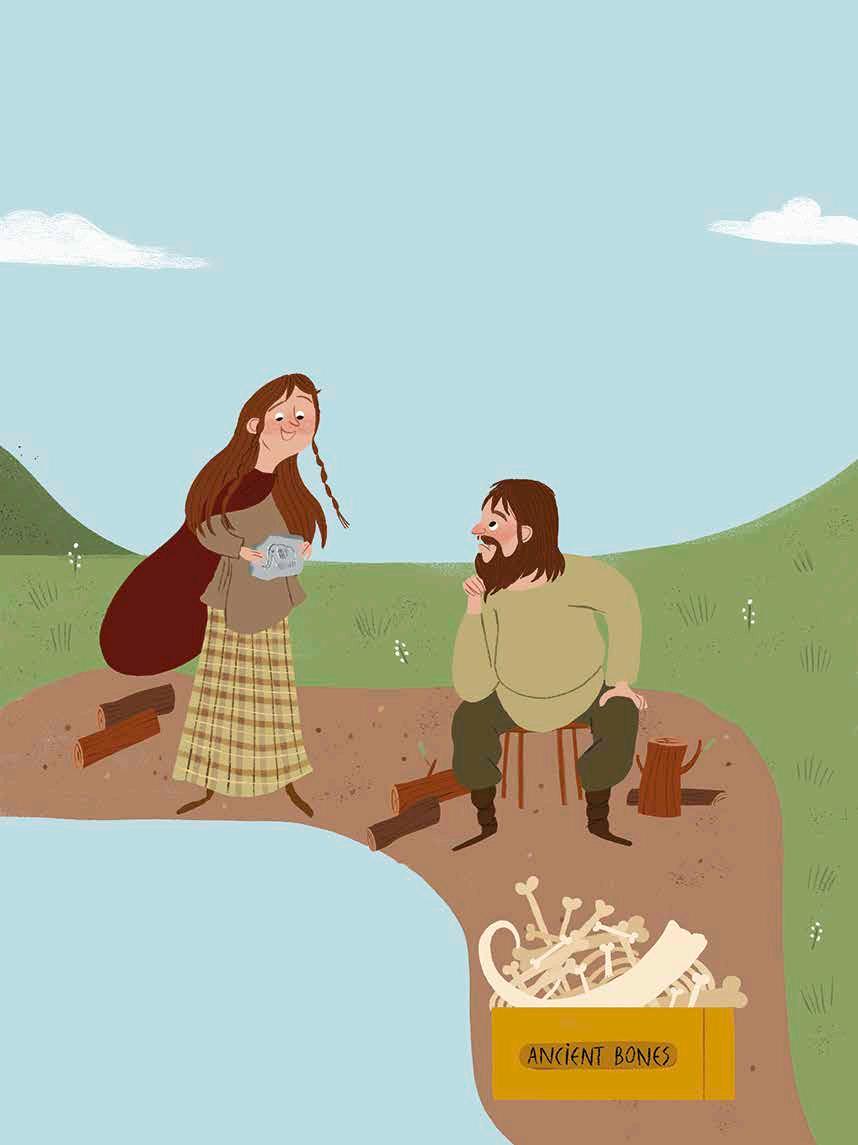
Ooh, I got a lovely postcard from Aunt Jean!
Well, that’s often all we have left from thousands of years ago.
Because there was no writing back then, and it was a v E r Y long time ago – even older than your head teacher – not much is known about the details of these ancient people’s lives.
What does it say?
Errrr . . . mammoth.
Almost everything we know comes from objects, skeletons and the remains of buildings that have been dug up by archaeologists.
The prehistoric period lasted for hundreds of thousands of years and is usually divided into: Palaeolithic, Mesolithic, Neolithic (which together are known as the Stone Age), the Bronze Age and the Iron Age. The thing is, it’s not like one age stopped on a Tuesday and the next age started on a Wednesday. No, just to really confuse everyone, they all overlapped and didn’t really ‘begin’ or ‘end’ rather than merge into one another over a very long time.
And while you’re scratching your little hairy headbox over that, let’s throw this into the mix: experts these days don’t really use the word ‘prehistory’. Instead, they talk about ‘ancient peoples’ and ‘deep history’. But just to keep things nice and simple for you, let’s stick to prehistoric chat for the time being.
Humans probably first came to Europe around one million years ago. Back then trains and aeroplanes were quite unreliable – you could sometimes be waiting several hundred thousand years for one to turn up – so people would have spread into new areas on foot over a very long time.
I’m just nipping out for a stroll.
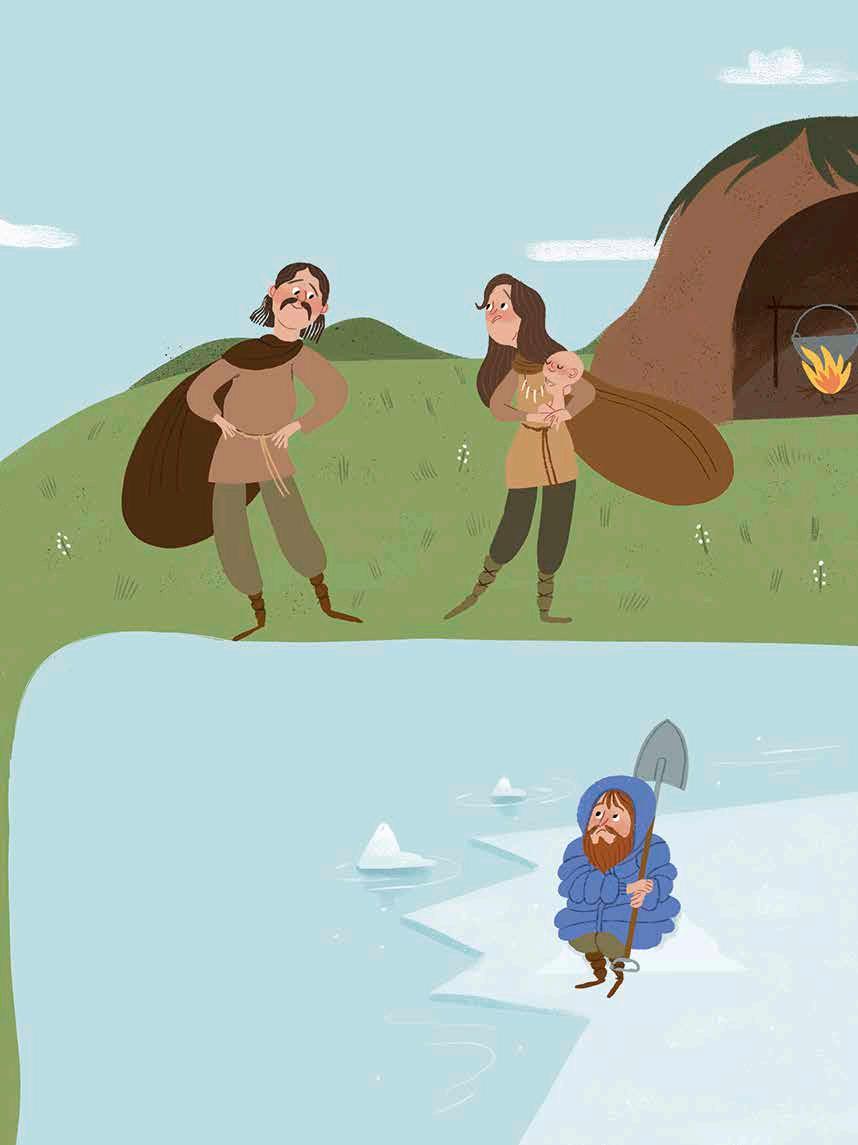
How long will you be?
Around 20 years.
The climate during the prehistoric period played a huge part in the lives of humans. And we’re not talking about a bit of drizzle meaning they had to make umbrellas out of sticks and leaves. This was EXT r E m E S t U f F!
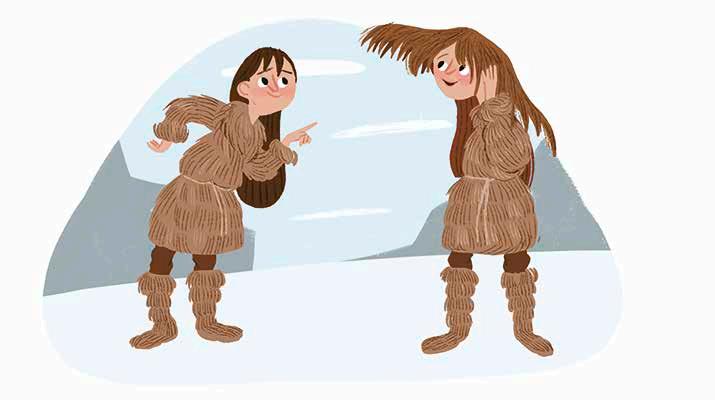
There were several Ice Ages, which left vast areas of the world covered in ice. For example, Scotland was almost permanently under a layer of ice 1.5 kilometres deep, making it uninhabitable for early humans, even if they had r E a L l Y good anoraks and very big snow shovels.
When things warmed up and the ice melted, early humans returned to the areas that had been a little on the chilly side to hunt animals and forage for berries and nuts in the trees and bushes that were starting to grow again.
What is prehistory and the 'deep past'?
So, what happened? And when? And who to? For the answers to these questions wrap your peepers around THIS:
One million – 11,000 years ago
Also known as the Palaeolithic period
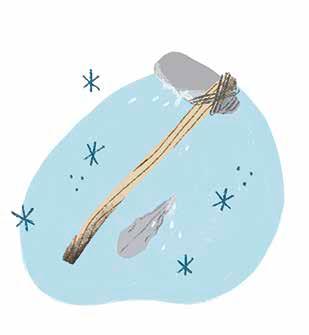
This period covers a H u U u U u U g E timespan. Most of the tools used by early people who came to Britain at this time were made from strawberry jelly, which is why it’s known as the Jelly Age. No, wait –stone tools in the Stone Age. Easy mistake. The climate changed over time, and during the Ice Ages it was just too chilly for humans to stay where they were, so they moved to warmer parts of the world. But people returned when things heated up again.
6,000 – 4,500 years ago
Also known as the Neolithic period
11,000 – 6,000 years ago
Also known as the Mesolithic period
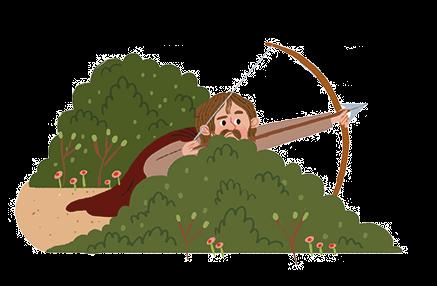
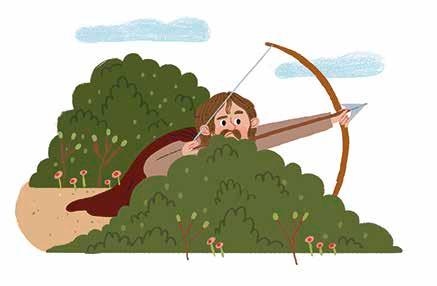
The last Ice Age ended, and it began to warm up. People still mooched around looking for animals to spear or plants to pick, but they had to adapt to life in the forest. Lots of trees aren’t really spearfriendly, so bows and arrows became the ‘in’ thing.
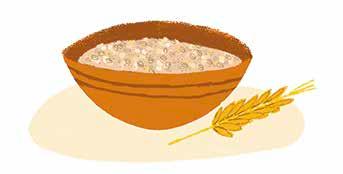
Farming was SO trendy. People in the Middle East started growing crops and domesticating animals, and then headed into Europe and brought their ideas with them. Sorted! Pottery began to be used for storing, cooking and eating food, which was handy as tins of soup were hard to find.
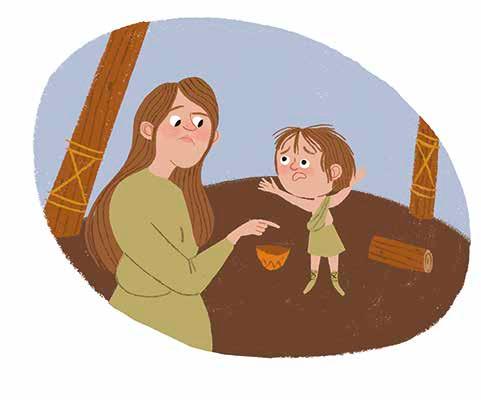
You’ve been very cheeky – go and stand in the naughty corner.
It’s a roundhouse – there aren’t any corners.
4,500 – 2,800 years ago
Also known as the Bronze Age
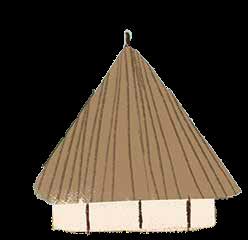
Things got a bit more metally at this time – although stony stuff was still around –when copper started to be used to make tools, quickly followed by bronze (a mixture of copper and tin melted together) which is harder and stronger. People began living in roundhouses and there’s evidence they began fighting in battles more often, which is so unmellow. Come on guys, just hug it out, yeah?
2,800 – 1,500 years ago
Also known as the Iron Age
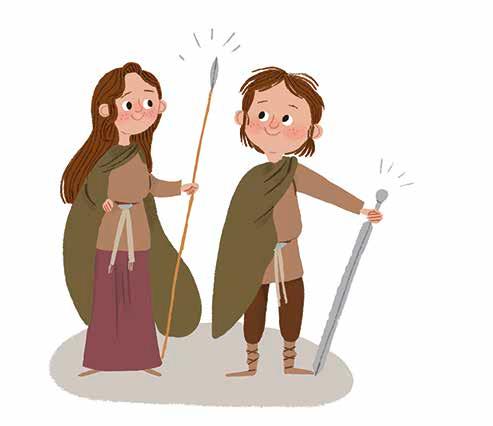
Guess what metal started to become the new fave? Tools and other objects were now made from iron, though bronze was still used as well. People began to live in tribes, and the Celts were the main culture in parts of Europe and Britain. The Roman Empire became more powerful as it spread across Europe towards Britain. While some people wouldn’t be affected by the Romans moving in, life was about to change B i G S t Y l E for others!
Do you ever wish...
1977–1609 years ago
Roman Britain
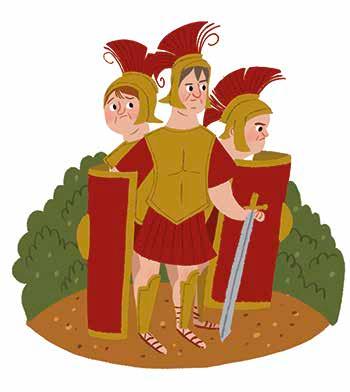
In AD 43, England and Wales became part of the Roman Empire as the province of Britannia. Written history properly began, and the prehistoric age came to an end. Never mind, it was around for over a million years, so it wasn’t exactly a flash in the pan.
there was a REALLY chilly winter so you could enjoy
some hardcore skating and sliding?
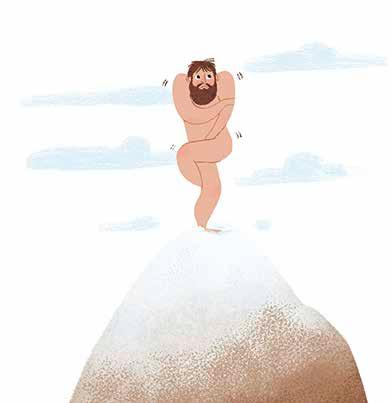
You’d have had no problem back in the Stone Age as there were several periods of d E e P f R e EZE! While early humans probably rocked up in Britain a million years ago, they didn’t stay put. Ice Ages meant people had to leave to find warmer places. They still had to adapt to cold temperatures, though, and coped by building shelters and learning how to hunt animals such as mammoths and woolly rhinos. It was also during these periods that ice lollies became very popular. One country that was hit hard by the Ice Ages was Scotland. Much of it was covered by a thick layer of ice, with only the tallest mountain peaks poking through.
With so much water stored as ice on the land and across large areas of the oceans, sea levels were much lower, so countries were much bigger – that meant the seaside was further away if you fancied a spot of sandcastle building. But what makes Ice Ages happen? A Serbian scientist called Milutin Milankovitch came up with a theory that they are caused by a combination of changes in the shape of the Earth's orbit around the Sun and the way the earth is tilted and ‘wobbles’. So if you feel the earth start to get a bit wobbly, best look out your hat and scarf!