First published 2020 by Nosy Crow Ltd
The Crow’s Nest, 14 Baden Place, Crosby Row, London SE1 1YW www.nosycrow.com
ISBN 978 1 78800 553 1
Nosy Crow and associated logos are trademarks and/or registered trademarks of Nosy Crow Ltd.
Published in collaboration with the British Museum.
Text © Chae Strathie 2020
Illustrations © Marisa Morea 2020
The right of Chae Strathie to be identified as the author and Marisa Morea to be identified as the illustrator of this work has been asserted.
All rights reserved.
This book is sold subject to the condition that it shall not, by way of trade or otherwise, be lent, hired out or otherwise circulated in any form of binding or cover other than that in which it is published. No part of this publication may be reproduced, stored in a retrieval system, or transmitted in any form or by any means (electronic, mechanical, photocopying, recording or otherwise) without the prior written permission of Nosy Crow Ltd.
A CIP catalogue record for this book is available from the British Library.
Printed in China.
Papers used by Nosy Crow are made from wood grown in sustainable forests.
1 3 5 7 9 8 6 4 2
A
Kid s Life In the Aztec age
clothes and hairstyles
Pages 6—11
The home
Pages 18—23
diet
Pages 28—33
Family life
Pages 12-17
Education
Pages 24—27
health and medicine
Pages 34-37
gods A n D sacrifices
Pages 44-49
fun and games
Pages 56—59
myths and superstitions
Pages 38-43
war and warriors
Pages 50-55
Still think you , ve got it bad?
Pages 60—61
Glossary
Pages 62—63 I n D e X Page 64
Clothes and hairstyles
H ave you eve r wo ken u p i n th e mo r nin g an d ev e ry s ing l e s tran d of hai r on y our hea d is goi n g i n a C OMP L ETE LY D IFFE R ENT DIR E CTIO N , as i f t h ey a ll h ad a n a rgu m ent whi l e y o u w e re s lee p ing ?
Or you’re walking to school and you see that kid from class 4B who’s soooo cool and just as they turn around a gust of wind blows your hair s T r A i G h T u P i N T h E A i R , so it looks like someone is holding a G i A n T I n V i S i B l E B a L l O o N above your head?
Well, if you think YoU’vE G o T i T B a D , at least you’re actually A l L o W e D to have hair on your head as a kid . . .
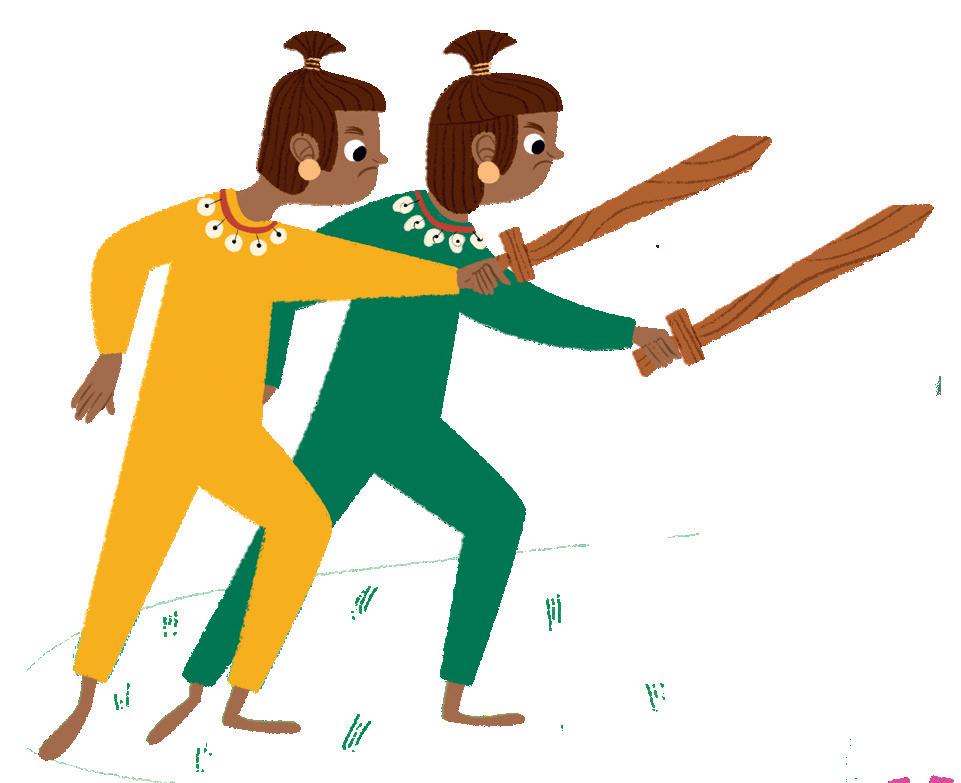
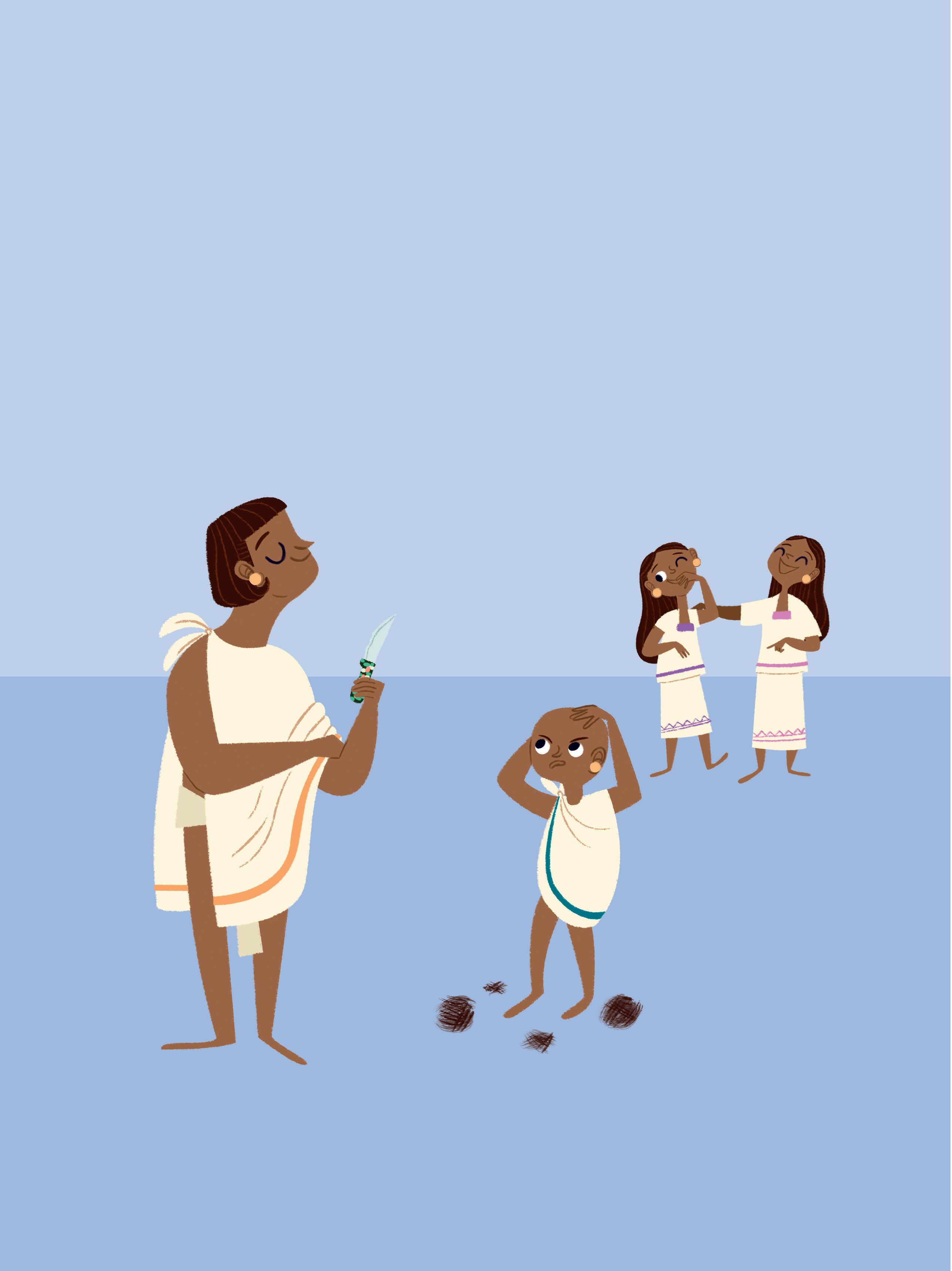
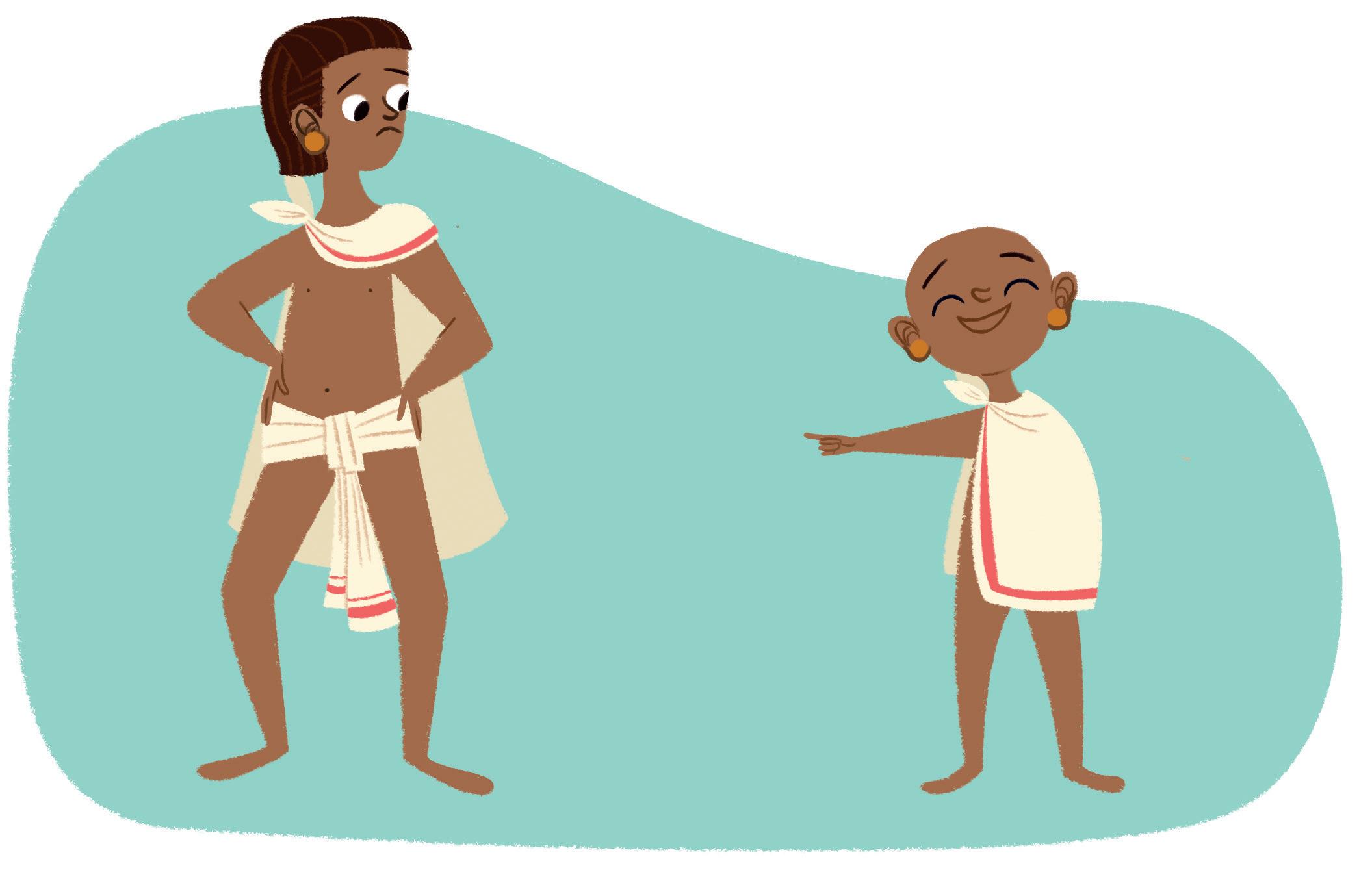
The Aztecs – a great civilization that flourished in what is now Mexico between the years 1300 and 1521 – didn’t let boys under the age of 10 grow their hair at all. They had to have their heads s H a V e D!
Maybe that’s not so bad in sunny Central America, but you’d definitely need a pretty big w O o L l Y H a T collection to keep your hair-free headbox from getting f R o S t Y on winter mornings in colder countries.
But don’t worry. After boys hit 10 they were allowed to grow hair . . . a patch of hair at the back of their heads, that is. Yay. So happy about that tiny patch. Much warmer.
Wow! I l o ve
w hat she ´ s do n e w ith her hai r !
Important Note!
I f y o u l i k e h a v i n g y o u r
I t ´ s DE F INI T ELY t ime you had you r e yes chec ked .
h a i r i n a n ea t p o n y t a i l o r
f u n k y p i g t a i l s , s o r r y . Th e y
a r e B A N N E D . N o p o n i e s
o r p i g g i e s a l l o w e d – O K?
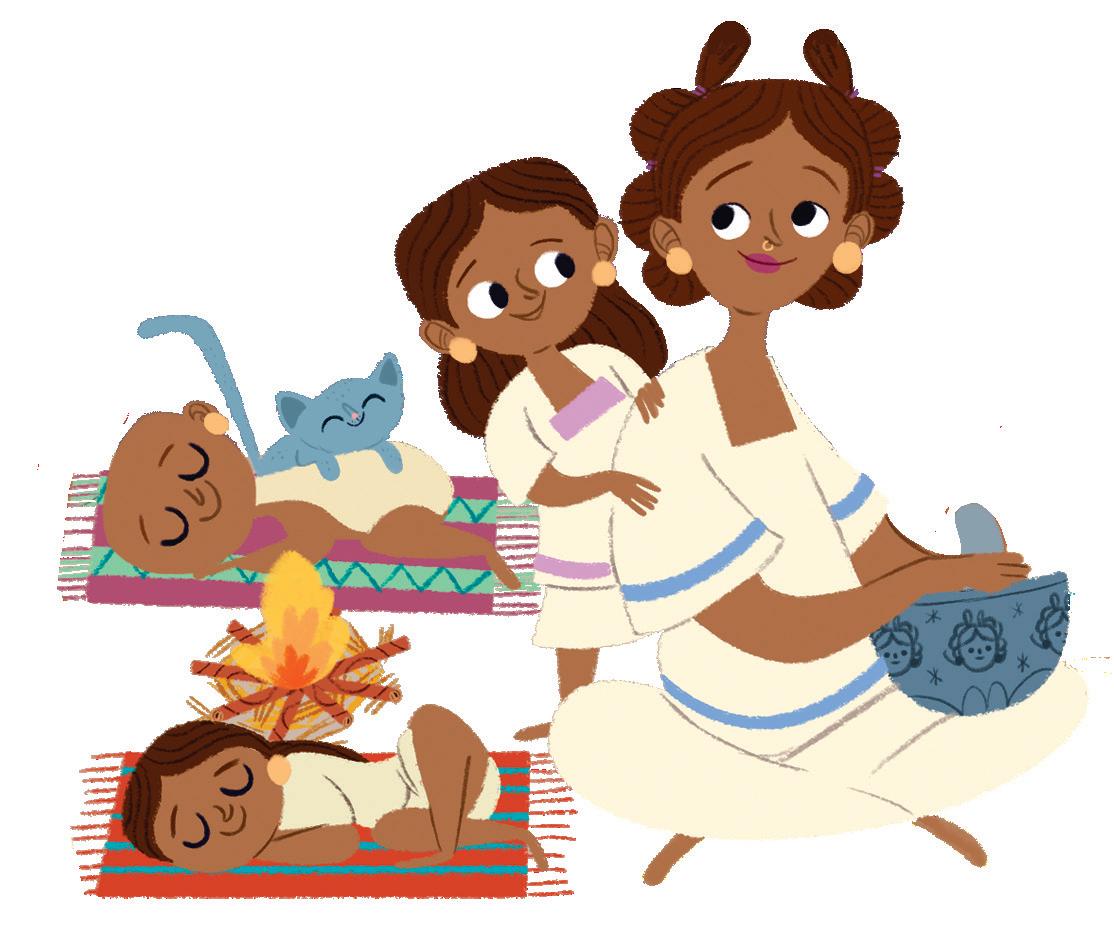
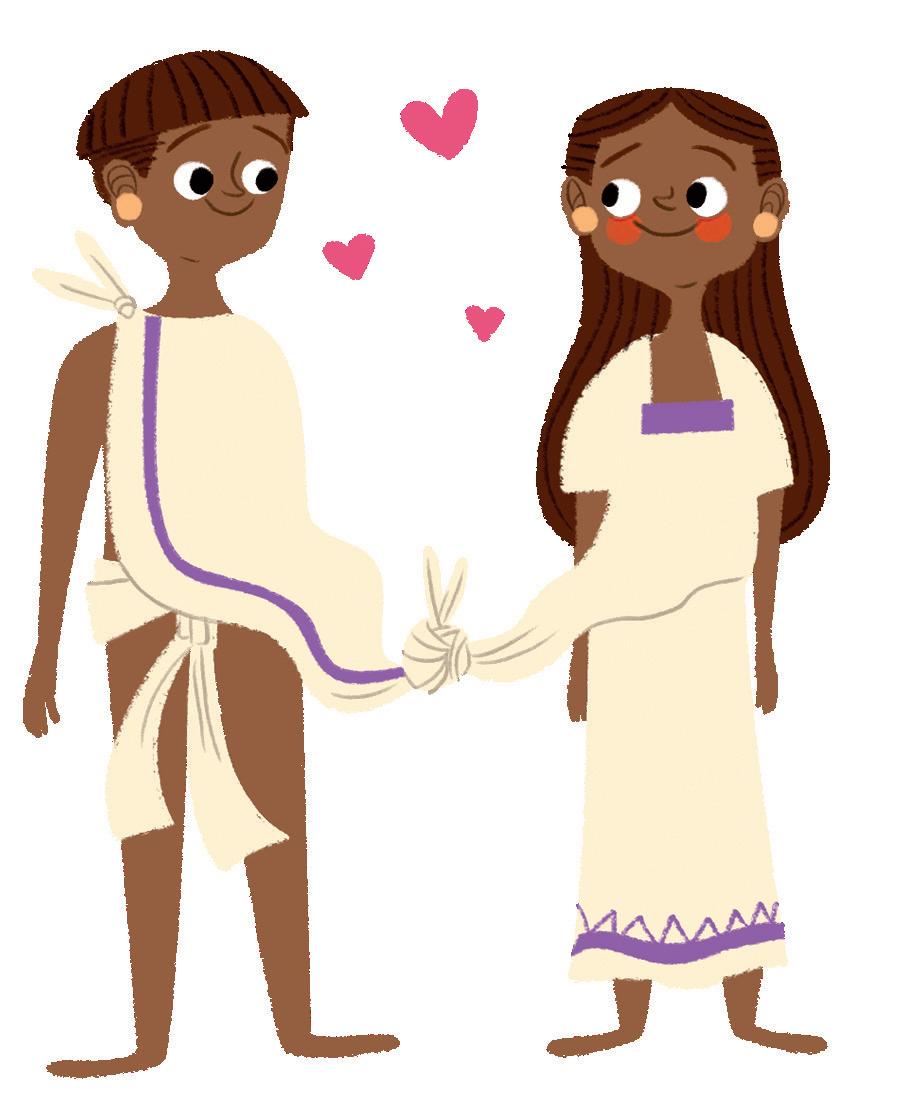
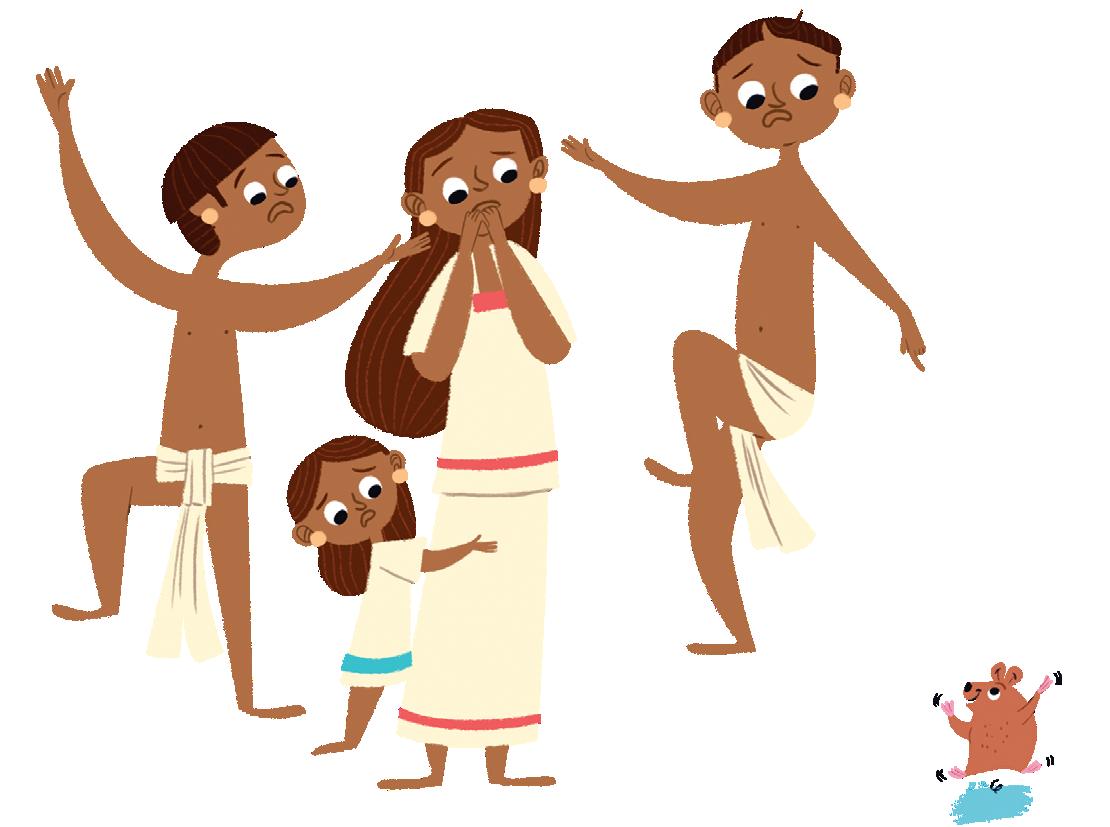
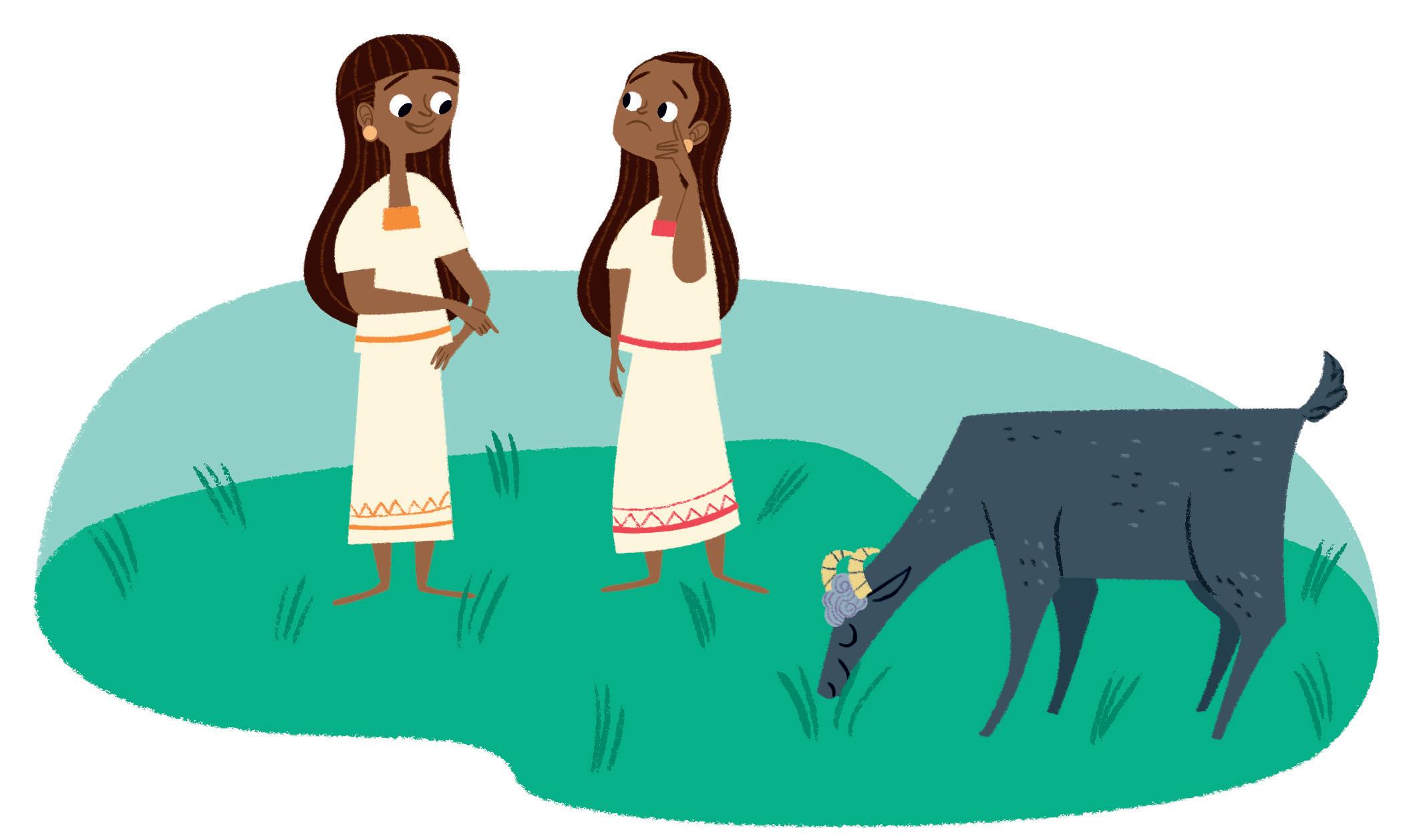
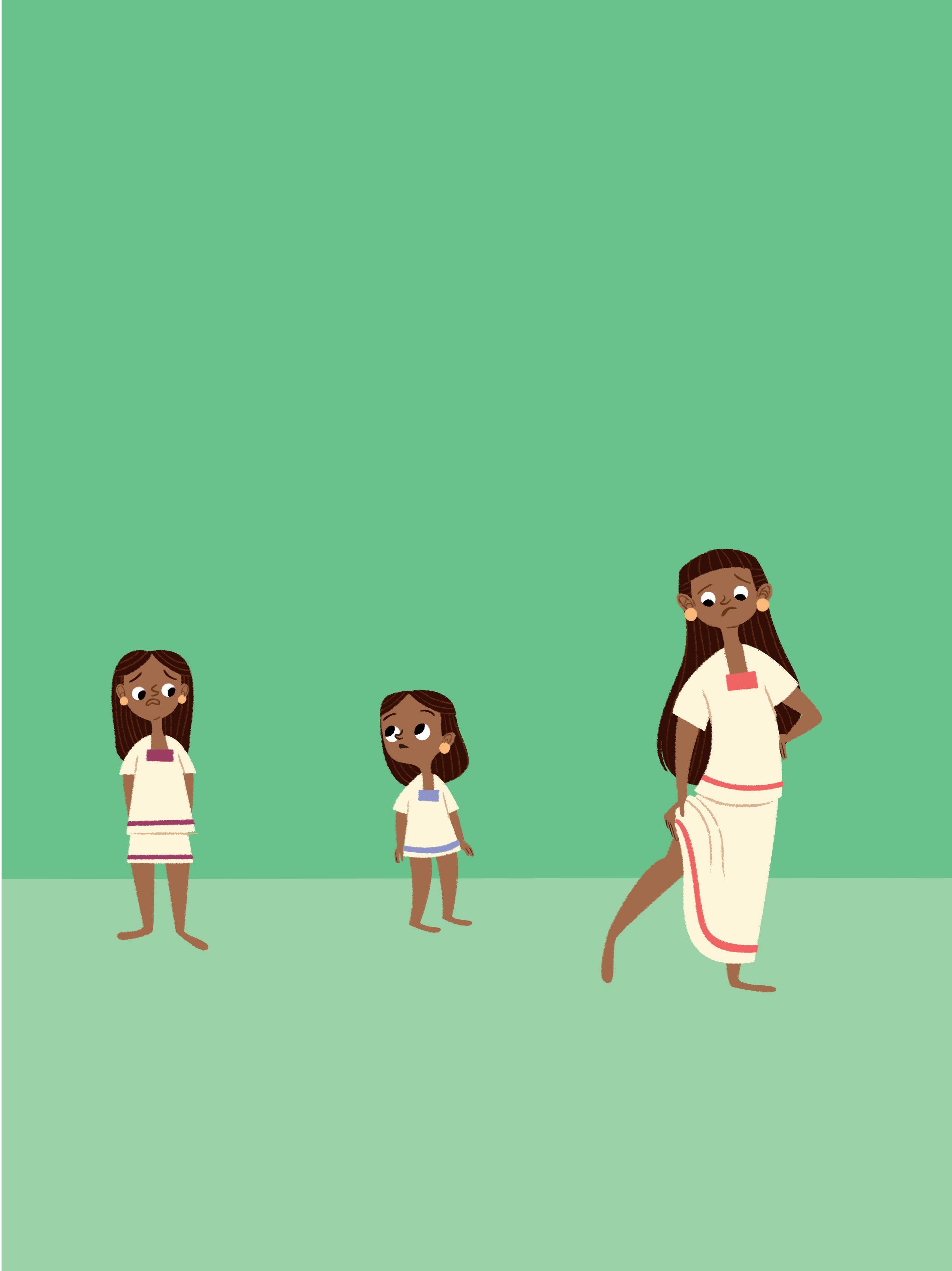
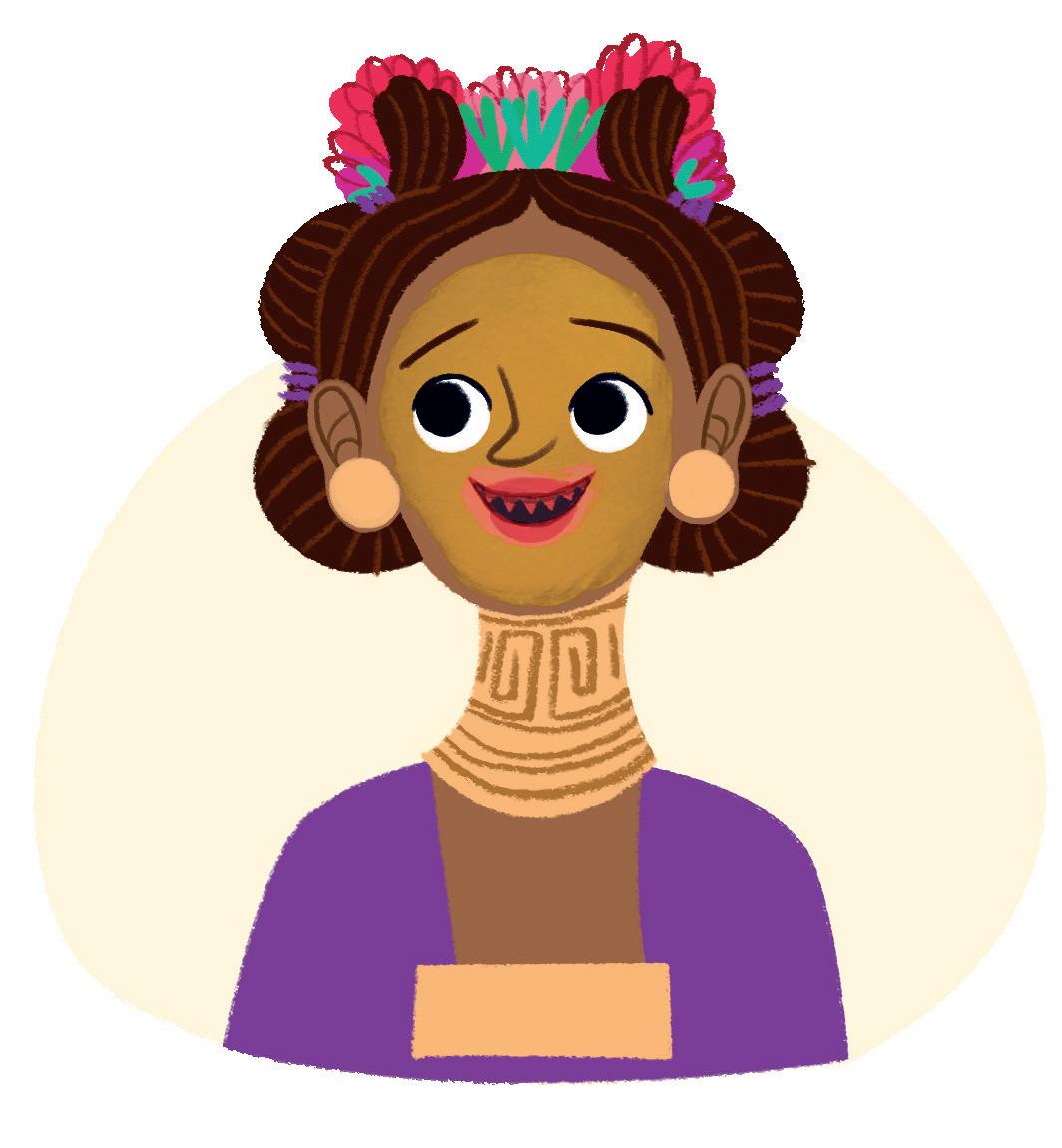
Luckily for girls, there were no such problems – in fact quite the opposite. They had to wear their hair long and loose until they were married, when they would plait it and tie it up on the top of their head, almost like H a I r Y H o R n S! I
I t ’s a h ea d , n o t a fa r m y a r d !
F ANCY TH AT!
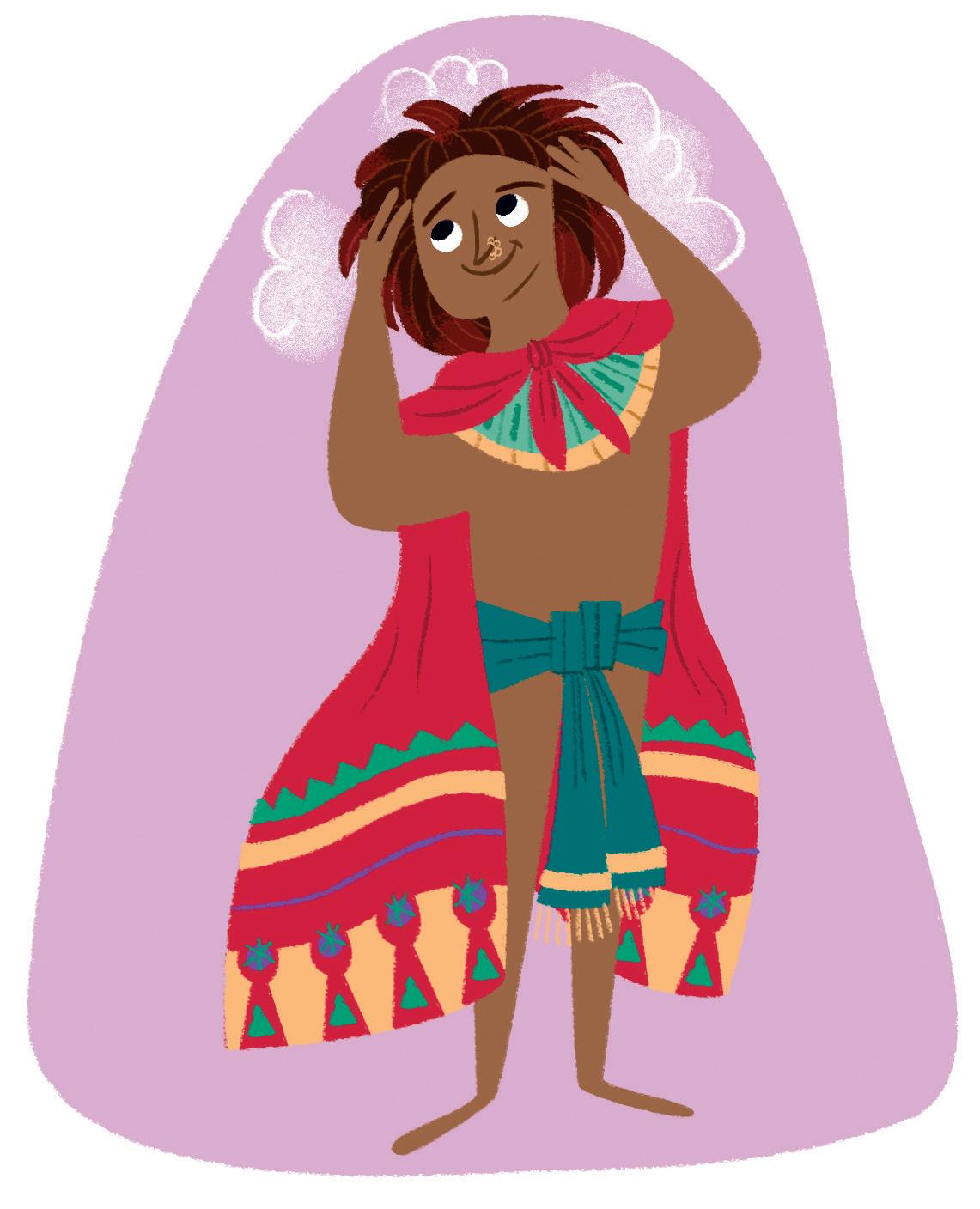
The hair of an Aztec priest was often long and messy – smeared with soot, MOULDY and matte d with BLOOD.
Thankfully these days you can just pop some hair gel on if you want to create that casual, messy look. No need for mould and blood, thanks very much.
t he rest of y ou?
Clothes were very important to the Aztecs. What you could wear depended on how important you were. If you wore the wrong thing it could have v E r Y serious consequences . . . and we’re not talking about people pointing and laughing at your S i L l Y t R o U s E r S or W e I r D choice of hat.
wha
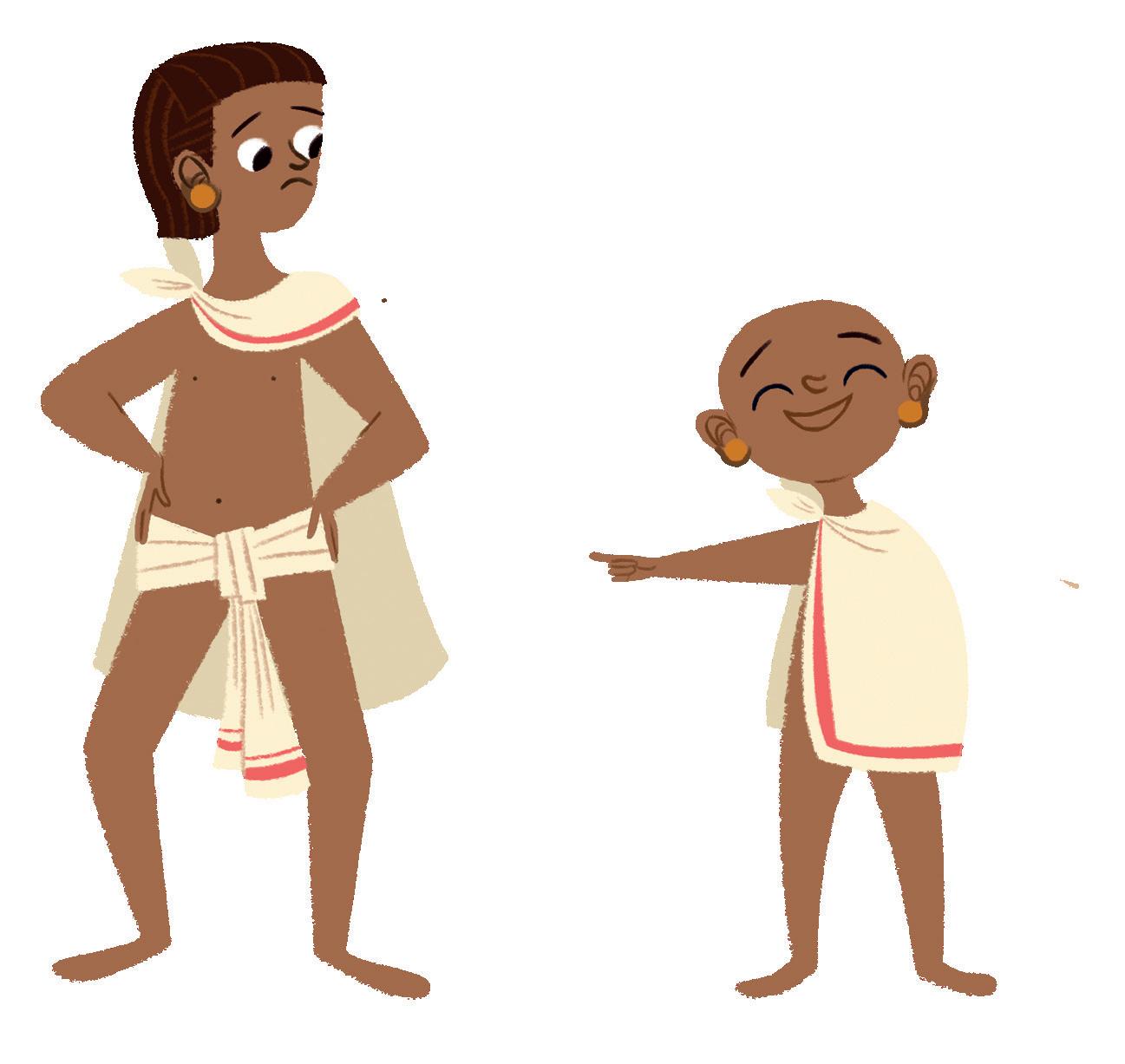
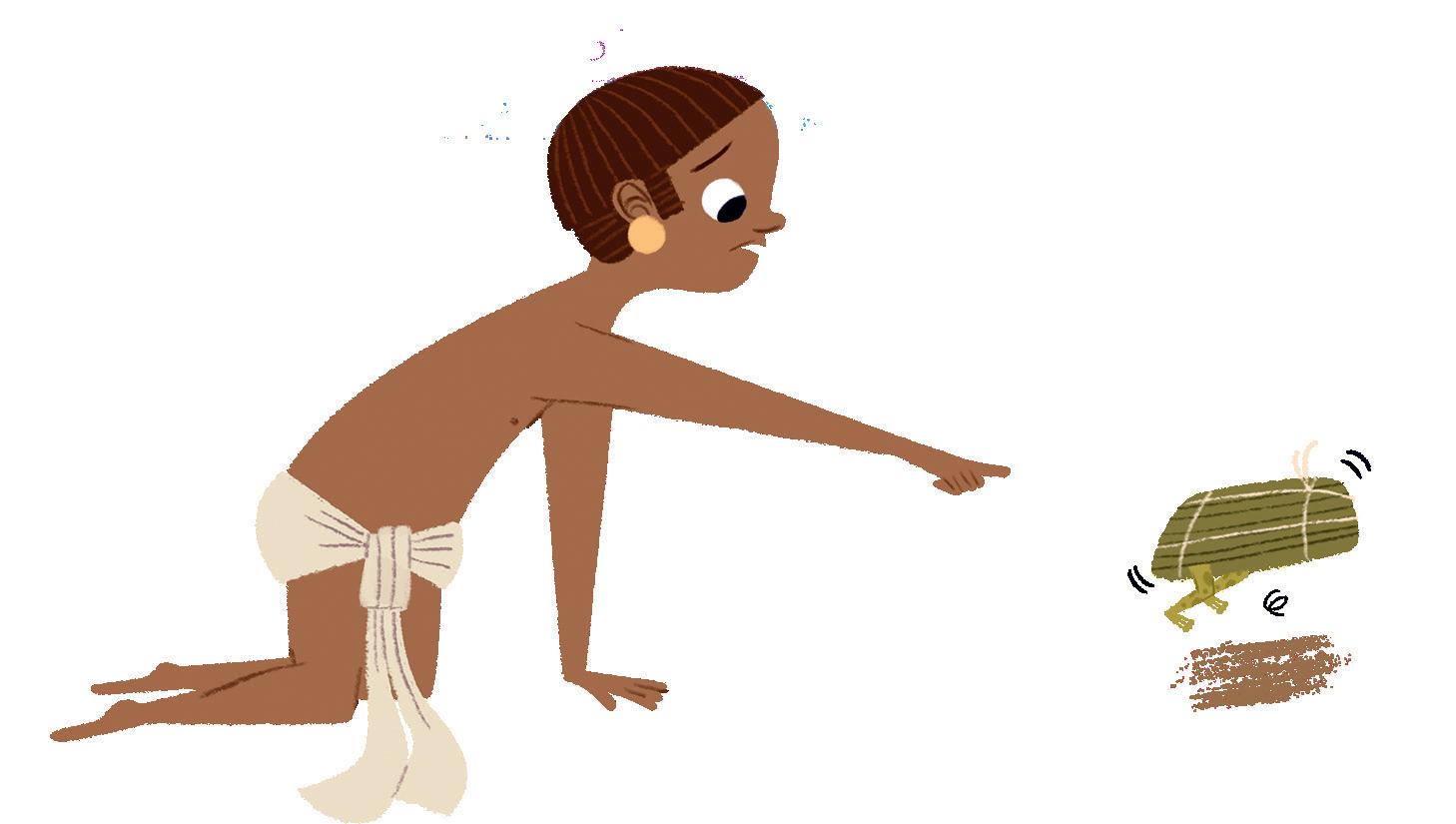
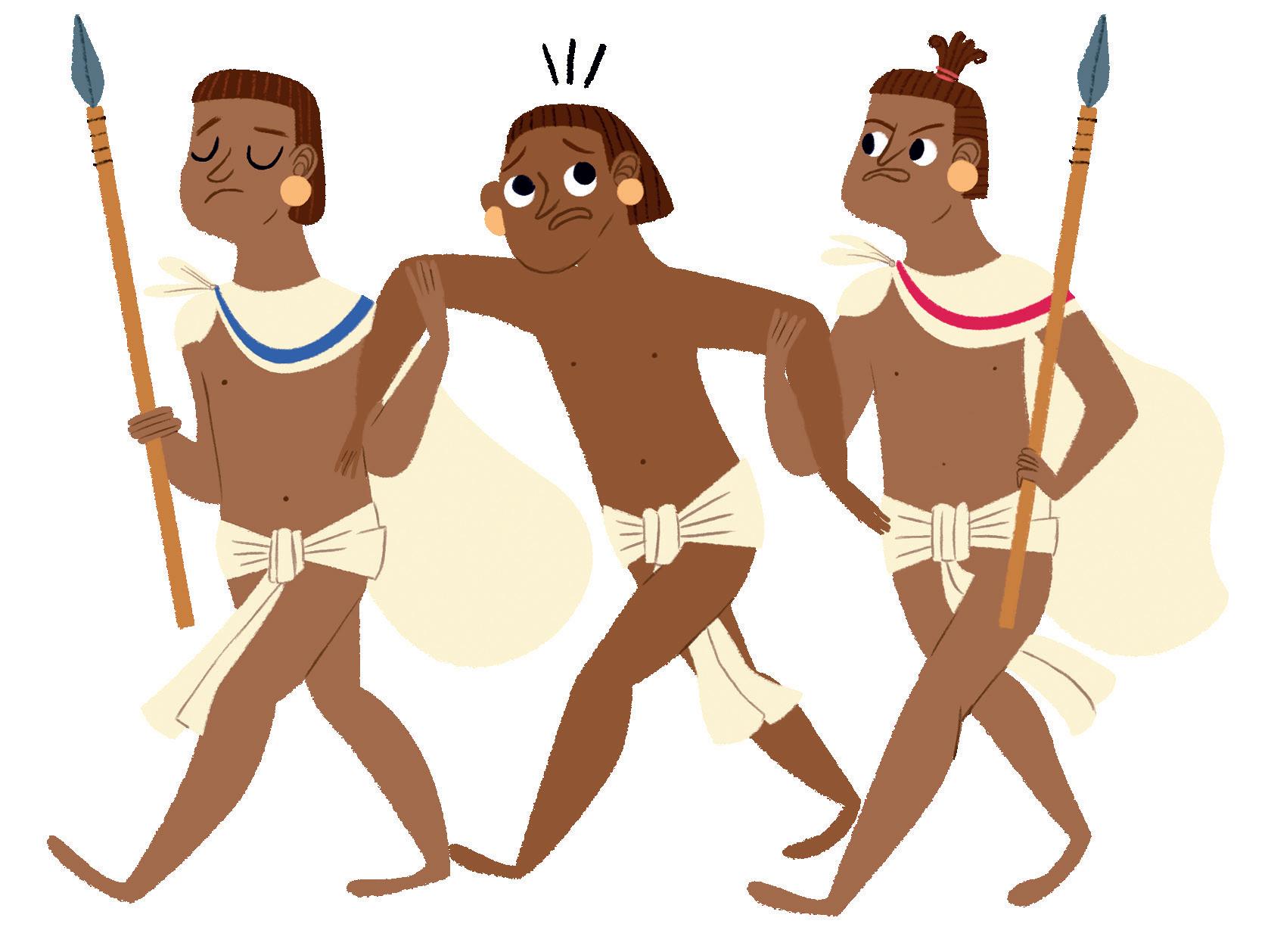
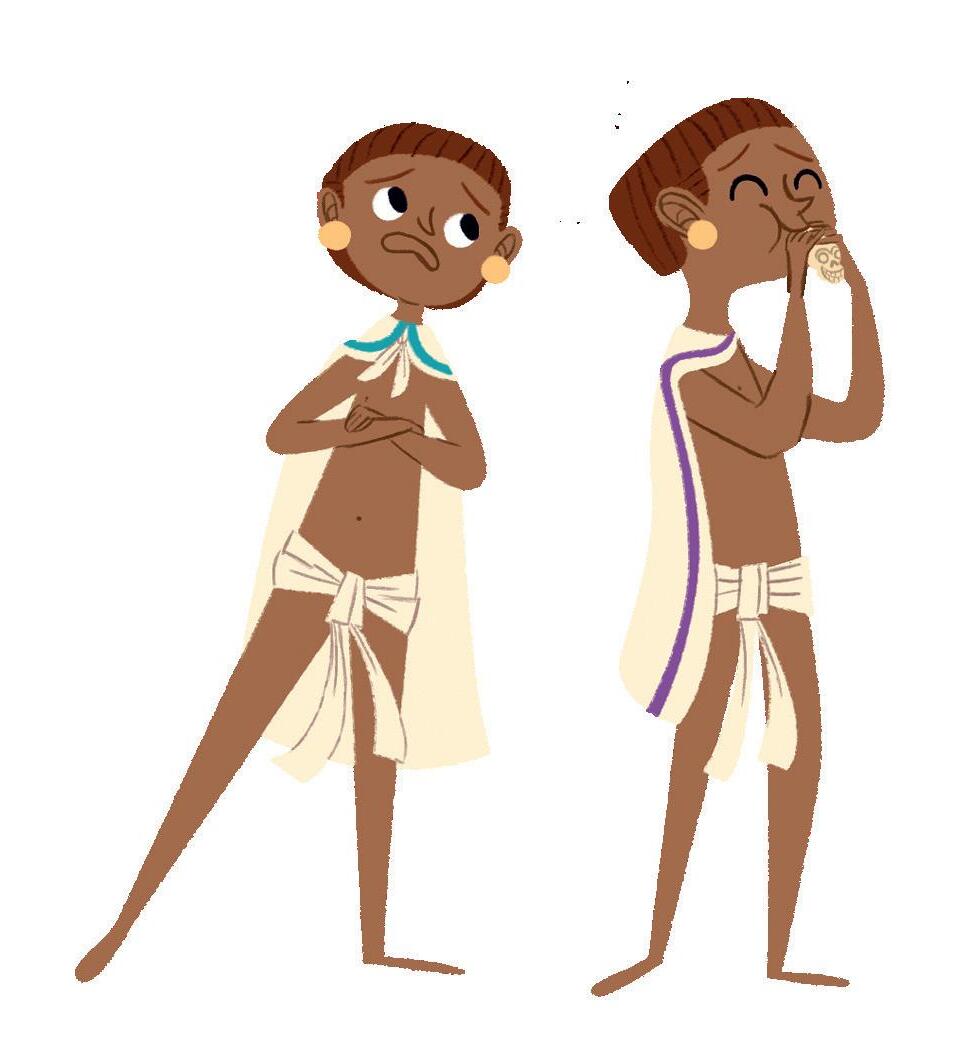
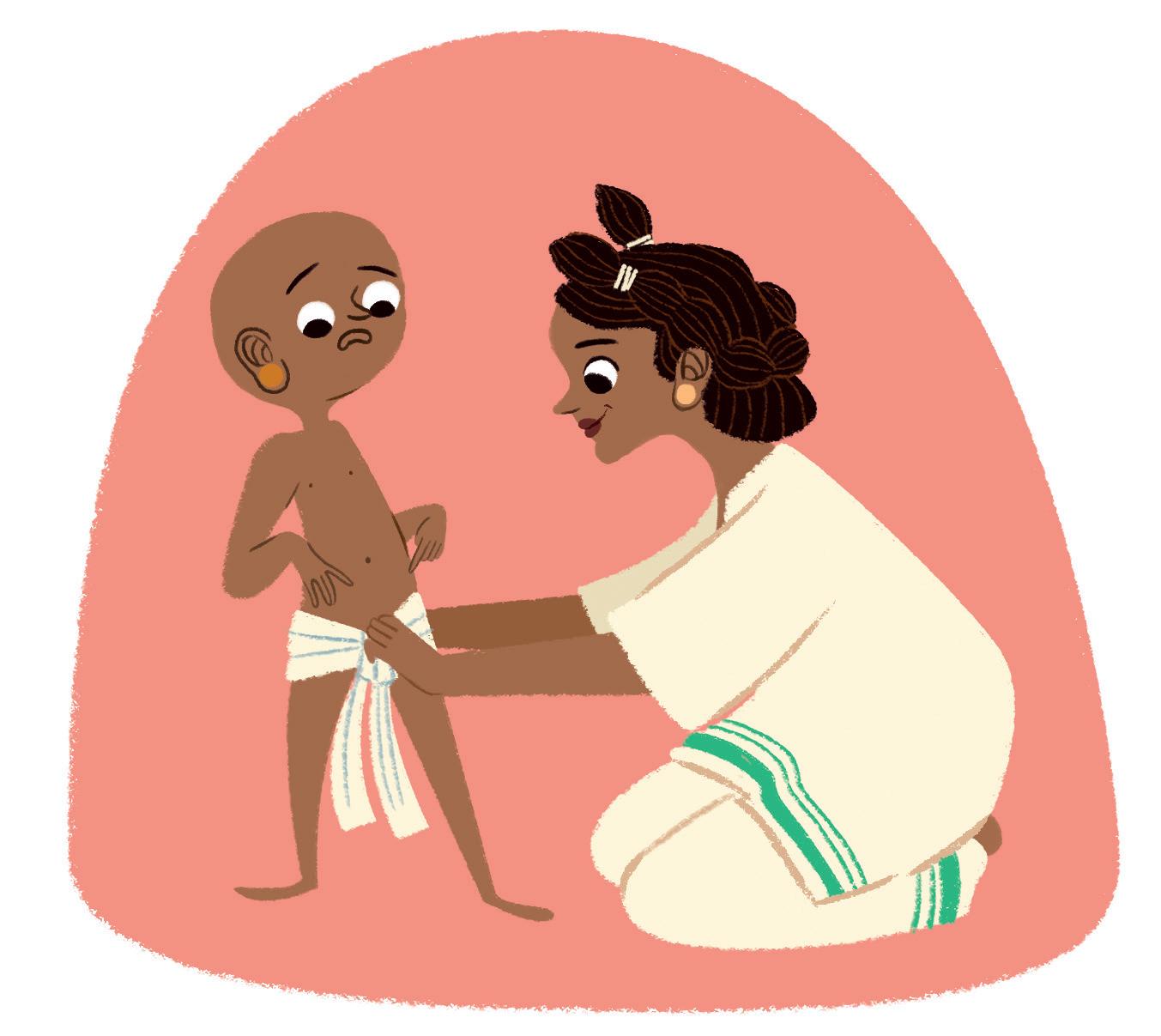
The basic item of clothing for boys and men was called a maxtlatl, a length of cloth that was wrapped round the waist and passed between the legs before being tied to hold it up – kind of like pants but slightly more complicated. Before the age of 12 boys weren’t allowed to wear these and just wore a small cape. After 12 they could pop on a maxtlatl and wear it under a cloak called a tilmahtli
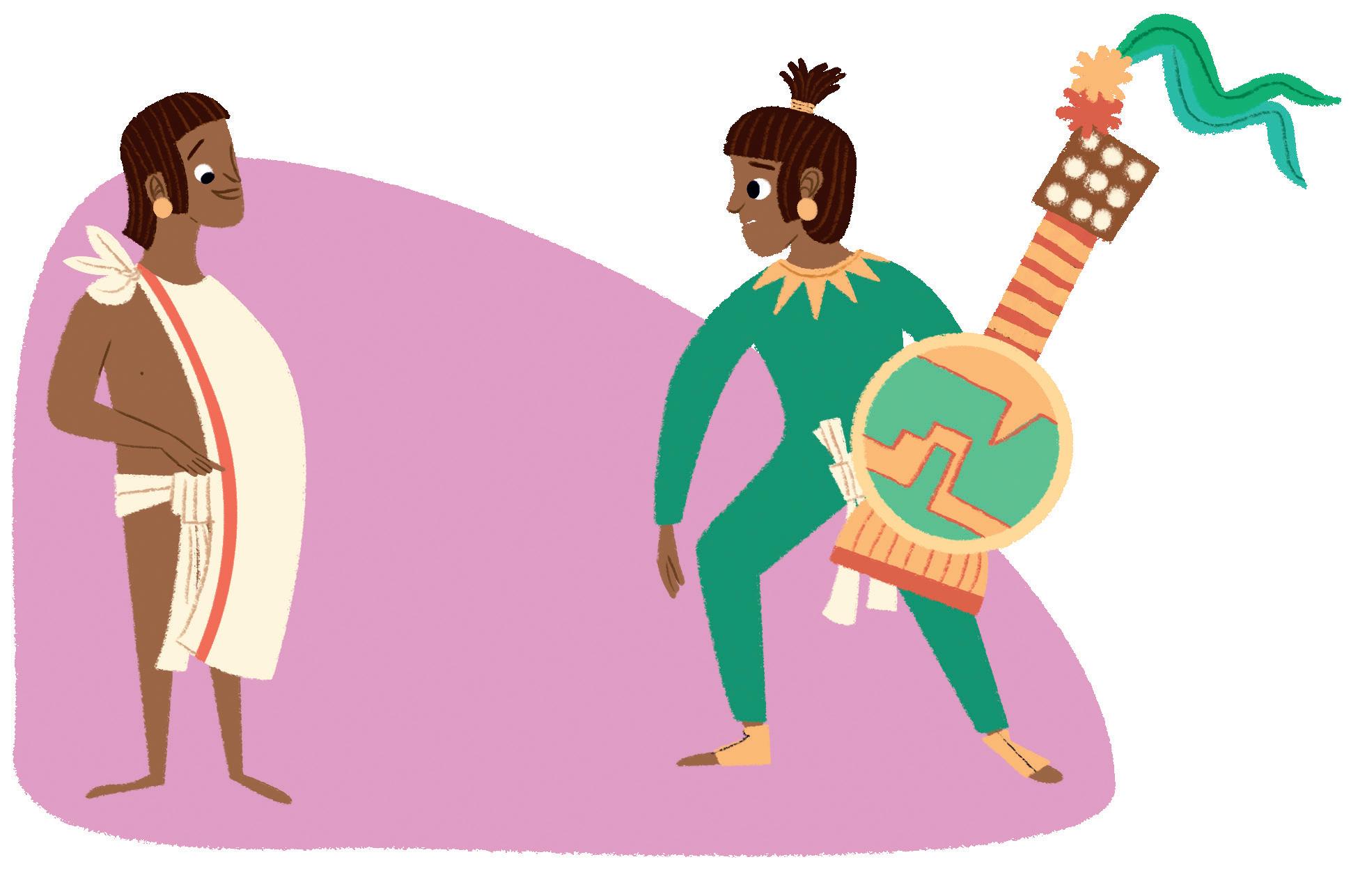
The tilmahtli was a sign of how rich or grand you were. How long it was and where it was tied (at the shoulder for commoners and at the front of the neck for nobles) were v E r Y important. For example, if anyone was spotted wearing a cloak that reached down to their ankles, they’d be for the high jump . . . unless they could prove they were a warrior with lots of battle scars on their legs that the cloaks were protecting.
F ANCY TH AT!
Red was a powerful colour – the colour of
bloo d and fire. Many clothes were dyed red
using the juice from SQUISHED cochineal
beetles. Just in case you were wondering,
this is not where the term “you have ants
in your PANTS” comes from. Oh, and if you
think it sounds disgusting, cochineal is still
used today . . . as a re d food colouring.
Enjoy chomping those delicious beetles!
From age three, girls wore just blouses called huipilli, then when they were four they could wear short skirts. From the age of five they wore long skirts.
I wi s h I cou ld wear a l o ng s kir t !
I wi s h I cou ld w ear
s omet hin g th a t wasn ´t it c hy!
There were no clothes shops in those days, so buying a cool tracksuit or a pair of leggings wasn’t an option. There was also a limited choice of materials to make clothes from – especially if you were poor. While nobles and royalty were allowed to wear fine things made of smooth, comfortable cotton, common people had to wear plain clothes made from the fibres of the maguey plant.
Just like people today, the Aztecs had a love of beautiful things to wear, and both men and women wore lots of jewellery – often the kind that involved poking holes in yourself. Ouch! They wore elaborate lip-plugs that pierced their lips, discs through their earlobes and jewellery that dangled from their noses. But the poor had to be careful about what kind of jewellery they wore . . . or they could be in B i G trouble.
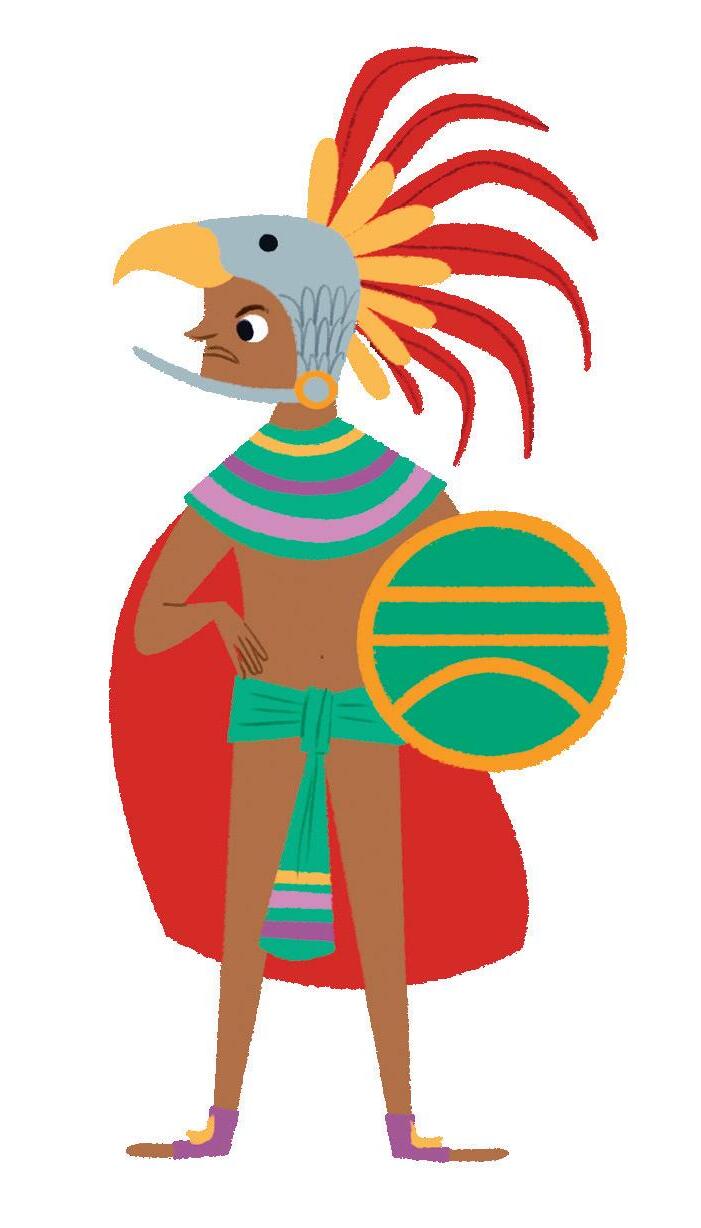
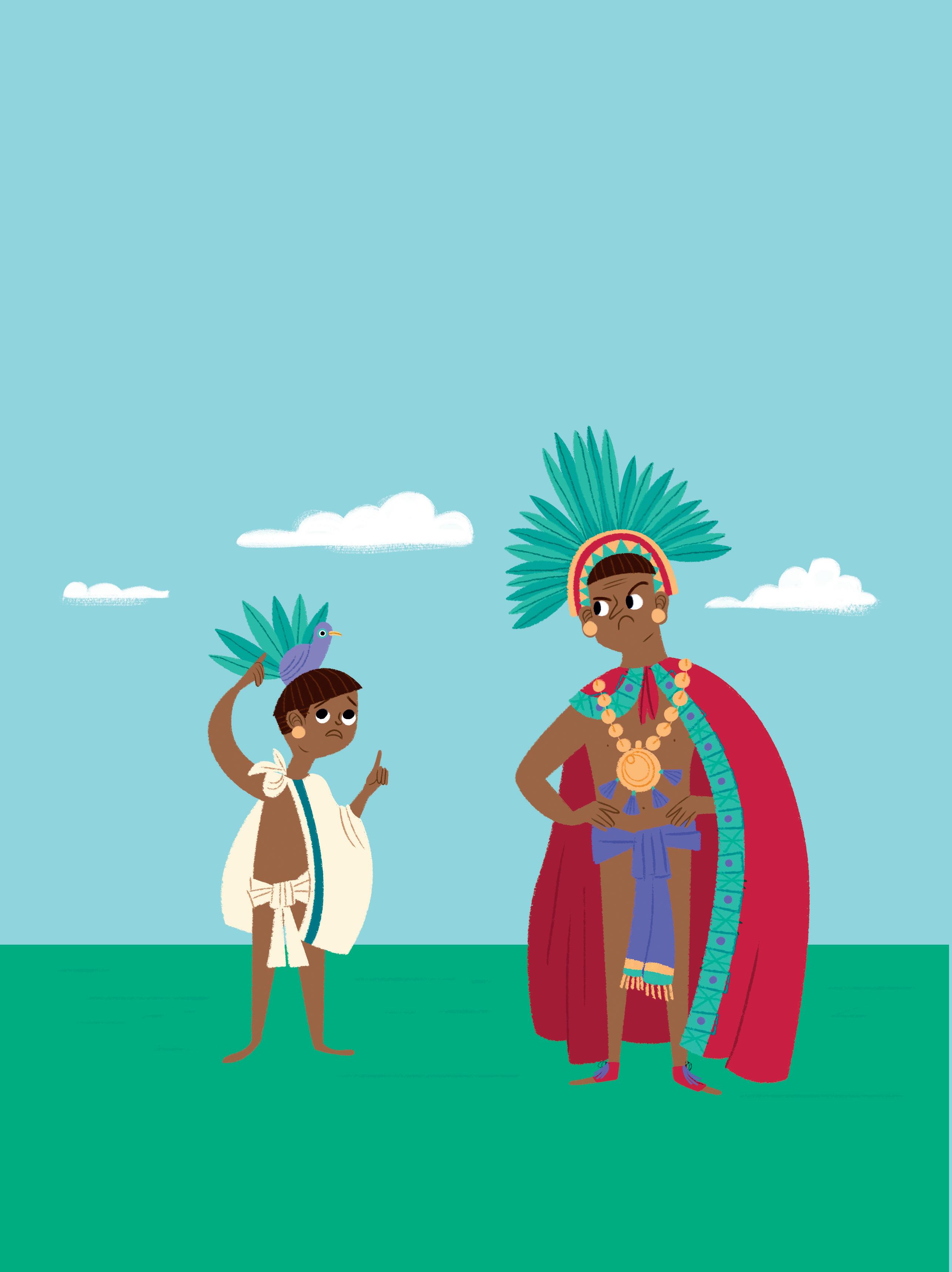
Only emperors and the nobility could wear feather headdresses or jewellery made from jade or gold. It was a serious crime to wear accessories or clothes belonging to a richer group, and poorer people could even be k I l L e D if they wore the wrong thing.
T his is a pet , n ot a hea ddre ss . I re p eat . Thi s is N OT a hea ddre ss! s Q u A w K
Imagine being sentenced to death for wearing a fancy cap or expensive socks these days. Seems a s L i G h T overreaction, Aztecs. Just sayin’.
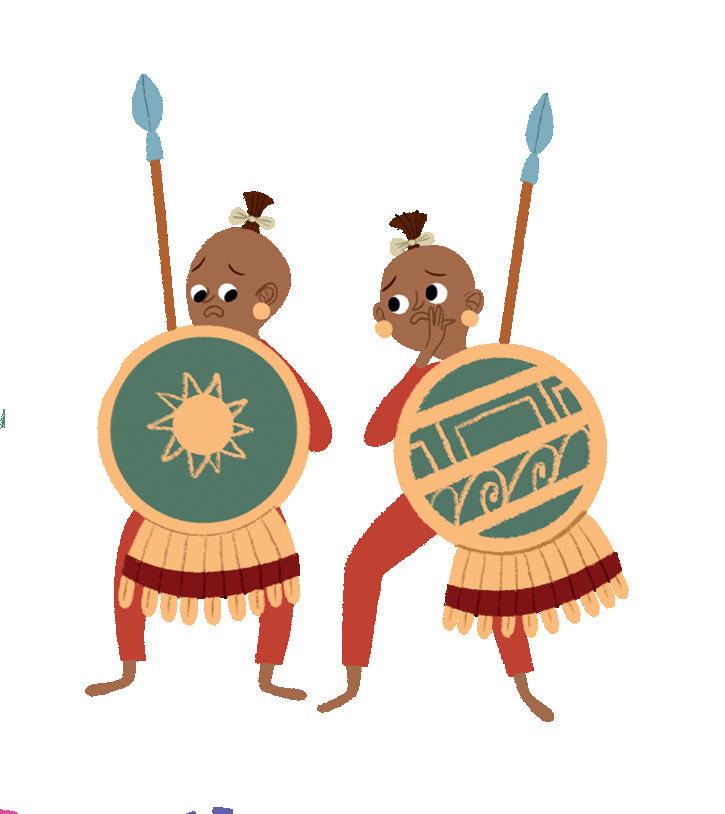
On their feet, rich folk wore nice sandals made from plant fibres while the poor went barefoot. Warriors were allowed to wear sandals too, so at least their tootsies would be nice and comfy while they were getting bopped and poked with nasty things.
So, if you’ve suddenly gone off your flashy new trainers just because Ziggy Smoove, your f A v E P
, has a different style, stop W h I n I n G and think yourself lucky to have shoes at all.
o y o u e v er w ish . . .
Perhaps you fancy bright green hair or a pair of electric-powered, musical roller skates in rainbow colours with added glitter fountains?
Well, the Aztec approach to making life a little brighter might be too much – even for you! Back then it was common for people to paint their bodies and hair vibrant or dark colours. For instance, women would paint themselves yellow with a paste that was made from the squished-up bodies of insects. And if that doesn’t sound eye-popping enough, some would also paint their teeth red . . . after sharpening them to a point!