Go Wild at the Seaside: An Adventure Handbook – preview
First published 2019 by Nosy Crow Ltd
The Crow’s Nest, 14 Baden Place Crosby Row, London, SE1 1YW
www.nosycrow.com
ISBN 978 1 78800 332 2
‘The National Trust’ and the oak leaf logo are registered trademarks of the National Trust (Enterprises) Limited (a subsidiary of The National Trust for Places of Historic Interest or Natural Beauty, Registered Charity Number 205846).
Nosy Crow and associated logos are trademarks and/or registered trademarks of Nosy Crow Ltd.
The right of Goldie Hawk to be identified as the author and Rachael Saunders to be identified as the illustrator of this work has been asserted.
All rights reserved.
This book is sold subject to the condition that it shall not, by way of trade or otherwise, be lent, hired out or otherwise circulated in any form of binding or cover other than that in which it is published. No part of this publication may be reproduced, stored in a retrieval system, or transmitted in any form or by any means (electronic, mechanical, photocopying, recording or otherwise) without the prior written permission of Nosy Crow Ltd.
A CIP catalogue record for this book is available from the British Library.
Printed in China
Papers used by Nosy Crow are made from wood grown in sustainable forests.
1 3 5 7 9 8 6 4 2
Goldie Hawk & Rachael Saunders
Note to grown-ups
Grown-ups, be warned: this book contains large waves, sharp rocks and dangerous sea creatures.
‘What?!’ we hear you say . . .
But we believe it’s important to teach children how to enjoy everything nature has to offer with due care. Along with our instructions, we’ve included plenty of reminders about safety. We know that you will supervise your children properly when engaging in any potentially dangerous activities, but we also hope that this book will encourage you to join in and rediscover the fun and magic of going
WILD AT THE
SEASIDE!
The sea is mysterious, wild and beautiful, with amazing creatures from toxic sea slugs to velvet swimming crabs. Here you will discover plants and creatures of every colour of the rainbow. Perhaps you’ll explore a cave or build a boat from driftwood, or play some beach games with your family and friends. Whatever you do, I hope this book helps you love our seas and everything in them even more.
Gwen Potter - National Trust Countryside Manager
Go on a rock pool safari
Catch a crab
Build a pebble arch
Build an enormous sandcastle
Make a sand sculpture
Dig a really big hole
Seaside facts
Make your own kite
Fly your kite
Go sand surfing
Go exploring on a kayak
Go bodyboarding
Go surfing
Learn some surfing lingo
Go skimboarding
Go paddleboarding
Explore a cave
Collect driftwood
Make a driftwood boat
Play beach volleyball
Play beach cricket
Play frisbee
Explore a beach at dusk
WHAT TO SEE AT THE SEASIDE
Fish
Crustaceans
Sea mammals and sharks
Smaller sea creatures
Molluscs
Birds
Tracking bird footprints
Shells
Wildlife
SAVE YOUR SEASIDE
How to organise a beach clean
SEASIDE SAFETY
Swimming in the sea
Rip currents and wild waves
Scary tsunamis
What to do if you get stung by a jellyfish or weever fish
What to do if you step on a sea urchin
What to do if you get attacked by a shark
ARE YOU READY TO GO WILD AT THE SEASIDE?
Do you love adventure, getting outdoors and making a splash? Are you shore? Then this is the book for you!
In this ultimate guide, you will find lots of fun activities to do at the seaside, from exploring rock pools and tracking seabirds, to building a sand sculpture and going surfing. You will also learn exactly what not to do, from getting caught in a rip current to standing on a sea urchin.
This book is about being safe and having fun. But it’s also about having adventures. You should be willing to get a bit sandy and wet and you absolutely MUST be good at working in a team.
There are three important rules for going wild at the seaside:
1. When in doubt, DON’T!
2. Always ask your grown-up
3. Have fun!
Are you ready for your beach adventure to begin? Then . . . LET'S
GO WILD!
TOP TIP
Stick with your grown-up and never push anyone into doing something they don’t feel comfortable with!
PLANNING YOUR SEASIDE ADVENTURE
The key to having the best seaside adventure is planning your trip well. To do this, you need to know about the times of the tides.
The sea is at different levels at different times of the day. It rises and falls twice a day as the positions of the Moon, the Earth and the Sun change. When it’s high tide, the water level rises and floods the beach. When it’s low tide, the water level falls and leaves the beach.
When the Sun and Moon are in line with each other, pulling in the same direction, there is a strong ‘spring tide’. When the Sun and Moon pull in opposite directions, there is a weaker ‘neap tide’.
TOP TIP
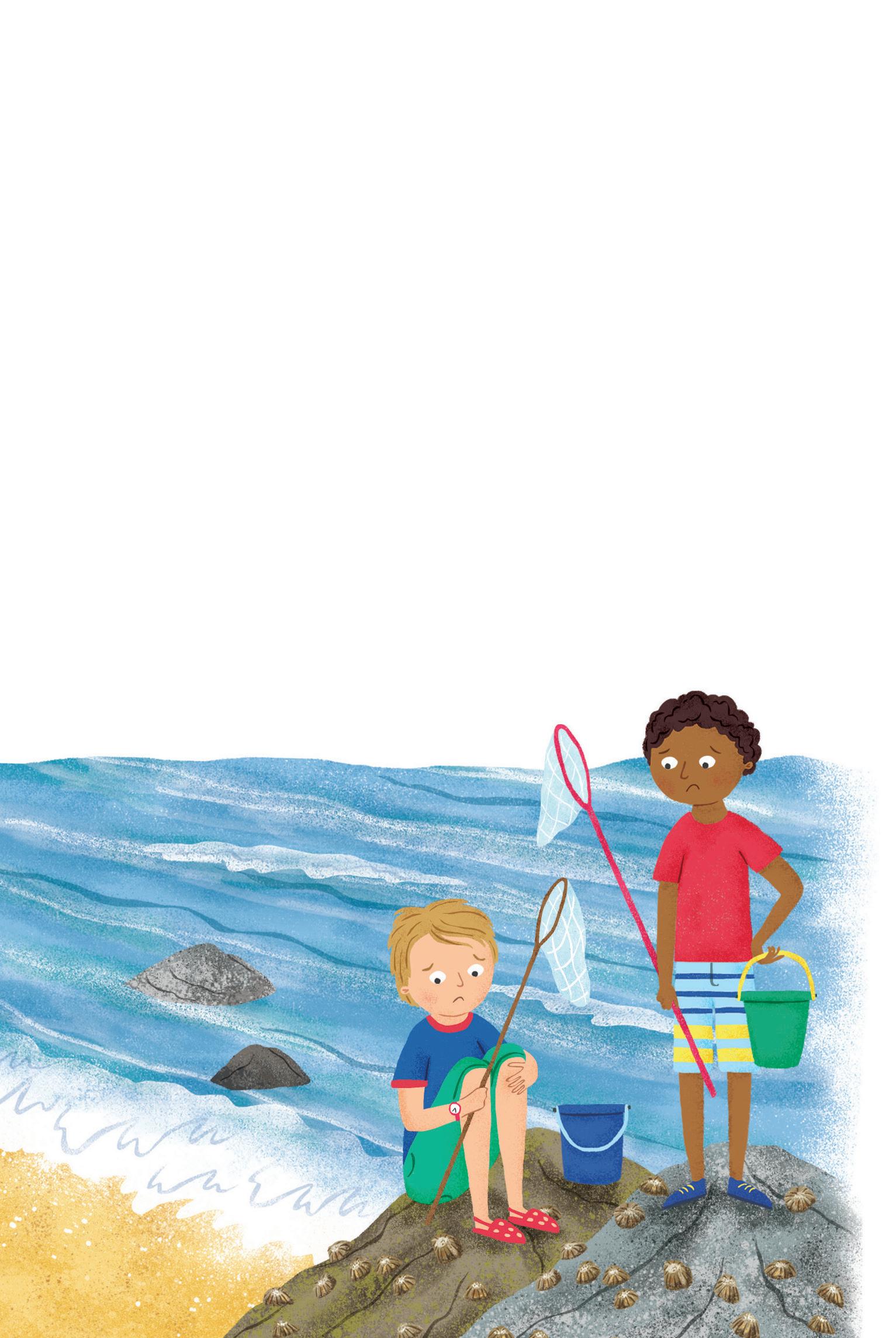
It’s always important to check the tide times. If you don’t, you might set off for your seaside adventure to discover there is no beach to walk on. Or you might be halfway through a rock pool safari and suddenly realise you are surrounded by water and can’t get back to the shore!
A ‘spring tide’ has nothing to do with spring. Both spring tides and neap tides happen all year round.
The best time to go is at low tide, when you can explore the whole beach.
You can check the tide times online at www.metoffice.gov.uk/ public/weather/tide-times.
DIFFERENT KINDS OF BEACHES
There are lots of different kinds of beach, and different creatures can be found in each type of beach habitat. Which kind of beach will you explore?
SANDY BEACH
Sand is made from tiny pieces of broken-up rock and shell that have been worn down by the sea over millions of years.
Did you know?
The white sand on tropical beaches is made from the crushed skeletons of coral polyps and the poo of parrotfish!
Best for: building sandcastles, sand surfing, paddling barefoot and finding razor shells.
Worst for: rock-climbing, having a tidy picnic, building a pebble arch.
SHINGLE BEACH
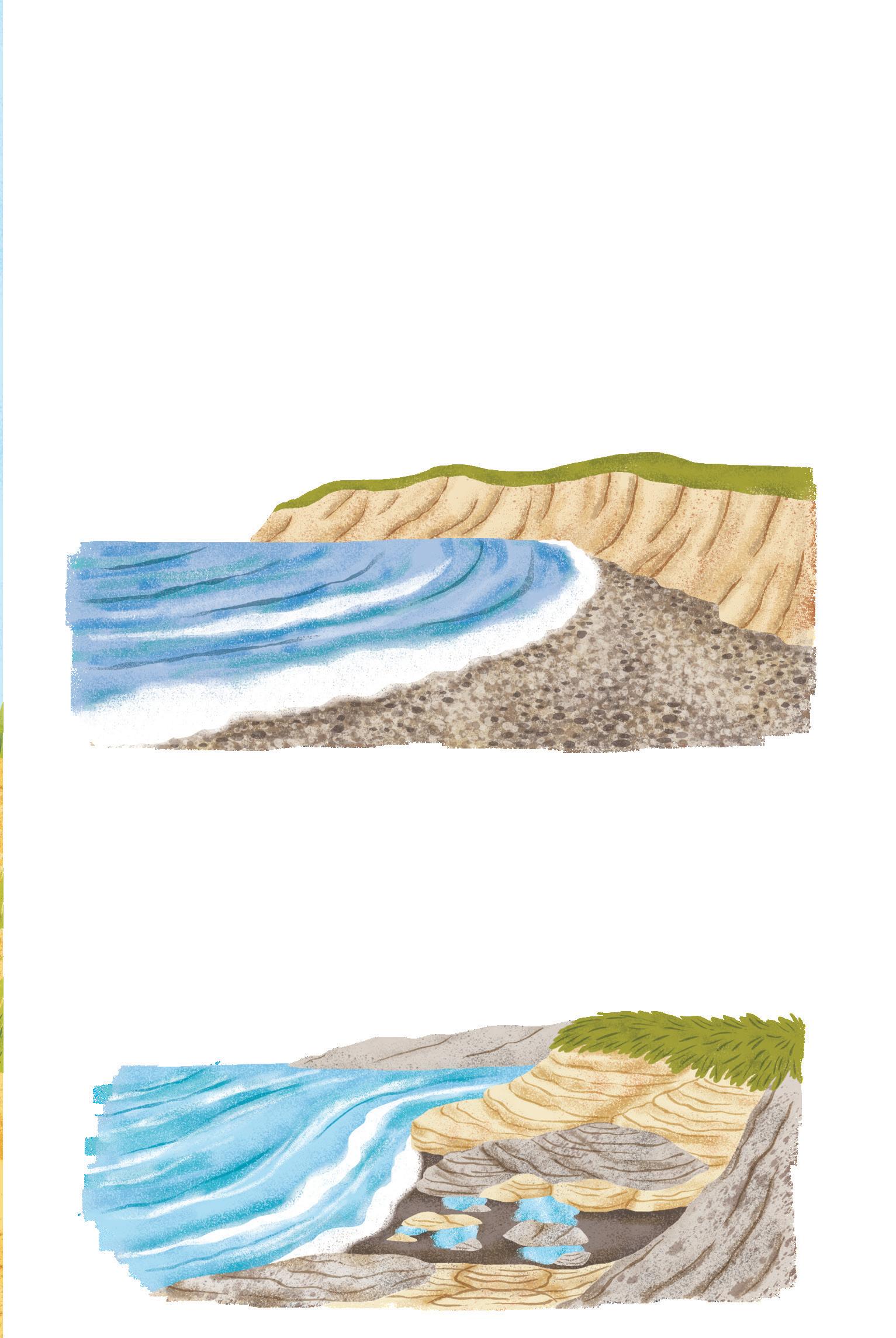
Shingle beaches are filled with small to medium-sized rounded pebbles and stones, sometimes called ‘cobbles’. You can also often find sea glass or ‘lucky glass’ as some people call it, which are pieces of glass that have been smoothed by the sea.
ROCKY BEACH
Rocky beaches are often filled with interesting rock pools and large rocks covered in molluscs such as mussels and barnacles. Did you know?
The rocks on a rocky beach can range from thousands to BILLIONS of years old!
Best for: collecting interesting pebbles or sea glass, spotting shorebirds, building pebble arches.
Worst for: skimboarding, barefoot exploring, playing beach cricket.
Best for: climbing, rock pooling, exploring caves.
Worst for: building sandcastles, digging holes, comfy sunbathing.