The moral rights of the authors have been asserted. All rights reserved
Hello,
As we all emerge from our houses, blinking in the sunlight, here at Nosy Crow we’ve been thinking about the best of our forthcoming titles to read in parks and on beaches.
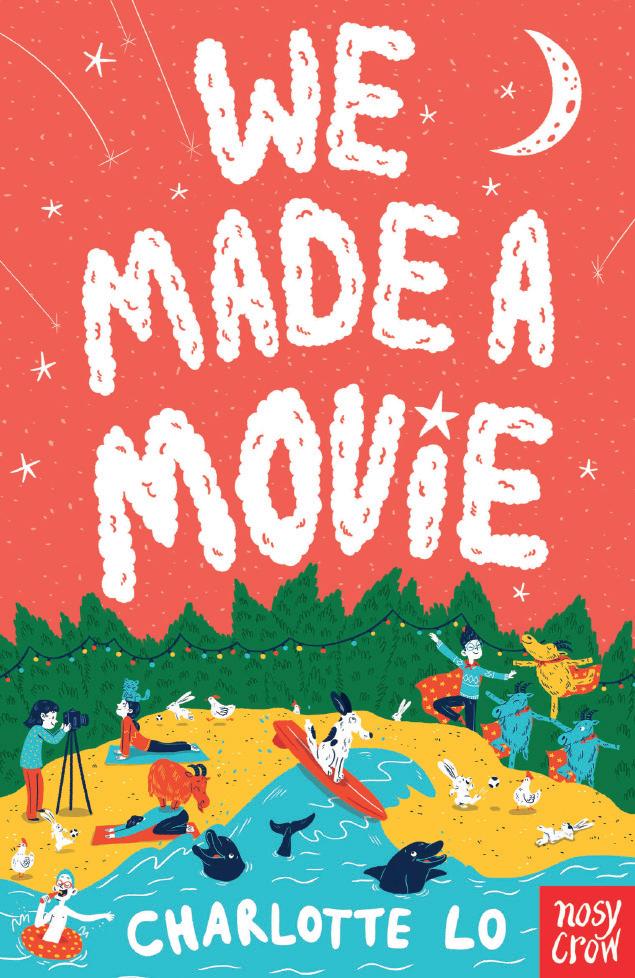
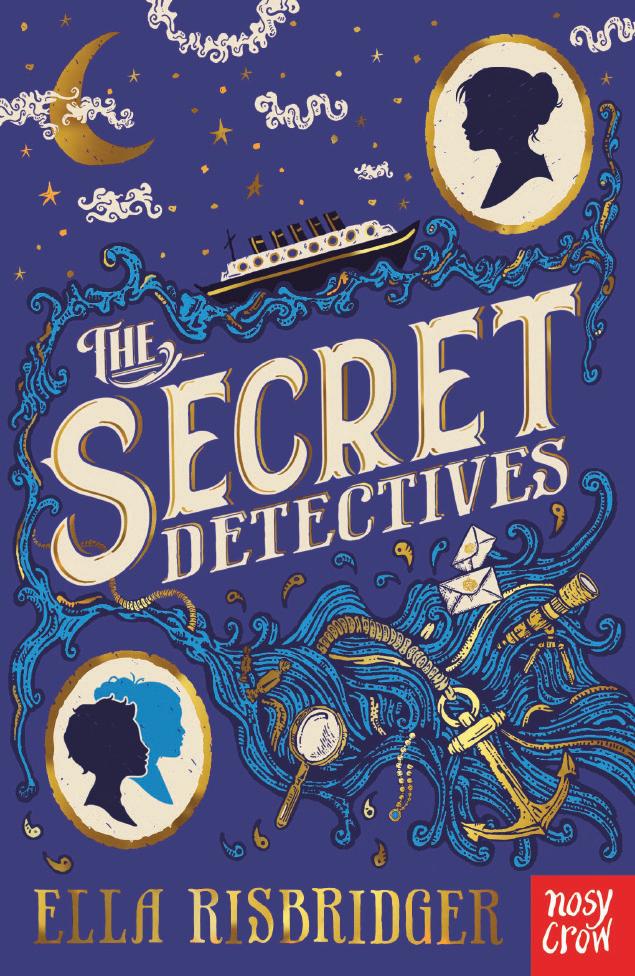
Two titles publishing in June would make particularly good al fresco reads. We Made a Movie by Charlotte Lo is a hilarious island adventure to rival the Durrells, while Ella Risbridger takes us on a sea journey in The Secret Detectives and drops us in the middle of a thrilling murder mystery.
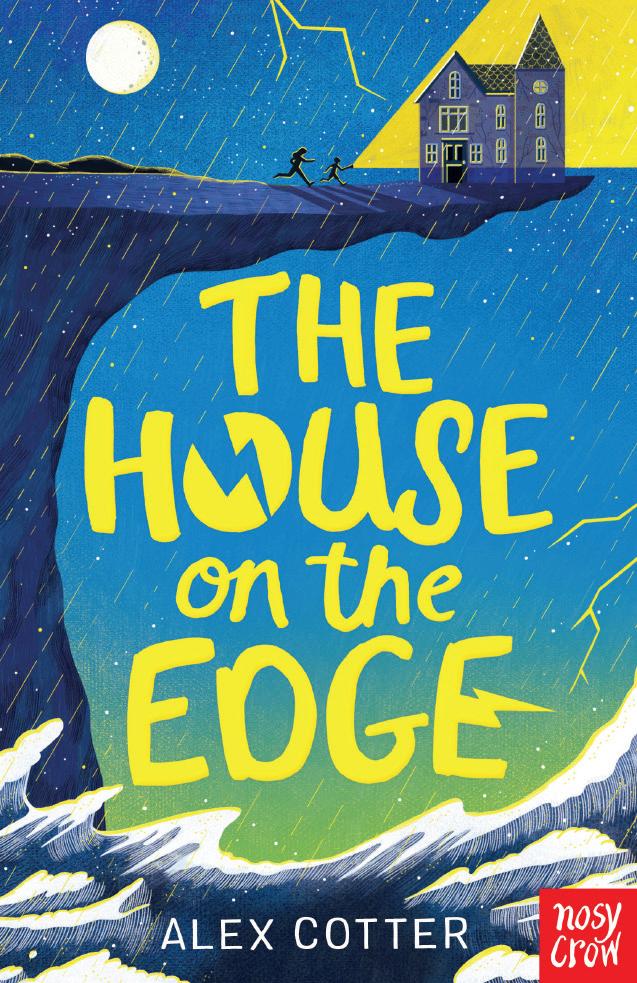
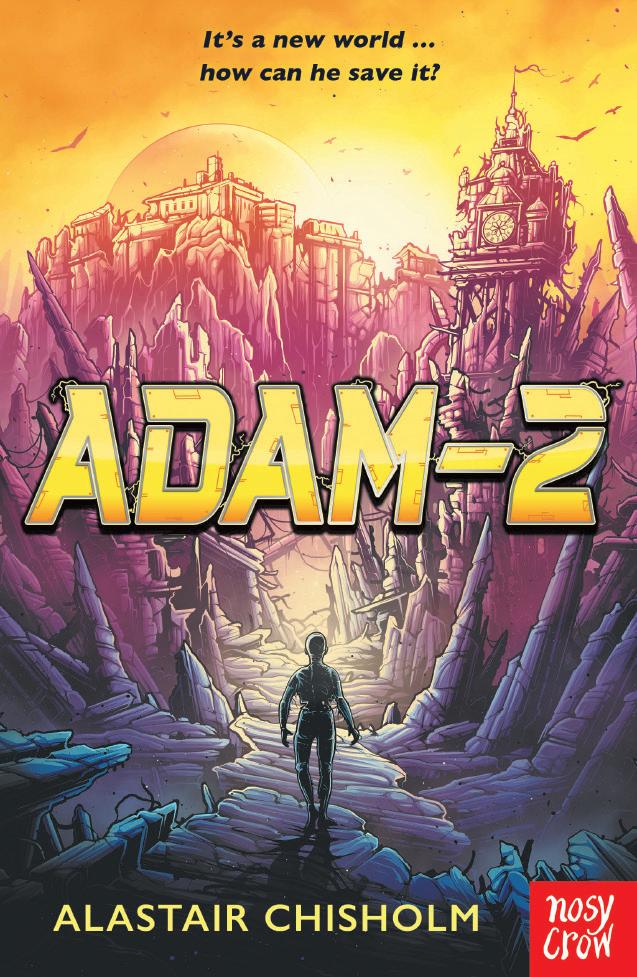
If you want a stunning, suspenseful clifftop adventure come July, try The House on the Edge by Alex Cotter, with its sea ghosts and missing children, while August brings a second sci-fi novel from Alastair Chisholm. Adam-2 is a robot in a time of war between humans and technology – one for those already missing Zoom!
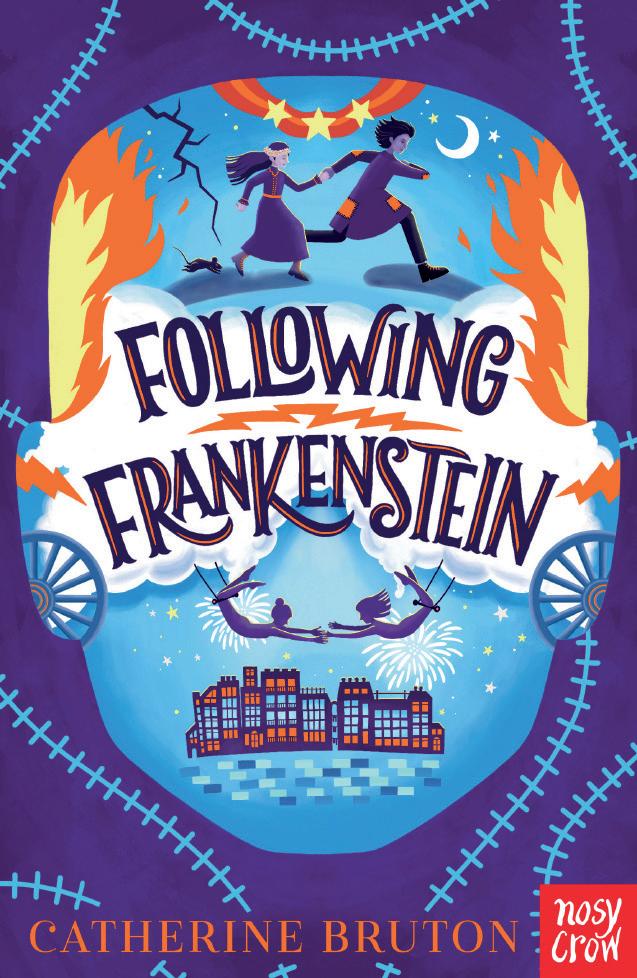
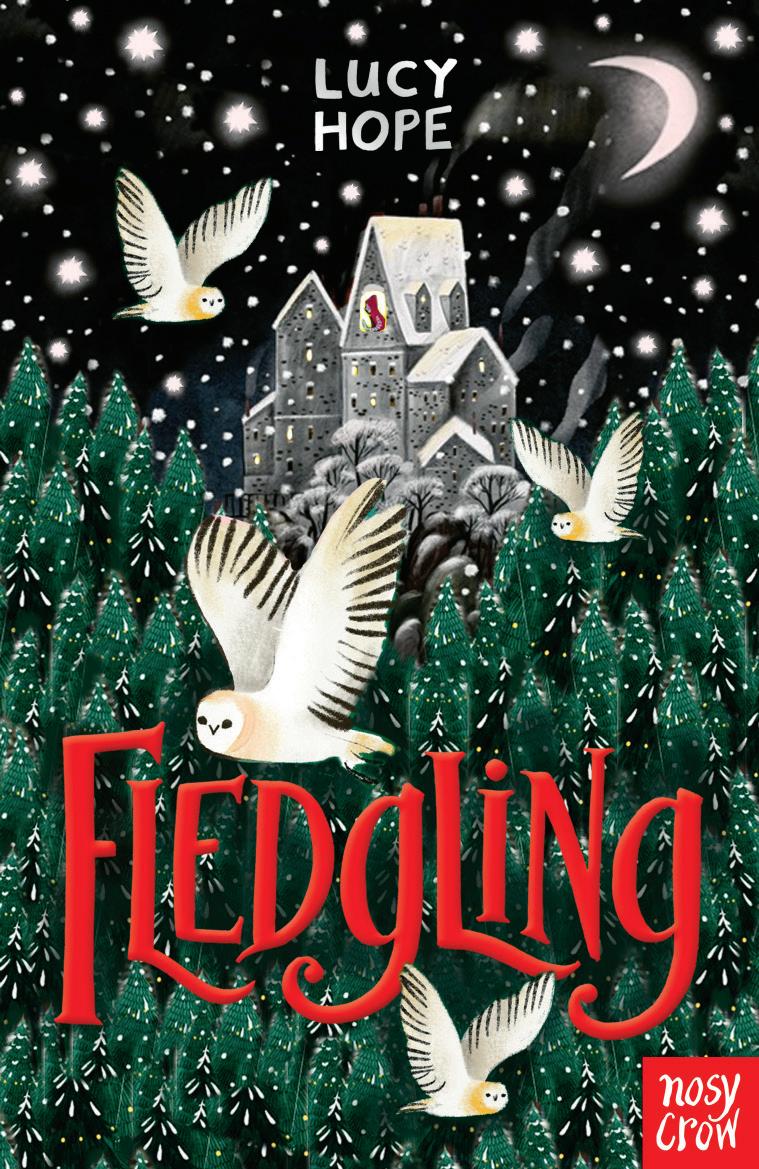
Then, as October brings its customary chill, head back inside to enjoy Following Frankenstein by Catherine Bruton, an epic adventure that will take you from the Arctic to New York in the company of two unlikely travelling companions. As things turn festive, settle down fireside with a fantastic debut from Lucy Hope and read about strange creatures who arrive in the middle of a storm, owls who warn of dark trouble ahead, and friends who are not all they seem to be. Fledgling is a shiny jewel in the Nosy Crow 2021 crown!
We hope you enjoy sampling these delights and please do let us know what you think on Twitter @NosyCrow
Kirsty Stansfield Head of Fiction
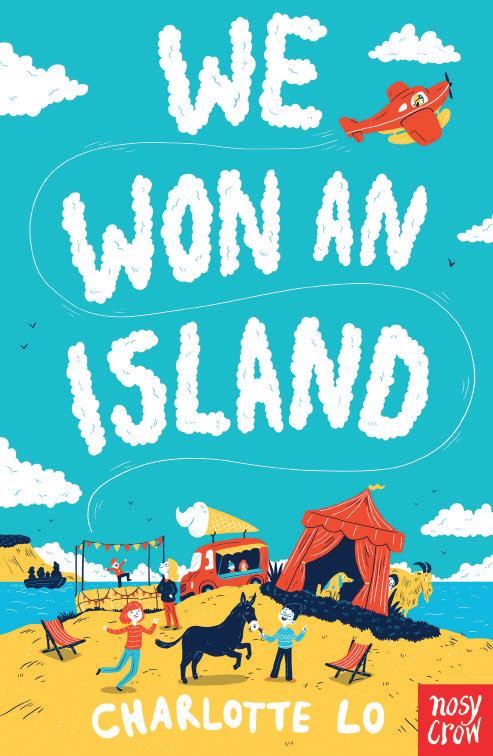
The funny, heart-warming sequel to the acclaimed We Won an Island.
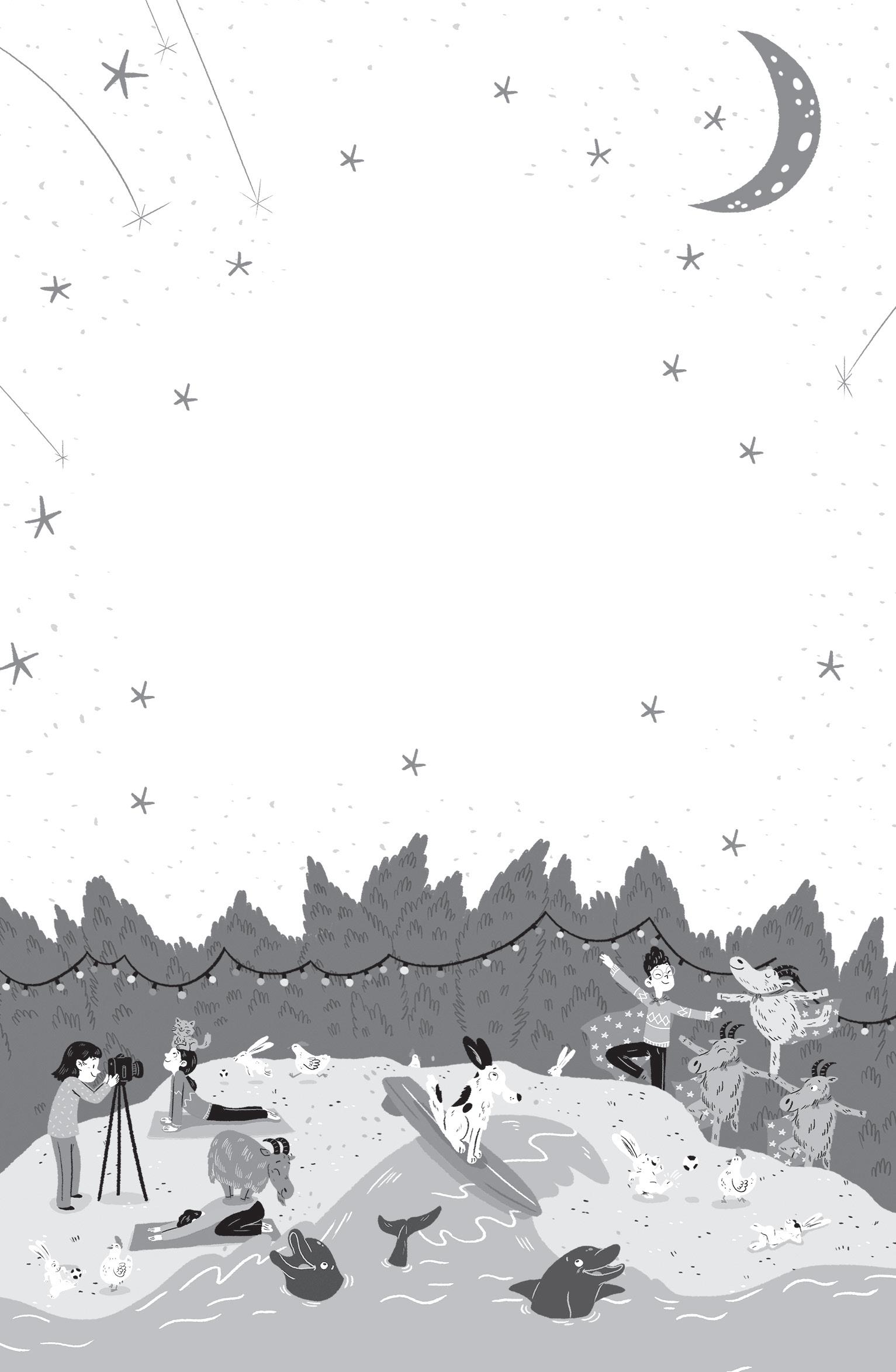
When Luna's family won an island, their dreams came true –Luna opened a donkey sanctuary, her sister flew a plane, and her brother won a sheep pageant. But Luna's new donkey has a mortal fear of beaches, her mum's goat-yoga business is on the rocks, and her brother is weirder than ever!
Luna's got a brilliant plan to solve her family's problems – it's time to enter the movie-making business. . .
Out in June!
@lo_author
Charlotte Lo wrote her first story when she was six years old, on a square of bumpy kitchen towel. Some years later, she enrolled on a masters degree in Writing for Young People at Bath Spa University, and graduated with distinction. When not writing, Charlotte can often be found wandering the countryside with her camera. Charlotte currently lives with her husband, baby, and exceptionally fluffy cat, Cilla.
‘This book is definitely a bask in the sun'
capers’
‘A funny, heart-warming read’
Scotsman
CHAPTER ONE
I squeezed through the door of The Wig and Pen, and elbowed a load of bread as somebody jostled me into the shelves. Up ahead, the landlady of the pub-shop climbed on to her bar, tripped over the lemonade tap and landed on Farmer McAndrew’s head. The crowd made a collective “whoa!” noise and righted her again.
“What’s the town meeting about this time?” I whispered to Kai, my best friend. Nobody had told us yet, but I figured he’d know, seeing as he lived in the flat above our heads.
“Dunno. I’ve been out on Uncle Doug’s boat all morning, setting the lobster traps,” he replied with a shrug.
Fabien, my little brother, surveyed the shelf behind me with a sigh. “I’ve only sold one knitted swimming costume! Can you believe it?”
Margot and I looked at each other guiltily, because we were his secret customers, hoping to make him feel better about selling something. We’d given the costume to Farmer McAndrew, who said we were very good big sisters, and then used it to insulate his carrots.
“I’m not sure there’s much call for knitted swimming garments in July,” I told him.
He shook his head. “I just can’t understand it.”
“I wish they’d hurry up,” said Margot, changing the subject. “I’ve got a flying lesson at two o’clock.”
“And I’ve got to get back to my goats,” said Fabien. “They’ll be wanting their cake soon.”
Kai stared at him. “You’ve baked a cake for your pet goats?”
“Yes, because it’s been a whole year since we won our island and I became the proud owner of my beautiful herd,” said Fabien.
I stared at him, surprised. Had it really been a year since we’d won our island from Mr Billionaire? It only felt like yesterday I’d read about the competition in the newspaper, after we’d found out we were being evicted from our flat in London. I’d only just got used to floating to school on our boat, Lady Agatha, rather than being jostled around on the tube.
Everyone chatted loudly as Heidi, the landlady, tried to climb back on to the bar. I looked around and was sure the whole town was here now. It was even busier than last winter’s Black Friday, when Heidi (who was also Kai’s mum) had given out a free packet of chewing gum with every cucumber
bought. She’d run out halfway through the day, resulting in a riot next to the pork scratchings.
Heidi clapped her hands for silence, and Mayor Oddway pole-vaulted on to the bar next to her with a stale French stick. He waved it in the air to get people’s attention, and the crowd quietened down, until all that could be heard was the sound of his chains jingling round his neck.
“Are we all here?” he asked.
“Yes!” replied the crowd.
“Excellent. I therefore call this meeting to order,” he said. “Now, as you know, planning permission has been applied for by a corporate developer called Gold Rush Properties who want to turn our lovely town of Wishnook into what they are calling ‘The Las Vegas of Scotland’! This would mean expanding Windy Nook Airport to accommodate more planes and building a new, faster road between here and the harbour to cope with all the extra traffic. Unfortunately, despite our objections, full planning permission has been granted for this first stage of development. Today I obtained further details about their plans.”
I glanced worriedly at Kai, Margot and Fabien,
not knowing what any of this meant. Mum had told me about the development, but I hadn’t actually thought it would happen. Why would anyone want to build over the town? It seemed ridiculous.
The mayor unfurled a banner that he’d stashed behind the bar. It looked a bit like one of the collages Fabien liked to do when he got knitter’s elbow. I shuffled forward to get a better look, and ended up under Doctor Ted’s surprisingly unhygienic-smelling armpit. I wiggled my nose away from the pong and angled myself downwind in the stream of Margot’s sweet perfume.
Jumping above the crowd’s heads, I saw the banner had CGI drawings of lots of glossy buildings. There was a cloud-grazing hotel, a massive shopping complex and a casino in the shape of an octopus. It was Wishnook Vegas on a roll of partially ripped vinyl.
“Gold Rush Properties are currently looking at sites for a shopping mall, casino and even a theme park,” said Mayor Oddway. “Most of you know we have launched a legal appeal against the plans and this will be going to court soon. But we still need to be prepared for the worst. If
this goes through, our little town will never be the same again.”
Daisy Gifford, the town’s one and only journalist, forced her way to the front of the crowd. “Have you thought this might be a good thing?” she said.
“Hear, hear!” shouted someone.
“Rubbish!” called someone else.
“These developments bring tourists, and we all know there’s been a lack of them lately,” continued Daisy. “Our businesses can’t survive on thin air. We need to attract holidaymakers and Wishnook’s Gold Rush Resort, Spa and Hunting Lodge will do just that. It’ll save us all!”
“It’ll ruin my business!” said Heidi. “Who’s going to want to sup their ale next to a shelf full of toilet cleaner – even if it is the lemon-scented kind –when they can go to a posh wine bar instead?”
There was silence, and then somebody said, “We’ll still come here to buy our bread.”
“Actually the hotel will include an artisan bakery,” said Daisy. “Just think about all the fresh croissants!”
“The extra trade will definitely be good for my orangutans,” said Edna, who ran the charity shop.
Margot and I both raised our eyebrows.
“Orangutans?” I said slowly, wondering if Edna had actually lost the plot. Maybe the stress had got to her.
“Yes, I send them the profits from my shop,” she said.
Everyone looked away from her and back to Daisy and the mayor, who were stood on opposite sides of the bar looking annoyed with each other.
“Think of the extra tourists that Wishnook Vegas will bring in, though,” said Dad. “There’ll be more people to buy my seagulls!”
Dad had taken up whittling a few months ago. He said it was something to do with mindfulness, and had built an entire shed in which to work on his new hobby. So far he mostly stuck to whittling seagulls that he kept forcing on people as presents. Kai was the only person who’d escaped being given one, at least for now. His surprise gull weighed heavily in my pocket as I thought about it.
“Nobody will come to my island yoga retreats if there’s a fancy hotel for them to stay in instead,” said Mum.
“I’m sure people will still come,” said Dad soothingly.
Mum scowled at him. “You don’t know that. My website will look terrible next to theirs.”
“Oi!” said Kai, who’d made it for her. “You’ve got animated graphics and everything.”
Deciding I’d had enough of all the drama, I nodded at Kai to follow me through the hot, sticky crowd outside to the fresh air. Margot and Fabien came tumbling through the door after us, and we raced down to the harbour and dangled our feet in the water to cool down. I watched a seabird bob on the waves and felt like my head was swimming around with it.
Mum had tried not to worry us about the development, but without her yoga retreats we’d all go hungry again unless we learned how to fish.
“We must find a way to stop this happening,” I said.
“We could start a petition?” suggested Kai.
“No, we need to do something bigger than that,” I said.
“Can’t you ask Mr Billionaire? I mean, he wouldn’t want to see this happen to Wishnook, would he?” said Kai.
“He’s travelling,” I replied. It had been six months since Mr Billionaire had last visited us. He’d gone on a year-long expedition to Antarctica with a pack of huskies and a boatful of scientists. I wasn’t quite sure what he was doing there. The last time we’d seen him, he’d just mentioned something about liking snow and igloos. I hoped he’d taken a good coat with him.
“Maybe Daisy’s right, and this resort won’t be such a bad thing,” said Margot. “I could get a job there and put money towards my flying lessons. Plus, they’re going to invest in the airport!”
“You’re fourteen,” I reminded her.
“But I’ll be sixteen by the time it’s finished,” she said.
“What about Mum’s yoga retreats? What if she goes out of business?” I asked.
“We’ll grow cabbages,” said Margot. I wasn’t convinced. If Mum went out of business, that would mean no more food, no oil for the generator that made our light bulbs work, no peat for the fire and no fuel for our boat, Lady Agatha. It would mean no more living on our island, unless Dad could sell a million whittled
seagulls or Fabien could start a trend for knitted underwear. Both seemed quite unlikely.
Worse, it would mean I’d have to close my donkey sanctuary.
I’d opened my donkey sanctuary at the end of last summer and now had three rescue donkeys. The last one, Sunshine, had been given up when her owner had moved country. She was the littlest donkey but the boldest too – unless she had to go near a beach, which was a bit of a problem as her new home was an island.
I couldn’t close my sanctuary! I’d promised Monty, Moon and Sunshine that they’d finally found their forever homes. I couldn’t go back on my word. They needed me.
I turned to Fabien. “You’re on our side, aren’t you?”
“Well … it would be nice to expand my knitting business,” he replied. “Besides, paintballing looks really fun.”
Now I was confused. “What do you mean?”
“Something on Mayor Oddway’s poster said shooting range,” he said.
Kai shook his head. “That’s not paintballing. That means goose shooting.”
The colour drained from Fabien’s usually bright face. “You mean … shooting real geese? With real guns? Not firing paint at people’s bottoms?”
“Yes,” I said.
He gripped the harbour wall. “That’s horrible.”
“Actually,” began Kai, “the geese around here are kind of pests. They’re constantly trying to eat all the farm crops, and they swallowed one of Uncle Doug’s best socks once when he was drying them outside his boat shack.”
The colour returned to Fabien’s face, but this time he turned so red that he resembled a beetroot. “You wouldn’t shoot me if I ate your Uncle Doug’s socks, would you?”
Kai considered this. “It depends why you’d eaten it. I mean, if you were a sock-eating zombie, then, yeah, probably. But if you got confused and thought it was a smoked kipper, then obviously not. They do smell kind of similar.”
“Can we stop talking about socks and get back to the point?” I asked.
“What was the point again?” said Kai, looking a bit lost.
“That we have to save the town!” I replied. “Who’s with me?”
I held out my hand, and Kai and Fabien piled theirs on top. “We are!” they both chirped.
Margot sat on her hands and looked pointedly up at the clouds. I took out the whittled seagull from my pocket and pecked her on the hand with it. She made an ouch sound, then shuffled away. I huffed. She’d change her mind when she’d thought about it more.
We needed Margot on our side. After all, she could fly real aeroplanes and explain what a subordinate conjunction was, and name all the planets without doing the rhyme in her head first. All I could do was worm a donkey.
Footsteps whacked on the pavement behind us, and I turned to find Mum panting and doubled over.
“What’s wrong, Mrs Butterworth?” asked Kai.
“Are the developers here already?” I said. “Should we lie down in front of the diggers?”
“That sounds dangerous…” replied Fabien, his face scrunched with worry.
Mum shook her head. “It’s the yoga guests,” she wheezed. “I’ve just remembered I was supposed to pick them up at lunchtime, but with all the
commotion about today’s meeting I completely forgot!”
“So where are they now?” asked Margot. Mum shrugged desperately.
Oh no! We’d lost the yoga guests!
CHAPTER TWO
“What do they look like?” asked Kai.
“They’ll be dressed in Lycra; they always are,” I told him.
“Yes, and they’ll have babies,” said Mum, chasing after us.
“What babies?” asked Margot.
“This is the new baby-yoga week I’m trialling,” she said.
“Oh, the one where parents waft babies above their heads and then balance them on their feet?” I said.
Mum nodded. “Yes.”
“Oh, I forgot you’re doing that,” said Margot.
“I hope the babies don’t scare my goats,” said Fabien. “They’re sensitive to change.”
I threw myself on to my bike, which I kept in Kai’s yard, and cycled up the high street with him. The others spread out across the harbour to cover more ground. Closed signs loomed across the doors of all the little shops and businesses I pedalled past. There was a big poster in the Wishnook butcher’s advertising their discounted sausages: Buy our bangers! Six for sixty (pence)! The window of the charity shop next door was filled with dust, and didn’t look like it had seen
a soul for months. There was a gift shop with a closing-down sign in the window, and a bakery that only opened in the mornings now. It was like cycling through a ghost town.
“Where would you go if you were a baby?” I asked.
“Somewhere with sugar,” replied Kai, and then we both looked at each other.
Mr Percy’s pop-up ice-cream stall!
Mr Percy’s ice-cream stall was at the top of the hill and was made from a wallpapering table with a cutlery drawer glued underneath. As I cycled towards it, I could see a line of people snaking away from it, each with a small, squirming bundle in their arms.
“Look, over there!” I yelled at Kai. Mr Percy beamed and waved at us. “I’ve just sold seven and a half ice creams! This is the most business I’ve done all summer!” he shouted.
I waved back and skidded to a halt in front of the ice-cream eaters. They were all dressed in sportswear, and the wiggling bundles were definitely babies. One of the babies had a wafer cone on its head, and there was a puddle of
melted chocolate at its mother’s feet. I reached into my pocket and passed her a tissue.
After I’d introduced myself, Kai and I herded the yoga guests down the street and on to Lady Agatha. It was a tight squeeze with everyone on the boat, and I ended up sitting on top of a box of teething powder. Dad started the engine, and I waved goodbye to Kai. The boat crashed heavily across the water, and Lady Agatha’s engine strained under the weight. I tried to shuffle away from the yoga babies, who were giggling, crying or throwing up in sync. One made a horrific farting noise, and then fell asleep peacefully in her father’s arms, tummy gurgling menacingly. Margot held her nose and scowled.
“Luna will make you some refreshments while my husband and I bring in the luggage,” said Mum, when we docked back at the island.
“Will she?” I asked.
“Yes, she will,” muttered Mum.
I glanced longingly across the beach at my donkeys, then led the yoga people in the direction of our house.
“This is beautiful,” said one of the ladies, and her baby scowled at a goat as we passed. Margot
and Fabien followed the parents like collies herding sheep.
“Reminds me of some of the locations I’ve filmed in,” said one of the men.
“Filmed?” I asked him. “Are you a movie star?”
“Not quite,” he chuckled. “I’m a runner for Wild Countryside.”
“The TV show?”
“That’s right,” he replied.
I’d heard of Wild Countryside before. It was one of those boring teatime programmes that old people liked, about sheep, and grass, and blackcurrant jam. I used to turn it over when we had a TV, but Dad loved it and sometimes still watched it if we went to The Wig and Pen for tea.
“What’s a TV runner?” asked Fabien. “Do you run around with TVs, like a challenge?”
The man, who said he was called Greg, laughed again, and his baby hiccupped. “Close. I run around doing errands – fetching coffee and helping people with their lines. Hopefully I’ll be in front of the cameras one day, but for now it’s not a bad job.”
“Must be stressful, though,” mused somebody else.
“A little. That’s why I’ve come here for a break. Yoga is very relaxing, and little Vera likes it.”
“You named your baby Little Vera?” said Fabien in a tone that barely hid how appalled he was.
“You’re a fine one to talk about names,” hissed Margot, as we passed Violet Pansy Hyacinth the Third, one of his goats.
“I’m named after a footballer,” said Fabien proudly, despite the fact he couldn’t kick a ball to save his life. “And Luna’s named after the crazy girl from Harry Potter.”
“What about you?” Greg asked Margot.
“Mum named me after the doctor who delivered me,” said Margot. “She thought I might get a good job if I had a posh name.”
We reached our house in the middle of the island and I led the yoga guests into the mansion’s living room, then shut myself in the peacefulness of the kitchen with Margot and Fabien.
“I’m going to show them my catalogue of swimming costumes,” said Fabien.
“Let them get settled in first,” said Margot.
I stared out of the kitchen window and thought about how amazing working for a TV show would be. Maybe I could get a job on a programme
about donkeys or islands. The idea flittered out of my head as quickly as it had arrived. Most adults thought eleven was too young to work, and I couldn’t be away from my donkeys for longer than a day.
Then it came to me: a new idea that made my tummy fizz with excitement.
“We should make a movie about our animals!” I said. “Wouldn’t you want to see the world’s most talented goats?”
Margot shook her head. “No.”
But Fabien was jumping up and down in excitement. “We’re going to be famous!”
“I know!” I yelled. “And it wouldn’t just have to be about our animals. It could be about our island, and The Wig and Pen, and Mr Percy’s icecream stall. It could be about the whole town!”
“But why?” asked Margot.
“We can show it to the judge when the appeal goes to court. He’ll have to stop them developing Wishnook when he sees how amazing our home is already!”
“But you don’t know the first thing about making a movie,” replied Margot.
“We’ll ask Greg,” said Fabien.
“That’s … actually genius,” I said, surprised. Fabien beamed with pride.
“What about a camera?” asked Margot. “We’ll borrow one from somebody,” I said. Margot shook her head again. “I have to go,” she said. “Airbus have released a new plane and I need to study the flight manual.” And with that she left.
I poured myself some orange juice in my donkey mug and wondered when it was exactly that Margot had stopped being fun.
CHAPTER THREE
I set my alarm for early the next morning. There were only twelve days until the appeal went to court. I didn’t have a second to lose if I was going to save the town.
The first thing I needed to do was find a camera. After all, it would be a bit hard to make a movie without one. I was sure we had one somewhere in the house, but four broom cupboards and eighteen drawers later there was no sign of the old thing. Maybe we’d given it away before we’d moved. Mum had sold loads of our stuff when Dad had been sad, to try to pay the rent on our old flat. Now I thought about it I was sure the camera was one of them.
“What are you doing?” asked Mum, as I brushed a decade’s worth of dust off my knees.
I told her all about our movie plan, while Dad hovered in the background, varnishing the hallway’s wooden panelling.
“What a brilliant idea!” cried Mum.
Dad dropped his brush. “I’m not sure about this…”
“That’s because you’re on the developers’ side,” replied Mum curtly.
“You’ll upset half the town,” he told me.
Before I could reply, Mum and Dad launched into a debate about Wishnook Vegas, which resulted in both of them being covered in copious amounts of orange varnish. I tutted at them and continued my search for the camera.
It was almost mid-morning before I finally gave up looking. I raided my piggy bank and counted up the money. There was just about enough to buy an old camera from the charity shop, if Edna had one in stock. It probably wouldn’t be very good, but I was sure Kai could edit the footage on his computer and make it look all swanky.
I poured the money into my coin purse, and went to Dad’s shed to ask for a lift. He was in there, wiping the last remaining varnish off his forehead with a bottle of surgical spirit. A flock of wooden seagulls swung above his head.
“Can you take me to the mainland so I can see Kai?” I asked.
“All right. I need to get some lamb for tonight’s stew anyway,” he said.
Fabien, who was walking past the shed, stopped in his tracks and shot daggers at us. “We DO NOT eat lamb on this island.”
“Sorry, sorry, I meant lentils,” said Dad hurriedly. I filled Fabien in on my plan to find a camera, and the pair of us climbed into Lady Agatha, ready to set sail. Luckily Margot was busy revising for her pilot’s licence test, even though she couldn’t take it yet. I didn’t want her to find out about the camera and start interfering. The less she knew about our movie the better, seeing as she didn’t want to help with it.
I held on to Lady Agatha as Dad started the engine and we clonked out to sea. A leak sprang at the stern, where a cork had popped loose. We grabbed a plastic tea set out of the picnic basket, which Mum kept on board for such occasions, and began scooping the water out.
Dad moored up next to Doug’s boat shack and set about repairing the leak with him, while Fabien and I raced towards The Wig and Pen.
I couldn’t wait to tell Kai all about our movie, but there was no sign of him inside the deserted pub-shop, so I went off to find him out the back.
Sure enough, Kai was sat in the little courtyard. He was surrounded by his rescue rabbits, the inspiration for my own donkey sanctuary. I picked
my way through the sea of twitching noses, and Fabien cuddled a lop-ear called Julio. A rabbit hopped over to me and I gave him a dandelion while filling Kai in on our idea. The toothless rabbit slurped its snack like an old man eating spaghetti.
“So, what do you think?” I asked Kai, after explaining everything.
“I think the movie’s a great idea!” he said. “We could film my play for it too.”
Of course, Kai’s play! I’d forgotten all about it in the excitement.
Kai’s dad used to run the Wishnook Community Theatre in his spare time, but it had fallen into disrepair after he’d died. Kai had spent the last six months getting it ready to reopen and had written a play for the town to perform at the end of summer. He was intending to hold auditions later that week for the parts of Venus the planet and Spartacus the Roman alien.
“I might have to shorten the performance time a bit, though…” he mused.
“Why, how long is it?” I asked, as a rabbit nibbled my shoe.
“About three hours and ten minutes at the last
script read-through,” said Kai. “Mum reckons it should be more like forty-five minutes, so I might have to cut the underwater scenes.”
“Underwa— Never mind,” I said. “Can you help me look for a camera? We need to get started with everything right away.”
“Don’t need to. I’ve got one upstairs we can use. Mum bought it for me when I needed to film an advert for the rabbit rescue.”
Excitement bubbled up in me when Kai brought the camera downstairs. It looked really fancy, with a large lens that zoomed out when he turned it on. Kai pointed the camera at me and it beeped as he pressed the button on the top. I stood over his shoulder and saw that it was recording.
“It shoots in 4K,” he said.
“Margot’s going to hate it,” muttered Fabien. Kai turned off the camera and handed it to me. It was perfect! Now we had a story and something to film it on.
I led Kai back to Lady Agatha so we could get started with filming on the island. Doug was stooped over on the deck, repairing the leak by bashing at something with a shoe. I glanced around for Dad and saw him wandering
back across the harbour, carrying a paper parcel from the butcher’s. I peered at it as he climbed on board. It looked suspiciously shaped like a lamb leg, but I didn’t say anything. Maybe Fabien would just think it was a bag of potatoes.
We set off back to the island on the newly patched-up boat. I sat by the hole with my teacup, ready to start bailing, but Lady Agatha managed to make it back to the island without any more leaks. Dad patted the steering wheel proudly as we climbed out, and I went to test the camera properly.
I spotted Sunshine at the edge of the woods looking at the sand anxiously, and zoomed the lens in on her. She was a particularly beautiful donkey, and her eyes sparkled on the camera screen. I kept the lens focused on her as I ran over and climbed on to her back.
“What are you doing?” asked Kai.
“I’m going to record a tour of the island on donkey-back!” I said.
I panned the camera around. Further down the beach, Mum and her yoga guests were wobbling on one leg. I zoomed in on them and then back
out to the ocean, where little fishing boats bobbed serenely on the calm water.
“Record this crab shell!” yelled Fabien, tearing over to me with a tiny crab in his hands.
Sand flicked up from his feet, and he thrust the crab shell up towards me. Sunshine flattened her ears and took a step back. I felt her stumble and glanced down, just in time to see a goat skip out from under her legs. It lowered its horns and head-butted Sunshine in the bottom, annoyed at having been stood on.
Sunshine stomped her hooves and lurched forward on to the beach. I grabbed on to her stubby mane with one hand while trying to keep the camera steady in the other.
“It’s OK!” I whispered to her, but I saw Sunshine look at the sand beneath her hooves and felt the horror ripple through her. Before I could do anything, she broke into a freaked-out gallop, careering down the beach faster than a missile. The camera jerked, but I managed to keep filming, wrapping my legs round Sunshine so tightly they went tingly.
Kai shouted something behind me. I couldn’t hear what it was, but his voice sounded panicked.
I squeezed my eyes shut and hoped we weren’t about to die.
“Watch out!” I heard him say, just managing to make out the words.
I opened one eye and saw we were heading straight towards Mum and the yoga people, who were crumpled together further up the beach.
“Get out of the way!” I yelled at her.
Mum untangled herself from the pretzel pose she’d been in and screamed. The yoga people, who were waving their babies above their heads like a scene from The Lion King, looked around in panic. Vera burst into tears, coughed and regurgitated broccoli on to Greg’s head. It dripped into his eyes, over the end of his nose, and landed with a splatter on the sand.
The yoga people rolled out of Sunshine’s way, and she screeched to a halt in front of Mum.
“Luna, get your donkey out of here!” she yelled. “And somebody get Greg a baby wipe for goodness’ sake!”
Greg wiped his eye with a clump of seaweed.
“I’m OK. I don’t think she’s blinded me.”
Margot stepped out from the trees behind me, covered in engine oil from some kind of project,
eyebrows raised. “I see your movie’s going well. Hollywood here you come,” she said. I only just resisted the urge to throw regurgitated broccoli at her head.
When Isobel Petty is orphaned, she finds herself being taken away from her home in India and sent to live with a distant uncle in England. On board the S.S. Marianna, she witnesses a shocking act – somebody being thrown overboard in the middle in the night. But when the ship’s captain insists that nobody is missing, Isobel and her two new reluctant friends must solve two mysteries – the identities of both the murderer and the victim – before they reach England and the culprit has the chance to escape.
Out in June!
Ella Risbridger is a writer from London. Her debut, Midnight Chicken (& Other Recipes Worth Living For), was published by Bloomsbury in January 2019 and won praise from Nigella Lawson, Nigel Slater and Diana Henry. It was named a Book Of The Year 2019 by half a dozen publications, including The Times, The Daily Mail, and The Observer.
Ella has also written for The Guardian, The Observer, Prospect, Grazia, and some other places too. The Secret Detectives is her debut children’s book.
The body seemed to fall for a long time. There was no splash, or if there was it was lost in the waves. Isobel was frozen to the spot for a moment – and then her common sense caught up with her, and she stepped back quickly into the shadows. if
‘A thoroughly entertaining mystery and a heartening story of friendship. I loved it.’
Katherine Woodfine, author of The Mystery of the Clockwork Sparrow
Chapter One: A Funny Little Thing Week
1
Calcutta,the Bay of Bengal;the Laccadive Sea, the Arabian Sea
Isobel disliked Letitia from the very start.
This was not because Letitia disliked Isobel, although she probably did.
Everybody disliked Isobel, perhaps because she herself disliked almost everybody.
People seemed to Isobel to be almost another species. They followed rules that Isobel had never been taught; as if they all knew the steps to a dance for which Isobel had never even heard the tune. They looked at each other for too long. They told lies for no reason. They all knew how to be with each other in ways Isobel did not, and she disliked them all. All the ones she knew, anyway – although it was true that she had never known many people, and very few people of her own age. There had been very few people at Steel’s Way.
Steel’s Way was the house outside Calcutta where Isobel had lived in the time before.
“You’re Isobel Petty,” Letitia had said, the first time they met. “And I am Miss Letitia Hartington-Davis.” She said it as if Isobel ought to recognise her.
Her name sounded a little bit like a sneeze, thought Isobel: le-TISH-ah, ah-TISH-oo, we all fall down. They had been standing on the dock at Calcutta,waiting to go aboard.“I’m ten years old.You’re the same age as me.”
“I’m actually eleven,” said Isobel. This should, she felt, have given her superiority – but it was hard to feel superior to Letitia. Letitia had a great deal of selfpossession; she was tall for ten, and very capable, and she knew it. She was also – even Isobel could see – a likeable sort of child. Grown-ups liked her, and this was one reason why Isobel did not. Isobel was not the kind of child grown-ups liked. She knew it perfectly well. Isobel was all wrong, in all the ways: she was untidy and sharp-faced and her cheeks were not pink or gold or brown but whitish yellow, like she had been growing under a log instead of in good Indian sunshine.
Her face was wrong, and her manners were wrong, and her clothes were wrong too. Her black dress, which should have been decent, was somehow both too tight and too loose. The fabric had been chosen carelessly
from the end of a roll that had been sitting in the sun, so that in places (where it had been in shade) it was properly black, and in others (where the light had faded it) it was sort of brownish. Combined with her features – eyes a little too big and round for her face; nose and chin a little too sharp – it lent her something of the appearance of a house crow. And Isobel knew it.
It had not been so bad in the lawyer’s office, but it had been pretty awful at the clergyman’s house where she had been staying, and worse again the instant she met the Hartington-Davises. Mrs Colonel HartingtonDavis was a smart woman, and she liked her children to be smart, too. The little boy – Horace – was wearing a blue sailor suit for the voyage.
And Letitia, of course, was properly dressed too. She had been wearing a white muslin dress with blue bows on the bodice, and a large, wide-brimmed, white straw hat. The hat had blue bows on it, too, and so did Letitia’s shoes and the end of her long, fair plait.
Letitia’s hair, Isobel knew, was considered to be very beautiful. Mrs Colonel Hartington-Davis brushed it with one hundred strokes every morning with two shining silver hairbrushes. Isobel brushed her own hair, but hers was dark and very thin and tangled easily.
Isobel’s mother had had hair like that. Isobel’s mother had been exceptionally beautiful: she had worn gowns full of lace, and had enormous blue eyes, and Isobel had barely seen her at all. Isobel had lived in one part of the house at Steel’s Way, and her mother and father in the other. The house at Steel’s Way had been big and white, all on one level, and all around, the hills had been very green with tea and snakes.
Isobel had lived with her ayah. She had not loved her ayah – she had had six or seven different nannies by the time she was ten – but then again, she didn’t really love anybody. Her mother and father had lived quite separately from her, in a world full of candlelight and wine glasses and dancing. Isobel had loved – when she was little – to slip away from her ayah, and hide and watch, and her mother had seemed to her then like a kind of fairy: a fairy princess with diamonds at her wrists and throat.
“Funny that the child should be so dark when you’re so fair, Mrs Petty,” someone had said to Isobel’s mother once, a long time ago, in another life. Isobel had been hiding under the dining-room table. Isobel’s mother had said distantly, “Well, she’s rather a funny little thing altogether.” And the man and Isobel’s mother had both laughed, and gone away into the garden to look at the
hibiscus flowers. I am a funny little thing, thought Isobel to herself, I am a funny little thing. And she could tell that her mother had not meant it in a nice way. But Isobel’s mother was dead now. So was her father. They had died, and Isobel had been left all alone in the bungalow in the hills, and she did not especially like to think about it. There had been a snake – small and brown and curious – and she had liked the snake. She missed the snake.
In any event, someone had come for her eventually, and brought her to Calcutta, and now she was here aboard ship with the Hartington-Davises. This was because there had simply not been anyone else to see her to England. That was what the lawyer had told her. She had almost liked the lawyer. He had seemed to Isobel to be a person who told the truth. Her parents were dead; there was nobody to take care of her in India any more. There was in England a person who could take care of her; therefore she would go to England. There was nobody to take care of her on the boat to England; therefore she would have to go in the charge of some responsible lady with children of her own; therefore, Mrs Colonel Hartington-Davis. He had told Isobel all of this in exactly this way: one sentence after the other, very neat and obvious. She
would be sent like a parcel: to the English address on the front, from the Indian address on the back. She would be labelled, equally neatly and obviously, and sent from one place to another. Isobel had approved of this, too.
That is to say, she had approved of the lawyer being straightforward. She had not approved of the plan, particularly. She had certainly not approved of Mrs Colonel Hartington-Davis.
Mrs Colonel Hartington-Davis would have been pretty, except for the crying. Her clothes were very smart, and she, like Letitia, had fair hair that shone from brushing, but her face was perpetually blotchy, and her hair often a little dishevelled from running her hands through it so often. She ran her hands through it whenever she had a headache. She often had headaches. This was because she missed her husband – the Colonel Hartington-Davis himself – who was staying in India without her, and without the children. She was taking the children to boarding school.
“Do you want to go to boarding school?” Isobel asked Letitia. “I wouldn’t want to go to school.” But Letitia just put her nose in the air and said that it was probably actually better to go to boarding school than to go to where Isobel was going.
Isobel was going to live with her uncle, if they ever got to England. Isobel had never been to England, and it was a long way off yet. Three weeks at least, even if they made good time. Part of Isobel hoped they would not make good time. England sounded very cold and unpleasant, and her uncle, worse. England, the uncle and the rain. A new life. That was what the lawyer said, and Mrs Colonel HartingtonDavis too.
The first life – the ayah, the hills – had been one kind of life; and the next life – the uncle, the rain – would be another. And in between there was this: three weeks of the ship Marianna. Three weeks of the HartingtonDavises. And three weeks of the ocean: boundless, infinite and touching the sky in all directions. There was almost nothing to do on board the ship. This was not something Isobel minded: she was used to not having things to do. There had never been very much to do at home in Steel’s Way.
Once, long ago, she had had an ayah who told her stories. She had liked that then. But that ayah had gone away when she was quite a little girl of five, and the next ayah didn’t tell any stories at all. Isobel liked stories about things that really happened. She liked to know everything that really happened, and that was the
reason for the notebook.
She carried the notebook everywhere, and she wrote everything in it. She wrote down everything that happened, and everything that she saw. Isobel was a very noticing kind of child: she was good at seeing people, and she was even better at taking notes on what she had seen. She liked looking at things and naming them; she liked seeing what people were doing, and putting it into words. She liked matching what people did to the word for it, like playing Snap, between the world and the describing of the world: it made it all easier to understand.
She was keeping the notebook tucked into the top of her knickers for now, underneath her frock. It seemed safer that way, at least until she was sure what kind of people the Hartington-Davises were. In fact, she thought, until she was sure what kind of people were aboard the ship at all. Nobody had cared much at Steel’s Way, but they might care on the Marianna. What she really wanted was to go off on her own and write everything down about the Marianna right away, but it struck her at once that this was going to be rather more difficult on board ship.
“Why don’t you girls go off and play?” said Mrs Colonel Hartington-Davis, the first morning.
“I don’t play,” said Isobel.
“All children play,” said Mrs Colonel HartingtonDavis.
“Not me,” said Isobel. They were in the cabin: a stateroom, Mrs Colonel Hartington-Davis called it. There was a porthole, and there were two bunks – one for Letitia and one for Isobel – and a door going off it to Mrs Colonel Hartington-Davis’s room, which she was sharing with Horace.
Mrs Colonel Hartington-Davis had been crying in the night – Isobel had heard her – and this morning she already had a headache, which meant they couldn’t go up to the dining room for breakfast.
They had not eaten in the dining room the night before, either. It was very irritating. How was Isobel supposed to find out who was on board if they never went to the dining room? The night before, they had only managed to get on board and eat a little supper in their cabin, and immediately after that Mrs Colonel Hartington-Davis had told them to get into nightgowns and into bed.
It had been an awful bother getting all the buttons on the new frock undone by herself, and a worse bother getting them done up again in the morning, but she had managed. She was rather proud of herself.
“Letitia plays, don’t you, Lettie?” Mrs Colonel Hartington-Davis, who had no intention of dropping the subject, was finishing Letitia’s plait.
“It’s the person who does your hair,” said Isobel to Horace. “The person who looks after you.”
“Mummy looks after me,” said Letitia, smugly.
“And me,” said Horace.
“Lettie doesn’t have an ayah,” said Mrs Colonel Hartington-Davis.
“Nor do I, now,” said Isobel. “She died too.”
Mrs Colonel Hartington-Davis shot her an alarmed glance. She thinks I’m a funny little thing, thought Isobel. Or something worse.
“Passed on, I think,” Mrs Colonel Hartington-Davis said to Isobel.
“Passed on?” said Isobel.
“The ayah passed on,” said Mrs Colonel HartingtonDavis, firmly.
“Passed on where?” said Isobel.
“Isobel,” said Mrs Colonel Hartington-Davis.
“Please don’t be impertinent.”
“I’m not,” said Isobel. “She didn’t pass on anywhere. She just died.”
“It’s not very polite to say died,” said Letitia.
“Don’t listen to her, Letitia,” said Mrs Colonel Hartington-Davis. “Don’t listen to her, please.”
“I can’t help listening,” said Letitia, reasonably.
“Died like the chicks died when the snake got them?” said Horace, suddenly, from the floor.
“If she died,” said Isobel, “why can’t I say died?”
“Children,” said Mrs Colonel Hartington-Davis. She finished tying Letitia’s bow and put her hands to her forehead. She looked, Isobel thought, as if she might cry again. “Children. I am getting one of my headaches. Will you all please go and play? Girls, take Horace with you.”
Almost everything gave Mrs Colonel HartingtonDavis headaches. Reading. Arguing. Perfume. The sun.
“I told you that I don’t play,” said Isobel. “I simply don’t.”
“I’m not playing with girls,” Horace said. But Letitia said, “Leave them with me, Mummy. I’ll take them both out on to the deck.”
“I don’t need taking anywhere,” said Isobel, but Mrs
Colonel Hartington-Davis was already lying back on Letitia’s bunk with her hand over her eyes.
Letitia took Horace’s hand and led him out of the stateroom. He went with her willingly enough, and Isobel followed, dragging her feet. Her legs were hot, and her stockings had wrinkled around her ankles in a way that was already uncomfortable.
“Mummy gets headaches,”said Letitia knowledgeably. “It’s because she misses Daddy. I miss Daddy too, but we’ll see him again soon.” She said it like she was copying something somebody had said to her.
“I won’t see mine again,” said Isobel. “He’s dead too.” She wanted Letitia to feel bad about this, but Letitia barely seemed to notice.
“Is everyone you know dead?” asked Horace.
“I don’t know many people,” said Isobel.
“But are the ones you know all dead?”
“Probably,” said Isobel. “Except you.”
“Have you ever been on a ship before?” said Letitia. She was changing the subject, Isobel knew, and that was like a grown-up person also.
Isobel said nothing.
“I’ve been on ships four times,” said Letitia. “Including this one. I’ve been to England twice, counting the time I was born there. You weren’t.”
“I don’t care,” said Isobel. She did, a bit, but she didn’t really know why.
“You’ve never even been to England even once, to be born,” said Letitia. “How extraordinary.” She made the last word very long.
“I haven’t been to England,” said Horace.
“But you’re English,” said Letitia. “Because you’re my brother and I was born in England, which makes me English and that makes you English because you can’t have a brother and a sister that are different. But she isn’t.”
“I don’t want to be English,” said Isobel, fiercely.
“What are you then?” said Letitia. “Are you a native?” There was suddenly something unpleasant about Letitia’s voice: something hard and brittle, like sugar cooked too long. It sounded not like Letitia’s ordinary voice at all. It was, Isobel thought again, like she was copying something she’d heard someone else say.
Isobel flushed. The colour looked peculiar in her sallow cheeks and gave her suddenly an appearance of liveliness that she did not otherwise possess. “I’m not a native.”
“Servants are natives,” said Letitia. “Perhaps you’re a sort of servant.”
“I’m not,” said Isobel, hotly.
She could feel herself getting crosser. She had always had a temper, but she was starting to think her temper might not dent Letitia at all. She had never had to argue with a person her own age before. And Letitia might be a special case. Besides, she was not entirely sure about this argument.
She had only met natives – Indians – who were servants: that part was true. It was also true, of course, that she had not met many people. The bungalow in the hills where she had grown up was very far from anywhere, and nobody brought their children to play with her.
But her mother and her father had only white friends; the officers and officers’ wives who came for the dinner and the candles and the dancing were all white people. Isobel was quite certain that she, herself, was a white person too. And it was true that the native servants had to salaam to her and bow to her and do everything she said. That was simply the way it was. It had never occurred to Isobel to question any of it before, but when Letitia said it, it started to sound rather unpleasant. It started to sound – even to Isobel – rather unfair.
But Isobel did not know anything different: that was the trouble. It had always been this way, and this was the way all the grown-ups had made the world,
and it had never occurred to Isobel to question it for one minute until Letitia had started calling her – Isobel! – a native herself. She did not want to be a native. She did not want to be a servant. But it struck her suddenly that perhaps not even natives wanted to be servants, and it gave her a peculiar feeling deep down in her stomach. It made her feel rather sick. She thought it might be the movement of the ship.
Letitia started up the stairs again, Horace trailing behind her like a blanket, and then turned back suddenly. “If you’re not a native and you’re not English, what are you?”
Isobel said nothing.
“You have to be something,” said Letitia. “You have to be something. One thing. You have to choose. And you’re not English, so what can you be?”
“What can you be?” Horace echoed.
“I can be what I want,” said Isobel, but she felt it was rather a weak answer.
“Nobody gets to be what they want,” said Letitia, scornfully, just like a grown-up, and she and Horace went up the stairs through a heavy metal door, out on to the deck, and outside the sun was very bright indeed.
Isobel looked after them, and then looked to the
left and to the right. There was nobody else about, and Letitia and Horace were not looking back. And so Isobel slipped away, down the long forking corridors, into the belly of the ship.
Chapter Two: And All Who Sail In Her
They were seven days – eight nights – in when Isobel saw it.
She had discovered on the fourth night that it was possible to get out on deck without being seen. There were two corridors of cabins – Row A and Row B –and their cabin was on Row A. This was much better, Isobel thought, because Row A had the stairs and the door to the deck.
To get out on to the deck, the inhabitants of Row B had to walk all along the corridor and through the heavy fire door that led to Row A before they even got a sniff of salty air. The door between the corridors was propped open in the day, but at night it was latched shut in case of fire, and it was so heavy that it took the strongest steward to open it in the mornings.
But Row A could slip out on deck any time they liked.
Isobel had by now a reasonably good grasp of the geography of the ship. This meant, in practice, their part of the ship, because it was impossible to get anywhere else.
It was a mail ship, really: much smaller than the ordinary ships, or so Letitia said. They were going by mail ship because there had not been any places on the proper ship.
There were two parts to the ship: a part for the crew, and a part for the passengers like Isobel. She had tried hard to get into the crew part, just to see, but a burly sailor turned her round and sent her back up to her own deck.
“You don’t belong down here,” he said, and it was true: all the crew were big men, and she was a small girl. Even if he hadn’t seen her, she thought, grimly, there was no way of getting through. There was no way for a sailor to get on to the passenger deck, and no way for a passenger to get on to the sailors’ deck. Only the captain and the purser could go between the two, and they went through the captain’s own rooms to do it, and the captain’s rooms were locked at all times. Isobel was a resourceful child, but even she had to
admit defeat.
It might have been just as well, though, because there were a lot of people to watch on the ship without counting sailors too. Thirty, she thought on the first morning, and then, on the second day – when she had counted all the labels on the stateroom doors – twentyseven. Twenty-seven people to watch, including her own party, and two ugly little babies who were the twin offspring of a widowed major from Colombo. Twentyseven was a lot of people, and for some children that might have made watching them all at once rather difficult. But not for Isobel. She was good at this, and she enjoyed it: it was like playing, she supposed, but better. It was like a story, but real.
Isobel had by now matched almost all the names on the stateroom doors to the people she had seen on deck. She was missing only two people called Khan, whose name was on the cabin door next to theirs. They did not seem to come to meals, and Isobel wrote this down in her notebook as suspicious.
There did not seem to be anybody else suspicious in the passenger cabins. A pair of Russian sisters, one thin, one huge. A very wealthy American lady – Mrs Caroline Drake – who had been born in New York, and who wore diamonds round her neck and pinned
to her silk turban (a selection of which she had in all the colours of the rainbow), and whose husband was dead. Isobel despised Mrs Drake because she had said to Isobel on the first day, in her high silly voice, “You’re an orphan? I’m an orphan too, dear, so I understand.” Isobel had glared at her and run away. Nobody with so many diamonds could understand anything. And it was different for adults to be orphans.
A French family comprised mainly of heiresses; a thin, bald Swede who did not like the sea at all. “God bless her and all who sail in her,” said the Swede, patting the side of the ship as they pulled away from the dock, and that was the last cheerful thing anyone had heard him say. He had looked rather green ever since. Then there was an English lord famous for stargazing, who had a twirly moustache and mop of golden curls to rival even Letitia’s; his Indian valet, who fussed about on deck and wore his black hair slicked forward across his forehead like it had been drawn on with paint; then the mysterious Khans on one side of their cabin; and a German doctor – Doktor Weiss – on the other.
Their cabin, thought Isobel crossly, was quite the least interesting of all. There was nothing to Letitia; she was the most infuriating girl Isobel had ever met. She would have been the most infuriating girl Isobel
had ever met even if Isobel had met hundreds of girls. It wasn’t just the shiny hair and the clean frocks; it was that she was always exactly where Isobel wanted to be.
It couldn’t be that Letitia was a noticer – nobody who looked like Letitia could be a noticer – but somehow, somehow, she always seemed to see exactly when Isobel was hoping to slip off by herself.
Letitia was always asking meaningfully, “And where are you going, Isobel?” or saying, slyly, “Actually, I think I’ll come with you, Isobel,” or simply following Isobel about like a spy and asking endless questions about what she was doing and where she was going and what she was writing in her notebook.
Isobel had tried to hide the notebook, but Letitia saw it anyway. At least she knew that Letitia had not looked inside the notebook. Isobel kept it under her pillow when she was asleep, and the rest of the time tucked safely between layers of clothes. That was some comfort, Isobel supposed, but not much. She wished Letitia hadn’t seen the notebook at all. She hadn’t thought Letitia would have even been interested, but then, Letitia asked questions about everything. Letitia asked people questions about the dullest things Isobel could imagine, twinkling her big blue eyes at the
purser and asking him about his own little girl onshore, as if anybody cared about people who weren’t even there.
The only time Isobel could be sure Letitia wasn’t going to start asking questions was when Letitia was asleep, which did not exactly leave Isobel much choice.
Isobel disliked Letitia more than she could remember disliking anyone, and since Isobel had never liked anybody in her life, that was saying a lot. But it was because of Letitia, really, that Isobel saw it at all.
It was quite late at night, on the eighth night of their voyage, and Isobel had slipped out of the stateroom up on to the deck.
She thought it might be a bit dangerous, but she wasn’t sure she minded. She thought she might quite like danger: it was exciting.
In any case, because their stateroom was in Row A, it was not difficult to get out on deck. She could get back quite easily if something went wrong. And she had done this already once before, three nights ago –and it seemed to her to be the best possible adventure on board ship. It had been wonderful.
There had been nobody about. On the floor below –on the crew deck – she had seen a sailor moving steadily about on watch, and if she craned her neck round the
corner she could see the captain’s cabin with the light on and the dark figure of the captain silhouetted. But nobody else. It had been entirely deserted.
You could get to the deck two ways: the stairs at the end of Row A, or a narrow ladder at the other side up to the captain’s cabin. There was a iron railing all around it, painted white, that came up a little higher than a grown-up’s waist.
The first-class deck was shaped sort of like a big fat L. The long part was long enough to have a really good run (or would have been, if she had been a runningabout sort of child) and the short part was deep and wide, and set all over with deckchairs.
The ladder was in the middle of the long part of the L, and the door from Row A opened up on the end of the short part of the L.
On the short part of the L – at a right angle to the door – there was a little jutting-out part, like a platform. The platform part was directly over the sea. This was so that you could stand and look down at the water far below without having to look at the crew deck underneath. This was very important to the passengers: Letitia said so. It was Letitia who had explained to Isobel why the platform part was there. It stuck out above the ocean, and by the edge was a brass telescope
fixed to the railing so that anyone who wanted could see how the ocean stretched boundless and far, a world without end.
Isobel had marked out in her plan the places where everybody ordinarily seemed to like to sit: the French heiresses liked to sit at the end of the short part of the L, for example, because the wall in which the door was set sheltered their elaborate hair from the sea breeze. The Russian sisters, the Misses Karamazova, liked to stand by the railings on the corner of the L clutching each other and counting down the time until their next cup of tea. Next to them stood the German doctor, complaining to anyone who would listen that the light from his window woke him in the morning. He looked very tired. The thin Swede liked to stand briefly in the Row A doorway before retreating to the comfortable lounge to drink hot chocolate. It seemed far too warm to Isobel for hot chocolate, but he drank cups and cups of it. (Perhaps that was why he was so green.) And Isobel wrote it all down.
She had only been on the short part of the L so far by herself at night. She wanted, tonight, to go all over the deck: to listen to the waves without everybody’s voices getting in the way; to look at the faint lights of the ship reflecting in the dark sea; to look at the white
crests of waves against the side of the ship. And she was determined to get out tonight. So she did. It was late. She had heard Mrs Colonel HartingtonDavis go to bed; heard the creak of bedsprings all along the corridor. The German doctor said something to the steward, and then there was the sound of people going down the corridor and the big door closing. Probably fetching one of his horrible hot salt waters. Isobel made a mental note to write it down once she had her notebook.
She waited until she was sure Letitia was sound asleep – that irritating snuffly breathing – and slid noiselessly out of bed. Getting dressed would be too much trouble. Instead she put a shawl round the shoulders of her nightgown and put her feet into her bedroom slippers. She picked up her notebook and quietly, quietly let herself out into the corridor.
As soon as she had stood up she’d wondered whether she had made a mistake. The waves were much rougher than when she had gone to bed. The boat pitched and rolled rather alarmingly. As she went up the stairs and heaved open the heavy door that led to the deck, she saw already that the floor was slippery with spray. The sound of the waves was very loud; as loud as the engine, or louder.
The lamps were all extinguished on the deck, except one on the corner. It was dark, and the air was thick and wet. It was much less good than it had been the first time; much more tricky. But she had made up her mind.
Isobel went along cautiously, one arm against the wall. She would go along by the wall, away from the door, until she was opposite the platform. And then cross the deck quickly to get to the railing. Yes, that was all right. She could keep her grip up here. She wanted to see through the telescope.
She sidled along, looking mostly at her own feet. But as she turned her face to the platform and stepped away from the wall, something stopped her in her tracks.
There was somebody already there.
Two somebodies. Two dark figures. Two dark figures on the platform by the telescope. One of them had a lantern – a bright, flickering yellow light. Even by that light she could see neither of their faces.
They were saying something Isobel couldn’t hear over the waves.
She held her breath.
She heard, clearly between a gap in the waves, one say to the other, “No, what?”
The other said, “It won’t do, you know!”
And then the ship pitched. One figure stooped, and suddenly, as Isobel watched, this first figure tipped the other over the railing, and into the darkness of the endless sea.
They seemed to fall for a long time. There was no splash, or if there was it was lost in the waves. Isobel was frozen to the spot for a moment – and then her common sense caught up with her, and she stepped back quickly into the shadows.
And to her horror her elbow bumped against something – something warm – something warm and soft and alive – and she heard a sharp intake of breath. She was not alone. There was somebody else in the shadows, too.
“Shhh,” hissed the somebody else, through gritted teeth, and Isobel realised it was a boy of about her own height. He put his hand on her arm. “Stay still and we might just—”
But the figure at the railings was turning towards them, lantern in hand. There was no time to think. They had no time to wait. Any second he would see them. There was no way of getting back to the door in time, and besides, he could easily follow them down into the corridor – and then there would be nowhere else to run but their own cabins. There was nothing they could do
– they were stuck – but then they had a stroke of luck. A huge wave crashed up and on to the deck, wetting them all with salt spray; the figure turned back to the railing; and Isobel saw their chance and took it.
“Run!” she whispered. And they ran.
A tense thriller that’s impossible to put down – perfect for fans of Emma Carroll and Fleur Hitchcock.
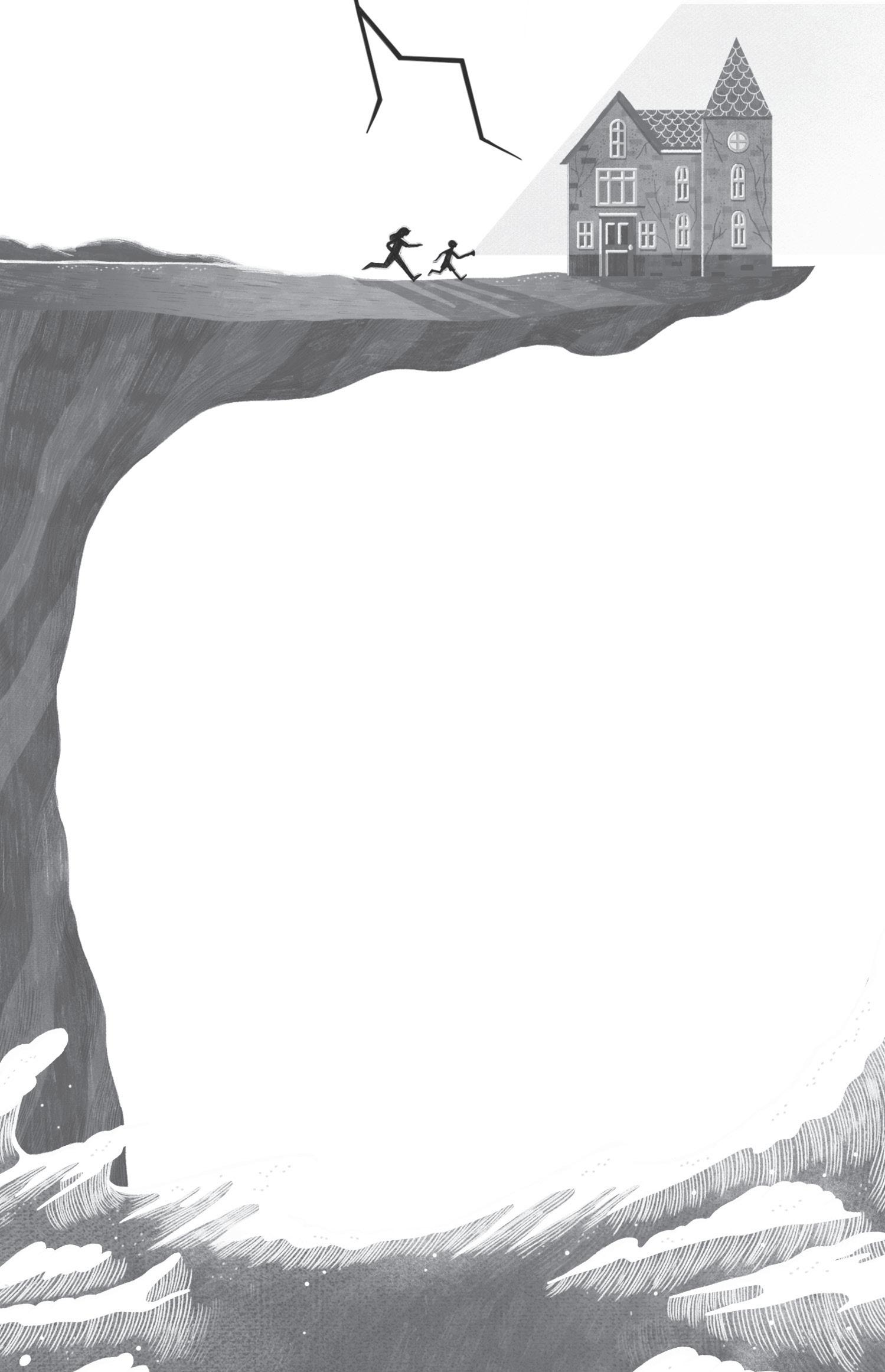
Where has Faith’s dad gone? Why has he left his family living in an old house perched on a crumbling clifftop? A crack has appeared in the cliff and Faith watches anxiously as it gets bigger and bigger each day. . . Her brother is obsessed with the sea ghosts he claims live in the basement, and when he disappears as well, Faith starts to believe in the ghosts too. Can she find her brother and bring her father back before everything she cares about falls into the pitiless sea below?
Out in July! pitiless
@alexfcotter
Alex Cotter has worked hard all her life at daydreaming, while making a living from words: from bookselling at W.H.Smith and publicising The Booker Prize, to copywriting and teaching creative writing. Alex lives near Bath in an ancient house, with cobwebs, creaky floorboards, one husband, two children, and a revolutionary cat called Trotsky.
‘Dad’s not coming back?’ asks Noah, but in a tone that’s not a question.
‘The sea ghosts are real!’ ghosts, listening?’ cheeks
‘So, the sea ghost is right.’ I leap on it this time.‘There are no sea ghosts, Noah! Whoever you talk to in the cellar, it’s in your head.They’re not real!’ I grab his shoulder, forcing his face round to mine.‘Noah! Are you even listening?’ His cheeks are wet.‘It’s you that’s not listening!’ His watery eyes spark as he shouts back.
‘A spine-tingling spooky thriller’
The Bookseller
One
Mum wasn’t always this way. Though without a TARDIS, I can see why you might find that hard to believe. You just see what’s in front of you. Like people walk along the beach and they’ll look up and spot The Lookout. Rising tall and uneven – teetering – right at the edge of the cliff. And their very first thought is: Blimey, that house is going to topple any minute! I swear I see those exact words written on their faces. Sheer fear. That our pebbledash cream walls, our stained slate roof might suddenly fall. Flatten
them against the sand, like Dorothy’s house landing on the Wicked Witch of the East. When actually –things take much longer to fall than that, right?
“Noah! Answer me: Rice Krispies or Cheerios?”
You have to shout a question to Noah, and you have to shout it at least four times. Before he emerges from deep inside his head, like some hibernating hedgehog blinking into the light – Someone wants me? Away with the fairies, Dad calls it, when Noah glazes over like he’s fixed to a phone. Except Noah never needs a screen.
“Huh?” He lifts his eyes finally. They look bloodshot and swollen. I heard him creep downstairs again last night.
“Krispies or Cheerios?” I shake both boxes impatiently. I don’t even know why I give him the choice.
Noah mumbles, “Krispies,” in a tone like it’s the obvious answer. When last week all he ate was Cheerios. He starts studying me as I pour him a bowl, slop in milk.
“Did you hear it last ni—?” he asks carefully.
“No!” I say, before he can finish the question, rolling my eyes for extra measure.
“You really didn’t hear anything?” Noah sits back, incredulous, wedging both hands in his thick red hair so it stands to attention.
“Uh huh, that’s what ‘no’ means,” I tell him, ignoring the niggle in my tummy. What I heard, I remind myself stiffly, are the noises any ancient house by the sea makes: gulls shriek, radiators tick, waves crash, beams creak.
“You can shape sounds into whatever you want,” I tell him in the grown-up, sing-song voice I use a lot lately. “Like the way you can make star signs fit your life.” Which makes me think briefly of Asha (when I’m really trying my best not to), checking hers every day.
“I’m not making it up.” Noah pulls his sulky face. All eyebrows and bottom lip.
I shrug dismissively and turn to put the milk back. I’ve decided it’s best not to give him a “platform”. That’s the posh word this pamphlet in the school library used. All right, so the pamphlet was about OCD and phobias and stuff. But I reckon it’ll have the
same result. If I don’t encourage Noah’s fantasies, if he’s no one to share them with, hopefully he’ll stop having them altogether.
“Aw, Noah, will you give off night raiding,” I groan, staring into the empty fridge. “I’ll have to shop again now!”
“I haven’t; it’s not me!” Noah complains. Before we both glance up at the familiar creaking sounds above. The house’s way of saying: she’s awake at last. I zip back to the cluttered kitchen counter: kettle for tea, bread in toaster; while I wait: load dishwasher, pack lunches.
“Eat!” I remind Noah what he’s supposed to be doing as I rush out with a mug of milky tea and some heavily buttered toast. Calling back, “You don’t want to be late,” because it’s something Mum would say.
The Other Mum that is. The one you’d need a TARDIS to know about.
I slow my pace only when I’ve passed through our tiled, dim alleyway of a hall and I’m facing the stairs alongside our many-greats-grandfather clock. It started after Dad upped and left, I suppose, so
that’ll be four months and two days ago. (I can give you hours if you want.) I started worrying about our house. Like, really worrying. Just like Dad used to. He says old houses have voices. Now all I hear are The Lookout’s creaks and groans whenever we move. Like every tread I take, up the wonky stairs, or across the uneven wooden floors above, gives it pain.
It’s called The Lookout because our ancestor, Tom Walker, who built it, lit his lantern to warn ships about the rocks below. But I like to think it’s because it takes care of us. Which is why it’s imperative! Quintessential! Unequivocal! And every other big word! That I look after it back. So I climb daintily, like it’s some test and if I fail monsters will get me –moving my feet to the part of the stairs I know are more solid; putting most of my weight on the scratched wooden bannister. Even though the extra strain in my arms makes me think of being little and on Dad’s back on walks; trying my best to be as light as possible so he won’t remember he says I’m getting too heavy to be carried.
The usual small animal noises are coming from
the bathroom up on the landing. It’s where Mum does most of her crying. I think she reckons if she runs the sink we won’t hear. I pause outside; a weak hand to the door. Then I carry on. Into Mum’s bedroom, where it’s still night-time and it smells of oversleeping and stale breath; musty, like you get in charity shops.
I make space for the tea and toast on her cluttered bedside table, and quickly reach to draw back the curtain for, hooray, light. Hurriedly yank open the wonky window: an impatient burst of cold air rushes in, like it’s been waiting pressed up against the glass all night. The sea gets busy; salt and seaweed set to work on the stuffiness; the rush and smash of waves fill the silence. I’m watching a kestrel hovering motionless above the cliff edge and wondering how it stays so still, when there’s a creak of floorboard; a sniff; a sigh. And Mum appears in the doorway.
“Faith, I keep telling you, you don’t need to bring me my breakfast, love.” Her voice – it’s nothing like it used to be either. The sound of it makes my insides feel empty. It’s too whispery and feathery, like one cough or a sneeze and it’ll fly away completely.
And – err, yes, I do, otherwise she doesn’t eat.
“Mmm, yum,” she says, coming over to take a mouse bite of toast, her appreciation-smile looking as exhausted as her eyes and bones. She has on the same pair of Dad’s old blue pyjamas. She rarely gets dressed these days. She’s forever saying, “I’ll get up soon.” Yeah, right. She’s been in bed so long that the back of her hair’s a permanent nest. Her skin’s starting to look as grey as the sea mist outside.
She climbs back under the covers while I tell her I need money to buy food later. I try to keep my eyes from drifting to the side where Dad used to sleep. To his bedside table, where his reading glasses are still sitting on top of his book: Dorset Wreckers, whoever they are.
“Noah can come home by himself,” I say, adding an impatient, “Lots of Year Fives walk back alone,” when she makes a groaning sound.
“They all live right in town, not at the edge of it,” Mum says, fumbling for her credit card from her purse. She holds my eyes as I take it. Hers are watery. “I think I heard Noah going downstairs again in the
night,” she says timidly.
I look away to roll my eyes. Hold the front page. Noah’s been going down to the cellar every night, for the past two weeks or so. I know that, because I’m the one who has to go out and shout, “Back to bed!” Yeah, OK, so lately, the one who pulls her covers over her head and ignores him. I hate going anywhere near the cellar, especially at night, especially after Dad told us it’s not safe to go down there!
Then why don’t you do something to stop him? Mean Me wants to tell her. Except I won’t, because I’m already fearing what comes next.
“Maybe you and Noah should go and stay with your Uncle Art and Aunty Val after all.”
My heart turns into a fist. I glance back at the perfectly-still kestrel and suck in a deep breath of salt and seaweed. I’ve got to play this right. Talking about it last week ended with me shouting and Mum sobbing uncontrollably.
“I told you, we don’t need them. Noah and I’ve got everything covered.” I swallow back a stream of acid that enters my mouth. “I’ll stop Noah getting up in
the night, OK? Just don’t even go speaking to Uncle Art!”
Uncle Art can’t know Mum’s in bed all day. He can’t know she’s wearing the same pair of pyjamas for weeks on end. He definitely can’t find out about Noah hearing weird voices in the cellar. My chest’s getting tight. He can’t know I’m doing all the work: cooking, washing, fixing. He’ll use it as an excuse. I know he will. A coldness spreads over my body that doesn’t come from the open window. Uncle Art is just waiting for a reason to get us out of here and have The Lookout condemned.
When I look back again, Mum’s biting her lip hard, like I do when I want to stop myself from crying. “I can’t … can’t … can’t,” she starts telling the bedspread. It’s something else she’s forever saying. You can’t what? Mean Me nearly snaps back, a sudden blaze of anger heating my stomach. Can’t work out the square root of pi? Can’t wait to watch Strictly? Can’t bear Facebook?
“Faith?” Mum pleads, like she can hear inside my head.
I drop my chin to my chest and mumble, “Promise you won’t call Uncle Art.”
The waves get louder, till she finally whispers, “OK, I promise,” and the coiled snake that lives in my stomach these days settles down again. I start being as busy as the sea. Showing her we can manage very well without Uncle Art and Aunty Val, thank you very much. I pick up a crusty cardy from the floor, a mug of yesterday’s tea; make a tower of some paperbacks. Before I take quick, soft steps across the floorboards to the door, with a la-di-da, howresponsible-am-I, “Can’t be late for school!”
“Send Noah up for a goodbye kiss,” I hear Mum call out as I reach the stairs. Even shouting, her voice stays fragile and flimsy. Like she’s miles away or sinking fast into quicksand. Whenever I try to remember the sound of her old voice, the way she used to belly-laugh, and sing daft songs and holler “Dinner!” – even the way she’d argue with Dad in the months before he left – I can’t. Maybe you only hear what’s in front of you too.
I’m back downstairs with our many-greats-
grandfather clock, when I start to feel dizzy. Something’s coaxing my stomach snake. I press my hand against the clock’s solid shiny wood to steady myself. It was passed down with The Lookout to our great-greats over three centuries. “And what about the many-great grandmothers?” Old Mum used to say. The fact The Lookout wasn’t passed to women, she said, was another reason to leave. Before Dad went, all she did was list reasons to go (“It’s too isolated!” “Too cold!” “Too unfixable!”). I hear Dad argue back (“It’s my home!” “I can fix it!”).
My stomach snake slinks upwards through my chest. I pincer my lips and fix my mind on the clock’s creamy-white face instead – the pastel picture above the numerals that I’ve always loved. It’s of an old house at sunset, leaning over the top of a cliff while a ship passes below. It never tells the time. The family story goes that ancestor Tom Walker stopped it working the day his daughter died. Removed the pendulum; threw away the key. I trace a finger where his initials T.W. and an X are carved into the wood. “Not a kiss,” Dad said ages ago when I asked, “but
Tom’s reminder to keep the clock door locked and sealed shut ever since.”
My stomach snake hisses and attacks. Dad again. I pull my hand from the clock like it’s burned me. I don’t understand why my dad would just up and leave, without even a goodbye. If I listen to Mum, he needs time to himself; if I think like Noah, he’s been taken by pirates. But I don’t think like Noah.
I prefer not to wonder where Dad is. The snake retreats.
Like that OCD pamphlet said, it’s better not to give some thoughts a “platform”.
Two
“Is it any bigger?” I say, as Noah joins me in the back garden, finally done with saying goodbye. Mummy’s boy.
He exhales loudly and, typical Noah, doesn’t answer the question but asks one of his own. “Will Mum be OK?”
“Course, stupid!” I straighten up. He’s making his worried eyes. His hands are bunched in the pockets of his grey school trousers that are an inch too small for him, revealing odd socks (one red, one spotty; both holey).
“She just needs some rest still.” It’s
my new I-have-all-the-answers voice. Cheery. I don’t even say anything when Noah takes Dad’s precious brass telescope out of his coat pocket, putting it to his eye. When Noah knows he’s supposed to keep it safe inside, in the lounge with the old lantern. Both are inscribed with T.W. just like on our many-greatsgrandfather clock.
“I’m going to wish for something,” Noah says, as if I’ve just asked what he’s doing. “But there’s no point telling you what it is.”
“Suits me,” I say, my voice a shrug. Dad used to try and convince us Tom Walker’s old maritime telescope was magical. Which obviously I know now is a load of old rubbish. But Noah still likes to believe in lots of things.
“I’m wishing … that you’d listen for once,” he continues importantly, with a dramatic pause. “About the sea ghost in our cellar who I need to help. I told him that Dad—” He stops abruptly at the grunt noise from the back of my throat. We both know we never actually mention the Dad word out loud.
I try again: “Noah – I said, is it any bigger?”
There’s another pause while the question journeys to the responsive part of my little brother’s brain. Eventually, he pulls the telescope away and concentrates on The Crack by my feet. The threemetre gash in our back garden that we’ve been watching like it’s a sleeping python since it appeared overnight a week ago. Noah bends closer. The sky seems to come with him, elephant grey and sombre, as if it’s inspecting The Crack too.
He cocks his head to one side and says “Mmm” and “I see” like he’s some expert on Antiques Roadshow. Which he is in a way. Noah’s always been good at observing stuff, spotting things. Things that others don’t. He finds all the lost items people leave on the beach, and all the new objects the waves sweep in, when the sea’s having its spring clean. It’s why his bedroom permanently smells like an aquarium, and looks like a museum, since Mum stopped making him tidy it.
“I think it might have grown a little at that end – and got deeper there,” Noah points, scrunching his mouth up for “sorry”.
I clamp my thumbnail between my teeth and stare up at The Lookout. Half a dozen small windows gaze back at me, like it’s waiting for me to pass on Noah’s prognosis. There are only about seven metres between The Crack and our back door. About five the other way, from The Crack to the garden fence. Which is also the edge of the cliff. If it gets any longer, any deeper, it could split our garden in two. Our house too. I rip the end of my nail off and spit it out. Right as Vicious Wind starts circling. It whips brown strands out of my ponytail, using them to thrash my eyes. I never knew I could hate the wind so much. Hissing and howling like invading warriors. Rattling the pipes on the house, playing xylophone with the slates; bringing its friend, Storm, to shave the cliff below, as easily as stripping bark from a tree.
“Give me that,” I say, with a bite I don’t mean, and grab the brass telescope from Noah. Without really thinking, I lift it to my eye, hard against my socket, steeling myself to hear Dad’s voice. Like you hear the sea in a conch shell. Close your eyes and make your
wish. Open your eyes, and – “Surprise!” Dad would sing –as a pile of presents magically appeared through its lens.
But there are no birthday fairies, like there is no magic – because The Crack in our garden is still there when I re-open my eyes. I grind my teeth, feeling stupid for making the wish in the first place, and swing the telescope around, anywhere but the house, The Crack, the cliff – to a giant tanker on the grey horizon; a fishing boat nearer shore; a couple of dog walkers on Redstone Beach; a boy in an oversized blue parka. I stay with the boy. He’s crouching, like he’s searching for something. He’d better not be a fossil hunter. I hate them almost as much as Vicious Wind. Chipping at the cliff face with their tiny hammers, not caring that the last landslip took away our old garden fence.
I hand the telescope back to Noah, pointing out Blue Parka. “You might have a customer.” Noah gets excited about helping people find their missing things. Except – maybe not today. “Mum’ll take you to school again soon, all right?” I translate his silence. Before I
tug him towards the back door, Vicious Wind zipping in and out of our legs like it wants to trip us up. While, inside my head, I make another wish, probably for the zillionth time: that I wasn’t the oldest.
Now we’re really running late. Because: no, Noah hadn’t brushed his teeth. And then: oh, no, he’s not remembered to put underwear on. “Would you forget to wee if I didn’t remind you?” I ask breathlessly. We’re having to run-walk and that’s making the worrypains in my gut worse. They usually come as soon as I can’t see the house any more. When the town starts to gradually creep up on us, after we’ve taken our shortcut along the cliff path above Redstone Beach; round the Second World War pillbox; across the field near the disused well; past Halfpenny Farm and the giant oak; through the metal kissing-gate into St Swithun’s church. Before we rejoin the main road and its rows of brick houses with blank faces and people in coats and cars, on bikes and phones. Noah and I both jump at the thrum of the number 44 passing too close to the pavement, on its way to the bus
station, then Tesco, then the big town – where Uncle Art lives. Uncle Art. My guts threaten to explode.
We start running for real as Noah’s school bell rings in the distance, sprinting as we round the playground to his class door. I shove him inside when he comes to an abrupt standstill, even though I know just how he feels. I make one of Old Mum’s cheesy thumbs-ups when he looks back uncertainly, holding it till he’s lost to the cloakroom. Then I check the time on my phone – five minutes till my bell goes – and launch back into run mode.
“Noah’s sister! A word, please!”
I should have known this day was only going to get worse.
Mrs Hollowbread. Noah’s ancient teacher. Tight hair bun; broad shoulders; wrinkled prune-mouth sucking on a lemon. She knows my name. She just chooses never to use it. I’ve an urge to keep going, pretend I’ve not heard, but I’ve got to seem responsible, so – “Yes?” I say, bright-and-breathless. Out of the corner of my eye, I notice a boy around my age move down the other side of the railings. I recognise the oversized
blue parka he’s wearing – the boy on the beach before.
“I told you last week, I need your mother to come in and speak with me,” Mrs Hollowbread says, her voice as brittle as the cuttlefish you find dried-up on the shore. “I’m concerned about Noah.”
“Still?” I ask innocently. “Umm, she can’t right now. A cold.”
Mrs Hollowbread narrows her sharp eyes to paper slits, but I can still read them. I can read all the gossip that’s spreading through the town, as fast and furious as Vicious Wind. That no one’s seen Mum for months. That they’d do this or that, if it were them. That ah, the poor children. And oh, what’s to be done!
“Everyone should make time for their children,” Mrs Hollowbread eventually answers, using a tone aimed to sting. I swear I can see tentacles growing out of her body.
Parka Boy is leaning over the railing now, frown lines on his forehead, like he’s straining to hear the conversation. What’s his problem?
“I’ll get her to call you,” I say, already trying to work out how I’ll make Mum’s feathery voice be heard
down the phone. How I’ll force her to say the right things: Yes sir, no sir, three bags full sir. What if she cries? What if she starts her, I can’t, can’t, can’t? What if they decide together, we should go to Uncle Art’s? My heart pumps faster. I clench my hands into fists to stop them shaking. Mum can’t call anyone. Not yet.
“Maybe I can help instead?” I say, employing grownup, sing-song voice.
Which doesn’t wash with Mrs Hollowbread. The lemon in her mouth turns to cyanide; she brandishes a folder from under her arm. I realise too late that she clearly planned this ambush. “I suppose you’ve seen these?”
I gaze down at the pictures she’s showing me, recognising them as Noah’s handiwork straight away.
Pencil drawings of distorted faces; flowing hair and missing teeth; popping eyes that look bloodshot even without colour. He’s a good artist, my brother, but I can see Mrs Hollowbread’s not interested in his talent. I sniff and try to keep my expression casual, even appreciative. “He has a unique perspective,” I primly
repeat something I heard Mum tell his last teacher, when she was Old Mum and taking care of all things Noah.
“Other children have seen them!” The morning air’s cold enough that she blows out dragon’s breath with her outrage. “What’s wrong with animals and flowers? What on earth makes him want to draw like this? Horrid video games?”
I make a definite shake of my head.
“Then who is filling his head with horror?” Mrs Hollowbread eyes me accusingly. As if I’m one of those sisters like Asha, who teases her twin brothers about nuclear war and alien invasions till they cry and tell on her. All I do is make Noah eat and wash, and wear underpants!
“He’s scaring the other children! Giving Edie Miller nightmares, her father says. About sea ghosts beneath his house!”
I take a step back like someone’s shoved me. My heart zips to race-car speed. “That’s not true.” It’s just my house’s voice; the sounds of the sea!
“Well, of course it’s not true!” Mrs Hollowbread
almost shrieks. “I’ve made it very clear to Noah. Ghosts do not exist – sea or otherwise!”
I glance at Parka Boy. He’s scratching his frowning head now.
“Are you listening to me, Noah’s sister?” Mrs Hollowbread forces my eyes back to her. “Your mother must make Noah a priority! Tell her, I’ll visit her at home.”
“That’s not possible!” I hear myself shout back before I can stop.
Mrs Hollowbread’s prune-mouth turns shrivelled raisin. “Is there a problem with my seeing your mother?” she says, her words tight and stiff.
“No, I mean…” I flounder. “You don’t need to … because, because…” Which is when it dances on to my tongue, gliding out of my mouth like a swan through water, the word I never use out loud. “Dad will come and see you.” My mouth widens into a smile, like my lips delight in the dangerous words. “If you can just wait a few weeks.”
I notice Parka Boy starting to smile too. I scowl at him to butt out.
“Your father?” Mrs Hollowbread says, her sharp eyes confused.
“That’s right, he called to let us know he’ll be home soon.” My voice gains confidence, like I’m back performing in the school plays I used to love. I even picture it – like it really happened! – the landline ringing and: “Hello, Starling!” Dad’s nickname for me that I’d started to find mega-embarrassing.
“Yeah, we’re all really excited!” I finish my performance, ready for a gush of How wonderful, your father – home in time for Easter!
Except she says none of that. Her expression remains rock hard, the shrivelled raisin disappearing into an invisible line. “Either parent needs to contact me, urgently.”
I don’t lie. I’m not a liar. Least not big, fat, whopper lies. But this lie feels so sweet on my tongue, I can’t help telling it again, my encore if you like. “Dad will sort everything out!”
Three
What was I thinking? I’m so mad with myself, I no longer care that I might miss registration. I stomp harder against the pavement. My big fat lie following me, zapping at my head like an angry bee.
Down the high street, past the Co-op and the fossil shop, past the motor-mouthed parents crowding out The Teapot, making its window steam from their hot breath.
No doubt talking about us. Our small town sucks up gossip like a Hoover and spits it out in every direction. I walk even faster. What if my lie reaches Mum? I see
her springing out of bed at Dad’s homecoming, like Grandpa Joe in Charlie and the Chocolate Factory –only to sink down, even lower, when she realises: I made it all up.
“Don’t let her get to you!”
I jump at the strange voice at my side. Dark hair, and frown lines. Eyes as navy blue as his zipped-up parka.
“Do I know you?” I say, and I don’t care how rude I sound.
He grins, a wide one that shows crooked front teeth and makes a left dimple. “I’m Sam.” Parka Boy pushes forward a hand to shake mine like we’re grown-ups. It looks grubby, so I don’t. I notice his clothes look dirty too, and he smells of the sea. On his feet, he’s wearing blue crocs with socks (what Sian would call “a fashion No Way”). And those black trackie bottoms, school will send him home for. I make a mental shrug: not my problem. I don’t concern myself with Other People any more.
“That teacher.” He thumbs back over his shoulder. His accent sounds sort of northern. “She giving you a
hard time?” He starts swinging his arms as we walk.
“What’s it got to do with you?” I mumble. Why does everyone in this town have to know my business?!
Grubby Sam lifts his chin. “She’s my gran. I’m Sam Hollowbread.” He says his name slowly, like he’s really proud of being related to that battleaxe.
“Lucky you,” I reply sarcastically.
Not that he notices; he’s spitting out his next words like they’re boiling hot. “But don’t tell anyone! Promise? She’s a bit funny about me living with her. Not ha-ha funny,” he adds, and laughs, “she’s not in stiches over it or anything.” He keeps laughing. One of those tickly infectious laughs, like yawns can be, and I feel a bubbling beneath my ribs. Which is easy to stop. I just think about The Crack – longer and deeper in my mind.
“Good news about your dad, though.” Sea-smelling Sam breaks into my nightmare.
“What didn’t you hear?” I say bluntly, then: “Your gran didn’t seem to think so.” The lie is back swatting at my head again.
“Well, dads don’t usually come back.” He scrunches
his nose up like he’s in pain, sniffs. “I mean it though, don’t tell anyone, she’d kill me. It’s a secret she’s my gran.”
I pull a face for I really don’t care. Clearly, Mrs Hollowbread isn’t just mean, she’s fairy-tale evil, refusing her grandson soap or clean clothes. It’s the only reason I let him stay walking beside me, despite the screws in my stomach tightening as we approach the metal gates ahead, joining the last dregs of students sloping in late. I reckon this Sam can’t much like school either, the way his swinging arms become stiff by his side. I could say something encouraging, I suppose – Old Me would – but The Crack’s back in my mind: I’m imagining it swallowing the house up whole, like some giant hungry mouth. By the time I reach my locker, he’s gone – I didn’t even notice when he left.
These days, this is what I do: I tuck myself into back seats, or by walls, or around that corner in art. I’ve got really good at finding spots and spaces where I won’t get seen. Hard-working, polite and quiet (but don’t be a genius), then teachers won’t need to think
about you. Outside of class, well, I’ve worked out, if you pin your eyes to the shiny school floor and hum a song in your head, you can practically ignore the fist bumps and selfie squeals; the “weirdo”; “what’s her problem?”; “loser”.
Like Mum, I wasn’t always this way. But you’d need that TARDIS to believe it.
Lunchtime: I hide in the library. The sudden quiet from the corridors is like a breeze on a swelteringly hot day. I like its smell: old paper and the tang of Mr Kowalski’s extra strong mints. He used to be a history teacher in Poland. Now he’s our librarian. He loves doing both, he once told Asha and me, because all stories are drawn from the past, he said. I go in, passing my fellow sanctuary-seekers, and head straight to the computer desks; hurriedly Google. I’m not sure what I’m hoping for – all right, yes, I am –some miracle that The Crack will seal itself magically. My search just comes up with the usual: rainfall will make any hole worse; that crevice in a cliff in Whitby –it’s grown. Landslip worrying residents near West Bay. That’s new. My throat swells as I click on it. West
Bay’s just down the coast from us. I scan photos of miserable locals. A picture of crumbled sandstone, like brown sugar, piled on the beach. “There’s nothing for it,” a council spokesperson is quoted as saying. “The houses will have to come down.”
“Need help with anything, Faith?”
I almost leap from my seat. Mr Kowalski. I didn’t realise I’d made a noise, but I can feel the space where a groan must have left my mouth.
I quickly shift my body to hide the computer screen and shake my head: “Just more homework.” Like I’m your usual, commonplace student. Yeah, Mr Kowalski, you know: School, Insta, Netflix. Not: Mum, Noah, House With Giant Garden Crack.
He adjusts his glasses and smiles like he accepts my answer (I find people prefer to), and I accept the mint he offers me (even though they make my eyes water). I like Mr Kowalski. I like the way he speaks, sounding out every word properly, and the way his curly hair is longer and messier than most male teachers’. I like how he takes notice of every student, staring at your eyes curiously, like everyone’s a mini-
story to be read. But I suddenly like him a little less when he peers round me and says, “Are you worried about your house, Faith?”
I follow his gaze to the crumbling cliff headline, swallow hard, before turning back with a prepared Hollywood smile. “My house is fine!”
Mr Kowalski tilts his head. He’s always been interested in The Lookout, trying to talk to me about its history. I used to find it embarrassing in front of my friends. Now I’ve got no friends to be embarrassed in front of, I still don’t want to talk to him about it: I need to make The Lookout as invisible as me.
“My heart is still in Krakow, Faith. I know how important home is!” His kind eyes smile; my back tenses. I’m unsure where this is going. “Do you know I am now part of our town’s Preservation Society? It grants money to help preserve local history.” He pauses to make a little cough that smells minty. I brace myself. Other People cough around me a lot these days. “In fact, your father…”
Waaah. Waaah. It’s going off in my head – my “Dad” siren: brash and bold like you get in sci-fi films when
they evacuate a spaceship. It started soon after Dad upped and left. When people tried to say things to me. Things with “sorry” noises attached. Things that sounded like they knew what had happened to Dad. When they don’t. He’ll come back one day, Mum said. And that’s all I need to know.
“I’ve a book … must read … next class!” I cut across Mr Kowalski. My heart talking in rapid beats to my feet: run, get away! I’m off, fast-walking to the purple beanbag in my favourite hidden corner of shelves; grab any book. That’ll do: 1000 Jokes To Make You Laugh. It won’t. I no longer laugh, same as I don’t cry any more. My eyes blur over the knock-knock chapter, while my head juggles with cracks, big lies. “Houses will have to come down.”
A few minutes later, there’s a familiar voice nearby.
“Yeah, right, but did you see what he posted back?”
I make a peephole in the bookshelf next to me.
Asha and Sian: walking towards the other side of my hideout. Asha’s black hair in two plaits; Sian’s a frizzy halo around her head. I draw back sharply. If I look at my old friends too long, I get all kinds of feelings in
my tummy and up through my chest that I don’t like.
“So, just tell him you like him!” Sian says.
Another of Asha’s crushes then. I jam my mint between my teeth; Old Me used to be part of those conversations. It’s like alien language now. Their voices turn to murmurs as they move along the shelves, before they get closer again.
“Well, I’m giving up on her,” Sian’s saying. “There’s only so many brush-offs I can take.”
I suck in my breath.
“My mum and dad want me to keep trying,” Asha replies.
A sharp stab in my chest as I picture Asha’s parents. I used to eat with them most weeks. I miss Mr Singh’s legendary raita and home-baked naans. My mouth waters. I miss Dr Singh checking I was doing OK at science (“We need more girls winning the Nobel prize!”). I even miss watching Asha’s twin brothers doing all the things Noah never does. Squabbling over Xbox, flicking snot at each other, forever talking football. I’ve known Asha and her family since, well, since I remember knowing people.
Their voices start drifting away again. I sink down further into the beanbag. Like Dad said, if we don’t keep fixing The Lookout, rot will set in. Asha and Sian tried talking to me at first. They sent messages too. Aren’t we friends any more? What did I do wrong? My stomach gripes. It’s too late now. The rot’s set in. I crunch down hard on my mint, breaking it into tiny pieces. It was all their fault. They believed the gossip about Dad getting passed round town like a box of chocolates. Stomach snake snaps at my insides. Best not to think about it.
They’ll be heading back down the corridor now, linked-arms, heads-close. Joining others, Evie, Nora, Kip at our usual table in the canteen. Like I care. I tuck my legs tighter into my body, wishing I could ball up and hibernate forever. I can’t really explain why it feels safer not to talk to Asha and Sian any more. I’m just worried about my house.
My school rucksack’s crammed, bulging, dragging me backwards with its tins of beans and bottles of milk. My legs ache from the walk to the out-of-town
Tesco. My palms sting from the plastic handles of three “bags for life”. I tried and failed to look for that Sam as I left school. I was thinking maybe I could ask his advice on how to get his demon grandmother to back off. But I couldn’t see his blue parka anywhere. I’m not sure I’d recognise him without it.
Down St Swithun’s yew-lined path; round its jagged-teeth gravestones; through the metal kissinggate; past Halfpenny Farm with its pink farmhouse, cow smells and sounds; across the field near the disused well that’s all sealed up; round the redbrick pillbox, grass growing like hair on its flat roof. I’m always eager for my first sight of The Lookout these days. Like I’m seeing it for the very first time. Its arched door like a mouth. The stone lintel above the windows – its eyebrows. My tower roof, like a stained wizard’s hat. Course, Vicious Wind decides to blow the second I’m in sight of the cliff edge. Like a nasty dog waiting to welcome me home. It snatches at my “bags for life” and pulls at my hair again. But I won’t play. I keep my head down, my body braced, and I concentrate on dinner, and wondering if I can
get away with eggs and beans again, and what are our chances of getting scurvy soon if I don’t learn to cook better. I don’t look up till I’m turning into our drive from the cliff path. Which is when I see it.
My stomach shrivels into a paper ball. There’s a shiny black BMW pulled up by our front door. I stare daggers at it. I want to kick it, to push it till it falls –crash – right off the cliff. How could she! Mean thoughts about Mum flash across my head. Ones I do my very best not to think. It’s her fault Dad left! She kept on at him! Complaining how everything tasted of sea salt. Nagging him to stop “obsessing” over The Lookout! To “give over fixing it up, Ryan!”. To move away!
It’s all your fault! I shout at Mum inside my head. She’s called Uncle Art anyway. When she promised she wouldn’t!
With incredible twists and turns and an action-packed story, this is a thrilling, unputdownable adventure.
The robot Adam-2 has been locked in the basement of a lost building for over two hundred years – until one day he is discovered by two children, and emerges into a world ruined by a civil war between humans and advanced intelligence.
Hunted by both sides, Adam discovers that he holds the key to the war, and the power to end it – to destroy one side and save the other. But which side is right?
Surrounded by enemies who want to use him, and allies who mistrust him, Adam must decide who – and what – he really is.
Out in August!
@alastair_ch
Alastair Chisholm is a children’s author and puzzle creator. As a puzzle creator he wrote quite a lot of books of Sudoku and other puzzles for kids and grown-ups, and as an author he writes picture books and middle-grade fiction. Alastair lives in Edinburgh with his wife (who is lovely), two teenagers (who are lovely but very loud), and a cat named Maudie, who is yowling at him even though there is clearly food in her bowl, look, it’s right there, look. His hobbies include writing and playing games on his phone when he should be writing.
‘Strap on your spacesuits and prepare for narrative G-force!'
The Times
‘A delight from beginning to end’ i News
‘This thrilling futuristic journey into the unknown will have readers on the edge of their seats’ BookTrust OUT NOW!
Adam
Adam woke up in the basement.
He lay in bed for a few seconds, blinking, then switched on his light and sat up. The basement was the same as always: quiet, tidy, with neat shelves of books and boxes, a table for working to one side. There were no windows, and the light hanging above him was harsh and white. Adam had hung coloured material and paper shapes around it to spread the light around the room and make it seem more like sunshine. The floor was concrete, and the walls. There was a door tucked in the corner, behind more boxes.
The alarm clock pinged, and he put out a hand to stop it. He sat for a few seconds, then swung his feet down to the floor, stood, and started his day.
Breakfast first, sitting at the little table. One table leg wobbled, and he frowned; he would need to repair it again. He sat over his plate and read a book, swinging
his legs absently.
After breakfast, schoolwork. Adam cleared away the breakfast things and brought out a collection of ancient schoolbooks and jotters. The jotters were full of writing, down to the last corners of every page, smaller and smaller until he hadn’t been able to squeeze in any more. There was no more paper, and that had been a problem, but in the end he’d started again at the first page and carefully traced over the words already written. It didn’t really matter: his pencil had long since worn down to nothing, and now he only pretended to write, with a stick.
He read today’s sections in his schoolbooks and traced over the words in his jotter. He made a point of sticking his tongue out slightly as he wrote. At break-time he played by himself, practising juggling and keepy-up with small stones. He was very good; he could keep three stones in the air using just his feet. He knew he could probably do more but three seemed like the right number.
During break-time, something new happened.
A very slight tremor shook the basement, almost too faint to notice, as if something had clanged, quite far away. Adam looked up and watched tiny spirals of dust fall from the ceiling. He made a note of the time: eleven-
oh-three plus seven point zero-eight-two seconds, although he knew the way to say this was “around eleven o’clock”. He waited for five minutes, but nothing else happened, so he returned to his work.
Then lunchtime, then speaking practice. At first it hadn’t occurred to him to do this, and he’d been alarmed one day to realise he might forget how to talk. Now he practised once every day. Since a new thing had happened today, he talked to himself about that.
“What could have caused a tremor like that?” he asked himself.
He paused. “Perhaps two things falling together. Rocks, or buildings,” he answered at last. “Nothing that affects me.”
“Perhaps I should go and investigate.”
This was an interesting idea. Adam considered it for a while.
“No,” he said, finally. “I should stay here, like Father said.”
He nodded. There. A conversation.
After speaking, playtime, with the toys. Not proper toys, of course, just things he’d found in the boxes on the shelves: pieces of old machinery, nuts and bolts; plastic and super-plastic shapes moulded to look like hip joints, or hands, or eyes; piles of ancient green
circuit boards. He used them to make little models of cars, houses, people, and practised playing with them.
This was very difficult. He had to think about the people, and who they were, and what they would say. They didn’t live in a basement, of course, but that meant he didn’t really know what they did. He had to imagine things that weren’t real. It was the hardest part of his day, and exhausting, but he carried on dutifully for two hours, making up conversations they might have about things he couldn’t understand. Afterwards, he went back to bed for a rest.
Then chores: clearing the toys, sweeping up, checking the lights, carrying out repairs. He remembered where he had saved a tiny sliver of wood from the last pencil, and used it to stop the table wobbling, and felt pleased.
Then dinner time. For more speaking practice, he told the empty table about what he’d been doing, and how good he was getting at keepy-up, and how he’d fixed the wobbling table, and about the tremor that had happened at around eleven o’clock and had lasted for about five seconds. He smiled as he said it. It felt good to have something exciting to talk about.
Then he got ready for bed and laid out his storybook. The book was faded and very fragile, and he was careful
not to tear its thin pages as he found his place. He laid it on the bed, open, and sat and listened as if someone were reading to him. Occasionally he smiled, or laughed, or frowned. After eight minutes and thirty-five seconds he sighed and closed the book.
“Goodnight,” he said.
There was no response.
“I love you too,” he said.
He turned to the wall behind his head and scratched a small, careful mark, and studied it for a few seconds. Then he switched off his light, closed his eyes and lay in the dark, listening to the tiny ping-ping-ping sound of the lamp as it cooled.
He slept.
Adam woke up in the basement.
He switched on his light and sat up; stopped the alarm when it rang, climbed out of bed, ate breakfast, did his schoolwork. At eleven-oh-three he looked up, wondering if there would be another tremor, but there wasn’t. Lunch, speaking practice, playtime – today he pretended the little people had felt a tremor, and were very excited – then rest, then chores, then bedtime. He opened his book carefully at the next chapter and listened as nobody read it. Then he said goodnight, told
the empty basement that he loved it too, scratched a mark, closed his eyes, and slept.
Adam woke up in the basement. There was no tremor. He mended a small tear in the lampshade and talked about it at dinner time. In the evening, he laid out the next chapter of the book and listened. Scratched a mark. Closed his eyes. Slept.
Adam woke up in the basement—
Something was different.
He lay, quietly blinking in the dark. It wasn’t time for getting up yet, but he was awake because he had heard something. Something had woken him up. A banging noise, perhaps twenty metres away, seeming to come from somewhere out beyond the door. Banging, something breaking, and then a shuffling sound, coming nearer.
What should he do? Should he turn the light on? He wasn’t sure. The light was for morning. He left it off and listened. The sound was just beyond the doorway now. Two sounds, he thought, distinct, little flutters of something, like, like…
Speaking. It was two people speaking to each other. Adam tried to process this but instead found himself
blinking again and again, apparently without his control. He sat up and waited.
There was a scratch at the door. The voices were right outside. Then a movement; he could see the door trembling. A metallic click, and the door opened. Just a crack; just until it pushed against a box piled against it. Light moved from behind it, two thin lances of light. The voices muttered again. “Stuck,” one of them said.
Then the door shuddered open, pushing the box out of the way, and two figures followed it. They pointed their lights around, but not at Adam, at first. He sat still and watched them in astonishment.
They were young. One was only twelve perhaps, the other a bit older. They wore clothes he didn’t recognise, a mix of different colours patched together. Some of the material was plastic, some fur, and all battered and torn. The older one was taller, and moved more cautiously. The shorter figure’s right hand glinted and Adam realised it was prosthetic, made of plastic and metal.
“Whoa,” said the shorter one, pointing at shelves of machine parts. The light came from the artificial hand, Adam realised; it must have a torch built into it. “Look at this stash!”
“What about batteries?” muttered the other. This
one’s voice was deeper, and more wary.
“Nothing yet. Hey, look!”
The torch played over the table in the corner where Adam had set out tomorrow’s breakfast plates.
“What the hell?” The shorter one walked to the table and touched the plates. “This is weird. It’s like someone was playing…” Then silence. Then: “Linden, look.”
“What?”
“There’s no dust on the plates.”
The taller one, Linden, stopped looking and turned. “What?”
“There’s no…” The shorter one swung her torch-hand around to point at the shelves and boxes. “It’s weird. There’s no dust anywhere. It’s like—” Then, in a gasp:
“Someone’s cleaned this room! Linden, someone’s been here!”
The one called Linden stepped across quickly. “Don’t move, Runa! Don’t go any further!” Torchlight flickered over the table, the walls, the shelves …
… and over Adam, sitting in bed.
“Hello,” said Adam.
“Aargh!”
“Run!” They crashed back towards the door. “Move! Runa, move!”
Adam stared after them. This was all very confusing.
He tried to think what to say, but he wasn’t sure what the situation was. Were they guests? That didn’t seem right.
“Here’s the door, go, go!”
“Stop!” he tried. “Hello?”
The taller one held the door open. The younger one, Runa, started through, then stopped. The torch-hand pointed back over Adam.
“What is it?”
“Who cares? Go!”
But Runa hesitated, then stepped carefully towards Adam, slipping away from the other’s grasp.
“Runa, come back!”
Torchlight shone again over Adam’s face.
“Look at it.”
“I can see it!”
“Did it just speak to us? Was it talking?”
“Yes,” said Adam. “Hello.”
“Aargh! Runa, come on!”
But Runa still didn’t move.
“My name is Adam,” said Adam. “Are you friends of Father?”
“Oh, wow.” Runa’s voice sounded scared, but also surprised. “Can you understand us?”
“Yes,” said Adam. “You are Runa. Your friend is Linden. I am Adam.”
Runa laughed suddenly. “Oh, wow. Linden, look at this! Look at it!”
Linden hesitated at the door, then cursed and came back. “I see it.” Torchlight shone straight into Adam’s eyes. “I see it.”
“What do you think it is?” asked Runa.
“You know what it is,” growled Linden. “It’s dangerous. It’s tin. It’s a Funk.”
They moved closer, keeping their torches on Adam until they were only a few centimetres away from his face.
“It’s a robot.”
“Hello,” tried Adam again.
Linden
“I don’t think it’s a Funk,” said Runa, peering at it. “It’s got a face, look.”
Linden scowled. It was true; the thing had eyes like models of human ones, with fake irises that contracted in the torchlight, and a mouth with white plastic teeth and metal lips. Just a slight bump for a nose, and microphones for ears; it looked like a metal and plastic skull. The eyes shone white and blue, and had weird fake eyebrows.
It was incredibly creepy. The sides of its lips were lifted as if it was pretending to smile. It made Linden’s skin crawl.
“Don’t get so close,” growled Linden.
Runa tapped its forehead, and the fake eyelids flicked. The finger of her prosthetic hand made a dink sound.
“Hello,” the thing said again. Its voice was creepy, too –almost human, a little scratchy, but like a human boy. It was very calm. With a shudder, Linden realised it even
had a fake tongue.
“Leave it, Runa.”
But Runa didn’t move. “I don’t think it’s a Funk,” she said again. Her face was fixed into the stubborn, fascinated expression that Linden recognised and dreaded. Carefully, trying not to be too obvious, Linden reached into a back pocket and took hold of their one working EMP stick.
The thing’s body was pale white plastic, with dull metal “bones” peeking out as if from a half-decayed corpse. It was smaller than Runa, but its metal legs and arms seemed powerful and dangerous.
“What are you, little thing?” asked Runa.
“I am Adam version two point zero, a prototype experimental artificial entity.” One arm lifted, and Linden stiffened, but its hand only reached out as if waiting to shake.
“Runa—” warned Linden.
Runa laughed and shook the hand. “Hello, Adam. I’m Runa.”
“Yes,” it said. “You are Runa. You are a human female.” It turned towards Linden. “You are Linden. You are a human female—”
“No I’m not,” snapped Linden.
The machine’s eyes moved horribly, blinking. “Your
bone structure suggests—”
“Linden’s non-binary,” said Runa. “NB, enby, yes? No defined gender. Do you know what that means?”
“Of course,” it said. “Linden is neither male nor female.” It turned towards Linden and its eyes seemed to roll, white and stark inside its sockets. “Which pronouns would you prefer me to use?”
Linden glowered, but Runa said, “Ze instead of he or she, and hir instead of his or her.”
“Of course,” it said again.
“Enough,” said Linden. “Right, you’ve had a look, now we go, Runa. There’s no food here, OK? Just this … thing.”
“What is a Funk?” it asked.
“A machine with Functional Consciousness,” said Runa. “A thinking machine. A robot.”
“Ah,” said the thing. It paused. “Yes. I am a Funk.”
Linden swung hir EMP stick around, jammed it against the plastic face and pulled the trigger.
Runa leaped back with a shout. The thing shrieked, high and piercing, and its teeth clamped together, blue sparks firing up around its skull and body.
“Eeeeeeeeeeeee—” it screamed, then stopped dead. A faint trail of smoke spiralled out lazily from its mouth, and there was a sudden sharp smell of burning plastic.
Runa gasped. “Linden! What have you done? You broke it!”
“You heard what it said!” snapped Linden. “It was a Funk. Now come on – we’ve got to get out of here before its friends arrive!”
The thing slumped to one side and smacked against a clock on a table next to it, smashing it into pieces of ancient, brittle plastic.
“It wasn’t anything like the Funks!” shouted Runa. “It was something else, and we could have used it!” She peered down at it. “It must have had power,” she said, suddenly, and tapped the metal platform underneath it. “This is a charging station.”
“So what? Come on!”
But Runa still had that face on, and she ignored Linden. “There’s a switch here,” she muttered. She clicked it.
Lights came on in the room, and Runa and Linden stared.
The light had an odd colour, not white. A strange plastic shade over the lamp created orange patches and weird shadows. In the light, they could see the wall behind the thing. It was covered in scratches.
It was covered in scratches.
Thousands… Tens of thousands of them. Every fifth scratch formed a line through the previous four.
“Did it make these?” muttered Runa. “How long has it been here?”
Linden glanced around. There was the table, laid with a chipped bowl and plate, and a spoon. Shelves against one wall held ancient and decaying boxes, and a few books. There was some sort of repair system in the corner.
“I don’t know,” ze said. “Runa, we’re getting out of here now, understand?”
The thing screamed. “Eeeeeeeee!”
“Argh!” Runa and Linden jumped away. Lights came on in the back of the robot’s neck, and it raised itself back into a sitting position.
“Eeeeeeeee!”
“Run!”
“Eeeeeeee-hello, my name is Adam. Please wait. Hello.”
They stopped again at the door and stared back. The thing looked at them. “Hello, Runa. Hello, Linden. I’m sorry; I have experienced a temporary system error. I believe it was when you touched me with that device. What was it?”
Runa and Linden gaped at him.
“E … EMP stick,” said Runa at last. “Electromagnetic Pulse. It, ah, disrupts your electrical systems and neural paths.”
“Ah,” said the thing. It moved its head from side to side, as if considering this.
“It should have killed you,” said Runa, faintly.
The thing blinked. “Ah.”
It stood up. Linden cursed; that was their only EMP stick. Could they outrun it? But you couldn’t outrun Funks. Hir heart thumped. Oh, no, oh, no, oh, no.
It didn’t move towards them. It seemed to be thinking.
“I’m sorry,” it said at last. “I believe I have made a bad first impression.”
Runa and Linden stared at it. There was a long pause, and eventually Runa pointed at the wall.
“Those scratches,” she said. “Did you make them?”
“Yes.”
“Why?”
Its head swung to look at the wall and back. “I don’t know.” It seemed slightly surprised.
“How long… How long have you been here?”
The machine’s lips curled up into another grotesque smile.
“Two hundred and forty-three years, eight months, six days, nine hours and fifty-one minutes,” it said.
Linden’s mouth fell open.
“No way,” gasped Runa.
Its eyebrows lifted. “Yes … way?” it said.
Runa’s logic was maddening. “Look, if it wanted to kill us, it could, right? We can’t run fast enough, and you used up our EMP stick.”
“I do not want to kill you,” said the machine.
“Shut up,” said Linden.
“This thing is older than the war,” said Runa. “I think it’s older than the Funks. I bet it knows useful stuff!”
“Like what?”
“Like … things lost in the war. Maybe old maps. Maybe power supplies. And it survived an EMP blast –that’s pretty impressive, right?”
“That’s not a good thing!” snapped Linden.
“No – but imagine if the Funks got it. Imagine if they took it, instead of us.”
“Then we should destroy it, so no one has it!”
“And how do we do that?” The angrier Linden became, the calmer Runa was in response. She was so tranquil now that Linden wanted to slap her. “It’s two hundred and fifty years old and it looks pretty healthy to me.”
“I am constantly self-repairing,” said the thing, as if trying to help.
“Shut up,” hissed Linden. Ze turned to Runa. “You can’t trust it. It’s a Funk. I don’t care if it’s an old Funk, it’s a Funk, and it will be on their side. If we take it back, it
will kill us all!”
“I will not,” it said.
“Shut UP!”
The little robot’s eyebrows lifted, and its eyes glowed. “Killing is very bad,” it said. “Father taught me that.”
Runa frowned. “Father?”
“Father made me. He made me and taught me how to be a good boy. I have been practising.”
“Where’s Father now?”
“I don’t know. Father moved me down here while he worked on the next version of Adam.”
“Oh…” said Runa. “Oh, wow.”
Linden’s lip curled. “You don’t have a father,” ze sneered. “You’re a thing.”
“Yes,” it said.
Linden shook hir head. “Enough. We’ve spent too long here; it’ll be dawn soon. And we can’t take it with us – it’s too dangerous.”
“But, Linden—”
“Fine!” snapped Linden. “I’ll tell Callum about it, OK? When we get back I’ll tell him, see what he says. OK?”
“But it might be gone before we get back!”
“It’s been here over two hundred years; it’s not going anywhere! Look—” Linden pointed the defunct EMP stick at it. “You – stay here. Understand?”
It stared back. Its eyes glowed.
“I understand.”
Linden turned back to Runa. “OK? Now let’s go.”
Runa’s face was sour, but she nodded. She gave the machine a last wistful look and turned to leave. Linden followed, walking backwards to keep it in sight. It didn’t move. They left, and Linden slammed the door shut and blew out a breath of shaky stress.
“Come on,” ze said. “We have to hurry.”
The corridor outside the little basement was pitchblack and thick with dust, and their torches seemed thin and weak. They passed a hatch on the outer wall, but there wasn’t time to investigate; instead they found the staircase at the end of the corridor and started to climb.
This building, like many others, was built like a tower inside a protective shell, with stairs curling round in the gap between, and the basement underneath. A crack had recently opened in the outer shell – this was how Linden and Runa had got in. But the tower inside was still tight shut and completely impregnable. They’d climbed all the way to the top and then down, and found no way to access anywhere, except the basement.
Coming down, they’d crept like thieves, treading as softly as possible, but now they moved faster, though the metal stairs clanged like alarm bells with every step.
Soon it would be dawn, and the first patrols would be out.
“Nearly there,” Linden muttered, and Runa nodded, panting. Nearly there. They came round the last corner, to where the crack had opened in the outer wall. Runa gasped in relief, leaning against the inner wall, and Linden uncurled hir grappling hook. From here it was a rope-climb down the outside of the shell, and then home.
“Are you really going to tell Callum?” Runa asked. Linden shrugged. “I said I would, didn’t I?”
“Do you think he’ll let us come back for it?”
“Don’t know. Ready? Here—”
A hand reached in through the crack and grabbed the arm of Linden’s sleeve.
“Argh!”
The hand was metal, once silver and now scratched and chipped, its grip fierce. Beyond it, Linden looked up in horror at the shape on the outside of the wall, reaching in.
“Funk! It’s a Funk!” ze shouted. One huge red eye glared at hir though the crack as ze tried to shake hirself loose. “Help!”
Runa heaved at Linden and the sleeve tore loose, and ze scrambled away. The hand dropped the scrap of material and retreated. The eye still glared.
“It’s a Clunker!” shouted Runa. “It’s too big to get in!”
The eye moved back a little. There was a crash. And then another, and dust around them. In horror, Linden realised it was punching the wall, opening the crack wider.
“Run!” ze roared.
“Up or down?”
Linden blinked. The Clunker’s enormous fists slammed into the wall again and again, remorseless. There was no way out, nowhere to go. Up or down?
“There was a hatch, near the bottom!” ze shouted. “Down!”
They raced down the stairs two at a time, hearing the enormous, pounding clatter as bricks and concrete collapsed. Two floors down, three, four… As they neared the bottom there was another crash, and the metal steps shuddered. The Clunker was through. Without pausing, it stomped downwards after them, shaking the staircase with every step.
“Hurry!” Linden shouted.
Runa skidded round the last corner and stopped suddenly. Linden collided into her.
“Keep going!”
But Runa didn’t move. Linden looked up.
The Adam robot stood in front of them, in the middle of the corridor. Its metal face was charred from the EMP
blast, tiny wisps of smoke still escaping from it. Its eyes glowed, and its lips bent upwards into a leer.
“Hello again,” it said.
Outside
Adam
Adam wasn’t sure what to do.
The angry human, Linden, had pointed the Bad Stick at him and told him to stay, and Adam knew that good boys did what they were told. Also, he didn’t like the Bad Stick – the EMP stick, the friendly one had called it. When the angry human had touched him with it, all his sensors had reported crazy signals at once. It had … hurt.
But he didn’t know what to do instead. It was still night-time – should he go back to bed? He looked at the smashed alarm clock on the bedside table. That was a problem. Adam always got up after the alarm clock went off. If the alarm clock didn’t go off, he couldn’t get up. Perhaps he could repair the alarm clock? But Repairing Time was after Lunch. And Lunch was after
Schoolwork, which was after Breakfast, which was after Getting Up … which was after the alarm clock went off.
He picked up the pieces of the clock and stared at them, then at the wall behind the bed, and the scratches he’d made there. The friendly human had asked him about them. Now Adam asked himself, “Why do you make the scratches?”
“They tell me how long I’ve been here,” he answered.
“But you know that,” he said. “Your internal clock tells you.”
He shook his head. It was a mystery. Just like the humans themselves. And what they meant by the things they said, about “tin”, and “Funks”. Adam was sure he’d been polite and friendly, just like Father had taught him, but the angry human had hurt him. He replayed their conversation and realised: perhaps the angry human wasn’t angry, but scared. That was interesting.
“Why was the Linden human scared?” he asked himself. After a long time, he said, “Maybe I should ask hir?”
“But Father said to stay in the basement,” he answered himself.
“Yes.” He nodded. “But Father also said I should help people. If Linden was scared, I should help.”
“But helping means – means leaving the…” He
stopped. “Helping means leaving the basement,” he said in a rush, and felt a strange prickling across his sensors, as if they had all suddenly become much more sensitive. They crackled. It wasn’t a nice feeling… But it wasn’t a hurting feeling either. And it wasn’t … altogether … bad?
“Helping means leaving the basement,” he said again. “I should leave the basement.”
The scratches on the wall looked back at him. “Yes.”
He walked to the door and opened it. It was as dark outside as in, but Adam’s night vision was good enough to see the corridor leading away. He remembered walking down here before, with Father. Linden and Runa’s footprints showed in the dust.
“Hello?” he called. From above, he heard a faint crash. “Runa? Linden?”
He was still standing in the doorway. After a few seconds, he took a step.
There. He was outside the basement. Nothing happened, so he walked towards the staircase. It was clanging; someone was coming down, very quickly. Was it the humans, again? What should he do?
He should make sure they liked him this time. Perhaps he hadn’t smiled correctly, before? He practised, and realised that someone had reached the bottom just as
the girl Runa hurtled round the steps and saw him.
“Argh!” she shrieked. The older human, Linden, came round, too, and crashed into Runa.
“Keep going!” ze shouted, then looked up and saw Adam, and stopped.
Adam gave his widest, friendliest smile. “Hello again,” he said.
The one named Linden recoiled. Ze pointed the EMP stick at him and he flinched. “Don’t move!”
Adam didn’t know how to respond. “Hello,” he said again, although that didn’t seem to be working. The human Linden held a torch in hir other hand and swept it over the wall next to him, at the emergency exit hatch.
“Get away from there!” ze snapped.
Adam hesitated. “You said not to move,” he said. “Should I move now?” Was there a problem with his smile? he wondered. Were the lips not working? The stairs were still clanging. “Is someone else coming?”
Linden stabbed the EMP stick towards Adam.
“MOVE!”
Adam moved back. The other one, Runa, ran to the hatch and scrabbled at its edges.
“I can’t open it!” she shouted. Her hands swept dust off the surface and found a blank side panel. “There’s a security lock!”
“Who else is coming?” asked Adam, interested.
“Can you work it?” said Linden, ignoring him.
“Not without power!” Runa searched her pockets, pulled out a small device, and waved it over the panel. “It’s completely dead!”
“You seem upset,” Adam tried. “Can I help?”
Linden turned and faced back up the stairs, holding the EMP stick ready. Adam attempted to make sense of what was going on.
“Is there…” He stopped. “Is someone bad coming? Hello? What is happening, please?”
Runa frowned and bit her lip and looked at him.
“Power…” she muttered. “Power. You— Can you power this hatch panel?”
Adam studied the panel. “Yes,” he said. “Why?”
“Do it!”
He shrugged. It was an odd request, but he’d come out to help, so he placed his palm over the panel’s power port and transferred some charge across. The panel blinked and lit up green, and gave a small beep.
“This is the emergency exit,” said Adam, helpfully. He remembered what Father had said. “You should only use it in emergencies. The Emergency Exit Is Not A Toy.”
Runa ignored him. Her fingers danced over the panel, activating codes and sequences.
The hatch opened. Runa peered inside. “Is it safe?” she asked.
Linden ran back from the staircase and looked down. “I’ll go first,” ze said, panting. “Five seconds, then you, OK?”
Linden lifted hirself into the hatchway and jumped down. Runa counted seconds – but before she reached five, something else crashed to the bottom of the stairs and round the corner, and faced them.
Adam stared. It was a huge robot, two point five metres tall with broad shoulders and a short, squat head, and a single red glowing eye. It was made of some sort of silvery metal that was bright in places but battered with age. It held a huge lump of concrete in one enormous paw. It scanned the corridor and saw them.
Adam smiled. “Hello,” he said. “My name is Adam.”
The robot threw the concrete lump straight at Runa’s head.
Runa squealed and ducked, but Adam stepped in front of her, braced his feet and caught the lump. It was heavy, and fast, but he had calculated its trajectory and absorbed the impact with a backwards step.
“Is this a game?” he asked, puzzled. “It seems quite dangerous. I think you could have hurt Runa.”
The robot stopped. Its red eye scanned Adam as if surprised.
“Come on!” shouted Runa. She jumped into the hatch, and the huge robot lumbered towards her, but too slowly – she disappeared down after Linden. At the last moment, she reached back, grabbed Adam, and hoisted him down with her.
They tumbled down a chute. Behind them, the robot’s head appeared at the hatchway, its red eye glaring, far too large to follow them. Runa was screaming. Was she hurt? Where was this chute going? It was very fast. It was very fast!
“What is happening?” he had time to shout, before the chute suddenly levelled off and they were hurtling towards a green wall and Runa put her hands over her eyes and Adam braced for impact and they crashed into it—
—and stopped.
Adam looked around. The wall was covered in a soft material that had slowed their descent. It was foam, he thought, although over time it had hardened into halfsolid blocks that had disintegrated into dust where they
had hit. The dust hung in the air around them and Runa coughed.
“Woooo!” she shouted. She was grinning, still lying on her back. “That was fun!”
“Yes?” said Adam. He made a note: this, apparently, was fun.
“What’s that doing here?” demanded a voice.
He looked up to see the unfriendly one, Linden, pointing hir EMP stick at him. “Did you follow us?”
“No—”
“I brought it,” said Runa. She stood up and dusted herself off.
“I told you to leave it—” started Linden.
“If we’d left it, the Funks would’ve got it,” said Runa. “And they’d find out that EMP doesn’t kill it, and they’d integrate its technology into theirs. I had no choice. And neither do you – we all know your stick is empty.” She sneezed. “Besides, it just saved our lives, powering the hatch. And it caught a lump of concrete aimed at my head.”
“You are mistaken,” said Adam, frowning. “A robot would not try to harm a human. This must be a misunderstanding—”
“Shut up,” snapped Linden. Adam stopped. Everything was so confusing. Why
was the human Linden still angry with him? Why would humans think robots could harm them?
“We have to go,” said Linden, and Runa nodded.
They were in a tiny bunker, with a hatch in the roof. Linden counted to three, pushed the hatch open quickly and glanced around, and then let it close again.
“All clear,” ze said. “Ready?” “Ready.”
“Go.” Linden pushed the hatch open again and leaped out, and Runa after hir. Adam didn’t know what to do, so he followed them out… Out, and into the world.
Adam knew that the tower where he and Father lived was in a city named Edinburgh, in a country named Scotland. He had maps and pictures of it in his memory stores, and once, on a summer’s day, Father had taken him to the top of the tower and shown him the city for real. Adam remembered dazzling pale sunshine on a busy street, gardens and trees, houses of all different styles and ages, and in the centre a huge mass of ancient volcanic rock – Castle Rock, with mighty Edinburgh Castle on top. He remembered the feeling of wind on his face, and the sounds of the city – traffic, car and bus engines, trains leaving the station, the flittering toot of horns, the crash and clank of building sites, the
hum of factories.
Now he stared. “Oh,” he said. “What happened?”
“Quiet,” hissed Linden.
Runa turned to him and put her finger to her lips.
Dawn was breaking, a red sky glowing to the east, and its light poured and pooled over the remains of the city. Shattered houses; rubble, spikes of raw metal pointing at the sky; drifts of old material fluttering in the morning breeze. Everything was blackened and hollow, squares of empty windows with the glass blown out, weeds reclaiming the stones. Most of the buildings were either partly or wholly destroyed. The gardens were flooded. The castle walls were still intact, but within them a smooth metal dome covered the old castle buildings. Everything was silent.
Adam stared at the dome, and the flood lake, and the wreckage. His image-recognition systems stuttered as he tried to make sense of it. This wasn’t the same city.
How could this be the same city?
“This way,” hissed Linden, and crept away. Adam followed. They were halfway up the side of a steep hill at the other end of the city centre from the castle. Further up the hill, on his left, he could see the tower where he had lived. From the outside, it still seemed quite strong, although its paintwork and decorations were chipped
and faded to grey. There was a crack in the side.
Linden led them east for a while, and then south. They walked past broken houses, through collapsed blocks of flats, over decayed and overgrown roads. The sun rose quickly and lit the streets and buildings in pale yellow, but the world remained silent, other than the calls of birds and animals.
Adam walked with them, staring at everything.
“Where are the people?” he asked.
Runa frowned.
“Shut up,” said Linden.
Linden seemed to be in charge. Ze stalked ahead, testing the ground and watching in all directions, choosing the route, and hir face was drawn into a constant scowl, as if angry, or afraid. The smaller one, Runa, followed without speaking. She was holding an old and cracked screen, and seemed to be scanning for something; occasionally she would look up and check around her, and nod. She looked serious too, but not as worried. Her lips moved as if she was chattering to herself.
Adam noticed their clothing again, the strange mix of plastic and fur sewn together, patched and repatched. They had backpacks too – battered things that had been repaired many times. Linden’s held water
canteens, blankets, knives strapped to the outside, and the pockets on Runa’s pack bulged with circuit boards and odd bits of old technology.
They walked quickly, and soon the remains of houses started to thin out, as they left the city centre. The humans didn’t say anything, but something changed in the way they walked – they stretched their shoulders, stood straighter, and seemed to relax. A little further on, Adam realised they were heading towards another ancient castle, on a hill south-east of the city. When they reached the hill, still half a kilometre from the city walls, Linden and Runa stopped.
“Put your hands up,” said Runa. “Like this.” She lifted her hands, and Adam copied her.
Nothing happened. Then, apparently from nowhere, seven humans stood up around them, holding long metal poles with EMP sticks fastened at the ends. Six of them pointed their sticks at Adam. The seventh figure, a tall, dark-skinned man with broad shoulders, stepped forward and glared at them.
“What’s that.” He spoke in a rough, flat voice, as if it wasn’t a question.
“Callum, meet Adam,” said Runa.
The man’s eyes flickered to her face and then to Adam’s. He stared as if memorising every detail.
“Hello,” said Adam, hopefully, and tried another smile.
Sometimes I was jealous of the son of Frankenstein. I grew up believing my father cared more for him than he did for me. And was I wrong?
Maggie Walton’s father has dedicated his life to a single pursuit: hunting down the monster created by Victor Frankenstein. It has cost Maggie and her family everything – and now her father is staking everything on one last voyage to the Arctic, with Maggie secretly in tow, where he hopes to find the monster at last.
But there they make a shocking discovery: Frankenstein’s monster has a son. . . Out in October!
@catherinebruton
Catherine Bruton studied English at Oxford University and has been juggling life as a teacher, children’s author and mum for the past fifteen years. As an English teacher she sees first-hand the impact stories can have on young readers – opening their eyes, expanding their horizons, making them ask questions and see the world differently.
Prologue
‘Burn the letters.’
Those were my aunt’s dying words.
‘Destroy them or they will destroy you,’ she said in a parched whisper as she lay on her deathbed, like a doll packed away in lace. ‘They will ruin you, Maggie – they have ruined your father.’
I took the pile of yellowing parchment from her trembling fingers, looked into my aunt Margaret’s milky eyes and promised to do as she asked. But I knew it was an empty vow. I could burn the letters, but I could never destroy them. The story they contained was etched upon my soul – it had shaped my life so far, just as it had shaped my father’s, and just as it would continue to shape the course of my destiny long after the yellowing parchments were turned to dust.
‘Burn the letters, Maggie!’ my aunt whispered again, clutching my hand with paper-thin fingers. ‘Promise me that the story ends here!’
I made my promise. But I knew even then that it would not be the end of the story.
Chapter 1
‘It was a dreary night in November that I beheld the accomplishment of my toils … the rain pattered dismally against the window panes, and my candle was nearly burnt out.’
I paused and glanced round at the eager faces looking up at me, a rag-tag collection of dock children – the kids of sailors and sail-menders; waifs and strays and workhouse brats – perched on lobster pots and upturned barrels or crouched on the cobbles of the jetty, all listening with bated breath to the tale of the man who created a monster.
I took a deep breath and continued, ‘I collected the instruments of life around me, that I might infuse a spark of being into the lifeless thing that lay at my feet…’
I didn’t read from a book. I didn’t need to, for I had learned the tale of Victor Frankenstein before I was five years’ old. The story of the scientist who played god, who created a man of threads and patches, then infused the spark of life into its cold form and brought it into being. I had heard the tale from my cradle. My earliest memories were of my father telling me it as a bedtime story, breathlessly recounting how the scientist, so horrified when he saw what he had done, ran off into the night, abandoning the monster he had made. I was rocked to sleep with tales of the creature’s misery, then its rage, and finally its murderous
revenge. A fine tale to tell to a child!
‘Go on, Maggie! What ‘appened then?’ demanded Tommy Tucker, the harbourmaster’s boy, whose regular beatings were etched like a map of the world on his skinny frame.
‘Yeah, tell us ‘bout when the monster wakes up!’ I like that bit best!’ That was Jenny Stocking, who washed pots in The Leaky Galleon and told fortunes in tea leaves for a penny a go.
I leaned forward and assumed my most sombre expression as I continued. ‘I saw the dull yellow eye of the creature open…’
A fine tale indeed. But a true one, for all that. My father had met Frankenstein’s creation long ago, when as a young Captain he had encountered the scientist during a voyage to the Arctic. Frankenstein had been pursuing the creature across the tundra, bent on destroying the monster that he had created. The unholy story told to my father by Victor Frankenstein on his death bed would go on to shape the course not only of my father’s life, but of my own, too.
‘His yellow skin scarcely covered the muscles and arteries beneath,’ I went on, in my best tale-telling voice.
‘His watery eyes seemed almost of the same colour as the dun white sockets in which they were set, his shrivelled complexion and straight black lips!’
I felt a collective shudder run through the rag-tag
audience listening to the tale, and in my pocket I felt the familiar wriggle as my small companion pet mouse, Victor, alert to the collective excitement, peeked his nose into the air to see what was going on.
‘I likes it best when the monster starts a-killing folks,’ said the little girl who sold matches on the corner of Basin Street and Pudding Lane. She was a bundle of bones, dark shadows under her eyes, and she had heard me tell the story so often that I would see her muttering bits under her breath. She knew the words as well as I.
‘When the monster kills the beautiful lady – that’s the finest bit of all!’ added Tommy Tucker. ‘I wonder if ‘e drinks ‘er blood. Does ‘e drink ‘er blood, Maggie?’
‘Don’t be daft, Tommy Tucker – the monster ain’t no vampire!’ Jenny Stocking retorted, flicking Tommy with the dishcloth she carried permanently tucked up her sleeve.
‘Well ‘e might not be a bloodsucker, but ‘e’s a right baddun,’ said Tommy. ‘Killin’ the little boy an’ blamin’ it on that poor Nanny. Then ‘e murders Frankenstein’s best friend – an’ ‘is wife, too!’
‘I think that Frankenstein is to blame!’ said the little Match Girl, whose name nobody knew – perhaps she did not know it herself. ‘E’s the one wot abandoned the monster – left him ‘elpless and alone to fend for hisself. No wonder ‘e turned rotten.’
At this my little mouse friend gave a small squeak,
and I glanced at the match girl, who was staring out across the harbour where the great ships were docked, her wide eyes rimmed with dark shadows. Yes, the match girl knew something of being abandoned, I thought. She knew all about loneliness.
So did Frankenstein’s creation. And so – thanks to that same creation – did I.
Chapter 2
Sometimes I was jealous of the creature of Frankenstein. I grew up believing my father cared more for him than he did for me. And was I wrong?
My father’s fateful encounter with the scientist and his creature in the Arctic sowed the seeds of an obsession which stole him from me. He abandoned all other pursuits, made voyage after voyage back to the icy wastes; expeditions which lasted for months on end, which cost him every penny he owned and far more besides, which resulted always in the same heartbreak – and eventually in ruin.
My father borrowed from friends, from moneylenders, from anyone who would listen to his tales of the marvellous creation, the key to eternal life, the secret of the universe. In his pursuit of Frankenstein’s monster, my dear father extended his credit, his friendships, his sanity… to breaking point.
‘Thanks be that your dear mother never lived to see him brought so low,’ my aunt Margaret said, after friends and family had disowned him; after he had lost his fortune and his reputation, after we sank down in the world. I have early memories of an elegant townhouse in Grosvenor Square, with a carriage, and a line of footmen. But by the time I was six years’ old, we had lost the house and moved
to Shadwell Basin in London’s East End, where most of my life had been spent in a poorly furnished lodging near the docks, surrounded by the smell of fish and damp.
Not that life on the docks was all bad. I had inherited my father’s restlessness and curiosity – and the Basin was full of wonders: ships from all over the world, people speaking in a thousand tongues, trading in everything from silks to scorpions’ eggs. I might have fallen low in the eyes of the polite world, but I never lacked for company, so long as I could spin a tale to chill the blood and thrill the soul. And if my father was absent in his endless hunt for the monster, I always had my Aunt, who loved me as if I was her very own.
Until now.
‘So, it’s just you and I now, Victor.’
My little mouse scrunched up his nose and blinked his tiny eyes twice before returning his attention to the crumb of cheese on my finger.
‘It’s down to us to look after father,’ I told him, my finger running along the soft fur between his ears. ‘Though how we are supposed to do that, I’m sure I don’t know.’
It was the day of my aunt’s funeral. I was wearing a black ribbon in my hair, and Old Mrs Carney from next door had lent me a length of black linen to sew around the hem of my threadbare woollen dress. My hands were raw
from scrubbing the house for the funeral party, my eyes red-rimmed and ringed with shadows from crying most of the night. Outside, rain fell in desolate drizzly sheets.
Victor looked up from his contemplation of the cheese, as if he knew what I was thinking. He had been my companion since I saved him from one of Ma Carney’s rat traps when he was just a tiny mouseling. Now my aunt was gone, it felt as if he was the only family I had left, for she had been like a mother to me, after my own dear Mama died giving birth to me.
Perhaps that is why my father was so rarely at home; why he dedicated his life to pursuing Frankenstein’s creation – for he believed it represented the opposite of death, the chance to hold the spark of life in your hands and resurrect the dead. I was the opposite – I had cost him the one person on earth he loved more than any other. And he could never forgive me for it.
And so it was that my dearest aunt had been in many ways both father and mother to me. After my father lost everything, she moved with us into the shabby little dwelling in Shadwell Basin, and her knowledge of herbs and healing, acquired from planning ornate flowerbeds in the walled gardens of Grosvenor square, she now used to provide comfort to those too poor to afford medicines or a surgeon.
I helped my aunt grow her herbs and prepare tinctures, Uncorrected Sample
and she taught me to read by poring over my father’s letters. His tales of arctic adventures filled me with wanderlust, on the trail of elusive creatures, voyaging toward the Northern Lights, enduring frost bite and snow-blindness, polar bears and vicious wolves, travelling by sled, tugged by huskies, following giant footprints in the ice which went nowhere –visions of monsters in the snow that led only to icy tundras, crevasses … and finally to ruin.
And now my aunt was gone. And my father’s last voyage had cost him his ship, the last of his fortune, two fingers on his left hand, and the last shreds of his sanity. He was a ruined man. And he felt further away from me than ever.
‘We need to find a new project for him or he will go away again,’ I told my tiny mouse companion, who had crept up my sleeve onto my shoulder, where he liked to perch to get a view of the world. ‘We need to make him forget about this quest. Keep him here in London, make him happy again…’
I ran a finger over Victor’s ears, but his eyes remained questioning.
‘There’s no need to look at me like that!’ I said. ‘There must be something – some way to bring him back to us.’
But Victor just twitched his nose. I could see my own face reflected in his bright little eyes, two miniature portraits gazing back at me. Neither of them looked convinced. Uncorrected Sample
Chapter 3
We buried my aunt in the parish cemetery. A surprisingly large gathering attended the funeral in the little sailors’ chapel down by the docks. There were so many to whom she had brought comfort – often at no charge – with her healing arts. Sailors’ wives and washerwomen, chandlers and net-menders, oyster-catchers, whalers, barmaids from the tavern, dockers and cabin boys, Tommy Tucker (whose bruises she had tended many a time after a beating), Jenny Stocking, whose arm she had set after she slipped in a pool of soap suds in the tavern kitchen – even the little Match Girl.
I reached out to take my father’s hand as we followed the coffin into the dockside chapel. I wanted to say, ‘Look – look how beloved she was,’ but he stared blankly ahead, seeing nothing.
Inside my breast pocket, Victor wriggled. I could feel his little heartbeat against mine, and it stopped the world from sliding dizzily on its axis as I recalled that my aunt was truly gone.
There was one person present at the funeral whom I did not recognise. I saw him slip in at the back of the chapel, then there he was again by the graveside. After the layingin, I saw him draw my father aside, away from the earth mound under which my aunt now rested. There was a fine
rain falling, and I felt stiff and numb in the black-hemmed dress, the cold winds from the ocean freezing my tears.
‘We ain’t seen that fella ‘round the docks ‘afore, ‘ave we, Maggie?’ asked Tommy Tucker.
Victor had popped his head out of my pocket and was also eyeing the stranger curiously.
‘Nah, I’d a remembered a swell like that,’ said Jenny Stocking, following the direction of my gaze. ‘Look at ‘is fine togs!’
Jenny was right. The stranger was unquestionably of noble birth. That much was apparent in his very bearing: the lofty glance, the proud eye, the cut of his fine, inky black suit and the shimmer of a diamond pin buried within his beautifully folded neck-cloth.
‘I wonder who he is,’ I whispered to Victor, who was sniffing suspiciously.
‘There’s summat about him,’ said the little Match Girl with a grimace. ‘I don’t quite like it.’
She was right. I couldn’t say what it was but something in the man’s bearing made me give an involuntary shudder, and when he looked in my direction across the crumbling gravestones, the weeping angels overgrown with weeds and sadness, I felt a chill run through me.
Victor emitted a squeak and retreated back into my pocket. Evidently, he had no great fondness for the stranger, either.
Afterwards, when the funeral cakes were all eaten and the mourners had left, my father told me who the stranger was.
‘Count Florenzo,’ he said, his eyes shining as she spoke. He seemed elated – not like a man who had just laid his beloved younger sister to eternal rest. ‘He knows of Victor Frankenstein. He has read of his work in Geneva, of his ground-breaking discoveries. He believes them to be of immense value to science – to human civilisation – as I do.’
My father was pacing, his tie askew, his threadbare suit too big for him now, his left hand trembling as he spoke.
‘He is a man of science,’ he went on – more to himself than to me, for he scarcely looked in my direction. ‘Some journals came into his possession, belonging to Henry Clerval. You know the name, of course – Victor Frankenstein’s dearest companion. Florenzo studied these then followed the trail that led … to me!’
I watched my father’s face as he spoke – the animation, the hunger that I had seen before and which I knew led only to despair.
‘He has heard of my voyages – my mission.’ My father turned to me now, and his face was full of newborn happiness. ‘Maggie, the count sought me out because he wishes to fund an expedition – to seek out and recover the creature of Frankenstein!’
My heart sank.
‘He wishes to take the monster to America for scientific research at an eminent institution in New York,’ he went on. ‘He has a ship, mariners, supplies – and he wants me to lead the expedition!’
‘But, Father!’ The words burst out before I had chance to think. ‘You promised there would be no more journeys – that you would stay here – that we could be a family.’
‘And so we can – so we can, Maggie!’ He was almost quivering as he took me by the shoulders, full of the electric energy that would not let him be still. ‘I have brought you and your aunt so low – but this is my chance to give back to you the life you deserve.’
‘I don’t want any more than this!’ I cried.
‘The Count is staking a fortune on the voyage – he has offered me a share in the profits. If the expedition is successful, we will be rich beyond our wildest dreams.’
‘I don’t care about any of that father. I just want you to stay.’
But he went on as if I had not spoken. ‘It has been my life’s mission to bring Frankenstein’s work to the attention of the world, so that the mysteries it contains can be revealed – perhaps the secrets of life itself, the secrets that can defy death, bring back those who are gone – ‘
‘Father, that is impossible!’ I cried.
I thought of my dear mother, dead in the ground before I had given my first smile; my beloved aunt – the only true
family I had ever known – even now prey for worms in the cold earth of the cemetery. Nothing could bring them back – no spark of life, no monster! It was a fiction, a dream that could lead only to misery. ‘The dead are gone, father. This monster cannot bring them back!’
‘But if it could!’ he cried, turning to me with a terrible gleam in his eyes. ‘Think how many others may be saved from grief. How many may be resurrected – how many lives blighted by death may be reclaimed. Think of the riches that will pour into our laps when we discover the secret to cheat death.’
‘Father – no!’ I cried. ‘Only God can do that!’ His words struck fear into my heart – the scale of his ambition was so far-reaching, so incalculable, so terrible I wondered if it might worse than death itself.
‘God and Victor Frankenstein!’ said my father. ‘And with the help of this creature, maybe Robert Walton’s name may be added to that list. Don’t you see, Maggie? The creature is my destiny – when I came across the creator and his spawn it was as if the curtains of heaven opened and revealed to me what I was born to do. I must fulfil my quest, or die trying!’
I stared at him. In the pocket closest to my heart Victor was totally still, and it felt as if both our hearts had stopped beating. ‘But if you – die, father … what will become of me?’
My father turned and for a second he looked like a different man; perhaps the man he had been before his fateful encounter in the Arctic – the man he might be again if he could lay the dream of the monster to rest. ‘Maggie, my dear, when my quest is over, then I can be the father you deserve.’
He took my hand and squeezed it with a sad smile. We stood together in the small parlour, surrounded by the remnants of my aunt’s funeral party. The light was falling outside and the small fire in the grate was nearly extinguished.
‘Father, I cannot lose you, too.’
‘You won’t, Maggie. This time … this time we will succeed. And then this will all be over.'
A dark, gothic adventure set in the Bavarian forest, with angels and owls and magic and a boy who isn’t all that he seems to be. . .
A cherub is blown into Cassie Engel’s bedroom during a thunderstorm, triggering a series of terrifying events. Cassie must discover if its arrival was an accident or part of something more sinister. With a self-obsessed opera singer for a mother, a strange taxidermist father, and a best friend who isn’t quite what he seems, Cassie is forced to unearth the secrets of her family’s past. As the dark forces gather around them, can Cassie protect all that she holds dear?
Out in November!
@lucyhope_author
Lucy Hope was born and raised in North Wales, though now she lives in the Cotswolds. After jobs ranging from managing telecoms products to working in schools, she did a master’s degree in Writing for Young People at Bath Spa university. Fledgling is her first novel.
The wind catches the window, throwing it open and the storm fills my room. Something whistles past my ear and lands with a gentle thud on the bed. I slam my window closed, my hands shaking.Turning back to my bed I see what looks like a bird of prey lying in a sodden, trembling heap on my eiderdown. I examine it, gently lifting its wings, turning it over. My heart stops. It can’t be. I tap a message to Raphael again. Please come. I need you.
‘Beautifully written, edge-of-your-seat
stuff.
A book to read in one sitting so clear your diaries!’
Kirsty Stansfield, Editor
Chapter One
Edenburg, Bavaria. 1900
Our house perches on top of a tall rock. My great-greatgrandfather, Walter Engel, built it years ago, hauling the foundation stones up by rope and pulley. It was a simple place at the beginning – just a hotchpotch of rooms looking down on the Bratvian Forest and the small town of Edenburg. With a growing collection of stuffed owls, Walter built another storey dedicated to their display, and a small annex to the side for his book collection. In his middle years he built two more floors for his frequent house guests. When Mother inherited the house, she added a music room at the top. Today our house stretches precariously to the sky, a monument to the dreams of five generations of the Engel family.
Living on a rock presented various challenges over the years, particularly the problem of how to reach the house without crampons and climbing boots. My greatgreat-grandfather designed a mechanical winch system that bounced white-knuckled visitors up and down the rock at great speed. My grandfather’s somewhat safer solution was to use explosives to blast out a road that encircled the rock like a helter-skelter. And to this day that is how we come and go from our eyrie, either on foot or by carriage. So that is where we live. Mother, Papa, Grandma and
me. At night I can see München, miles away, where Mother performs at the opera house. When not on stage, she spends her days in the music room rehearsing for her next performance.
Grandma has lived with us since the illness took hold last year. It’s spreading through her body now, gnawing at her bones. She used to look after me when Mother was performing and I was too young to leave alone. We’d play games like I-spy or hide and seek among the owls. When I was six she taught me the Bavarian dances of her childhood: the Zweifacher and the Schuhplattler.
I sit with her now, holding her hand, squeezing cool water on to her parched lips with a small sponge. She’s a remnant of her former self. A heap of hollow bones, sunken cheeks and white hair.
Remembering the nurses are coming later to see her, I check the dials on the brass morphine pump. It was designed by Grandpa years ago to relieve my uncle Killian’s pain after he returned from the war with a shattered leg. The bellows hiss and heave noisily and I wonder how she sleeps through the racket. I adjust the settings, allowing a little more of the powerful medicine to flow into her veins. I gently kiss her hand and head back to my room. * * *
A storm is brewing. Living high like this, we see the weather coming before anyone else.
Storm’s coming, I tap into my little Morse code machine, warning Raphael, my one and only friend in Edenburg. People tend to stay away from us these days, what with the house, and the owls . . . and Mother. Thanks, he taps back.
I glance down at his house at the edge of town and see him lean out of his room to pull his window closed.
Mother is in her music room, as always. I know she’ll keep her windows open, despite the storm.
People whisper when they see her, standing at a window, as if performing to the heavens. She’s singing ‘Agnus Dei’ –Lamb of God. The wind catches her voice and it weaves around our rock, and up into the eye of the approaching storm.
The world becomes dark. Rain pelts at my window. Mother sings. Grandma’s pump sighs.
I hear a tap at my window and press my face against the rain-soaked glass but see nothing. I throw myself back on to my bed and return to my book. I hear the tapping again. I try to ignore it, but it comes again. Curiosity finally overwhelms me, and I pad back to the window, planning to open it just an inch. The wind catches it, throwing it open and the storm fills my room. Something whistles past my ear and lands with a gentle thud on the bed. I slam my window
closed, my hands shaking. Turning back to my bed I see what looks like a bird of prey lying in a sodden, trembling heap on my eiderdown.
I pick it up carefully, wrap it in a shawl and hold it on my lap like a baby. Having grown up with the collection of stuffed owls, I should be able to identify it.
Eventually the creature’s trembling subsides, and I unwrap my little package to see what’s inside, certain it’s just a Barn Owl.
I examine it, gently lifting its wings, turning it over. My heart stops. It can’t be. I tap a message to Raphael again. Please come. I need you.
Now?
Yes, I reply. Now.
The creature seems to be in a deep sleep. I barely dare touch it, terrified it might wake. I have never seen anything like it, but I’m certain I know what it is. Four tiny wings protrude from its shoulder blades. Its body is covered in scruffy feathers. The skin on its hands and feet has the feel of parchment. I touch the sparse, soft hair on its head. It is dark, like mine, but finer. Still wet from the storm, it begins to shiver. I wrap the shawl around it again. Its pale face with tightly shut eyes is that of a sleeping infant.
Raphael comes before the storm has passed. He’s drenched.
‘I have something to show you,’ I say.
He bends down to kiss my cheek. ‘Hello, Cassie, how are you? How lovely to see you!’
‘Oh, sorry. Hello, Raphael. But something strange has happened and I don’t know what to do.’
He looks down at me, and then at the bundle in my arms.
‘I think you need to sit down,’ I say, touching the bed next to me.
I cannot think of anyone else in the world I can trust with this. Gentle Raphael is the obvious and only choice. He sits and I place the creature on his knee. He unwraps the shawl a little.
He looks at me. ‘Is this what I think it is?’
I nod. He wraps it up again, his eyes wide. ‘Where on earth did you find her?’
‘She was blown into my room in the storm. I heard a tapping at the window. I opened it and she just landed on my bed, just here.’ I point to the patch on the bed, which is still wet. ‘I thought they were just something from the Bible,’ I add. ‘I didn’t think they actually existed. And I thought they were supposed to be boys.’
‘Those stories are from a different time,’ he says quietly.
‘Do you think she is some kind of angel?’
‘I think she might be a cherub, actually,’ he says. ‘They’re quite different to angels.’
I remember the exhibition of religious paintings Grandma took me to see in the Glaspalast nearly two years ago. The main hall was filled with oil paintings and statues of cherubs – but they were pink, well-fed infants with little wings that couldn’t possibly have lifted them into the air. They were nothing like this strange creature.
‘What do you think I should do with her?’ I whisper.
‘I don’t know,’ he says, handing her back to me. ‘It’s not something I know much about.’ He turns away as if to avoid my gaze.
‘We could look in the library. See if there’s anything there on cherubs…’ I say, visualising the shelves in the old library downstairs. ‘There’s a section on feathered creatures, and definitely some religious books.’
He nods. ‘But we need to be careful. It’s possible someone, or something, will be out looking for her.’
My heart misses a beat. ‘What sort of something?’
‘I’m not sure.’ He walks to the window and looks up at the sky, frowning.
The storm is subsiding but dark clouds still swirl around the house, accentuating the gloom in my room.
‘Do you think we should feed her?’ I say, shivering.
‘I don’t think so,’ he says. ‘I suspect she needs something other than food to stay alive.’
‘Such as?’
He shakes his head. ‘I just think her needs will be quite
different to those of a human baby.’ He hesitates. ‘And I don’t think you should tell your parents about her for now.’
I nod. ‘Where could she have come from?’
He looks at me, as if considering something. ‘Perhaps she lost the others in this storm. Like a bird separated from its flock.’
I look at him. ‘The other whats?’ I say, the hairs on the back of my neck pricking. ‘You think there are more out there like her?’ I glance out of the window nervously.
‘Probably not many like her. Most likely angels.’ He turns away from the window to face me. ‘Was your—?’ He stops himself.
‘Was my what?’
‘Oh, nothing.’
‘What is it, Raphael?’
‘Your mother was singing earlier, wasn’t she?’ he says, after a pause.
‘Yes, of course she was. She’s always singing. What are you saying?’
‘Well, I know it sounds strange. But I think angels might communicate by song. Like whales. I’m wondering if she was drawn to your mother’s voice. Maybe she thought her singing was the host calling to her.’
‘By host, you mean other angels?’ I say, even though I know the answer.
He nods.
‘And you think they’ll come looking for their baby?’
‘Possibly. I don’t know, Cassie. I don’t know much more than you! But I do know she isn’t a baby. She’s probably thousands of years old.’
I glance down at the creature in my arms, at her strange paper-like skin and delicate feathers. I cannot believe she is so ancient.
Chapter Two
We climb the narrow staircase to the owlery, the room that leads through to the library. I hug the cherub close. Her heart seems to beat in time with mine.
The owlery hasn’t changed since my great-greatgrandfather established his collection of stuffed owls here nearly a hundred years ago. Wide-eyed creatures stare at us from ebony-framed display cases as we pass. My favourite, Otto, a Pygmy Owl, sits caged for eternity with his friend Fritz, the Tawny Owl. Eric, the giant EagleOwl, stands majestically in the middle of the room in a vast dome-shaped glass case, his wings outstretched, his eyes wild. Tiny hand-written labels hang from the owls’ claws, identifying each of the thirty-eight creatures by their Latin names.
The owls are my responsibility, and I have established a daily routine of dusting feathers, replacing rusting pins, and polishing cases until they gleam. Grandma named me as official curator when it became clear to everyone that Mother would not keep the owls safe. This responsibility has been mine since my tenth birthday.
The ancient heating system clatters and crashes as we pass by on creaking floorboards. I kick the cast iron pipe that runs along the side of the room and the noise subsides. I’m pleased to be wearing my sturdy boots.
We pass through the door at the far end and step into the library. It is even darker here than in the owlery as the room was designed with just one small window to protect the books from the effects of the sunlight. Raphael reaches across the battered leather desk in the centre of the room and flicks the switch on the desk lamp. I breathe in the familiar smell of ancient tobacco mingled with old books and leather, a sensory legacy from a great-greatgrandfather I never knew.
The walls are lined from floor to ceiling with books of all shapes and sizes, with subjects ranging from philosophy to anatomy to dancing cats. Of course there is a whole section on birds, identified by a hand-made All Things Feathered sign. I hope to find something useful here, but then I wonder if texts on cherubs would be hidden somewhere else. Might they be within the section on All Things Supernatural, or even in World Religions?
‘Where should we start looking?’ says Raphael, glancing about the room.
‘I guess somewhere around here,’ I say, running my fingers along the spine of a tall leather-bound book entitled Owl Taxidermy for Novices within the ‘feathered’ section. Walter Engel organised his library in such a way that makes it almost impossible to find what you are looking for, but I have a distinct feeling he might have placed books on angels close to the reference books on owls.
I hear Mother calling, and my heart sinks. She doesn’t call me in the usual way a mother might. Instead she sings my name in the character of her latest role. This month she has been rehearsing to play Malwina in the opera Der Vampyr.
‘Cassie! Cassie! Cassie! Cassie!’ she sings, in a rising arpeggio, increasing in volume with each note.
‘Cassie! Cassie! Cassie! Cassie!’
I put my head down, hoping she might forget about me. But she doesn’t stop, and her voice rises steadily until I can no longer bear it.
‘Would you like me to come with you?’ says Raphael. I want more than anything for Raphael to come with me, but it’s best if I’m on my own. It’s the unpredictability that’s the problem; I never know how she might be from one moment to the next these days.
‘I think you should stay here,’ I say, holding the creature tightly in my arms. I don’t want to let her go; with her heart pounding next to mine, she is beginning to feel a part of me. ‘And you need to look after the cherub while I’m gone.’ I hand her to him. ‘I’m worried about what Bram will do if he sees her.’ He’s gentle as a kitten with me, but brutal with anything feathered. ‘He brought down a sparrow hawk on the rock just yesterday.’
Raphael smiles. ‘If you’re sure, but call if you need me.’
I leave Raphael in the library and head towards the spiral staircase that leads up to Mother’s music room. Uncorrected Sample
Chapter Three
I knock before I open the door, and step inside. Mother is standing with her back to me, surveying the storm through one of the small leaded windows. The room seems darker than usual. She is dressed as if about to walk on stage, in a long silver gown that falls to her ankles and a voluminous cape. Hearing me enter, she turns to face me. In the lamplight she is as white as snow. Her lips are red as blood.
‘Ah, Cassie darling,’ she says. ‘Where have you been? I am quite hoarse from calling you.’
‘I was busy,’ I reply, probably too stiffly.
‘Oh, you’re always busy with something, Cassie.’
I say nothing and stare at my feet. She is right of course. I am always busy: with the owls, the plumbing, ensuring Emaline the maid knows what Mother has requested for dinner, checking Papa is safe.
‘Is the boy here?’ she asks, her eyes searching me. In this light, they are the green of the verdigris roof over the music room.
‘Which boy?’ I say, even though I know exactly who she’s talking about.
‘Oh, you know, the boy from the village.’
I look up at her. Should I deny he’s here?
‘Oh, don’t play the innocent with me, Cassie. I’ve
heard the two of you crashing about downstairs.’
‘His name is Raphael, Mother. And he’s my friend.’
The remains of a crystal glass lie in smithereens at the base of the music stand. I pick up a page of sheet music from the chiffonier, kneel down and scoop up as many fragments as I can without cutting my fingers.
‘Leave that, Cassie. Emaline will deal with it later.’
Emaline is old, and I hate seeing her bending to clear up after one of Mother’s rages. She used to haul herself up our rock every morning in the rusting winch system. Now, with the arthritis gnawing at her knuckles and toes, she shuffles up our helter-skelter road every day before it gets light –like an old snail, to look after us. I think she has enough to do without clearing up broken glass. I sweep up the tiny shards as well as I can, worried that Papa might tread on them when he returns from München. He’s recently taken to walking about the house in bare feet, oblivious to the freezing floorboards. I wonder for a moment if the glass had been flung at him.
Mother sinks into the chaise longue and sweeps a pale hand across her forehead, sighing. She’s still beautiful of course. Her ink-black hair, now streaked with grey, rises up from her head in a mass of shining spirals. Grandpa used to laugh, when I was little, about how ‘his girls’ had hair like the helter-skelter road. People comment that I look just like Mother. But my hair seems to have even more energy than
hers. Every morning I tug at it, rubbing in Papa’s Macassar oil in an effort to bring it under control.
‘Get me a drink, darling,’ Mother says, ‘my vocal cords are fatigued.’ She lifts her chin, closes her eyes and ‘ahhhs’. ‘Snap snap, Cassie,’ she says, her eyes still closed, clicking her fingers.
I pick up a bottle of Schnapps and sniff its contents, furious with myself for not telling her to pour her own drink. She’s always summoning me from some distant room in the house to pour a drink or run an errand. But I don’t want to argue with her today. I have other more important things to do.
I choose a glass that looks cleaner than the others, pour some of the clear liquid into it and pass it to her.
‘Are you likely to change your dress some time this month, darling?’ she asks brightly, looking me up and down.
I smooth my dress with my hands. It’s plain black – and practical – and much easier to hoist out of the way when climbing the rock or carrying out maintenance around the house than a full-length dress. She’s staring at my legs now, and I tuck one foot behind the other, trying to somehow make myself less visible. I have a hole in my stocking. I hope she hasn’t noticed.
‘So – the boy,’ she says.
I do not want to discuss Raphael with her.
‘What is it his father does for a living? Remind me,
darling. I can’t quite remember.’
‘You know what his father does, Mother. He’s a cobbler. He repairs your shoes.’
‘Ah, yes,’ she tinkles. ‘I had completely forgotten. How sweet. Rather like someone out of a fairy tale!’
She sips her Schnapps without leaving a trace of lipstick on the glass.
‘You’re looking so pale, darling. Let me apply a little rouge.’
I step backwards. ‘No thank you, Mother, I have things to do. Can I go now?’
‘Oh well, of course, if you’d rather spend time with the cobbler’s son, than with your own mother—’ She takes another slug of the Schnapps.
I head towards the door, hoping our meeting is over. I’m desperate to get back to the cherub. And to Raphael. ‘Oh, and one other thing—’
My heart sinks. What now?
‘I want you to get rid of the owls.’
My hand is on the doorknob. I grip it hard and take a deep breath before turning to face her.
‘I am not getting rid of the owls,’ I say, my heart suddenly thudding. What would she expect me to do with them? Sell them? Throw them down the rock? She knows how important they are to me. The owls are better listeners than Mother will ever be, and they don’t criticise the state
of my stockings. And then there was Grandpa’s dying instruction that they should be preserved at all costs. He was quite insistent. ‘Whatever happens to the family,’ he’d said, ‘anything can be sold off – but not the owls. Promise me that, Cassie.’ Of course, I did promise. I didn’t ask him why this was so important to him because he died shortly afterwards. But I kept my promise, and now they’re a part of me – a part of my daily life. I don’t think I could ever ‘get rid’ of them.
‘If you don’t, darling, then I will. And they’ll end up somewhere much nicer if you deal with them.’ The Schnapps is already taking effect, making her voice drawl slightly.
‘You know I can’t,’ I hiss, trying to control the panic in my voice.
‘I’m afraid you’re going to have to, Cassie,’ she says, rising from the chaise longue. She’s almost a head taller than me. ‘Your father is taking up too much space in here.’ She gestures towards a small pile of boxes under one of the windows. ‘I can’t bear it any longer. The owlery will be his room, where he can spread his things about willy-nilly for all I care. It’s my house remember, Cassie.’
‘I can’t do it,’ I say. ‘And Grandma won’t allow it either. You know that.’ I stand, feeling not tall enough, and face her.
‘Well, Grandma’s hardly going to argue, is she, what
with that ghastly contraption huffing and puffing day and night. I suspect the owls are at the bottom of her list of priorities just now.’
‘I won’t do it!’ I mutter as I stomp out of the room, forgetting Mother has the hearing of a bat.