The right of Laura Mucha to be identified as the author and Hannah Tolson to be identified as the illustrator of this work has been asserted.
All rights reserved.
This book is sold subject to the condition that it shall not, by way of trade or otherwise, be lent, hired out or otherwise circulated in any form of binding or cover other than that in which it is published. No part of this publication may be reproduced, stored in a retrieval system, or transmitted in any form or by any means (electronic, mechanical, photocopying, recording or otherwise) without the prior written permission of Nosy Crow Ltd.
A CIP catalogue record for this book is available from the British Library.
Printed in China. Papers used by Nosy Crow are
Written by
Illustrated by
Argungu Fishing Festival — Nigeria
Crépissage de la Grande
Mosquée — Mali
Kuru Dance Festival — Botswana
Cure Salée — Niger
Yam Festival — Ghana
Moussem of Sidi Hmad
Mghani — Morocco
The Great Ethiopian Run
Ethiopia
Gion
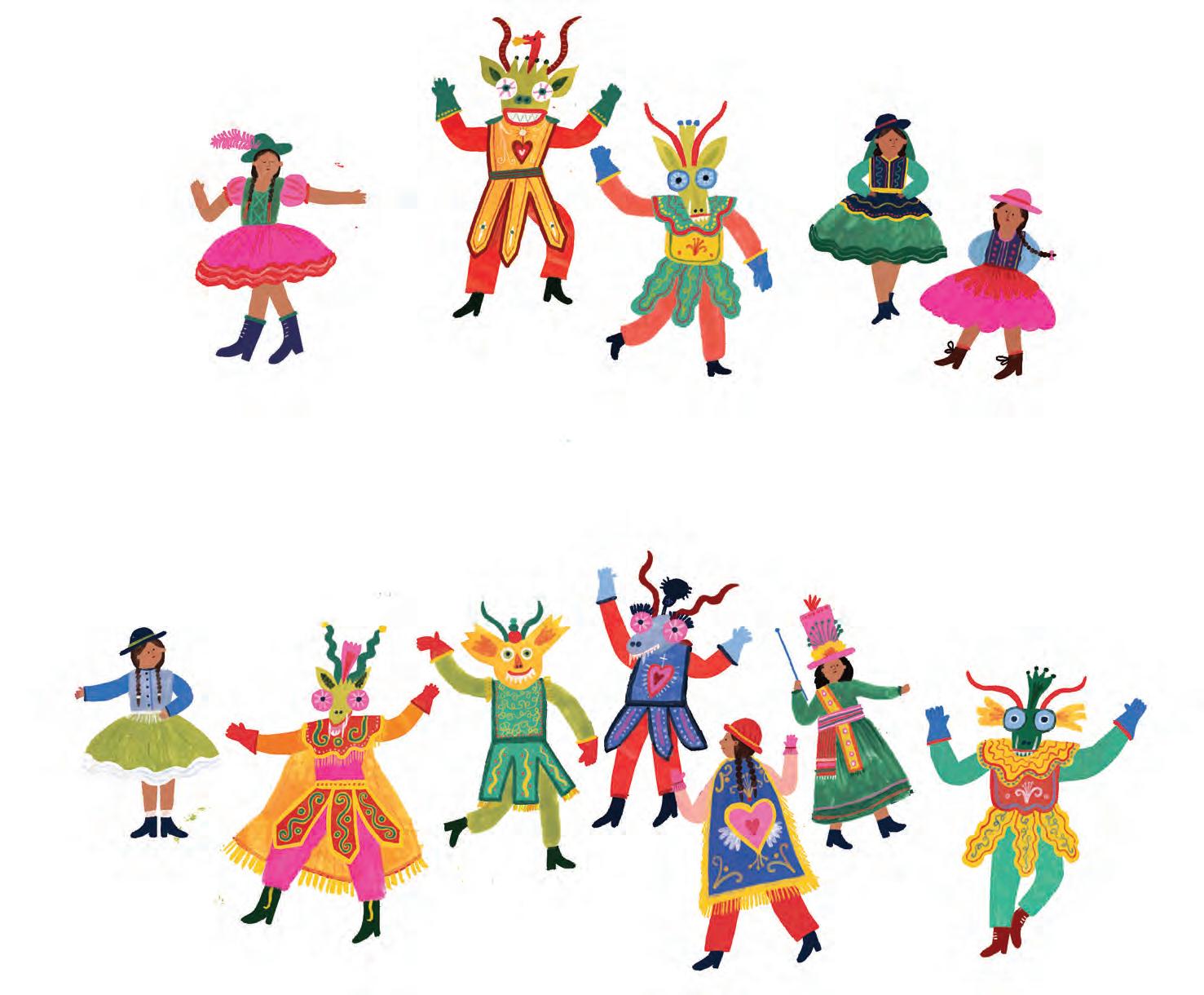
Oruro Carnival — Bolivia
Rio Carnival — Brazil
Diablos Danzantes del Yare Venezuela
Inti Raymi — Peru
Fiesta de la Tirana — Chile
Tango Festival — Argentina
Barriletes Gigantes — Guatemala
Día de los Muertos — Mexico
Las Parrandas — Cuba
Waitangi Day — New Zealand
World Science Festival — Australia
Heiva i Tahiti — Tahiti
People have celebrated festivals for thousands of years. Today, we still celebrate in our own different ways all around the world – from stilt-walking to snow-sculpting, dragon-boating to ice-canoeing, pumpkin-carving to coffin-carrying, camel-racing to coconut-tree-climbing.
Our planet is home to almost 8 billion people in nearly 200 countries, with thousands of religious beliefs between them. It would be impossible to include every festival from around the world as there are so, SO many. But hopefully this book will give you a taster of some of the sensational celebrations out there.
Some festivals are specific to a certain place and the people who live there – these are organised by continent. Other festivals are celebrated by lots of people at the same time, even if they live far apart around the world – you can read about some of these in the worldwide chapter.
Although festivals around the globe can be very different, they also have a lot in common. They can be an important way of sharing knowledge, and not just with the people taking part. The Native American Market in the US, for example, helps Native Americans to share their art and culture with the rest of the world.
Festivals can give people a voice. Before the Barriletes Gigantes festival in Guatemala, Maya people spend months making kites that share their hope for a peaceful future. While during Heiva i Tahiti, Tahitians use dance to remember and share their stories.
Festivals can encourage people to question their beliefs and value their differences. In many countries, beauty parades are mostly for women, but at Cure Salée, Niger, the main beauty parade is for men. They paint their faces, dress in beads and feathers, and dance – and women decide who’s the best looking.
Festivals can help us explore who we are, where we’ve come from, and where we are going. And this means they often change over time. Only boys were allowed to take part in the children’s parade on Norway’s Constitution Day when it started in 1863. But girls were finally allowed to join in . . . almost 40 years later.
It’s not only the festivals themselves that change – they can also transform the world around them. In Djenné, Mali, as people rebuild the mosque year after year, they change its shape, softening it over time. And on Arbor Day, when children around the globe plant as many trees as they can – they create greener places to live at the same time as fighting climate change.
Everyday life can be full of rush, hustle and bustle. Festivals are a time and space to focus on what’s important, bring people together and create a sense of belonging – something that scientists now know is great for our mental wellbeing.
So maybe the people that came before us were years (and years) ahead of science. By creating and celebrating festivals, by getting us dancing, racing, writing, singing and making together, they were helping us to stay well by keeping us connected, whether to our ancestors, beliefs, nature, creativity, fun or each other.
So grab your bag, pack your camel, canoe and cow bells, and let’s
When:
Between 21st January and 20th February
Where:
Worldwide
Getting Ready for the Festival
In the days leading up to the festival, people give their homes a good clean, hoping that the mistakes and disappointments of the last year will be swept away with the dirt and dust.
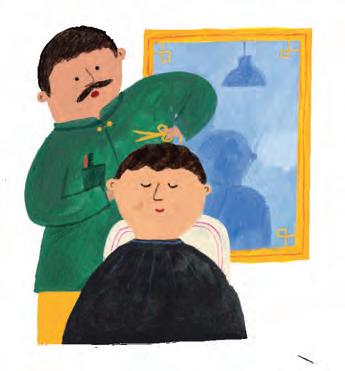
Many people also go to the hairdresser. A trim doesn’t just leave them looking dashing, it cuts away bad luck from the year before. Plus it’s good to get hair washed too, because washing hair on the first day of the Lunar New Year is a VERY bad idea – the word for hair sounds the same as 'to become wealthy', so washing your hair might wash fortune away . . .
Chinese New Year (or Nong Li Xin Nian, Spring Festival or Lunar New Year) is the most important celebration in the Chinese calendar. It’s celebrated all over the world and many other Asian cultures have similar festivals.
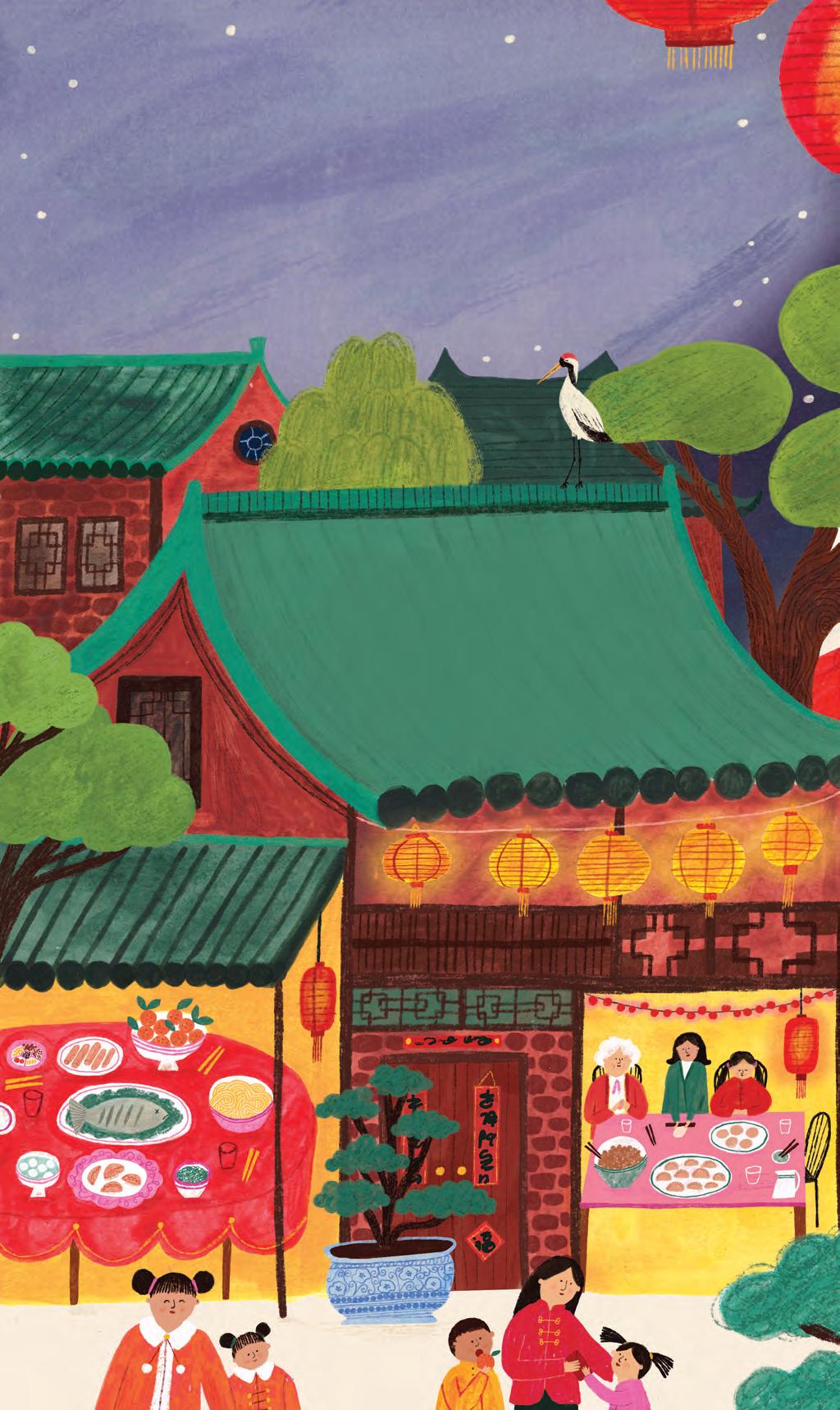
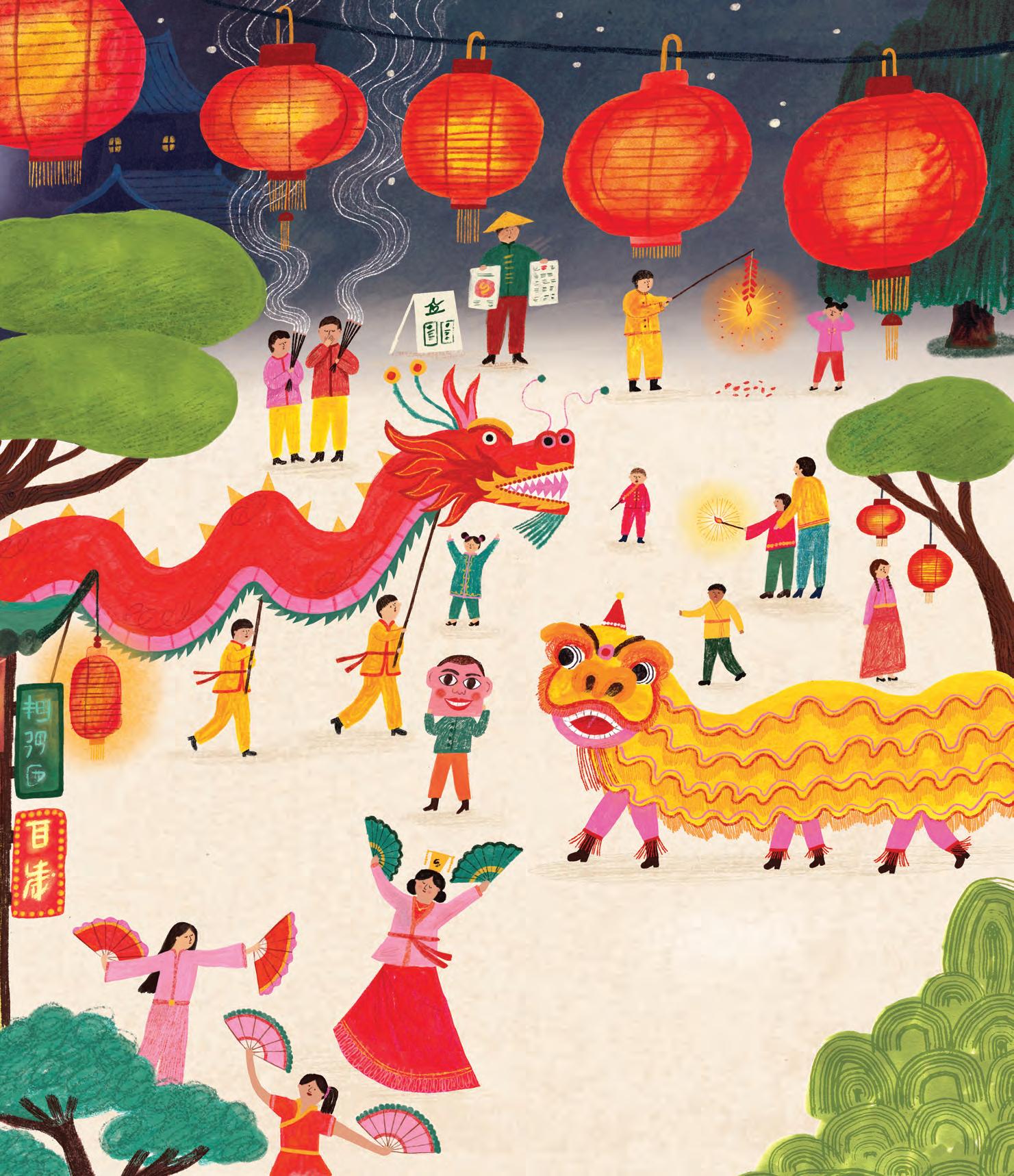
In some countries, schools and businesses close so people can spend time with their families, homes and streets are decorated in red, and dancing lions and dragons bring good luck (and rain . . .). There’s also LOTS of tasty food – like fish, which symbolise plenty, and very, VERY long noodles, which symbolise a long life.
Chinese people use two calendars – one that starts on 1st January, and another that follows the movement of the moon. Lunar New Year celebrates the start of a new moon – and a new year.
Children are given red envelopes with ‘lucky money’ inside.
Firecrackers scare away evil spirits and welcome the new year.
Whatever you do, you should NEVER give anyone an umbrella, a pear or a pair of shoes. That’s because the word for umbrella sounds like the word for 'breaking up', pear sounds the same as 'leaving', and shoes sounds the same as 'bad luck'.
Children often try to stay awake on New Year’s Eve thanks to an ancient story about a beast called Nian. Once a year he would leave his home to try to find some delicious humans to snack on. The delicious humans, however, realised that Nian appeared after sunset and left at dawn, so they started making dinner early and sealing their doors.
Nian is scared of the colour red, which is why some people cover their windows, walls and doors with red decorations. It’s also a lucky colour because in Chinese it sounds like the word ‘prosperous’ (which means wealthy).
Nowruz, the Iranian new year, means ‘new day’ and marks the first day of spring and the rebirth of nature. The festival is over 2,000 years old and is celebrated by more than 300 million people around the world.
For those that live in the northern half of our planet (the northern hemisphere), 21st March is usually the first day of spring. But for millions of people around the world, it’s the beginning of a new year, too.
On the first day of Nowruz, families meet at the home of their oldest relative.
20th or 21st March Worldwide When: Where:
Children wear new clothes and receive gifts of new bank notes and coins.
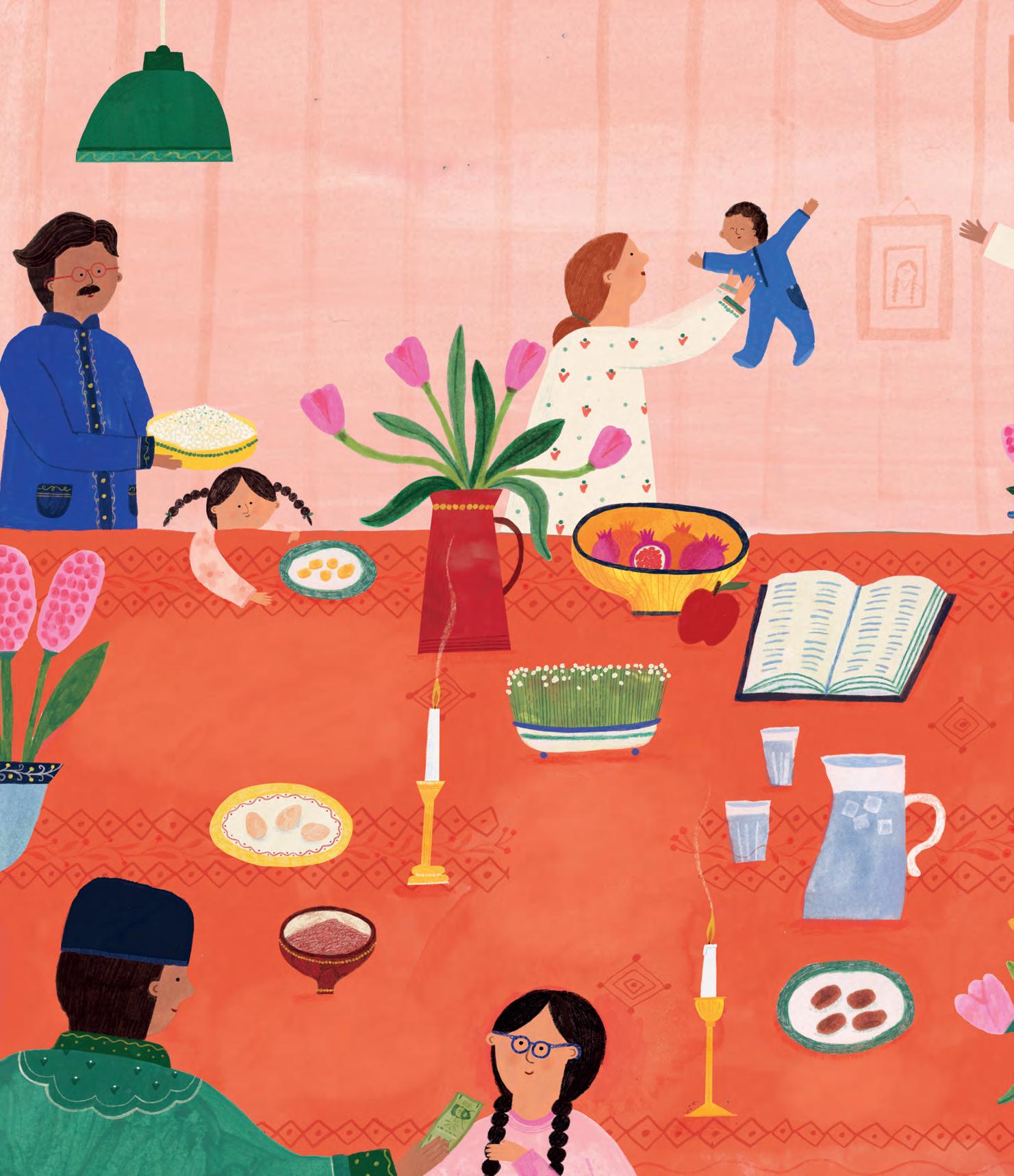
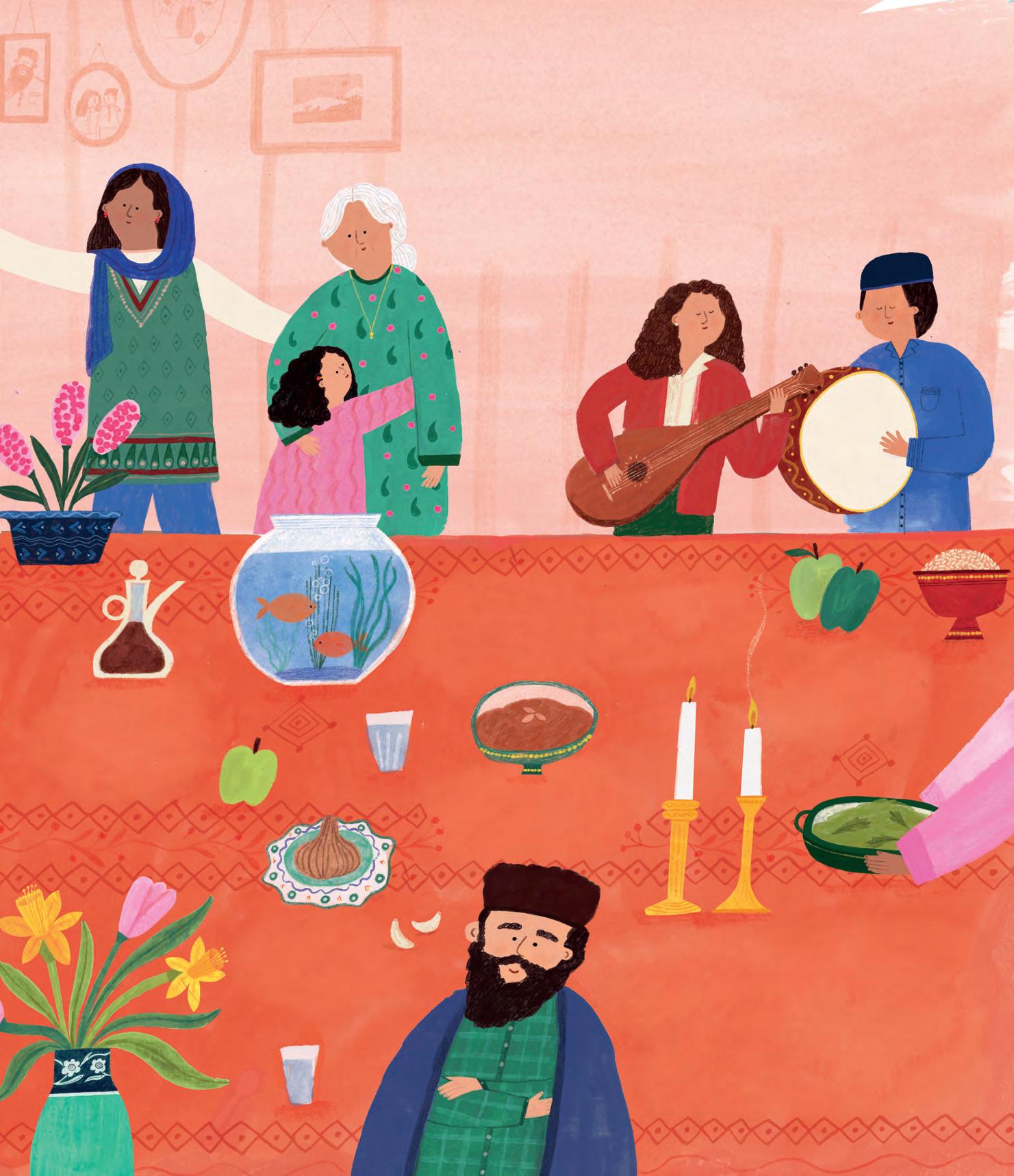
Each home sets up a table with lots of special items, including the traditional Persian haft sin – seven things that begin with the Persian (Farsi) letter ‘s’ (sin) . . .
Sabzeh (shoots of wheat and other seeds), which symbolise the rebirth of nature.
Sabzeh is always in the centre of the table and the seeds are planted weeks before.
In the week before Nowruz, people take part in a number of rituals, including a massive spring clean of their homes (called ‘shaking the house’), jumping over fire, and banging pots and knocking on doors in the hope of getting sweets. (The last ritual is for children only.)
Summak (a spice made from sumac berries), which symbolises sunrise.
Senjed (a fruit), which symbolises love.
Serkeh (vinegar), which symbolises patience and age.
Sir (garlic), which symbolises good health.
Zoroastrianism
‘Nowruz’ is spelled and said differently in different countries. It’s also celebrated by people of different faiths, but its roots are partly in Zoroastrianism. Zoroastrians believe that humans are closely connected to nature, that the world is in a struggle between good and evil, and that goodness will win. It was one of the religions of the Persian Empire, which began in 550 BC and stretched from Asia to Europe and Africa. This is how Nowruz travelled around the world to be celebrated by so many people today.
Other items on the table include a goldfish to symbolise life, candles to symbolise light and happiness, hyacinths to symbolise spring and the new year, a book of poems by Persian poet Hafiz, and the Qur’an.
Samanu (a pudding made from wheat), which symbolises the sweetness of life.
Sib (apple), which symbolises health and beauty.
Celebrations continue long after the first day and, in some countries, children have two weeks of school holidays.
On the 13th day, people head outdoors and throw the Sabzeh shoots into running water. Some people believe the seeds hold their troubles from the year before and the water carries them far away.
First Sunday after the full moon on or after 21st March
When: Where:
Worldwide
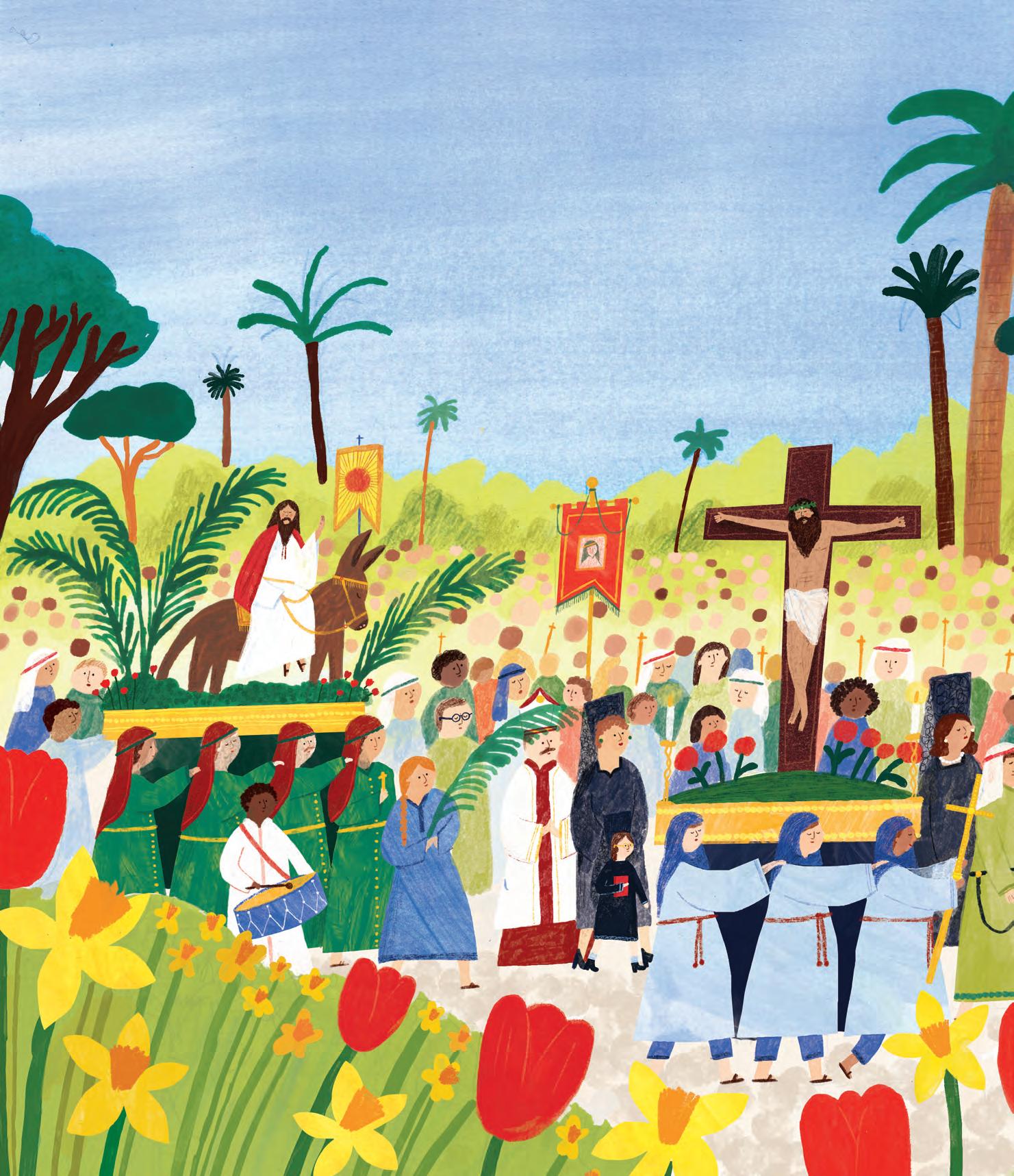
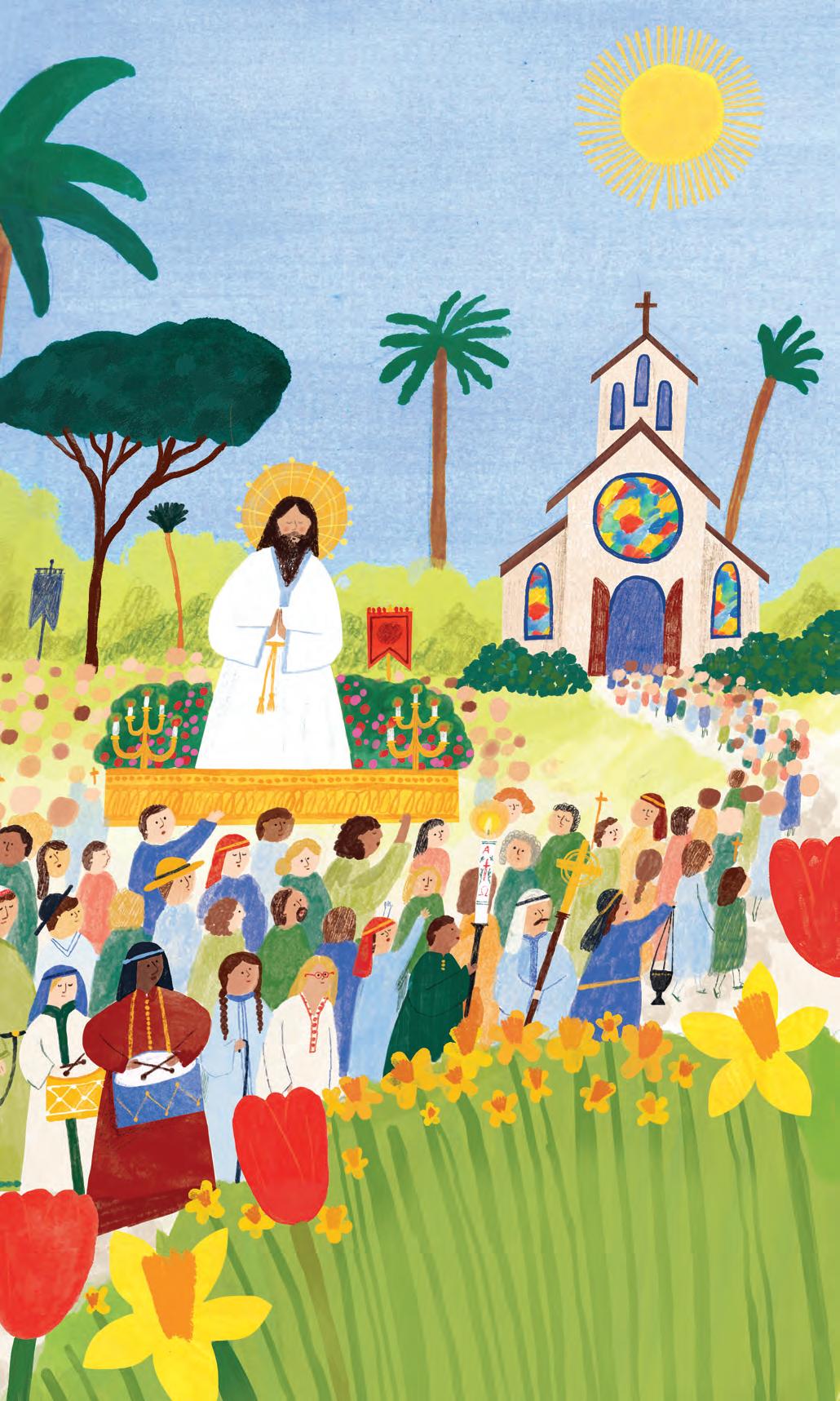
Christians believe Jesus rose from the dead, three days after he was killed – and the festival of Easter celebrates this. The week leading up to Easter is called Holy Week and begins on a Sunday, which is the day Jesus arrived in Jerusalem. In many countries, such as Spain or Italy, there are Easter processions in the streets with large floats carrying statues of Jesus and Mary.
The Easter story begins on Maundy Thursday, when Jesus had a Last Supper with his 12 closest followers. They shared bread and wine and he washed their feet to show he was their servant. In medieval Europe, kings, queens and popes washed the feet of 12 poor people before giving them food, clothes or money.
After the Last Supper, guards came to take Jesus to see the high priest. The priest was angry with him for claiming to be the son of God and ordered for him to be killed.
The next day, Jesus died on a cross and was buried in a cave with a gigantic stone in front of the entrance.
Christians call this Good Friday and some churches are stripped of decoration, lights are turned out and no candles burn. The altar is covered in black cloth or left bare and a cross like the one Jesus died on is placed at the centre of the church.
On Easter Sunday, when people visited the cave, the stone had been rolled away and Jesus’s body wasn’t there. An angel told them that Jesus had risen from the dead and later that day his mother and followers saw him alive.
Many Christians celebrate this with a special service called the Easter Vigil, where people meet in darkness to light the ‘Paschal’ candle. Unlike the day before, churches are often filled with candles and flowers, while priests wear their brightest robes.
Easter Traditions
Easter marks the end of Lent, 40 days during which Christians give up something they enjoy. Traditionally Christians weren’t allowed to eat eggs during Lent, so 800 years ago, people started collecting and decorating the eggs that were laid during Holy Week so they could eat them on Easter Sunday.
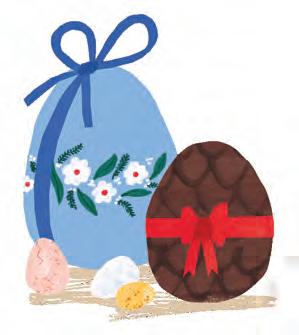
While egg decorating is still popular, many of the eggs that are eaten at Easter are made from chocolate. In the UK, people spend hundreds of millions of pounds on chocolate eggs and other Easter treats each year.
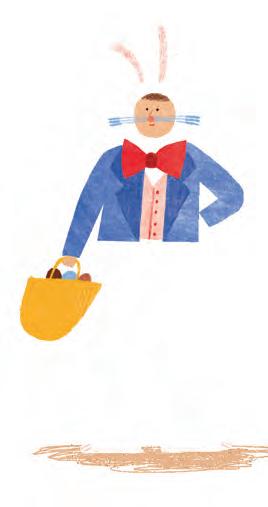
Many people imagine the Easter Bunny when they think of the festival, at least in Europe. But over the years there have been all kinds of Easter animals, including the fox in Germany, the stork and rooster in Belgium and the hen in Bavaria. It was only when America adopted the rabbit that it became a popular Easter symbol around the world.