The Crow’s Nest, 14 Baden Place, Crosby Row, London SE1 1YW www.nosycrow.com
ISBN 978 1 78800 901 0
Nosy Crow and associated logos are trademarks and/or registered trademarks of Nosy Crow Ltd.
Published in collaboration with the British Museum. With special thanks to Marie Vandenbeusch and John Taylor at the British Museum for their contribution and advice.
The right of Nosy Crow to be identified as the author and Tom Froese to be identified as the illustrator of this work has been asserted.
All rights reserved.
This book is sold subject to the condition that it shall not, by way of trade or otherwise, be lent, hired out or otherwise circulated in any form of binding or cover other than that in which it is published. No part of this publication may be reproduced, stored in a retrieval system, or transmitted in any form or by any means (electronic, mechanical, photocopying, recording or otherwise) without the prior written permission of Nosy Crow Ltd.
A CIP catalogue record for this book is available from the British Library.
Printed in China.
Papers used by Nosy Crow are made from wood grown in sustainable forests.
1 3 5 7 9 8 6 4 2
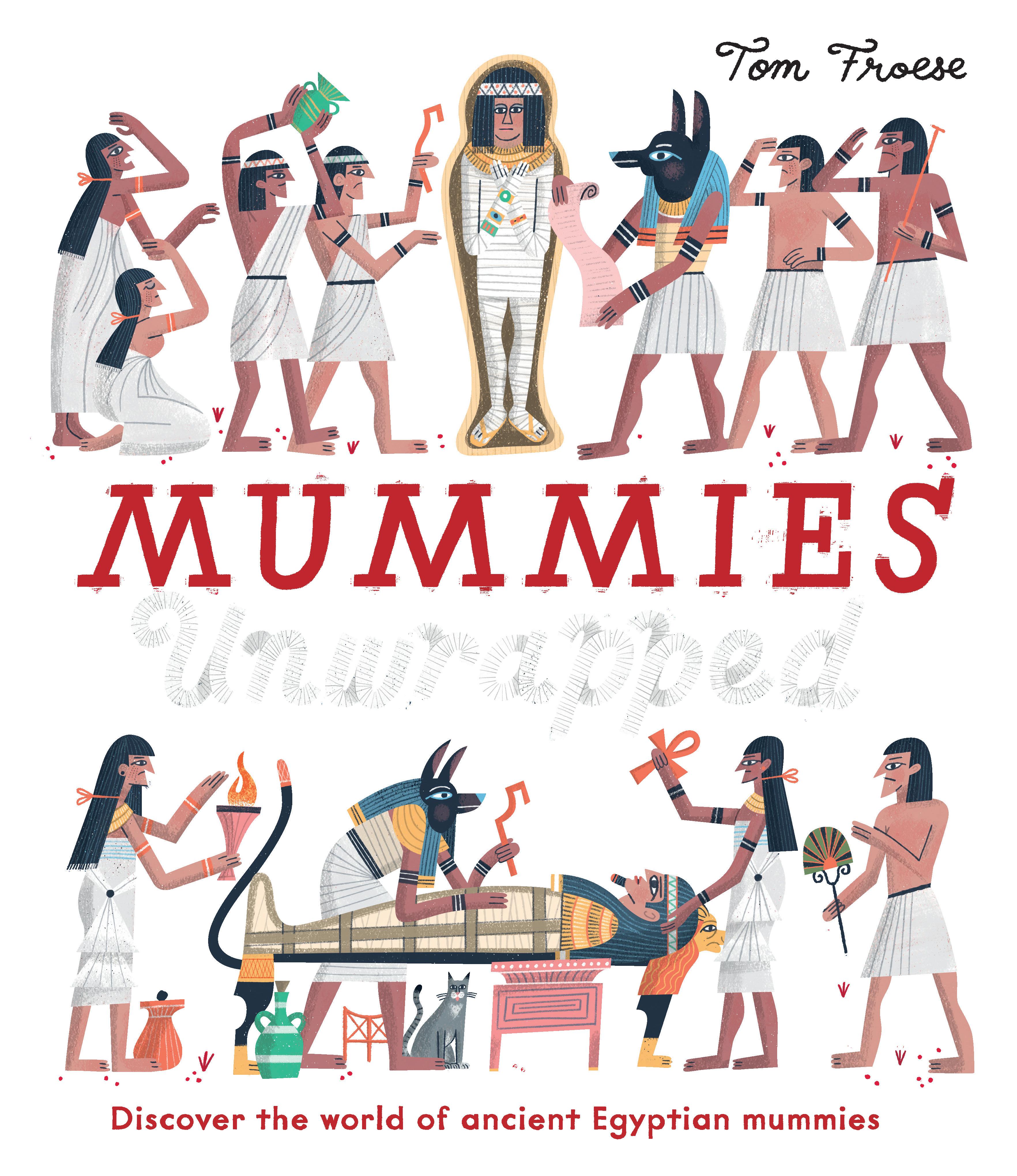
Mummies Unwrapped
Contents
What is a mummy?
How exactly were mummies made?
What happened to the organs?
How did they rebuild the mummy?
How were mummies wrapped?
How were mummies buried?
What happened at a funeral?
What happened to the mummies next?
What about animal mummies?
What happened when mummies were discovered?
Who are some of the most famous mummies?
What is a mummy?
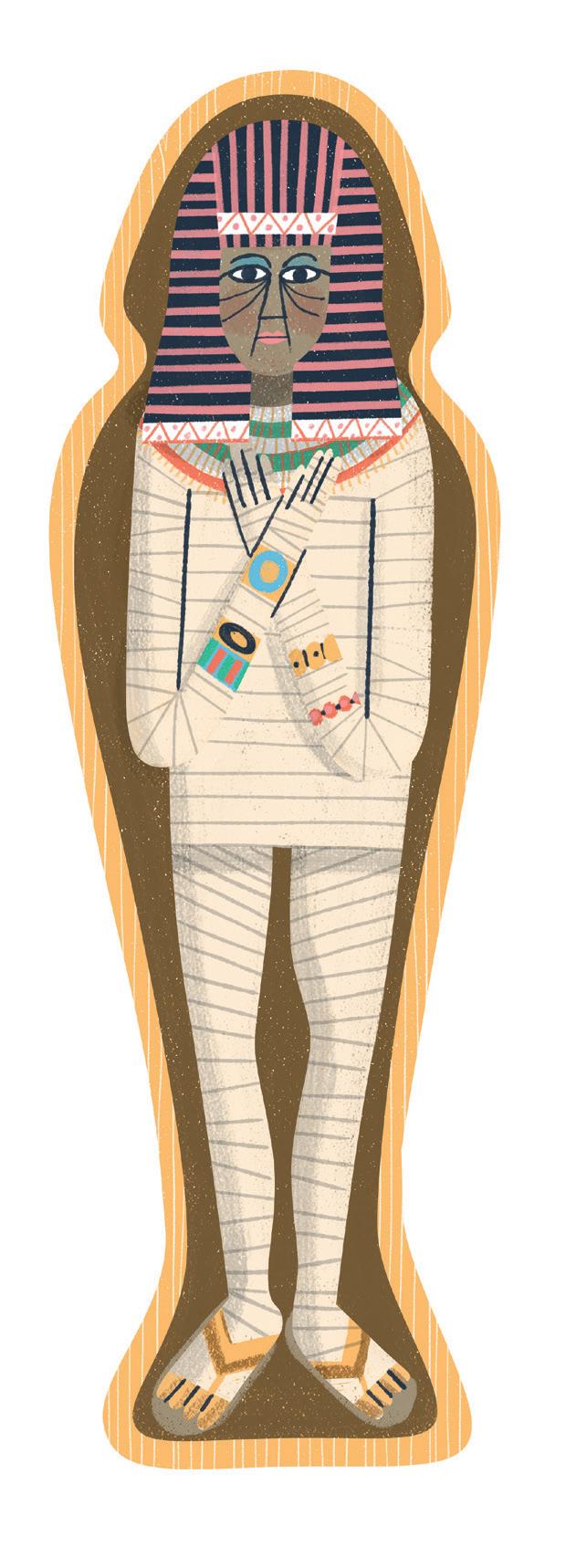
Over 5,000 years ago, a famous ancient civilisation of pharaohs began in Egypt, North Africa. They believed in life after death and thought that if their dead bodies were preserved, or looked after, their spirits would live forever in an afterlife. We call these preserved human bodies . . . mummies!
The word ‘mummy’ comes from the Persian word mumiya , which means ‘bitumen’ – a black, sticky, tar-like liquid. When preserved bodies were first discovered hundreds of years ago, they often looked as if they were covered in bitumen, so they became known as mummies. Nowadays, the whole process of preserving a body is known as mummification, or embalming.
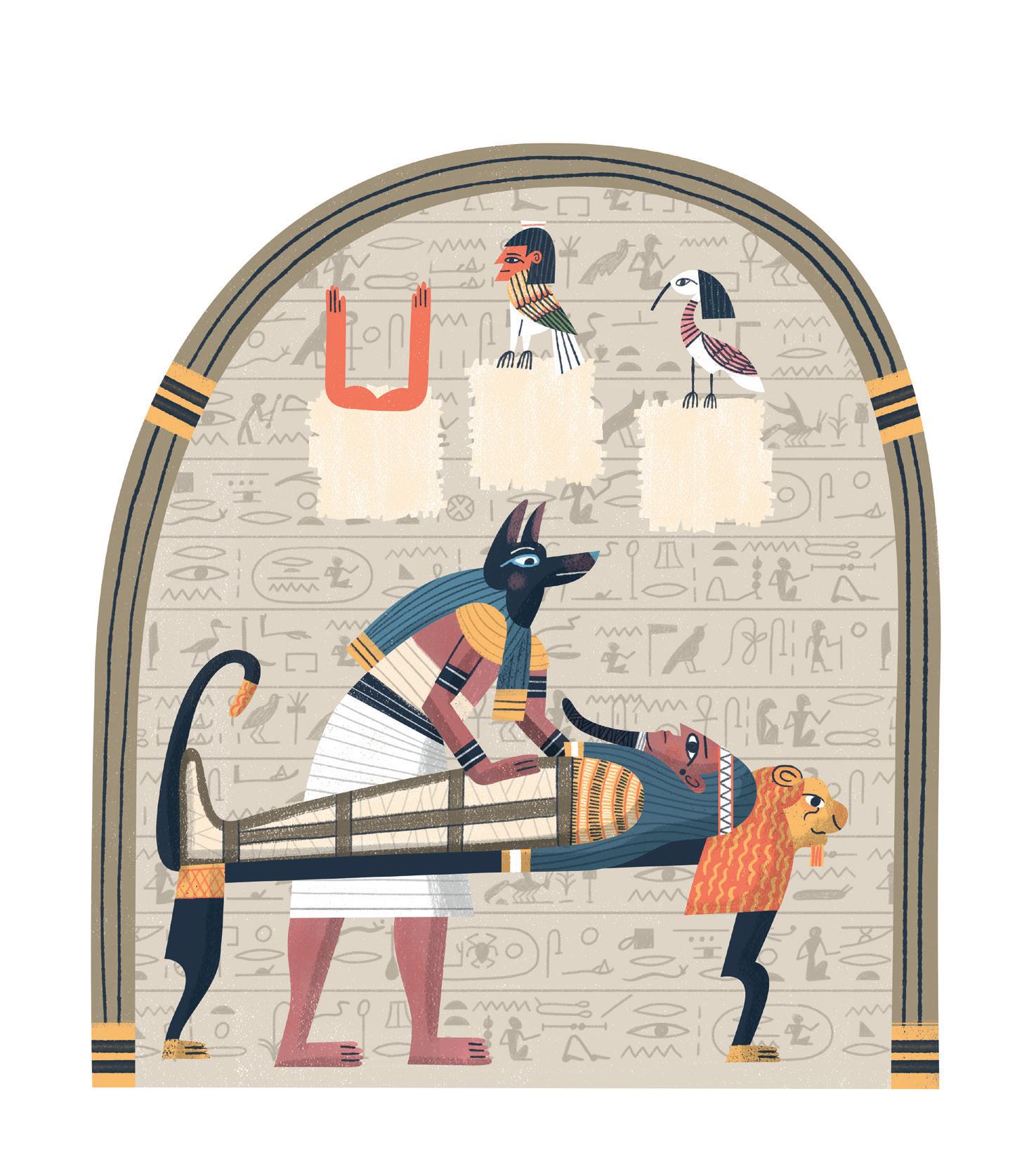
The ancient Egyptians believed that every person had three spirits which survived after death:
It was very important for Egyptians to protect the dead body because these spirits lived inside it. They believed the spirits would need to recognise the body after death so that they could live forever.
THE AKH The person’s soul
THE KA The person’s life energy
THE BA The person’s personality
How exactly were mummies made?
Ordinary Egyptians could have their bodies mummified, but it was a very complicated and expensive process. Only the rich and the royal could afford the best materials.
Dead bodies start to rot very quickly – especially in the hot sun – so embalmers had to start making the mummy as soon as possible. It took a whole team of embalmers a very long time!
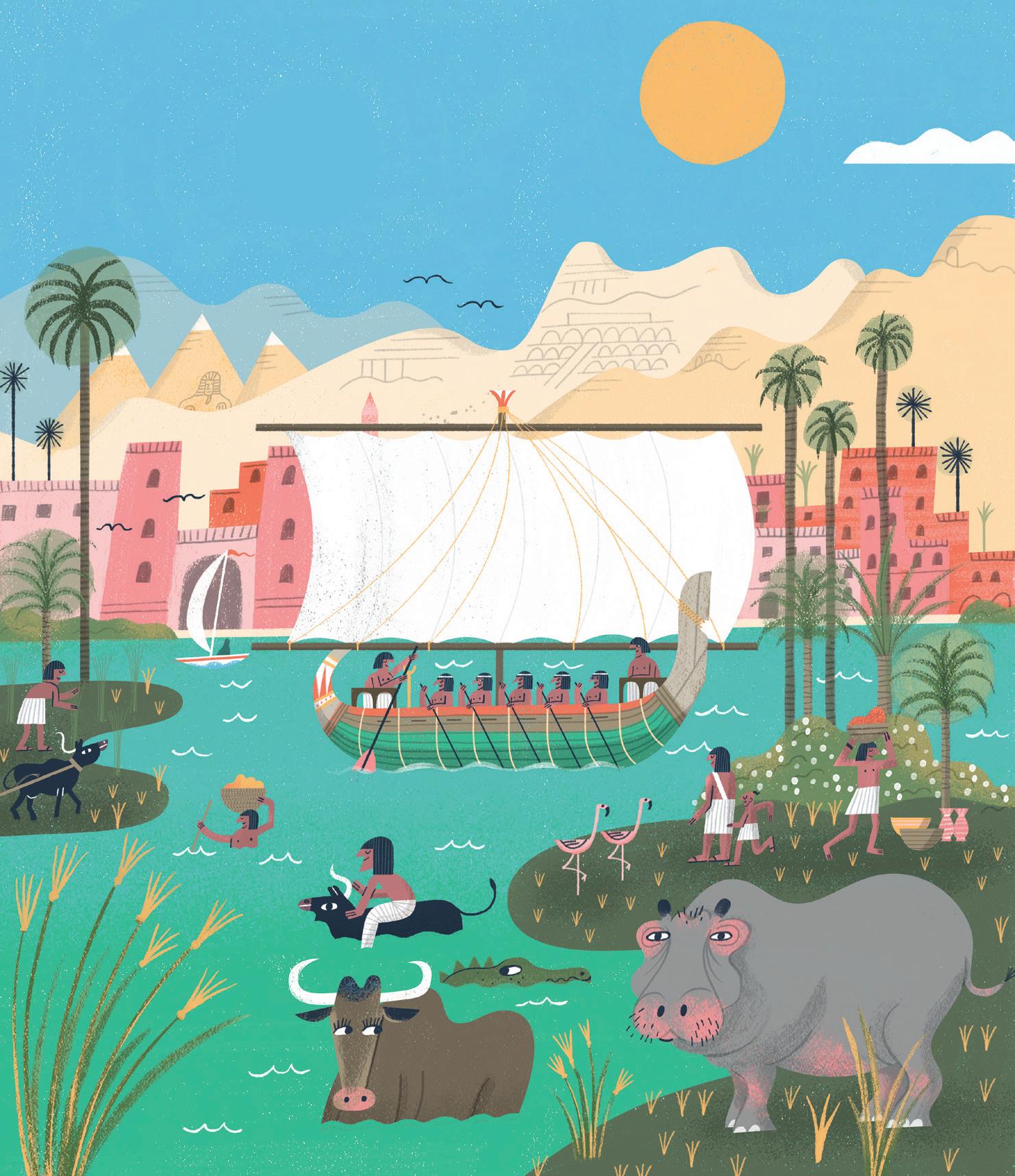
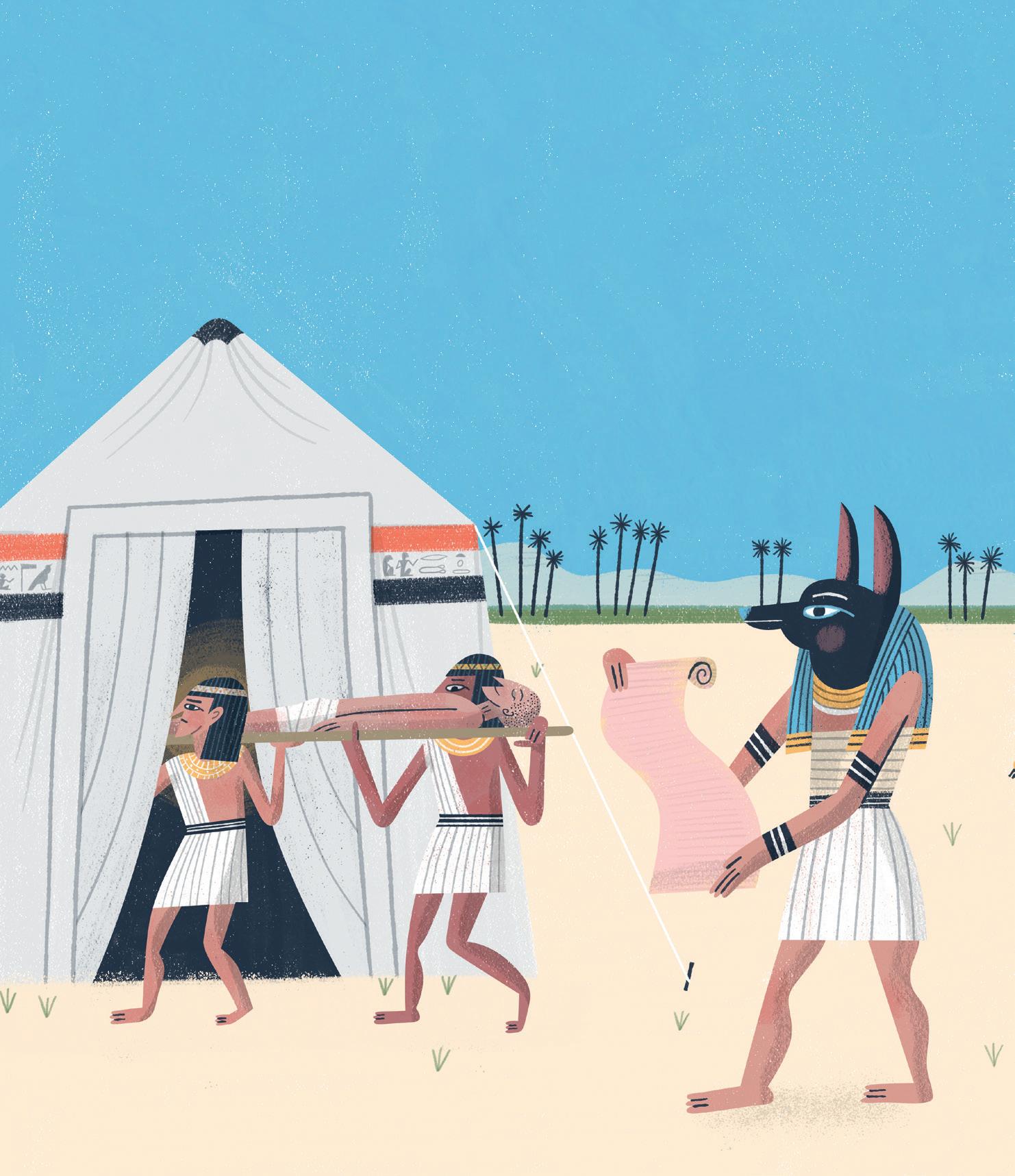
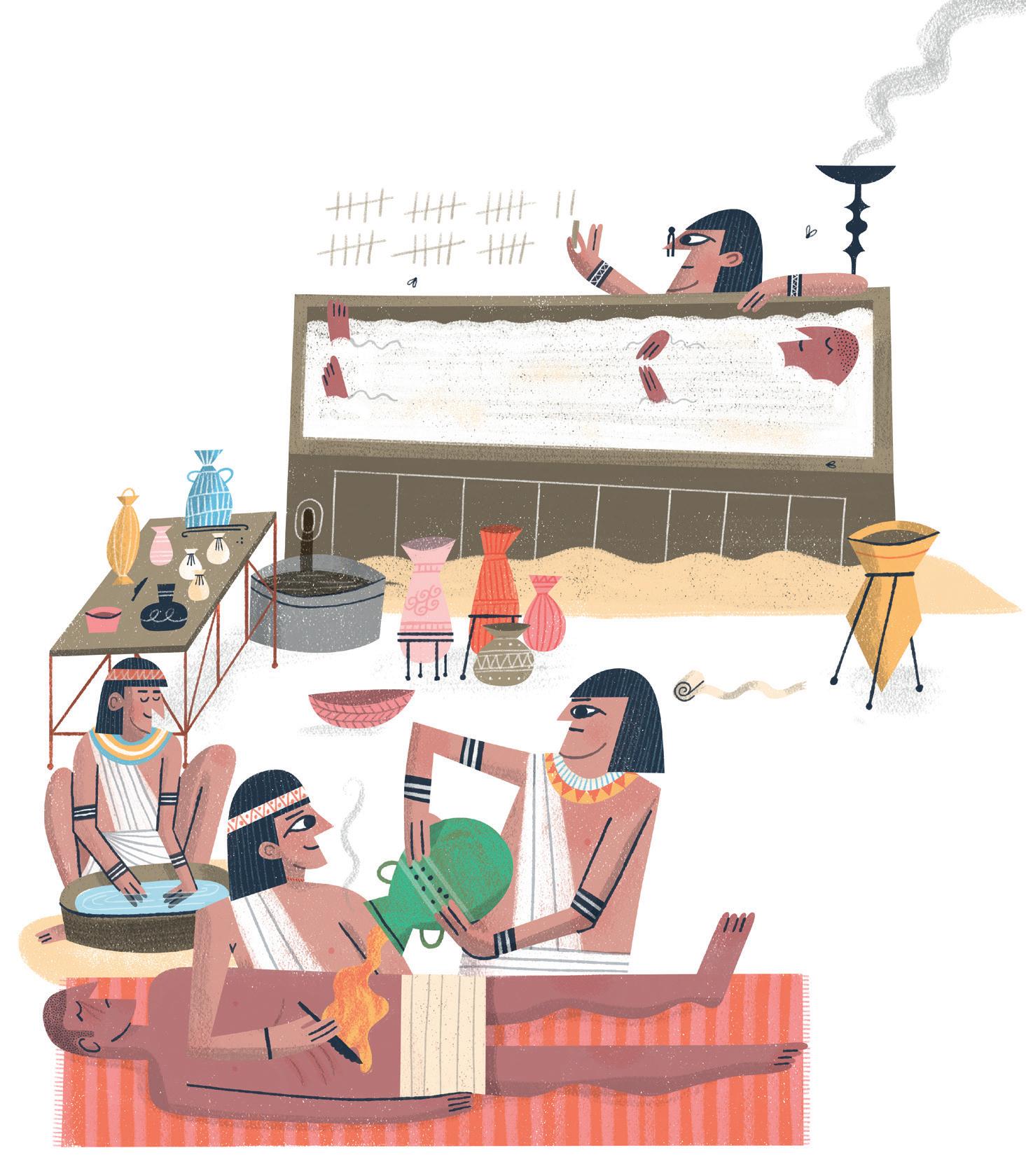
First, they would collect the dead body and take it to a ‘tent of purification’ known as an ibu. This was a tent made from reeds and mats and it was usually close to the River Nile so they could use fresh water. Here, the embalmers would get rid of any liquid left in the body, like blood, before washing it in water and natron (a kind of salt).
After the body had been cleaned, it was taken to an embalmer’s workshop, known as a wabet.
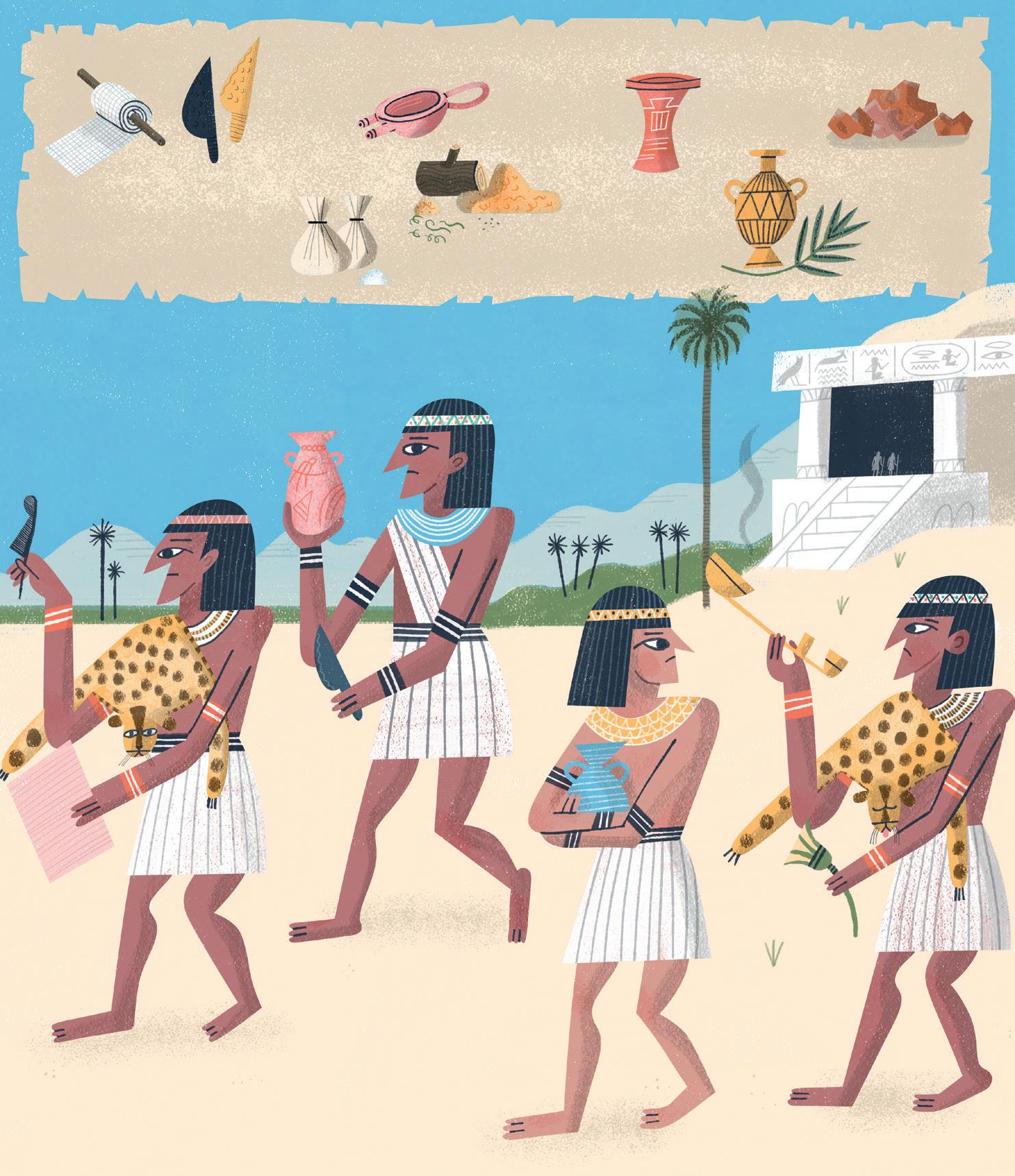
Meet the embalmers:
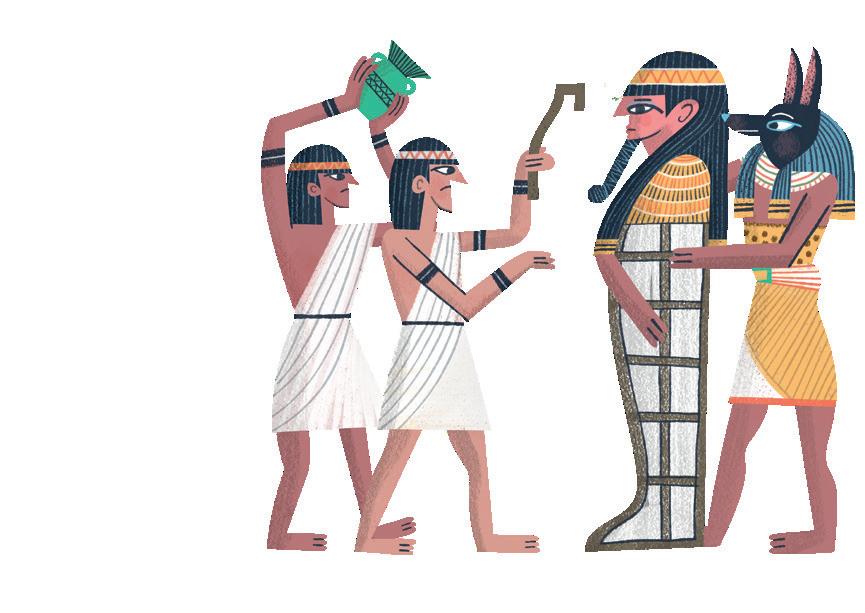
The MASTER OF SECRETS was in charge. Some people believe that he wore the mask of the god Anubis, who was the first to perform mummification.
To make the bandages
The
A natural salt that soaks up moisture and breaks down fat
To cut the body open
An embalmer’s toolkit:
The PRIEST read out sacred texts and spells. A FUN N EL A SPECIAL FLINT KNIFE
For injecting resin into the skull through the nostrils
PERFUME AND OILS
To cover the body once it had been stuffed
To make the skin smell sweeter
To clean the body after the organs were removed
drew
The SLICER cut down the line and removed the internal organs. As soon as he cut the body, he would run away from the workshop, with other people chasing after him throwing stones.
The PICKLER preserved the organs.
To stuff the body
SCRIBE
a line down the left-hand side of the stomach.
What happened to the organs?
The Egyptians believed it was important to look after the internal organs. They took great care to leave the heart in place because it would be needed again in the afterlife.
The rest of the main organs were removed through a cut in the stomach and stored in canopic jars. An embalmer would usually reach a hand inside the body and pull the organs out!
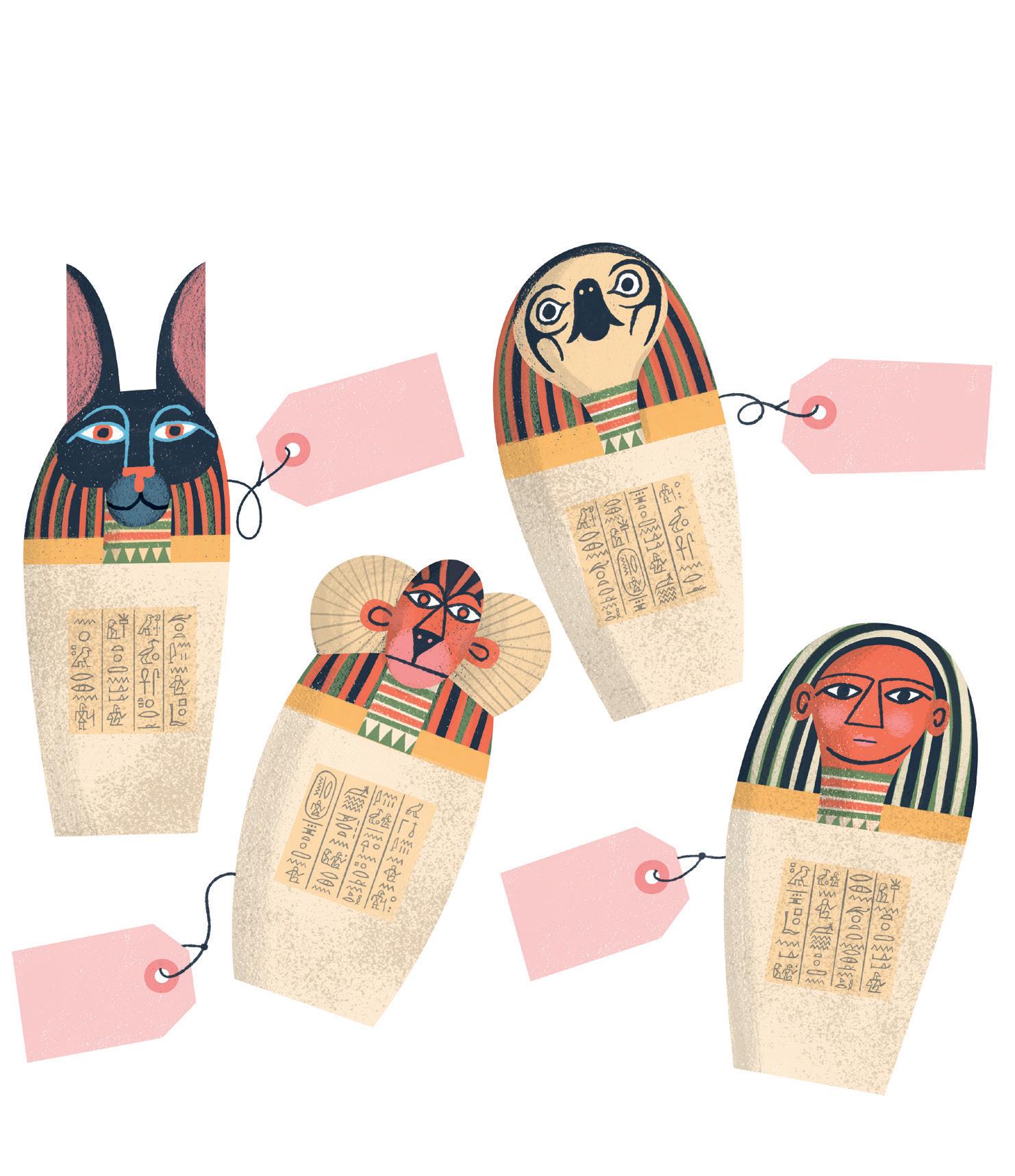
The LUNGS were stored in a jar with the head of HAPI , the baboon.
The STOMACH was stored in a jar with the head of DUAMUTEF , the jackal.
The LIVER was storedinajar with the head of IMSETY , the human.
Canopic jars came in all kinds of designs and were made from different materials. Usually each jar had a lid that looked like the head of one of the four Sons of Horus, an important god in Egypt.
The INTESTINES were stored in a jar with the head of QEBEHSENUEF , the falcon.
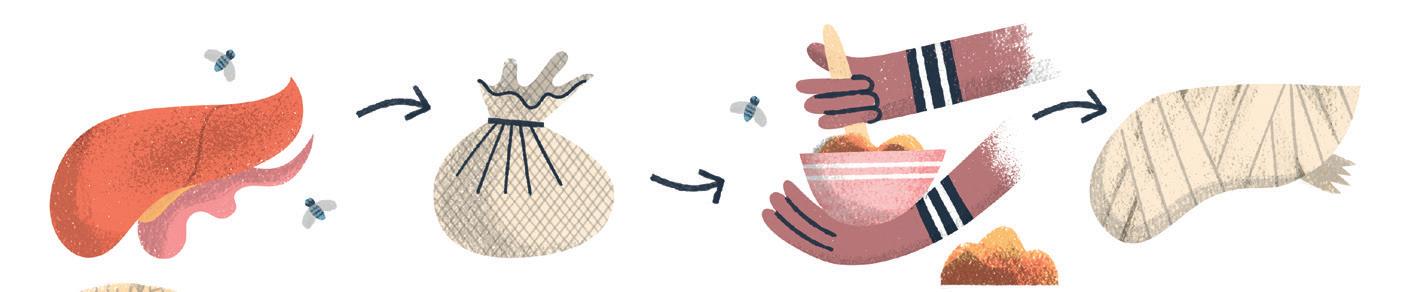
To stop the organs rotting, they would be soaked in natron. Once there was no moisture left, they were coated in resin, wrapped in linen and placed inside a canopic jar with the lid screwed tightly.
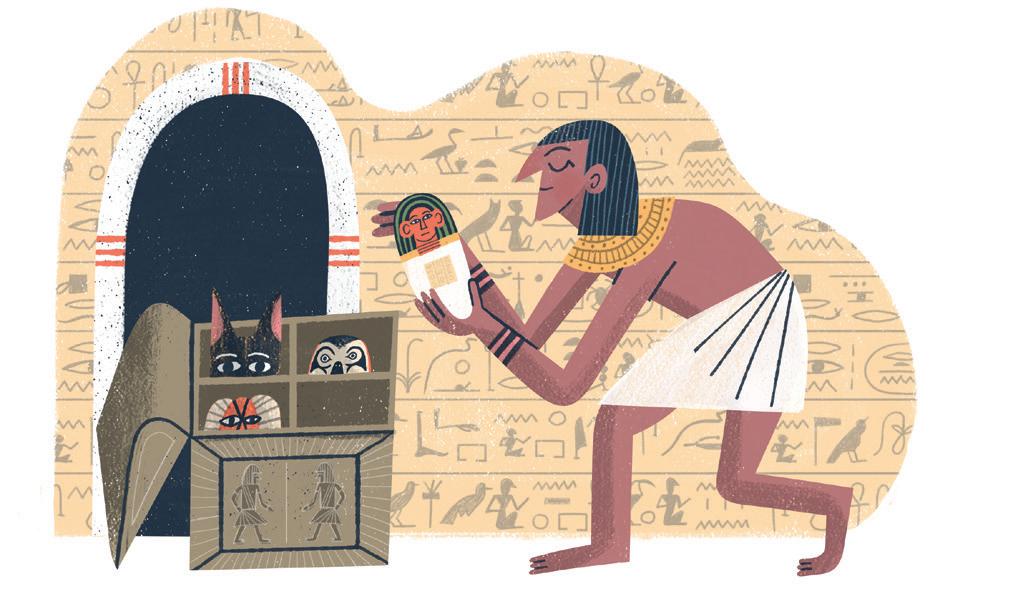
The jars were then stored inside a canopic chest, which was placed inside the tomb next to the mummy. For the rich and royal, each bundle of organs could be placed inside its own coffin – just like mini mummies!
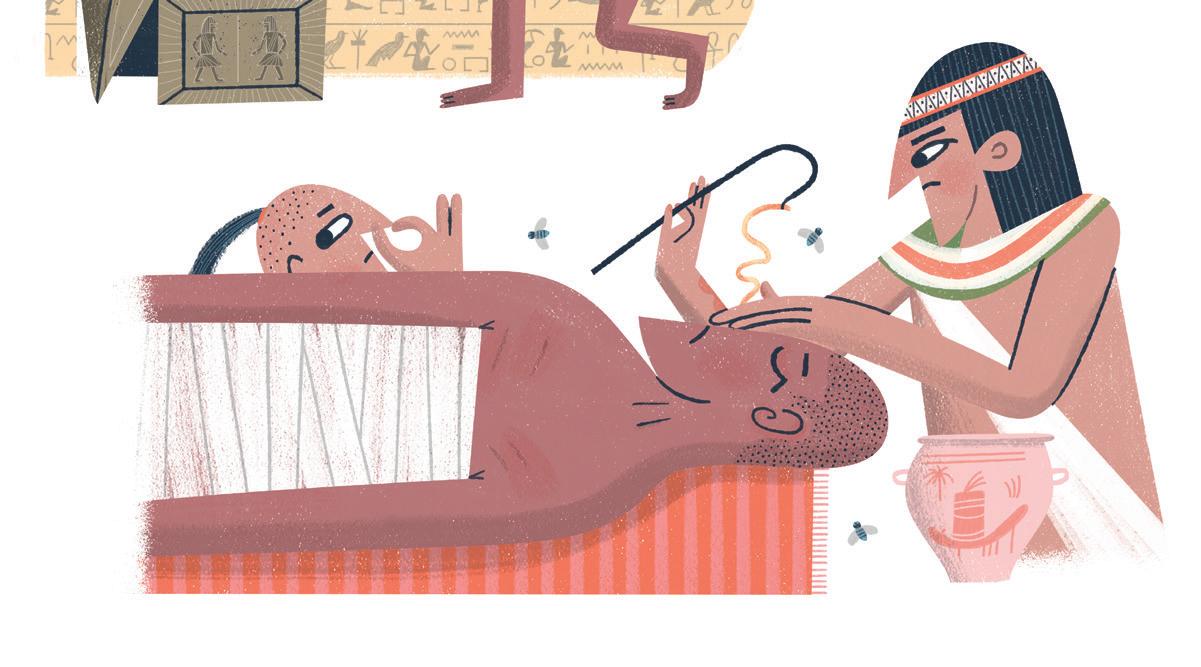
The Egyptians didn’t take care of all the organs though . . . in fact, they destroyed the brain! To protect the shape of the head itself, embalmers used a long iron hook to reach up through the nose, mash up the brain and pull it out through the nostril in small pieces. Sometimes they would take the brain out through the back of the head instead.
Cheaper mummies could be made by injecting cedar oil into the body. This turned the insides to liquid, which drained out the bottom!
The empty body was washed out with palm wine and spices. This part of making a mummy usually happened very quickly, but the next stage took a lot longer . . .
How did they rebuild the mummy?
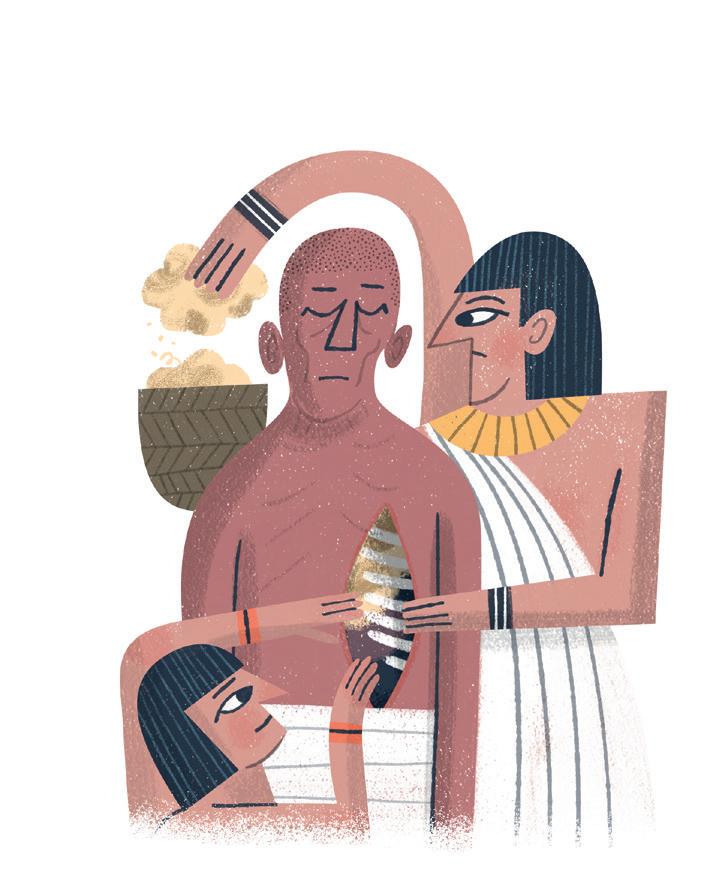
It was now time to dry out the body completely. It was covered in heaps of natron, which was also packed inside the body in tiny linen packages.
After around 35 days, the skin would be hard and wrinkled – it looked like leather stretched tight over the skeleton – and the body would be half the weight it was before.
The next stage was transforming the mummy into something as lifelike and beautiful as possible.
Beeswax and animal fats were poured into the body and over the skin to soften it. To make the mummy smell nicer, embalmers massaged the skin with scented oils, like frankincense and myrrh.
They wanted to make the mummy smell like a god.
Then the embalmers stuffed the body with rolls of linen, sawdust, mud and dried plants. To plump up any shrivelled bits, they pushed stuffing into tiny cuts and smoothed out the surface. They took special care to stuff the face, but sometimes the cheeks were stuffed so much, they actually burst open!
Mummy Mistakes!
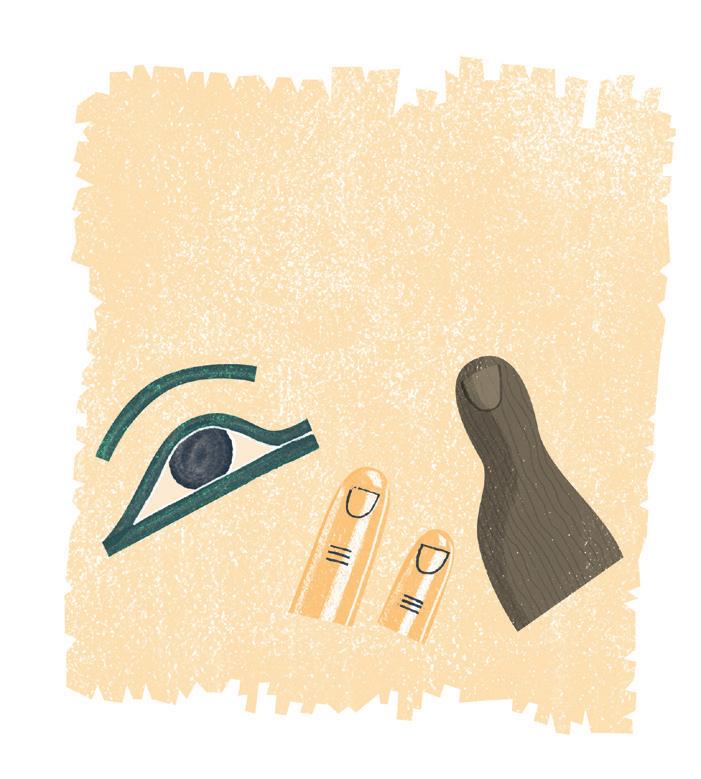
Mummy-making didn’t always go to plan. If body parts were missing – either through injury or disease, or during the process – some embalmers made fake body parts out of wood or linen instead!
To make the mummy look more alive, it was given false eyes made of stone, coloured glass or even onions!
The most fancy mummies had gold finger and toe caps, wigs, make-up, clothing and jewellery.