This book is sold subject to the condition that it shall not, by way of trade or otherwise, be lent, hired out or otherwise circulated in any form of binding or cover other than that in which it is published. No part of this publication may be reproduced, stored in a retrieval system, or transmitted in any form or by any means (electronic, mechanical, photocopying, recording or otherwise) without the prior written permission of Nosy Crow Ltd.
A CIP catalogue record for this book is available from the British Library.
Printed in China.
Papers used by Nosy Crow are made from wood grown in sustainable forests.
1 3 5 7 9 8 6 4 2 (HB)
1 3 5 7 9 8 6 4 2 (PB)
legend of troy The
Goldie Hawk • Esther Aarts
welcome to ancient greece pages 8 9
the siege of troy pages 12 13
an epic journey pages 16 —1 7
History's greatest mystery pages 6 —7
love and war pages 10 11
the fall of troy pages 14 15
return to greece pages 18 19
finding troy pages 20 21
telling stories pages 24 25
the legend of troy pages 28 29
acknowledgements pages 30 32 index and
the truth about troy pages 22 23
painting pictures pages 26 27
History‘s Greatest Mystery
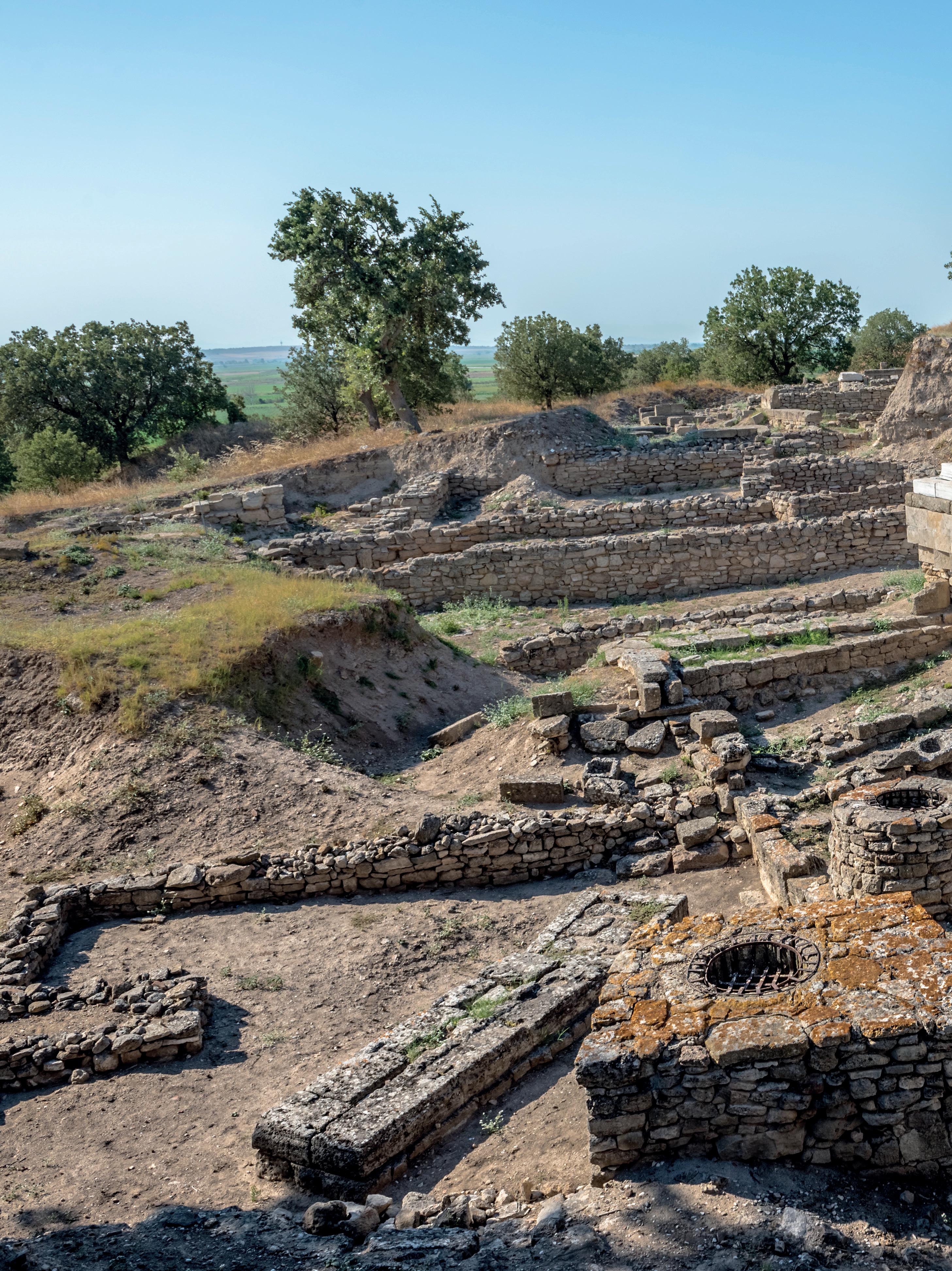
The story of the destruction of the ancient city of Troy is one of the world’s greatest tales.
It has been told in books, plays, poems, art and music for almost 3,000 years. And it is still being told today.
It is a story of adventure, war, love and death, with many twists and turns and thousands of characters – from fearsome warriors and powerful goddesses to six-headed sea monsters and a man-eating giant.
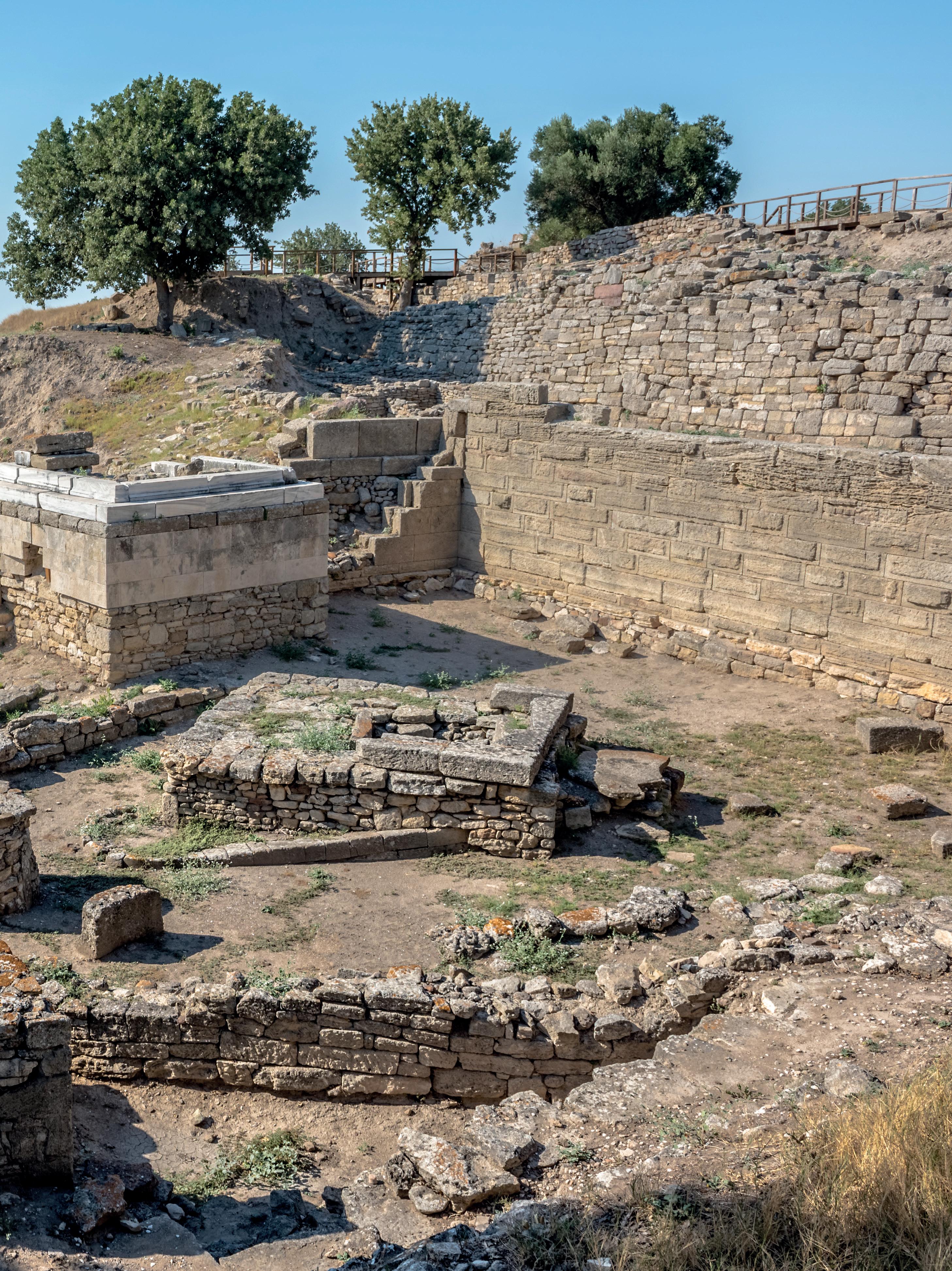
One hundred and fifty years ago, the legend of Troy was thought to be entirely made up. But more recently, archaeologists and scholars believe that they have found the ancient city.
But will we ever find out the truth about what really happened to Troy?
Have you ever discovered something old? What was it?
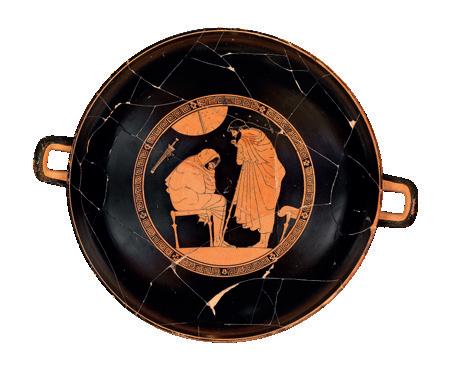
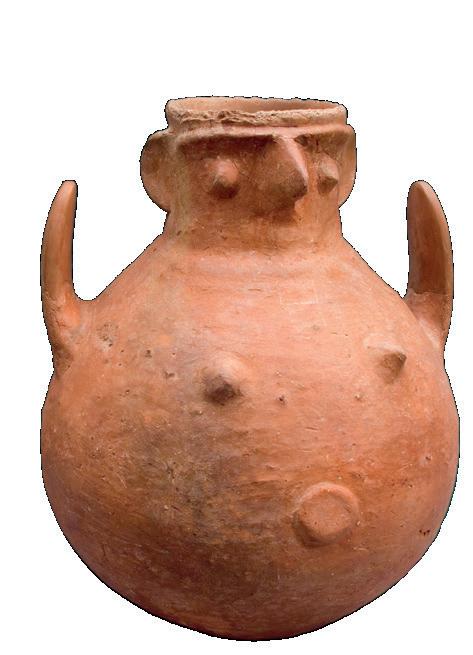
A ‘face pot’ found at Troy (right)
TOP TIP
‘BC’ stands for ‘Before Christ’. If you see ‘BC’ after a date, this means it is the number of years before Christians believe Jesus Christ was born (about 2,000 years ago).
So, if an object was made in 500 BC, it is around 2,500 years old.
KEY words
A LEGEND is a story that many people believe to be true, even though there may not be any proof that it really happened.
An archaeologist is a person who finds and studies objects from past and present civilisations.
A SCHOLAR is a person who specialises in studying a particular subject.
Welcome to Ancient Greece
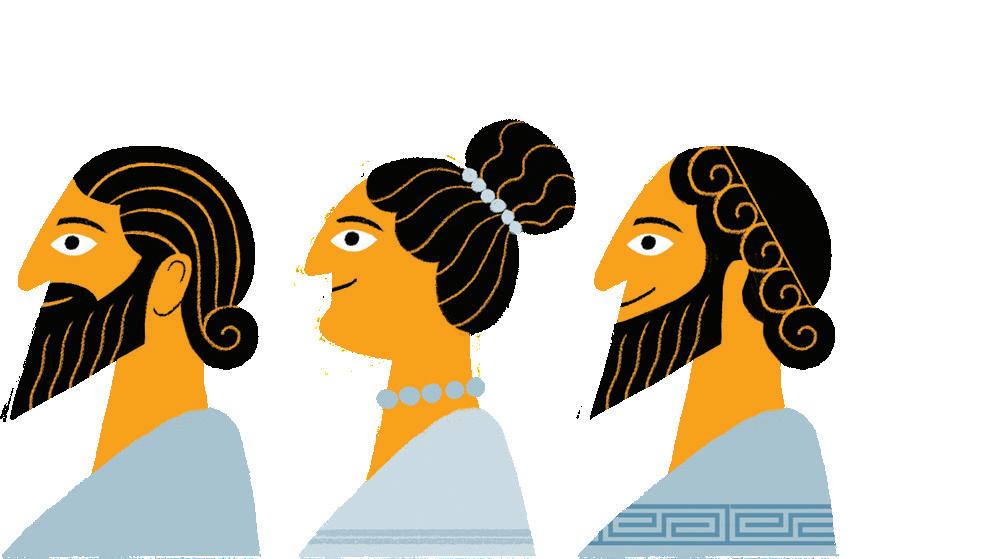
The ancient Greeks were very clever. They came up with incredibly important ideas, built amazing buildings and had their own special alphabet.
Thousands of years ago, life in ancient Greece was very different to life in Greece now. Ancient Greece did not even cover quite the same area as the modern country.
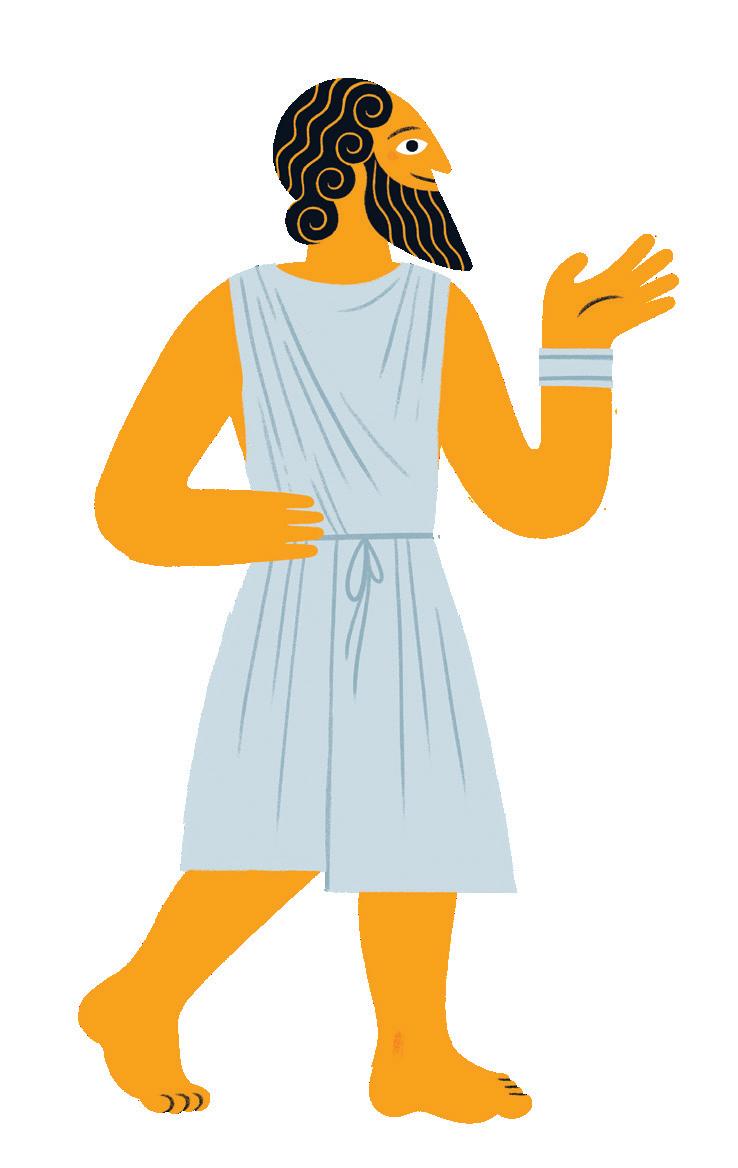
We Greeks live in city-states. Each city is almost like its own country.
Religion was very important. The ancient Greeks believed in many gods and built elaborate temples for them, with beautiful statues inside. The gods and goddesses were a bit like humans, but a lot more powerful. They watched over the ancient Greeks from their home on Mount Olympus, interfering with their lives and arguing with each other.
i'm hermes, the messenger god!
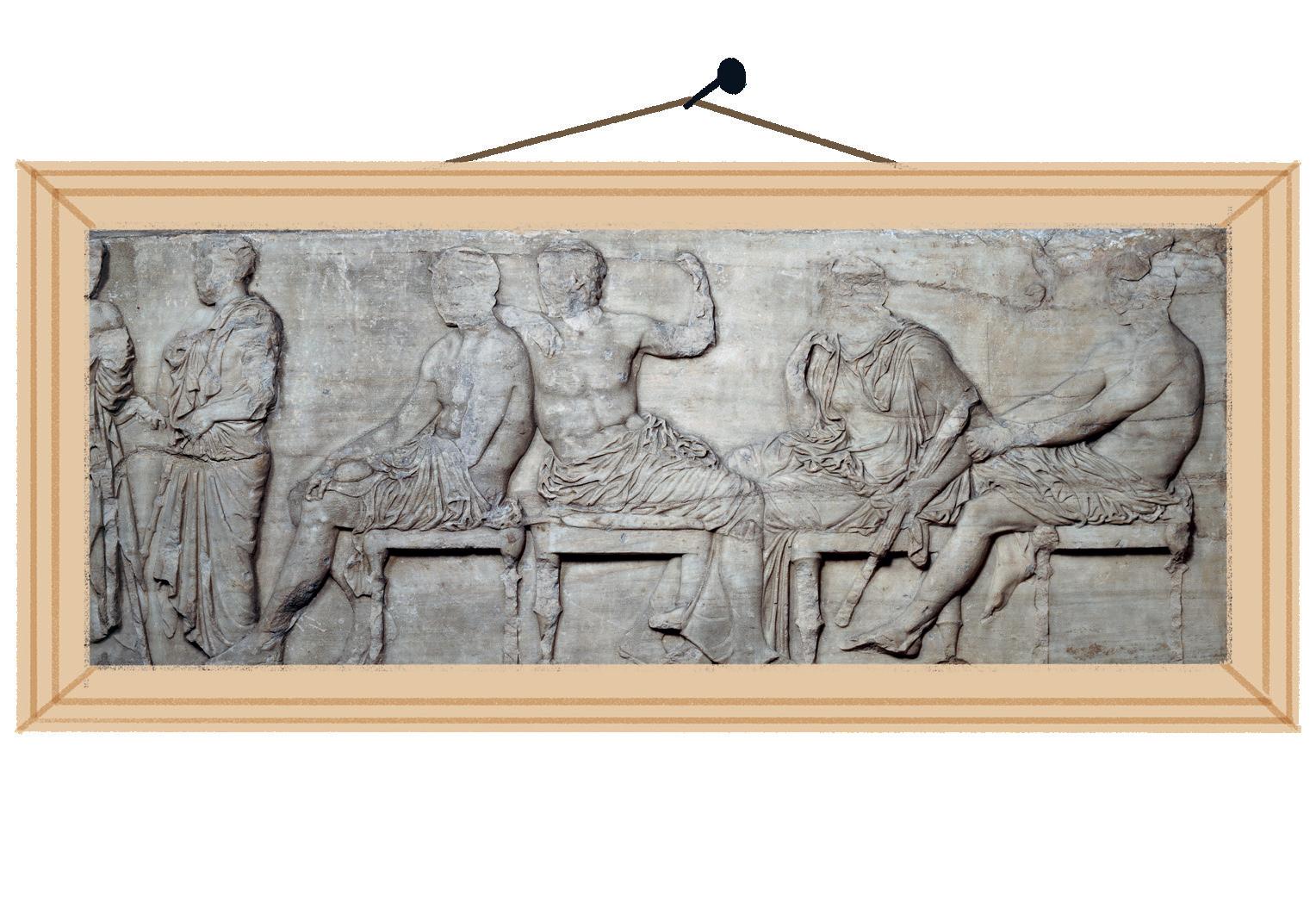
The people of Athens carved us on a big temple!
A scene carved into a Greek temple called the Parthenon
sparta
corinth
argos mycenae
thebes
greece
ionian sea
aegean sea
knossos athens
TROY
Gods and Goddesses
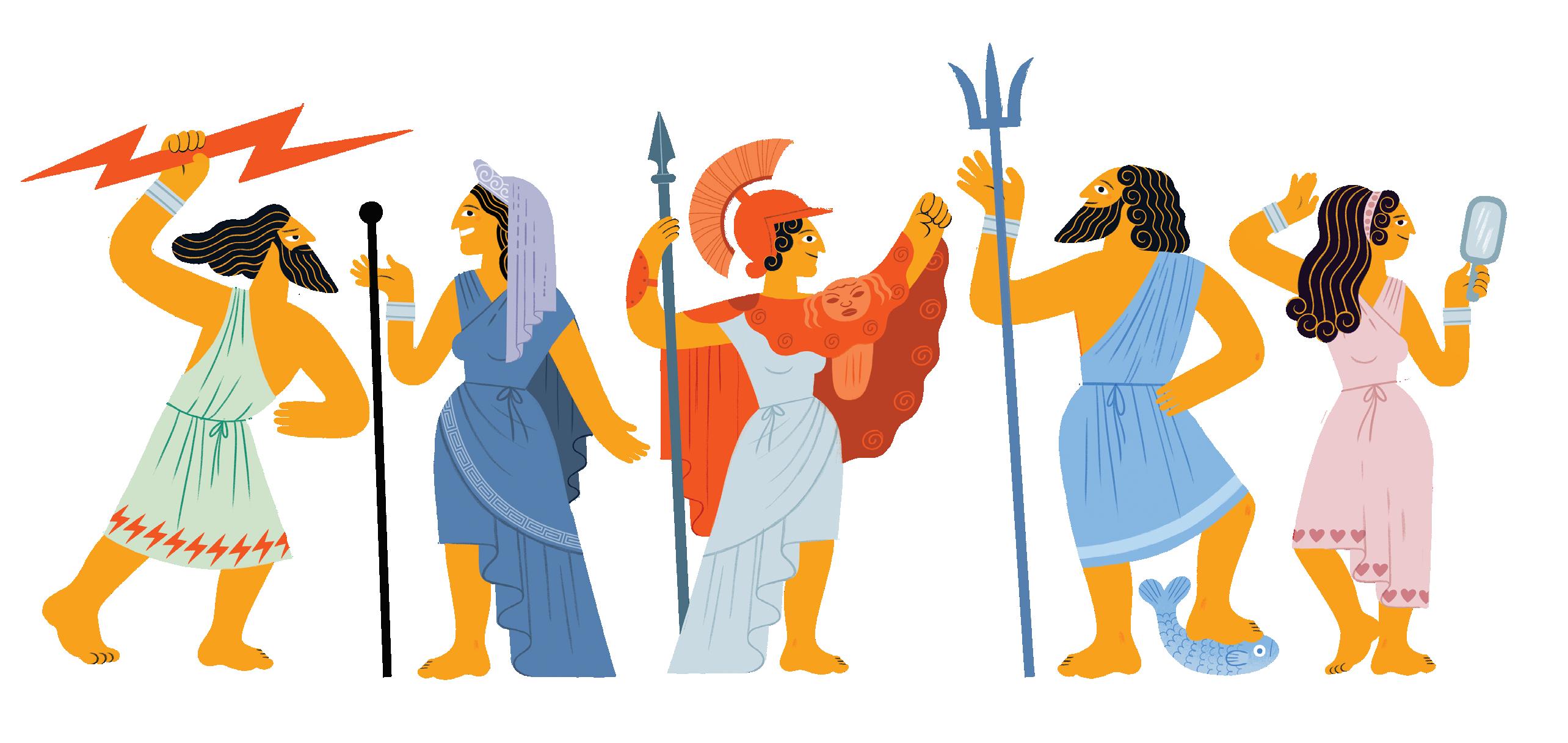
Here are some of the most important Greek gods and goddesses.
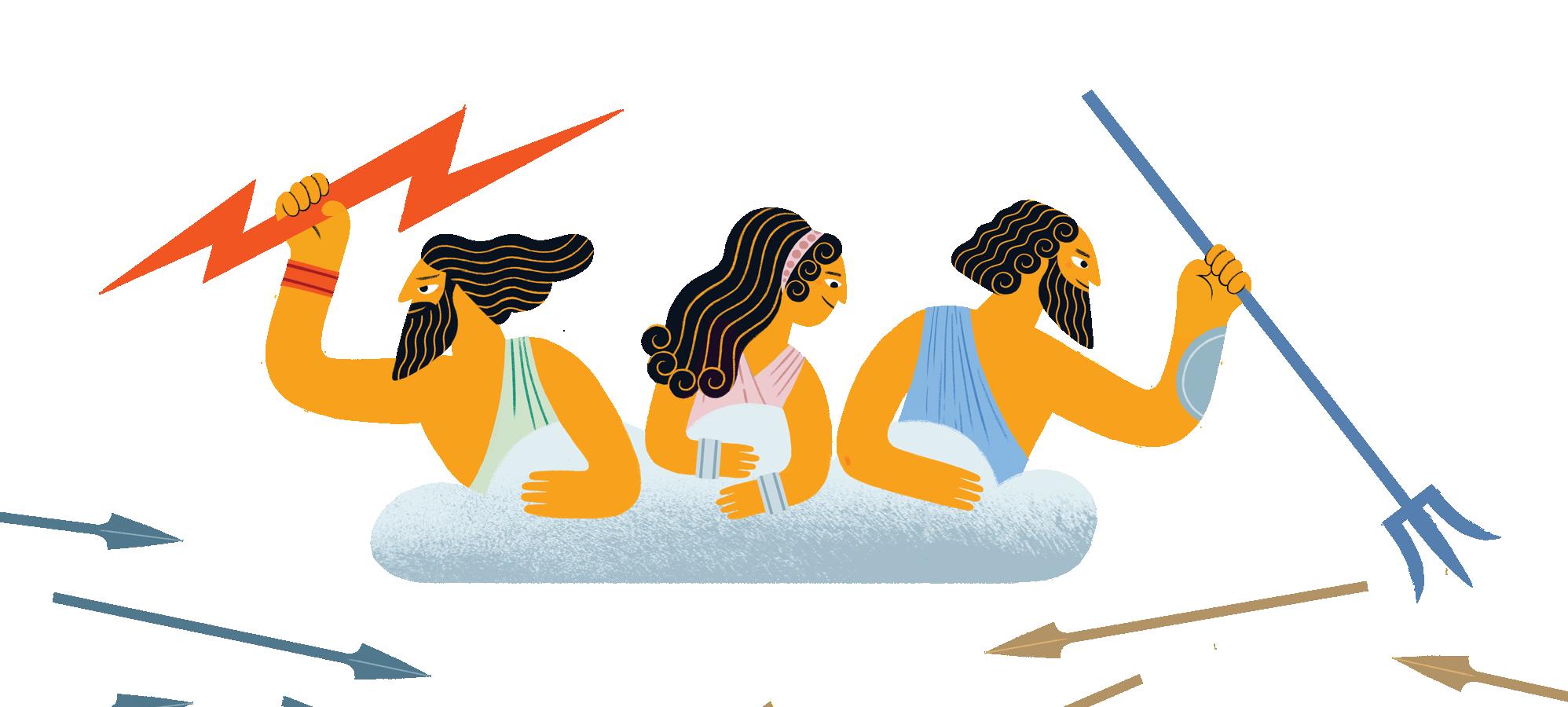
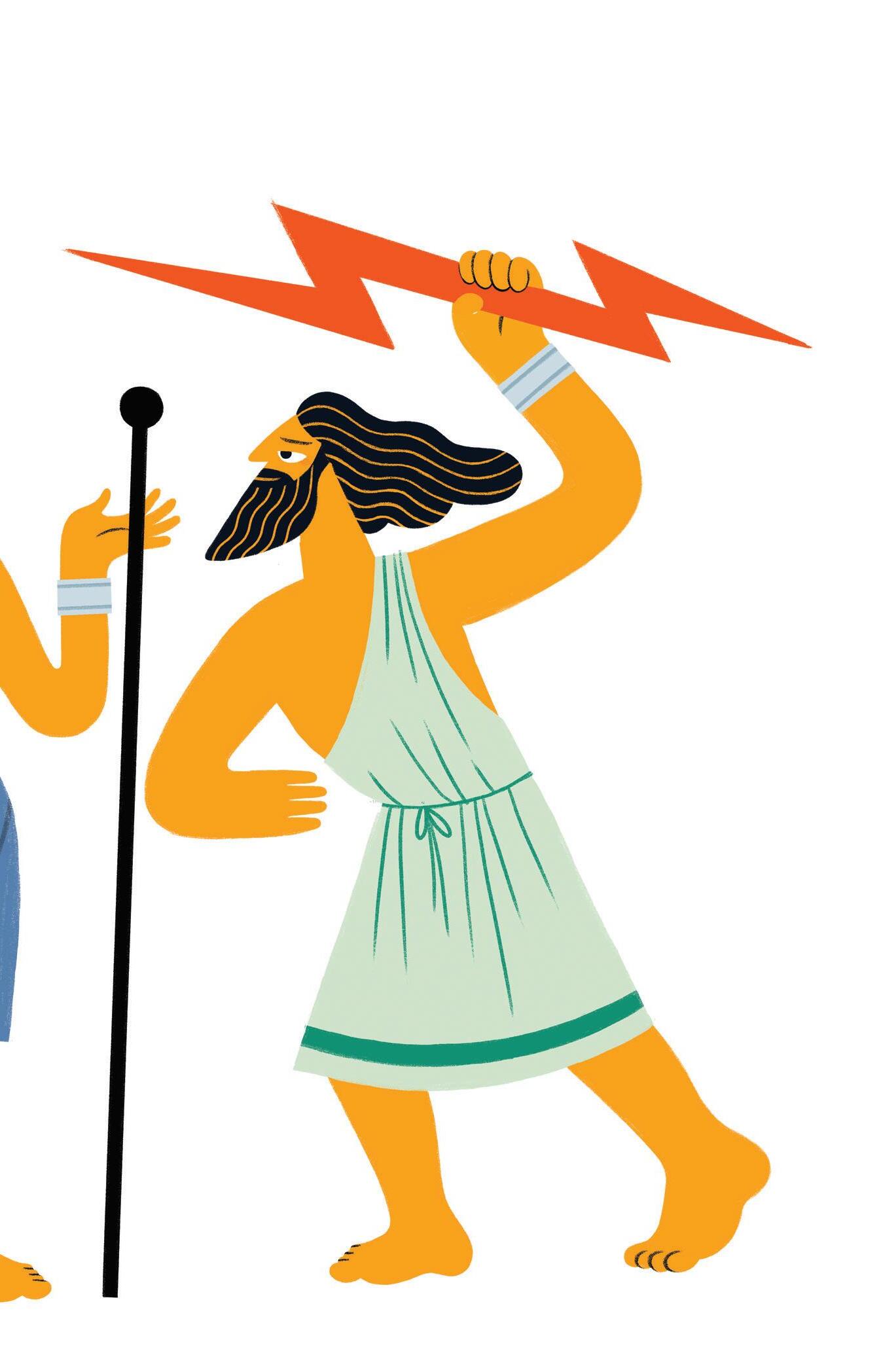
Watch me throw this thing!
I’ve been to more marriages than anyone here!
I bet you’re not as wise as me!
Watch out for my trident!
Zeus
King of the gods and god of the sky.
I’m mighty Aphrodite!
Hera Athena Poseidon Aphrodite
Wife (and sister!) of Zeus, and goddess of women, marriage and family.
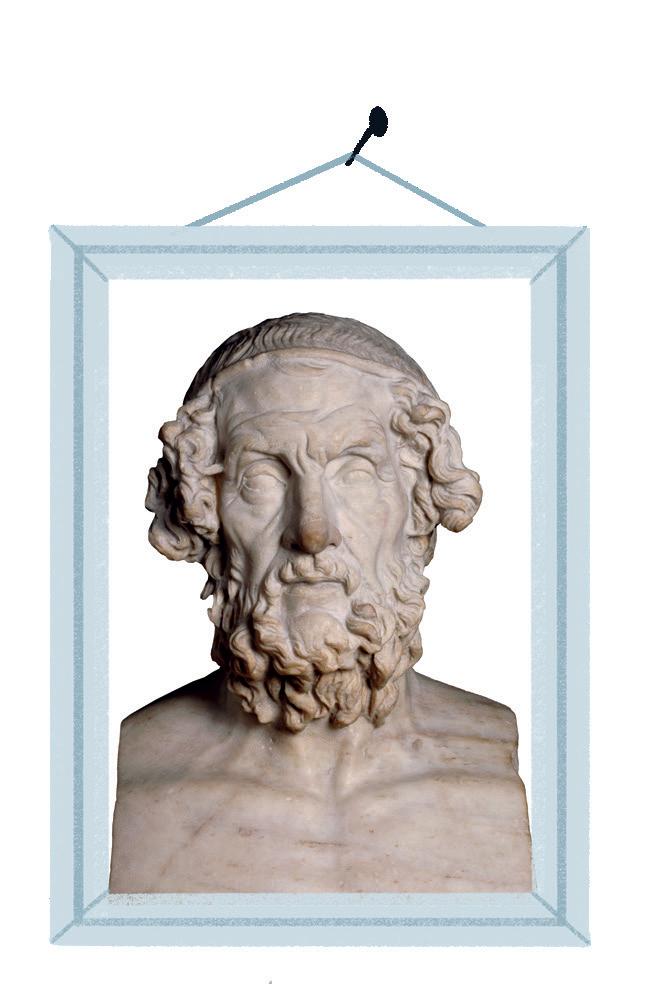
A sculpture of Homer
My stories are epic!
Daughter of Zeus, and goddess of wisdom and war.
Brother of Zeus and Hera, and god of the sea.
Telling Stories
Goddess of love and beauty, and a bit of a trouble-maker.
The ancient Greeks were brilliant storytellers. They told many stories about their gods, goddesses and fellow Greeks, which they used to explain their world and to spread important messages and lessons about life.
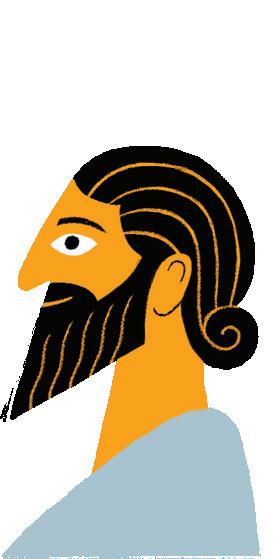
The Trojan Cycle is a collection of ancient Greek epic poems, telling the story of Troy. Two of the most famous are the Iliad and the Odyssey. The Greeks belived a poet called Homer composed them. He probably lived in the 8th or 7th century BC.
HOMER was a famous poet in ancient Greece. People believed he was blind.
EPIC means something that is both very long and that tells the story of a heroic or legendary figure from a country’s past.
Love and War
The Trojans and the Greeks had been rivals for years, but the Trojan War began because two people fell in love: Paris and Helen.
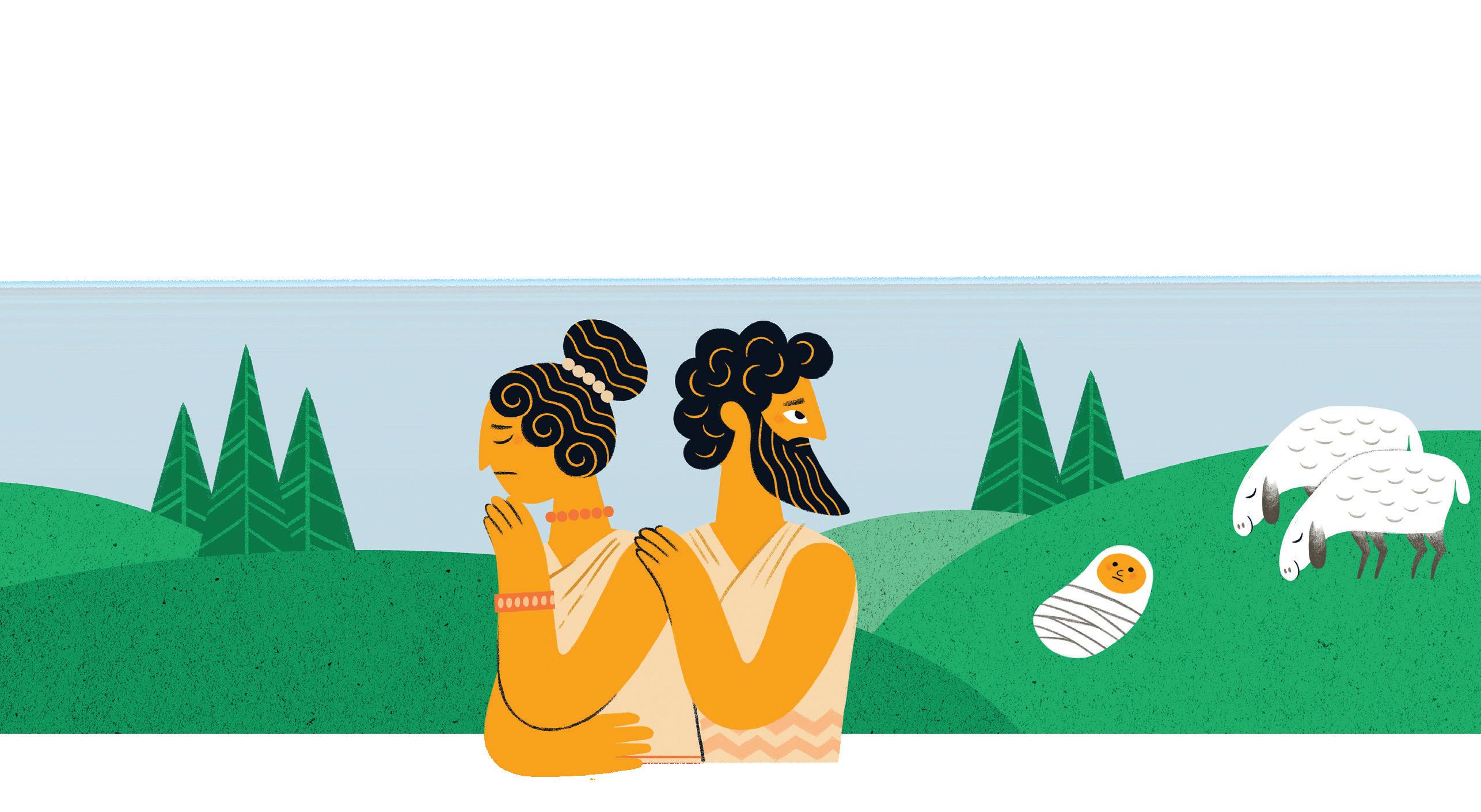
Paris was a Trojan, and the son of King Priam and Queen Hecuba of Troy. When he was born, it was predicted that he would cause the fall of Troy. So the king and queen left their baby on a hill, hoping he would die. But Paris survived and was raised by a shepherd instead.
A Dangerous Decision
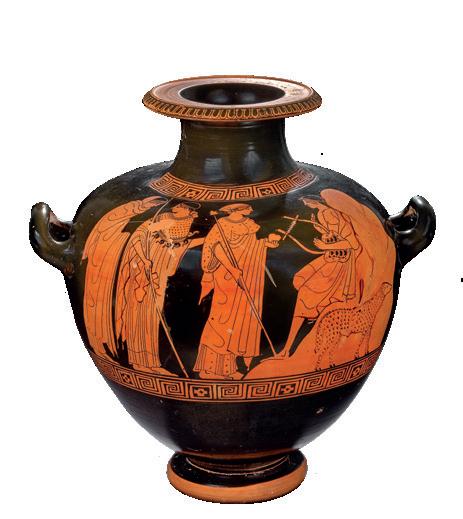
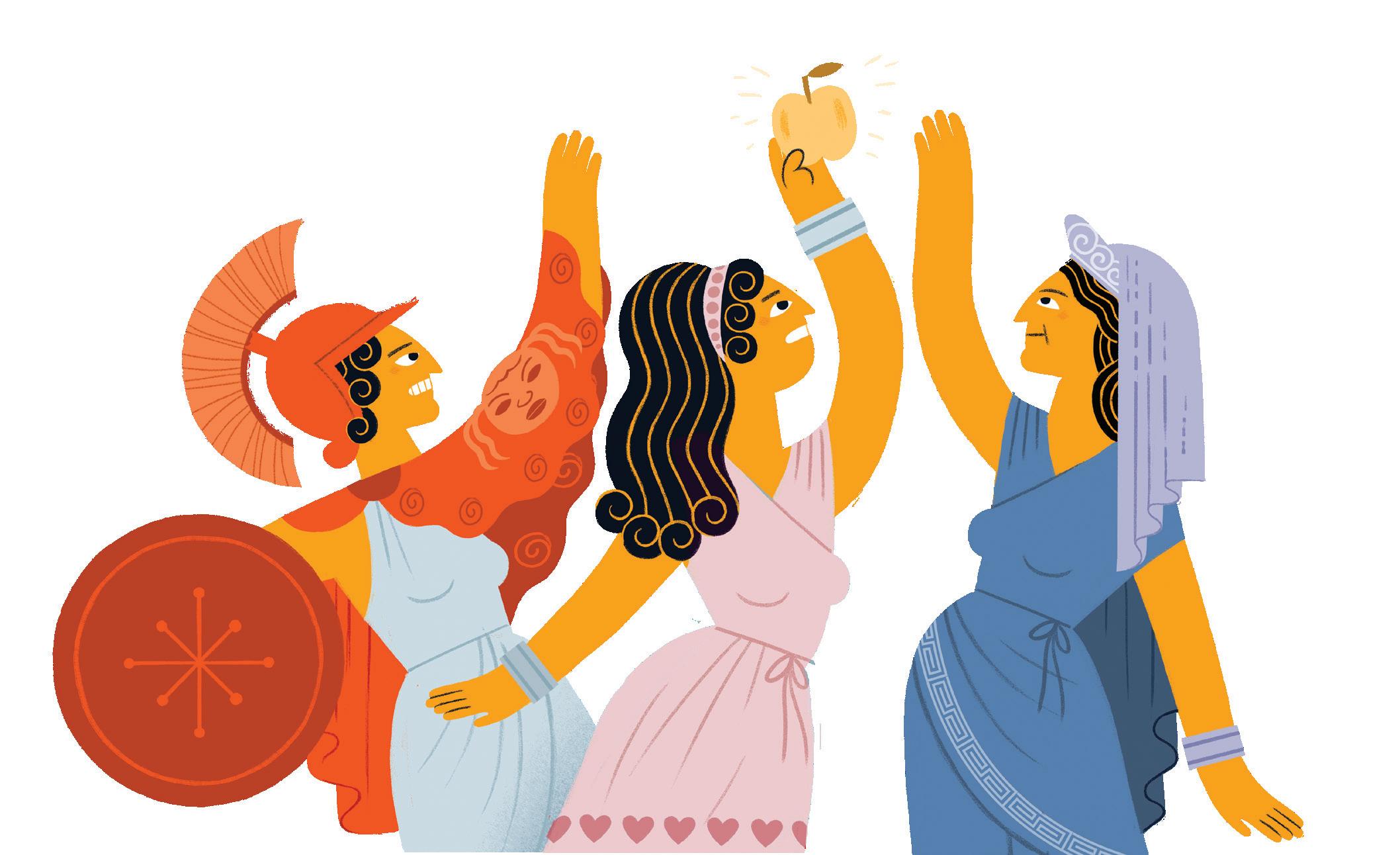
Years later, Paris was guarding his sheep when Hermes, messenger of the Greek gods, arrived with three goddesses: Hera, Athena and Aphrodite. They had come from a wedding where there had been an argument over a golden apple, which was to be given to the most beautiful goddess. Zeus, king of the gods, didn’t want to choose, so he sent Hermes to ask Paris to make the decision.
Each goddess begged Paris to choose her.
Pick me and you shall have the love of the most beautiful woman in the world!
pick me and you will win any war!
KING PRIAm
QUEEN HECUBA
BABY PARIS
pick me and you will be rich and powerful!
Athena
aphrodite
HERA
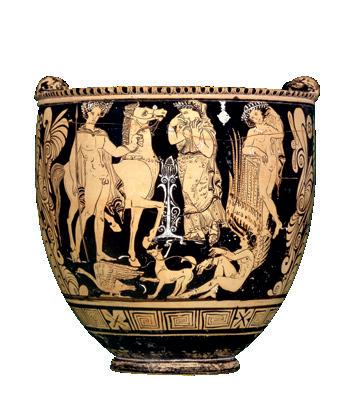
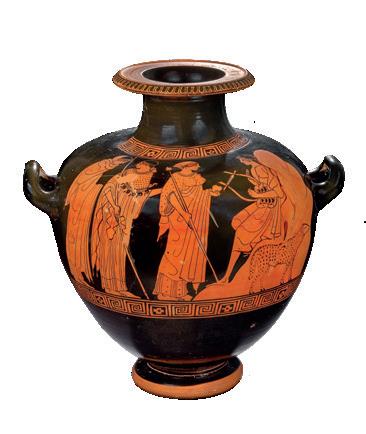
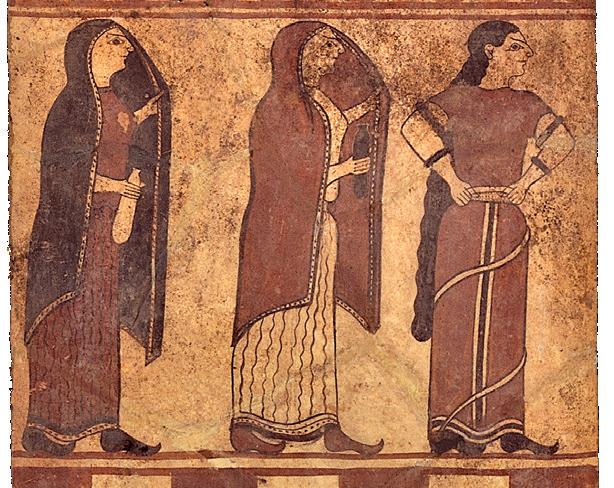
A pot decorated with the golden apple scene
Paris picked Aphrodite, who explained that the most beautiful woman was called Helen and lived in Sparta in Greece.
What she didn’t tell him was that Helen was married to Menelaus, the king of Sparta.
The Prince Returns
Not long afterwards, Paris took part in the Trojan games. When he defeated all of the other princes, they realised that he must be their brother. King Priam felt so guilty for abandoning his son as a baby that he decided it was worth risking the fall of Troy to have Paris back.
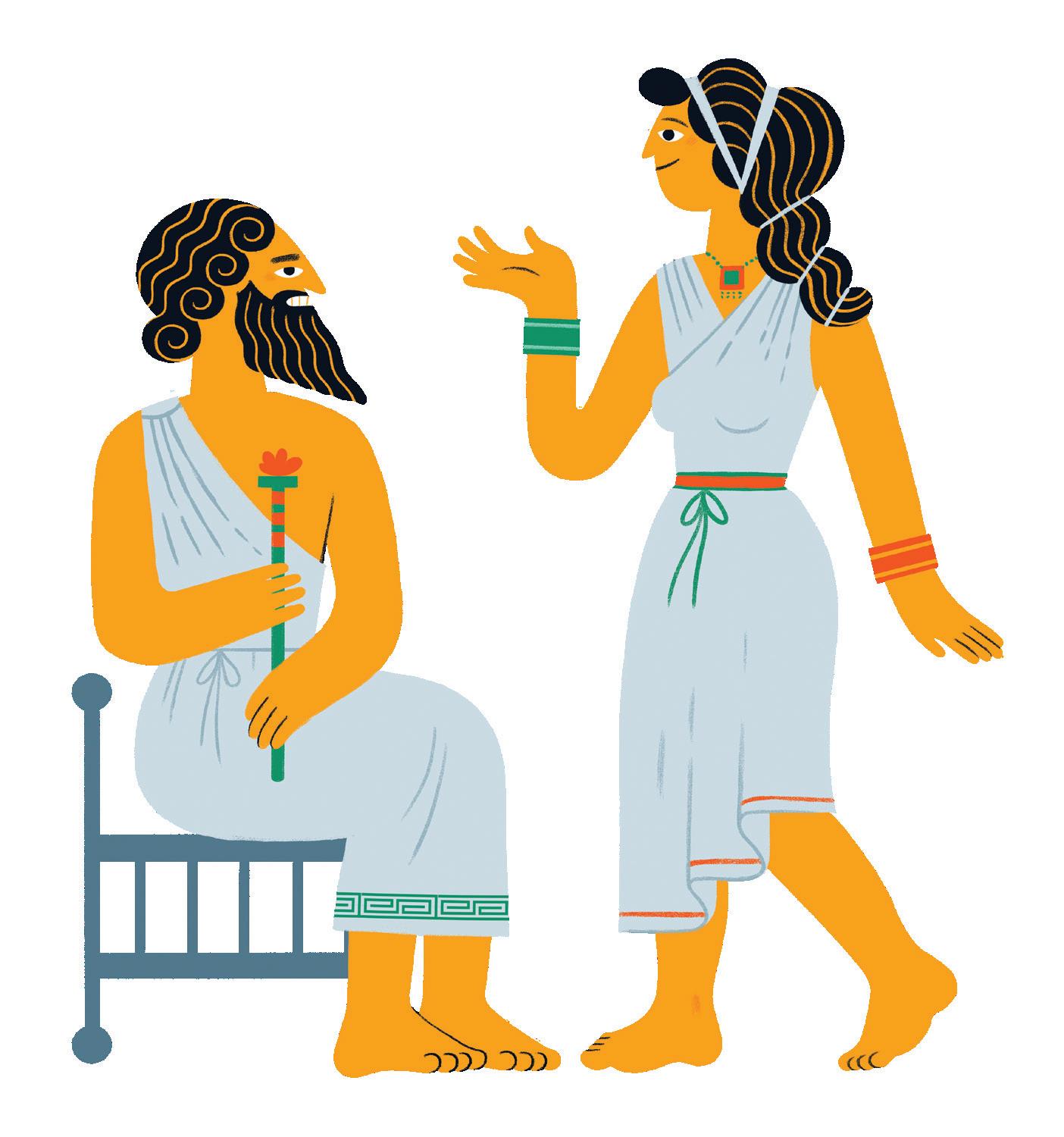
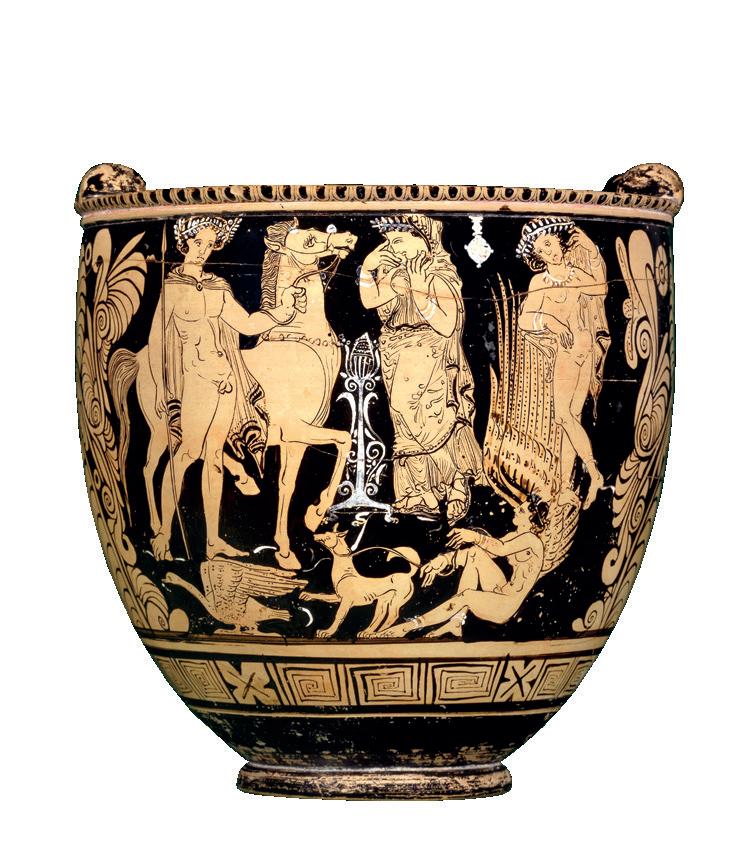
Soon after, Paris was sent with some other Trojans to Sparta, in Greece. As soon as Paris met Helen, they fell in love, just as Aphrodite had promised, and Helen agreed to run away with Paris to Troy.
HERMES was the messenger of the gods and had wings on his hat and sandals.
SPARTA was one of many Greek kingdoms or ‘citystates’. It was ruled by King Menelaus.
You're much nicer than menelaus!
You're to die for!
A pot showing Paris arriving to take Helen to Troy