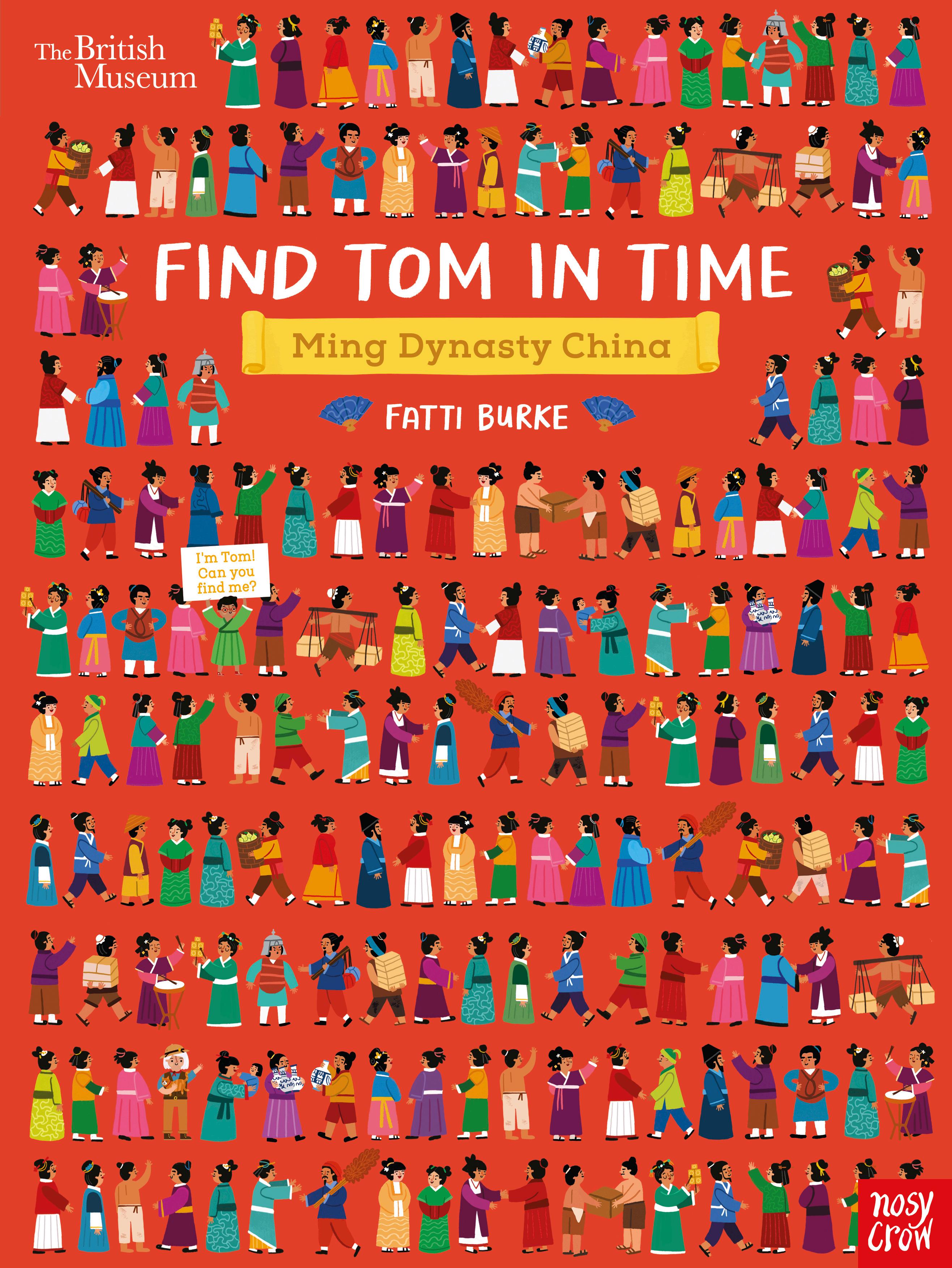


This book takes place in China, during a time called the Ming dynasty. A dynasty is when a country is ruled by a king or , and all future rulers come from that emperor’s family, until a new dynasty takes over. The Ming dynasty (1368–1644) was founded by a man called Emperor Hongwu. During this time, China became a very strong and rich country, famous for its beautiful porcelain, silk, furniture and impressive new buildings. The capital city was moved from Nanjing in the south to Beijing in the north, and the Great Wall of China was rebuilt and lengthened. Some of the places that Tom visits in this book would have been great distances apart, but they all existed during the Ming dynasty and many of them are still visited by people today.
First published 2020 by Nosy Crow Ltd
The Crow’s Nest, 14 Baden Place, Crosby Row, London SE1 1YW www.nosycrow.com
ISBN 978 1 78800 657 6
Nosy Crow and associated logos are trademarks and/or registered trademarks of Nosy Crow Ltd.
Published in collaboration with the British Museum.
Text © Nosy Crow 2020
Illustrations © Fatti Burke 2020
The right of Nosy Crow to be identified as the author and Fatti Burke to be identified as the illustrator of this work has been asserted.
All rights reserved.
This book is sold subject to the condition that it shall not, by way of trade or otherwise, be lent, hired out or otherwise circulated in any form of binding or cover other than that in which it is published. No part of this publication may be reproduced, stored in a retrieval system, or transmitted in any form or by any means (electronic, mechanical, photocopying, recording or otherwise) without the prior written permission of Nosy Crow Ltd.
A CIP catalogue record for this book is available from the British Library.
Printed in China.
Papers used by Nosy Crow are made from wood grown in sustainable forests.
1 3 5 7 9 8 6 4 2
Pages 4 - 5
Pages 6 -7
Pages 8 - 9
Pages 10 - 11
Pages 12- 13
Pages 14 - 15
Pages 16 - 17
Pages 18 - 19
Pages 20 - 21
Pages 22- 23
Pages 24 - 25
Pages 26 - 27
Pages 28 - 29
Pages 30 - 31
Pages 32- 33
Glossary Solutions Index Pages 34 - 38
Pages 38 - 39 Page 40

Tom was an ordinary boy, most of the time. He was clever and brave and he loved adventure.
Tom’s grandmother, Bea, was an ordinary grandmother, most of the time. She was clever and brave, and a little bit mischievous, and she loved adventure, too. Which was just as well, since her job was digging in the dust and the dirt to discover how people used to live. Granny Bea was an .
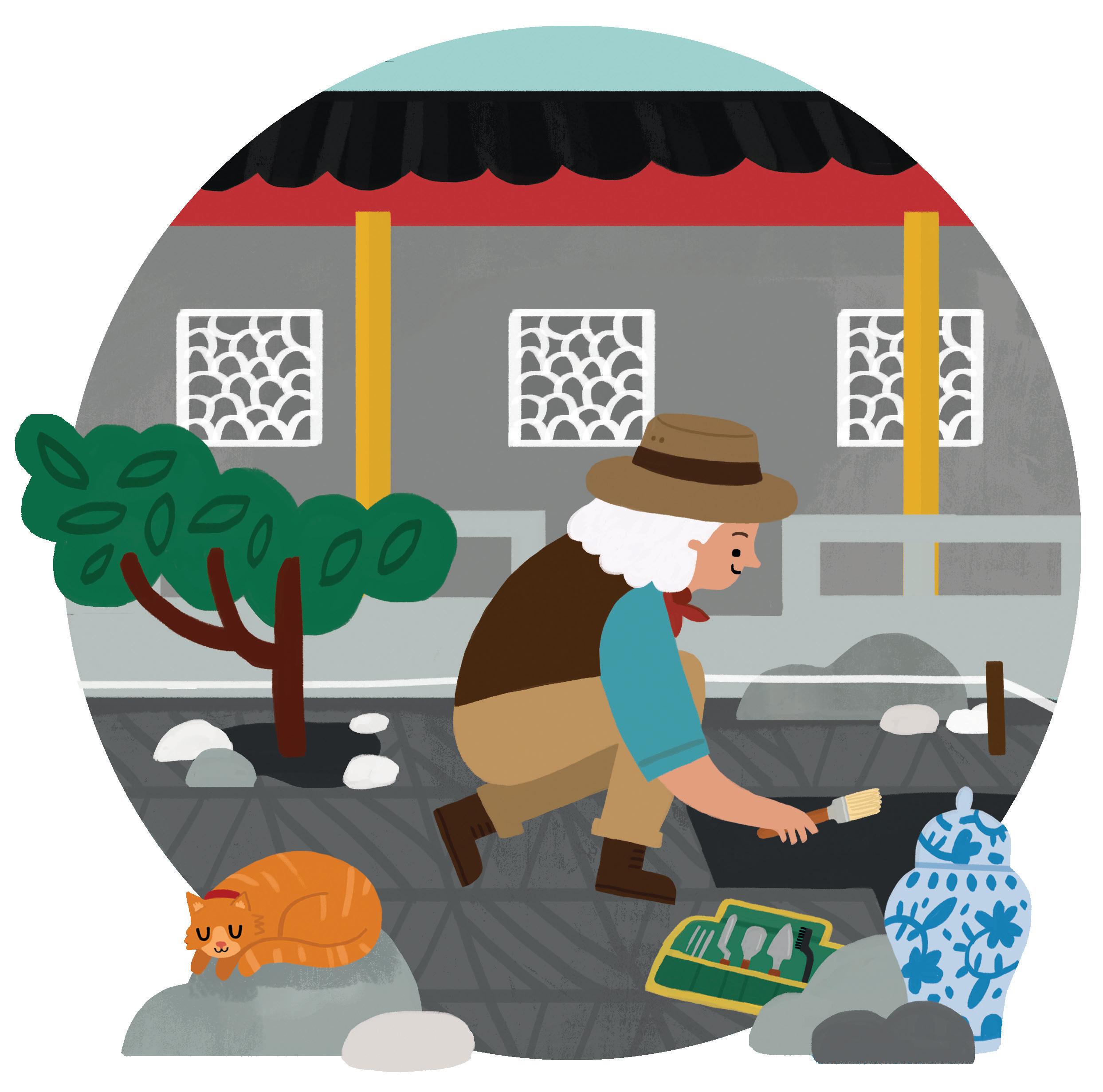
Granny Bea’s cat, Digby, did not like digging in the dust and the dirt. Or getting wet. Or missing his meals. In fact, Digby did not like adventure at all. Especially after what happened the last time Tom came to stay . . . but that’s another story.
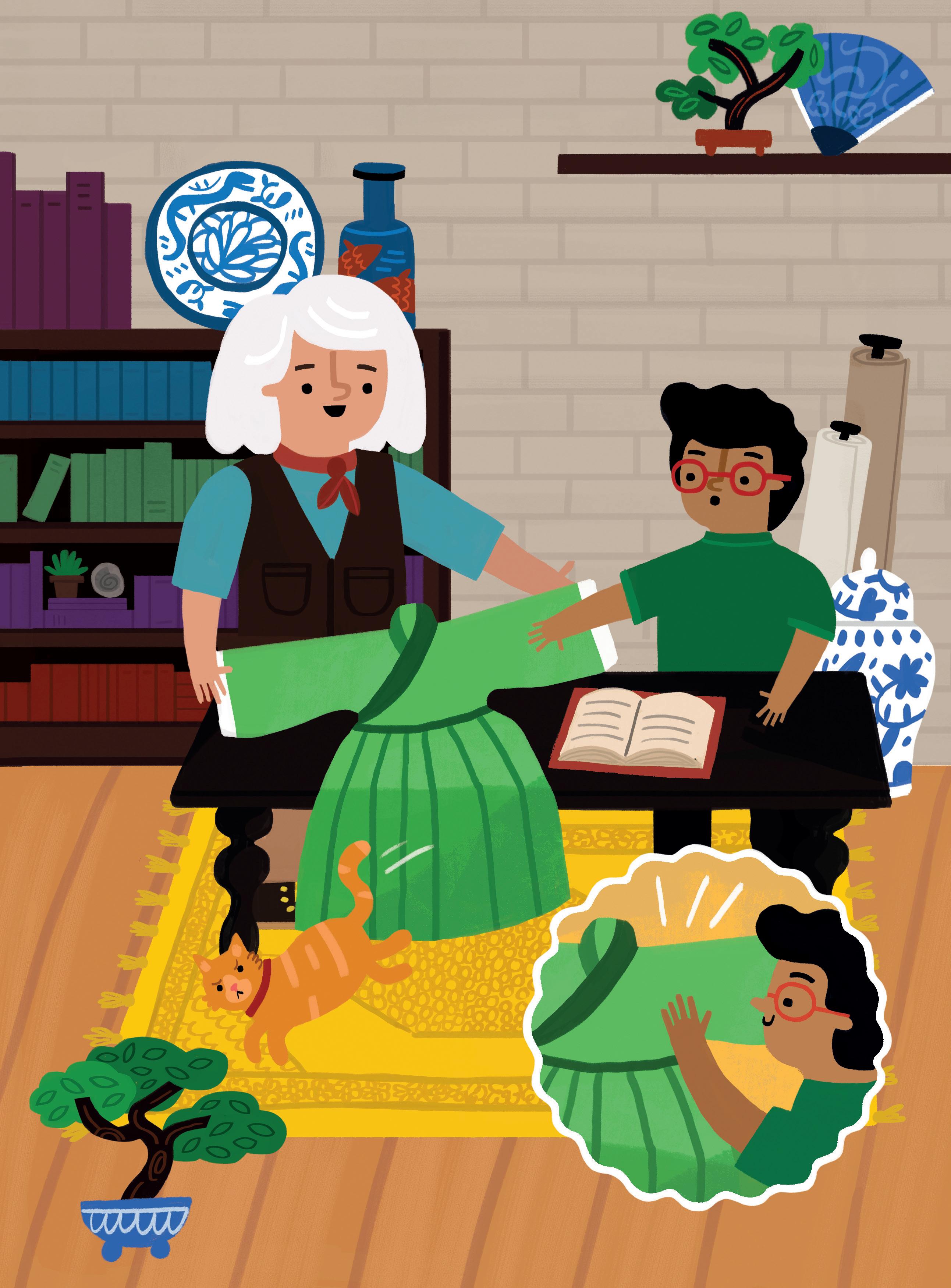
One ordinary day, Tom was at Granny Bea’s house when he spotted Digby curled up on top of a beautiful green gown.
“Is that your new dressing gown, Granny Bea?” Tom asked.
“This,” said Granny Bea, “is not a dressing gown. It’s a young man’s outfit from the Ming dynasty in China. It’s around 500 years old.”
“Wow!” said Tom.
“Why don’t you try it on?” said Granny Bea, with a familiar twinkle in her eye.
was in Ming dynasty China!
All around him, there were workers with wheelbarrows carrying bricks and slabs of stone. They were building a long wall.
Tom looked around for Granny Bea, but she was nowhere to be found. Just then, he spotted Digby racing away!
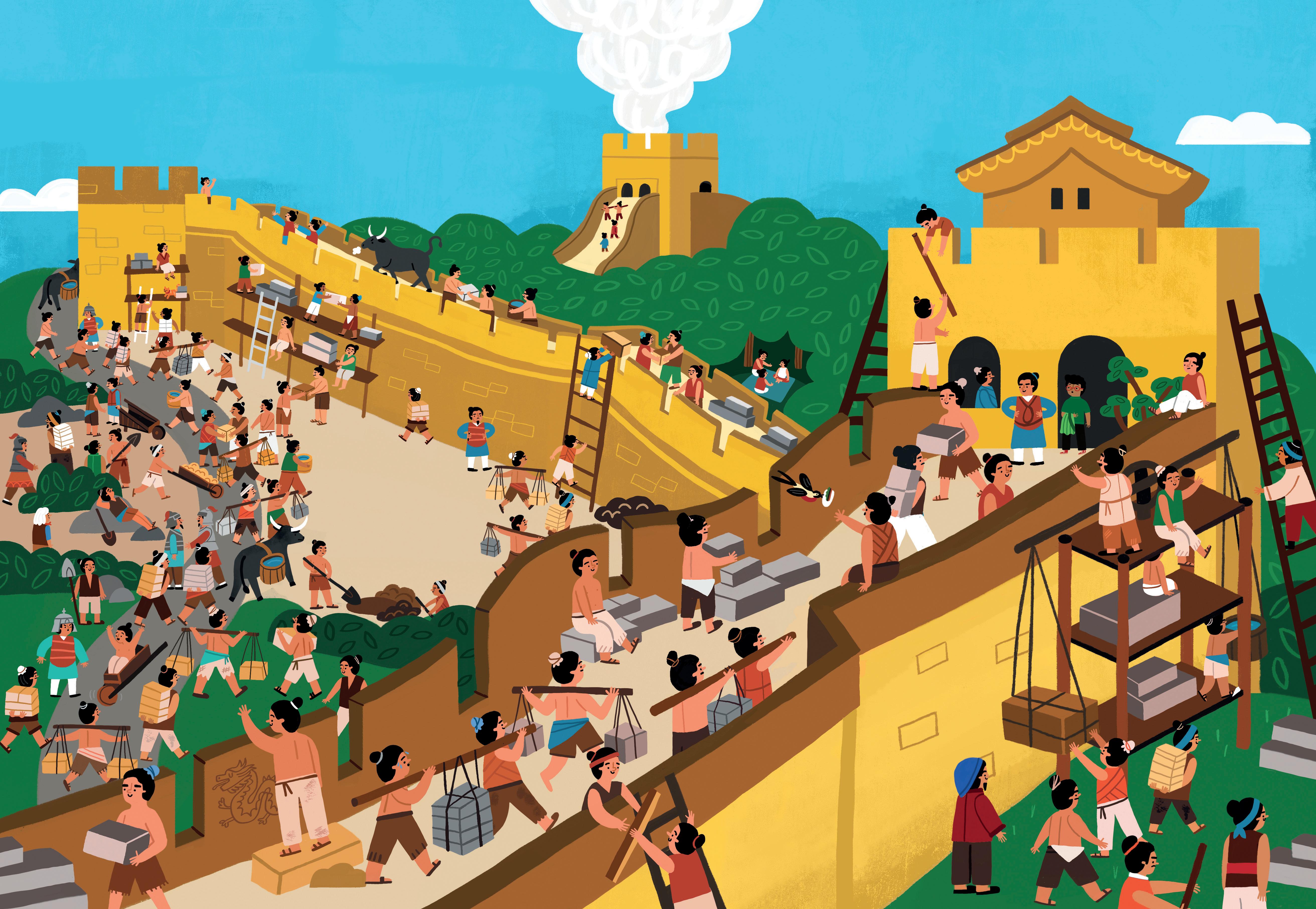
The Great Wall of China was an incredibly long wall that was built to protect China from invaders. It took more than 2,000 years to build and hundreds of thousands of labourers, soldiers and prisoners helped to build it. Around 400,000 people died during its construction.
• A builder who has fallen asleep
• Tom
• A misbehaving ox
• Digby the cat
• Someone having a ride in a wheelbarrow
• A bird stealing someone’s lunch
• A person waving from a signal tower
The Great Wall had signal towers, which were used to send smoke signals. A fire was lit on the tower and if it was very big, that meant there was a large enemy army approaching. The lower levels had rooms for soldiers, stables and storage.
During the Ming dynasty, the wall was made stronger with bricks, stone and a special made from rice and lime. It was also extended and divided into nine zones, each of which was protected and maintained by soldiers living in
If any enemies tried to attack, soldiers living and working along the Great Wall would fight back with bows and arrows or .
Tom ran after Digby until he reached a busy market. Everyone around him was wearing silk gowns like the one Granny Bea had given him.
Tom didn’t want to stand out, so he quickly pulled on his gown and pushed his way through the crowds. Where had that naughty cat got to?
Some people sold street food at the market. They waved special hand-held drums with pellets attached to attract customers. Most sold simple food such as noodles or rice with tofu and vegetables, or sometimes a little meat.
People bought and sold all kinds of things at the market, including fruit and vegetables, meat, tea, rice, spices, silk and . Farmers also travelled from the countryside to buy and sell animals.
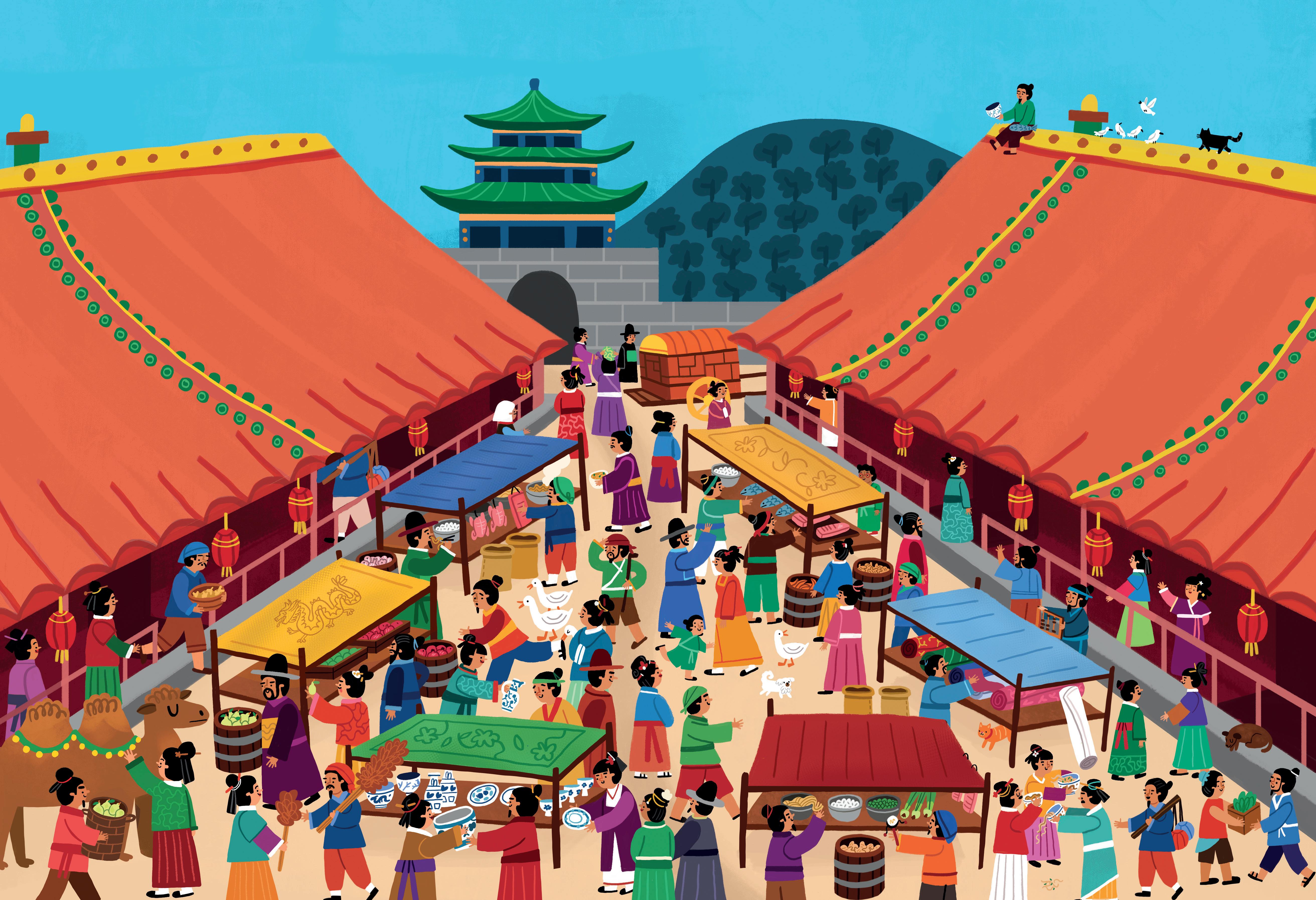
• Tom
• Someone using an abacus
• A woman carrying a melon on her head
• A child chasing a dog
• Digby the cat
• A food seller playing a pellet-drum
• Someone who has dropped their noodles
Some of the goods sold at the market were transported from other areas of China on camels in caravans along the , which was actually made up of many different roads running across Central Asia from Northwest China.
During the Ming dynasty, people paid in coins and paper money. For bigger purchases, they might have used silver. To work out payments, people used an , which was a kind of very early calculator with wooden beads on thin wooden rails.
Tom found himself surrounded by people in bright silk robes, waiting in front of an enormous red gate. A door in the gate opened and Tom spotted a flash of orange. Digby!
Tom followed the people through the door and gasped at the gardens and buildings inside.
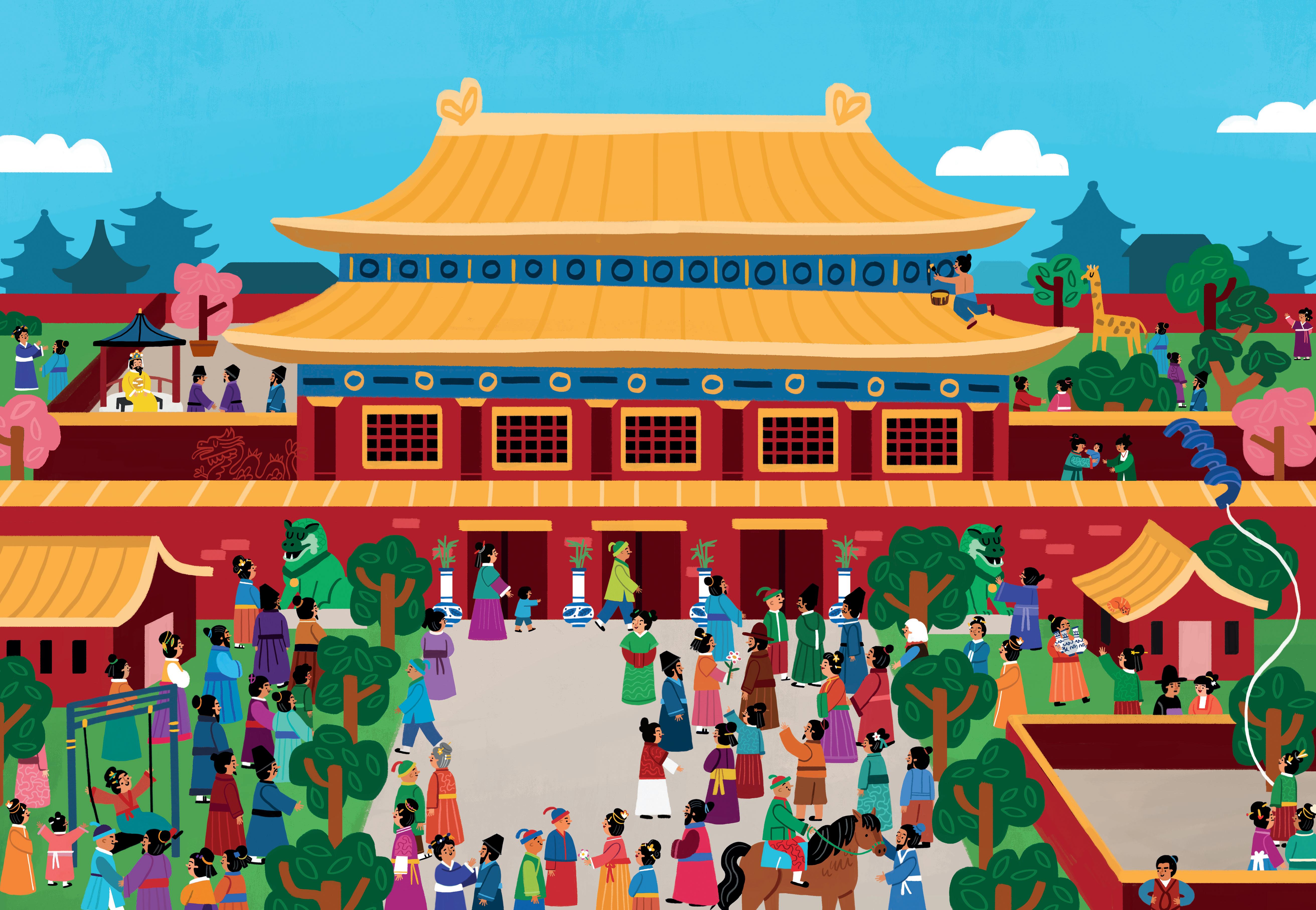
The was built during the rule of the third Ming dynasty emperor, known as the . It took more than a million workers 14 years to build.
Most of the buildings were painted red to symbolise power and happiness, and the roofs were made of yellow tiles, which symbolised earth and new life. Walls, pillars and furniture were decorated with dragons as a sign of the emperor’s strength.
• Digby the cat
• A man on a horse
• A woman on a swing
• A giraffe
• Tom
• A worker painting the roof
• A woman flying a kite
The emperor and his family went to worship at the Temple of Heaven, which was not far from the Forbidden City. People believed in three religions: , which taught people to show respect; , which taught people to live in harmony with nature; and , which taught people to give up all earthly desires.
Inside the Forbidden City, there were 980 buildings, including a zoo for exotic animals, while the courtyards could hold up to 100,000 people.
No one could go into the Forbidden City without permission, but it was usually filled with the emperor’s family, friends, soldiers and servants.