To Mum & Dad; your love of nature is always inspiring.
A.W. E.J.
To Felix and Minkie who love the Great Outdoors as much as I do.
F irst published 2019 by Nosy Crow Ltd.
The Crow’s Nest, 14 Baden Place, Crosby Row London SE1 1YW www.nosycrow.com
ISBN 978 1 78800 482 4
‘The National Trust’ and the oak leaf logo are registered trademarks of The National Trust (Enterprises) Limited (a subsidiary of The National Trust for Places of Historic Interest or Natural Beauty, Registered Charity Number 205846)
Nosy Crow and associated logos are trademarks and/or registered trademarks of Nosy Crow Ltd.
Text © Anna Wilson 2018, 2019
Illustrations © Elly Jahnz 2018, 2019
The right of Anna Wilson to be identif ied as the author and Elly Jahnz to be identif ied as the illustrator of this work has been asserted.
All rights reserved
This book is sold subject to the condition that it shall not, by way of trade or otherwise, be lent, hired out or otherwise circulated in any form of binding or cover other than that in which it is published. No part of this publication may be reproduced, stored in a retrieval system, or transmitted in any form or by any means (electronic, mechanical, photocopying, recording or otherwise) without the prior written permission of Nosy Crow Ltd.
A CIP catalogue record for this book is available from the British Library.
Printed in China
Papers used by Nosy Crow are made from wood grown in sustainable forests.
1 3 5 7 9 8 6 4 2
Nature
A Children’s Alm a n a c
Anna Wilson Elly Jahnz
The first almanacs were created about 3,000 years ago! They were written by the ancient Egyptians who used a kind of paper made from reeds known as papyrus. The writers listed all the dates that were thought to be lucky or unlucky, and made predictions about the weather. Farmers used these almanacs to help them know when to plant seeds and when to harvest crops.
Nowadays you can also find almanacs (like this one!) which have fun facts about each month – things to do indoors and outdoors, animals to spot, festivals to celebrate and seasonal food to grow, cook and eat. They also contain information about the weather, the night sky and all sorts of other amazing facts.
This book contains activities which involve things like knives, saws, hammers and nails and hot ovens. There are also a lot of fun things to do outside which involve fire and very cold water! All the activities are safe if you are sensible, follow safety guidelines and take a grown-up along to look out for you.
January
February
March
April
May
June
July
August
September
October
November
December
Calendar
Notes
Glossary
6-19 20-33 34-47 48-61 62-75 76-89 90-103 104-117 118-131 132-145 146-159 160-173 174-179 180-185 186-189 190-192
1st New Year’s Day/First Footing
5th Twelfth Night/Wassailing
6th Epiphany
13th Lohri (Punjabi midwinter festival)
25th Chinese New Year/Burns Night
125 years ago . . .
On 12 January 1895, the National Trust was set up by Octavia Hill, Sir Robert Hunter and Canon Hardwicke Rawnsley. These people thought it was important that Britain took care of its historic buildings and places of natural beauty, opening them for everyone to enjoy.
200 years ago . . .
On 17 January 1820, the writer Anne Brontë was born. She lived in Yorkshire and was famous for writing a book called The Tenant of Wildfell Hall. Her two sisters, Charlotte and Emily, were also writers.
People often talk about January as though it is the worst of all the months.
“The sky is so grey!”
“It’s so cold!”
“The days are so short!”
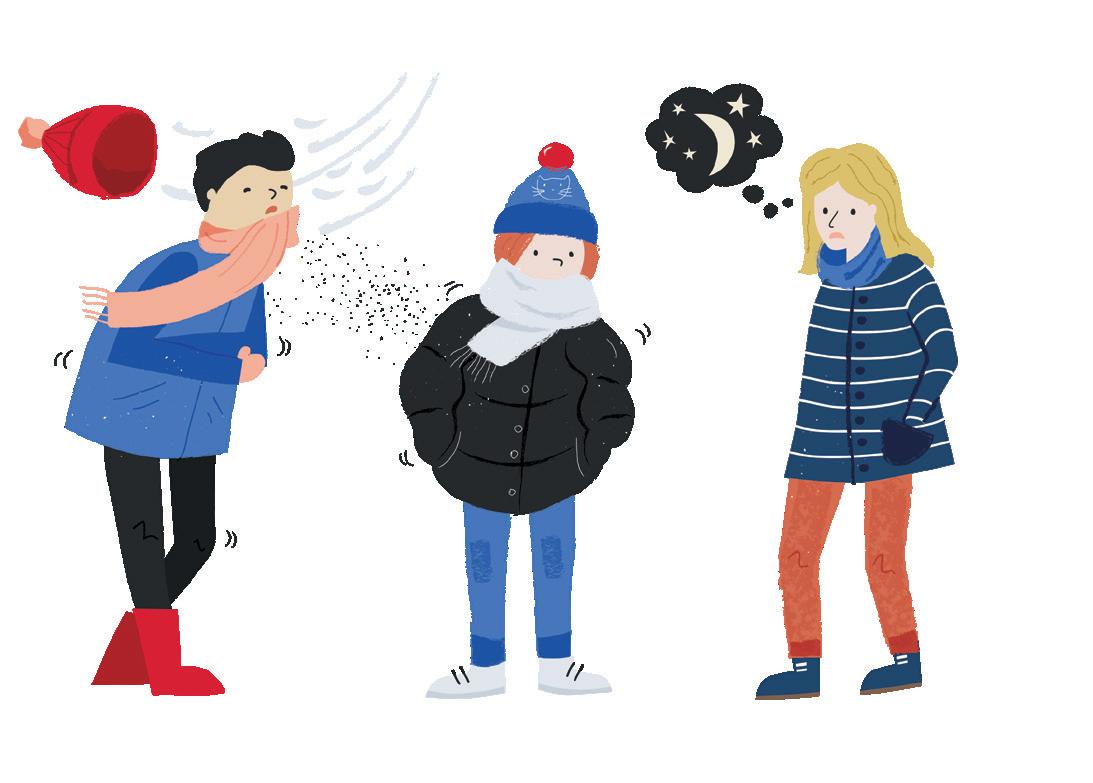
It’s true that we don’t see much daylight at this time of year. But wherever you live, you’ll be able to find lots of things to get excited about in January. Yes, it’s cold outside, but if you wrap up warm you can still enjoy walks and games and activities in the garden or park – or even by the sea. There are also some wonderful festivals in January which celebrate looking forward with hope to the year to come. So January’s not that bad after all!
Why is January Called January?
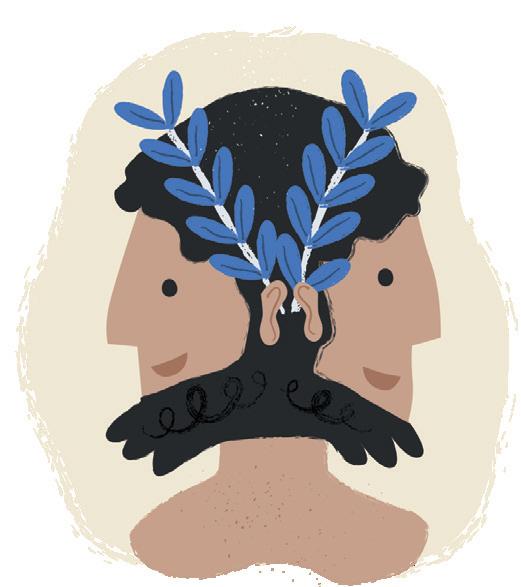
The calendar we use today was invented by the Romans. January was named after the Roman god Janus who was the god of gates and doorways. He was always drawn with two faces looking in opposite directions – one face looked back at the year that had passed, and the other looked forwards into the new year.
The Anglo-Saxons called January Wulfmonath because it was the month when hungry wolves prowled around, looking for food.
New Year’s Resolutions
On 31st December we often talk about ‘making resolutions’ for the new year. Why do we do this?
The tradition of making resolutions started with the Romans, too. Because the January god, Janus, was looking backwards and forwards at the same time, he became a symbol for the Romans of forgetting what had happened in the past and moving on into the future. January therefore became known as a month in which to forgive people and be kind.
Nowadays people seem to worry more about getting fit and not eating chocolate – maybe we should be more like the Romans and make resolutions to be kinder instead?
Here are some ideas for resolutions that you might manage to keep . . .
• Look out for someone at school who needs a friend.
• Have a cake sale or organise a sponsored silence or a sponsored walk for charity.
• Clear out your old toys and clothes and take them to a charity shop. (Check with an adult before you give these things away!)
• Help out around the house and/or garden, if you have one.
The colourful festivals of light such as Christmas, Hanukkah and Diwali might be over, but January has its fair share of celebrations to look forward to.
5th January Twelfth Night
For Christians, Twelfth Night used to be the day when Christmas was celebrated. In some countries, 6th January is still the day on which children get their presents. It is also known as Epiphany, St Nicholas’s Day and the Feast of the Three Kings.
5th January Wassailing
Wassailing is a pagan tradition. The word wassail comes from the AngloSaxon words waes hael which mean ‘good health’. The festival looks forward to what people hope for in the new year to come: good weather, good health and a good harvest.
Wassailing involves going out into the countryside to bless the apple trees. The wassail king and queen lead everyone in a sing-song around the tree to encourage it to produce lots of apples.
13th January Lohri
Hindus and Sikhs all over the world celebrate
Lohri. During Lohri, songs are sung to the sun god, Surya, thanking him for his warmth and praying for his return after the cold weather.
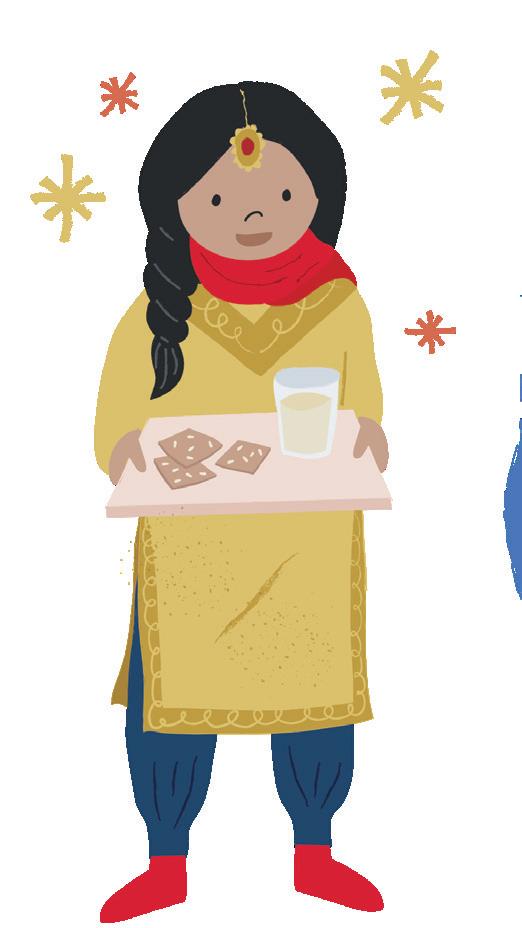
People drink gurh – a delicious sugary drink made from sugarcane. Gajak is also eaten – a thin, dry sweet made from roasted sesame seeds cooked in sugar syrup and spices. Children go from house to house singing folk songs and are given sweets. In the evening, a bonfire is lit and people gather together to dance.
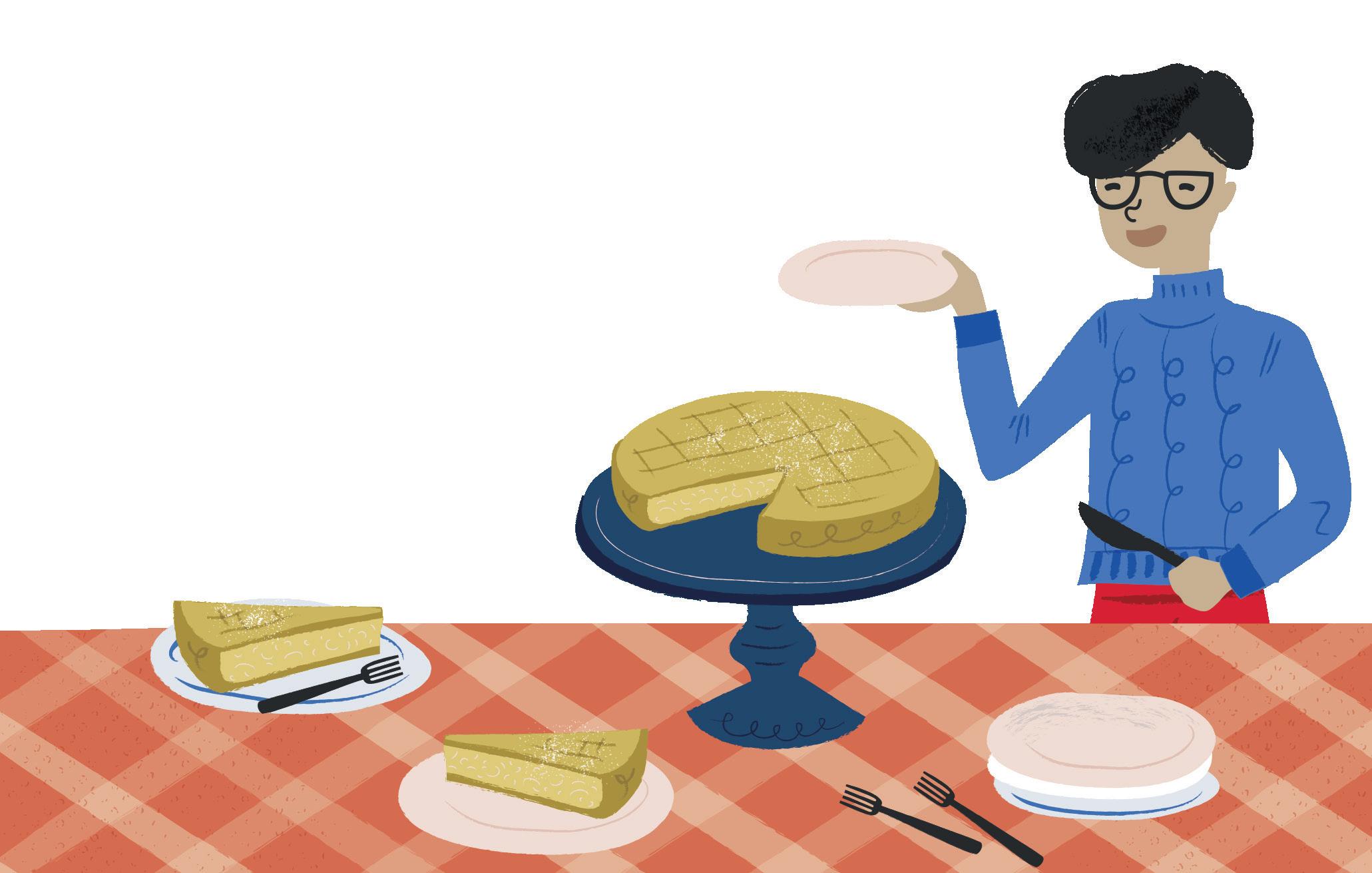
Recipe for Twelfth Night Cake
Whoever finds the bean hidden in the cake is king or queen for the evening. If you have saved a paper crown from your Christmas crackers, the king or queen can wear it!
You will need:
Large bowl
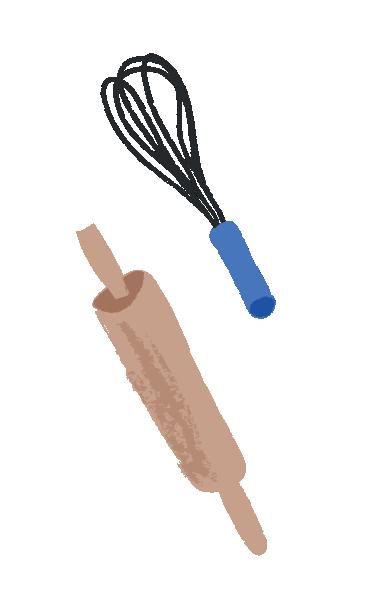
Electric whisk
Rolling pin
23 cm cake tin
Baking sheet
Greaseproof paper
Blunt knife
Wire rack
100 g butter, softened
100 g caster sugar
2 eggs (one whole, one yolk only)
100 g ground almonds
500 g puff pastry (you can buy this ready-made)
1 dried bean
To decorate: another egg, beaten, icing
Preheat the oven to 200°C/180°C fan/Gas Mark 6. Mix the butter and sugar together with the electric whisk until it becomes pale and fluffy.
Beat in the eggs and then add the ground almonds.
Roll out half of the pastry until it is 3 mm thick.
Be careful not to choke on the dried bean!
Put the cake tin on top of the rolled-out pastry and cut around it with a blunt knife. Do the same with the other half.
Put the first circle on a baking sheet lined with greaseproof paper. Spread it with the almond filling and put the dried bean in somewhere, then put the second circle on the top.
Brush the top with beaten egg and use the knife to make a light criss-cross pattern.
Bake for 30 minutes. Take out and cool on the wire rack before dusting with icing sugar.