Review Date Revision Revisions
February 2025 2.0
• Included Section 3.5
• Generally revised document for external audiences (removed detailed internal processes and nomenclature)
• Generally revised document to remain inclusive of full service territory
• Updated the communication strategy to include email and text notifications
July 2026 3.0
• Removed Stage 0 to reflect actions taken during PSPS events
• Revised Communication Strategy to include direct communications during Phase 1.3 “PSPS Warning”
• Revised roles and responsibilities of PSPS Awareness Team and Incident Command Team
AAR — After Action Review
ADMS — Advanced Distribution Management System
AM — Asset Management
CC — Customer Care
CRC – Community Resource Center
CSR — Customer Service Representative
CRI — Composite Risk Index
DOC — Distribution Operations Control
ETR — Estimated Time of Restoration
NCC — NorthWestern Control Center (Grid Operations)
IC — Incident Command
IVR — Interactive Voice Response
MPSC — Montana Public Service Commission
NOAA — National Oceanic and Atmospheric Administration
NWE — NorthWestern Energy
NWS — National Weather Service
PSPS — Public Safety Power Shutoff
SA — Situational Awareness
SME — Subject Matter Expert
SFDI — Severe Fire Danger Index
WFRI — Wildfire Risk Index
WMP — Wildfire Mitigation Plan
As part of its continued commitment to delivering safe and reliable energy to meet the needs of customers and communities, NorthWestern Energy (NorthWestern) has developed a Wildfire Mitigation Plan (WMP). The fundamental goal of the WMP is to reduce overall wildfire risk associated with the company’s electric transmission and distribution systems through targeted programs that increase system resiliency. Due to the operation of electrical infrastructure, amid increasingly difficult environmental circumstances and a growing population living in wildfire-prone areas, many utilities, including NorthWestern, are seeking new tools and techniques that go beyond historical best practices and traditional protective devices to help manage this risk. One increasingly common method for mitigating these risks is to implement proactive power outages known as Public Safety Power Shutoffs (PSPS). This strategy involves deenergizing electrical infrastructure in specific areas, during periods of time when the risks of continuing to operate electrical infrastructure are unacceptably high, based on the utility’s judgment and relevant environmental and operational data.
The feasibility of this approach has increased in recent years due to improvements in the accuracy and granularity of environmental models and data as well as the flexibility of modern electrical infrastructure. Recognizing the value of this strategy and the increasingly challenging environmental conditions within its service territory, NorthWestern Energy elected to develop its own procedures for implementing a PSPS as a tool for addressing environmental conditions that threaten the health and safety of communities, customers, and natural resources. This document, the Public Safety Power Shutoff Plan (Plan), provides the basis for NorthWestern Energy’s strategy for conducting a Public Safety Power Shutoff.
In the development of its PSPS implementation strategy, NorthWestern conducted a review of strategies employed by other utilities who face similarly challenging environmental conditions and structures present in the Wildland-Urban Interface. This review provided a detailed understanding of industry practices, while also highlighting the significant value provided by NorthWestern Energy’s long-standing commitment to safe and reliable service. For example, NorthWestern Energy’s system infrastructure and wildfire risk programs (which formally began in 2011), continue to support investments in equipment and vegetation management practices – drastically increasing the reliability, resiliency, and flexibility of NorthWestern Energy’s electrical systems. These deliberate investments have provided NorthWestern Energy with a strategic head start in addressing the present-day wildfire risks facing many utilities. Furthermore, the review of utility industry practices also clearly demonstrated the unique nature of NorthWestern Energy’s operating area, stakeholders, and customer base. In comparison to many of its peer utilities, NorthWestern Energy serves a relatively small number of customers across a geographically-diverse and large service territory –presenting NorthWestern with many challenges not faced to the same degree by its peer utilities. Examples of such challenges include: the need to monitor and maintain an expansive electrical system, the corresponding diversity of environmental conditions facing the system, and customer dependency on private water systems and wells. However, NorthWestern Energy’s unique operating environment has also provided the utility with opportunities including the ability to cultivate meaningful connections within the communities it serves and operates. These connections allow NorthWestern to more effectively consider and address the needs of its customers and stakeholders – a particularly useful asset during critical periods such as the implementation of PSPS events. In short, this review of peer utility PSPS strategies (and the resulting observations) ultimately reinforced NorthWestern’s decision to develop its own approach and highlighted many opportunities to tailor the PSPS strategy to its distinct operating area, stakeholders, and customer base.
During its review of existing strategies and approaches, NorthWestern also recognized that robust PSPS implementation strategies include a comprehensive approach for monitoring and responding to environmental conditions. As such, in the development of its WMP, NorthWestern established a Situational Awareness Team tasked with quantifying environmental risks. The insights and techniques developed by this team provide NorthWestern with the opportunity to develop and refine its approach for measuring and reacting to environmental risks – a key component of a PSPS strategy.
In addition to supporting PSPS decision-making, the Situational Awareness Team continuously monitors wildfire risk conditions and employs a variety of operational mitigation measures intended to reduce wildfire risk before a PSPS event becomes necessary. These measures include enhanced situational awareness practices, operational controls, and protective technologies such as Enhanced Powerline Safety Settings (EPSS), which are designed to reduce the likelihood that electrical infrastructure could contribute to wildfire ignition during elevated risk conditions.
NorthWestern’s approach to wildfire mitigation is therefore based on a layered risk-reduction strategy in which PSPS serves as one potential tool available during periods of extreme wildfire risk. For a more comprehensive description about NorthWestern’s wildfire mitigation strategies, please refer to NorthWestern Energy’s Wildfire Mitigation Plan.
Alongside the development of its Situational Awareness strategy, NorthWestern also conducted an internal review of its existing plans, policies, procedures, and strategies meant for managing emergent events similar to PSPS events.
Through this review it became clear that, although many of these existing procedures provided a useful basis for the operational strategy necessary to carry out a PSPS de-energization and re-energization, the procedures did not comprehensively address the proactive external communication obligations that are present throughout the entirety of PSPS events. In general, many of NorthWestern Energy’s existing emergency response procedures were developed to help NorthWestern Energy respond reactively to a generalized variety of one-of, urgent, and often unpredictable events focused on making prompt and prudent operational decisions. In contrast, PSPS events tend to be forecasted, follow a slightly longer and more consistent progression, and require much more extensive external communications before, during, and after operational decision making.
NorthWestern also reviewed its planned outage processes and communication strategies for conducting system maintenance and repairs. NorthWestern found that, although many aspects of these procedures formed the basis of a PSPS communication strategy, they did not fully address the enhanced communication obligations of PSPS events. For example, one major distinction between PSPS events and planned outages is that, in most cases, communications for planned outages need to only reach the customers who will be directly impacted by the outage whereas the communications for PSPS events typically must reach a much broader audience that includes stakeholders beyond impacted customers (e.g., government agencies, cellular providers, emergency services, etc.). Similarly, while the progression and timeline of planned outages tend to be in the control of the utility (and thus more predictable), PSPS events are primarily driven by dynamic environmental factors with weather-based forecasted durations. This makes it challenging to rely solely on traditional planned outage communication approaches as they can often be too slow to react to the fast-paced and variable nature of PSPS events. Overall, this review of NorthWestern’s planned outage procedures suggested that its existing planned outage strategies could be further enhanced to better accommodate the dynamic nature of PSPS events.
After considering its reviews of utility industry best practices, existing emergency and incident response plans, and planned outage processes, as well as establishing a Situational Awareness Team, NorthWestern Energy recognized a clear need to develop this comprehensive PSPS Plan that fts the needs of its customers, communities, and stakeholders across its expansive service territory.
To maintain alignment with its core business values and to provide direction in developing the PSPS Plan, NorthWestern Energy established the following guiding principles:
• Uphold NorthWestern Energy’s commitment to sustainable, affordable, and reliable service.
• Recognize the opportunity to utilize PSPS events as one of many tools for ensuring the safety of employees, customers, the public, communities, stakeholders and the environment.
• Maintain a robust situational awareness strategy for monitoring and quantifying environmental conditions and risks.
• Conduct regular training to ensure personnel can safely and effectively execute PSPS events.
• Follow a disciplined operational strategy for executing PSPS events when it is necessary to do so.
• Adhere to a consistent communications strategy to ensure that internal and external communications about PSPS events are clear, timely, and accurate.
3.3.1
One common theme found throughout NorthWestern Energy’s core business values, PSPS guiding principles, and its PSPS Plan, is its customer- and community-centric philosophy. In particular, NorthWestern Energy has built, maintained, and strengthened a long-standing company culture committed to providing sustainable, affordable, and reliable service to its customers and the hundreds of large and small, rural and urban, communities it serves across its service territory. To uphold this commitment within its PSPS strategy, it is imperative to acknowledge NorthWestern Energy’s unique operating environment. As discussed above, NorthWestern Energy operates an expansive electrical system which serves a comparatively small customer base. This dynamic provides NorthWestern with an opportunity to
understand the concerns and situations of its customers on a much more personal level than many of its utility peers. However, this dynamic also poses challenges specific to the utilization of PSPS events.
NorthWestern Energy’s service territory is distinct from many other western investor-owned utilities due in large part to its rural landscape in which it operates. Despite this challenge, one way NorthWestern has been able to deliver on its commitment to safely and reliably serving these customers is through its employees who live within, and serve, these communities. NorthWestern Energy’s employees not only operate the system providing essential electric service, but they are engaged and invested in their communities, fulfilling roles that make communities thrive. NorthWestern is proud of its employees who provide additional service to its communities by coaching basketball, refereeing football games, teaching hunter’s education, or serving as mayor, to name just a few. Through this engagement, NorthWestern not just supplies a commodity to these communities but also serves and contributes to the community themselves. As members of these communities, NorthWestern’s employees know and understand its customer base on a personal level as, together, they navigate the sometimes-harsh conditions of rural life. For these reasons, NorthWestern is uniquely positioned to apply a balanced approach to the consideration and implementation of PSPS events – one that considers the potential impacts posed by environmental conditions alongside the impacts to customers and communities.
NorthWestern Energy’s PSPS Plan can be thought of in terms of three distinct strategies that support the overall strategy (Figure 1). Accordingly, the scope of this Plan, and thus the remainder of this document, is organized similarly.
• Situational Awareness Strategy (Section 5)
How NorthWestern Energy will monitor environmental conditions that may necessitate a PSPS event, and how it will make decisions to escalate and deescalate PSPS events.
• Operational Strategy (Section 6)
How NorthWestern Energy will prepare for and perform a system de-energization and re-energization during a PSPS event.
• Communication Strategy (Section 7)
How NorthWestern Energy will communicate internally and externally throughout a PSPS event.
Figure 1 - NorthWestern Energy’s PSPS Plan is comprised of three distinct strategies: the situational awareness strategy, the operational strategy, and the communication strategy.
Although NorthWestern Energy’s PSPS Plan enhances its portfolio of wildfire mitigation tools and strategies, and NorthWestern intends to follow this Plan as described below, it is important to note that the dynamic environmental factors that may prompt the consideration of a PSPS event may also cause or require departures from the Plan. For example, although the accuracy of weather data, models, and forecasts are improving, they maintain a degree of uncertainty and variability. As such, when monitoring and responding to environmental conditions, NorthWestern may, at times, accelerate, decelerate, or cancel the execution of a PSPS event. In these cases, efforts will be made to maintain proactive, accurate, and timely external messaging, but communications may still depart from the messaging outlined in the Plan.
Similarly, it is also possible that customers may experience unplanned outages both before and after PSPS outages – potentially leading to confusion regarding the cause of their outage. Again, NorthWestern will strive to communicate clearly in these situations, which may require departures from the Plan. Regardless of these challenges and uncertainties, NorthWestern prioritizes, and remains committed to, the health and safety of its customers, employees, and communities through the responsible consideration and execution of PSPS events and operation of its system. Furthermore, NorthWestern also commits to the continued refinement of this Plan along with its other wildfire mitigation tools and strategies.
Additionally, as this Plan outlines, PSPS events are a risk mitigation technique used to reduce the likelihood of a utility ignited wildfire during periods of extreme fire weather conditions – specifically extreme winds, high temperatures, low humidity, and dry vegetation. However, the presence of an existing or encroaching wildfire near NorthWestern Energy’s electric utility lines does not alone constitute or meet the requirements for a PSPS. While an approaching wildfire presents operational challenges, a full-scale de-energization event could unintentionally hinder emergency response efforts and create additional public safety concerns. As such, in the event of an encroaching wildfire, NorthWestern Energy’s response is to coordinate with emergency management and fire suppression agencies and review the operational measures available. Depending on the circumstances, this response may include proactive de-energization measures, such as those necessary to support firefighter safety. This approach enables NorthWestern Energy and emergency management to consider the contextual conditions of each fire rather than de-energizing equipment in every case of an approaching wildfire.
This section provides a general overview of NorthWestern Energy’s PSPS Plan including the timeline it uses for conducting PSPS events (Section 4.1), the organizational structure used to manage the events (Section 4.2), and the roles and responsibilities of the involved parties (Section 4.3). More details regarding the specific situational awareness, operational, and communication tasks that will be performed during a PSPS event will be provided in Sections 5, 6, and 7, respectively.
A critical component of any PSPS strategy is a clearly defined phased approach that details how and when a PSPS event may be declared, escalated, de-escalated, and ultimately closed. Not only is this crucial for effective communication and understanding among internal and external stakeholders, it also ensures that all components of the strategy (e.g., situational awareness, operational, and communication strategies) are based upon a consistent and compatible timeline. For these reasons, many utilities have adopted a staged approach. NorthWestern Energy elected to utilize a 2-stage approach to PSPS events (Figure 2) which includes:
• Stage 1: PSPS Assessment.
• Stage 2: PSPS Execution
Stage 1 PSPS Assessment
Stage 2 PSPS Execution De-energization Go/ No Go Decision
PSPS Monitoring PSPS under consideration (≥72 hours)
PSPS Watch PSPS under consideration (72-48 hours)
PSPS Warning PSPS under consideration (≤48 hours)
PSPS Alert Outage scheduled
PSPS Cancelled Outage cancelled
PSPS Closeout Event reviewed and documented
PSPS Restoration Infrastructure inspected and re-energized
PSPS In-Effect Infrastructure de-energized
Figure 2 – An illustration of the phased timeline NorthWestern Energy employs for PSPS events. NorthWestern Energy’s Situational Awareness Team (Section 4.2.1) continuously monitors environmental conditions, weather forecasts, system conditions, and other risk factors (as described in Section 5) as part of normal operational practices. When conditions indicate elevated wildfire risk with the potential to necessitate a PSPS event, the Situational Awareness Team may formally initiate Stage 1 (PSPS Assessment) of the PSPS process. The initiation of Stage 1 activates several components of NorthWestern Energy’s PSPS strategy, such as the Operational and Communication Strategies (Section 6 & Section 7), which describe how NorthWestern prepares for, carries out, and communicates with internal and external stakeholders about a potential de-energization of electric infrastructure. This initiation also prompts the formation of NorthWestern’s PSPS Awareness Team (Section 4.2.2), which is comprised of decision makers, operational, and communications staff, amongst others, to support enhanced monitoring and coordination during the early stages of a potential PSPS event.
Stage 1 of NorthWestern Energy’s PSPS Implementation Strategy is known as “PSPS Assessment.” During this stage, the newly assembled PSPS Awareness Team (and eventually the Incident Command Team), meet regularly to assess the situation, evaluate the merits of de-energization, and operationally prepare for, and potentially carry out, a deenergization. During this stage these groups are also responsible for providing updates to internal and external stakeholders as described in Section 7. Stage 1 is subdivided into four distinct phases based on the anticipated timing of the de-energization:
Phase 1.1, or “PSPS Monitoring,” refers to the period during which de-energization of a particular area is being considered, but the anticipated timing is more than 72 hours away. The primary purpose of this phase is to initiate the PSPS Awareness Team to achieve a heightened level of monitoring by assembling a broader group of subject matter experts and decision makers. This phase also serves to begin operational and communications planning in accordance with the Operational and Communication Strategies. Initial notifications to governmental agencies, public safety partners, and other critical facilities are made during this phase based on NorthWestern’s assessment of risk and stakeholder communication needs.
Phase 1.2, or “PSPS Watch,” refers to the period during which de-energization of a particular area continues to be considered, but the anticipated timing is between 72 and 48 hours away. This phase serves to elevate communications by initiating direct (website updates, calls/texts/emails) and indirect (social media, press releases) customer notifications, and operational planning in accordance with the overall Communication and Operational Strategies. Communication and coordination with external public safety partners and critical facilities would continue in this phase.
Phase 1.3, referred to as a “PSPS Warning,” is initiated when the anticipated de-energization is expected to occur within 48 hours. The purpose of this phase is to mark the formal transition from the PSPS Awareness Team to NorthWestern Energy’s Incident Command Team, which then becomes responsible for managing the PSPS event through de-energization, re-energization, and closeout. It should be noted that, in many cases, the PSPS Awareness Team and the Incident Command Team may share many of the same members and have very similar organizational structure. A key component of this transition is a discussion of who from the PSPS Awareness Team should be included in the Incident Command Team. This transition allows NorthWestern Energy to utilize a formal command system available 24/7 for navigating the time-sensitive de-energization and re-energization of equipment. Communications with customers and stakeholders also continue in this phase in accordance with the Communication Strategy.
Phase 1.4, known as “PSPS Alert”, begins if, and when, the Incident Command Team makes the decision to deenergize (i.e., the “go/no-go decision”). Assuming the decision is made to de-energize, a “PSPS Alert” is declared and the de-energization is scheduled. This declaration serves as the trigger point for several key operational and communication obligations (see Section 6 & Section 7 for more detail) such as mobilizing personnel to de-energize equipment as well as informing stakeholders of the scheduled de-energization. Alternatively, if the Incident Command Team chooses not to proceed with a de-energization, the PSPS event will then either:
• Remain as a PSPS Warning (i.e., Phase 1.3) if a de-energization is still possible within 48 hours, or
• Be downgraded to a PSPS Watch or PSPS Monitoring (i.e., Phase 1.2 or 1.1) if de-energization of the area is still being considered, but the timing has been delayed beyond 48 hours, or
• Be canceled altogether (resulting in a “PSPS Cancelled”) followed by a return to monitoring of environmental and system conditions.
The next stage of NorthWestern Energy’s PSPS Implementation Strategy, Stage 2 or “PSPS Execution,” begins if, and when electrical equipment is de-energized. During this stage, the Incident Command Team continues to meet regularly to plan for, and ultimately carry out, the re-energization of electrical infrastructure. Much like Stage 1, the group continues to evaluate environmental conditions and risk factors, however, the goal of this group shifts to restoring electrical service as quickly and as safely as allowed for by the situation. Stage 2 is divided into three phases based on the status of the re-energization efforts:
Phase 2.1, or “PSPS In-Effect,” is the period during which electrical equipment remains de-energized and personnel are evaluating whether environmental conditions have improved enough to begin the restoration process. During this time, NorthWestern continues to assess the situation, while developing a plan for re-energization and continuing to update customers and stakeholders.
Phase 2.2, “PSPS Restoration,” begins when NorthWestern personnel make the decision to re-energize equipment and ends when the equipment is re-energized. NorthWestern Energy’s responsibilities during this period include inspecting the de-energized equipment to ensure it can be safely re-energized, performing repairs as required, communicating with stakeholders (including impacted customers) about the re-energization efforts, and ultimately reenergizing the equipment into service.
Phase 2.3, “PSPS Closeout,” is the final phase of NorthWestern Energy’s PSPS Strategy. Phase 2.3 begins as soon as equipment is re-energized and ends when customer and stakeholder communications are finalized and NorthWestern personnel have conducted an after-action review (AAR). One purpose of this phase is to ensure that all areas have been fully re-energized and allow NorthWestern personnel time to review and document the event before the response team is disbanded.
It is important to note that the phases described above may, in some cases, occur non-sequentially, be skipped entirely, or progress on accelerated or delayed timelines due to rapidly changing environmental conditions. For example, NorthWestern Energy may issue a PSPS Warning or Alert without first issuing a Watch when conditions warrant immediate action, or a PSPS event may escalate from a Watch to a Warning or Alert more quickly than anticipated. Conversely, a PSPS event may be de-escalated from a Warning to a Watch if conditions continue to indicate the potential need for de-energization but the anticipated timing has shifted. Furthermore, NorthWestern Energy’s approach to PSPS events is generally location specific. In other words, in situations where multiple PSPS de-energizations are being considered in different sections of the electric system, each event may be evaluated and carried out independently by NorthWestern Energy’s personnel.
NorthWestern Energy’s approach to PSPS events is centered around two primary teams responsible for managing the event: the PSPS Awareness Team (Section 4.2.2) and the Incident Command Team (Section 4.2.3). Supporting both teams is the Situational Awareness Team (Section 4.2.1), which continuously monitors wildfire and weather conditions, identifies conditions that could lead to PSPS events, and remains actively involved throughout the event by providing situational intelligence and decision support. Collectively, these teams manage PSPS events in a manner consistent with the approaches described in the Situational Awareness Strategy (Section 5), Operational Strategy (Section 6), and Communication Strategy (Section 7). Each team’s unique structure makes it well-suited to oversee the responsibilities and respond to the evolving conditions associated with different phases of a PSPS event. Figure 3 illustrates the division of responsibility between the PSPS Awareness Team and the Incident Command Team during PSPS events. Due to the critical role the Situational Awareness Team plays in assessing fire weather and operational conditions, it remains integrated into both the PSPS Awareness Team and the Incident Command Team throughout the duration of PSPS events.
Figure 3 – Timeline representation of the division of responsibilities between NorthWestern Energy’s Situational Awareness Team, PSPS Awareness Team, and Incident Command Team.
This progression of responsibilities reflects an escalation in operational response. Prior to the initiation of a PSPS event, the Situational Awareness Team is responsible for continuously monitoring environmental conditions and wildfire risk factors. When conditions evolve such that a PSPS may become necessary, the Situational Awareness Team formally initiates Phase 1.1 (or a higher phase, if warranted by forecasted conditions). During Phases 1.1 and 1.2, certainty remains high, but interdepartmental coordination becomes increasingly important as the potential for de-energization increases, resulting in expanded operational and communication responsibilities. NorthWestern recognizes the need to incorporate representation from the Situational Awareness Team into a broader team structure, the PSPS Awareness Team, which includes representation from other business groups as well – allowing it to more comprehensively manage the PSPS event. By Phase 1.3 the increasing certainty of forecasted conditions and likelihood of a PSPS de-energization requires frequent decision-making and significant interdepartmental planning and coordination. Accordingly, NorthWestern recognized the value in utilizing its proven and robust organizational structure, the Incident Command Team, which provides an action- and reaction-oriented team structure equipped to navigate the event on a 24-hour basis. This team includes much of the same representation as the PSPS Awareness Team but formalizes a team focused solely on managing this PSPS event under the authority of the Incident Commander. This allows the Incident Command Team the ability to quickly react to the situation and manage the PSPS event through its conclusion.
The Situational Awareness Team continuously monitors, assesses, and evaluates environmental conditions as it relates to wildfire risk within NorthWestern Energy’s service territory. This encompasses, but is not restricted to, PSPS events. To accomplish this goal, this team includes a variety of subject matter experts including a full-time meteorologist. Further details regarding the team’s function, duties, and overall PSPS event strategy is available in Section 4.3.1.
The PSPS Awareness Team consists of a wide variety of internal stakeholders and subject matter experts (SMEs) and is primarily intended to support situational monitoring, operational planning, internal and external communications, and facilitate decision-making in the early phases of a PSPS event before a formal Incident Command Team has been established. In these early phases of a PSPS event, the variability and uncertainty of environmental conditions remains high – making it difficult to accurately predict the likelihood and precise timing of a potential PSPS de-energization. As such, NorthWestern recognized the value of establishing a team structure better suited to managing uncertainty and evolving conditions than a traditional incident command structure, which is typically designed for situations requiring rapid action and response rather than prolonged monitoring, assessment, and planning In this way, the PSPS Awareness Team effectively acts as a bridge between the Situational Awareness Team and the Incident Command Team in Phase 1.3 – helping to ensure a higher degree of continuity in managing the event and consistency of communications with stakeholders throughout the PSPS event. While the specific personnel on the PSPS Awareness Team may vary, the roles remain the same across all PSPS events. The composition of the PSPS Awareness Team should include, but is not limited to, the following roles or their equivalent:
• Director of Wildfire Operations – responsible for facilitating the PSPS Awareness Team meetings to ensure operational readiness
• Director of Customer Experience
• Director of Montana/South Dakota Operations
• Director of Asset Management
• Manager of Distribution Operations Control
• Vice President – Transmission
• Director of Central Construction
• Manager of Wildfire Situational Awareness
• Director of Community Connections
• Director of Risk Management
• Vice President – General Counsel and Federal Government Affairs
• Director of Relay and Substation Operations
• Vice President – Asset Management and Business Development
• Vice President
• Director of Brand, Advertising and Customer Communications
• Director of Grid Realtime and SCADA Operations
• Director of Customer Care
• Director of Central Operations
• Director of Safety
• Wildfire Public Information Manager
• Lead Technology Delivery Manager
4.2.3 Incident Command Team
NorthWestern Energy’s Incident Command Team is an organizational structure that has been used by the company for many years to respond to a wide variety of emergent events and ensure business continuity. This team is responsible for making strategic decisions, allocating resources, and coordinating response efforts throughout the PSPS event from Phase 1.3 onwards. The composition of the Incident Command Team should include, but is not limited to, the following roles:
• Incident Commander: responsible for overall management, directing and coordinating all aspects of response.
• Public Information Officer: coordinates external communications with customers and public safety partners, ensures consistency in all communications for PSPS event.
• Communications Officer: produces external communications (websites, social media, press releases, etc.) that are distributed timely and accurately. In accordance with the Communication Strategy (Section 7).
• Liaison Officer: communicates with critical infrastructure, key accounts, elected officials and other external representatives and stakeholders.
• Safety/Permitting/Environmental Officer: ensures safety and environmental practices are followed.
• Senior Leadership: responsible for key operational decisions based on the situation.
• Operations Lead: manages PSPS operations throughout service territory and supervises overall operations workforce.
• Distribution and/or Transmission Control Lead: responsible for operational coordination, system monitoring, and execution support throughout PSPS event.
• Customer Care Lead: execute direct customer communications throughout PSPS and ensure customer facing employees are provided current information.
• Logistics Lead: responsible for resource acquisition and coordination throughout PSPS event.
• Business Technology Lead: ensures functionality of technology systems including websites, maps and internal technology
• Situational Awareness Lead: provides insights on environmental and wildfire risk conditions to support PSPS decision making.
• Asset Management Lead: provides asset data and risk insights to support PSPS decision making.
• Grid Operations Lead: manages, analyzes and performs switch plans.
• Network Operations Lead: operate, monitor, and control communication systems, including SCADA systems.
• Substation Lead: coordinates substation operations.
NorthWestern Energy Business Group Representation, Roles, and Responsibilities
The management of a PSPS event requires coordination between many different functional groups within a utility, touching nearly every functional area to some extent. As such, NorthWestern Energy’s PSPS strategy either includes direct business group representation or indirect representation through the PSPS Awareness Team and Incident Command Team. This ensures NorthWestern is well-equipped to navigate a wide variety of situations, make informed and timely decisions, and gather input from a variety of internal and external stakeholders and SMEs. While the specific individuals involved in each PSPS event may vary, the representation of NorthWestern business groups remains the same. NorthWestern Energy’s PSPS strategy includes representation from a wide variety of NorthWestern business groups who play important roles in PSPS decision making, execution, and communication. Although the specific duties of these groups may vary, it is still valuable to understand the general roles that each of these groups have in the successful consideration, planning, and execution of a PSPS event. The following sections provide an overview of the responsibilities that are unique to each of the functional groups represented in NorthWestern Energy’s PSPS strategy.
4.3.1 Situational Awareness
• Monitor current and forecasted weather conditions (near and long term), environmental conditions and ongoing wildfire risk factors that can initiate a PSPS.
• Communicate internally when PSPS conditions are present or circumstances may be necessary.
• Run fire simulation models as appropriate to understand area and potential impacts.
• Assist in PSPS information-gathering, evaluation, and decision making during a PSPS event.
• Participate in AARs and ensure modifications to PSPS protocol are implemented as necessary.
4.3.2
• Assume Incident Commander (IC) responsibility for the PSPS event and provide overall leadership, coordination, and strategic direction for incident response activities.
• Establish and maintain the Incident Command Team structure, including identifying and assigning appropriate personnel and SMEs necessary to support operational, situational awareness, and communication functions.
• Oversee and coordinate the operational execution of the PSPS event, including preparedness activities, deenergization, re-energization, and event closeout in accordance with this Plan.
• Direct post-event review activities, including facilitating the AAR, documenting lessons learned and identifying opportunities for improvement.
4.3.3
• Formulate and execute safe and reliable PSPS protocols and procedures.
• Coordinate with Situational Awareness to continue evaluating enhancements to PSPS event.
• Ensure training exercises, operations planning and PSPS related activities occur annually.
• Ensure personnel involved are appropriately trained to perform all relevant responsibilities under this PSPS Plan.
• Assist with PSPS evaluation and decision making with consideration for customer and stakeholder impacts, system performance, and environmental conditions.
• Support DOC and Customer Care in developing de-energization and re-energization plans for notification of PSPS events.
• Review the impacted area of the established PSPS to create premise lists and switching plans to be distributed to appropriate departments for customer notifications and execution of the Plan.
• Establish and schedule staffing resources at appropriate levels for conducting PSPS events.
• Confirm availability of crews and equipment to aid and support PSPS events.
• Perform observations, patrols, and other PSPS tasks as necessary before, during, and after the event.
• Perform necessary repairs to safely restore power to the system following established practices.
• Communicate and report ETRs to DOC and appropriate departments.
• Request additional resources as needed including air patrol for line inspection as required following a PSPS event.
• Assist appropriate departments with engaging public safety partners and critical facilities, before during, and after a PSPS event.
• Substation Operations will monitor substations and take necessary steps to support PSPS as required.
• Participate in AAR and Lessons Learned after PSPS event and ensure modifications to PSPS protocol are implemented as necessary.
• Assist Distribution Operations in developing de-energization and re-energization plans for a PSPS event.
• Support communication efforts by identifying impacted customers.
• Review, simulate, and execute switching plans using ADMS at each planning milestone.
• Update planning information in iCommunicate to support customer outage mapping and communications.
• Ensure department employees are trained to manage PSPS events.
• Engage with Operations in the de-energization and re-energization per the approved plan for the PSPS event.
• Monitor the network model during the PSPS event and crews in the field for safety.
• Manage ERTs and coordinate step restoration activities.
• Confirm system is back to normal, crews are accounted for and final communications are complete after system is restored to normal operating conditions.
• Participate in AAR and Lessons Learned after PSPS event.
4.3.5
• Grid Operations is responsible for maintaining transmission system reliability and managing load/generation balance.
• Evaluate transmission system reliability due to PSPS outage and develop mitigation plans to prevent adverse impacts to system reliability.
• Perform PSPS outage notifications to responsible Reliability Coordinator (RC), impacted utilities and internal parties.
• Determine transmission scheduling impacts of PSPS outage and update OASIS and market transmission availability.
• Review PSPS switching plans for equipment and coordinate switching assignments with responsible Division.
• Coordinate with field personnel in the de-energization and re-energization of PSPS equipment per the PSPS plan.
• Issue and track all transmission PSPS switching orders and clearances to ensure field crew safety.
• Perform real-time operations and monitoring of NorthWestern Energy Transmission Operator and Balancing Authority areas and take necessary actions to maintain system reliability at all times.
• Ensure all field personnel are accounted for and in the clear prior to re-energization of PSPS equipment.
• Verify PSPS equipment has been returned to normal operations and perform notification to impacted parties of termination of PSPS event.
• Participate in AAR and Lessons Learned after PSPS event.
4.3.6
• Ensure that a single source of notes and records is being kept throughout a PSPS event.
• Maintaining an independent record of PSPS events including the customer and stakeholder, environmental, and system performance considerations.
• Lead a review and maintain notes of recent decisions during every PSPS team meeting.
• Notify and engage insurance companies as appropriate.
• Notify Legal as needed for additional resources.
• Respond to customer inquiries about a PSPS event with information provided by Corporate Communications, Community Connections, or other business groups.
• Assist in customer and stakeholder impact assessments.
• Ensure customer service representatives and customer associates are appropriately trained to manage customer interactions during a PSPS event.
• Work with other groups to ensure that the PSPS Communication Strategy is being executed during all stages of a PSPS event.
• Ensure direct customer notifications (calls/texts/emails) are delivered timely and accurately to impacted customers.
• Flag any additional or new customer concerns not being addressed through current communication materials.
• Participate in AARs and Lessons Learned after PSPS event.
• Evaluate and communicate asset system health in PSPS scoping areas.
• Provide/analyze system performance data for PSPS decision criteria.
• Review and provide input for any fire simulations activities related to a PSPS zone.
• Support repairs of damaged infrastructure as needed.
• Support communication responsibilities with the Public Service Commission as needed.
• Participate in AARs and Lessons Learned after PSPS event.
4.3.9
• Senior leadership will be established by NorthWestern Executives for the Incident Command Team. Only one Senior Leader will be established for purposes of the role within the PSPS event planning and execution. Assignment of a Senior Leader is determined as follows:
• Senior Leadership will be the executive most closely aligned with the systems or outcomes during a PSPS event. Specifically, the following should be used for designation of Senior Leadership:
Vice-President Distribution
Vice-President Transmission
Vice-President Asset Management
Vice-President General Counsel
• Evaluate inputs from multiple functional departments evaluating risks associated with execution of a PSPS event including, but not limited to, customer and stakeholder impacts, environmental conditions, and system performance.
• Serve as final decision-making authority including authorizing the Incident Command Team to execute a PSPS deenergization should conditions warrant it necessary.
• Participate in AARs and Lessons Learned after PSPS event.
4.3.10
• Ensure personnel are appropriately trained to perform all relevant responsibilities as needed under the PSPS Plan.
• Ensure adherence to safety manual are followed throughout PSPS events.
• Provide training on PSPS Plan requirements for personnel as needed.
• Exercise emergency authority to stop and prevent unsafe acts.
• Monitor incident operations and advise on matters relating to the health and safety of incident resources.
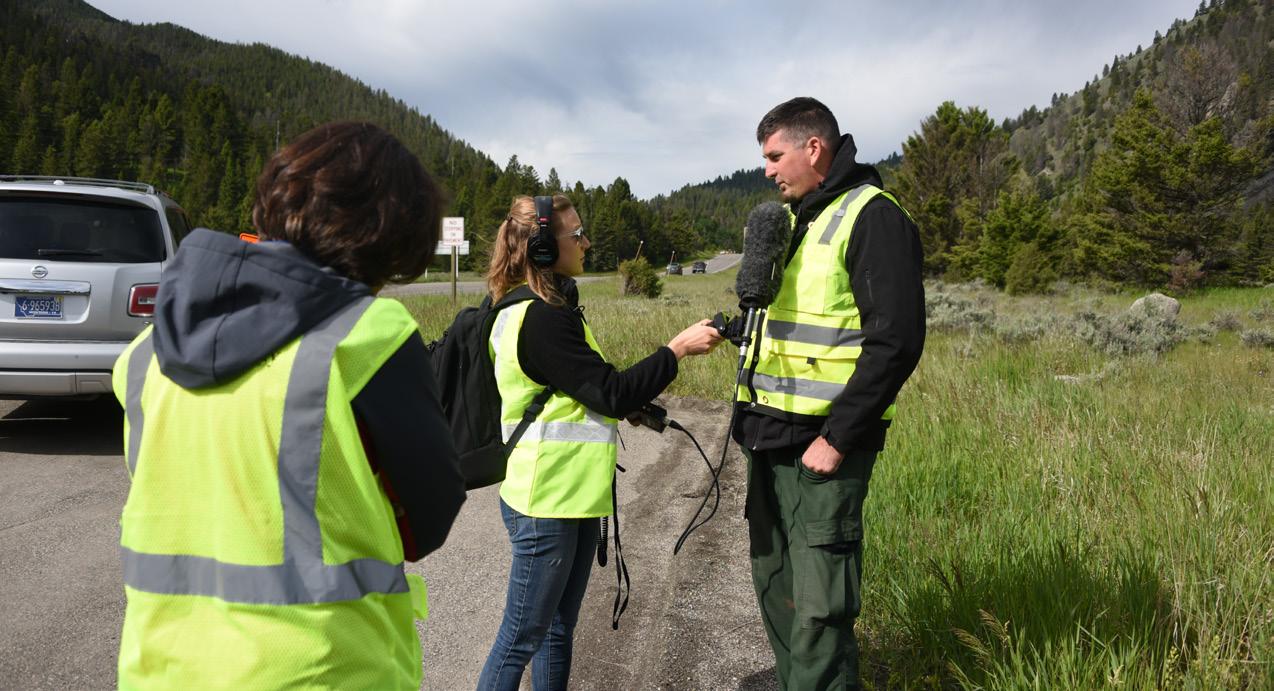
• Work with Corporate Communications to provide timely reviews of any gathered creative assets (photos, videos, etc.)
• Participate in AARs and Lessons Learned after PSPS event and modify PSPS plan as needed.
• Corporate Communications develops and executes PSPS communications to customers and employees and supports other business units in their communication efforts with regulators, critical facility operators, public safety partners, key accounts, investor relations, and other stakeholders.
• Work with all other groups to ensure that the PSPS Communication Strategy is being executed during all stages of a PSPS event.
• Ensure consistent and accurate information is disseminated.
• Monitor conversations and engage on social media channels as appropriate.
• Provide on-call media response.
• Produce and/or gather creative assets (photos, videos, etc.) to accompany communication materials.
• In coordination with Operations, Community Connections, and Regulatory Affairs, work with public safety partners, critical facilities, regulators, and other stakeholders to execute a comprehensive, coordinated, and cohesive customer notification framework.
• To the extent possible and in coordination with Customer Care, Operations, BT, and other groups, notify stakeholders before, during, and after a PSPS event with the following information:
Expected timing and duration of the PSPS event.
Contact information and communication resources.
Provide up-to-date information on NorthWestern Energy website as single point source of the most accurate and current information available to all audiences.
• Distribute information via appropriate communication channels for specific audiences as needed.
• Provide scripts for recording and distribution through Distribution Operations Control.
• Participate in AARs and Lessons Learned after PSPS event and modify communication practices as needed.
4.3.12
• Key Account/Community Relation Managers will identify and notify key account/sensitive customers that are affected by the PSPS event.
• Work with all other groups to ensure that the PSPS Communication Strategy is being executed during all stages of a PSPS event.
• Collaborate with Corporate Communications and other internal teams to provide regular updates to public safety partners and key stakeholders before, during, and after PSPS events.
• Coordinate with other internal groups, public safety partners and community organizations on opening of charging/cooling centers or other Community Resource Centers (CRC).
• Respond to customer inquiries about PSPS events.
• Ensure managers are appropriately trained to perform customer interactions during a PSPS event.
• Assist in possible media response.
• Participate in AARs and Lessons Learned after PSPS event.
4.3.13
• During a PSPS event, Business Technology is responsible for ensuring the functionality and stability of technology systems.
• Ensures functionality of websites, maps, internal tech.
• Provide updates to issues with internal technology (iConnect, PSPS Incident Management Hub, etc.)
• Provides permissions to access internal communication tools.
• Ensure functionality of external public facing website and maps.
• Supports customer notification systems.
• Monitors for cyber security threats.
• Supports remote work capabilities.
• Participates in IC calls and AAR.
The Situational Awareness Strategy describes NorthWestern Energy’s process for monitoring weather and environmental conditions that may result in the consideration of a PSPS event or the progression of an event. By monitoring the dynamic conditions involved in these situations, NorthWestern aims to optimize the decision-making process, allocate resources efficiently, and minimize the impact on communities and critical infrastructure. Using a multifactor decision-making process and proactive monitoring of conditions, this strategy seeks to empower stakeholders at all levels to take timely and appropriate actions to mitigate risks and enhance public safety during PSPS events.
Situational awareness is paramount for efficiently managing risk and ensuring the safety of communities, natural resources, and critical infrastructure. PSPS events serve to reduce the risk of wildfires or other hazards caused by extreme weather conditions but can introduce dynamic and complex operational environments. Maintaining situational awareness involves continuously monitoring and comprehensively understanding evolving conditions that influence the decision-making process throughout the duration of a PSPS event. This includes factors such as wildfire risk, weather, and vegetation fuel moisture to name a few. The following sections provide more detail on the factors and approaches utilized by NorthWestern Energy to assess environmental risks and the corresponding efficacy of a PSPS.
Easy access to meteorological, fuel conditions, and wildfire risk data is a crucial aspect of NorthWestern Energy’s strategy for preventing wildfires, as well as for considering a PSPS event. Given the significant diversity in these conditions across its service territory, NorthWestern Energy relies on publicly available models and data, as well as internally developed risk models (Figure 4). Utilizing multiple weather models allows NorthWestern Energy to understand a possible range of outcomes and provides a more comprehensive understanding of the forecasted conditions that are on the horizon.
Publicly available information from the National Weather Service (NWS) and the USFS Severe Fire Danger Index (SFDI) are currently included as part of the models utilized by NorthWestern Energy. These resources are supplemented by NorthWestern Energy’s internally developed and maintained risk models and informed by technical consultation with experienced wildfire risk professionals to support assessments of current and forecasted wildfire risk across the company’s service territory. NorthWestern Energy’s internal models currently consist of the Wildfire Risk index (WFRI) and the Composite Risk Index (CRI). These metrics are then used as inputs to the operational decision-making process. Further explanation of these models can be found in their respective sections below (Section 5.3.3 and 5.3.4).
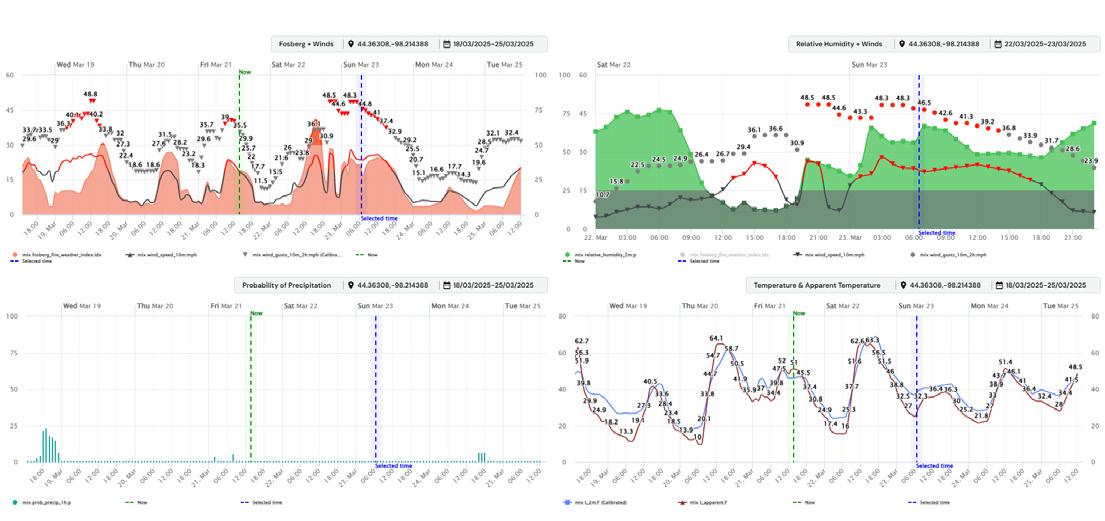

The NWS is the operational weather services component of the National Oceanic and Atmospheric Administration (NOAA), an agency of the agency of the United States Department of Commerce. This public platform provides daily meteorological conditions. It considers factors like temperature, humidity, wind speed, and fuel moisture content, all of which help assess the likelihood and severity of wildfires. By providing timely updates and alerts, the NWS helps communities take proactive measures to mitigate the risk of wildfires and protect lives and property.
The NWS issues advisories, watches, and warnings to alert the public about hazardous weather conditions. Advisories or notifications are issued for weather conditions that are not as severe as those warranting a warning but could still be hazardous or impactful. A watch is issued when hazardous weather conditions are possible within a specific area and time frame but are not yet occurring or imminent. A warning is issued when hazardous weather conditions are imminent or occurring within a specific area and time frame.
A Red Flag Warning is one example of a forecast issued by the NWS to alert the public, firefighters, and land management agencies about weather conditions conducive to extreme fire behavior. These conditions typically include a combination of low relative humidity, strong winds, dry vegetation, and high temperatures. A Red Flag Warning indicates that critical fire weather conditions are either occurring or are expected to occur shortly. When a Red Flag Warning is issued, it is essential for individuals and communities to take extra precautions to prevent fires and be prepared to respond quickly to any wildfires that may occur.
The SFDI is an index created by Forest Service and used by fire agencies to assess the level of fire danger in a particular area. It considers various factors such as temperature, humidity, wind speed, and fuel moisture content to determine the likelihood and severity of wildfires. The index typically ranges from low to severe, with severe indicating conditions highly conducive to rapid fire spread and difficulty in suppression efforts. It serves as a warning system to alert authorities and the public about the potential for dangerous fire behavior.
NorthWestern Energy’s WFRI serves as a valuable tool for assessing, quantifying, and communicating the risk of wildfires, enabling informed decision making and proactive measures to protect lives, property, and natural resources.
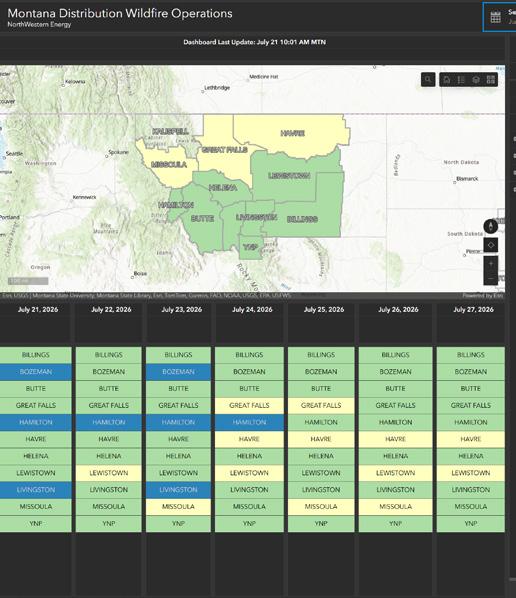
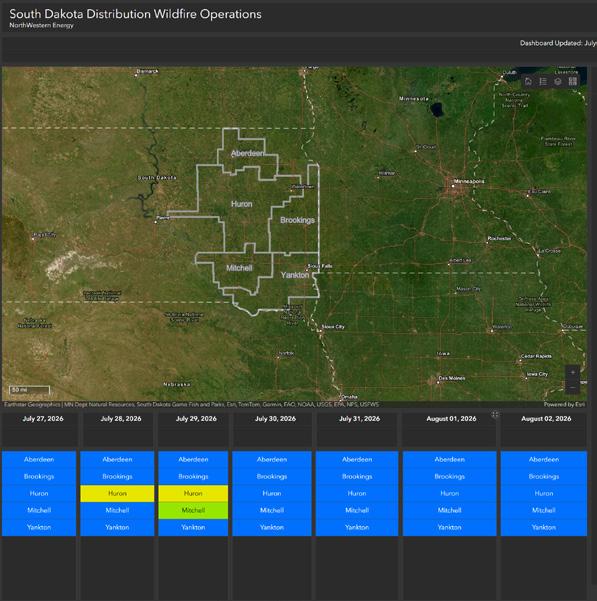
The WFRI converts environmental, statistical and scientific data into an easily understood “short-term” forecast for NorthWestern’s service territory. Variables considered within the dynamic model include but are not limited to: The USFS Severe Fire Danger Index, NorthWestern Energy asset health, and consequence modeling (risk tiers).
From these inputs, the WFRI provides a seven-day forecast, updated daily, displayed at the sub-circuit level of the associated wildfire risk (Figure 5). It is used both as an operational parameter (i.e., when devices are set into different operational protection strategy) as well to give early indication of PSPS probable scenarios on the horizon.
5.3.4 Composite Risk Index (CRI)
The CRI is a decision-support tool used by NorthWestern Energy to evaluate forecasted wildfire risk across its service territory. Developed in consultation with experienced wildfire risk professionals, the CRI integrates forecast weather conditions and wildfire behavior characteristics within established Weather Monitoring Zones (WMZs) to provide geographically specific assessment of relative wildfire risk.

By nature of NorthWestern Energy’s diverse and expansive service territory, it would be impractical and ineffective to identify a single weather or environmental criteria under which the decision to employ a PSPS could be based. For instance, the criteria that may warrant a PSPS event in one area may not warrant it in another due to differences in a wide variety of factors.
In recognition of this reality, NorthWestern’s approach to the consideration of PSPS events as a mitigative tool is not based on a single environmental factor. Instead, NorthWestern has developed models that blend both internal and external data to provide consistent evaluations of wildfire risk. Importantly, however, these models and indices are treated as just a few of the many important data points to consider. In other words, this approach treats these models as valuable guidance rather than strict thresholds and enables NorthWestern (through its teams of SMEs) to then also consider several situation-specific factors and thus cannot be defined explicitly by a formula or definitive triggers. These factors includes: assessing grid resiliency (such as the condition or health of the electrical infrastructure, redundancy options, and the likelihood of equipment failure under forecasted conditions), emergency response capabilities (local fire suppression resources, mutual-aid availability, and coordination with public-safety agencies), fire spread modeling (fuel moisture, rate of spread, slope, etc.) and understanding customer impacts of potential de-energization. Thus, there is no one factor, such as Red Flag Warnings, used as the ultimate determining factor for de-energization, but rather a comprehensive assessment of all aspects that drive final PSPS decision making.
NorthWestern Energy prioritizes a risk-informed approach to deenergization that balances wildfire prevention with the need to maintain electric service for safety, emergency communications, and essential services. Due to the inherent risks and consequences with proactive de-energizations, it is NorthWestern Energy’s approach to implement PSPS de-energizations as a tool of last resort.
NorthWestern Energy’s Situational Awareness Strategy involves continuous monitoring of factors such as wildfire risk, weather, and vegetation fuel moisture. This is accomplished through utilizing both publicly available models (e.g., NWS, SFDI) and internal models (e.g., WFRI, CRI). PSPS environmental thresholds are not established to be the sole driver of a PSPS event but are used to empower and educate the operational, communications, and decision-making personnel to make data informed decisions in a near real-time format. Decision making during PSPS events also includes a variety of other factors and considerations beyond environmental conditions, such as customer and stakeholder impacts as well as system health and performance among others. Ultimately, the goal of NorthWestern Energy’s Situational Awareness Strategy is to provide its operational decision makers with the best possible information regarding environmental and system conditions empowering them to make informed situation-specific decisions regarding the efficacy and impacts of executing a PSPS event.
Whereas the Situational Awareness Strategy described how NorthWestern Energy remains apprised of the many factors that may warrant a PSPS event, the Operational Strategy instead describes how NorthWestern intends to progress through the various stages and phases of a PSPS event when one is being considered or conducted. Fundamental to its PSPS Operational Strategy is NorthWestern’s commitment to safely and reliably serving its customers and communities. As such, NorthWestern’s PSPS operating procedures and work practices define how NorthWestern will prepare its personnel and equipment to proactively de-energize electrical facilities to reduce the risk of a utility-ignited wildfire, how it will carry out this de-energization should it be needed, and how it will safely restore its system. This strategy, in conjunction with the Situational Awareness and Communication Strategies, balances the need to reliably serve the customers of NorthWestern while also recognizing NorthWestern Energy’s role in maintaining a safe environment when faced with extreme fire weather.
To understand how NorthWestern operationally manages PSPS events, it is necessary to first review NorthWestern’s general wildfire operational practices. NorthWestern deploys several operational defense strategies as the wildfire risk index increases (Figure 6). Each increase in wildfire risk is matched with a strategy to mitigate that risk while providing safe and reliable service for NorthWestern Energy’s customers and communities. However, under certain extreme fire weather conditions, NorthWestern may eventually reach a point at which it is unable to deploy additional or more sensitive protective strategies to its operating electrical equipment, such as Enhanced Powerline Safety Settings. At this point, the only method remaining to further reduce wildfire risk may be de-energizing the electrical equipment in the area of concern. However, in this scenario the extreme wildfire risk must be considered alongside the impacts and risks posed by power-off scenarios for NorthWestern Energy’s customers and communities. The following sections serve to provide an overview of how NorthWestern will operationally progress through a PSPS event in those situations where the wildfire risk of continuing to operate electrical equipment is unacceptably high.
Fire Start Imminent Uncontrollable
Fire Start Easily
Very
Reliability
Performance Based Operation Low
Control Limited
Fire Start Caution
Control Challenging
Fire Start Challenging
Control Achievable
Fire Start Difficult
Control Easily
PSPS Evaluation + Fire Season Operating Mode 2
Fire Season Operating Mode 2
Fire Season Operating Mode 1
Normal Operations
Normal Operations
Once the available non-de-energization mitigation measures have been exhausted and the PSPS Awareness Team has been established, Stage 1 operations formally begin. Throughout Stage 1, these actions generally involve the continued monitoring of current and forecasted conditions as well as extensive preparation for (and communication about) a potential de-energization.
However, it is worth noting that the significance and frequency of the actions taken in Stage 1 are intended to correspond to the severity and likelihood of the forecasted wildfire conditions. As such, Stage 1 of NorthWestern Energy’s PSPS Plan has also been sub-divided into 4 distinct phases. Importantly, because the conditions may unexpectedly improve or worsen quicker or slower than forecasted, there is no pre-determined time within each phase of Stage 1. Instead, each phase is defined based on the anticipated timing of the potential de-energization which may change in accordance with changes in forecasted conditions. In practice, this means that the four phases
of Stage 1 of NorthWestern’s PSPS Plan may not always progress linearly and consistently. In these scenarios, NorthWestern will make efforts to ensure operational consistency and communication clarity.
Generalized details regarding the operational actions being taken in each of the four phases of Stage 1 are presented below:
• Functional areas begin pre-planning for possible PSPS de-energization event, including subsequent meetings with key supervision for planning purposes.
• Initial scoping of impact area and customer impacts is performed.
• Analysis of staffing available during entire period of expected PSPS event is performed.
• Continued and heightened monitoring of conditions. The point at which the anticipated de-energization is believed to be less than 72 hours away, the transition to Phase 1.2 begins.
• Initial communication is provided to public safety partners, governmental agencies and potentially impacted critical facilities to begin early preparation for the potential PSPS event, based on NorthWestern’s assessment of conditions, risk, and stakeholder communication needs.
• Impact area and customer impact analysis is refined.
• Initial external customer communications are provided in accordance with the Communication Strategy (Section 7).
• Maintain communication and coordination with external stakeholders for duration of the PSPS event.
• Staffing is reviewed across key departments for duration of PSPS event.
• Communication provided to uninvolved employees.
• Incident Command Team is established upon transition from Phase 1.2 to 1.3 (i.e., when the anticipated deenergization is less than 48 hours away).
• Further detailed analysis of system performance and predicted fire weather is performed.
• Ground patrol of anticipated impact area is conducted to update asset health and right-of-way conditions with real-time observations.
• Consultation with, and communication to, outside agencies as needed.
• Continued and revised communications provided to external stakeholders and customers in accordance with the Communication Strategy (Section 7).
• If de-energization is determined to be imminent to combat wildfire conditions, Senior Leadership(s), grants authority to the Incident Commander to perform the as needed switching to safely execute the PSPS.
• Incident Commander works to schedule the de-energization prompting the transition to Phase 1.4.
• Electronic switching instructions finalized.
• Field crews are mobilized to perform de-energization switching.
• PSPS map is populated with anticipated event details.
• Imminent PSPS de-energization communications are provided to impacted stakeholders, including emergency services, customers, community leaders, and fire agencies in accordance with the Communication Strategy (Section 7).
• Switching for de-energization is performed resulting in a transition to Stage 2 operations.
Stage 2 of NorthWestern Energy PSPS Plan begins when field crews have completed their switching efforts resulting in the target area being de-energized. Similarly, this stage ends when all customers are fully restored to utility service and the PSPS event has been closed out and documented. Stage 2, much like Stage 1, focuses on the continued monitoring of current and forecasted conditions as well as extensive preparation and communication. However, unlike Stage 1, the focus now shifts to monitoring and preparing for conditions to improve to a point where it becomes safe to re-energize electrical equipment. This period requires both the weather conditions to retreat acceptably below fire risk thresholds for the area as well as the electrical system undergoing a series of inspections and repairs, if needed, prior to re-energization. Due to the inherent variability of these conditions, Stage 2 is sub-divided into 3 distinct phases – corresponding to the natural progression of re-energization efforts. Generalized details regarding the operational actions being taken in each of the three phases of Stage 2 are presented below.
The following sub-phases describe, in general, the operational responsibilities for this phase of the PSPS event:
Phase 2.1 – PSPS In-Effect:
• Weather conditions, fire activity, and other factors are continuously monitored and reviewed by the Incident Command Team to assess when it will be safe to restore power.
• Initial and ongoing communication with stakeholders on system status and predicted time to restoration are provided in accordance with the Communication Strategy (Section 7).
• Business orders are proactively created to address any known or expected repairs.
• Evaluation of crew resources, materials, engineer resources, etc. is performed.
• Upon the identification of improved conditions (e.g., wildfire risk has decreased below an acceptable risk threshold for the particular PSPS area), the Incident Commander (based on inputs from the IC team), may commence restoration efforts resulting in a transition to Phase 2.2.
Phase 2.2 – Restoration:
• A detailed ground and/or aerial assessment of the entire system in the area of de-energization is performed.
• Repairs are conducted as expeditiously as possible.
• As repairs are made and/or the system is found to be safe, re-energization begins (typically in a stepped approach).
• Customer and stakeholder notifications continue as necessary and in accordance with the Communication Strategy (Section 7).
• Records of repairs are collected for future analysis.
• Service restoration is completed and verified resulting in a transition to Phase 2.3.
Phase 2.3 – Closeout:
• Event documentation and outage reporting is finalized.
• Feedback sessions are conducted to identify areas for improvement in future events.
• Fire simulations at failed component locations are conducted to understand risk avoided.
• Incident Command Team is disbanded.
• Risk management department compiles all PSPS documentation.
• Business processing orders are closed out.
Wildfire risk and the decision to de-energize the system is a complex and dynamic process, and PSPS events are cross-functional activities that require involvement from a variety of stakeholders to conduct. While it is impractical to completely and prescriptively define the operational tasks to be completed during a PSPS event, the operational strategy described above provides an overview of the approach NorthWestern Energy employs to manage this dynamic risk. Fundamentally, NorthWestern’s approach is founded on data-informed decision making to maintain the safety of customers, communities, and stakeholders. This is made possible by balancing the threats posed by operating electric systems during periods of elevated fire weather conditions with the impacts of service interruptions.
Another key component to NorthWestern Energy’s PSPS Plan is its Communication Strategy. The primary purpose of a Communication Strategy is to define what types of information will be provided to internal and external stakeholders and what channels (i.e., means of communication) will be used to provide that information to ensure it reaches the intended audience. Other purposes include how, and how often, the information will be provided and who is responsible for creating and distributing the information. A Communication Strategy is a valuable tool in many situations a utility may encounter, but there are several factors that make it essential for managing PSPS events in particular. For example:
• PSPS events can be more consequential than typical outages and can directly and indirectly impact a variety and number of internal and external stakeholders (e.g., residential customers, business owners, cellular network operators, fire departments, governmental agencies, etc.).
• The variety and number of external stakeholders also generally exceed the relevant external stakeholders for planned and unplanned outages – making it necessary to utilize centralized and public channels (e.g., public website outage map) rather than the purely targeted and private communications used for planned and unplanned outages (e.g., individual text/email alerts).
• Different stakeholder groups require different levels, frequencies, and types of information as well as different channels for accessing/receiving information (e.g., outage map, social media, automated calls, CSRs, key account managers, TV/radio announcements, etc.).
• Not all channels are desirable or practical as a method for keeping stakeholders apprised of a PSPS event. It is impractical to accurately utilize and maintain all possible communication channels, and some channels may work better for certain types of information and/or stakeholders.
• Without a Communication Strategy, stakeholders may not understand where to go for information, may not receive important information (or may receive conflicting/inaccurate/outdated information), and may attempt to use unsupported or undesirable channels (e.g., large call center volumes, unmonitored social media posts, etc.)
• PSPS events are relatively new practices to utilities and external stakeholders and are often much more dynamic, unpredictable, and time-sensitive than typical planned and unplanned outages – making it difficult to rely solely on traditional communication practices and channels.
NorthWestern Energy’s PSPS Communication Strategy is comprised of both an internal communication strategy and an external Communication Strategy. Although external communications are often the primary focus when it comes to managing a PSPS event, the foundation for effective external communications is a comprehensive internal strategy. A thorough internal communication strategy ensures that internal parties are providing and receiving accurate and consistent information in a timely manner and will define:
• How, when, and where information is transferred internally (i.e., channels/methods).
• Which employees, or groups of employees, must be kept informed. Similarly, an external Communication Strategy is responsible for defining how relevant information is then distributed to external stakeholders. In general, external Communication Strategy describes:
What general types of information will be provided to external stakeholders.
When/how/how often that information will be provided to external partie (i.e., channels, timelines, etc.)
What external stakeholders need to be kept informed and to what extent.
What personnel are responsible for creating and distributing the information and what those responsibilities are.
NorthWestern Energy’s internal and external PSPS communication strategies provide draft content for communications during a PSPS event. This gives NorthWestern Energy a clear outline for communications during a PSPS event, but also allows the specifics of the communications to be defined by the PSPS Awareness Team and Incident Command Team on a case-by-case basis to accommodate the variable and dynamic nature of PSPS events. It is impractical to be completely prescriptive about the exact messaging and information that will go out for any generalized PSPS event.
However, NorthWestern Energy’s internal and external communication plans provide a good starting point for effective communications while still allowing those communications to be tailored for specific events.
Depending on the situation, NorthWestern Energy utilizes many different channels (e.g., email, text, phone calls, file sharing, etc.) for relaying information internally across a widely dispersed employee population. While these can be effective channels in some cases (and will be used, in part, during PSPS events), they can also be inefficient for navigating the dynamic, fast-paced, multi-faceted, and multi-participant discussions necessary during PSPS events. Therefore, the foundational principle for NorthWestern Energy’s internal Communication Strategy is that, during PSPS events, both the PSPS Awareness and Incident Command Teams will be part of regular meetings. After each of these meetings (and any ad-hoc meetings that may be called to order), communications-focused employees would then be responsible for delivering the agreed-upon messaging via the channels and timeframes defined by the external communication channel strategy (Section 7.4). Depending on the severity and scale of the ongoing PSPS events, as well as the agreed-upon messaging, the involved internal stakeholders with external communication responsibilities may vary.
NorthWestern Energy’s external Communication Strategy describes what channels are used during different phases of PSPS events to relay information to external stakeholders. A central principle of this Communication Strategy was the designation of a default or primary communication channel that would be available to all stakeholders. Since PSPS events are highly dynamic and involve a wide variety of external parties, NorthWestern Energy recognized the need to select a flexible and high-speed communication channel that can provide consistent and up-to-date baseline information accessible to all external parties. Another important element of NorthWestern Energy’s strategy is based on the recognition that certain key stakeholders (such as customers directly impacted by PSPS outages, key account holders, large businesses, and governmental bodies) will likely require different, and perhaps more detailed, information than provided in the baseline channel. As such, NorthWestern has identified several other supplemental channels of communication designed to augment the baseline channel and meet the specific needs of these key stakeholders.
To provide baseline PSPS information to all external parties, NorthWestern Energy designated its existing public webpage as its default channel. Not only is it the current default source for providing outage information to external parties (making it familiar to existing stakeholders), it is also a flexible platform that can be updated quickly and regularly. Additionally, it allows users to subscribe to SMS and email notifications for ongoing outages (i.e., Phases
2.1 through 2.2) – allowing interested parties to stay informed about an ongoing PSPS outage without having to refer back to the outage map. NorthWestern will leverage this webpage to provide general information about a PSPS event (beginning in Phase 1.2) such as a map with the anticipated impact areas of PSPS events along with regular updates based on the decisions made during the daily, and ad hoc, PSPS team meetings. Our PSPS webpage can be found at NorthWesternEnergy.com/PSPS and a mockup of what this page would look like during a hypothetical PSPS event is shown below (Figure 7).
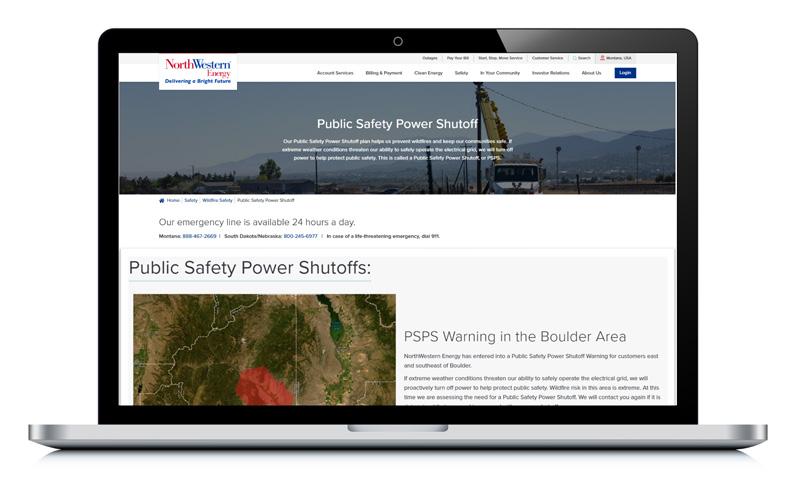
Figure 7 – Example mockup of NorthWestern Energy’s webpage displaying a hypothetical PSPS event. Recognizing that this webpage would not address all the needs of external stakeholders, NorthWestern Energy also identified several supplemental communication channels designed to provide additional information or context to specific external stakeholders. Each channel is intended to be applied at different phases of a PSPS event and is targeted toward specific external parties. These channels, each of which will be described in more detail below, include:
• Automated outbound calls, texts, and/or emails sent to impacted customers.
• Interactive Voice Response (IVR) for incoming calls
• NorthWestern Energy Corporate Communications
NorthWestern Energy Website
• Public Safety Power Shutoff webpage
• FAQ page
• Website banner
• NorthWestern Energy Customer Care
Customer Service Representatives
Customer Associates
• NorthWestern Energy Community Connections
Key Account Managers
Community Relations Managers
Other channels, which may not always be utilized during PSPS events, but will be utilized when broader awareness is necessary include:
• NorthWestern Energy Corporate Communications:
Social media (e.g., Facebook, Instagram, X)
Earned media (press releases distributed to news outlets and posted to website)
Paid media (radio, digital, broadcast ads and PSAs)

• NorthWestern Energy Outage Management System (OMS) :
iTOA
webOMS
OASIS
In addition to identifying communication channels as part of its strategy, NorthWestern Energy also identified and categorized stakeholders to ensure that its Communication Strategy and channel selection would reach all external stakeholders with a direct or indirect interest in PSPS events (Figure 8). The three generalized stakeholder groups identified in the channel strategy are:
• All Stakeholders - Any party seeking PSPS event info (including those listed below).
• Impacted Customers - Specific electric customers whose service is, or is expected to be, interrupted during a PSPS event.
• Target/Key Stakeholders - Any specific stakeholder or stakeholder group with a special interest in PSPS events. Examples include:
Large Customers (e.g., large businesses, commercial & industrial customers, etc.)
Critical Customers (e.g., hospitals, nursing homes, long-term care facilities, universities, etc.)
Public Safety Partners (e.g., fire departments, law enforcement, hospitals, churches, community centers, shelters, nonprofit emergency service providers, etc.)
Service Providers (e.g., co-ops, cellular providers, assistance agencies, water and sewer, transportation such as railroads, EV supply equipment, bus services, etc.)
Government (e.g., local, state, federal, tribal)
Transmission and Supply Organizations (e.g., WECC, NERC, reliability coordinators, adjacent interconnecting entities, ISOs, RTOs, etc.)
Regulators
Some challenges often faced when managing external communications for highly dynamic PSPS events include ensuring that the list of impacted customers is complete, accurate, consistent with the current scope of the event, and can be adjusted quickly if, and when, the scope of the event changes. To support this process, NorthWestern developed its “Premise Tracking Guide” (Figure 8), which helps identify impacted customers as a PSPS event evolves. This tool allows NorthWestern to quickly generate impacted-customer lists based on service connectivity and the anticipated de-energization area, improving the accuracy and efficiency of communications with affected customers.
Another function of the Premise Tracking Guide is to identify key accounts (large load customers) and critical facilities, such as hospitals, gas stations, etc. Identifying these customers from the customer list enables NorthWestern Energy staff, such as Community Connections, to provide advanced communications, when possible, to these customers to support outage preparation efforts.
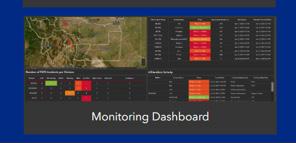
Automated calls, texts, and/or emails are key channels for targeted customer communications. They are intended to be initiated in Phase 1.2 (PSPS Watch) and used throughout all subsequent PSPS phases, including if the PSPS event is cancelled. This approach ensures continuous customer notification during both escalations and de-escalations and supports situations where a PSPS event may progress directly into a Warning, Alert or In-Effect phase without previous notification. The primary purpose of these messages is to inform recipients of updates to wildfire conditions and/or changes to the status of an ongoing PSPS event. In most cases these messages will convey this information by directing recipients to NorthWestern Energy’s external webpage and associated PSPS map as a source for more realtime updates.
Automated call, text, and/or emails are not used for direct customer notifications during Phase 1.1 (PSPS Monitoring). At this stage, forecasted fire weather conditions are generally greater than 72 hours in advance and, therefore, remain subject to significant change as additional meteorological data becomes available. Providing customer notifications beginning in Phase 1.2 (PSPS Watch) helps ensure communications are based on a higher degree of forecast confidence and more clearly defined potential impact areas, thereby reducing the likelihood of unnecessary customer concern or confusion from preliminary or rapidly changing conditions.
Situations may arise in which customers remain within the same PSPS phase for more than 24 hours. In these circumstances, NorthWestern Energy will attempt to provide impacted customers with status update notifications if there has been no progression to a higher phase or regression to a lower phase within the previous 24-hour period.
NorthWestern Energy’s public website, in addition to hosting the primary communication channel (the PSPS webpage), also supports other crucial communication channels. First, NorthWestern Energy’s website will always include a PSPS education page designed to educate customers about PSPS events, communication channels (including directing stakeholders to the PSPS webpage as the primary source for real time info), recommended preparations, and other general PSPS information. The second key function of the PSPS webpage is to host an interactive map displaying polygons of anticipated PSPS events, beginning in Phase 1.1 (PSPS Monitoring). The PSPS map is utilized to visually inform customers and stakeholders of the potential PSPS impact areas by displaying polygons of where the potential and current PSPS impact areas are located. Customers and stakeholders can search addresses and view geographic landmarks, such as county borders and other layers, within the map to identify if they are within or near a PSPS impact area. Additionally, external stakeholders, such as emergency managers, can download data layers of PSPS boundaries to use other forms of emergency notifications (e.g. Reverse 911) to alert county residents of PSPS status. When the PSPS reaches Phase 2.1 (PSPS In-Effect), the PSPS map will display the In-Effect boundaries along with NorthWestern Energy’s outage map. Within the outage map, ETRs will be displayed. PSPS webpage intends to communicate potential timing of shutoffs as well.
While the PSPS map would be populated in Phase 1.1, more specific PSPS event information would not be displayed on the website until Phase 1.2 (PSPS Watch). More detailed PSPS event information would then be provided on the PSPS webpage through all subsequent phases. The final way the public website is utilized is to display an informational banner at the top of every page. This banner is intended to be used at the beginning of Phase 1.2, until the power is restored or the PSPS event is cancelled. The banner would reference any ongoing PSPS events and provide a link to the PSPS webpage. It is intended to be a highly visible method for catching the attention of website visitors who may be looking for information about a PSPS event and may be unaware that the PSPS webpage is the primary channel for information.
7.4.3
NorthWestern Energy also selected its Interactive Voice Response (IVR) as another channel focused on directing traffic to its outage map. Much like the website banner, the IVR is intended to be used during all phases of a PSPS event, beginning with Phase 1.2, until the power is restored or the PSPS event is cancelled. During these times the IVR would include a pre-recorded message informing callers, who may be calling to request information about a PSPS event, that the PSPS webpage is the primary source of information about ongoing PSPS events. Not only does this direct and educate external parties, it also helps to reduce NorthWestern Energy call volumes – freeing up internal resources to manage other issues and reduce call wait times.
7.4.4
NorthWestern Energy will also utilize its social media platforms for real-time updates during PSPS events to customers and the broader public. Depending on the scale of the PSPS event, a combination of geotargeted and nongeotargeted posts will be used. Communications will primarily consist of geotargeted posts to provide information to specific zip codes, regions or populations experiencing a PSPS event. Non-geotargeted posts would only be used in larger or more complex PSPS events. In these cases, broader posts will serve as an additional tool to direct social media traffic to NorthWestern’s website and PSPS map for more information.
7.4.5
To further amplify messaging to customers and the public, NorthWestern Energy will utilize a combination of press releases and radio public service announcements (PSAs). NorthWestern maintains established relationships with media partners to help disseminate critical information, including both planned and unplanned outages. These channels will continue to be used to broadly disseminate information to customers, visitors and the general public to increase awareness of PSPS events. Radio serves as an important mechanism to reach audiences who may have limited access to, or familiarity with, digital communications channels such as text, email, websites and social media. Public service announcements distributed via radio represent a form of paid media while press releases and resulting television, print and radio coverage constitute earned media.
Communication Channel Purpose of Communication
External website PSPS Page General PSPS readiness info and updates during events, including PSPS map Outage map
Customer Care (CSRs, CAs)
Community Connections (KAMs, CRMs, etc.)
Customer-facing employees are provided with latest info that can be relayed to customers
Key Account & Community Relations Managers provided with info for key stakeholders
iAlert, iConnect, FYIs and other employee comms Keep employees informed during an event
Social media Reach a broad swath of customers and stakeholders IVR Inbound callers will be directed to get more information about the PSPS on our website in an effort to decrease call volumes
Call/text/email
Reach out directly to impacted customers
Earned media Engage with the media to help spread awareness
Grid operations (OASIS, webOMS, iTOA, etc.)
Government affairs and regulatory affairs
Grid Operations may use additional channels for transmission-level PSPS events
Communicate to governor, PSC and others
Any party seeking general information about a PSPS event.
Customers whose electric service is, or is expected to be, impacted by a PSPS outage.
Government agencies, large customers, critical customers, service providers, public safety partners, etc.
EMPLOYEES
Active NorthWestern Energy employees.
Figure 9 – NorthWestern Energy’s PSPS external communication channel strategy showing what communication channels are intended to be used at each stage and phase of a PSPS event, and which stakeholder groups are targeted.
NorthWestern Energy also identified the value in supporting several manual/human-based communication channels during PSPS events. For instance, NorthWestern Energy’s Customer Care group, which includes customer service representatives and customer associates, will be a critical communication channel for many customers and other external parties alike. As such, NorthWestern Energy’s PSPS Communication Strategy requires that one or more Customer Care leaders (e.g., managers, directors, etc.) be included in all PSPS Awareness Team and Incident Command Team meetings. The role of these leaders is to then ensure that all customer-facing Customer Care employees are provided with, and understand, the most up-to-date PSPS information. The general goal of the customer care communication channel is to ensure that Customer Care employees are properly equipped to navigate, escalate, or redirect as needed, any conversations with, or questions from, external parties. However, in addition to fielding incoming inquiries about PSPS events, Customer Care leaders may, in some cases, identify the need to proactively or reactively reach out to specific customers (e.g., energy-dependent customers, hard-to-reach customers, etc.) to provide them with PSPS information.
Another human-based channel identified in NorthWestern Energy’s PSPS Communication Strategy involves its Community Connections group which includes key account managers and community relations managers. This group, much like Customer Care, is likely to receive incoming PSPS inquiries from a variety of external parties such as local governments, critical/energy-dependent customers, and large businesses among others. This group is also generally responsible for proactively and reactively keeping these external stakeholders apprised of situations that may directly or indirectly impact them – who in many cases may require more detailed or timely information than can be provided via other channels. As such, NorthWestern Energy recognizes the value in leveraging the existing communication processes of the Community Connections group to support the broader PSPS Communication Strategy. In short, the approach to the Community Connections channel requires that one or more Community Connections leaders (e.g., managers, directors, local community relations managers, etc.) be included in all PSPS Awareness Team and Incident Command Team meetings. Much like the strategy for Customer Care, the Community Connections leaders are then responsible for disseminating the most up-to-date PSPS information to the appropriate Community Connections employees to enable them to properly navigate, escalate, or redirect any conversations with, or questions from, external parties. Similarly, and perhaps to a greater degree than Customer Care, Community Connections leaders may also identify the need to reach out directly to specific stakeholders to provide them with critical PSPS information.
The third human-based channel included in NorthWestern Energy’s PSPS Communication Strategy involves its Corporate Communications group. This group is responsible for any corporate-level communications (website, social media, paid media, press releases, etc.). Due to the inherent potential that PSPS communication needs may escalate beyond the designated strategies listed above and the fact that the external communication responsibilities of Corporate Communications, Customer Care, and Community Connections groups can often overlap, NorthWestern recognized the clear need to include Corporate Communications personnel in its PSPS Communication Strategy. As with Customer Care and Community Connections, the expectation is that one or more Corporate Communications leaders or designee(s) be included in all PSPS Awareness Team and Incident Command Team meetings. These Corporate Communications leaders would then be responsible for keeping their employees up to date with PSPS information. Additionally, it is expected that Corporate Communications personnel will support Customer Care and Community Connections in order to carry out the general PSPS Communication Strategy (website updates, IVR messaging, etc.). For example, Corporate Communications will be responsible for ultimately establishing the language and information provided by the abovementioned channels (e.g., defining the language to be contained on the PSPS webpage, website banner, call campaign scripts, text and email notifications, IVR, and website info page). This ensures that PSPS information is consistent across all channels. Additionally, if the need is identified, the Corporate Communications group may be requested on a case-by-case basis to provide supplemental PSPS communications through channels such as social media, television, newspapers, and/or radio.
The final human-based channel included in NorthWestern Energy’s PSPS Communication Strategy is managed by the Grid Operations Outage Coordination group. This group is responsible for all transmission system reliability-based communications with the regional Reliability Coordinator (RC) and external utilities. PSPS events on the NorthWestern Energy transmission system can impact grid reliability throughout the western interconnection and this group is expected to coordinate with external entities to prevent the PSPS event from causing undue risk to the interconnection. Beginning as early as Phase 1.1, and continuing throughout the PSPS event, the Grid Operations Outage Coordination group will use its iTOA and webOMS outage systems to notify the RC and external utilities of the status of the PSPS event including the equipment to be removed from service, the expected start and end times of the PSPS, system impacts, and any actions that are requested from that entity. This allows external entities to assess reliability impacts within their areas of responsibility and to adjust their operational process to support the PSPS event.
Grid Operations Outage Coordination will also use the OASIS system to adjust available transmission capacity on the NorthWestern Energy and ensure external utilities can re-allocate energy schedules during the PSPS event. All outage notifications and OASIS postings will be updated as necessary to ensure all information is current. As such, it is essential that Grid Operations be included in all PSPS Awareness Team meetings and may be included in all Incident Command Team meetings if the event is expected to rise to the level of impacting transmission system elements, generation assets, electric co-operatives or large customer groups.
The goal of NorthWestern Energy’s PSPS Communication Strategy is to ensure that critical information about PSPS events is delivered, or made available, to all necessary external stakeholders via designated channels and that all necessary internal parties have a clear understanding of their external communication responsibilities and are able to access the most up-to-date information. This is essential for ensuring clear, timely, and accurate communication which, itself, is crucial for the safe and efficient execution of a PSPS event. The above strategy details how NorthWestern Energy intends to achieve that goal and ensure that all stakeholders are properly informed of ongoing PSPS events.