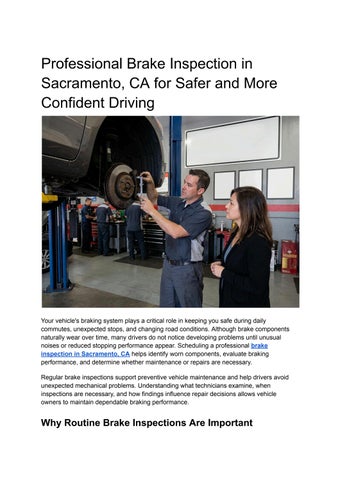
Professional Brake Inspection in Sacramento, CA for Safer and More Confident Driving
Your vehicle's braking system plays a critical role in keeping you safe during daily commutes, unexpected stops, and changing road conditions. Although brake components naturally wear over time, many drivers do not notice developing problems until unusual noises or reduced stopping performance appear. Scheduling a professional brake inspection in Sacramento, CA helps identify worn components, evaluate braking performance, and determine whether maintenance or repairs are necessary. Regular brake inspections support preventive vehicle maintenance and help drivers avoid unexpected mechanical problems. Understanding what technicians examine, when inspections are necessary, and how findings influence repair decisions allows vehicle owners to maintain dependable braking performance.
Why Routine Brake Inspections Are Important
Your braking system depends on several components working together. Brake pads, rotors, calipers, hydraulic lines, and electronic safety features must function properly to deliver controlled stopping power. When one component deteriorates, other parts may experience additional stress. For example, excessively worn brake pads can damage rotors and increase repair expenses. Professional brake inspections help identify these conditions before they develop into more serious problems. Regular evaluations also provide useful information about component wear, helping drivers plan maintenance according to actual vehicle conditions rather than assumptions.
What Does a Professional Brake Inspection Include? A thorough brake inspection evaluates the condition and operation of important braking components.
Brake Pad Thickness Measurement Brake pads contain friction material that gradually wears away during normal braking. Technicians check the remaining material and look for uneven wear patterns. If pads are approaching the manufacturer's replacement limit, the technician can explain whether service is needed immediately or should be planned soon.
Brake Rotor Inspection Rotors provide the friction surface that brake pads contact when slowing the wheels. During an inspection, technicians check for scoring, excessive wear, surface damage, and other irregularities. Measurements may be necessary to determine whether rotors remain within manufacturer specifications.
Brake Caliper Examination Calipers help apply braking pressure through the brake pads. A sticking caliper can cause uneven pad wear, excessive heat, or inconsistent braking. Technicians examine visible components and investigate signs that a caliper may not be operating correctly.
Brake Fluid and Hydraulic Components Brake fluid transfers pressure through the hydraulic braking system.
An inspection may involve checking fluid levels, visible hoses, lines, and connections for leaks or deterioration. Additional testing may be recommended when pedal behavior suggests a hydraulic malfunction.
Warning Signs That Indicate You Need a Brake Inspection Brake components can deteriorate without obvious symptoms, but certain warning signs deserve immediate attention.
Squeaking or Grinding Noises Persistent squeaking can indicate worn brake pads or other friction-related conditions. Grinding sounds may suggest more serious component wear, including potential contact between metal surfaces. Both symptoms deserve professional evaluation rather than assumptions about which parts need replacement.
Brake Pedal Changes A brake pedal that feels unusually soft, sinks toward the floor, or requires greater effort can indicate a braking system problem. Sudden changes in pedal response may involve hydraulic or mechanical faults. If your vehicle cannot stop normally, avoid driving and arrange professional assistance.
Vibrations During Braking Vibration through the steering wheel or brake pedal can indicate irregularities involving rotors, suspension components, or other parts. A technician can inspect related systems to determine the actual source.
Dashboard Warning Lights A brake warning indicator may signal low brake fluid, an engaged parking brake, or another braking system concern. An anti-lock braking system warning light may indicate a separate electronic fault. Persistent warning lights should be diagnosed according to the vehicle manufacturer's recommendations.
How Often Should You Schedule a Brake Inspection? Brake inspection frequency depends on your vehicle, mileage, driving conditions, and manufacturer recommendations. Many drivers arrange brake checks during routine maintenance appointments, including tire rotations. Vehicles frequently driven in stop-and-go traffic may experience faster friction material wear than vehicles primarily used on open highways. Heavy loads, frequent braking, and certain driving habits can also increase wear. The vehicle owner's manual provides a useful starting point for recommended inspection intervals. However, unusual noises, warning lights, or changes in stopping performance should never be ignored until the next scheduled appointment.
Brake Inspections for Sacramento's Driving Conditions Drivers throughout Sacramento encounter a variety of road and traffic conditions that can influence braking system wear. Busy roads such as Folsom Boulevard and Highway 50 often involve frequent speed adjustments, particularly during commuting hours. Repeated braking produces heat and gradually wears friction components. Drivers traveling through residential neighborhoods, commercial districts, and surrounding communities may also experience different braking demands. Seasonal rainfall can make dependable stopping performance especially important. Routine inspections help Sacramento vehicle owners monitor brake condition and prepare for everyday driving needs.
Brake Inspection vs. Brake Repair: Understanding the Difference A brake inspection and brake repair serve different purposes. An inspection evaluates components to determine their current condition and identify potential problems. Brake repair involves correcting an identified malfunction or replacing components that no longer meet appropriate operating requirements.
For example, an inspection may reveal that brake pads have sufficient remaining material and do not require immediate replacement. Alternatively, technicians may discover excessive rotor wear or a leaking hydraulic component requiring attention. Separating inspection findings from repair recommendations helps drivers understand exactly what their vehicles need. This approach also reduces the risk of replacing parts unnecessarily.
What Happens After a Brake Inspection? After evaluating the braking system, a technician should explain the findings and recommend appropriate next steps.
Components in Good Condition If the brakes meet applicable manufacturer specifications, immediate repairs may not be necessary. The technician may recommend continued monitoring during future maintenance appointments.
Components Approaching Replacement Brake pads or other parts may show wear without yet requiring immediate replacement. Drivers can use this information to plan upcoming maintenance.
Components Requiring Immediate Attention Significant brake wear, fluid leaks, or other safety-related defects may require prompt repairs. In these situations, the technician should explain the concern and provide an estimate before performing authorized work. Clear communication helps drivers distinguish preventive maintenance from urgent safety repairs.
Benefits of Preventive Brake Maintenance Regular inspections offer several practical advantages for vehicle owners.
Improved Safety Awareness
Brake inspections help identify wear, leaks, and mechanical problems that may affect stopping performance. Early detection allows drivers to address concerns before they become more serious.
Better Maintenance Planning Knowing the condition of brake pads and rotors makes it easier to anticipate future replacement needs. Drivers can plan service appointments and manage repair expenses more effectively.
Reduced Risk of Additional Damage Ignoring worn friction materials may allow damage to spread to other braking components. Appropriate maintenance can help prevent certain avoidable repair expenses.
Greater Driving Confidence Understanding that the braking system has been professionally evaluated can provide additional peace of mind during everyday travel.
How Much Does a Brake Inspection Cost in Sacramento, CA? Brake inspection costs depend on the vehicle, inspection scope, and whether additional diagnostic procedures are required. A basic visual inspection may involve less work than an evaluation requiring wheel removal, electronic testing, or investigation of an intermittent braking problem. Some repair facilities include limited brake checks within broader maintenance appointments, while more comprehensive inspections may be charged separately. Before scheduling, ask which components will be examined and whether the quoted price includes additional testing. If repairs are recommended, request a written estimate showing the necessary parts and labor. Transparent pricing and explanations help customers make informed decisions.
Choosing a Reliable Brake Inspection Service Selecting a dependable automotive repair shop involves evaluating inspection procedures, experience, and communication.
Look for technicians familiar with braking systems used in domestic and imported vehicles. Ask whether the inspection includes brake pad measurements, rotor condition, hydraulic components, and relevant warning indicators. A professional should explain findings clearly instead of recommending replacement solely because a vehicle has reached a particular mileage. It is also important to understand whether the inspection addresses related steering, suspension, or tire concerns. Professional auto brake repair services in Sacramento can help drivers investigate braking symptoms and maintain their vehicles through condition-based service recommendations.
Schedule a Brake Inspection Before Problems Become Serious Drivers should consider scheduling inspections before extended road trips, when purchasing a used vehicle, or after noticing changes in braking behavior. Before the appointment, identify any noises, vibrations, warning lights, or unusual pedal responses. Provide the vehicle's make, model, year, and available maintenance history. During the appointment, ask about current component condition and whether any repairs are necessary for safe operation. Drivers throughout Sacramento, California, including nearby Rosemont, Rancho Cordova, Carmichael, and Arden-Arcade, can benefit from making brake inspections part of their regular maintenance routine.
Frequently Asked Questions 1. What is included in a brake inspection in Sacramento, CA? A brake inspection generally involves examining brake pads, rotors, calipers, visible hydraulic components, brake fluid, and relevant warning indicators. The exact inspection procedures depend on the vehicle and reported symptoms.
2. How often should I have my brakes inspected? Follow the vehicle manufacturer's recommended maintenance schedule. Brake inspections are commonly performed during routine service appointments, but unusual noises or changes in braking performance require earlier attention.
3. How long does a professional brake inspection take? Inspection time varies according to vehicle design, inspection scope, and whether additional testing is necessary. Ask the repair facility about the expected appointment duration when scheduling.
4. Can a brake inspection prevent expensive repairs? Inspections can identify excessive wear and developing problems before they damage additional components. Although not every repair can be prevented, timely maintenance may reduce avoidable expenses.
5. Do I need brake replacement after every inspection? No. Replacement depends on measured component wear, manufacturer specifications, and identified defects. Brake components in acceptable condition may not require immediate replacement.
6. What should I do if my brake warning light appears? Check whether the parking brake is engaged and consult your vehicle owner's manual. If the light remains illuminated or braking performance changes, seek professional assistance. Do not continue driving if the vehicle cannot stop safely. Protect your vehicle's braking performance with professional inspections, preventive maintenance, and dependable automotive care in Sacramento, CA. Contact us today to schedule a brake inspection and receive recommendations based on your vehicle's condition.