Common Automotive Electrical Problems and How to Identify Them
Modern vehicles rely on complex electrical systems to start the engine, power essential components, manage fuel delivery, and support safety features. When a battery, alternator, wiring harness, or electronic sensor develops a fault, the vehicle may experience starting difficulties, warning lights, dim headlights, or unexpected system failures. Understanding these symptoms helps drivers recognize when automotive electrical repair in Sacramento CA may be necessary and prevents minor faults from developing into more expensive problems. Drivers in Sacramento CA encounter different vehicle maintenance challenges throughout the year, including high summer temperatures that can accelerate battery deterioration and place additional demands on electrical components. Identifying early warning signs, understanding common electrical failures, and arranging appropriate diagnostic testing can help maintain vehicle reliability and road safety.
2. Common Automotive Electrical Problems and Their Warning Signs
Electrical faults can affect individual components or disrupt several systems simultaneously. Recognizing the symptoms helps narrow down the possible cause before professional diagnosis.
Battery Problems The battery supplies the electrical energy needed to start the engine and powers various systems when the engine is switched off. A weak or failing battery is one of the most common reasons a vehicle refuses to start. Typical warning signs include: ● ● ● ● ●
Slow engine cranking when turning the ignition key. Clicking sounds during startup. Dim dashboard lights or headlights. Electrical accessories that operate inconsistently. Corrosion around battery terminals.
A battery may lose its ability to hold a charge because of age, extreme temperatures, damaged cells, or repeated deep discharging. Loose terminals and corrosion can also interrupt the flow of electricity even when the battery itself remains functional.
Alternator and Charging System Failure The alternator generates electricity while the engine runs and replenishes the battery. If it stops working correctly, the battery may gradually discharge, eventually leaving the vehicle unable to operate. Common indicators include a battery-shaped dashboard warning light, flickering headlights, unusual whining noises, and electrical accessories that weaken while driving. A charging-system problem does not automatically mean the alternator has failed. A loose drive belt, damaged wiring, poor connections, or a faulty voltage regulator can produce similar symptoms. Did You Know? A vehicle can continue running briefly with a failing alternator because the battery supplies stored energy. However, as that energy decreases, essential electrical systems may stop working and the engine may stall.
Starter Motor and Ignition System Faults The starter motor turns the engine during startup, while the ignition switch and related circuits help initiate the starting process. When any part of this system malfunctions, the vehicle may fail to start even if the battery appears healthy. Drivers may notice a single click, repeated clicking, no response when turning the key, or intermittent starting problems. A technician can test battery voltage, inspect electrical connections, and measure voltage drop to distinguish starter failure from other causes.
In Sacramento CA, where summer heat can raise under-hood temperatures considerably, heat-related wear may contribute to starting difficulties. However, a no-start condition requires proper testing rather than assuming the starter motor is responsible.
3. Wiring, Fuses, Sensors, and Electronic Component Failures A vehicle's electrical network includes wires, connectors, fuses, relays, sensors, control modules, and grounding points. Damage to even one connection can interrupt communication or power delivery.
Damaged Wiring and Blown Fuses Wiring may deteriorate because of heat, vibration, moisture, corrosion, or physical damage. Rodents can also chew through insulation, exposing conductors and creating intermittent faults or short circuits. Common symptoms include: ● ● ● ● ●
Power windows or door locks that stop working. Lights that flicker when the vehicle moves. Accessories that fail intermittently. Repeatedly blown fuses. Burning smells or visible wire damage.
Fuses protect electrical circuits by interrupting current when it exceeds a safe level. Replacing a blown fuse without investigating the cause can allow the same fault to return. A fuse should always be replaced with the specified rating, never a higher-rated substitute.
Faulty Sensors and Control Modules Modern vehicles use electronic sensors to monitor engine temperature, oxygen levels, wheel speed, and other operating conditions. The engine control module processes this information to help regulate performance and emissions. A faulty sensor, damaged connector, or communication problem may trigger a check-engine light, rough idling, reduced fuel efficiency, or unexpected warning messages. Drivers in Sacramento CA may also encounter electrical issues after heavy rain, vehicle washing, or exposure to moisture around poorly sealed connectors. Moisture intrusion is not the only possible cause, so diagnostic trouble codes and circuit tests should guide the diagnosis. Pro Tip: Before disconnecting a battery or replacing an electronic component, check the vehicle manufacturer's service information. Some vehicles require specific procedures to preserve settings, protect electronic modules, or recalibrate systems.
4. How to Identify Electrical Problems Before They Worsen Early identification can reduce unnecessary parts replacement and help prevent unexpected breakdowns. Drivers can observe symptoms safely, while trained technicians use diagnostic equipment to confirm the underlying fault.
Perform Basic Visual Checks With the engine switched off and the vehicle safely parked, drivers can look for obvious warning signs, including loose battery connections, visible corrosion, damaged wiring insulation, or a dashboard warning light. Battery terminals should not be handled carelessly. Short circuits can occur if metal tools bridge the terminals, and damaged batteries may release hazardous substances. High-voltage hybrid and electric vehicle components should never be inspected by untrained individuals.
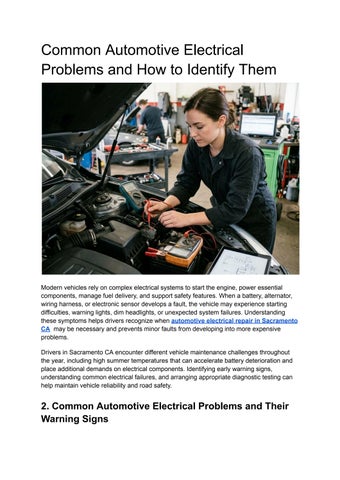
Use Professional Diagnostic Testing A qualified technician may use a digital multimeter, battery load tester, charging-system analyzer, or automotive scan tool to evaluate electrical performance. Testing commonly includes: ● ● ● ● ●
Measuring battery voltage and condition. Checking alternator output under different electrical loads. Performing voltage-drop tests on cables and connections. Reading diagnostic trouble codes from vehicle control modules. Inspecting grounds, fuses, relays, and wiring continuity.
These procedures help distinguish a weak battery from a charging fault or a deeper wiring problem. Professional automotive electrical diagnostics can also identify intermittent issues that are difficult to reproduce during a brief visual inspection. In Sacramento CA, seasonal heat makes preventive battery and charging-system checks particularly useful before long journeys or periods of heavy air-conditioning use.
5. Preventive Maintenance and When to Seek Professional Help Electrical systems benefit from routine inspection, especially as vehicles age or accumulate mileage. Preventive maintenance helps identify deteriorating components before they cause major disruptions.
Practical Electrical Maintenance Tips
Drivers can reduce the risk of electrical failures by following several basic practices: ● Have the battery tested periodically, particularly before extreme seasonal temperatures. ● Keep battery terminals clean and connections secure. ● Inspect accessible wiring for damage during routine maintenance. ● Investigate dashboard warning lights instead of ignoring them. ● Avoid leaving lights or accessories operating when the engine is off for extended periods. ● Use the correct replacement fuses and manufacturer-approved electrical components. Did You Know? Short trips can sometimes prevent a vehicle's battery from fully recovering the energy used during startup. Repeated short journeys, combined with heavy accessory use, may gradually contribute to a low state of charge.
When Professional Repairs Are Necessary Professional attention is recommended when a vehicle repeatedly fails to start, the battery warning light remains illuminated, fuses blow repeatedly, or several electrical systems stop working together. Burning odors, smoke, sparking, and visibly melted wiring require immediate caution. The vehicle should be stopped in a safe location, the engine switched off if safe to do so, and roadside assistance contacted when necessary. Drivers should not continue operating a vehicle with suspected electrical overheating. A specialist in automotive electrical diagnostics and Brake Repair service can identify faulty circuits, inspect braking components, determine whether repairs or replacements are necessary, and verify that the issues are fully resolved. Accurate testing helps ensure reliable vehicle performance and is generally more cost-effective than replacing parts based on symptoms alone.
6. Frequently Asked Questions (FAQs) 1. What are the most common signs that a vehicle has an electrical problem? Common symptoms include dim headlights, slow engine cranking, repeated clicking during startup, dashboard warning lights, malfunctioning accessories, and recurring blown fuses. Automotive electrical repair may be needed when testing confirms a fault in the battery, alternator, starter, wiring, or another electrical component.
2. Can a bad alternator cause a car battery to die? Yes. A failing alternator may not provide enough electricity to recharge the battery while the engine runs. The vehicle then relies increasingly on stored battery power, which can
eventually become insufficient for starting or operating electrical systems. A charging-system test can determine whether the alternator or another component is responsible.
3. Why do vehicle electrical problems occur more frequently in hot weather? High temperatures can accelerate battery aging, increase internal chemical activity, and contribute to fluid loss in certain battery designs. Heat can also affect wiring insulation and electronic components. Regular battery testing and charging-system inspections help identify developing problems before they cause a breakdown.
4. Can a vehicle still run with a faulty electrical component? Sometimes. A vehicle may continue running with a malfunctioning accessory, sensor, or charging component, depending on the fault and the vehicle's design. However, certain electrical failures can cause stalling, reduced engine performance, or the loss of safety-related functions. Continued driving should be avoided if the fault affects safe operation.
5. How can a technician diagnose an intermittent electrical fault? Technicians may review diagnostic trouble codes, inspect connectors and grounding points, measure voltage and resistance, and test circuits under operating conditions. They may also reproduce the problem by monitoring the system while components are running. These methods help identify loose connections, damaged wiring, failing relays, and other faults that do not occur continuously. Experiencing battery issues, faulty wiring, or other automotive electrical problems? Our professional technicians can diagnose and repair electrical faults to keep your vehicle running safely and efficiently. Contact us today to schedule a professional automotive electrical inspection and get reliable solutions for your vehicle.