Why Is Regular Brake Repair Service Sacramento CA Important for Safe Driving?
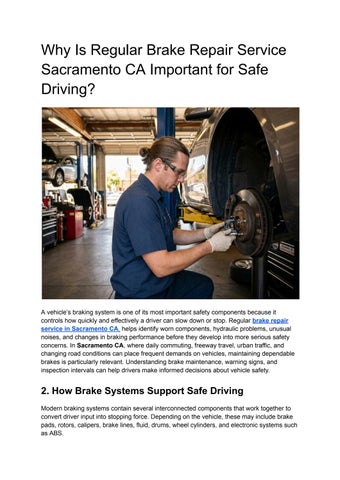
A vehicle’s braking system is one of its most important safety components because it controls how quickly and effectively a driver can slow down or stop. Regular brake repair service in Sacramento CA, helps identify worn components, hydraulic problems, unusual noises, and changes in braking performance before they develop into more serious safety concerns. In Sacramento CA, where daily commuting, freeway travel, urban traffic, and changing road conditions can place frequent demands on vehicles, maintaining dependable brakes is particularly relevant. Understanding brake maintenance, warning signs, and inspection intervals can help drivers make informed decisions about vehicle safety.
2. How Brake Systems Support Safe Driving Modern braking systems contain several interconnected components that work together to convert driver input into stopping force. Depending on the vehicle, these may include brake pads, rotors, calipers, brake lines, fluid, drums, wheel cylinders, and electronic systems such as ABS.
A properly functioning system allows the vehicle to: ● ● ● ● ●
Stop within a predictable distance Maintain braking stability during emergency situations Respond consistently when the brake pedal is applied Distribute braking force appropriately between wheels Reduce the possibility of component-related failures
A brake system inspection can help identify deterioration that may not initially be obvious to the driver. For example, brake pads can become excessively thin while the vehicle still appears to operate normally. Likewise, a rotor may develop grooves, heat damage, or uneven wear that gradually affects braking performance.
Common Components That Require Attention Brake components do not all wear at the same rate. Pads are friction materials designed to wear over time, while rotors can become damaged or fall outside manufacturer specifications. Brake fluid can also absorb moisture, potentially affecting hydraulic performance. A brake pad replacement may therefore be necessary before other major components require attention. Early maintenance can help prevent a relatively simple wear issue from contributing to additional damage. Pro Tip: Drivers should pay attention to changes in pedal feel, stopping distance, steering behavior during braking, and unusual sounds rather than waiting for a dashboard warning light.
3. Warning Signs That Should Not Be Ignored Several symptoms can indicate that a vehicle needs professional evaluation. Recognizing them early can help reduce the risk of continued component deterioration. Common warning signs include: ● ● ● ● ● ● ● ●
Squealing, grinding, or scraping sounds A brake pedal that feels unusually soft or firm Vehicle pulling to one side during braking Vibrations through the steering wheel or pedal Increased stopping distance Brake warning or ABS warning lights Burning smells following repeated braking Visible damage or excessive wear around braking components
A brake inspection and maintenance appointment can determine whether these symptoms originate from pads, rotors, calipers, fluid, hydraulic components, or electronic systems.
For drivers in Sacramento CA, traffic patterns can make predictable braking especially important. Urban intersections, congested roads, freeway entrances, and frequent stop-and-go conditions require repeated acceleration and deceleration. These conditions can make it easier for drivers to notice gradual changes in braking behavior.
Why Unusual Noise Matters Noise does not always mean that a major failure has occurred, but persistent grinding can indicate severe friction-material wear or metal-to-metal contact. Ignoring such symptoms can increase the possibility of rotor damage and more expensive repairs. Did You Know? Anti-lock braking systems do not eliminate the need for mechanical brake maintenance. ABS helps prevent wheel lock during hard braking, but pads, rotors, fluid, calipers, and other physical components still require inspection and maintenance.
4. How Regular Maintenance Helps Prevent Larger Problems Routine maintenance is useful because braking problems often develop progressively rather than appearing as an immediate failure. A technician can assess component condition and determine whether repair, adjustment, replacement, or further diagnosis is appropriate. A brake maintenance service may involve examining friction materials, checking rotor condition, evaluating fluid, inspecting hydraulic components, and verifying that electronic warning systems are operating correctly.
Benefits of Timely Brake Maintenance Regular attention can provide several practical benefits: 1. Improved stopping consistency: Properly maintained components help preserve predictable braking performance. 2. Reduced secondary damage: Replacing worn pads before severe deterioration may help protect rotors and other parts. 3. Better identification of hidden issues: Inspections can reveal leaks, uneven wear, or damaged components. 4. Greater maintenance predictability: Routine inspections can help vehicle owners plan repairs rather than responding only to emergencies. 5. Support for other safety systems: Proper braking performance works alongside traction control, stability control, and ABS. Drivers should follow the vehicle manufacturer's recommended maintenance schedule while also considering mileage, driving conditions, vehicle age, and individual braking habits. In Sacramento CA, seasonal temperature changes and extended periods of dry weather can also influence how vehicles are used. Although brake wear depends heavily on driving
style and vehicle type, frequent commuting and repeated stops can increase friction-component wear over time.
5. Why Professional Brake Diagnosis Matters Brake problems can sometimes appear similar even when their causes are different. For example, vibration during braking may be associated with rotor-related issues, but a proper diagnosis is needed to determine the actual source. Similarly, a soft pedal can involve hydraulic or fluid-related concerns rather than simply worn pads. A brake repair specialist can use visual inspection, measurements, diagnostic equipment, and manufacturer specifications to determine whether components remain serviceable. Other related services may include: ● ● ● ● ● ● ●
Brake rotor repair Brake caliper service Brake fluid service Automotive brake inspection ABS system diagnosis Hydraulic brake system testing Brake component replacement
A vehicle's braking system should not be evaluated solely according to mileage. Two vehicles with identical mileage can experience different levels of brake wear because of differences in traffic exposure, vehicle weight, driving habits, terrain, and towing requirements. Pro Tip: When brake work is recommended, vehicle owners can ask which component is worn, what evidence supports the recommendation, whether replacement is required immediately, and whether manufacturer specifications were used during the assessment.
6. Building a Safer Brake Maintenance Routine A practical brake maintenance routine combines scheduled inspections with attention to everyday warning signs. Drivers should avoid postponing evaluation when braking behavior changes noticeably. A useful routine includes: ● ● ● ● ● ● ●
Following the manufacturer's recommended inspection schedule Checking brake fluid at appropriate service intervals Having unusual noises investigated promptly Monitoring changes in pedal response Inspecting pads and rotors for abnormal wear Addressing dashboard brake or ABS warnings Maintaining tires because tire condition also affects stopping performance
Good braking performance is part of a larger vehicle safety system. Tires, suspension components, steering, wheel alignment, and electronic stability systems all influence how effectively a vehicle can respond during braking. The Sacramento region also includes extensive roadway networks connecting residential communities, commercial areas, and major transportation routes. This variety of driving environments means vehicles may experience substantially different braking demands depending on daily routes and usage, while electrical system repairs may also be needed when vehicle electrical components develop issues.
7. Frequently Asked Questions 1. How often should a vehicle receive brake repair service? Brake repair service should be scheduled when inspection findings, manufacturer recommendations, mileage, or warning symptoms indicate that attention is needed. There is no single interval that applies to every vehicle because brake wear depends on driving habits, traffic conditions, vehicle weight, component design, and road use. Drivers should have the system evaluated promptly if braking performance changes.
2. What are the most common signs of worn brake pads? Common signs include squealing, grinding, reduced braking performance, increased stopping distance, or a brake warning indicator. Some vehicles also have electronic or mechanical wear indicators that alert the driver when pad material is approaching its service limit.
3. Can worn brake pads damage rotors? Yes. If friction material becomes excessively worn, the underlying components can make damaging contact with the rotor. This can create grooves, heat-related damage, or uneven surfaces, potentially increasing the scope of necessary repairs.
4. Why does a brake pedal sometimes feel soft? A soft or spongy pedal can have several causes, including air or moisture in the hydraulic system, fluid problems, leaks, or other braking-system faults. Because braking is safety-critical, a significant change in pedal feel should be professionally evaluated rather than ignored.
5. Does ABS replace normal brake maintenance? No. ABS is designed to help prevent wheel lock during hard braking, but it does not prevent normal wear of pads, rotors, fluid, calipers, and other braking components. Routine mechanical inspection remains necessary.
Maintain dependable braking performance and address brake issues before they affect your vehicle’s safety on the road. Contact us today to schedule professional brake repair service in Sacramento CA.