WINGSPAN
NORTH SYDNEY BOYS HIGH SCHOOL QUARTERLY
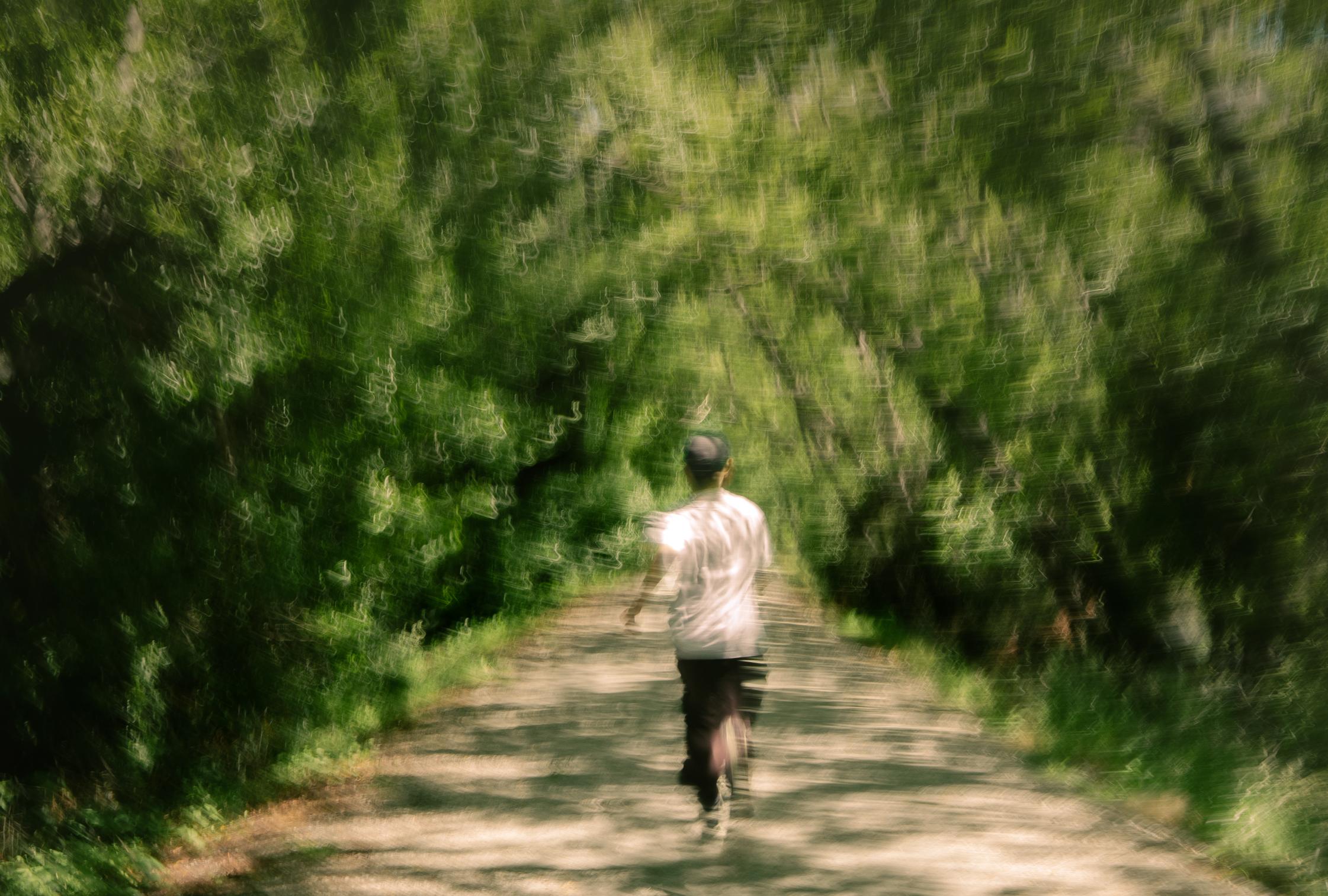
DEFINING SONDER
(n.) The realisation that each passerby has a life as vivid and complex as your own.
Sonder is the sudden, quiet realisation that every person you pass is the centre of a life as vivid and complex as your own. It arrives without warning: on a train platform, in a supermarket aisle, at a red light where you watch a stranger drum their fingers on the wheel. In that moment, the world cracks open. The background extras step forward. The woman checking her phone has a history of small defeats and private triumphs. The man walking his dog carries memories that still ache when the day grows long.
Each face is a doorway into an unwritten novel, dense with the complexity of what makes us human. Sonder can feel humbling or unsettling. It shrinks you and expands you at the same time. Your own story becomes one thread in a vast, tangled tapestry of intersecting lives, each moving according to invisible
motivations and secret rules.
Everyone is the hero of their own narrative, the villain of someone else’s, and a footnote in countless more. Think of creation, new worlds that have always existed. To feel sonder is to stand at the edge of infinity and glimpse the impossible weight of human experience, flowing around you unnoticed, ongoing, and utterly indifferent to your awareness of it.
CUT OUR FEET ON EGGSHELLS AND HAVE A GREAT TIME IN THE
LETTER FROM THE EDITOR
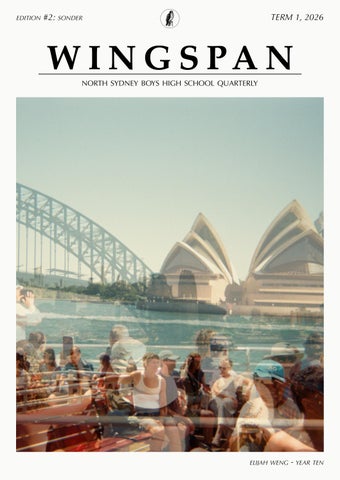
Putting together this edition of Wingspan has been incredible. There's something for everyone - whether you want to cook a dessert, question Machiavelli or enjoy some beautiful poetry this edition is heartfelt, beautiful and somewhat educational (I didn't know catgirls had such inner complexity). It's a testament to the passion and strengths of you as students (over 35,000 words! We'll have a novel by the end of the year). To see so many contributions in so many different styles is amazing. Thank you to every student who has contributed, especially the amazing artists and photographers (Shout out to our cover artist Elijah Weng for his brilliant snaps and to Lance Xie for always having the perfect picture to accompany writing of all sorts). A particular special thanks goes to Edwin Pang for providing guidance and expertise with the formatting of this term's edition. Hopefully we see a marked improvement in the formatting from the first one. A big thank you as well to Ms Grant for facilitating the printing of Wingspan (If you contribute you get a copy so get writing!) and to Mr Kwiet for all his work with writing club and help with editing.
Sonder as an idea is truly important. In the world as it is today and especially for you facing constant academic pressure it is far too easy to fall into the trap of solipsism and competitiveness.As a young person your body will constantly tell you that nobody has been through any of this before. The idea of sonder is that for better or for worsenothingyouexperienceistrulyasuniqueasyoumaythink.Whilethattakesawaysomeofthefunofbeing your own main character, it means that when you're going through something there are people out there to talk to. There are some full-on ideas in this term's edition so if you need support or a piece triggers something within you please remember you have a school full of teachers, a wellbeing team and peers who can help. So whether you contributed, are reading or accidentally stumbled upon this because you needed something for an English wide reading lesson, I encourage you to remain mindful of not just the people but the world around you. And if you haven't submitted to Wingspan yet what's stopping you?
- Mr Parker
SONDER
ARTICLE - CHANDRAMOULEE SIVALENKA - YEAR TWELVE
"Sonder" is defined as the profound, coined realisation that every random passerby is living a life as vivid, complex, and chaotic as your own.
Yet Sonder is far stranger, and it's worth being precise about what it actually is, because it's easy to mistake it for something akin to empathy. It is not simply empathy. Empathyisaneffort,adeliberateor at least motivated attempt to imaginatively inhabit what another person is feeling.
Sonder is something more vertiginous and less voluntary than that. It is the sudden, unbidden awareness thatotherpeople'sinner lives are happening right now, continuously, independently, and withoutanyreferenceto you whatsoever, and that you are, from every one of their vantage points, no more than a peripheral figure, a face glimpsed and forgotten, an extra in a film whose protagonist is someone else entirely.
you will ever have is filtered through your own sensory apparatus, coloured by your own memory, and weighted by your own emotional history in ways so deep and habitual that you cannot meaningfully separate the world as it is from the world as you experienceit.Youaretheonlymind you have ever inhabited directly, the only interiority you have ever had unmediated access to, and everyoneelse,withoutexception,is something you infer and
past that you remember, a present that you feel, and a future you anticipate with hope or dread. Everyone else appears within that narrative as a character defined largely by their relationship to you, by what they mean to you, what they've done to you, what role they play in the story you are, without quite choosing to be, always already telling yourself about yourself. The stranger on the train exists in your mind, essentially as scenery, as part of the world your story takes place in rather than as a story unto themselves.
"...The hierarchy that made you the protagonist and them the scenery reveals itself as nothing more than a convenient fiction."
To understand Sonder, you have to reckon honestly with how the human mind is built by default, because the answer is more uncomfortable than most people find it flattering to admit.
Consciousness is, at its most fundamental level, egocentric, and this is not a moral failing or a character flaw but a structural feature of what it means to have a perspective at all. Every perception
reconstruct from the outside in, from their faces, their words, the way they hold themselves, the gap between what they say and what you sense they mean. There is something it is like to be each of them, some irreducibly first-person quality to their experience, that remains permanently and structurally closed to you regardless of how much you observe or imagine or care.
The practical consequence of this, playing out quietly across every moment of ordinary life, is that the self functions as an implicit centre of gravity around which everything else is arranged. Your life is the only life you experience as a continuous narrative, with a
We experience our lives as stories while they are happening, which means we are always, inescapably, cast as protagonists. We have our inner circle of supporting characters, the people whose lives we follow with genuine investment. We have our bit players, the people who appear briefly and serve some function before receding. And we have, as the vast backdrop against which all of this takes place, the anonymous mass of everyone else, present in our experience mainly as atmosphere.
This is the monologic mode of living, a single governing perspective organising everything and everyone else around it, granting the people closest to us a partial and often projectioncoloured personhood while reducing everyone beyond that innercircletoneartotalabstraction. Theyexistinourworld,buttheydo not have worlds of their own, at
least not in any way that registers with us practically or emotionally.
Sonder is the involuntary moment when that changes. The stranger on the street, who has existed in your perceptual field as background, suddenly asserts themselves as a protagonist of equal weight and equal validity to your own. Their story is not happening to you, it is not happening for you, it is not in anywayorientedaroundyouatall; it is simply happening, complete and continuous and indifferent to your presence, in exactly the way that your own story is happening indifferently to theirs.
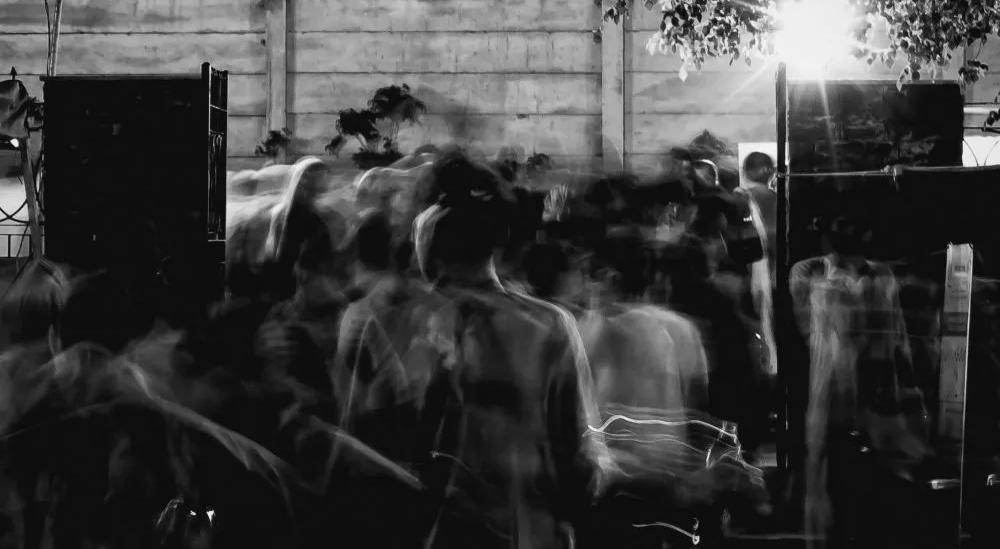
The hierarchy that made you the protagonist and them the scenery reveals itself as nothing more than a convenient fiction. This is why Sonder tends to strike us with particular force in cities, in airports and train stations and crowdedstreets, anywhere that the sheer quantity of other lives in motion reaches a kind of critical mass. It is not that the realisation is logically any more true in a crowd than in an empty room; of course there are billionsofotherinnerliveswhether you can see them or not. But abstraction is the mind's great anaesthetic, and there is something about the physical, undeniable presence of hundreds of strangers moving around you with purpose and direction, going somewhere, coming from somewhere, carrying something, that briefly makes the abstraction visceral.
Thus, Sonder exposes the gap between what we know intellectually and what we are capable of genuinely feeling. Most people, if asked, would readily agreethateverypersonalivehasan inner life as rich as their own. It is not a controversial claim. And yet this agreement sits almost entirely inert, producing no particular feeling, motivating no particular
behaviour, changing nothing about the way we move through the world. Sonder is the rare moment when that dormant knowledge briefly ignites a profound awareness, often accompanied by a
brief spout of unnamed emotion. Ultimately, we are built, at a very deep level, for a world smaller than the one we actually inhabit, and Sonder is the occasional, disorienting proof of that.
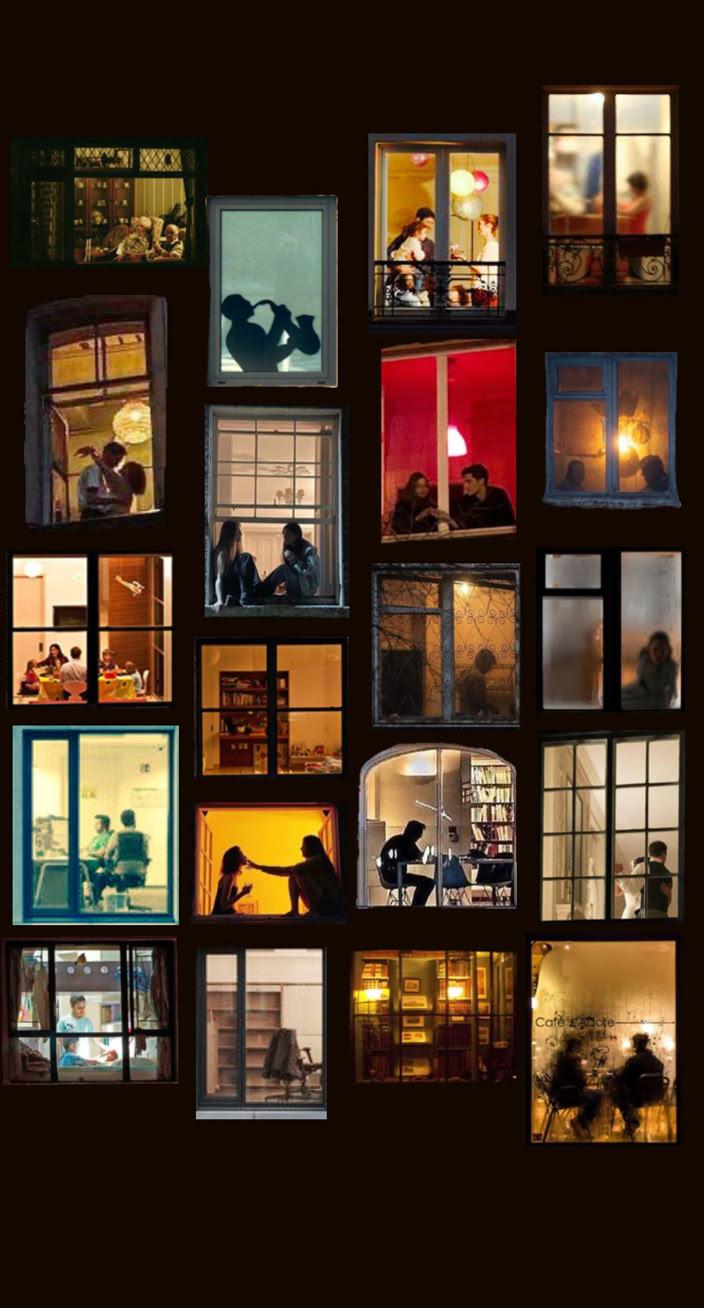

MEANING
POETRY - ERIC LU - YEAR TEN
“Mum”, I ask, Eyelids heavy from the pull of sleep, “What is the meaning of life?”.
Mother takes a pause
Breathing in the quiet night air
As she crafted her response with the gentleness belonging only to a mother.
“To be kind. To grow.And most importantly, to love.”
The words linger like dust in a ray of light
Visible, beautiful
Lingering and fleeting.
I hold it as close as I could
Pondering it over for mere moments
Before my innocent attention was stolen again.
In the spring, life feels like laughter
Astranger’s smile as they walked the dog
Down a sunlit sidewalk.
As brief as the birdsong on slow afternoons, Yet it warms the heart from within.
I feel it break through me
Like the first rays of dawn,
As I learn the joy of shared glances, Of hands brushing accidentally, Of the fleeting calm moments beneath blooming wisteria. Mum’s words, now several years old, echo in my mind.
Is this it? I wonder
This sweetness that trembles within
The ache that follows the delight
Like the rainbow after the rain?
In summer, love knocks on my door, Politely, calmly, and full of passion.
Not a lingering question, but a soul
As familiar as my own reflection.
My feelings draw me to them
When they laugh
Like sunflowers to the sun.
Still yet, I ponder the meaning of it all.
But the coffee at dawn
The creases their eyes have when they smile
Is enough of a reason.
Here, at last, the reason seems certain enough. It is the warmth of their body against mine
The shoulder I can lean on
The way two shadows walk along each other on the pavement.
It is the whispered secrets
The excitement of seeing them
The notes my heart sings at their touch. It is the quiet courage of choosing someone
Over and over.
Mum, you were right, it seems. Life is to love, To blend the colours of your soul To another's In beautiful, glimmering shades of joy And make it home.
But autumn arrives, It is patient
But signals the inevitable cold. It waits in the wind that carries the golden leaves down
In the subtle shake of my hands
As I walk down hospital corridors. Illness arrives,
Rolling in like storm clouds, Blocking the light of my sun with angry strikes of lightning. Their hands, once steady, Grows light in my grasp.
The words that I dare not utter Hang between us. Unsaid. Because it would shatter Into tears and goodbyes, Like frost on glass.
When death comes in
As heavy as rain and hail It closes the door softly And leaves with everything.
The world continues turning Yet it stops all the same. Traffic hums. Moths dance to the light. All for something unknown; The meaning of life.
Why?
Why was it them?
Why do butterflies be beautiful, And moths are papery pests? What is the point of it all?
The money, the fame, the success? What is the meaning of life?
Everyone said grief is emptiness. But it is not.
It is a land with nothing
No anchor for love to attach to Nothing but a broken something.
Winter arrives Cold, desolate, empty But with the promise of warmth And the flowers of spring.
Death has sat beside me For long enough Consoling me
Leaving his mark And leaving as swiftly as he came.
Yet it remains
Mum’s words were right still The meaning of everything It is to be kind, to grow, and to love. Meaning was a question in itself Confined to nothing except the vessel who attempts to define it.
Life’s meaning was to return the smile to the stranger The slow airport nights The light banter with people Who you feel closest with.
Life’s meaning was to smell the flowers That bloom every year Again and again Waiting for the bees to come.
Life’s meaning was to hope That one day Love might be in reach again But for now, the gentle embrace of kind words were enough.
So I wait.
Eagerly, patiently For spring to arrive. And for meaning To cross my path once more.
HOME VIBES
POETRY - LAYTON HO - YEAR NINE
The little, stout boy standing in front of me rubs his snotty nose, glaring up at the “Hideous creature” he so deems. I try to ignore his fountains of profanity As I make my way off the train.
I look back, just once, and see his Unruly curls bobbing up and down, Seeking purchase once again as the wheels Start turning, carrying him And his blunt, callous remarks away.
There’s a commotion down the block Outside of the station, Earlier blasphemy reincarnated As The Ladies and The Lords; They love a good scene.
Just shy of a hundred meters away is Acrate full of beer, spirits. The bottles and cans, not so full. Shower thought. Perhaps alcohol is the greatest divider.
And then someone nudges me slightly And my ever so graceful body Veers away from the sidewalk. I secretly wish strong, sturdy hands Would grasp my outstretched palms.
I land on a puddle of drool. Or bile? Wishes aren’t strong enough. Besides, no one is strong enough To hold me steady -All their strength Go to exchanging fists.
Past the grocery chain with that flickering sign (Miraculously still intact) Is the city center. Home to pigeons And the occasional camper. It’s cold here. Right next to the sea.
There’s an oxidising bronze statue (Awealthy bloke?)
Dotted with specks of green and brown, Featuring a flock of birds, rosy cheeked in the glow of the setting sun. If I squint my eyes, They look like an army of little, stout boys. The aunties next door to my complex Love calling me traumatised.
Seeing things, hearing things, losing my mind To the blurring crowds of home sweet home. Nah… It’s more like a routine. Cyclical.
I wouldn’t call street brawls and mad-men And pigeons wearing the faces of Annoying brats (If you will) normal. It’s more something you get accustomed to. Not normal, but… normalised. Here,
Snubbed cigarettes and rat droppings Are confetti. Stinky confetti, But decoration nonetheless for those With the creativity and insanity
To even attempt to “see the light.”
There’re a few folks who try and smile Against a pessimistic backdrop; They’re pretty strong, if you ask me, Laughing and loving to remind us That life isn’t a bleak narrative.
And there’re some well-dressed commuters With their suitcases and ties who Might offer you a glance, Plaintive as they seem.
At least they recognise you as a person.
Sometimes, I wonder why they’re all here. I wonder what they see. Do they walk the same, memorised routes
To the barber and the stores?
Do they feel something akin to sympathy?
Would they shove through crowds
For the promise of food
Or to witness “Round 45 - Fist Fight?”
Join protests around town hall And rally against our headless government?
Living here is learning that Everyday, you just need
To tie up your shoelaces, if you have any, And stand up tall like you own it.
‘Cause home sweet home isn’t always sweet. It’s more a hectic, albeit familiar, mess.
ONLY TRANSLATED
FICTION - JEFFREY MA - YEAR ELEVEN
Familiarity
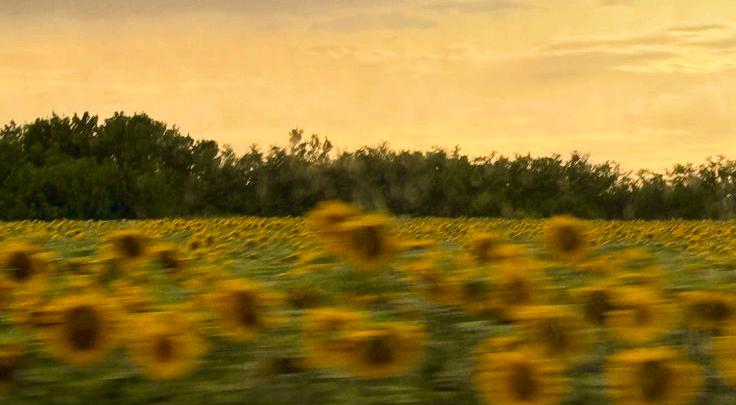
Sunflower seeds sat in shallow bowls on every table, their shells gathering by the end of each afternoon, pale, striped, brushed aside between conversations and never held for long. My grandmother cracked them between her teeth, passing the kernels to me one by one, her hands carrying the scent of damp tea leaves and detergent from the morning’s washing.
The kettle clicked off just as my grandmother called my name from the kitchen, her voice cutting through the television’s low hum as it slipped from news into music. Someone turned the volume up, then down again. Outside, a speaker crackled to life, the opening beatsofasquare-dancesongarrivinghalfasecondlate through the window.
I climbed onto the bed and leaned forward, my chin pressed against the metal bars, watching women fall briefly out of step before finding the rhythm again. Children darted around them, called back, released, and called back once more, their footsteps following the same cracked line in the pavement until it faded into noise. Quiet never quite arrived.
My name passed through the room, and nothing paused. Conversations carried on, undirected, unadjusted. Beneath the table, sunflower shells shifted softly underfoot as language moved the same way, exchanged without hesitation. Even silence, when it appeared, settled momentarily before speech closed over it again.
I learnt how to split the shell cleanly with my baby teeth, how to discard what was bitter and keep what was soft. Only later did I recognise it as the first knowledge I took in without instruction. It had been absorbed whole, unquestioned.
Anomaly
Hanfus
Streets filled with children playing
Now uniforms
Shijiazhuang
Now empty and quiet roads
Now Eastwood
English came in scarred fragments, sounds I could
recognisebutnotyetassemble.Inclass,mysilencewas mistaken for hesitation, then for comprehension. I learnedtonodbeforeIcompletelyunderstood,tocopy unfamiliar letters from the board without knowing the meaning they held.
I was moved to a smaller room at the end of the corridor.Twodesks.Onestudent.Ateacherwhospoke slowly, carefully, as if every sentence might break if rushed.
Here, language was no longer something shared; it was something practised.
Repeated.
Corrected.
gathered along the edges of the red “福” sign on the door, dulling what once was deliberate. Somewhere nearby, a knife struck rhythmically against a chopping board. The sound arrived before the smell.
At the table, my aunt slid a bowl and spoke. I recognised every word, but not their weight. I nodded too early. She repeated herself slowly, the sentence rearranged and the vowels stretched to make room for me.
“
多吃一点,” she said.
She paused. “Eat… more”
Perfected.
At lunch I sat apart, watching the rhythm of the playground unfold from afar. Words reached me late, thinned by distance. I ate silently, apprehensive of what I unwrapped, what I revealed. There were no sunflower seeds here, nothing that took time, nothing that left behind a trail of shells.
Even my name changed. It was shortened, simplified, made easier to say. I answered it without correction, learning that survival sometimes required surrendering. Here, language arrived already shaped for me. I learned to accept it quickly, to use it before questioning it, to speak in ways that could be recognised. Meaning came later, if it came at all.
Reconciliation
It was late afternoon when I returned. The light in the corridor was low and angled, catching on the dust
The English was accurate, but it simply wasn’t the same. Something had thinned as it crossed over. I smiledandreachedforthebowl,unsurewhichversion I was meant to answer.
When I tried to reply, the word I wanted arrived fully formed and still felt wrong. I could sense its edges, yet when I spoke I chose a smaller word instead; one that travelled easily. No one corrected me. Conversations continued and adjusted without it.
Outside, the street shifted in minor accommodations. Bicycles brushed past shoulders, voices bent briefly, then resumed. I listened for gaps where I could enter without altering the pace.
Later, I cracked a sunflower seed between my teeth. The shell resisted, then split unevenly. The taste was sharper than I remembered. I set the pieces aside and waited for the familiar satisfaction to arrive. It didn’t.
What remained was not confusion, but distance, the quiet sense that I still knew how to break the shell, even if the seed no longer answered me the same way.
CHINESE NEW YEAR OR LUNAR NEW YEAR?
ARTICLE - CARLOS YIN - YEAR NINE
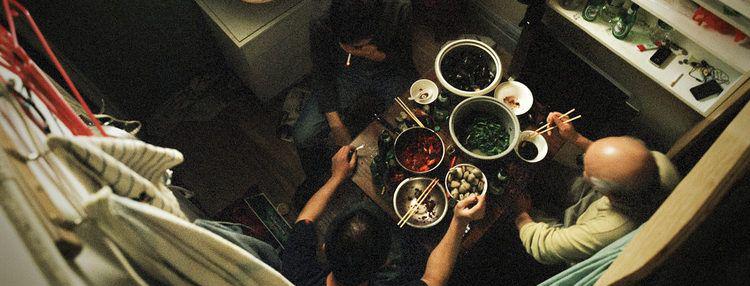
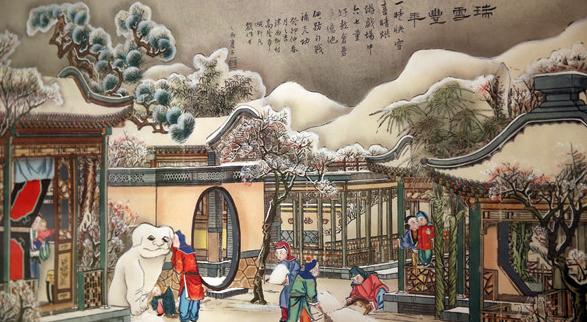
The name of this festival that has been celebrated since the 11th century BCE and is still celebrated by more than 1.5 billion people worldwide has been a debate for several decades. Many claim that referring to it as “Chinese New Year” is culturally exclusive and diminishes the importance of other cultures, while others say that referring to it as “Lunar New Year” strips away its cultural identity as a traditional Chinese holiday.
First of all, we need to consider whattheholidayisreferredtoas,of course, in China. It is officially
named 春节, the “Spring Festival”, which introduces our hidden third potential title for this holiday. But this name is actually not used frequentlybymanyChinesepeople - the majority refer to it as, unsurprisingly, simply “New Year”.
This raises the question of whether or not we can refer to it as the “Lunar New Year”. But the problem is, it’s based upon the Chinese calendar, which is a lunar calendar, but not the only Lunar calendar. In fact, the western “Lunar Calendar” places the new year in June!
Another important factor to take into account is that very few cultures celebrate this holiday, and none of them refer to it using either name. For example, Korean people refer to it as 설날, meaning “New”, and Vietnamese people refer to it as Têt, meaning “Festival”.
Ultimately, there is no right or wrong way to refer to the holiday. Whether you like to refer to it as ChineseNewYear,LunarNewYear or something else, we can all agree that this holiday is an important aspect of human culture and one that must be cherished.
EVERYONE WANTS TO BE BRAND NEW
ARTICLE - MARCO LIU - YEAR ELEVEN
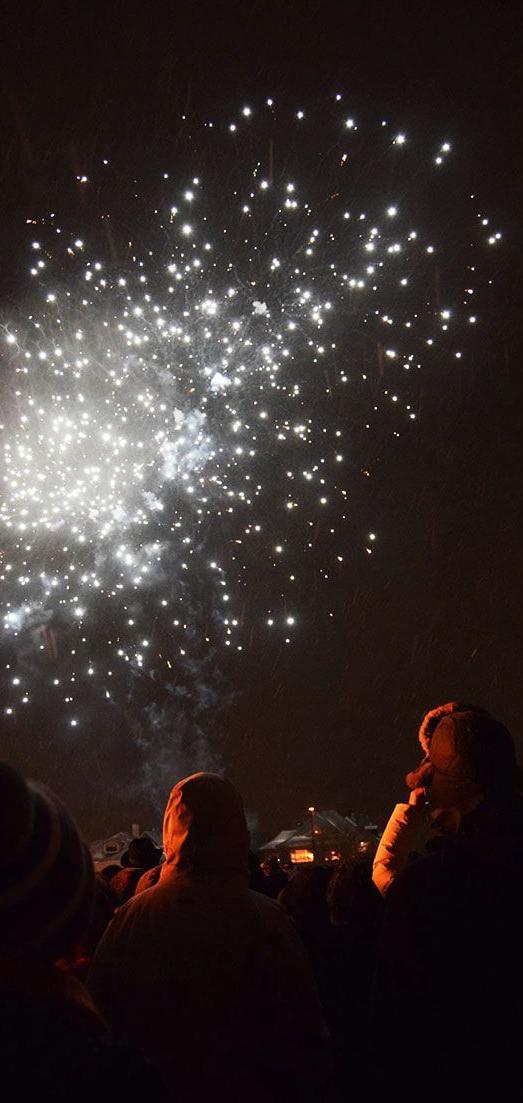
Every December, every January, every New Year's, we look back and reflect. Maybe it's a symptom of the holiday season, the peculiar, recurring and motivating pressure wrapped in tinsel, hidden in family time and the glaring commercial countdown to a "fresh start." But there's something about the promises we make to ourselveswhat we call "resolutions" - the loudlyproclaimedaffirmationsand the boldly captioned Instagram posts.
We vow to ourselves to "go to the gymconsistentlythisyear,"to"start prepping and planning out every meal so I can lose weight," to "start that thing I've always wanted to start," all vaguely summing up to "be a better person." Call me a cynic.
You'll abandon half of these by mid-March. Three quarters by late May. And by the time the first real cold of August comes around, those promises will have, like an nice autumn shower, come and gone.
Perhaps it’s because the holiday season forces a unique kind of double-consciousness upon us.
We are simultaneously living in the warm, nostalgic glow of the past, in remembering Christmases gone by, in memorialising the people we've lost, in reminiscing of the children we once were, and projecting ourselves into a pristine, unmapped, unknown future with seemingly limitless potential.
We are standing on the metaphorical cliff edge that is January 1st, looking back at the messy, complicated terrain we've
The belief that the person who ate a little too much, scrolled a little too long, and started a little too little can be shed like an old skin.
What's harder to believe is that we actually have to put effort into our promises and acknowledge that the NewYear'sisjustanotherday-that there's no magic in the air, just mom's (delicious) cooking and that little hint of nostalgia that comes with reflection.
On the other hand, it’s a performance. We craft resolutions that sound good, that are socially acceptable. We rarely vow to "be more patient with my mother" or "spend less time curating a perfect life on Instagram and more time living my messy one." Instead, we opt for the tangible, the ones with numbers we can see move. Weight loss, career advancement, financial discipline.
"...The tragedy might be that we seethe'newyou'asadestination: a fixed point rather than an ongoing, often tedious, often exceptionallydifficultprocess"
We'll have slipped back into the comfortable, familiar routine of our not-quite-new selves. But we continue to make these promises, year by year, list by list.
The question then, isn't really if we'llbreakthemagain,ifwe'lltruly keep our word this time, but rather why we keep making them in the first place, knowing full well their likely fate?
just crossed, and convince ourselves that with one leap, we can land in a completely different country. A country where we are organized, fit, patient, and kind. A country where we finally read all the books on our nightstand.
On one hand, this (almost?) delusional belief is a powerful testament to human optimism. No matter how difficult the past year has been, January 1st offers a blank page - at least, that's what society says. It's an easy belief.
These are the metrics of a "better person" in a society obsessed with productivity and self-improvement as a commodity.
I think then, that the real tragedy isn't that we fail. The tragedy might be that we see the "new you" as a destination, a fixed point to be achieved, rather than an ongoing, often tedious, often exceptionally difficult process.
We expect a grand, sweeping transformation, and then, when all we get is the same old us, struggling to get out of bed for a
6a.m. workout on a dark January morning, the cognitive dissonance is too much, and we retreat.
To vow to be "brand new" is inherently flawed, hopeless and demoralising.
But what if, instead of a complete overhaul, we aimed for a slight edit? What if we took a cue from the reflective spirit of the season and, instead of asking "What's wrong with me?" we asked, "What does this version of me need a little more of?"
Maybe it’s not an hour-long gym regimen weekly, but a commitment to a daily walk, without your phone, your earbuds, your distractions and your baggage, down the street to clear your head.
Maybe it’s not a perfectly, meticulously planned diet, counting every carb you consume, but one home-cooked meal a week shared with people you love.
Maybe it’s not starting that massive project and trying to renovate your life, but simply dedicating fifteen minutes a day to an artform that brings you joy.
Sothen(asIseeit),thetruevalueof the New Year's isn't the resolution itself. It's the annual moment of pause.
It's the chance to reflect, to feel the gap, and to point ourselves, however imperfectly, in a direction that feels a little more true.
The resolutions will likely still be abandoned by March. But the reflection, if we let it, can linger. And maybe, just maybe, one of those small, gentle edits will stick, not because we forced it, but because it actually made the messy, ongoing project of being ourselves a little bit better.
PAINT - A BEAUTIFULLY MESSY MEDIUM
DISCURSIVE - SAMUEL ZHANG - YEAR ELEVEN
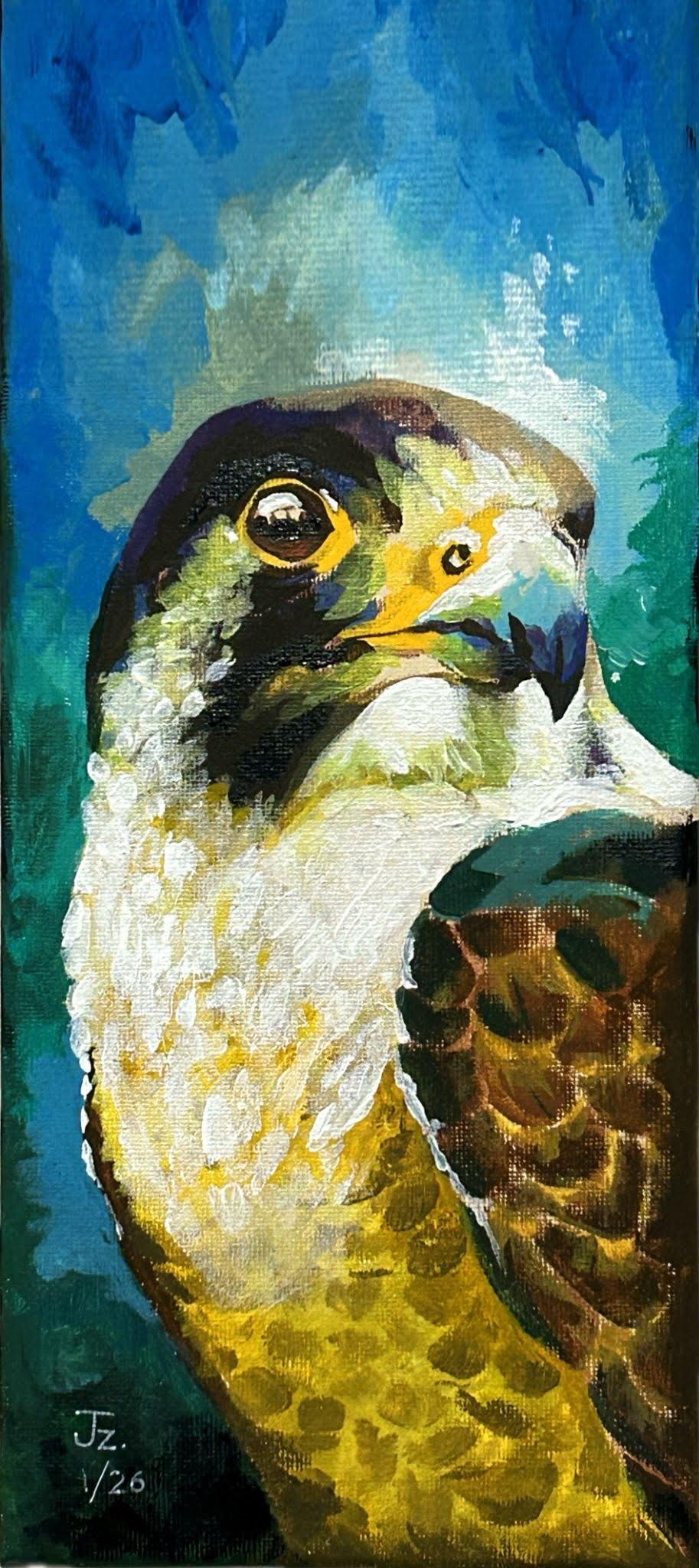
Picture this. On a stale winter’s day, huddled in the corner of a cramped art studio, you find yourself idly combining hues of paint on a ceramic plate. The fluid firmness of your brush’s wooden handle is soothing, easing the sharper cool fumes of acrylic wafting through the room.
To the east, the blank canvas prohibits most sunlight from entering, though some rays manage to peek their way onto your plate, exposing their vividness to the world of light. The sun smiles, signalling through the quiet chiming rustles of your shutters.
You have felt this way before. The excitement of creation is a beautiful thing.
In fact, as you concoct swirls of ocean aquamarine, forest emeralds, warm sunset ambers, your intentions become quite clear. You are planning to paint a landscape – one scene that has not escaped your mind since you marvelled at its beauty years ago. You’re quite particular – mixing different groups of symphonious tones that you’ve memorised relentlessly. Each hint of lime, each dashofsaffron–theyallchangethe moodslightly,connotingadifferent emotion each time you alter the smears.
It’s all for a reason.
Perhaps you could think about the construction of storyworlds as a careful combination of complementary colours, handpicked to appeal to its audience
most. Indeed, stories like Shakespeare’s Romeo and Juliet truly demonstrate this ideology, crafting its own unforgettable, vivid tone of throbbing red. Each word in his play seems to add saturation to this fiery passion, superseding the dull tones of clichés with an indescribable harmony of warmth. Yet, the contrasting brutal ending, a shade of blood crimson tinted in muddy lapis sorrow, illustrates a profound, didactic message straight from Shakespeare’s heart: hatred devours all. Maybe these detailed, distinct compositions of narrative
"...The joy to construct, to create, to compose is always there."
spaces are canvases for their creators, a domain to purposefully manipulate the tone of their audience’s emotions.
You don’t know where to start.
All the shades are wrong. The aqua – it’s too pure. The emerald – it’s too calming. The amber – it’s too warm. Your emotions are intangible,unknowncolours–ones you could never begin to describe. The people who view the artwork will never know how you truly felt in that moment, and that fact saddens you beyond words.
So perhaps storyworlds are rather iridescent instead, shifting subtly
every time they are viewed. Take Leonardo Da Vinci’s Mona Lisa, arguably the most famous painting on earth. The subject’s indigo expression,awaveringbetweenthe thick navy of sombre and the peaceful violet of contentedness, captivates modern audiences with her unique radiance and enigma. Yet,DaVinci’sintentions,nomatter their shade, have long faded in the current of the river Lethe, seeping down the stream into oblivion. Perhaps the power of these realms is not to impart a certain message, like a faint but noticeable tint in its palette, but instead to platform cultivated insight like a mirror, reflecting the reader’s own hues of emotion based on individual experience.
It's rather odd, isn’t it?
Perhaps these settings are more than just mechanisms to further immersion, powerful figureheads for certain colours to shine more vividly. Or instead, maybe they are as vibrant as the still surface of a pure lake, mirroring the context they are read in with a mesmerising fashion.
But whether you think these fictional terrains are powerful or meaningless, one fact remains. The joy to construct, to create, to compose is always there.
Once more, curled in the corner, you summon the strength to take the brush in your hand, dab it gently in colour. The bristles apprehensively meet the canvas, marking it irreversibly with messy, raw emotion.
And you begin.
CAN YOU THINK OF A MILLION WAYS TO FALL ASLEEP?
POETRY - NATHAN LE - YEAR TWELVE
Peach-tinted skies, Sew alibis
“..And dream-shaped clouds,” “Upon the house”
Floating curves sitting on time, The first, on cloud nine
Abit behind— Sat the seventh of the heavens, Some futile devices…some Whimsy hums And windy whispers And creaking critters, Who never meant much.
Atick and a tock, The day’s reached its dock
Rusty rhythms, still, upon dream-shaped time “Wait, I’m— about to catch a cloud!”
There might’ve been talks Of fresh-laid barns, Few ducks and swans, In many circles Of coffee spoons
Aweird-shaped moon, because— How is it now, Aperfect crescent?
To crisply quarrel, “Waxing, or waning?”
Go back and forth, With hearted snubs From pasts and afters That land just right, Upon dream-shaped nights And fits of laughter And silence, soon— By instinct, the familiar, Unrhythmic hum
Between bits and crumbs, Goes up once, then down, one Further, and rest.
Two shadows beneath a dream-shaped moon, Some wispy tunes, and dreams of not much else.
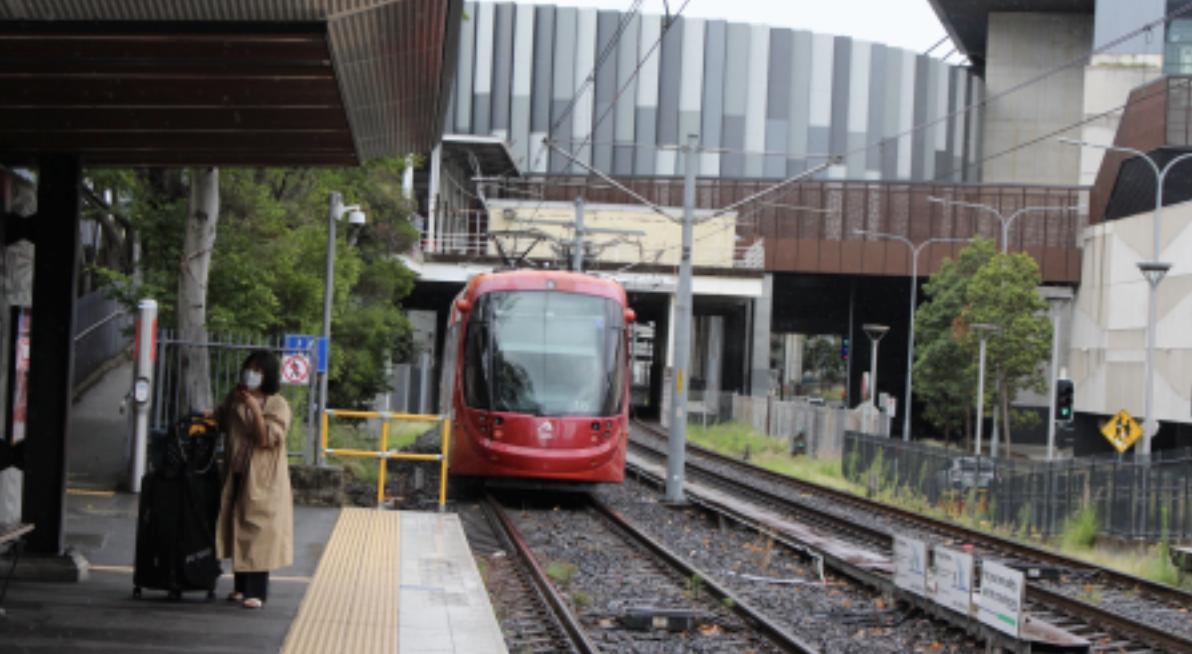
A FUN FACT ABOUT EVERY LIGHT RAIL STOP IN NSW
ARTICLE
- LACHLAN STEENSON - YEAR TEN
In New South Wales, there are 64 Light Rail stops that operateacross5lines-theL1, L2 and L3 in Sydney’s inner suburbs,theL4inParramatta,and the Newcastle Light Rail in Newcastle.I’llbecoveringonefact abouteverystopinthestate,going line by line.
1. Central Grand Concourse was used as a tram terminus on Sydney’s former tram system until the year 1957, being repurposed in 1997 as its current state.
2. Capitol Square is the location of the only connection between the L1 and the L2 and L3 lines, via a double track curve, which is sometimes used during maintenance.
3. Paddy’s Markets opened as an interchange with the Sydney Monorail under the name Haymarket, but was renamed in 2005 after the market bought the naming rights to the stop.
4. Exhibition Centre stop actually serves Sydney's International Convention Centre, and despite this there’s also a station on the line…
5. …right after it, called Convention. Very confusing.
6. Pyrmont Bay has an interchange with a ferry wharf, and was the only light rail to ferry interchange until Newcastle's Queens Wharf stop opened in 2019.
7. The Star originally opened as Star City, and was used as a terminus during late nights until 2020, but services actually ran emptytoJohnStreetSquare,asThe Star doesn’t have any crossovers.
8. The John Street Square stop is in a really deep cutting, sandwiched between the entrances to two tunnels.
9. Bank Street was the most recently renamed stop in the state, and it was formerly called Fish Market, but changed its name in January 2026 with the opening of
the new Sydney Fish Market, which is closer to Wentworth Park.
10. Wentworth Park was the original terminus of the Sydney Light Rail’s first line, from its opening in 1997 until the Lilyfield extension opened in 2000.
11. Glebe is 700 metres from Blackwattle Bay ferry wharf, which was opened as part of a replacement ferry service, possibly the only instance a ferry has been used to replace a public transport service in Australia. This was a resultoftheInnerWestLightRail’s closure, caused by the discovery of cracks in the trams.
12. Jubilee Park is located next to what was once the Rozelle Tram Depot, which served Sydney's former tram system. The depot is better known nowadays as Tramsheds and now functions as a shopping centre for the suburbs of Forest Lodge and Glebe.
13. Rozelle Bay stop isn’t located in the suburb of Rozelle, and until the
Rozelle Green Bridge opened, it was difficult to get to the stop from the suburb, with the City West Link and the former Rozelle railyards in the way.
14. Lilyfield was the terminus of the line between 2000 and 2014, andwastheonlystopwithacentre platform until 2019.
15. Leichhardt North is the closest tram stop to the Sydney BusMuseum, at Leichhardt Bus Depot.
16. Hawthorne is named after the Hawthorne Canal which runs parallel to the line, but the canal actually runs all the way to Waratah Mills, four stops away.
17. Marion is adjacent to Leichhardt Oval, which is the home ground of soccer team Apia Leichhardt.
18. Taverners Hill is in four different suburbs - Lewisham, Leichhardt, Summer Hill and Haberfield.
19. Lewisham West is a 5 minute walk from Lewisham station, and you can see the passing mainline trains going over a bridge from the stop.
20. Waratah Mills is the least used stop on the central Sydney network, beaten only by Ngara and Rosehill Gardens from the Parramatta system.
21. Arlington takes its name from Arlington Oval which is across the road from the stop.
22. Dulwich Grove is closer to Dulwich Hill’s commercial centre than the actual Dulwich Hill stop is.
23. Dulwich Hill used to be an interchange with trains, but is set to become an interchange again, with the new Southwest metro opening in 2026.
Let’s continue to the L2, which opened in 2019.
24. Circular Quay has three tram platforms, which makes it just one
of two light rail stops in the state to have more than 2 platforms.
25. Bridge Street was originally going to be called Grosvenor Street, and would have been planned to have two side platforms. Ultimately, it ended up with one single centre platform.
26. Wynyard Railway station’s nearest entrance is nearly 100m from the light rail stop it shares its name with.
27. QVB has the shortest stop name, being an abbreviation of the Queen Victoria Building located next to the stop.
28. Town Hall’s stop is located less than 200 metres from the QVB stop, which is the shortest gap between stops in the state.
29. Chinatown is marked as an interchange with Capitol Square, but you can’t actually take a tram directly from one to the other, due to them being on separate lines.
30. At Haymarket, you can catch a bus and a tram from the same shared platform, but this is only true for the platform on the north side, as the bus lane is one way.
31. Central Chalmers Street is the onlystopapartfromCircularQuay to have three platforms, and this is used for extra terminating capacity when there are events at Moore Park.
32. Surry Hills is located at the corner of Riley and Devonshire Streets, but during construction there were groundworks at Wimbo Park, to the east of the stop, to enable a potential second stop serving the suburb in future.
33. You can exit Moore Park via three different levels - a footbridge, an underpass or a pedestrian level crossing, but the underpass is only open during events at the nearby Sydney Cricket Ground or Allianz Stadium.
34. Royal Randwick serves the Royal Randwick Racecourse and the tram depot beside it. The stop
was originally planned to be directly outside the racecourse gates, but was moved across the other side of the road after a complaint from theAustralian Turf Club.
35. Wansey Road stop was nearly called Wansey Stables, as Randwick racecourse’s stables are next to the stop.
36. At UNSW High Street, buses travelingwestboundonroutes348, 370 and 390X drive directly between the two platforms, over the tracks, but they don’t stop at the station.
37. Randwick was originally planned to be called Randwick Junction, and would be positioned in High Cross Park, but community protests over the loss of parkland led to it being moved to its current location.
Next up is the Kingsford branch and the L3.
38. ES Marks is used as a driver change stop, as it’s less than a 10 minute walk to the nearby Randwick depot, but trams can’t access the depot from the stop without reversing at Moore Park. 39.Kensingtonisoneofthreestops in the suburb of Kensington, the other two being ES Marks and UNSW Anzac Parade. UNSW High Street on the L2 is also right on the border of the suburb.
40. UNSW Anzac Parade was originally planned to have a side platform adjacent to the university, as well as a second platform in the median of Anzac Parade, but the platforms ended up both being built in the median.
41. Kingsford isn’t actually the end of the Kingsford Line, despite its name suggesting so, although many of the suburb’s main businesses are located in the area surrounding the stop.
42.JuniorsKingsfordistheonlybidirectional cross-platform trambus interchange in NSW, allowing easy transfers between tram services and buses to suburbs south of Kingsford.
Now it’s on to the L4, which consists partially of the former Carlingford Line which is quite interesting in itself.
43. At Westmead, you can interchange with Sydney Trains, and eventually even the Sydney Metro West when it opens - both the metro and the light rail have and will have Westmead as their terminus.
44. Westmead Hospital is not only served by the L4, but also the Northwest Transitway, at its ‘Hospital’ stop.
45. Childrens Hospital very nearly had the longest name on the entire network, because in development, the stop name “The Children's Hospital at Westmead”, was used, with thirty letters in the name. The name Gurung, meaning infant, wasalsonearlyused,butittoowas rejected.
46. Ngara was nearly called Cumberland Hospital, meaning thelineverynearlyhadthreestops in a row with the word hospital in the name, stretching across the hospital precinct from Ngara right down to Westmead.
47.BenaudOvalwasplannedtobe called Factory Street, but Ngara is at the other end of Factory Street, so to avoid confusion the nearby Benaud Oval was used as the namesake for the stop.
48. Fennell Street’s stop physically split its namesake street into two portions, so you can’t drive down the street’s full length anymore without crossing Church Street at an alternative location.
49. Prince Alfred Square is the closest stop to Parramatta Stadium, but because of its lack of turnback facilities, there aren’t any event services that terminate there.
50. Church Street was originally planned to be called Eat Street, and the street was pedestrianised during the construction of the light rail, similar to George Street in Sydney CBD.
51. Parramatta Square has an interchange with Parramatta train station, as well as the future Parramattametrostation,butisthe only one of the three modes to have an extra word in the stop name.
52. Robin Thomas is closer to Parramatta ferry wharf than every other transport stop with the word Parramatta in it.
53. Tramway Avenue used to see tram services to Parramatta Park and the Parramatta River between 1883 and 1943, with tram services returning 81 years later when the L4 opened in 2024.
54. Rosehill Gardens is the least used stop in the state with an average of just 118 users a day, and the station that it replaced, called Camellia, used to be the least used on the train network as well.
55. In the 1990s, when Yallamundi was called Rydalmere, and was a stop on the Sydney Trains network, its then-single platform was moved from the west to the east side of the line, which bizarrely made it harder to access from the neighbouring Western Sydney University.
56. Dundas, along with the rest of the former Carlingford Line, was privately operated from its opening until the year 1901, and during this period was actually named Kissing Point Road, which passes the station to the north.
57. Telopea is one of three Light Rail and Train stations to have its name originating from the Waratah flower - Telopea is the scientific name for the flower, while Waratah Mills is a L1 station. Waratah railway station is on the Hunter Line.
58. Carlingford has been earmarked for extension many times both as a train station and a tram stop - with extensions proposed to Dural, Beecroft, Epping and Chatswood by rail, and Macquarie Park, Eastwood and Epping by light rail.
It’s up to Newcastle now to look through the six stops on the Newcastle Light Rail.
59. Newcastle Interchange isn’t in the suburb of Newcastle, but rather of Wickham, to the west of Newcastle CBD.
60. Honeysuckle is named for an urban renewal precinct beside what was once Newcastle Harbour, on Honeysuckle Point.
61. Civic is located adjacent to the Newcastle Museum, where the original Civic railway station remains, repurposed as a public park.
62. Crown Street’s namesake street is only 50 metres long, despite the much longer and well known Hunter Street and Scott Street intersecting at the stop’s location.
63. Queens Wharf’s stop serves the terminus of Newcastle’s only ferry service, which runs to Stockton on the other side of the Hunter River.
And last but not least…
64. Newcastle Beach has the easternmost Opal card pole in the state at exactly 151°47'11.0" east.
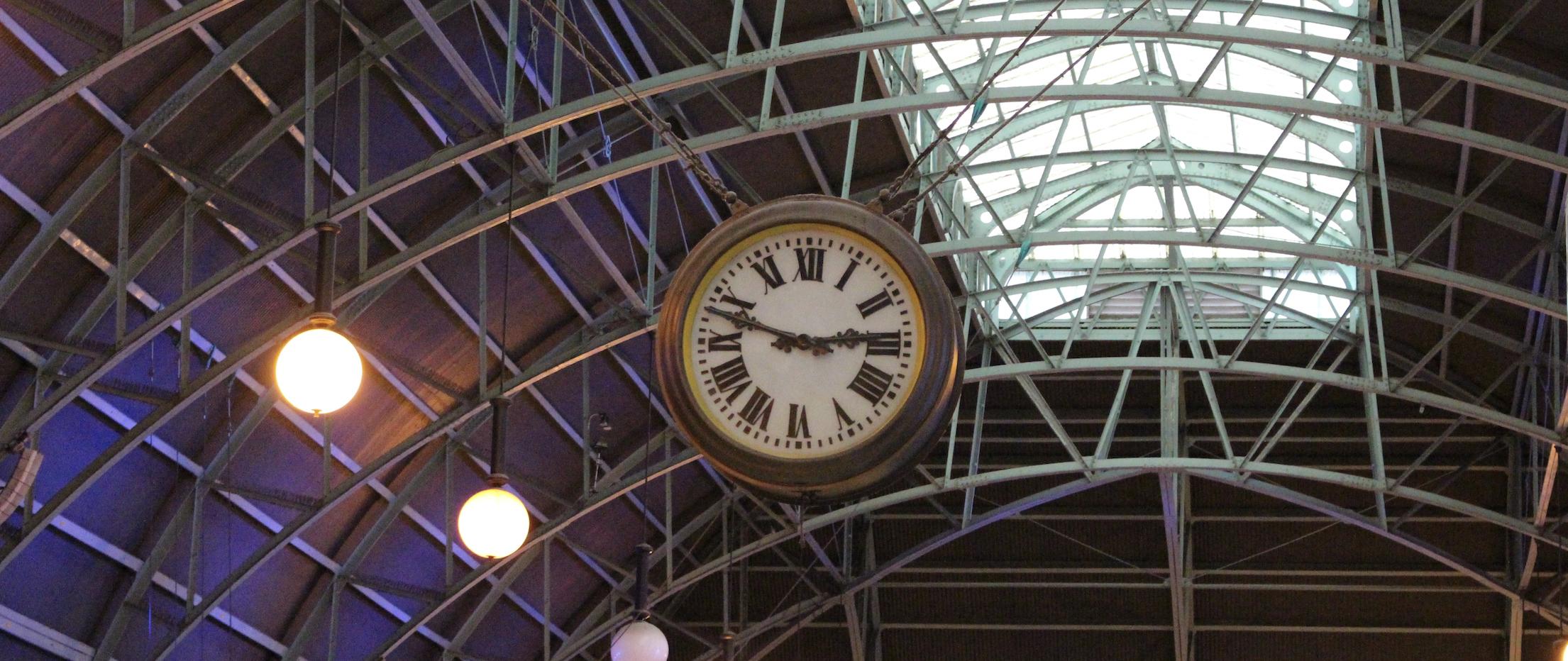
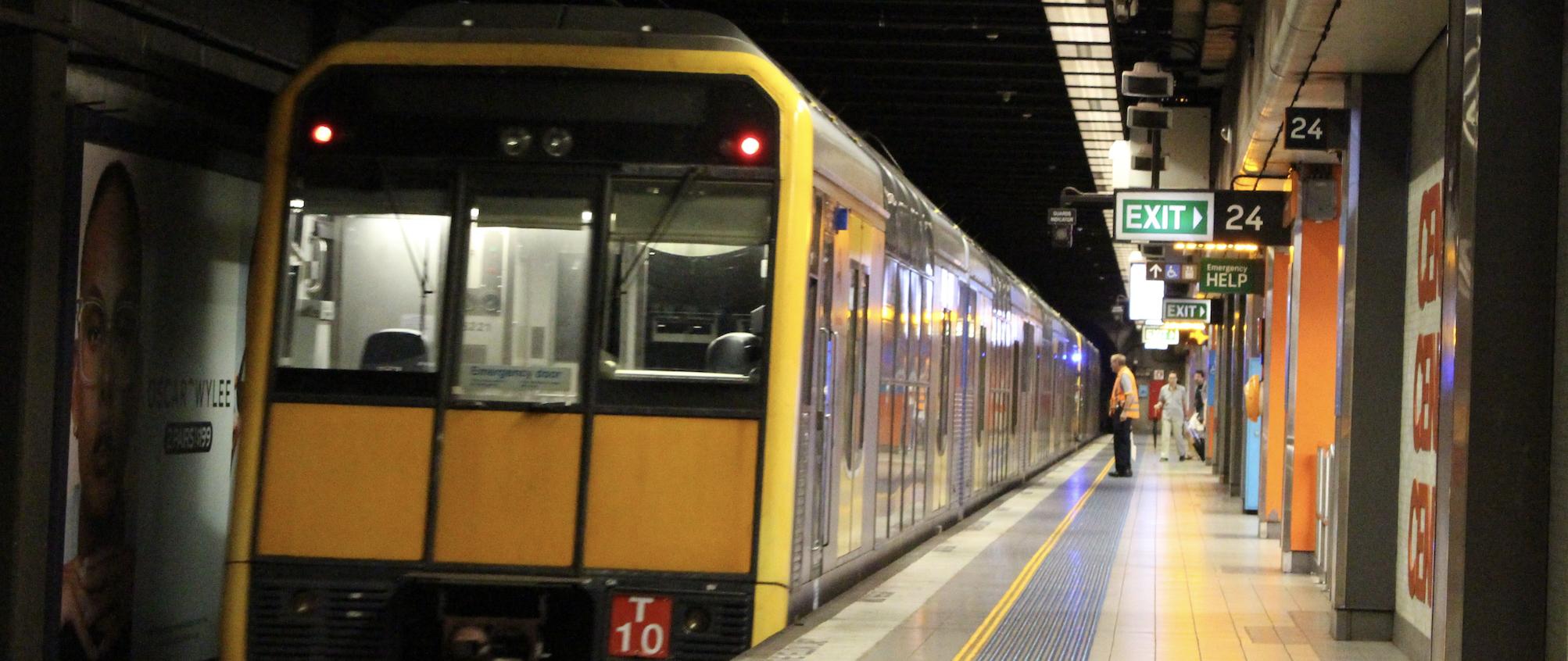
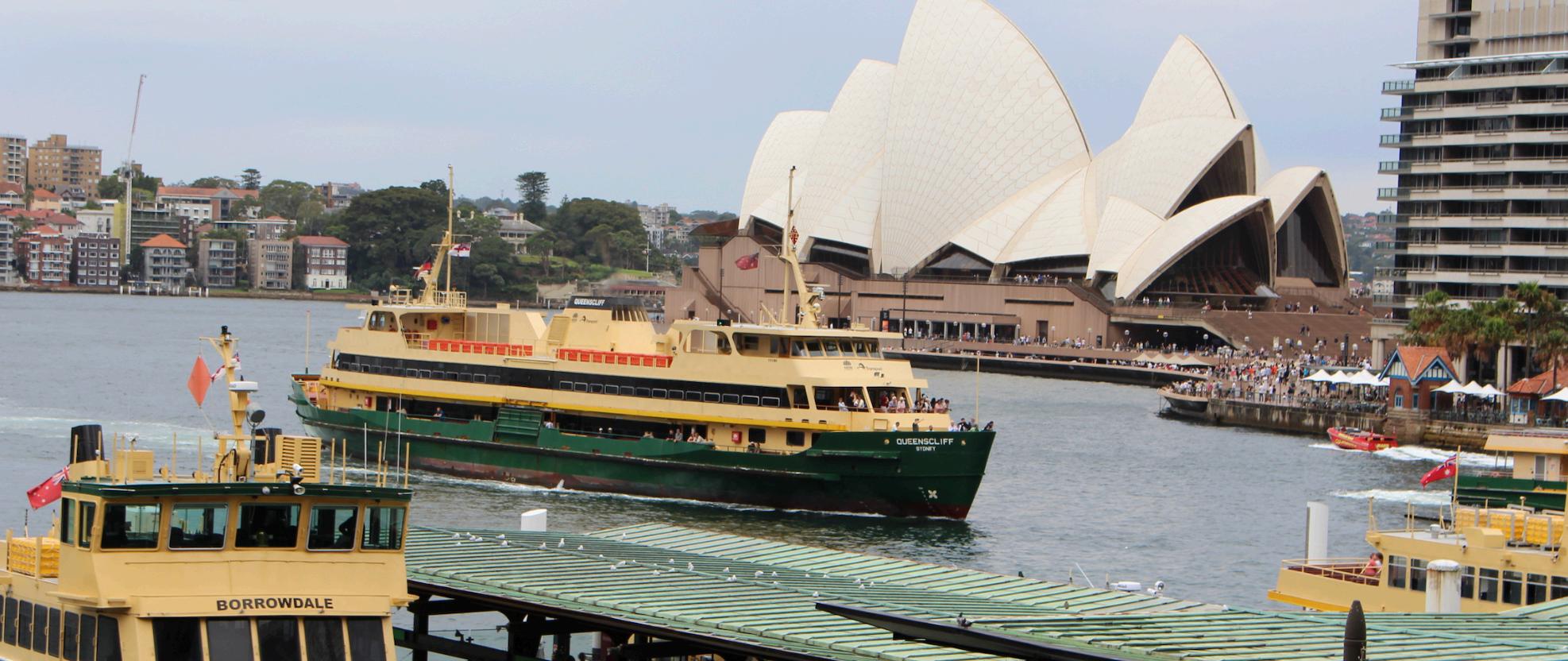
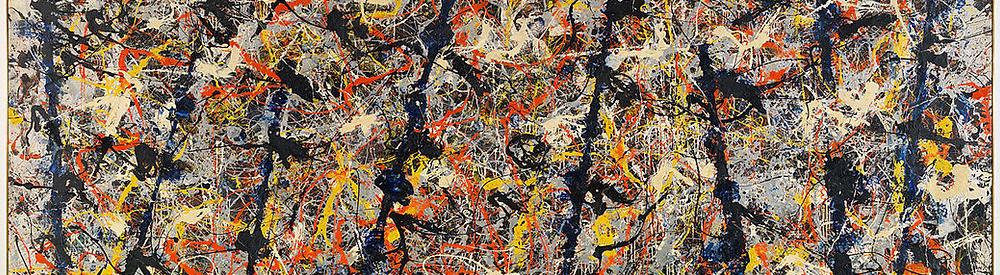
Accompanying photographs on Sydney's transit systems by Lachlan Steenson
UNCERTAINTY
FICTION - JAYDEN WONG - YEAR TWELVE
The room has not altered in its material arrangement, and yet something lifts in the back of your mind, fleeting and freeing feeling as though a statutory agreement has been fulfilled, your judgements now wholly your own. The critical monologuing you underwent mere moments ago recedes, leaving contours of thought hitherto masked by Eliot’s lofty ideals.
You notice the absence of compulsion, the sudden ability to let your attention wander, no longer fixated upon singular notion. The echoes of obligation, of expectation, of precision and attention wane into obsolescence, stationing the mind within a liminal space unanchored by any sense of order. It is at this moment a presence emerges from the ambiguity, one less commanding in stature, yet invoking a similar aura of thought.
Lyotard perches upon a boxy, low slung De Sede armchair, his pen painting vague motions on the table before him, strewn with papers and an Olivetti typewriter precariously balanced on its edge.
He is not writing so much as arranging unintelligible scrawl, dragging lines of thought across the page. Occasionally he rests his forehead in his hands and begins anew, erasing, scribbling, brows furrowed in concentration. The cycle repeats itself. Once. Twice.
You speak the third time his hands come up.
“What’s the point of all this?” you ask, weary from his indecision,fromwatchinghimcircleendlesslyaround his thoughts without ever fixating upon a single one. “Doesn’t there have to be a definite answer somewhere? Isn’t that the basis of all thinking? To reach a conclusion?”
He lifts his gaze ever so slightly.
“The point,” he begins, “is that there may be no true conclusions to be reached. The world’s insistence upon a singular endpoint, adopts a teleology that is simply illogical. To seek certainty within these fictional endpoints is to misread the rules of the game. What you see as indecision is simply a recognition that ideas of the world may not be reduced to such simplicity.” His words unsettle you. What he proposes goes against Eliot’s philosophies entirely. And so you probe, half in jest and half in challenge.
“So… are you saying that humanity just has to… has to… wander? That we really can’t know anything for what it truly is?”
“Yes. And therein lies the beauty of postmodernity.”
“Postmodernity?”
Lyotard sinks further into the plush leather of his armchair, letting the words settle.
“Simplifying to the extreme, I define postmodern as incredulity toward metanarratives. The narrative function is losing its functors, its great hero, its great dangers, its great voyages, its great goal. It is being dispersed in clouds of narrative language, and therefore, where, after the metanarratives, can legitimacy reside?”
You pause, blinking, that familiar sense of inferiority creeping into your mind as you realise, once again, you are out of your depth.
“Wait… what do you mean by ‘great hero, great dangers…’?” you ask, gesturing faintly at his papers as though they may provide a semblance of clarity
amongst the ambiguity permeating.
“I am referring, of course, to the traditional, totalising stories that act as the ‘hero’, overcoming great ‘danger’ and undergoing a ‘voyage’ to reach a great ‘goal’ of utopia. Such stories are a unifying point for the human race, yet they are supposed ‘truths’ championed through their popularity. They encourage us to strive for what is inherently impossible due to the fallibility of human nature. They guide us towards impossibility, and thus are doomed to fail. And society still blindly believes.
In an ideal world, the narrative function should discard such ‘heroes’, denouncing them as arbiters of truth or legitimacy. In their place, ‘clouds of narrative language’ would drift, a coalescence of stories from all which inhabit this world, no longer overshadowed by the suffocating ‘metanarratives’.
You lean back, frantically attempting to keep with the rhythm of his thoughts.
“Isn’t there the danger that without some metanarrative people would just drift? How would we ever know right from wrong?”
Lyotard leans forward now, regarding you briefly, brows creasing not in judgement of your assumption but rather its merit.
“That,” he postulates, “is precisely the point. There is no single horizon upon which right or wrong can be attributed to. Morality, legitimacy, all ethical considerations are unable to be guaranteed by any story. They exist only within a fabricated context for each being, and hence valid only insofar as they function ‘locally’. Which is not to label them as invalid, but perceive each story, each truth, with a degree of ‘incredulity’ for they all cannot be true.”
You frown, striving to grasp something stable amidst this torrent of conditional reasoning.
“So we’re just supposed to float in this cloud of stories, none of which are valid nor invalid as the next?”
“Float, drift, participate, meander,” he smiles, pen twirling idly, “yes, that is indeed correct. This is postmodernity. And whether it is liberating or confusing, reassuring or disorienting… is… well… uncertain”
Uncertain
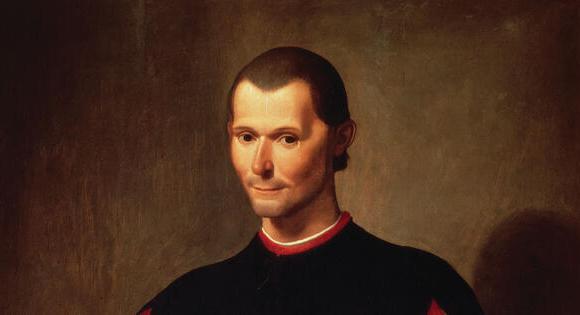
EXTENDING MACHIAVELLI
EXPLORING ENDER ' S GAME & THE PRINCE
ESSAY - JAY SHI - YEAR TEN
Written during political upheaval to the Renaissance Medici family, Machiavelli’s The Prince presents an unscrupulous guide to ruling success. Machiavelli asserts immoral behaviours such as cruelty as necessary conditions for rulersuccess.OrsonScottCard’sEnder’sGamerevises this proposition for the contemporary reader, crafting the child genius ‘Ender’ whose tactics thwart some of Machiavelli’s strategies. Scott Card ultimately refutes the necessary vices championed by Machiavelli, but affirms his violent incapacitating approach.
Machiavelli begins by delineating the weaknesses of different leaderships and proposes brutal ways to defeat each type. The archetypical pronoun “or” in Machiavelli’s categorisation of rulers as “republics or monarchies,” eliminates alternative leadership types. Machiavelli claims that “all a monarch need do is avoidupsettingtheorder,”understatingthechallenges in maintaining order. The euphemism emphasises to contemporary readers that Renaissance monarchs were merely seen as political stability placeholders. Machiavelli proposes his violent conquest method in “make sure you needn’t worry about their reaction,” euphemising the mass destruction needed to not “worry about their reaction.” The casual tone betrays
Machiavelli’s brutal inclinations, prompting audiences to view Machiavelli as a sociopath. Scott Card challenges Machiavelli’s generalisation of leadership types, pointing out subtle differences that negate a universal guide. Readers are invited to consider Stilson, who “always had some others,” the modal adverb hinting of neither republican nor monarchical leadership. The subsequent derogatory term, “Hey, Third” encourages audiences to contemplate nonpolitical leadership stemming from collective hatred. Stilson harassing Ender prompts readers to re-evaluate the difficulty of antagonising no-one. Born as a “Third,” Ender faces systematic persecution despite not antagonising anyone. Ender’s dehumanisation causes his victimisation in Stilson’s “We’re people, not Thirds,” the binary construct isolating Ender. Scott Card approves Machiavelli’s destructive conquest method, asserting it as a “way to forestall vengeance,” from the harmed people. Ender’s stream of consciousness in “I have to win this now, or it will get worse” encourages audiences to introspect the inevitability of complete annihilation.Although Ender regrets his actions by juxtaposing himself with his sociopathic brother in “I am just like Peter,” the remorse is superficial when Ender kills Bonzo de Madrid. Hence Machiavelli examines different
leadership type weaknesses, while Scott Card reinforces Machiavelli’s brutal mindset but rejects his reducing approach.
Machiavelli asserts that armed forces and public support must be balanced for reigning stability. Machiavelli lauds public support in “the people’s aspirations are more honourable,” depicting through elevated diction the masses’ moral superiority over nobles. Ironically, the flattery evokes civic pride in contemporary readers, prompting audiences to accept -Machiavelli’s stance. Machiavelli’s praise of commoners is short-lived, however, as he quickly moves on to the army. Machiavelli disparages that it is “hard to keep people convinced,” the condescending aphorismimplyingthatrulersunderstandthepeoples’ interests better. He emphasises the army’s importance in “you must…force them to believe,” the high modality verb betraying a totalitarian sentiment. Machiavelli ironically posits that if the government needs the citizens “then hardly anyone shows,” the paradox reinforcing the army’s cruciality when public support falls short. While Machiavelli disparages the disloyalty of the masses, Scott Card exemplifies Bernardtoreasonthatpeoplewilloftenfollowaleader they trust. Although Ender realises Bernard is a “snake,” other boys still follow Bernard despite his vices. Scott Card emphasises the divisive pronoun in “they acted as if they didn’t know,” representing to readers the boys’ devolvement into a single entity “they” led by Bernard. Only when Bernard antagonises his followers do they “chafe under his rule,” imagining the breach of a fragile truce between a despot and his gang. Scott Card rejects Machiavelli’s army imperative by depicting Ender quelling Bean’s insolence without armed forces. Ender taunts the other boys into resenting Bean in “at least I have one soldier who can figure it out,” the litotes dividing Bean from his fellow soldiers, leading the other soldiers subsequently side with Ender. However, Ender expresses his remorse in the rhetorical question “does this have to do with being a good commander, making one boy the target?” where Ender’s empathy causes him to question himself. Scott Card proposes the converse of Machiavelli’s citizen disparage, asserting that leaders usually do not support their subjects through hardships. The adults (the leaders) ignore Enderwhenheisattacked,leadingtohislament“there might have been no wounds,” hinting to audiences the gory fight outcome. Ender realises that “now and forever, no one would save him,” the merism suggesting society as a mere construct of people taking advantage of each other. Therefore, Machiavelli emphasises the army’s importance in quelling public unrest and disloyalty, while Scott Card downplays the
army’s cruciality in internal conflicts.
Finally,Machiavellipurportsimmoralbehaviourssuch as treachery as necessary ruler success conditions, while Scott Card argues that such behaviours fail against a clever enemy. Machiavelli asserts that a ruler must be “the fox and the lion,” archetypically encouraging readers to recall the deceptive trickster. The high modality verb in “a sensible leader…must not keep his word,” prompting audiences to contemplate the stability of a ruler who never breaks promises. Machiavelli aphorises that rulers are “never shortofagoodreason,”assuringrulersthattheywon’t be accused of treachery. The irony subverts the traditional ‘noble’ archetype, portraying to 21st century audiences that rulers were poorly received by the masses. Machiavelli extends his perspective on treachery, framing it as necessary for ruler stability. Machiavelli mentions Ferdinand of Aragon, “he would’ve lost his kingdom many times over,” where the polyptoton emphasises playing the fox’s importance. Scott Card affirms the importance of playing the fox, however he also asserts ingenuity as thwarting Machiavelli’s crafty strategies. Ender plays the fox by utilising shaming taunts to disarm a mob. Theironictonein“yourfatherwouldbeproud”draws on the traditional masculine archetype to force Bonzo de Madrid to fight Ender equally. Scott Card rejects perfidy as necessary by portraying Ender overcoming the obstacles handicapping him while adhering to the rules. The rules become unfair for Ender as his army rises, where the chicanery climaxes with Ender fightingtwoarmies.Ender’sGame’sendingischarged with irony, however, as Ender’s Machiavellian brother Peter becomes world hegemon. Valentine’s warning leads to Ender’s exodus in “he’ll use you up,” negatively connoted to represent Peter’s commodificative view of people. The ominous tone affirms the threat of the Machiavellian ruler; although Ender overcomes extreme adversity, he is still susceptible to his brother’s ploys. Hence, Machiavelli purports that immoral behaviours such as treachery as inevitableforreignstability,whileScottCarddisagrees by depicting Ender foiling such sly actions but affirms the Machiavellian ruler type as dangerous.
In conclusion, Machiavelli’s generalisation of the different leadership type weaknesses is criticised by Scott Card. Machiavelli asserts the army’s importance in quelling public unrest, while Scott Card emphasises public loyalty more. Scott Card denounces Machiavelli’s unscrupulous tactics, arguing that they are foilable by a clever enemy. Ultimately, Scott Card extends Machiavelli, affirming his violent strategies but rejecting Machiavelli’s dangerous inclinations.
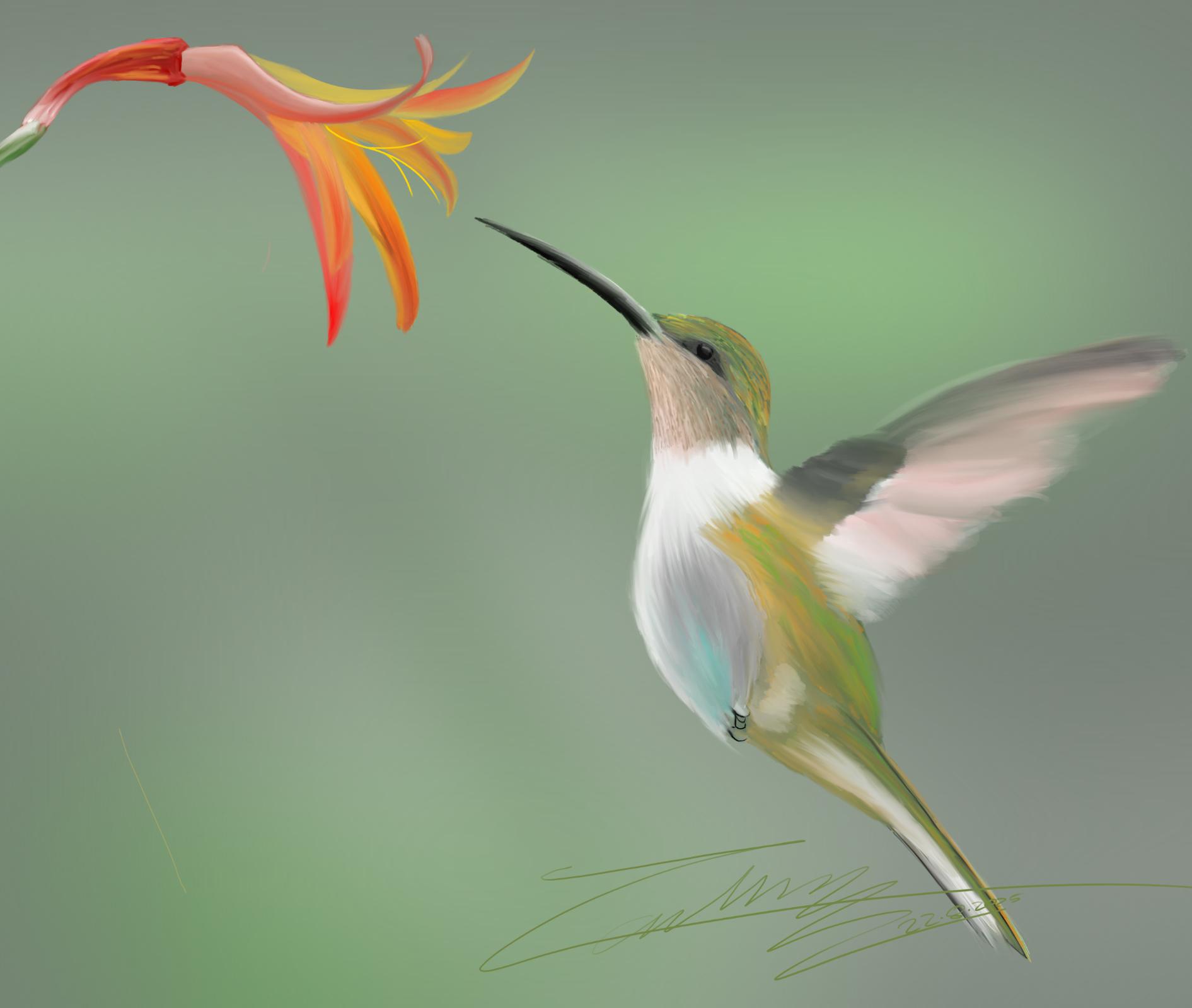
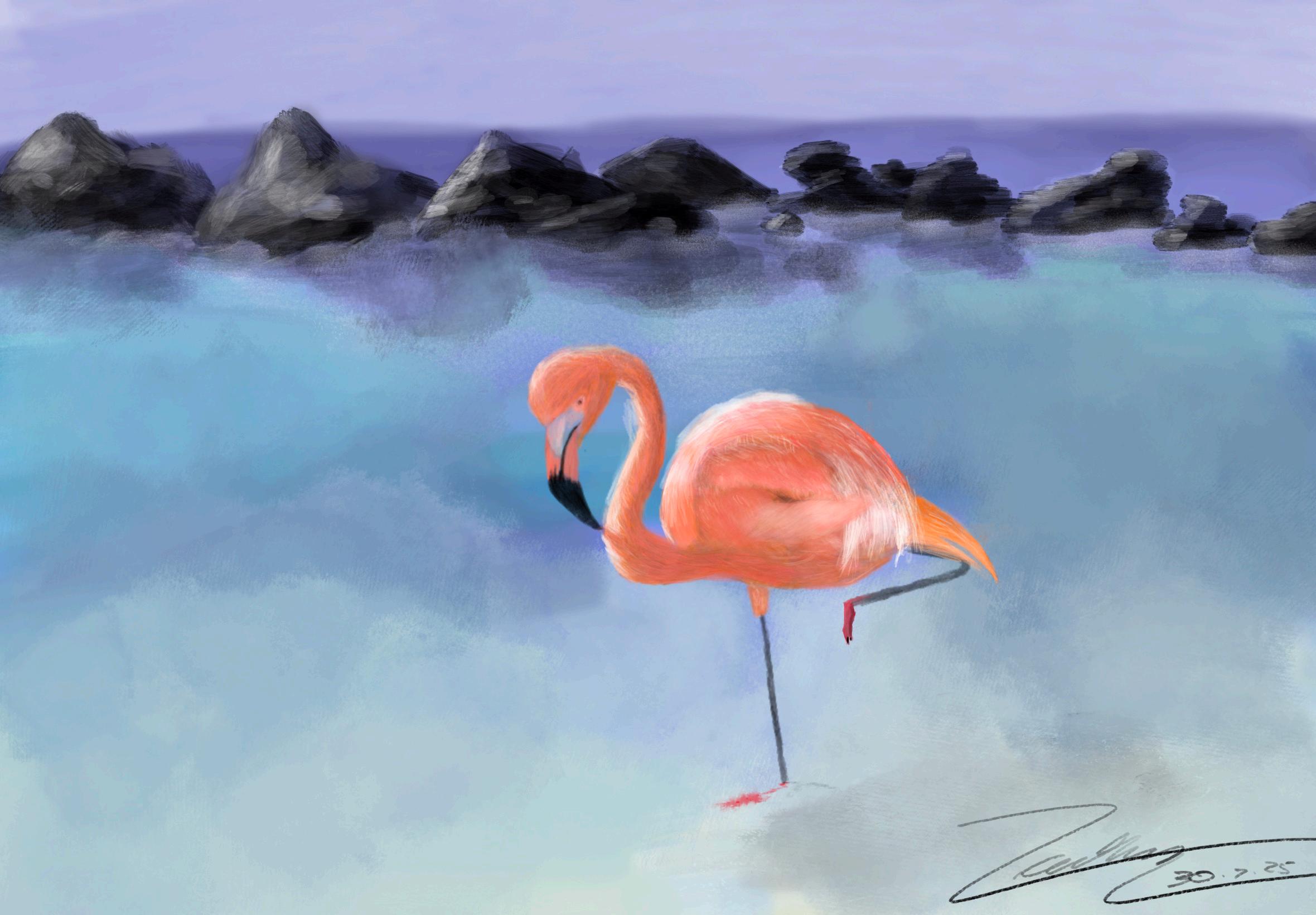
HUMMINGBIRD & FLAMINGO
ZACHARY WIJAJA - YEAR ELEVEN
SONGBIRD
FICTION - JARROD WONG - YEAR SEVEN
Wearesongbirds.Our voices high and rearing against the night, our wings spread and catching the fire that still burns in the void. In broken unison, dancing blindly to the autumn breeze, our movements lost in the endless abyss.
There were once stars to cast the truecolourofourancestorsover the land, but now there’s only shadows, fragments of memory fading into oblivion. A single cobalt moon, its gentle moonbeams illuminating the ruinous landscape. These marks rippling like ghostly scars, a reminder of another age reaching out before us.
The void is our mirror; we may be too far for the moonlight to catch us, but we move on
parallel journeys, our songs the same.Thevoidisoursolace;our perpetual homeland, where we have inherited our father’s burdens. The void is sanctuary; a safe place where we can exist in our dreams, away from the judgement of others.
There is no light left in our worlds. Mere darkness, a world where time and space has been contorted to the extremes of the universe. We see no more emotion than the light that passesoureyes,onlytheradiant soul that illuminates the wolves that prowl within. We sing our harmonies, both in unity and violentdiscord,thewavelengths of our life seemingly stretching out before us. Our ideals of a better world, clouded with our own pride, our bias and prejudice overwhelming our judgement.
Time slows, our surroundings distort;weareoneandthesame, creatures of equal ambience and shadows,fightingalosingbattle toprevailintheage-old-battleof good and evil. Visions of equal lunacy and ambition, lost in the wider image of our stories. Stories. Stories of the distant past, of our mistakes and deepest regrets. And of the future; the path we choose to forge into the unknown.
PONDER
FICTION - ANTHONY GAO - YEAR NINE
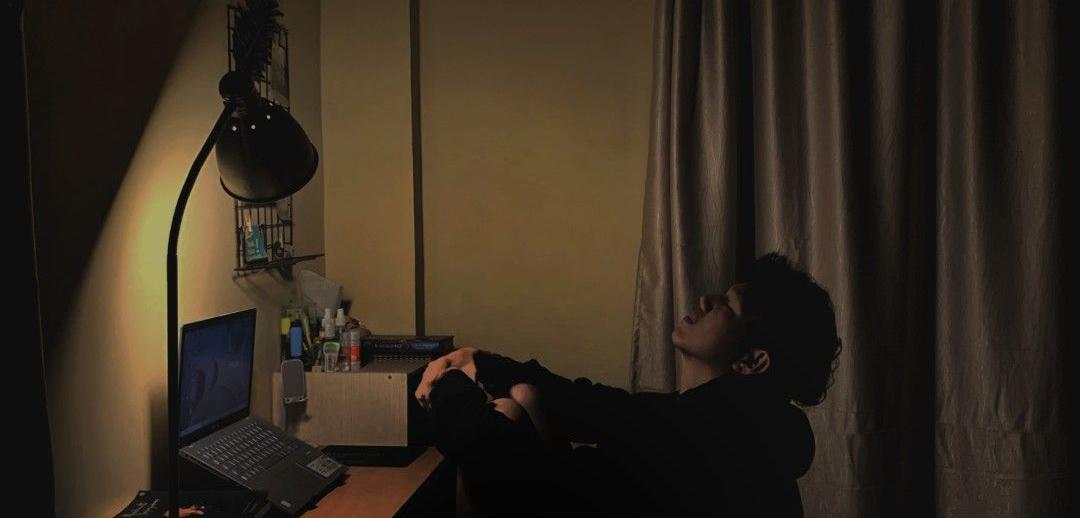
Take some time and wander through the endless corridors of remembered time. Grand artworks framed in gold deck the halls, articulating echoes of the past, enshrined within a fragment of eternity. Run your fingers across the intricate paint strokes, each brush painting a vivid recollection of the foregone. Contemplate those moments, those that hover at the back of your mind but never forgotten. Your achievements, your failures, moments big and small, matters important or trivial. But what had led you to these exact moments? Let yourself revisit your hardships, those late nights, where the once glistening stars have long faded, eclipsed by unwavering dark as you sat facing your mother.
Gingerly you squirm in your chair, a solitary creak making you wince. You had never paid much attention toitbutthechairseemedtodiginto every part of your body, rendering each position painfully uncomfortable. Defeated and forlorn you bow your head and stare despondently at your knees. Your mother’s piercing, icy gaze holds you still, binds you, ensnares you. The goosebumps send crawling sensations across your skin, a shiver of... fear? Or was it merely the cold?
You weren't anticipating pity but this was beyond overwhelming. The chandelier hanging above your head casts a sickly yellow glow across the walls, a quiet sense of condemnation makes your nerves stand on end. For a fleeting moment you wish for it to just drop and grind you into a pile of flesh, pulp, blood and bones if it meant
the end of this unbearable tension.
Why were you here again? You lift your gaze ever so slightly, just out of the corner of your eyes you catch a B, hastily scribbled on the corner of a test paper. Right. You’re here for that. It’s ironic really, how a letter can dictate your life, manipulate your emotions... beguile your goals.
Your mother was clearly unhappy, and for good reason, so you tried to reason, you tried to make excuses as you’ve done many times before but your mother just won’t give in, or maybe it’s you that won’t give in; you curse your stubborn nature under your breath. Your path to seek redemption, affirmation or maybe just acknowledgement is a commendable but rather foolish journey.
You shout, voice cracking, throat and lips dry, a singular tear rolling down your cheek, the first of many that are to follow. You were so full of confidence just a second before, yet now you sit here on the verge of weeping. You had hoped to arouse a reaction, a word, a sound, even a twitch of acknowledgement but it is to no avail, her gaze remains unbroken.
“Don’t you understand, I was just one mark off..”
“I knew how to answer that question, it was just a silly mistake..”
“If I’d gotten it right I would’ve gotten an A...”
You repeat yourself, over and over again, maybe that one of those times your words would break through and your mother would finally understand your
perspective, or maybe she already does, you just don’t understand hers or rather, you refuse to. Once more, you face the short end of the stick, waging a desperate war, one you recognise as inherently unwinnable, yet you persist, willingly, time and time again; each successive defeat splintering pieces of an intricate puzzle that was once a constitution of yourself.
Now less than half of the pieces remain, you are painfully aware of the inevitable loss yet you still commit fully, staking all there is left to stake upon the most infinitesimal prospect that triumph might be attainable. You knew it was irrational, it's gone too far to be chalked up as a ‘mistake’; just a final sliver of self worth doing the talking. An imprudent decision based solely on what rationality you had left, which wasn’t much.
Itisasthoughallyouremotions,all your words are being cast into the gaping void between you and your mother; a once sturdy bridge that connected you two, severed and ripped apart mercilessly, the ends of the frayed rope now dangling into the depths, consumed by the unending darkness, surrendering to the unremitting depths.
“If I had...”
“What if I did...”
“Just 1 mark...”
“Just 1 minute...”
ust out of reach. The effort you put in,thesleeplessnightsyouspend,a rusted, old lamp barely hanging on to its flickering light, providing just enough illumination for you to revise your maths formulas one more time. Yet after all the effort,
blood, sweat, and tears you threw away, that perfect score you had set a goal for, that big, red A+ you had seen so vividly in your dreams are again shattered into shards of hopelessness as once again you sit across your mother at the dining table, the same chandelier casting the same ghastly yellow across her face, a replay of what happened three, six, nine months ago.
That one singular mark that would wash all this sorrow, heartbreak and depression away, walks as you crawl after it, runs as you walk and flies as you run, always just at your fingertips but never have you been able to grasp. It taunts you, laughs and then disappears into a hazy mist of disappointment and despair.
Your desperate claws and cries echo within the chamber of expectation that you have trapped yourself in.You blame your mother but deep down you know that it’s your very self that is at fault. You realise this fact and try to come to terms with it but to no avail, drowning yourself in self-pity, hate and blame. Your outstretched hand reaching at that shining, glistening perfect reality that you had
imagined as you spiral down into the nightmares, overpowering, eating away at those perfect instances as they crumble and break until all that remains is yourself, surrounded by a vast, never ending expanse of reckoning, eroding away at your sanity.
All for what? you think to yourself.
Is it really worth it? You contemplate as you lie in bed on a surprisingly cool summer night. The breeze helps clear your head but the once rhythmic chirping or cicadas now jumble with your thoughts. But one thing is clear. Somewhere inside you, there is a place that you had locked up and refused to open since those days of youth.
The key that turns the lock long thrown away into a river of delusion. Are you really reaching for that one mark? Is getting that onemorequestionrightreallywhat you’ve been trying to achieve for as long as you can remember? What came before that? Before you imprisoned yourself away from... from... happiness. For years you lived a lie woven not by others but by none other than your very self,
curated to shield your dwindling sense of self worth and confidence. Over the continuum of events, you drifted away from what had originally anchored your purpose.
You tread a path long worn by countless predecessors, trudging towards a summit that has eluded all who stood in your place today as they sought to ascend the peak. All along you tricked yourself into believing that academic success was what you truly wanted, but rather the ecstasy of childhood that you had unconsciously suppressed was the true goal. That one mark was merely a mirage, an illusion walling you off from your true purpose. To seek the joyous, carefree moments of your younger days. But you’re already in too deep, barred off for a moment too long, and now of course it is yet again just out of your reach.
* * *
You have no one to blame. You are at fault. This is a result of your own making.
Give up.
ART MINUS ARTIST
DISCURSIVE - CHELDON ZHENG - YEAR ELEVEN
Backonmyphone,Ire-entertheart algorithm. The screen blurs with flashing red hearts amidst the mindless chaos.
There’s this recurring trend of artists playing into hate and criticism. Empathy farming for views and fishing for praise. I tend to dislike these types of videos, as they poorly mimic and undermine real suffering. Suffering, artists hide behind their art.
I had a friend once, who crafted works hair for hair, pixel by pixel, works rivalling my iPhone 12. For years, I was their only audience, though I wasn’t as entranced by the art world as I am now; their talent remained mesmerising.
After the digital doors opened, I was left on the sidelines as I watched my friend turn from a smiling face with a brush dancing across their canvas to a machine. Her arms turned into printingpresses, her easel sharpened into a production line, and her smile faded into :].
All in the face of a rubric, no art is yours.
To be taking on VA in the HSC, I
understand how lucky I am. Gao cao, that monstrous exam that crushes the hopes of any student, is something I’ve personally witnessed. My cousins, sent into the line of fire, as swings of red marker stab into their pages or work. Their portraits, meticulously crafted for nearly 3-4 hours a day, were shattered in the face of those rubric cannons wielded by these technically unempathetic critics. It’s truly saddening. Their art galvanised into some number written in the blood of millions of students before.
Something truly mortifying is the artworks themselves. A face, another face, another and another face. It’s all the same, grey, straight and composed. The marking process was more like a slaughter. No words were spared on their effort,heartandpassion;it’scritical laid only upon vector straightness and the proportions of the little toe to the big toe.
I wonder if I had moved to China back then, if my work today would have been blended out to be like everyone else's.
FRAMED!
The frame is a tool we in the art world use to complete the artwork,
once sealed the piece is done and set in stone.
The frame guides the eye where to look, what’s seen or hidden. What is captured in the frame is “art”, while the rest is blended into the wall.
I wonder, when we too present ourselves, framing ourselves in accolades of clothing or jewellery. Do we frame to hide imperfections or add a final spruce of decorative touch? The longer you study art, the more you realise the frames around us. Rubrics. Expectations. Criteria. Each crams you into them to be a perfect complement to the wall.
Somewhere in that creative mind of yours, the messy, strange yet deeply personal pieces are sitting on the side. Not erased. Not torn.
Edited out the picture. Trimmed out by the frame.
Eventually, at the start of drawing, the first question won’t be “What should I draw?” it’ll become “What scores well?”.
You. End up fading into the wall. Quietly.
Unknowingly.
CASANOVA
POETRY - ETHAN WONG - YEAR TWELVE
I
Every man builds his world in his own image.
The casanova waltzes down the dreary street. Scarlet tears stream down his porcelain face, his smile carved, his lips hooked. His frayed hair flows lusciously. His ornate dress shirt, the golden patterns slicing his torso.
He pays me no mind.
The casanova returns home – a tiny apartment in the midst of downtown London. The girl who lies in bed is unfamiliar, but he extends to her a glass of wine nonetheless. She asks if he remembers her name, and he avoids her gaze. She storms out, he cleans his shirt, sighing.
He stares into the foggy mirror. His face now splotched in red, unfamiliar.And yet, he can’t stop smiling.After all, he is content with himself. He returns to his coffin, the bed stained in sweat and tears. He pulls the covers over his face, the fibres enclosing him as he shuts the door, knives flaying him apart. But so he wakes, and so he repeats again.
II
The casanova wishes to slumber free from expectation and envy, but what do they truly envy about him? It cannot be his lifeless eyes which glisten so brightly in moonlight, nor his tacky clothing which belong in museums.
They call me a supernova, a crumbling star, and perhaps that’s true but what exactly about me is crumbling? Is it the ceramic features reminiscent of a statue, or my actions collapsing like meteors?
As long as I have the maiden, all is well The maiden is my salvation, as is yours And his, and hers, for everyone can be as free as me as careless as me.
The casanova drifts off to sleep. He wishes for a companion. Someone to walk down the same solitary path as him. He wishes they join him on this beautiful walk amidst the warmth of evening stars and sterile
lamps.
But he knows the path is plagued by stakes which purify and drive him out to uncover his deceit.
So now I lie asleep, stationary with no other to join me on this stroll but no fear, there will be time for you to indulge, as I have done too. Maybe the maiden will draw you in and close you shut trapping you here with me, and as night strikes twelve You will see the things we have left behind on the road.
And within his dreams, he is liberated.
And within my dreams, I am caged once more.
III
Oh, how others envy me! my artificial skin, my feigning smile my clumsy charms, my fatigued hair make people turn and stare But had they sought out the maiden they would uncover the truth so bitter, so ugly how it makes us whole.
The door shrieks in pain, howling I heed it no mind.
She sees through my imperfections. My disfigured face, scarred and hideous she peers underneath. But now she leaves me behind on this infinite journey–
Oh, lonesome me!
O maiden, please come rescue me–do not leave me behind! Come free me from this life that I know too well–where you plunge me deeper and deeper and deeper until I am wrought dry.
And so, I begin to cry crimson for you keep me trapped here in this cycle of eternal oblivion.
Plunge the knife further.
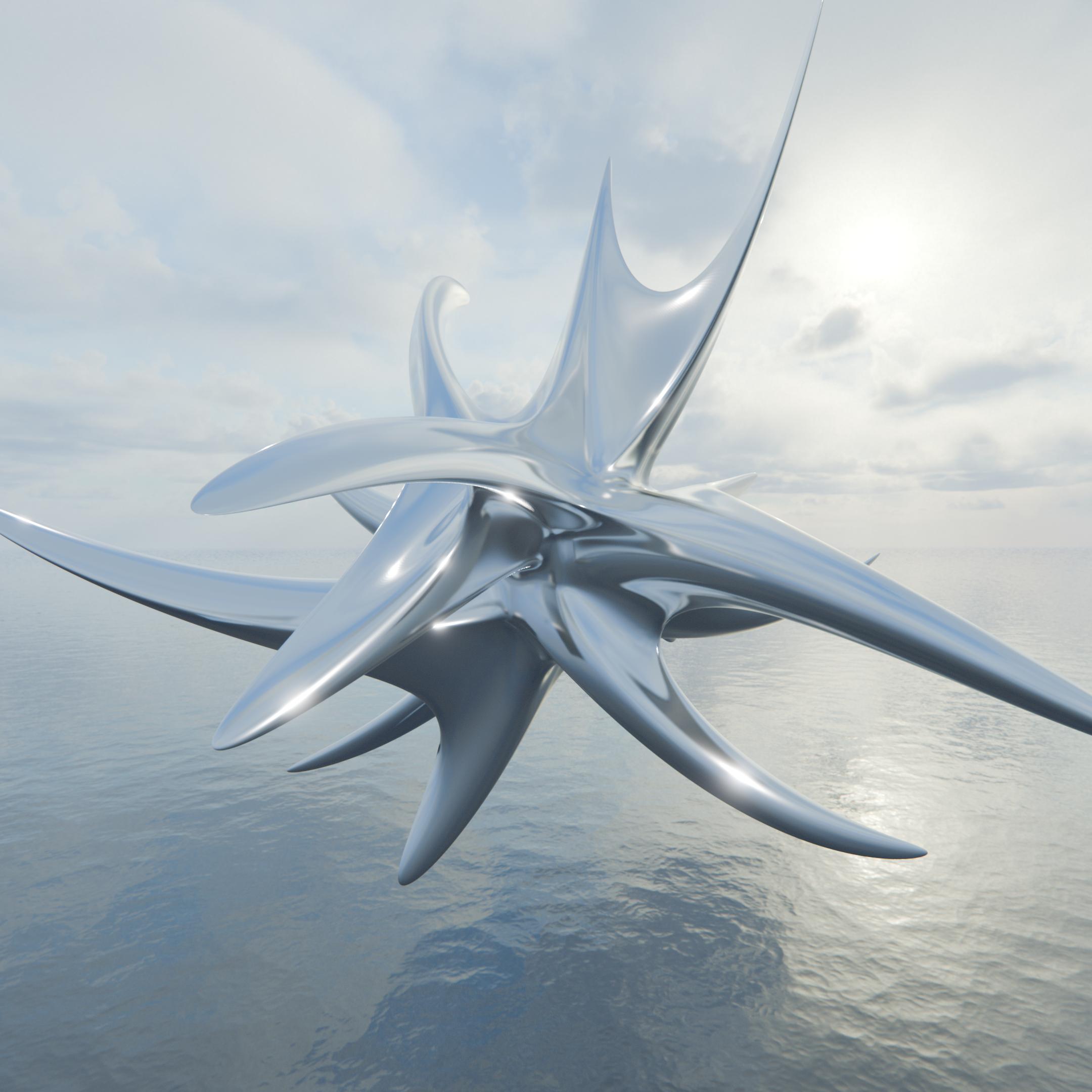
METALHEART: THINK OF US
DEEPRO BARUA - YEAR ELEVEN
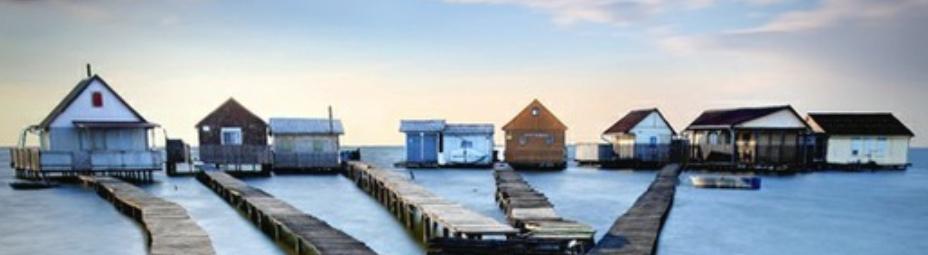
ONE MORE SIP
His foot kissed the cold water as he looked ahead at the once crimson sky, now slowly bleeding drips of red. He clutched the bottle in one hand, the other against the slabs of timber.
He took a sip.
Heinhaledasthewarmthoftheliquidfilledhischest.
Everything felt quiet now. Just still. The squawks of birds were tangled with a shrill, high-pitched laugh. Her laugh. He felt it now. His head cocked back, eyes closed. He really did feel it. Another sip. Slower this time, as if the warmth would bring her back. He felt her embrace, barely. One more sip.
It felt more real now, her touch lingering. One more sip.
The bottle felt lighter now, but her weight heavier. Those days pressed against him like the tide, dragging him with it.
One more sip.
Hewouldfeelitnow,surely.Thealcoholburnedathis throat now, not the gradual warmth that threaded a sense of hope in him. Searing and uncomfortable. He coughed, bloodshot eyes starting to sting. He closed them, almost begging for that fleeting feeling. To hear her laugh again. For the lavender scent that clung to her sweater, and the way it tickled his neck when she hugged him.
The sky was dim now. The sunset too had left him, its hopeful rays smothered into an overcast grey. Just his bottle now. He squeezed it tighter in his hand. It wasn’t her, but it felt unbreakable. Immoveable. Another sip.
Notoutofdesperation,butritual.Hecouldn’tfeelher anymore. Just the cold. Wrapping him up in its embrace. Another sip.
Just because.Yet only a drop came, clinging to the rim of the bottle. Reluctant. Unreachable.
The bottle was empty now. Hollow. The echoes were caught up in the murmurs of the wind. Scattered, but a part of him. He didn’t move, just watched as the water lapped against the shore in the distance. He brought the bottle up to his lips, just feeling the cold of the glass. The pain was still there. Heavy on his chest, like a stone in water. Rain.
Hesitant at first, pattering against the bench. Then louder, urgent, sky spilling itself into song. Her hand on his cheek. He felt it again.
It had poured that day too, rain dancing on their outstretched palms, the sound obscured by their laughs, so full of life. That day, the fire in their hearts couldn’t be put out by the fury of the rain. But now, the droplets sank into his skin, merciless. He had lost it again, but he knew now. He would never hear her laugh, breathe her scent, or feel her touch.
The rain fell steadily, splashing into the water at the edge of the timber. His foot remained steady, unmoving since the beginning. The sky had lost its spark, once a blood-red hue, now a dark grey stretched across the horizon.
The bottle was in his hand, clutched just as tight, but empty now, his other hand still on the timber. Everything was quiet now. Just still.
Only her absence remained.
UNCANNY
FICTION - MAAHIM SAIF - YEAR SEVEN
12Perdite Crew Log
August 13, 2046
days since we’ve landed on Europa. We’ve had 5 sightings of them. However… Unsettling they may look, they don’t seem to pose any danger or attack. We’ve had no orders for a week, the captain seems to have gone no contact, so all we’ve had to do is survive on our rations and pray they stay passive like they are. It’s hard for me to eat after seeing one of those, I feel like vomiting. It doesn’t even make sense.
Marc says there’s no reason they should have the same body shape as us humans, it would be completely disadvantageous on this icy hellhole. It’s hard to disagree with him, to cope and think this is some natural creature and was just a product of chance, considering he’s one of the top biologists and a leader in discoveries about the process of evolution. And they look so… Wrong. Their eyes are a little too low, their mouths a little too wide, their gums a little too big, their fingers a little too long, I could go on and on. But they still look so similar to us, despite their differences. It makes me shiver and want to die in a fire to cleanse myself of the memories of them.
Alittlecomfortisthatnothingwith a body plan like ours should be able to break through the perdite’s
walls, so Marc says. But what will we do then? Wait till we starve? The damned space exploration department in the government is nowhere near its former glory, and has been cheaping out on everything.
Probably the higher ups taking funds for themselves. They couldn’t even bother to hire a second guy to pilot a ship in case anything happens to the regular pilot. It’s no use complaining. We’re sealed here, whether the… I don’t want to call them creatures, but I don’t want to call them humans either. Anyways, either those things will get us or hunger will. Jorge says all the systems are working fine, and there might be a manual on how to pilot it, but I doubt anyone here will be able to completely understand. Not much of a choice though.
Either way it’ll be a while until we can actually get the rocket to a state where it can lift off considering its lack of fuel. A nice thing is that it’s solar powered, but the way they made it is that it needs water to boil in order to make energy. Jorge calls it Concentrated Solar Power, and while more efficient, takes up way morespaceandmoremoney,andis an overall detriment to the ship.
Probably because of that 10 year dealtheymadewithConstaEnergy that was advertised everywhere. Their business deal means we will have to use those ice drills and
water converters they gave us if we want to get off this hellhole. Probably their way of ensuring we completed the mission so the senate would give them a bigger fund.
My job is to lead the crew in setting up the modules, since I was trained on this stuff. We’ll have to figure out how to use the modules without setting up a base module which would prompt another unlucky crew to be sent here. Considering how money hungry the ASANA are, I doubt they’ll reconsider sending another group ofbravementotheirdeaths,evenif we tell them what’s there.
Anyways, I’ll end this log here so we don’t waste more of the emergency battery. If we get another power source or some more battery, I’ll add an update which we might be able to broadcast to the world with the radio module.
Exit
Sempin Erti, Perdite Operations and Modules Specialist
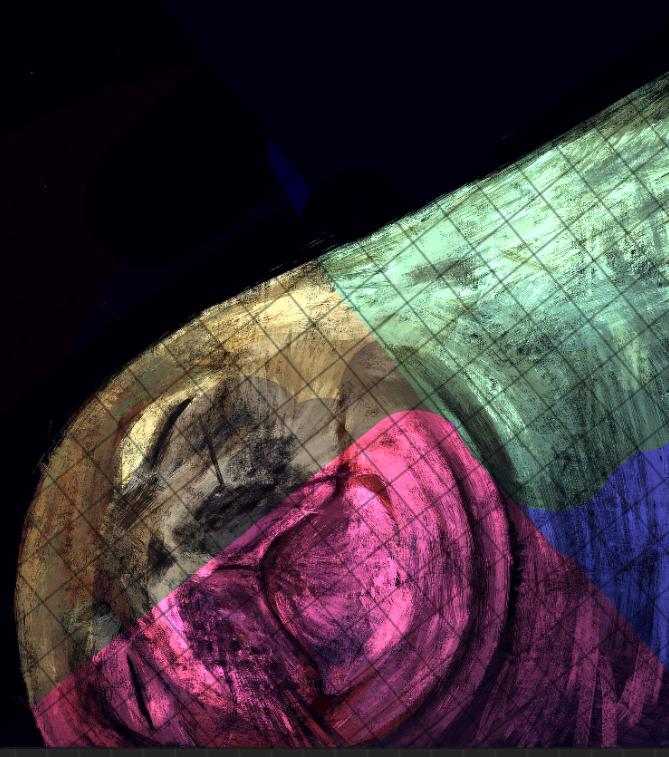
XU - YEAR TEN
LAWRENCE
CRIMSON SKY, CRIMSON GROUND
POETRY - KABIR KUKRETI - YEAR TEN
As twilight dawns, They perch on the precipice, Eyeing the approaching, flocking mass, Thronging the crimson sky.
Curious as they seem, They don’t want newcomers, Invaders.
As twilight summits, They know what follows, They’ve seen it before, They’ve done it before.
The more they connect, They’re indifference should abate,
But
The colder they become, Refusing to yield.
As twilight gloams, They stream down the precipice, Approaching the flocking mass,
Dimming the crimson sky.
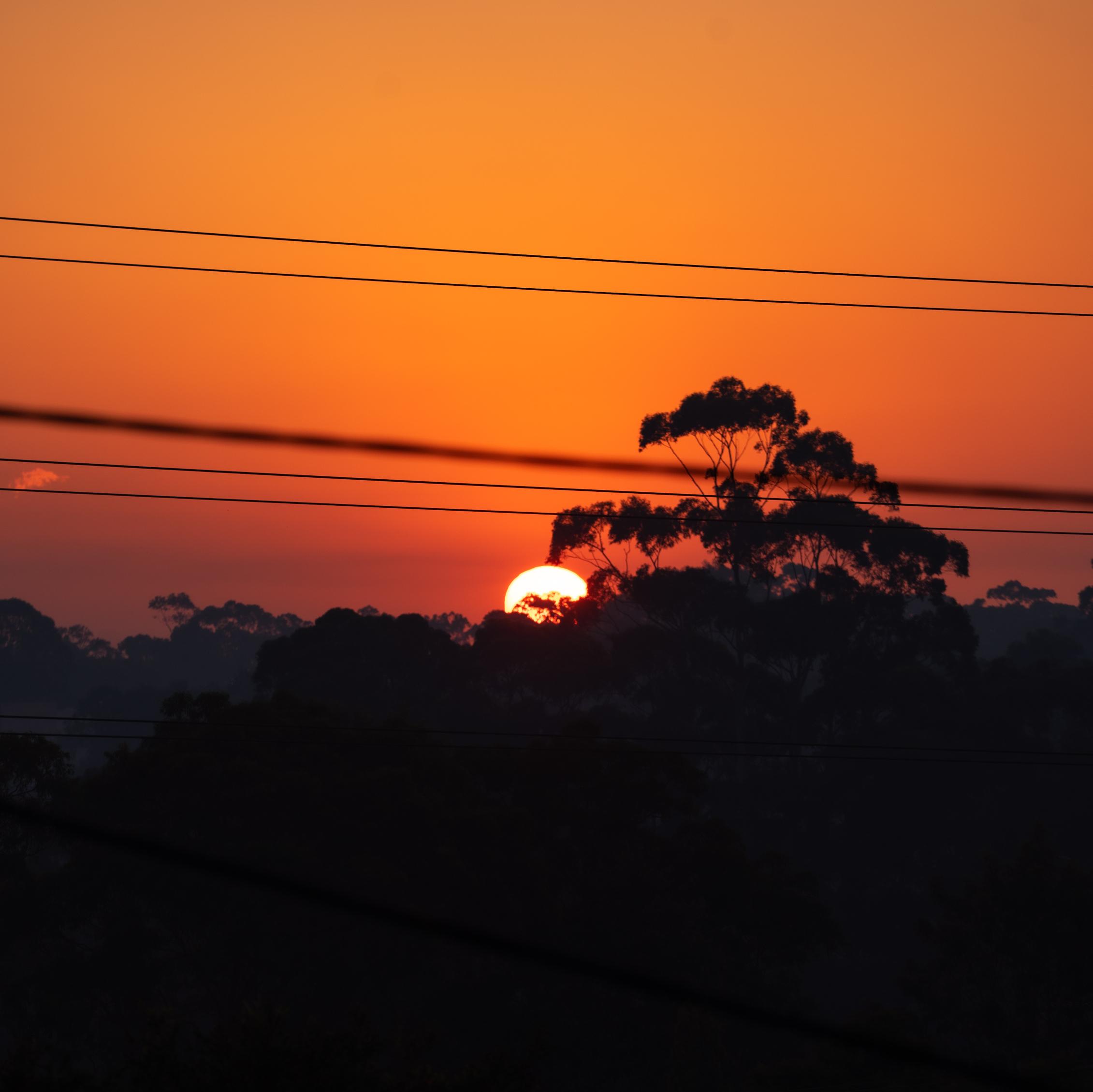
LANCE XIE - YEAR NINE
TRUE MEANING OF SUCCESS
FICTION - AVI PADHI - YEAR SEVEN
Whoosh! The gun shot in the air and everyone started turning the Rubik’s cube in an attempt to solve it as fast as lightning. Focusing on my cube, I began to feel an assortment of worry and anticipation about whether I would be able to win or not. As if in a running race everyone was an inch away from me and the finish line. My heart pounded as the spine-chilling Rubik’s cube was getting harder to move every second. Now I was starting to ponder if I was going to win the annual competition. Through my thoughts I could hear a chorus of voices to the heart of the listening earth singing a morbid symphony that I would lose.
“No!” I screamed to myself. “I have to win this competition or else I will loathe myself! The eerie, nefarious sense of losing clutched me. I can’t lose!”
Freezing sweat perspired down my scarlet cheeks as I took an abysmal and futile attempt to turn the cube and win the competition. Suddenly, a piece poppedoutandcrashedontothe floor with a cacophonous thud! Despite my efforts to win the race, I wouldn’t budge out of my seat. My body was as heavy as lead.Angerandgriefgobbledup my thoughts as I watched all the contestants getting closer to solving the cube with every second. Amidst the floor lay the mere piece of the Rubik cube which is the reason I was going to lose. My vibrant, verdant, confident face transformed into the incarnation of anger and torment. Suddenly my ultimate competitor Jake leapt out of his seat and sauntered towards the piece of the Rubik’s cube and beckoned me to take it back.
raced back to his seat and didn’t mutter any other word after that. Promptly, I continued and finished around a second before all my contestants. I stole the spotlight as I had just won the competition. The frost intheairlickedmyfaceasmybreathingwaslikeIwas fatigued by sprinting four kilometres. My face was reminiscent of surprise as despite that oppressive piece that popped out of the Rubik’s cube, I still ended victorious.
Although I faced many challenges, this competition has taught me a valuable life lesson. Gazing at Jake, I felt selfish and immature as he is the whole reason I won and still doesn’t know how to repay him. Success isn’taboutwinningacompetitionortogainfame.Jake might not have won today but he is the real winner for his selfless action.
"...Don't let failure get in your way.
Success does not just mean winning"
Finally, the trophy ceremony commenced, where I will receive my trophy for winning the annual competition. Listening to the boring speech I was about to sleep. Suddenly, when he announced my name, my eyes awoke and my whole body became active and exuberant. I zoomed towards the teacher to receive my trophy. Suddenly, a brilliant idea crossed my mind about how to repay Jake for his kindness.
“I will award my trophy to Jake for being a fair and kind person,” I announced, sounding exactly like a sullen teacher. My maimed heart beeped as I gave the glimmering trophy to Jake smiling, but my feelings made me want to snatch it and bolt away.
“You could have won the competition. Why did you stop?” I asked with absolute shock. Silence became the purest music in the colossal stadium. Not in a million years would I think Jake, my ultimate competitor, wouldsacrificethetrophyforme.Itwassosurreal,yet I could not help but express my appreciation with two gentle words “thank you.”
“Success is not measured by winning a trophy,” answered Jake with a smirk etched on his face. He
An epiphany suddenly crossed my mind and I reminisced about what my teacher once mentioned in class, “The journey is more important than the destination.” I finally realised its true meaning and grinned to the beautiful eye of heaven which illuminated a resplendent kaleidoscope of light. Successisalong-termgoal.Don’tletfailuregetinyour way. Success does not just mean winning, it means having sportsmanship and being a fair and kind person. Everyone must fail to succeed and most importantly always try your best no matter what happens.
DEVOTION ' S UNRETURNED GAZE
FICTION - ANTHONY GAO - YEAR NINE
“My liege, Sir Mordred now leads his host into enemy dominion. War has descended upon us.”
I rode in blistering cold.
The wind howled in anguish, thunder bellowed from the clouds, and rain descended relentlessly — an undying barrage of piercing needles.
The messenger stood in a deep bow. He spoke in haste, eyes unfocused, avoiding the King’s gaze. The tidings were of great calamity — he would have sooner held his tongue than to voice it.
It was indeed morning but the sun had chosen to shield her eyes from the carnage, and wisely so. An innumerable tide of armoured boots hammered into the heavy mud. Horses galloped beside them — hooves slicing through the clayslicked plains. Atop I sat, a billowing flag of the motherland clutched within my palms, a cry escaping my lips. A war cry but merely a whisper against the landscape.
His majesty froze. Silence hung heavy within the chamber. The messenger stood tense as a weary sigh escaped his lips.
“Remove yourself from my sight. Such news bears no weight to me.”
Andofcourse,hadtheKingtrulycared—onceamong the realm’s most feared he was — would not be here resting idly.
The first gunshots rang. Gunpowder. Acrid and bitter. A sulphurous tang so sharp you could taste it. Ignore it. Sweat — saline and rank. Ignore it. Ears smitten numb by a resounding boom of a cannon, as the very earth did erupt, wreathed by flames. Ignore it. A shout. A vociferation of defiance as we advanced. Our warband clashed headlong into the enemy ranks, tens of thousands of men, tens of thousands of swords. Steel rang against steel. Cannon thunder broke forth in a dreadful chorus, guns spat flames in answer.
Upon return to his chamber, the King surrendered into a deep slumber. No worry plagues his mind of what befalls his land.
He willingly turns a blind eye to the truth, indulging only in matters that are of benefit to him.
Click. My hand quivered upon the trigger of a smoking musket, not of fear, not of cold but of the ease it took to take
"...For you I am willing to draw blood from whomever you order. My family, my wife, all that I relinquished to serve you"
a life. Around me brothers fell, comrades stiffened and dropped; blood, scarlet and fresh, flowed unobstructed from wounds, staining the filthy muck below with gore. Still I held the banner high, refusing to let it fall. For the King I fought, unsheathing my rapier still dripping with raw crimson ichor, my horse reared and charged forwards — the feeling of blade slicing through flesh, words cannot describe.
A quick, three round knock against the grand oak doors awoke the sovereign from his rest. He rubbed his eyes sluggishly before coming to attention. A servant stood before him, waiting patiently.
“Speak your business.” the King spoke, disinterested.
“Aknight wishes for your presence, your majesty.”
“Their name?”
“Sir Galahan, your highness, Sir Mordred has yet to return.”
The King grunted once and arose, lumbering into the great hall where Galahan stood, grim.
We men fought with fervour; the once fifty thousand strong battalion remains only a fraction of what it was before, soldiers treading a battleground raised upon slain allies. The numbers thinned, yet still we struck with renewed vigor. The foeman’s array dwindled, triumph glimmered on the horizon.
“Speak now, do not delay.” The King ordered.
“Your majesty, I repent for I behold heavily regrettable news.” Galahan’s words came haltingly, lips pursed, eyes not meeting those of the King.
I dared to let myself smile, for once, the tide turned in our favour.
It was instant. No warning. In and out. The blade felt almost warm — welcoming. My lips still smiled but there was no soul behind it.
“Sir Mordred...”
The grime upon the ground was bittersweet. The shower of rain was soothing.
“... is no longer with us.”
I hope I served you well, your highness. I, Sir Mordred, must take my leave.
The King did not so much as blink; but rather, a fury settled behind his eyes.
“You awakened me for matters so insignificant. I care not for the fallen. Let them lie — the triumph of battle is of my only concern.”
Do you hear me now, your majesty? Days spent under your command were of nectar so sweet. For you I am willing to draw blood from whomever you order. My family, my wife, all that I relinquished to serve you was of great worth.
“Replace him.”
My sworn loyalty to you shall never wither.
“And begone.”
Farewell, my good lord.
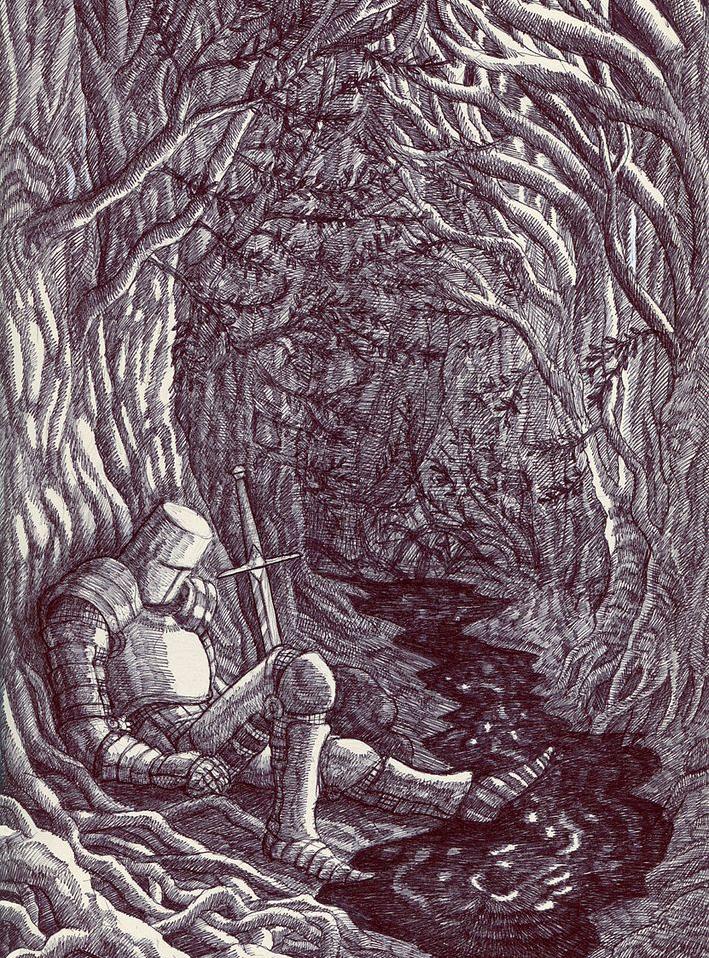
THE DOCTOR
POETRY - NATHAN LE - YEAR TWELVE
Upon a moonless night of summer solstice,A raven stoops on a ball of yarn, and rolls it—
Down a tremendous flight of stairs, Unwinding, entangling, almost satisfying; all the more
Mystifying!And it sickens me to the core, That its strings and things cannot be spun back Into its shape before, no, no, But more presumably— Apeculiar ovoid that reeks of frailty And brings me great agony But what is there to do?
Aball of yarn, a human life
Some deals of love and more deals of strife and— At this point the yarn had reached my door, And I do presume these stairs shall be a chore, So let me entangle you In barrows of burrowed questions And borrowed tales untold before.
Not all by choice, I’m— In and out of floors that reek of Antiseptic
Of folded hands, clasped over each other And weathered faces all over With wet syllables and muffled cries Then, a knock at my door! It gets louder and, the raven’s rappin And tappin; almost mechanical, almost melodic Perhaps even hopeful, until the last length of yarn lays in a Flat line
At the bottommost step, Where I’d greet the weatherest’d of the faces And ask if they expected more, from what’s forevermore.
Some, who were crossed, would say yes, while— Others sang an ode to nevermore. There was you,
Tangled upon the most misfortuned of days, With music unfinished in the car And laughter caught halfway. Facing me with a wild curiosity or Maybe it was mild confusion, of someone, Interrupted mid-happiness— By the croak of the raven. Not afraid, just certain I had the wrong person.
Those who go quietly, Faced with no weathered faces, Perhaps they’d waited too early Perhaps I came too late. The car kept ticking as it cools, The air kept thickening and it pools. Ablaze of yarn, a cut in time And it rolls...and it rolls...and it rolls... Until warmth lingers
Uncannily on the road, empty and evermore. Ared thread ties Aknot of two strings. One, much shorter. One, down bottomless stairs, The knot is still there. With the moon hid away Was it you who, Kept your eyes open, As if I had mistaken, Fate and the heavens?
Some deals of love and great deals of strife Colourful strings in a wistful life
My duty is rarely to mouths that eat, That grow hungrier, all the more. With sin-fattened strings And sophomoric wings, And I (vexingly), their plaything? Was it you who, Met too few moons, Strings thinning, called to me so soon?
To the moon, when it’s late noon, An eclipse of your lips, then—
“No more,”
“Another, please,” Another door... “Not this, not anymore”
Nations of Kings, Toying with strings. Of waltzing dolls, Few steps, then, their fall. Where have you gone?
From the smog of dusk to the cogs of dawn, Where they gathered, like a murder, While you live for another, Who had your eyes, and not yet any more.
“Awitch,” “a wretch,” then, “a whore”
So when the room reeked of antiseptic, The mouth, and an act of love, For a mouth that would not eat And nevermore.
To the body: an act of love, I promise.
Some deals of love and great deals of strife, Colourful strings in a wistful life.
Awild blizzard out the Western shore,
Will not pass...will not go away. Sixteen tethered wings. Their souls, still so warm, so close, The raven and a mockingjay, Wallowing, “Renee! Renee! Renee!” Nations of kings, toying with strings. Blankets of snow,
Gone so far, and nevermore.
You say every snowflake is different, but this blizzard, it covers us all the same.
Adeal with kings, a deal for love To tie with me is a knot for life
Upon the few, of the fullest moons that I think about love, How, when you really love something, you love it til’ death.
And I’d wonder, how much more really ends at my feet. How many times a life ends before its strings reach a taut. So I count the numbers, and the faces, and nothing more.
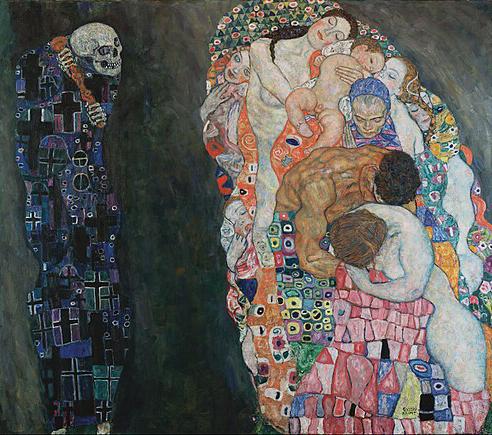
IS AUSTRALIA
Australia’s immigration system has long been shaped by laws designed to control and restrict the entry of non-white migrants.At Federation, the Immigration Restriction Act 1901 and its infamous English dictation test formed the legislative backbone of the Policy; a regime expressly crafted to exclude people deemed culturally incompatible with the British colonial nation [Immigration Restriction Act 1901 (CTH). 3.] For over seventy years, these laws entrenched racial hierarchy, constructed nonEuropean migrants as threats to national cohesion and normalised the use of legal mechanisms to enforce racial exclusion.
Contemporary offshore processing is often framed as a pragmatic tool for protecting Australia’s borders. Yet its policies are entangled with this historical legacy. This essay examines the extent to which the racial inequalities embedded in offshore processing are a continuation of Australia’s earlier anti-immigration practices, or whether the regime constitutes a fundamentally new legal formation. First, it reveals the innovative mechanisms of contemporary border control; and second, it evaluates how these innovations reflect enduring patterns of racialised exclusion.
Legal Innovations
In August 2001, the container ship MV Tampa rescued over 400 predominantly Afghan asylum seekers at sea. After the vessel entered Australian waters due to a medical emergency, Prime Minister John Howard framed this incident
LEGAL REGIME?
ESSAY - JAKE LEE - YEAR TEN
as a threat to national security, claiming,‘weshoulddrawalineon what is increasingly becoming an uncontrollable number of illegal arrivals.’ [Mitchell, Neil, (Host), & Howard, John, (Guest), 2001, Radio 3AW, Melbourne, Australia. 5.] This rhetoric led to the Pacific Solution, a suite of legislative changes authorising the Australian Navy to intercept asylum seekers and send them to offshore processing centres in Nauru and Manus Island [Excision from Migration Zone Amendment Bill 2001 (CTH). 2.]. As non-citizens, these asylum seekers fell within the existing constitutional category of ‘aliens,’ whose entry and removal Parliament may regulate. But the novelty of the Pacific Solution was in Howard’s government asserting authority over such individuals before they had entered Australia ‘meaningfully’.
This was achieved through excision, a legal technique that declares certain territory outside the migration zone, combined with the establishment of offshore centres. This allowed the government to prevent these asylum seekers from accessing Australia’s refugee determination system altogether, evading any ordinary refugee protections. In short, Australia was not responsible for them because they had not technically arrived in Australia. By combining extraterritorial control with the constitutional alien power, the government expanded jurisdiction while denying ordinary refugee protection.
Although the Pacific Solution was formally dismantled by Kevin
Rudd in 2008, offshore processing was reconfigured rather than abandoned.The2013PNGSolution was far more unorthodox, providing that unauthorised sea arrivals would never be resettled in Australia, regardless of refugee status [Regional Resettlement Agreement Between Australia and Papua New Guinea 2013 (CTH), 7]. Instead, they were to be transferred indefinitely to Nauru or Papua New Guinea, fundamentally reshaping the relationship between territory, jurisdiction and legal responsibility. This transformation was judicially endorsed in Plaintiff M68/2015 vs Minister for Immigration, where the High Court upheld the legality of offshore detention by locating it withinthepremiseofconstitutional alien powers [Plaintiff v Minister for Immigration and Border Protection (2015) M68, 6]. By doing so, the Court validated a system that exercised total control over asylum seekers outside Australia’s territory while remaining firmly anchored within constitutional authority. This case highlighted the legal transformation that contemporary exclusionary immigration practices underwent, affirming a new legal regime structured around the latest applications of alienhood and the creation of extraterritorial control.
Patterns of Exclusion
Despite its legal innovations and race-neutral framework, Australia’s offshore detention program reproduces exclusionary outcomes reminiscent of earlier anti-immigration policies. In practice, offshore processing disproportionately affects asylum seekers from non-European
regions, particularly Iran, Pakistan, Afghanistan, Iraq, Sri Lanka and Myanmar. This demographic pattern reflects long-standing anxieties that have historically framed Asian and Middle-Eastern migration as incompatible with Australia’s British and Christian identity. Many of those detained offshore are among the most vulnerable; families fleeing armed conflict, persecution or poverty, who lack access to formal resettlement channels. A 2013 UNHCR report revealed that over two-thirds of people transferred to offshorecentrescamefromconflictaffected Middle Eastern states, suggesting that the policy effects align with earlier racialised forms of exclusion [UNHCR (2013), Asylum Trends 2013: Levels and Trends in Industrialised Countries, 8]. While theWhiteAustraliaPolicyhas been formally dismantled, its legacy persists in the disproportionate surveillance and punishment of nonEuropean migrants under contemporary border regimes.
his racialised targeting is further entrenched through legal mechanisms that dehumanise asylum seekers by suspending their status as rights-bearing subjects. Through excision and offshore detention, they are denied access to Australia’s refugee system, placing them in a state of prolonged legal indeterminacy. This renders their refugee claims legally inert, allowing the government to subject them to indefinite detention and conditions that would be impermissible for citizens or recognised refugees. Médecins Sans Frontières’ (MSF) 2018 report illustrates how this legal marginalisation enables systemic abuse, documenting children entering a ‘progressive’ state of ‘social withdrawal,’ refusing food
or water after prolonged isolation. Moreover, ‘numerous reports of violence, assault, rape, beatings, theft, intimidation, torture, harassment’ ravage these detention centres with little to no resistance [Médecins Sans Frontières (2018), Indefinite Despair: Mental Health Consequences on Nauru, 4.]. It is this legally engineered dehumanisation –authorised by excision and offshore detention – that permits such harms to persist with little bureaucratic resistance.
Extensive medical evidence demonstrates that these consequences are not incidental policy failures but structural features central to the regime’s deterrent logic. MSF found that
display developmental concerns, and 62% experience mental health disorders – rates far exceeding those of children detained onshore. These statistics indicate not a temporary administrative inconvenience, but a system that predictablyproducespsychological deteriorationasawarningtofuture arrivals. Yet this harm cannot be reduced to statistics alone. In the Asylum Seeker Resource Centre’s paper “Finish the Crisis,” former detainee Qudratullah Qhausi’s describes Nauru as a ‘suicide centre,’ recounting the pervasive self-harm and death he witnessed [AsylumSeekerResourceCentre(2024),Finish this Crisis: Stories Exposing the Horrors of OffshoreDetention,2]
"...Many of those detained offshore are among the most vulnerable; families fleeing armed conflict, persecution or poverty who lack access to formal resettlement channels"
62% of the 208 detainees assessed on Nauru suffered moderate or severe depression, while The Asylum Seeker Resource Centre reported that 100% of refugees detained in Papua New Guinea experienced physical health conditions such as malnutrition and dental disease [Asylum Seeker Resource Centre (2024), Cruelty by Design: TheHealthCrisisinOffshoreDetention,1].
Children endure particularly acute harm: 60% of children on Nauru suffer nutritional deficiencies, 75%
Such suffering reflects a familiar logic in Australia’s exclusionary history, recalling mechanisms like the dictation test, which were designed to fail targeted groups while maintaining a veneer of legality.
Closing
Australia’s offshore processing reveals how legal innovation can coexist with historical exclusion. While the 1901 Immigration Restriction Act openly structured exclusion through race, offshore processing relies on legal techniques that obscure patterns of exclusion within Australia’s immigration governance. Its significance lies in demonstrating the adaptability of legal mechanisms to reproduce exclusionary outcomes while remaining insulated from judicial or political challenge. Most concerningly, if the state’s responsibility towards asylum seekers can be displaced through legal redefinition, then its power to determine the boundary between inclusion and exclusion becomes increasingly absolute.
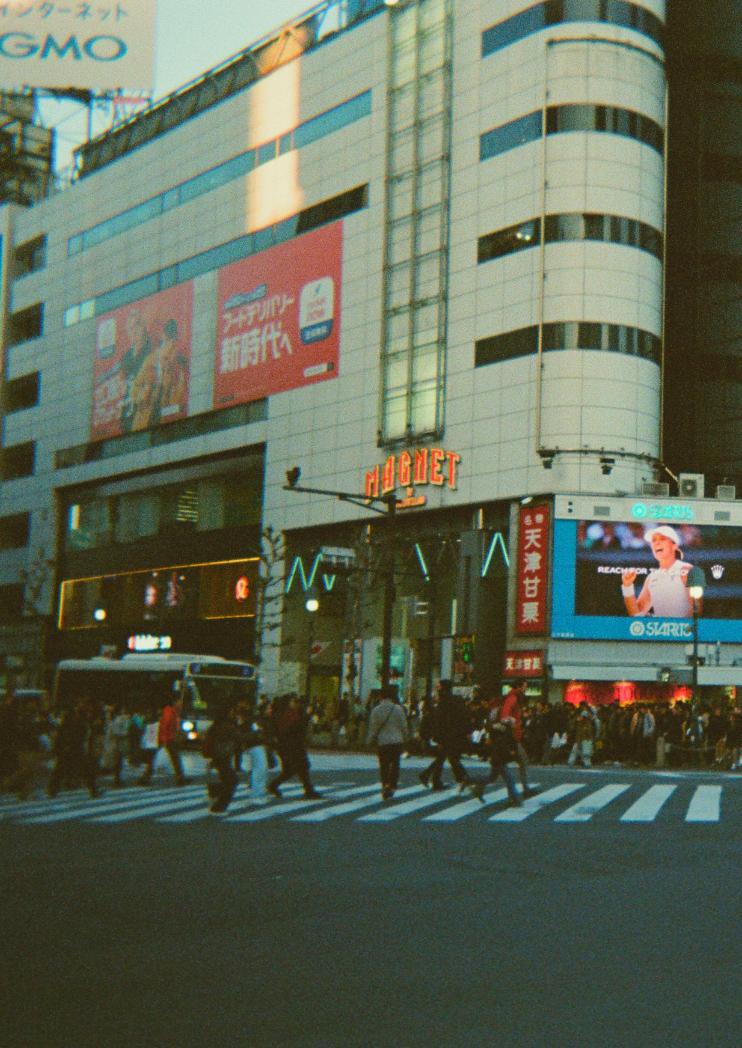
ELIJAH WENG - YEAR TEN
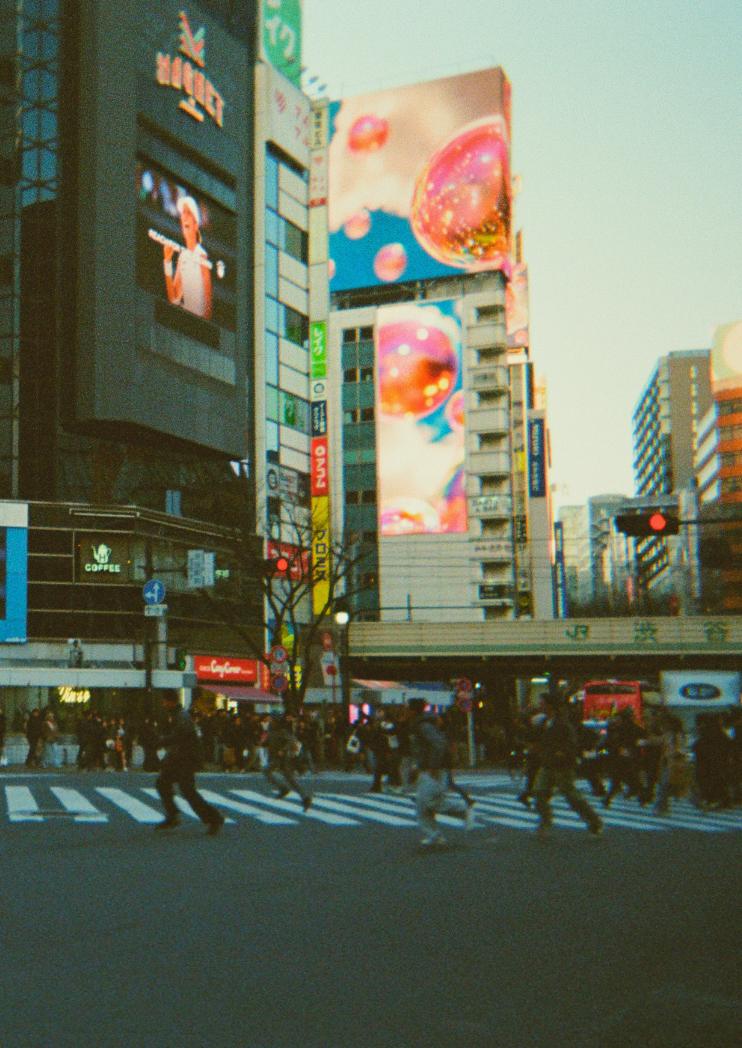
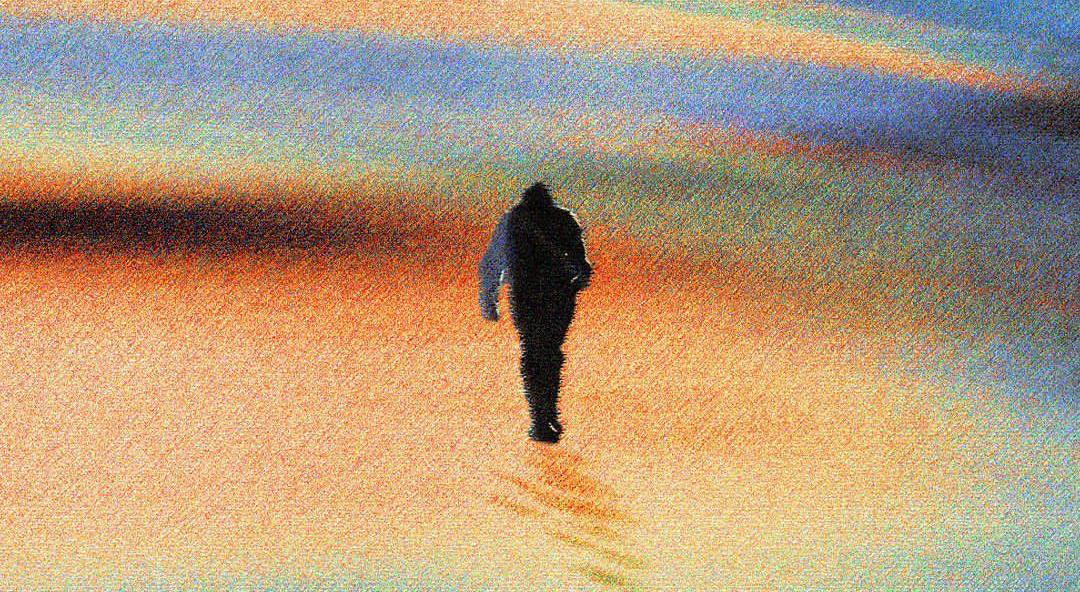
THE SWEET LIFE
HYBRID - "CANTABILE"
Today's special moments are tomorrow's memories.” Aladdin
Why are the good old days old? You never hear anyone say good present days or good new days.
Maybe it's just an old adage of the English language; it just flows off the tongue better - you wouldn’t buy succulent fried chicken from KFP for example.
Not that I even know what the Pstands for but you get the point.
Rather, I suspect it's because, like uneaten chips, shrivelling up in the cold, our perception of joy has withered away along with the innocence of youth and its raw carefree – not even a zinger combo can make us smile anymore.
I promise this is the last KFC reference - even I’m getting hungry!
* * *
Happiness seems to me like a shadow, fluttering in obscurity. You wouldn’t know it’d been there,
following you, lurking hidden behind you until you turnaroundandlookbackonfromwhereyou’vecome and then aha!
Truly with comedic timing, suddenly it's there. But that’s not as good as the real thing.
Wouldn’t you rather feel happy then look back and realise you felt happy at that moment?
So it may seem happiness is accessible only via reflection of some experience – perhaps this vicarious adventure of a particularly memorable time could send a little spark of some joy. But then you’d be in a worse place than before, lamenting you can’t get back the good times.
And so your already gloomy day shows signs of a thunderstorm. We are left in a liminal space in which we’re yearning for something we used to have, which funnily enough we didn’t know we had when we had it. Our souls, bone dry like a sordid wasteland where hope is a thing of the parched pages of history.
* * *
We’re going on a bear hunt! We’re gonna catch a big one!
I think a fairly logical response is a search for happiness and in what better form than this thing that fits in your pocket that you can tap and swipe and scroll.
And so we stuff ourselves. Cramming ourselves with whatever we can find, in hopes that we can find some crazy stupid joy.
And UP
I think the root cause of our inability to recognise good times lies in our inherent negativity bias - a basic survival mechanism that wires us to pay closer attention to potential threats and negative events than to positive ones.
And UP Up For a bit we go
But then the bus ride ends and we have to get off, or we have to go to school (what a calamity!) or we have to go to bed and in the little gap we’re off.
The only consequence of artificial happiness?
We come crashing
We are the men We are the st*#0-uf71l.f’’:/18apfoq621ed men
Alittle chime.
Instagram: 1 Unread Message
@[Insert username of some random nobody who through your friend’s cousin’s great aunt’s daughter’ssisteryou’resomehow affiliatedwith] just posted:
I’m [insert nonsensical rubbish you don’t care about].
Next stop. PARADISE!
The
last twist of the knife
For so long, we’ve drowned the little joyous child inside us. Beneath the rubble of crooked happiness I know a boy is there. I hear his pitched screams, screeching with agony to get out, his piercing cry is muffled by the dust of my negligence. If I continue like this, one day, he will be buried so far deep I fear no amount of healing will get him out.
But even if it's not a bad time for the lack of a better word, the current still doesn’t feel like a good time because we’re constantly looking for the future. Naturally so, most people act in the present in hopes for more prospective events down the line – you work today even if every single second of the homework is miserable because you think that when you get your exam back in 3 weeks time you’ll be happy.
I can tell you from personal experience, this happiness is somewhat short-lived, that’s because after the fun and games are over, you’re stressing about whether you can maintain your performance for the next one and the next one and the next one. You also know that ifyouget“over-happy”you’llbecomecomplacent,not work with the same intensity and fall from grace.
I’m not saying it’s bad to have goals, I’m saying that our inability to live in the present is the reason why the tree of happiness seems not to bear any fruits.
* * *
Wake UP
Immerse yourself in the moment. LOOK OUTSIDE. HEAR the world SEE the world. Don’t blink, you might just miss it. Happiness doesn't have to be a thing only of the good old days. It doesn’t have to be two months ago or yesterday or next week or tomorrow. it can be today.
A LOVELY STROLL
POETRY - ETHAN WONG - YEAR TWELVE
Together we embark— on a journey through dark and hope and sparks of childish rhyme, to ignite us all. Burn, young one, to learn and sojourn through open valleys tallied out by smog, left undiscovered. Come rally, grasp my hand, and sing this rhapsody which lapses and traps our minds briefly. This treasure map of hymns and praises, murmuring sweet promises, raises us as we trace the maze of smoke before us lazily, once more.
We see trees in the distance; elms and pines and fine oak that whines within the lines of fog entwined along this road. Come run with me, again resign yourself to the path less taken; of serpentine and clementine and smells of fresh cigars. The forest is clearing now— the clouds are climbing and jeering and cheering and suddenly the storm nears and showers are pattering down.
And I know you would like to continue further, And you would like to continue— and you would like to— and you would. if only you could find the right words to do so. And so we continue walking, to be honest; down the narrow trail, frailly speaking with sparrows and quails tailing us and daffodils emerging canary–yellow. Now the sky has dimmed again, with hues of blue and indigo trimmed off the top, and— Oh! the buzzing of hornets and fuzziness in the corners of my eyes.
We’ve reached the river-bed; the red rapids rushing past with bits of turquoise foam brushing my sun-burnt cheek. Bringing me back to those misted shores with
multicoloured parasols; macabre branches gnarled and twisted, where snarling crabs resisted the warm embrace of unmolten glass— or maybe they were warring lions and I was in a desert, pouring water or maybe they were fiercely roaring, and I was in my bedroom, snoring. * * *
And now the sky is blackening with streaks of haze and you turn around and see that I am no longer there.
When did you forget? I was always well-rested and tested by the very river we bested together, but now it is time to let go. What have you forgotten this time? I implore you to think, cautiously— It is the dead of night now, twelve o’clock. Achirping crow throws you awake and the stars are invisible but the glow breaks through nonetheless. Can you see it illuminating? Can you feel it elucidating? Can you hear it ruminating? Do you remember?
It is three o’clock now, and you still wake— insomnia, perhaps, or a cold shiver from when you were quivering in the dark all alone. But still, a sliver of hope!All you need is to stretch and reach out and fetch just like when we were at the beach and you were teaching me how to catch and hold on tightly for there comes a night, much like this one where you will be slightly afraid.And when you finally see me again, within the light that bathes you and I, then you will begin to understand what you forgot.
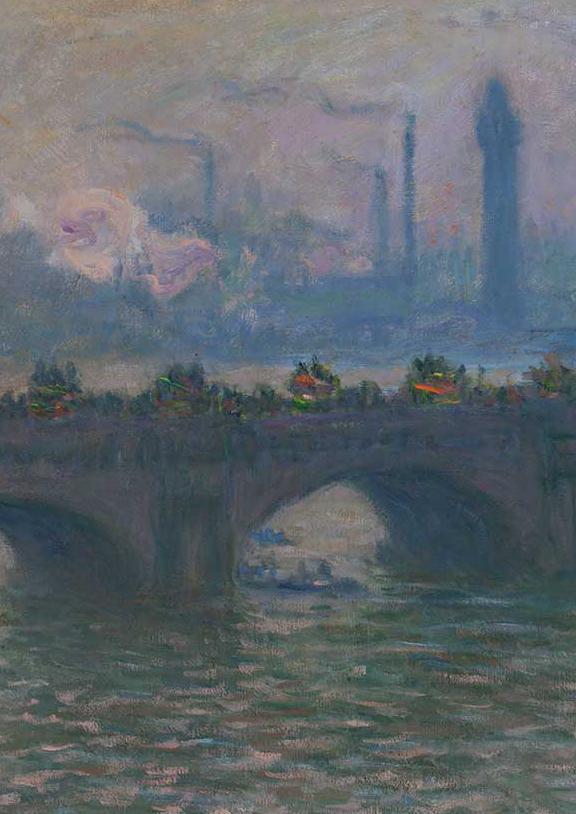
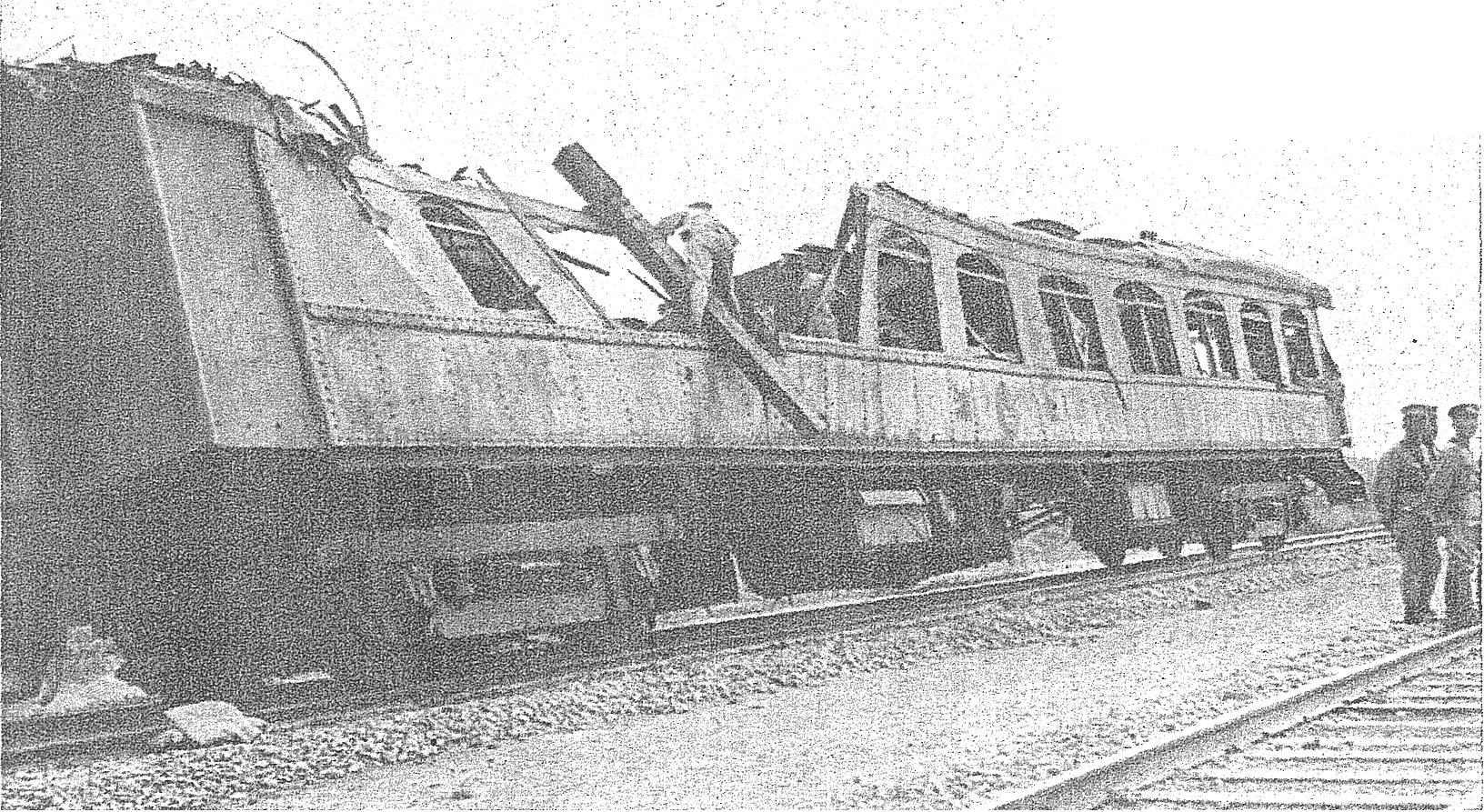
FENGTIAN EXPRESS
PART I: THE SIXTH RIFLE PLATOON
“...to its merit, Mantetsu’s effective regime invokes no such shallow sentiments of “Pan-Asian” solidarity or that of a prized Japanese colony off the Home Islands, and in fact forgoes any attempt at creating a legitimate and respectable government. Indeed, under its rule Manchuria has been fashioned into what one can only call a bonafide playground for the everexpanding ambitions of its corporate overseers, whose many frivolities Tokyo happily tolerates to line her pockets...” – Excerpt from pg 152 of Gerard Brenikov’s “Co-Prosperity”
The sky was a blank canvas with gradients of fog and downpour. The compound blended into the blanket of ashy snow that fell onto the barren soil, parted by a sprawl of tracks. It was a rectangle of coarse cement, like a giant overturned brick. A narrow
opening gave way to a makeshift door that smelled of decaying wood, rickety against its improvised frame.
Inside, a shabby wooden fire lit the compound. On the wall hung the portrait of a greying man inscribed as “Dr. Sun Zhongshan”. Gathered around a derelict table were four men, huddled in overcoats. A railway map was laid in front of them, with a line circled. Next to it, the writing read: “FENGTIAN EXPRESS WAGON 1 1730 0211”
“Compatriots!” One of them laid his hands onto the table. They were rough and sooty, like his uniform. On his right arm was a blue armband emblazoned with a white sun. “Our opportunity presents itself; this day we take back from the invaders what they have pillaged!"
Asecondmanlaughed.Theembers
of his cigarette snuffed into the floorboards as he jerked forward, letting a splutter escape his dark lips.“I’msurethePartyappreciates your zeal, compatriot. Many virtues to be found in banditry, after all…”
“We are not bandits!” The first man stamped his boot on the ground. “Have you forgotten your pledge already? The Sixth Rifle Platoon is the strongest in the IronArmy! Our cause is not lost!”
“And the war? The Kuomintang wants our heads. These grandiose notions do nothing to benefit our survival.”
“Quitit!”Athirdmanshouted,also wearing an armband. “This is hardly productive to the mission.”
He turned to a fourth. “I hope you understand how...unorthodox this is, Professor.”
FICTION - KEVIN HUANG - YEAR ELEVEN
"Ouropportunitypresentsitself;thisdaywe willtakebackwhattheyhavepillaged!"
The fourth man, a balding Eurasian, shrugged. He smiled wryly and brought a duffel bag onto the table. “Yes, well...I’ve broughtit.Quiteoutdated,Type96, with only five hundred rounds to spare, but then again...”
“That’s it, then. Listen up, Sixth Platoon! You two take the passenger cabin. Professor, I promiseyouwillneverseesomany bags of money again in your life. We’ll be rendezvousing with others at the checkpoint. Come on!”
The cold air tussled against their overcoats. A horn sounded in the distance as the train slid against the tracks, pillars of white bursting from large smokestacks. The letters “SL-861” were imprinted onto the front, on the side a red symbol with a giant “I” superimposed onto a curved “M”. Beneath it, the words “FENGTIAN EXPRESS”.
PART II: FIRING SQUAD
“...though nominally disbanded postwar, much of the Kwantung Army found themselves absorbed into Mantetsu’s private security forces, though not without incurring the ire of Tokyo who maintains a tight leash over its vassal through the Kempeitai. Notable among its Dairen branch is an elite squadron known as the Firing Squad”, rumoured to have been subject to the Kamo Detachment’s wartime experimental stimulants programme…”
– Excerpt from pg 297 of Gerard Brenikov’s “Co-Prosperity”
“...one more thing, detective. He’s missing.”
The two men sat in the cabin, filled with the sound of jazz from a nearby phonograph. The detective wore a black uniform, with a white armband emblazoned with a red chrysanthemum. The other man wore drab fatigues.
“Who?”
“Professor Brenikov. He’s not at his hotel.”
“This is why you don’t outsource. How do you lose a man like that?”
“It’s not like we can monitor him everyday. Listen, we think he’s involved with the recent...activity.”
“Big surprise.”
“Well, can’t you…”
“Can’twewhat?Doyouknowhow much more trouble we would be in with theAmericans if we disturbed evenahaironhishead?Look,we’ll find Brenikov and send him home in a nice bowtie, happy? Clean up your mess as usual.”
“He’s supplying them with guns, for godssake.”
“Right, like those illiterates know what to do with them.”
“Our reports–”
The train creaked to a halt. A shot rang out as the window shattered and two men climbed in. One of them wore a blue armband and held a long-barrelled pistol with a
box magazine. The other carried a bolt-action rifle with a bayonet.. The man in the fatigues slumped back, smoke fizzing from a hole in his head.
“Listen up!” The man with the armband fired his pistol into the ceiling to silence the passengers. “This is the Sixth Platoon of the National Revolutionary Army! You are all now prisoners of war! Any attempt to escape will be met with swift punishment!”
The second man nudged his partner. “Look, it’s a Kempeitai agent.” He aimed his rifle at the detective. “We should kill him here and now.”
“Let me see.” The first man pushed him aside and pressed his pistol against the detective’s forehead. “Kempeitai.” He spat. “For your transgressions–”
Before he could say any more the detective drew his revolver and unloaded it into the man’s temple. In swift succession he shot the other man as the rifle in his hand jammed. The detective brushed his uniform and got up to the door leading to the adjacent car. “WAGON 1”, read the sign.
PART III: RENDEZVOUS
“...the Manchurian “insurgency” did and continues to fascinate me to no conclusion. An utterly disorganised group of partisans, bandits, rogue Kuomintang forces against an enemy they should never hope to beat. Yet evidence that Mantetsu’s efforts to carve their corporate domain have
failed to snuff that last sliver of fertility in a barren wasteland: rabid human nature.”
– Excerpt from preface of Gerard Brenikov’s “Co-Prosperity”
The driver’s face was turned towards his body, twisted in a grimace atop a pile of notes. His eyes, vacant, peered into the detective’s. At the end of the car was a man holding a machine gun. In front of him was Professor Brenikov, hands raised. The man pointed his gun at the detective.
“Now hold it! If any of you move, I
will–”
With a flash the man fell back, slamming into the metal door as he collapsed onto the ground. The detective stood, a faint wisp of smoke emerging from the barrel of his revolver. “Now, Professor...,” he said.
“Sir.”
“The American embassy is looking for you.You’re a very special guest, after all.”
“I see.”
“I’ll reassure them. I do apologise for this incident. But perhaps you would have been better off being less...reckless.Your visit ends tomorrow, yes? I hope you’ve enjoyed it.
Brenikov looked outside. The sky was a blank backdrop against a thick white expanse, shrouded in strands of fog and downpour. Beyond the snowy plateau emerged the faintest echo of a folksong. “Yes, I do believe I have.”
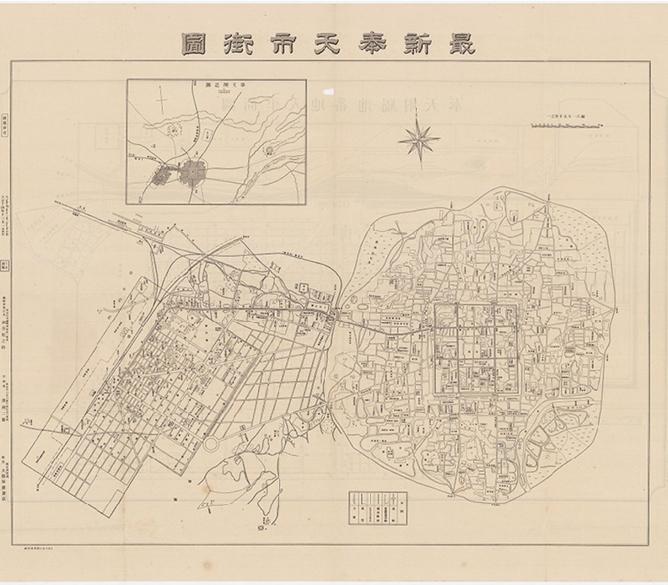

THE EARS OF A CATGIRL
[A PEER REVIEWED ESSAY]
ESSAY - SAMUEL ZHOU - YEAR NINE
This edition of Wingspan’s theme of ‘sonder’ is described as the realisation that every random passerby is living a life as vivid and complex as your own including their ambitions, struggles and routines. Complexasthissounds,thisarticle will delve into another area of appeal, that being the prevalent and intriguing species, the catgirl.
Do catgirls have one set of ears or two?
To this day, many scholars have gone sleepless trying to comprehend the complexitiesofthismystery, alongside the trolley problem or if the “one piece” is real.
includes having ears, fur or a tail and mimicking a cat.
Firstly, a catgirl’s ears are able to:
• Hear their surroundings and perceive sounds
• Move, twist and rotate to reflect emotions.
This means that catgirls have functional cat ears, as otherwise there wouldn’t be any difference between a catgirl and a guy wearing a cat ear headset. Now
simultaneously tangible and absent while it is unobserved, fated by a random subatomic evolutionary event that may or may not occur.
This means that a catgirls human ears would be in a state of superposition until a catgirl lifts their hair.
"...Do catgirls have one set of ears or two?"
Do catgirls only have one pair of cat ears or do they also inherit a pairofhumanears?Iftheydohave both pairs, then are the cat ears functional or just a furry decoration? Let’s first examine the facts.
As background, catgirls are characters with physiology that resembles a human with the characteristics of a cat, often also with feline behaviours. This often
that we have the facts, let’s consider the question: Do catgirls have human ears?
This is quite literally impossible to determine. In common media, a catgirl’s human ears are covered by their hair which creates a vacuum, and can only be explained by Schrödinger's earlobe, a thought experiment that illustrates the theory of superposition. The hypothetical theory suggests that an ear can be
In this case, we investigate under the assumption that catgirls do have human ears. This would allow catgirls to utilise all four ears, granting them another angle of receiving sound and triangulating to pinpoint exactly where a sound is coming from, practically like a GPS with four satellites. This superior hearing could allow catgirls to be great predators.
However, wouldn’t this put too much stress on the brain?
The auditory cortex would have to process four different sources of sound,draining a lot more brainpower which would make sense as catgirls are not the brightest, according to popular character portrayals. In fact, having two more functional ears would require more space in the
skull structure to accommodate for the necessary cochleas or ear canals to convert sound vibrations. Catgirls would practically be locked into a constant resource intensive civil war.
Hang on, if having four functional ears is too much, what if the human ears are just a vestigial from the human species they once were? Evolution would have switched to cat ears due to better
hearing, spatial awareness or a mutation to the human race. In this case, human ears would have been left on the body just like how humans have a tailbone possessed by our ancestors.
Lastly, we have to consider if catgirls actually didn’t have any human ears, and that hair would just grow from the scalp where one would normally expect. This makes sense as catgirls would just
grow their hair to not look uncanny and they would only look weird if they got that part shaved. And it would be very difficult for them to wear glasses.
Ultimately, the question of whether catgirls have two or four ears remains unsolved, ambiguous and an intellectually demanding topictoberesearchedforyearsand years to come.
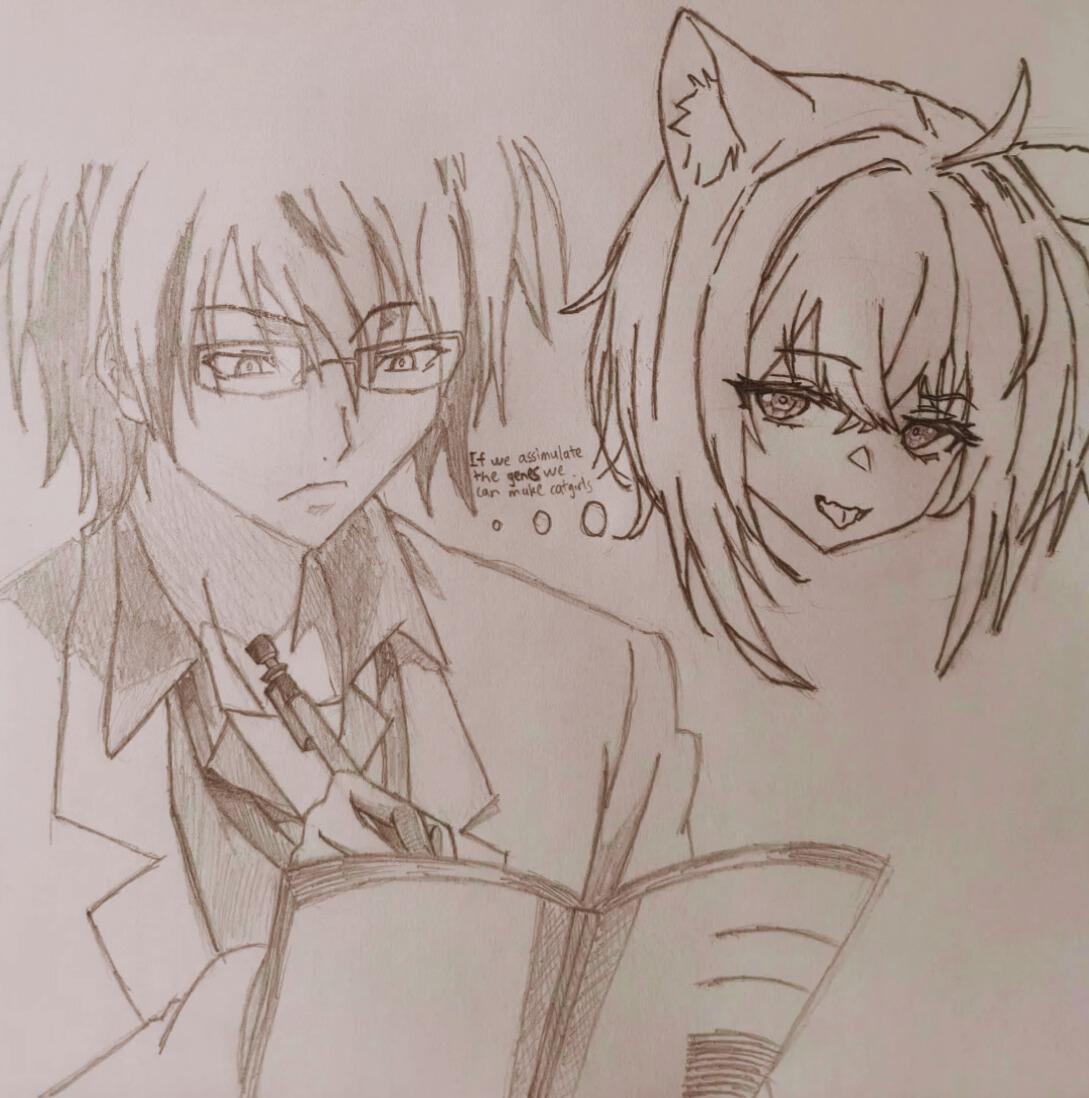
SMOULDERING HOPE
FICTION - ERIC HUANG - YEAR NINE
Smoke rose. Stars hid.
The flames consumed all; They knew not of right or wrong - it did not discriminate. It is the way of nature, how the Mother intended it to be. My gaze fixatedonthedeepriftsofashenwaves,astheydrifted lazily across the barren lawn - bringing a weird sense of tranquility that masked the terror.
The scene was that of an unleashed bonfire, a myriad of crimson and gold reaped the soil beneath a torn carpet of grass, an epilepsy of lights that grew ever more ferocious. They danced gracefully, intertwined with the hollow glow of the ending night.
In the doorway, I stood. A dark silhouette, a rare glimpse of life in a barren reality. Torrents of water tore throughtheair,afutileattemptatsubduingtheflames. But I didn’t run in. I held my stance, an unmoving figureagainsttheheatthatradiatedagainstmycheeks.
I couldn’t feel anguish. Or had anguish felt like nothing? I should’ve felt more - even desperation was easier. Desperation meant there was something that could be saved.
Behind me, my younger crew shifted, grounded by fear,restlessforcommand.Rowsofeyesstaredintothe
home, faces barraged by a storm of sparks and grime. They saw the inferno. I saw the charred beams, the earthy tang that drifted beneath my nose. The fumes hung low, folding inwards as if gasping. Heat shimmered lightly beyond the hallway like a held breath.
“Stay back,”
An objection. “There’s still someone-“ “No more.”
I knew the home wasn't empty. I had heard the weak cough, an indescribable sob that by some miracle had escaped through the incessant crackling - a vulnerable plea.
I also knew the sound of a building on its last breath. Too many times had I stood and glimpsed that stillness, knowing that fire was a starved vulture, feeding on the slightest hesitation. Mud hit my boot.
Each step felt borrowed, dragging through a thickness that wasn’t mud, wasn’t heat - but something that carried more than just weight, too difficult to name.
Acrack pierced the solemn sky, followed by a howl, as a wave of grime and anger hit me in the chest. My
vision lingered upon the doorway where I had stood; now a feverous throat ablaze.
I dared not look longer at the desolate truth before me as my hand rose, clutching a worn medal on my lapel, its imprint left on my chest - a recognition of bravery. Do I still deserve to be the sworn owner of this gift?
***
I stepped through the doorway, my boot leaving ashy prints on the carpet.
"Daddy?" My daughter's voice drew me from the hallway, towards my innocent baby beyond the staircase.
My throat turned dry. Words I had rehearsed - "It's Okay, darling. Nothing happened" - collapsed in my throat.
"Did… did someone get hurt?" she asked.
"I…" My voice trailed off. I crumpled onto the worn carpet,claspingthemedalwithinthepalmofmyhand. A single tear dripped upon its lustrous sheen, a blemish on its surface.
She climbed into my lap, laying her tiny head onto my shoulder. I felt her warmth, yet it didn't reach the part that needed it most.
moment I ignored a similar silence because bravery was louder than caution.
Two men lost their lives beside me that day. This time, I chose to leave.
Still, the town watched me with judgemental gazes; people tensed when I came close. They had once cheered my name at parades. Now they spit when I fall.
But it was different with the new recruits - they listened. “Fire,” I uttered, “is equal. It shows mercy to none.”
Ahand rose. “How do you know when to enter?”
“You don’t.” I paused. “You learn when to come out.”
The newspaper called it failure. The town called it cowardice. The mother called it murder.
I attended the inquiry, stepping into a room that burned with emotion. Their eyes, filled with contempt, boredeepintome.ButIknewfirecouldn’tbetamed.It answered to nature, not hopes and dreams.
At least - at least you could’ve tried,” the mother whispered, as harsh fluorescent lights illuminated her face, stripping bare a mask of torment.
Tried.
What a generous word, forgiving consequences, assuming effort signified dignity.
I had tried for twenty-seven years, risking my life through unforgiving passion and guilt. Yet I still see it clearly, the memory I had tried to outrun.An echo of a
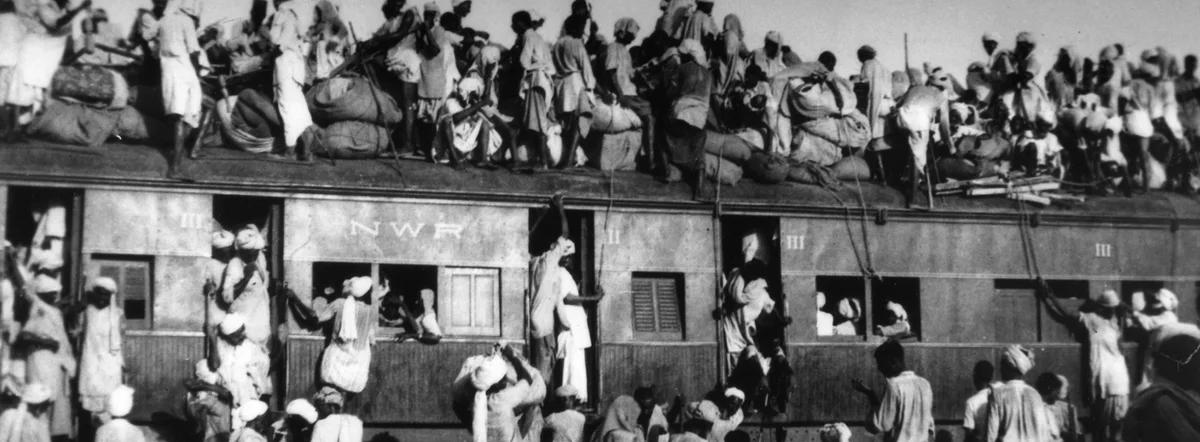
FROM THE ASHES OF AN EMPIRE
Britain, 1947
I am stuck.
The task entrusted to me by the Prime Minister is enormous, yet it has been placed in my hands, and so I must carry it through. It is difficult for my pen to trace out the intricacies of this foreign land, for I have never stepped foot in it, nor met its many inhabitants. But, it must be done. It is for the good of the people who call the British Raj home, and we cannot allow conflict to stain our departure from this soon to be former colony. So I send this letter to you, my dear, to partially console my abating conscience on this matter.
Yours truly,
Sir Cyril Radcliffe Head of the Committee on the Partition of India
Kingsway, Viceroy’s House, Delhi, 1947
As the crimson sun slowly dipped below the horizon, it did not realise the gravity of this auspicious day. It would not realise that tomorrow, a new land would be born, free from the chains of its colonial masters. Yet,onthissameday,thedayofour supposed liberation, the pain I felt
in my heart was unbearable. Each speech delivered that evening struck like a blow. Even the lowering of the Union Jack, a symbol of oppression for my people, did nothing to quell the raging storm in my soul. Because born from the ashes of this empire, a land, connected by centuries of history, culture and faith was to be torn apart and two independent countries born anew. India, a land for the Hindus and Pakistan a land for the Muslims.
Unfortunately, such neat divisions didn’t exist in the streets where we lived. My neighbour, Abdul, a proud muslim man, would care for my ailing Hindu mother when I went off to fight in distant lands. During Ramadan and Holi, we would all celebrate each other's joyous moments and treasure countless memories.
Yet now, a long trail of refugees, forced out of their homes by a stroke of a pen, snaked their way through the city, weary looks on their faces from weeks of travel to seek safety.
This pain would never be forgotten.
Rajpath, Rashtrapati Bhavan, New Delhi, 1997
Today,Ifeelremarkablydifferent.It is my 67th birthday and although grey threads now weave through my once-dark hair, I do not feel old. I have been invited to speak 50 years post independence of India, andIamstrugglingtoputmyvivid memories into words.
I still remember the chaos of the formative years, with bullocks and donkeys crisscrossing their way over the new border, families being torn apart, cries of loss echoing across fields that had once known no division.
But now, times have changed. My children raise families in the country of our former rulers.
The world has changed in ways I once deemed impossible.
I do not forgive those who made these decisions.
In all honesty, I may never. But I have to live with what has been done.
For I am no one.
FICTION - DANESH MARZBANI - YEAR ELEVEN

A BEACH OF ENDLESS STORY
DISCURSIVE - SAMUEL SHEN - YEAR ELEVEN
Think of walking along the shore of the windy beach. Listening to the constant wave breaking across the sand and retracting. Feel the strong breeze flutter, blowing around you as you take in the land in its entirety. Imagine every grain of sand as a written work, a tragic tale, a satire comedy, a non fiction extract. Now you count all the shells scattered around you, all with unique structures, colours and patterns; these represent the storyworlds.
Whatarestoryworlds?Storyworlds can be anything, fictional stories, literature, or any narrative conceived. They are a reflection of the human experiences, conditions and more, serving various purposes to both the reader and the author who created it. Many storyworlds can almost mimic reality,andcanalmostbeseenasan escape from the current world, yet this belief can also coincide with whether storyworlds are also an alternate way of understanding reality.
This time, you are lucky enough to find a conch shell, its distinct conical shape reflecting a layered and complex form, its texture rough and bumpy, and the hue a lightish orange. Putting it to your ear, you can hear a light swirling. It feels like a playful, compelling narrative.
As I read through a fiction or novel, I often become absorbed in the meticulously created world of the author, take Harry Potter for example (Overused I know,). The setting that almost mimics our current world, yet with a clear distinct change, incorporating a magical element and thus building a separate world from our current
reality. This shell would be an unassuming cockle shell, possessing a shiny iridescent interior when you take the time to look closer.
This storyworld aims to engage, as the author aims to pull the audience in with aesthetic description, reflecting the possibilities of storyworlds to become this break/escape from the real world. This fictional environment can be a sort of safer detached version of real life, immersing viewers and acting as a form of escapism from a possibly monotonous and repetitive lifestyle.
What strikes you most about the next shell is its deep blueish gradient. The colour ripples from the rounded smooth top, and gets lighter as it continues to move out. Strangely, the shell holds a sense of serene melancholy, its form mimicking the slow constant waves. This story is more personal, but holds much meaning.
The formation of an alternate way in understanding reality can also find itself taking on a myriad of mediums, visual or textual. Throughout many physical artisanal pieces, the artist aims to create with the purpose of expression in mind, whether it be emotions, experiences or more. Similarly in texts, authors can purposefully shape alternate interpretations of the world when framing the storyworld in different perspectives. Notably, Catcher in the Rye creates a reality told through the lens of Holden’s mind, reflecting his feelings of grief and alienation within his interactions and way of perceiving concepts of
connections and adulthood. This shell is stacked with multiple layers, yet the muted colours and cracked outer layer conveys a sombre authentic essence. A Storyworld is not restricted to a form of escape, as it holds the ability to reinterpret original conceptions.
Ultimately, storyworlds are concepts that aren’t able to be classified under one complete category. They can hold just as much meaning through the many ways they are understood, and their dual nature in this sense of escape or interpretation offers insight into the authorial purpose they shape.
Eventually, the sun begins to fall over the horizon. You decide to scatter your small collection across the shores, letting them wash away into an endless ocean. Imparting with the shells does not fill you with regret, but a sense of excitement into what else you could discover.
You know you will return to the beach of endless stories.
GOING THROUGH THE MOTIONS
POETRY - ANIKAN NGUYEN - YEAR TWELVE
She hated these late night shifts. The lights were, as always, hard, white, constantly humming with their insistent fluorescence. The floor tiles shone with varnished stillness, glistening like wet enamel. The automatic doors slid open with a whoosh and she looked up, locking eyes with a teenager for just a moment, her clothes baggy and ripped, before the customer’s eyes slid away.
The air was cold; over-conditioned and tasted faintly metallic in its own, antiseptic, minty way.
Numbly, in the background, she registered the indistinct loudness of the organised silence, broken only by the inevitable small talk and the buzz of the register as she scanned another bottle of vitamins, another bottle of tablets, another container of ibuprofen. She sighed and checked her watch.
One more hour left on her shift.
She yawns inadvertently; she’s not supposed to be yawning on the clock but the day’s been long and the ache between her shoulder blades cuts like a dull, familiar knife. She reaches into her pocket for the small bottle of sanitiser, the label all but peeled off, mostly to take a miniscule break from the constant monotony, unaware that this cleanliness has wormed its way into her routine. She rubs the sanitiser between her palms, watching it sink into her skin. The girl is still there.
Lingering at the edge of the aisle, fingers picking at the fading price tags. She seems almost lonely, in a way.
“Hi,” she says automatically, tucking the sanitiser back into her pocket, the word already thinning as it leaves her mouth.
“How are you?” The girl steps forward, placing a small box onto the counter, the sleeves of her hoodie swallowing her hands.
A strand of hair falls across her face but she doesn’t seem to notice. “Do you have a rewards card?”
A slight shake of the head. Her thumb traces the edge of the box. Back and forth. A spot of ink near her nail. She slides the box over.
The register beeps.
Sertraline, 20 milligrams.
“That’ll be $24.99.” she says, spinning the register around. The girl taps her card, takes a couple tries. She’s shaking a little bit, probably from the cold.
“Any questions?” She smiles, a little bit out of obligeance. She places the box into a small brown bag, tying it up in a little knot. She checks her watch again, shift’s pretty much over.
“Nah.”
I never liked these goddamn nights. The nights that yelped and cried, loud, annoying, constantly whining like I’d give a sh*t.
Momma’s gonna yell at me if I don’t get this right. Don’t think she really cares though. My head been buzzin’ all night. Can’t remember if I brushed my teeth. Doors hiss open. Cold fangs at my neck. Should’a worn somethin’ under this hoodie. Don’t matter.
Sneakers squeak on the floor. It’s sticky in spots. People brush past me. Don’t touch me. Lady at the counter keeps staring at me. Don’t look at me. It’s cold in here. You know where it is. Down aisle 3. Top row. Always outta stock. The shelves stretch out like them church pews. Not that I’ve been. I yawn. Been a long night after all. My chest’s tight and my shoulders ache like the very devil so I grab the box and roll it between the palms. Like that’s gonna do anything. Like what’s inside the box is gonna do anything. Label’s peeling off. Don’t matter. Price tags ripped in half. Guess it don’t matter. Not my money anyway. That lady’s still watching me. Guess I gotta go pay. “Hi,” she says, like she even really cares. Sorry, no need. Lady’s just doing her job. Box says take one daily. Same as that last one. And the one before that “How are you?” Fine, I suppose. I don’t say it aloud. She probably doesn’t care. I put the box on the counter. Just let me pay, man. I ain’t got all night. “Do you have a rewards card?” Nah. Ain’t planning on collecting points for this. I slide the little box over. Ink spot’s still there. Didn’t wash off I guess. Card machine beeps. So very loud. Just once I want something to be quiet. “That’ll be $24.99.” I tap the card. Or try to. My hands’ been shaky recently. I almost apologise. Nah. She don’t care. “Any questions?” Yeah.
How long it’s meant to take before my chest don’t feel like it’s cavin’ in. How many mornings til I ain’t tired of waking up. “Nah.”

OWN MAIN CHARACTER
FICTION - MARCO LIU - YEAR ELEVEN
Flowers
You’re standing on the platform. The air smells likeconcrete,rain-andfaintly,likejasmine.The next train is twenty minutes away. The day has been long, tiring, meaningless. Your mind is off somewhere else, somewhere far, as if searching for that sense of home that you could almost, almost name. There’s a lone potted flower by the vending machine, wiltingslightly,itspetalstremblingeverytimeabreeze blows by.
The station is mostly empty. There’s an elderly woman a few feet away, clutching her handbag tightly. Her eyes are fixed on something faraway, an esoteric middle distance. You don’t know her, but you know that look. The look of someone who has buried a husband, who has nursed a sister, who has held grandchildren. Who has loved so deeply that loss became a permanent resident. Who still wears that silk scarf because he always said it brought out her eyes. Who has given and received countless flowers, and who knows, by now, exactly what they mean and what they cannot fix.
Further down, a construction worker in a worn-out hivis leans against the wall, scrolling through his phone. Hair damp with rain, hard hat tucked under one arm, you can see the dust on his boots, the wear on his knuckles. Somewhere, he’ll watch his son’s soccer gamethisweekend.Somewhere,hiswifestilllaughsat his bad jokes after decades of marriage. Somewhere, he’ll pick up a box of chocolates in place of a bunch of flowers for their anniversary because that’s all that he can afford.And somewhere, dreams he folded and put in a drawer the day his first child was born.
On the other side, there’s a young couple huddled together on a bench like they’re the only people in the world. She’s holding a small bouquet of flowers, wrapped in white paper-bright, almost aggressive in their freshness. He whispers something in her ear, and she gasps, giggles, shoves him gently. They’re young, unguarded, ridiculous, beautiful. There’s something that catches, like a corner you’ve turned before, like a dream you woke from too soon. They don’t yet know that this moment will be, one day, something they long to return to. They don’t yet notice that one of the flowers has already begun to brown at the edge. Right
now, they belong.
The breeze shifts, and there it is again - jasmine, sweet in the way that things are sweet when they’re almost gone.
You don’t know their names. You don’t know their stories. But you’ve been standing there long enough to feel it, to glimpse it, perhaps. That persistent link, like longing and rage and grief and ecstasy all at once. You look at each of them once more. The flower by the vending machine trembles again, and you notice-it’s being watered by the rain.
For a moment, you’re not alone. Then the train arrives, and you all step forward, carrying your invisible flowers that bloom and fade with you, forever lost, forever longing.
Windows
You’re on a night bus, forehead pressed against the cool glass. The city slides by in a smear of neon and rain. Your breath leaves a foggy print on the window. You’re tired in that bone-deep way that makes everything feel slightly unreal, slightly tender.
The bus stops. A woman gets off, disappears into the building. And for a moment, the bus is paused just long enough for you to look up, catch a glance. There. A window, lit yellow against the blue-black of the evening.
Inside, a man is dancing alone in his kitchen. Maybe there’s music playing - you wouldn’t know either way - but all you can see is just him, swaying slightly as he stirs something on the stove, a spatula doubling as a microphone, as a conductor's baton, as whatever he needs it to be. He spins once, clumsily, catches himself on the counter, laughs at nobody. Somewhere in this city,someoneloveshim.Somewhere,heisloved.Right now, he is simply happy in a way that requires no audience.
The bus moves on.
A woman stands at her kitchen sink, not moving. The water is running and you can just barely make out the steam rising - but her hands are braced against the
counter and she's just... staring. At nothing. At everything.At the reflection of herself in the window.
Maybe today was the day. Maybe today was the day she finally said it, or didn't say it, or heard it, or couldn't. Either way, the dishes will wait. They’ll always wait.
The bus pulls away.
Next block. A living room with the lights dimmed. A teenager sits cross-legged on the floor, backlit by the blue glow of a television you can't see. His shoulders arehunched.He'sholdingsomething-aphoto,aletter, a phone maybe, and he hasn't moved for a long time. There'saplantbehindhimonthewindowsill,dyingor living, you can't tell which. You think of the flower on the platform. You think of how many rooms you've passed in your life, how many figures glimpsed through windows, how you've never once knocked. He'll grow up. He'll move out. Someone else will sit in that spot, hold something else, hurt in some other way.
Then the bus rounds a corner, and all the windows disappear, and you're left with only your own reflection, floating ghostlike on the surface of the dark.
Everyone’s Just Trying To Make It
We get so caught up in our own lives that we forget that everyone else is living one, too. That everyone else has their own private constellation of worries and joys, their own quiet symphonies playing just beneath the skin. The woman on the subway, staring blankly at the map, is rehearsing a difficult conversation with her boss. The man who bags your groceries, his fingers nimbly separating the eggs from the canned goods, is counting the minutes until he can see his daughter’s science project. Lives brimming with details you’ll never know, each one a novel you only ever read the cover of.
This is what the writer John Koenig named, in his Dictionary of Obscure Sorrows, sonder - "the profound realisation that every random passerby is living a life as vivid and complex as your own." A life populated with their own anxieties, ambitions, lovers, losses, and private victories. Strangers are not extras in the movie of you; they are the protagonists of their own films, ones you'll never see, whose plotlines you'll never follow, whose closing credits will roll long after you've left the theatre.
And I think it's supposed to be overwhelming. Think about it - to truly accept it, this truth; that standing on
a train platform, sitting on a night bus and feel the accumulated weight of every life that has ever paused there...
How many flowers have been given and received on this spot? How many goodbyes? How many first dates and last chances? How many people have leaned against this same wall, clutching their own invisible bouquets of hope and grief?
But sonder is also freeing. It is the great antidote to the tyranny of the self. When you're spiralling at 11 pm, replaying that awkward thing you said three years ago, agonising over a decision that feels monumental, convinced that everyone is watching and judgingthink of the man dancing alone in his kitchen. Think of the woman staring at her running faucet. Think of the teenager holding something in the dark.
Theyarenotthinkingofyou.Theyarethinkingoftheir own kitchens, their own faucets, their own photographs. They are carrying their own flowers, wiltingandbloominginrhythmsyoucannothear,feel, see. They are looking out their own windows, watching their own cities slide by.
Which means that you are free. You are free. Free! Free from the exhausting fiction that you are the centre of anyone's universe but your own. Free to mess up, to stumble,totry,becauseeveryoneelseistoobusydoing the same to notice your missteps with any real attention. Free to stop performing and simply be, swayingwithyourspatula,laughingatajokeonlyyou heard.
If everyone is living a life as textured as yours, then everyone is also, in some way, struggling through it. Everyoneistired.Everyoneislonging.Everyoneisjust trying to make it to the weekend, to the reply, to the moment when the dishes can wait and the weight lifts, just for a breath.
So look up. Look around. Water what needs watering. Dance like no one's watching - because mostly, they aren't. Or, they likely won't care. And when you step onto that platform, onto that bus, into that crowded room, carry your flowers with grace, and spare a moment for the invisible bouquets of everyone else.
We're all in this together, trembling in the rain, waiting for trains that will take us somewhere we can't quite name.
And somehow, impossibly, beautifully - that's enough. Hopefully.
UNTITLED
POETRY - KABIR KUKRETI - YEAR TEN
It has no body of flesh, No muscles or sinew.
It has no form, No beginning or end.
It has no command, No presence or bridle.
Yet it forces the hand, The mind and will.
I do not know why,
UNFAIR
POETRY - LEO ZHANG - YEAR TEN
On my desk it cannot stay A swish it’s gone astray Where’s this goddam bottle? “Hide it Quick!” they say
It gallops across the table It runs past their feet
It flies like a ragdoll And sails beyond my reach
Shout across the theatre and stubbornly shout 'Hey!’ Scolded by the teacher I swear one day they’ll pay!
I grudge back at my seat
Staring like a hunter Fervently stare around their feet
Oh where is it under?
And so sometimes I wonder Why I cower in despair The bottle’s mine I cannot find Oh Life it is unfair!
ERIC HUANG - YEAR NINE
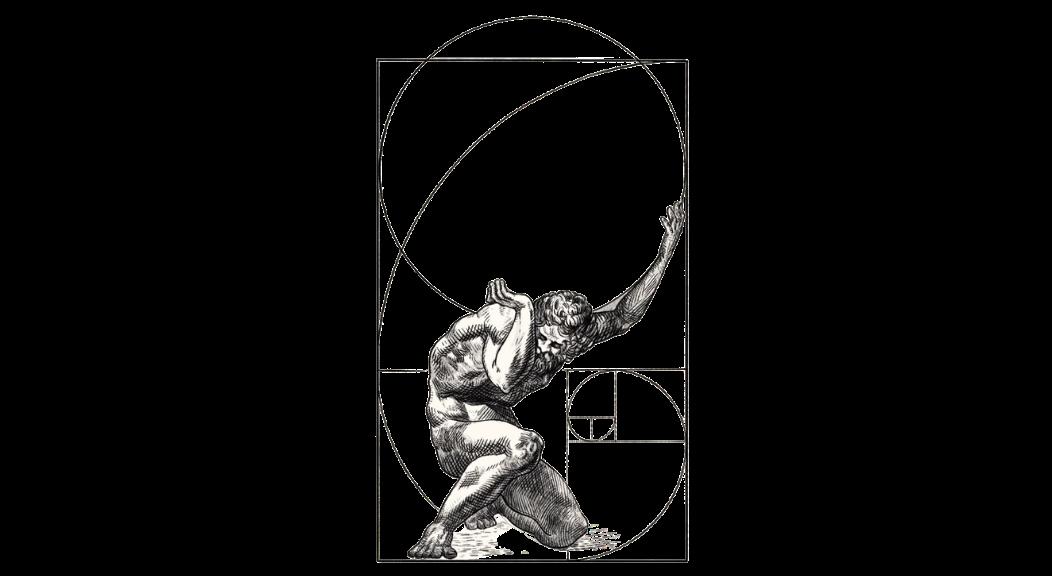
THE SOCIAL DILEMMA
ARTICLE - SHAWN TANG - YEAR EIGHT
Humanity. We are a threattoourselves. We are the creators of a machine. That terrorises us. We do not question ourselves. We believe what we are told.
It is the thing that sells us. Our time. To the creators of this machination. We are drawn between the tides of truth and deception. We are alluded to continue exploring this conspiracy. The fish hanging on a hook.
Wearewhatpowersityetweare what it controls. Words of lies. An endless hex of mahogany colours that intrigue our mind into falling into this coven of prevarication.
We are being used. We are not using it. We.Are their products.
We are the single concept or idea.
It is the written word. It is the flicker of a camera shutter. Our blood smeared on the ingenious rock of this heartlessly sentient machine. We are the rope that is pulled between the endlessly unfair tug of war that balances on the delicate equilibrium of social struggles, morals and the unethical continuity of it.
Itisusedtomanipulate,increase the monumental power of those that curtain us. It spreads the delusional untruths of humanity. It is us. It is the mastermind of society. It bewitches us, encompassing us in a battle for docility and innocence in our world. It's the justice that is not just. It is the cover for our society.
Evangelism of the mind.
The strangling of the fabric that our society is based on. It destroys. It shatters the ethical morals that we each have. But wecontinuetobrowse,andletit perplex and bewilder us.
It is the twisted truth. The truthful lie.
The thing that degrades society. The thing that disintegrates society.
It is what matters.
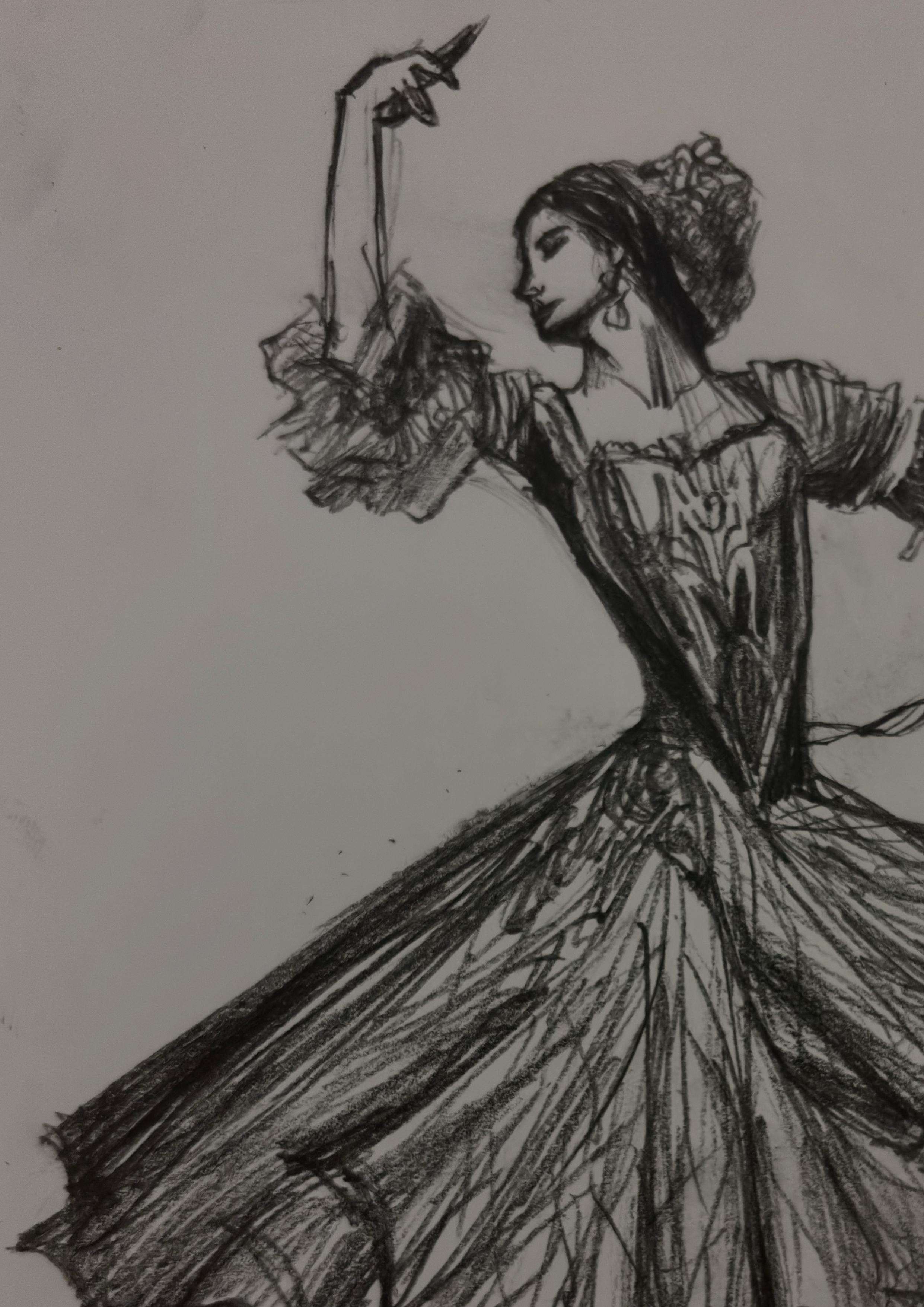
IN THE BALLROOM
ERIC LU - YEAR TEN
LADY LORD
POETRY - LAYTON HO - YEAR NINE
Your Sanity the waning moon.
Lady Lord, Complexion Slight, A Presence of your Own.
Masquerade - Adorned with Hues, Your Guise is your Platform.
Lady Lord, your Will so Bright So Fervent ‘gainst the Tides of Time, Endearing like your Strength of Mind. Wish you could see Volition’s Price. You, Resplendent, Majesty, Stand Firm against Authority, but Noble? Pious? You’re Immured In your own ‘Insight,’ left Uncured
to grow and warp, unfold to bloom night’s artistry, released too soon. the dreamer, seeker, lost in thought, dissociate, your vision’s blurred.
A Memory, so Faint and Frail, You’re Slumped against a Concrete Wall, Fragility, your Strangled Cords, You try to Scream, I Watch you Fall. So Powerless. You learned too Young That to Conform would mean to Shed The Light this World is Primed to Break. You Killed the Part of you that fled. Now Here you Stand, upon your Stage, You Rally, Roar, Incite, Demand. Seduce, Reduce the Minds of Man
To you, Angelic. Emblem
of labelless grace, a blank-slate portrait, lovestricken smiles upon thin lips. ungendered figure, fluid and changing. steady long legs ‘neath lanky hips.
Lady Lord, you’re Plagued with Doubt, Yet you put on a Makeshift Show Of Confidence, Exuding Strength, I wish your Facade would not Hold For this World’s Burdens are not yours, Don’t need to wear your Steadfast Mask. A Leader does not Sacrifice
So much that they Tear down their Heart. I weep for you. I don’t know how You hold back Fear behind your Grin. No Scriptures can Define, Confine Your Beauty and your Soul within.
lady lord, stay true, stay real, stay by my side, we’ll see life through. don’t need to be a titled liege, no lady, lord. just you and me.
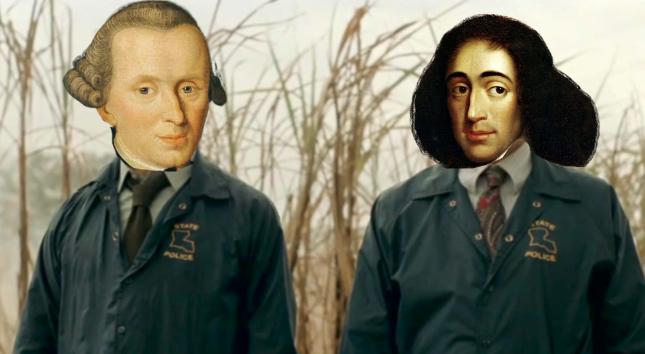
OUTLINES OF KANT ' S TRANSCENDENTAL DIALECTIC
ESSAY - BEITA SU - YEAR TWELVE
ThefirstseasonofTrueDetective(2014)isoneof the highest points in the history of serial television, composing a haunting American Gothic vision of urban decay to present the show unabashed in its literary indulgence. One of its defining aspects is the nihilistic philosophy espoused by the detective ‘Rust’ Cohle, who laments that;
“I think human consciousness is a tragic misstep in human evolution. We became too self aware; nature created an aspect of nature separate from itself. We are creatures that should not exist by natural law. We are things that labor under the illusion of having a self, a secretion of sensory experience and feeling, programmed with total assurance that we are each somebody, when in fact everybody’s nobody.”
This isn’t a review of ‘True Detective’ (I could hardly do it justice), but Rust’s Nietzschean perspective on ‘Being’ is interesting and worth an examination. The question of ‘Being’ as such requires an examination of nature first and foremost, lest we become solipsists, and the notion of the self as simultaneously an aspect of and separate from nature. If we were to understand ‘nature’ as a causal chain, we can model the universe as a game of billiards, wherein the pool stick causes one ball to hit another and so forth. Therefore, if we
areinfactbeingspurelyofnature,whereinthiscausal chain can we identify the self, or conscious identity?
To investigate this question, we can canvass some philosophy.
One system in relation to this quandary was offered by Baruch Spinoza in his 1677 ‘Ethics’, who was praised by the aforementioned Nietzsche as a “the loneliest thinker” who “denied the freedom of the will, teleology, the moral world-order, the unegoistic, and evil.”Controversially, Spinoza’s rationalist metaphysics did away with a transcendental God ‘out there’, instead asserting him to exist immanently, as the only Substance in existence. Here, there are two important aspects, first being his denial of ‘teleology’, ora‘finalcause’thatsomethingtendstowards,orthat givesreasonforitsexistence.Thesecondwouldbehis considering the universe, including human consciousness as attributes of Substance, or God acting out of absolute necessity, thus supporting an absolutely deterministic philosophy wherein contingency (accidents) only appear as such due to an imperfect understanding of the universe’s absolutely necessary causality. [I appear to have gone on a tangent. This bit about Spinoza is probably unnecessary fluff. You should still read Spinoza, though, and it will open up your mind and make life
Against Spinoza the philosopher Immanuel Kant claimed that the former’s"monstrous system” was to deny first and foremost the coherency of his metaphysical claims through his ‘antinomies’, that being the contradictions emergent from attempting to rationalise the nature of transcendental reality. Individuals like Spinoza and Leibniz (who argued for the universe being constituted of a harmonious alignment of windowless, indivisible “monads”) did present internally consistent models for the nature of reality, however, their basis in the application of pure reason to the universe of phenomena (the universe that we perceive) begot equally rational-but contradictory results. This is Kant’s “transcendental dialectic”, exemplified in his antinomy of space and time, a pair of antithetical positions; you could arguethat the world has a definite instance of beginning, or you could argue otherwise, and neither position would rationally be disprovable. A more relevant antinomy relating to the aforementioned question of causality is also given by Kant; either everything that occursiscausalandaccordingtothelawsofnature,or everything is spontaneous and without necessary cause (as is the case with Hume, who denies all necessary causality). Both are rational positions, after all for we cannot rationally prove the existence of necessary causality.
As I have outlined, Kant presents significant critiques of rationalist metaphysics, but he doesn’t throw the baby out with the bathwater. He maintains the existence of the transcendental, a word meaning the conditions for our human consciousness and subjective experience. He proposes the transcendental subject, whose experience is structured through a priori ‘categories’ like space or causality (try to understand a spoon without space, or a game of billiards without causality, I dare you) which acts as preconditions for understanding. The transcendental subjectisthe“I”thatallowssentenceslike“IloveTrue Detective Season One (2014)” to be coherent. Now Nietzschean philosophy (like the one espoused by Rust Cohle) is positioned strongly against Kantianism, but there are deep similarities in the way of Truth. Reflecting on the human consciousness Kant’ssubjectivityoperatesinagreyzone.Here,there is a transcendental dialectic. Against the notion of the “I” as a series of individual happenings through time (the idea that the “I” is just a slideshow of experience flickeringinandoutofexistencemomenttomoment), there is the antithesis that it is an entity with discrete, positive features (an “I” that has a priori knowledge like the fact of triangles having three sides). Rather
than resolving these contradictions, both of our subjectivity, and of the world, Kant asserts their necessity to allow our understanding to get off the ground as regulative principles, to dissolve the contradictory positions of transcendental Knowledge in our practical life.
Indeed,forKant,evenifwearelimitedbypurereason in its speculative powers due to the antinomies, and thus we are unable to definitively know the truth to God, for example, reason in its practical application is still important. As such, as regulative principles, even ifwecannotknowthenatureoftheself,orcausalityin a higher order epistemological sense, they still serve us practically in our lives. In his third critique, the ‘Critique of Judgement’ (1790), what is at stake is teleology, the idea that all things tend towards a particular end of purpose. Unlike Spinoza’s positive rejection of teleology, Kant denies our ability to rationally arrive at a judgment, especially concerning historical teleology. It is nice to say that history tends towards progress, certainly Kant’s Enlightenment contemporaries indulged in such notions, however we cannot make knowledge claims about it. Though we want to say that things happen for a reason, and a certain direction (things are going to work out!), we can’t actually prove it. Again, Kant’s transcendental dialectic dissolves the contradictory positions; in any case, teleology is a really useful idea since no one would do anything if they don’t believe that their actions will actually have an effect in the world, no one would do anything for the sake of progress if we didn't have a notion of progress. As a practical regulativeprinciple,itisusefulandnecessarybecause absolutely nobody would do something under the belief that “This is impossible and nothing will come of my actions…”, teleology gives us such possibility as a prerequisite of practical reason.
Here is the crux of the transcendental dialectic, not that we are strictly under the “illusion of having a self”, that our “self” is some sort of positive substantial knowledge, but rather the dialectic reveals what reason and our subjectivity cannot do without. However in another sense, yes, we are under an “illusion”, that of our ability to actually know unmediated external reality (the noumenal world, the thing-in-itself) but the transcendental dialectic allows us to not be duped by it, making us aware of the immanent appearances always-already caused by this constitutive mediation. The liberatory essence of Kant’s dialectic is that, although we have such limits to our knowledge, especially the faculty of reason, the act of proposing a limit necessarily requires us to go beyond the limit itself [This will become the basis of
German Idealism under Hegel]. Likewise, when you are told by others that your actions will have no consequences for the world, for your family, your friendships, for your political reality, either you do nothing, or you orient yourself otherwise and commit yourself to freedom. In my personal experience [All seventeen years] I have had personal struggles with the idea of God, though I am not ascribed to any particular faith. Considering the idea of death and its apparent finality compels me to grasp for something more because the idea of the nonexistence of the totality of the world, or a notion of emptiness fills me with such dread that I must look for something there, otherwise I get deeply frightened. Skeptics would probably want to tell people that they should look death in the face and get on with it, or that we are all causally determined anyways but Kant doesn’t claim to be able to prove the existence of free will for example, rather, he advocates for these ideas as regulative ideals that we act as if it were true. Our reality is structured in a practical sense that dependsonustodraw limits of our understanding (pure reason) by first stepping past it.
Considering meaning, it could be possible that teleology is fake, and that the comings and goings of the world are meaningless and happen essentially sporadically. However, Kant affirms that reason cannot function without finding meaning, or an idea of progress, of some effect of our actions (in itself a “soft”teleology).IntheCritiqueofJudgement,Kantis bewildered by Spinoza’s seeming ability to be virtuous and an apparently good person, and to function without teleology, and I am inclined to believe that only maniacs, like Spinoza, could act if there is good out there! In political terms, you cannot have any critique of the existing world without a normative idea of progress, even if you cannot rationally prove it. On the other hand, you are a terrible person if you go up to a person mourning the death of a loved one, and say to them “this will contribute to progress somehow”, and Spinoza thought that it was psychologically detrimental to believe in retroactive justifications of this sort. In historical terms, the notion of progress and universality could justify historical atrocities like
colonialism [Kant was however a horrible racist and colonialist (some say he is the father of modern racism), and there are questions over his philosophy and colonialism. However, I would say that his racism is detachable from his wider philosophy unlike someone like Heidegger, whose Nazism is completely enmeshed in his philosophy.], and would undeniably be highly problematic.
"...A pair of antithetical positions;You could argue that the world has a definitive instance of beginning, or you could argue otherwise, and neither position would be rationallydisprovable."
However, rather than having a strict notion of teleology, holding the idea of progress as a normative ideal is absolutely necessary in any structuring of history as coherent. Reason, the subject of Enlightenment necessitates ‘progress’, however as constituted by human subjectivity, it doesn’t provide the same objective abstract universality that justifications of historical atrocities rely on [Hegel would later advocate for an actual progressive development of reason in its logical (and partially historical) sense as “what is rational is actual and what is actual rational”, while simultaneously declaring that history is a “slaughterhouse”] The question (raised especially by the catastrophes of the 20th Century) is therefore whether or not we can think of something like history as having an intelligibility without the presupposition of progress, and Kant would answer negatively.
On the level of personal history, while I am inclined to believethatmylifewillprogresstowardssomething,I also would be repulsed by the notion that the bad things that have happened to me were absolutely necessary to the state of my soul or personality now, even if historically they were constitutive. If that were thecase,Iamineluctablyapartofacausalchainofmy empirical circumstances (nature), a fact that I don’t honestly believe in. I think my life up to this point could have gone differently, and to believe otherwise would be to situate my soul in essentially a game of billiards. I think I could have been a better person based on contingent events in my own personal history! Without some presupposed idea of freedom, or at least existence as a spontaneous agent undetermined by the wider causal chain, my “I” would cease to exist as distinct from empirical
happenings from moment to moment. Considered through a descriptive teleology - I would have been a differentpersonifotherthingshadhappenedtome-I am guaranteed a unity of self as a totality that is spontaneous, and therefore ordered as undetermined. Rust Cohle is formally wrong when he says “We are things that labor under the illusion of having a self” because without having a structural totality of “self” across time, “We” simply wouldn’t be. Kant outlines the “I” in his ‘paralogism of the soul’ as its existence is conditional for thought to emerge, hence, we are transcendentally free even if we are empirically determined. [ThisiswhereBergsontakesoff] Without having a formal consistency of being a transcendental subject (the “I”) we would only be dynamic impulses of an aimless purposive substance.
Moment to moment, ‘that’ is still me who went through those things, those experiences, those emotions, those personalities. I can still find myself across different contexts as the particular subject who cried, who loved, who laughed, what Kant would call in one of the most unhinged passages of philosophy:
“that I, or they, or it, (the thing that thinks)”
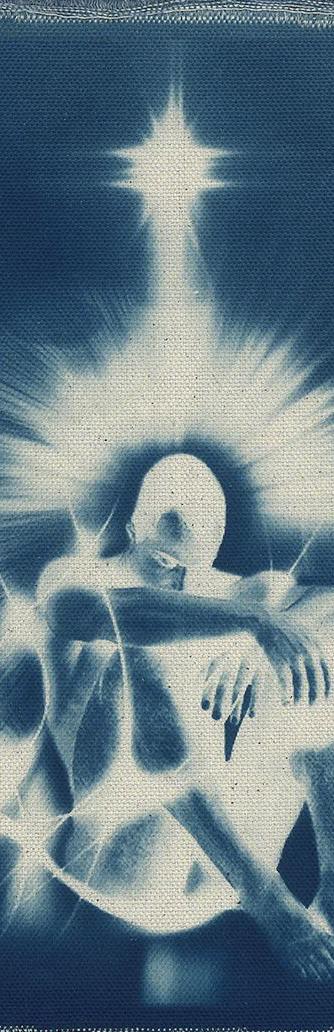
CHOCOLATE LAVA CAKE
RECIPE - CHARLES WANG - YEAR NINE
Recipe serves two:
Headnote
Never judge a cake by its crust. Achocolate lava cake is one of the most famous desserts in the world, yet it issurprisinglysimpletomake.Whenthesolidcrustis broken, rich, molten chocolate flows from the centre just like lava, which gives the dessert its name. The same can be said for humans: even those who seem tough on the outside can be soft on the inside if treated with the right conditions. As you make this recipe, remember that everyone is different beneath the surface. They just need enough time and space to reveal it.
Equipment
• Large bowl
• Medium bowl
• Whisk
• 2 ramekins
• 2 plates
• Sieve
Ingredients
• 85 grams of chocolate
• 65 grams of unsalted butter
• 28 grams of white sugar
• Splash of vanilla extract (optional)
• 1 whole egg + 1 egg yolk
• Pinch of salt
• 28 grams of all-purpose flour
• Dusting of flour
• Dusting of powdered sugar
Preparation:
1. Place the chocolate and butter together in a large bowl, and microwave in 30 second intervals, whisking between each, until fully melted.
2. Mix the eggs, white sugar, and vanilla extract together in a medium bowl, then pour into the chocolate mixture.
3. Mix the salt and flour into the large bowl, then grease the ramekins with butter, and dust all sides of the ramekin with flour.
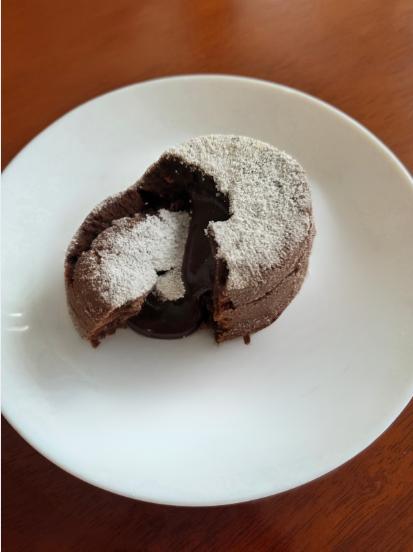
4. Pour the mixture evenly into the ramekins, and use a spoon to make the top level.
5. Bake in an oven at 216 Cº for 12 minutes
6. Take the ramekins out of the oven, place a plate on top of one, flip the ramekin and plate upside down, and tap the ramekin to loosen the cake.
7. Lift the ramekin off the plate, and repeat for the other cake.
8. Dust with powdered sugar, and serve immediately.
“
William Wordsworth, The Prelude, 1805
how often in the overflowing streets have I forwardsgone with the crowd, and said unto myself 'the face of everyone that passes by me is a mystery'
BLACK AND WHITE LIES
ARTICLE - KENNY HUANG - YEAR NINE
Have you ever realised that almost everybody in this lonely, floating world inside this huge, vast expanse of nothingness also has their own reality? They also have a life which could be as happy, bright, and meaningful, or as sad, depressed and ungrateful as your own. This realisation is called sonder, commonly referring to the profound, neologistic feeling when one realises that each passerby actually has their own perspective.
I know some people who would dismiss such delusions, ironically, by being delusional, and trapping themselves in their own world, portraying every passerby or “irrelevant character” as a background, metaphorical extra or “side character”. I believe such delusions (although, I think calling them delusions is too far, I’d say distasteful perspectives), find more prevalence within our generation,
where, in my opinion, a lot of people are like this due to how “brain rotted” we are.
Our social media, even if satirically, suggests other people who aren’t family, friends or people remember for long times in our lives are simply background or side character, probably because social media has large mentions of anime, manga, TV shows, etc. that often portray a main character, a protagonist, whilst the rest are also main characters, side characters or background characters. It’s not the abundance or underlines of background characters which affect our perspective or thinking in a partially deluded (not as in mentally ill, though) way, it’s the huge focus on the main character in our social media when it comes to this kind of pop culture or mainstreamACG. I believe this sort of thinking leads to overly inflated egos and the dismissal of
“background” characters. Again, even if satire, the repetitive nature of main characters and the relevance of social media in this generation continuously affects us, slowly changing how we think.
I’m not saying you should chat up everyrandompasserby abouttheir life story, I’m saying to keep such things in mind because, going off topic, every world and perspective is equally as important, in a subjective manner. Treat life as delicately as you can, value every gift and learn from your mistakes.
You’ve probably heard this a lot of times from parents, teachers, or older people and dismissed it, which I also do, but I honestly am starting to think it is more needed than expected. Similarly neologistical, there is a concept, or more specifically, theorem we need to evaluate and understand. In a few hundred years, after death, we
as individuals will be completely forgotten. Completely.
True death, basically erasing your existence. Sure, you could argue and say what if you made a huge difference in the world? You made a scientific breakthrough, invented a new type of mathematics which created a whole new system, wrote some highly valued philosophical book, shattered reality, and so on. That still wouldn’t matter, because by tens of thousands of years you will then finally be forgotten. What if you invented the cure to death, what if you advanced humans to a Type III civilisation?
Ok, stretch the time out even further. Millions of years, you’d still be forgotten. Forever after. What if you advanced humanity so far multiple universes were conquered. Thousand multiverses, gigaverses, thousands of gigaverses, so on. What if an infinite energy source was created for infinite survival. Ok, give it infinite time. You will be forgotten. There will be no meaning to life.
I know this sounds really deep and meaningfulandsocooloredgy,but like, thinking realistically and logically for a moment, it makes sense. So, enjoy your last centuries (likely) as a living, breathing being, becausesometimelater,itwillallbe meaningless. Now, that sounds a little too pessimistic. My friend, Marc Heng, gave me a more optimisticviewonthistruth,whilst I was yapping about the basic outline of that fact we will all be meaningless, amount to nothing, blah blah blah, you should commit crimes because of this, since you can do anything you want if it amounts to nothing (technically, the same argument applies against this). He just replied with (not accurate because this is casual conversation being translated into a more formal argument), “Then
live in the moment. Do everything to your best and do it right so your world and perspective means something to yourself. At least you’ll die knowing that and you’ll bring meaning to what “wouldn’t” have meaning.”
He’s right, honestly. What is genuinely the point of bringing pessimistic thoughts over optimistic thoughts? It’s not “realistic,” I don’t recall pessimistic meaning realistic. Being optimistic
isn’t dismissal or ignorance, like usually people aren’t overly optimistic (which is ignorance) or overly pessimistic (edging into realism).
So the moral (if there even is one), to this text, is that you should genuinely follow the advice of treating life as delicately, valuing gifts and learning from mistakes.

LEARNING TO BE WEARABLE
Blue Jeans
Idon’t ever remember deciding to love you. I was small enough where your love felt like gravity, something that held me in place before I knew how to resist it. I was dressed before I could dress myself. Clothes were chosen for me long before I could choose.
I wore what you laid out for me, denim softened by repetition, hems turned up so I could grow into them. The adjustments were small, almost courteous; legs tapered, waist darted, excess taken away. Nothing was ever explained, yet I understood what was required.
of resistance for safety.
Only now do I understand what I’ve learned. Love was never an encounter but a tailoring; precise and cumulative.
Love shaped me quietly, until fitting felt indistinguishable from belonging. I did not learn how to choose myself. I learned how to make myself wearable.
Video Games
I learned to love the way you learn to play a game; not by reading instructions but by failing quietly enough to continue playing. I memorised thresholds, how far I could go before something in me tightened, how much of myself needed trimming before it showed.
“...I was small enough where your love felt like gravity, something that held me in place before I knew how to resistit"
Love felt like being dressed without instruction, fabric settling where it was meant to, warmth arriving before I learned to question whether or not it was mine.
It felt right because it felt familiar.
It was familiar because I had never worn anything else.
I told myself that you fit me better than my favourite sweater that this ease was evidence, that this comfort signified care rather than containment, I mistook the absence
This pattern followed me forward. In classrooms, in conversations, in rooms where approval constantly hovered but never settled.
I played the same way. I stayed careful because it kept the peace. I kept the peace because I stayed careful.
I told myself that this was devotion. That it was you, it’s you, it’s you, it’s all for you, that changingmyselftobelovedbyyou meantnothingcouldgowrong.But only now do I see the structure beneath it all. Love had become a system of rules obeyed but never allowed to question. I no longer
was fitting. I was playing to avoid the penalty long after I forgot who was keeping score.
Born To Die
For a long time I believed this was the shape of things. That some bonds are formed only to narrow you, that love was never meant to last but to instruct. Even now, my body remembers before my mind does.
I still brace for consequences that never arrive, I continue to obey rules that no longer apply. This reflex still continues without its source;likeagamecontinuingafter the screen had gone dark.
It took me time to recognise that inevitability was something I learned. That you handed it to me early, folded carefully into affection, disguised as care.
I learned to think in endings, to rehearse loss in advance. Choose your last words, this is the last time cause you and I were born to die as though believing it early would hurt less.
But inevitability is not truth.
It is merely just a habit of thought. Andhabitscanbeinterrupted.Iam learning to loosen what was fitted too tightly. To stay without shrinking. To step away without vanishing.
This is not rejection. This is not forgetting.This is not the end I was prepared for.
This is me choosing to continue.
THE DIFFERENCE IN UNFAMILIARITY
ARTICLE - ALVIN YUAN - YEAR NINE
Plato once said, “I am the wisest man alive, for I know one thing, and that is that I know nothing.” Ignorance is a fundamental aspect within the orchestration of the human experience. It is everywhere, regardless of how hard we attempt to ignore it. It is almost tragic that our attempts to understand are always limited by what we cannot know.
But if I asked you this: what makes you different from everyone else, how would you answer? Achievements? Sports? Interests? Relationships?
It’s a classical question, and relatively simplistic. In fact, it's fundamental to our individual testimony of our identity. Ideally, we should understand ourselves better than anyone else does. Yet, what gives those things the jurisdiction to isolate ourselves as a unique individual compared to anyone else?
Someone else in the world has your interests, potentially all of them. There are people who perform the things you love better than you, and worse than you. There's people who inherently inhabit the same degree of passion for the interests that you love.
But every individual is unique. It's the blatant reality.
So maybe it isn’t your tangible attachments that separates you. So instead, maybe your individual turmoil? The perseverance you pushed so hard for when nobody was watching?
A side of you that nobody hasn’t seen? At the end of the day, despite how relentlessly you search, the question still lingers.
What makes you different?
You could always assume that there’s someone out there who intrinsically doesn’t diverge much from your interests or your demeanor. You could say that the battles you’ve fought have been fought countlessly before. There’s going to exist a universal similarity that you share with someone.
But you don’t know if that someone exists.
Perhaps that's the delicacy that distinguishes us as unique individuals in the navigation of our interactions. It’s this pivotal absence of knowing whether someone suffers the same trauma that imposes a burden on us.
There’s people who admire the same passions that fabricate the foundation of your life, and yet they’re dealing with different troubles. At the same time, someone else may be fighting the same battle in a completely different world.
Those who recognise their differences also recognise how similar we all are, each of us part of the web that choreographs existence.
That’s the beauty of sonder.
ELIJAH WENG | YEAR TEN
SONDER: AN ANTHOLOGY
FICTION - BERNARD WU - YEAR TWELVE
FMad riches
rom the balcony, the city looks like circuitry. Lines of light pulsate through the dark. A man stands above, observing. He looks up to the sky. Overhead, clouds gather.
He stares back down at the city. A man yells at his children in a cramped apartment, his fatigued voice cracking with frustration.
In an alley, a boy darts between muddy puddles, chasing a stray dog, whilst his mother calls after him, umbrella in hand, her worry apparent.
In a bar, a young boy is refused entry and stumbles away sullenly. An argument is happening inside as well. He hears the slamming of cutlery and shouts.
Down in the street, an ambulance flies past pedestrians, red and blue lights blaring, passerbys stumbling out of the way.
He thinks of all the nights he spent counting bills. All his deals, all his messages, his never ending chase for more. The city hums around him again, the lights flicker, and his glass feels empty in a way money never could fill.
Sirens
An ambulance pushes through traffic, blue and red flashing across rainy puddles and certain half deserted streets. Pedestrians quickly shuffle out of the way, each of them experiencing a different night. A paramedic sits in the back of the ambulance, gloves tight on her hands, eyes scanning the patient etherized upon the stretcher.
He is barely conscious, with an abnormal pulse, his face pale under the harsh overhead lights. She clamps an oxygen mask over his mouth and steadies his arm as her partner checks his vitals, faintly murmuring instructions. Every moment is precise, rehearsed and urgent. A sudden drop in his heart rate makes her stomach churn.
Outside, life carries on unaware. The street lamps stutter, the street lamps mutter. Inside the ambulance,
the patient's heart rate drops even lower. By the time they reach the hospital, he's dead. The nurses exhale. They cry, for a man they never even knew, letting the moment pass into silence.
The city carries on outside, oblivious to the life lost in a speeding ambulance. Just as each street, each passerby holds stories no one will fully ever understand.Abirth or a death? There was a death, certainly. The nurses stare at the monitor, the flatline doesn't change. That was how his life ended. It was not grand, not with a bang, but with a whimper.
One night only
She sat at the edge of a bar, pretending to read messages on her phone that had stopped arriving minutes ago. The music is low enough that conversations drift between the tables. She strains her ears. Brent Faiyaz.
In the room, men and women come and go.Across the room, she spots a girl, one she saw from a cafe weeks ago. She's laughing with new friends she can't recognise. Their eyes meet briefly.
For a suspended moment, everything blurs around them. The clinking of glasses, the murmur of strangers living their own lives, and the slow pulse of music beneath it all. The couple sitting at the table next to hersstandsup.Sheslamsherforkandshouts.Outside, the bouncer turns away a teenager.
For a single brief moment, their eyes were bright in the dimness, catching the light like small pieces of shattered glass in a kaleidoscope. The fragments shift, reflective, alive. They widen ever so slightly with fleeting recognition, a delicate flutter dancing across their expressions like faint ripples in water.
Neither of them move. Neither of them speak. The gaze lingers, curious, as if sharing a fragile memory of a midnight cafe and a quiet walk through dark streets amidst a sleeping neighbourhood. Then, just as softly as it had arrived, the moment dissolves, human voices waking her. Her lashes lower, and the siren song is dispelled. If only she could have lived that life.
For one night only.
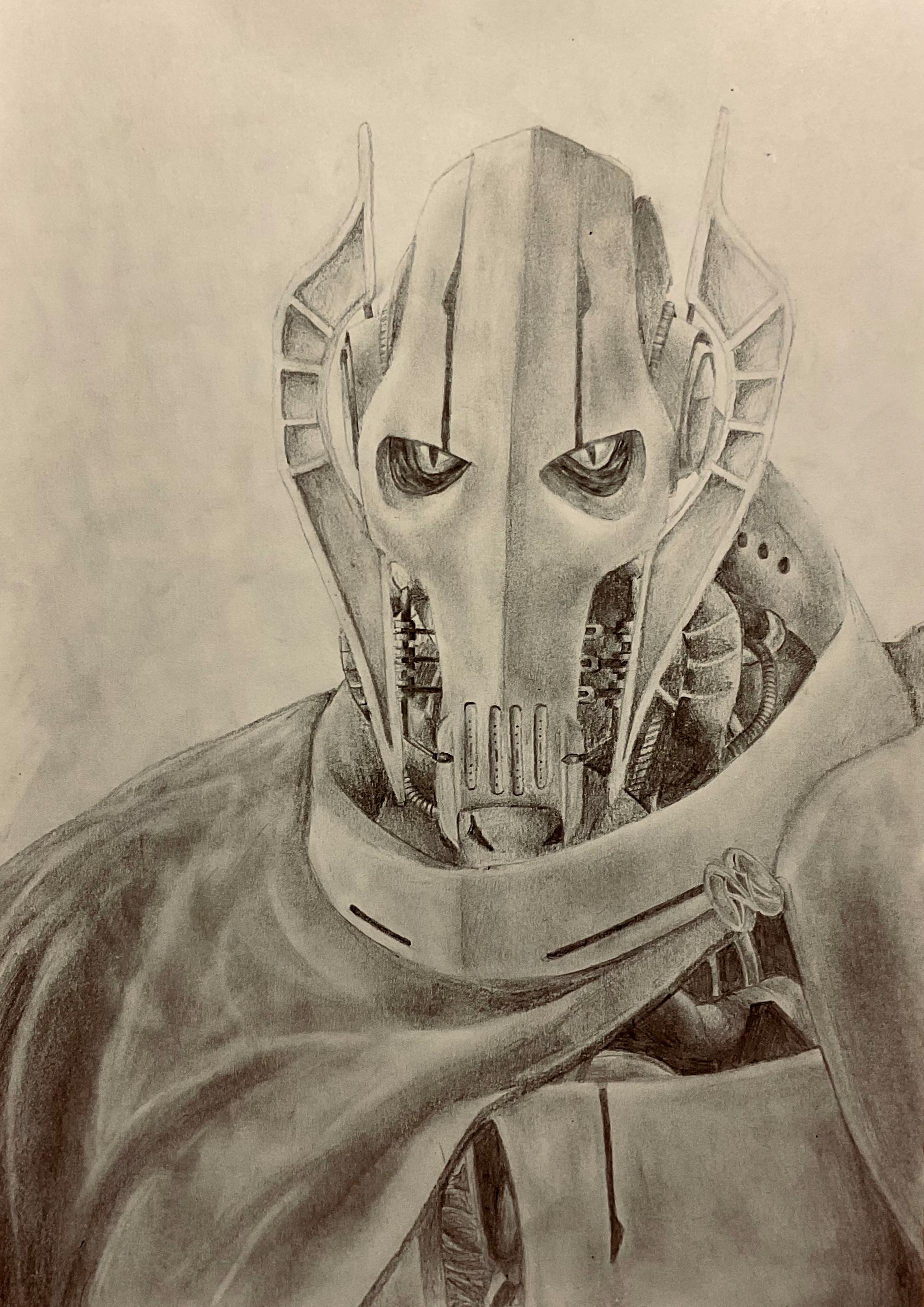
GENERAL GRIEVOUS
DON ' T CUT OUR FEET ON EGGSHELLS AND HAVE A GREAT TIME IN THE WAVES, MY ALIENATED
ABSTRACTIONS
FICTION - JAKE LEE - YEAR TEN
CW: References to suicide & graphic imagery
Iam writing this on a plane, above the clouds and abovecivilisation,nestedinaplacewherehuman hands cannot and will never reach. It is 12:06 in the afternoon, yet the lights have been dimmed, the windows shut, and people are being kept awake by a granular hum of light, glowing from a small screen. If I were to turn off the music playing in my headphones, I would hear nothing but the soft cries of the baby in the cabin behind us and the dizzying whir of the aircraft, suspended by nothing, far, far above space, in a world where if we were to tear apart the thinsheetsofmetalseparatingusfromtheoutside,we could almost, just barely touch the stars. 3 hours have passed and 7 hours remain, time trickling away as we pierce the dark sky, a vacuum of light – we can almost reach a destination that is far too close to call an ending, yet too distant to call a home.
Lighter than a bird, you float above the world that is yours, your own world, soaked and filled with our lives, your world where the waves wash over beaches and refuse to subside, spreading across deserts of sand as the colourful petals of life. You drift above the neon haze of the cities below, the tropical blue of the ocean and the corrugated hills, undulating up and
down in sheets of greenery, 1000 kilometres a second, you, not moving a muscle. You, unborn and to be uncracked. Fully developed, an embryo of your ipseity, trapped tightly within the Amniotic eggshells that expand as you grow. You still have time left. You stillhavetimeleft.Doyoustillhavetimeleft?Doyou? Her night sky, the stars that you wrap your arms and legs around, their warmth seeping into your body.
Love me.
One.
You feel his hands wrap around your waist, his bony fingers melting into your stiff hips and drawing you closer until his flesh seems to fuse with your own. You can feel his warm, mint-scented breath on your face, teasing you, almost as if he’s licking you with a secret.
Faint rustles curve and curl around you, a second too late yet a second too early to register.
His voice echoes from above, high above the canopy of space, from a place that you won’t see, at least not yet.
Can you feel it? he asks
And you think to yourself – yes, god yes, you can feel it alright, all of it in fact.
Russell was drenched in sweat, one leg wrapped around his blanket, and the other veering off at a weird angle. The brawny pang of nuts emanating fromAlbert’s whirring coffee machine wafted into his room, circling Russell until the fog was swept away and the morning settled in. He looked up and was reminded of the cracked plaster he needed to fix before his ceiling collapsed. The lights were alsobroken.
Before long, Russell found himself, fashioned in his polka dot pyjama set, staring at Albert. His bedroom was right next to Russell’s – cleaner somehow – yet Albert had chosen that his expansive study of morning coffee would occur outside Russell’s room.
Russell wanted to complain. Maybe about how much Albert stunk up the flat with his coffee and cigarettes, or how Albert was just about the worst roommate Russell had ever had, but he only managed to squeeze out a muzzy greeting.
Russell closed his door and slipped back into his choreography of self-care. Yet something was clawing at him. A thought, a dying dream, was thudding againstthebackofhismind,crawlingitswaythrough the tubes in his brain before dissipating, just before reaching his mind. He blindly pushed down at the licks of brown hair sprouting from the back of his head as if to soothe the thought, and it was gone, settling back into the plodding waves of his memory.
By the time Russell had gotten dressed,Albert was on his third cup of coffee and his second cigarette.
Russell’s workplace was just another sh*thole. He would sit on a stool, propped up by disabled legs, watching the masses inspect their almonds and avocadosandcelery. He wouldstare until one of them would walk up to him, wagging their gums about their grandchildren while shoving packets of cabbage up his ass. And then it was the usual. Contort his mouth into a forced smile while scanning the same goddamn barcode. And then another three hours of barcodes and three more hours of cabbage. Rinse and repeat.
Russell would then slip through the back door, mumbling a farewell to his coworkers while pulling his coat over him. Cars were blaring past him, their
glimmering headlights illuminating the dark road with deep amber. And once his mind had cleared, he would look up and scream until his throat got caught in a dry choke. It was dark already. His day had evaporated into nothing, just like that.
As strands of slanted rays poured out from the horizon, Russell was nesting high up on a bridge, watching the muddy waters slosh below him while his warm breath rose in puffs of vapour. The cold had fully settled into the wind, blowing Russell as if to push him into the waves below. Russell pushed himself against the steel railings, leaning over them until the weight of his body nearly sent him toppling down into the violent waves below. He laughed and pushed himself back on the ground. Far off, like lines etched into the air, the street lights shone on the spindly trees. Arms crossed on the steel railing, Russell watched the water below growl upwards before collapsing upon itself, sending foamy pellets flying upwards onto his feet. He looked up, watching the last droplets of light dim, slowly trickling down the horizon until the gluttonous clouds had rolled in and swallowed up whatever remnants were left.
For a moment, he felt his chest tighten as whatever was down there squirmed with impatience.
Russell decided to take the bus home that day. He didn’t want to think of anything. Perhaps it would have been better if his hand had slipped from the railing andhe hadbeen sent tumbling down, if he had struck his head on the rocks below and been taken by the bucking waves to somewhere that wasn’t here. And when he trudged to his front door, he thought it wouldhavebeenbettertohavebeenbornasapieceof sea foam, bubbling into the water before being washed away by a rogue wave.
Russelllistenedtothestormoutsideasheslippedinto his lurid dreams. He could hear every thick drop of water splattering across the window as if it were paint. He could hear every snore Albert mustered up in his room, snaking through the empty corridors like a ticking clock. He could feel the cold slowly wrap aroundhim,embracinghimwarmlyasitslowlymade its way into his head, engulfing his thoughts until calloused hands wrapped around his own and dragged him away.
The world stares at you. Its face is blank, and its eyes are alien, yet it ushers you in, welcomes you and watches you, following every twitch, every little flicker of life you
perform. You look back and feel hopeless. And in that moment, the world is in your chest. In fact, you can feel its appendages slowly stretching to their full length inside you, hairy legs contorting into life from the middle of your chest, wrapping little claws around your insides until every time you try to take a breath the air doesn’t go all the way down, actually, you can f***ing feel one of its scratchy legs crawl up your esophagus and make you gag, you can feel its hairs brush against the slimy walls of your throat and crawl up more and more and more until you can feel its hairy leg scrape and exit your mouth. And as you retch and gag, the entirety of the world heaves and bubbles upwards, accompanied by a healthy serving of bile and hair.
Her voice was more nasally and tinny than last time, and she looked far worse, strapped up to that hospital bed with more tubes and patches sticking out of her grey, withered skin.
So she wheezed. Took ye long enough.
Russell nodded. “Albert drove me here” 9:30AM Don’t he haff work?
Today’s sunday Ma Mm she coughed.
I told ye teh stae awae from dat sun ova bitch Russ 9:30AM
Her dry lips puckered When are ye leafing? Probably now
She paused.Aye 9:31AM Russell had nearly exited the room when his Ma called out, her voice straining against the weight of her illness. See ye Drop dead!
Russell didn’t notice that he had taken the wrong flightofstairsandendedupatthewrongcarpark.He didn’t notice when he had made his way to Albert’s car and continued walking. He didn’t even notice Albert leaning on a bench next to some garbage bags. Adeadly insect had bitten Russell’s tongue, leaving a sour note lingering on the tip. The fortissimo of poison,hethought.Andhecouldfeelthatsourpoison coursing into the rest of his mouth, building in acidity until he felt small holes melting into pink flesh.Albert smiled, that sweet scar on the corner of his mouth elongating, and the poison was gone.
For a second, the mellow glow of the sun streaked across Albert’s pale skin, illuminating the soft lashes that curled above his piercing grey eyes, slightly covered by a drooping garland of blond hair. For a second, the light traced his sharp nose, blooming into a silky shadow that slightly masked his rosy cheeks. For a second, Russell felt the strum of longing chords
vibrating in his heart, echoing a faint resonance of what had been forgotten. For a second, he felt the chords swell into a vast crescendo, soaking their pure teeth upon a raw mass of promises and unheard thoughts that dissolved into an aching hush, soaking intothejaggedcutshismotherhadleftinhim. Save me Albert!
Past intersects with future –
Russell dragged his fingers across the rows of records stacked neatly together in a rustic box. Cheap plastic sleeves scraped against them, semi-familiar names fluttering before his eyes. The store was playing Ray Charles at the front, his passionate belting hemorrhaging into the dusty air while a choir poured into his soulful melodies. Russell could feel Albert’s presence behind him, crouched over and flicking through an assortment of unknown albums. He could feel Albert approaching him, peering over his shoulder with a thirsty curiosity gleaming in his eyes. AndhecouldfeelAlberteventuallygrowimpatientas he waited for Russell to find something he would listen to. Yet deep down, Russell didn’t want to leave, even when Albert had finished picking a handful of albums that he would spin on a turntable a few hours later over some cheap beer and unfinished conversations. Instead, Russell wished to stay clutchingontothehandsoftheswellingmusic,evenif the waves were to roll in and sweep him away. So he turned around and smiled. Save meAlbert!
The present becomes whole –Unity!
Russell held an unopened can in his hands. The fridge’s cooling touch had long faded into the humid atmosphere, andAlbert was on his fourth drink of the night. Albert was in a drunken stupor, sometimes slurring some incoherent phrases together and sometimes drooling onto his grey sweater. Russell couldn’t remember where or when their conversation had started and ended. The thudding bass of the record player had also skidded to a halt. And so had Russell.
“Russell?”
Russell opened his eyes and was met with Albert’s. (Albert’s?)
“Are you alright?”
And in that moment, all Russell could hear were the barreling waves from above the canopy of space, swallowing and retching as the wind shot beads of
foam into his face. He felt something stuck deep in his chest, protruding and tumefying until he couldn’t breathe without gagging. Yet Russell pushed it deep down, back into the nothingness, unwilling to spew it all out, and he bit his tongue. The waves above surged, pushing through the thin barrier and crashing down on Russell, exploding into a harsh crack and sweeping him off his feet, scoffing and suffocating him until all he could do was open his mouth and scream for help. And he felt a hand, pulling him up and out of the water. He clutched the hand tightly and strained his head above the water so he could take gasps of air before the water swallowed him again. And as the waves around him continued to pile on to him, all Russell could do was muster up forgotten tears, clutching onto a hand that wasn’t there.
Two.
hold onto me and Don't you Dare let go
You deleted the second part of your work – it was called Don’t Cut Our Feet on Eggshells and Have a Great Time in the Waves, my Alienated Abstractions – and from the fire sprung the horses – hooves exploding on the scorched earth – cannons of nature – manes madly waving around in the flickers of heat – hold it in more – hold it in for a bit more – a bit more
what was once a part of the whole now non-existent but in your mind
hold it in me and i Swear i won’t vomit it out White Film 1978 – “Spectrum and prism divide the screen; whites and light, etc. Out of this purity comes all colors. I’ve always been attracted to refracted light and prismatic phenomena says Bernard. For Richard Devereaux. Super 8, silent, non-narrative”
the white absence of stains refract and reflect refract and reflect crystallised light
in dreams i walk with you in dreams i talk to you in dreams you're mine
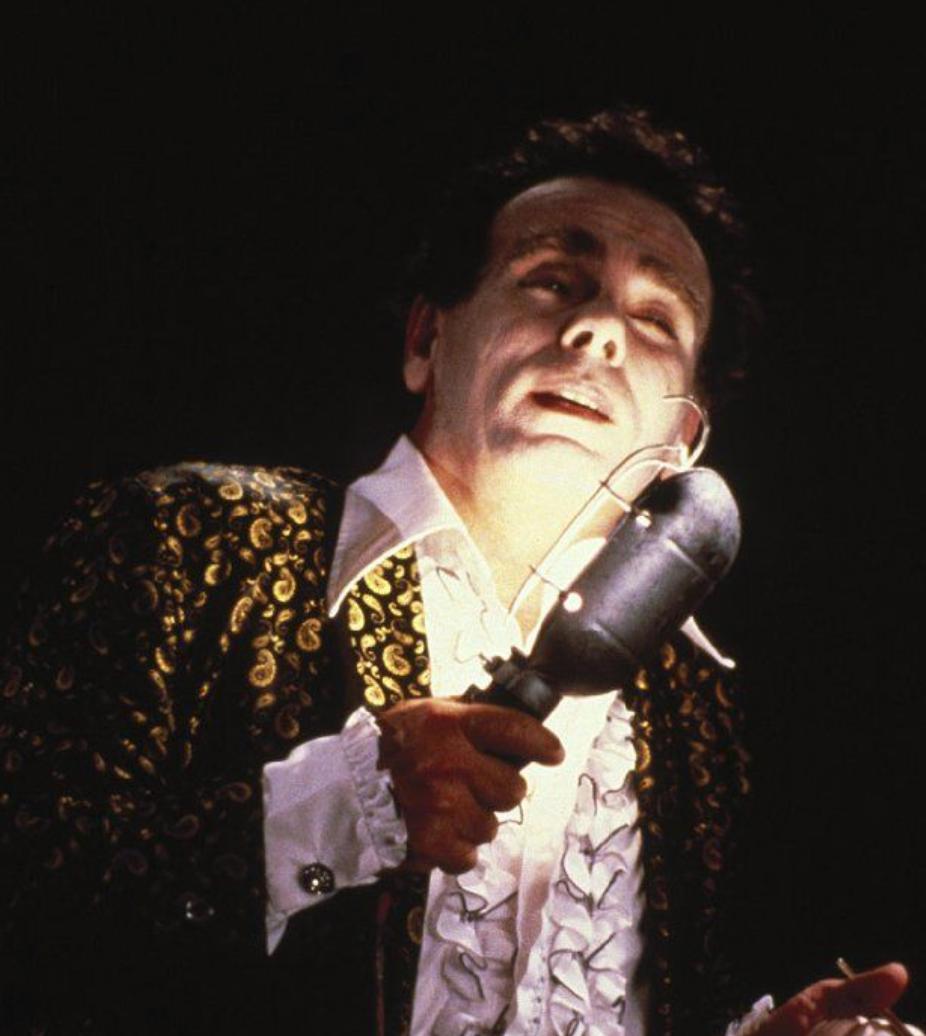
the candy coloured clown they call the sandman
plagiarism – the ultimate rape – violate the sanctity of thought and rip what was yours – steal it – steal the mind – strip your clothes and castrate your cries
bernard + blue velvet + what was once a part of your piece “Don’t Cut Our Feet on Eggshells and Have a Great Time in the Waves, my Alienated Abstractions”, the second half, now ebbing into a liminality of faded thought and a forgotten memory –
Russell’s feet were being lapped up by the waves. They came one at a time, foaming upwards before dispersing, slipping a coat of coarse sand over his toes beforewashingthegrainsawaywithadyingtriumph. Baptised by the sea water. Baptise my feet.
Jesus answered, “Those who have had a bath need only to wash their feet; their whole body is clean. And you are clean, though not every one of you.” For he knew who was going to betray him, and that was why he said not everyone was clean.
The wind similarly swept a sheet of bitterness around Russell, uninvited and unprompted. He could almost make out streaks of light protruding from the horizon as the sun rose. Bit by bit. Inch by inch, carried upwards upon the back of someone beyond our lifetimes. Russell had lit a cigarette and was watching the smoke drift upwards, slowly dissipating into the salty air. Albert was next to him, watching the sun crawlupwards,slippinginandoutofthinclouds.Not a word was exchanged. And I, far above the clouds they were watching, in a world where I could almost touch things that will be forever untouched, could almost, just barely strain my arm a bit more, a little bit more, and almost stroke Russell’s face with my
fingertips. What did you really look like? What was your name? What was your struggle? Who are you? Are you still with me?
With us?
Why had you entered my mind i ask you – A distant existence, but no more than a star outside the plane –
I saw Ravel’s Bolero in written form – the crescendo of creation – As you breathed life onto yourself – I was happy when you said your first words – You weren’t perfect – You were missingthings
But you were mine
You were me
So I pray we explode into a firework
As one
The yellow tinted bile and tentacled creatures oozing out from out mouths –As viscous vomit – A melting ball our Us – curled into a fetal position – our faces one but touching our arms one but entwined plummeting away into the night sky our last flickers of life dissipating into the air not a word said but a million more exchanged
my image of you has faded i remember you in pictures in memory so i reach out my hand nearly caressing your face our eyes nearly meeting but never quite there your green pupils and my brown emeralds on tiger eyes yellowing pictures – our expired film what's it like up there? well don’t wait too long because we can be whole once again really soon once i ride the waves and drop a little below the rainbow travel through the fog over my theme –her breath of life – our kiss of death your last tango as your weak body exploded on the pavement a second a moment of eternity were you afraid? come back we all miss you you and your saccharine sour
i see you from up here softly undiscovered what had echoed through my head as my body crumpled under the weight of the world now a fresh snow the virgin snow crumbling under our shoes as the waves wash over our graves the dance of the heavens the trick of fate plummeting down and down and down and down anddown and down bravethewinds battle the tempest because i know you can do it because i saw fight don’t miss me find our expired film in lost basements and kiss me Dear
and as i look back i remember you with a blue tint brief blooms of brown my memories tinted as i look back and as i look back and back and back a faded collage our us whole
WHERE ARE THEY?
FICTION - DENNIS LIU - YEAR ELEVEN
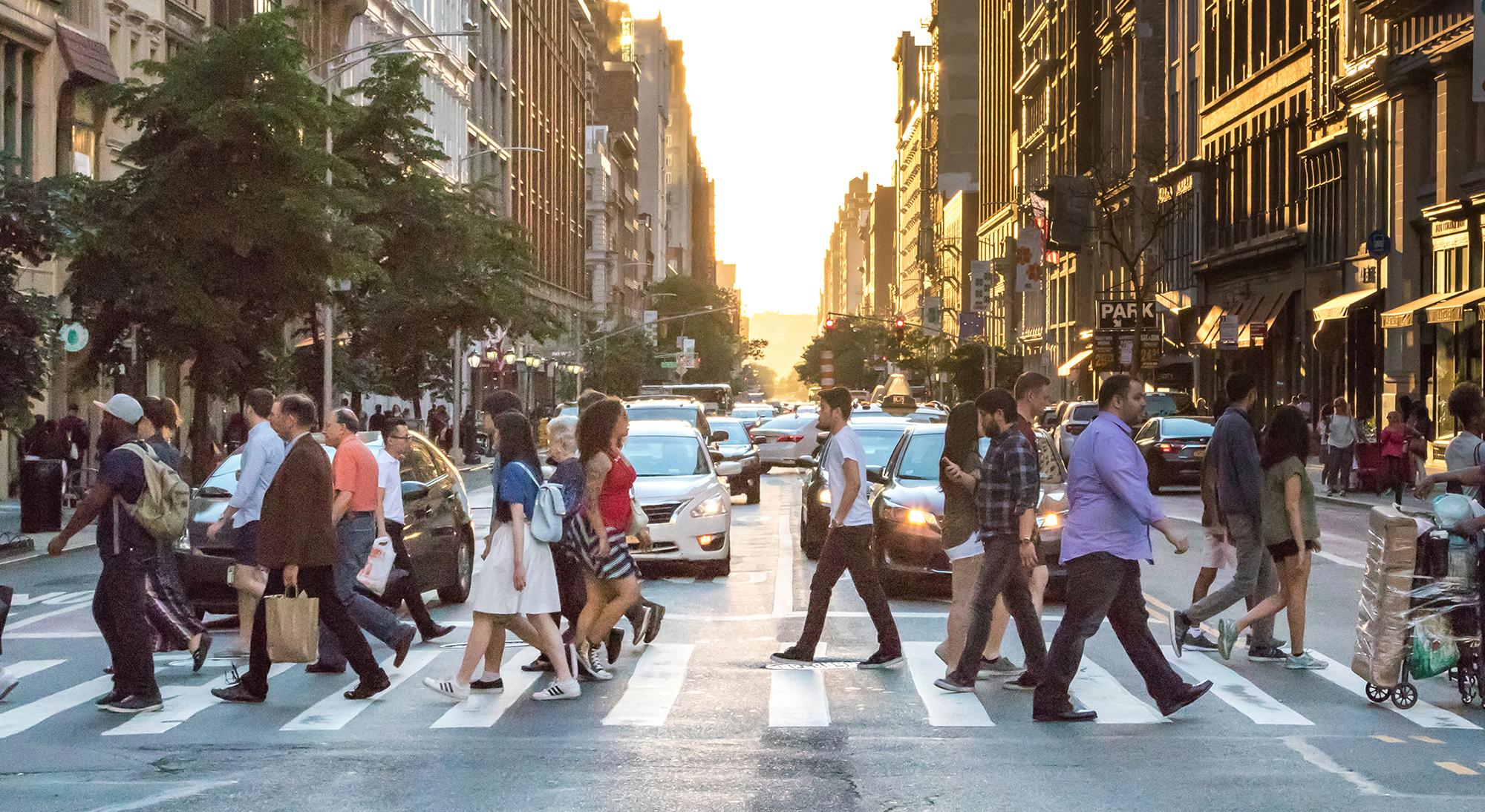
Let's play a game.
Can you find:
• The person who just received a promotion they had been dreaming of since their first day on the job?
• The person who’s thinking about the confession they just received?
• The person who needs to get to the train station soon to meet a loved one?
• The person finally using their legs again after months of physical therapy?
• The person rushing to see their dog at home after an exhausting day?
• The person unknowingly walking behind their soulmate?
• The person praying they won’t witness another car crash?
• The person deciding between their next meal or hanging out with their friends?
• The person strolling leisurely despite a looming deadline?
• What about the person who is living a life as complex as everyone else’s, with their own thoughts and ideals shaped by the experiences only they have lived?
Here’s a hint: this person can be found in places other than the mirror.
GAMES & PUZZLES
Would you rather?
We all think differently. Read through the hypotheticals and make a decision and then compare with your friends.
• Would you rather know how every movie ends before watching it, or never be able to rewatch anything?
• Would you rather be able to hear everyone's thoughts for one day, or be completely invisible for one day?
• Would you rather know the meaning of life but never be able to tell anyone, or never know but spend your life looking?
• Would you rather only eat food you've never tried before or only ever eat your five favourites?
• Would you rather live in the same city for the rest of your life or only being able tolive in any city you like but only for a maximum of three years?
Riddles
1. I have cities but no houses, forests but no trees, and water but no fish. What am I?
2. I have hands but can't clap. What am I?
3. I travel the world but never leave the corner. What am I?
Cryptic Crossword Clues
Cryptics are different to normal crosswords. In each clue there is a definition (IE a synonym of what the word is) and indicators (hints to solve the puzzle). The number tells you how many letters the word has. Try some of the following ones:
1. Bird seen in museum (3)
2. Insane damn yeti is explosive (8)
3. Prophet starts to imagine Saint Augustine is against heathens (6)
4. Fit of temper ruined sport (5)
5. Agriculture in remote Chinese dynasty (7)
Who am I?
I was born in Dublin in 1854 and studied classics at Trinity College before winning a scholarship to Oxford. I once said the only way to get rid of a temptation is to yield to it. My first successful play featured a woman with a scandalous past returning to fashionable London society. I was famously put on trial in 1895 and sentenced to two years hard labour. I wrote a novel in which a beautiful young man never ages, but his portrait does. My most beloved play involves two men who have both invented an imaginary friend named Ernest and the women who insist on marrying one.
Sonder is all about working out the puzzle of what (or who) may have been in front of you all along. Words run in all directions (Forwards, backwards, up, down, and diagonal). Find the Sonder words. SONDER EMPATHY STRANGER NEIGHBOUR FLEETING SOLITUDE WANDERER PASSERBY UNSEEN BELONGING WONDERING Wordsearch
BOOKS, FILMS/TELEVISION AND MUSIC WHICH EMBODY SONDER
THE REMAINS OF THE DAY
KAZUO ISHIGURO
NORMAL PEOPLE SALLY ROONEY
THE PERKS OF BEING A WALLFLOWER

STEPHEN CHBOSKY
STONER
JOHN WILLIAMS ILLINOIS
SUFJAN STEVENS
FRANK OCEAN PUNISHER PHOEBE BRIDGERS
CITY
KENDRICK LAMAR
LOST IN TRANSLATION
DIR. SOFIA COPPOLA
TWIN PEAKS
DIR. DAVID LYNCH
ALMOST FAMOUS
DIR. CAMERON CROWE
FLEABAG
PHOEBE WALLER-BRIDGE
FEELING INSPIRED?
WINGSPAN IS OPEN FOR SUBMISSIONS FOR OUR NEXT EDITION
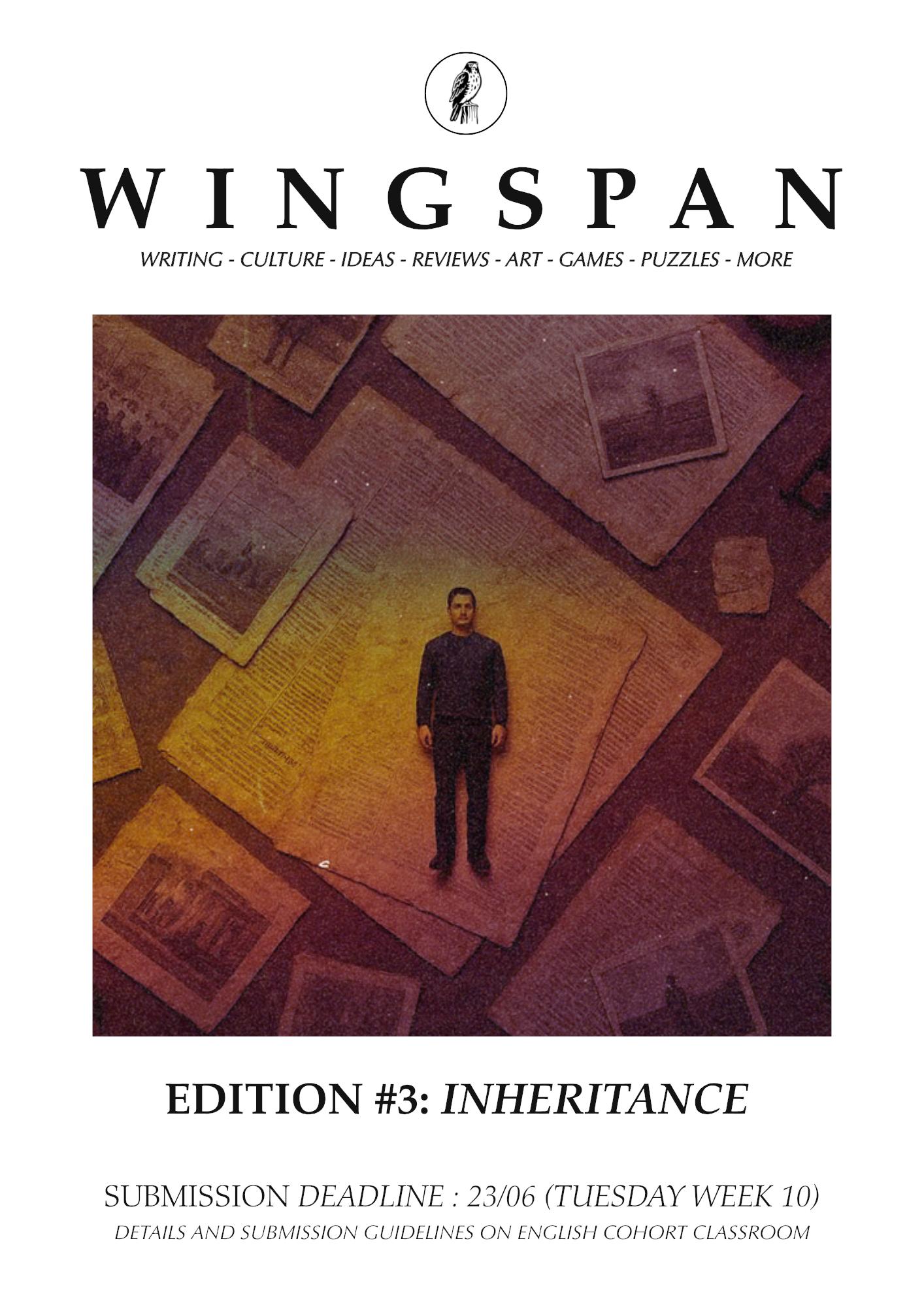
we're all one thing like cells in a body except we can't see the body the way fish can't see the ocean and so we envy each other hurt each other hate each other a heart cell hating a lung cell how silly is that?
Charlie Kaufman
Adaptation, 2002